
A wedding outfit gets more personal the moment it borrows from another decade. Below are retro gowns from twenties beading to eighties sleeves: lace, glossy satin, tea-length skirts and loose bohemian dresses. I’m not trying to dress you as a historical reenactor. My approach with retro brides is to pick one feature that clearly belongs to a decade, then build everything else around comfort, good tailoring and the right underwear. The fabric, hem, sleeve, veil, shoes, jewelry and bouquet all have to agree with each other, so each idea below comes as a full head-to-toe look.
Every Decade Was Built on Different Underwear
This is the part of retro dressing I spend the most time on at a first appointment, and the part most brides skip, and it’s why a gown that looked right in a photograph can look wrong on the body. Each era’s dresses were cut around the foundation garments of the time. Get the base right and the silhouette falls into place.
- Twenties: a flat, straight line. A smooth slip and a soft, unpadded bra help beaded columns hang straight instead of catching on curves.
- Thirties: nothing visible at all. Laser-cut pieces in a shade close to your skin, because bias satin shows every edge.
- Forties and fifties: a defined waist and lifted bust. A longline bra or bustier gives the shape these bodices expect, and a petticoat holds out a full skirt.
- Sixties: smooth and simple under shifts and columns, often just a good slip to stop the dress clinging.
- Seventies: soft and unstructured, but on a fuller bust you still want built-in cups or a bralette that looks deliberate under sheer lace.
Buy your underwear before the first fitting, not after. Every measurement your seamstress takes depends on it, and switching later can undo a whole round of alterations.
1. 1920s Beaded Wedding Dress
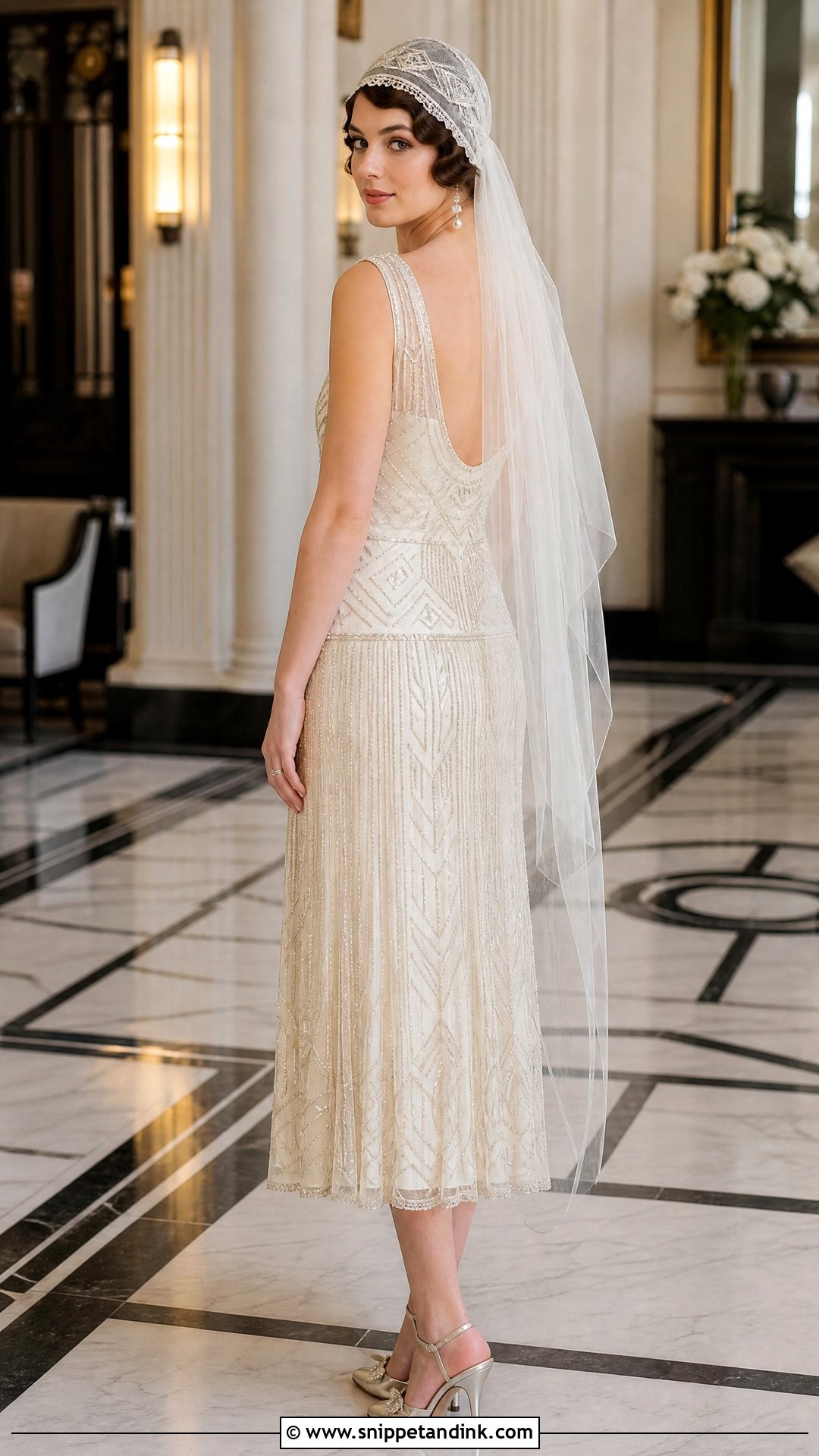
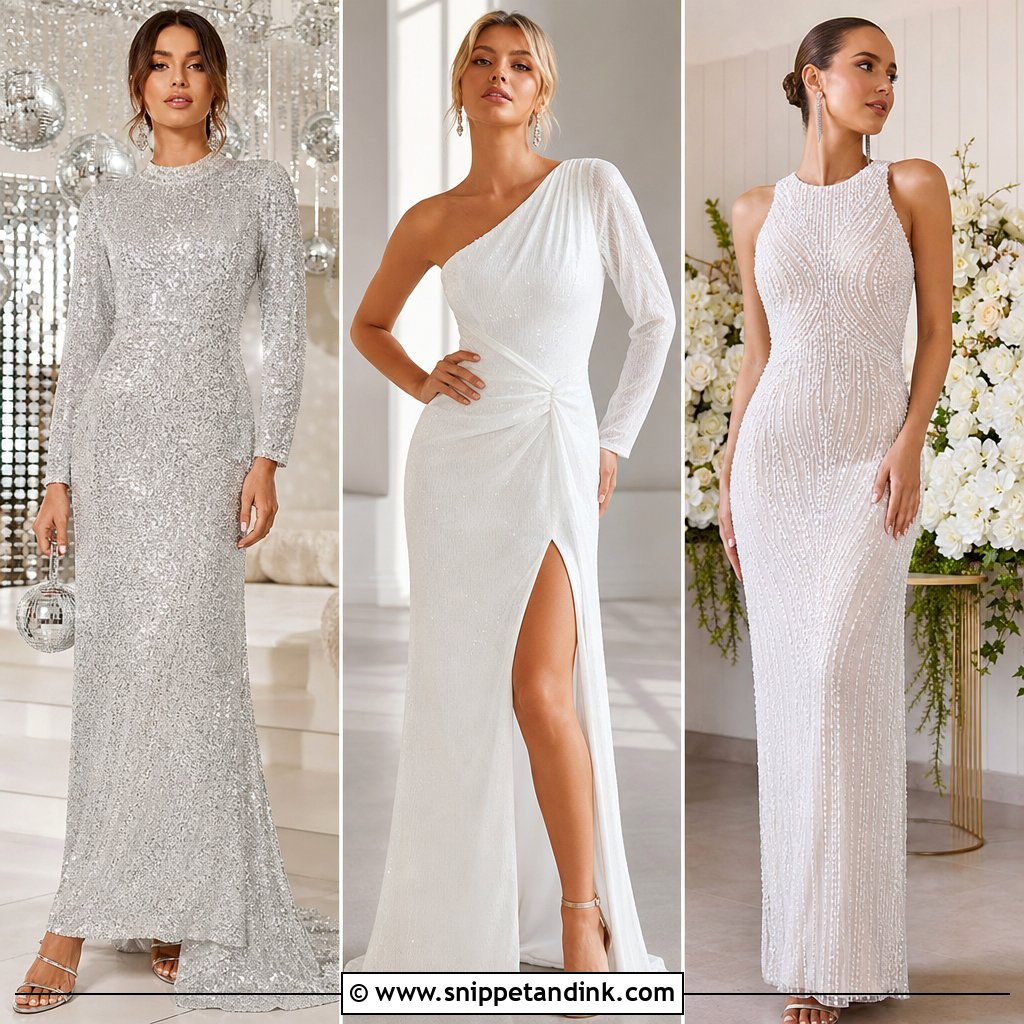
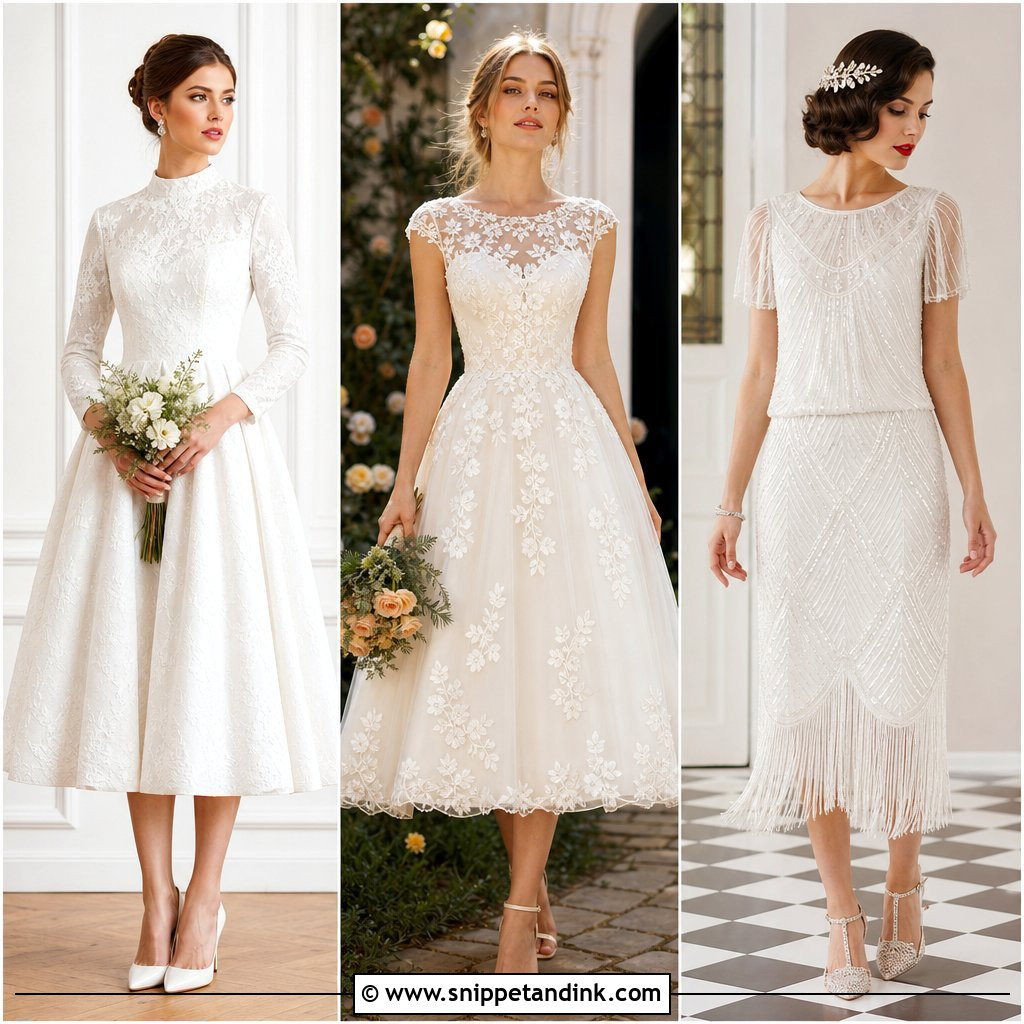
Twenties beading gives you glamour without a big skirt or train. A softly fitted gown with geometric beadwork, a dropped waist and a fluid ankle or floor-length hem is the Jazz Age shape, loose and decorative rather than fitted. Silver low heels, pearl drops, a small satin clutch and a Juliet cap or crystal comb finish it, with a compact rose bouquet. Beaded dresses from this era were made to dance in, but modern copies vary hugely: cheap beading is glued and sheds, while hand-sewn work holds up. I always ask which one a bride is getting before she falls for it. Evening ceremonies and restored historic venues let the beads catch candlelight properly.
2. 1930s Satin Wedding Dress
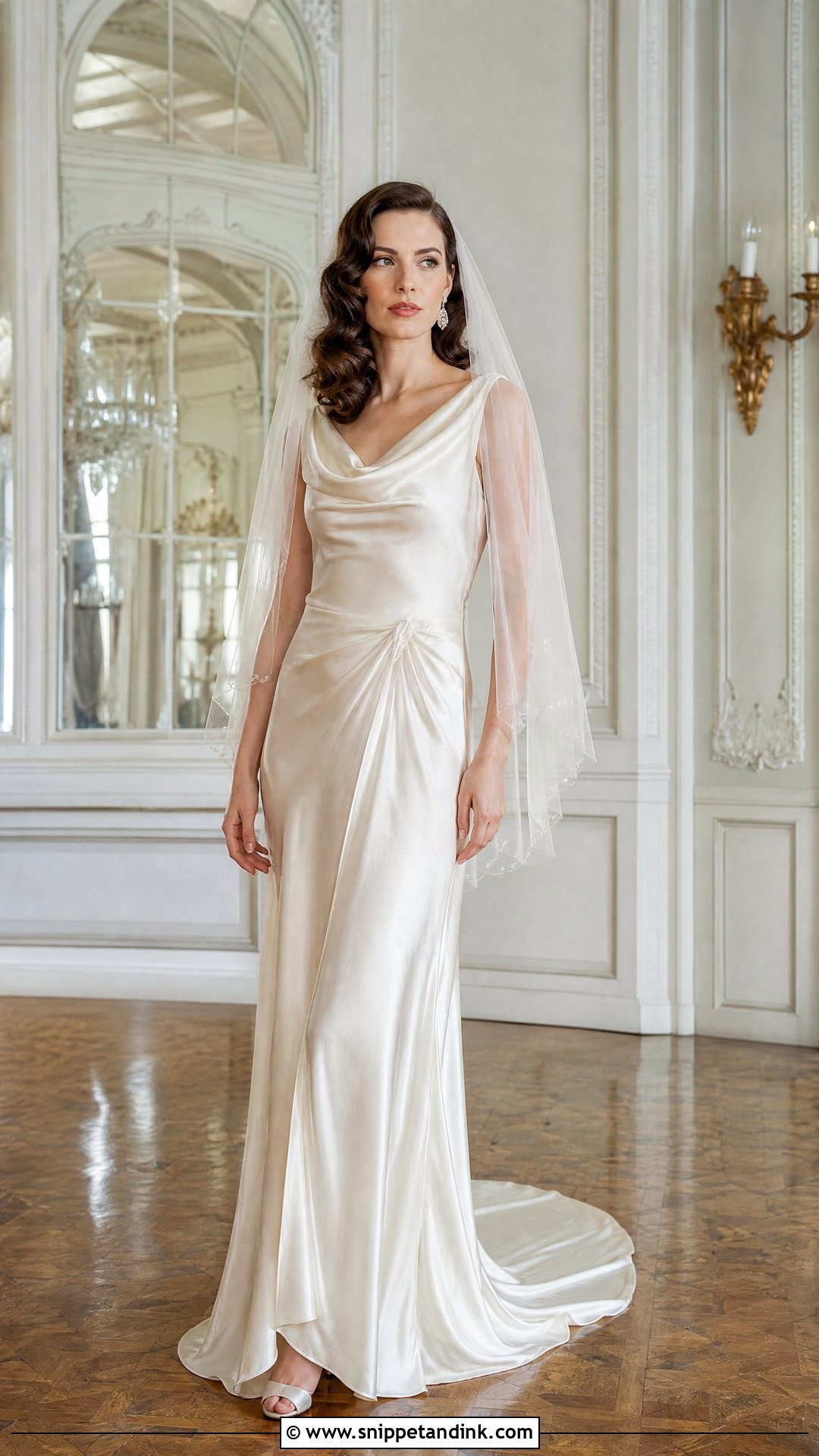
Thirties satin is about the drape. A bias-cut wedding dress with a softly shaped waist, slim skirt and short train should skim the body, never grip it, which is where that long Old Hollywood line comes from. Ivory peep-toes, a fingertip veil and small crystal earrings suit it, with polished waves or a low side bun and a faux-fur wrap or silk shawl for cooler nights. Bias satin is the most demanding fabric on this list to alter. It stretches as it hangs, so a good seamstress lets the dress hang for a day before taking up the hem. Intimate hotels and ballrooms suit it.
3. 1940s Long Sleeve Wedding Dress
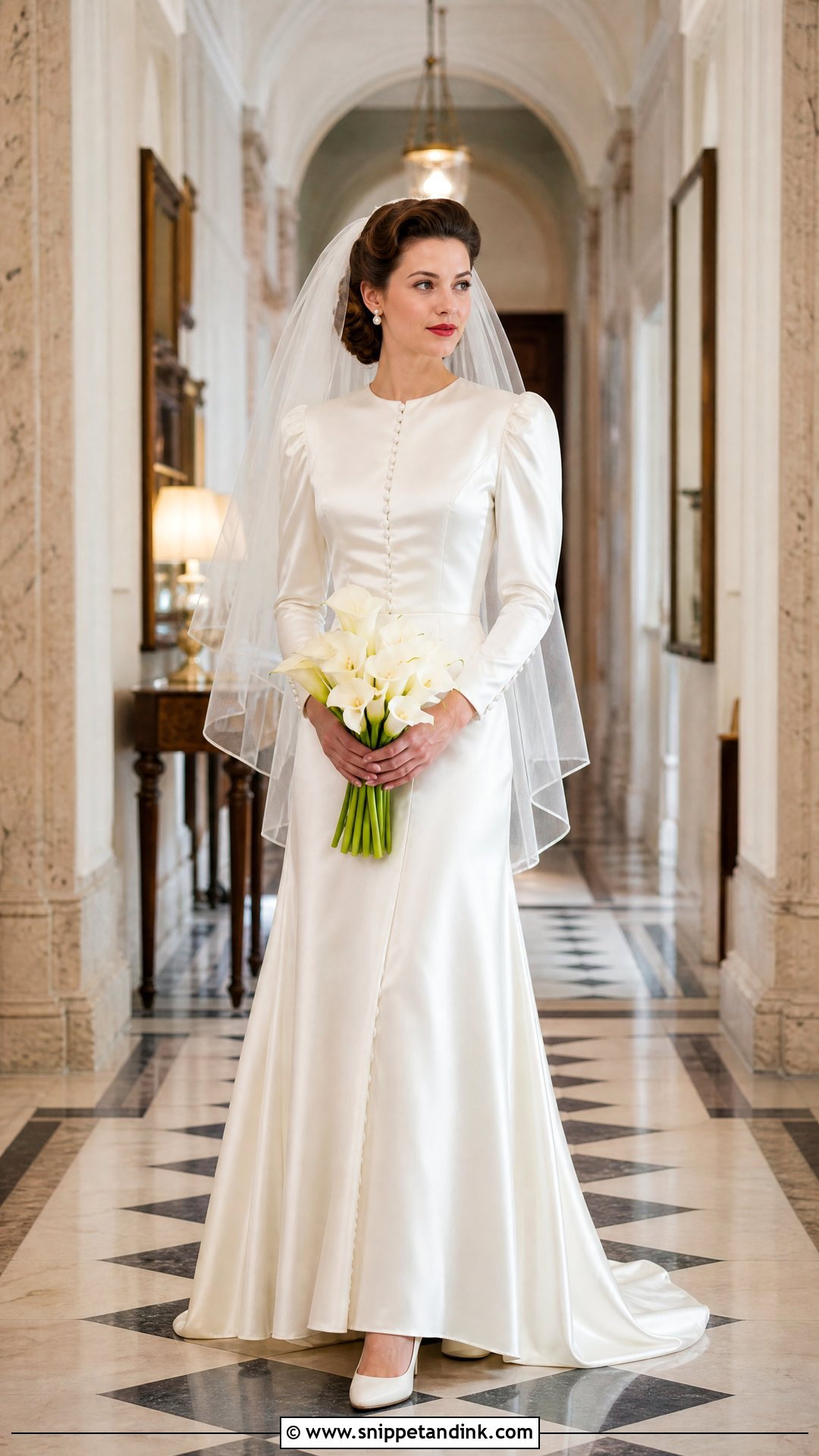
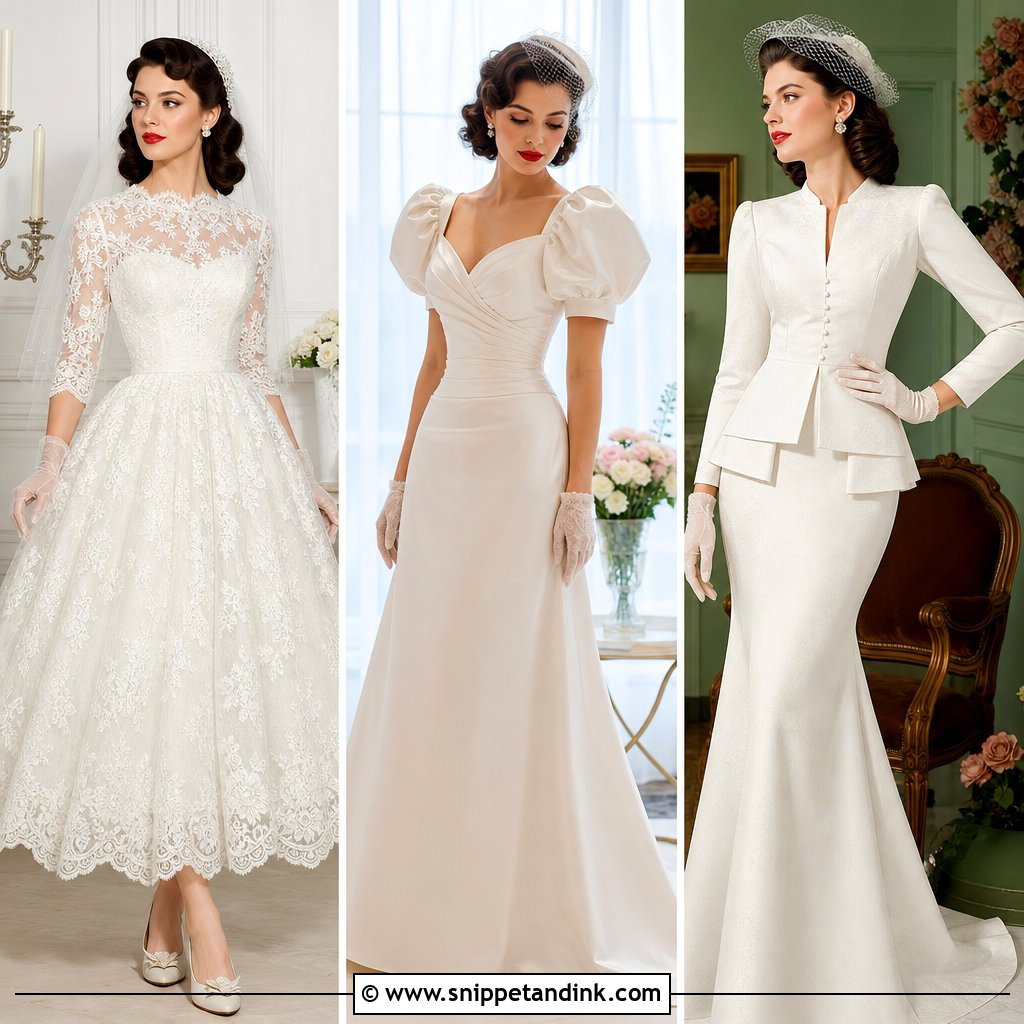
The forties brought fitted waists, structured shoulders and long sleeves, with satin still the favoured fabric and a slimmer line than the decades either side. Covered buttons, a V-neck and a softly flared skirt keep it easy to move in. Closed pumps, pearl studs and a medium veil under a smooth updo suit it; calla lilies keep the clean lines uncluttered. Sleeves make this a natural autumn or winter dress. A light shoulder pad is part of the period look, but if your shoulders are already broad, ask for it to be removed or reduced; it squares the frame further than you’d expect in photos. City halls and historic hotels suit it.
4. 1950s Tea Length Wedding Dress
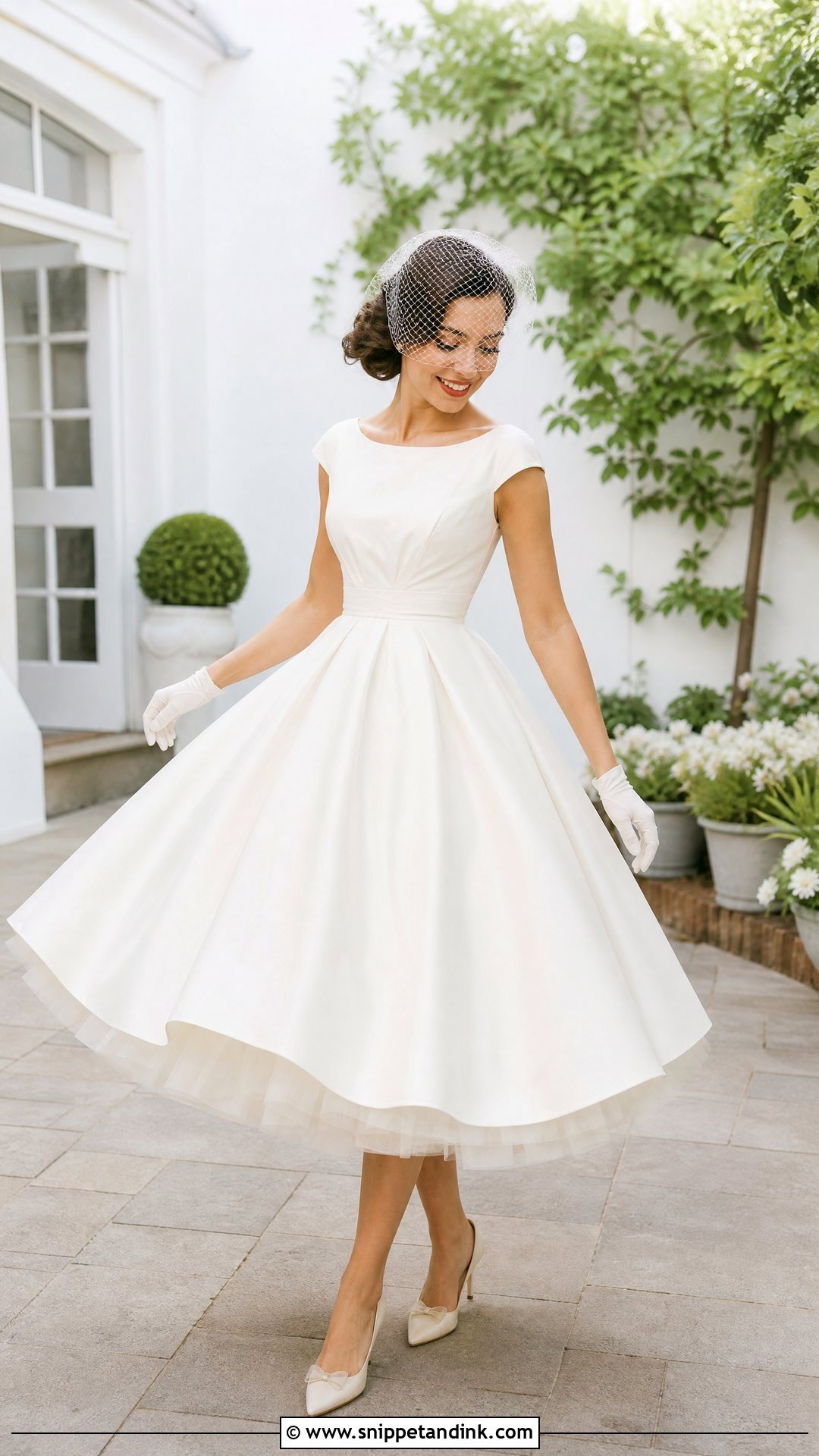
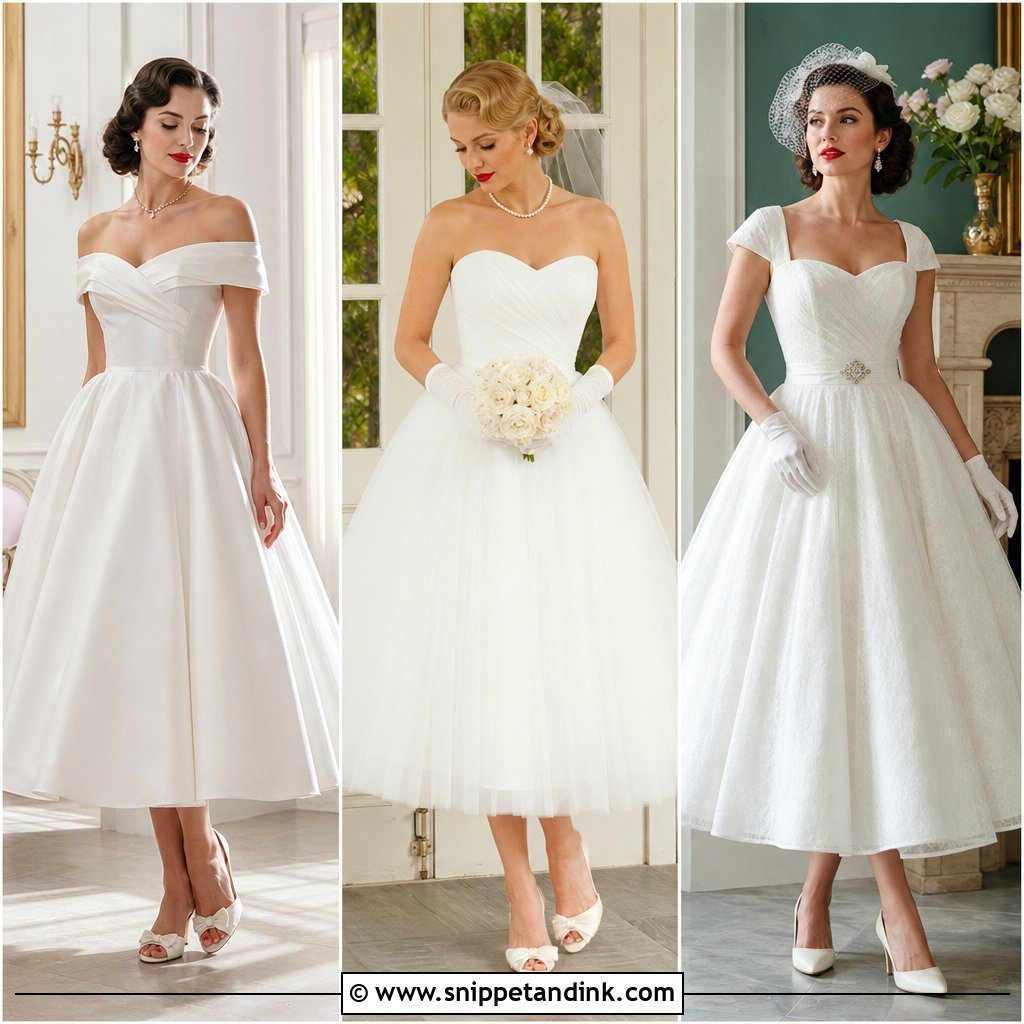
A 1950s tea-length wedding dress is cheerful and easy to wear. A fitted bodice, bateau or sweetheart neckline and a full skirt ending between knee and ankle captures the decade’s focus on the waist. Your shoes will show, so choose pointed kitten heels or classic pumps you love, with short gloves, pearl earrings and a birdcage veil. A petticoat gives more bounce; a softer lining keeps it relaxed. The proportion I’d watch is the hem against the calf. Set it with your actual shoes on, and stand side-on to the mirror, because a hem at the widest part of the calf shortens the leg. Courthouses, gardens and dancing-heavy receptions suit it.
5. 1950s Lace Ball Gown Wedding Dress
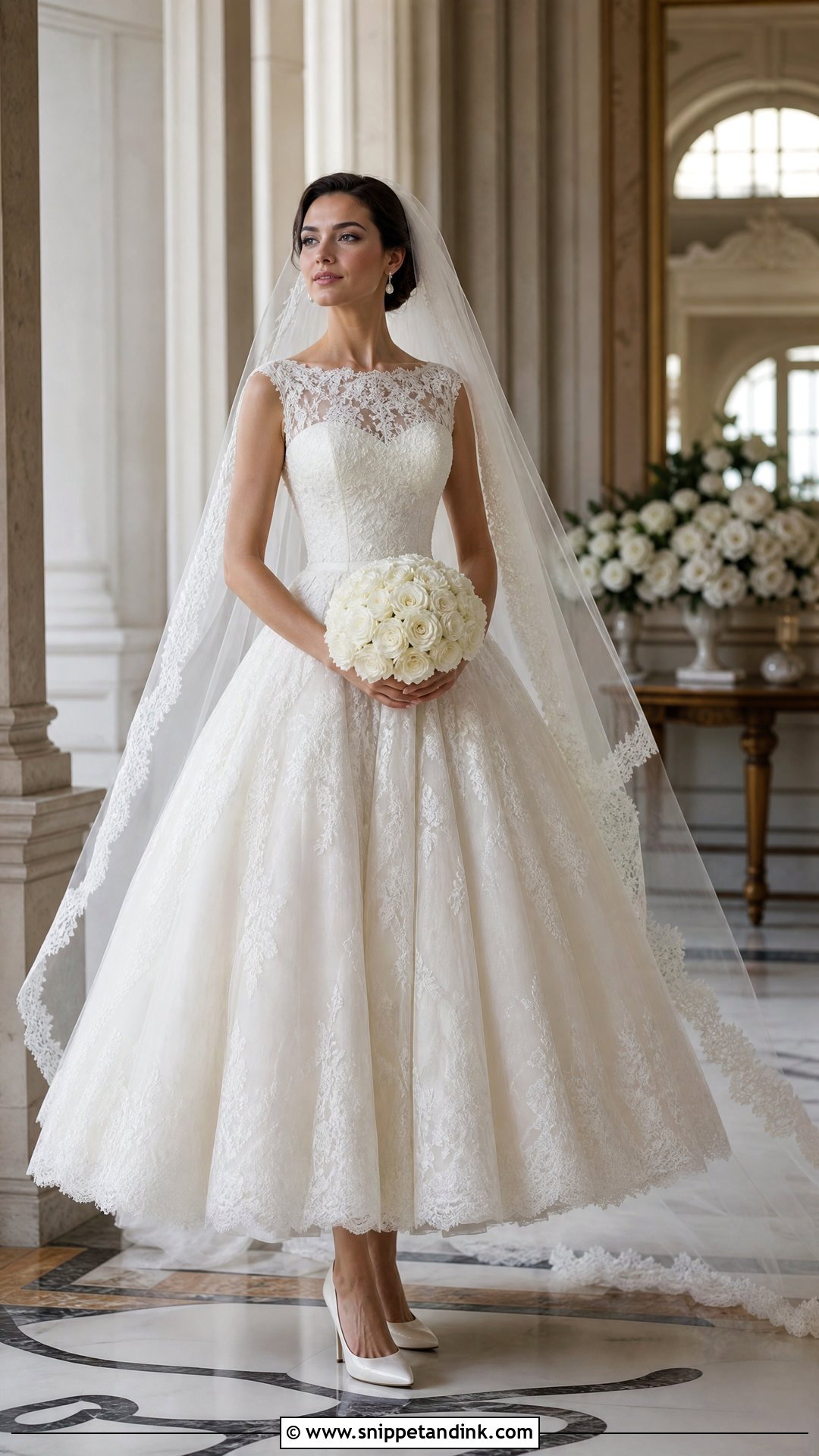
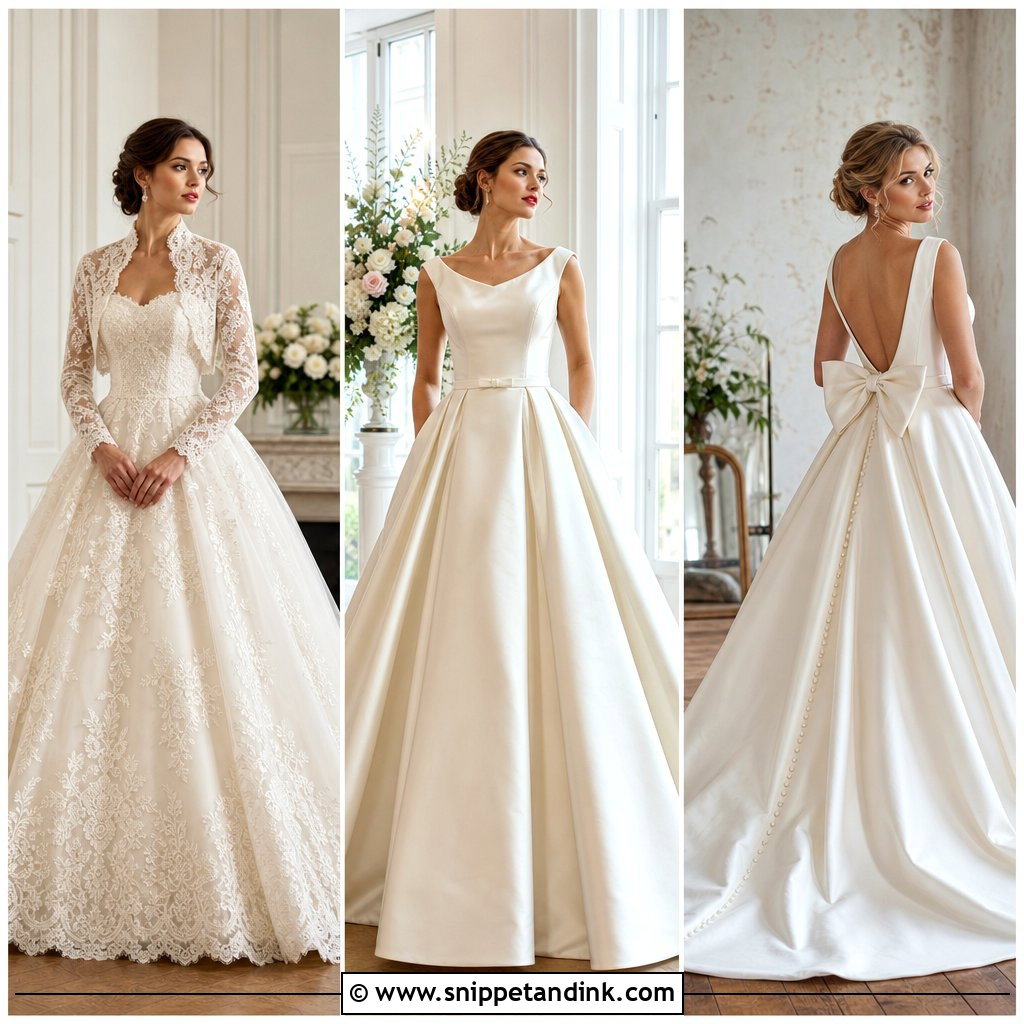
Love a really full skirt? A fifties lace ball gown pairs a defined waist with serious volume: a structured bodice, a wide skirt and floral lace over satin or soft tulle. Pearl drops, ivory pumps and a waist-length or cathedral veil suit it, with a neat chignon and a round bouquet to balance the skirt. Volume like this has practical costs. It fills a car’s back seat, it needs a chair without arms at dinner, and the bathroom becomes a two-person job. None of that is a reason not to wear it, but plan for it. Grand halls and estates with wide doorways show it off best.
6. 1960s Mod Mini Wedding Dress
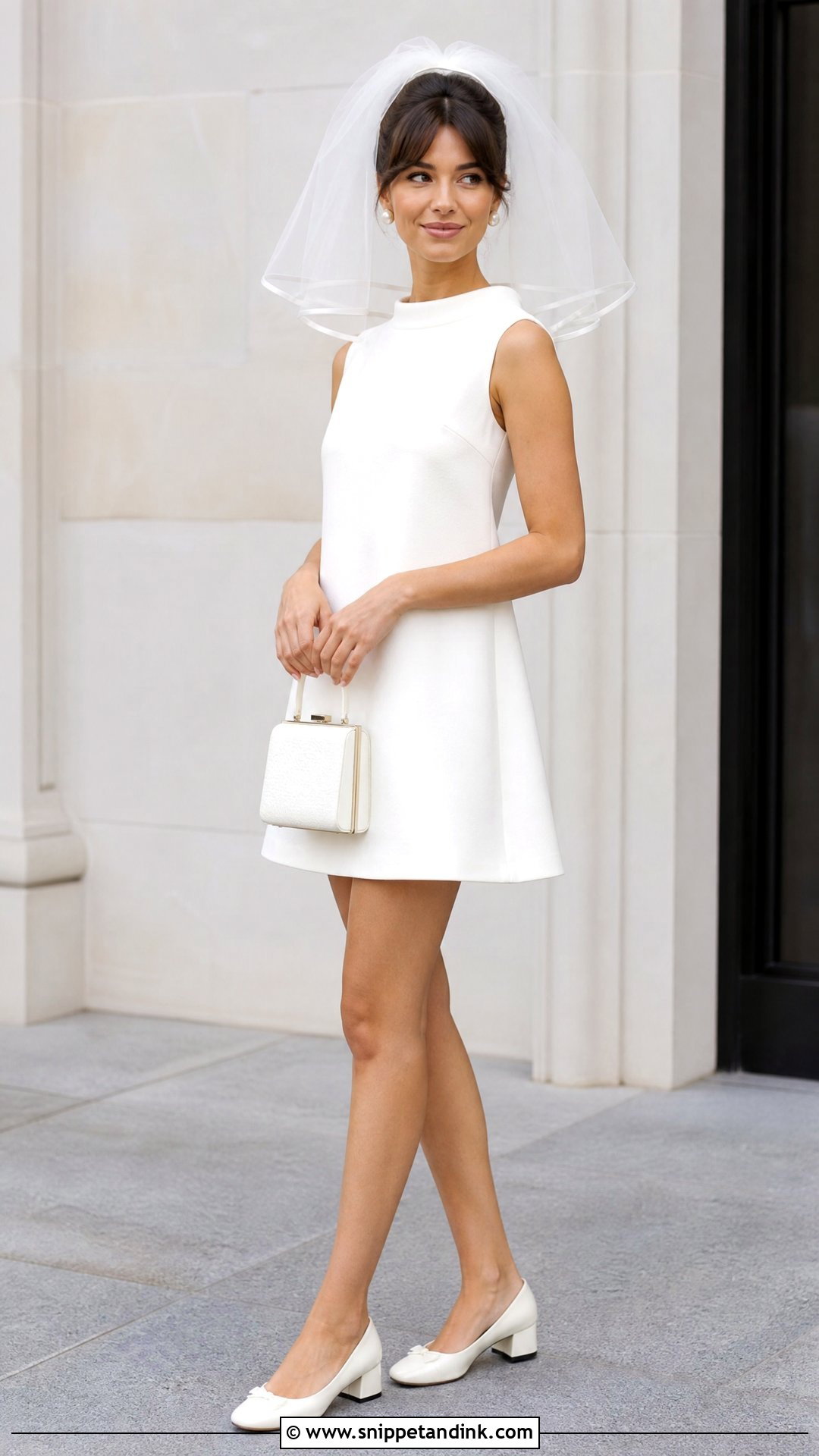
A 1960s mod mini wedding dress is the most playful outfit here and suits a less formal wedding. A clean A-line with a short hem, high neck and almost no decoration is the shape that white minis took in the later sixties. Low block heels, slingbacks or ballet flats, a short bubble veil, pearl studs and a small structured bag finish it, with a smooth bob, flipped ends or a glossy ponytail. Minimal dresses show every flaw in the fabric, so choose a crepe or double-faced satin with some weight. Thin fabric on a mini wrinkles across the lap within an hour. Rooftops, courthouses and small city weddings suit it.
7. 1960s Column Wedding Dress
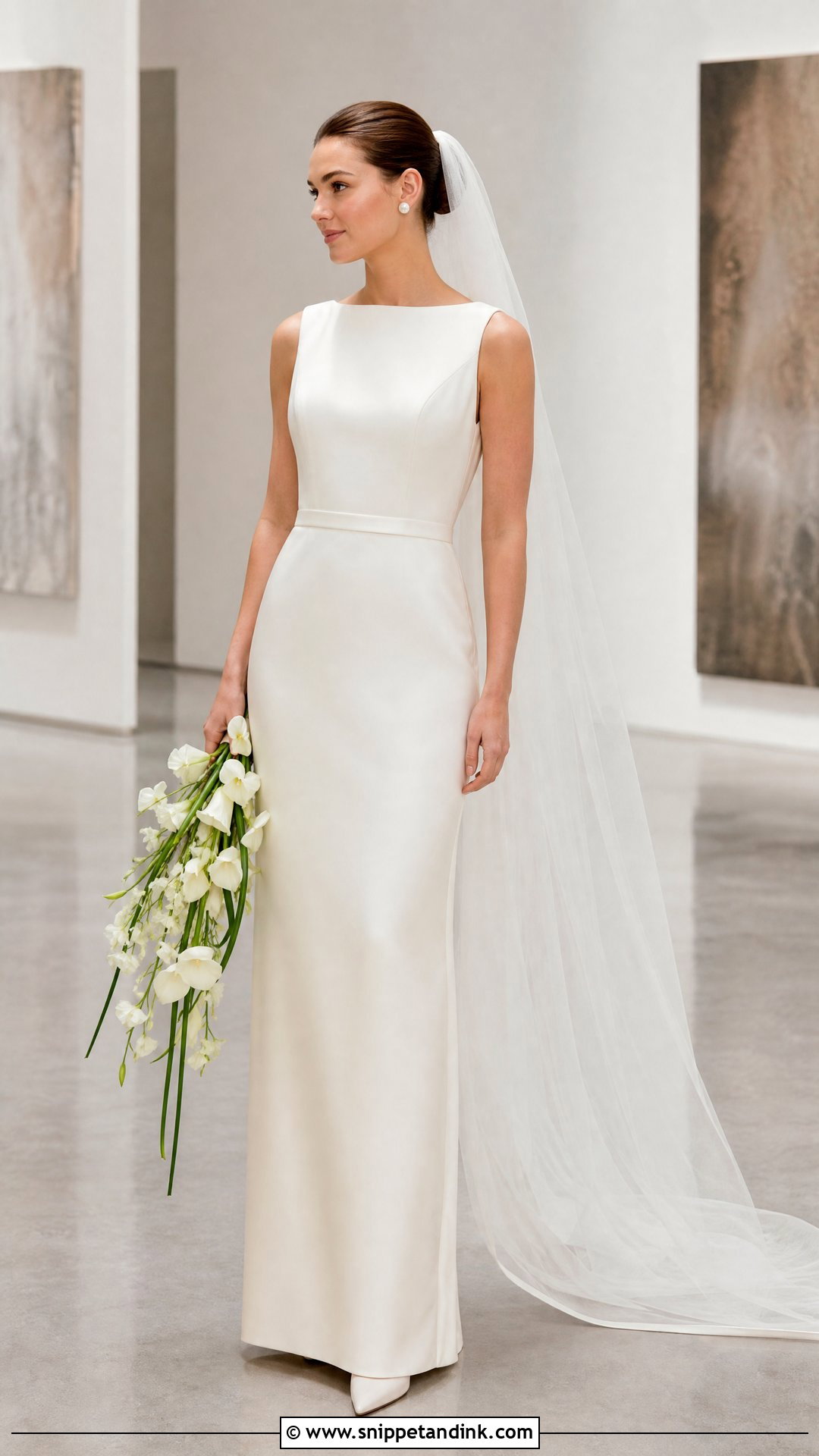
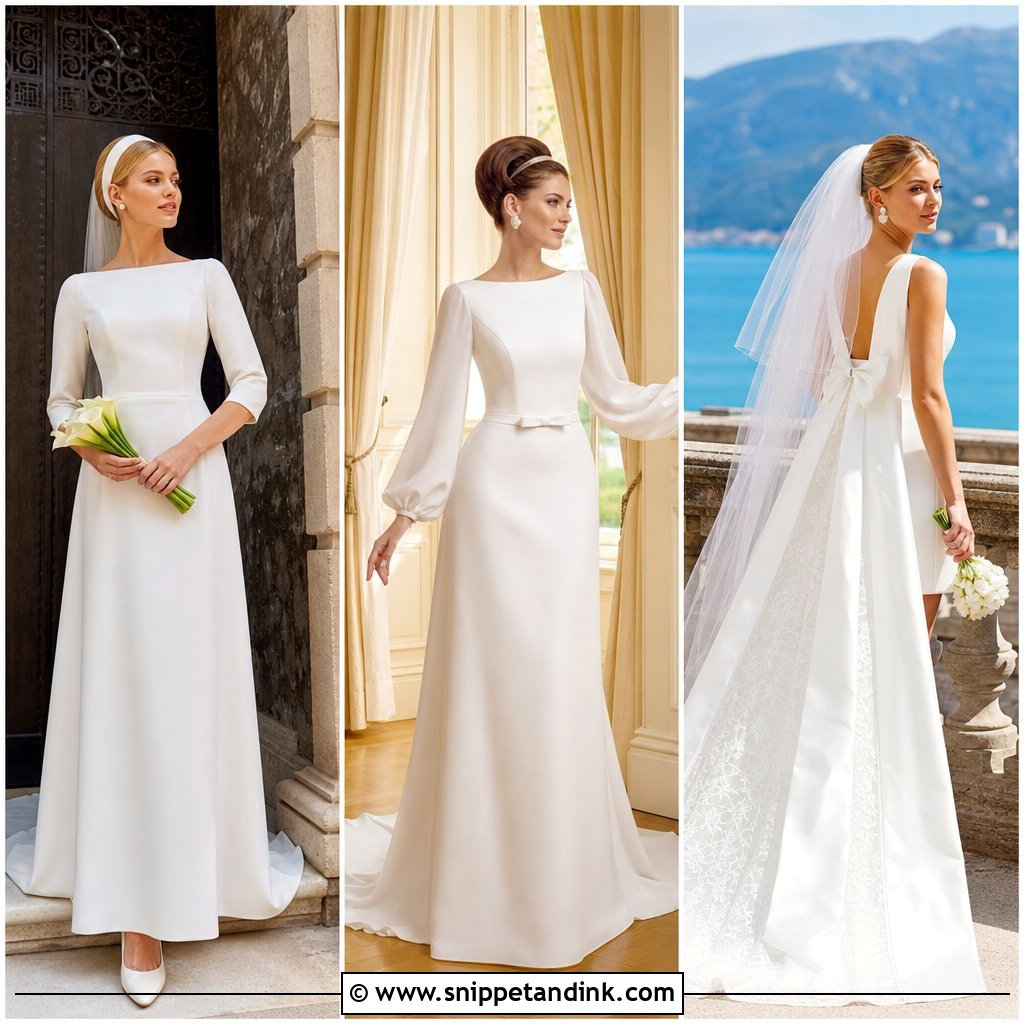
Clean lines are the whole appeal of a sixties column. A floor-length gown, gently fitted, with a defined waist and little or no embellishment, was the decade’s more minimal bridal direction, often with a belt and a long flowing veil. A bateau or simple scoop neck keeps it streamlined. Pointed pumps, pearl button earrings, a narrow satin belt if it needs definition, and a long veil fixed behind a smooth updo or a softly backcombed crown finish it. Carry long-stemmed flowers rather than a round bouquet. A column has no skirt to hide in, so the fit through the hip has to be exact. If the budget is tight, I’d pay for that alteration and skip something else.
8. 1960s Wedding Dress With Jacket
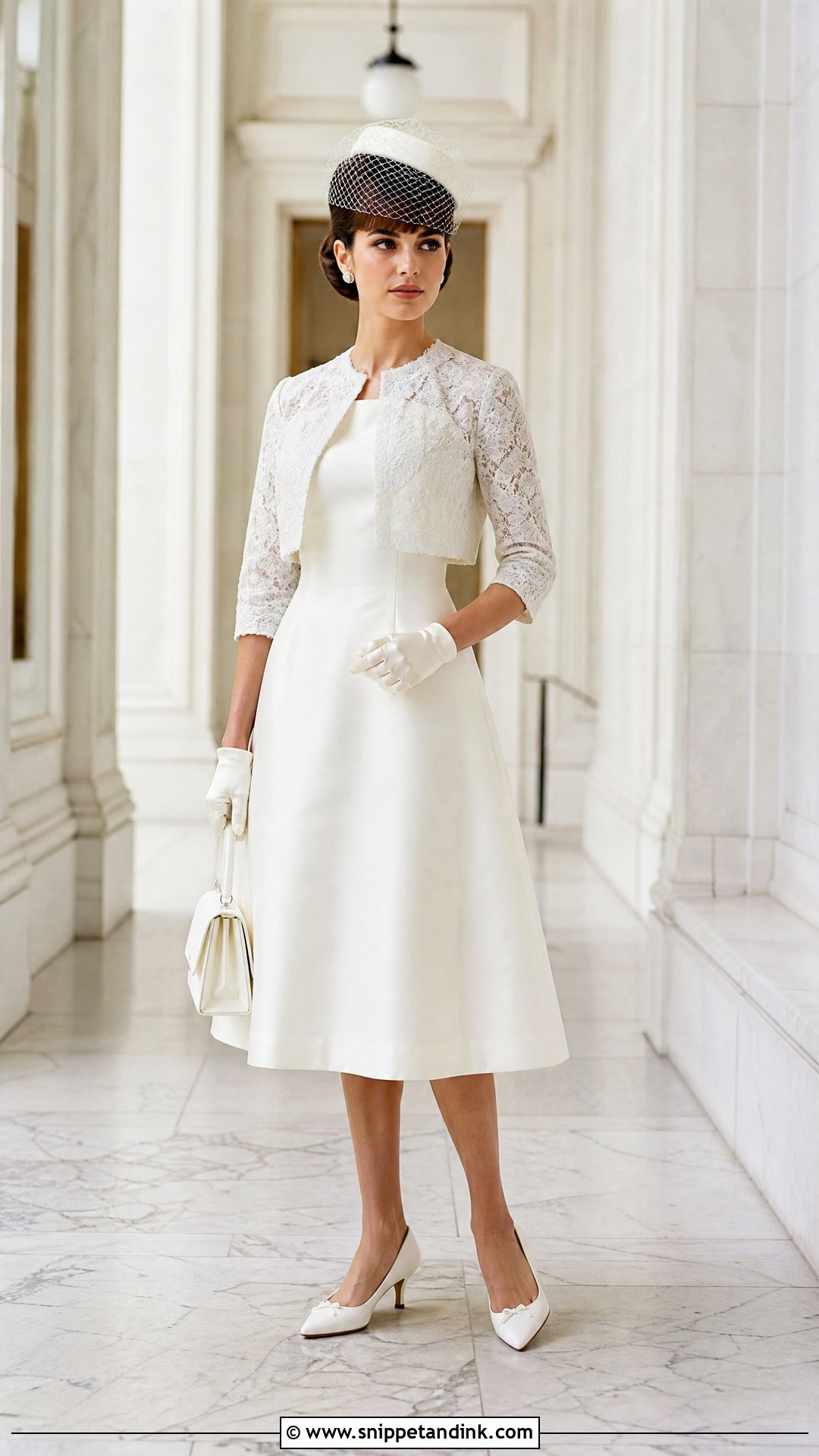
A dress with a matching jacket is early sixties polish. Start with a sleeveless sheath or A-line, then add a cropped lace, satin or jacquard jacket for the ceremony and take it off for the party. Pointed kitten heels, a structured mini bag, short gloves for a stronger retro note and a pillbox-style headpiece or compact veil complete it. This is the most practical outfit on the list for a church with a cover-up expectation or a day that swings between cold and warm. Have the jacket cut slightly roomier than the dress through the shoulders, or it will ride up and crease when you reach for the bouquet.
9. 1970s Boho Lace Wedding Dress
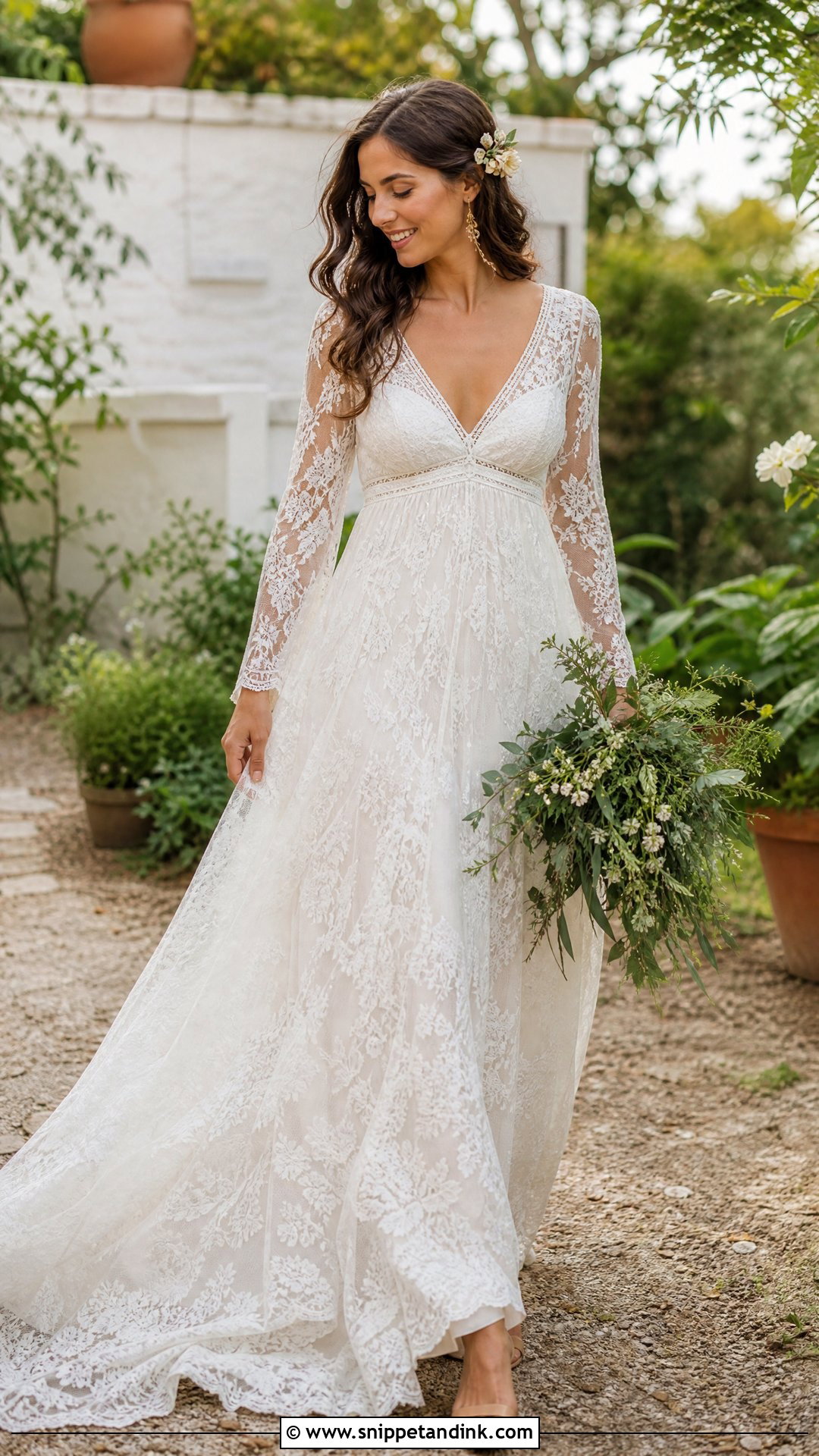
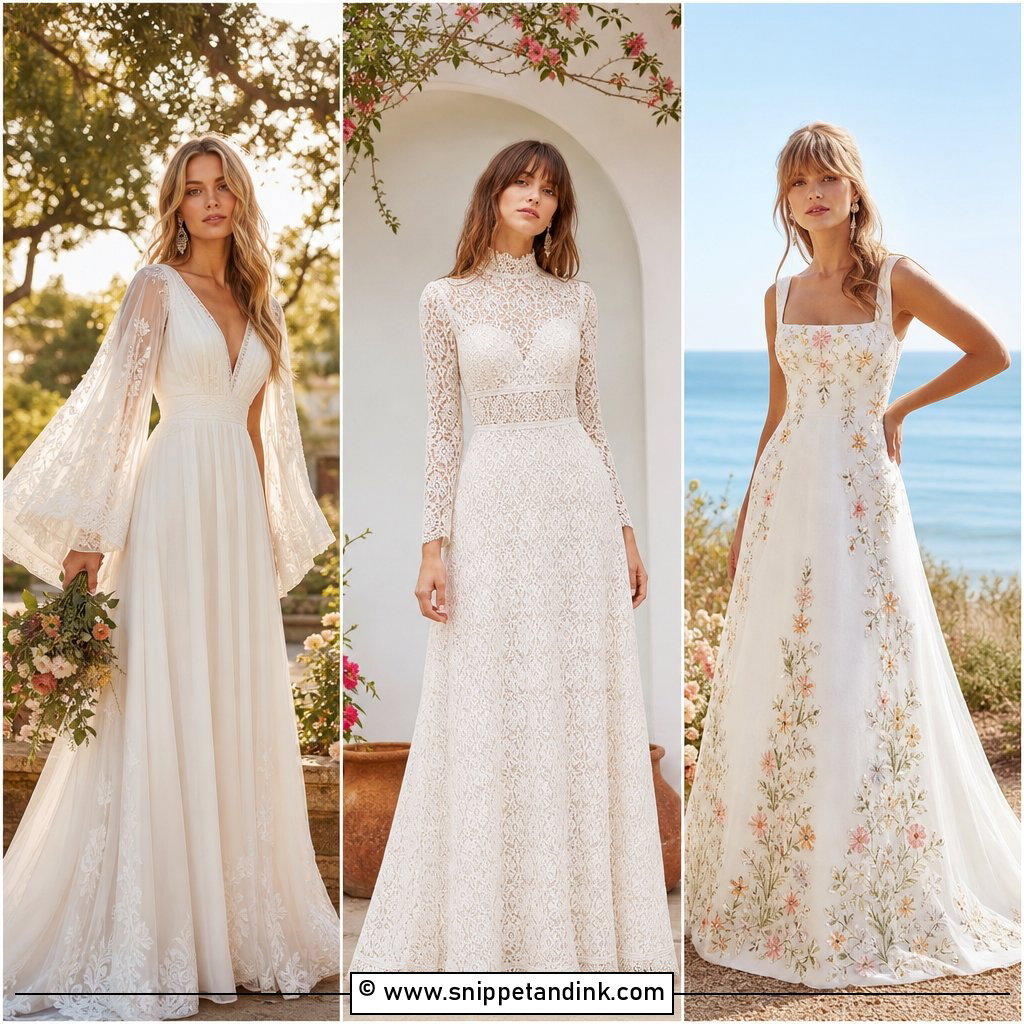
Seventies boho lace is soft and unstructured. A flowing A-line or empire-waist gown with sheer lace sleeves, a light skirt and delicate florals is the classic version of that decade’s bridal look. Block-heel sandals or embroidered flats, a floral comb, small gold earrings and a loose bouquet of greenery suit it, with soft waves or a relaxed braided updo. Rigid styling fights this dress. Light lace on a breezy outdoor day can lift and cling, so a simple slip with a little weight in the hem keeps the skirt hanging nicely. Woodland venues and summer ceremonies suit it.
10. 1970s Bell Sleeve Wedding Dress
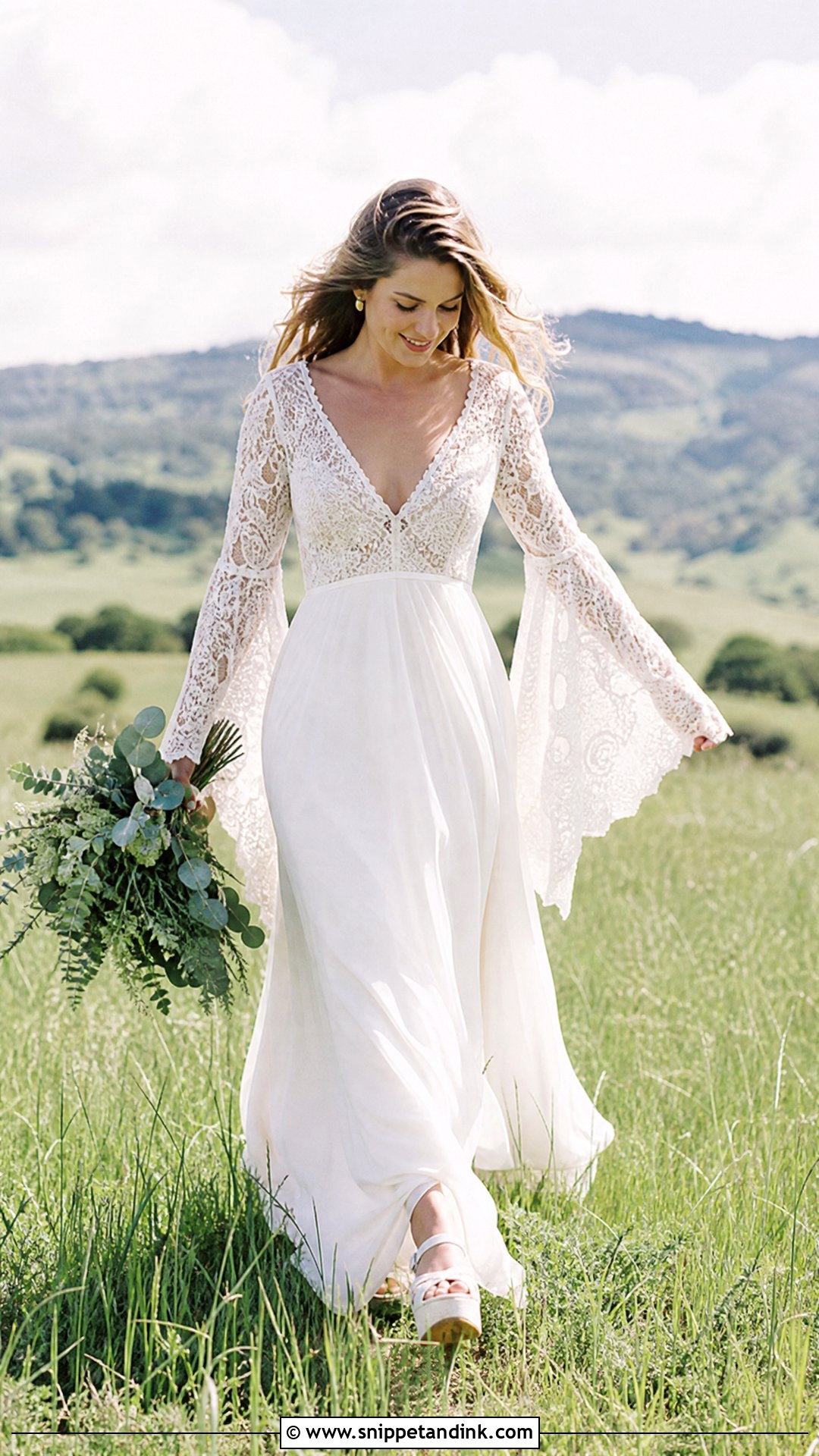
Wide bell sleeves turn a plain gown into a seventies look in one move. A fitted lace bodice with sleeves flaring below the elbow, a straight or gently flowing skirt and a simple neckline keep the sleeves as the feature. Platform sandals or block heels give height and stability. A long pendant works only if the bodice is plain; otherwise wear small earrings and skip the necklace, with a centre parting, soft curls and greenery. Bells catch on everything at elbow height, from cake knives to candle holders. Ask your seamstress for a discreet wrist loop you can hook a finger through when you need them out of the way.
11. 1970s Prairie Wedding Dress
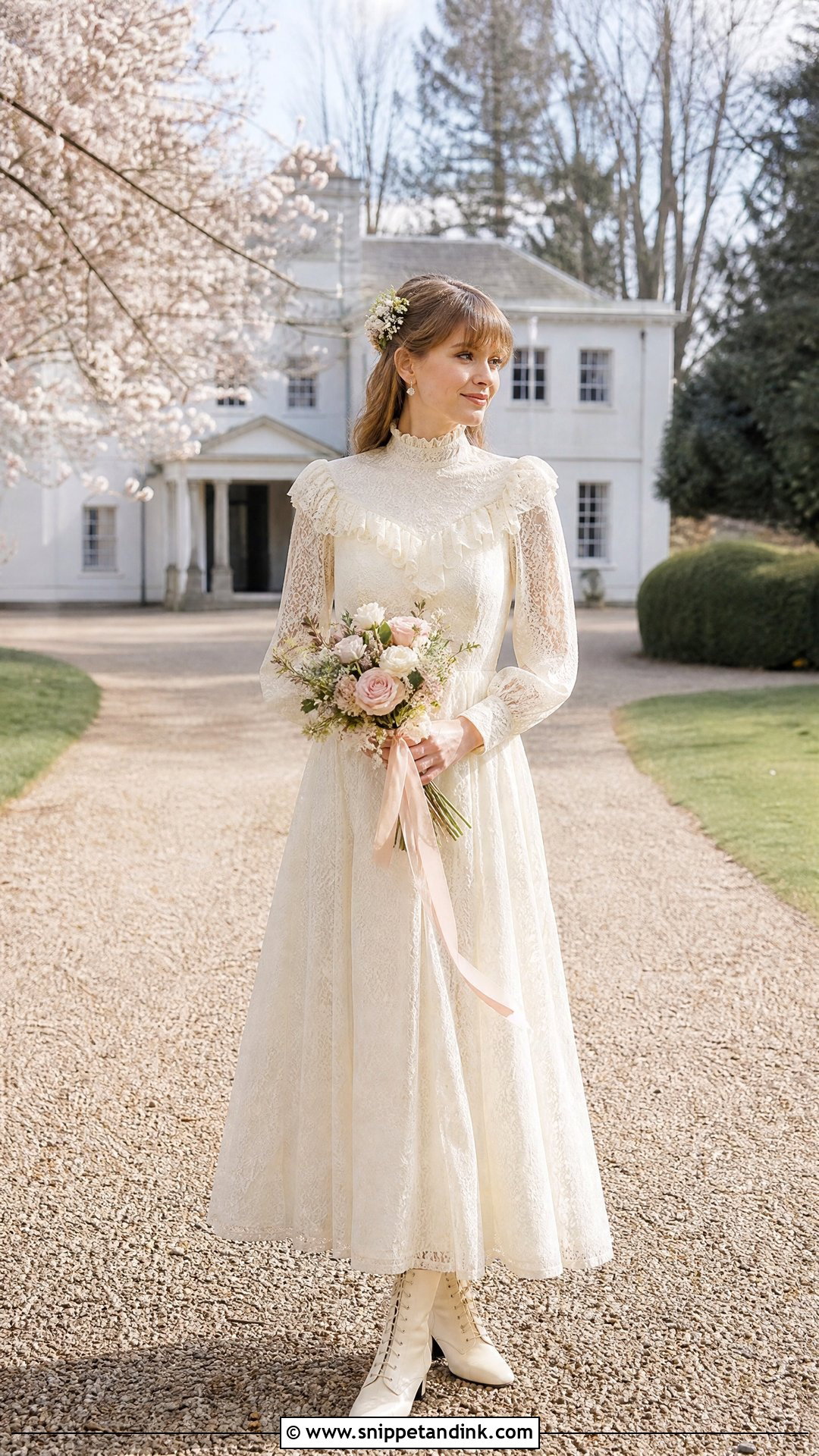
A seventies prairie dress gives coverage, texture and a gentle nostalgia. A high or ruffled neckline, fitted waist, full-length sleeves and a flowing skirt in a light fabric with natural movement is the look. Lace-up boots, low block heels or flats depending on the ground, a ribboned bouquet, small studs and a floral comb suit it, with a loose braid or softly pinned hair. Layers of ruffles and lace can feel heavy and costume-like, and modern tailoring is the cure: a slimmer sleeve, a lined bodice, fewer tiers. Barns, countryside estates and relaxed autumn weddings suit it.
12. 1980s Puff Sleeve Wedding Dress
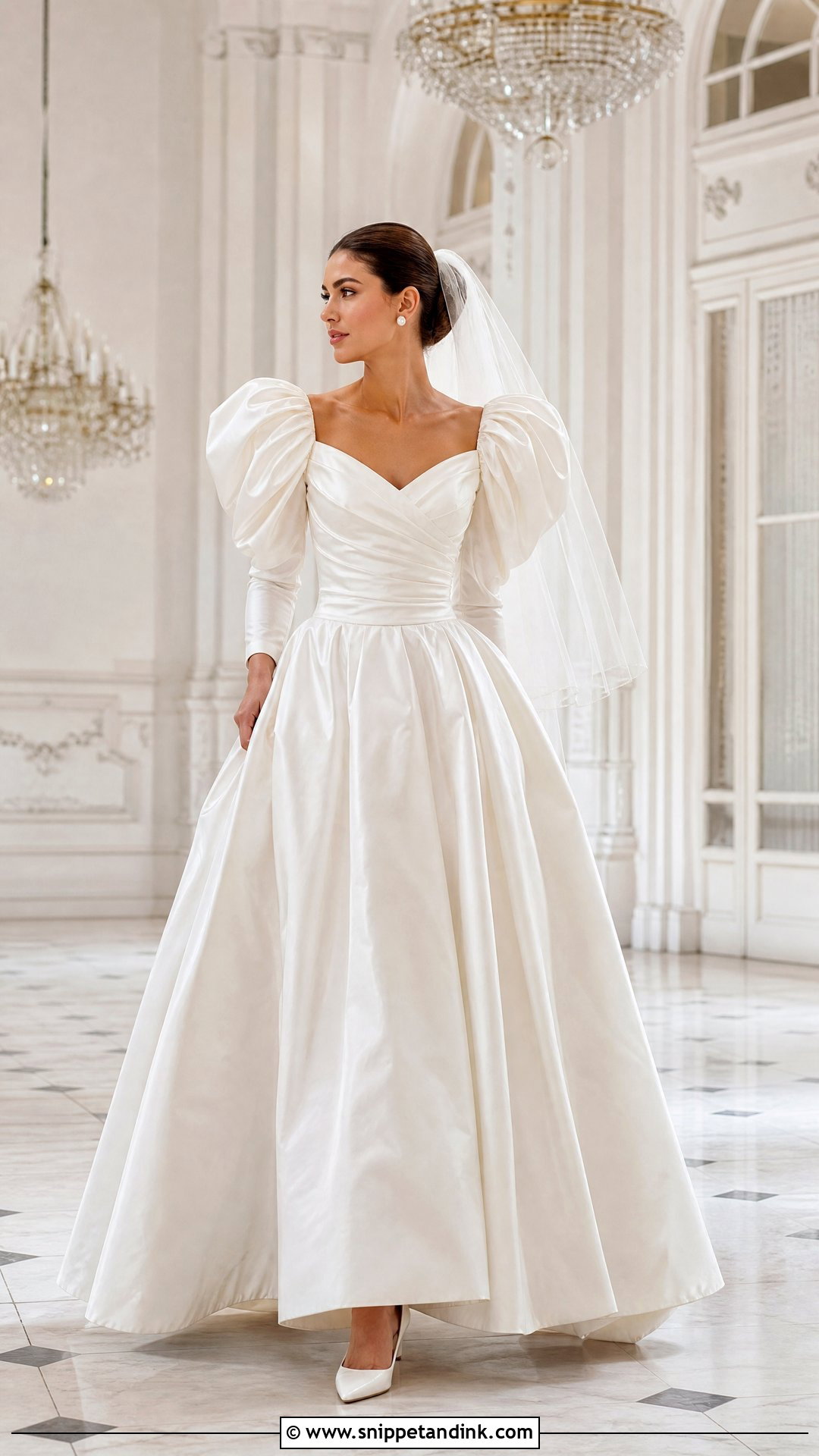
Make an entrance in an 1980s puff sleeve wedding dress with a fitted waist and full skirt. The sleeves carry the decade’s volume, so a cleaner bodice and a controlled skirt keep it current. Satin, taffeta or structured organza hold a sleeve’s shape best. Pearl earrings and pointed pumps suit it, and fix the veil behind your hair instead of on top so you don’t stack volume around your face. A sleek bun or waved bob balances the shoulders. Carry a structured bouquet, not a cascade. Taffeta rustles audibly with every step, which some brides love and some find distracting during quiet vows, so walk in it before choosing.
13. Victorian High Neck Wedding Dress
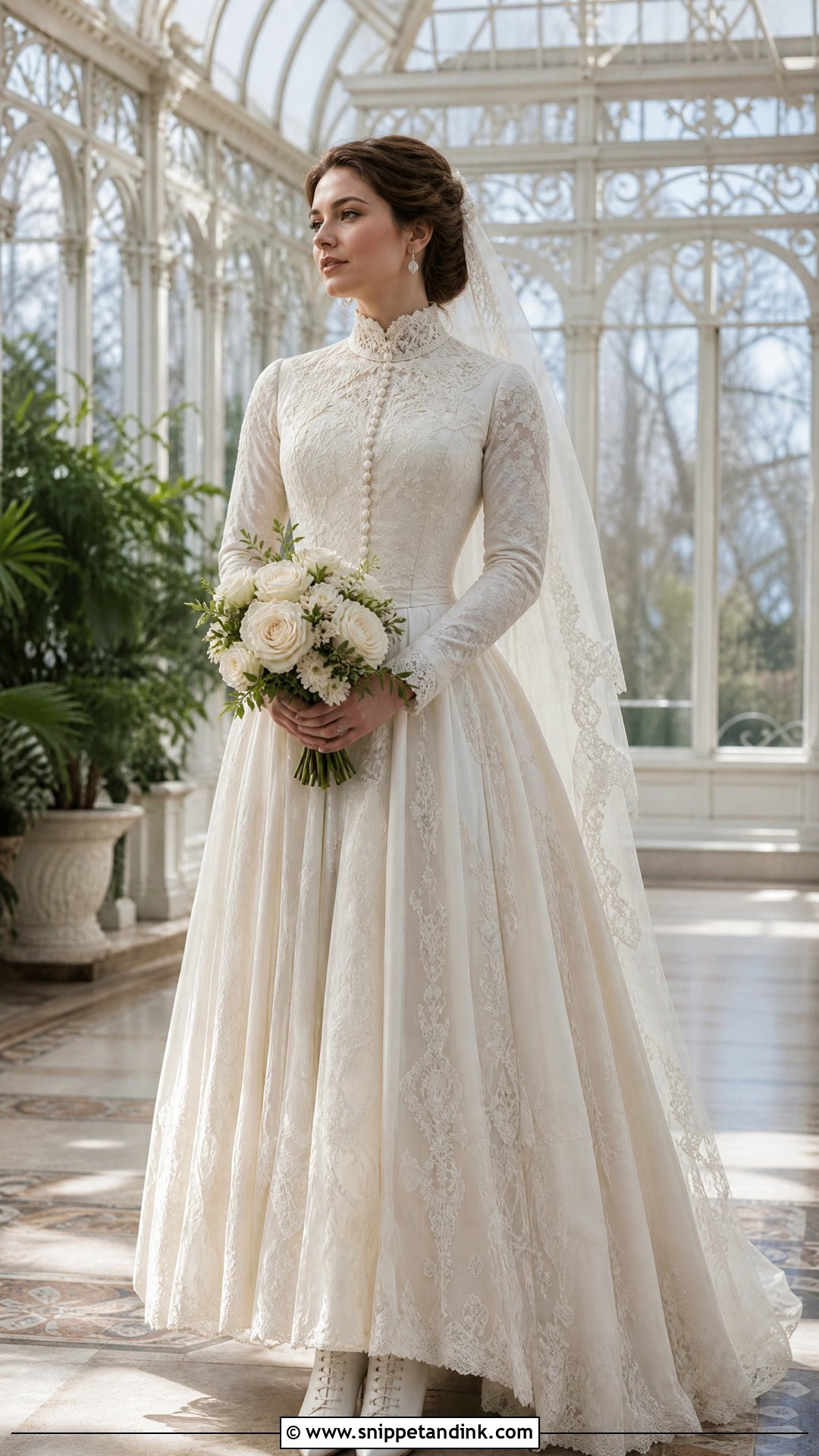
A Victorian high neck gives coverage and intricate lace. A fitted bodice with a raised lace collar, long sleeves, a natural waist and a gently full skirt, with covered buttons and lace edging, keeps it vintage without costume. Ivory ankle boots or closed pumps, a lace-edged veil, small pearl earrings and a brooch at the waist on a plain fabric suit it, with a low bun or braided updo that leaves the collar visible. Keep the makeup fresh. High lace collars can rub along the jaw, so ask for a soft lining inside the collar band before the final fitting. Autumn weddings, historic houses and conservatories suit it.
14. Edwardian Lace Wedding Dress
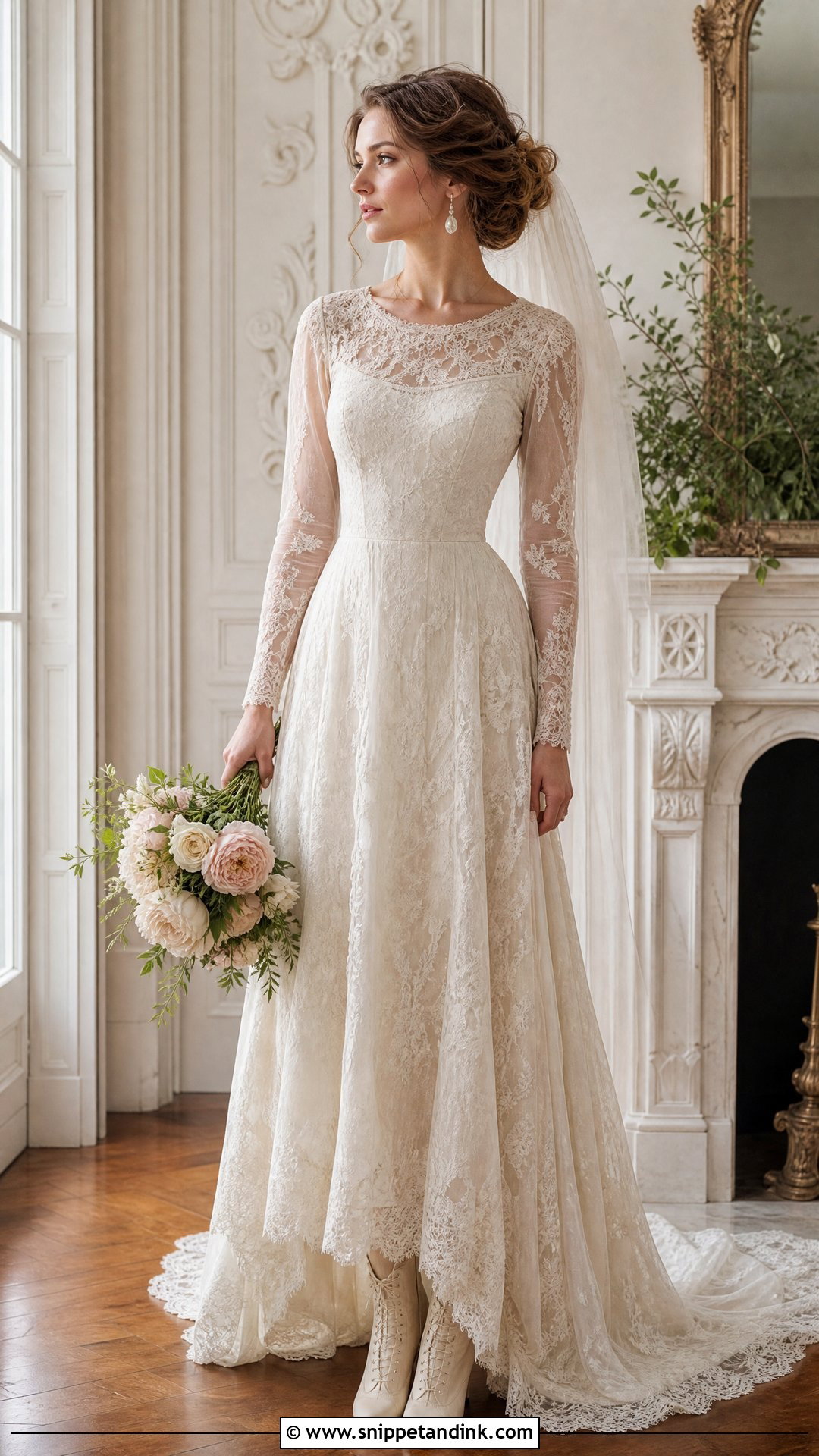
An Edwardian lace wedding dress is light and romantic. Look for a high or softly rounded neckline, delicate lace panels, a defined waist and a skirt falling smoothly over the hips; slightly puffed shoulders or sheer sleeves add period character, and a simple lining keeps it wearable. Buttoned ankle boots, pearl drops, a soft tulle veil and a bouquet of garden roses with trailing greenery suit it. I’d do a loose Gibson-style updo rather than an exact reproduction. The real Gibson relied on padding that now looks dated; a softer version gives the shape without that. Gardens and bright restored estates suit it.



15. Old Hollywood Wedding Dress
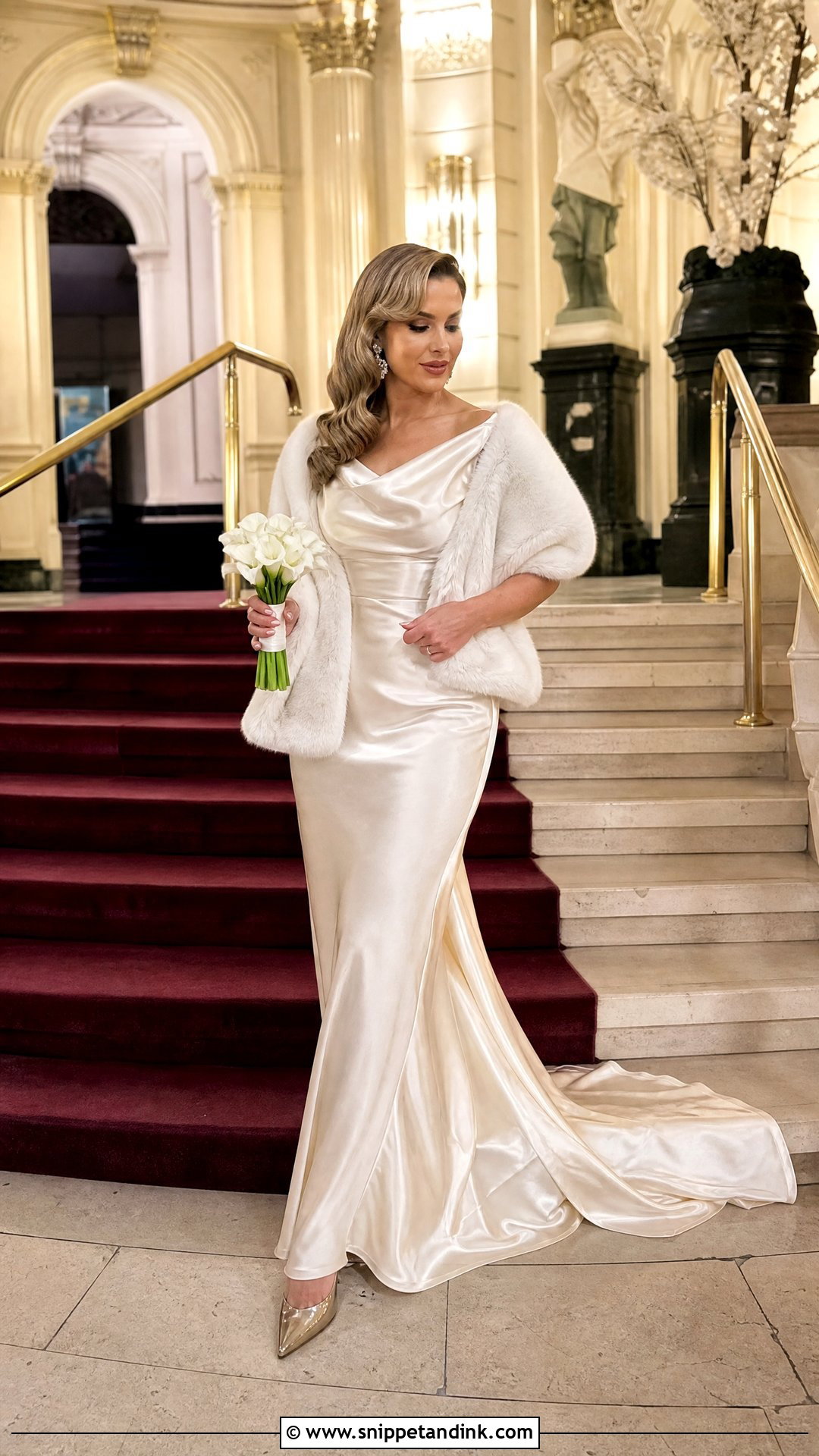
Old Hollywood is glossy satin, sculpted draping and very little else. A fitted gown with a cowl neck, low back or gathered waist that follows the body without restricting it, in ivory, soft white or pale champagne, is the base. Crystal earrings, pointed metallic heels, a small evening bag, a long ceremony veil and a faux-fur stole for the cold finish it, with brushed waves or a side-parted low bun. Red lipstick suits it, but test it against your teeth and the dress under flash, since some reds look orange in photos. Soft rose is the safer route. Theatres, galleries and evening receptions suit it.
16. Vintage Crochet Wedding Dress
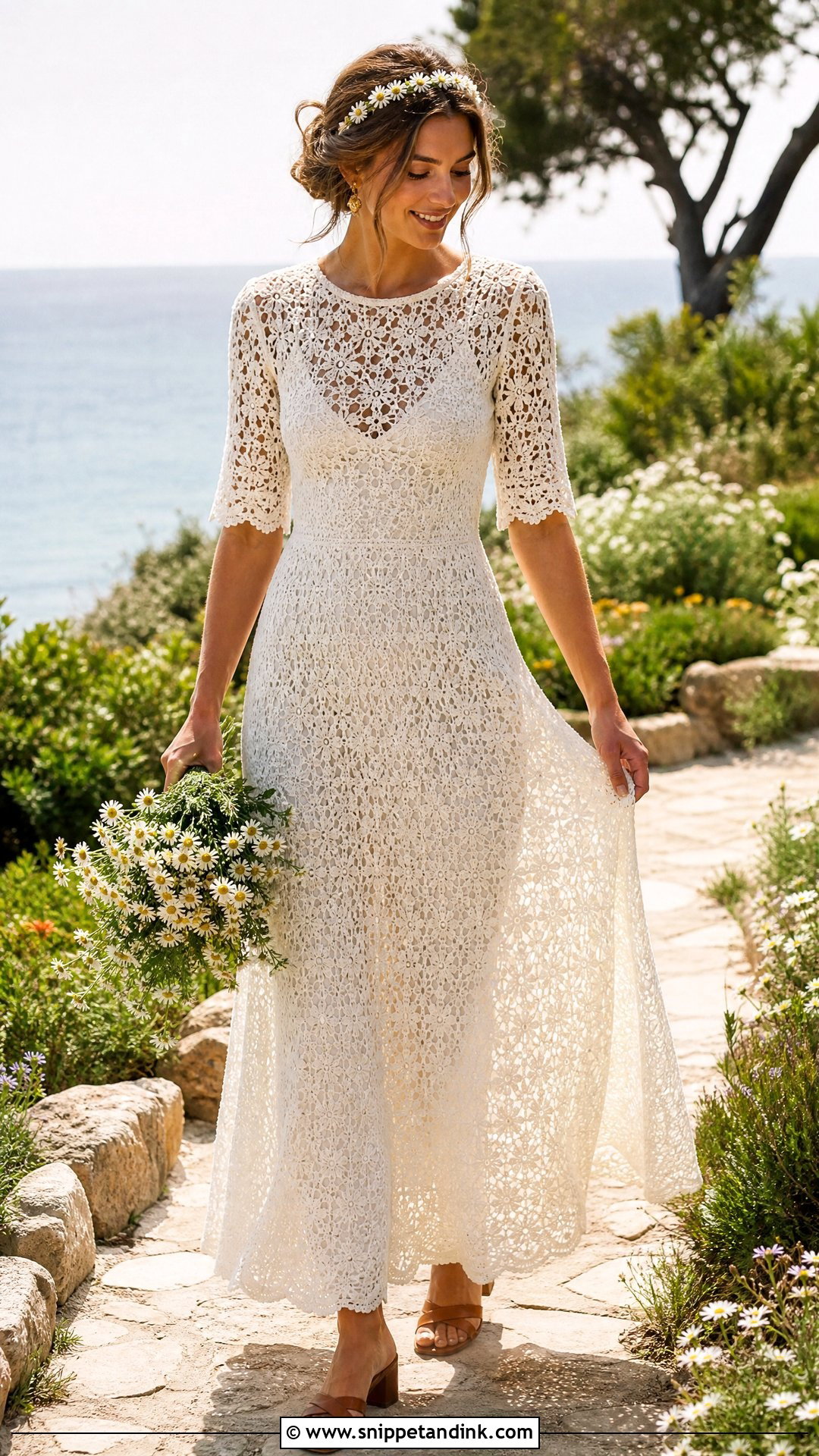
Crochet puts texture first. A lined gown with an openwork crochet overlay, fitted waist and softly flared skirt is the shape; the lining should match your skin or the dress closely so the pattern reads without distracting. Leather block-heel sandals, small gold hoops and a narrow headband or floral piece suit it, with daisies and seasonal white flowers. Skip heavy necklaces. Crochet stretches with wear and with weight, so a gown that fits snugly at the first fitting may hang looser by the wedding; have the final adjustment done close to the date. Summer gardens and coastal ceremonies suit it.
17. Champagne Vintage Wedding Dress
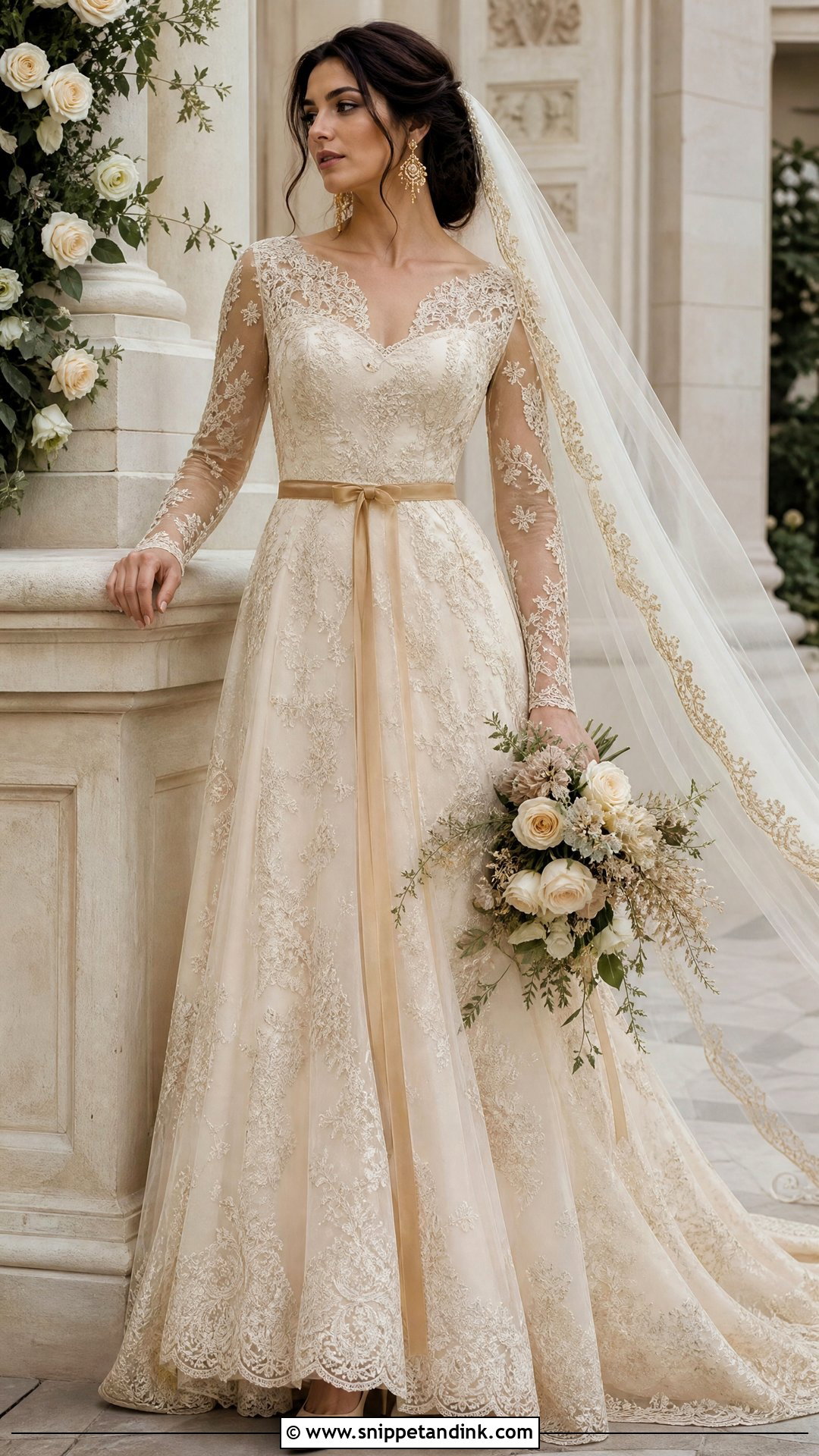
Champagne is a warmer alternative to bright white, and it makes lace, beading and embroidery read more clearly. A fitted bodice and flowing A-line in a warm neutral, with antique-style lace or a little metallic thread, adds depth without fuss. Neutral pumps, gold earrings, a champagne-edged veil and a small velvet ribbon at the waist on a plain gown suit it, with cream roses or dried grasses. Champagne flatters warm and olive skin especially, but on very fair, cool skin it can wash you out. I check it by holding the fabric near the bride’s face at a window before anything is ordered. Stone, wood and garden backdrops suit it in photos.
18. Vintage Cape Wedding Dress
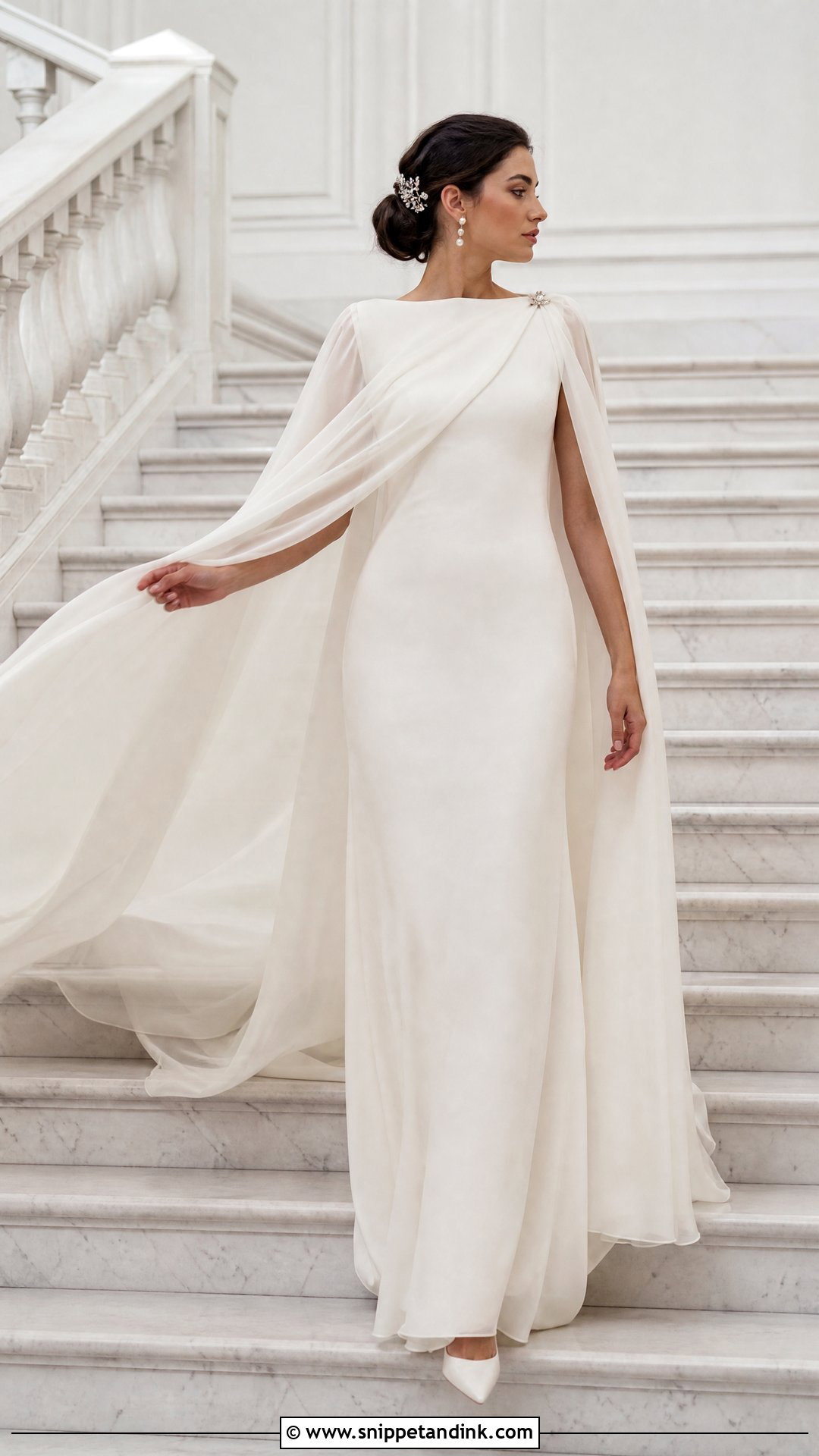
A cape gives a plain dress instant vintage drama. Start with a clean column, sheath or lightly flared gown, then add a lace, chiffon or satin cape from the shoulder: a short capelet reads mid-century, a floor-length one reads formal. Pointed pumps, drop earrings and a small comb can replace the veil; if you want both, keep the veil light. Carry a narrow bouquet. Capes fastened only at the neck slide backward and pull on the throat, so ask for small hidden snaps at the shoulder seams to anchor them. It’s a good cool-weather choice and moves well on a staircase entrance.
19. Vintage Floral Wedding Dress
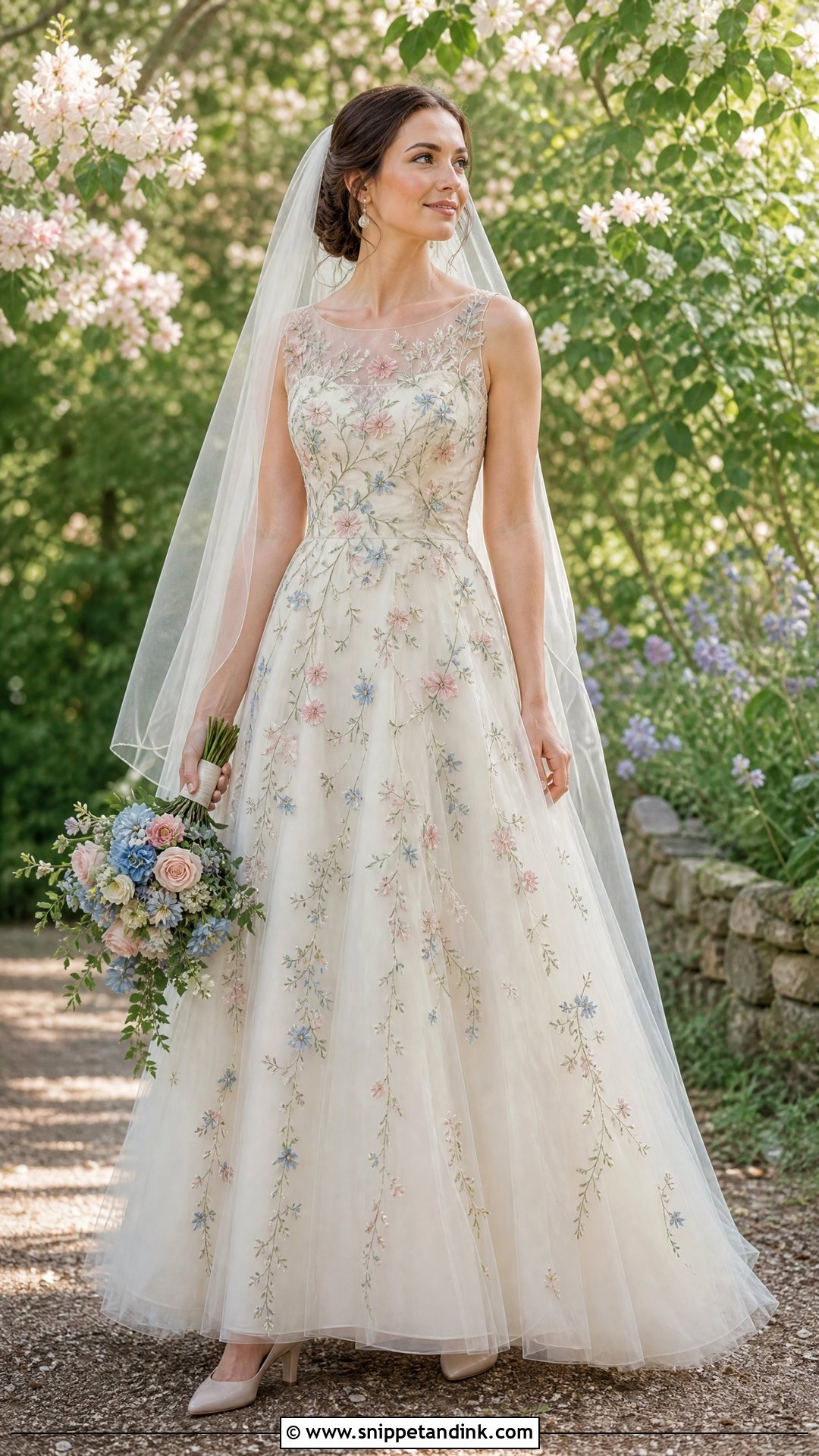
Floral detail brings soft colour into the outfit: embroidered flowers, faded botanical prints or pastel appliqué over ivory tulle. A fitted bodice and an A-line or tea-length skirt keep the pattern balanced. Neutral heels, pearl earrings and a plain veil suit it, with soft waves, a low bun or a simple ribbon. When I talk to the florist, I pull one or two colours from the dress into the bouquet, not all of them, or the two fight. Printed florals can look busier in photographs than in person, so take a phone photo of yourself in the dress from across the room. For something quieter, white-on-white embroidery gives the texture without the colour. Spring and summer gardens suit it.

20. Vintage Wedding Dress With Gloves
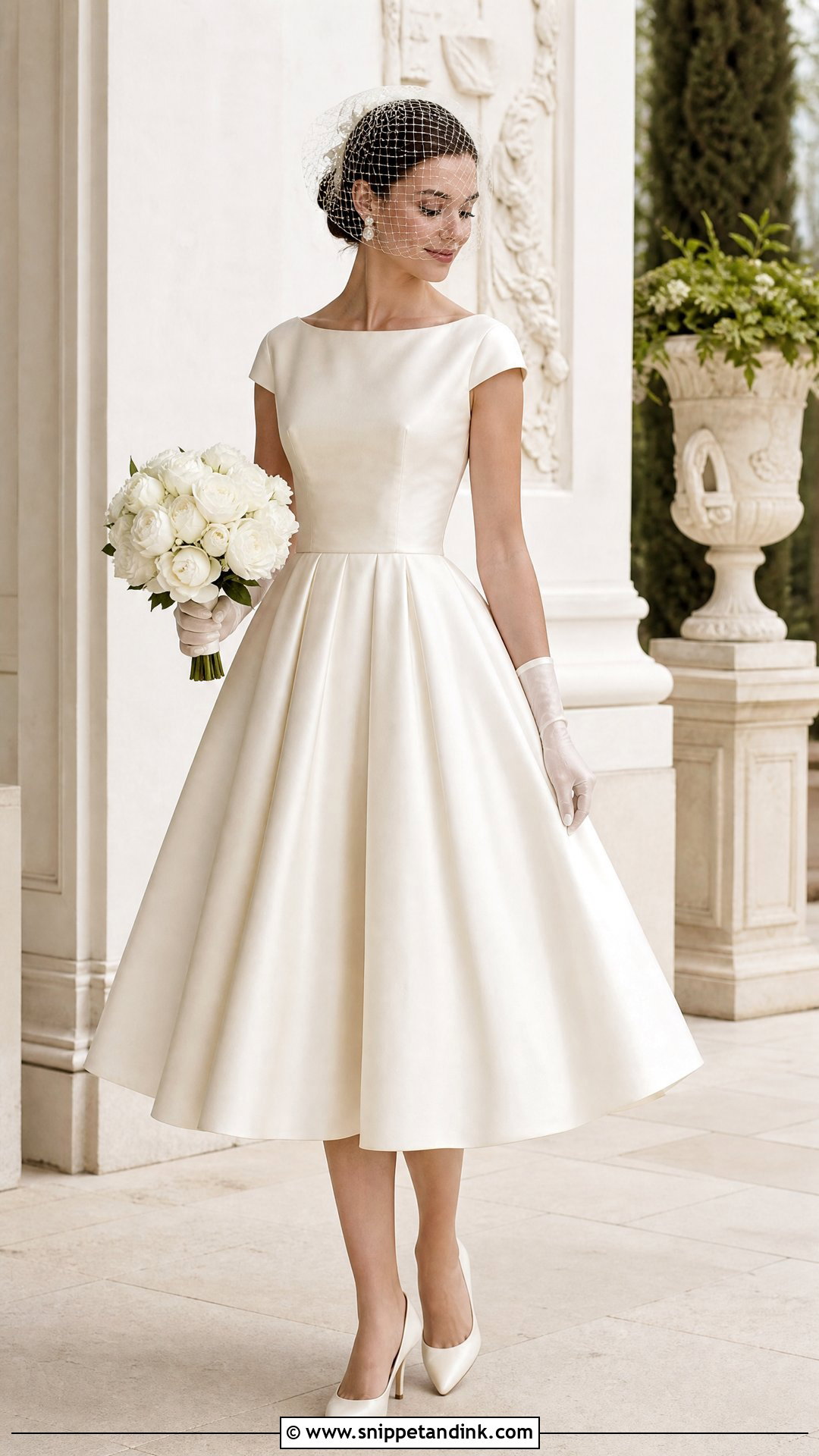
Gloves finish a vintage dress when their length matches the neckline and sleeves. Wrist gloves go with tea-length dresses, short sleeves and tailored sixties shapes; elbow gloves go with strapless satin or formal ball gowns. Keep bracelets minimal, and slip your rings on bare fingers after removing the gloves if needed. Classic pumps, pearl earrings, a structured bouquet and a birdcage or fingertip veil complete it. Match the white of the gloves to the white of the dress. Ivory gloves against a bright white gown look grubby next to it in every photo. Let the dress decide which decade you’re in, because gloves on their own suit several.
Which Decade Suits Your Venue, Season and Time of Day
A dress can be right for you and wrong for the day. These are the pairings I reach for when a bride loves two decades and can’t decide between them.
- Evening, indoors, candlelight: twenties beading and thirties satin. Both need low light and a smooth floor to look their best.
- Daytime, city hall or a small lunch: sixties minis, dress-and-jacket sets and fifties tea length. They’re easy to sit in and look sharp in daylight.
- Grass, gravel or a barn: seventies lace, prairie and crochet. Long, heavy trains and satin hems pick up dirt fast outdoors.
- Large ballroom or formal estate: fifties ball gowns and eighties sleeves, which need space to read properly.
- Winter: forties long sleeves, Victorian high necks and capes. Summer brides do better in crochet, chiffon and lighter Edwardian lace.
If your venue and your favourite decade don’t match, lean on accessories. A seventies bride in a city hotel can wear a cleaner column with a lace bell-sleeve jacket, and a twenties fan getting married in a garden can wear a lighter, lightly beaded dress with a Juliet cap. The headpiece and shoes can carry the era when the gown can’t.
One Clear Decade, Then Let Everything Else Support It
A retro look works when the nostalgic detail sits on a modern, comfortable base. Start with the decade you love, and choose its clearest feature: twenties beading, a fifties tea-length skirt, seventies lace sleeves or eighties volume. Then let your shoes, jewelry, hair pieces and flowers support it instead of competing. If you buy a genuine vintage gown, alterations matter even more, because old fabric and old sizing need a careful seamstress. Original or newly made, any of these retro dresses can carry a wedding that looks like nobody else’s.
You'll Like These Ideas:







Leave a Reply