
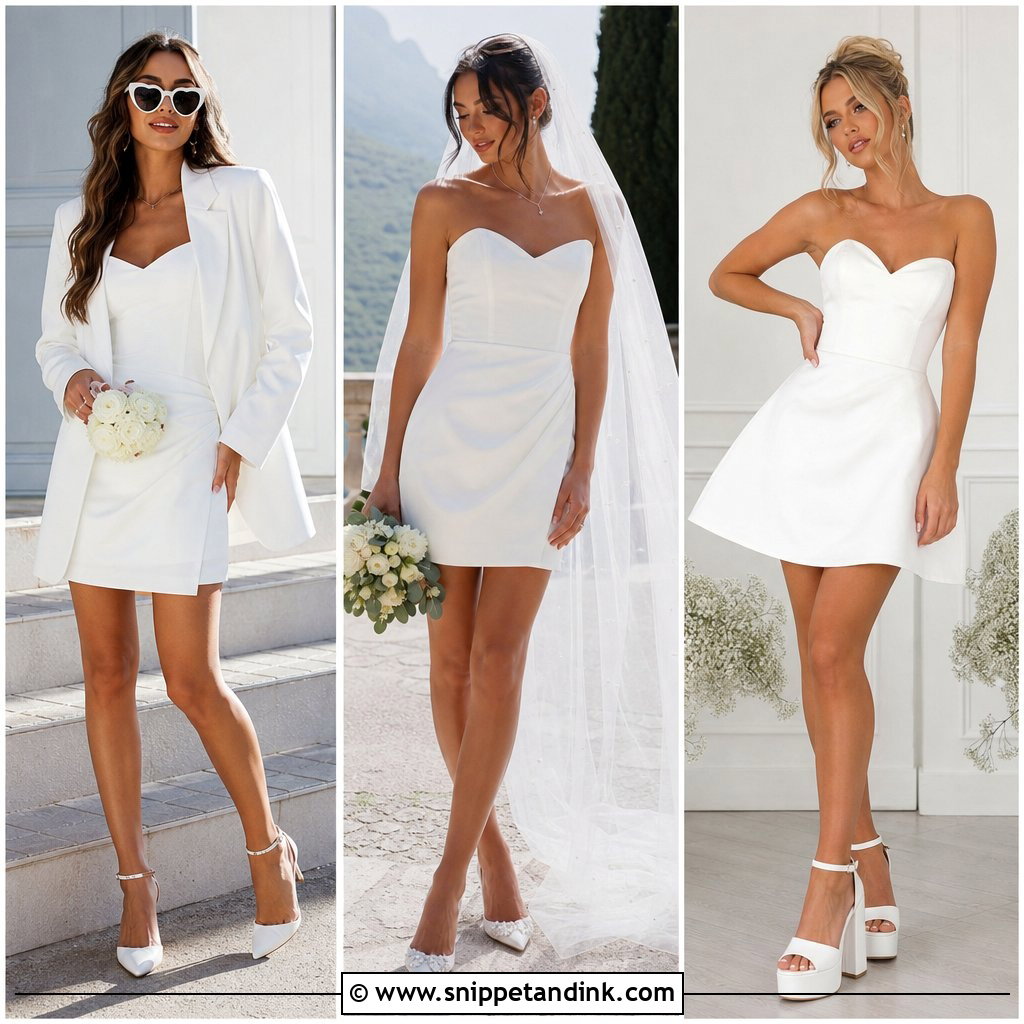
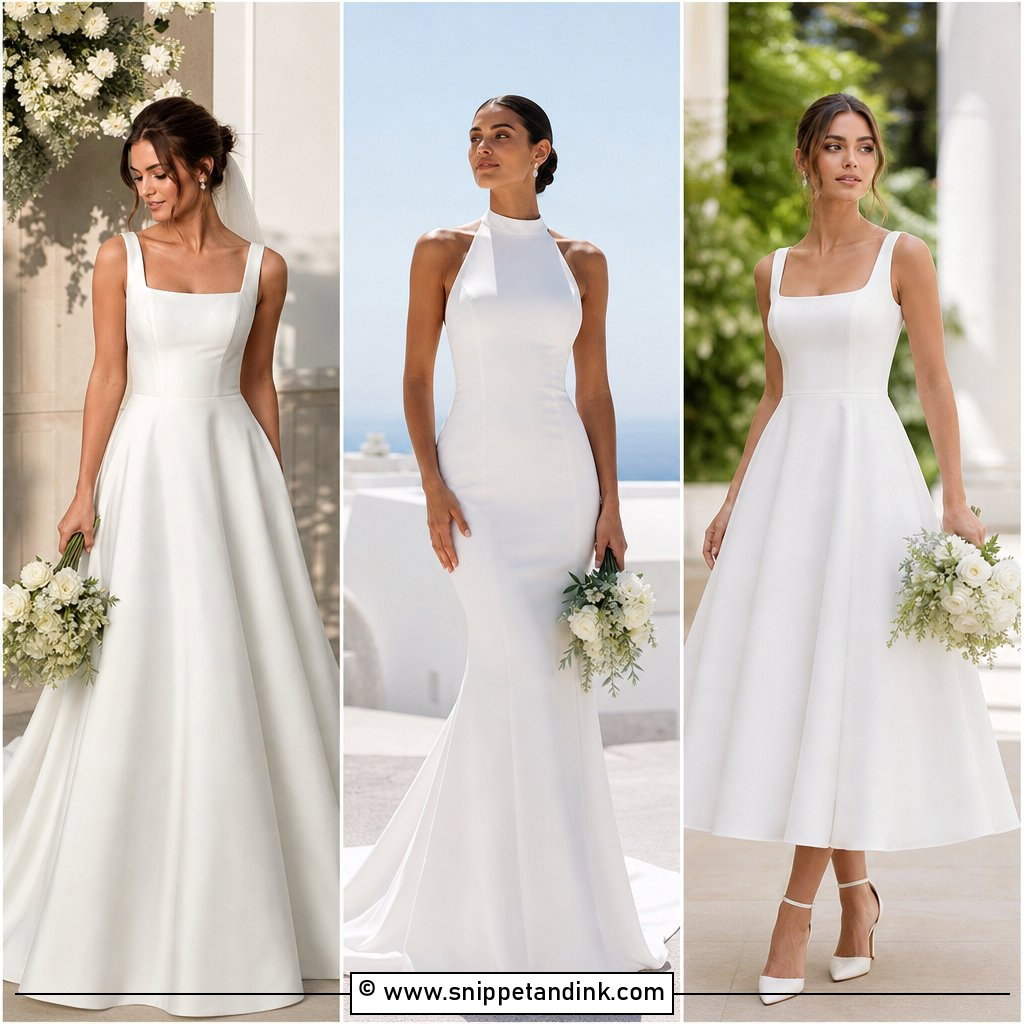
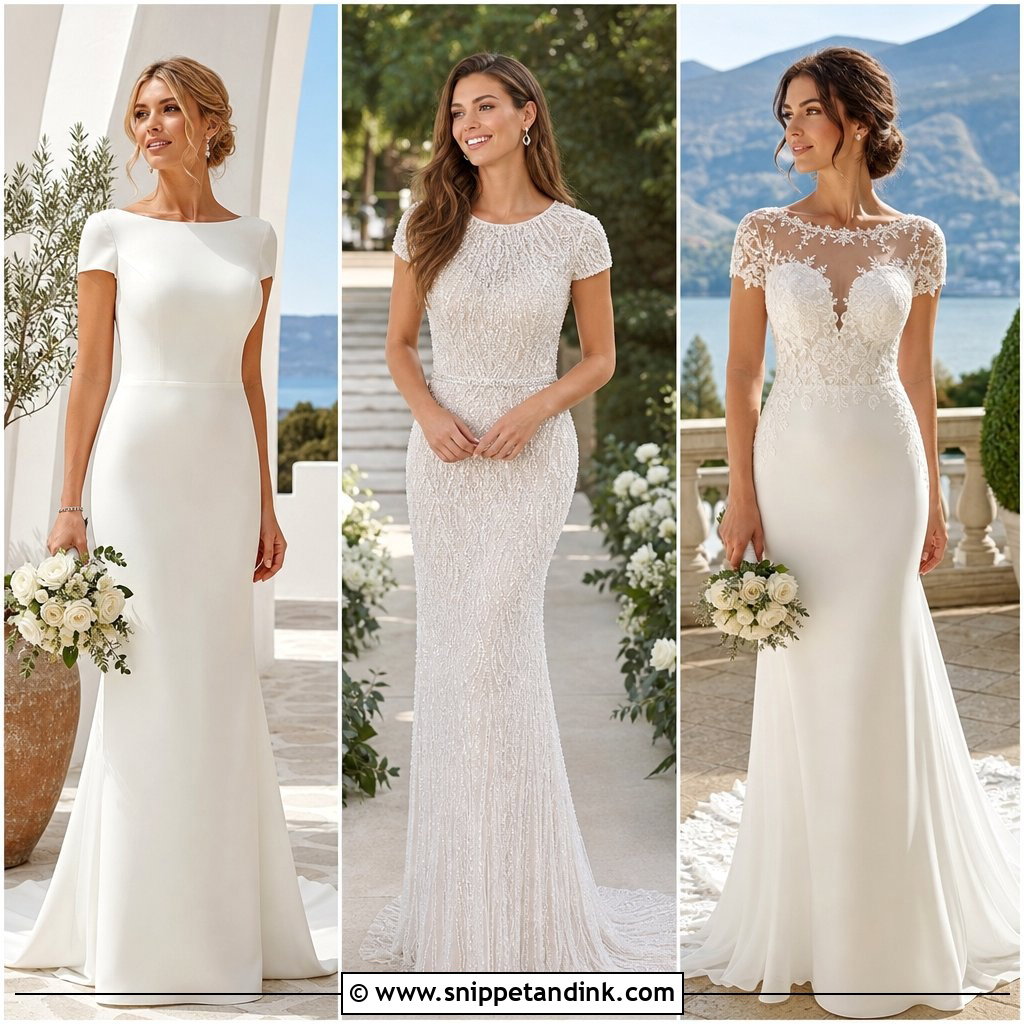
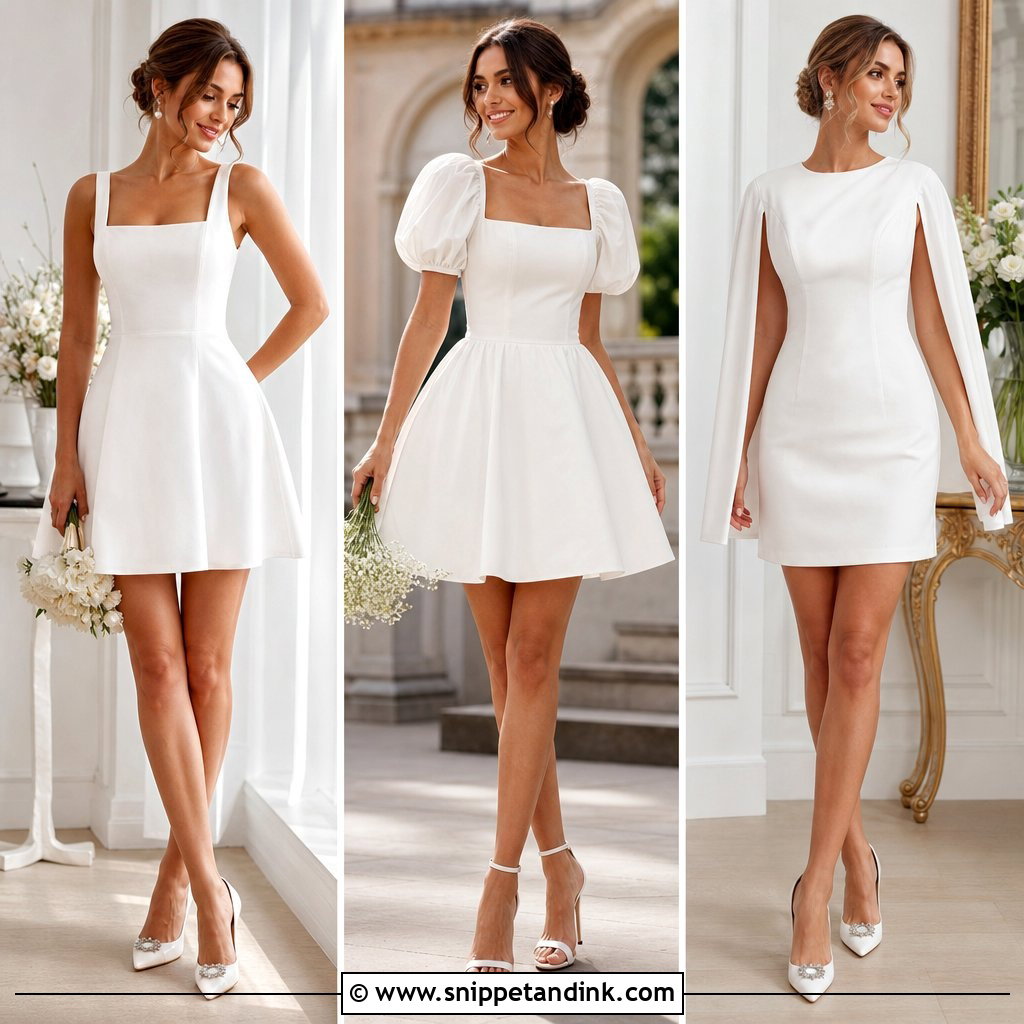
Minimal doesn’t mean plain; it means there’s nowhere for a weak fabric or a loose seam to hide. That’s why I’m stricter with simple short dresses than with lace gowns. The ones below run from sleek satin minis to tea-length cuts, and they suit courthouse ceremonies, small venues, destination weddings and second looks for the party. What gives them character is a precise neckline, a sculpted waist, good cloth or one deliberate accessory. A shorter hem also puts your shoes on show and makes walking and dancing easy. For each one I’ve noted what I’d check before you commit.
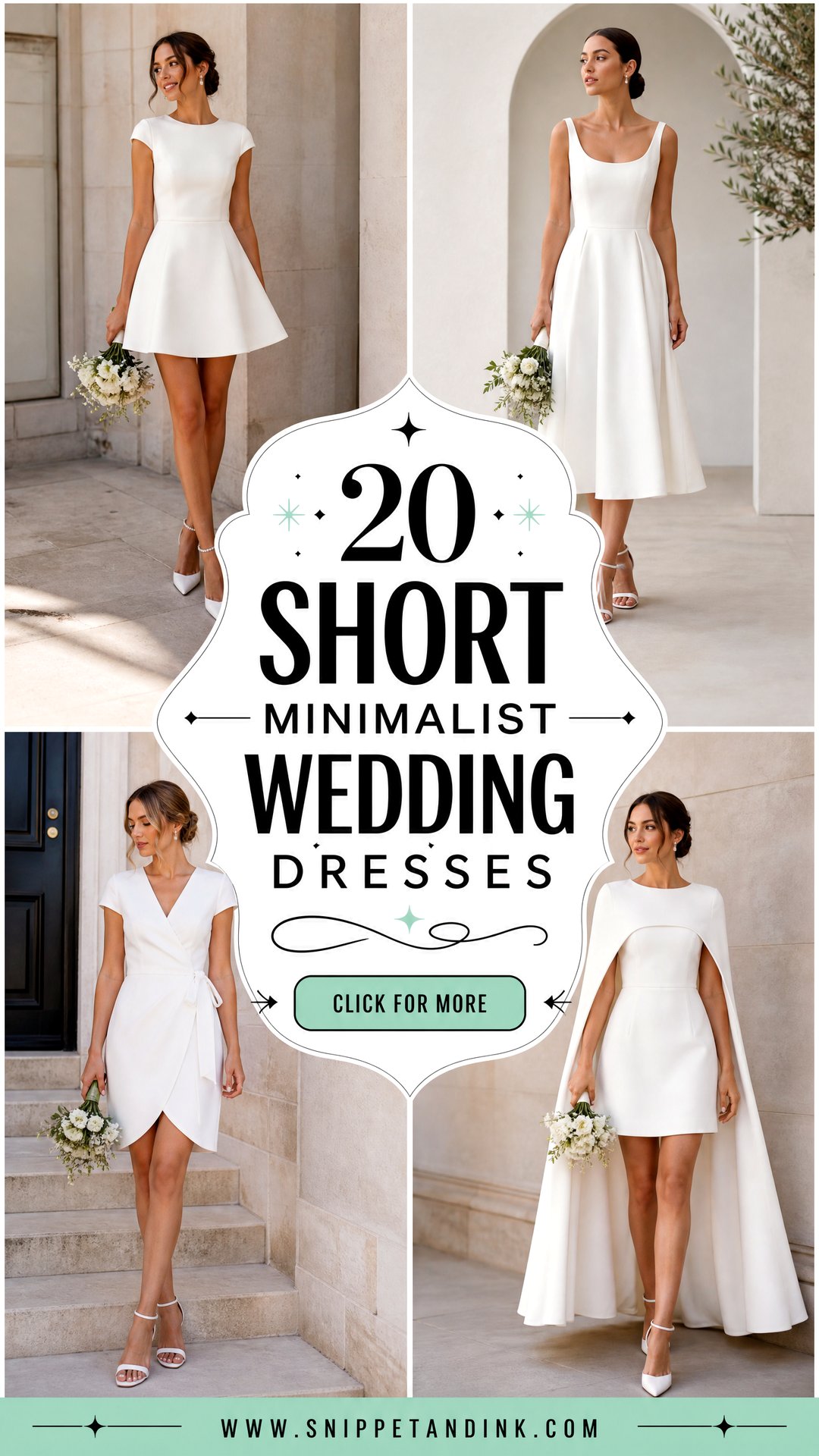
Plain Dresses Show Every Flaw in the Fabric
With no lace or beading to distract, the cloth itself is the design. When I’m judging a minimalist dress in a shop, I do a few quick checks that tell me more than the label.
- Crush a corner of the skirt in your hand for a few seconds. Good crepe and heavier satin spring back; thin polyester holds the crease.
- Hold it up to a window. If you can see your hand clearly through white fabric, it needs a lining, and so will photos in daylight.
- Look at the seams from the outside. They should lie flat with no puckering; satin especially shows every pulled stitch.
- Check the zip. An invisible zip set neatly into the seam matters on a dress with no other detail.
Matte fabrics like crepe and faille hide small creases and suit daylight. Shiny satin catches the light beautifully, but it shows body lines and sitting creases, so I steer brides who’ll be travelling or sitting through a long dinner toward a matte finish.
1. Square Neck Satin Mini Wedding Dress
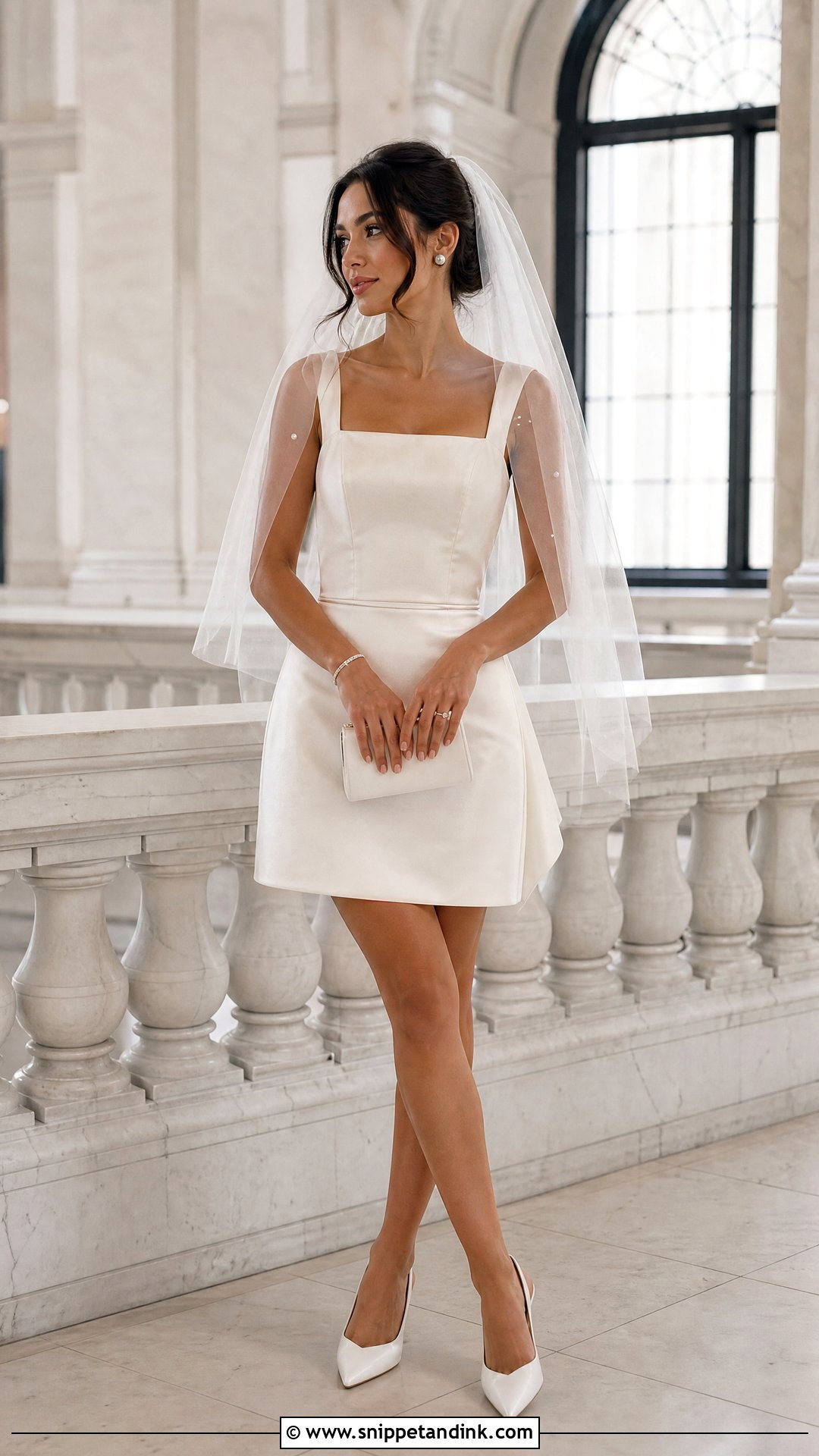
Square necklines are my favourite in satin because the corners stay crisp. Wide straps and a fitted bodice support it; if you need more, ask for internal boning rather than going down a size. The flared skirt moves without clinging. Pointed ivory slingbacks, pearl studs, a small structured clutch, and a fingertip veil for the bridal note. No necklace needed. A smooth bun or low ponytail keeps the same tidy line as the dress. I’d happily send a bride to a courthouse, a rooftop or a hotel after-party in it.
2. Long Sleeve Crepe Mini Wedding Dress
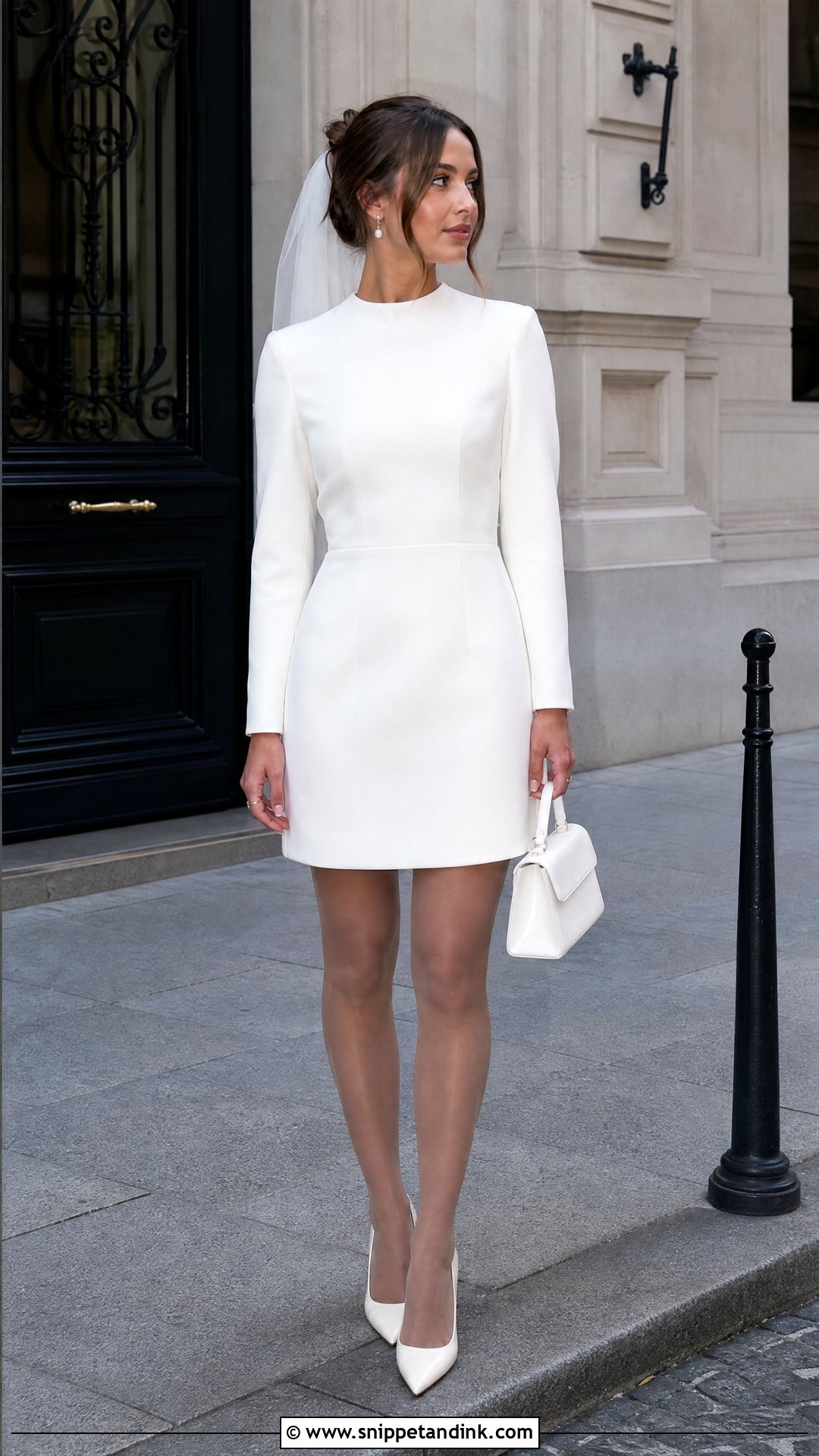
Crepe with long sleeves is the cold-weather minimalist dress. Good crepe has a fine pebbled surface and enough weight to hang straight, so it doesn’t crease every time you bend your elbow. A fitted sheath or subtle A-line with a high round neck and clean cuffs. The sleeves balance the short hem. Pointed pumps, neutral sheer tights if it’s cold, a compact top-handle bag, small drops. A collarless white coat for the walk in. Low bun, natural makeup. City hall, a restaurant reception or a winter elopement.
3. Strapless A-Line Mini Wedding Dress
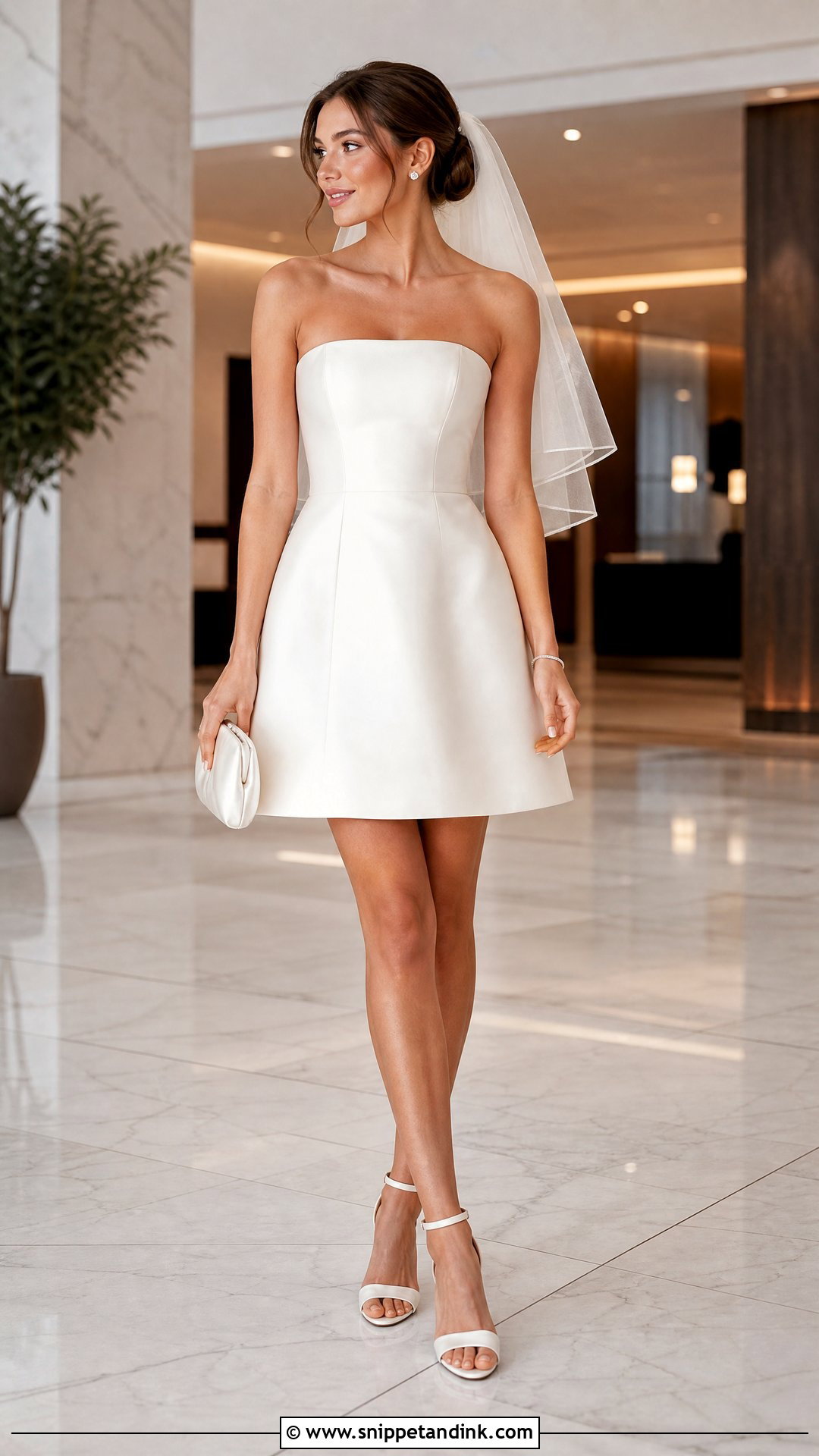
Strapless works only when the bodice is built properly. Substantial satin, mikado or crepe, a straight or gently curved neckline, and boning plus a grip strip inside. If you plan to dance, test it with your arms up. The A-line skirt keeps things easy. Ankle-strap heels, a fine tennis bracelet, pearl or crystal studs. A shoulder-length veil adds movement. Between locations, a cropped jacket or satin wrap. Hair up or swept back. Galleries, gardens, hotels or a second look.
4. Halter Neck Mini Wedding Dress
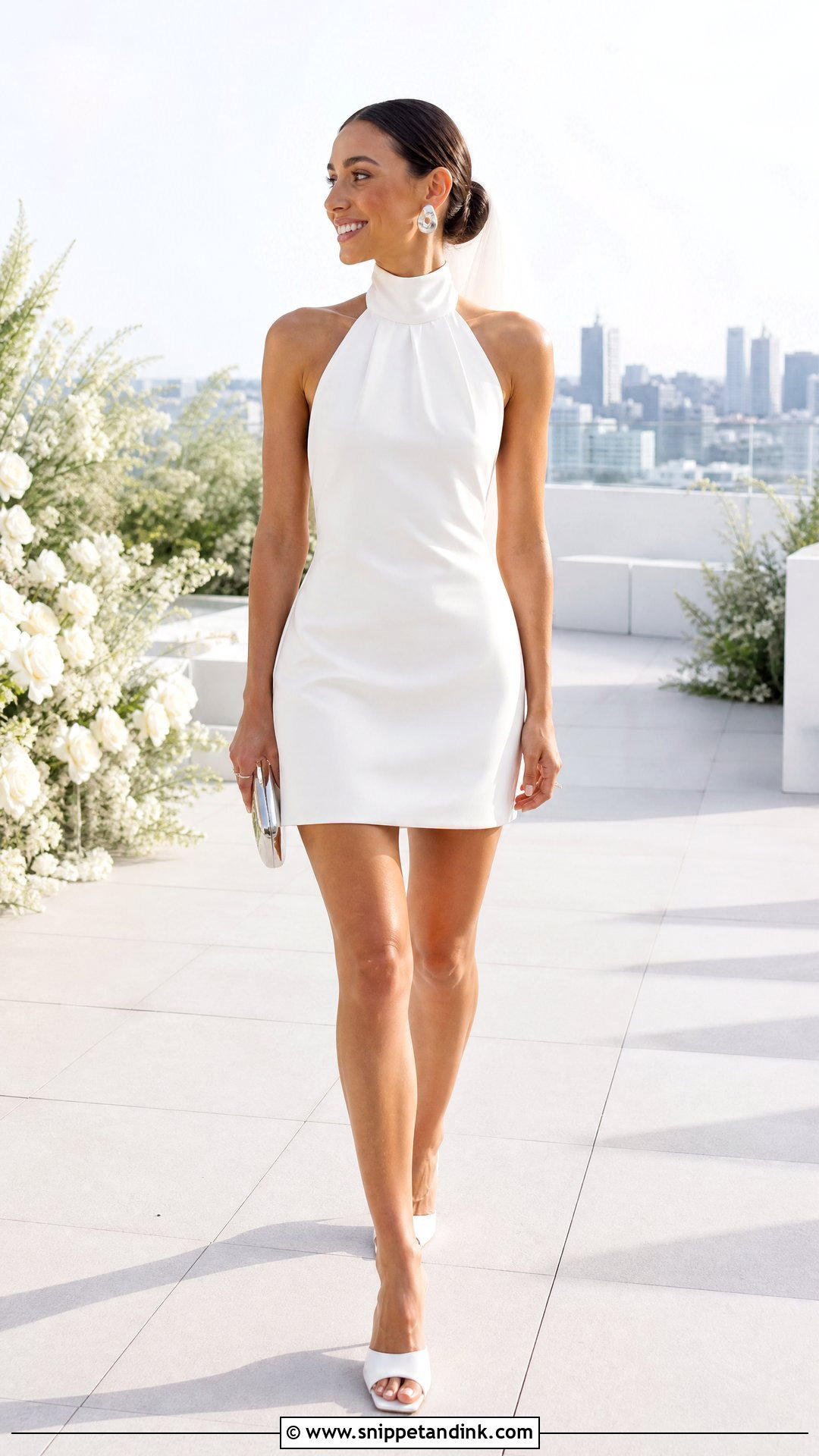
Halters are naturally sleek; the neckline draws the eye up and highlights the shoulders, so jewellery can almost disappear. Smooth crepe or satin, fitted waist, straight or A-line skirt. Minimal mules, small sculptural earrings and a slim ivory or silver clutch. A low bun shows the neckline from every side. Swap the veil for a hair comb or a short tulle piece below the bun. The neck strap and armholes must be fitted carefully, as a halter that pulls at the back of the neck gets uncomfortable by dinner.
5. Satin Slip Mini Wedding Dress
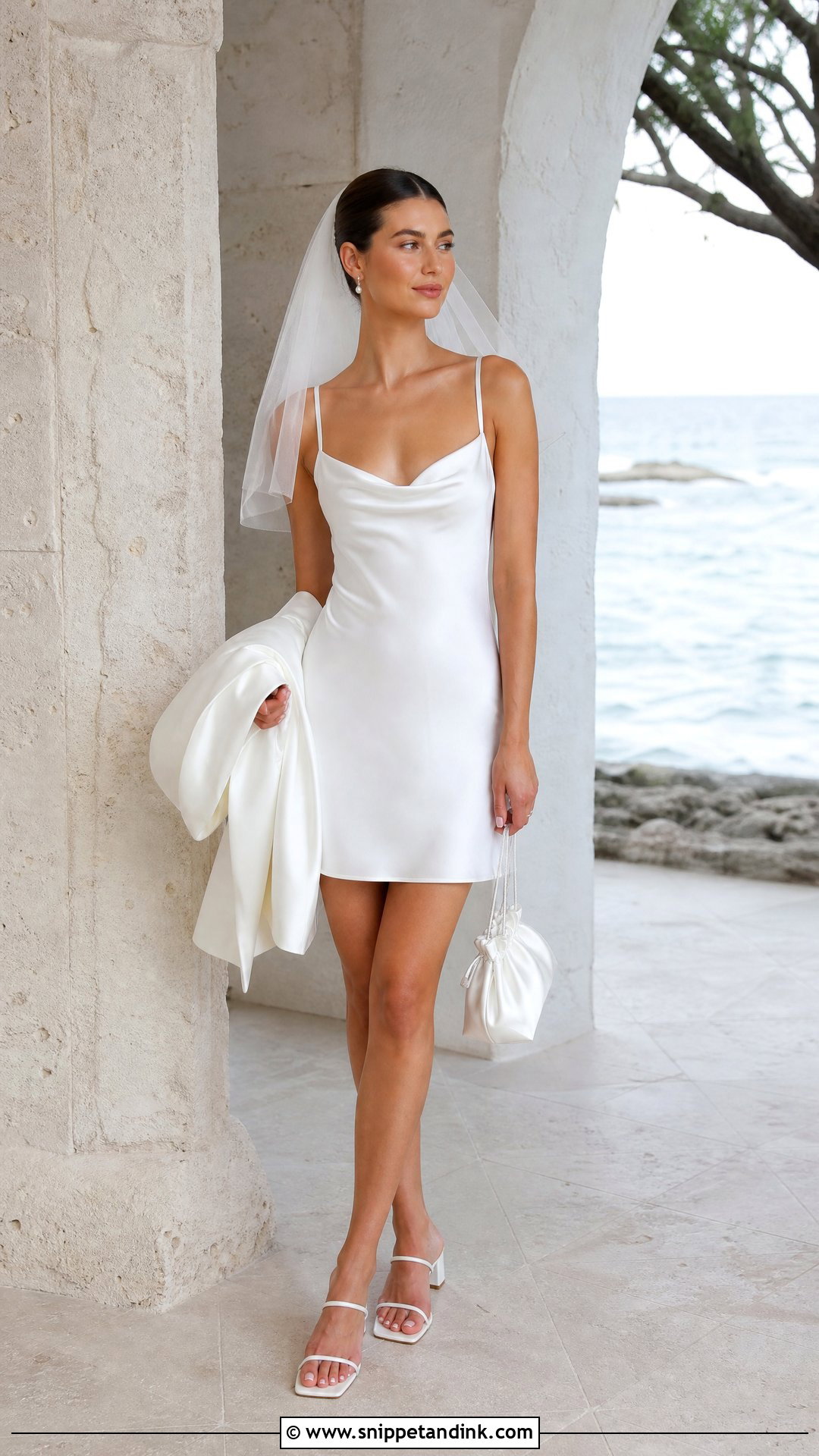
A bias-cut slip has that 1990s-inspired mood because the fabric is cut on the diagonal and skims the body. It’s also the least forgiving cut I work with: every seam, strap and edge underneath shows. Choose a slip with smooth seams, wear tested underwear, and be honest with yourself about whether you want that much skim. Low sandals, a satin pouch, delicate earrings, a sheer elbow-length veil. Relaxed waves or a chignon. A white blazer for the ceremony comes off for dancing.
6. Bateau Neck Shift Wedding Dress
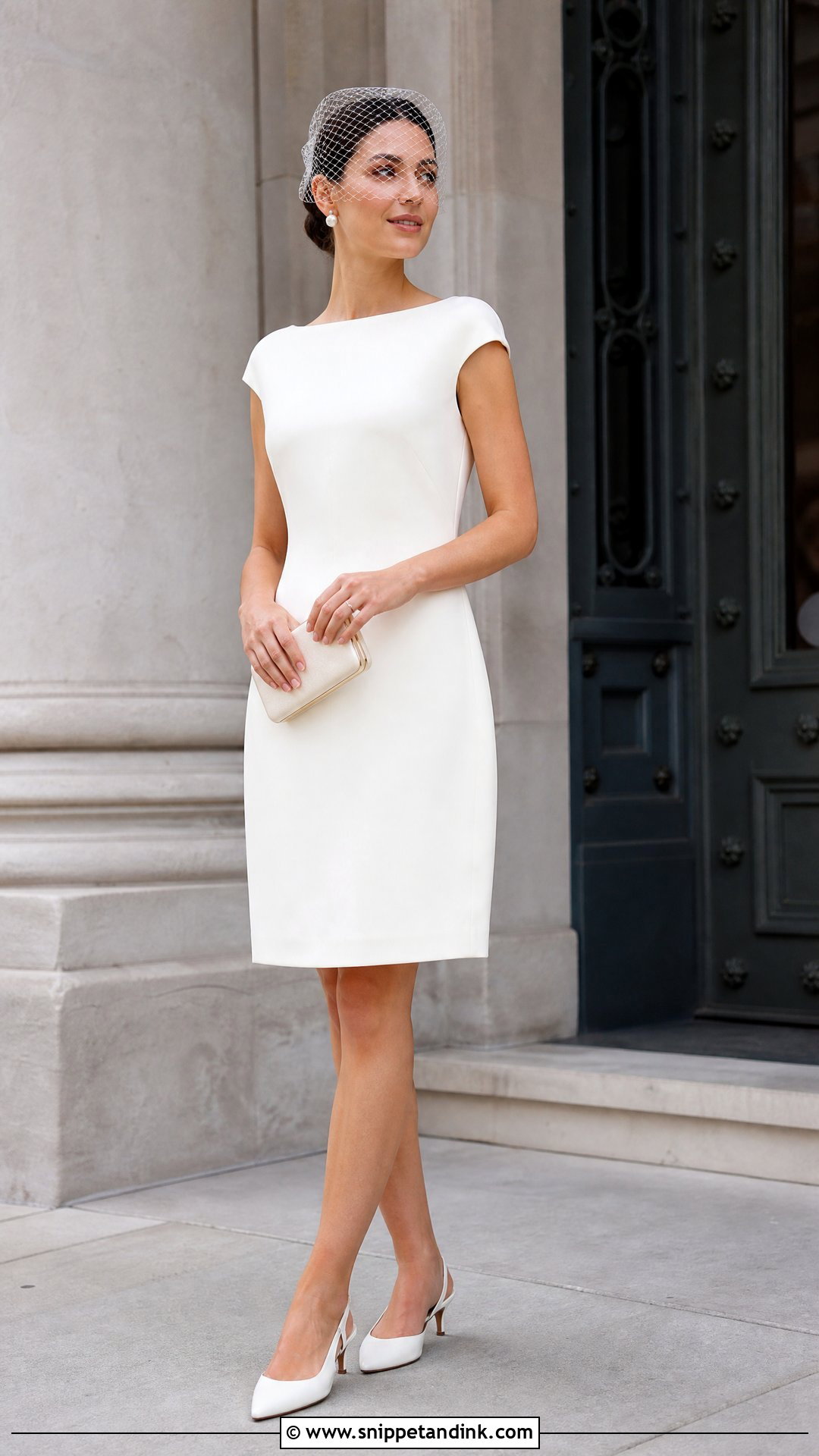
A bateau-neck shift wedding dress draws a straight line from shoulder to shoulder and then falls without fuss. It’s the comfortable choice, and it relies on the shoulders fitting exactly. If the shift hangs too loose, a seamstress can take in the bust darts and back seam without changing the shape. Structured crepe, faille or matte satin at the knee or just above. Pointed kitten heels, pearl button earrings, a box clutch, and a birdcage or short blusher. French twist or low bun. Civil ceremonies and daytime restaurants.
7. Off-the-Shoulder Mini Wedding Dress
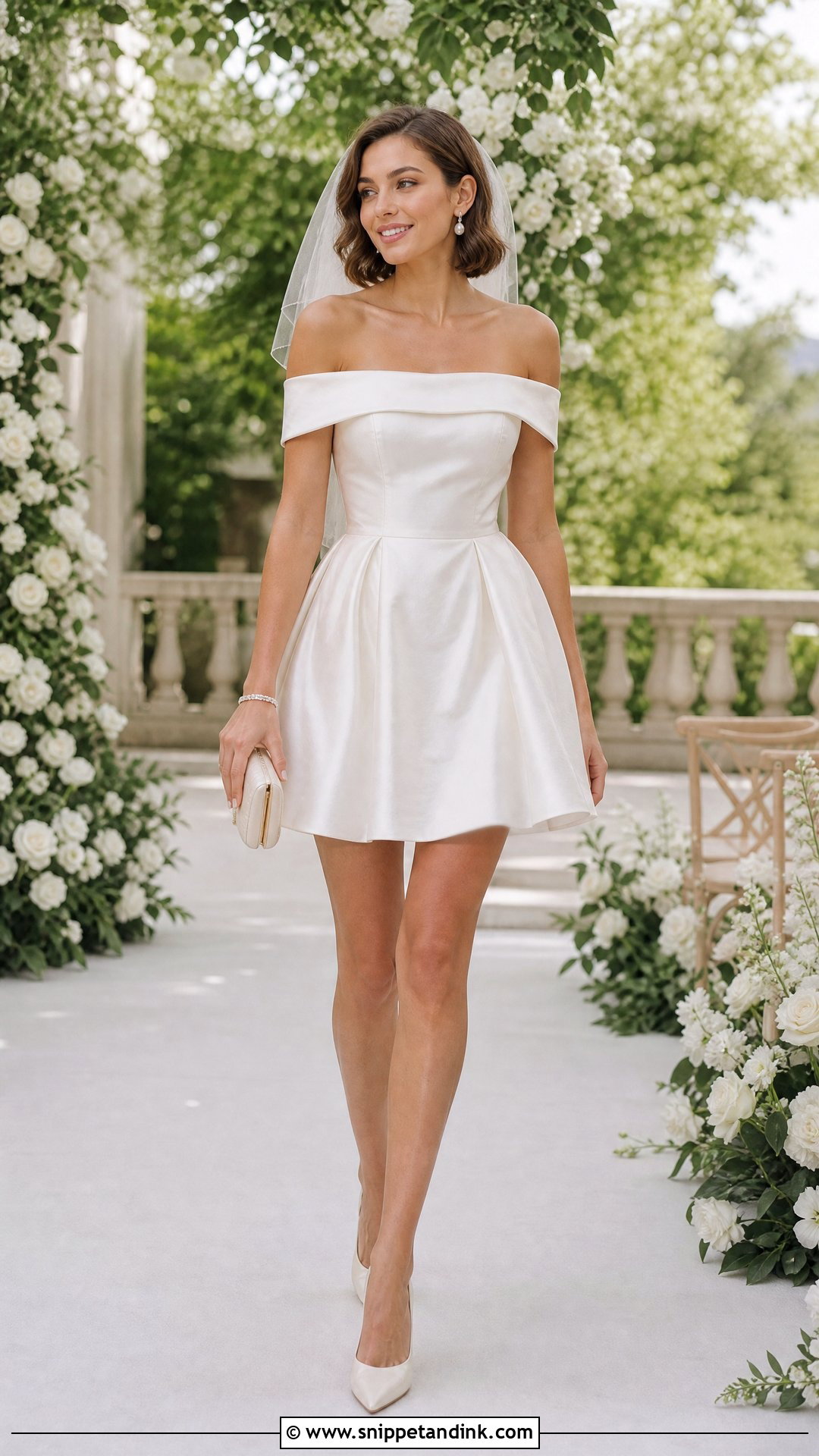
The folded neckline is the only decoration here, so it has to be done cleanly. Smooth satin or crepe, a fitted bodice with an A-line skirt, or a sharper sheath. Off-shoulder bodices limit how high you can lift your arms, and that’s the first thing I test with a bride: hug, wave, reach for a glass. Pointed heels, a slim bracelet, pearl earrings, no necklace. A low chignon or tucked waves. Short veil and compact clutch. Intimate ceremonies, brunch weddings, a reception entrance.
8. One Shoulder Mini Wedding Dress
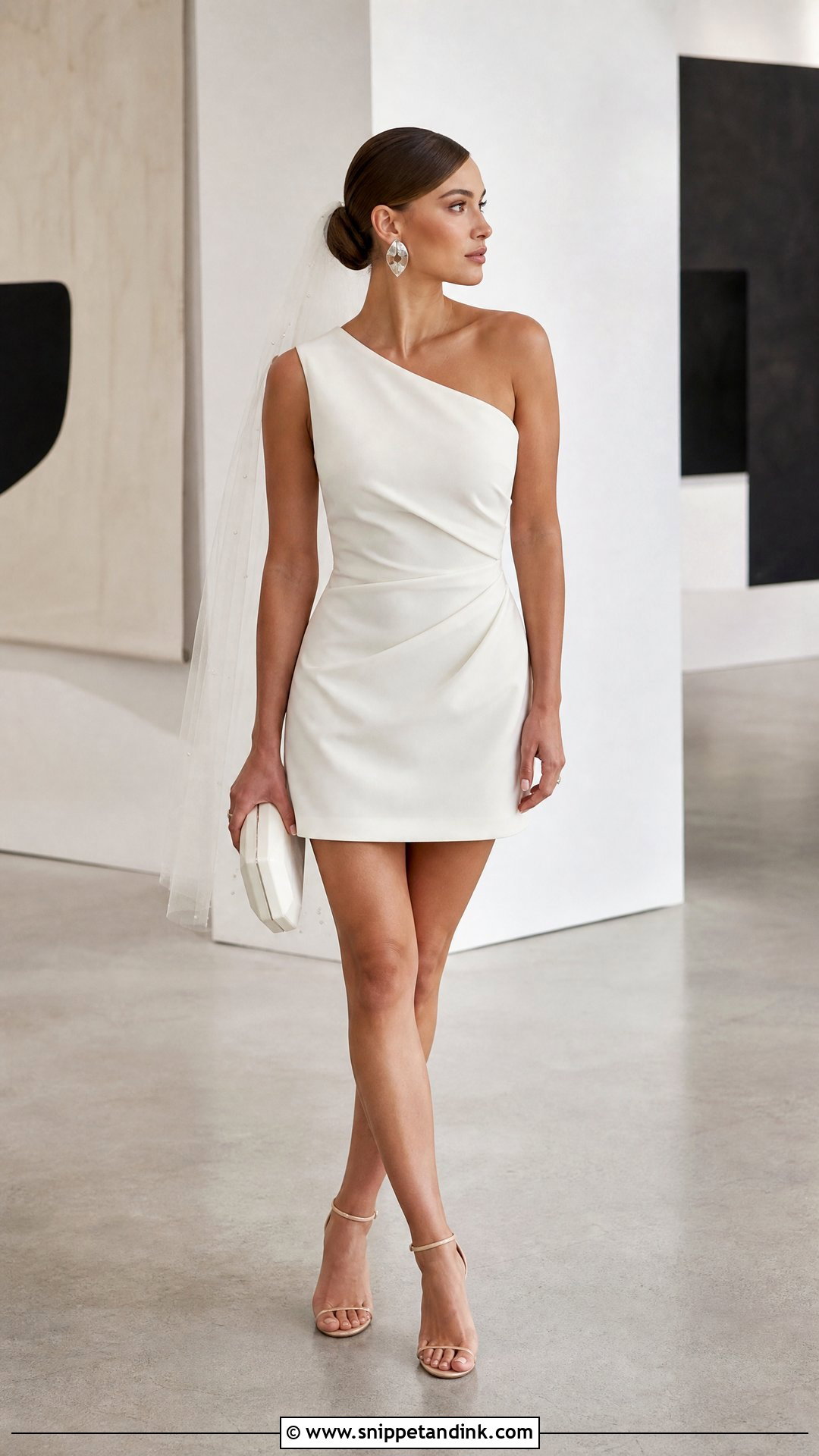
One shoulder, one diagonal line. That’s all this dress needs. Structured crepe keeps the line crisp; satin softens it. Balance it with a straight or gently flared skirt. Pointed pumps or barely-there sandals by season. Either one sculptural earring or a quiet metal pair. A sleek ponytail or side bun follows the angle of the neckline. If you want a veil, a plain fingertip one set at the back of the head. Modern hotels, rooftops and galleries.
9. Cap Sleeve Mini Wedding Dress
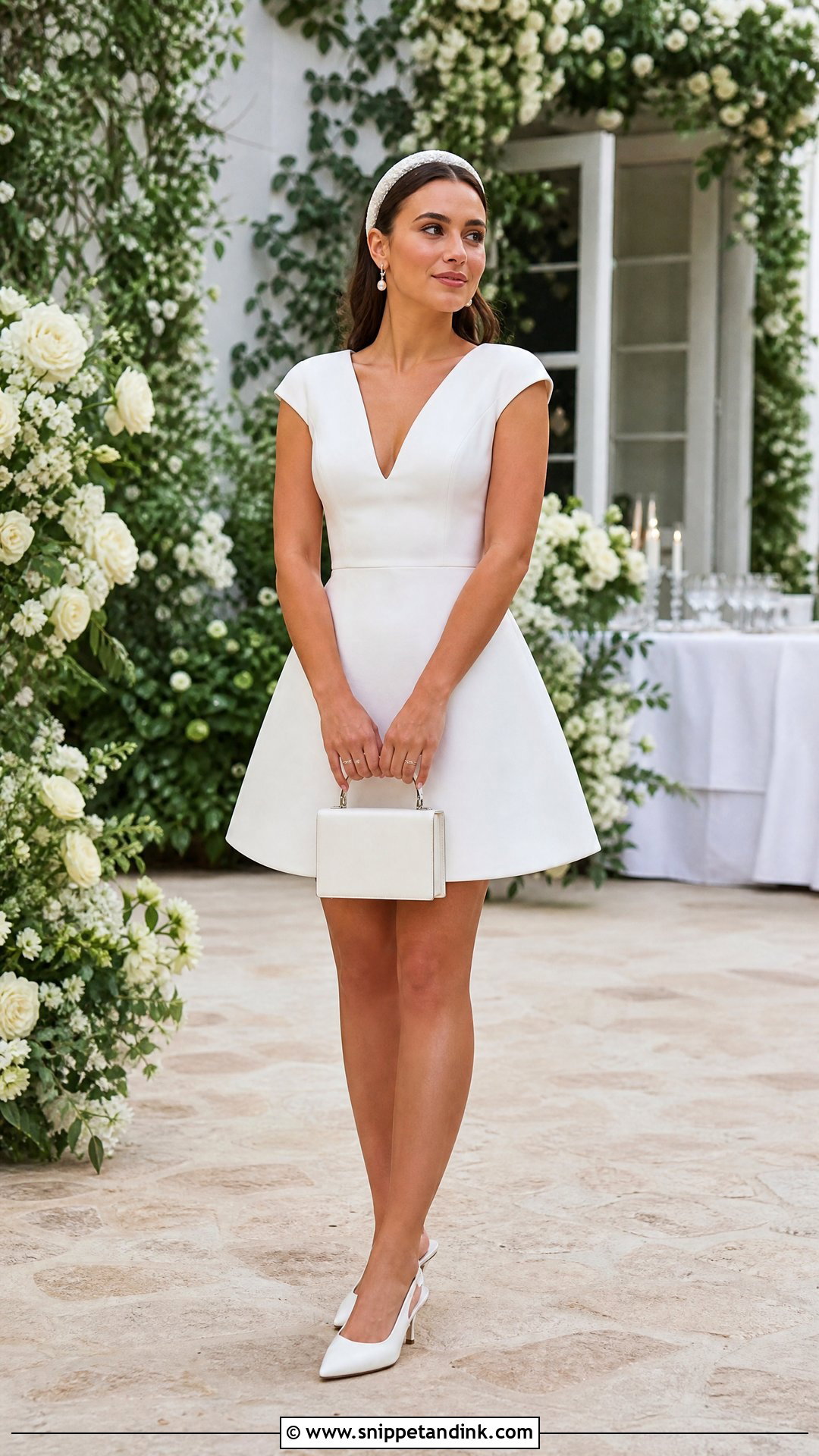
Cap sleeves give just enough coverage to stop you worrying about straps all day. A fitted crepe bodice with a softly flared mini skirt looks classic and is easy to accessorise. Shallow V, bateau or round neck, depending on your comfort. Slingbacks, a structured mini bag, tiny pearl earrings. I check that the cap sits on the shoulder point; set too far in, it pinches the arm when you hold the bouquet. A short veil or a polished headband. Softly pinned hair, fresh makeup. City hall, gardens, lunches, family celebrations.
10. Tuxedo Mini Wedding Dress
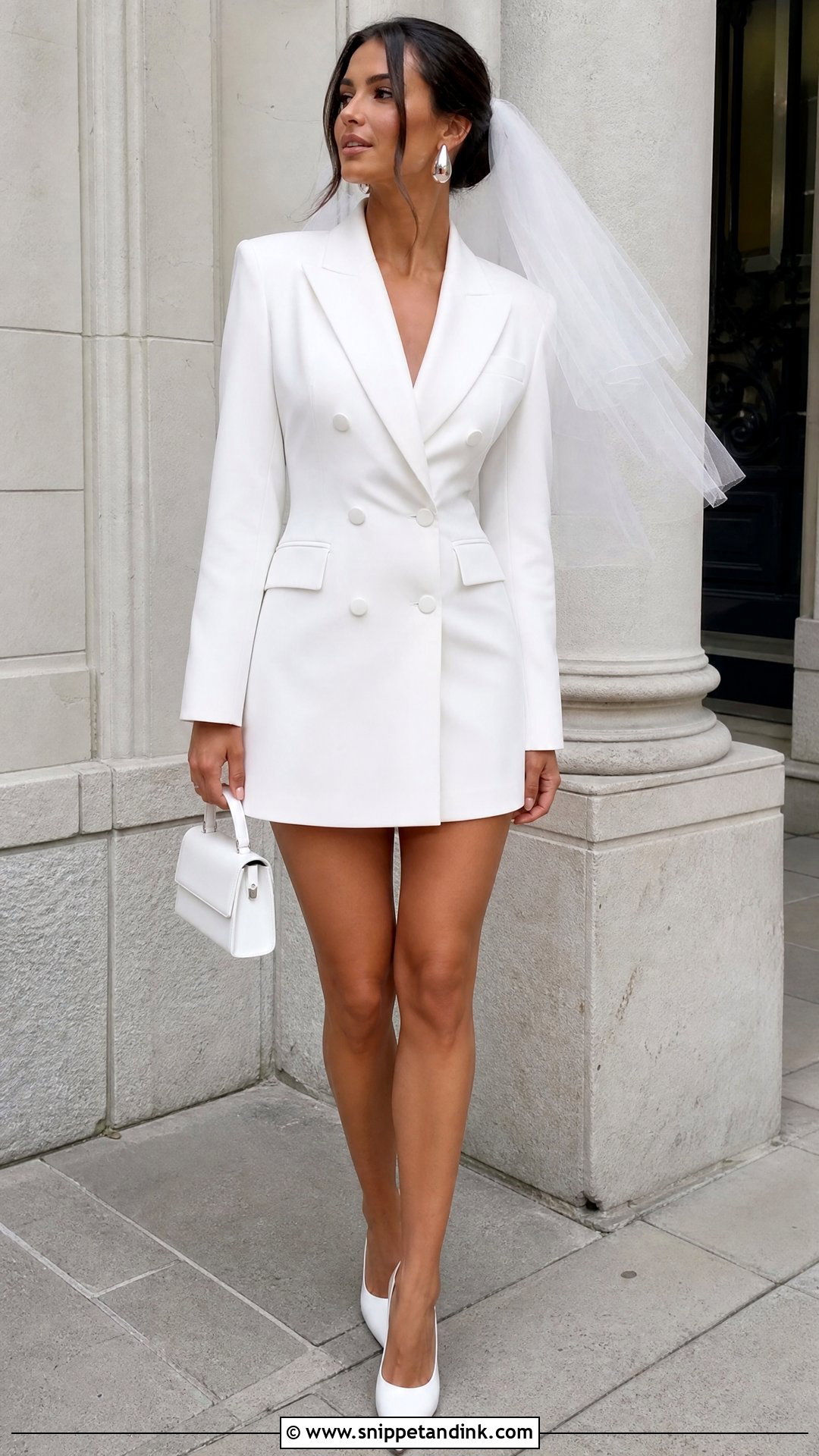
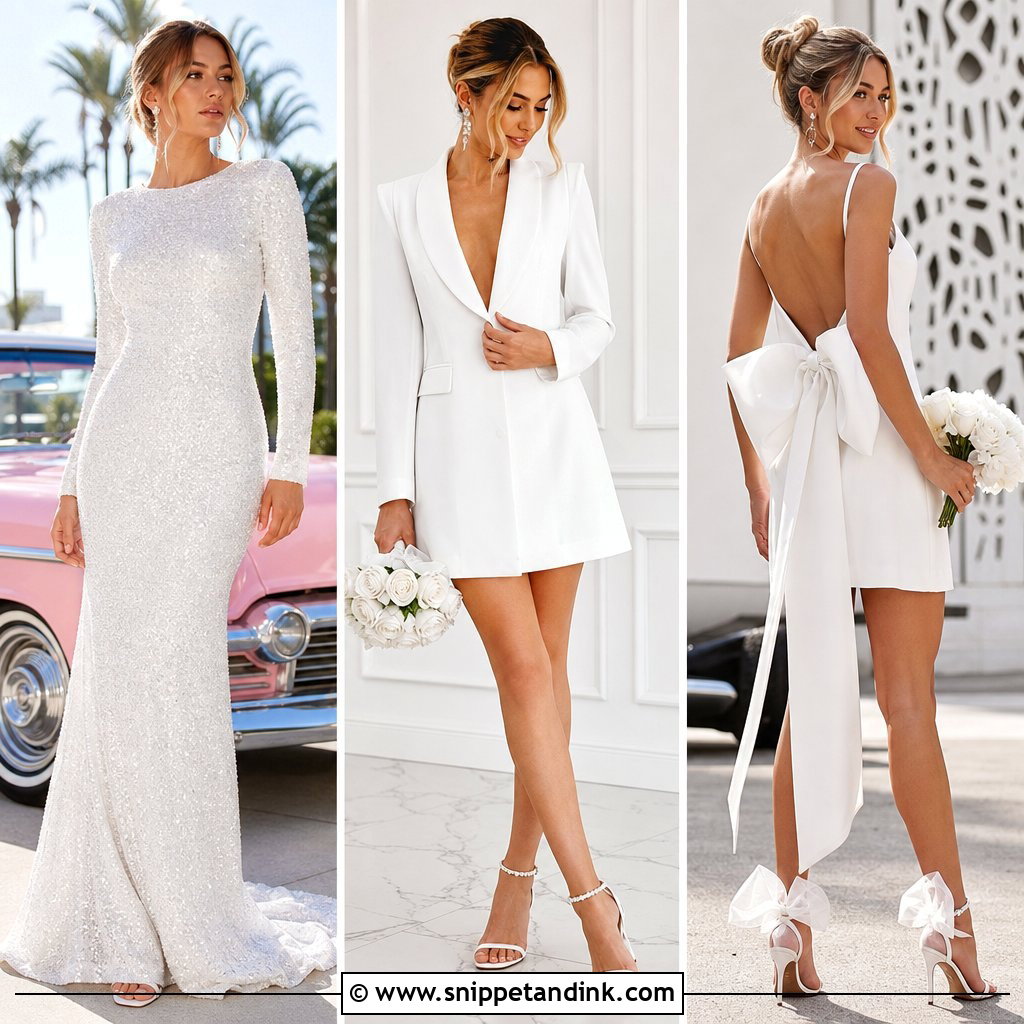
Sharp lapels and clean tailoring make a tuxedo mini wedding dress a confident step away from the gown. White crepe with real structure, double-breasted or wrap-front. A hidden internal closure keeps the jacket bodice from shifting when you lean. If the lapels open low, a camisole underneath should match the dress fabric exactly so it doesn’t break the line. Pointed pumps, sleek earrings, top-handle bag, a low ponytail. Short veil to soften it, or a pillbox headpiece for a fashion edge.
11. Drop Waist Mini Wedding Dress
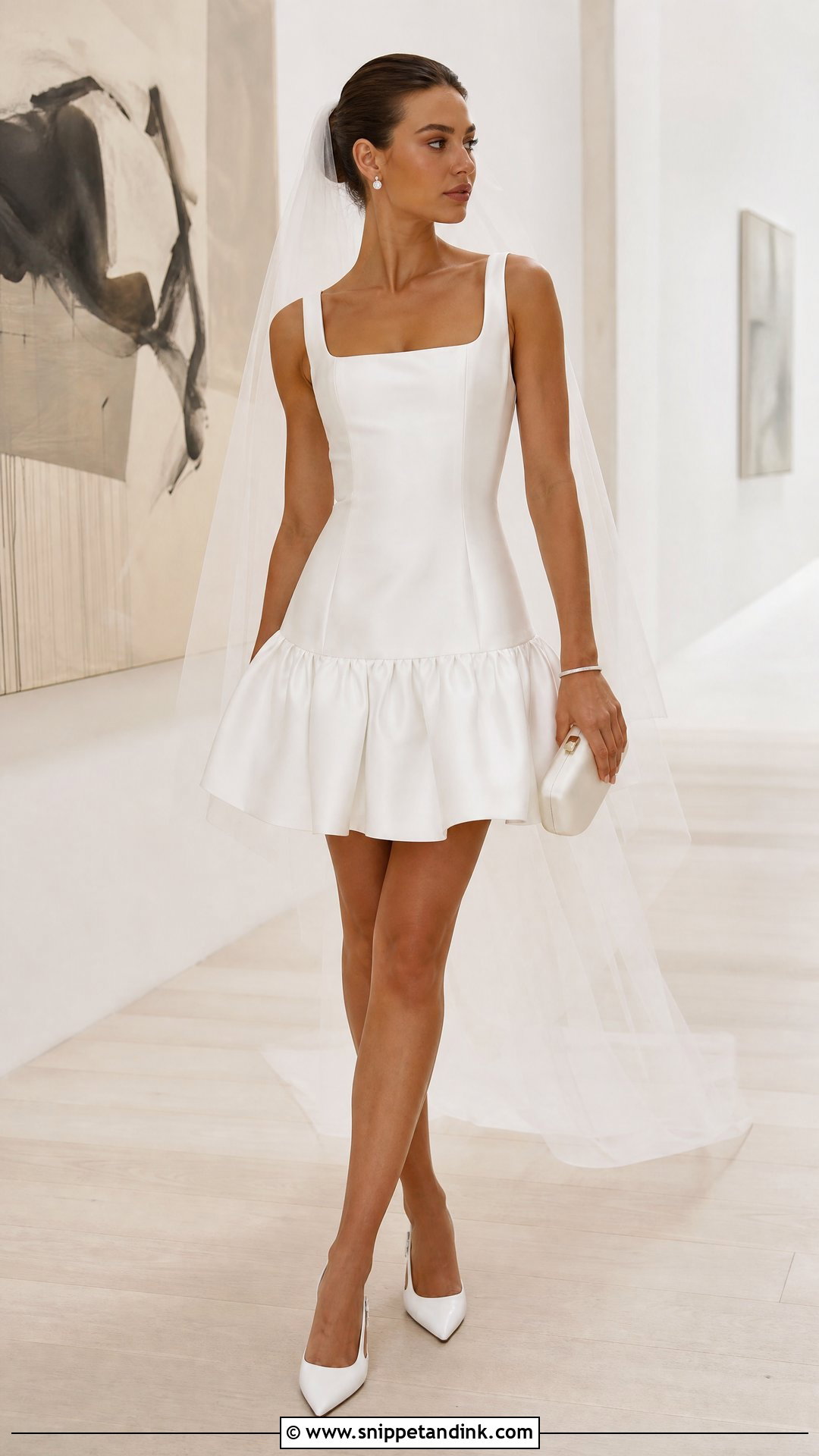
Dropped waists look modern and long, but they’re the hardest shape here to fit. The seam sits on the hip, so it has to match your hip line exactly or the skirt flares in the wrong place. Plain satin or mikado, a square, scoop or strapless neck, very few visible seams. Slingbacks extend the line. Studs, a thin bracelet, a compact clutch. A waist-length veil leaves the skirt shape visible. Clean bun or polished waves. Galleries, city weddings and formal reception changes.
12. Bubble Hem Mini Wedding Dress
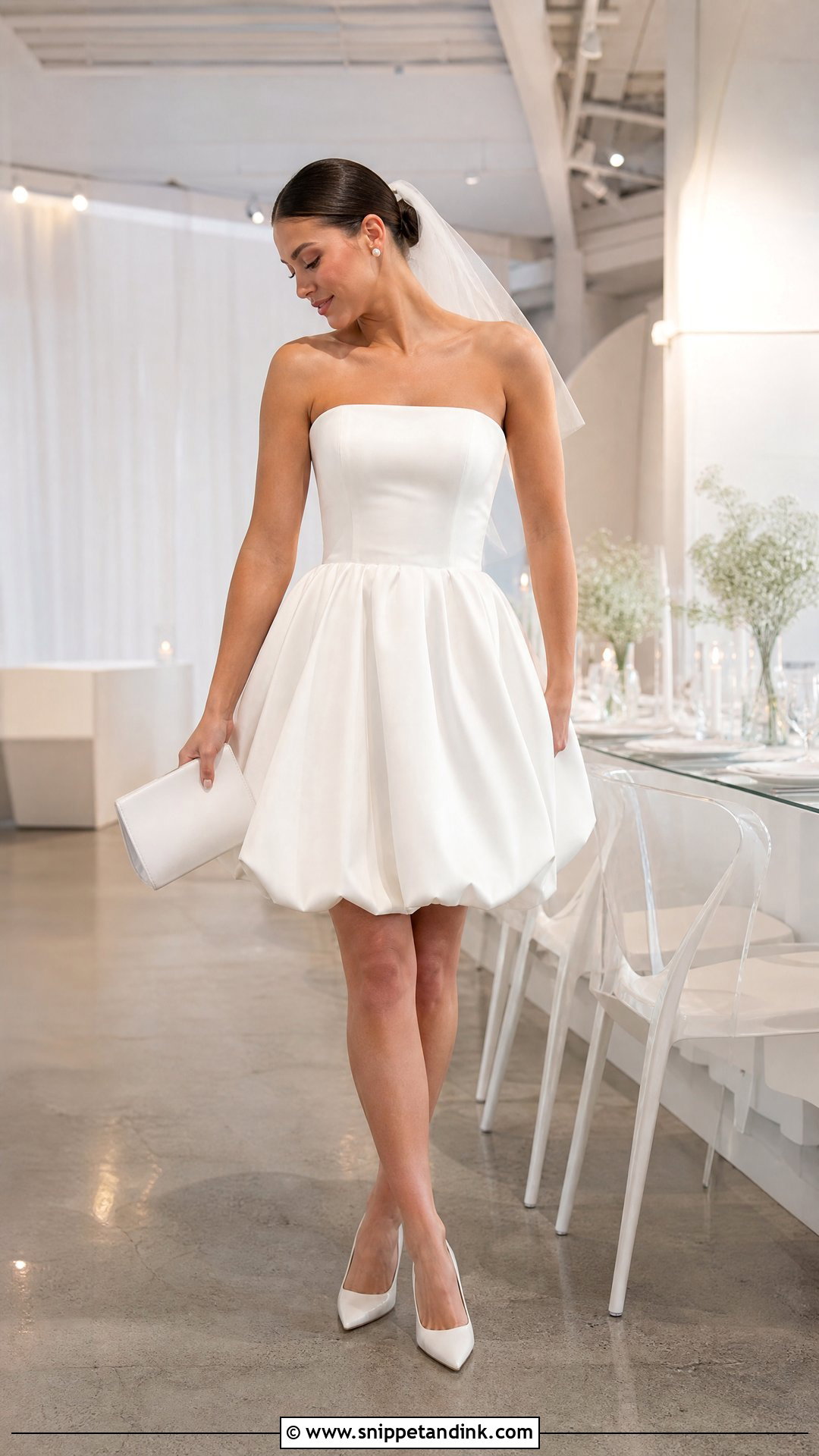
A bubble hem adds soft volume to a clean dress. Choose plain satin, mikado or taffeta with no bows; the hem is detail enough. Strapless or square necklines sit well over the rounded skirt. Pointed heels, pearl studs, an envelope clutch and a short tulle veil. Keep hair sleek, maybe a low bun or a straight bob, for contrast. Check the inner lining that pulls the hem under is stitched firmly; when it comes loose, the bubble drops flat. Receptions, city weddings, entrances.
13. High Neck Mini Wedding Dress
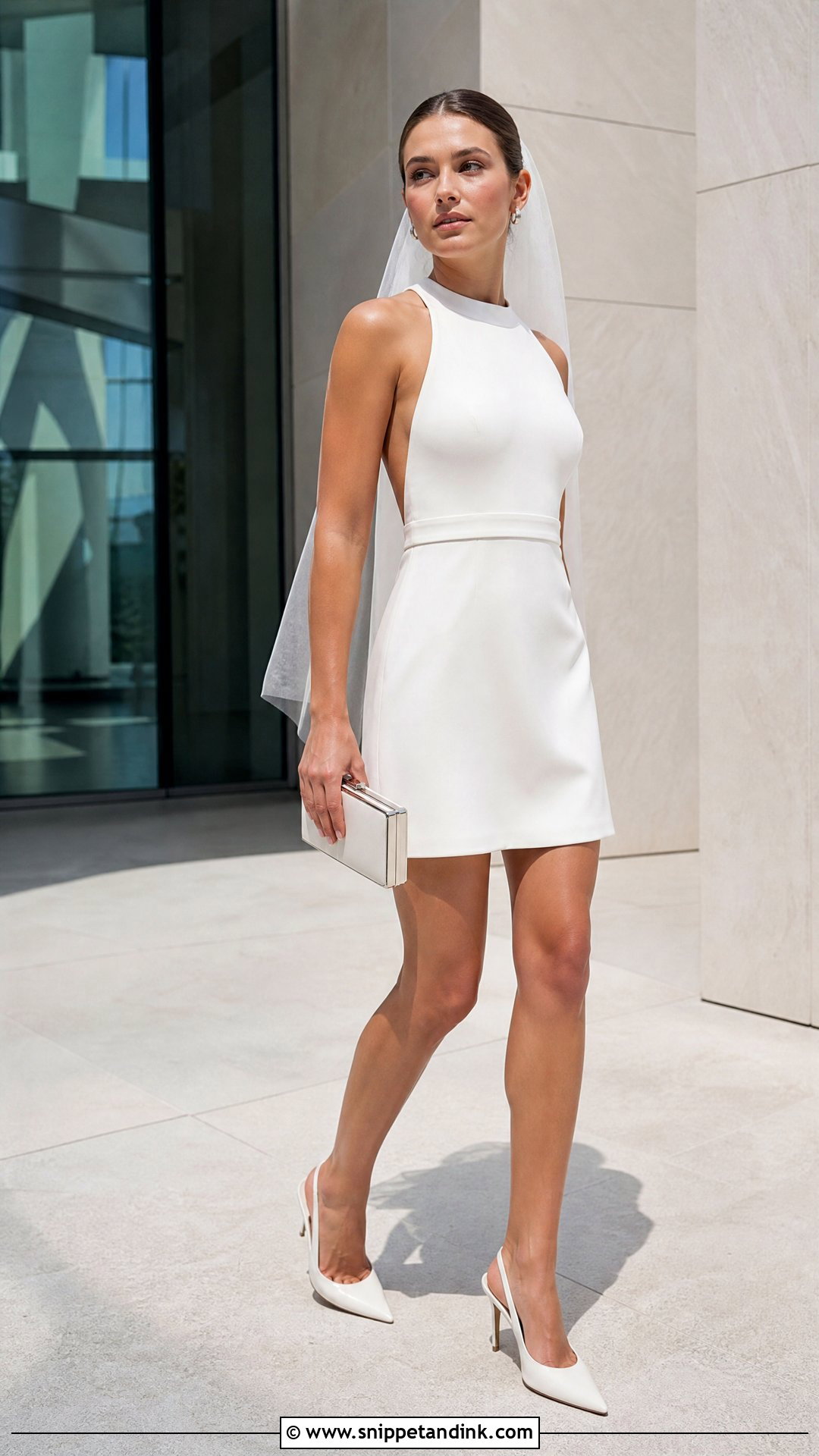
A high neck with a short hem stops the coverage from feeling conservative. Sleeveless matte crepe or satin, precise armholes, fitted waist. An open back gives contrast at the rear, but it needs secure tailoring so the neckline doesn’t fall forward. Pointed slingbacks, small metallic earrings, a slim clutch. No necklace. A bun, braided updo or sleek ponytail shows the neck. Only add a long veil if the ceremony is formal. Museums, courthouses and modern indoor rooms.
14. Scoop Neck Midi Wedding Dress
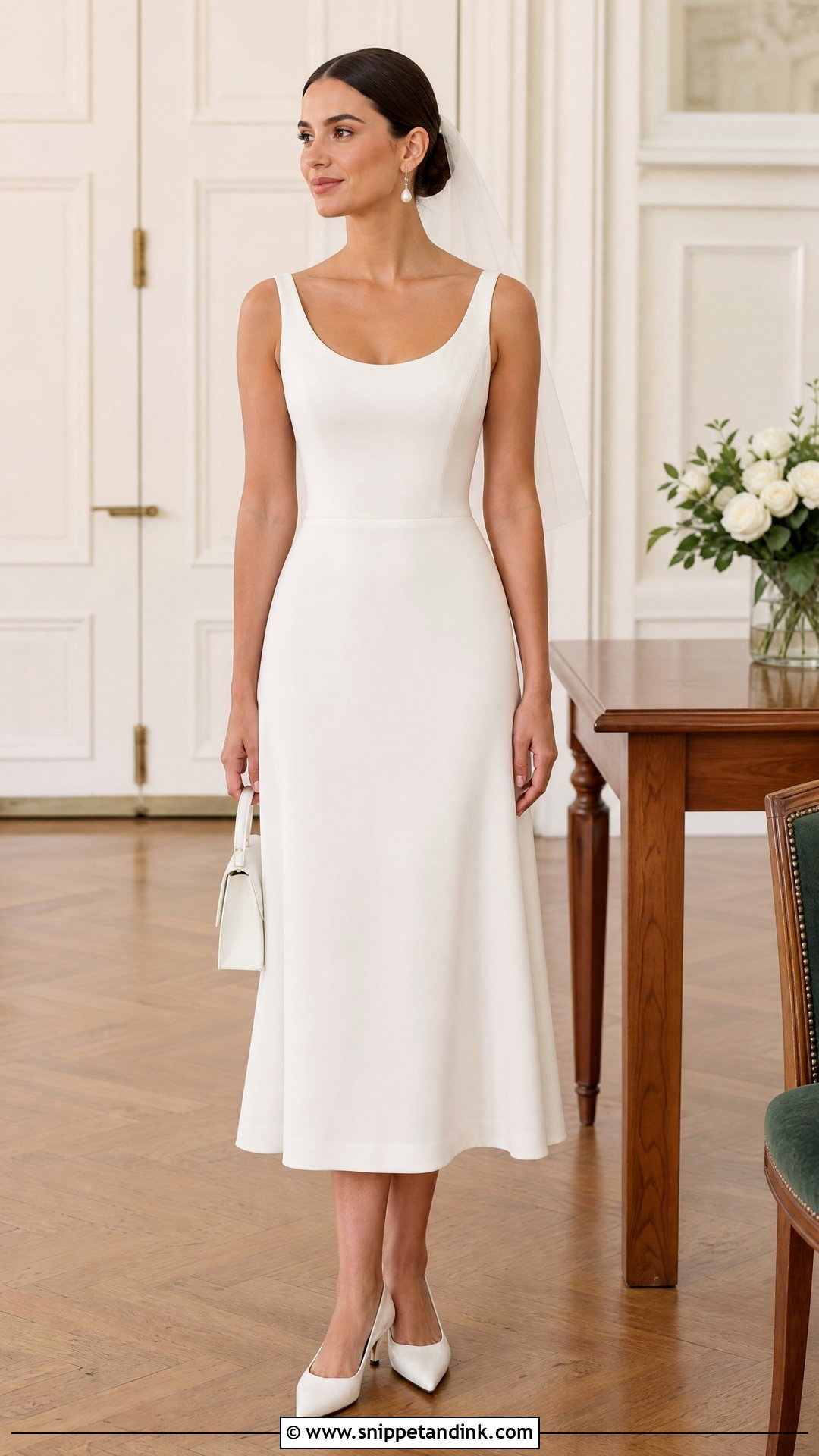
Not every bride wants her knees showing. A scoop-neck midi falls between knee and ankle, so the shoes still show. The tricky part is the hem: stop it at the widest part of the calf and the leg looks shorter. I mark midi hems with the bride standing in her actual shoes, a little below or above the calf curve. A fitted bodice over a straight or soft A-line skirt. Stretch crepe for comfort, heavier satin for formality. Pointed kitten heels, pearl drops, a structured ivory bag, a short veil or headband.
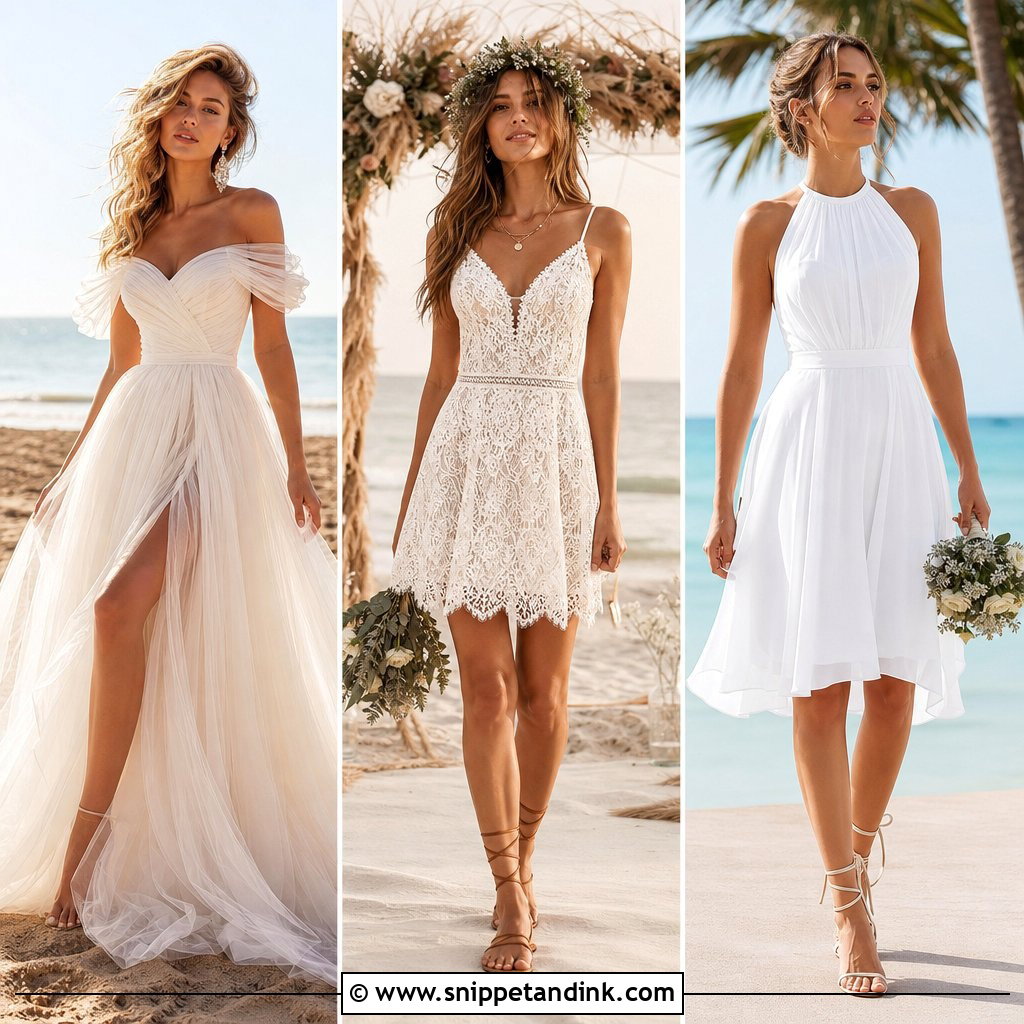
15. Strapless Tea-Length Wedding Dress
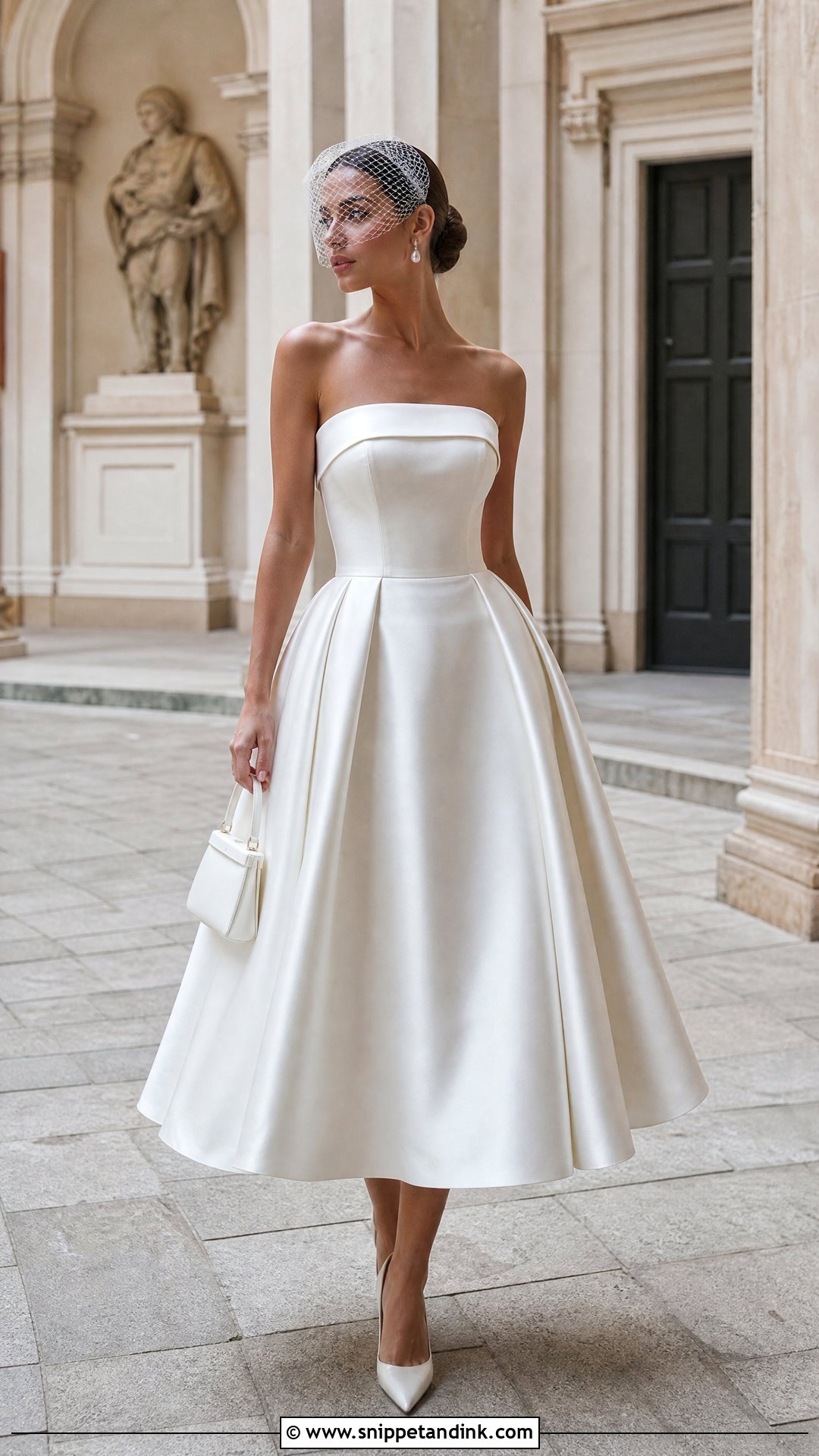
Tea length is the classic short bridal shape, and it needs fabric with body to hold the skirt: crisp mikado, satin or faille. A fitted strapless bodice and a full but controlled skirt. A narrow tonal belt can mark the waist. Pointed pumps or slingbacks, pearl earrings, a top-handle bag. A fingertip veil suits the fuller skirt. I check how the skirt behaves when the bride sits, since a stiff tea-length skirt can tip forward on a low chair. Classic bun, smooth waves or a pinned bob.
16. Wrap Knee-Length Wedding Dress
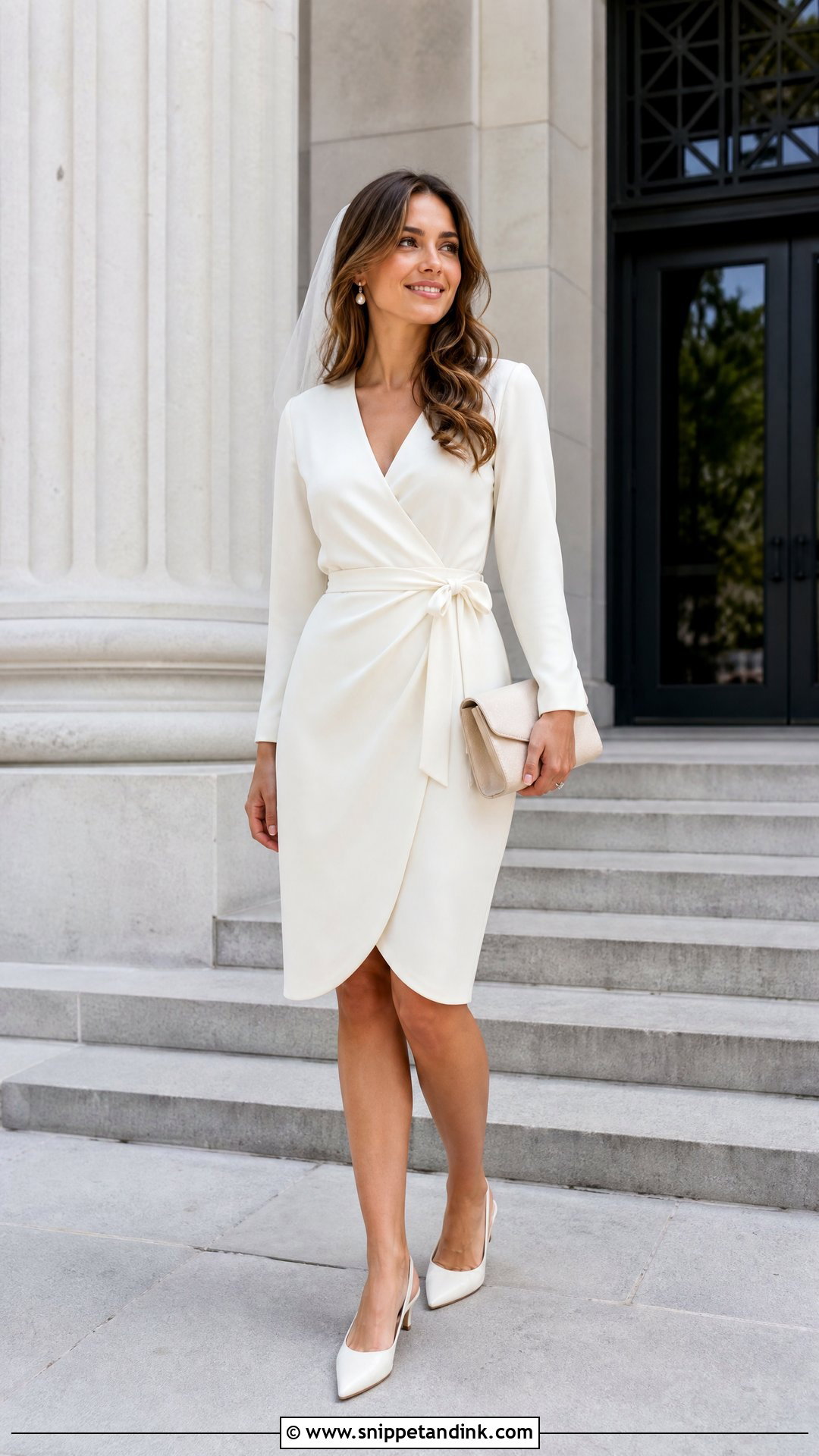
Wrap dresses adjust as the day goes, and a knee-length wrap is about as relaxed as bridal gets. Substantial crepe or matte satin lets the front drape fall smoothly. A true wrap moves with you; a faux wrap stitched shut stays put, which I’d choose if you’ll be kneeling or crouching for photos. Fashion tape or an internal snap for a deep V. Low slingbacks, a simple clutch, small drops. Tailored coat for cool days, short veil if you want one. Soft waves or a relaxed bun.
17. Minimal Lace Mini Wedding Dress
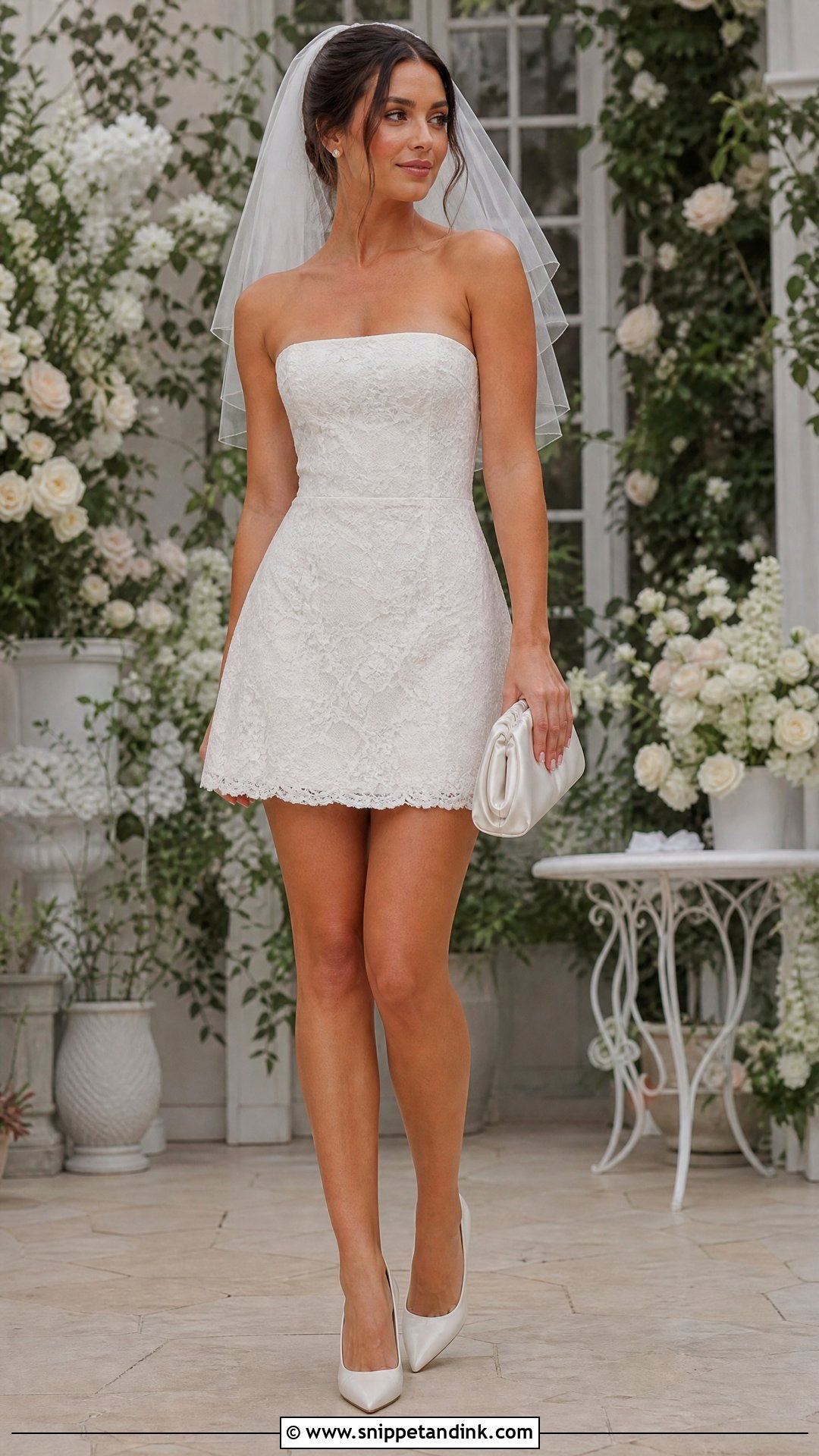
Lace can be minimalist when it’s tonal and consistent. I’d choose one lace design across the whole dress, with no sequins and no raised appliqués, on a smooth lining. Straight neckline, fitted waist, subtle A-line. Plain ivory pumps, pearl studs, satin clutch. A short raw-edge veil. Some lace is scratchy at the armhole and neckline, so wear it for a full ten minutes before deciding. Low bun or natural waves. Gardens, small venues, spring weddings.
18. Mini Wedding Dress With Detachable Overskirt
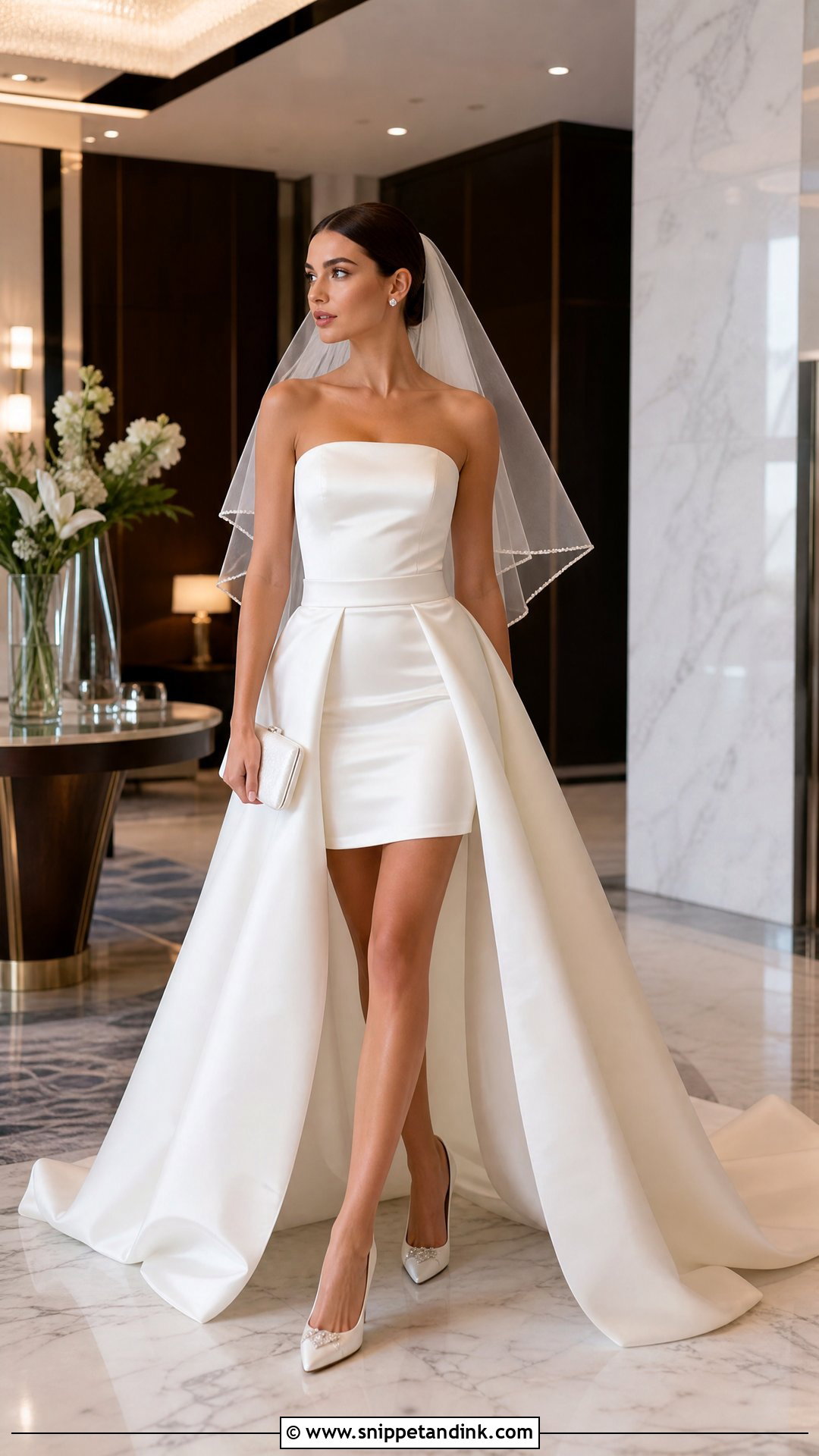
Two looks, one dress. A clean satin or crepe mini with a fitted bodice, and a plain floor-length overskirt for the ceremony. After dinner, the skirt comes off. The overskirt needs to be cut from the same fabric roll, or the whites may not match under flash, and it should fasten with hidden hooks or snaps that someone can undo quickly. Pointed heels, studs, a streamlined clutch and a fingertip veil. Sleek bun or ponytail. Hotels and formal city venues.
19. Short Wedding Dress With Cape
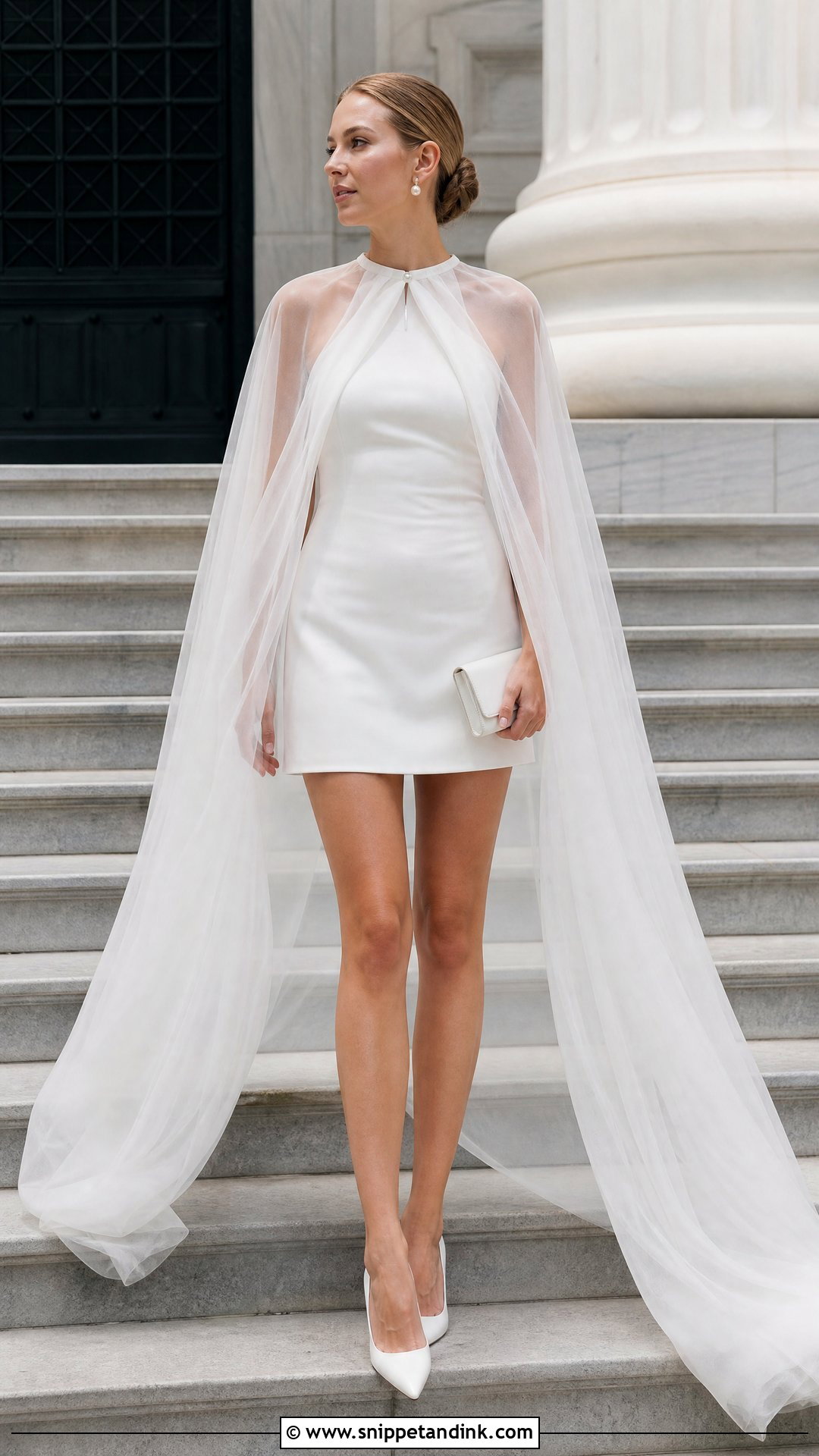
A cape is how I add ceremony to a dress that’s otherwise very simple. Start with a fitted sheath or A-line mini in smooth crepe with a round, square or strapless neck. Over it goes a sheer shoulder cape, a structured capelet, or a light floor-length cape. A cape usually replaces the veil, which keeps fabric off your hair. Make sure it fastens at the shoulders, not around the neck, so you can take it off without touching your hairstyle. Pointed pumps, small earrings, compact clutch.
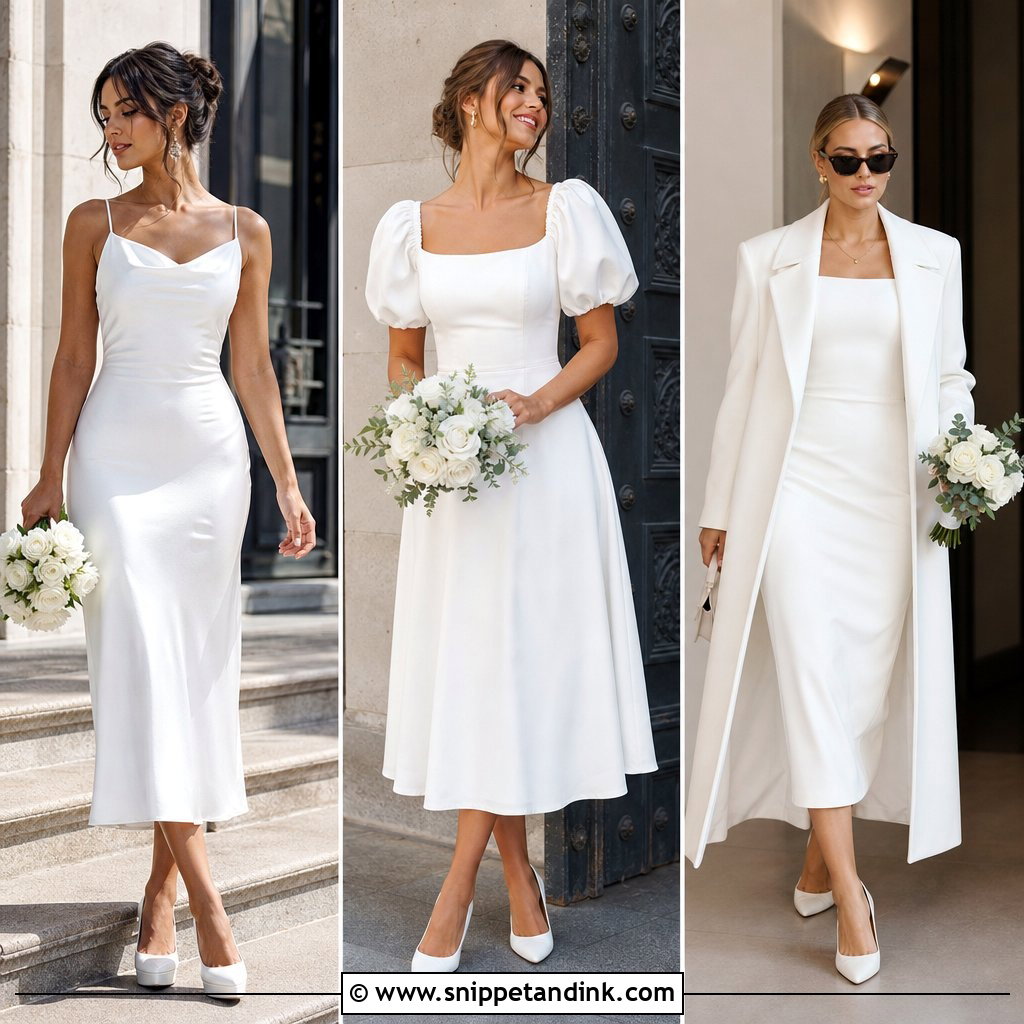


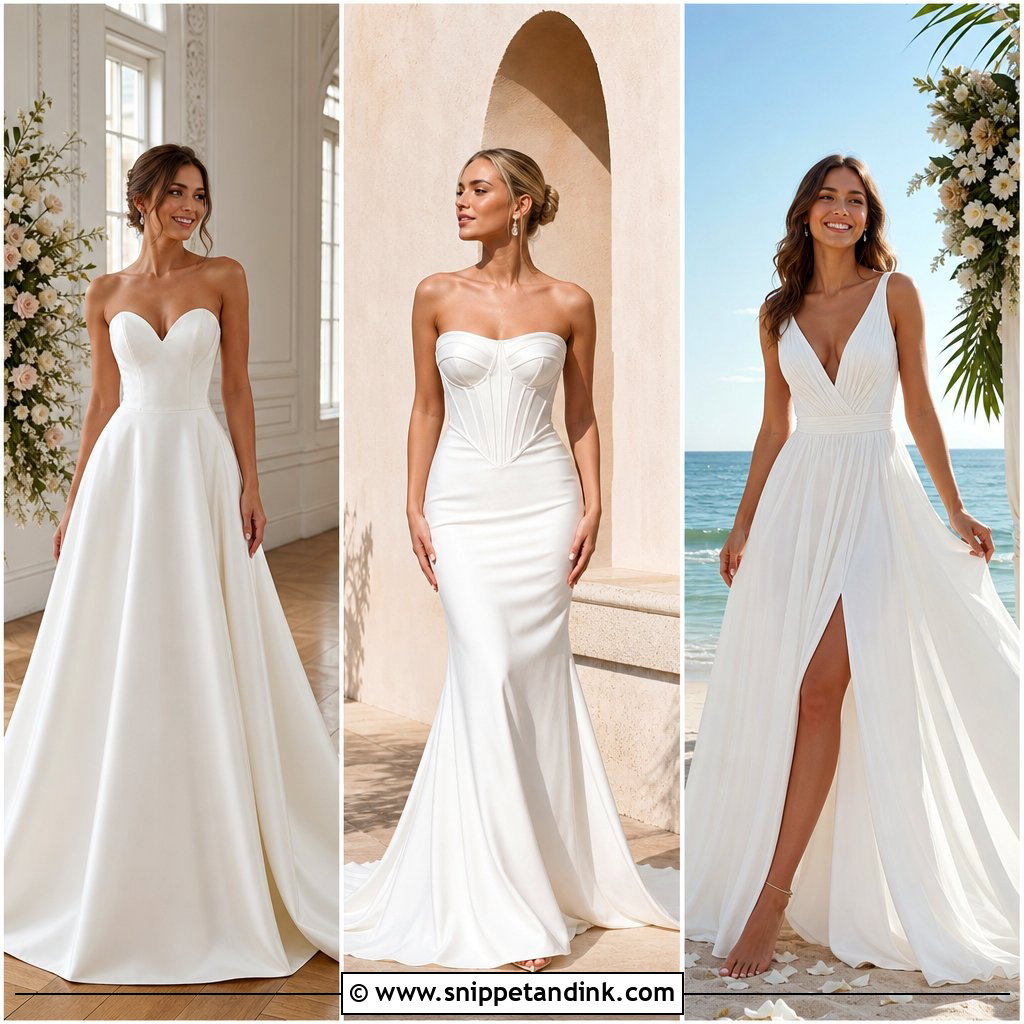
20. Plus Size Short Minimalist Wedding Dress
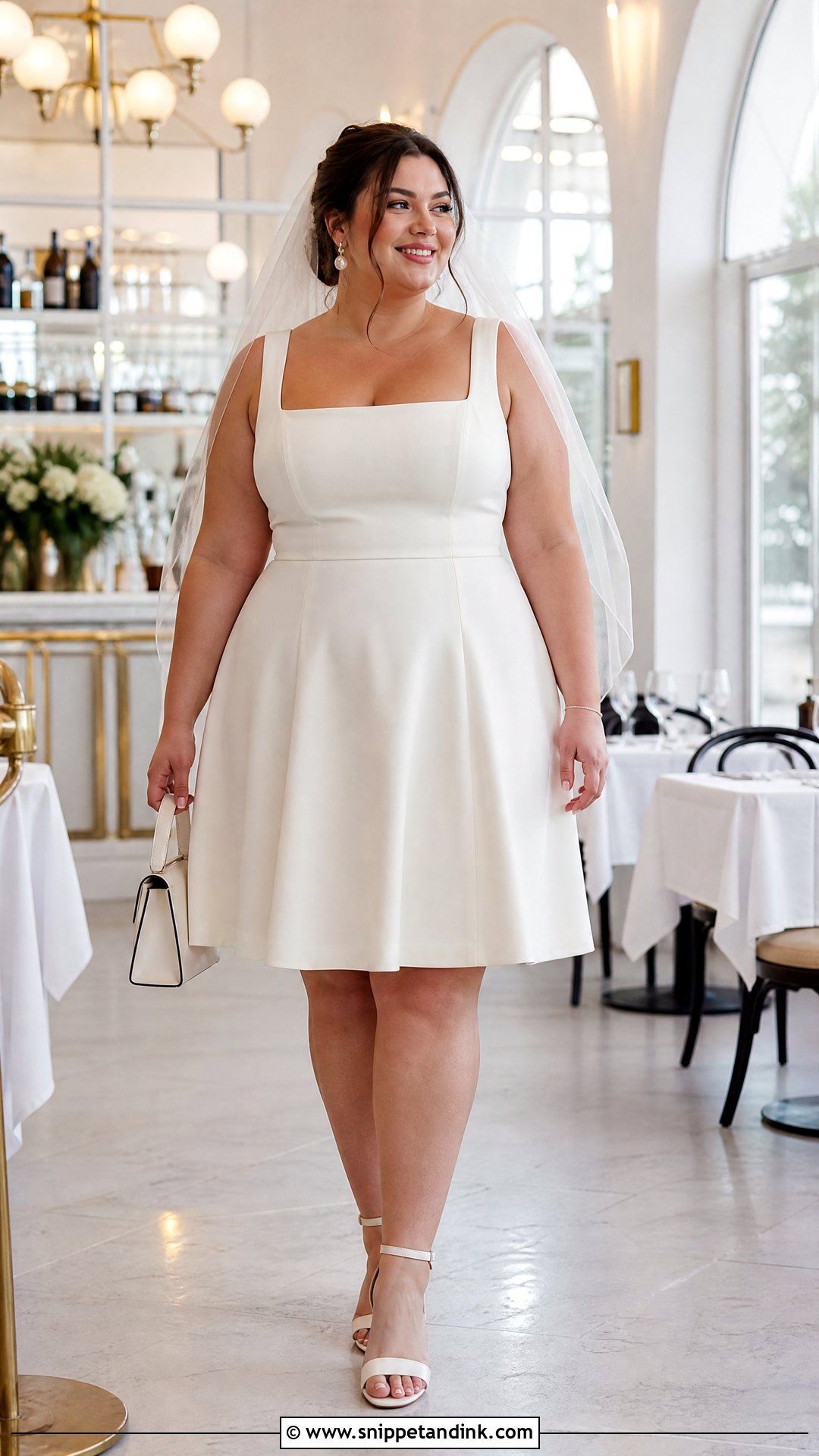
For a plus-size minimalist dress, structure matters more than anything else. I’d start with a square-neck A-line in structured crepe with wide straps, built-in support and a defined waist. Knee length or just above covers what most brides want covered while still showing the shoes. Comfortable block heels, pearl or metallic earrings, a medium structured bag, and a fingertip veil that adds a vertical line behind. Fitted elbow sleeves give coverage without hiding the waist. Tailoring the bust, straps and hem is what makes it look made for you.
A Short Wedding Dress Can Have a Second Life
One quiet advantage of a short, simple dress is that you can actually wear it again. A long gown rarely leaves storage; a white crepe sheath can go to anniversary dinners or summer parties.
Cleaning it soon after
Take it to a cleaner experienced with bridal fabrics within a few weeks. Sugar spills from champagne or cake can be invisible at first and turn yellow over time, so point out where you ate and drank.
Storing it well
Store it in a breathable cotton garment bag or acid-free tissue in a box, somewhere cool and dark. Avoid plastic dry-cleaning covers, which trap moisture. Strapless and bias-cut dresses keep their shape better folded with tissue than hanging, since hanging stretches them over time.
Changing it for later
Natural fibres like silk or cotton can sometimes be dyed a colour; most polyester satins won’t take dye evenly, so check the label before you plan on it. A simpler change is shortening: a seamstress can take a knee-length dress up to a mini, or add a coloured sash or jacket so it no longer reads as bridal.
Simple Works Only When the Fit Is Exact
A short, simple bridal dress can feel every bit as memorable as a long gown. The neckline, the fabric, the tailoring and one or two accessories are carrying the whole look, so each needs to be right. Settle the hemline and silhouette for your venue and comfort first. Then add shoes, a veil, jewellery or one removable layer. Resist adding details just because the dress looks bare; minimalism works when every element is chosen. And above all, get a fit that stays put from the ceremony to the last song.
You'll Like These Ideas:






Leave a Reply