
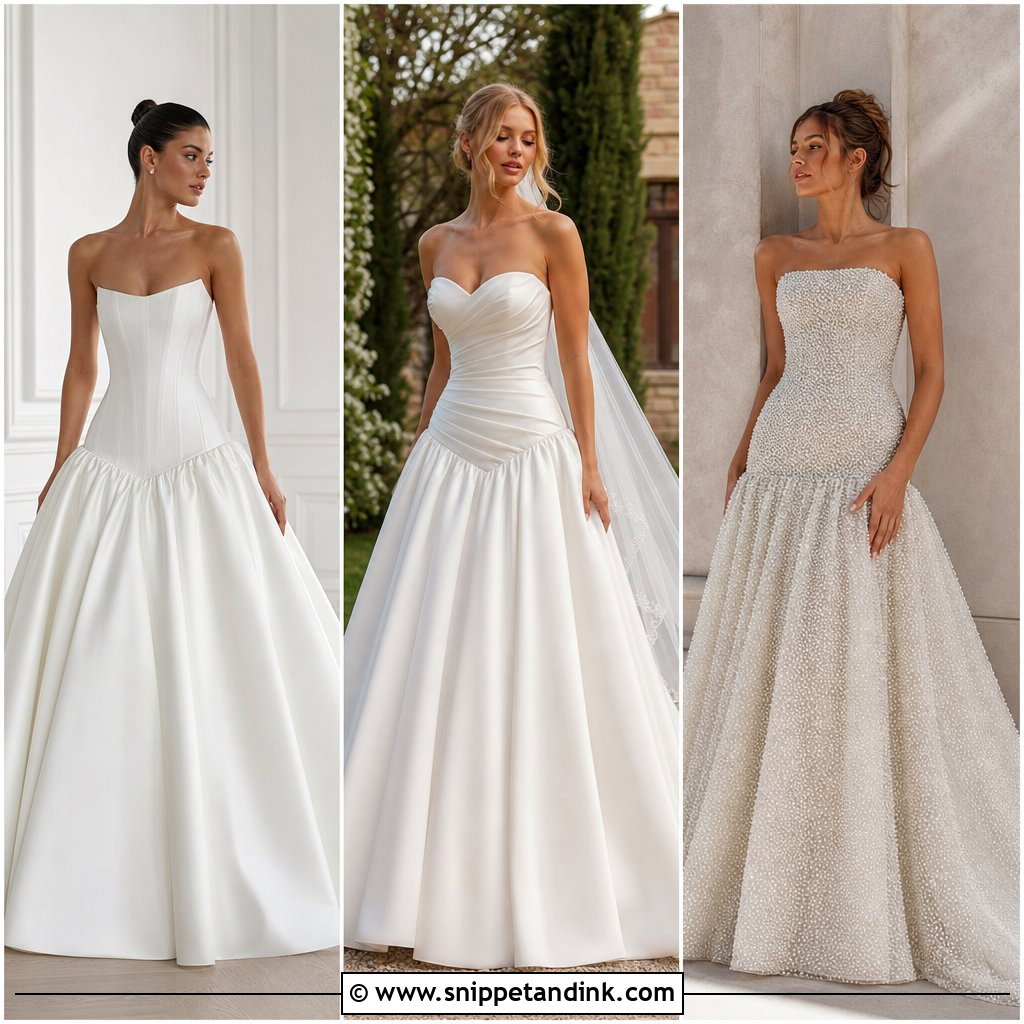
A V drop waist, often called a Basque waist, carries the bodice below your natural waistline and finishes it in a point, so the torso looks longer and the skirt springs out from lower on the hip. It’s become very popular in recent bridal collections, turning up on corseted bodices, full ball gowns, sleek satin, lace and stripped-back modern designs. I like it, but I’m careful with it. Where the point lands on your body decides whether the shape looks long and graceful or slightly off, and that’s a fitting question more than a style one. Below you’ll find classic, modern and romantic versions, each with suggestions for the veil, shoes and jewelry that suit it.
Where the Point Should Land on Your Torso
Sample gowns are cut for an average torso, and very few brides have one. Before you look at fabrics, it helps to know your own proportions, because they decide how deep a V you can wear.
- Find your natural waist, the narrowest point, usually just above the navel. Tie a ribbon there.
- Measure from the ribbon down to the top of your hip bone. This is roughly the room the point has to work with.
- In a sample, check where the tip of the V falls. Ideally it sits a few centimeters below your natural waist and above the widest part of your hips.
- Sit down. If the tip pushes into your thighs or buckles, the point is too long for you.
A long-waisted bride can take a deep, dramatic Basque. On a short torso, a shallow point keeps the legs looking longer and the skirt from starting too low. Neither is better. It’s simply a matter of matching the dress to the body wearing it.
1. Strapless Satin V Drop Waist Wedding Dress
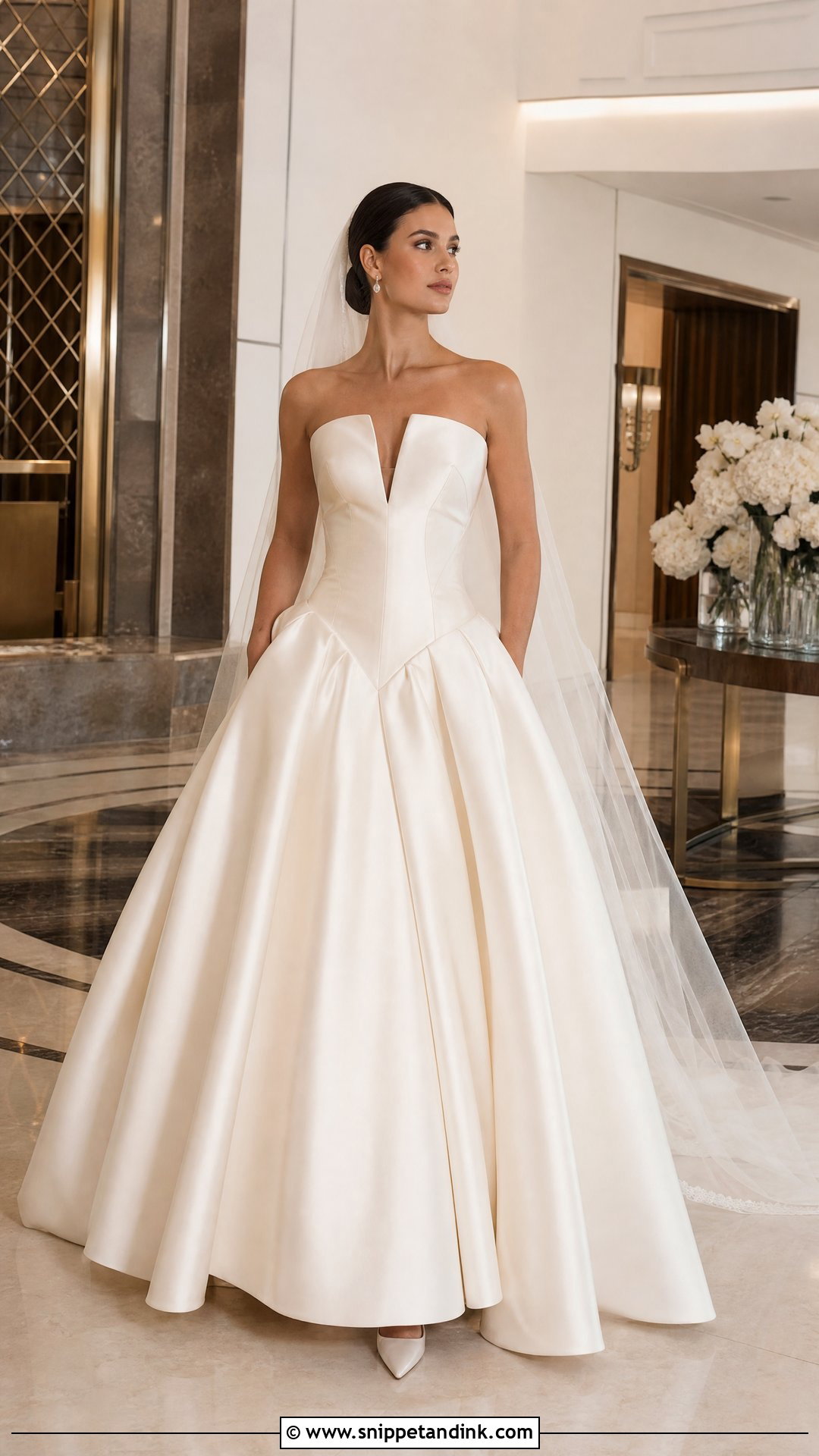
Strapless satin is the plainest way to show off the point, with nothing to distract from the seam line. A structured bodice with internal boning and a gently curved neckline holds the dress up without looking rigid, and a full satin skirt balances the long torso. Pearl drops, pointed ivory pumps and a raw-edge cathedral veil keep it clean, with a sleek bun and natural makeup. Ballrooms and grand hotels suit it. The weak spot on a satin drop waist is the point itself. If the bone at the tip is too soft, it folds when you sit and stays creased, so press on it at the fitting and see whether it springs back.
2. Sweetheart Corset V Drop Waist Wedding Dress
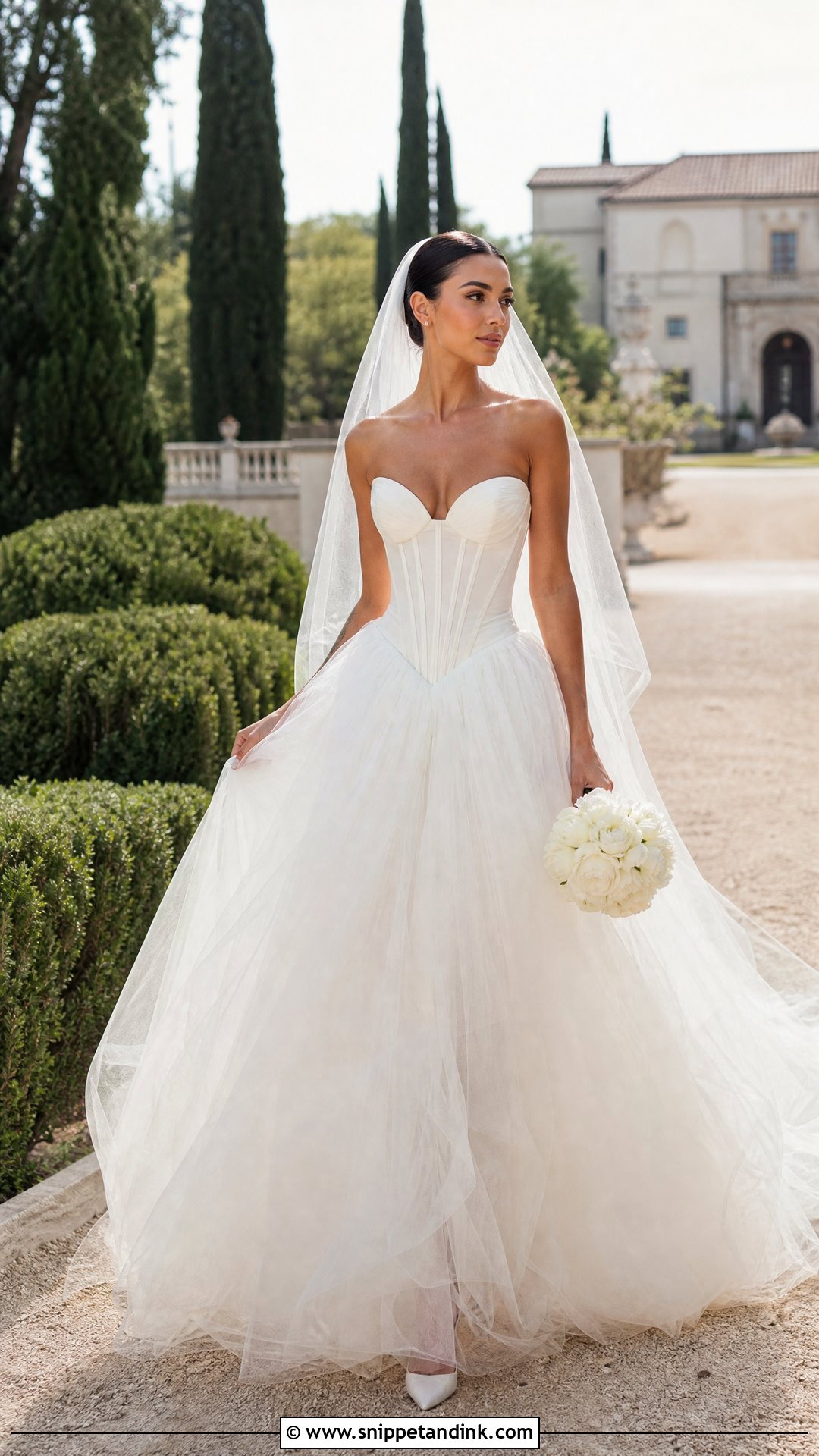
Sweetheart plus corset plus a long V is the most figure-defining combination on this list. Look for well-placed boning, lined cups and a modest sweetheart curve rather than a very deep one, which can make the bodice look top-heavy above such a long waist. A layered tulle skirt that sits smooth over the hips before opening keeps the line clean. A fingertip veil, crystal studs, closed satin heels and a compact bouquet balance it, with soft waves or a textured low bun. If this sweetheart corset gown appeals to you, ask your seamstress to mark the end of the point with you seated as well as standing. A point that’s comfortable upright can press into your lap at dinner.
3. Square Neck V Drop Waist Wedding Dress
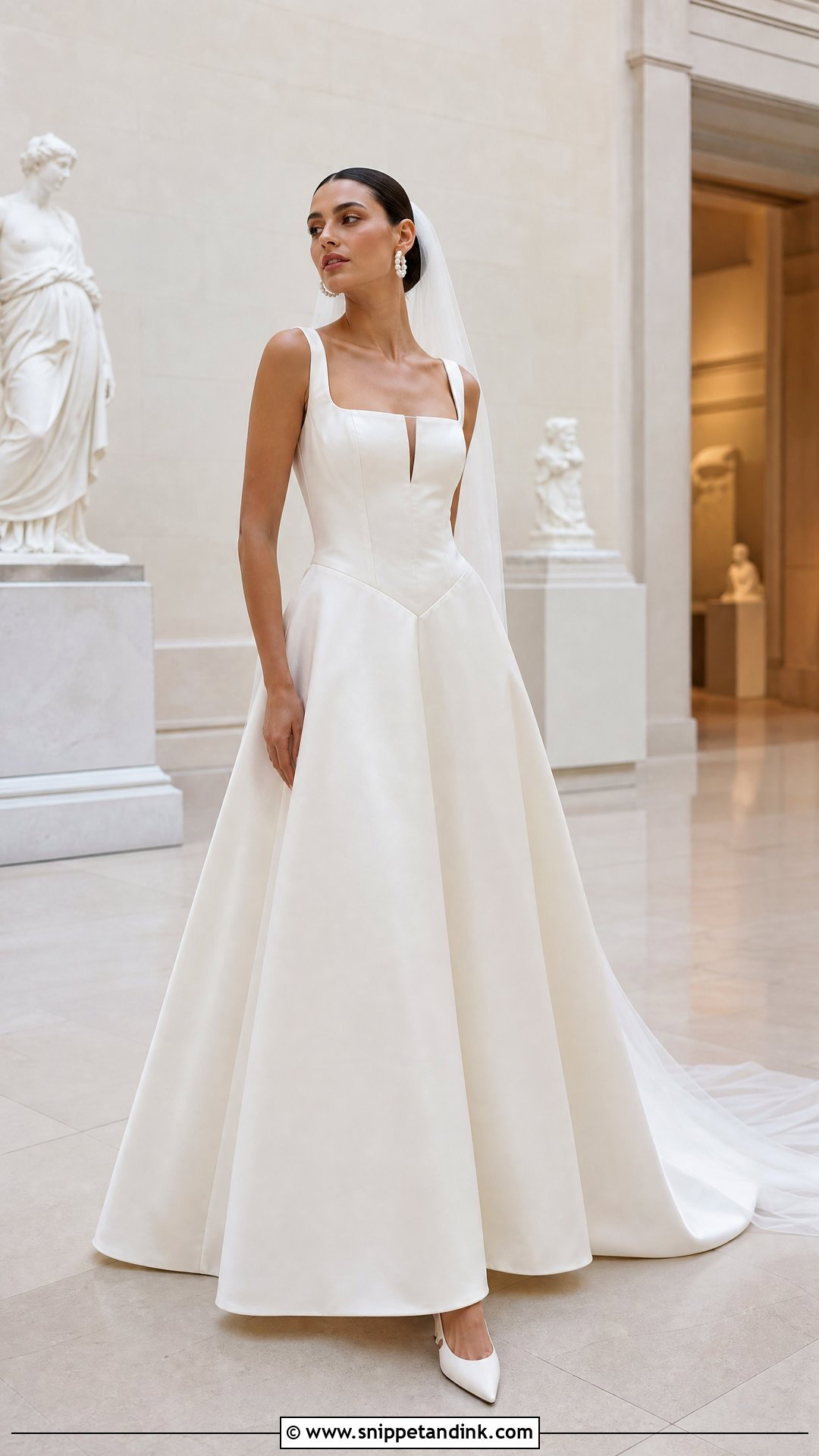
Square neck and Basque waist give the dress two clean geometric lines, one at the top and one at the bottom of the bodice. Matte satin or mikado with wide straps, a fitted bodice and a crisp V into a structured A-line skirt keeps it modern. A smooth chapel veil, small pearl hoops, a low chignon and pointed slingbacks suit it, with a structured white bouquet. Museums and city venues fit its style. Check the corners of the neckline closely. They should lie flat on the chest, and if they curl outward when you breathe, the straps need shortening or the bodice needs hidden cups.
4. Off Shoulder V Drop Waist Wedding Dress
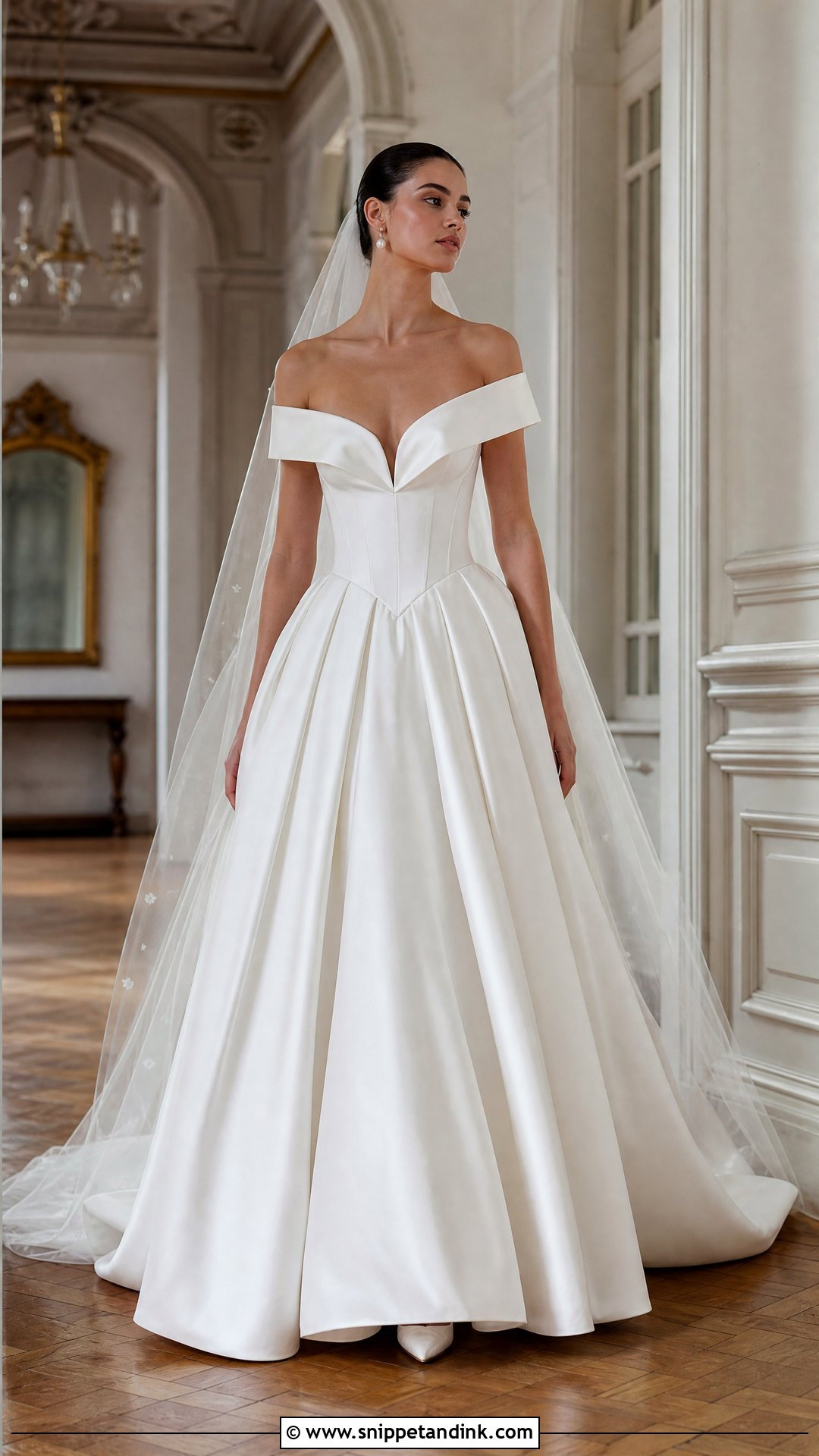
Off-the-shoulder sleeves soften all that structure. A folded satin neckline or loose draped sleeves frame the collarbones, and a fitted corset bodice into a full pleated skirt gives a regal shape. Add a fine necklace, pearl earrings, satin pumps and a long veil under a polished bun, and leave everything else simple. Castles and historic estates are its natural setting. My honest caution: off-shoulder sleeves and a long rigid bodice both limit how you move. Hug, dance and lift your arms at every alteration appointment. Discreet elastic inside the sleeve band often fixes the pull.
5. Long Sleeve Lace V Drop Waist Wedding Dress
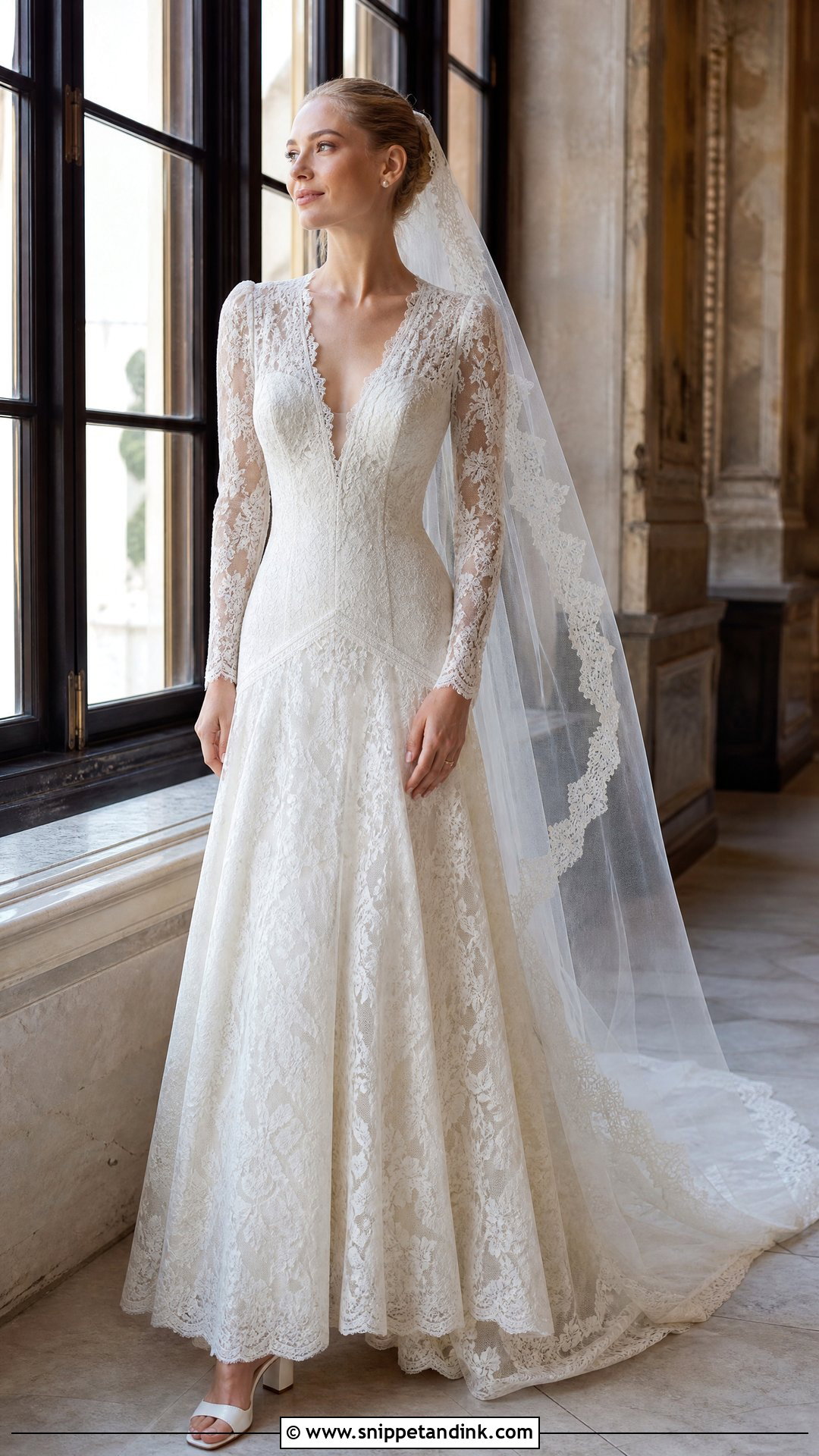
Lace sleeves suit cooler weather and older venues, and on a drop waist they need one rule: keep the point visible. Floral lace over structured lining, with the V clearly defined instead of hidden under dense appliqué, then a soft flare or lace-covered ball skirt. Pearl studs, ivory block heels, a scalloped cathedral veil and a low bun with a few loose pieces around the face finish it, plus a bouquet with trailing greenery. Bend your elbows at the fitting, because tight lace sleeves cut in at the joint. The lining color matters too. Nude lining makes the lace pattern stand out, while ivory lining gives a softer, more solid look.
6. Spaghetti Strap V Drop Waist Wedding Dress
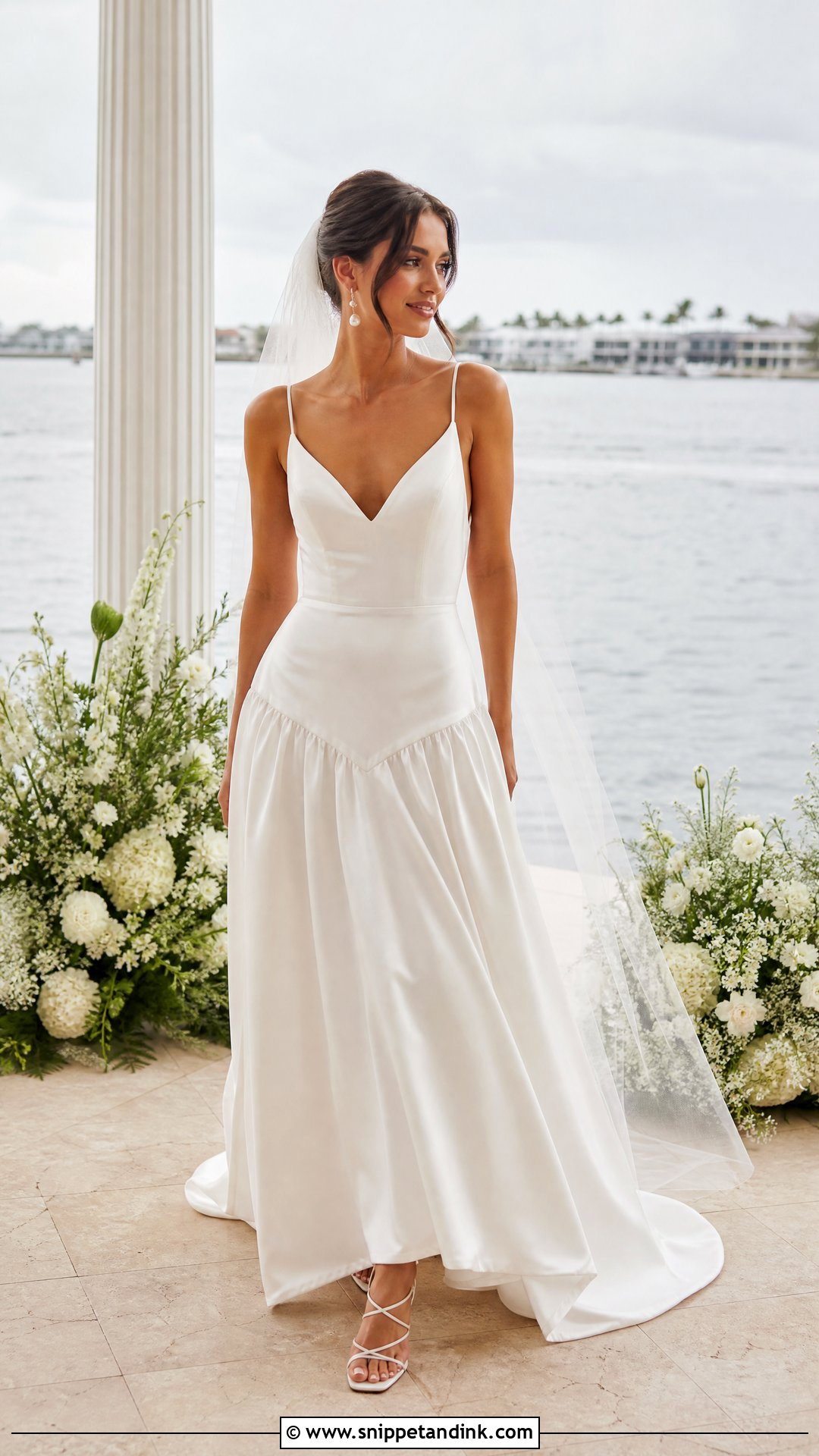
Spaghetti straps make a structured drop waist feel lighter and more current. A smooth satin bodice with thin adjustable straps, a moderate scoop and a defined point above a gathered skirt is the base. Delicate drops, strappy ivory heels, a sheer fingertip veil and a loose low bun suit it, with a small bouquet. Summer weddings and waterfront venues suit it best. The straps are decorative more than structural. The corset inside has to hold the dress up by itself, so if you feel the straps digging in, the bodice isn’t fitting snugly enough. Bring a light wrap for cool evenings or a conservative ceremony space.
7. Scoop Neck V Drop Waist Wedding Dress
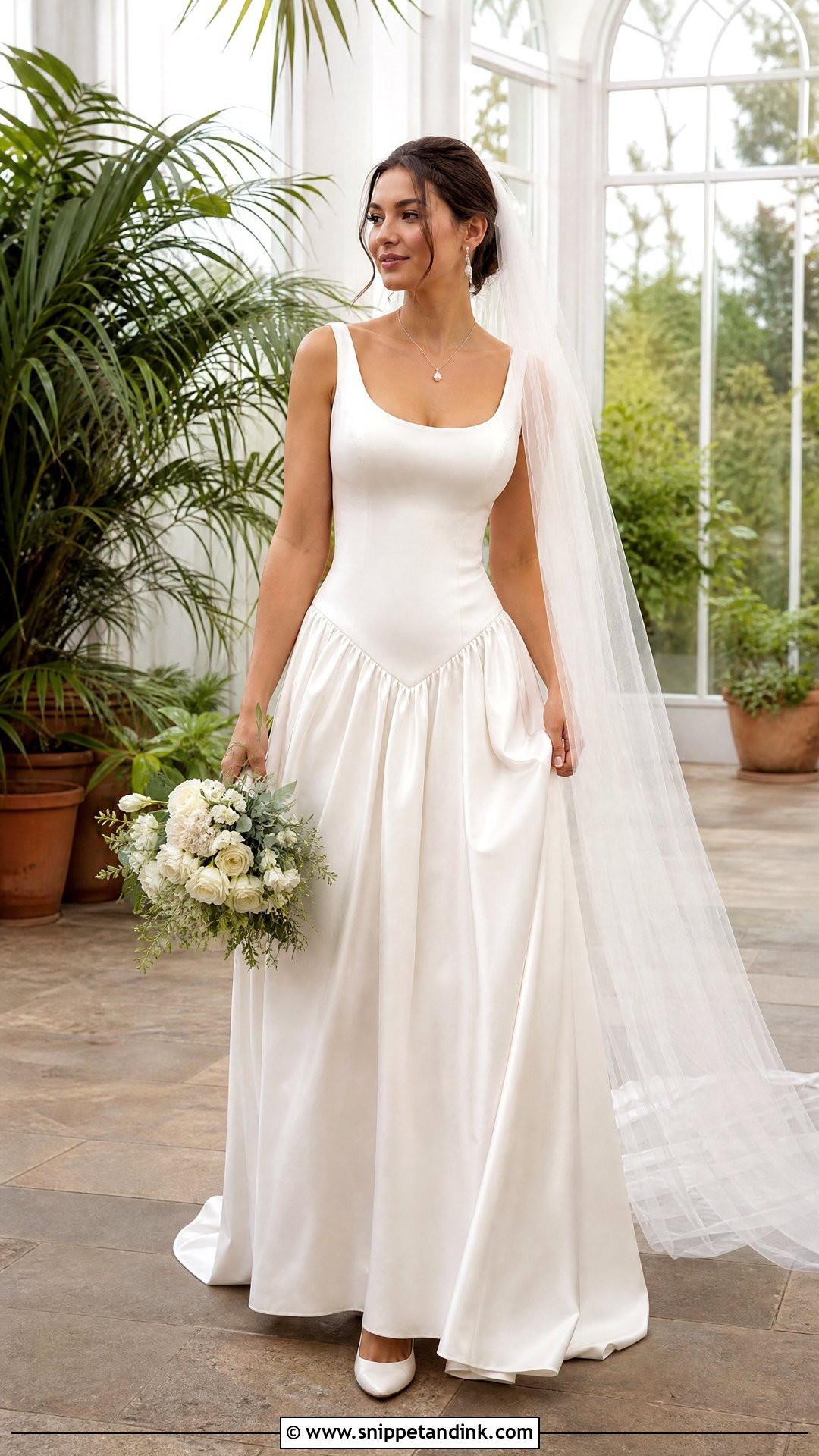
Is a scoop neck too plain for a bridal gown? Not on a drop waist, where the soft curve at the top offsets the sharp angle below. Supportive straps, a smooth fitted bodice and a low pointed seam into satin or organza make a traditional, graceful dress. Pearl earrings, a short pendant, rounded pumps and a chapel veil suit it, with a softly twisted updo. Country clubs and daytime ceremonies fit it well. Lean forward at the fitting: if the scoop gapes, it needs a small dart or a tighter neckline binding. And look in a side mirror, because a long bodice can ripple over the upper hip if it isn’t shaped precisely.
8. Draped Bodice V Drop Waist Wedding Dress
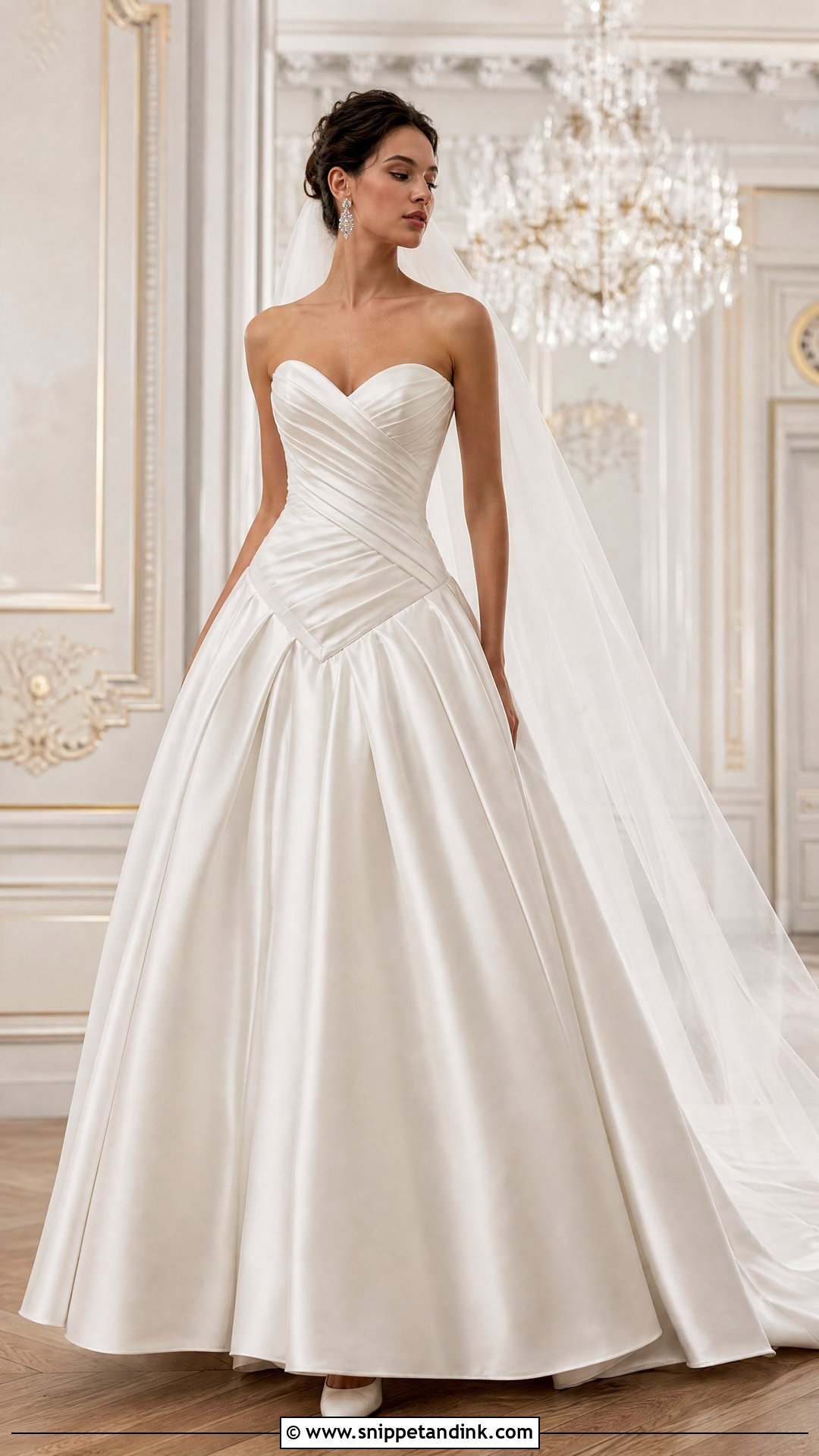
Draping adds movement without beads or lace. Diagonal satin folds across the bodice, a soft sweetheart and a drop waist into a full skirt make a sophisticated evening dress. Crystal studs, a sleek bracelet, pointed heels and a plain cathedral veil complete it, with a neat bun or smooth Hollywood-inspired waves. Candlelit ballrooms show it off. The folds should be stitched to the corset underneath so they stay put, and they shouldn’t bunch at the point, where extra fabric makes the waist look thick. Satin drapes crease easily, so arrange a steamer at the venue and stand rather than sit while you wait.
9. Minimalist Mikado V Drop Waist Wedding Dress
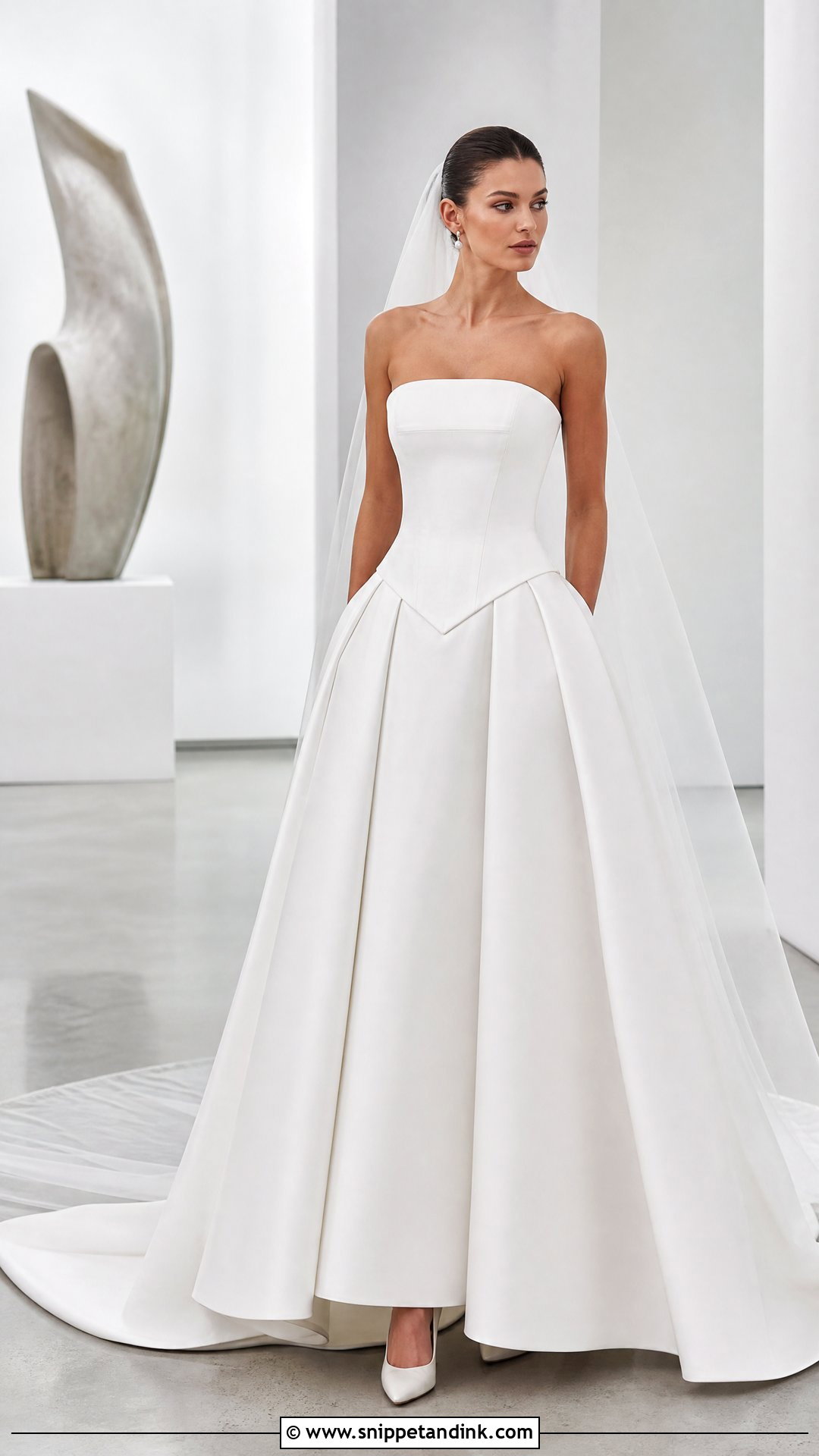
Crisp Mikado holds a sharp point better than any soft fabric, which is why minimal designers love it. A sleeveless or strapless bodice with few seams, a box-pleated skirt and a short train is enough. Sculptural pearl earrings, pointed leather pumps, a smooth cathedral veil and a tight low bun keep the modern feeling, with a bouquet of one flower variety. Galleries and architectural venues suit it. Stiff fabric shows every fitting flaw, so the ribs, waist and hips need precise tailoring. If the gown has pockets, check that they lie flat. A bulging pocket on mikado breaks the line instantly.
10. Tulle Ball Gown V Drop Waist Wedding Dress
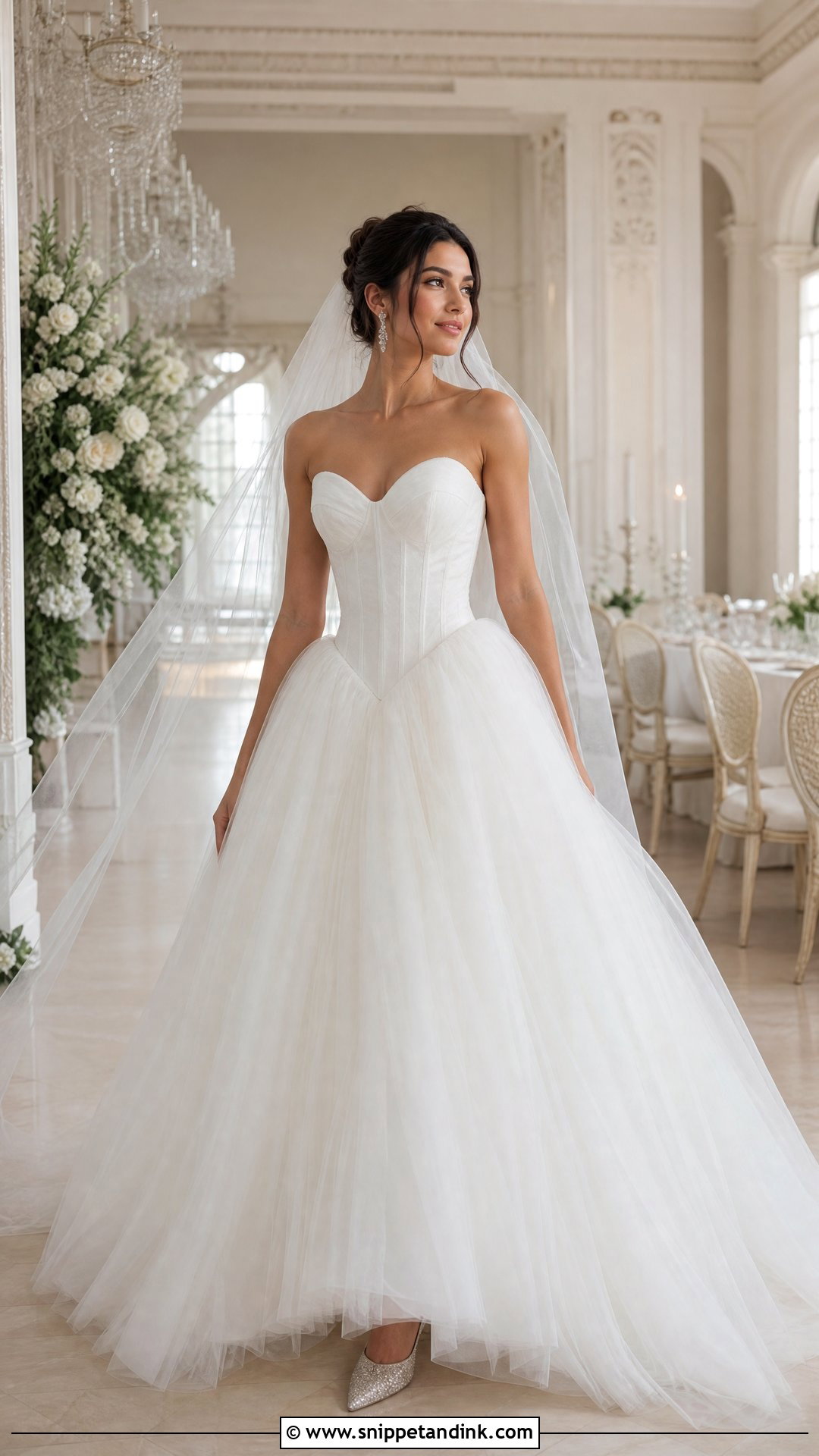
Tulle and a drop waist can go wrong in one specific way: the skirt puffs out right at the point and forms a shelf around the hips. The good versions start the volume slightly below the V and let it build gradually. A lined corset, a gently curved neckline and a clear point keep the top defined. Crystal earrings, glittering closed heels, a sheer chapel veil and a soft updo finish it, with a round bouquet to echo the skirt. Grand indoor venues and gardens with level paths work well. Ask how many underlayers there are and how the bustle works. Too many layers get heavy, while too few let the skirt collapse.
11. Floral Appliqué V Drop Waist Wedding Dress
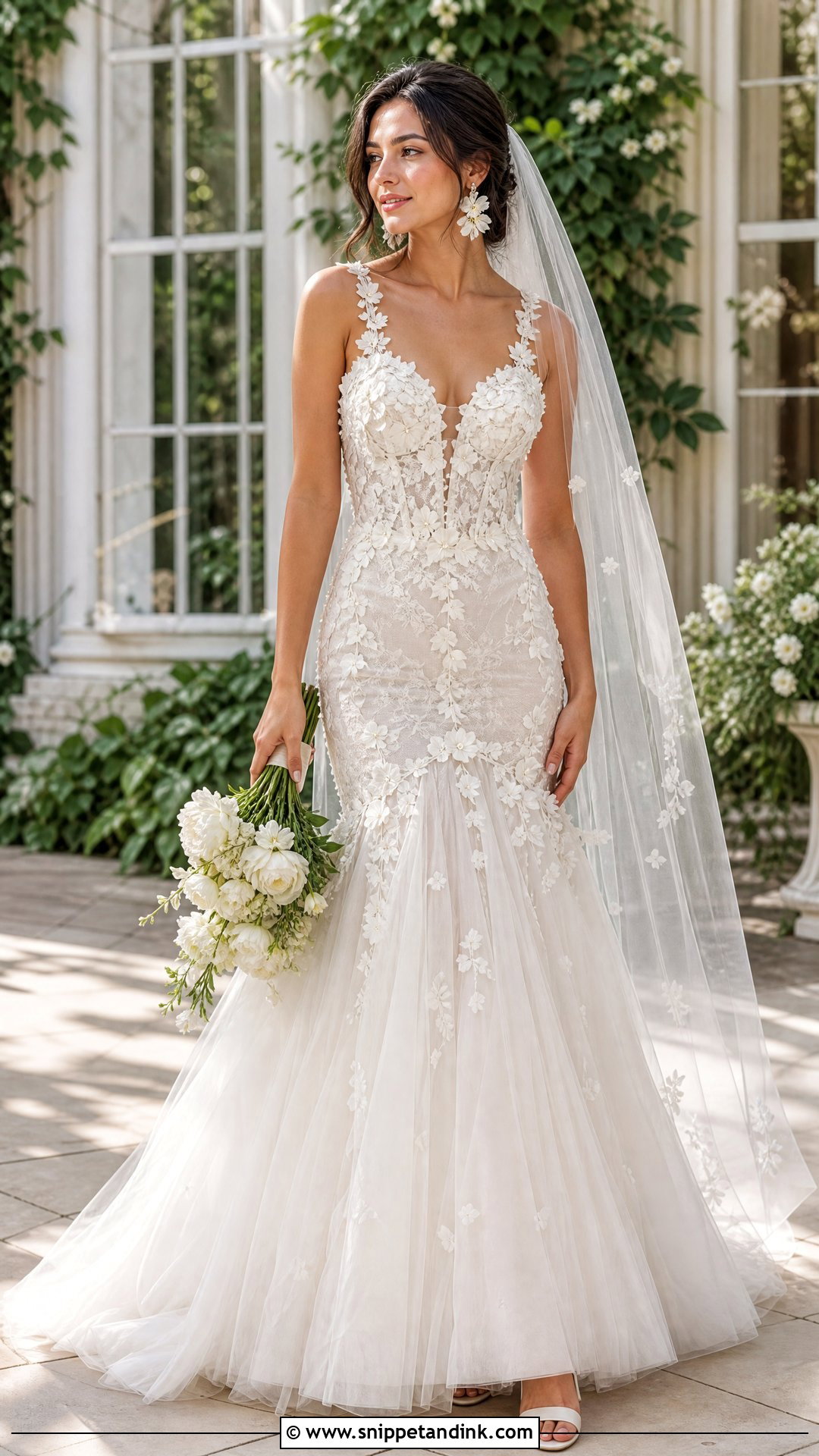
Floral appliqués give the sculpted waist a romantic, detailed feel. The best placements start dense on the bodice and thin out as they travel onto the tulle skirt, leaving open space around the point so the V still reads. Floral earrings, satin block heels, a lightly embellished veil and a loose low bun suit it, and the bouquet should be simple and tonal. Botanical venues and spring weddings are a natural match. Run a hand under your arms and along the waist point at the fitting. Stiff-edged flowers in those spots scratch, and clustered appliqués at the seam make the waist look wider.
12. Pearl V Drop Waist Wedding Dress
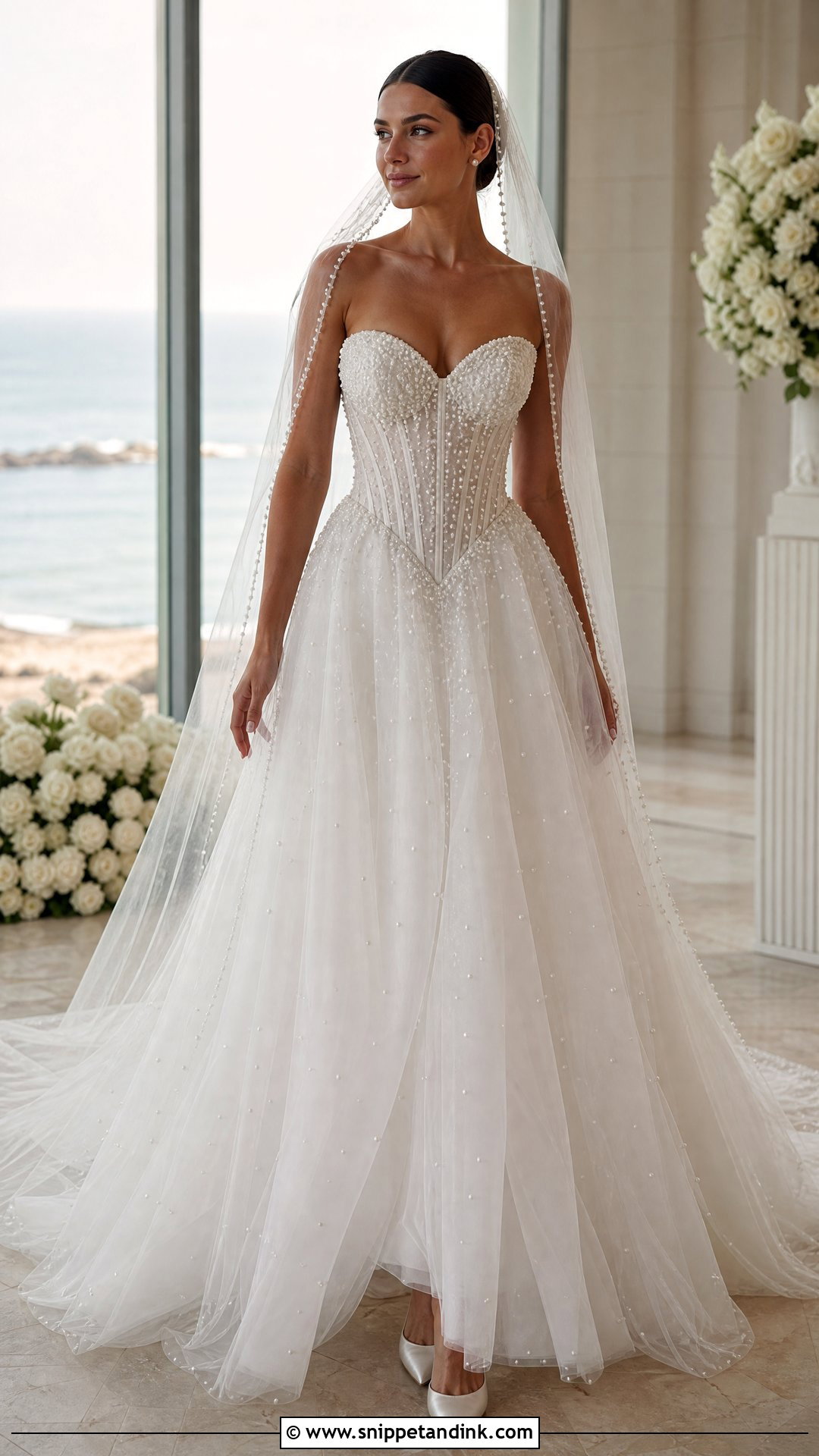
Pearls give a soft glow rather than sparkle. Scattered across a fitted corset and fading out into a tulle or organza skirt, they lead the eye toward the point. Pearl studs, satin pumps, a sheer veil with a few matching pearls and a polished low bun complete it, and a big necklace is unnecessary since the bodice already looks like jewelry. Formal hotels and coastal venues suit it. Check how securely the pearls are sewn and whether they snag the veil. A smooth lining keeps the backs of the beads off your skin, and a small sewing kit with matching thread is worth packing.
13. Jacquard V Drop Waist Wedding Dress
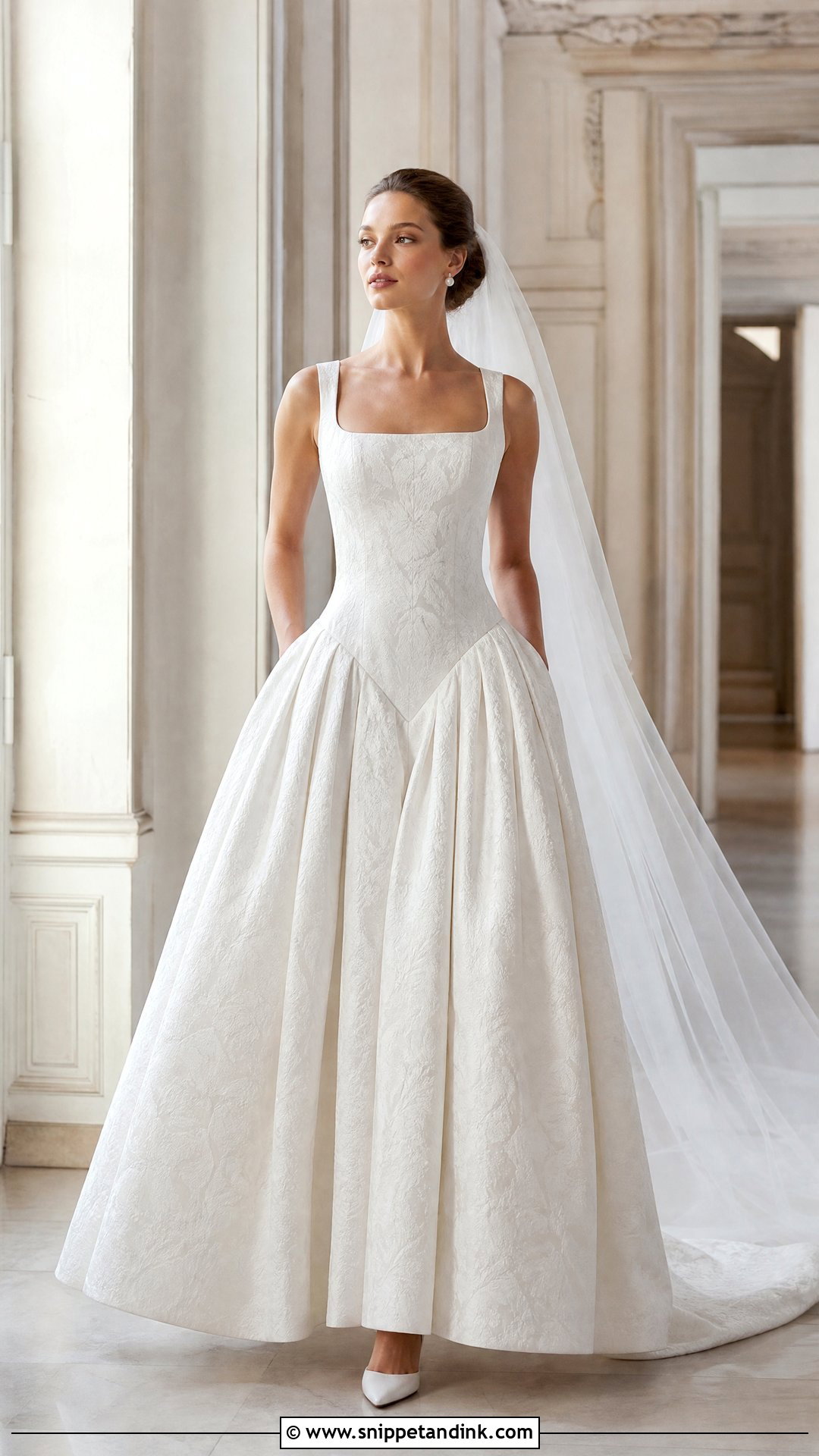
Jacquard has the pattern woven into it, so the fabric itself provides the decoration. A strapless or square-neck bodice with a defined V and a generously pleated skirt is all it needs. Plain pearl earrings, simple pumps, an unembellished cathedral veil, a smooth bun and a quiet bouquet keep the outfit together. Historic buildings and winter weddings suit it. Large motifs are the challenge. A flower that lands off-center on the bust or gets cut in half at the point looks like an error, so ask whether the pattern can be placed symmetrically down the center front before the gown is cut or altered.
14. Organza V Drop Waist Wedding Dress
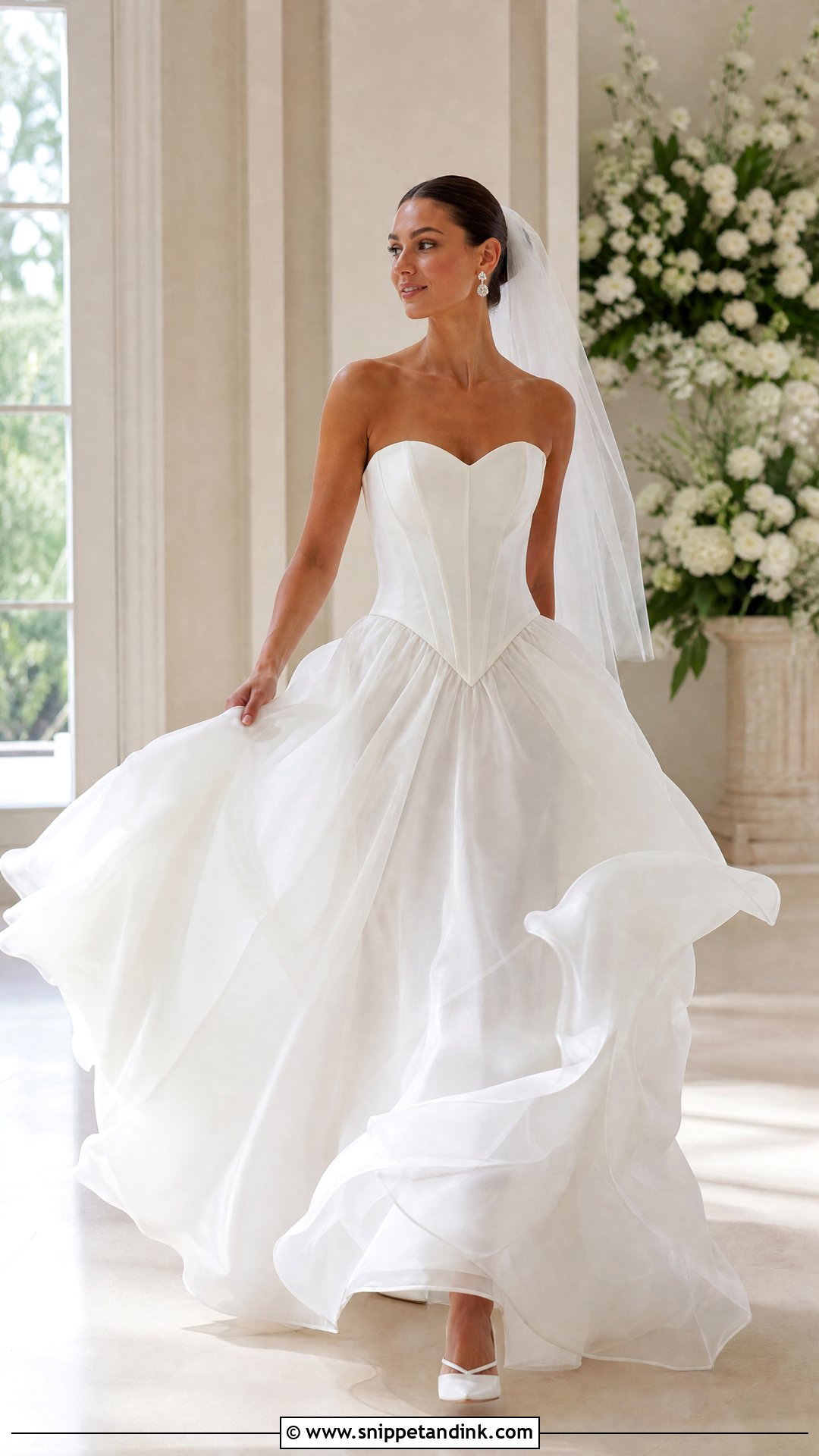
Organza gives volume with less weight than satin, so it’s my go-to for a full drop-waist skirt in summer. A clean corset bodice, a soft point and a layered organza skirt that floats as you walk is the shape. Small crystal earrings, comfortable slingbacks, a plain chapel veil and a smooth half-up style finish it, with a loose bouquet. Warm indoor venues and summer ceremonies suit it. Organza is slightly sheer, so check the lining in daylight. The layers also need careful hemming, since uneven edges stand out on transparent fabric, and the train needs a firm bustle so it doesn’t tear on the dance floor.
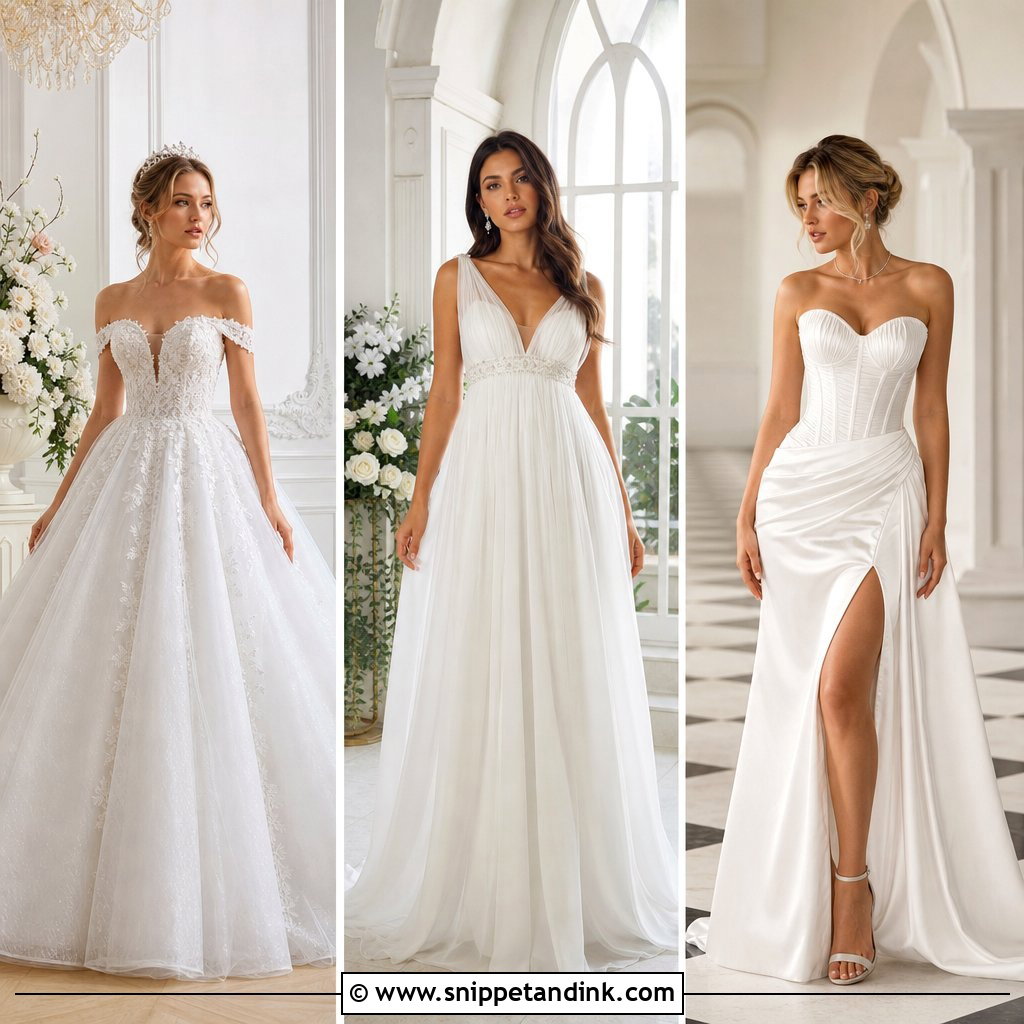

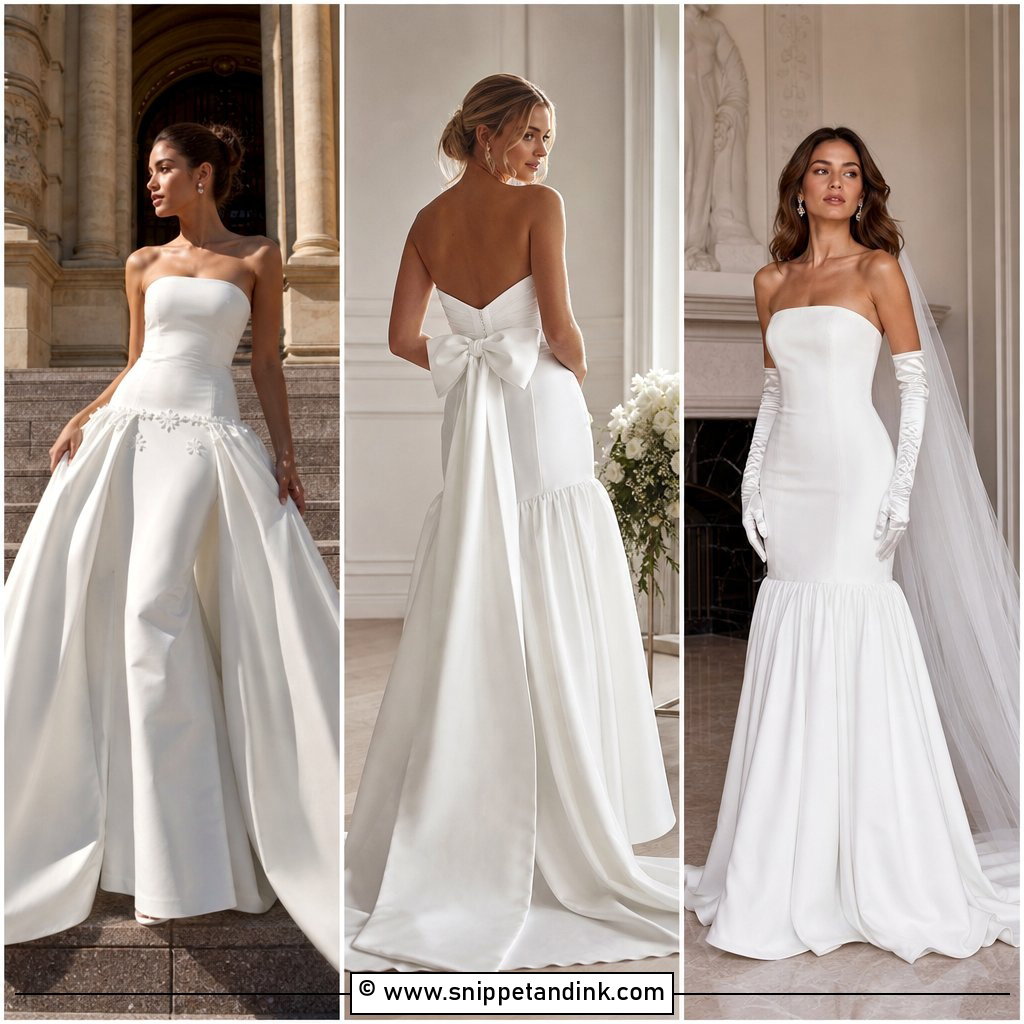
15. Pleated Skirt V Drop Waist Wedding Dress
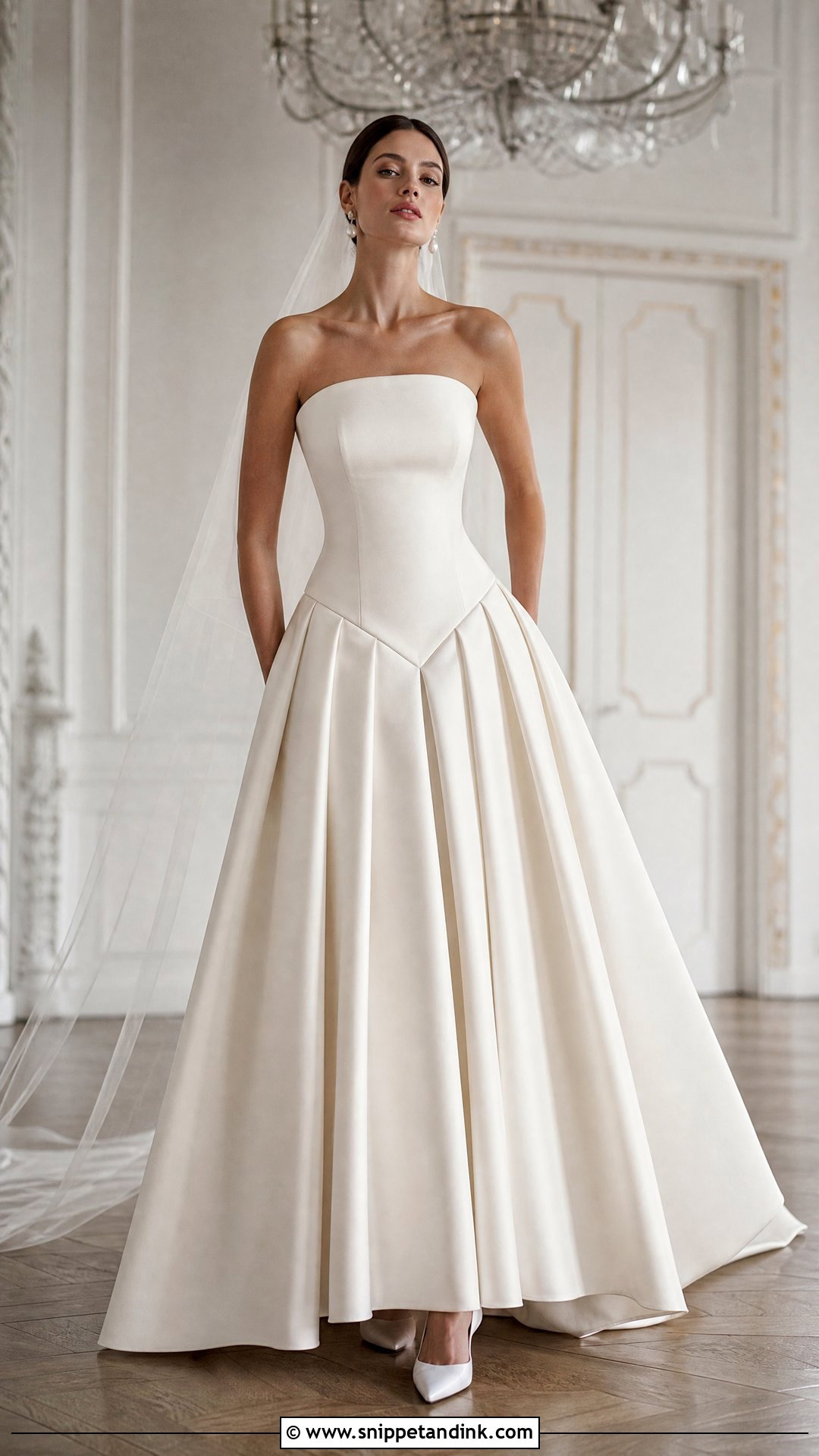
Sharp pleats emphasize the point when they’re placed well. They should start on either side of the V, never directly over it, so the center line stays smooth and the fullness is balanced. Satin or mikado holds pleats crisply. Button earrings, pointed pumps, a long raw-edge veil and a sleek bun suit it, with a compact bouquet. Ballrooms suit its formality. After hemming and alterations, recheck the pleats for symmetry, since taking in one side seam can pull them off. If there are pockets, have them set inside the side pleats so they don’t widen the hip.
16. Bow Back V Drop Waist Wedding Dress
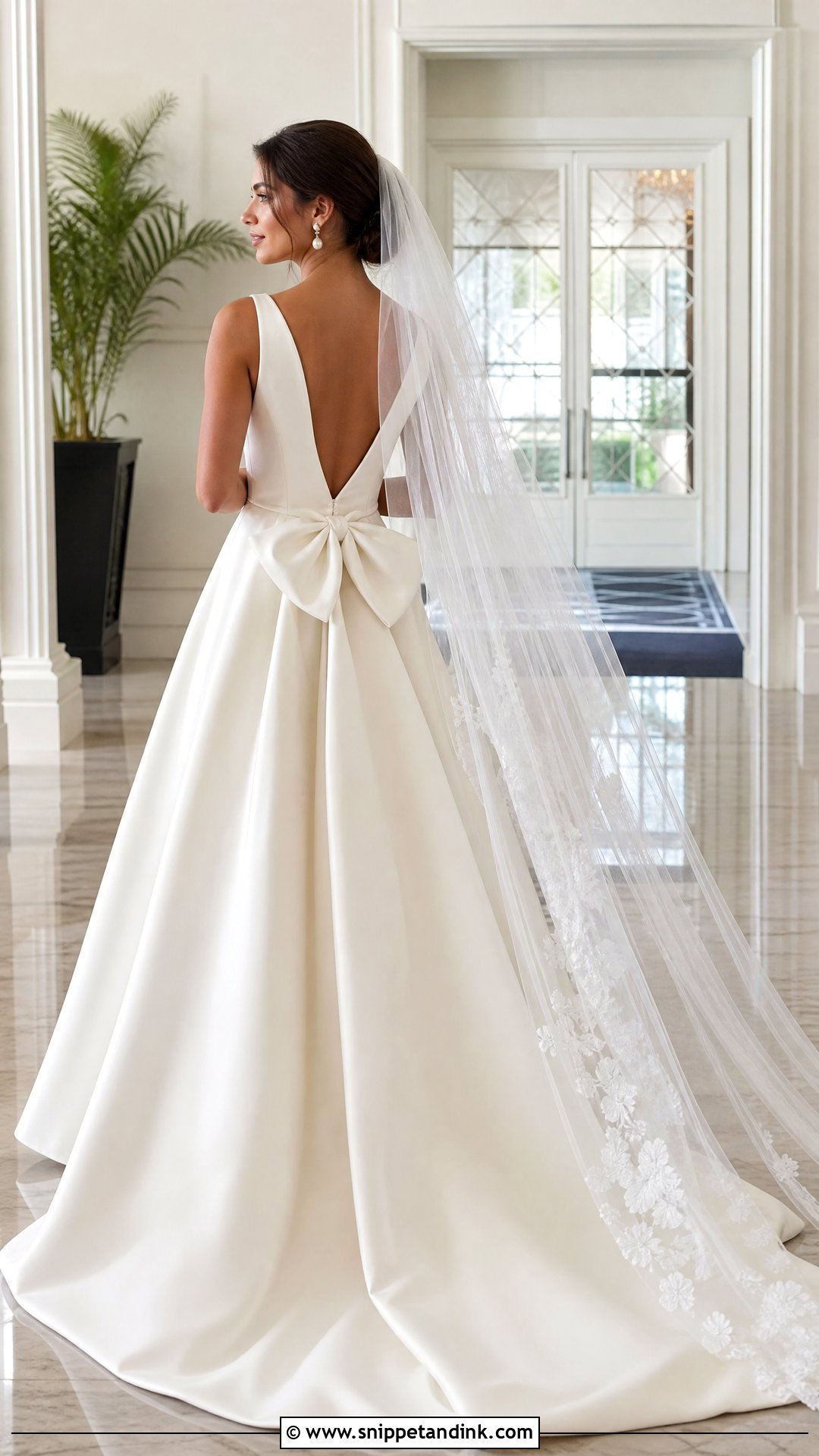
A back bow gives the clean drop-waist gown a memorable view as you walk away. Smooth satin, a fitted pointed bodice, a full skirt and a detachable bow at the lower back make the classic version. Pearl drops, simple heels and a veil sheer enough to show the bow suit it, with a neat updo so nothing covers the back. Elegant hotels suit it. A heavy bow pulls the back of the bodice downward over a long day, so it should be light and hooked on securely. If it’s removable, make sure the bustle still works without it.
17. Detachable Sleeve V Drop Waist Wedding Dress
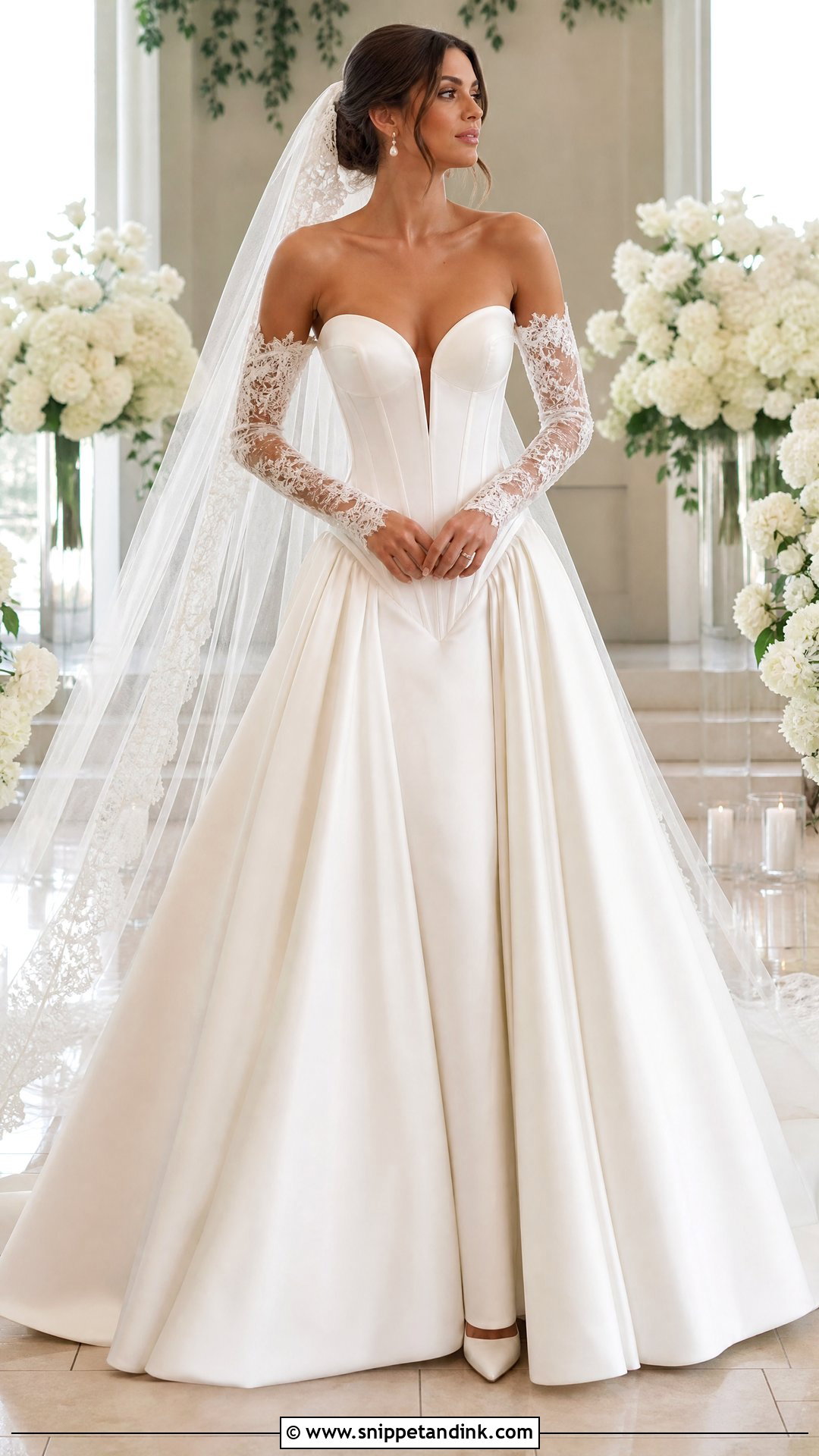
Detachable sleeves give you a ceremony look and a reception look from one dress. Start with a strapless drop waist in satin, lace or mikado and add fitted lace sleeves or off-shoulder drapes for the vows. Pearl earrings, closed heels, a cathedral veil and a low textured bun suit the first look, and the same jewelry and shoes carry into the second once the sleeves and veil come off. Test the attachment points at a fitting. They should sit flat in photos and not pinch. After you take the sleeves off, put them straight into a labeled garment bag. Loose sleeves in a busy bridal suite go missing or get stepped on.
18. Detachable Overskirt V Drop Waist Wedding Dress
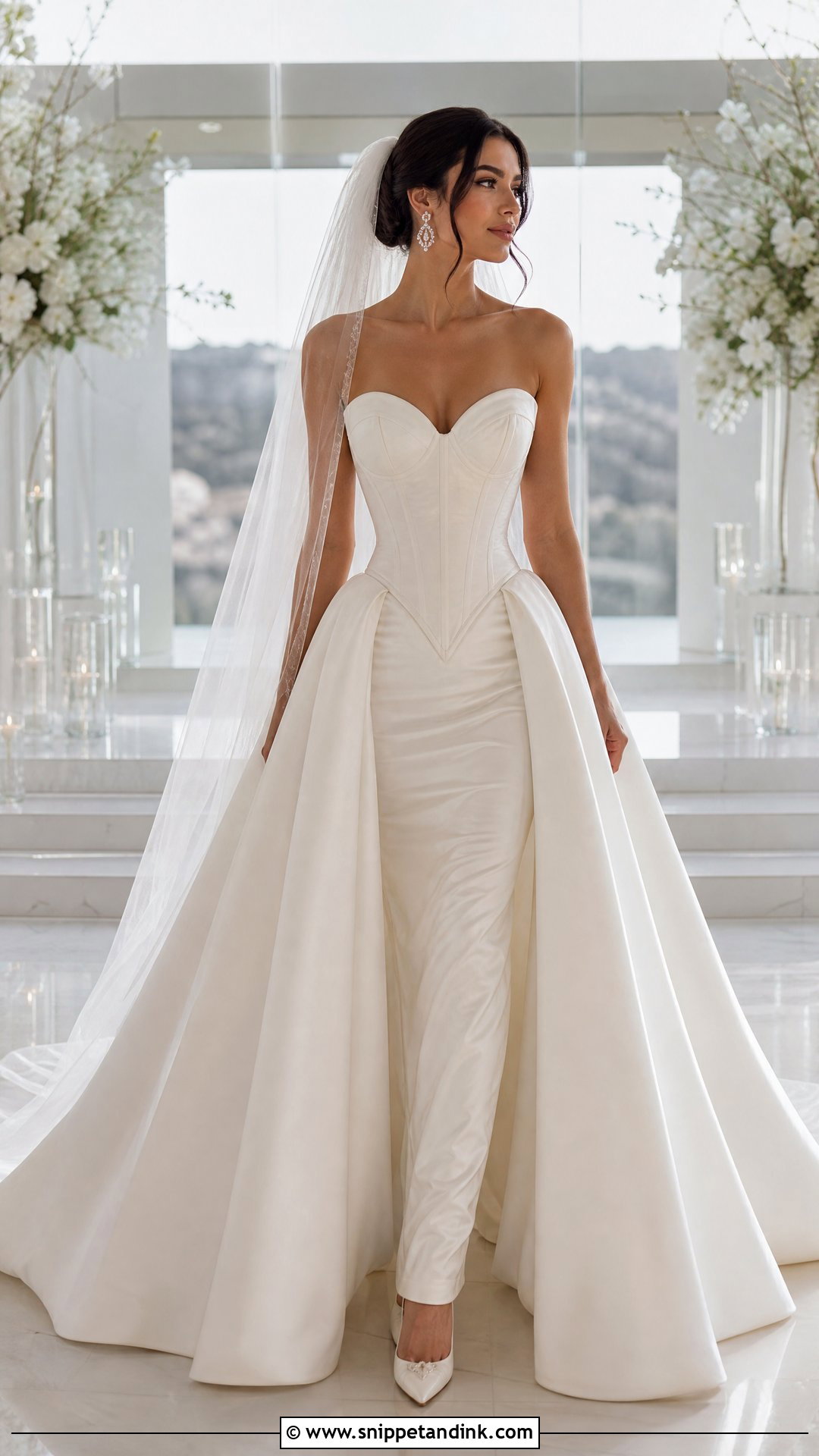
An overskirt gives a slim drop-waist gown ceremony drama, then comes off to reveal a slimmer silhouette for dancing. A corseted sheath or fit-and-flare base with a pointed waist is the starting point, with a full satin or organza overskirt attached at the sides. Crystal earrings, comfortable pumps, a chapel veil and a polished ponytail or bun suit both looks. Watch the waist point. The overskirt’s attachment shouldn’t cover or flatten it, and once the skirt is off, there should be no loops, snaps or bulky hardware visible at the waist. Practice the removal with your helper before the day.
19. Plus Size V Drop Waist Wedding Dress
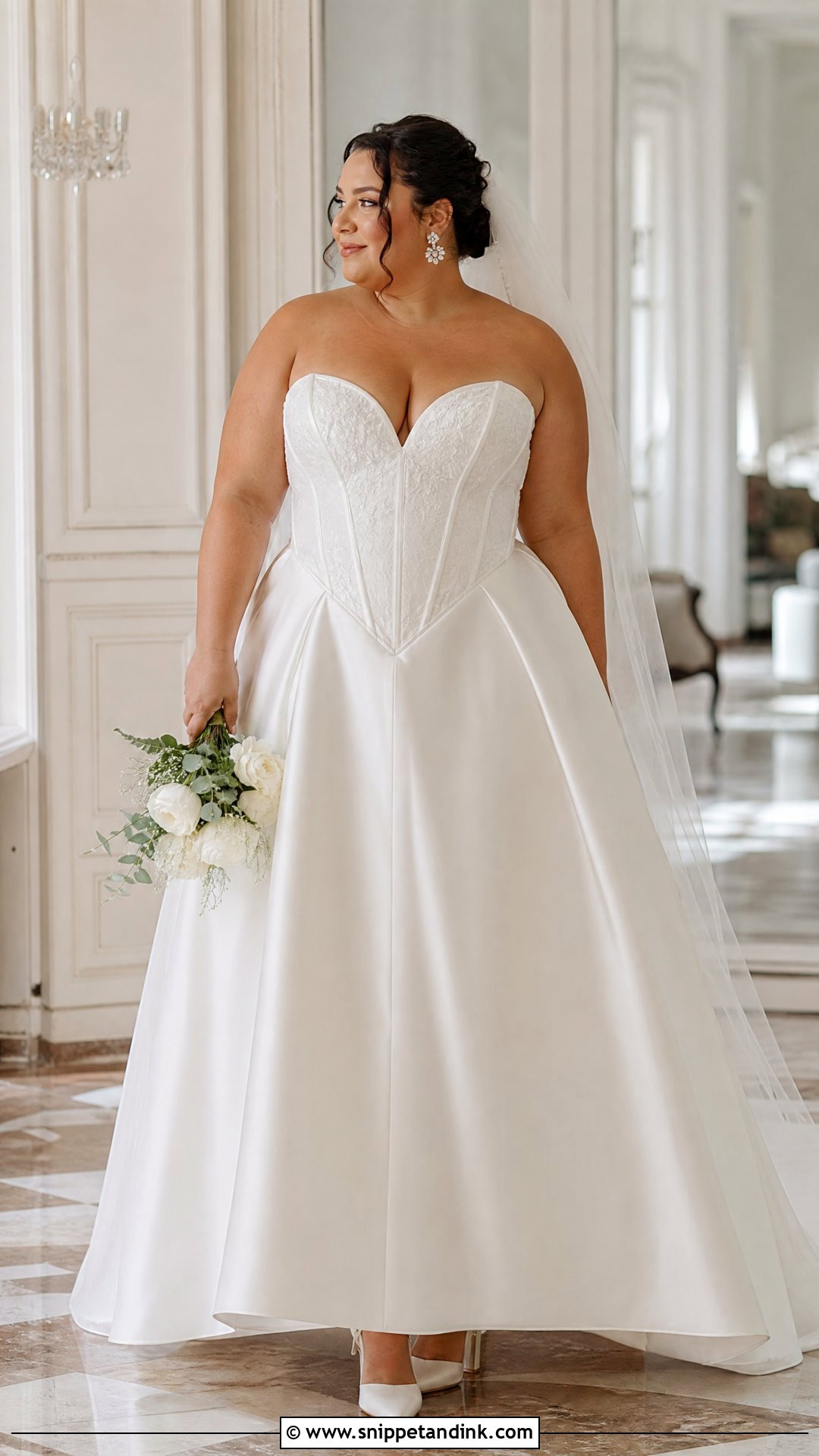
A drop waist can give real definition on a plus-size bride without compression. I look for a supportive corset with flexible boning, secure cups, balanced side seams and a point measured to her own torso length. A full A-line or ball skirt gives smooth movement and good proportions. Block heels with support, statement earrings, a chapel veil and a comfortable updo complete it, and the accessories should follow your taste, not rules about hiding anything. Try a few point depths at appointments. A shorter, softer point is often more comfortable than a long one and looks just as defined. Ask what can be customized on the sample: cups, straps, neckline and bodice length.
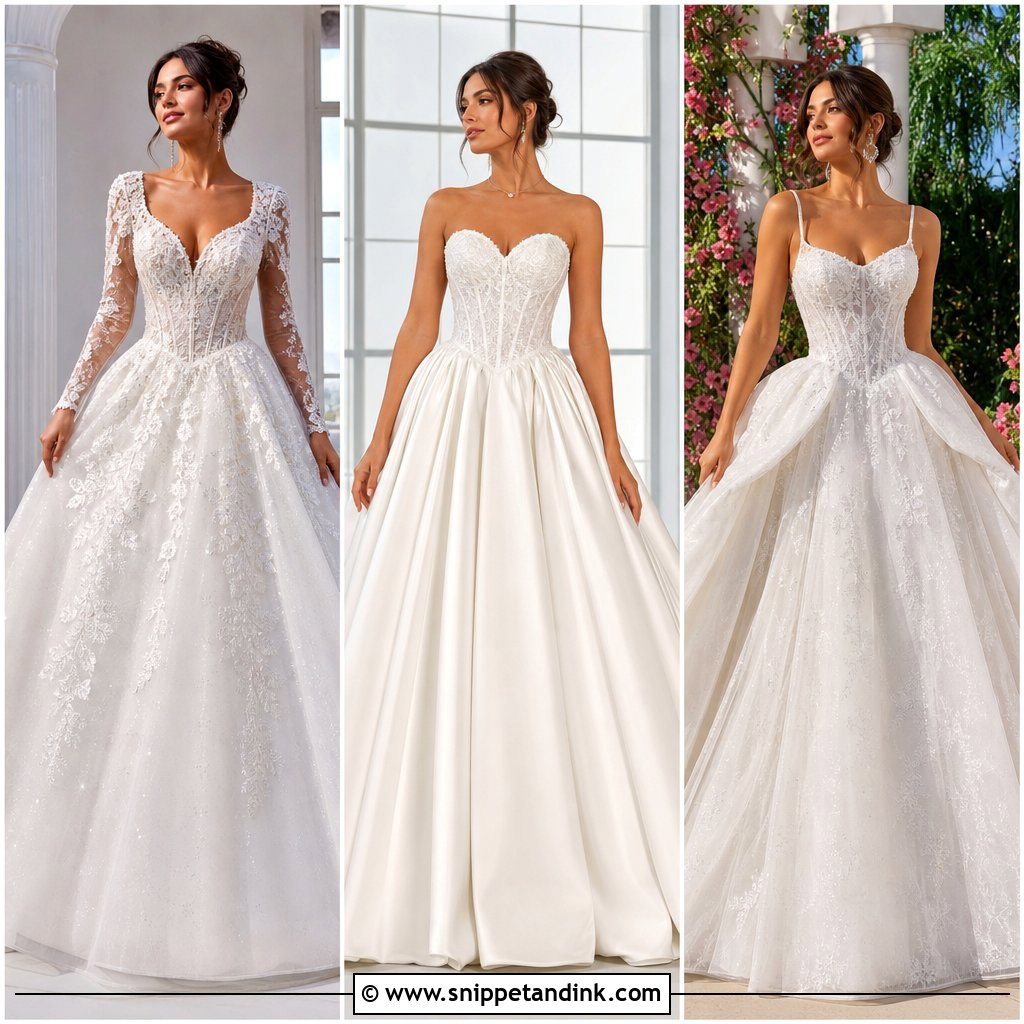
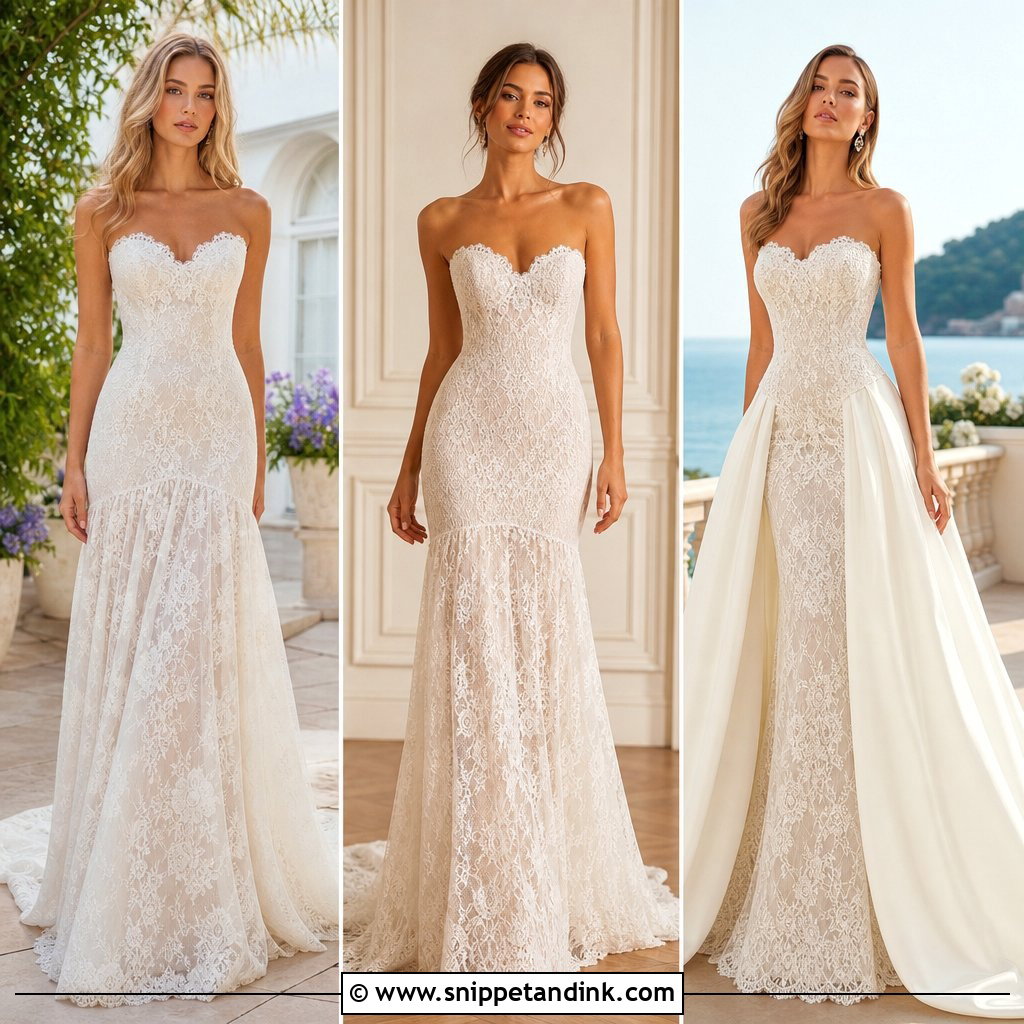
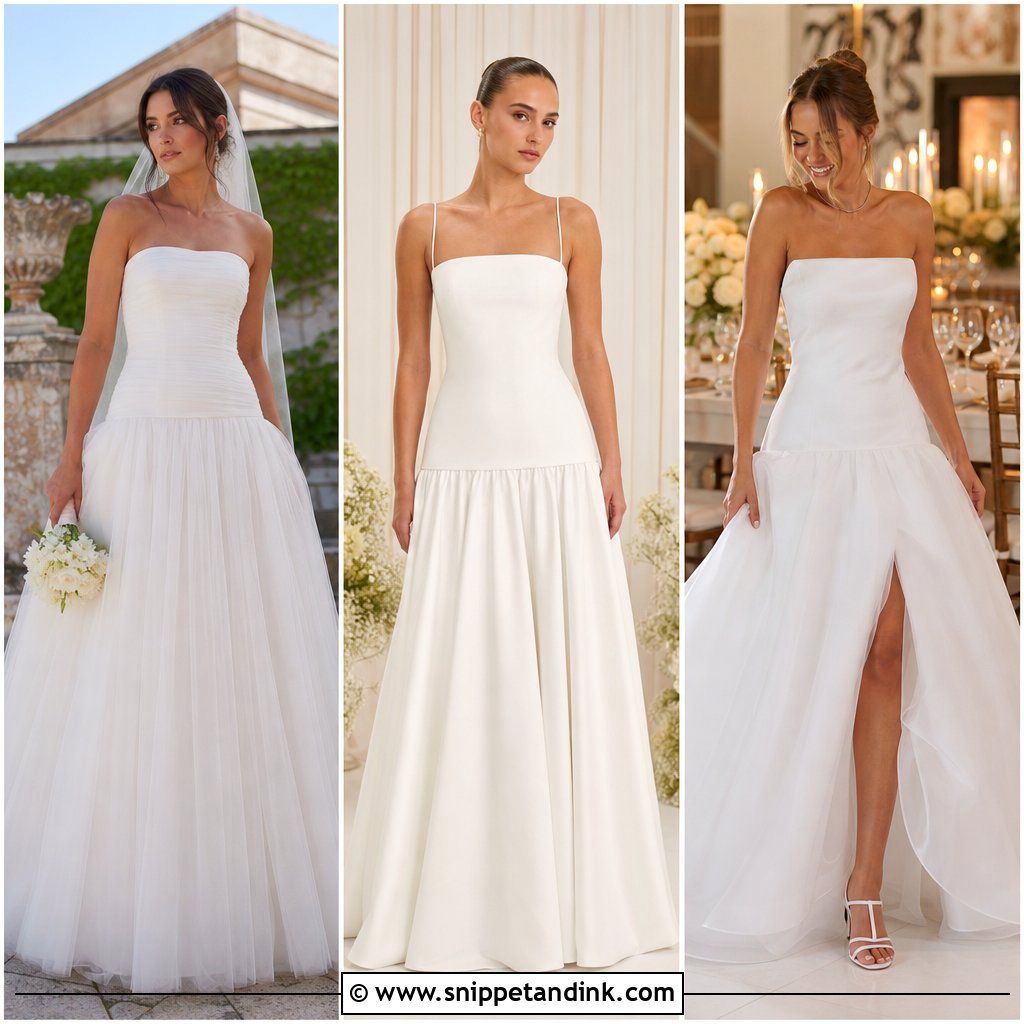
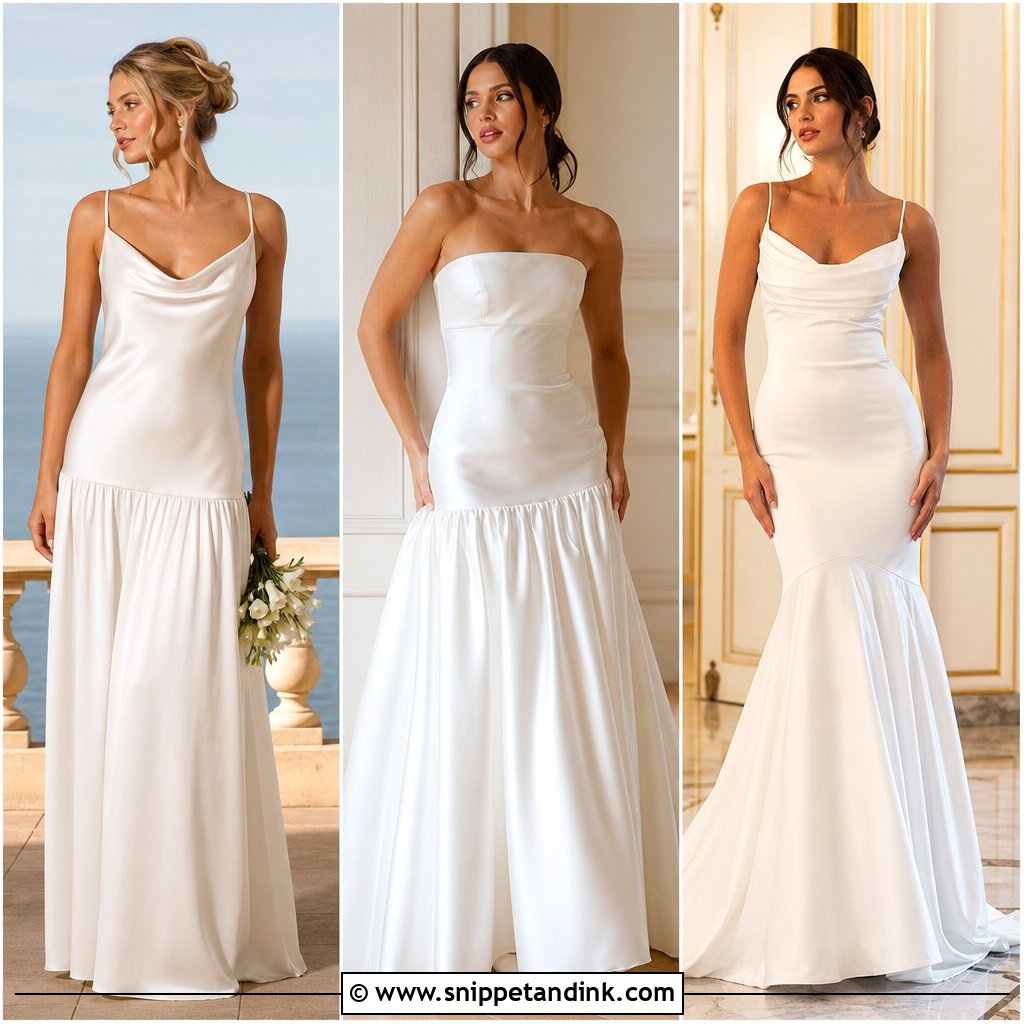
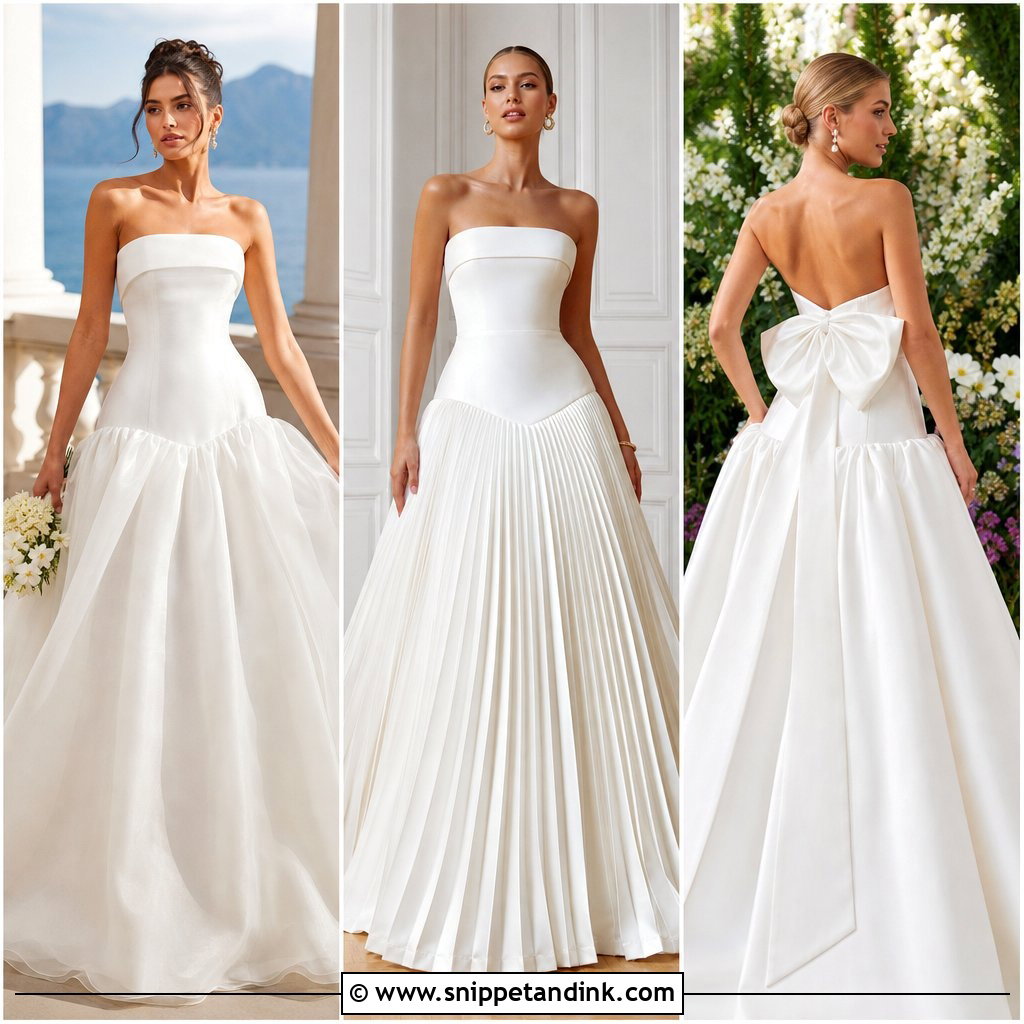
20. Petite V Drop Waist Wedding Dress
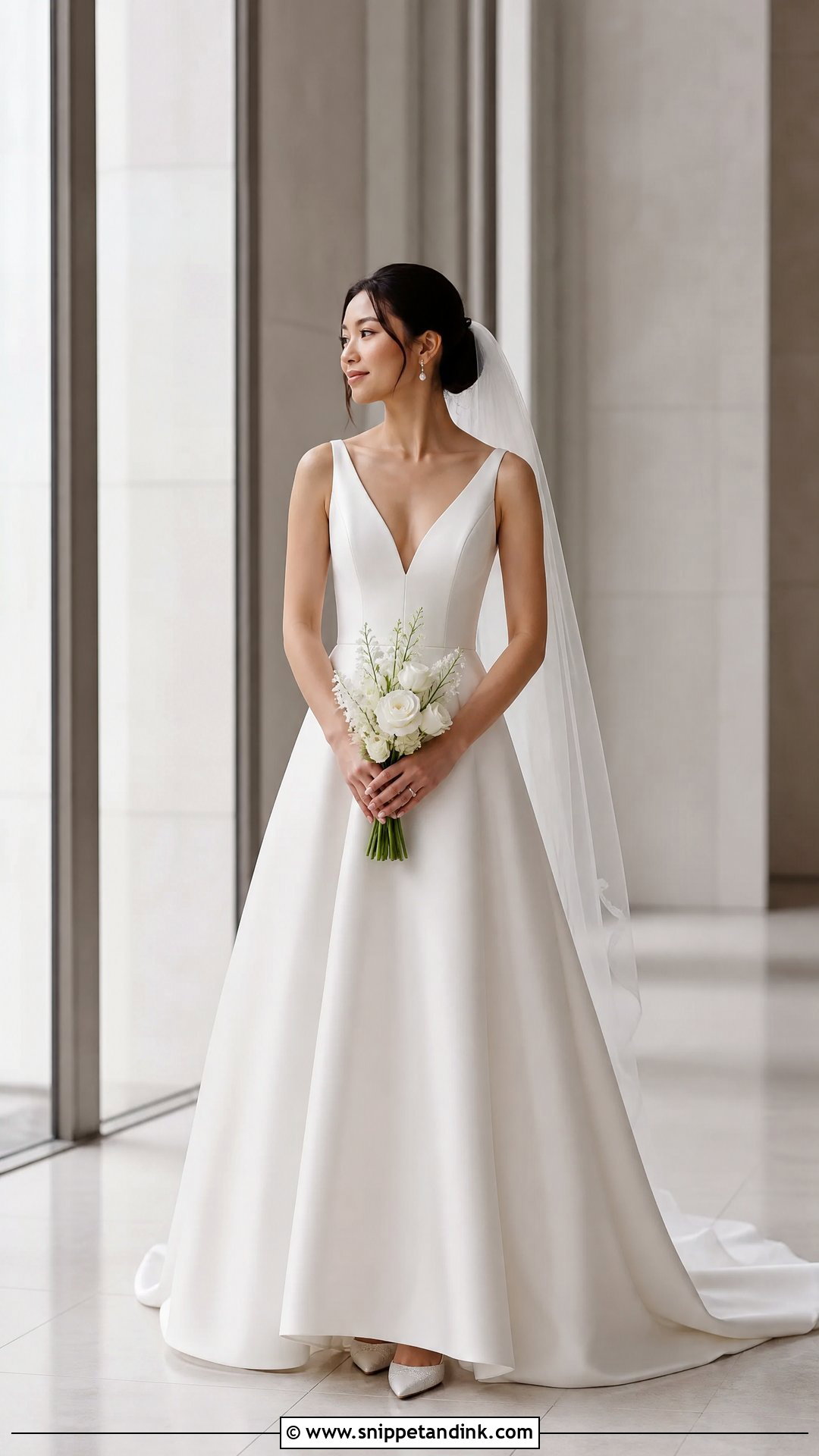
On a petite frame, a long point can swallow the hips and shorten the legs, so I go for a moderate V with vertical seaming, a clean neckline and an A-line skirt with controlled volume. Pointed heels, small drops, a narrow bouquet and a chapel veil instead of a wide multi-layered one keep it in scale. Wearing your hair up helps show the long bodice. The common mistake is assuming a hem fixes everything. Shortening the skirt doesn’t move the waist point, so ask about petite patterns or custom torso measurements. The point, skirt opening, train and neckline may all need adjusting together.
What a Seamstress Can and Can’t Change on a Basque Bodice
Brides are often surprised that some alterations are easy on a drop waist and others are close to a rebuild. Knowing which is which before you order saves money and disappointment.
Usually straightforward
- Taking the bodice in at the side seams or center back.
- Hemming the skirt, though layered or pleated skirts take longer.
- Adding a bustle, cups, a waist stay or small elastic supports.
Difficult or sometimes impossible
- Raising the point. The skirt is sewn to the bodice along the V, so it has to be unpicked and reattached, and pleats may need redoing.
- Lengthening the bodice. It depends entirely on how much seam allowance the maker left, which is often very little.
- Letting out a corset that’s too small. Boning channels limit how far it can grow.
If the sample point falls in the wrong place on you, ask the shop whether the gown can be ordered with a custom bodice length. Changing it at the pattern stage is far cleaner than rebuilding it at the alterations stage, and it leaves room in your timeline for the fittings a structured dress needs.
Is a Basque Point Right for Your Proportions?
A drop waist is a fit-led silhouette. Satin and mikado give the sharpest definition, while lace, tulle, organza, pearls and appliqué soften it. Choose your neckline, sleeves, veil and hair to work with the long bodice, not against it. Above all, judge the point on your own body. Walk, sit, hug and dance in it before you approve alterations, and ask where it lands when you’re seated. From a minimal gown to a richly detailed ball gown, the right one will look intentional from every angle and feel comfortable at the end of the night.
You'll Like These Ideas:



Leave a Reply