
A dropped waist moves the seam below your natural waist, usually to the upper hip. The bodice gets longer, the skirt starts lower, and the whole dress changes how it moves. It can go regal as a satin ball gown or quiet as a crepe column with a low seam. In my fittings, fabric ends up deciding as much as the cut does, because a stiff mikado and a soft tulle make the same seam look like two different dresses. The ideas below are sorted by fabric, neckline and venue, with notes on what each one asks of you.
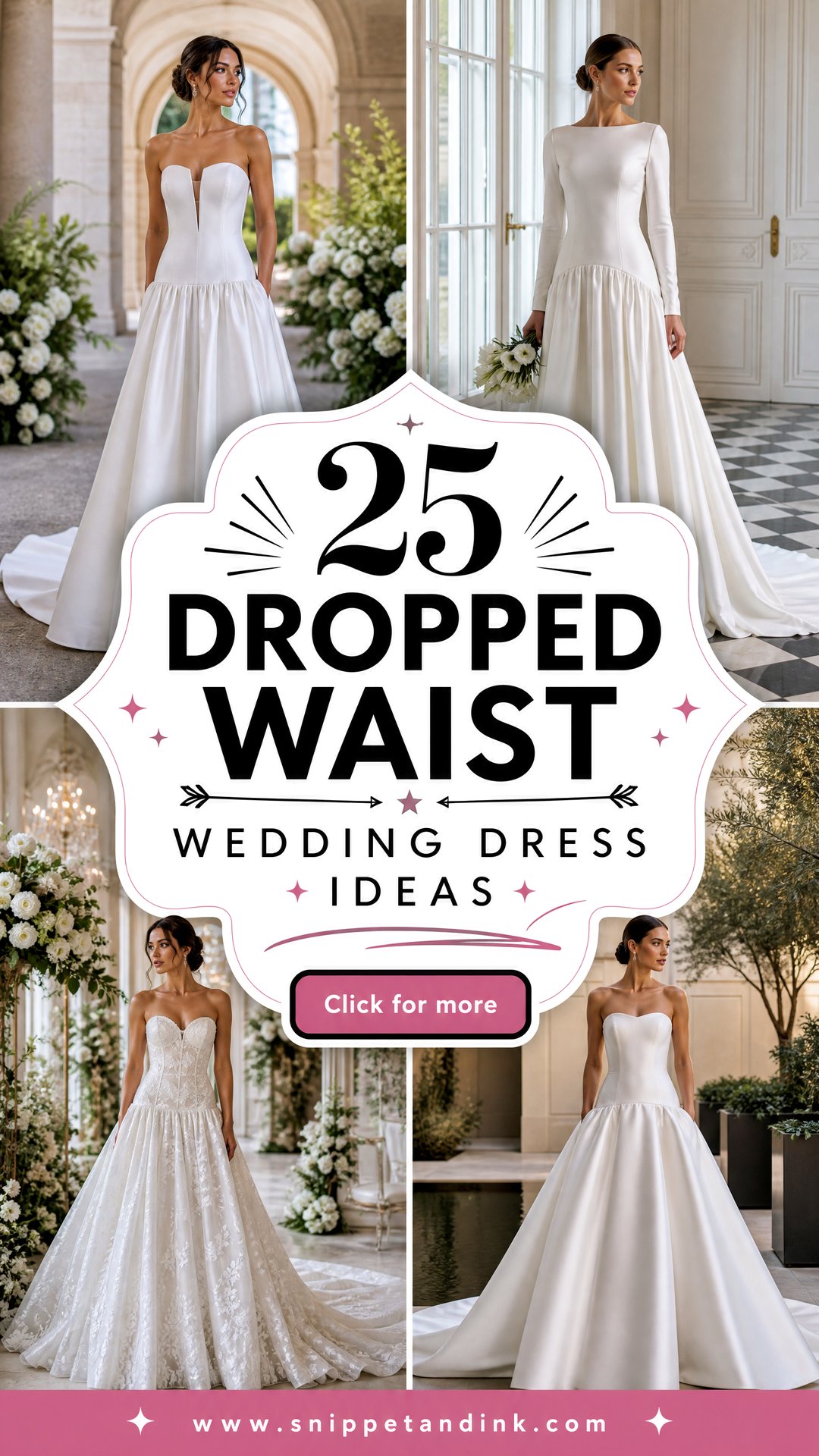
Heavy Satin or Light Organza for Your Wedding Month
I always ask two questions before showing a bride any fabric: what month is it, and will you be inside or out? A dropped waist puts a fitted, often boned bodice over your hips, so it holds more heat than a natural waist dress. The fabric below it either helps or makes it worse.
Warm months and outdoor ceremonies
Organza, chiffon, light tulle and crepe let air through. A lace bodice with a breathable lining is cooler than a solid satin one. Avoid heavy duchess satin for a summer ceremony in full sun; it is warm to wear and shows sweat marks at the seams.
Cool months and evening venues
Mikado, heavier satin, taffeta and long sleeves come into their own. They hold structure, hold some warmth and look rich under evening lighting. A detachable sleeve or cape gives you cover for outdoor photos in winter without committing to sleeves all night.
In between, think about the hours rather than the date. A spring wedding with a noon ceremony on a lawn can feel like summer, while an autumn evening by the sea turns cold fast. I plan the fabric around the hottest and coolest moment of your actual day.
1. Drop Waist Satin Ball Gown Wedding Dress
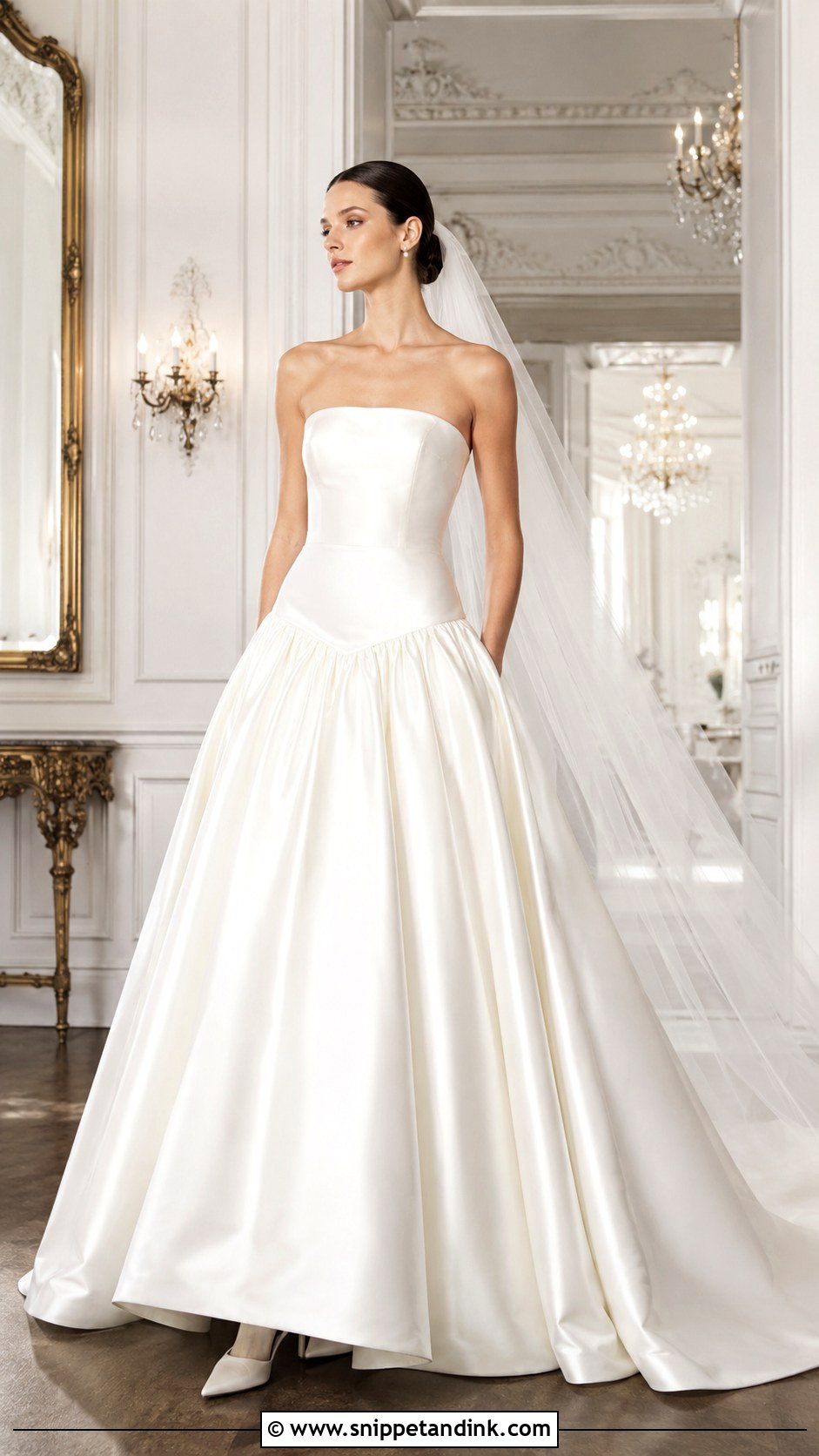
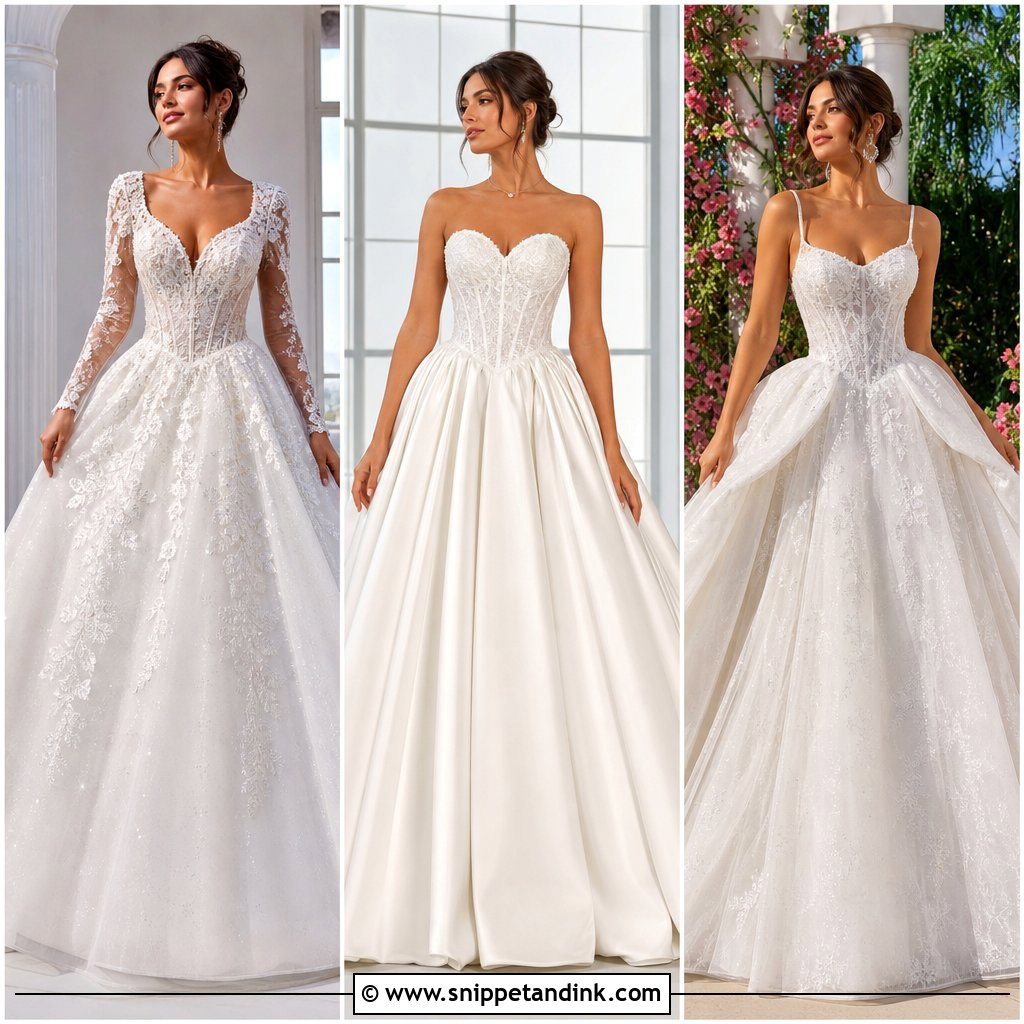
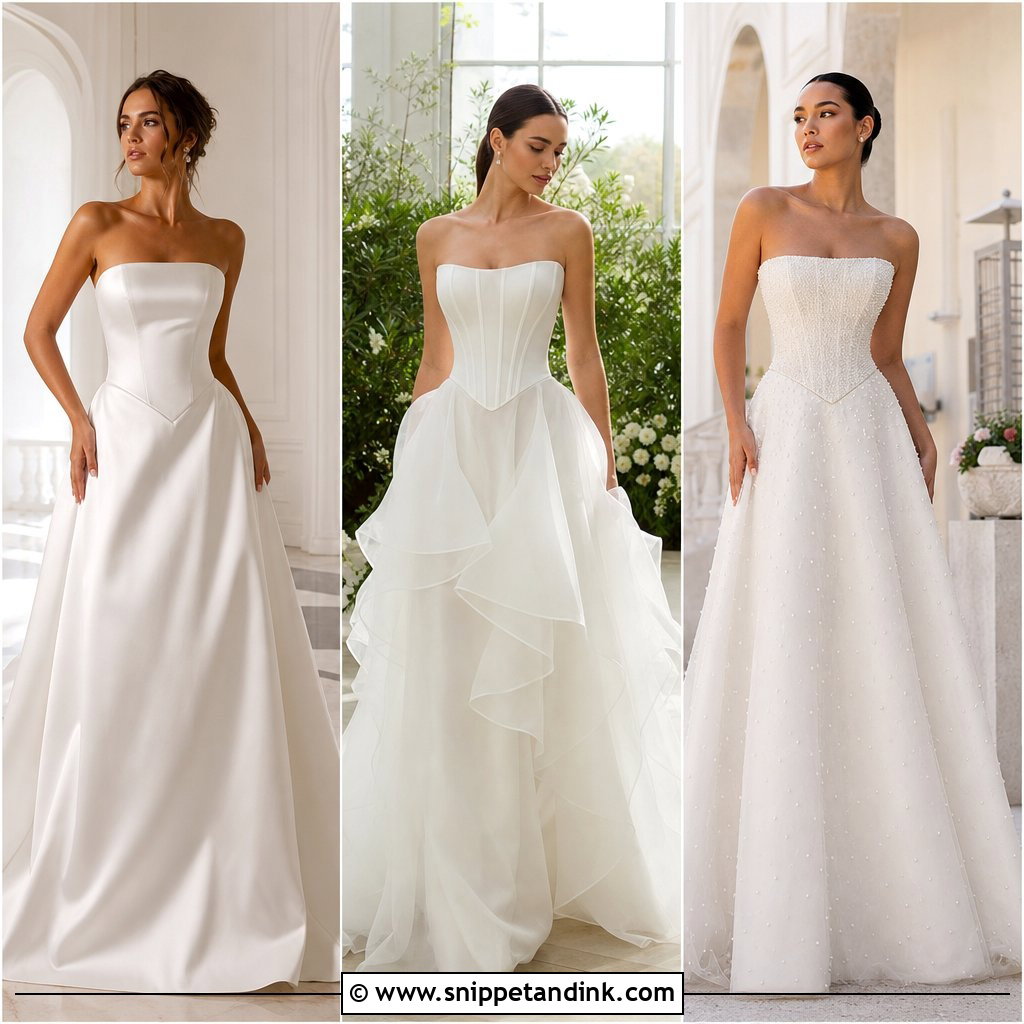
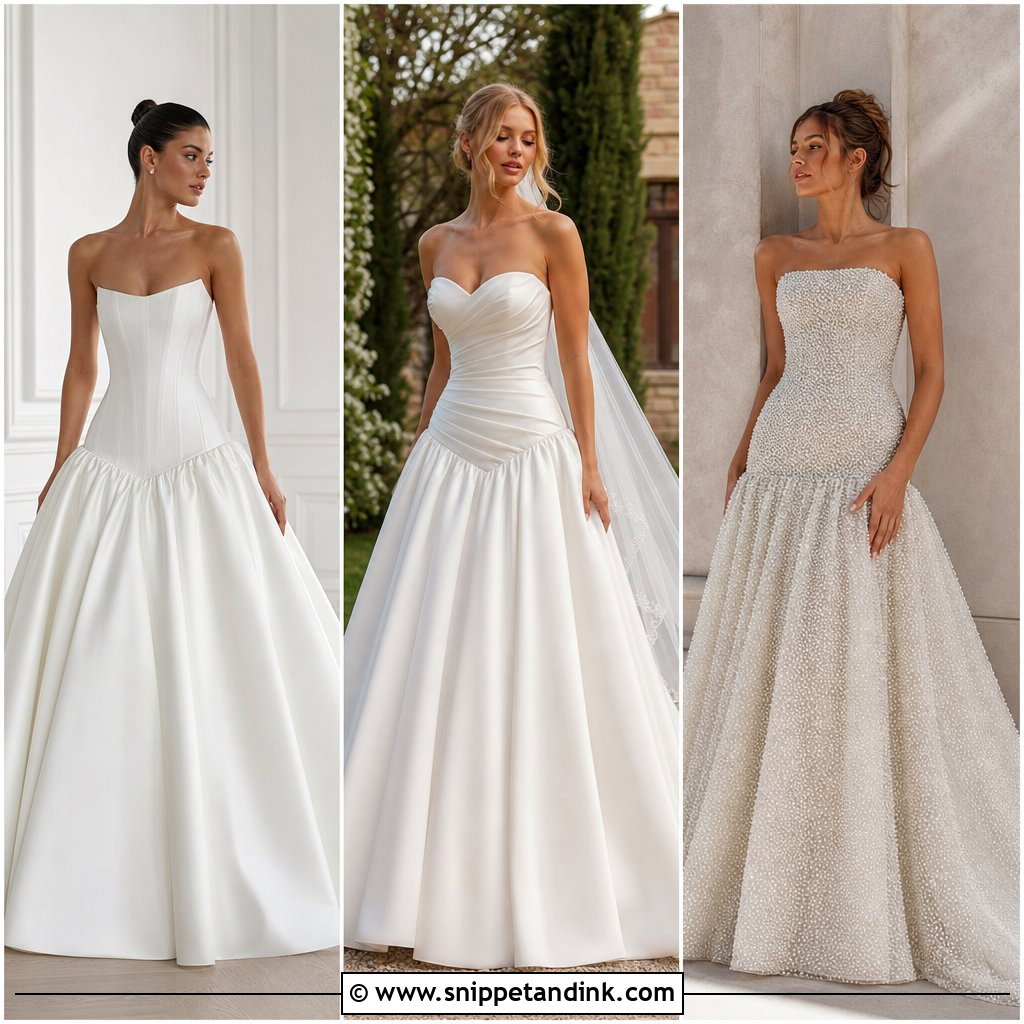
Satin with a full skirt is the grandest form of this shape. The bodice stays smooth and the skirt opens from the hip with real volume, which suits grand staircases and ballrooms. A strapless or scoop neckline keeps it classic. Satin reflects light, so every accessory shows; I’d stick to pearl studs, pointed satin heels and a long veil. White roses or calla lilies in a structured bouquet match the crisp fabric.
2. Drop Waist Lace Wedding Dress
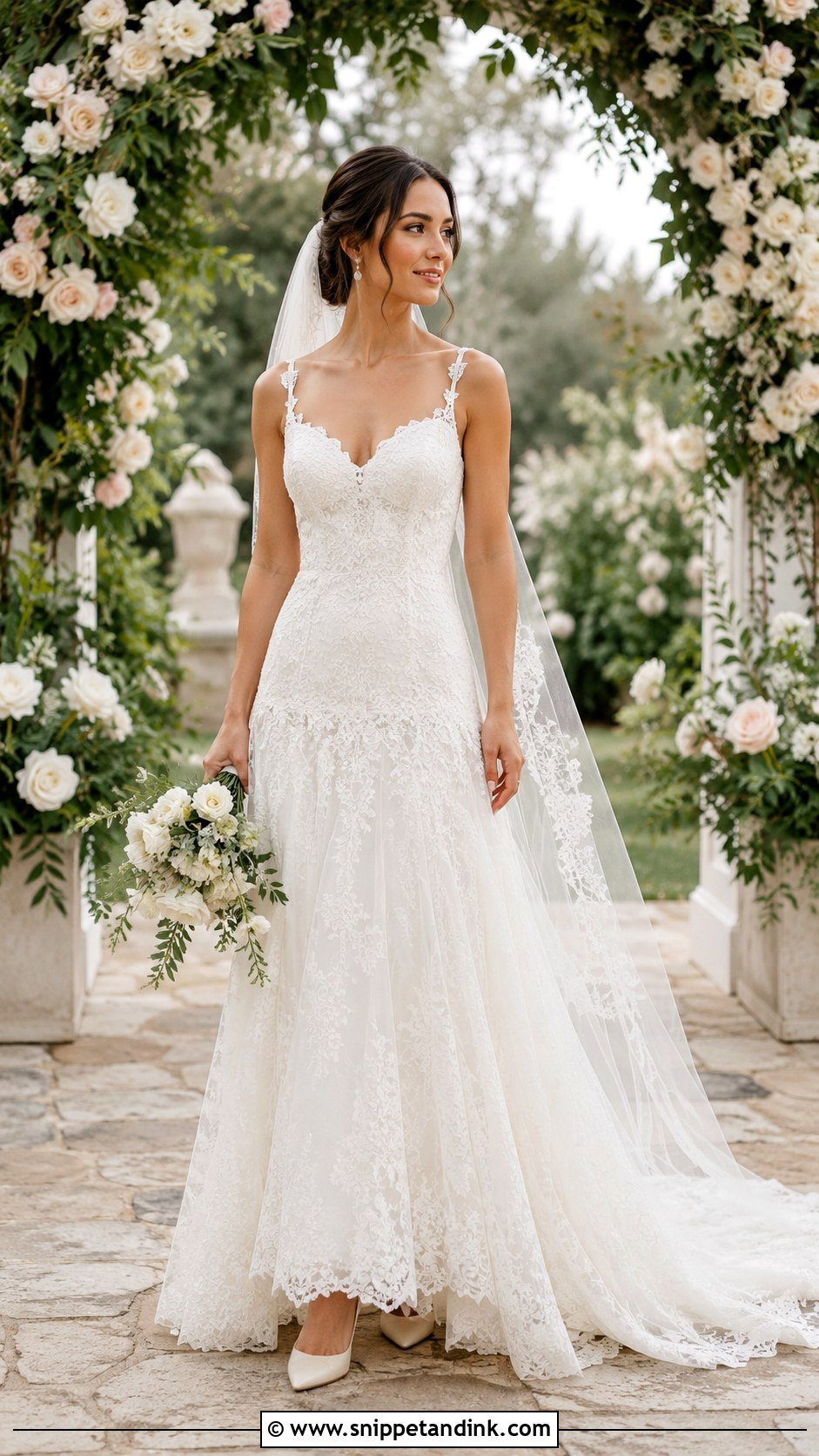
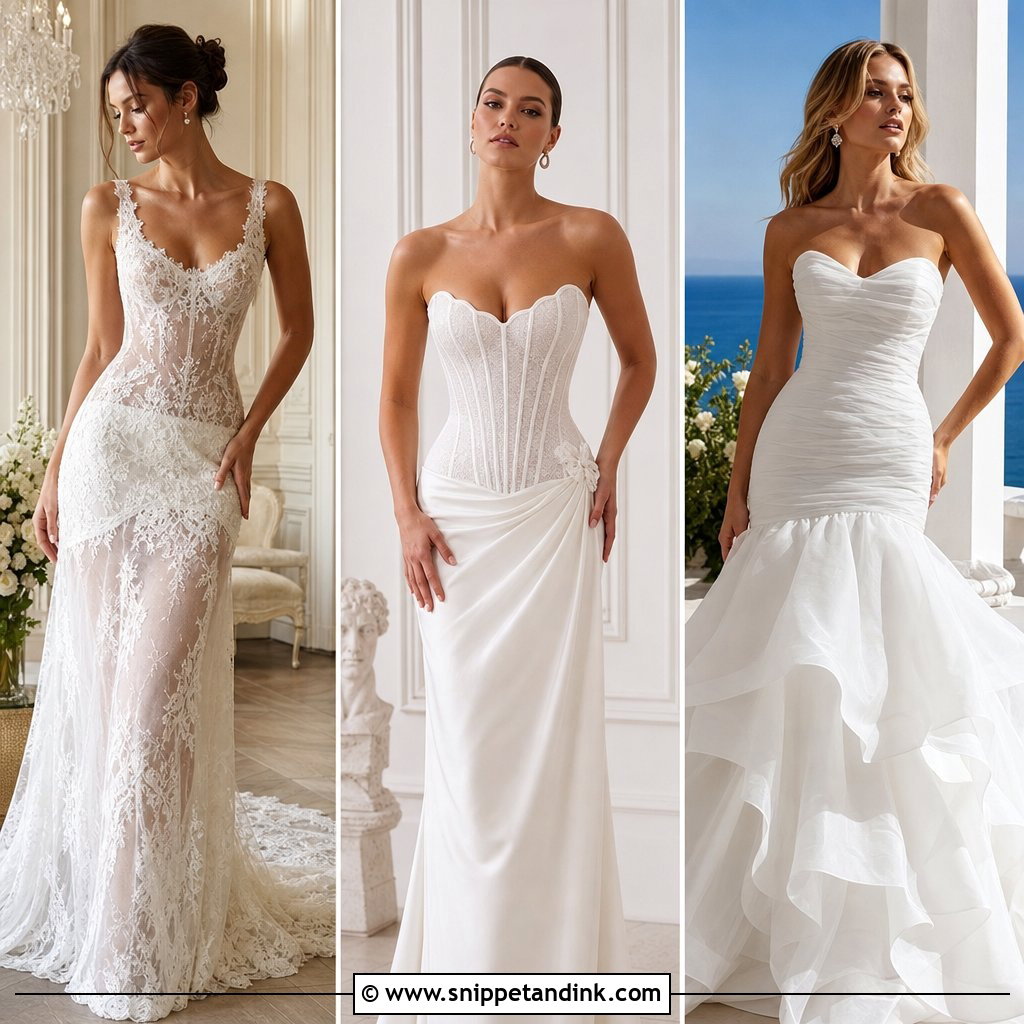
Lace softens the structure. I like a fitted lace bodice running into a gentle A-line skirt, because lace all the way down gets heavy at a low seam. Detailed lace calls for delicate extras: small pearl earrings, sheer gloves or a thin bracelet, not all three. Nude or ivory heels keep the line clean under the hem. A veil with lace trim can echo the dress, but only if the two laces genuinely match in colour, since ivory next to diamond white shows up badly in daylight photos.
3. Drop Waist Corset Wedding Dress
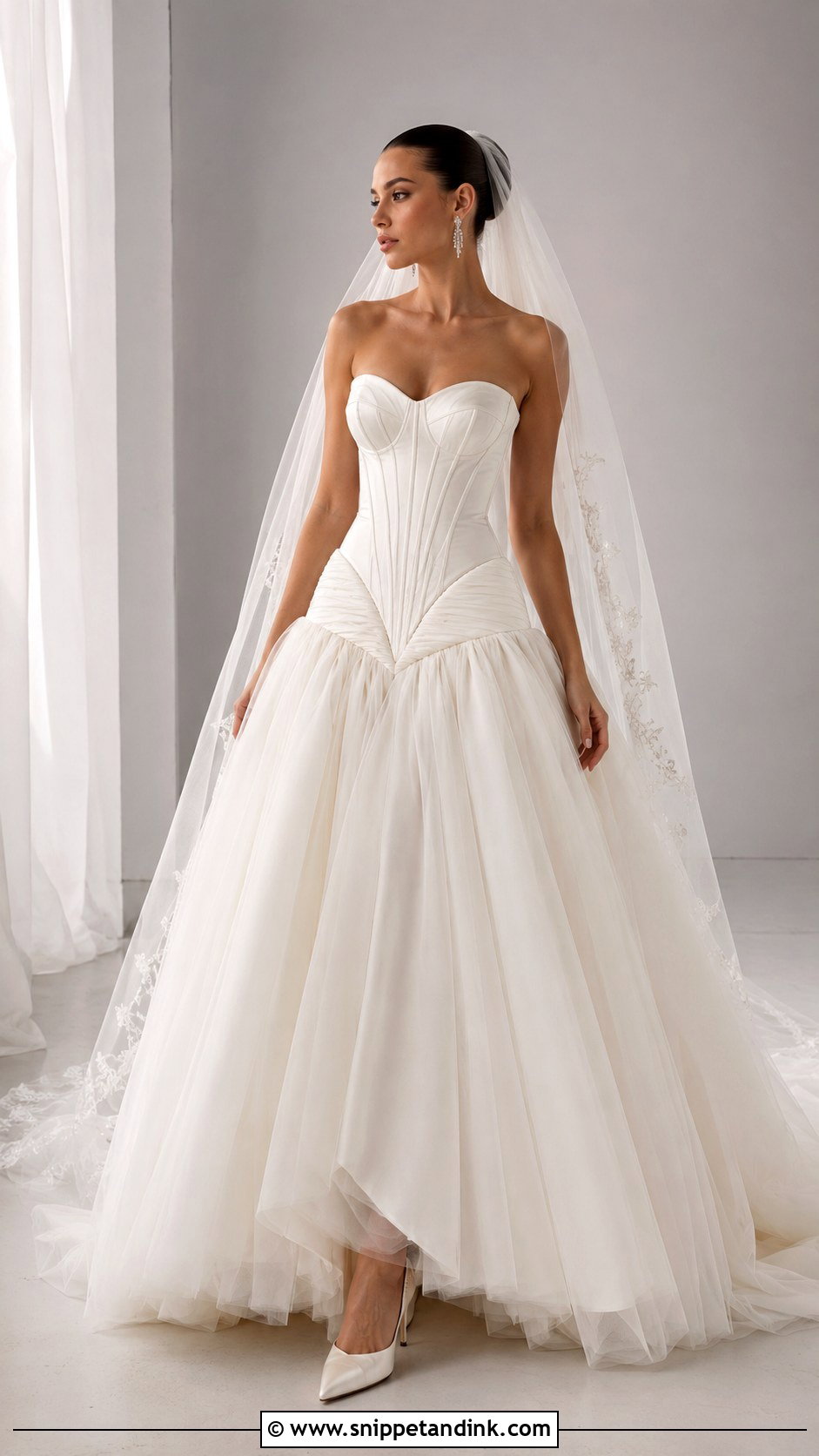
Corset bodices are built for this silhouette. The boning carries the bodice past your waist and holds it flat, then the skirt begins. Satin, mikado, organza or tulle skirts all pair well. The thing I test every time is sitting: the bottom of the boning must clear your hip crease, or it digs in through dinner. A clean updo, simple drop earrings and a chapel veil are plenty for editorial-style photos.
4. Drop Waist Tulle Wedding Dress
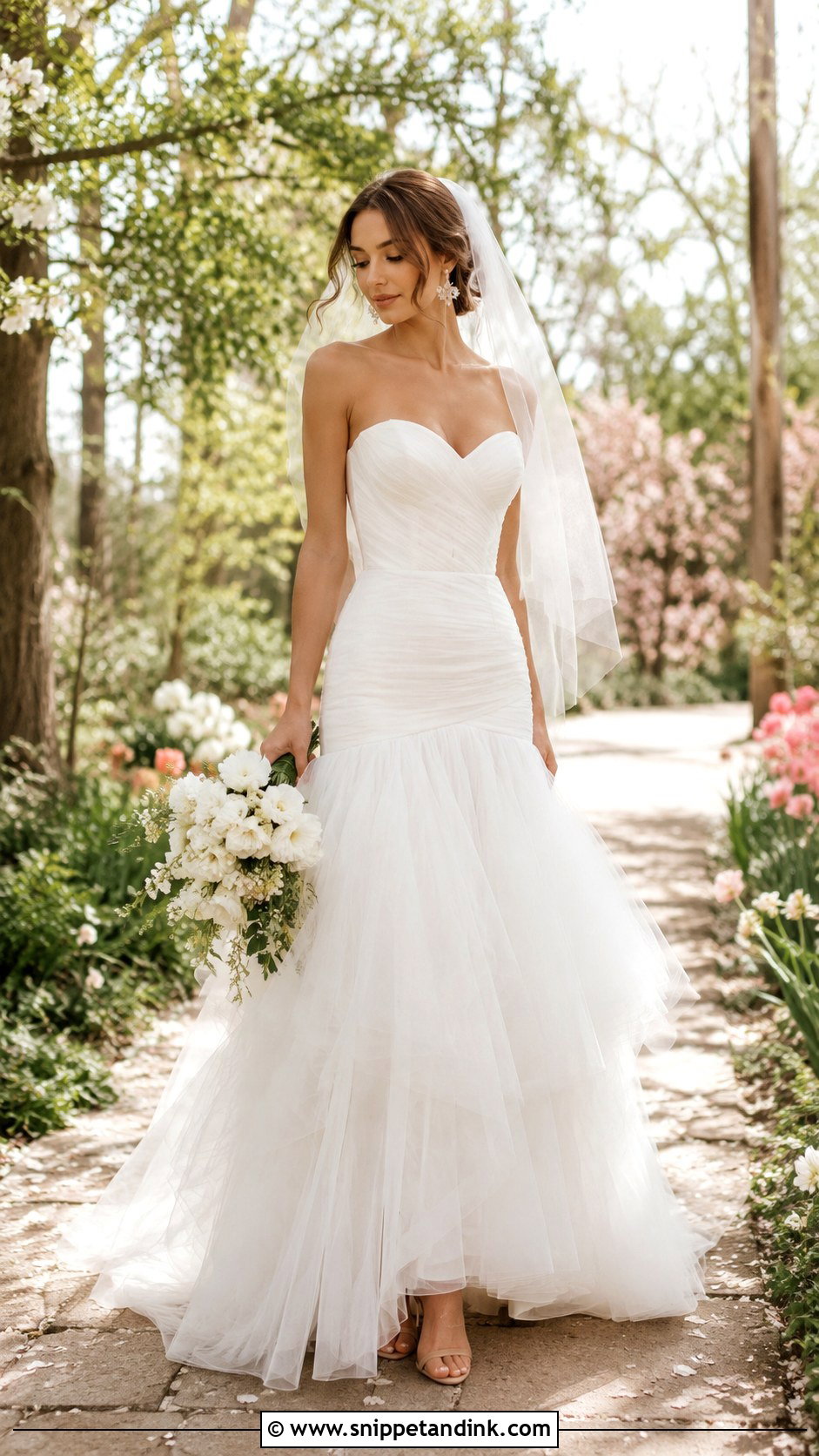
Tulle gives the airiest version: a fitted top and layers that move when you walk. Outdoor ceremonies and spring light suit it. Delicate straps or a sweetheart neckline stop it from looking overdone. Ivory or blush tulle reads dreamier than bright white. I’d keep hair loose and simple and the heels barely there, so the skirt stays the focus. One caution: tulle snags on rough stone and bark, so check the aisle surface if you are outdoors.
5. Drop Waist Basque Wedding Dress
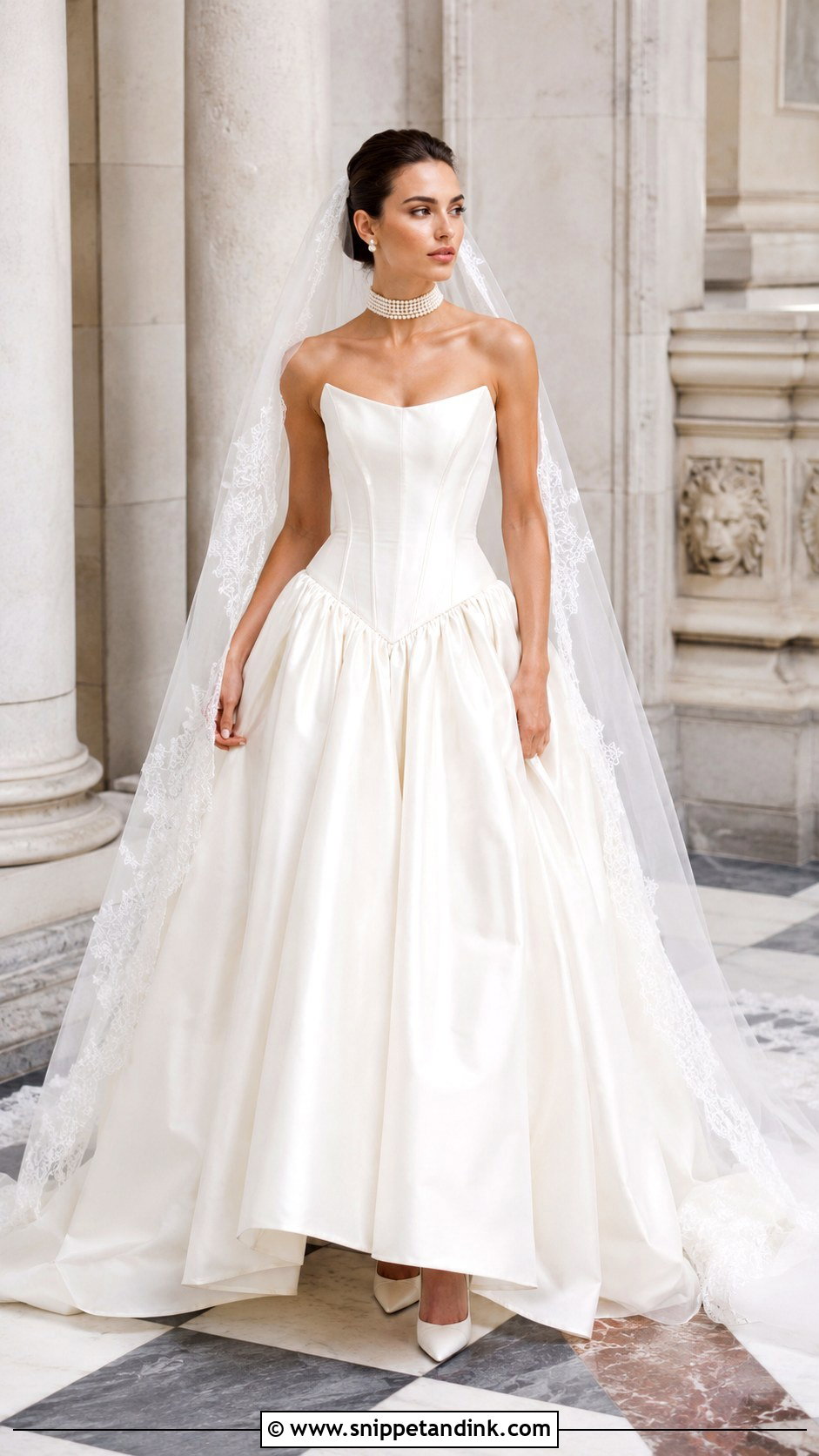
The basque dips into a V or a curved point at centre front. That point guides the eye down, which is why it suits fuller skirts so well and reads quite regal. A cathedral veil and classic pumps finish it. With an open neckline, a pearl choker or small pendant sits nicely above the bodice. If a plain basque looks severe on you, lace or floral appliqué softens the point.
6. Drop Waist Mermaid Wedding Dress
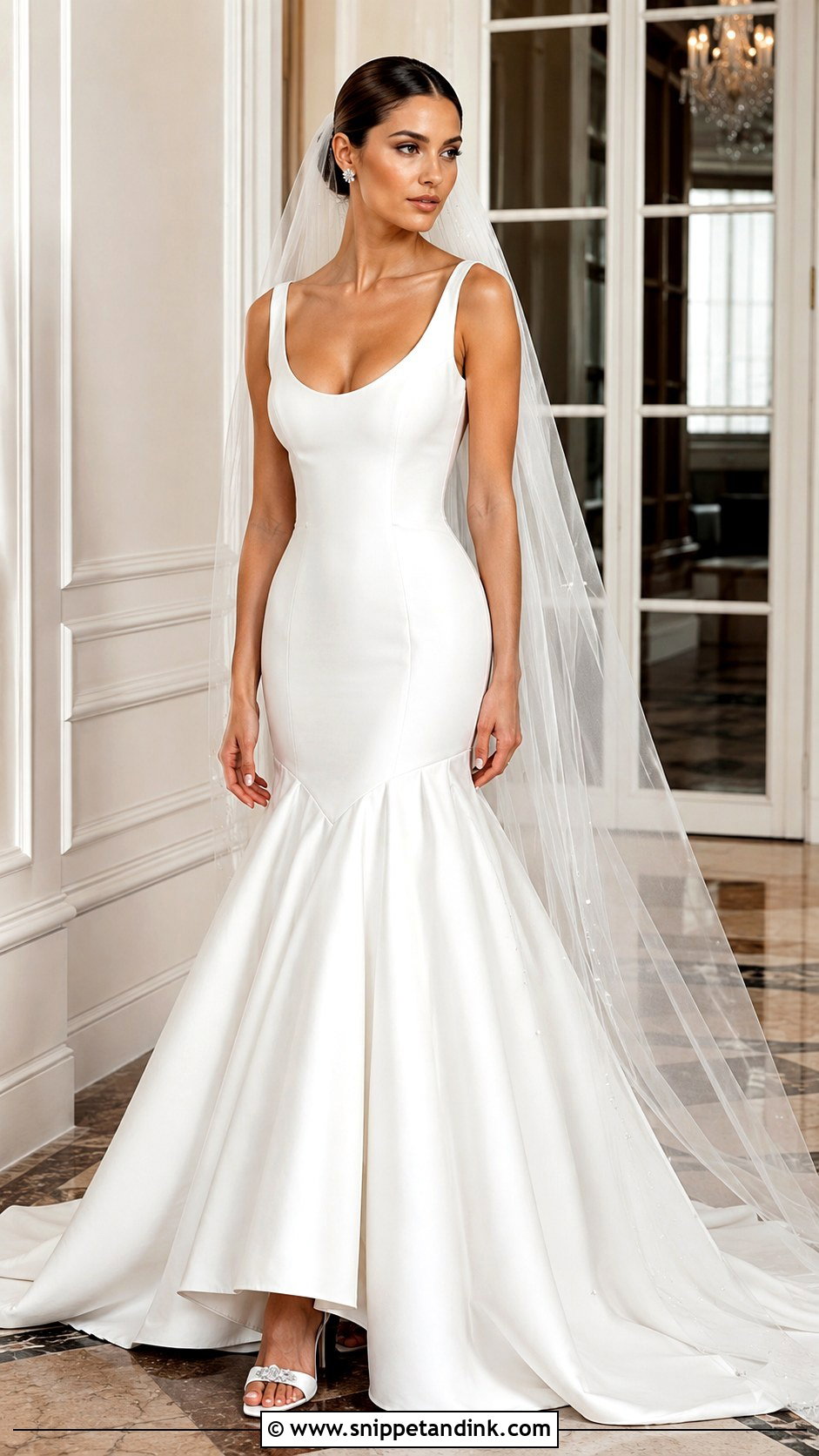
Mermaid with a dropped waist is a long, sculpted line, fitted through hips and thighs before the flare. It only works when tailoring is close, so budget fitting time for the hips and knees. Stretch crepe, satin and lace are good choices; stretch crepe forgives the most. High heels support the length. I’d keep the rest sleek: a long veil, crystal studs and a smooth low bun for evening ceremonies.
7. Drop Waist A Line Wedding Dress
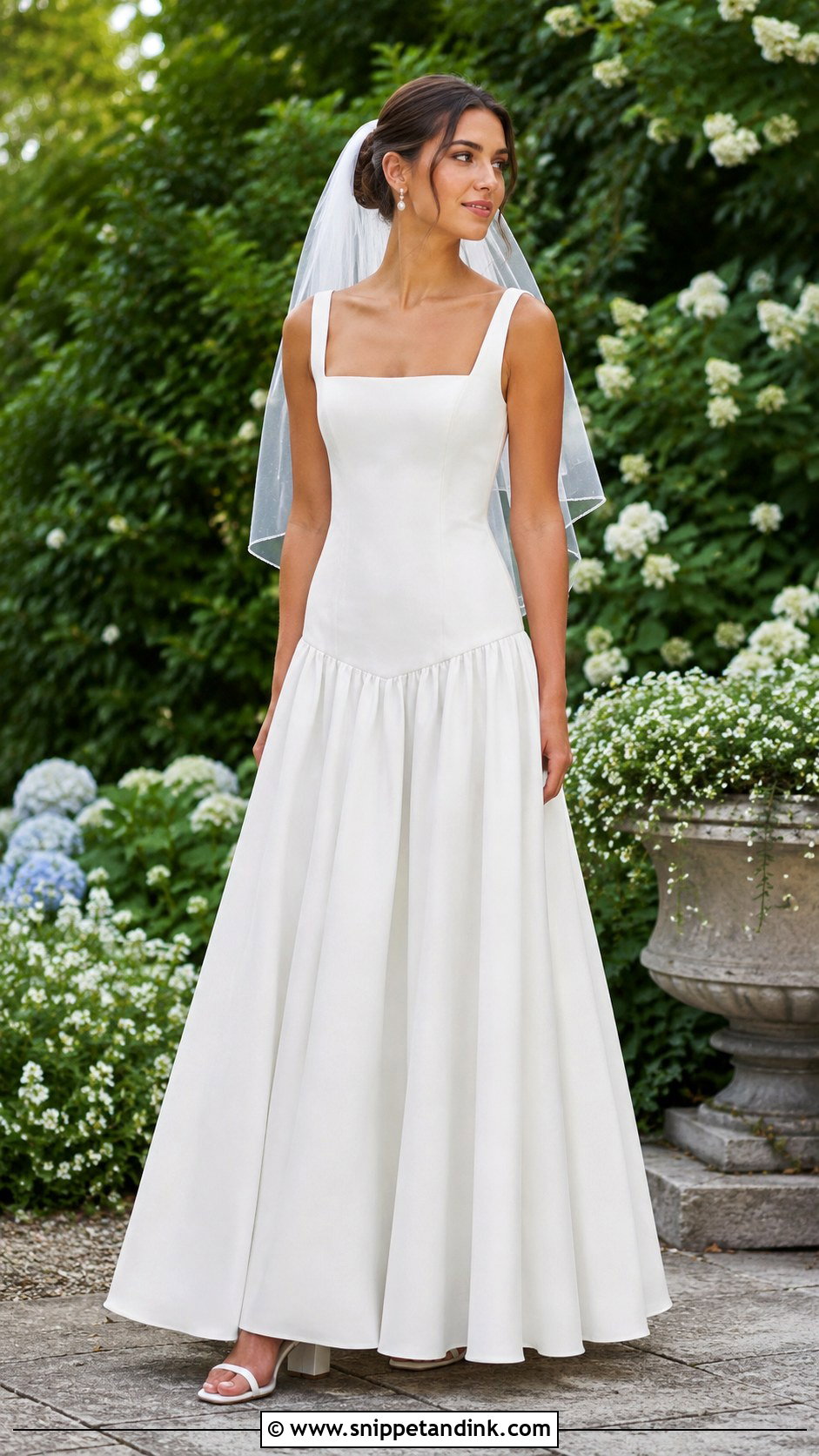
Of all the shapes here, this is the easiest to wear. You get the long bodice, but the skirt opens gently, so walking, sitting and dancing are all straightforward. Garden venues and banquet halls both suit it. A square neckline reads modern and a sweetheart reads softer. Block heels, a fingertip veil and delicate earrings are plenty. If you can only try one drop waist, try this.
8. Drop Waist Strapless Wedding Dress
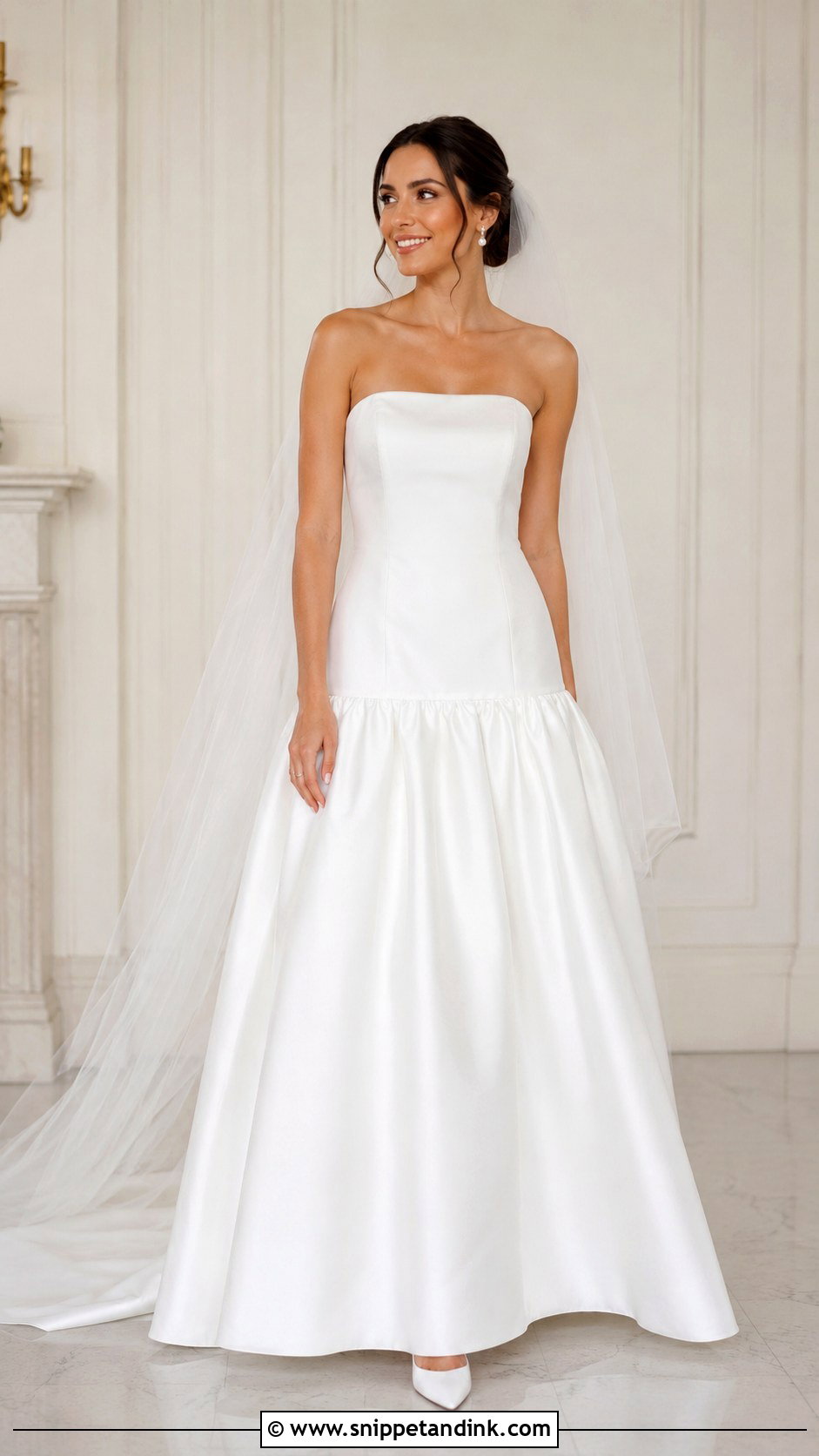
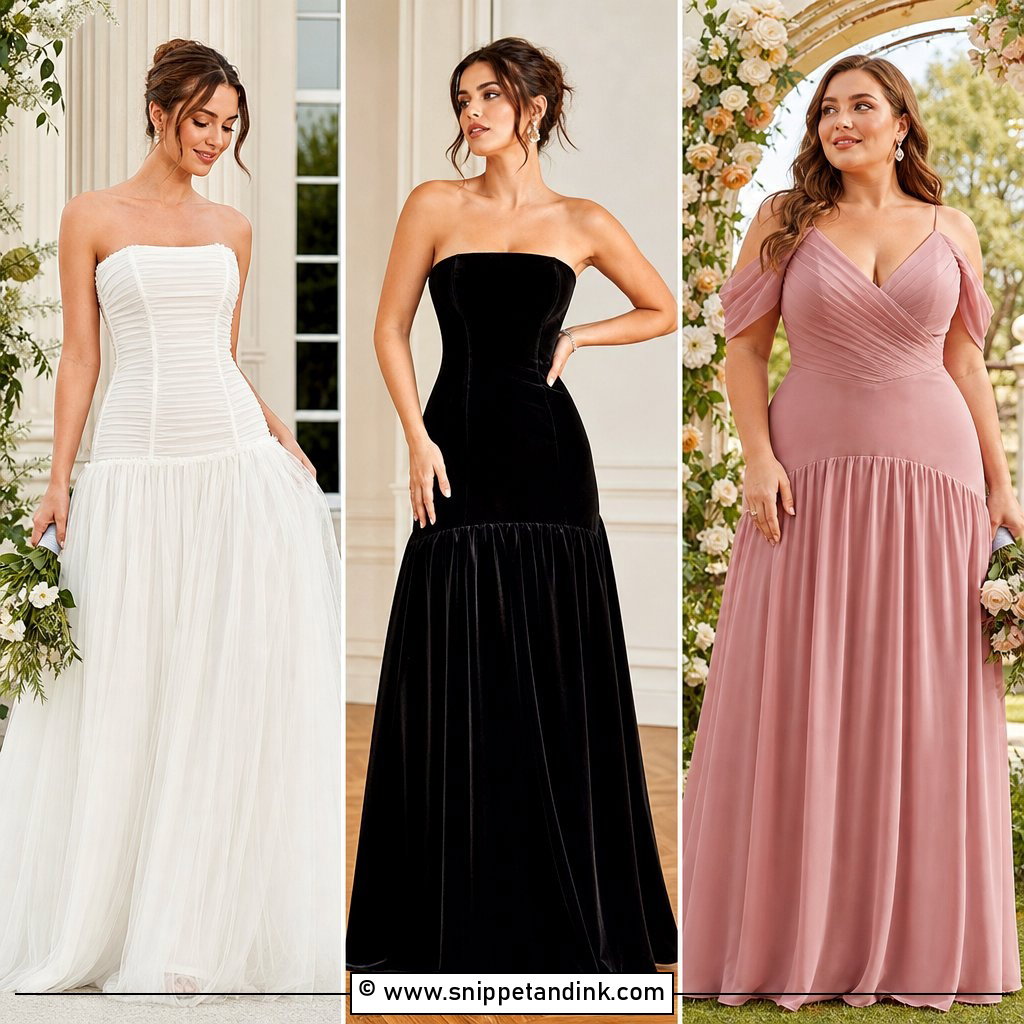
Bare shoulders let the long bodice and skirt shape speak. Satin, mikado, crepe and taffeta all suit it. Fit decides everything: a strapless bodice should stay put without you hitching it up, and an inner corset is the most reliable fix. For the ceremony I’d add a long veil and small pearl or diamond earrings, then swap the veil for a sleek bracelet or bold shoe at the reception. Hair in a smooth bun or waves tucked behind the shoulders keeps the neckline clear.
9. Drop Waist Long Sleeve Wedding Dress
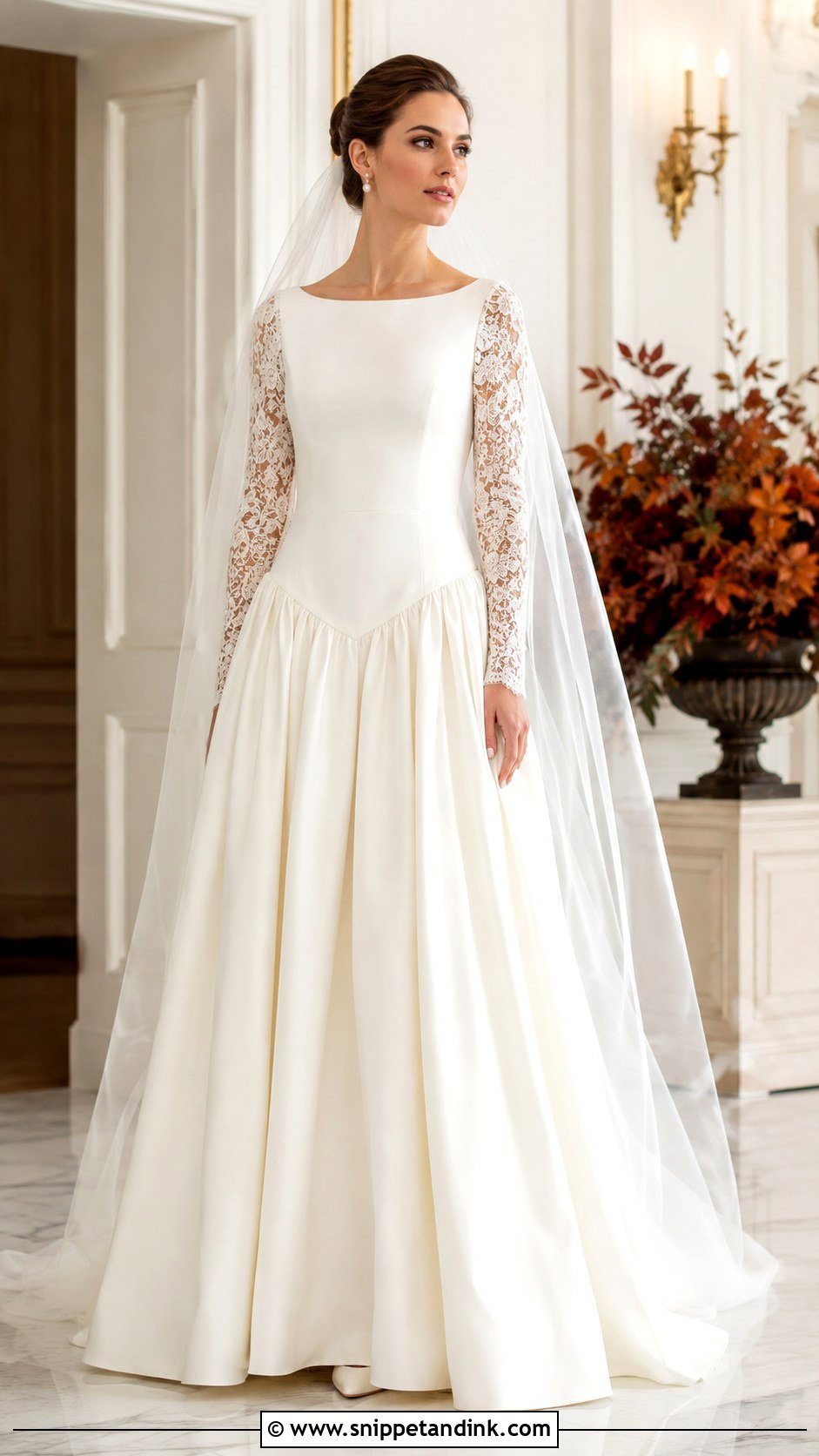
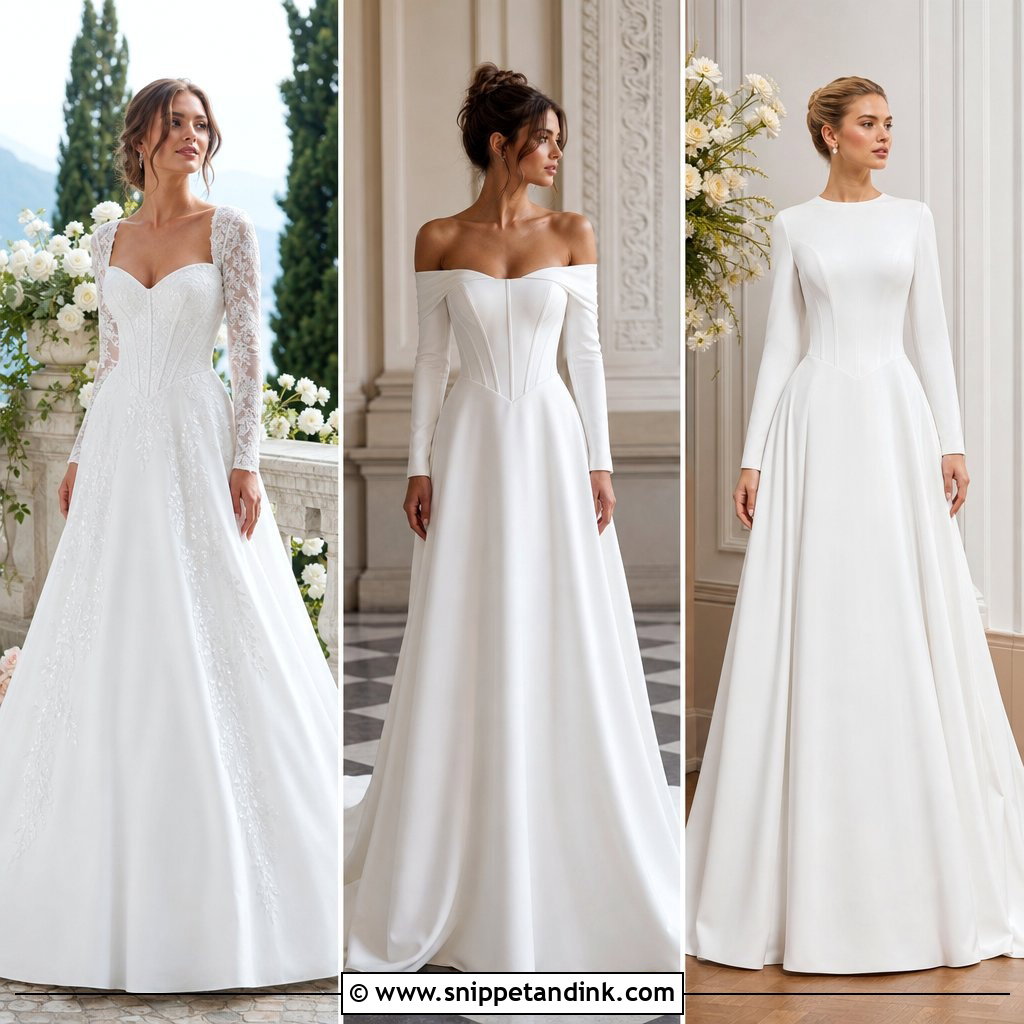
Sleeves balance a lowered waist and add a regal feel. Lace sleeves are romantic; satin or crepe are sleeker. Fall, winter and formal indoor weddings suit them most. I prefer a skirt with gentle volume here, since sleeves plus a huge skirt can swallow a smaller frame. Closed-toe heels, pearl earrings and a soft veil work, and a low bun or half-up style keeps the neckline visible. Detailed sleeves mean minimal jewelry.
10. Drop Waist Off Shoulder Wedding Dress
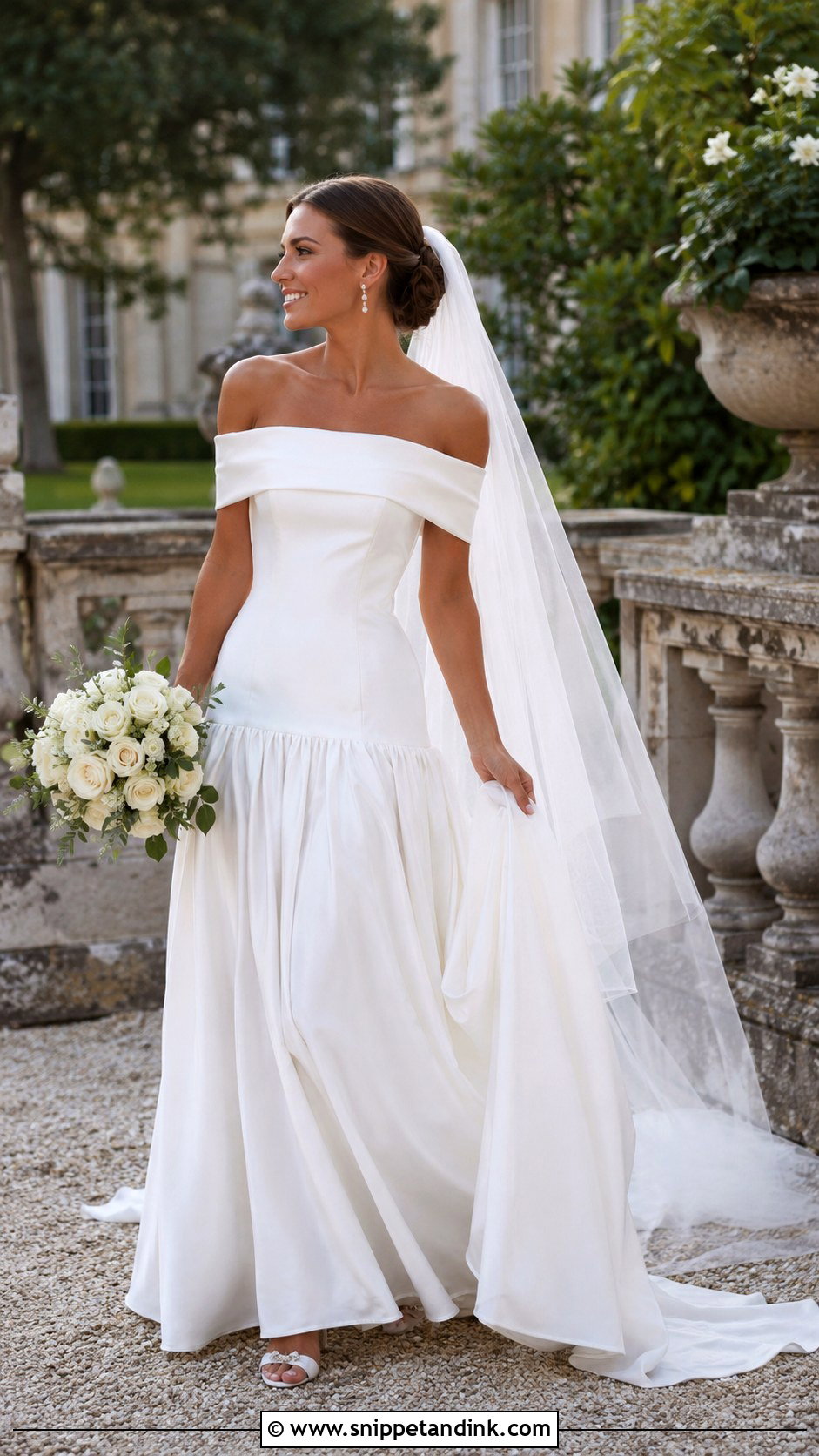
An off-shoulder neckline frames the collarbone and softens the structure below. Satin looks clean, lace more classic. Estate weddings and formal gardens suit it. My main check is arm movement: off-shoulder sleeves can pin your arms down, so hug someone and lift a glass at the fitting. Drop earrings, a soft updo and a veil set low at the back of the head follow the neckline nicely.
11. Drop Waist Square Neck Wedding Dress
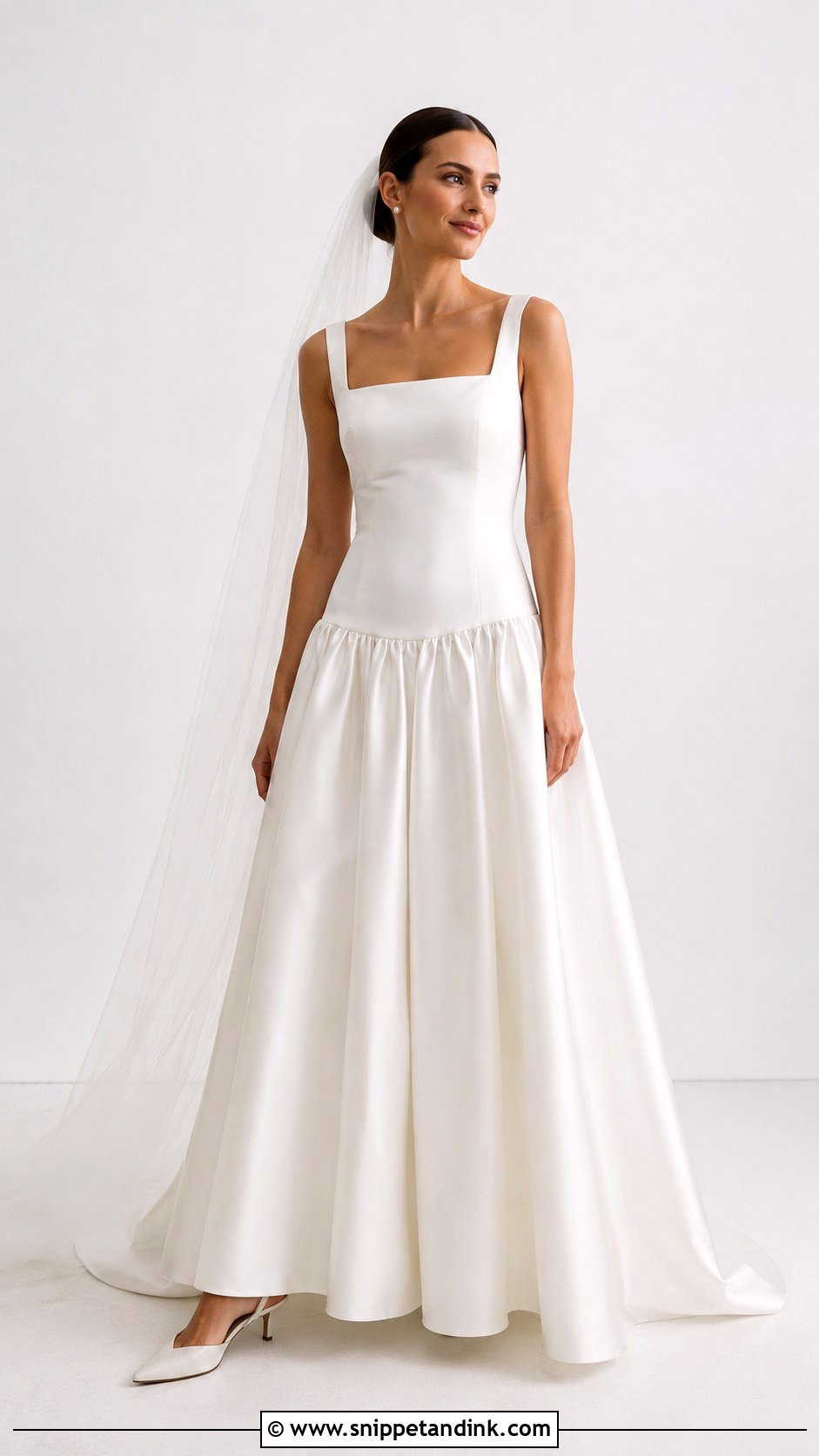
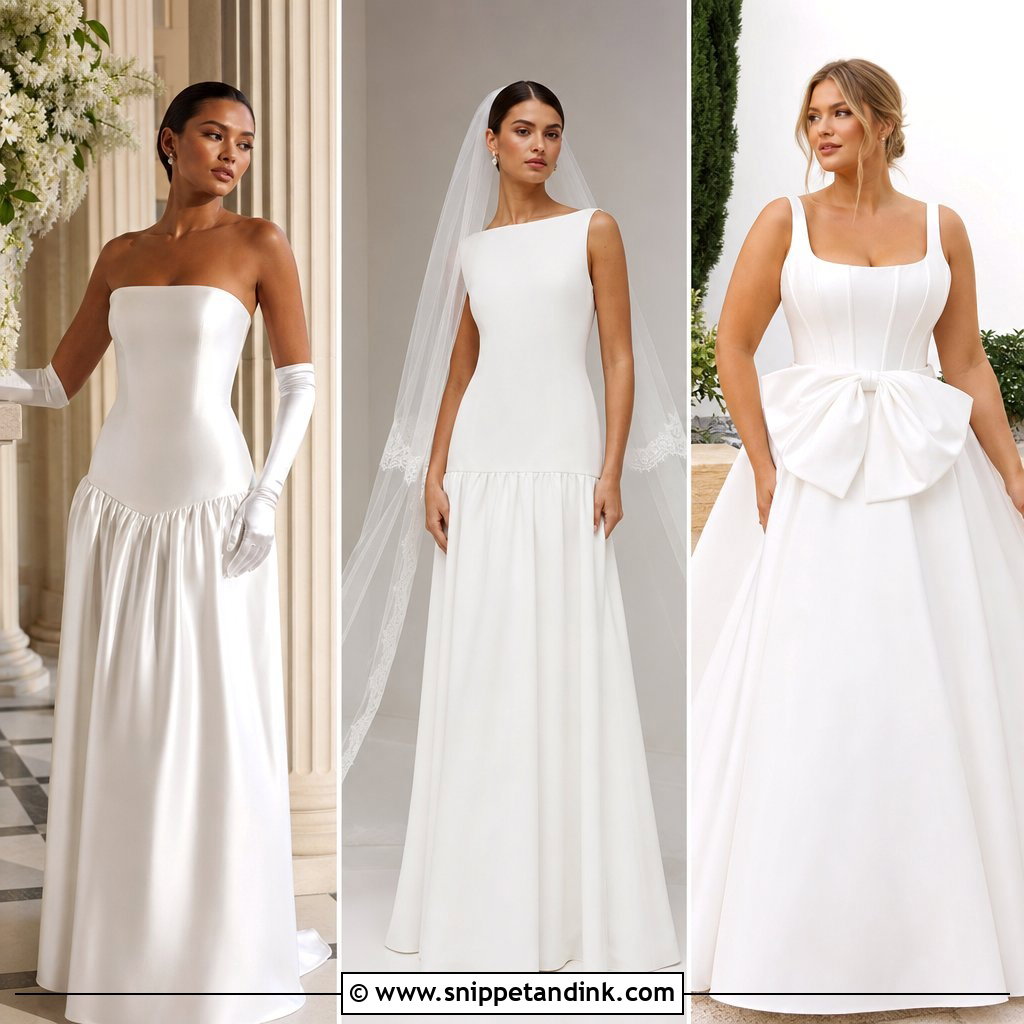
Square necks look current without chasing trends. The straight top line adds structure to the shoulders while the low seam lengthens the torso. Matte satin, crepe and light mikado are my picks. Pearl studs, slingbacks and a smooth veil are enough. If the gown is very plain, a structured bouquet or a small hair bow adds a single point of detail without fussing up the clean lines.
12. Drop Waist Sweetheart Wedding Dress
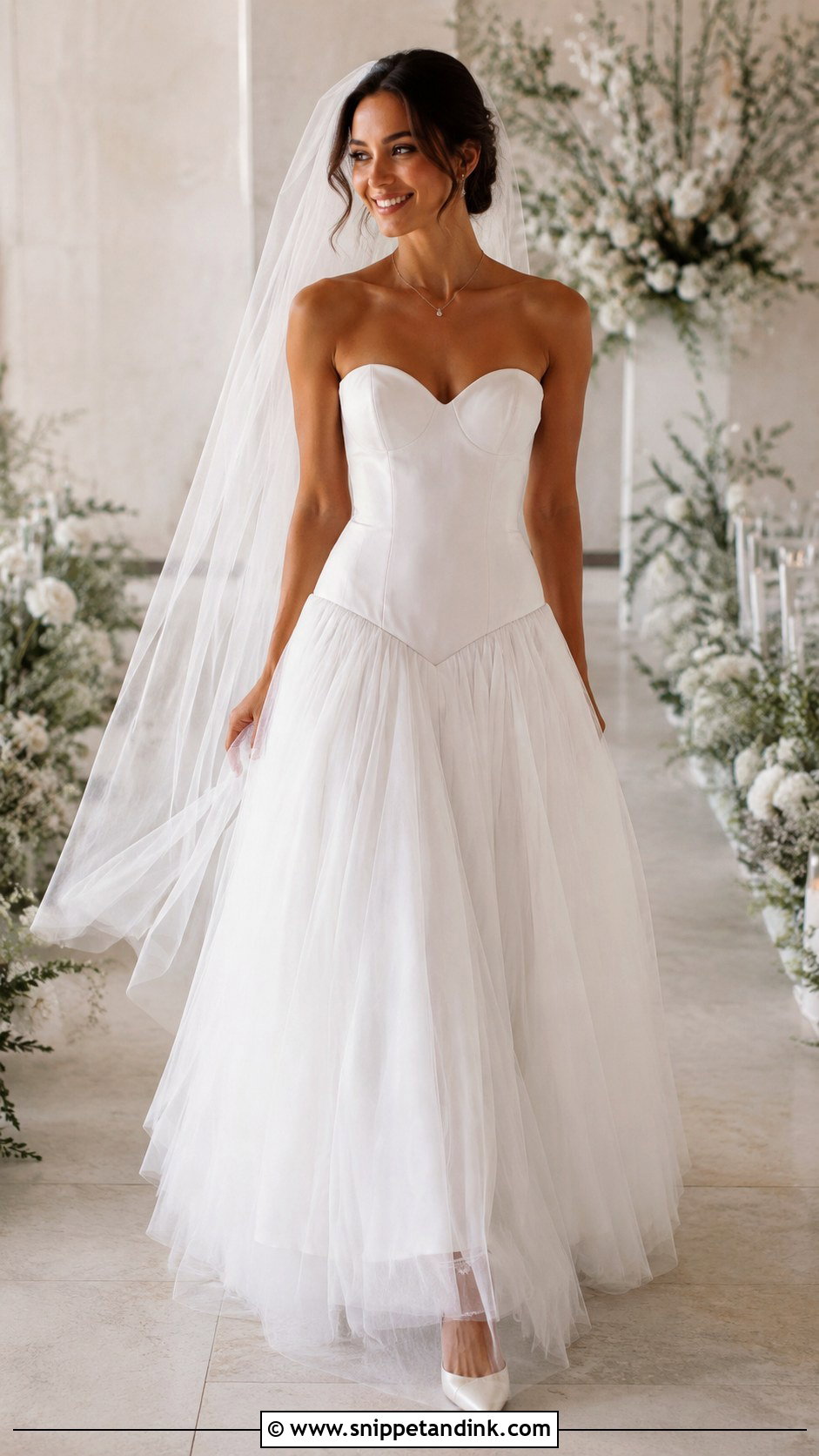
A sweetheart neckline adds softness at the bust while the low waist sculpts the body. Fabric sets the mood: lace is delicate, satin formal, tulle dreamy. Soft curls, a simple necklace and pointed heels finish it. With a deeply shaped neckline, I place the veil behind the crown so it does not cover the shoulders and hide the curve. It gives you feminine detail with no sparkle at all.
13. Drop Waist Floral Applique Wedding Dress
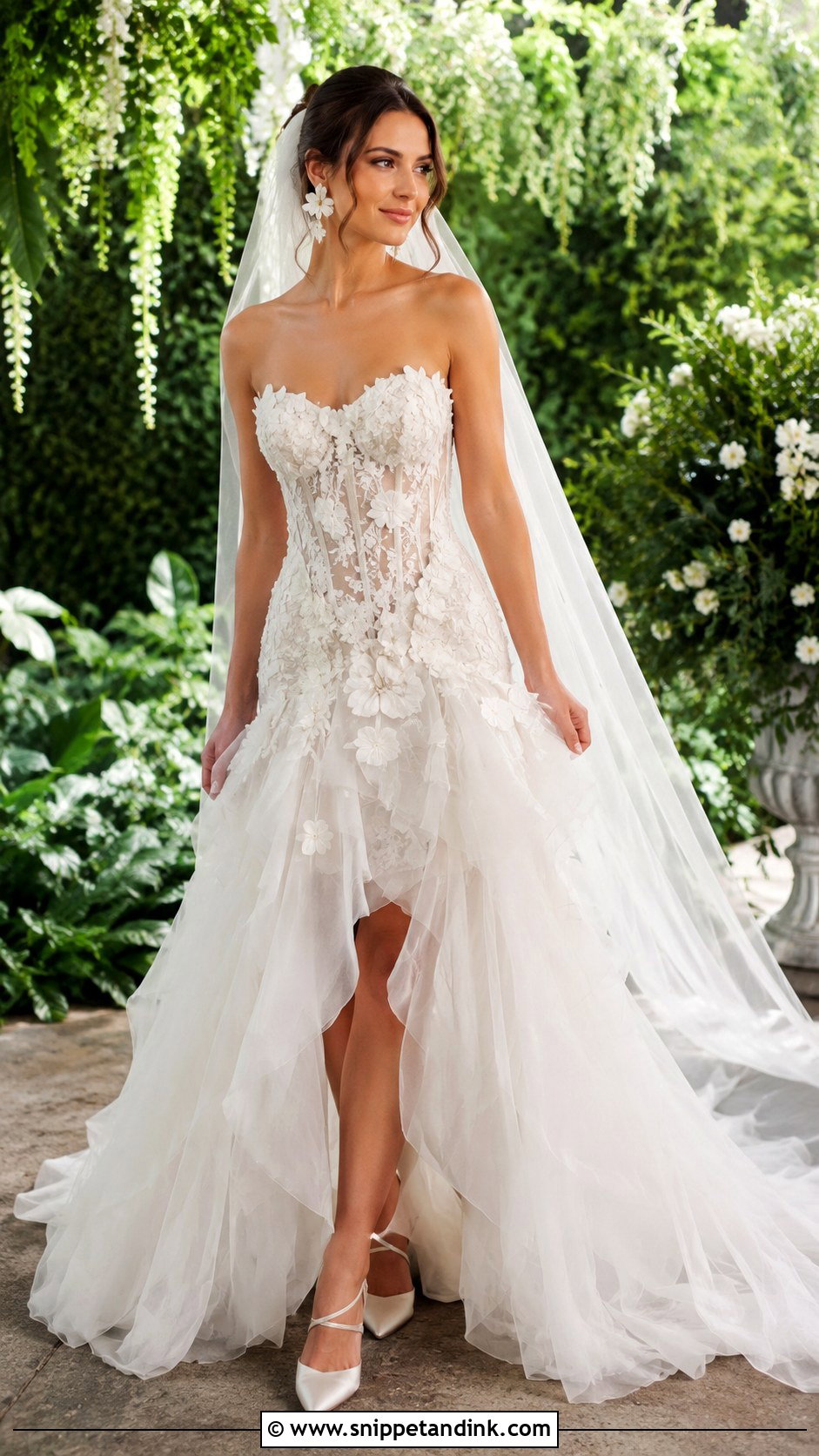
Appliqué that trails from the bodice into the skirt hides the hard line of a low seam, which is the main reason I recommend a drop waist floral applique wedding dress to brides who are unsure about the style. Light tulle or organza keeps the flowers airy. Floral earrings, soft heels and a sheer veil work. Skip heavy necklaces. A loose updo or soft waves suits garden and spring ceremonies.
14. Drop Waist Mikado Wedding Dress
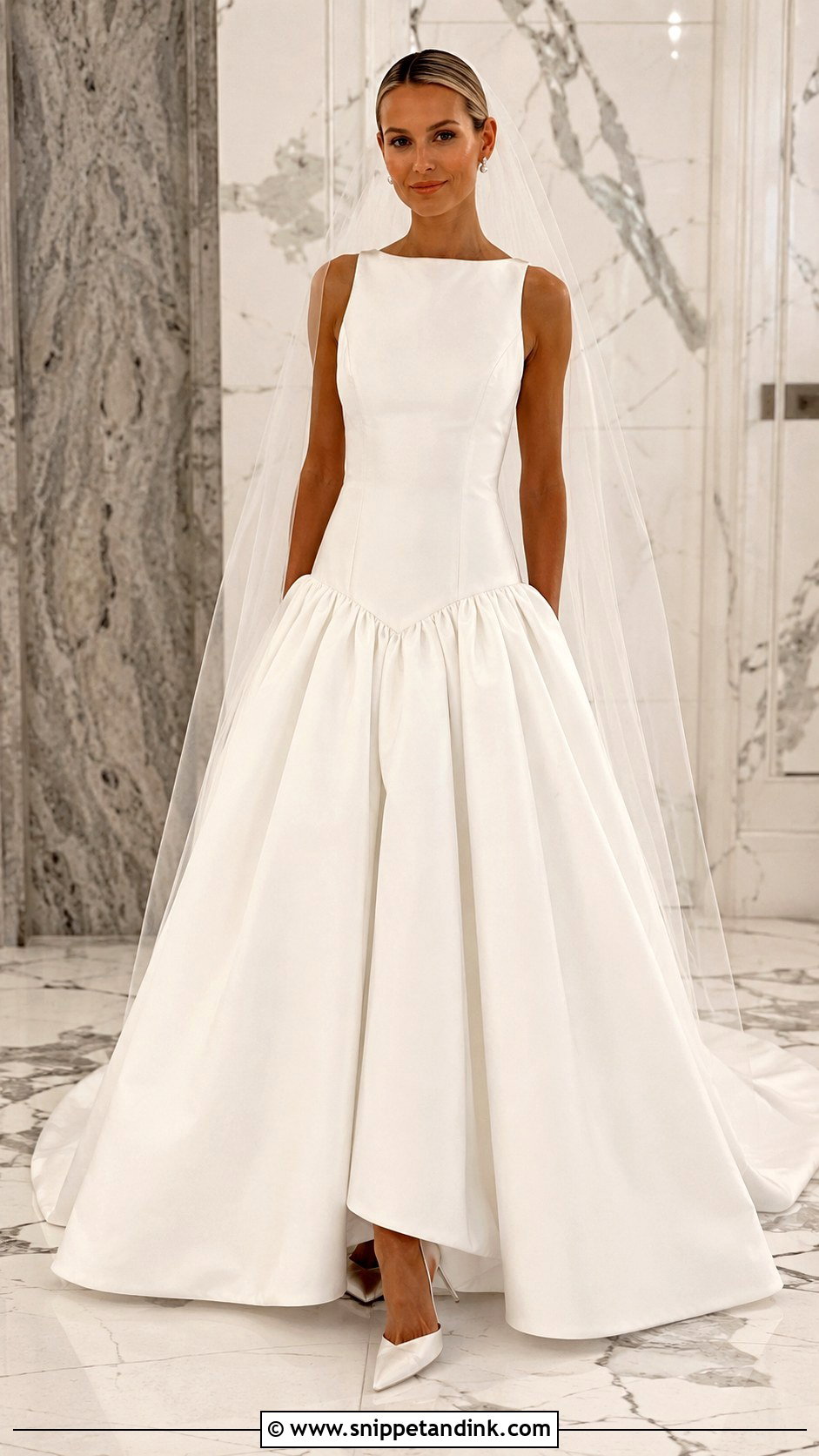
Mikado is a firm, slightly textured silk or silk blend that holds a shape by itself, so a dropped seam looks sharp and deliberate in it. It also creases less than thin satin, which helps over a long day. Sculpted bodices and fuller skirts suit it. Mikado has enough presence that styling should stay simple: satin pumps, a clean veil, classic jewelry and a sleek bun for formal and city venues.
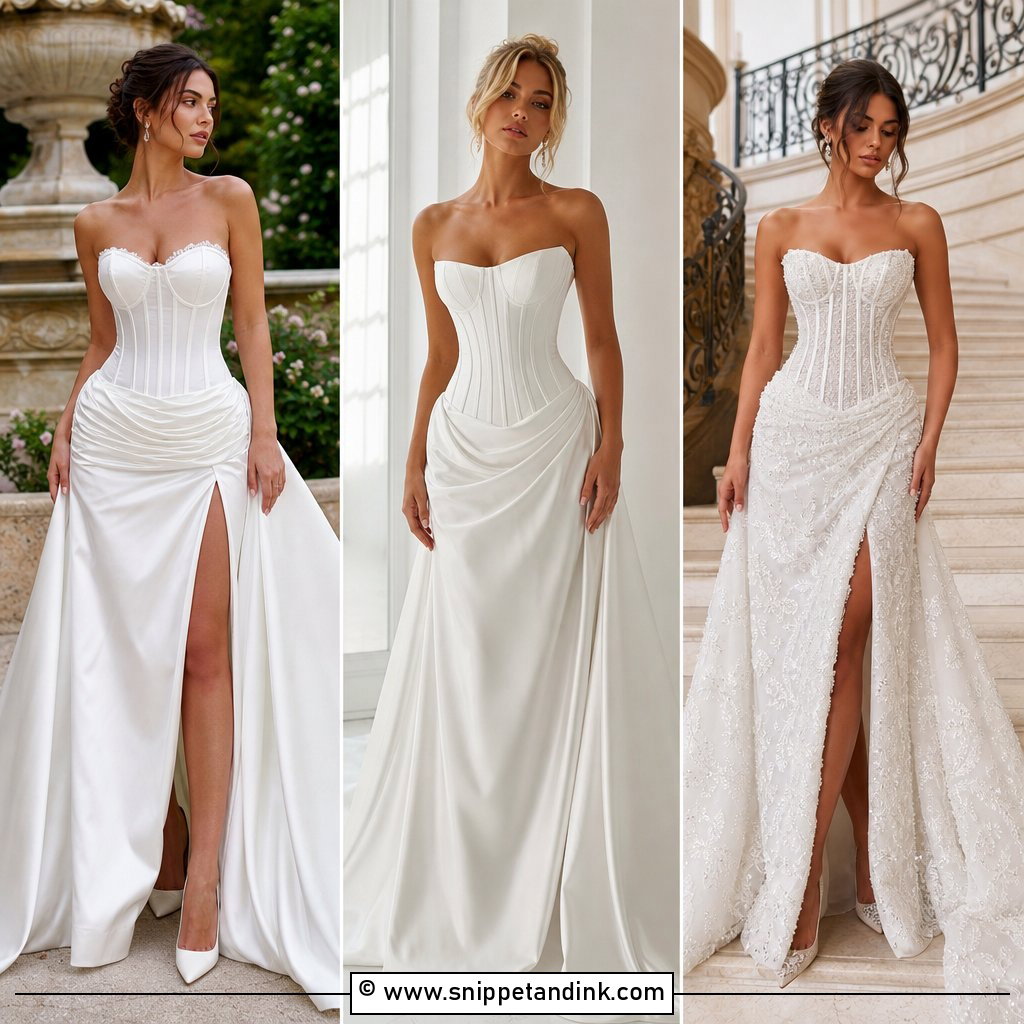
15. Drop Waist Crepe Wedding Dress
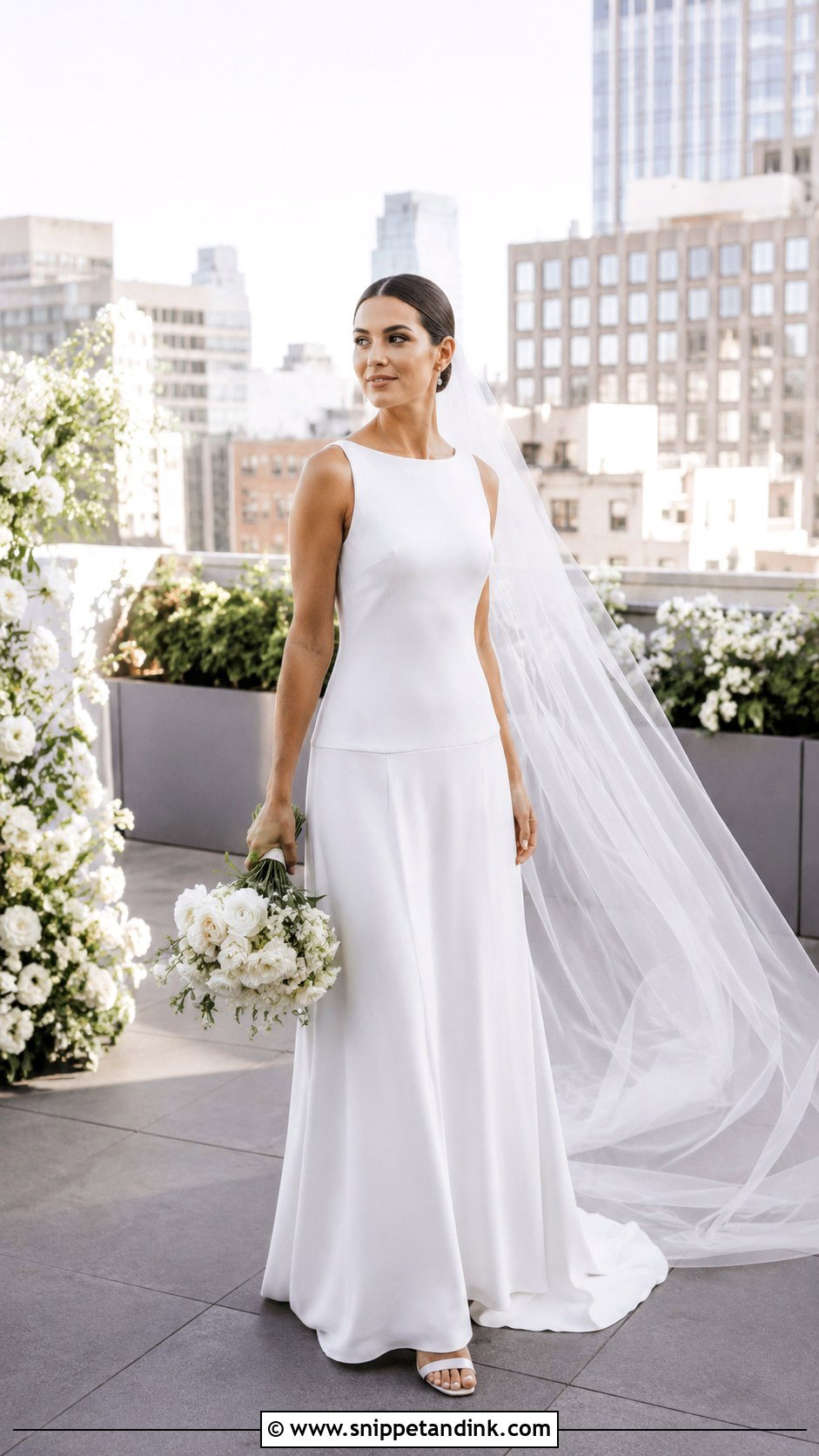
Crepe is soft, fluid and comfortable, with almost no volume. A fitted crepe bodice with a low seam can run into a slim A-line or a subtle mermaid. The honest catch: crepe shows every undergarment line, so plan what goes underneath before the first fitting. Minimal heels, small earrings and a clean veil suit rooftops and small weddings. For extra drama at the ceremony, add a detachable overskirt or sheer cape.
16. Drop Waist Organza Wedding Dress
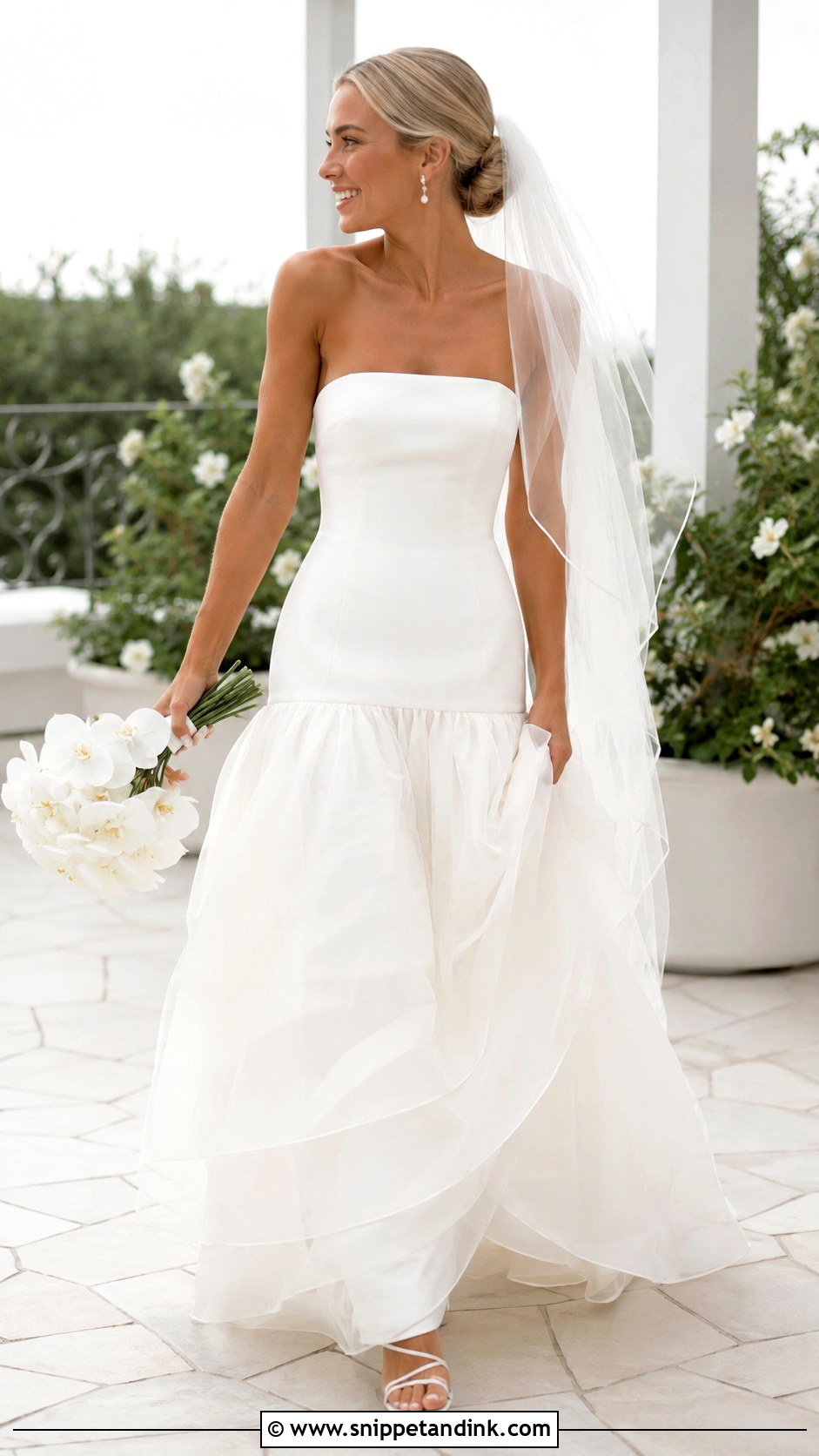
Organza gives volume with less weight than satin, so the skirt floats out from the low seam. It suits warm weather and bright outdoor light. Delicate sandals, pearl earrings and a sheer veil keep it light. Layered organza already looks busy, so keep the bouquet simple. A soft bun or brushed waves fits the mood. It does crease if crushed, so steam it on arrival.
17. Drop Waist Beaded Wedding Dress
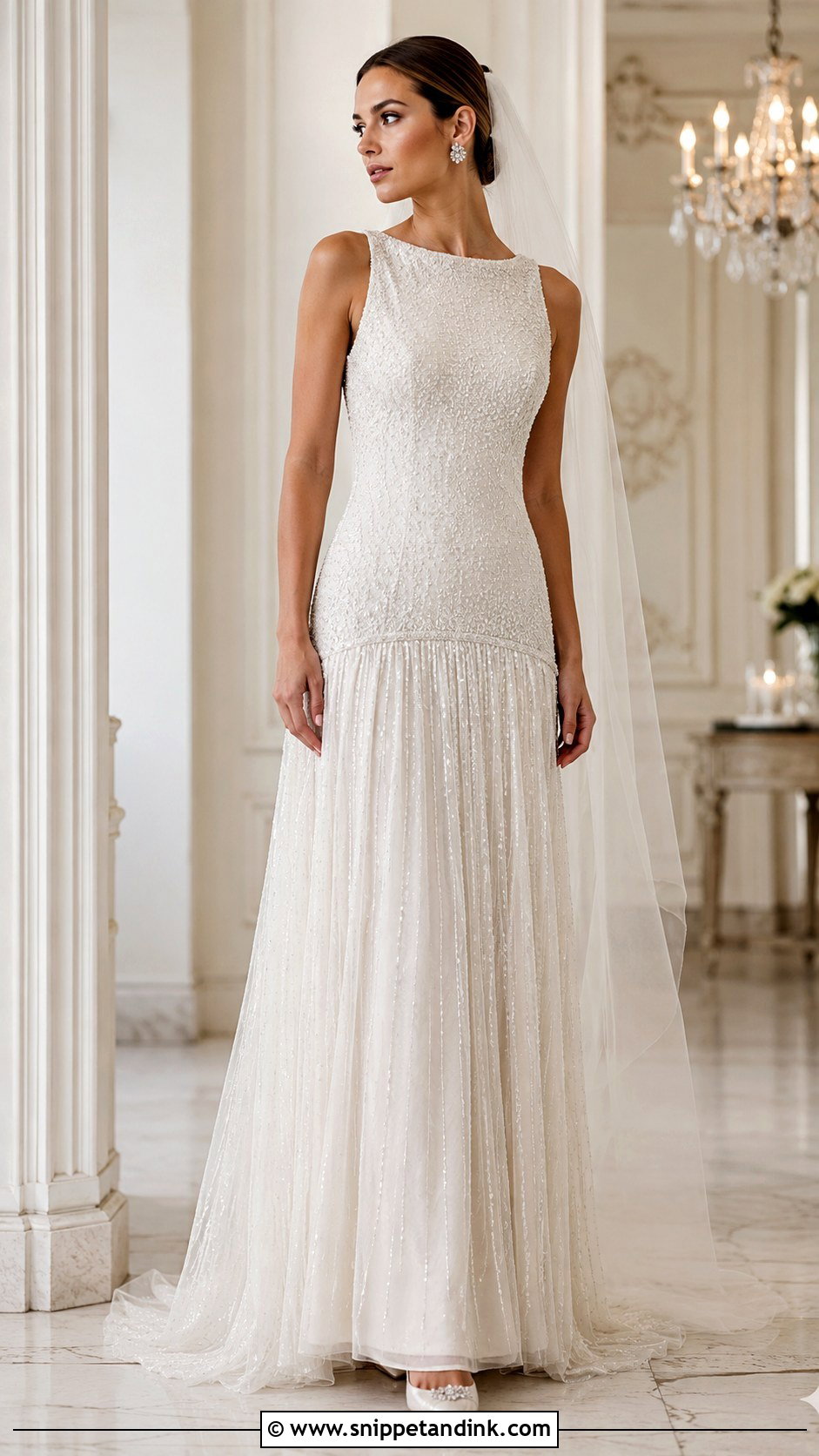
Beading on a drop waist should help the shape, not drown it. Tracing the waistline or bodice seams lengthens the torso; scattering it down the skirt adds movement. Heavier beadwork pulls a low seam down over hours, so I ask brides to wear the sample for a while rather than just a twirl. Evening and formal venues suit it. Simple heels, crystal studs and a clean veil are enough, and sleek hair keeps the beading the focus.
18. Drop Waist Minimalist Wedding Dress
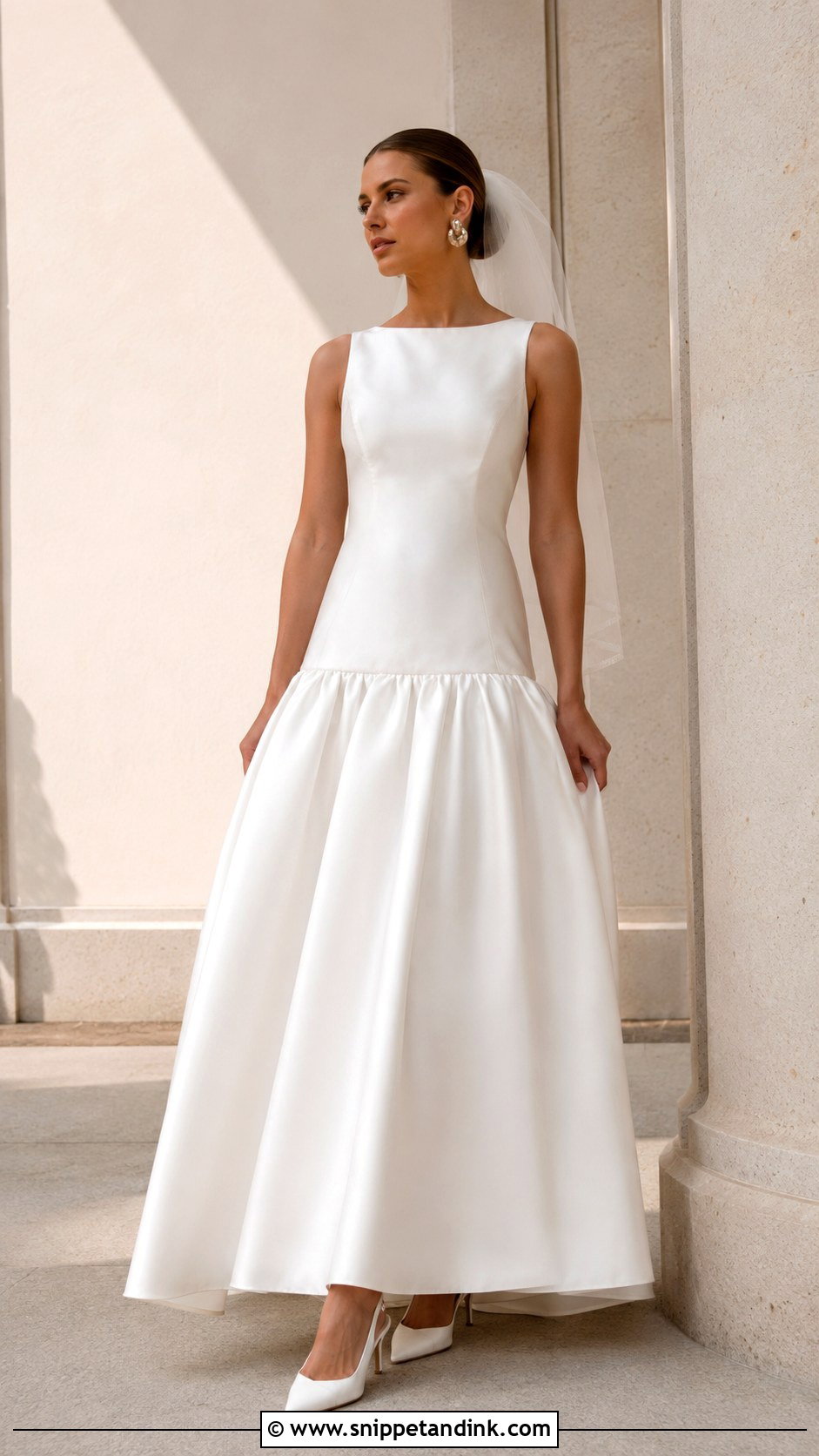
With no lace and no sparkle, the dropped seam becomes the design. That means fit has to be exact, because nothing distracts from a seam that wanders. Satin, crepe and mikado suit it. Sculptural earrings, pointed heels, a plain veil and a sleek bouquet of one flower type keep it modern. This is the gown that looks least dated when you look back at the photos in twenty years.
19. Drop Waist Vintage Wedding Dress
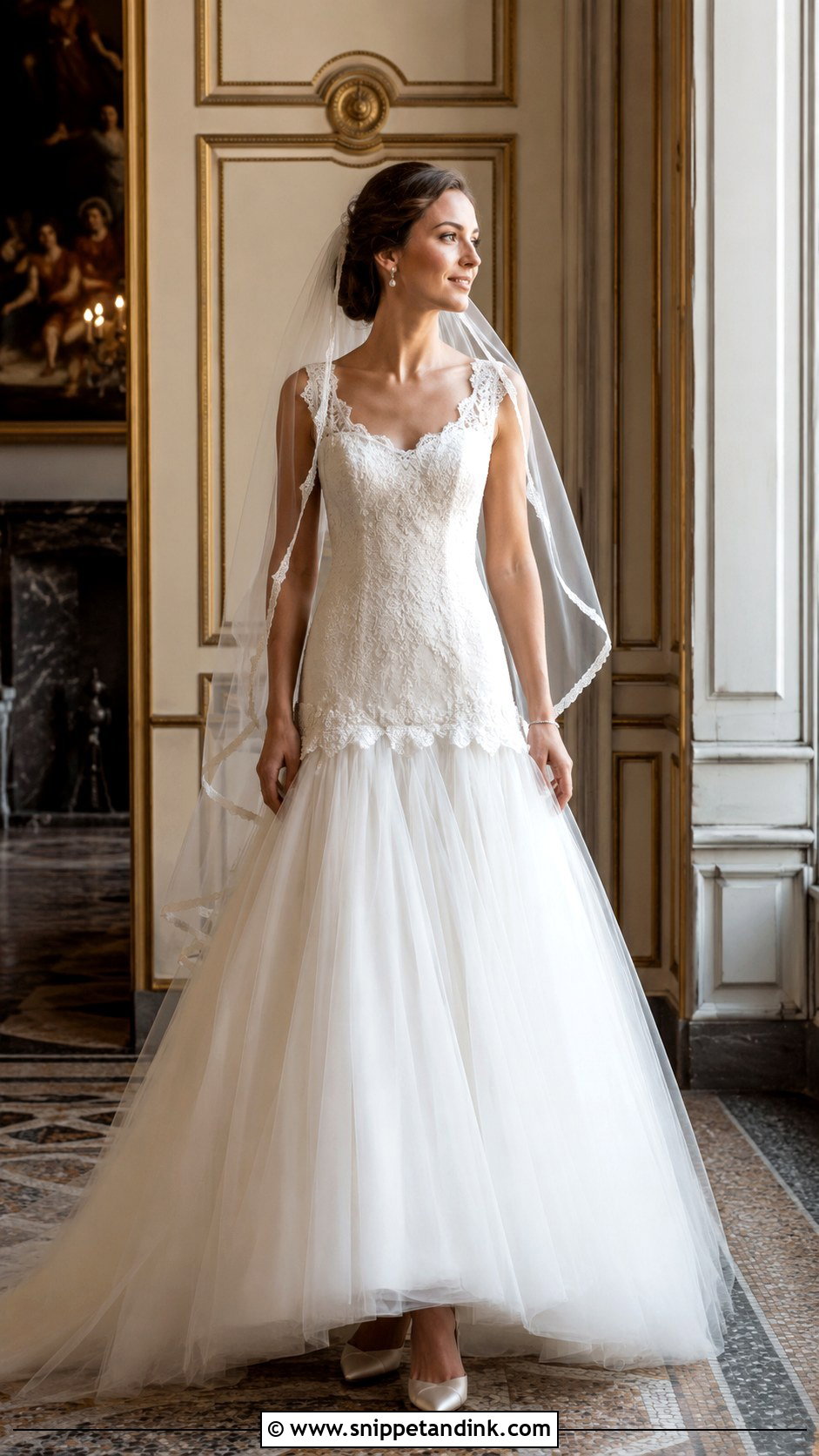
The dropped waist has real history, so a drop waist vintage wedding dress can nod to the 1920s, the 1980s or older romantic shapes depending on the cut. A fitted bodice, low seam and fuller skirt look nostalgic but wearable. Lace, pearls, covered buttons and soft tulle all suit it. My advice is to keep hair polished rather than themed, so the dress reads modern. Satin shoes and a veil with delicate edging suit historic venues and museums.
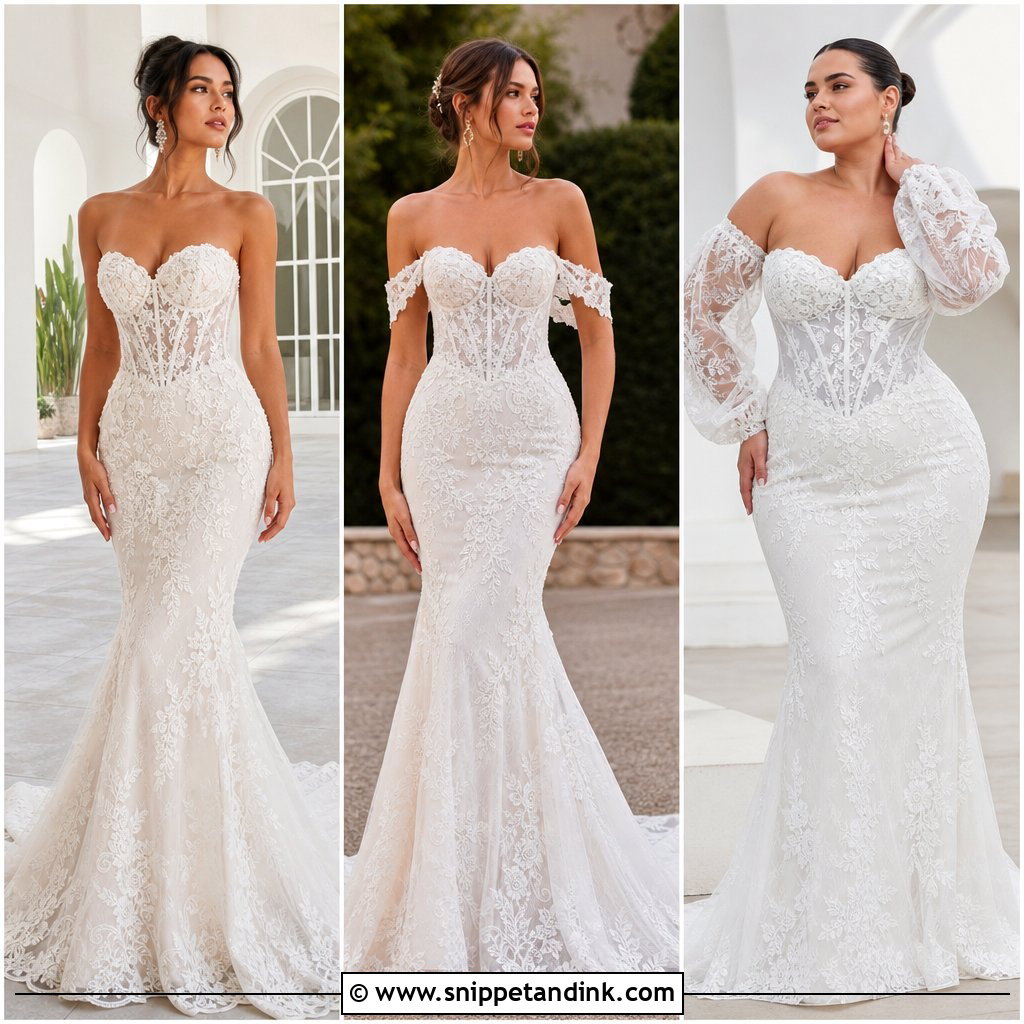
20. Drop Waist Beach Wedding Dress
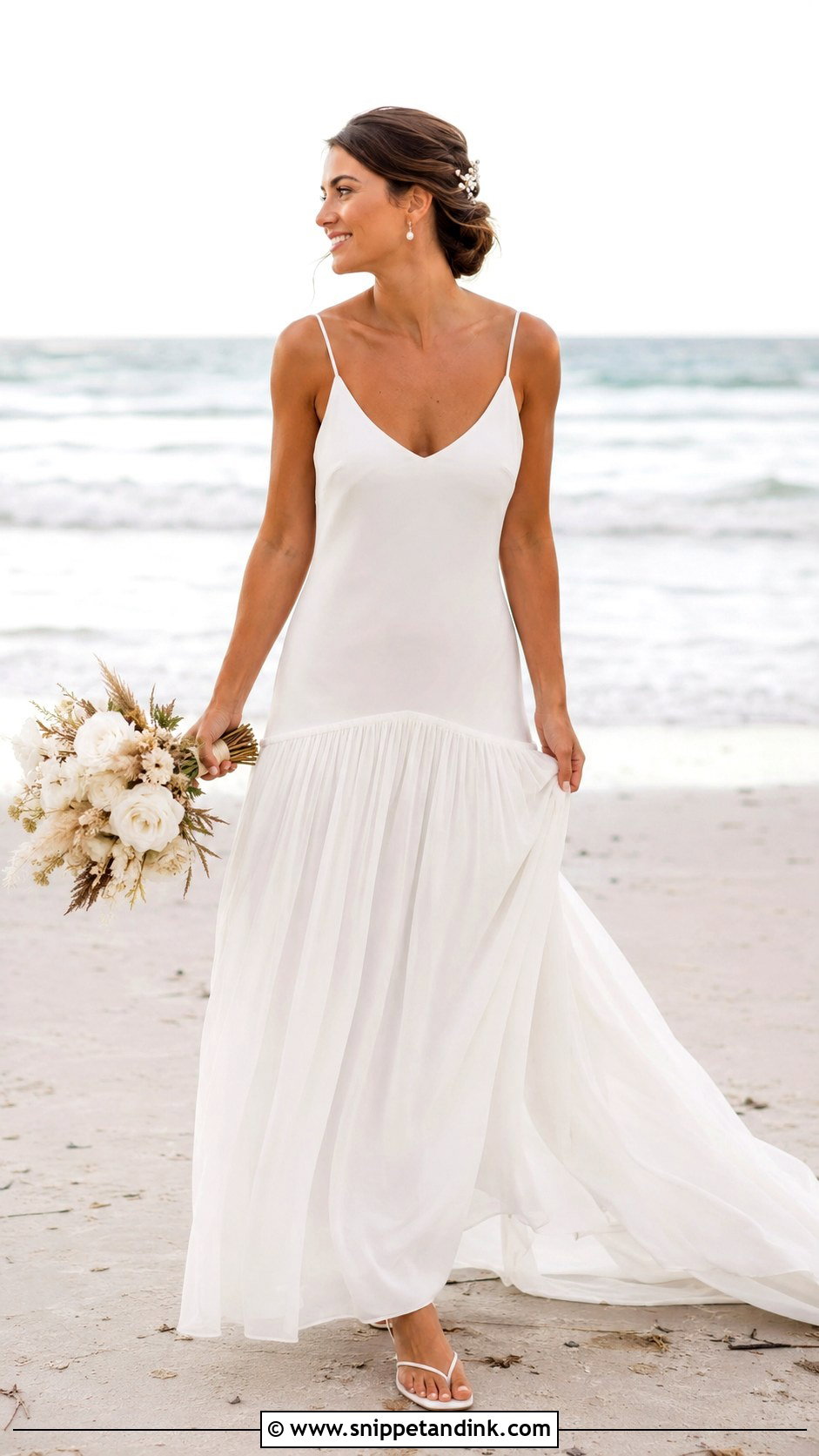
Heat and wind change everything on a beach. A drop waist beach wedding dress in soft tulle, chiffon, crepe or light organza breathes and moves; a heavy ball gown traps heat and drags through sand. The seam can still give shape while the skirt flows. Spaghetti straps or a soft sweetheart suit the coast. Flat sandals, pearl earrings and a hair comb or short veil are easier than a long veil in wind.
21. Drop Waist Garden Wedding Dress
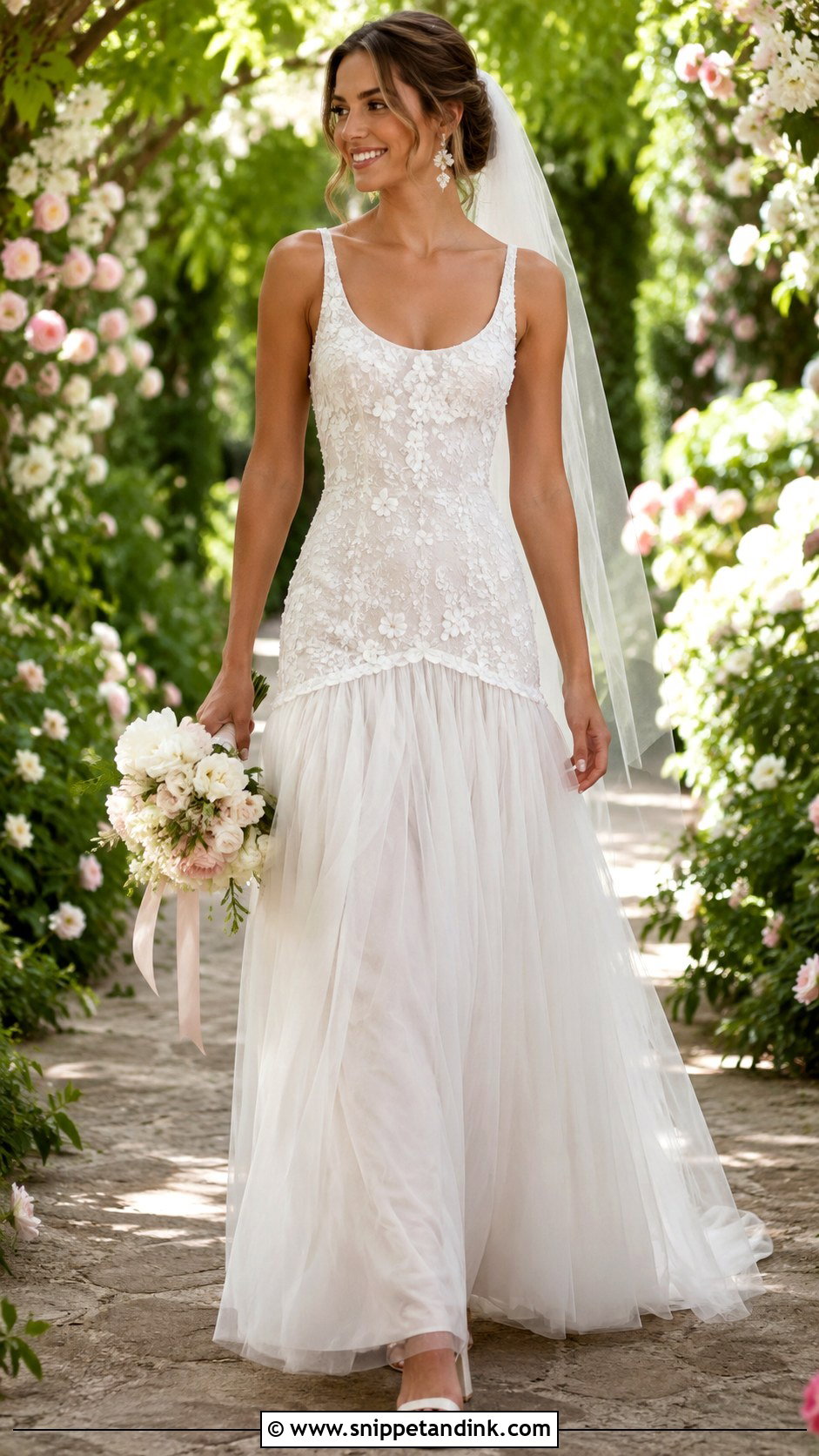
Garden venues ask for movement and soft texture: floral appliqué, light lace, airy tulle or organza. The dropped waist adds shape while the skirt handles paths and grass. I’d steer you toward block heels or wedges, because stilettos sink into lawn within minutes. Floral earrings, a sheer veil and a bouquet of seasonal blooms suit spring and summer, and a half-up style keeps hair off your face outside.
22. Drop Waist Courthouse Wedding Dress
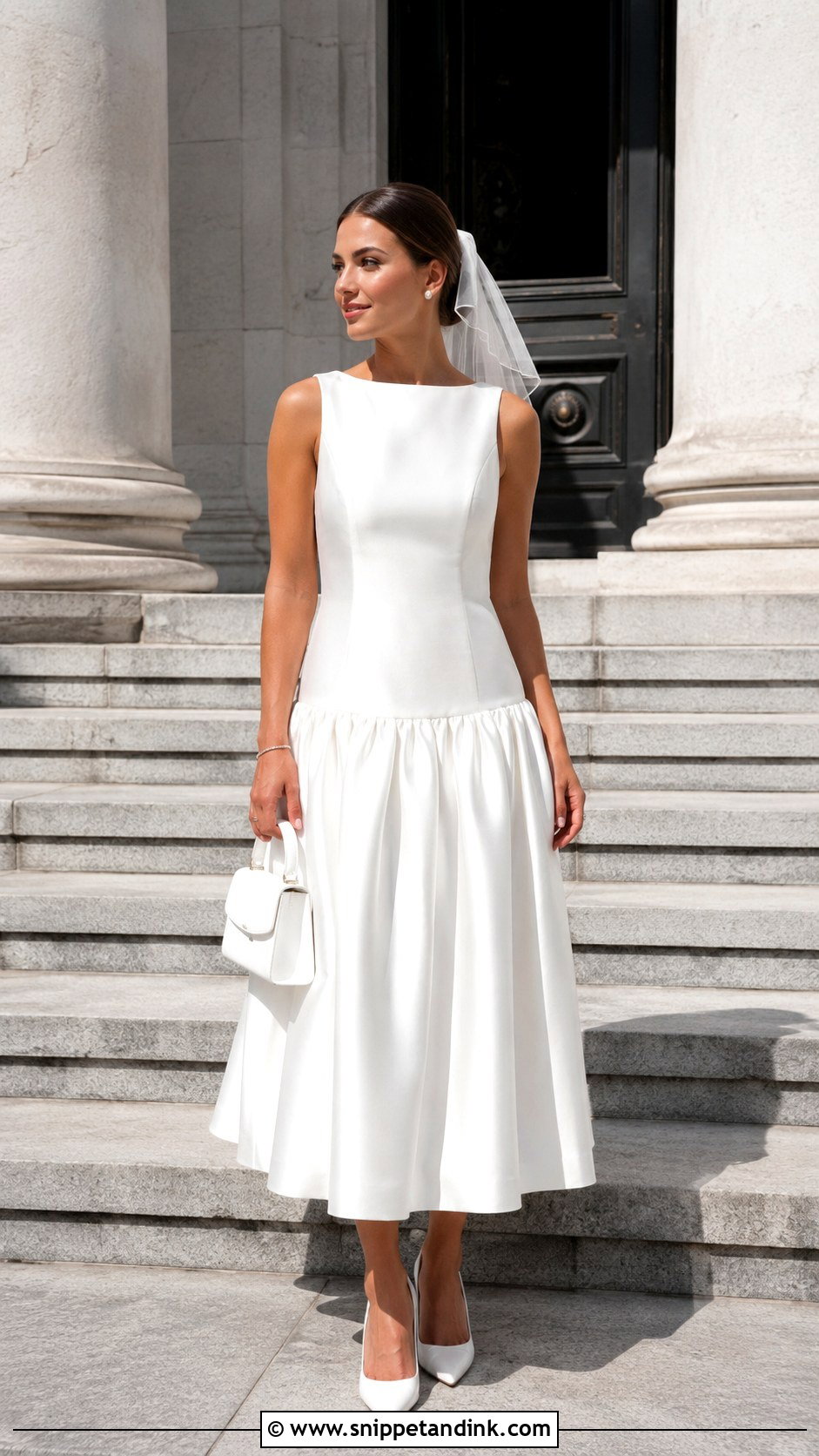
For city hall, I’d go midi or ankle length with a lowered seam and a skirt that lets you walk. Satin, crepe or crisp cotton blends all work depending on formality. Pointed pumps, a small top-handle bag and pearl studs look polished, and a short veil, bow or headband reads bridal without being grand. It suits civil ceremonies and small dinners, and you can walk the city for photos without a train to manage.
23. Drop Waist Reception Wedding Dress
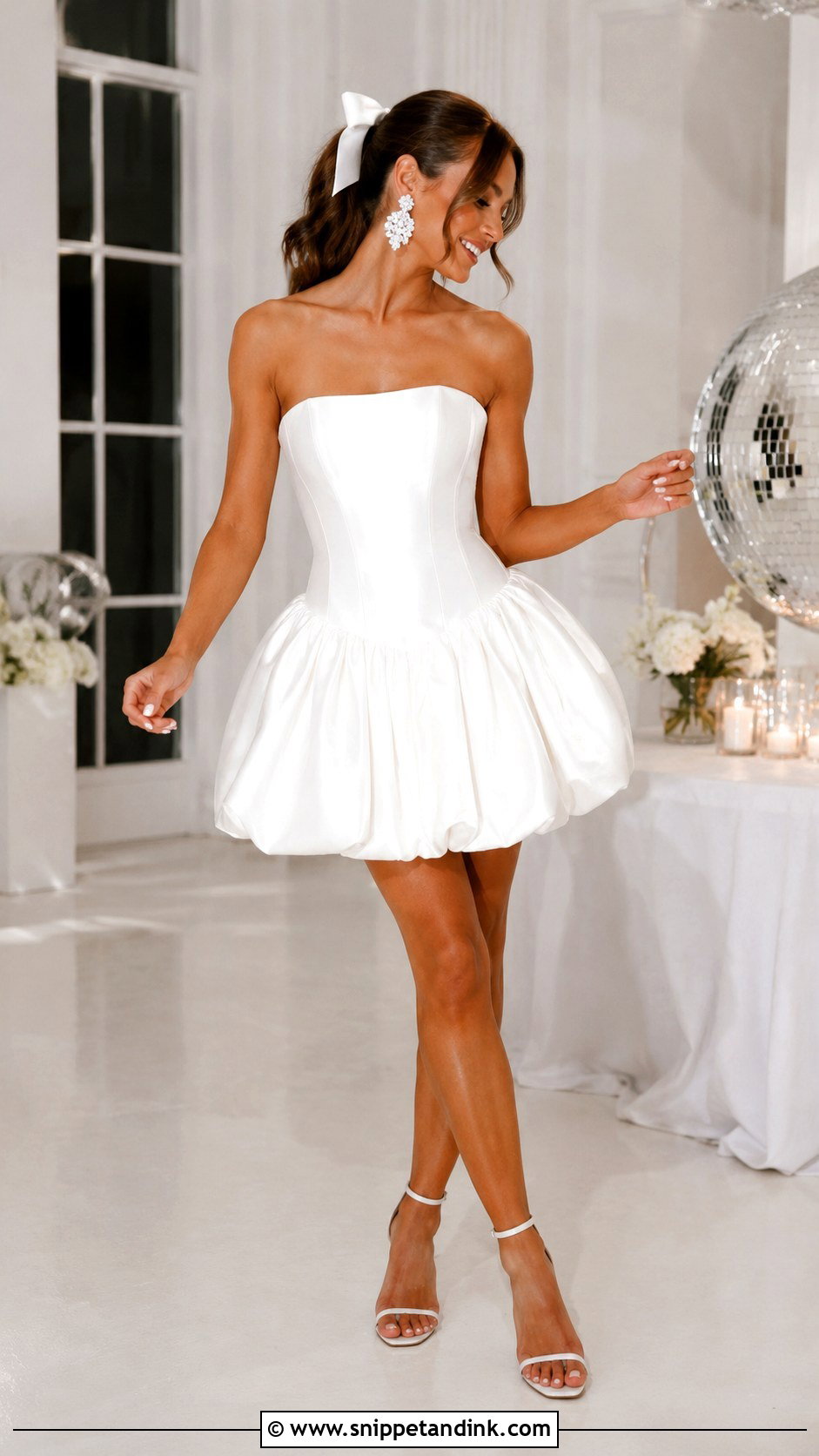
A reception dress should be easier than the ceremony gown: shorter, lighter, simpler. A mini or tea-length drop waist stays bridal while letting you dance. Swap the long veil for a bow, comb or clean ponytail. Comfortable heels, statement earrings and a small clutch finish it. Allow a few quiet minutes and a helper for the change, especially if the first gown laces up the back.
24. Drop Waist Plus Size Wedding Dress
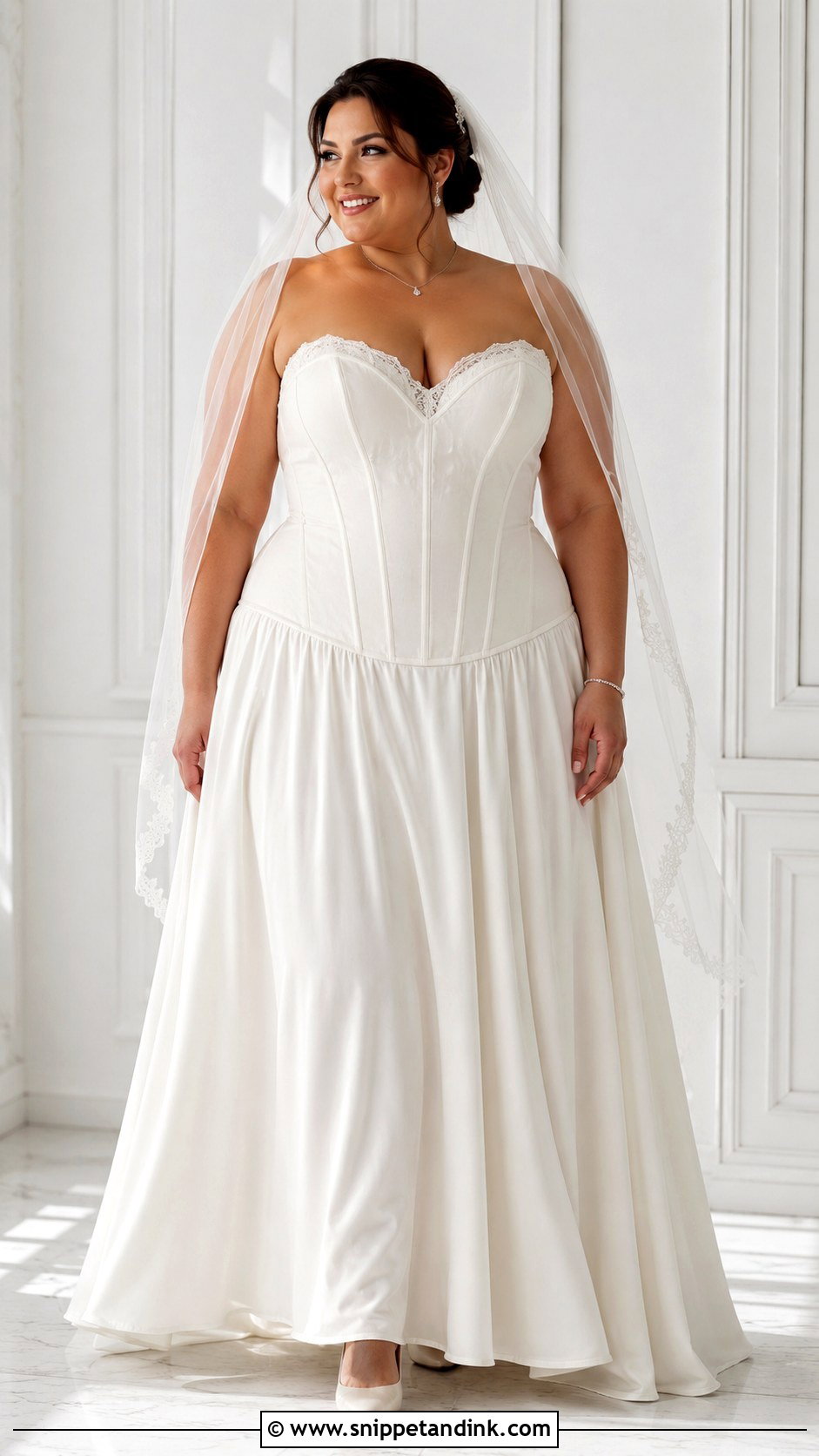
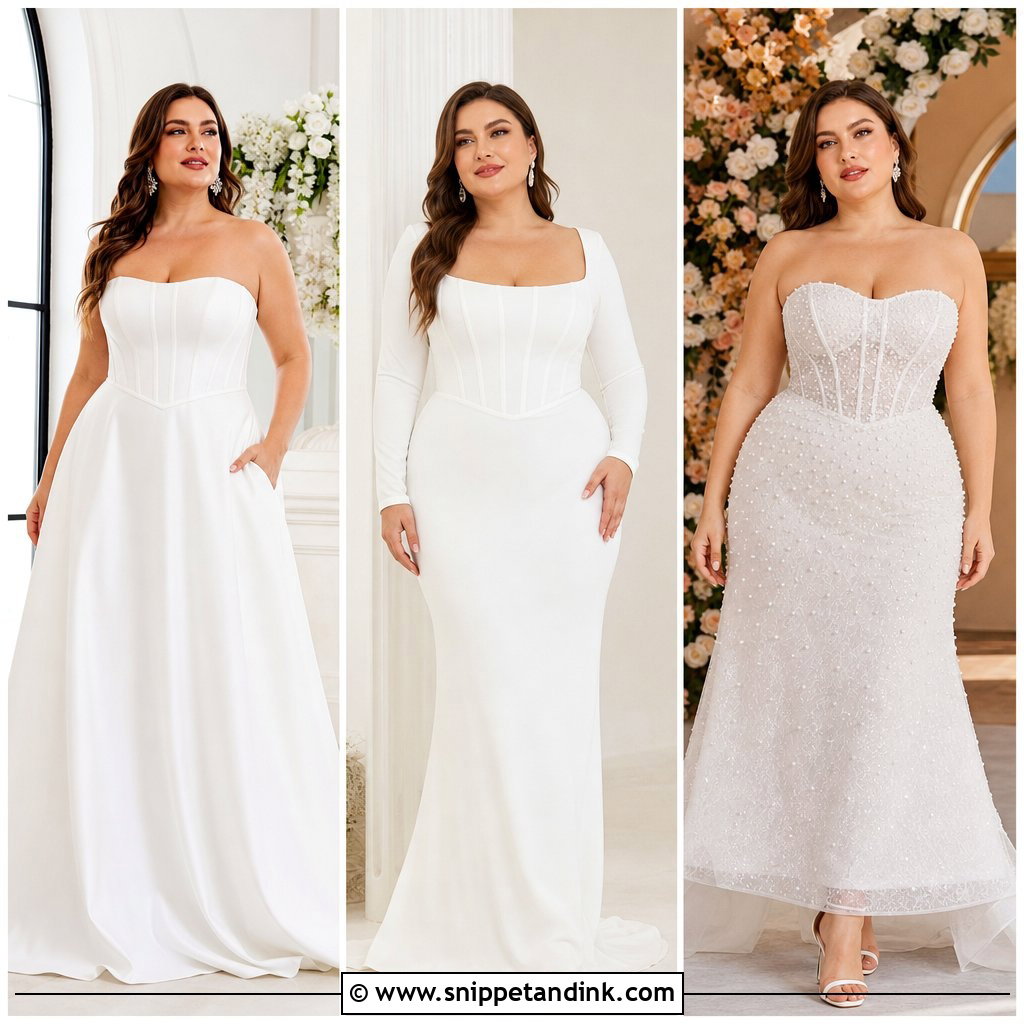
On a plus size bride, the seam has to land at a point that feels good on your body, often the high hip rather than the fullest part. A soft A-line, structured corset or basque shape can balance the figure without squeezing. I look for proper boning, built-in cups and fabric that does not pull across the hips when you sit. Secure heels and jewelry that frames the neckline finish it. The goal is support and comfort, not hiding anything.




25. Drop Waist Black Tie Wedding Dress
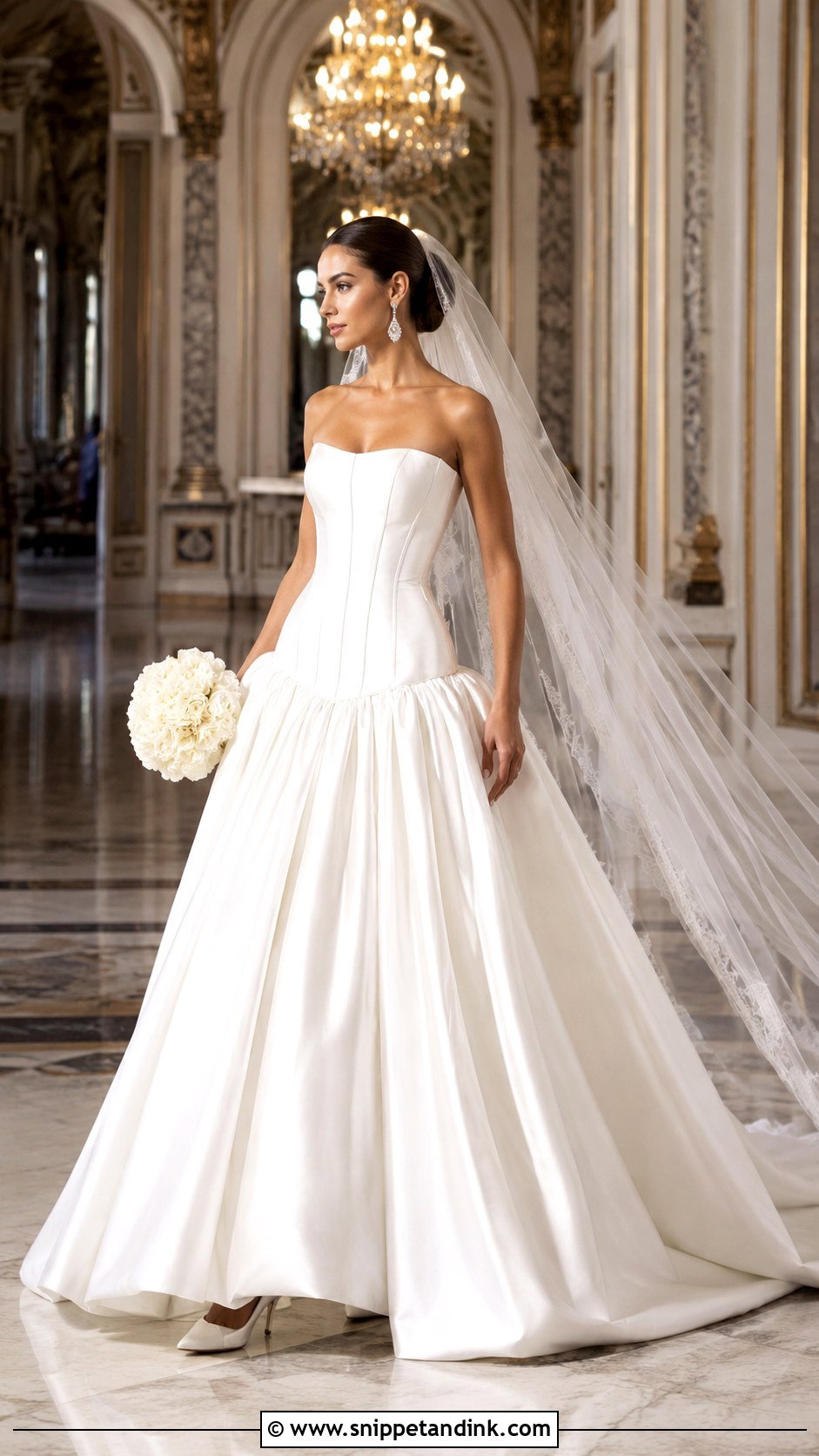
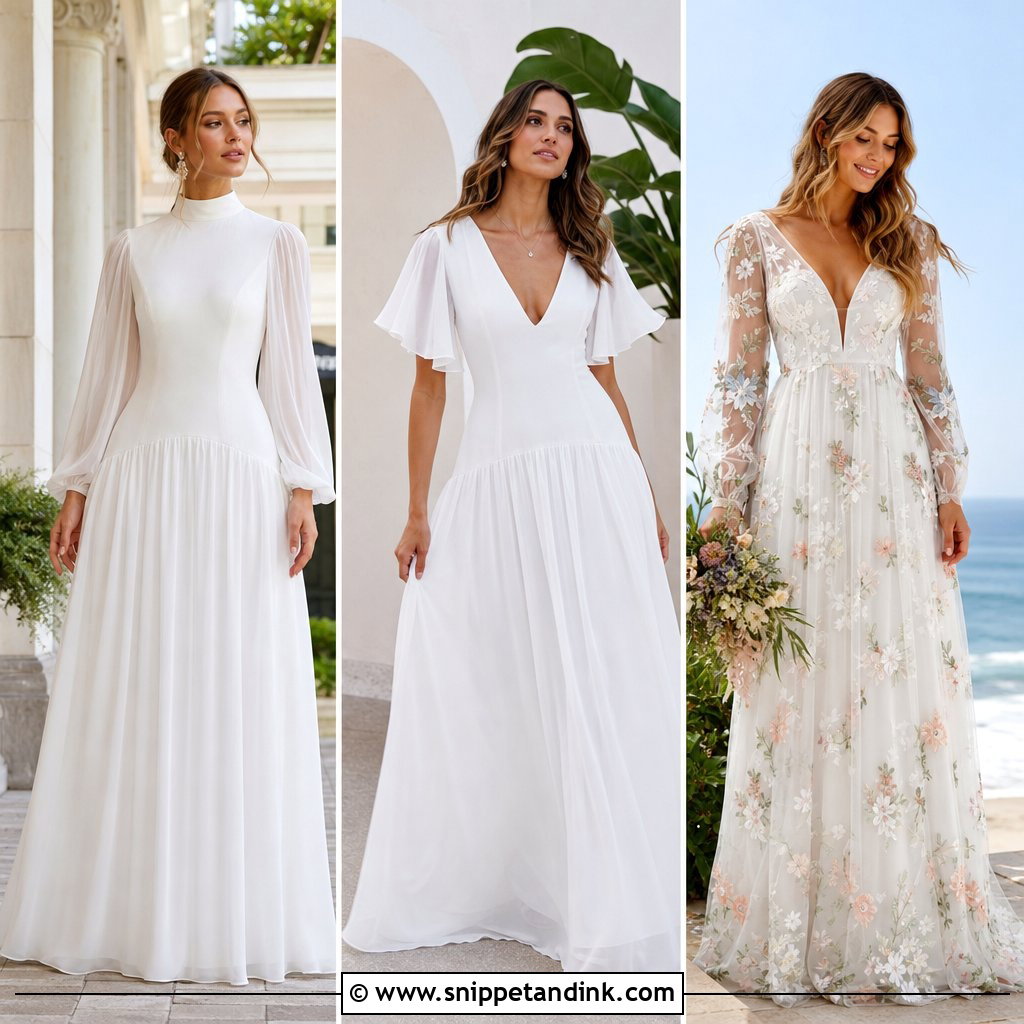
Black tie means structure: satin, mikado, beaded lace or a sculpted corset with a full skirt. The lowered waist gives fashion impact while the fabric keeps it formal. Classic pumps, refined jewelry and a long veil suit ceremony photos. A sleek updo and polished makeup complete it. Marble, chandeliers and grand architecture are where this silhouette really belongs.
Getting a Structured Gown There Without a Crease
A boned bodice survives travel well, but the skirt below the seam does not. On the morning, I hang the dress from its inner loops rather than the straps, so the weight of the skirt does not stretch the shoulders. Steaming works on most fabrics, though satin and mikado should be steamed from the inside to avoid water spots.
- Flying: ask the airline about carrying the gown on board in a garment bag, and pad the bodice with tissue so the boning keeps its shape.
- Driving: lay it flat across the back seat, never folded at the seam, since a crease across the hip line is very hard to steam out.
- At the venue: hang it high enough that the hem does not touch the floor.
After the wedding, get it cleaned within a few weeks, before sugar spills and sweat set into yellow marks. Store it boxed in acid-free tissue in a cool, dark place, with the bodice padded so the boning does not crush.
The Seam Decides More Than the Fabric Does
Satin ball gown, soft lace, crepe or organza: the dropped waist works across all of them, but only when the seam sits in the right place and the skirt begins cleanly from it. Try at least two fabrics in the same shape so you can see how differently they behave. Then sit, walk and lift your arms before you decide. With good tailoring, a low seam can look vintage, modern or minimal, and it will still be yours.
You'll Like These Ideas:







Leave a Reply