
“Silk” covers a surprising range of fabrics. The fibre is the same, but the weave changes everything: charmeuse pours over the body like liquid, mikado stands up on its own, organza is crisp and sheer, satin is smooth and formal, and crepe is matte with a slight grain. So when a bride tells me she wants a silk dress, my first question is which one, because a slip and a ball gown can both be pure silk and behave nothing alike. The right weave depends on your venue, the season and how much structure you want holding you in. The 25 gowns below are sorted by shape, with the weave I’d choose for each.
Is It Really Silk? Reading the Label in a Bridal Salon
Satin, crepe, organza and chiffon are names of weaves, not fibres. A “satin gown” is very often polyester, and there’s nothing wrong with that, but it isn’t silk and it behaves differently. Here’s what I check before calling a sample silk:
- The fibre content label, usually inside a side seam. It should say silk, or the percentage if it’s a blend.
- Temperature. Silk warms to your hand quickly; polyester stays cool and slightly slick.
- The drape. Hold a fold of skirt up and let it fall. Silk settles softly; polyester tends to spring back with a more plastic shine.
- Creasing. Squeeze a hidden corner for a few seconds. Silk creases, then relaxes slowly. A fabric that never creases at all is almost certainly synthetic.
Polyester satin has honest advantages: it resists wrinkles, takes water spots better and costs less. Silk breathes better in heat, takes dye more richly and moves in a way synthetics struggle to match. Ask which you’re looking at, and make the choice knowingly.
1. Silk Slip Wedding Dress
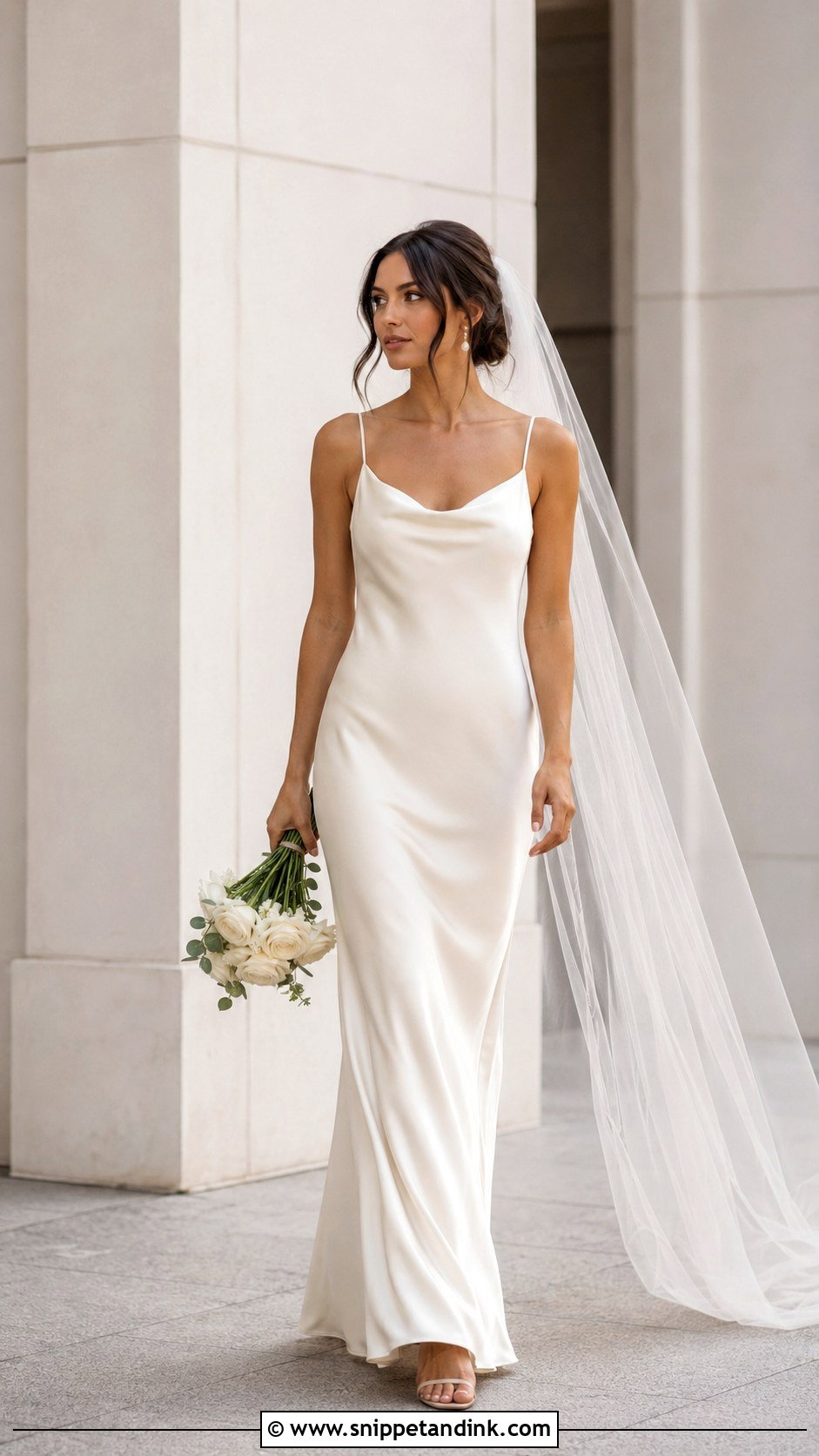
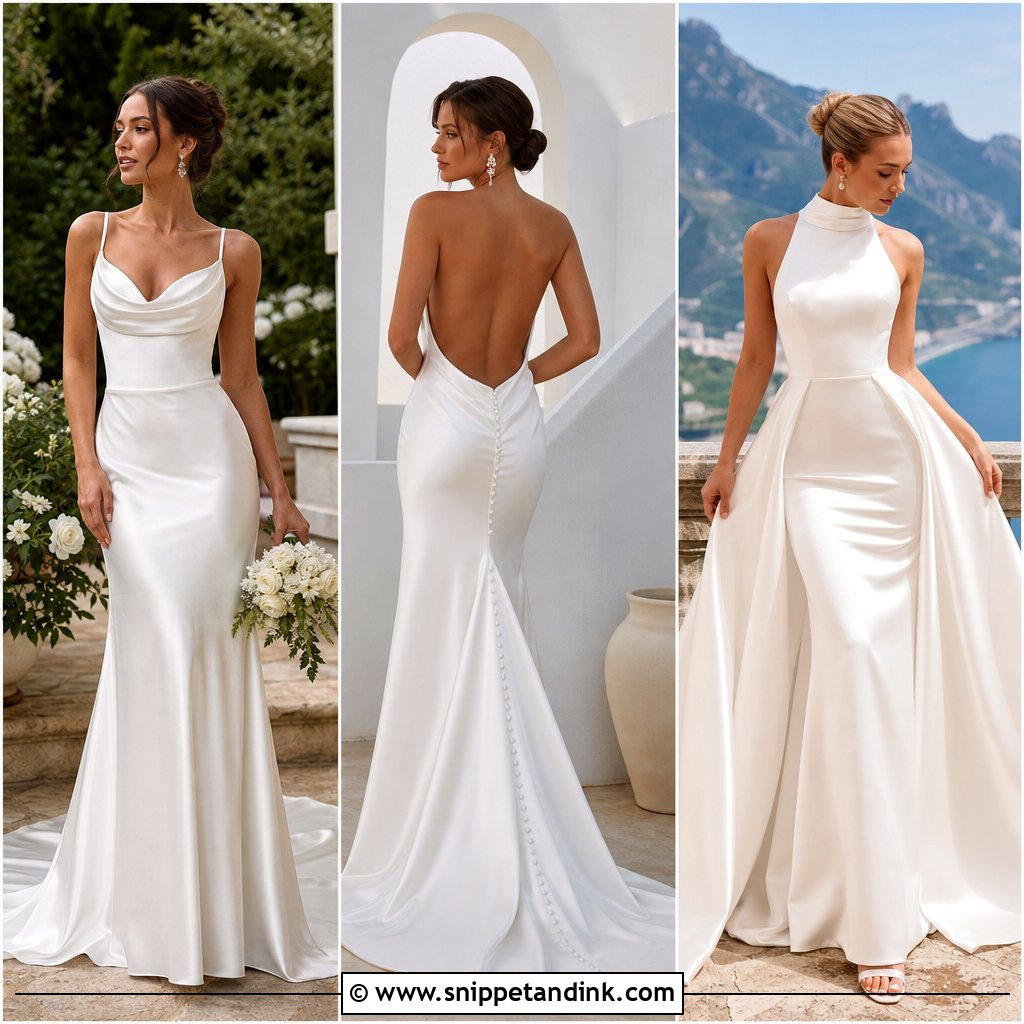
A silk slip wedding dress is cut on the bias, diagonally across the grain, which is what lets it stretch slightly and follow the body. That same cut shows every line beneath it, so I fit slips with the exact underwear the bride will wear. Barely-there ivory heels, pearl drops and a low bun suit it. A cathedral veil makes the simple shape unmistakably bridal; a short one keeps it modern. If you’d like more coverage, look for a cowl neckline or a draped back.
2. Silk A Line Wedding Dress
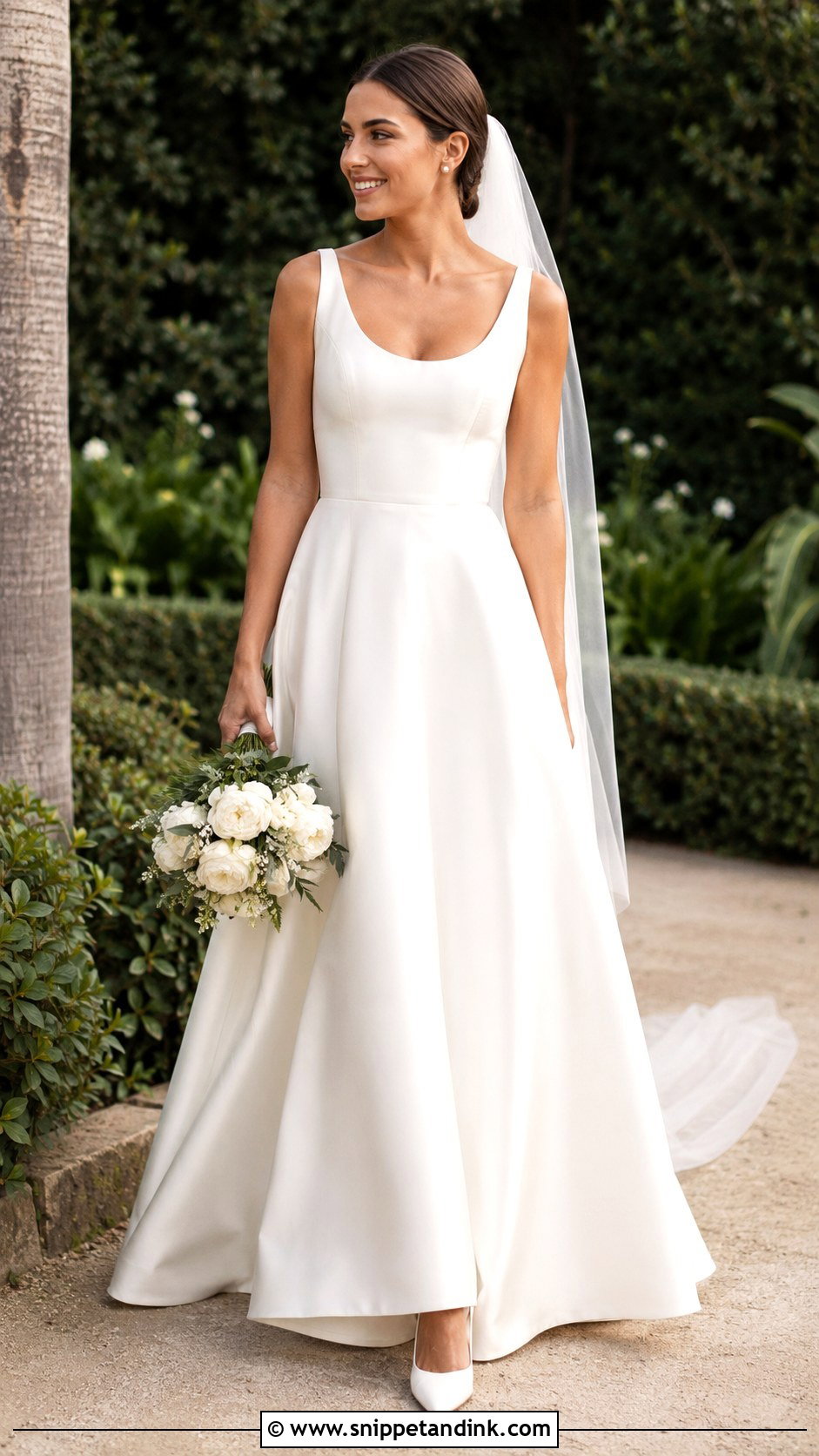
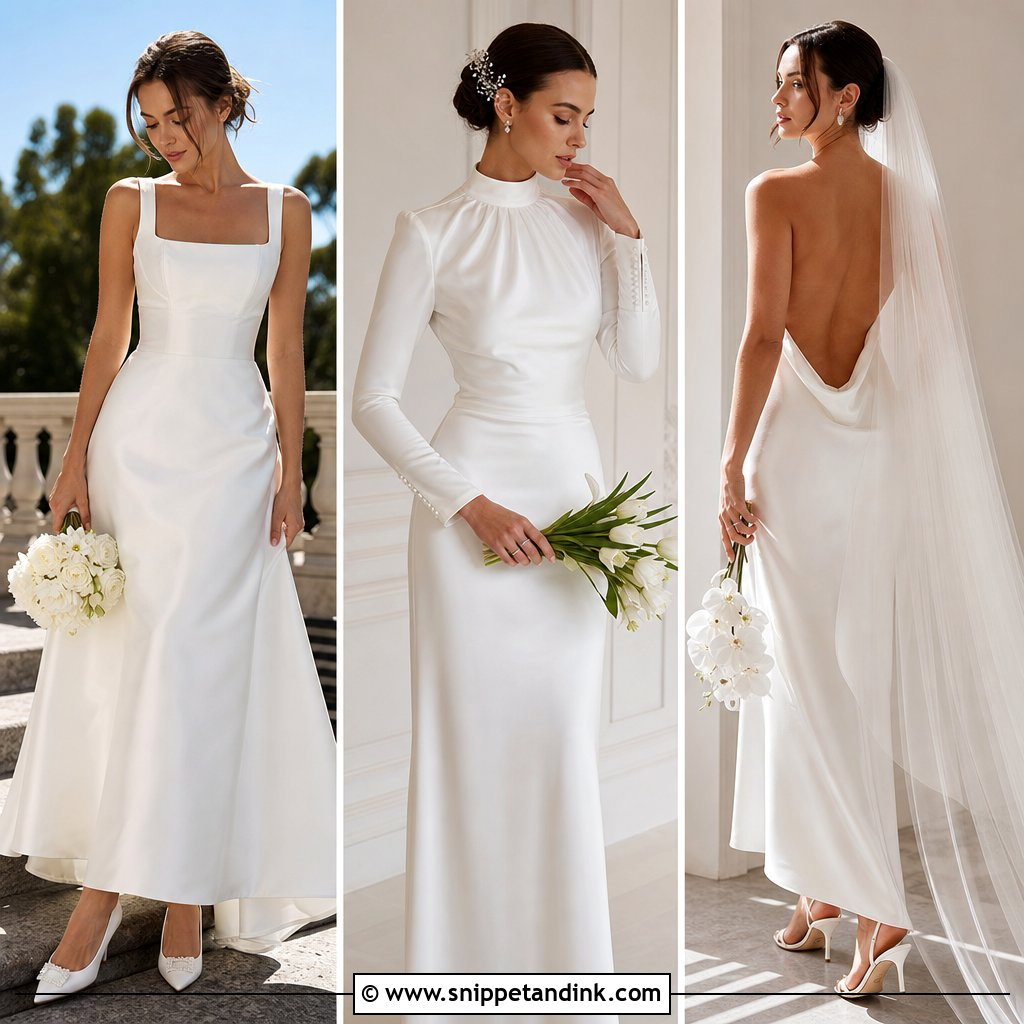
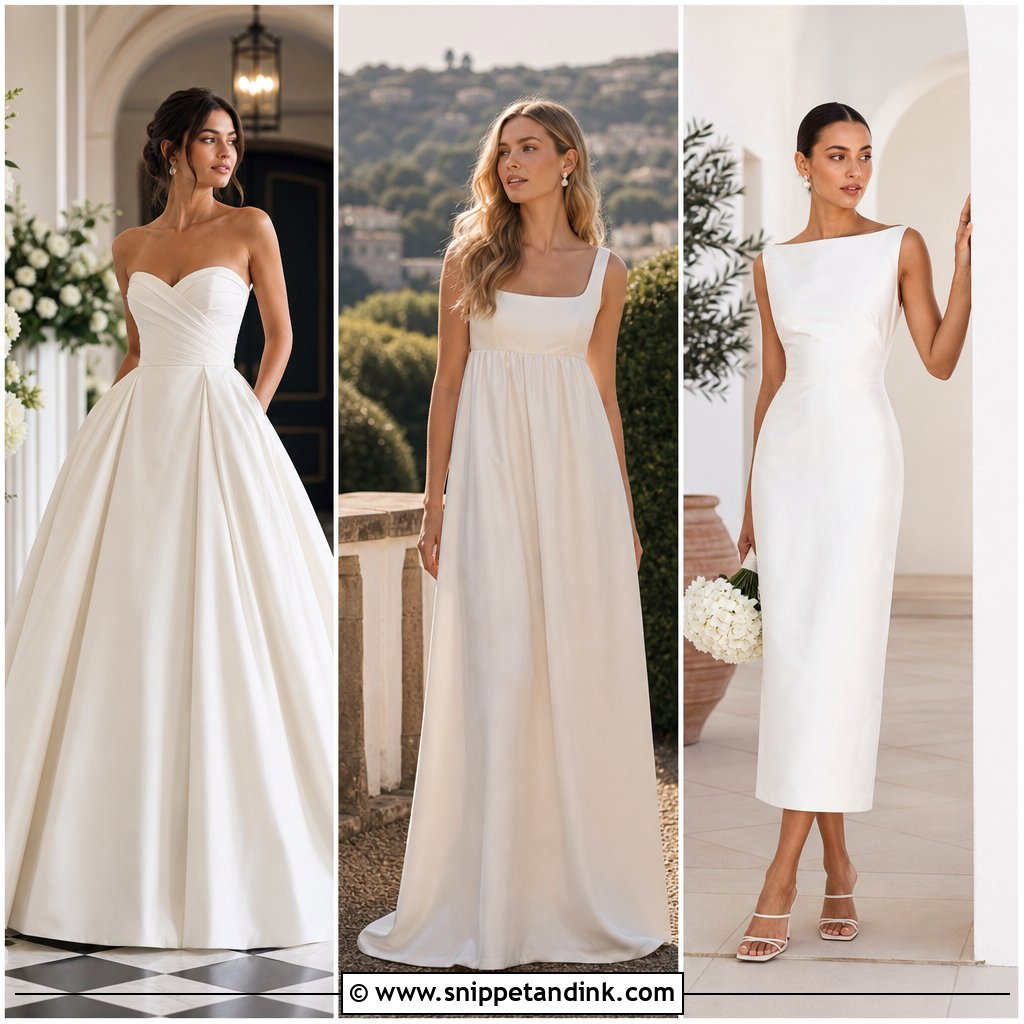
Silk faille is my quiet favourite for an A-line. It has a fine horizontal rib, more body than satin, and it holds the skirt in a soft bell without stiffness. Mikado and silk satin also suit the shape. The fitted bodice marks the waist, and the skirt moves away from the hips, so it flatters most figures. Pointed ivory heels, a structured mini bag and a simple veil keep it polished in a garden or ballroom.
3. Silk Ball Gown Wedding Dress
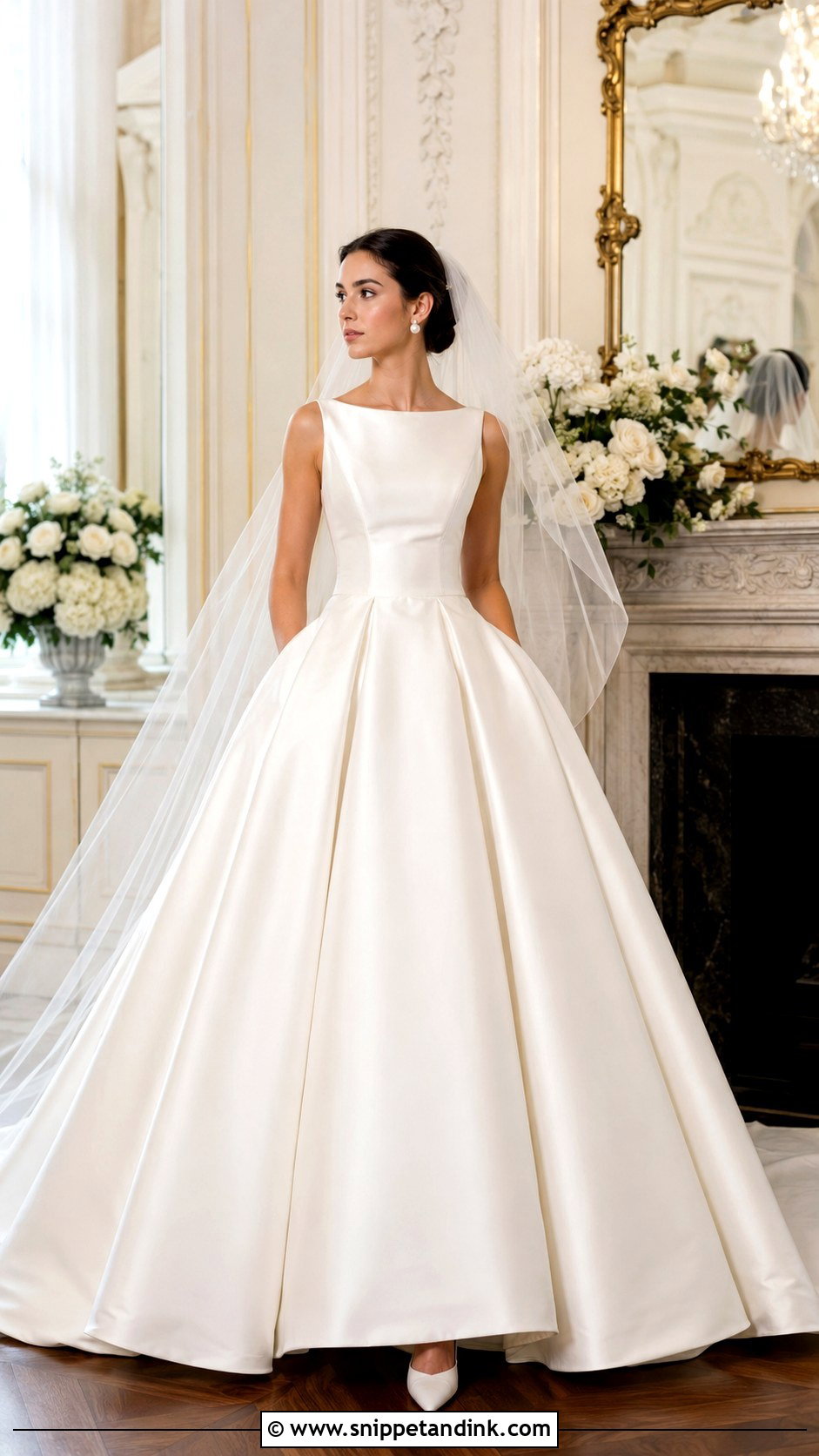
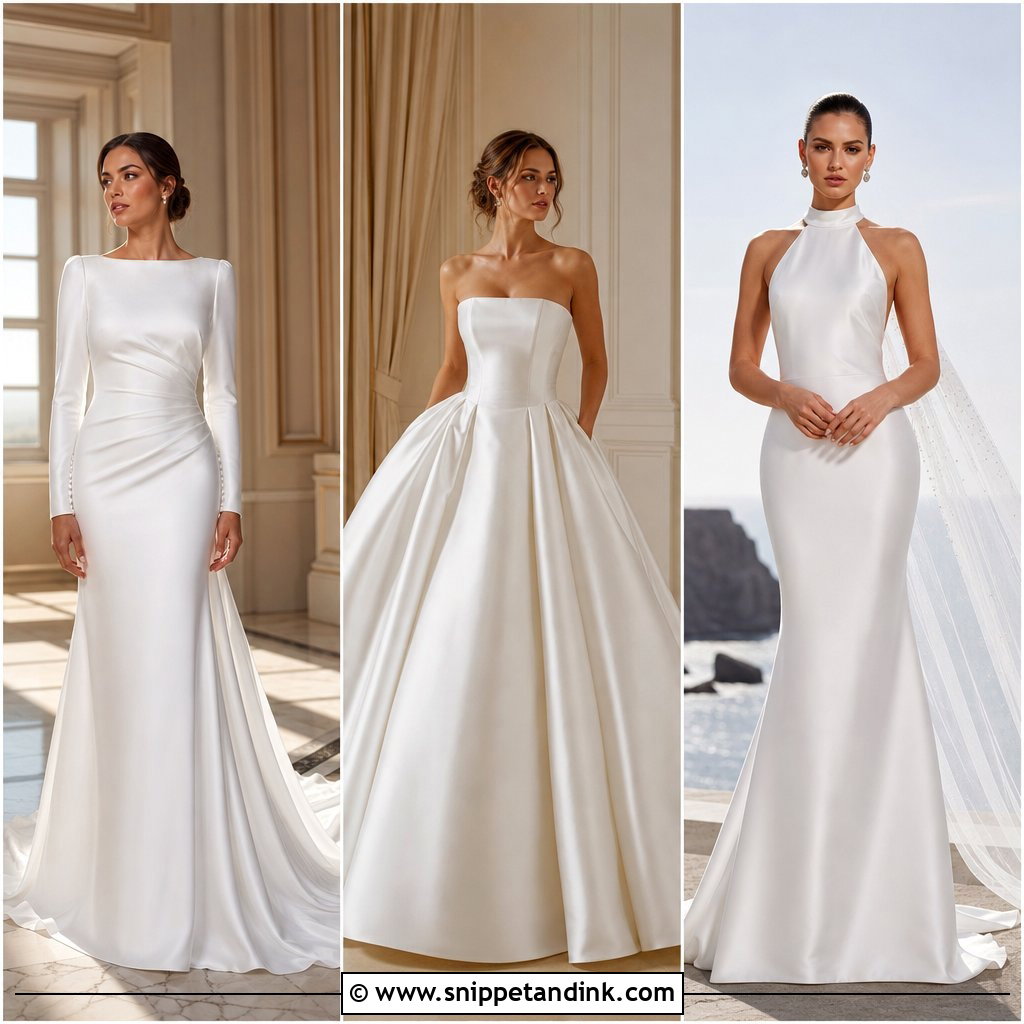
A full silk ball gown is heavy. There can be many metres of fabric in the skirt, plus petticoats, and the weight sits on the waist all day. That’s why I prefer mikado for this shape: it holds volume with less layering underneath. Balance the skirt with a fitted bodice and a clean neckline, then keep accessories refined, such as satin pumps, a long veil, pearl studs and a chignon. Keep embellishment minimal and the silk itself becomes the detail. Historic estates and formal indoor venues suit it.
4. Silk Strapless Wedding Dress
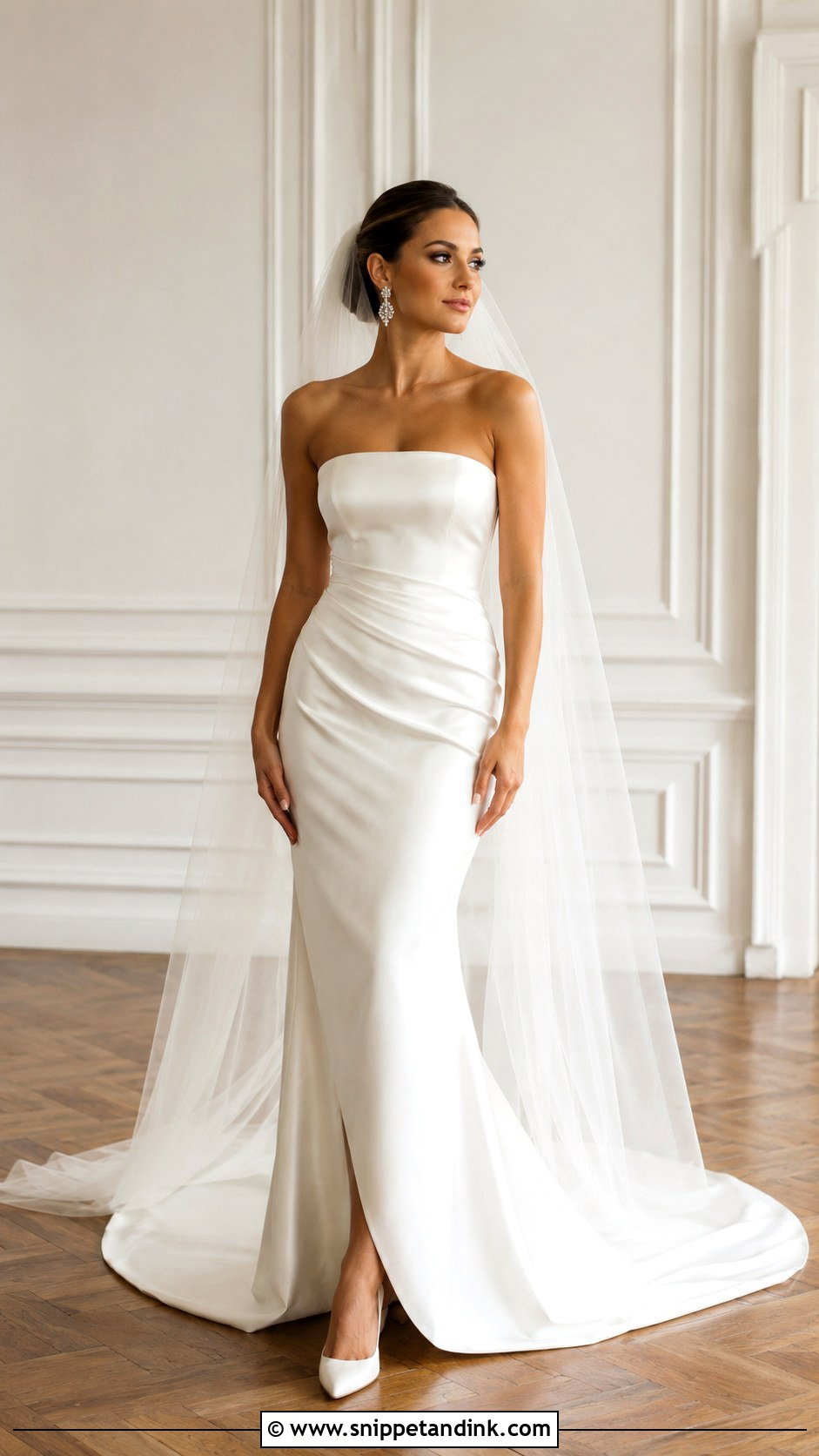
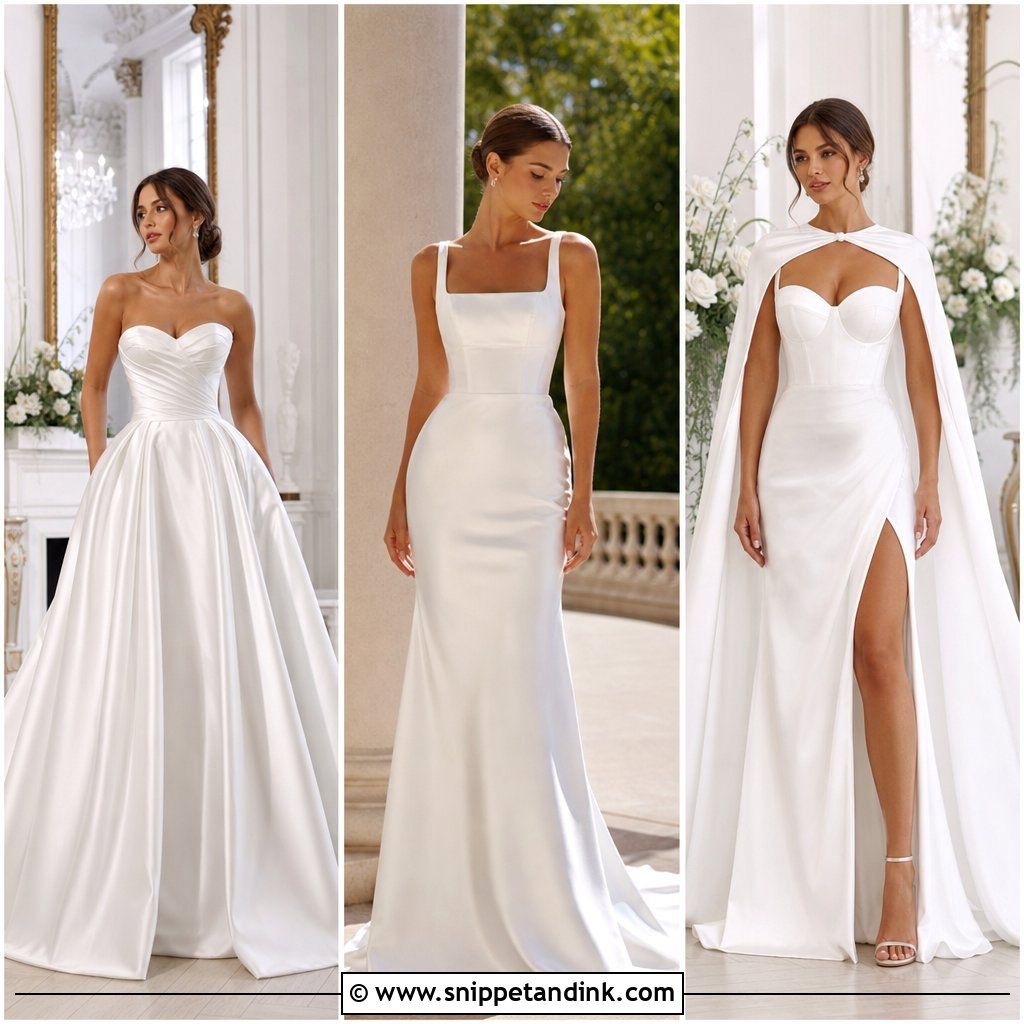
Strapless silk dresses need internal structure, because silk alone won’t hold a bodice up. A good one has boning, a waist stay and a lining cut slightly tighter than the outer fabric. A straight neckline looks modern; a sweetheart reads romantic. A fitted strapless gown is glamorous, an A-line version is classic and easy to move in. Add a smooth updo, crystal studs, a chapel veil and clean ivory heels for a black-tie or rooftop wedding.
5. Silk Long Sleeve Wedding Dress
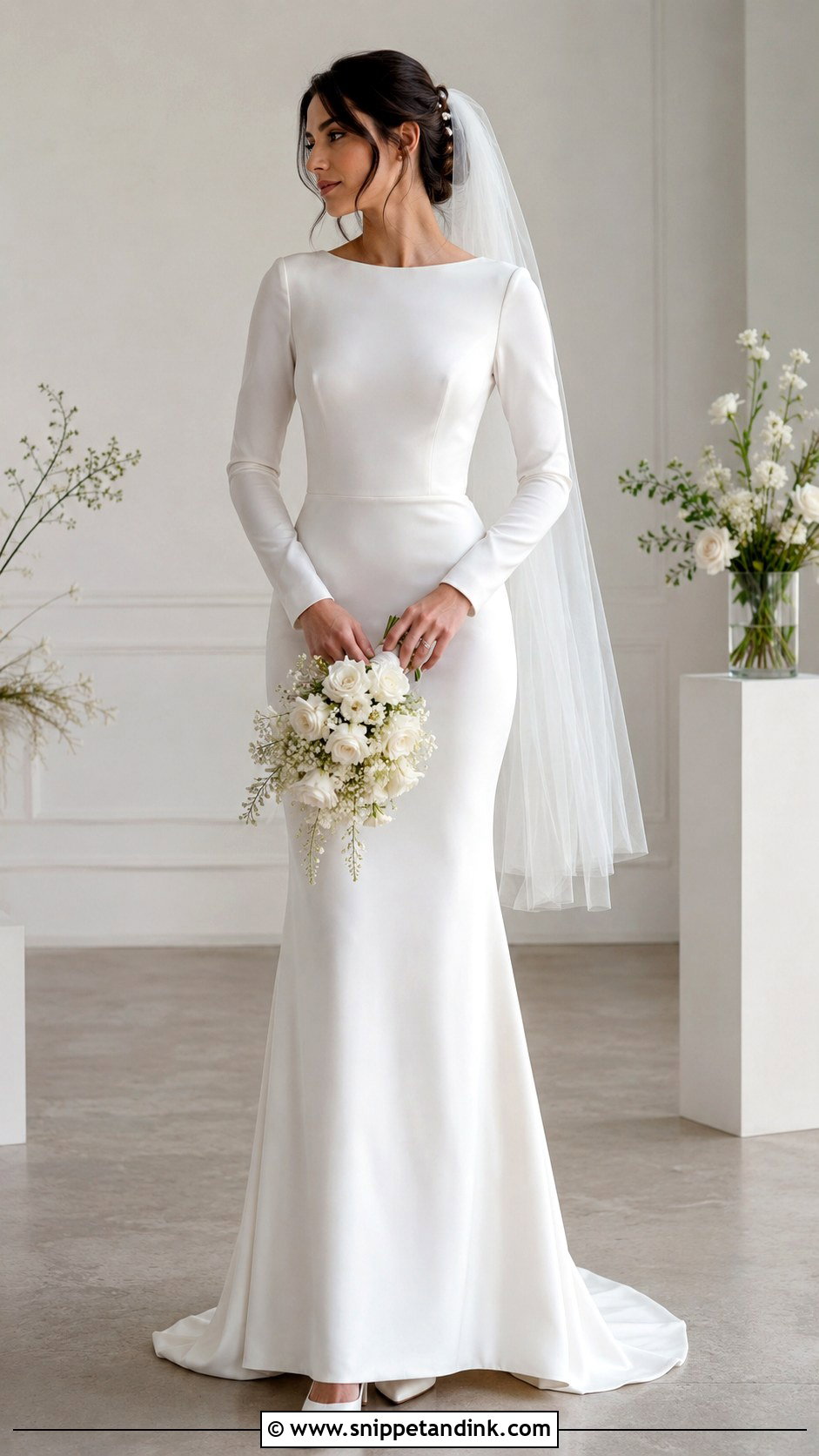
Long sleeves in silk behave differently depending on the weave. Silk crepe sleeves can be cut close and still let you move; organza sleeves are sheer and light, but they crease at the elbow. A silk long sleeve wedding dress suits autumn, winter and formal venues where coverage is expected. Closed-toe heels, pearl hair pins and a smooth veil keep the look calm. A low back, a gentle waist seam or a line of covered buttons adds interest without decoration.
6. Silk Halter Wedding Dress
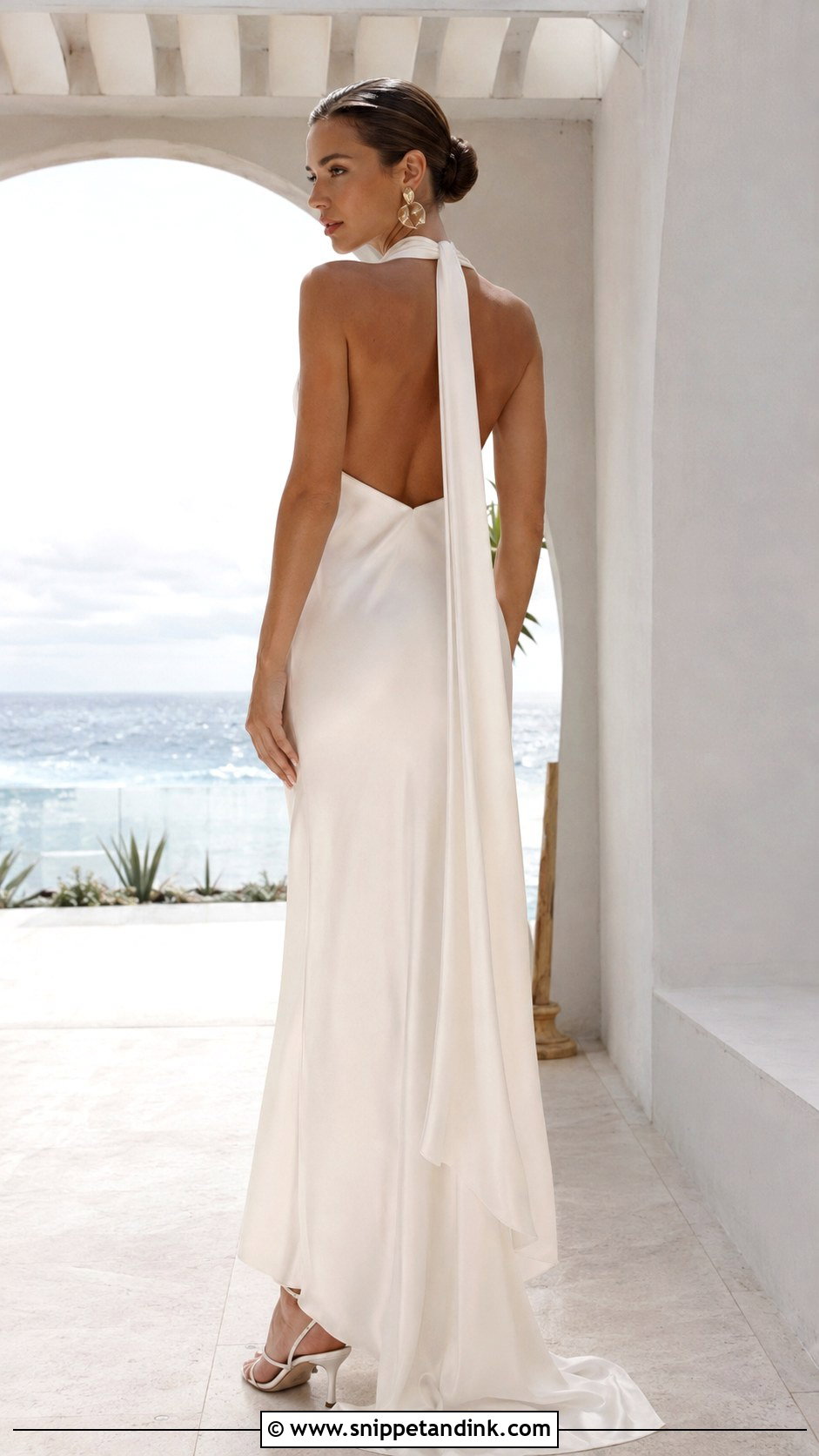
Halters suit charmeuse especially well, because the fabric falls from the neck in soft vertical folds. Silk satin gives a firmer, more formal halter. The neckline frames the shoulders, so I keep hair sleek and earrings sculptural rather than dangling, which would tangle with the strap. Strappy heels and a simple clutch suit a destination or city wedding. With an open back, choose a light, sheer veil so the back still shows.
7. Silk Cowl Neck Wedding Dress
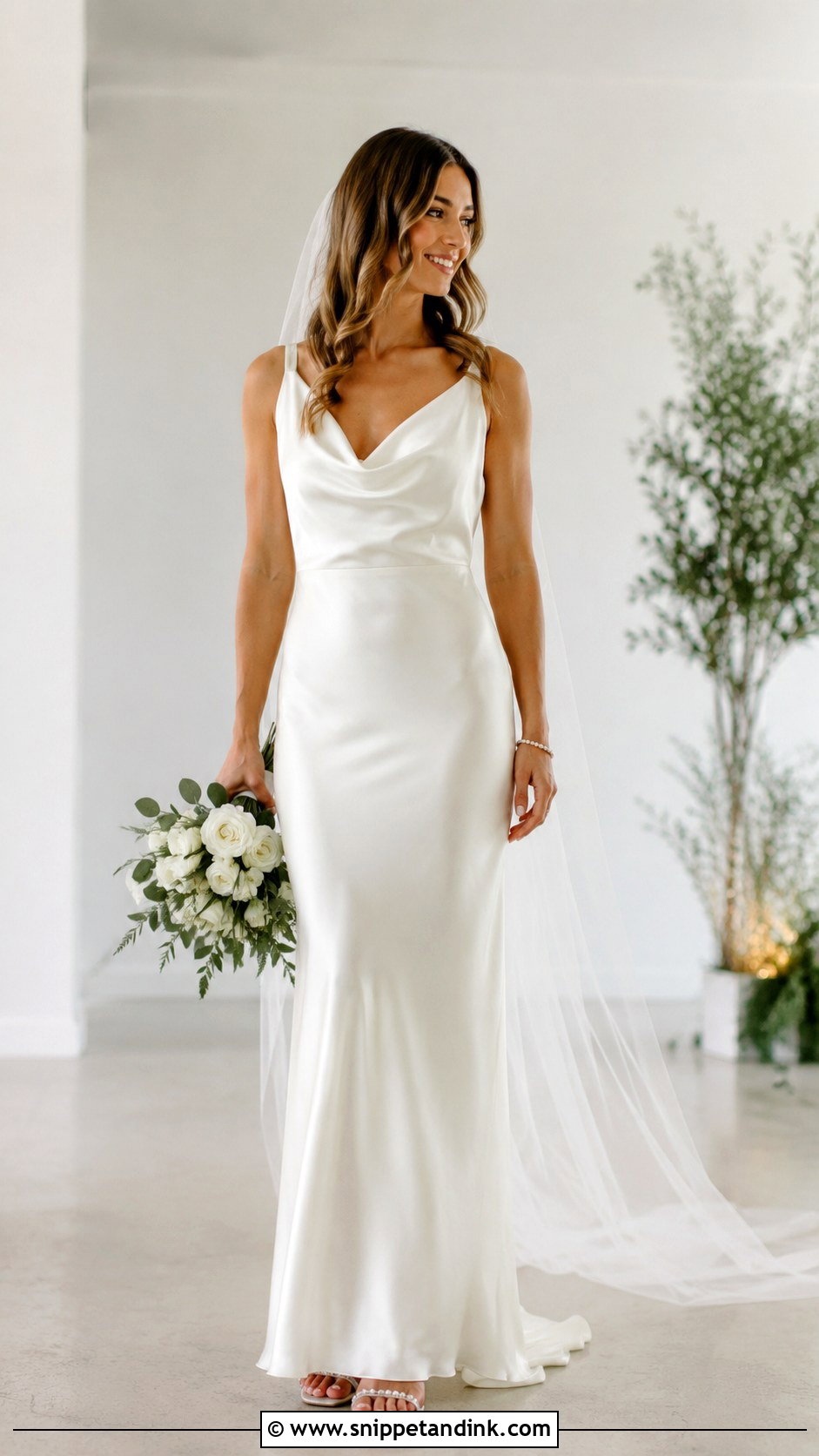
A cowl is a loop of bias-cut fabric that drapes in folds at the neckline, and silk is one of the few fabrics soft enough to do it well. The draped neckline moves as you do, so it suits slips, sheaths and columns. How deep the cowl falls decides who it flatters. A shallow drape suits a fuller bust; a deeper one suits a smaller bust, and I’d always add a small weight or tack to stop it gaping when you lean forward. Delicate sandals, a pearl bracelet and loose waves keep it light.
8. Silk Off Shoulder Wedding Dress
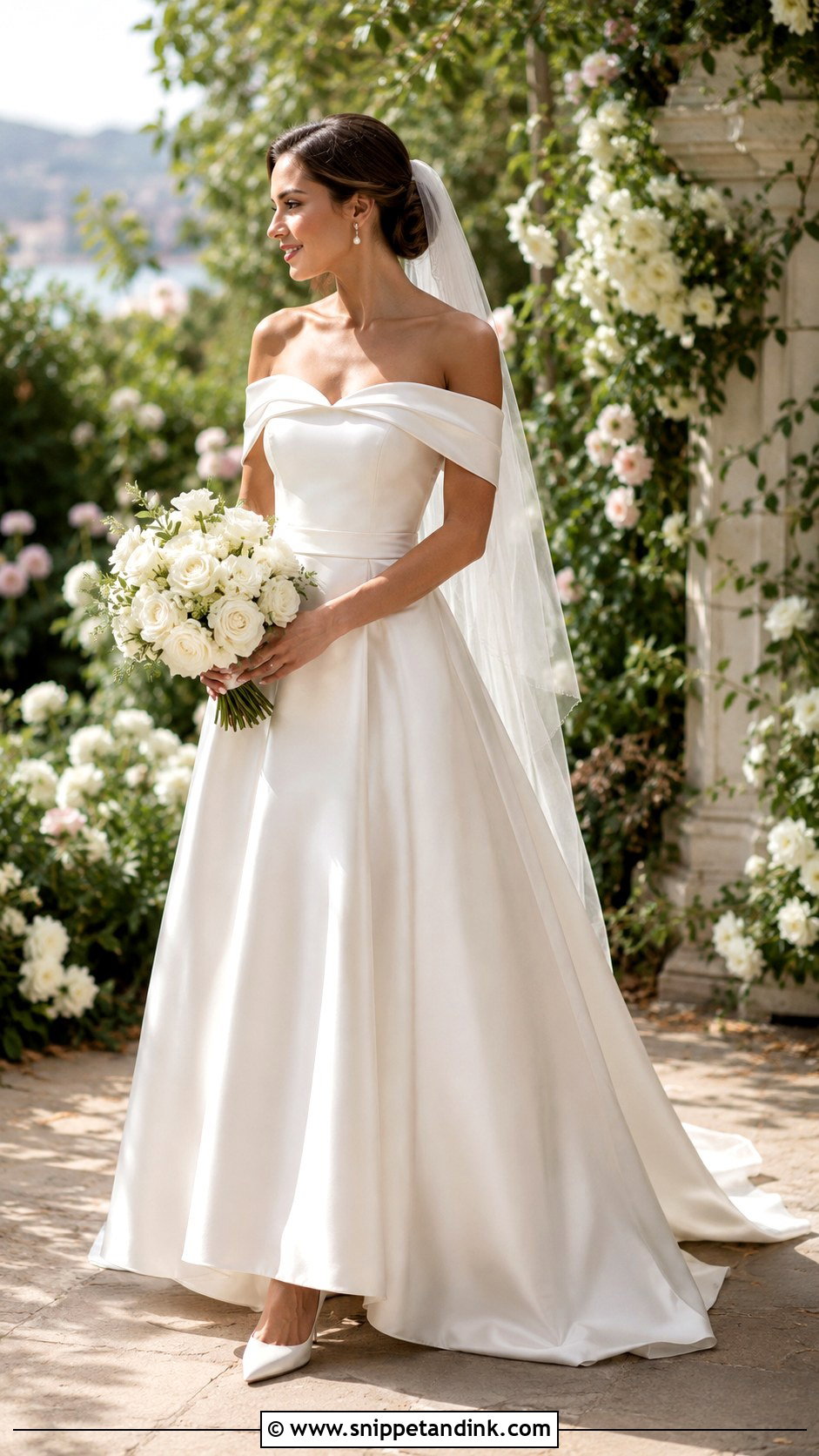
Silk off-shoulder dresses frame the upper body softly, but the band across the arms needs room to move. Raise your arms at the fitting. Satin, mikado and crepe all work: mikado gives the neckline structure, crepe lets it fall. Pearl earrings, a low bun, pointed heels and a veil set at the crown balance it. If walking matters, consider a subtle slit or an A-line skirt.
9. Silk Square Neck Wedding Dress
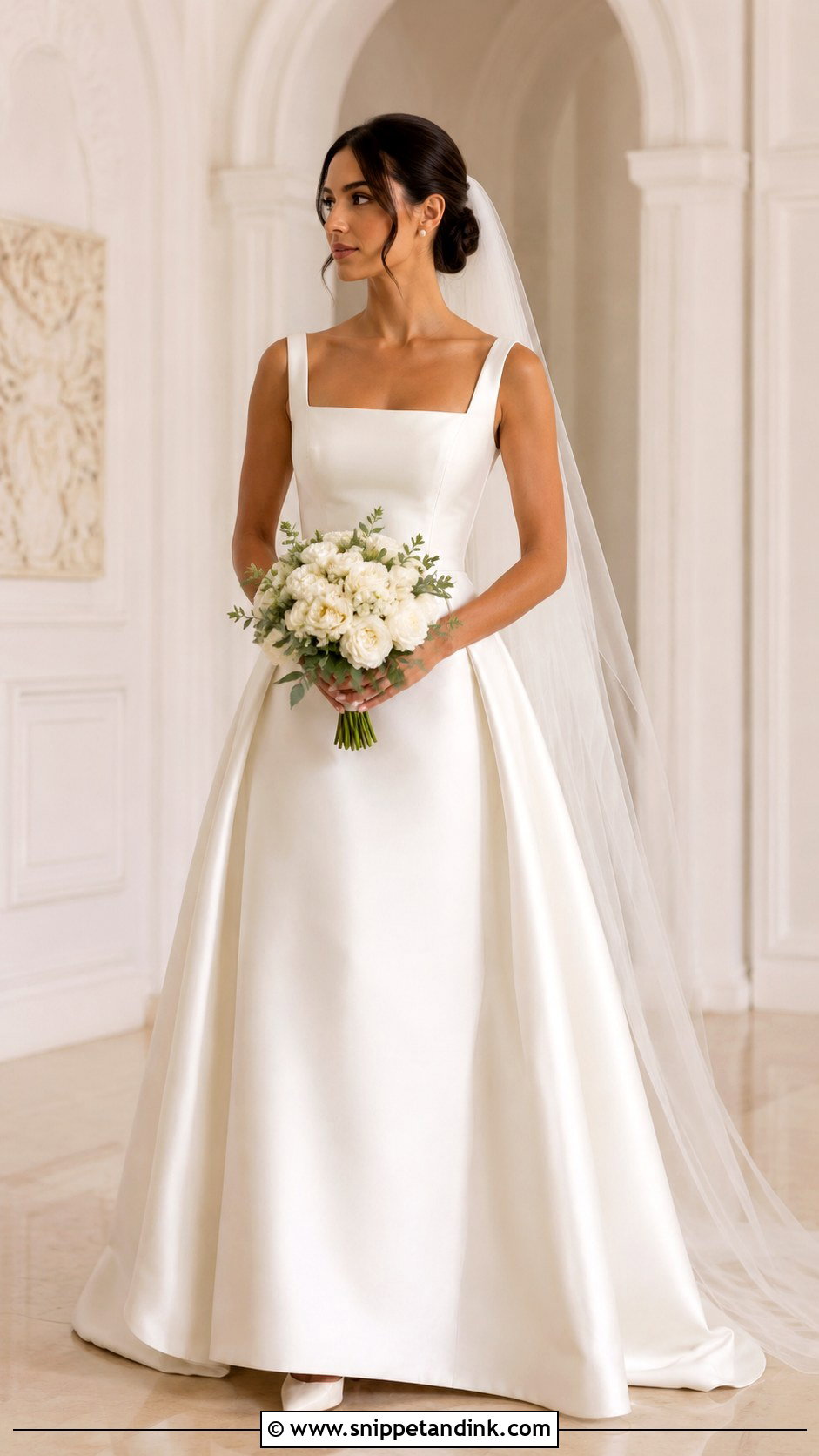
Silk mikado holds the corners of a square neckline crisply, and that sharp line gives this dress its slightly vintage edge. Crepe softens it. The shape works with fitted gowns, A-lines and columns alike. A smooth veil, classic pumps, pearl studs and a neat bouquet finish it. For a formal ceremony, add gloves; for something more modern, keep the jewellery minimal.
10. Silk V Neck Wedding Dress
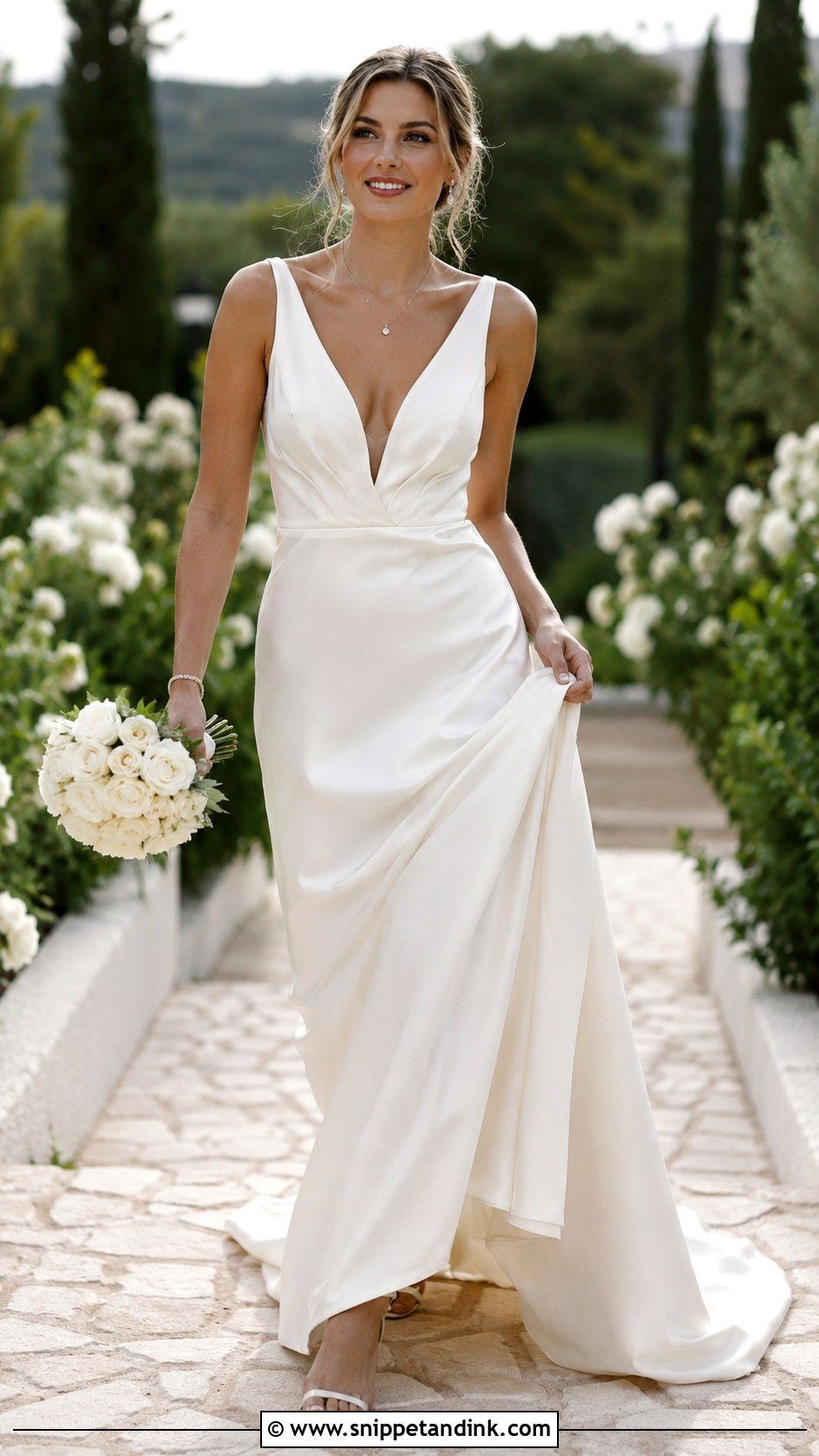
V-necks lengthen the upper body, and silk’s soft drape keeps a deep V from looking severe. The question is security. A deep V in fluid silk needs illusion mesh, a discreet tack or a slightly wider strap, and dress tape alone won’t hold for ten hours. A gentler V reads classic. Drop earrings, a fine pendant, ivory heels and a soft veil suit it, with a low bun or brushed-out waves.
11. Silk Mermaid Wedding Dress
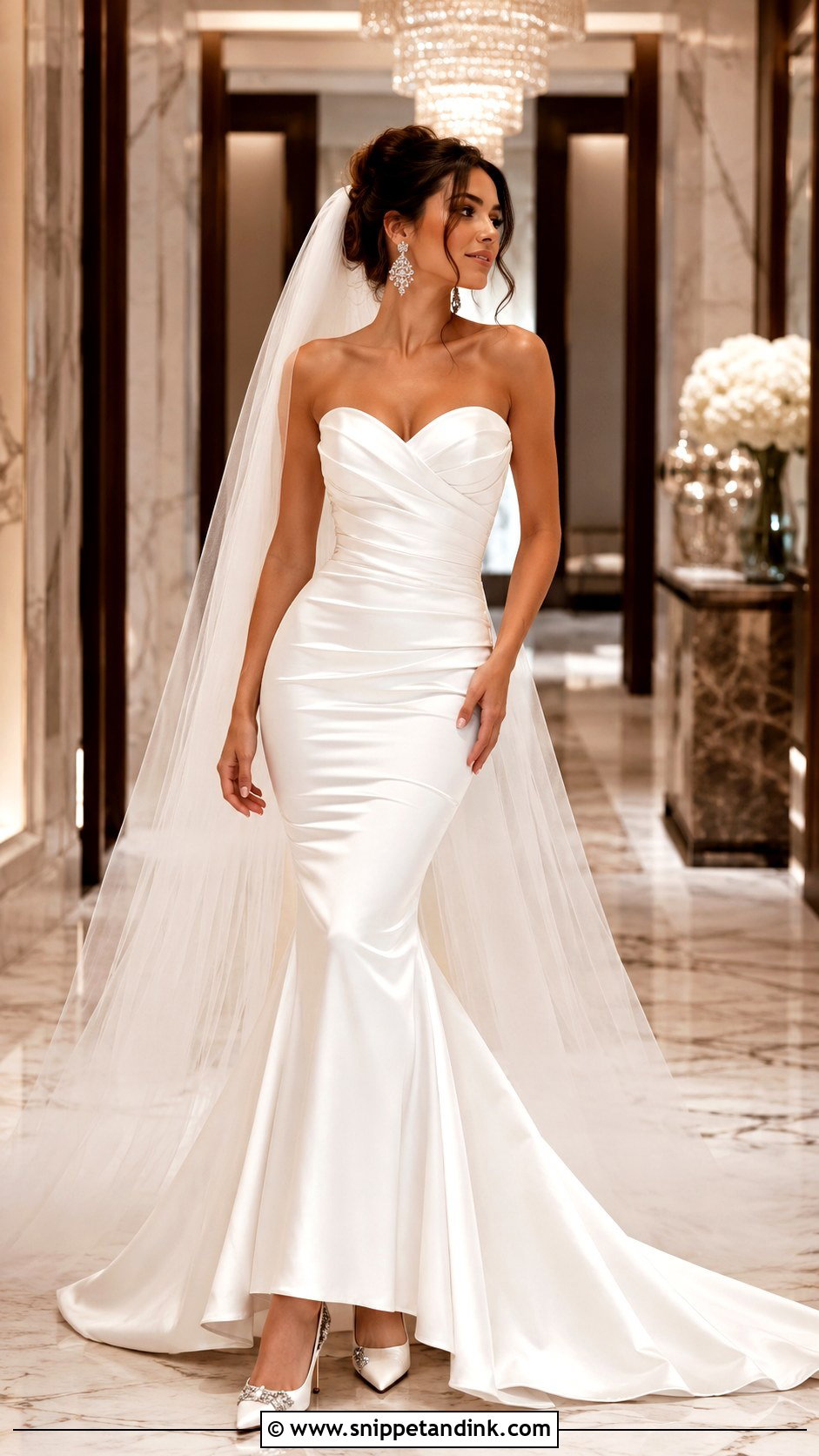
Mermaid gowns are fitted through the hips before flaring near the knee, and in silk that sculpted line shows every alteration. A silk mermaid wedding dress in satin or mikado holds the flare crisply; silk crepe gives a little more flexibility. The flare point decides how easily you walk, so I check stairs and sitting at every fitting. High heels, statement earrings and a smooth veil keep the silhouette clean for a formal evening wedding.
12. Silk Sheath Wedding Dress
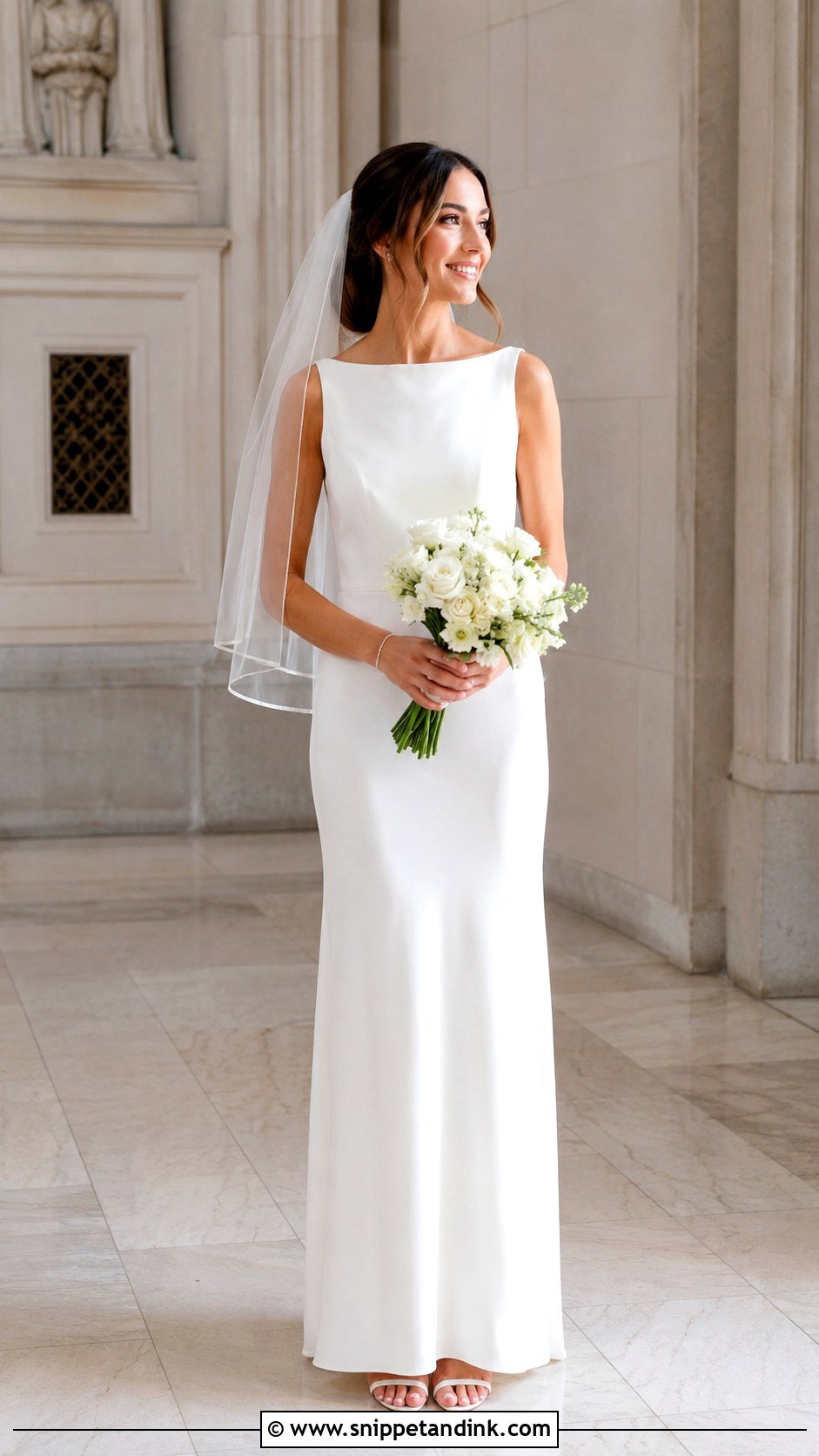
Silk sheaths fall close to the body with no flare at all, which makes them easier to walk in than a mermaid. Crepe and charmeuse drape best, and crepe is more forgiving over the hips because it’s matte. Minimal heels, a slim bracelet and a fingertip veil keep it refined. For subtle interest, look at covered buttons, a high slit or a draped neckline. It suits small ceremonies and courthouse weddings, where the fit and fabric get looked at closely.
13. Silk Column Wedding Dress
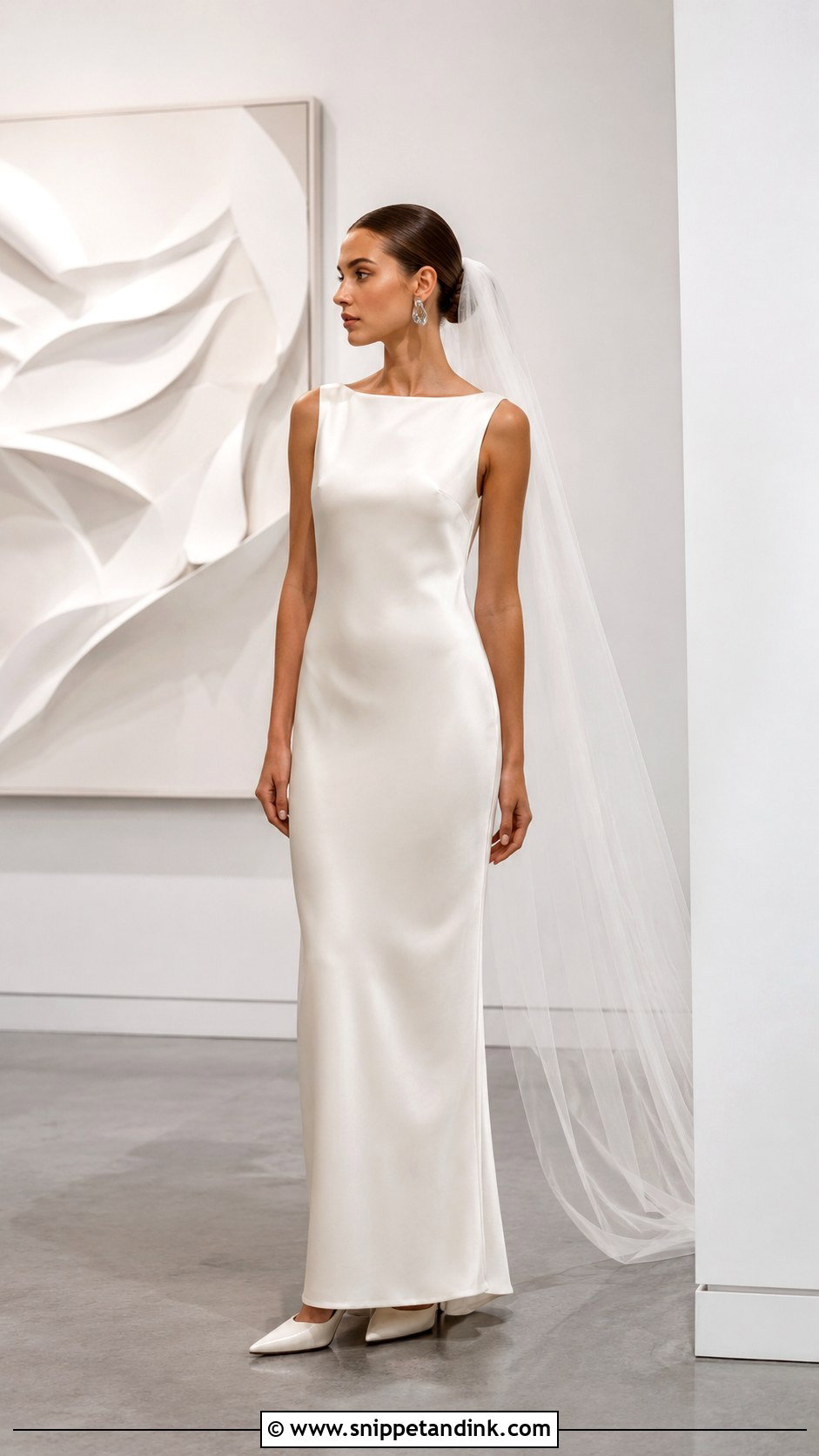
A column falls straight from neckline to hem. In silk satin, crepe or charmeuse it creates one long vertical line, and that line breaks the moment the fabric pulls across the hips or clings at the stomach. Tailoring is everything here. Pointed pumps, sculptural earrings, a sleek bun and a long narrow veil complete it for a gallery, rooftop or modern venue. It’s formal without any volume at all.
14. Silk Tea Length Wedding Dress
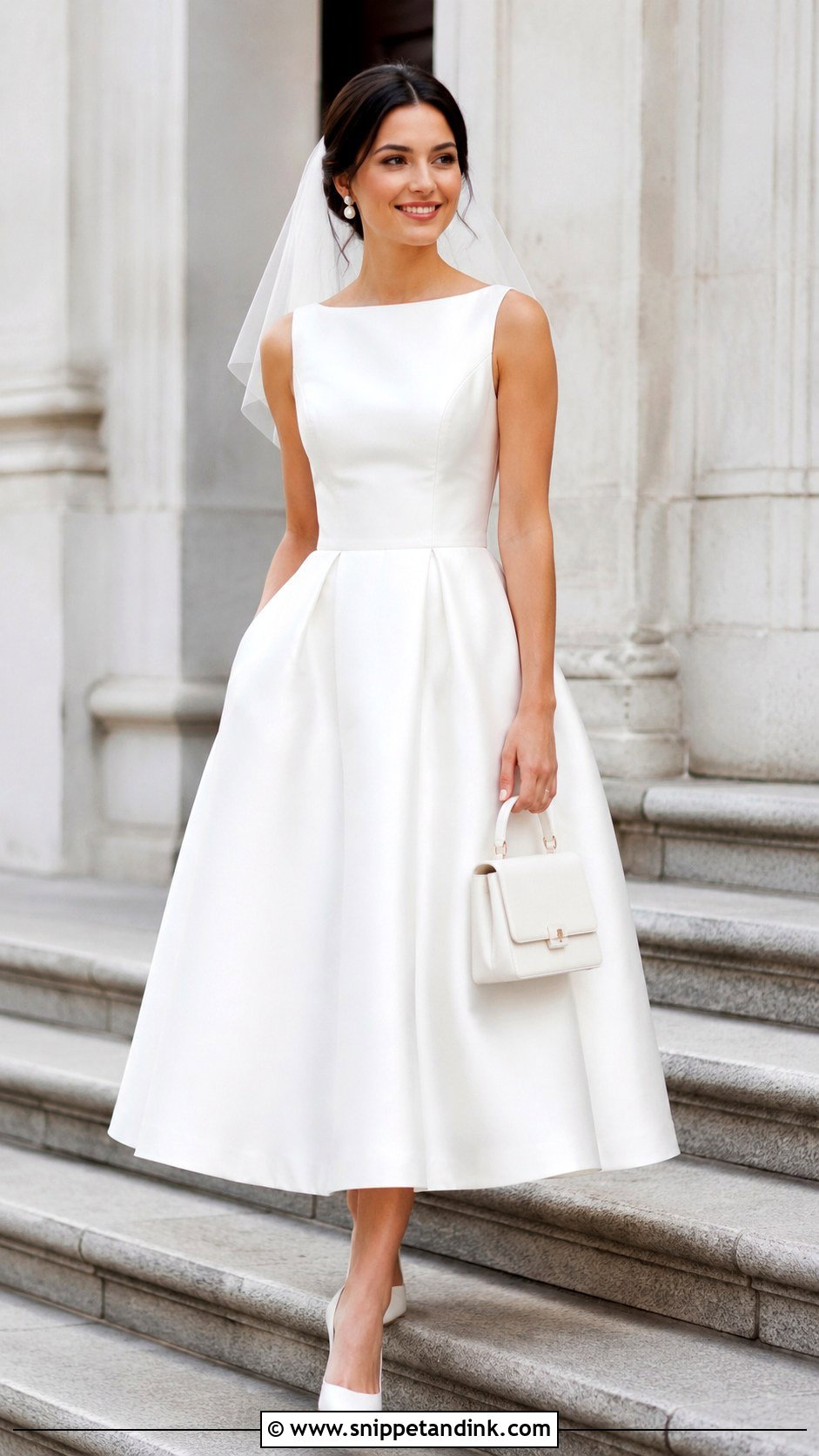
Tea length shows the shoes and moves easily, which makes it a natural second look as well as a main dress. Silk mikado or organza gives the skirt fullness; silk satin keeps it smoother. Pointed pumps, pearl earrings, a short veil and a structured bridal bag complete it. Because the shoes are so visible, choose them early and bring them to every fitting so the hem is set to their height.



15. Silk Midi Wedding Dress
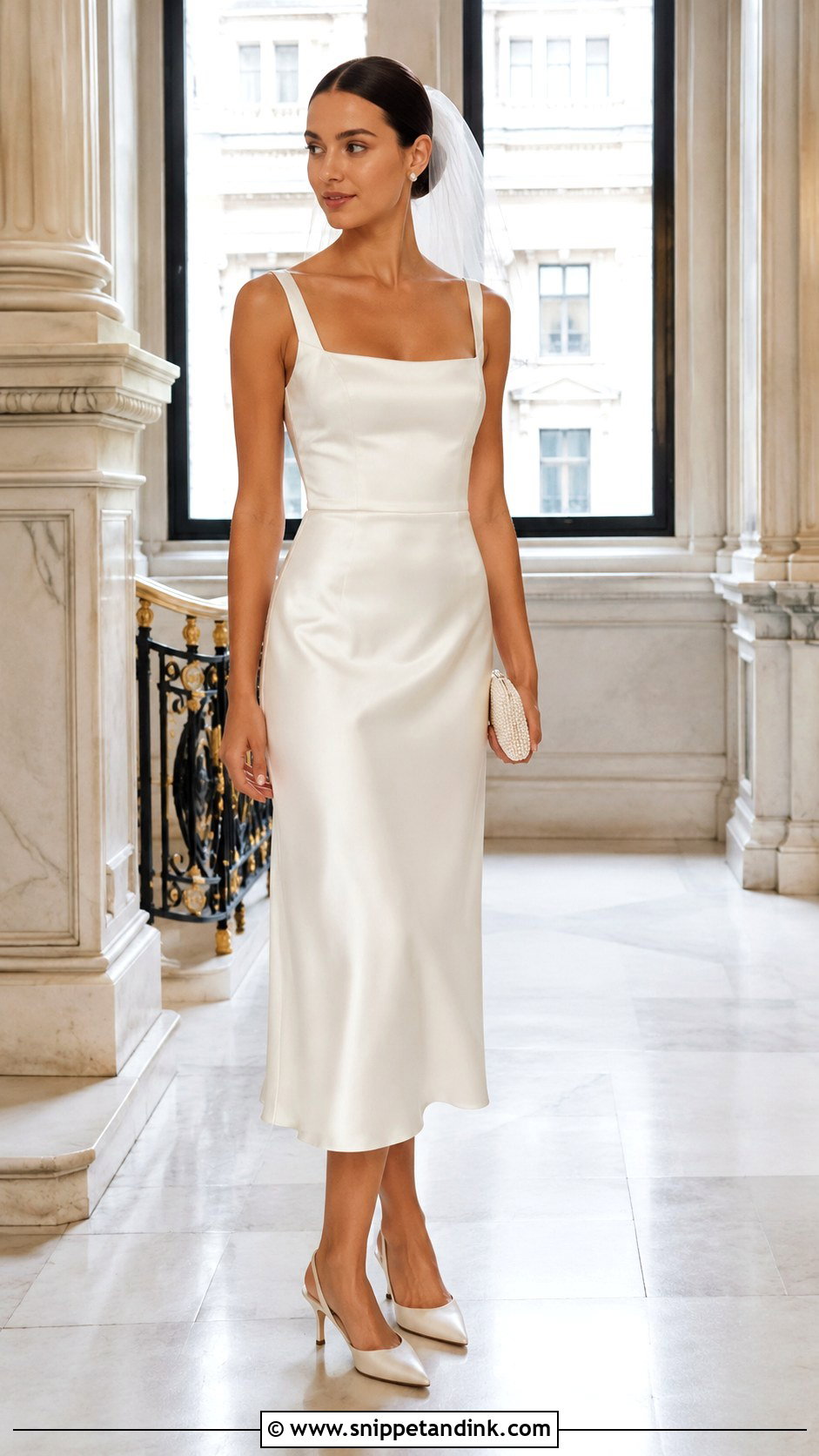
A silk midi is the dress I suggest for civil ceremonies, rehearsal dinners and smaller weddings where a gown would feel like too much. A satin midi with a fitted bodice and flared skirt is classic; a slip midi is minimal. It’s also one of the few wedding dresses you could realistically dye or wear again. Slingback heels, pearl studs, a small veil and a neat clutch finish it, and gloves or a back bow add drama if you want it.
16. Silk Mini Wedding Dress
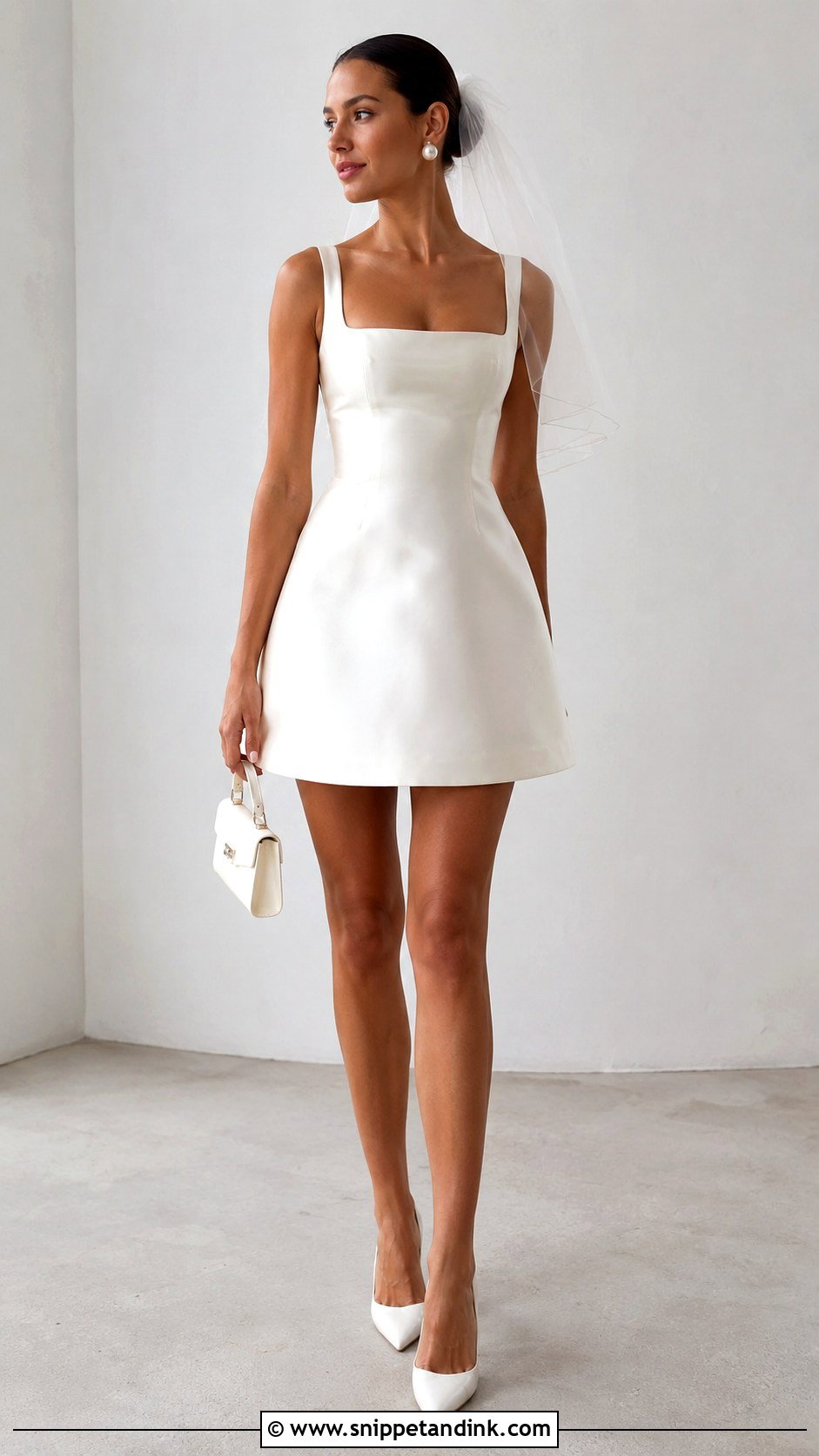
Silk keeps a mini from looking casual. A structured mikado mini holds a clean shape; a satin mini is softer. I balance the short hem with something covered elsewhere, such as a higher neckline, long sleeves or a tailored bodice, so the overall look stays bridal. Block heels or pointed pumps, pearl earrings, a small veil and a mini bag make it right for a reception change, courthouse wedding or after-party.
17. Silk Wrap Wedding Dress
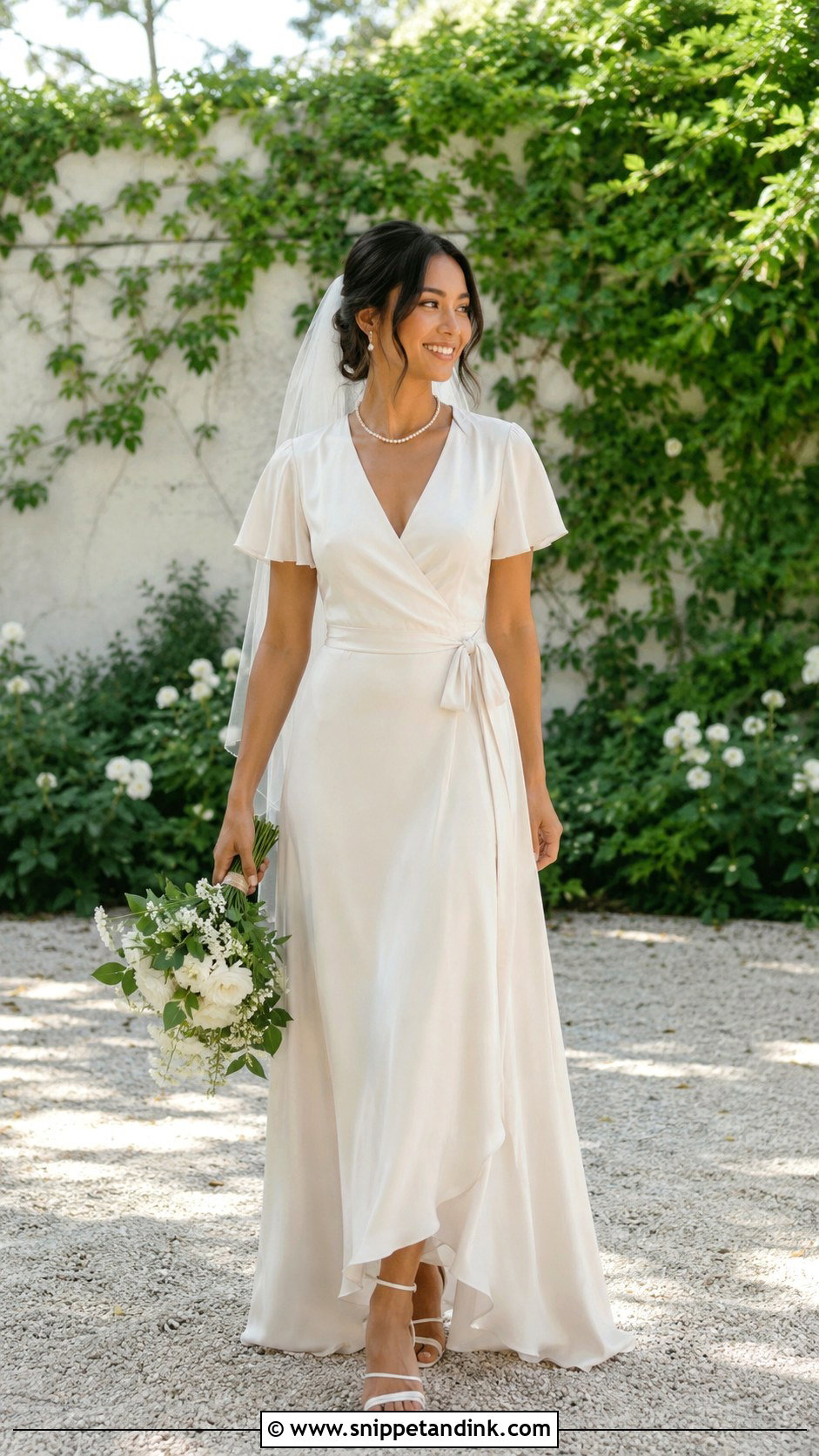
Wrap dresses adjust to the body, and that makes them forgiving if your weight shifts in the months before the wedding. Silk charmeuse or crepe gives the wrap its drape. The weak point is the overlap. Fluid silk can slip open in a breeze or when you sit, so I add a hidden snap or hook where the wrap crosses. Delicate heels, a simple veil, pearl jewellery and a low bouquet keep it soft at a beach or garden ceremony.
18. Silk Empire Waist Wedding Dress
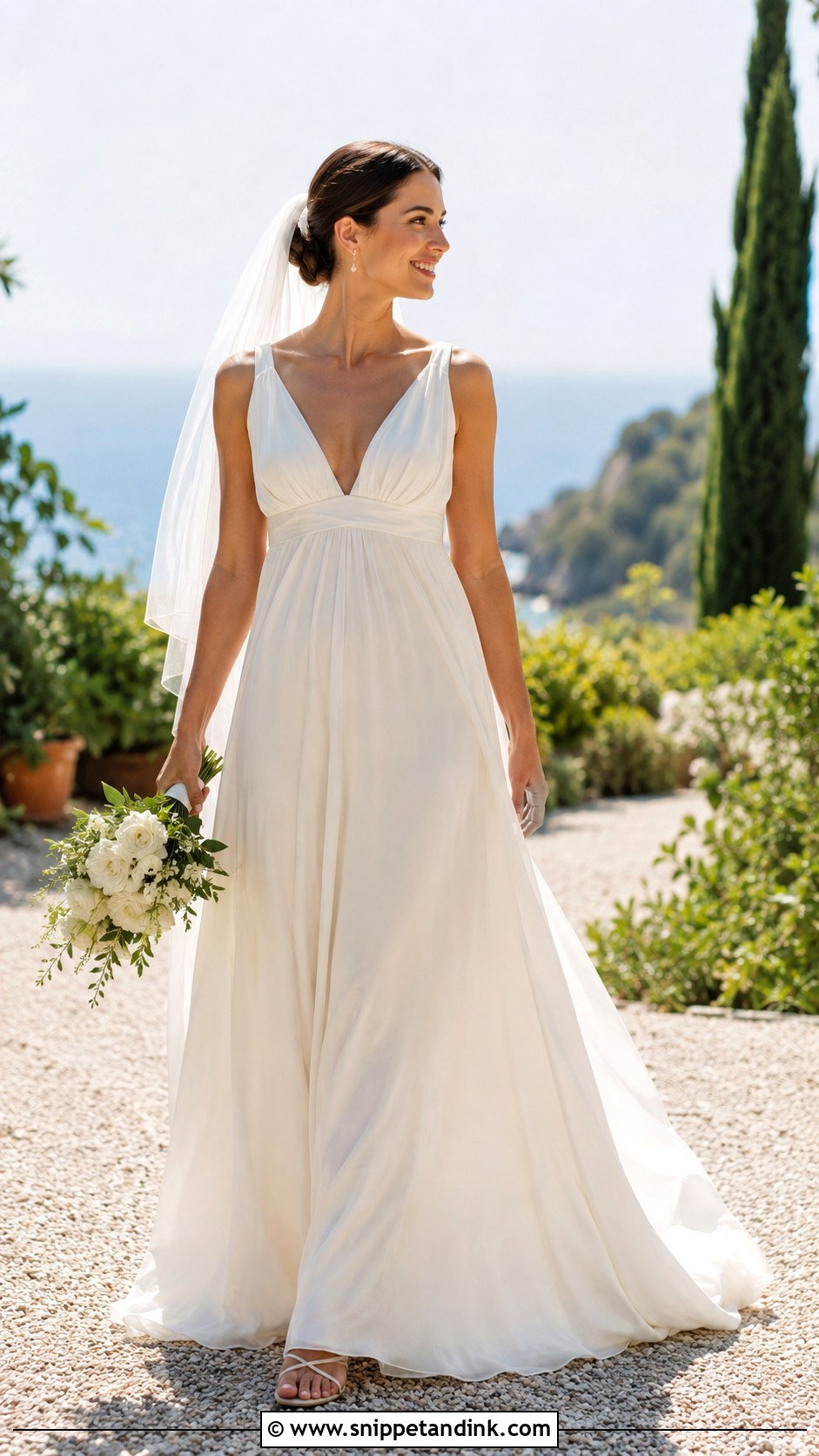
An empire waist sits just under the bust and lets the skirt fall straight from there, so nothing is fitted at the midsection. That makes it very comfortable, and a common pick for pregnant brides. A silk empire waist wedding dress in chiffon, crepe or charmeuse feels light and moves in a breeze. Delicate sandals, soft curls, a sheer veil and simple earrings suit an outdoor or destination wedding.
19. Silk High Neck Wedding Dress
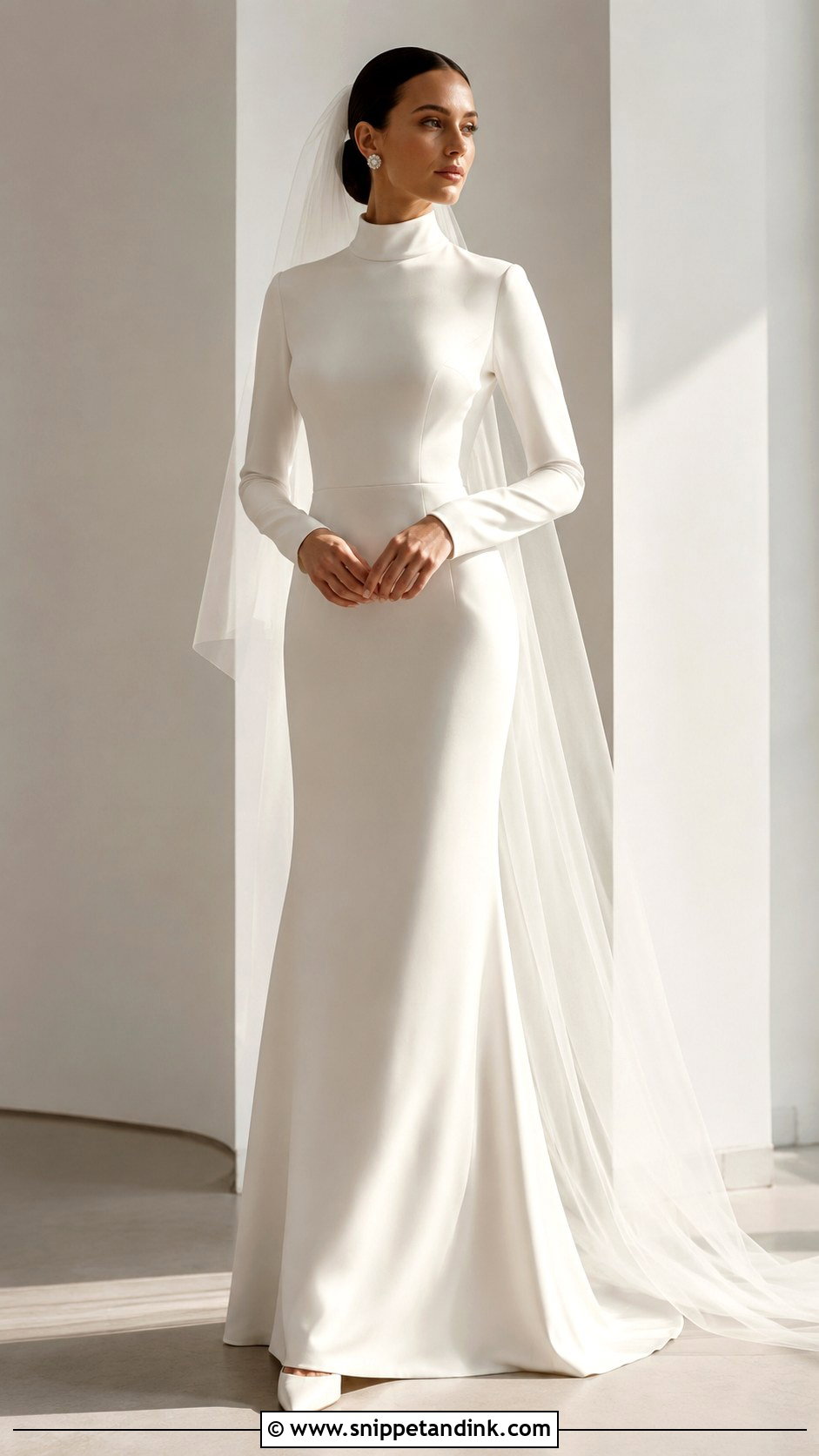
High necklines in silk need precise cutting; a few millimetres off and the collar pulls or stands away from the neck. Crepe, satin or charmeuse in a column or sheath gives the cleanest result. Sleek hair, statement studs, pointed heels and a veil attached low at the back keep the neckline clear. Many high-neck designs open at the back for balance, which also keeps them cooler.



20. Silk Open Back Wedding Dress
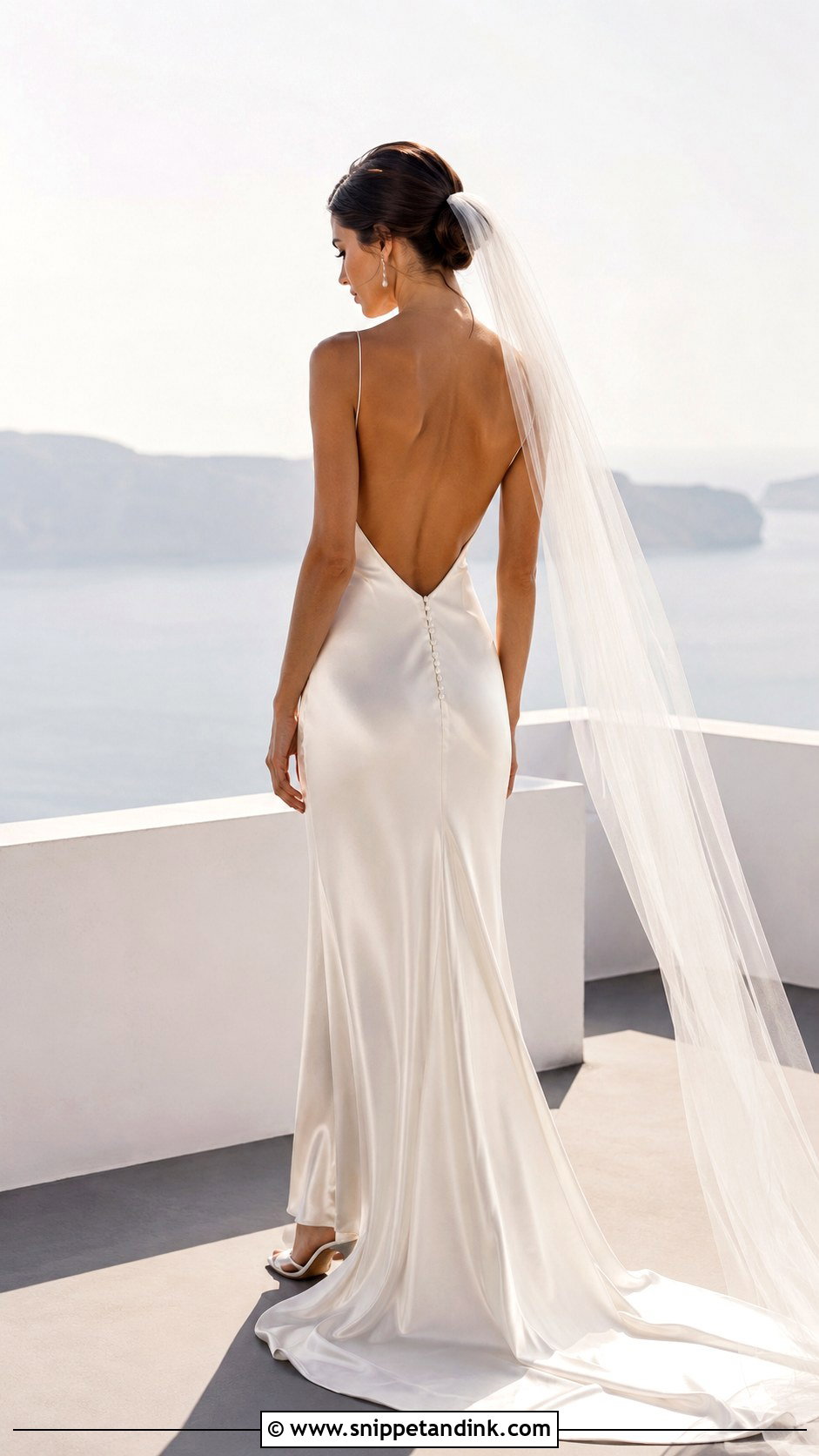
Open backs move the dress’s focus behind you, which is where guests look during most of the ceremony. Charmeuse and crepe give a fluid back; satin looks more formal. Fit is the whole job. The edge of the back must lie flat against the skin when you bend and reach, which usually means adjusting strap placement and adding a hidden elastic or stay. An updo, a back-drop necklace if you like, slim heels and a sheer veil keep it visible.
21. Silk Corset Wedding Dress
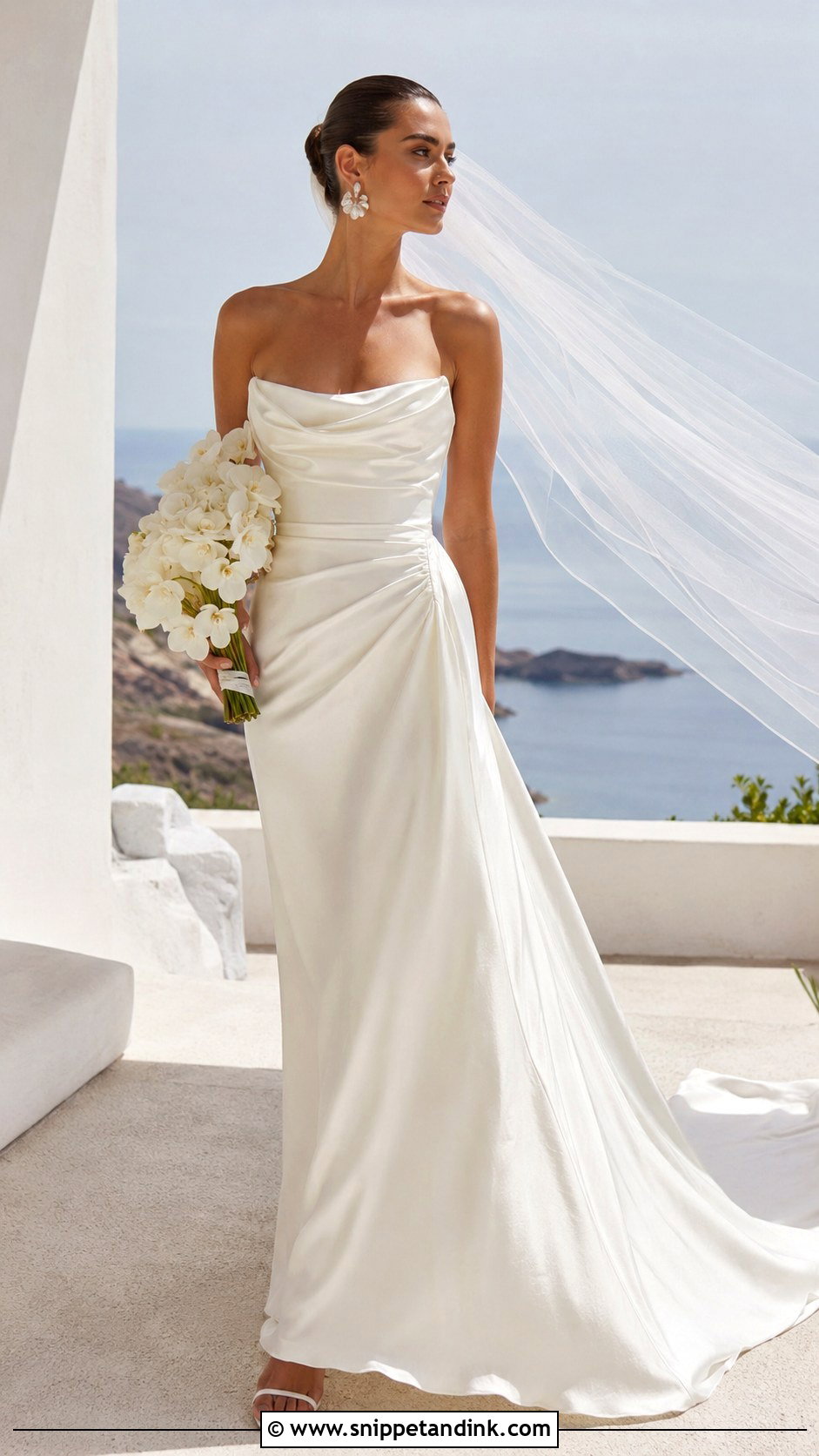
A corset bodice shapes the waist and holds the bust, and silk over it keeps the look clean. A silk corset wedding dress can pair with a ball gown, an A-line or a mermaid skirt. Mikado and satin hold their shape over boning best; charmeuse can ripple at the seams. Pearl earrings, elegant heels, a long veil and an updo complete it. For a modern take, keep the seams clean and skip ornate decoration.
22. Silk Draped Wedding Dress
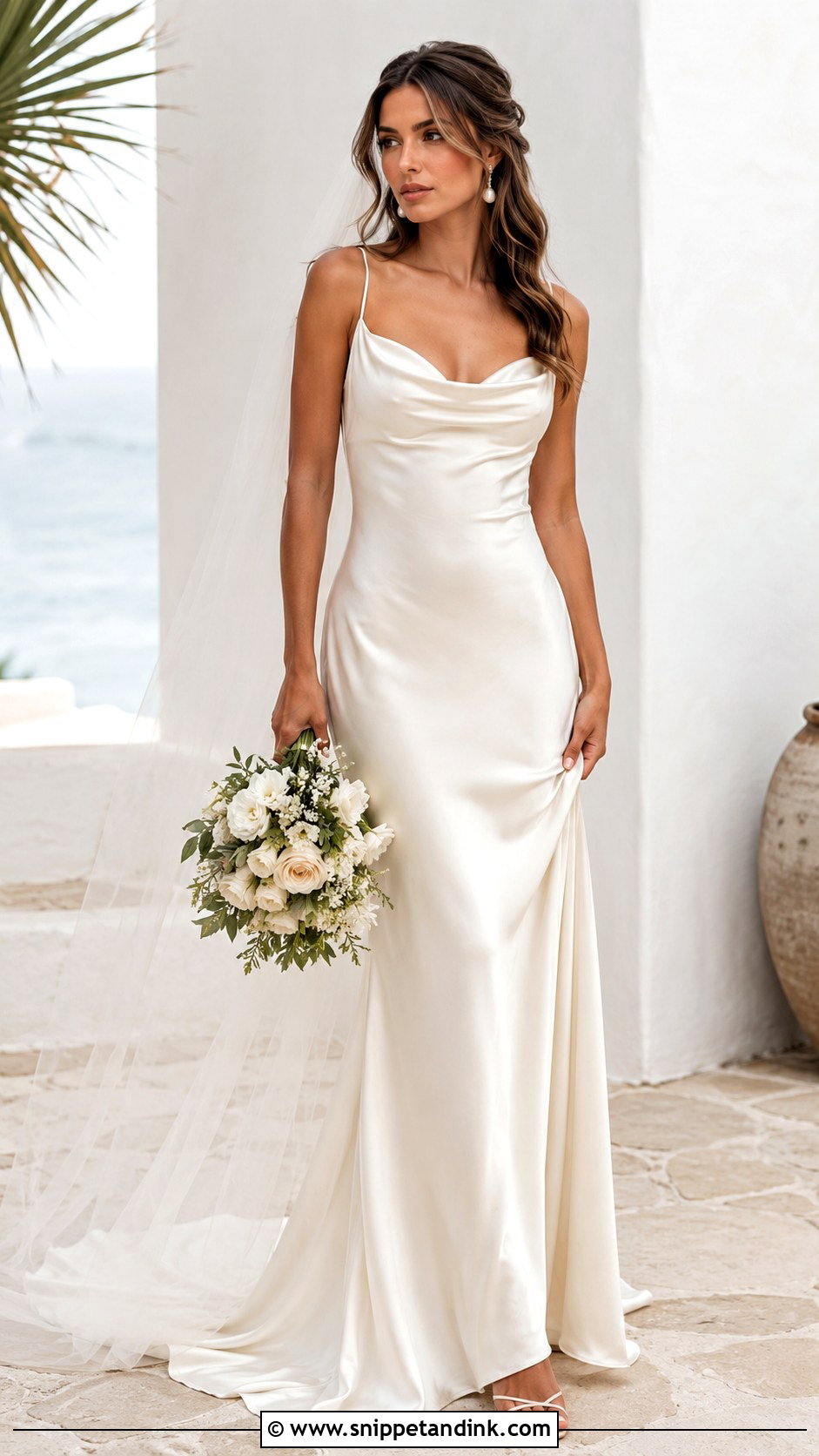
Draping is where silk shows off most, because the fabric folds and falls in a way stiffer fabrics can’t. Folds might gather at the waist, cross the bodice or run through the skirt. It flatters without beading, and the folds hide small fit differences better than a smooth panel. Charmeuse, satin and crepe all drape well. Simple heels, sculptural earrings, a sleek bun and a soft veil suit modern and coastal venues.
23. Silk Organza Wedding Dress
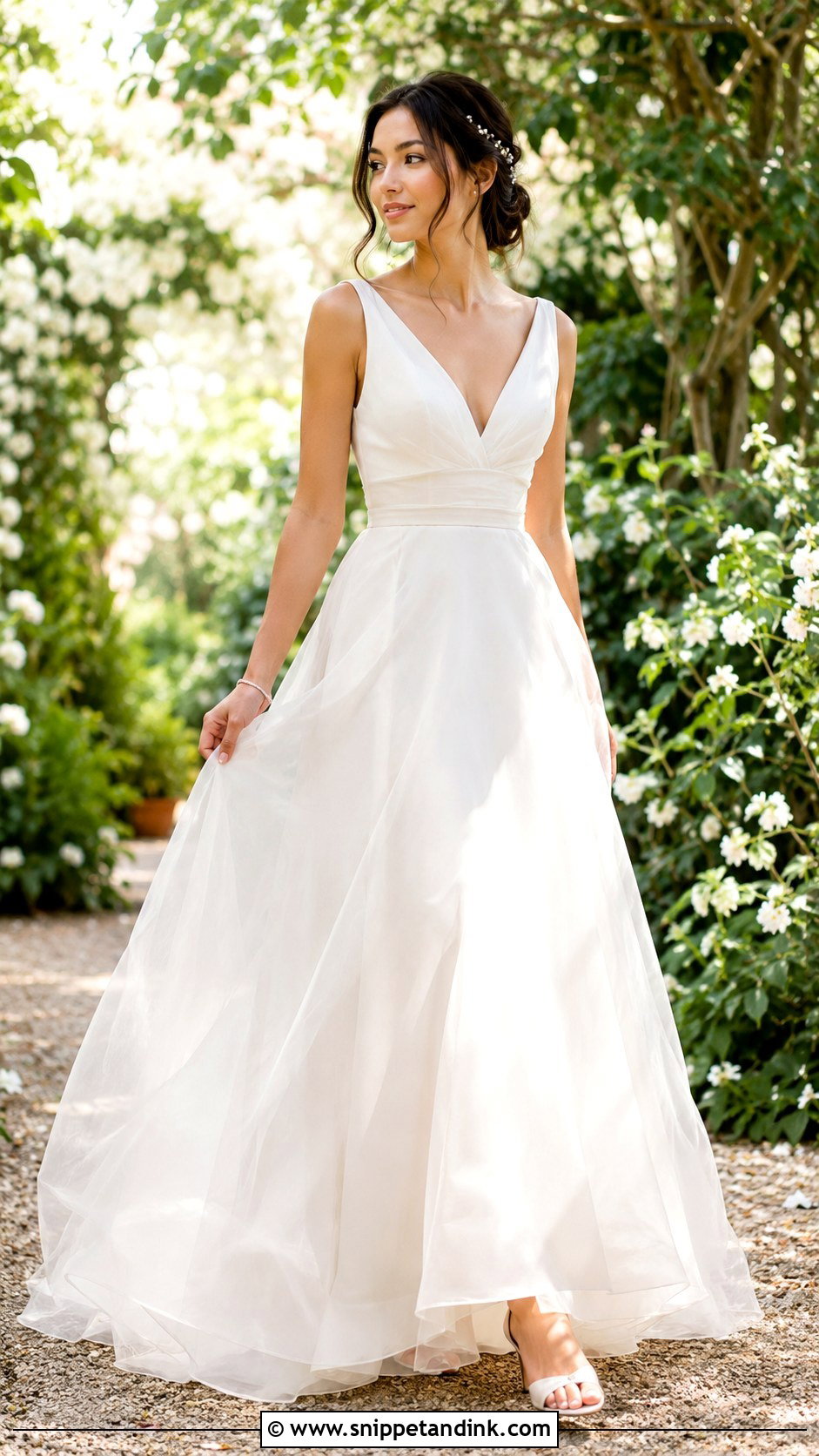
Silk organza is crisp and sheer, so it builds volume with almost no weight, which is why it appears in layered skirts, puff sleeves and overskirts. It does crease sharply and can hold a fold line, so it should travel hung in a long garment bag. Delicate heels, pearl hair pins, a sheer veil and minimal jewellery let the texture show. A garden or spring wedding suits its lightness.
24. Silk Satin Wedding Dress
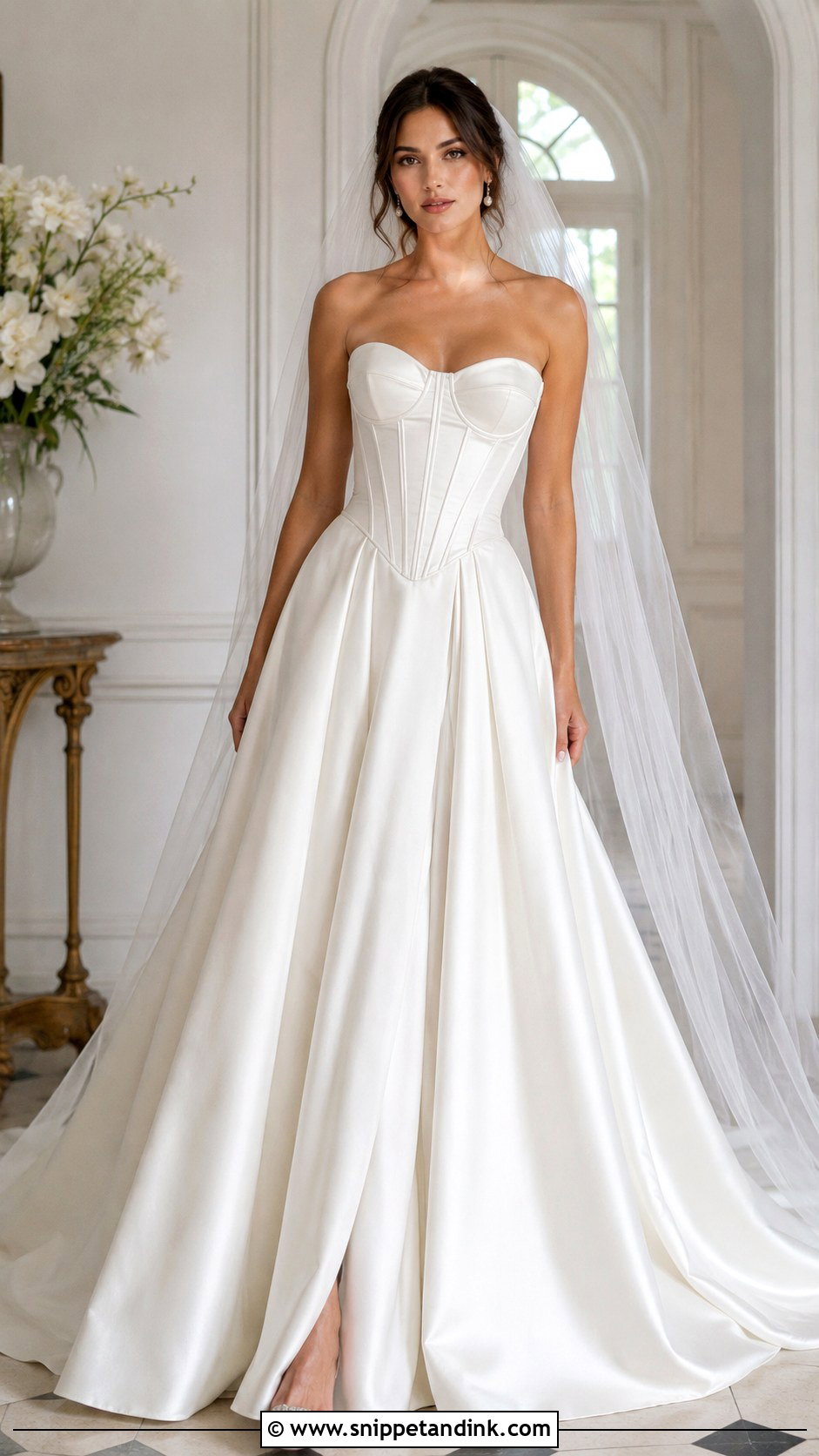
Silk satin has a smooth, luminous face that catches light, so it looks rich in evening photos and under candlelight. That smooth surface also shows wrinkles, lines and pulled seams, which is why steaming the morning of the wedding matters. It suits almost every silhouette, from strapless ball gowns to fitted sheaths. Satin pumps, pearl or crystal earrings, a smooth veil and a clean hairstyle complete it. Pick undergarments at the first fitting so every alteration is made over them.
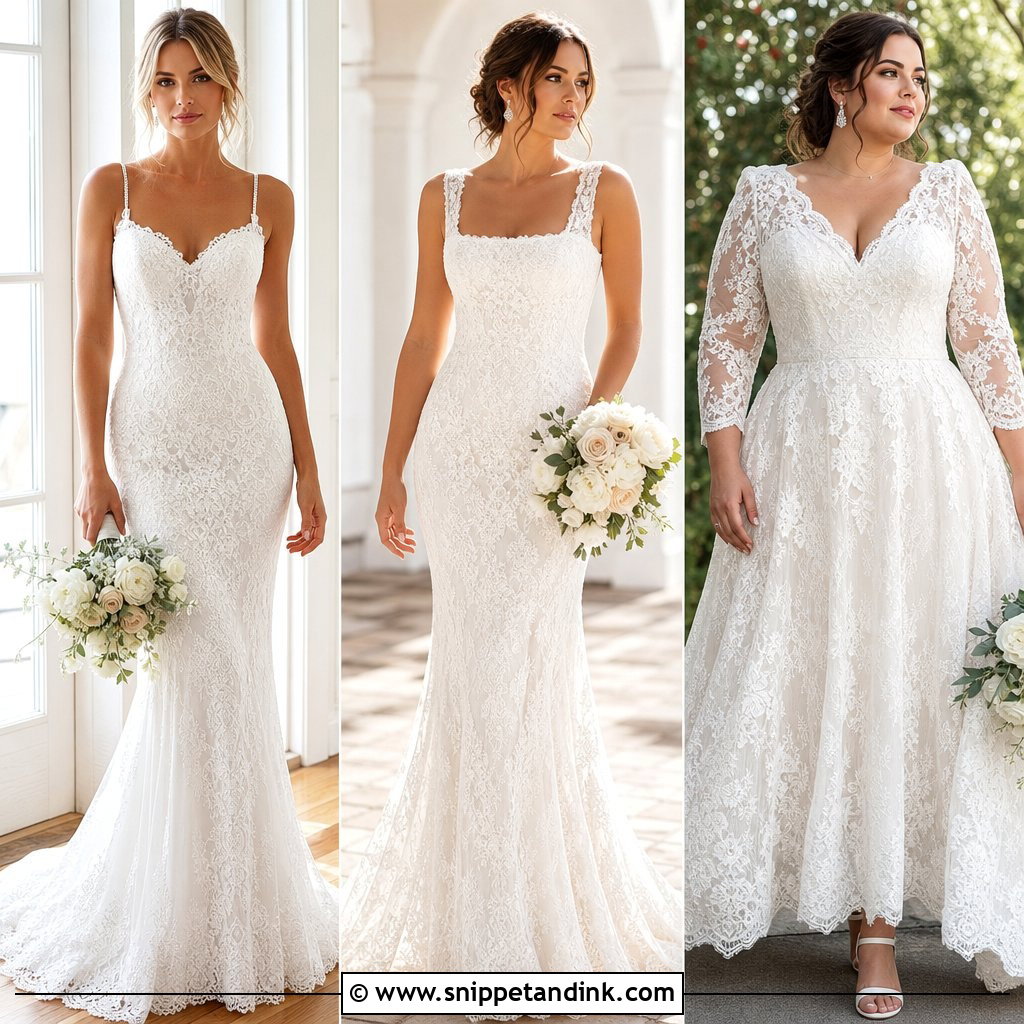
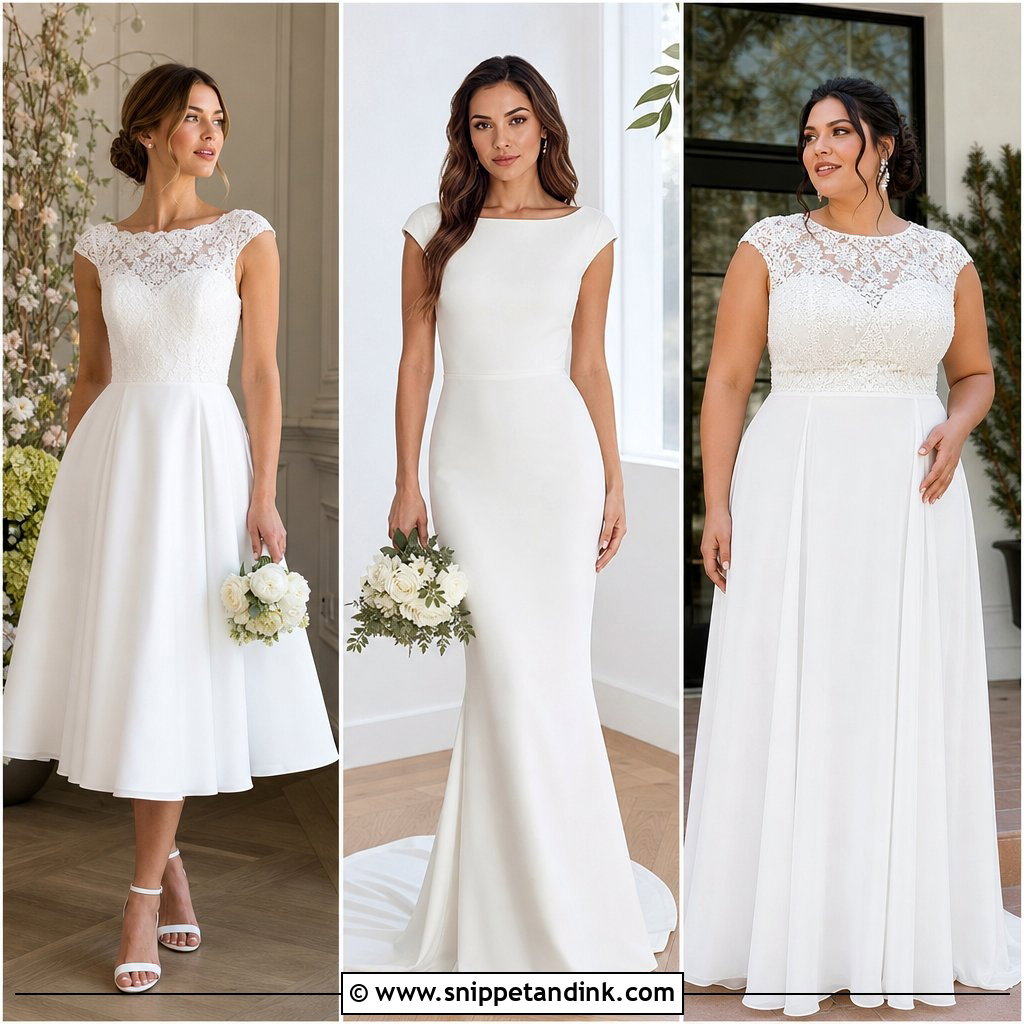
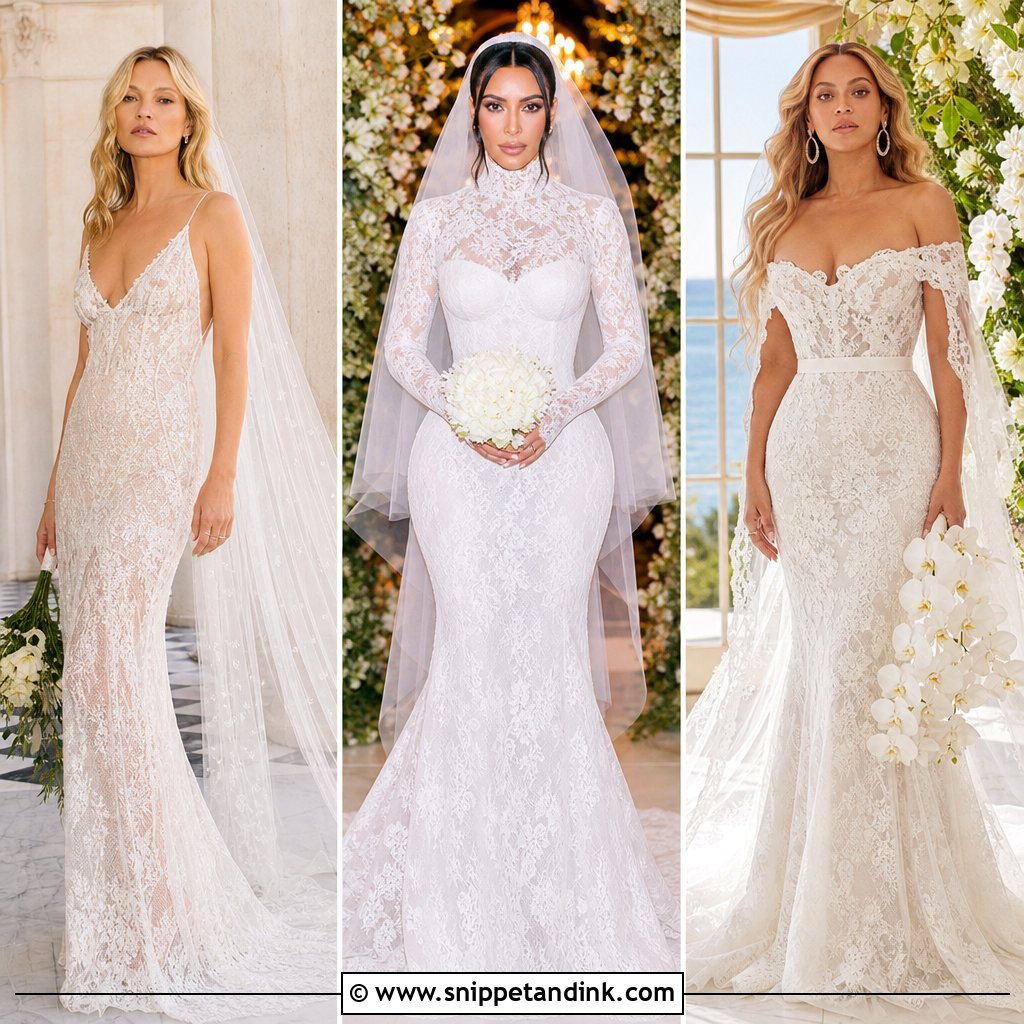
25. Silk Charmeuse Wedding Dress
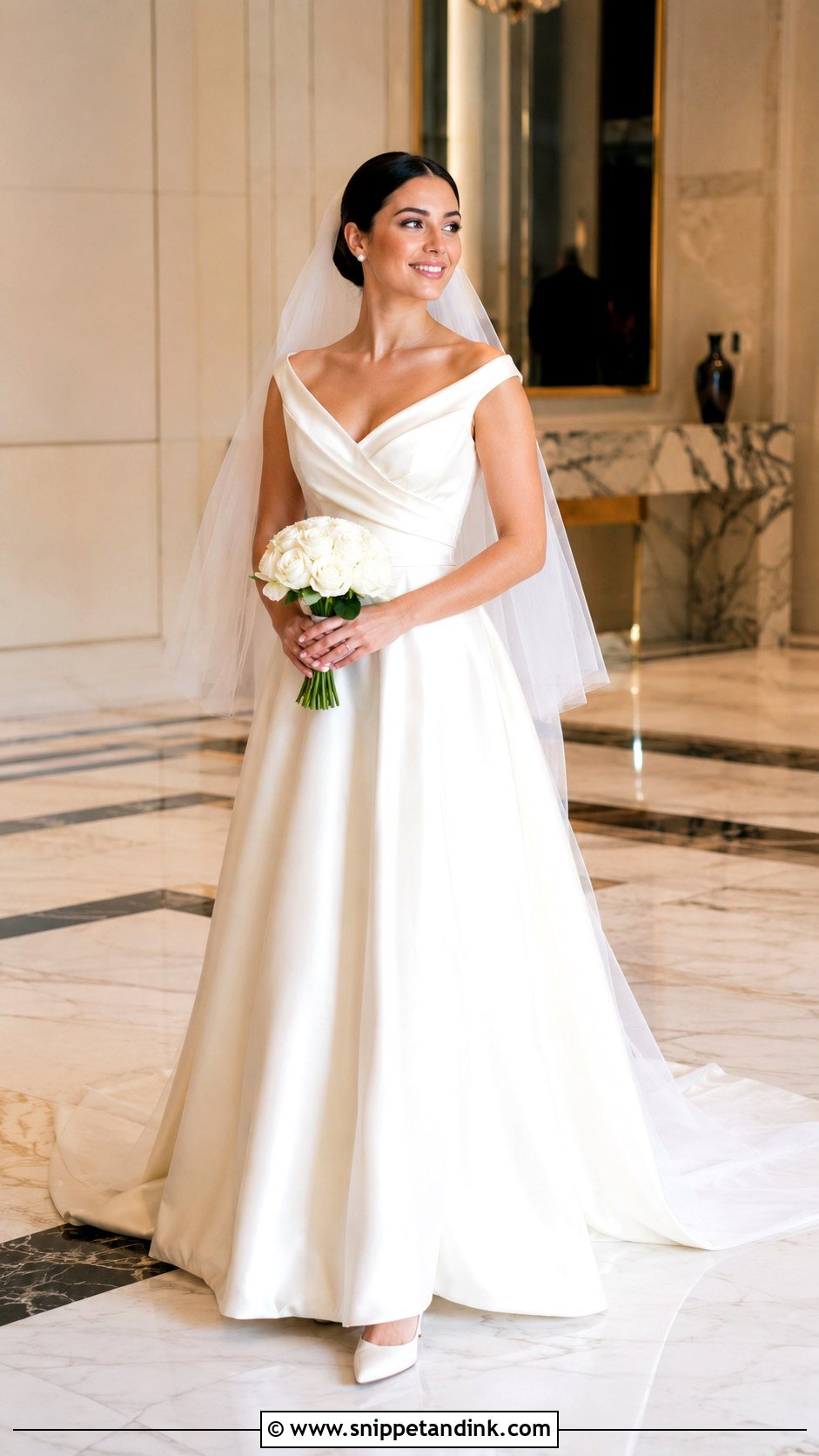
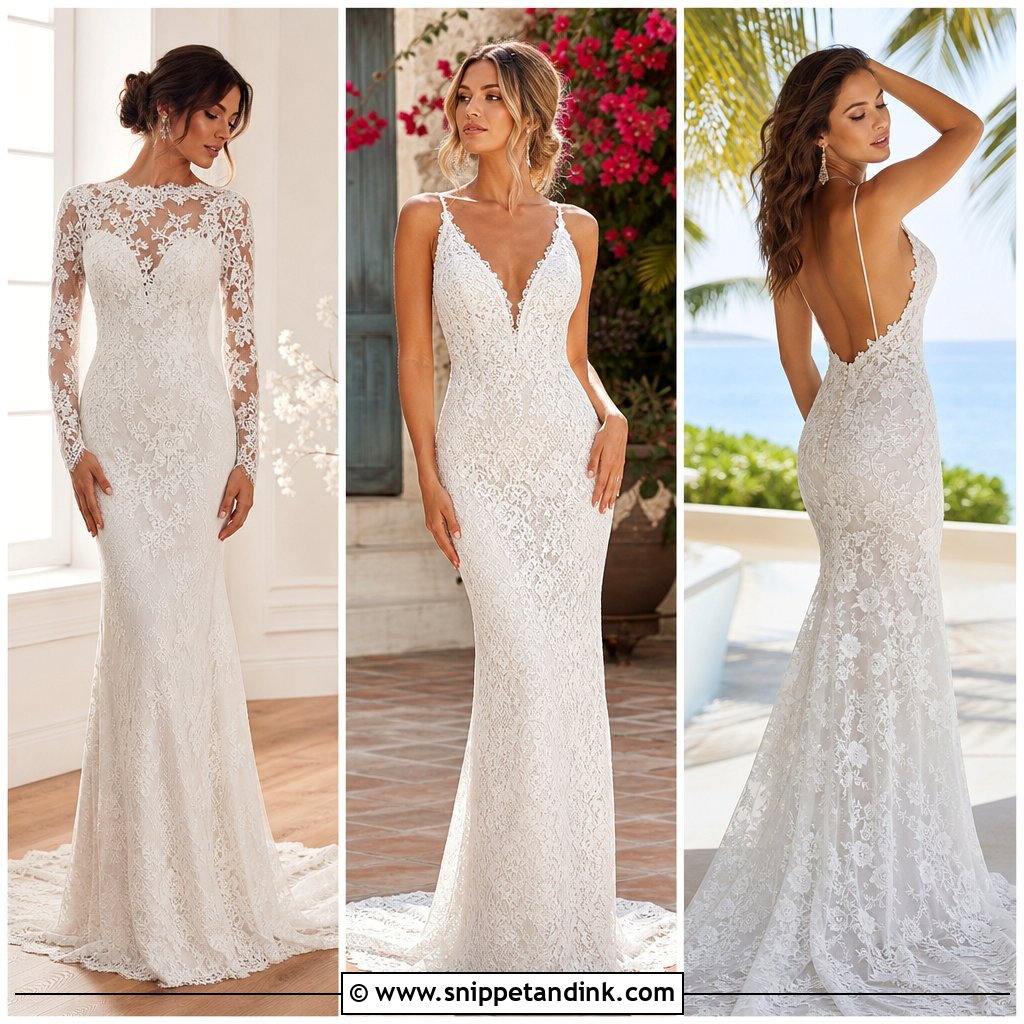
Charmeuse is the most fluid silk on this list, glossy on the face and matte on the back, and it falls close to the body. That’s why it’s used for slips, cowls and bias-cut dresses. It’s also the least forgiving. Charmeuse shows water marks, creases quickly and clings if the lining isn’t right, so a well-made dress has a lining cut to let the outer fabric float. Barely-there sandals, pearl earrings, soft waves and a light veil suit it at a beach or small ceremony.
Raindrops, Champagne and Creases on Your Silk Wedding Day
Silk is strong, but its surface marks easily. A little planning saves panic later.
Water and spills
A drop of plain water can leave a ring on satin and charmeuse. Blot, don’t rub, and leave it to a cleaner rather than dabbing at it. Champagne, white wine and sugary drinks may look invisible at first, then turn yellow-brown months later as the sugar oxidises, so tell the cleaner about every spill, even ones you can’t see.
Steaming
Use a hand steamer held a few inches from the fabric, working from the inside where you can. Never iron silk directly on high heat, and don’t let water from the steamer spit onto the face of the dress. Hang the gown somewhere with space around it overnight so the creases from travelling drop out.
Skin and makeup
Let deodorant dry completely before dressing, since it leaves marks on silk under the arms. Put on makeup before the dress, then step into it rather than pulling it over your head. Afterward, have it professionally cleaned within weeks rather than months, and store it in breathable acid-free tissue and a cotton bag, not plastic.
One Fibre, Five Very Different Wedding Dresses
Silk gives you a choice of fabrics within one fibre: soft charmeuse, structured mikado, glossy satin, airy organza and smooth crepe. Choosing among them is really choosing how much structure you want and how much the dress should move. Match the weave to your venue and season, have it tailored precisely, and plan how you’ll care for it on the day. A minimalist slip and a full silk ball gown can be equally right, for different brides.
You'll Like These Ideas:






Leave a Reply