
An hourglass figure has a bust and hips of similar width with a clearly narrower waist, and almost every gown that suits it does one thing: it lets that waist show. Problems start when a dress buries the middle under heavy gathering or stiff fabric that stands away from the body. The twenty gowns below run from mermaids and ball gowns to A-lines, sheaths and lace, and I’ve styled each one as a full look. In my fittings, the neckline, where the seams fall, the weight of the fabric and what’s built inside the bodice often matter as much as the silhouette itself. Keep that in mind as you scroll, and judge each gown on how it treats your waist.
Ordering From a Size Chart When Bust, Waist and Hips Disagree
The first thing an hourglass bride usually learns at a salon is that her measurements fall across two or three sizes on the chart. That’s normal, and it’s because bridal gowns are cut for a standard ratio between bust, waist and hip that curvier figures don’t follow.
Most salons order to your largest measurement, often the bust or hips, and then alter everything else down. I agree with that approach, for one simple reason: taking a gown in is routine, but letting it out depends on how much spare fabric is in the seams, and many bridal gowns have very little.
What to Ask Before You Order
- Which measurement is the order based on, and how much will the waist need taking in?
- Does this style have a corset or lace-up back, which allows more adjustment than a zip?
- Can the designer make the gown to my measurements, and what does that add to cost and timing?
- Are the cups built in, and can they be changed or moved if the bust sits differently?
Bridal sizing often runs smaller than everyday clothing, so try not to read anything into the number. Brides fixated on it tend to order too small and end up with seams that strain.
1. Sweetheart Mermaid Wedding Dress
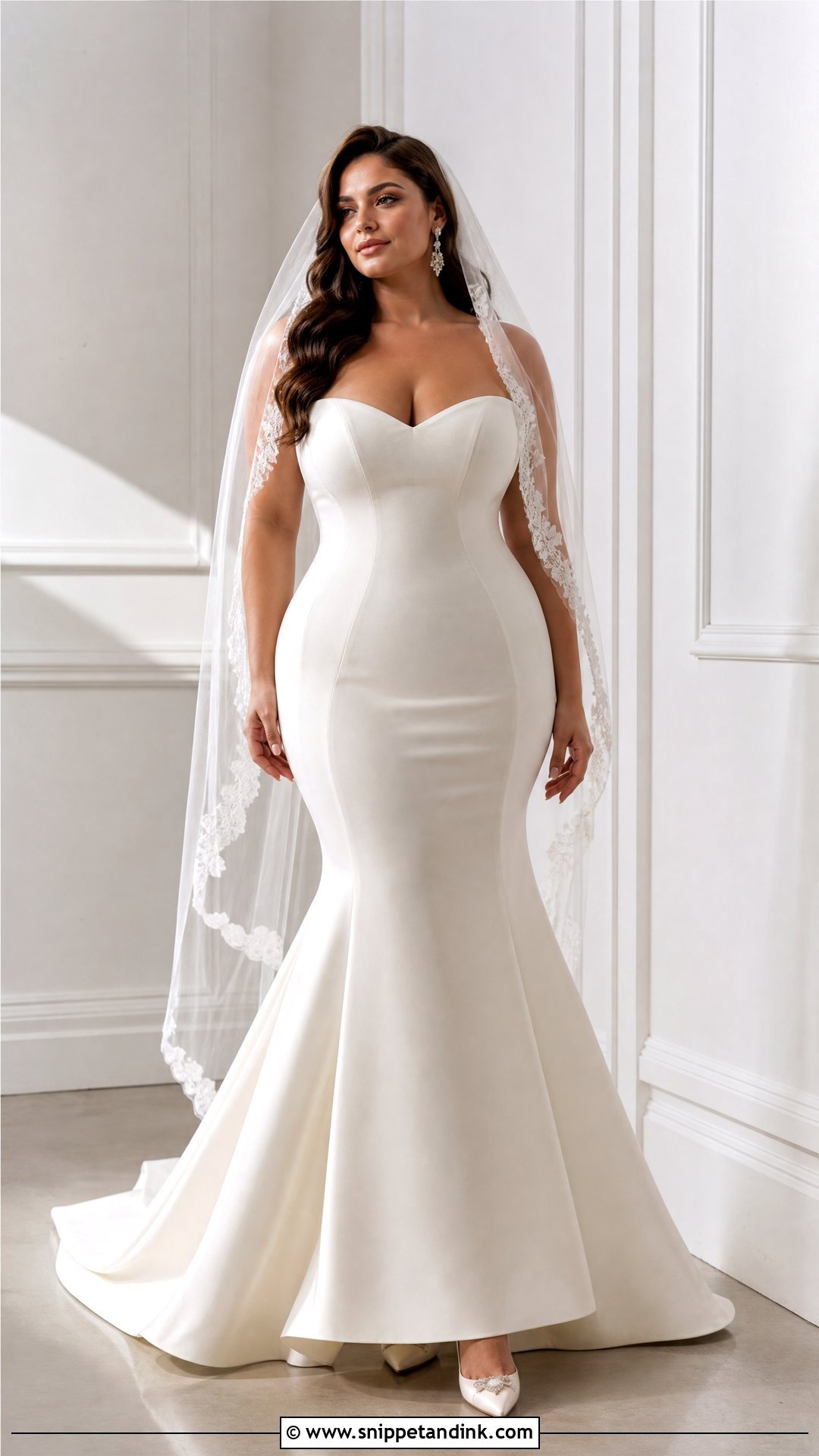
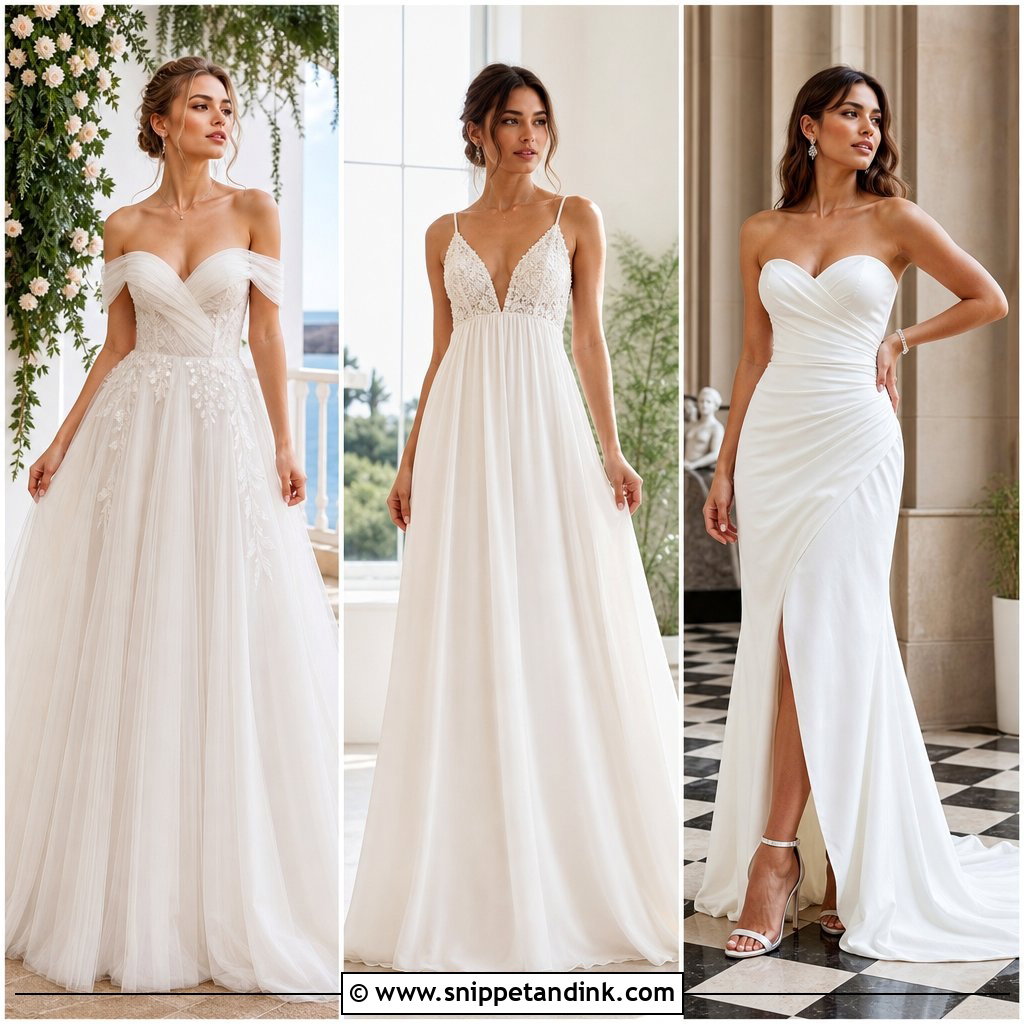
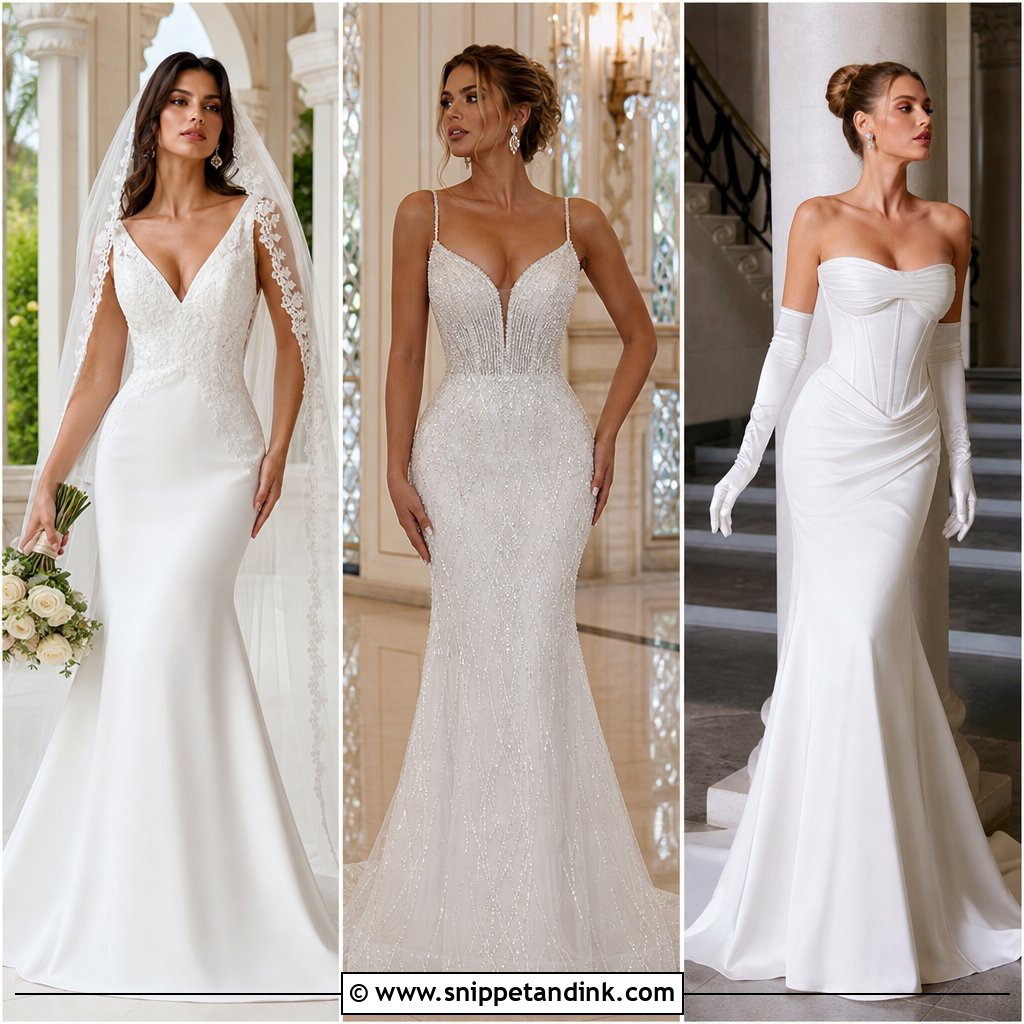
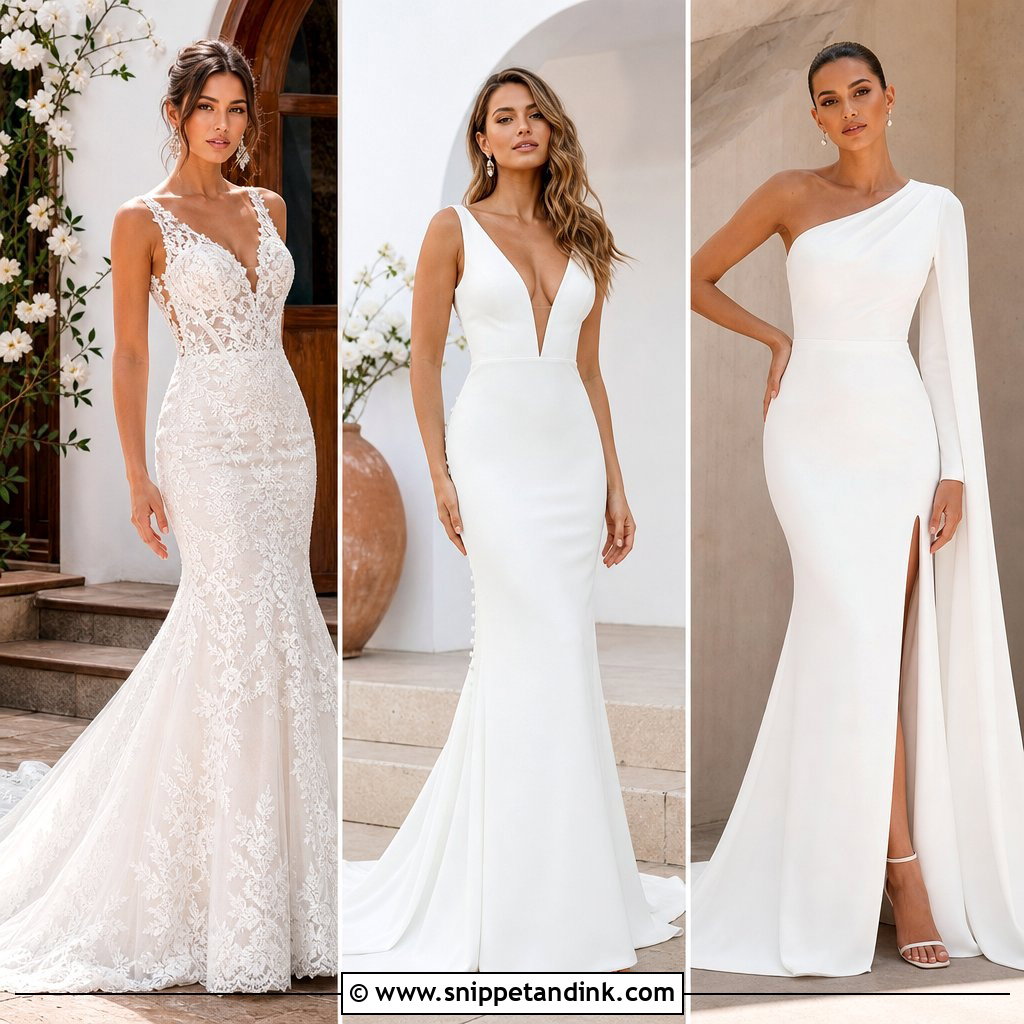
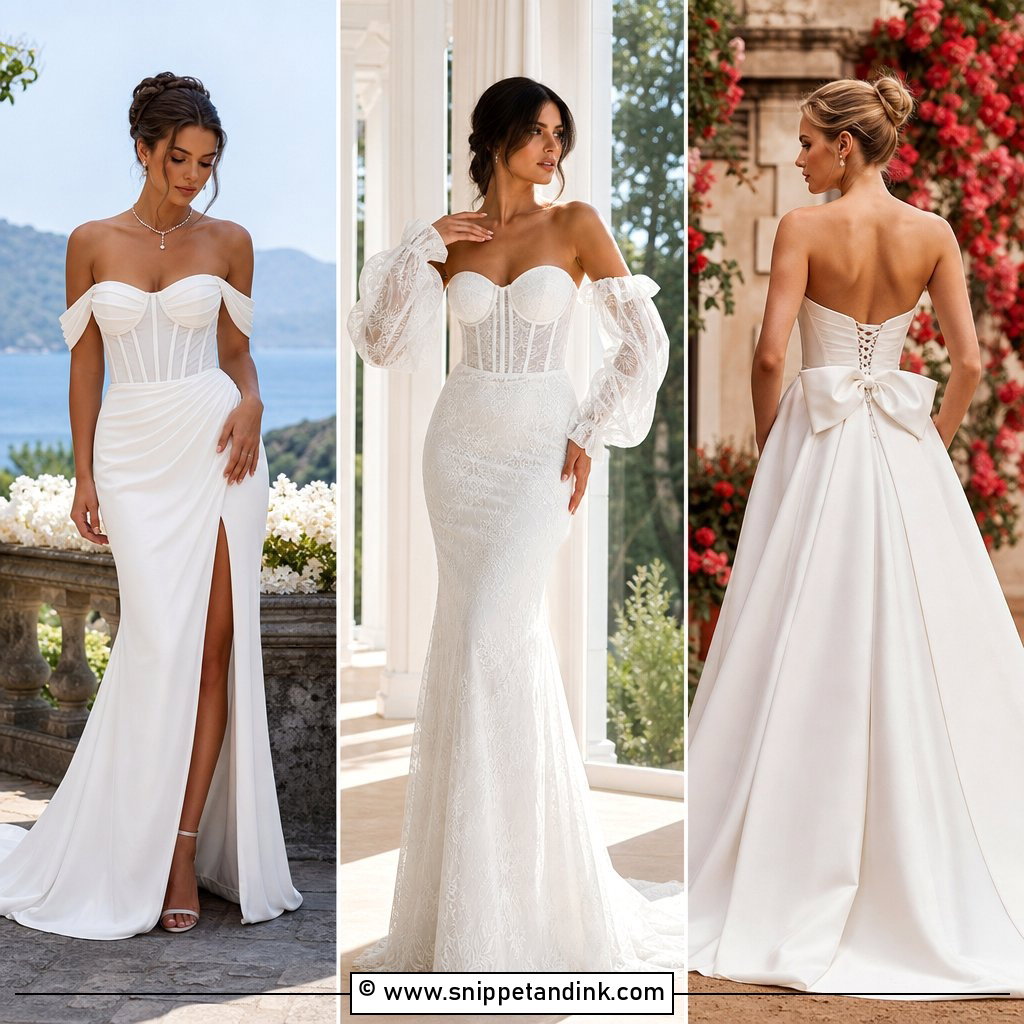
Of all the cuts, the sweetheart mermaid traces an hourglass most closely: the bodice frames the bust, follows the waist and runs smoothly over the hips before opening at the knee. That closeness is also its risk. Any spot where the fit isn’t right shows as a pull line, so I’d only choose it if you’re prepared for careful alterations at the hip. Look for internal boning, proper cups and stretch crepe or firm lace that shapes without squeezing. A clean waist seam keeps the middle defined, and vertical panels add length. Keep any embellishment to the neckline or hem, and finish with pointed heels, a fingertip veil and simple drops.
2. V-Neck Fit-And-Flare Wedding Dress
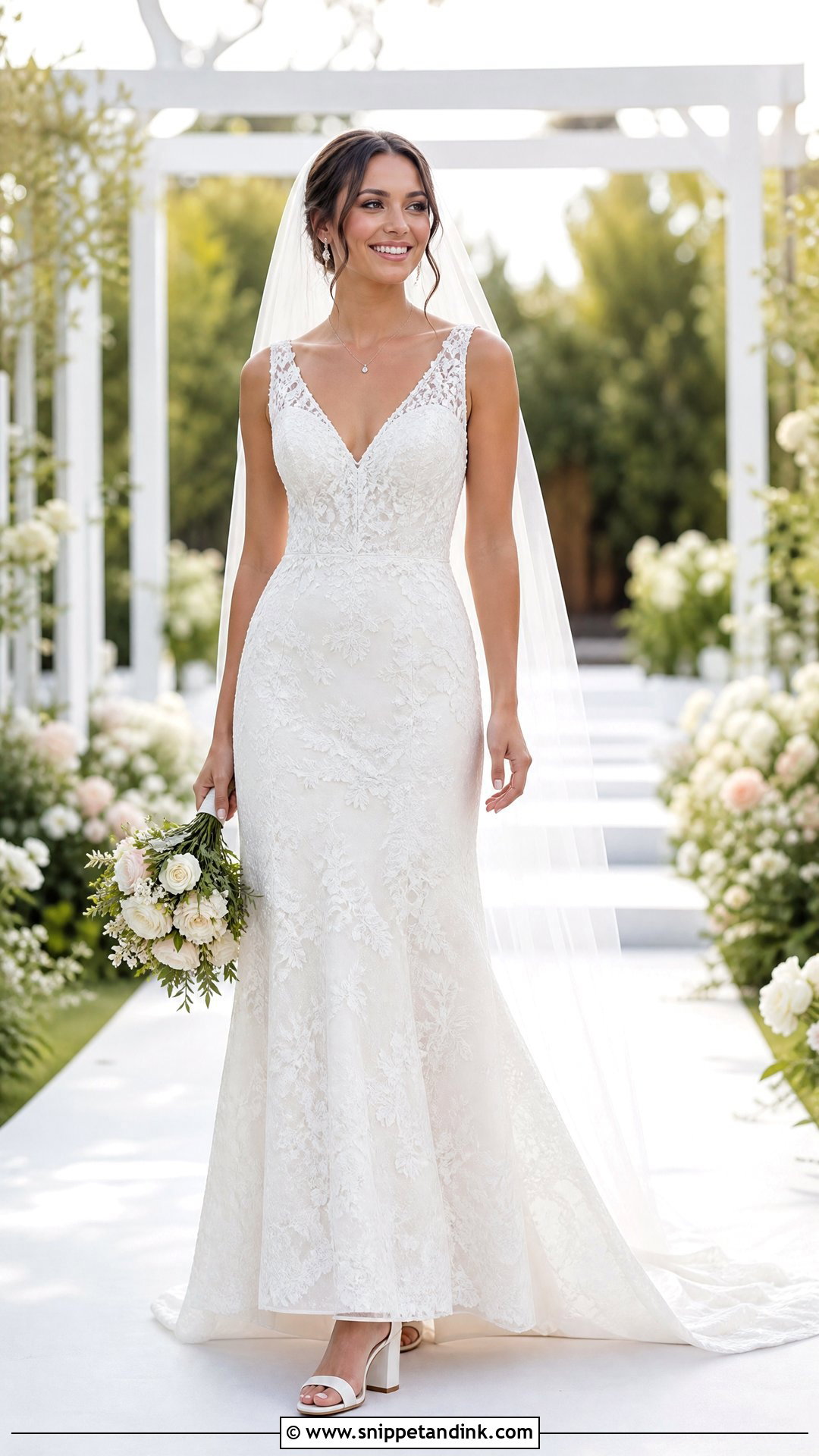
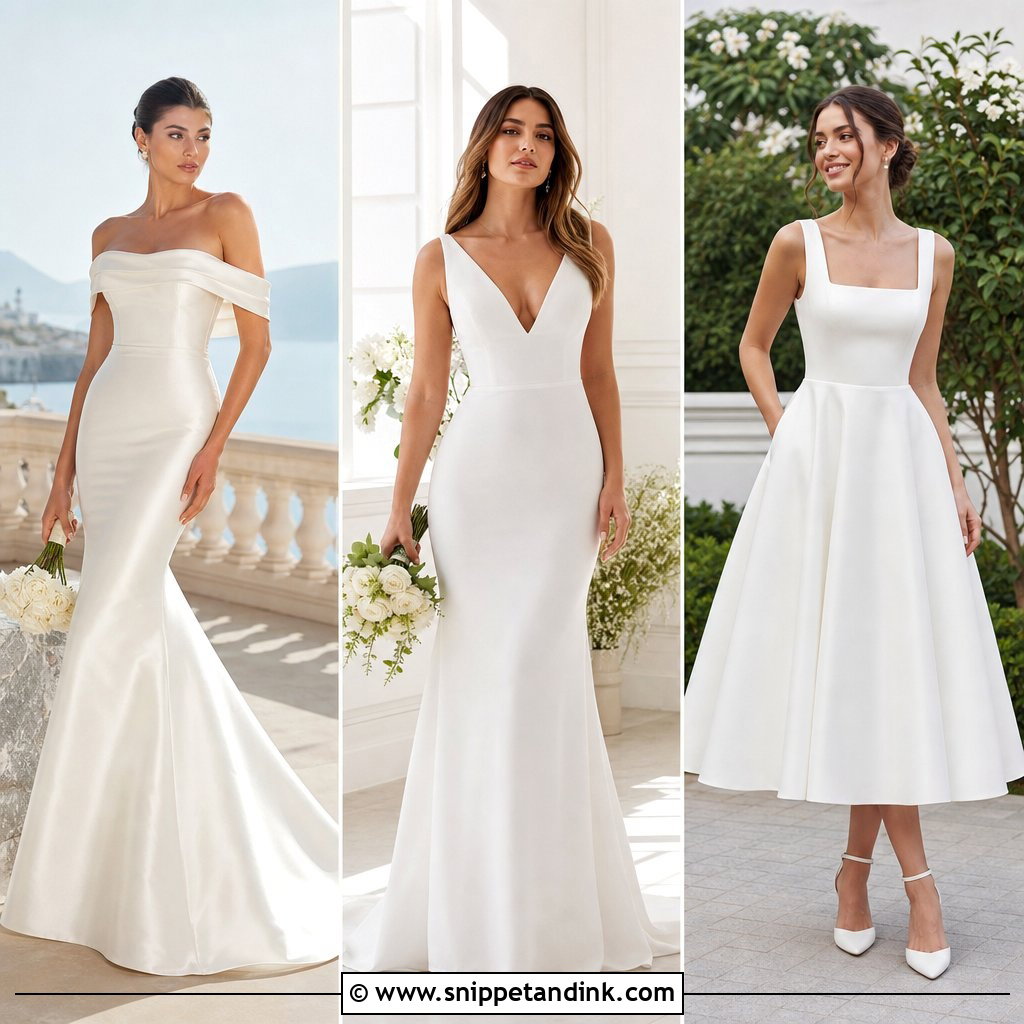
A V-neck adds a long line through the upper body, and with a fit-and-flare skirt that starts widening above the knee, you get waist definition plus room to walk, sit and dance. Fuller busts often need more support than a deep V offers on its own, so ask about wider straps, illusion panels or a structured lining under the neckline. Crepe looks modern; floral lace softer. When I fit this cut, I watch the V as the bride turns and bends, because a neckline that sits flat when standing still can gape when she leans to sign the register. The skirt should skim the hips, not grip them. Low-profile shapewear, block heels, a fine pendant and a light veil complete it.
3. Off-The-Shoulder Trumpet Wedding Dress
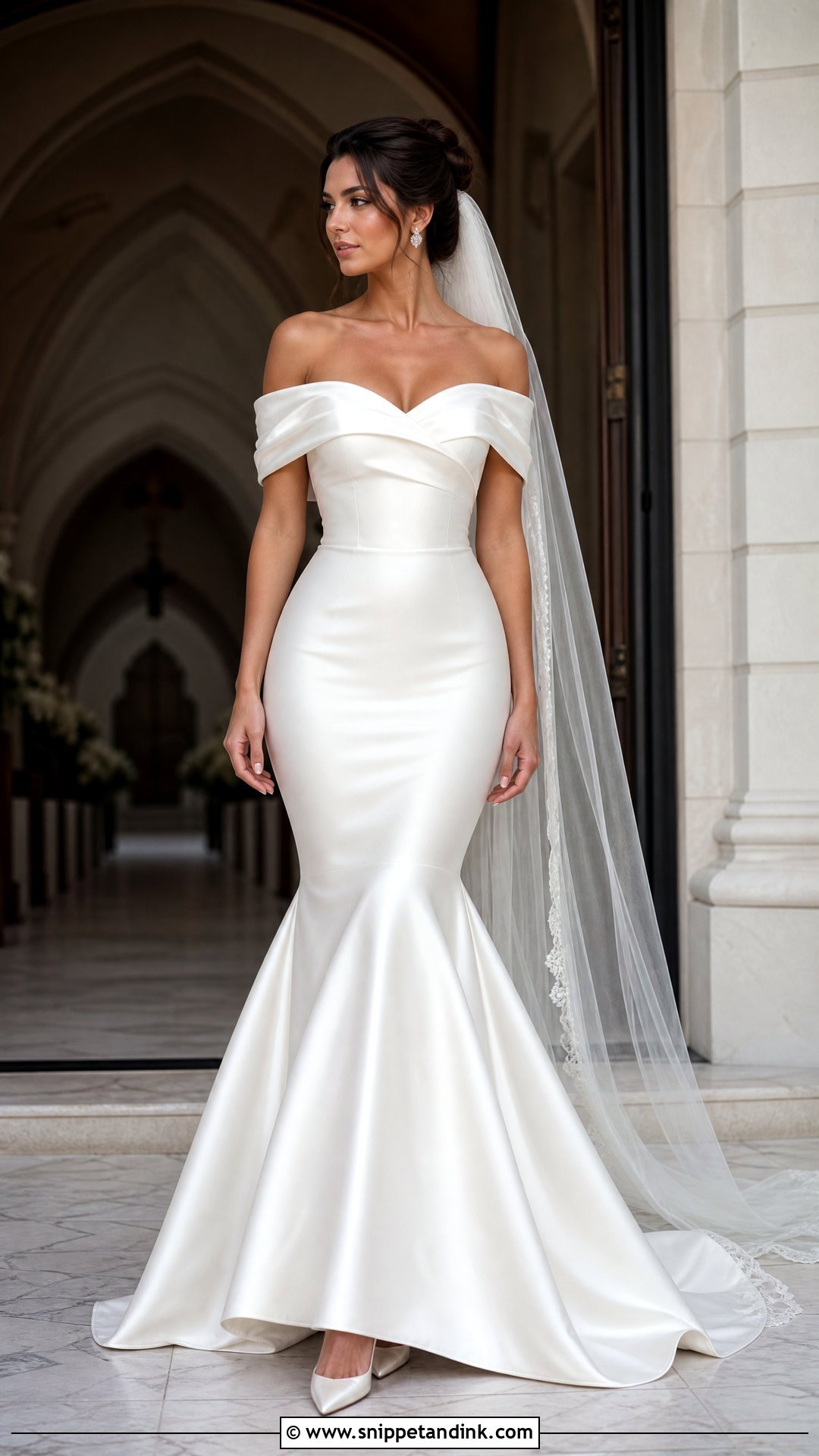
Off-the-shoulder trumpets show the collarbones and shoulders while the defined waist and mid-thigh flare keep the hourglass balanced. Because the flare starts higher than on a mermaid, there’s a little more freedom in your stride. The sleeves should stay put because a corset foundation holds the bodice, not because the bands are tight on your arms; otherwise they’ll slide every time you raise a glass. Smooth satin is formal, lace appliqué romantic. A low chignon, sparkling studs, pointed pumps and a chapel veil suit it, with no necklace to break the open line. Raise your arms and sit before you buy.
4. Basque Waist Ball Gown Wedding Dress
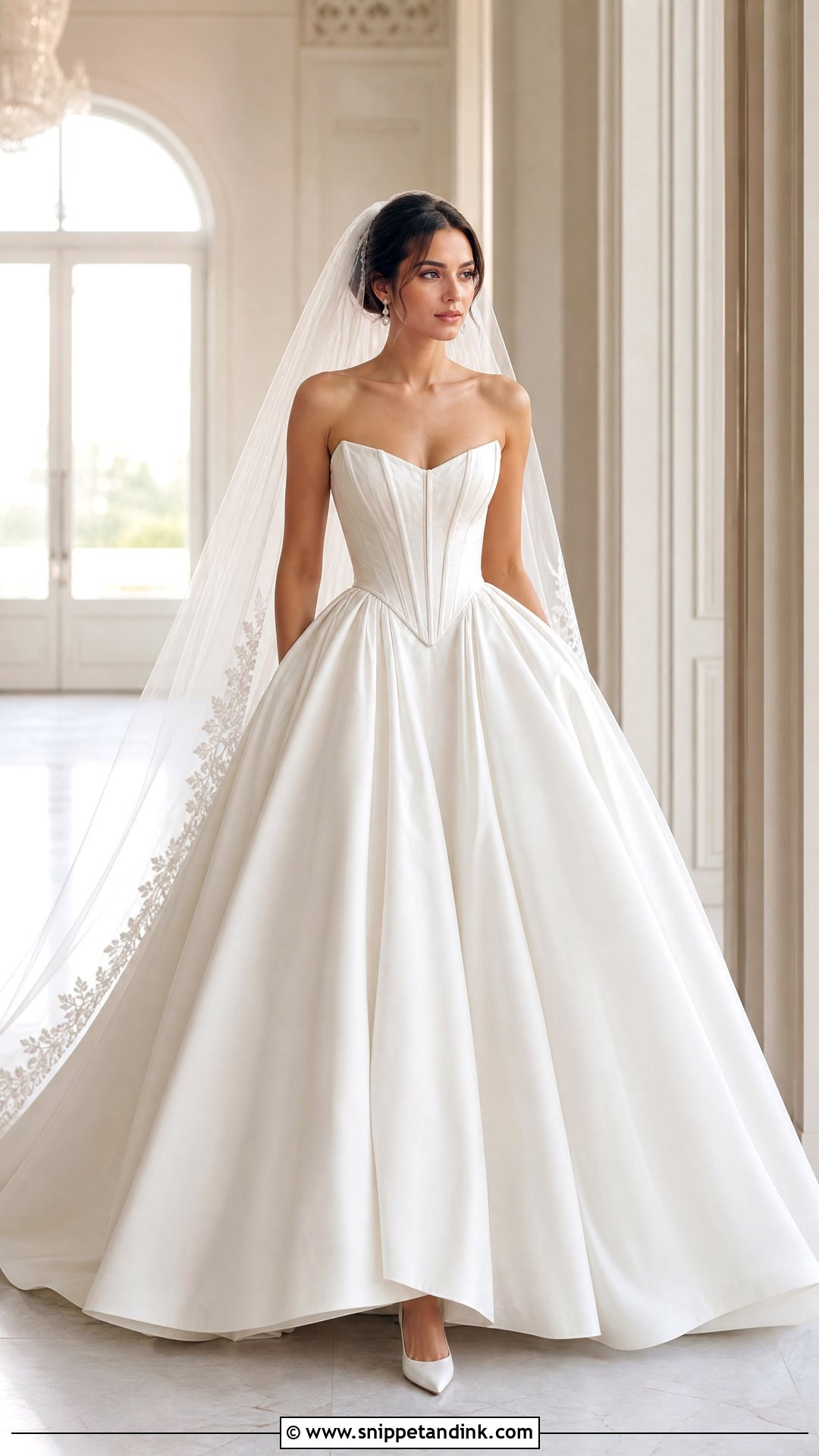
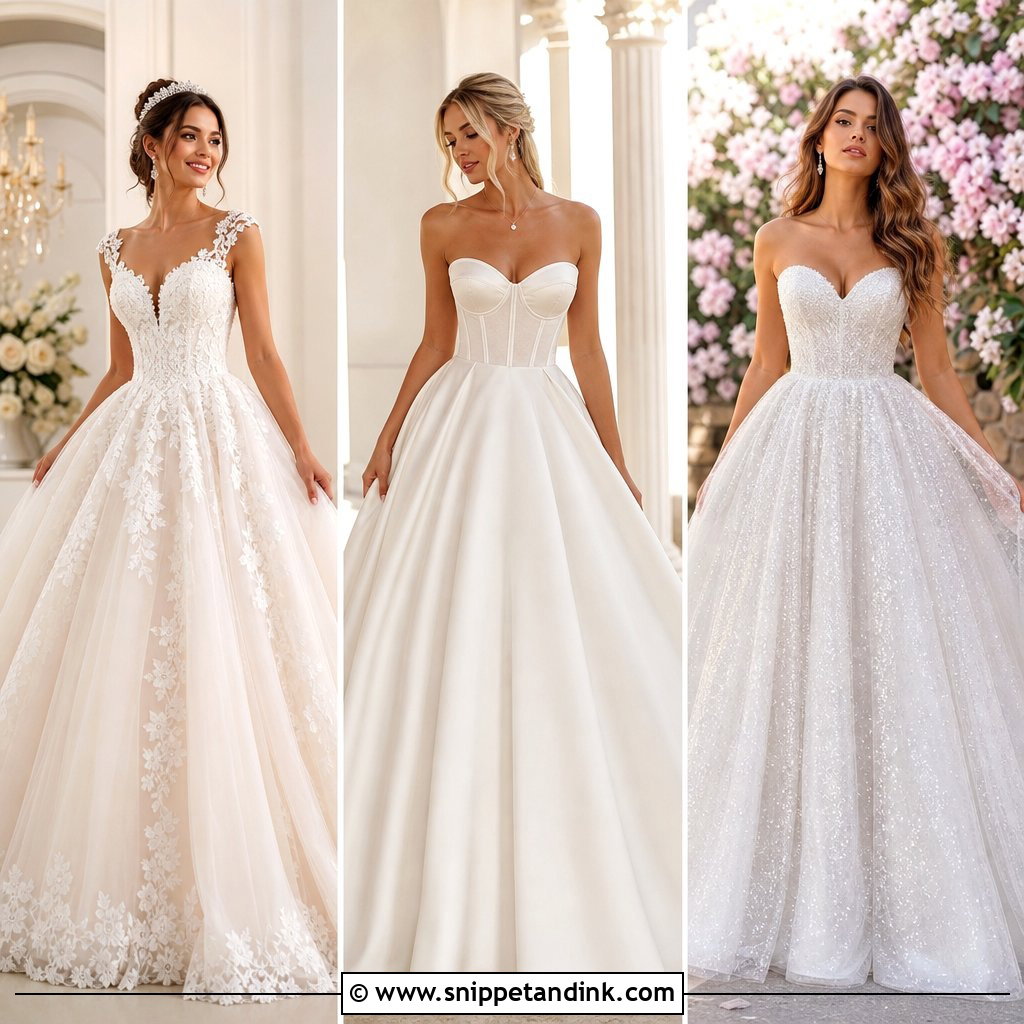
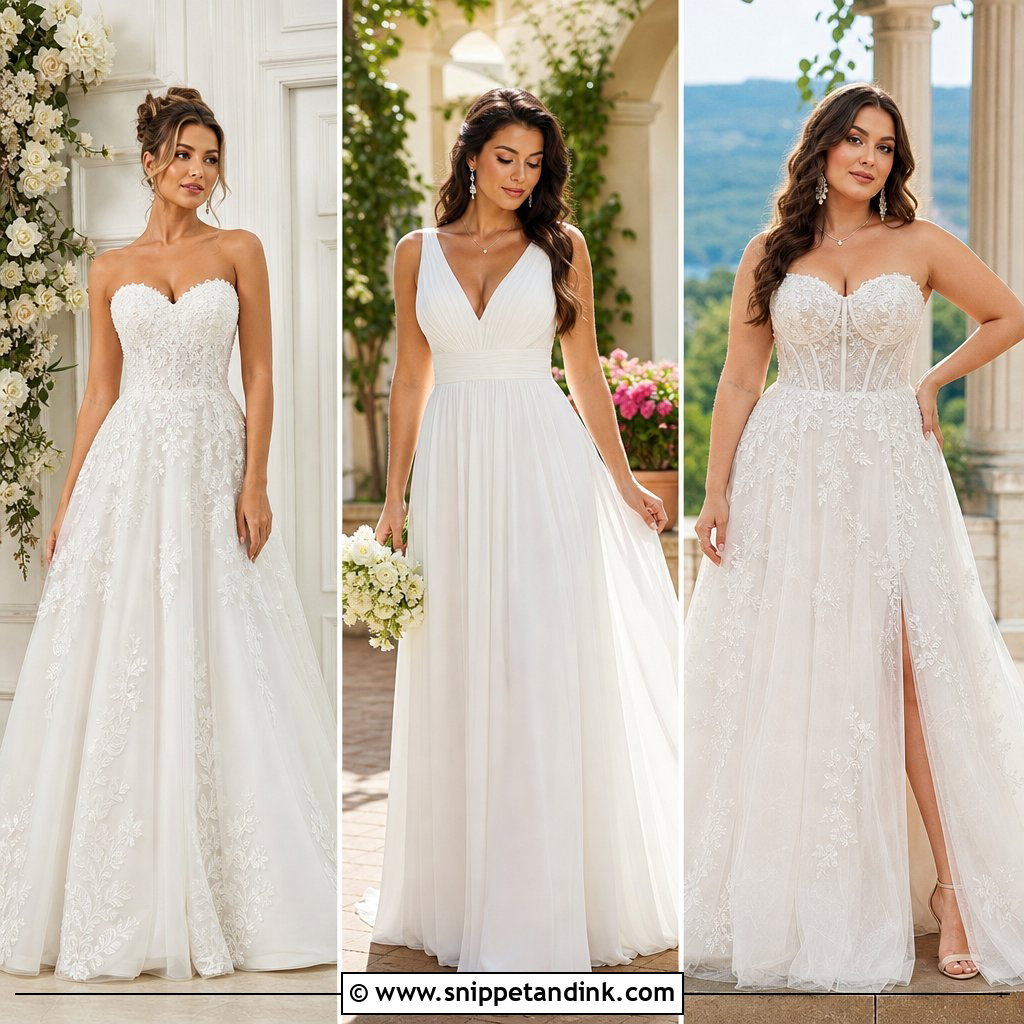
The basque point drops below the natural waist and draws the eye to the narrowest part of you, which makes it one of the most flattering ball gown options for an hourglass. It only works if the bodice is smooth, supportive and fitted precisely. Silk Mikado gives architectural volume; layered tulle is lighter. With that much shape already built in, skip large bows or heavy waist trims. I check the point when the bride sits, because a basque cut a touch too long folds up against the hips and creases. Sturdy heels hidden under the skirt, a simple cathedral veil, pearl earrings and a well-made bustle for the train finish it.
5. Strapless Crepe Sheath Wedding Dress
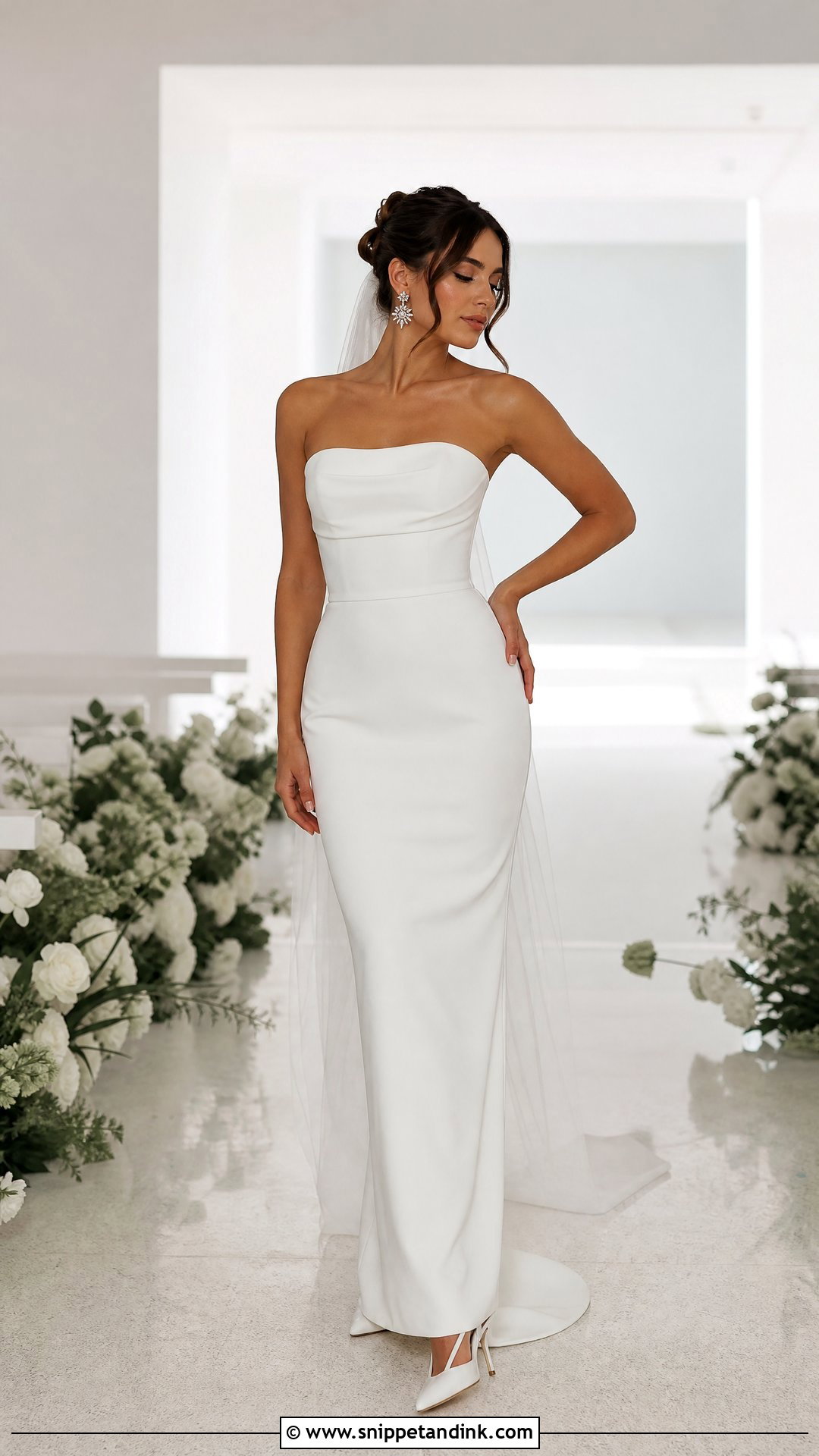
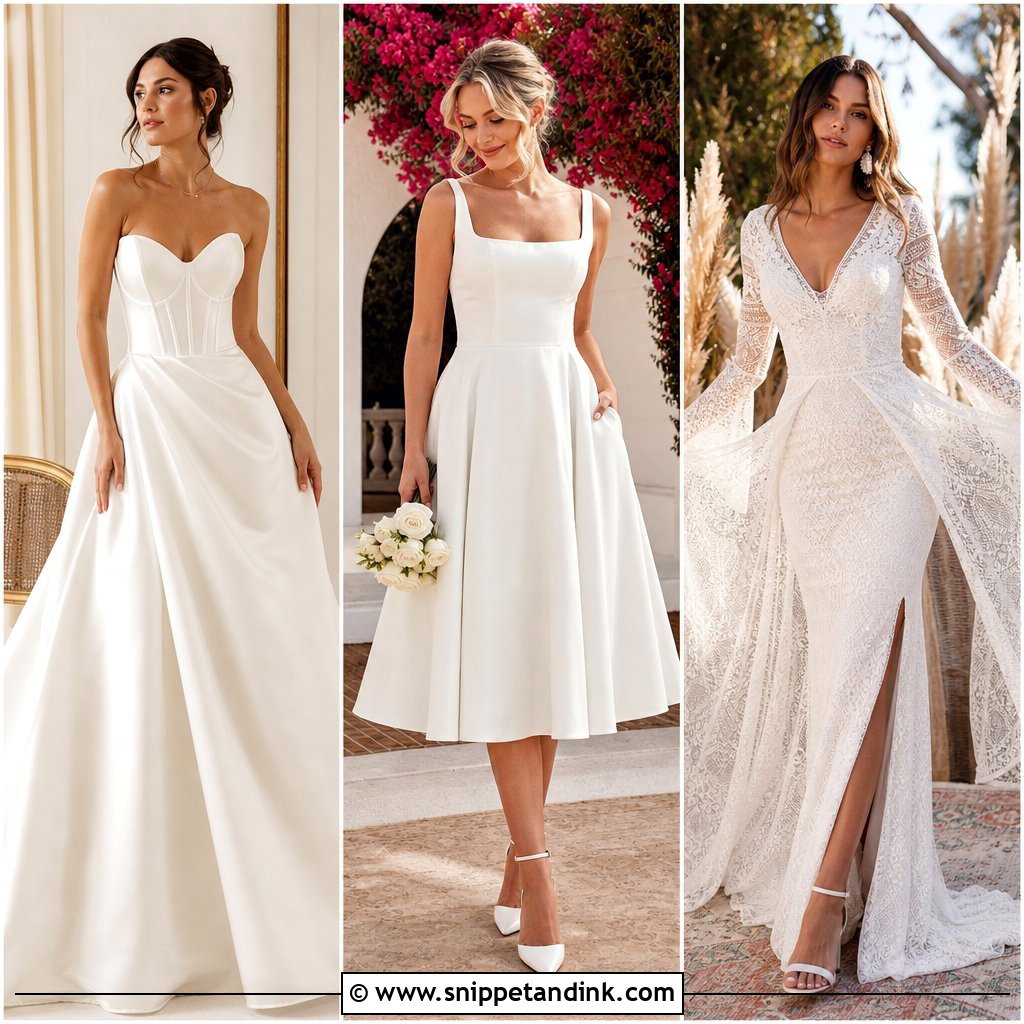
A strapless crepe sheath hides nothing, which is exactly why hourglass brides who like minimal lines often choose it. With no skirt volume, the waist and balanced proportions do the talking. Medium-weight stretch crepe covers better than thin fabric and pulls less across the hips. Look for boning, built-in cups and an inner waistband so the neckline stays up without hitching. Smooth, line-free underwear is non-negotiable here. During alterations, ask the tailor to leave enough ease for walking and sitting; a sheath taken in too tight rides up and creases across the lap. Sculptural earrings, slingbacks, a sleek bun and a plain floor-length veil complete it.
6. Long-Sleeve Lace Mermaid Wedding Dress
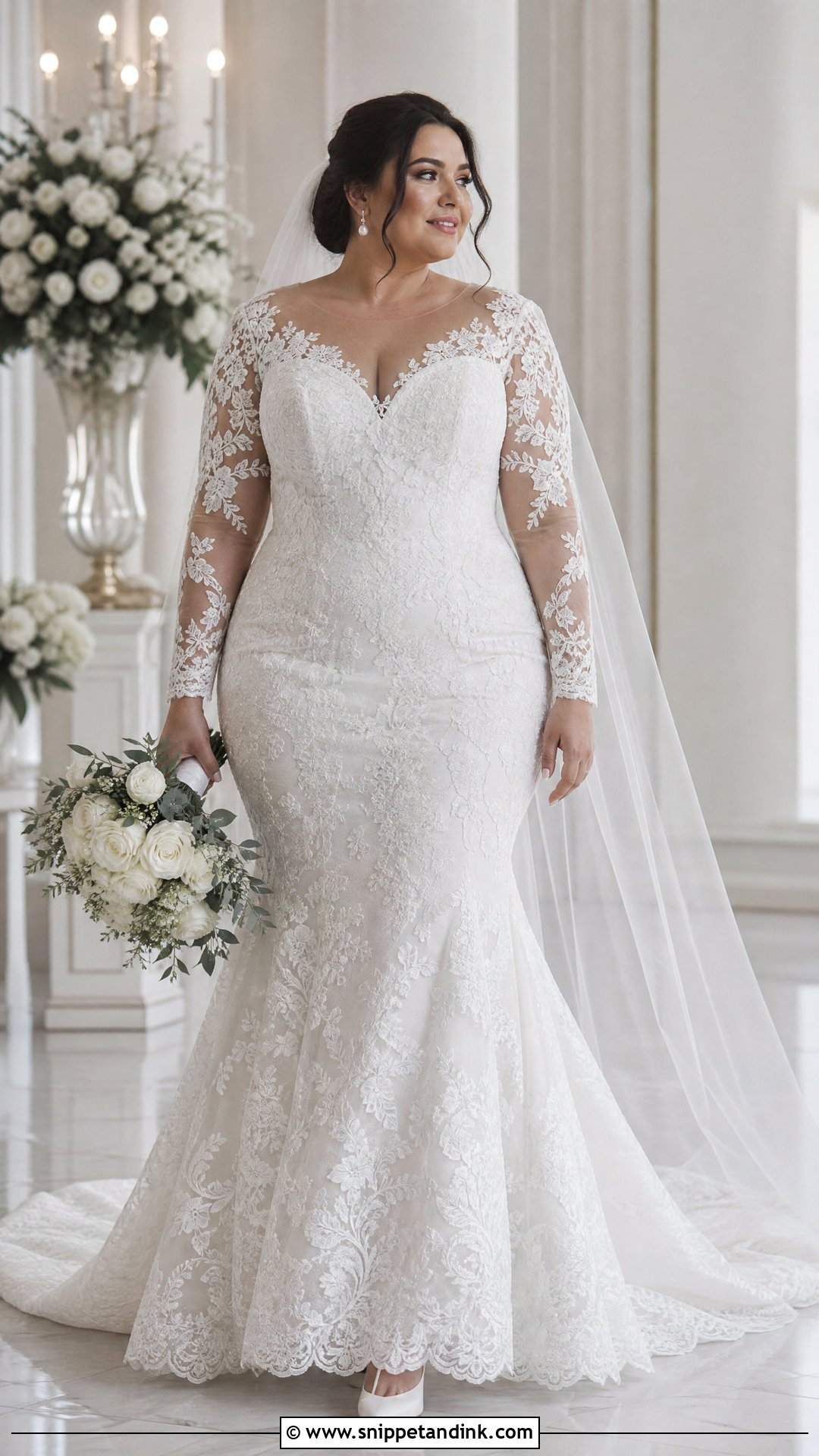
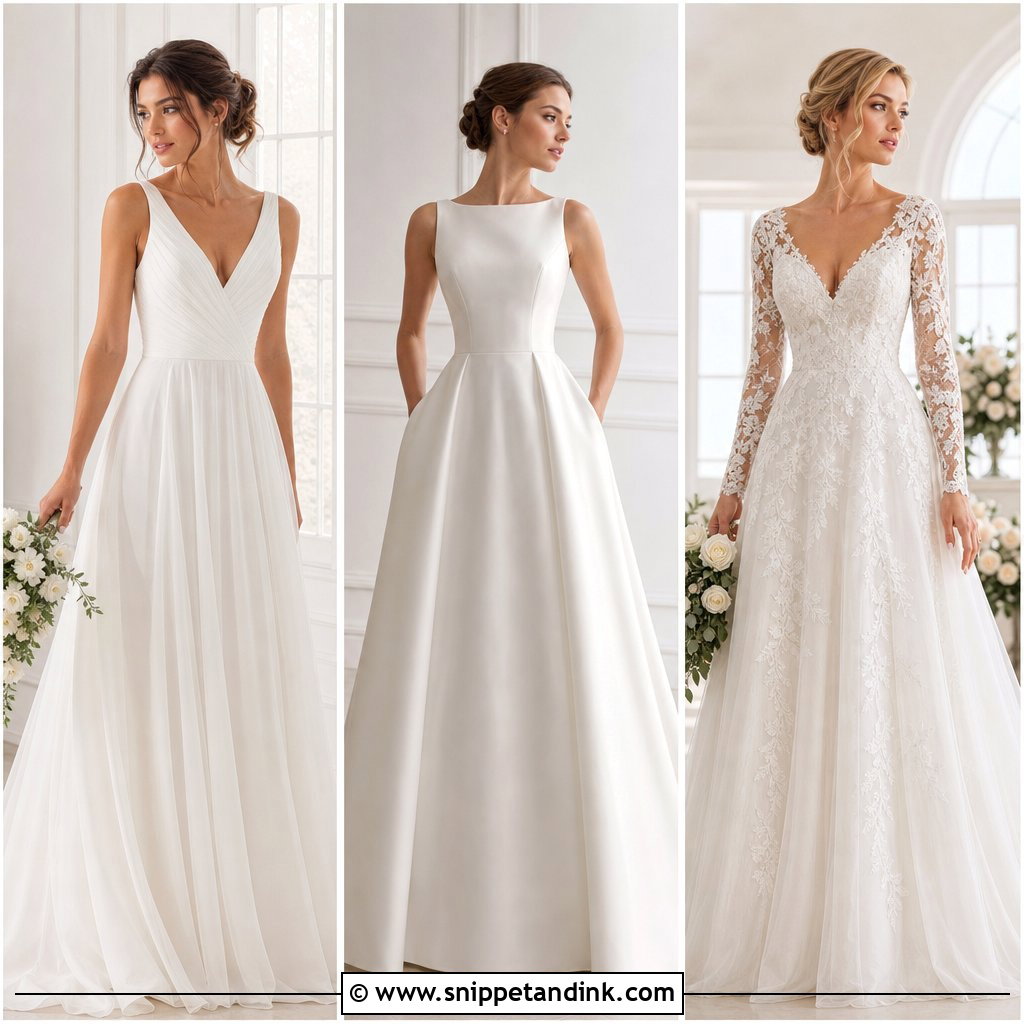
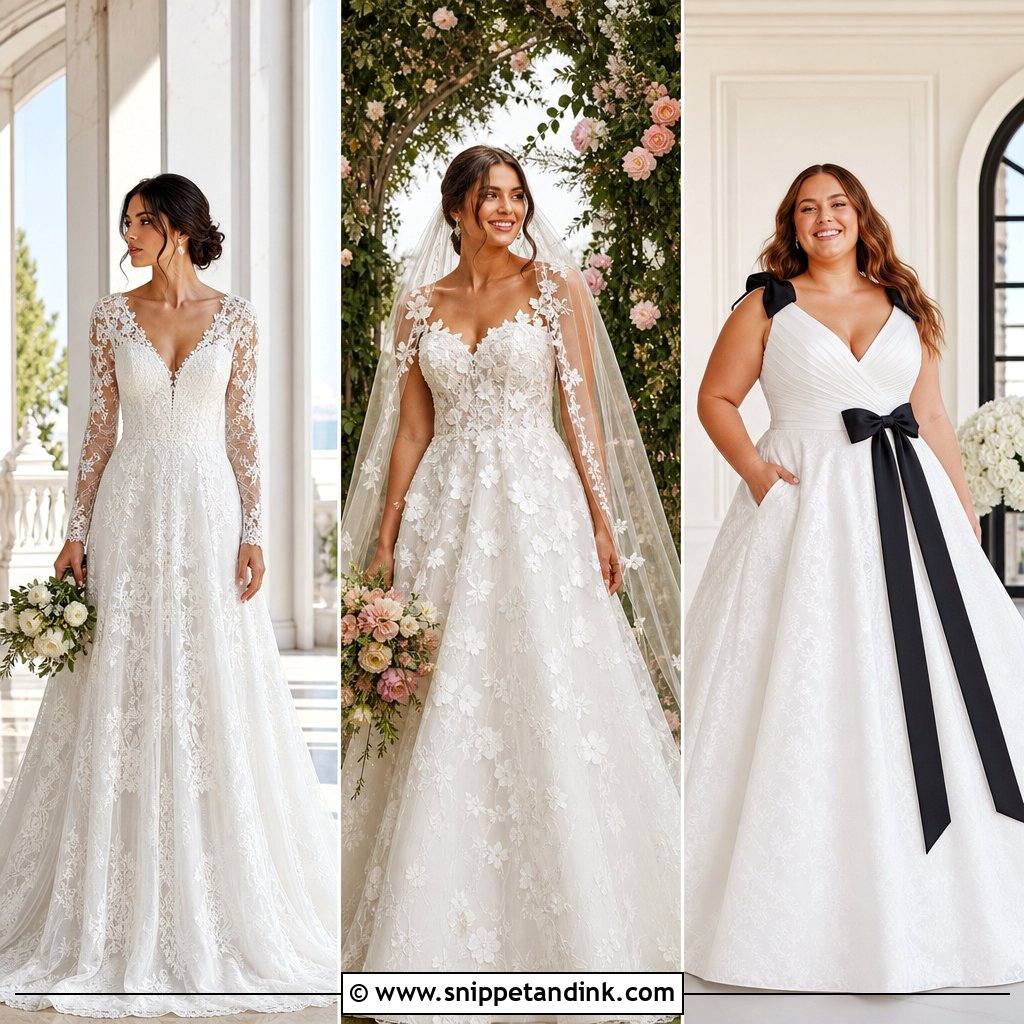
Lace sleeves give coverage without weight, and on a mermaid they keep the upper body light while the fitted shape defines the waist and hips. Sleeves on a fine illusion base with placed appliqués flex better than solid lace. A V-neck or soft sweetheart lining keeps the bodice open. My two checks with this gown: whether you can bend your elbows and hug someone without the sleeve seams straining, and whether the lace motifs match across the bodice seams, since mismatched lace is the clearest sign of a rushed build. Closed pumps, a low bun, pearl earrings and a plain-edged veil keep the lace as the star.
7. Square-Neck Satin A-Line Wedding Dress
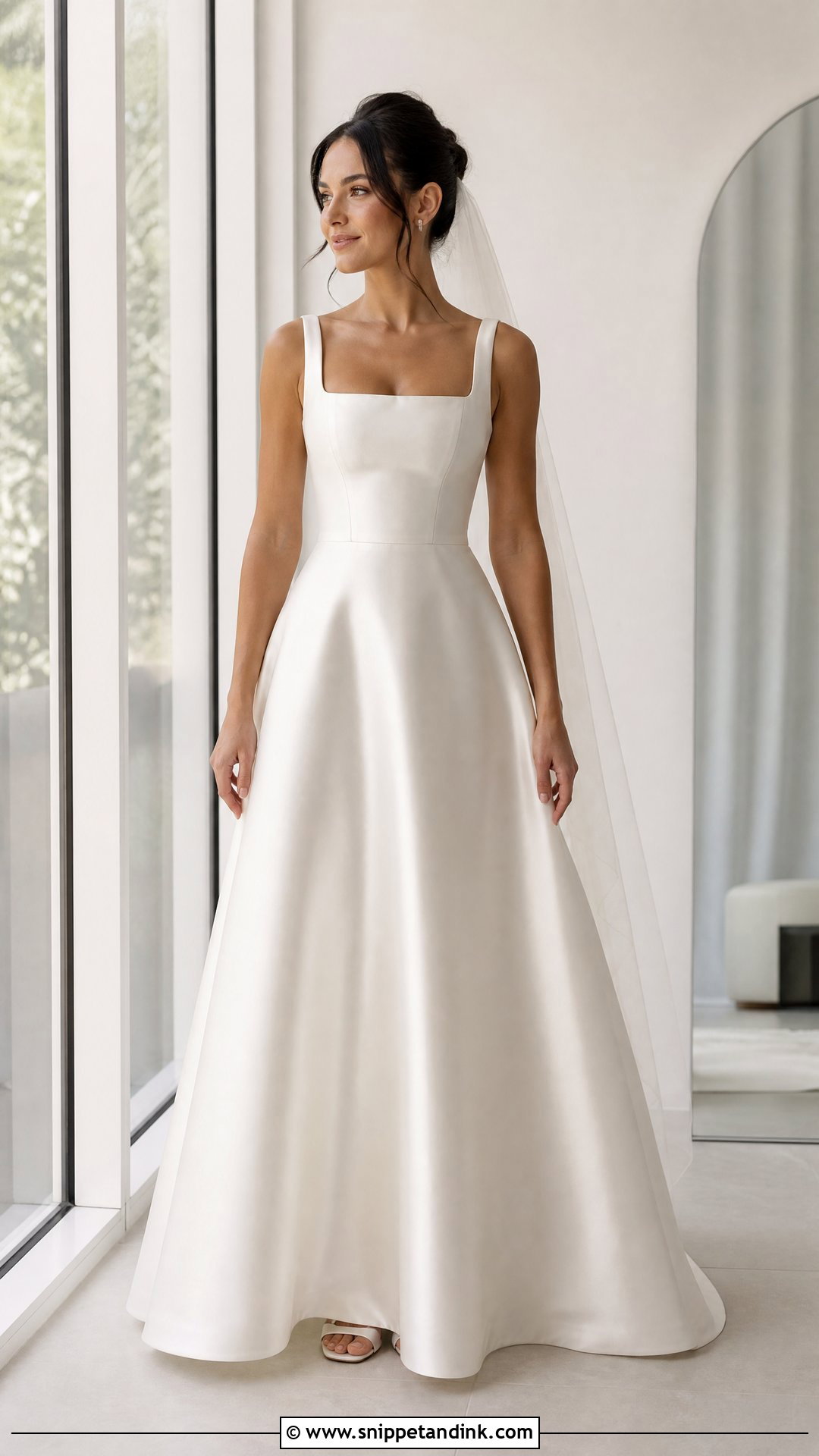
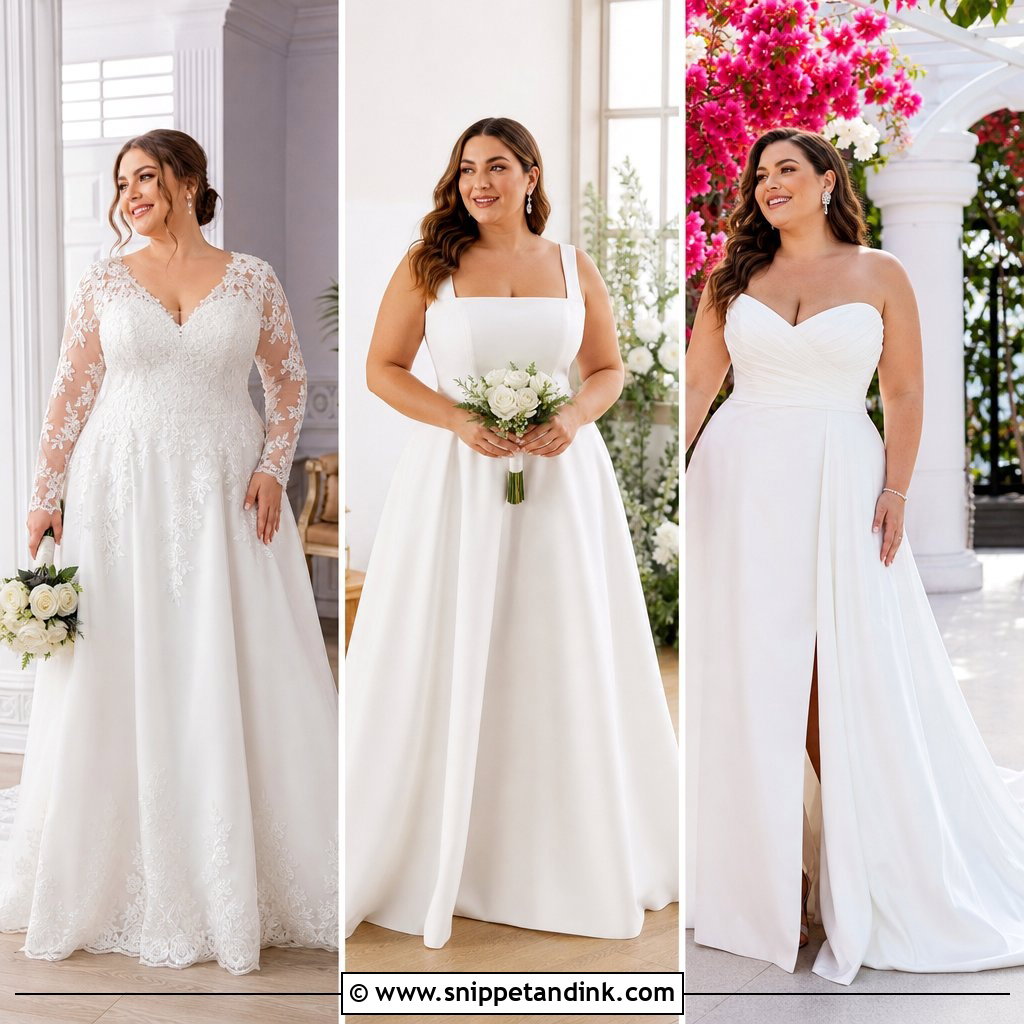
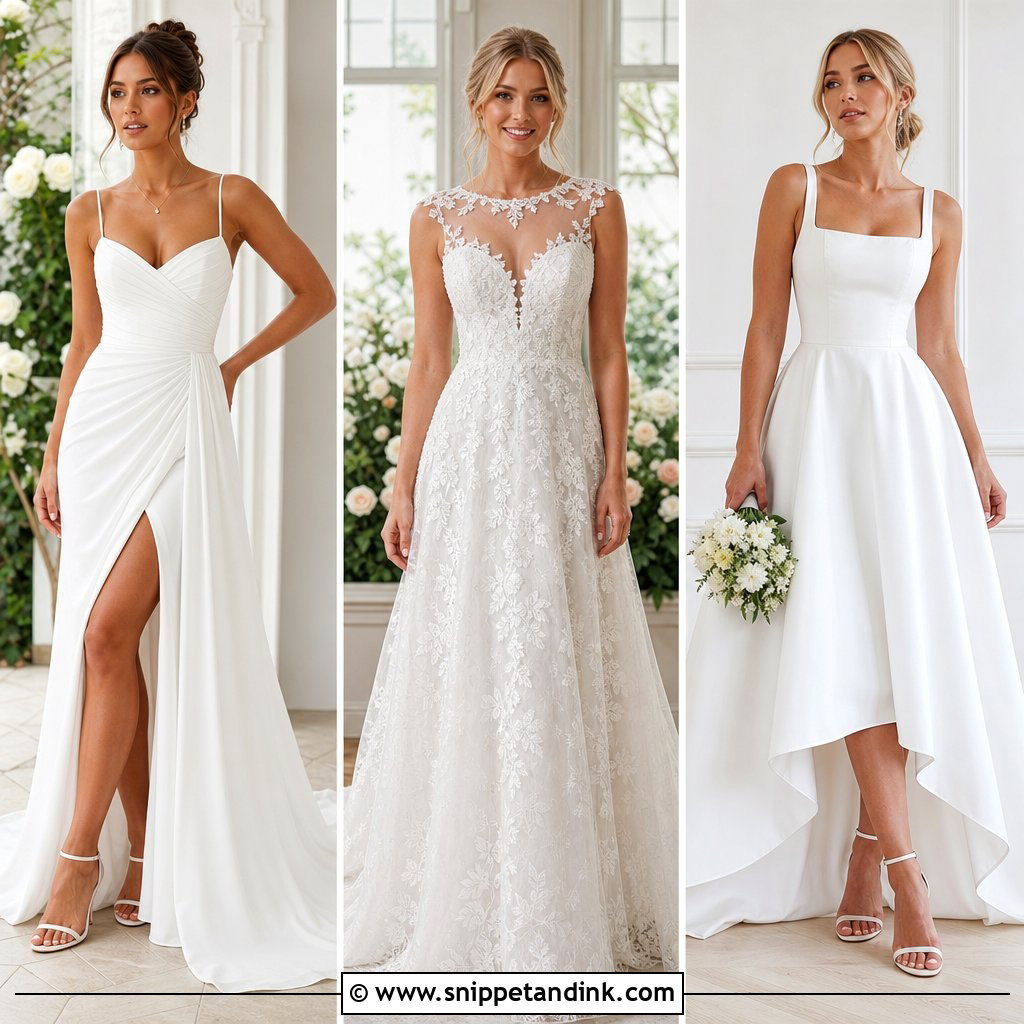
A square-neck satin A-line gives structure without hugging every curve. The fitted bodice defines the waist, then the skirt widens gradually, so there’s more room through the hips and legs. It’s the cut I suggest to hourglass brides who want shape but don’t enjoy feeling held in. Matte satin or Mikado holds the A-line, and princess seams make a smooth line from bodice to skirt. Watch two things at fittings: that the straps lie flat, and that the bodice doesn’t dig into the underarm when you lower your arms. Pearl studs, block heels and a gathered veil suit it, with a low bun or polished waves to keep the neckline visible.
8. Scoop-Neck Fit-And-Flare Wedding Dress
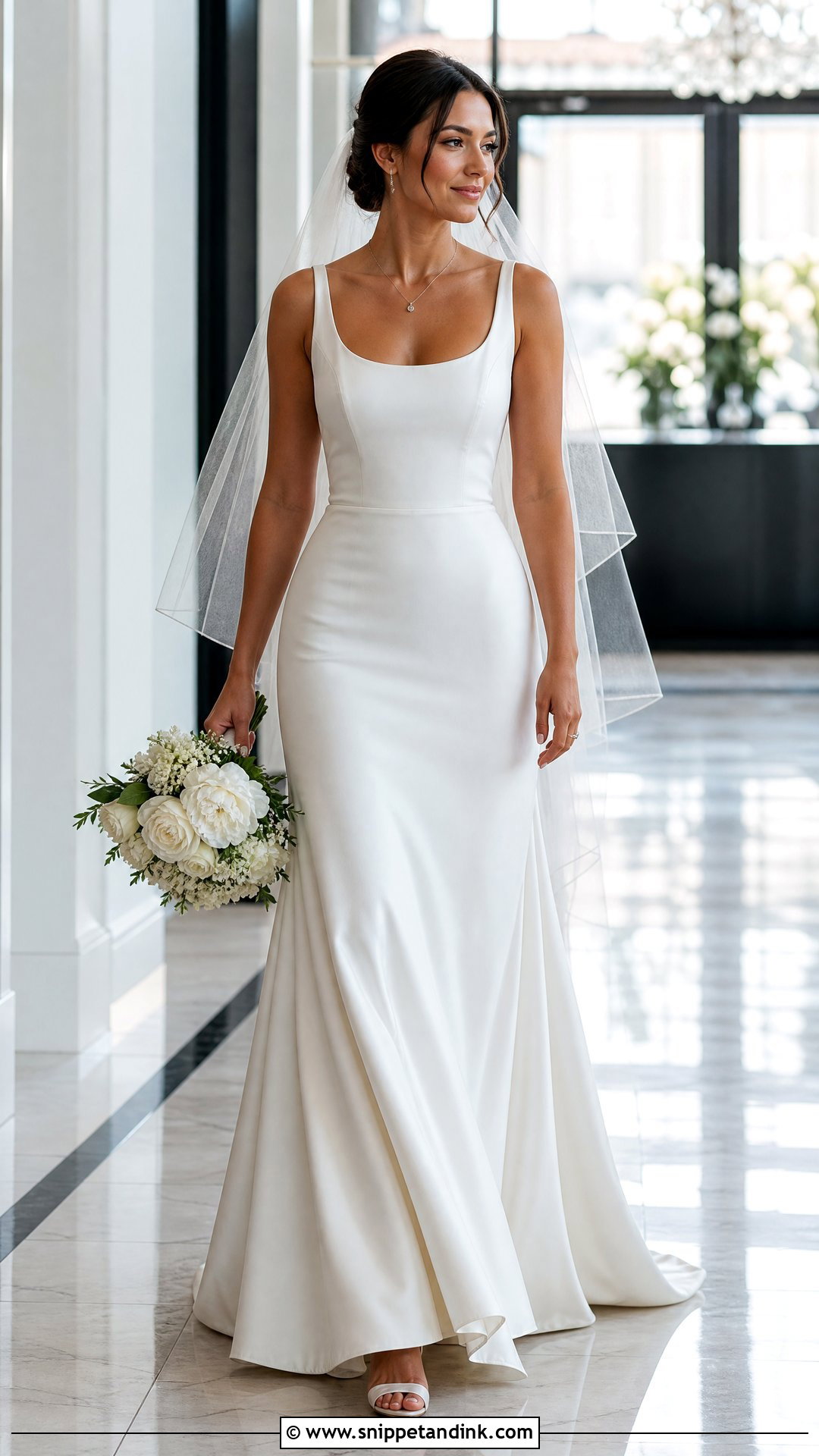
Could a softer neckline make a fitted gown feel less formal? A scoop neck can. It follows the curve of the bust, pairs well with supportive straps, and with a close-fitting waist and upper skirt it keeps the hourglass definition. Stretch satin gives a smooth finish; lined lace adds texture. The flare needs to start low enough to let you stride rather than lock your knees together. Fuller busts are often happier in a slightly higher scoop with wider straps. The fitting signs I look for are gaping at the edge of the scoop and horizontal creases under the bust, both of which mean the bodice needs adjusting. A delicate pendant, mid-height heels and a fingertip veil finish it.
9. Halter-Neck Trumpet Wedding Dress
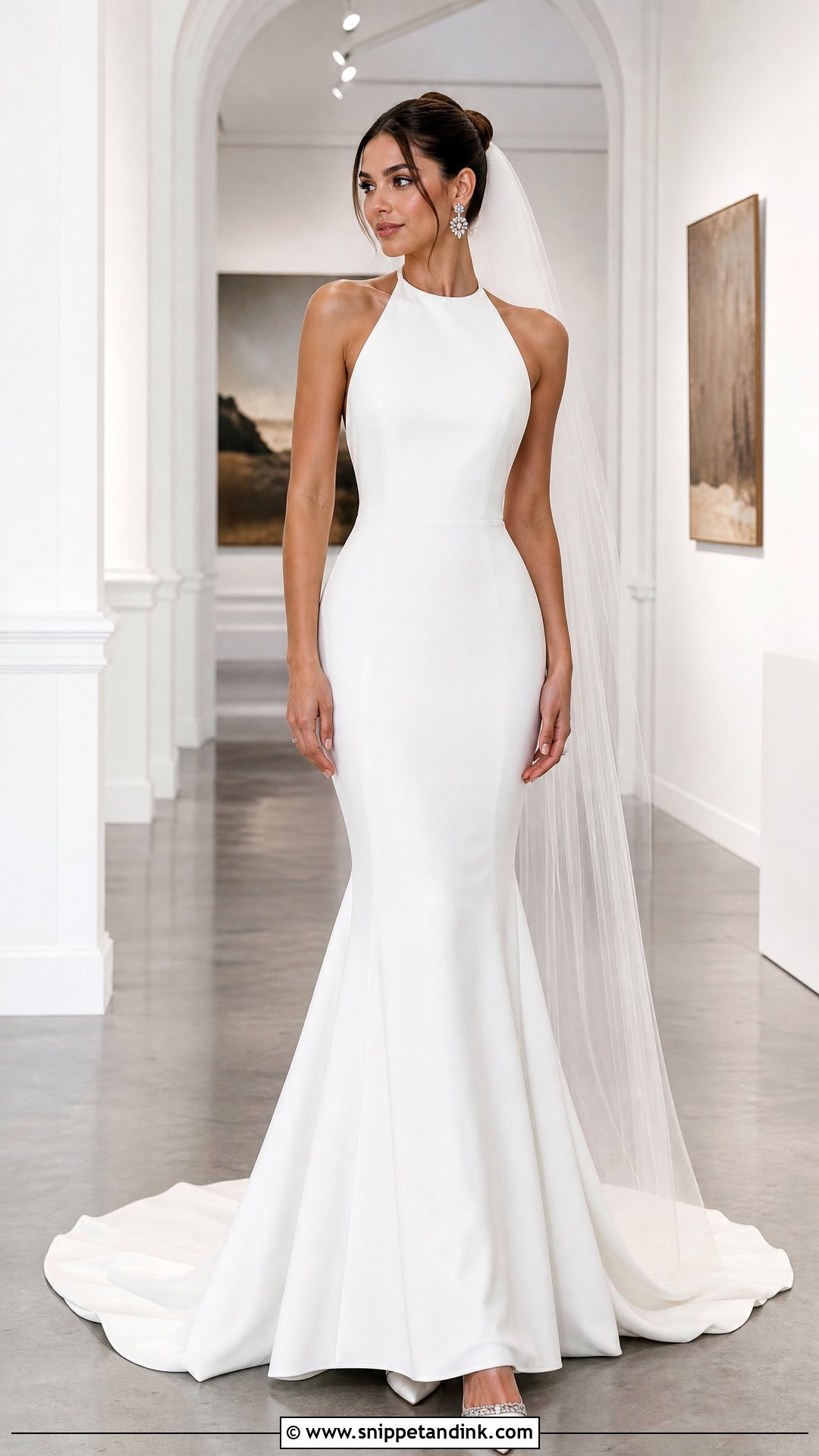
Halters lift the eye to the shoulders, and the trumpet’s close waist and hip carry the hourglass line below. On a fuller bust, a softly shaped halter usually balances better than a very narrow, high one. The construction matters more than the look: the neck strap shouldn’t be carrying the weight of the gown, or it will ache by the speeches. Ask how the bodice is supported underneath. An updo, statement earrings, pointed heels and a veil anchored below the bun suit it, and the neckline is focus enough without a necklace. Crepe reads modern, satin formal. Check that the armholes lie flat and don’t show your bra or rub.
10. One-Shoulder Draped Wedding Dress
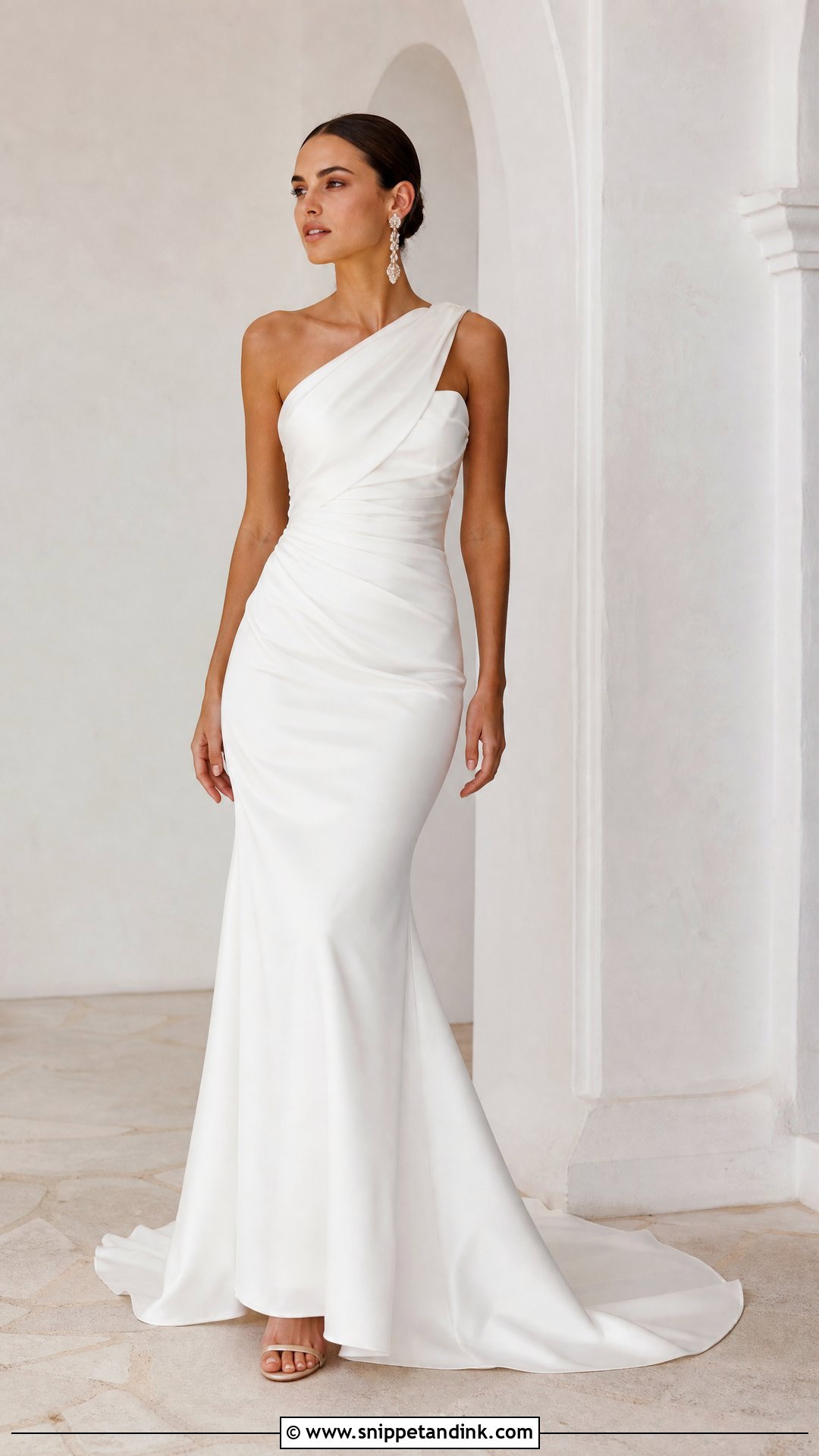
Asymmetry suits a balanced figure because it adds movement without hiding the waist. On a fit-and-flare or column base, controlled ruching running diagonally guides the eye across the body and softens the line from bust to hip. Too much fabric gathered at the middle defeats the purpose, so look for neat, flat folds. Internal support is essential, as one shoulder strap can’t hold a whole bodice in place. In the fitting room, I have brides bend and sit several times to make sure the drape doesn’t twist round. A sleek low bun, one earring on the bare side, minimal heels and a plain veil or none keep the neckline uncluttered.
11. Ruched Bodice Wedding Dress
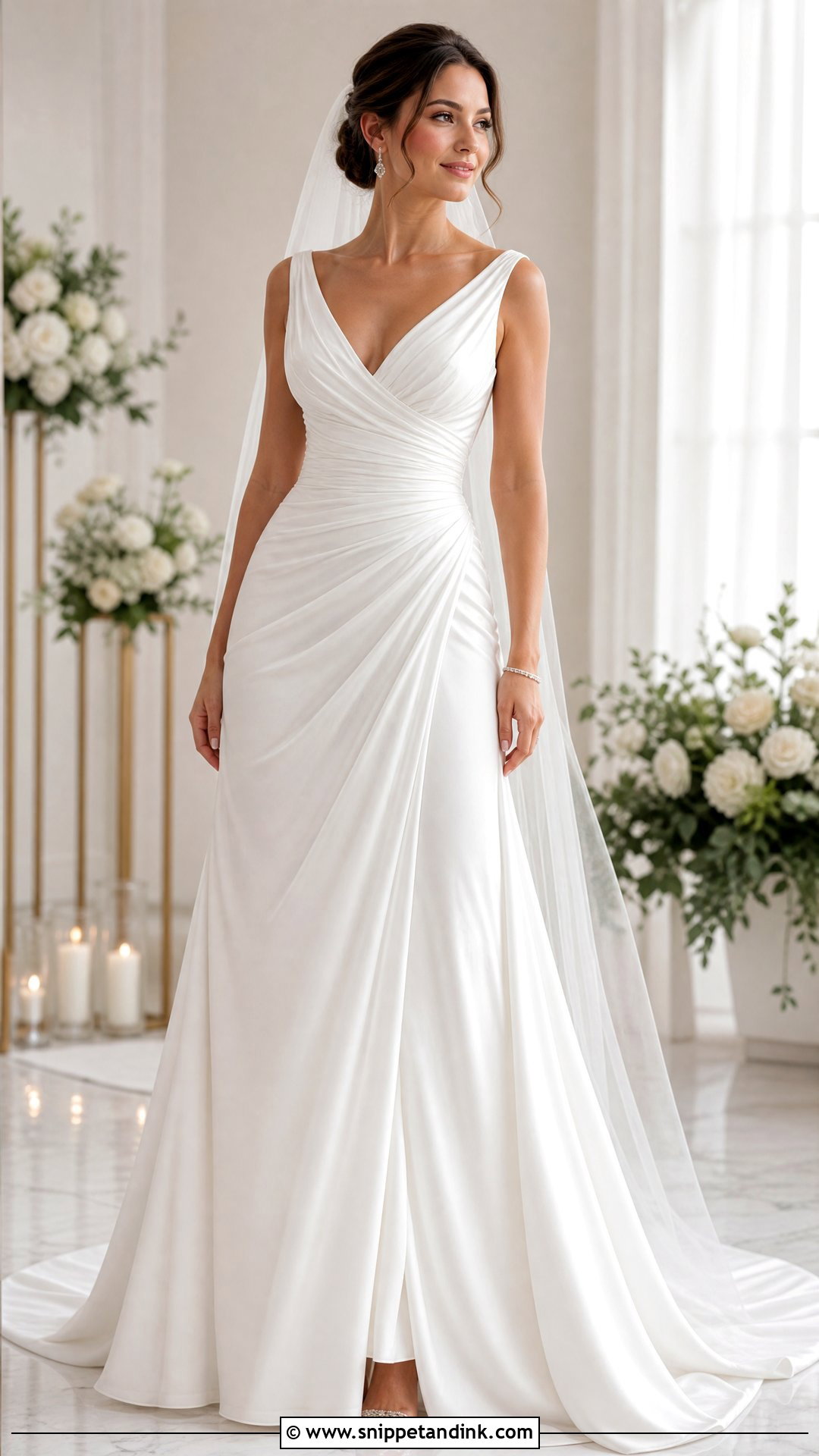
Ruching can flatter or add bulk, depending entirely on direction. Diagonal or wrap-style gathers across the torso keep the waist visible; thick horizontal folds tend to widen the middle. Pair a ruched bodice with a fit-and-flare skirt for definition or a soft A-line for movement. Matte jersey, crepe and light satin gather smoothly, while stiff fabric puckers. After you’ve sat for a while at the fitting, stand and look again. Folds that collapse at the waist or bunch unevenly over the bust need re-setting by the seamstress. Understated earrings, a narrow bracelet, supportive heels and a simple veil keep the attention on the bodice.
12. Drop-Waist Wedding Dress
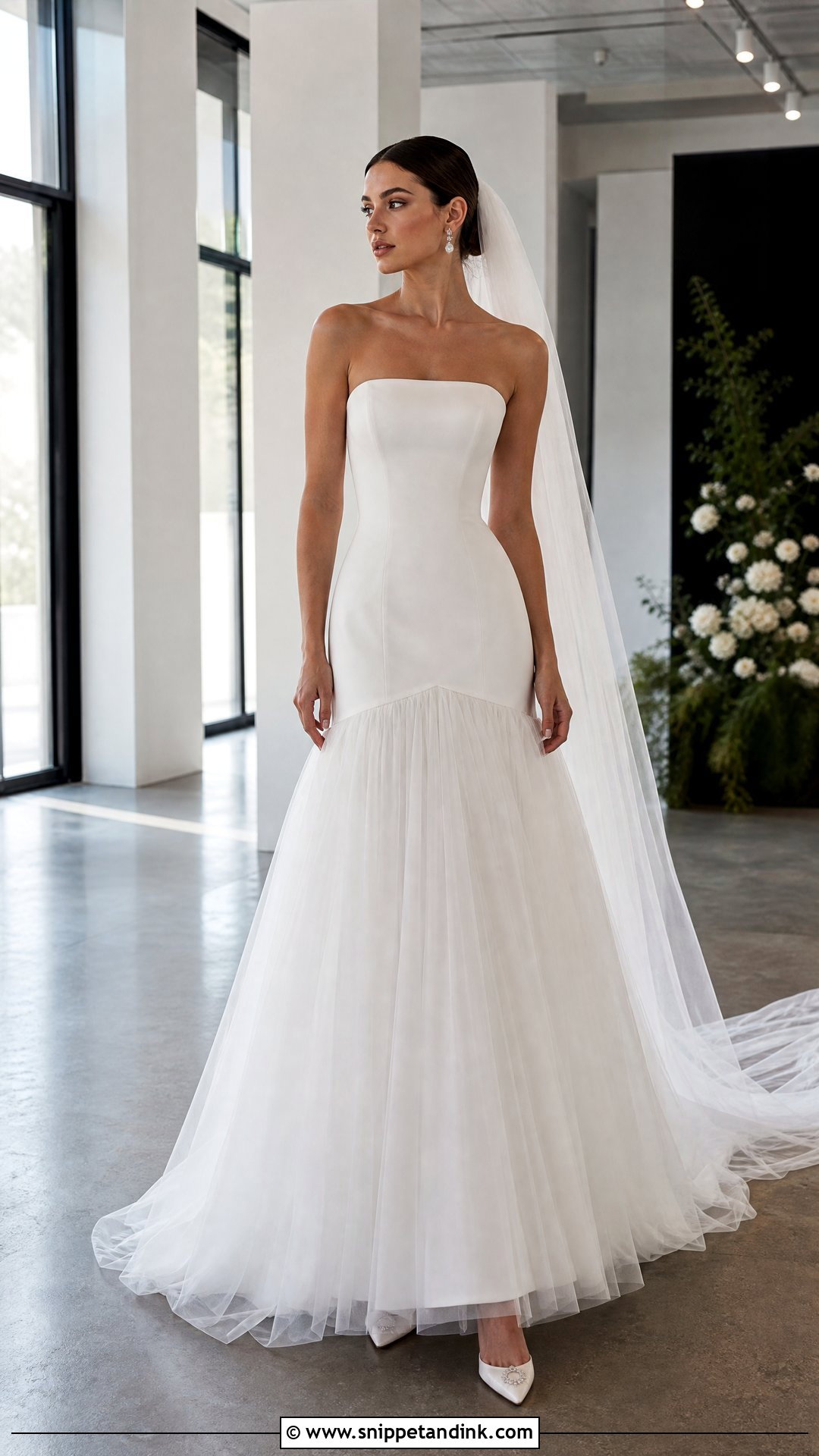
Drop waists are the riskiest cut on this list for an hourglass, and the reason is placement. A low, straight seam can land across the widest part of the hips and feel tight there, which flattens your shape instead of following it. A softly curved or reverse-V seam is usually kinder. Pair the longer bodice with a controlled A-line or light tulle so the skirt balances it. I’d try several drop-waist gowns with seams at different heights, as the right one depends on the length of your torso. Accurate tailoring keeps the bodice smooth standing and seated. Clean heels, modern earrings, a smooth veil and nothing at the waist finish it.
13. Tea-Length Fit-And-Flare Wedding Dress
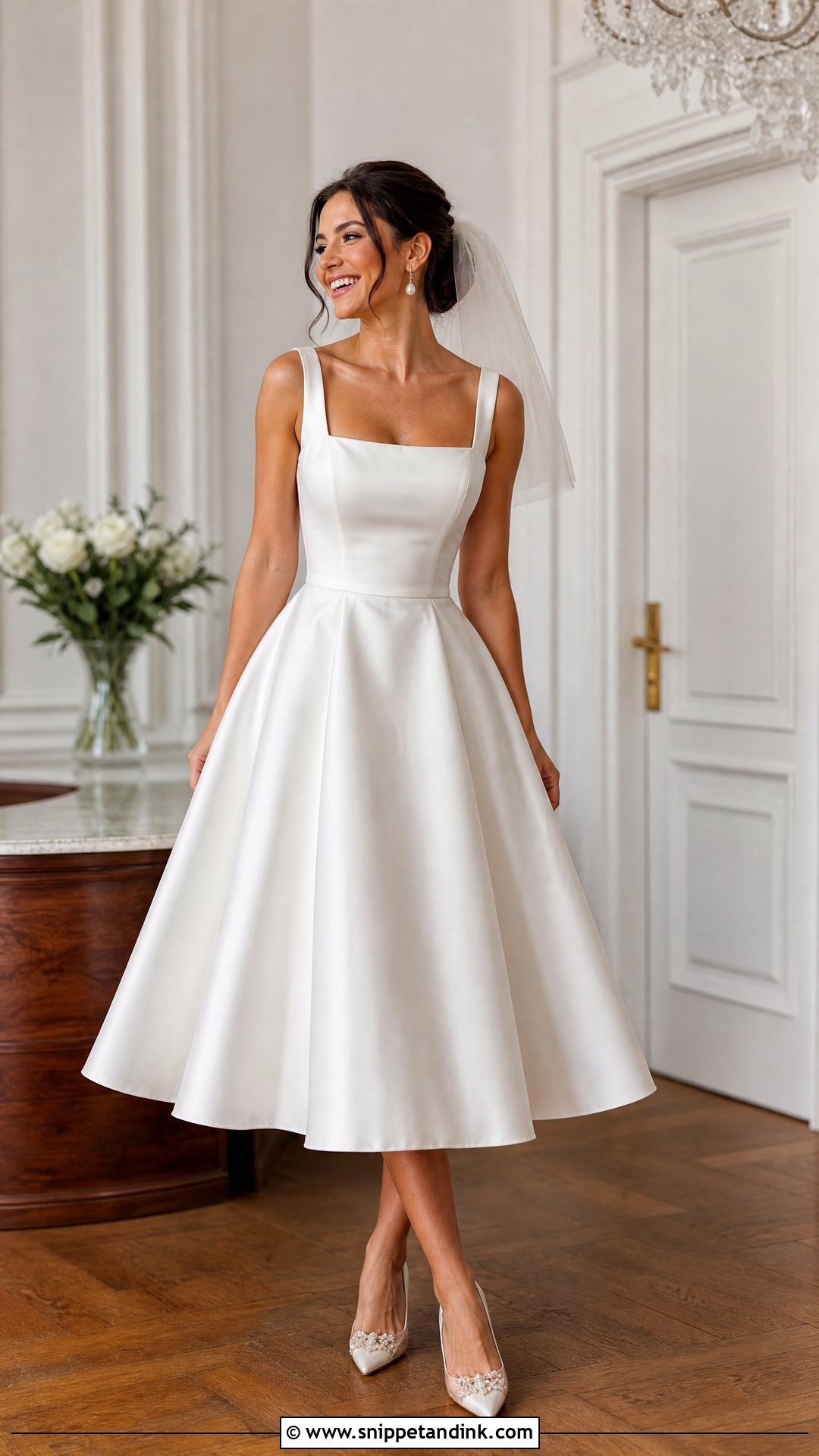
A tea-length fit-and-flare is the practical, playful option: the bodice holds the waist, the skirt opens out and stops between knee and ankle. The flare should start at the natural waist, not the high hip, or the hourglass effect softens. Since your shoes are on show, they need to look finished and feel stable; pointed pumps, embellished flats or ankle-strap heels all work. A bateau, V or sweetheart neckline shapes the upper body. Structured satin is crisp; lace feels vintage. Check the hem in your wedding shoes, because a skirt that stops at the widest point of the calf can make the legs look shorter. A short veil, pearl earrings and a small bouquet complete it.
14. Plus-Size Corset Wedding Dress
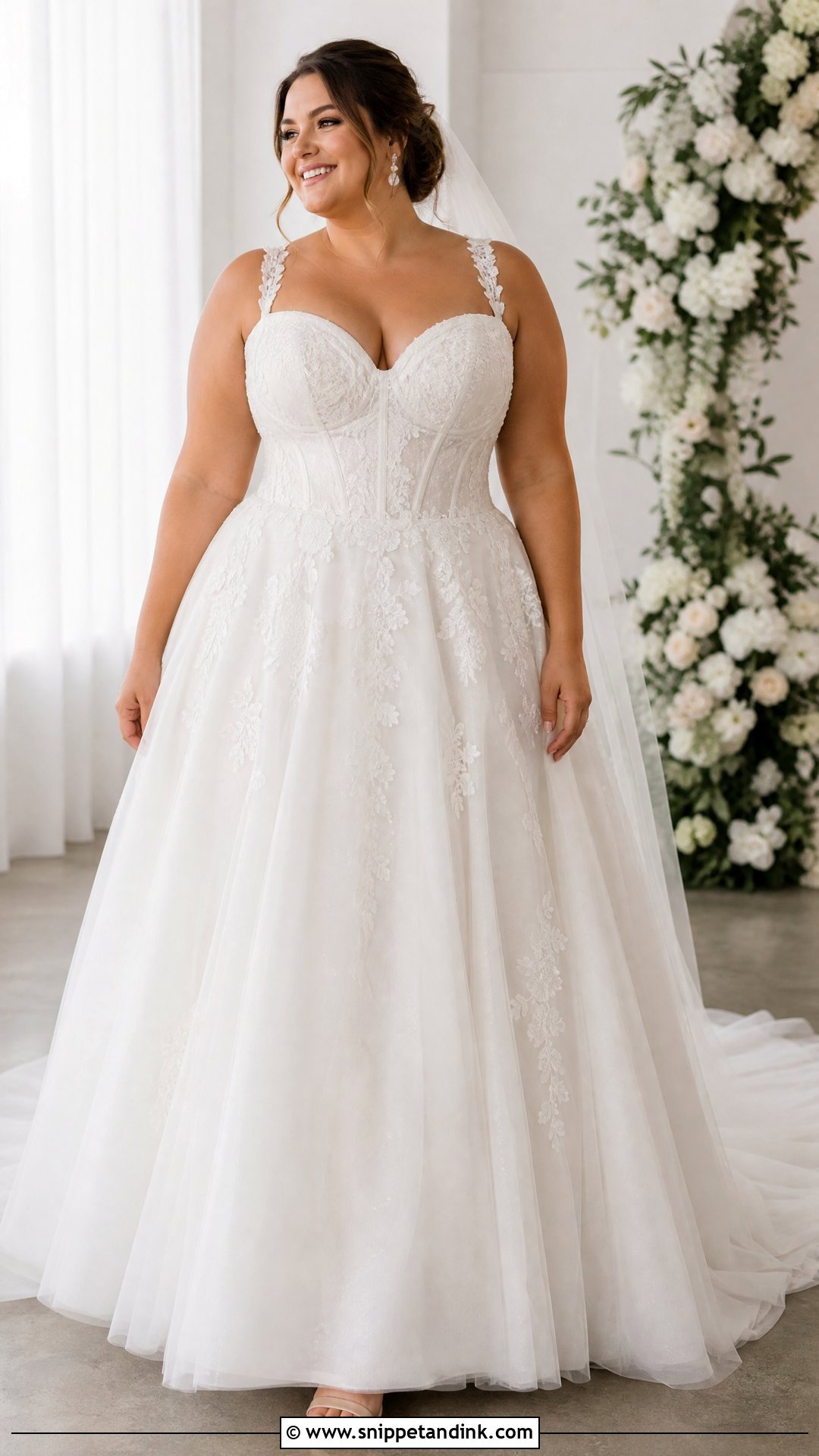
The number on a bridal label means very little, and plus-size hourglass brides are often told the wrong size because of it. A corset bodice with a fit-and-flare or A-line skirt defines the waist and supports the bust through the whole bodice, not just the straps. Look for strong boning, a quality lining, an adjustable back and cups chosen for your actual measurements. A sweetheart or V-neck opens the upper body, and wider straps add security if you want them. Wear seamless shorts or shapewear only if they feel good. Please don’t size down for extra definition; strained seams look tighter, not slimmer. A skilled tailor can adjust bust, waist, hips and hem separately.
15. Petite A-Line Wedding Dress
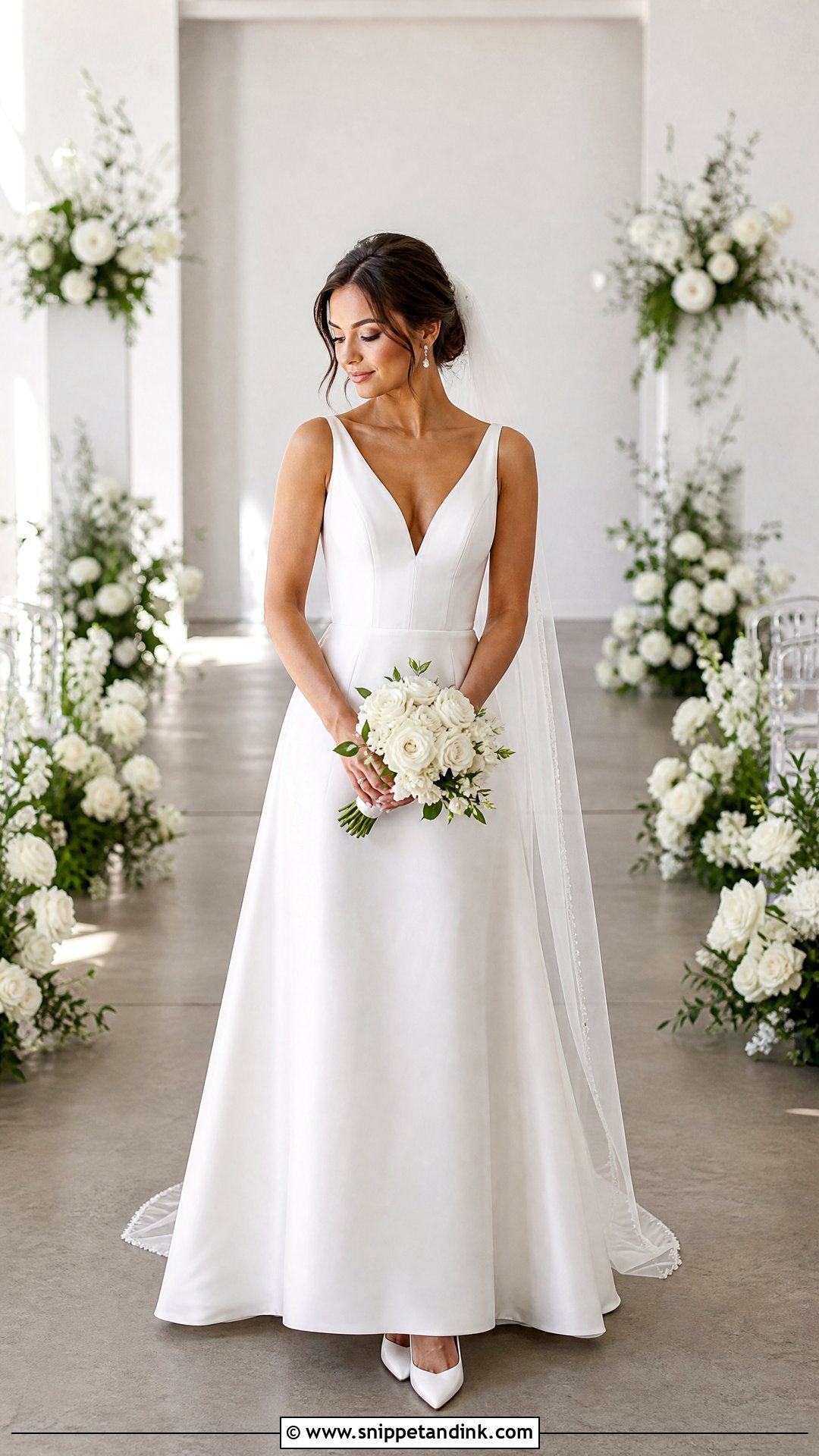
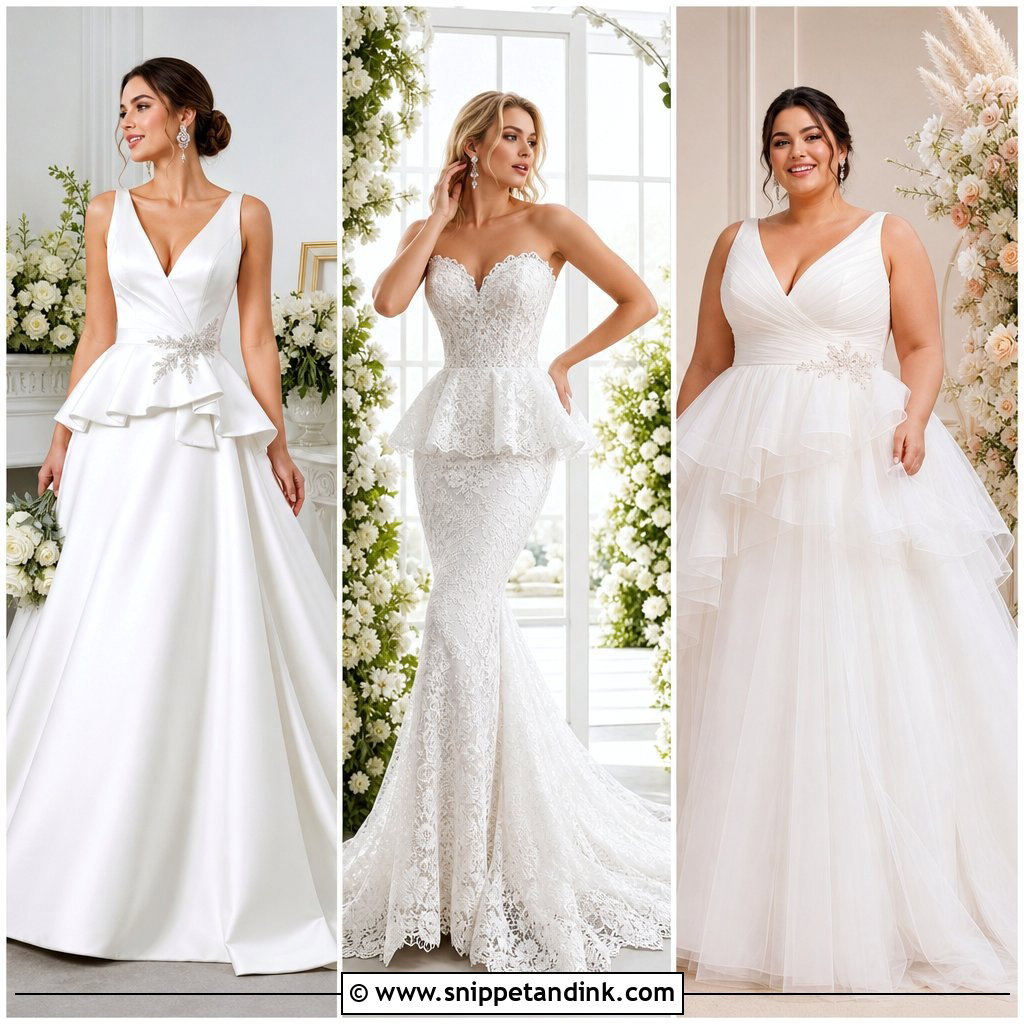
For a petite hourglass bride, proportion matters more than avoiding any one silhouette. A modified A-line defines the waist and widens gently without swamping a shorter frame. A V-neck, slim square neckline or narrow sweetheart adds visual length, as do vertical princess seams and a waist placed a fraction high. Lightweight satin, crepe or soft tulle work better than many stiff layers. Large appliqués, wide belts and big bows can take over. My advice is to ask whether the gown can be ordered in petite proportions, because shortening a standard dress from the hem can move where the lace motifs and the flare were designed to sit.
16. Strapless Mikado Wedding Dress
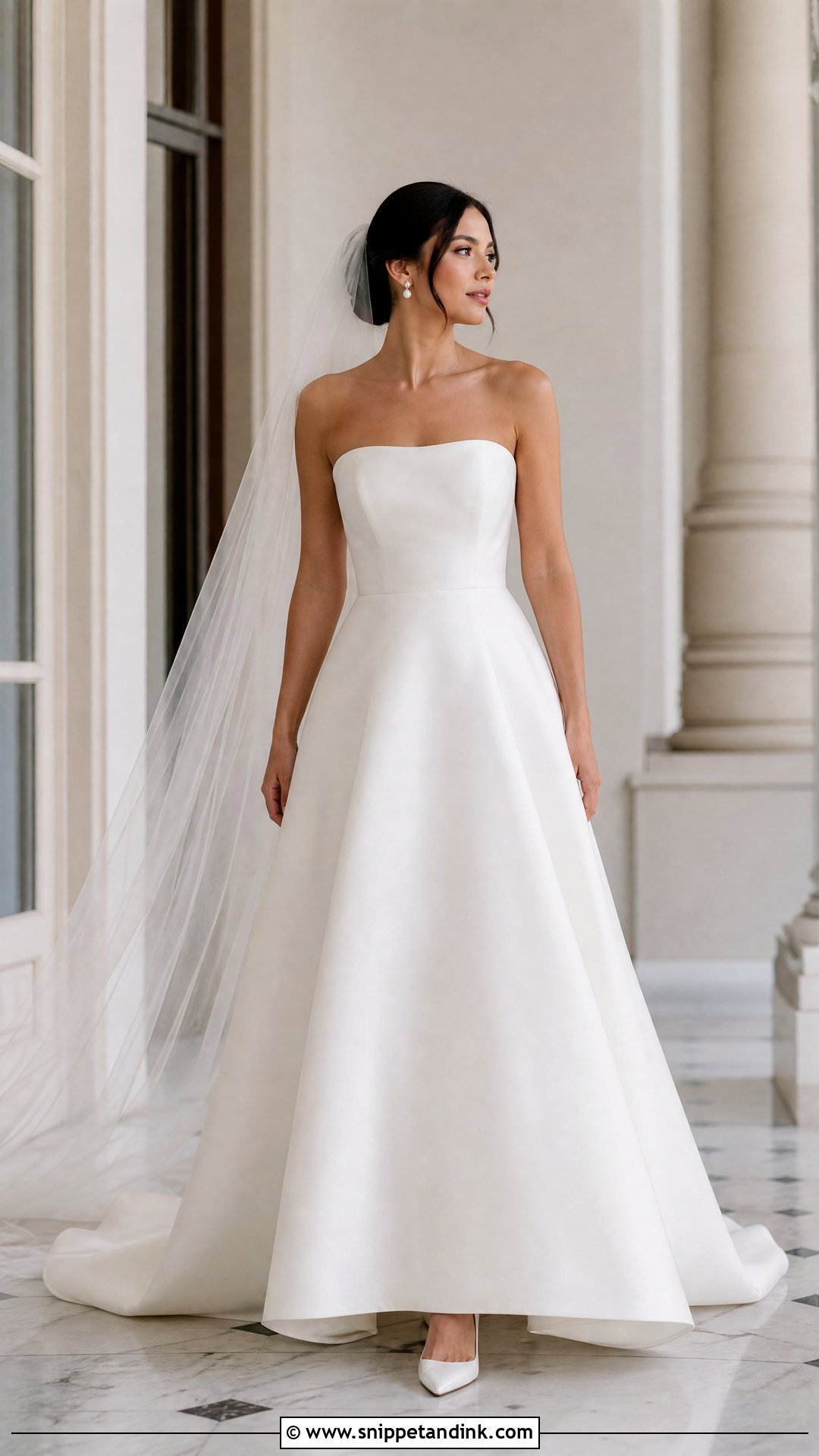
Mikado has enough body to hold a strapless bodice and a defined skirt, and with an A-line, trumpet or controlled ball skirt the waist stays clearly visible. A softly curved neckline is usually easier to wear on a full bust than a perfectly straight edge, which can flatten or press. Boning, cups and a secure waist stay should do the supporting, so you’re not tugging at it all evening. Because the fabric is stiff, thick pleats or gathers at the waist add width quickly; it should lie smooth across the torso and release cleanly into the skirt. Pearl earrings, pointed pumps, a sleek updo and a long simple-edged veil suit the formality.
17. Boho Lace Fit-And-Flare Wedding Dress
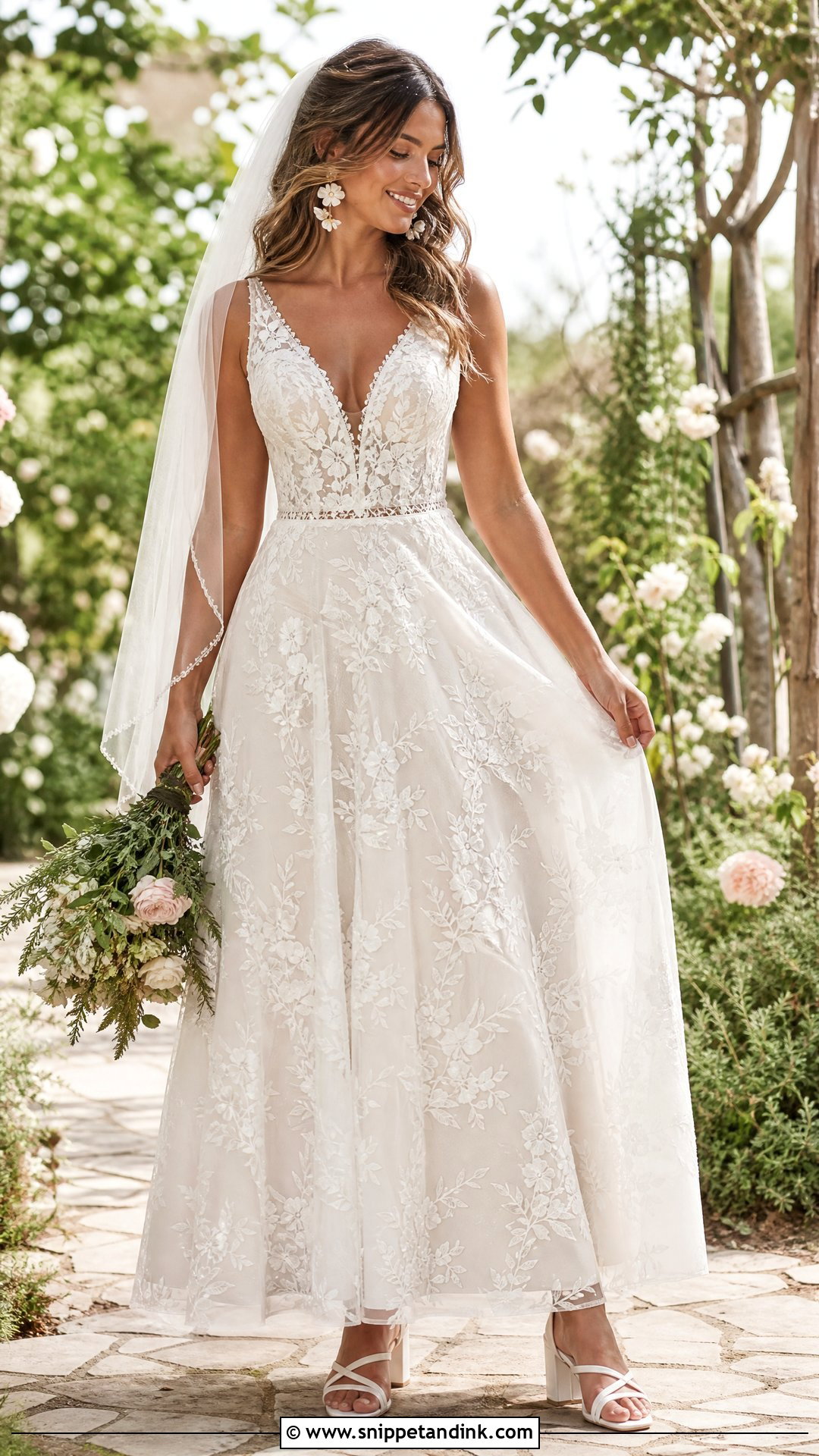
Boho doesn’t have to mean shapeless. A lace fit-and-flare with soft botanical lace, a comfortable lining and a skirt opening at or above the knee keeps the waist defined while feeling relaxed. A V-neck with supportive straps or a scoop keeps the bodice practical. Lace motifs that run vertically or diagonally flatter more than a dense band of pattern at the waist. For outdoor ceremonies, ask for a train you can manage on grass and a secure bustle. Loose waves, small floral earrings, block-heel sandals and a light veil or comb finish it. Walk on uneven ground in it at the last fitting if you can.
18. Cap-Sleeve Fit-And-Flare Wedding Dress
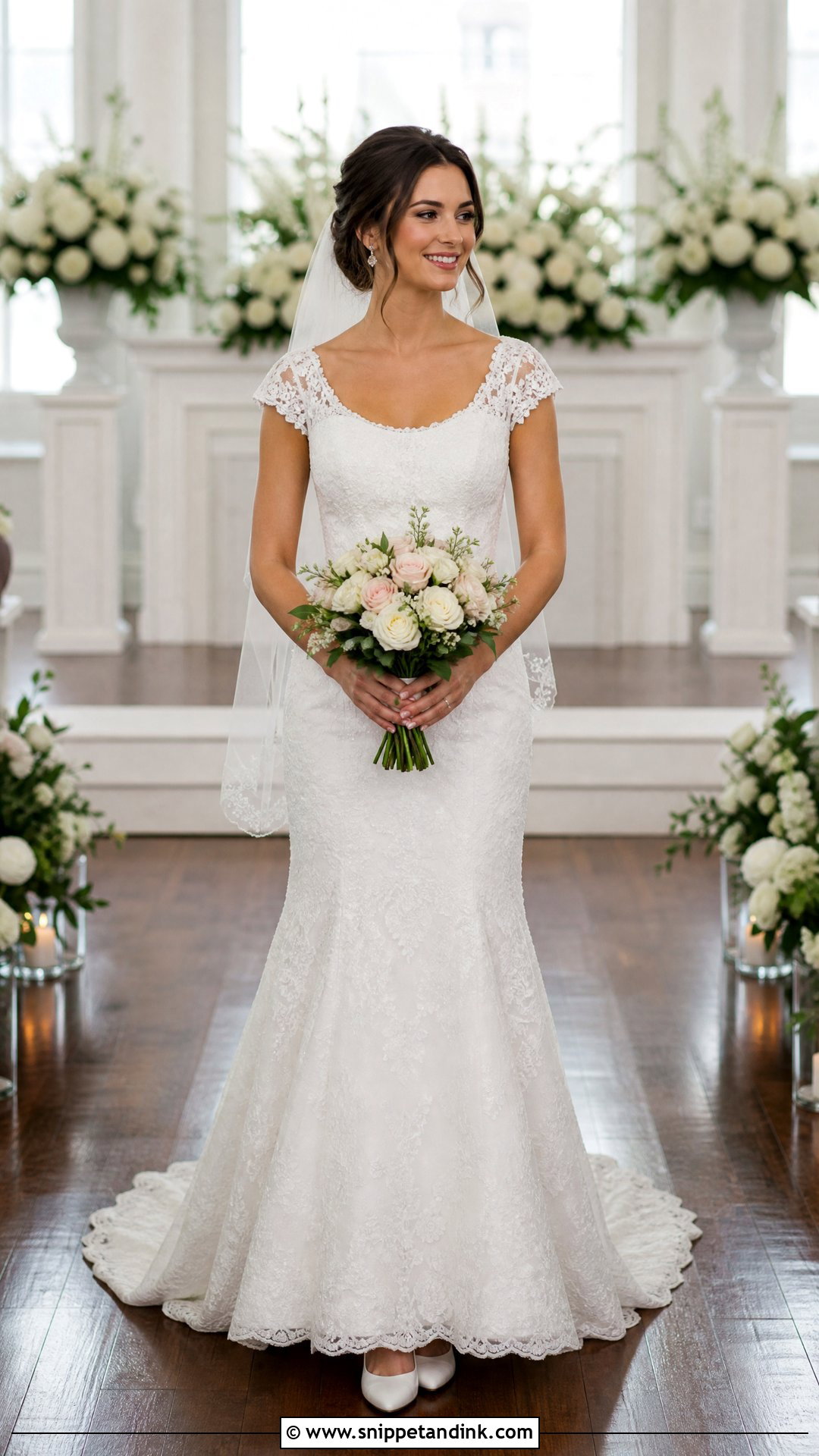
Cap sleeves are tiny, which is why their fit is so easy to get wrong. Cut even slightly tight, they restrict your arms and drag the bodice up when you reach for something. Smooth, precisely placed sleeves with a V, scoop or soft illusion neckline keep the upper body open and balanced, and the fitted waist and hip should flow into a gentle flare. Lace sleeves are romantic; smooth satin cleaner. During alterations, raise and rotate your arms and have the fitter look at the back and underarm for creases, which tell her the sleeves or bodice need more shaping. A low chignon, small earrings, classic pumps and a fingertip veil complete it.
19. Fitted Wedding Dress With Detachable Overskirt
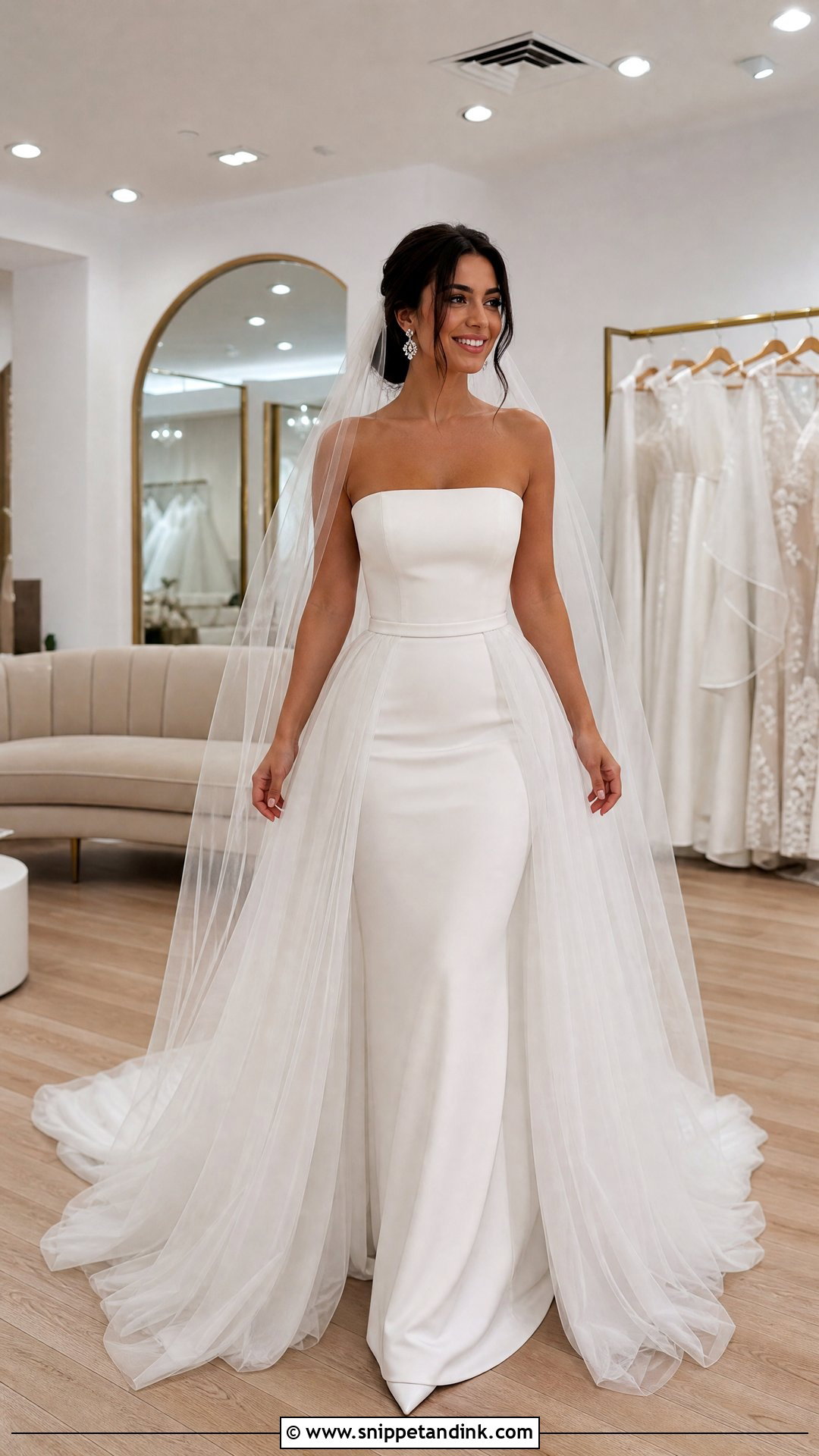
Two looks from one gown suits an hourglass well, because the base underneath is fitted and the overskirt simply adds volume for the ceremony. The base can be a crepe sheath, trumpet or mermaid; the overskirt can be tulle, organza or Mikado. The overskirt’s waistband is the detail I fuss over. It should fasten flat without leaving a thick ridge at your waist, which would undo the whole point. Make sure its train can be bustled independently, and practise removing it with the helper who’ll do it on the day. Wear a long veil and classic heels first, then switch to statement earrings or a hair piece for the reception.
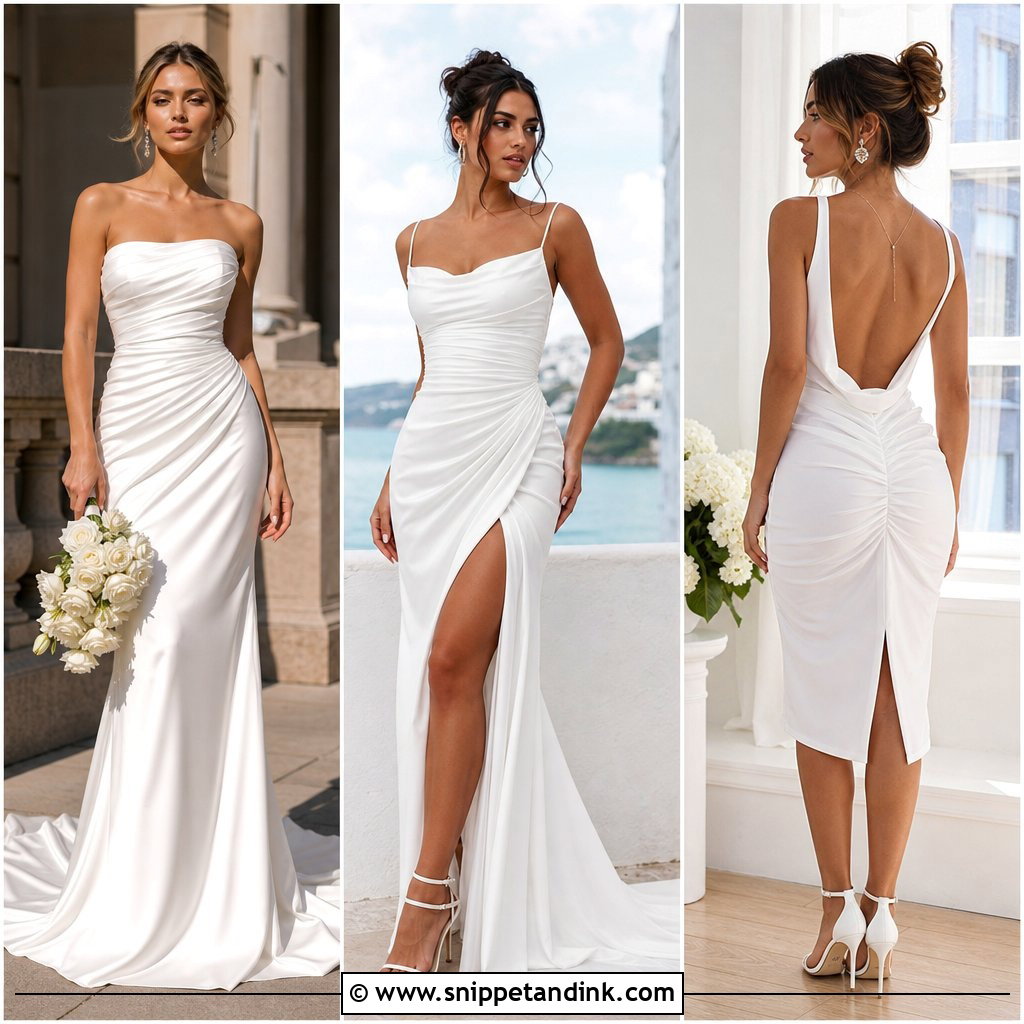
20. High-Neck Open-Back Wedding Dress
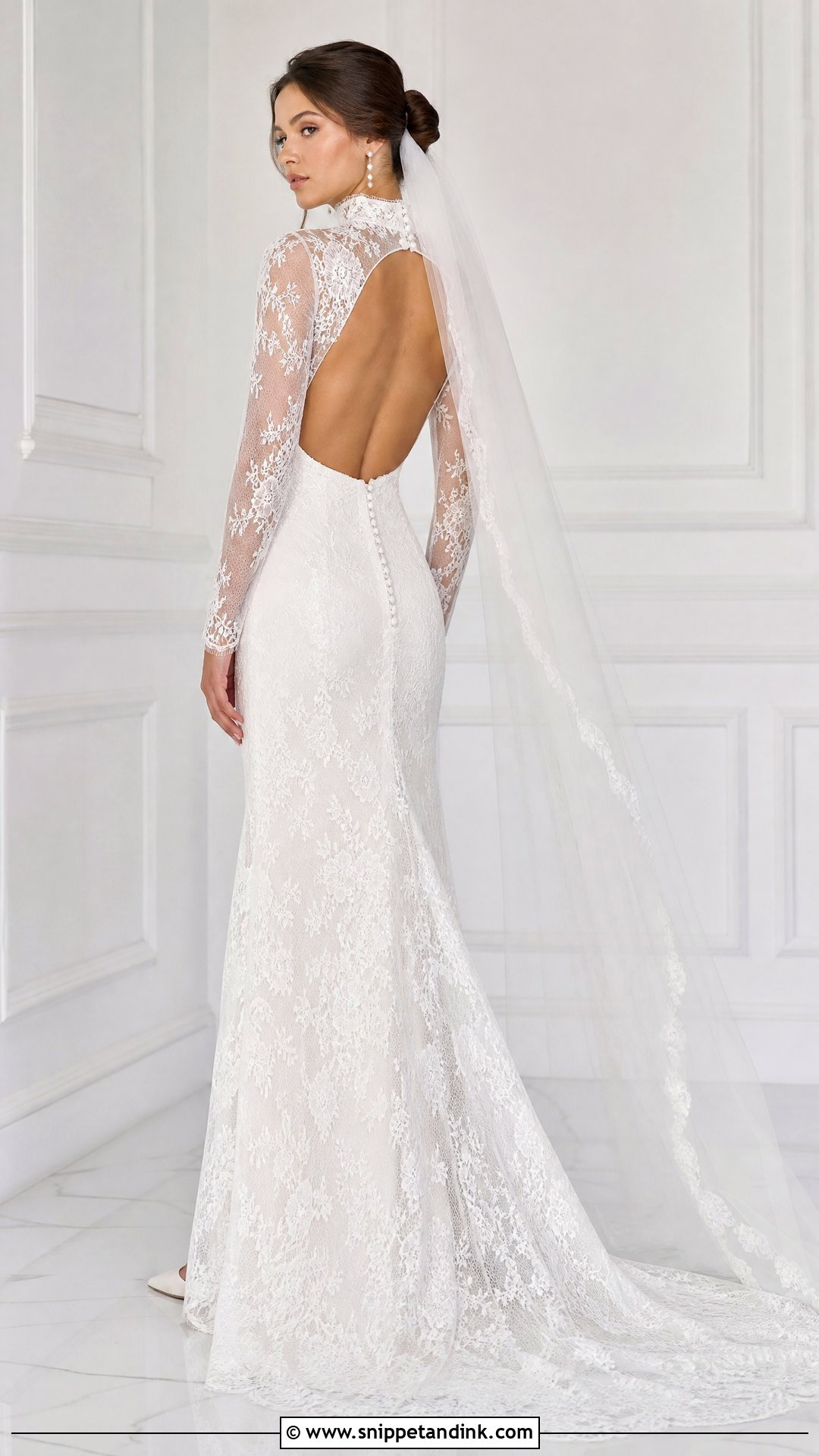
From the front this gown is covered and graceful; from the back it opens up. On an hourglass, a high neck can make the top half look heavy if the rest of the gown is loose, so pair it with a fitted waist and a slim A-line or fit-and-flare skirt. Fine lace, illusion fabric or a smooth halter-style bodice keeps the upper section light. Backless support is the practical question to sort early. Stick-on cups and low-back bras vary hugely in how well they work on a fuller bust, so bring yours to every fitting. Check that the open back lies flat and that you can turn your head freely. An updo, drop earrings, pointed heels and a veil below the hair finish it.
How a Fitted Gown Behaves After Hours of Sitting and Dancing
Close-fitting gowns change slightly as the day goes on, and curvy figures notice it most because the fit relies on the waist staying exactly where it was set. I plan fittings with that in mind.
Stretch Fabrics Relax
Stretch crepe and jersey give a little with body heat and movement, so a waist that’s perfect at the fitting can loosen slightly by evening. A fitter will often set a stretch bodice a touch firmer than a woven one for this reason, while still leaving you room to breathe and eat.
Mermaids Ride Up
Sitting pushes a fitted skirt up toward the hips. On a mermaid or trumpet, the flare can then sit higher than designed and the knee area can crease. Stand up, smooth the skirt down from the hips, and it settles again; a waist stay inside the gown helps keep everything in place.
The Bustle Takes Weight Off the Waist
A heavy train bustled up adds weight to the back of the skirt, which pulls on the waist seam. Test the bustle at your final fitting and walk a few laps with it fastened, so you know the gown still sits right once the dancing starts.
Your Waist Is the Reference Point, Not the Trend
Use these gowns as a starting point rather than a rulebook. Mermaids, trumpets, fit-and-flares, A-lines, sheaths and structured ball gowns can all suit an hourglass when the bust, waist and hips are tailored properly. Think about the neckline, fabric, internal construction, train and underwear as one outfit. Above all, try several silhouettes on, because a gown that looks flat on a hanger can transform once it’s on your body, and the reverse happens too. Take photos, walk around and notice how each one feels after a few minutes. A precise fit and your own comfort will flatter you more than any trend.
You'll Like These Ideas:


Leave a Reply