
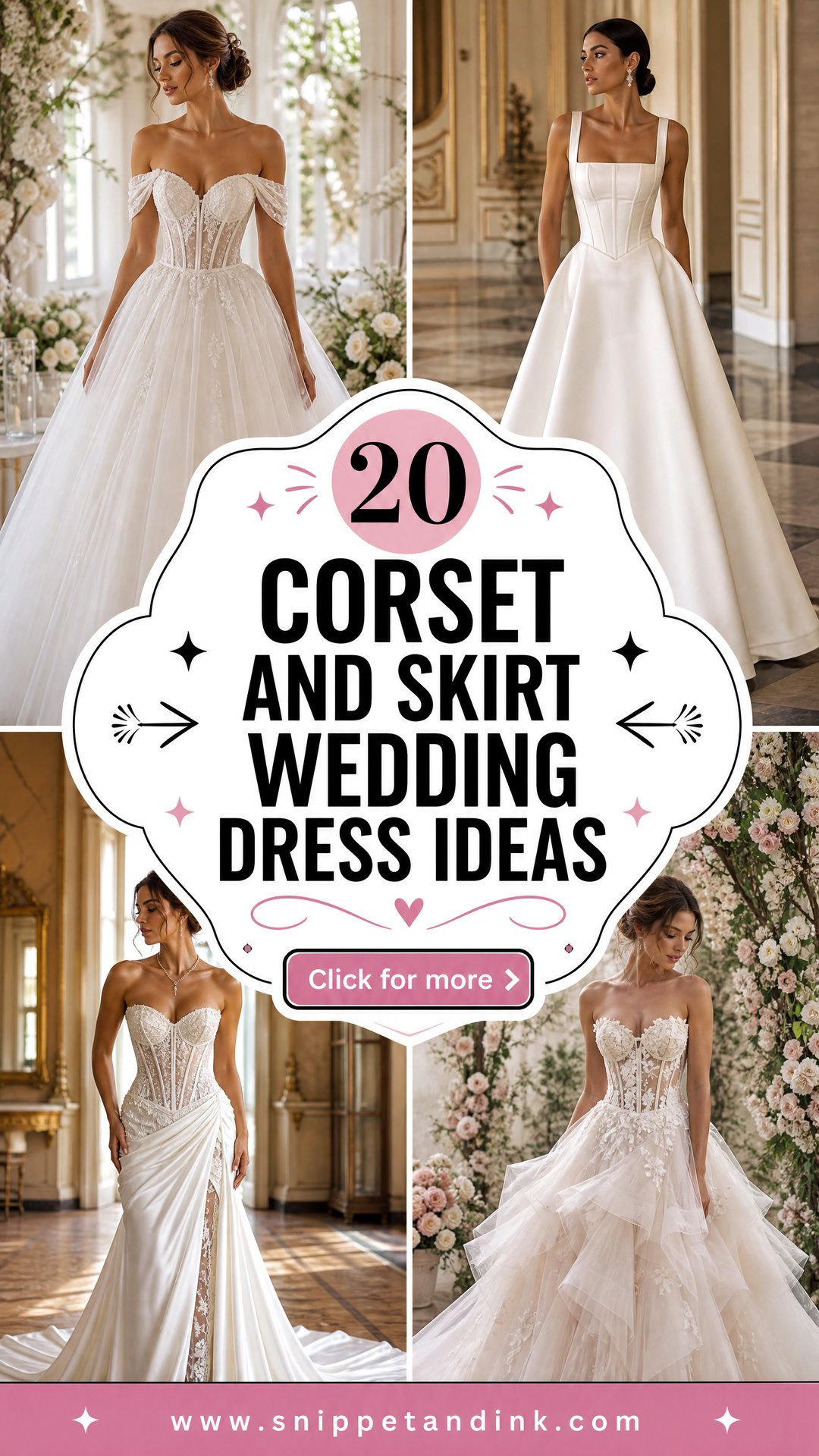
A corset over a separate skirt gives you structure on top and whatever movement you like below. The same boned bodice can look classic over satin, sharp over a column or soft over tulle; what changes the mood is the neckline, the waist point and how much skirt you add. Visible boning, long bodices and basque waists are everywhere in bridal right now, and separates make it easier to fix proportions, since a long-torsoed bride and a petite one can each get a skirt cut for her. Some brides also keep a second skirt for the party. I’ve written each idea below the way I’d talk it through at a fitting: what to look for, and where it tends to go wrong.
What the Boning Inside Your Bodice Is Doing
Not every bridal corset is built the same way, and the difference shows by evening. Plastic boning is light and cheap, but it bends with body heat and can kink at the waist after a few hours of sitting. Spiral steel flexes in more than one direction, so it follows curves at the sides and hips. Flat steel stays rigid and is usually saved for the front and back, where it keeps a bodice from creasing.
When I fit a corset, I measure torso length from under the bust to the top of the hip as well as the usual bust and waist. A corset that is too long for your torso pushes into your thighs when you sit, and one that is too short leaves a roll above the waistline. If you’re buying separates, ask to try the bodice on its own first. A good one should feel snug and supportive, with no gaping at the top edge when you lean forward.
Where Separates Make Sizing Easier
Many brides are different sizes on top and below. With separates, the corset is chosen for the bust and waist and the skirt for the hips, so less needs altering. It’s one of the most practical reasons to choose this style.
1. Strapless Satin Corset And Ball Gown Skirt Wedding Dress
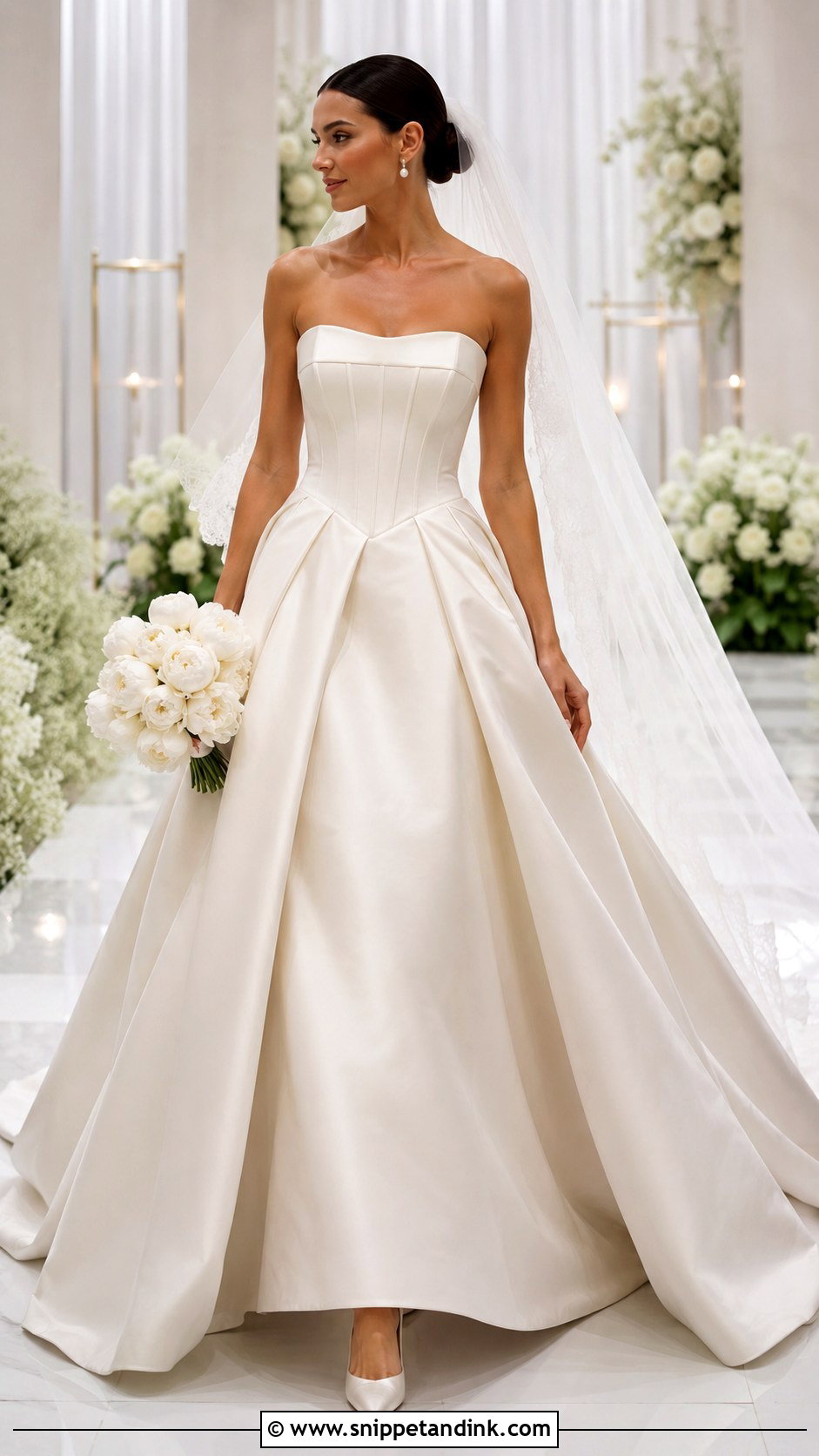
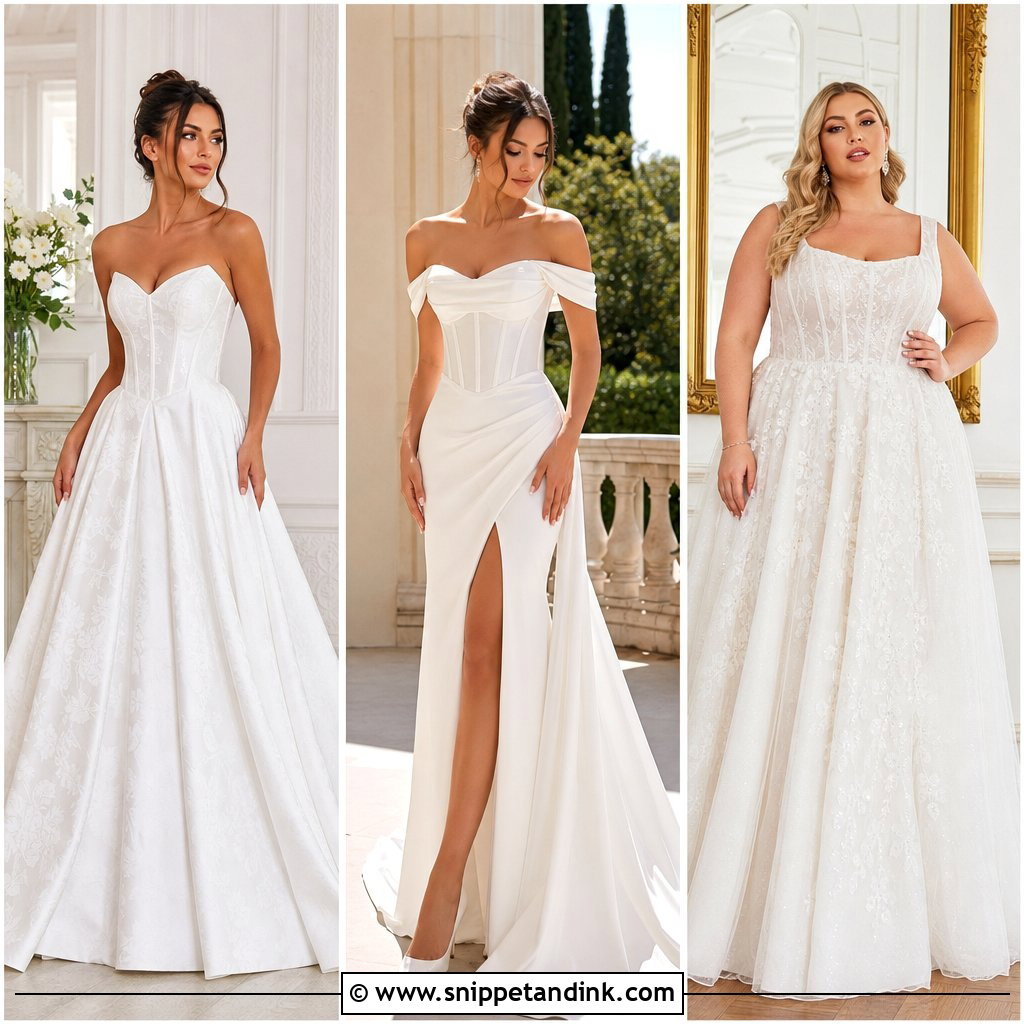
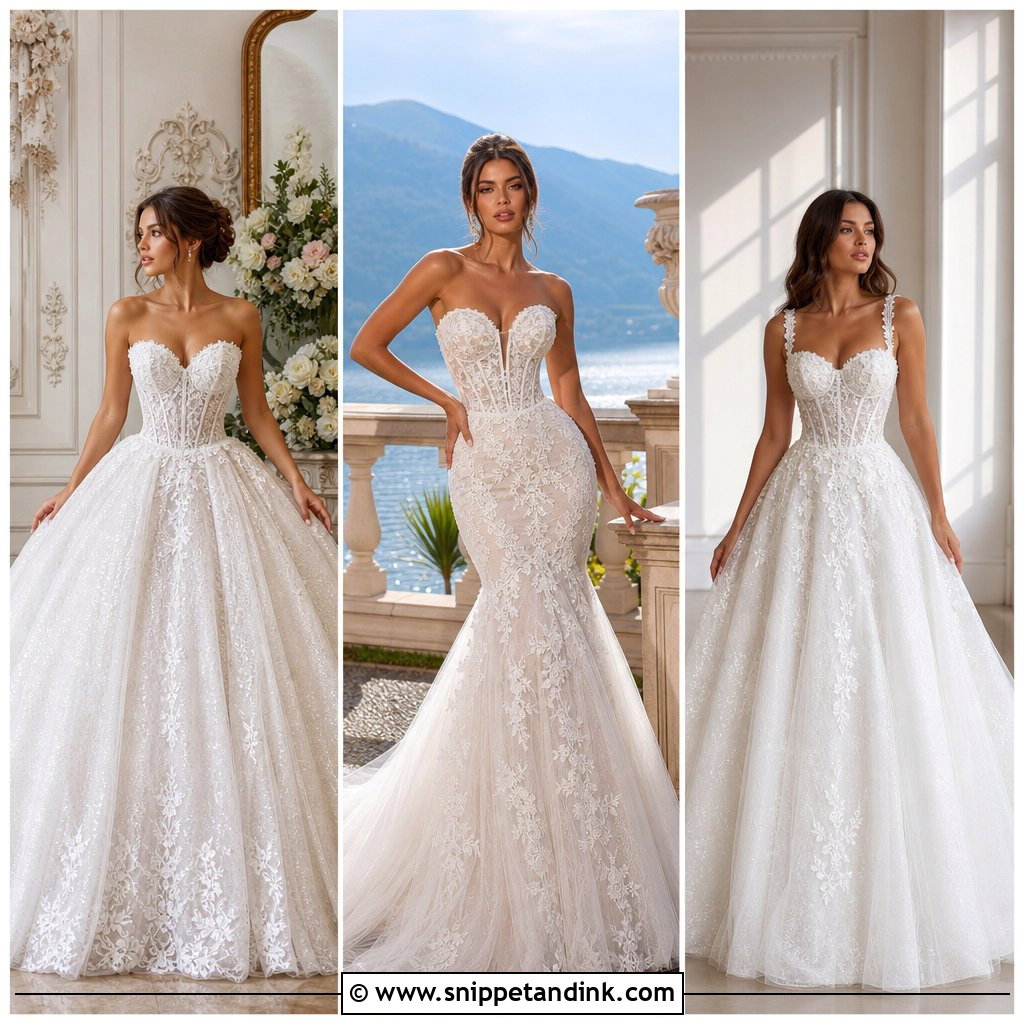
Strapless satin over a big ball gown skirt is the classic version, and it relies entirely on the bodice fit. Look for a gently curved neckline, smooth boning channels and a waist point that runs straight into the skirt’s centre front. Heavy satin or mikado holds the shape all day, so the accessories can stay simple: pearl drops, a cathedral veil, pointed ivory pumps. If a strapless bodice is going to slip, it shows when you lift your arms to hug someone. I test that at every fitting, and I’d rather take the top edge in a little than have a bride hitching it up in photos.
2. Lace Corset And Tulle A-Line Skirt Wedding Dress
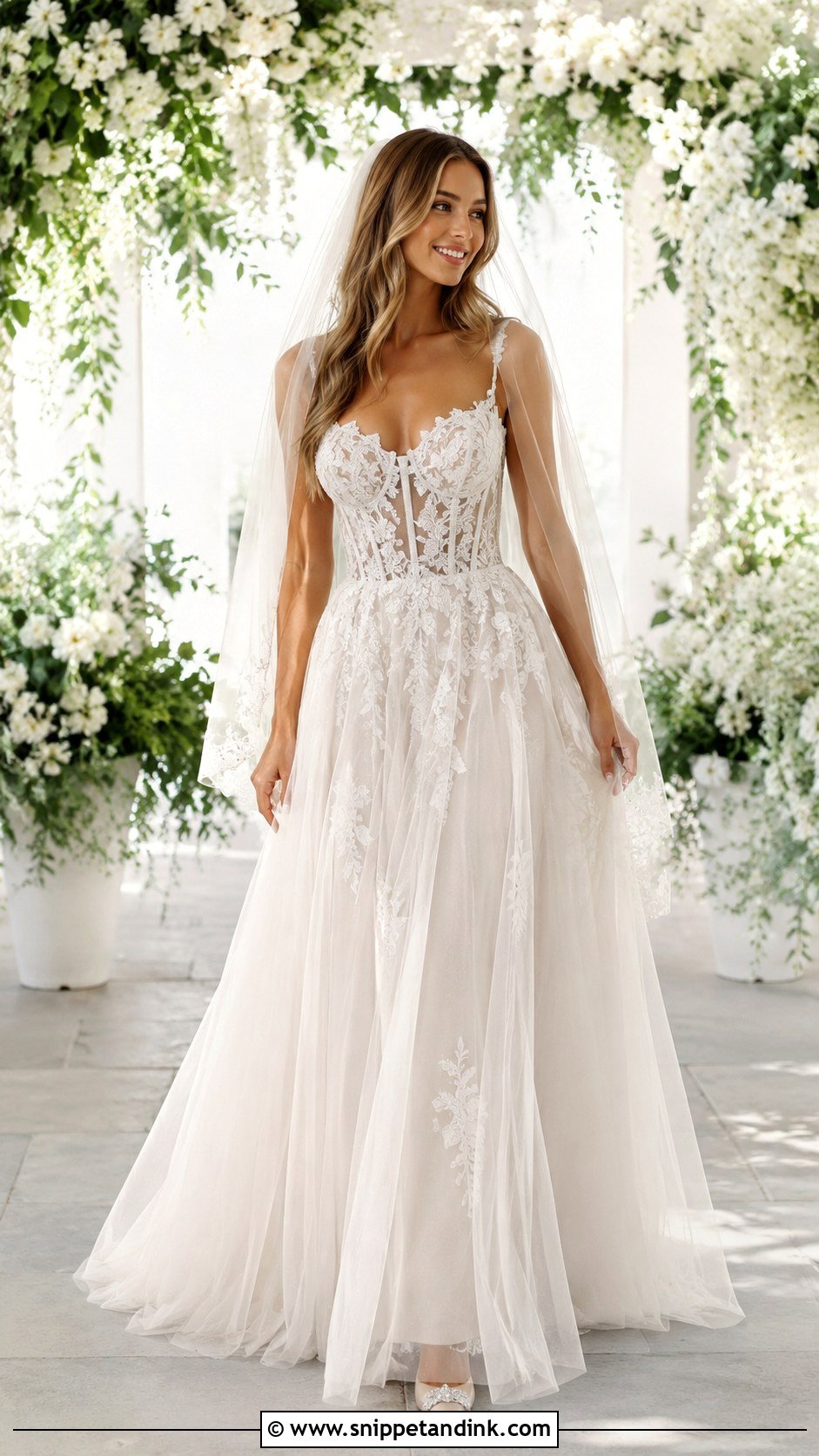
Lace takes the hard edge off a corset, and an airy tulle A-line keeps it light. The detail that makes separates look like one dress is repetition: lace that runs a little below the waist, or a few appliqués scattered on the skirt. A part-lined bodice gives coverage while letting the lace show its depth. I’d go with a fingertip veil trimmed in the same lace and loose waves or a low textured updo. For outdoor ceremonies, keep the train modest and ask for a simple bustle; tulle trains pick up grass and petals faster than satin.
3. Basque Waist Corset And Mikado Skirt Wedding Dress
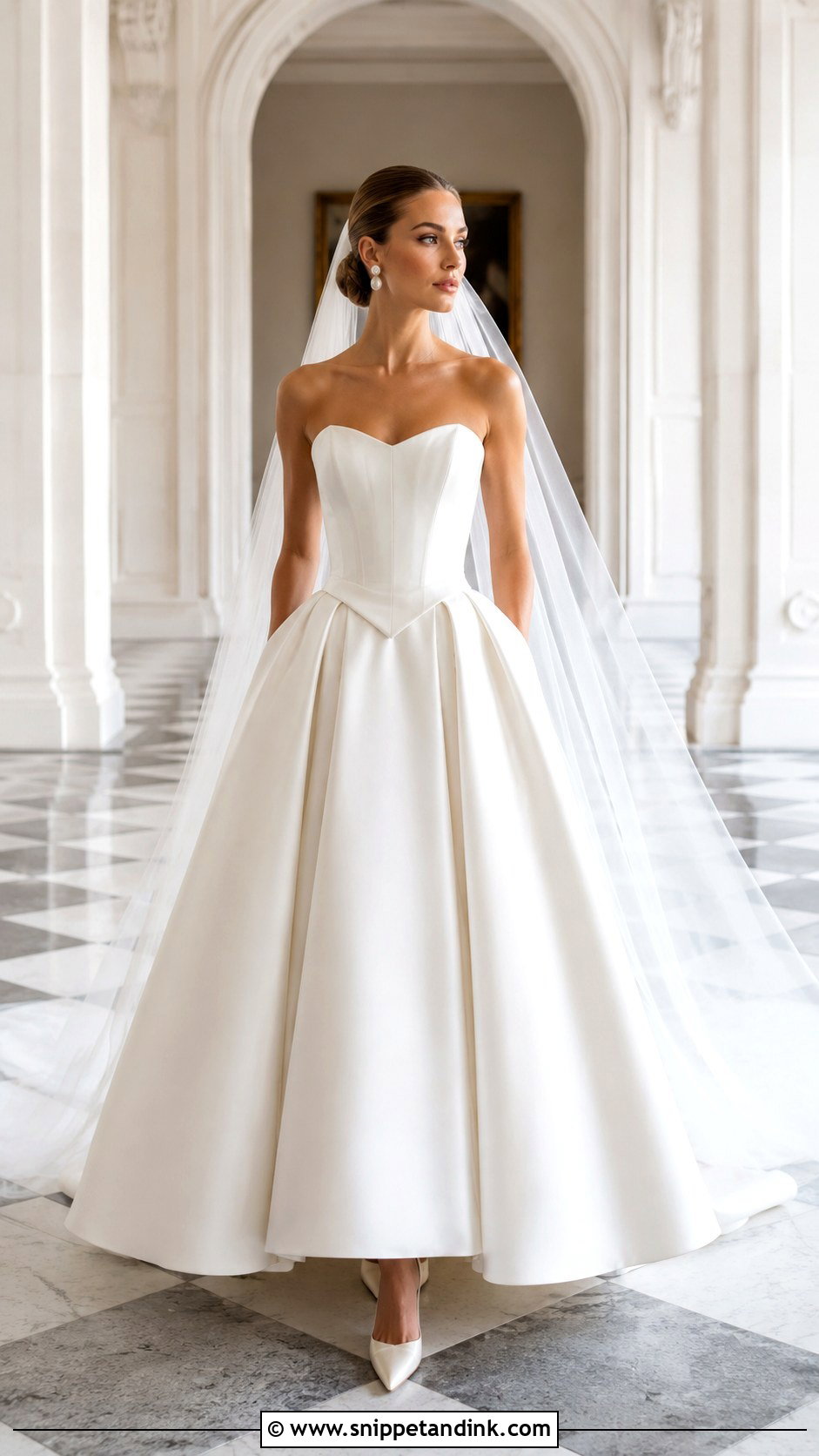
A basque waist dips into a V at the front, which draws the eye down and makes the waist look narrower. Under it, structured mikado holds box pleats without bulk at the band. The bodice should follow your torso and stop at the right point. Too long and it presses into the hip bones when you sit. With a long plain veil and a neat chignon, the neckline and waist point do the talking. Ask the tailor to centre the skirt’s pleats exactly under that point. Even a centimetre off, the V looks crooked in a front-on photo.
4. Off Shoulder Corset And Full Tulle Skirt Wedding Dress
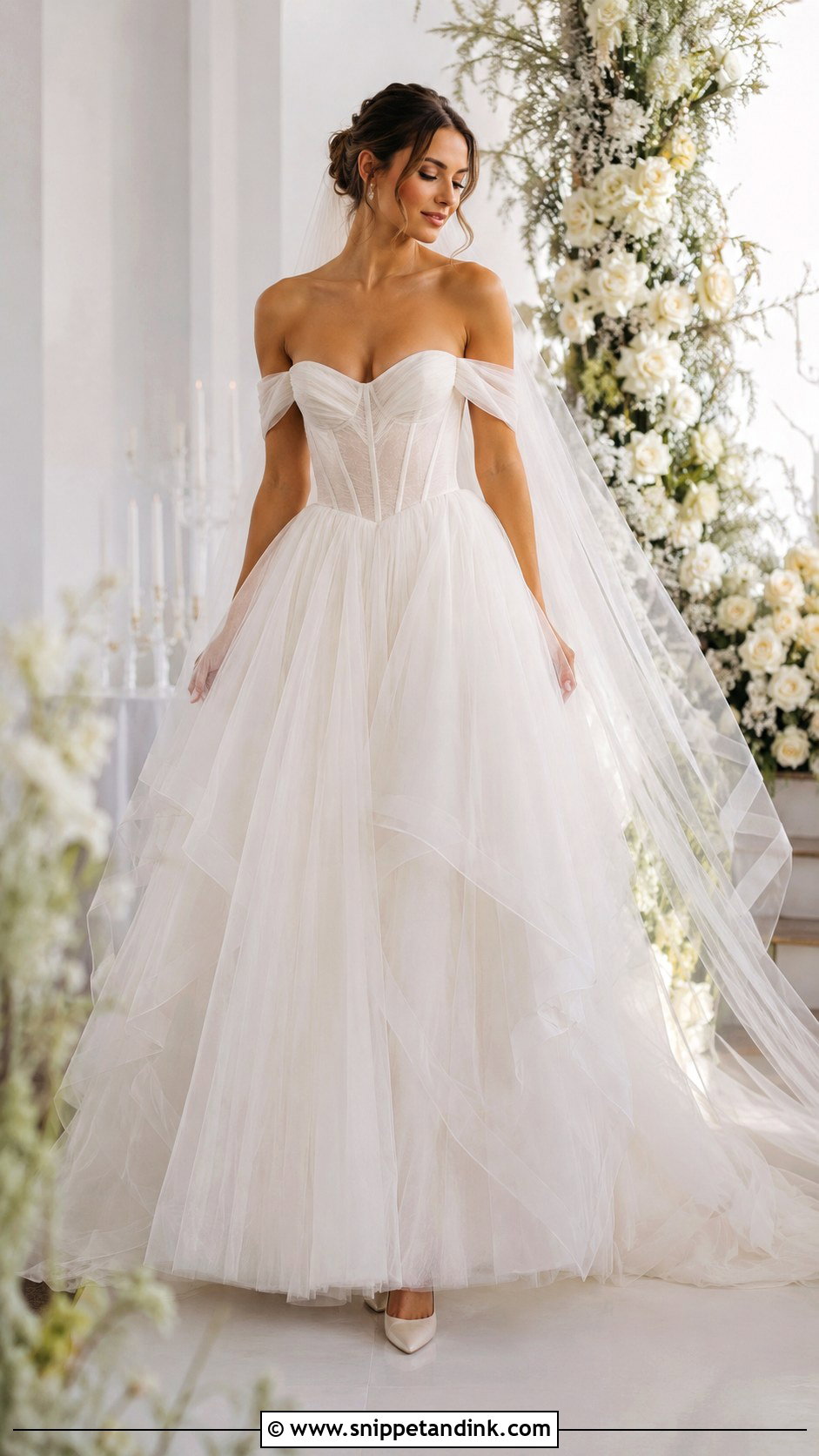
Off-the-shoulder drapes soften a boned bodice, and a full tulle skirt that starts smoothly at the waist suits them. Detachable straps are useful if you want the drape for the ceremony and a strapless look for the party. Pair it with a sheer cathedral veil, small drop earrings and low heels you can walk in under all that tulle. My caution: drapes that sit tightly around the upper arm stop you lifting your arms properly. I check that a bride can hug and dance before the drape is finished. With a skirt this full, keep the bouquet and jewellery small.
5. Sheer Boned Corset And Organza Skirt Wedding Dress
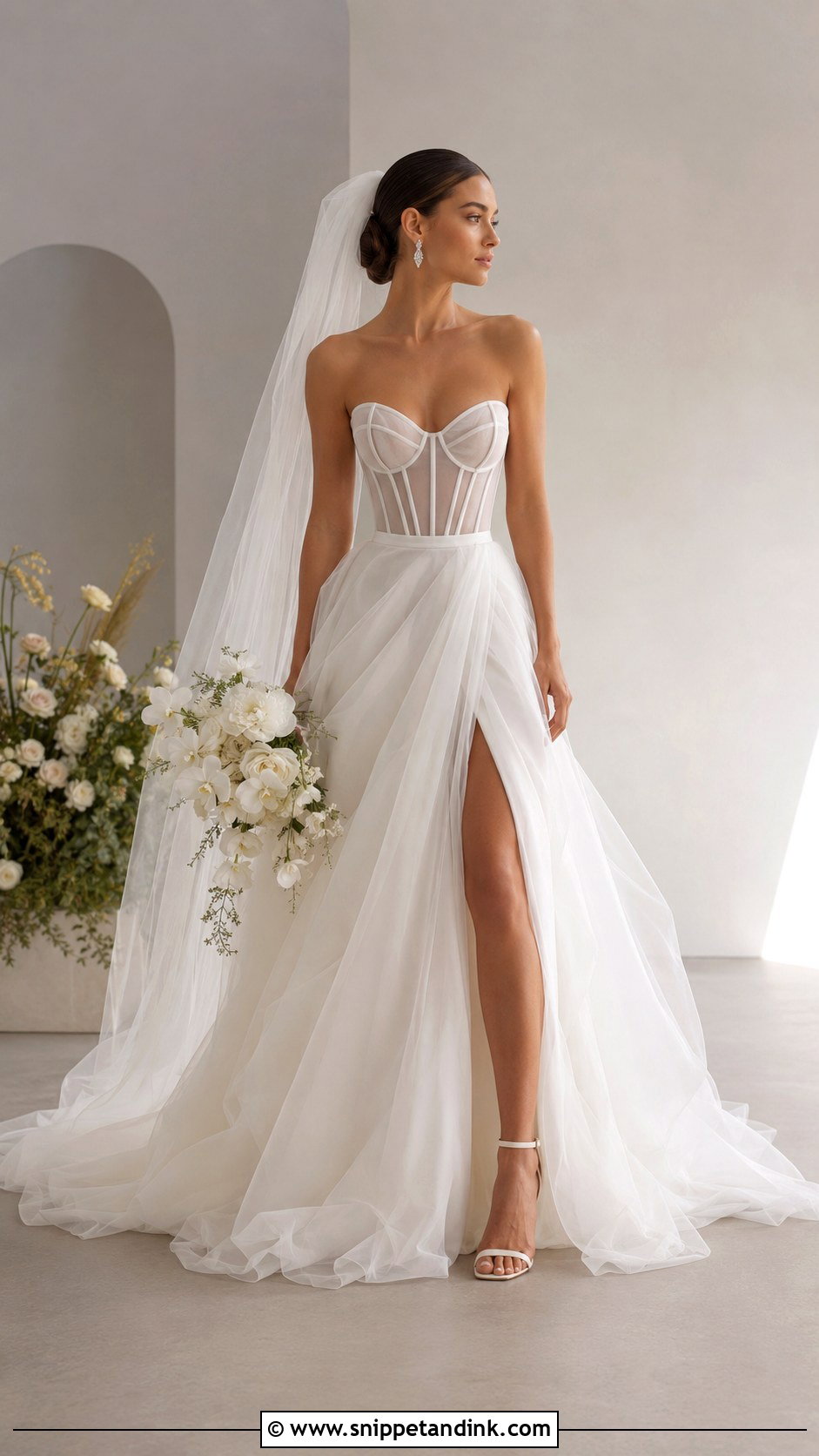
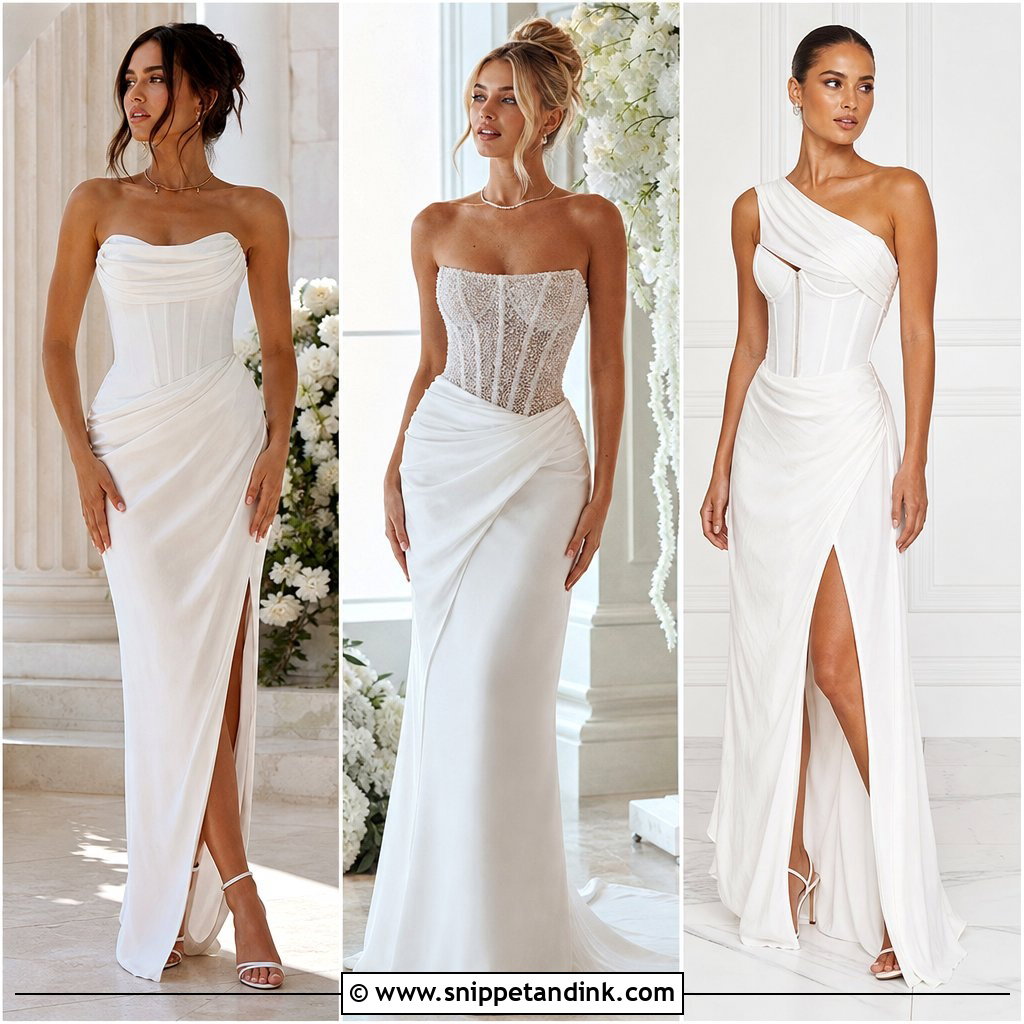
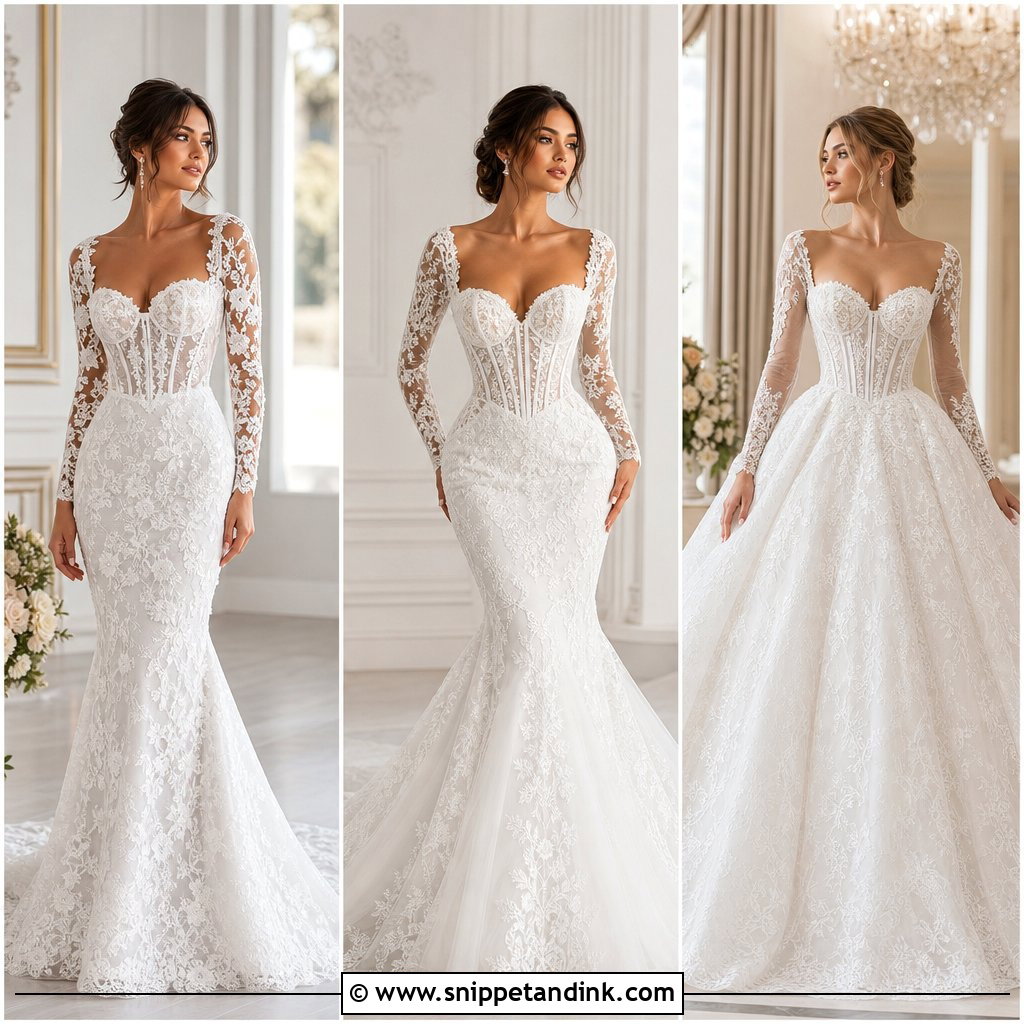
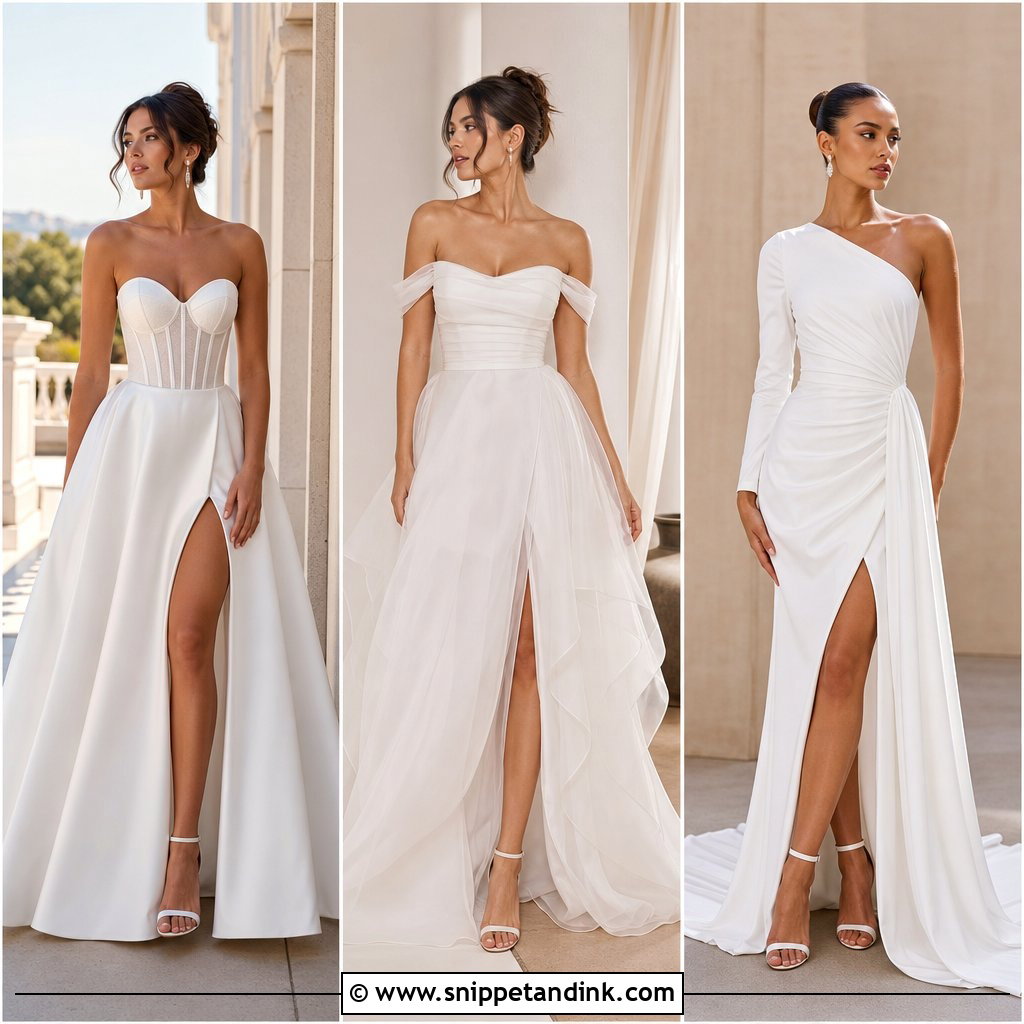
A sheer corset with visible boning and seams has a modern, architectural look, with lining placed only over the bust. A pleated or lightly gathered silk organza skirt gives volume while staying light. Choose a skirt in exactly the same ivory as the lining, since sheer fabric shows every shade difference. I’d keep the hair in a sleek low bun. The thing to check is the inside: cups, seam allowances and hooks all show through sheer fabric, and they show more under a flash. I look at it in daylight and indoor light before the last fitting.
6. Square Neck Corset And Satin A-Line Skirt Wedding Dress
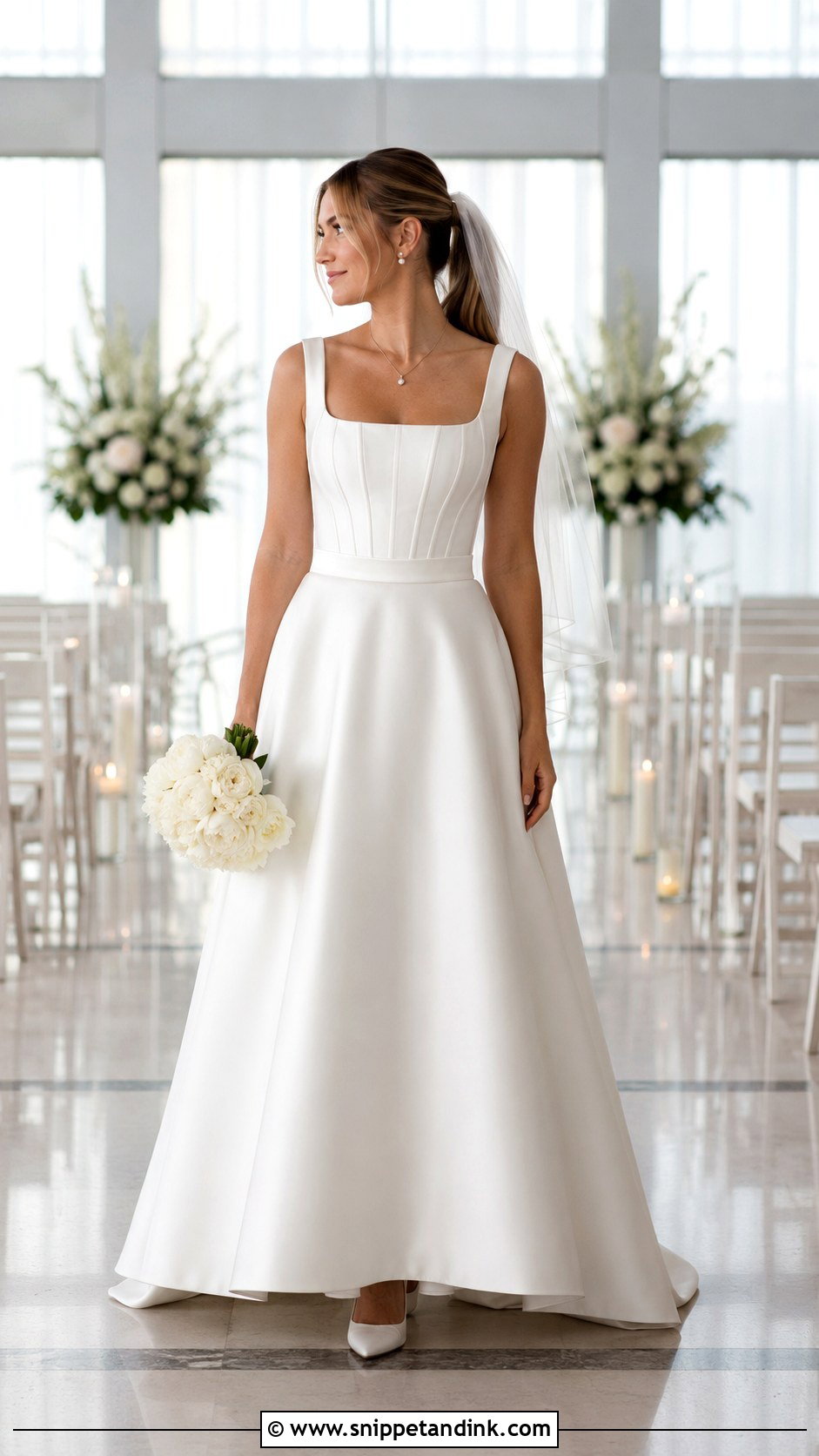
A square neck frames the collarbone without showing much, and over a smooth satin A-line it reads classic with a modern edge. Wide-set straps give support and make the shape crisp. Keep the skirt nearly ungathered so the waist stays clean. Pearl studs and closed-toe slingbacks suit it, and a short veil or high ponytail makes it feel fresh. I check that the straps don’t slide outward, which turns a square neck into a scoop by evening. Order the bodice and skirt in the same fabric lot; white and ivory side by side show up clearly in daylight.
7. Sweetheart Corset And Mermaid Skirt Wedding Dress
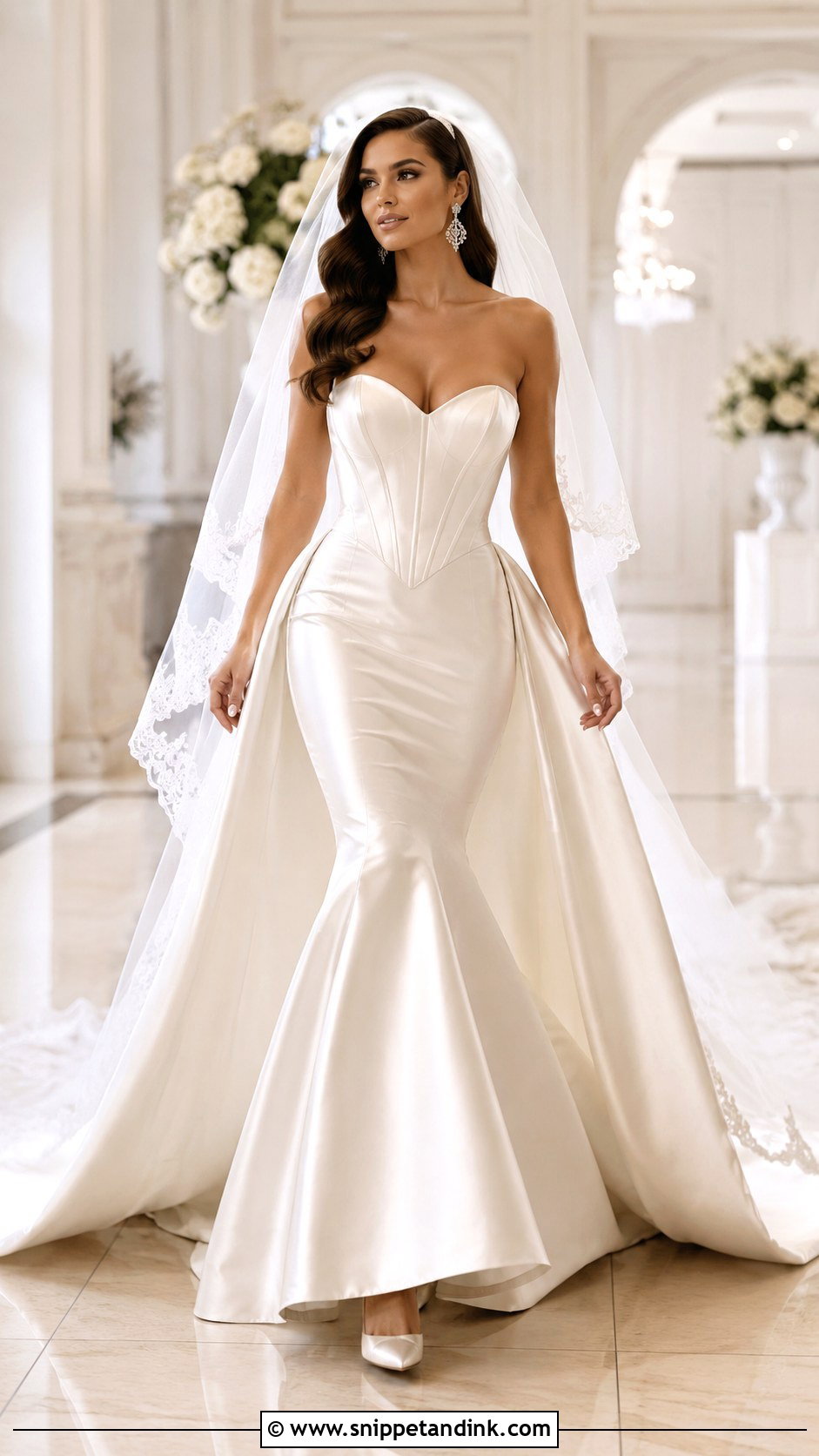
The curves of a sweetheart corset lead naturally into a mermaid skirt that flares low. Cups need to be placed exactly, and the boning should follow your torso without digging in at the waist. Stretch crepe or soft satin moves much better than rigid fabric for this shape. A chapel veil, chandelier earrings and side-parted waves suit it. A mermaid skirt is tight through the hips and thighs, so I make brides take full strides and sit down at the final fitting. If you want ceremony drama, a detachable train gives it and comes off later.
8. Draped Corset And Chiffon Skirt Wedding Dress
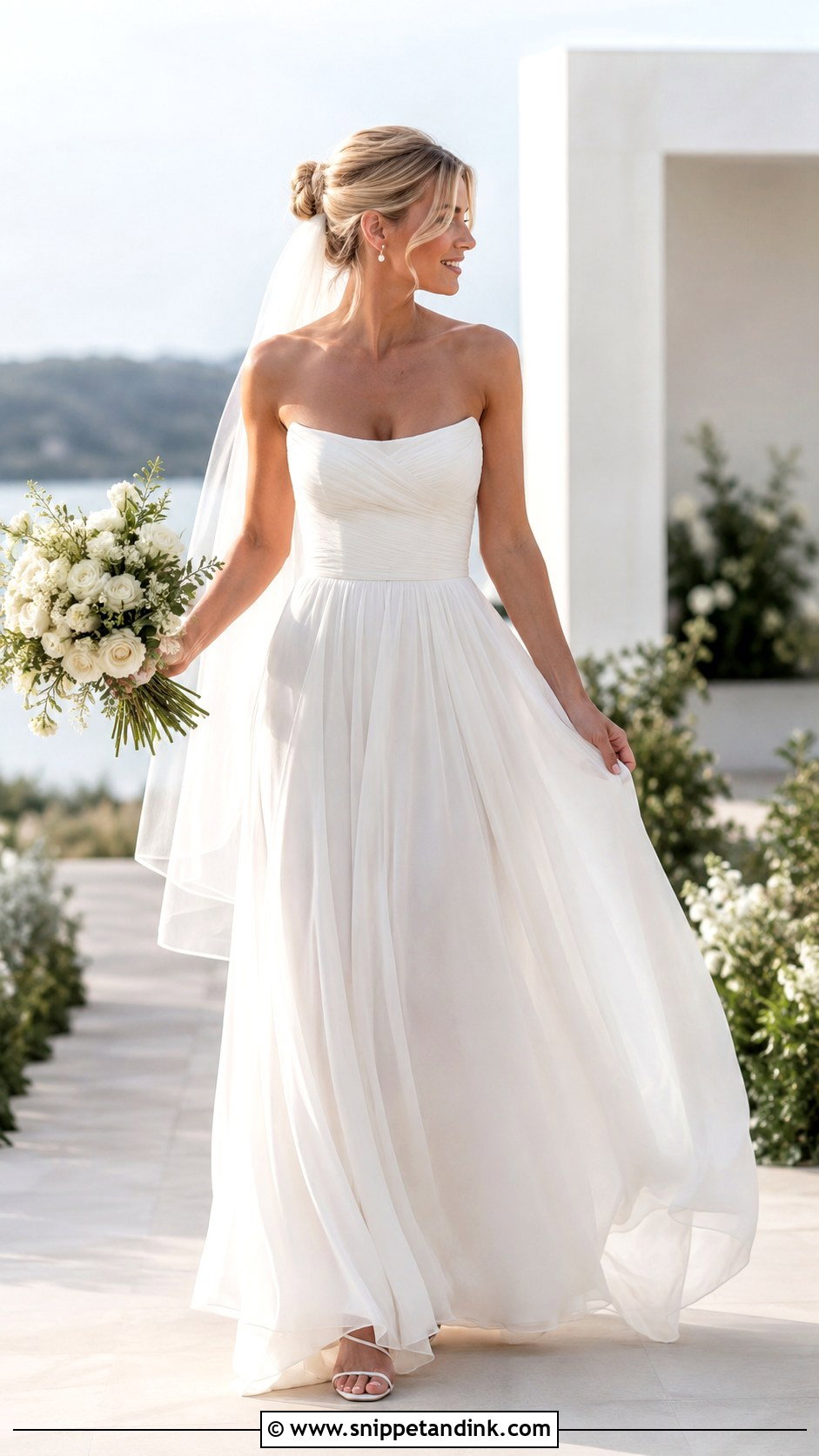
A draped corset with a light chiffon skirt is the softest version on this list. The bodice is gathered or diagonally pleated on the outside with structure hidden underneath, so you get shape without the look of boning. A gently flowing A-line suits it better than a very full skirt. Slim sandals, a fingertip veil and loose waves or a soft braid keep the mood relaxed. Chiffon catches every breeze, which looks lovely in motion and less so when it wraps around your legs during vows. For outdoor venues I’d ask for a weighted hem or an extra layer, and keep the train moderate.
9. Longline Corset And Drop Waist Skirt Wedding Dress
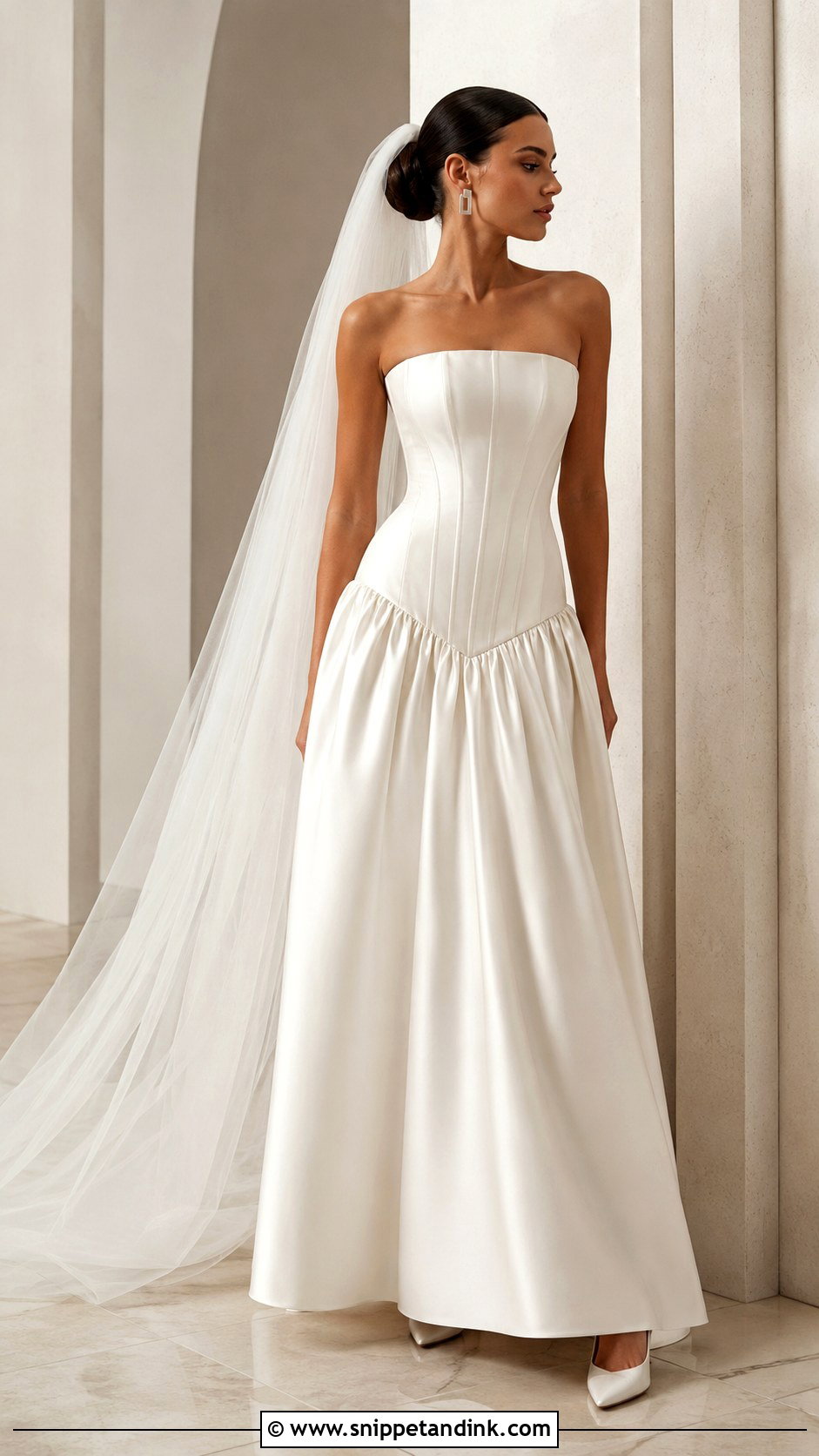
A longline corset creates an elongated torso and meets a drop-waist skirt near the top of the hips. It looks best when both pieces are the same smooth fabric with matched seams, and when the skirt flares lightly instead of gathering. Sleek heels and a polished bun suit the clean lines. Length is the tricky part. A bodice that reaches too far down the hips digs in when you sit, so I fit this one seated as well as standing, and I watch the stairs test. The skirt join should lie flat with no ridge below the waist.
10. Pearl Corset And Clean Satin Skirt Wedding Dress
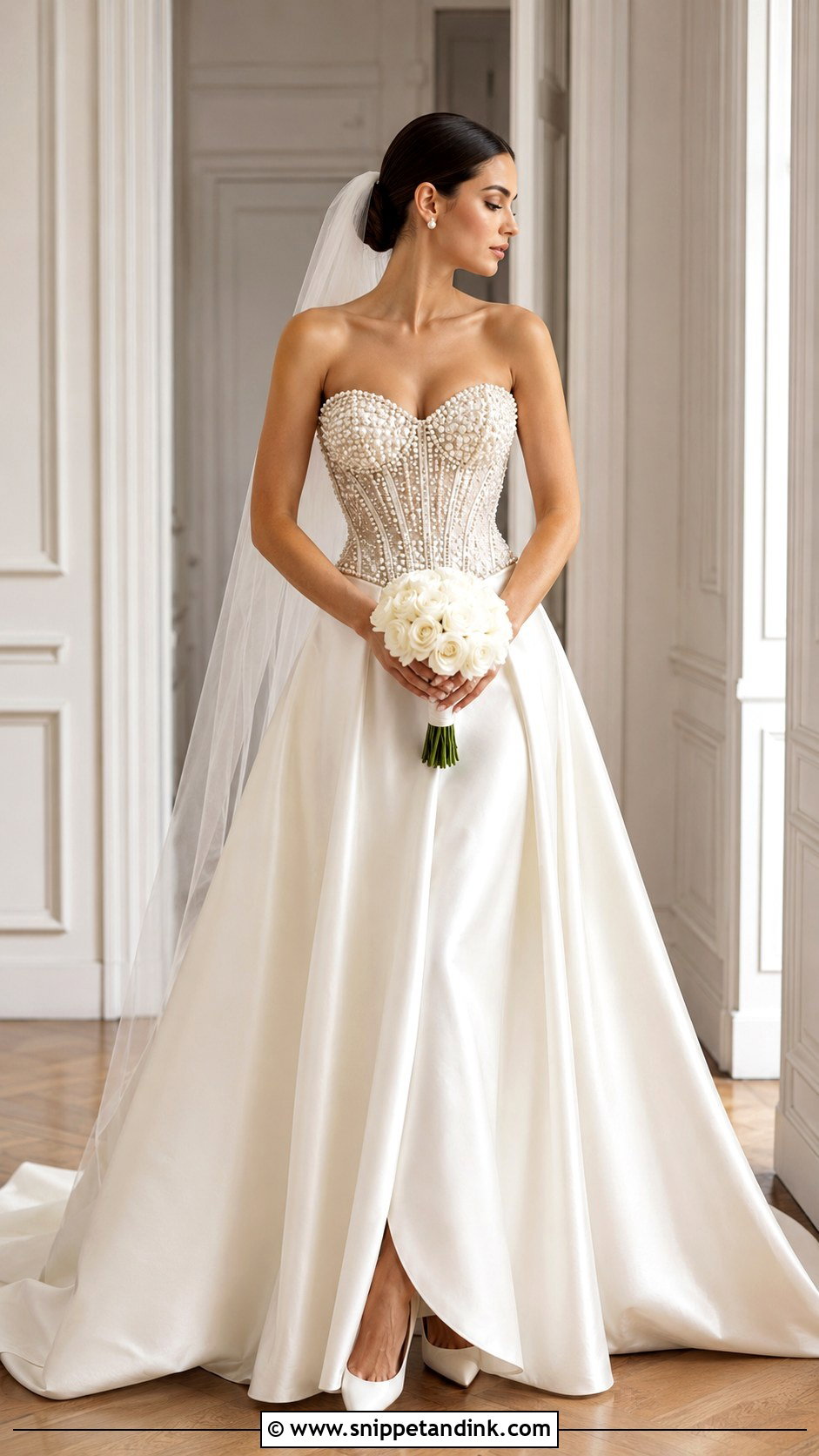
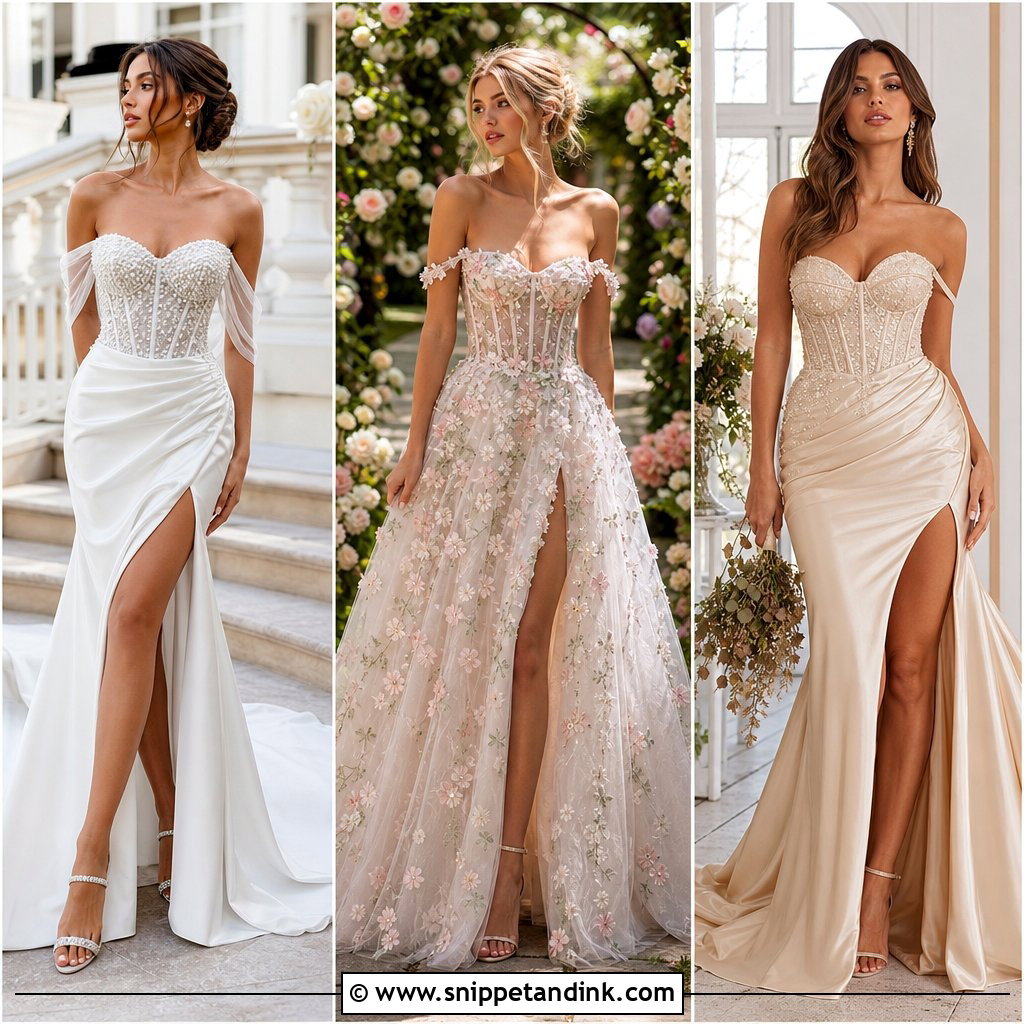
Pearls on a corset turn the bodice into the focal point, and a plain satin skirt lets it stay that way. Mixed pearl sizes scattered loosely feel soft; even rows look more tailored. With a detailed neckline I’d skip the necklace and keep to small pearl earrings. A sheer veil and a compact bouquet help too. Watch the beading near the underarms. Pearls stitched close to the side seam rub the inner arm raw over a long day, so I ask for them to stop short there. The skirt fabric needs enough weight to balance a heavy bodice.
11. Floral Corset And Layered Tulle Skirt Wedding Dress
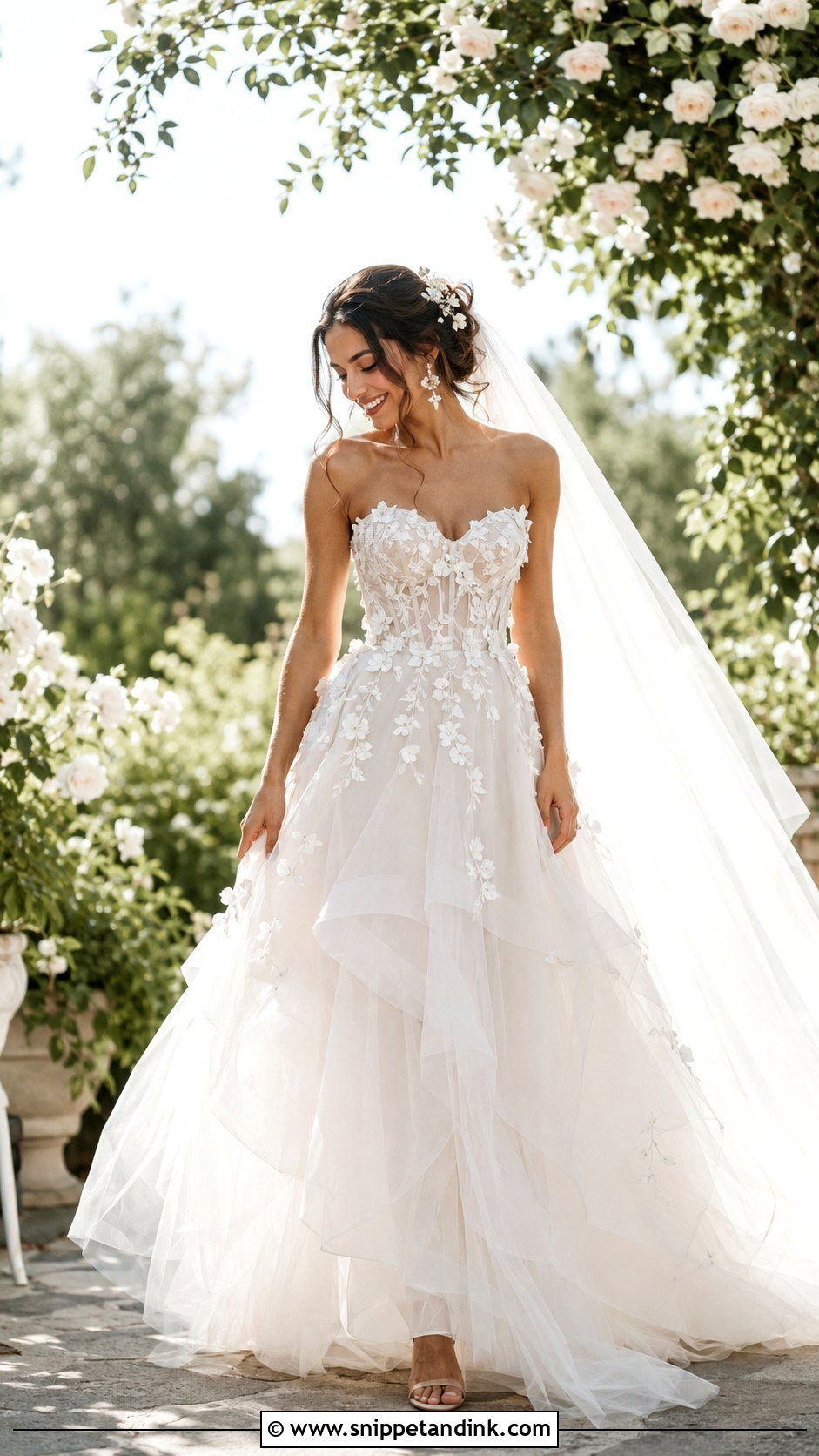
3D floral appliqués on a corset and a layered tulle skirt give a garden feel. Concentrate the flowers around the neckline and waist, then scatter smaller ones down the top of the skirt so the two pieces join visually. An ivory lining keeps the appliqués visible without the bodice turning too sheer. Block heels are worth it on grass. I’d keep the veil plain and the bouquet a little calmer than the dress, in a narrow colour range, so the real flowers don’t compete with the stitched ones.
12. Minimal Corset And Column Skirt Wedding Dress
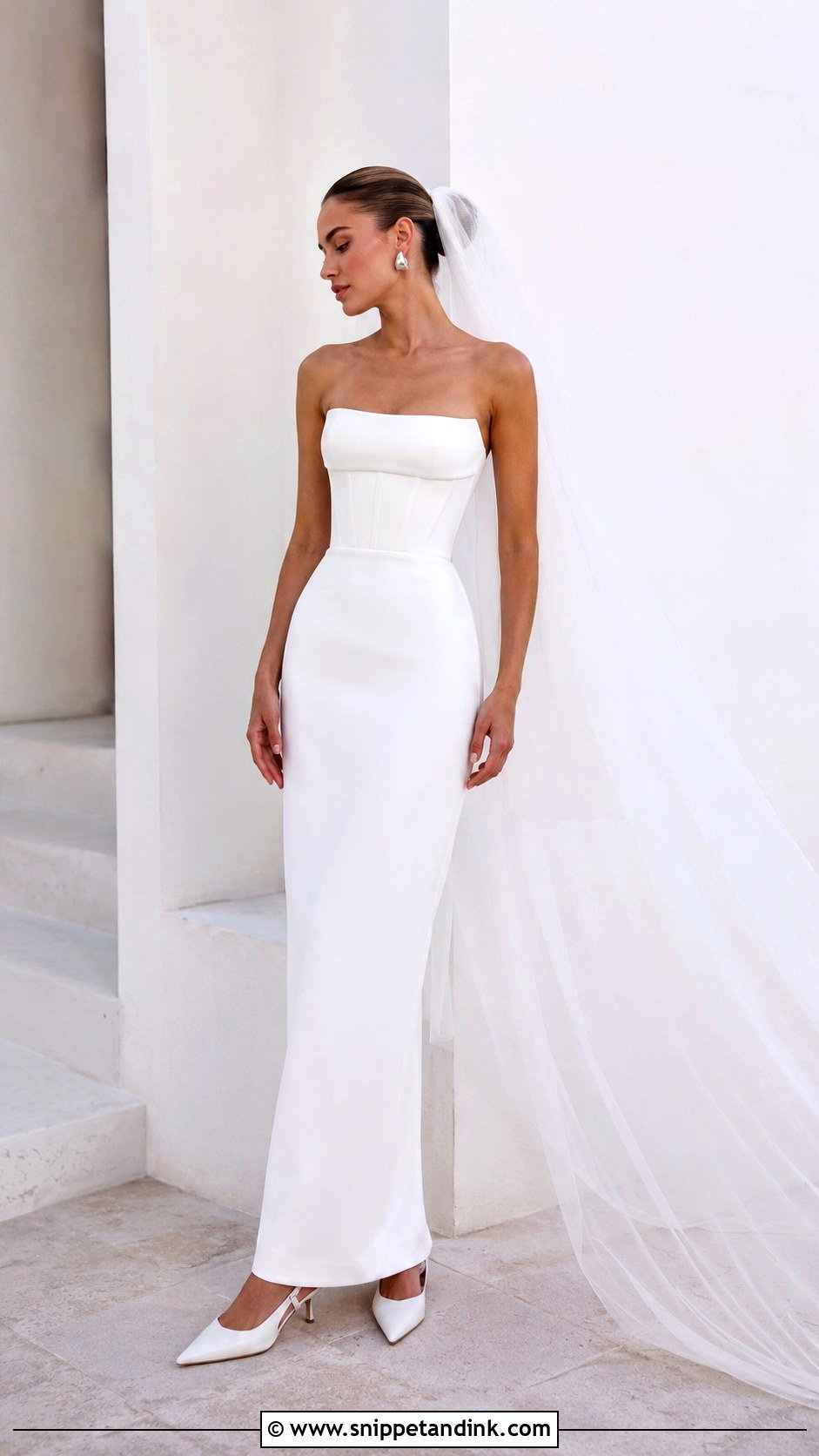
A plain strapless bodice with hidden boning over a straight crepe or satin skirt is minimal, which means every seam and proportion is on show. The skirt should fall straight from the hip and have a back vent or slit so you can walk. The two pieces must meet without a gap or extra bulk at the middle. Sculptural earrings, a sleek bun and a long raw-edge veil are all it needs. A column skirt gives you the least room of any shape here, so test your stride and sitting before the hem is finished. With minimalism, the tailoring is the decoration.
13. Lace Up Corset And Pleated Skirt Wedding Dress
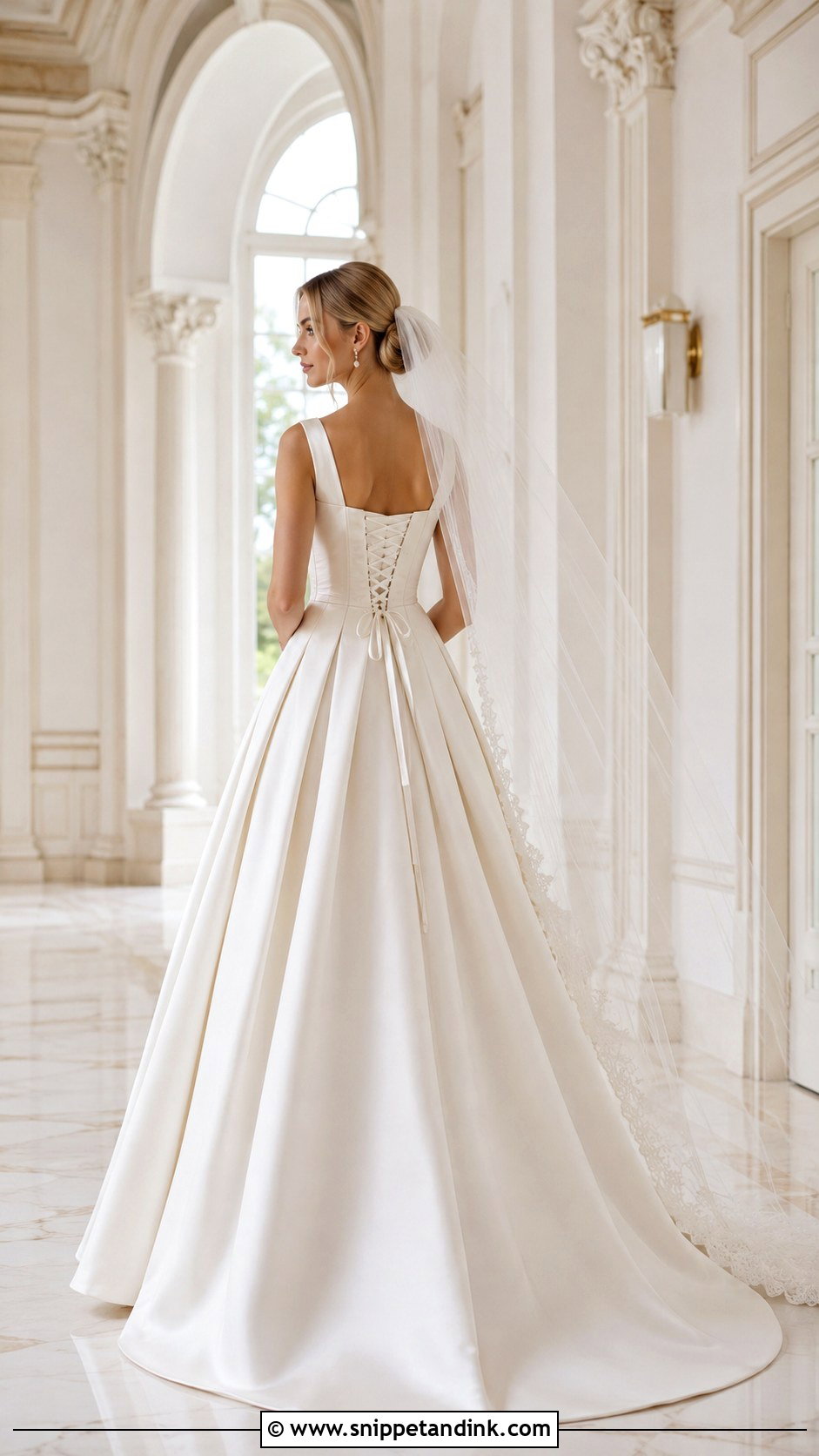
A lace-up back lets you adjust the corset through the day, and a pleated skirt gives traditional volume. Narrow satin ribbon in the same shade makes the lacing part of the design. Inverted or soft box pleats keep the front waist flat. Choose the neckline by how much coverage you want. Here’s my practical advice: whoever laces you should practise beforehand, pulling from the middle out so the tension is even top to bottom. A modesty panel under the lacing stops skin showing through gaps when you move.
14. Embroidered Corset And Silk Skirt Wedding Dress
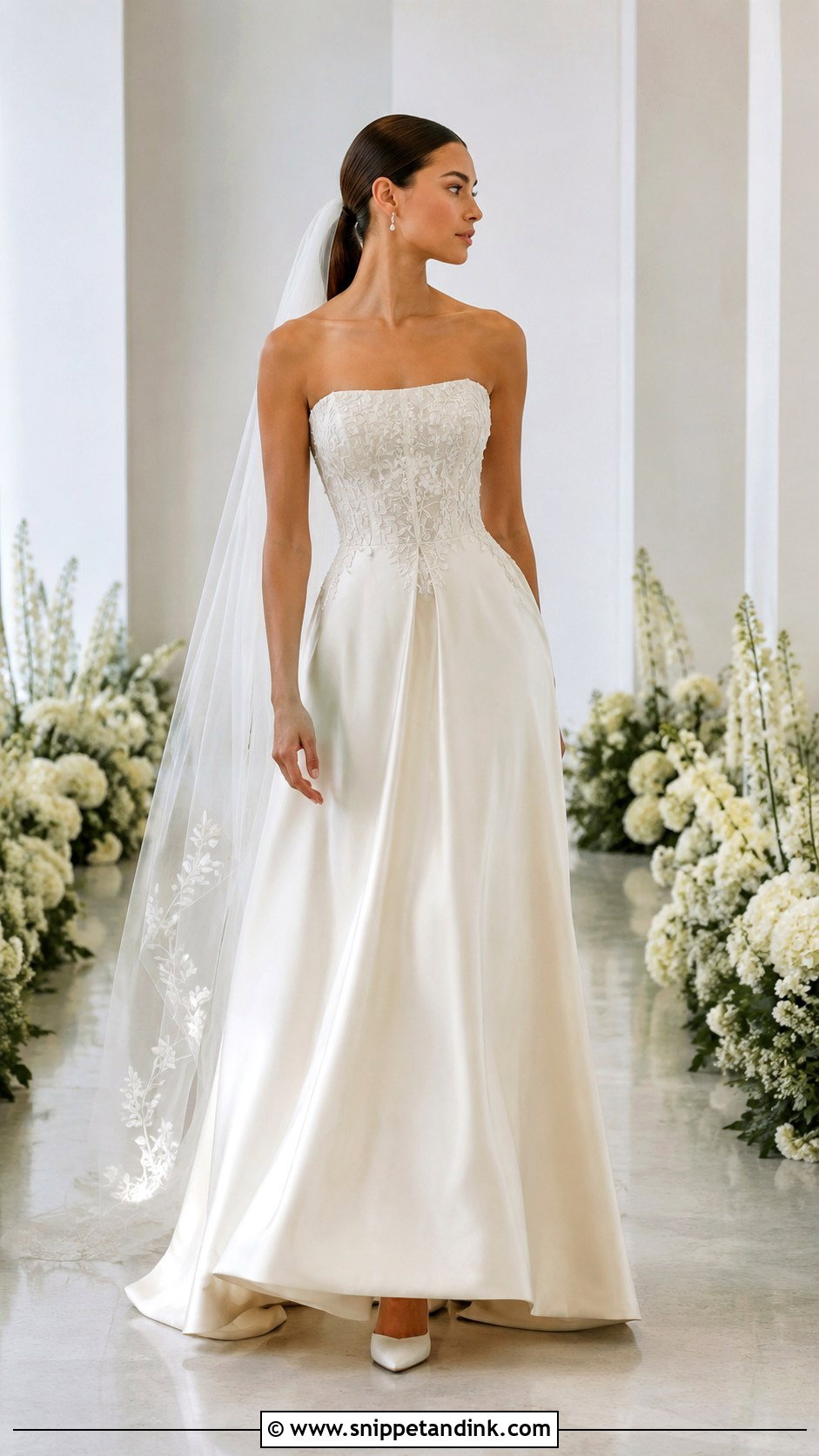
Embroidery reads best against something plain, and a fluid silk skirt is ideal. Botanical, geometric or tonal threadwork can all work; the risk is a bodice so detailed it looks like costume. Repeat one small motif at the waistband or near the train to tie the two pieces together. Silk-covered heels and a low ponytail keep the rest calm, and a big bouquet would only cover the work. During alterations, the cups and seams should be adjusted from the inside so the embroidered pattern still lines up across the seams.
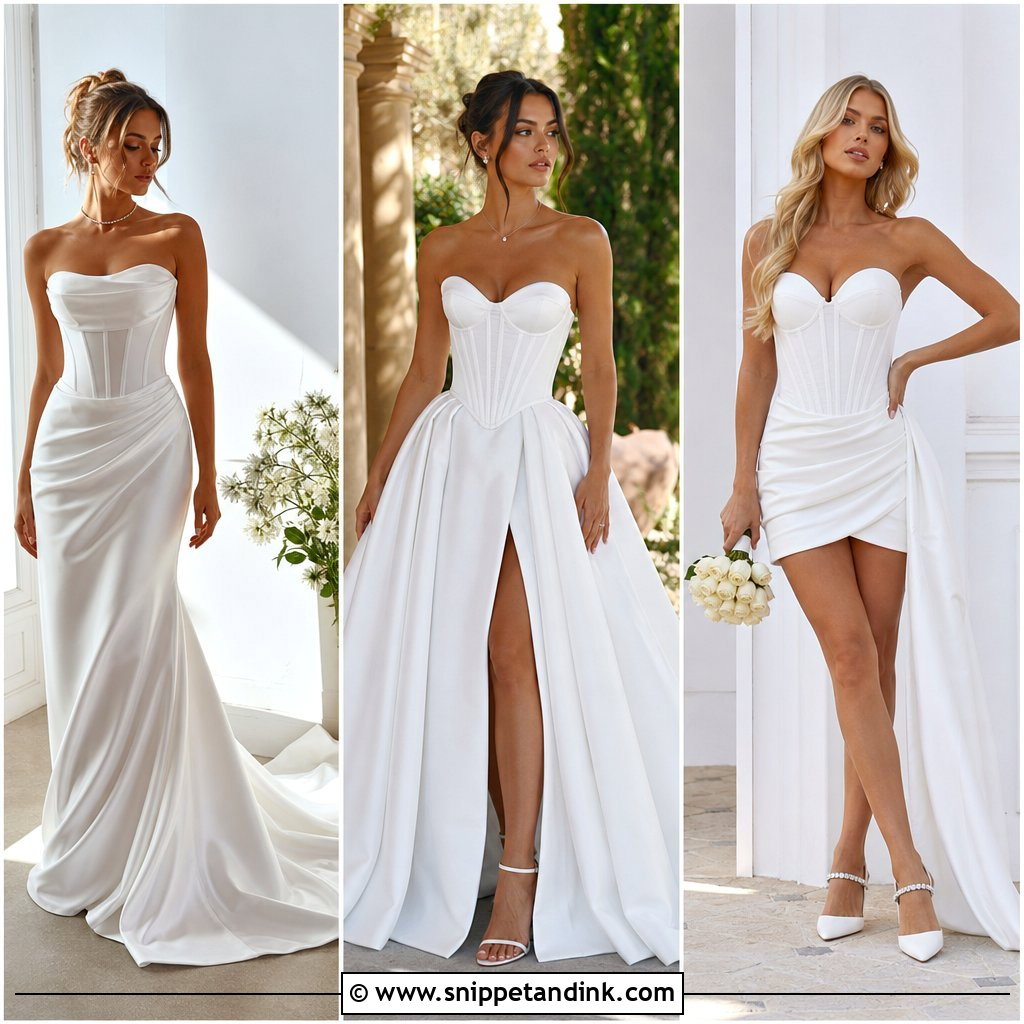
15. Scoop Neck Corset And Circle Skirt Wedding Dress
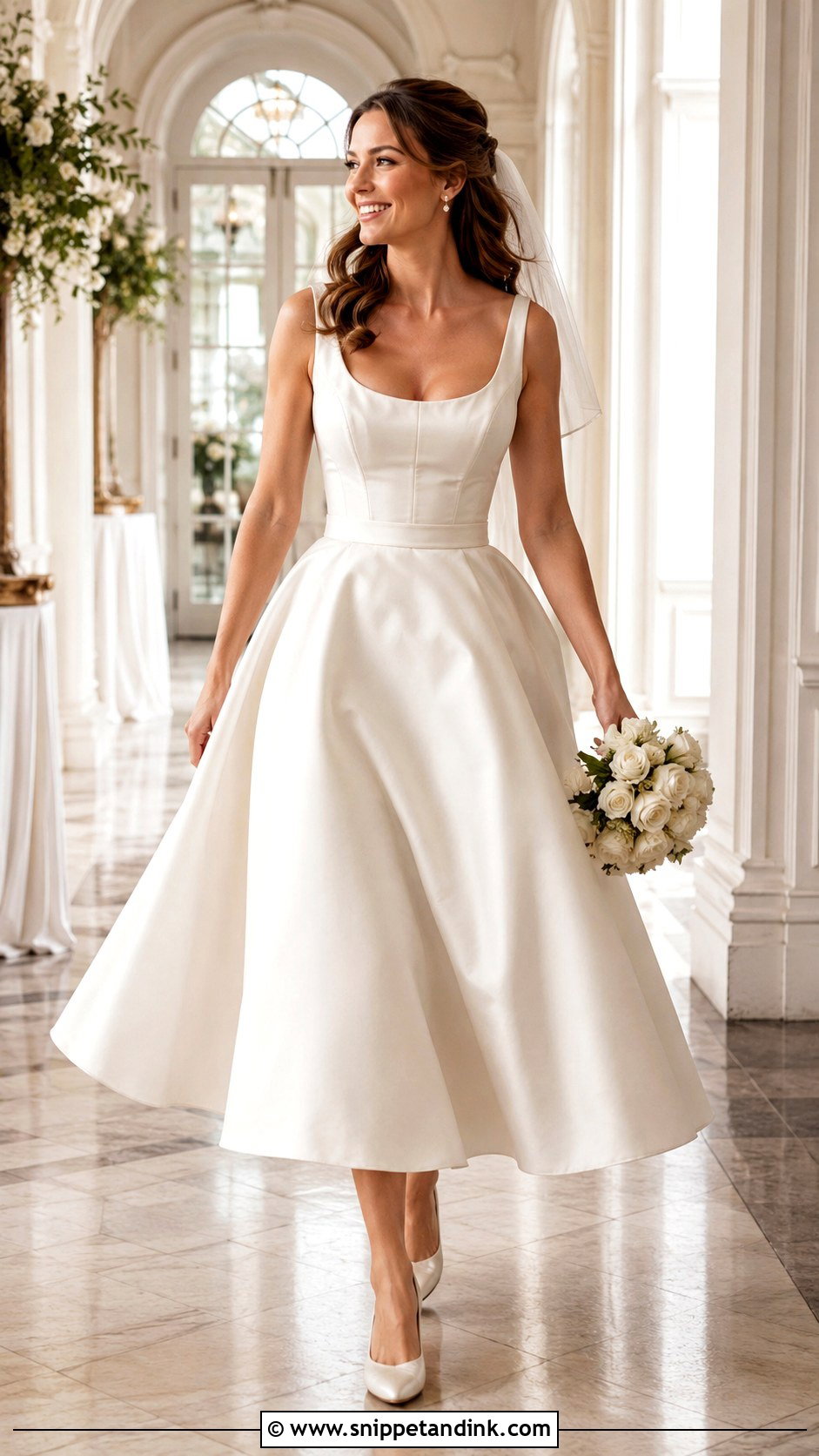
A scoop neck with a full circle skirt has a youthful line and moves well. The rounded neckline covers more gently than a plunge, and straps add security. Satin, faille or light mikado swing as you walk. A narrow belt can hide the join between pieces, and pearl studs with a short veil give it a vintage feel. This is the skirt I’d suggest to brides who plan to dance most of the night, since nothing about it binds the legs. Add discreet loops or a simple bustle for the train.
16. Corset And Slit Skirt Wedding Dress
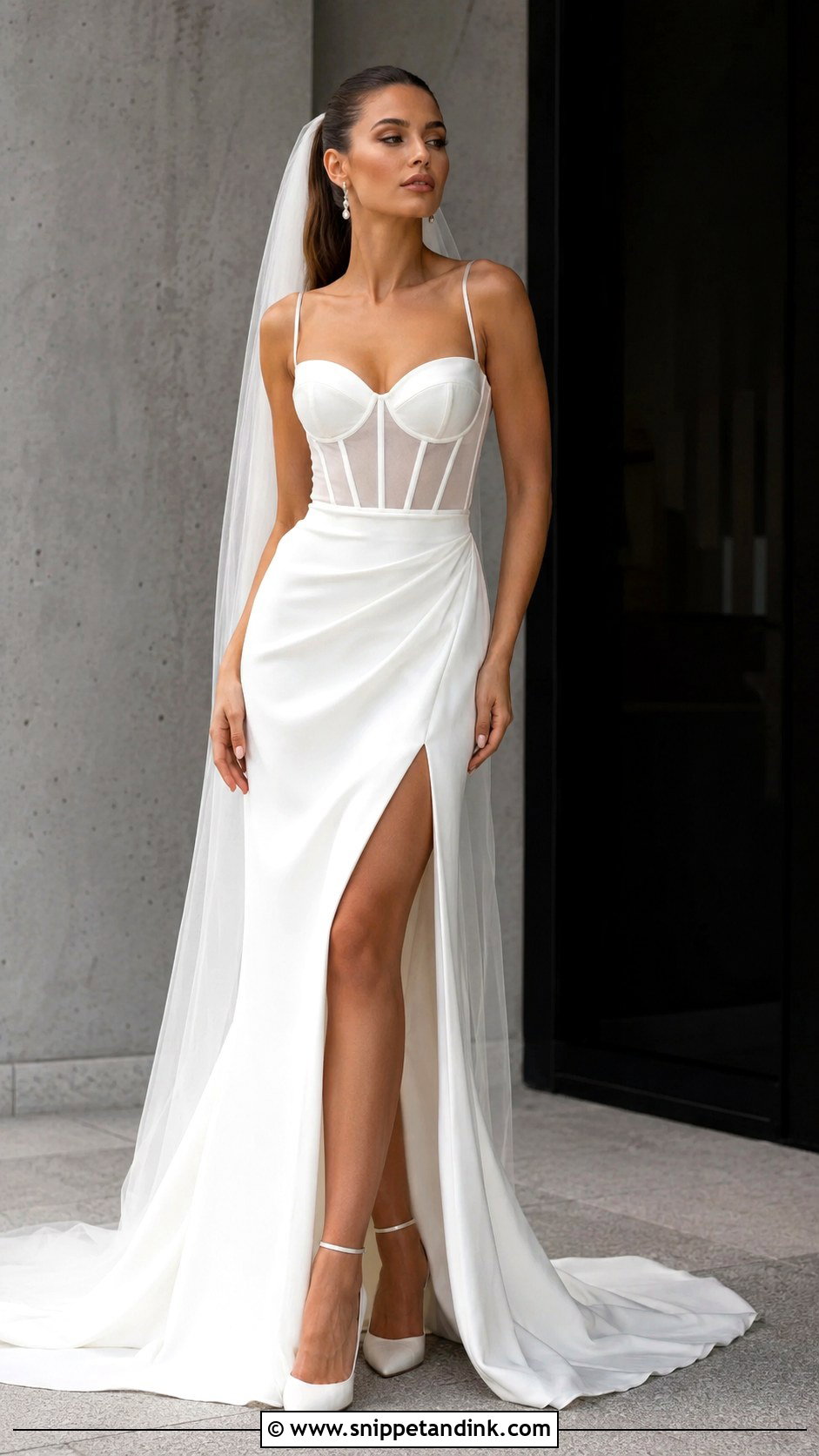
A corset with a slit skirt is sleek and contemporary. A high-waisted satin or crepe skirt with a side or front slit shows the leg as you walk. Placement and reinforcement are things I always discuss with the tailor. A slit cut too high opens fully when you sit, and the top of it needs a bar tack or it’ll tear on the dance floor. A strapless or thin-strapped corset balances the leg, and since your shoes will show, choose a pair that looks refined but that you can stand in. Fashion tape inside the slit edge keeps it lying flat.
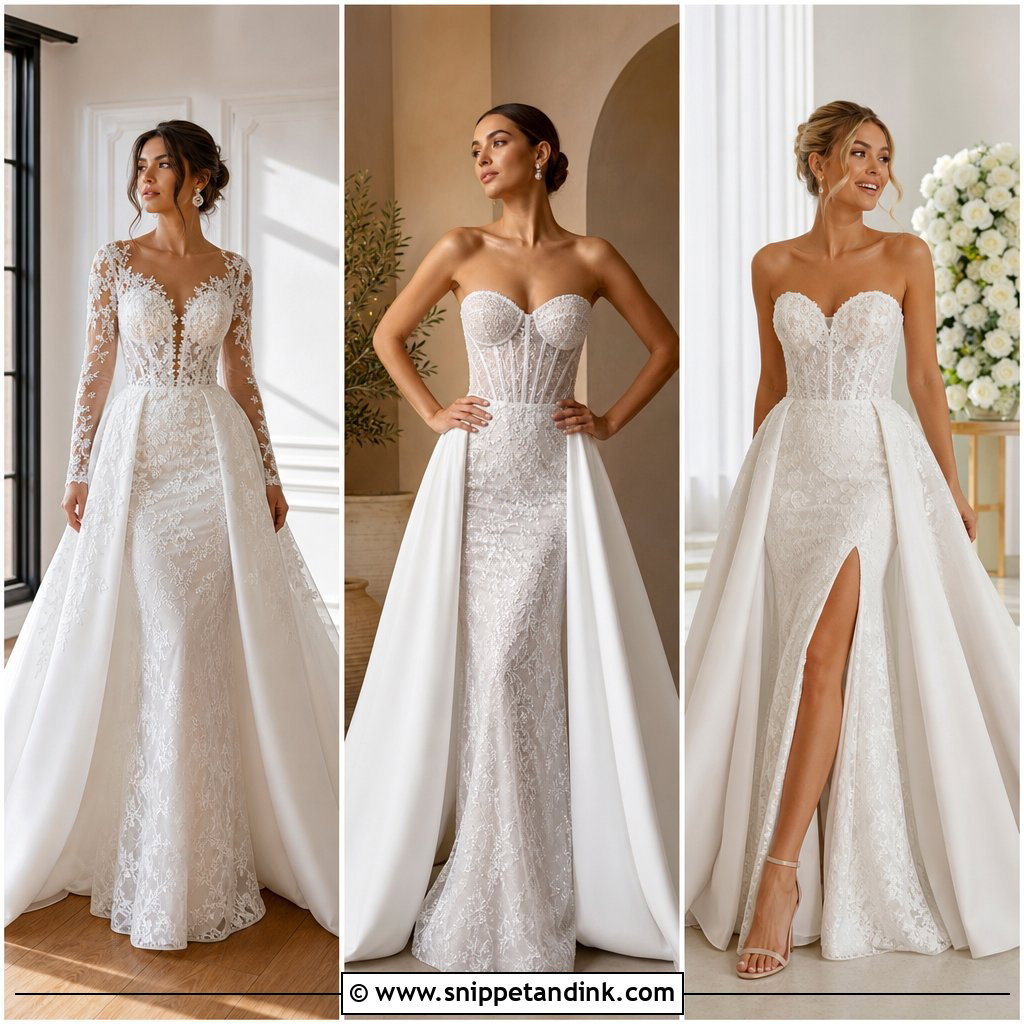
17. Corset And Detachable Overskirt Wedding Dress
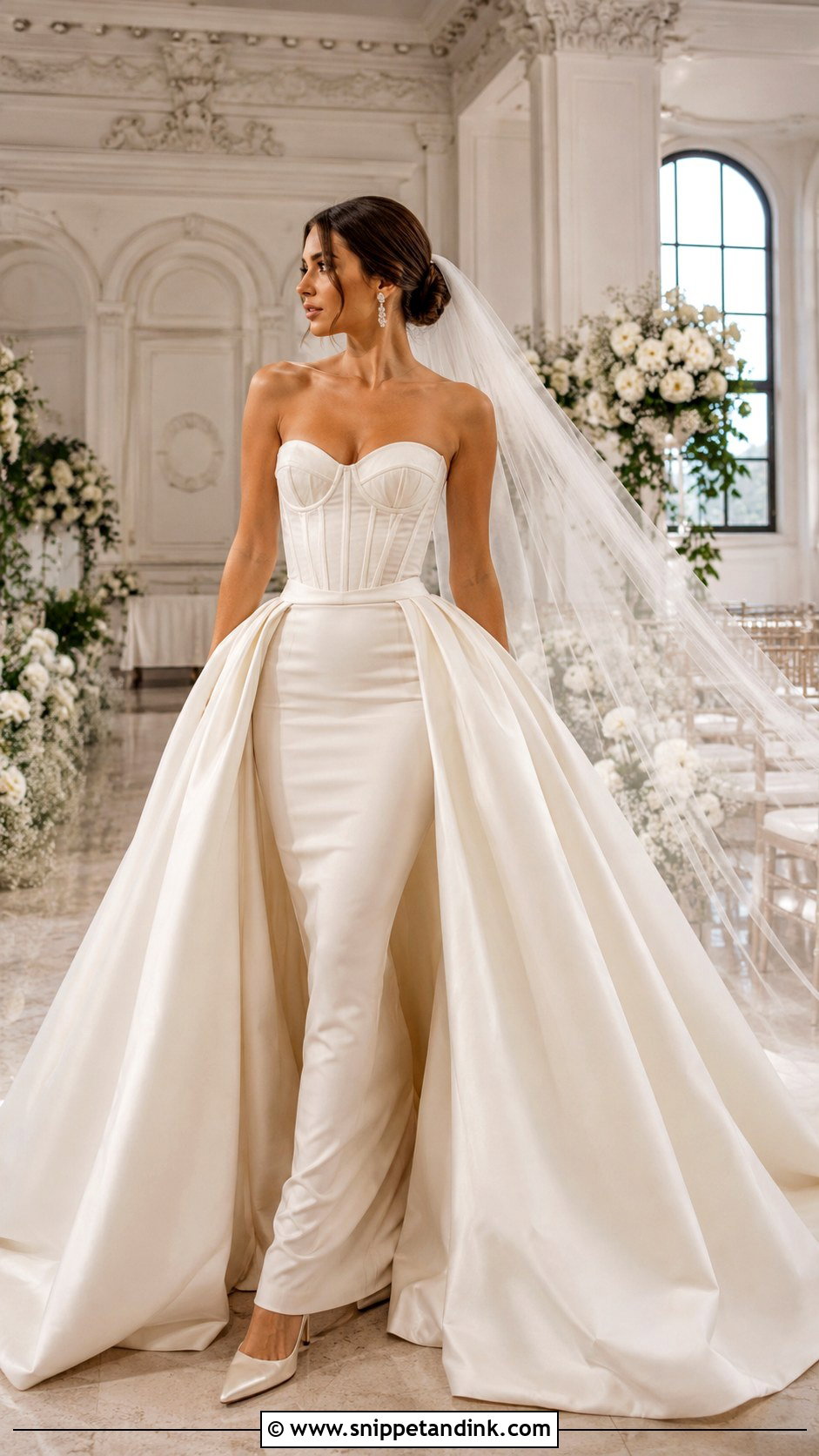
Want ceremony volume without a full skirt all night? Wear a fitted corset with a slim underskirt and add a detachable overskirt in satin, organza or tulle. For the aisle it looks like a ball gown; for the reception, a column or mermaid. Hide the fastening under a belt, bow or waistband. Afterwards, a shorter veil or bigger earrings mark the change. The base skirt has to look complete on its own, and someone other than a seamstress should be able to unhook the overskirt. I’d use hooks and bars here, not snaps alone, which can pop under the weight.
18. Corset And Tea Length Skirt Wedding Dress
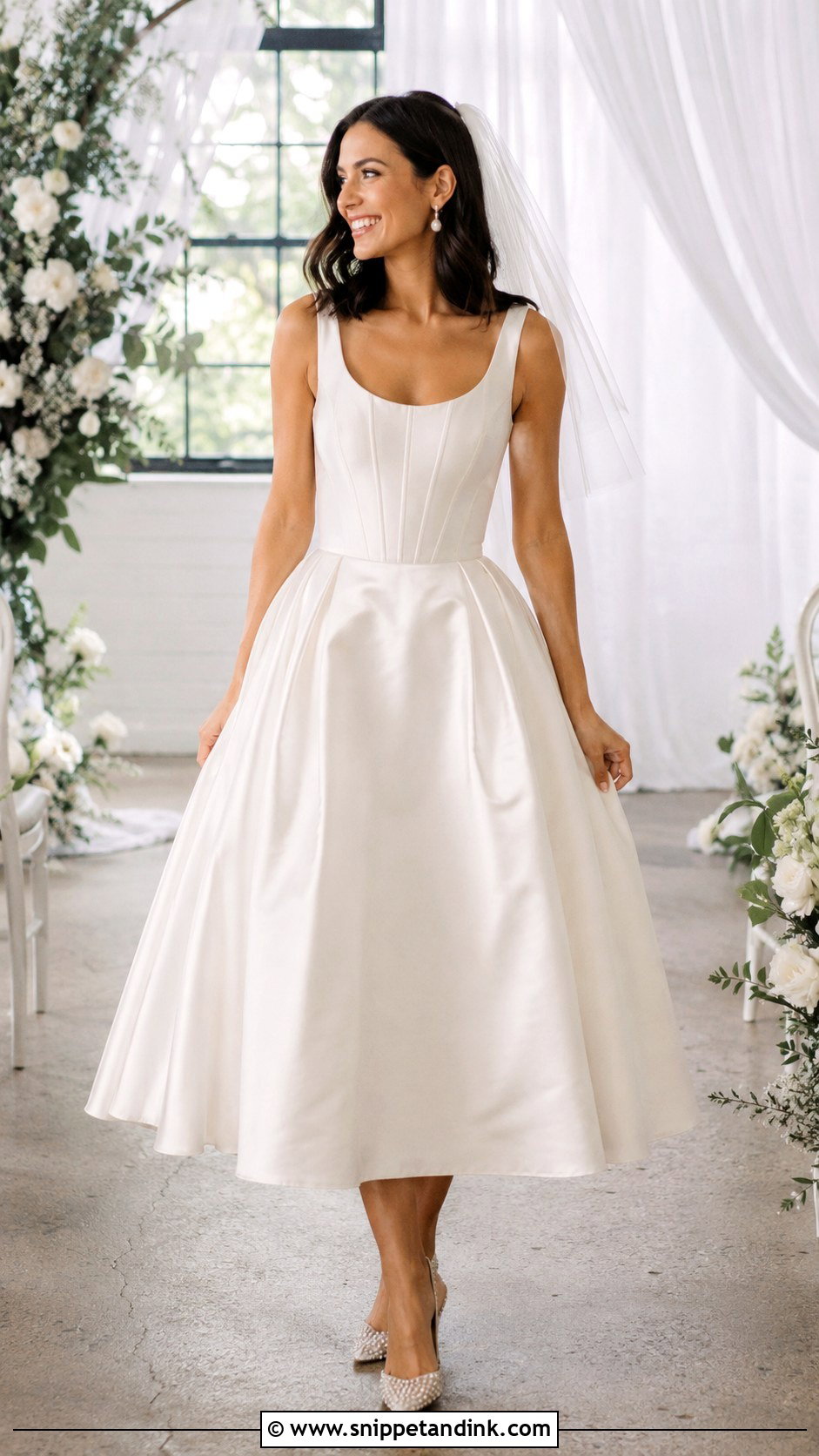
A tea-length skirt stops between the lower calf and the ankle, which brings your shoes into the outfit. Tulle layers make it light and bouncy; satin keeps it cleaner. A clearly defined waistband suits any neckline here. Embellished pumps and a birdcage or shoulder veil fit the shorter length. Because the hem is so visible, I mark it only with the bride standing in her actual shoes, and I check it from the back too, where tea length often dips. A petticoat adds volume, but it must not peek out when you sit or turn.
19. Colored Corset And Ivory Skirt Wedding Dress
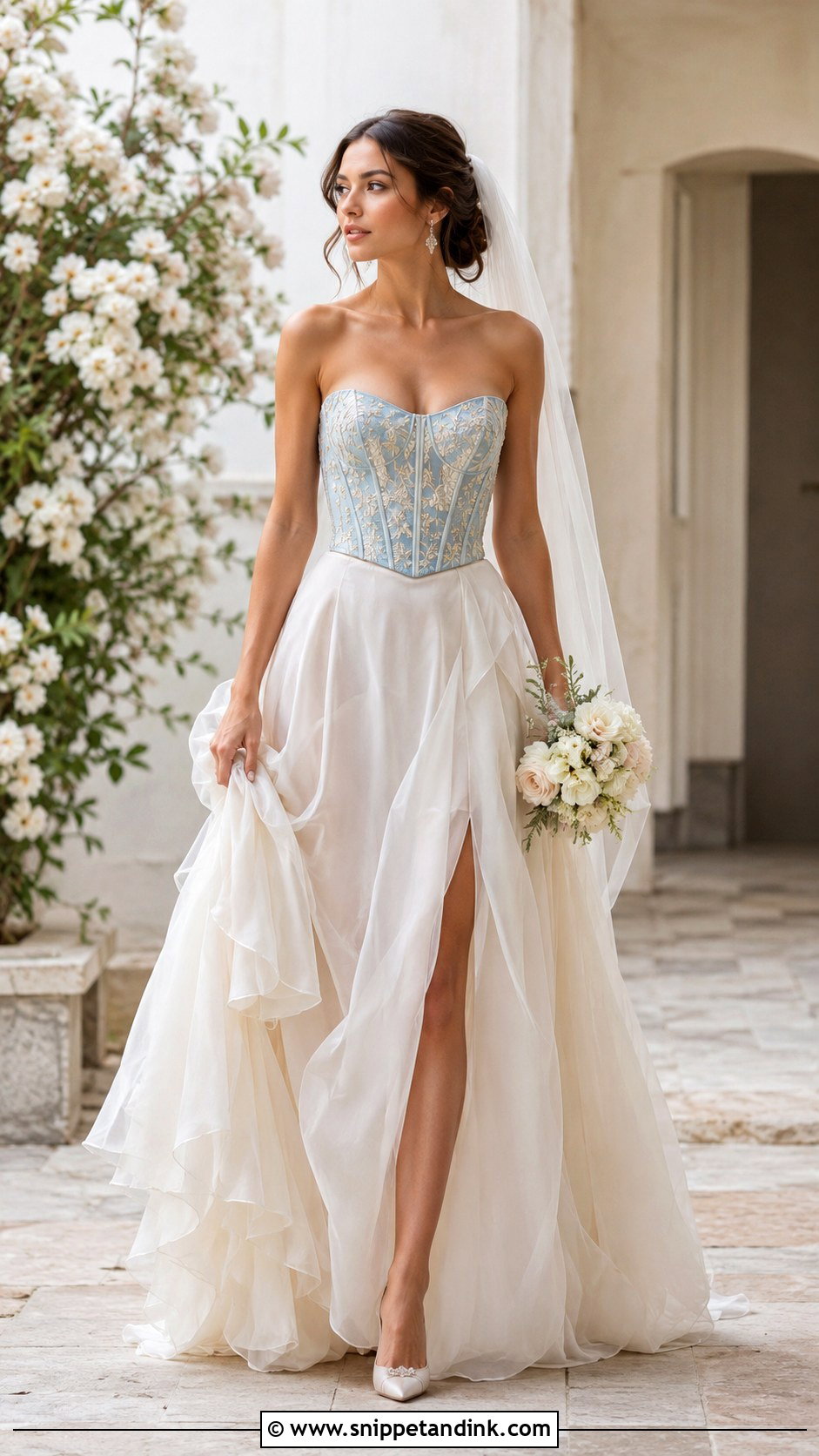
A softly colored corset over an ivory skirt is a gentle way to add colour. Pale blush, powder blue, champagne or soft sage can work, depending on your skin tone and palette. Repeat a little of that colour in the skirt through embroidery or ribbon so the pieces connect. The veil should match the skirt’s ivory exactly. I always look at colour swatches against the bride’s face in daylight, then indoors. Pale blue can turn grey under warm bulbs, and blush can wash out pale skin. Keep the skirt and accessories plain so the corset stays the focus.
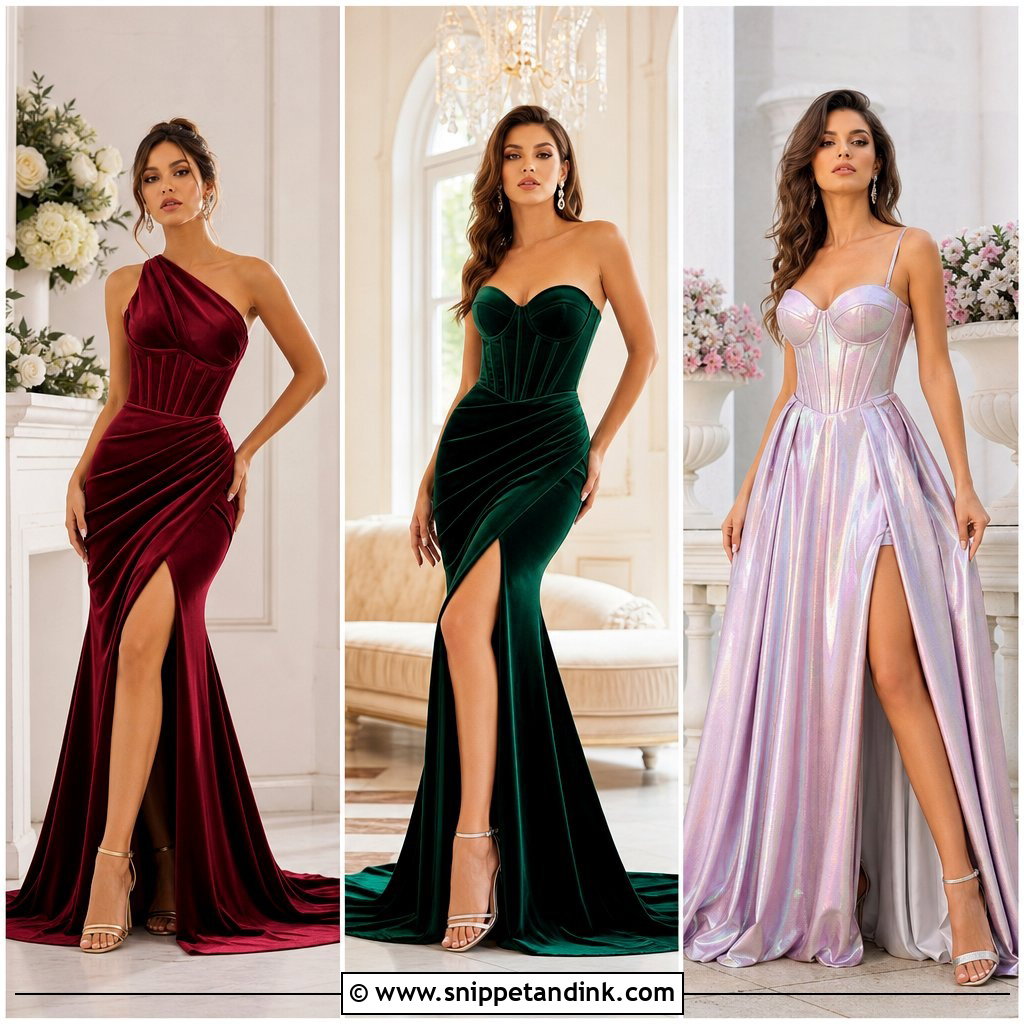


20. Plus Size Corset And A-Line Skirt Wedding Dress
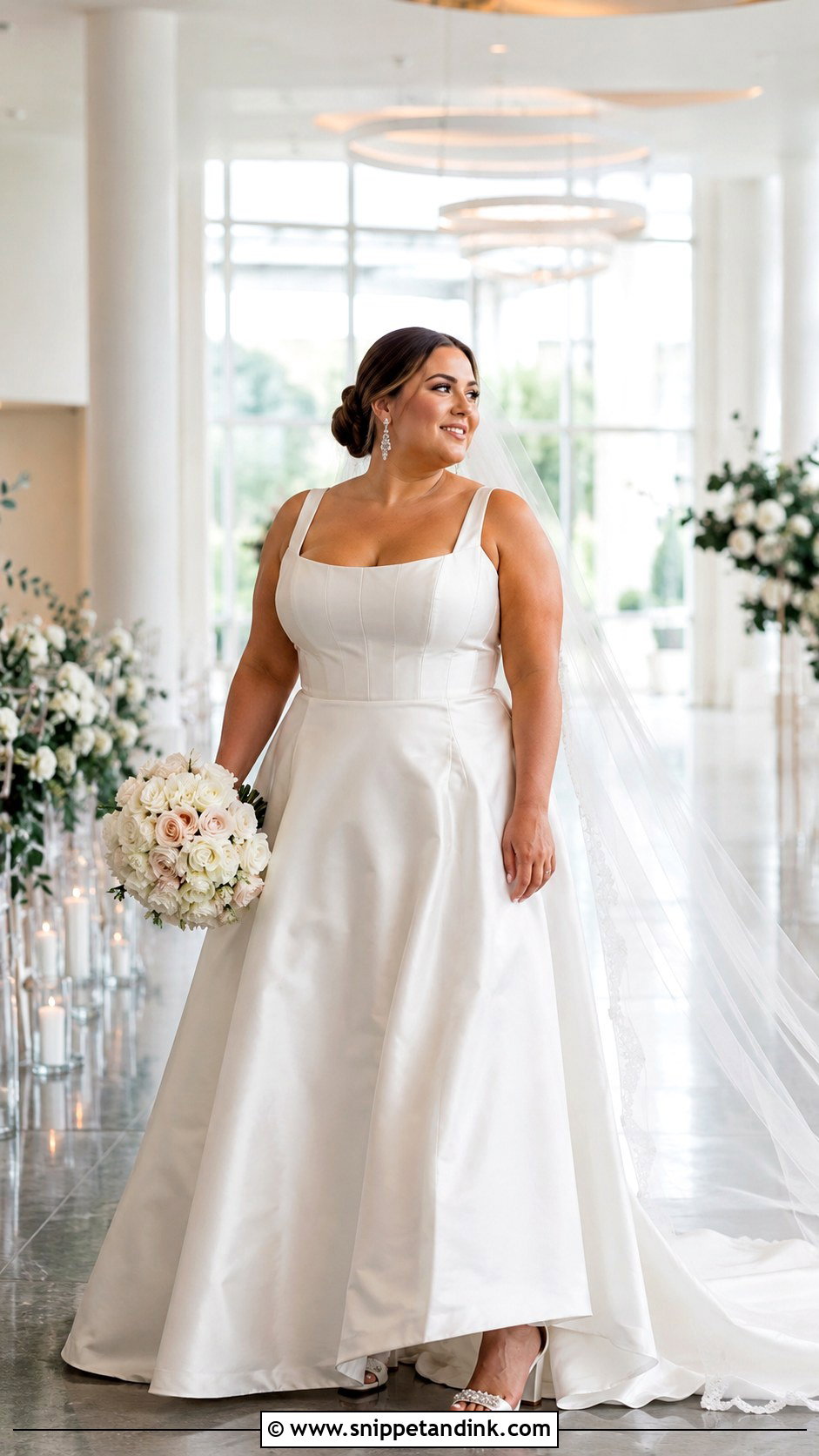
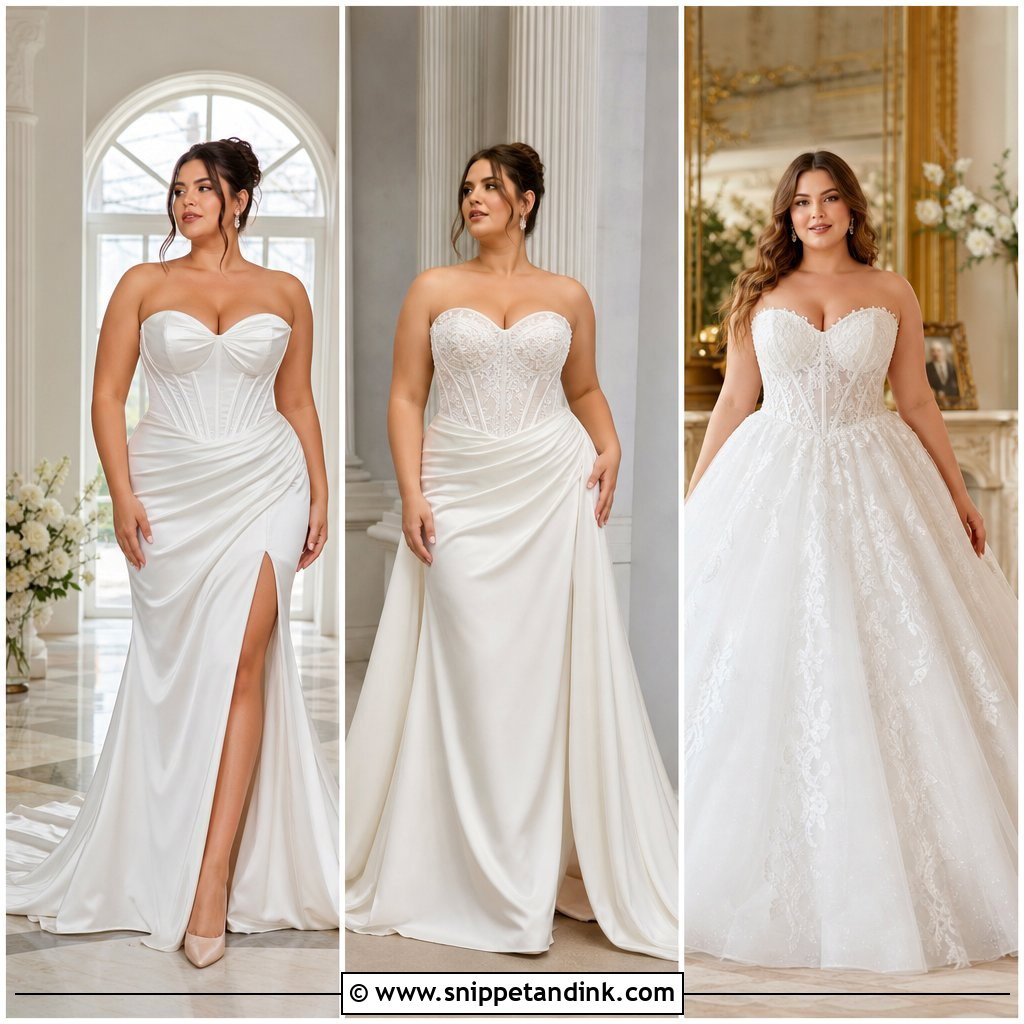
A corset and A-line skirt can give a plus-size bride excellent support and shape, but only with good internal construction: proper cups, strong steel boning and a neckline cut for the coverage you want. Wide-set straps or detachable sleeves add security without hiding the bodice. An A-line in satin or tulle should fall straight from the waist without extra gathering. Supportive block heels and a veil scaled to the skirt finish it. Find a tailor who works with structured bridal regularly. The corset should shape you, not force you, so breathe deeply, sit and dance at every fitting.
Twelve Hours in Boning: Eating, Sitting and the Bathroom
A well-made corset is comfortable for a full day, but a few habits help. Get dressed in the right order: hair and makeup first, underwear and shoes next, skirt, then the corset fastened last so you don’t spend the morning laced tight. Ask your helper to fasten it while you stand straight and breathe normally, never while you hold your breath.
- Eat smaller portions slowly; a fitted waist doesn’t stretch after a big meal.
- Sit near the front of the chair with your back straight, which stops the bottom edge digging in.
- Separates are a gift for bathroom trips: a skirt with an elastic slip or a back zip is far easier than a one-piece gown.
- In heat, wear a thin cotton slip under the bodice to absorb sweat and stop chafing.
If the lacing loosens after dinner, that’s normal; fabric warms and gives a little. Have your helper re-tighten from the middle before the first dance rather than tugging at the top.
A Corset Should Hold You, Not Hold You Back
A corset look works when you forget you’re wearing it by the second hour. Start with the silhouette, then compare neckline, bodice length, skirt volume and fabric weight. Match the undertones of both pieces and line up the waist carefully, because that join decides whether separates look like one gown. Take your shoes and underwear to every fitting, and sit, walk and lift your arms each time. Sculpted satin, lace, floral tulle or a convertible overskirt can all work this way, as long as the bodice fits like it was built for you.
You'll Like These Ideas:





Leave a Reply