
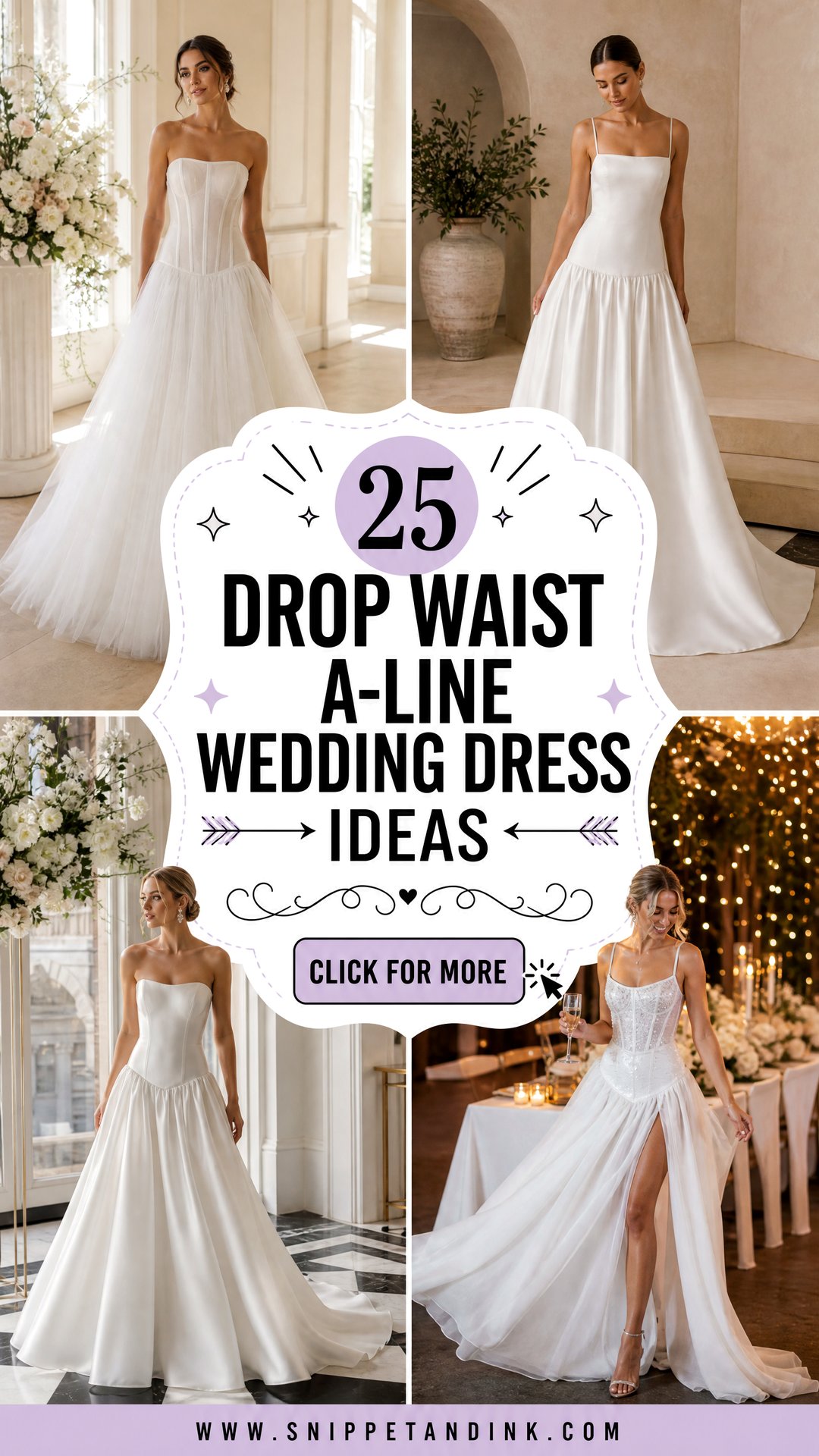
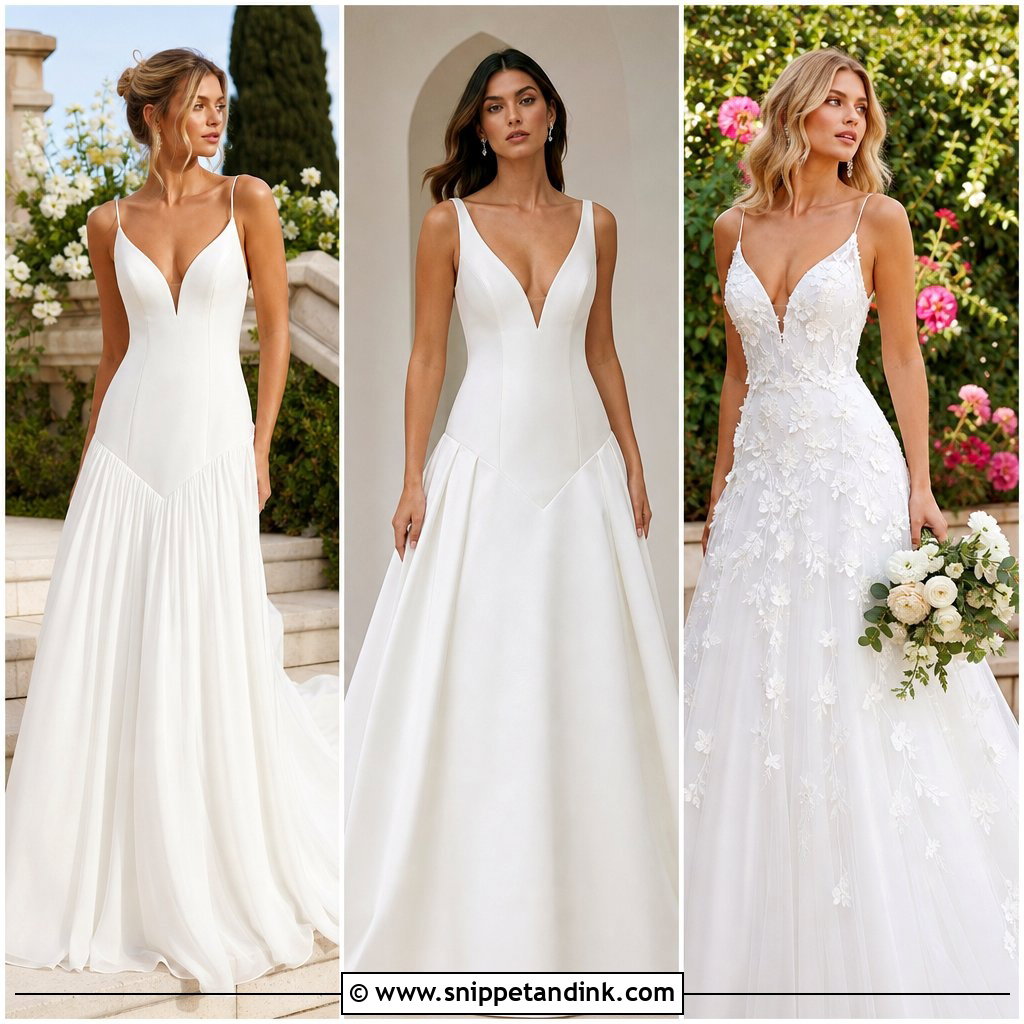
A drop waist A-line moves the waist seam down from your natural waist to somewhere around the upper hip, then lets the skirt open from there. That one change does a lot: the bodice reads longer, the hips get a clean frame, and the skirt starts its swing lower, so it moves differently when you walk. I like it for brides who feel a classic A-line looks a little expected on them. The catch is that the seam has to land in exactly the right spot on your body, and fabric decides how sharp or soft the line looks. Below are 25 versions, from plain satin to lace, tulle and pointed basque seams, with notes on who each one suits and what I check at fittings.
Marking the Seam Line at Your First Fitting
Sample dresses are cut for one body, so the dropped seam on a shop sample almost never lands where it should on you. At the first appointment, I have the bride stand naturally in heels she will actually wear, then find two points: her natural waist, the narrowest part when she bends sideways, and her high hip, the bony ridge a few centimetres below. A flattering drop waist usually sits somewhere between those two, not at the fullest part of the hip.
- Long torso: the seam can go lower, toward the high hip, and it will still look balanced.
- Short torso or petite frame: keep it just under the natural waist, or let a basque point do the lengthening.
- Fuller hips: avoid a seam across the widest part; a slight upward curve at the sides often fixes it.
- Straight figure: a lower straight seam adds the shape a natural waist would not.
Bring your bra or shapewear to that first fitting. A different undergarment can shift the bodice length by a surprising amount, and the seam line is the one thing that is hard to move once the skirt is attached.
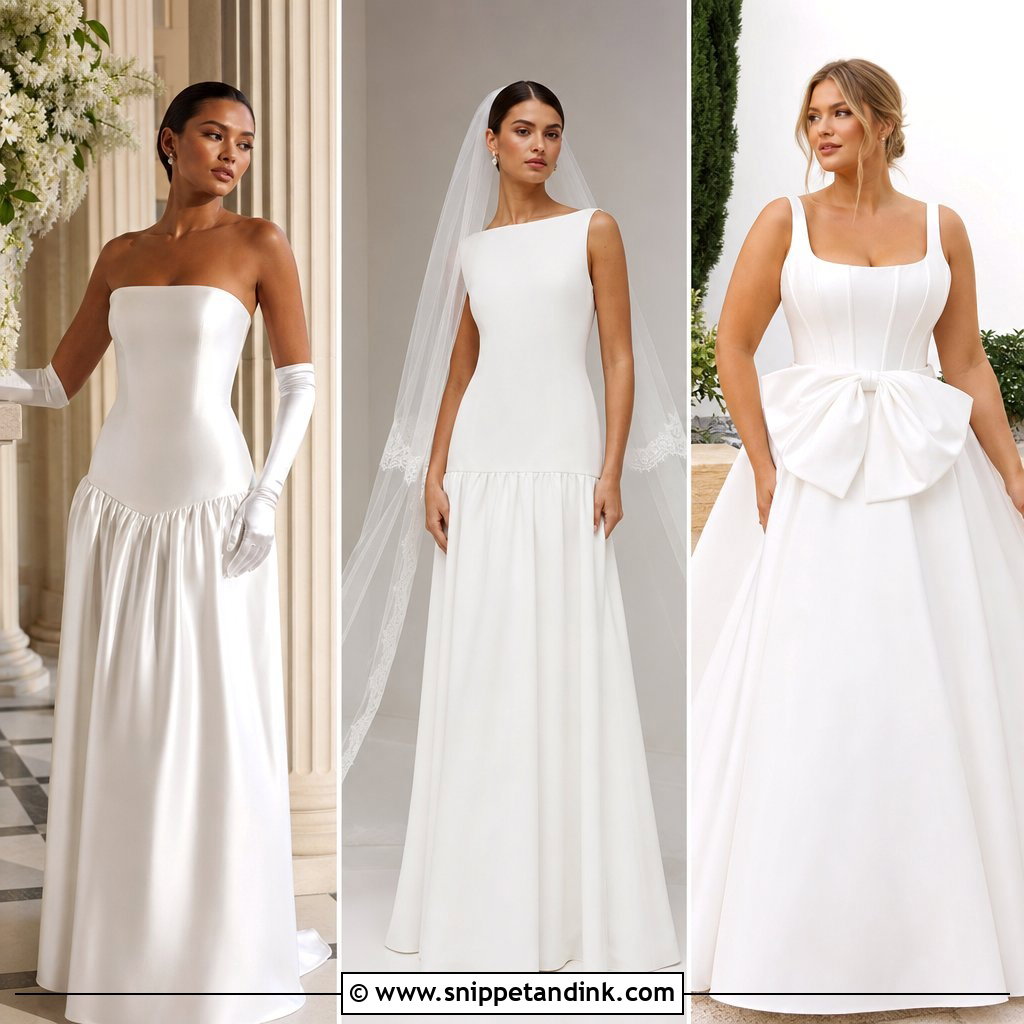
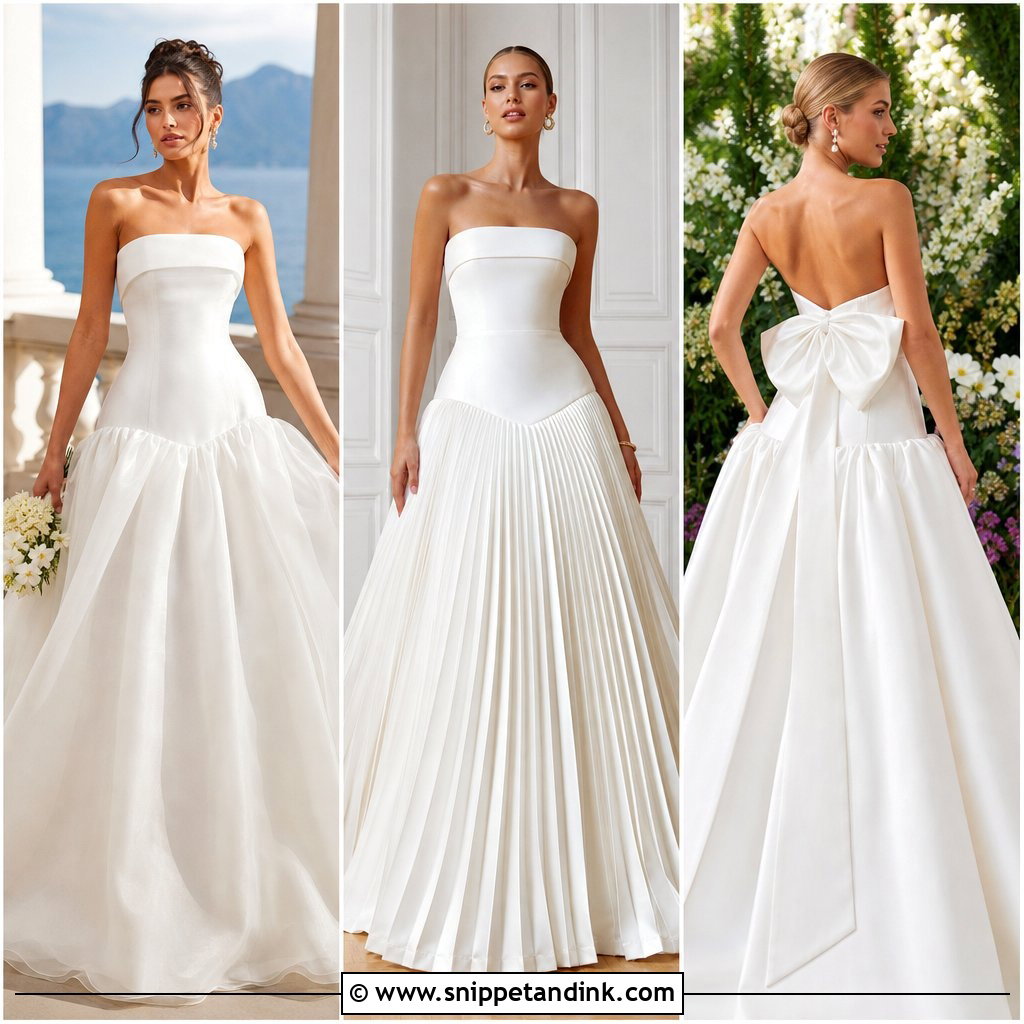
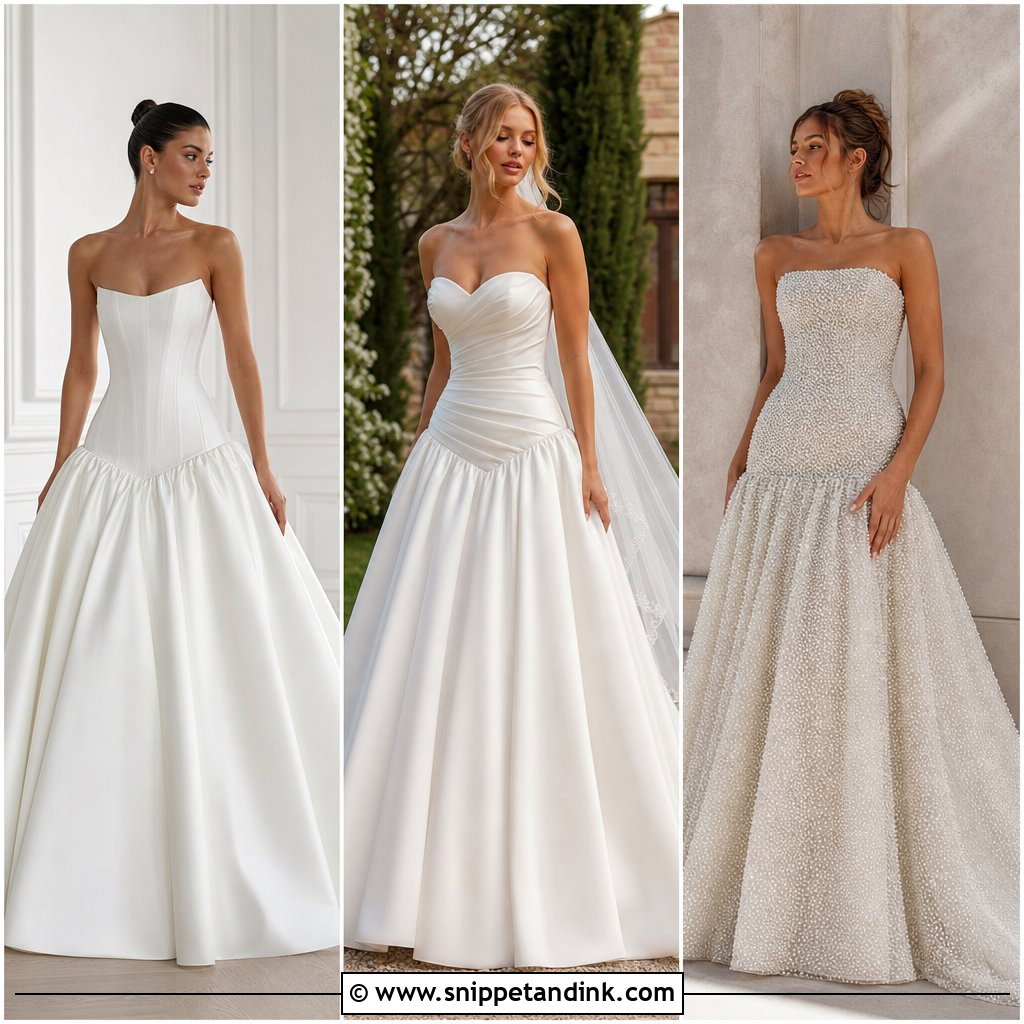
1. Strapless Drop Waist A Line Wedding Dress
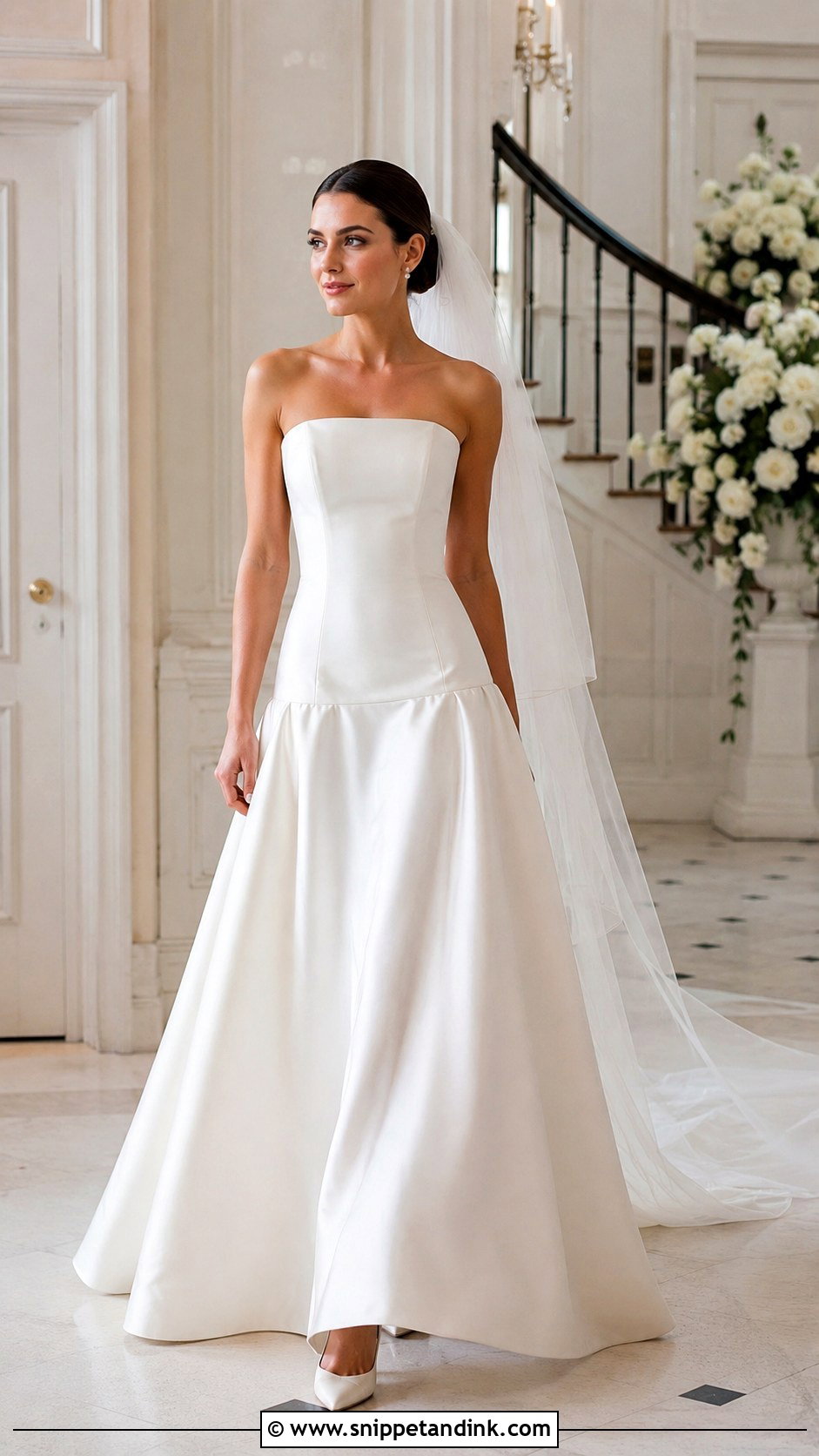
Without straps, the long bodice has to hold itself up, so internal boning and a firm waist stay do all the work here. I always ask a strapless bride to lift her arms and hug someone at the first fitting; if the neckline gapes or slides, the bodice needs taking in before anything else is touched. A curved neckline in satin or mikado keeps it crisp. Pointed ivory heels, pearl studs and a cathedral veil are enough. A detachable overskirt or sheer gloves can add drama later if you want it.
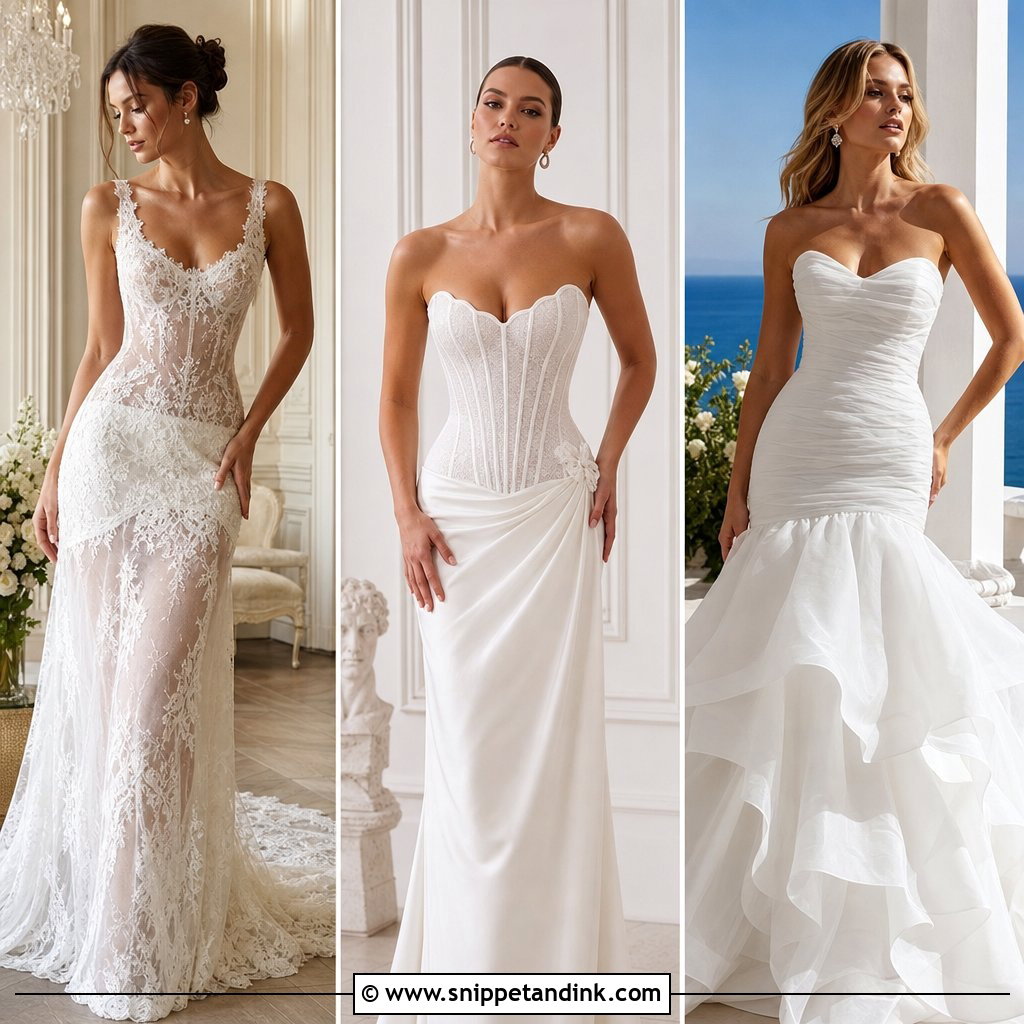
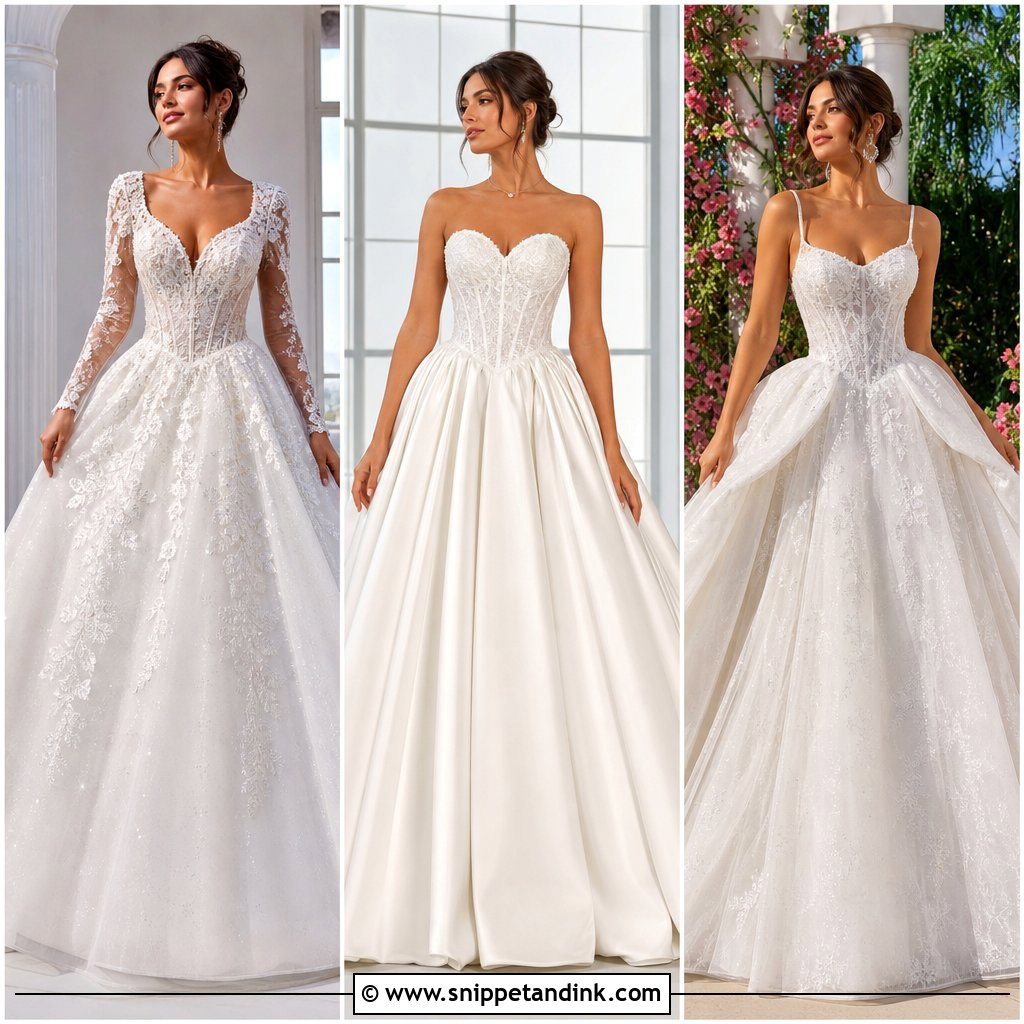
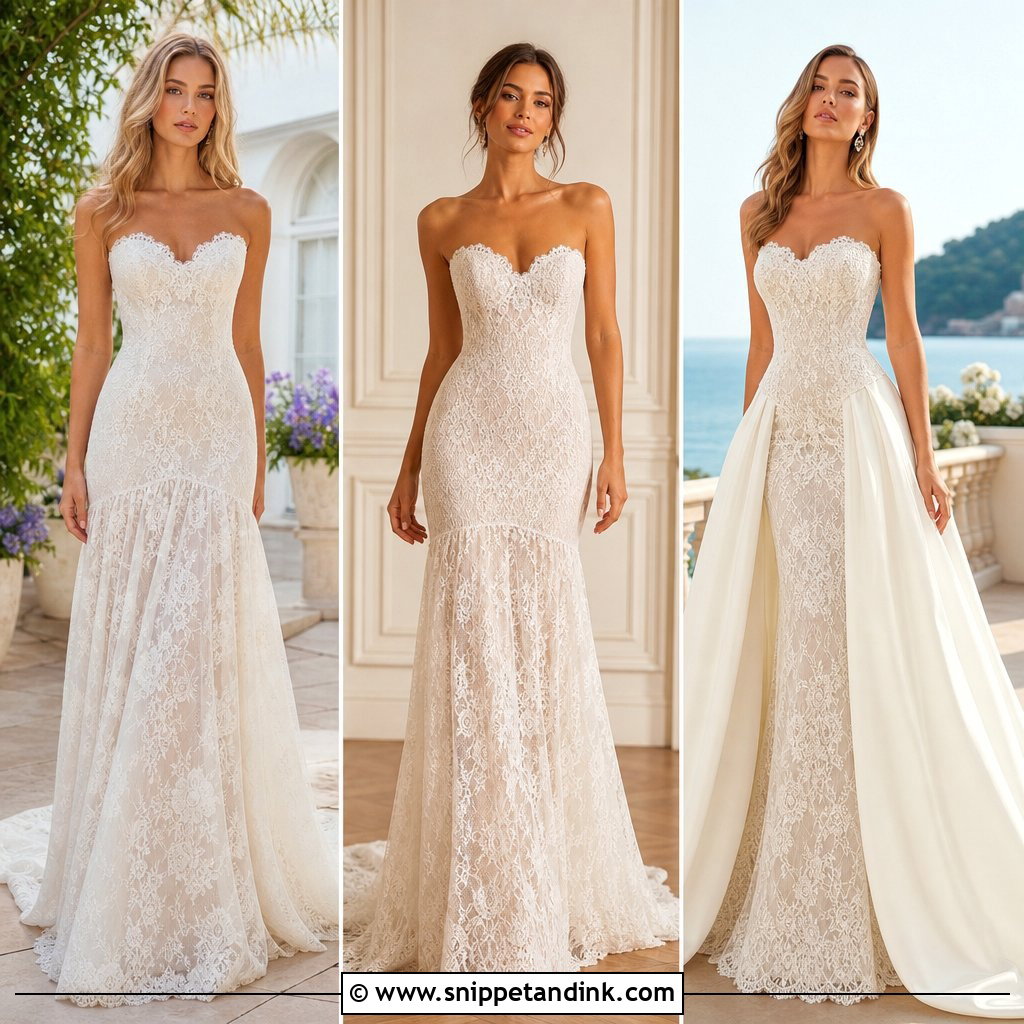
2. Lace Drop Waist A Line Wedding Dress
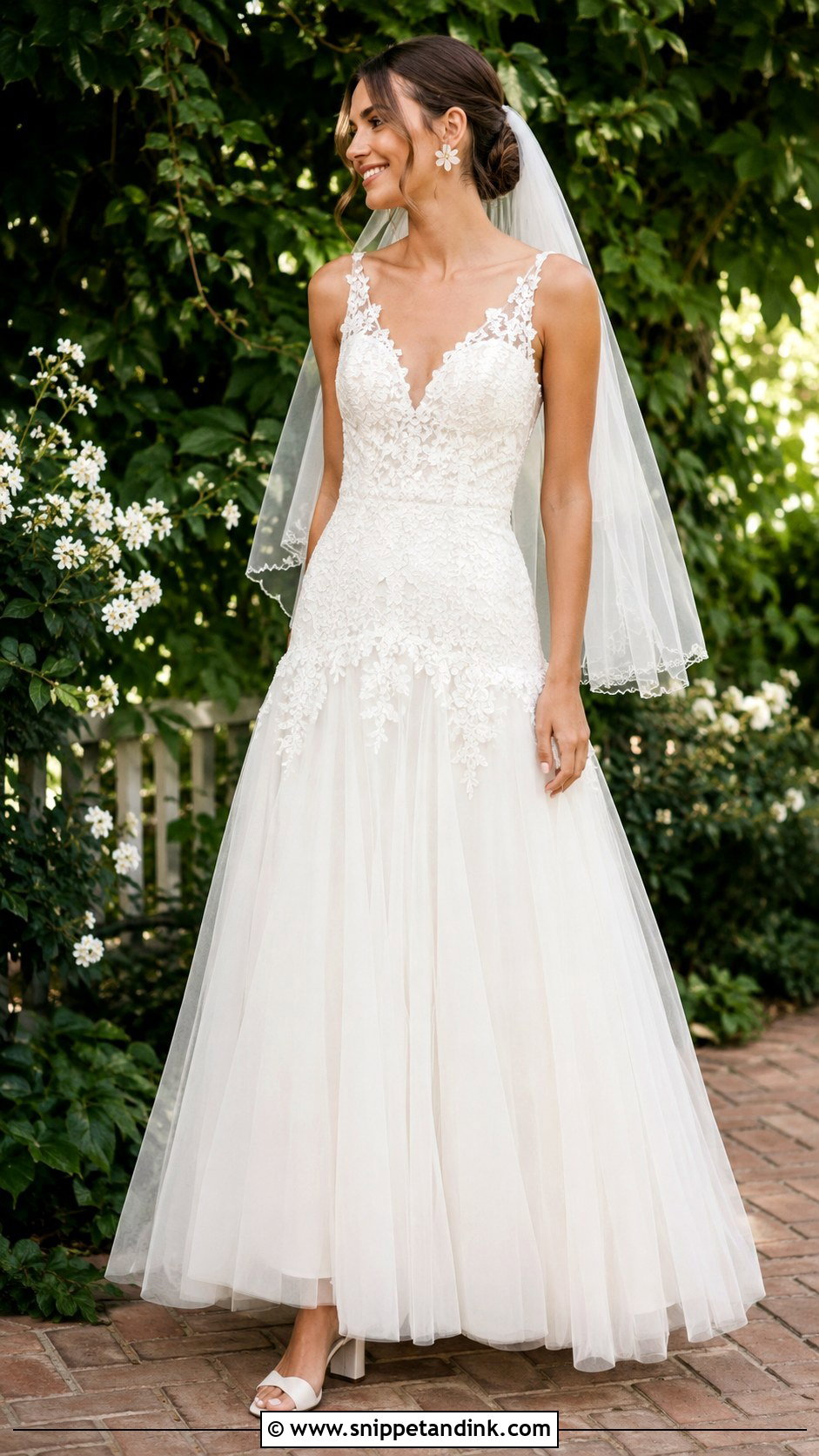
Lace is where a dropped waist can turn heavy fast, so placement matters more than the lace itself. I prefer the lace kept to the fitted bodice, stopping at the seam, with a lighter tulle or organza skirt below so the dress still moves. A sweetheart or soft scoop neckline keeps the top delicate, and appliqués trailing a little past the seam soften the join in photos. Ask your seamstress whether the lace is corded; corded lace can be hand-moved during alterations, which helps when the seam needs raising. Block heels and a fingertip veil suit garden and estate venues.
3. Satin Drop Waist A Line Wedding Dress
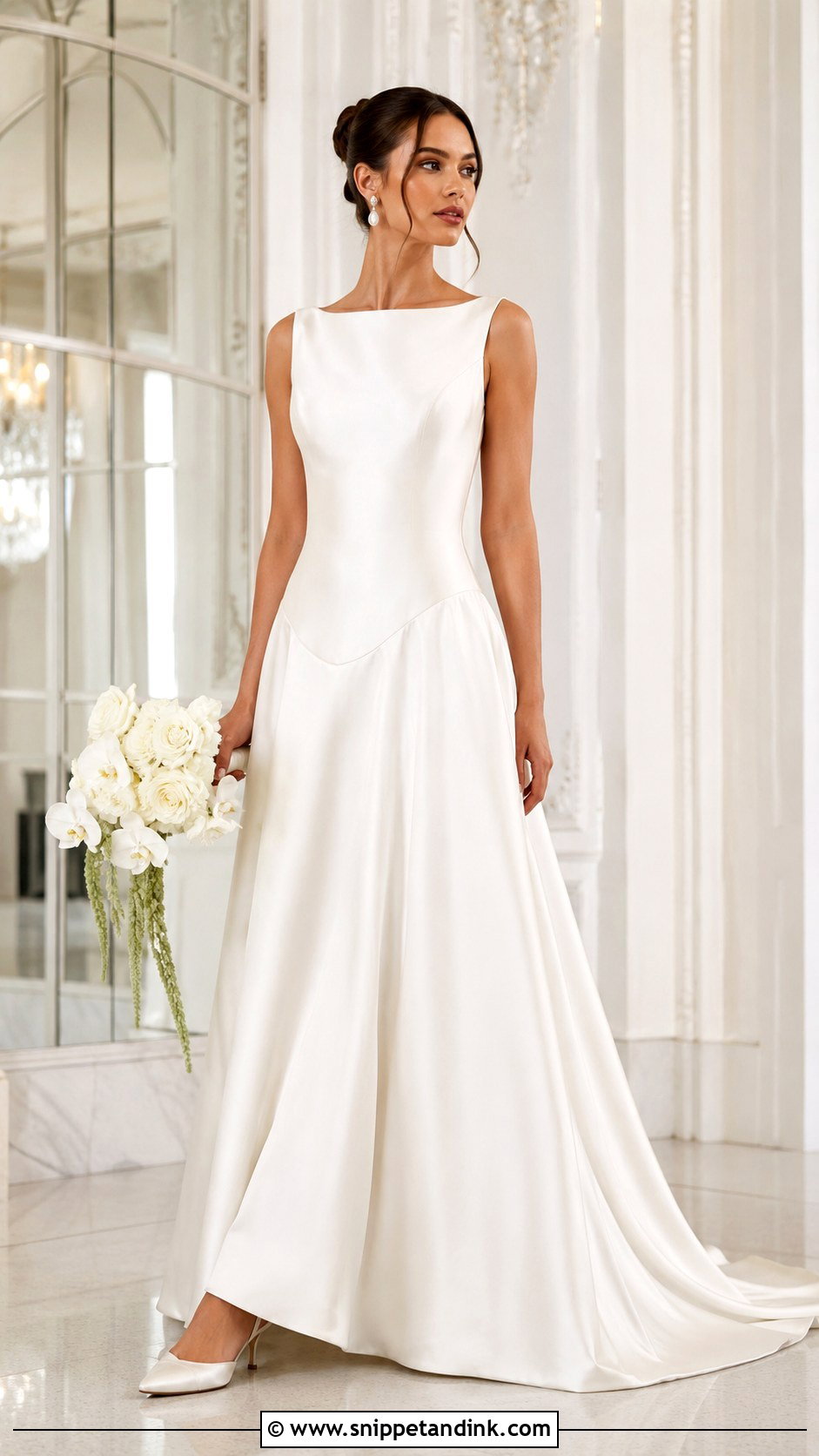
Satin is the honest fabric for this silhouette because it hides nothing, including a seam that sits a centimetre off. When it is cut well, the long bodice and the slow flare are the whole design. I steer brides toward heavier duchess or mikado satin rather than thin charmeuse, which shows every undergarment line across the hip. A strapless or square neck, slingbacks, a low bun and pearl drops finish it. Keep extras to a minimum. Ballrooms and evening city ceremonies suit it best.
4. Tulle Drop Waist A Line Wedding Dress
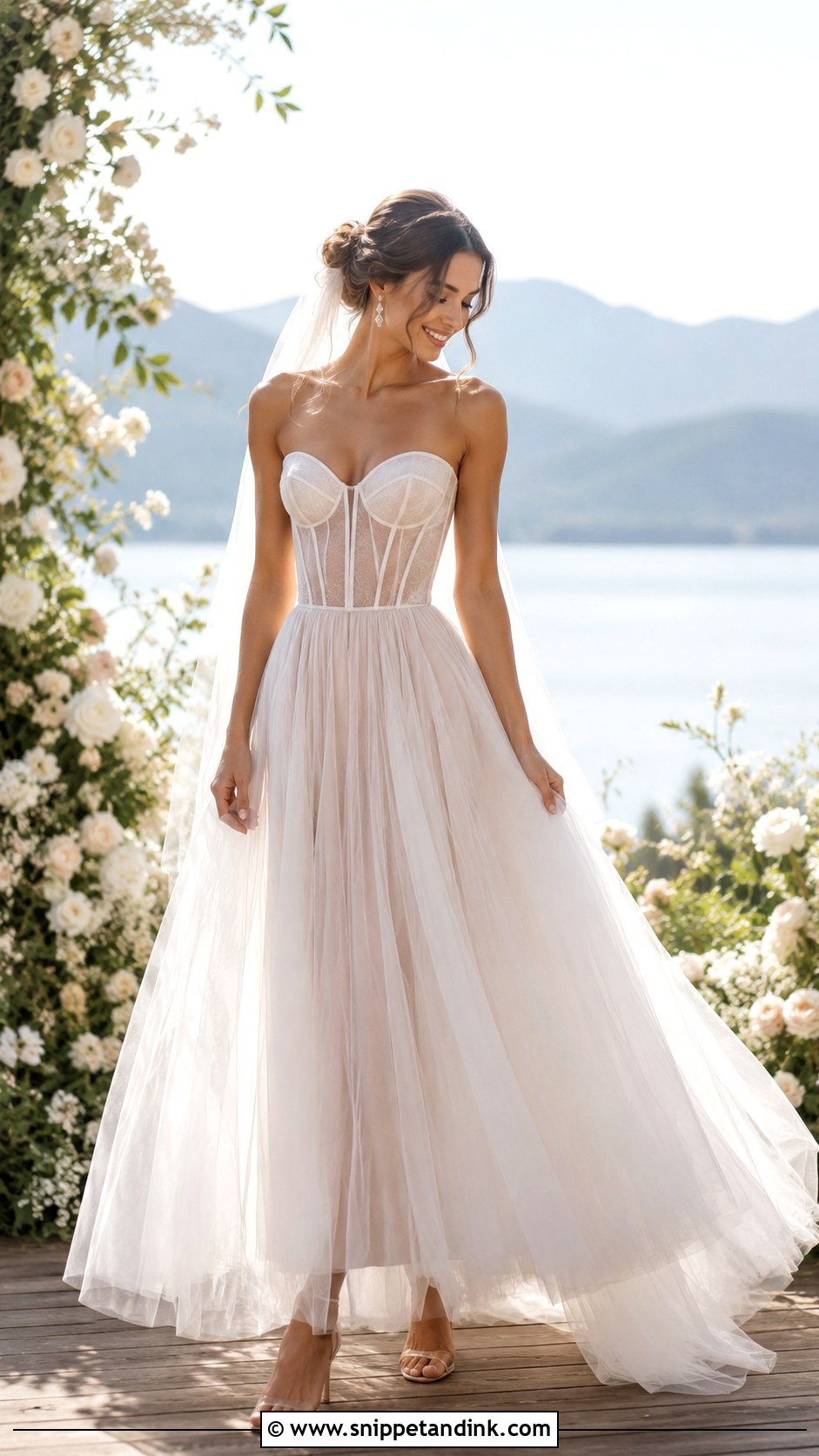
Tulle softens the dropped seam more than any other fabric, which is useful if a sharp hip line makes you nervous. The thing I watch is layer count: four or five layers float, but a dozen gathered at a low seam adds bulk right where you least want it. A sheer corset bodice or a few floral appliqués keeps the top interesting. Barely-there heels and a soft veil suit spring ceremonies outdoors, and this gives you a fairytale mood without the weight of a full ball gown.
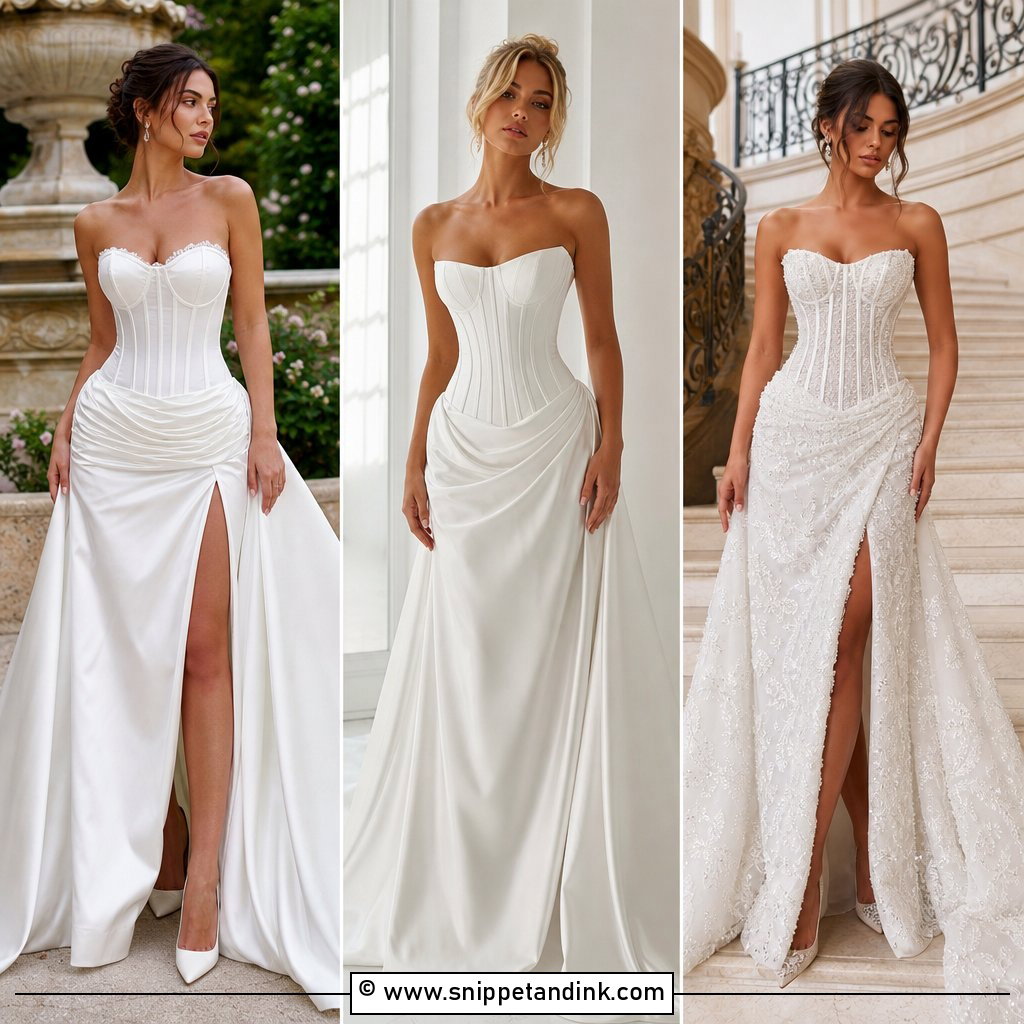
5. Corset Drop Waist A Line Wedding Dress
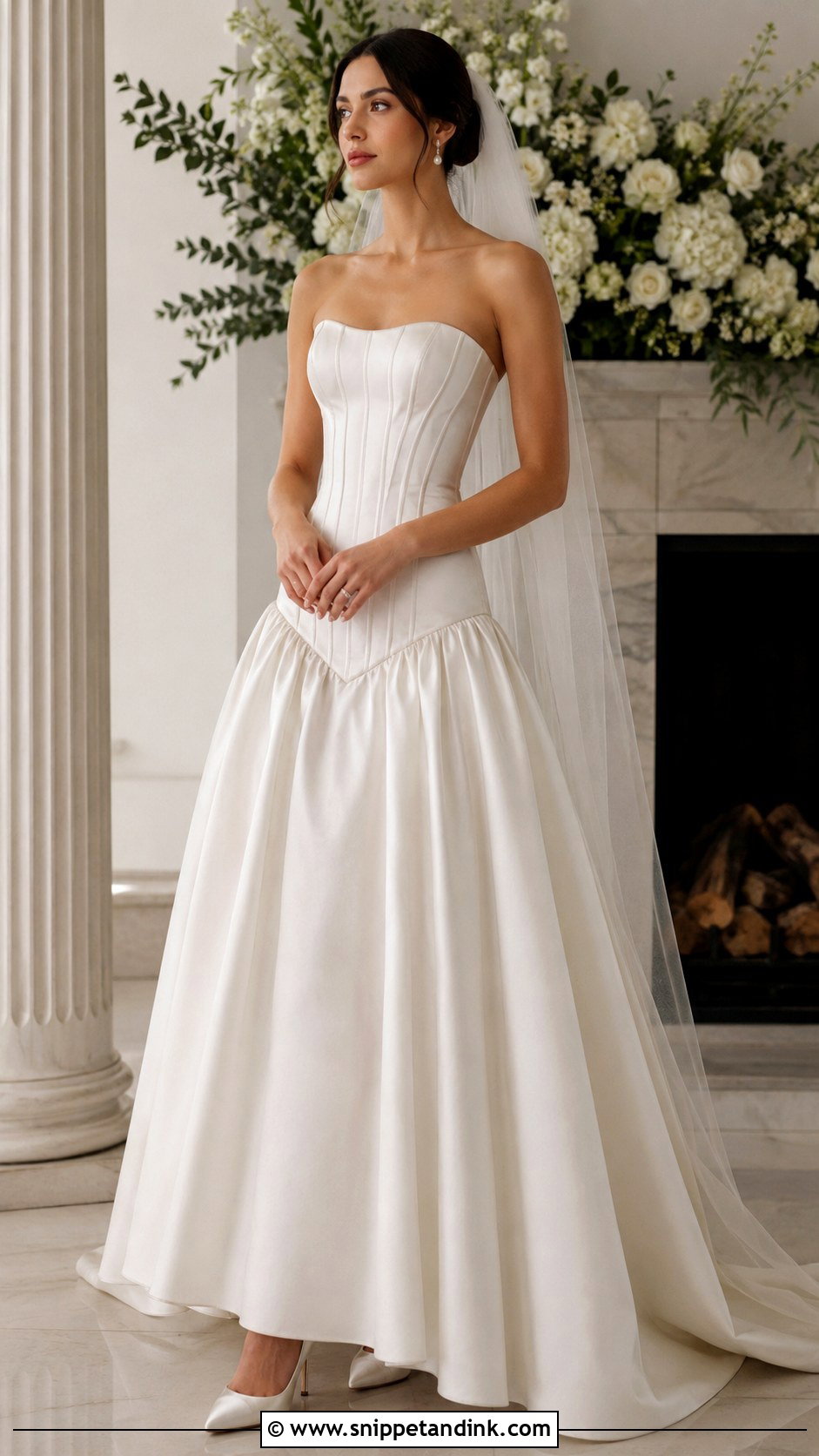
A corset bodice and a dropped waist work together naturally, since the boning already runs down past the natural waist. Visible boning reads fashion-forward; hidden boning reads softer. What I check is the bottom edge of the corset when you sit: if the bones end right at the hip crease, they can dig in through dinner, and a good seamstress can shorten or tip them. A sleek updo shows the bodice off, and a bracelet or pearl earrings are all the jewelry it needs.
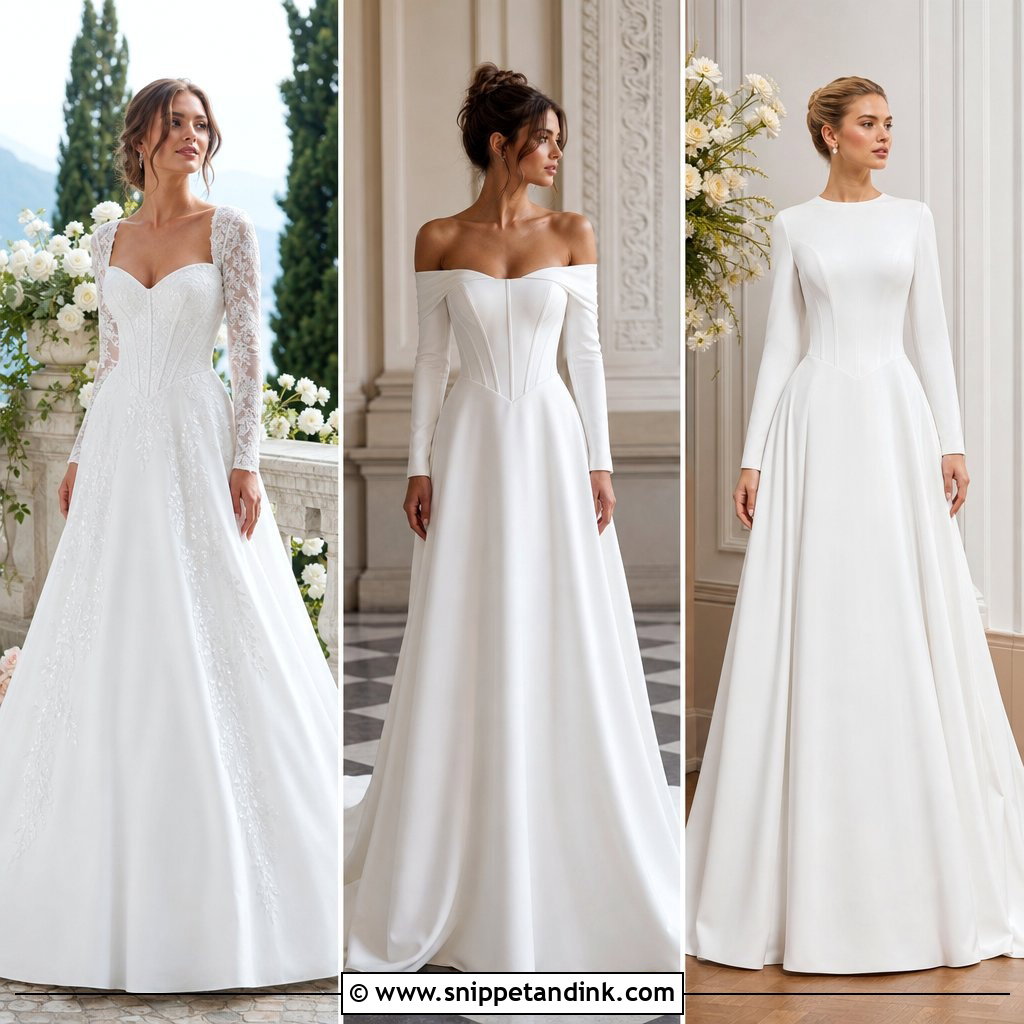
6. Basque Drop Waist A Line Wedding Dress
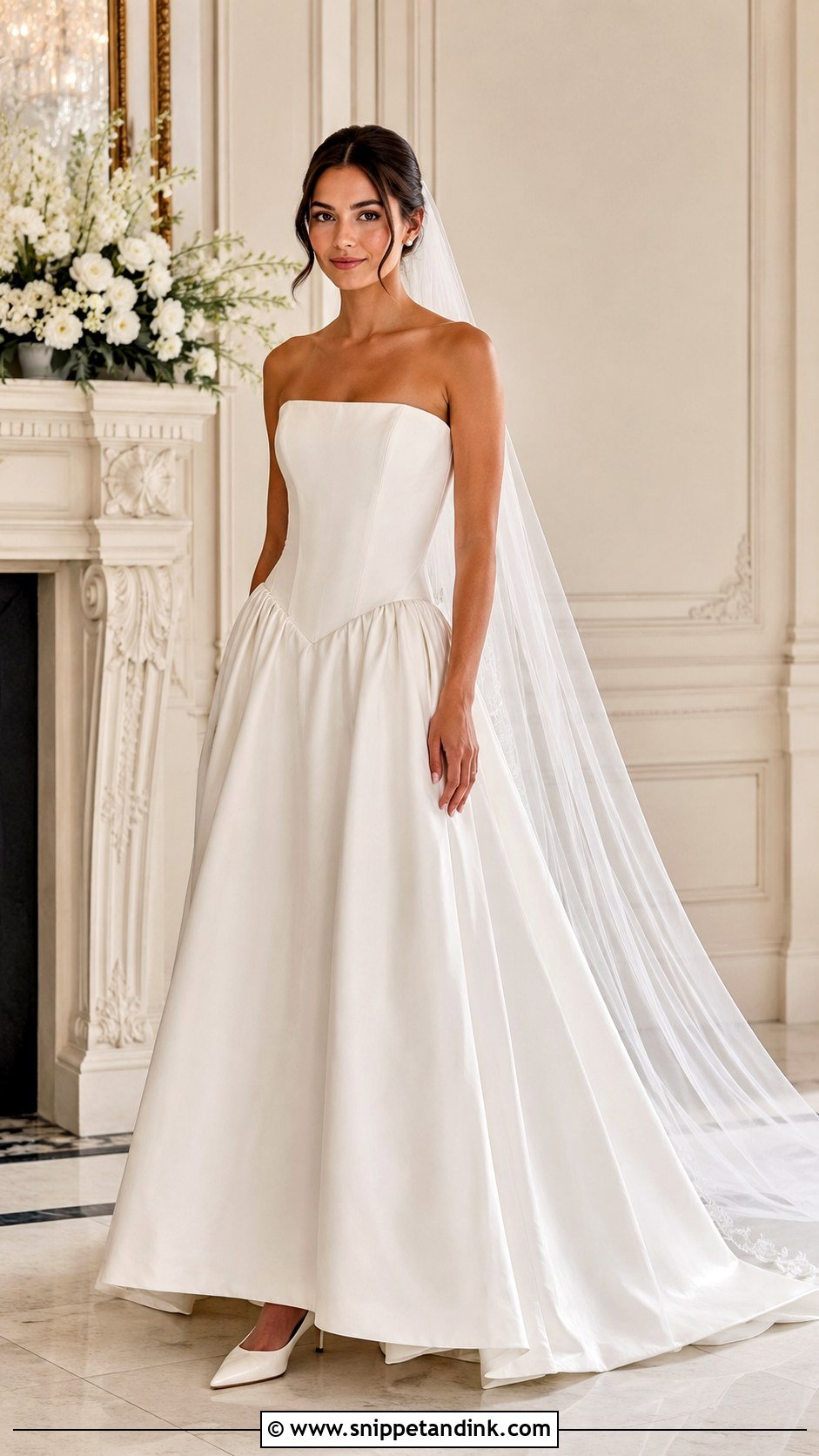
The basque is the version I recommend most often. Instead of running straight across, the seam dips to a point at the centre front, which draws the eye down the middle of the body and lengthens the torso even on brides who think drop waists cut them in half. It holds its shape best in satin, mikado, structured organza or a firm lace. A sweetheart or straight neckline, classic pumps and a long veil keep it formal. Pearl studs or small drops are plenty for traditional portraits.
7. Long Sleeve Drop Waist A Line Wedding Dress
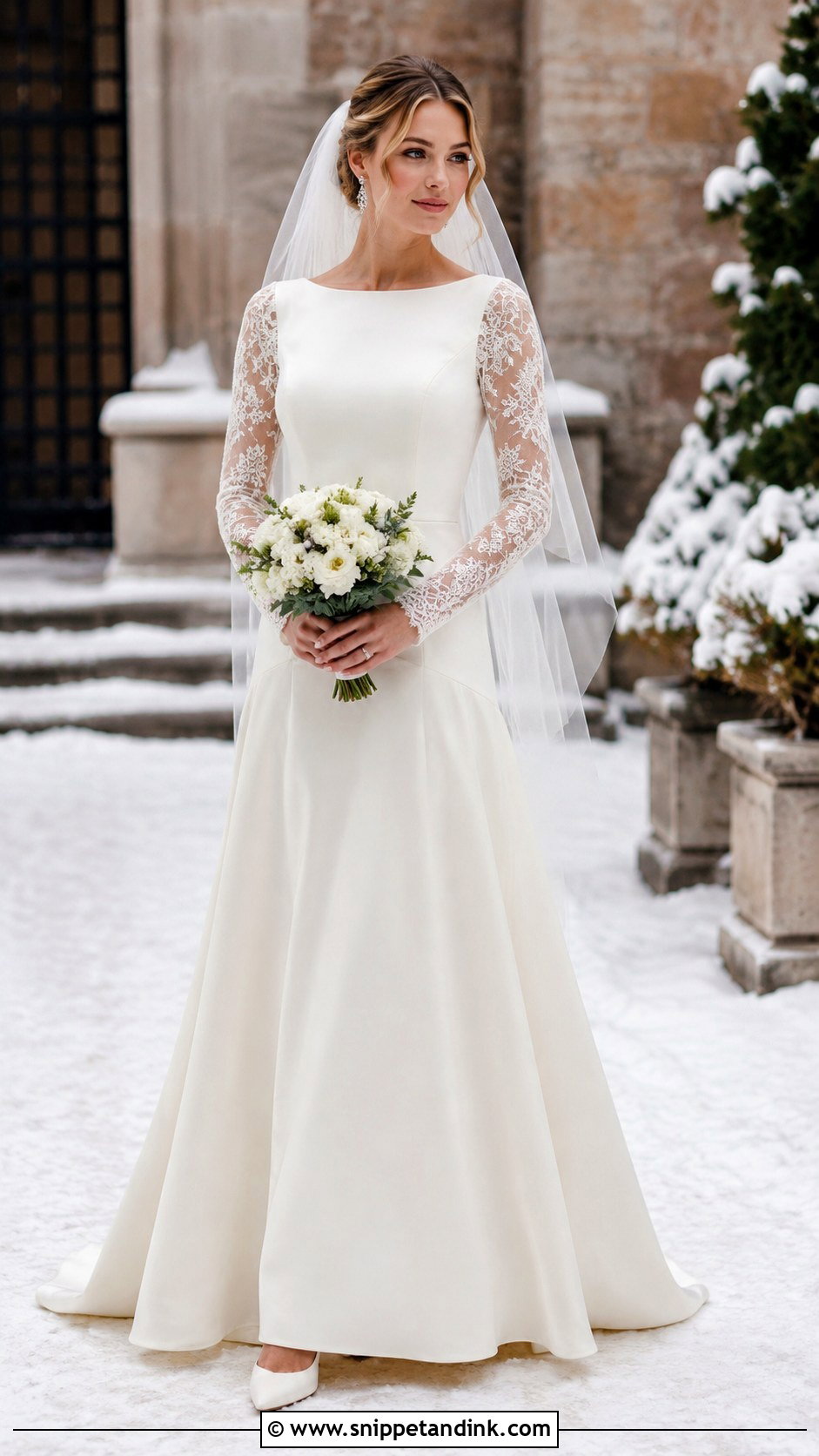
Sleeves change how long the bodice looks. A long sleeve visually ends at the wrist near the seam line, so the dropped waist reads clean and balanced. Lace sleeves feel romantic, sheer tulle is lighter, and satin is the most modern, but pick by season first. I always test sleeve fit with arms raised, because a tight armhole in a long bodice pulls the whole seam up when you hug or throw a bouquet. A low chignon and a medium veil keep the shoulders visible for fall and winter venues.
8. Off Shoulder Drop Waist A Line Wedding Dress
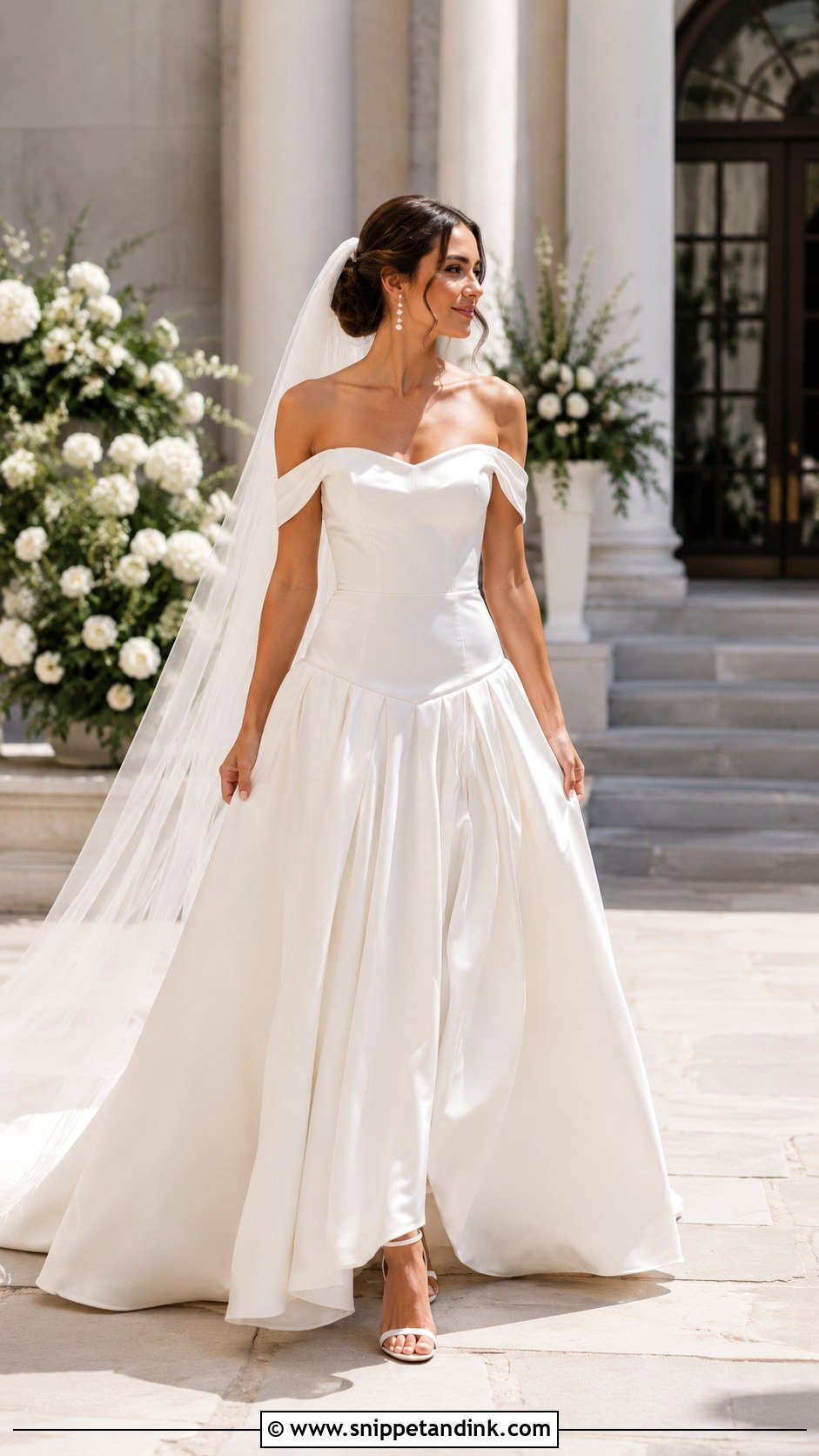
Off-shoulder necklines need the bodice underneath to grip, especially with appliqué weight pulling it down. I look for a band of elastic or silicone inside the neckline and a bodice that does not rely on your arms to stay up. A satin, tulle or organza skirt keeps it easy to move in. Drop earrings and a loose updo frame the collarbone, and a veil set low at the back of the hair follows the neckline instead of fighting it. You get softness on top and structure at the hip.
9. Square Neck Drop Waist A Line Wedding Dress
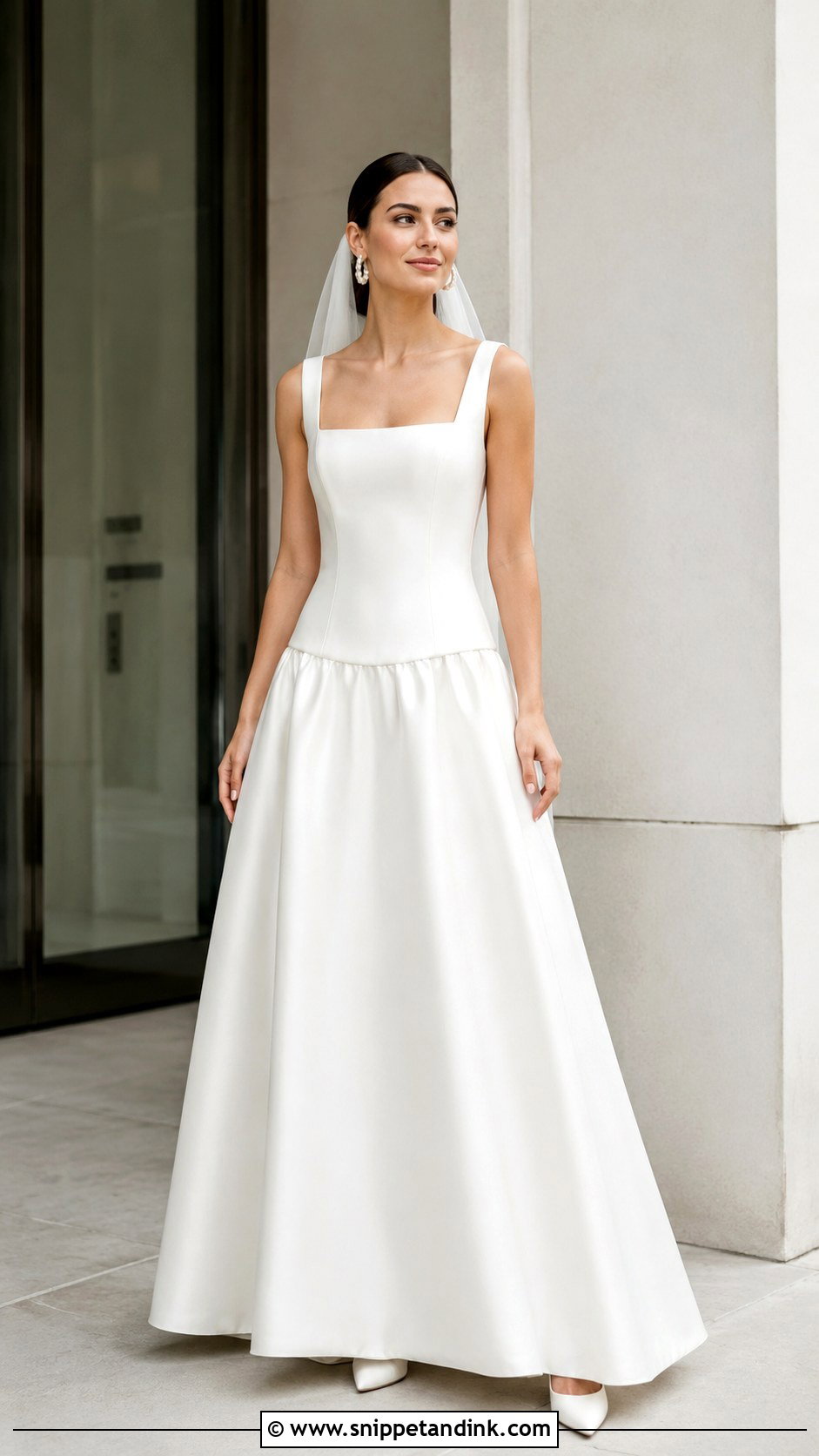
A square neckline adds a straight line at the top to echo the long, straight line of the bodice, which is why this pairing looks so tidy. It is one of the easiest to fit. Crepe with a soft skirt is my favourite version, though satin and lace both work. Pearl hoops, pointed heels and a smooth veil are enough, and either a neat bun or soft waves will suit it. City and garden venues both handle it well.
10. Sweetheart Drop Waist A Line Wedding Dress
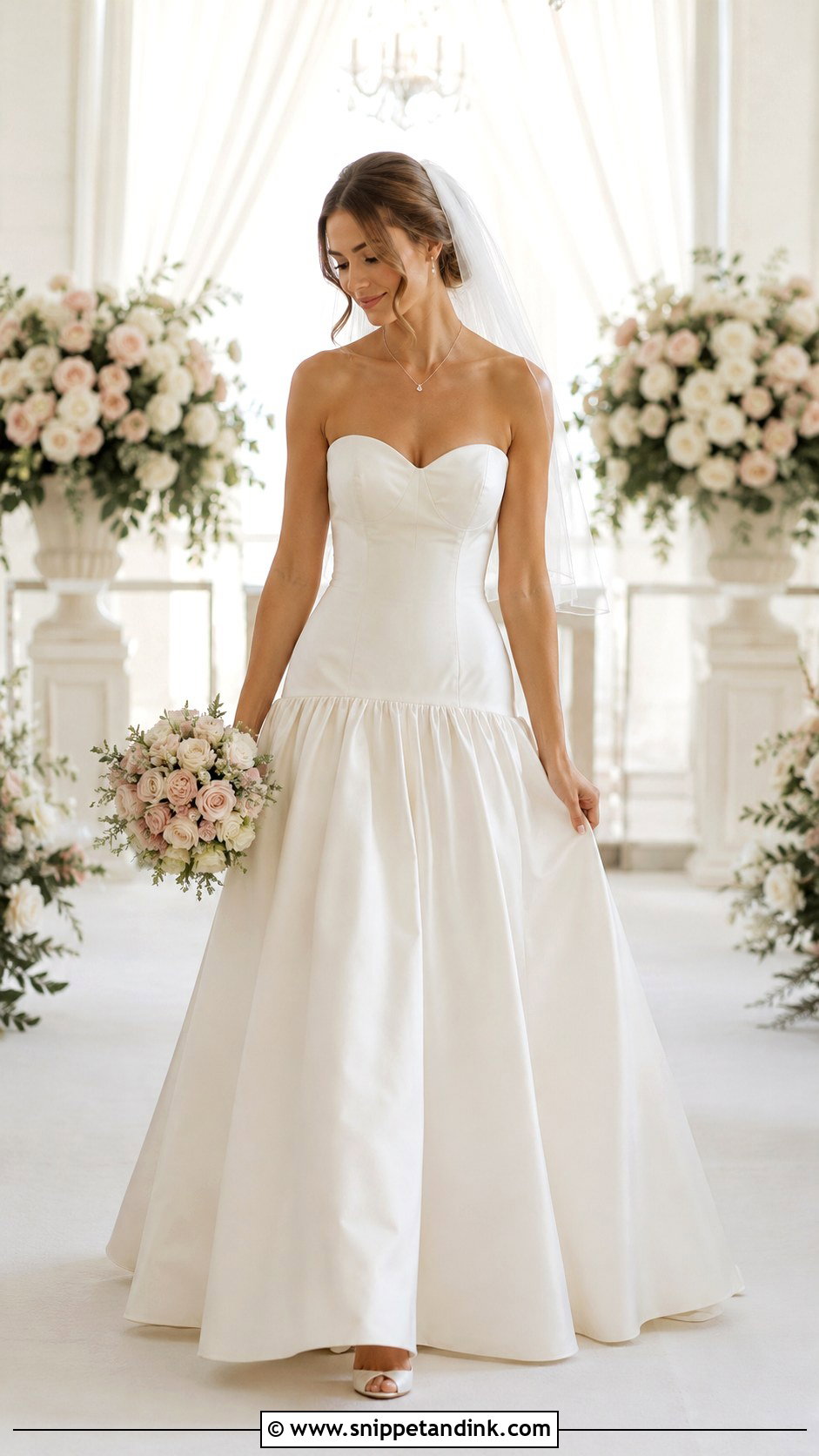
The sweetheart curve breaks up a long torso, so brides who worry a dropped waist will make them look boxy usually relax in this one. It shows off the collarbone and shapes the bust before the seam takes over lower down. In lace, satin or layered tulle it reads traditional, just with an updated waistline. I would skip a necklace unless the neckline sits low enough to leave space. Delicate earrings, ivory heels and a fingertip veil keep the bodice clear.
11. Floral Applique Drop Waist A Line Wedding Dress
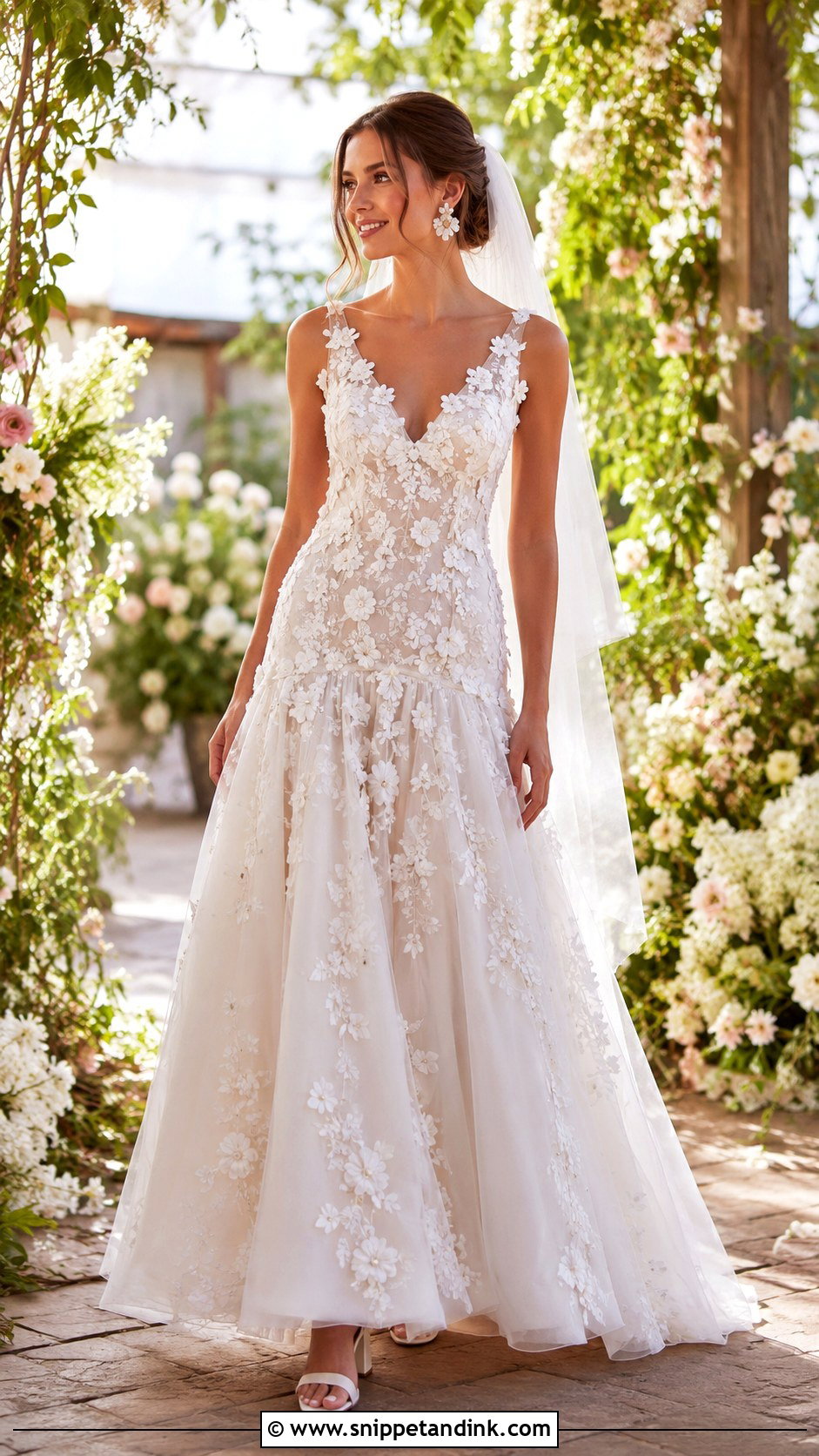
Appliqué is the best way I know to hide the join between bodice and skirt. When flowers are placed along the bodice and then scattered lightly past the seam, the eye travels down without stopping at a hard line. Ask for the trailing pieces to be stitched by hand; glued appliqués can lift at the edges after a long day of sitting and dancing. Ivory or a faint blush underlay adds depth. A minimal veil and a loose garden bouquet keep it from getting busy.
12. Beaded Drop Waist A Line Wedding Dress
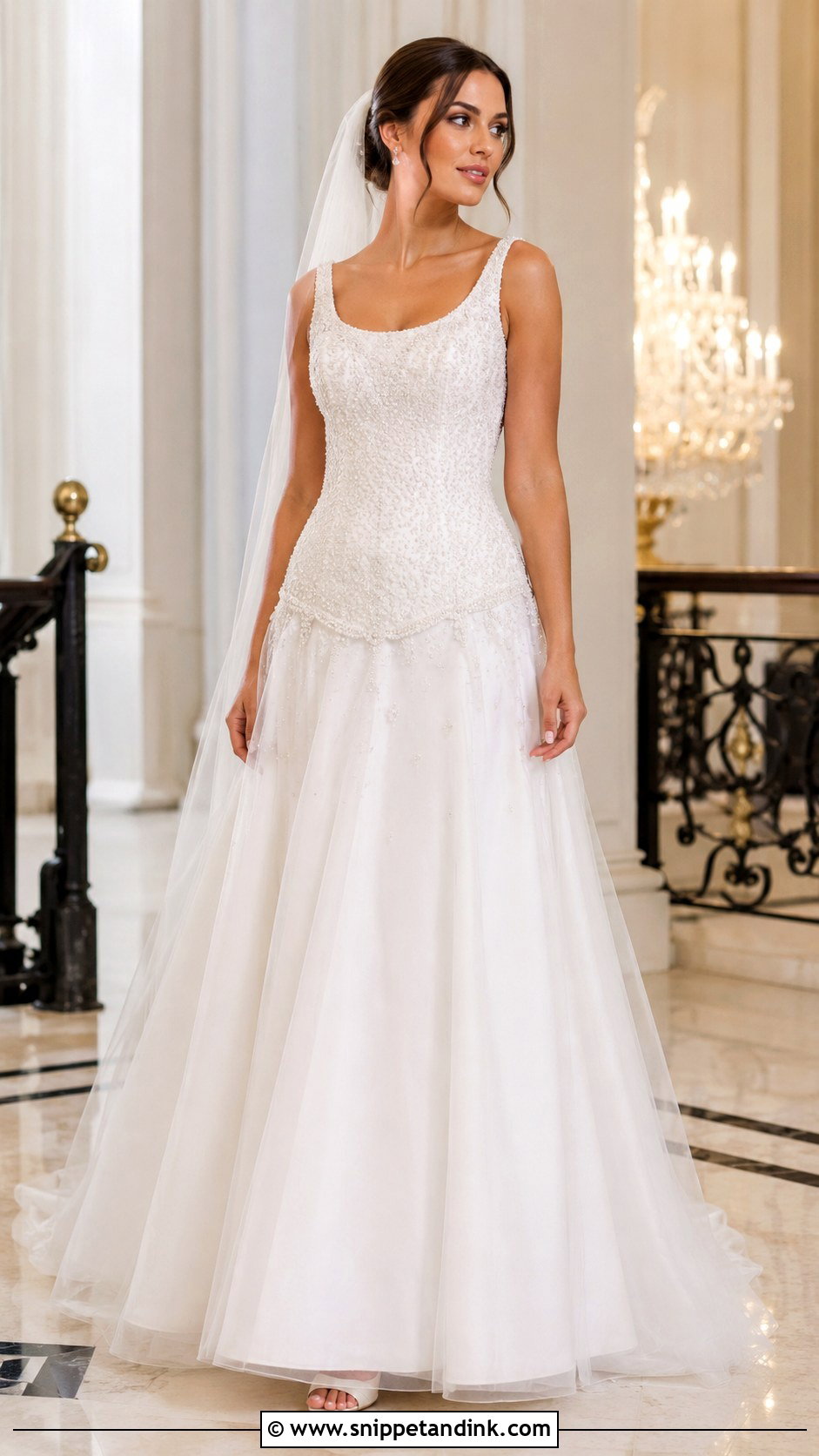
Beadwork on a dropped waist should follow the bodice seams, not fight them. When pearls, clear sequins or crystals trace the vertical lines, they make the torso look longer; scattered randomly over a heavy skirt, they just add weight. Weight is a real concern, because heavy beading pulls a low seam down over hours. I lift the skirt at fittings to judge it. Plain veil, small crystal earrings and simple heels let the beads catch evening light in hotel ballrooms.
13. Simple Drop Waist A Line Wedding Dress
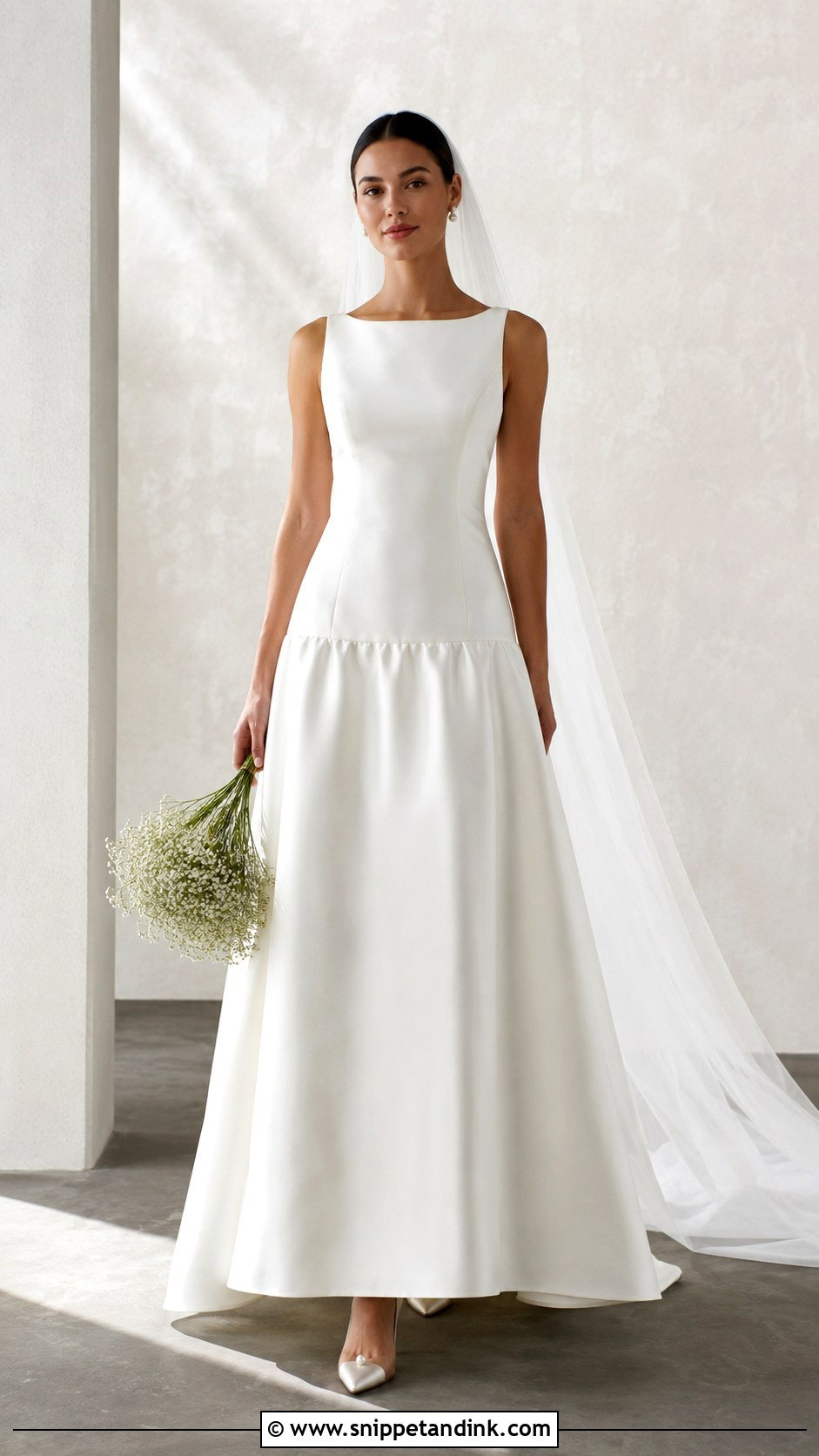
With no decoration, cut is everything, and a plain gown shows tailoring quality instantly. I look at the seam first: it should run level all the way round, without puckering at the side seams. Fabrics with some body, such as mikado, crepe, or matte silk, hold the line better than thin satin. Strapless, square and high necks all suit it. Sleek heels, pearl studs and a smooth veil are plenty, and the bouquet can be as bold or quiet as you like.
14. Modern Drop Waist A Line Wedding Dress
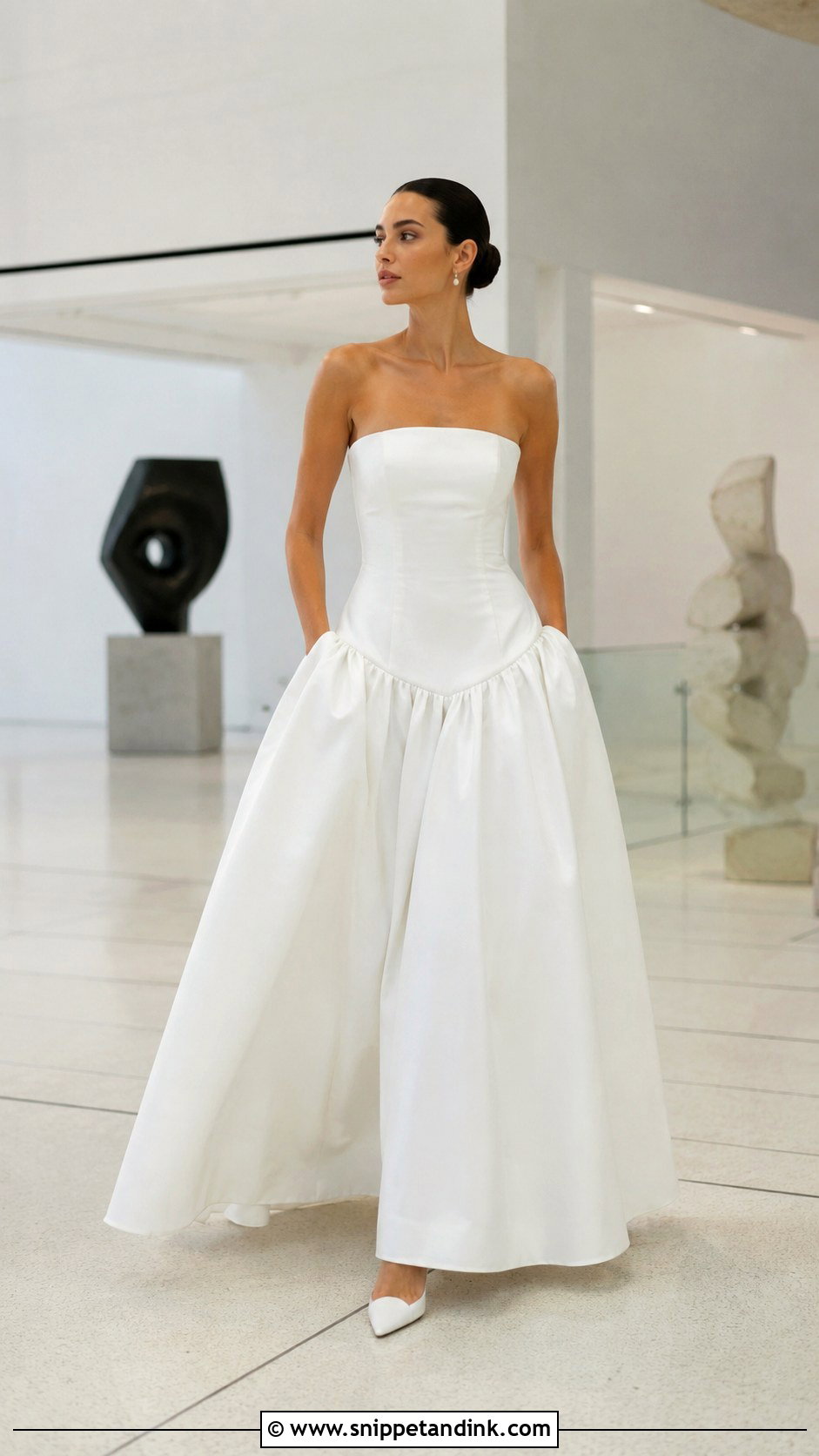
Modern versions rely on proportion: a fitted bodice, a low seam and a crisp skirt, with very little decoration. A straight neckline, a subtle basque dip or one sculpted strap gives it personality. This is the style where I’d consider skipping the veil or going short, because a long tulle veil softens the clean lines you paid for. Slick hair, pointed heels and minimal jewelry suit gallery and rooftop ceremonies.
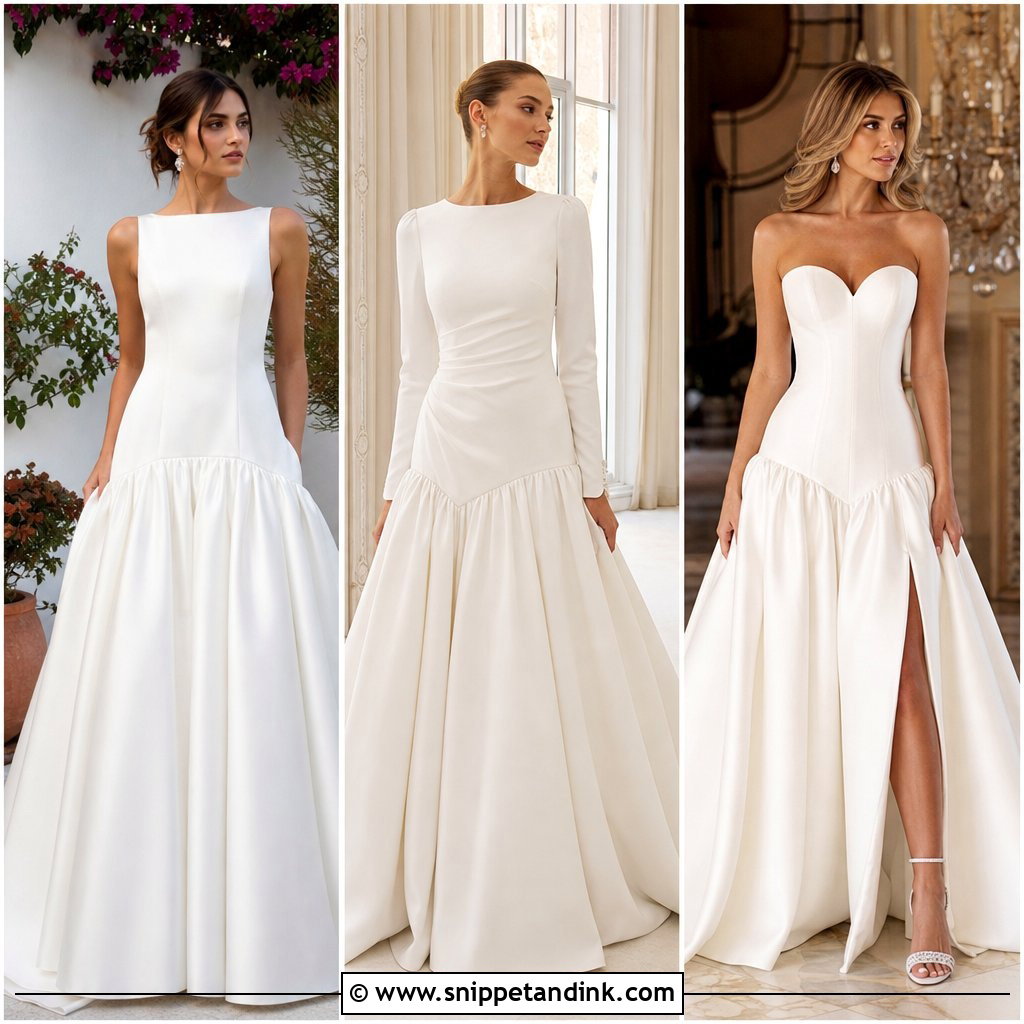
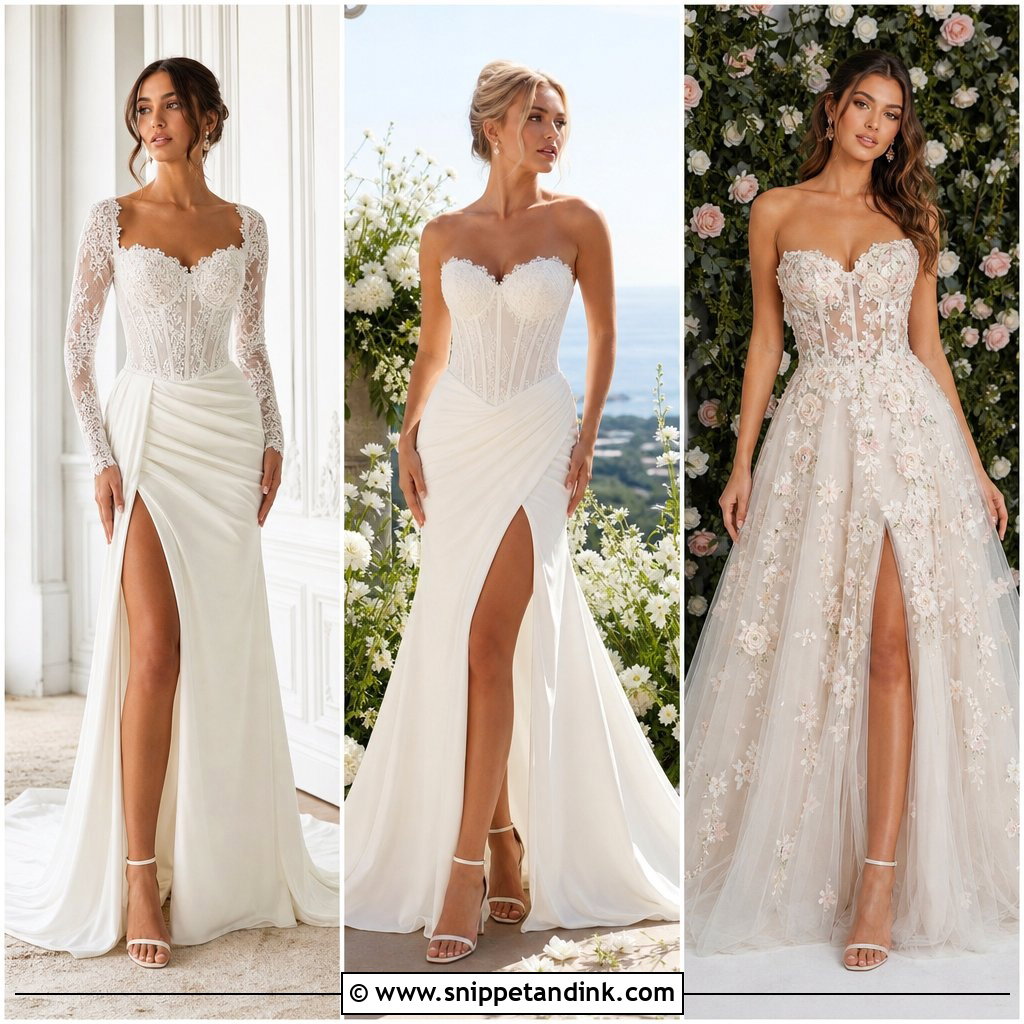
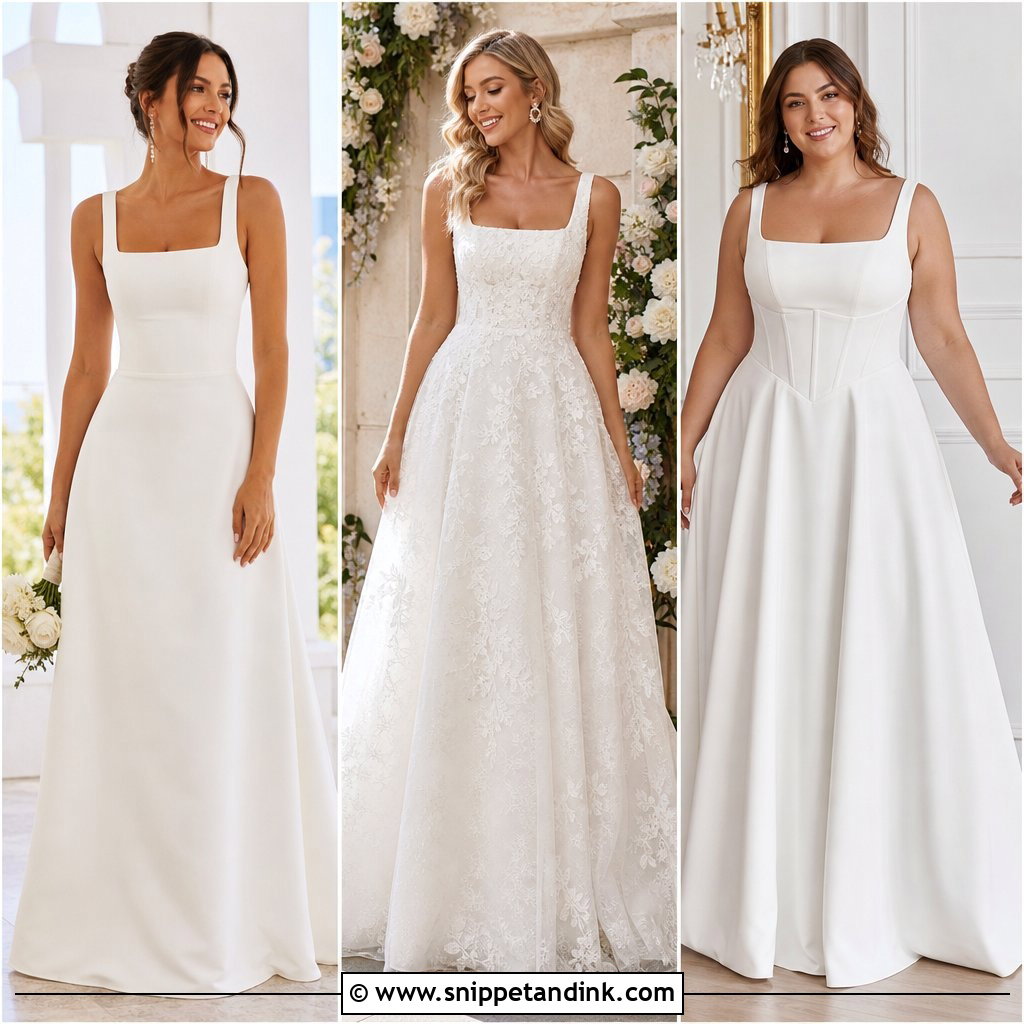
15. Vintage Drop Waist A Line Wedding Dress
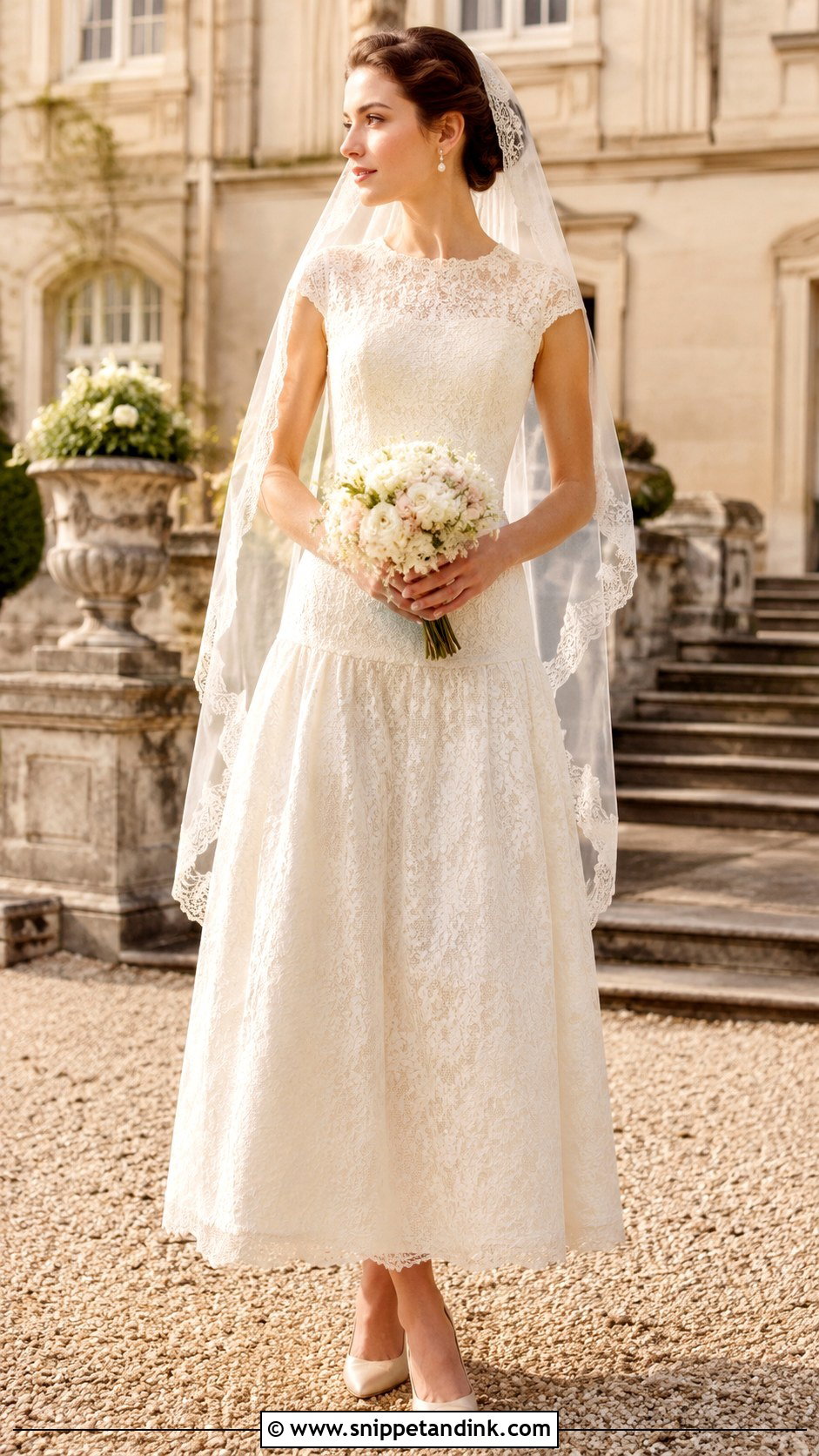
The dropped waist was a 1920s shape, so a vintage version has real history behind it. The trick is avoiding costume. One or two period details, such as covered buttons down the back, soft sleeves or old-style lace, are enough when the A-line skirt stays modern. Ivory pumps, pearl earrings and a lace-trimmed veil carry the mood. I’d keep hair to soft waves or a low bun rather than finger waves, unless the whole wedding is themed. Historic homes and garden estates suit it well.
16. Boho Drop Waist A Line Wedding Dress
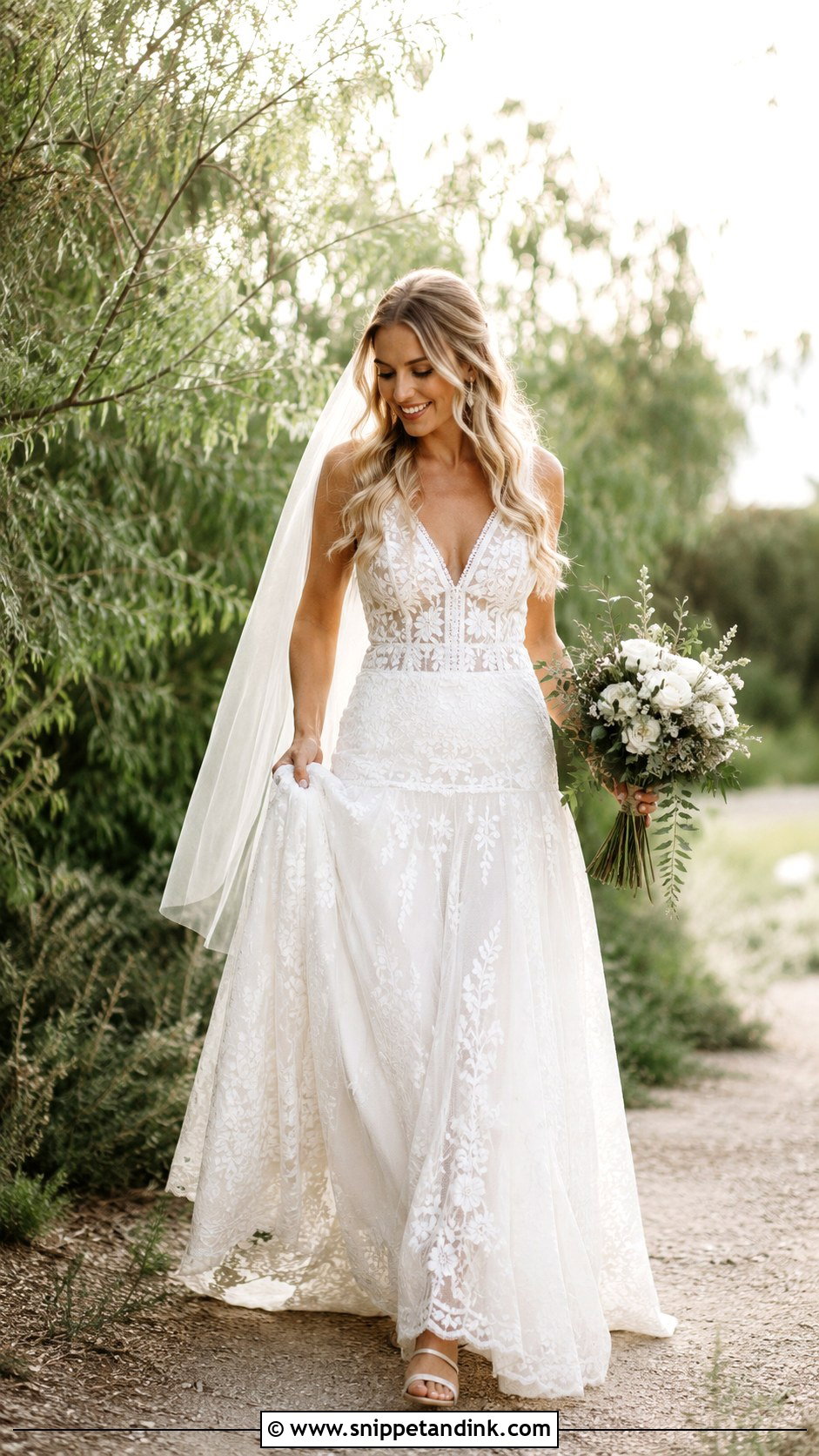
Boho drop waists need fabric that moves: lightweight lace, chiffon, soft tulle or embroidery, never stiff structure. The low seam gives just enough shape to keep a flowing dress from looking like a nightgown, which is the usual problem with very soft boho gowns. Block heels or bridal sandals matter outdoors, and loose waves with floral pins finish it. Desert, coastal and outdoor ceremonies are its natural home.
17. Beach Drop Waist A Line Wedding Dress
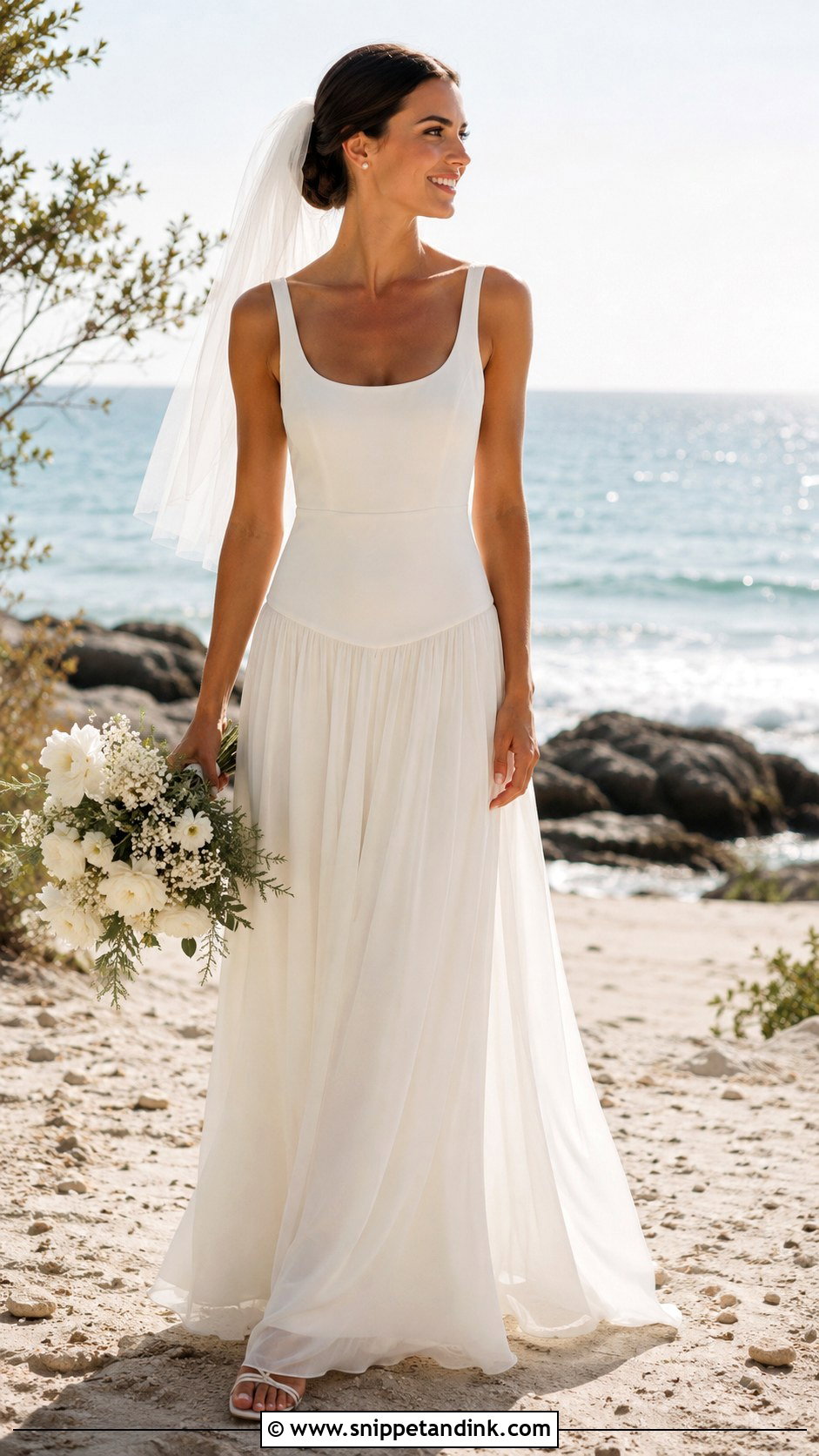
Sand and wind are the two things I plan a beach dress around. Chiffon, airy tulle or light organza breathes and lets the skirt move in a breeze, while heavy satin drags and holds heat. Keep the hem a touch shorter than you would indoors so it does not scoop up sand. Straps, a sweetheart or a soft corset bodice give support. Flat sandals and a short veil that will not whip around your face make sense, and a loose white and green bouquet suits the setting.
18. Garden Drop Waist A Line Wedding Dress
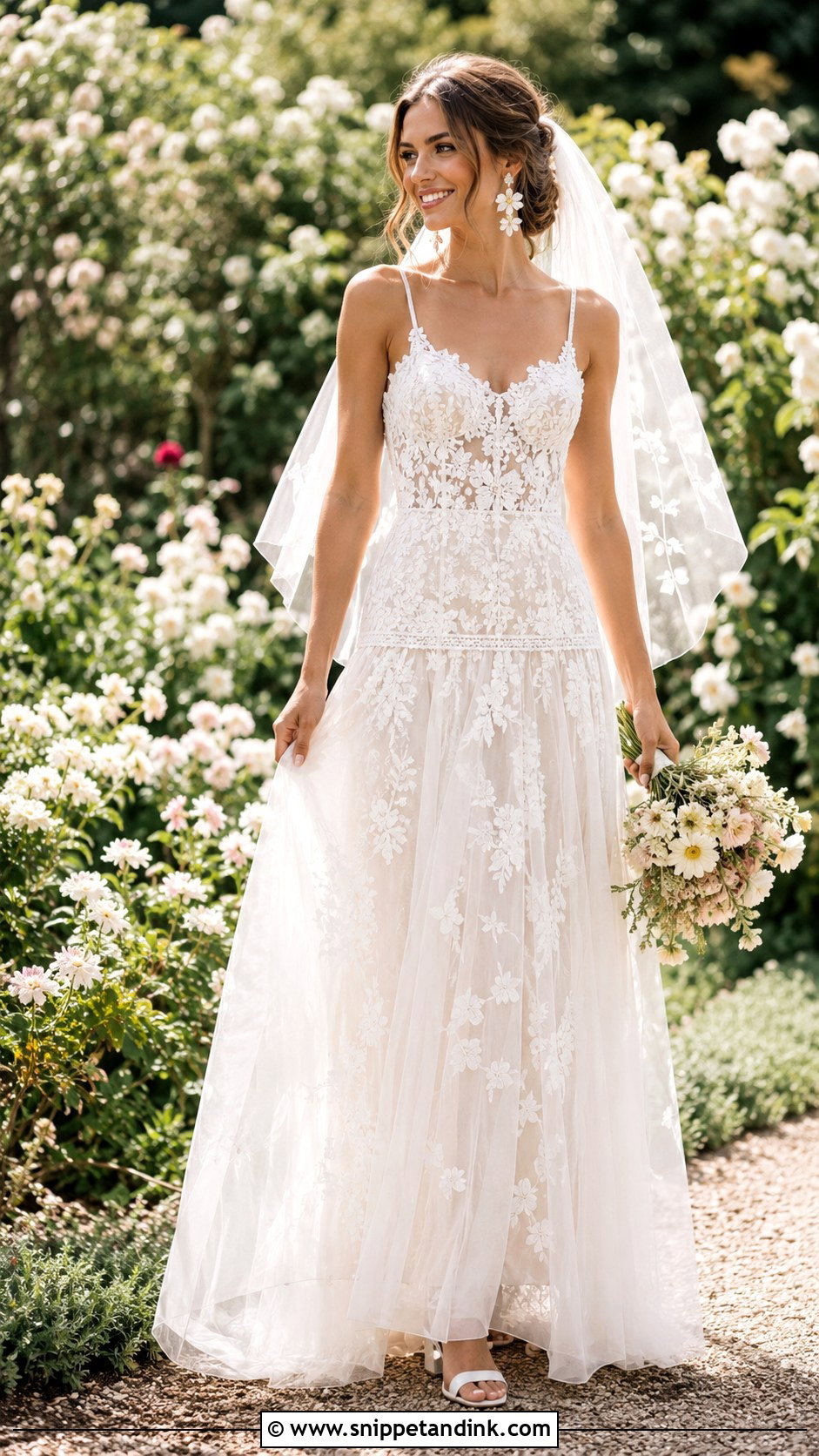
Garden venues mean grass, gravel and stone paths, so I always ask what the aisle surface is before talking lace. An A-line skirt from a dropped seam clears the ground better than a mermaid, and block heels will not sink into lawn. Floral lace, soft appliqué or light embroidery suit the setting. Choose straps, an off-shoulder neckline or sheer sleeves for the season. A veil that catches daylight and a bouquet of seasonal blooms tie it together for spring and summer.
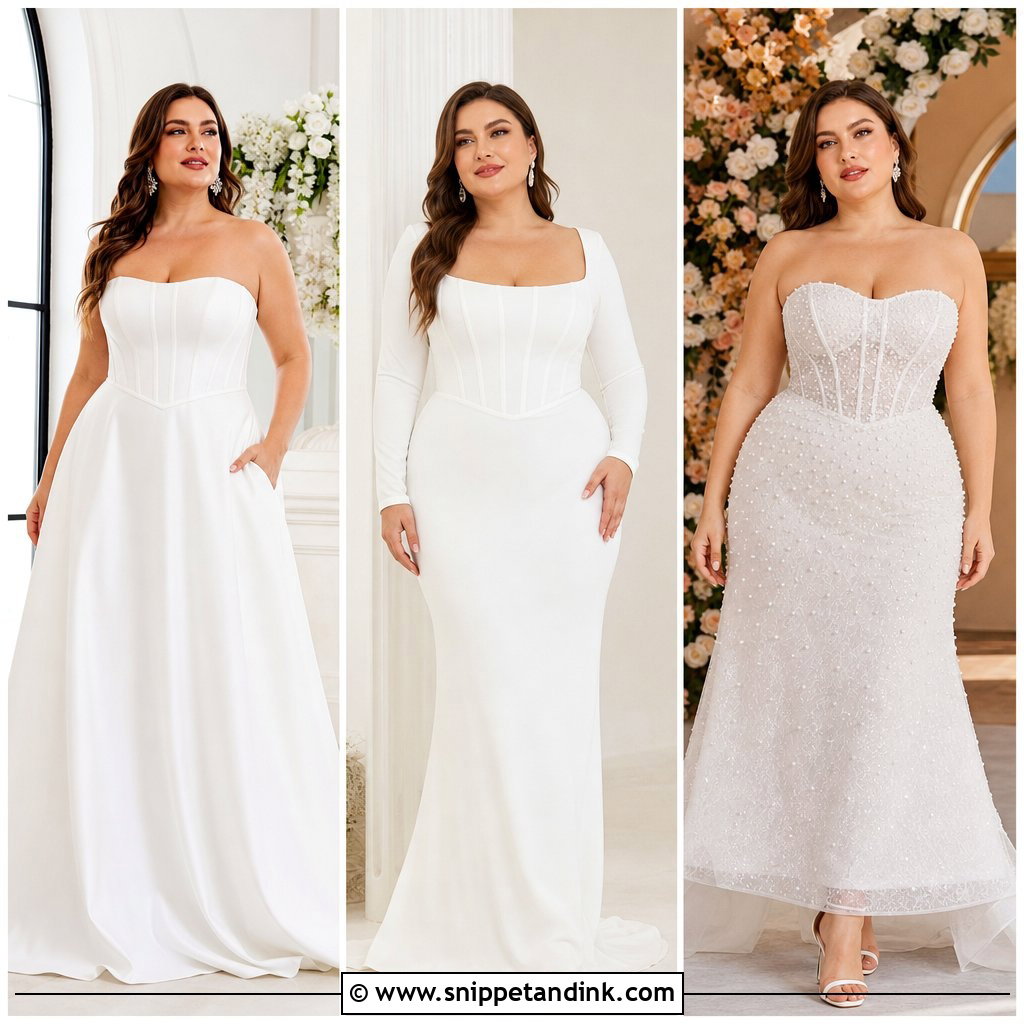
19. Plus Size Drop Waist A Line Wedding Dress
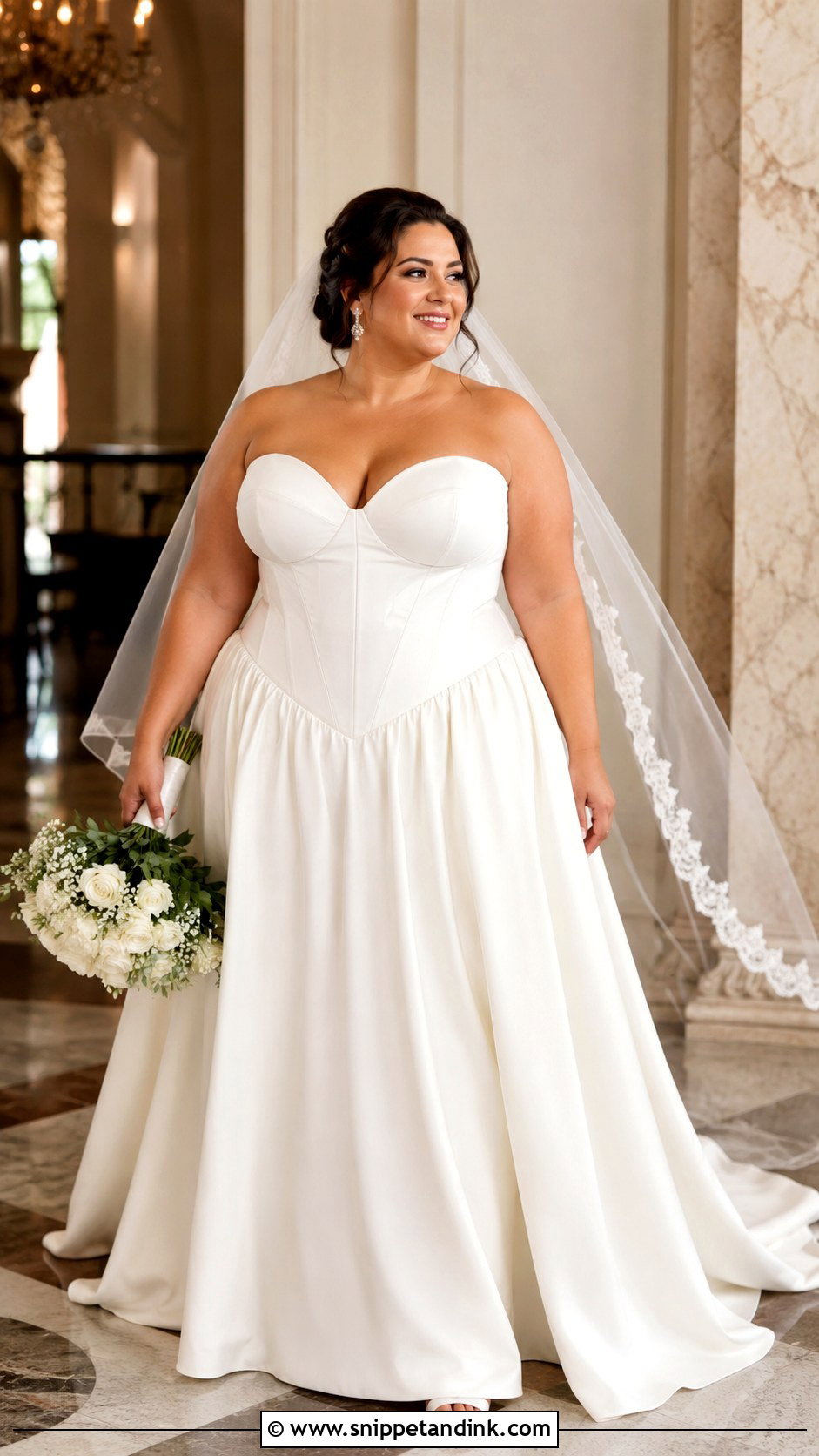
On a curvy body, the fit of a drop waist comes down to where the seam meets the hip. Too low and it cuts across the widest point; at the high hip, it defines the waist and lets the skirt fall clear. That is the first thing I mark at a plus size fitting. Supportive structure, wider straps, sweetheart necklines, and basque-inspired seams all help balance the shape, and a skirt that flows rather than clings keeps it comfortable. Get the undergarments sorted before the first fitting, not after. A long veil adds drama without adding bulk.



20. Petite Drop Waist A Line Wedding Dress
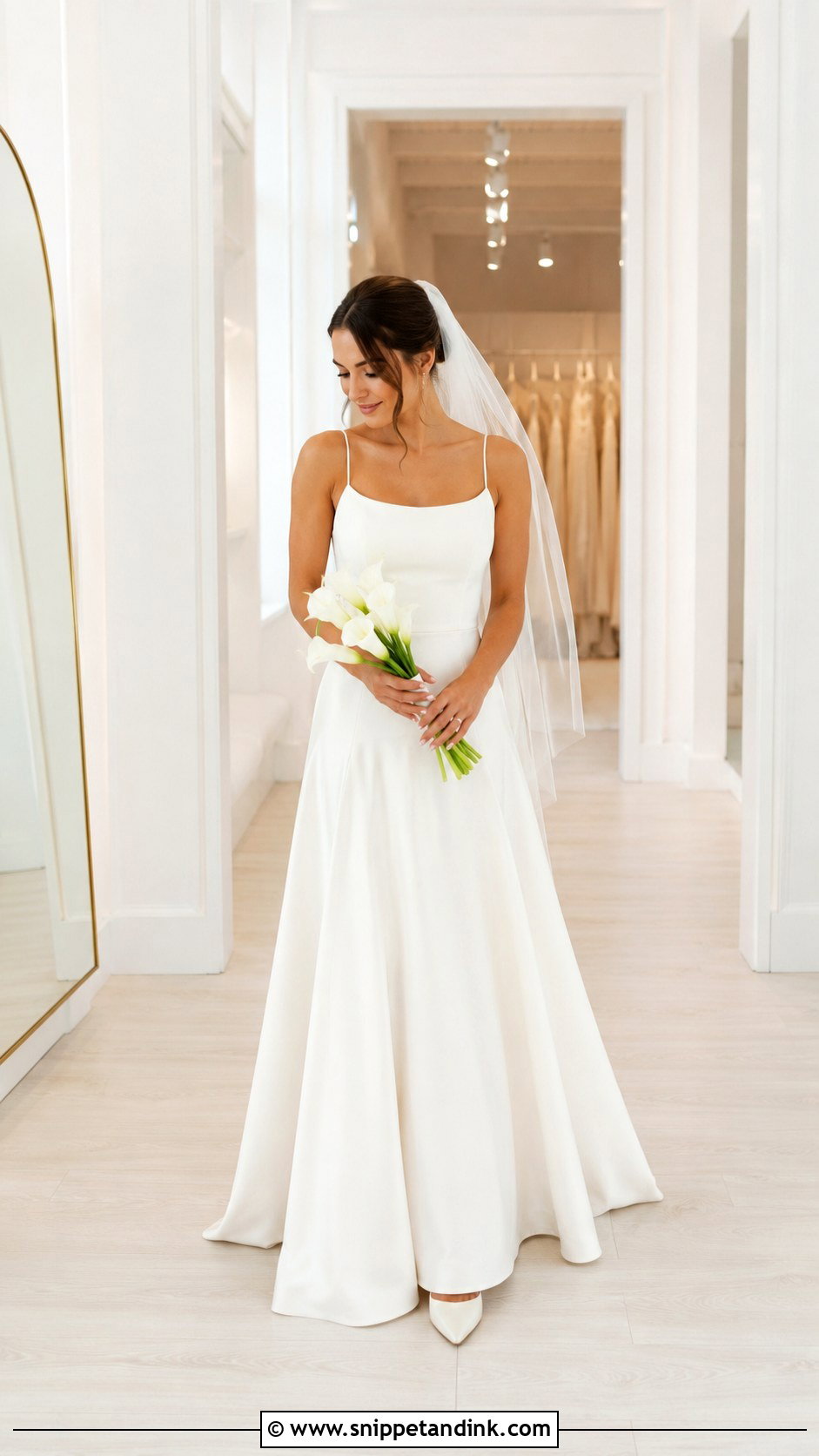
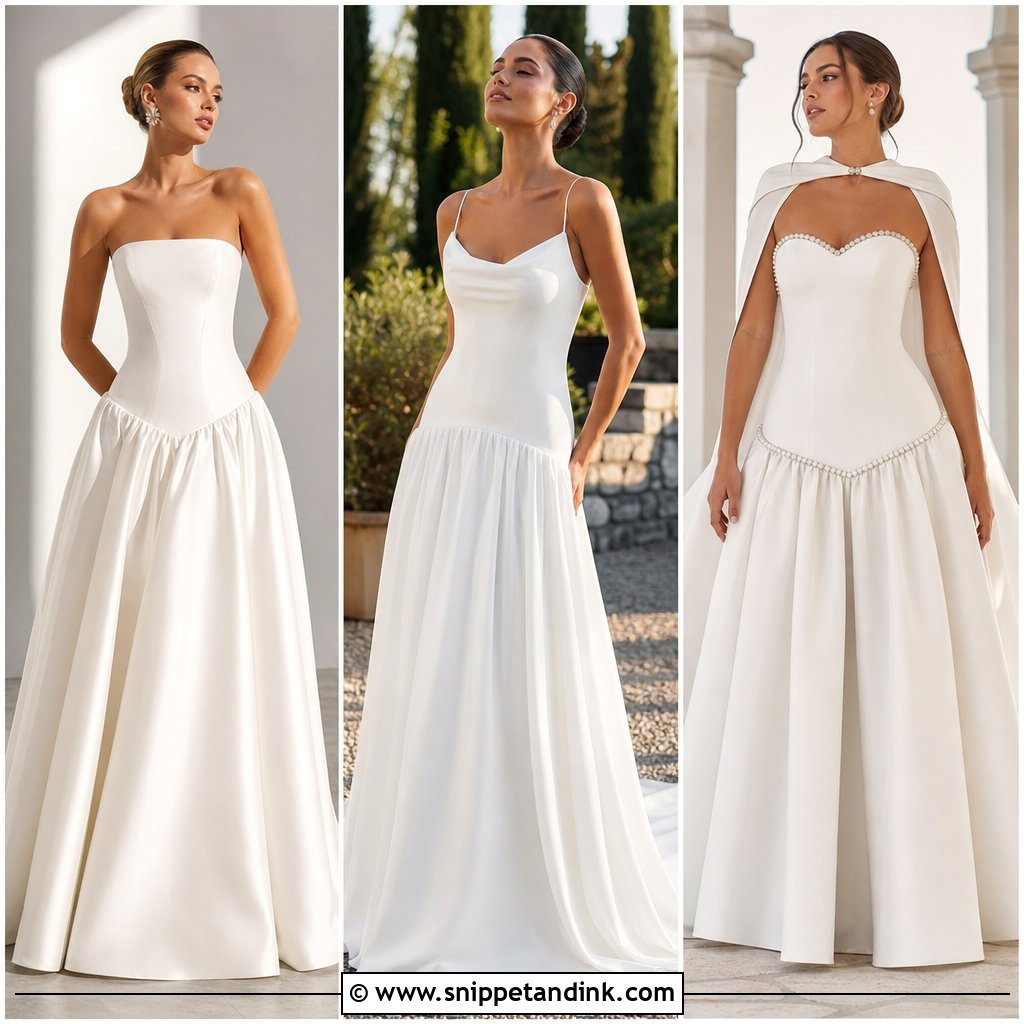
Petite brides can wear this shape, but scale is everything. On a shorter torso, a seam at the full hip leaves very little leg line, so I usually move it up to just a few centimetres below the natural waist, or choose a gentle basque point instead. Pick a light A-line skirt over layered tulle. Pointed heels, a narrow bouquet and a simple veil all add vertical flow. Heavy layers will shorten you, so I’d leave them out.
21. High Neck Drop Waist A Line Wedding Dress
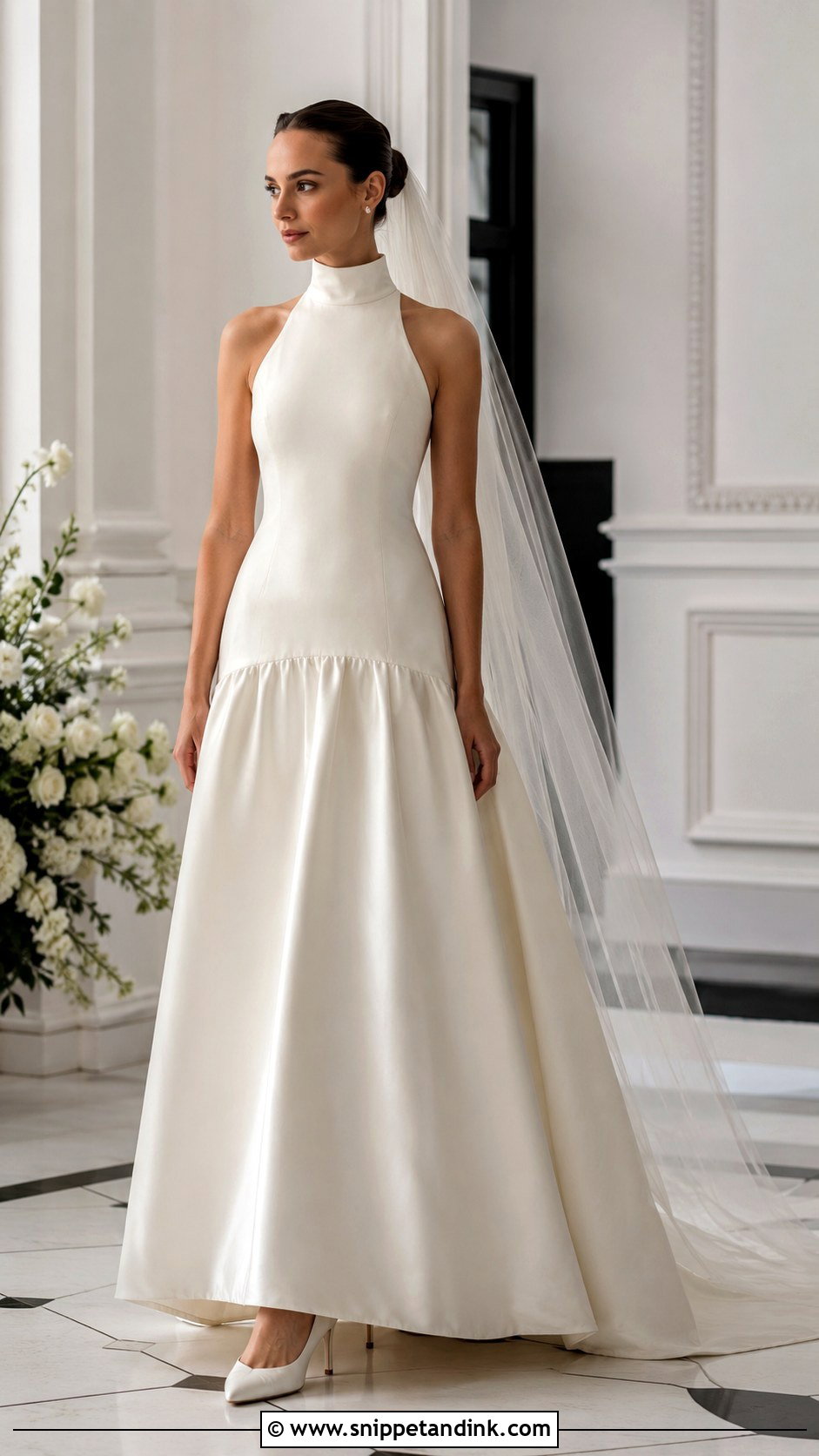
A high neck pulls attention upward, which balances the lower seam nicely. Sheer lace high necks read romantic; satin or crepe looks modern. Fit at the neck is the detail I check most, because a collar that is slightly tight becomes very noticeable by the evening, and buttons at the back neck need a loop or two of ease. Keep accessories small: a sleek bun, refined heels and a veil anchored beneath the bun. Formal ceremonies and cooler seasons suit it.
22. Sleeveless Drop Waist A Line Wedding Dress
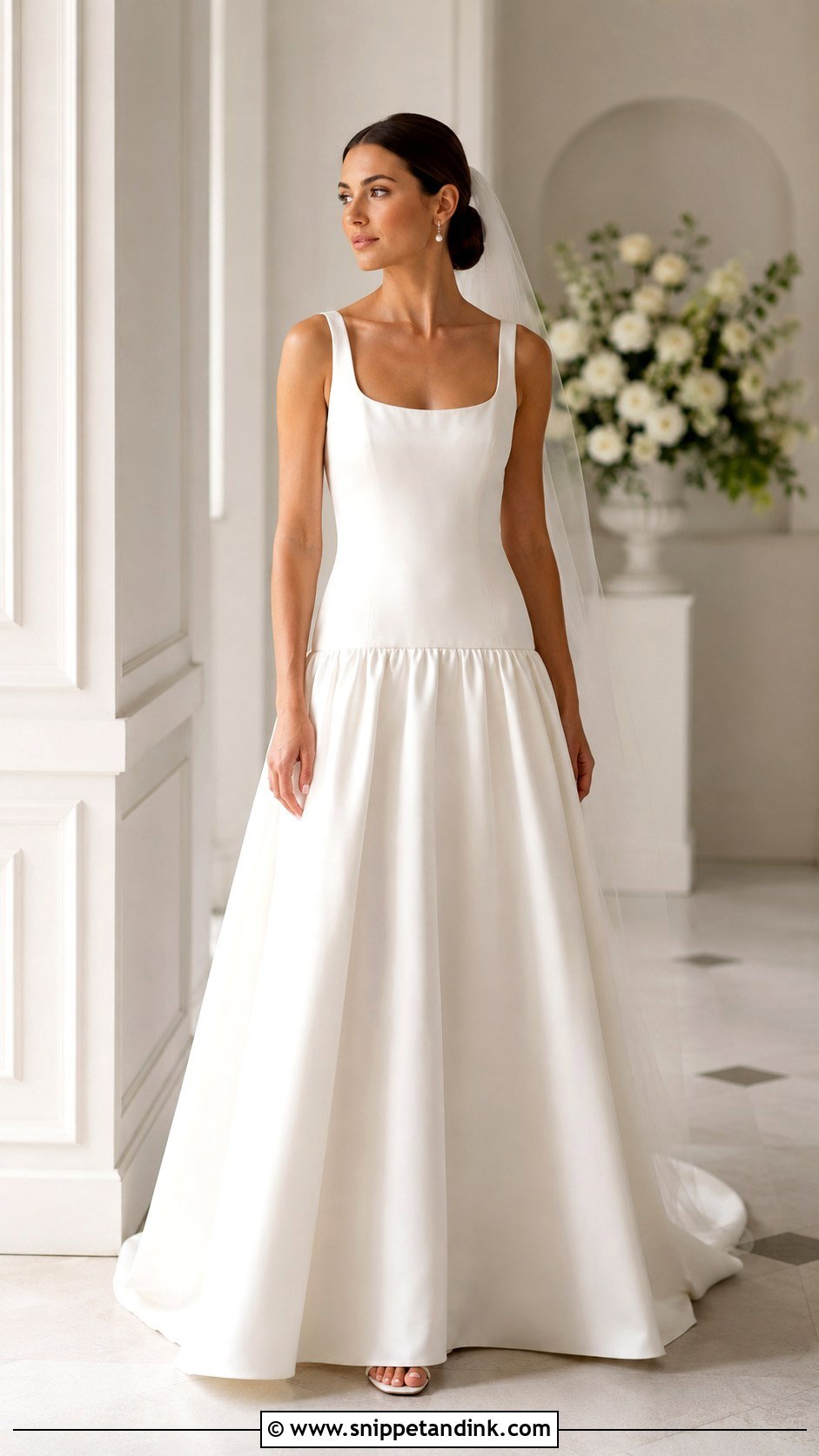
Straps make this the comfortable option. Thin straps look delicate but carry little weight, so they suit light fabrics; wider straps give real support for a fuller bust or heavier satin. I make sure the straps are set close enough to the neck that they do not slide off when you move your arms. The lower seam shapes the torso and the skirt does the rest. Simple heels, pearl earrings and a clean veil are enough, and a lace topper or sheer wrap covers you for a more formal ceremony.
23. Organza Drop Waist A Line Wedding Dress
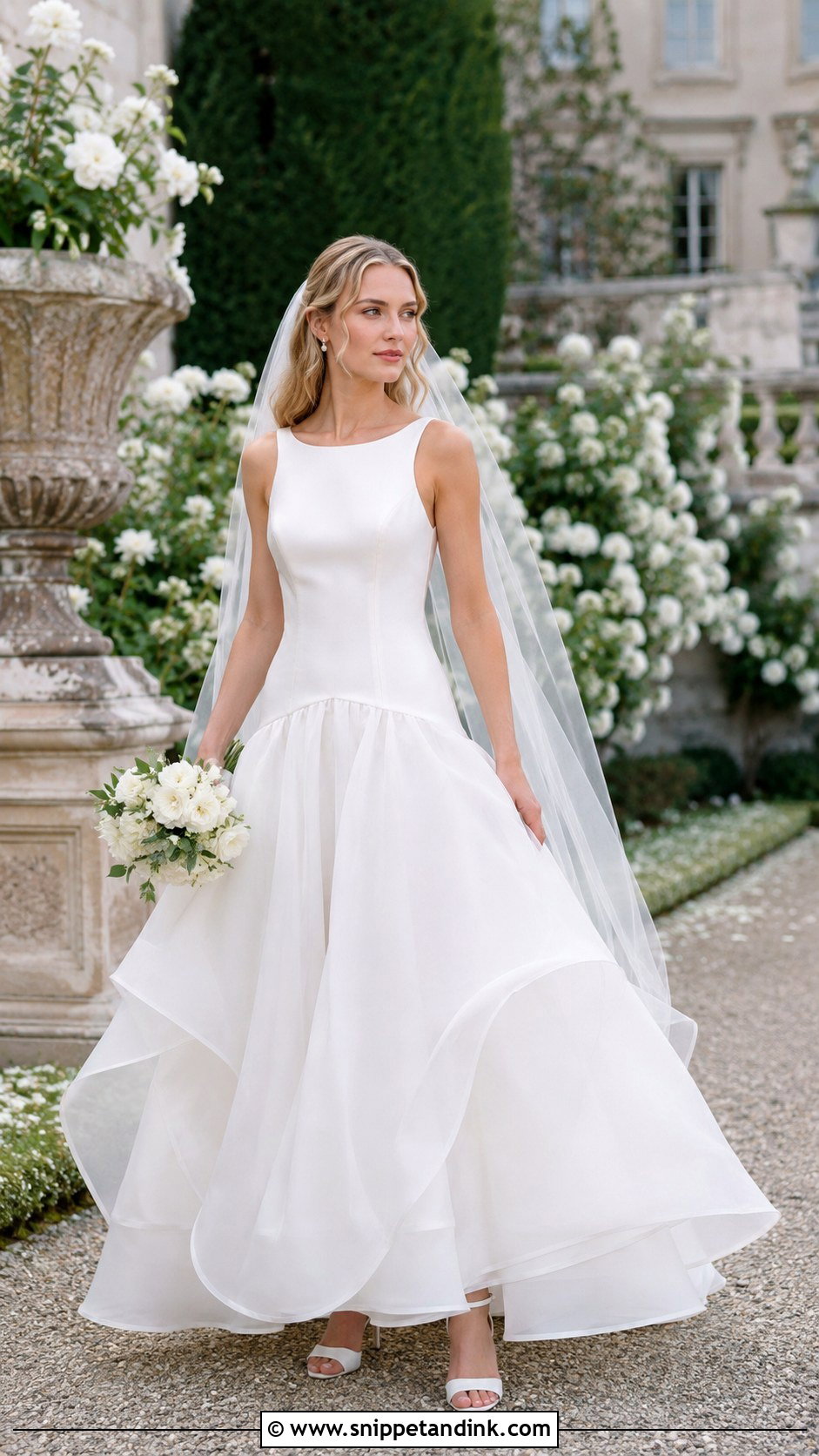
Organza is crisp where tulle is soft, so it holds the flare from a low seam without needing a lot of layers. That gives you volume and a bit of architecture without turning the dress into a ball gown. Organza creases when crushed, so I suggest steaming it at the venue and keeping the skirt free of seatbelts and car doors on the way there. Subtle layers, floral texture or a clean hem all work. Satin heels and a structured bouquet echo the crisp fabric for summer and formal garden weddings.
24. Detachable Train Drop Waist A Line Wedding Dress
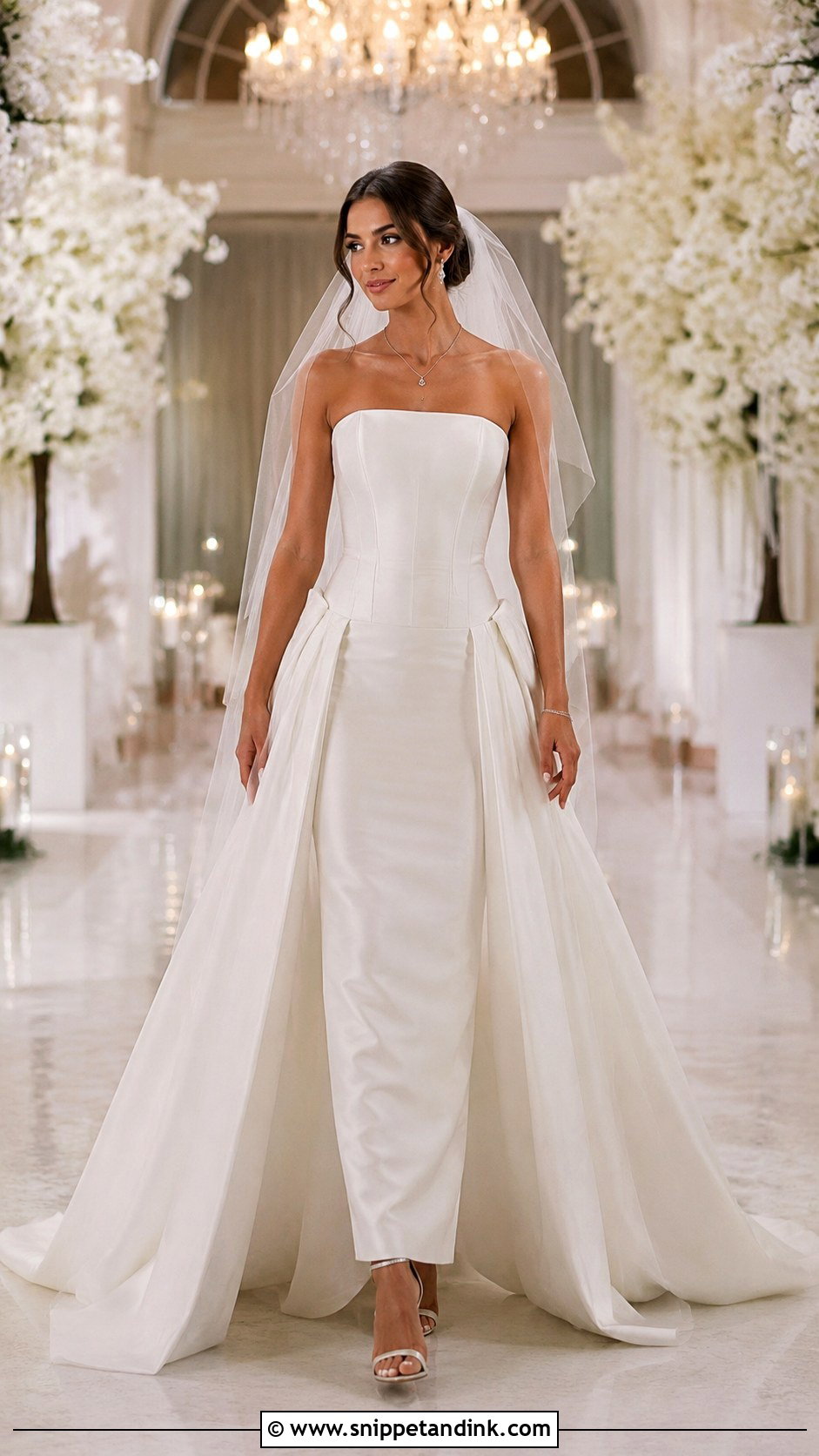
A detachable train gives you a long aisle moment and a lighter dress for the reception. With a dropped waist, I check where the train attaches: hooks or buttons at the seam line need to be hidden by a bow, appliqué or fold, or the dress looks unfinished once the train is off. Practise removing it with whoever will help you on the day. Elegant heels, a secure veil and simple jewelry carry both halves of the evening.

25. Reception Drop Waist A Line Wedding Dress
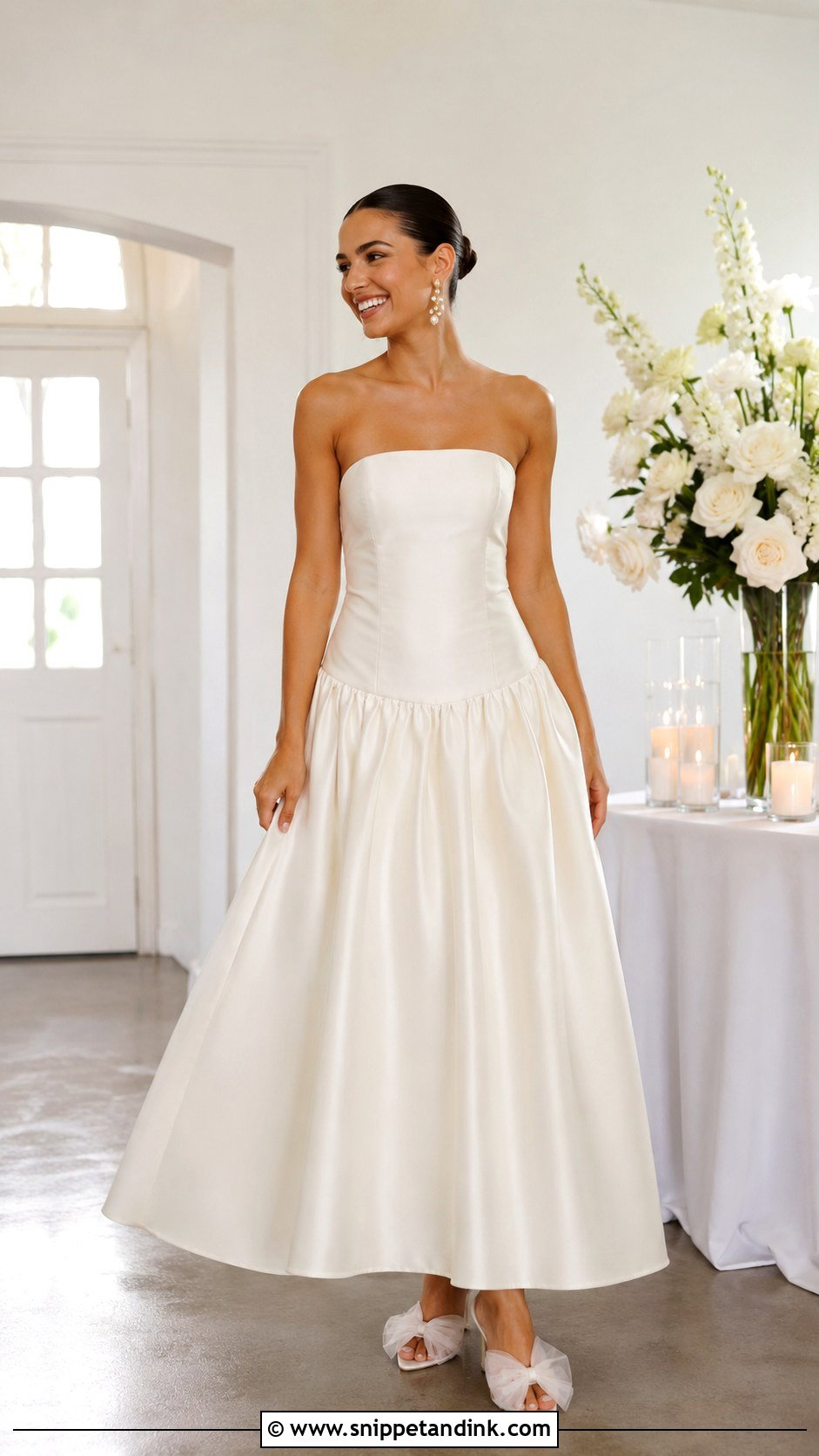
A second dress for the reception should solve the problems of the first: shorter, lighter, easier to dance in. A dropped waist keeps it in the same family as the ceremony gown without repeating it. Tea-length, midi or a short strapless version all work, and a light full-length gown is fine if you still want the drama. Swap to fun bridal heels and statement earrings, and drop the bouquet. Plan the change for a quiet moment, since even a simple zip needs a few minutes and someone to help.
Sitting, Dancing and Bustling a Dropped Waist
A long bodice behaves differently once you sit down. The seam rides up, the skirt bunches at the hip, and any boning that ends below the hip crease presses into your thighs. I make every bride sit on a hard chair for a full minute during fittings. If it pinches, ask for the bones to be shortened or for a softer seam stay; it is a small job before the hem is finished and an awkward one after.
Bustle choices for a low seam
Because the skirt starts lower, there is less fabric between the seam and the floor, so the bustle points are closer to the seam. An under bustle, where the train tucks up beneath the skirt, usually suits an A-line from a dropped waist, since it hides the folds inside the flare. An over bustle hooks the train up on the outside and works well with lace, where the hooks disappear into the pattern. Ask for the bustle to be tested by whoever is doing it on the day, not just shown on a hanger.
Alteration Time This Silhouette Really Needs
Most gowns need two or three fittings, and I like the first one to be around two to three months before the wedding. A dropped waist can need more than a hem: raising the seam means taking the skirt off and reattaching it, which takes longer than shortening straps. Ask your seamstress at the first appointment whether the seam can move on your dress, because on some beaded or heavily appliquéd gowns it can only shift a little. Turnaround and cost vary a lot by city and season, so get the quote in writing before anyone starts unpicking.
A Low Seam Is Mostly About Where It Lands
Every version above depends on the same thing: the seam sitting on the right part of your body. Get that right, and lace, satin, tulle or a pointed basque will all look intentional. Try at least one plain version alongside the decorated ones so you can see the line itself. Then sit, walk and raise your arms in each dress before you decide, because a dropped waist shows its comfort, or lack of it, the moment you move.
You'll Like These Ideas:




Leave a Reply