
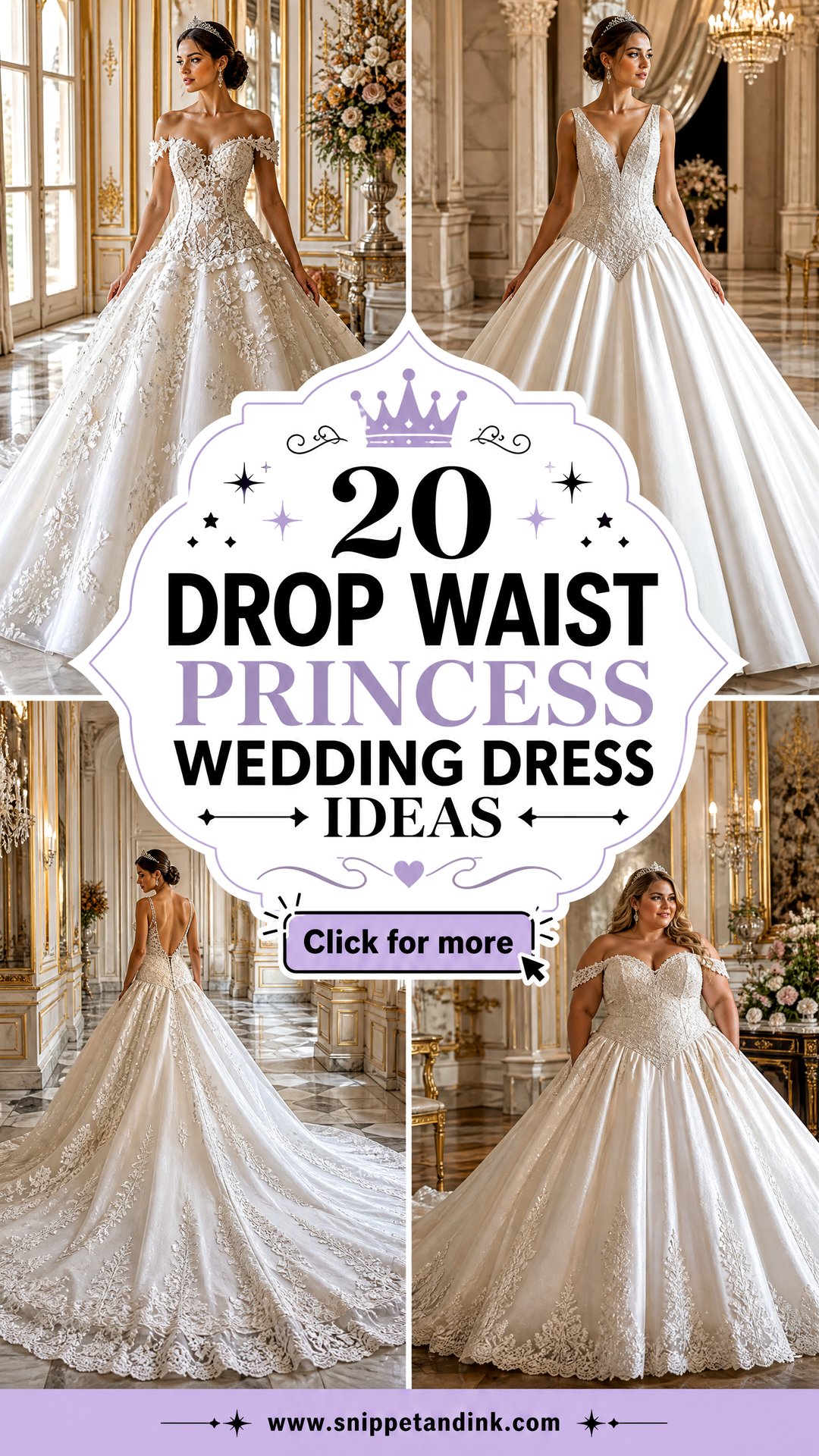
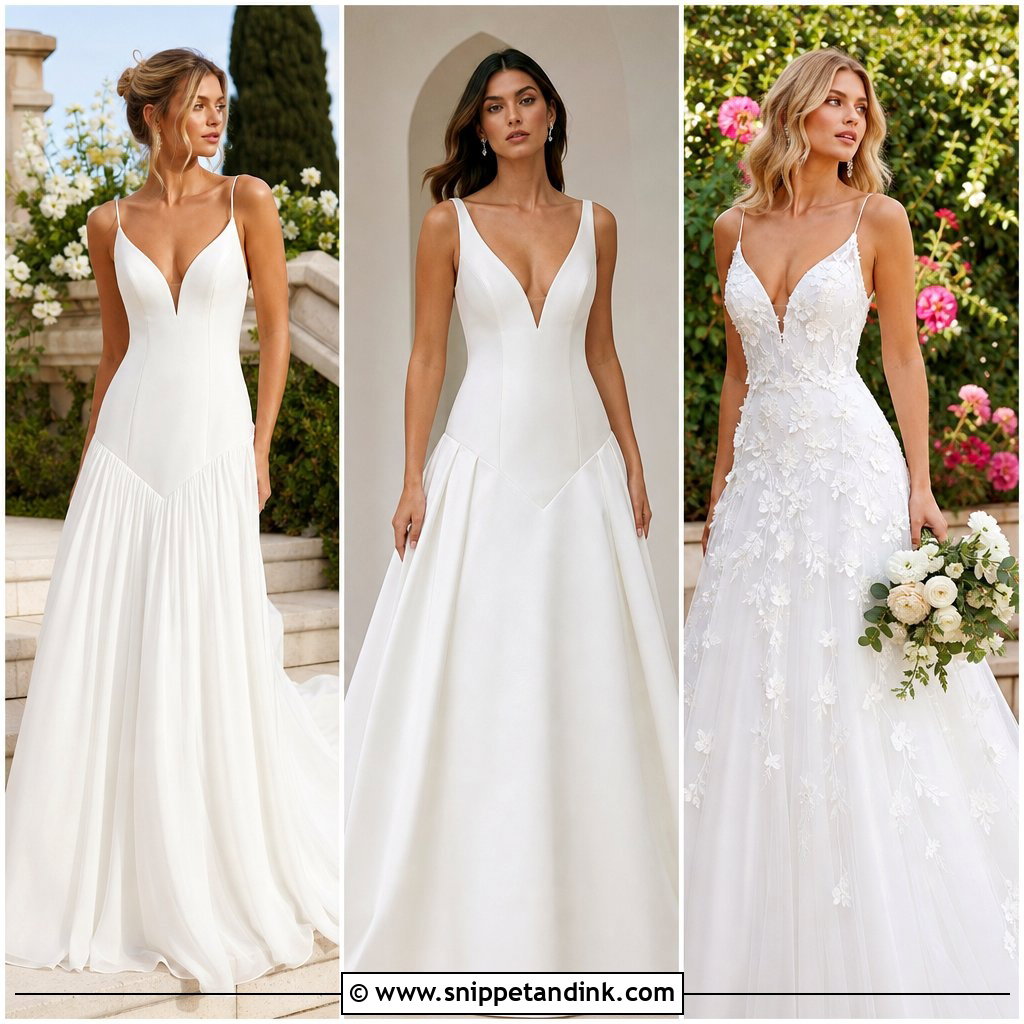
A drop waist princess gown lives or dies on one seam. The bodice runs past the natural waist, follows the torso down to the upper hip, and only then lets the skirt open, so the dress reads long and lean on top and full below. In my fitting room it is the silhouette that surprises people most, because the same cut can look regal in stiff satin and almost weightless in layered tulle. Get that seam sitting right on your body and the neckline, sleeves, fabric and train become the fun part. The twenty gowns below run from clean, minimal construction to detailed fairytale glamour, and I’ve added what I’d actually check on each one before you say yes.
Reading a Drop Waist on Your Body in the Fitting Room
The first thing I do when a bride steps into a drop waist sample is ignore the skirt. I look at where the bodice seam hits her, because that line decides whether the gown makes her torso look long and graceful or cuts her in half at the widest part of the hip.
- Find your hip bone with your hand. On most brides the seam looks best a little above it, curving slightly downward at the centre front.
- Sit down in the sample. A drop waist bodice folds where you bend, and if the boning digs into your thighs when seated, the seam is too low for you.
- Look from the side, not just the front. A seam that dips at the back and rides up at the front is a fit issue, not a design feature.
- Ignore the size on the tag. Bridal sizing runs small and the bodice will be altered anyway, so judge proportion rather than numbers.
Short-waisted brides often love this cut because it creates length they don’t naturally have. Long-waisted brides may find a standard drop waist lands too low and need it raised during alterations. Either way, it is fixable, as long as you know to ask.
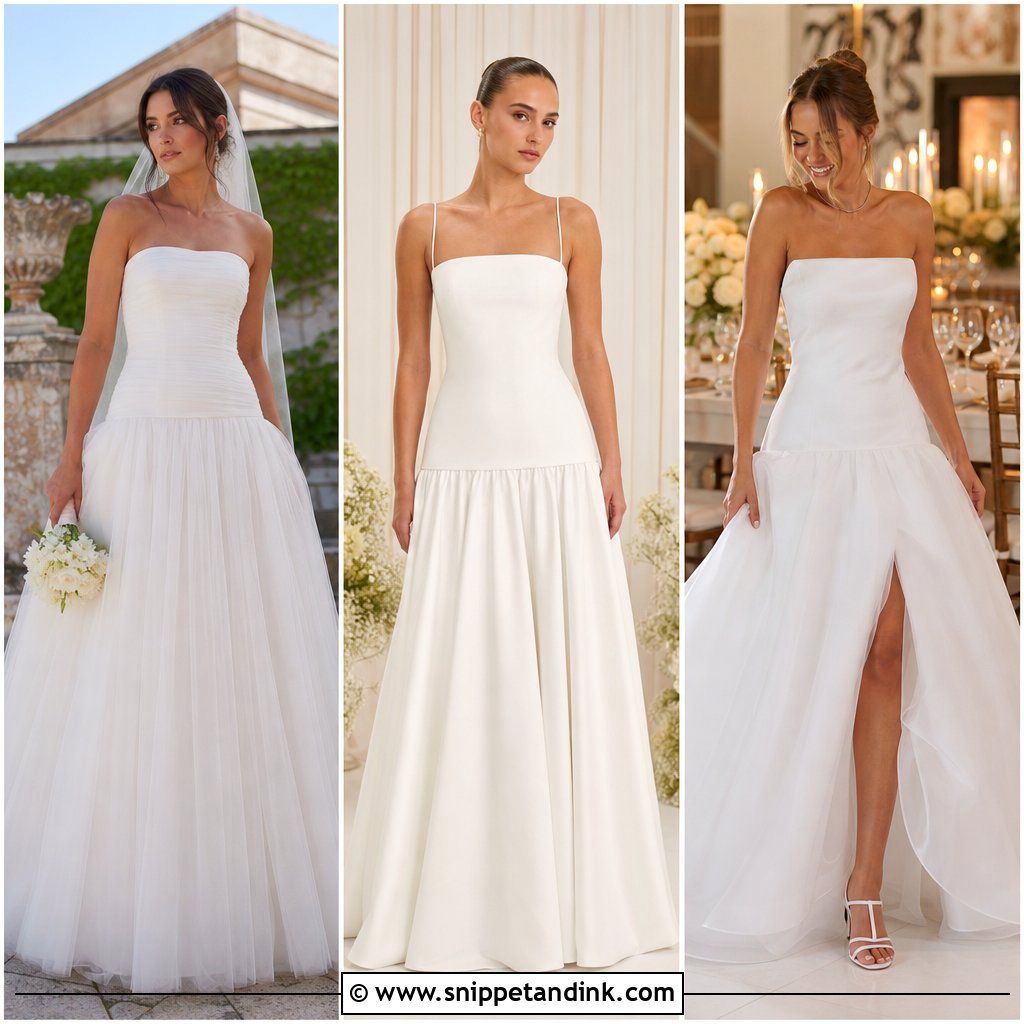
1. Strapless Satin Drop Waist Princess Wedding Dress
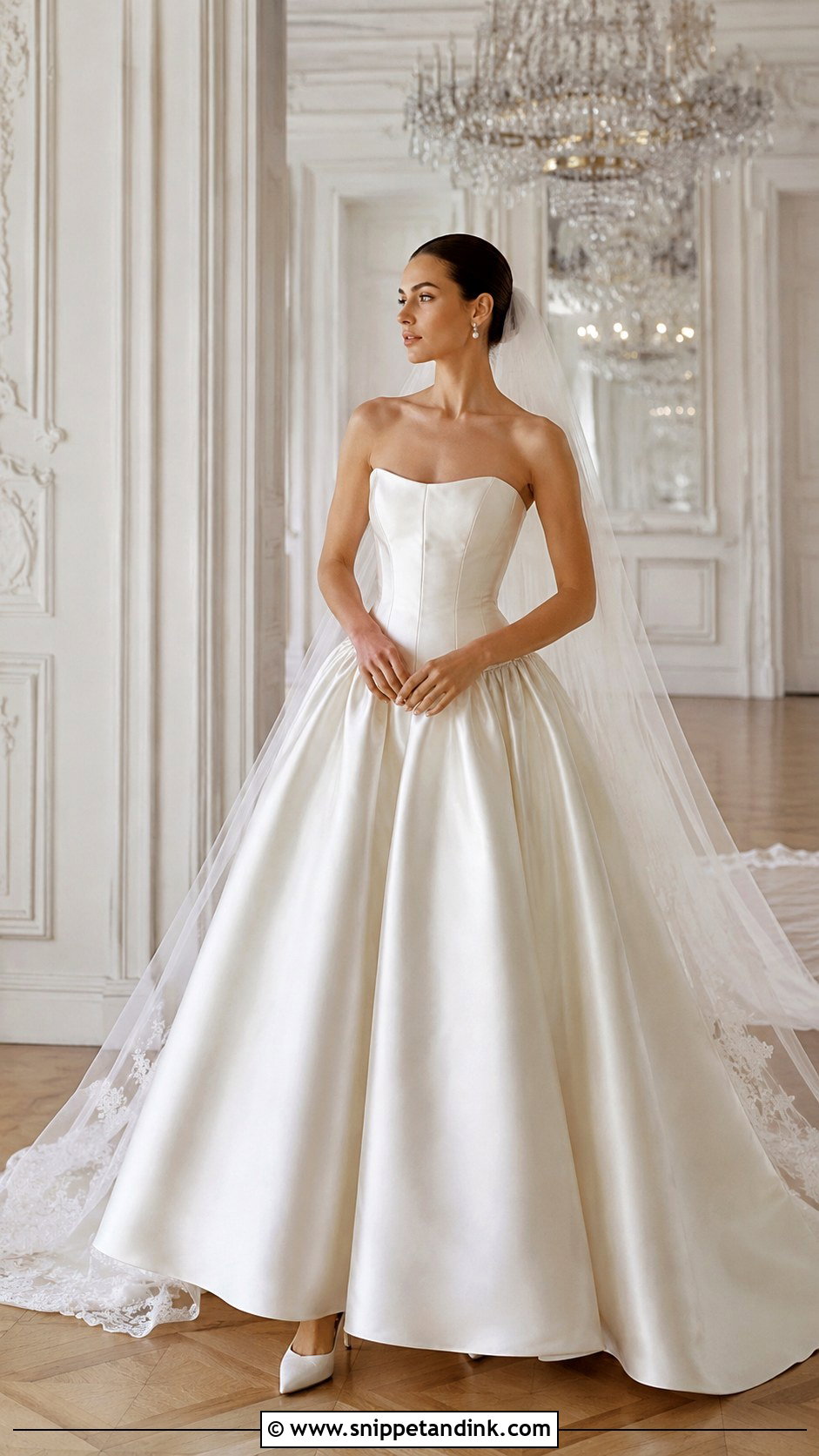
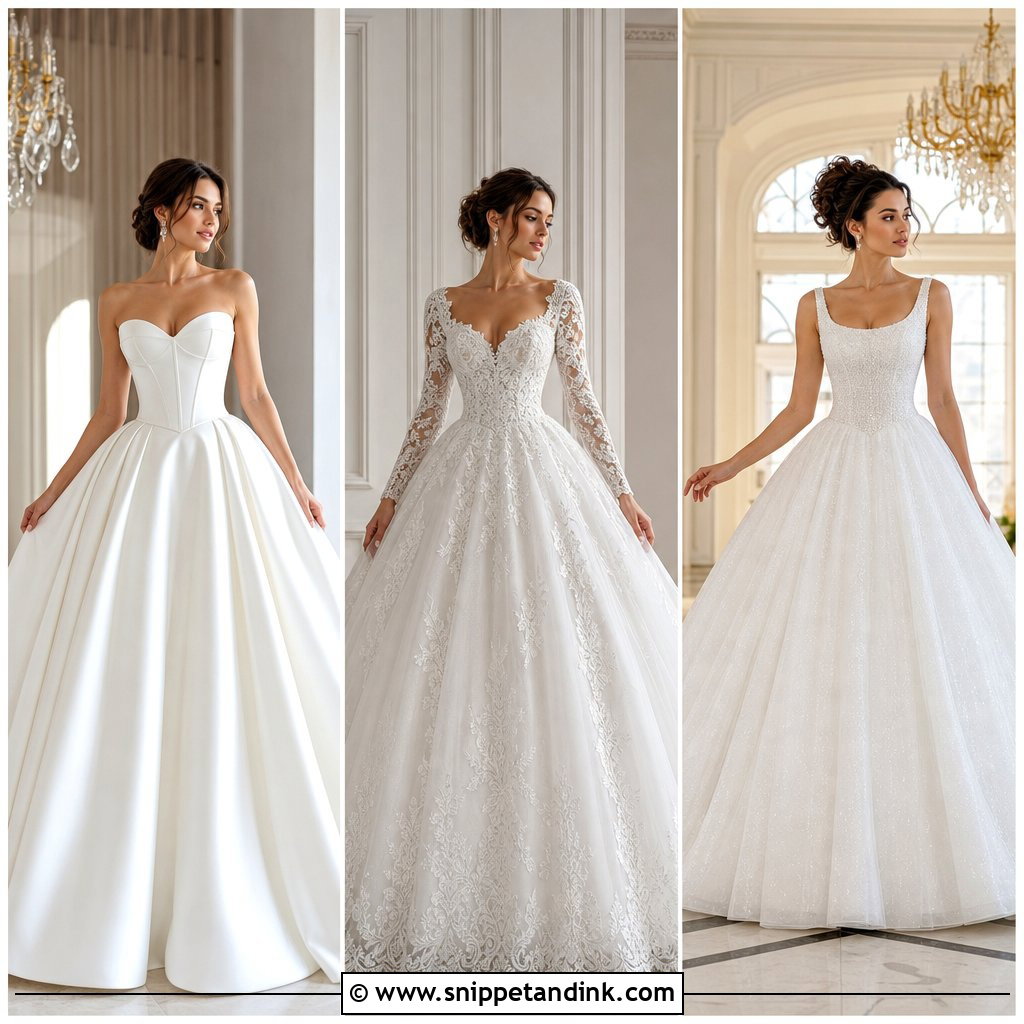
Satin is the most honest fabric for this shape: it shows every seam, so a well-cut drop waist looks crisp and a poorly cut one looks lumpy at the hip. Look for internal corsetry in the strapless bodice, princess seams that run cleanly into the lowered waist and a gathered skirt with real volume. Ivory pointed pumps, pearl drops and a cathedral veil with a narrow satin edge keep everything in the same polished register. I’d wear a low chignon so the neckline stays visible. One thing I always do with satin is ask the bride to sit for a full minute, then stand; if the fabric creases across the hip, the bodice needs easing there before the hem is touched.
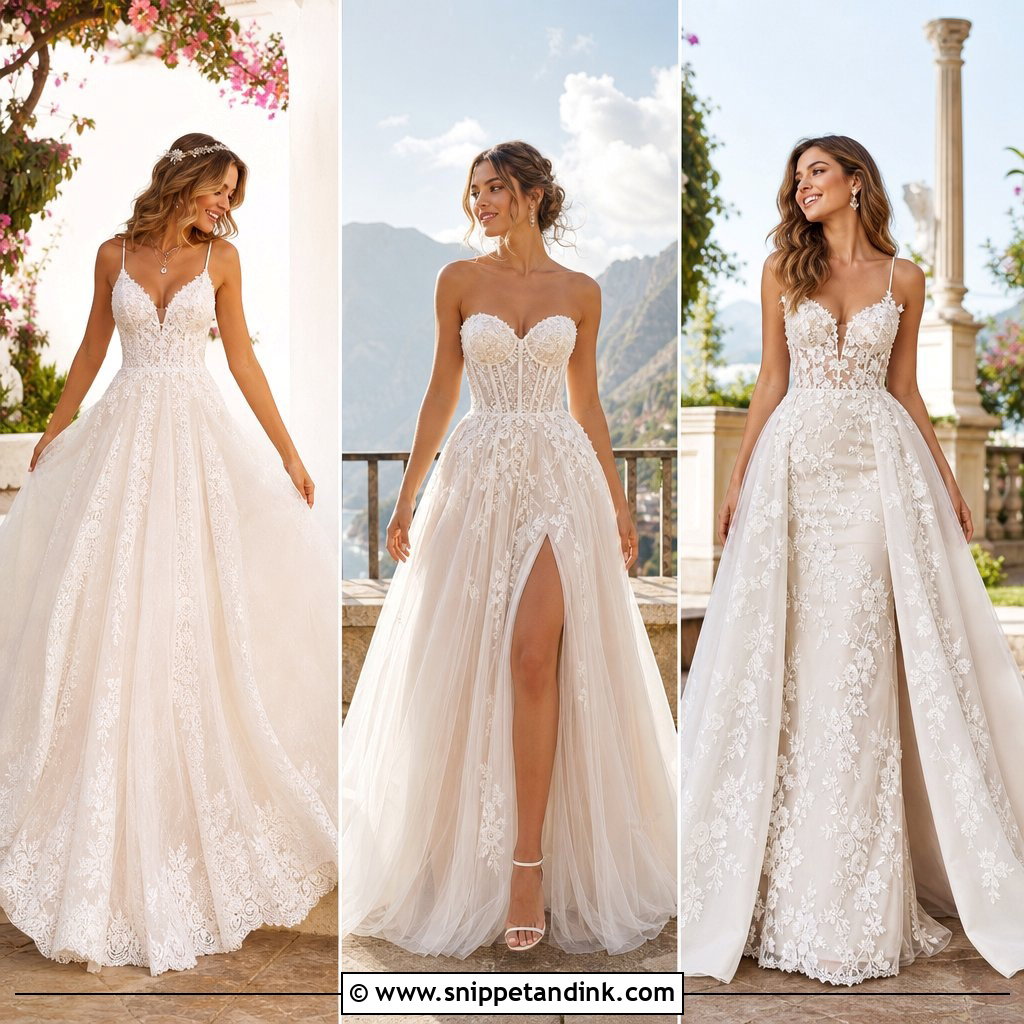
2. Sweetheart Lace Drop Waist Princess Wedding Dress
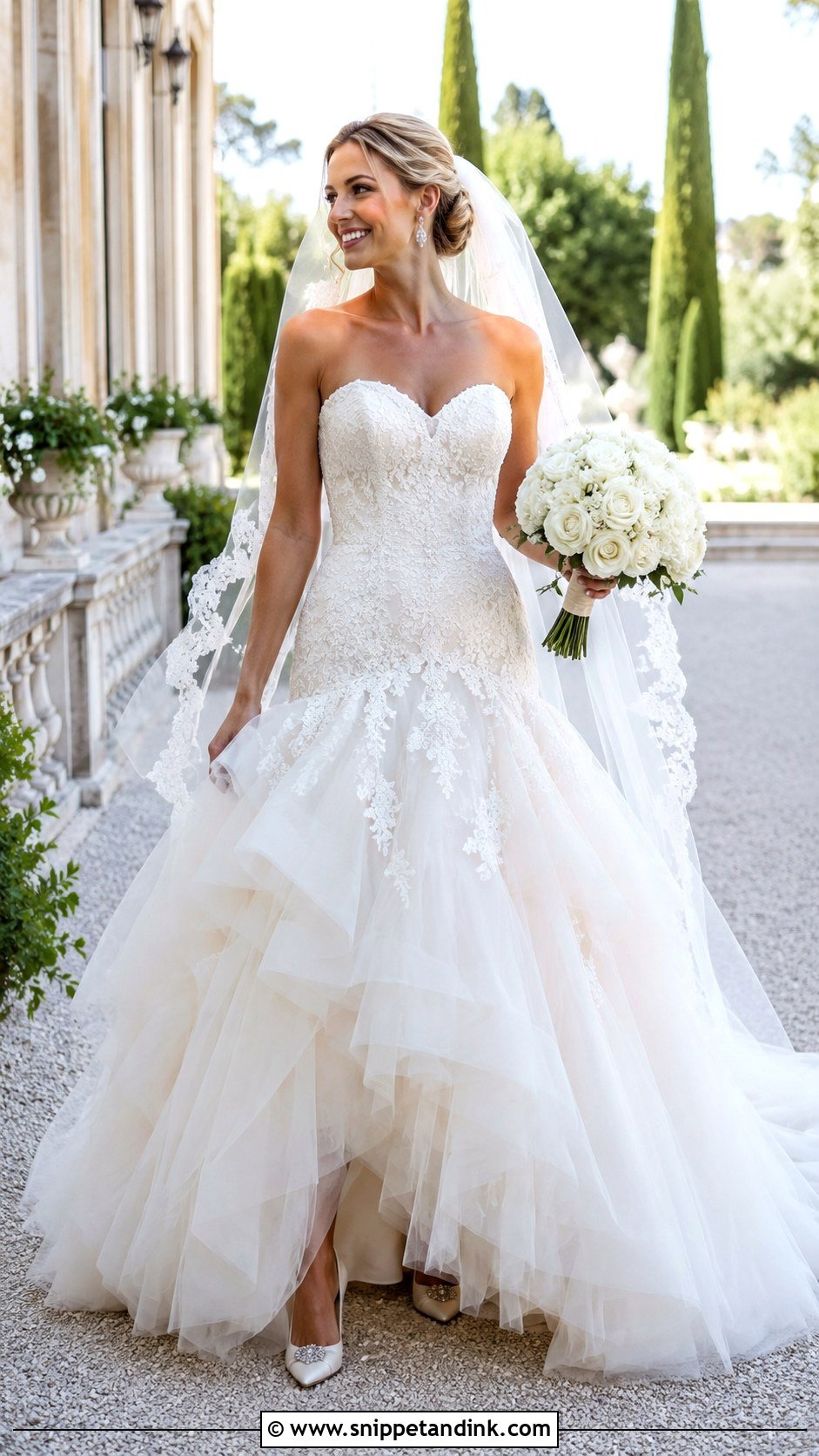
Could anything feel more romantic than a sweetheart neckline covered in lace? Here the floral motifs thin out gradually as they cross the lowered waist onto a full tulle skirt, which hides the horizontal seam far better than a hard edge would. I’d pair it with a lace-edged fingertip veil, small crystal earrings and almond-toe heels, and keep the bouquet to white garden roses with soft greenery. Soft waves or a loose braided updo suit the texture. If the ceremony is formal, ask whether a fuller skirt lining can be added; it gives coverage without changing the look in photos.
3. Square Neck Drop Waist Princess Wedding Dress
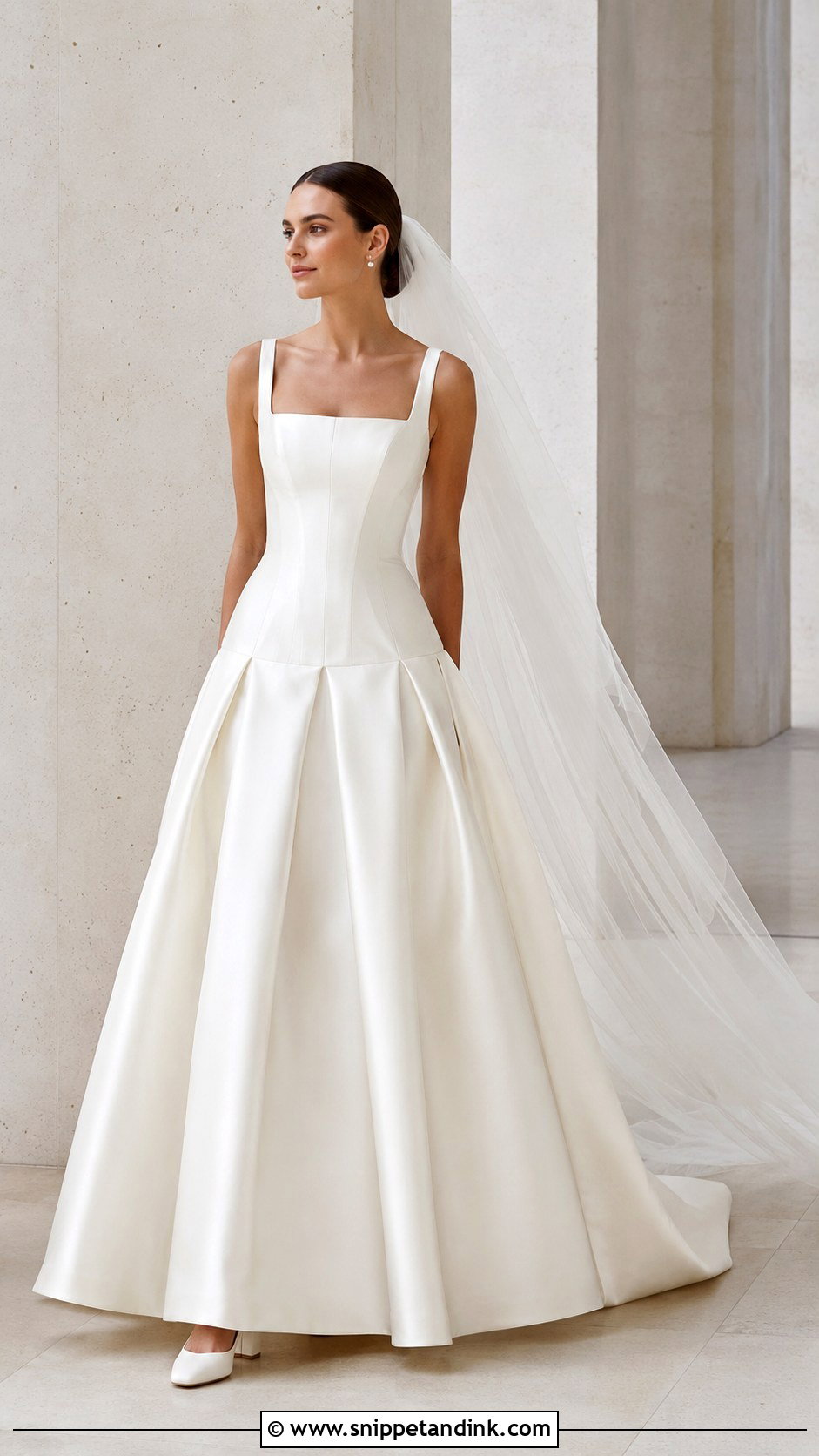
A square neckline gives the princess shape a little architecture. Wide straps, clean seaming down to the upper hip and a mikado skirt that holds its own volume mean you need far fewer petticoats underneath, which brides always appreciate by hour six. Pearl studs, a smooth bun and a cathedral veil anchored below the hair finish it. Skip the big necklace; the neckline already draws a frame. My one caution: a square neck exaggerates any gap at the corners, so I check it with arms forward, as if hugging someone, before signing off on the bodice. Block heels in a closed toe will keep you steady on gallery or ballroom floors.
4. Off Shoulder Tulle Drop Waist Princess Wedding Dress
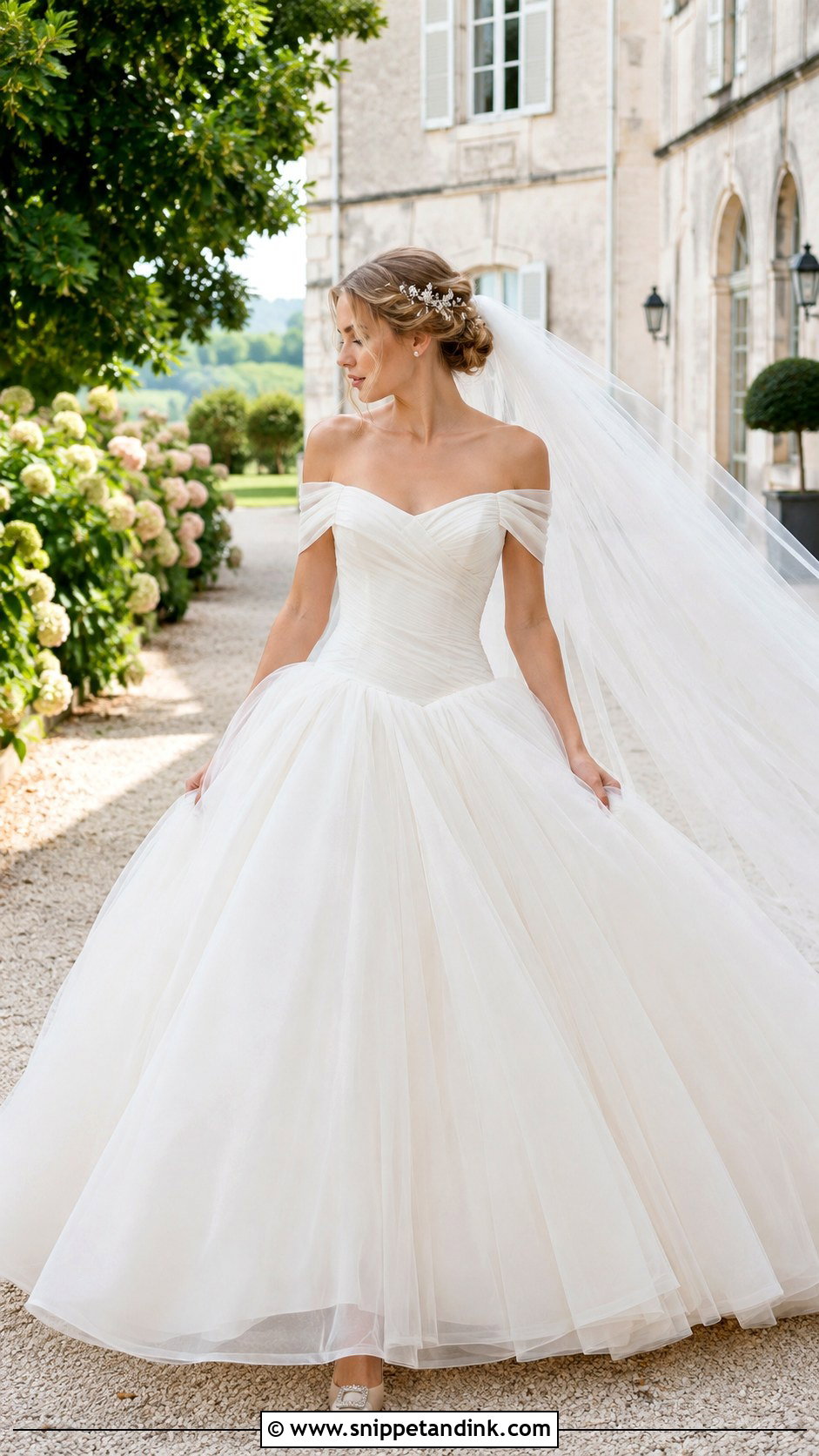
Off-the-shoulder tulle is the lightest version of this silhouette, but it asks the most of the bodice. The fit has to be secure through the bust and torso, because draped sleeves resting on the upper arm will pull downward every time you lift a glass. Crystal hair pins, fine earrings and pale ivory heels are plenty here, and a plain lightweight veil lets the tulle texture show through. During alterations I have brides raise both arms and hug me. If the neckline shifts more than a finger’s width, the seamstress can add a stay or silicone grip inside the band.
5. Long Sleeve Lace Drop Waist Princess Wedding Dress
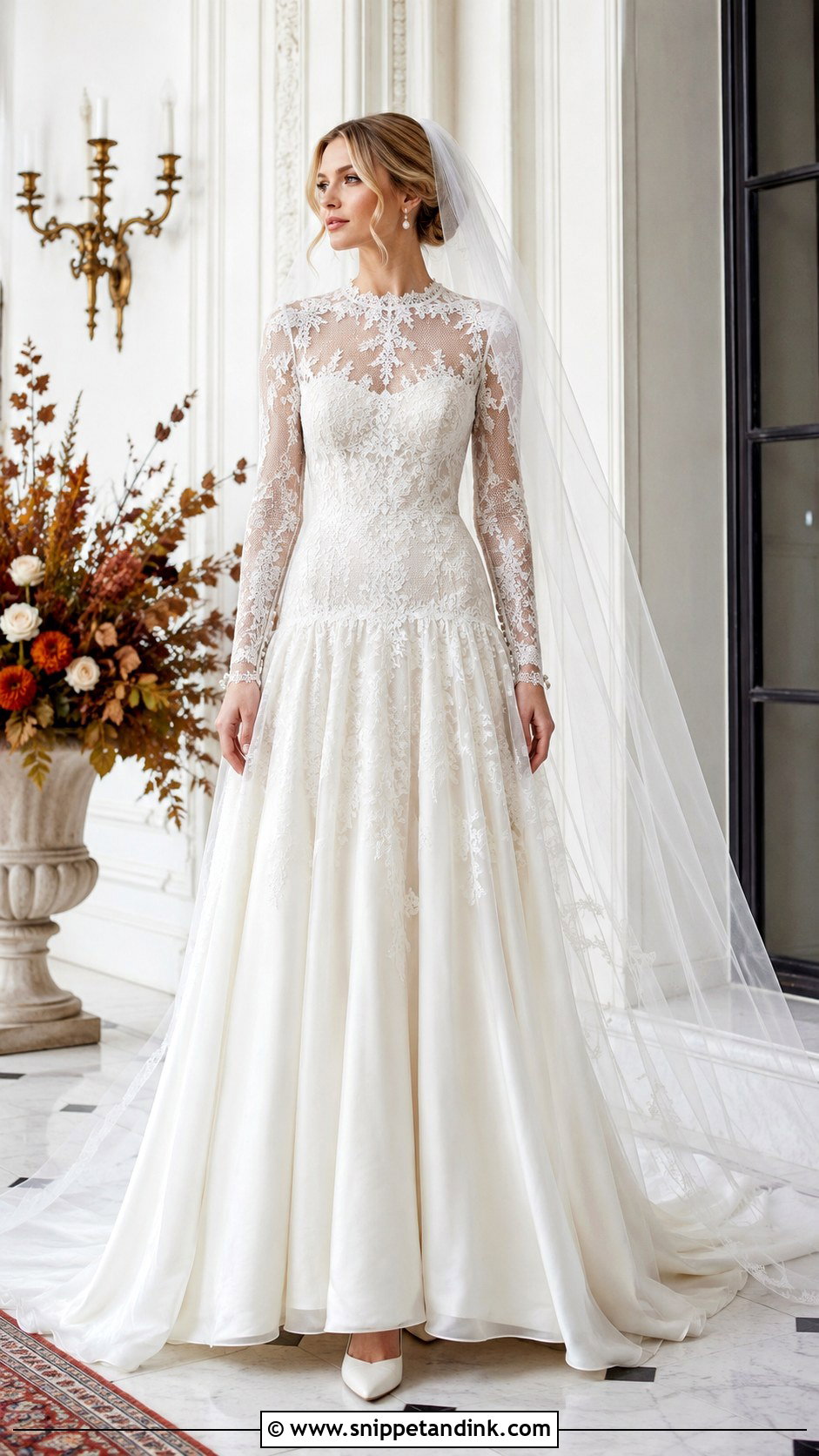
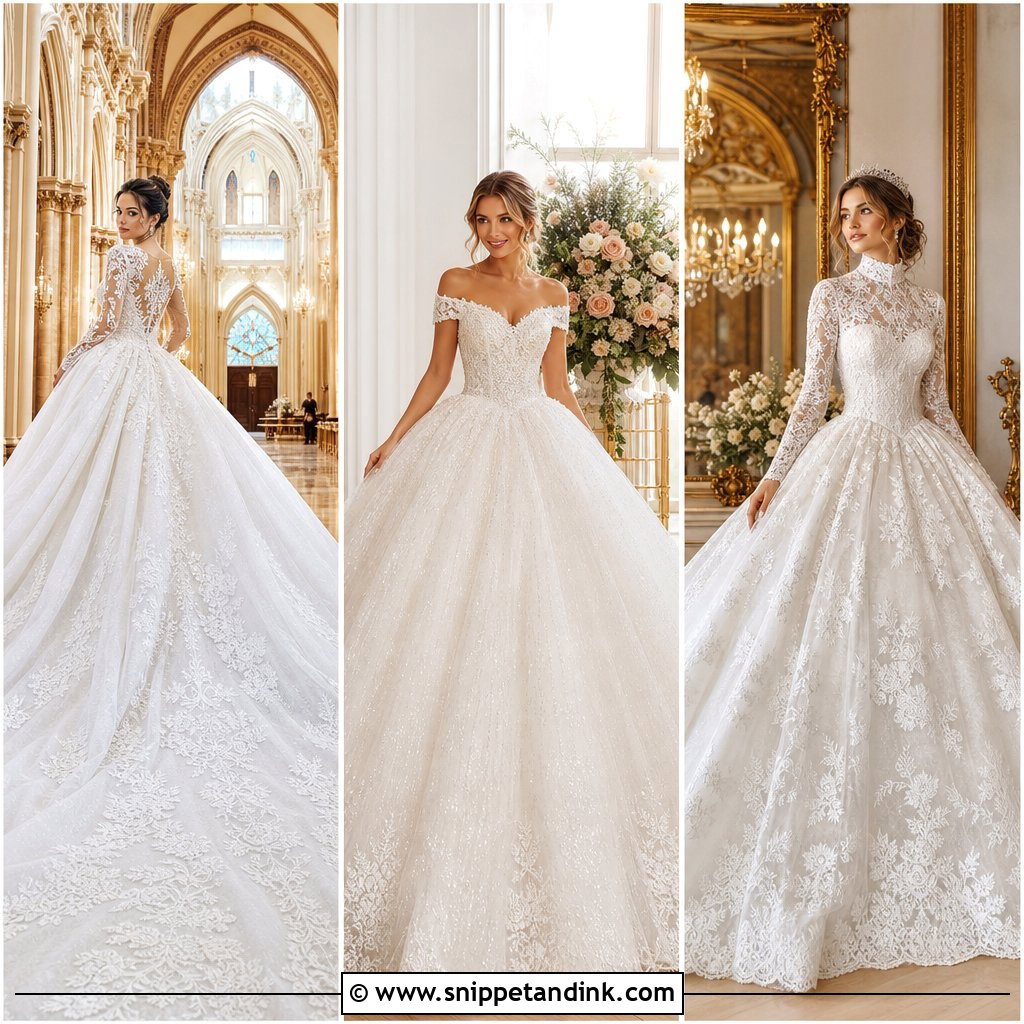
For a covered look, fitted lace sleeves over a full princess skirt are hard to beat. Illusion mesh at the neck and arms keeps it from feeling heavy, and the lace motifs should follow the vertical seams before scattering below the waist. Pearl buttons, closed pumps, a chapel veil and a neat low bun are all it needs; earrings can stay small. It suits autumn and winter best, though a breathable lining can carry it into a cool spring day. Check the cuffs carefully. Scalloped edges and covered buttons at the wrist look pretty, yet a cuff cut too tight will stop you from signing the register comfortably.
6. Corset Drop Waist Princess Wedding Dress
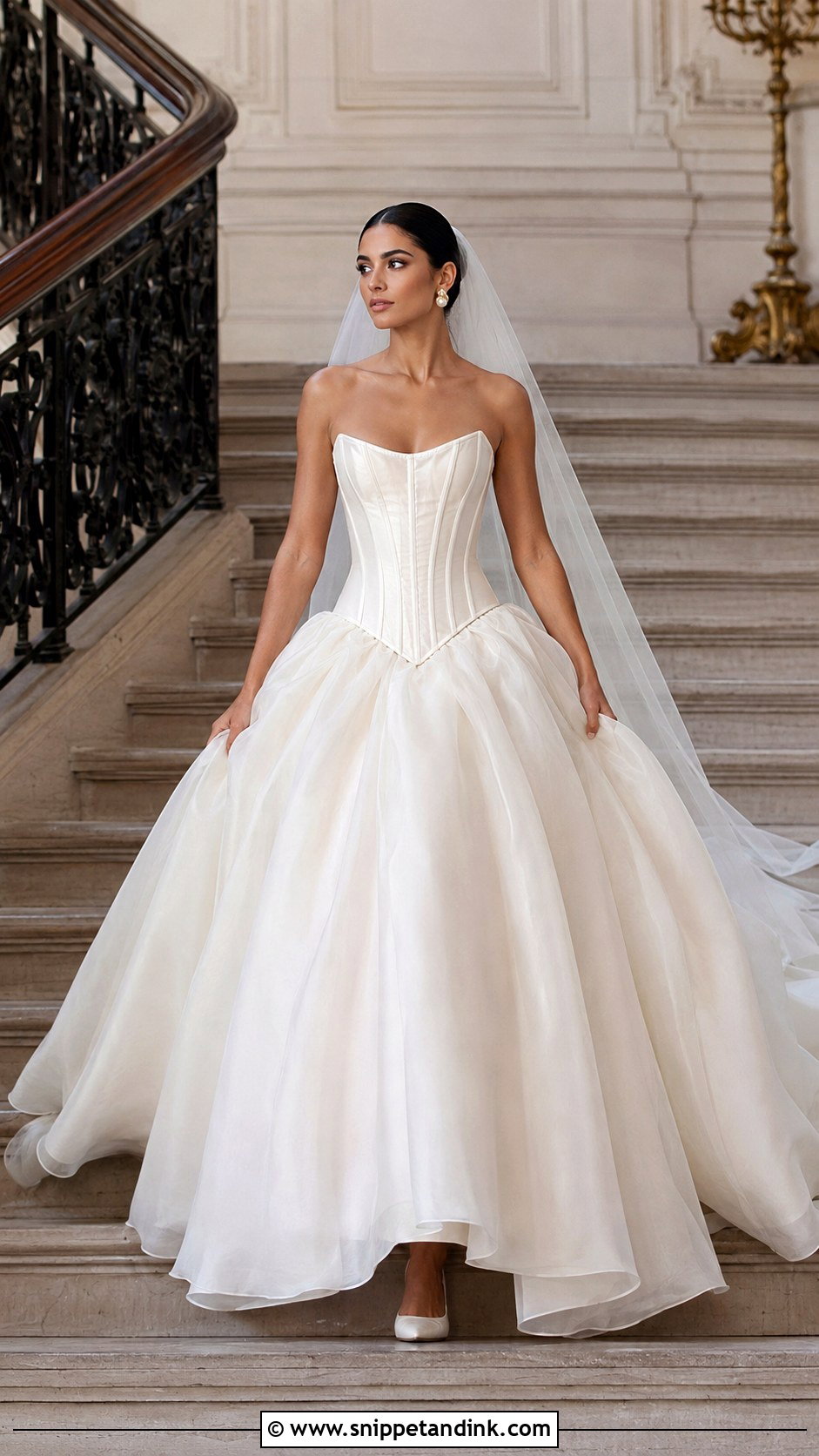
An exposed corset bodice is the most fashion-led choice in the list, and the hardest to fake. The boning should curve with the upper hip rather than stop flat at the waist, and the panels can be opaque or lightly sheer depending on how much you want to show. A full satin or organza skirt balances the fitted top. I’d keep the accessories quiet: plain cathedral veil, sculptural pearl earrings, sleek pumps, polished updo. Test deep breathing, sitting and a few dance steps at every fitting. A corset that only feels secure while you stand still will feel very different after dinner. If you want more coverage, a matching lining is a far cleaner fix than redesigning the bodice.
7. Pearl Drop Waist Princess Wedding Dress
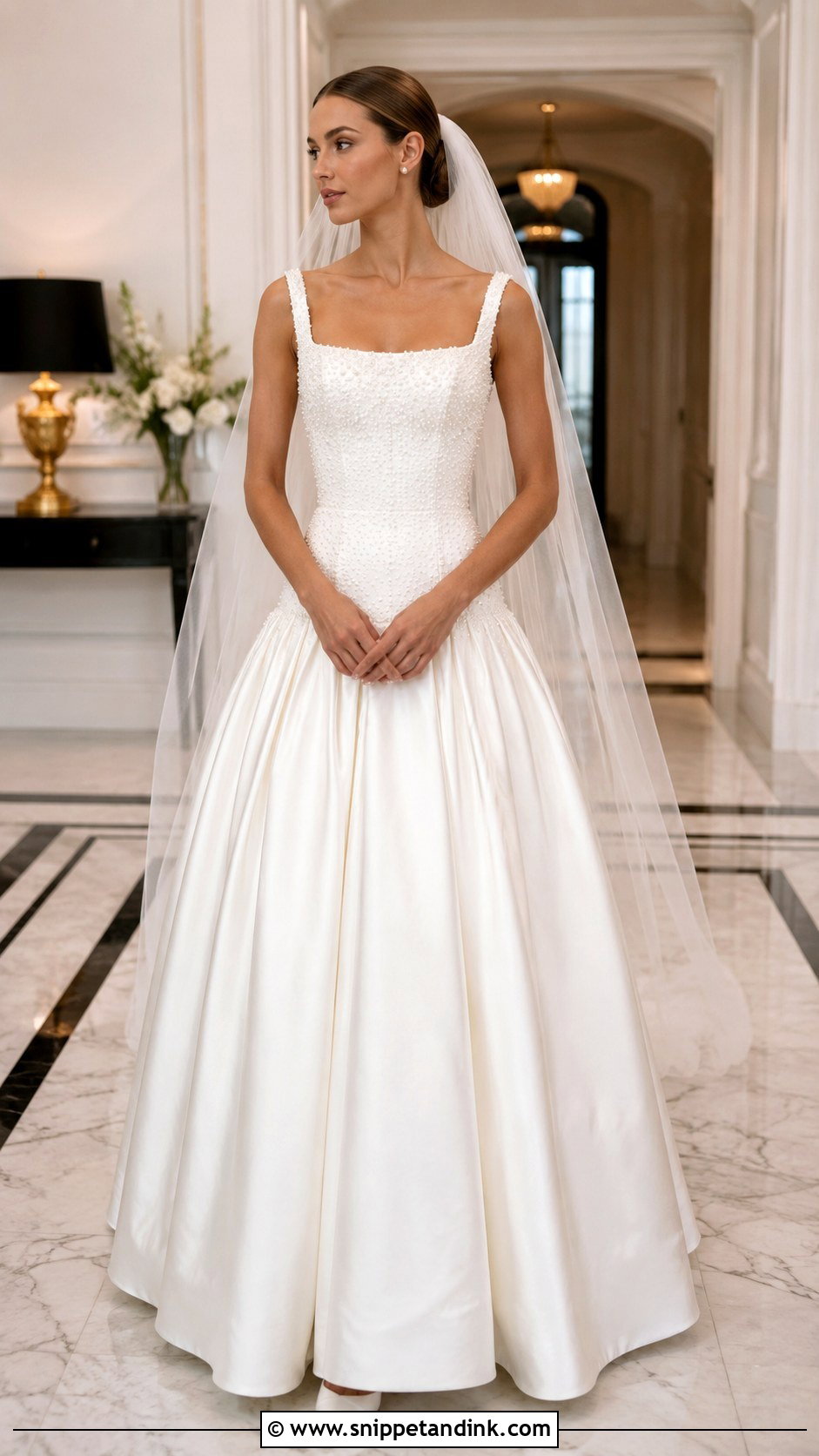
Graduated pearl beading, dense at the neckline and fading toward the skirt, gives texture without breaking the long line of the bodice. A straight or gently scooped neckline keeps the background calm. Pearl studs, satin heels, a smooth bun and luminous makeup finish it, and I’d skip bracelets entirely. The veil matters more than people think: choose one with a cut edge or fine binding, because a heavy trim catches on beads and can pull threads loose. Before you take the gown home, run your fingers over the bodice and ask how it should be hung; beaded bodices are usually stored flat or supported, never left on thin hanger loops.
8. Floral Appliqué Drop Waist Princess Wedding Dress
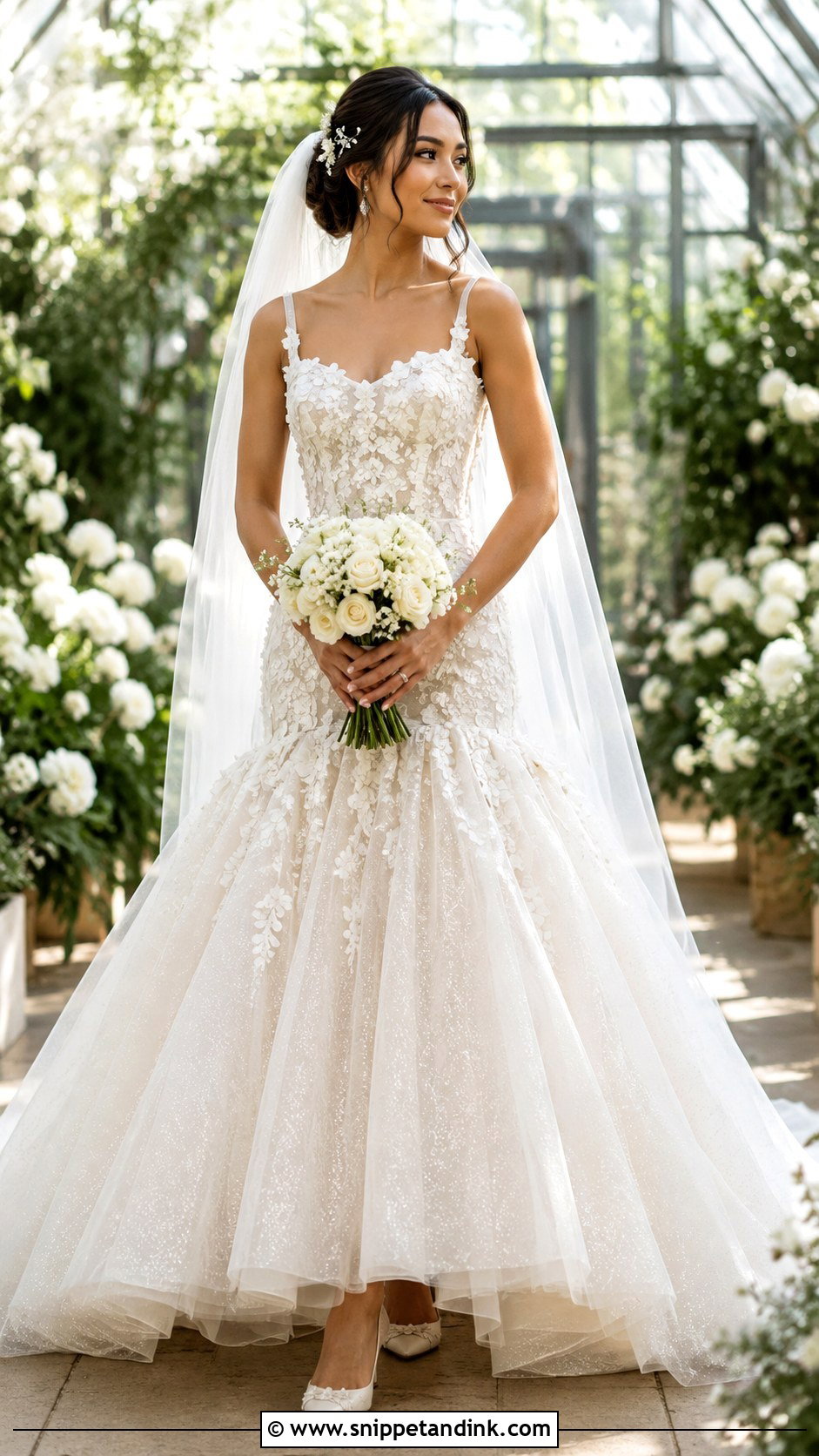
Dimensional flowers suit the long bodice because there is so much surface to work with. I like smaller appliqués near the neckline and larger ones gathered around the lowered seam, where they disguise it. A layer of soft glitter tulle underneath catches light without competing. Floral hair pins, a sheer veil, understated earrings and ivory heels round it out, along with a loose updo. Keep the bouquet simple or the whole picture turns busy. Ask about the lining too: raised appliqués on the inside of a bodice can rub skin raw over a long day, and a smooth backing layer solves that.
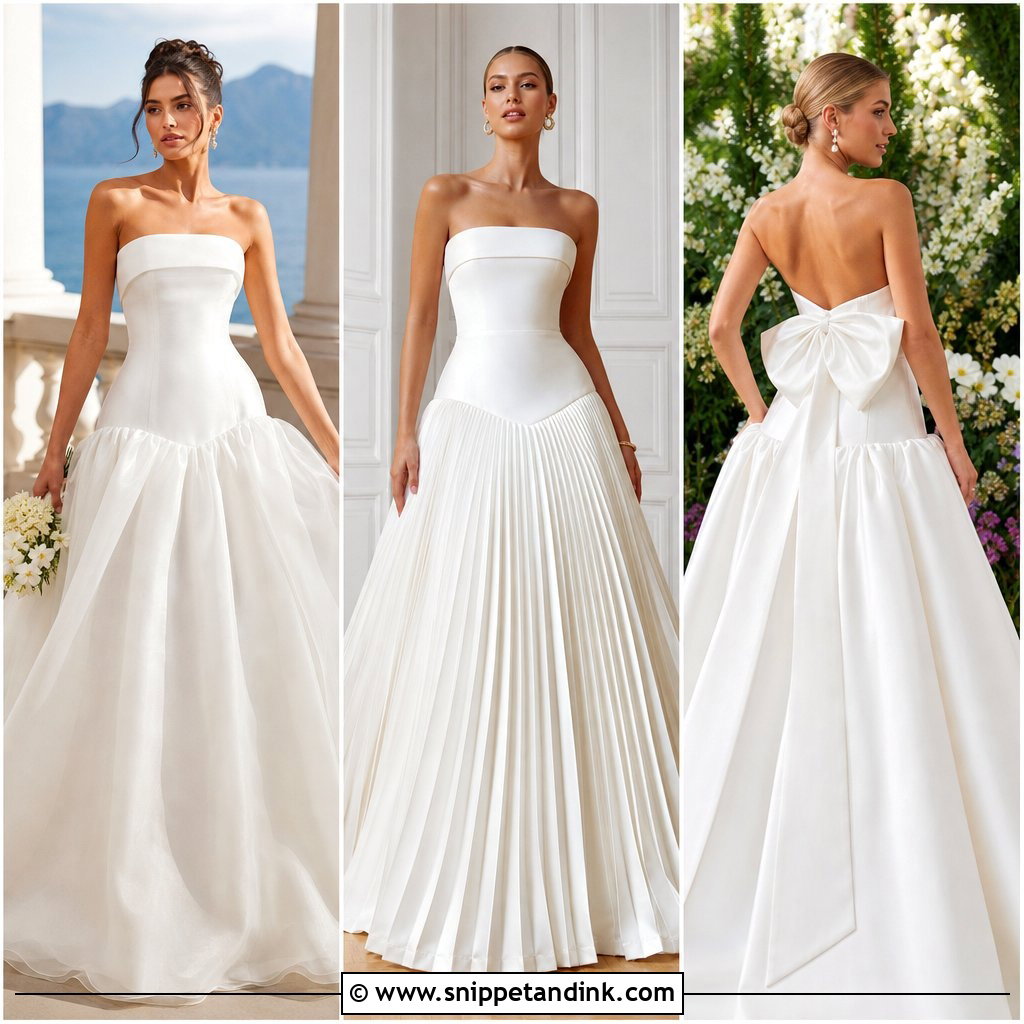
9. Mikado Drop Waist Princess Wedding Dress
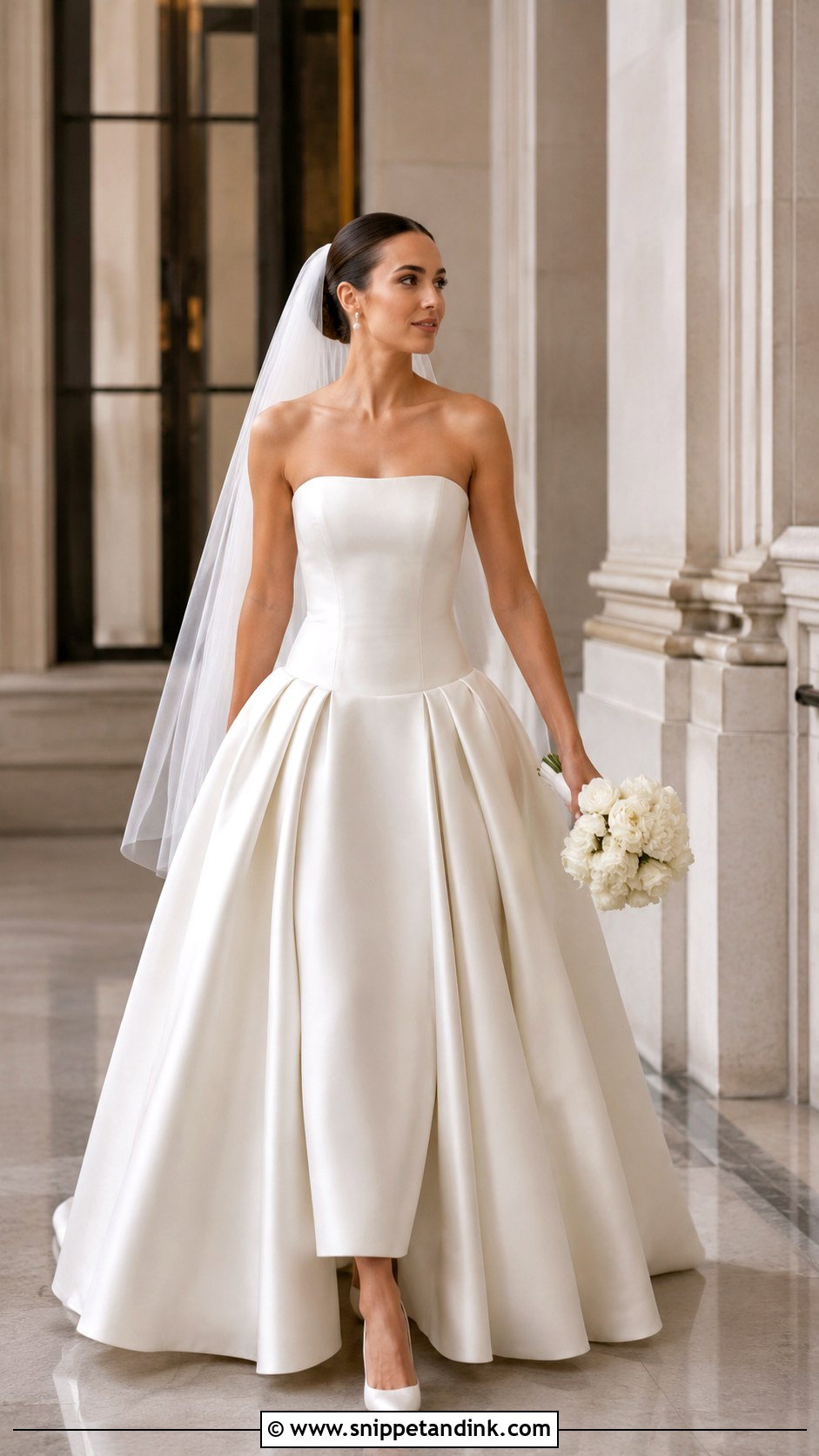
Mikado has enough body to hold a sculpted skirt with almost no help, so it gives you a long, unbroken bodice line and real volume with very little bulk at the seam. A straight strapless neckline or wide straps keep it architectural. The fabric’s sheen is the decoration, so I’d leave the beading off entirely and finish with a sleek veil, pearl earrings, pointed pumps and a compact bouquet. Deep pleats or controlled gathers at the waist give fullness without thickening the hip. At fittings I walk all the way around the bride. Mikado pleats that fall evenly from the front can twist at the side seam, and it only shows from one angle.
10. Jacquard Drop Waist Princess Wedding Dress
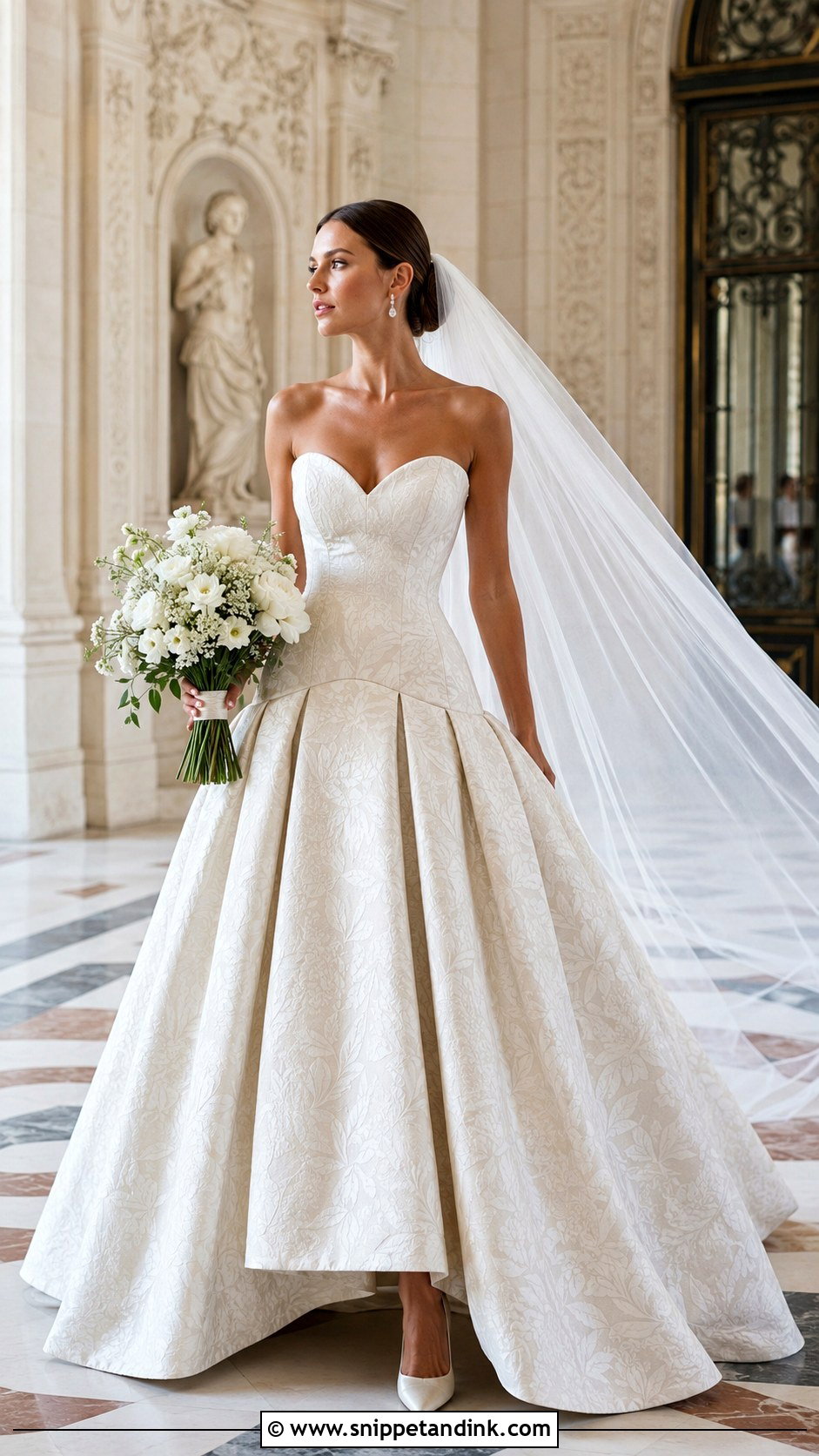
A woven jacquard pattern brings texture straight into the cloth, so the gown can stay plain in cut and still look rich. Keep the motif subtle, ivory on ivory, botanical rather than busy. A sweetheart bodice with firm internal support can drop into box pleats at the hip. Because jacquard is heavy and holds its shape, it usually needs fewer underskirt layers than tulle, which also makes it warmer; I’d think twice about it for a midsummer outdoor ceremony. Simple satin heels, drop earrings, a plain chapel veil and a low twisted bun let the pattern lead, and a bouquet of white blooms should sit against the fabric, not hide it.
11. Scoop Neck Drop Waist Princess Wedding Dress
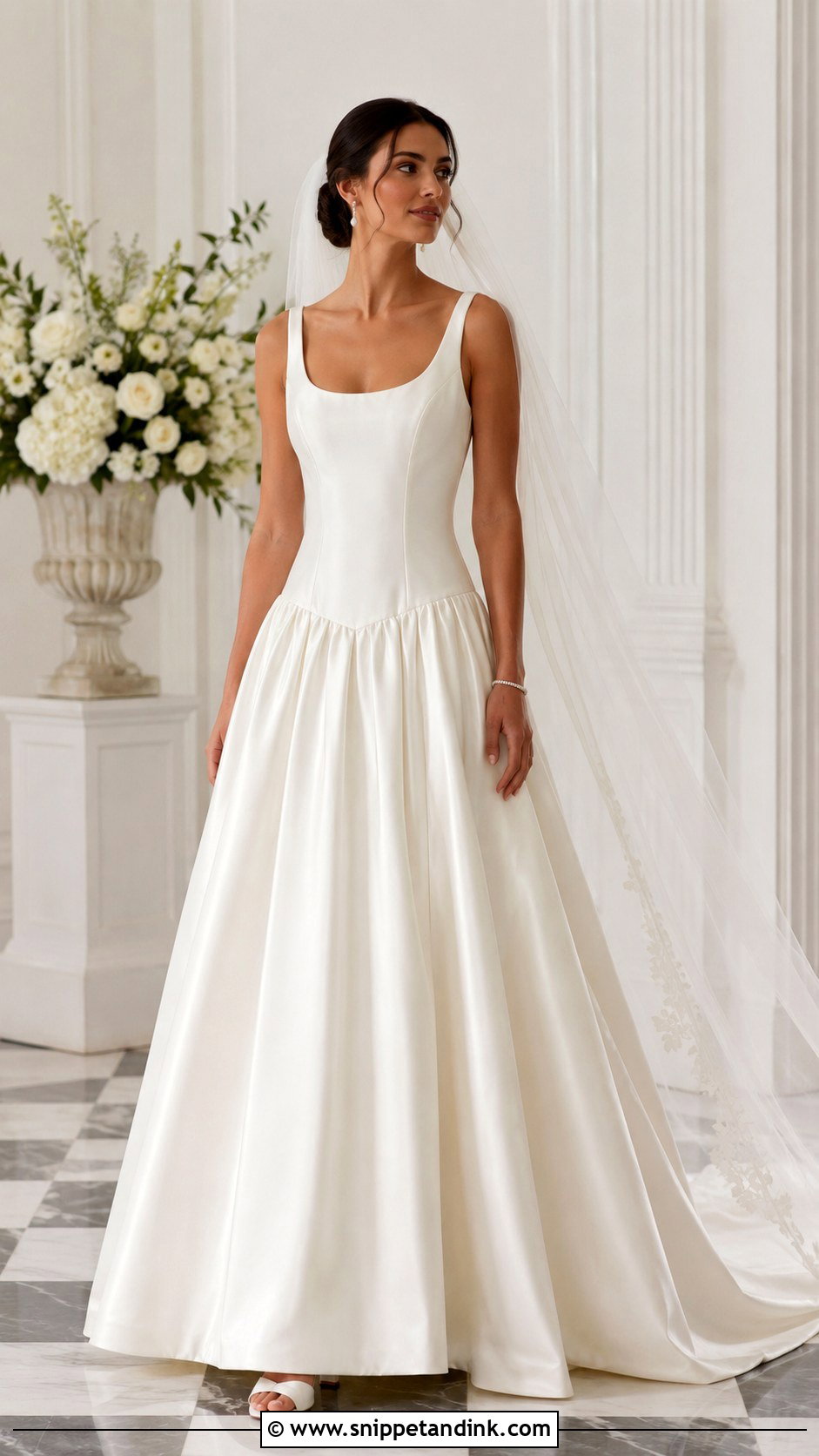
A scoop neckline softens all the vertical lines of a drop waist and shows off the collarbone. Medium straps hold it securely, and princess seams carry the shape down before a satin or tulle skirt opens at the hip. A slim tennis bracelet, pearl earrings, block heels and a sheer cathedral veil complete it; a half-up style keeps the hair relaxed without covering the neck. The depth of the scoop is the detail I fuss over most. Half an inch lower or higher changes the whole proportion, and a scoop that gapes when you bend forward to hug a guest needs taking in at the shoulder seam.
12. V Neck Drop Waist Princess Wedding Dress
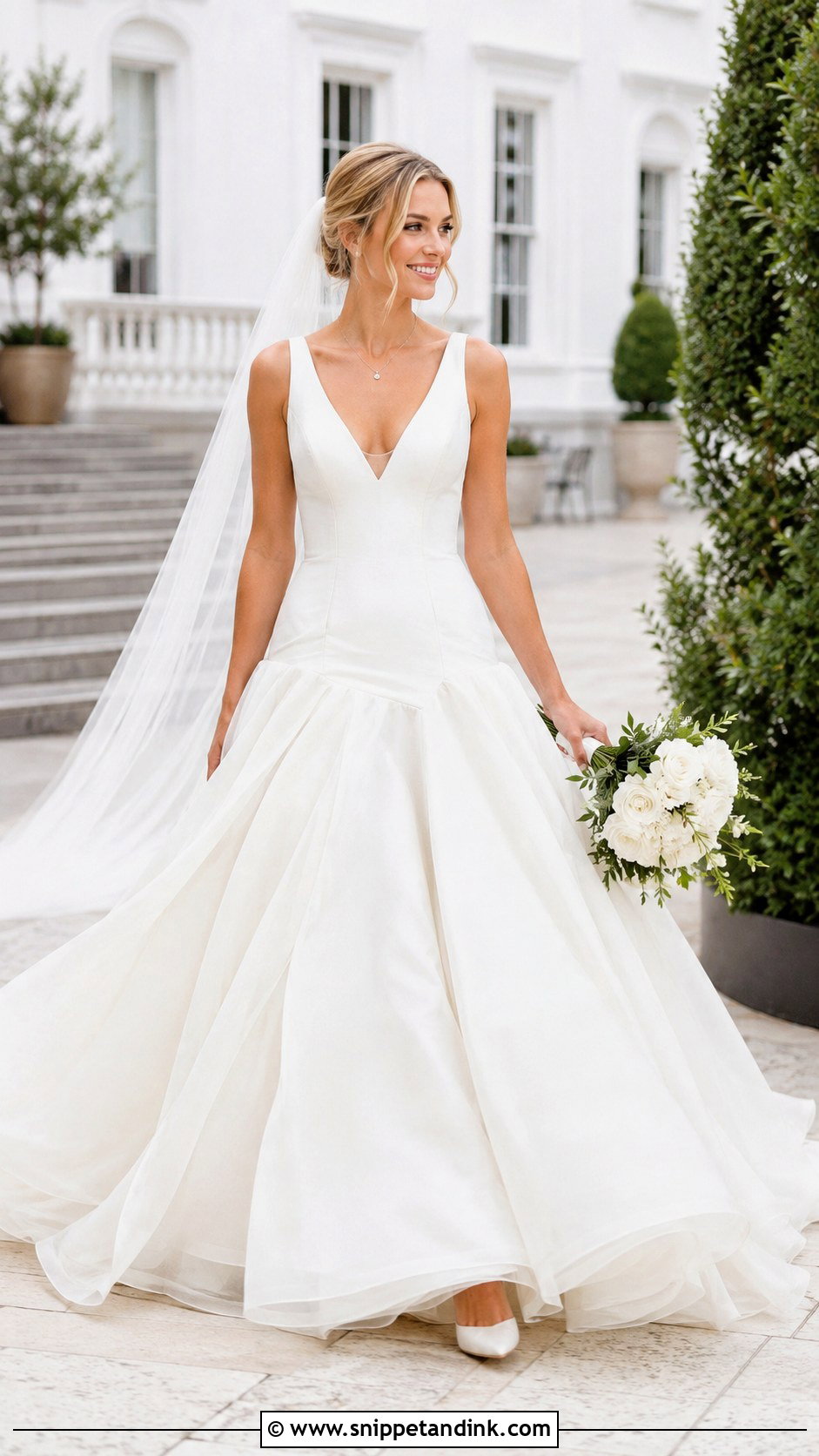
A V-neck echoes the long bodice beautifully, one downward line pointing to another. Supportive straps and discreet illusion mesh keep the depth secure, and an organza skirt adds movement while staying airy. A fine pendant, small earrings, an unembellished veil and pointed ivory shoes are enough. A low waved ponytail feels modern and keeps the neckline clear. Decide on the depth of the V while leaning forward, not standing tall in front of the mirror. This one travels well between ballrooms and outdoor ceremonies, provided the skirt has enough structure to stay full without going stiff.
13. High Neck Drop Waist Princess Wedding Dress
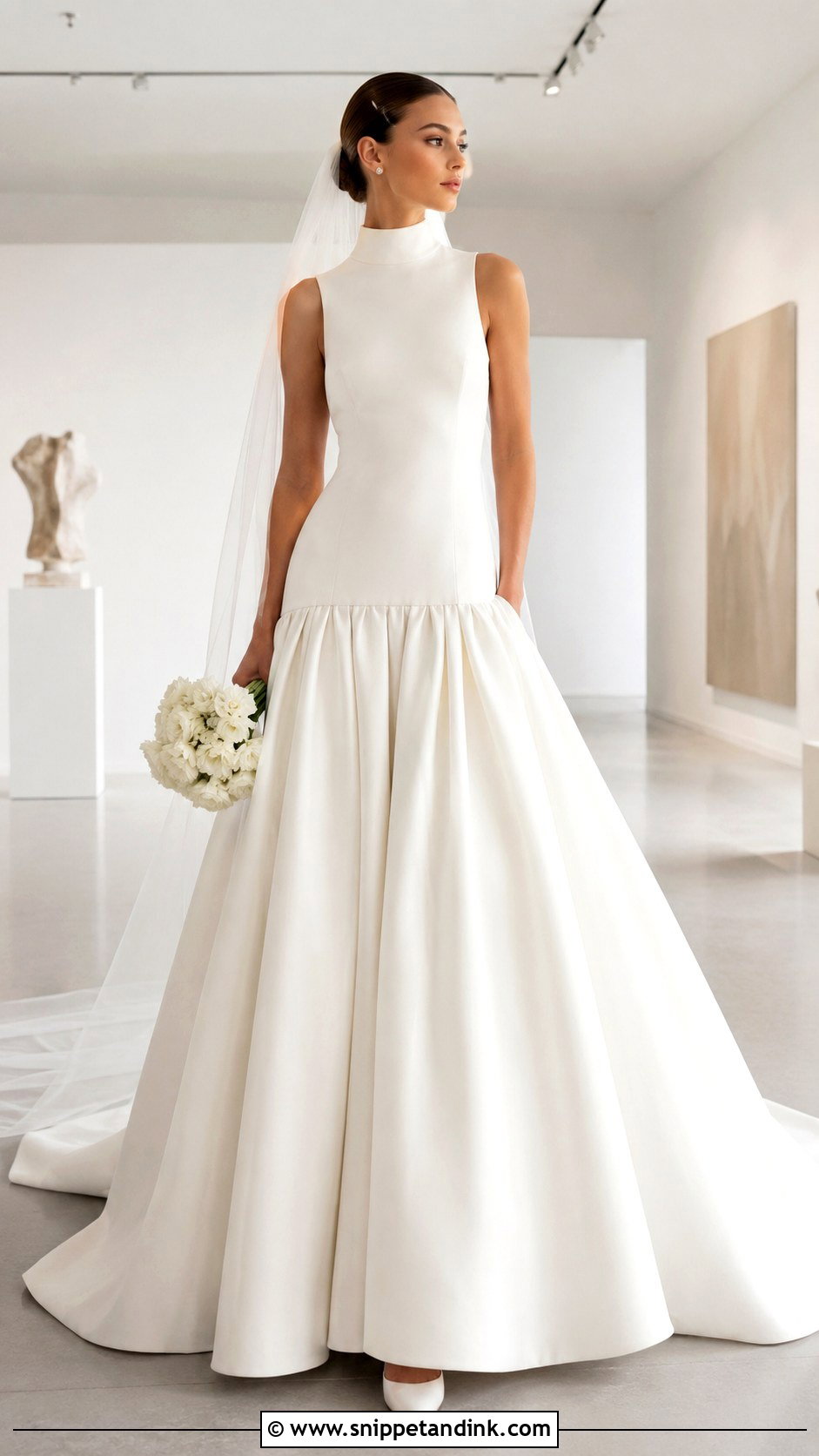
High necklines set up a strong contrast with a full princess skirt. Matte crepe or satin works for the bodice, with a bateau or raised jewel neckline, a low waist seam and a row of covered buttons down the back. Sleeveless keeps the top half from looking heavy. Crystal studs, a sleek bun, pointed pumps and a veil set beneath the hair: no necklace needed. Since the bodice covers so much of you, I check the neck and armholes after the bride has turned her head side to side for a while. Any tightness there gets worse as the day warms up, and a soft lining stops the rubbing.
14. Detachable Sleeve Drop Waist Princess Wedding Dress
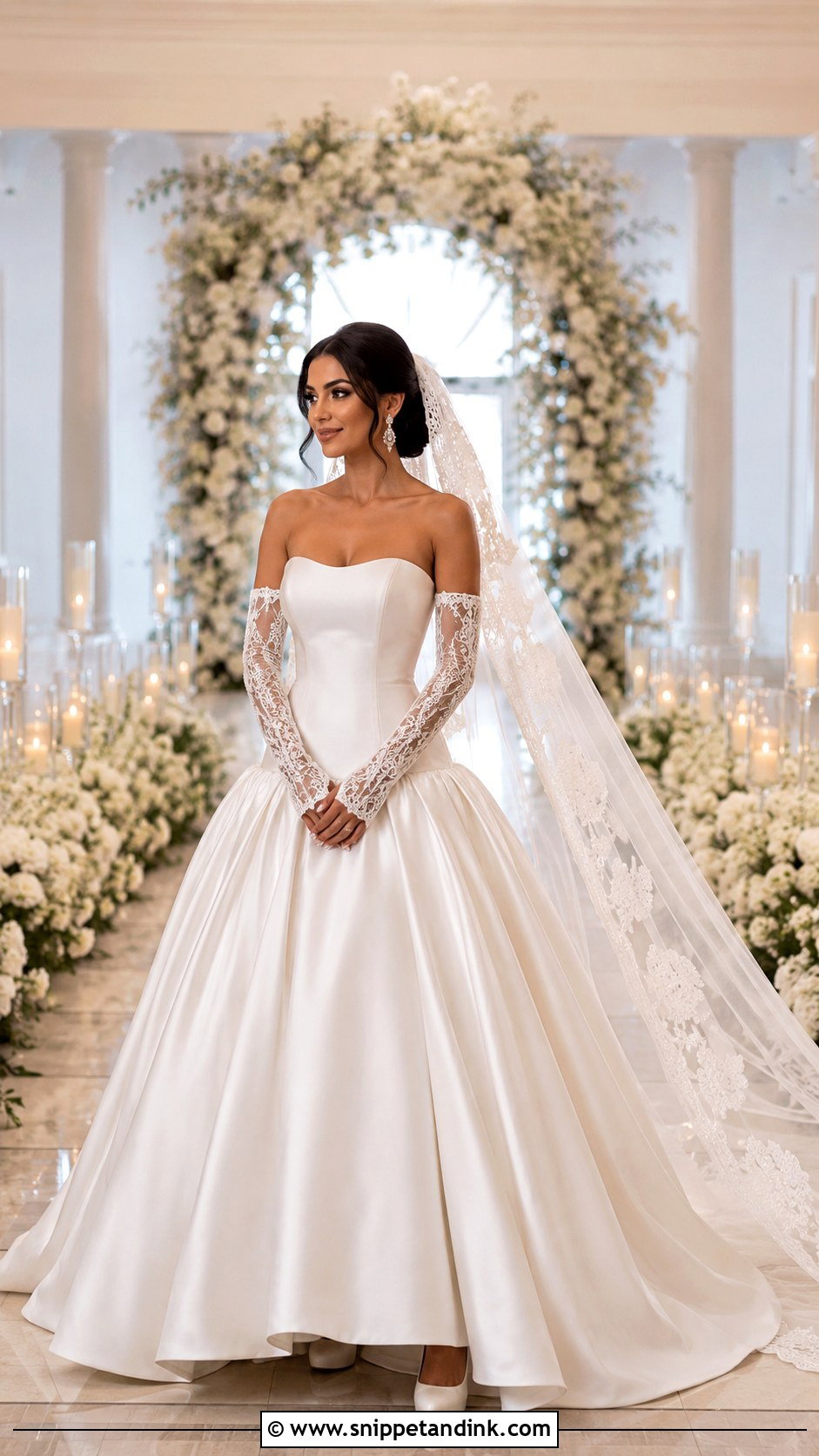
Detachable sleeves give you two looks from one gown. Start with a strapless drop waist bodice and full satin skirt, add fitted lace sleeves or draped off-the-shoulder bands for the ceremony, and take them off for the reception. Statement earrings, a cathedral veil, cushioned satin heels and a secure updo all work with both versions. I always ask how the sleeves attach, because snaps, buttons and hidden loops behave differently. Snaps are fastest, loops sit flattest. Practise the change with the person who will actually do it, ideally a bridesmaid who is calm with fiddly fastenings, so it takes minutes rather than half the cocktail hour.
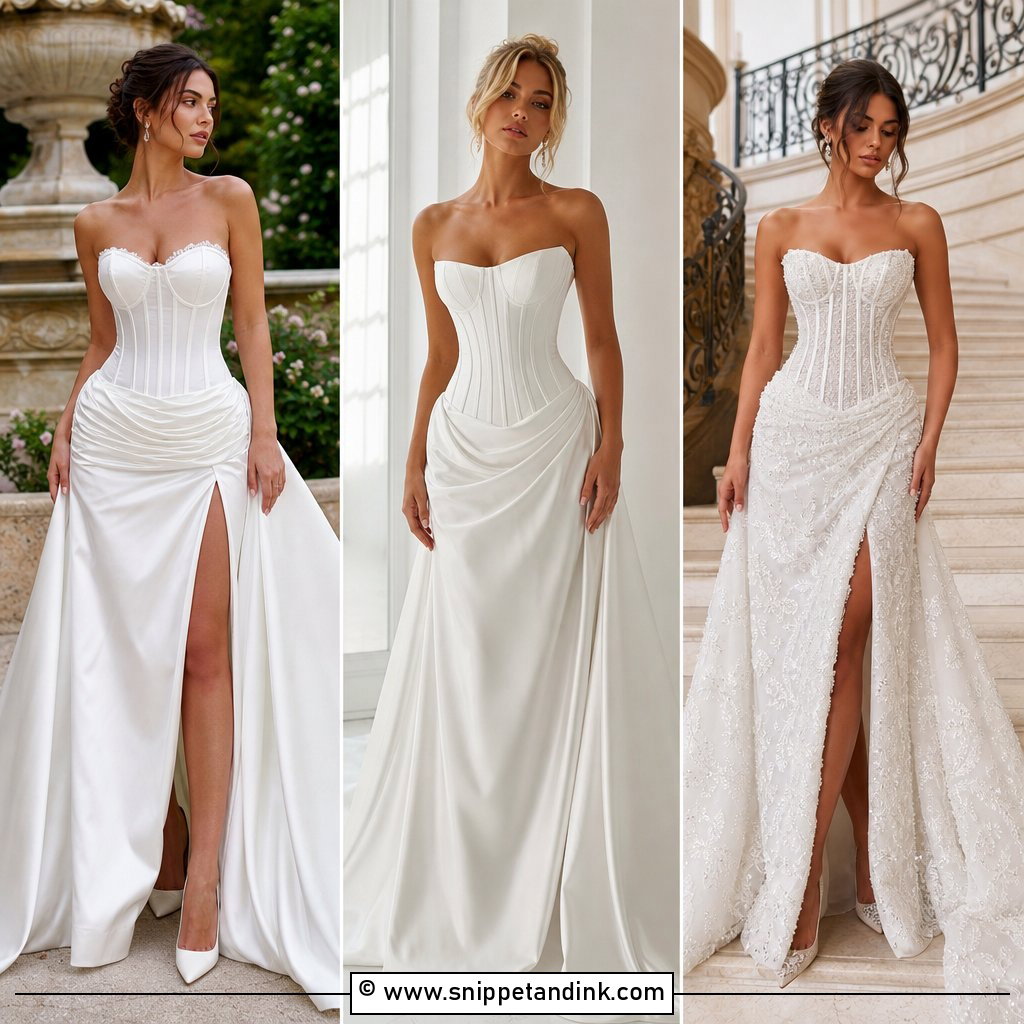
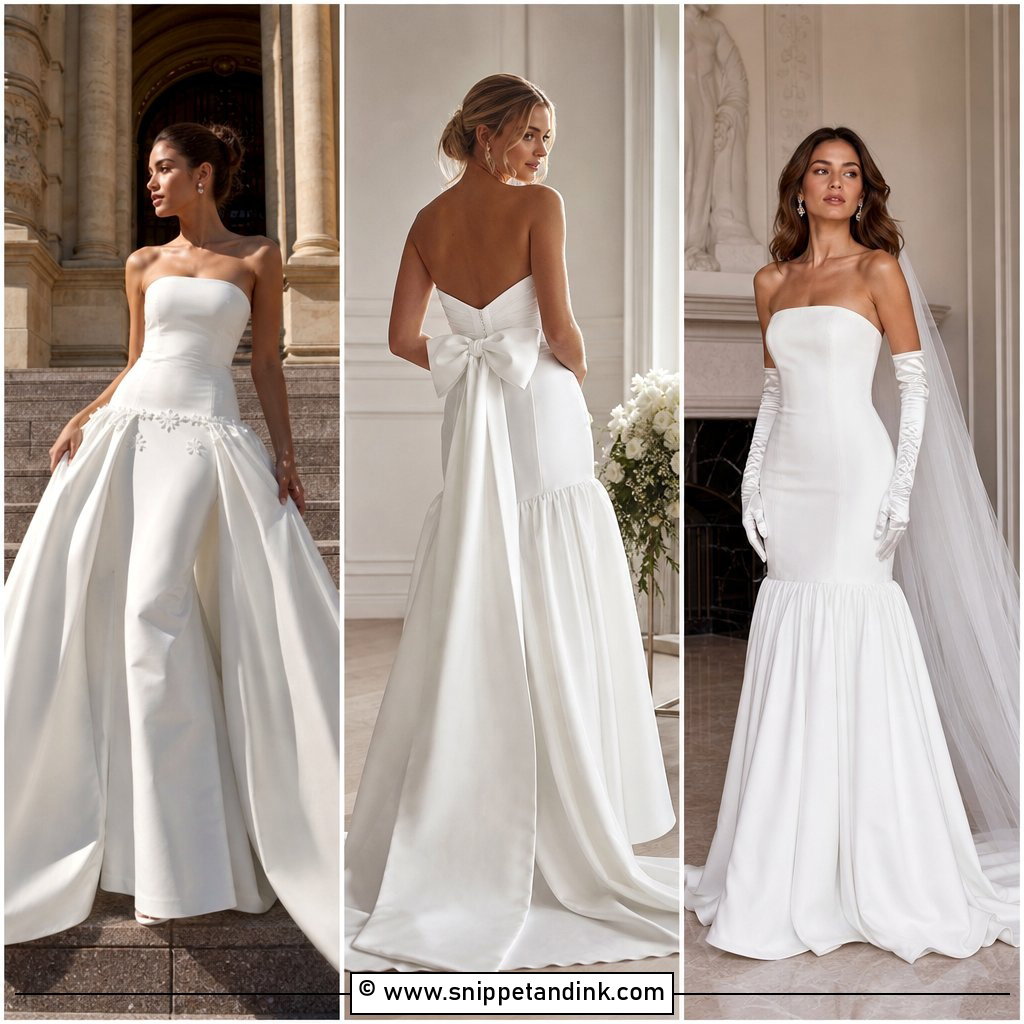
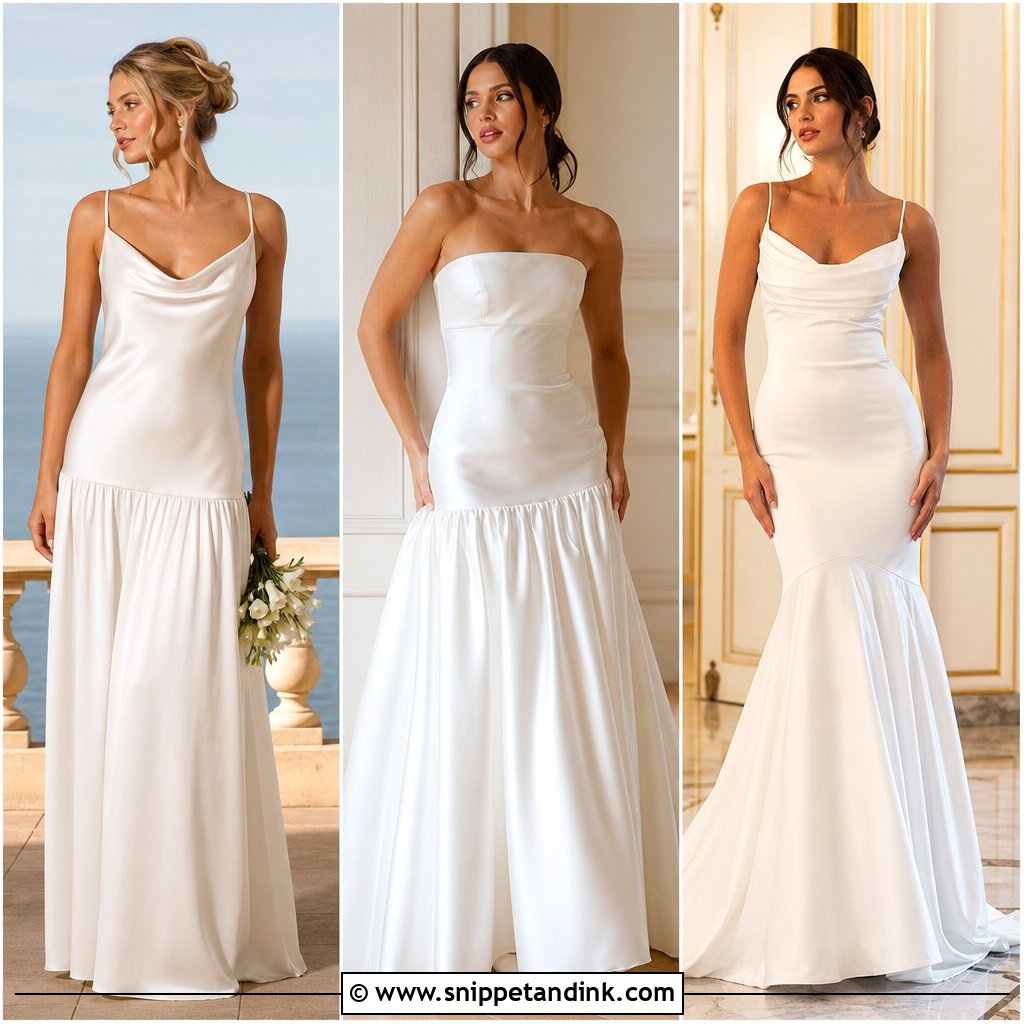
15. Bow Back Drop Waist Princess Wedding Dress
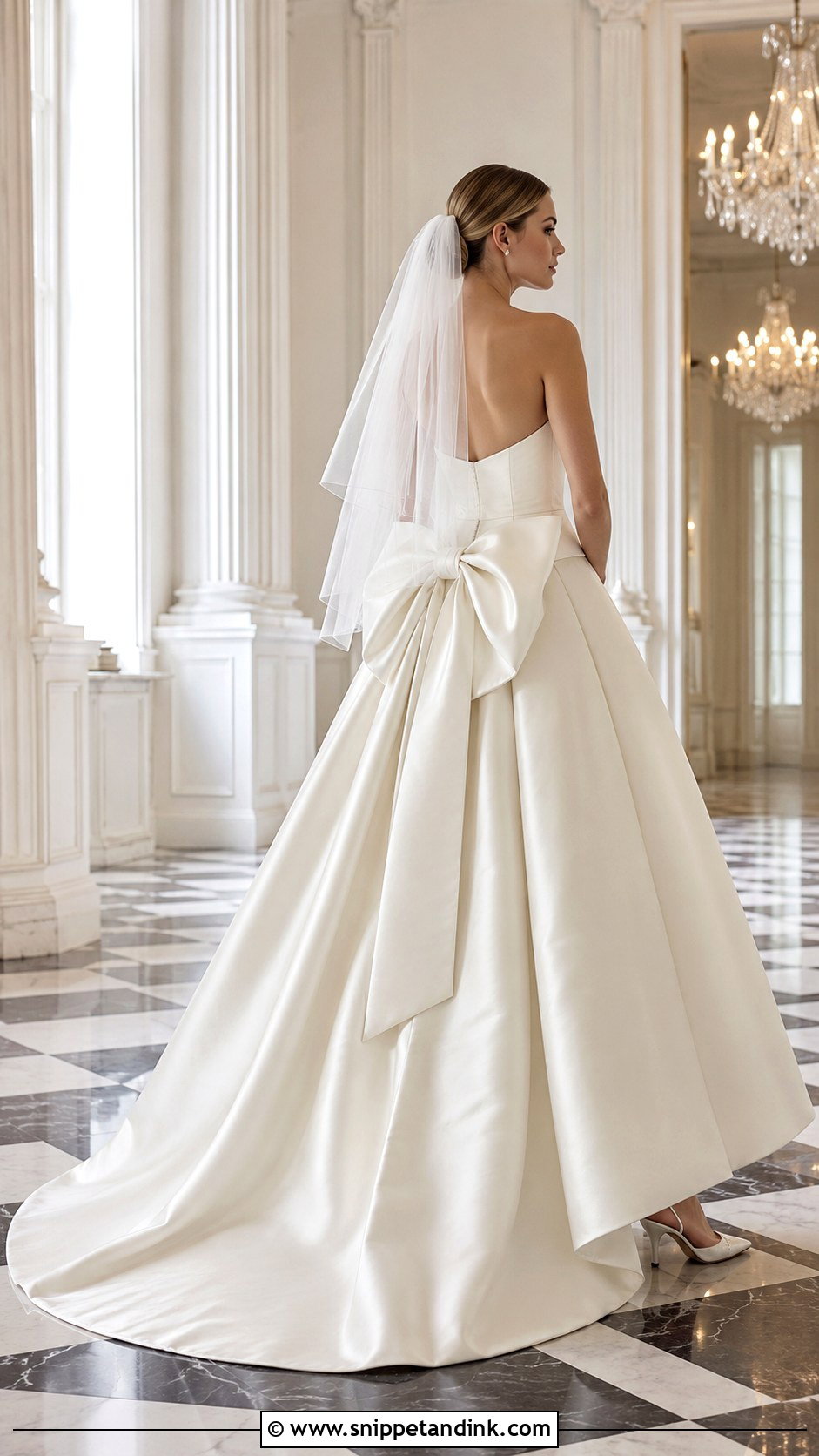
A structured bow gives the back view a focal point without beading the whole gown. Keep the bodice clean with a straight neckline and full mikado skirt, then set the bow at the lowered seam or just above the train, with long tails falling into the skirt. Pearl studs and classic pumps finish it, and the veil should end clearly above or below the bow so it never sits muddled on top. A low bun will reveal the back detail during the processional. Watch the bow’s weight. A heavy one drags the bodice backward and wrinkles the fabric at the waist, so I ask for it to be anchored into the boning rather than the outer layer alone, or made detachable for dancing.
16. Drop Waist Princess Wedding Dress With Overskirt
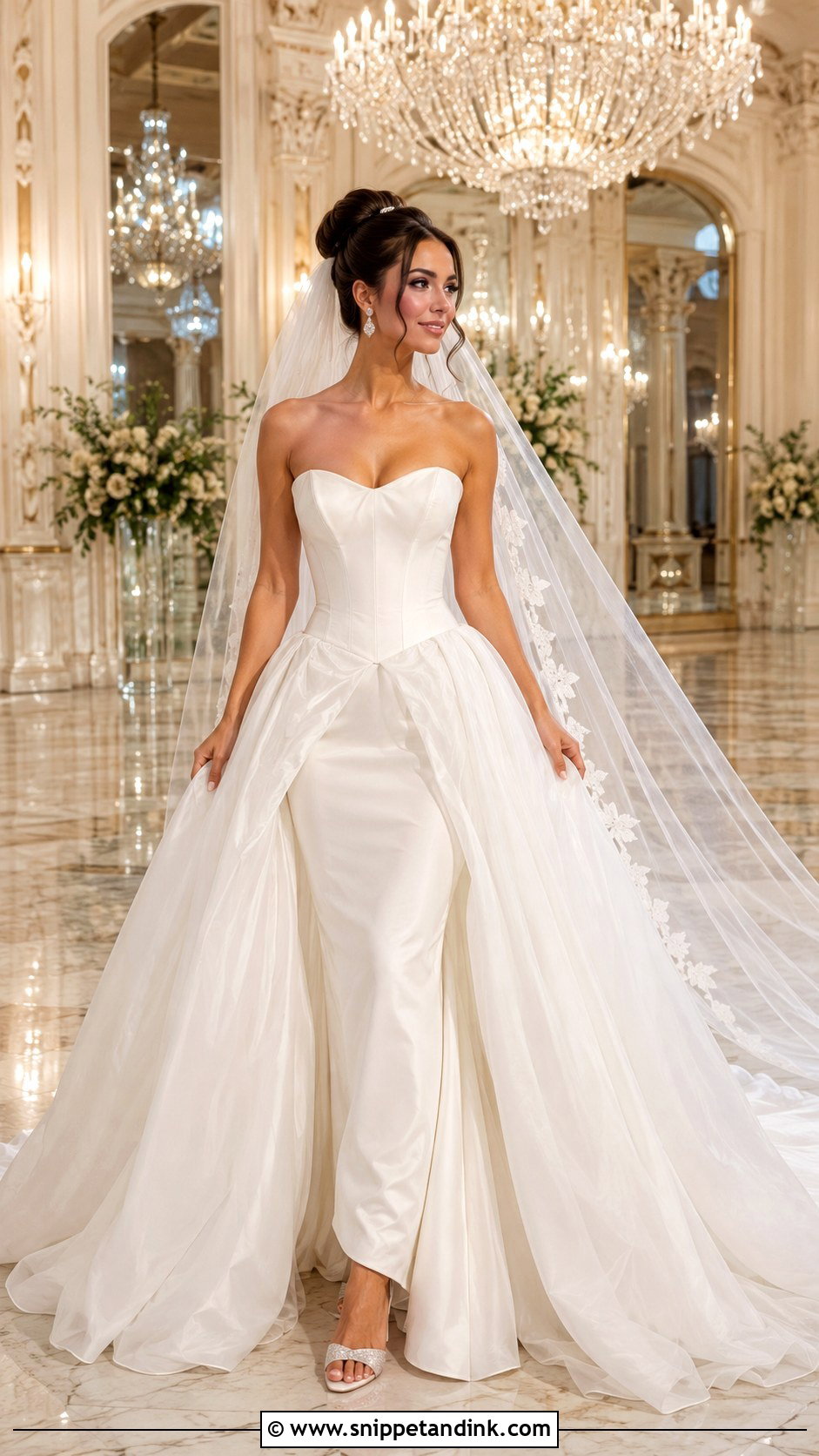
An overskirt adds ceremony drama and then comes off. The base is a fitted, princess-seamed dress; the full tulle or organza layer attaches right at the lowered waist. That join is where these gowns go wrong. If the overskirt sits even slightly above the bodice line, it shortens the torso and adds bulk at the hip. Wear it with a cathedral veil, crystal earrings and supportive heels, then reveal the lighter skirt underneath for the reception. Hidden hooks or a concealed button band are the attachments I trust most. Ask the seamstress to bustle both the base train and the overskirt, and run through both configurations before the wedding.
17. Blush Drop Waist Princess Wedding Dress
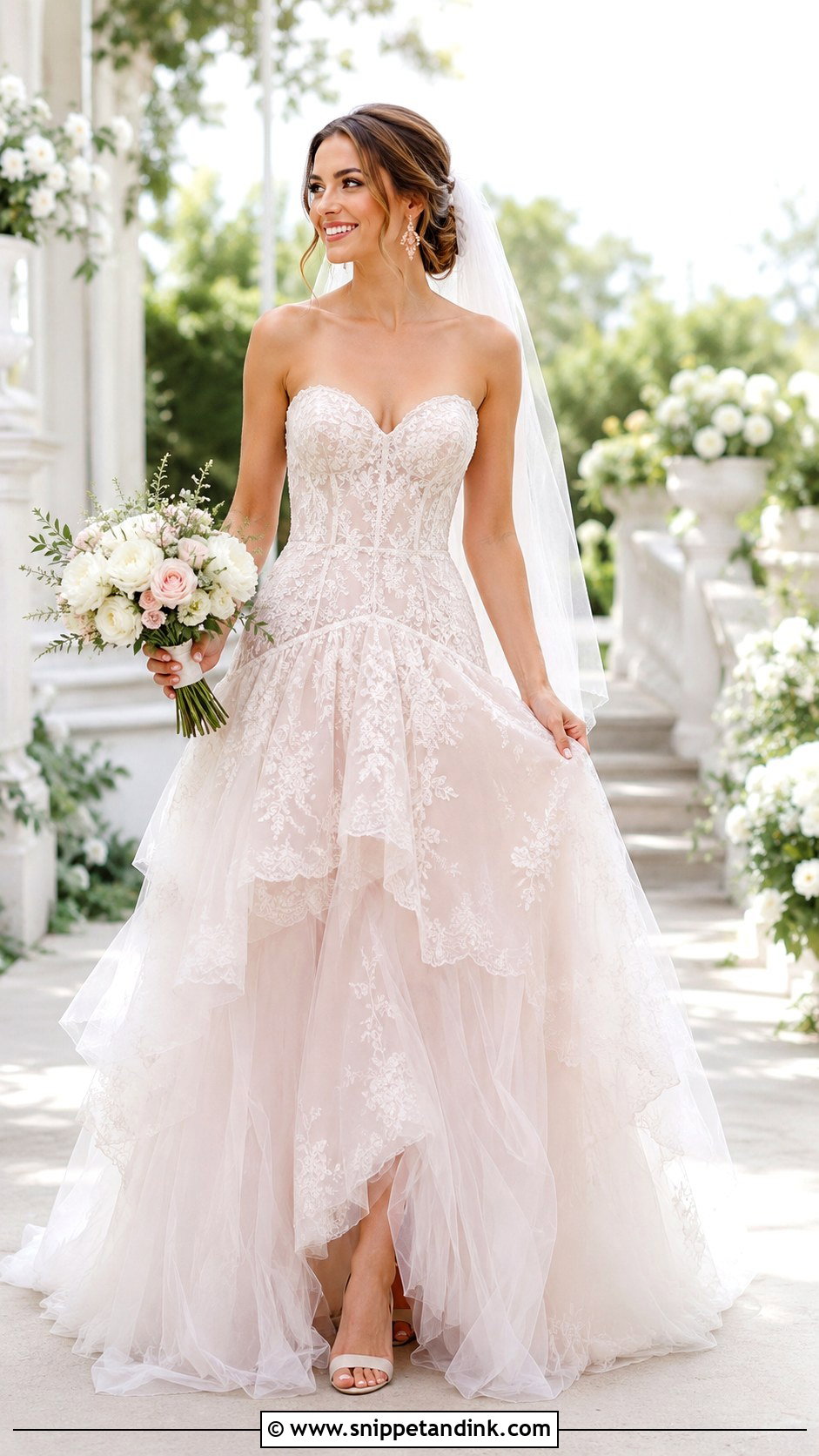
A pale blush lining warms the whole silhouette while still reading as bridal. Ivory tulle or lace over the colour keeps it soft rather than saturated, and a sweetheart drop waist bodice shows the contrast clearly. Neutral ivory heels, rose-toned earrings and a veil matched to the outer tulle, not the lining, finish the picture. Soft makeup and a loose low bun suit it. Keep the bouquet mostly white with a little pink, or everything starts to look coordinated. I always ask brides to look at blush under the light they’ll actually marry in; warm indoor bulbs push it peachy, and shade outdoors can make it almost grey.
18. Cathedral Train Drop Waist Princess Wedding Dress
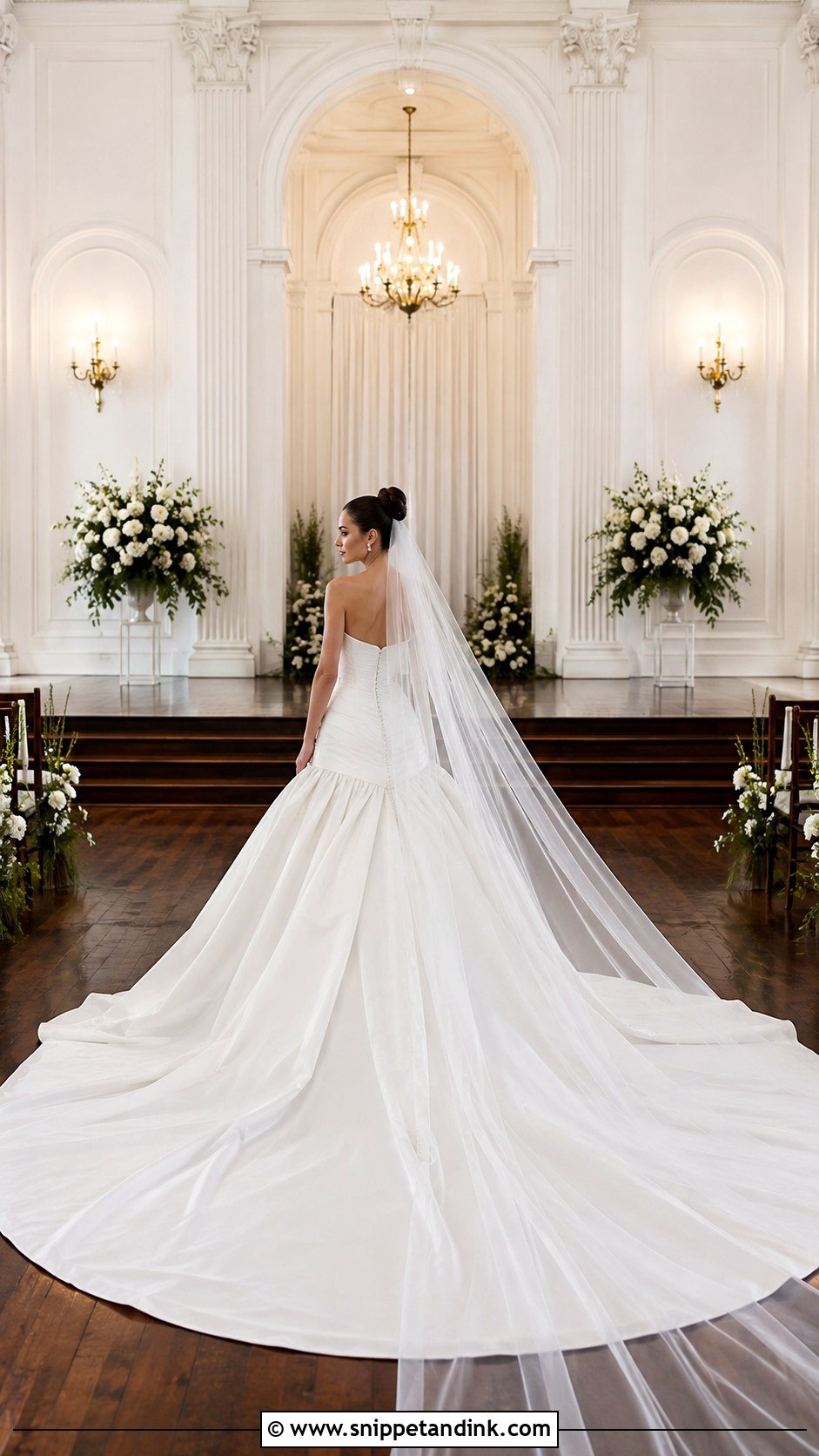
Pair the long bodice with a cathedral train and you get the full aisle moment. Structured satin or mikado carries the scale and keeps the lines sharp in photographs. A strapless neckline lets the train do the talking, with a long veil, classic pearl earrings, stable closed heels and a neat bun. Be realistic about the room: this gown needs a wide aisle and space to turn. The train’s weight surprises most brides, so I have them walk, turn and stand for a few minutes at every fitting. Plan a strong bustle for the reception and name one person who knows how to arrange the train at the altar.
19. Plus Size Drop Waist Princess Wedding Dress
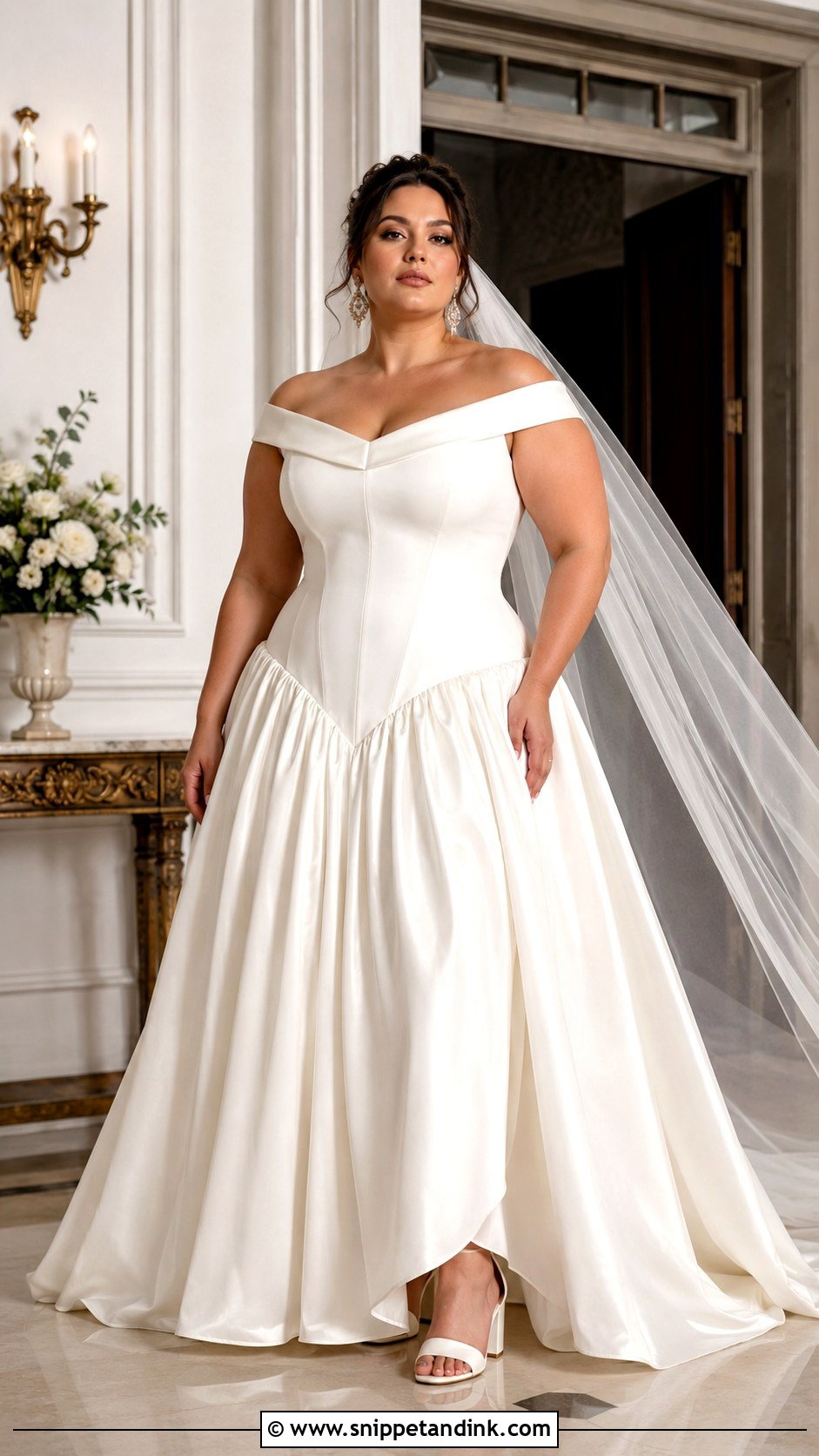
A drop waist can be wonderfully flattering on a fuller figure, but only when the bodice is shaped to the body rather than graded up from a sample. Look for flexible boning, princess seams placed for your proportions and a lowered waist that follows your own curve. Wide straps or an off-the-shoulder neckline add support, and a full skirt balances the fitted torso. Block heels, statement earrings and a long sheer veil complete it. Ask about cups, lining and closures that suit the undergarments you’ll actually wear. The seam itself may need to move up or down a little, and I judge that placement from the side as well as the front, choosing whatever gives the smoothest line.
20. Petite Drop Waist Princess Wedding Dress
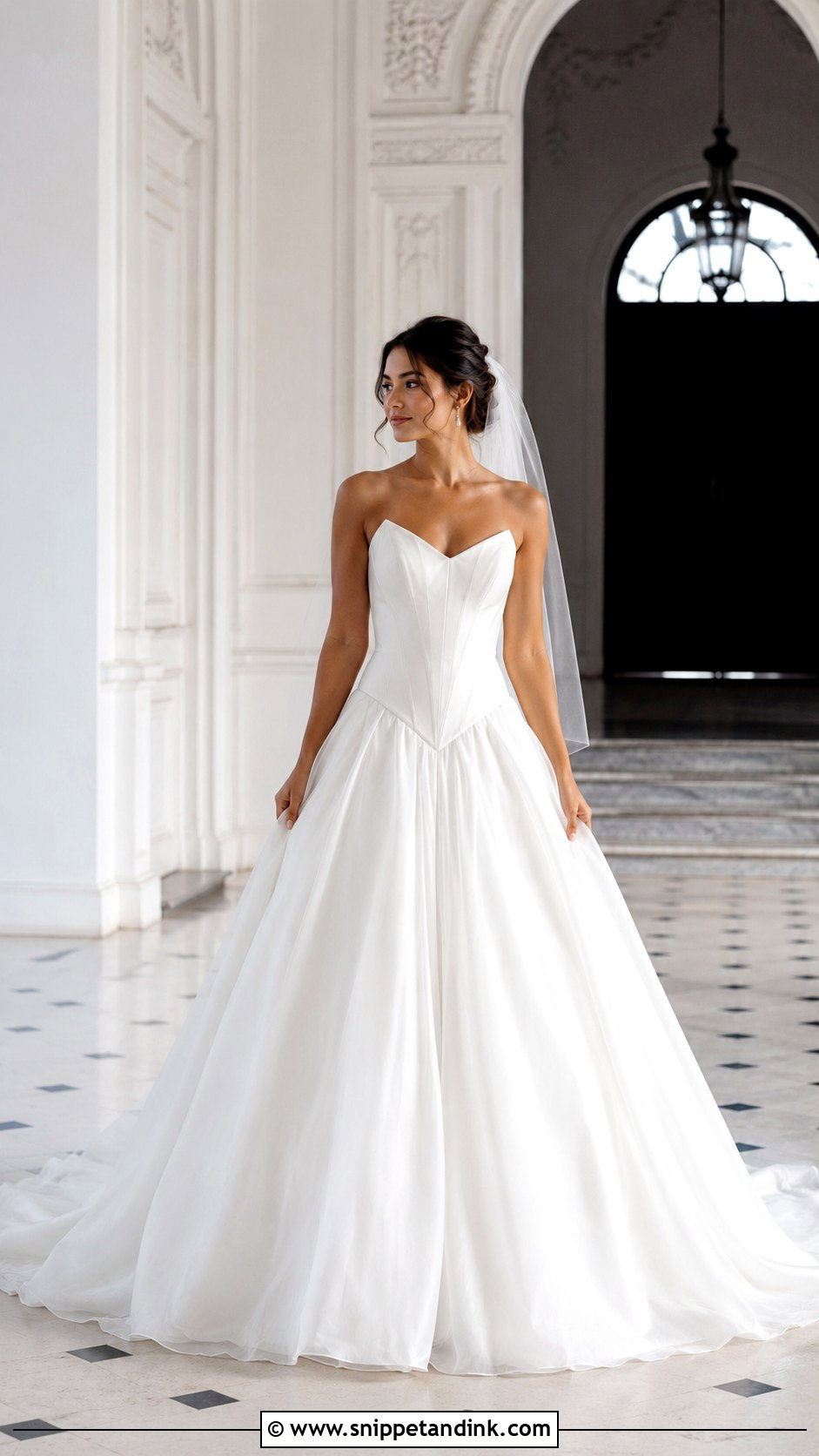
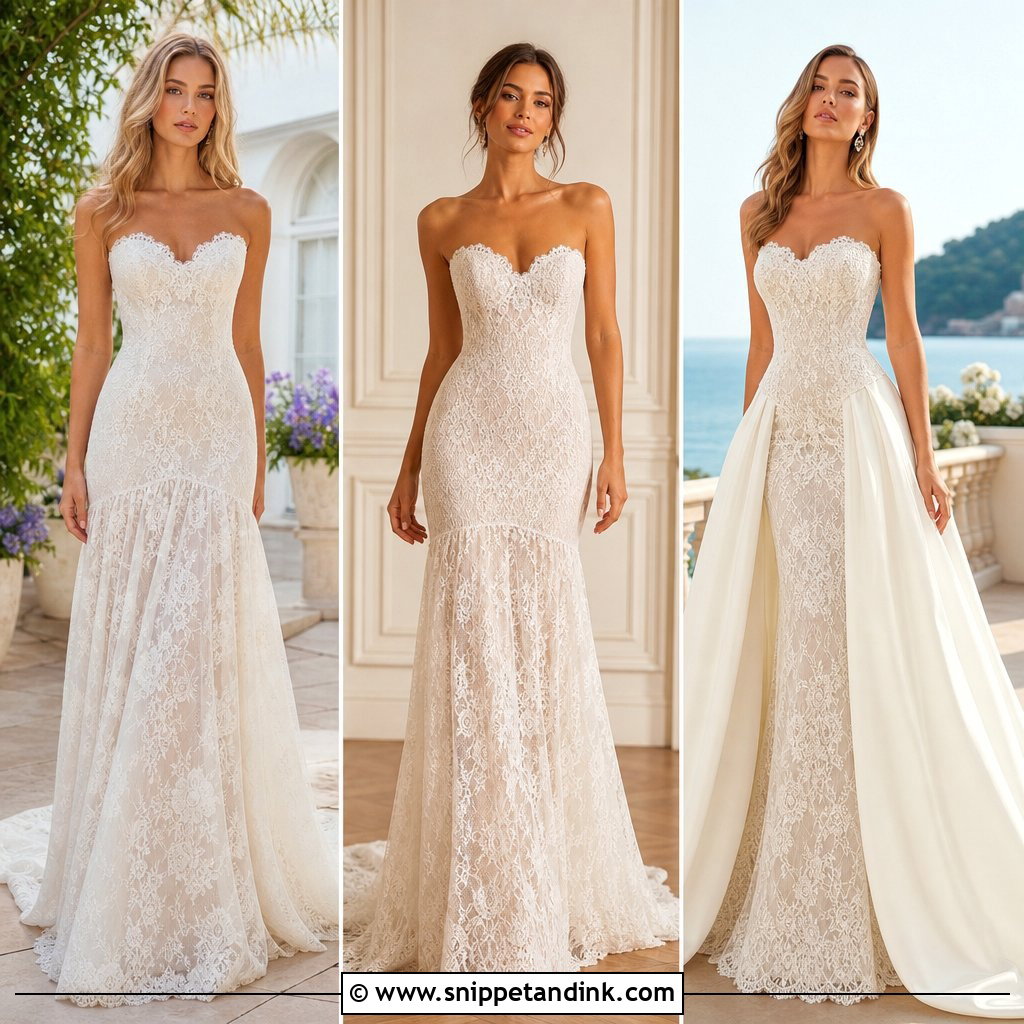
Petite brides can absolutely wear a drop waist princess gown; the trick is where the bodice stops. I’d end it at the upper hip rather than lower, and choose an organza or tulle skirt so the volume stays light. A softly pointed neckline, vertical seams and a moderate train keep the line long. Platform heels, fine earrings and a narrow veil avoid adding width. Don’t judge it from a sample that pools on the floor. Ask whether the pattern can be shortened through the torso, because hemming alone moves the volume but leaves the waist seam sitting too low.
Alterations on a Long Bodice Take Longer Than You Think
A drop waist princess gown usually needs more alteration work than a natural-waist ball gown, because the bodice covers more of the body and the seam has to be balanced with the skirt. I plan for three fittings, starting roughly two to three months before the wedding, with the last one a couple of weeks out.
- First fitting: bodice shape and seam position, wearing your real shoes and undergarments.
- Second fitting: hem, bustle and any sleeve or overskirt attachments.
- Final fitting: a full rehearsal, including sitting, dancing and having your helper practise the bustle.
Moving a waist seam is one of the more involved jobs, since the skirt gathers or pleats have to be redistributed. Costs for that kind of work vary a lot by region and fabric, so ask for a quote at the first appointment rather than at the end.
Sitting Through Dinner in a Fitted Hip
Because the fitted part of the dress extends below your waist, you feel a drop waist most when you sit. Dinner, speeches and the car ride are the moments brides mention afterward. A few things make a real difference:
- Ask for flexible spiral boning rather than rigid plastic in the lower bodice; it bends with you when you sit.
- Choose smooth, no-seam shapewear that ends above the seam line so you don’t get a second ridge under satin.
- Have the bustle points reinforced. A full princess skirt pulls hard on them once you start dancing.
- Keep a small kit with safety pins and fashion tape. A loose hook at the hip is the most common mid-day fix I make.
None of this changes how the gown looks. It just means you are still comfortable when the last song plays.
Where the Seam Lands Is the Whole Decision
Every gown here shares the same backbone: a bodice that feels secure and smooth, and a seam that meets your body in the right place. Satin and mikado give you structure; tulle, organza and lace soften it. Necklines, sleeves, overskirts and trains then tailor the dress to you and your venue. At appointments, take photos from the side and back, and test sitting, walking, raising your arms and turning. Judge the seam against your own torso rather than the size on the label, and give the alterations time to do their work. Then pick the fabric and construction that you keep coming back to.
You'll Like These Ideas:









Leave a Reply