
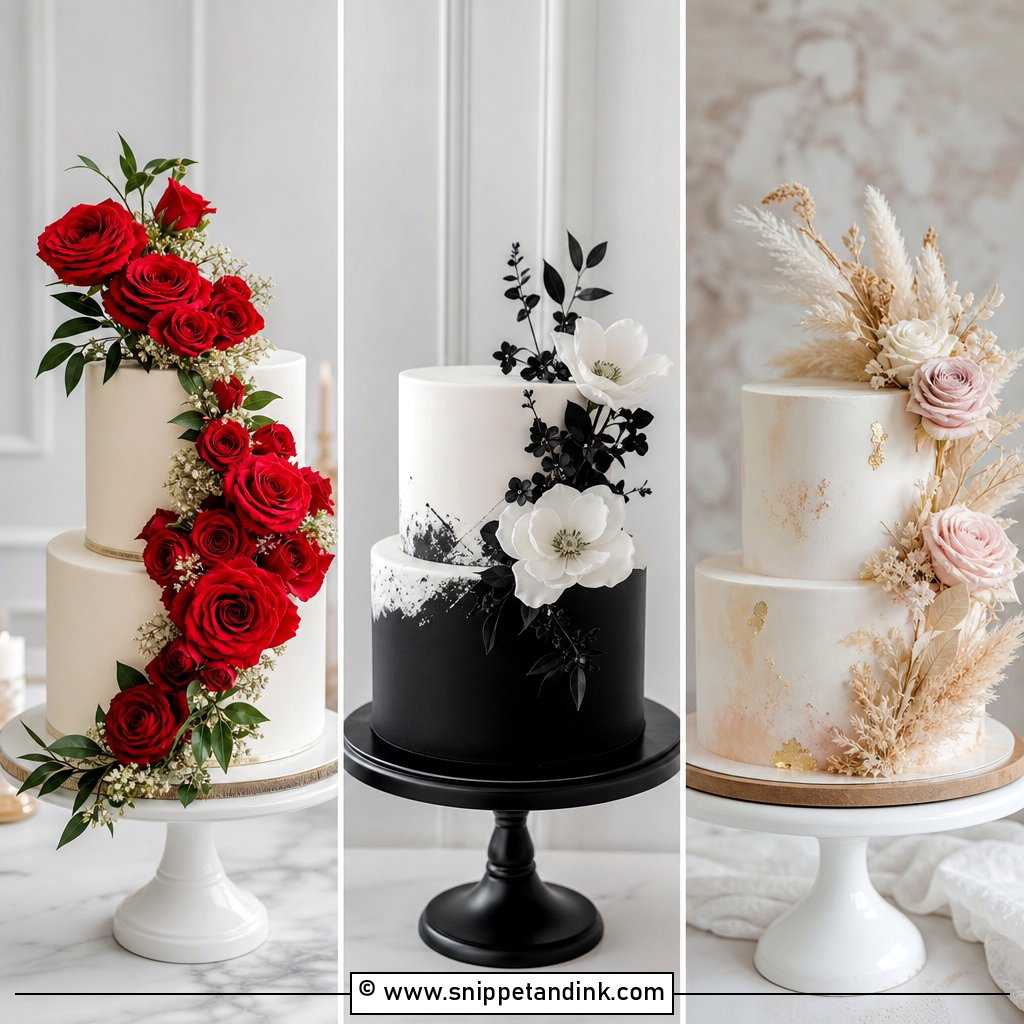
The cakes couples bring me as reference photos have changed. Fewer want a tall white tower dripping in sugar roses; more want clean tiers, sculpted buttercream, one strong color, a pearl finish, or a single statement tier that ties back to their flowers and venue. Some still love the classic shape, and a few want a vintage-inspired Lambeth cake or a dramatic black-and-white moment. Below are thirty designs I’m asked about for current weddings, with my notes on how each one is built, how it behaves at a reception, and who it suits.
Settle the Servings and the Date Before the Design
The first two questions I ask are how many guests and what date, because both narrow the design before we talk about style. Wedding portions are smaller than birthday slices, usually a finger-width strip about an inch wide, so a cake looks smaller on paper than it feeds. That changes which designs make sense.
- Under forty guests: a tall single tier or a two-tier cake is usually enough.
- Around eighty to a hundred: three tiers, or two display tiers plus a plain kitchen sheet cake cut out of sight.
- Large weddings: a tiered cake for the cutting and sheet cakes for serving keeps the cost and the cutting time sensible.
- Dessert table or late-night snacks planned: you can safely order fewer cake servings, since not every guest will take a slice.
For timing, popular bakers fill weekend dates in peak season well in advance, so I’d start contacting them several months out, and book a tasting once the guest count is roughly settled. Sugar-flower-heavy designs need extra lead time because the flowers are made petal by petal, days or weeks before the cake is baked.
1. Minimalist Wedding Cake
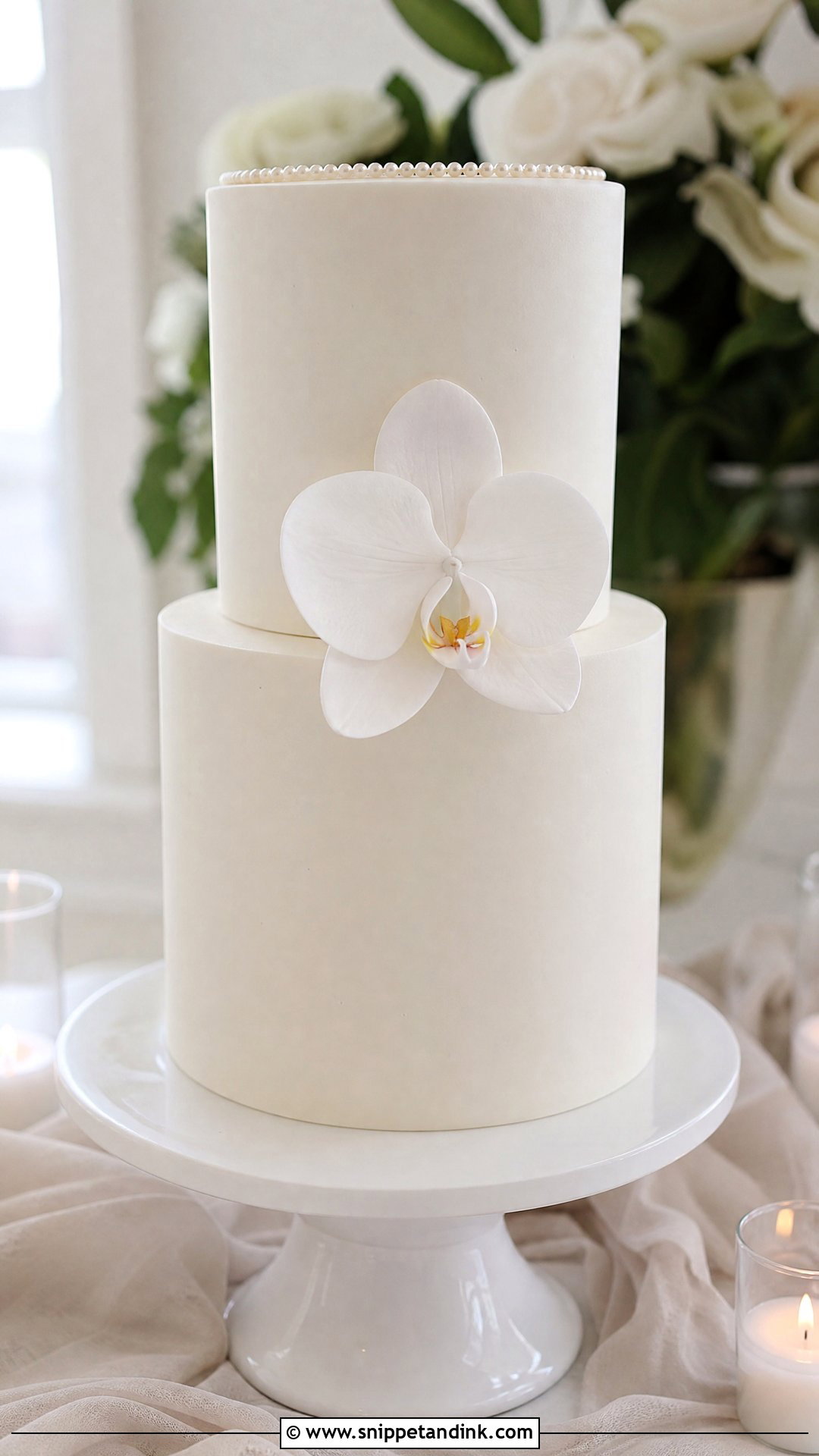
Minimal cakes are the hardest to fake. With smooth ivory buttercream, sharp edges and a single detail, a sugar orchid, a satin ribbon or a few pearls, every bulge and soft corner shows, so the finishing has to be precise. I chill each tier hard before the final coat to get those crisp top edges. Ask your baker for photos of plain cakes they’ve done, not just decorated ones. Vanilla bean, almond, lemon and champagne all suit it, and it sits comfortably in a loft, ballroom or restaurant.
2. Textured Buttercream Wedding Cake
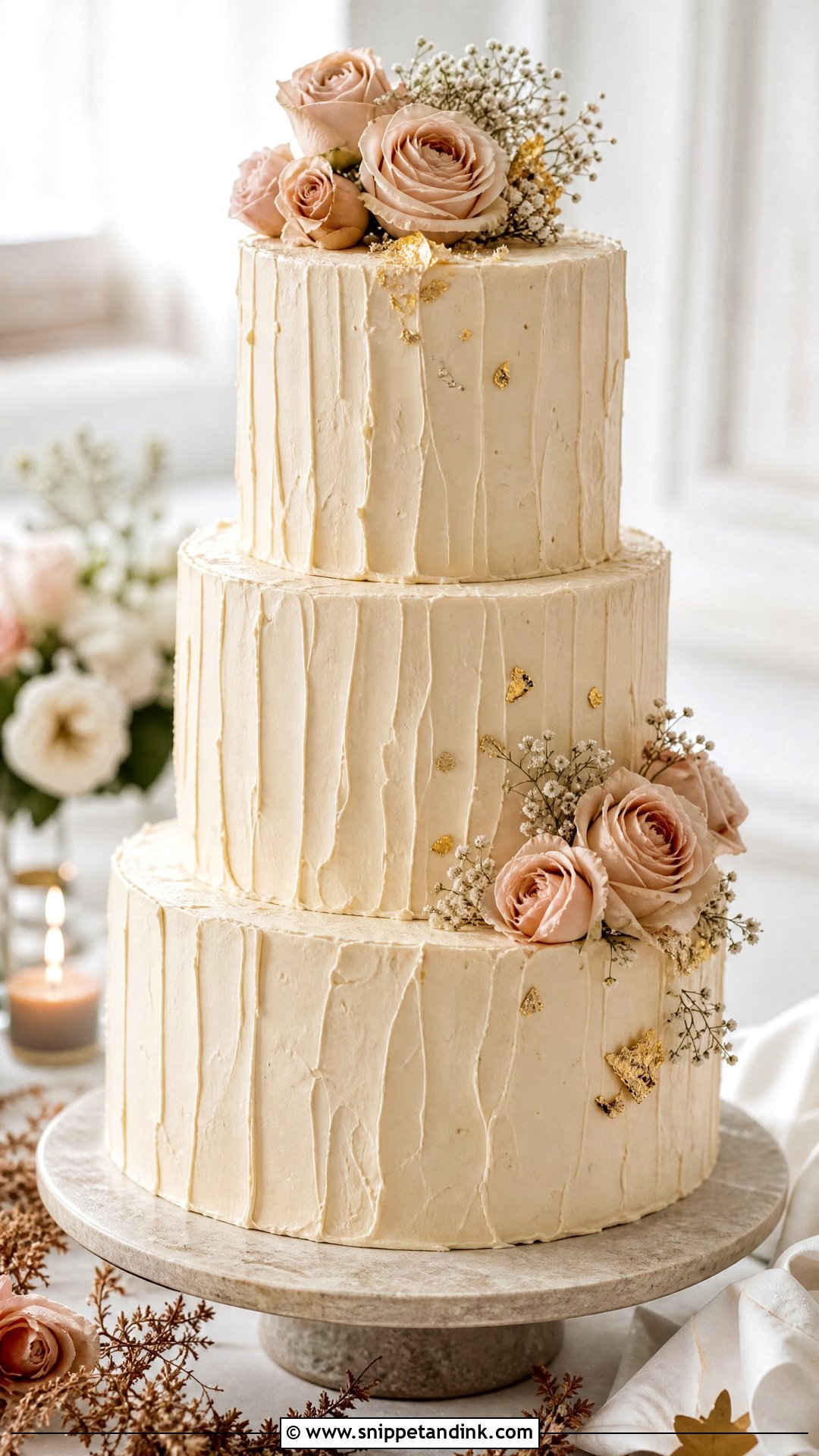
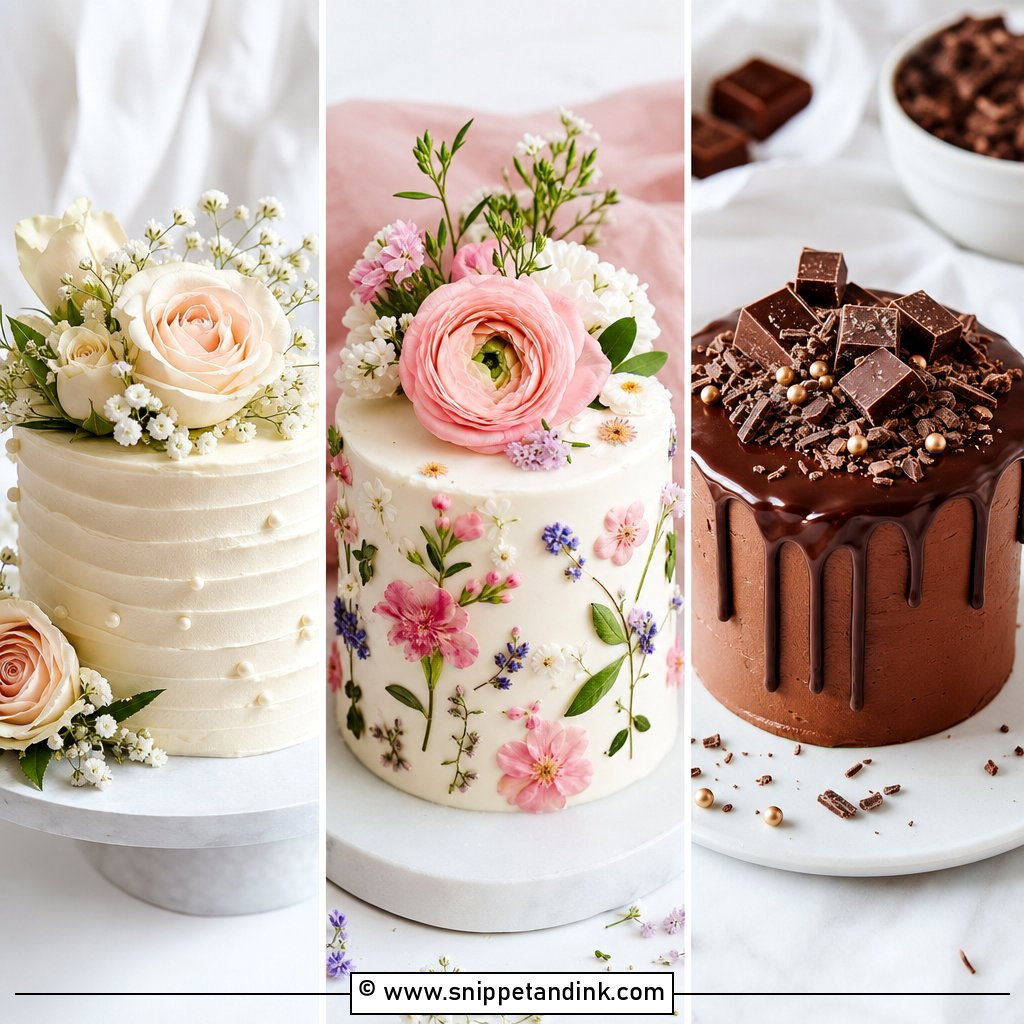
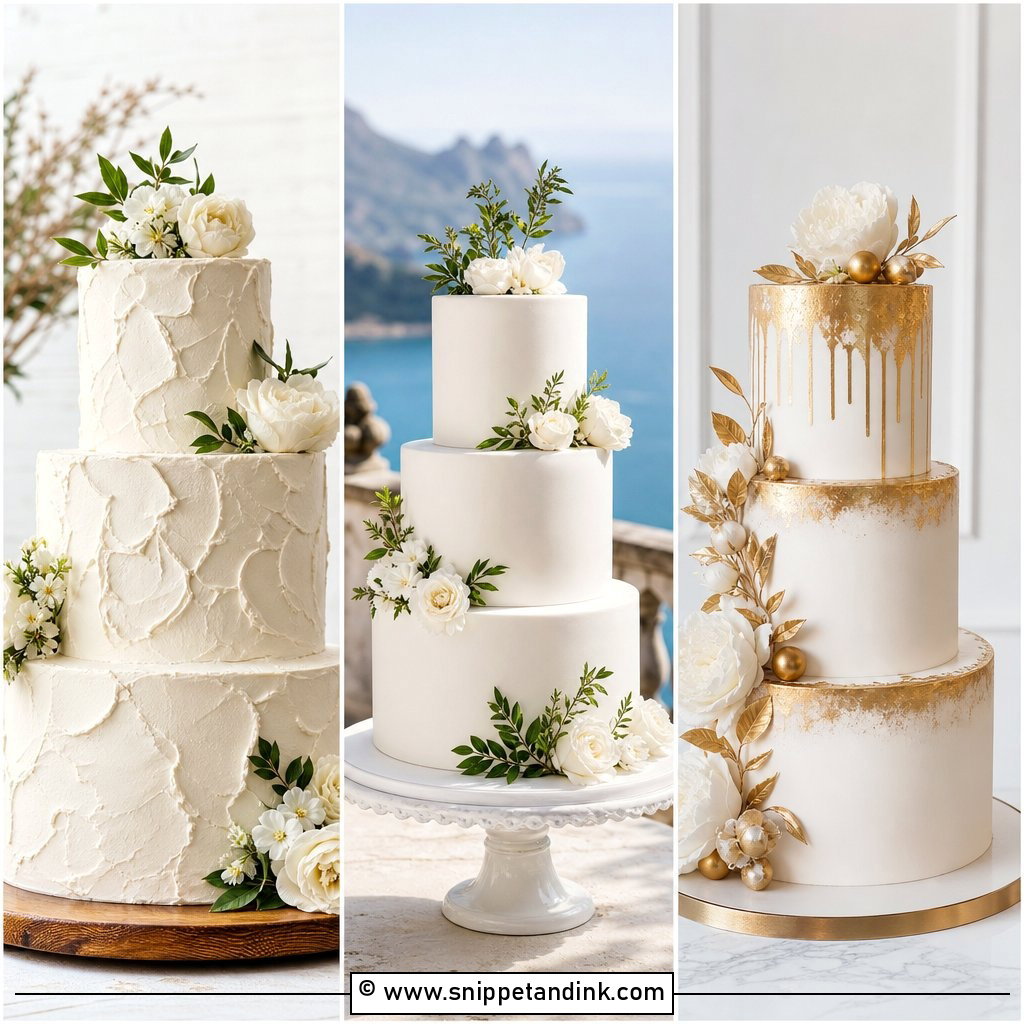
Instead of a mirror-smooth finish, the frosting gets vertical lines, waves, palette-knife strokes or ridges. I like textured buttercream for summer weddings because it hides the small softening that happens in a warm room far better than a flat surface does. Ivory, cream, warm white or pale blush keep it calm, and fresh flowers, pressed petals or a little edible gold add contrast. It also tastes like what most guests expect a cake to taste like.
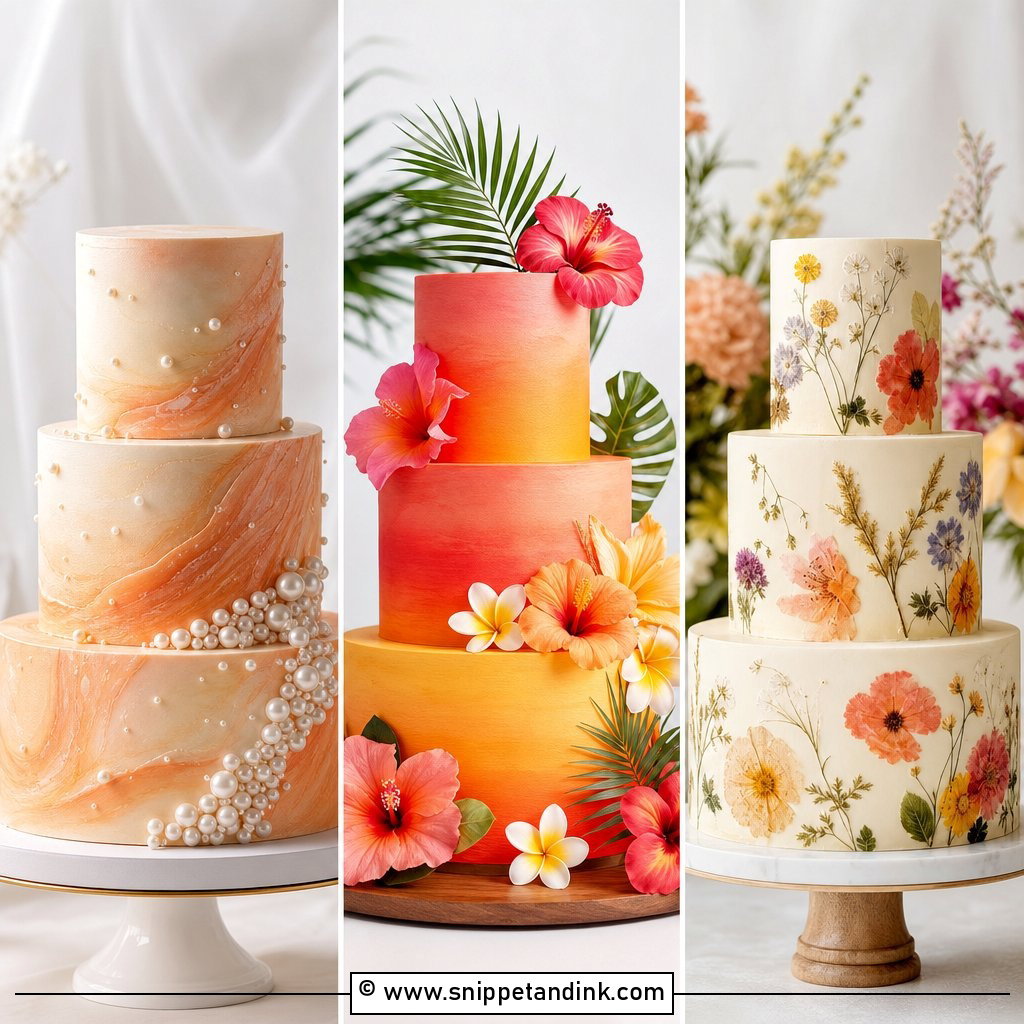
3. Pearl Wedding Cake
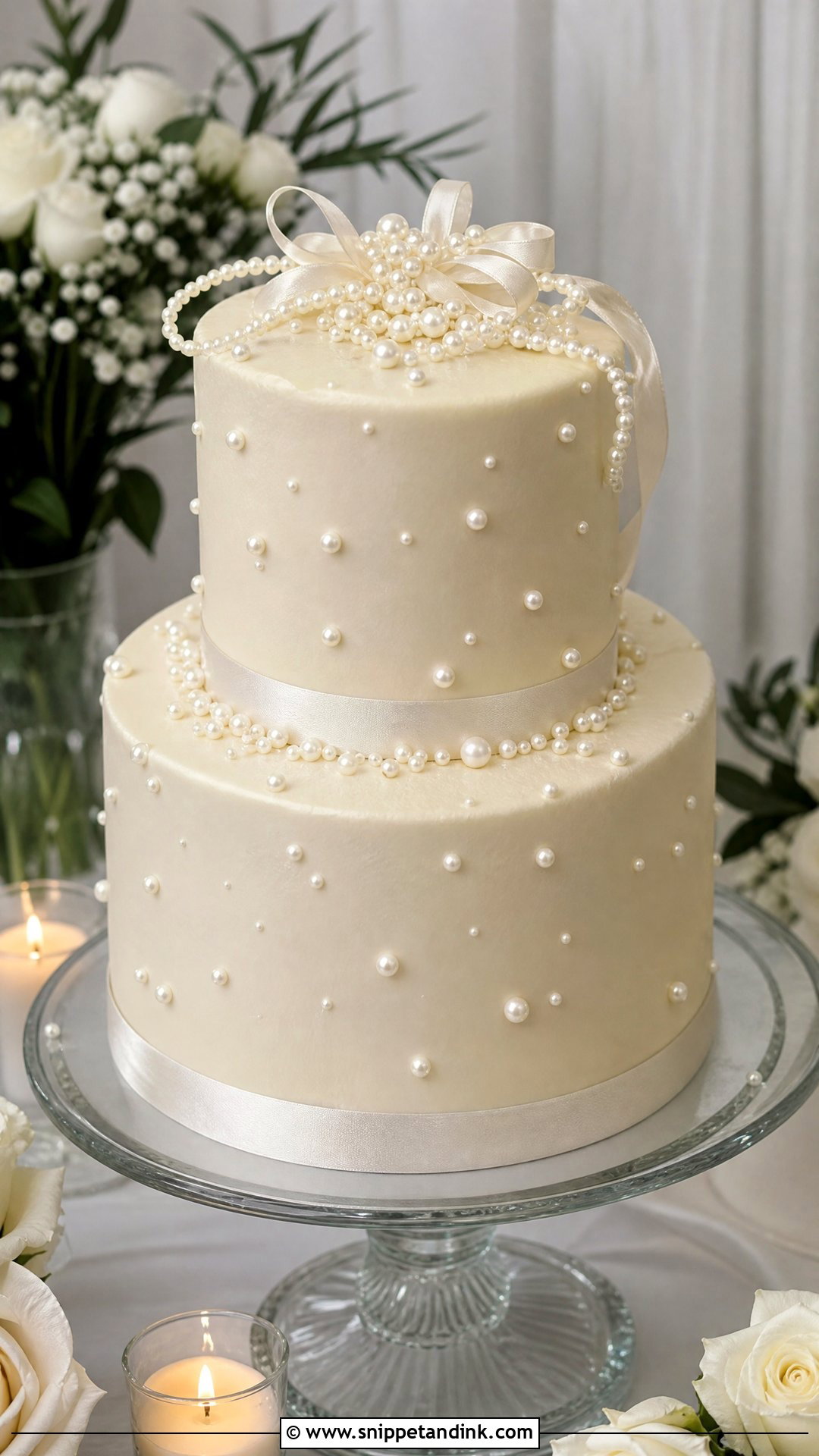
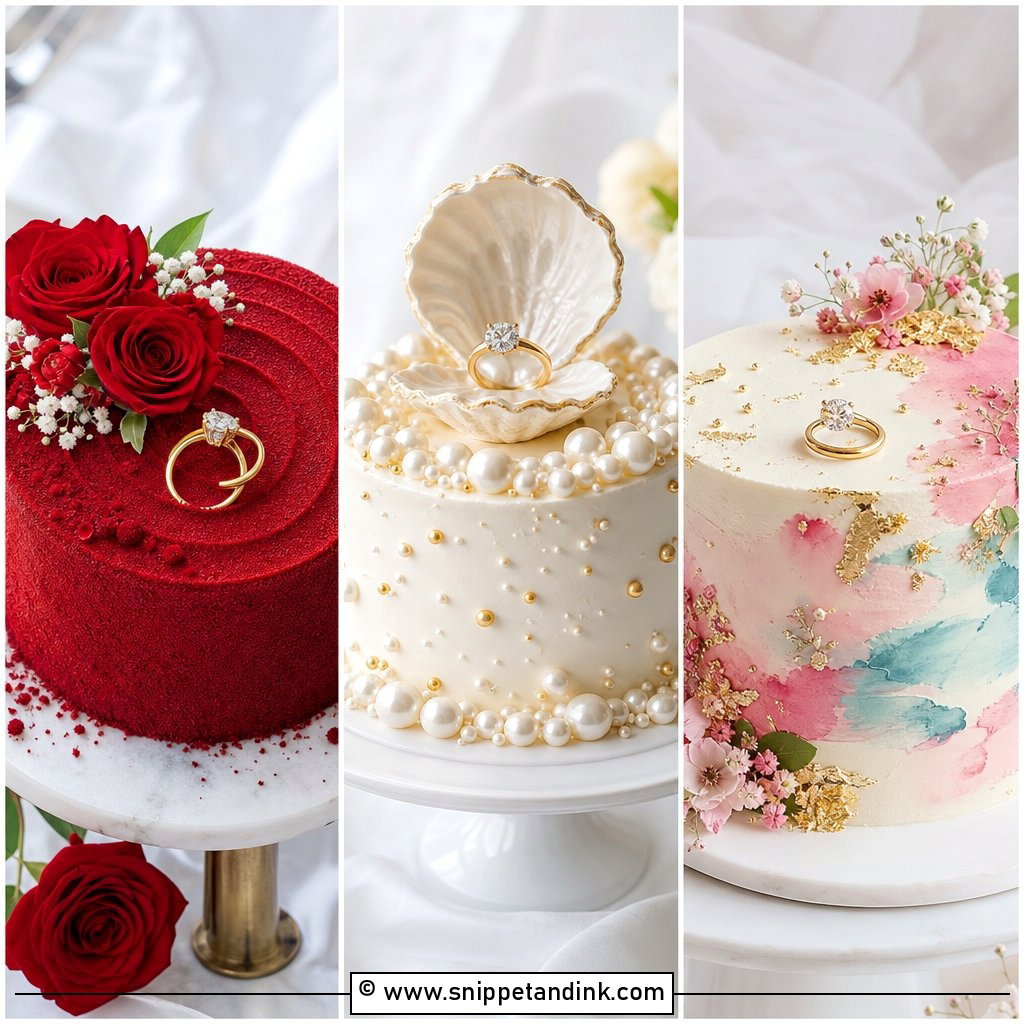
Edible pearls scattered lightly, set in vertical lines, or ringed around the base of each tier like a necklace. The temptation is to cover the whole cake; I’d resist it, because open space is what makes pearls look chosen rather than poured on. One practical detail: sugar pearls are hard, so I keep them off the top surface people will slice through. It pairs naturally with satin gowns and candlelit rooms, with champagne, coconut or white chocolate raspberry inside, on a plain white pedestal.
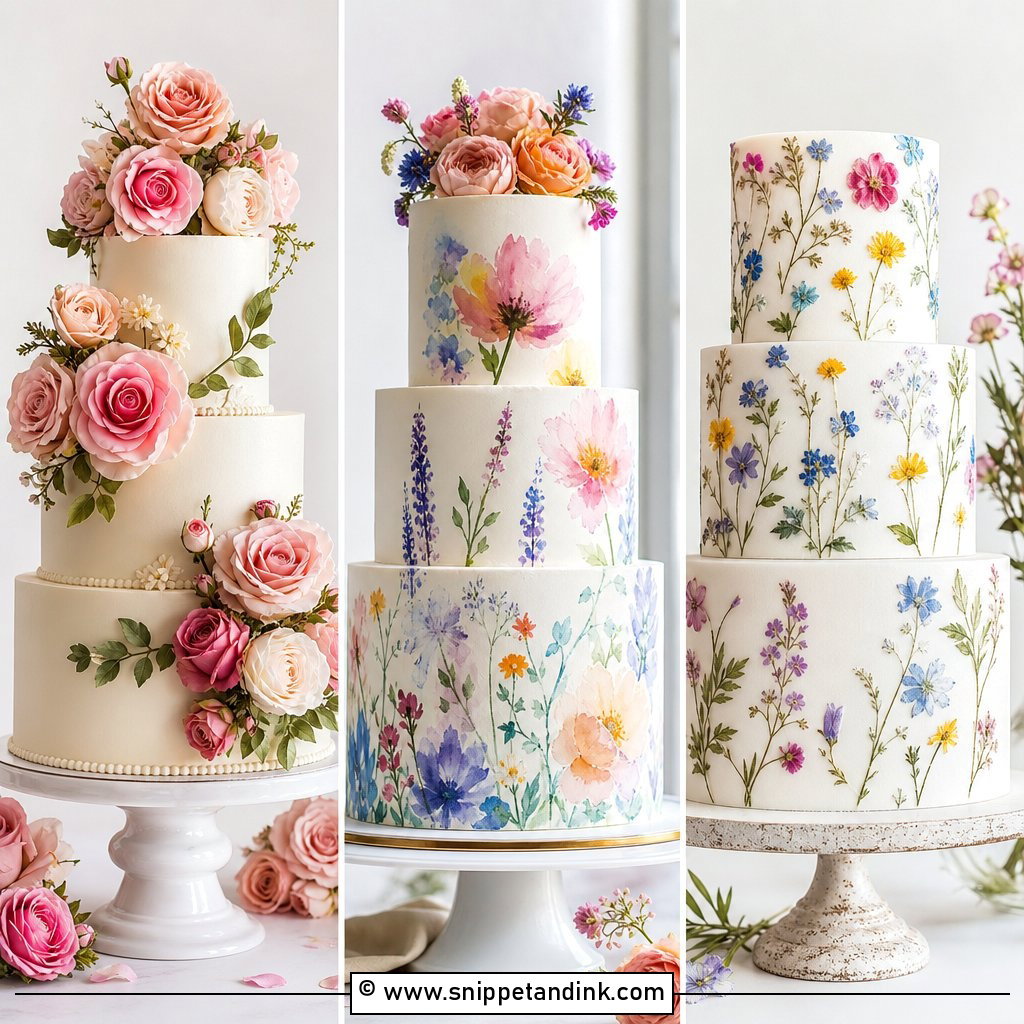
4. Sculptural Wedding Cake
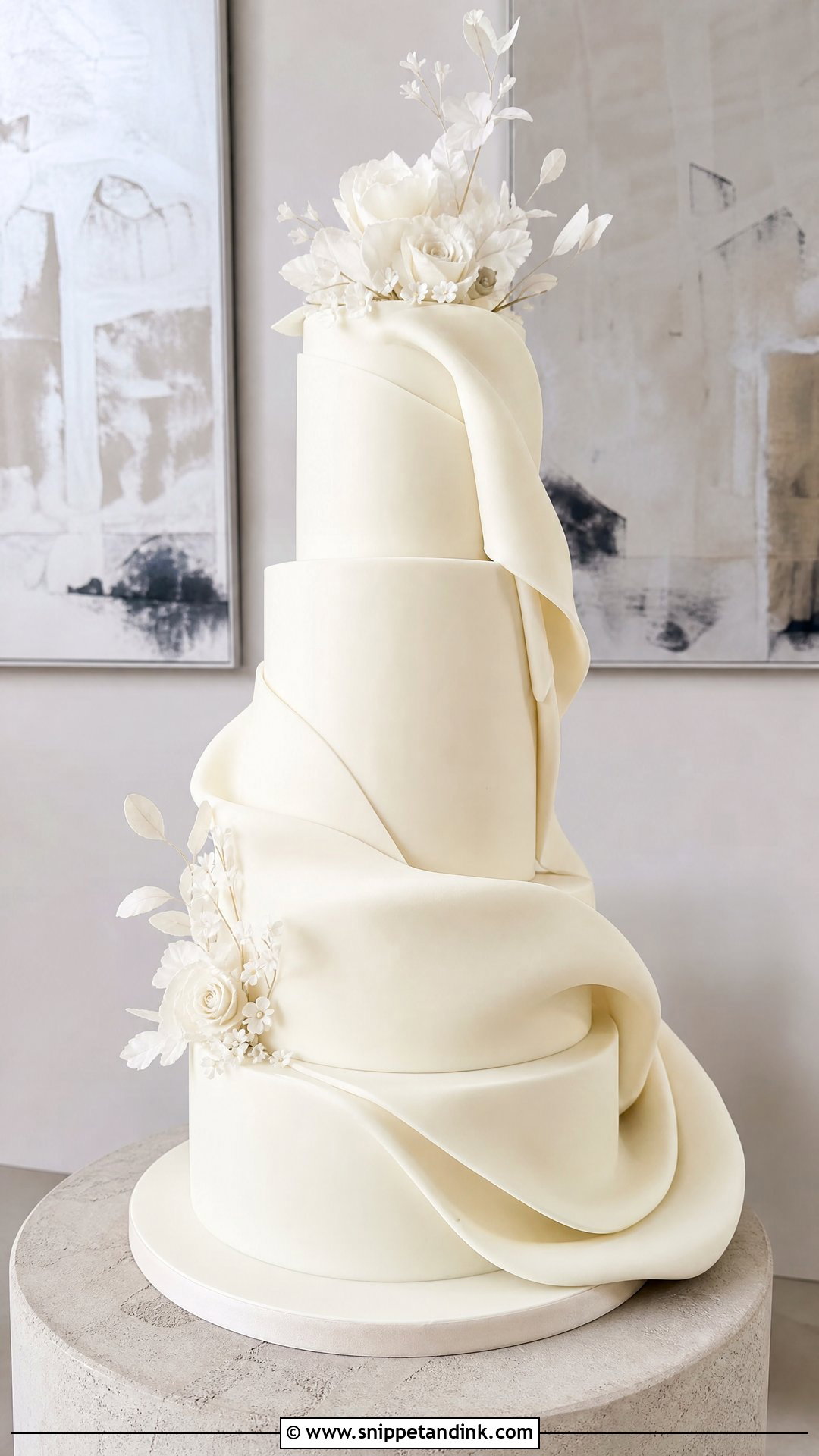
Curved tiers, folded or draped fondant, asymmetric shapes: here the cake is treated as edible sculpture. These designs need internal structure, usually extra dowels or a central support, so they cost more in labor than they look. I always sketch the proportions first and show the couple before baking anything, because a fold that looks dramatic on paper can look heavy at full scale. All white gives a gallery effect; stone, sand, blush or clay tones soften it. Pick one strong shape and let the table styling stay quiet.
5. Single Tier Wedding Cake
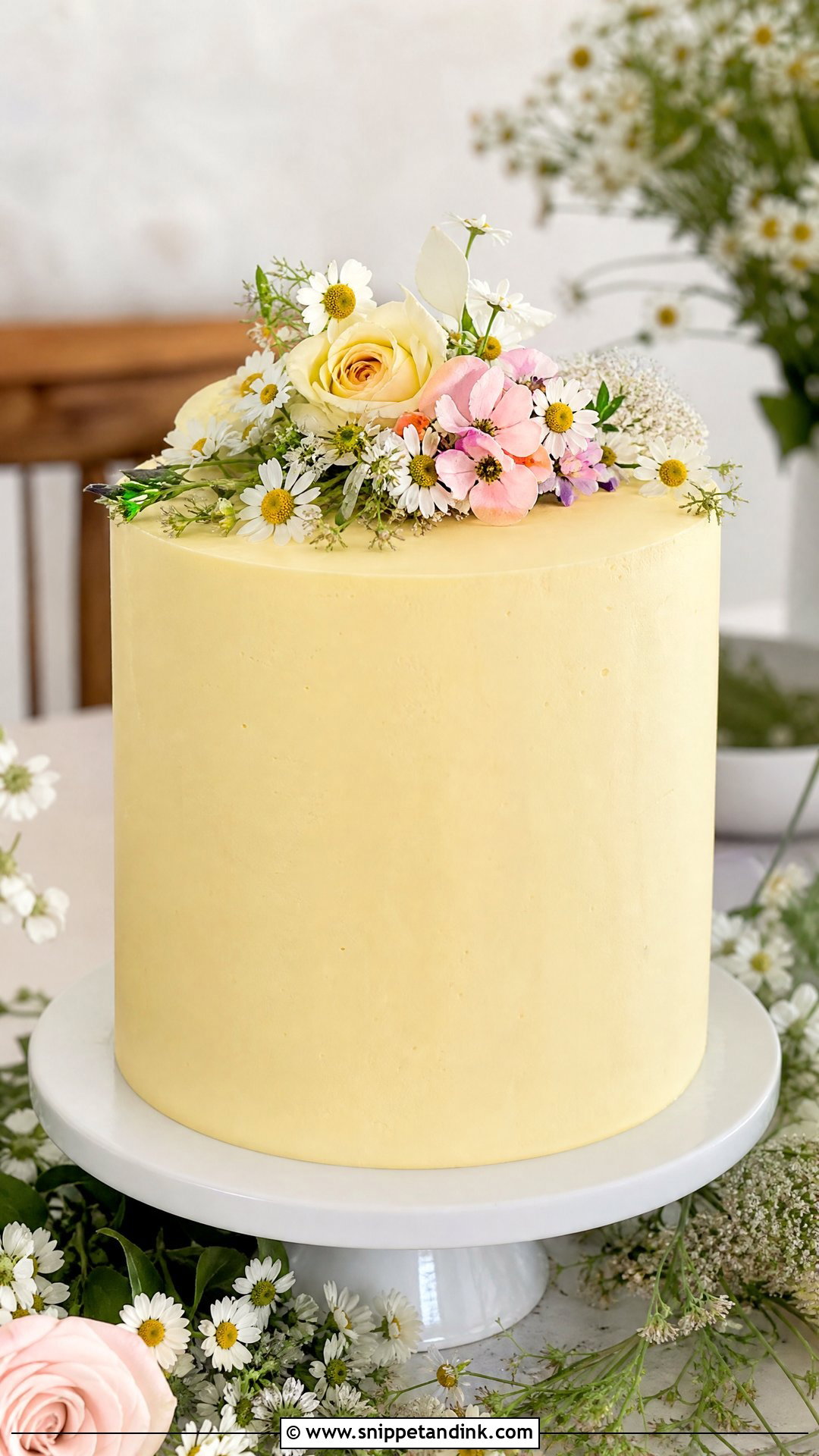
One tier can carry a wedding if you give it presence. I make single tiers taller than a standard layer cake, often double height, and finish them with smooth frosting, a floral meadow at the base or a modern piped border. It’s the natural choice for elopements, micro weddings, courthouse celebrations and couples serving a full dessert menu. A small cake also means you can choose a bolder flavor, pistachio raspberry, lemon elderflower or chocolate espresso, without worrying about pleasing a hundred people.
6. Two Tier Wedding Cake
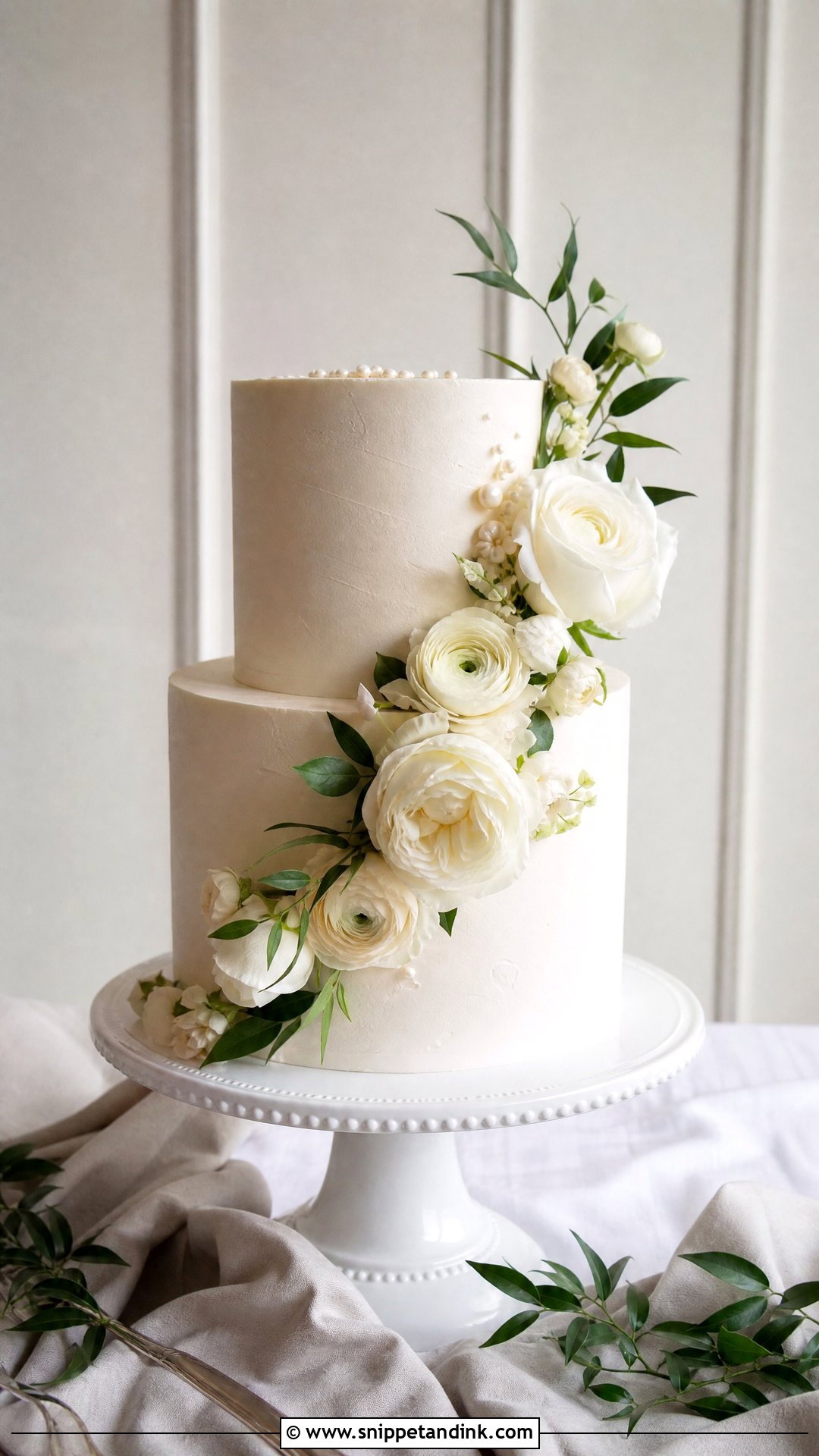
Two tiers give you enough height for the cake-cutting photo and still feel relaxed. It’s the size I recommend most for medium weddings, brunch receptions and outdoor ceremonies, often with a sheet cake in the kitchen to make up the servings. Taller tiers with clean edges look most current. One flavor across both tiers is simplest; two flavors give guests a choice, but tell your caterer which tier is which before the cut.
7. Three Tier Wedding Cake
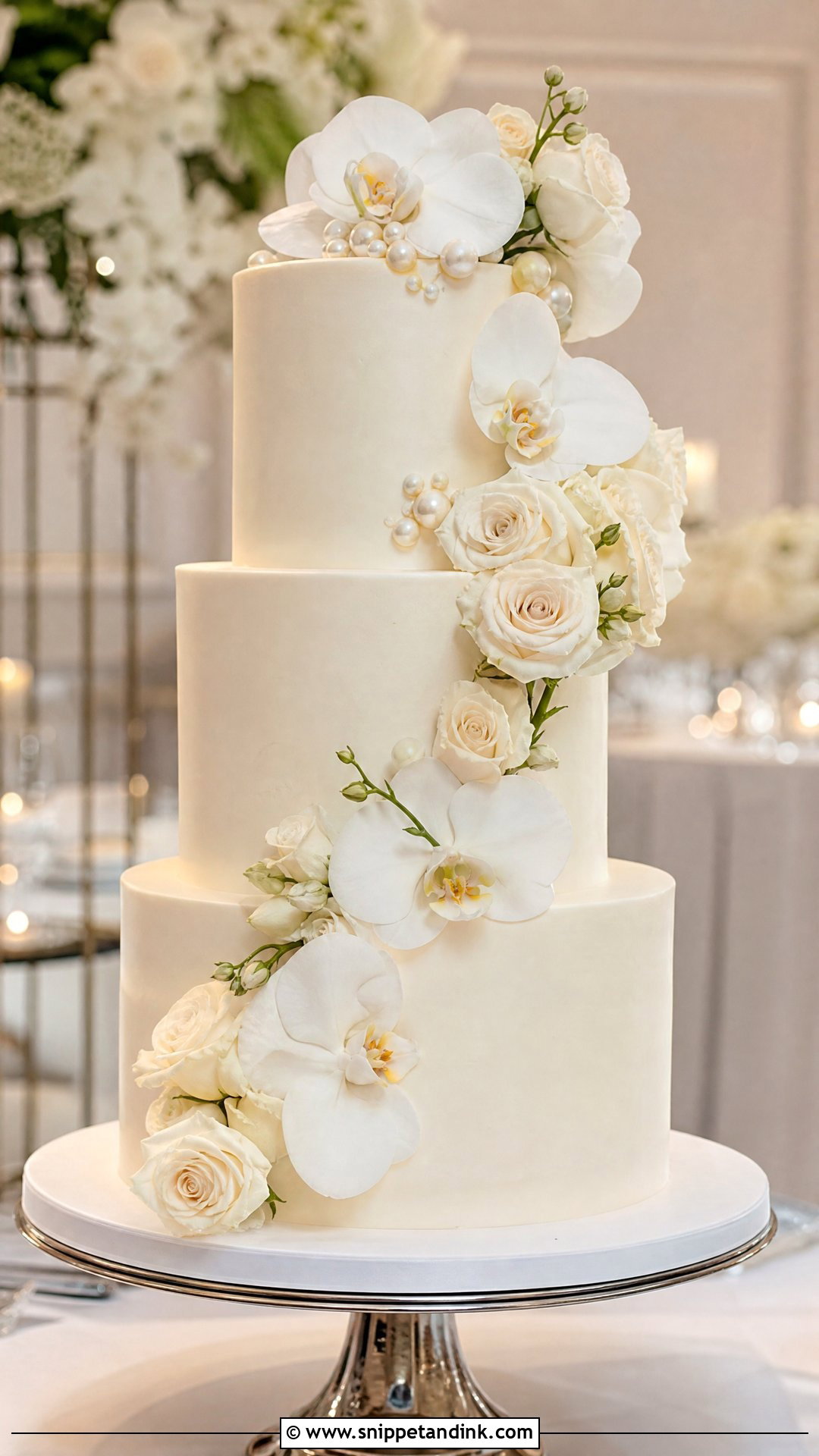
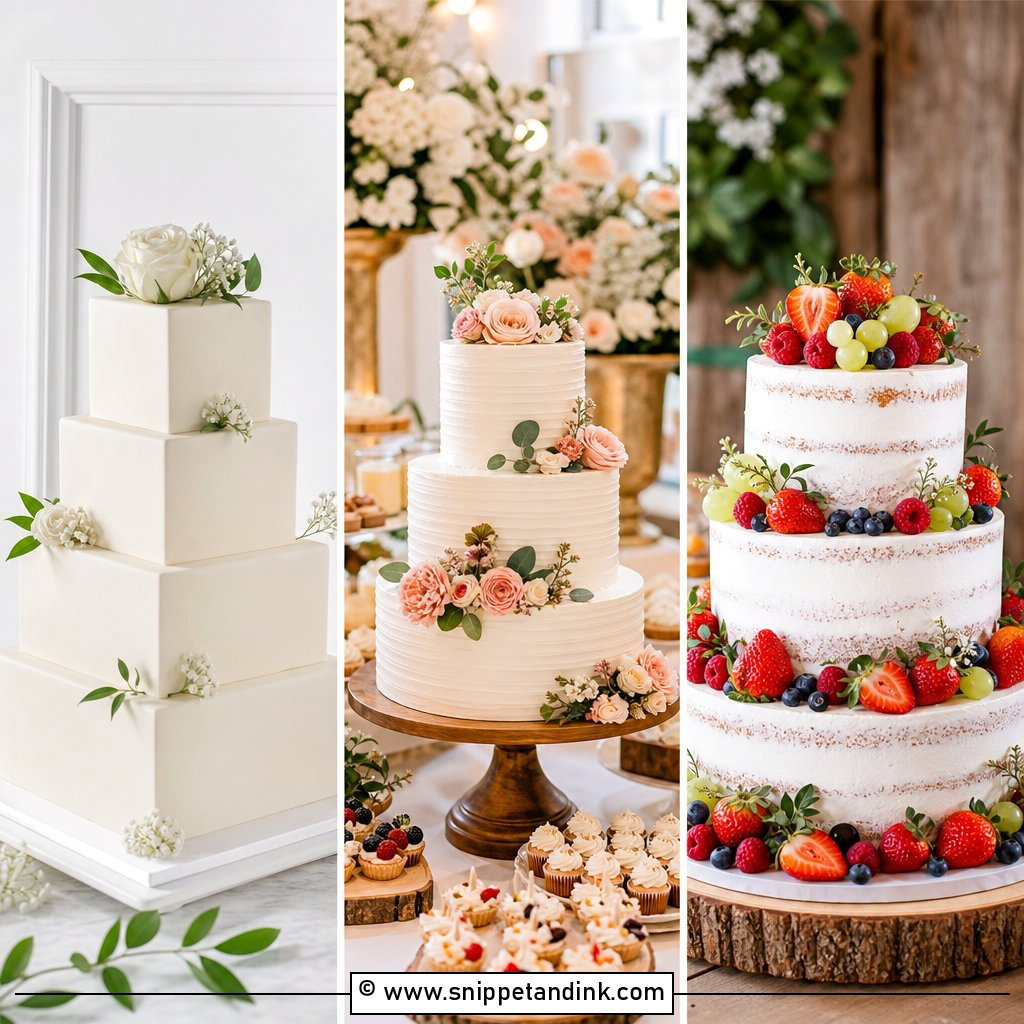
The classic silhouette, updated by doing less: sleek proportions, smooth buttercream and one strong detail, a diagonal floral arrangement, a fondant drape, a pearl border or an abstract brushstroke. A three-tier cake has enough presence to anchor a dessert table in a ballroom or estate venue. Three tiers of six, eight and ten inches serve roughly seventy-five wedding-size slices, though portion charts vary by baker. Match the flowers to the bouquet and keep the topper minimal or skip it.
8. Square Wedding Cake
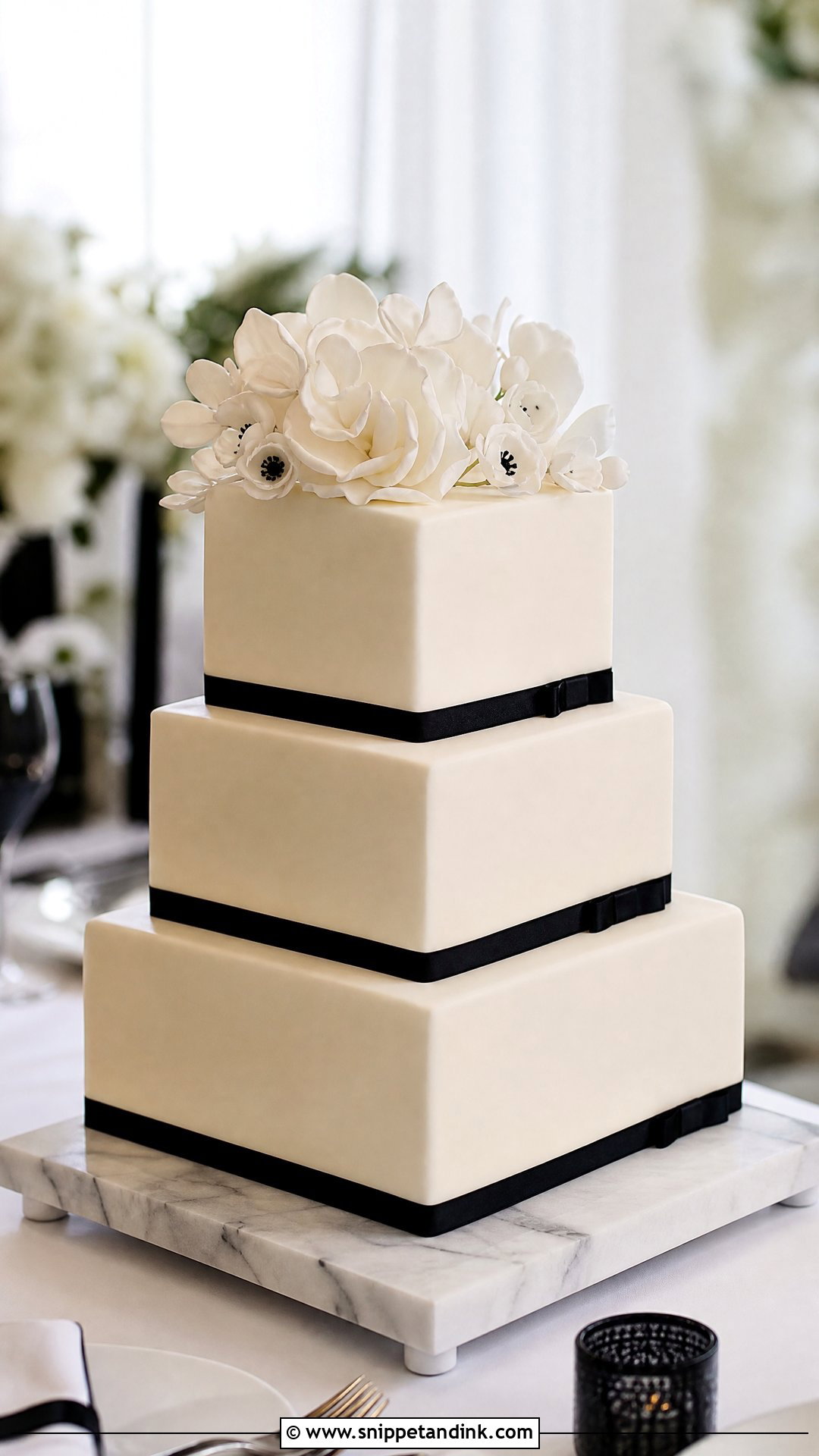
Sharp corners and flat sides make even plain white frosting look architectural. Square cakes take more time to finish than round ones, since getting four clean corners in buttercream is slow work, so expect that in the quote. The upside is that a square tier yields more servings than a round one of the same width. It suits city weddings and gallery receptions, with smooth fondant, black ribbon, pearl dots or geometric sugar flowers, softened if you like by roses spilling over one corner.
9. Black And White Wedding Cake
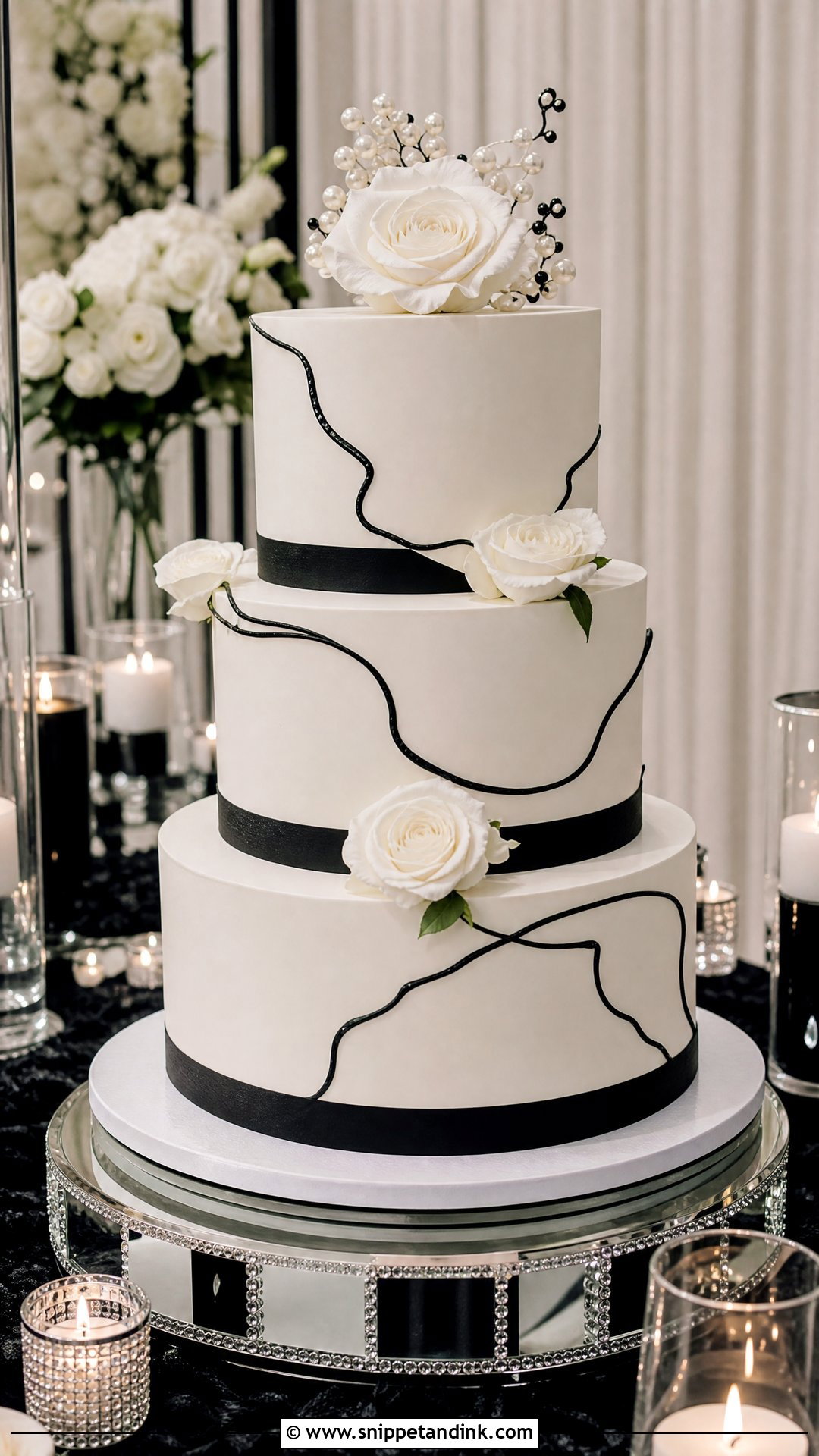
Contrast without color: white tiers with a thin black ribbon, black floral piping, abstract brushstrokes or one dramatic black base tier. Black icing takes a lot of coloring, which can taste bitter and stain lips, so I build black details with cocoa-based colors and keep them thin. Clean lines and one pattern, not several, keep it formal. Black taper candles, white roses and a marble stand finish the look, and the flavors can stay classic underneath.
10. All White Wedding Cake
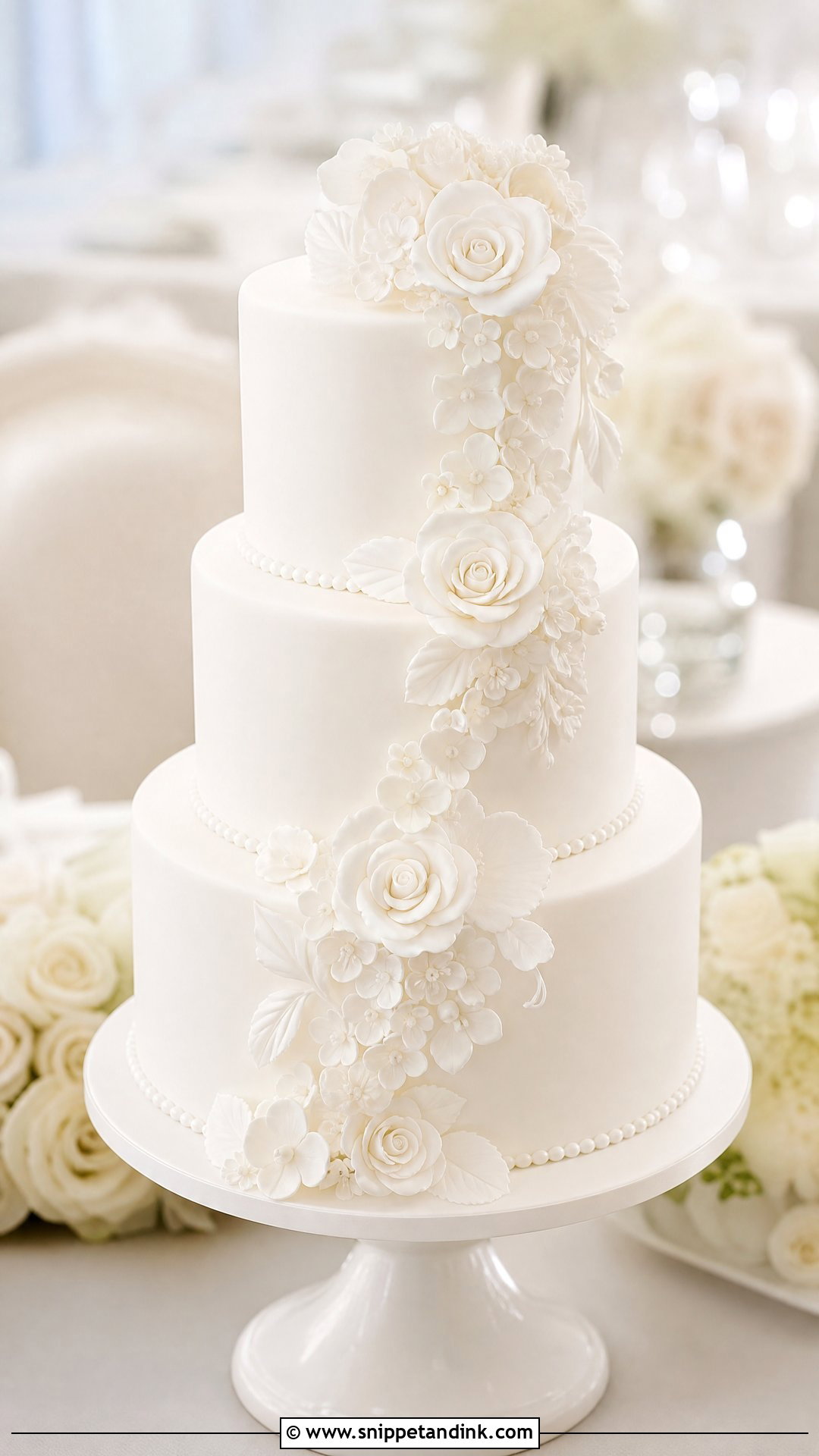
With no color to lean on, everything rides on texture and shape: fondant with sugar flowers, white-on-white piping, ruffled buttercream or wafer-paper petals. The trick I use is mixing whites. Ivory, cream, pearl and bright white side by side give the design depth that a single shade can’t. It works in a chapel or on a rooftop. Keep the background behind the cake table plain, or the texture disappears in photos.
11. Floral Wedding Cake
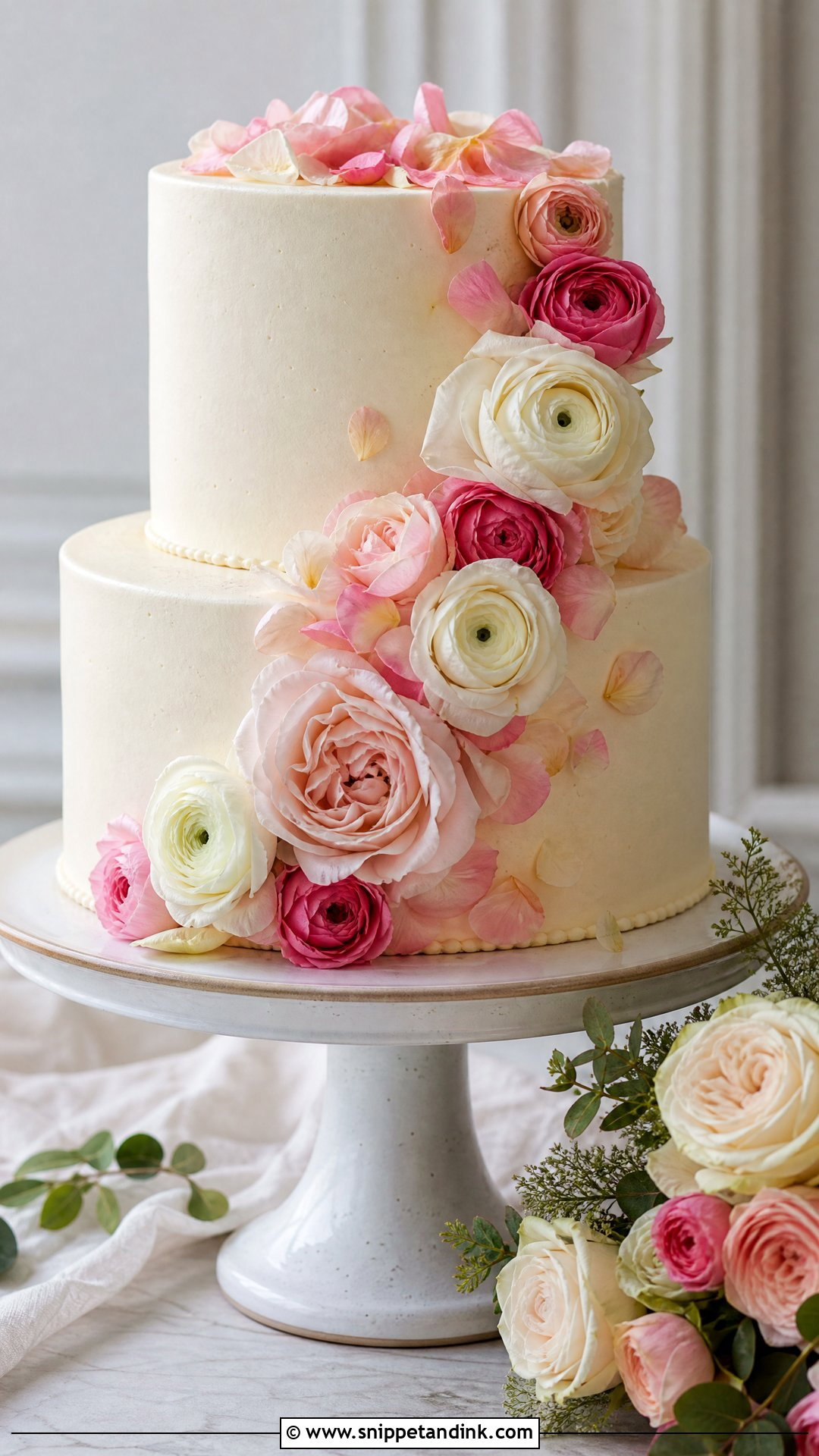
The modern floral cake is edited: one clear arrangement, such as a crescent of garden roses, a vertical orchid line or a loose meadow at the base, rather than flowers on every tier. Fresh flowers must be pesticide-free and kept from touching the cake directly; I wrap stems and insert them into straws or picks. Sugar flowers cost more but give perfect color and can be kept afterward. Keep the frosting simple and the flowers matched to your bouquet.
12. Orchid Wedding Cake
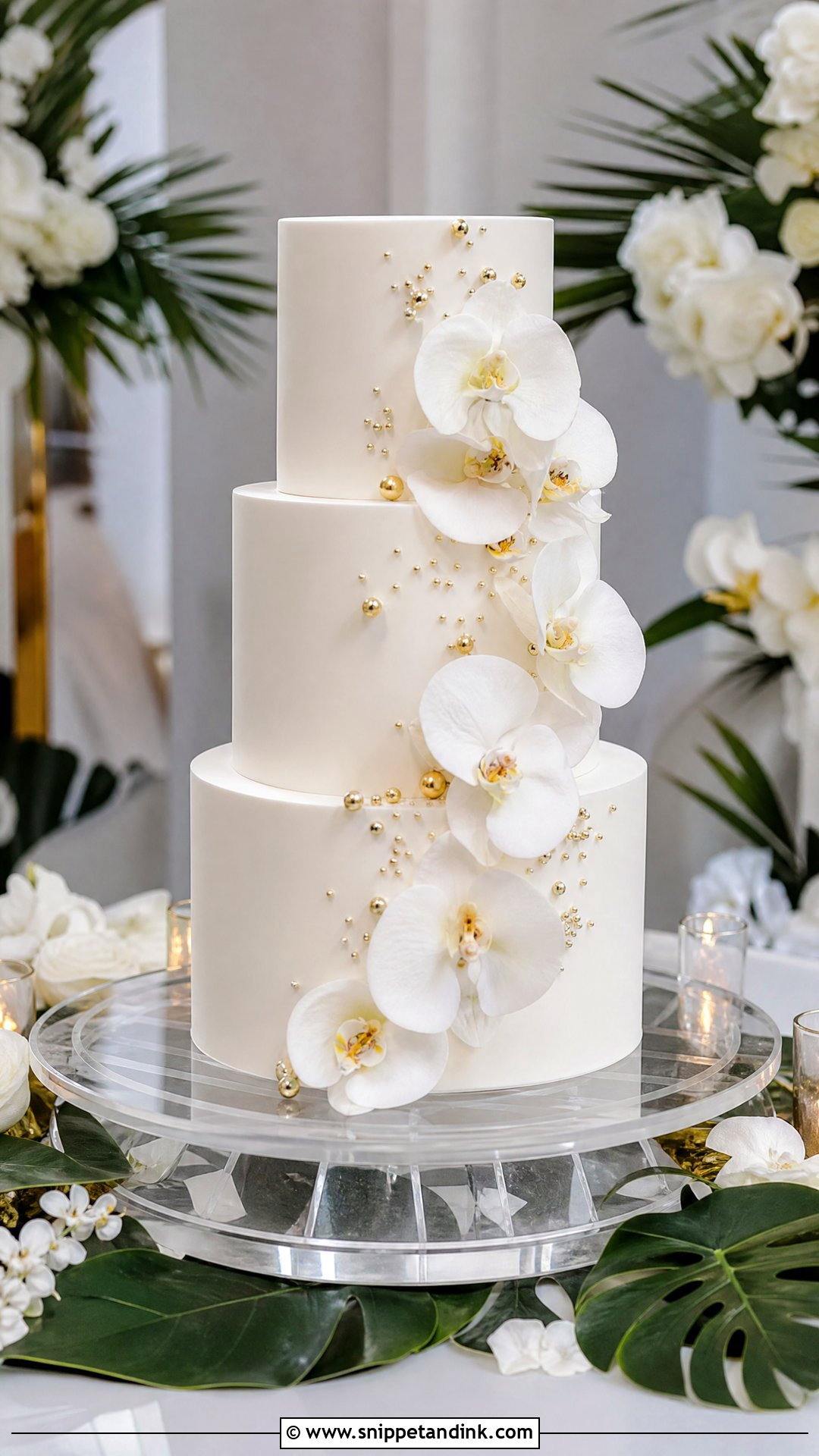
Orchids already have a sculptural shape, so they need almost no help: a cascade down one side, a few blooms between tiers, or a frame at the base. White reads clean and luxurious; blush, mauve or yellow feel more fashion-led. Orchids also hold up better out of water than many garden flowers, which helps at beach venues and rooftop receptions. Pair them with smooth buttercream or fondant and flavors like coconut, passion fruit or white chocolate.
13. Greenery Wedding Cake
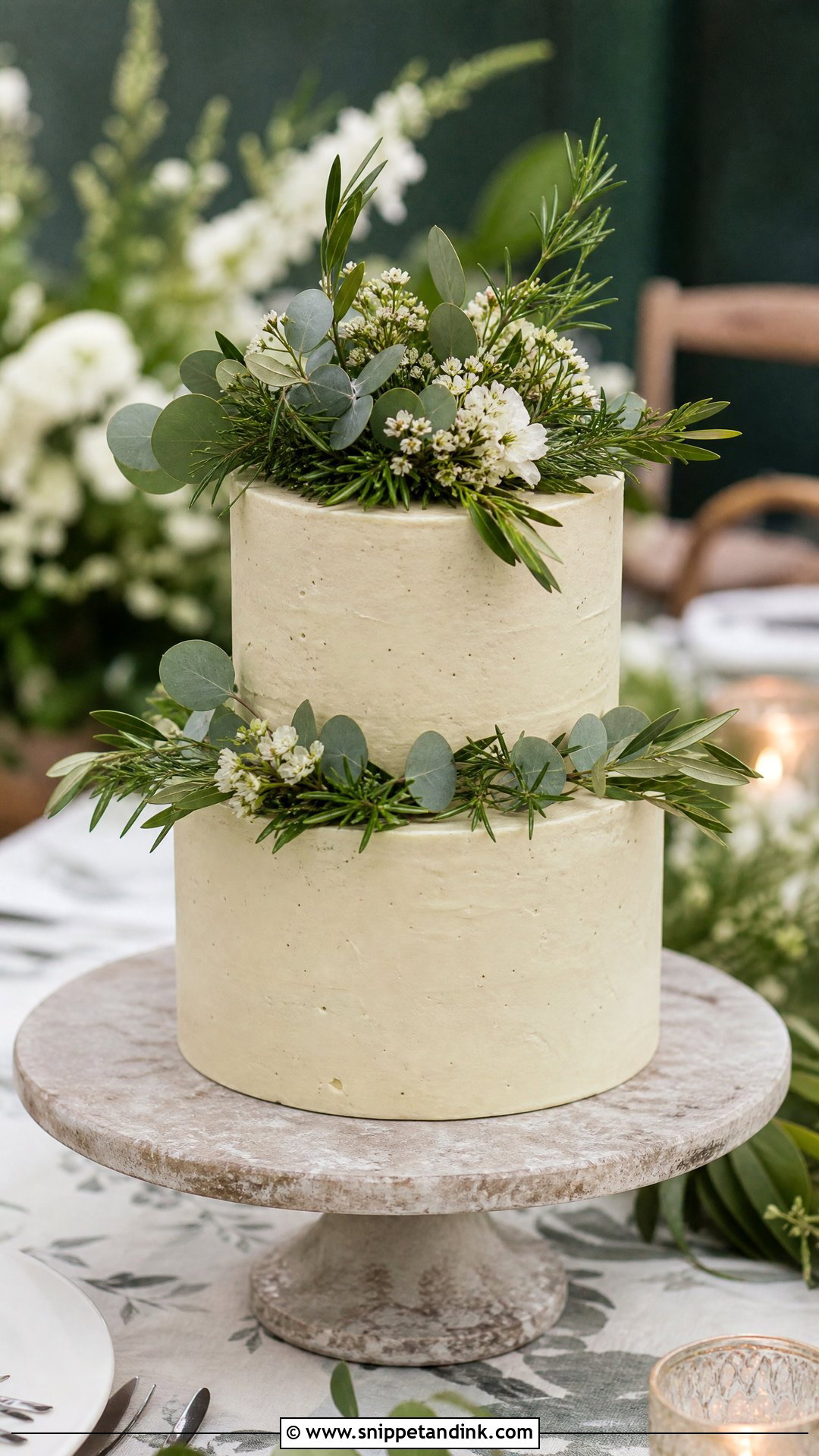
A greenery wedding cake uses eucalyptus, olive leaves, rosemary, ferns or herbs in small placed clusters rather than trailing garlands. One caution I give every couple: eucalyptus is not edible, so it needs a barrier and must come off before cutting. Rosemary, olive and herbs are friendlier choices. Smooth white, semi-naked or textured ivory icing suits it, as do lemon, pistachio and olive oil cake, on a wood, stone or white ceramic stand.
14. Pressed Flower Wedding Cake
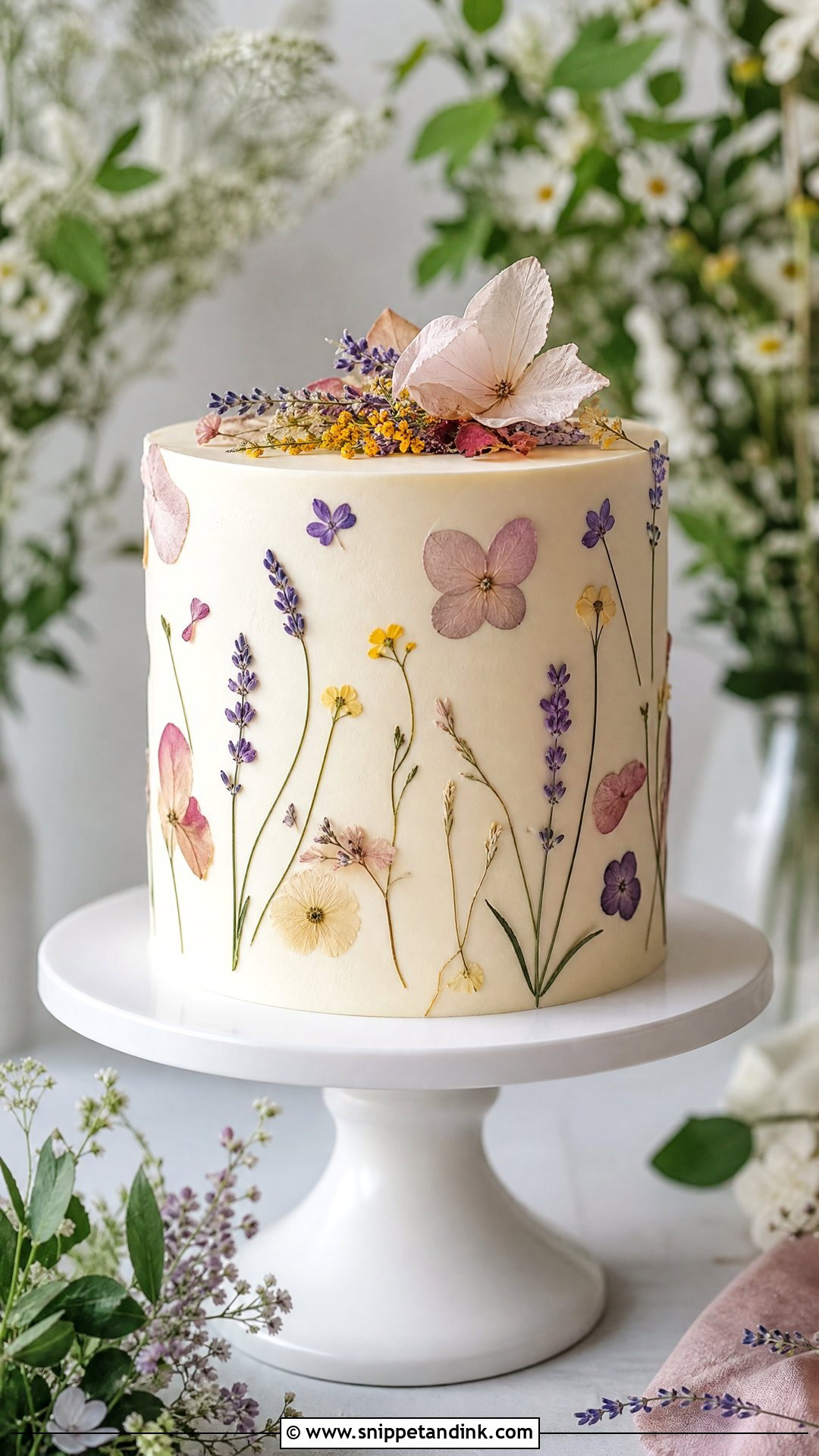
Edible pressed flowers can be scattered across smooth buttercream or set in a neat vertical pattern. They need to be grown for eating, not taken from a florist’s bucket, and they’re applied close to delivery because moisture from the frosting slowly darkens the petals. Choose blooms in your palette, keep the frosting pale so they stand out, and consider lemon, honey or lavender inside. It feels handmade and personal while still holding up at a formal reception.
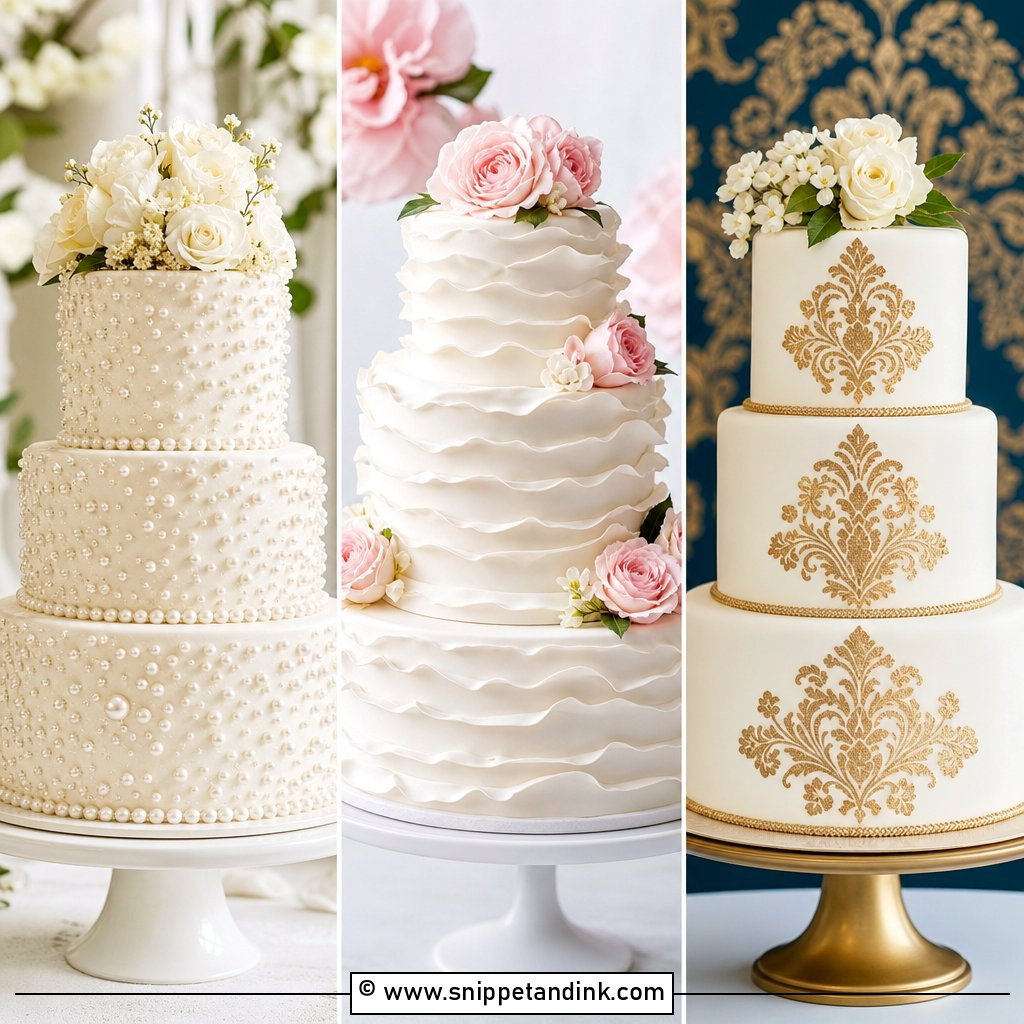

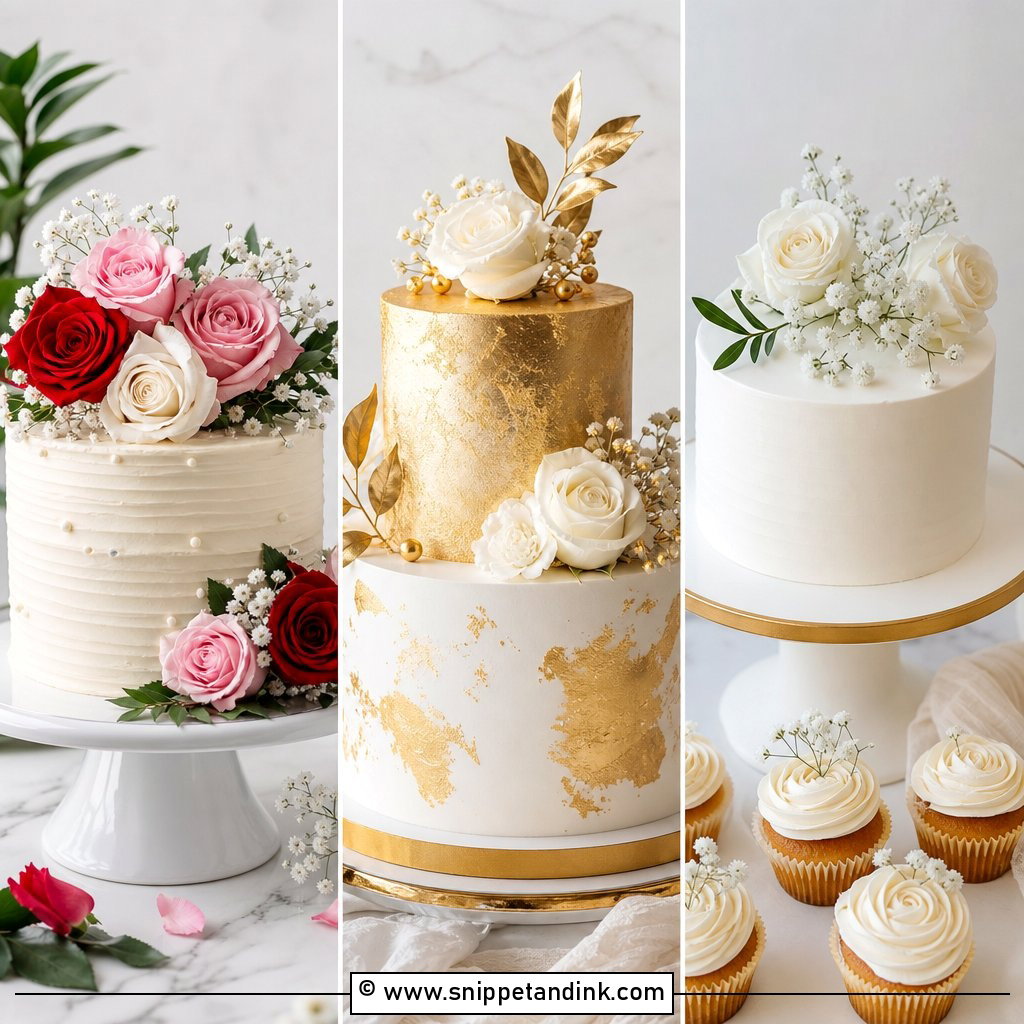
15. Watercolor Wedding Cake
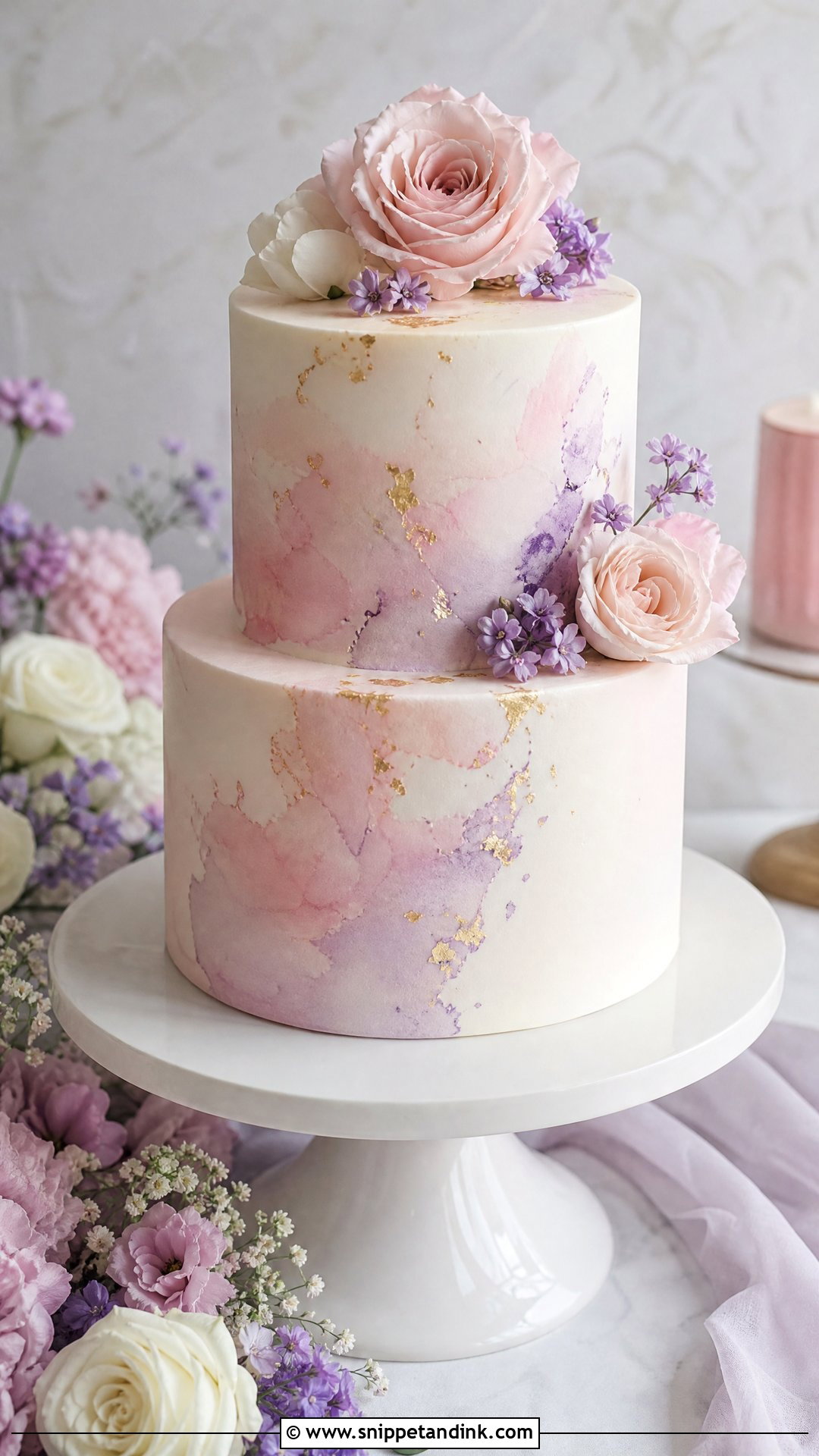
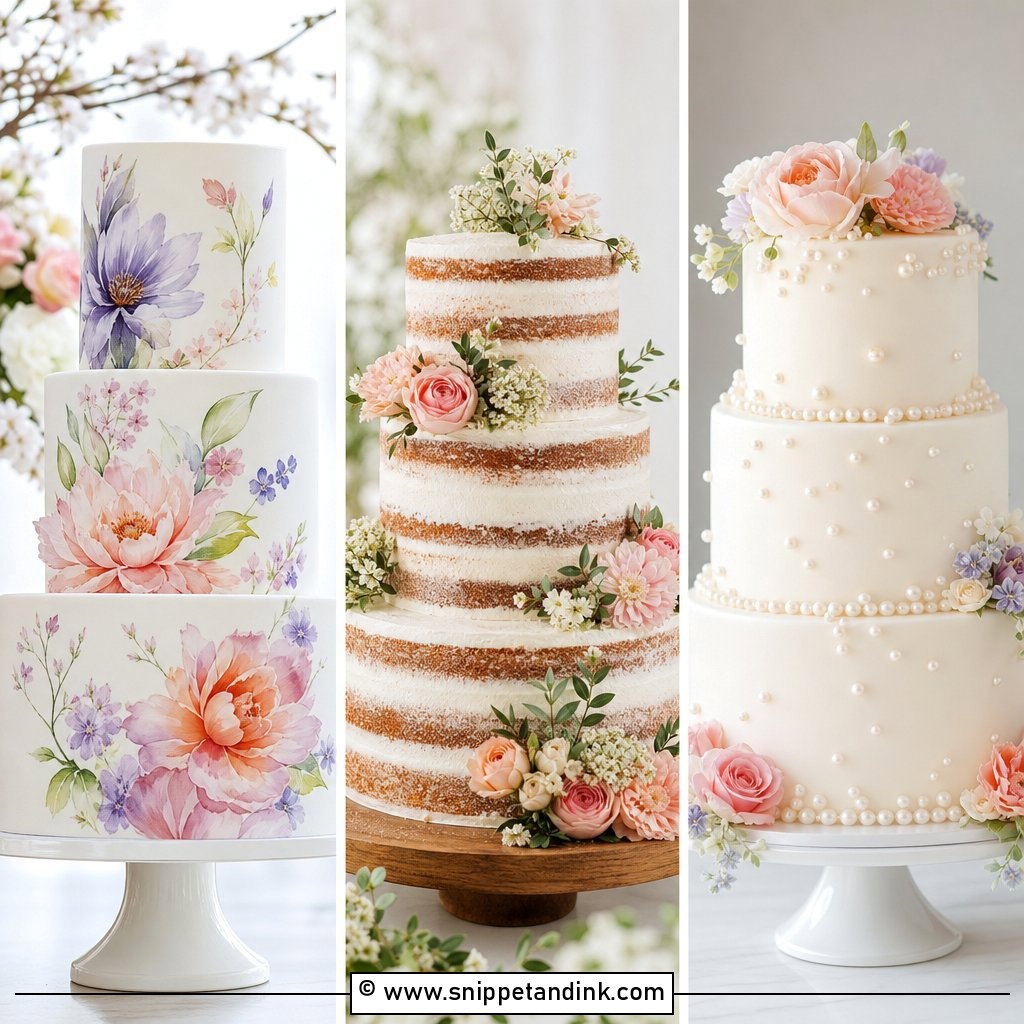
Soft washes of blush, blue, lavender, champagne or sage blended across white like painted paper. On buttercream I build the wash with a spatula; on fondant it’s painted with food color thinned in a clear spirit that evaporates. Keep the tiers smooth and let the color be the main detail, with at most a few sugar flowers or flecks of gold. It suits pastel and sunset palettes, with vanilla raspberry, lemon blueberry or almond cream.
16. Metallic Wedding Cake
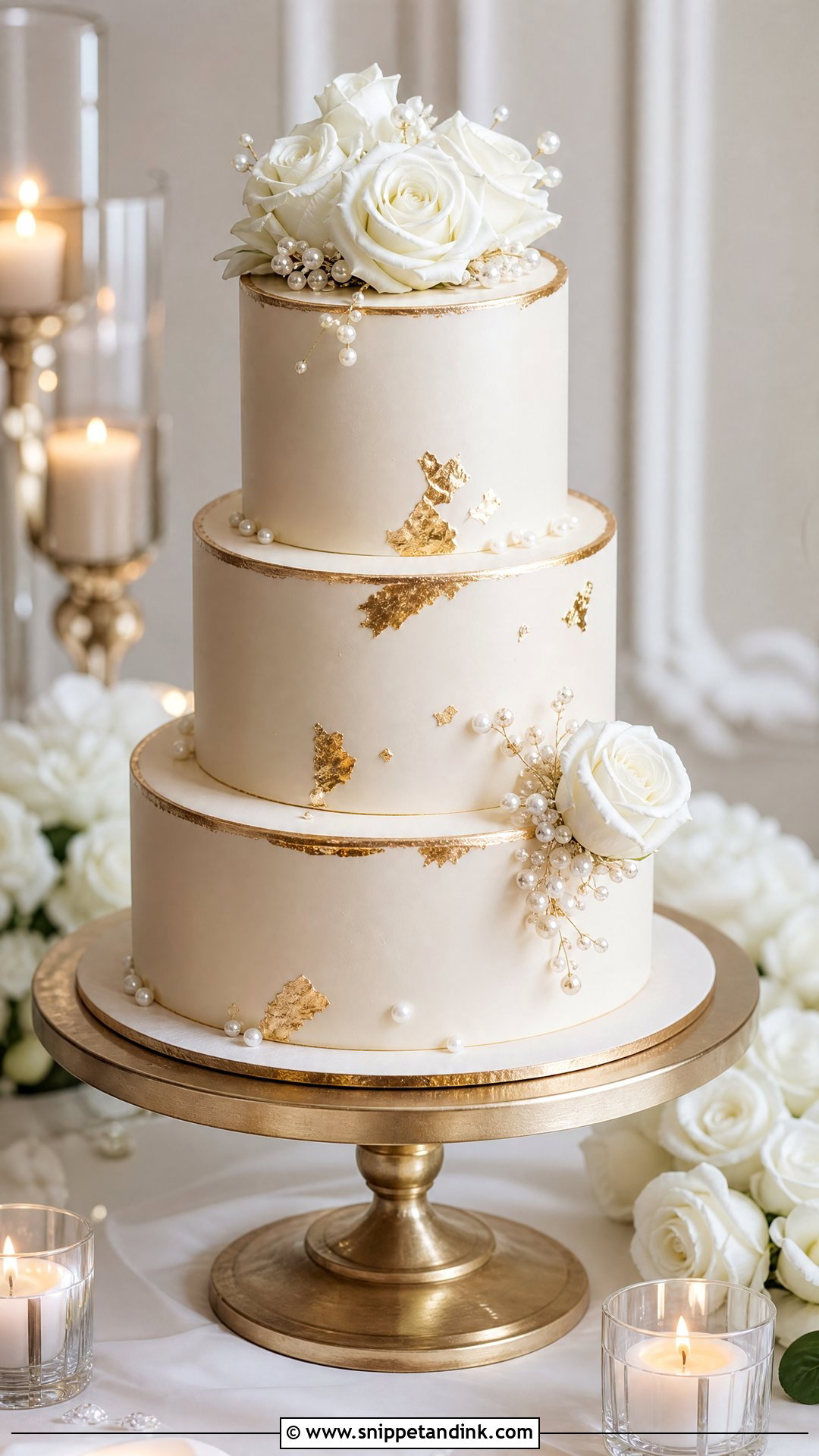
Gold leaf, silver brushstrokes, pearl shimmer or champagne edging used on one tier, one side or the edges, never the whole cake, which can start to look like a costume. Ask whether the metallics are edible. Some luster dusts are only labeled non-toxic and meant for decorations that get removed, and genuine edible gold leaf is a different product. Metallics sit well beside white, black, emerald and navy, with champagne or chocolate hazelnut inside.
17. Geometric Wedding Cake
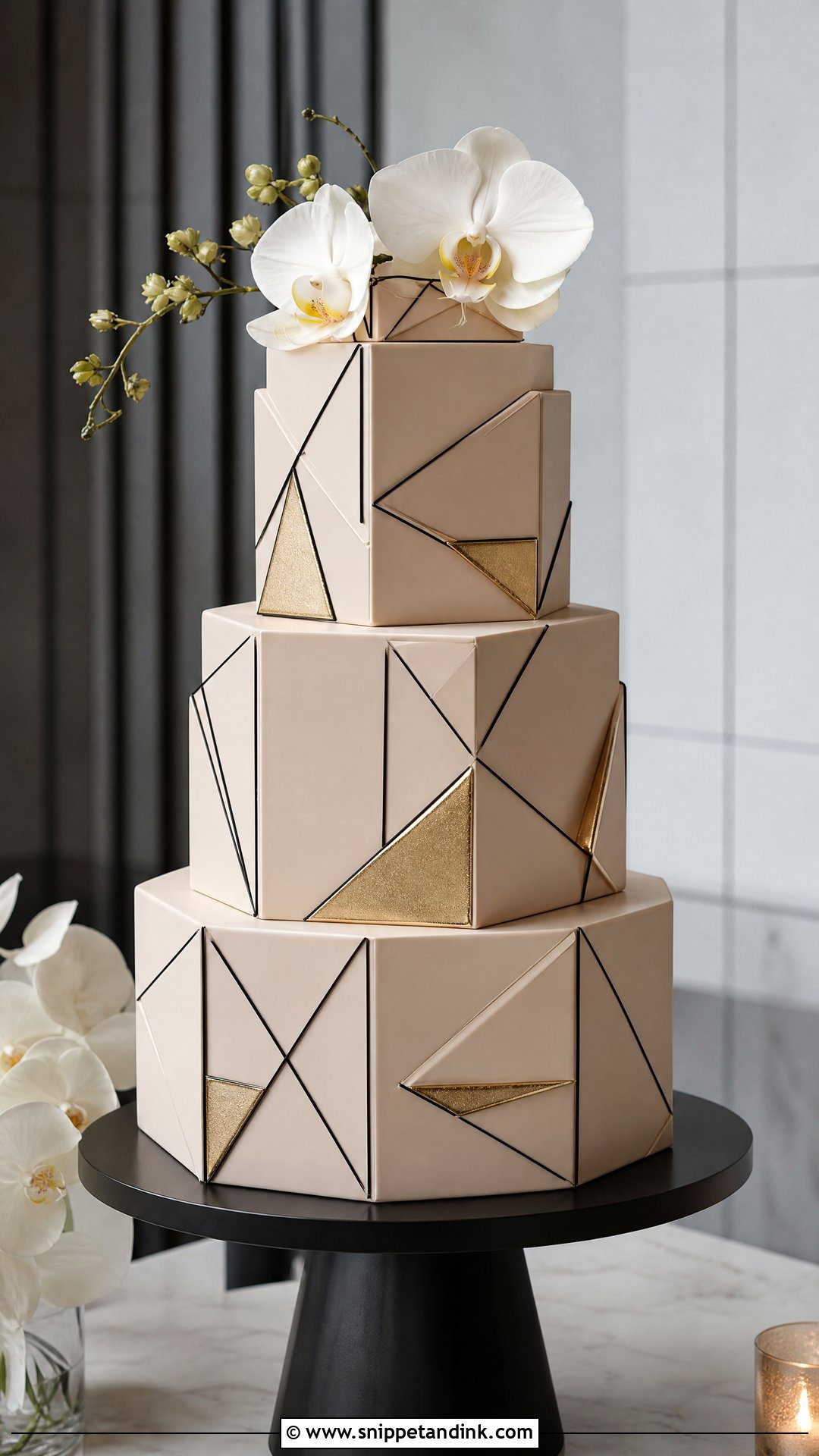
Hexagon tiers, angular fondant panels, sharp squares or painted line patterns. These need fondant or a very firm ganache under the finish; soft buttercream won’t hold a crisp angle through a warm reception. Keep the palette to white, ivory, black, gold or one accent shade, and if you want flowers, group them in one area so they don’t break the lines. It stands apart from a traditional round cake, with almond, mocha or salted caramel inside.
18. Marble Wedding Cake
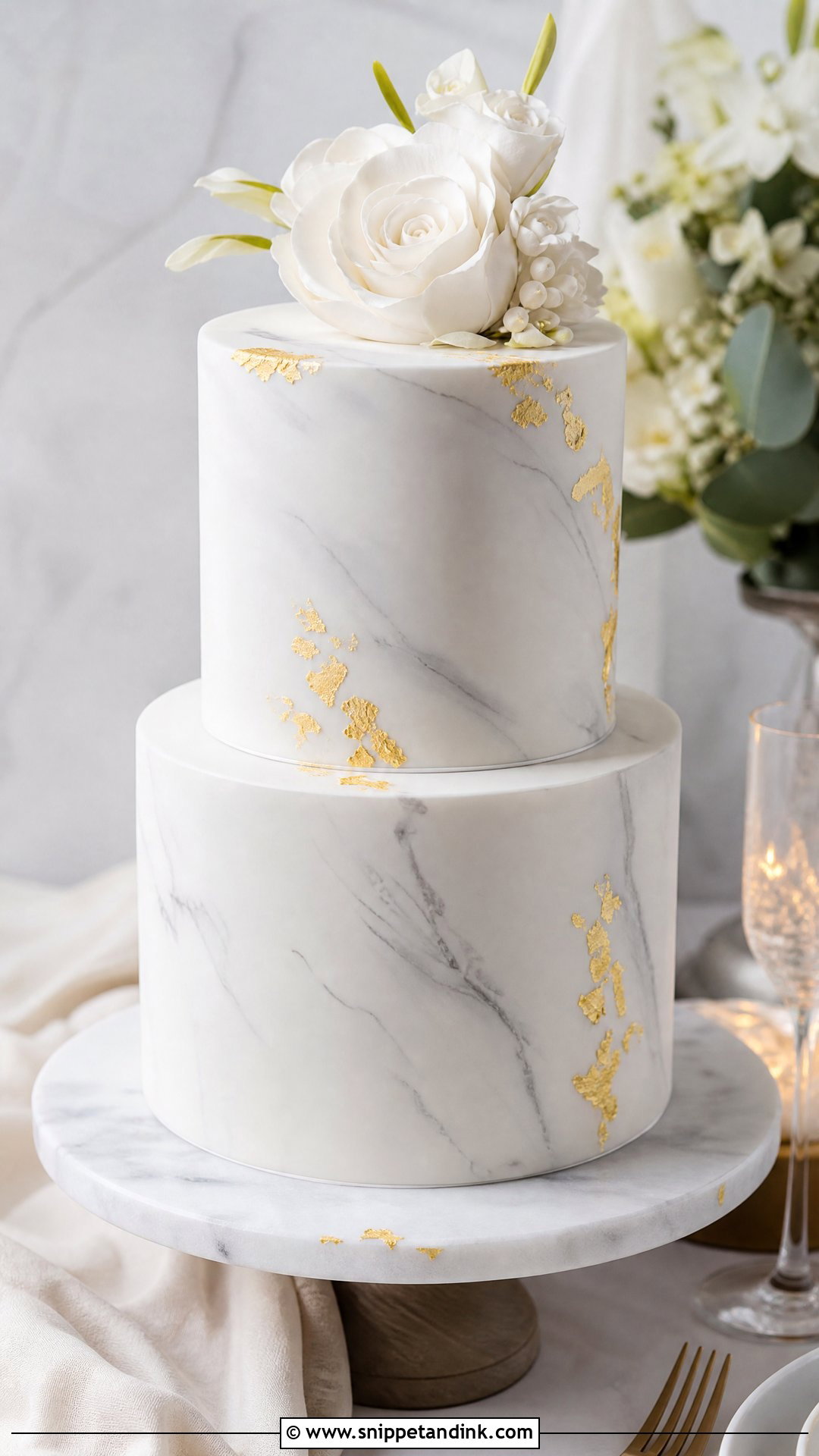
Soft gray veining on white fondant is the classic marble; blush, taupe, sage or black versions feel more current. The marbling should be subtle. I knead the color in only partway so the veins stay fine; overworked fondant turns an even gray. A touch of gold leaf or a few white flowers adds warmth. It looks at home in hotel ballrooms and black-tie receptions, especially on a matching marble stand.
19. Bas Relief Wedding Cake
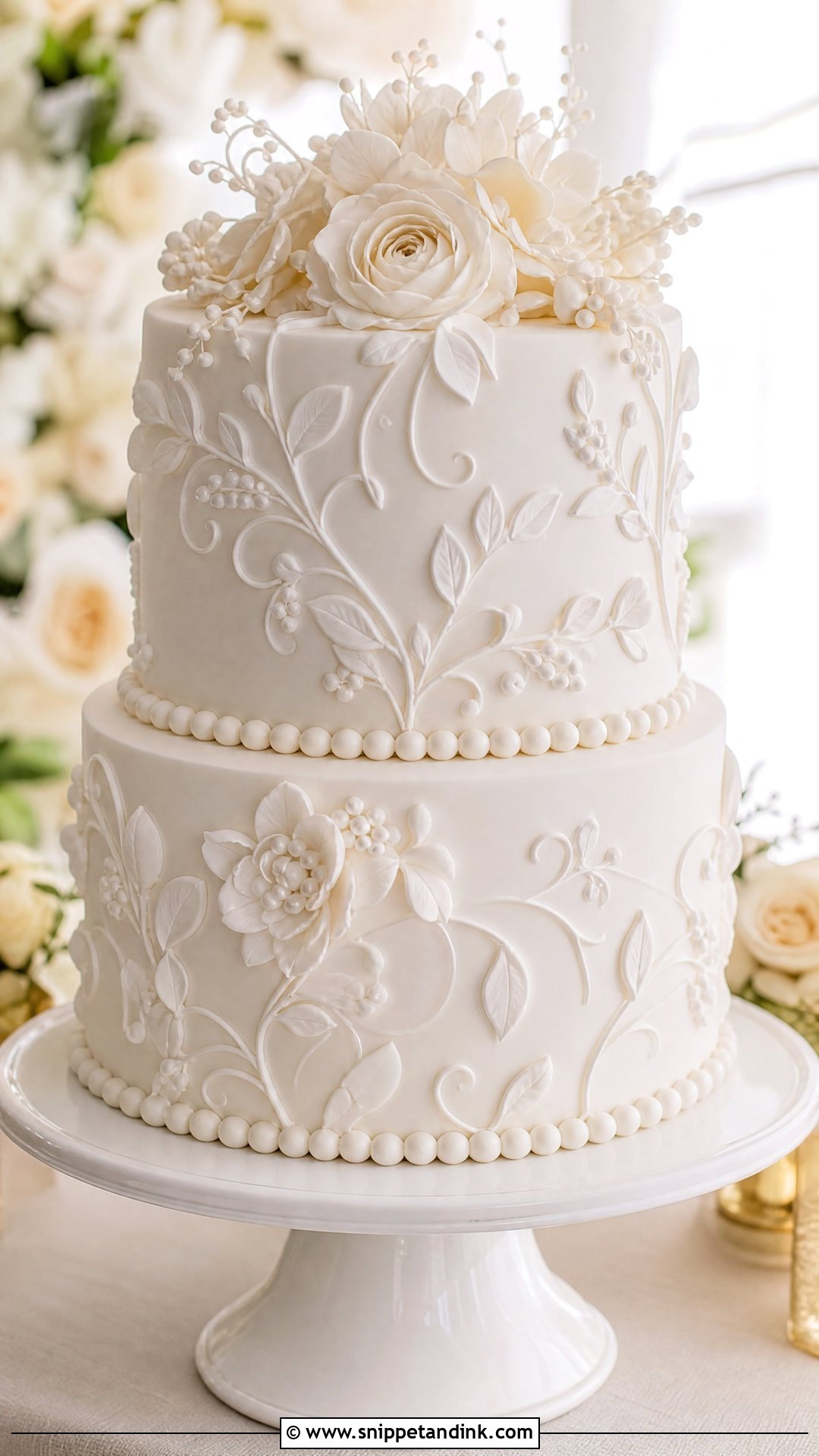
Raised details that look carved into the surface: floral vines, lace-like patterns, leaves or abstract shapes, molded in fondant or sculpted in buttercream. White on white is the most elegant version and shows best up close, under side light. For a modern feel, I use larger motifs with space between them instead of tiny detail everywhere. A simple ribbon or a few sugar flowers is all it needs, with vanilla bean, almond or lemon cream inside.
20. Ruffle Wedding Cake
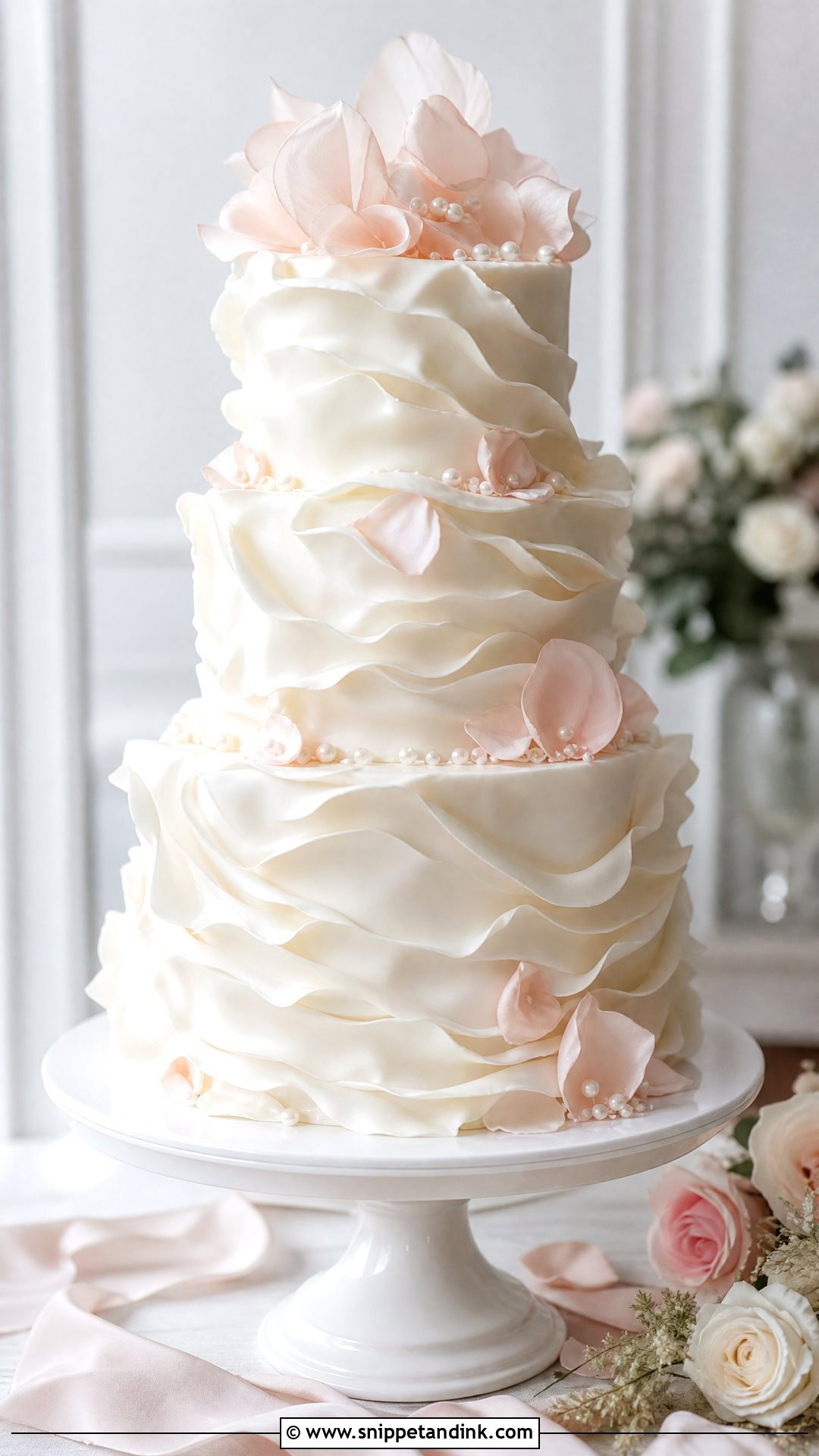
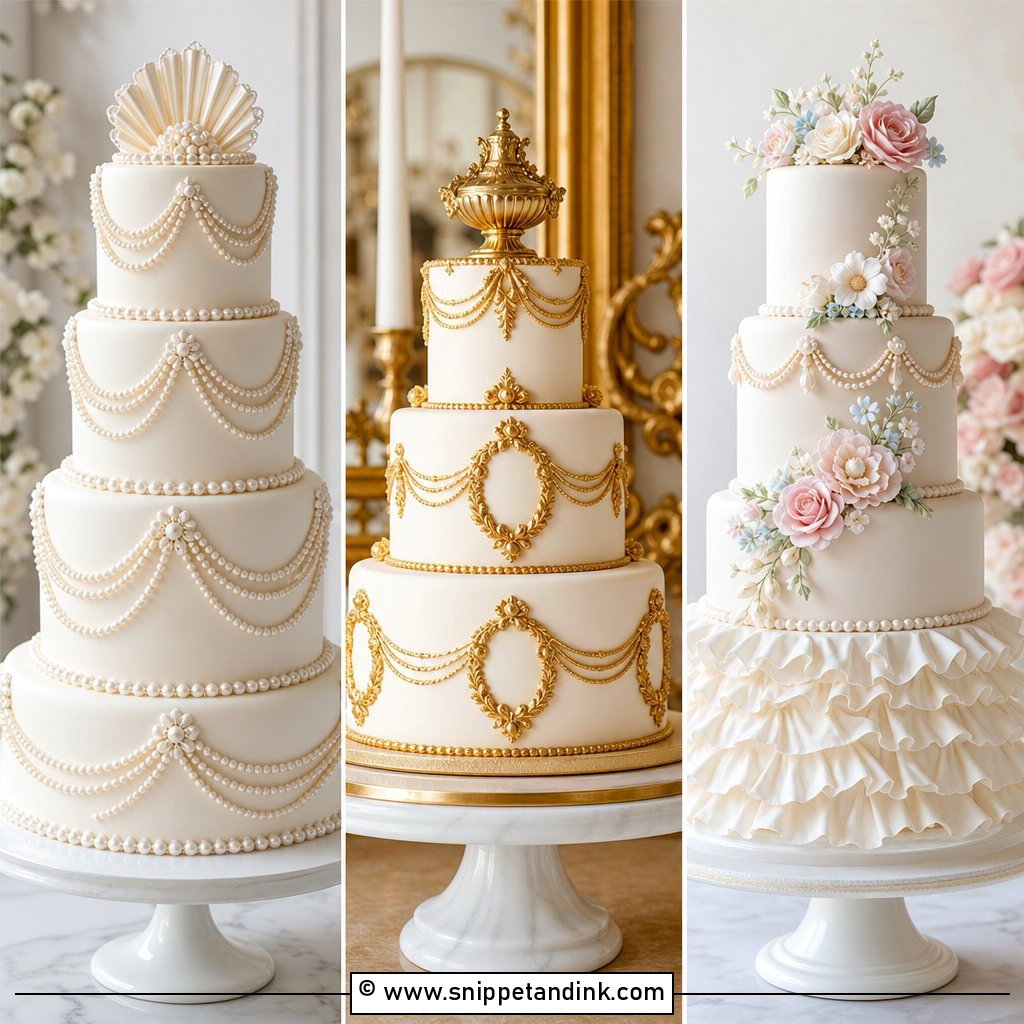
Ruffles bring movement, made in buttercream, fondant or wafer paper, on one tier or flowing across the whole cake. Wafer paper is lightest and most delicate, but it softens and droops in humidity, so for an outdoor summer wedding I’d choose fondant or buttercream ruffles. White, ivory, blush and champagne suit it. It’s the answer for anyone who wants a statement without color; light flavors like lemon, coconut or raspberry cream keep it from feeling heavy.
21. Lambeth Wedding Cake
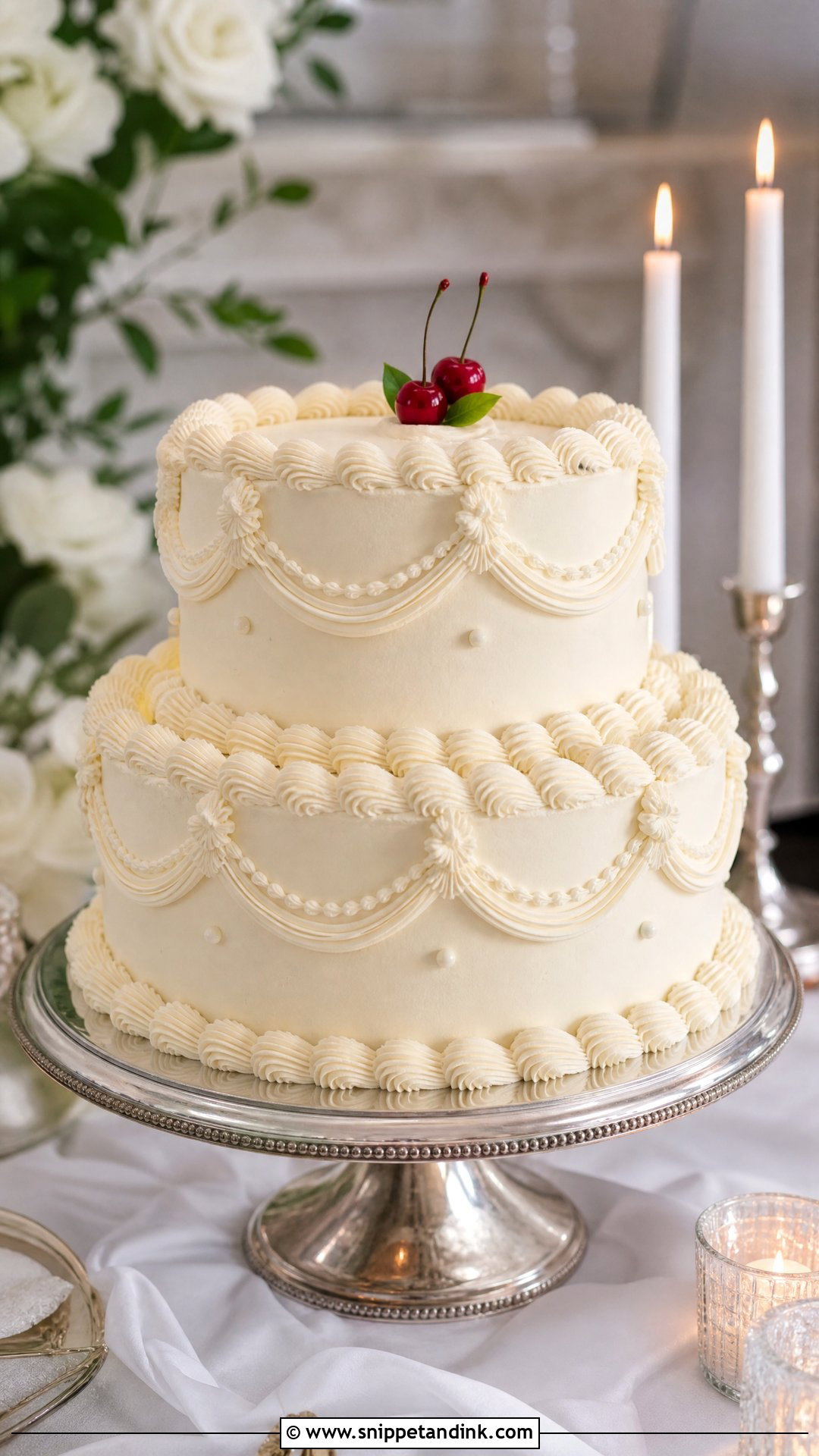
Layered buttercream borders, shell piping, swags and pearls: Lambeth is vintage piping, built up in many overlapping layers. It takes hours of piping and every layer is buttercream, so it softens faster in heat than a plain cake and needs a cool room. A clean palette, white on white, blush and ivory, or black and white, keeps it current. Heart-shaped Lambeth cakes suit intimate weddings; round tiers feel more classic. Almond raspberry or chocolate cherry inside give it personality.
22. Heart Wedding Cake
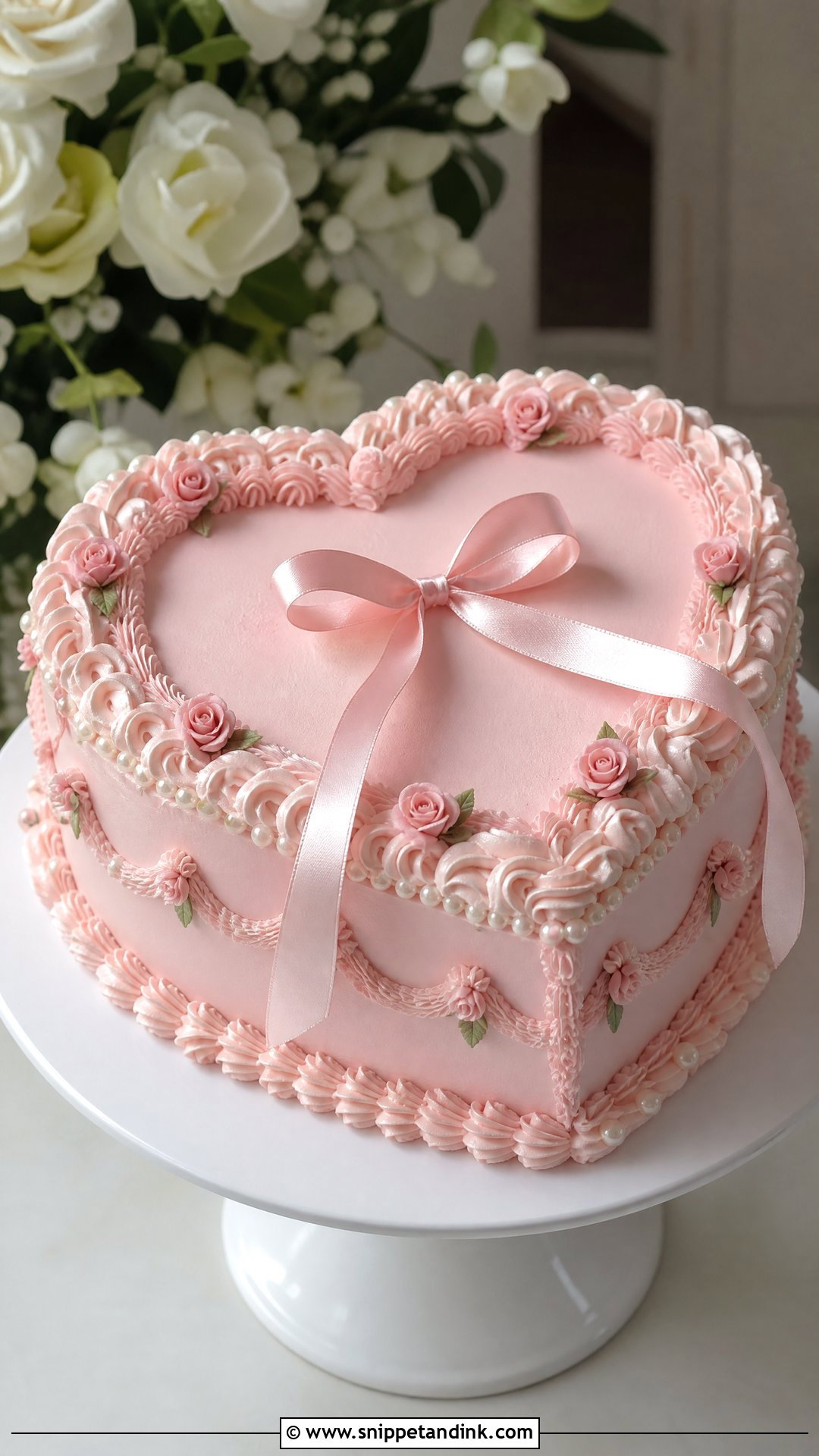
Heart cakes are usually small, which is part of their appeal: a one-tier cake for a micro wedding, an elopement or an after-party, or one piece of a larger dessert display. Smooth buttercream, vintage piping, pearl details or a monochrome palette all work, and black piping on white makes it feel editorial. White, blush, butter yellow and pale blue are the colors I’m asked for most. The curved point of a heart is fiddly to pipe evenly, so check close-up photos of a baker’s previous hearts.
23. Sheet Wedding Cake
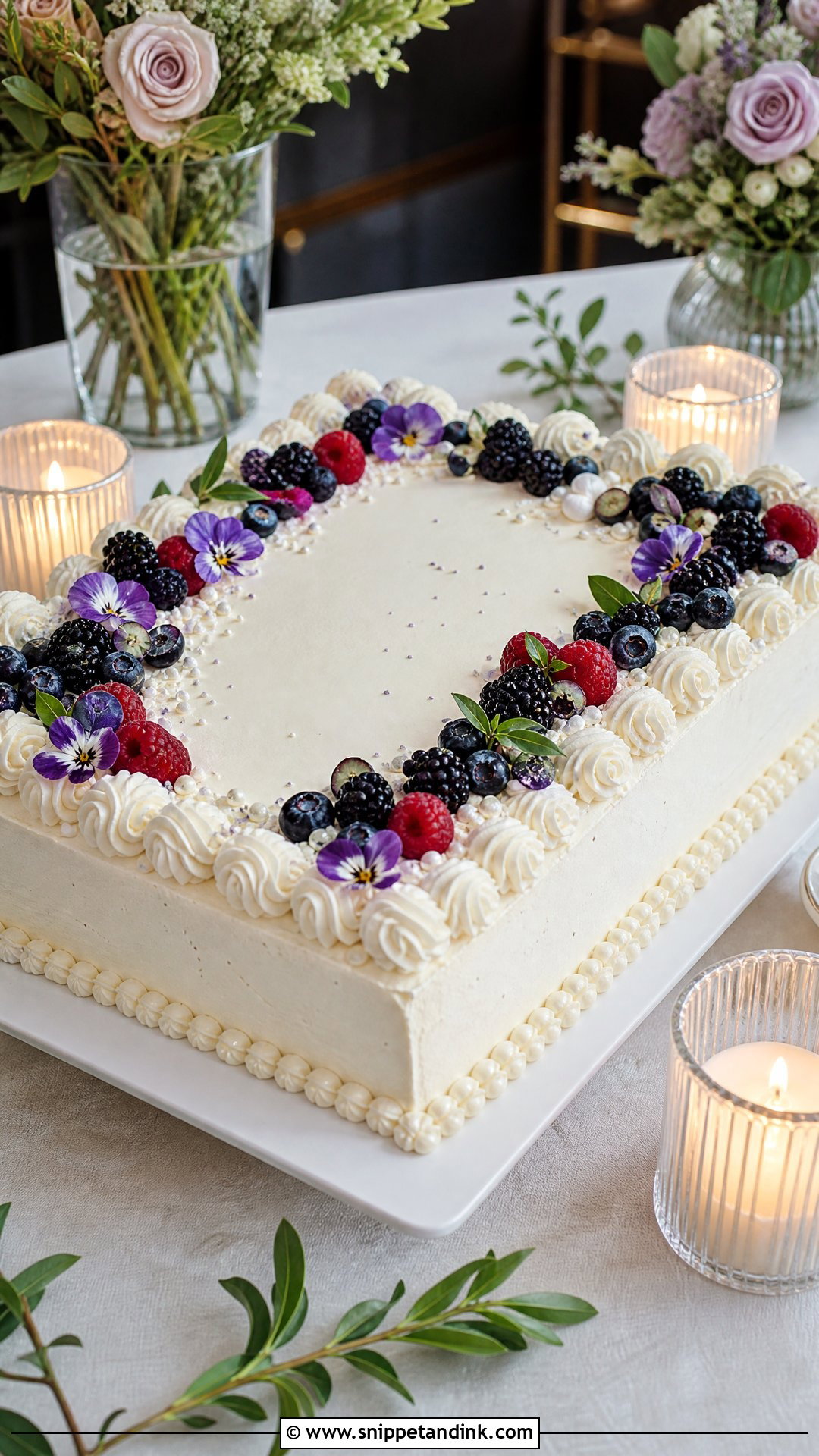
A sheet wedding cake doesn’t have to hide in the kitchen. Piped borders, fresh berries, edible flowers, pearls or smooth frosting in your colors make it presentable on a long table with candles around it. Sheet cakes are the most efficient way to feed a large guest list, and they’re quicker to slice, which your caterer will appreciate. Carrot, chocolate ganache and lemon cream all suit it. It’s the honest, budget-aware choice for relaxed and backyard receptions.
24. Mini Wedding Cakes
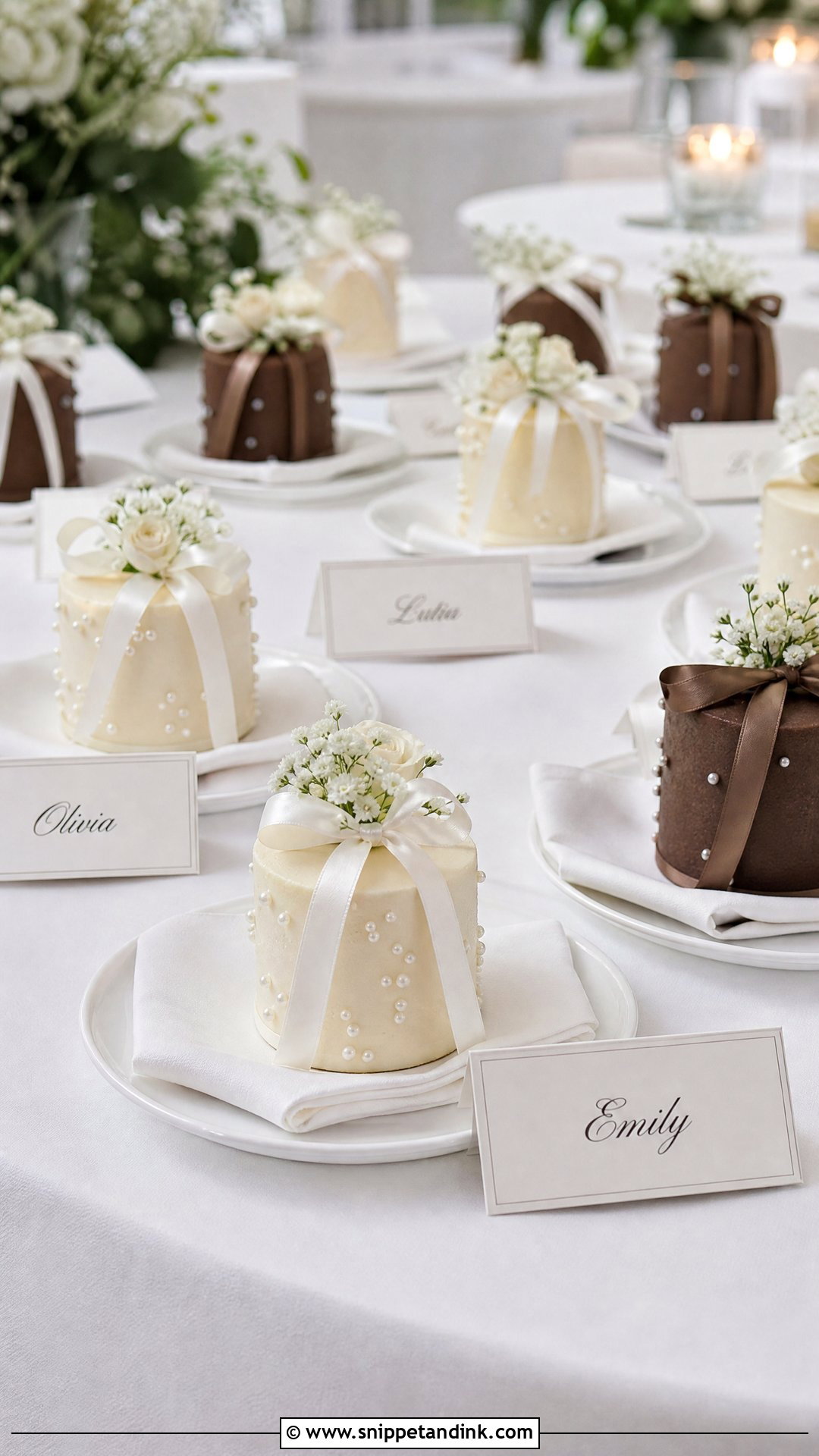
Mini wedding cakes give each guest a dessert of their own: small rounds, tiny hearts or petite squares at every place setting. Be prepared for the cost. Each mini needs its own filling, crumb coat and finish, so per serving they usually cost more than slices from a tiered cake. Keep the design simple, one piped border, a small flower or a pearl finish, and they suit plated dinners and intimate receptions. You can vary flavors by table.
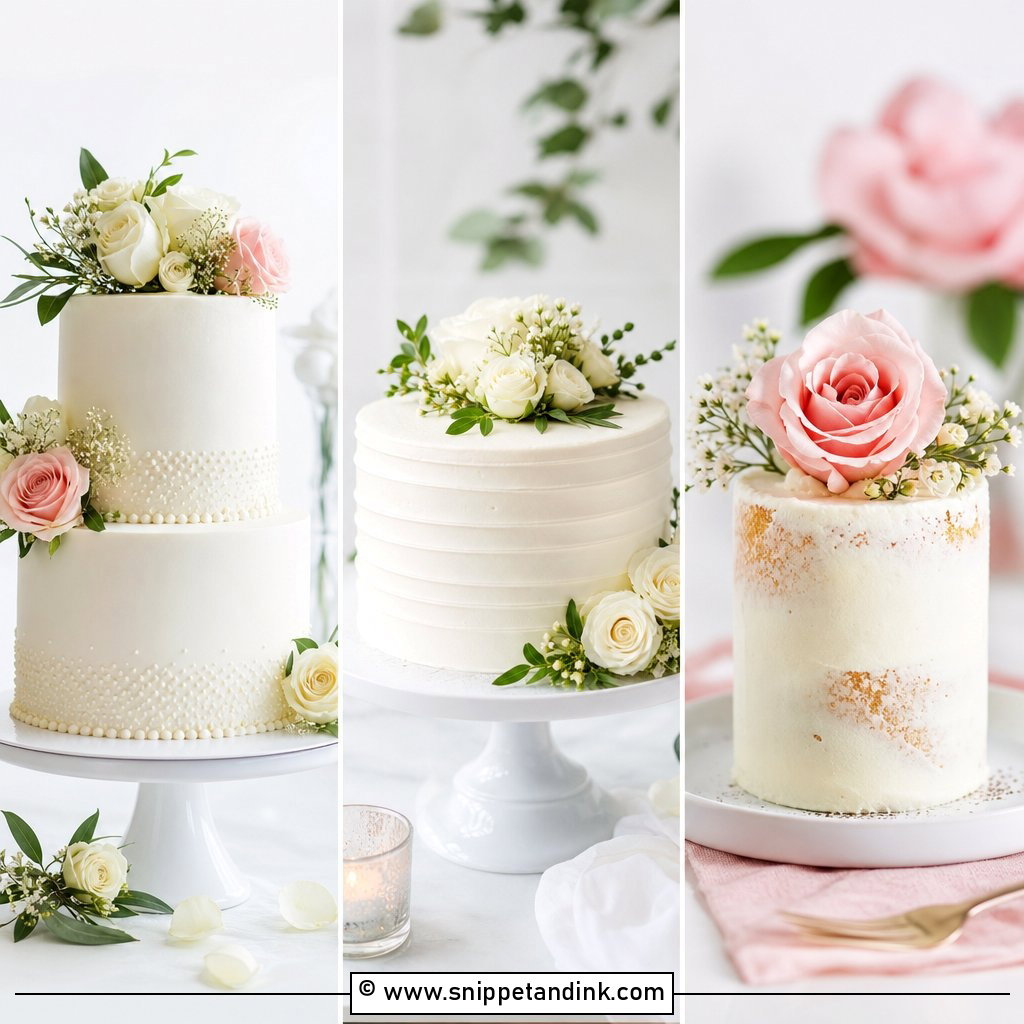
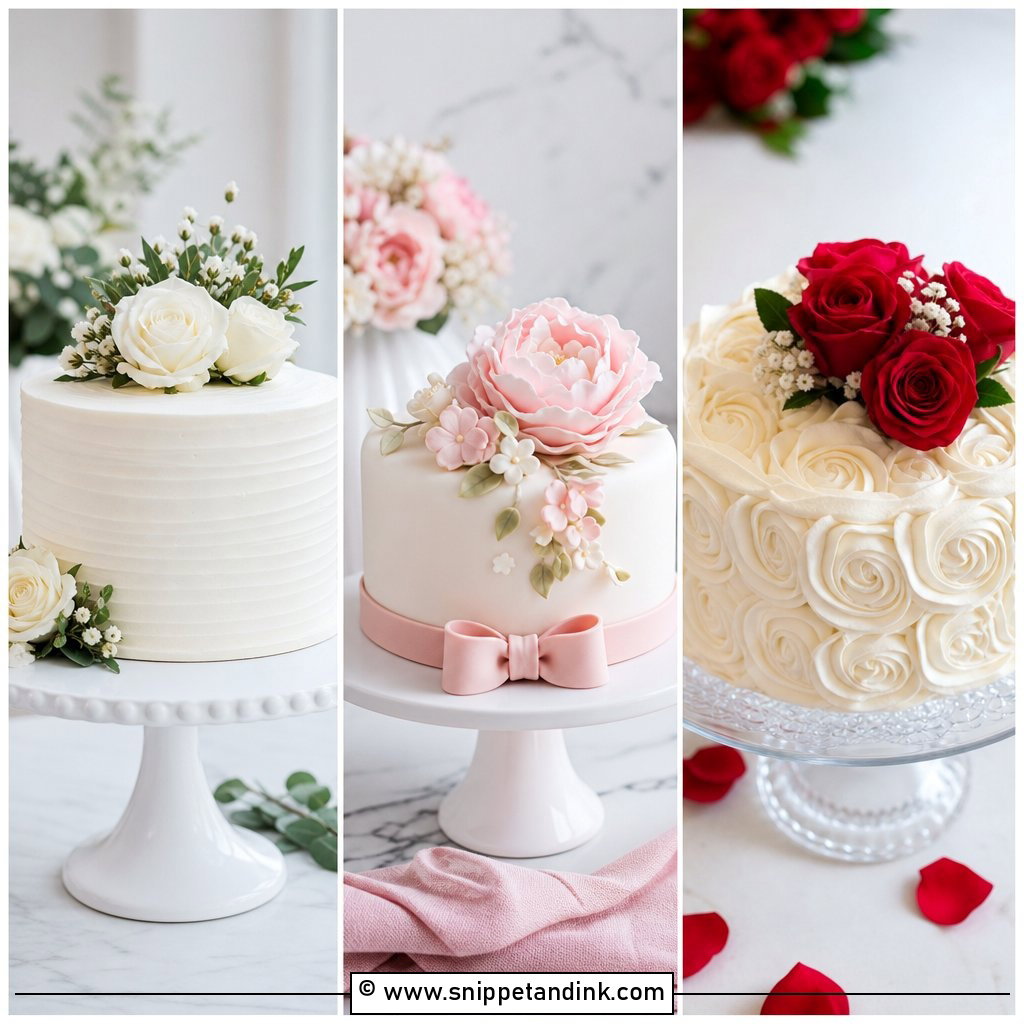
25. Cake Meadow Wedding Cake
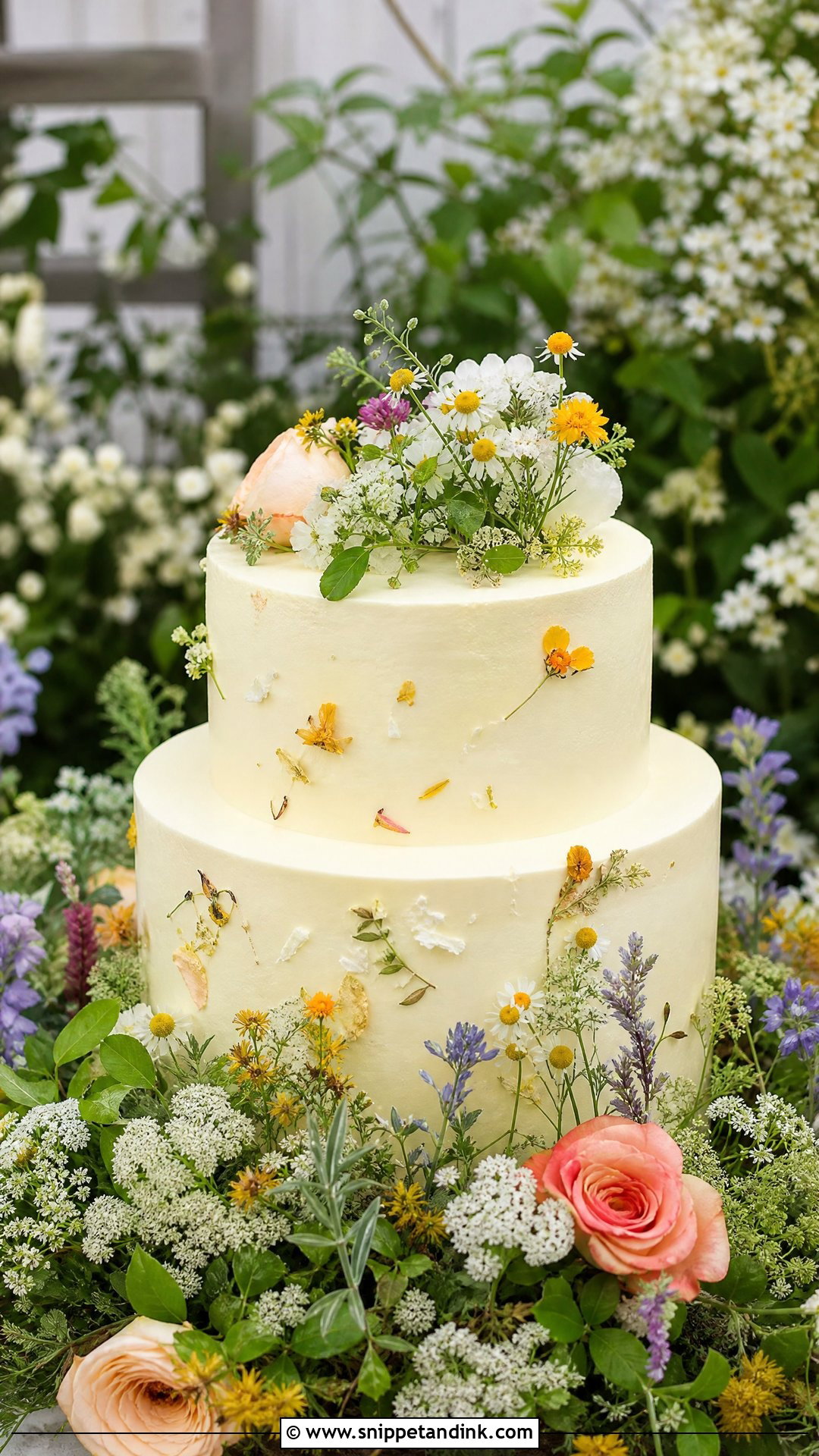
A cake meadow places the cake in a low garden of flowers, herbs, fruit or greenery, so the base becomes the feature while the cake stays simple. Keep the meadow low enough that the cake is still visible, and stick to one color family. Your florist and baker need to coordinate: the flowers sit on a tray or board, not on the cake board itself, so the cake can be lifted out for cutting. Smooth buttercream or semi-naked frosting suits it, with lemon elderflower or vanilla berry inside.
26. Colorful Wedding Cake
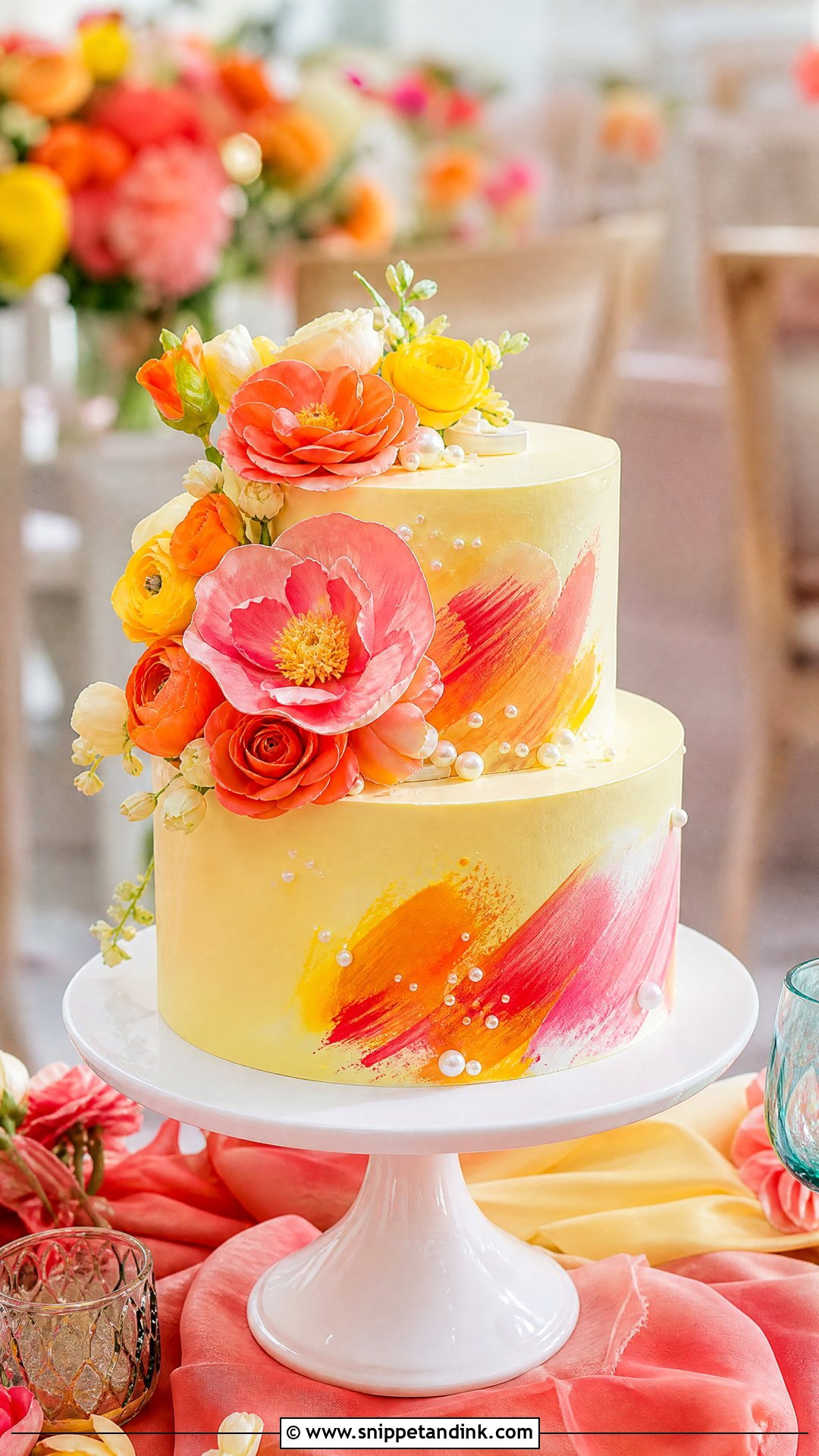
A colorful wedding cake works best with a clear plan: one painted tier, ombré buttercream, colored piping or bright sugar flowers against a clean base. Butter yellow, sage, terracotta, lavender, cobalt and soft pink are the colors I’m mixing most. Bring a swatch of your linens or stationery to the consultation, because colored buttercream shifts slightly as it sets and under reception lighting. Flavors can follow the color: lemon, strawberry, pistachio or blueberry.
27. Black Wedding Cake
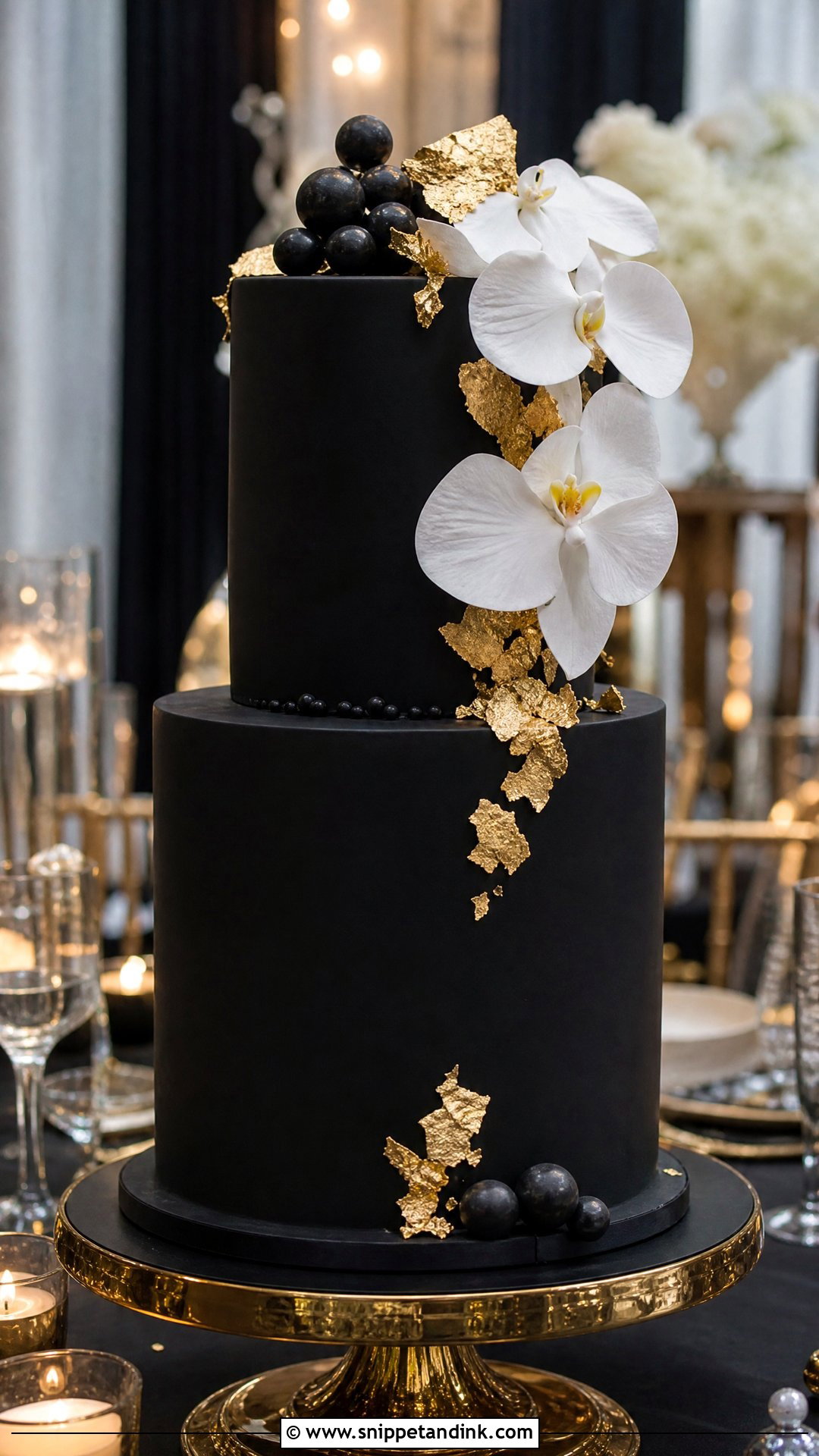
Matte black fondant or dark chocolate ganache makes a dramatic base for evening receptions, city weddings and formal celebrations, with white flowers, gold leaf, pearls or black-on-black texture on top. I make black cakes on a ganache base with dark cocoa so less coloring is needed, which keeps the flavor right and avoids gray teeth in photos. Don’t add many colors; black already says plenty. Chocolate, espresso, red velvet and salted caramel all fit, on a white, gold or clear acrylic stand.
28. Floating Tier Wedding Cake
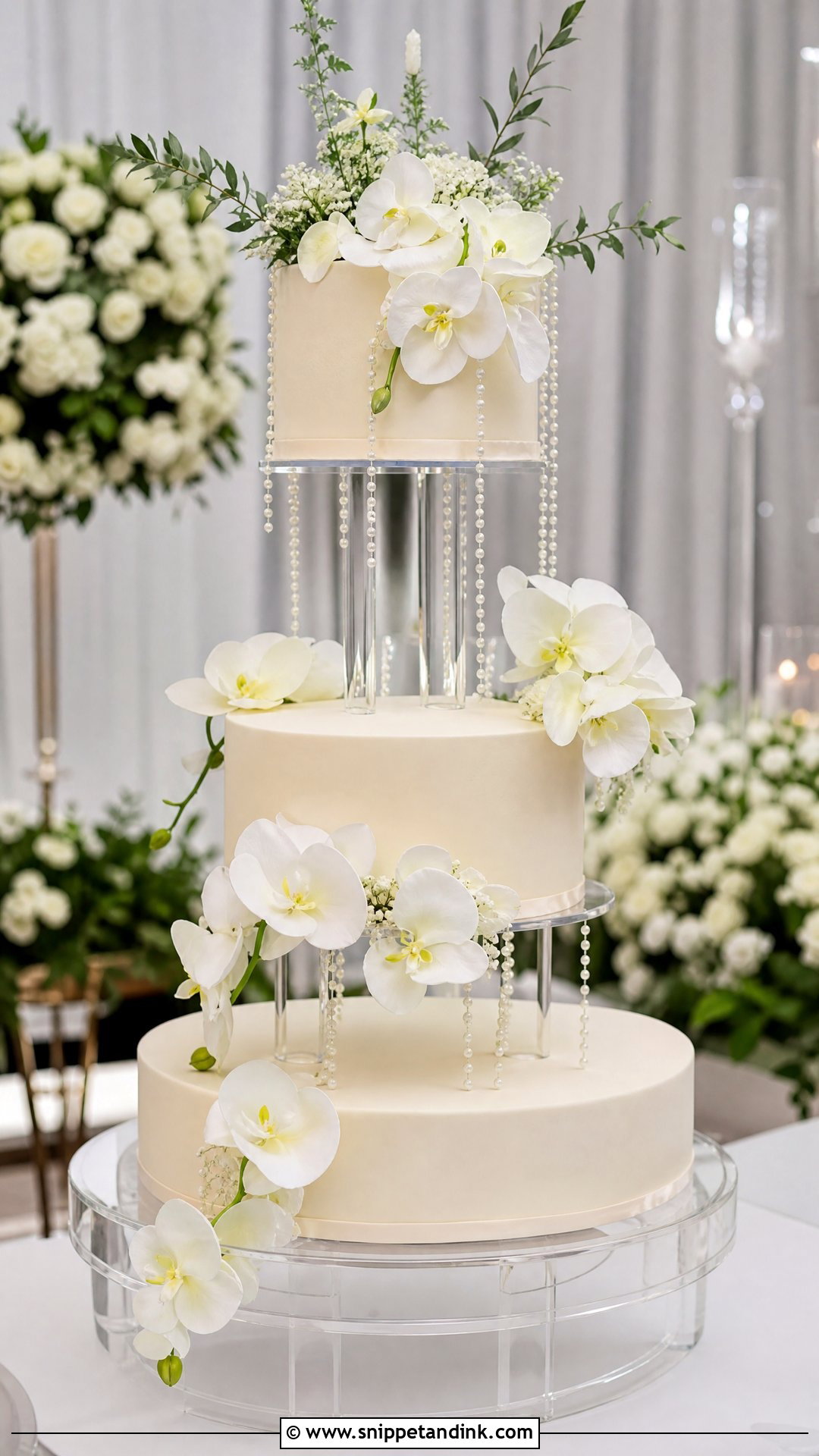
Clear separators, hidden supports or floral spacers create gaps between the tiers so they appear to hover. Those gaps can hold flowers, greenery or pearls, or stay empty for a cleaner look. Because every tier sits on its own support, structure is everything: I use a central rod through the tiers and assemble the cake at the venue rather than transporting it stacked. Ask your baker how they secure it, especially outdoors. With smooth, simple tiers, it gives a grand reception height without bulk.
29. Modern Rustic Wedding Cake
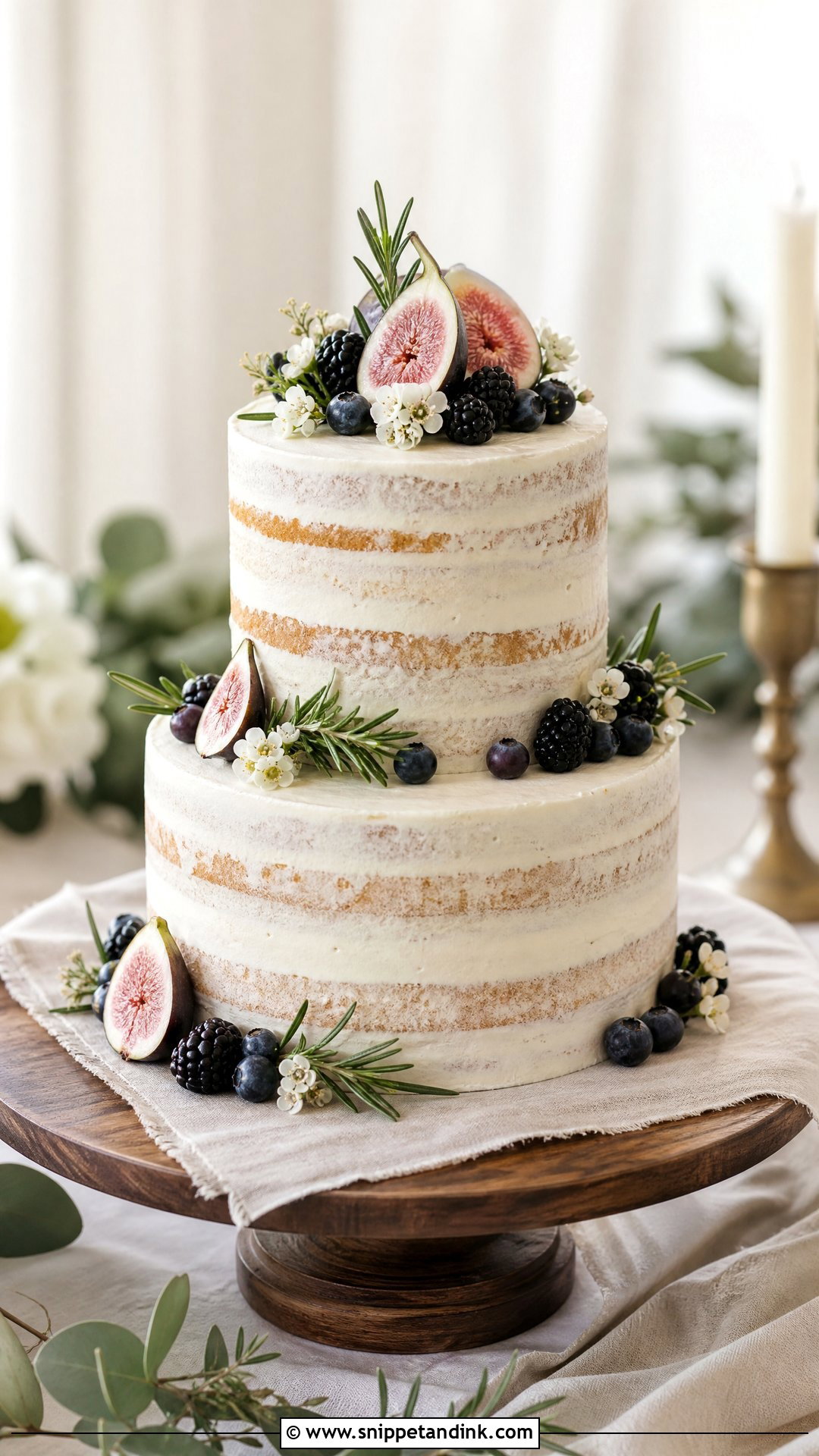
Modern rustic means semi-naked frosting or soft buttercream ridges, with figs, berries, herbs or simple white flowers, not a rough country cake. Semi-naked finishes have one weakness: with less frosting sealing the sponge, the edges dry out faster, so I finish them as close to the event as possible. It suits barns, vineyards and lodges, on a wooden stand with a linen runner, with carrot, spice, honey or vanilla berry inside.
30. Dessert Table Wedding Cake
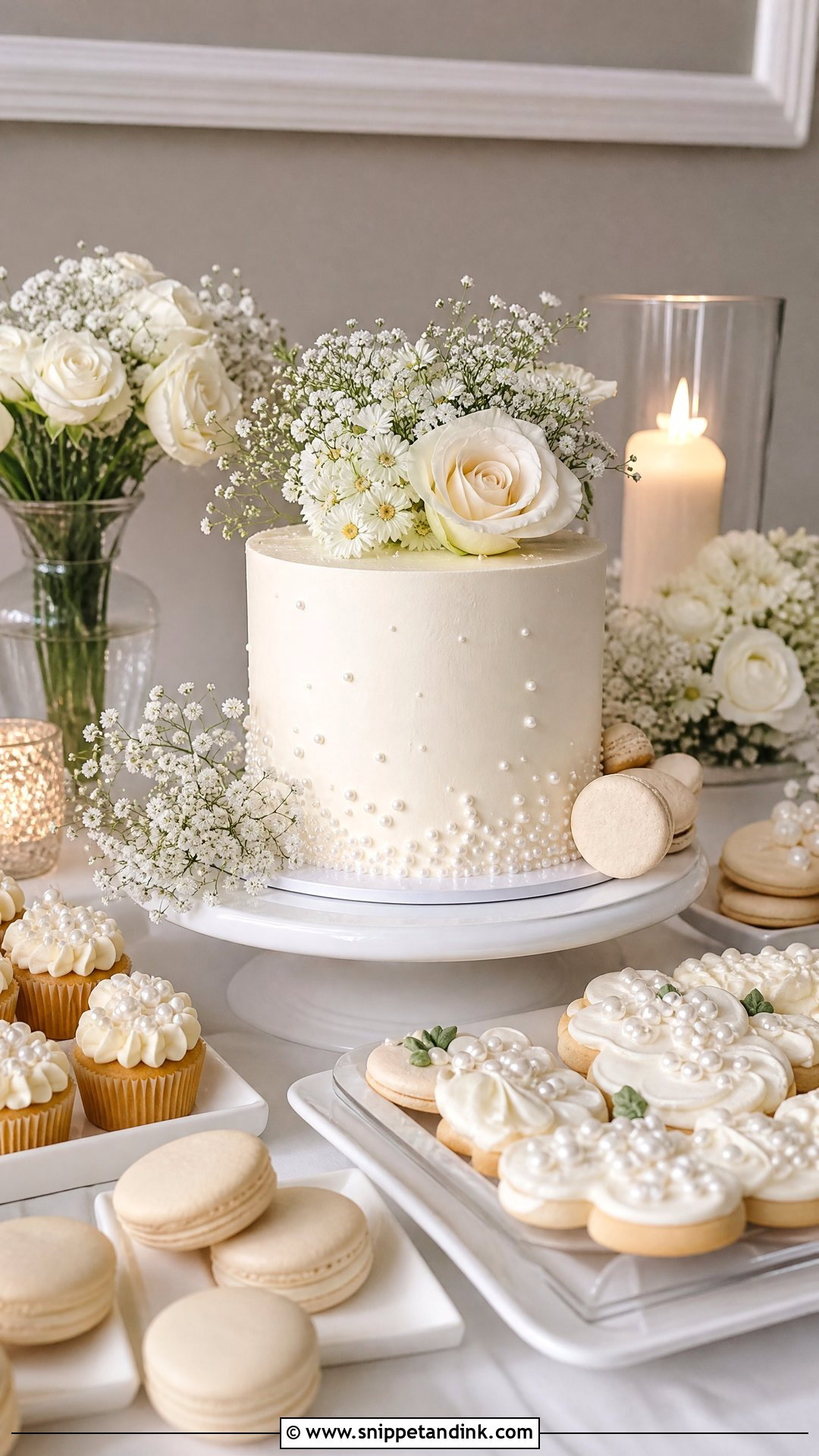
Here the cake is one piece of a larger sweet display: a smaller centerpiece cake surrounded by cupcakes, macarons, cookies, mini tarts or sliced cake bars. Coordinated colors and staggered heights make the table look styled rather than random, along with matching trays, florals, candles and labels. It’s a good fit for couples whose guests have varied preferences or dietary needs. Labels matter more than people think, especially for nuts and gluten.
How a Wedding Cake Survives Heat, Transport and a Long Reception
Most cake disasters have nothing to do with baking. They happen in the van, on a sunny table, or when a cake comes out of the fridge into a humid tent. A few things are worth discussing with your baker and your venue before the day.
The finish and the weather
Buttercream softens in a warm room, and the richer it is, the faster it slumps. Ganache under fondant is much firmer and is what I use for outdoor summer weddings. Fondant has its own problem: a chilled cake moved into warm, humid air beads with condensation, which is why I let fondant cakes come to room temperature slowly rather than straight from a cold van.
Setting up the cake table
- Keep the table out of direct sun, away from heaters, candles clustered at the base, and the dance floor, where bumps and speaker vibration add up.
- Use a sturdy table that doesn’t wobble; tall cakes are heavy and top-heavy.
- Ask whether your baker delivers the cake stacked or assembles it on site. Taller and floating designs are safer assembled at the venue.
- Agree who removes non-edible flowers, picks and supports before cutting, and who cuts. Many venues and caterers charge a fee to cut and plate an outside cake.
What Should Your Cake Say About the Reception?
A wedding cake no longer has to follow one formal look. Sleek, romantic, colorful, sculptural, vintage or quietly minimal, the right one depends on your venue, guest count, season and flowers. Clean minimal tiers, pearls, orchids and all-white texture suit a calm reception; black, geometric, colored or floating tiers make a bolder one; single tiers, hearts, minis and sheet cakes keep a small wedding personal. Bring your baker reference photos, your palette and the flavors you love, and let them tell you what will hold up in your room on the day.
You'll Like These Ideas:






Leave a Reply