
Two tiers is the size I find couples are happiest with after the day. It has enough height to read as a wedding cake in photos, it feeds an intimate or mid-sized guest list, and it leaves room for one considered detail instead of five competing ones. The finishes people ask me for most right now are smooth or lightly textured buttercream, fresh or pressed flowers, a little fruit and quiet neutral colours. A two tier cake can look refined without the cost or formality of a tall one. Below are thirty versions, with notes on how each finish behaves, what it pairs with inside, and where it can go wrong.
Sizing Two Tiers to Your Guest Count
The first thing I ask isn’t about flowers. It’s how many people will actually eat cake. Wedding portions are cut smaller than party slices, usually a finger-width bar about two inches tall, and the tier sizes follow from that. As a rough guide with standard-height round tiers:
- A 6-inch tier on an 8-inch tier serves around 35 wedding portions.
- An 8-inch on a 10-inch serves roughly 60.
- A 10-inch on a 12-inch reaches about 90.
Cutting style, tier height and who does the slicing all shift these numbers, so treat them as a starting point and confirm with your baker. If your guest list outgrows two tiers, there are two honest options. Taller tiers add servings without adding a third level, or a plain kitchen cake in the same flavour can be sliced out of sight. Both keep the display cake simple, which is the whole point of choosing two tiers.
1. Simple Two Tier Wedding Cake With White Buttercream
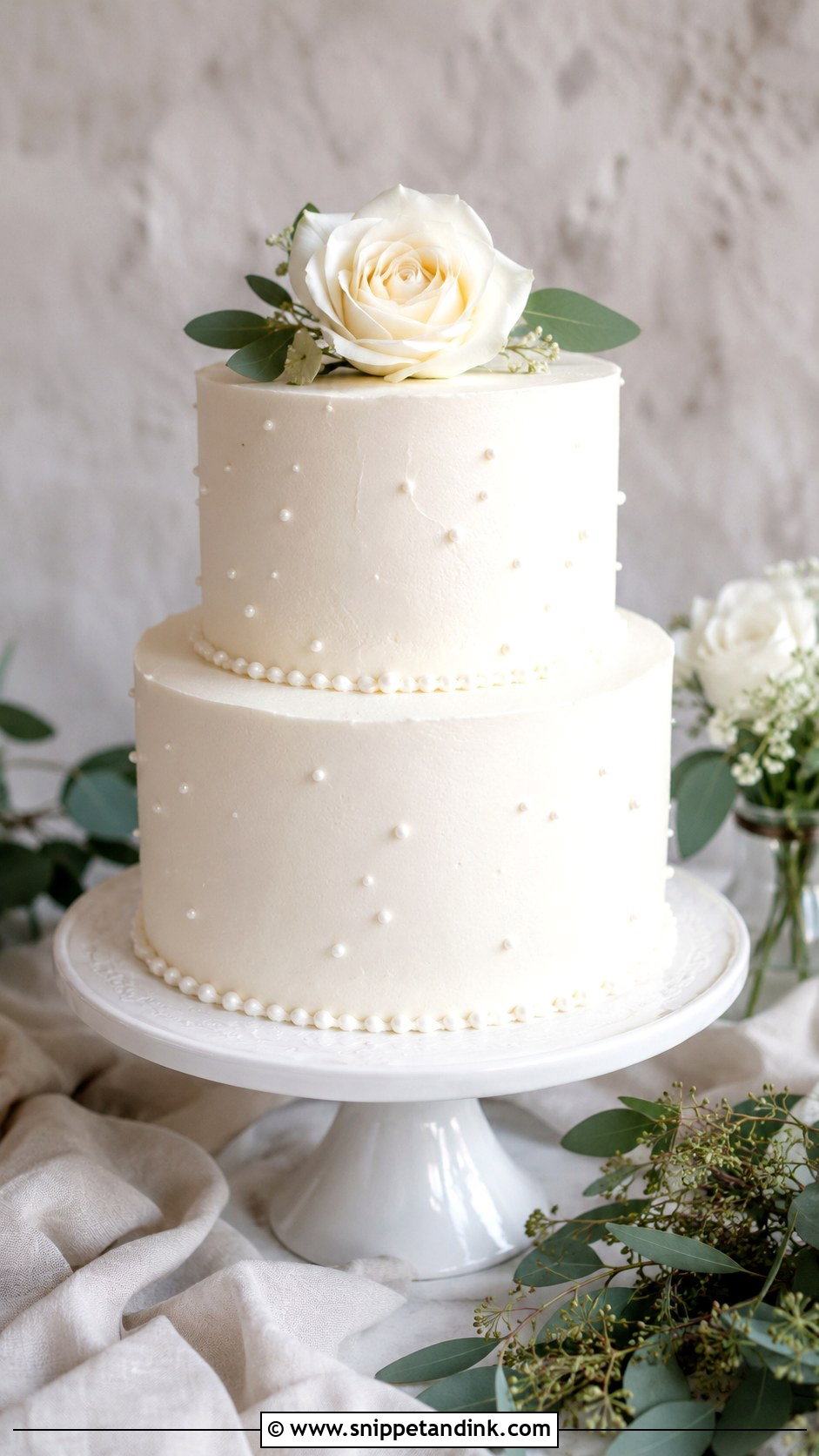
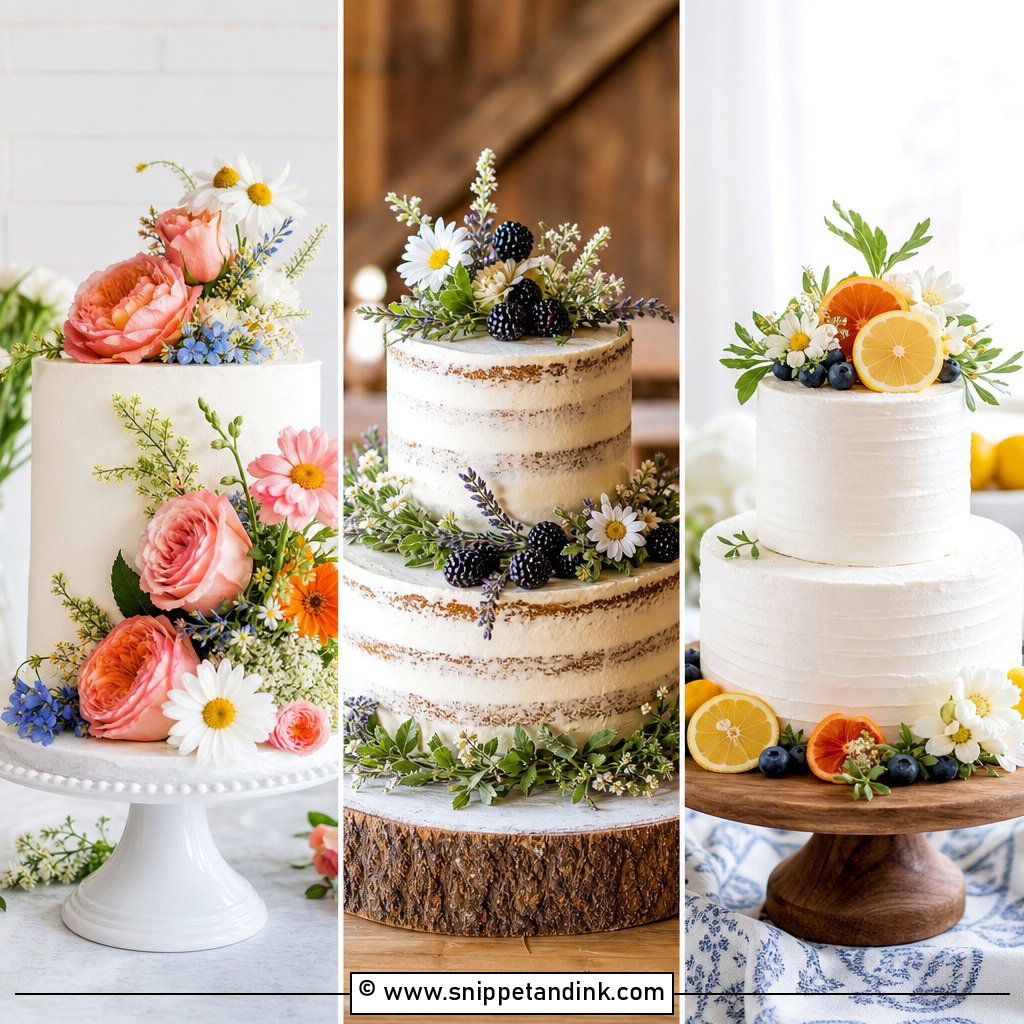
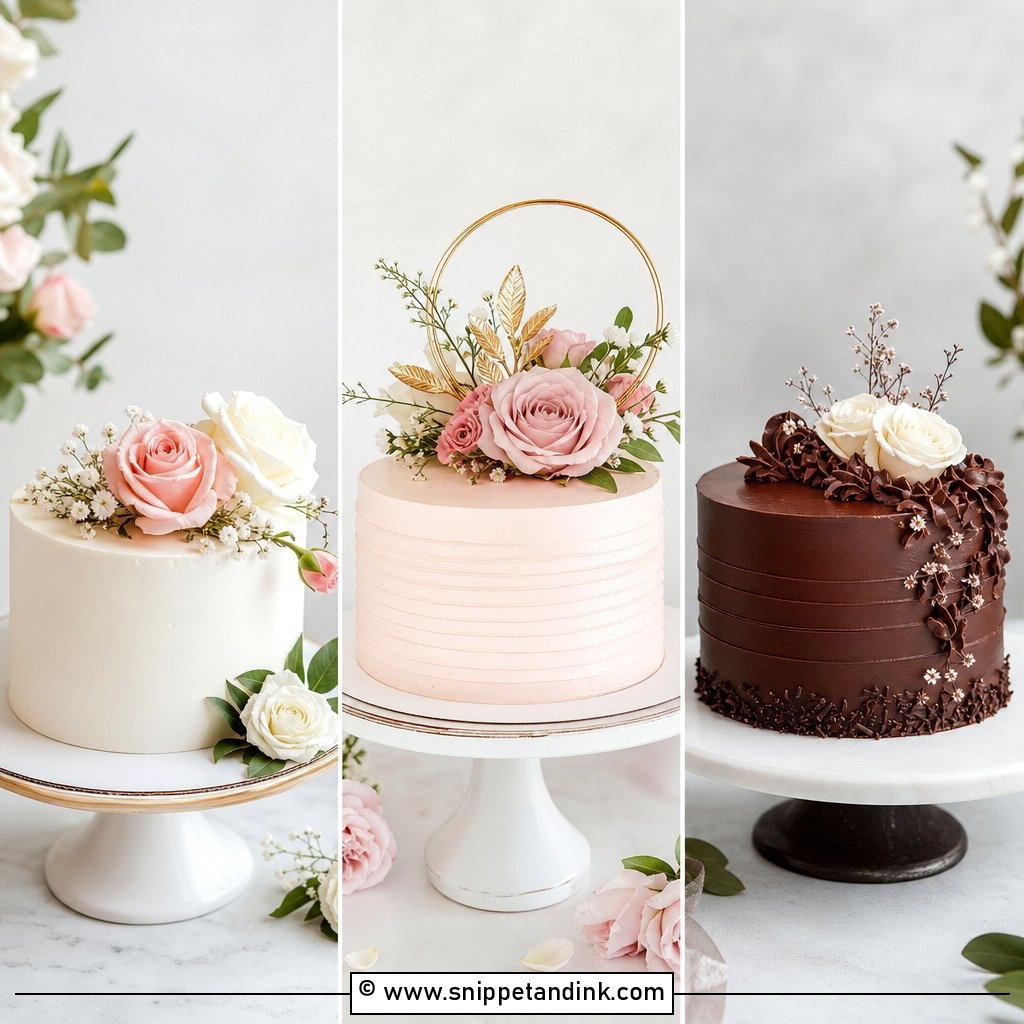
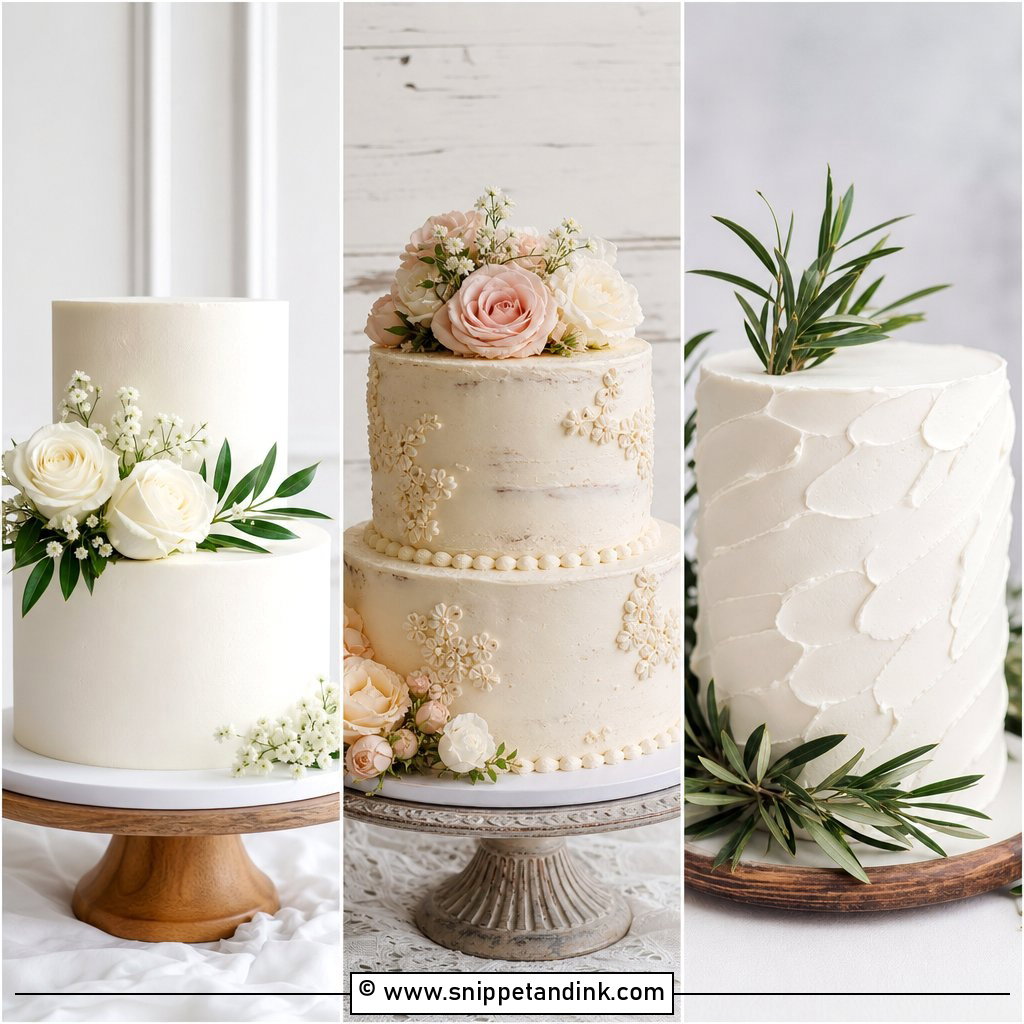
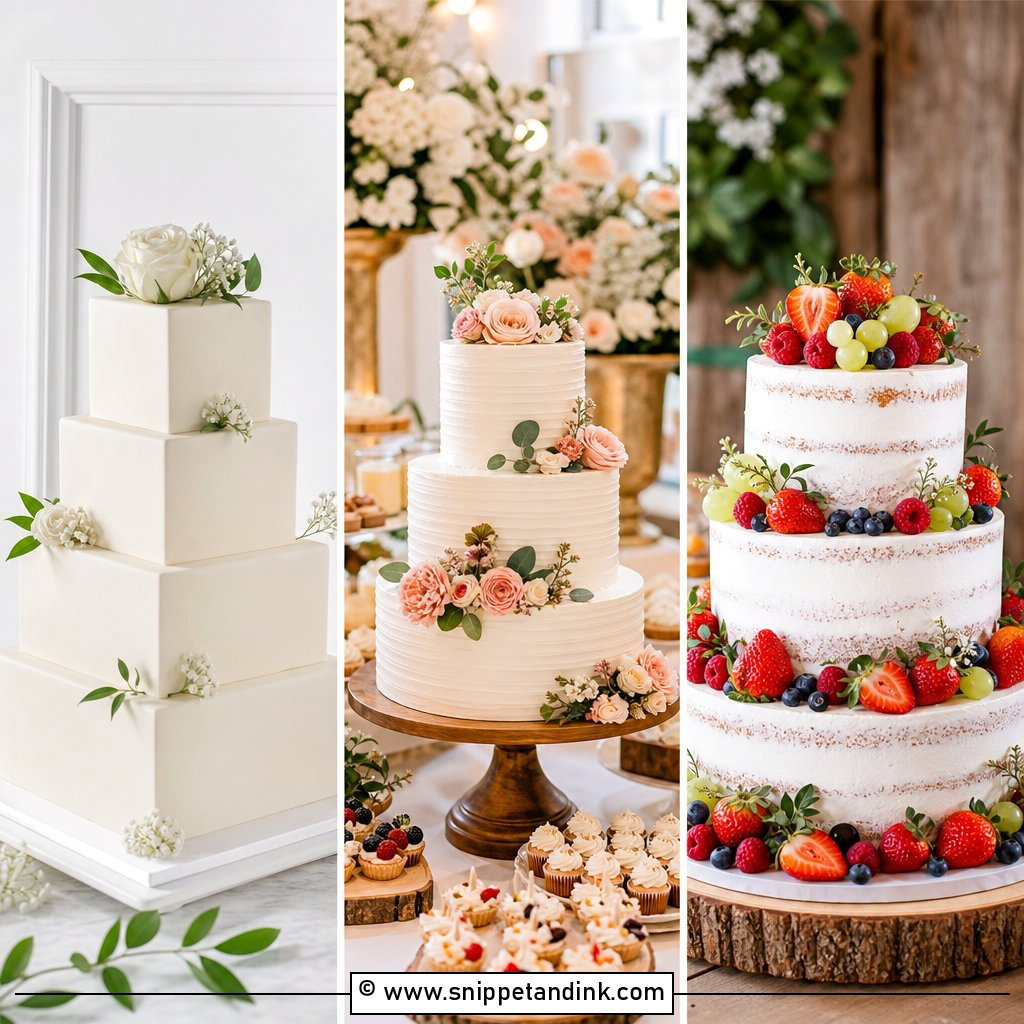
White buttercream is the finish I’d defend at any venue, from a ballroom to a courthouse dinner. Its appeal is the clean ivory surface and the proportion of the two stacked tiers. Smooth sides look polished; a light spatula texture relaxes it. One small cluster of white flowers, a scatter of pearl sprinkles or a thin ribbon at each base is enough. Underneath, vanilla bean, almond, lemon or classic white sponge all suit it. Be aware that pure white buttercream needs butter-free or bleached fats, so most real buttercream reads ivory; ask your baker which you’ll be getting.
2. Simple Two Tier Wedding Cake With Fresh Flowers
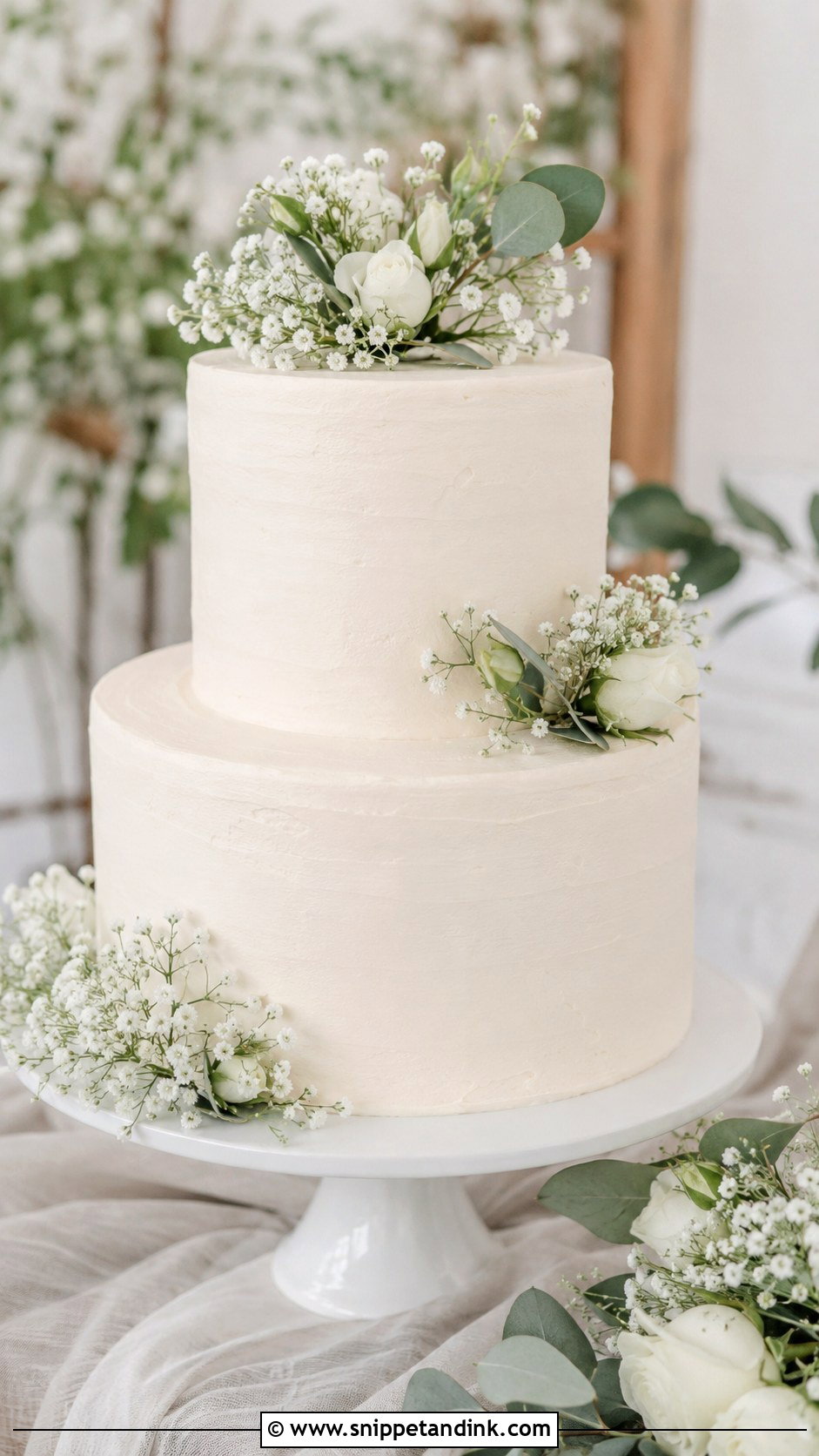
Fresh flowers make a plain cake romantic faster than anything I can pipe. A cluster between the tiers and a smaller one on top keeps the balance right. White roses, ranunculus, lisianthus and soft greenery suit a clean style. The crucial part is coordination: your florist and I need to agree on which stems are safe near food and who places them, because flowers bought for vases are not grown to food standards. On smooth ivory buttercream and a plain stand, the flowers carry the whole design.
3. Simple Two Tier Wedding Cake With Roses
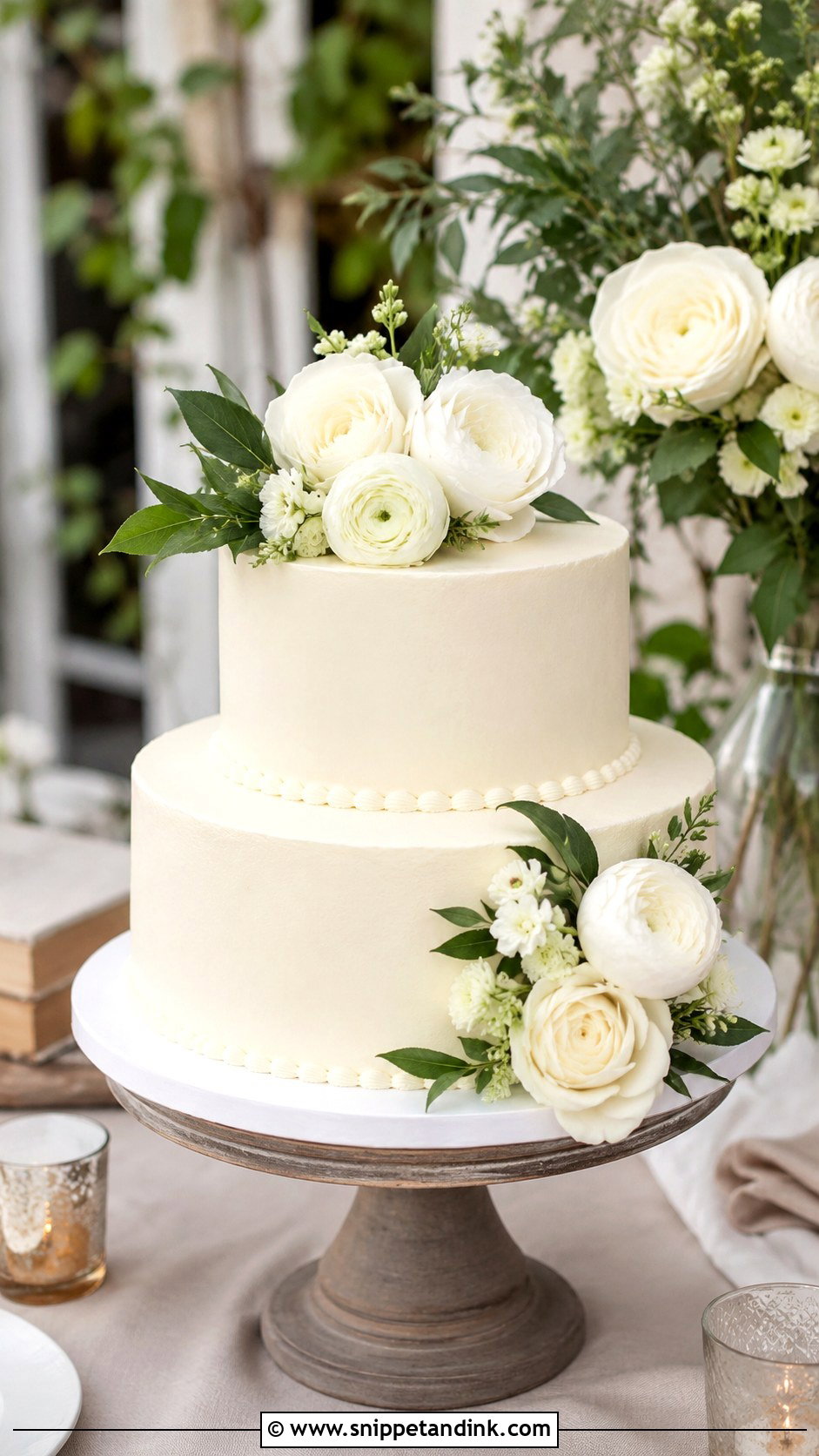
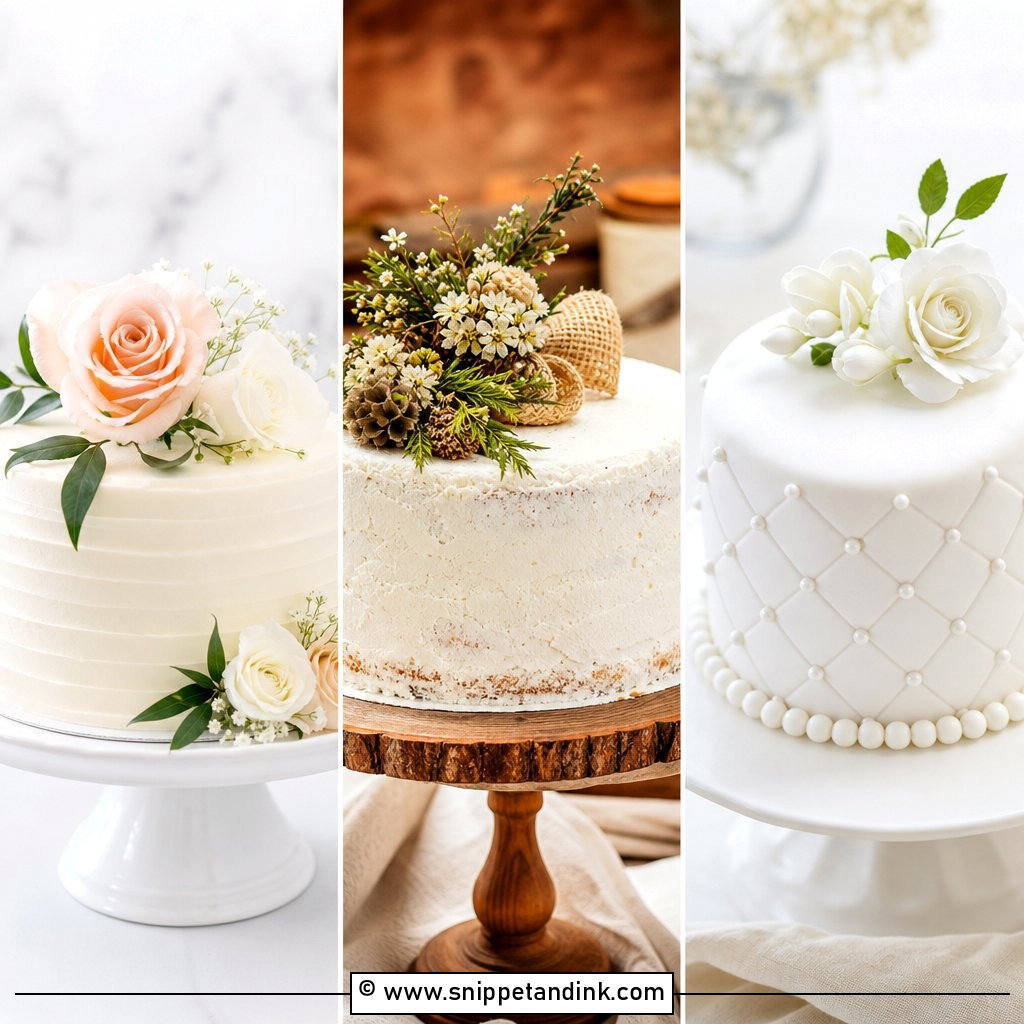
Roses add shape and softness without any complicated piping. White is traditional, blush warmer, pale peach more garden-like. Placement changes the mood: a small cascade down one side feels romantic, while a cluster at the base of the top tier feels tidy. I’d choose smooth buttercream here so the petals stand out against a quiet surface. Open garden roses look fuller than tight florist roses, but they drop petals sooner, so I add them as late as possible.
4. Simple Two Tier Wedding Cake With Greenery
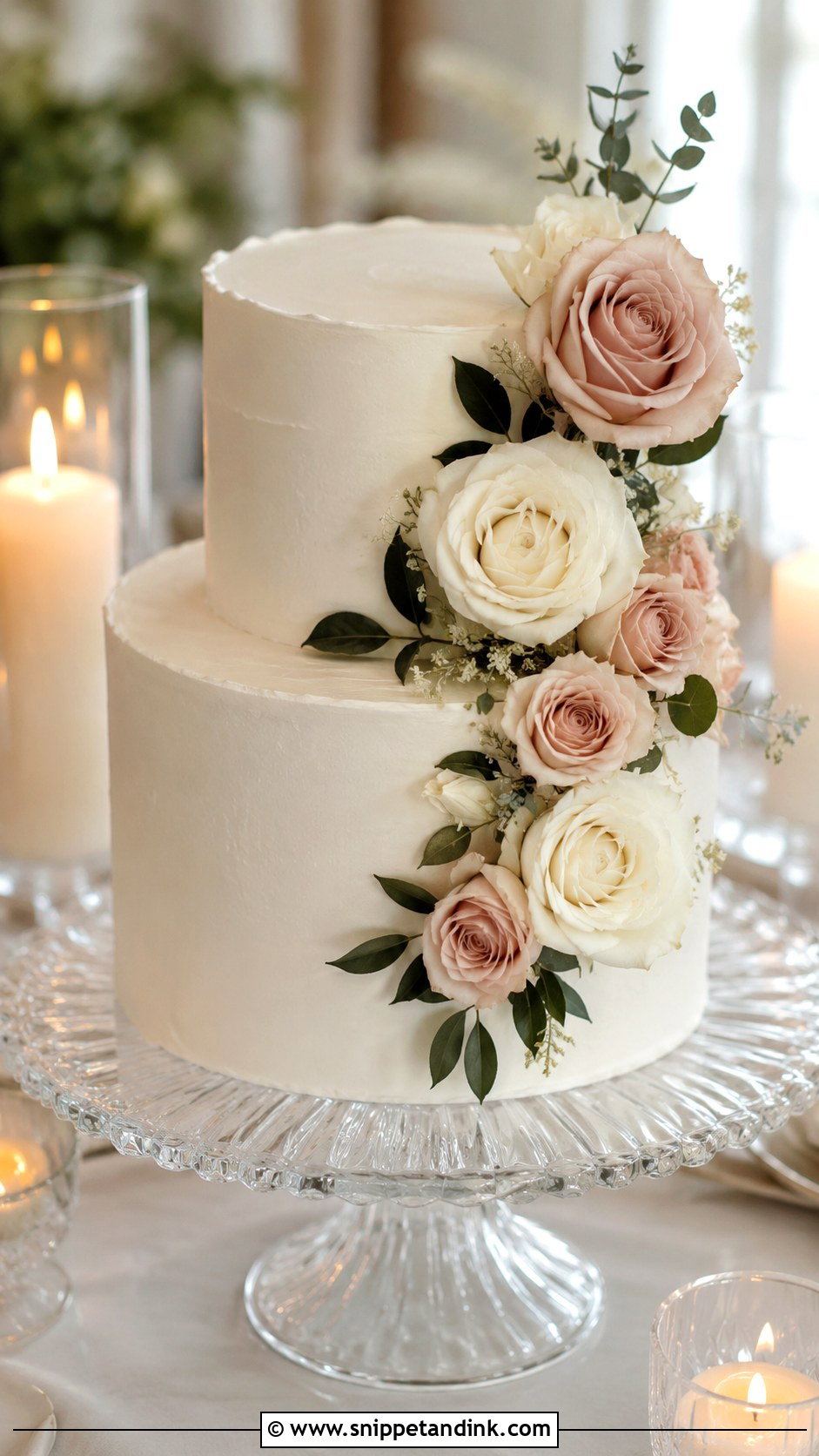
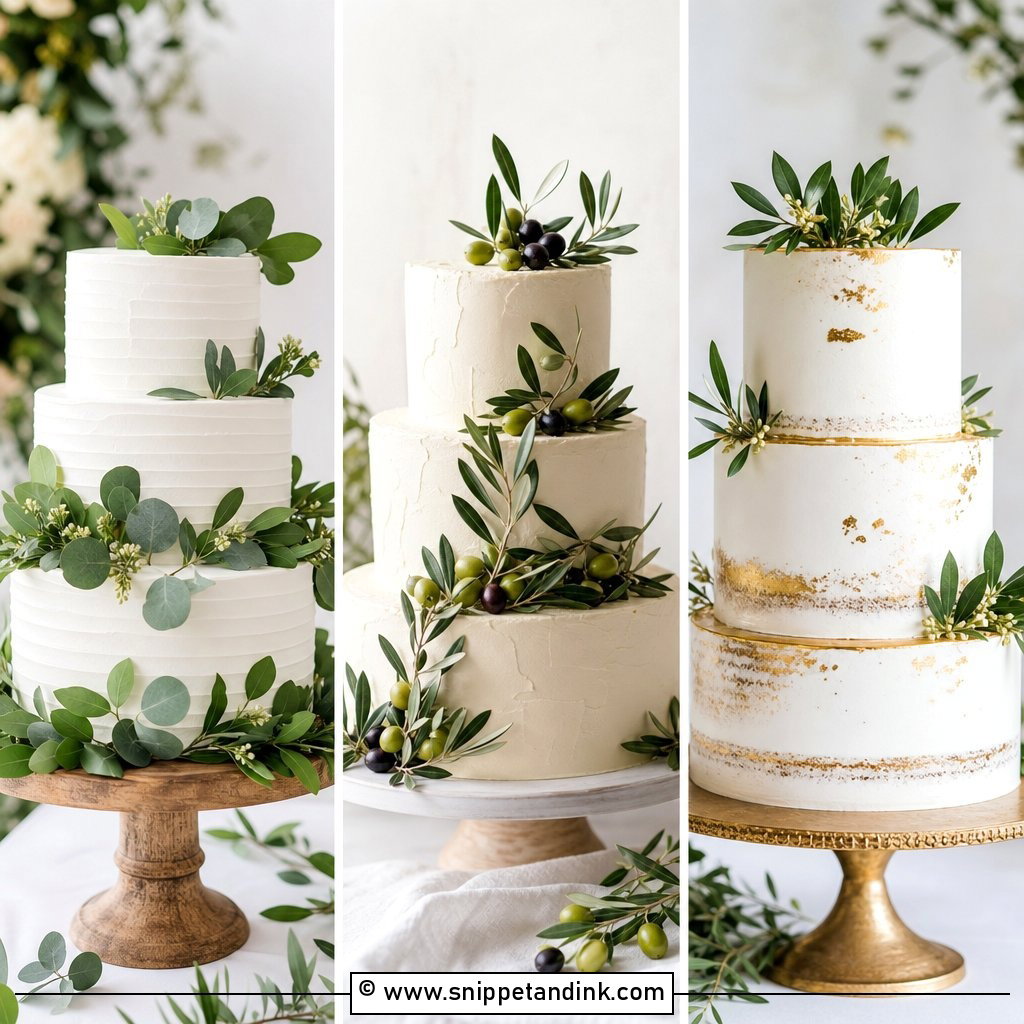
Greenery suits couples who want freshness without a floral look. Eucalyptus, olive leaves, rosemary or a little fern can frame the tiers on an ivory base, and the green looks crisp against it. I’m careful with eucalyptus in particular: it shouldn’t sit directly on the cake, so I wrap the stems or rest them on a barrier. A few tiny white flowers add softness if you want them. A wood or ceramic stand suits rustic, barn and outdoor settings.
5. Simple Two Tier Wedding Cake With Pearl Details
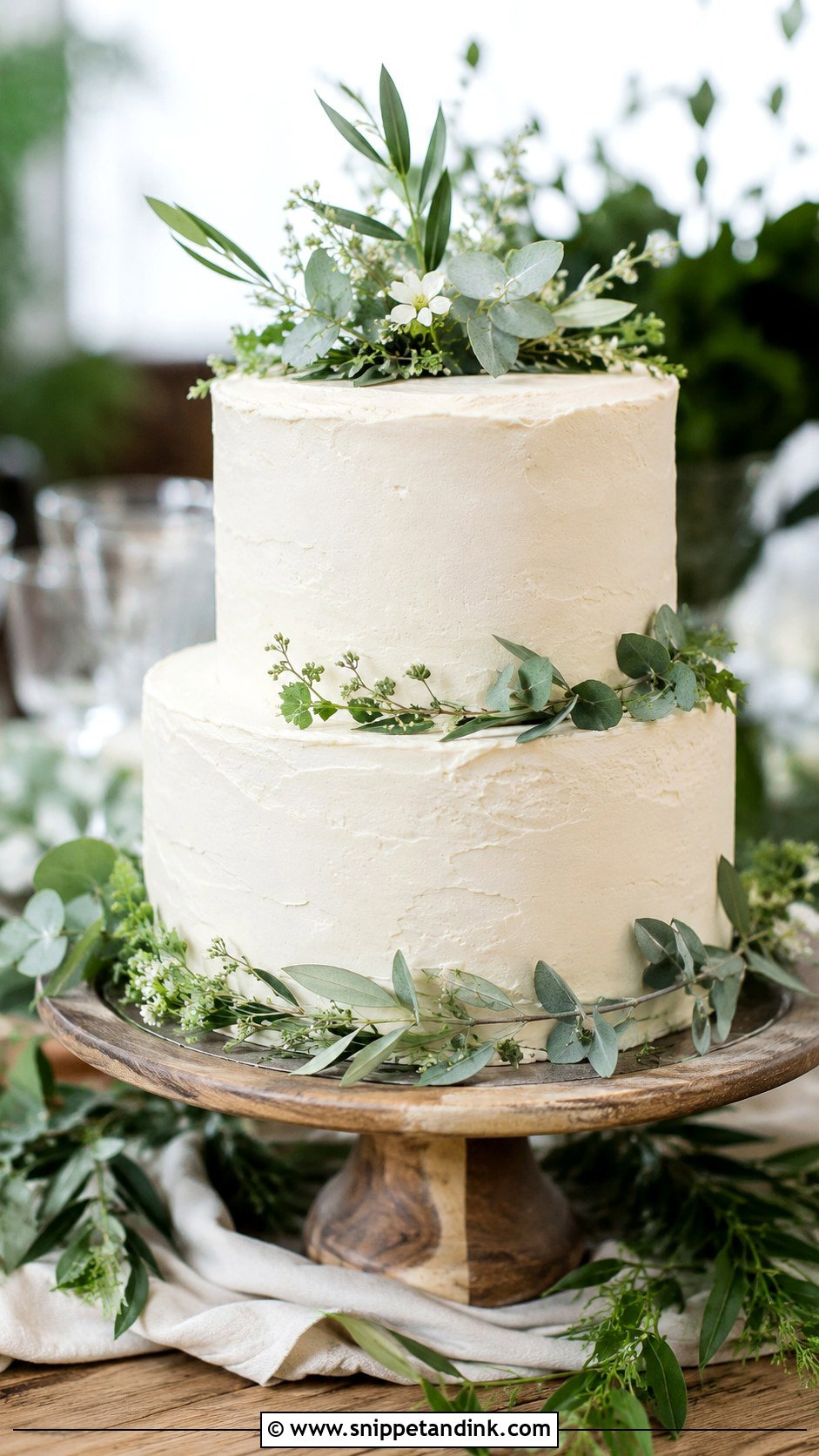
Edible pearls give a soft bridal finish without clutter. Scatter them lightly over smooth buttercream or set them in clean lines around the base of each tier. Lines take patience; I place them with tweezers so the spacing stays even, and on a hot day they can slide on soft frosting, so the cake needs to be well chilled first. All white or warm ivory both work. Satin ribbon, white roses or a fine piped border pair with them.
6. Simple Two Tier Wedding Cake With Gold Accents
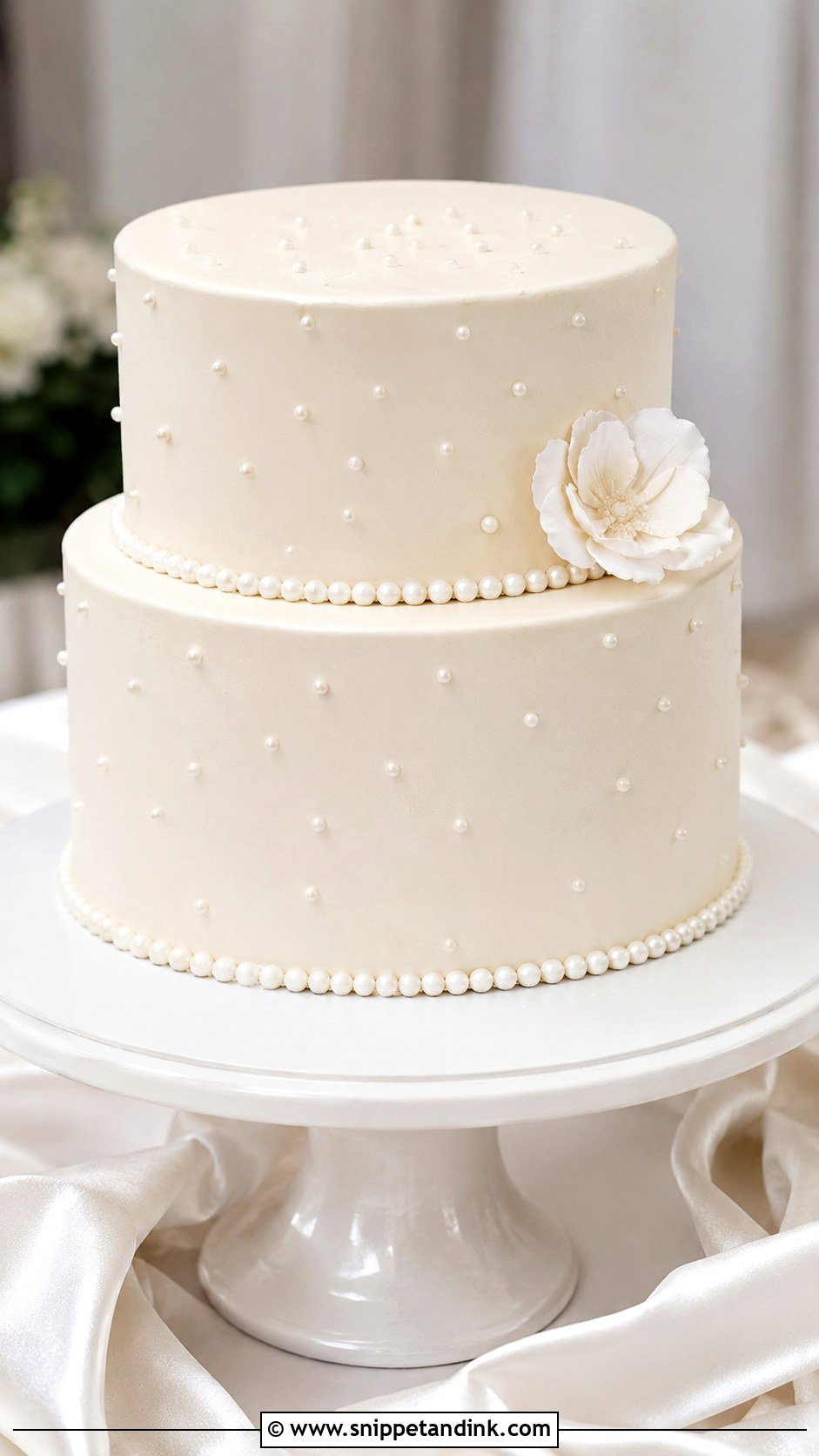
Gold should be one detail, not a theme. Thin pieces of gold leaf, a slim painted line or a brushed metallic edge make a cake feel more formal, and the frosting around it should stay plain so the gold looks deliberate. One thing I always check: some metallic dusts are labelled non-toxic rather than edible, which means decorative only. For anything people will eat, I use edible gold leaf or a lustre that’s sold as food-safe. White buttercream, champagne frosting or pale blush fondant all take gold well.
7. Simple Two Tier Wedding Cake With Smooth Fondant
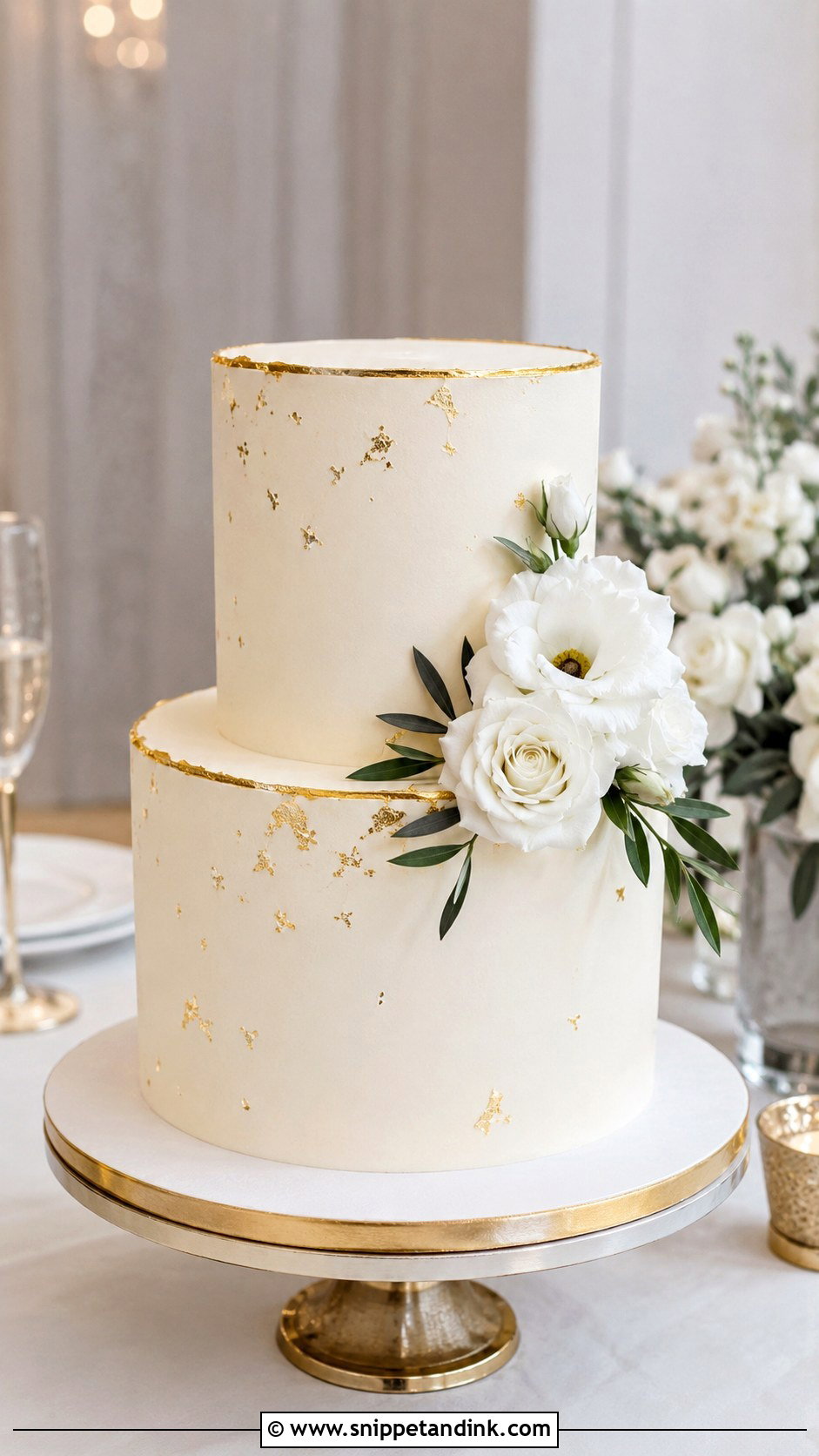
Smooth fondant gives the sharpest edges and the cleanest surface, which is why couples who love a crisp, structured look ask for it. White, ivory, blush or champagne all work, and decoration can be minimal: a satin ribbon, a few sugar flowers, one topper. It does protect the cake in warmer weather better than buttercream alone. The catch is moisture. A fondant cake moved from a cold fridge into a warm, humid room sweats droplets on its surface, so I let it come to room temperature in its box before it goes out.
8. Simple Two Tier Wedding Cake With Textured Buttercream
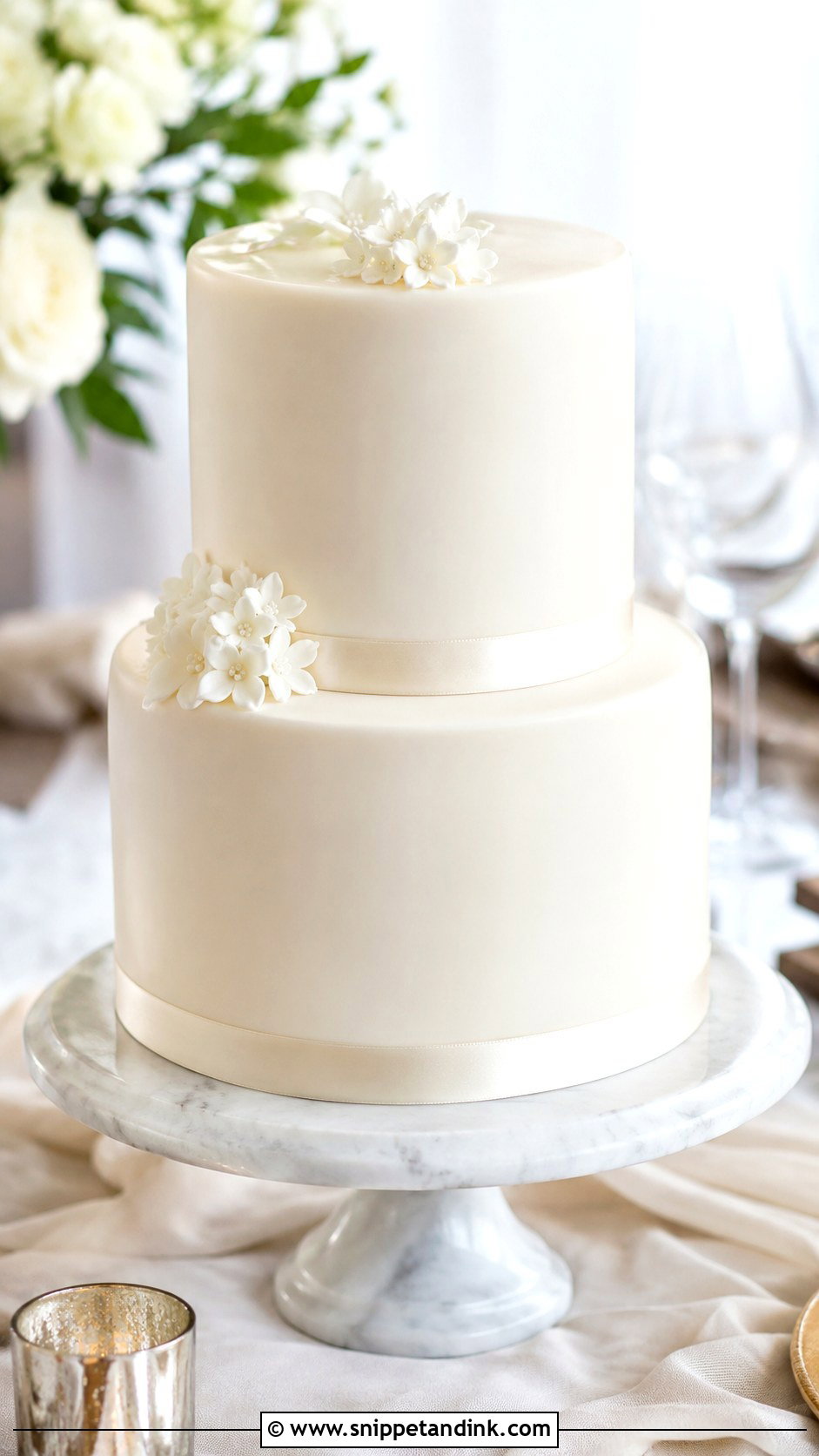
Texture is how I make buttercream look handmade on purpose. Horizontal lines from a comb, gentle palette-knife swipes or a plaster-like finish all give movement while the overall look stays clean. White, ivory, beige, blush or sage suit it. Texture also hides the small dents that inevitably happen during delivery, which makes it a forgiving choice for outdoor venues. A few stems of greenery are optional; the frosting can stand on its own.
9. Simple Two Tier Wedding Cake With Semi Naked Frosting
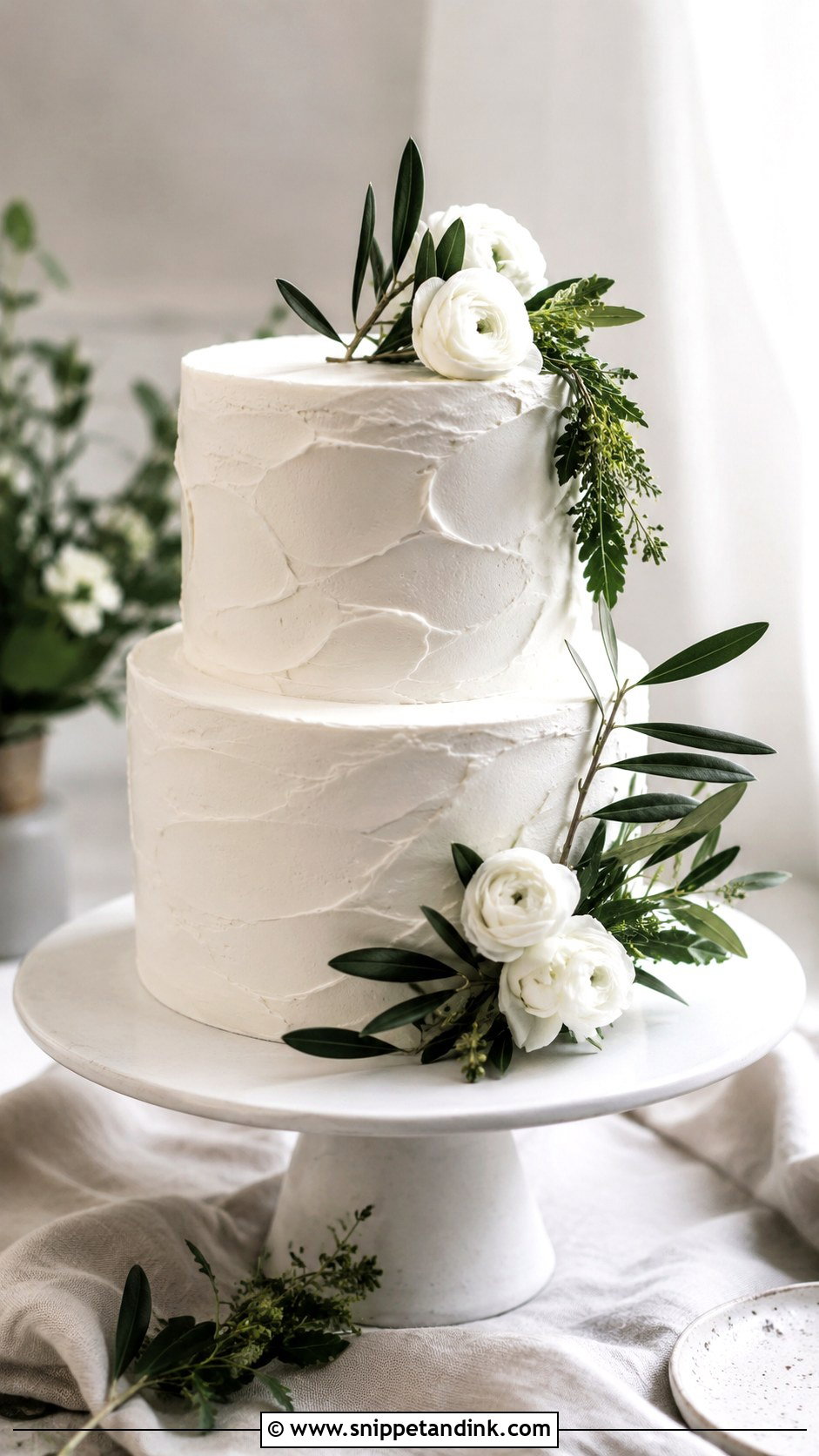
Semi-naked means a thin scraped coat of buttercream with the sponge showing through. It has a warm, rustic character for outdoor celebrations. The honest downside is that exposed sponge dries faster than fully covered cake, so I bake and assemble these as close to the day as I can and brush the layers with syrup. Vanilla, almond, lemon and spice cake all suit it. Flowers, berries and greenery add colour, and a wood stand or simple white pedestal finishes the look.
10. Simple Two Tier Wedding Cake With Pressed Flowers
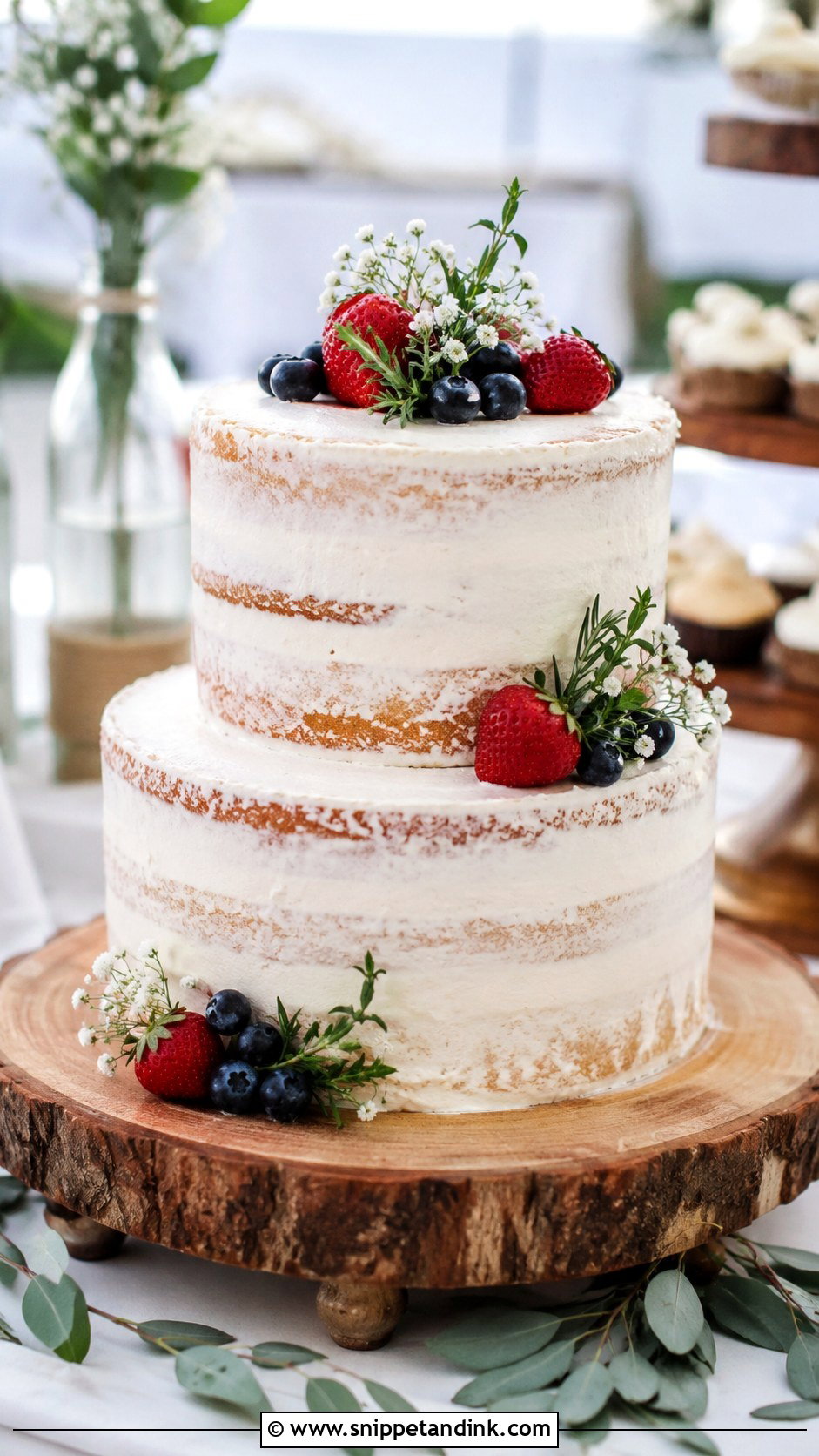
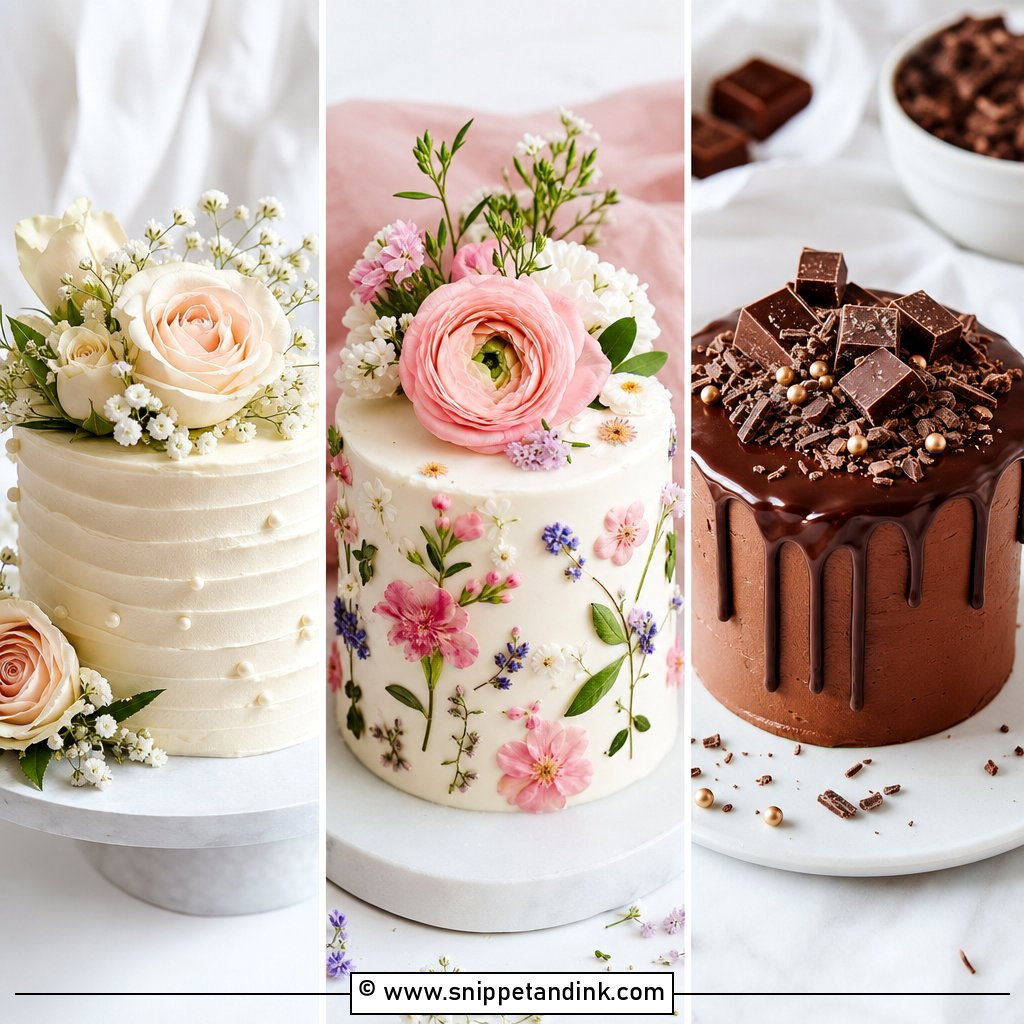
Pressed flowers lie flat against the buttercream, giving a botanical look without adding height. White or pale ivory frosting lets the petal colours lead. Not every pressed flower is edible, so I use ones grown for eating, such as violas, pansies and cornflowers, and press them myself or buy them from a food-grade supplier. Leave open space between them so the cake stays light. Spring and garden weddings suit this most.
11. Simple Two Tier Wedding Cake With Baby’s Breath
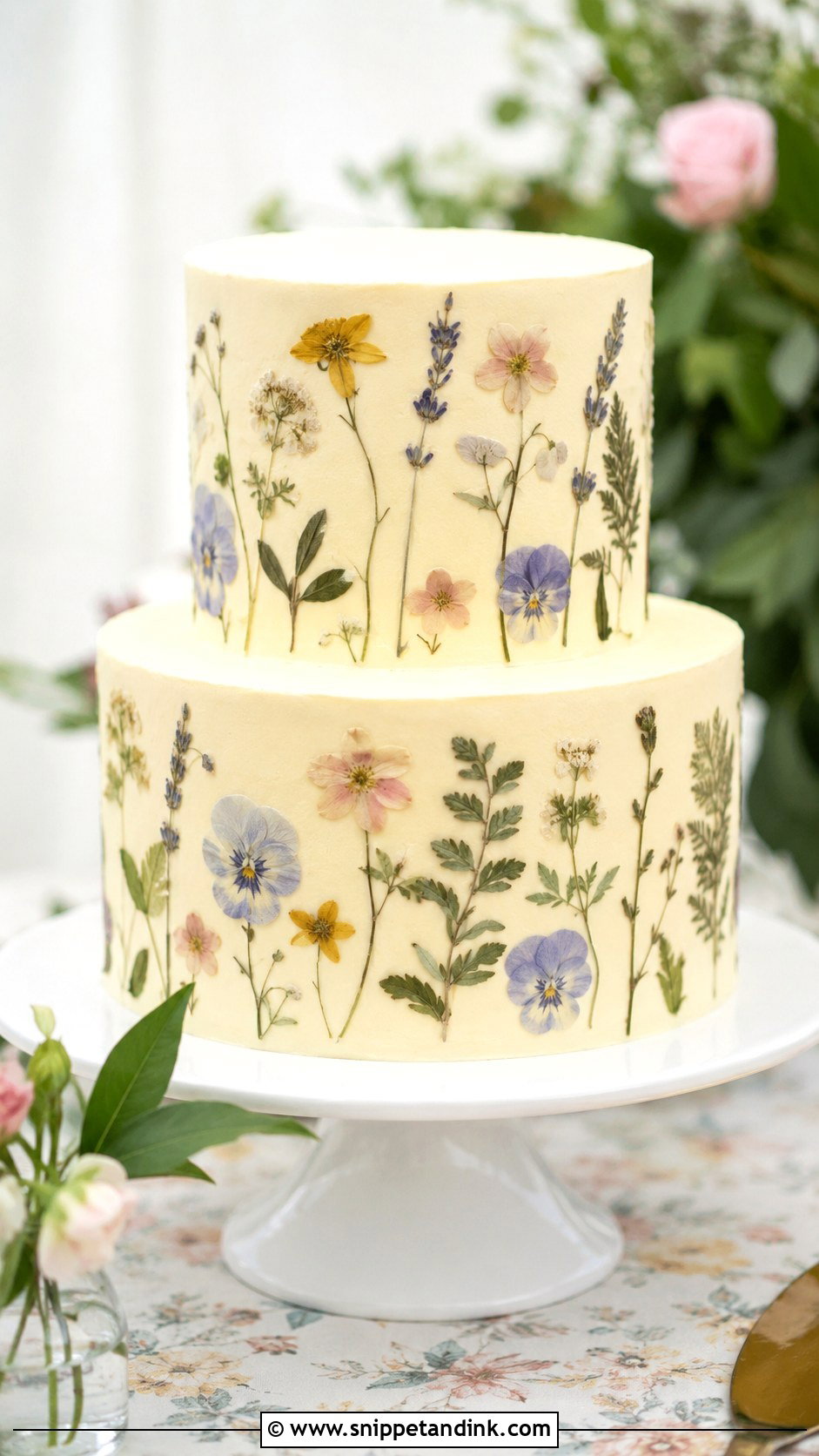
Baby’s breath looks airy against ivory buttercream and pairs well with greenery or a few white roses. A small bunch on top and a cluster near the base is usually enough. It’s also inexpensive, which is part of its appeal. But it should never be pushed straight into the cake; it isn’t a food plant, so I wrap the stems with floral tape and set them into picks or on a barrier. Smooth or gently textured frosting keeps the tiny flowers as the focus.
12. Simple Two Tier Wedding Cake With Blush Flowers
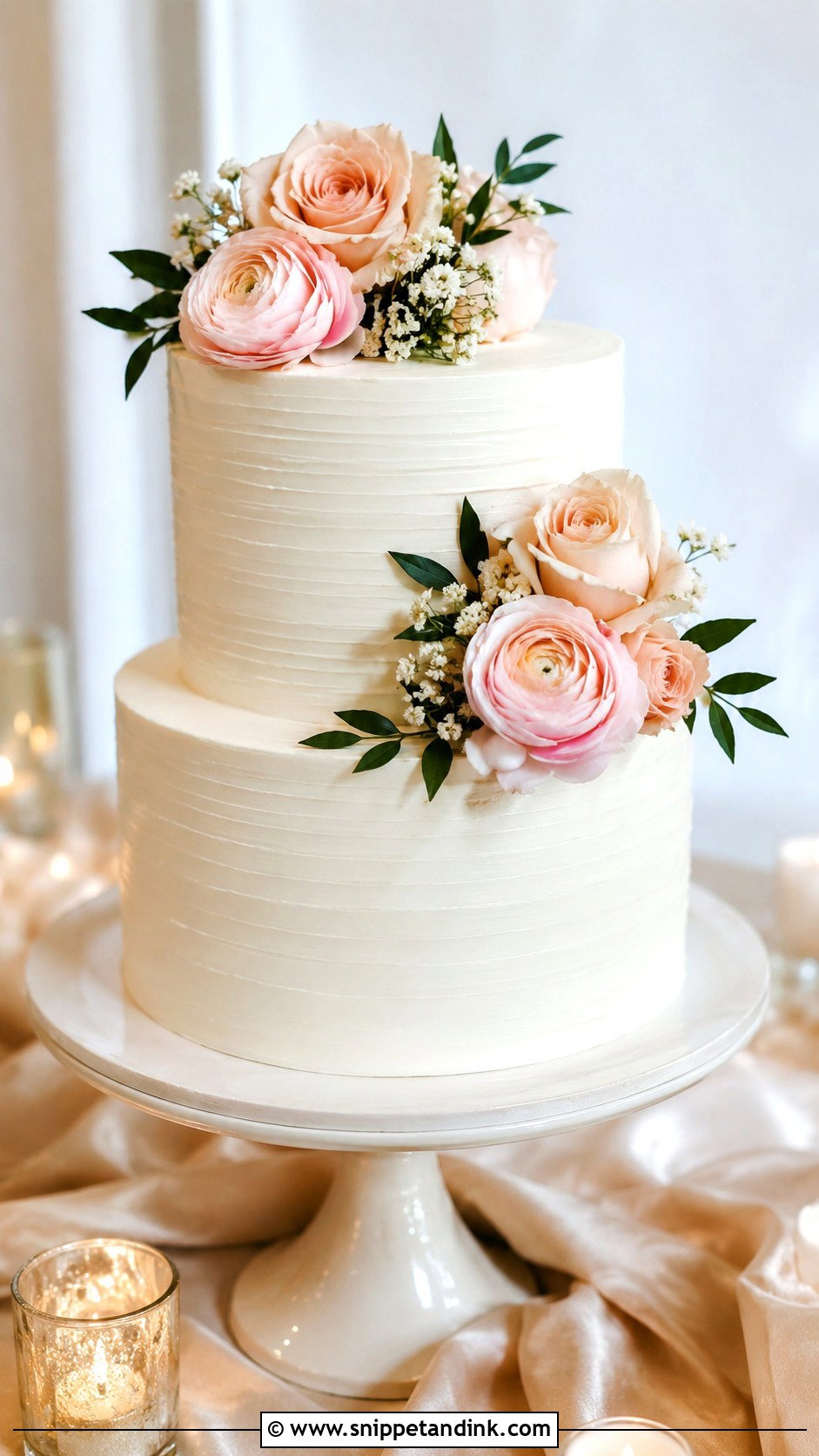
Blush flowers bring warmth while the cake stays soft. Pale pink roses, ranunculus, peonies, or sugar flowers can turn a plain white cake romantic, set as a small cluster between the tiers on smooth ivory buttercream. A few green leaves add contrast. Peonies are seasonal and heavy-headed, so outside late spring I’d suggest sugar peonies or garden roses instead. Blush sits easily alongside champagne, cream, dusty rose and gold.
13. Simple Two Tier Wedding Cake With Blue Flowers
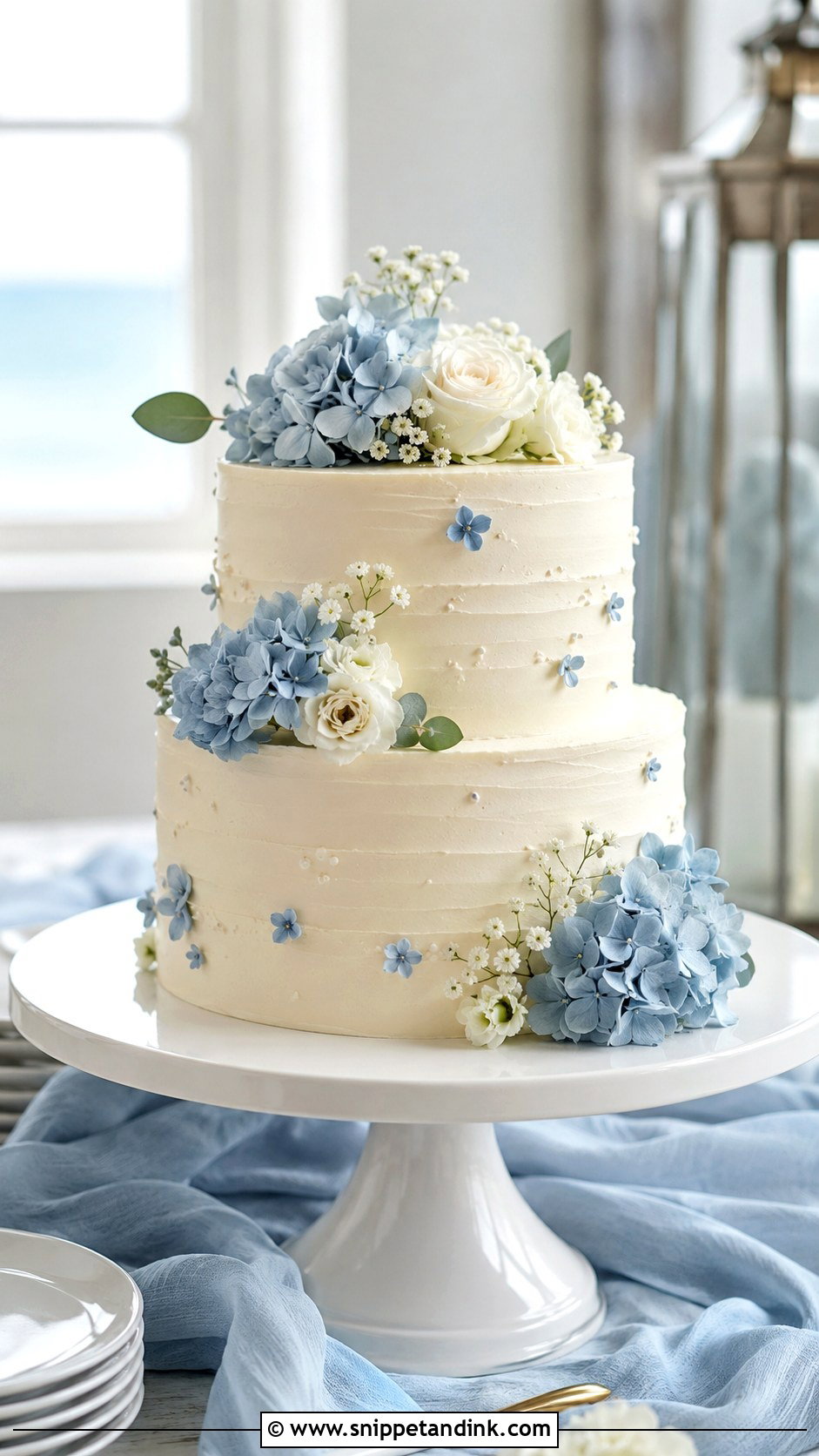
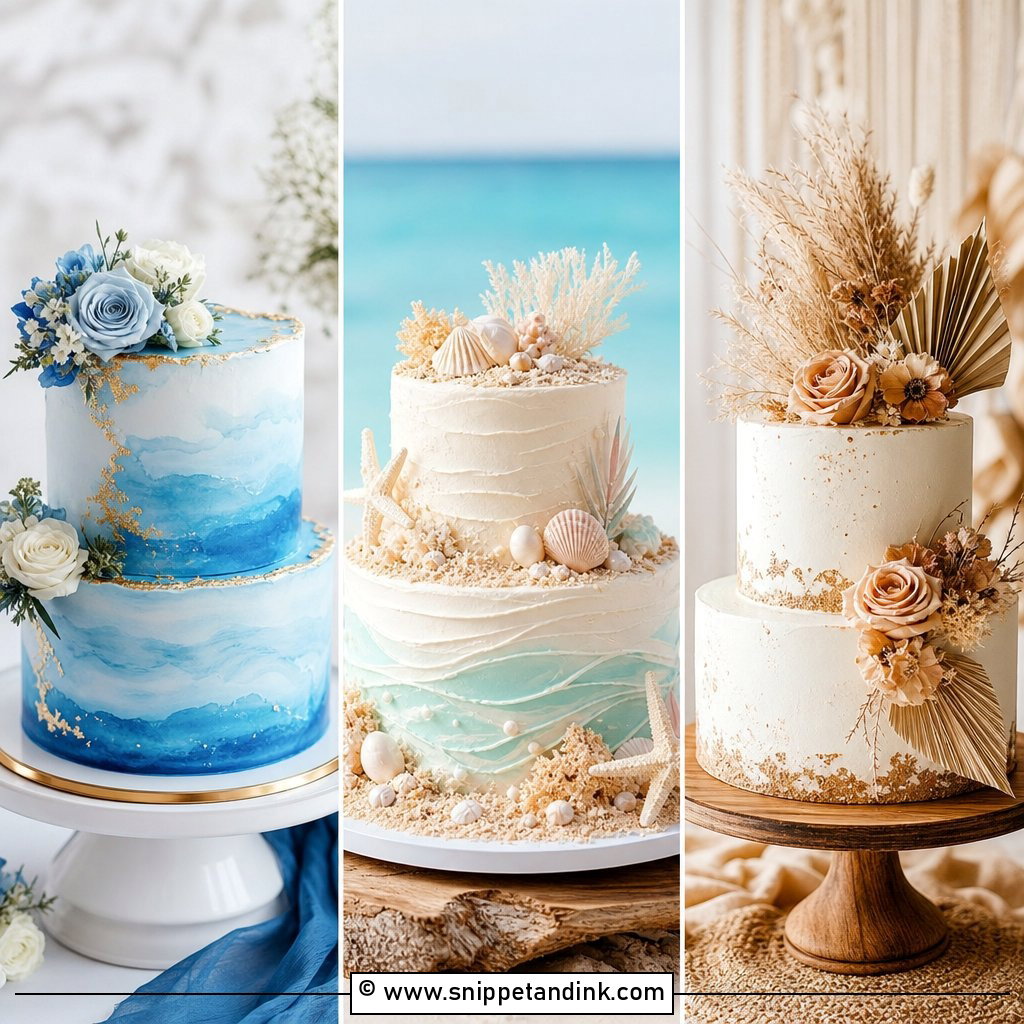
Pale blue on white feels calm and slightly unexpected. Hydrangea, delphinium and forget-me-nots all give that colour, though I’d keep real hydrangea and delphinium off the cake surface entirely, since both are toxic. Sugar versions or a clear barrier solve it. A cluster at the base and a small topper are plenty, with a little greenery to make the blue look natural. Smooth frosting helps the colour stand out for coastal or spring weddings.
14. Simple Two Tier Wedding Cake With Sage Green Details
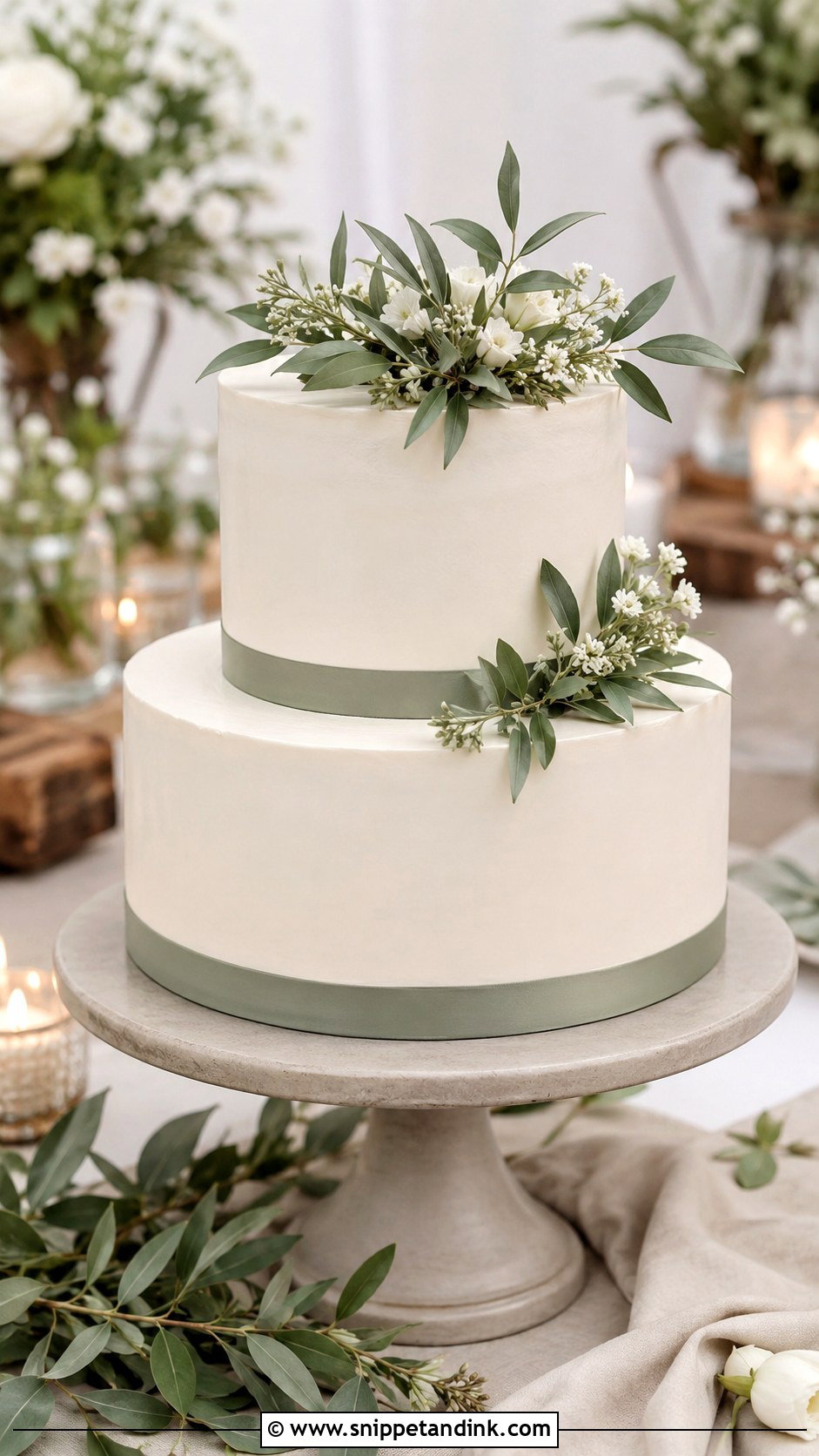
Sage green reads modern and soft. Sage ribbon, painted buttercream, delicate leaves or small sugar flowers in muted green all work, alongside ivory, beige, white and gold. Painted sage on buttercream is hard to get even, so I tint the buttercream itself for a band around one tier, which gives a cleaner result. Keep everything else minimal. It suits vineyards and neutral reception rooms, and the colour won’t date quickly.

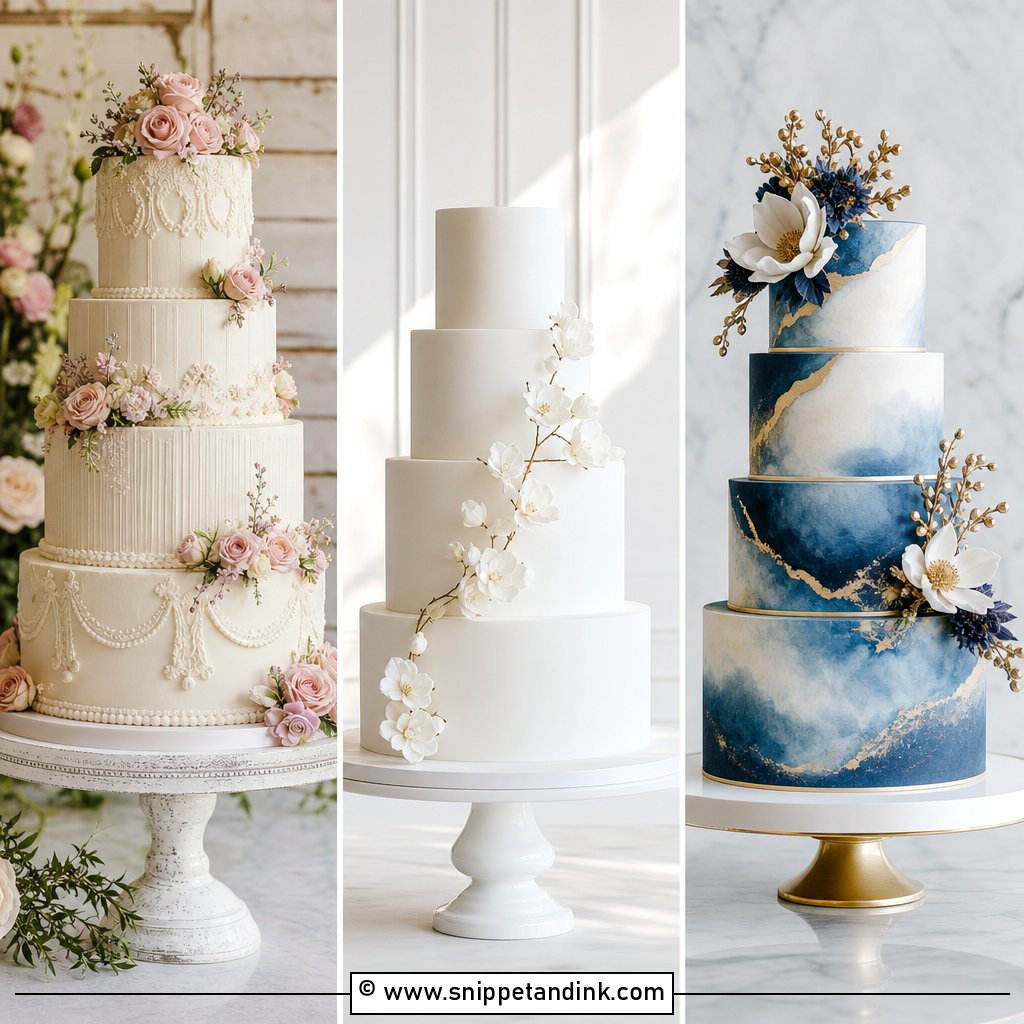
15. Simple Two Tier Wedding Cake With Lavender Flowers
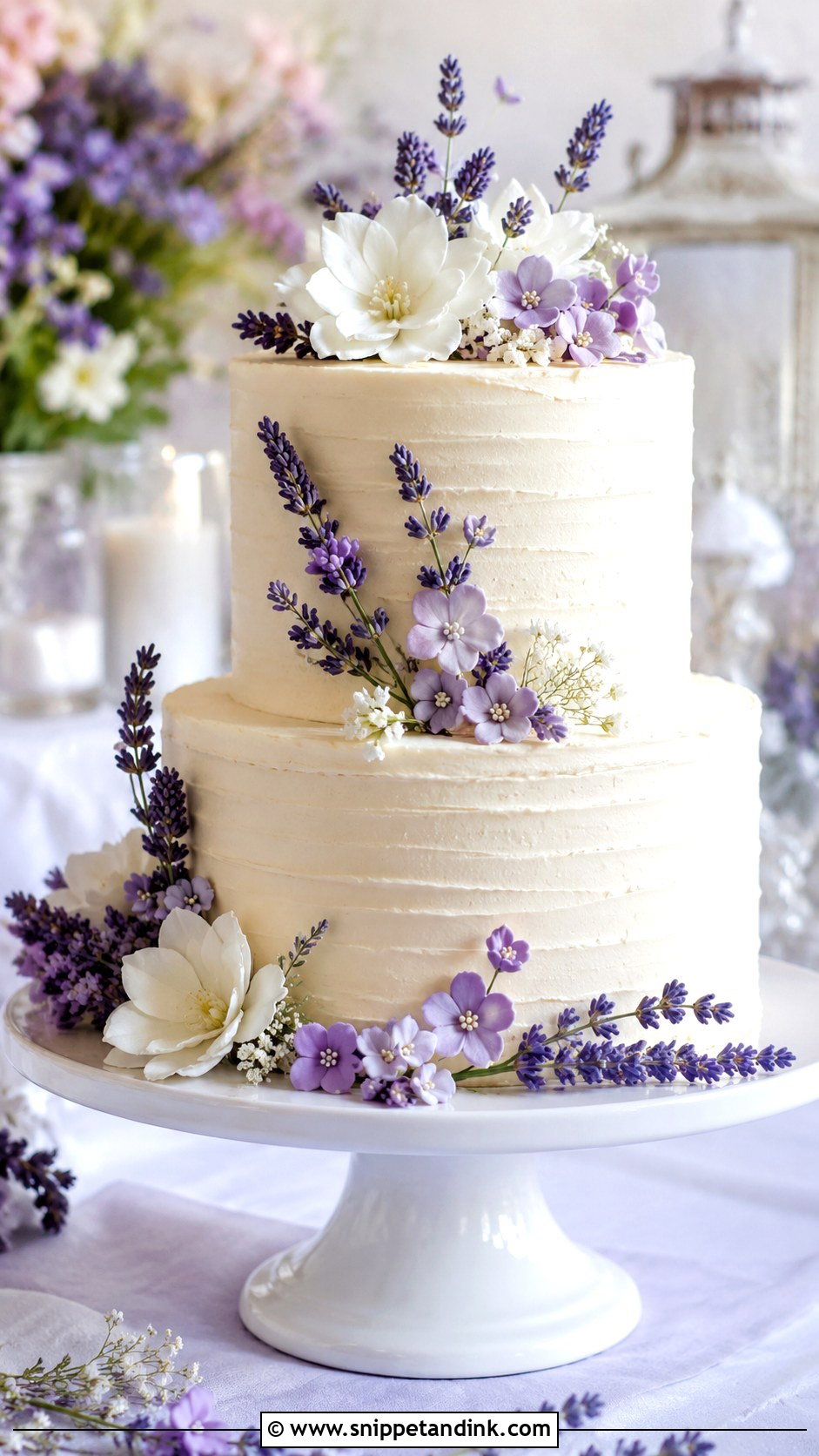
Lavender gives colour that still feels gentle. Culinary lavender, small purple sugar flowers or pale lavender blooms can go around the tiers, with lemon, vanilla, honey or almond inside. If you want lavender in the flavour, go easy: too much tastes soapy, so I infuse it lightly into a syrup or cream rather than baking buds into the sponge. A lightly textured buttercream finish and a few sprigs of greenery keep it natural for a spring or summer wedding.
16. Simple Two Tier Wedding Cake With Fruit
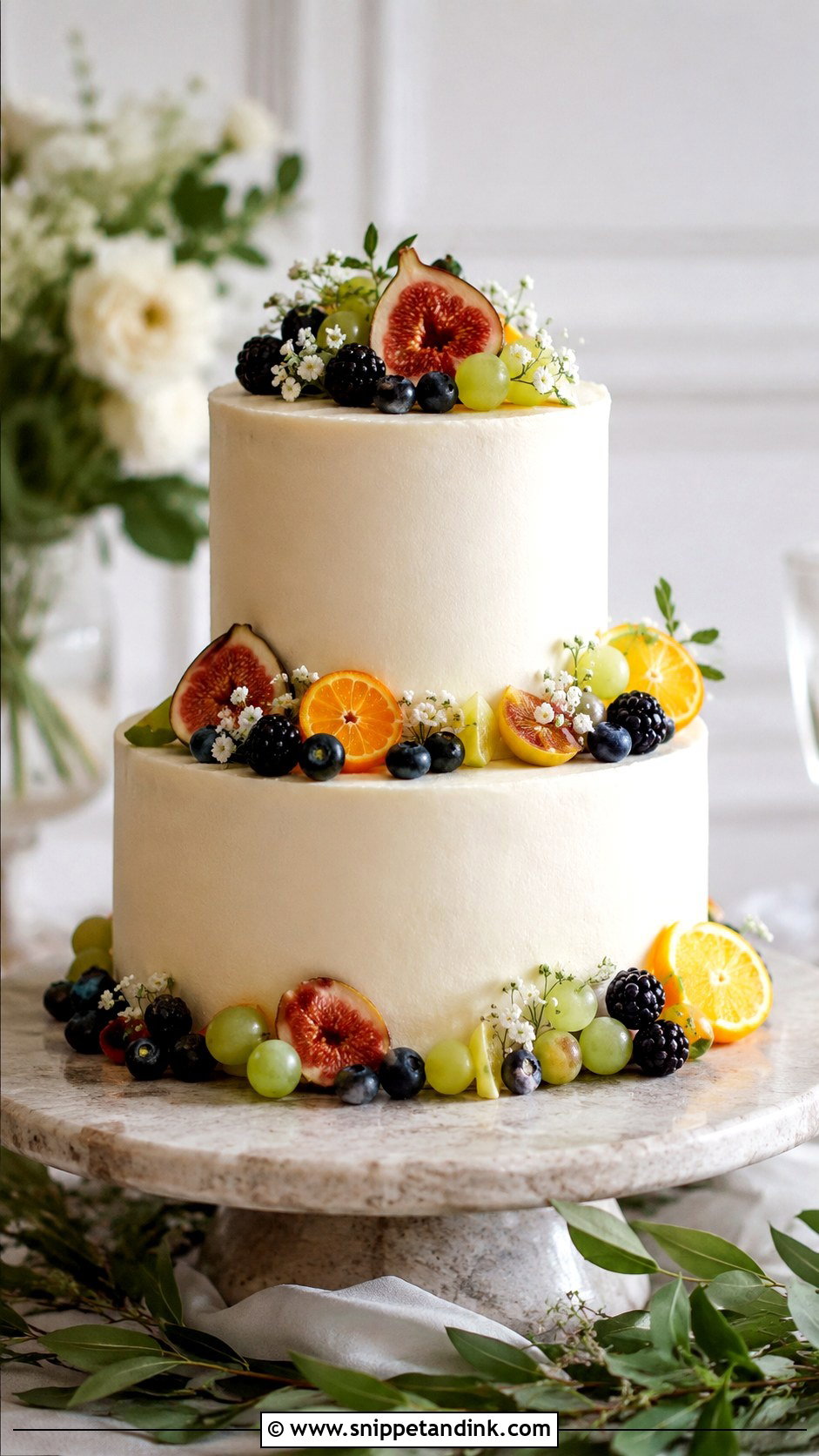
Fruit is decoration that also hints at the flavour inside: berries on a lemon cake, figs on vanilla with fig filling. Berries, figs, grapes, cherries or citrus slices look fresh on white buttercream when placed neatly, with a cluster on top and a few pieces at the base. Cut fruit weeps juice and stains frosting, so I use whole fruit where possible and add it on site. It feels seasonal and suits couples who’d rather not have a lot of flowers.
17. Simple Two Tier Wedding Cake With Strawberries
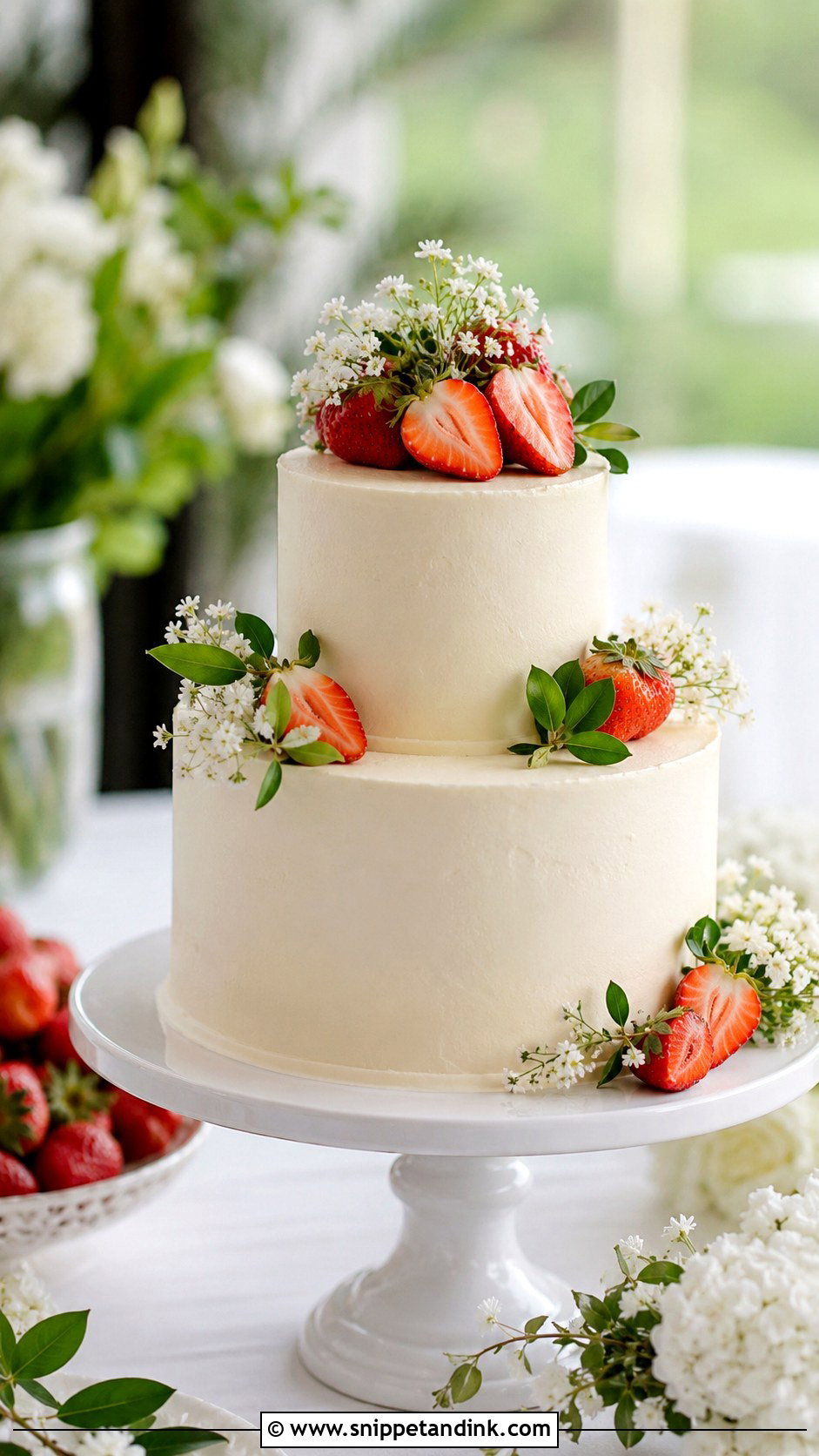
Strawberries give a cheerful red against white frosting. Whole, halved or mixed with tiny white flowers, they suit spring and summer, brunch receptions and garden parties, with a vanilla, almond or lemon sponge. Halved strawberries start leaking within a couple of hours, which is why I prefer whole berries, glazed lightly so they don’t dull. Smooth buttercream looks cleaner and more formal; a semi-naked finish turns it rustic.
18. Simple Two Tier Wedding Cake With Lemon Flavor
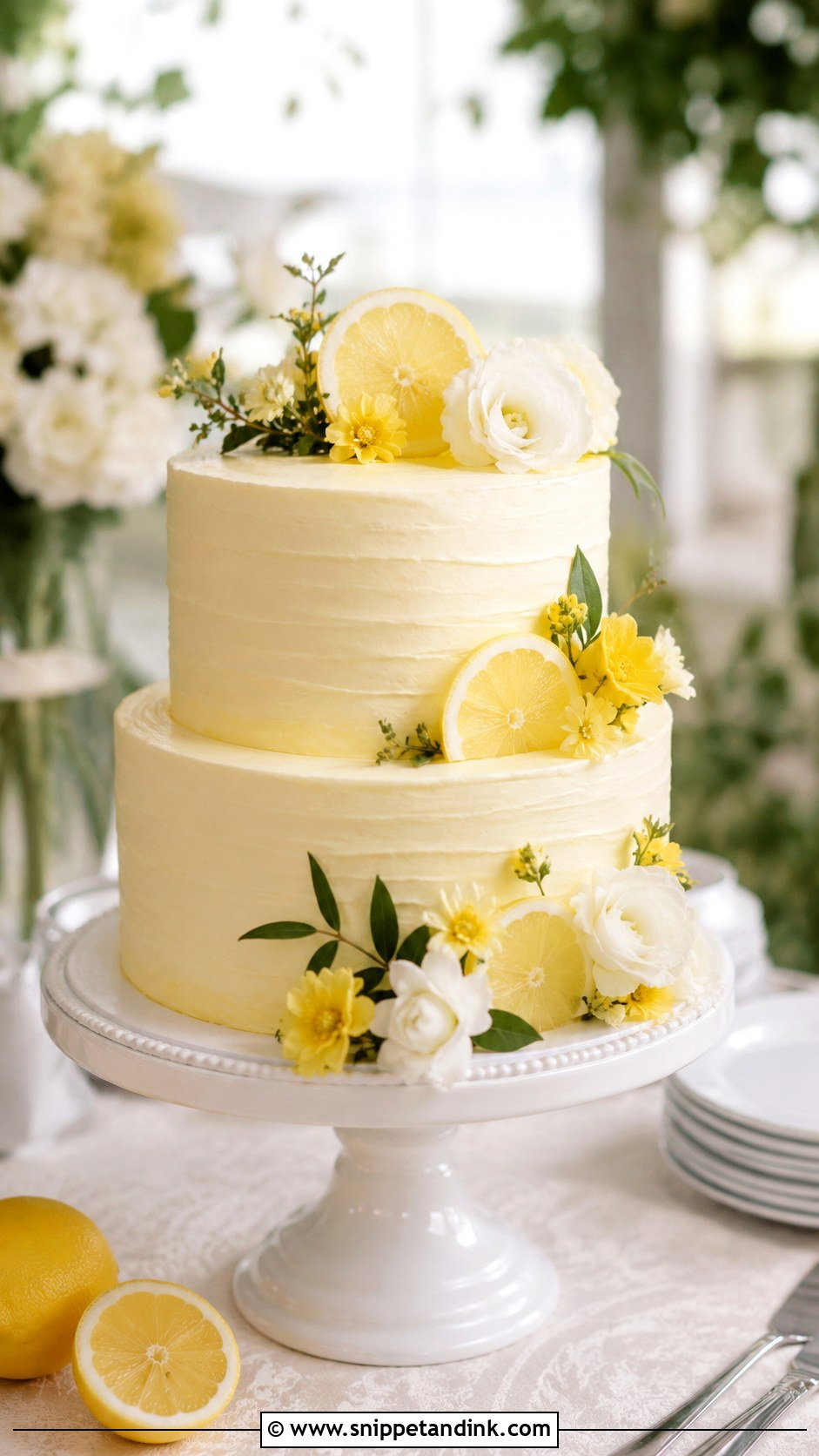
A cake with lemon flavor is my suggestion for warm-weather weddings because it tastes light after a big meal. The outside can stay plain ivory buttercream while the inside does the work: lemon curd, raspberry, blueberry compote or elderflower buttercream. Curd fillings are soft, so I pipe a dam of firm buttercream around the edge of each layer to stop the curd bulging out of the sides. A few lemon slices, white flowers or small yellow blooms hint at what’s inside.
19. Simple Two Tier Wedding Cake With Vanilla Bean
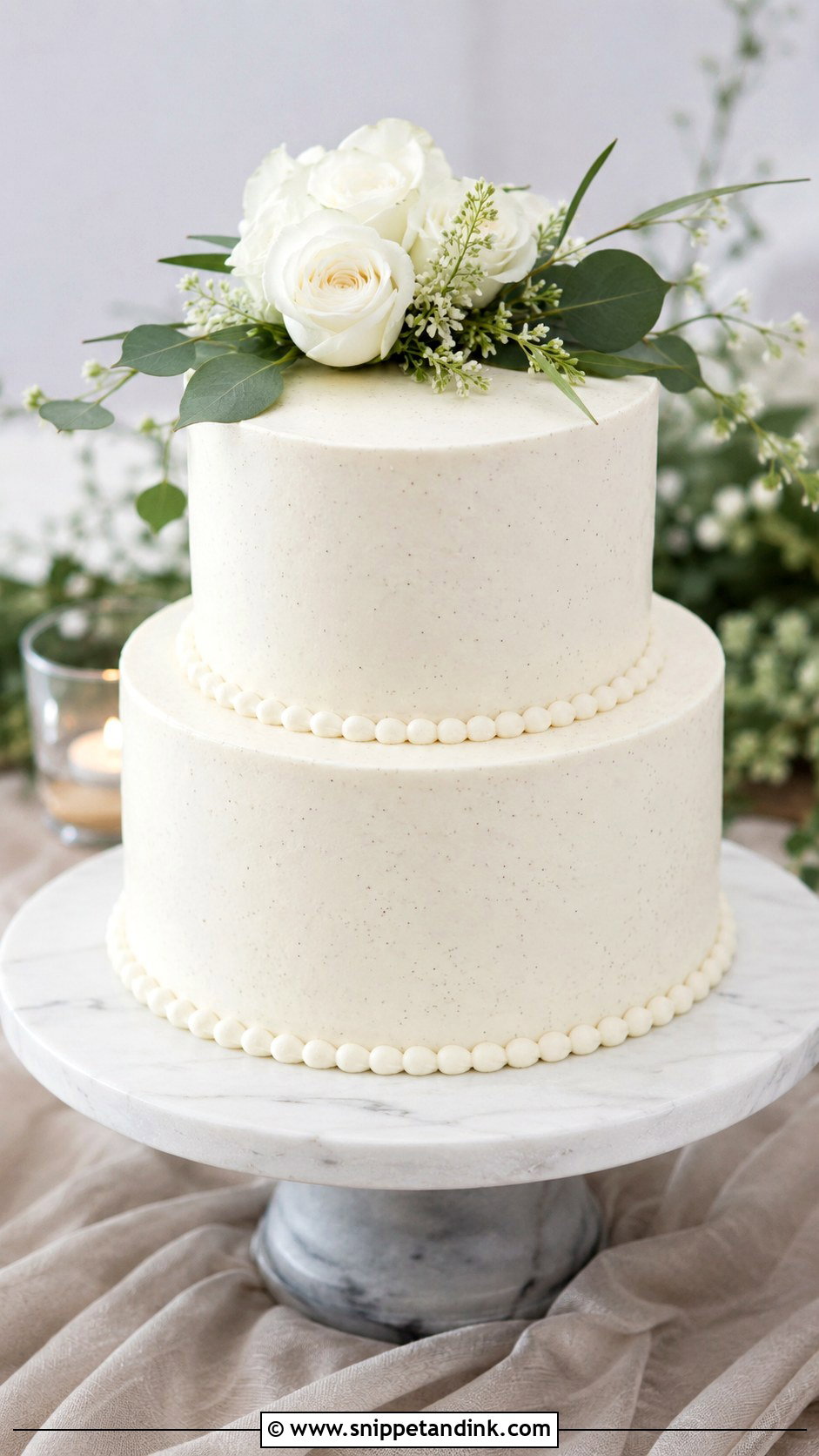
Vanilla bean is the flavour most guests will happily eat, and the visible specks make it feel more special than plain vanilla. It pairs with Swiss meringue buttercream for something silky or American buttercream for something sweeter and firmer. Keep the outside smooth and white, with fresh flowers, pearls or a ribbon at the base. It works for nearly any season. Strawberry, raspberry, caramel, lemon or pastry cream fillings add a surprise when the cake is cut.




20. Simple Two Tier Wedding Cake With Chocolate
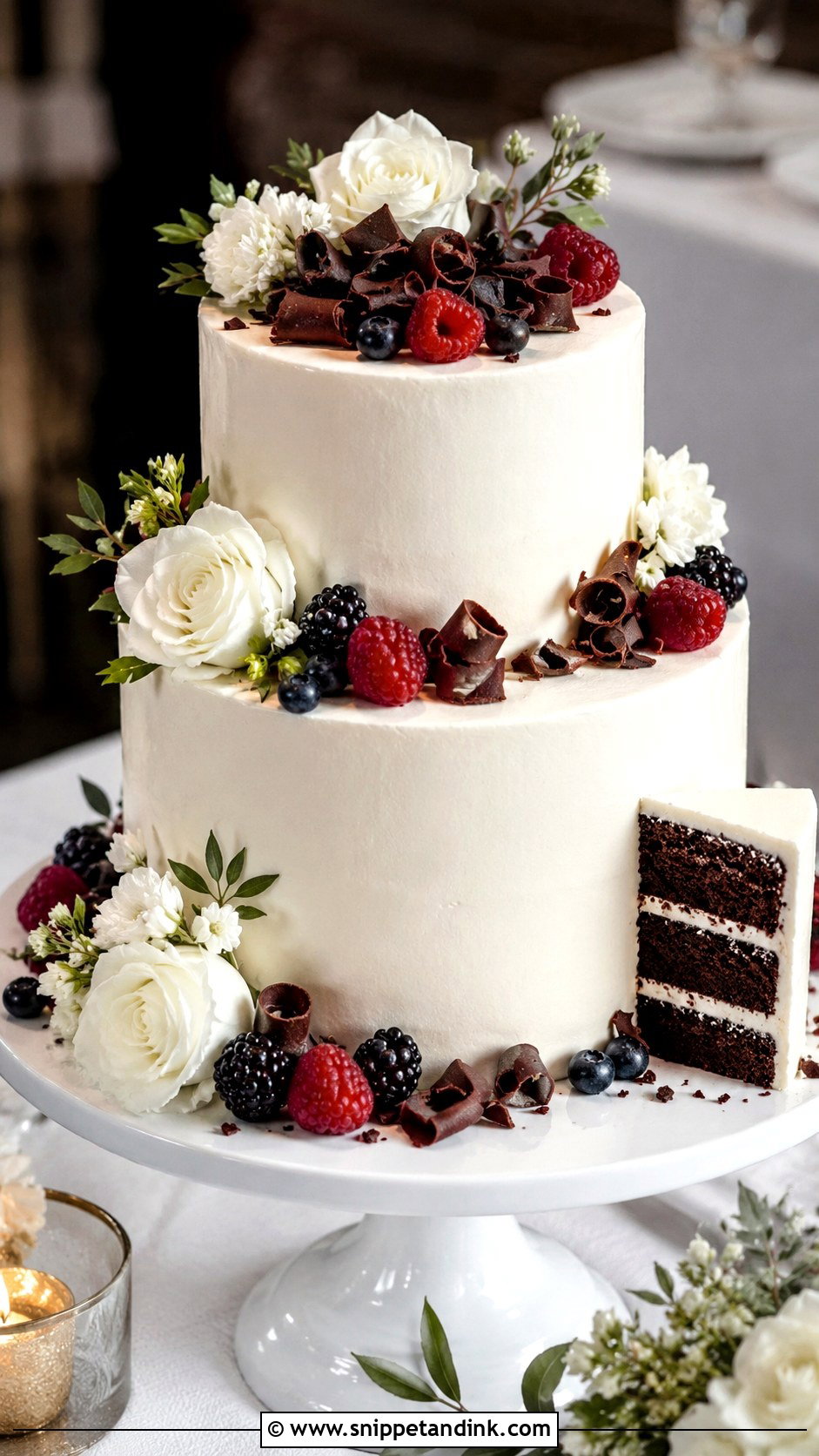
Chocolate gives a richer dessert while the outside can stay classic white or ivory. Cut it and the dark layers make a striking contrast. Chocolate buttercream on the outside reads warmer and more dramatic, though it shows every fingerprint, so I chill the cake before moving it. Decorate lightly with chocolate curls, white flowers or a few berries. Evening receptions and indoor venues suit it best.
21. Simple Two Tier Wedding Cake With Caramel Drip
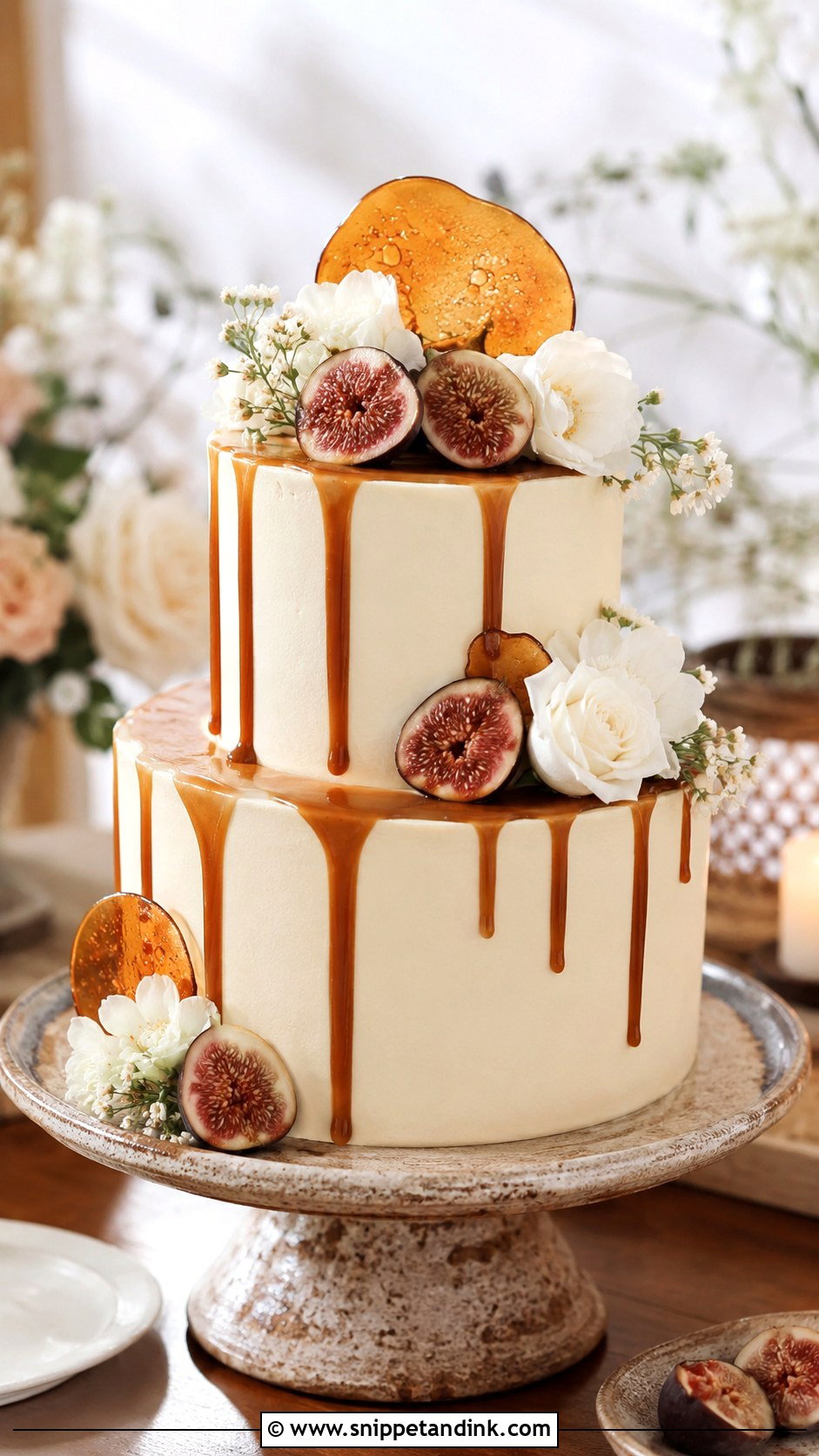
A caramel drip should be thin and controlled. Too heavy, and it looks like a birthday cake. The drip’s length depends almost entirely on the cake’s temperature, so I pour onto a well-chilled cake and test a single drip first. Ivory buttercream and caramel look natural together. White flowers, caramel shards or small figs finish it, with vanilla, spice, apple, chocolate or brown butter cake inside. It’s a warm choice for autumn and rustic venues.
22. Simple Two Tier Wedding Cake With White Drip
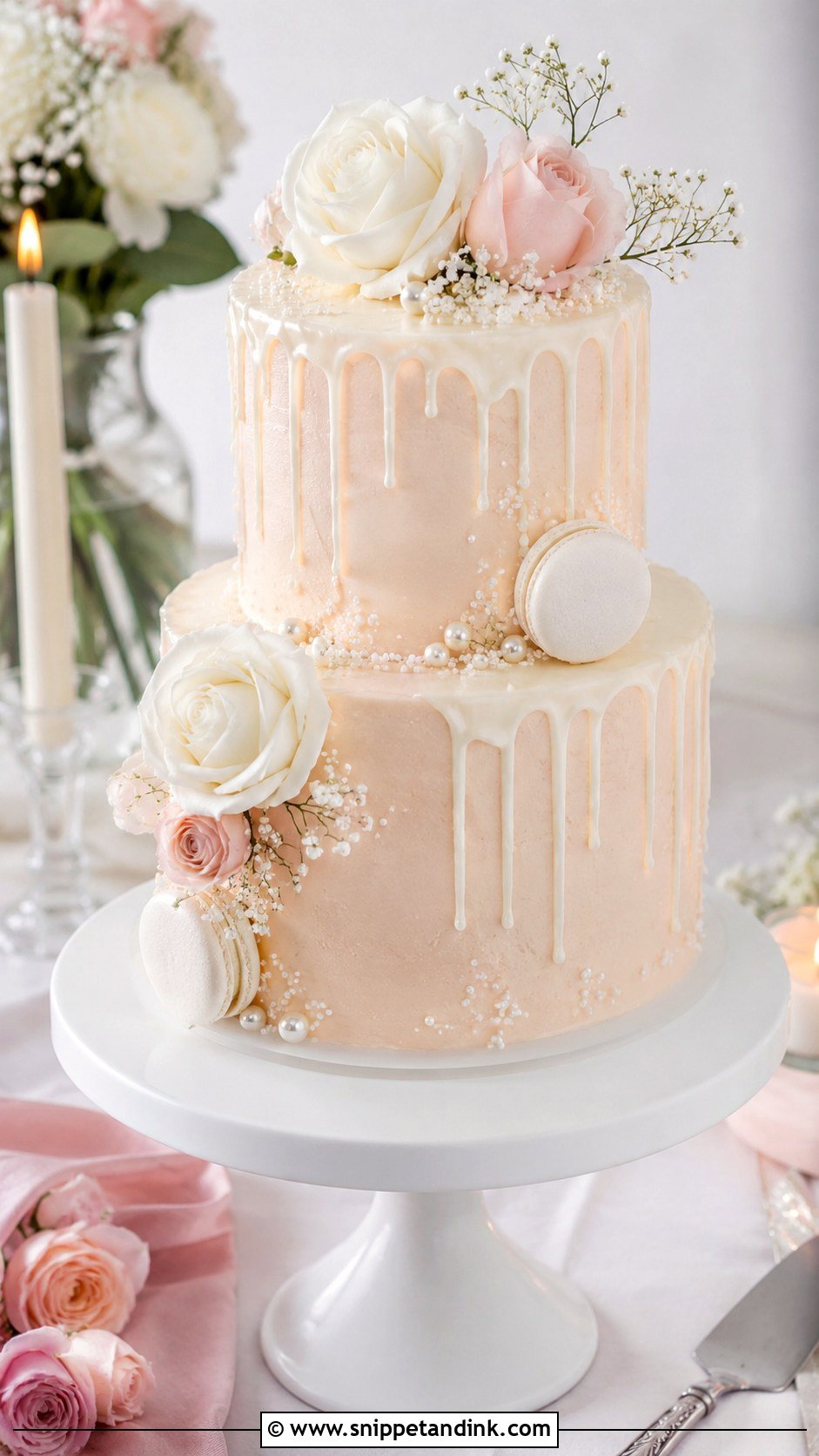
A white drip adds movement without breaking a calm palette. I make it from white chocolate ganache over smooth buttercream; white chocolate is fussier than dark, and if it’s too warm it turns translucent, too cool and it stops halfway down. Pearl sprinkles, white flowers, macarons or a simple topper suit it. The base frosting can stay white or go pale blush, beige or champagne for a subtle contrast.
23. Simple Two Tier Wedding Cake With Ribbon
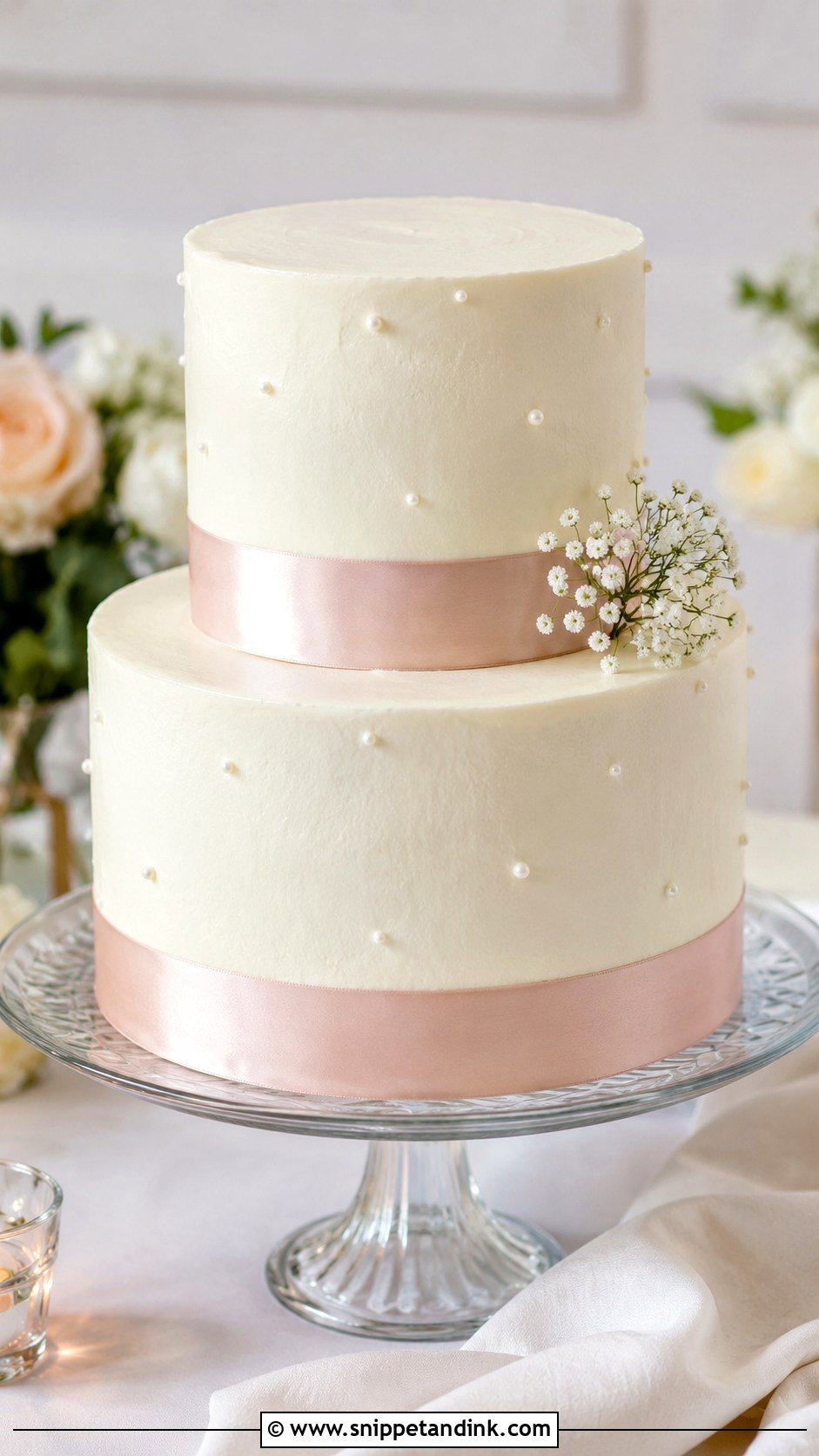
Ribbon is the cheapest way I know to make a cake look finished. Satin, silk or fondant ribbon around the base of each tier gives a clean line: white is classic, blush romantic, black a modern contrast. Real fabric ribbon absorbs fat from buttercream and shows grease marks within hours, so I back it with a strip of tape or use fondant ribbon instead. Keep the cake itself smooth and plain, perhaps with one small flower cluster.
24. Simple Two Tier Wedding Cake With Piped Border
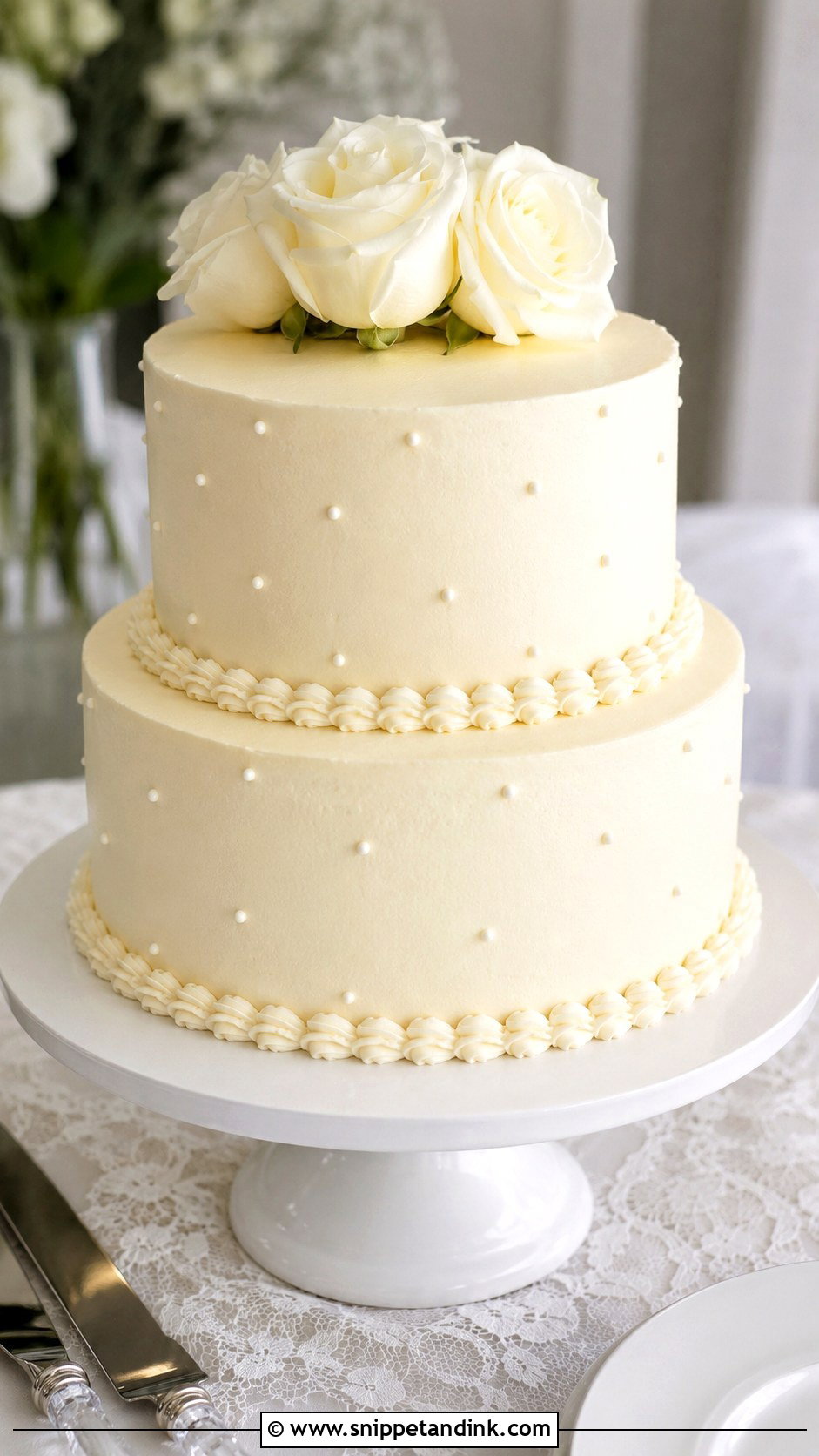
A piped border finishes a cake without covering it. Small shells, tiny pearls or soft dots around the base of each tier add just enough detail, and they have a practical job too: they hide the seam where each tier meets the board or the tier below. White-on-white keeps it subtle; a blush or ivory tone softens it. Combine it with smooth buttercream, a small topper or a few fresh flowers.



25. Simple Two Tier Wedding Cake With Vintage Piping
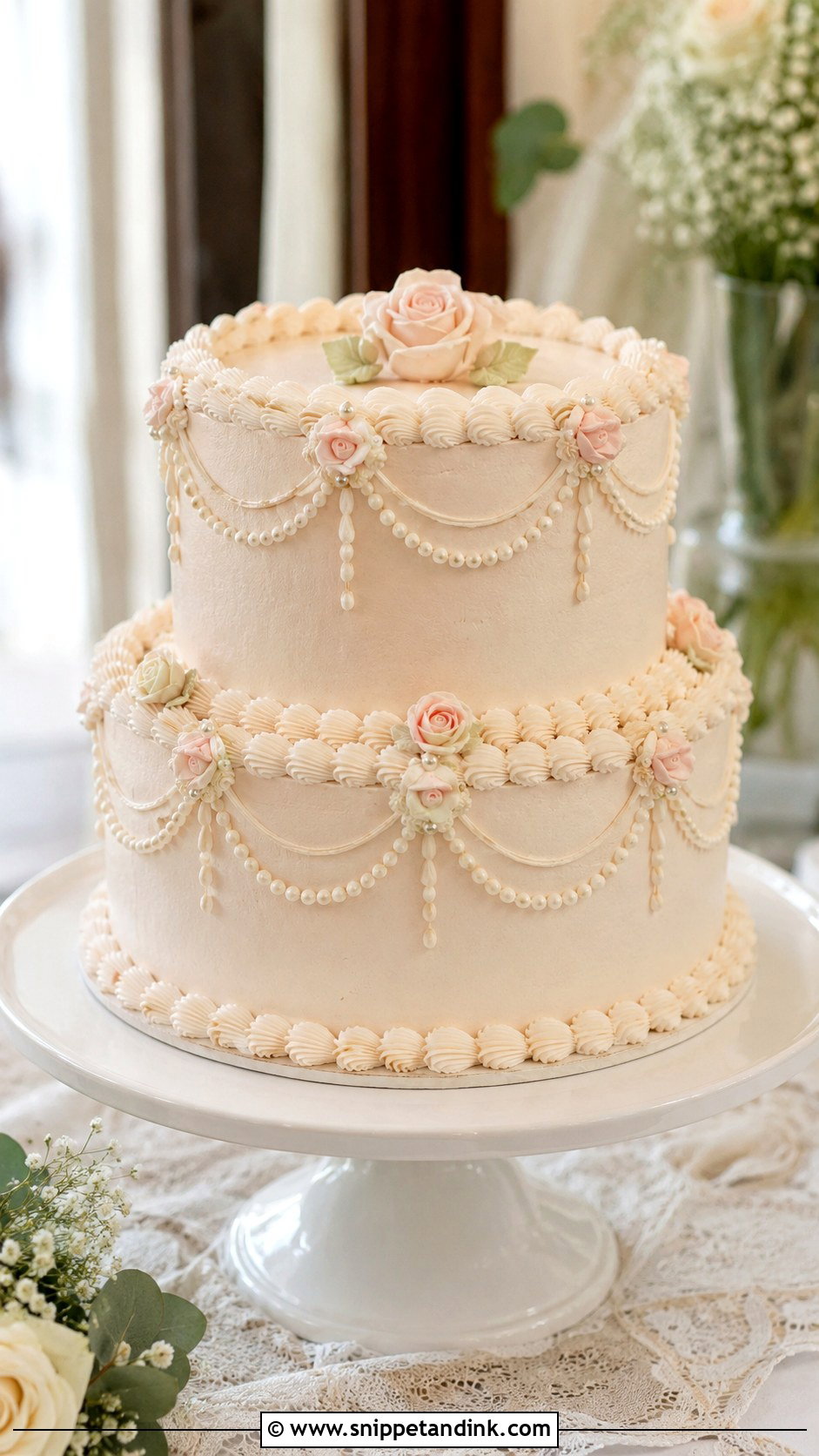
Vintage piping stays simple when it’s balanced: delicate swags, small shell borders and soft buttercream details, without covering every surface. It gives a nostalgic style in a cleaner modern form. Buttercream piping is softer than royal icing and won’t hold fine overpiped layers in warm rooms, so for an outdoor summer wedding I’d keep the design shallow. White, ivory or pale blush keep it refined, with a few sugar pearls or small roses added if you like. On a raised stand, the texture catches the light.
26. Simple Two Tier Wedding Cake With Minimalist Flowers
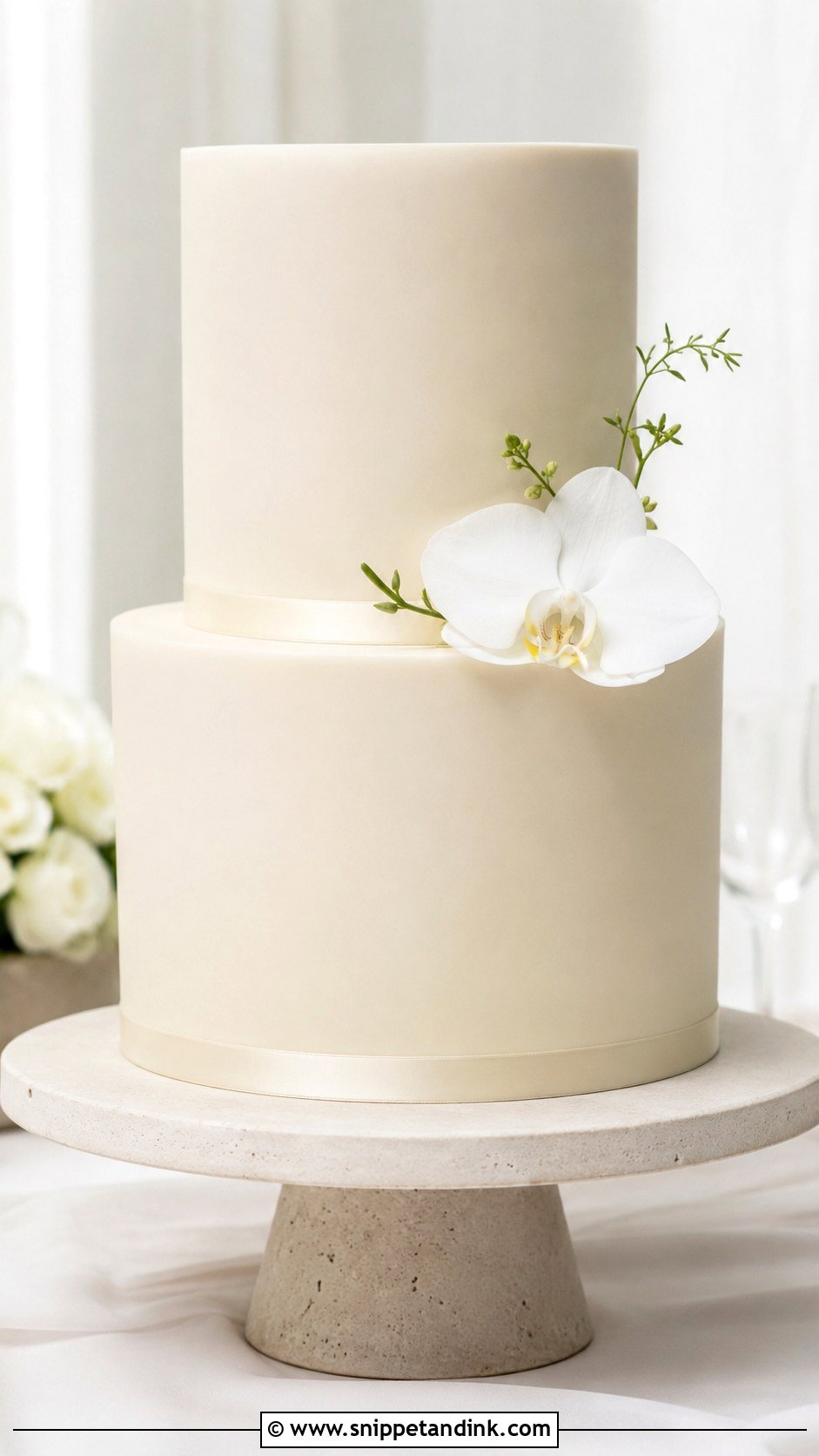
Sometimes one detail is all a cake needs. A single statement bloom or a tiny cluster of two or three flowers, set slightly off-centre on the top tier or between the tiers, looks modern on smooth buttercream or fondant. Orchids, roses, ranunculus, anemones or small sugar flowers all work. The open space is part of the design, so resist filling the other side. Couples who like spare, less-is-more decor usually land here.
27. Simple Two Tier Wedding Cake With Rustic Texture
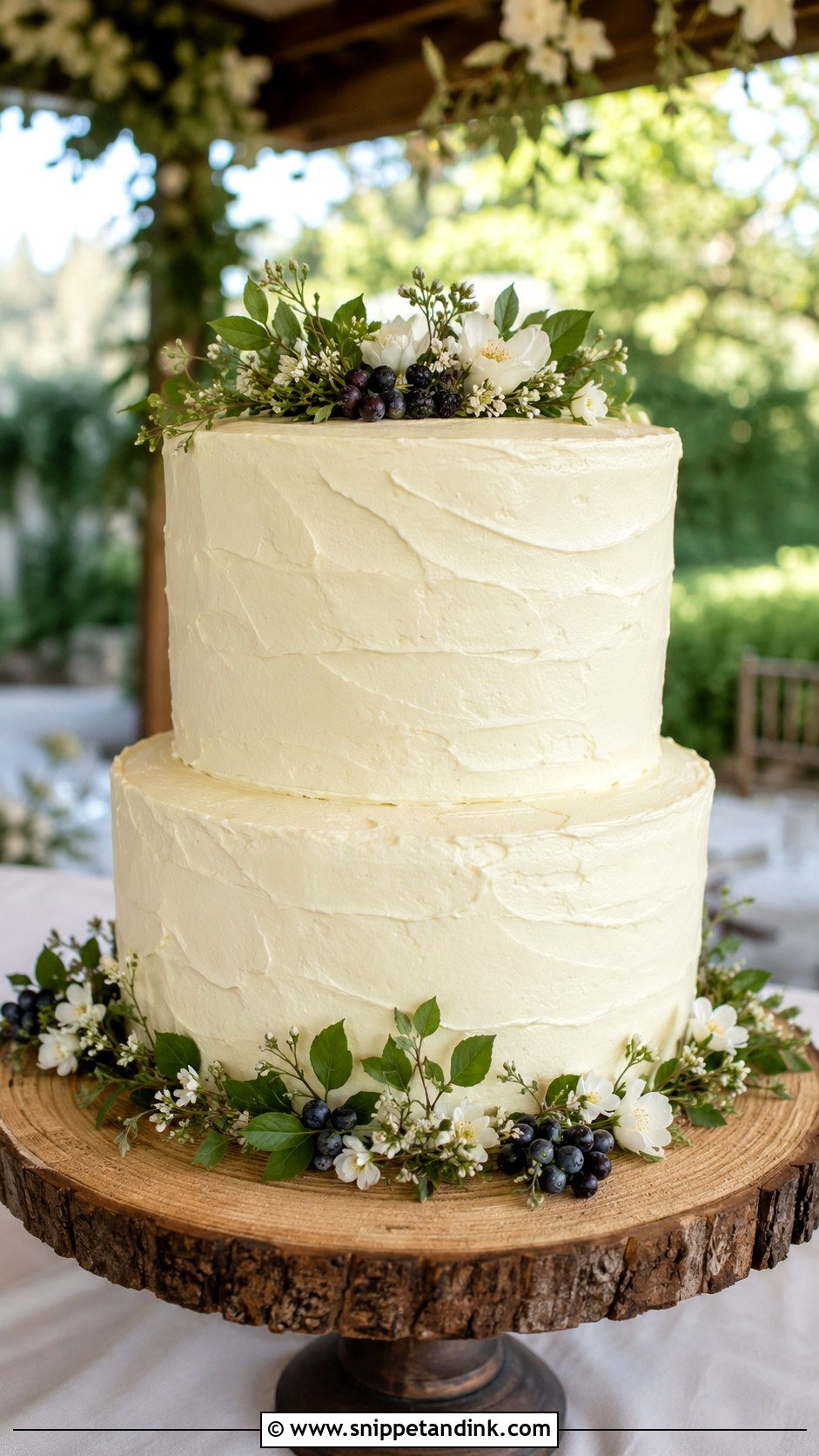
Rustic texture means soft spatula marks, uneven strokes or a lightly scraped finish. Keep the colour in the ivory or cream family so the texture looks natural, and add greenery, small white flowers, berries or a simple wood topper to suit the setting. A wood stand grounds it. It doesn’t need perfect edges, which also makes it the most forgiving style for a long, bumpy drive to a barn or mountain venue.
28. Simple Two Tier Wedding Cake With Modern Square Tiers
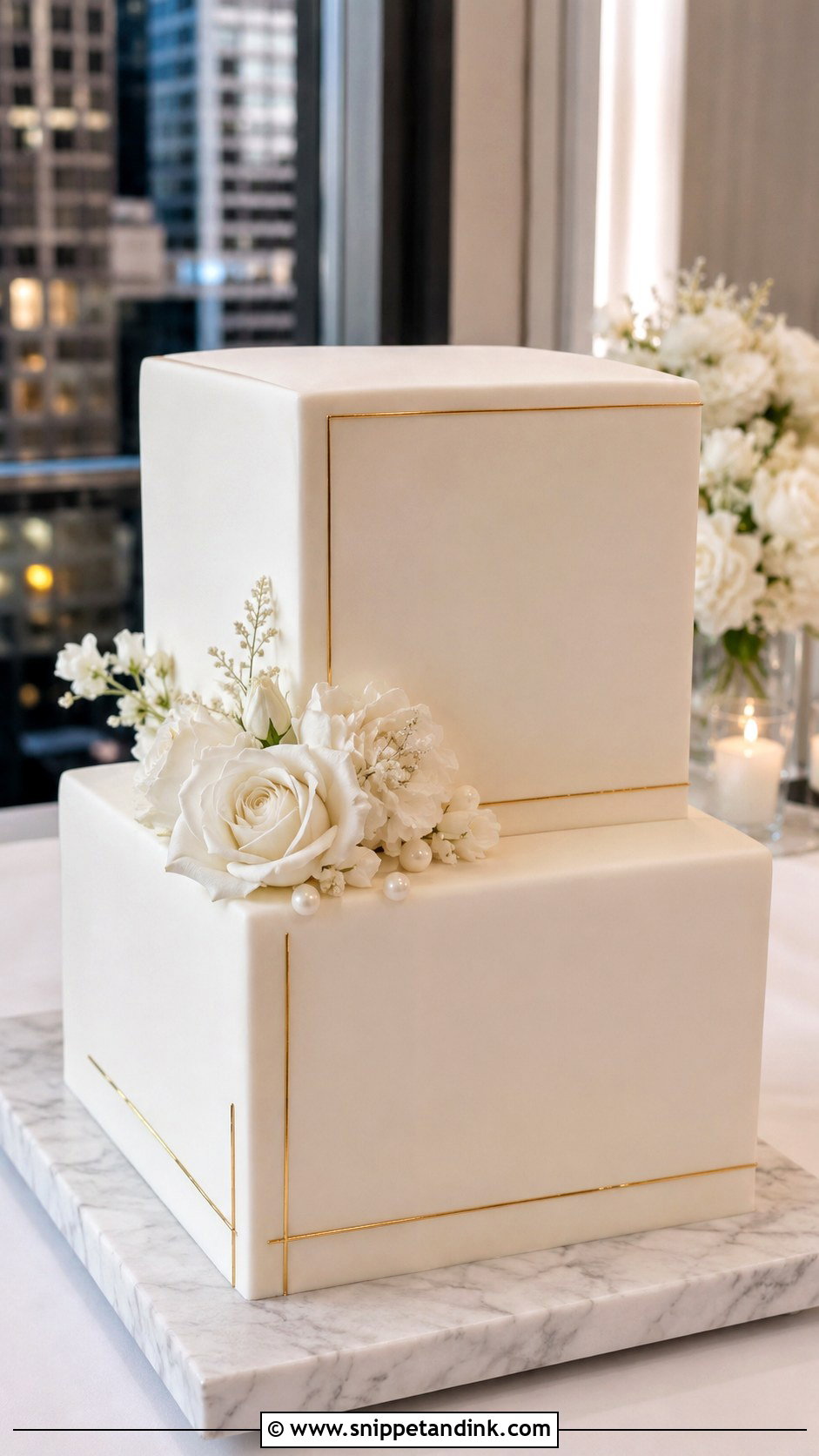
Square tiers give an architectural, contemporary look. Smooth fondant or very smooth buttercream is essential, since the shape is the feature, and getting crisp corners in buttercream takes far more time than a round cake. That’s often reflected in the price. Square tiers also give more slices than round ones of the same width, which helps if your guest count sits on the edge. Keep decoration minimal: a thin ribbon, one flower cluster or a touch of gold.
29. Simple Two Tier Wedding Cake With Oval Tiers
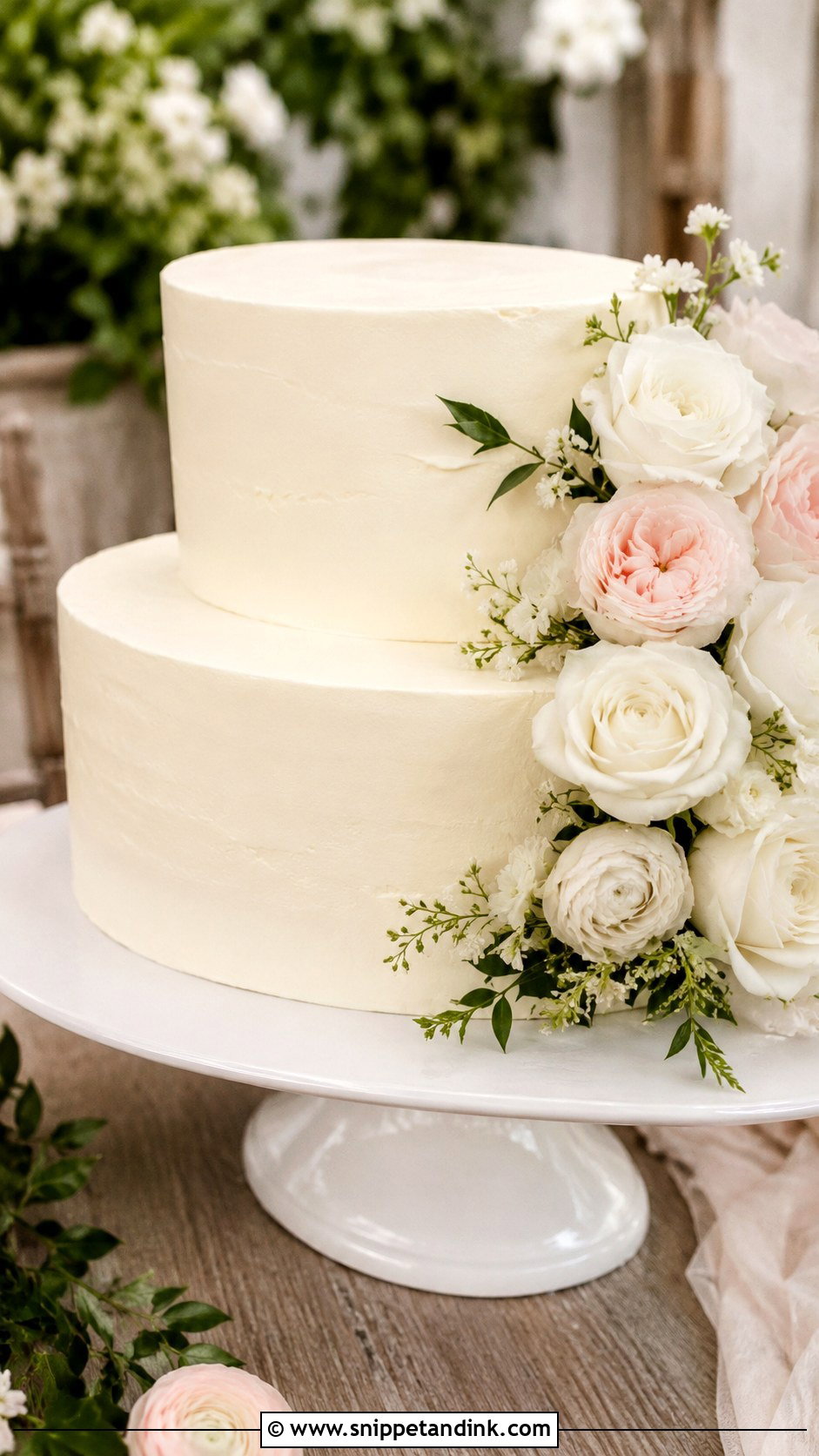
Oval tiers look soft and a little unexpected. The curve gives grace without needing much decoration, and smooth buttercream, soft fondant or a light stucco texture all suit it. Place a few flowers along one side to follow the curve. Ovals need custom-cut boards and the right tins, so not every baker offers them; ask early. From the front it reads wider than a round cake, which gives a pleasing silhouette at an intimate wedding.
30. Simple Two Tier Wedding Cake With Small Topper
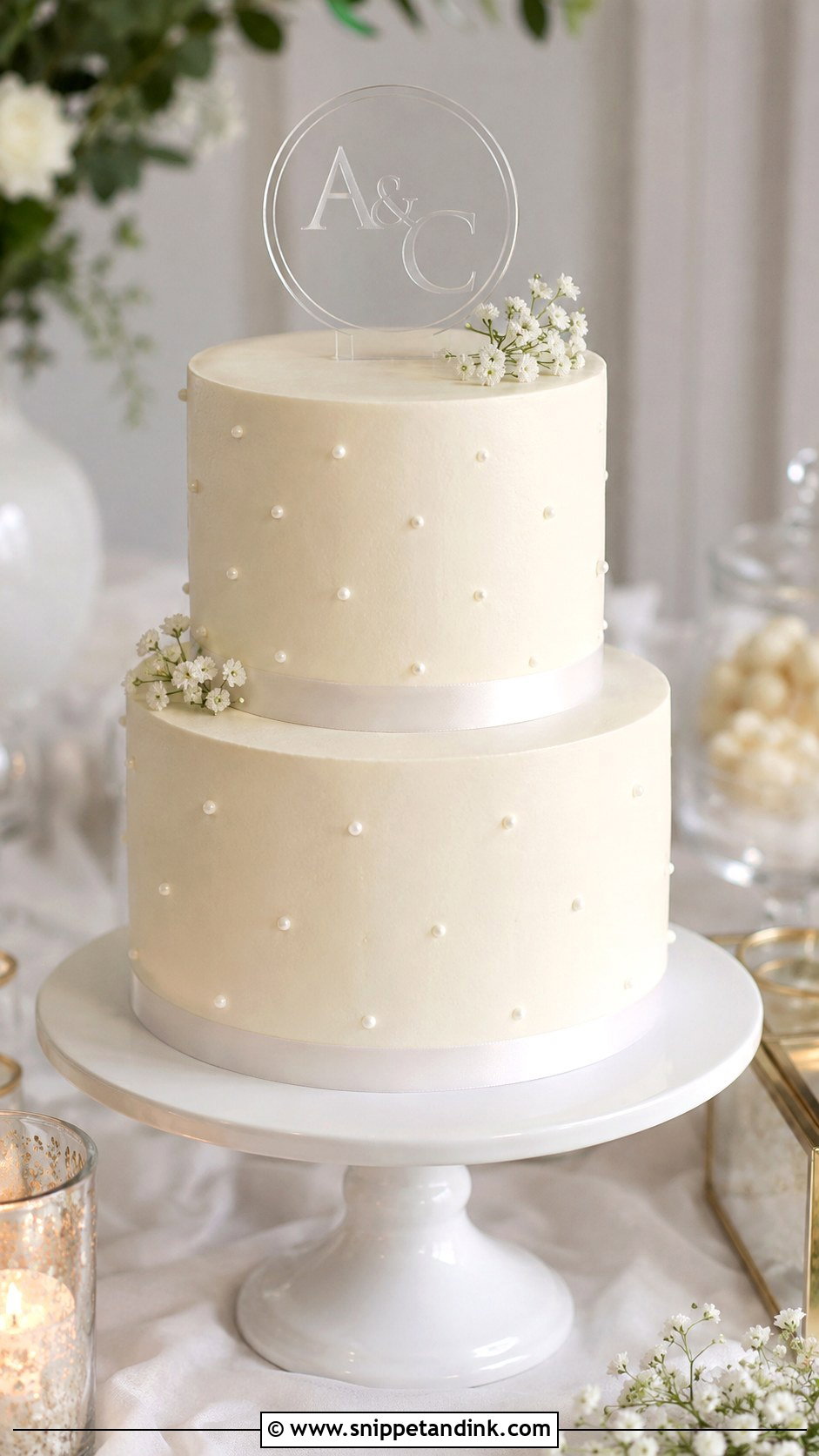
A small topper finishes the cake without overpowering it. A clean acrylic topper, a tiny floral topper, a ceramic couple or a simple monogram all work on a smooth, lightly decorated cake. Weight matters more than people think. A ceramic figure sits heavily on soft sponge, so I place it on a small hidden board supported by a central dowel. Acrylic toppers are light and simply push in on their spikes. A few flowers or a ribbon at the base balance it.
Which Flowers Can Touch the Cake, and How They Go On
So many designs here use fresh blooms that this deserves its own section. Flowers grown for bouquets are usually treated with pesticides and aren’t meant to be eaten, and some popular wedding flowers are toxic. Hydrangea, delphinium, lily of the valley and foxglove should never sit directly on a cake, and I wrap even harmless stems like roses and baby’s breath.
- Agree with your florist which stems are for the cake and ask for unsprayed or organic flowers where possible.
- Wrap every stem in floral tape and set it into a food-safe pick or straw, so nothing enters the sponge.
- Rest heads on a small disc of parchment or acetate where they touch the frosting.
- Remove all flowers before the cake is cut and served.
If any of that feels like too much fuss, sugar flowers or edible flowers grown for eating avoid the question entirely, and they don’t wilt under reception lights.
Heat, the Delivery Van and the Hours Before Cutting
Even a small cake needs internal support. I dowel the bottom tier and set the top tier on its own board, so the weight sits on the dowels rather than squashing the sponge below. Short trips can travel stacked; longer ones are safer with the tiers boxed separately and stacked on site.
Once it’s set up, the room decides how it holds. Swiss meringue buttercream is silky but softens quickly in heat, while American buttercream and ganache-coated cakes stand up better to a warm day. Keep the cake table out of direct sun and away from heaters and the dance floor lights, and ask the venue to leave it in a cool room until shortly before guests arrive. Outdoors in summer, plan the cutting early in the evening rather than at the end of the night.
One Clean Shape and a Single Detail
A wedding cake doesn’t need to be huge to feel special. A clean shape, good frosting and one considered detail carry more weight than a tower covered in decoration. Flowers, greenery, fruit, ribbon, pearls and textured buttercream all work when they’re used with restraint. Let the venue, the season, your guest count and your favourite flavour guide the choice. From classic white buttercream to modern square tiers, two tiers can be refined, practical and memorable at once.
You'll Like These Ideas:



Leave a Reply