
A plain cake is the hardest brief I get, because there is nowhere for a wobbly edge or an air bubble to hide. Done well, though, a pared-back cake looks calm and personal rather than unfinished. Most of the requests I see right now lean toward buttercream finishes, small tiered cakes, pressed flowers, old-school piping, fruit, and a modest cutting cake that sits beside a dessert table. Below are 25 finished cakes, each with what I’d actually watch for if you ordered it, so you can match one to your venue, your season and the number of plates you need to fill.
A Plain Finish Hides Nothing, So Ask for Close-Ups
On a heavily decorated cake, flowers and sugar work cover a lot. On a minimal one, every bulge, tilted tier and pale crumb shows in the photographs. That is why the first thing I’d ask any baker for is close-up photos of their own smooth or textured finishes, taken at the venue rather than in the studio.
- Look at the top edge of each tier. Sharp, level edges mean a chilled cake and a practised scraper; a soft rounded lip is fine if that’s the style you want, but it should be even all the way round.
- Check the joins between tiers. A neat piped border or ribbon is normal; a visible cake board or a crack of frosting means the tiers were stacked in a hurry.
- Ask which buttercream they use. Swiss or Italian meringue tastes lighter and pipes beautifully but softens sooner; American buttercream crusts and holds up better in warm rooms but is sweeter.
- Ask what happens if the venue is hot. A good baker will have an answer about timing, shade and delivery rather than promising it will be fine.
I’d also book a tasting before you settle on a design. Flavour choices change the finish more than people realise: a heavy sponge with fruit curd needs firmer dams of buttercream, and that can affect how tall and slim the tiers can be.
1. Simple Buttercream Wedding Cake
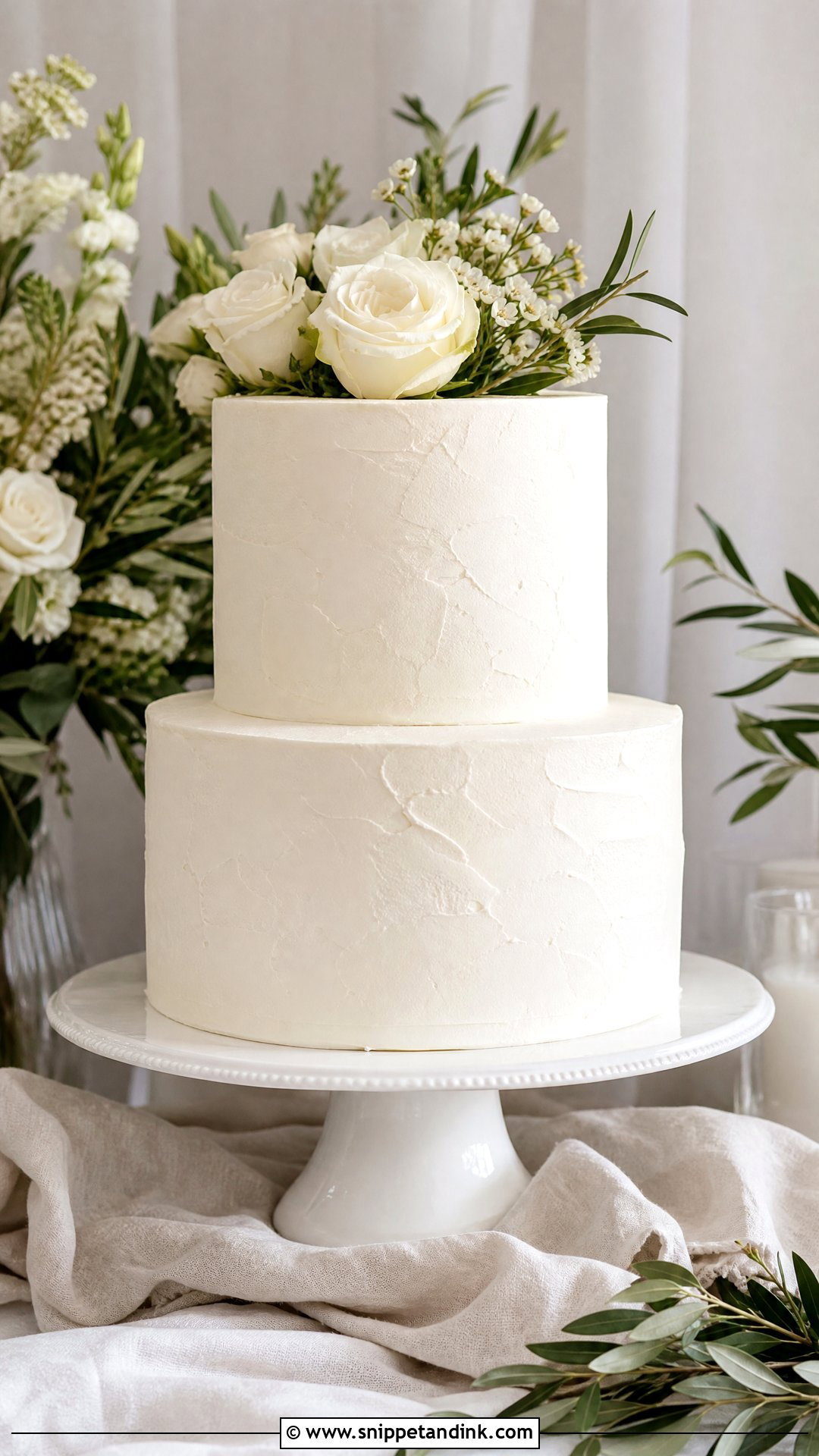
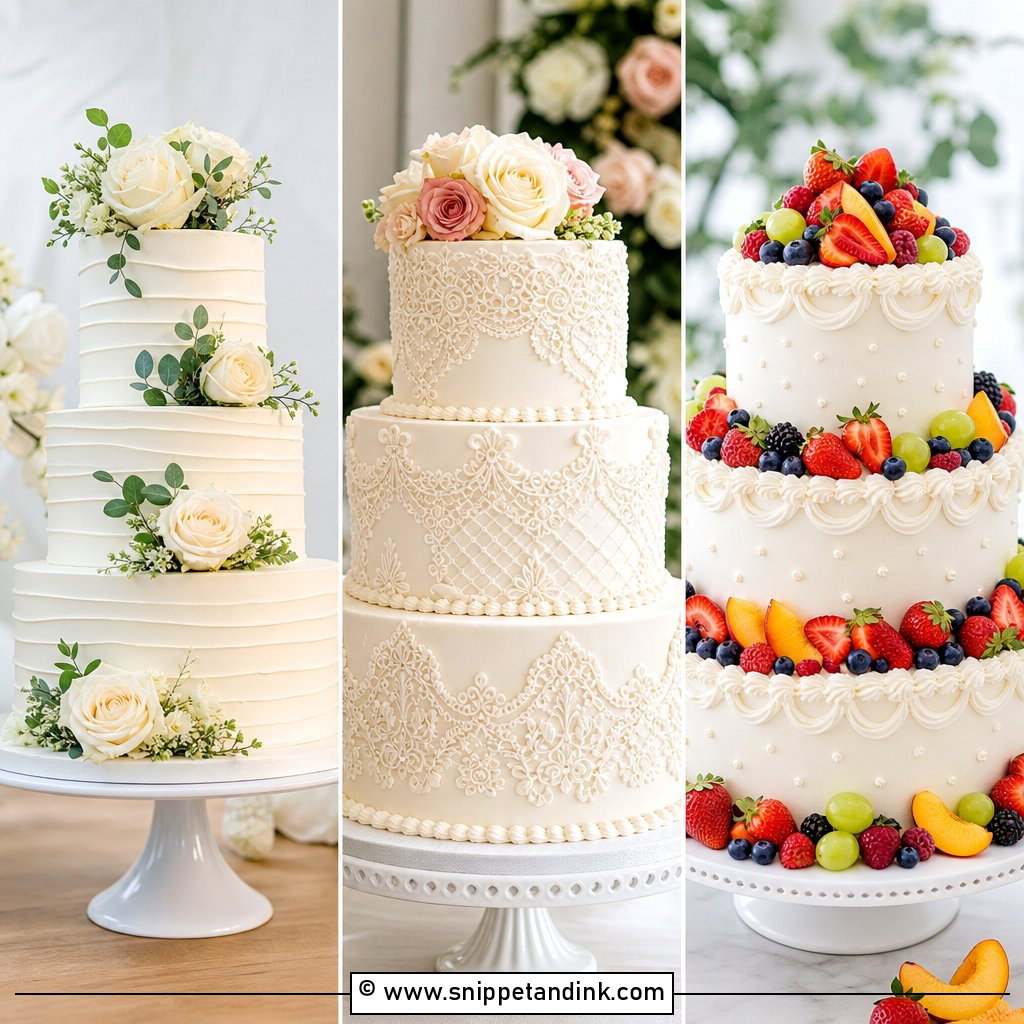
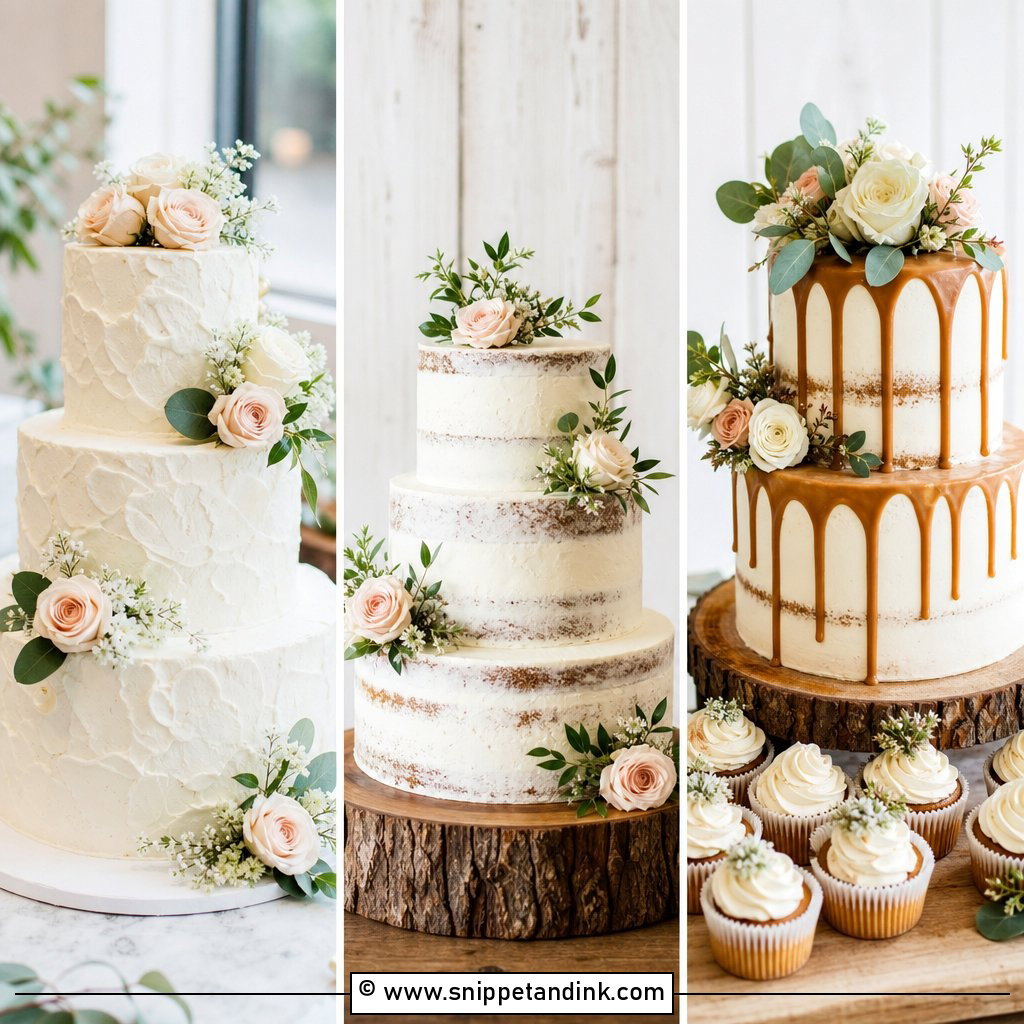
Buttercream is where I start most minimal briefs. It can be scraped glass-smooth, left with a soft palette-knife texture, or combed into fine ridges, and each reads differently in photos. The catch is temperature: a Swiss or Italian meringue buttercream starts to slump in a warm room, so I keep it chilled until the last possible moment. Vanilla, almond, lemon and champagne sponges all sit well under it. Keep the stand plain and let three or four stems do the decorating.
2. Simple Two Tier Wedding Cake
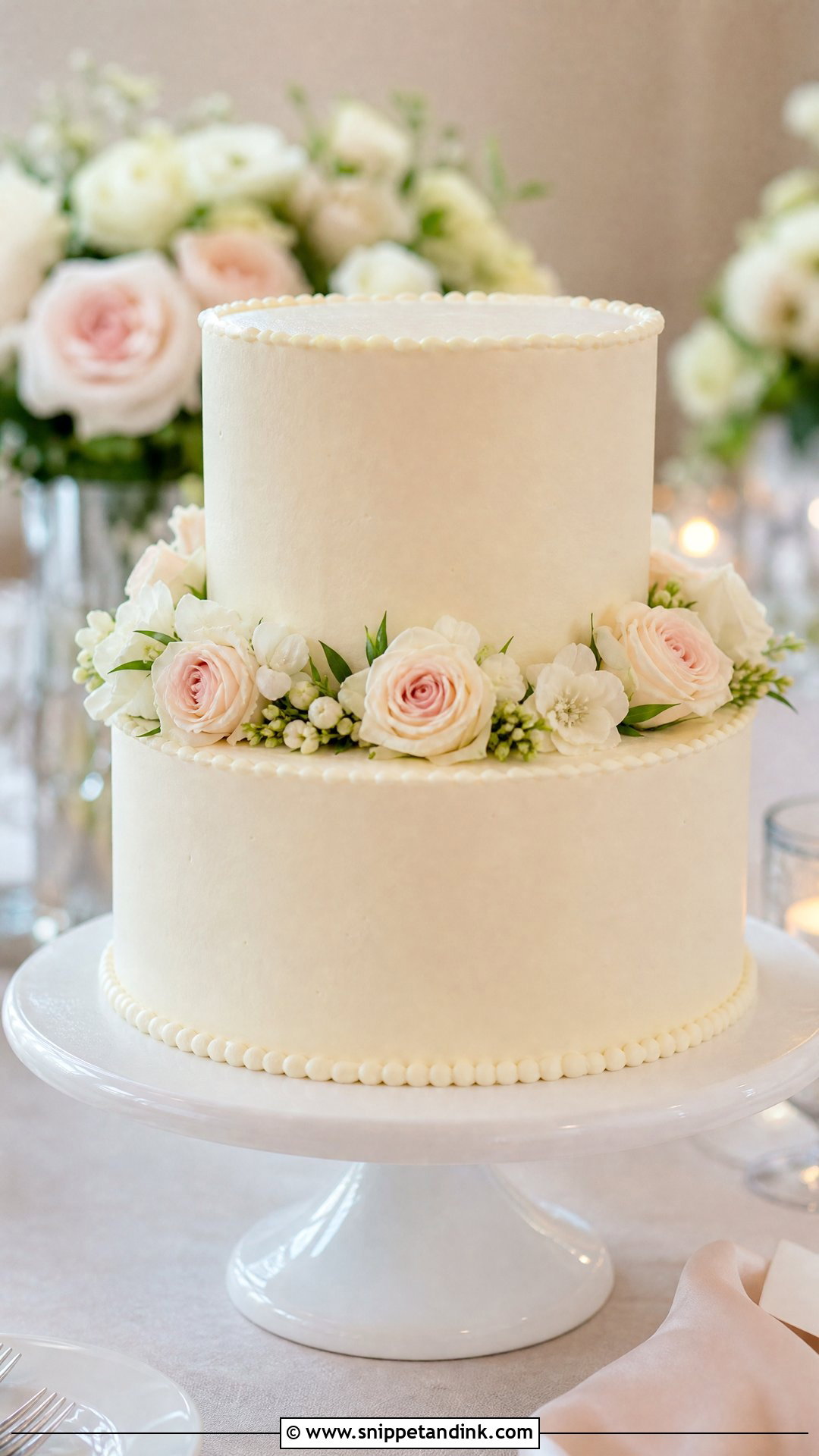
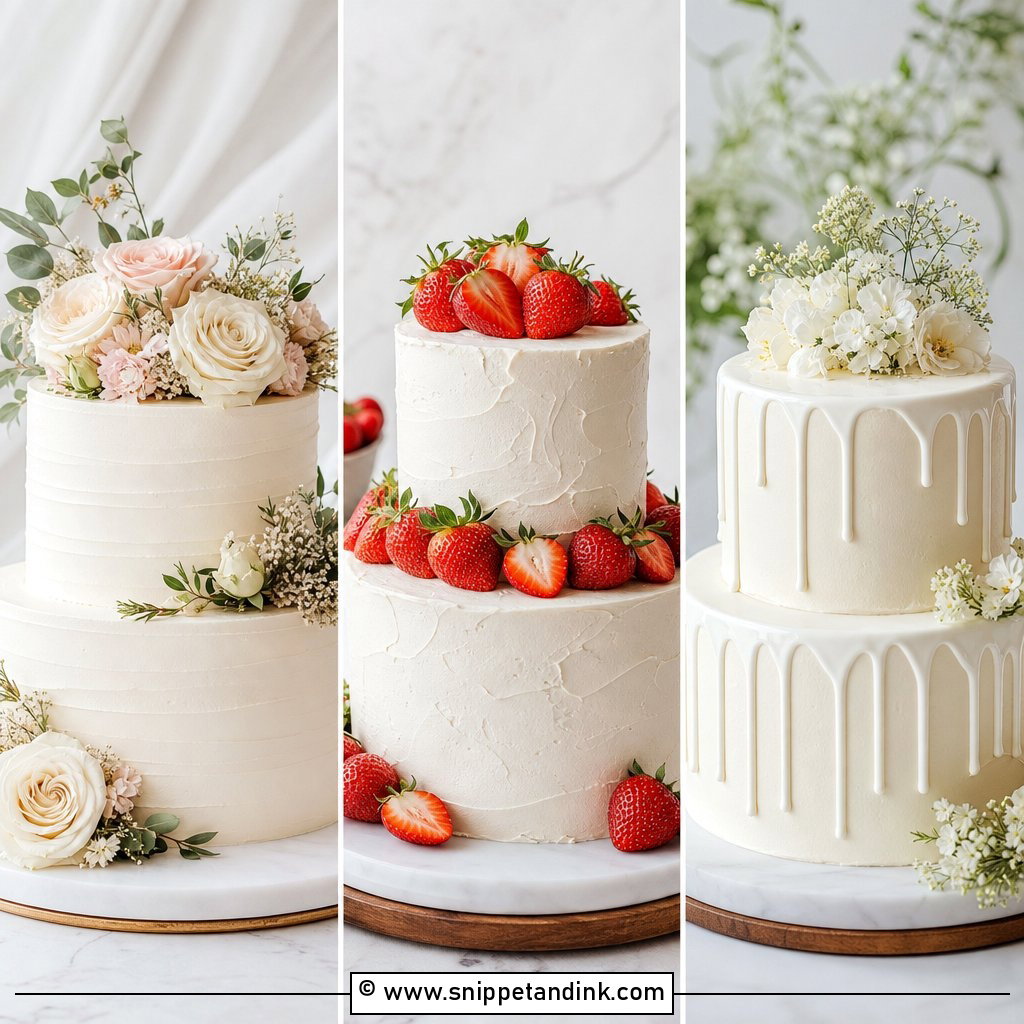
Two tiers give you the silhouette people recognise as a wedding cake without the cost of four. I’d usually pair a 6-inch over an 8-inch, which serves roughly 30 to 40 wedding-size slices depending on how the caterer cuts. Smooth white buttercream with a thin piped border is enough. A ribbon at the base of each tier hides the cake board edge neatly, but ask for a fat-proof ribbon or one backed with tape, because grease will spot plain satin within an hour. Different flavours per tier is an easy way to please more guests.
3. Simple One Tier Wedding Cake
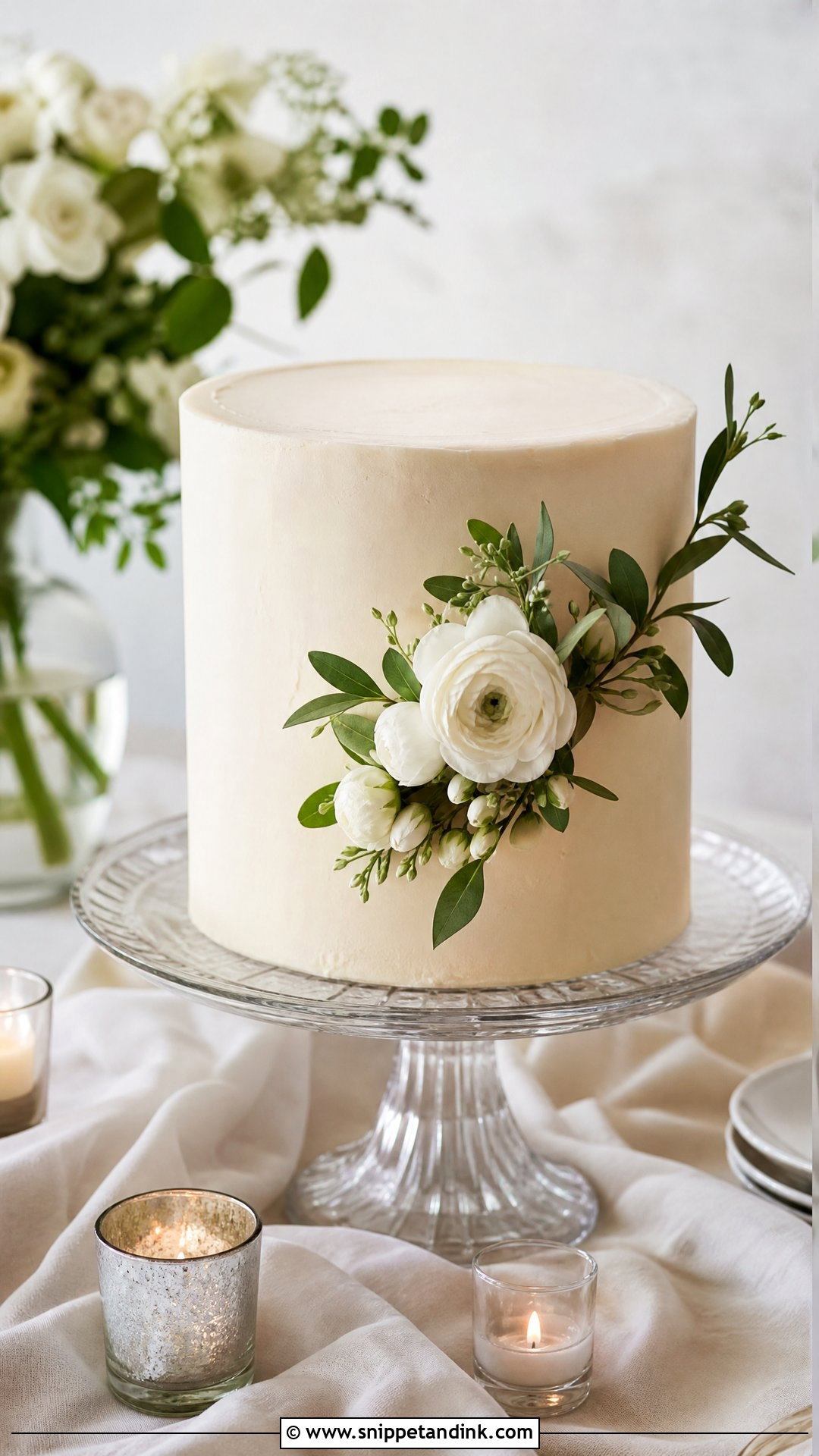
For courthouse weddings, elopements and tiny dinners, a single tier is honest about the guest count. The trick is height: I bake it as a double-barrel tier, two cakes stacked on a hidden board, so it stands around 7 or 8 inches tall instead of looking like a birthday cake. That extra height gives room for pressed flowers or a small floral crown. Set it on a raised stand and add cupcakes or cookies if you need more servings than one tier can give.
4. Simple White Wedding Cake
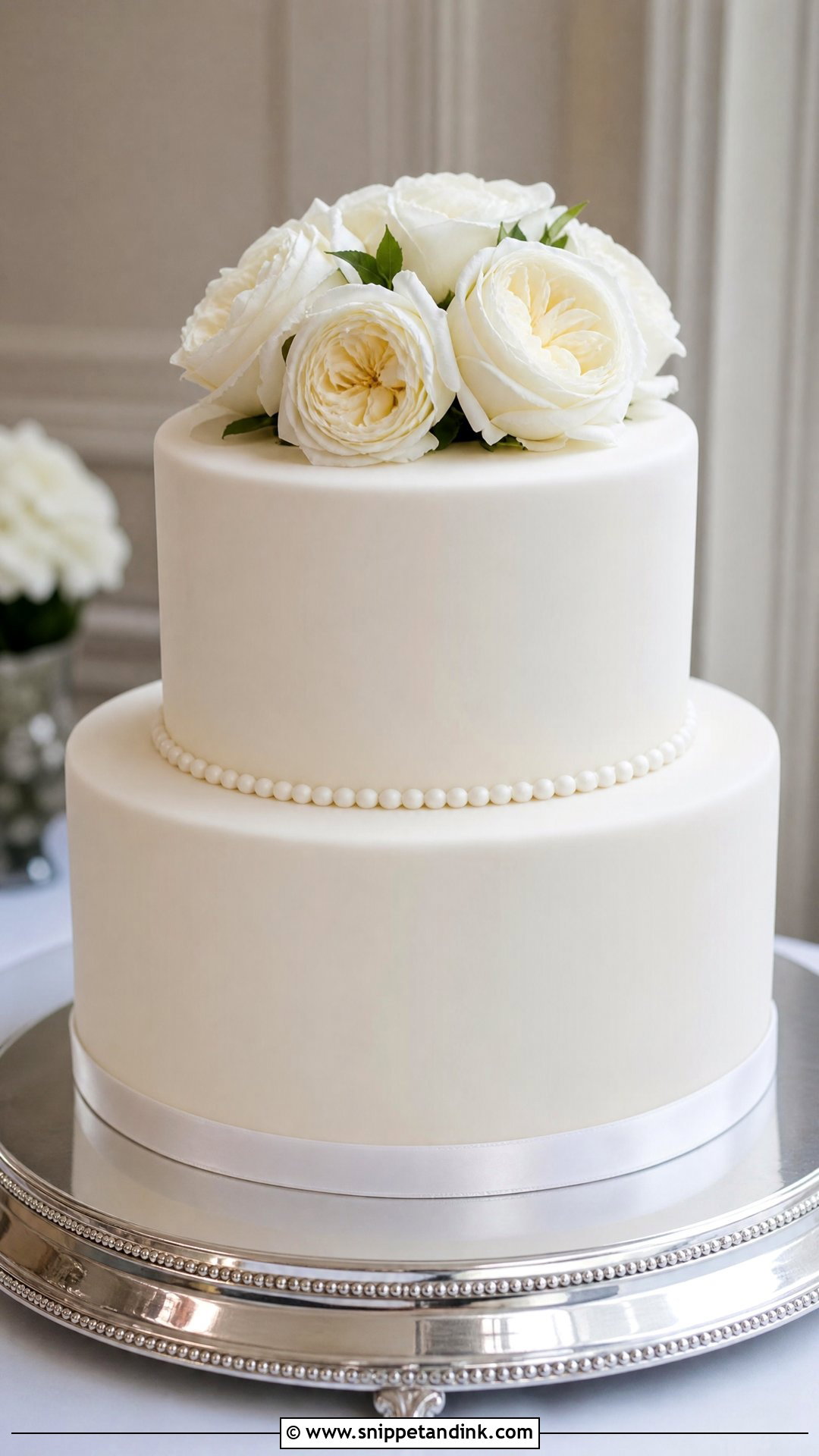
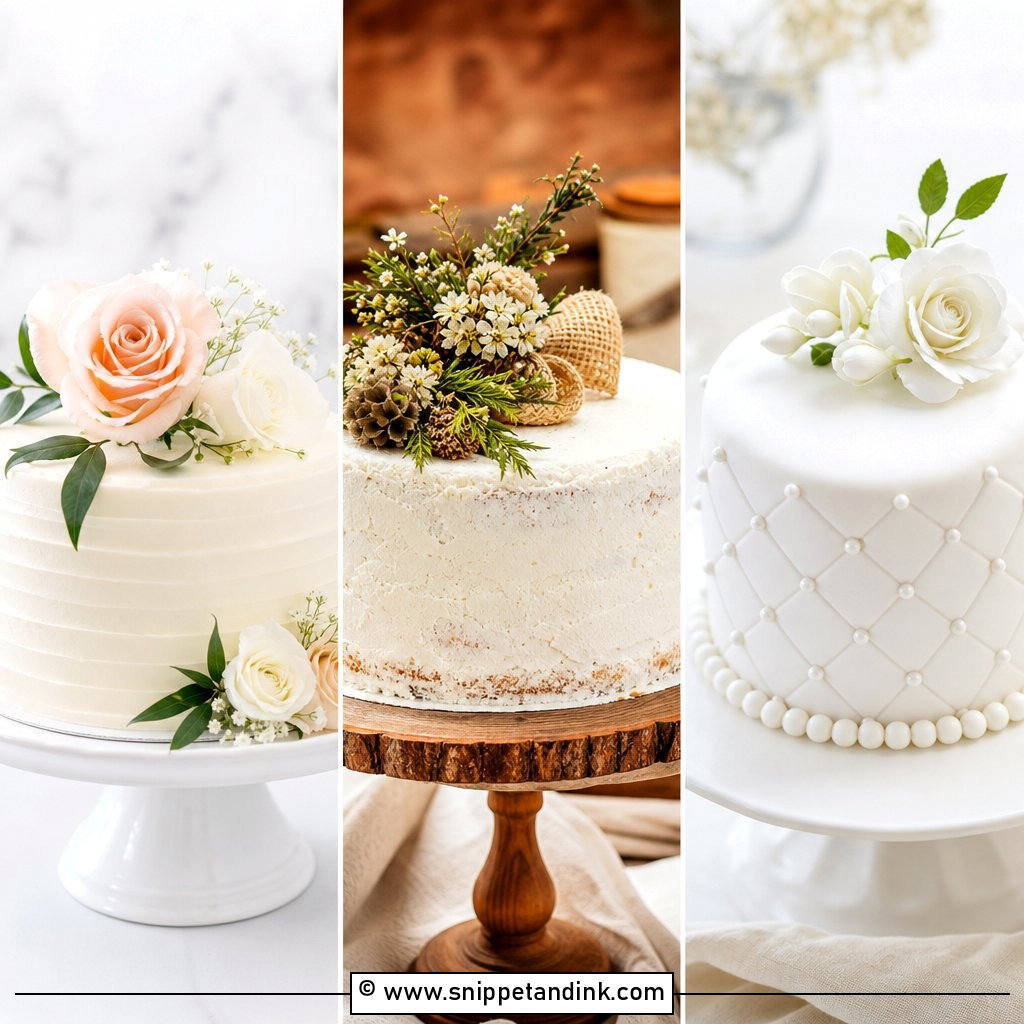
White is less simple than it sounds. Pure white buttercream needs a drop of violet colouring to cancel the yellow of the butter, and even then it sits slightly warm next to a bright white gown, so I’d show you a swatch beside your fabric. Fondant gives a crisper, more formal white. A cake like this carries a colourful palette well because it gives the eye a rest. Decorate with white blooms, a few pearls or one satin ribbon, then let the shape and the shadows on the tiers do the work in pictures.
5. Simple Floral Wedding Cake
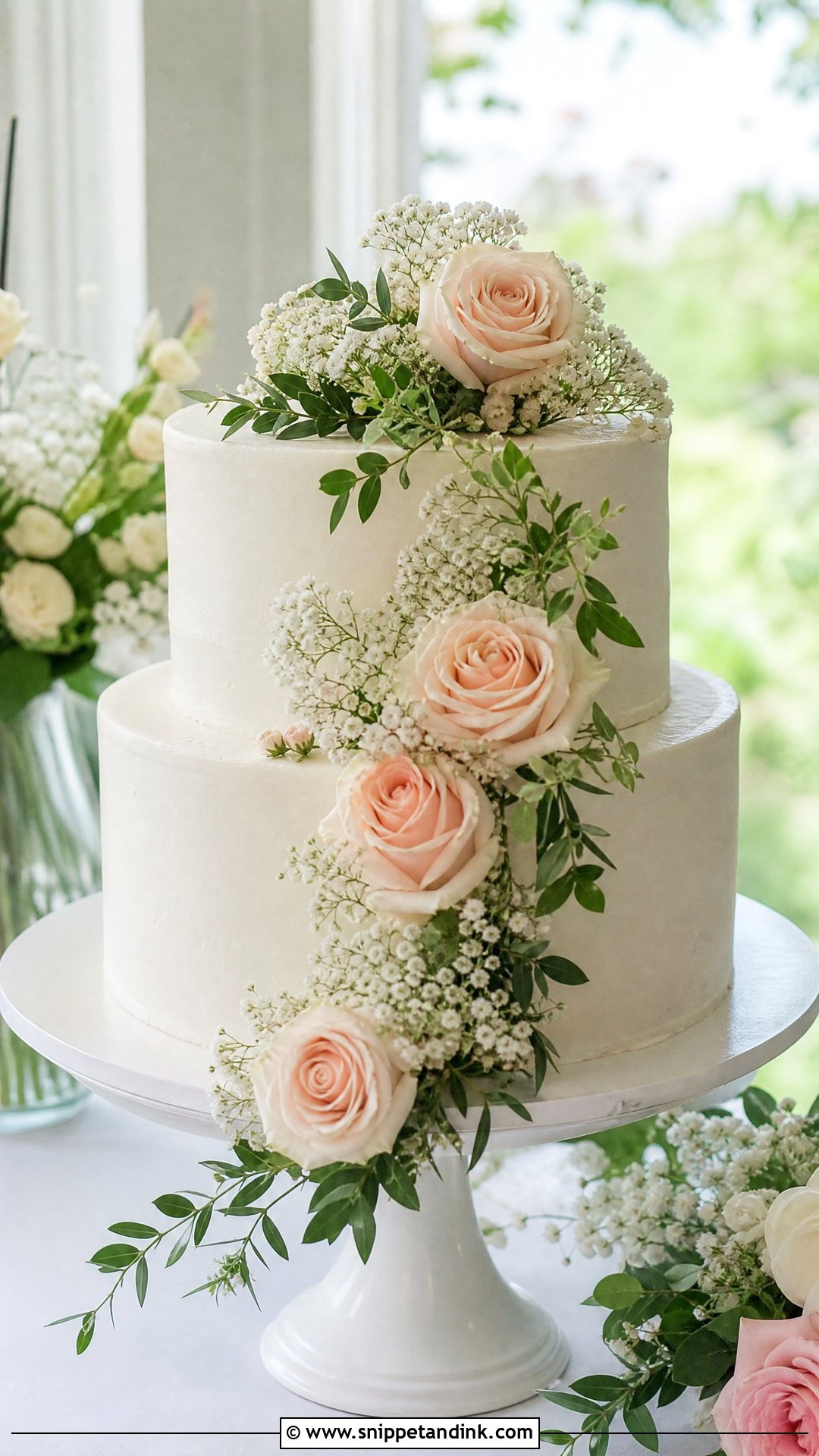
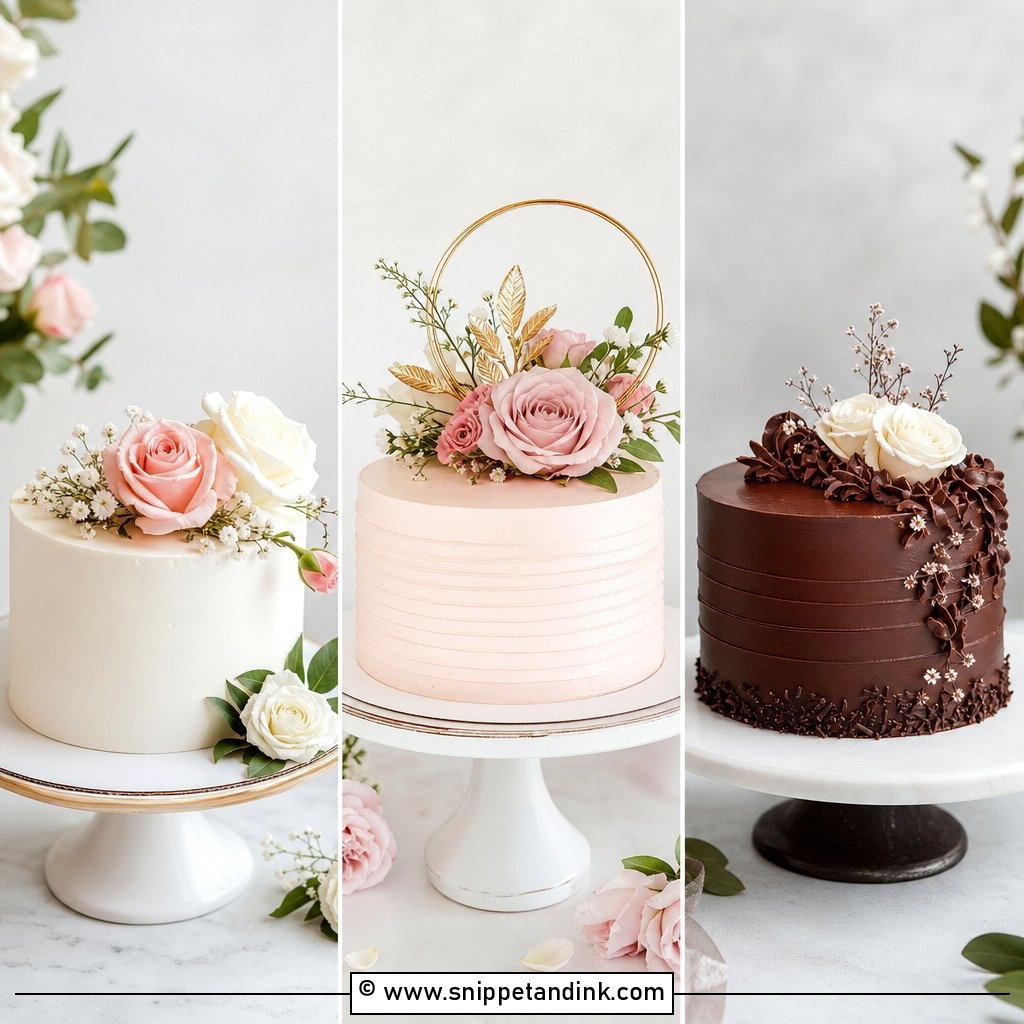
Flowers are the quickest way to decorate a plain cake, and the placement matters more than the quantity. I prefer one cluster on the top tier with a few stems tucked lower, or a ring at the base, rather than blooms dotted everywhere. Roses, ranunculus, peonies and baby’s breath all hold up, but every stem needs to be pesticide-free and kept from touching the cake directly. Match the colours to your bouquet so the cake looks like part of the same plan.
6. Simple Semi Naked Wedding Cake
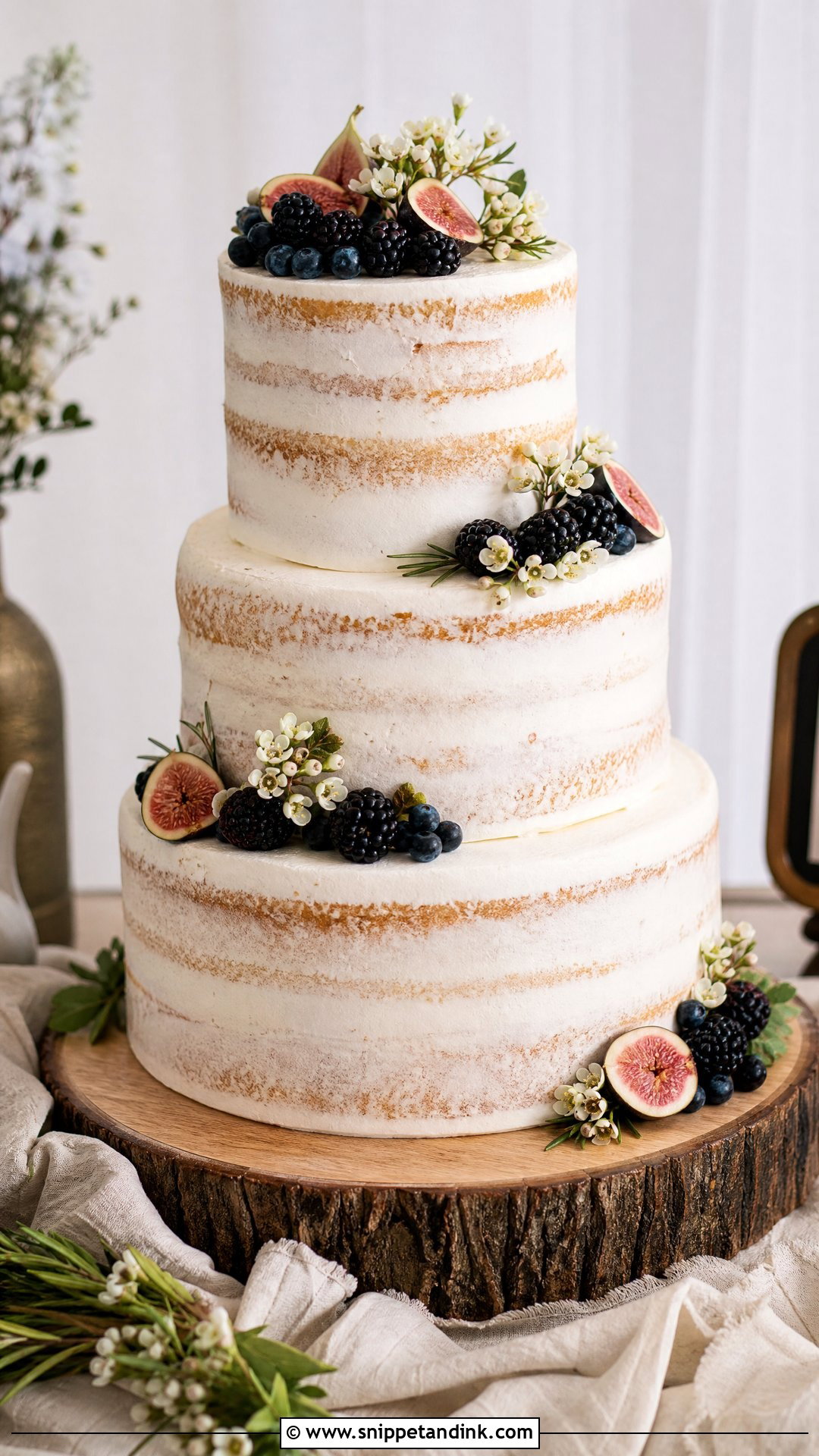
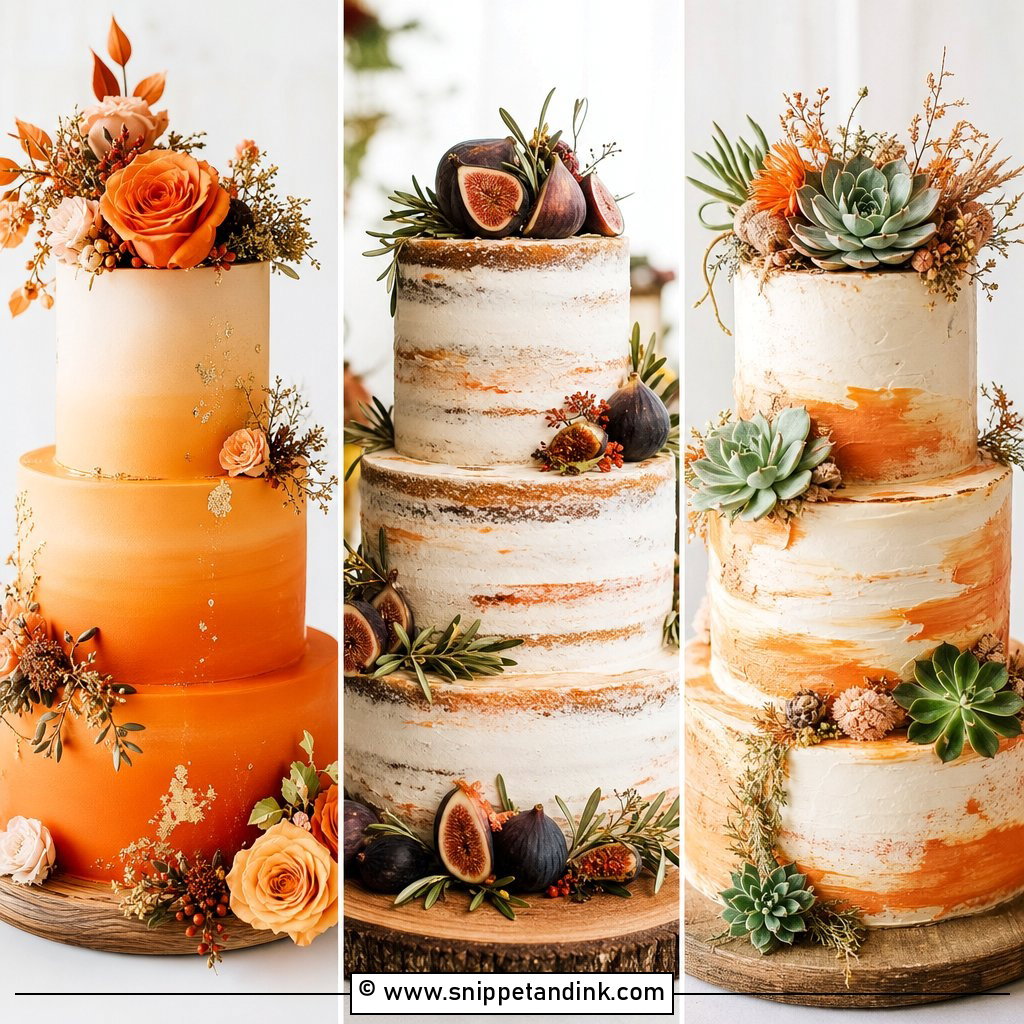
A semi naked finish is a full crumb coat scraped back so the sponge peeks through. It flatters golden bakes, so I usually suggest vanilla, almond, carrot, or spice cake rather than a dark chocolate sponge, which can look patchy. Figs, berries or greenery make it seasonal. The one thing I insist on is an even scrape, because a lopsided coat is what makes this style look accidental. Barns, gardens and backyards suit it, and a wooden or ceramic pedestal finishes it.
7. Simple Naked Wedding Cake
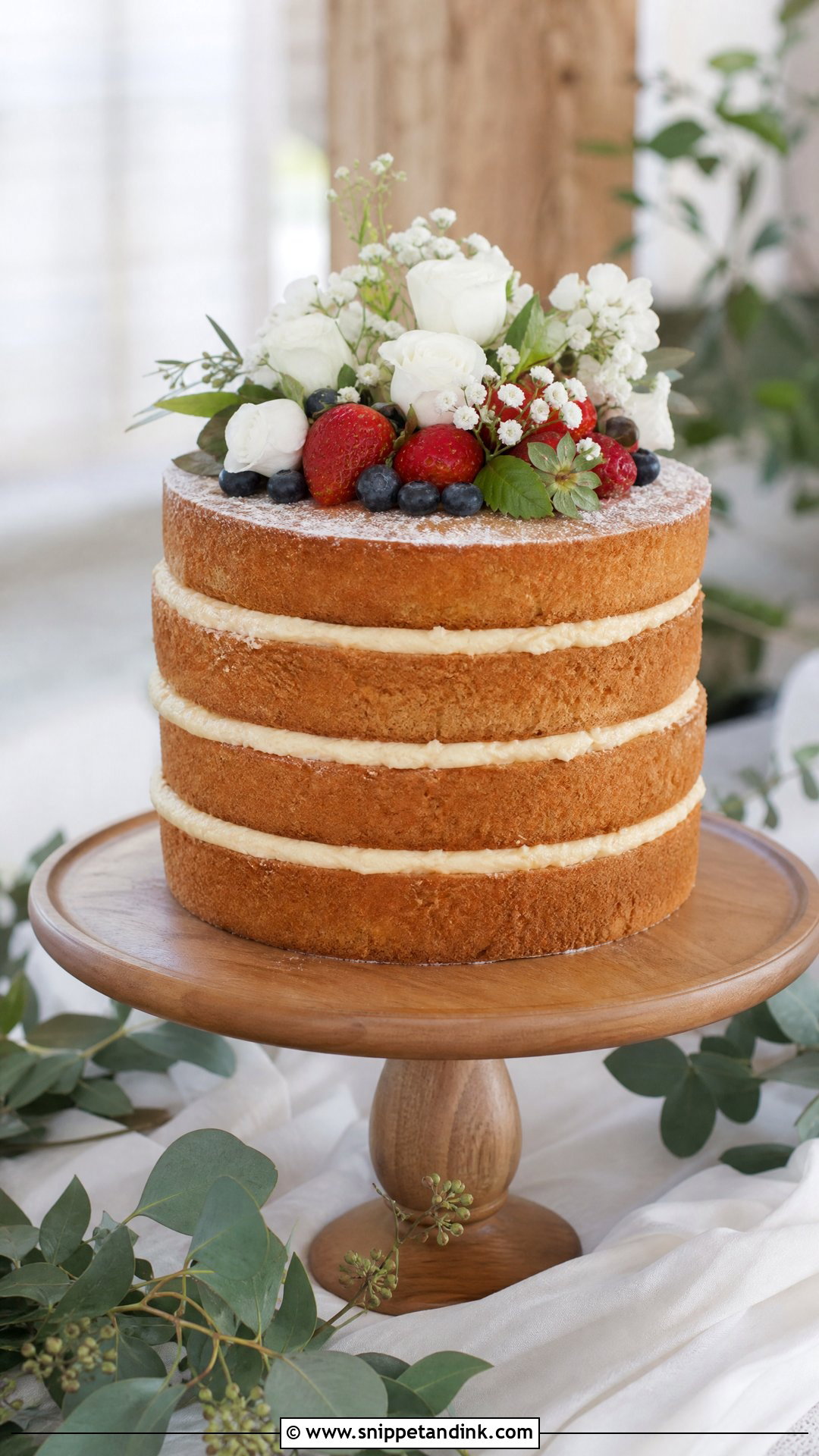
With no outer frosting, a naked cake dries out faster than anything else on this list. I assemble it as close to service as I can and keep it covered until it goes out. The layers need to be level and the filling sturdy, so buttercream, cream cheese frosting or ganache, never a loose whipped cream that will bulge under the weight of the tier above. Fruit and flowers are the natural decoration. It also suits couples who find frosted cake too sweet.
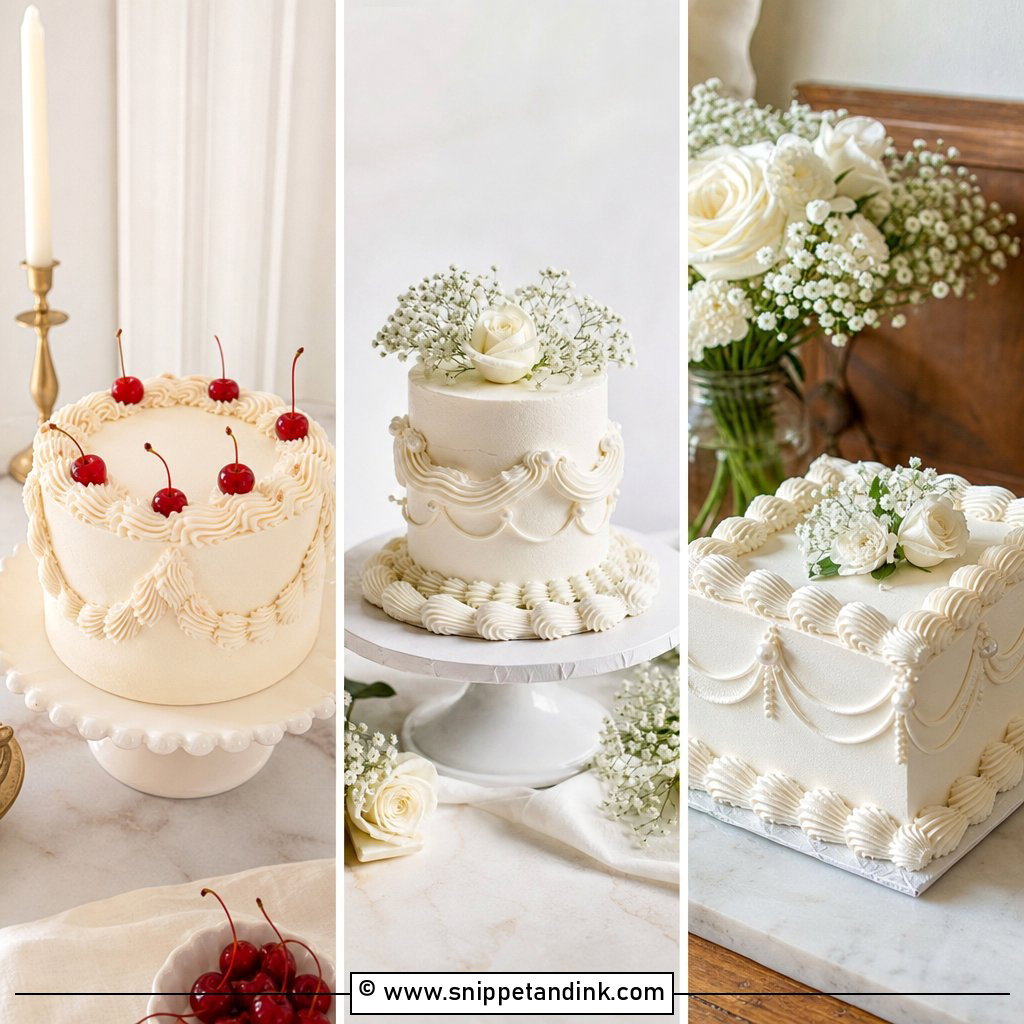
8. Simple Vintage Wedding Cake
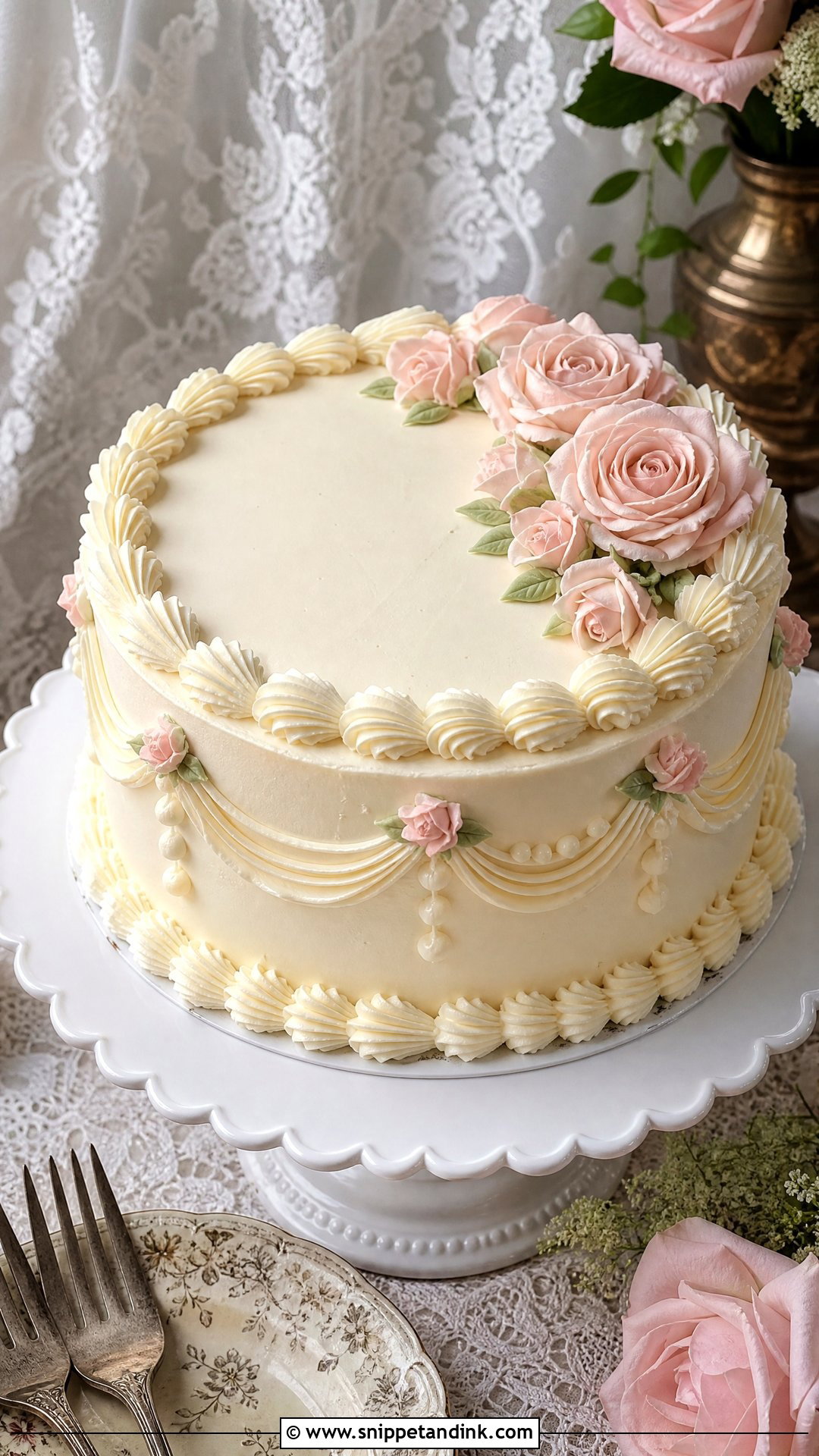
Vintage piping looks simple from across the room and takes real time up close. Shell borders, small swags and dots need a firm crusting buttercream so they hold their shape, and the spacing has to be measured, not guessed, or the swags drift. I’d keep it to two piping styles at most. Ivory with pale flowers is the classic version, though soft pink or light blue gives it a gentle retro feel. On a classic reception table it reads as the centre of attention without trying.
9. Simple Pearl Wedding Cake
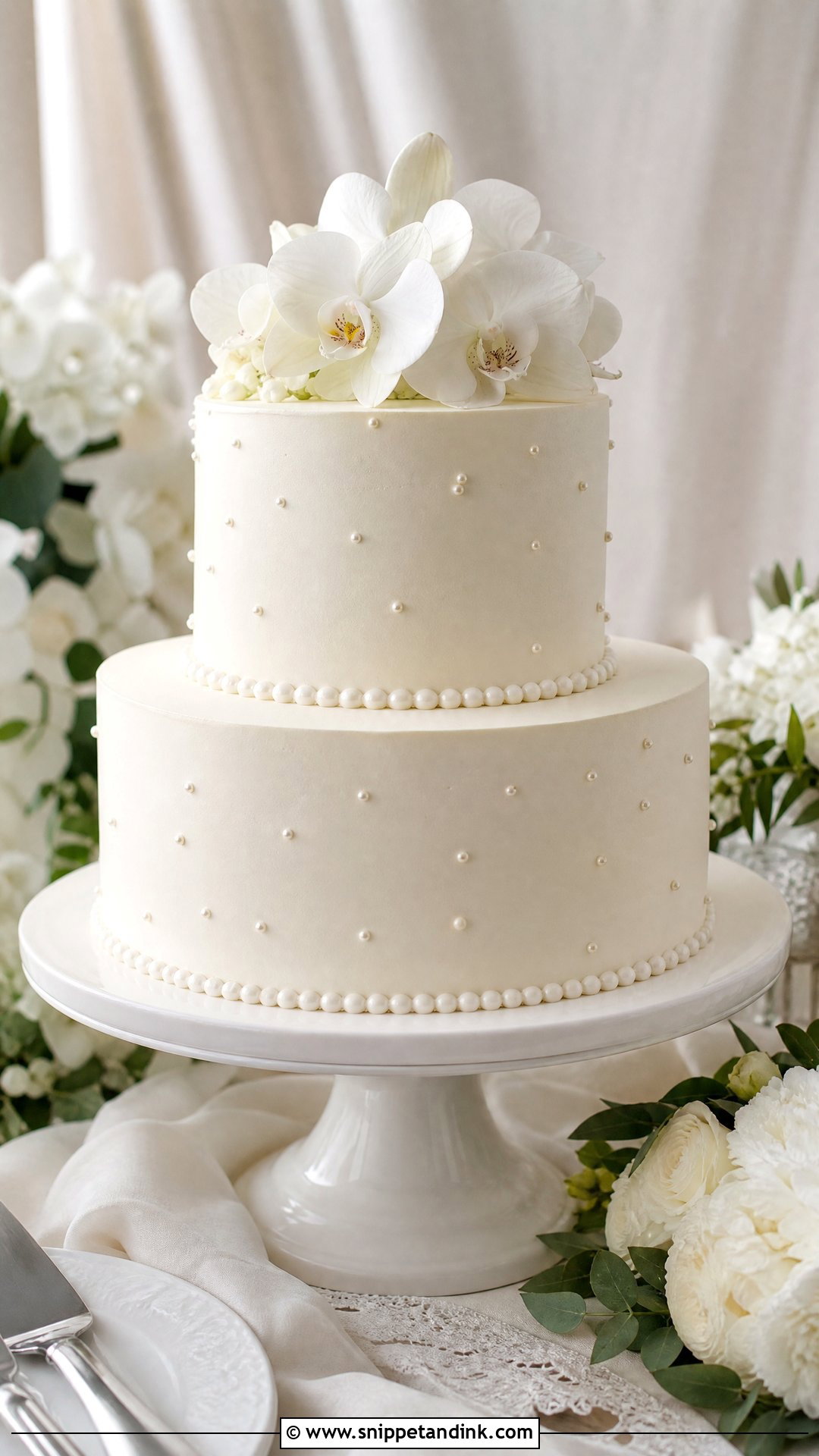
Edible pearls are sugar dragees, and they are hard on teeth, so I place them where guests can push them aside: tier borders, a vertical line, or a loose scatter on the top. Small pearls look refined; large ones start to look like costume jewellery. Ivory frosting keeps them subtle, and a satin ribbon softens the base. This suits ballrooms and chapels, and on a plain stand it can feel modern too. A few white flowers on the top tier finish it.
10. Simple Gold Wedding Cake
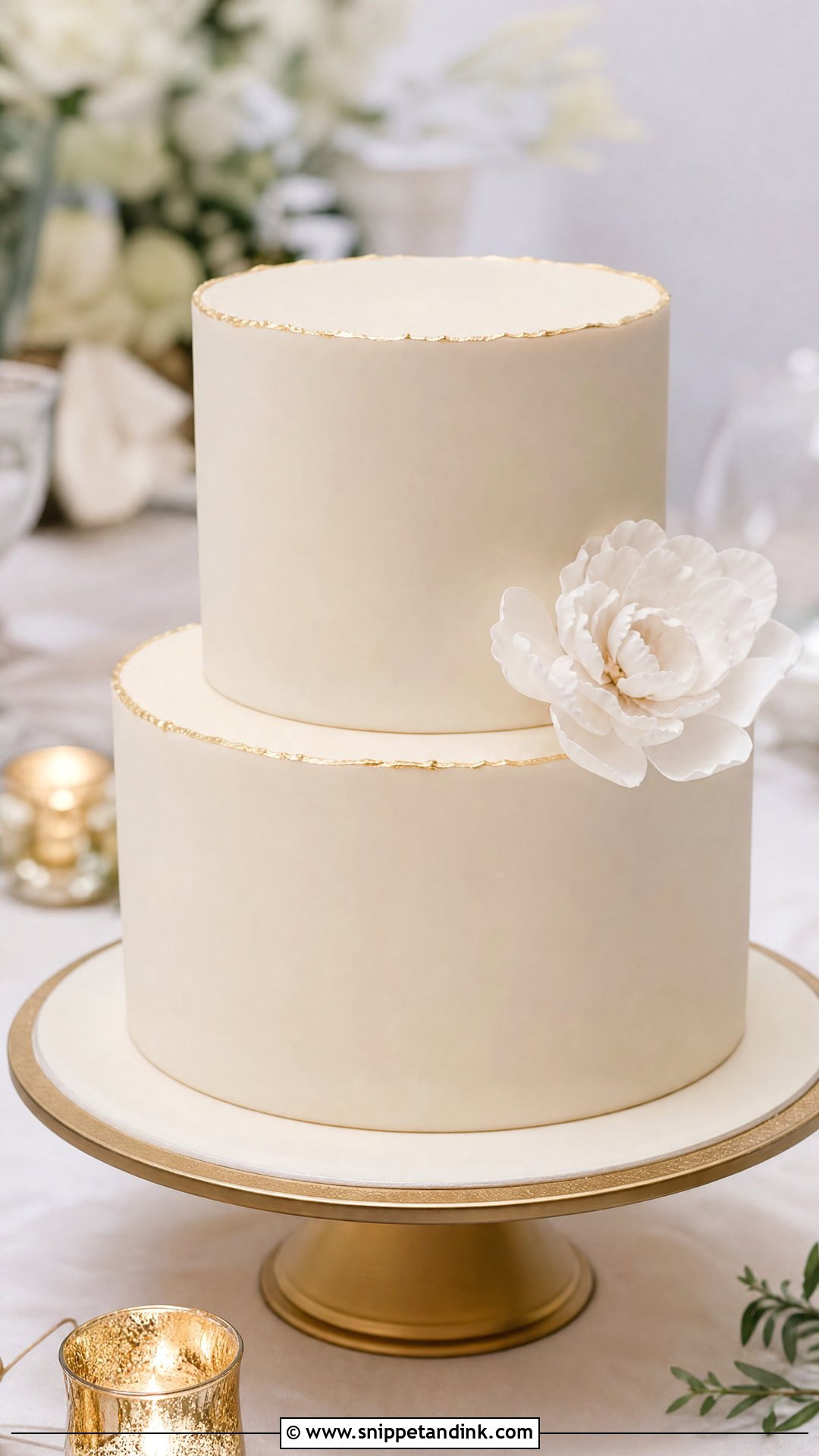
A little gold goes a long way. Gold leaf, a hand-painted rim or a small topper makes a plain cake look finished, and a single gold edge on each tier often looks more expensive than a fully metallic cake. One thing to ask your baker: some gold lustre dusts are labelled non-toxic but are not actually edible, so check they are using edible-grade leaf or paint. White, ivory, blush or soft beige show it best. Candlelight makes leaf glow at an evening reception.
11. Simple Rustic Wedding Cake
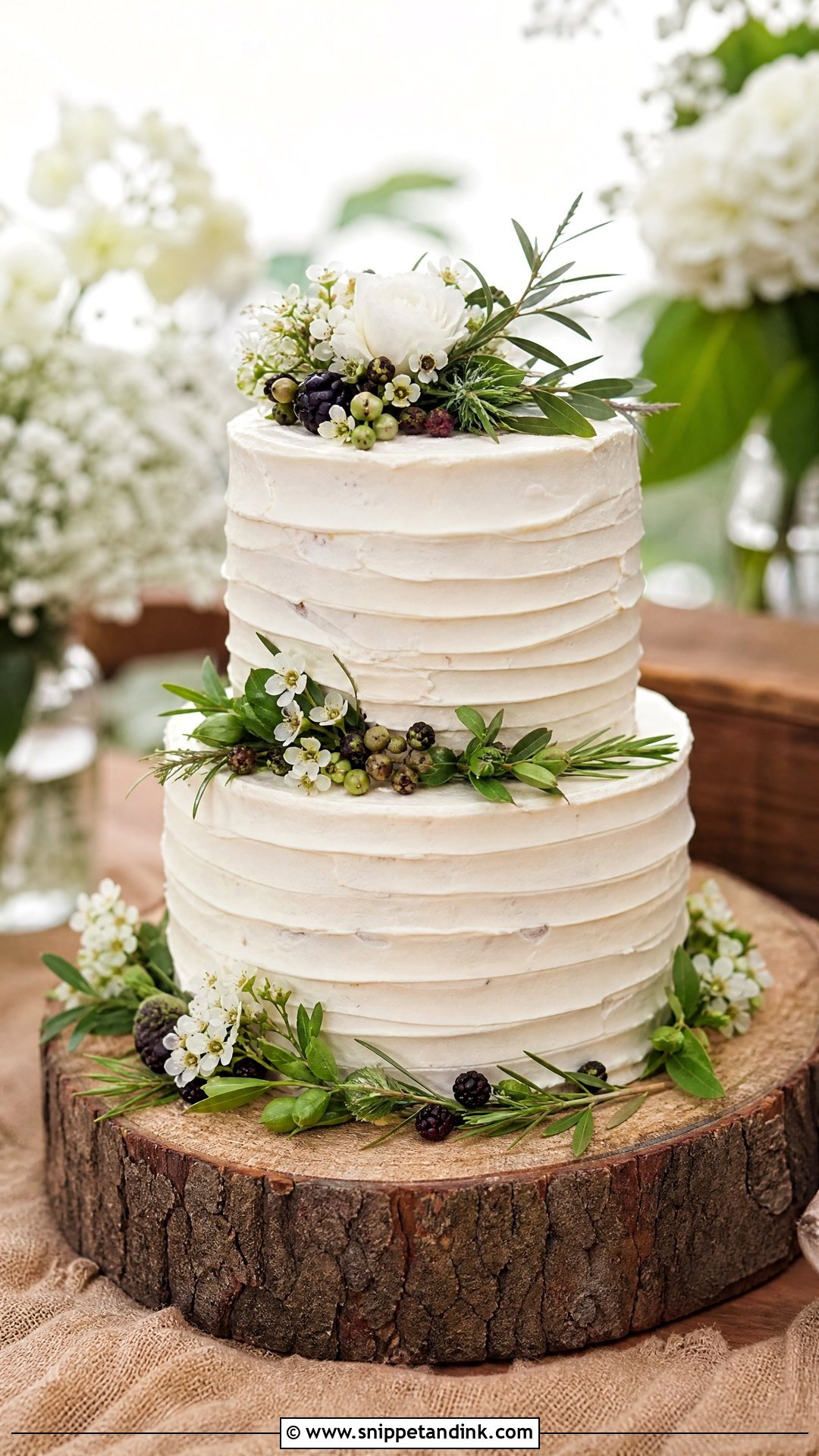
Rustic doesn’t mean careless. I still want straight tiers and a level top; the texture and greenery do the relaxing. Textured or semi naked buttercream, a few seasonal fruits and some loose greenery are usually all it needs. Barns, outdoor receptions and family-style dinners suit it, and a wood-slice stand helps, as long as it’s sealed so sap doesn’t mark the board. Vanilla bean, carrot, lemon, spice and almond are the flavours I’d reach for.
12. Simple Modern Wedding Cake
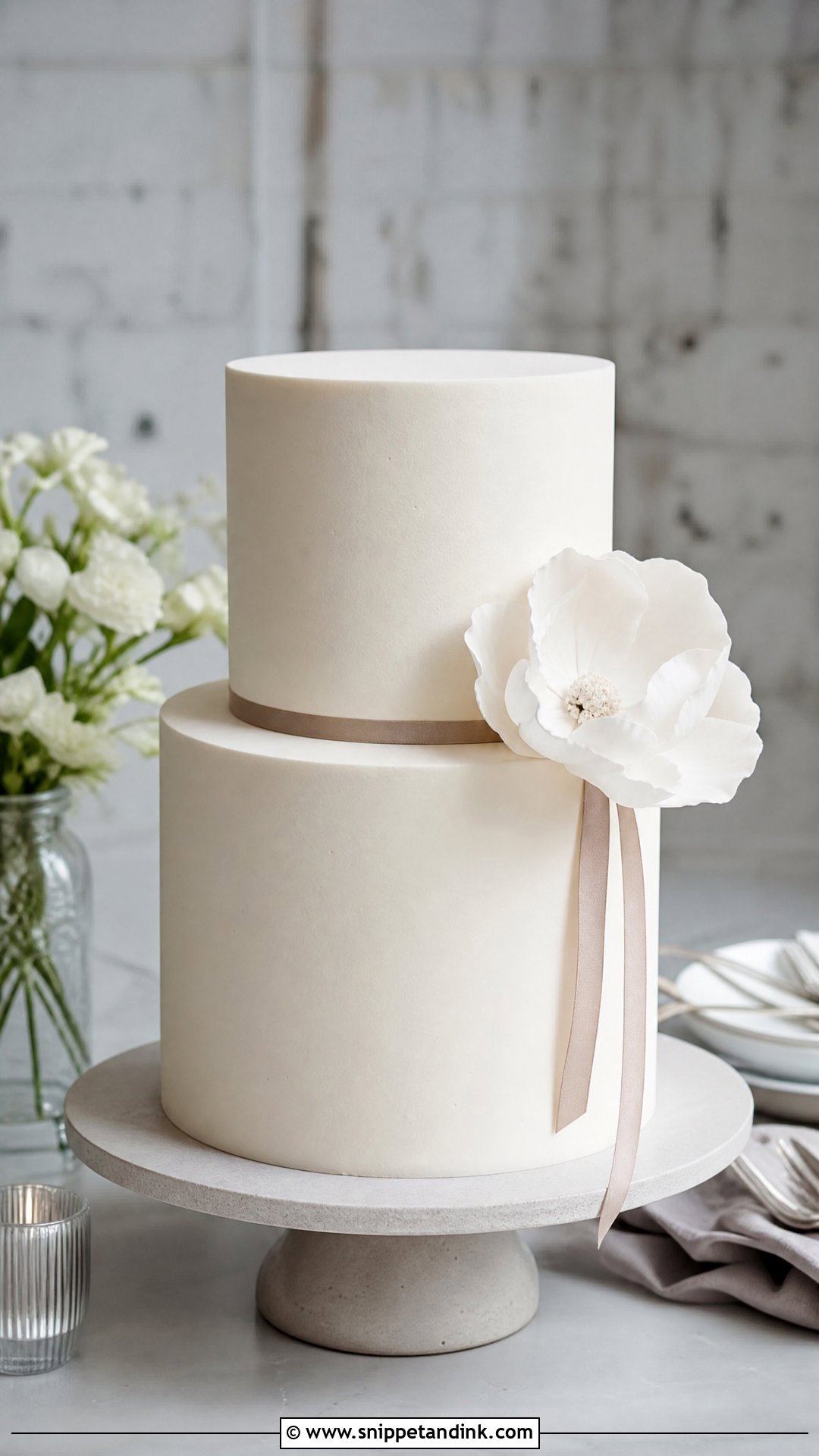
Modern minimal cakes live or die on the edges. Sharp tops need a well-chilled cake and a confident hand with the scraper, and that finish is the first thing I’d ask a baker to show you in their portfolio. One bloom, a thin ribbon or a single band of texture is plenty. Taupe, cream and soft grey frosting look intentional here, and extra-tall tiers add drama without clutter. Galleries and rooftops suit it, but give it good light: a sleek cake in a dark corner just looks flat.
13. Simple Fondant Wedding Cake
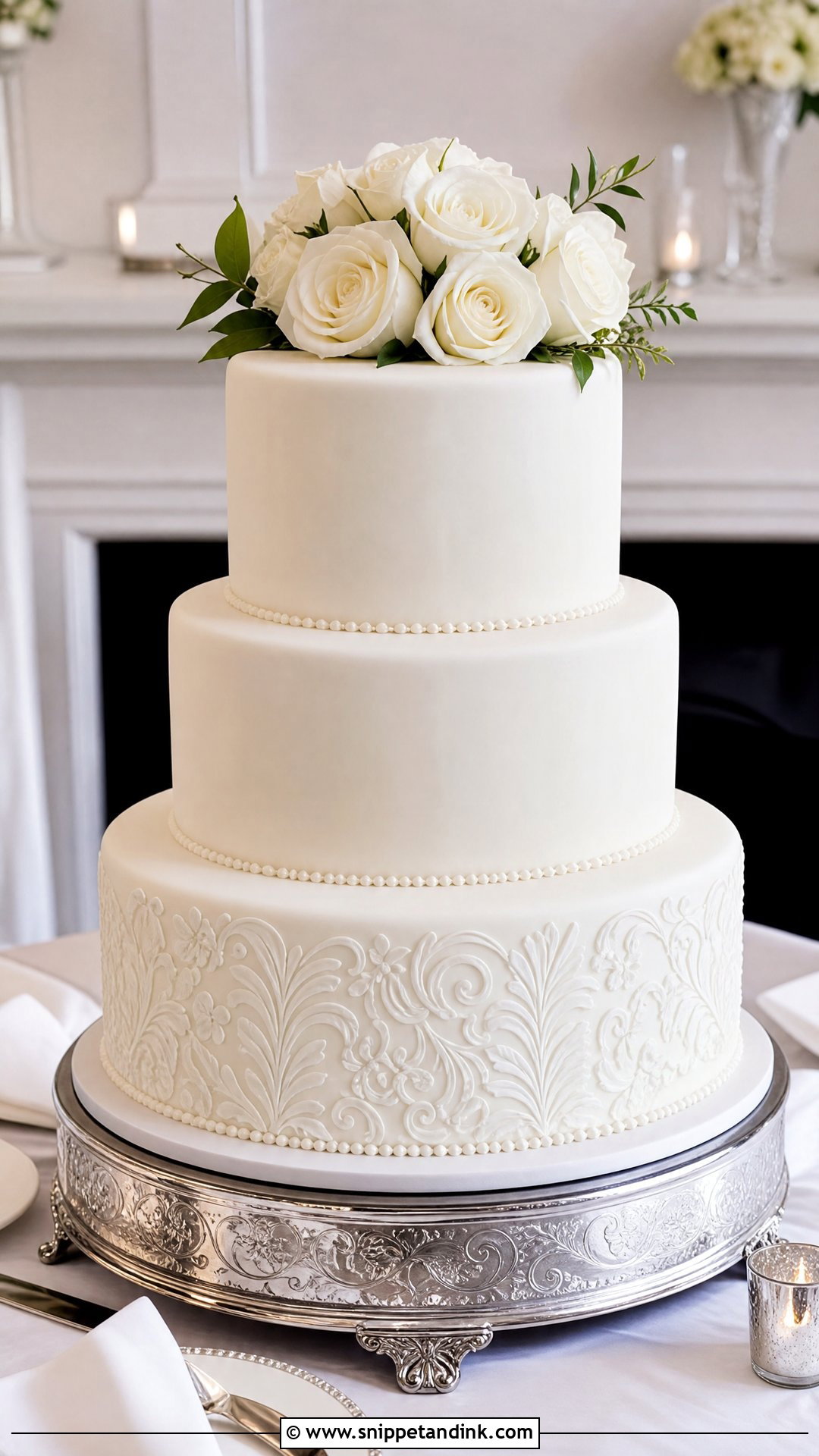
Fondant gives the smoothest surface and the crispest edge, and it protects the cake from drying out. Many guests peel it off, which is fine, because underneath you can still have buttercream and a soft sponge. Keep the decoration light, perhaps a small floral cluster or a subtle embossed pattern. It is the steadier choice for a warm venue, with one caution: fondant sweats if the cake comes out of a cold fridge into humid air, so I let it come up to room temperature slowly in its box.
14. Simple Garden Wedding Cake
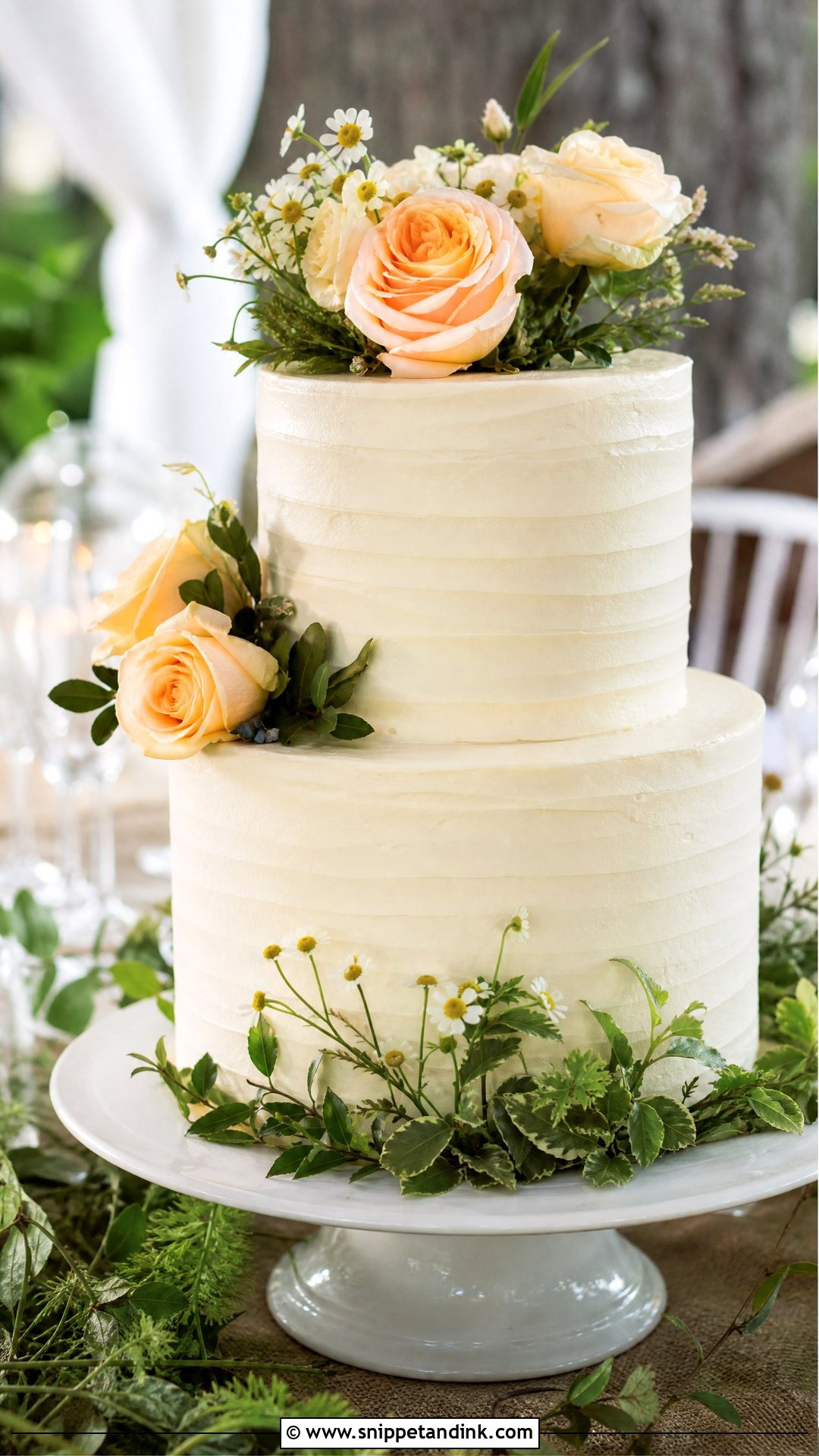
A garden cake should feel like it was finished with whatever was blooming that week. Pale buttercream, a few small flowers at the base and a loose trail of greenery are enough. Lemon, elderflower, vanilla, almond and berry sponges suit the setting. Outdoors, I’d keep it in shade until the cutting, because direct sun will soften buttercream in minutes and wilt any fresh stems. A white pedestal or plain ceramic plate keeps the focus on the flowers.


15. Simple Greenery Wedding Cake
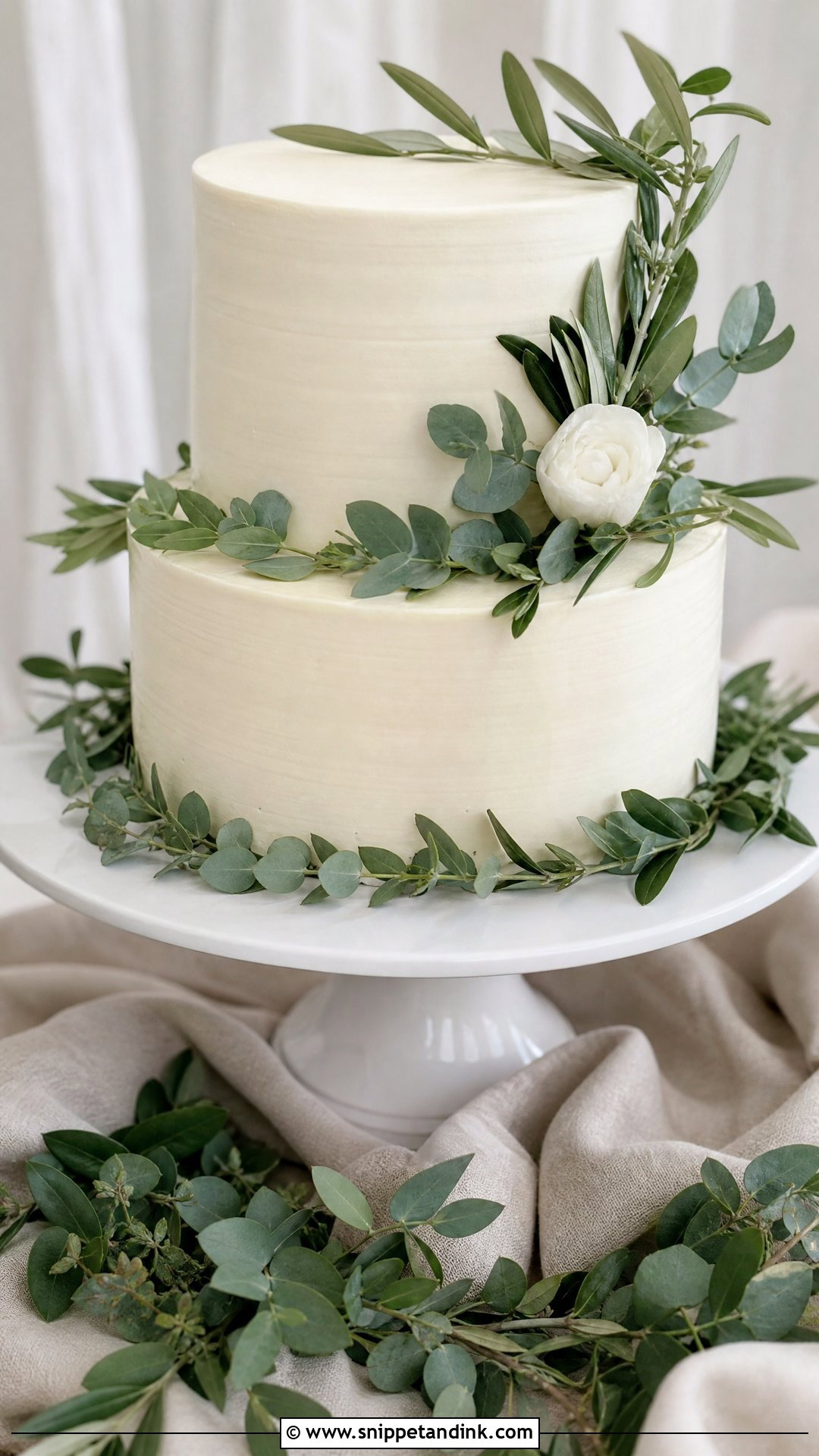
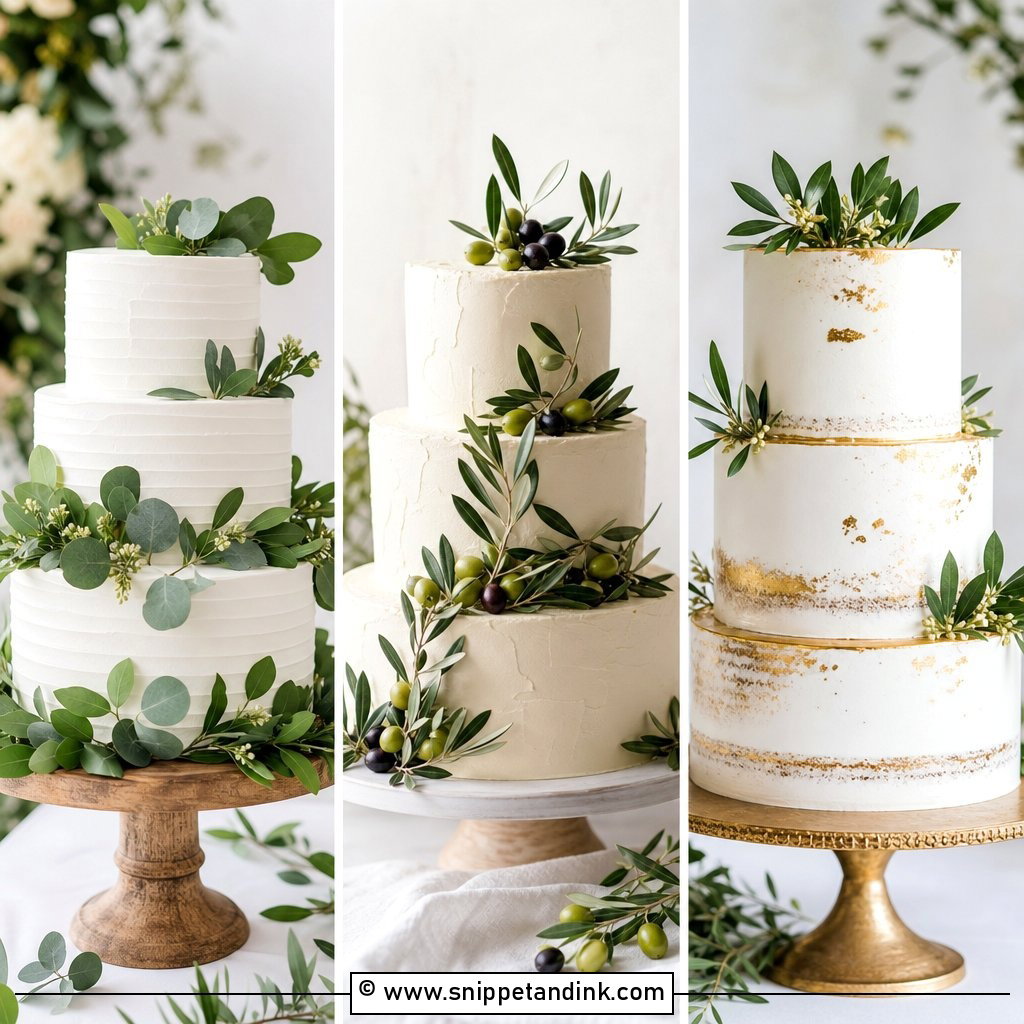
Greenery without flowers is quieter than people expect, and very forgiving if your palette is neutral. Olive branches, rosemary and soft vines are the safest choices. Eucalyptus looks lovely but is not food-safe, so if you want it, the stems need wrapping or a barrier between leaf and frosting. White buttercream or fondant gives the leaves a clean background. Its appeal is restraint; resist adding a little of everything.
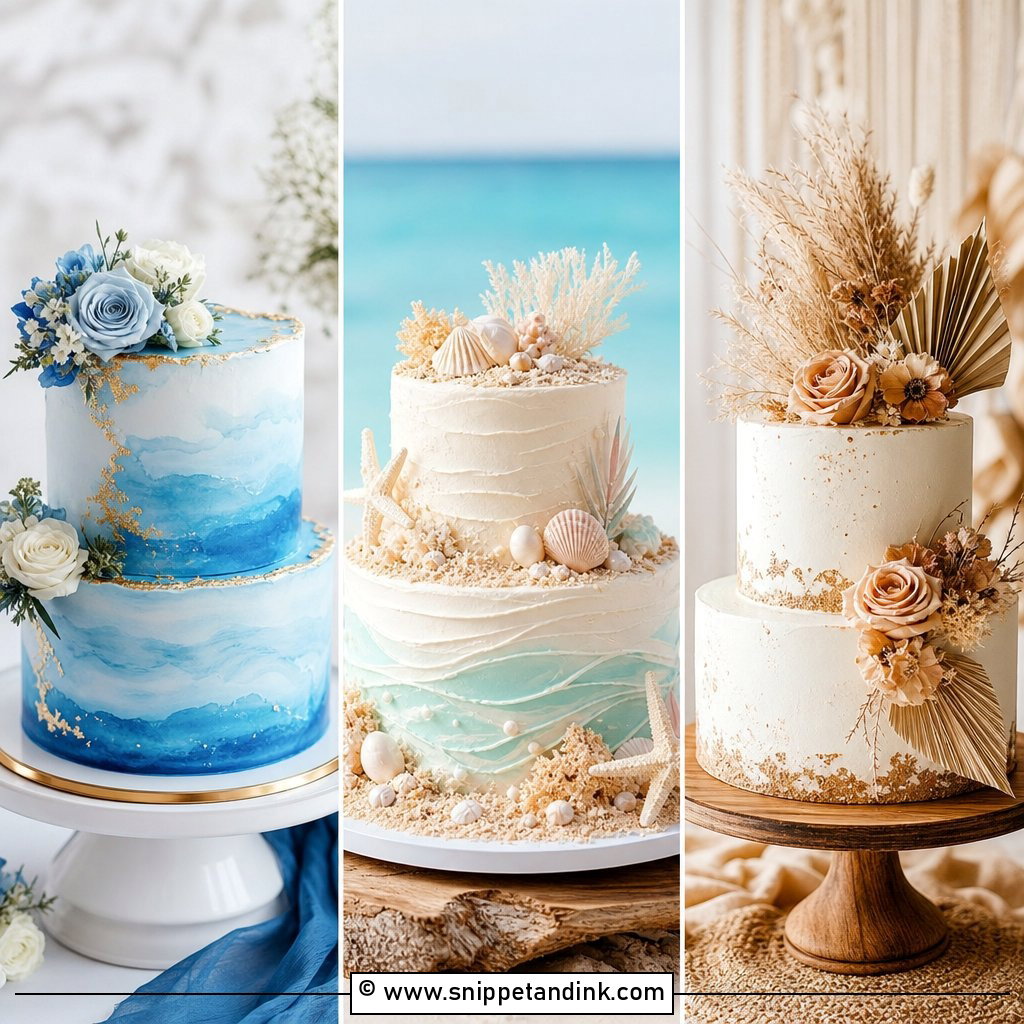
16. Simple Boho Wedding Cake
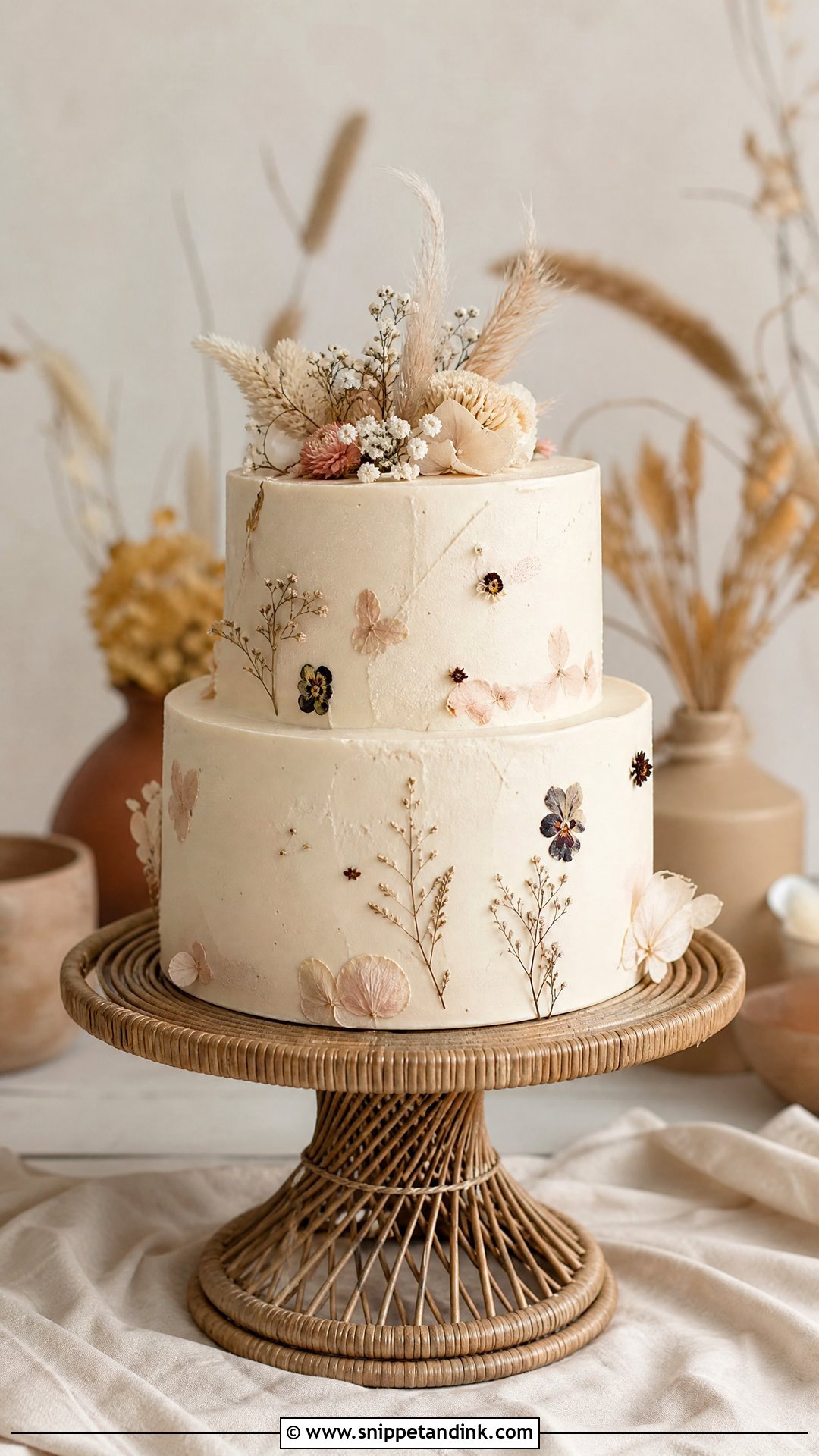
Boho cakes lean on warm neutrals and texture. Instead of bright blooms I’d use dried grasses, pressed flowers, bleached ferns or a thin caramel drip. Dried pampas sheds, so I spray it with a fixative and keep it away from the cut surface. Beige, tan, ivory and blush frosting all work, semi naked if you want it looser. A rattan stand or linen cloth suits desert venues and laid-back outdoor receptions. Leave space between the elements so it reads as airy, not cluttered.
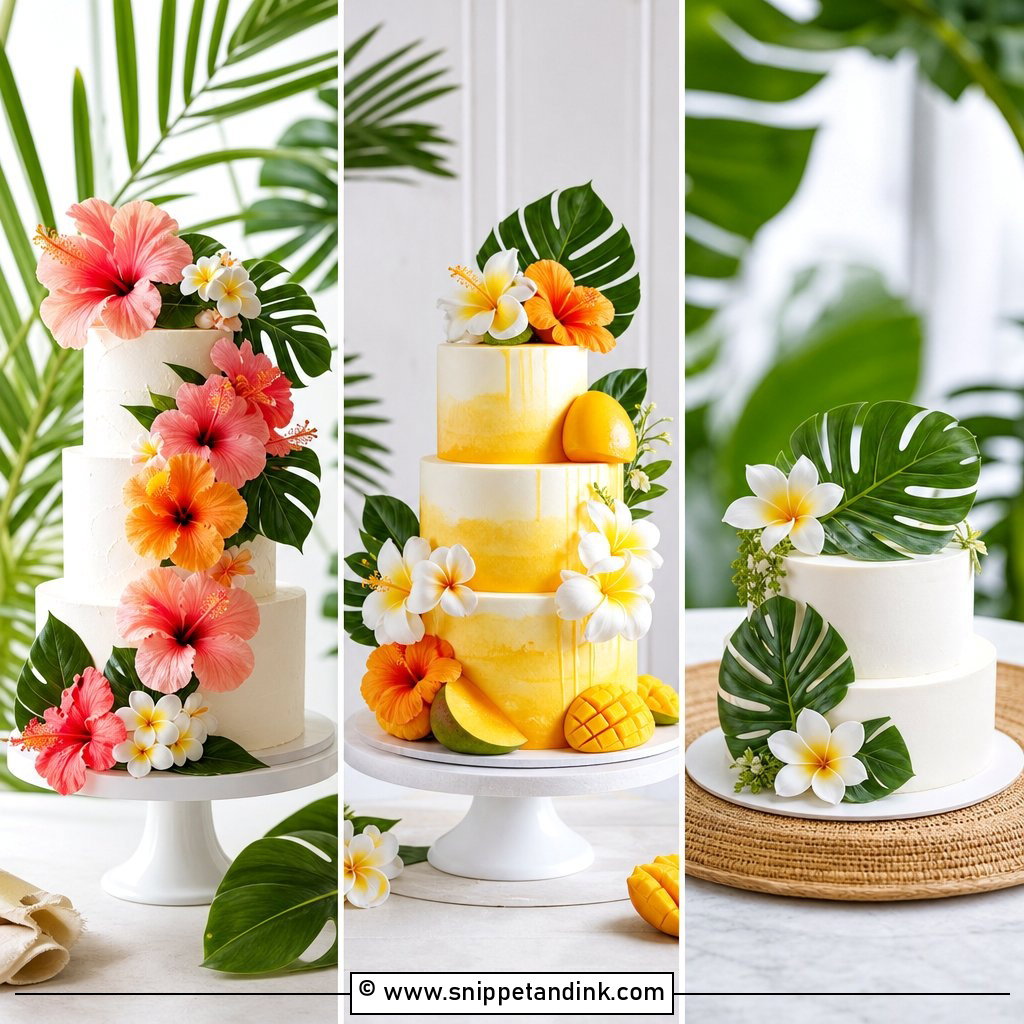
17. Simple Beach Wedding Cake
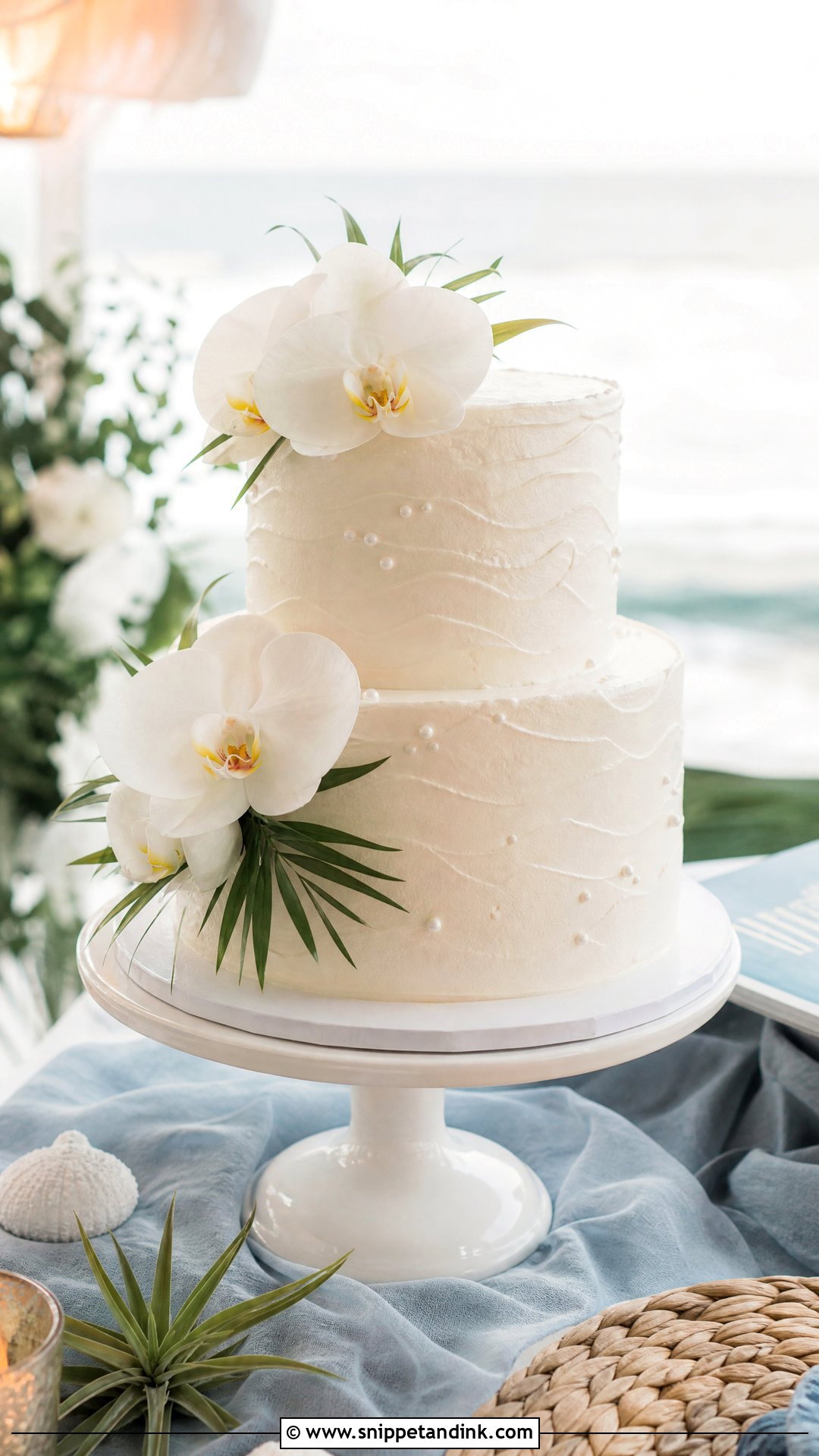
Beach receptions are tough on cake: salt air, wind and sun all work against buttercream. I’d keep the tiers low and wide rather than tall, skip heavy toppers that catch the breeze, and keep the cake in shade or indoors until the cutting. Wave-textured white or pale blue frosting, a few white flowers and subtle shell piping are enough. Coconut, key lime, lemon and passion fruit sponges suit the setting. Keep the palette soft so it reads as romantic rather than nautical-themed.
18. Simple Small Wedding Cake
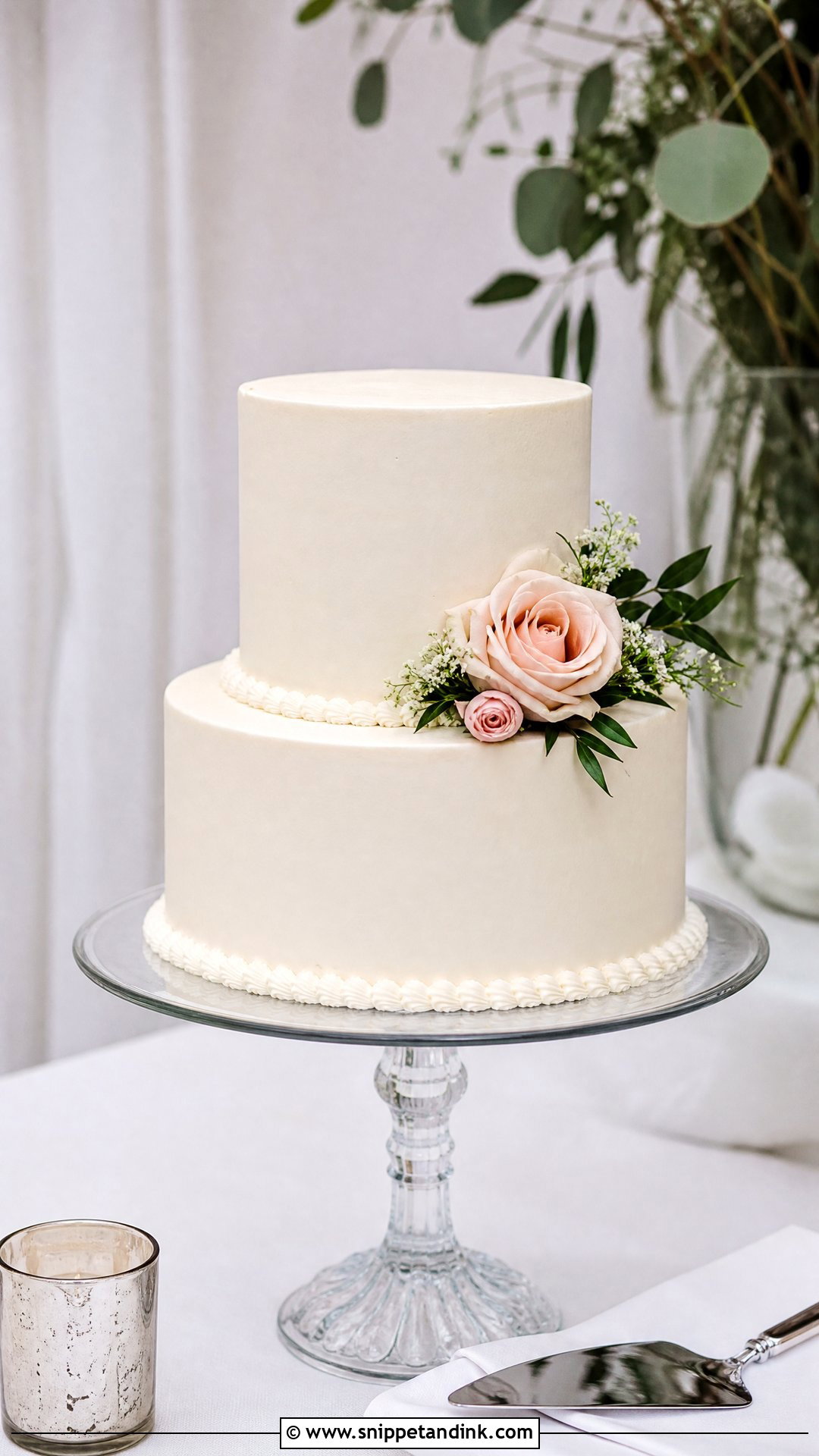
A simple small wedding cake is the sensible answer for an intimate guest list. It might be one tall tier, two petite ones, or a cutting cake beside other desserts. Small cakes need the same finishing care as large ones because guests stand closer to them. The upside is flavour: with fewer servings you can afford almond raspberry, lemon curd or a proper chocolate ganache. Put it on a taller stand so it doesn’t disappear on the table.
19. Simple Square Wedding Cake
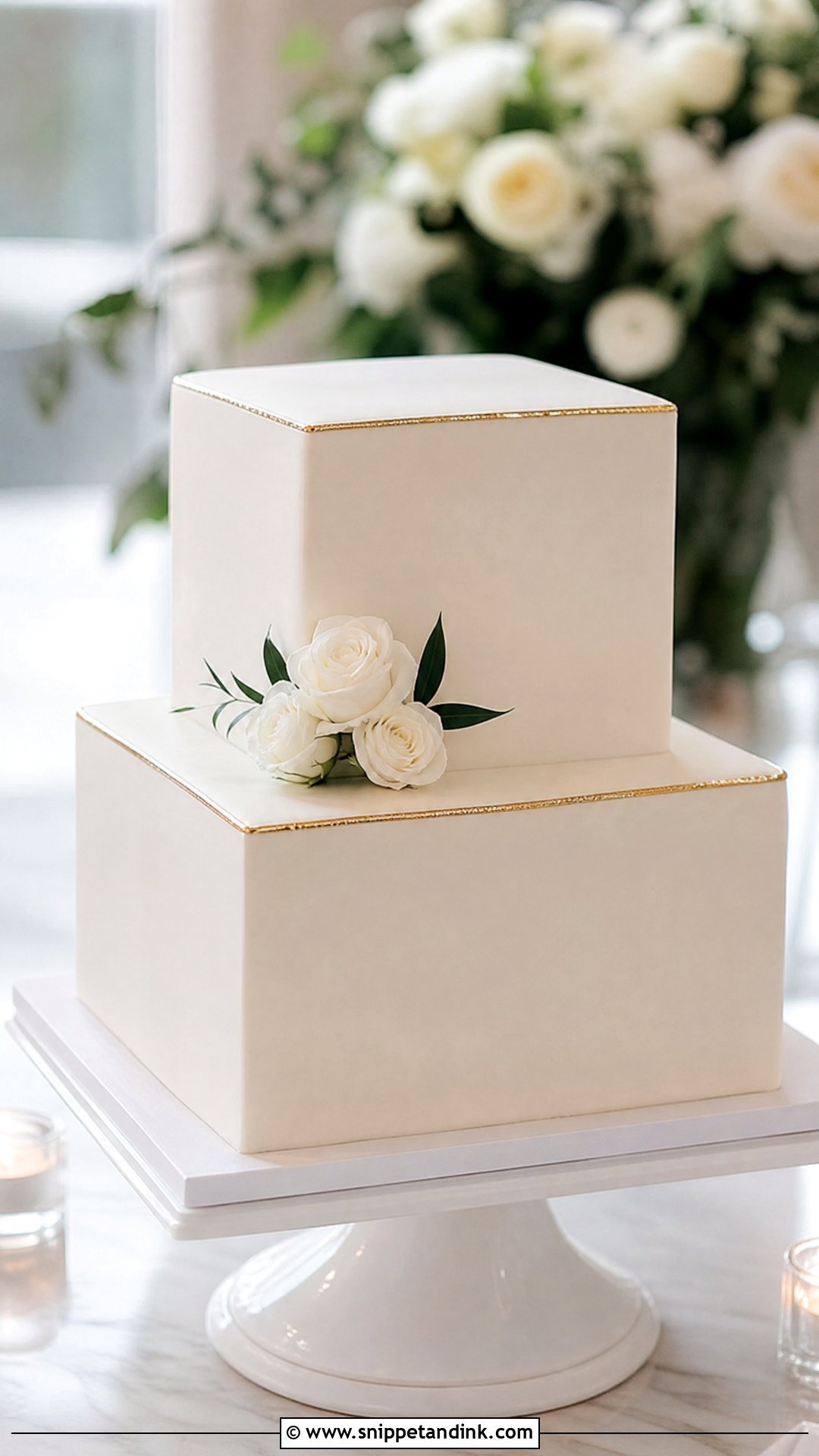
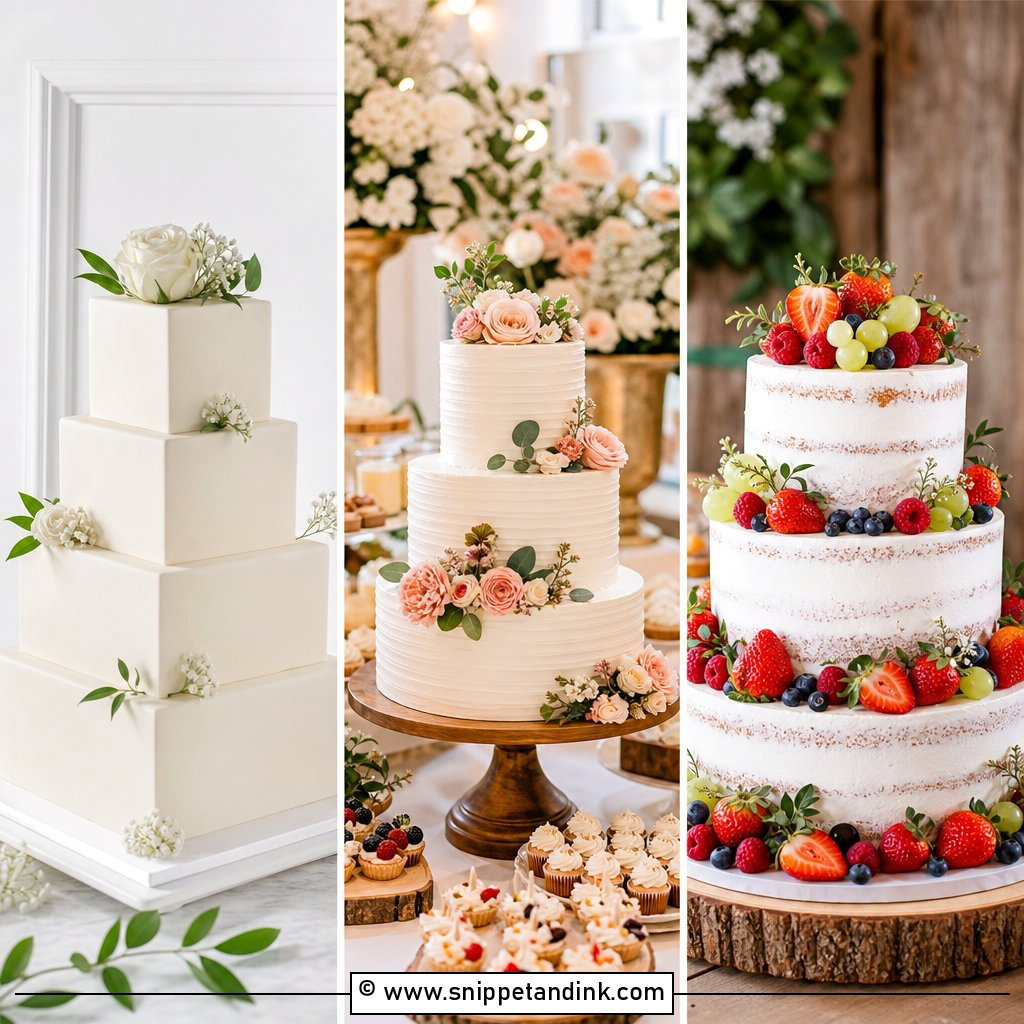
Square tiers look structured and modern, but they are harder to finish than round ones. Each corner needs a sharp point, which is why I’d usually do them in fondant or a very firm chilled buttercream. Decoration should be sparse: one flower cluster, gold edging or piped dots along the base. Even two square tiers look bold. Hotel ballrooms and city venues suit it. Precision is the whole look, so ask to see square cakes in a baker’s portfolio before you book.

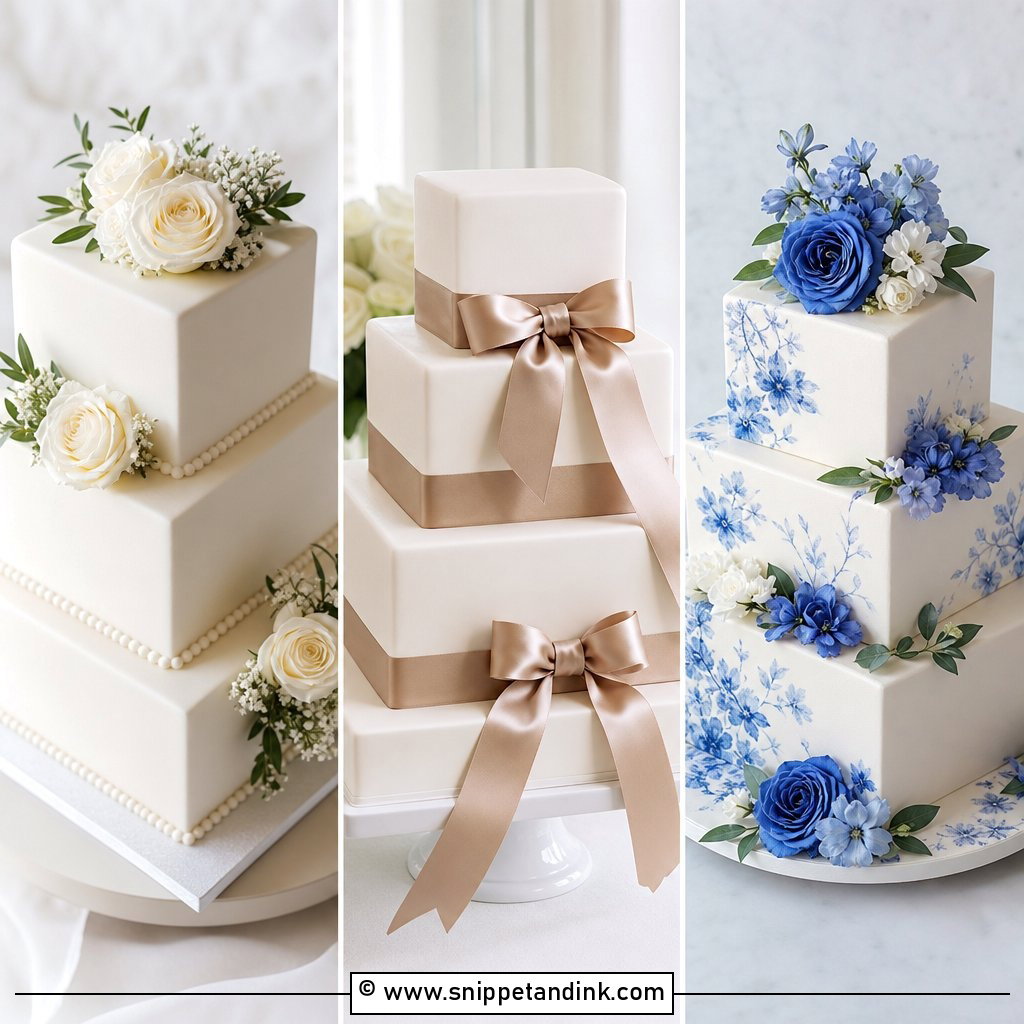
20. Simple Round Wedding Cake
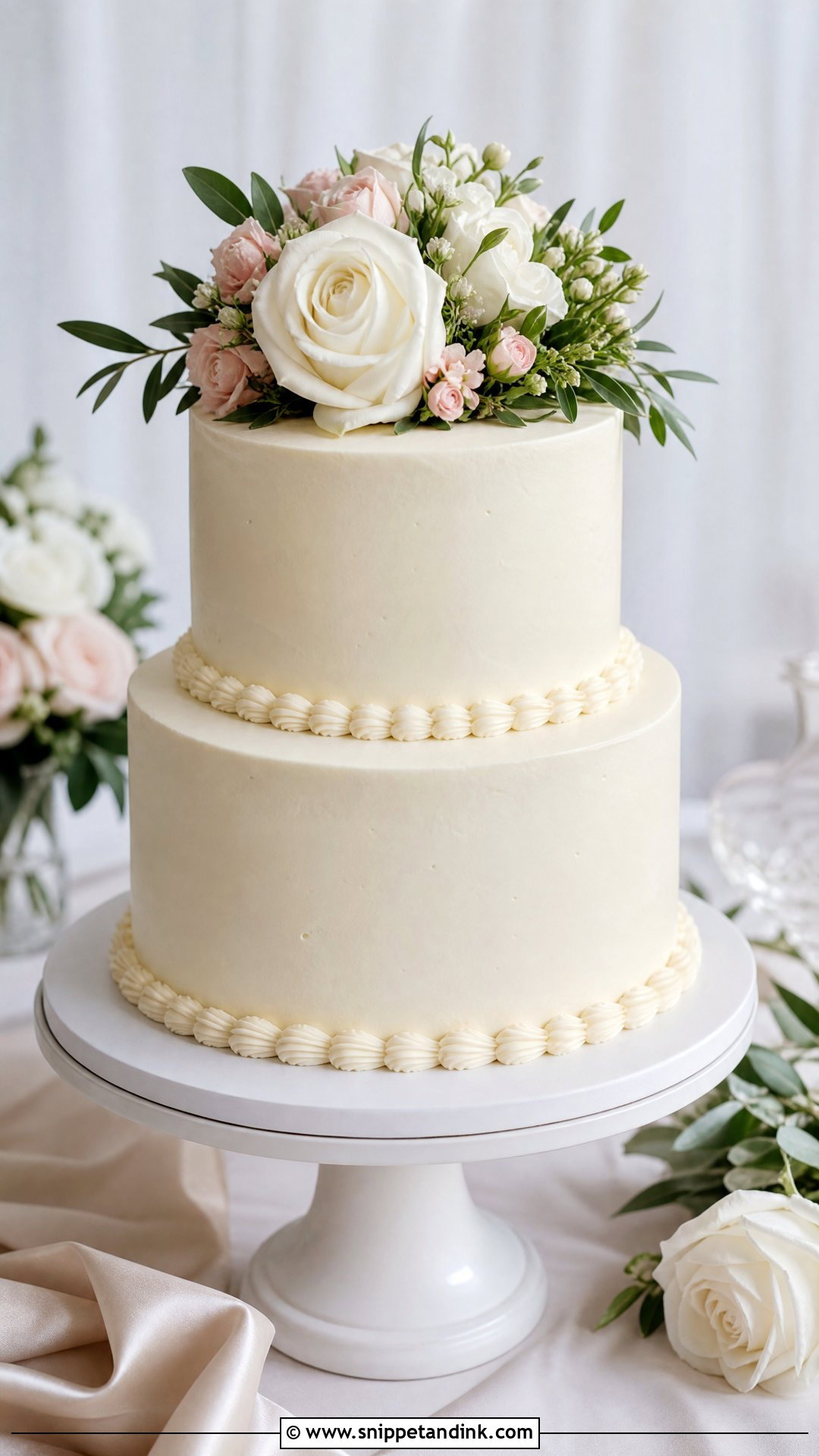
Round tiers are the default for good reasons: they frost evenly, stack easily and cut into predictable portions. That makes them the easiest shape to personalise with flowers, pearls or a topper. A two-tier round has enough height for photos without overpowering a small table. White, ivory or blush keeps it romantic. If you’re unsure what you want, start here and change the finish rather than the shape.
21. Simple Textured Wedding Cake
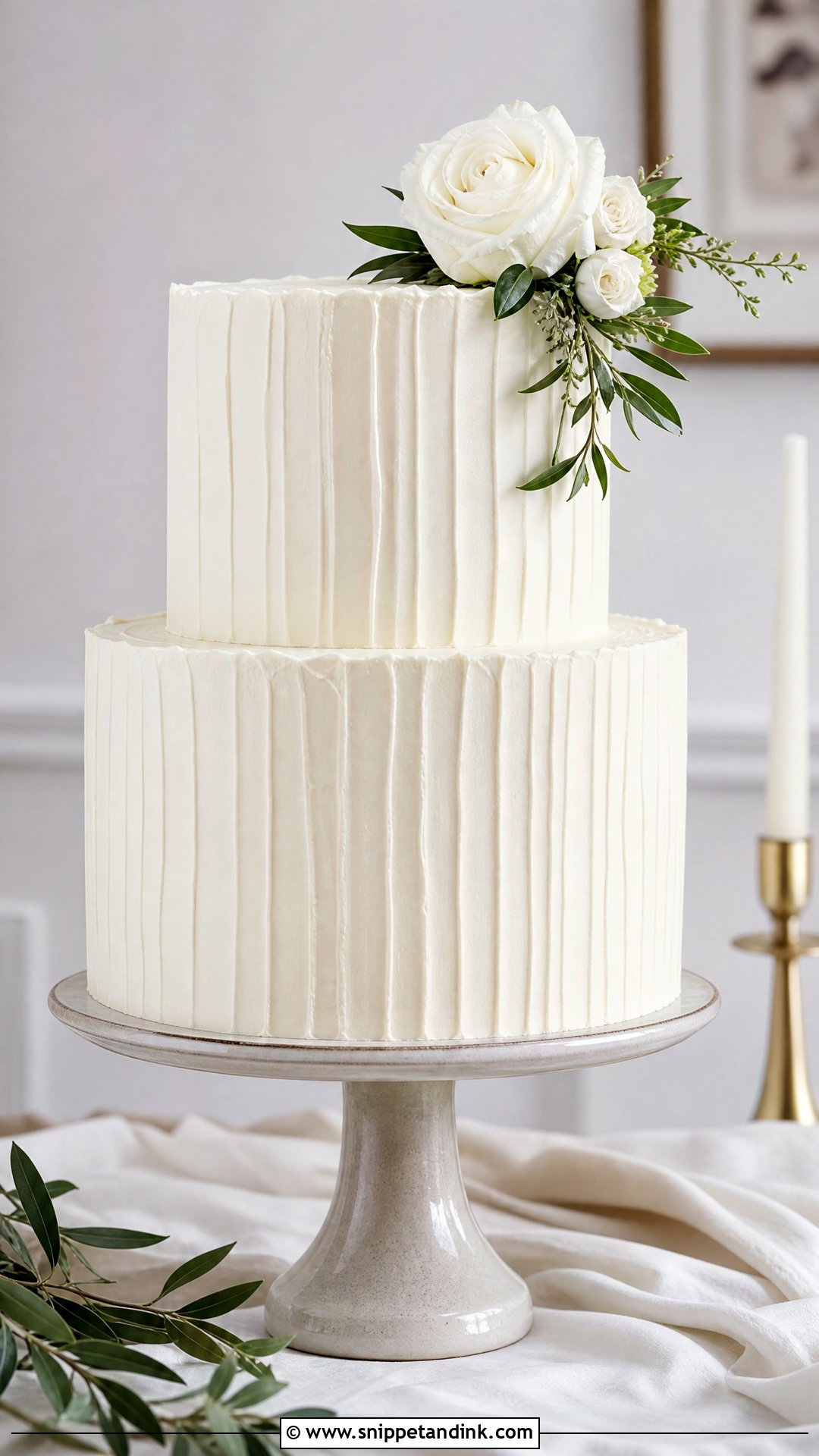
Texture is a plain cake’s best friend. Combed ridges, stucco, brushstrokes or soft swirls add interest without a single added decoration, and they hide the tiny imperfections a mirror-smooth finish would show. Buttercream takes texture naturally. Leave it all white or add one small floral accent. Close-up photos are where texture pays off. Keep the rest of the table simple so the frosting is the detail people notice.
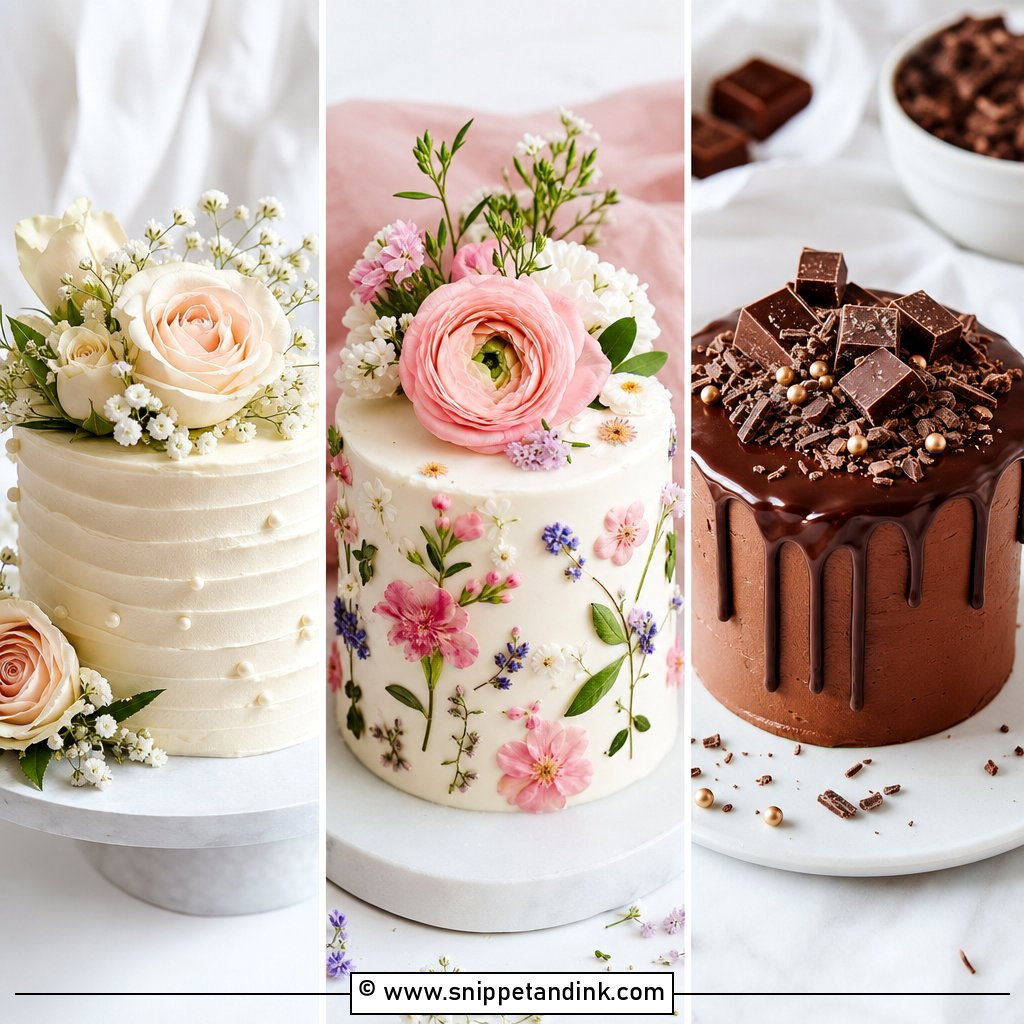
22. Simple Drip Wedding Cake
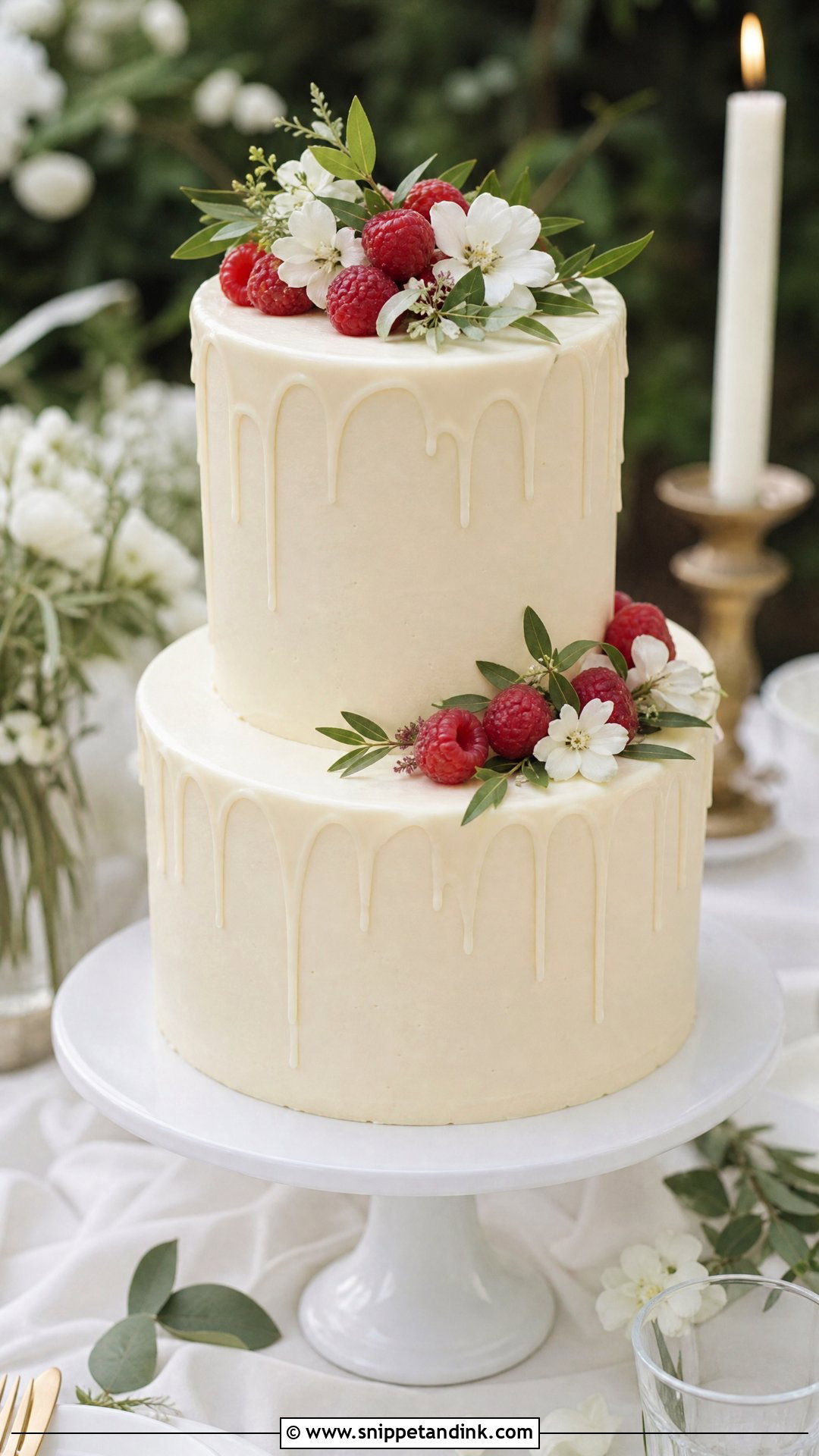
Drip cakes go wrong when the ganache is too hot, so it runs to the board, or too cold, so it sits in fat blobs. I test the temperature on the edge of a chilled tier first. A thin, neat drip of white chocolate, caramel or blush on the top tier only usually looks most balanced. Keep the toppings minimal, maybe flowers, berries or a few macarons, and match the drip to your palette. Vanilla berry, chocolate caramel, lemon and almond are good partners.
23. Simple Fruit Wedding Cake
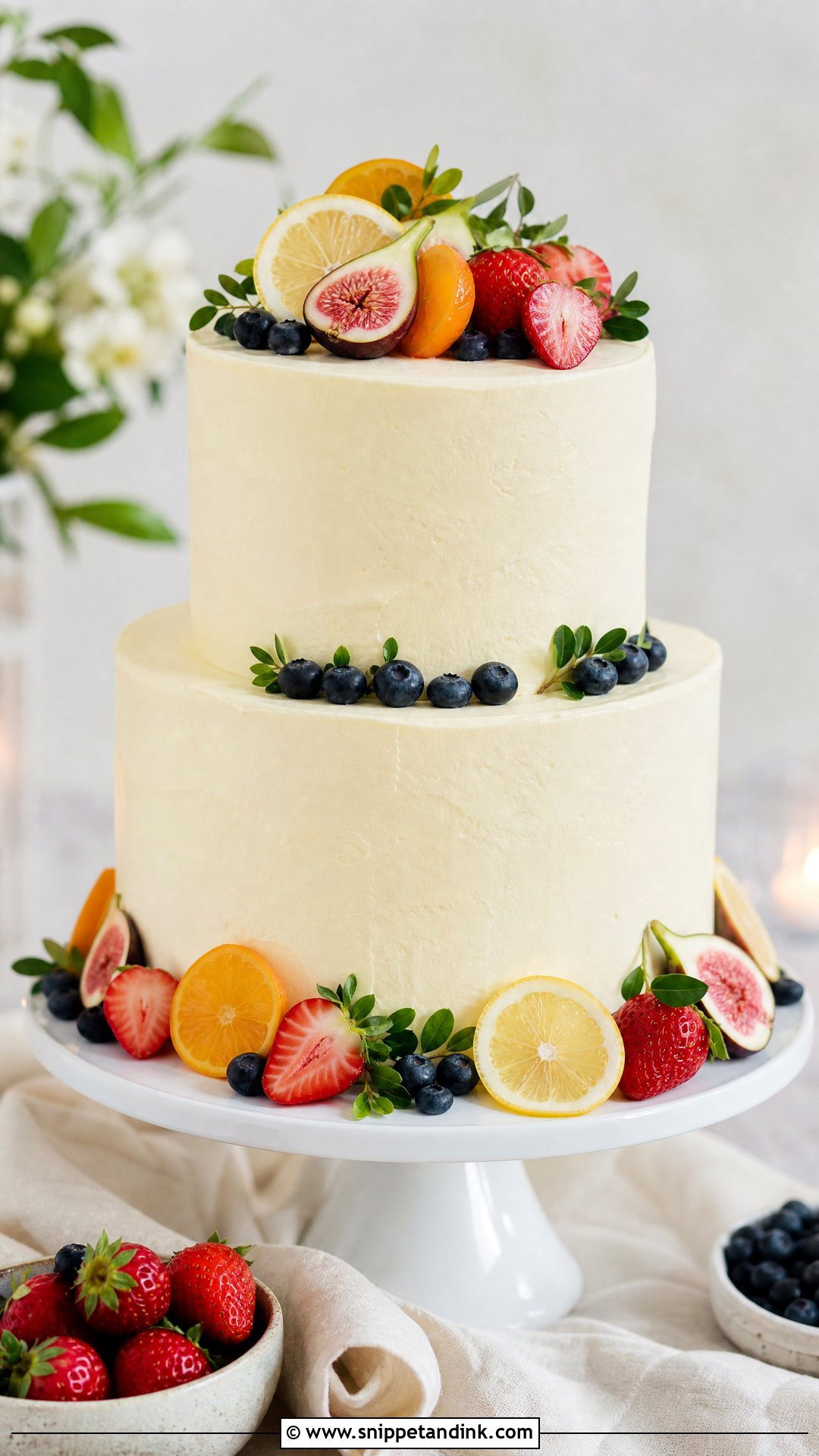
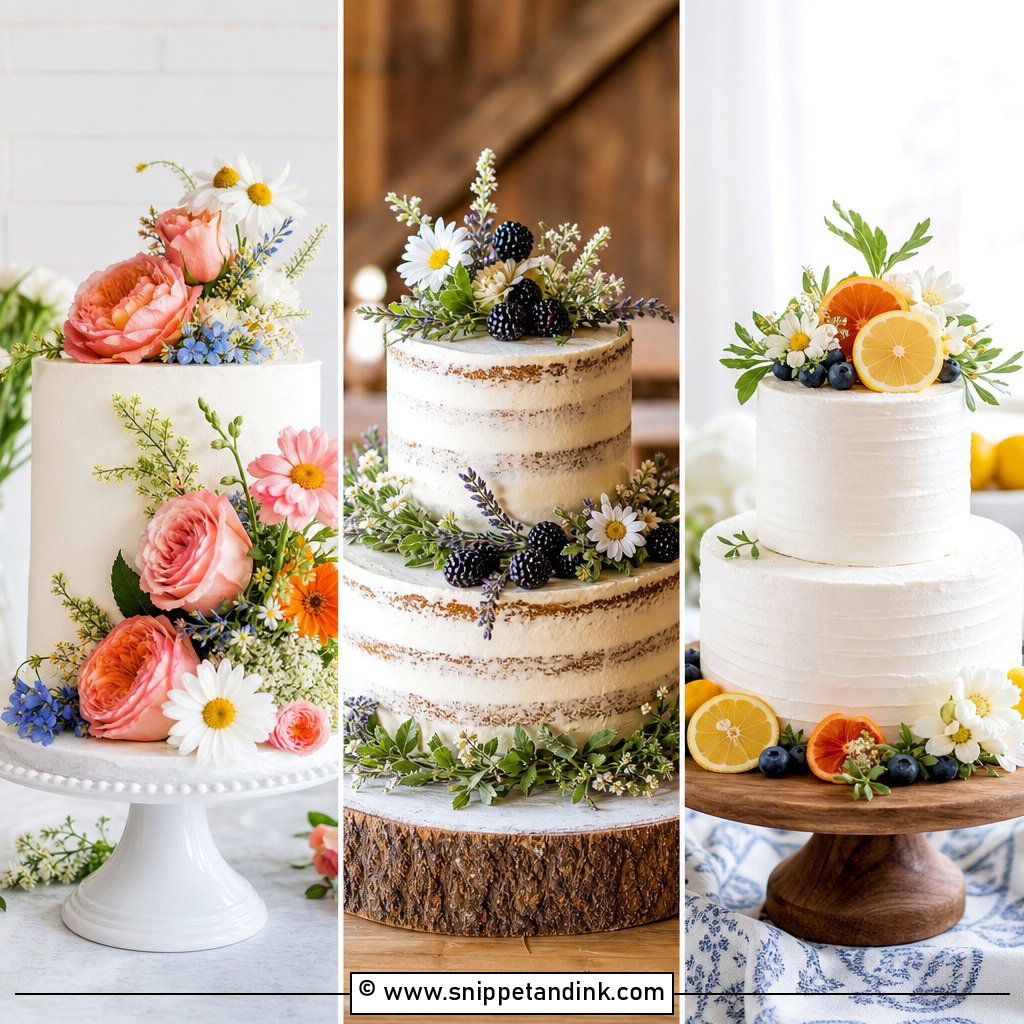
Fruit brings colour and makes the cake taste of the season. Berries sit well on frosting; cut fruit such as citrus or peaches weeps, so I brush it with a thin glaze and add it on site rather than the night before. Figs and grapes hold up well. Fruit pairs with buttercream, semi naked finishes or stabilised whipped cream. Spring, summer and brunch receptions suit it. A few well-placed pieces look better than a heaped top.
24. Simple Pressed Flower Wedding Cake
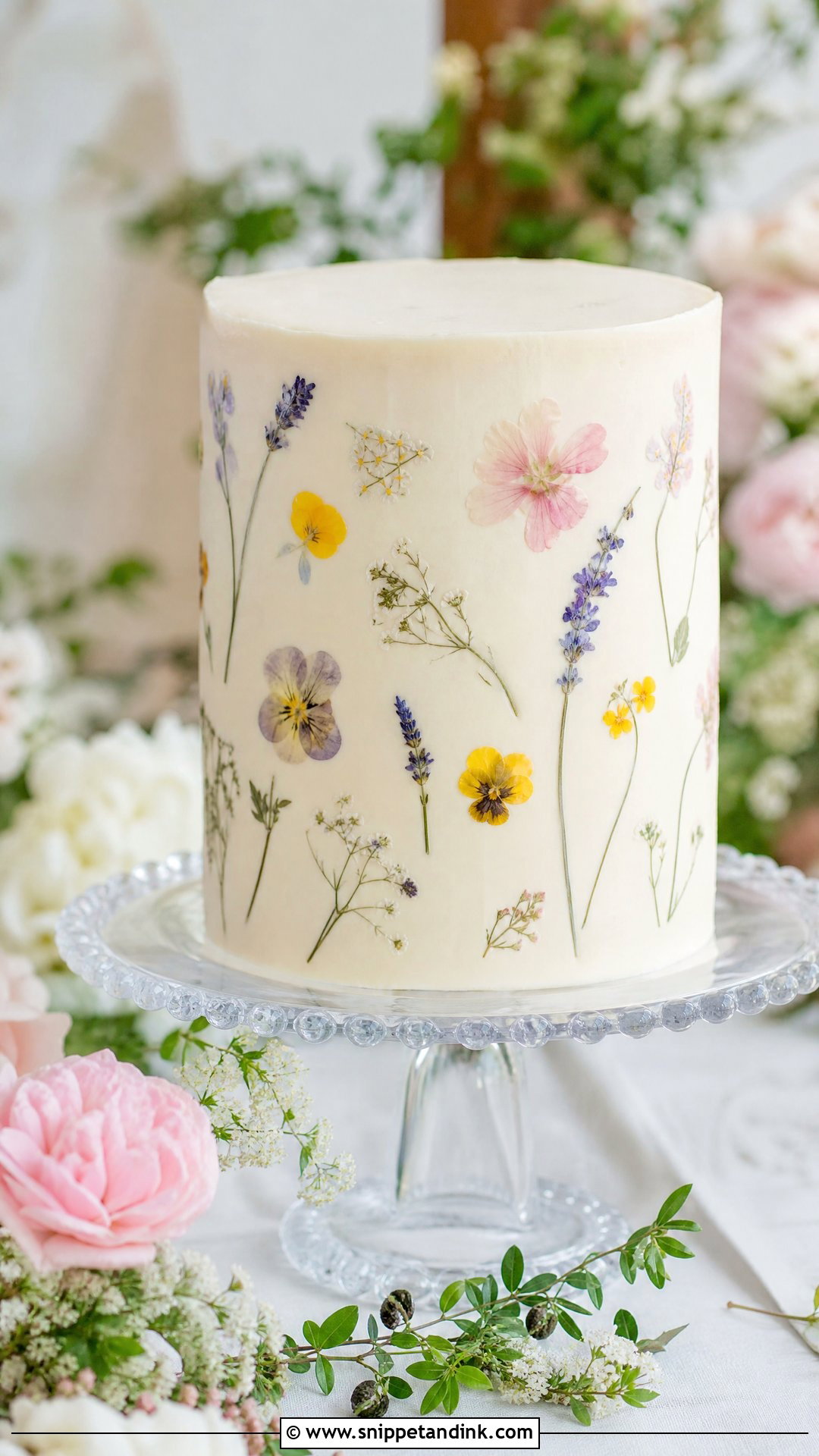
Pressed flowers give a handmade, delicate finish. Edible pressed blooms such as violas and pansies are laid onto smooth buttercream or fondant in a scatter, a wreath or a side trail, and I press them on gently with a little piping gel so the edges don’t curl. A white or ivory base shows their colour best. Garden weddings and spring receptions suit it. Because the flowers already provide the detail, keep everything else minimal.




25. Simple Wedding Sheet Cake
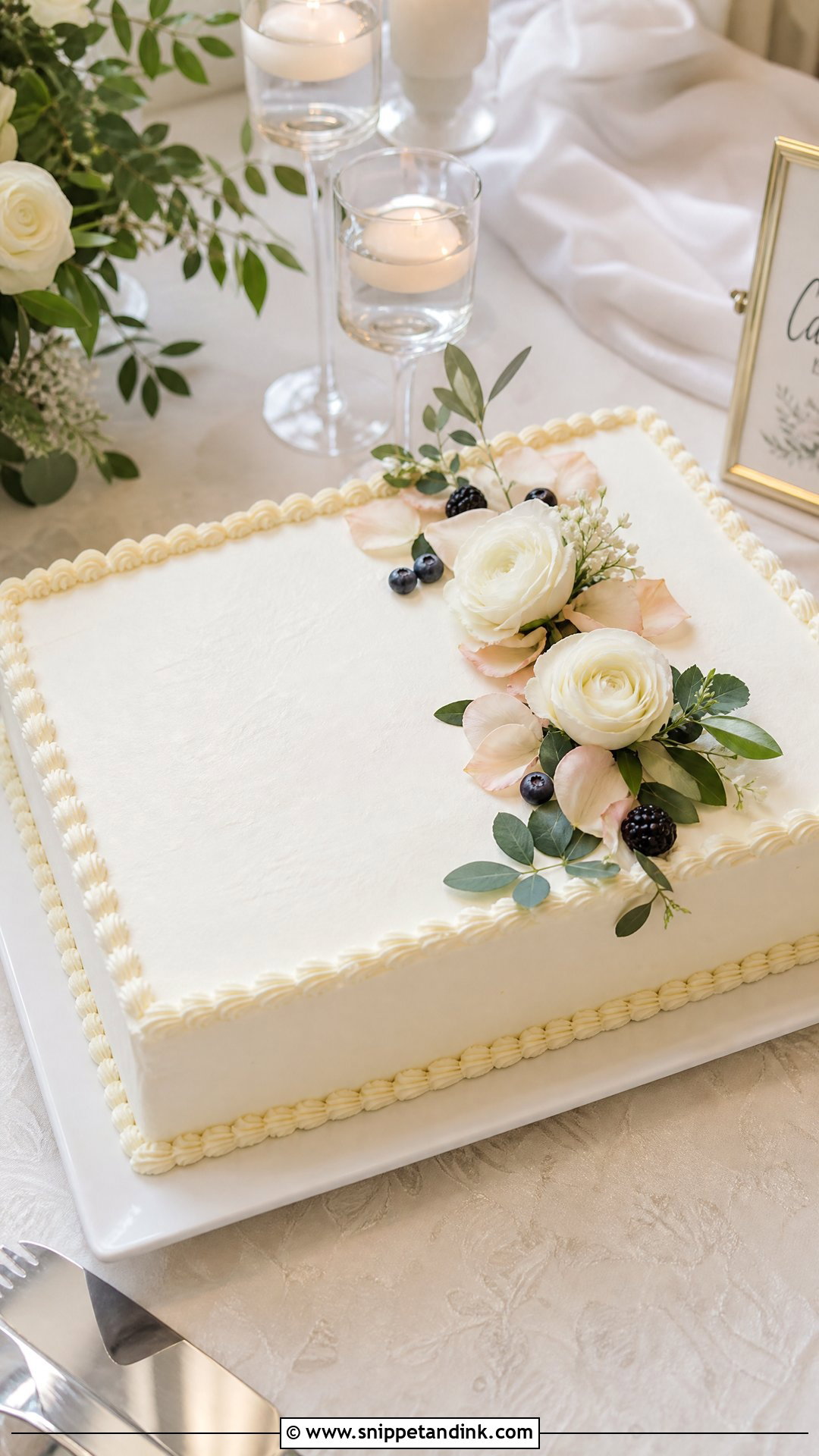
A simple wedding sheet cake is the most practical way to feed a crowd. It can be served straight from the kitchen or displayed with clean frosting and a few flowers on a white tray. Many couples use a small cutting cake for photos and a sheet cake for the actual servings, which keeps the budget in check. Piped borders, fruit or edible petals dress it up. Pick flavours guests already love, like vanilla, chocolate, lemon or almond.
Real Flowers on Buttercream Need a Barrier
Half the cakes above use fresh flowers, so this matters. Most florist stems are grown for looks, not for eating, and many are sprayed. Some common wedding flowers are also toxic, including lily of the valley, hydrangea, foxglove, sweet pea and daffodil, so I keep those off the cake entirely.
For everything else, I wrap each stem in floral tape and push it into a plastic posy pick, or I sit the cluster on a small disc of wax paper or fondant so the petals rest on a barrier rather than the frosting. Ask your florist to set aside unsprayed stems for the cake and deliver them in water, then decide with your baker who places them. Guests should never eat the flowers, so whoever cuts the cake removes them first.
Portion Math, Dowels and the Drive Over
Wedding slices are smaller than party slices. Bakers usually count a finger portion about 1 inch wide by 2 inches long, cut from a 4-inch-tall tier, so a cake that looks small can serve more people than you’d guess. If your caterer cuts generous dessert wedges, plan on fewer servings, and tell your baker which they’ll do.
- Every tier above the bottom one sits on its own board, supported by dowels pushed into the tier below. Without them, the weight sinks straight through.
- Tall or heavy cakes usually travel unstacked and are assembled at the venue, then finished with flowers and borders on the table.
- Buttercream cakes travel chilled and firm. Air-conditioning on in the car, the box flat on a non-slip mat, never on a seat.
- Agree on a table that is level and out of direct sun before delivery day, and ask the venue to keep it clear of the dance floor and speakers.
If the budget is tight, the most common split I’d suggest is a small decorated cake for the cutting and a kitchen cake in the same flavour for the servings. Nobody can tell the difference on the plate.
One Detail, Done Well, Is Enough
A plain cake needs good finishing more than extra decoration. The shape, frosting and one clear detail are enough: smooth buttercream for a classic look, a semi naked scrape for something relaxed, pressed flowers for something softer. Small cakes can hold their own next to tall tiered cakes when the edges are clean. Before you book, I’d settle your venue, season and guest count, then choose the finish that will survive that room for the hours it has to stand there.
You'll Like These Ideas:



Leave a Reply