
A dholki night is loud, warm and crowded, usually in someone’s living room, with aunties singing and the dhol going until late. The cake has to match that mood and survive it. I design these cakes around a few familiar symbols: mehndi colours, gold, sugar marigolds, edible bangles, fondant cushions and, of course, a little drum. Below are the dholki cakes I get asked for most, with notes on how each one is built and what to think about before you order.
Fondant or Buttercream for a Warm, Crowded Living Room?
Most dholkis happen at home, often in a room full of people and without strong air conditioning. That decides more about the cake than the design does. Buttercream softens and starts to slide once a room gets warm, and piped details lose their edges. Fondant over a firm ganache holds its shape far better and gives a smooth surface for henna piping and gold paint.
That doesn’t mean fondant everywhere. Many guests peel it off, so I keep the layer thin and suggest a well-flavoured sponge underneath. If you prefer buttercream, choose a style that tolerates softening, like a rustic finish with sugar flowers, and keep the cake in the coolest room until it is time to cut.
Details to Give Your Baker
- Realistic guest numbers, keeping in mind that mithai and other sweets will be on the table, so slices are often small.
- Whether you need an eggless sponge, which many families ask for and not every baker offers.
- Photos of the decor and the bride’s outfit, so the colours match.
- Where the party is and whether the cake will sit near lights, windows or a heater.
1. Dholki Cake With Fondant Drum
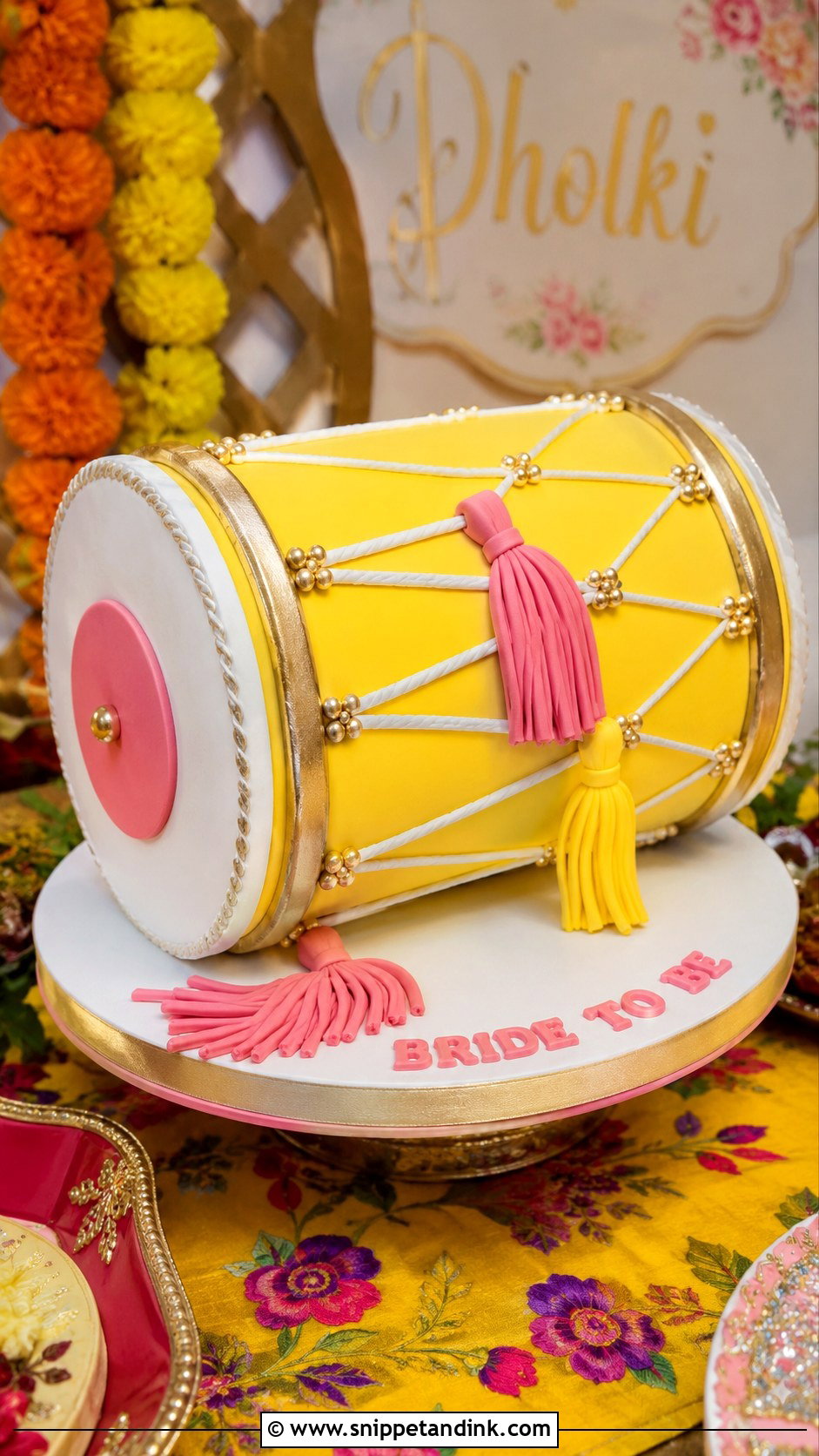
The fondant drum tells everyone what the night is about before they read a single sign. You can have the whole cake carved into a dholki or keep a round cake and sit a small edible drum on top; the second option is cheaper, faster and easier to cut. I make the drum topper from fondant mixed with a little tylose so it firms up and holds its shape overnight. Yellow, orange, pink and green suit the theme, finished with gold fondant ropes, tiny tassels and edible pearls along the rims. Marigolds and matching cupcakes around it complete the table.
2. Mehndi Dholki Cake
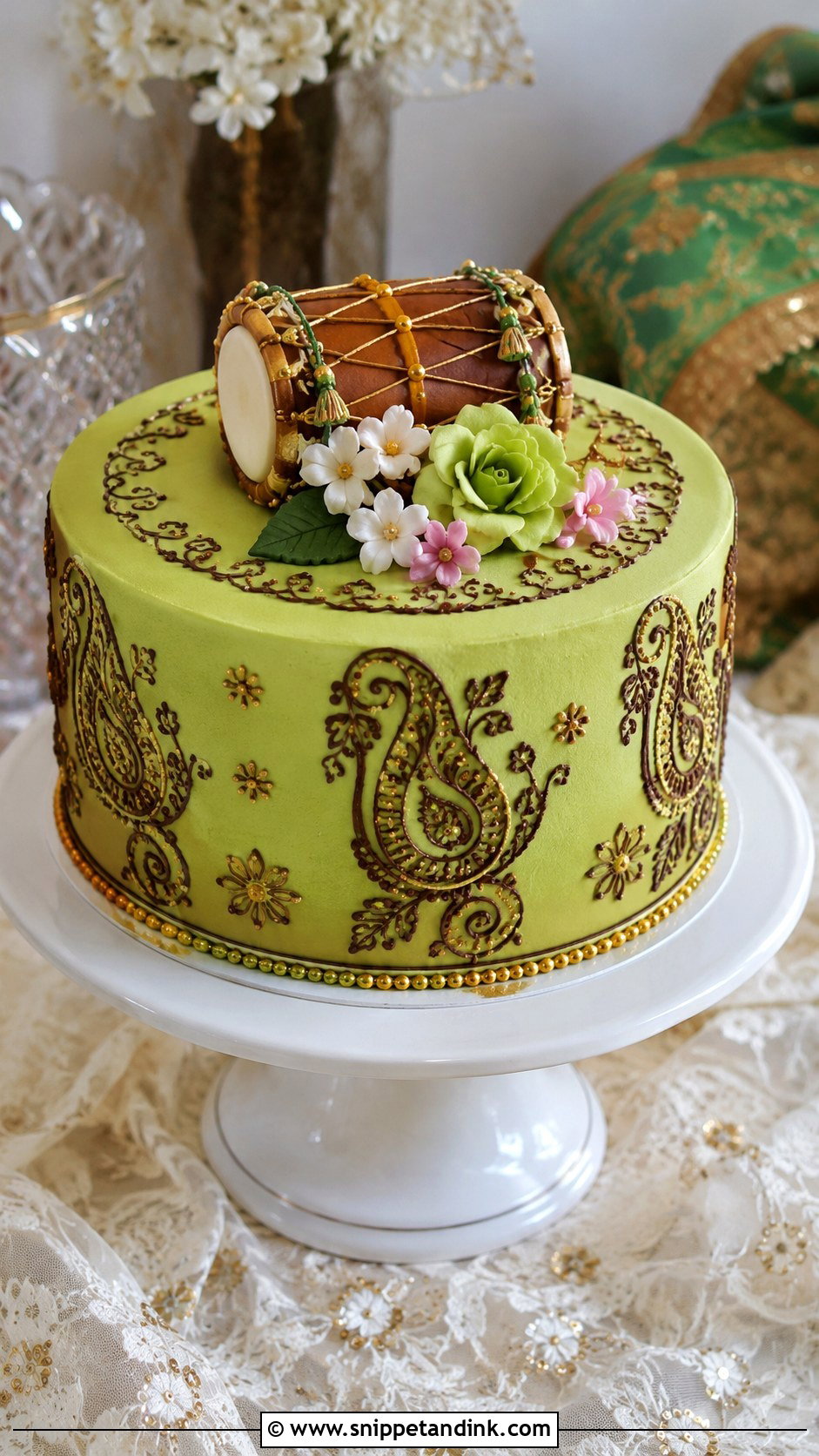
Piped henna work on a cake is slow, steady handwork, and the base matters. I pipe on fondant rather than buttercream, since a firm, smooth surface lets the lines stay crisp. Green, mustard, ivory or deep pink make good backgrounds. Paisleys, dots, vines and mandala shapes go on in royal icing, which dries hard and won’t smudge when the cake is moved. A small dholki topper or an edible hand with henna art makes the theme clear. Allow extra lead time for this one, because detailed piping takes hours per tier.
3. Yellow Dholki Cake
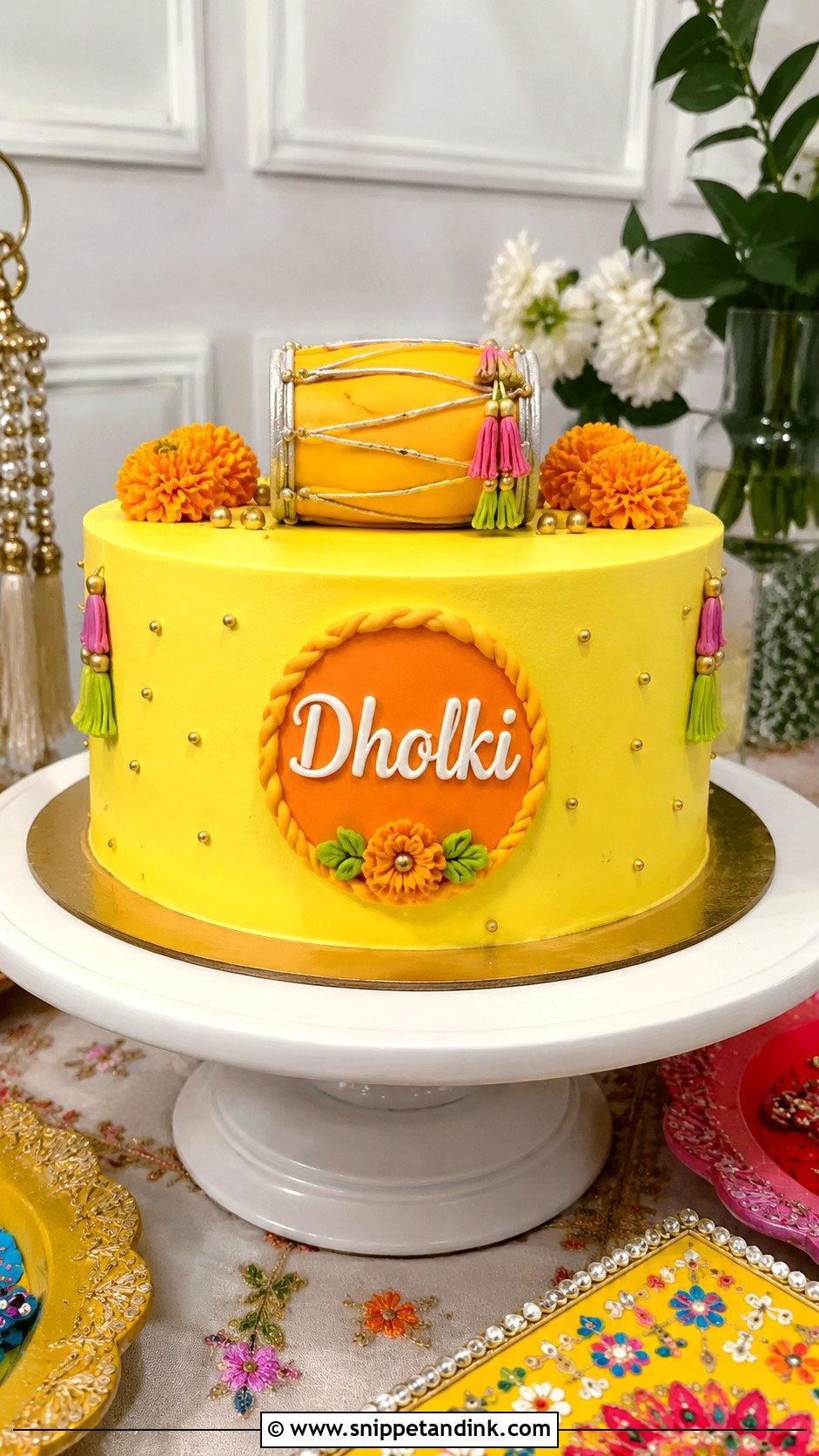
Yellow is the obvious dholki colour, linked as it is with haldi, mehndi, and pre-wedding celebrations. I usually pair it with a lemon, vanilla or saffron sponge, which suits the colour and tastes bright. Yellow buttercream does fade in strong sunlight, so for a daytime outdoor event I either cover it in fondant or keep it in the shade until serving. Gold accents, marigold-style sugar flowers and small orange details keep the palette warm. A fondant dholki with edible bangles or cushions sits on top.
4. Pink Dholki Cake
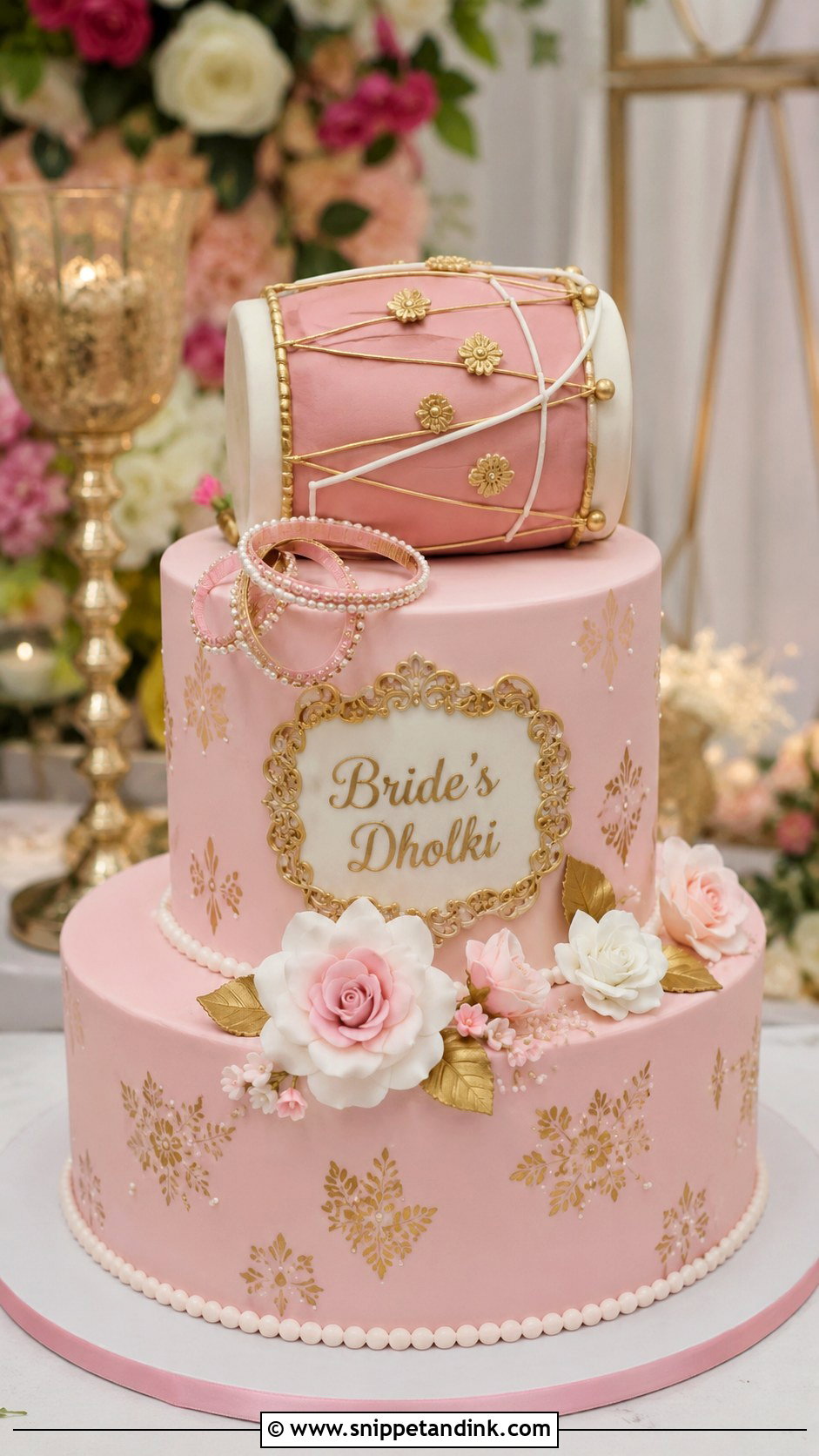
Blush pink reads modern and bridal; hot pink is pure mehndi-party energy. I decide which one with the bride by looking at her outfit and the decor, since a cake that clashes with the backdrop looks wrong in every photo. Gold stencil patterns, edible lace and sugar roses work on both. Inside, a pink velvet or vanilla sponge with rose, pistachio or cardamom flavour suits South Asian tastes. Matching macarons or henna-piped cookies complete the table.
5. Green Dholki Cake
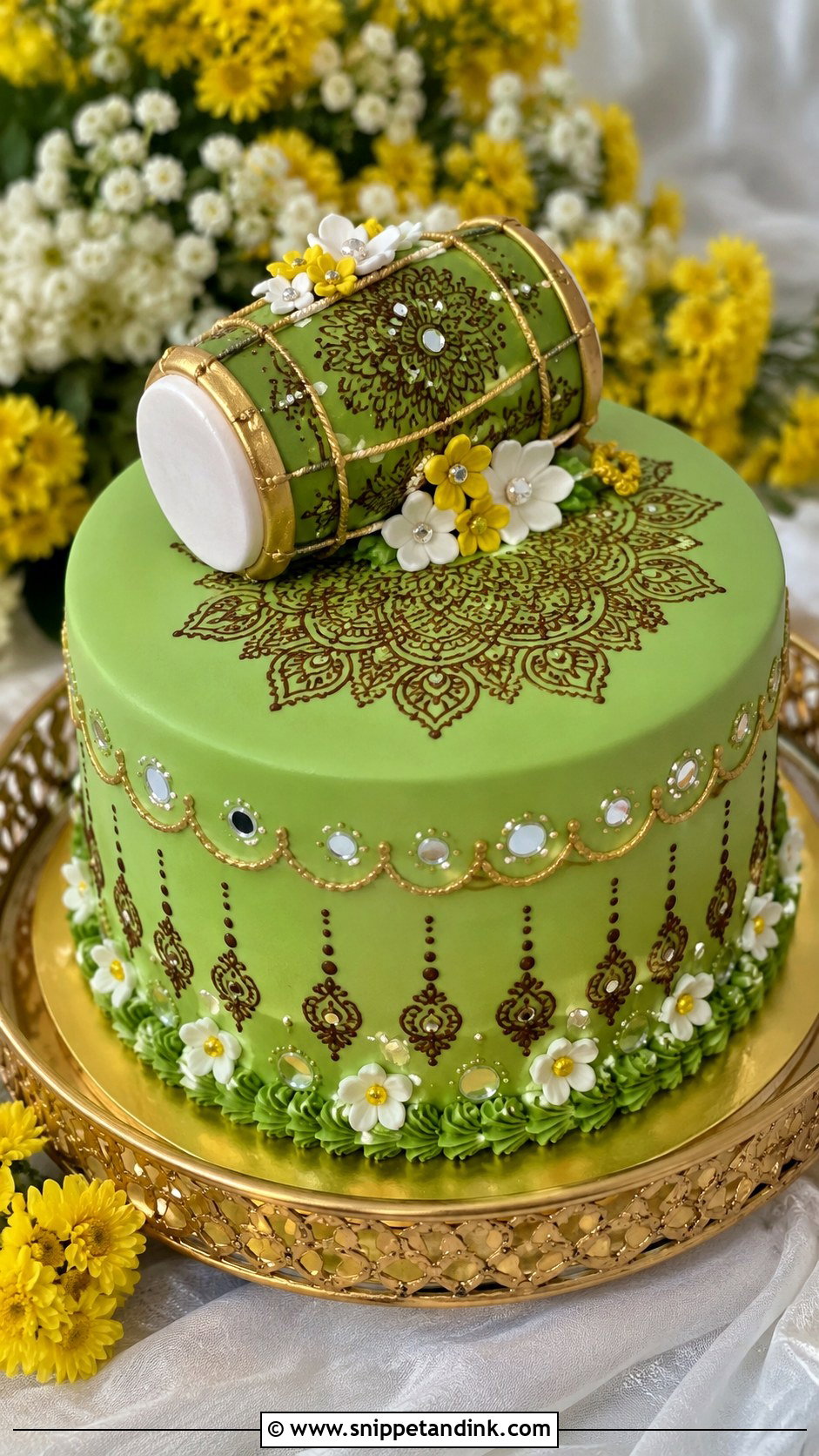
Green ranges from deep emerald to soft pistachio, and the shade sets the tone for the whole cake. Emerald looks rich and evening-ready; sage feels lighter and more modern. Deep greens need a lot of colouring, which can make fondant sticky and taste bitter, so I often start from a pre-coloured fondant. Gold borders, edible mirror-work and piped henna patterns finish it, with a fondant drum or tiny dupatta drape. Pistachio and almond sponges suit the colour well.
6. Dholki Cake With Bangles
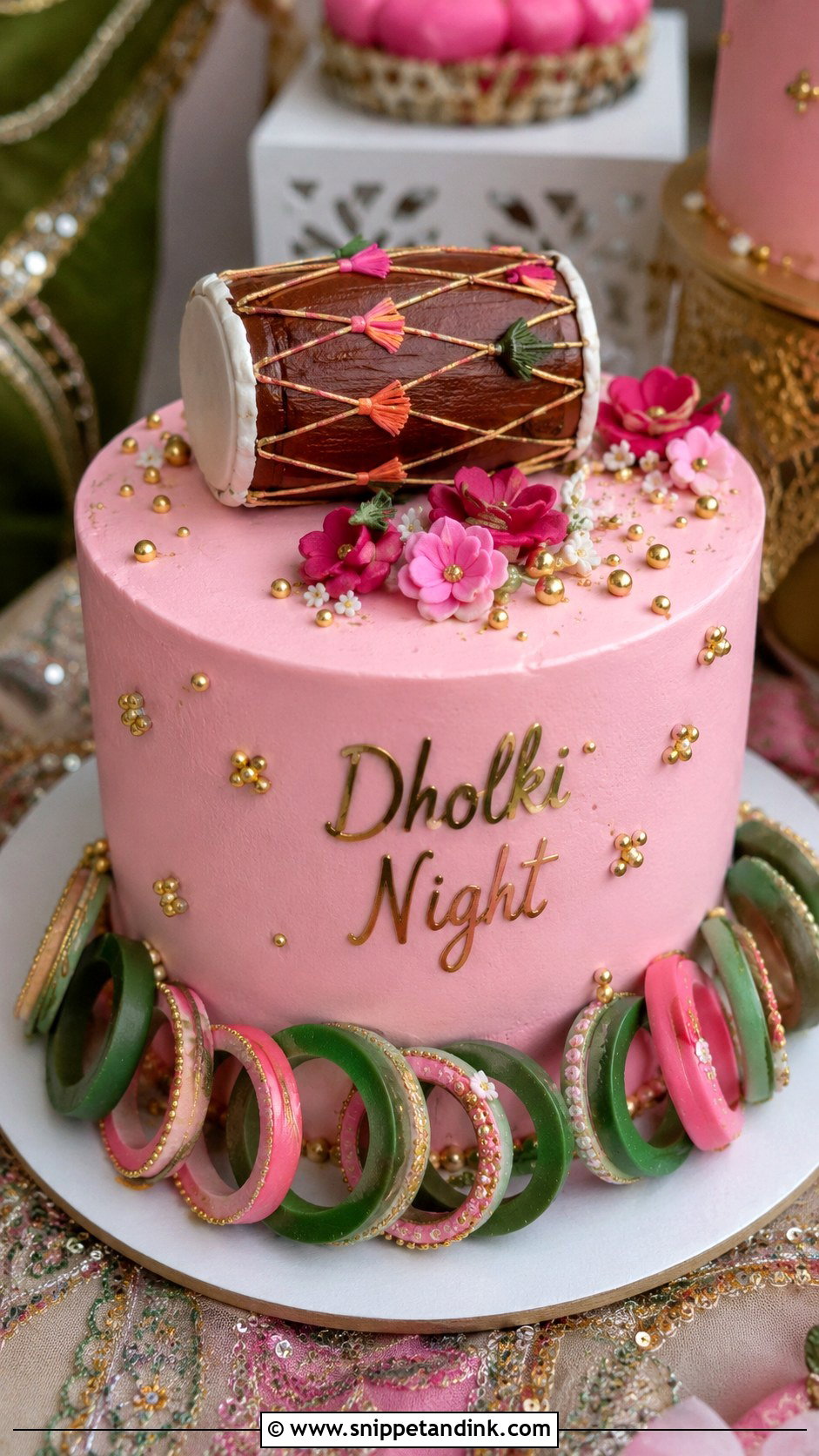
Edible bangles bring colour and a sense of movement. I make them from fondant, modelling chocolate or sugar paste and let them dry flat for a day before painting the gold, otherwise they warp. They sit around the base or stack beside a fondant dholki. They work on round and square cakes, since the curves contrast with straight sides. Sugar flowers, henna piping and metallic accents complete it. If you like the idea, ask the baker to match the bangles to your own bridal colours.
7. Dholki Cake With Dupatta
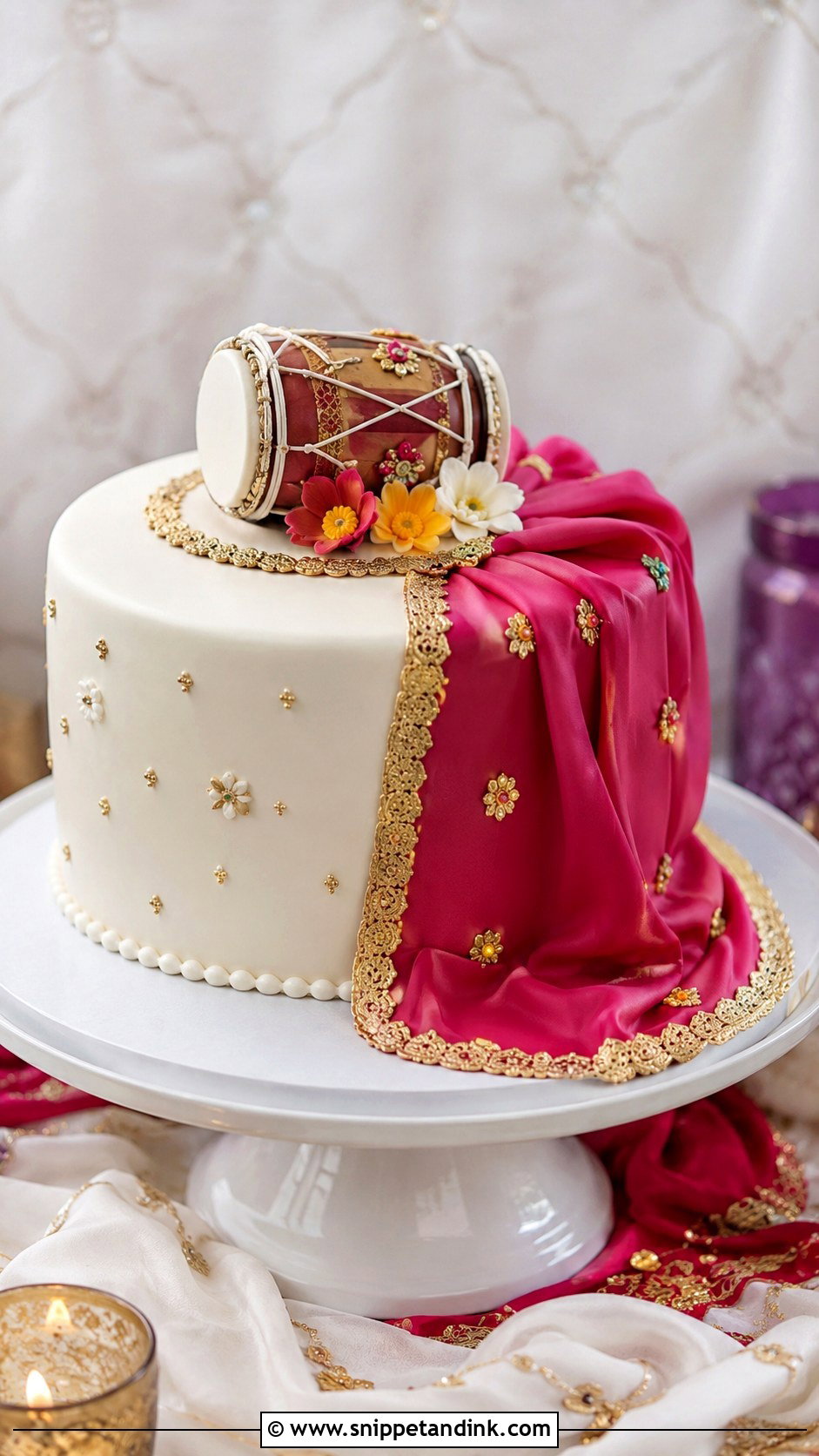
A fondant dupatta draped across the top and down one side of the cake looks like fabric when it is rolled very thin and allowed to fall in soft folds. I add gold trim, tiny pearls and a lace impression to the edge. The drape has to go on close to delivery, since thin fondant dries and cracks if it is handled too long. A small dholki topper beside it keeps the theme clear. Ivory and pink, green and gold, or yellow and orange all suit it.
8. Dholki Cake With Cushions
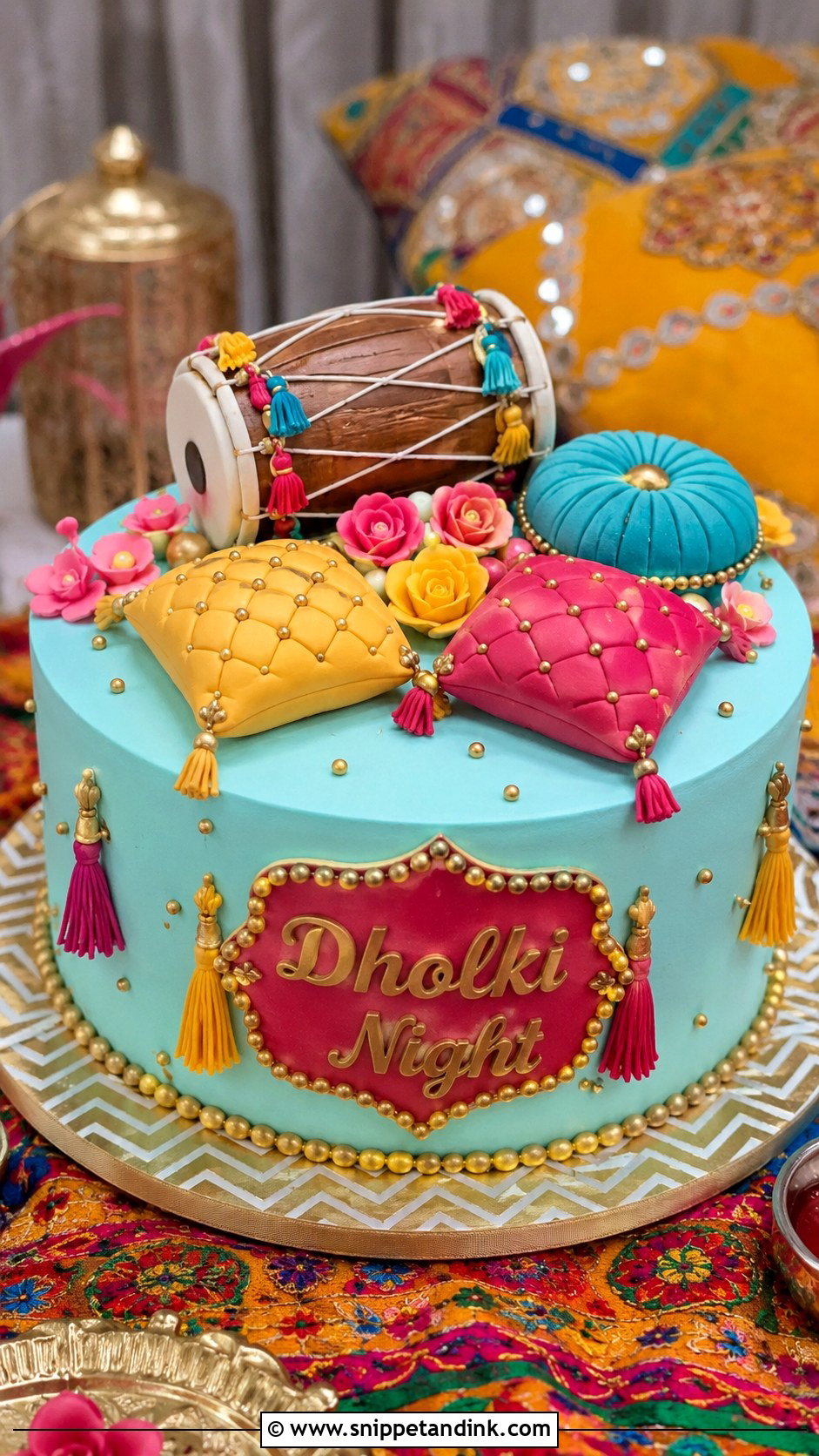
Fondant cushions set up a little mehfil scene on top of the cake: a small drum surrounded by tiny pillows, like the floor seating at the party itself. I use bold colours like magenta, turquoise, mustard, emerald and gold, and give the cushions quilted texture, tassels and edible beadwork. The base cake stays plain so the scene stands out. This is one I’d suggest when your venue has floor seating and rugs, because the cake echoes the room around it.
9. Dholki Cake With Marigold Flowers
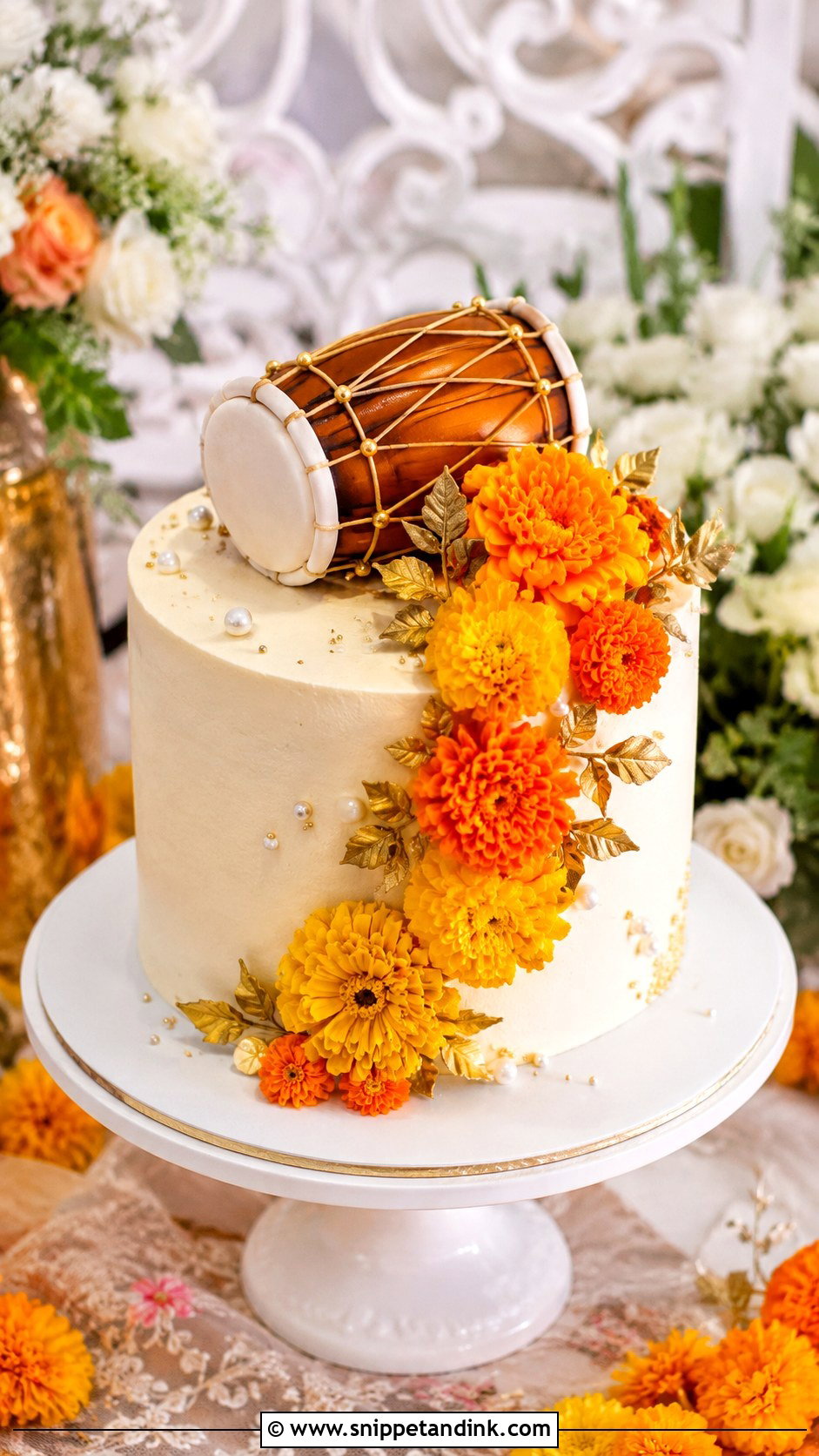
Marigolds can be piped in buttercream, which is quick and soft, or made in gum paste, which takes much longer but holds up in heat and can be kept as a keepsake. I usually suggest gum paste for an outdoor party. They wrap around the base, cascade down one side or cluster around the drum. Ivory, yellow or soft green frosting lets the orange flowers stand out. A saffron or cardamom sponge suits this cake, especially for garden and courtyard dholkis.
10. Dholki Cake With Henna Pattern
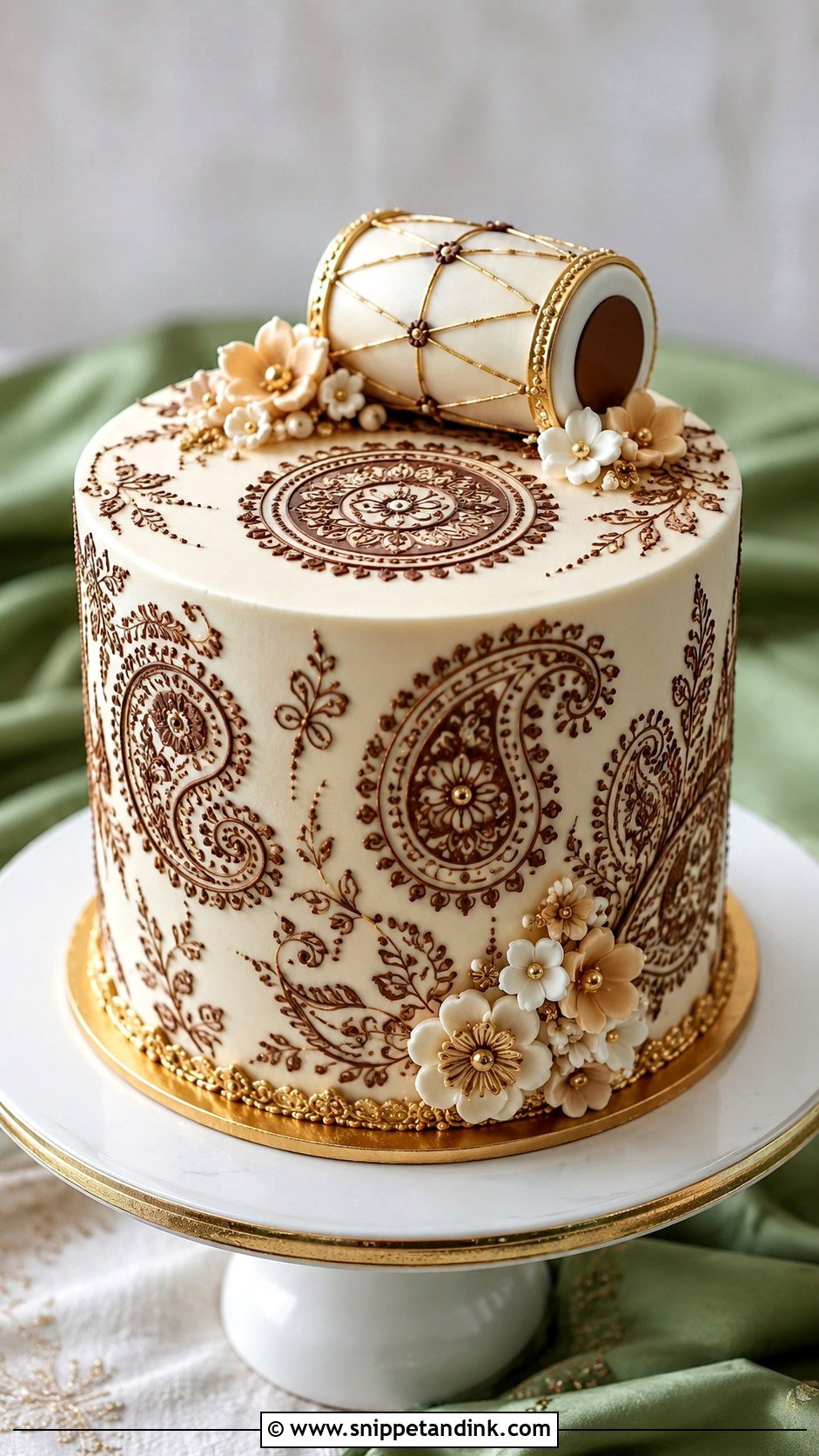
Henna patterns turn the cake itself into the art. I cover it in ivory, green or pastel fondant, then pipe brown, gold or white designs: Paisleys, vines, dots, mandalas and floral trails. Brown piping reads the most like real mehndi, while gold looks richer under evening light. Keep any topper small so it doesn’t hide the pattern. This cake rewards close-up photos, and henna cookies on the table repeat the design.
11. Simple Dholki Cake
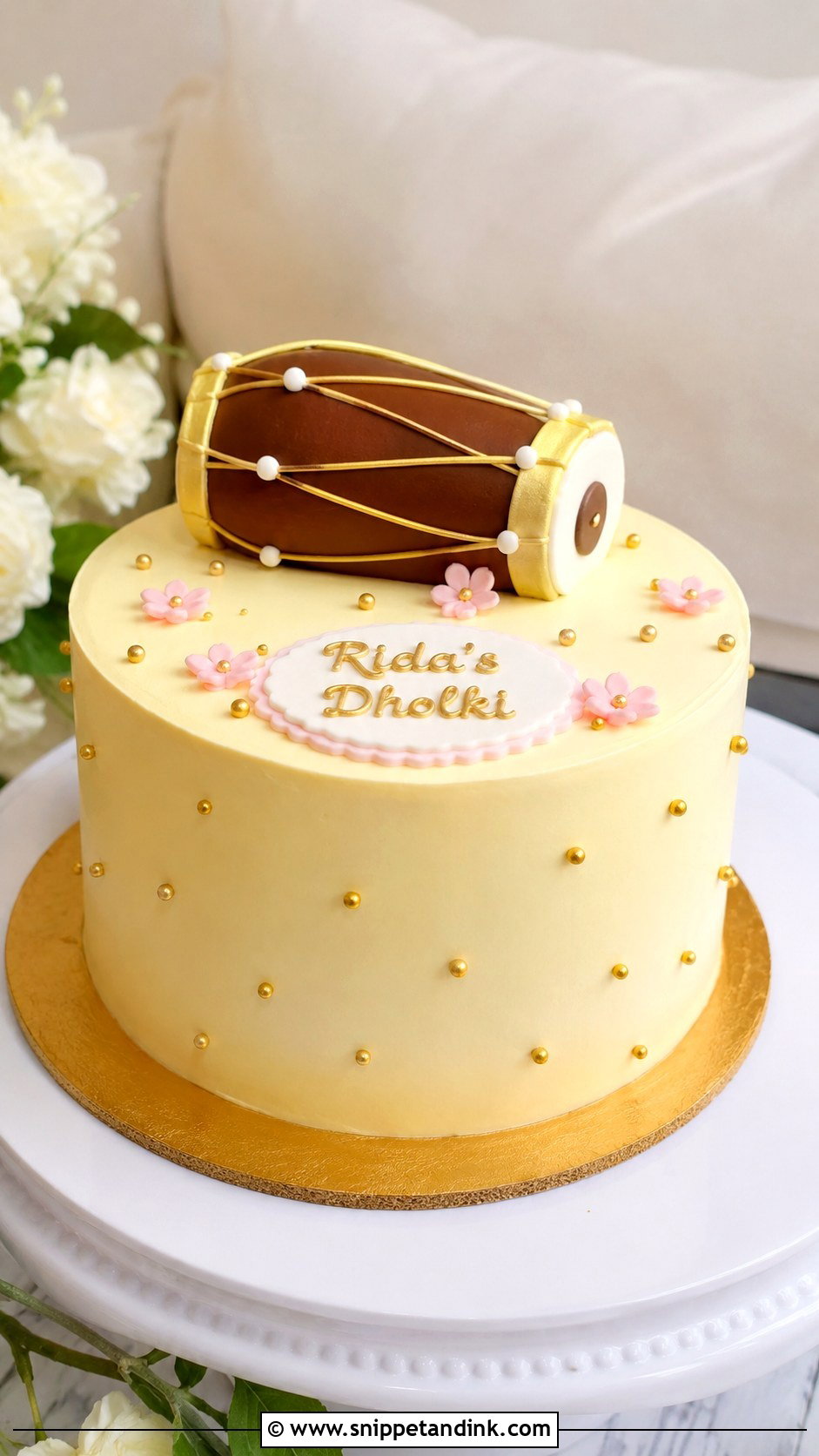
Simple is often the smartest choice for a home dholki with a small table. One round cake, one main colour, one neat dholki topper, a few gold accents and a small cluster of sugar flowers. It’s easier to make, transport and cut, and it costs less. I find this works best when the one themed detail is done really well, so put your budget into the topper rather than spreading it across a dozen small decorations.
12. Two Tier Dholki Cake
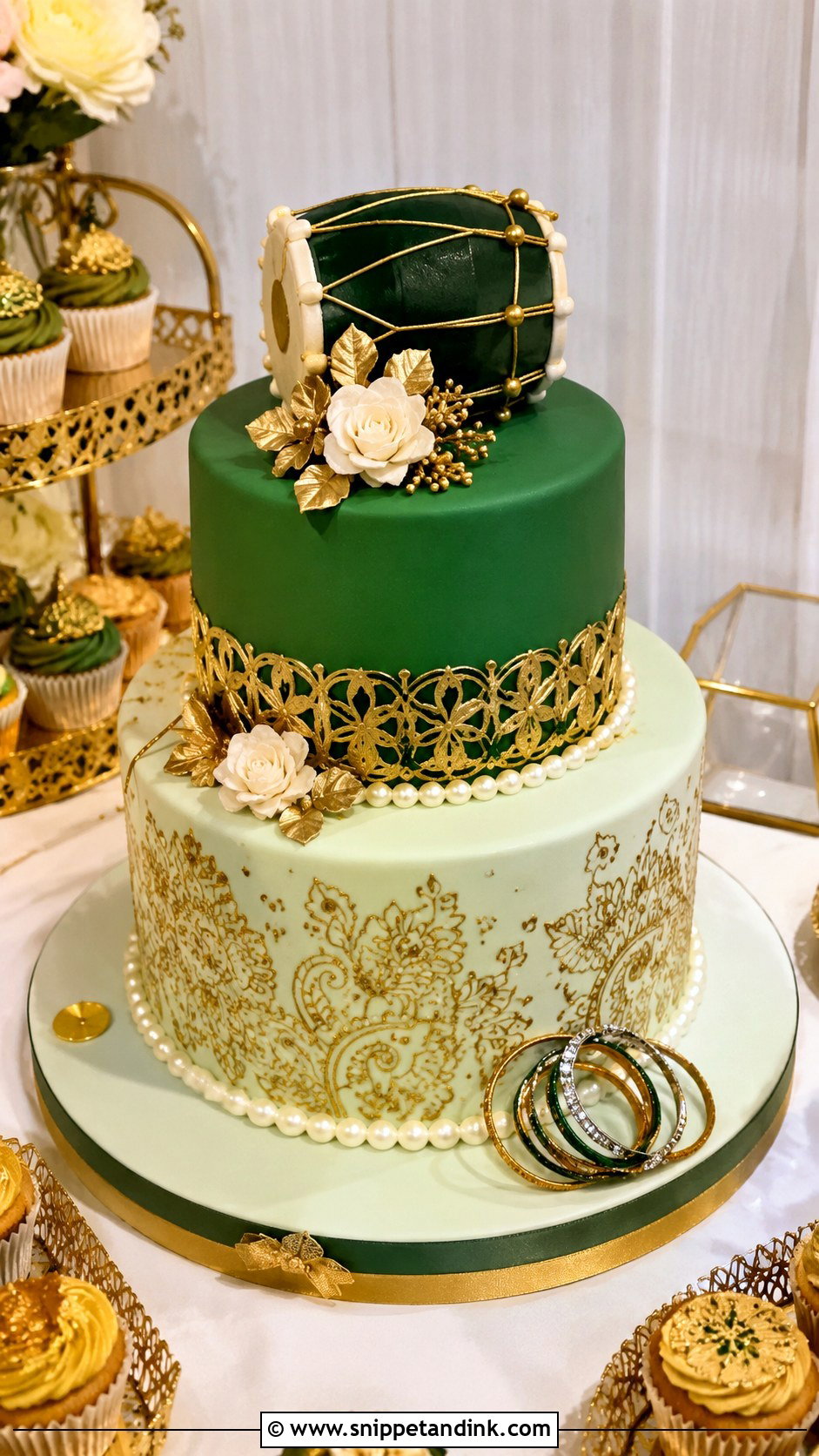
A two-tier cake gives more room for detail: henna piping, fondant patterns or quilted texture on the bottom tier, and a dholki, flowers or bangles on the top. Two tiers need internal dowels and a centre support, which matters if the cake will be carried into a house and up stairs. Strong combinations like emerald and gold or pink and orange suit it. Different flavours per tier, say vanilla on top and chocolate below, give guests a choice at medium and large gatherings.
13. Square Dholki Cake
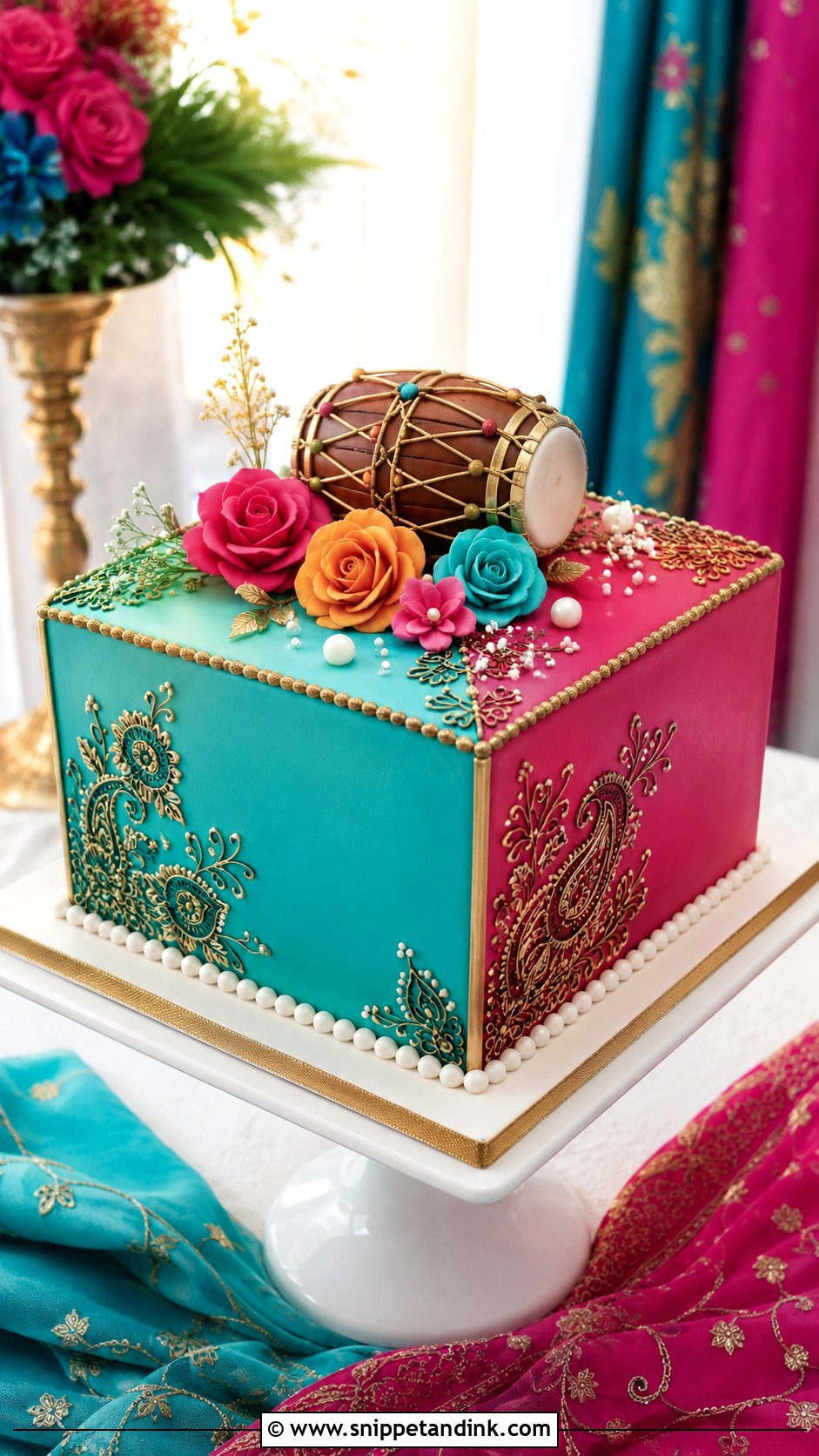
Square cakes have crisp corners, which is where you see a baker’s skill, and they are harder to get perfectly sharp than round ones. The flat sides take mehndi-style piping, gold borders and fabric panels beautifully. A dholki, bangles, cushions or a dupatta on top complete the theme. Turquoise, magenta, mustard and ivory make a festive palette. Square cakes also cut into neat, even portions, which helps at a busy party.
14. Dholki Cake With Bride Topper
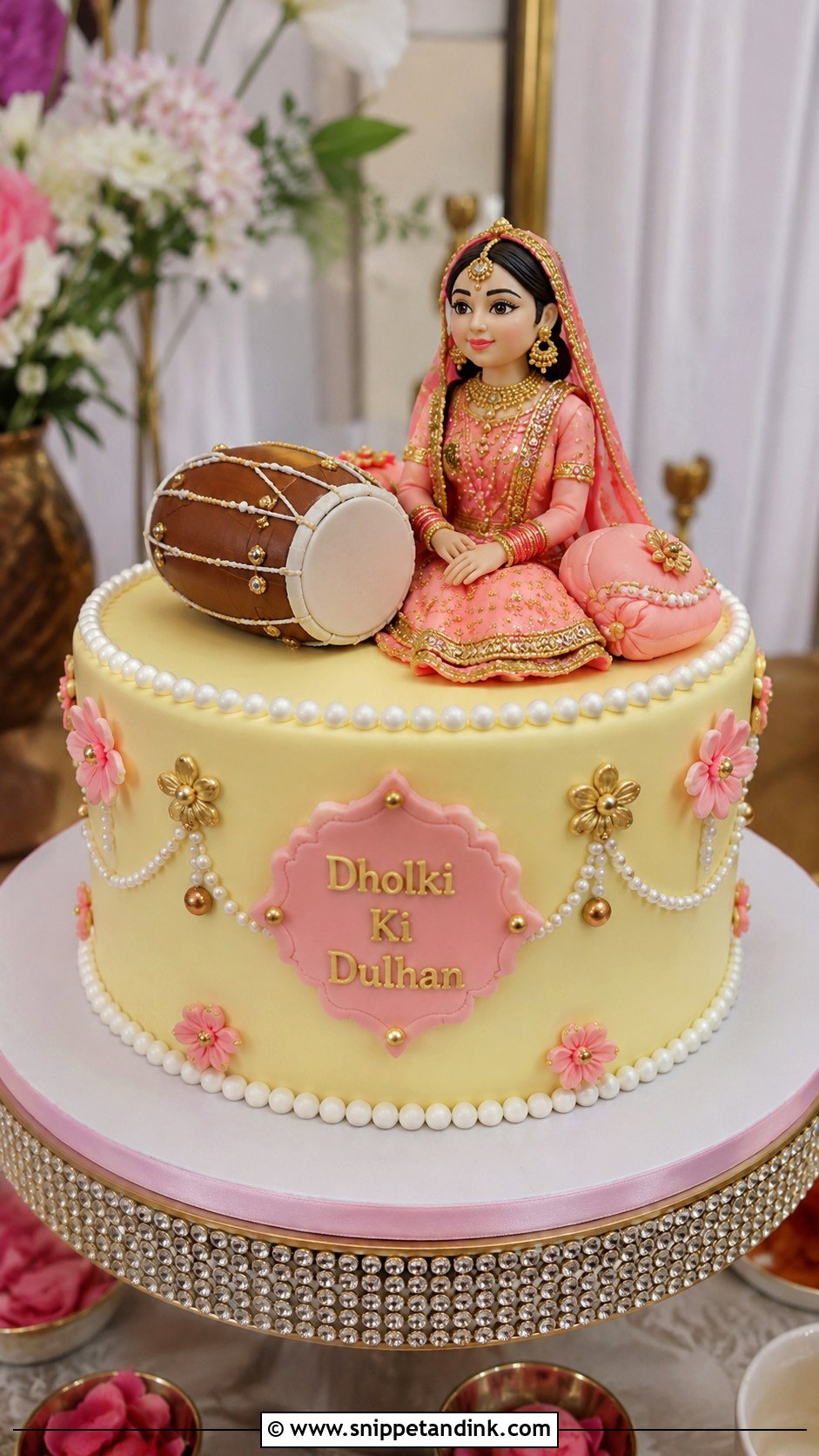
A bride topper makes the cake personal. I sculpt the figure sitting beside a dholki in a lehenga, holding bangles or flowers, and keep the face simple, since highly detailed sugar faces can look strange in photos. Send your baker a picture of your actual outfit so the colours match. Sugar figures take several days to dry, so this cake needs to be booked well in advance. The base can carry fondant cushions, mehndi piping and gold accents.
15. Floral Dholki Cake
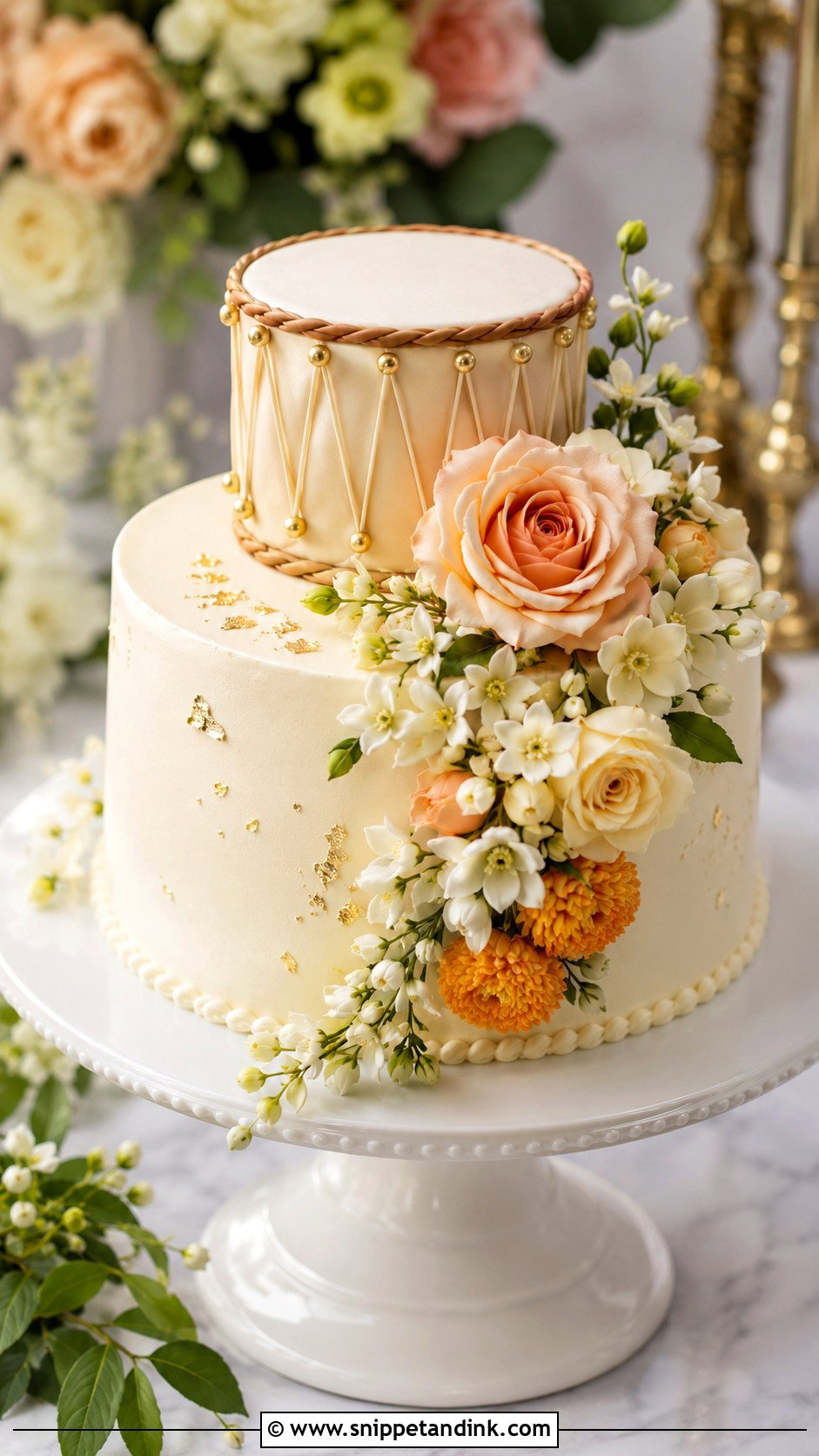
A floral dholki cake is the softer, garden-inspired version: sugar roses, marigolds, jasmine-style blossoms or small wildflowers, with a neat dholki on top or at the side. Blush, ivory, peach, yellow and sage keep it fresh. If you want fresh flowers instead of sugar ones, they must be food-safe and pesticide-free, and should never be pushed straight into the cake without a barrier like floral tape or a straw. It suits daytime dholkis and bridal brunches.
16. Dholki Cake With Gold Details
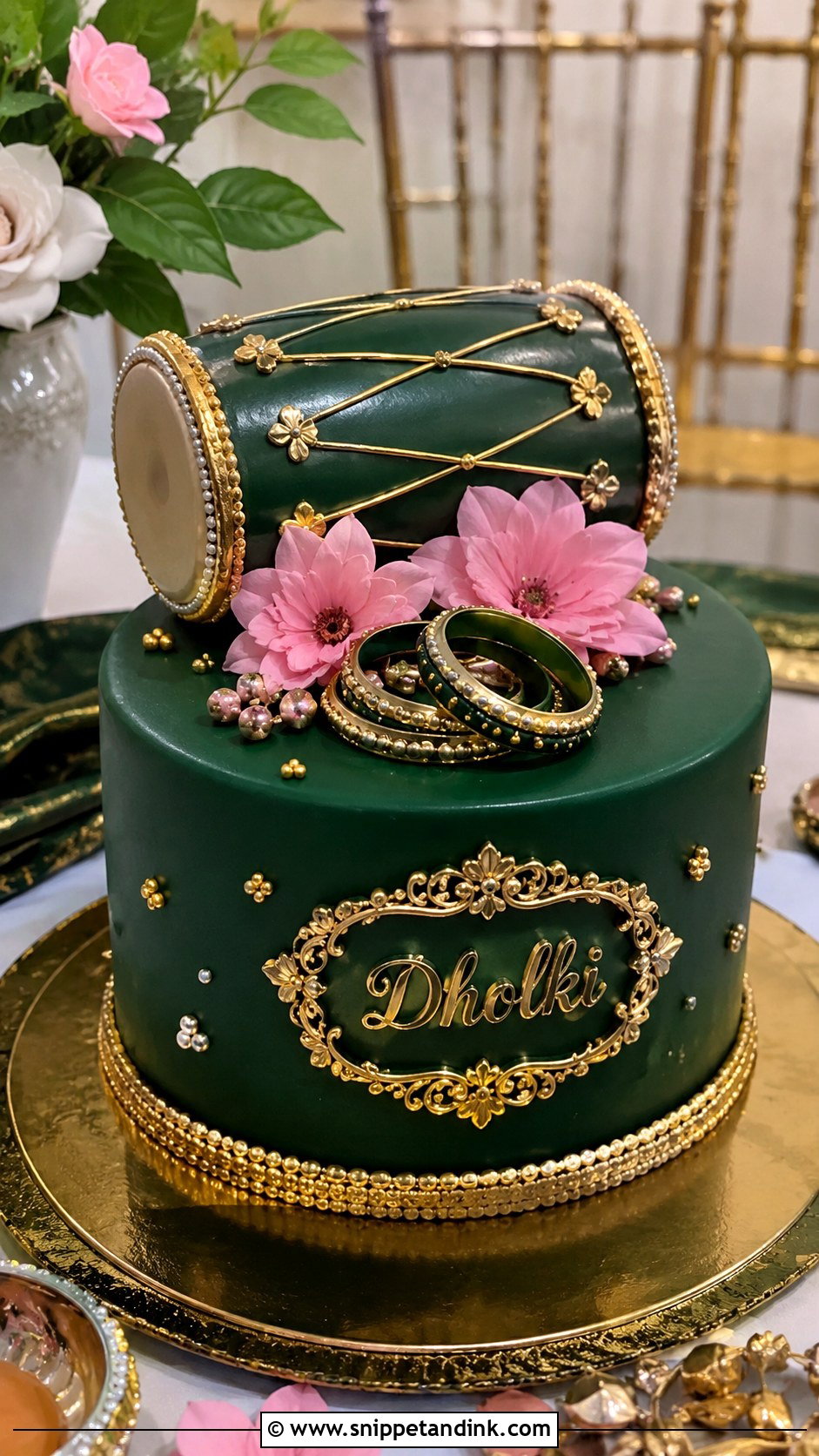
Gold works best as an accent, not a coat of paint. I use edible gold lustre mixed with a little alcohol to paint drum ropes, borders, bangles and small patterns, letting the rest of the cake rest in deep green, royal blue, hot pink or ivory. Non-edible gold leaf or glitter sometimes appears on cakes, so ask your baker to confirm everything gold is food-safe. Under warm evening light, a gold-trimmed cake glows beside candles and brass trays.
17. Mini Dholki Cake
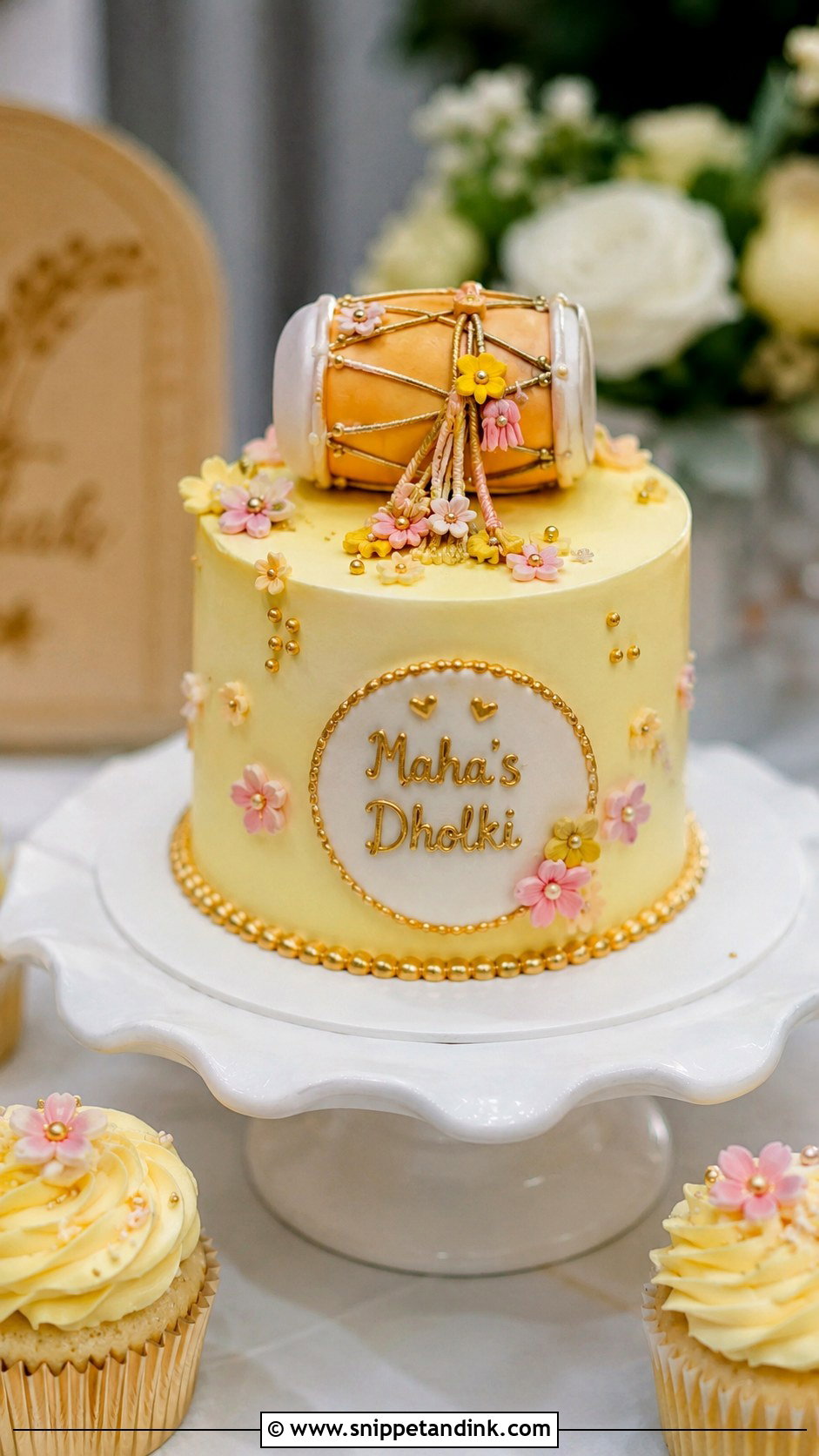
A mini dholki cake suits small gatherings, a surprise for the bride or a centrepiece surrounded by other sweets. It can be a small round, a tall bento-style cake or a tiny carved drum. Small cakes show every flaw, so I keep the details few and sharp: a fondant drum top, gold piping, tiny flowers and one bright colour. They are easy to personalise with a name or initials, and cupcakes or cookies in the same colours fill the table.
18. Dholki Cake With Cupcakes
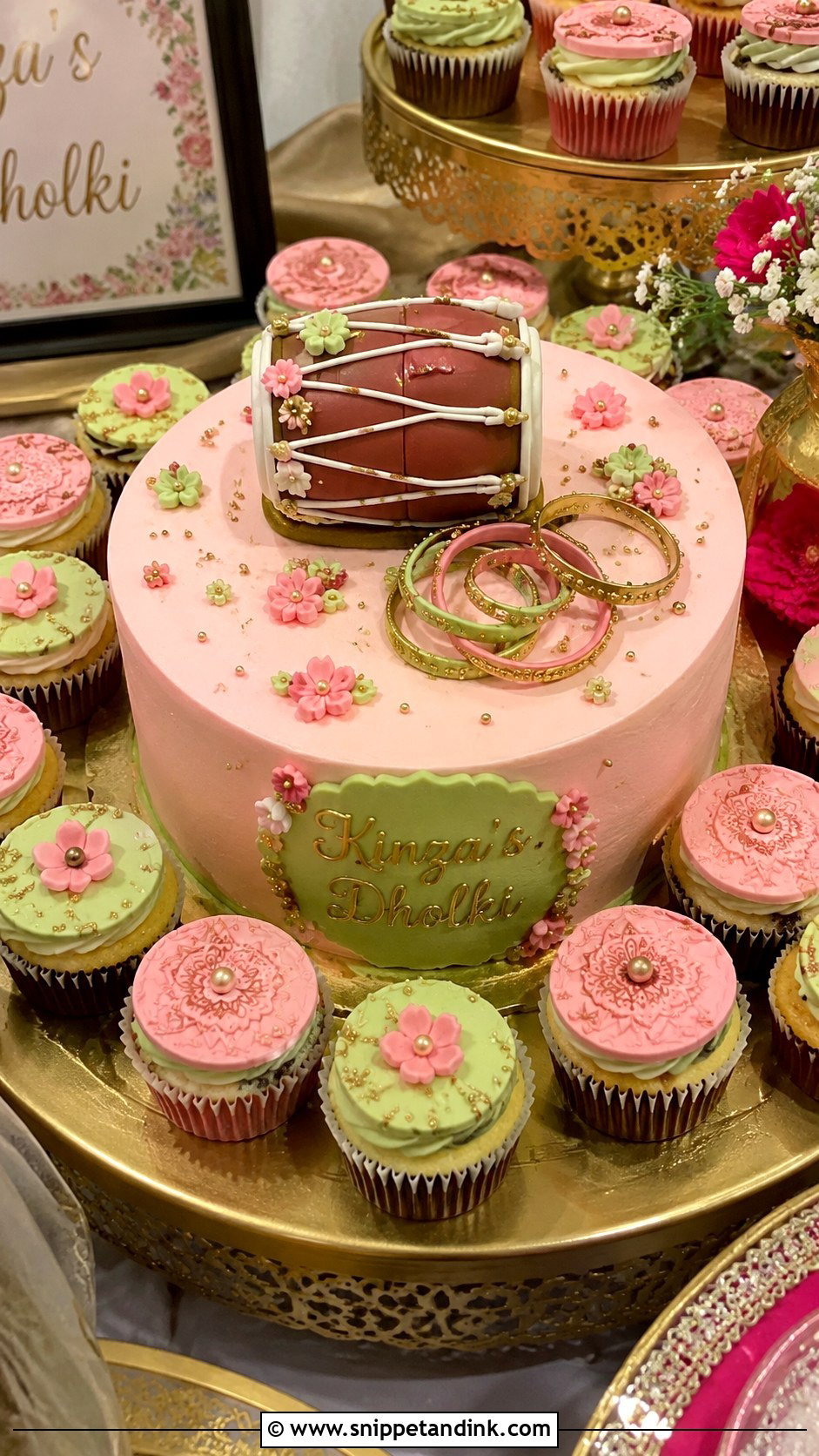
Cupcakes alongside a themed cake keep things moving at busy parties where guests want easy grab-and-go desserts. The main cake carries the dholki theme, and the cupcakes repeat smaller details: henna piping, mini bangles, flowers or fondant discs in the same palette. I find this works well when no one wants to stop and slice a cake in a crowded room. You can also order a smaller main cake and let the cupcakes do the feeding.
19. Modern Dholki Cake
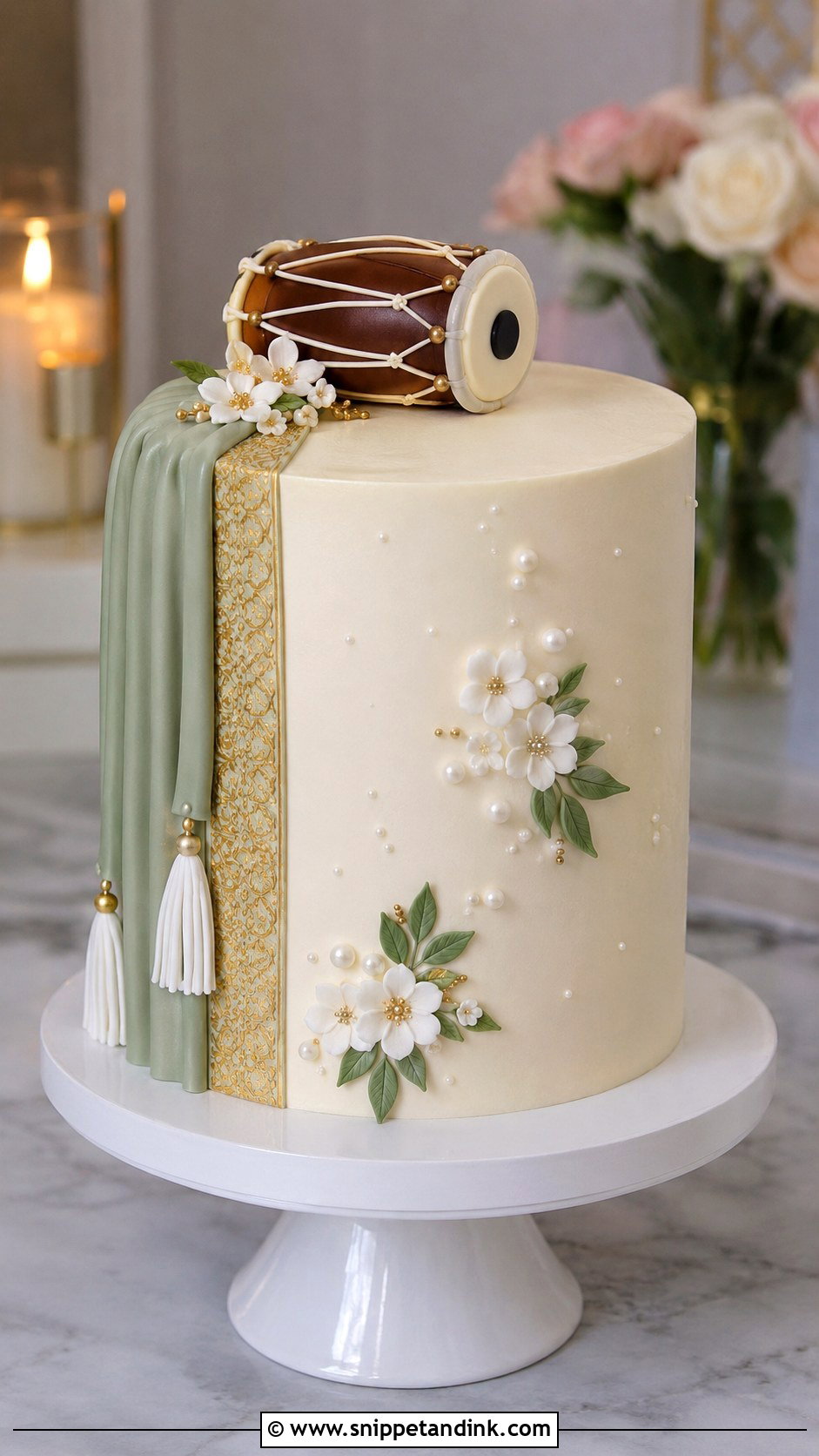
A modern dholki cake keeps the theme but simplifies it. Smooth buttercream, one or two bold colours, metallic accents and a minimal topper. Choose a single statement area, such as a gold stencil band or a small henna-style panel, rather than covering every surface. White and gold, sage and ivory, blush and copper, or emerald and cream suit modern backdrops and balloon arches. I’d avoid it if your decor is very traditional, as the cake will look out of place.
20. Traditional Dholki Cake
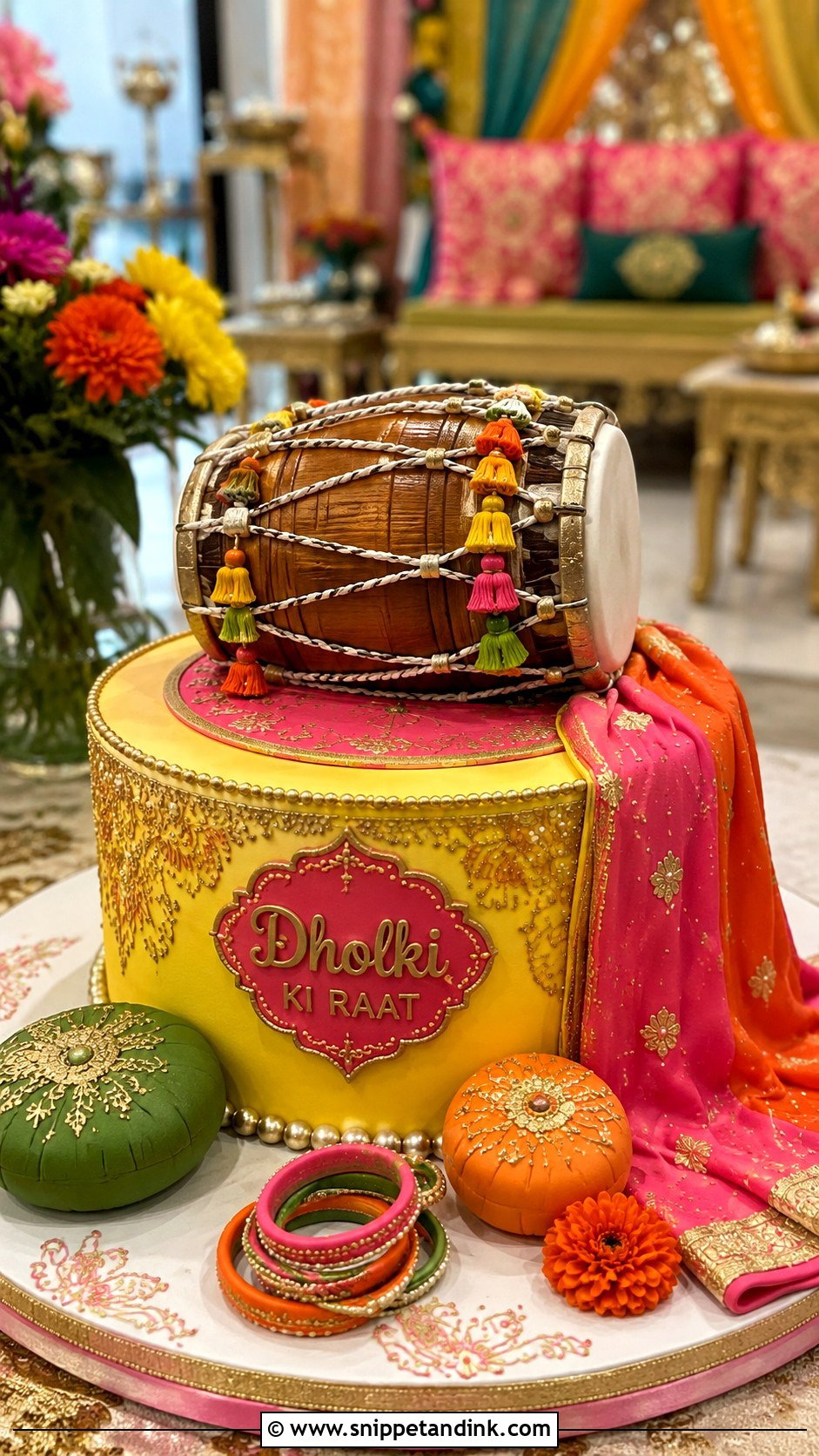
A traditional dholki cake puts everything together: a fondant dholki, edible bangles, henna patterns, marigold flowers, a dupatta drape and little cushions. The hard part is balance. With this many elements, I sketch the layout first so each one has its own space and nothing gets crowded. Yellow, orange, pink, green and gold carry the colour. It’s the cake for a large family celebration where it becomes the centrepiece of the room.
Lead Times, Transport and the Drive to the Party
Carved drum cakes, sugar figures and gum paste flowers can’t be rushed. Sugar decorations need days to dry, and carved cakes need time to chill between stages. I suggest contacting your baker several weeks ahead, longer in peak wedding season, when many decorators book up early.
The trip to the party is where most cakes get damaged. Carry the cake flat in a boxed, level space such as a car footwell, never on someone’s lap or a sloped seat. Keep the air conditioning on, drive gently around corners, and if the cake has tiers, ask whether the baker assembles them on site.
- Keep the cake out of direct sunlight and away from the dhol speakers and lighting.
- Fondant cakes shouldn’t go straight from a cold fridge into a warm room, since condensation makes the surface sticky and gold paint can run.
- Lift sugar toppers off before slicing, and save them as keepsakes.
- Leftover cake keeps best covered at cool room temperature for a day, or chilled if it has cream or fresh fruit filling.
A Cake That Keeps Up With the Dhol
A dholki cake should feel as joyful as the night around it. A carved drum, a floral cake, a minimal modern design or a detailed henna cake can all be right, depending on the bride and the mood of the party. Bright colours, gold, bangles, cushions, marigolds and henna piping are your building blocks, but keep the cake easy to photograph and easy to serve. Get the size and timing right, and it will hold its own among the music and the mithai.
You'll Like These Ideas:






Leave a Reply