
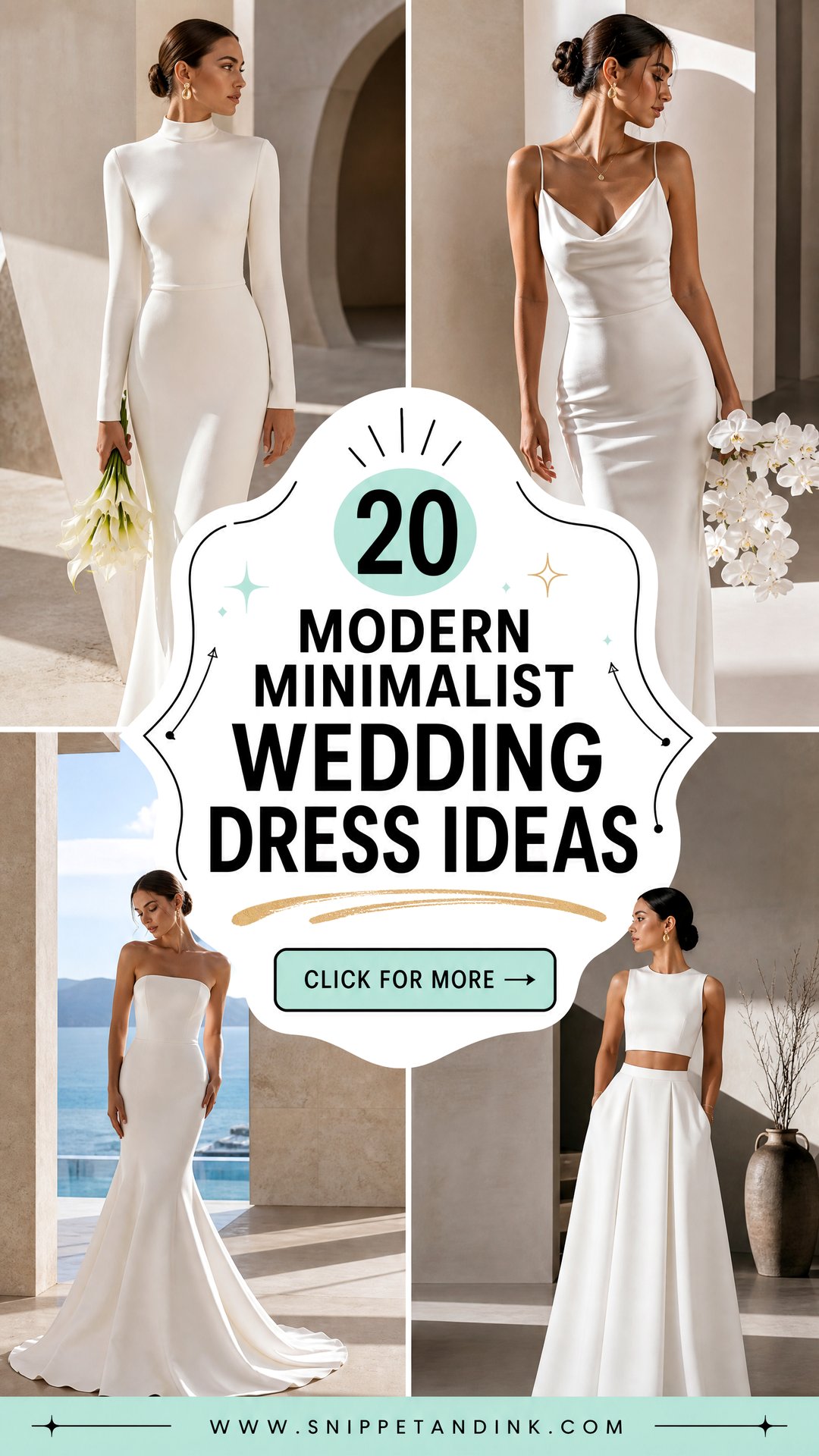
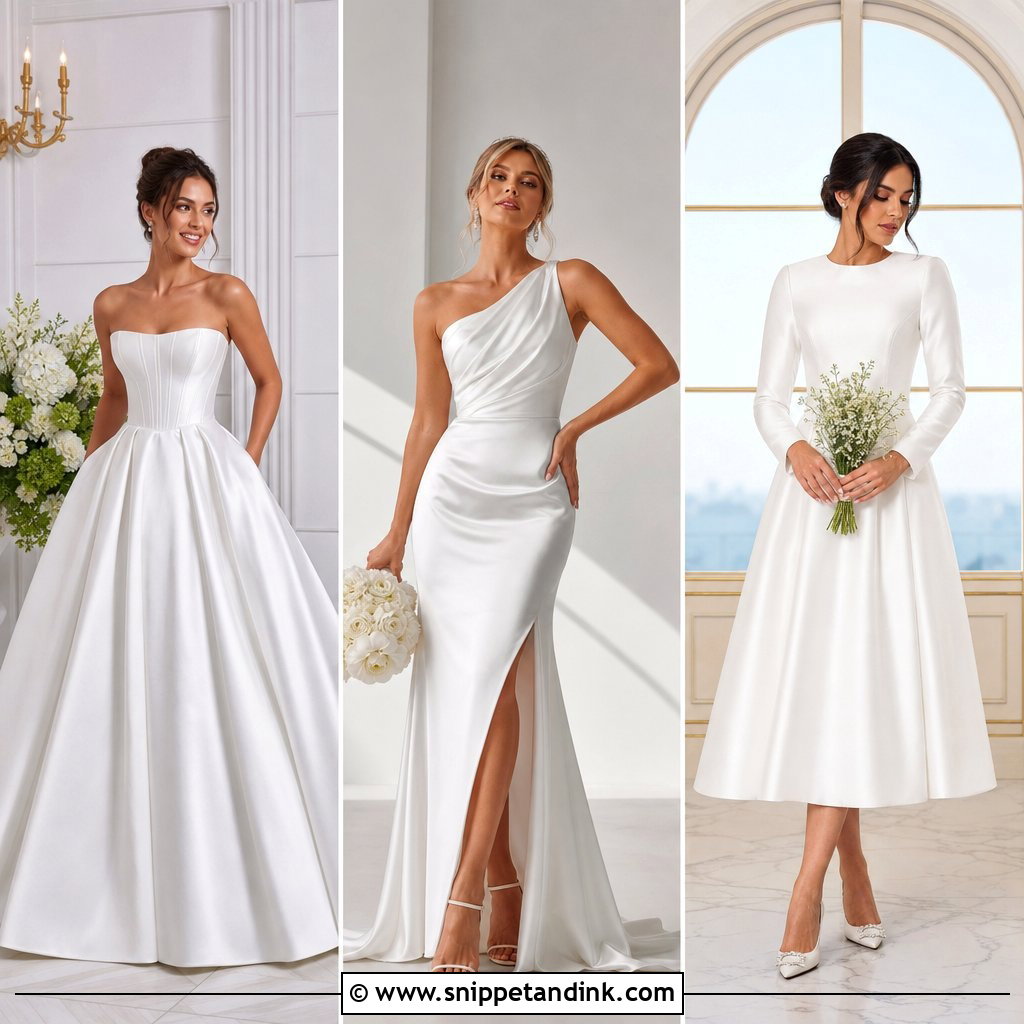
A dress with almost no decoration has nowhere to hide. Lace and beading cover a slightly uneven seam or a bodice that sits a few millimetres off; plain crepe and satin show all of it. That is why the minimalist gowns I like best are really tailoring projects: good fabric, careful cut and a fit that has been checked while the bride moves. The ideas below run from sculptural columns and bias-cut slips to minis, capes and full ball gowns, and each can be shifted with a veil, earrings or shoes without losing its restraint. A courthouse ceremony and a black-tie reception can both be served by something on this list.
Reading the Fabric Before You Fall for the Cut
With a plain gown, the fabric is the design, so I judge it before I look at the silhouette. A cheap satin and a good one can look identical on a hanger. On a body, under venue lighting, after three hours of sitting, they behave completely differently.
These are the quick tests I run at a fitting appointment:
- Squeeze a corner of the skirt in your fist for ten seconds, then let go. Crepe and mikado should spring back; if the fabric holds the creases, the back of the dress will look crumpled after the ceremony.
- Stand near a window and then under the shop’s warm lights. Shiny satin can look white in daylight and yellow indoors, so compare it against your skin in both.
- Ask the consultant to switch on a phone flash and take a photo. Thin or single-layer fabric shows every seam and undergarment edge under flash, even when it looks opaque in the mirror.
- Run your hand along the inside. Proper lining, boning channels and finished seams are what keep a minimal dress looking sharp all day.
Undergarments change the fit
Bring the exact bra, shapewear and shoes you plan to wear to the very first fitting. A seamstress takes a plain bodice in to the millimetre, and if you swap to different underwear later, that careful fit is gone. With slips and crepe columns, a skin-tone set with bonded, edge-free hems is almost always the right answer.
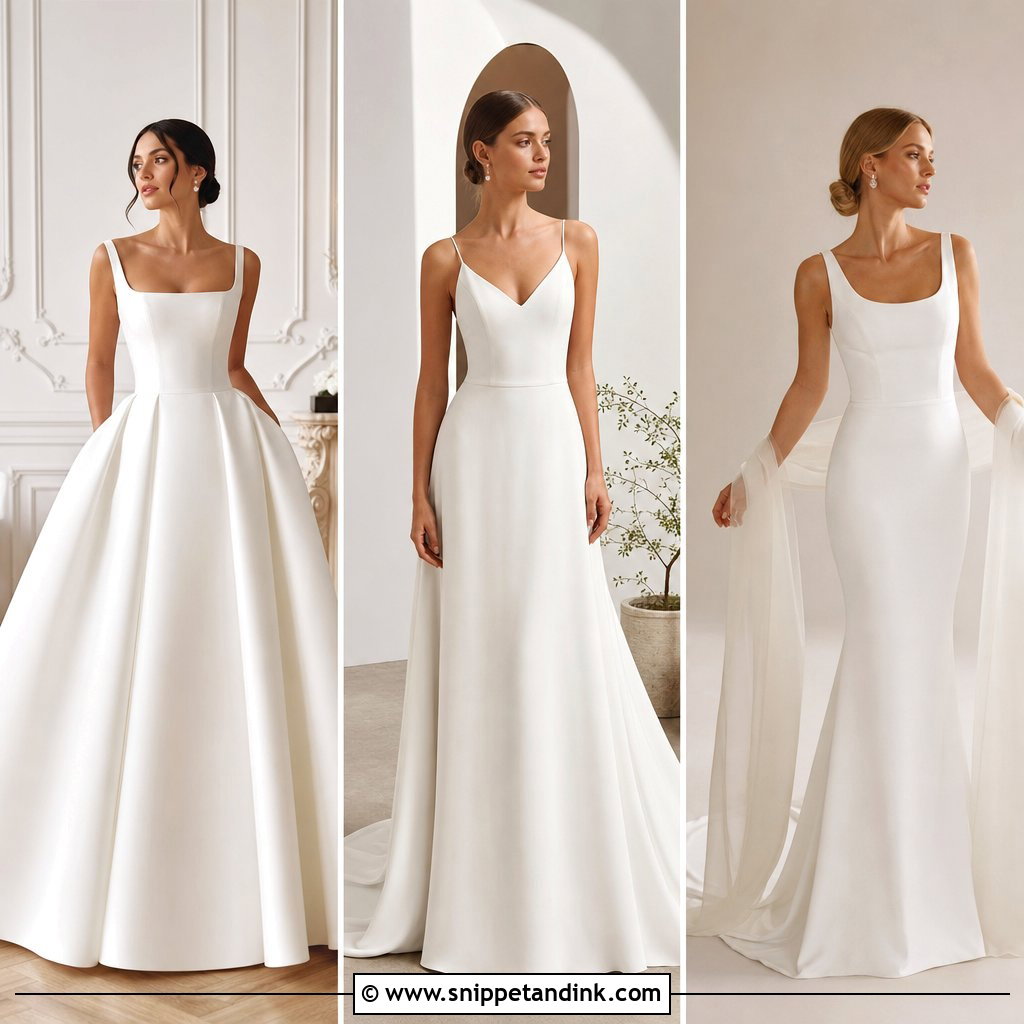
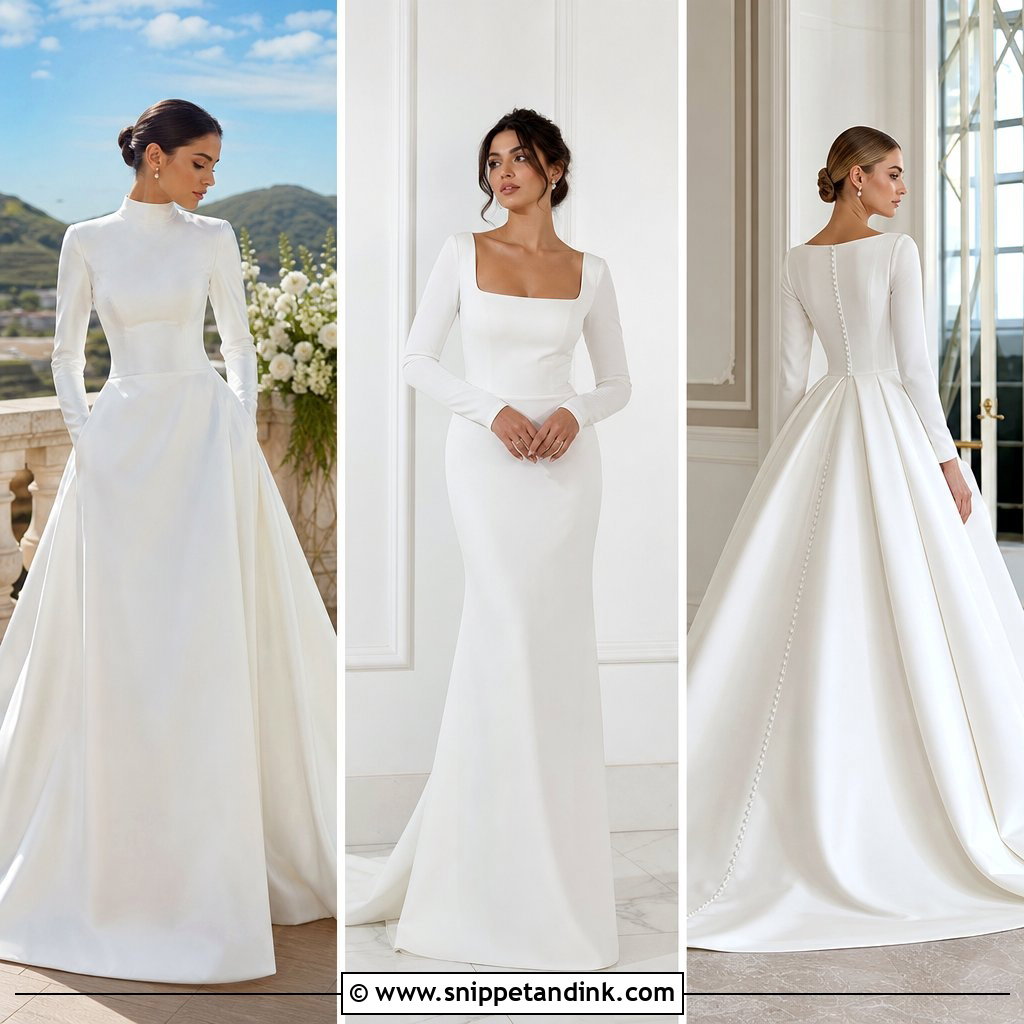
1. Square Neck Wedding Dress
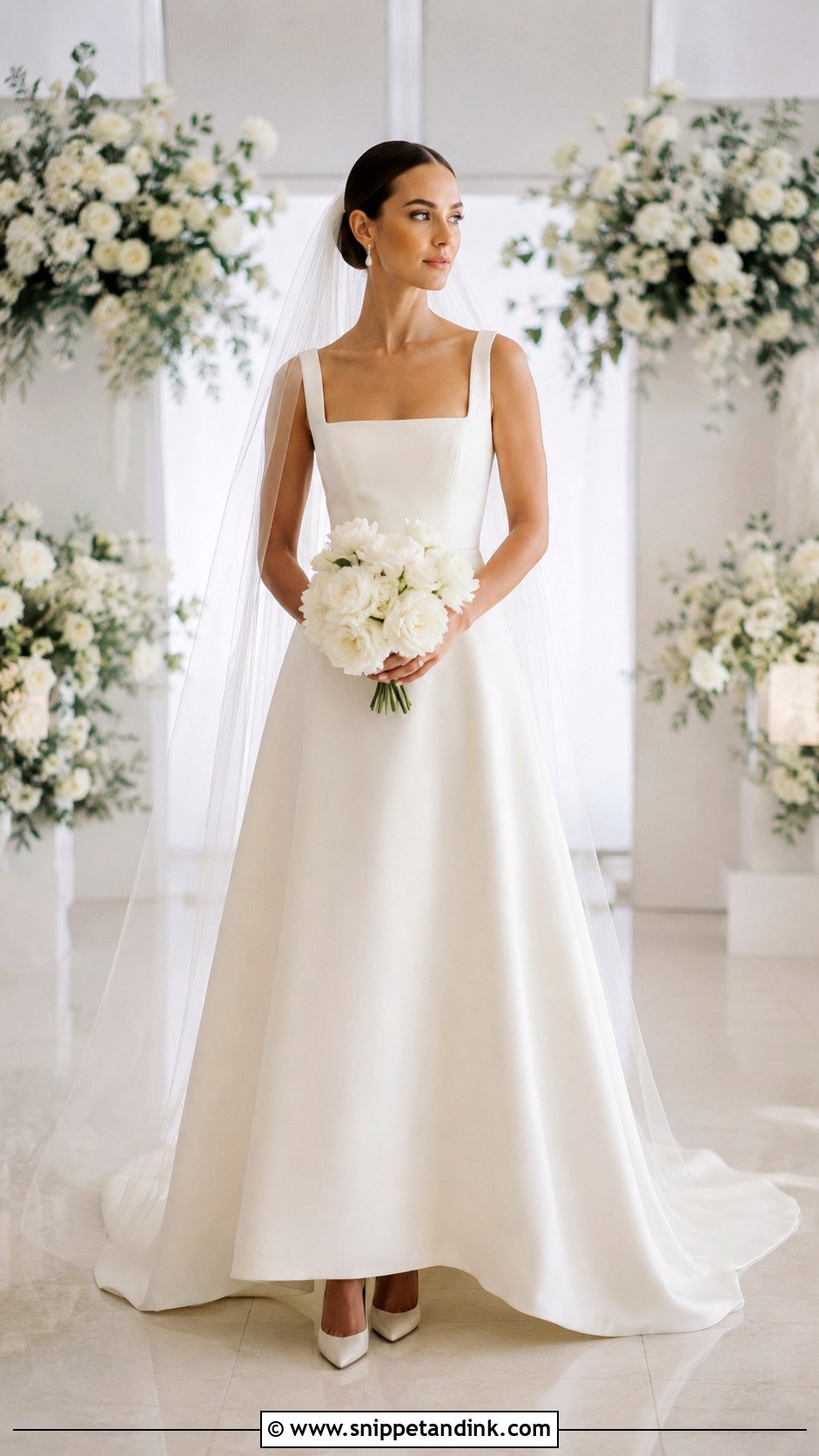
The square neckline is pure geometry, so it is unforgiving if the corners are not level. Smooth crepe, satin or matte mikado holds that edge best; a soft jersey will let the corners round off within an hour. Wide straps give more support than delicate spaghetti straps, and they balance the horizontal line across the chest. I’d style it with a low bun, small pearl earrings and pointed ivory pumps, plus a fingertip veil that falls behind the shoulders. At alterations, hug someone and sit down. If the neckline lifts away from the skin when you lean forward, the bodice needs taking in before anything else is touched.
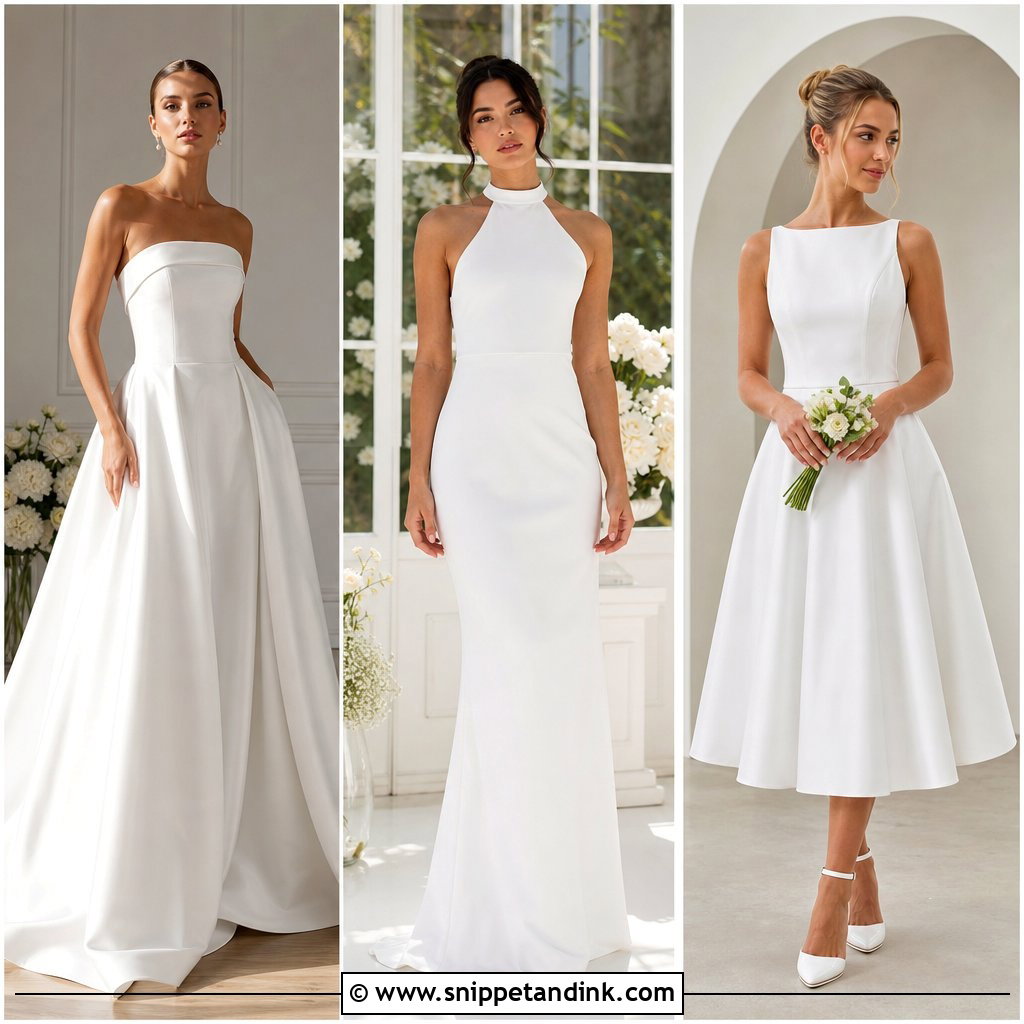
2. Strapless Column Wedding Dress
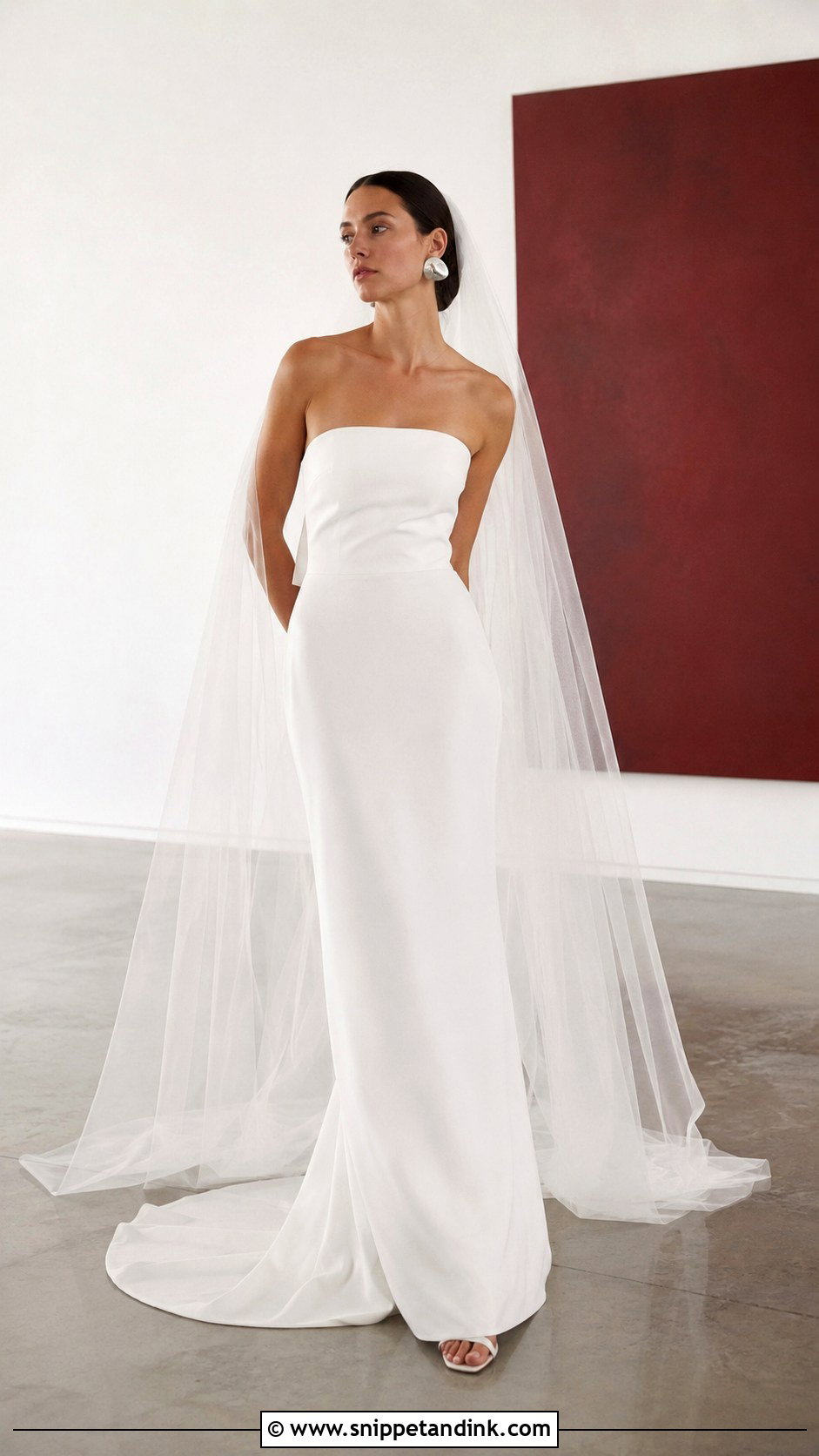
A strapless column relies entirely on what is built inside it. Without boning and a waist stay, the bodice slides down every time you raise your arms, and you will spend the evening hitching it up in photos. Heavy crepe or a silk blend falls straight; thin unlined fabric clings to every line underneath. The straight skirt suits rooftops and modern indoor venues more than a field ceremony, where it can catch on grass. Add sculptural earrings, a sleek chignon and slim heels, and a long single-layer veil to give the shape some movement. A tailored blazer or satin wrap covers the shoulders later in the evening if the room cools down.
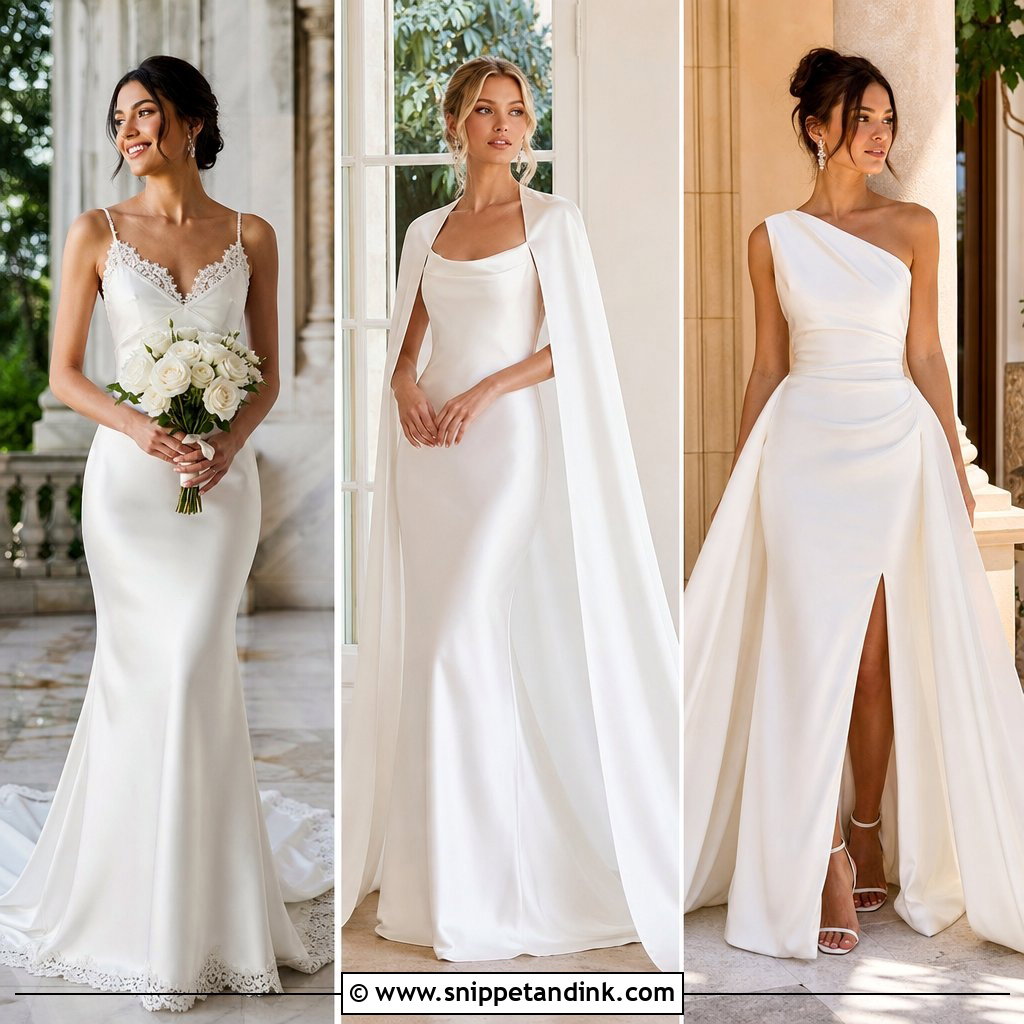
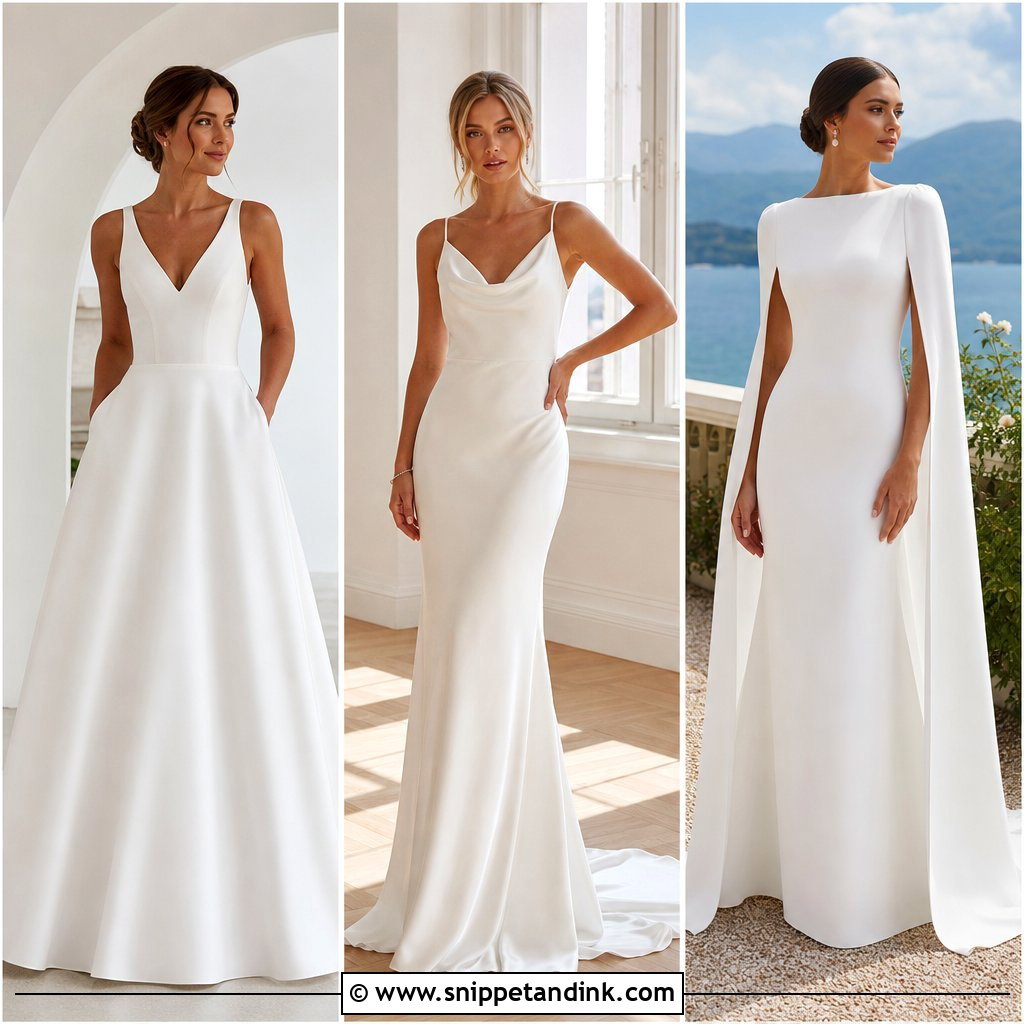
3. Satin Slip Wedding Dress
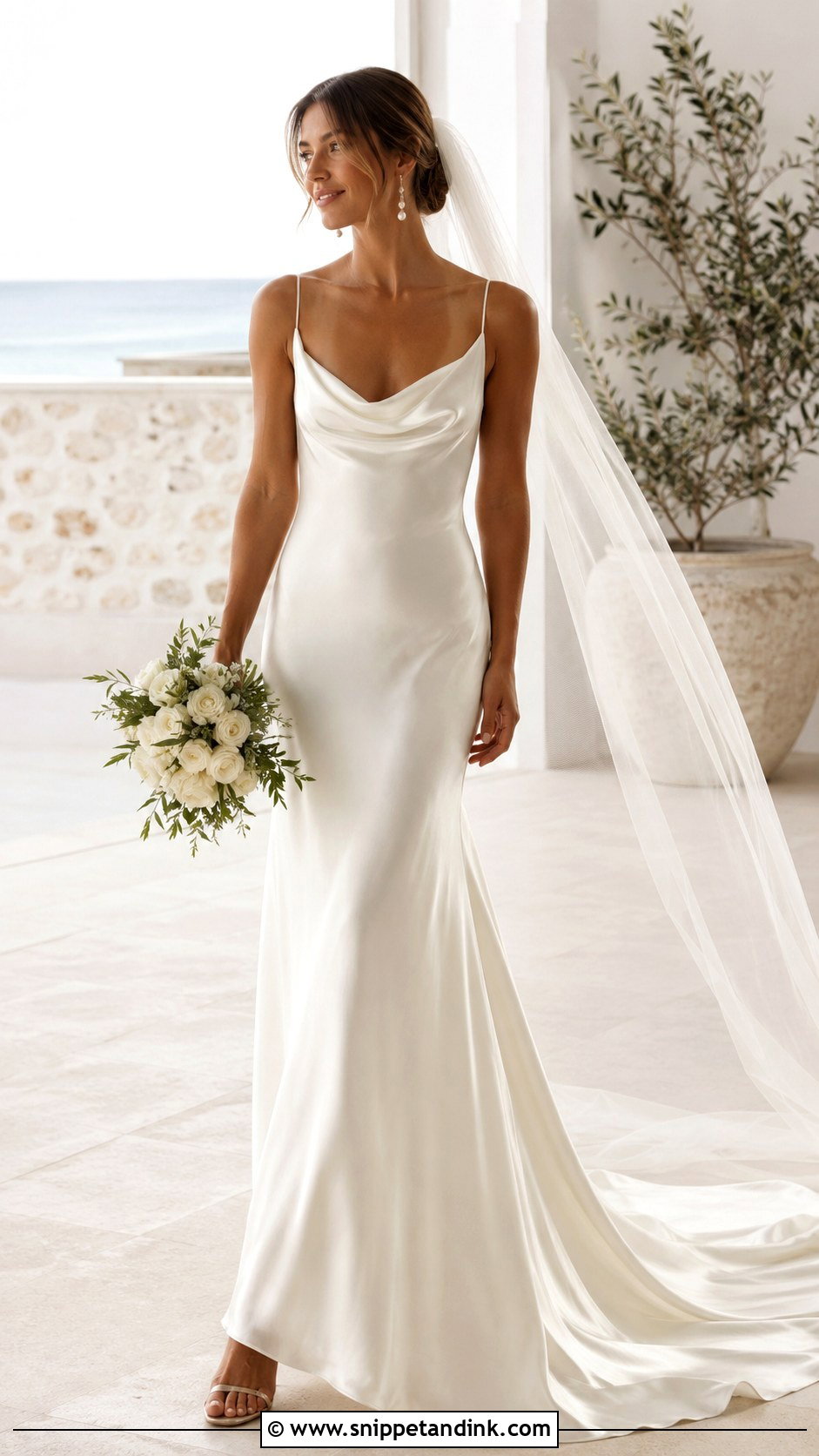
Bias-cut satin moves like water, and that is both the appeal and the risk. Because the fabric is cut on the diagonal it stretches over the hip and stomach, so it shows underwear lines and any ridge from a waistband. I always ask brides to try a slip under the same light as the venue: satin bounces daylight and can look shiny and flat in flash photography. Smooth, edge-free underwear in a skin tone, rather than white, is the fix most people miss. A cowl or straight neckline, barely there sandals, drop earrings and a low twisted bun keep it quiet. It suits warm weather and coastal settings best, since heavy layers over it ruin the drape.
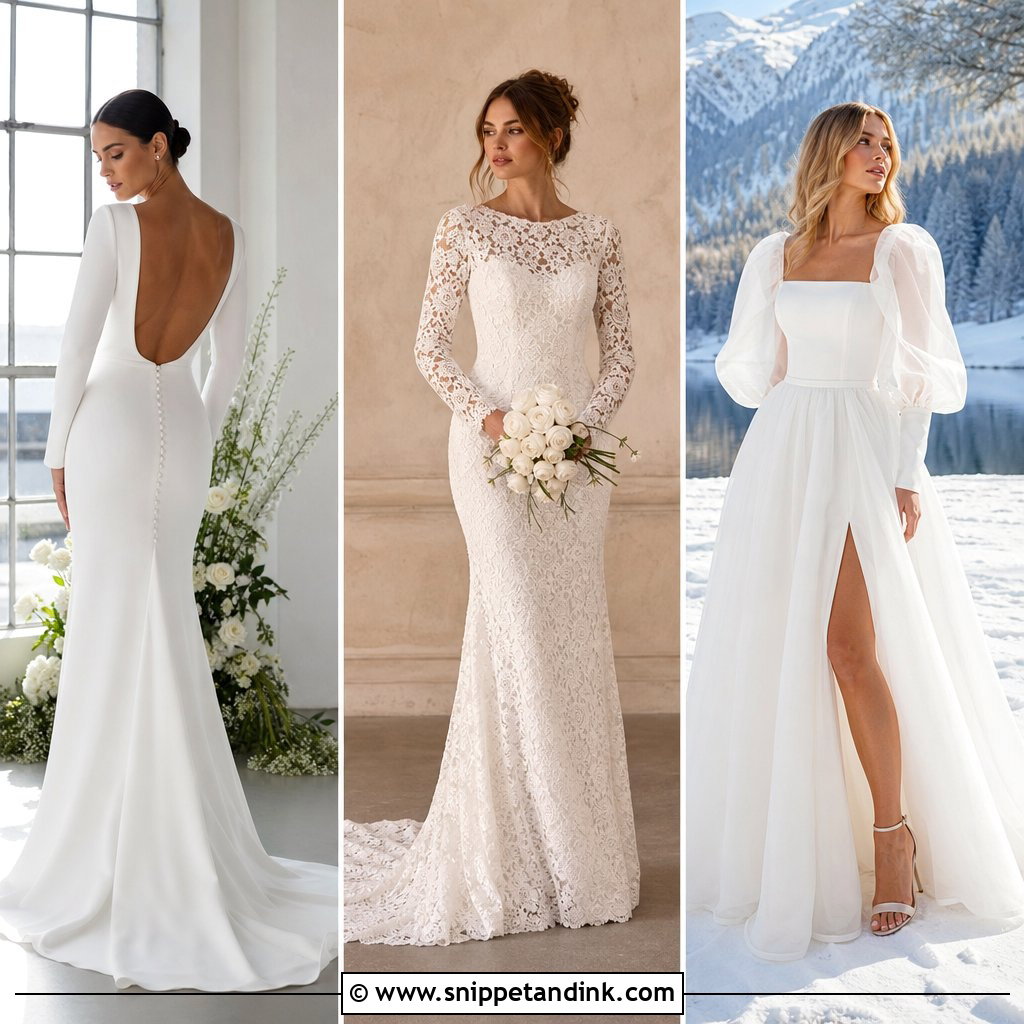
4. Long Sleeve Crepe Wedding Dress
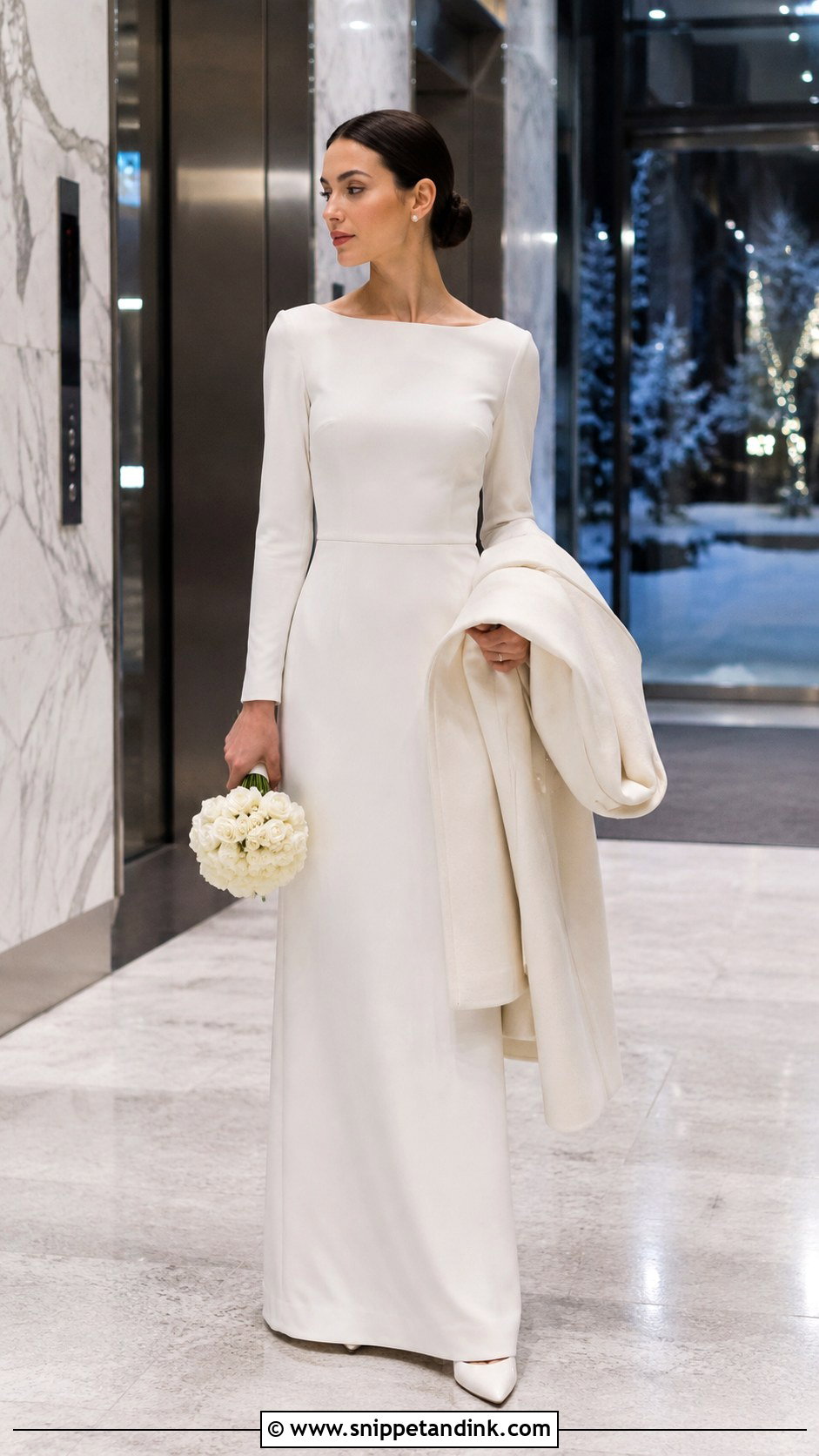
Long sleeves bring coverage without needing a single applique, but the sleeve is where most fit problems show up. Stretch crepe forgives raised arms; rigid fabric pulls across the shoulder blades the moment you reach for a hug. A bateau, high or soft V-neck keeps the front clean, and covered buttons down the back add one quiet point of detail. Pointed pumps, pearl studs and a center-parted bun suit the line. For a winter wedding I’d add a structured ivory coat rather than a beaded cape. During fittings, cross your arms in front of you. If the back seam strains or the cuff rides up past the wrist bone, the armhole needs re-cutting, not just the sleeve.
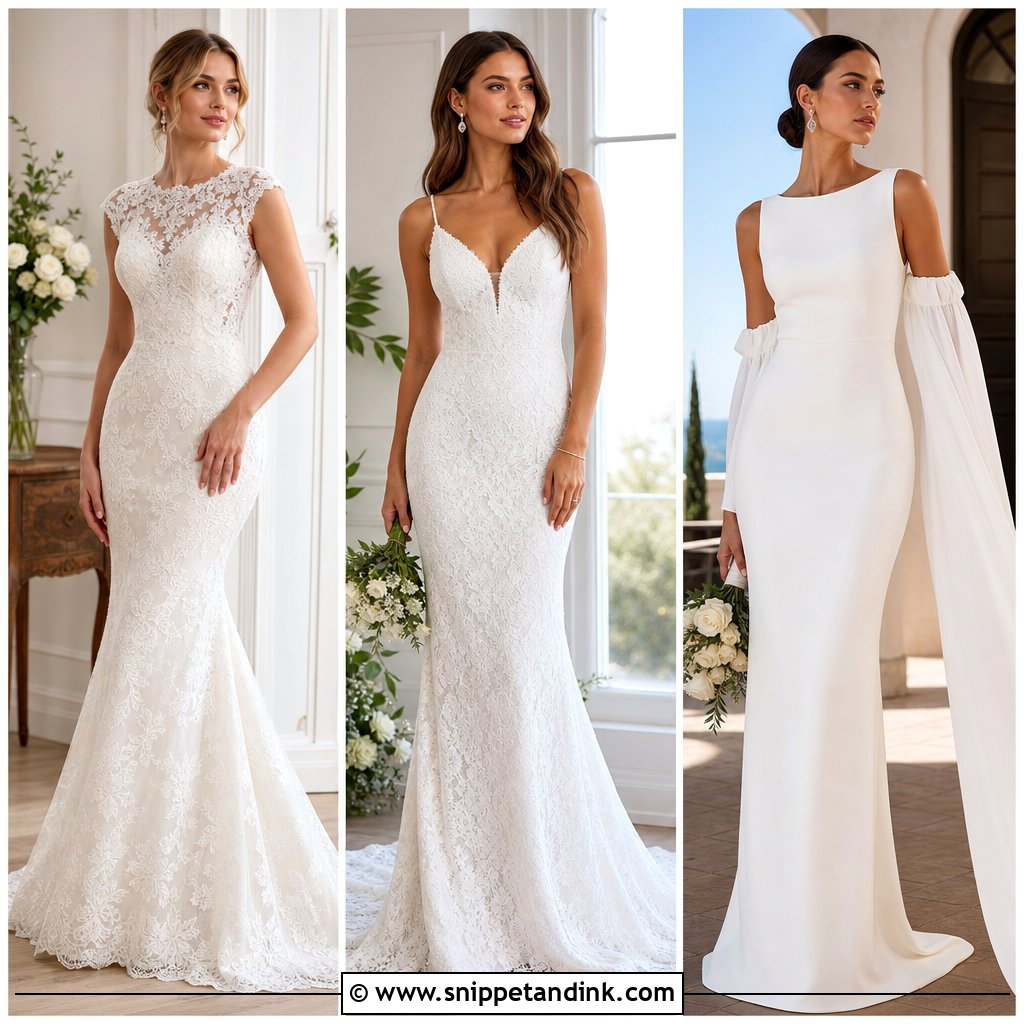
5. Off The Shoulder Wedding Dress
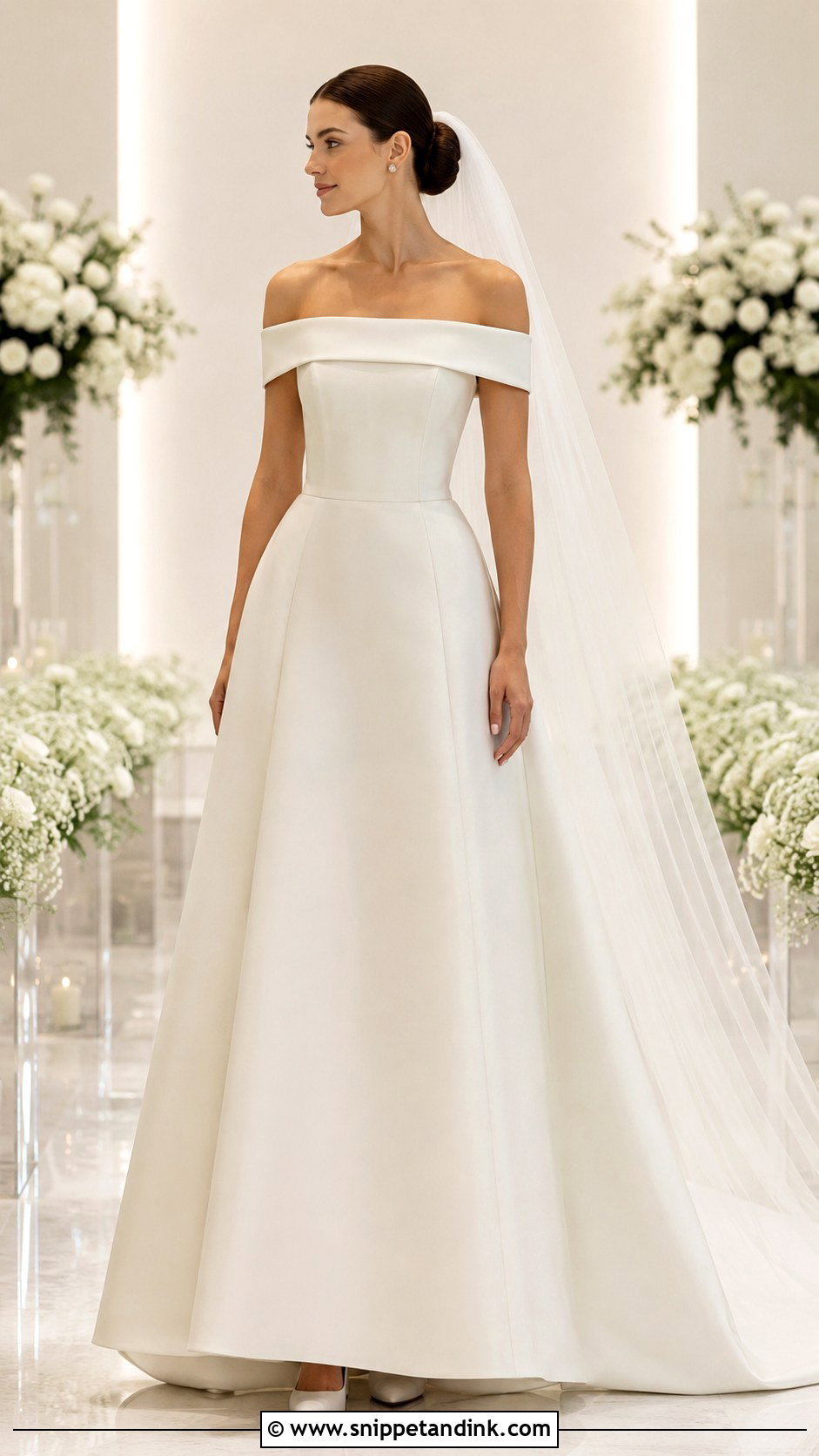
The folded off-the-shoulder band gives this dress all its interest, which means jewelry becomes optional. Firm satin or mikado keeps the fold crisp; crepe gives a softer roll. It pairs with a fitted column, a quiet A-line or a restrained ball gown skirt. My honest caution: this neckline limits how high you can lift your arms, because the band sits across the upper arm. Try waving and hugging in it before you commit, especially if you plan a lively dance floor. Style with a smooth updo, small studs, closed-toe heels and a sheer cathedral veil that will not compete with the fold.
6. Minimalist A Line Wedding Dress
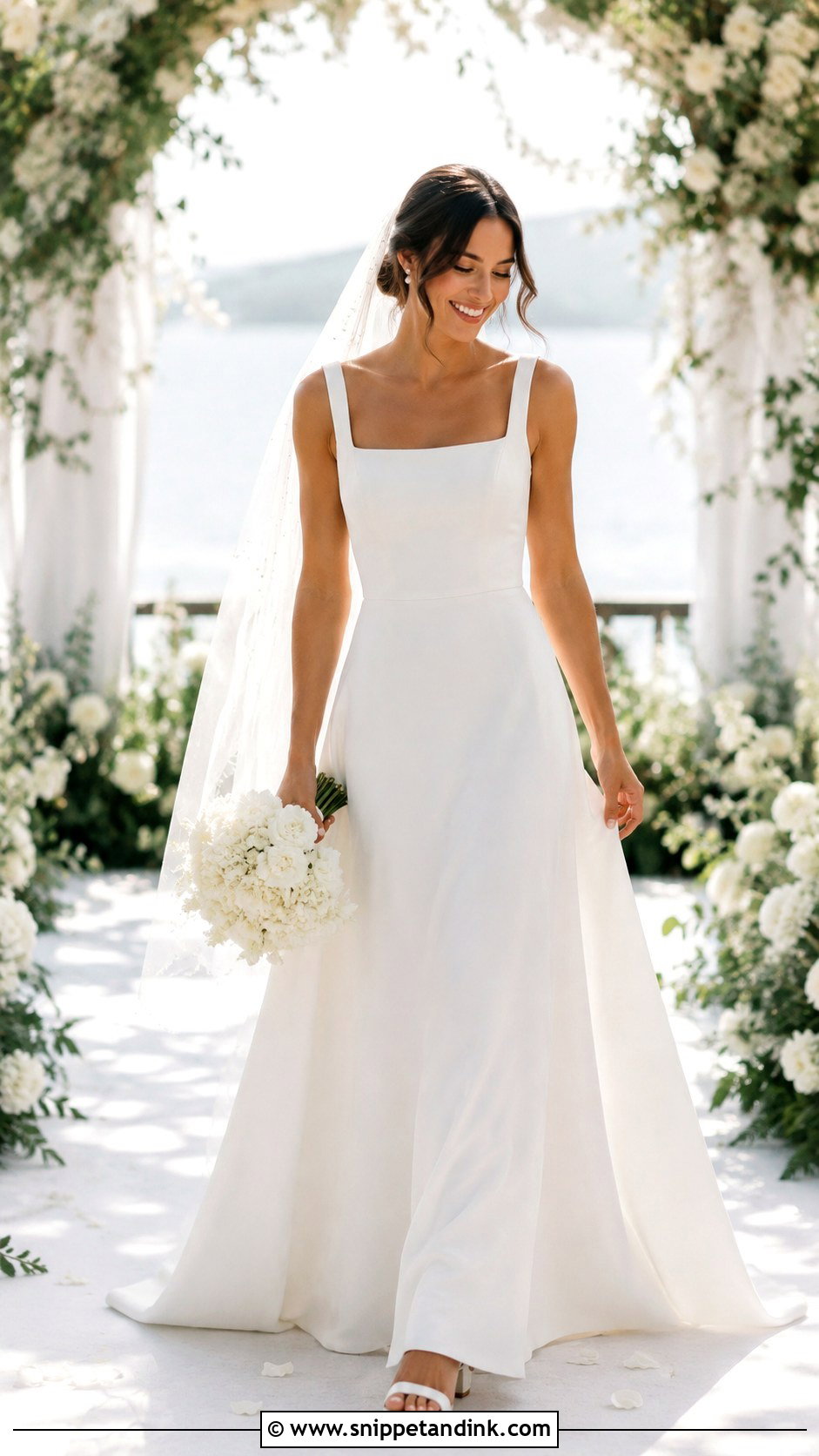
Most brides can wear an A-line, because the volume of the skirt is easy to adjust up or down. The fitted bodice defines the upper body, then the skirt widens gradually from the waist so nothing clings at the hip. Matte crepe looks relaxed; silk mikado stands away from the body and holds more shape. A scoop, square, or V-neckline is the main way to personalise it. I’d add block-heel sandals, a low bun, a light veil and a compact bouquet so the skirt line stays visible. Hidden pockets are worth asking for, but check them with your phone inside: a heavy pocket will pull the skirt into a dent at the hip.
7. High Neck Wedding Dress
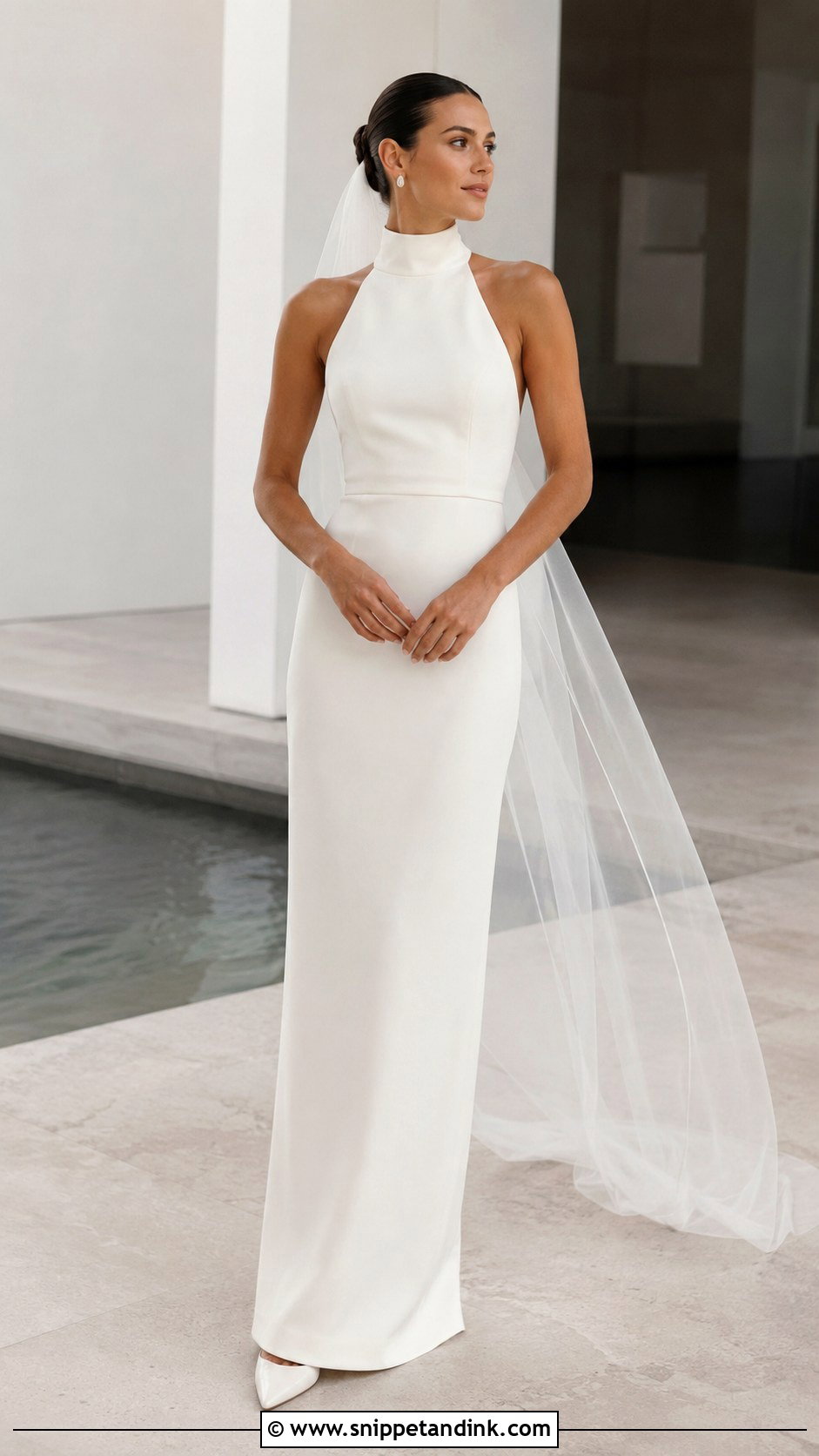
Proportion does all the work here. A sleeveless halter version shows off the shoulders, while a long-sleeve high neck reads as editorial and covered. Look for crepe, satin or silk with as few visible seams as possible. Skip the necklace entirely, since the neckline is already the focal point, and keep earrings small. Hair needs to be up or tucked back; loose waves sitting on a high collar hide the very line you chose the dress for. I check the collar with the bride seated and turning her head. If it rubs the throat or folds into a crease when she sits, it is too high or too tight.
8. One Shoulder Wedding Dress
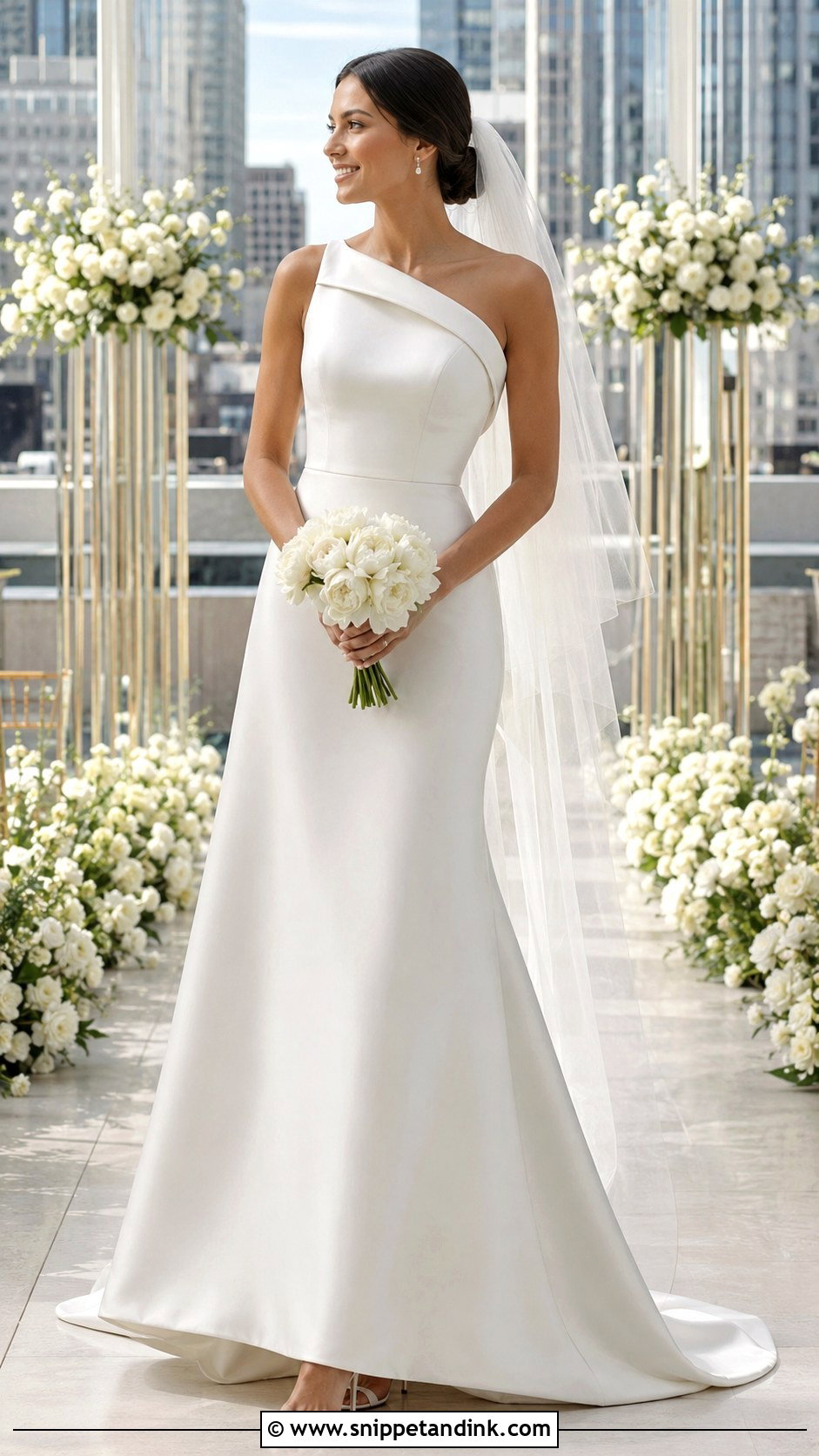
One bare shoulder creates asymmetry without lace or crystals. A soft draped shoulder feels relaxed; a firm architectural fold looks sharper. Pair it with a fitted column for a sleek outline or an A-line for more movement down the aisle. Here’s a styling detail that matters: place the bun near the center of the head rather than on the bare side, otherwise the whole look tips over visually. Small earrings, a simple bracelet and slim heels are enough. Wear the veil from the back of the hairstyle so it does not cut across the diagonal line. Strong internal support is essential, because a one-shoulder bodice wants to twist toward the strap every time you walk.
9. Minimalist Ball Gown Wedding Dress
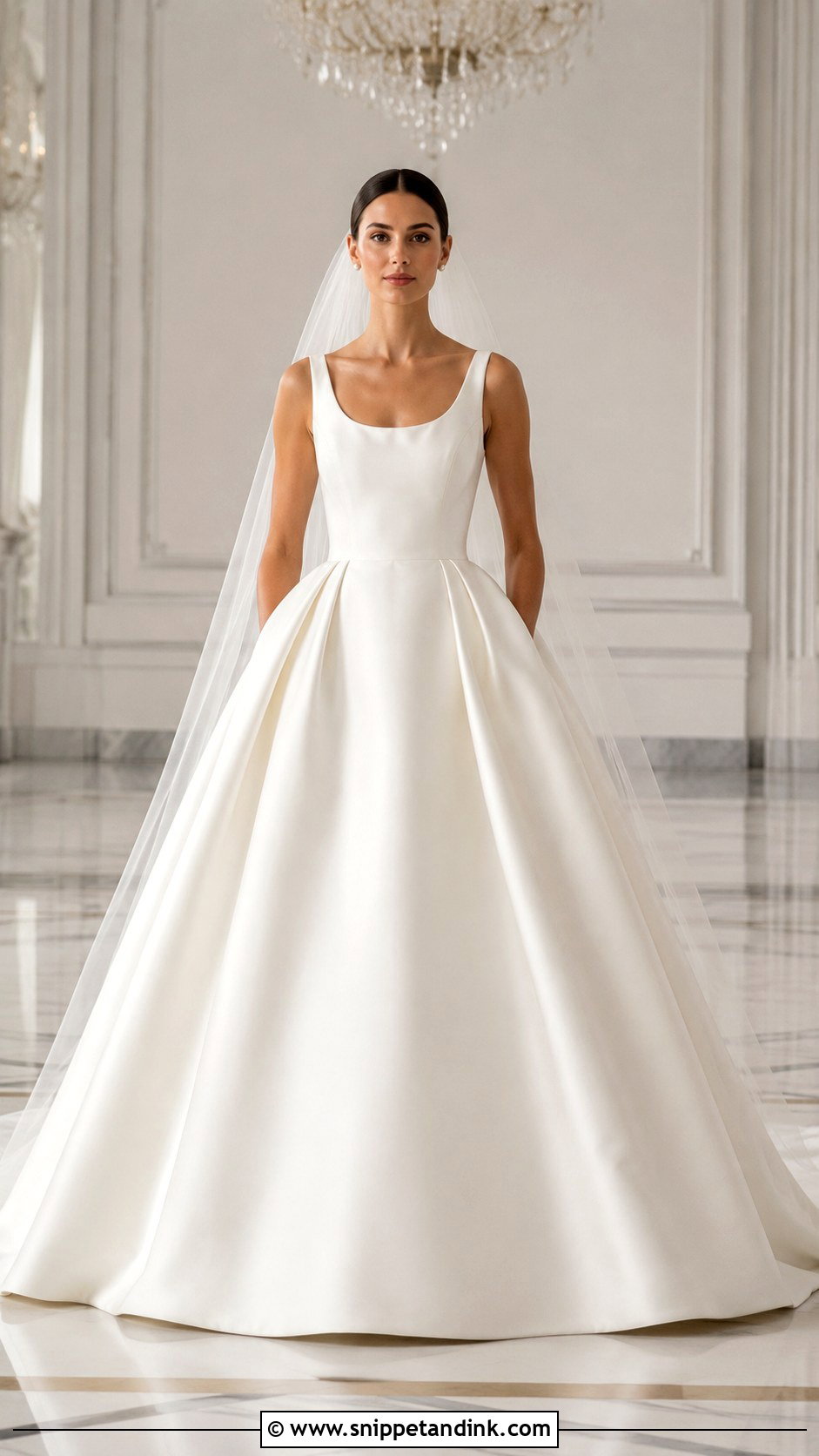
A full skirt can still be minimal if the surface is plain. Mikado, satin and faille all hold volume without needing petticoat layers of lace, and a structured bodice keeps the top half clean. A straight strapless neckline looks architectural; a scoop neck softens it. The trade-off is weight. A plain ball gown in heavy mikado can feel surprisingly heavy by the reception, so I’d always ask the bridal shop to let you walk around in a sample for ten minutes. Style it with pearl studs, a sleek updo, pointed heels and a long plain veil scaled to the skirt. Confirm the skirt is properly hemmed and bustled before the final fitting so the train is off the floor once the dancing starts.
10. Scoop Neck Wedding Dress
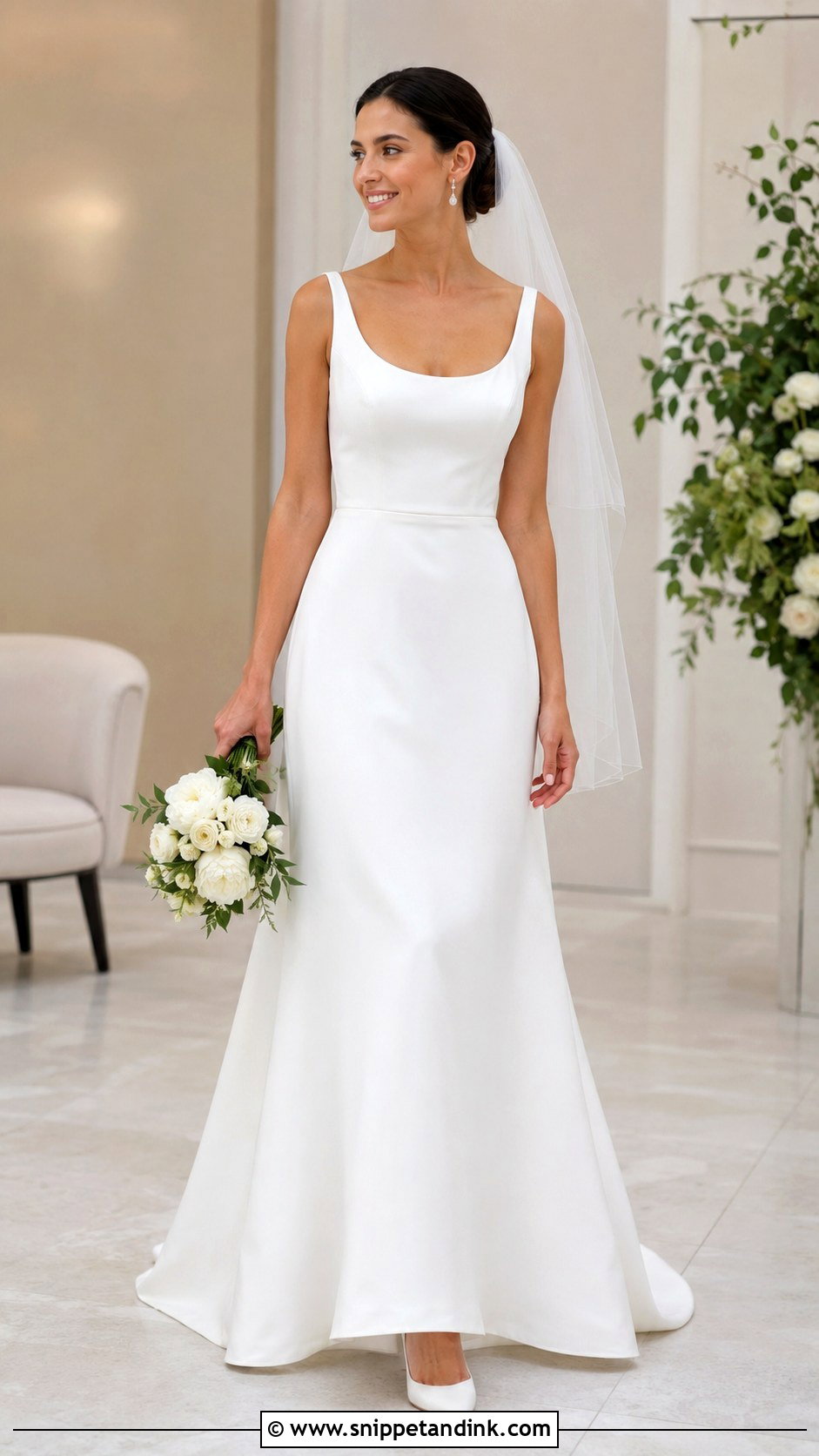
A scoop is the gentlest neckline on this list. It can sit high for coverage or dip lower to lengthen the neck. Wide straps and a fitted bodice hold it in place, with a sheath or A-line skirt below. Satin gives a soft sheen; matte crepe feels more modern. A delicate chain, small drop earrings and almond-toe pumps keep things quiet, and a shoulder-length veil leaves the curve visible. The detail I look at closely is symmetry. A scoop that is a little deeper on one side, or that gapes when you breathe in, will show from every angle, so make sure it lies flat against the chest before the hem is touched.
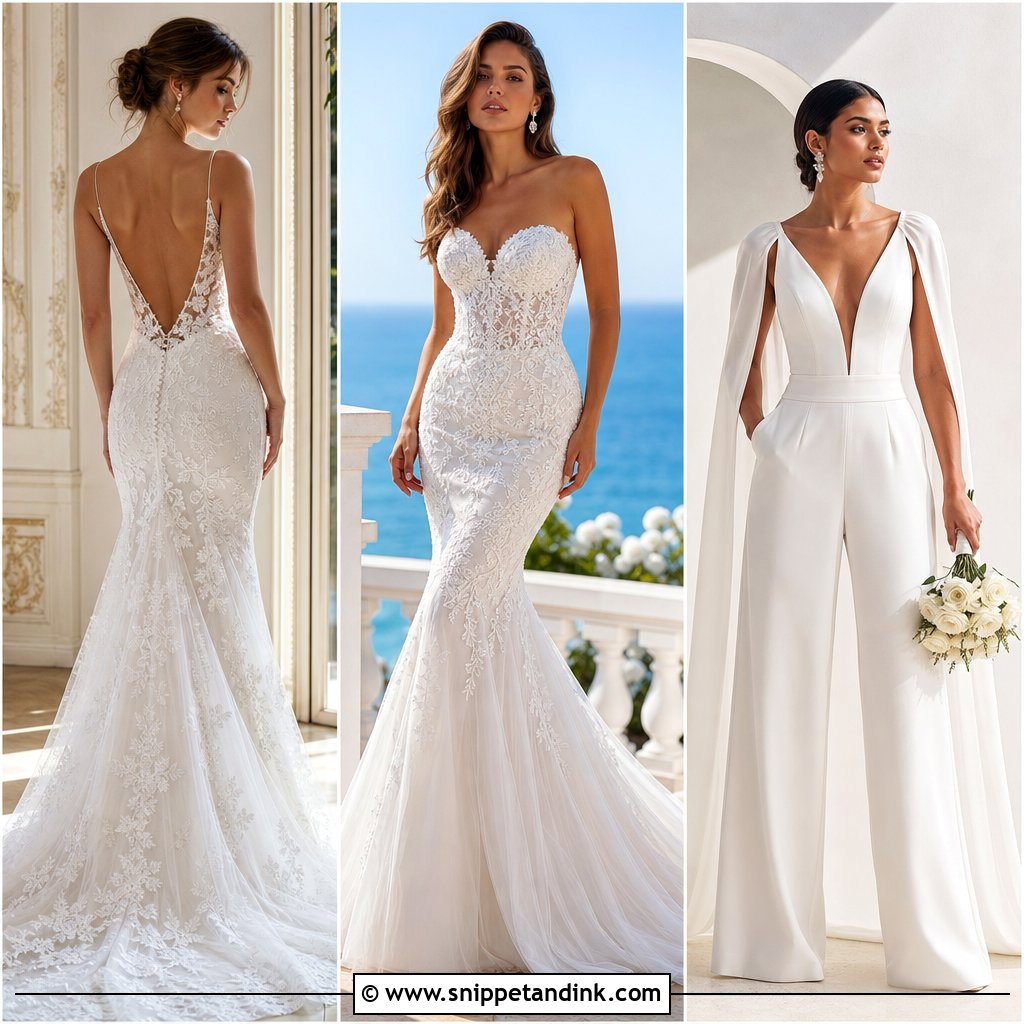
11. Open Back Wedding Dress
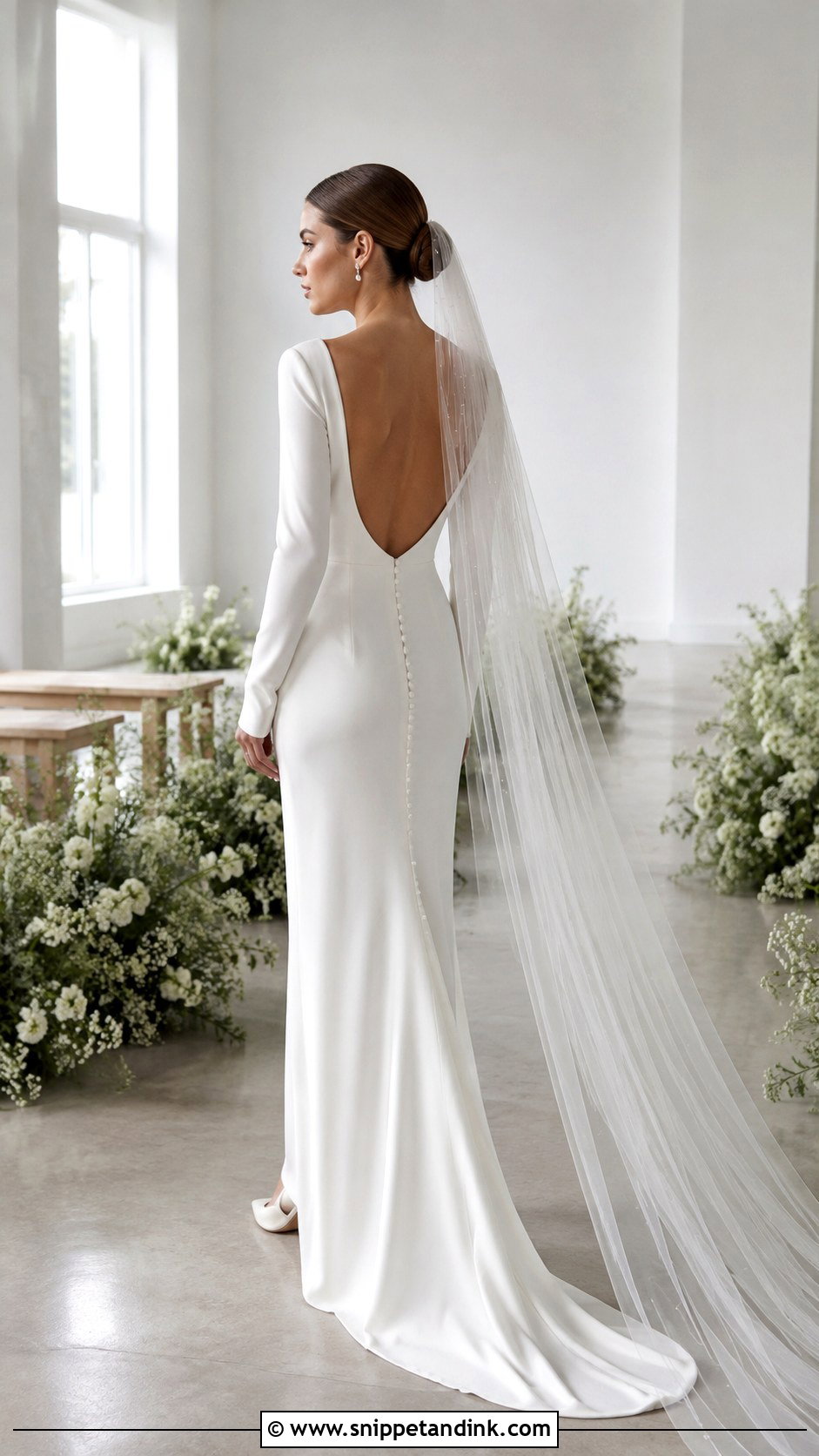
The back becomes the whole design, so the front can stay almost bare: a high bateau, long sleeves or wide straps balance a low rounded or V-shaped back. Covered buttons add a traditional note. Underwear is the first conversation I have about this cut. Once the back drops below the bra line, you need cups sewn into the bodice or adhesive support, and that decision has to be made before alterations begin, since it changes the fit. A polished updo keeps the cut on show, with studs, ivory heels and a sheer veil secured under the bun. Sit down during the fitting and look for the edges of the back gaping away from your skin.
12. Cowl Neck Wedding Dress
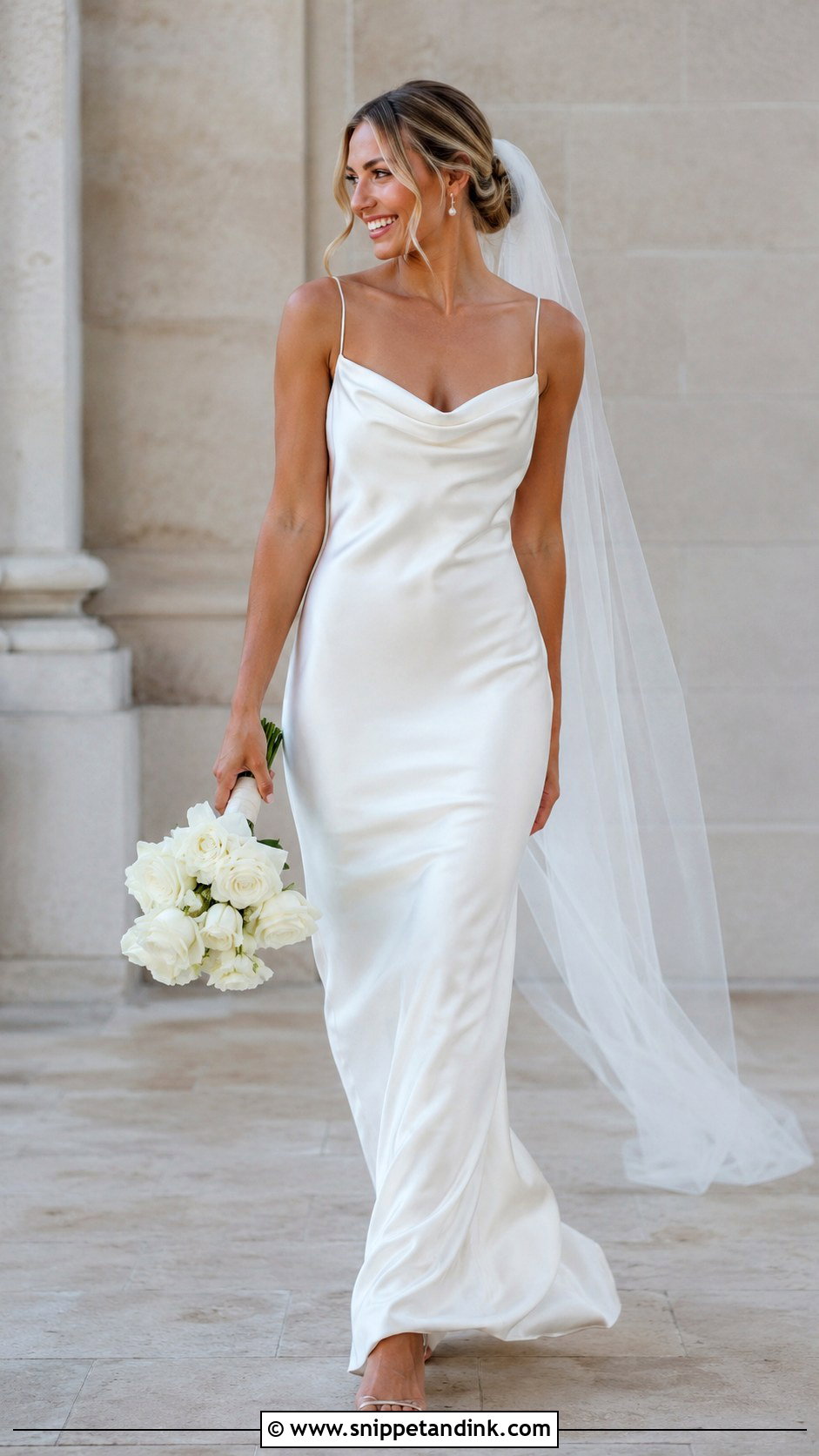
A cowl only works in fabric that wants to fall. Satin and silk drape into soft folds; anything stiff just sits there like a collar. A shallow cowl gives more coverage, a deeper one feels relaxed and fashion-led. Keep the rest of the dress plain, ideally a bias-cut column with very little seaming. I’d steer you away from a necklace, which catches in the folds and drags them out of place. A low knot, slim metallic sandals, one pair of earrings and a sheer fingertip veil finish it. Lean forward during the fitting. If the drape opens up more than you like, a small weight or a hidden stitch inside the fold usually fixes it.
13. Minimalist Mermaid Wedding Dress
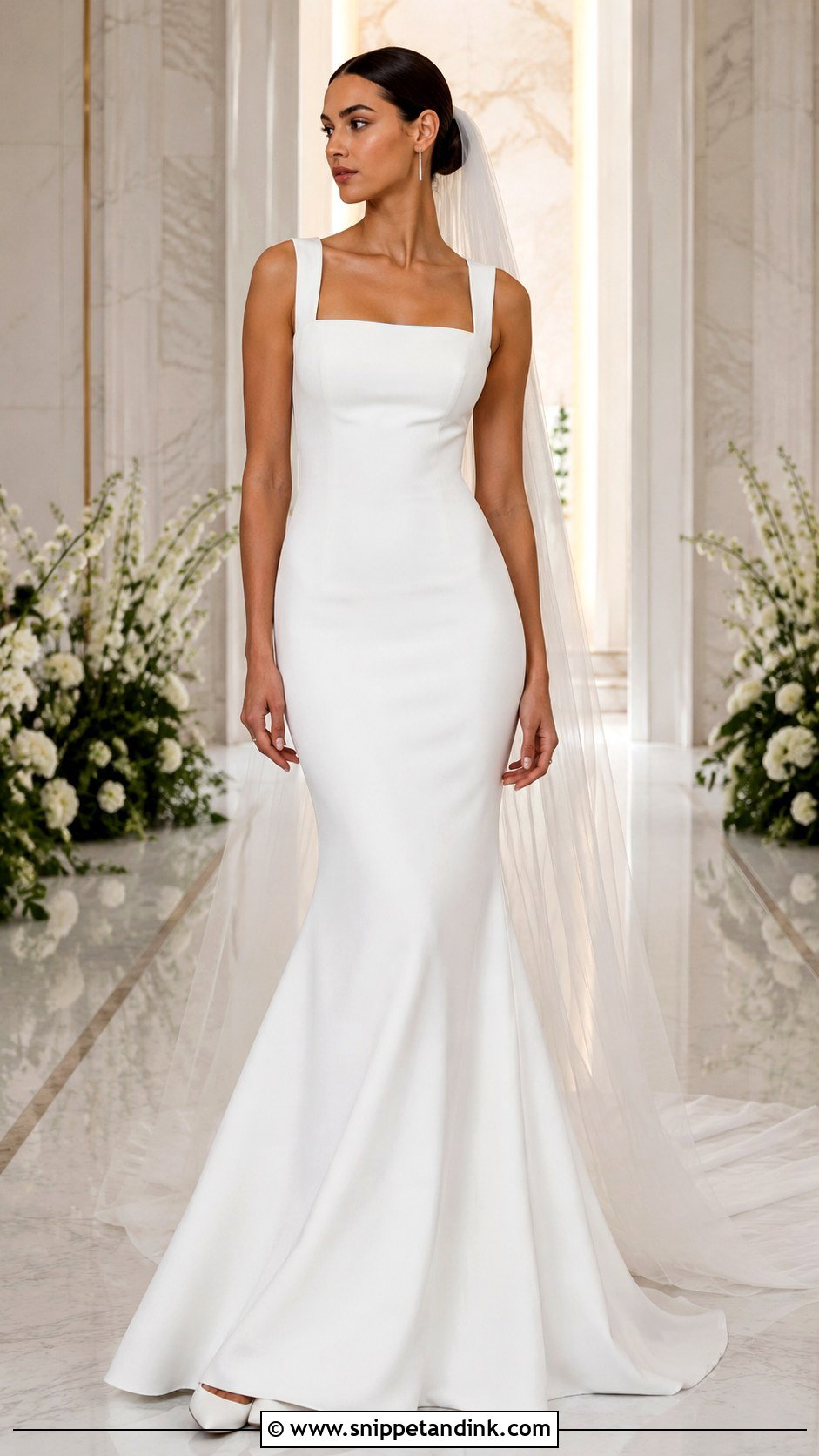
The mermaid is the most fitted shape here, following the body down to the knee before flaring out. Smooth crepe suits it well because it stretches slightly and keeps a clean surface. A square, strapless or off-the-shoulder neckline all work above the fitted bodice. What brides underestimate is the stride. If the flare starts too low, you walk in small steps and struggle with stairs. Climb a few steps and sit at a table during alterations, and ask for the flare point to be moved up if your knees feel bound. A sleek bun, linear earrings, pointed pumps and a plain chapel veil soften the sculpted line.
14. Minimalist Wedding Dress With Bow
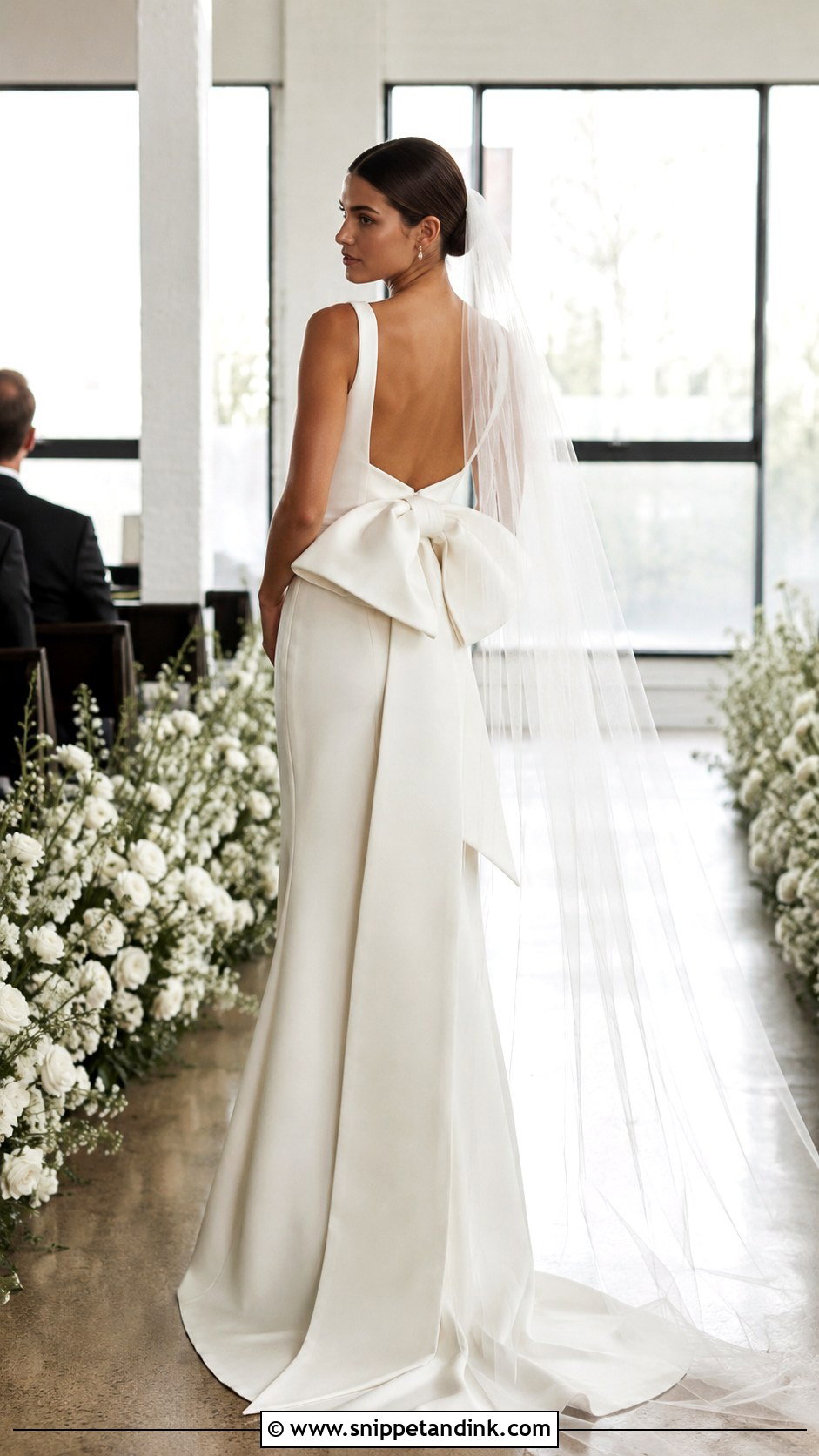
Could one precise detail make a plain gown feel personal? A single bow does it, as long as there is only one. Place it at the back waist, the shoulder, the neckline or the base of the train, never all four. Crisp mikado holds a structured bow; soft satin gives a looser one. Keep the silhouette simple underneath, a column or a modest A-line. If the bow sits at the back, work out the veil position at the trial so the comb lands above or below it, not on top. A removable bow is worth requesting from your seamstress, because it gives you a second look for the reception without a second dress.
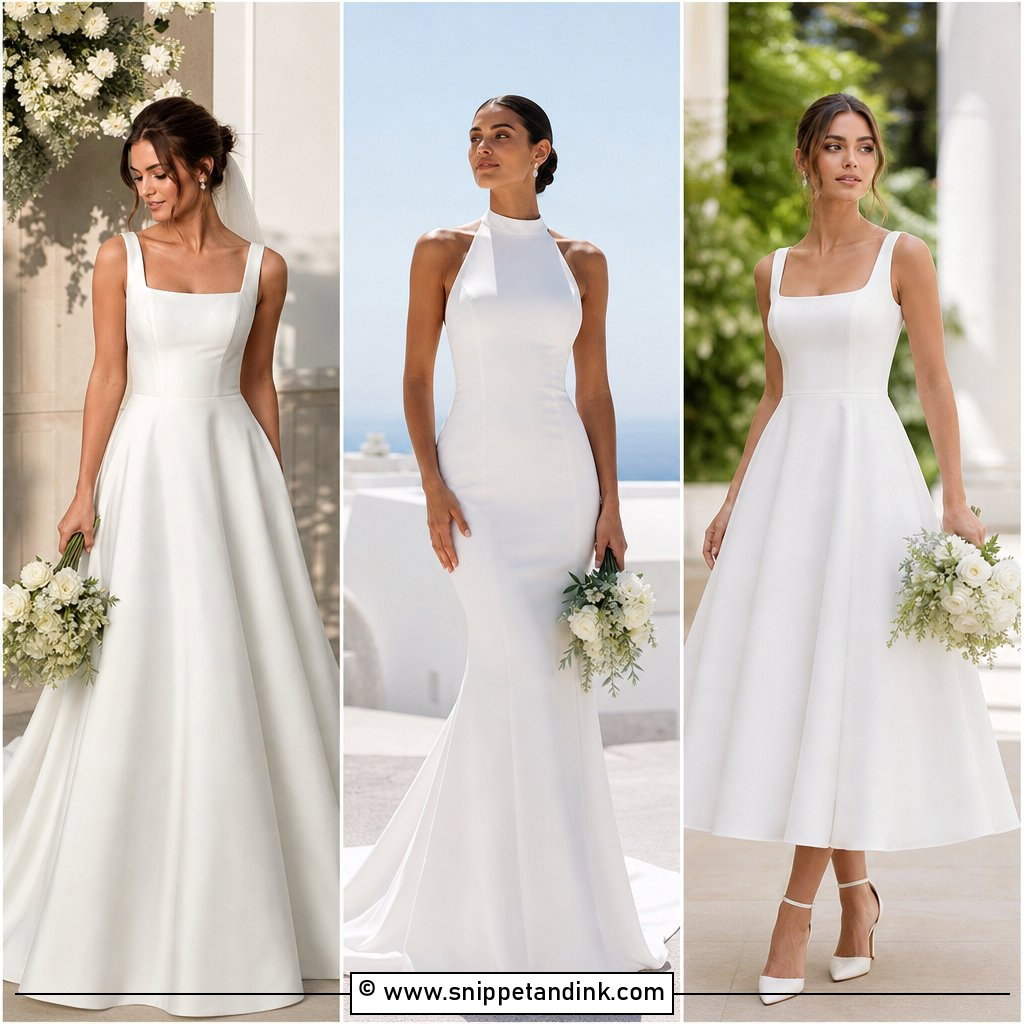

15. Minimalist Wedding Dress With Cape
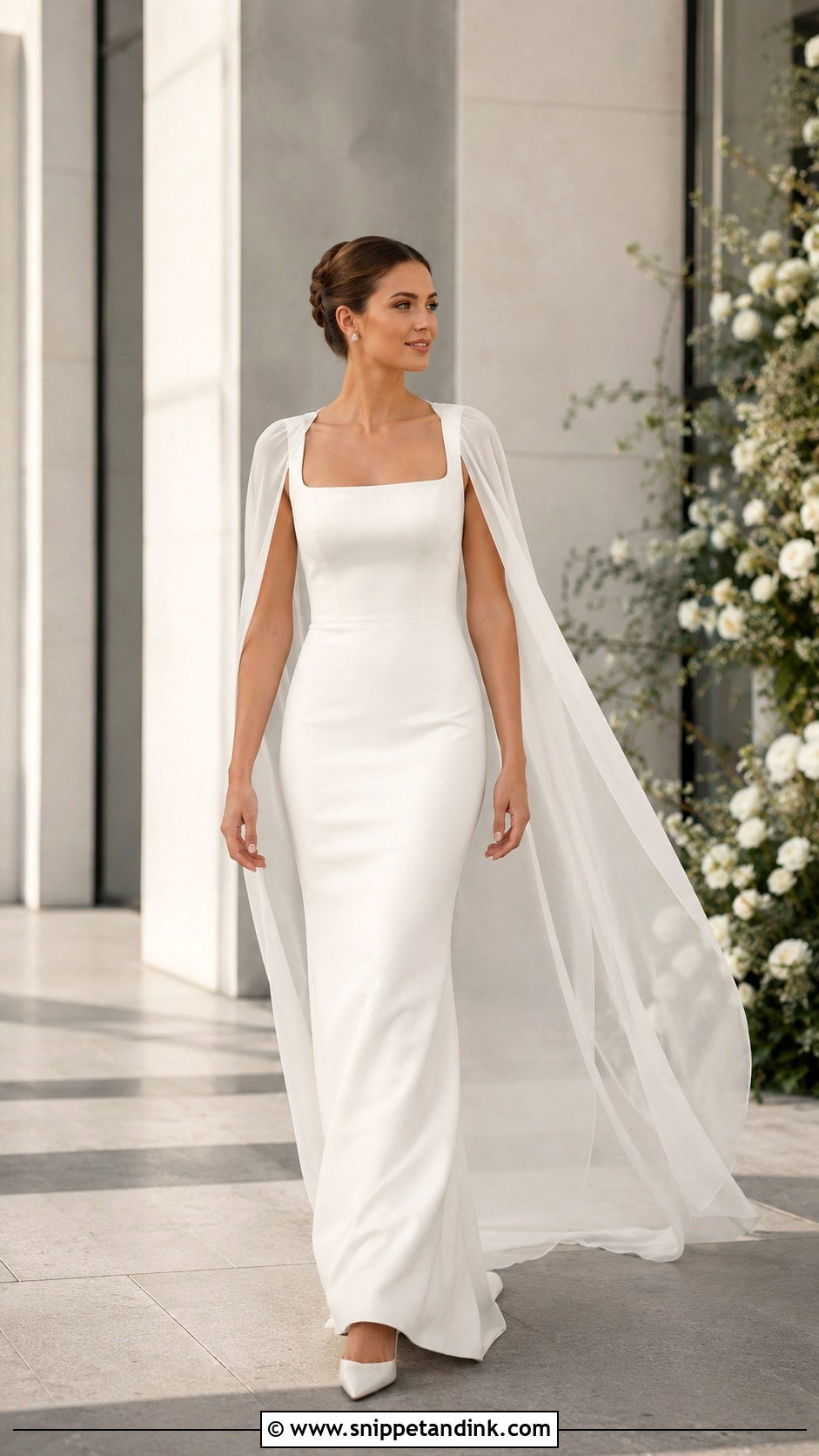
A cape gives the ceremony entrance drama while the gown underneath stays plain. Start with a streamlined column or sheath, then add a detachable cape in sheer tulle, smooth crepe or light chiffon. Floor length gives the most movement; a short capelet covers the shoulders with less volume. Because a cape does the job of a veil, I rarely pair the two; together they bury the dress. Ask for the attachment points to be hidden, either snaps under the shoulder seam or small loops, so nothing shows once it comes off. If your ceremony is outdoors, take the cape outside at the fitting and see what the wind does with it.
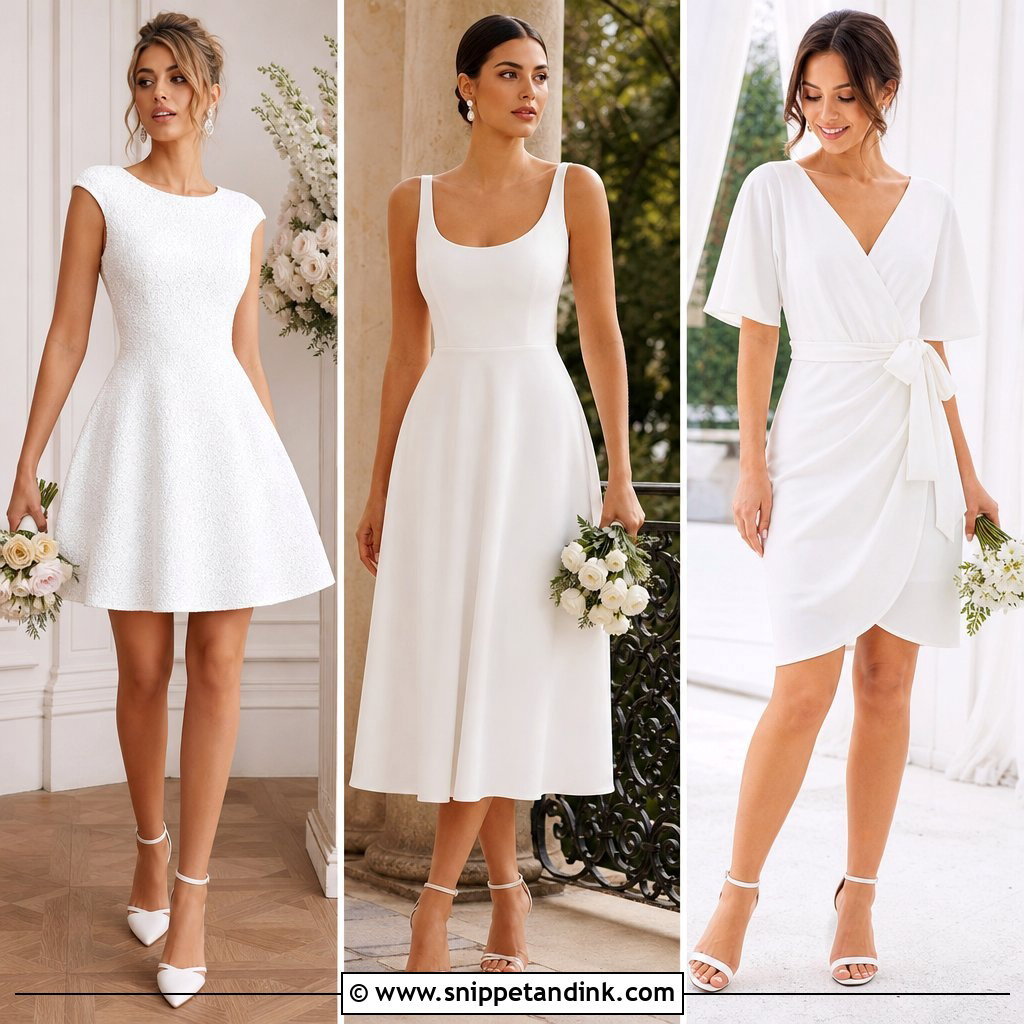
16. Tea Length Wedding Dress
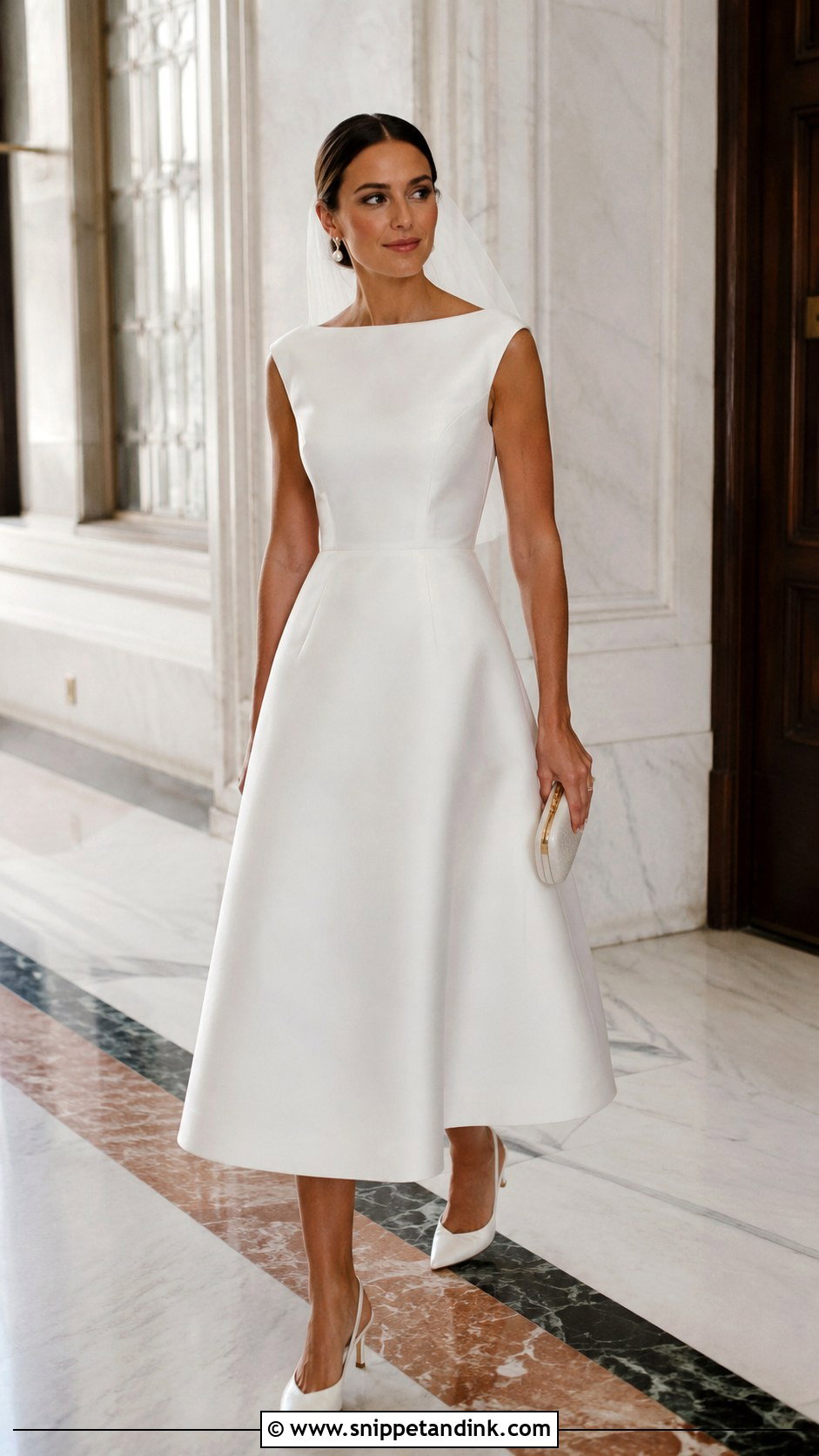
Tea length sits between the knee and ankle, which turns the shoes into part of the outfit rather than something hidden. Pair it with a clean bateau, square or strapless bodice and a lightly structured skirt in satin or mikado. Pointed slingbacks, pearl studs and a small handbag suit a courthouse or a small ceremony; a short veil or a hair bow sits better with the shorter hem than a long trailing veil. Bring your wedding shoes to every fitting. The ideal hem lands on the narrowest part of the lower leg, and even a two-centimetre heel difference moves where that point falls.
17. Minimalist Mini Wedding Dress
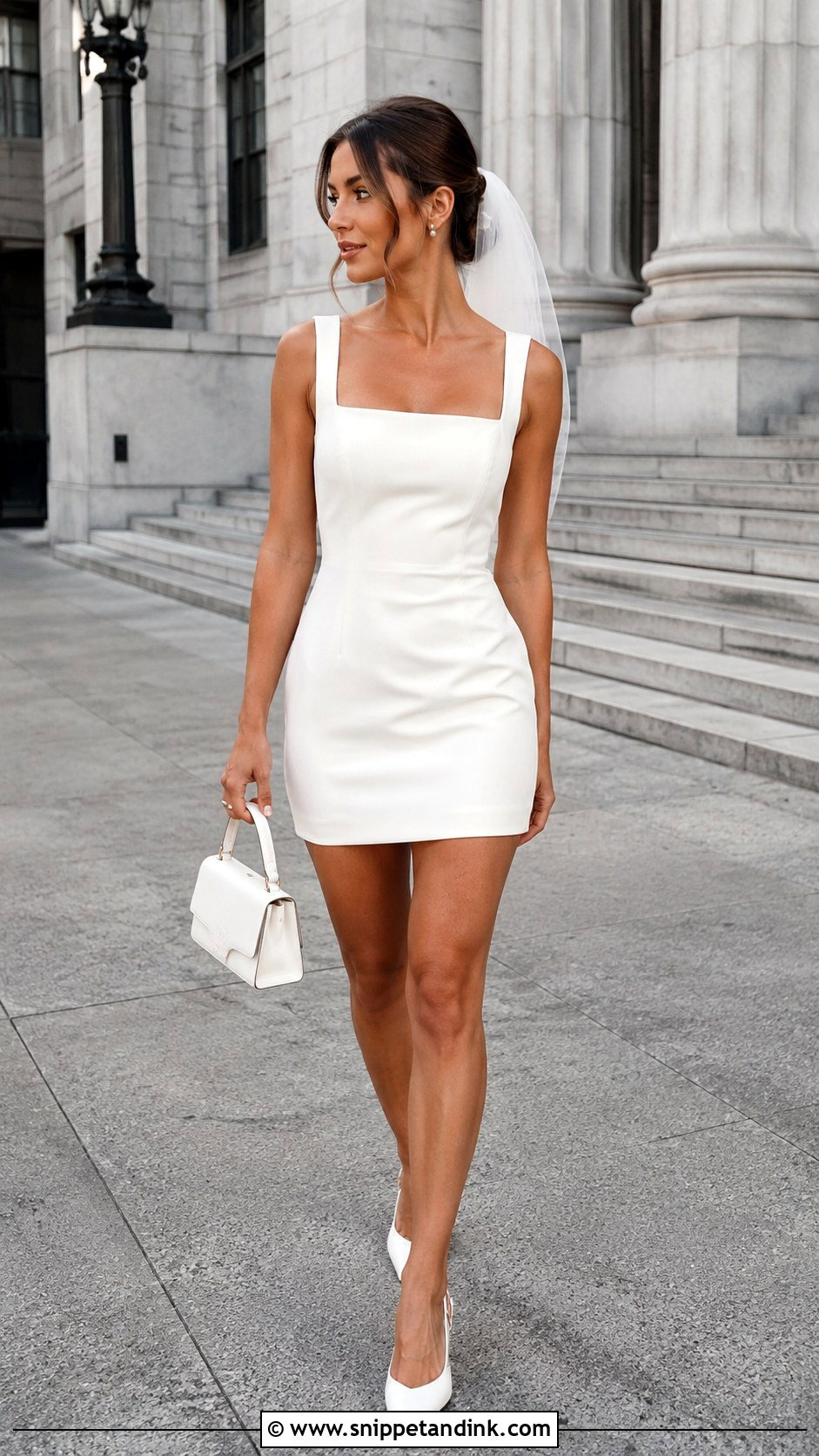
A mini has to be cut in substantial fabric or it starts to look like a party dress. Heavyweight crepe, satin or mikado holds the shape; a clean shift feels relaxed, while a fitted mini with a square neck looks more tailored. It suits a civil ceremony or a reception change better than a formal church service. Slingback pumps, simple earrings and a small top-handle bag complete it, and a short veil makes it read clearly as bridal. Since legs and shoes are fully on show, check the length from behind as well as the front, seated and climbing stairs. Good lining matters more than usual, because thin fabric turns see-through under a camera flash.
18. Minimalist Wedding Dress With Slit
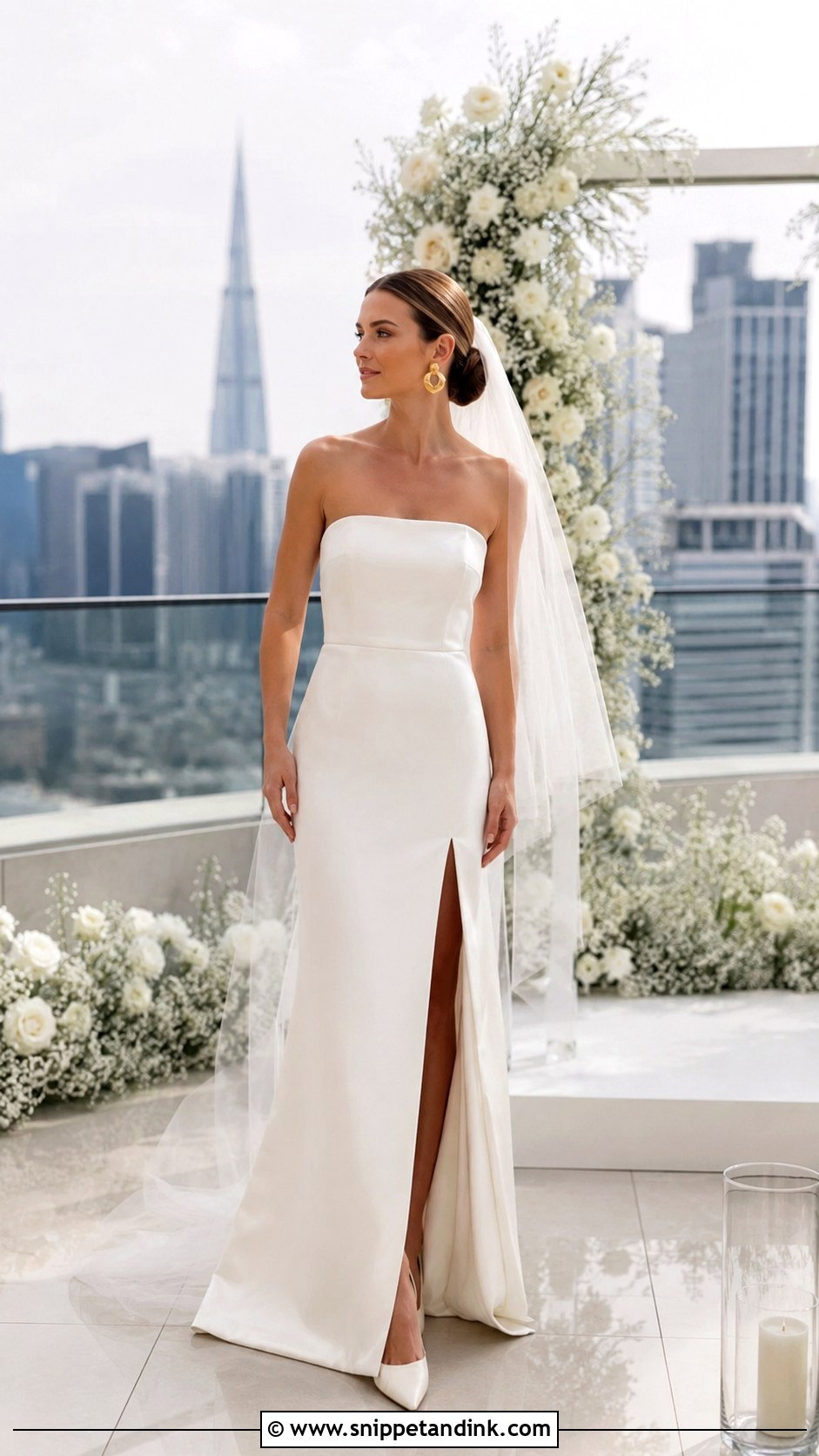
A slit adds movement only if it opens when you walk and closes when you stand still. A slit that stays permanently open just looks like a fitting error. Choose a column or A-line with a side or center slit, in crepe or satin with firm lining so the edges do not curl. The shoes will flash into view, so elegant sandals or pointed pumps are worth the attention. Height is the deciding factor for where the slit stops, and I’d ask your seamstress to mark it while you sit, walk and dance in the dress. A discreet inner panel gives more coverage without changing the outside. Earrings, a low bun and a plain fingertip veil finish it.
19. Two Piece Minimalist Wedding Dress
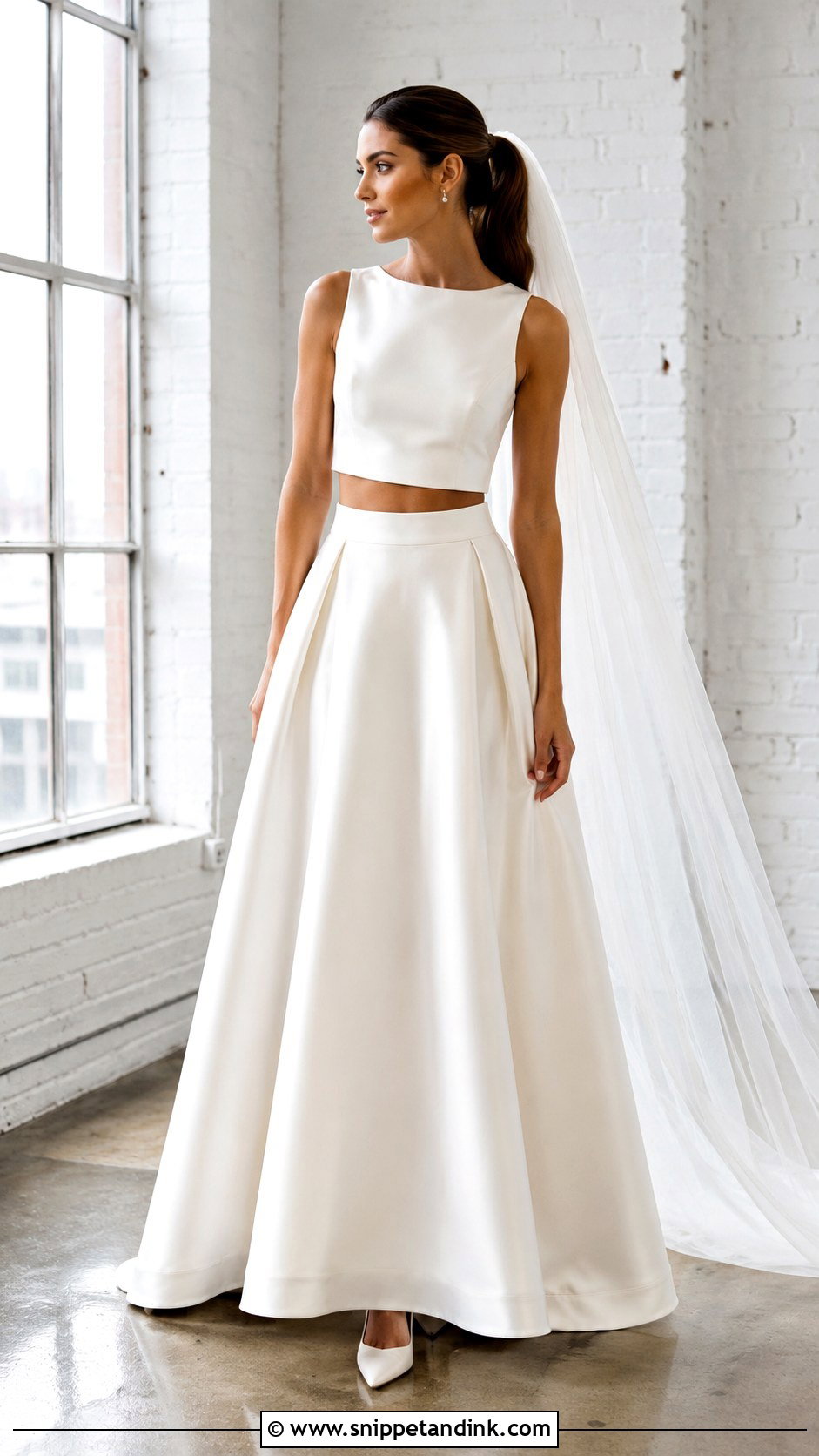
Separates give you the most flexibility of anything on this list. Pair a structured crop top, a sleeveless bodice or a long-sleeve top with a high-waisted column or A-line skirt. Using the same fabric for both makes it read as one gown; a narrow strip of waist showing gives it a modern edge, while pieces meeting at the natural waist cover more. The usual problem is the top riding up when you raise your arms. Hidden hooks between top and waistband, or a strip of grip tape, keep them aligned through the first dance. A sleek ponytail, small earrings, pointed heels and a long veil tie the separates together.





20. Bridal Blazer Wedding Dress
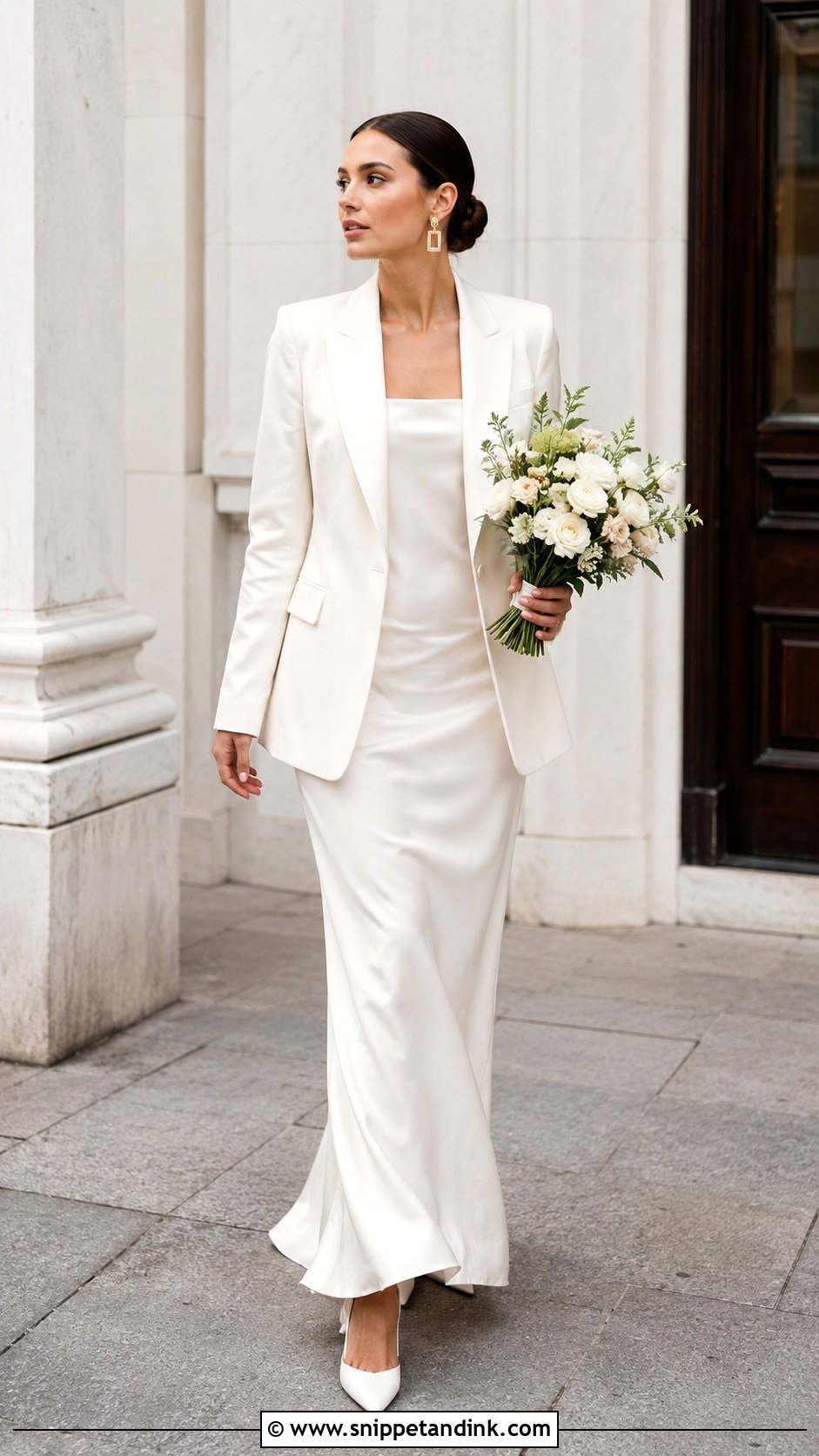
Tailoring changes a plain dress more than any accessory. An ivory blazer over a satin slip, a column or a mini works for a courthouse ceremony, a cool evening or a reception change. The blazer should follow the dress proportions rather than swallow them: a longer cut over a slip, a cropped one over a defined waist. Keep the lapels plain and match the buttons to the fabric. I always check the shoulders by having the bride lift her arms with the blazer on, because a tight armhole drags the dress underneath into creases. Finish with pointed pumps, geometric earrings and a polished bun or smooth waves, and take the blazer off for the dancing.
Where the Creases Come From, and How I Get Them Out
Brides choose minimal gowns for the clean surface, then panic when a long car ride leaves horizontal lines across the lap. Satin creases where it is folded under the seat; crepe recovers better but still marks at the back of the knees. Lace would hide this. A plain dress shows it.
- Plan the alteration timeline backwards. Most dresses need two or three fittings, and I aim for the last one around two weeks before the wedding, so any small weight change is caught.
- Have the dress pressed or steamed professionally after the final fitting and hang it from the inner loops, not the shoulders, so the straps don’t stretch.
- On the morning, steam from the inside of the skirt with a handheld steamer held a little away from the fabric. Never put an iron directly on satin; it leaves a shine mark that does not come out.
- In the car, lift the skirt so you sit on the lining rather than the outer layer, and spread the back out behind you.
- Keep a clean white cloth and a small lint roller in the emergency kit. Ivory crepe picks up fibres from car seats and dark suits faster than you would expect.
If a crease does settle in at the reception, leave it. A few soft lines from sitting and dancing look like a dress that was worn and enjoyed, which is exactly what it was.
A Plain Dress Is Only as Good as Its Last Fitting
The best minimal bridal looks come from careful decisions, not from leaving things out. Fabric weight, internal support, alterations and two or three chosen accessories carry the whole outfit. Try more necklines and fabrics than you think you need, and move in every dress: walk, sit, lift your arms and wear the shoes you will marry in. Let the venue and season guide the practical choices, but trust your own taste for the rest. From fluid satin slips to structured ball gowns and blazer outfits, any of these ideas can become a clean, personal bridal look once the fit is right.
You'll Like These Ideas:




Leave a Reply