
As the bride’s sister, you’ll dance, run errands, fix her dupatta and pose in half the family photos, all in one outfit. It has to feel festive and still let you move. Sangeet wardrobes have widened well beyond the classic lehenga: sharara sets, pre-draped sarees, light co-ords and Indo-Western cuts are all common now, largely because they’re easier to dance in. For each look below I’ve covered colour, fabric, shoes, jewellery and how it behaves on a dance floor. Adjust the amount of embellishment to the venue, the dress code and, most of all, to what your sister is wearing.
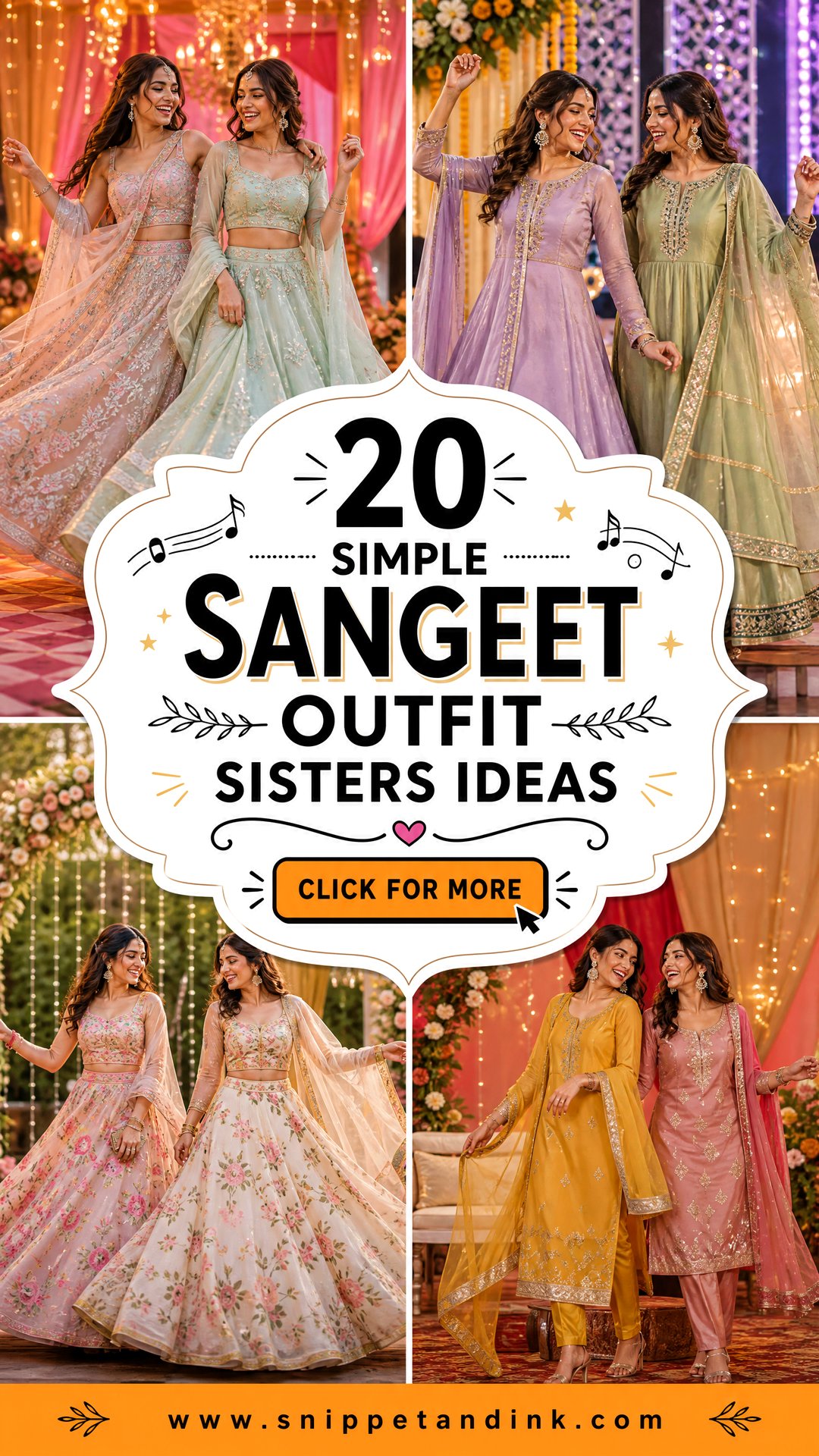
Ask the Bride Before You Buy Anything
Most of the sangeet outfit problems I’m asked to fix come from one missed conversation. The bride often has a colour story in mind, and a sister who turns up in the same shade, or in heavier embroidery, ends up in every photo next to her. A short message early on saves a lot of awkwardness.
- Her outfit colour, so you can pick a different shade or a deliberate contrast.
- How much shine she’s wearing. If her lehenga is heavily sequinned, choose thread, mirror or woven work so you don’t compete.
- Whether the sisters are coordinating, and what the shared element is.
- The choreography. A lift, a floor sequence or fast spins rule out certain skirts and long dupattas.
Traditions differ between families and regions, especially around red and heavy bridal styles, so let her preferences guide you even where the general advice says something else.
1. Pastel Lehenga Sangeet Outfit
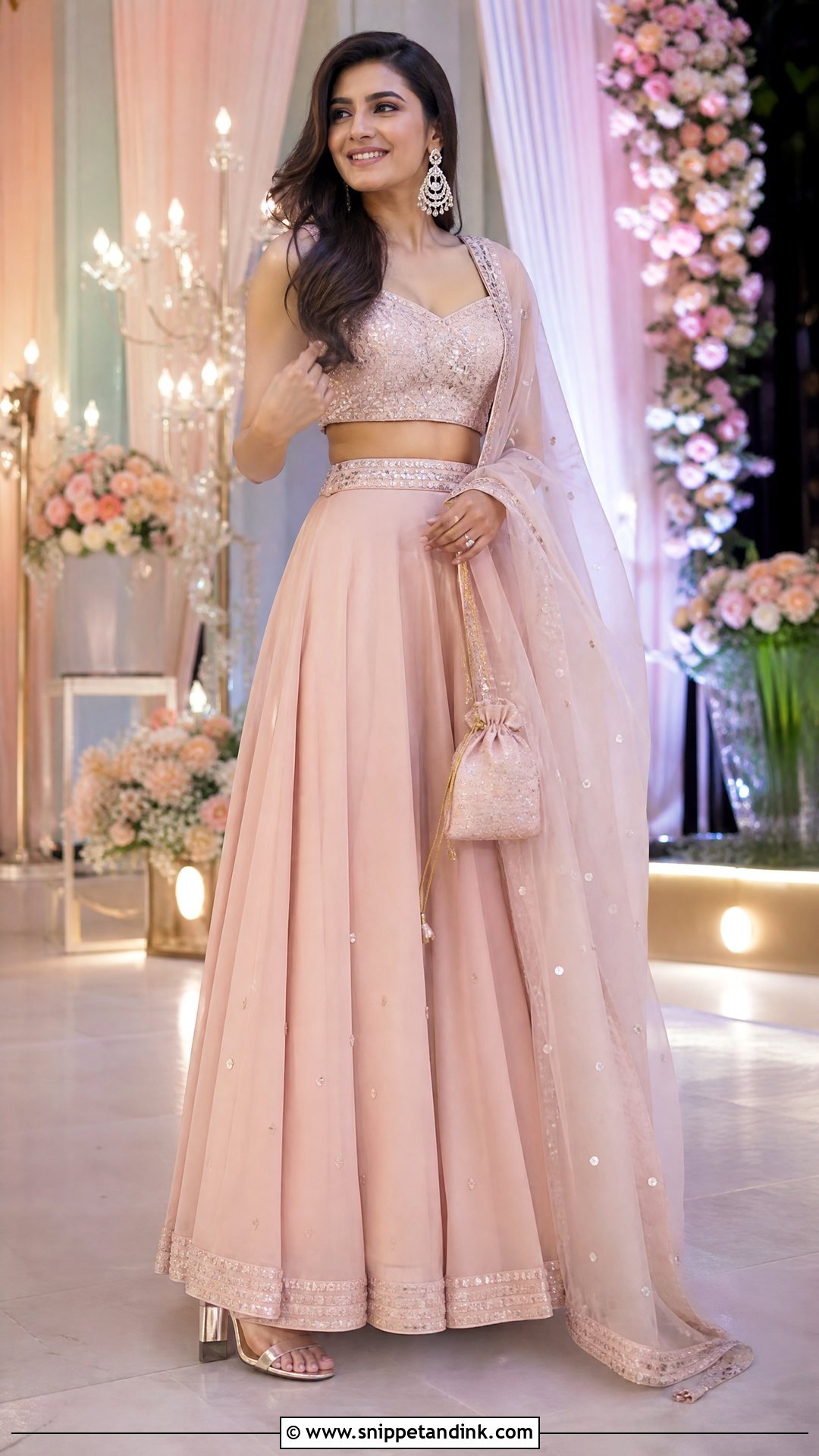
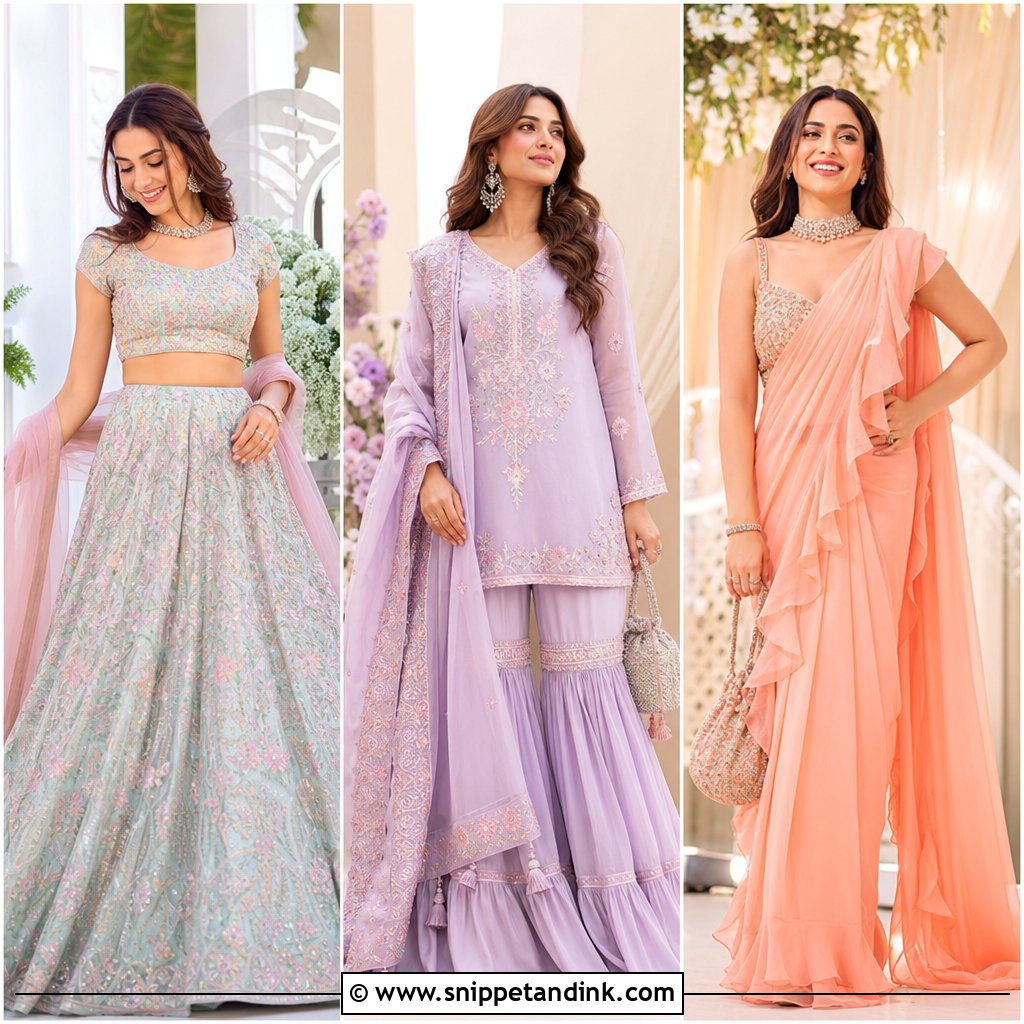
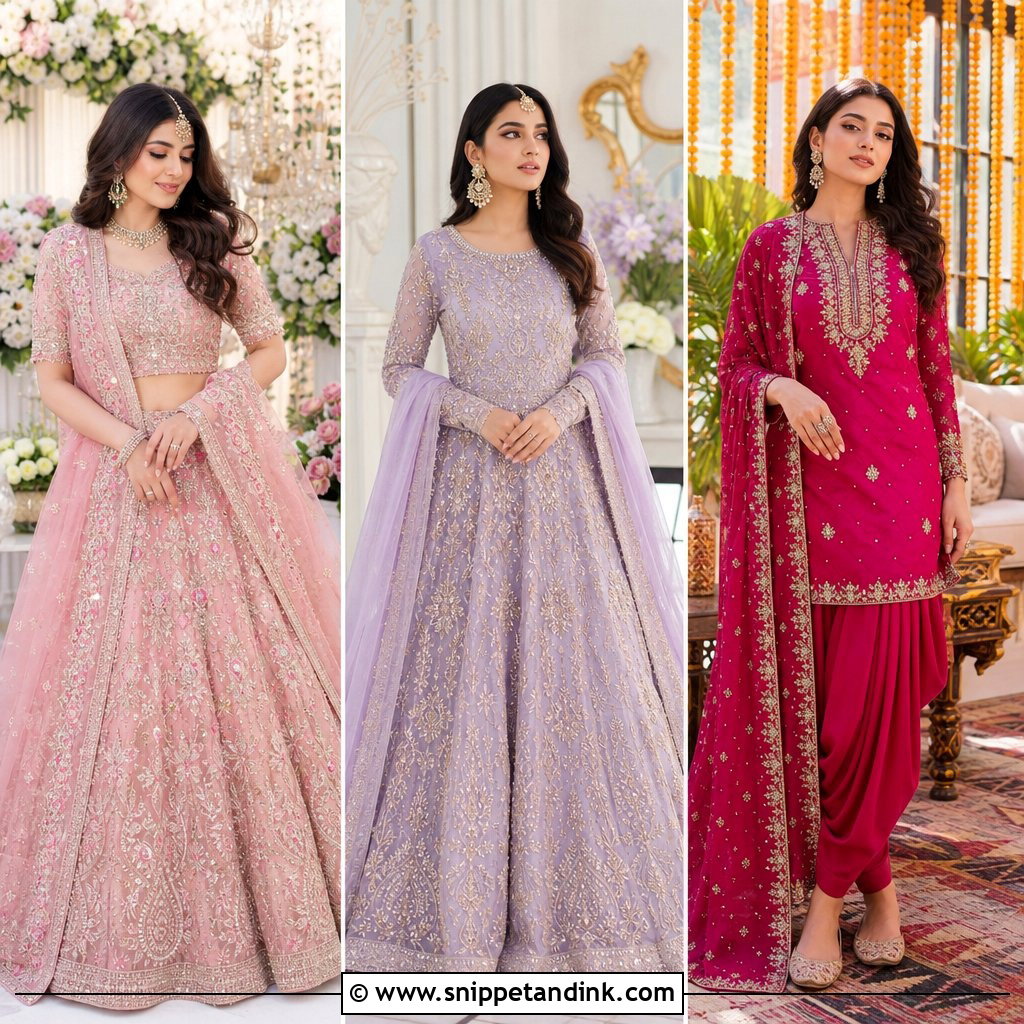
Pastels read soft in daylight and still glow under warm evening lights, so a pastel lehenga carries across both. A flowing georgette or crepe skirt in blush, mint, powder blue or lavender is light enough for a long night, paired with a fitted blouse with fine sequins, threadwork or small mirrors. An organza dupatta gives a little structure but pin it before you dance, since organza slides off satin blouses. Metallic block heels, crystal earrings and a small potli finish it, with loose curls or a low ponytail. If the lehenga is very plain, bring in colour through jewellery. On petite frames, small motifs look better than wide borders.
2. Mirror Work Sharara Sangeet Outfit
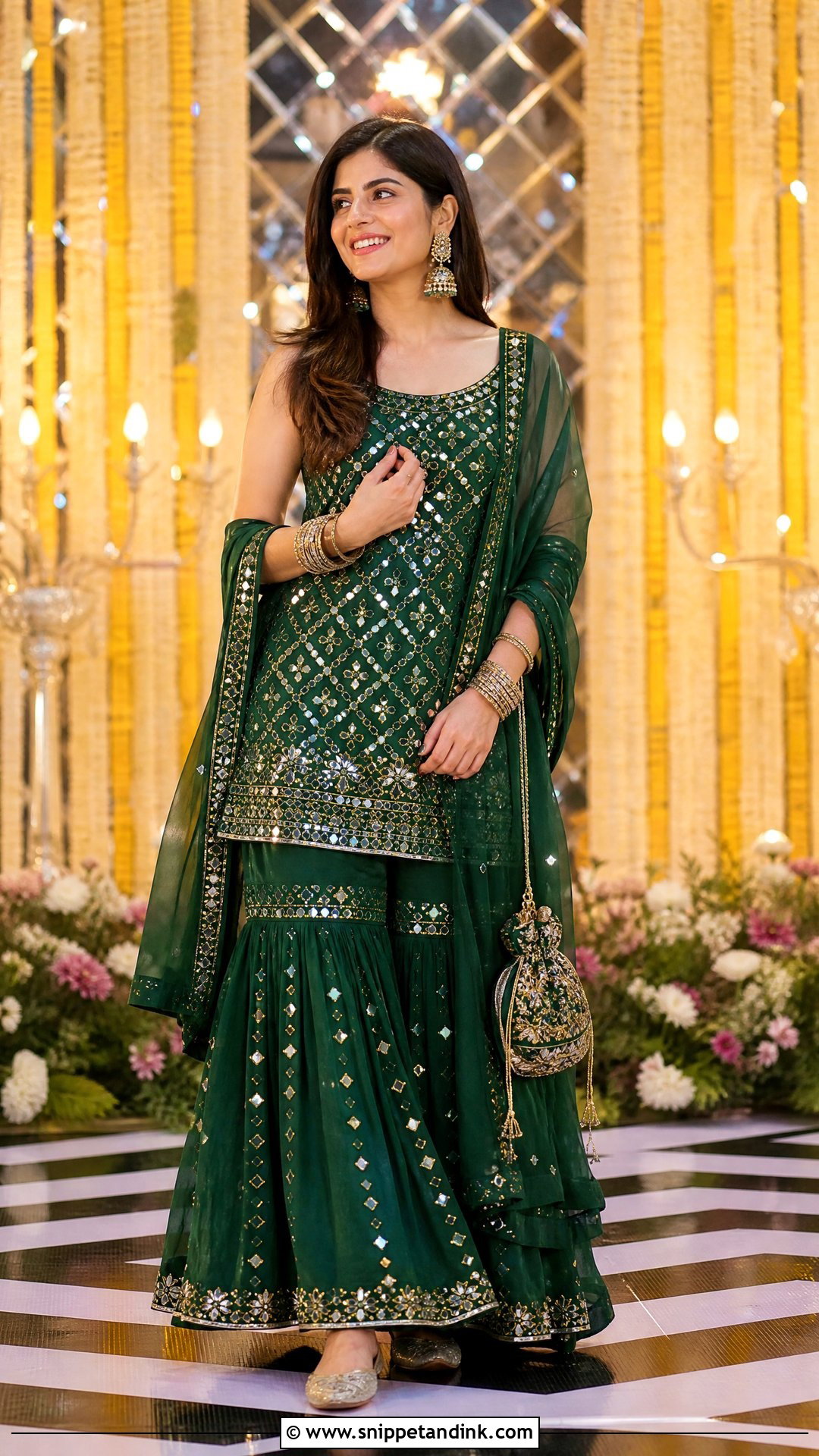
Want sparkle without hauling a heavy skirt all evening? A mirror work sharara gives you shine and full leg movement. Keep the mirror embroidery controlled on a short kurti over wide, flowing sharara pants. Emerald, cobalt, fuchsia and deep purple come alive under stage lighting. Wear a sheer dupatta over one shoulder so both arms stay free for choreography, with metallic juttis, medium jhumkas and stacked bangles. Skip the necklace if the neckline is already worked. The first thing I check on mirror work is the inside: real glass mirrors have sharp edges where the thread wears, and they scratch bare arms by the end of the night.
3. Pre-Draped Saree Sangeet Outfit
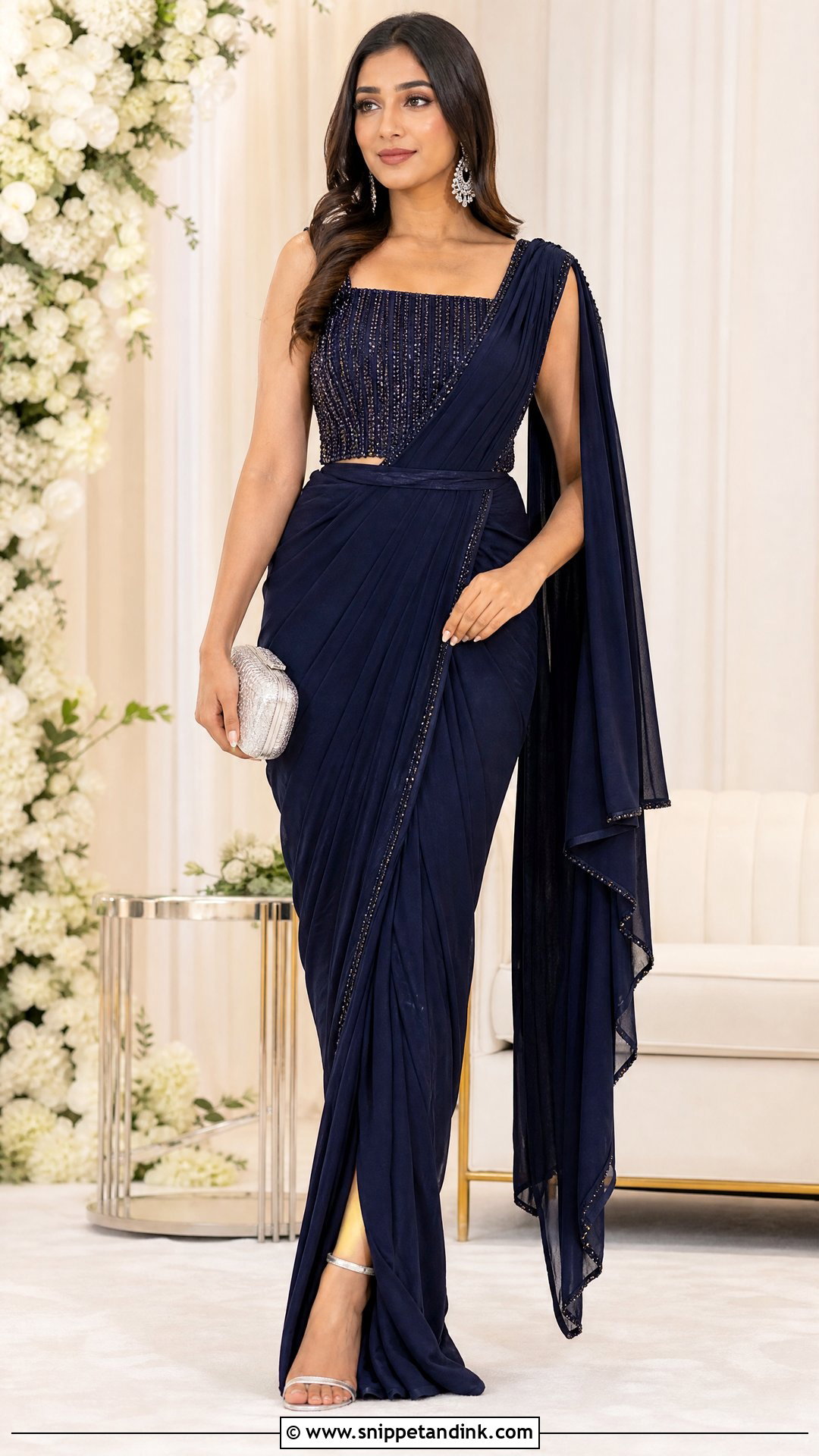
Pre-draped sarees take away the two things that ruin a saree on a dance floor: pleats coming loose and the pallu sliding off. Look for lightweight georgette, satin or crepe with the pallu stitched in place, and a structured blouse with subtle beading, sequins or an interesting neckline. Jewel tones, metallic neutrals and deep blues suit evening functions. Ankle-strap heels, statement earrings and a small clutch finish it, with a sleek ponytail or soft waves. Even pre-stitched, pin the pallu at the shoulder before you dance. It’s a good way to look polished and clearly different from the bride’s lehenga.
4. Anarkali Suit Sangeet Outfit
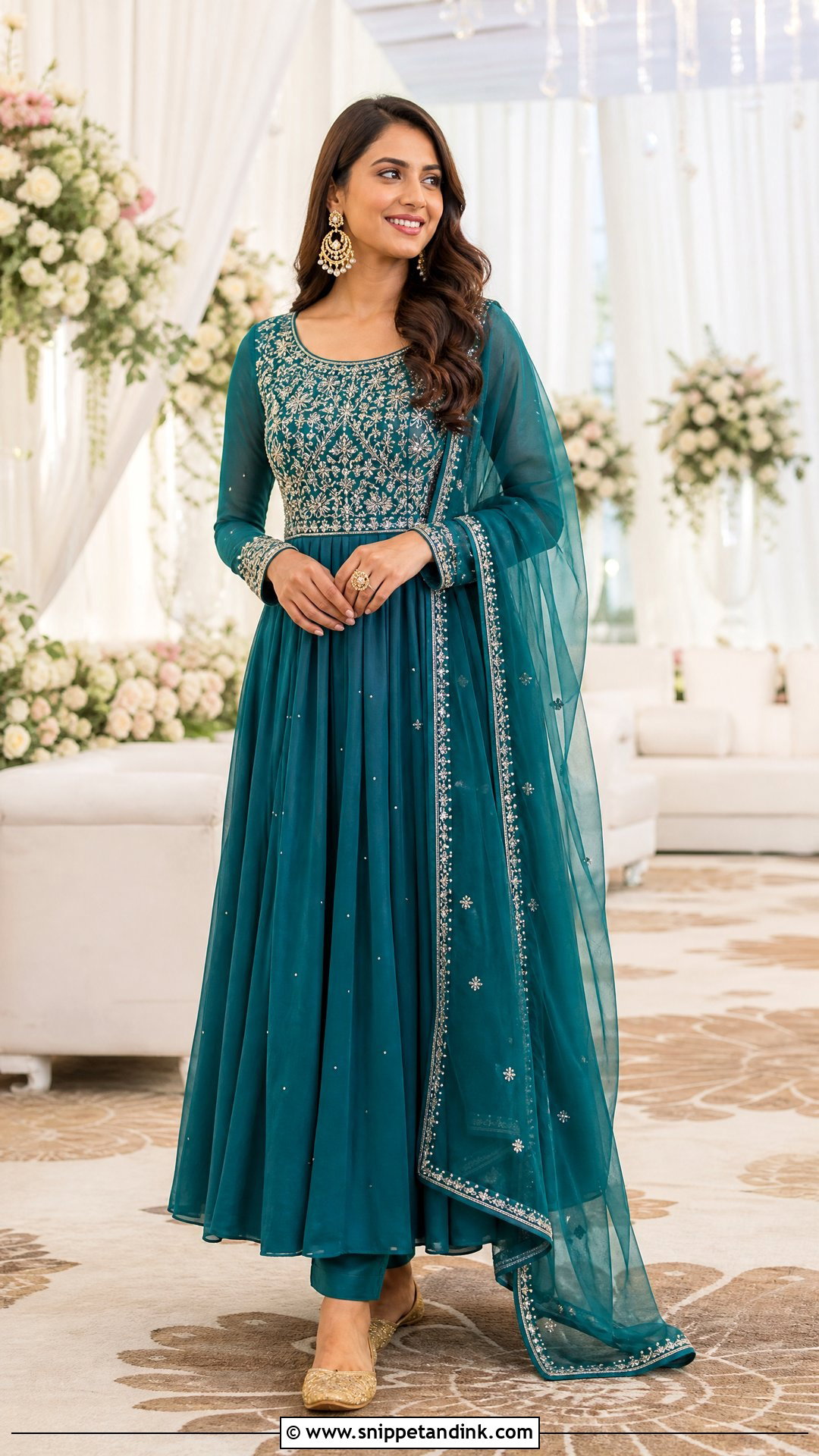
An Anarkali flares as you spin, which is exactly why so many sisters choose one for the sangeet. Floor- or ankle-length chiffon, georgette or light silk, with a fitted bodice and a flowing skirt, is comfortable for hours. Teal, raspberry, navy or soft peach feel festive without looking bridal. Wear narrow pants underneath, a neatly pinned dupatta and embroidered juttis or low block heels, with chandbalis and a single statement ring. For more coverage, elbow sleeves and a higher neck work well. I’d get the hem to clear the floor by a finger’s width in your actual shoes; a floor-length Anarkali catches under the heel mid-spin.
5. Indo-Western Jumpsuit Sangeet Outfit
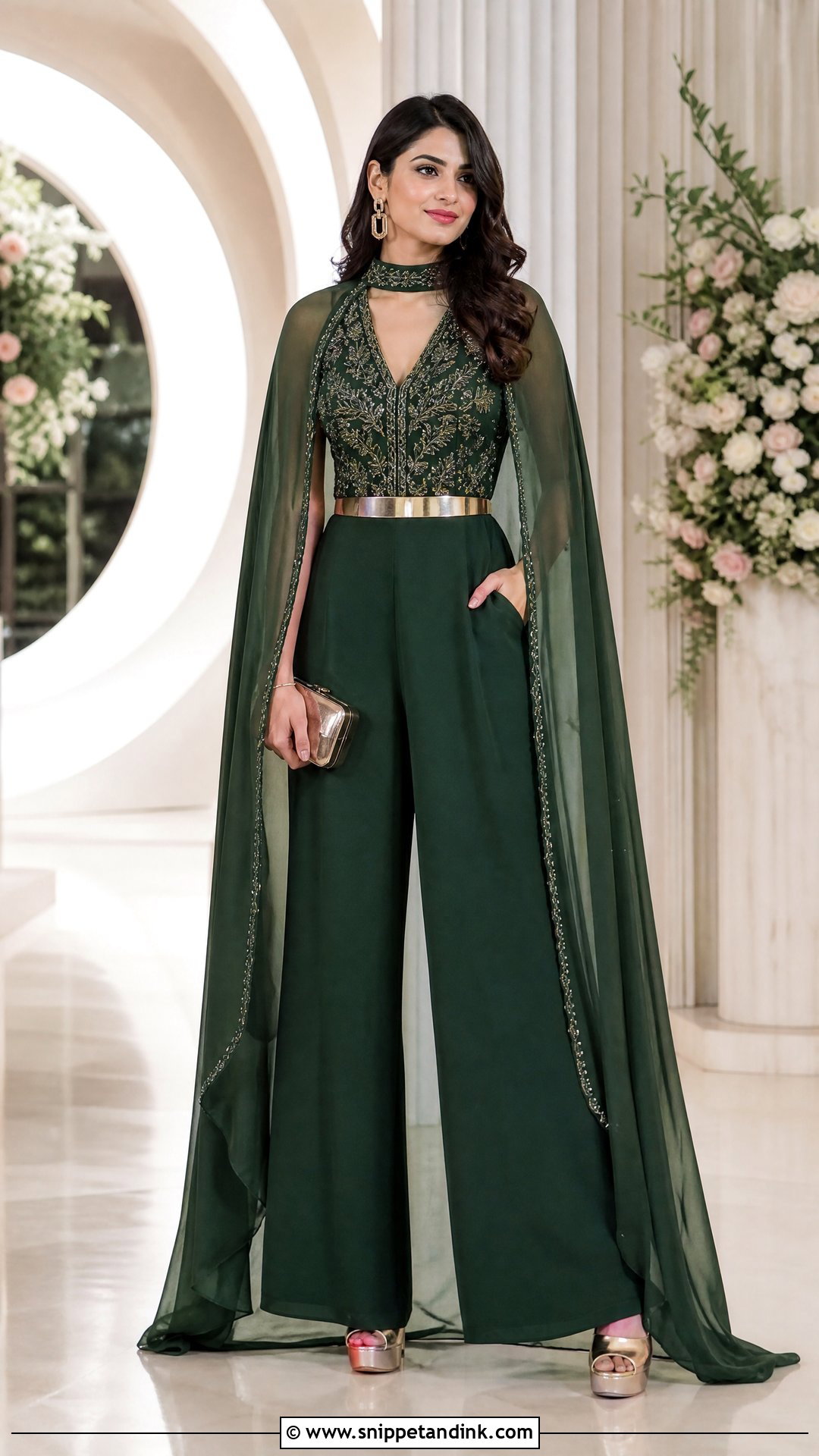
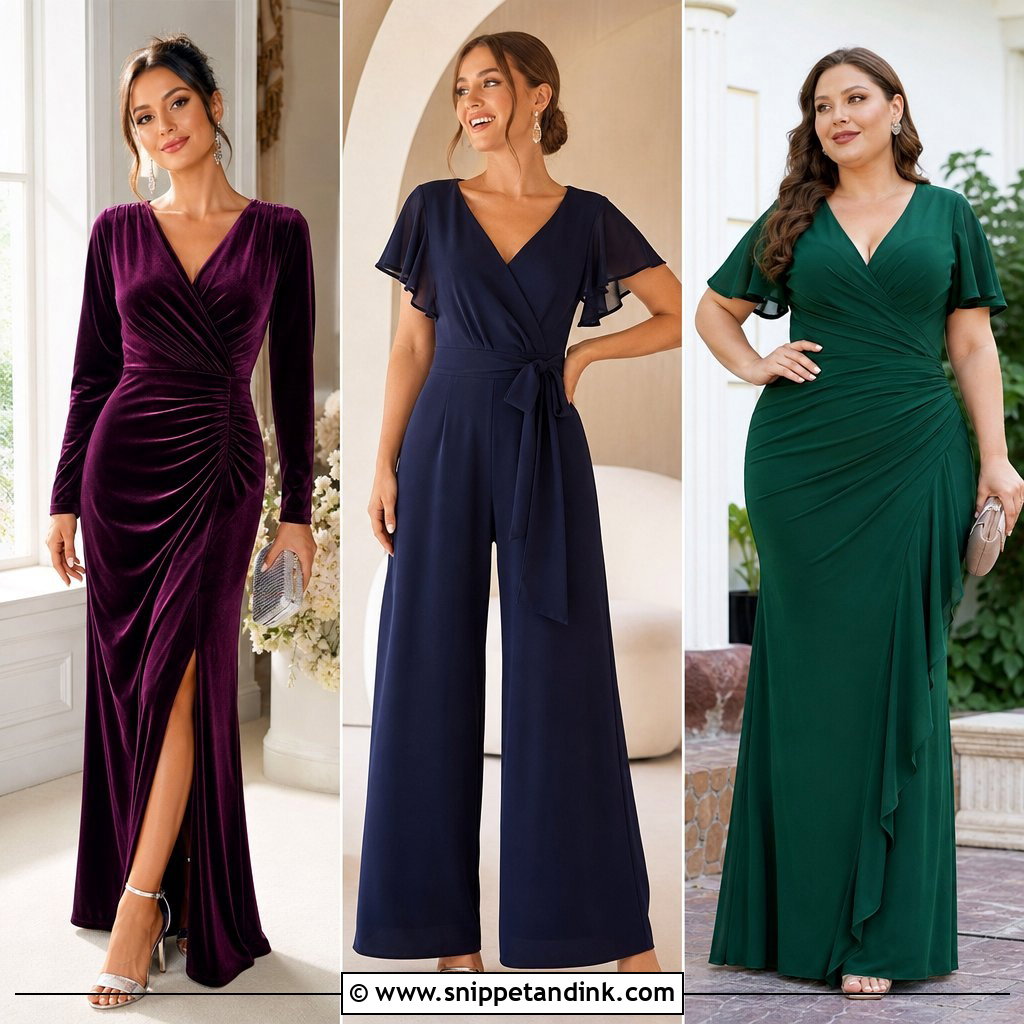
An Indo-Western jumpsuit suits a cocktail-style sangeet and is the easiest outfit on this list to dance in. Choose a wide-leg crepe or georgette jumpsuit with an embroidered bodice, a draped overlay or an attached cape. Sapphire, magenta, forest green or black with metallic detail look polished at night. Built-in tailoring or a narrow embellished belt defines the waist. Platform heels, geometric earrings and a structured clutch suit it, with a sleek bun or side-parted waves. Hem wide legs to just above the floor in your shoes. My one hesitation is bathroom trips, so I’d pick a jumpsuit with a side zip you can manage alone.
6. Crop Top And Skirt Sangeet Outfit
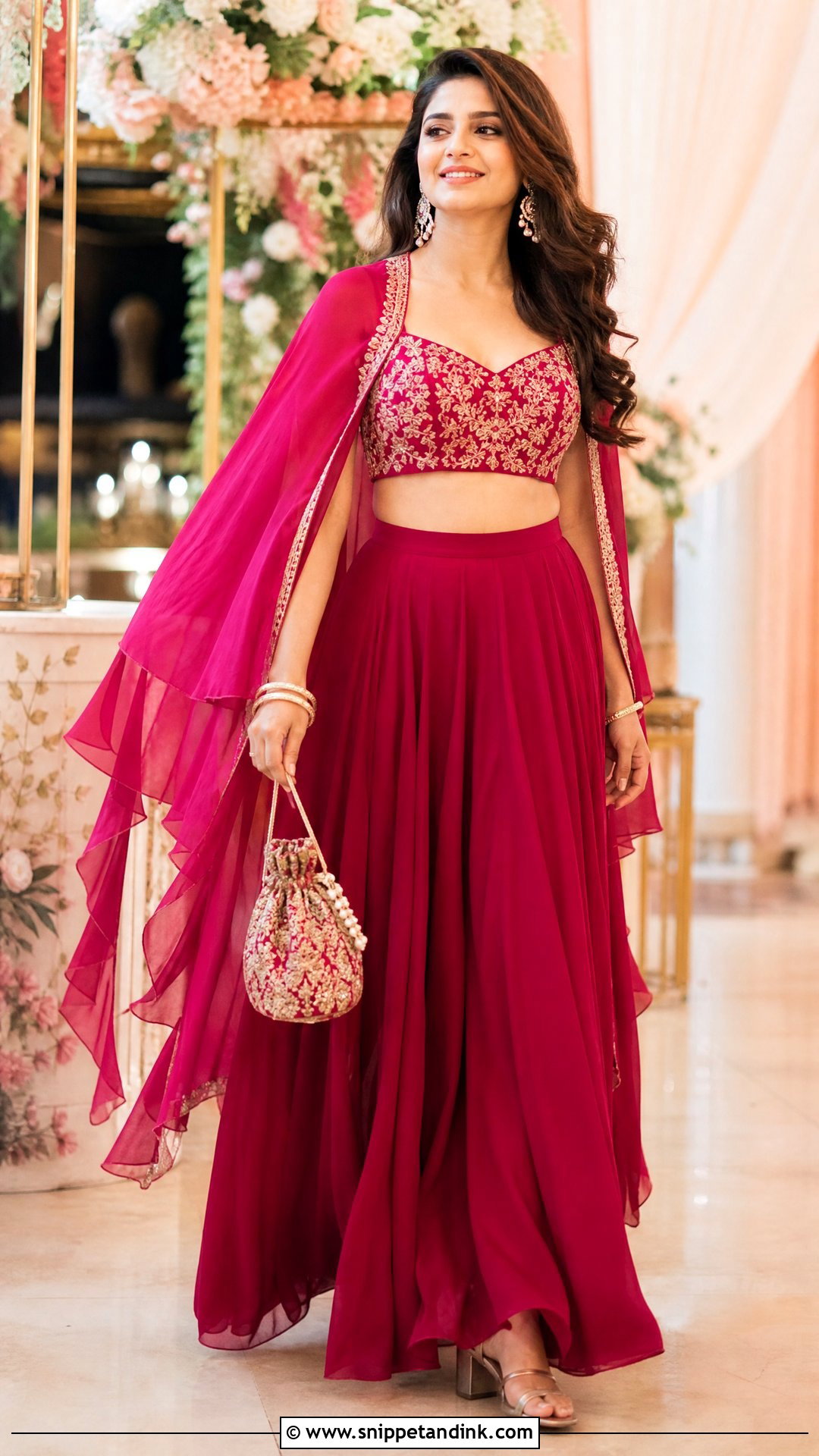
A crop top and skirt is the most re-wearable outfit here, since both pieces work separately at later festive events. Pair a lightly embroidered top with a high-waisted flowing skirt in the same colour family, or a solid blouse with a printed or textured skirt for something relaxed. Breathable georgette, crepe or soft silk moves well during performances. Add a cape or light dupatta if you’d like more coverage at the shoulders and midriff. Block heels, drop earrings, bangles and a compact potli finish it. Keep the top and skirt in related colours to make you look taller. A crop top rides up when you raise your arms, so check how much skin shows in the actual dance moves.
7. Palazzo Suit Sangeet Outfit
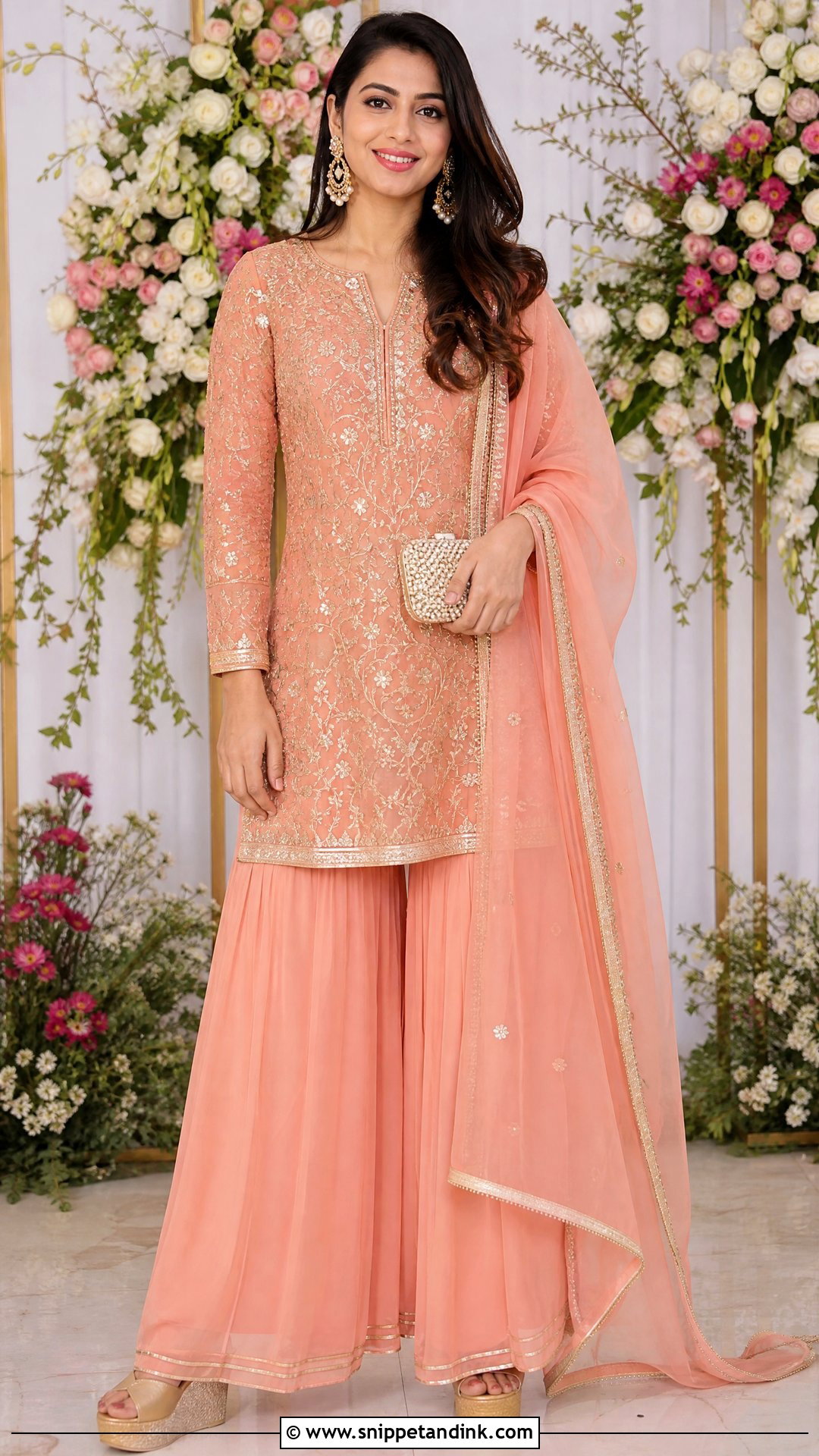
Palazzos swing when you move but never trip you, which is their whole appeal on a dance floor. A fitted short kurta with wide-leg palazzos looks finished without the volume of a lehenga. Put the zari, sequin or thread embroidery on the kurta and keep the pants plain. A sheer dupatta with a narrow worked border adds the traditional note. Coral, turquoise, mustard, plum or ivory with bright accents all work, with wedges or block heels, shoulder-grazing earrings and a beaded clutch. The kurta should stop around the upper thigh, and a gently shaped waist keeps the proportions balanced.
8. Gharara Set Sangeet Outfit
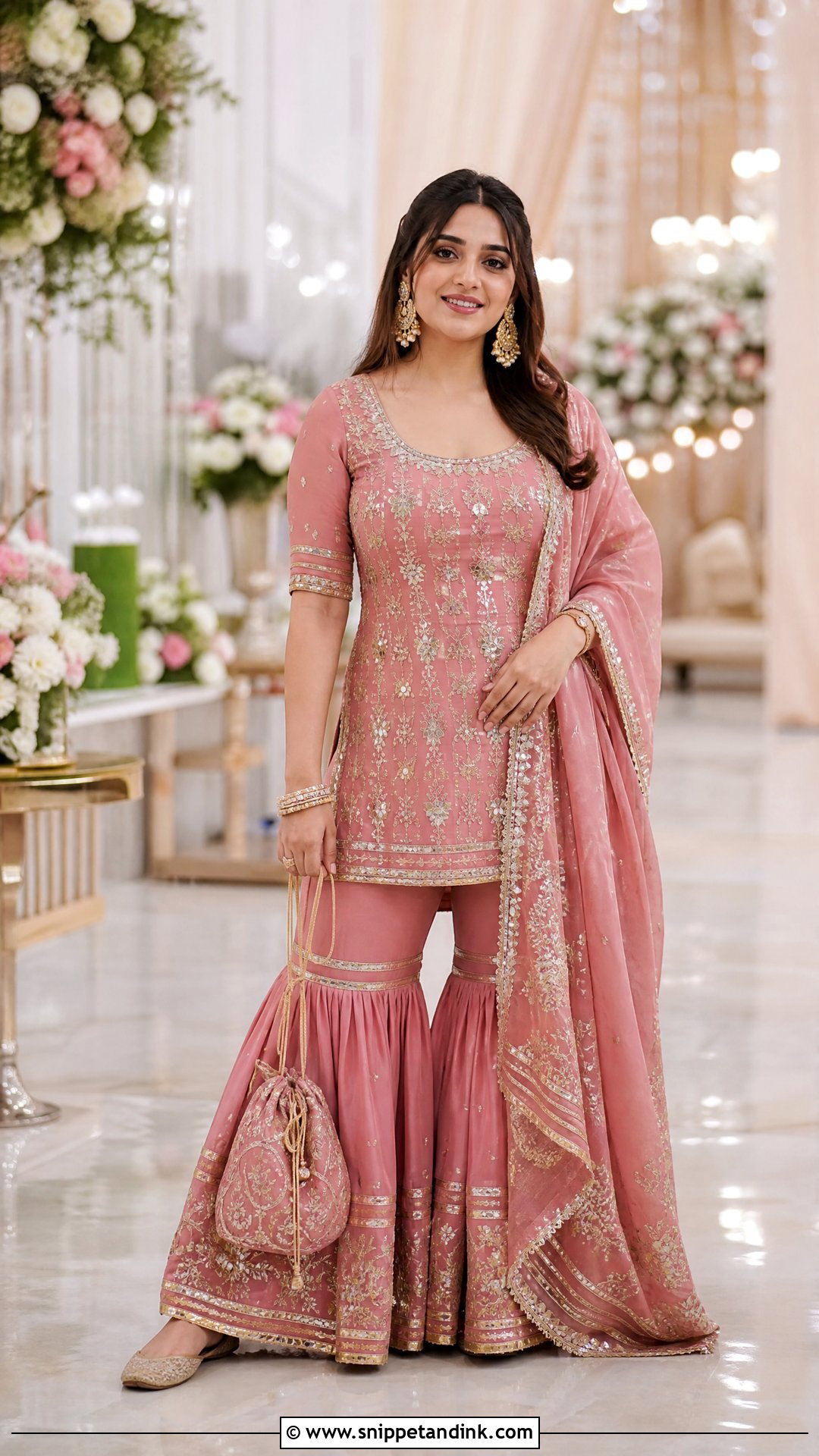
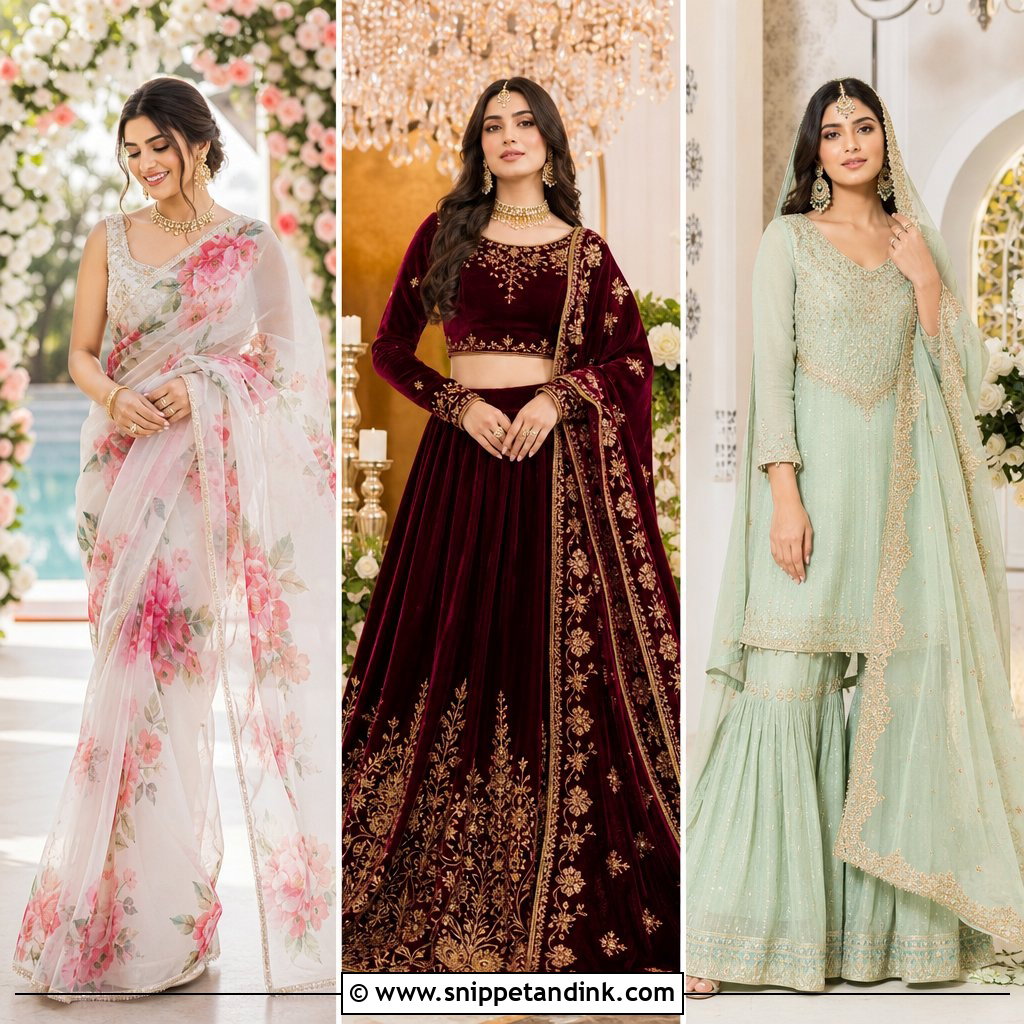
A gharara is fitted to the knee and then flares, so you get drama without a floor-length skirt to manage. Pair it with a short, tailored kurti and a light dupatta over one shoulder. Gota borders, small mirrors or fine thread embroidery are enough detail, in rose pink, peacock blue, rust or sage. Juttis, gold-tone earrings, slim bangles and a small drawstring bag complete it. The pants already carry volume, so keep the kurti structured. Ask the tailor to finish the knee joint with a firm band; a soft one sags after an hour of sitting and dancing and the flare loses its shape.
9. Cape Lehenga Sangeet Outfit
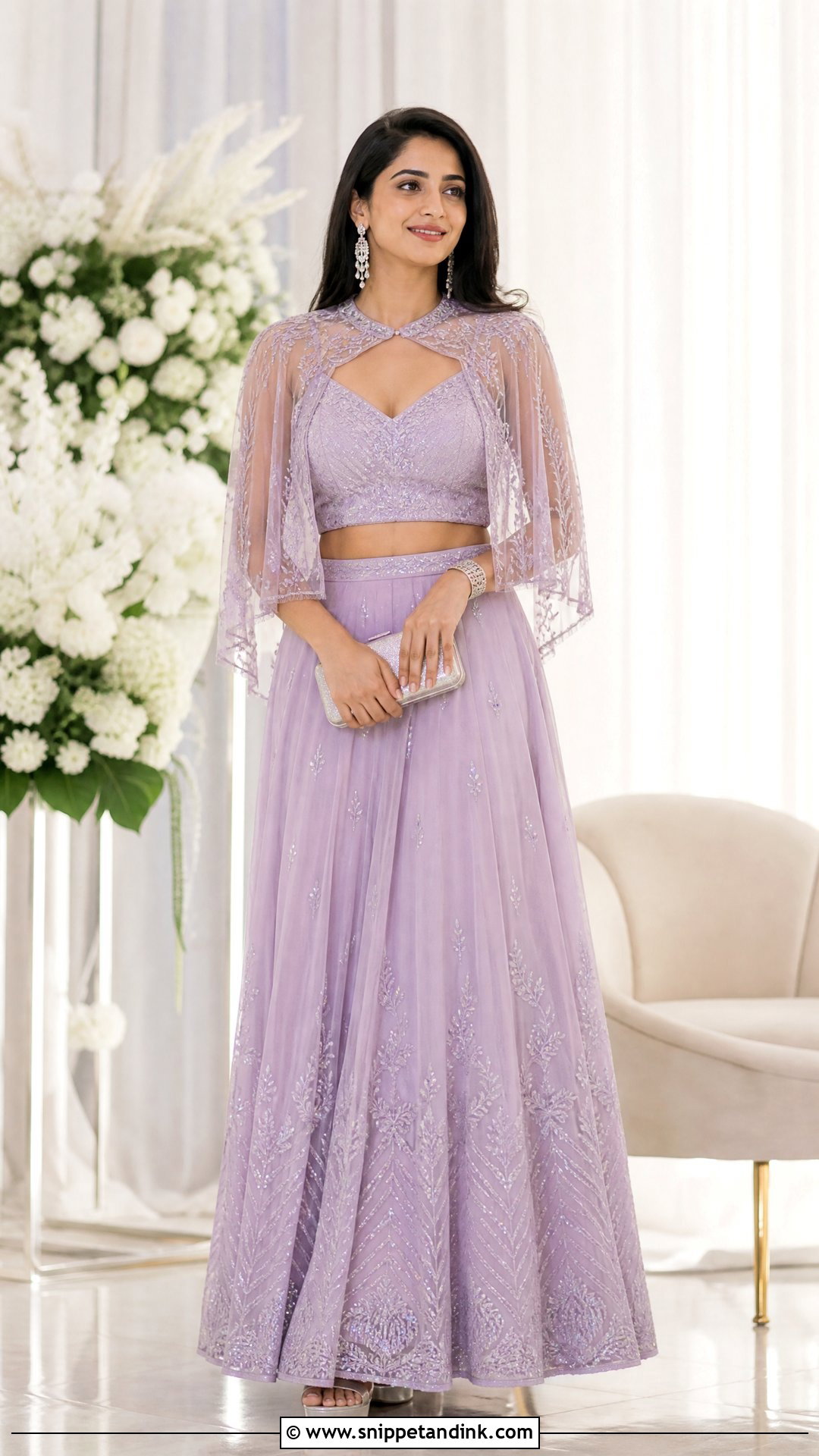
If you’re the sister who keeps rearranging everyone else’s dupatta, a cape lehenga means you won’t have to fuss with your own. Start with a simple A-line skirt and fitted blouse, then add a sheer embroidered cape to the hip or knee. It covers the arms and back and moves fluidly. Monochrome lavender, teal, midnight blue or dusty rose looks polished. Platform sandals or block heels stay stable under the skirt, with crystal earrings, a cuff and a small clutch, and sleek hair so the cape’s neckline shows. Shorter capes suit petite sisters; longer ones lengthen a tall figure.
10. Silk Saree Sangeet Outfit
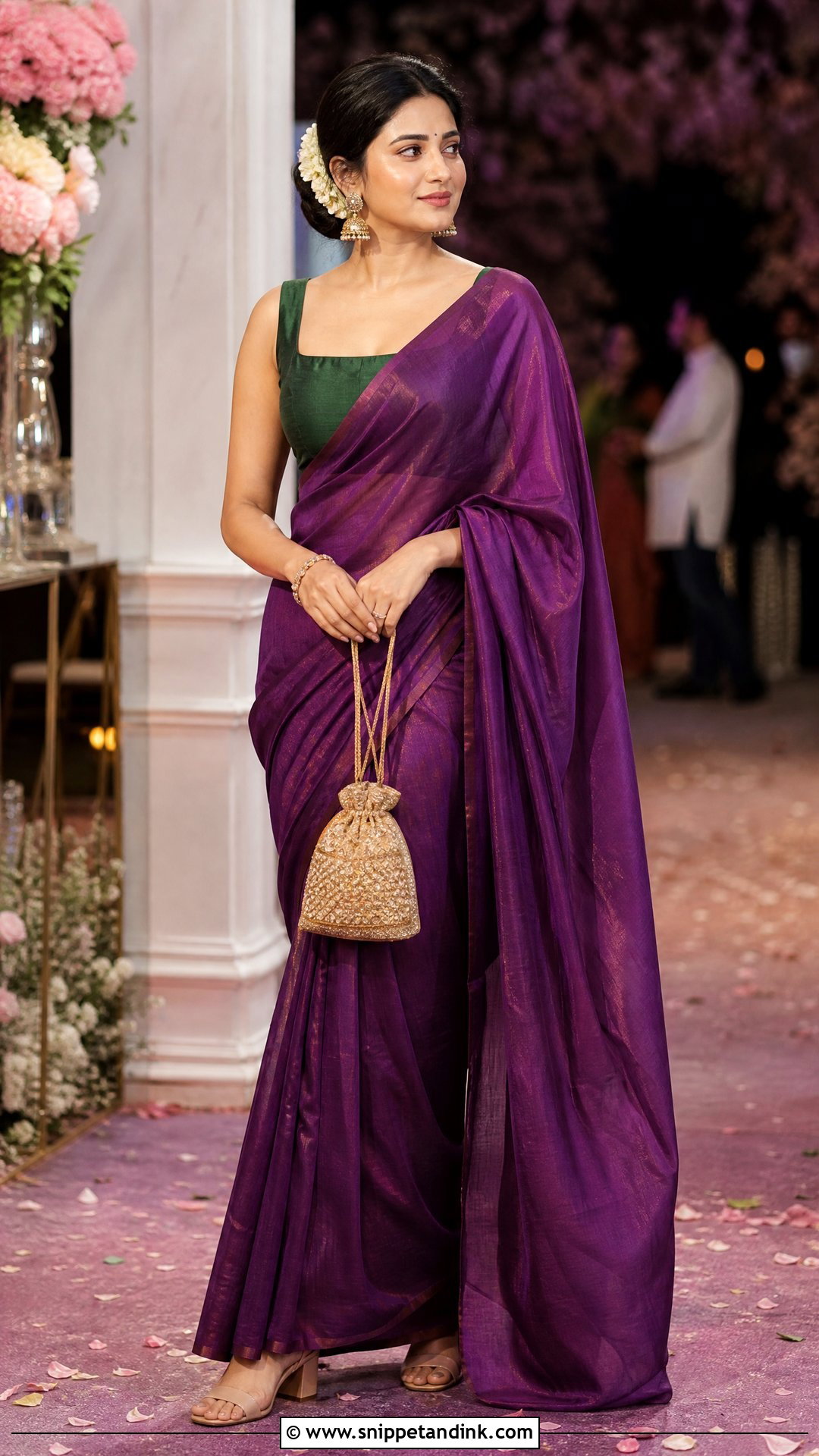
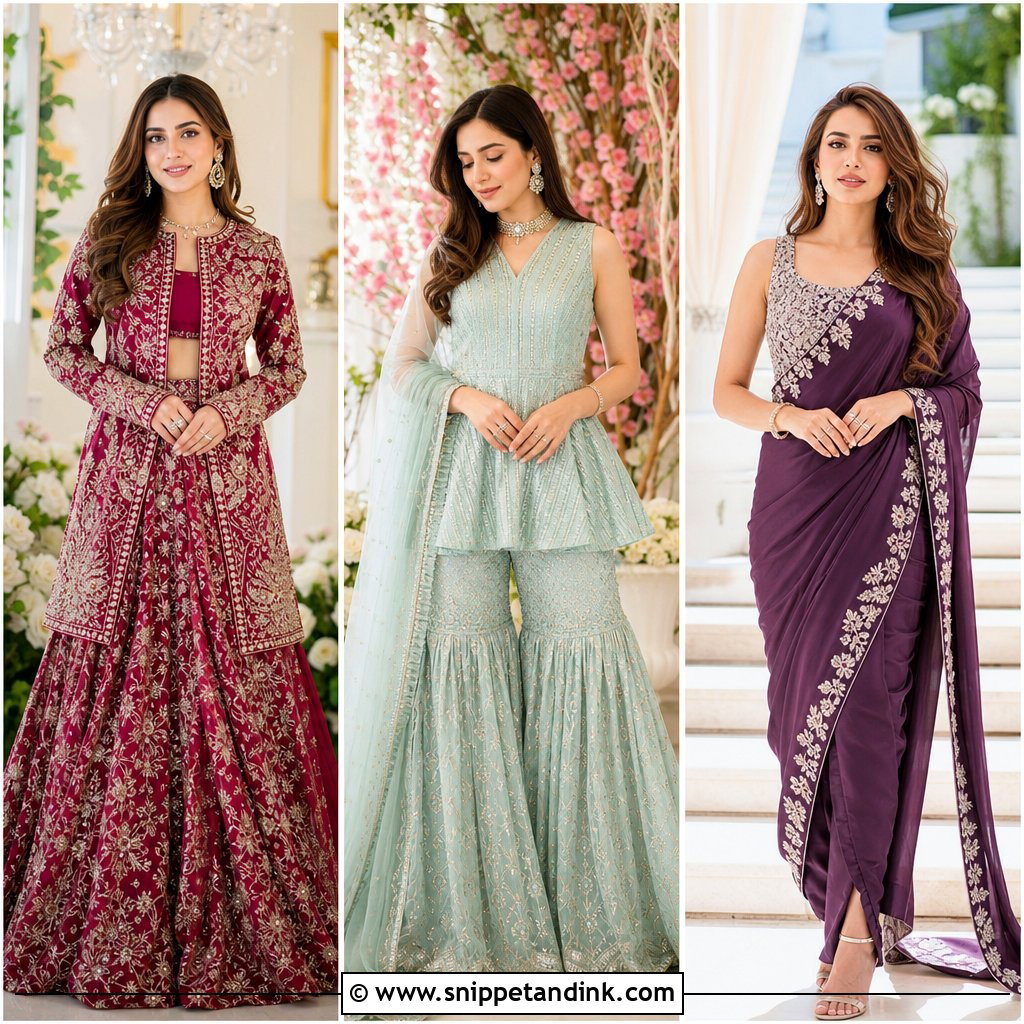
A silk saree can feel celebratory without dense sequins, especially if you already wear sarees comfortably. Choose lightweight silk, a silk blend or a soft Banarasi with a manageable border, so the pleats don’t stiffen and splay. A contrasting sleeveless, elbow-sleeve or square-neck blouse makes traditional fabric feel fresh: purple with green, navy with pink, ivory with gold. Pin the pleats at the waist and the pallu at the shoulder. Block heels, a small bindi, jhumkas and a structured potli finish it, with a low bun and a few flowers. Heavy silk is warm, so it’s best kept for an evening that won’t be too hot.
11. Dhoti Pant Sangeet Outfit
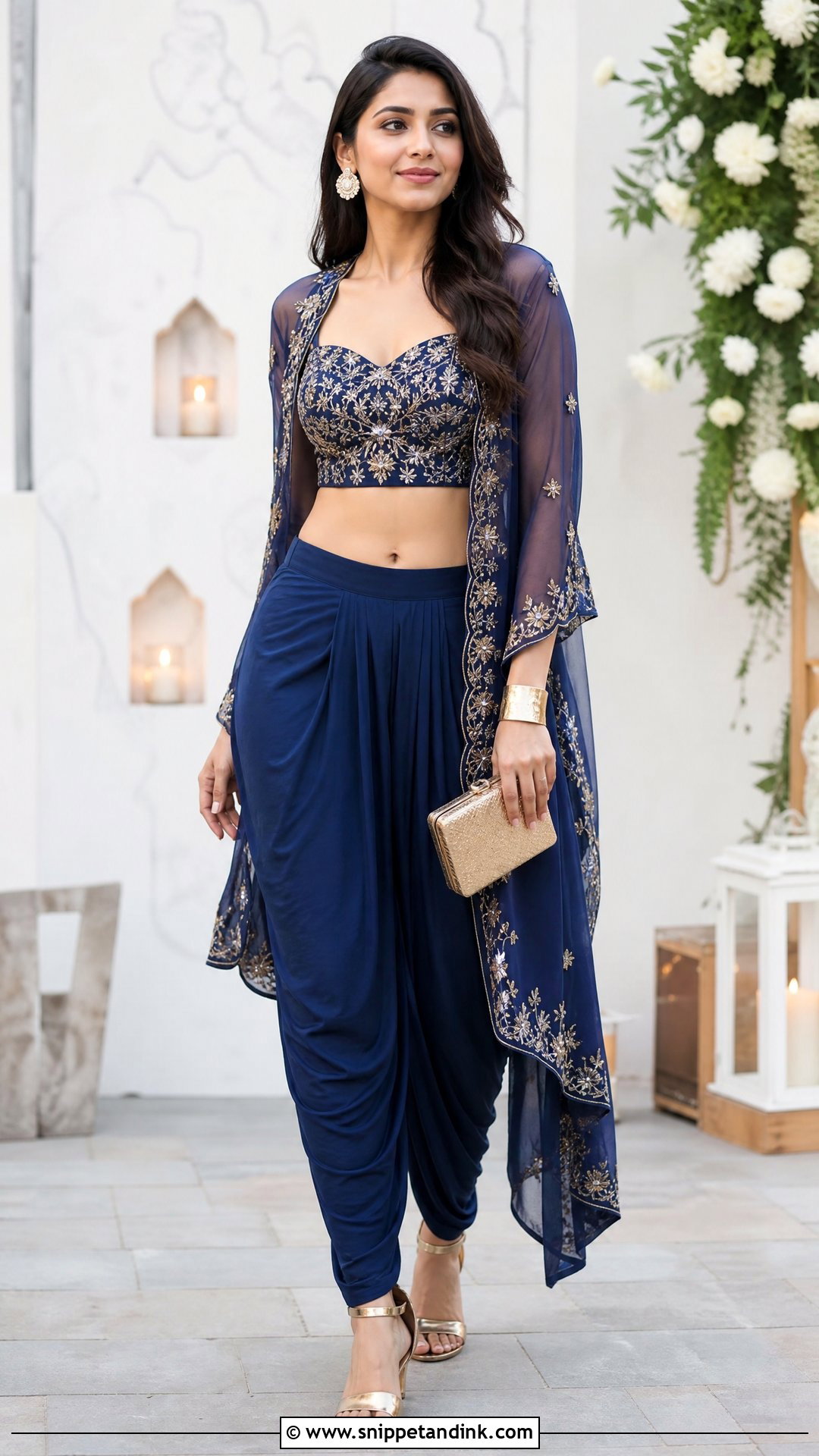
Dhoti pants give you the drape of traditional wear with complete freedom of movement, and they’re my pick for the sister who is also coordinating the performances. Combine them with a fitted crop top, short kurta or asymmetric tunic, and add a light jacket or shoulder cape for coverage. Solid jewel tones with metallic embroidery look streamlined; prints suit a casual sangeet. Comfortable heels, statement studs, a cuff and a small box clutch keep it sharp. Keep the jewellery restrained, since the drape is already busy. The top needs structure, or the soft lower half makes the whole outfit look like loungewear.
12. Jacket Lehenga Sangeet Outfit
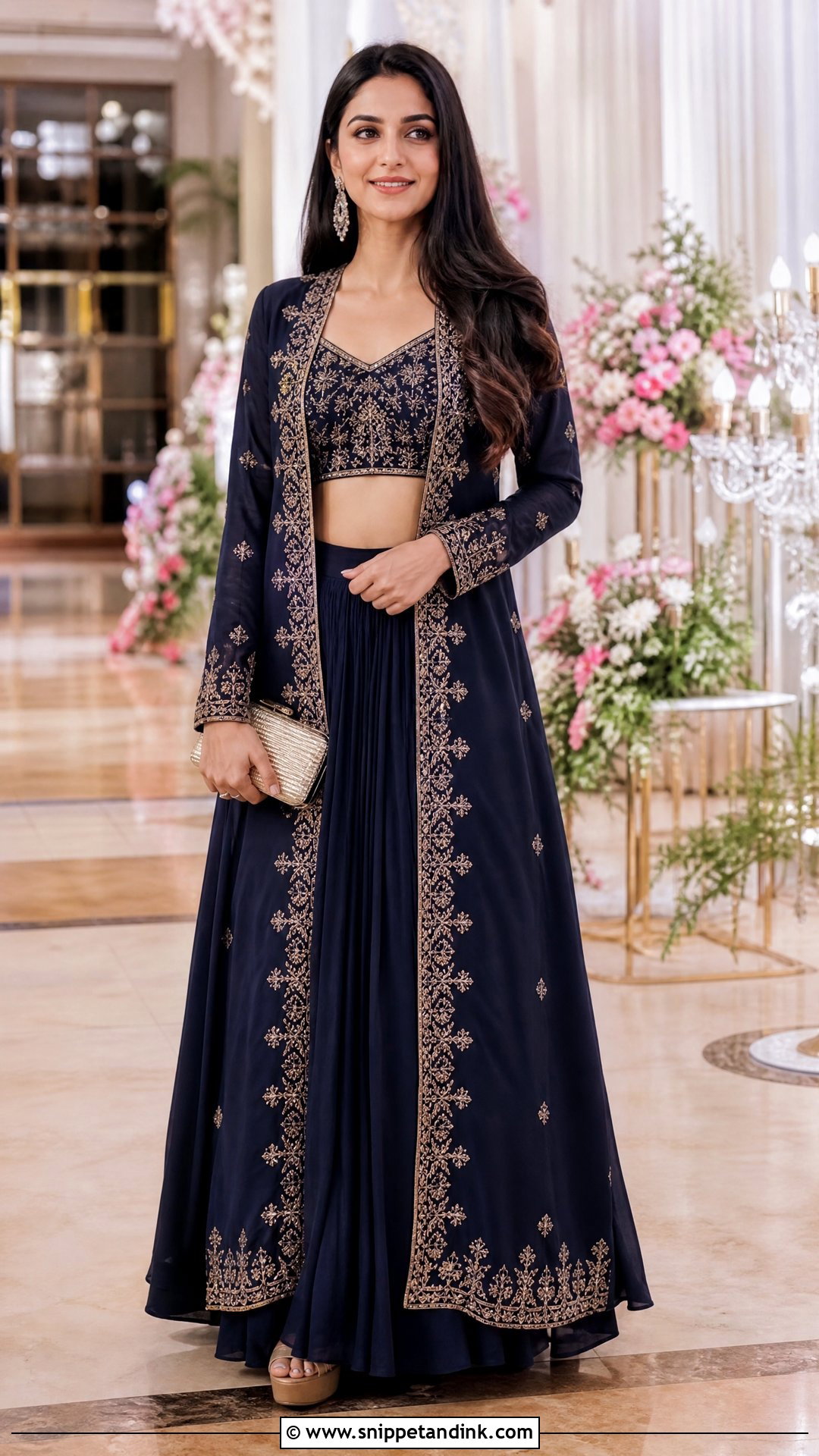
A jacket lehenga gives full coverage with a festive finish, and you never need to think about a dupatta. Pair a simple flowing skirt and fitted blouse with a long embroidered jacket, worn open to show the layers or closed as the main top. Fine threadwork, sequins or brocade panels add richness without much weight. Navy, burgundy, emerald or champagne suit an evening. Platform heels, drop earrings and a slim clutch finish it; skip the necklace if the jacket neckline is worked. Keep the skirt moderately flared. Long jackets get warm in a packed hall, so choose an unlined or lightly lined one if you’ll dance.
13. Peplum Sharara Sangeet Outfit
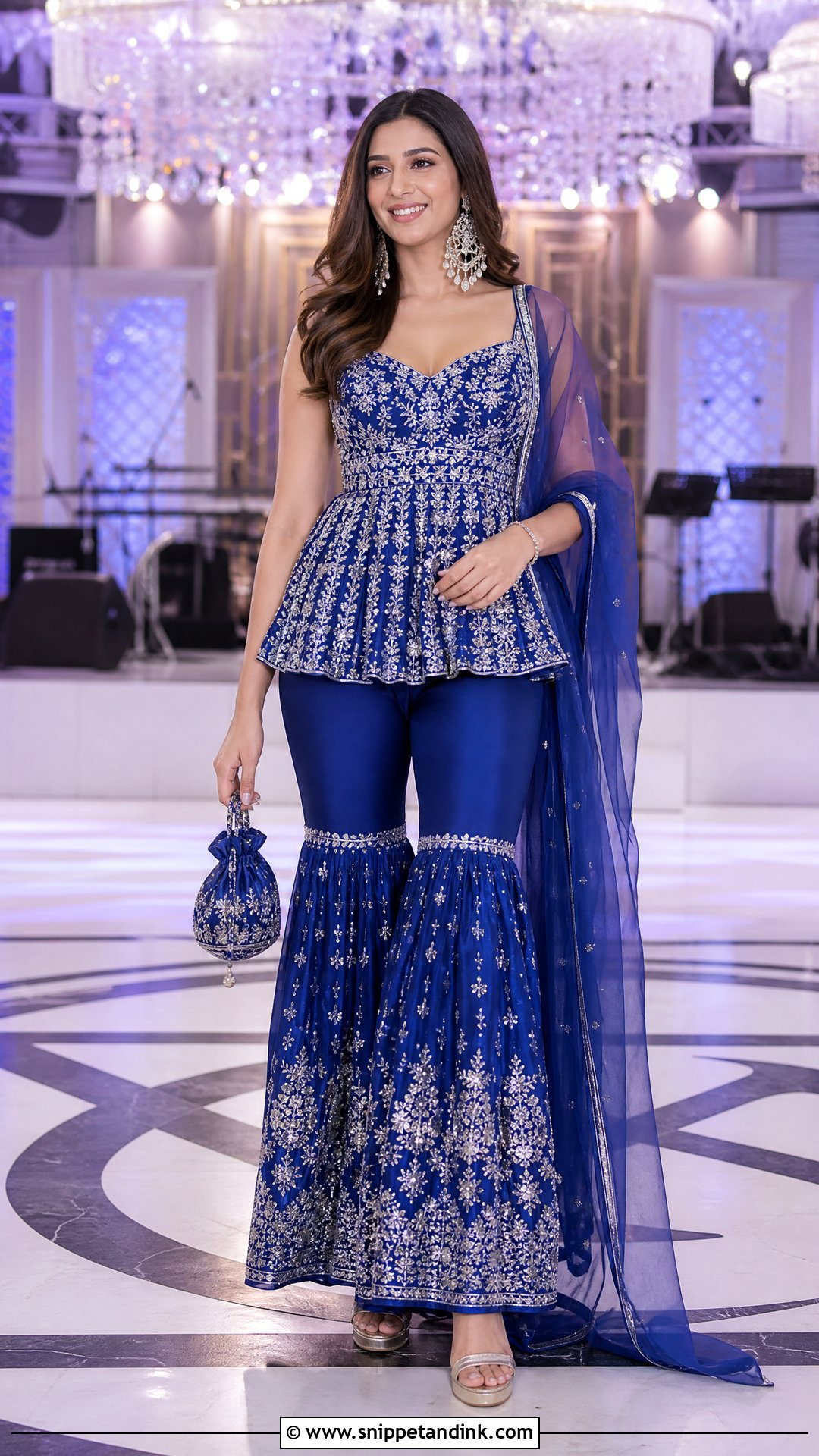
A peplum top over a high-rise sharara defines the waist and lets the pants do the moving. The peplum should finish just below the waist, with embroidery concentrated at the neckline, cuffs and peplum edge. Ruby pink, royal blue, lilac and jade are lively choices. Add a light dupatta only if you want a more traditional finish. Block heels, chandelier earrings and a small potli complete it. The high waist lengthens the legs. Have the sharara hemmed in your exact heels; wide flared pants that are even slightly long are the most common cause of trips I see on dance floors.
14. Floral Organza Lehenga Sangeet Outfit
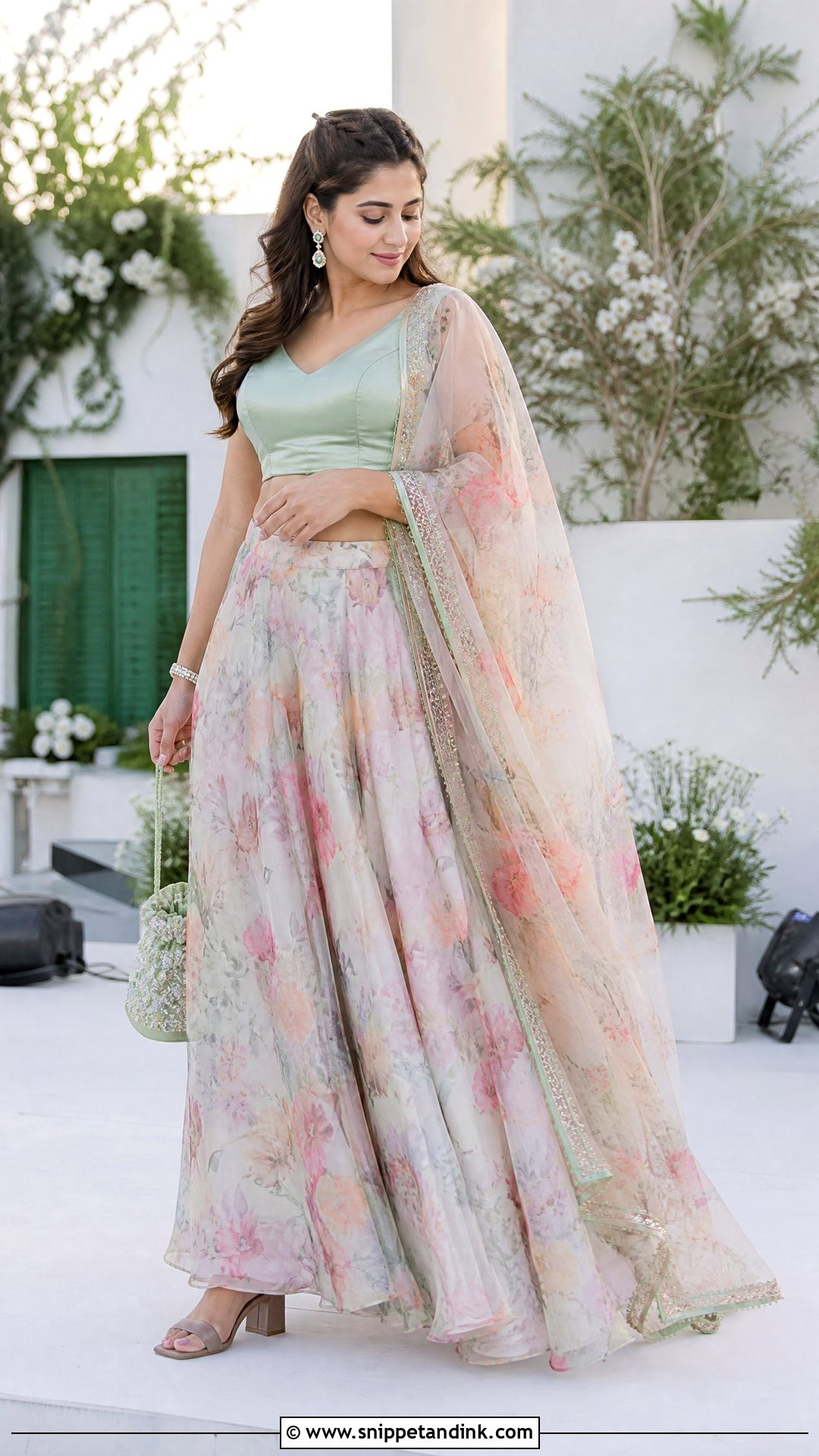
Florals bring personality to a simple organza lehenga, and they suit an outdoor or early-evening sangeet. Choose a printed skirt with a plain or lightly worked blouse that picks up one colour from the print, and a sheer dupatta with a narrow border. Organza holds its shape on its own, so moderate volume is enough; extra layers make it stiff and scratchy against the legs. Neutral block heels, pearl or gemstone earrings and a pastel potli suit it, with fresh makeup and half-up hair. Sheer sleeves or a short organza jacket add coverage if you want it.
15. Sequin Saree Sangeet Outfit
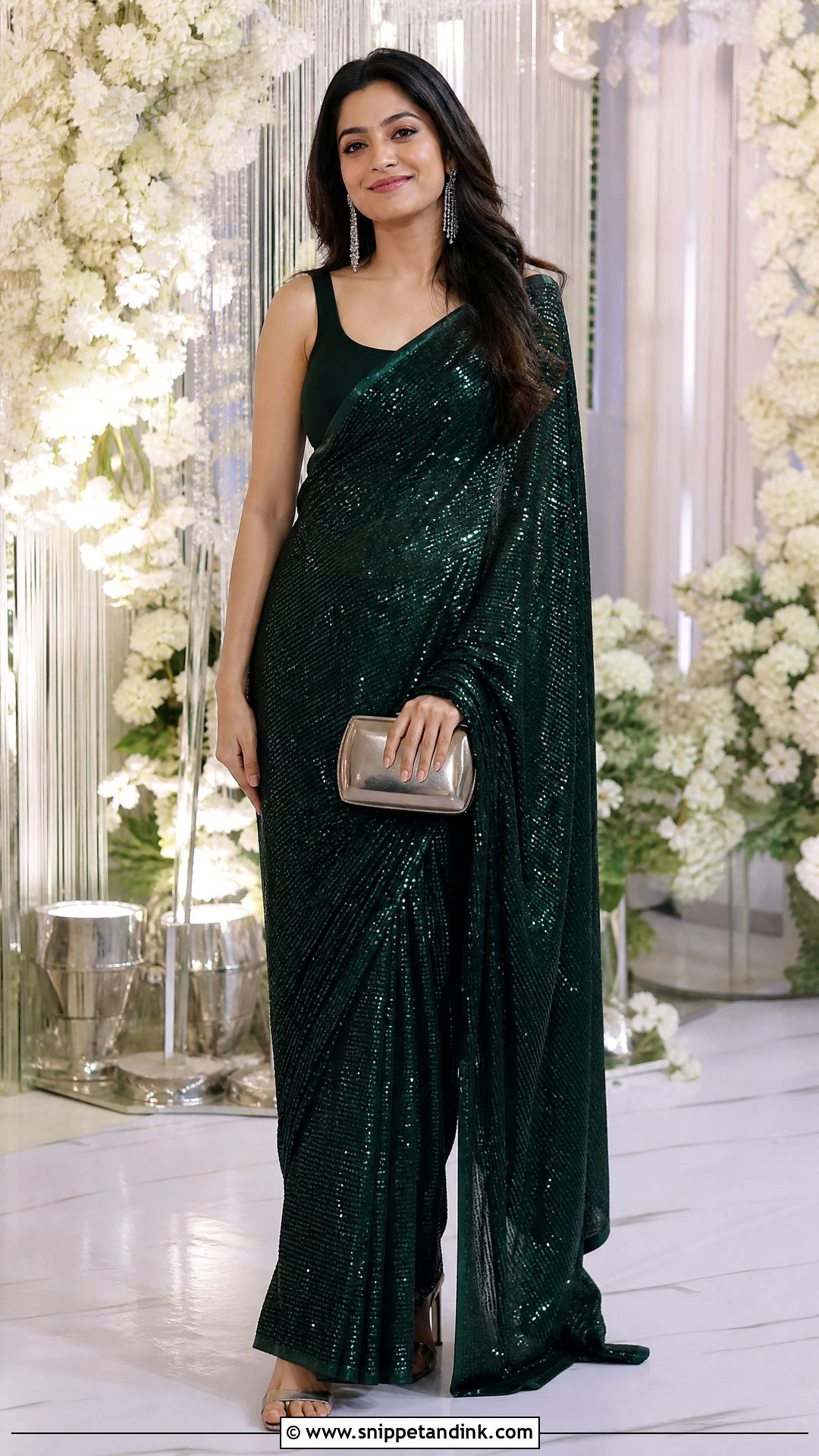
Sequins catch every stage light, so a sequin saree looks alive the moment you start moving. Choose light georgette with evenly spaced sequins, not dense embellishment, which gets heavy and pulls the drape out of line. A plain fitted blouse or a matching one with restrained detail keeps it streamlined. Charcoal, deep green, navy, blush and silver-toned neutrals work under bright lighting. Have it pre-pleated and pinned discreetly before you leave. Comfortable heels, long earrings, a smooth clutch and a sleek ponytail finish it. Skip stacked bangles; sequins and bangles snag on each other mid-dance.
16. Kurta And Skirt Sangeet Outfit
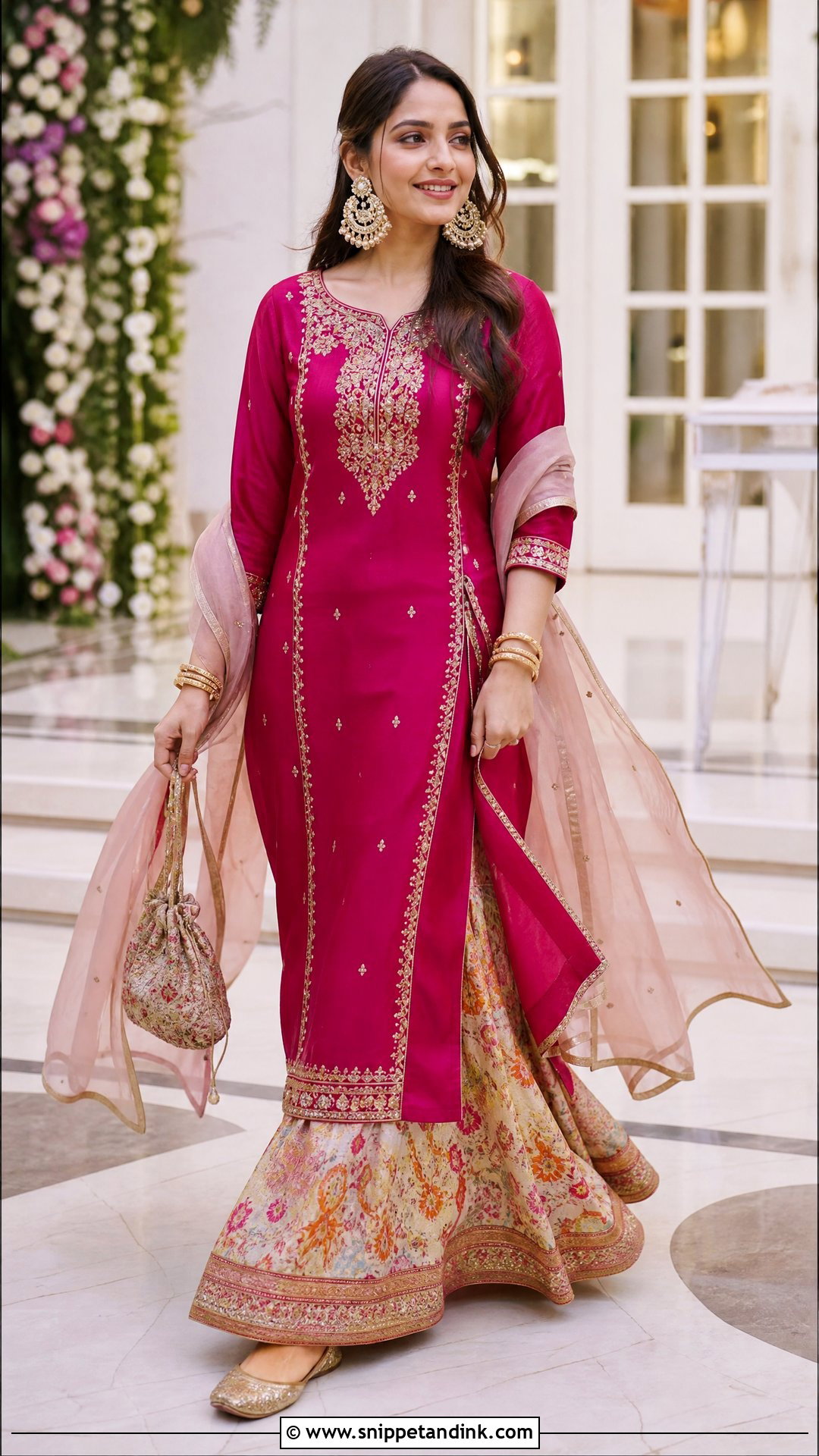
A long kurta over a flared skirt suits sisters of every age and is easy to adjust for coverage. Choose a straight or lightly fitted kurta with side slits that show the contrasting skirt as you walk. A solid embroidered kurta over a printed skirt feels balanced; a monochrome pair looks more refined. Add a soft dupatta if the neckline and sleeves are plain. Juttis, chandbalis, bangles and an embroidered potli finish it. Make sure the skirt waistband sits flat beneath the kurta, or you’ll get a ridge at the hip that shows in every photo. Longer sleeves, a higher neck or a lighter fabric are simple to request.
17. Draped Skirt Sangeet Outfit
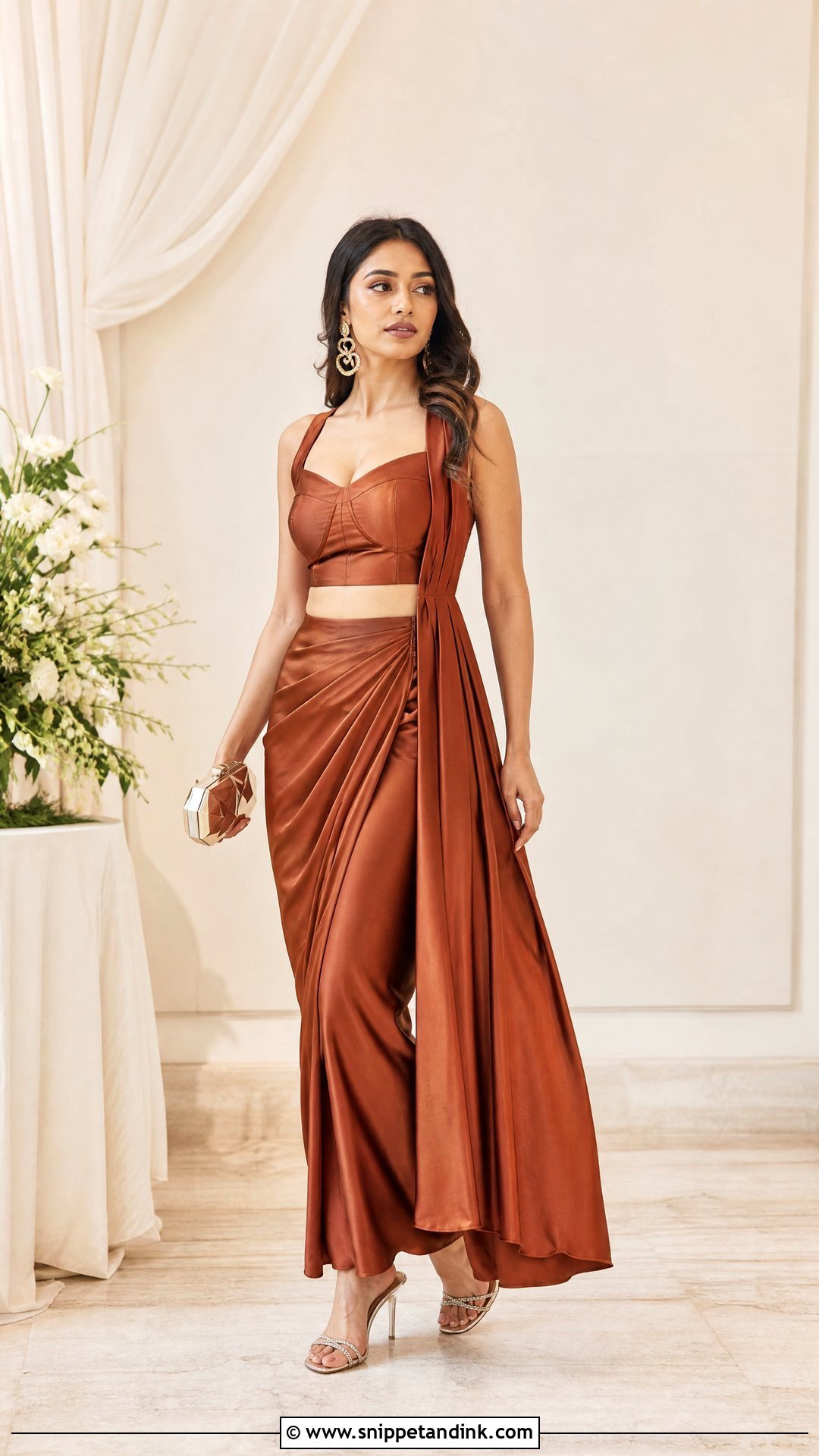
A draped skirt gives you the folds of a saree with the security of a stitched waistband, which is reassuring if you’ve never pleated a saree yourself. Pair it with a structured blouse, fitted crop top or short embroidered jacket. An attached side drape can replace the dupatta and leaves both hands free. Choose solid crepe or georgette so the drape shows, in deep teal, berry, copper or midnight blue. Heeled sandals, sculptural earrings and a metallic clutch suit it. Keep the blouse plain if the skirt has gathers or layers. Check the drape is tacked at two points, not one, so it doesn’t swing open on spins.
18. Velvet Lehenga Sangeet Outfit
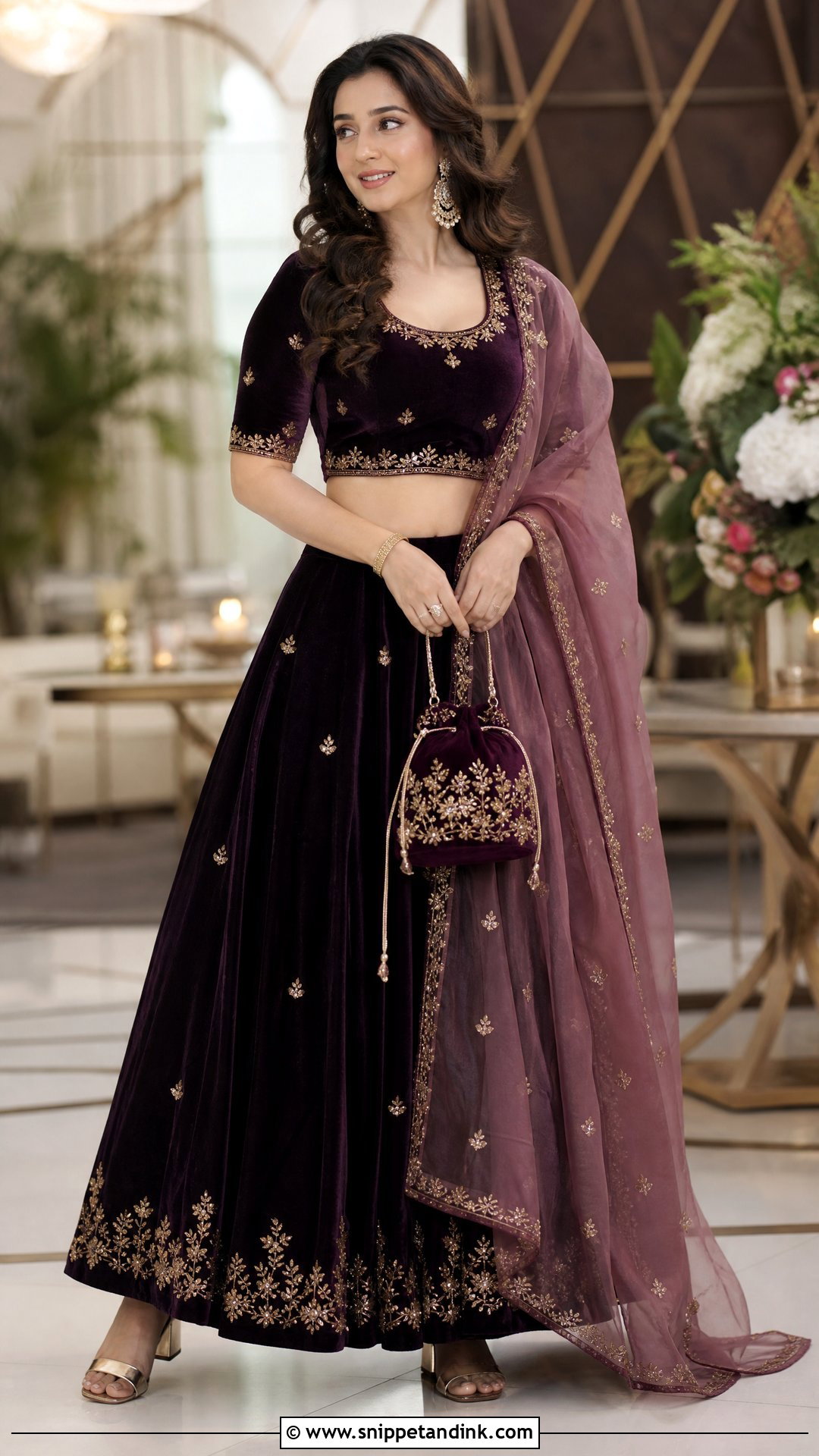
I only suggest velvet for indoor winter sangeets; in a warm room with dancing, it becomes uncomfortable within an hour. In the cold, a clean A-line or moderately flared lehenga in navy, plum, maroon or deep green needs very little embellishment. A matching blouse with restrained zari or sequins, and a light net or organza dupatta, stop it feeling heavy. Metallic block heels, antique-finish earrings and a structured potli suit it, with a smooth bun or soft curls. Velvet already has visual weight, so one strong jewellery piece is plenty. Brush the pile in one direction after sitting so the colour looks even in photos.
19. Coordinated Sisters Sangeet Outfits
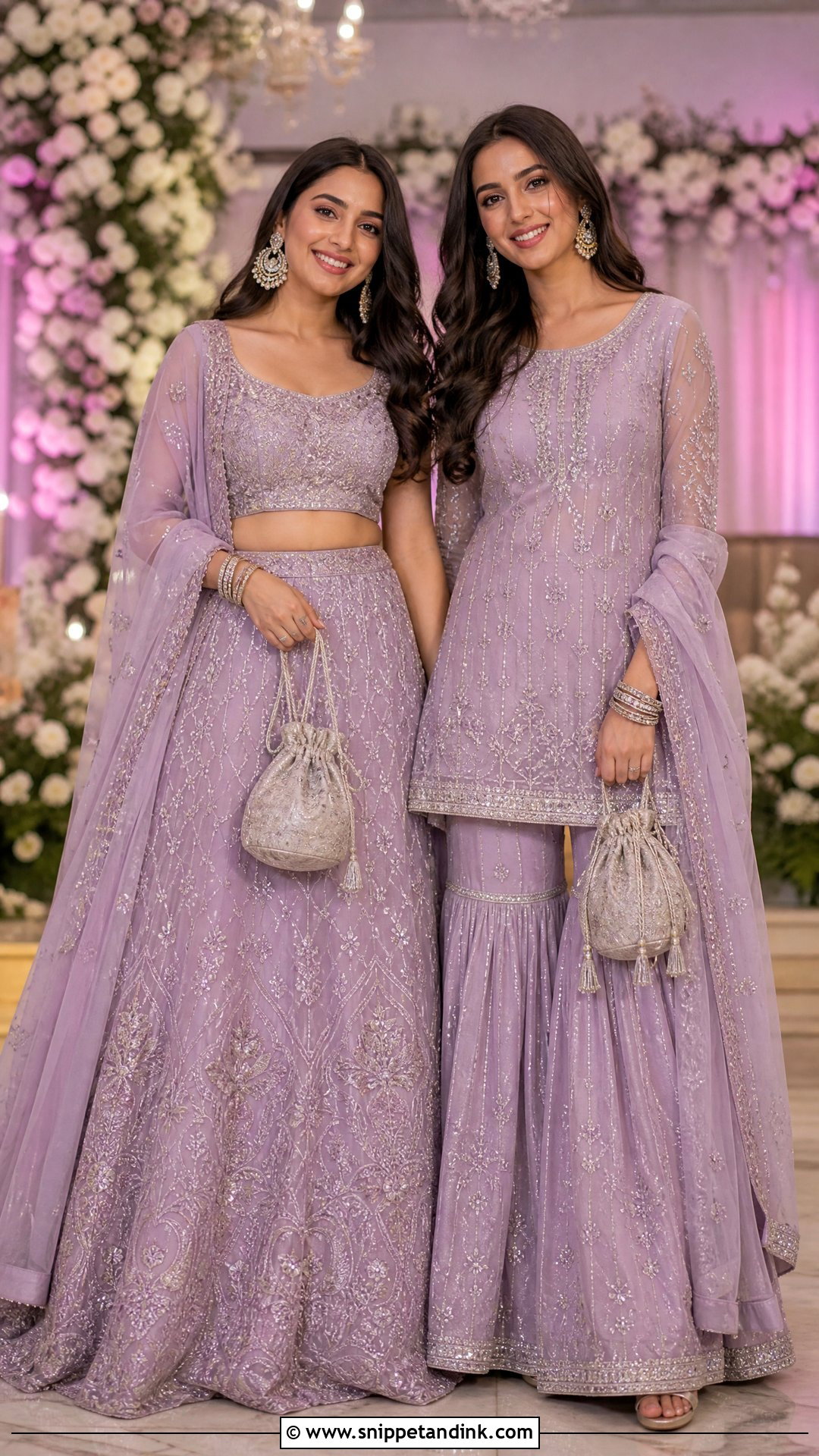
Coordinating doesn’t mean dressing identically, and identical outfits often look like a bridal party uniform. Choose one palette and let each sister pick her own silhouette: one in a lavender lehenga, another in a lavender sharara with related silver work. Complementary pairs like teal and mint or coral and blush also work. Keep one repeating detail, such as the dupatta border, jewellery finish or an embroidered motif, and let each sister choose her own shoes and neckline for comfort. Matching earrings or bangles can tie the group together. In group photos, the shared palette reads instantly while everyone still looks like herself.
20. Chanderi Suit Sangeet Outfit
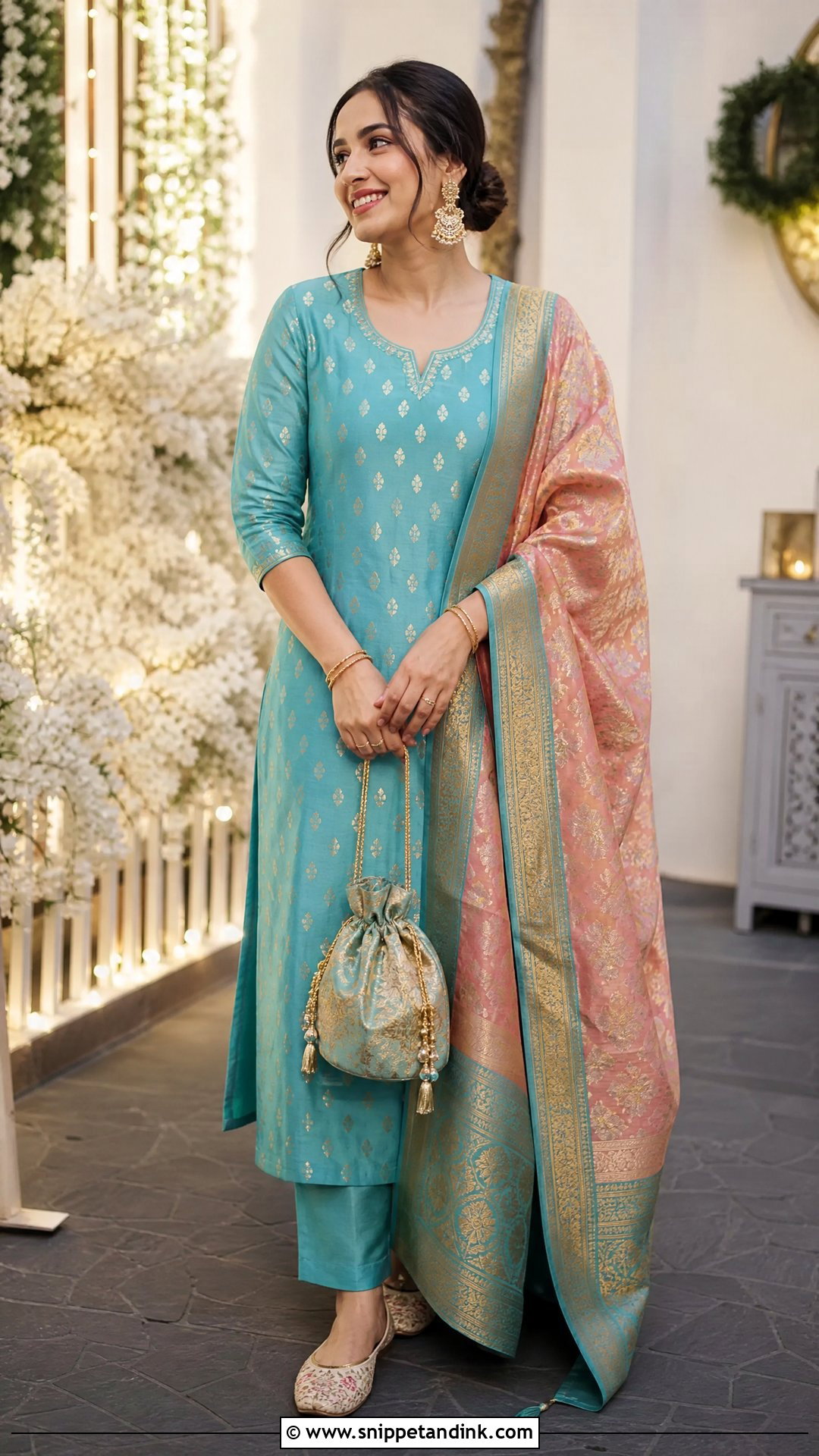
Sometimes the simplest fabric gives the most polished result. Chanderi has a fine woven sheen that suits a small sangeet or an elegant family evening. Choose a straight kurta with tailored pants or a lightly flared salwar and add a contrasting dupatta with a woven border or small motifs. Rose, turquoise, deep purple, or ivory with colourful accents feels festive. Embroidered juttis, traditional earrings, slim bangles and a silk potli, with a neat low bun or soft curls, keep it graceful. If it feels too quiet for the venue, add one statement piece rather than several. Chanderi is sheer, so check the lining under bright lights.
Rehearse the Choreography in the Real Outfit
I always tell sisters that practising in leggings tells them nothing about how a sharara behaves on a turn. At least once before the event, run the full routine in the actual outfit, shoes and jewellery. It takes twenty minutes and shows you every problem while there’s still time to fix it.
- Spin twice in each direction. If the hem catches your heel, it goes back to the tailor.
- Raise both arms over your head. Watch for blouses riding up and dupattas slipping.
- Do any floor or kneeling moves. Lehengas with stiff cancan crush and stay crushed.
- Check the shoe soles. New soles are slippery on polished stages; scuff them on concrete or add grip pads.
- Shake your head hard. Heavy jhumkas can tear earlobes, so add ear chains or switch to lighter ones.
What a sister’s potli should hold
You’ll be the one people come to when something comes undone. Carry safety pins in two sizes, a strip of fashion tape, a few bobby pins, blotting papers, a lip colour, plasters for heels and a small packet of tissues. Pack it the night before, because on the day there won’t be time.
Dressed for the Dance Floor and the Errands
A good sister’s sangeet outfit looks celebratory and still lets you dance, pose and run the last-minute jobs that land on a sister. Lehengas, shararas, sarees, suits and Indo-Western sets all offer options for different tastes, figures and dress codes. Put your effort into secure draping, shoes you can dance in, careful tailoring and jewellery that suits the clothes. Coordinating with the bride’s palette makes for lovely family photos without matching outfits. In the end, wear something that feels like you and lets you move freely all night.
You'll Like These Ideas:


Leave a Reply