
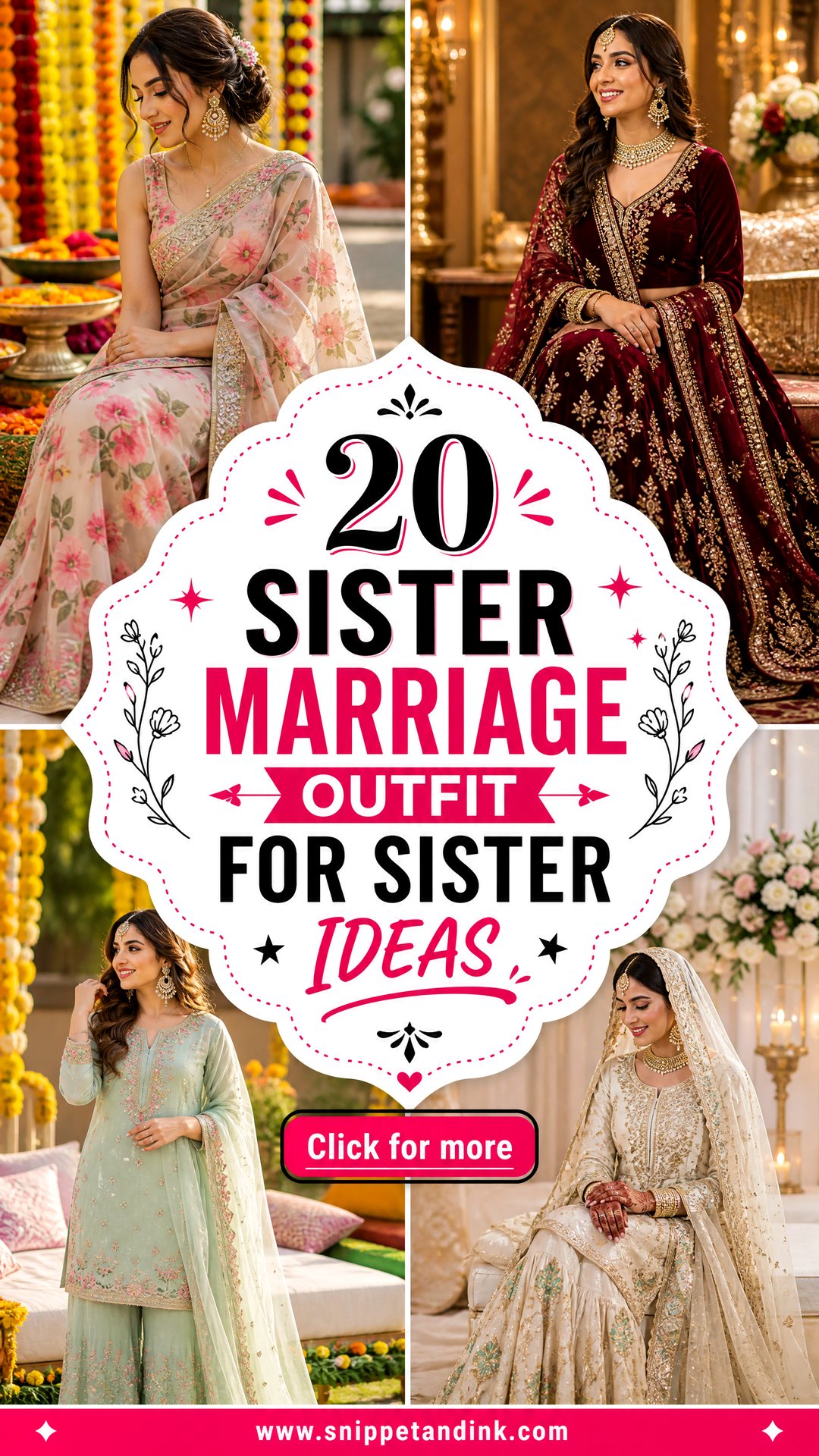
Dressing for your own sister’s wedding is a different job from dressing as a guest. You’ll be in nearly every family photo, you’ll be on your feet greeting people, and at some point you’ll be fixing the bride’s dupatta with one hand while holding her phone in the other. So the outfits have to look festive and still work hard. Below are lehengas, sarees, shararas, gowns and fusion sets, one for each kind of function, styled down to the shoes. The thread running through all of them: sit next to the bride’s colors, never on top of them, and get the blouse fitted properly, because that single seam decides how comfortable you are at hour six.
Mapping Five Functions Before You Buy a Single Outfit
The usual mistake I see with sisters is buying function by function as invitations arrive, and ending up with five heavy outfits, two of them in the same color. I’d sit down with the bride and write out every event first: time of day, indoor or outdoor, whether you’ll be on the floor, dancing, or standing in a receiving line.
- Mark which functions involve stains or mess (haldi, mehendi) and keep those outfits washable and inexpensive.
- Mark which ones have you on stage or in a performance, and give those the lightest skirt and the most secure blouse.
- Put your heaviest, most expensive piece on the main ceremony or reception, never on two events in a row.
- Alternate color families so a daytime pastel never sits next to another pastel in the album.
- Look for one dupatta or jacket that can be restyled over a second outfit; it saves money and suitcase space.
Ask early whether the families plan any coordinated colors for siblings or cousins. It’s common, and it’s far easier to know before you order than after the tailor has cut your blouse.
1. Yellow Sharara Outfit for Sister’s Haldi
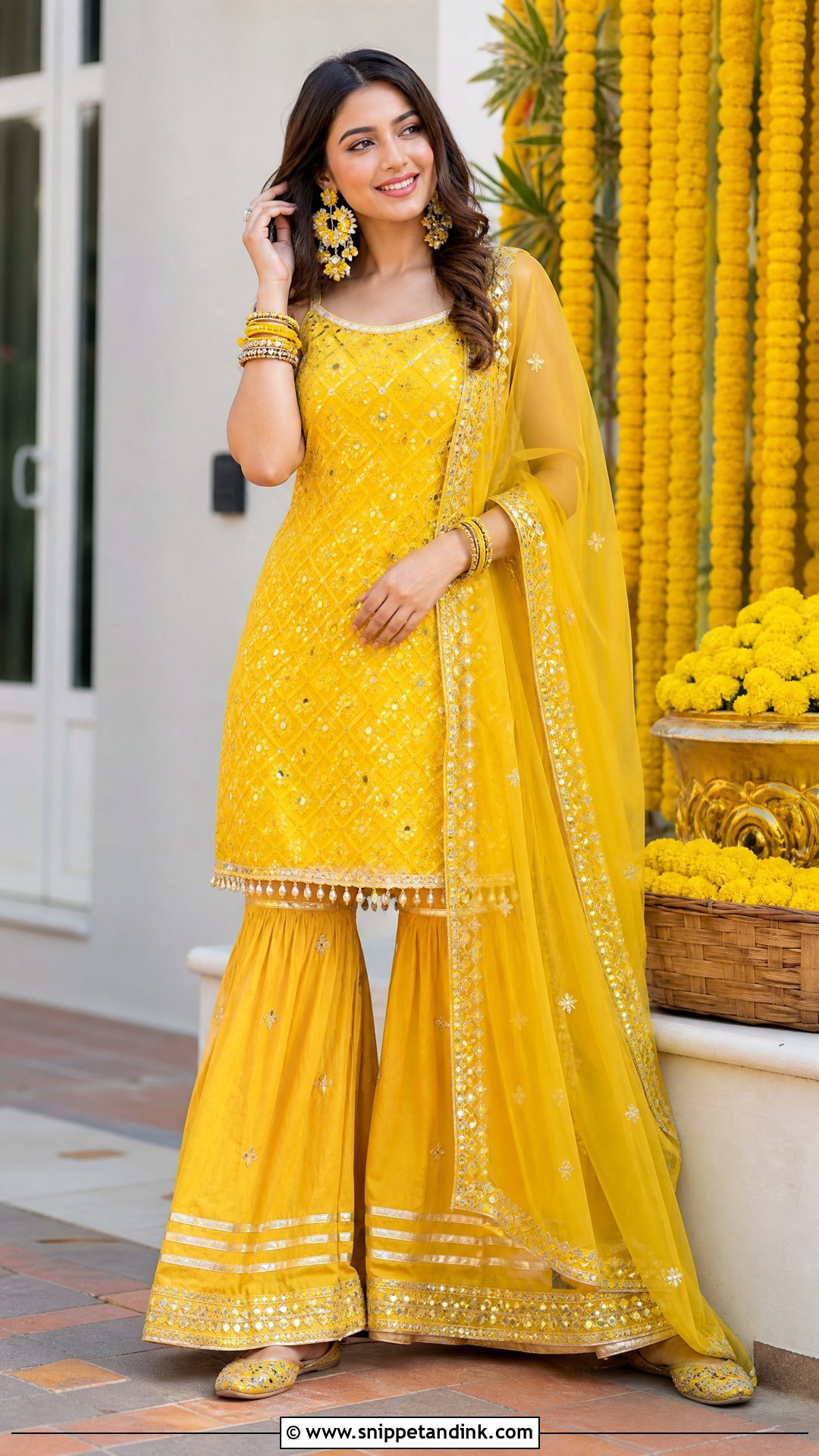
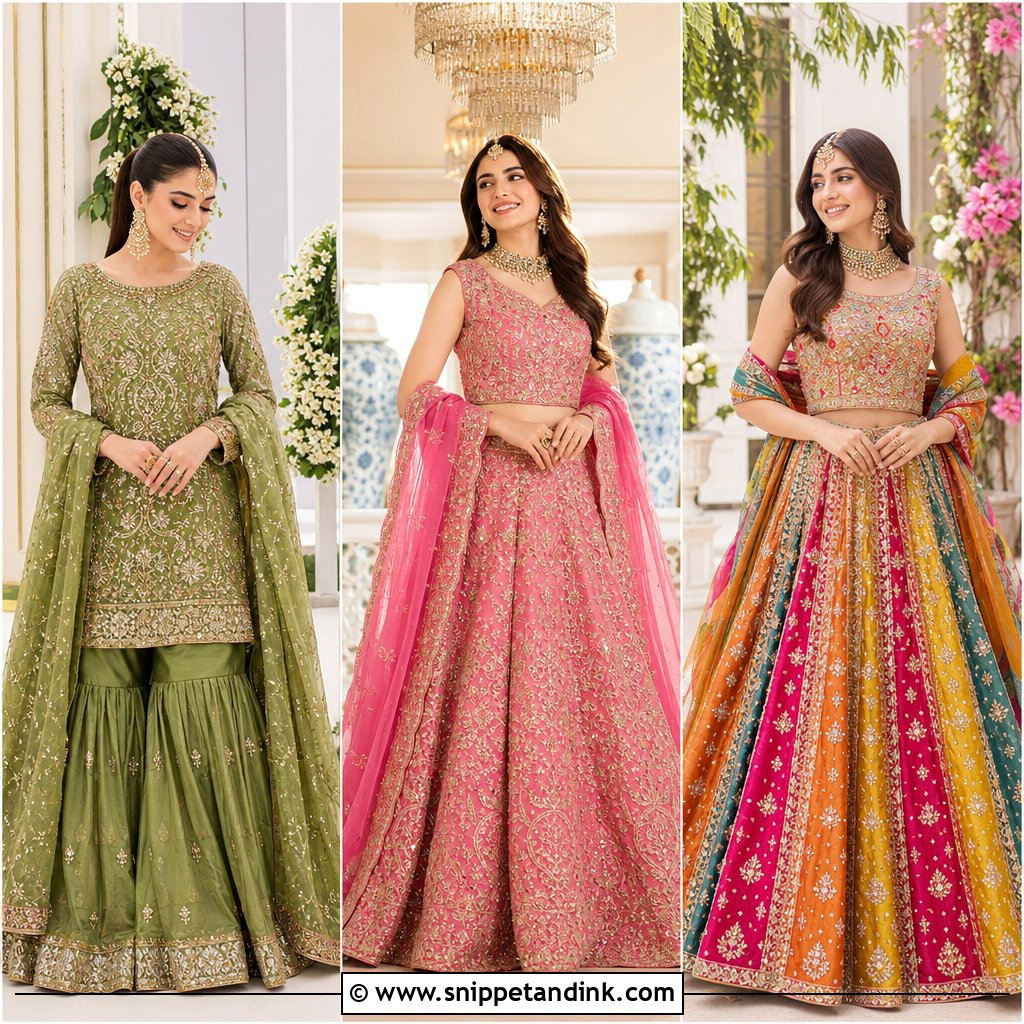
For the sister’s haldi ceremony, yellow is the obvious color and also the practical one, since turmeric smudges barely show on it. A short embroidered kurta with a wide sharara and a light organza or chiffon dupatta lets you sit cross-legged on the floor and get back up without a struggle. Gota or a little mirror work is enough decoration. I’d keep silk out of this function entirely; turmeric paste sets into silk fibres and often never fully lifts. Wash-friendly cotton or a synthetic blend is the sensible pick. Floral earrings, slim bangles and soft juttis finish it, and a braid keeps hair out of the paste.
2. Green Lehenga Outfit for Sister’s Mehendi
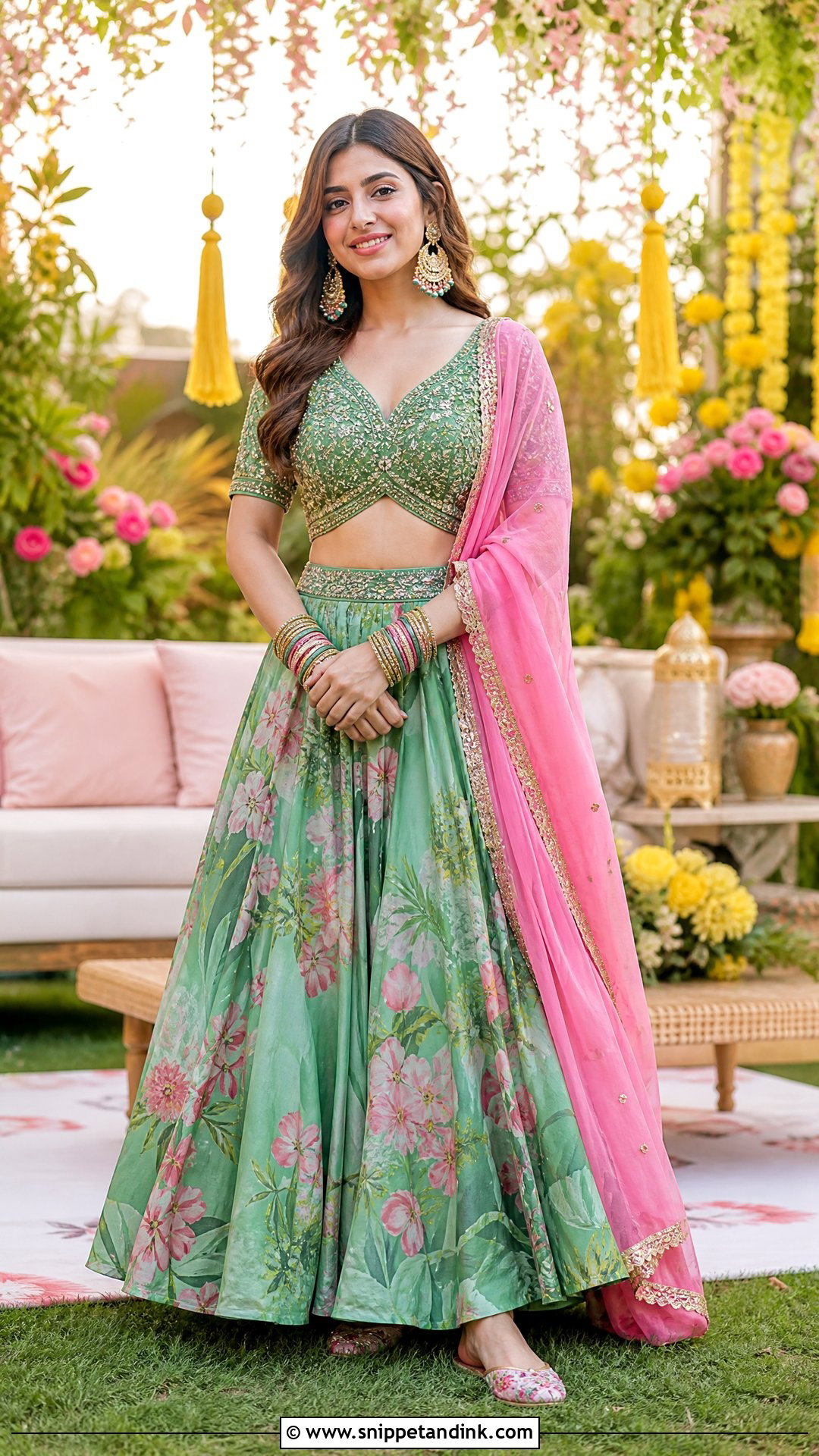
Green is a natural match for a lively mehendi celebration, and a lightweight lehenga with a botanical print or small mirrors gives you room to dance. Add a fitted blouse and a pink, orange or turquoise dupatta for contrast. Here’s the thing nobody plans for: once your own hands are hennaed, you can’t touch fabric for a couple of hours without smudging the paste. So get dressed, pin the dupatta firmly over one shoulder, and only then sit down with the artist. A shorter hem and lighter embroidery keep you moving. Emerald for evening, mint or sage for daytime; cushioned juttis and a flower-woven braid finish it.
3. Mirror Work Lehenga Outfit for Sister’s Sangeet
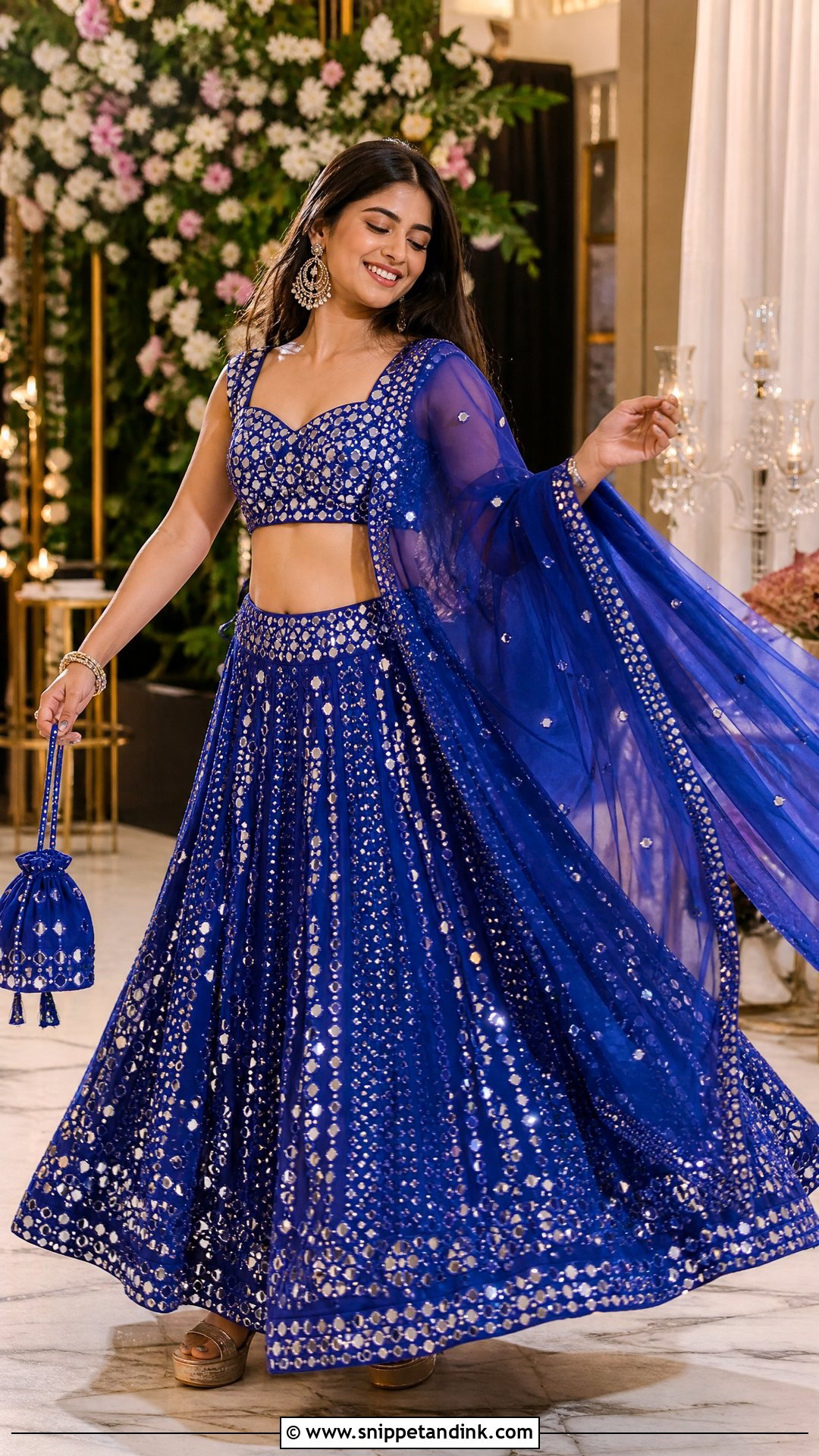
Sangeet is when a sister actually performs, so the lehenga has to survive choreography. Mirror work spaced evenly across a flared skirt catches stage light without the weight of dense zardozi, and the skirt swings better because of it. Before you commit, do your dance moves in the trial blouse; if you can’t raise both arms fully, ask for wider straps or a slightly looser armhole. Pin the dupatta across one shoulder and tuck it at the waist. Royal blue, purple, teal and deep pink all glow under evening lights. Metallic heels, chandelier earrings and a small potli are plenty, and a sleek ponytail or braided bun stays put through a routine.
4. Pastel Lehenga Outfit for Sister’s Wedding
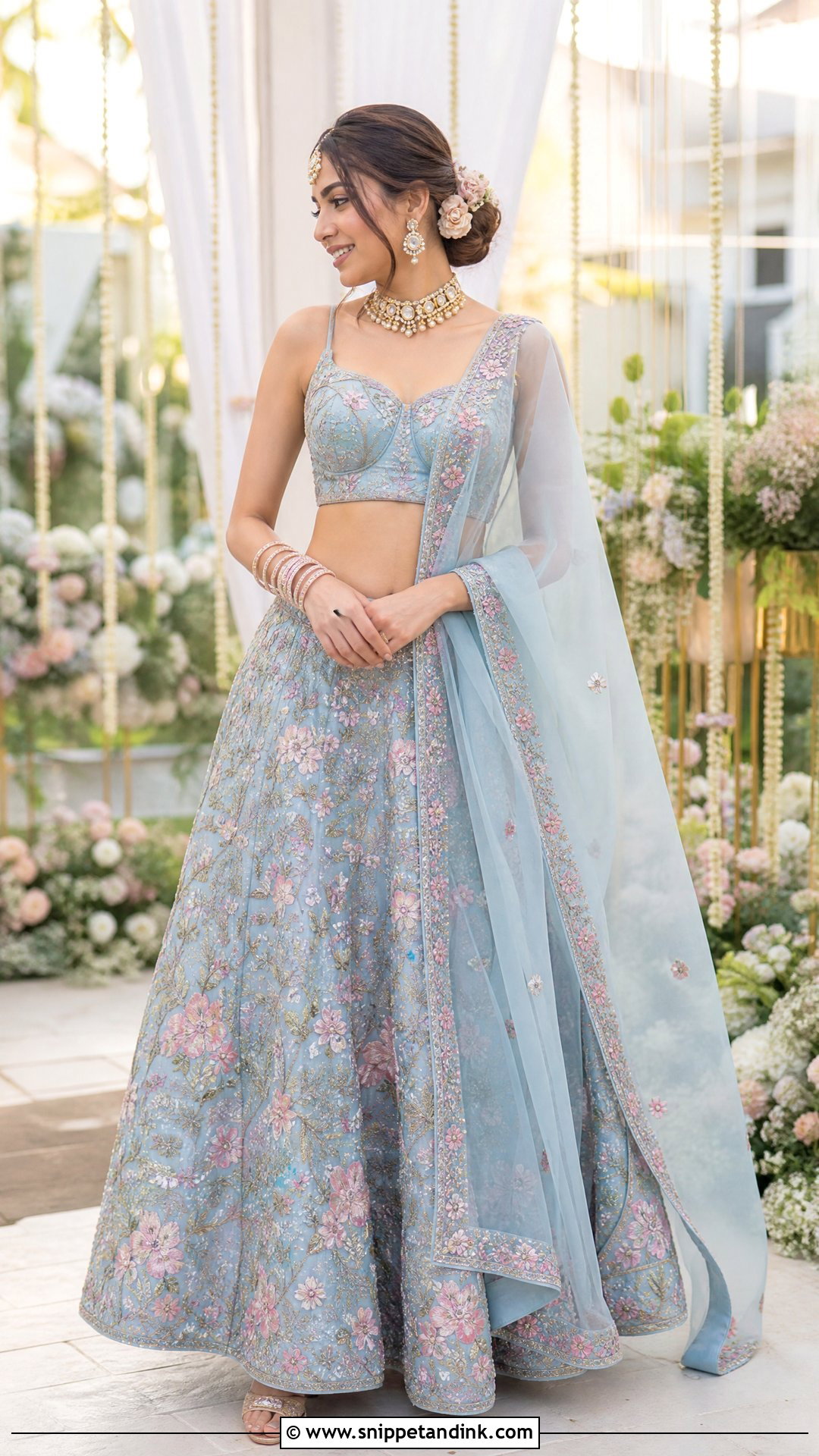
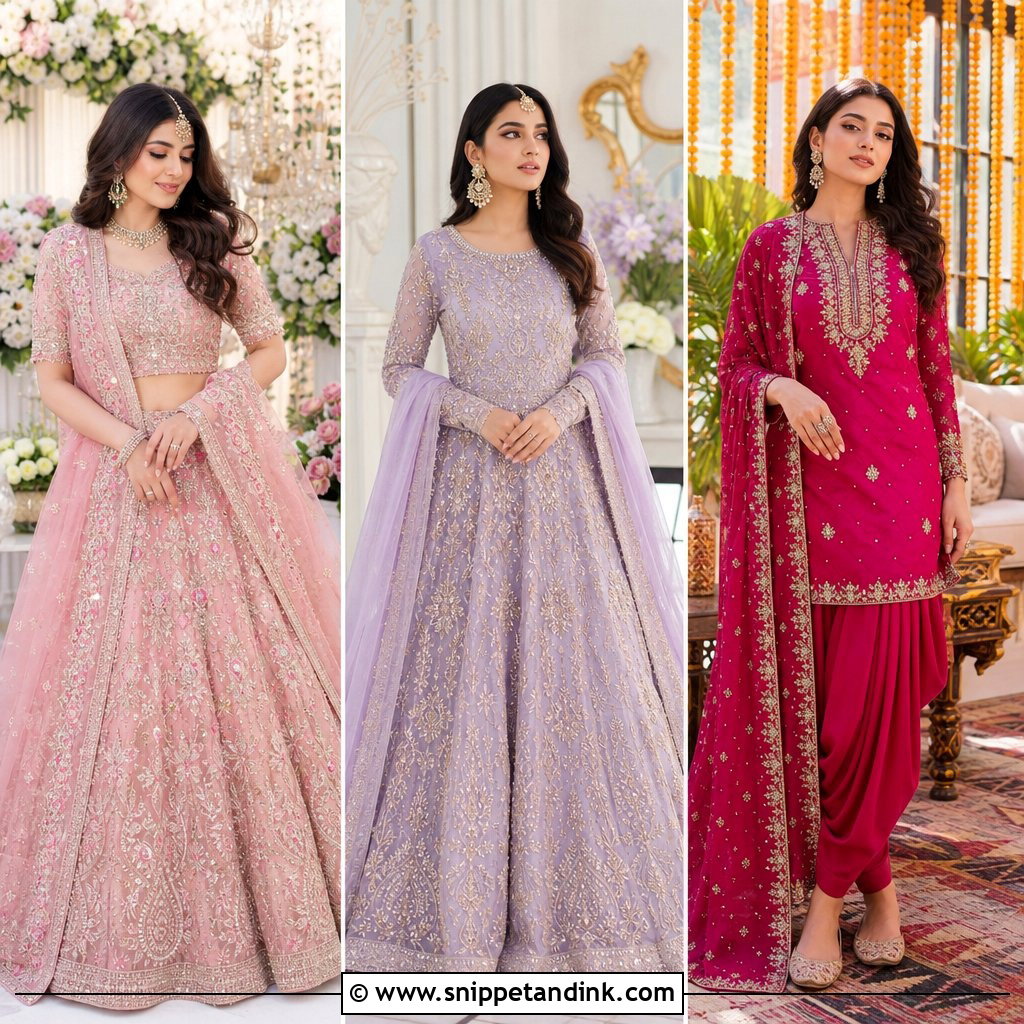
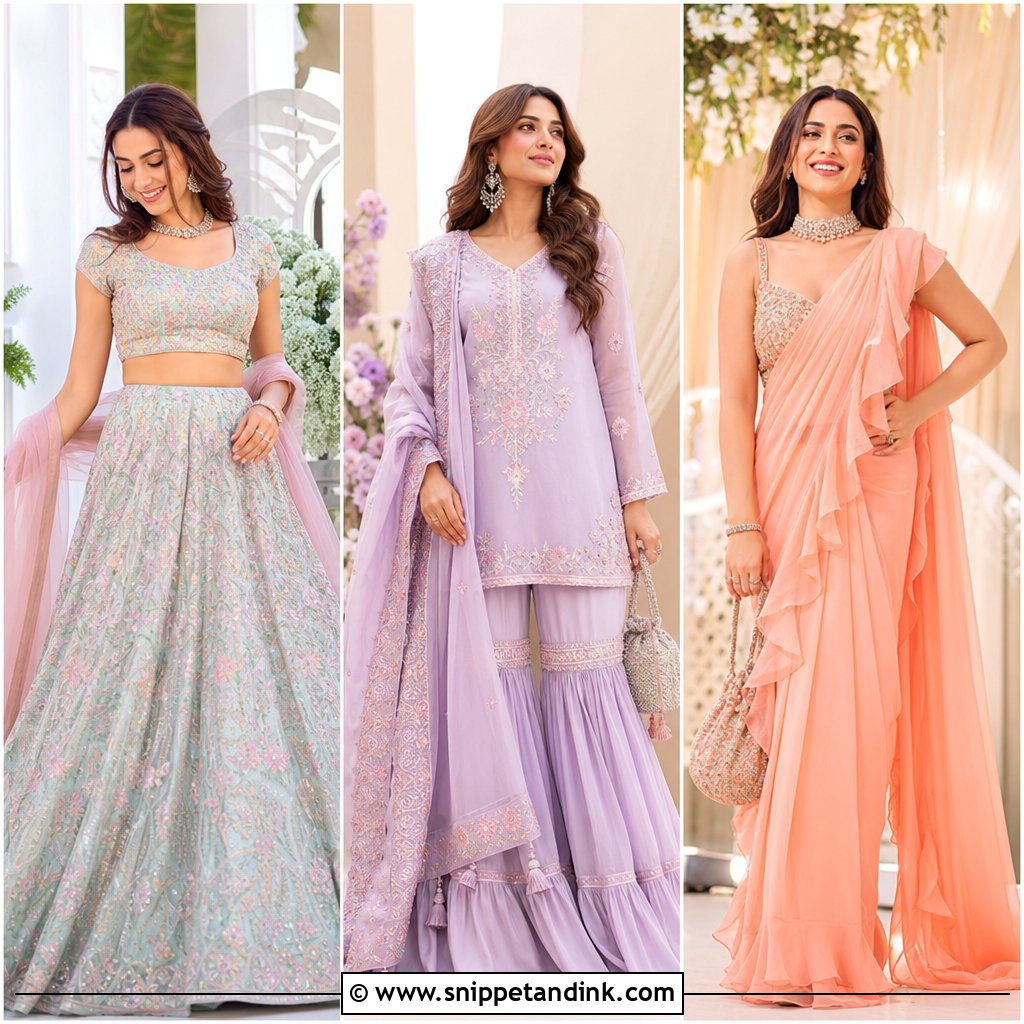
Pastels give a sister the right level of formality at the main wedding without competing with a bridal red. Powder blue, blush, lavender, peach or pistachio with pearl work or soft metallic thread all read as family rather than guest. Before you buy anything, ask to see your sister’s lehenga. A blush outfit can easily echo a bride’s blush trim, and in group photos it blurs who the bride is. A structured blouse for support, a sheer dupatta over one shoulder, kundan earrings, a fine necklace and embellished block heels complete it. A low bun with small flowers suits daytime, garden and indoor ceremonies.
5. Banarasi Silk Saree Outfit for Sister’s Wedding
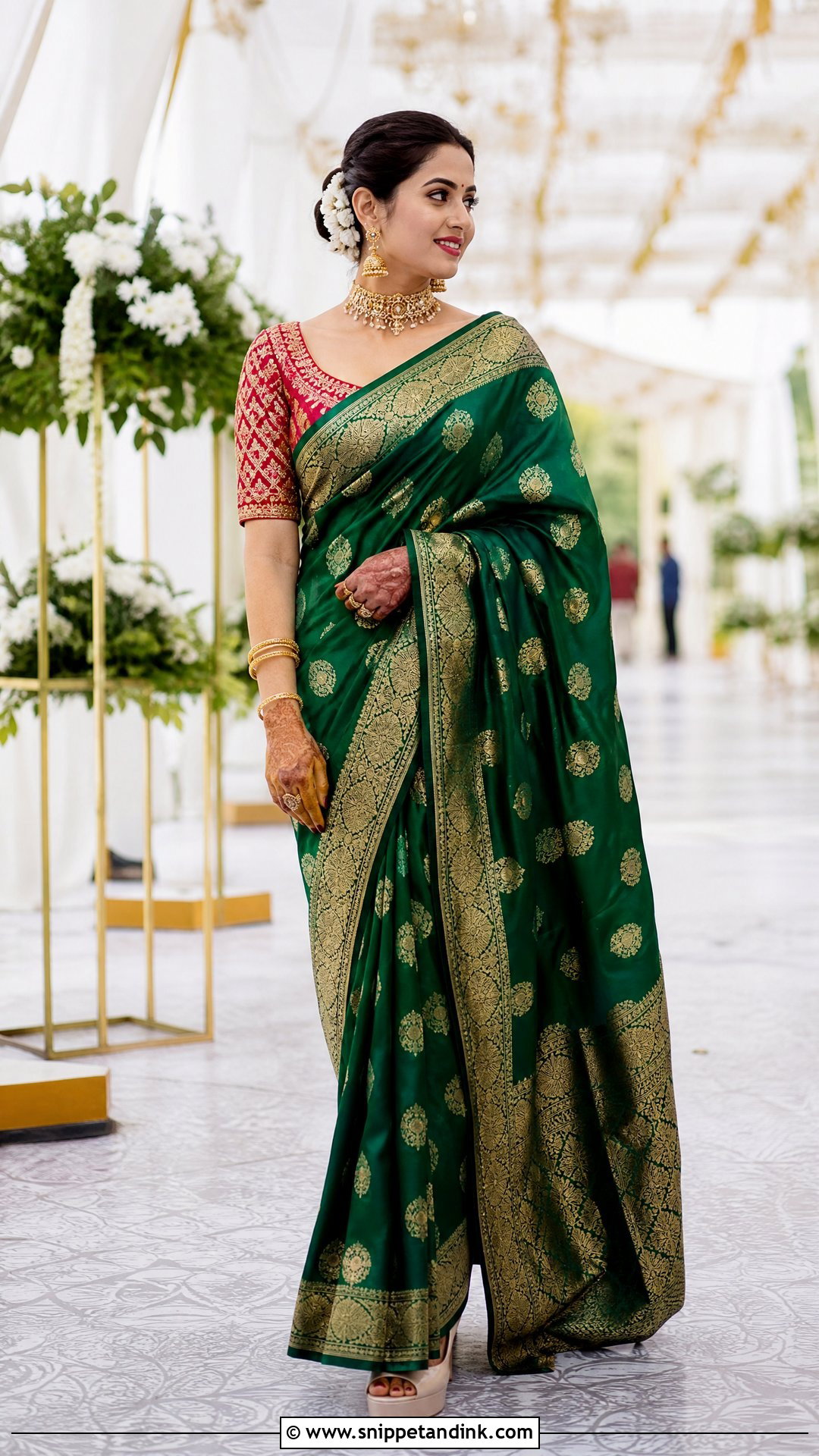
A Banarasi silk saree carries the weight a main ceremony deserves, both visually and literally. Emerald, magenta, navy, purple or rust with a deep woven border looks rich in family portraits. A brocade or elbow-sleeve blouse makes it personal. Real Banarasi is heavy, and the pallu pulls at the shoulder all evening, so I always use two pins there and one at the waist, and I make sure the petticoat drawstring is tied firmly. Hide platform heels under the hem for height without wobble. A choker, matching earrings and gold bangles, plus a center-parted bun with fresh flowers, complete it. If full silk feels too much, a silk blend drapes almost the same and weighs far less.
6. Ruffle Saree Outfit for Sister’s Sangeet
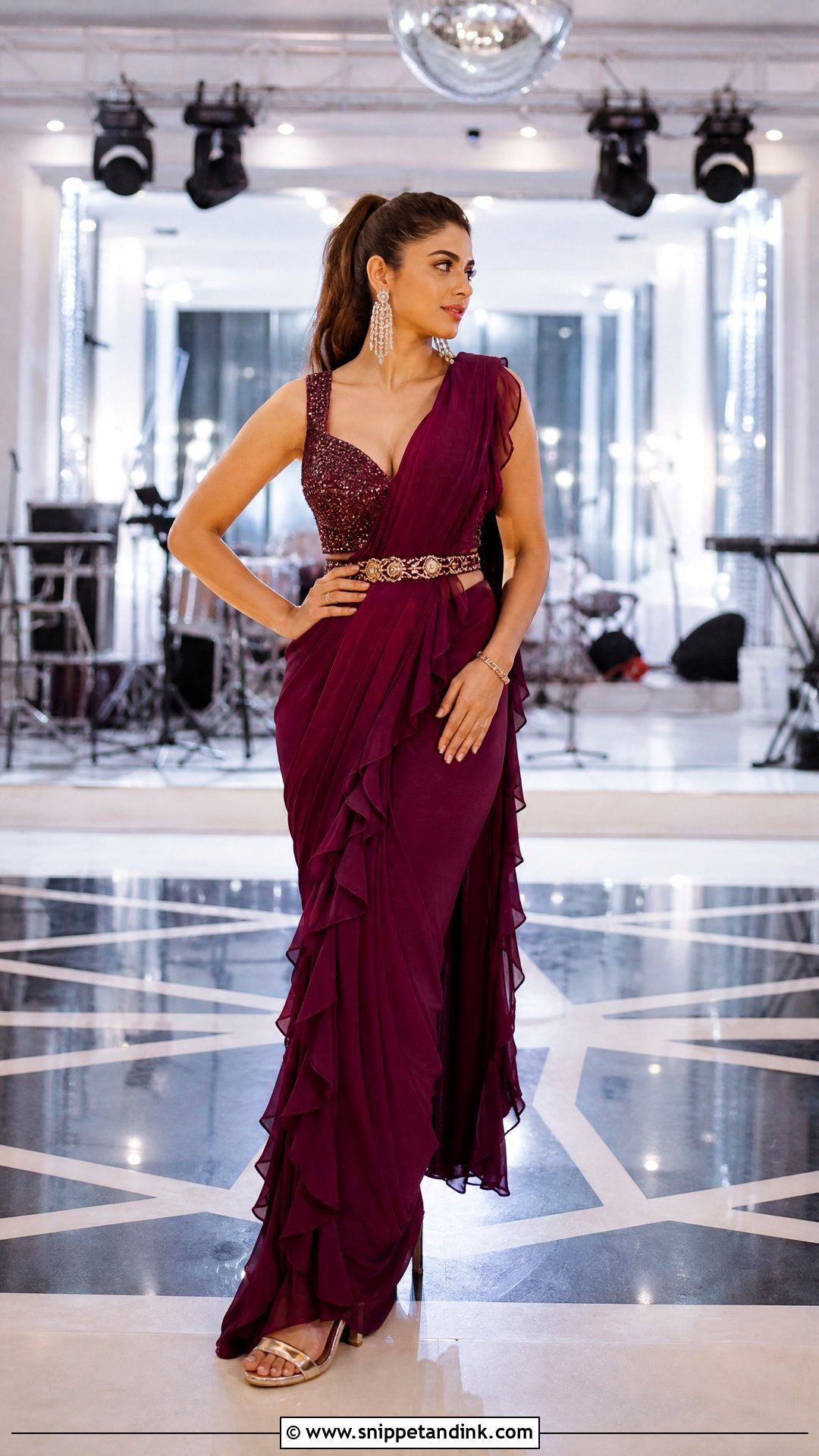
Ruffles give a saree movement without lehenga weight. A pre-draped design in wine, navy, teal, fuchsia or metallic gray is the easy route; no pleating and no slipping mid-dance. The blouse needs to stay put, so sequins or structure are fine as long as the fit is snug. The ruffles already supply volume, so accessories stay lean: statement earrings, a cocktail ring, a slim bracelet and metallic block heels. Walk a full lap of the room in it before the event; layered ruffles sometimes catch the heel at the back. A waist belt holds the drape, and a high ponytail suits an indoor evening sangeet.
7. Floral Organza Saree Outfit for Sister’s Day Wedding
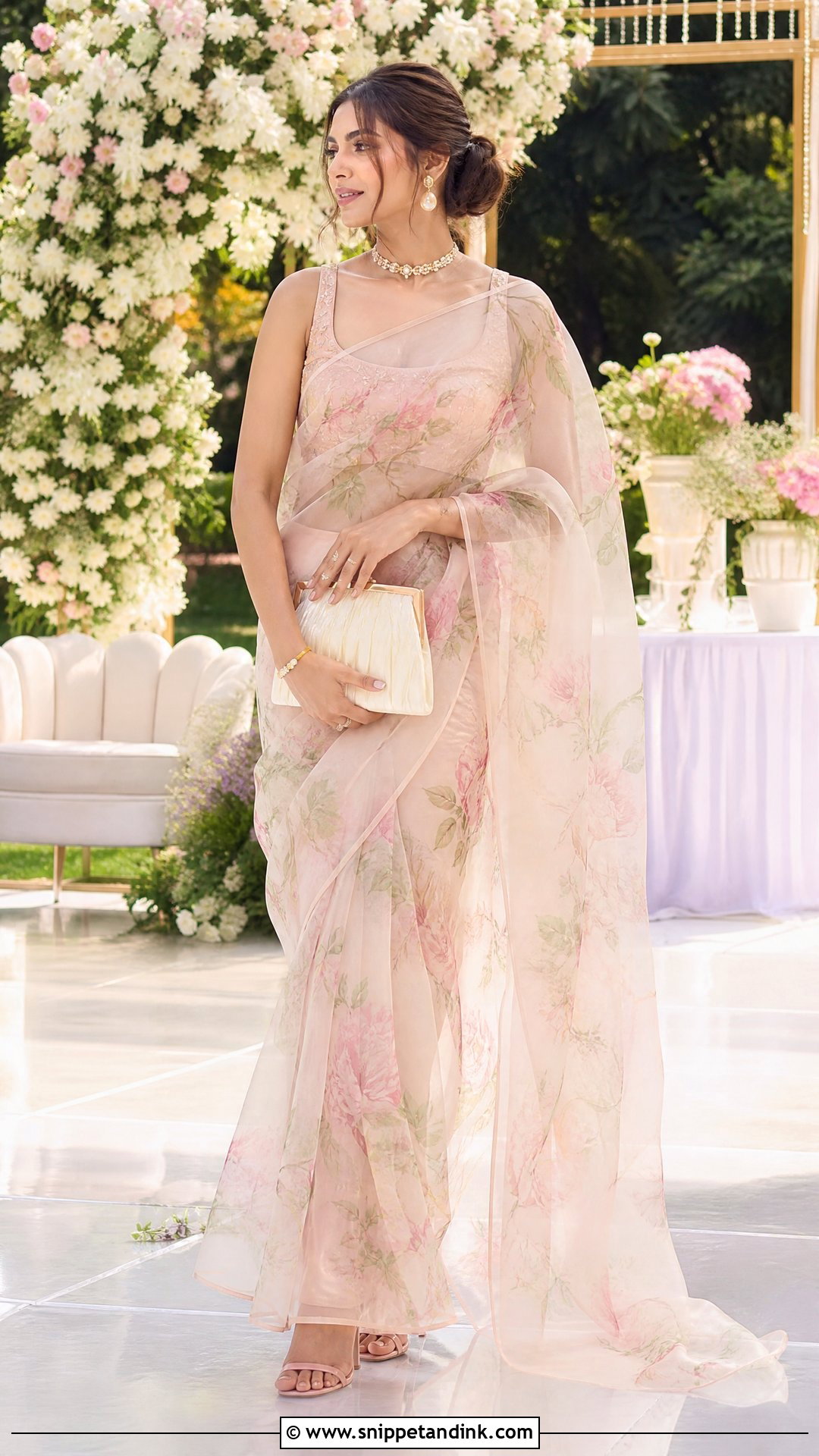
For a daytime wedding, floral organza is fresh and photographs clean in natural light. Look for a saree with a defined border so the sheer fabric keeps its edge. Organza is crisp and springs back, which makes pleats fan out unless they’re pinned and pressed; I’d practise the drape twice before the day. Pair it with a solid sleeveless blouse, a short-sleeve raw silk blouse, or a matching floral one. Pearl earrings, a delicate choker and pastel heels follow the print’s palette. Wear a loose bun, side braid or soft waves, and carry a small clutch in ivory, gold or one of the print’s accent colors.
8. Velvet Lehenga Outfit for Sister’s Winter Wedding
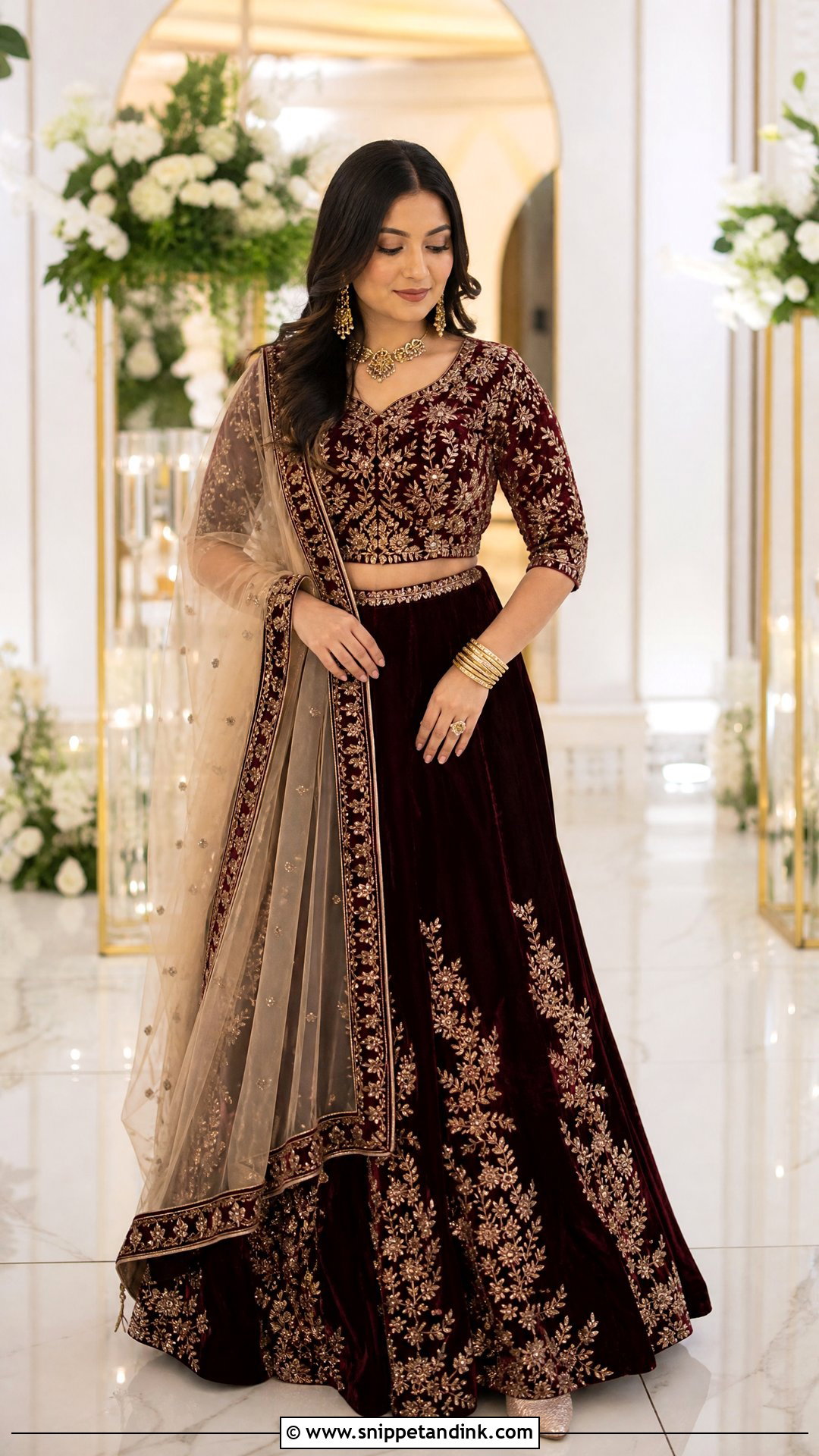
Winter functions call for a velvet lehenga, and burgundy, forest green, navy or plum need very little embroidery to look rich. Pair it with full or three-quarter sleeves and restrained gold work. Velvet crushes where you sit and shows pressure marks, so I’d avoid layering a heavy can-can underneath; the skirt sits cleaner with one soft lining. A light net dupatta stops the whole thing looking bulky. Antique gold earrings, a matching necklace, bangles and closed block heels finish it, with a sleek bun or polished waves. It belongs at an evening wedding or a formal indoor venue, not a sunny lawn.
9. Sequin Saree Outfit for Sister’s Reception
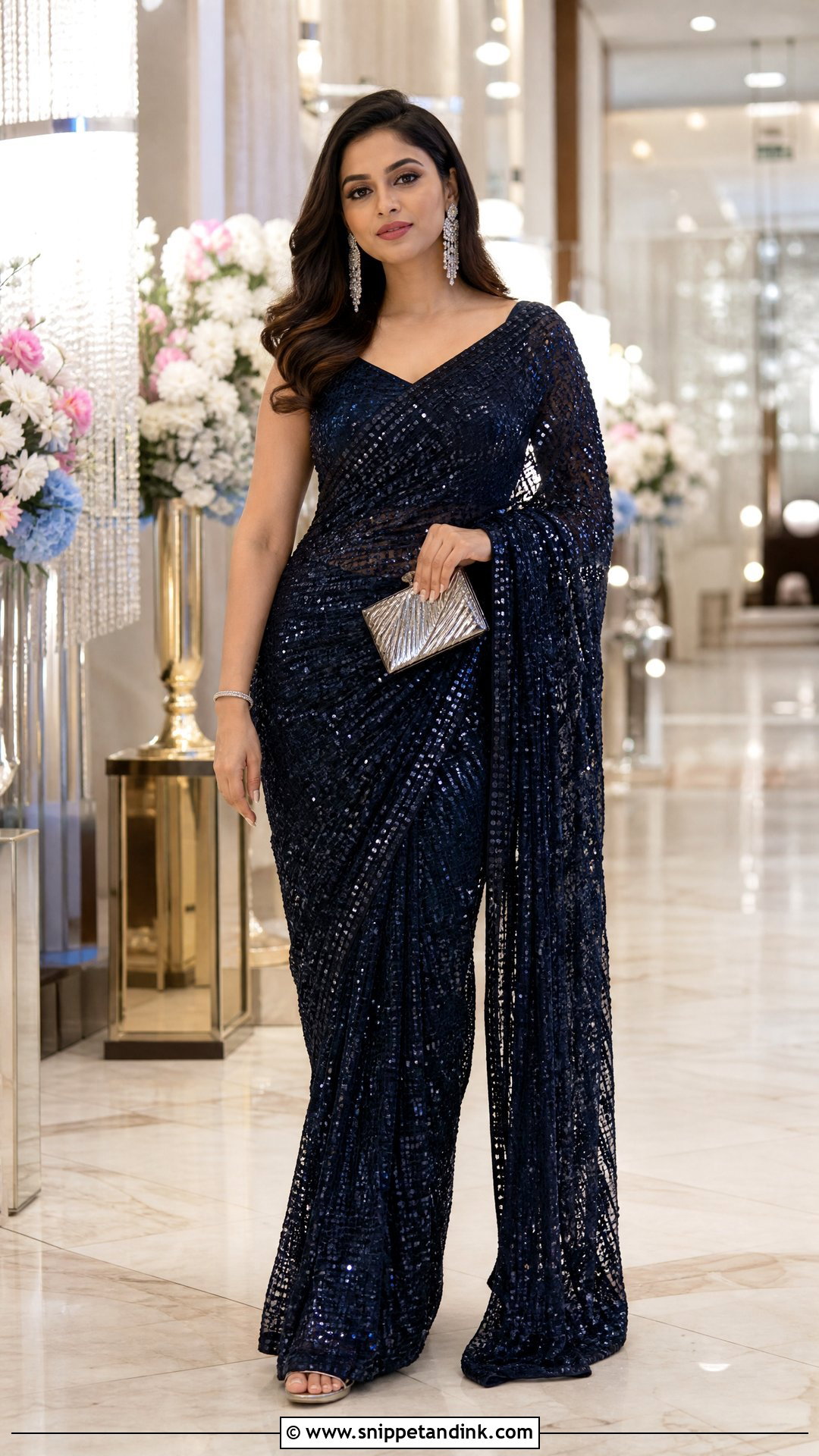
A sequin saree is the reception outfit that sparkles without being mistaken for bridal. Champagne, silver, midnight blue, rose gold or deep green all work. Match the blouse to the saree’s color family so the line runs unbroken. I’d seriously consider pre-stitched, because sequin fabric is slippery and pleats loosen through a long night of hugging relatives. Drop earrings, one slim bracelet, a clutch and simple metallic heels are enough; sequins plus big jewelry turns noisy in photos. Keep the makeup polished rather than glittery. A sleek ponytail, side-parted waves or a low bun suits the clean finish.
10. Cape Lehenga Outfit for Sister’s Cocktail Function
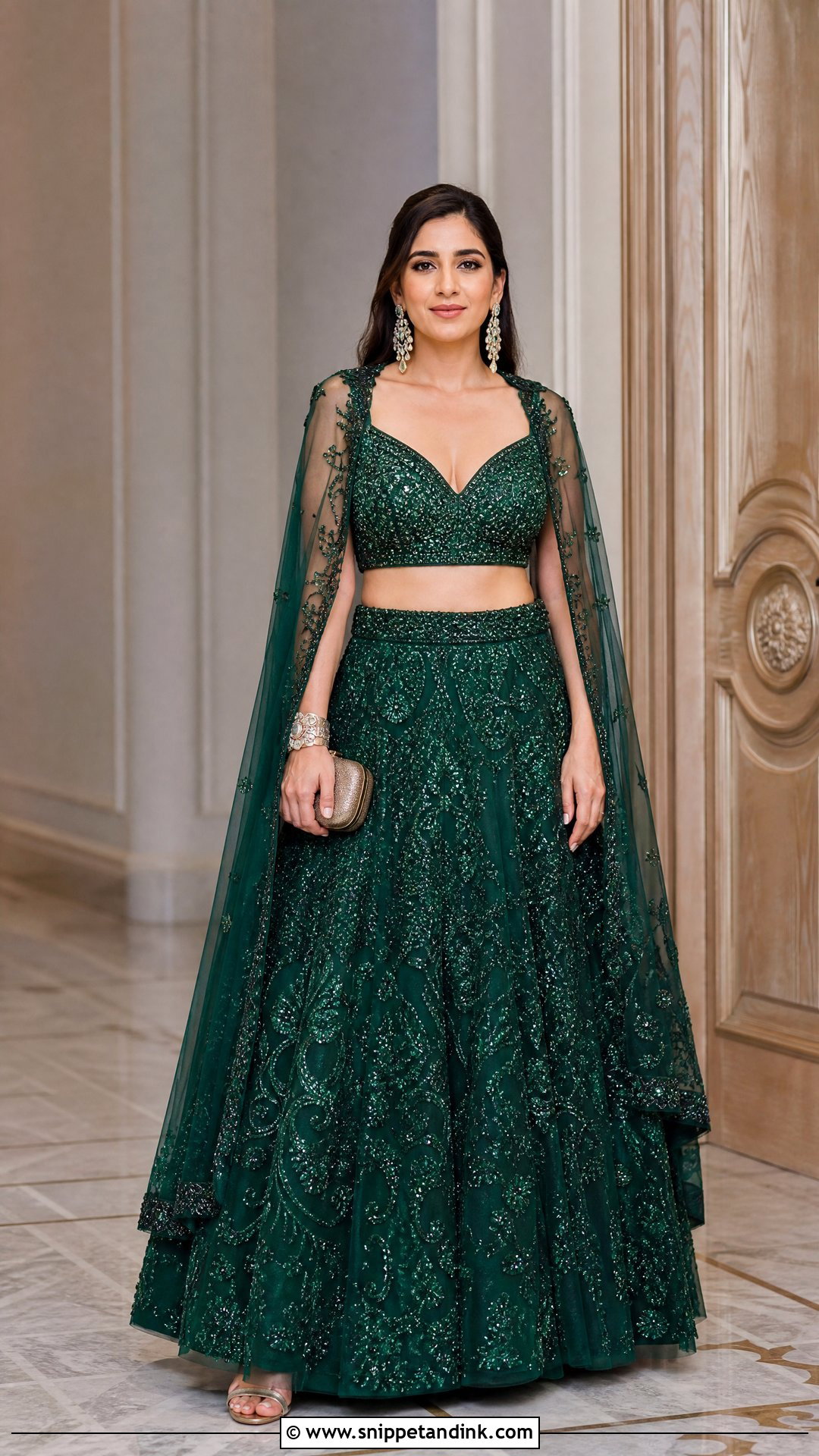
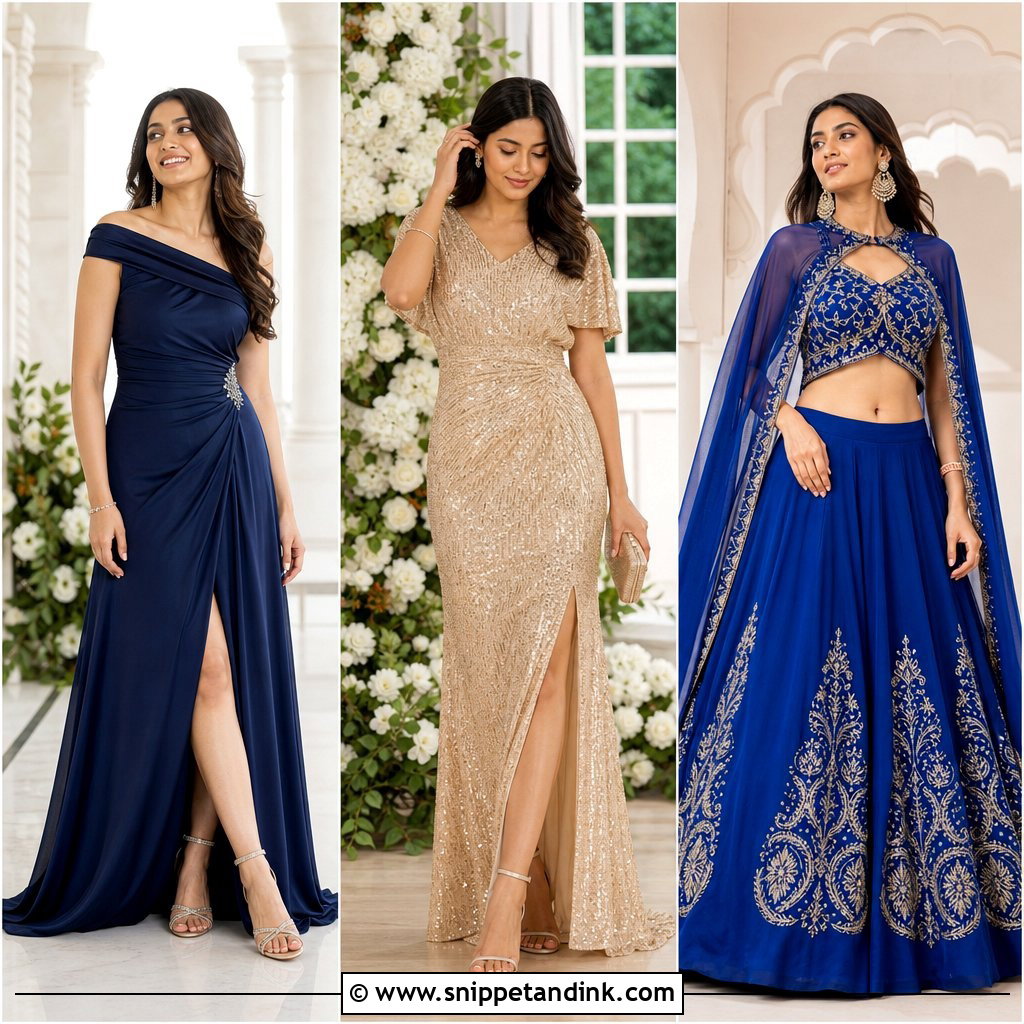
At a cocktail function, a cape lehenga swaps the dupatta for something easier to manage. A fitted blouse and flowing skirt under a sheer embroidered or sequined cape gives coverage without the constant re-pinning. Black, navy, emerald, aubergine and berry feel evening; champagne and dusty rose are softer. Keep the skirt lightly worked so the cape stays the focus. Because the cape sits on the shoulders, skip the heavy necklace. Long earrings, a cuff, a small clutch and stable heels finish it. Measure the cape length while wearing your shoes; a cape that brushes the floor will be trodden on by the second song.
11. Anarkali Suit Outfit for Sister’s Engagement
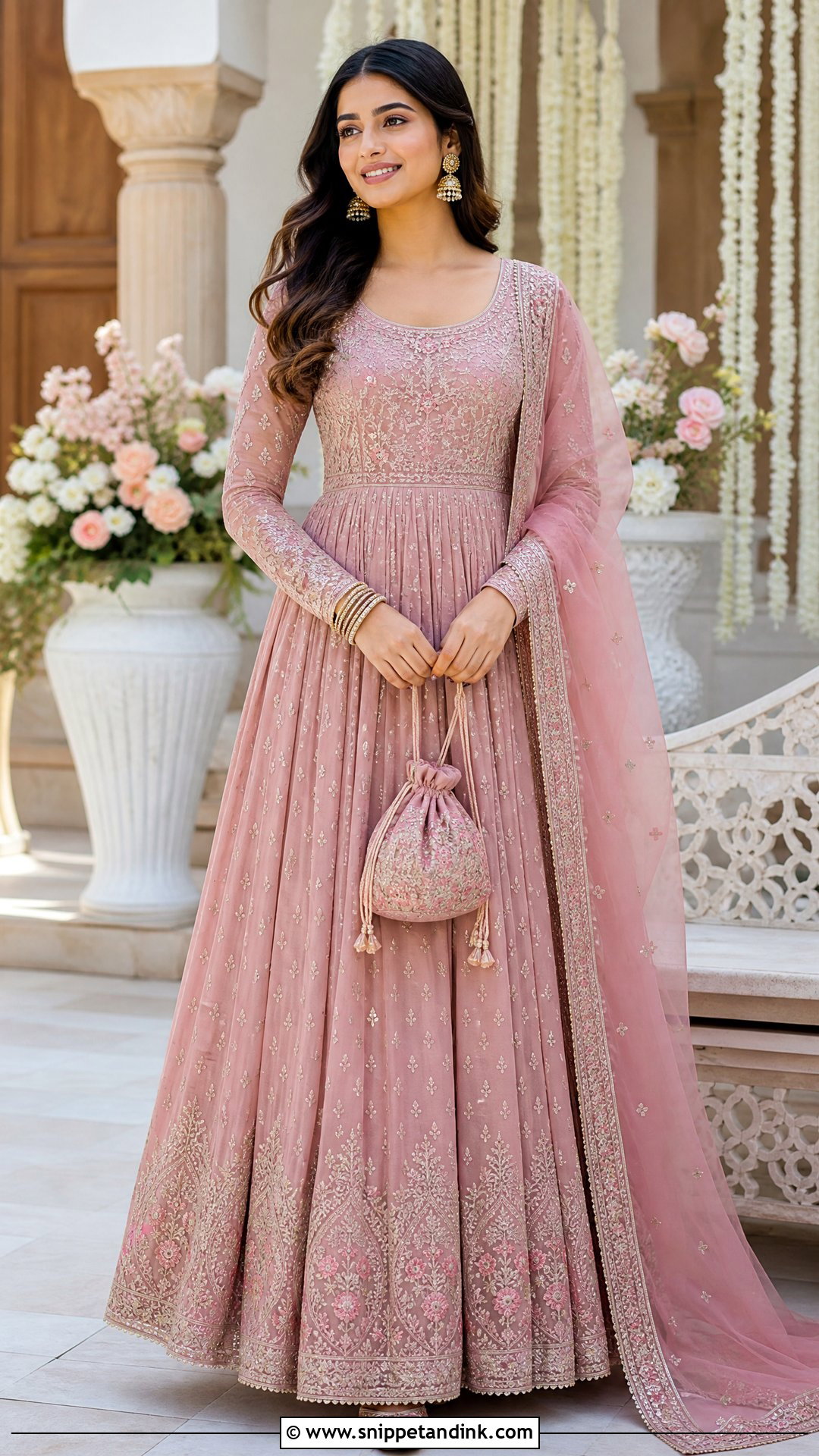
For an engagement, an Anarkali gives you traditional dress that moves easily. Floor or ankle length in sage, dusty pink, deep blue, wine or ivory with colored embroidery is a safe and flattering range. The fitted bodice and flared skirt suit most body shapes, but check where the bodice seam hits: it should sit at your natural waist or just above it, or the flare starts too low and the outfit looks borrowed. Drape a light dupatta over one shoulder with a decorative pin. Jhumkas, stacked bangles, a small potli and juttis or block heels finish it. If the neckline is busy, drop the necklace. It suits daytime engagements and family dinners.
12. Peplum Sharara Outfit for Sister’s Wedding Function
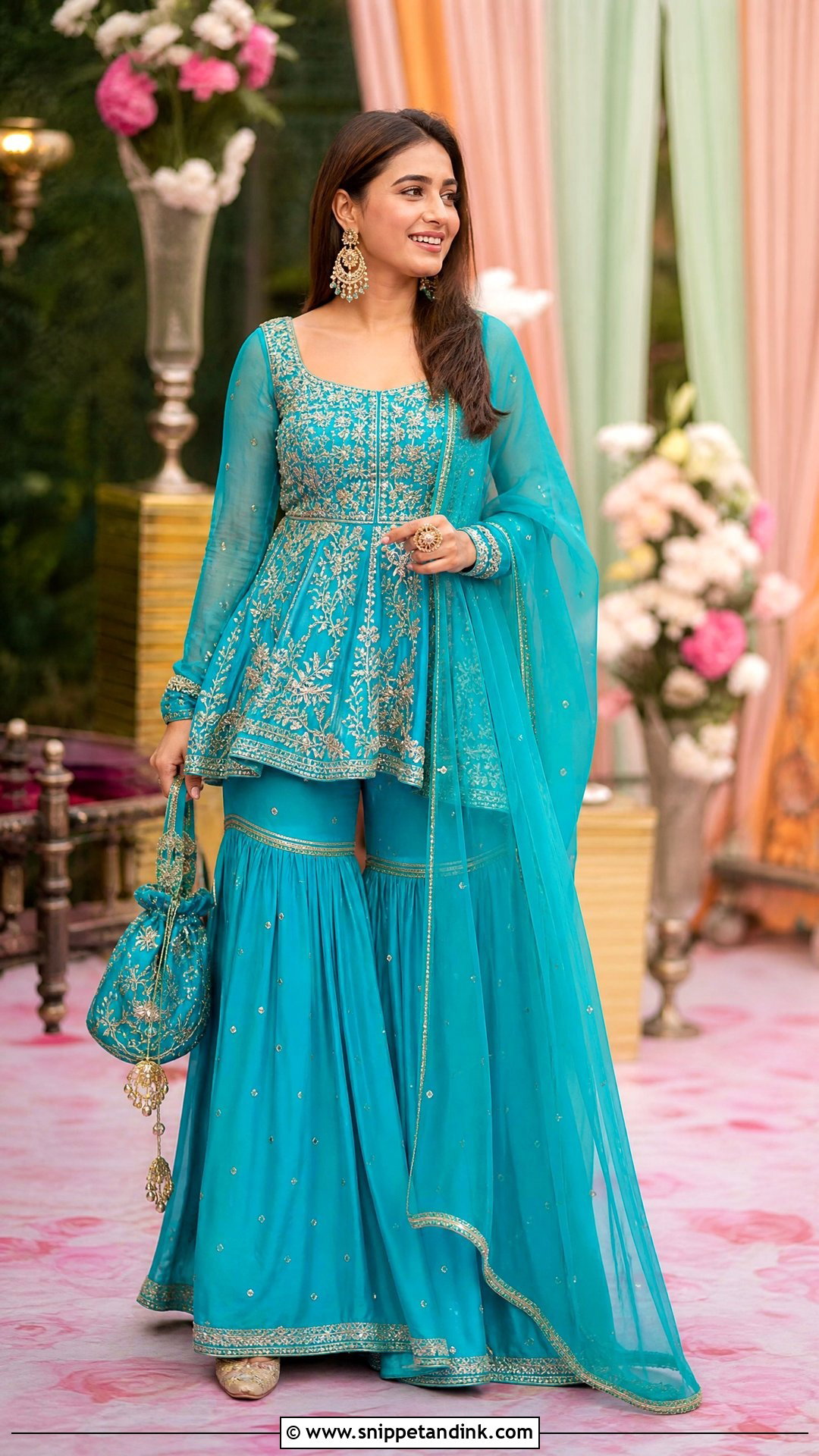
A peplum sharara set gives you shape on top and freedom below. Choose a structured peplum top with embroidery at the neckline, waist and sleeves, coordinating sharara pants and a sheer dupatta over one arm. The flare of the peplum should begin at your narrowest point; too low and it cuts your height in half in photos, which is the most common mistake I see with this cut. Coral, turquoise, purple, hot pink or emerald are bright, while muted pastels suit daytime. Chandelier earrings, a statement ring, a potli and heeled juttis finish it. Mehendi, sangeet, engagement and welcome events all suit it.
13. Indo Western Saree Gown Outfit for Sister
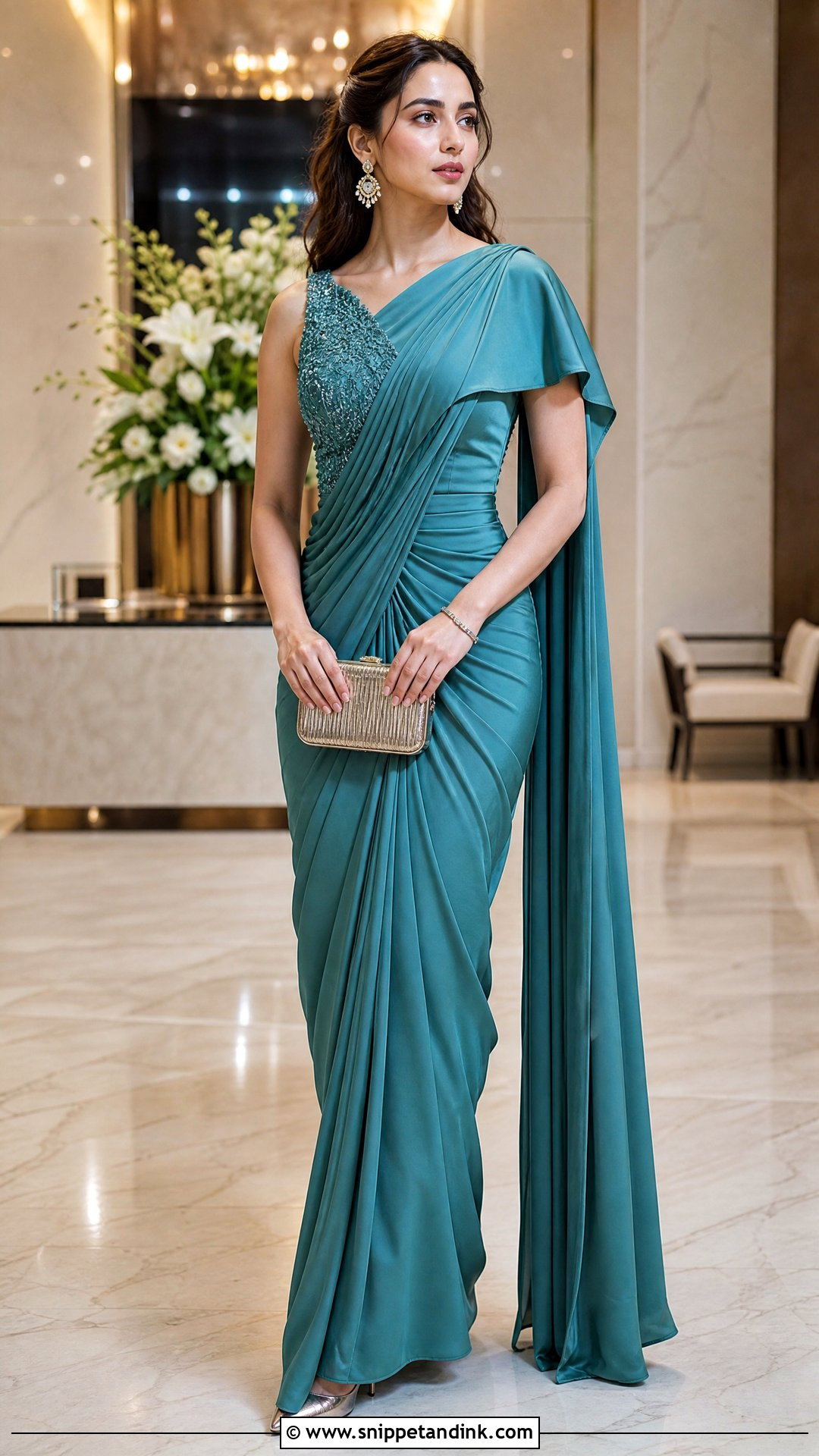
An Indo-Western saree gown gives you the drape without the pleating. It’s usually one piece: fitted bodice, draped skirt and an attached pallu, so it can’t come undone. Teal, burgundy, navy, mauve or silver with controlled beading or sequins looks right at an evening event. Check the stride before you buy; some draped skirts are cut narrow at the knee and turn every step into a shuffle. Sculptural earrings, a slim bracelet, a metallic clutch and pointed heels are enough. Skip the necklace if the neckline is asymmetric. A sleek bun suits the modern shape, and it works best at receptions and cocktail parties.
14. Palazzo Suit Outfit for Sister’s Morning Function
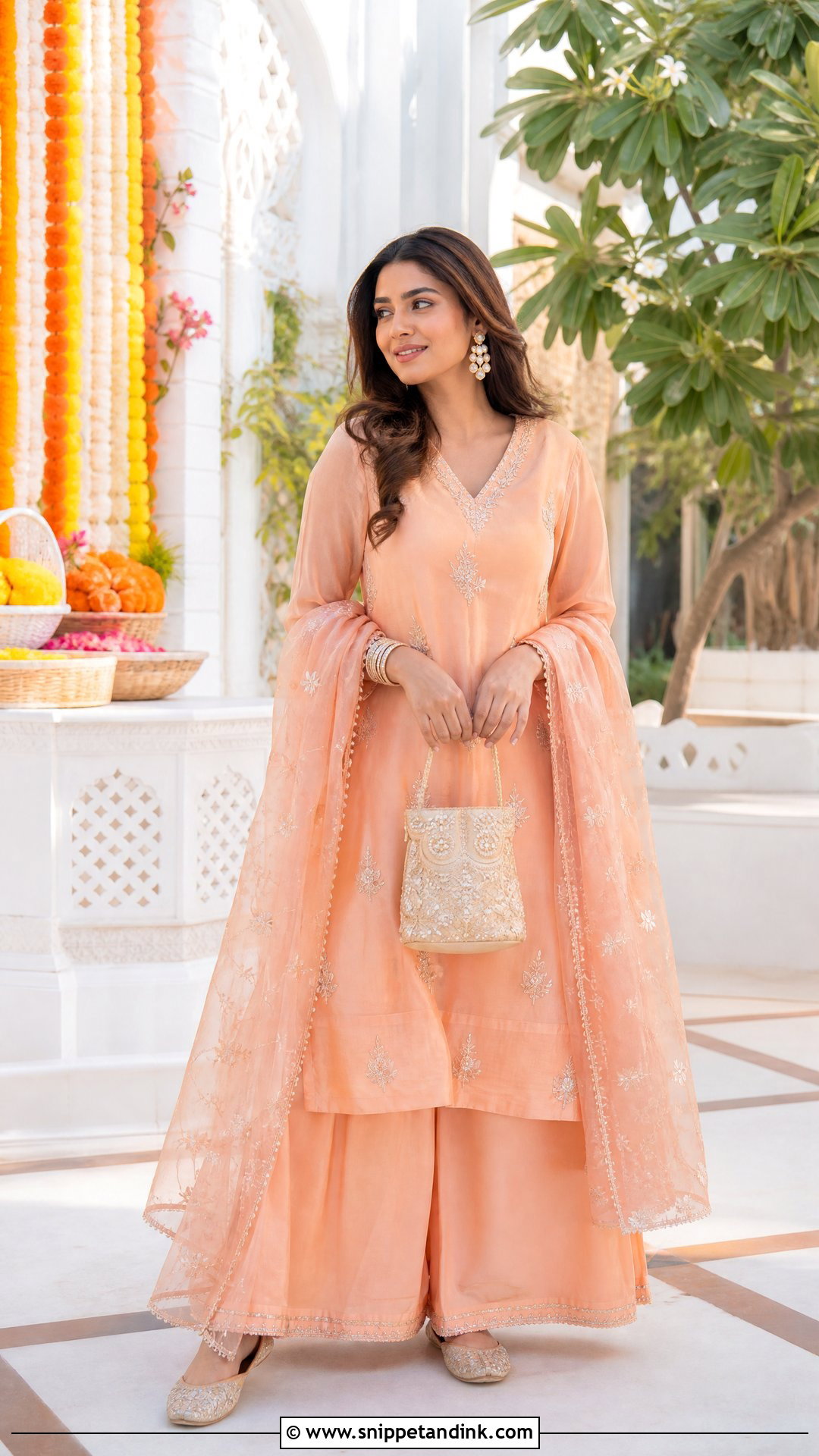
Morning rituals call for something you can stand in for hours without overheating, and a palazzo suit fits that brief for a morning wedding function. A straight or slightly flared kurta, wide palazzos and a light printed or embroidered dupatta are the base. Chanderi, cotton silk, georgette and tissue blends breathe in daylight heat. Keep the kurta length so a good stretch of palazzo shows below it; when the kurta reaches the ankle, the trousers vanish and the outfit looks heavy. Peach, mint, yellow, powder blue or coral, with pearl or kundan earrings, fine bangles and comfortable juttis, keep it bright. A loose braid or low ponytail suits it.
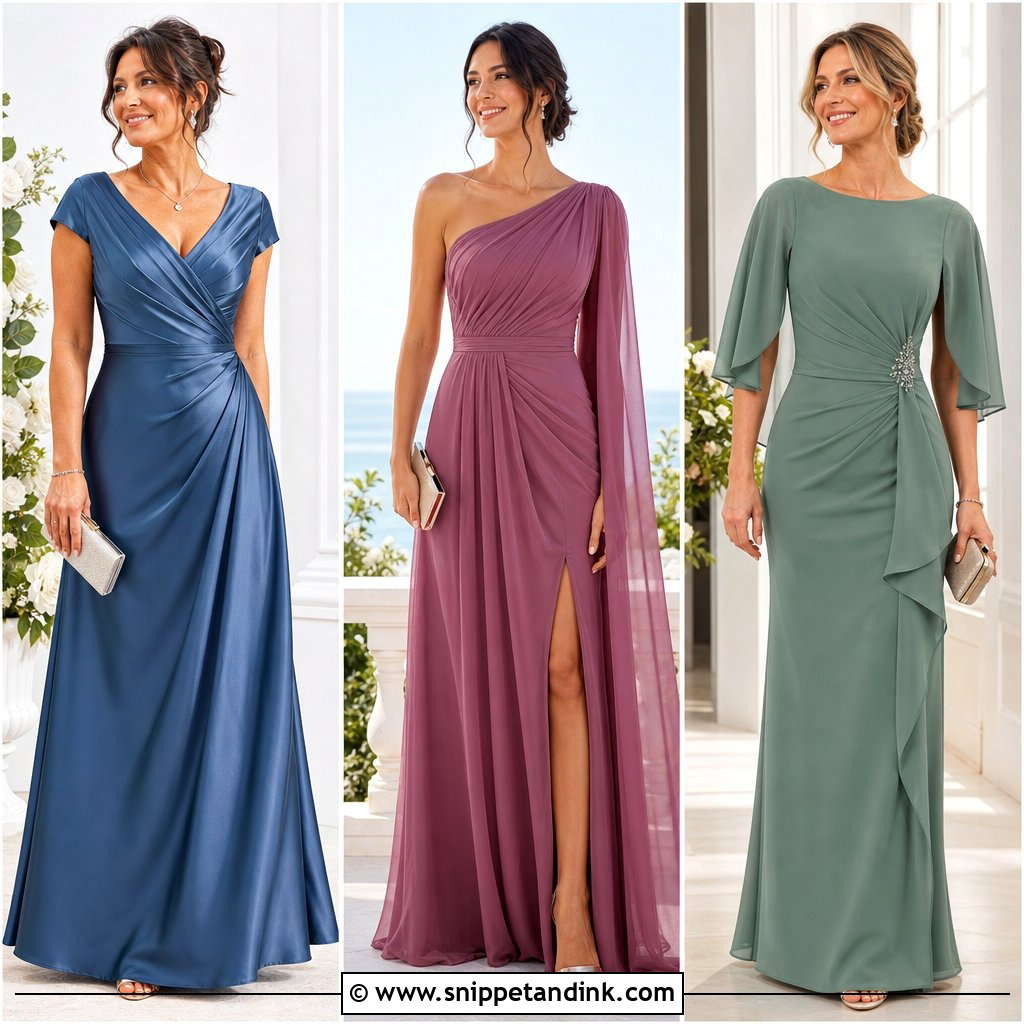
15. Jacket Lehenga Outfit for Sister’s Evening Function
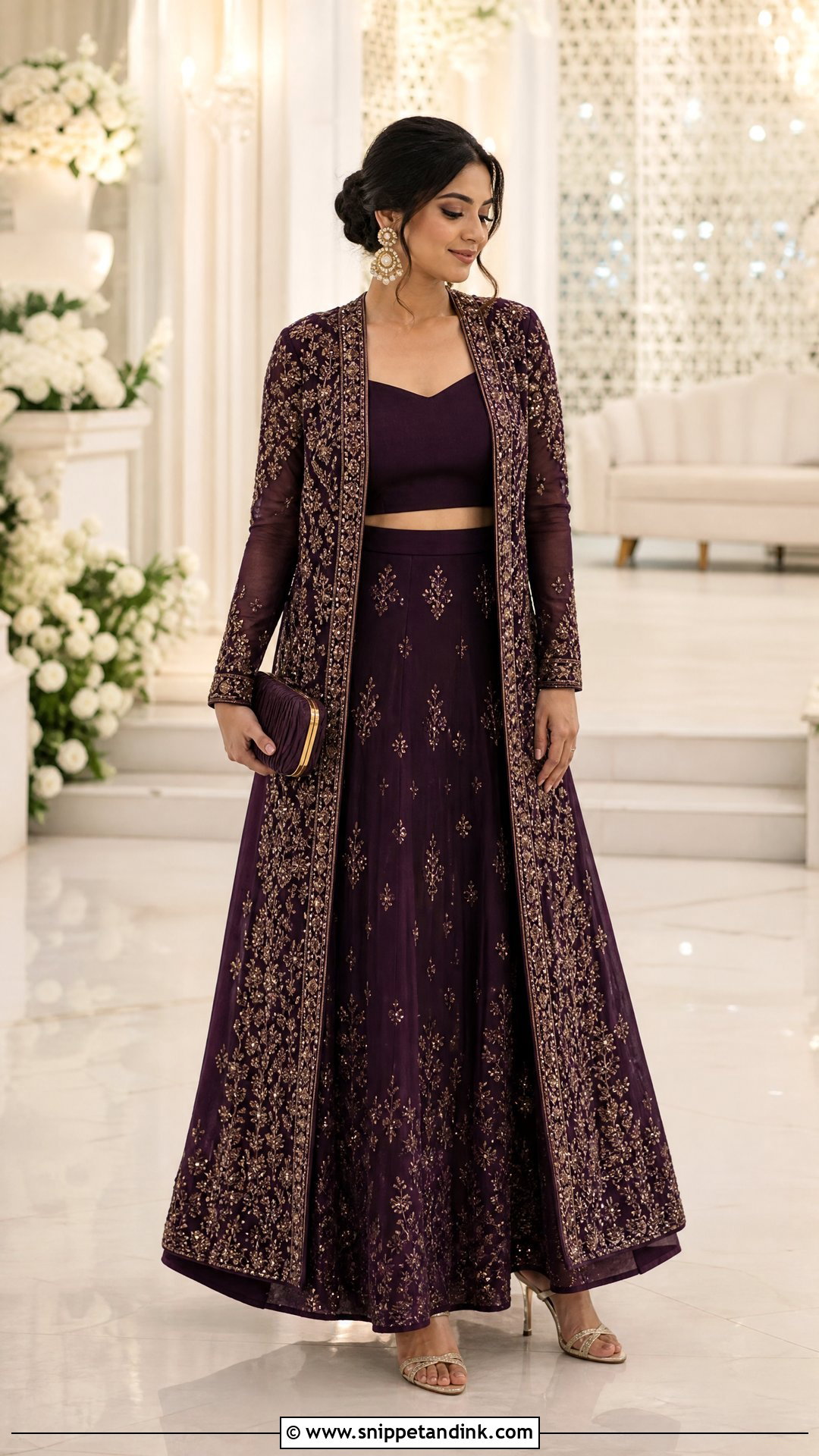
A jacket lehenga is my pick for a cooler evening venue, because the layer is part of the look rather than a cardigan thrown over it. A fitted blouse and flowing skirt go under a long embroidered jacket ending below the knee or at the hem. Keep the front open so the waist and skirt still show. Deep green, navy, plum, maroon and charcoal take gold or silver thread well. Statement earrings, a ring, a structured clutch and heeled sandals finish it. I’d usually drop the dupatta here; jacket plus dupatta is one layer too many and hides the silhouette. Wear a sleek ponytail or low bun to keep the collar clear.
16. Dhoti Pant Outfit for Sister’s Mehendi
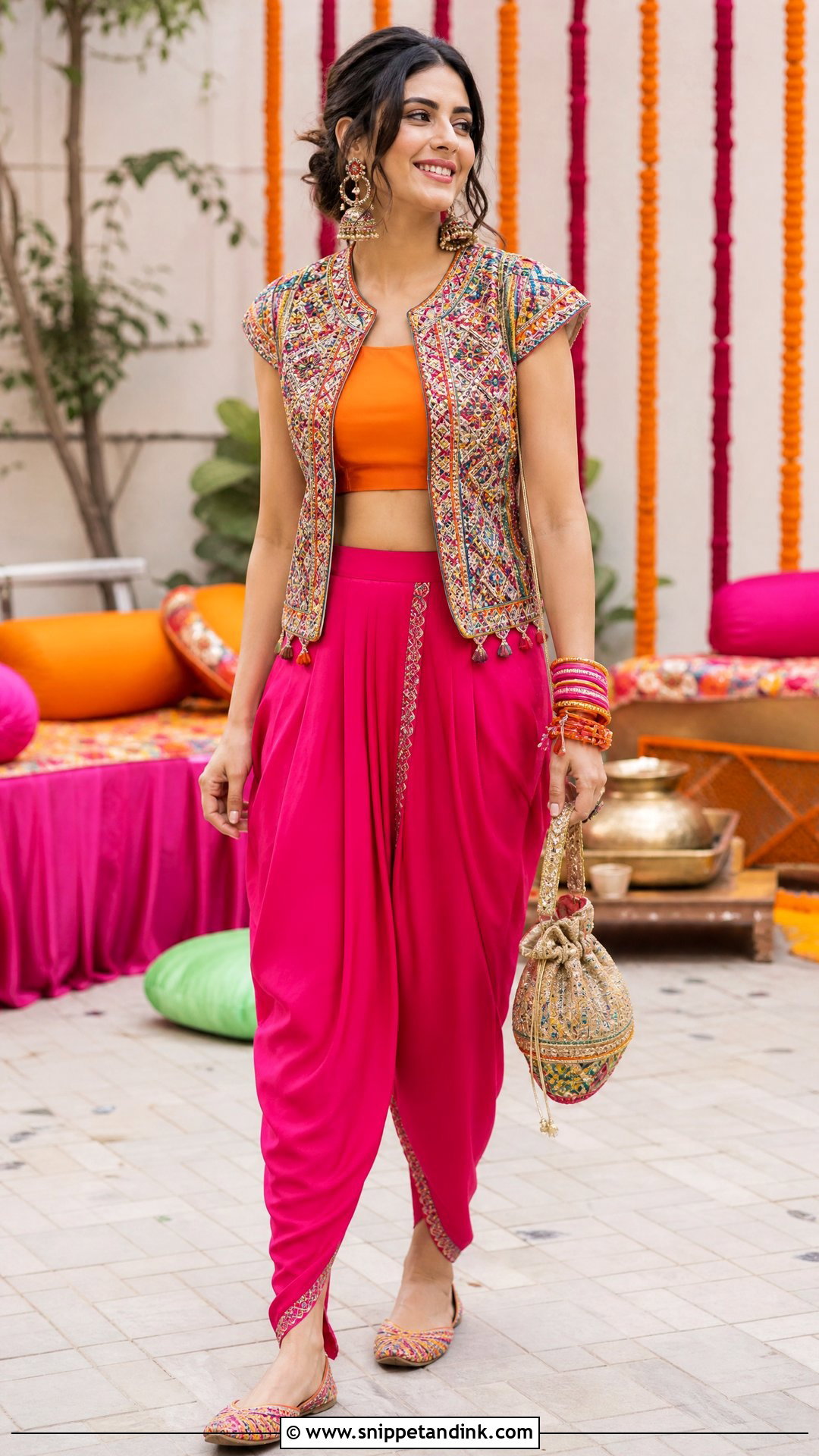
Dhoti pants with a fitted crop top and a short embroidered jacket make a playful pre-wedding look that still uses traditional detail. Fuchsia with orange, turquoise with yellow, or green with pink all feel festive. The drape gathers at the ankle, which means slim heels catch in it; I’d always choose cushioned juttis for this one. Make sure the waistband is secure and the top supports you for dancing. Bold earrings, colorful bangles and a small sling potli finish it, with a braided ponytail or half-up hair. Mehendi, haldi and relaxed sangeets are where it belongs.
17. Gharara Suit Outfit for Sister’s Nikah
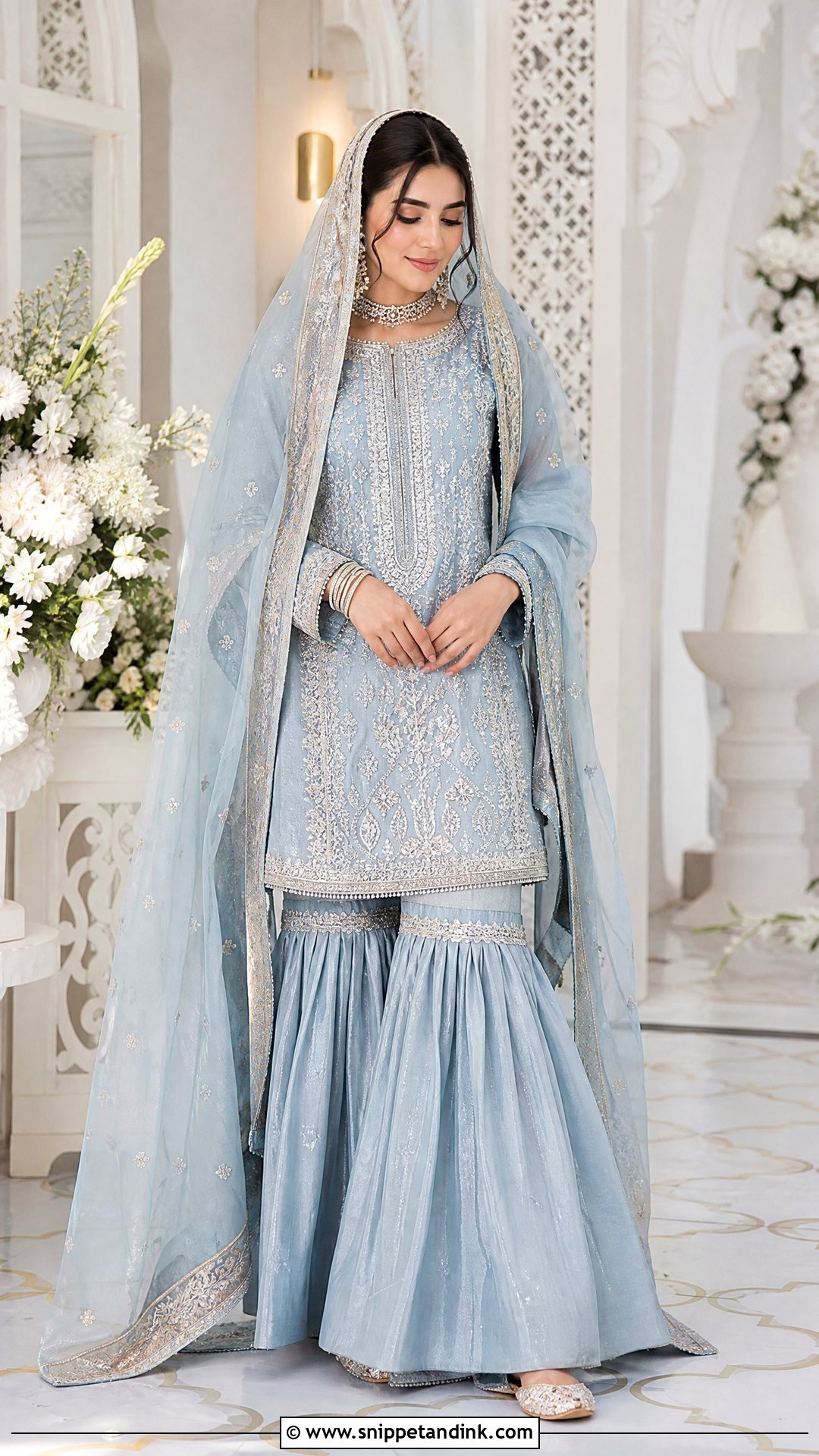
For a nikah, a gharara suit is formal, traditional and appropriate. Choose a knee-length embroidered kurta, flared gharara pants and a dupatta with a proper border. Emerald, rose pink, powder blue, ivory or deep red can all work depending on the bride’s palette. Ask the family in advance whether women cover their heads during the ceremony, and pin a small brooch or a couple of bobby pins into your bun so the dupatta stays put if you need it. The gathered seam at the knee defines a gharara; it should sit at the knee, not above it. A choker, matching earrings, bangles and embellished juttis finish it. Lightweight fabric helps you sit through the rituals comfortably.
18. Printed Lehenga Outfit for Sister’s Destination Wedding
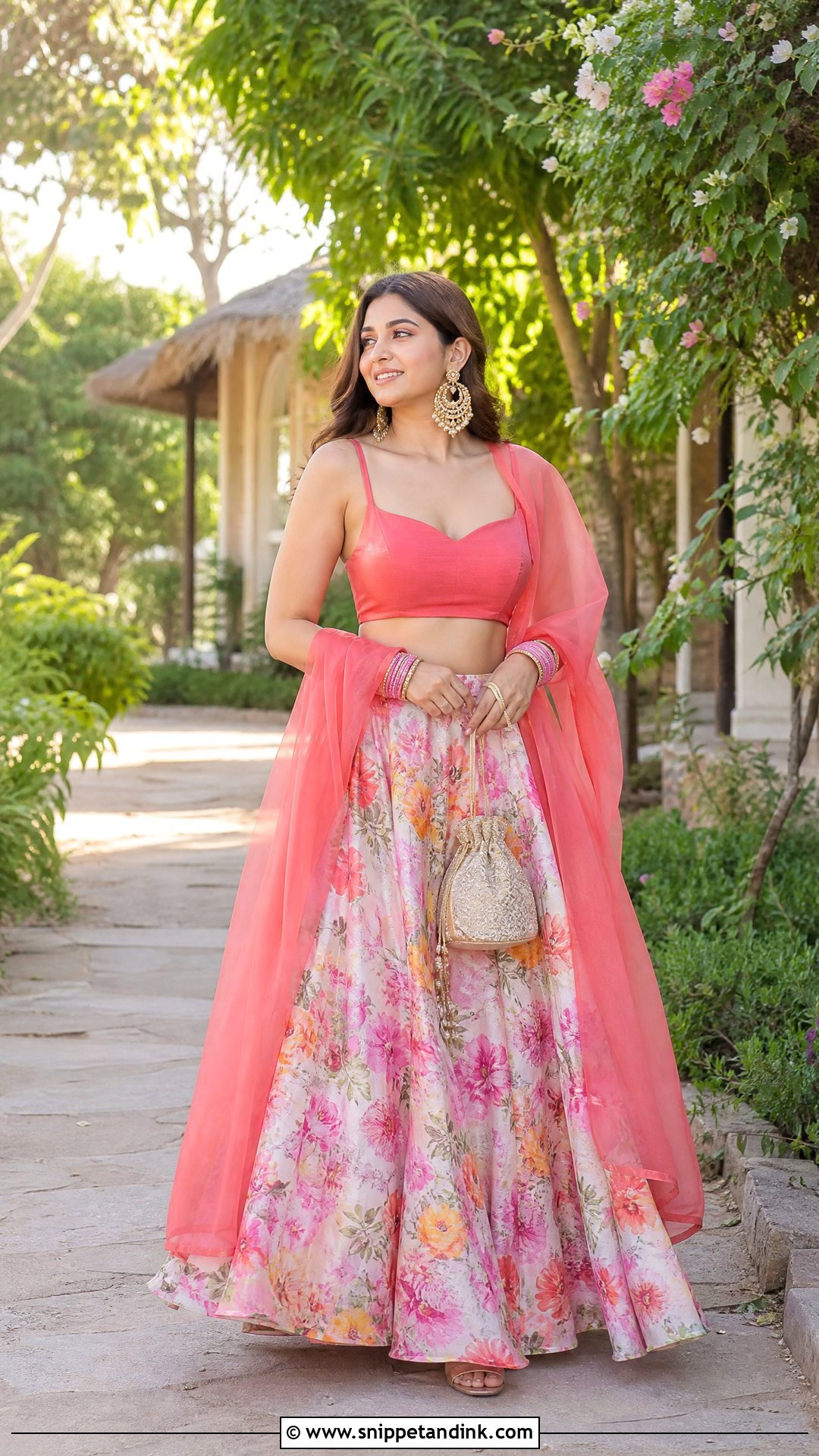
For a destination wedding, a printed lehenga travels better than anything heavily embroidered. A lightweight skirt in florals, paisley or geometric prints with a solid or matching blouse and a plain organza dupatta looks balanced. Prints hide travel creases, which is the real advantage. Roll, don’t fold, the skirt in the suitcase, and hang it in the bathroom while you shower so the steam drops the wrinkles. Coral, aqua, yellow, green or pink suit beaches and gardens far better than deep shades. A braid or polished ponytail holds up to wind and humidity better than loose curls. Colorful earrings, stacked bangles, low block heels and a small potli finish it.
19. Brocade Skirt and Shirt Outfit for Sister
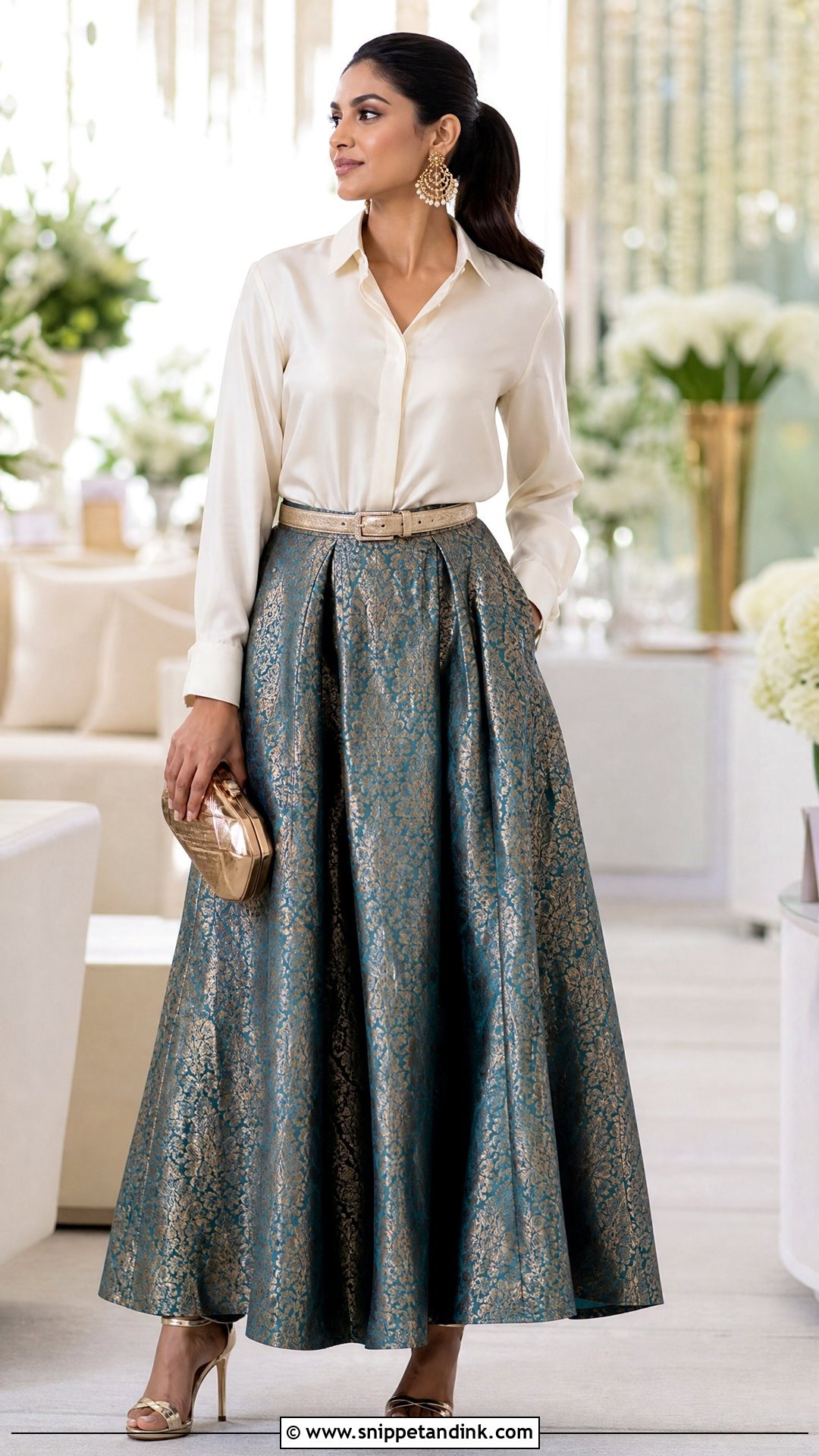
A brocade maxi skirt with a crisp shirt is a smart fusion outfit when the event is small and a lehenga would feel overdressed. Pair a jewel-toned woven skirt with an ivory, black or coordinating silk shirt and tuck it cleanly; roll the sleeves if the mood is relaxed. Brocade is stiff, so the waistband needs a good fit or it rides up when you sit. Choose a statement necklace or bold earrings, not both. A structured clutch, metallic heels and one bracelet are enough, and a slim belt sharpens the waist. Wear a smooth ponytail or low bun. It’s right for a brunch, family dinner or welcome evening.
20. Embroidered Gown Outfit for Sister’s Reception
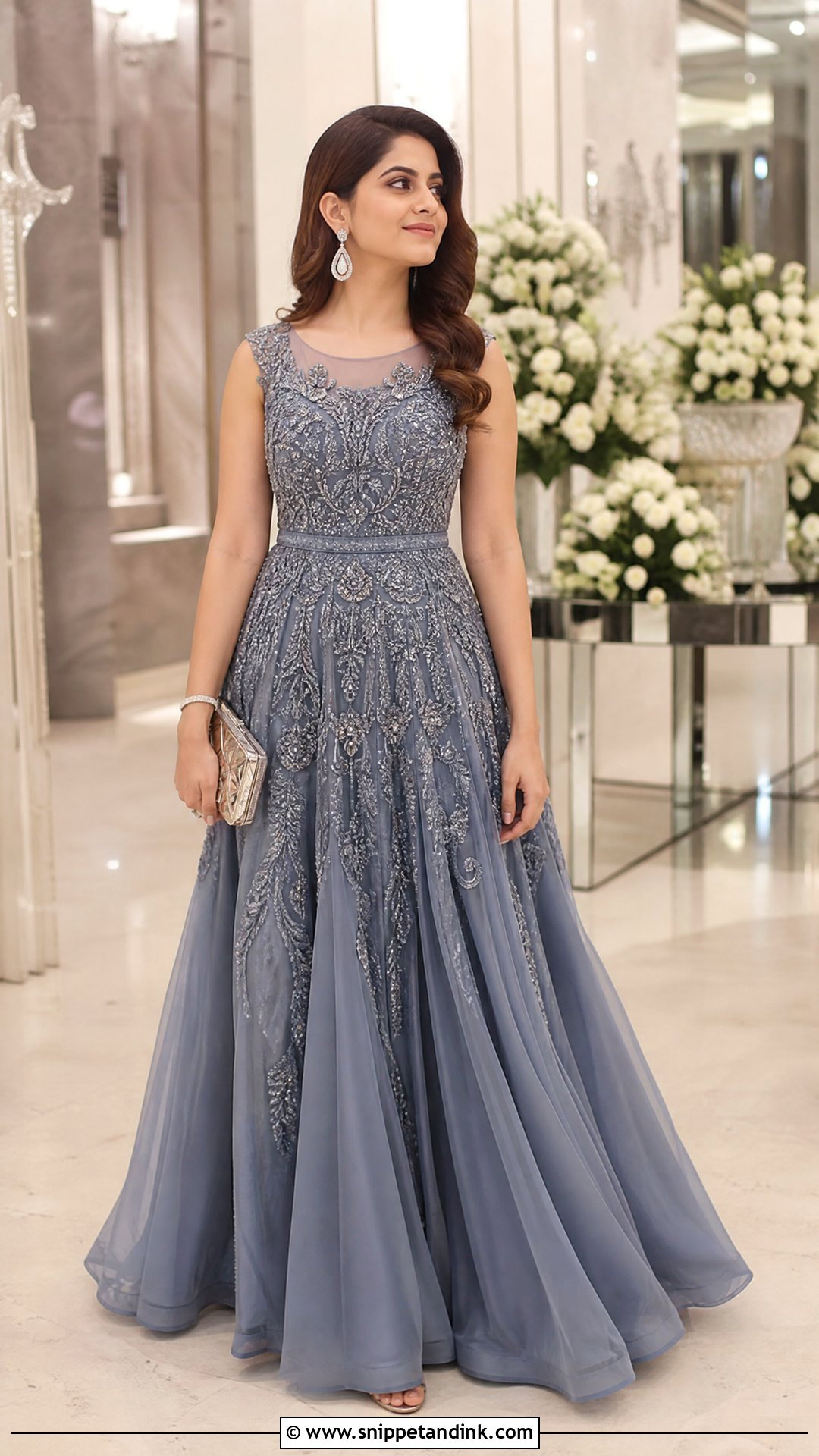
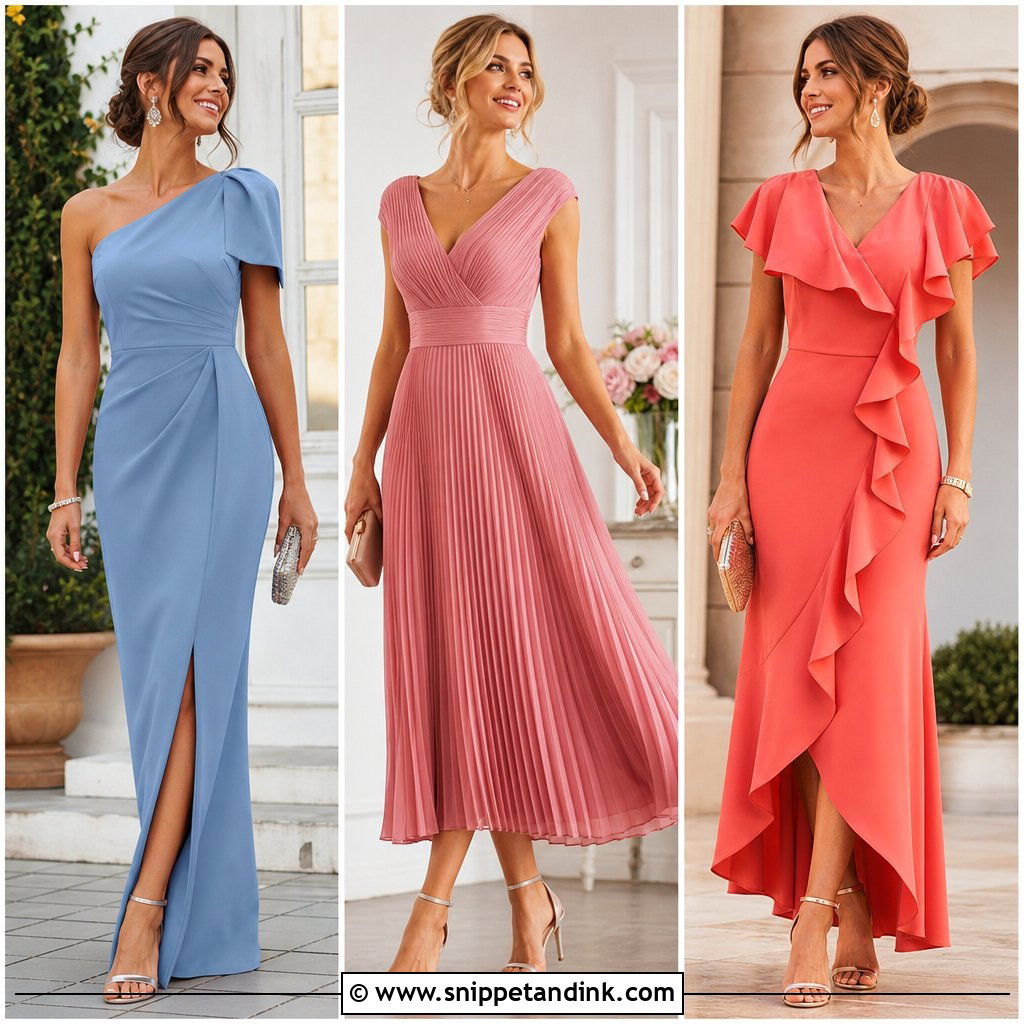
An embroidered gown makes the final reception easy: no drape to manage, no pins to check. Choose floor length with a defined waist, a supportive bodice and a skirt you can stride in. Navy, emerald, burgundy, mauve, champagne or smoky blue all suit an evening. I prefer embroidery concentrated at the bodice or waist; a gown worked edge to edge gets heavy and starts to look bridal. Drop earrings, a bracelet, a small clutch and stable heels finish it, with a side-parted wave or low textured bun. Book alterations early, since the hem has to be cut to the exact shoes you’ll wear for a safe dance floor.
The Sister’s Emergency Pouch, and Why It Changes What You Wear
Sisters tend to become the bride’s assistant without anyone deciding it. You’ll carry her lipstick, fix her pallu and find the safety pins when a hook gives way. That role should shape your outfit: you need hands free, a place to keep things, and fabric you can kneel in to straighten her lehenga for photos.
In the potli or a small crossbody bag, I’d always pack:
- A strip of safety pins in two sizes and a few bobby pins in her hair color
- A small sewing kit with thread matched to her blouse
- Blotting papers, her lip color and a compact
- Fashion tape for a slipping neckline or dupatta
- A pair of flat foldable slippers for whichever of you gives up on heels first
This is also why I steer sisters toward skirts and shararas they can kneel in and blouses they can lift their arms in. A beautiful outfit that stops you helping your sister is the wrong one for this week.
Is Your Sister’s Palette Settled? Shop After That
Every function has its own job, and your outfit should match it: washable for haldi, pinned for mehendi, dance-ready for sangeet, polished for the wedding and reception. Talk to the bride before you shop; confirm her colors, any dress expectations from either family, and what the venues are like. Choose secure fits, breathable fabric, hems you won’t trip on and shoes you can stand in all night. Let the jewelry support the embroidery instead of fighting it. And wear what makes you feel at ease, since you’ll be helping your sister all week and you’ll want to remember enjoying it.
You'll Like These Ideas:


Leave a Reply