
The bride’s sister is usually the busiest woman at a Pakistani wedding, and her clothes have to keep up. She greets guests, runs to fetch the bride’s dupatta pins, dances at the mehndi and stands in every family photograph. When I dress sisters, the brief is always the same: festive and clearly family, but never competing with the bride. The 20 looks below cover every function from mayon and mehndi to nikkah, baraat and walima, including shararas, lehengas, pishwas, maxis and tailored separates. Current Pakistani wedding fashion leans toward refined embroidery, statement dupattas, softer colours and updated gharara shapes, and I have noted jewellery, shoes and bags for each one.
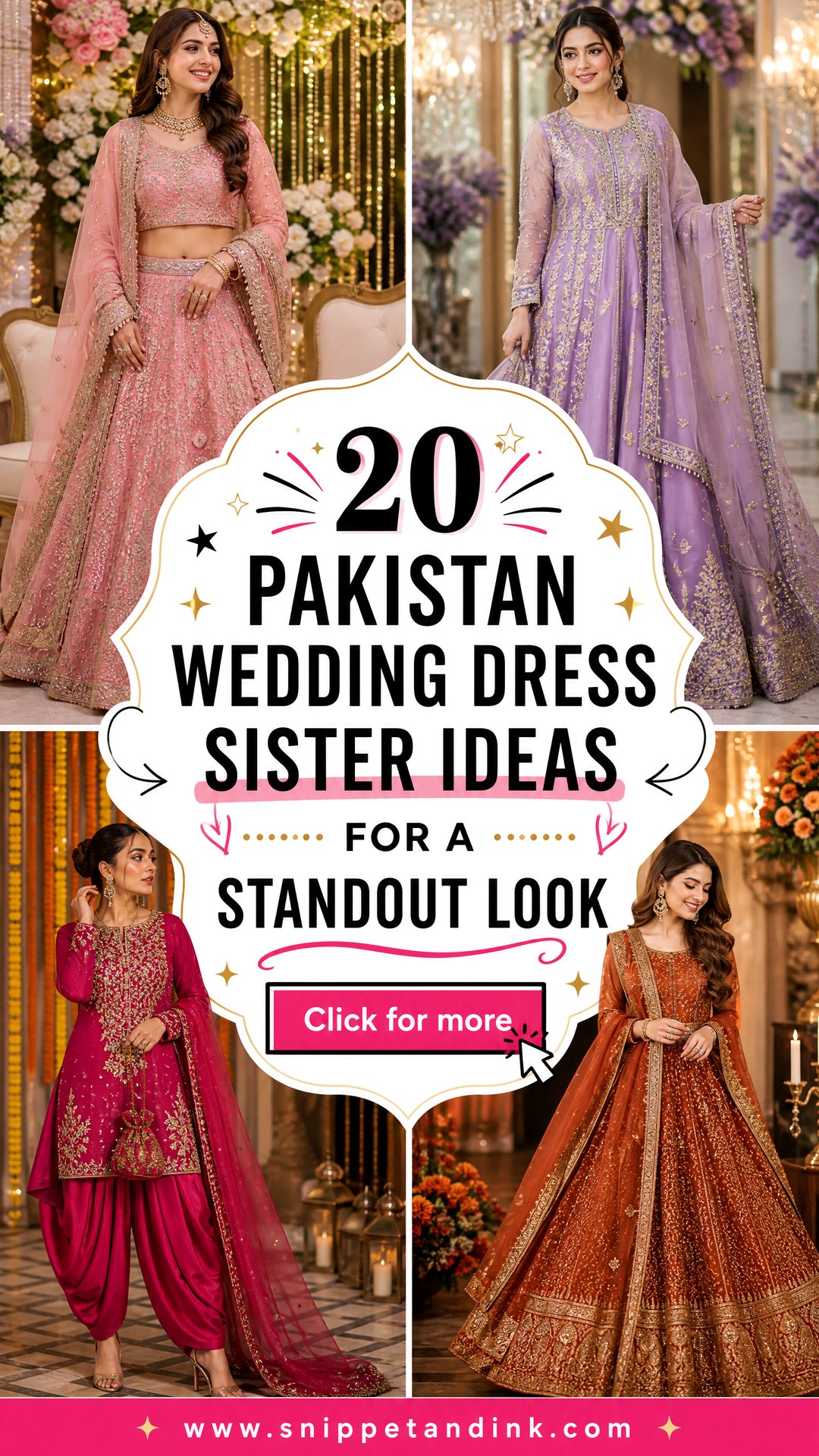
Spreading Your Wardrobe Across Mayon, Mehndi, Nikkah, Baraat and Walima
Most sisters attend four or five functions, and buying a full heavy outfit for each one is rarely necessary. I plan the whole run together, deciding which night gets the investment piece and which pieces can be worn twice.
- Mayon and dholki: simple, comfortable cotton or lawn in yellow or bright colours. These are home events, often with turmeric and oil around, so nothing precious.
- Mehndi: colour and movement. A sharara, gharara or dhoti set you can dance in, with a lighter dupatta.
- Nikkah: understated and modest. Pastels or soft tones, with your head covered if the family expects it. Confirm the bride’s colour before anything else.
- Baraat: usually the most formal night for the bride’s family, so this is where I put the heaviest outfit and the best jewellery.
- Walima: hosted by the groom’s family. The groom’s sister dresses up here; the bride’s sister can go a step lighter.
A single good dupatta or a set of statement earrings can carry across two functions without anyone noticing. Lighter outfits from the mayon and mehndi also travel well if part of the wedding is abroad.
1. Pakistani Mehndi Yellow Sharara Outfit
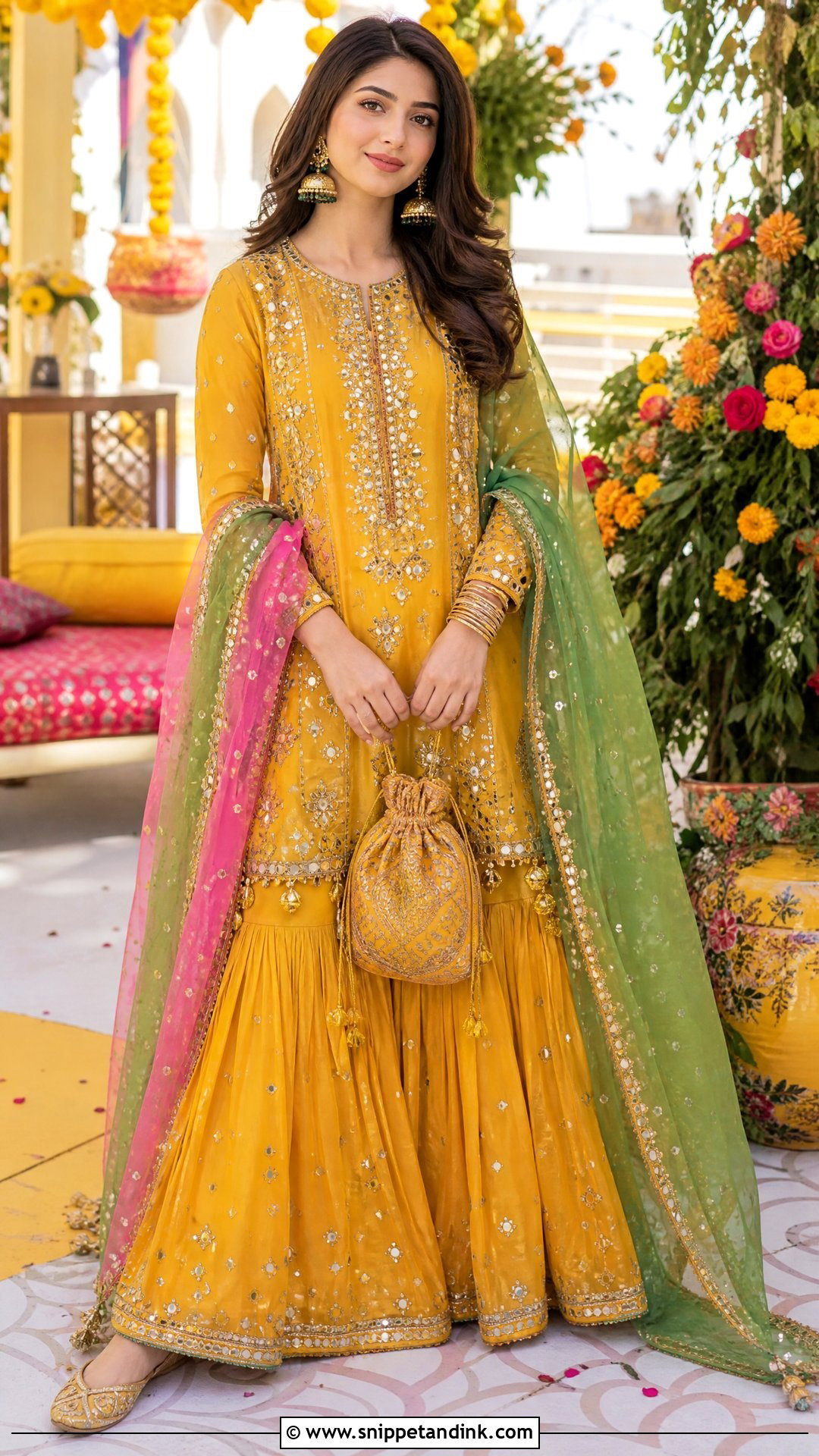
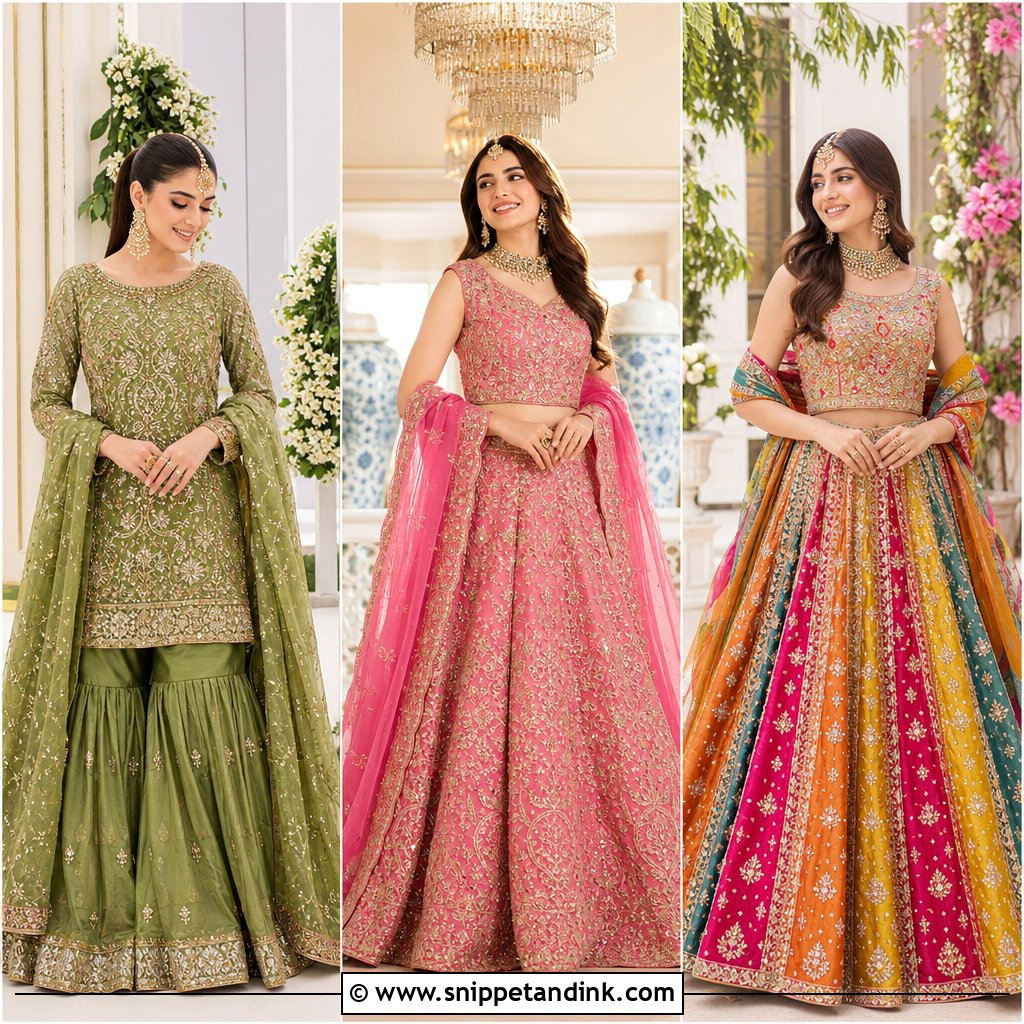
A yellow sharara belongs at the mehndi. Keep the kameez short with mirror work, gota or small florals, nothing close to bridal weight. Paneled shararas move well, but I check that each panel is cut on the same grain, or one leg swings differently from the other when you dance. A green, hot pink or orange organza dupatta over one shoulder, gold jhumkas, colourful bangles and a potli bag finish it. Khussas keep you on your feet for hours. A flower-trimmed braid and a bright lip suit the mood.
2. Pakistani Green Gharara Wedding Outfit
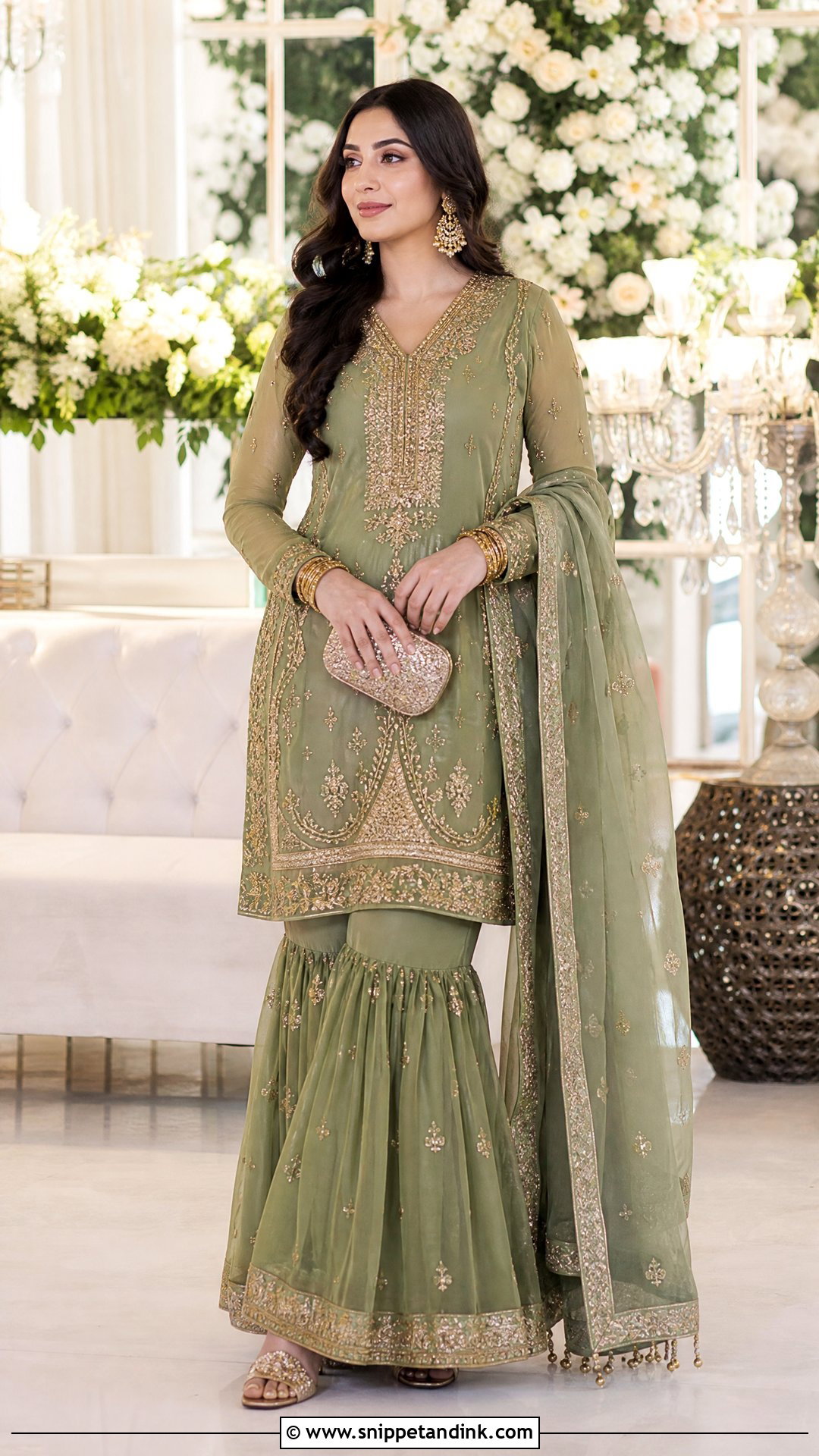
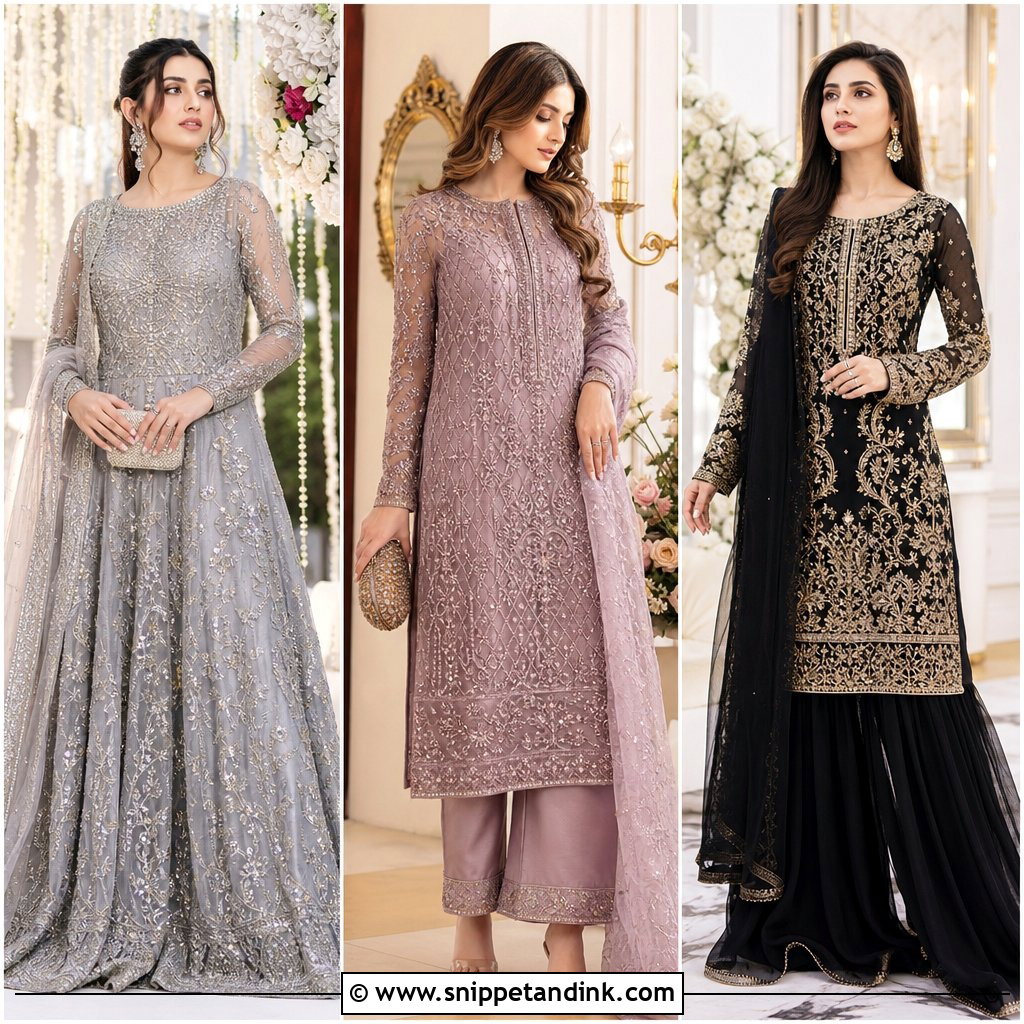
Green in a gharara feels traditional and grown-up. Choose a fitted, knee-length kameez with fine zardozi, dabka or sequins, then a gharara with decoration at the knee and hem. The kameez length has to meet that knee band neatly, so I always fit the two together, not separately. A light net dupatta with a firm border keeps the outline clean. Antique gold earrings, stacked bangles, block heels or cushioned khussas, a sleek bun and a small tikka finish it. For a sister who wants something traditional but lighter to manage than a heavy lehenga, this is the one I suggest first.
3. Pakistani Pink Lehenga Wedding Outfit
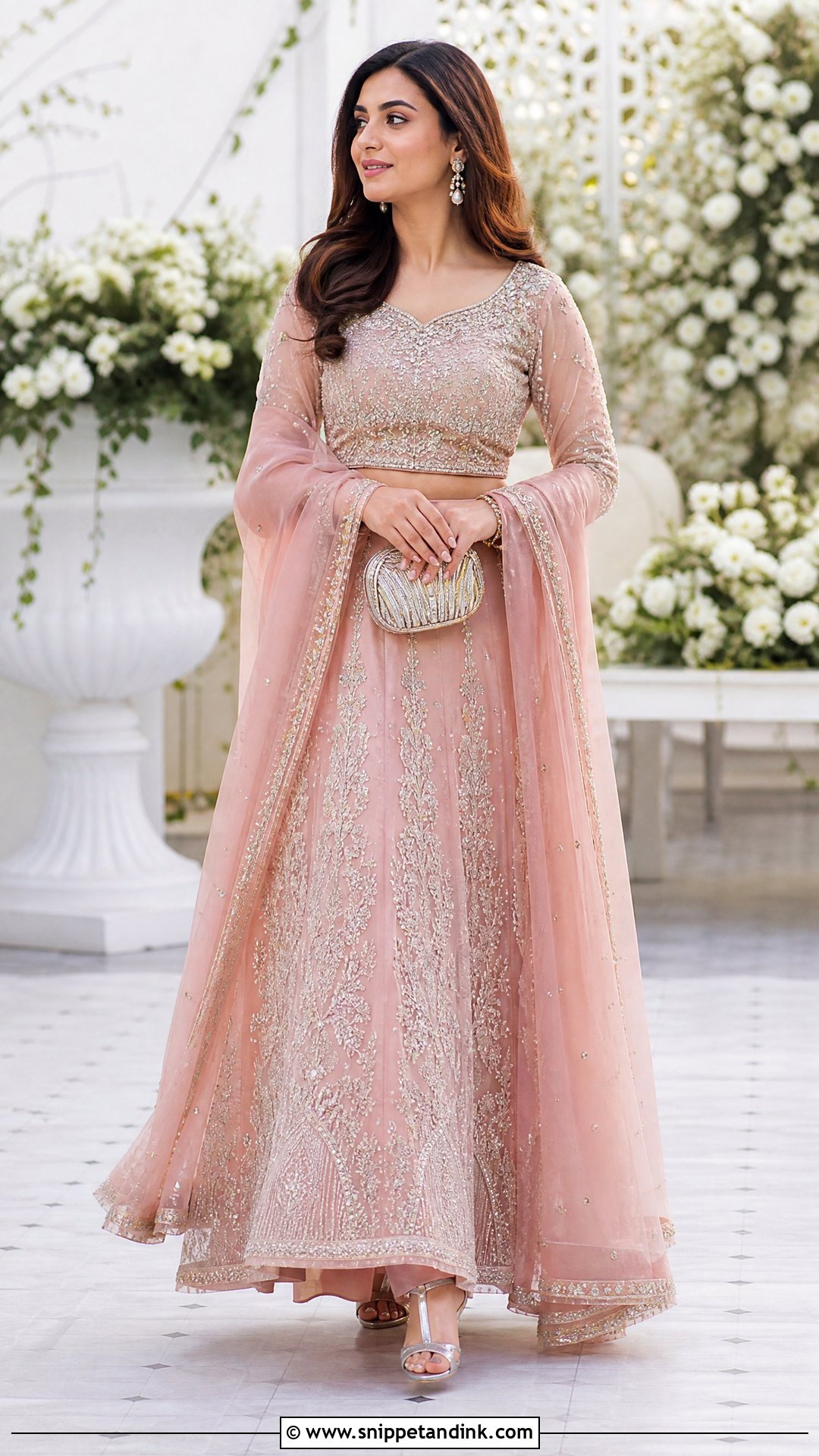
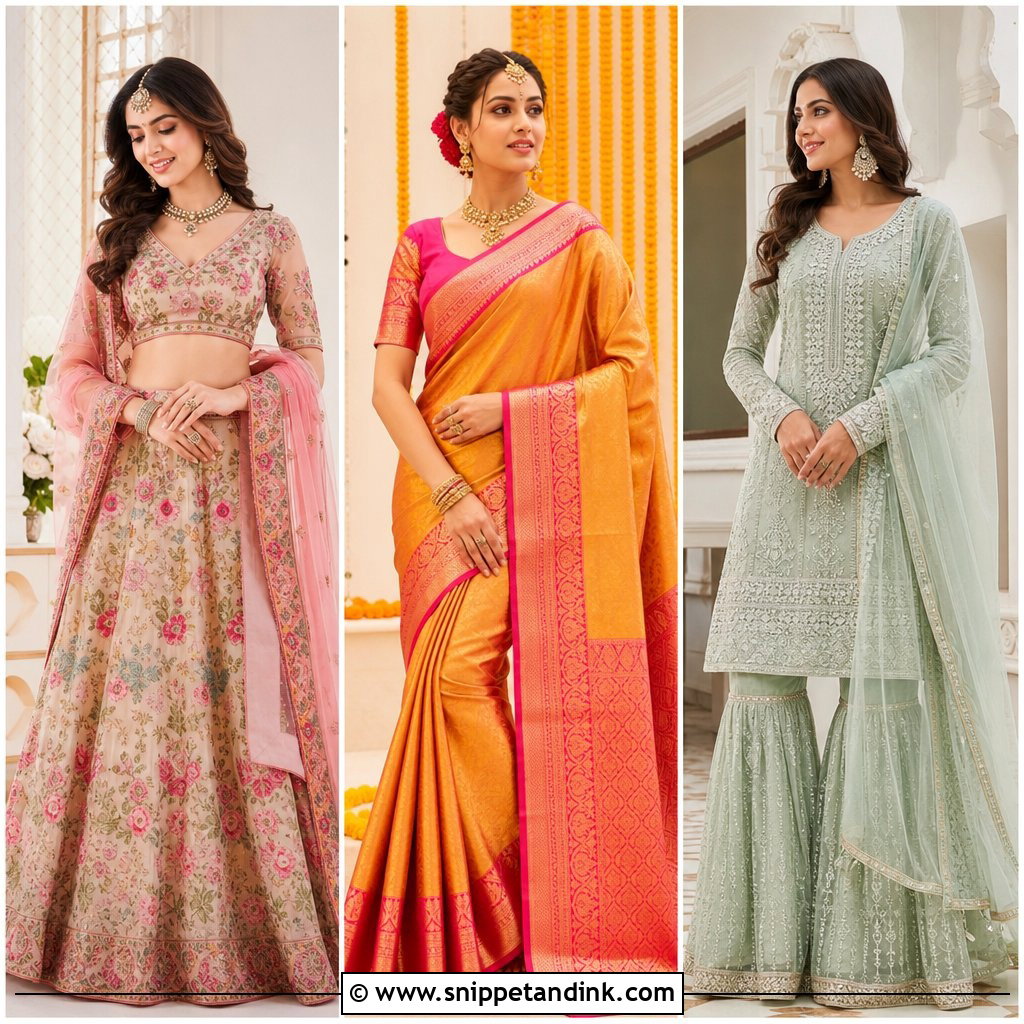
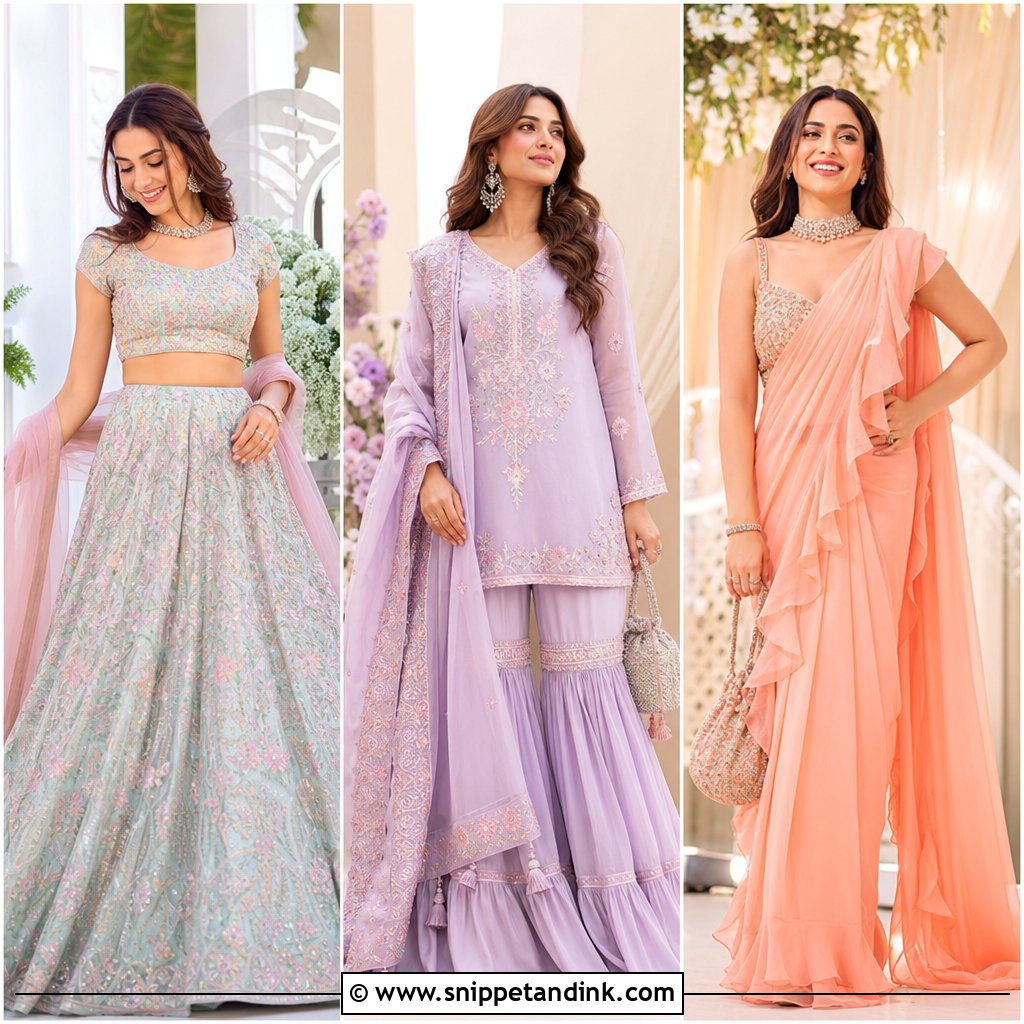
Soft pink is the safest beautiful colour for a sister at a nikkah or a daytime baraat. An A-line lehenga with thread embroidery, pearls or restrained silver work, a fitted blouse with a modest neck and comfortable sleeves, and a sheer organza dupatta. I suggest flats for any event longer than four hours; nobody notices them under a lehenga. Pearl earrings, a delicate bracelet and a silver minaudière keep the accessories quiet. Fresh makeup with rosy cheeks and defined eyes and loose waves or a low bun finish the look. You look important without any bridal-level ornament.
4. Pakistani Orange Peplum Sharara Outfit
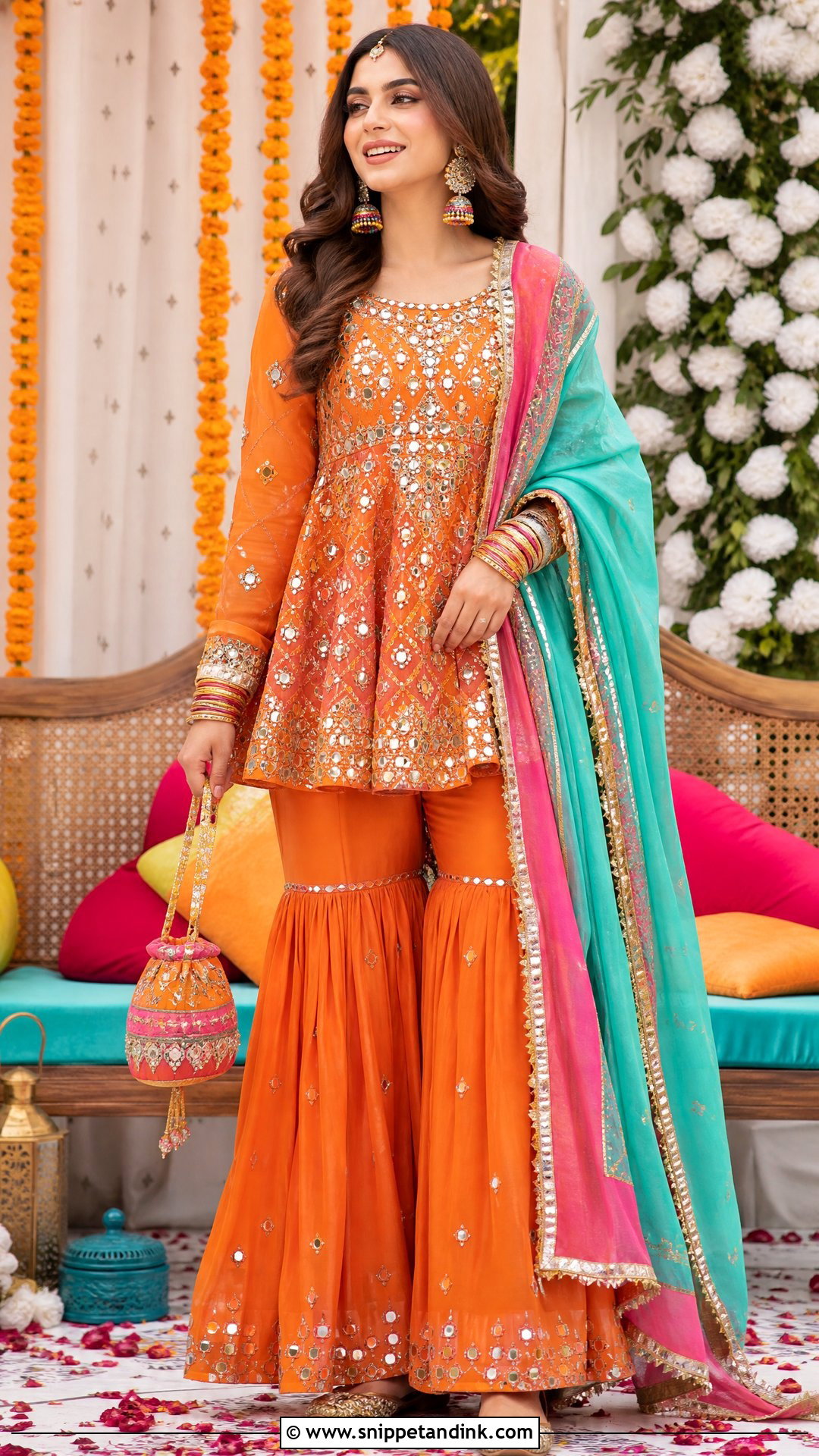
An orange peplum with a sharara has the energy a dholki or mehndi calls for. The peplum gives shape at the waist, and mirror work or gota ties it to the occasion. I balance a decorated top with a plain sharara; two heavily worked pieces together read as costume rather than celebration. Pink or turquoise dupatta for contrast, statement jhumkas, mixed bangles, a potli and gold khussas. A side braid and a hint of coloured eyeliner keep it young.
5. Pakistani Ivory Anarkali Nikkah Outfit
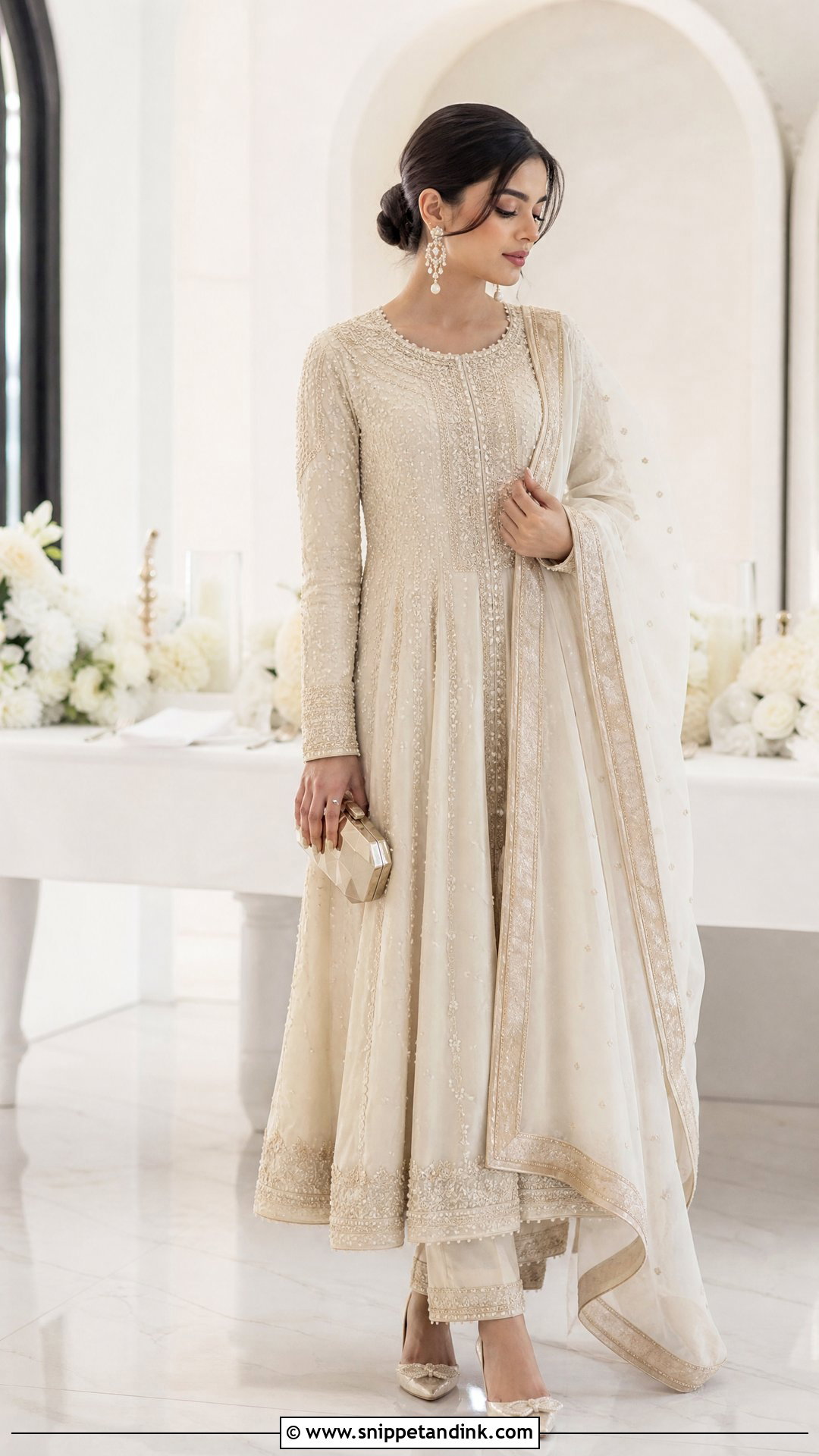
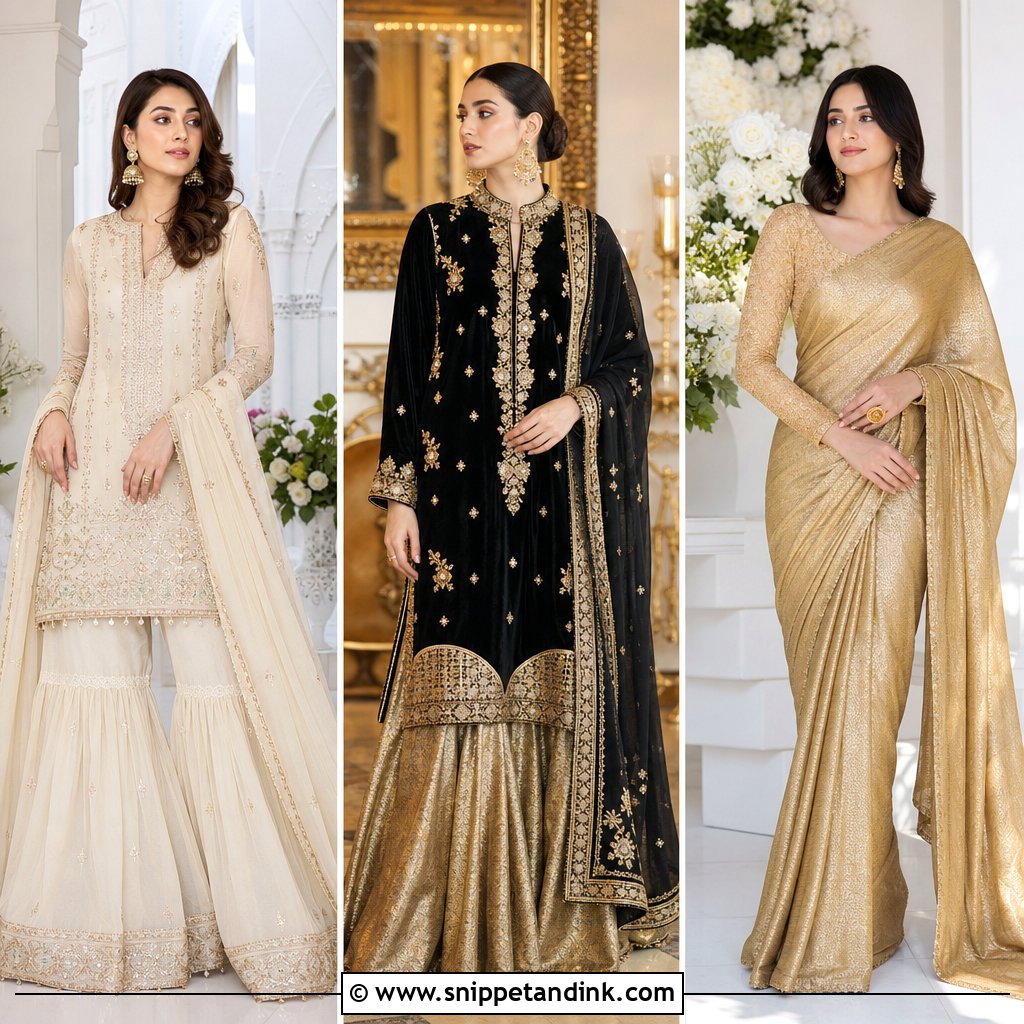
An ivory Anarkali is graceful at a nikkah, but it is the outfit I ask sisters to clear with the bride before buying. Many brides wear ivory, off-white or pale gold for the nikkah itself, and two women in similar ivory at the signing table is an awkward photograph. If she has chosen a different colour, go ahead: chiffon, organza or raw silk with pearl or tonal embroidery, straight trousers, a dupatta in ivory, champagne or pale gold, pearl drops and a metallic clutch. Pointed flats suit the long ceremony.
6. Pakistani Red Angrakha Wedding Outfit
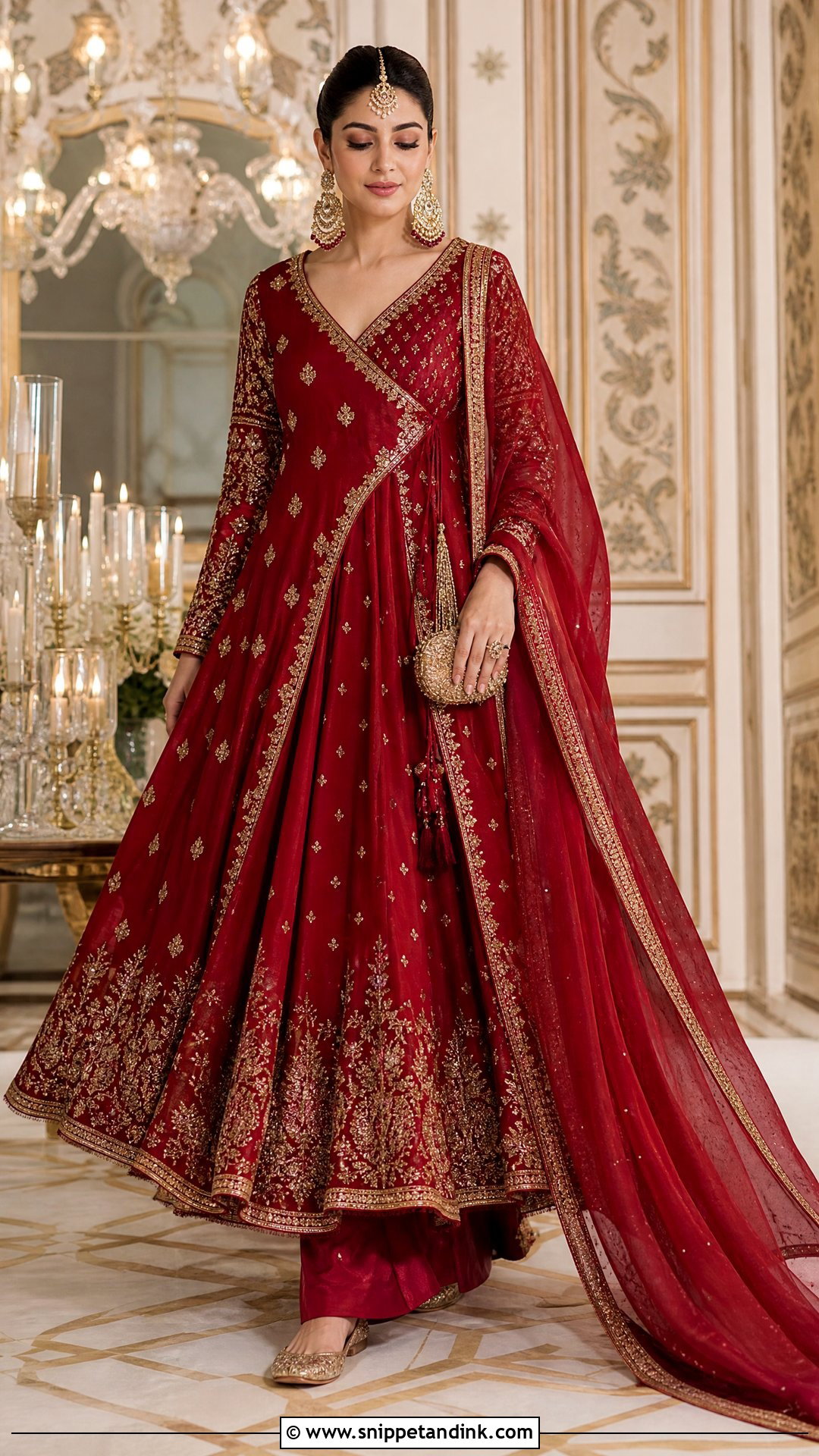
A deep red angrakha can look regal on a sister, but only when the bride has chosen another colour. At most baraats, red belongs to her. If you have the go-ahead, choose maroon, ruby or deep crimson, with antique gold work at the neck, sleeves and border, and no train or bridal motifs. The wrap bodice defines the waist; I add a hidden hook under the tie because it loosens with movement. A light gold-edged dupatta, chandelier earrings and antique khussas finish it.
7. Pakistani Lavender Pishwas Walima Outfit
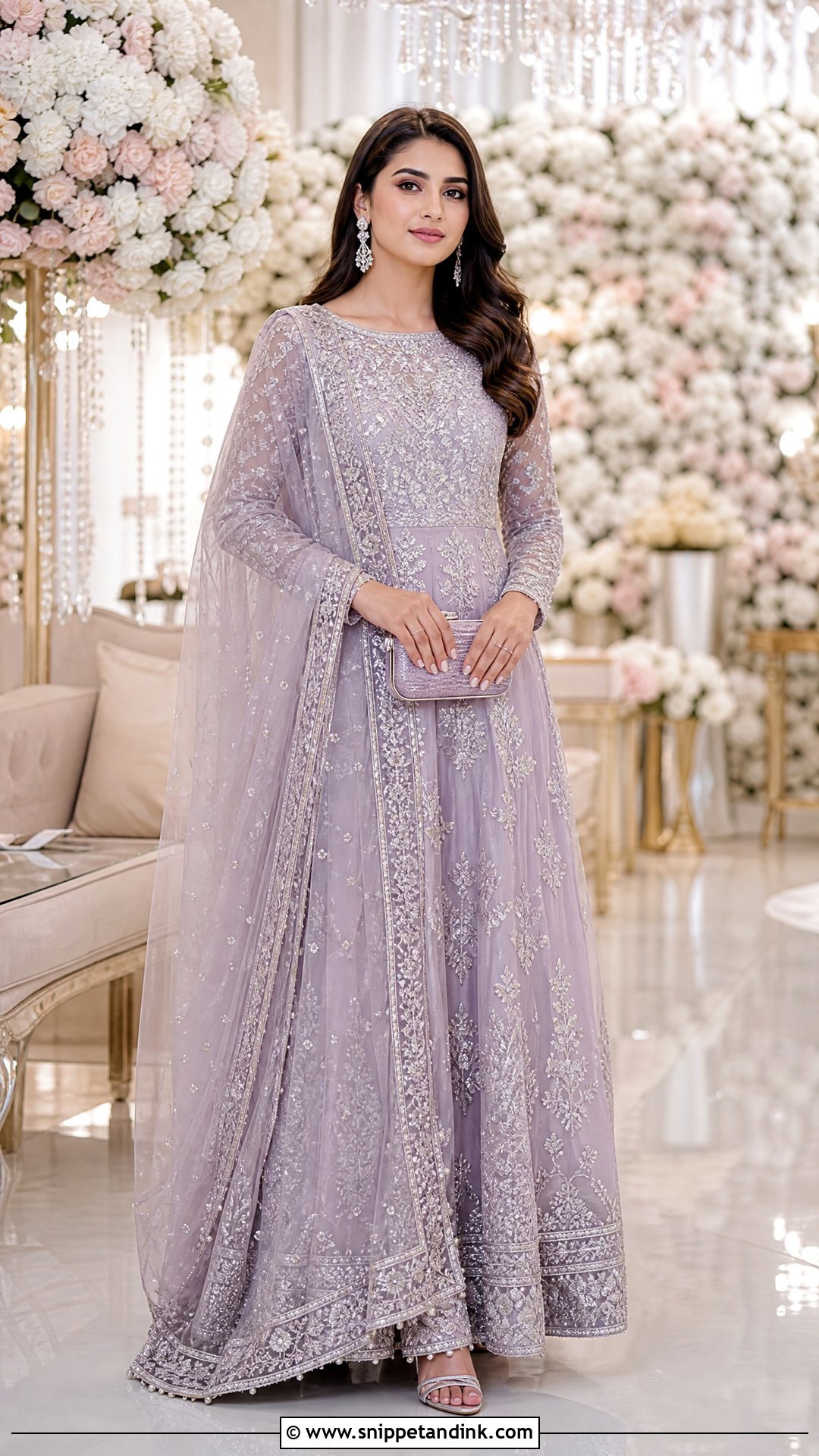
Lavender gives a walima a cool, modern feel. A floor-length pishwas with delicate silver embroidery has enough presence for close family without looking bridal. Keep the flare controlled: a very wide pishwas gets stepped on in a crowded hall. Pair it with a sheer dupatta edged in crystal or scattered sequins, silver earrings, a small clutch and metallic heels. Lavender reads well against dark evening décor in photographs, and mauve lips with soft waves suit it.
8. Pakistani Blue Velvet Maxi Outfit
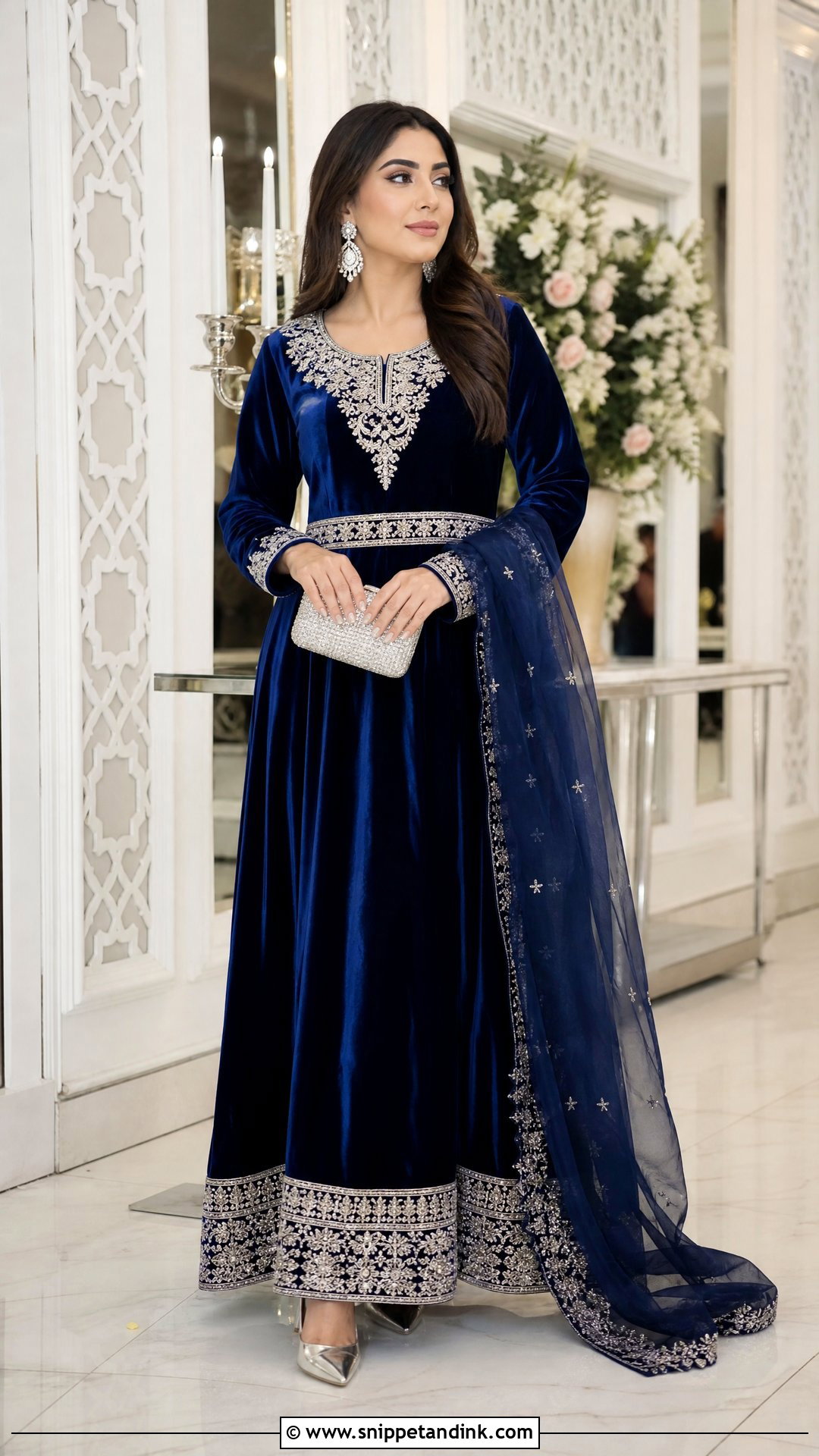
Royal blue velvet is the winter option, at a cold-weather baraat or an evening reception. The fabric has depth of its own, so place the embroidery only at the neckline, cuffs, waist and hem. I keep the cut straight or lightly flared, because velvet adds bulk wherever it gathers. A matching blue or soft silver organza dupatta adds movement. Crystal earrings, a silver clutch and pointed heels finish it, or embellished flats if you will be standing for hours. Velvet marks easily where it rubs, so carry the clutch in your hand rather than tucked under your arm.
9. Pakistani Mint Green Cape Lehenga Outfit
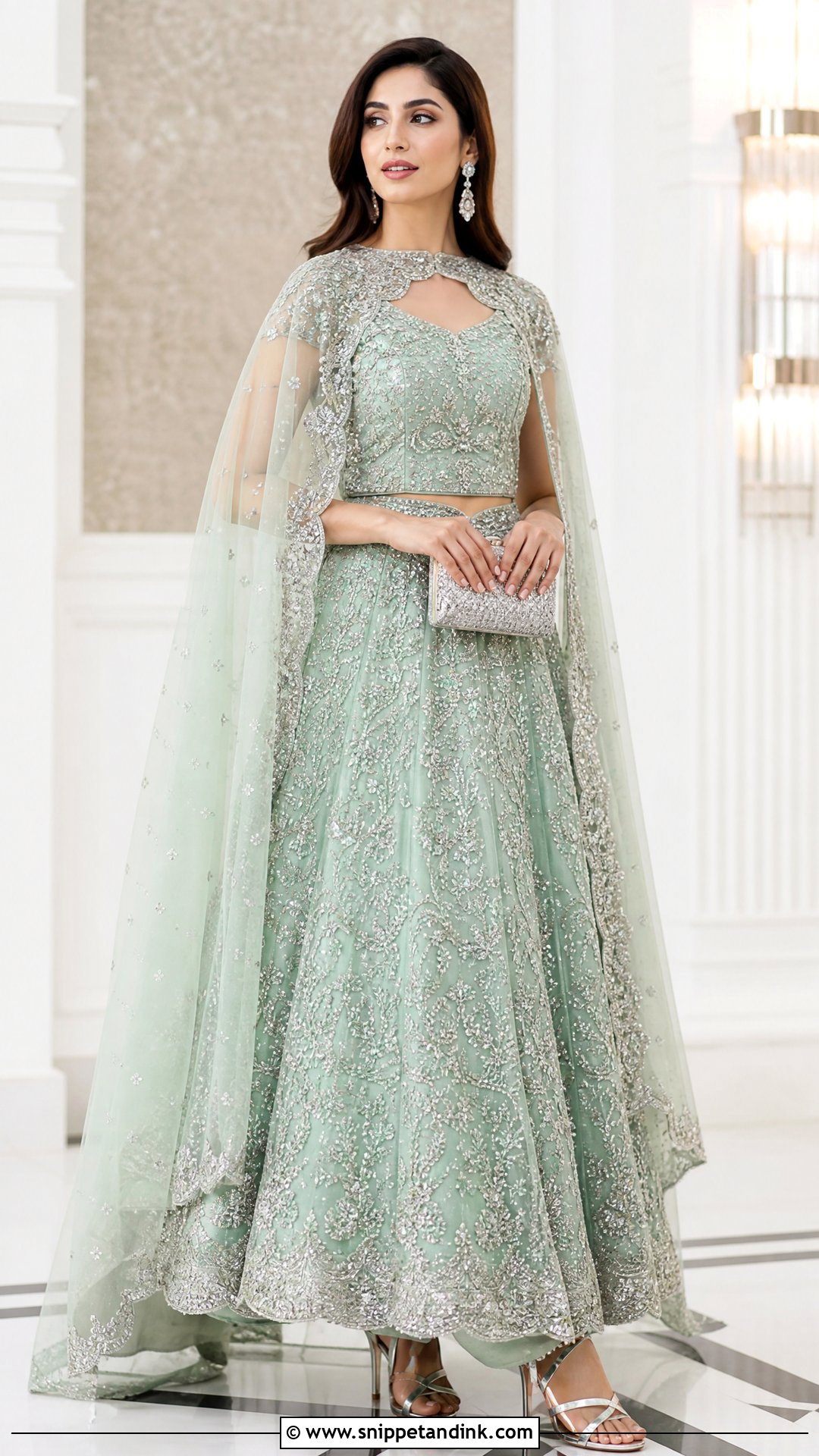
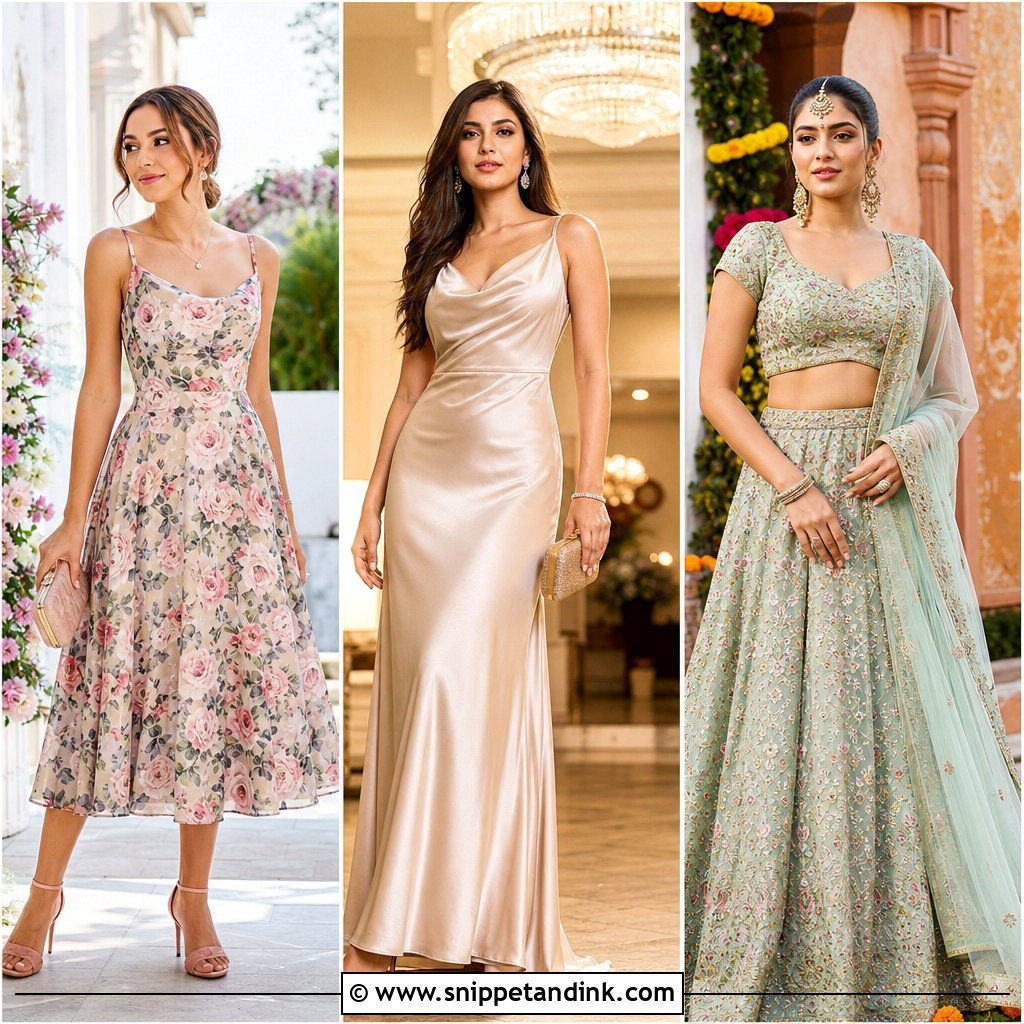
A cape lehenga is the modern answer for a sister who dislikes managing a dupatta. Mint with fine silver threadwork, pearls or crystals, a fitted blouse and a sheer cape that falls to the elbow or past the waist. The cape fabric has to be light, so I check it by lifting it: if it doesn’t float, it will drag at the shoulders and hide the blouse. Because the cape already decorates the neckline, skip a heavy necklace. Crystal drops, a silver box clutch and a smooth ponytail suit a walima, engagement or modern indoor event.
10. Pakistani Black Embroidered Saree Outfit
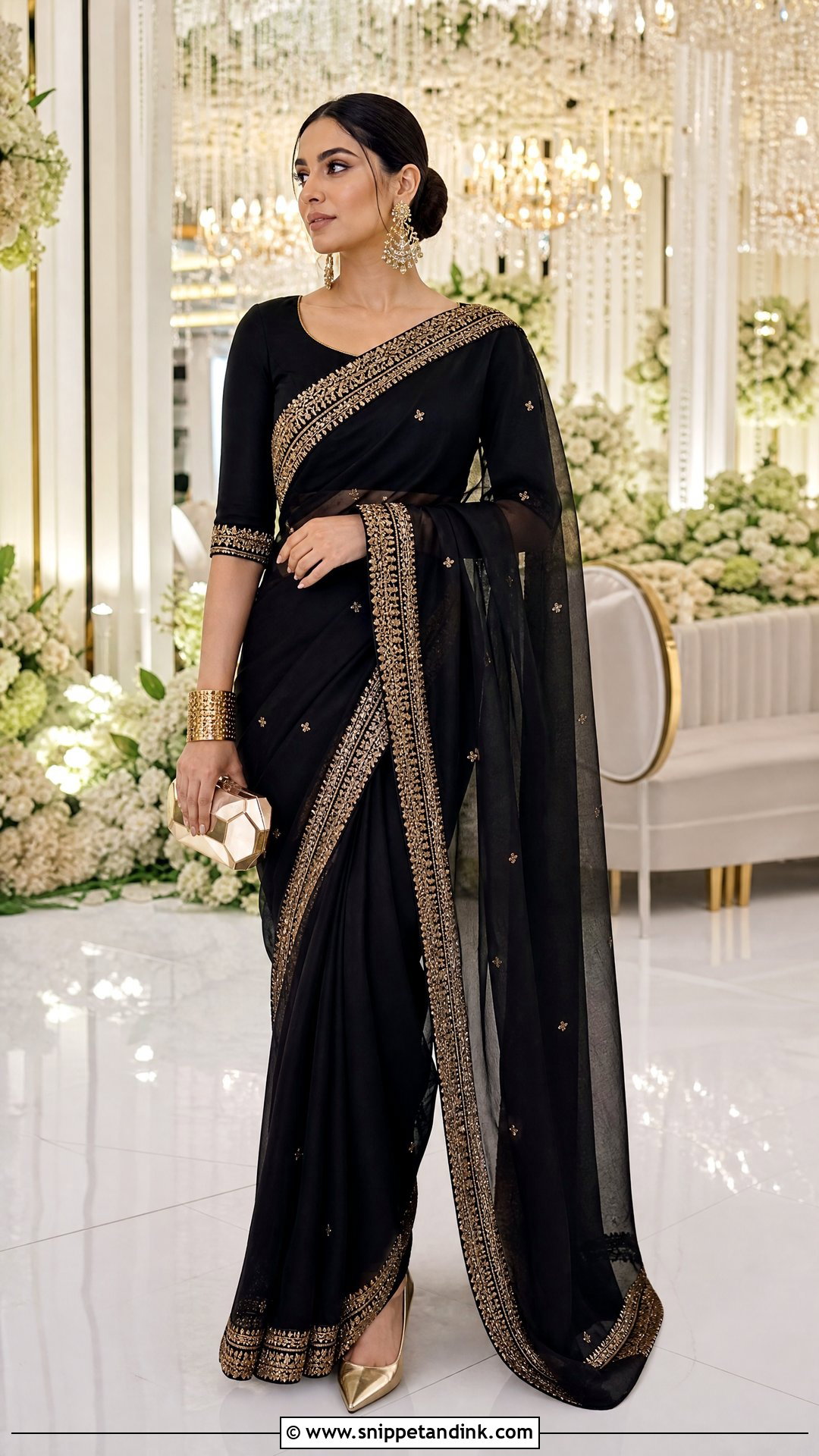
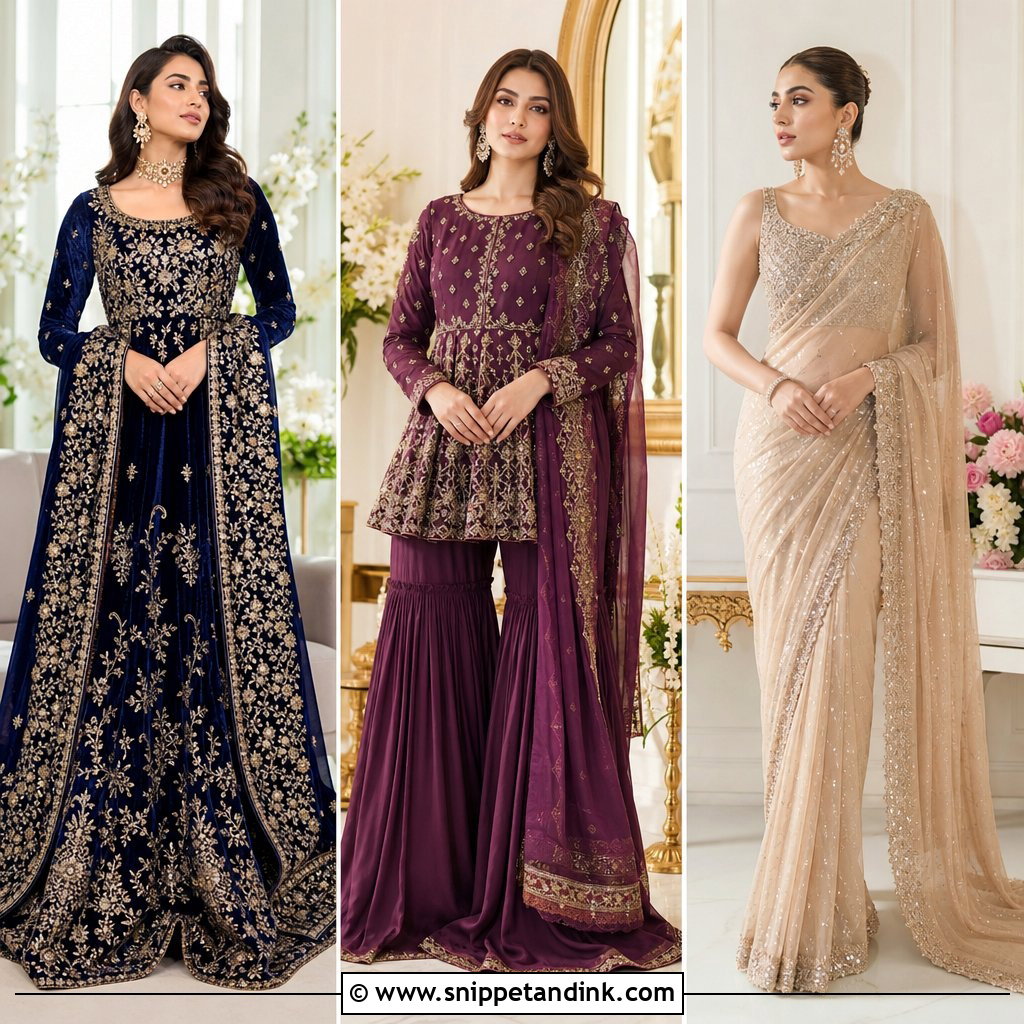
Black works for an evening reception when the family is comfortable with it, and in some families it isn’t, so ask first. A chiffon, net or organza saree with gold embroidery or sequinned edging and a well-fitted blouse with a secure neck. I pleat and pin the drape firmly at the waist and shoulder, because a sister spends the night greeting people and bending to hug elders. Hem the saree to the height of the exact heels you will wear. Gold earrings, a cuff, a compact clutch and a sleek bun keep it formal.
11. Pakistani Plum Long Shirt Lehenga Outfit
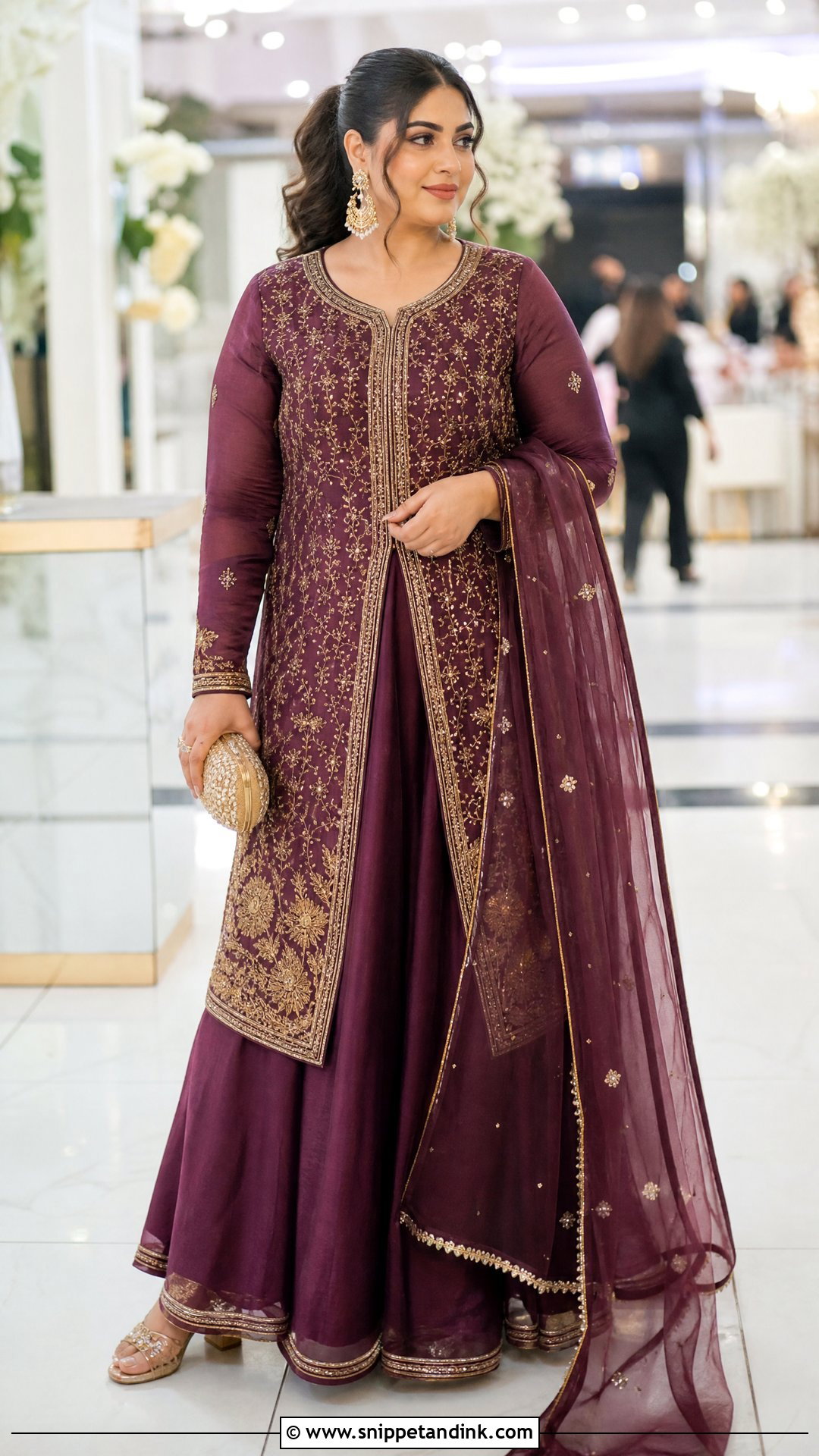
Plum gives the richness of a dark wedding colour without borrowing the bride’s red. A long, front-open embroidered shirt over a lightly flared silk, jamawar or raw silk lehenga. The open front draws a long line down the body, which is why I recommend this cut for many figures. Have the shirt tailored to skim the waist and hips rather than cling. Antique gold work at the neck, cuffs and borders, a sheer matching dupatta, gold drops, block heels and a soft curled ponytail finish it.
12. Pakistani Floral Organza Lehenga Outfit
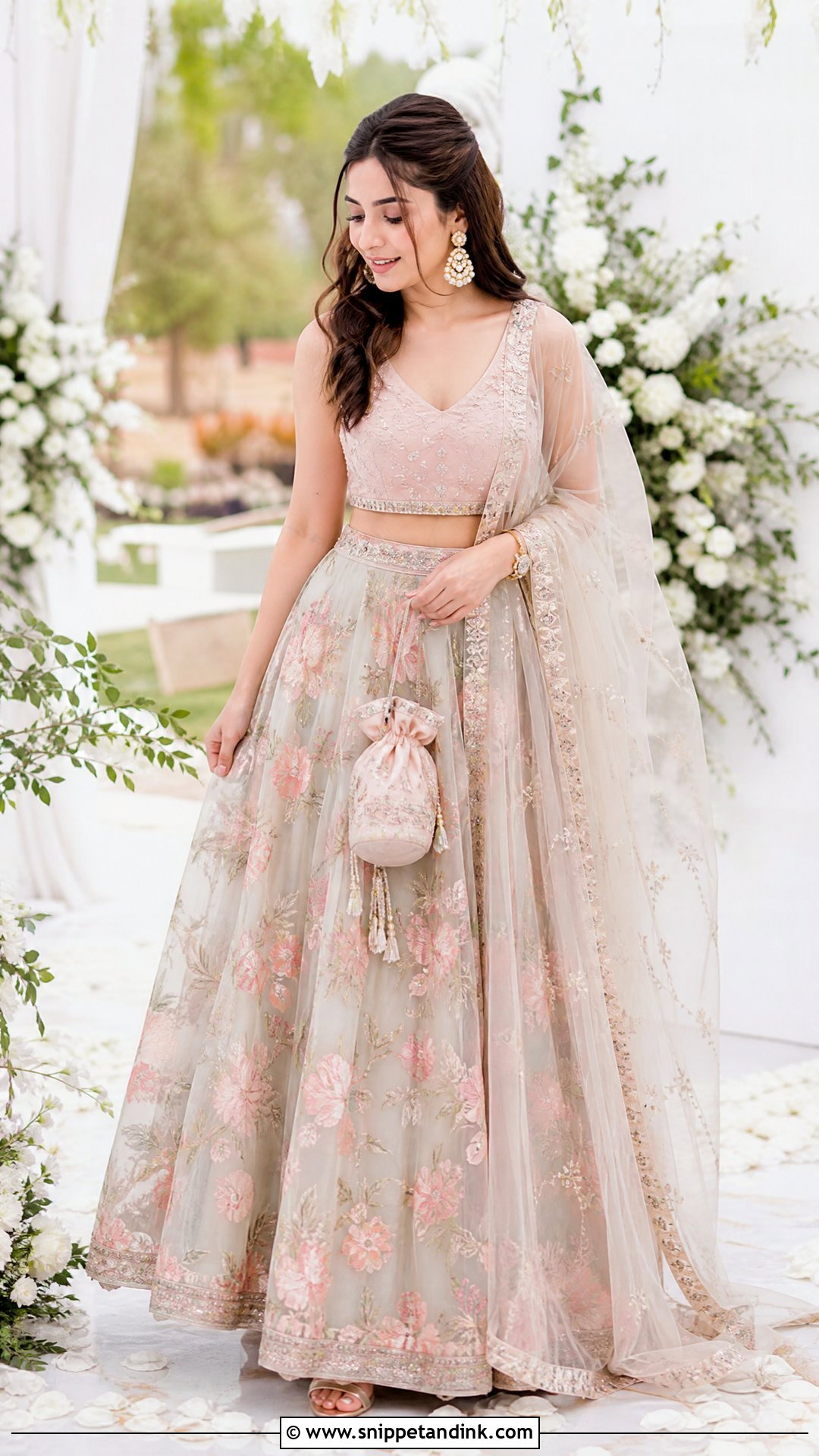
Florals feel right at a daytime nikkah or a garden function. An organza lehenga with embroidered flowers in blush, peach, lilac or mint, paired with a plain or lightly worked blouse so the skirt stays the focus. A sheer dupatta with tiny scattered motifs pulls it together. Organza crushes when you sit, so I tell sisters to fluff the skirt each time they stand for photographs. Pearl earrings, a pastel potli, low metallic sandals and half-up waves with fresh flowers keep it light. It suits a younger or older sister equally well.
13. Pakistani Gold Tissue Gharara Outfit
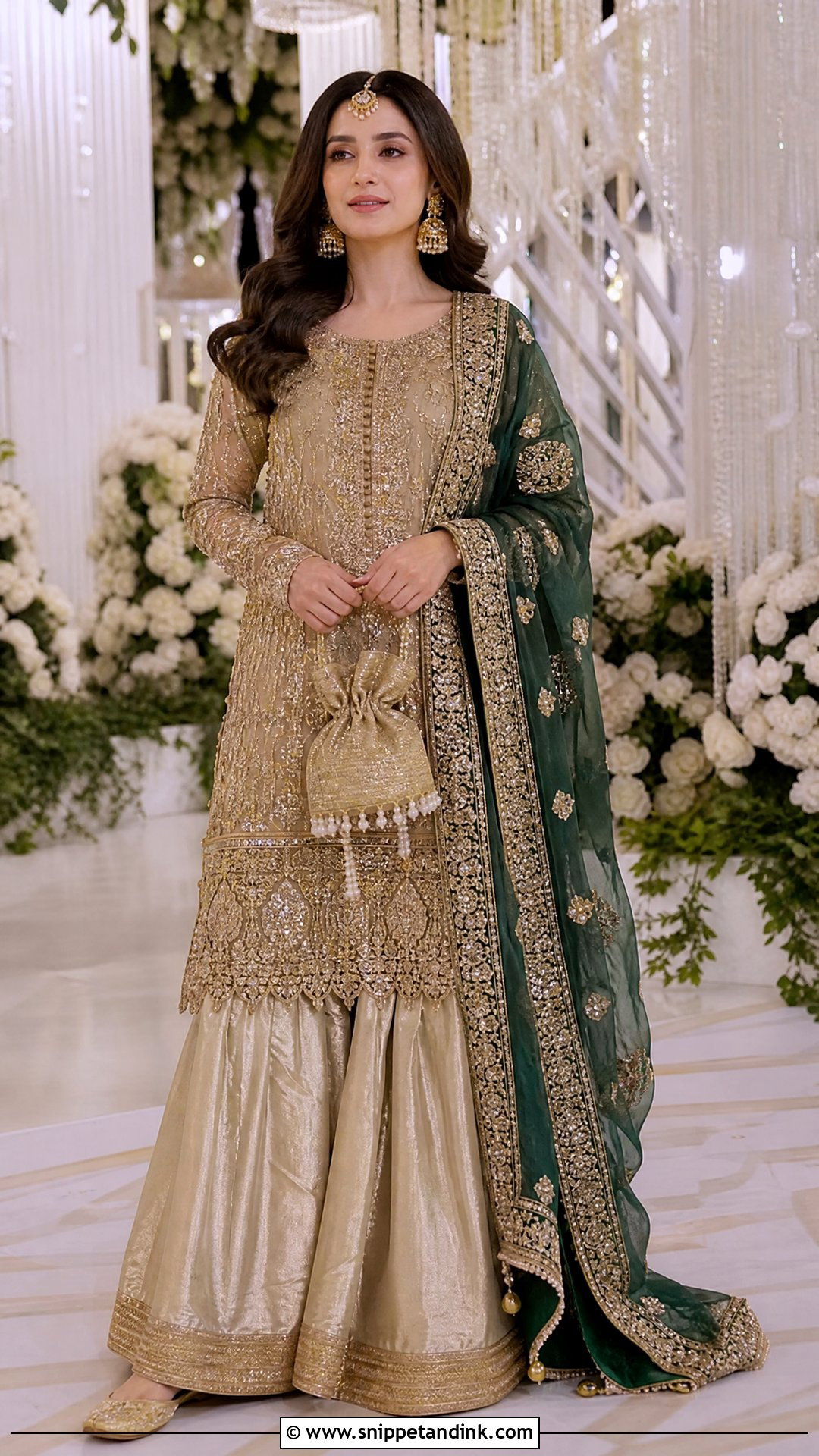
Gold tissue is glamour without heavy embroidery, and a tissue gharara is classic baraat wear. Choose a champagne or antique gold that flatters your skin; very yellow gold can make some complexions look sallow under hall lighting. A knee-length kameez with zardozi, pearls or handwork at the neck and borders, then a contrasting maroon, emerald or dusty pink dupatta, which gives the camera something to define. Jhumkas, a small tikka, a structured potli and cushioned gold khussas complete it. Tissue frays at cut edges, so check that every seam is properly finished inside.
14. Pakistani Teal Straight Shirt Outfit
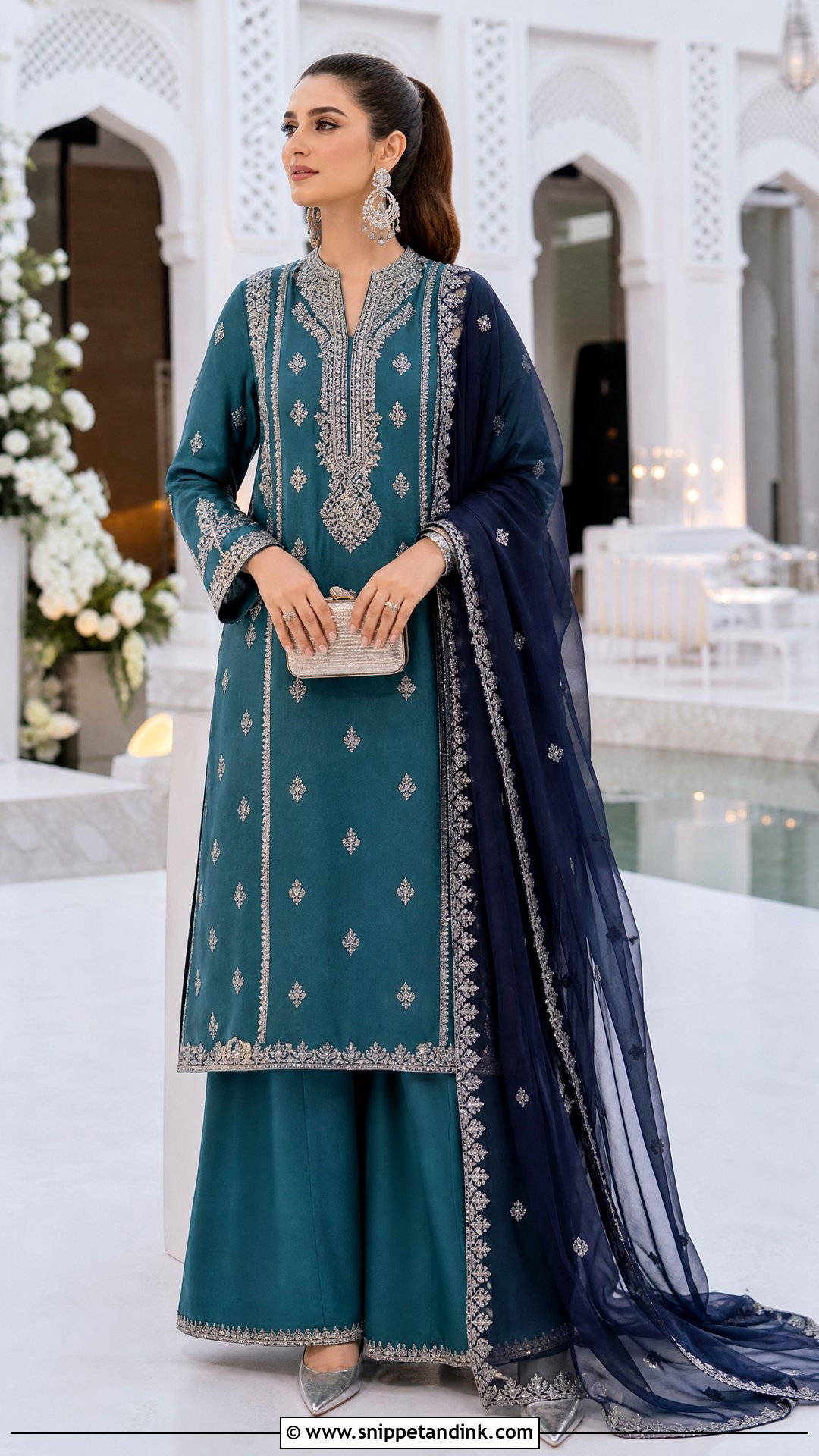
A teal straight shirt with wide-leg trousers is what I suggest for the sister who will be doing the most running around. A long kameez with side slits, fitted sleeves and embroidery at the neckline and cuffs, over palazzos or tailored wide-leg pants in the same colour. A silver, turquoise or navy dupatta adds contrast. A straight shirt never catches on chairs or stairs the way a full flare does. Statement earrings, a slim clutch, pointed heels and smooth waves suit a nikkah, engagement or small reception.
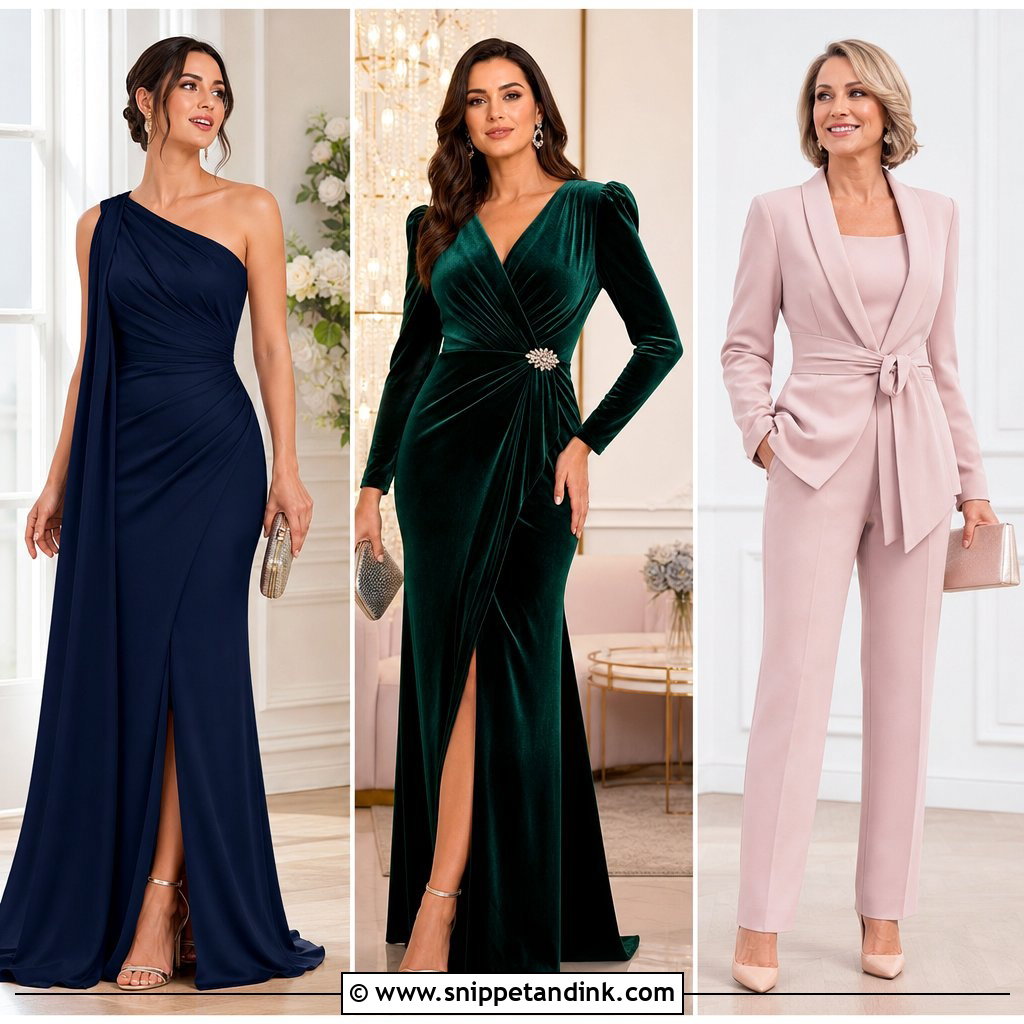
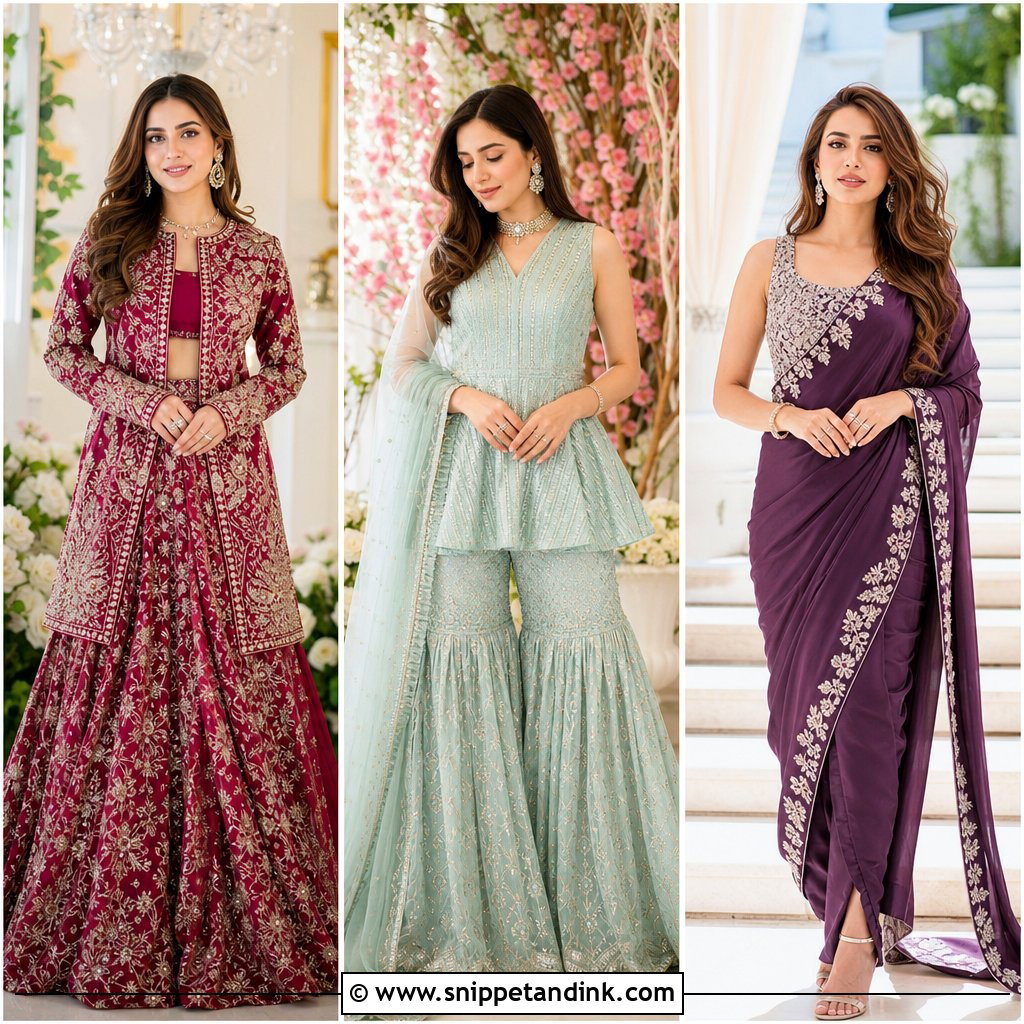
15. Pakistani Peach Jacket Lehenga Outfit
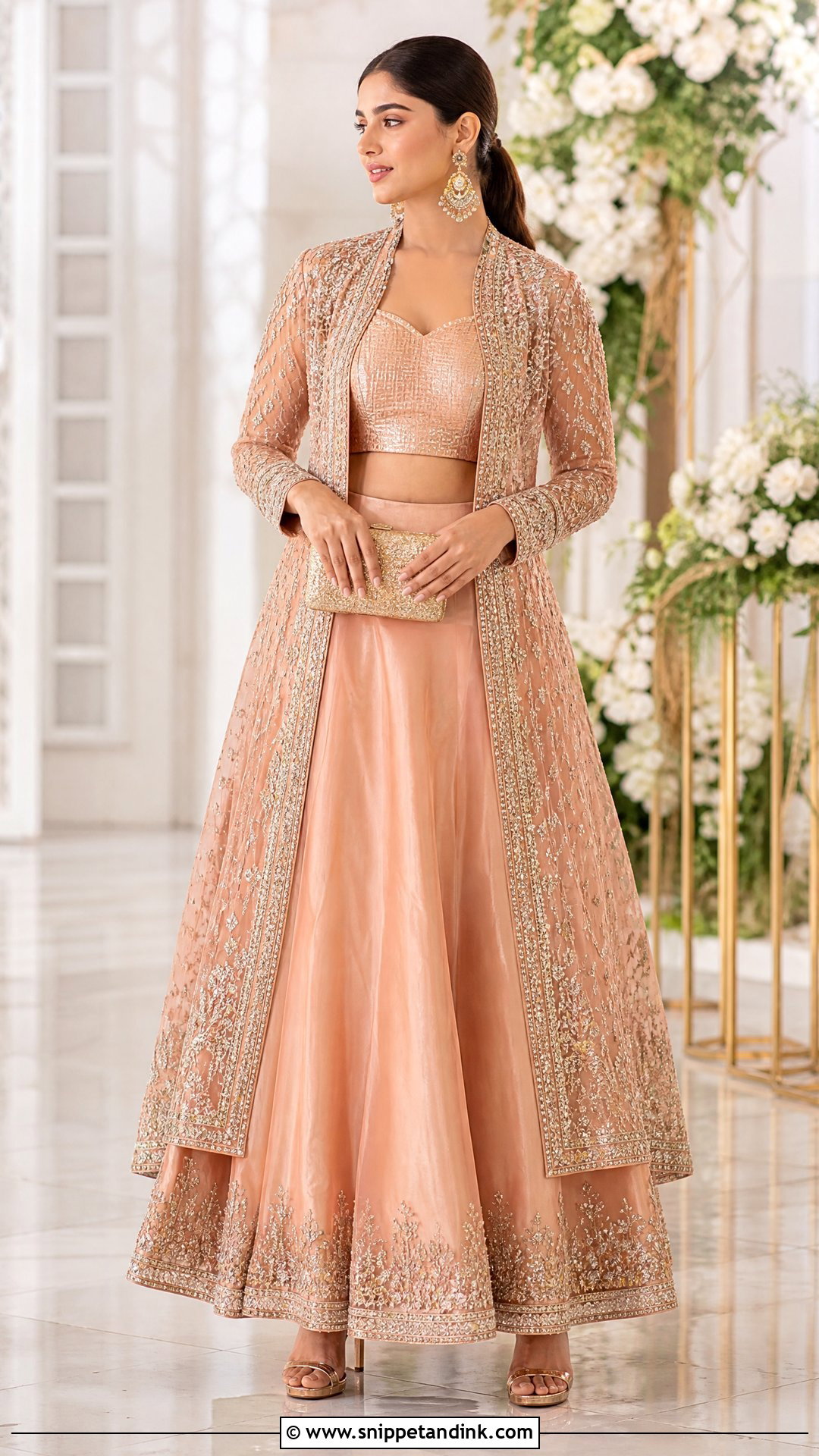
A long jacket gives a peach lehenga structure and a modern line. Start with a simple silk or organza skirt and matching blouse, then layer an open-front sheer or lightly lined jacket. Fine gold threadwork, pearls and florals suit peach. Because the jacket already gives length and coverage, the dupatta can be narrow or left off where the family dress code allows. I check that the jacket shoulders sit exactly at the shoulder bone; if they extend, the whole outfit looks borrowed. Chandelier earrings, a champagne clutch and a low ponytail suit the groom’s sister at a walima or engagement.
16. Pakistani Navy Blue Pishwas Outfit
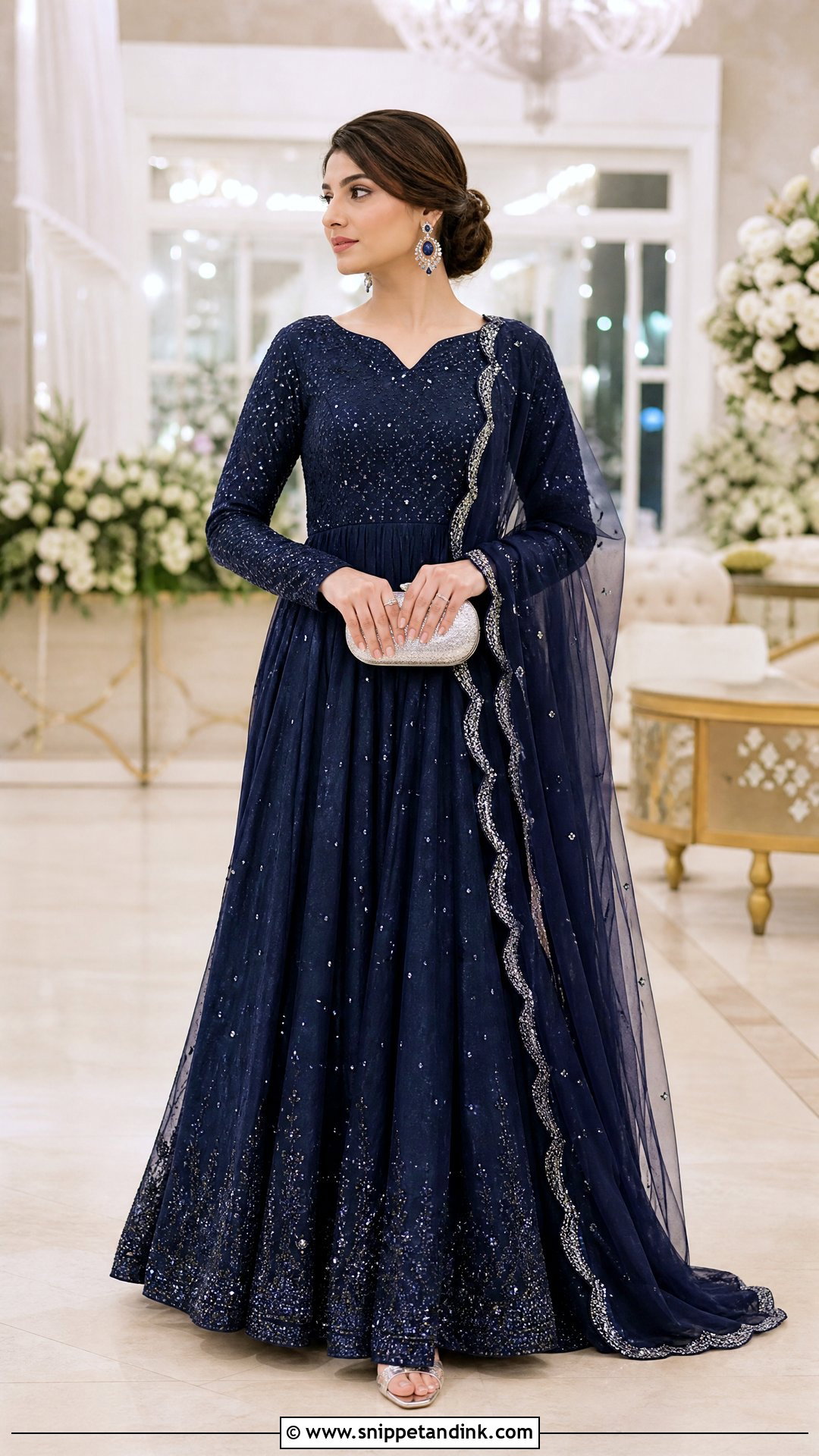
Navy has the depth of black without the severity, and it flatters almost every age. A floor-length pishwas with a fitted bodice, defined waist and even flare, with silver work, fine sequins or blue-on-blue embroidery. A sheer dupatta with a narrow border, sapphire-toned earrings, a silver clutch and low heels finish it. Keep the necklace minimal if the bodice is heavily decorated. I recommend navy often for sisters who are unsure, because it stays clearly separate from almost any bridal palette.
17. Pakistani Fuchsia Dhoti Pant Outfit
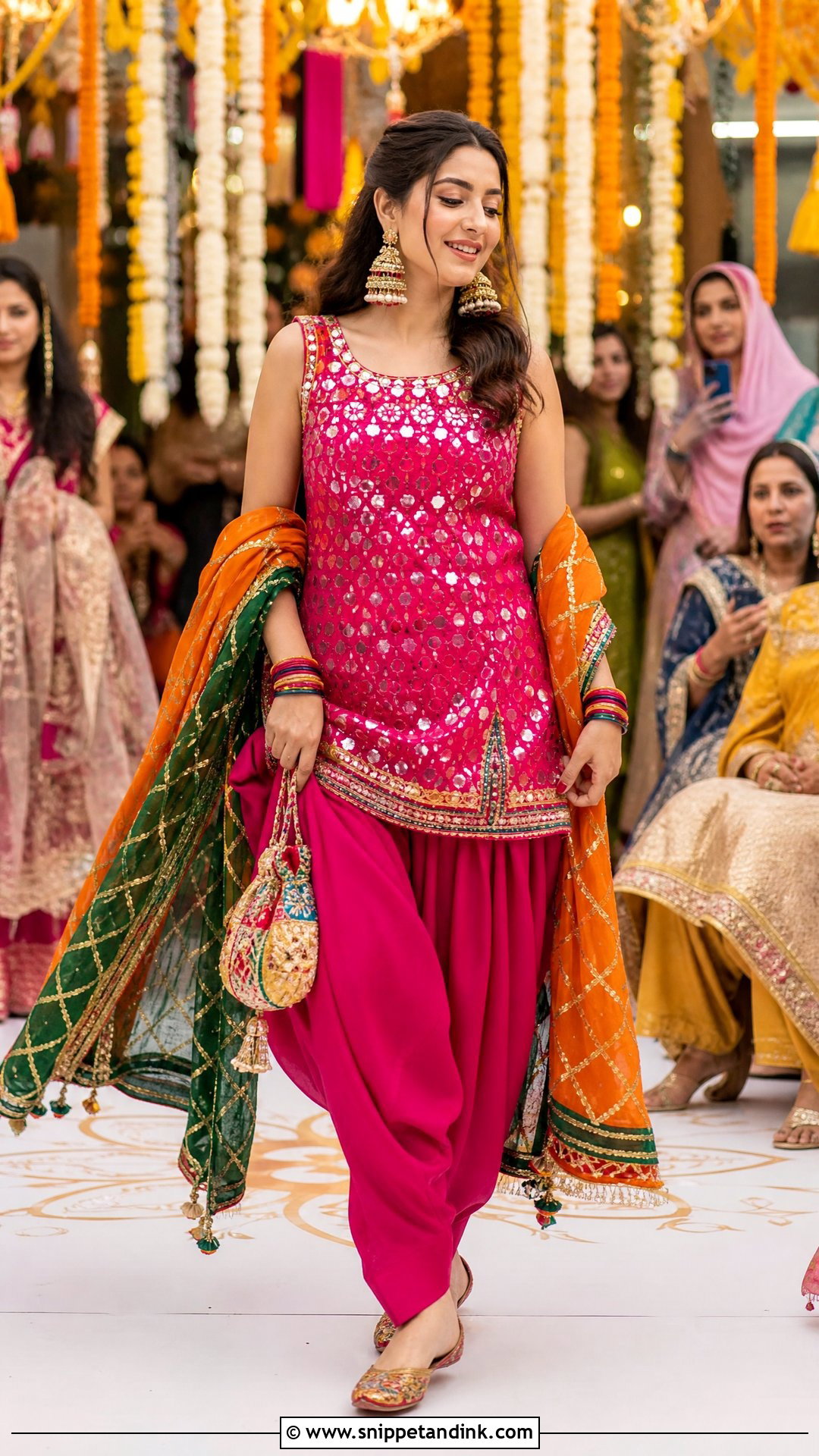
Fuchsia dhoti pants with a short embroidered kameez make a playful mehndi look. Lightweight silk or crepe drapes smoothly; heavier fabric bunches at the hip and looks bulky in photographs. The dhoti is cropped, so the shoes show. I put sisters in embroidered khussas with this outfit for that reason. An orange, yellow or green dupatta with gota edging, oversized jhumkas, mixed bangles and a potli bag finish it, with a high ponytail or decorated braid for dancing.
18. Pakistani White Kurta Sharara Outfit
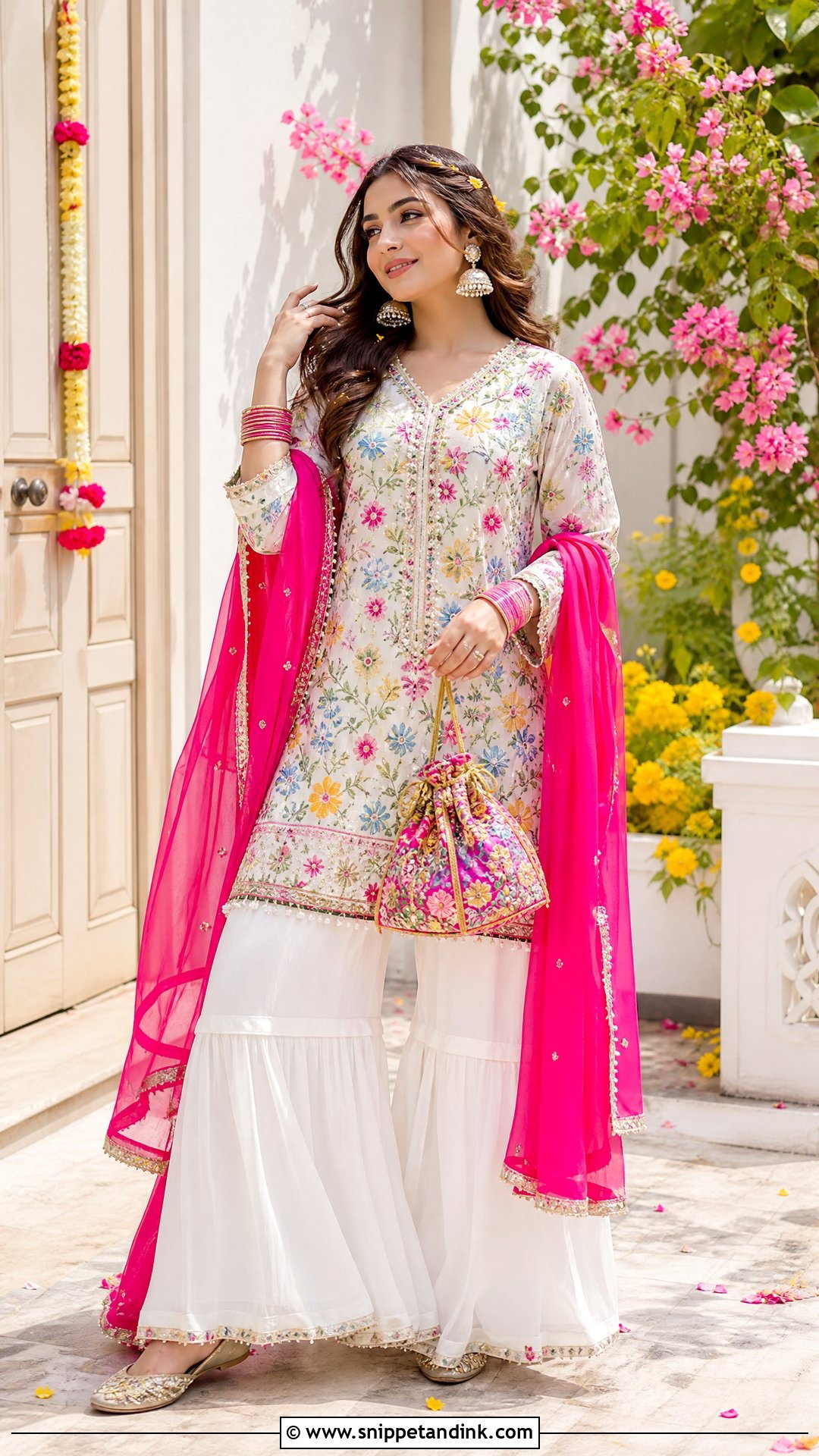
A white kurta and sharara gives colourful embroidery a clean background. A short or mid-length kurta with multicolour threadwork or mirrors, a flowing white sharara with a light border, then a vivid dupatta in pink, green, yellow or turquoise. Pick the potli bag in one of the embroidery colours. White suits a mehndi, mayon or family gathering. As with ivory, I would not wear it to a nikkah without asking the bride, since she may be in white herself.
19. Pakistani Rust Raw Silk Lehenga Outfit
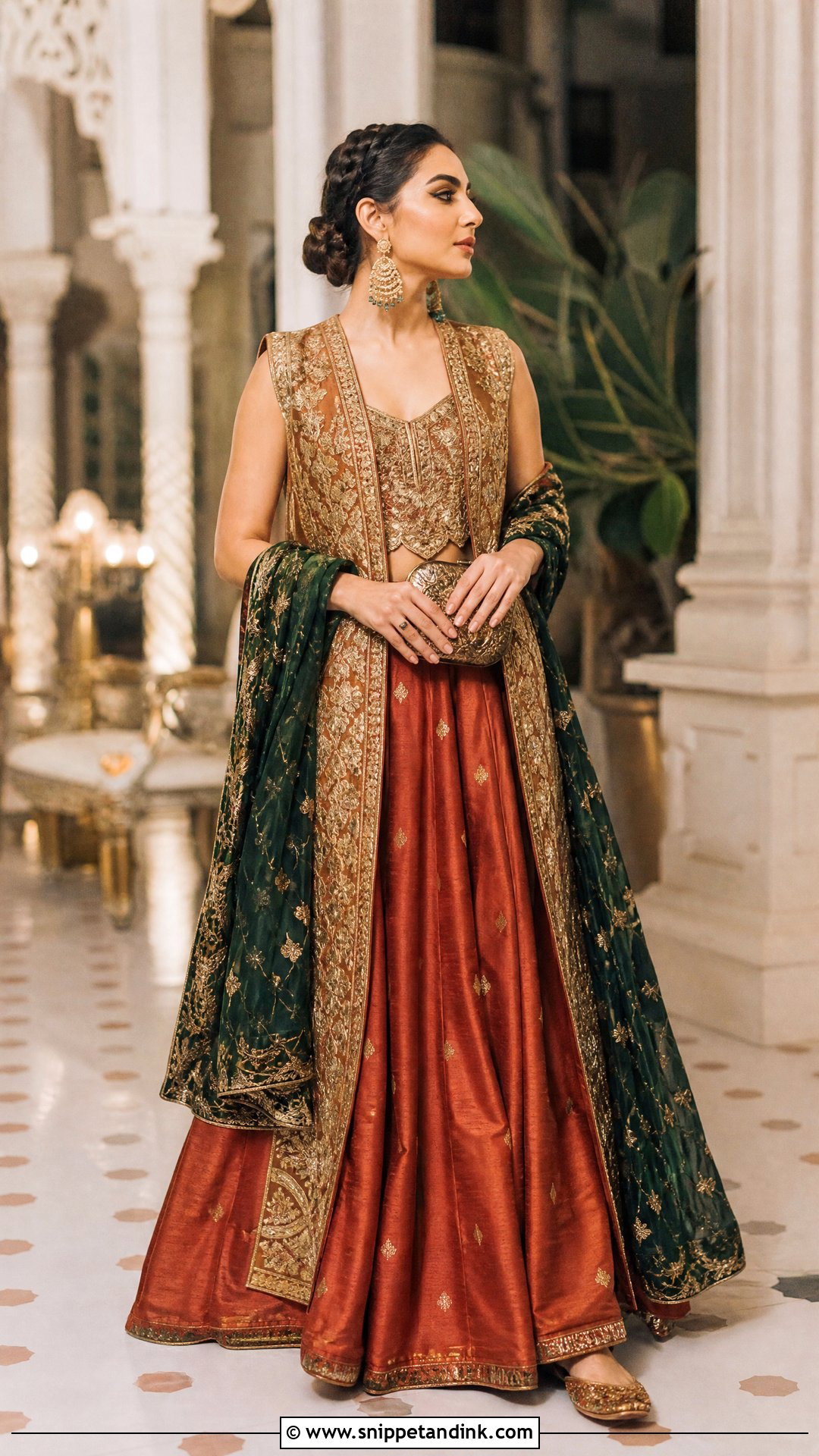
Rust raw silk feels warm and rich at an autumn or winter baraat. A structured lehenga with antique gold motifs, a matching blouse and, for more coverage, a long embroidered waistcoat. Raw silk has a natural slub that catches light unevenly, which I like because it looks luxurious without shine. A muted gold or deep green dupatta, traditional earrings and an antique-finish clutch. The fabric is heavier than it looks, so wear block heels or padded khussas. Bronze makeup and a soft neutral lip finish it.
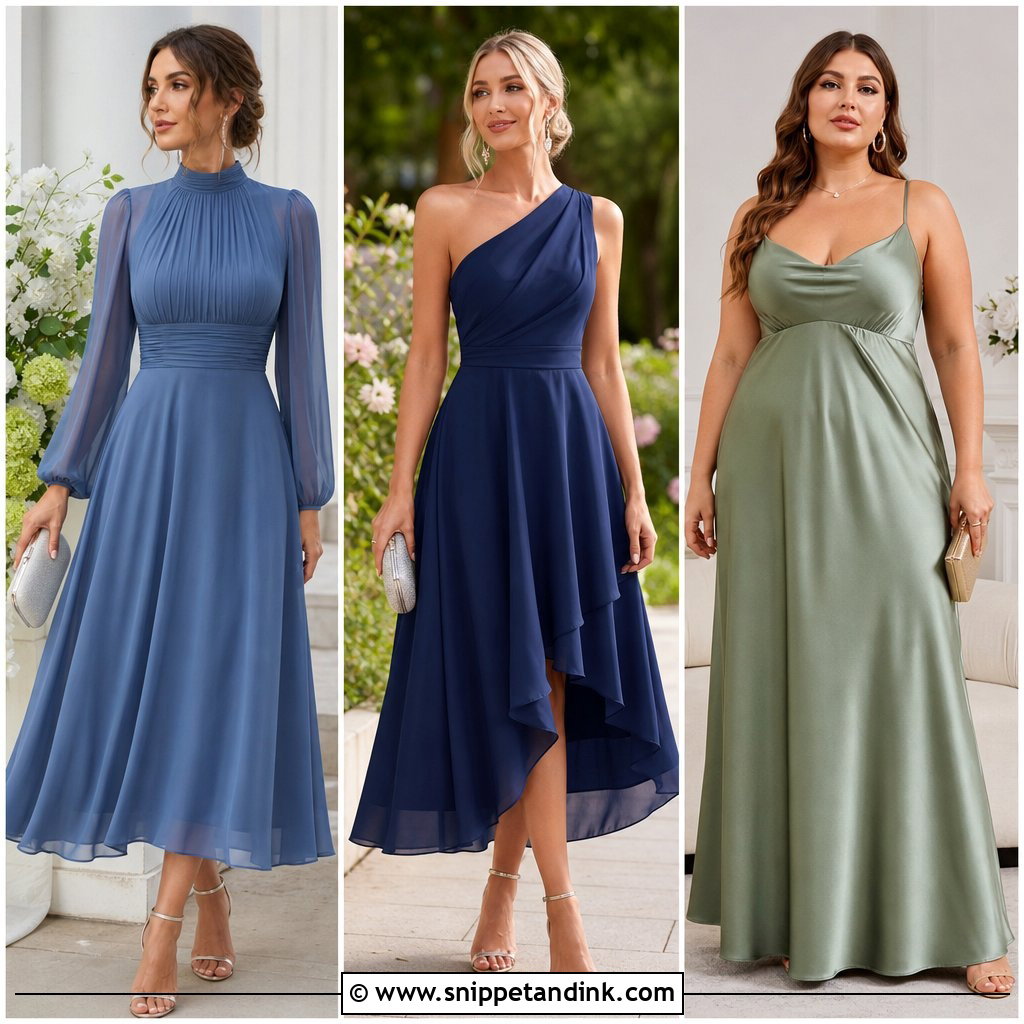
20. Pakistani Pastel Matching Sister Outfit
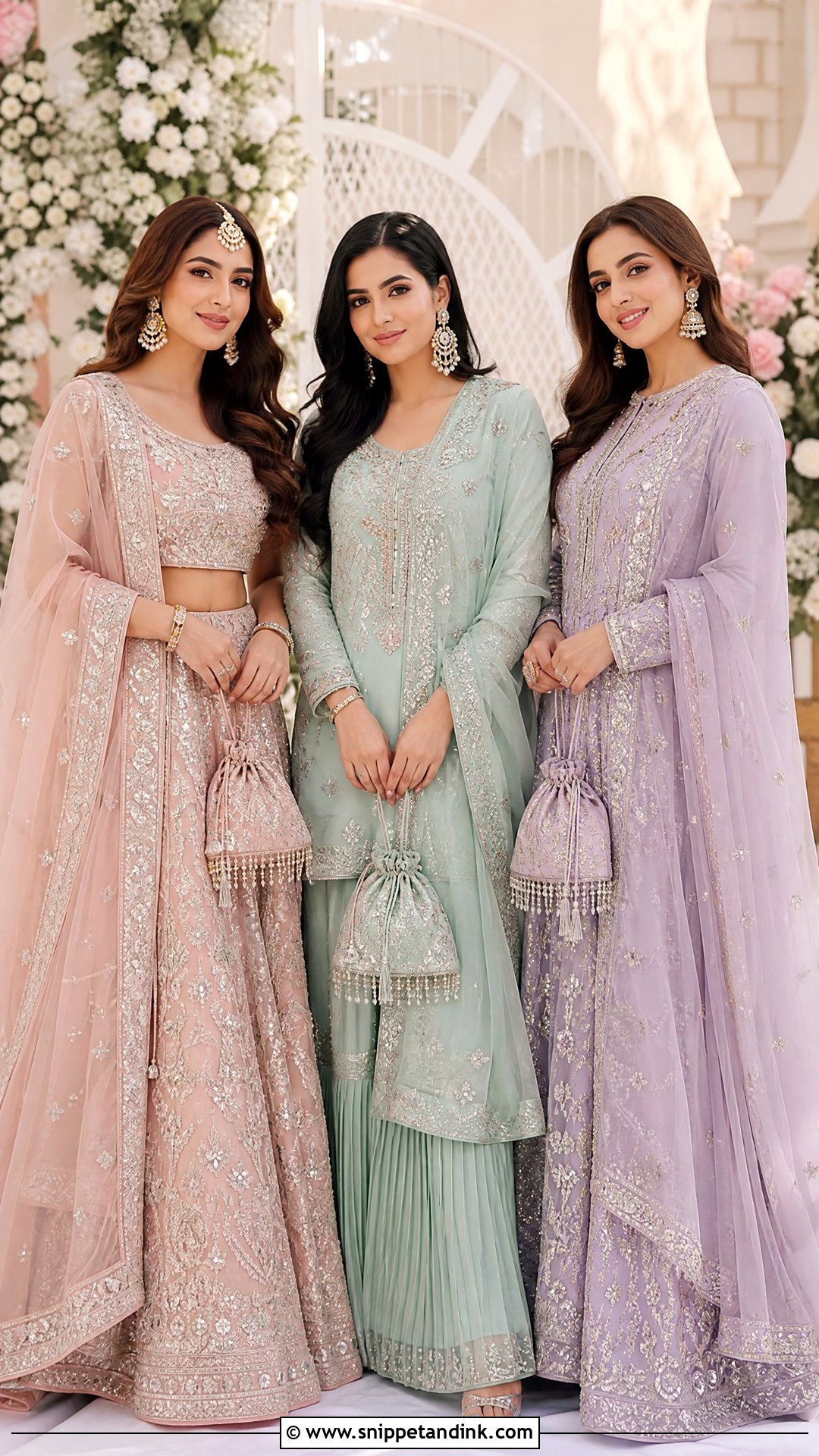
Coordinated sister outfits photograph well without forcing everyone into an identical dress. Pick one pastel palette, blush, mint, lavender or powder blue, and let each sister choose her own silhouette. One wears a lehenga, another a sharara, another a straight shirt with trousers. I connect them through a single repeated detail, usually the same border or the same dupatta fabric, and one metal for all the jewellery. Hairstyles stay individual but at a similar level of formality. It works for different ages, sizes and modesty preferences, which identical outfits rarely do.
You Will Be the One Holding the Bride’s Things
Sisters end up carrying the bride’s lipstick, her spare pins, the tray of sweets and someone’s baby, often all in the same hour. That is why I fit sisters with their real job in mind, not just the photographs.
Hands Free, Dupatta Pinned
If your dupatta needs a hand to keep it in place, it will end up on the floor. I pin it at the shoulder and at the back of the waist, or I choose a cape or jacket style for the busiest function. A small cross-body potli keeps your phone and the bride’s essentials with you while leaving both hands free.
What I Put in a Sister’s Emergency Pouch
- Safety pins in two sizes and a few bobby pins
- A small needle threaded in the bride’s colour
- Blotting papers and the bride’s lip colour
- Fashion tape for a slipping neckline
- Plasters for both of you
Try the outfit with your arms full at the final fitting. Lift a heavy bag, bend to pick something up, sit on a low sofa. If anything pulls, gapes or slides, it is far easier to fix then than in the middle of the rukhsati.
Ask for Her Colours, Then Dress for the Job
A sister’s outfit has to look festive in photographs and still let you work a long day for the family. Shararas, jacket lehengas, pishwas, mehndi colour and polished walima looks all have a place. Before you buy anything, ask the bride for her colours for each function and the level of formality she expects. Then choose breathable lining, a dupatta drape that stays pinned, and shoes you can stand in for hours. Good tailoring will do more for you than extra embroidery, and accessories should support the outfit, not compete with it.
You'll Like These Ideas:


Leave a Reply