
Dressing as the bride’s sister is an odd brief. You’ll appear in more family photos than almost anyone, you’ll spend the day fixing dupattas and finding the photographer, and you still need to look clearly separate from the bride. When I style a sister, I start with three facts: the dress code, what the bridal party is wearing, and the bride’s own colour. The rest follows from those. Comfort counts as much as looks, because you’ll be greeting guests and dancing for hours. The outfits below run from lehengas and sarees to gowns and fusion sets, and with each one I’ve noted what to check before you commit.

Questions to Settle With the Bride Before You Shop
Most sister outfit problems I’m asked to fix started with shopping before a single conversation. Sit down with her, ideally with photos of her outfits on your phone, and settle these:
- Which colours does she want kept for herself? Some brides rule out the whole red and ivory family, others only their exact shade.
- Is there a colour plan for family or bridal party photos, and does she want you inside it or deliberately outside it?
- What will you actually be doing? Helping her dress, performing a dance, sitting on the floor through rituals and ushering guests all change what you can wear.
- Are any colours unwelcome for cultural or family reasons, such as black or white at certain ceremonies?
- Does she want to see your outfit before you buy it?
Then take a swatch, or the outfit itself, and photograph it beside her colour once in daylight and once under warm indoor light. Shades that look clearly different in a shop can merge on camera.
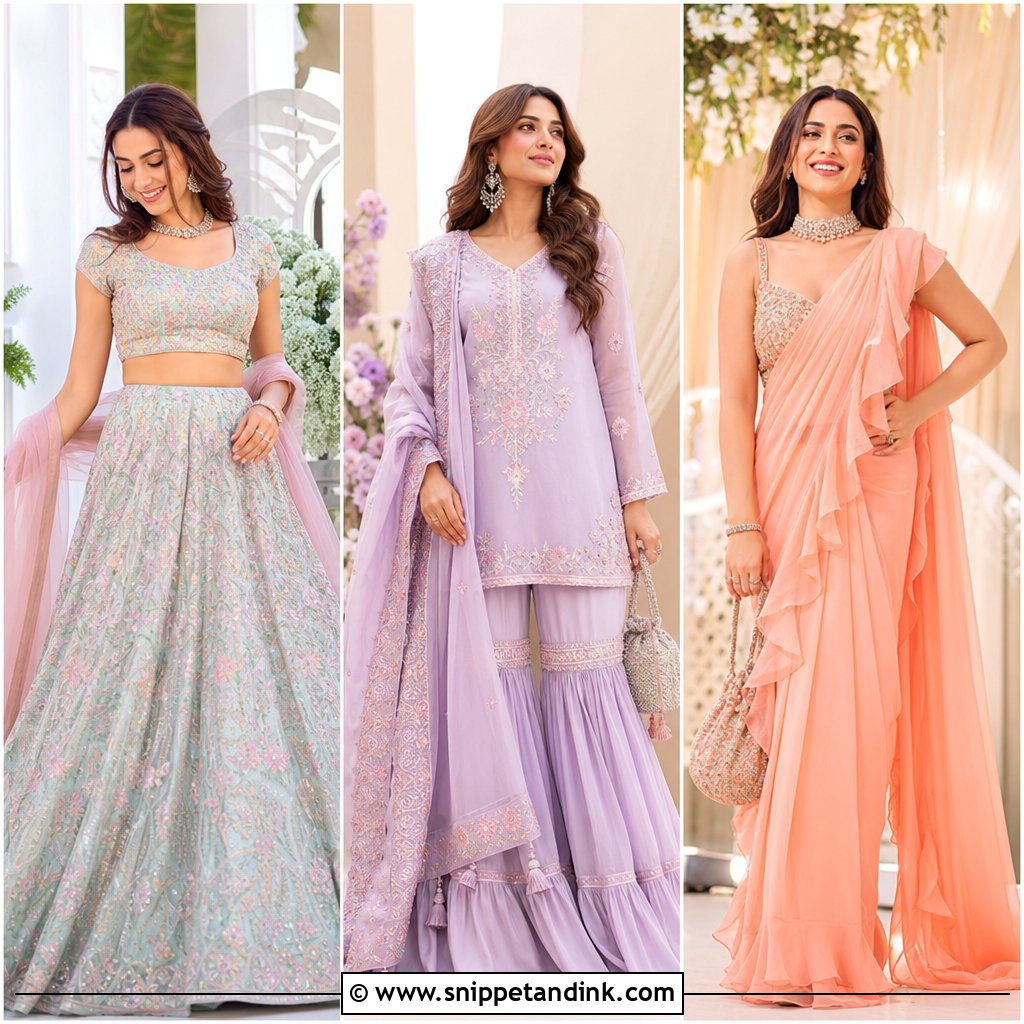
1. Bridal Sister Pastel Embroidered Lehenga
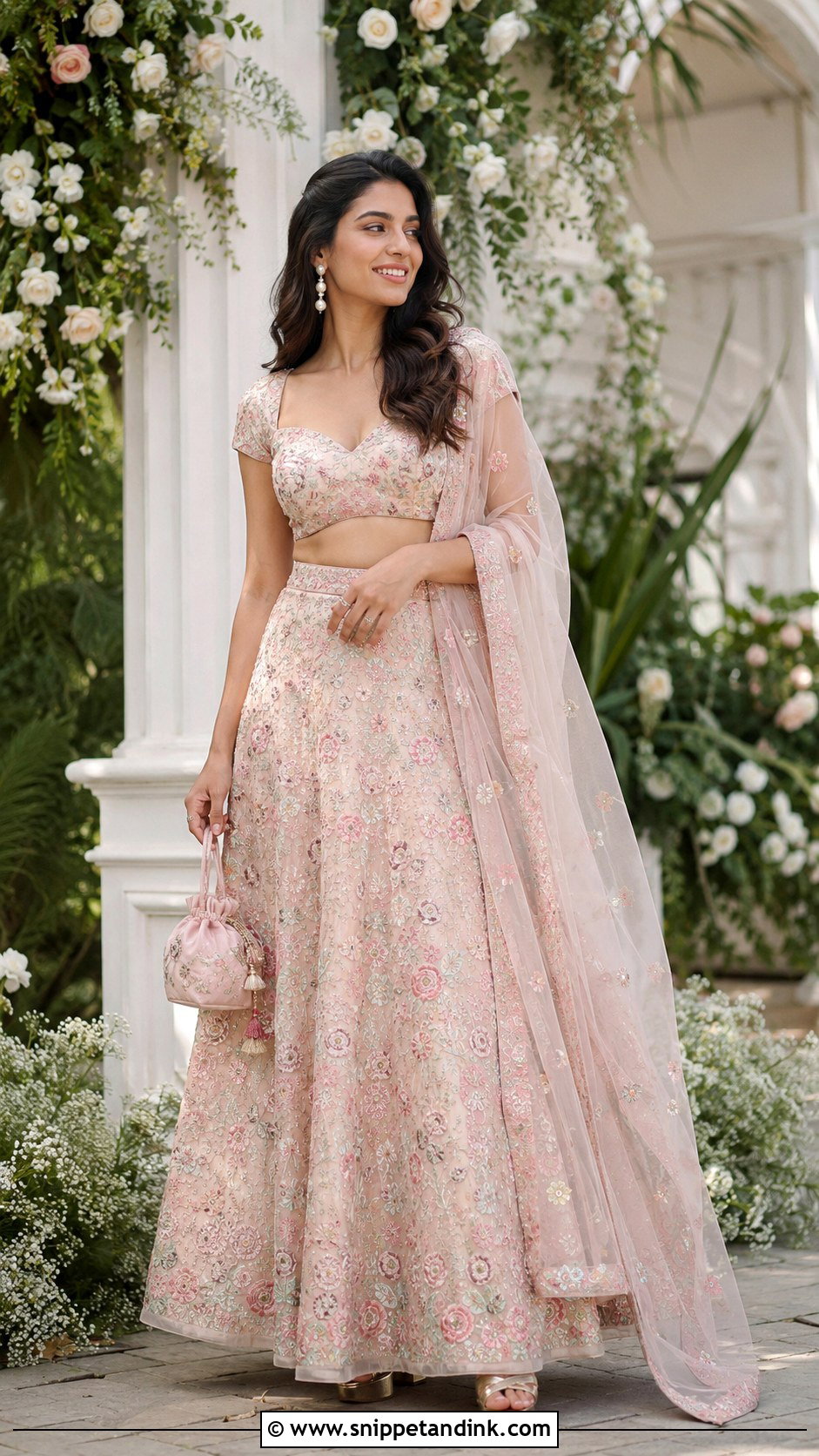
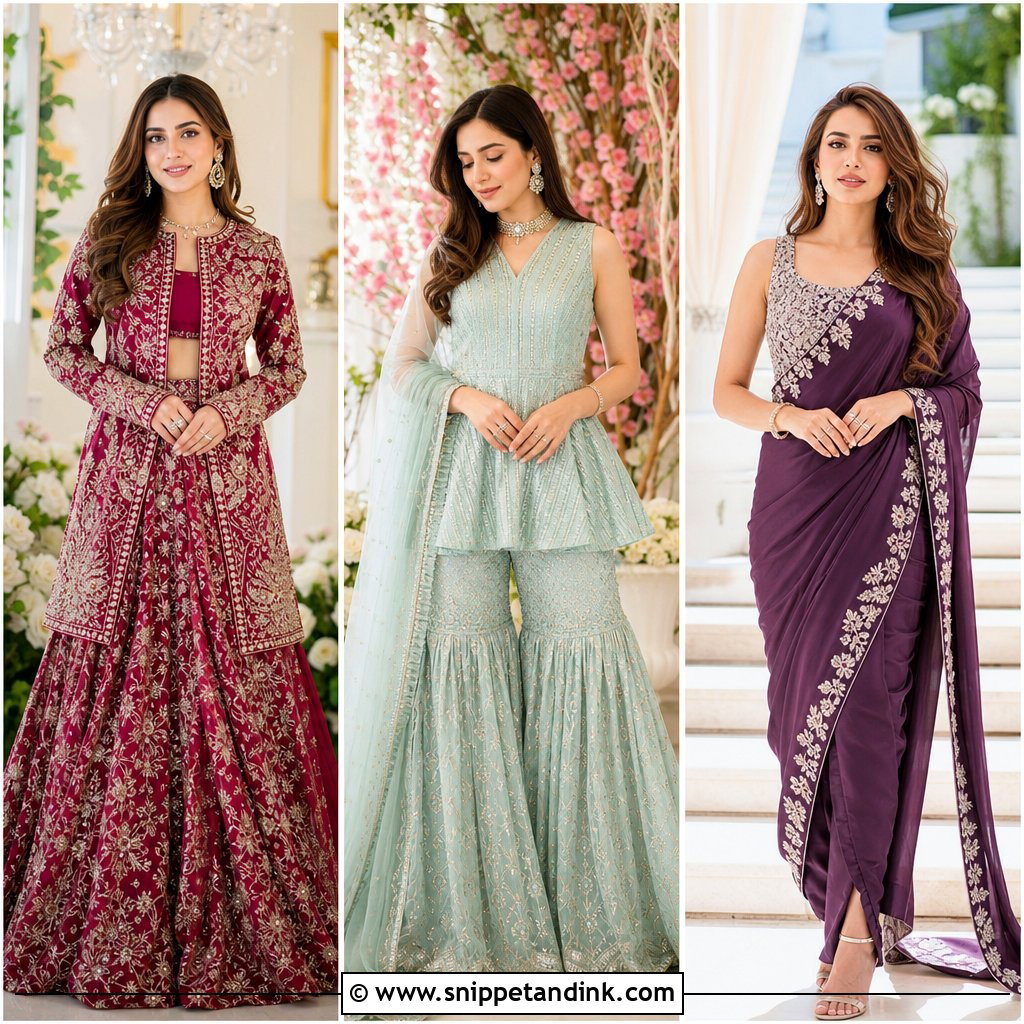
A pastel embroidered lehenga is the easiest sister outfit for a daytime or outdoor ceremony, as long as it stays clearly lighter than the bride. Blush, mint or powder blue in georgette or net moves well, and tonal threadwork keeps it festive rather than bridal. Pair the skirt with a structured blouse and pin a sheer dupatta over one shoulder so both hands stay free. My one rule: put a photo of your lehenga next to the bride’s before you buy. Pastel beside pastel can merge in a group shot, and the sister is usually the person standing right next to her.
2. Bridal Sister Emerald Green Saree
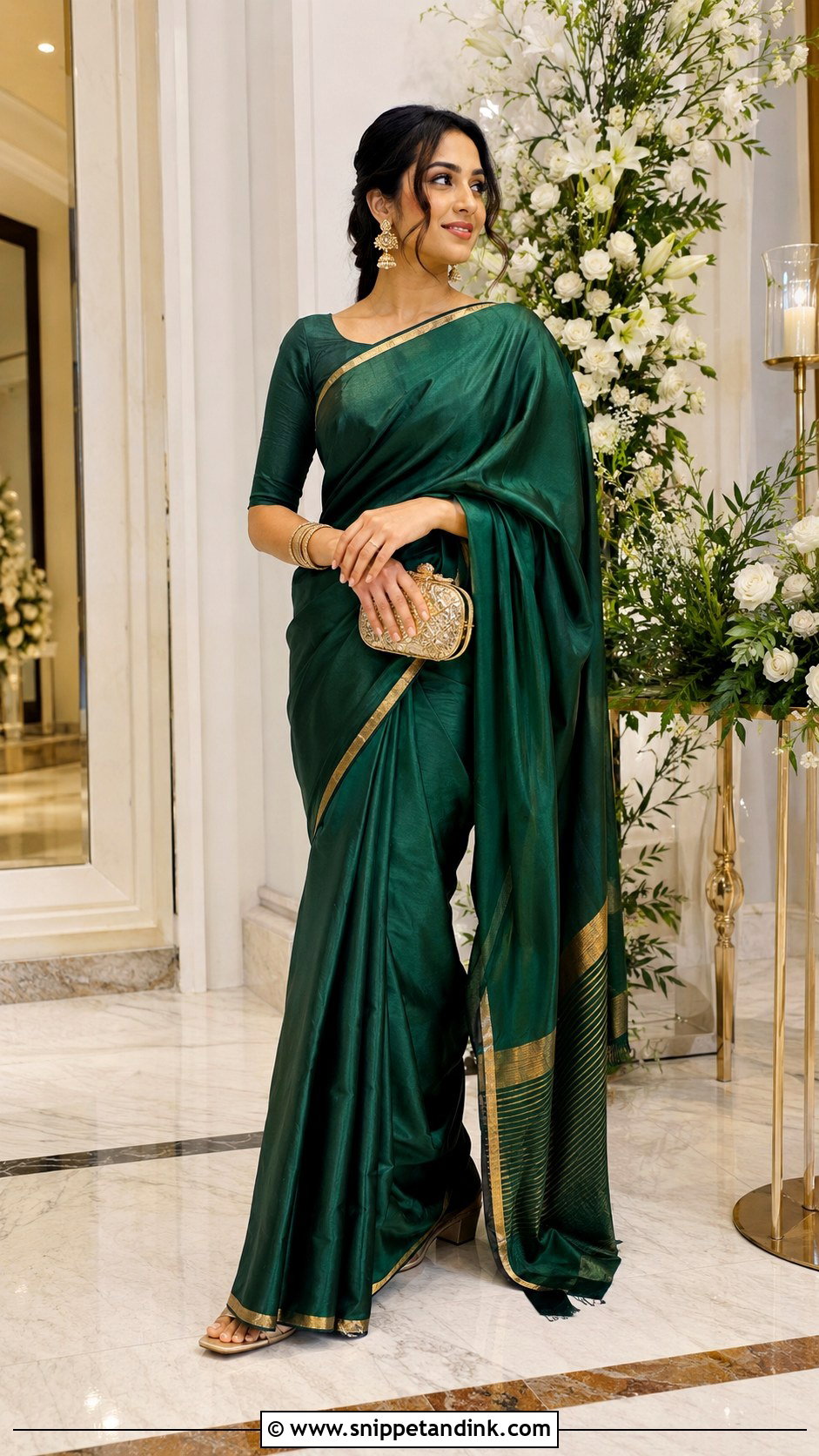
Emerald is one of my favourite sister colours because it reads rich in daylight and indoors, and it almost never collides with bridal reds or ivories. A silk or soft tissue saree with a narrow gold border is enough for a formal ceremony. Match the blouse for a long unbroken line, or switch to gold brocade for a more traditional feel. Low block heels are worth it under a saree, since thin heels catch the pleats as you walk. Keep makeup balanced with defined eyes and a muted rose lip; deep green next to a very bold lip can look heavy in pictures.
3. Bridal Sister Floral Organza Saree
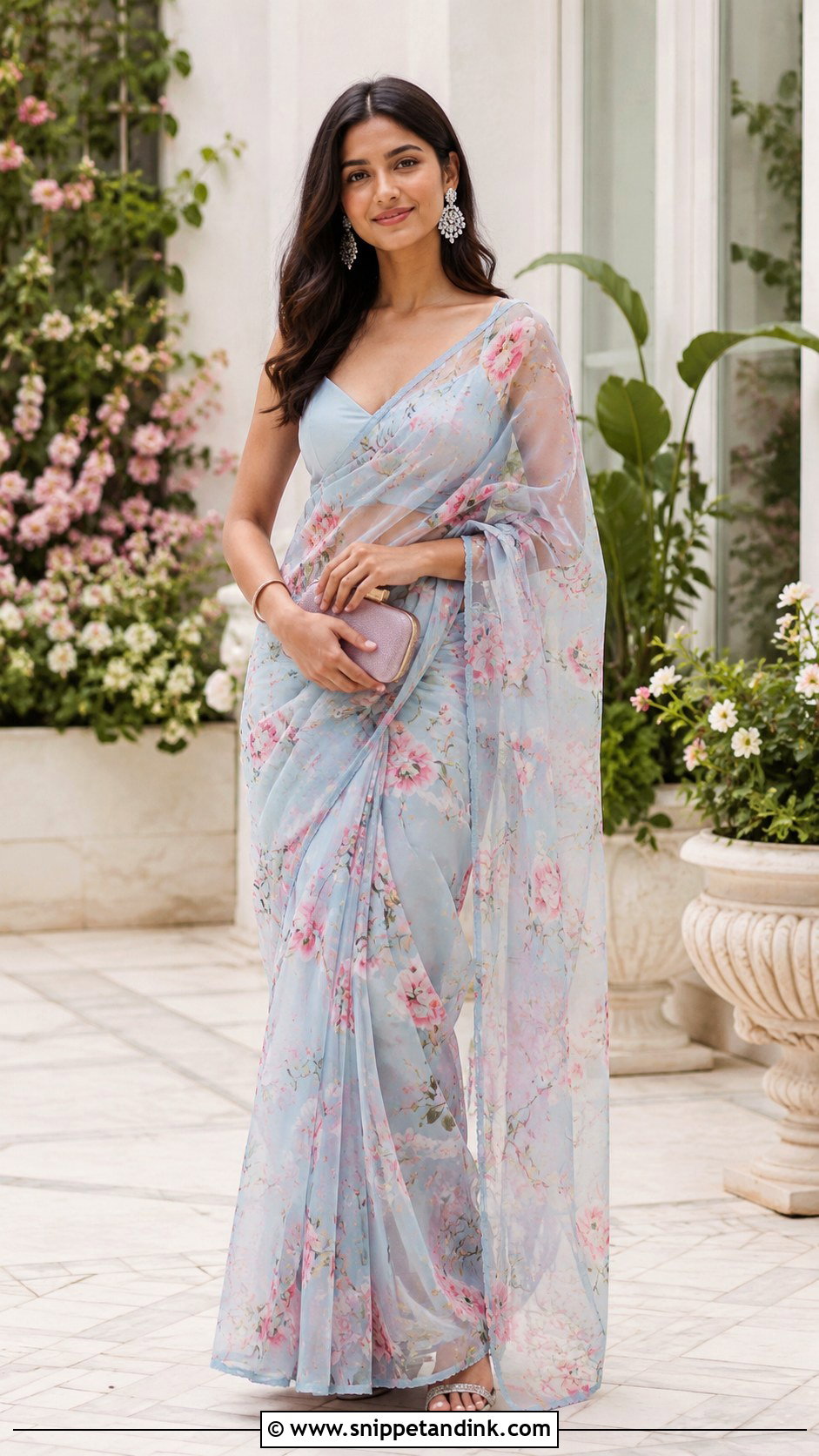
Organza holds air, which makes a floral saree in it feel light at a garden or morning ceremony. The fabric is crisp, though. Organza pleats stand out instead of falling, so have them pinned firmly and pressed before you leave. Look for a print with a clear base colour, powder blue with pink flowers for instance. A very pale ground is risky because under bright sun or flash it can read as white beside the bride, so take a phone photo outdoors before deciding. Pull the blouse colour from the print, keep jewelry light, and wear kitten heels you can actually stand in.
4. Bridal Sister Navy Blue Evening Gown
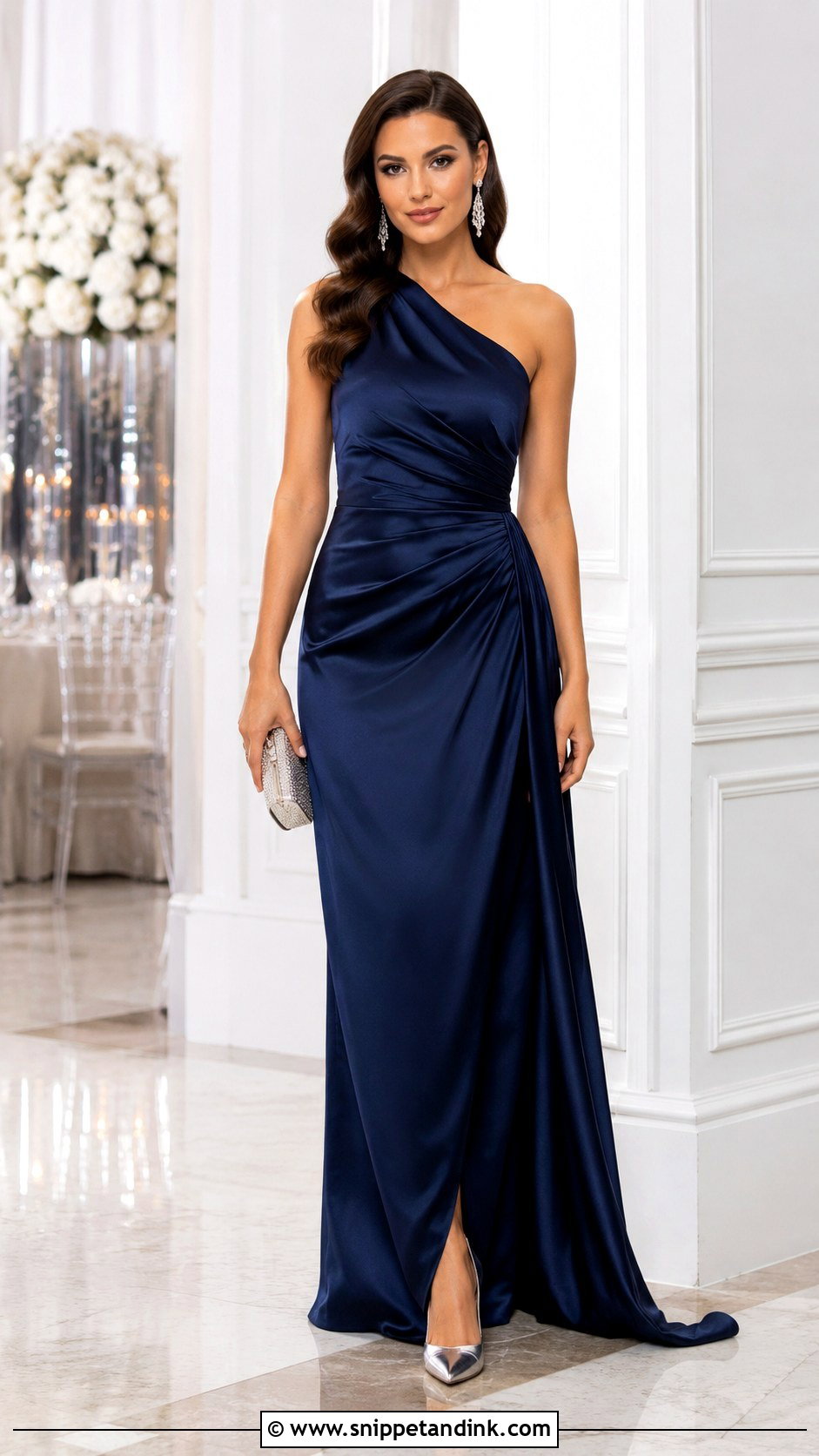
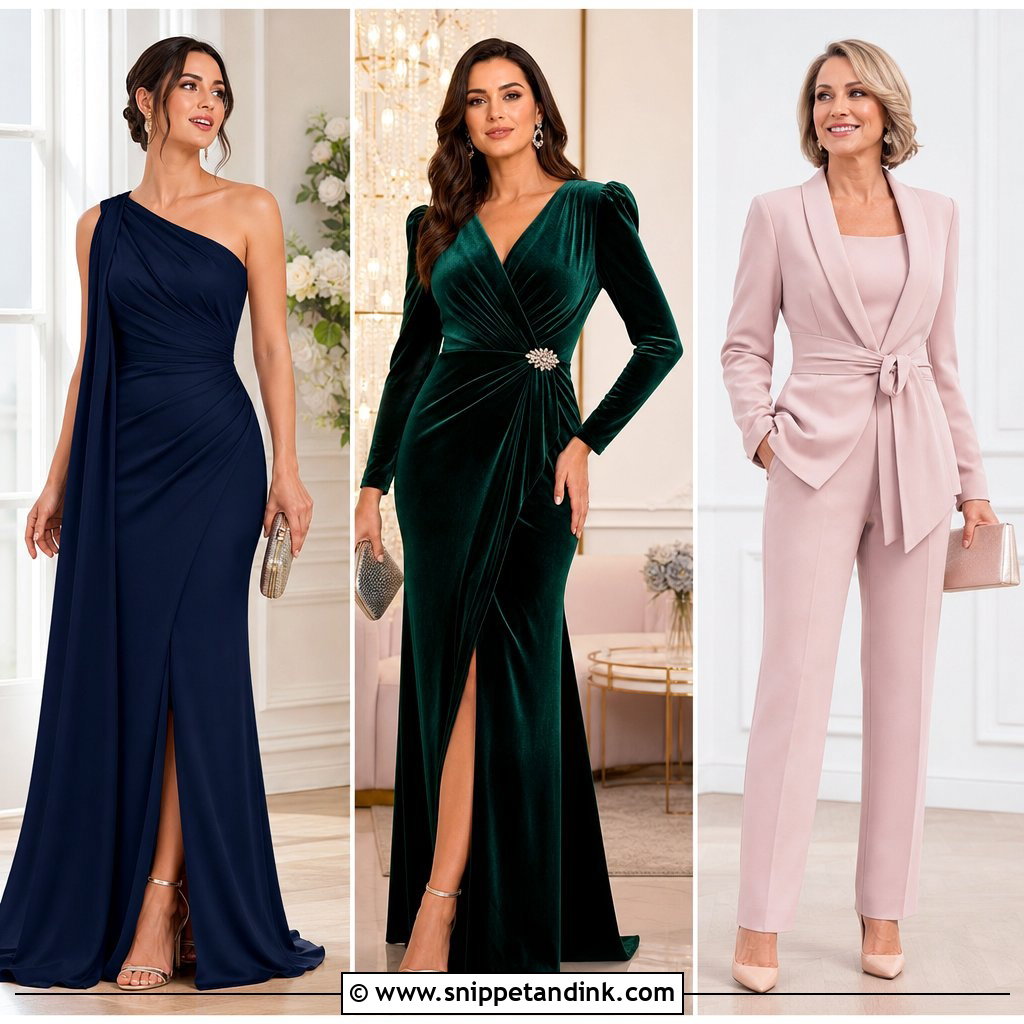
Navy is my default answer when a sister needs something for black-tie that won’t argue with anyone. It holds its own beside black dinner suits and flatters most skin tones. Satin gives it shine and movement, while crepe is quieter and handles a long evening better because it doesn’t show seat creases as fast. Skip a long train. As the sister you’ll be pulled into portraits and on and off the dance floor, and a train gets stepped on. Have the hem taken up to your actual reception shoes, and finish with silver or crystal earrings and a slim clutch.
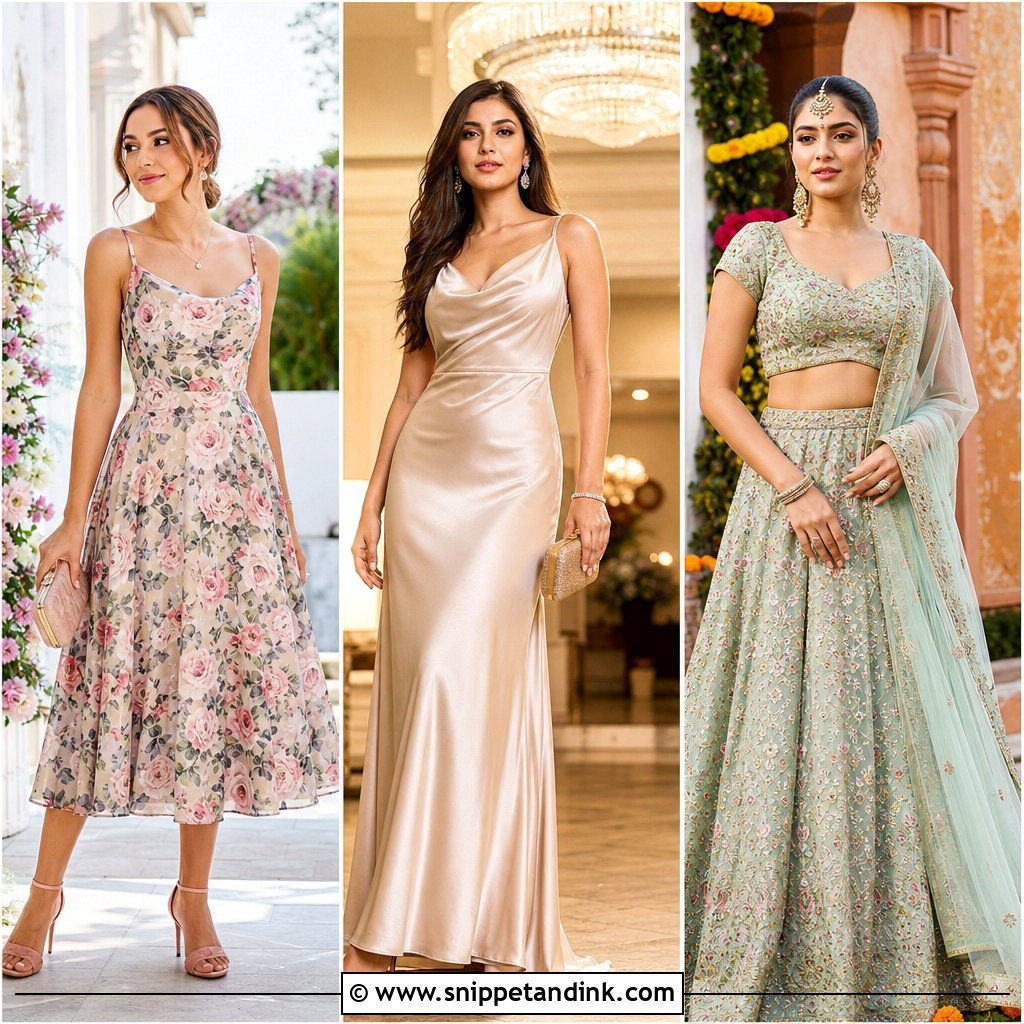
5. Bridal Sister Champagne Sequin Gown
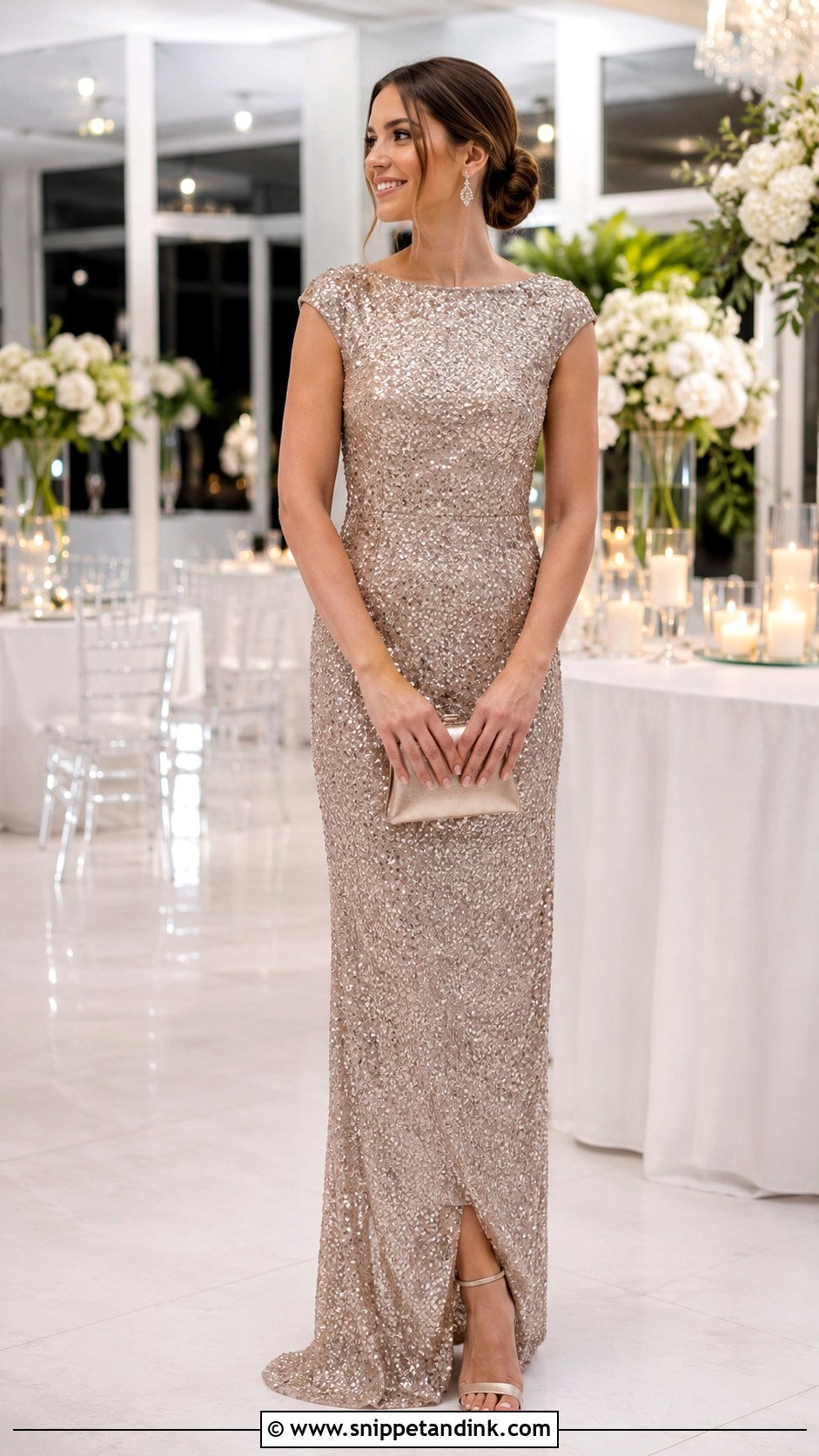
A champagne sequin gown can work at an evening reception, but only in the right shade. Pale champagne often photographs as ivory, especially under warm venue lights, so go deeper toward taupe or soft bronze. A column or wrap cut stops the sparkle from looking like a costume. With sequins, accessories should step back to small drops and a smooth clutch. Two practical points. Sequins scratch the inner arm over a long night, so check that the underarm seam is lined. And show the bride before you buy, especially if her own gown leans champagne.
6. Bridal Sister Burgundy Velvet Dress
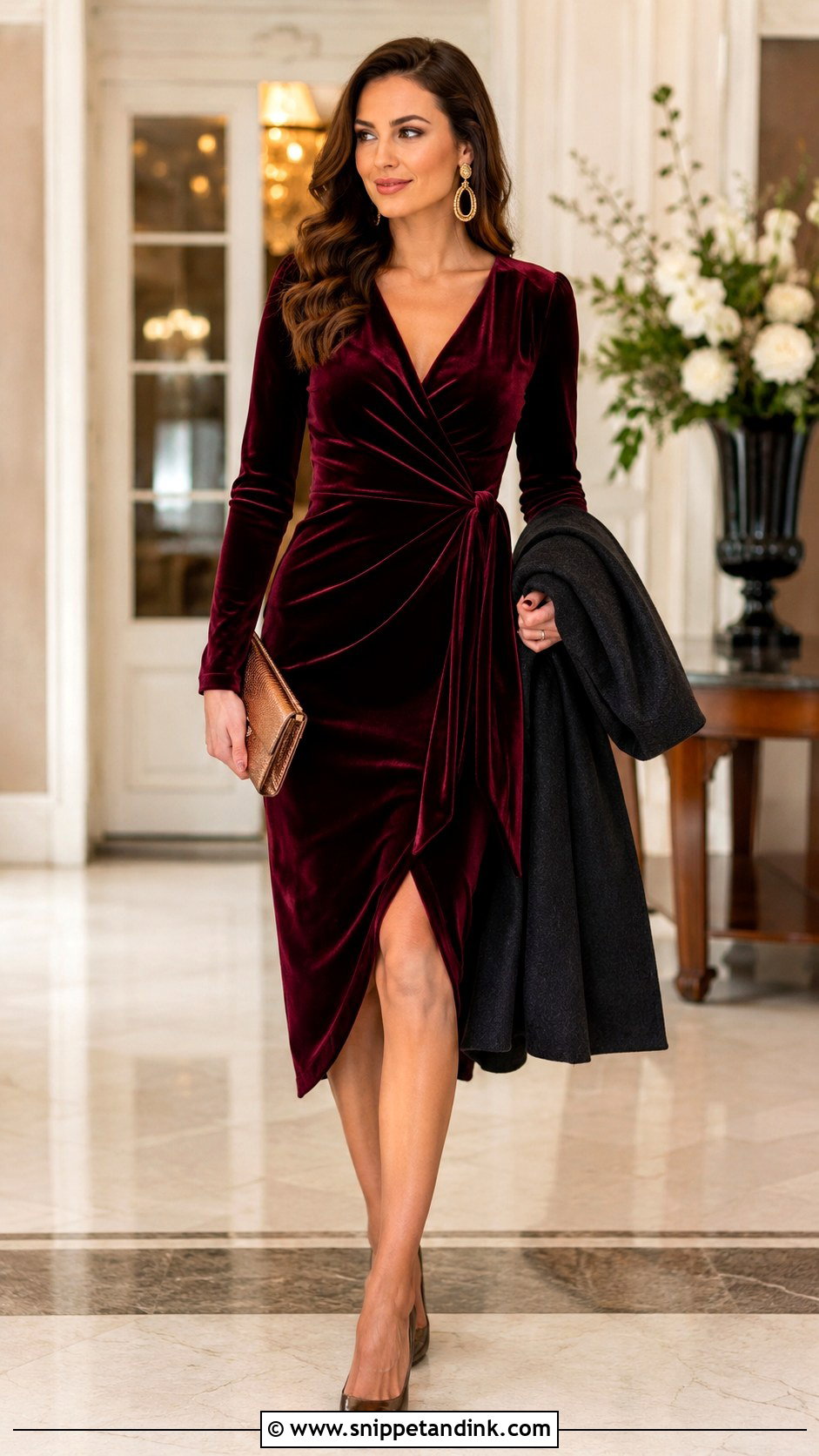
For a cold-season wedding, velvet does two jobs at once: warmth, and a depth of colour flat fabrics can’t match. Deep burgundy in a midi or floor-length cut with long sleeves or a wrap bodice looks right at an indoor evening reception. Velvet has a nap, so the colour shifts as light hits it from different directions; check the fit and shade under ordinary room light, not only in the shop. It also crushes where you sit, so steam it on the hanger and never pack it folded. If you need a coat, choose one long enough to cover the hem rather than a short casual jacket.
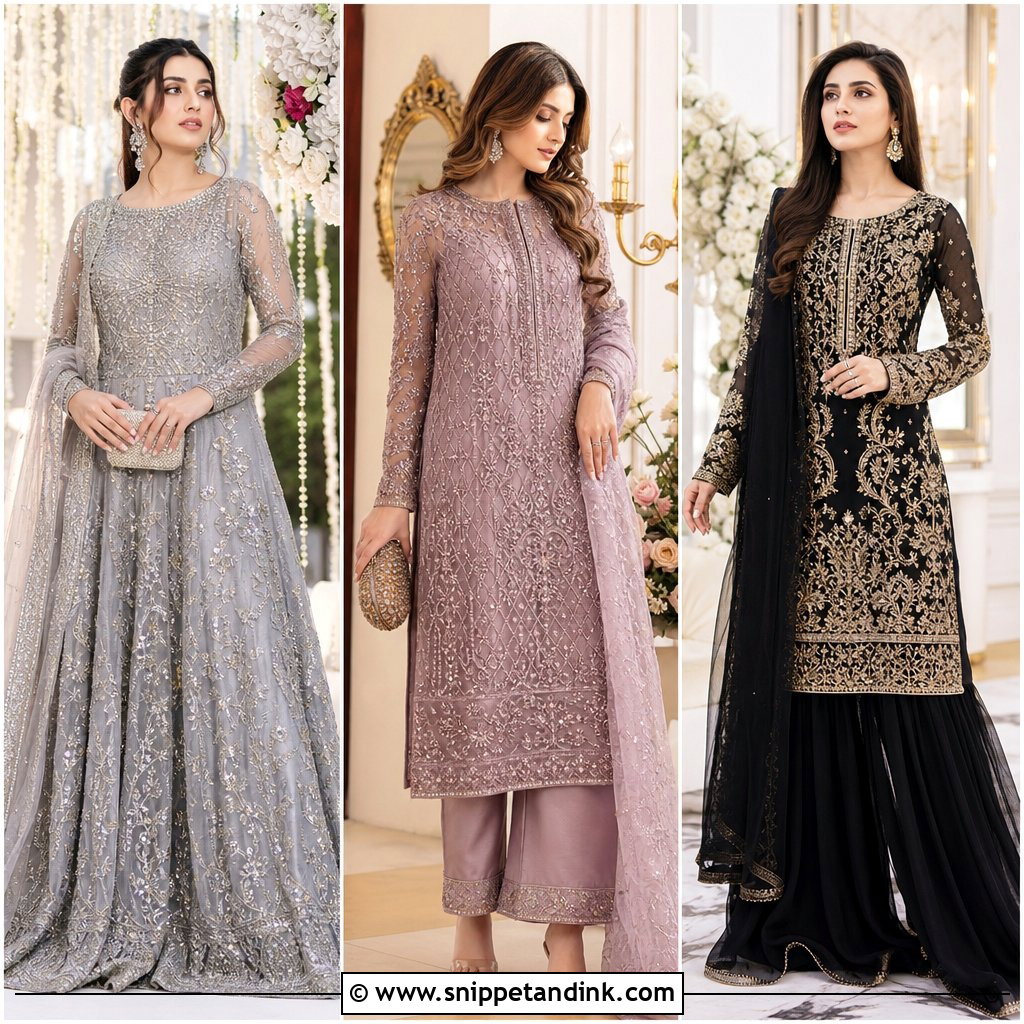
7. Bridal Sister Blush Pink Anarkali Dress
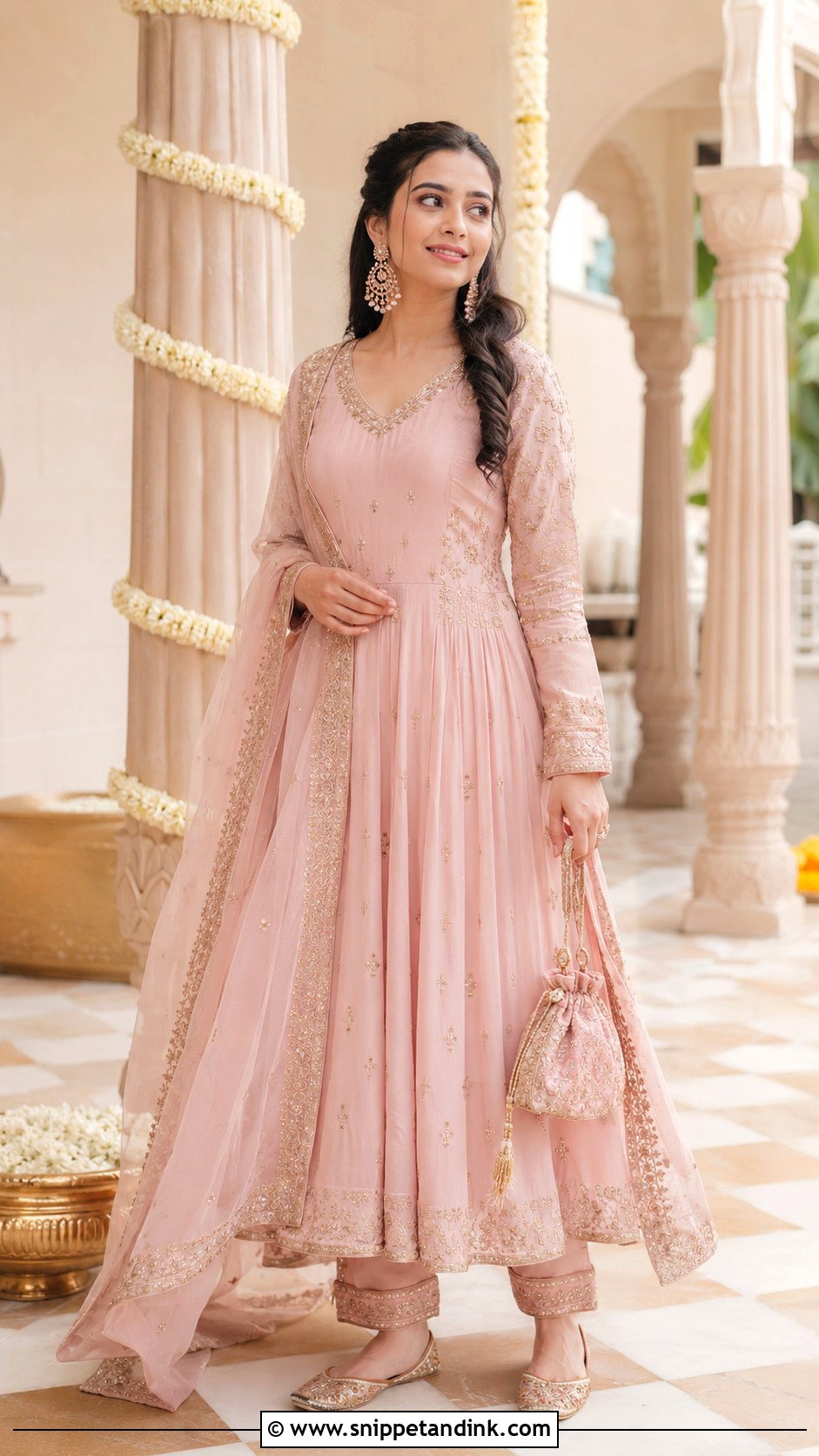
An Anarkali is what I suggest to sisters facing a long traditional ceremony with lots of standing, bending and sitting on the floor. The fitted bodice and flared skirt move with you, and there’s no drape to manage. Blush pink with tonal embroidery or small mirror work stays soft, worn with straight pants and a sheer dupatta pinned at the shoulder. If the bride is also in pink, go clearly lighter or darker and keep your embellishment noticeably quieter than hers. Practise sitting in it before the day, because a very full flare pools and creases unless you learn to tuck it under you.
8. Bridal Sister Cobalt Blue Sharara Set
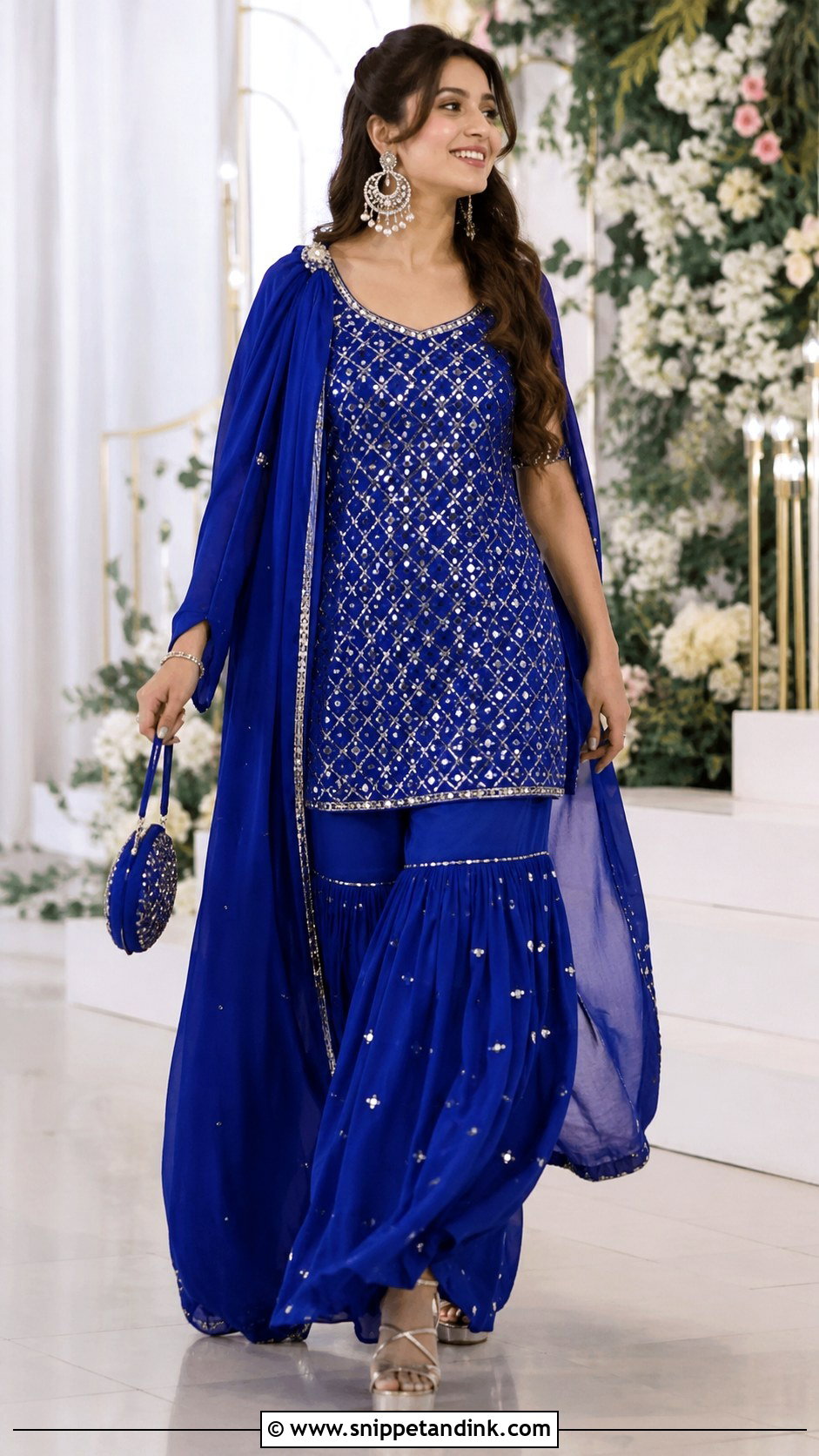
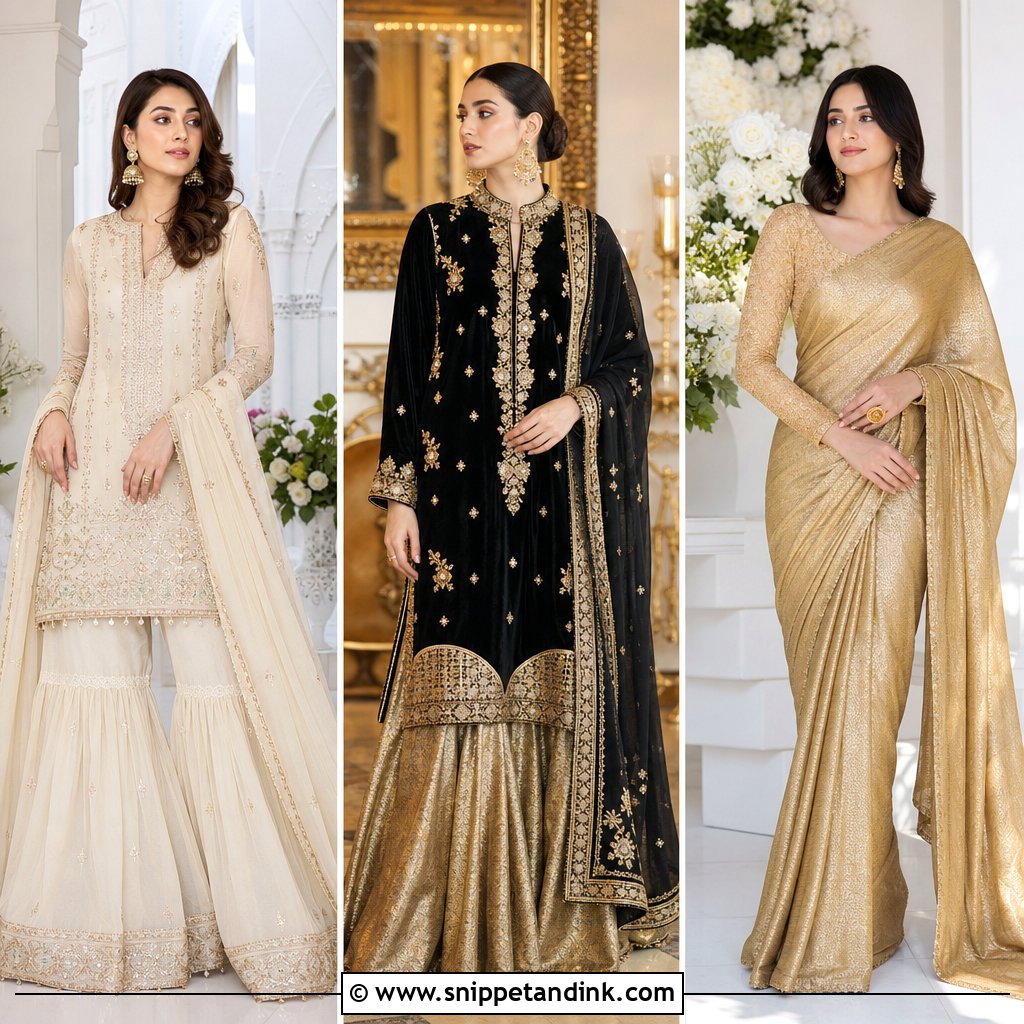
Sharara pants are made for a sangeet. A cobalt blue sharara set with a short, tailored kurta and wide legs flaring from the knee gives you colour and full movement for a choreographed dance, and silver embroidery or mirror accents suit cobalt well. If you’re performing, swap the dupatta for a light cape or pin it at both shoulder and waist; a loose dupatta is the first thing to fly off mid-routine. Rehearse in your actual shoes too. Platforms feel stable until you start spinning. Cobalt rarely clashes with bridal shades, so it’s a safe bold colour for a sister.
9. Bridal Sister Lavender Draped Saree Gown
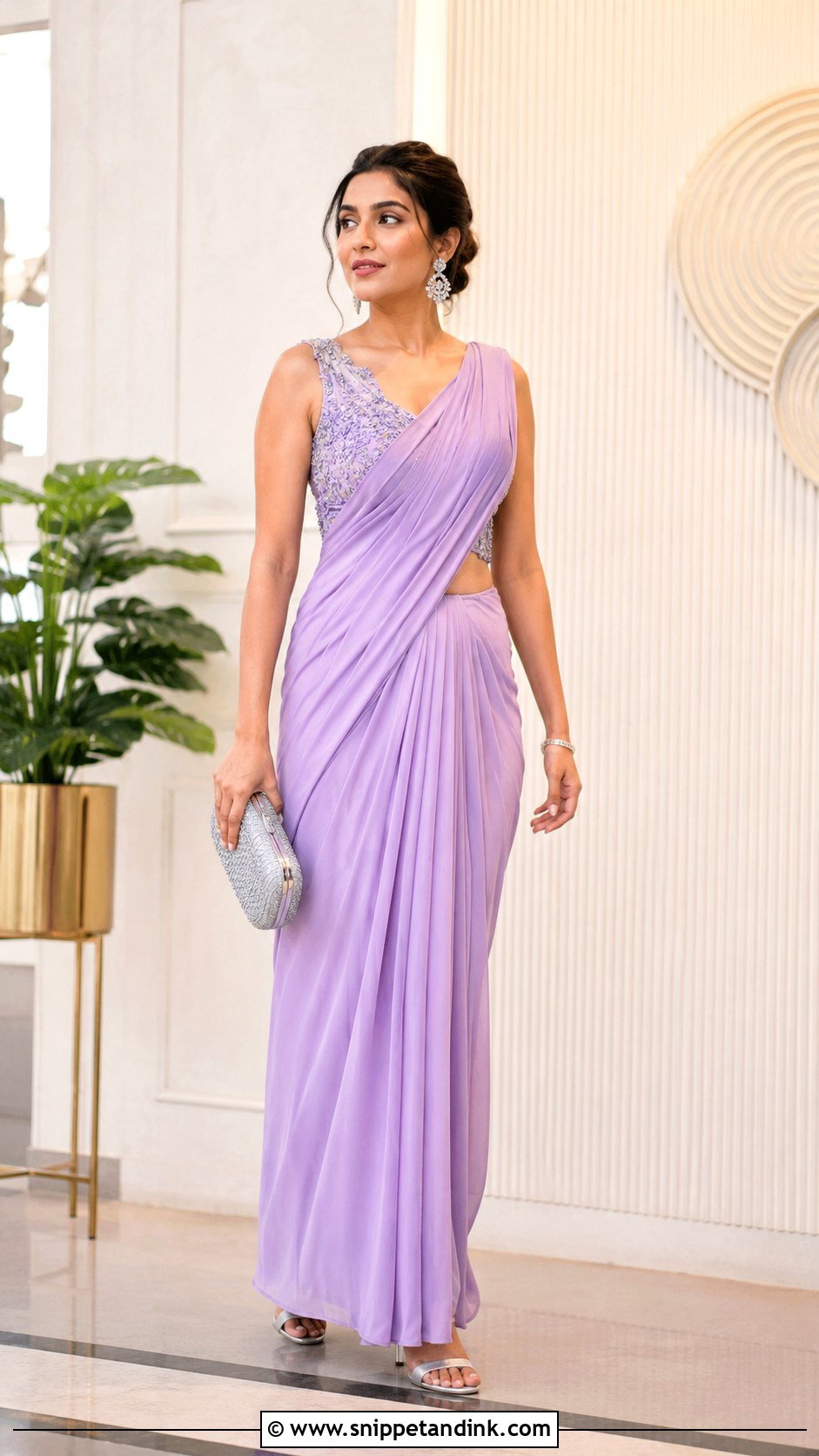
A pre-draped saree gown gives you the shape of a saree without re-tucking pleats all evening, which matters when you’re the one running between the bride and the guests. Lavender suits silver, pearl and crystal, and a defined waist with a soft shoulder drape keeps it graceful. Check two things at the trial. The skirt has to allow a full walking stride, and the attached pallu shouldn’t pull the shoulder seam when you lift your arm. Some designs are stitched so narrow at the knee that stairs become a problem. It sits more naturally at a reception or engagement party than at a traditional ceremony.
10. Bridal Sister Mustard Yellow Palazzo Suit
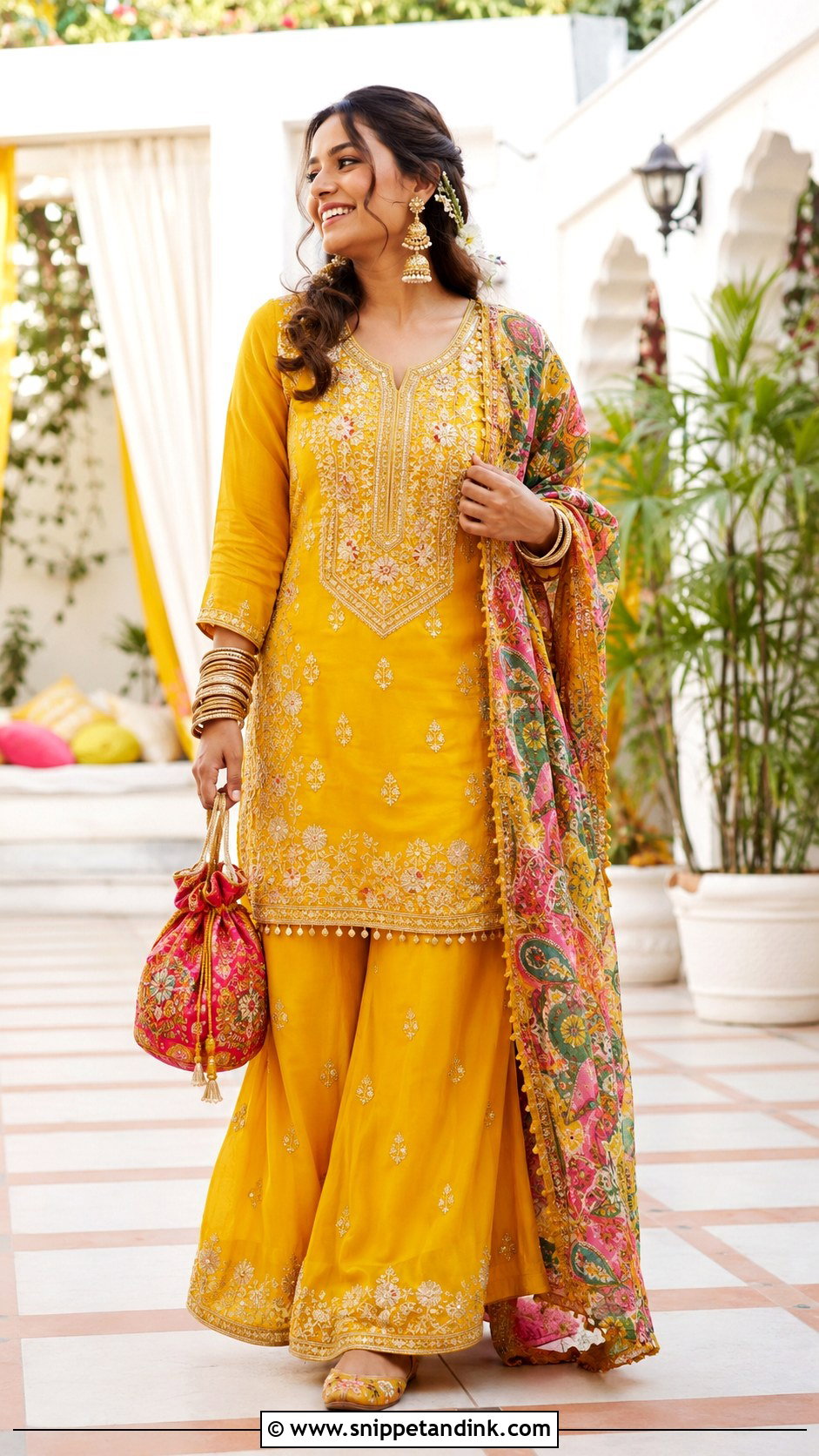
Haldi and daytime functions call for colour you don’t mind ruining. A mustard yellow palazzo suit in cotton or cotton silk is easy to move in and inexpensive enough to risk turmeric stains. Wide palazzos let you sit on the floor and dance without fuss. Bring in contrast through a printed dupatta in green or coral, and wear embroidered flats. Leave delicate silk and good jewelry at home for haldi: turmeric paste rarely washes out of pale silk and can leave stubborn marks on plated pieces. Metal or thread jhumkas are the safer bet.
11. Bridal Sister Black Embellished Jumpsuit
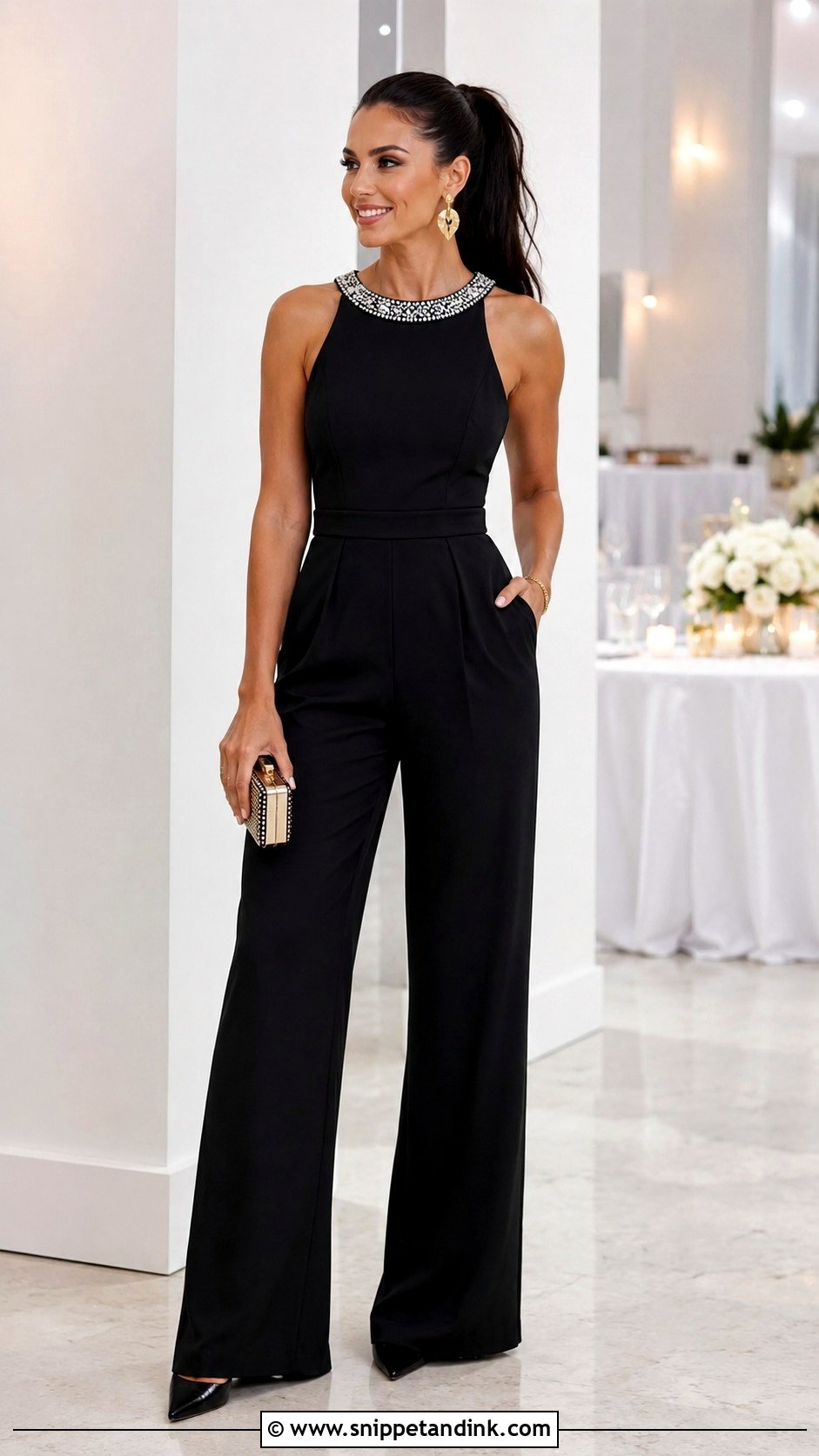
Before anything else, check that black is acceptable to the family. In several cultures black is avoided at weddings, and the sister is the last person who should be caught out. If it’s fine, a black embellished jumpsuit is sharp for an evening reception or cocktail party. Put the sparkle in one place, the neckline or a belt, rather than spreading it everywhere. Jumpsuits live or die on rise and length. If the crotch sits low or the hem puddles on the floor, it looks borrowed, so hem it to just cover the heel of your shoe. A sleek ponytail lets the neckline do its work.
12. Bridal Sister Teal Satin Midi Dress
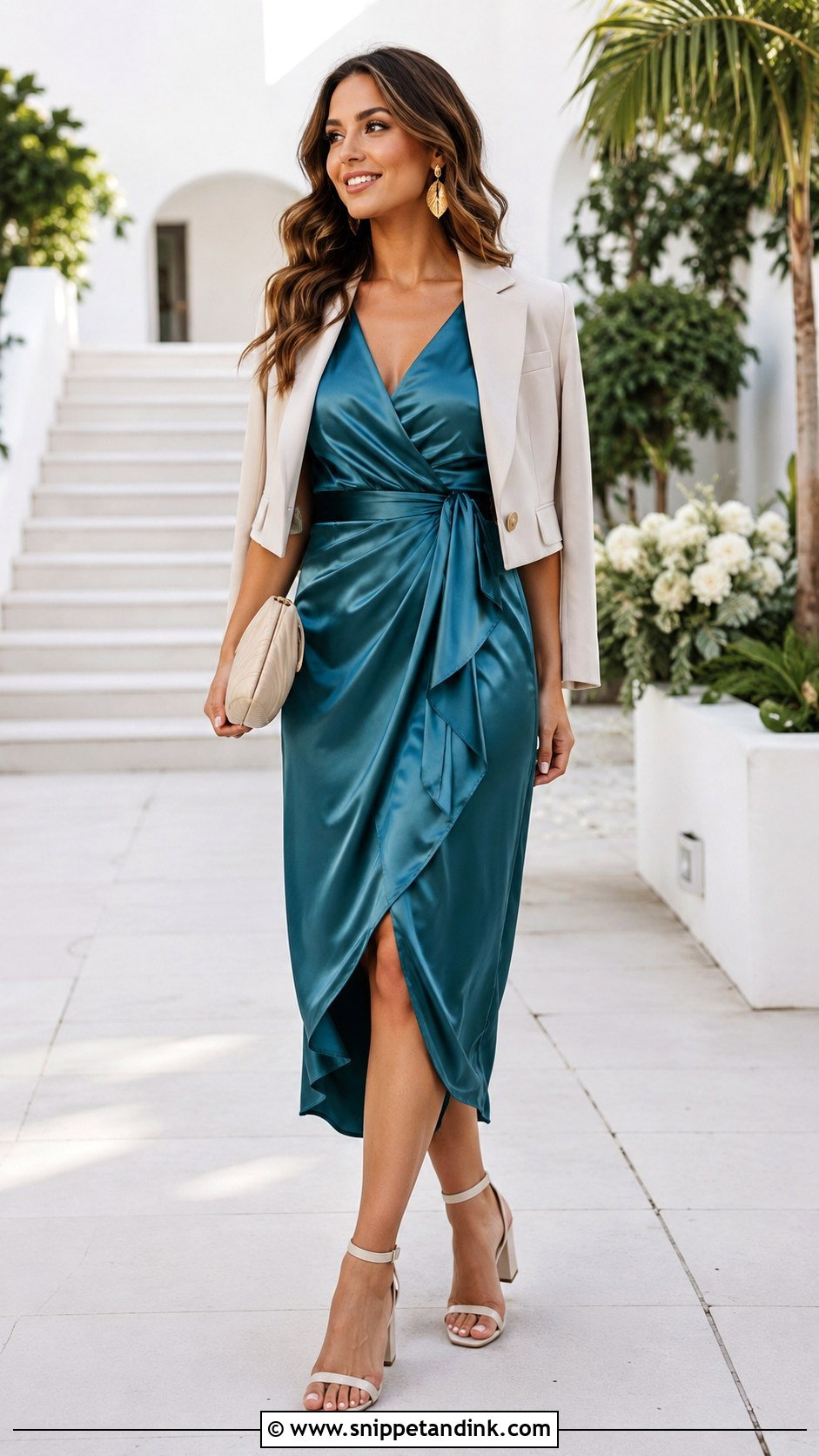
Teal satin at midi length suits a semi-formal or intimate wedding, and you can walk, dance and kneel to fix the bride’s hem in it without gathering up a long skirt. Bias-cut or wrap shapes skim rather than cling. Satin is honest about what’s underneath, though. Seams, straps and wrinkles all show, so smooth, invisible underwear and a steamer before you leave are not optional. Sitting through a ceremony creases satin across the lap, which is why I’d steam it again before portraits if there’s a chance. A cropped tailored jacket adds cover without looking casual.
13. Bridal Sister Rose Gold Lehenga
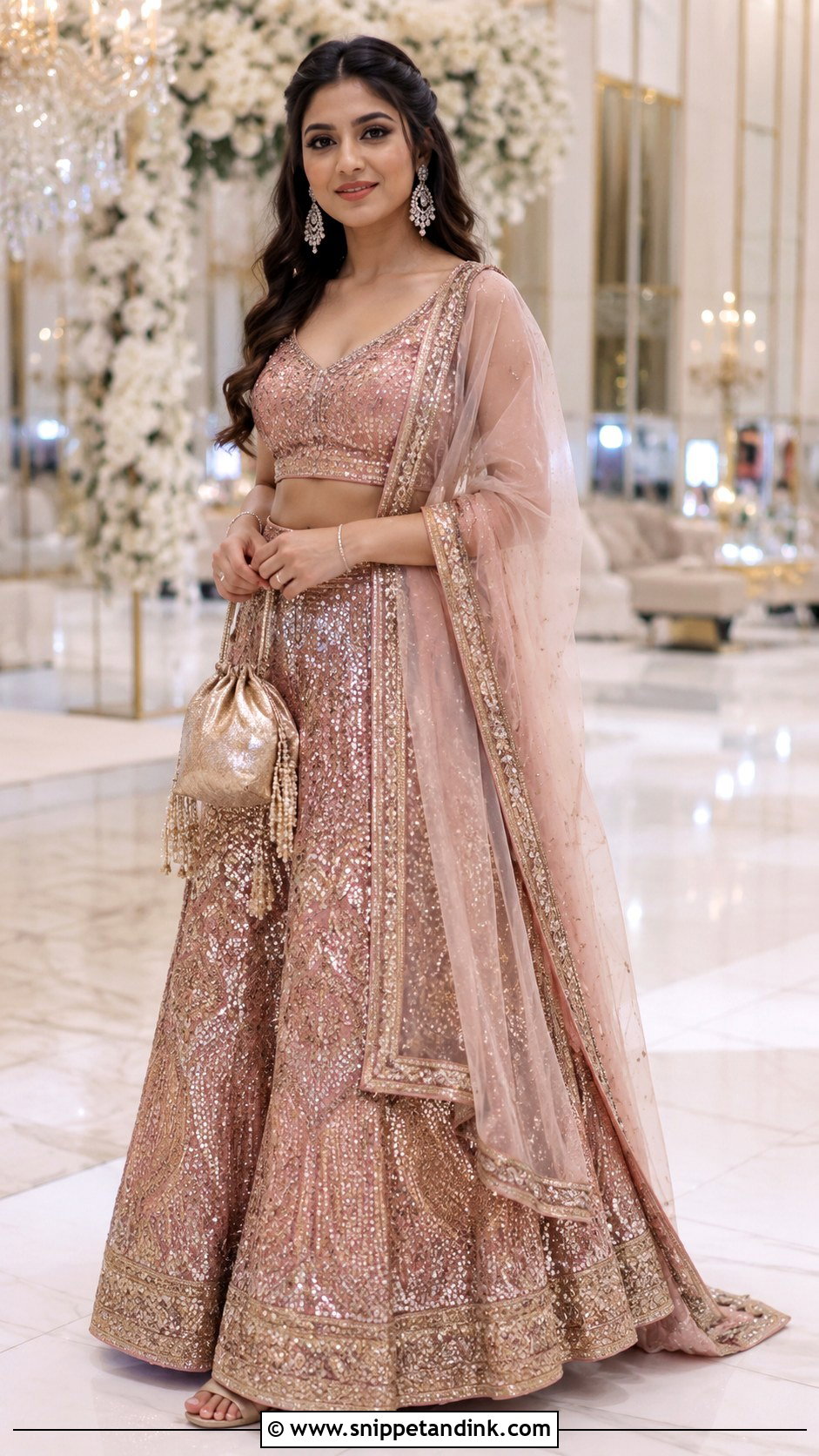
Rose gold can glow at night or look washed out, depending entirely on the light. Under bright photo lighting it can drift pale and close to bridal tones, so check the lehenga beside the bride’s outfit both in daylight and indoors before you decide. Choose a skirt with fine sequins or metallic thread rather than bridal-weight embroidery, which also keeps it light enough to wear all evening. A plain blouse in dusty rose or mauve and a sheer dupatta with a narrow border hold the outfit together. If your blouse already has an ornate neck, leave the necklace off entirely.
14. Bridal Sister Royal Blue Cape Lehenga
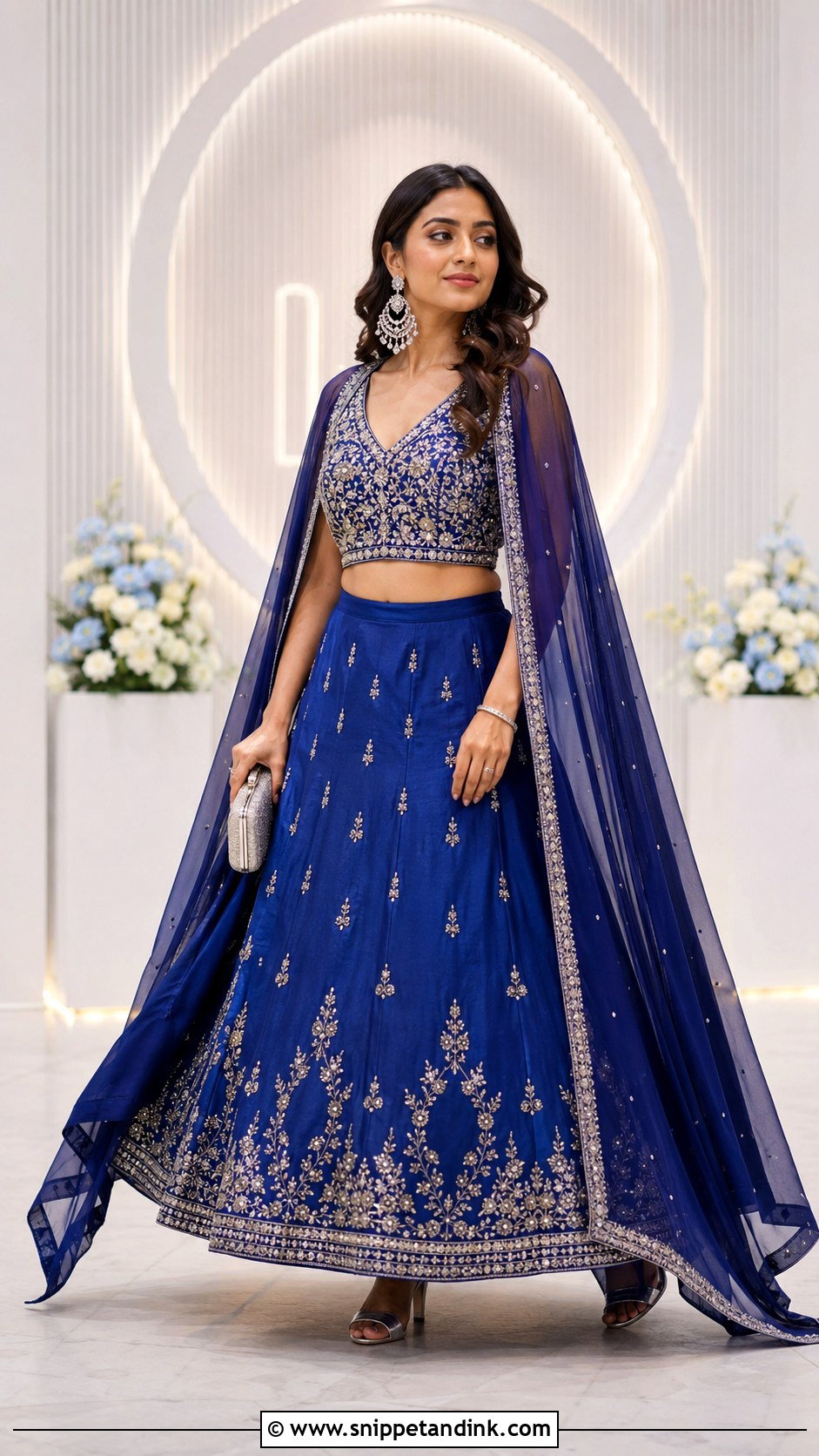
A cape lehenga takes the dupatta out of the equation, which I love for sisters who’ll be helping the bride all day. Royal blue with a clean A-line skirt and a sheer embroidered cape gives you drama with both hands free. Check where the cape hangs when you reach forward: if it falls over your wrists, it will sweep through plates and catch on bangles, so a waist-length cape is safer for a busy sister than a floor-length one. Silver embroidery looks crisp on royal blue. Skip the necklace, since the cape already frames your shoulders, and keep your hair sleek so it doesn’t tangle in the sheer fabric.
15. Bridal Sister Wine Red Maxi Dress
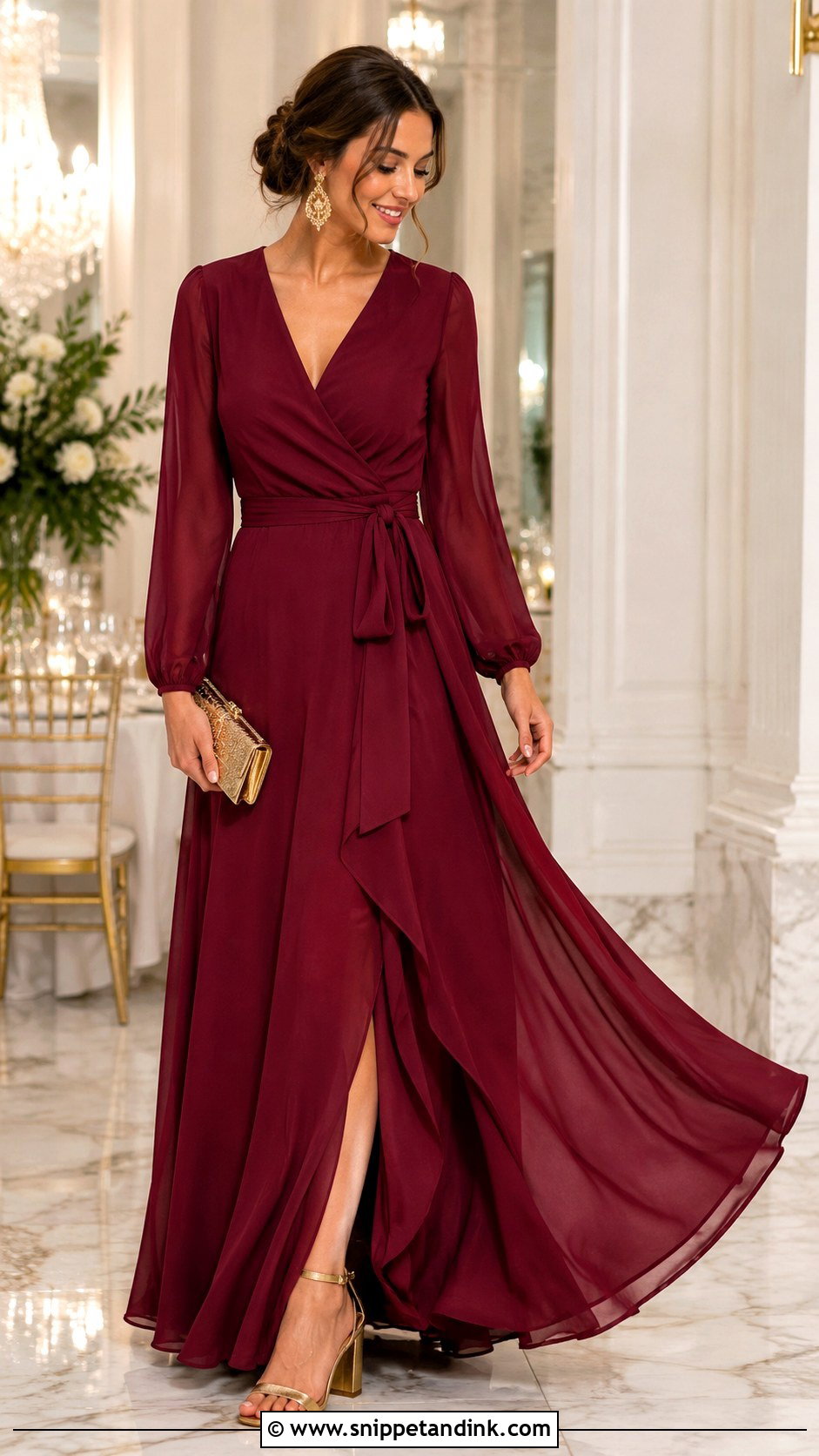
Wine red gives you the richness of red without echoing a bright bridal shade, which is why I steer sisters toward it rather than true red. Chiffon, crepe or soft satin in a wrap or one-shoulder cut keeps the dress fluid. Chiffon moves best for dancing but needs a proper lining, as unlined chiffon can turn sheer under flash. Keep jewelry to gold or antique brass, and with a plain neckline, one fine pendant. Have the hem set while you wear the exact sandals you’ll dance in. Maxi lengths get stepped on more than anything else at a wedding.
16. Bridal Sister Printed Jacket Lehenga
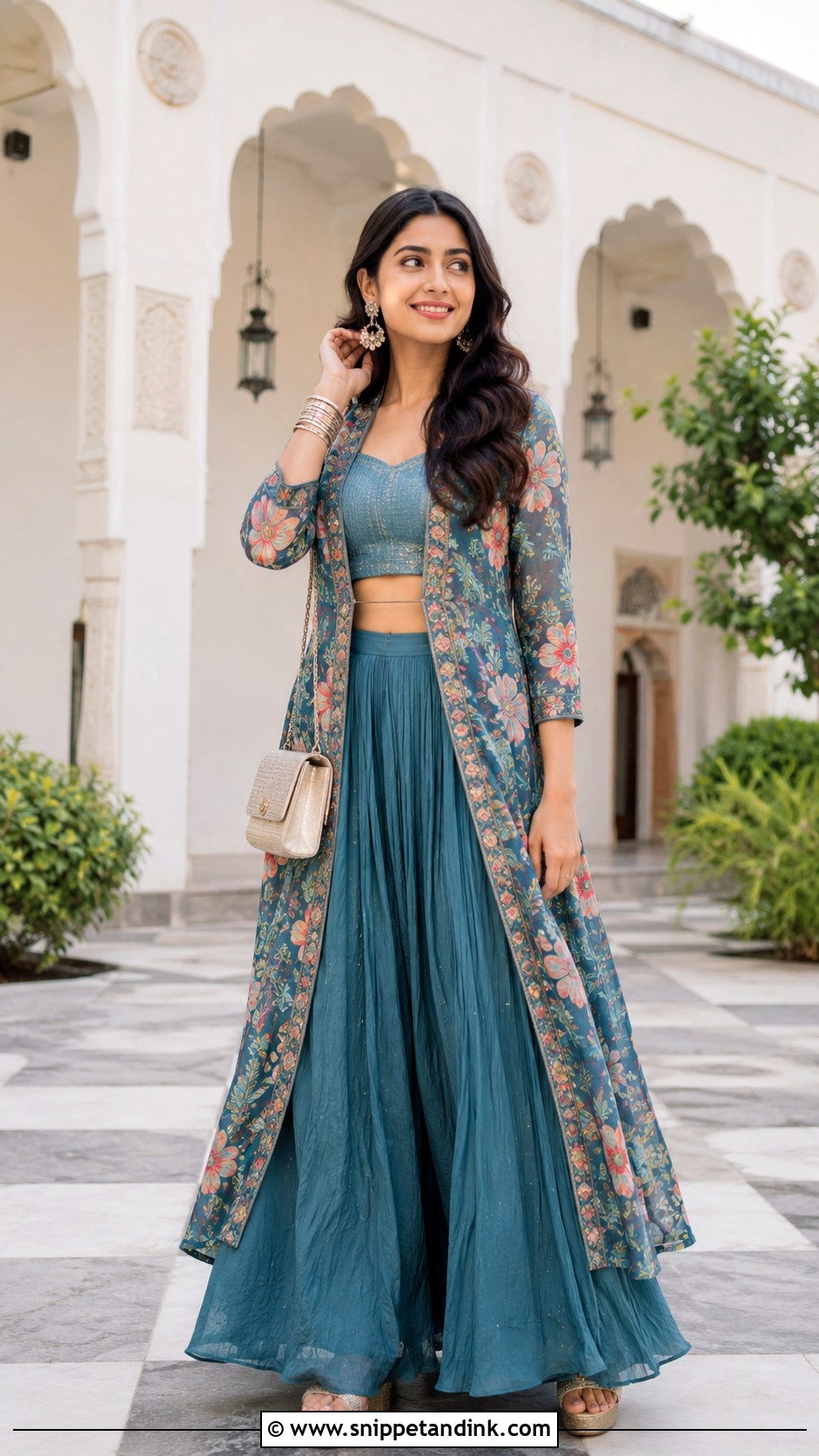
A printed jacket lehenga is my go-to for destination weddings and day events where the temperature swings between morning and evening. The long jacket carries the print and the coverage, so the skirt and blouse underneath can stay plain. Cotton silk or georgette keeps the layers from bulking up, whereas a heavy brocade jacket gets uncomfortable within an hour in warm weather. Wear it open to show the waist or fasten it at a single point for more structure, and choose wedge sandals for lawns. It’s one of the few outfits where you can shed a layer mid-event and still look fully dressed.
17. Bridal Sister Ivory Floral Maxi Dress
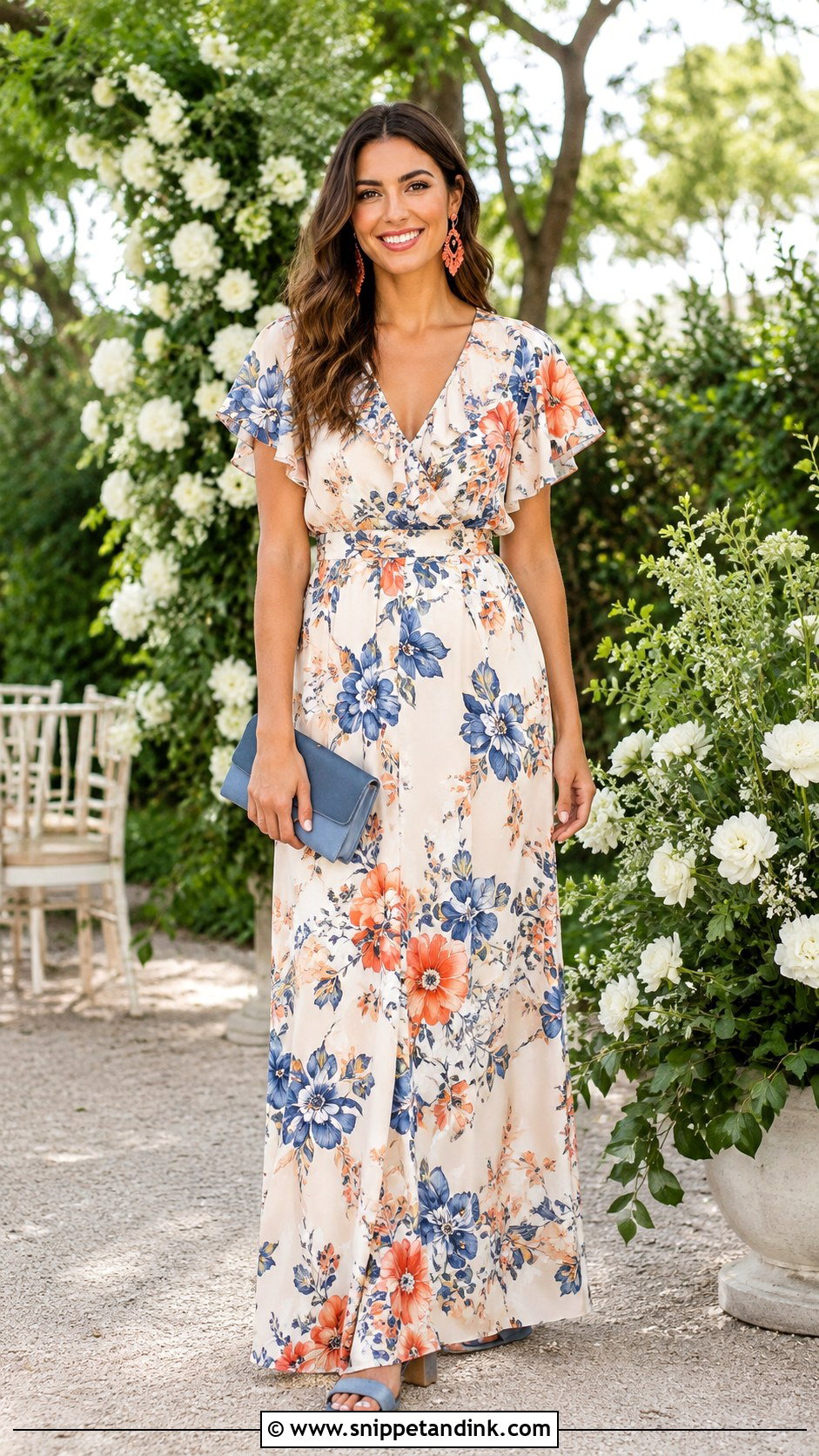
I’m cautious with this one. An ivory-ground floral maxi can work at a garden or destination wedding, but only if the print is bold enough to read as colour from across a lawn, and only once the bride has said yes. Large blue, green or coral florals help; small sprigs on ivory look white in photos. Avoid pearls, white shoes and anything resembling a bridal hair accessory, and pick block heels for grass. Honestly, if there’s any doubt at all, choose the same print on a blue or blush ground and the question disappears.
18. Bridal Sister Coral Ruffle Dress
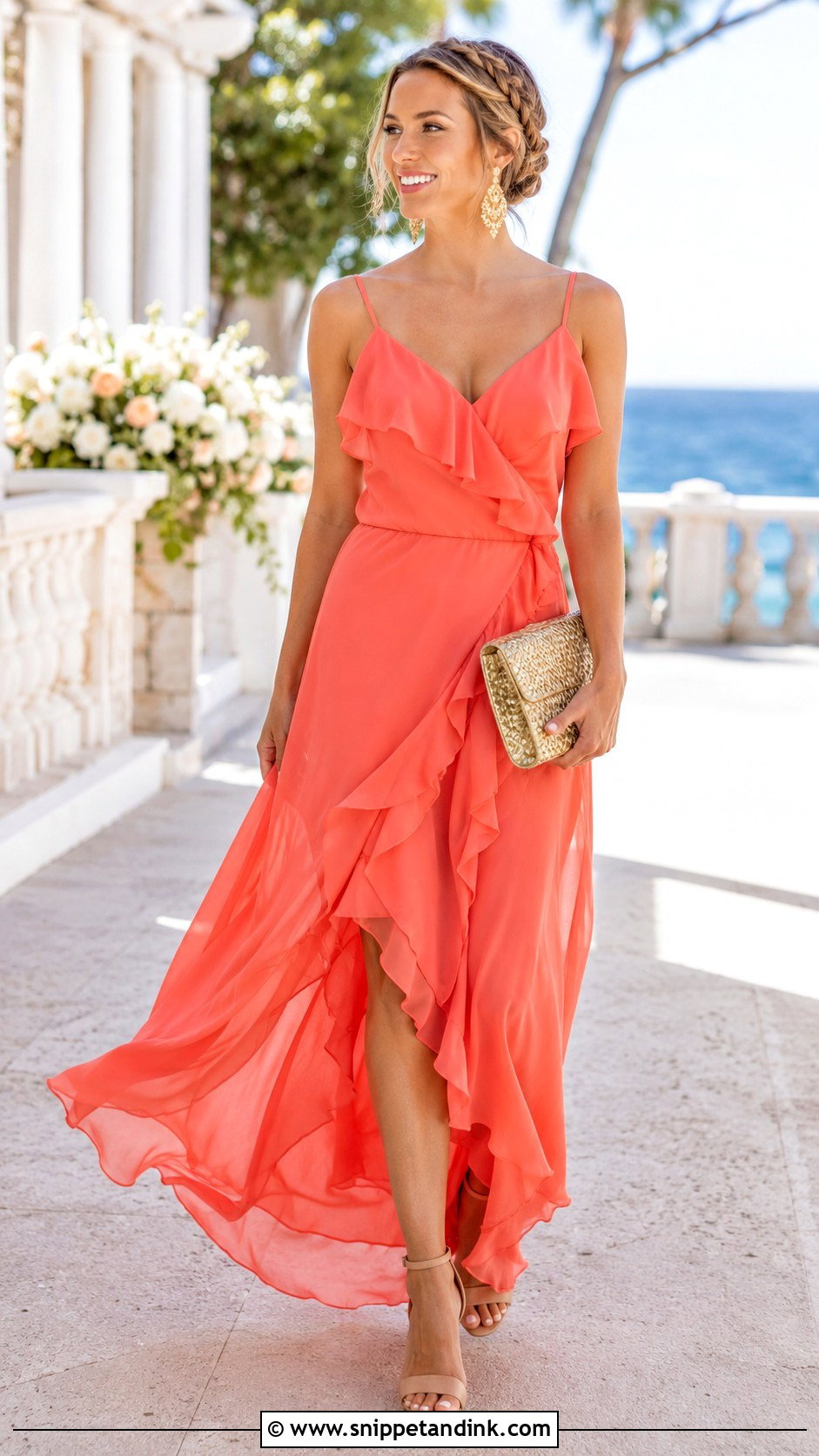
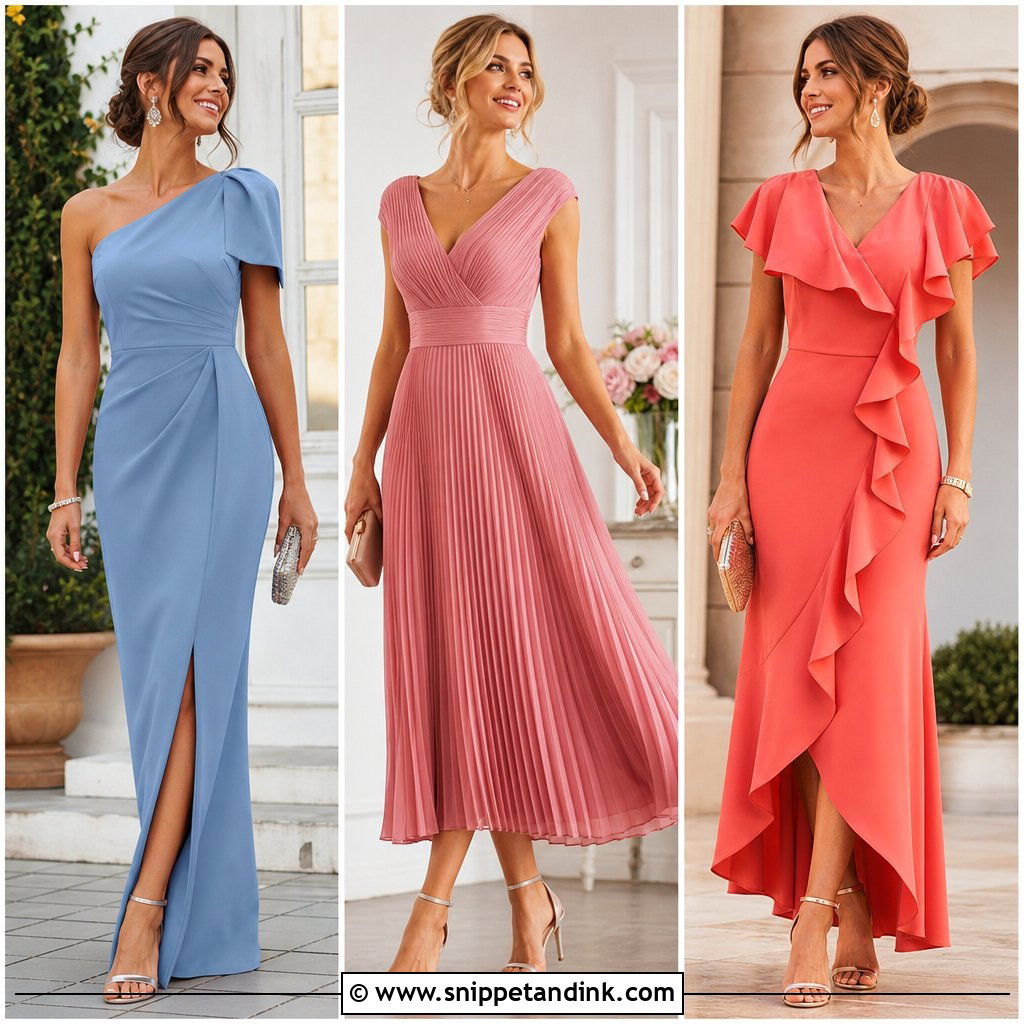
Coral feels right at a summer or beach wedding, and it sets the sister apart from guests in muted tones. Pick a midi or maxi dress with ruffles kept to one area, such as the hem, rather than covering every surface. Chiffon and georgette ruffles move softly, while crepe holds a cleaner edge and wilts less in humidity. On sand or grass thin stilettos sink, so a flat sandal or low block heel is kinder. A braided updo stays put in sea air far better than loose curls, and coral lipstick ties the look together.
19. Bridal Sister Sage Green Pleated Gown
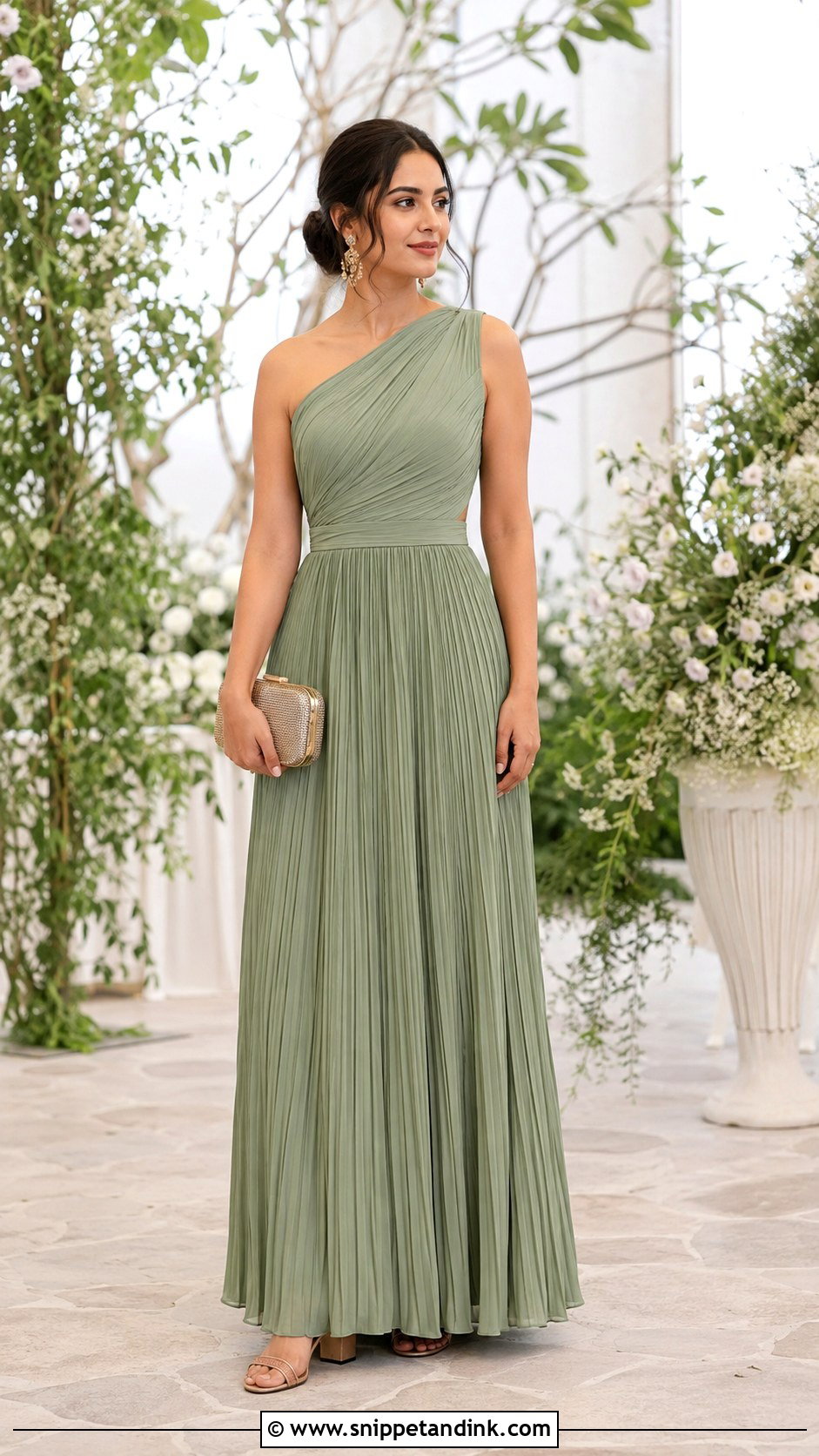
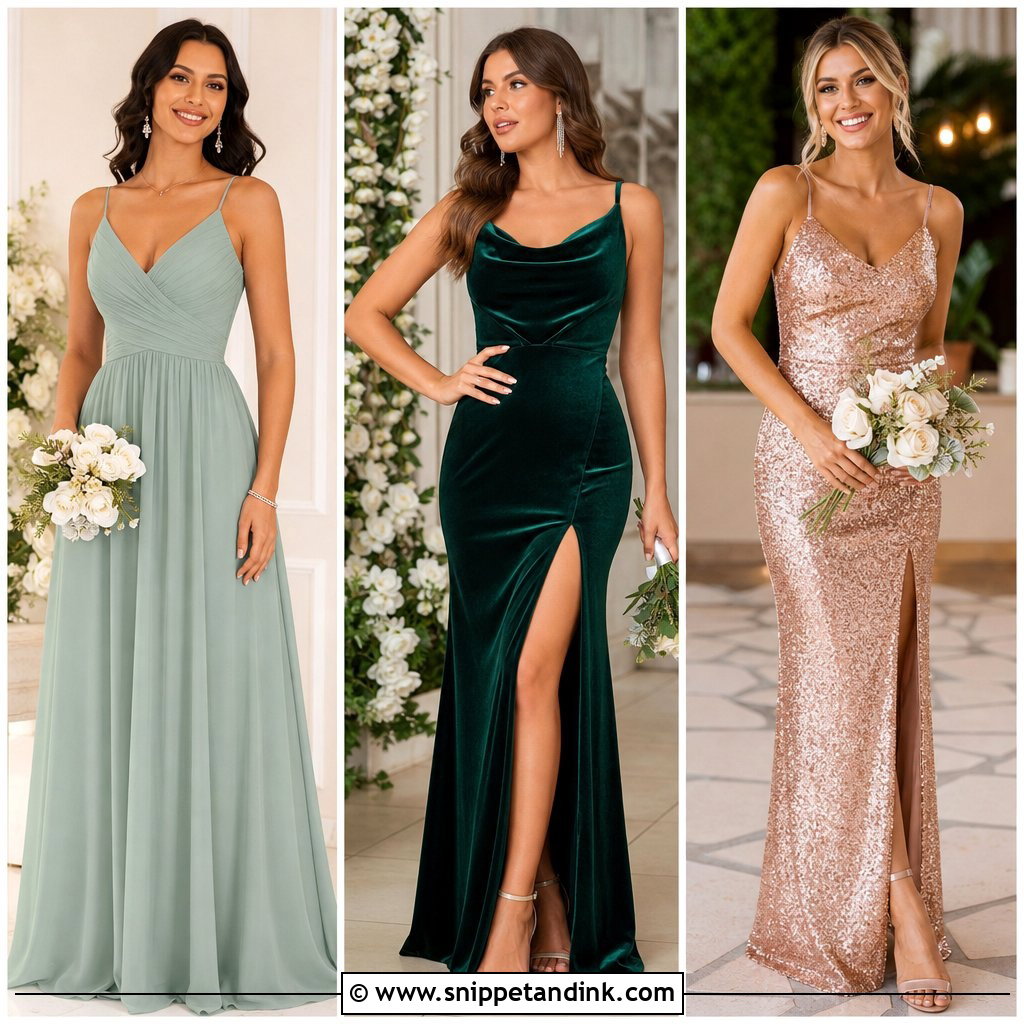
Sage green is one of the safest colours when a family wants coordinated portraits without everyone matching, because it sits quietly beside cream, blush and deeper greens. A floor-length gown with fine pleating and a fitted waist moves well; skip any train. Fine pleats can flatten if the gown is packed tightly, so travel with it hanging or loosely rolled and steam it gently rather than pressing with an iron. Gold accessories warm sage up and silver cools it down. Bring a wrap or tailored coat if the party runs into a cool evening.
20. Bridal Sister Magenta Silk Saree
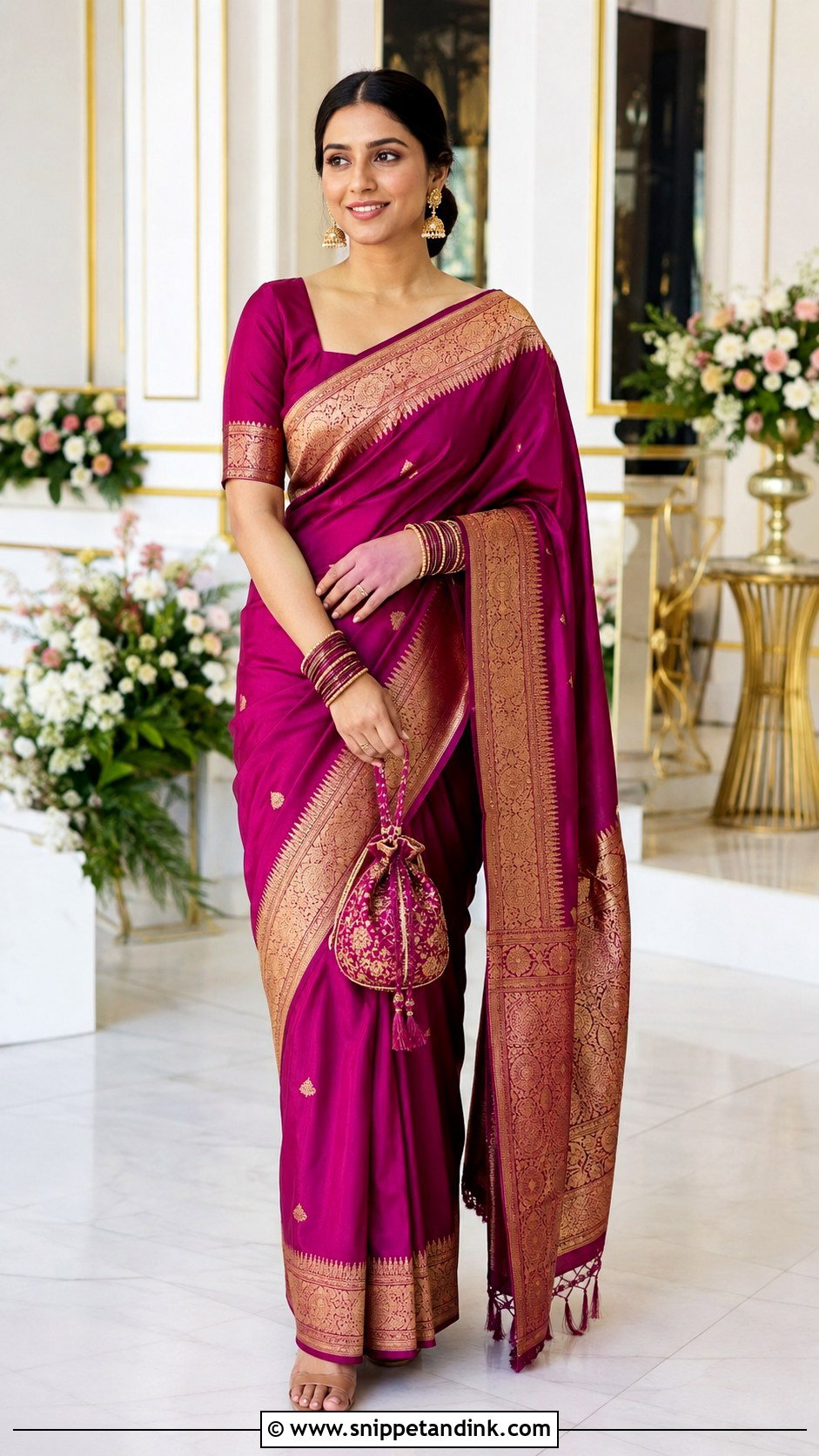
A magenta silk saree ends the list with real colour for a traditional ceremony. Choose silk with a woven border or restrained zari, and match the blouse for a bold monochrome or go deep purple or antique gold for contrast. What I care most about here is pinning. Silk slides, and the sister is constantly moving, greeting and stepping into photos, so I place small safety pins at the shoulder, through the pleats and where the pallu crosses the waist, always catching the underside of the fabric rather than piercing the face of the silk. Magenta is bright enough on its own, so keep the jewelry traditional rather than adding another colour.
Dressing for Every Function, Not Only the Wedding Day
Sisters rarely wear one outfit. Haldi, mehndi, sangeet, the ceremony and the reception may each need something different, and the order you plan them in matters. I work from the most formal event down: settle the ceremony outfit first, because it needs the longest lead time, then fill the lighter functions around it.
Lead times are longer than they look
Custom embroidered lehengas and made-to-order gowns can take two to three months or more, depending on the designer and the time of year, and alterations add a few weeks on top. Even ready-to-wear needs hemming to your shoes. If the wedding falls in peak season, order earlier than feels necessary.
Re-wearing without repeating
A good lehenga skirt can come back at a smaller function with a different blouse and dupatta, and a plain silk saree looks entirely new with different jewelry. Guests notice repeats far less than you fear, but photographs sit side by side in an album, so change whatever colour sits closest to your face.
What the Sister’s Potli Should Hold
You’ll be the person the bride turns to when something slips. Carry these yourself or hand them to a cousin who stays nearby:
- Safety pins in two sizes, for her dupatta and for yours
- Blotting papers and her lipstick, since her own bag will be somewhere else
- Double-sided fashion tape for a slipping neckline or strap
- A small stain pen
- Foldable flat shoes for the late dancing
Pick a bag big enough to hold all of it. A tiny clutch looks neat in photos and leaves you empty-handed the moment her dupatta pin gives way.
Your Sister Gets the Last Word on Colour
Start with the dress code and the venue, then pick a shape you can move in through rituals, photos and a late dance floor. Fit matters more than embellishment, so leave time for alterations and test the whole outfit with your real shoes and underwear. And ask your sister before you wear anything close to white, anything in her colour, or anything dramatic enough to pull focus. She’ll tell you honestly, and you’ll enjoy the day more for having asked.
You'll Like These Ideas:


Leave a Reply