
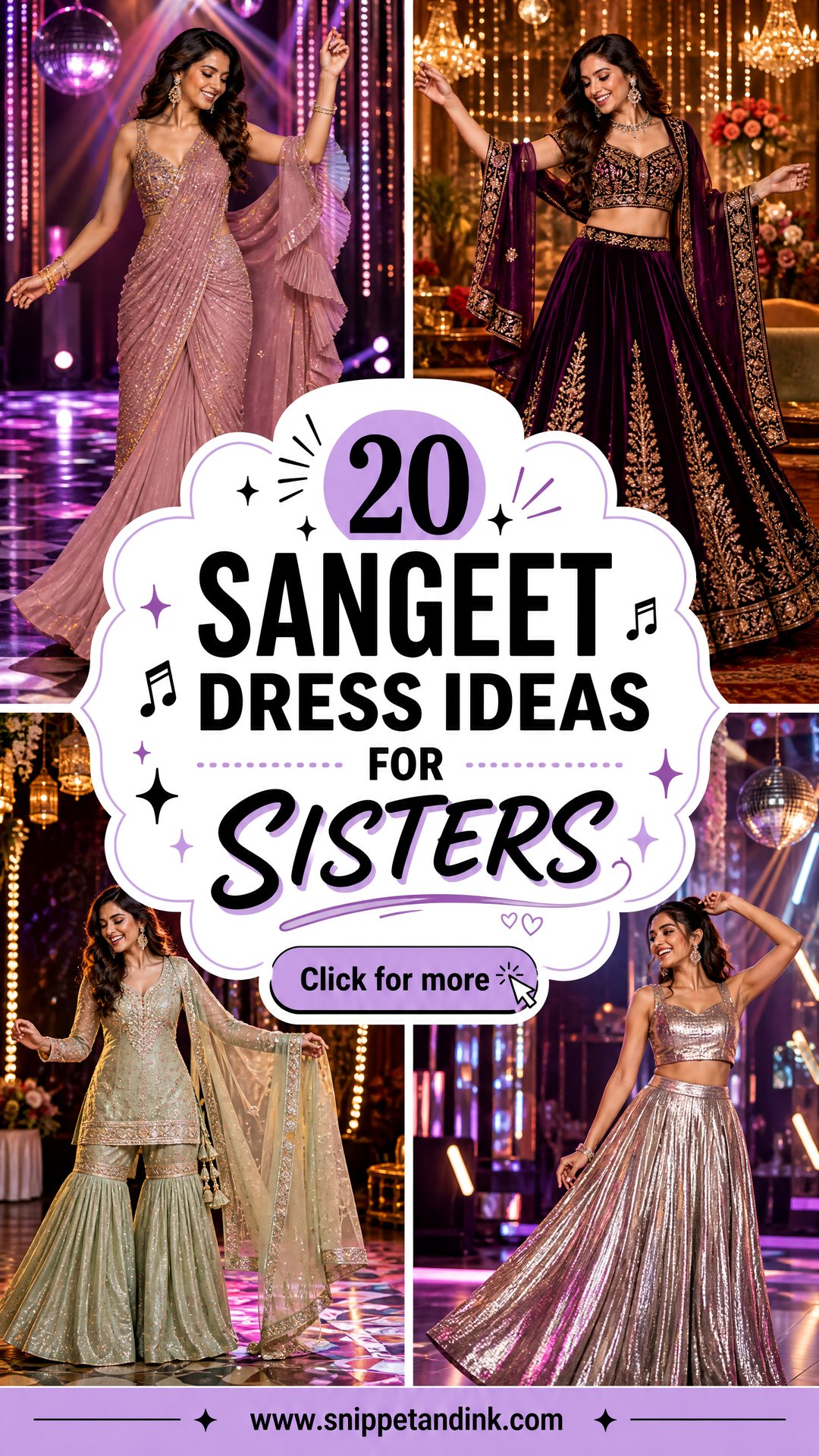
A sister at a sangeet is rarely just a guest. She’s usually rehearsed a dance, she’s greeting aunties at the door, and she’s pulled into family photos every twenty minutes. When I dress sisters for this night, I start with that job list before I look at a single fabric swatch, because the outfit has to spin, sit, bend and survive a crowded stage. It should also read as clearly more festive than general guest wear while leaving the bride or groom as the obvious focus. Below are the sangeet looks I keep coming back to for sisters, from light lehengas and shararas to pre-draped sarees and fusion sets, with notes on how each one actually behaves once the music starts.
Rehearse the Choreography in Your Outfit Before the Final Fitting
The most common sangeet problem I see is an outfit that was approved while standing still in a fitting room. Dance routines ask for things fittings never test: arms above the head, deep bends, quick turns, kneeling for a group pose. So I ask sisters to bring the outfit, or at least the blouse and skirt, to one rehearsal before the last alteration appointment.
Do the hardest move in the routine and notice what fights you. A blouse that rides up when you lift your arms needs a deeper armhole or a small gusset. A skirt that swings into the person beside you needs less flare or more space in the formation. A dupatta that slides needs a second pin, or it needs to come off for the performance and go back on for photos.
- Lift both arms fully and check whether the blouse hem exposes more than you’d like.
- Spin twice and see whether the hem catches your heel.
- Kneel and stand back up without using your hands.
- Sit for five minutes, then stand and look for creasing at the lap.
Tell your tailor exactly what went wrong. A specific note such as “blouse lifts two inches when I raise my arms” is something they can fix. A vague “it feels tight” is not.
1. Sequin Lehenga for Sangeet
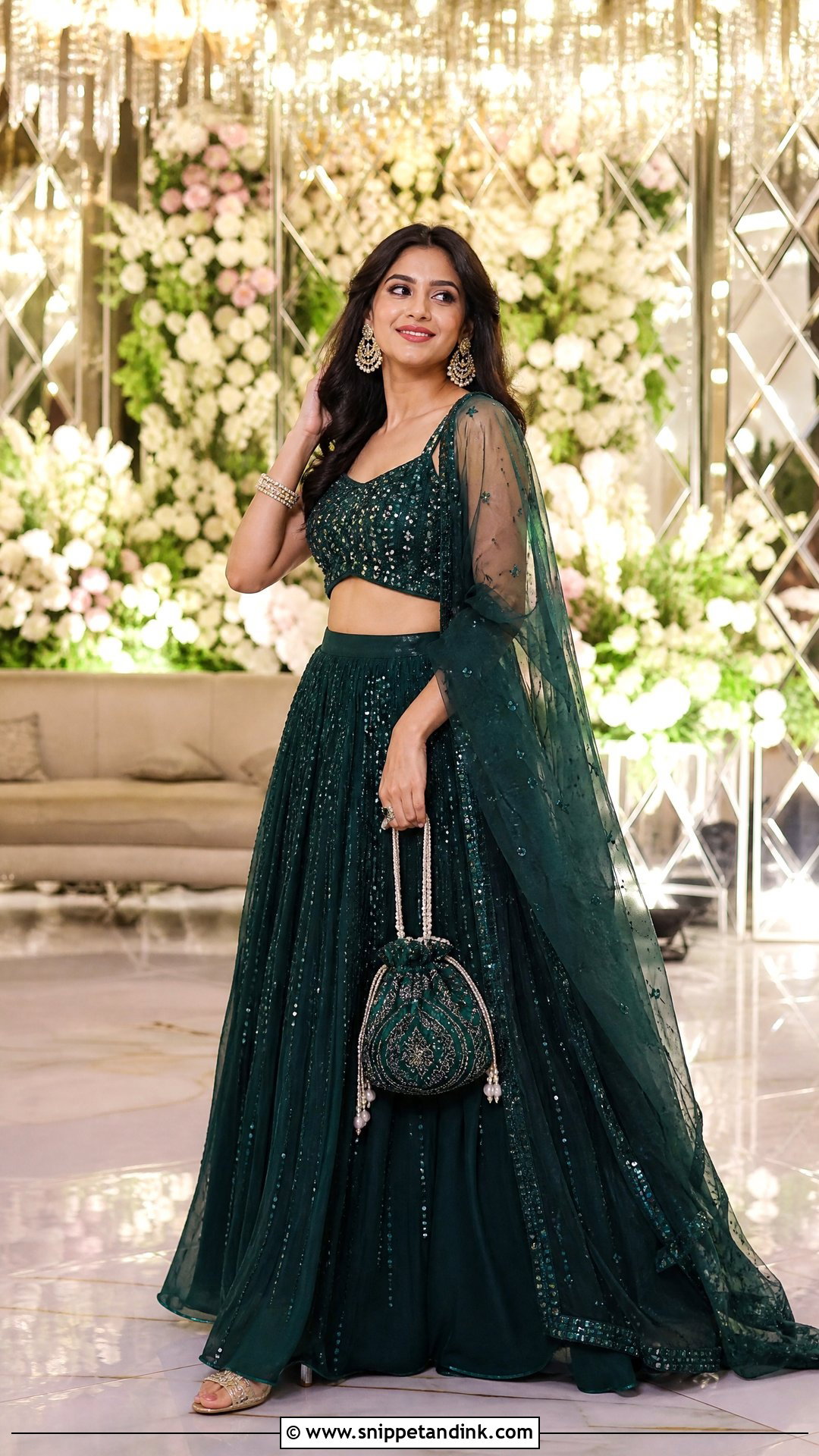
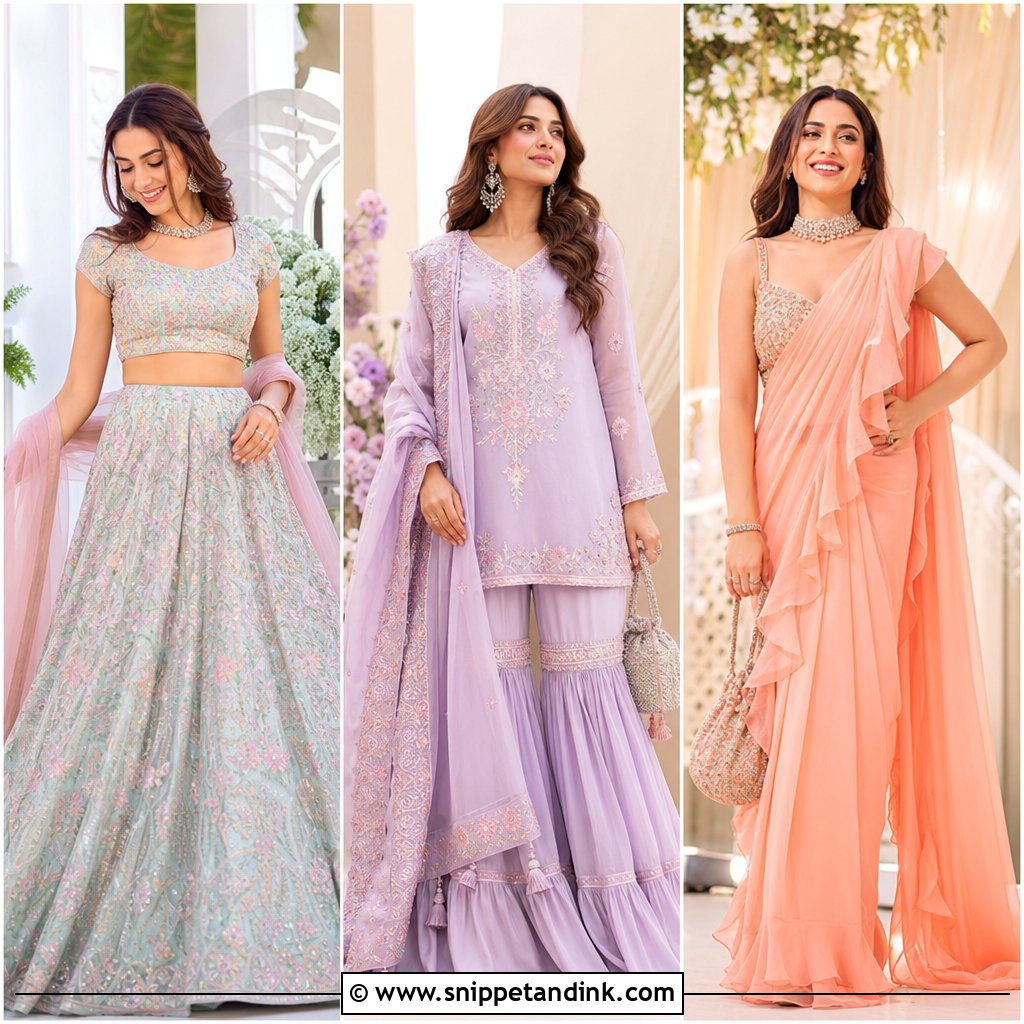
Sequins are the obvious sangeet choice, and they earn it, but the base fabric decides whether you’ll enjoy wearing them. I always ask for sequins on georgette rather than on a stiff net, because georgette lets the skirt fall and swing instead of sitting like a lampshade. Emerald or deep plum hold their colour under warm stage lighting. Keep the flare medium so a spin doesn’t knock into the dancer next to you, and pin a soft net dupatta at one shoulder. One thing people forget: sequins scratch the inner arm during choreography, so ask your tailor to line the blouse sleeves and side seams. With a busy neckline, chandelier earrings are enough and the necklace can stay home.
2. Mirror Work Sharara for Sangeet
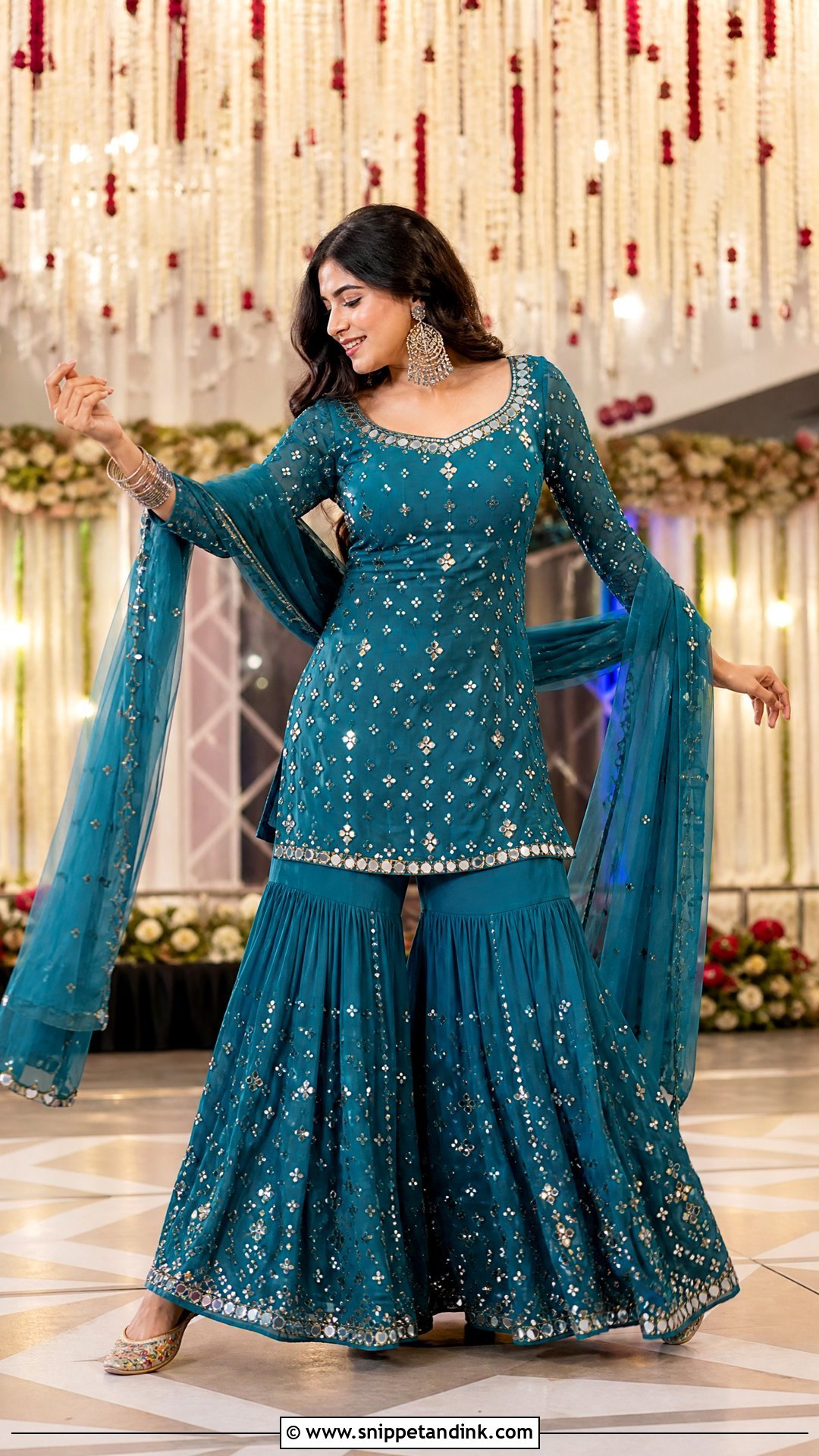
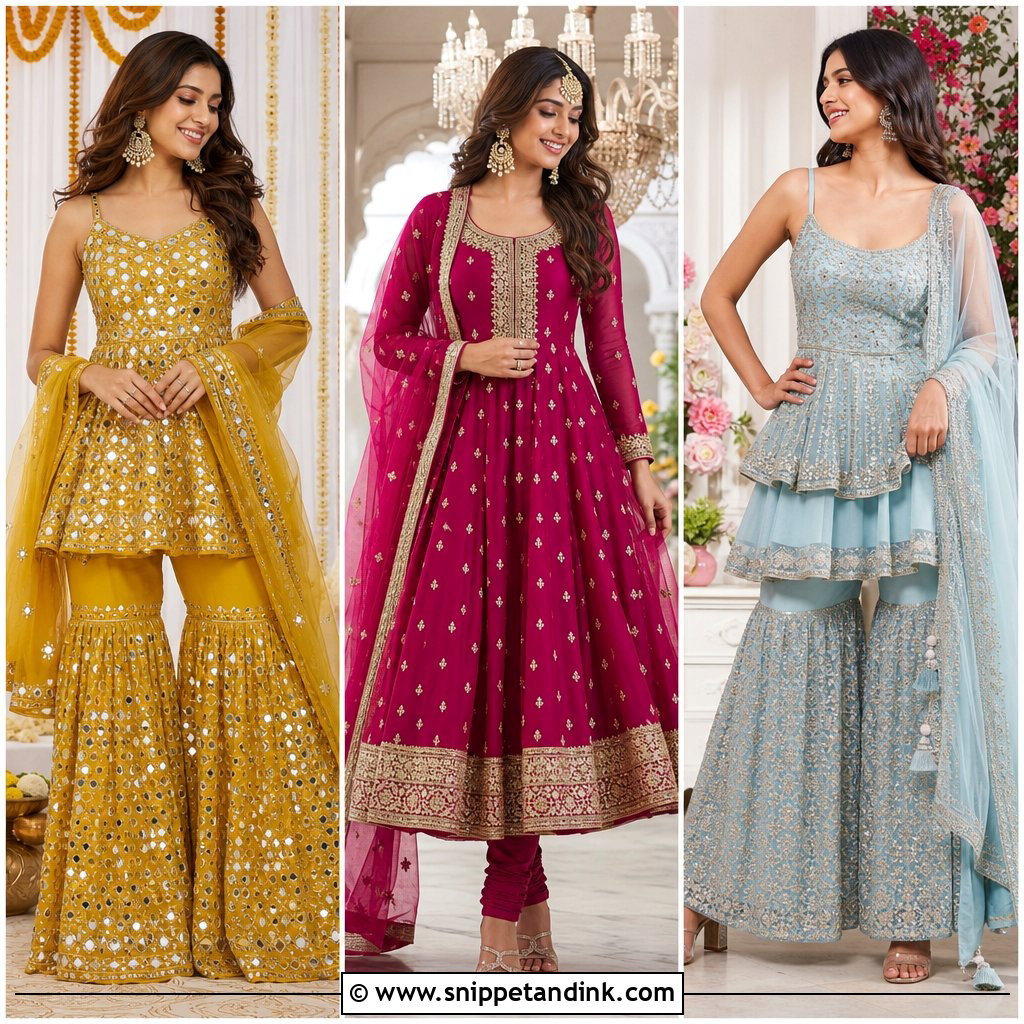
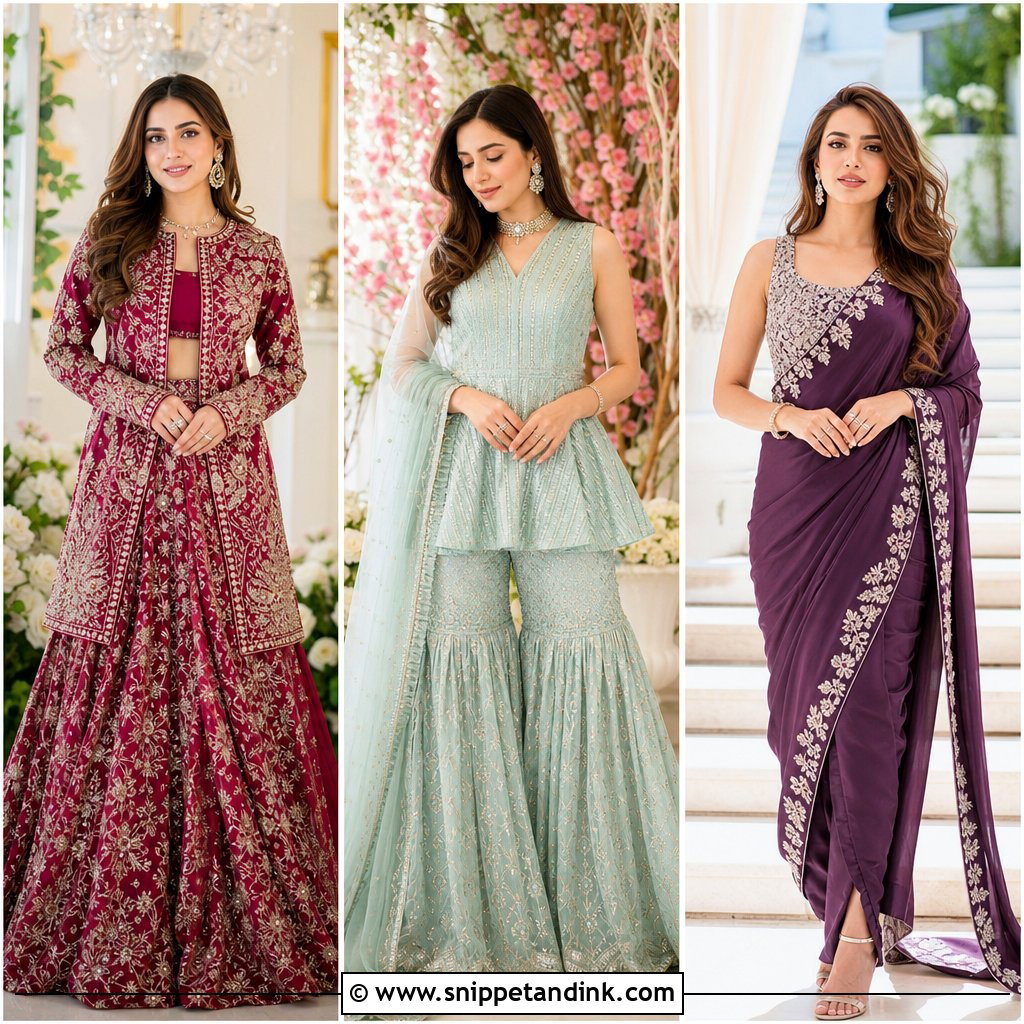
Mirror work is made for movement, since each little glass disc throws light back as you turn. A mirror work sharara pairs a short fitted kurti with high-waisted flared pants, which gives you the swirl of a lehenga with the security of separate legs. I prefer scattered mirrors to dense panels; real glass mirrors are heavy, and a fully worked sharara drags at the waistband by the second dance. Teal or fuchsia look rich at night. A sleek ponytail keeps hair off your face, and oxidized silver earrings sit well against the mirror shine without fighting it.
3. Pre-Draped Saree Gown for Sangeet
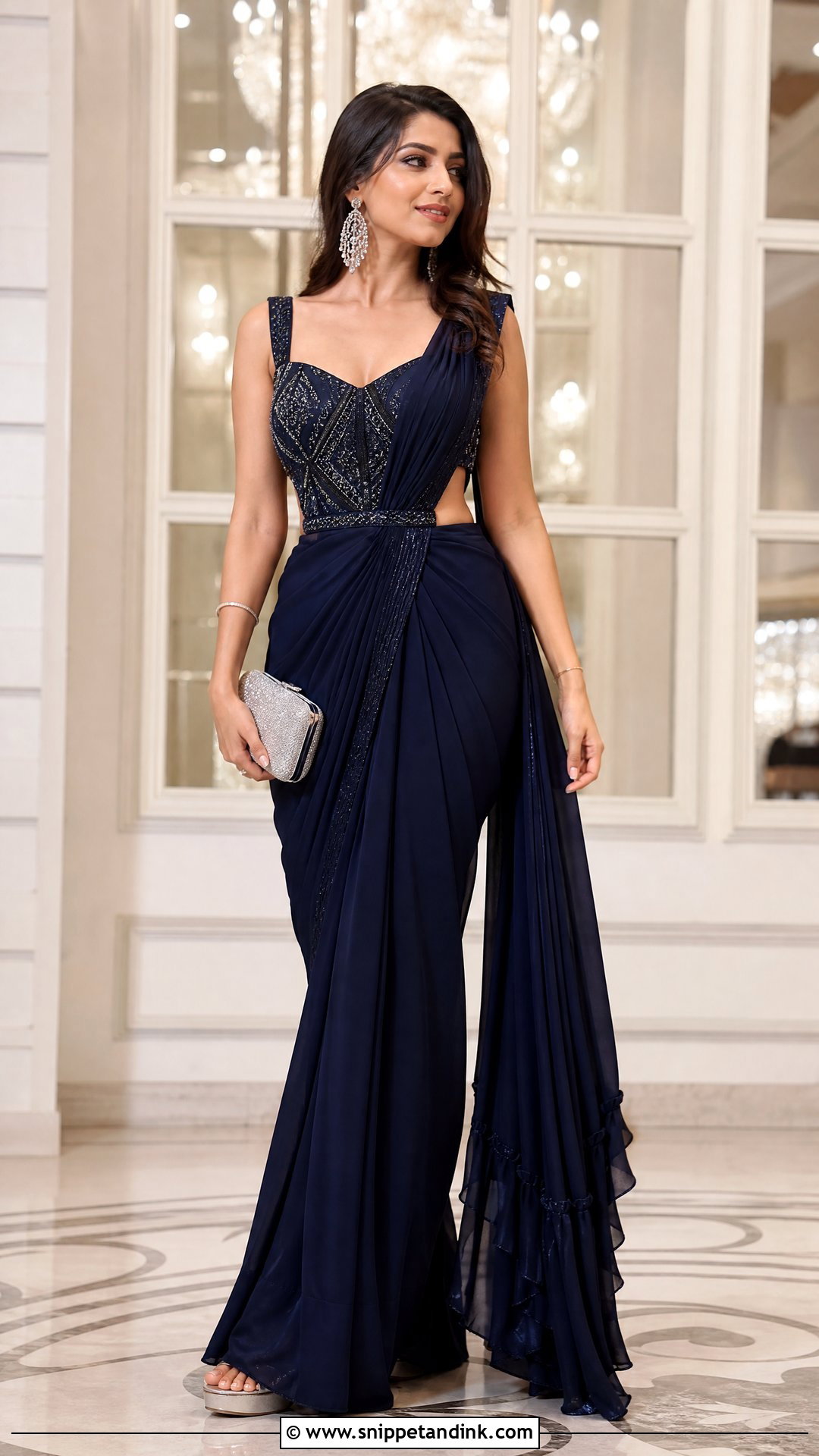
Sisters who love sarees but dread re-tucking pleats all night are the ones I send toward a pre-draped saree gown. The drape is stitched in place, so nothing shifts when you lift your arms in a routine. Crepe and stretch georgette are the forgiving choices here; they move with you, whereas a stiff silk version can pull across the hips when you sit. Check where the attached pallu is anchored. If it’s only tacked at the shoulder, ask for a second hidden stitch at the waist. Since the drape is the detail, I keep jewellery to crystal earrings and one slim bracelet.
4. Cape Lehenga for Sangeet
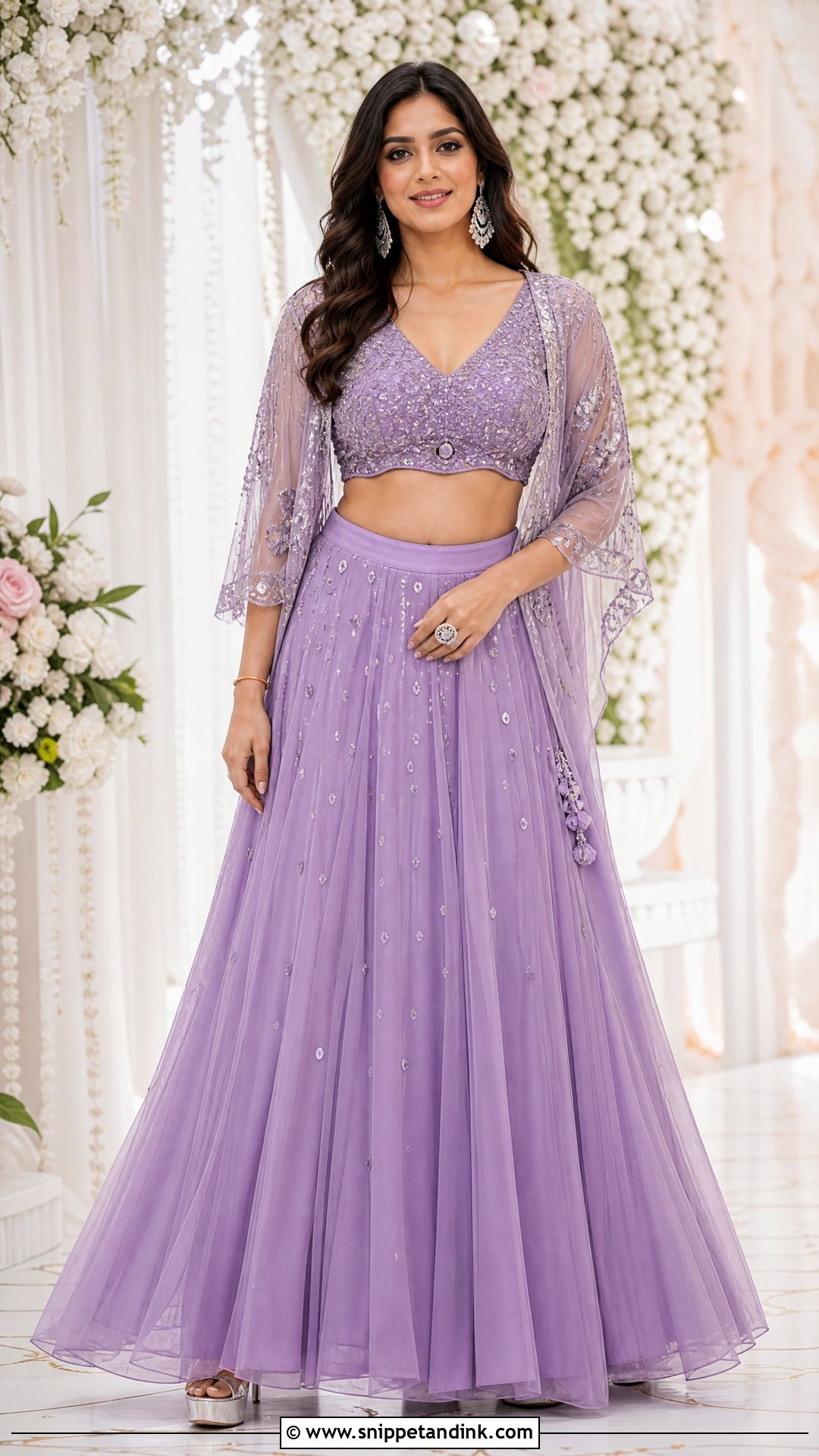
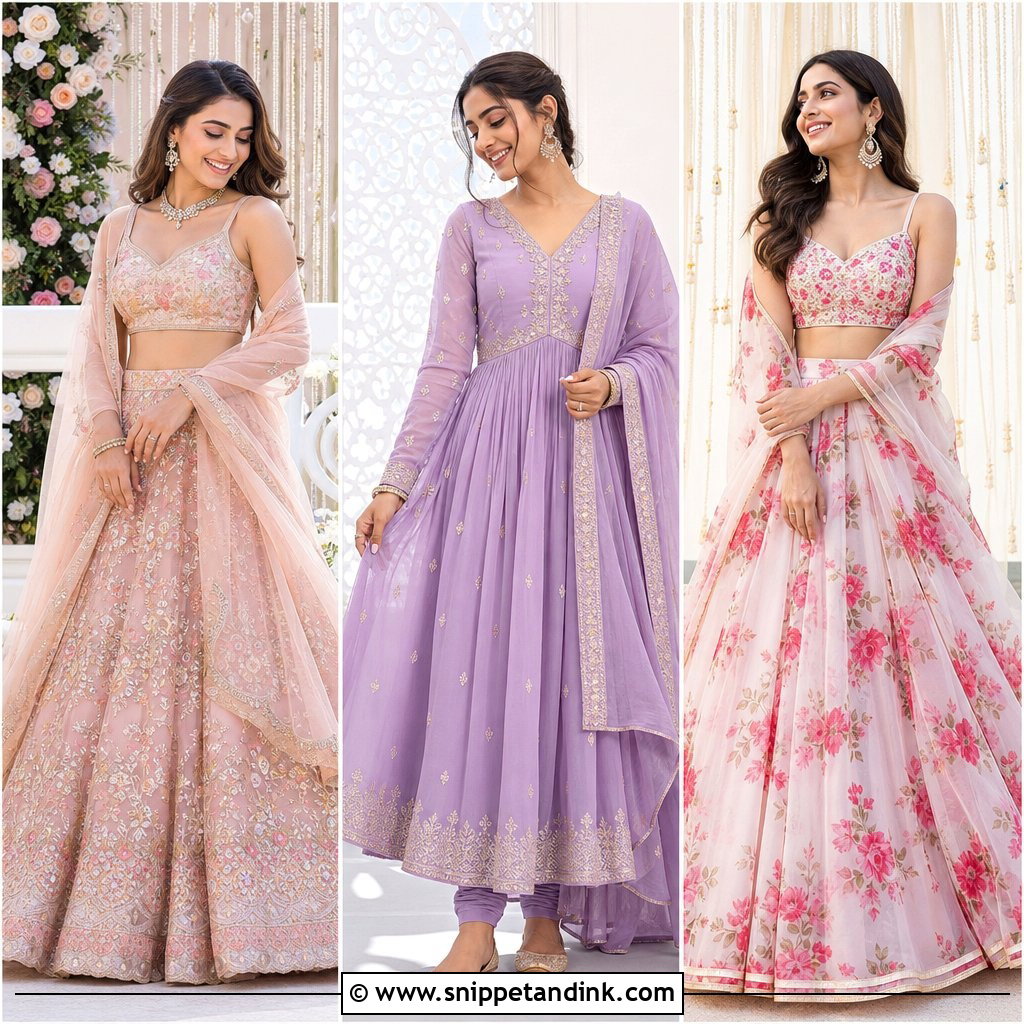
A cape lehenga solves the dupatta problem outright. The sheer cape is fixed at the shoulders or neckline, so there’s nothing to pin, nothing to slip and nothing to step on. Length matters more than people expect: a waist or knee-length cape moves well during choreography, while a floor-length one gets trodden on in a group formation. Icy blue and dusty lavender read fresh under evening lights. Pull your hair back so the neckline and cape edge stay visible, and choose platform sandals over stilettos, since the cape adds movement you’ll want steady feet for.
5. Embroidered Anarkali for Sangeet
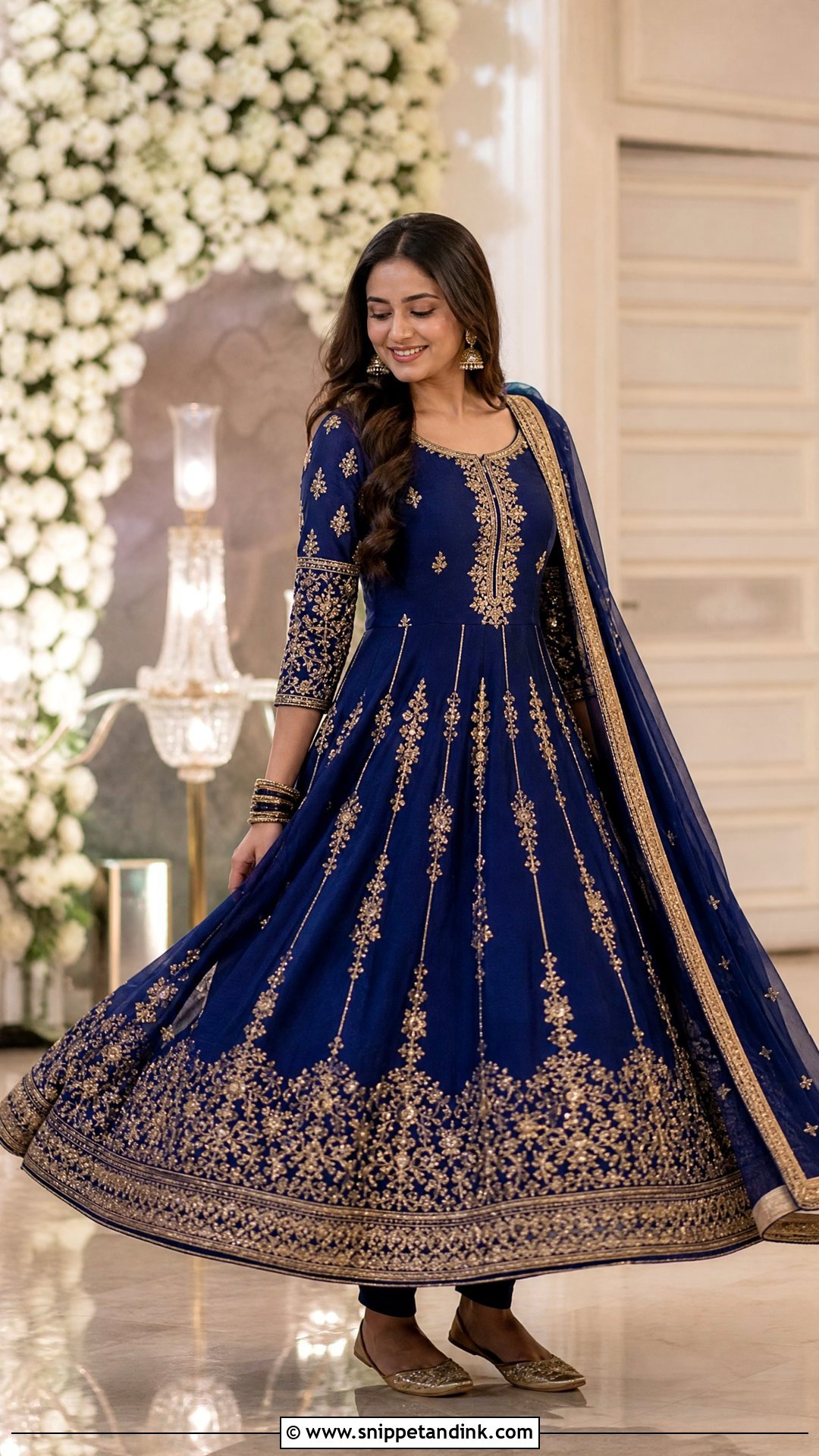
An embroidered Anarkali is the outfit I trust for sisters of very different ages dressing for the same night. The fitted bodice and flared skirt give coverage, and the hem moves naturally when you dance. Watch the weight of the zari: heavy metallic borders pull the flare down so it stops swinging, so I’d rather see thread embroidery with zari only on the hem. Jewel tones like ruby or peacock green feel right for an evening event. Slim pants underneath, a neatly pinned dupatta and jhumkas finish it. Three-quarter sleeves are worth asking for if you’ll be dancing in a warm hall, because they breathe better than full ones.
6. Indo-Western Jumpsuit for Sangeet
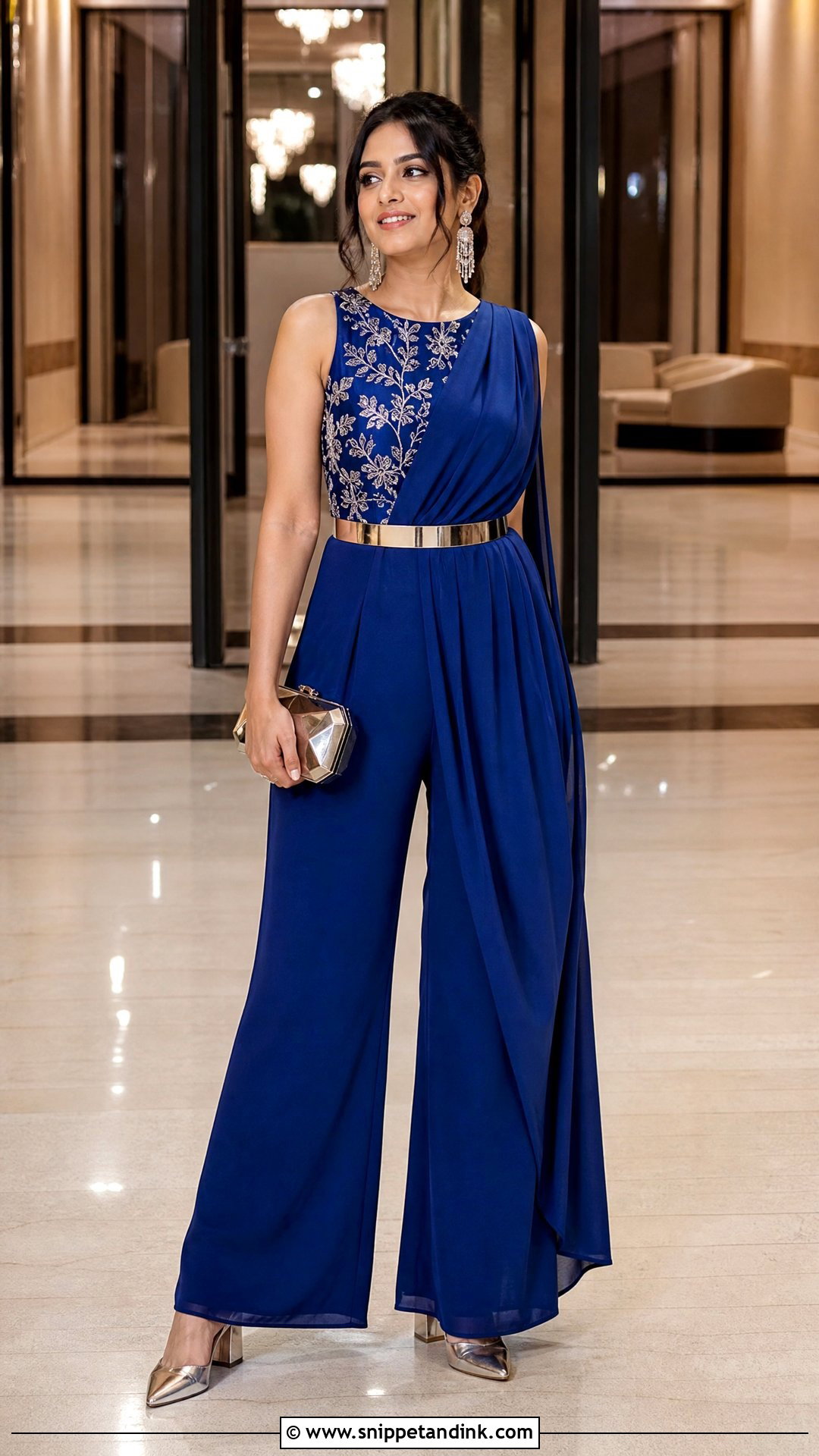
Some sisters simply don’t feel like themselves in a skirt, and an Indo-Western jumpsuit is my answer for them. Look for a wide leg, an embroidered bodice and an attached drape that echoes a saree pallu, which keeps it reading as festive rather than cocktail. Cobalt or bronze hold up well at night. The fitting I’m strict about is the hem: have it finished with the exact shoes you’ll wear, because a wide leg that’s half an inch too long catches under a block heel the moment you turn. A metallic belt adds waist definition if the bodice is loose. This shape suits hotel ballrooms and modern venues best.
7. Peplum Lehenga for Sangeet
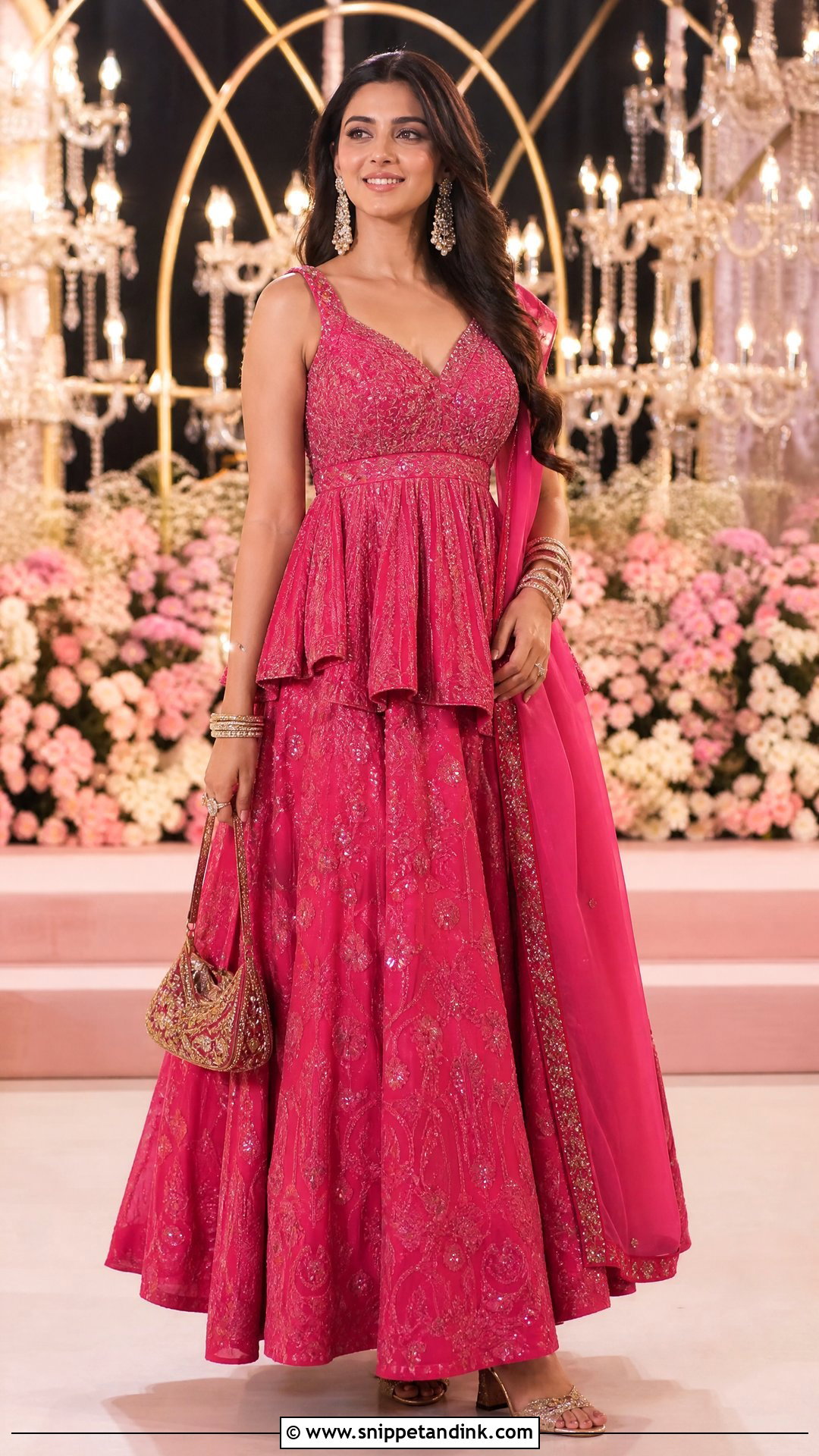
A peplum top over a lehenga skirt gives more coverage at the waist and midsection while keeping all the traditional volume below. The trick is proportion. A peplum that falls too far past the hip cuts the skirt short and makes the whole outfit look boxy, so I usually mark it just below the high hip at the fitting. Put the heavier embroidery on the top and keep the skirt simpler. Deep pink or turquoise feel lively for a family event. If the peplum is richly worked, you can skip the dupatta entirely, which is one less thing to manage on the dance floor.
8. Ruffle Saree for Sangeet
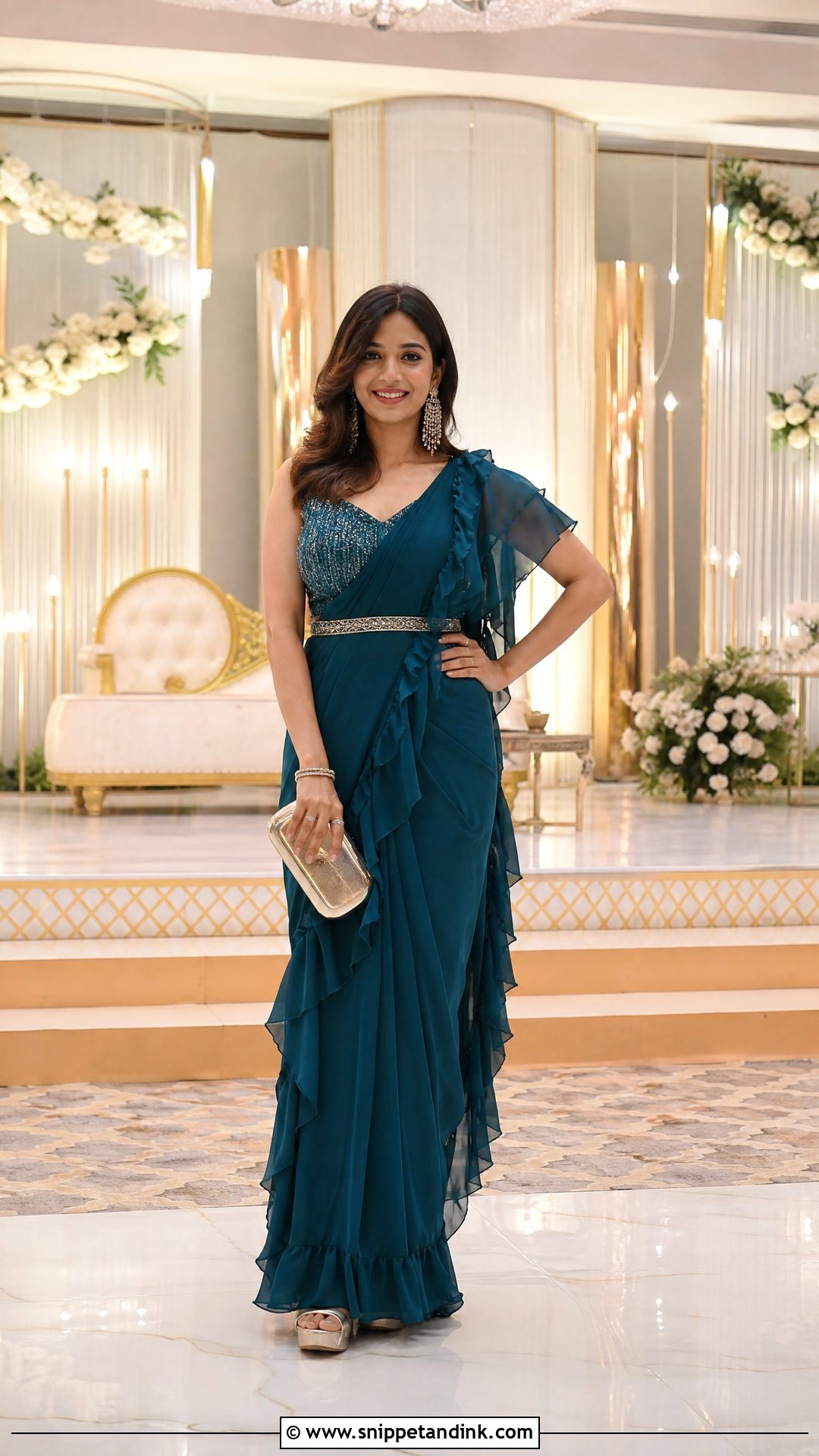
Ruffles bring a playful edge to a drape that otherwise follows traditional lines. For a sangeet I’d only suggest a pre-stitched ruffle saree; hand-draping ruffles takes practice, and ruffled georgette slides more than a flat border. A slim belt at the waist holds everything in place through a routine. Go monochrome in hot pink or midnight blue and let a sequin or beaded blouse supply the sparkle. Keep bracelets minimal. Loose bangles and charm bracelets hook into the frills, and pulling them free usually leaves a snag in the fabric.
9. Jacket and Palazzo Set for Sangeet
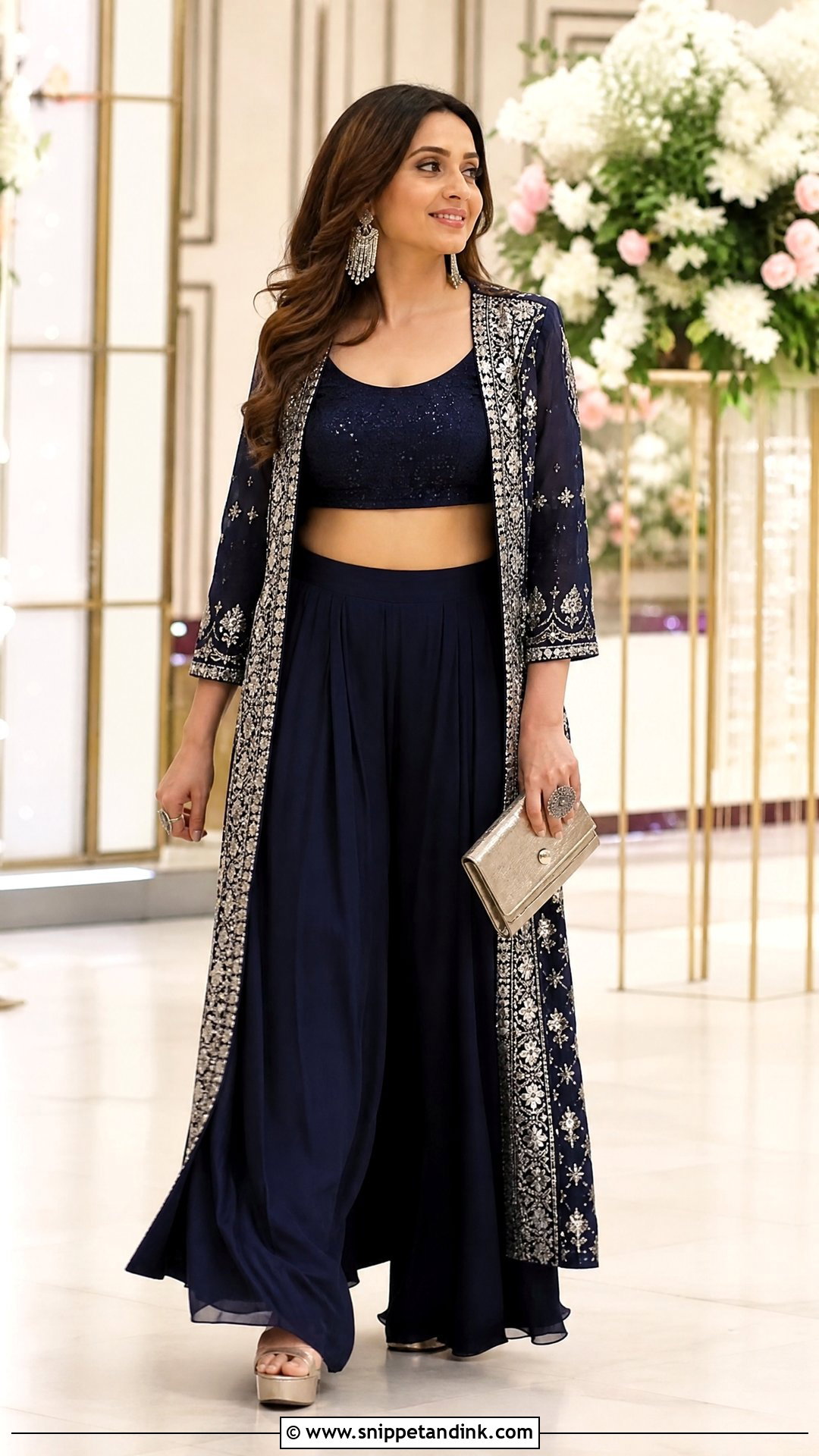
For a sister with several performances on the schedule, a jacket and palazzo set is the most forgiving choice I know. A fitted crop top or sleeveless kurti goes under wide palazzos, and a long embroidered jacket replaces the dupatta. Because the jacket is worn, not draped, it doesn’t slide off a shoulder mid-turn. Black with gold or emerald with antique gold look rich at night. Check that the jacket’s armholes are cut generously; a tight armhole is what stops you lifting your arms above your head in choreography. A low centre-parted bun keeps the neckline clean.
10. Velvet Lehenga for Winter Sangeet
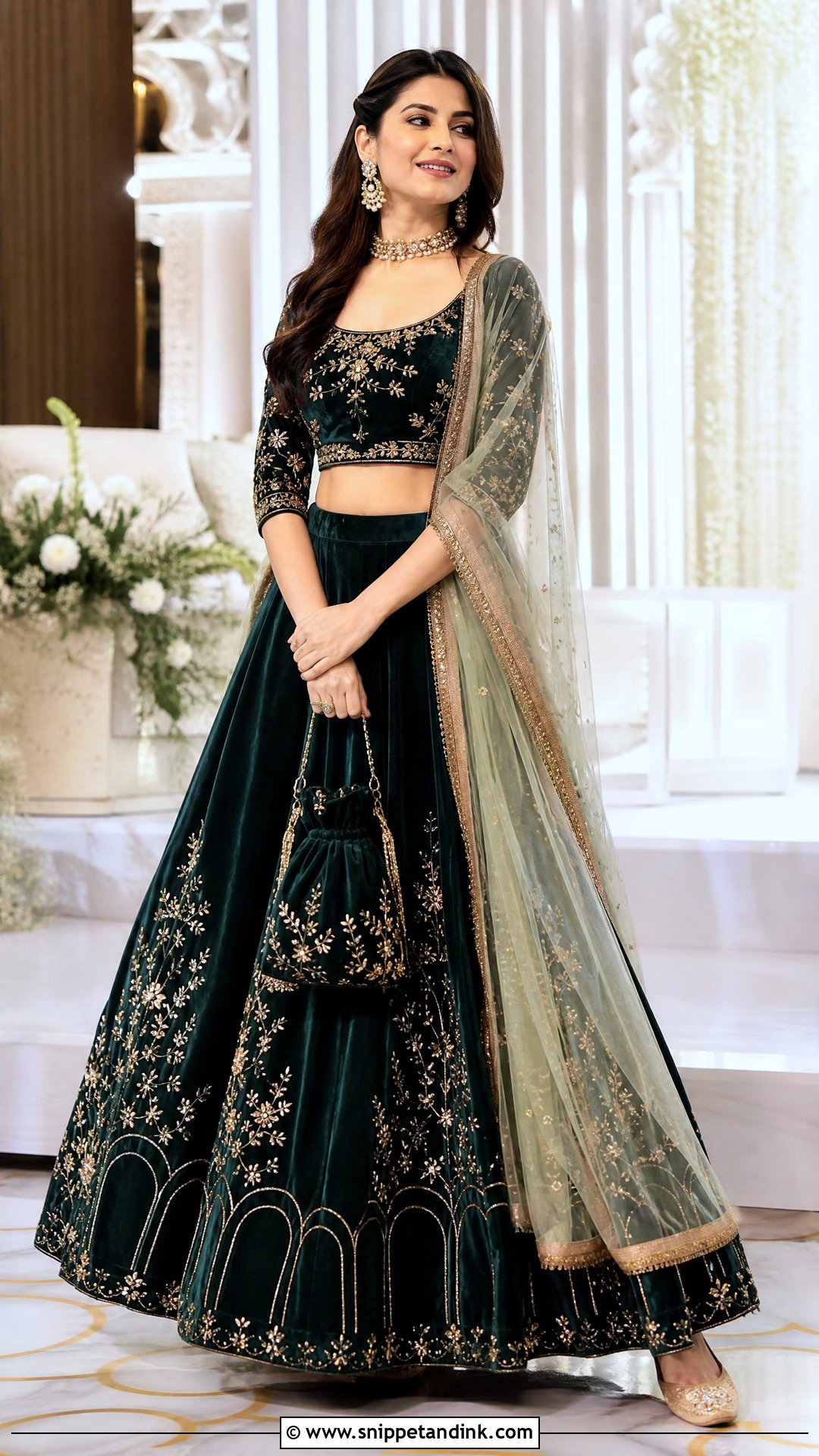
Velvet is my go-to when a sangeet falls in winter, because it holds warmth and its deep pile turns colour richer than any flat fabric. It’s also heavy, so I balance it with a net dupatta and keep embroidery to the border. Long or three-quarter sleeves look regal and keep you warm between performances. Ask for a breathable cotton or silk lining; an indoor venue packed with dancers warms up quickly, and velvet against skin gets uncomfortable within an hour. Maroon or deep emerald with kundan earrings and a delicate choker is all the outfit needs.
11. Floral Organza Lehenga for Day Sangeet
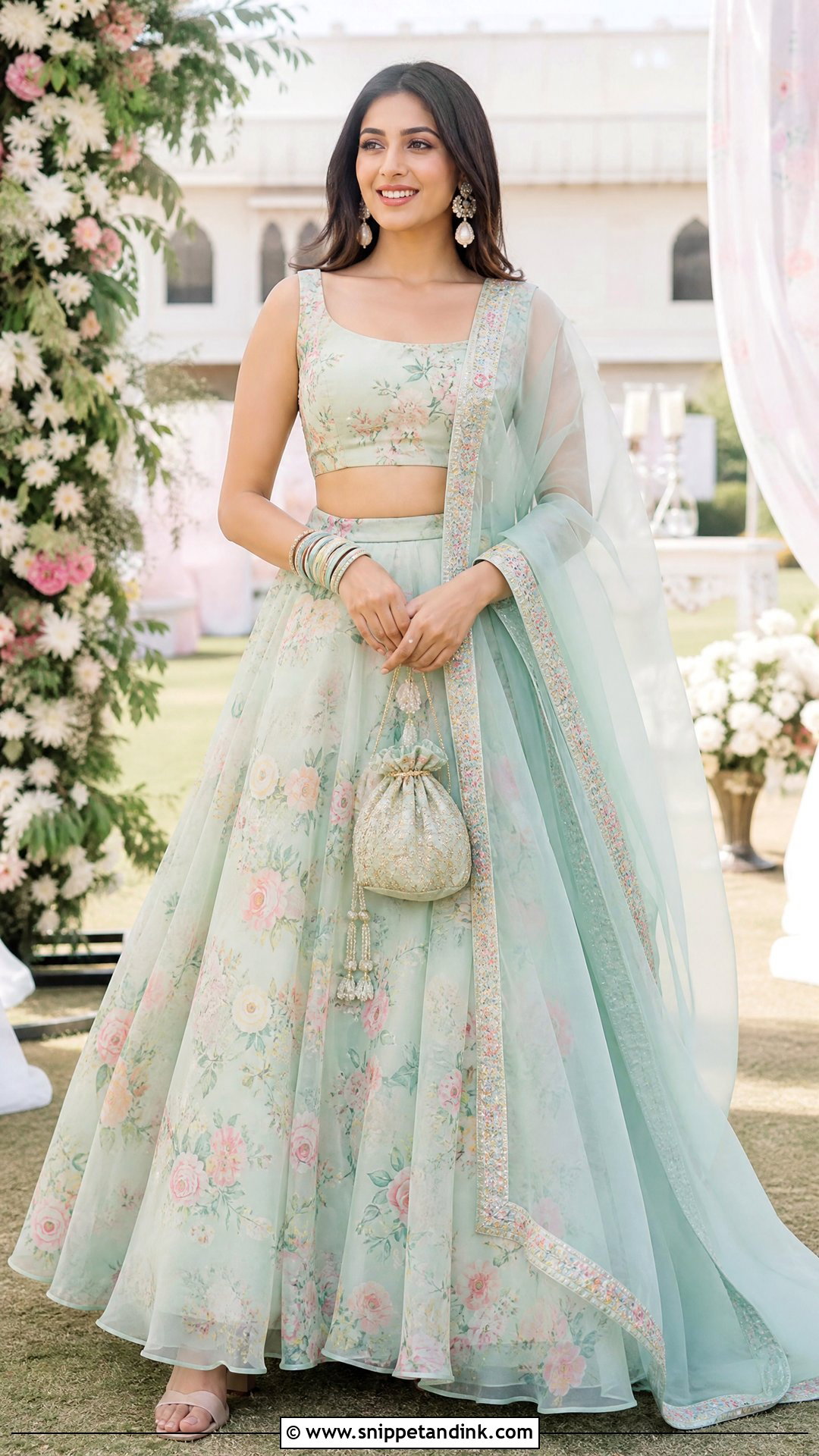
Daytime sangeets on a lawn ask for something lighter, and floral organza has that airy, crisp body without weight. Mint, powder blue or blush florals look fresh in natural light, where heavy jewel tones can look flat. Organza does crease where you sit, so I suggest a printed skirt over plain organza if you’ll be seated for long stretches, since a print hides fold lines. A plain dupatta with a narrow embroidered border keeps the outfit from feeling busy. On grass, low block heels or dressy flats are the only shoes I’d sign off on; stilettos sink.
12. Gharara Suit for Sangeet
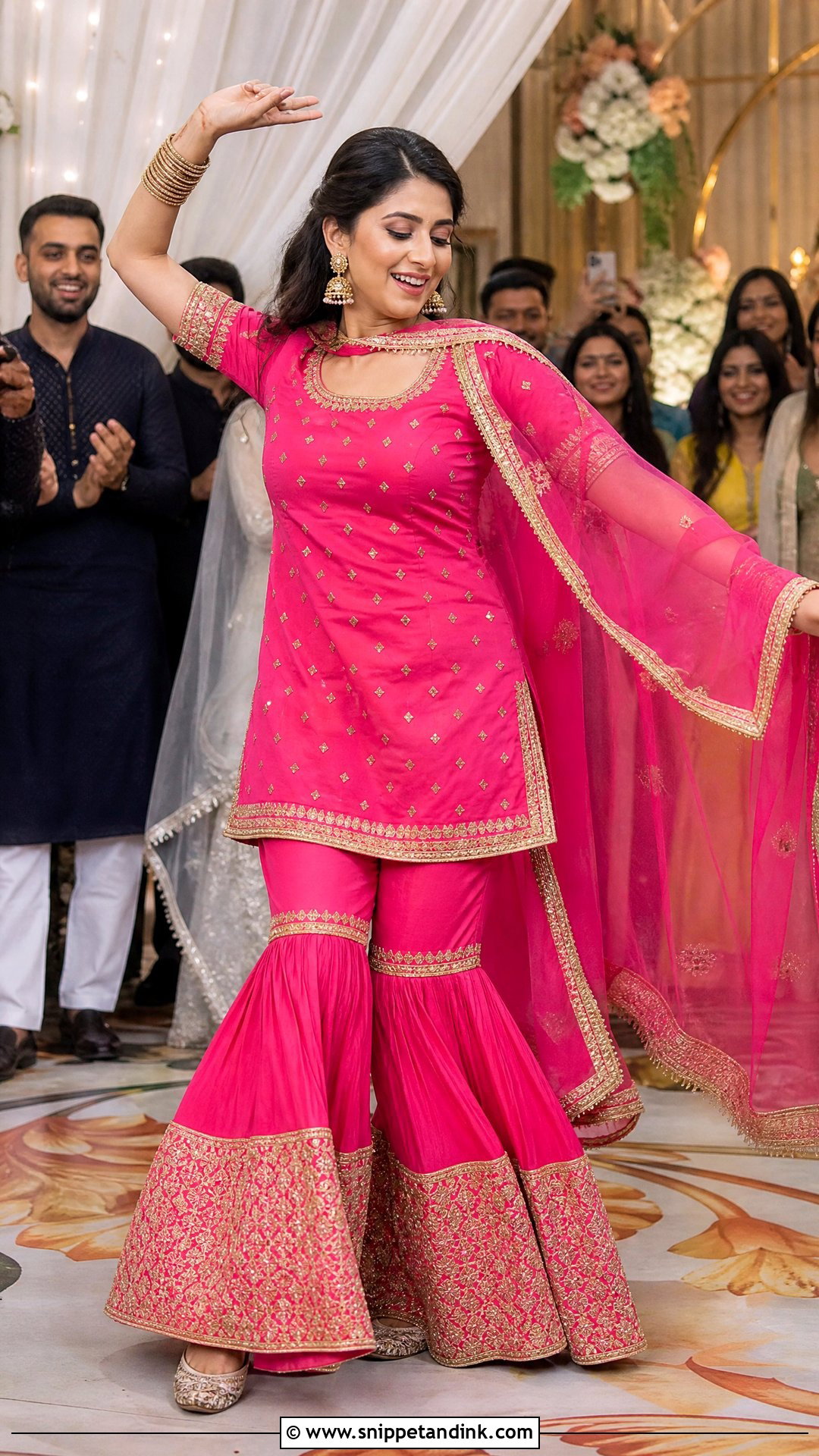
The gharara’s appeal is that dramatic flare from the knee down, which turns every spin into a moment. Pair a short embroidered kurti with the gharara, and pin a light dupatta across one shoulder. The detail I check most is the joint at the knee where the flare is attached. It’s often heavily worked with gota, and if the pants are cut long, that weight drags the hem onto the floor. The hem should clear your shoes completely. Rani pink and mustard feel celebratory, and gota or zari give the classic finish this silhouette is known for.
13. Dhoti Pants and Crop Top for Sangeet
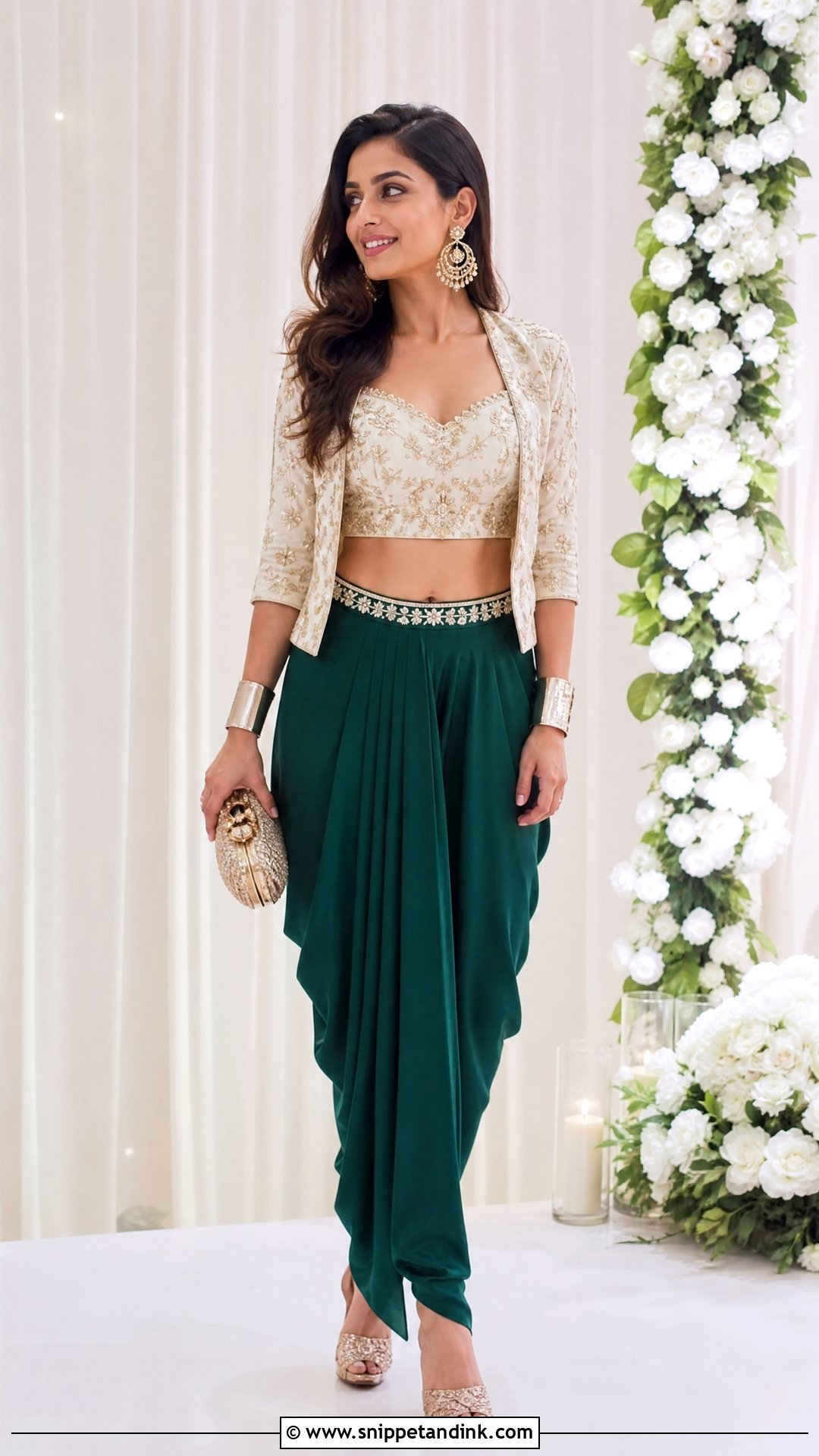
An unexpected silhouette lets a sister stand out without crowding the bride. Pair draped dhoti pants with an embroidered crop top and add a short jacket or a shoulder cape so the outfit feels dressed for the occasion. Tailoring is everything with dhoti pants: they must sit snugly at the waist and narrow neatly at the ankle, otherwise the drape looks borrowed rather than designed. Ivory with emerald is a strong pairing. Mules can slip off during a quick routine, so I prefer block heels with an ankle strap here.
14. Long Kurta and Lehenga for Sangeet
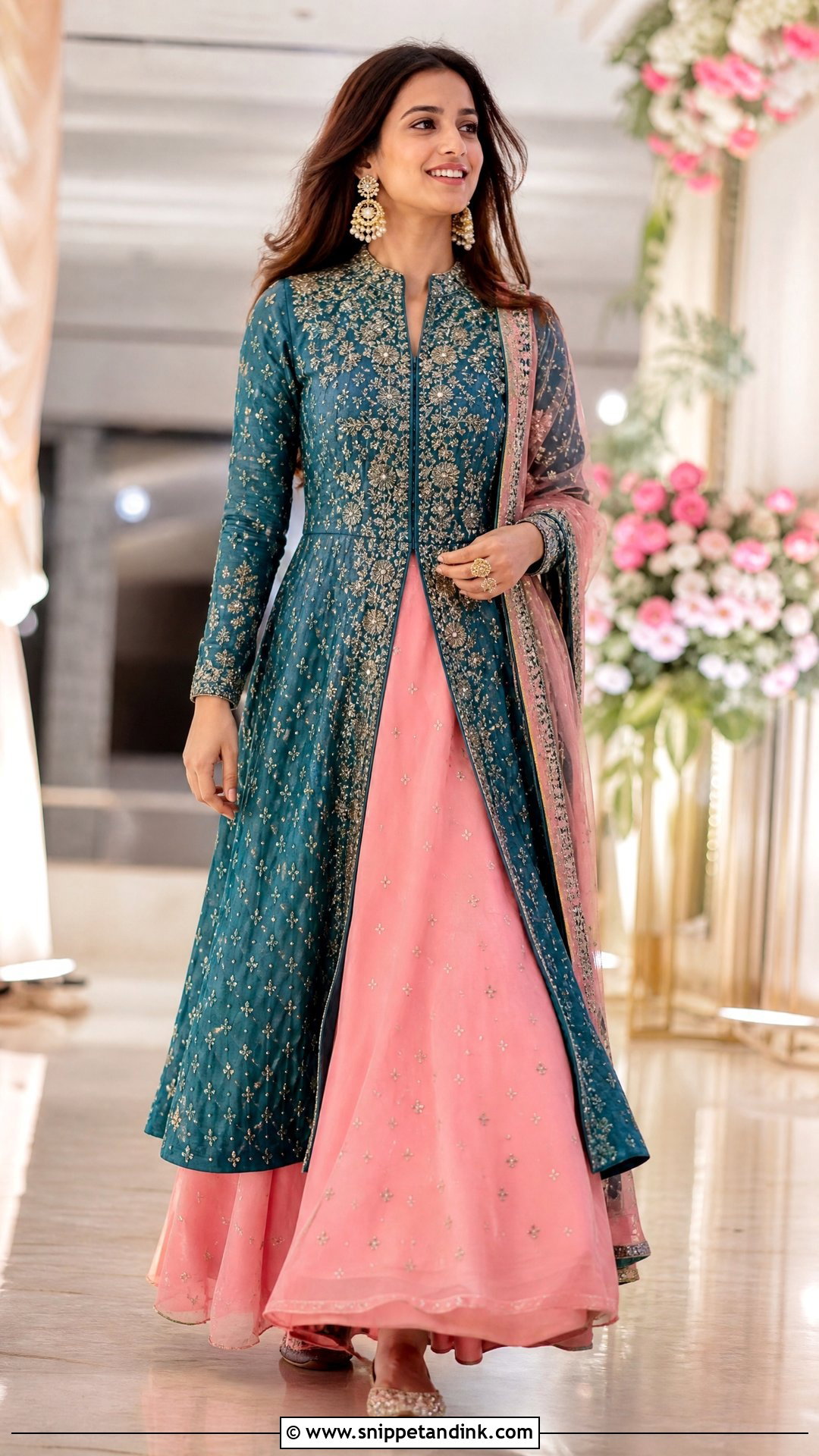
A long kurta worn over a lehenga skirt gives a modest, layered silhouette with the expected volume still underneath. The front slit is non-negotiable; without it, the kurta hides the skirt and restricts your stride. I keep the skirt lighter and less worked than the kurta so the two don’t compete. Teal with pink or navy with coral are pleasing contrasts. A narrow dupatta is optional here. This shape gives far more torso coverage than a lehenga blouse, which is why older sisters and sisters who prefer modest dressing often feel most at ease in it.
15. Metallic Skirt and Blouse for Sangeet
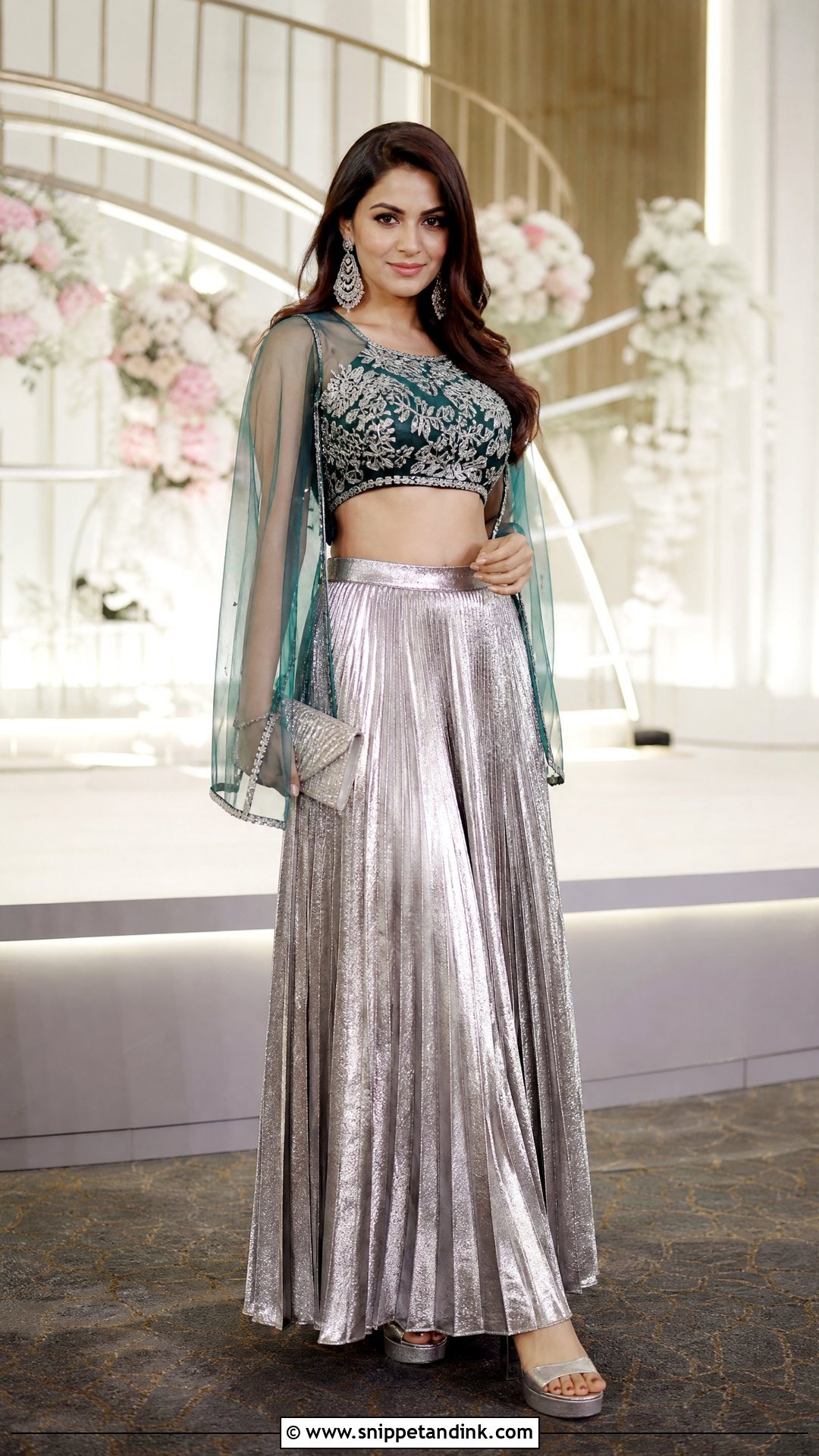
Metallic skirts come alive under stage lights, which is exactly why I’d only put a sister in one for an evening sangeet. Silver, champagne or pewter in a pleated or softly flared cut pairs well with a contrasting embroidered blouse in navy or berry. Stick to one metallic tone; silver skirt plus gold blouse plus rose-gold jewellery reads cluttered in photos. Lamé and foil fabrics can be stiff, so test the waistband while seated before you commit. Add a sheer cape if you’d like extra coverage and movement.
16. Pant Saree for Sangeet
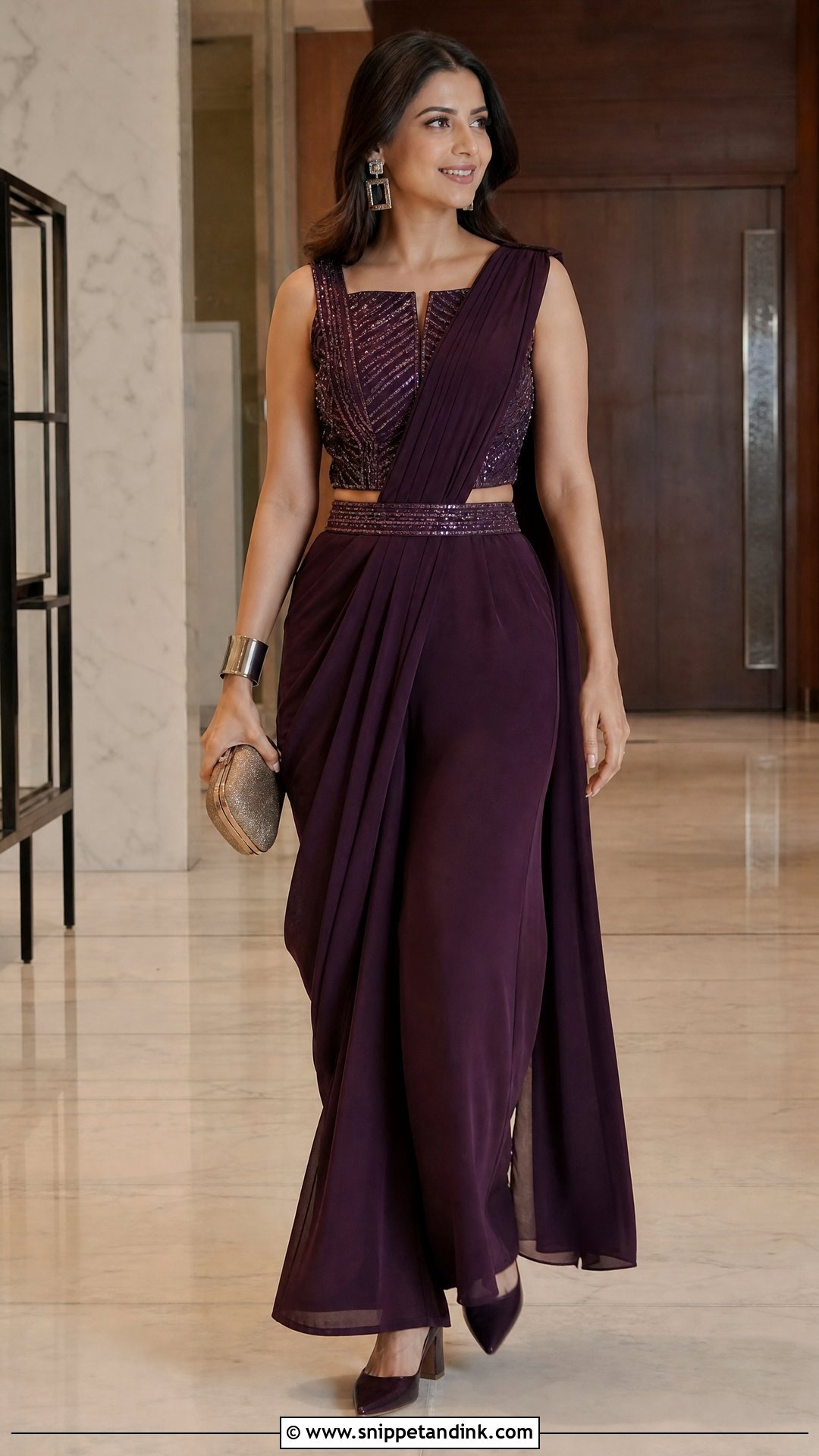
A pant saree gives you the drape of a saree on a fitted trouser base, which matters for the sister running between the stage, the caterer and the door. The pallu is pre-attached and wraps across the body, and a matching belt holds it through any dancing. Crepe or soft satin in a deep jewel tone keeps the look elegant. Satin does show sweat marks under stage lights, so if you’re performing more than once I’d lean toward crepe. Keep the blouse fitted to balance the volume, and finish with geometric earrings and a sleek ponytail.
17. High-Low Kurta and Sharara for Sangeet
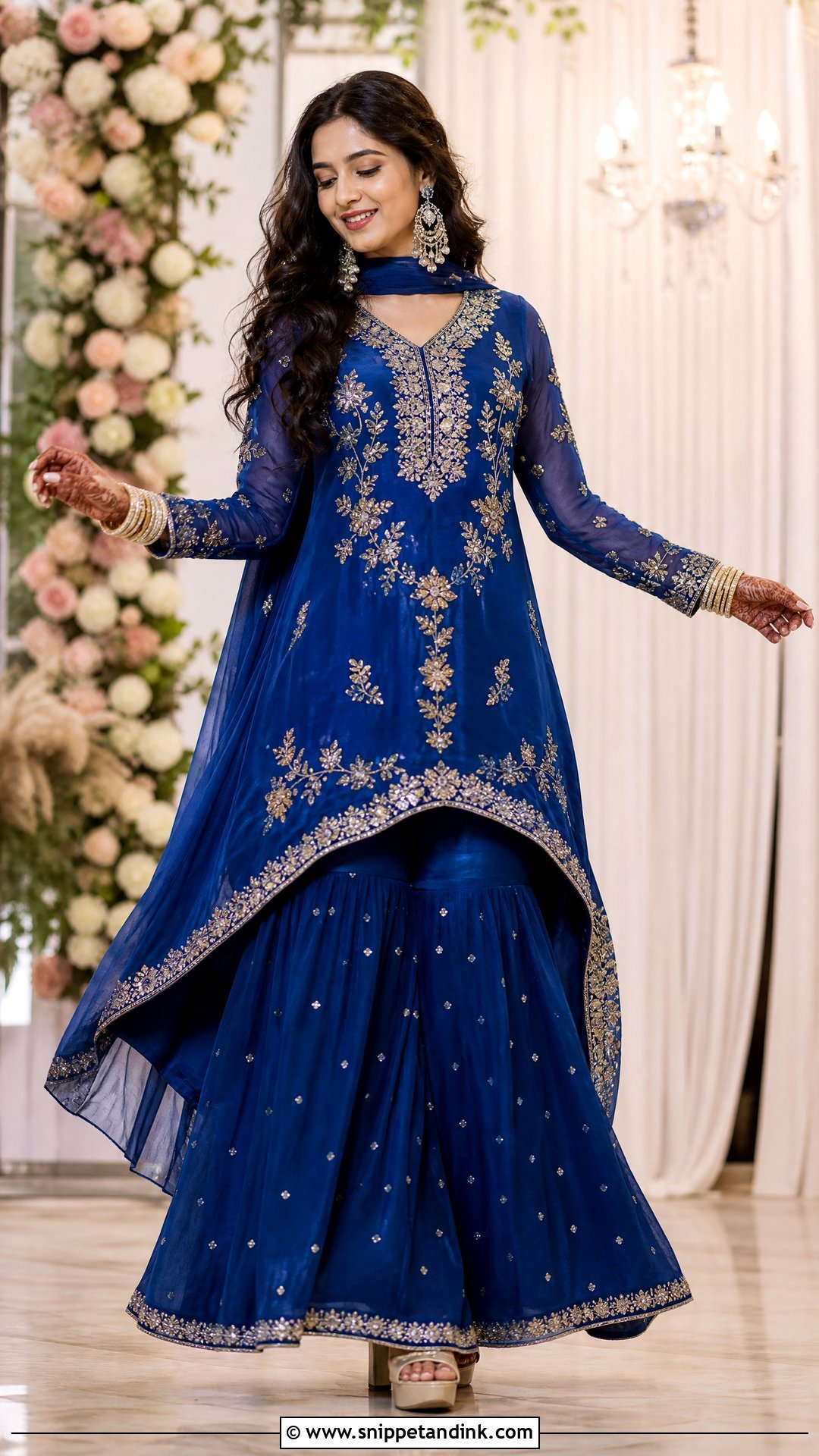
The high-low hem puts a modern spin on the sharara. The shorter front shows off the waistband and flare, while the longer back trails with each step. I like the kurta heavily worked at the neckline and sleeves with the sharara kept simple in the same colour family, which gives a clean monochrome line. Make sure the back hem is finished with a weighted facing; a lightweight high-low back flips up when you turn quickly. Cobalt or violet feel energetic at night. If you add a dupatta, keep it narrow and pin it firmly.
18. Embellished Co-Ord Set for Sangeet
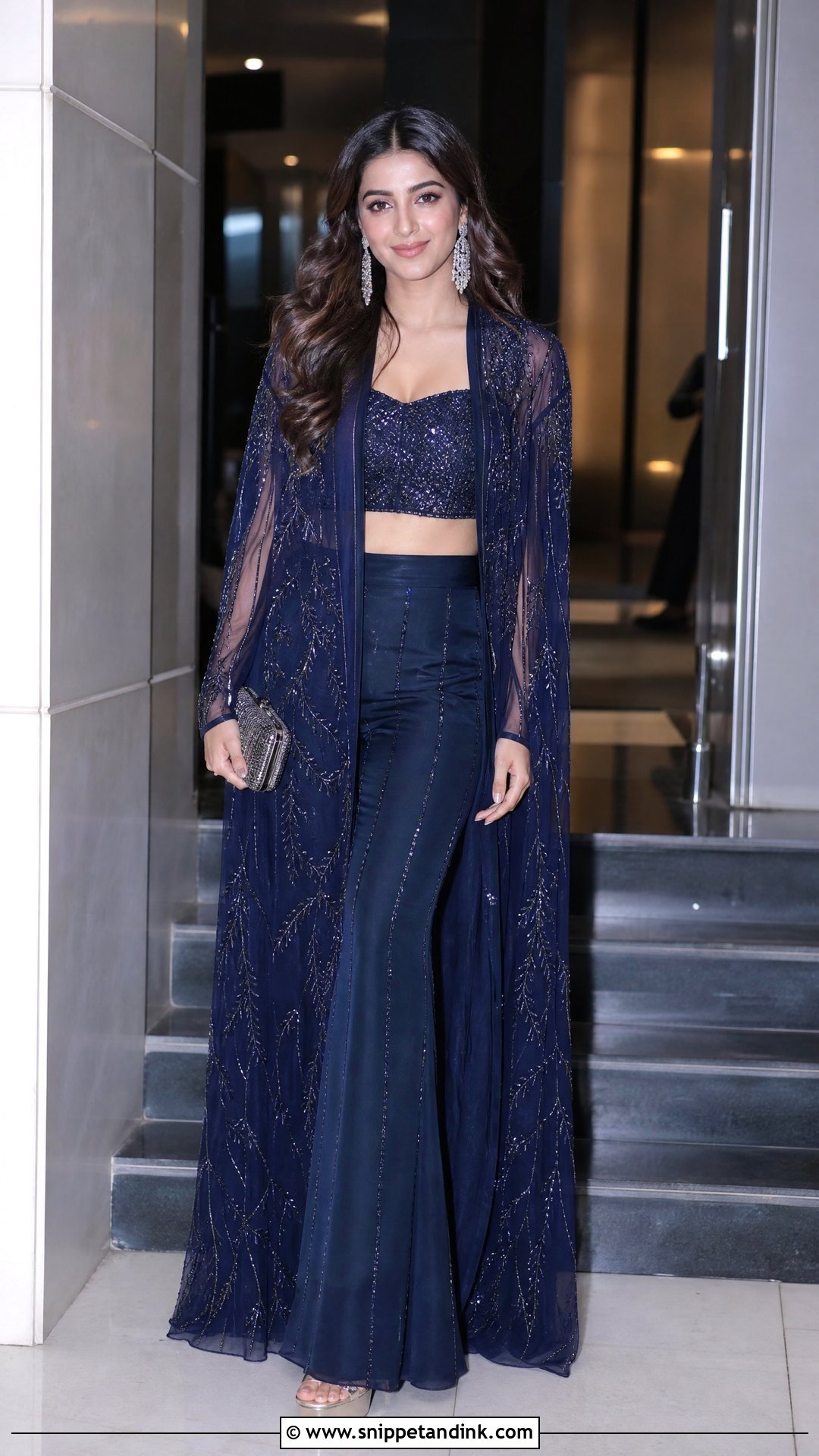
Matching separates can hold their own beside lehengas when fabric and tailoring are taken seriously. An embellished co-ord with a structured crop top and high-waisted flared pants gets its festive weight from a long cape or embroidered jacket layered on top. Midnight blue or forest green suit an evening event. Have the waistband fitted while you’re sitting, not standing, because you’ll spend part of the night at the family table. The practical bonus is reuse: separates can be worn again at other weddings in ways a lehenga rarely can.
19. Silk Saree With Statement Blouse for Sangeet
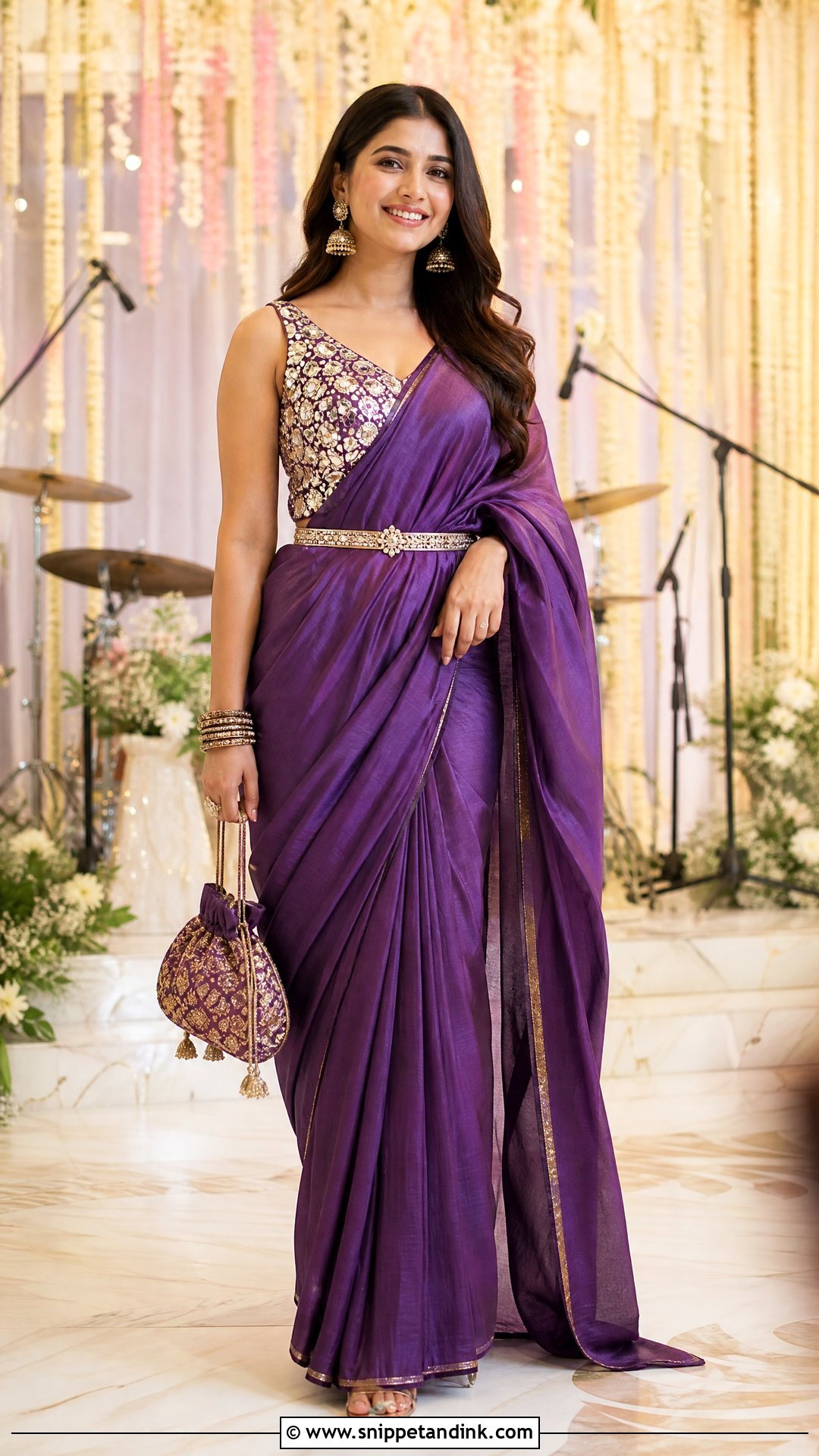
Silk doesn’t need sequins to look rich; its natural sheen does the work. Choose a lightweight silk in turquoise or deep blue and let a statement blouse carry the personality, with mirror work, beadwork or a dramatic sleeve. Heavier Kanjeevaram-style silks are wonderful for a wedding ceremony but tiring for a night of dancing, so ask for a lighter weave. Pin the pleats and pallu before the performances start, not after. A decorative belt adds support, and a braided bun keeps the back of the blouse visible. This is the look for a sister who prefers classic Indian dressing.
20. Draped Skirt and Structured Blouse for Sangeet
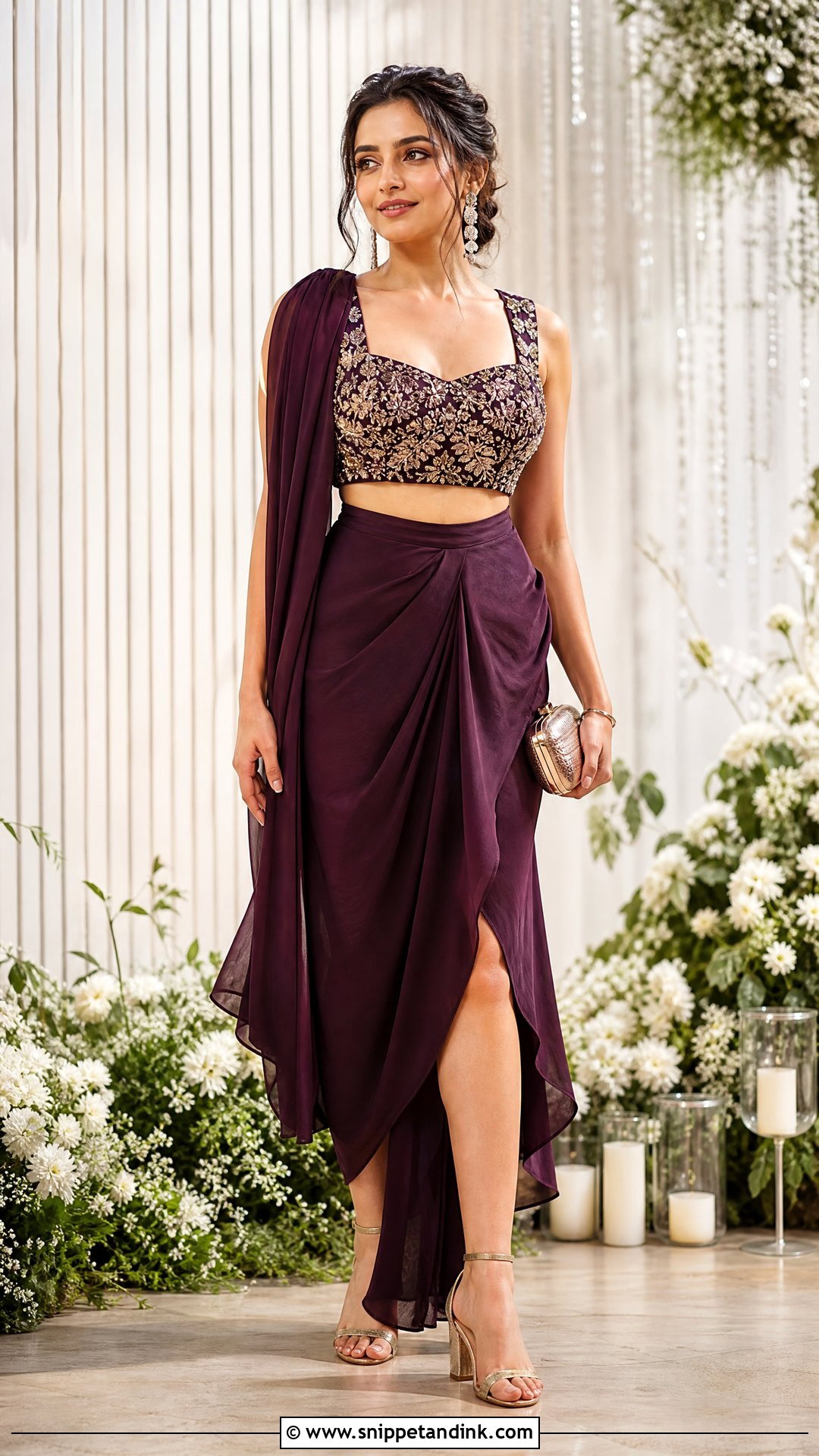
A draped asymmetrical skirt with a structured embroidered blouse has the outline of a saree with none of the pleating. A shoulder drape or attached panel ties the two pieces together. I fit this one carefully, because the skirt must sit securely at the waist yet leave enough room at the knee for a full stride; an asymmetric wrap that’s cut too narrow restricts your steps on stairs and stage. Aubergine or steel blue in soft crepe looks polished. A hard-case clutch is a sensible choice for a hosting sister, since it stays closed when you set it down mid-task.
Coordinating Several Sisters Without Putting Everyone in Uniform
When two or three sisters perform together, families often want them to match. I’d suggest coordinating instead. Identical outfits flatten in photographs, and one silhouette rarely suits every body and every comfort level. Settle on a shared colour story, such as three shades of one jewel tone or one colour with different metallic accents, and let each sister choose her own cut from the list above.
Check two things against the bride or groom. First, avoid her exact shade and her embroidery style, so she still stands apart in group pictures. Second, keep your total sparkle a notch below hers. If her sangeet outfit is heavily sequinned, choose mirror work or thread embroidery; if hers is understated, a little shimmer from you won’t steal anything.
What goes in the sister’s emergency pouch
Sisters end up fixing other people’s outfits as well as their own, so I pack a small pouch for the night: a strip of safety pins in two sizes, bobby pins, double-sided fashion tape, a mini sewing kit with thread close to the outfit colour, blister plasters, a stain pen and spare earring backs. Hooks on heavily worked blouses and the backs of jhumkas are the two things that fail most often on a dance floor.
Plan a quiet change, too. If the routine is energetic and the outfit is heavy, a lighter second look for the after-party is a sensible choice, not an indulgence. Hang the first outfit straight away so the embroidery doesn’t crush.
Your Sibling Will Remember the Dancing, So Dress for It
Sangeet dressing for a sister is about how the outfit works for five or six hours, not just how it looks in the first photo. Any of these lehengas, shararas, drapes or fusion sets can be right if it lets you dance, host and pose without fuss. Look at the wedding palette, the venue and the weather, then get alterations booked early and wear the full outfit with its shoes at least once before the night. Pack a few safety pins, keep jewellery light enough to forget about, and pick the piece that lets you enjoy every performance alongside your sibling.
You'll Like These Ideas:


Leave a Reply