
Fabric decides more of a wedding dress than the sketch does. The same strapless bodice reads as a ballroom gown in duchess satin and as a beach dress in georgette, because weight and drape set the shape before any seam does. These 20 Wedding Dress Material Ideas run from structured Mikado and taffeta through fluid charmeuse and chiffon to textured lace, velvet and linen. When I pull fabrics for a bride, I look at them twice: once under the shop lights and once by a window, because sheen and transparency shift more than people expect. Each idea below comes with the shoes, veil and jewelry I’d put with it, so you see a whole bride rather than a swatch.
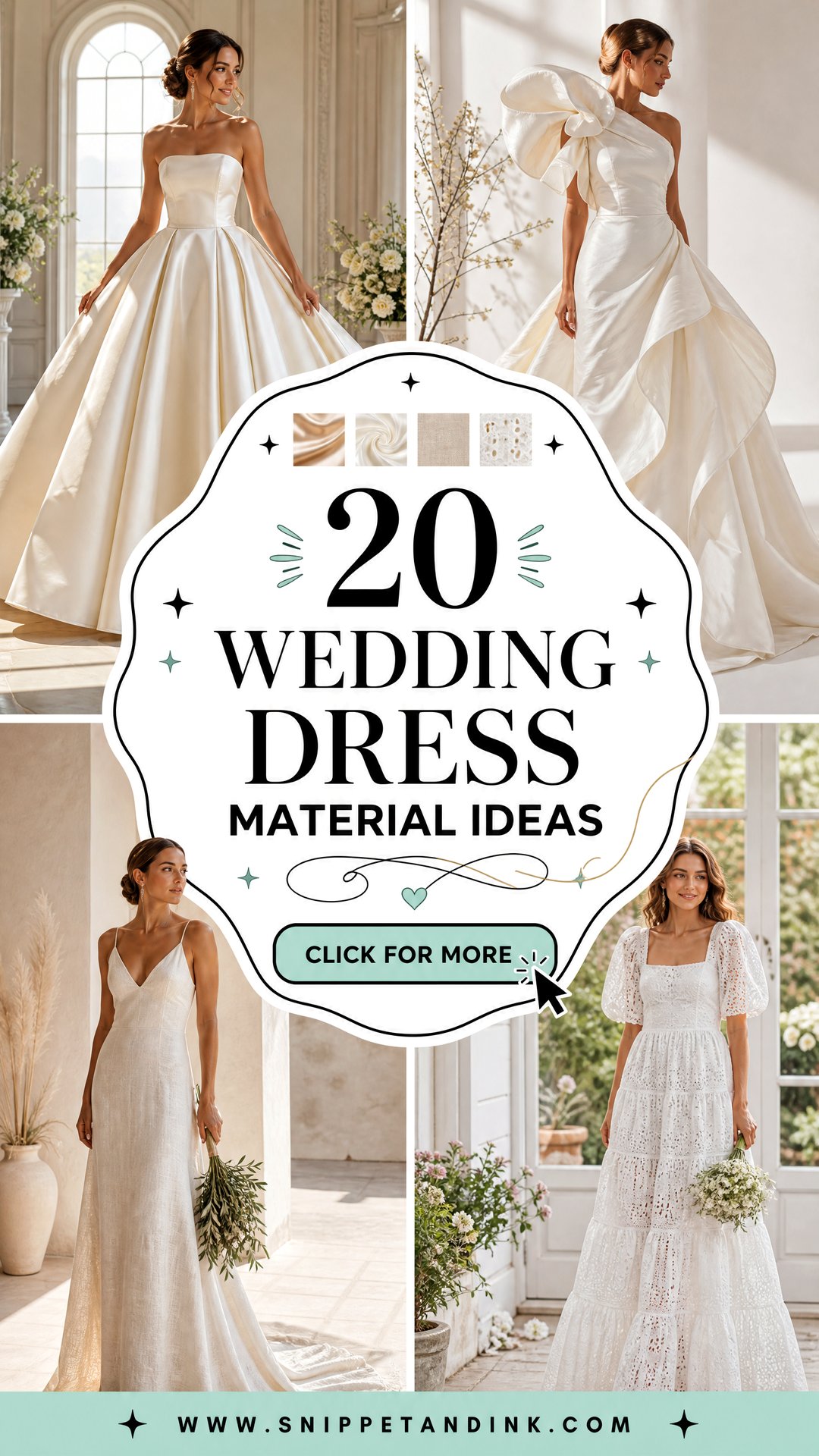
Reading a Swatch Before You Fall for a Sketch
A dress photo tells you almost nothing about fabric. At an appointment I ask brides to handle swatches before they try anything on, because four quick checks sort most materials into keep or skip.
- Weight: drape a swatch over your hand. If it stands away from your fingers, it can hold a ball gown or A-line on its own. If it pours off, it wants a bias cut, a column or a draped style.
- Crush test: squeeze a corner in your fist for ten seconds, then let go. Linen, dupioni and organza keep the creases; crepe and georgette spring back. That is roughly how the dress will look after the car ride and the ceremony.
- Light: hold the swatch against your inner wrist by a window, then under a warm bulb. Sheer fabrics and pale linings show skin through in daylight long before they do under fitting room lights.
- Sound and touch: rub it near your ear and along your inner arm. Taffeta and some synthetic satins rustle, and stiff lace edges scratch. You will hear and feel both for the whole day.
Matching the fabric to the season and the room
Duchess satin, brocade and velvet trap heat, so they belong indoors or in cool months. Chiffon, georgette, linen and eyelet handle summer heat but need careful hems on grass and stone. If the ceremony is outside and the reception inside, ask whether a detachable overskirt makes more sense than one compromise fabric trying to do both jobs.
1. Satin Ball Gown Wedding Dress
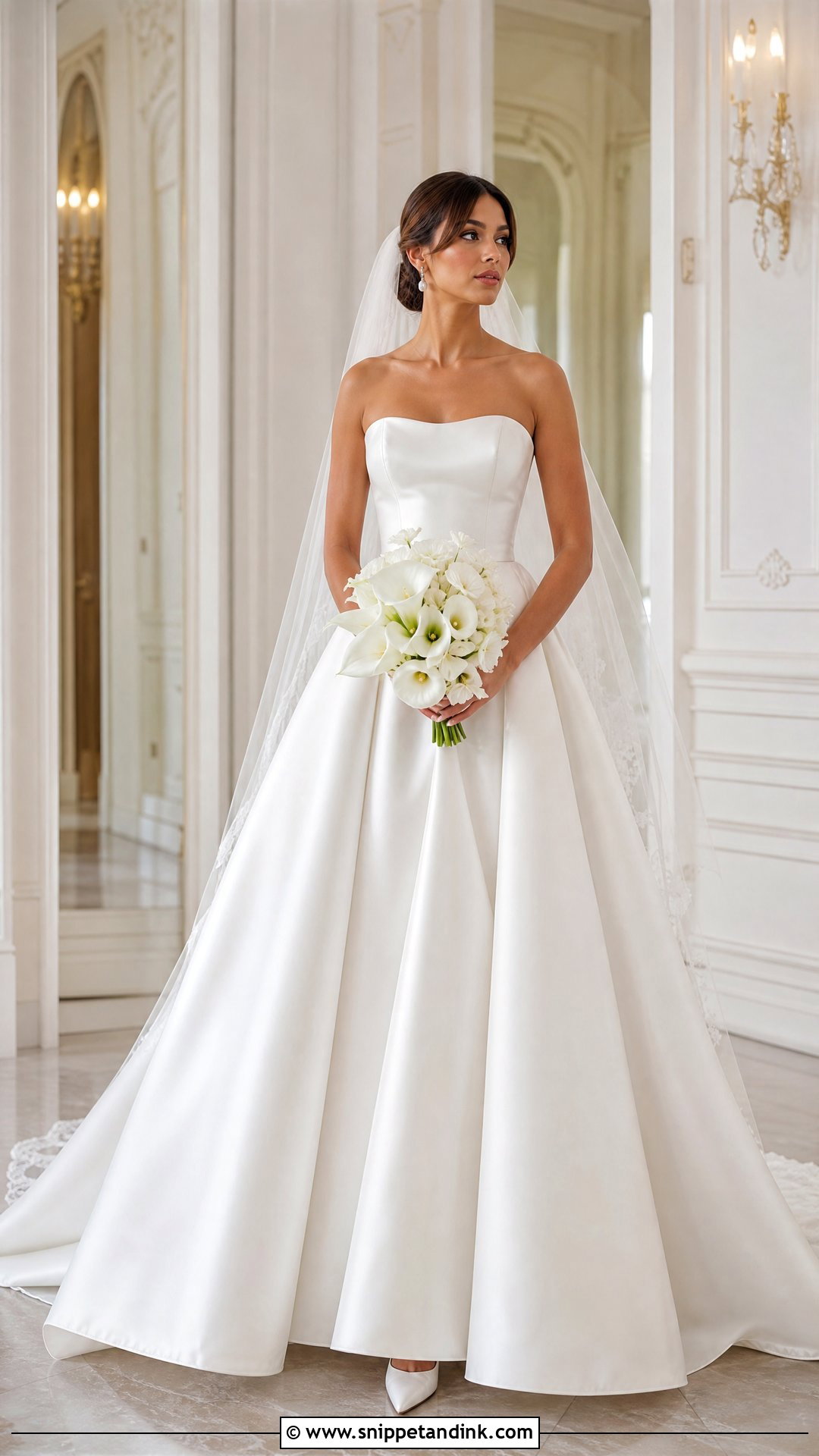
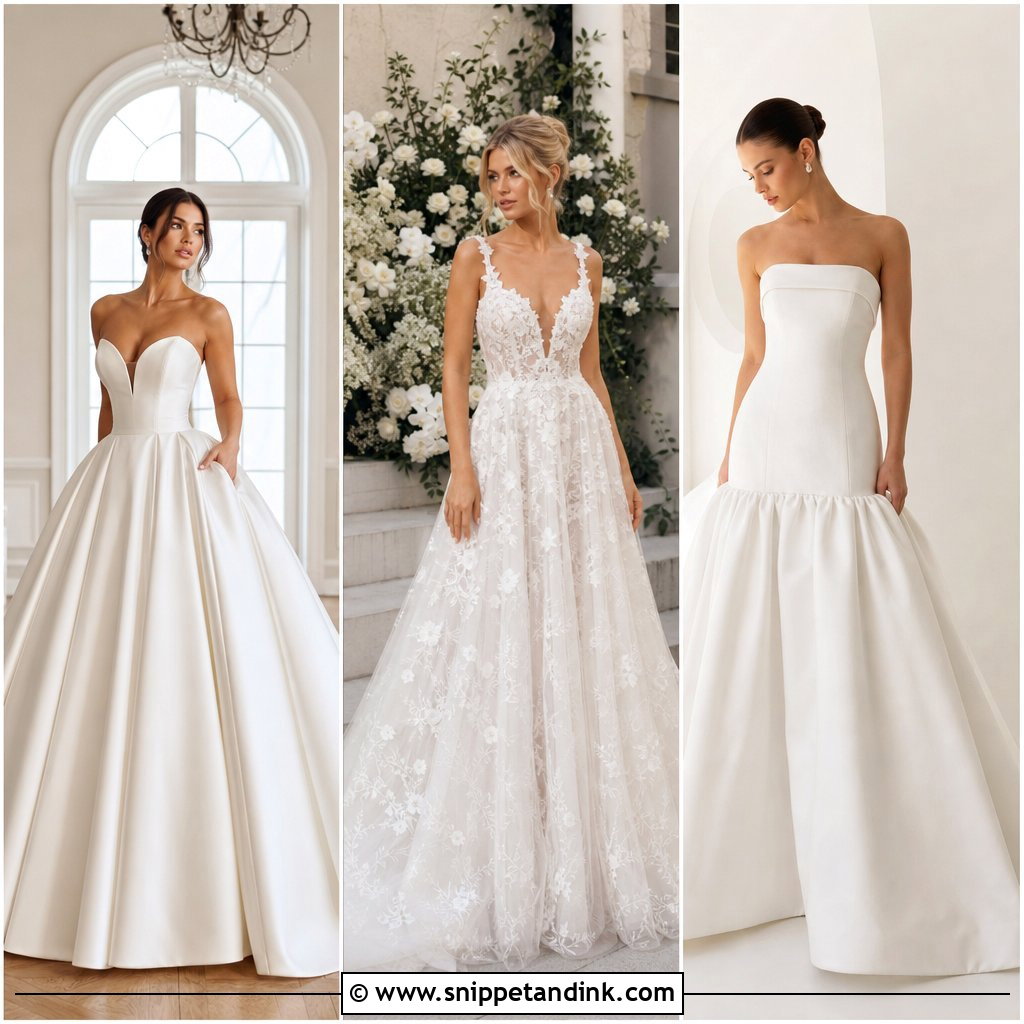
Satin is a weave, not a fiber, which surprises a lot of brides at their first appointment. The label can mean silk, polyester or a blend, and the difference shows in how light rolls across the skirt: silk satin glows softly, while cheaper polyester can flash white under a camera flash. A heavier satin holds a fitted bodice and a full skirt without the crinoline doing all the work. I keep the styling plain here, with pointed pumps, pearl earrings, a structured bouquet and a cathedral veil for a ballroom. Satin marks easily, so ask the salon how they steam it and whether the garment bag it goes home in can breathe.
2. Silk Charmeuse Slip Wedding Dress
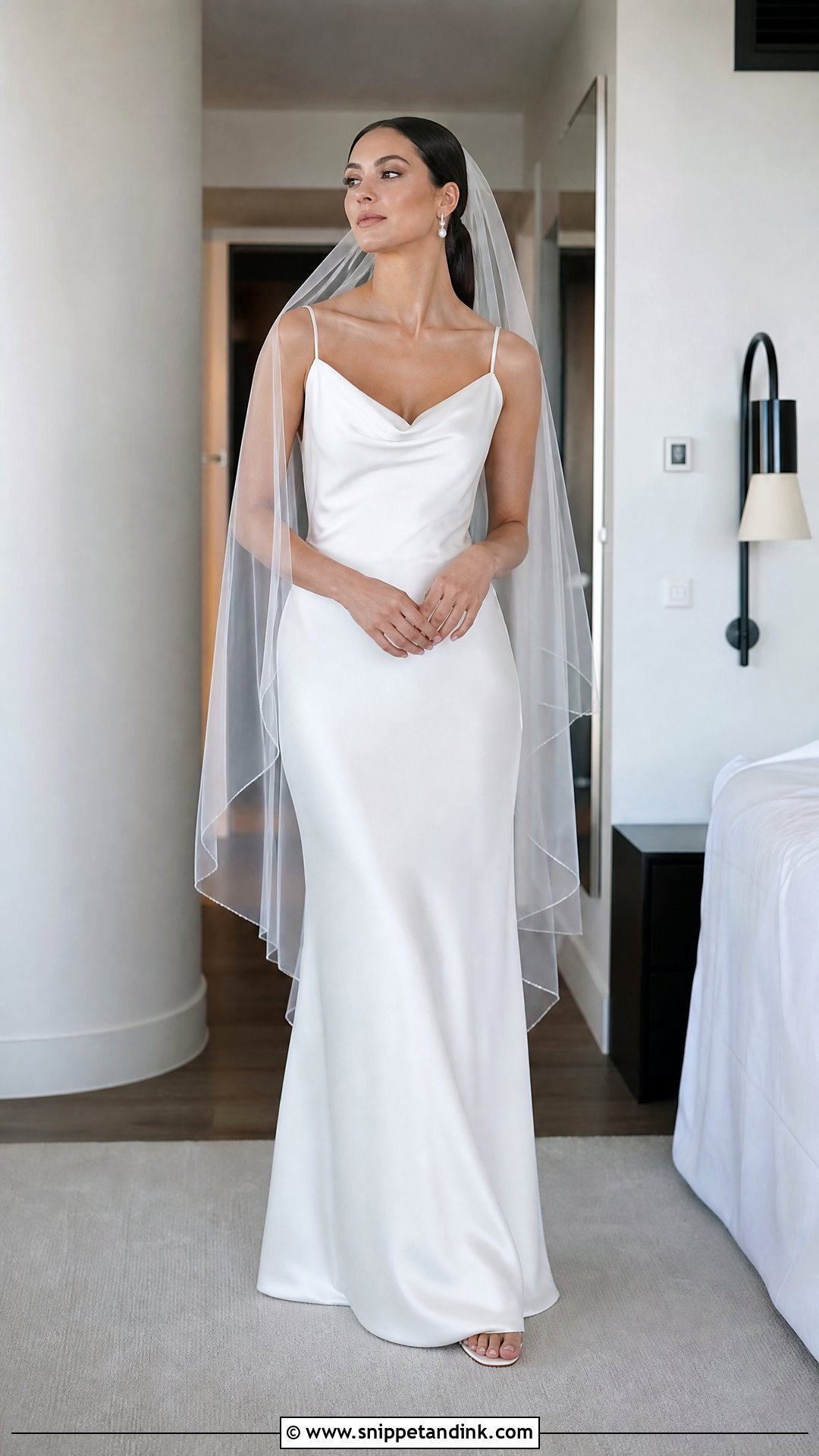
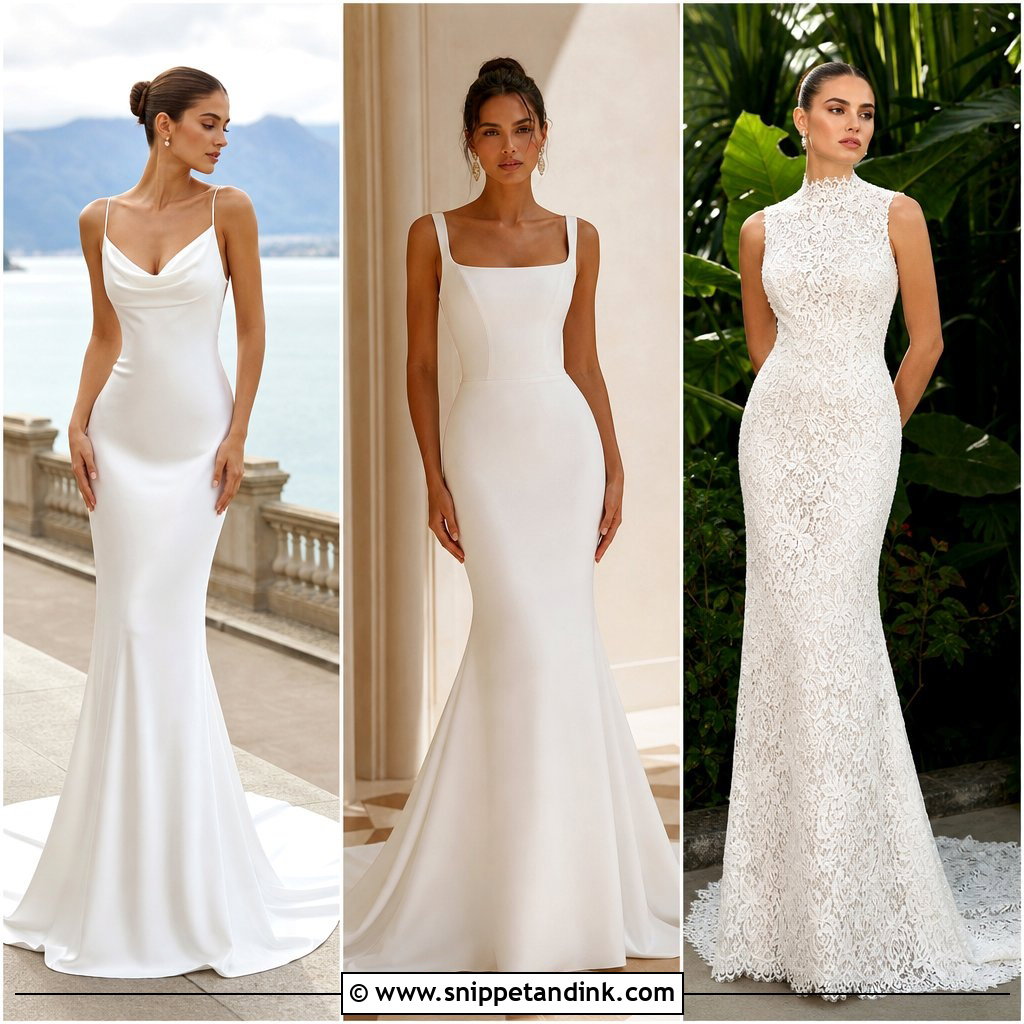
Charmeuse is what I reach for when a bride wants a slip dress that moves like water. It has a glossy face and a dull back, and cut on the bias it follows the body with a soft, liquid effect that a stiffer satin can’t copy. The honest catch is that it hides nothing. Every edge of your underwear will show, so plan bonded, edge-free underpinnings from the very first fitting. A cowl neck, narrow straps, slim sandals and a sheer fingertip veil are all it needs. Leave prong-set bracelets at home, since one snag pulls a visible line across the silk, and book professional pressing as close to the ceremony as you can.
3. Mikado A-Line Wedding Dress
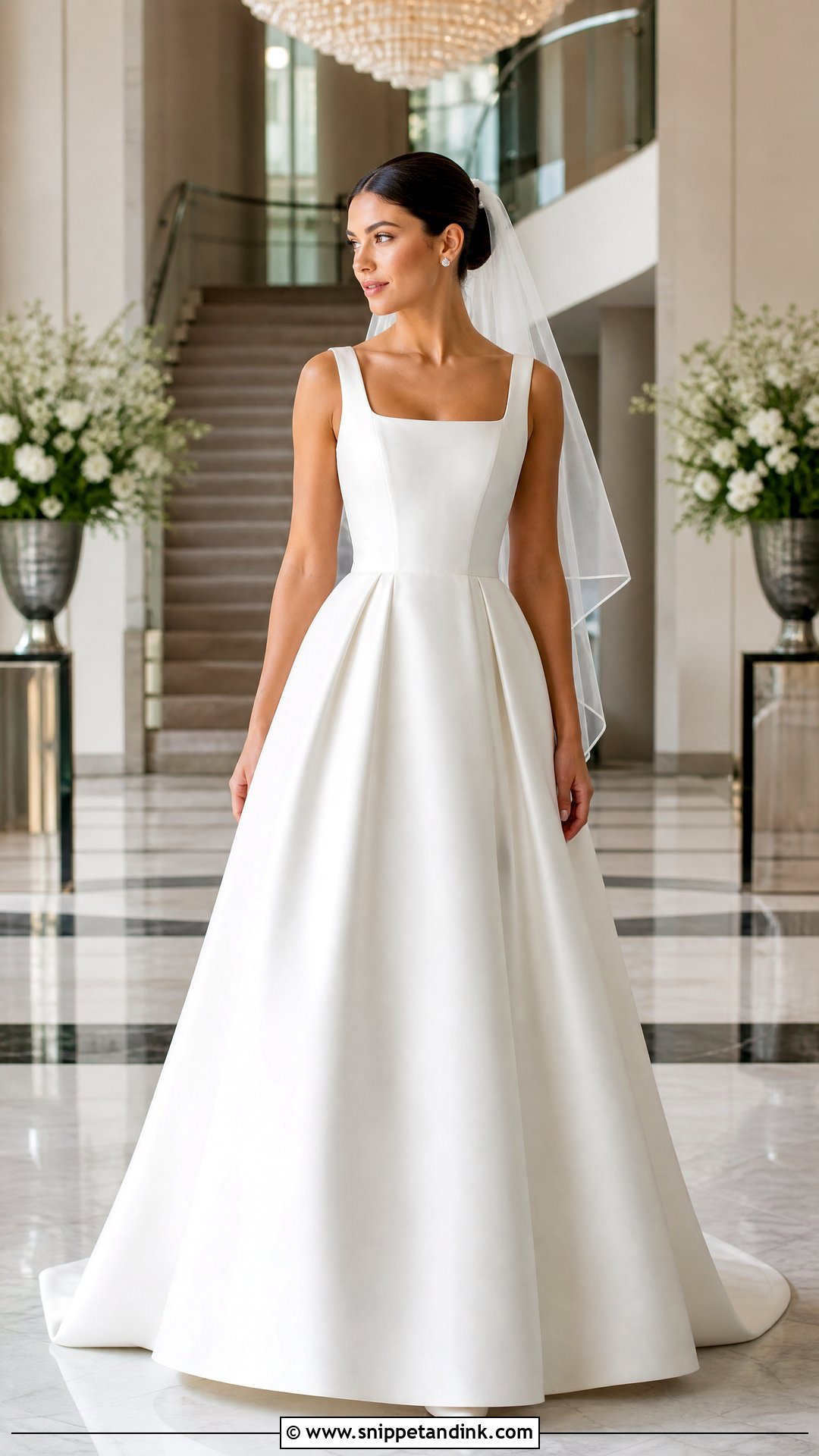
Mikado is a heavy twill with a low sheen, usually silk or a silk-look blend, and it lets an A-line stand away from the body on its own. It holds soft pleats and a sculpted skirt without lace or beading to look finished. I like it with a sleek bun, crystal studs, closed-toe heels, a medium veil and a structured arrangement of flowers. It belongs in formal rooms and cooler months. The weight is real, so at your fitting climb a few stairs and sit down in it. A properly placed bustle matters more here than with lighter fabrics, because a heavy train drags on the waist seam all evening.
4. Crepe Column Wedding Dress
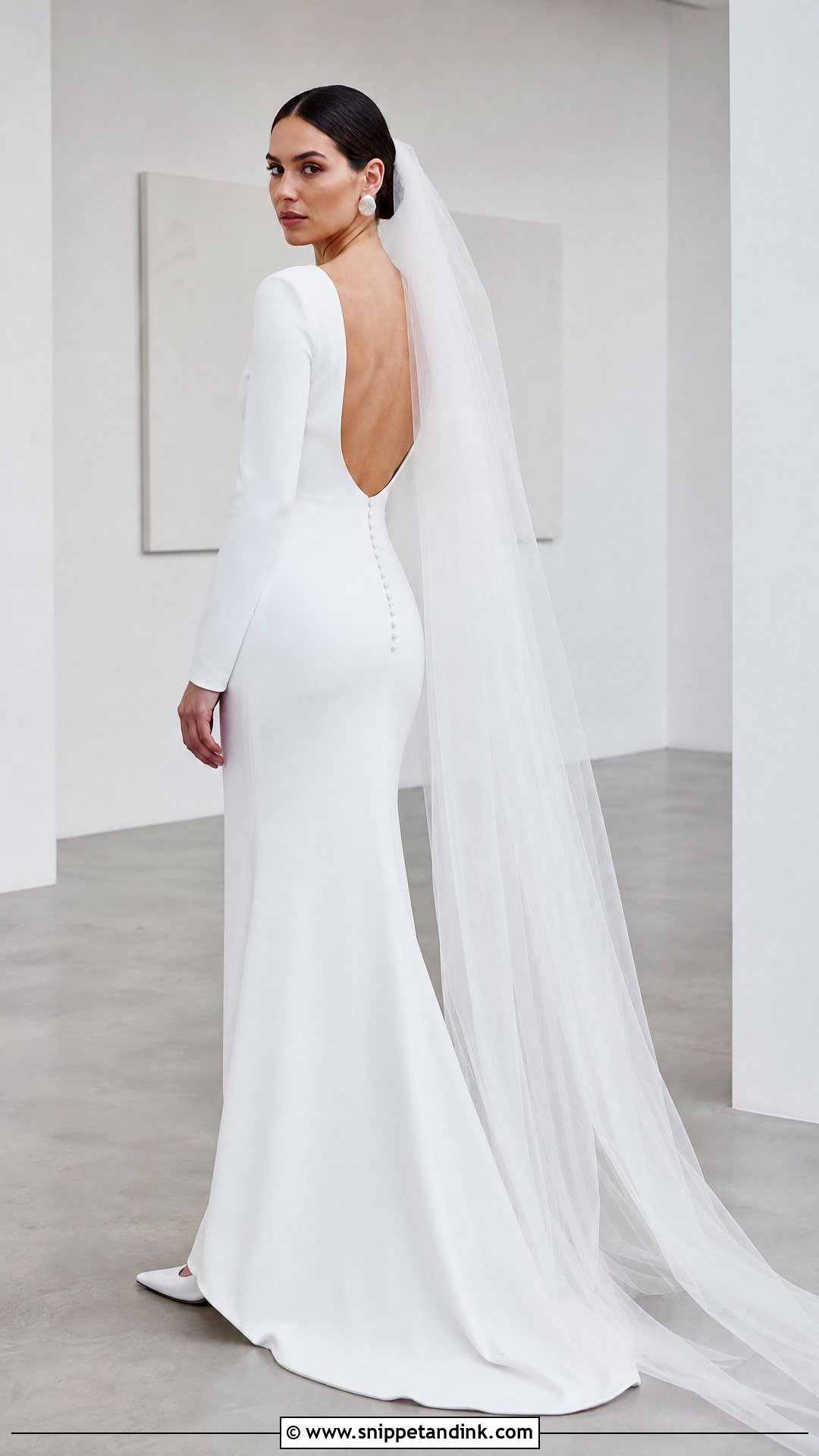
Crepe has almost no shine, and that is exactly why minimalists love it. A column in good crepe skims the body without clinging, but only if the fabric has enough weight. Thin crepe shows every line underneath, so feel the hand before you fall for the shape. A bateau neck, long sleeves or a low back gives interest; pointed pumps, sculptural earrings, a low bun and a chapel veil finish it. Stretch crepe is kinder on the dance floor, though stretch varies a lot between makers. Sit, bend and lift your arms in the sample, and note where it pulls. It suits a gallery or any room with clean architecture.
5. Chiffon Empire Waist Wedding Dress
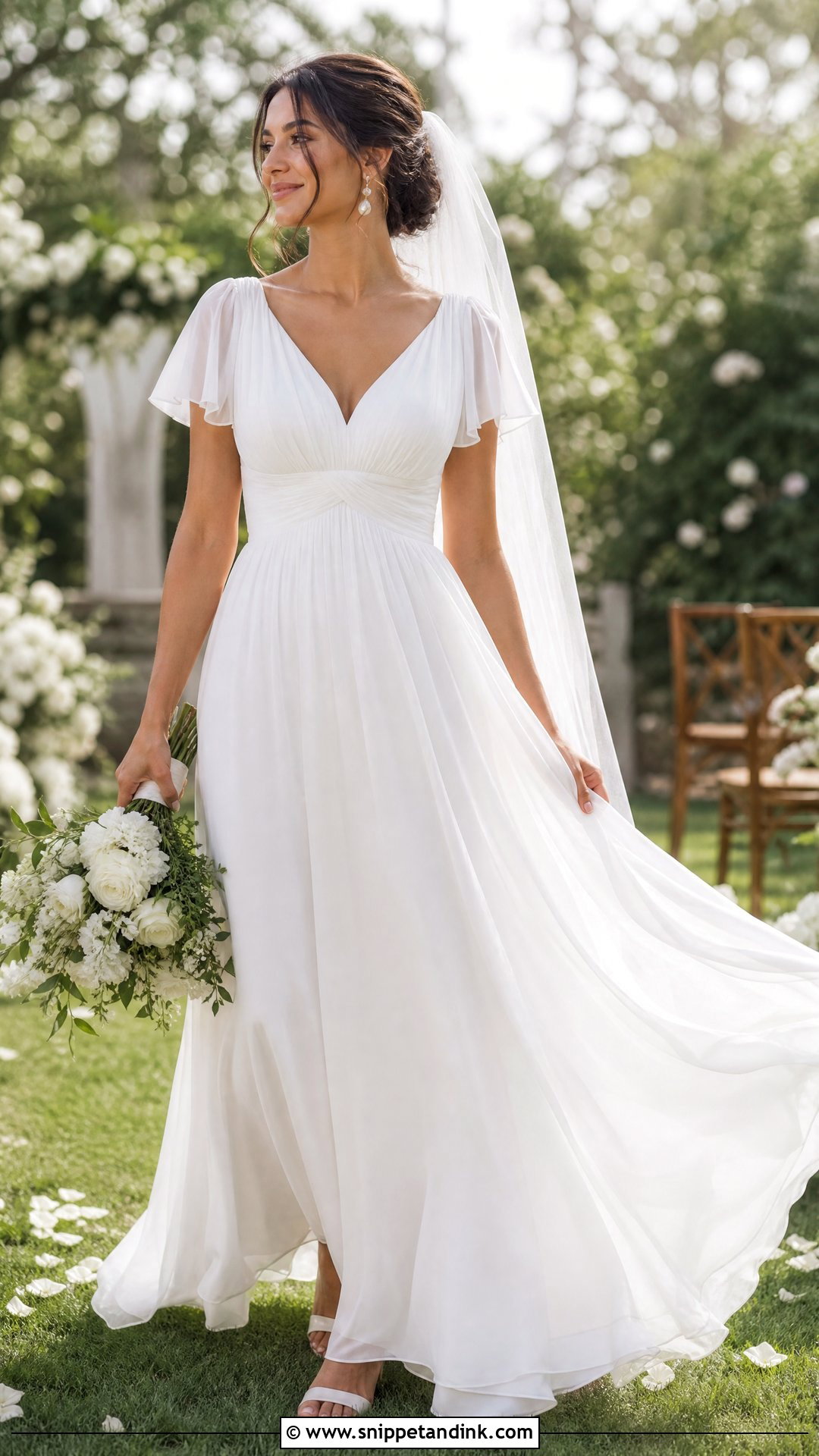
Chiffon on its own is sheer, so an empire-waist chiffon gown is really two dresses: the floating outer layer and the lining that decides how modest it is. That lining is the first thing I check, ideally in daylight with a phone flash pointed at the skirt. A gathered bodice, flutter sleeves, low block heels, small pearls and a light veil keep the warm-weather mood. Chiffon has no structure of its own, so any shape comes from the inner bodice. It snags on prong-set rings and rough bark, and the hem frays if it drags on stone. Have it hemmed to clear the ground in your actual wedding shoes.
6. Tulle Princess Wedding Dress
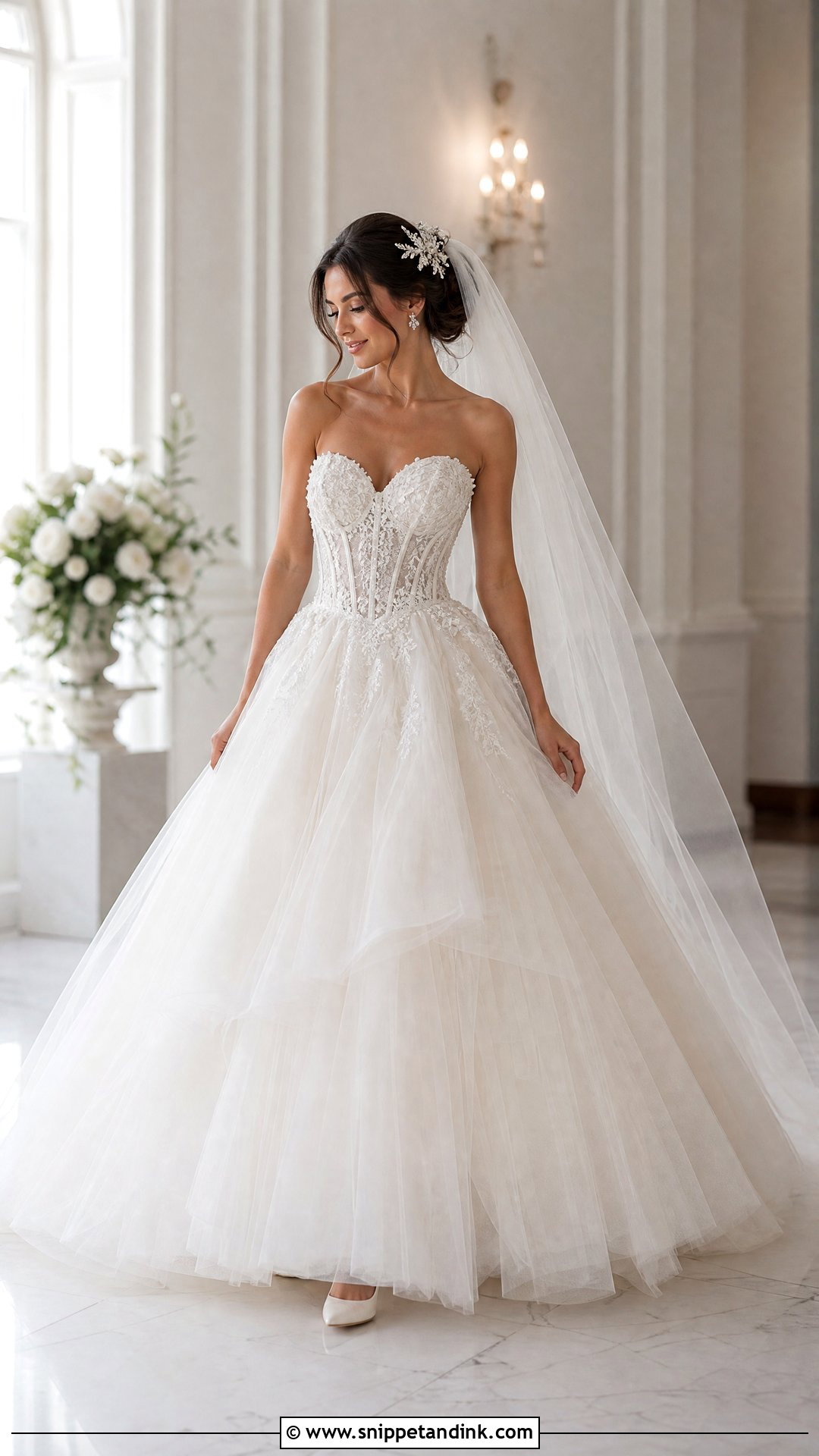
A princess skirt in tulle gets its volume from layers rather than weight, so it can look enormous and still feel lighter than a single layer of satin. Tulle is a fine net that comes in soft and firm grades: soft tulle sways, while firm tulle stands out and can feel scratchy on bare legs. Ask what the layer nearest your skin is made of. A corset bodice, almond-toe heels, a delicate comb and a long tulle veil keep things consistent, and I’d keep the jewelry small. A long train needs a bustle with several points, because tulle tends to tear when all the weight hangs from one loop.
7. Organza Ruffle Wedding Dress
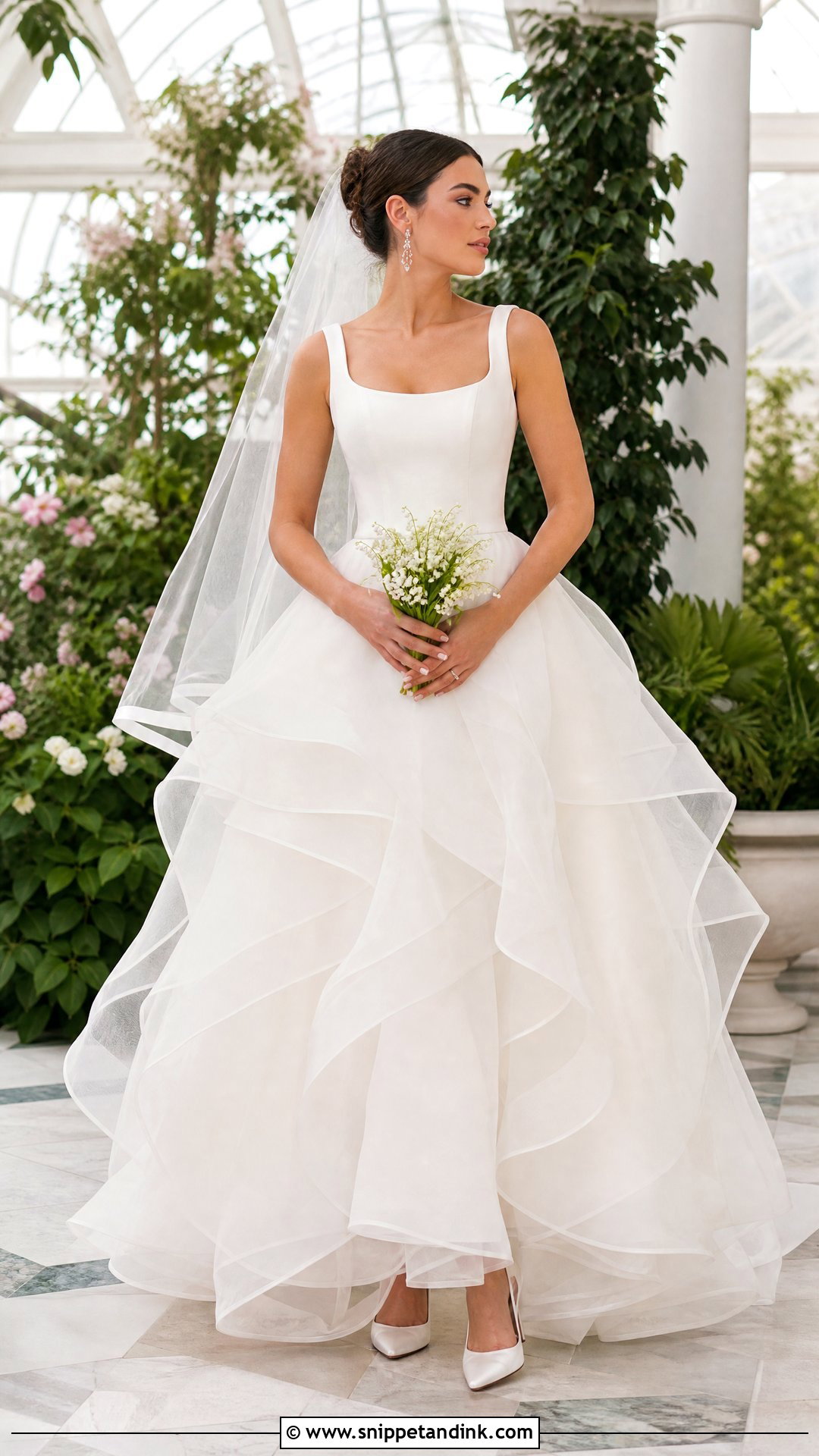
Organza is sheer like chiffon but crisp, which is why ruffles made from it keep their shape instead of collapsing. Overlapping layers build a slightly misty depth that has far more dimension in photos than a single opaque fabric. I keep accessories quiet: plain satin pumps, crystal earrings, a clean-edged veil and a compact bouquet, since the ruffles already bring plenty of movement. Two drawbacks. Organza creases sharply, and cut edges can scratch the inside of your arms. A lining under the ruffled areas fixes the scratching without flattening the effect, so ask for it before the fabric is cut.
8. Taffeta Basque Waist Wedding Dress
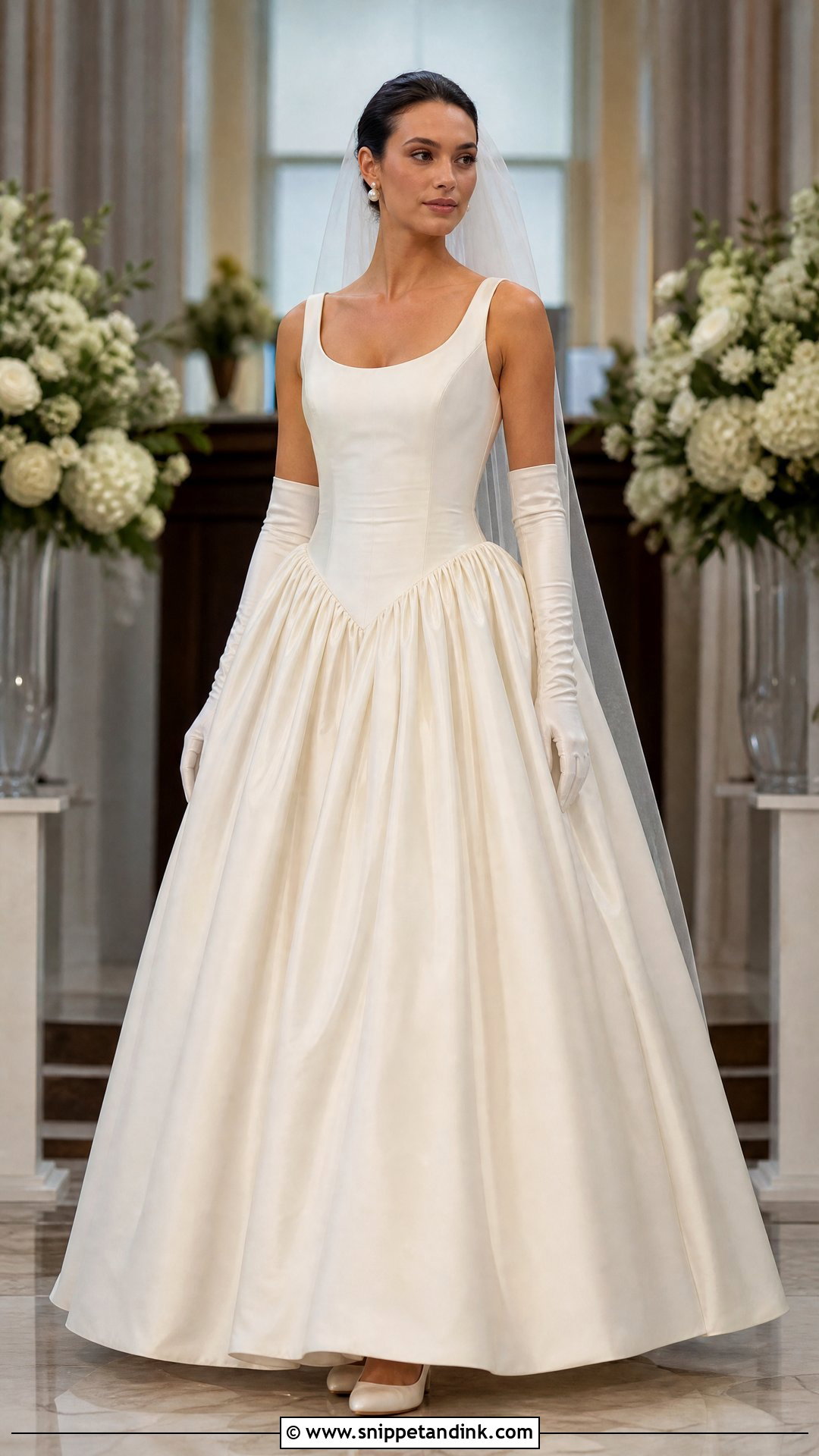
Taffeta rustles. Some brides adore that sound on the aisle and some find it distracting, so listen to it in the fitting room before deciding. It holds pleats and gathers well, which makes it a natural partner for a Basque waist and a full skirt under a scoop neckline. Closed-toe pumps, pearl drops and long gloves suit a formal sleeveless version. Its creases fall in soft folds that read as texture rather than damage. Ask whether it is silk or synthetic, since the hand and price differ, and confirm the underskirt is fitted to carry the volume.
9. Chantilly Lace A-Line Wedding Dress
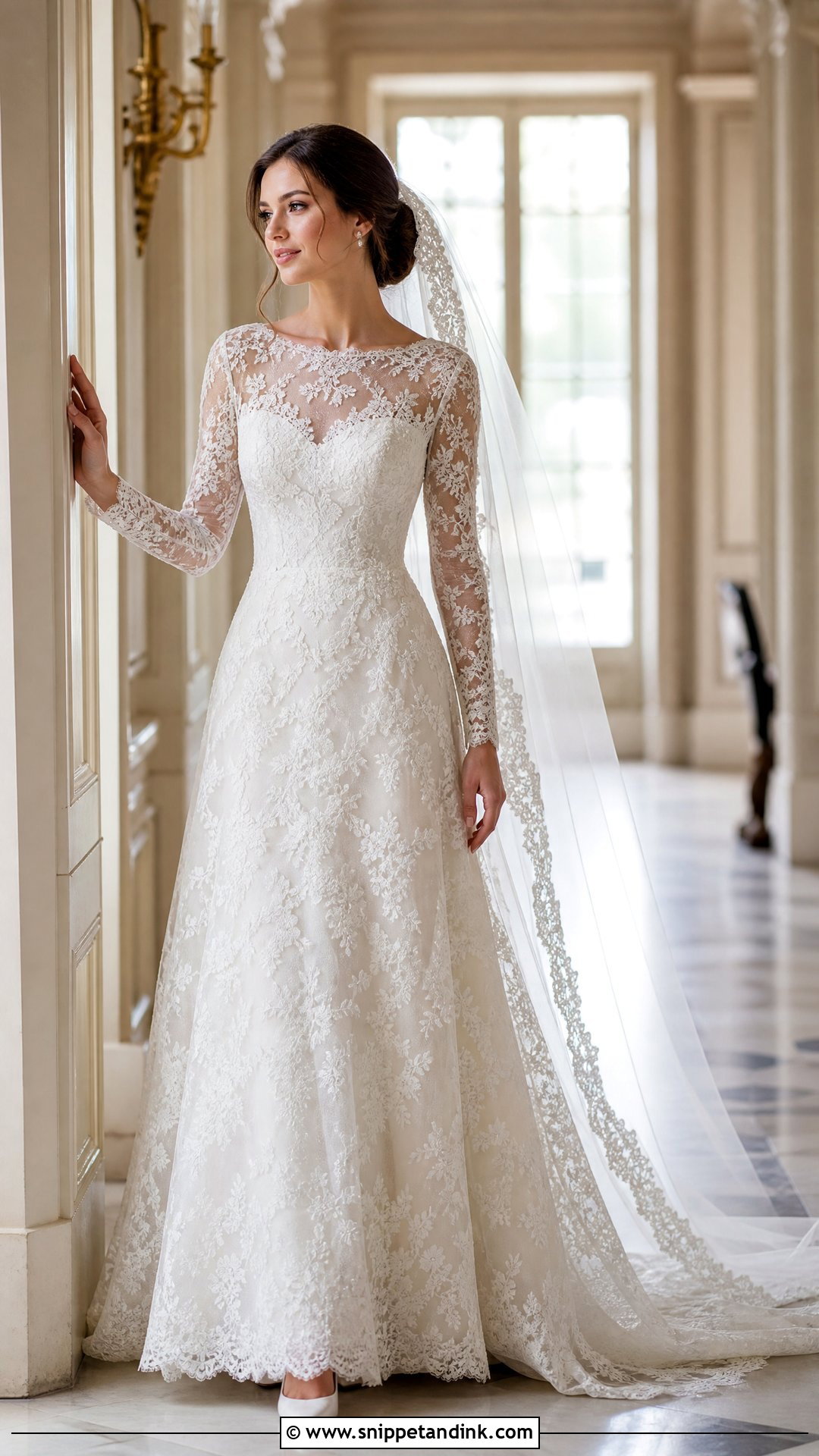
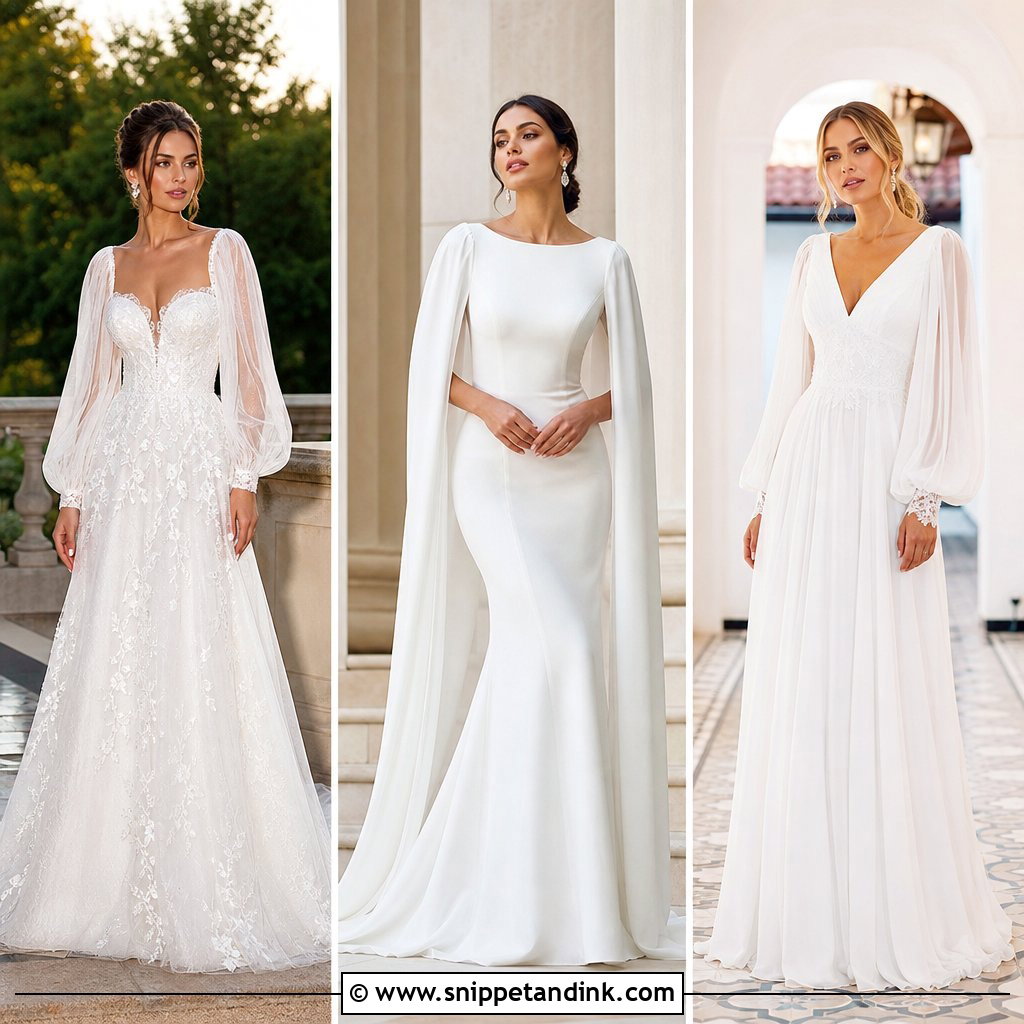
Fine Chantilly lace is net-backed with a shaded floral pattern, so it lies flat over a lining without adding bulk. On an A-line with long sheer sleeves, the lace does all the work, and I skip a necklace entirely, keeping to pearl studs, pointed pumps and a lace-edged veil. When I look over a lace gown, I check where the motifs meet at the seams. A skilled maker hand-stitches motifs across the join so the pattern looks continuous, while a hurried one sews straight through it. If your skin is sensitive, run a finger along the cuffs and underarms, where lace edges rub most.
10. Guipure Lace Fit And Flare Wedding Dress
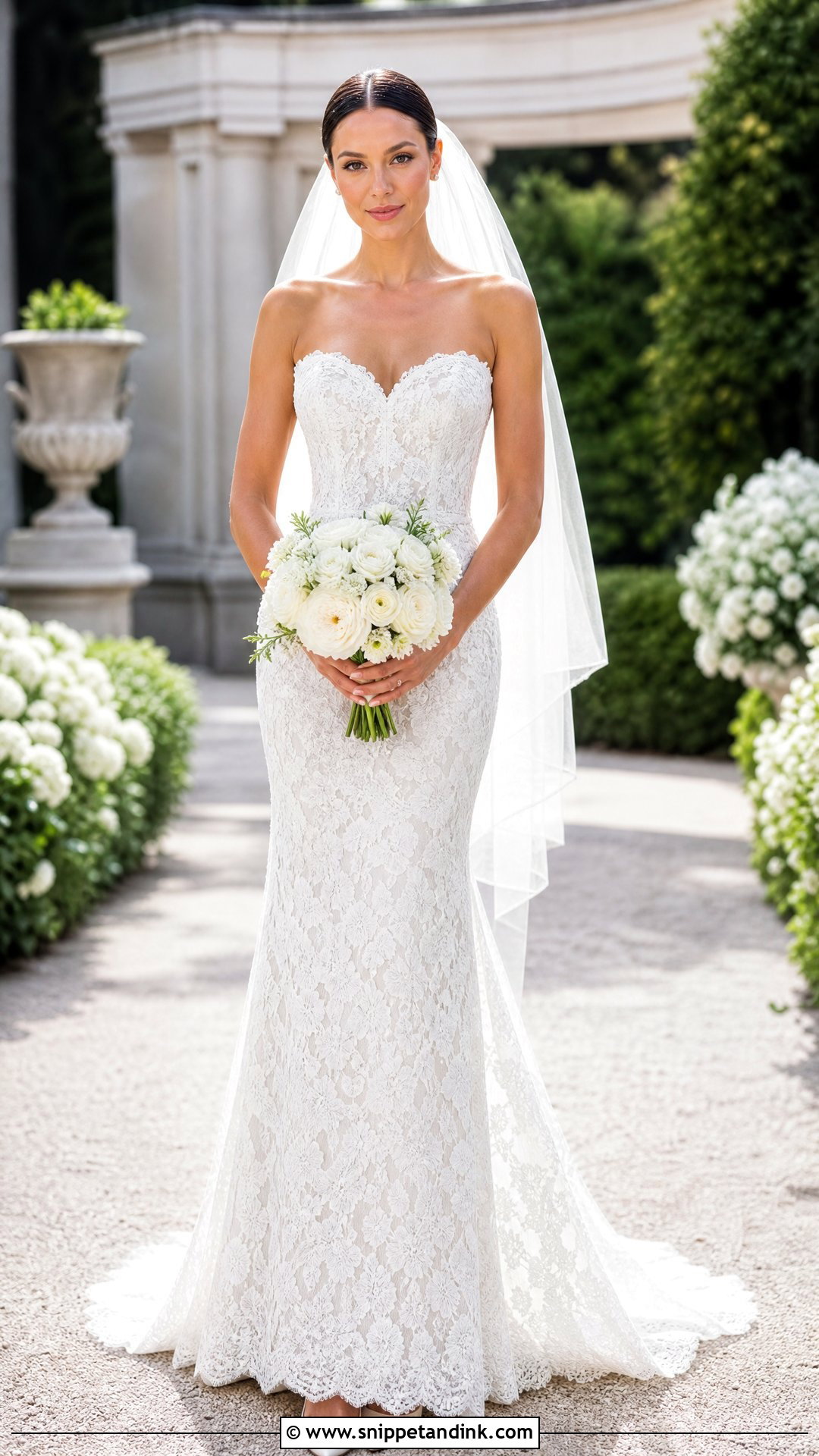
Guipure has no net behind it; the motifs are joined by small bars or touch each other directly, which gives it a heavier, raised texture. That boldness suits a fit-and-flare, where a lined sweetheart bodice and fitted skirt give the pattern room to read. I pair it with minimalist pumps, small gold or pearl earrings and a veil with no trim at all, because a lace-edged veil beside guipure looks crowded. It is less fluid than Chantilly, so walk a few lengths of the room and feel how it moves at the hips and knees. Motif scale sets the mood: large motifs look graphic, small ones quieter.
11. Duchess Satin Off Shoulder Wedding Dress
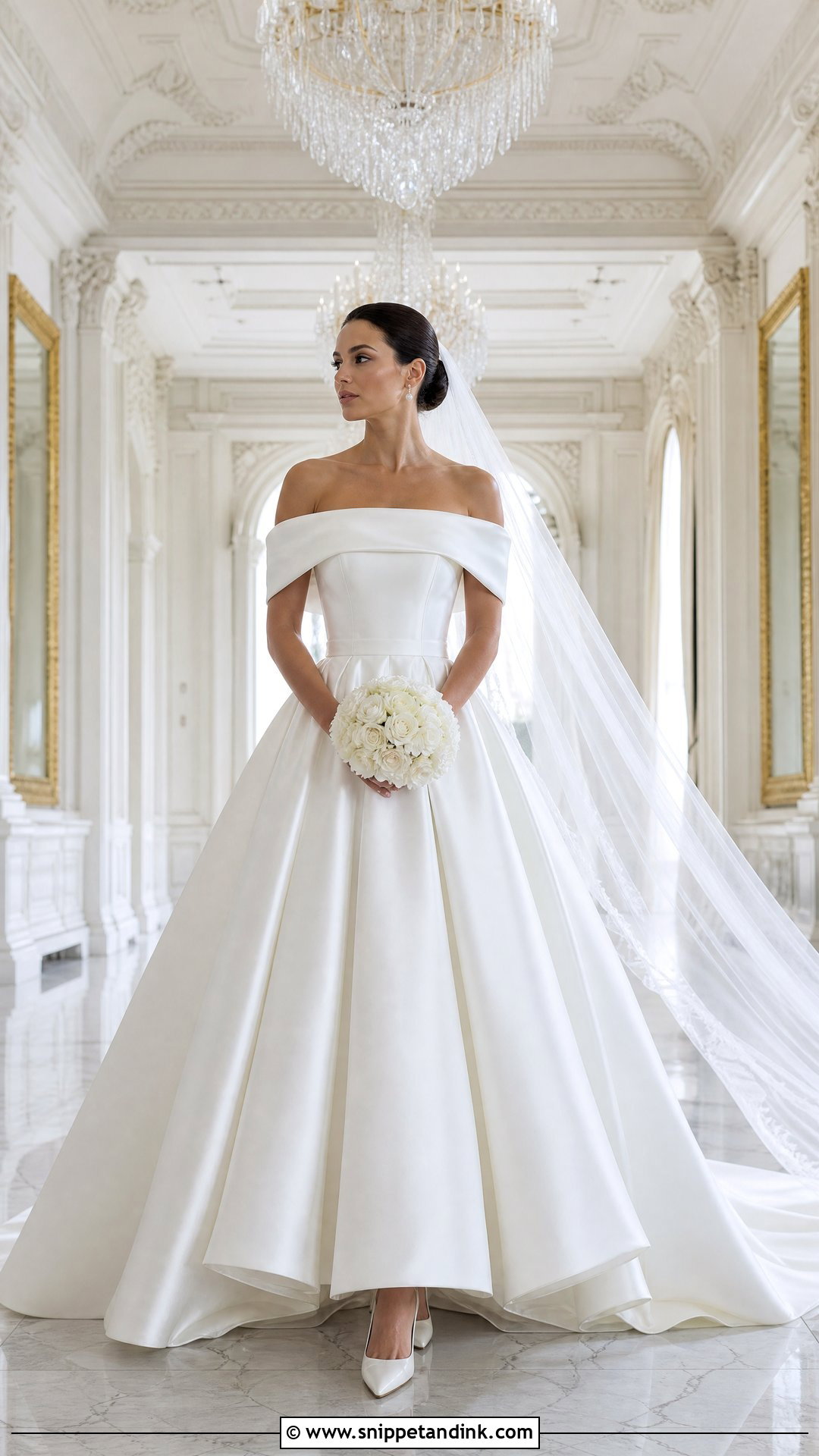
Duchess satin is dense and heavy, which is why it can hold a folded off-the-shoulder neckline that a lighter satin would let slide. It takes box pleats and a full skirt easily. Pearl earrings, pointed satin shoes, a cathedral veil anchored under a polished bun and a monochrome bouquet are all it wants. The neckline is the thing to test. Lift your arms, hug someone, sit down, and see whether it stays put or needs extra boning or a hidden grip strip. Water marks and pressing shine show readily on this fabric, so keep drinks and irons well away from it on the morning.
12. Silk Faille Tea Length Wedding Dress
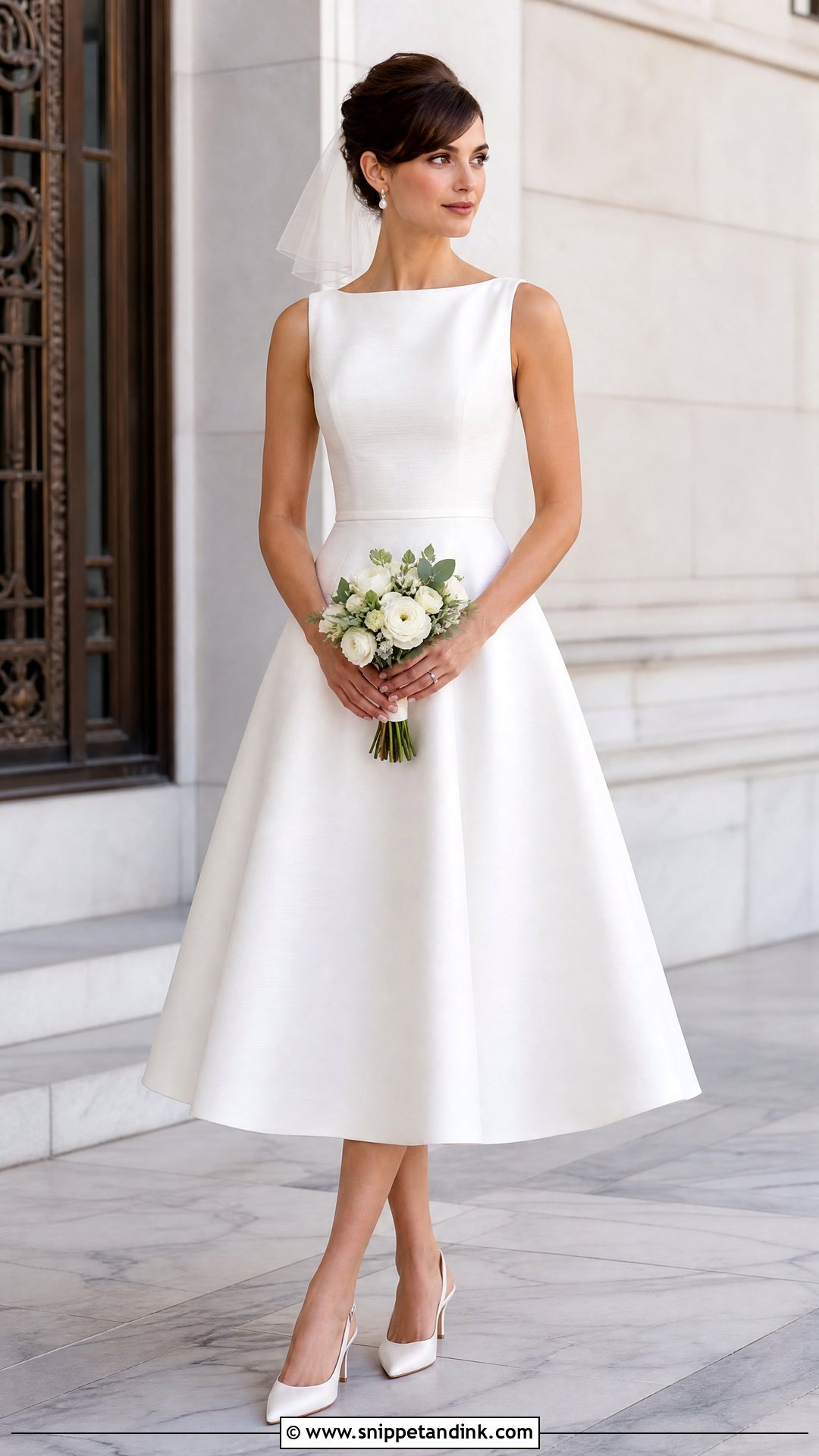
Faille has a fine crosswise rib and less gloss than satin, which gives a tea-length dress a crisp, slightly retro character. It folds cleanly and holds a flared skirt under a bateau neck or short sleeves. Pointed slingbacks, pearl buttons and a short veil are enough. Tea length puts your shoes on show, so choose them early and make sure you can stand in them for hours. Bring that exact pair to the hem fitting, since a different heel height changes where the hem falls. It sits happily at a courthouse, a restaurant or a daytime reception.
13. Silk Gazar Sculptural Wedding Dress
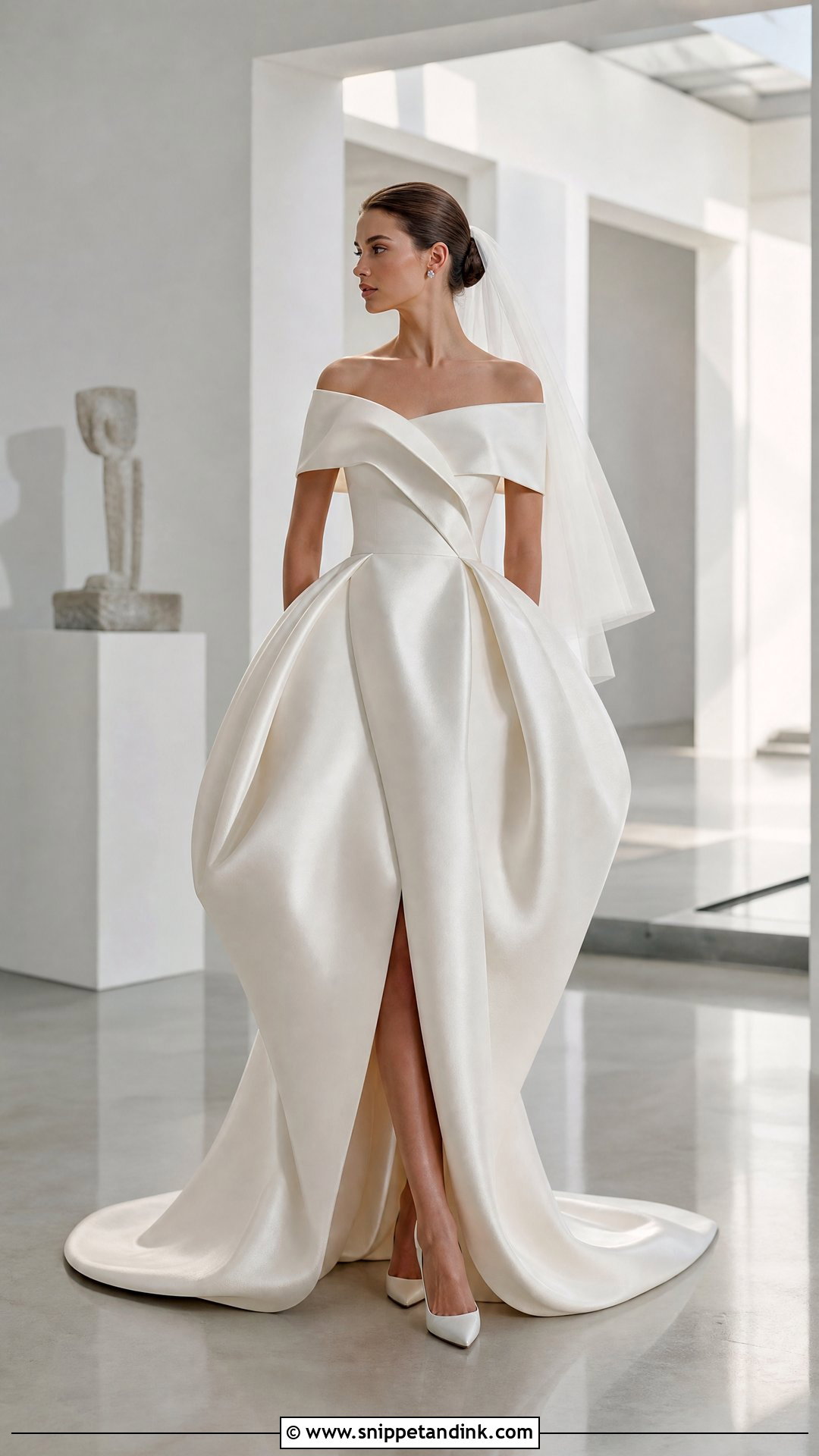
Silk gazar is light but stiff, a little like a heavier organza, and designers use it for curved skirts, oversized folds and architectural sleeves. I keep the styling spare: sleek pumps, small crystal studs, a plain veil that doesn’t hide the construction and a clean updo so the shoulders can read. Gazar shows every alteration. A careless seam leaves needle holes and a stitch line that won’t press out, so only hand it to someone experienced with structured bridal fabric. Check the gown seated and from behind as well, because sculpted volume can fold oddly in a chair.
14. Dupioni Silk Pleated Wedding Dress
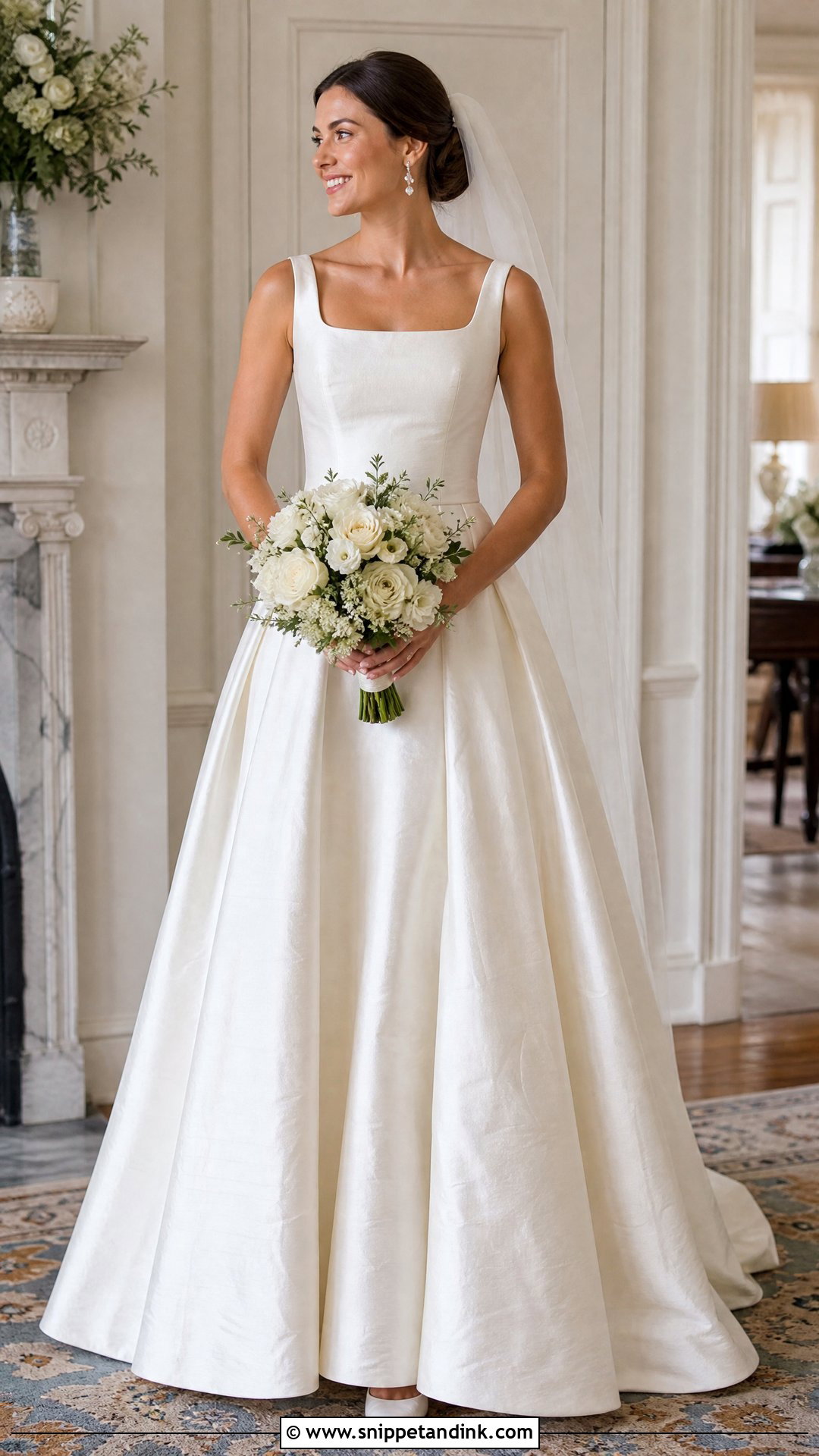
Dupioni is woven from uneven silk threads, so small slubs run across the surface. They are part of the fabric, not flaws, and they give a pleated dress depth even in plain ivory. Its crisp hand holds a square neckline, a defined waist and wide pleats, and a smooth veil with closed-toe heels and drop earrings sets off the texture. It creases readily and can water-spot, so plan steaming at the venue and keep an umbrella handy. Ask for a large swatch rather than a thumbnail; the color shifts with the light and the slub pattern varies from bolt to bolt.
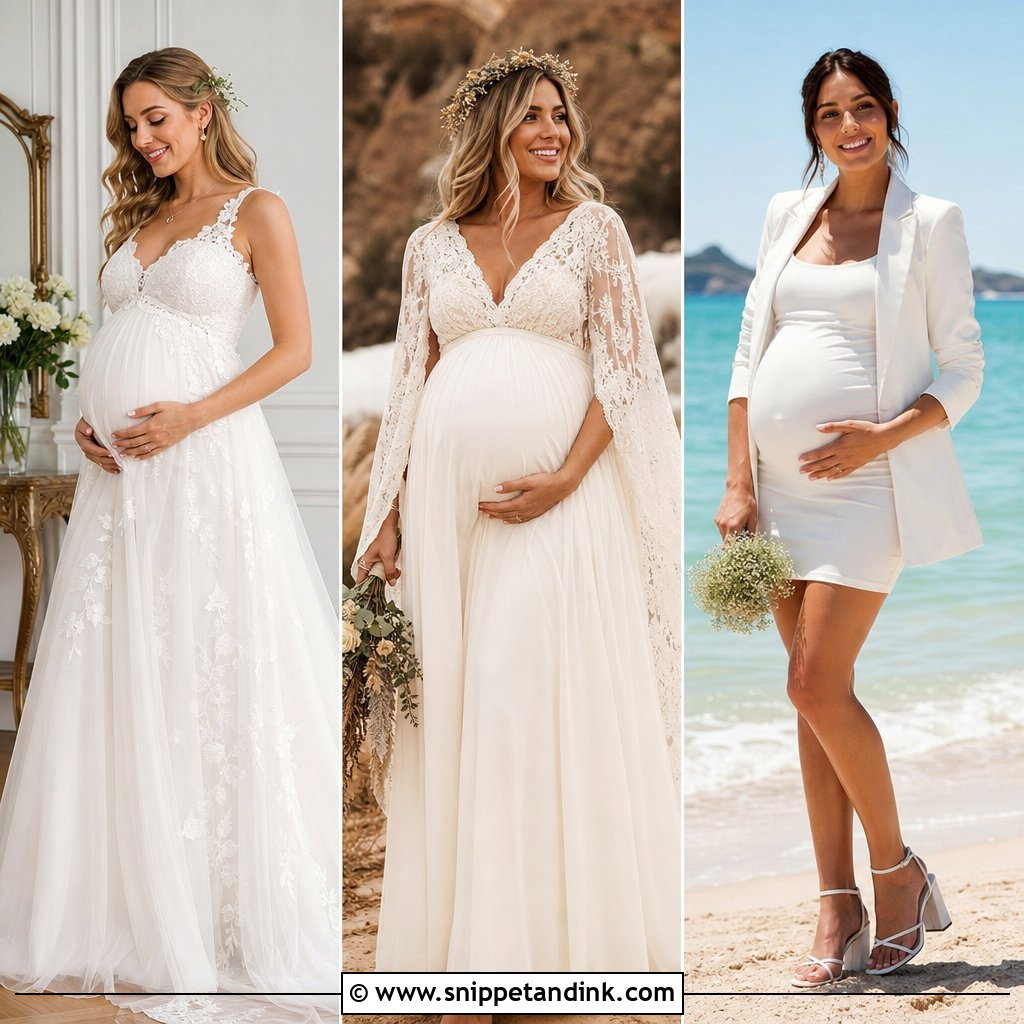
15. Georgette Draped Wedding Dress
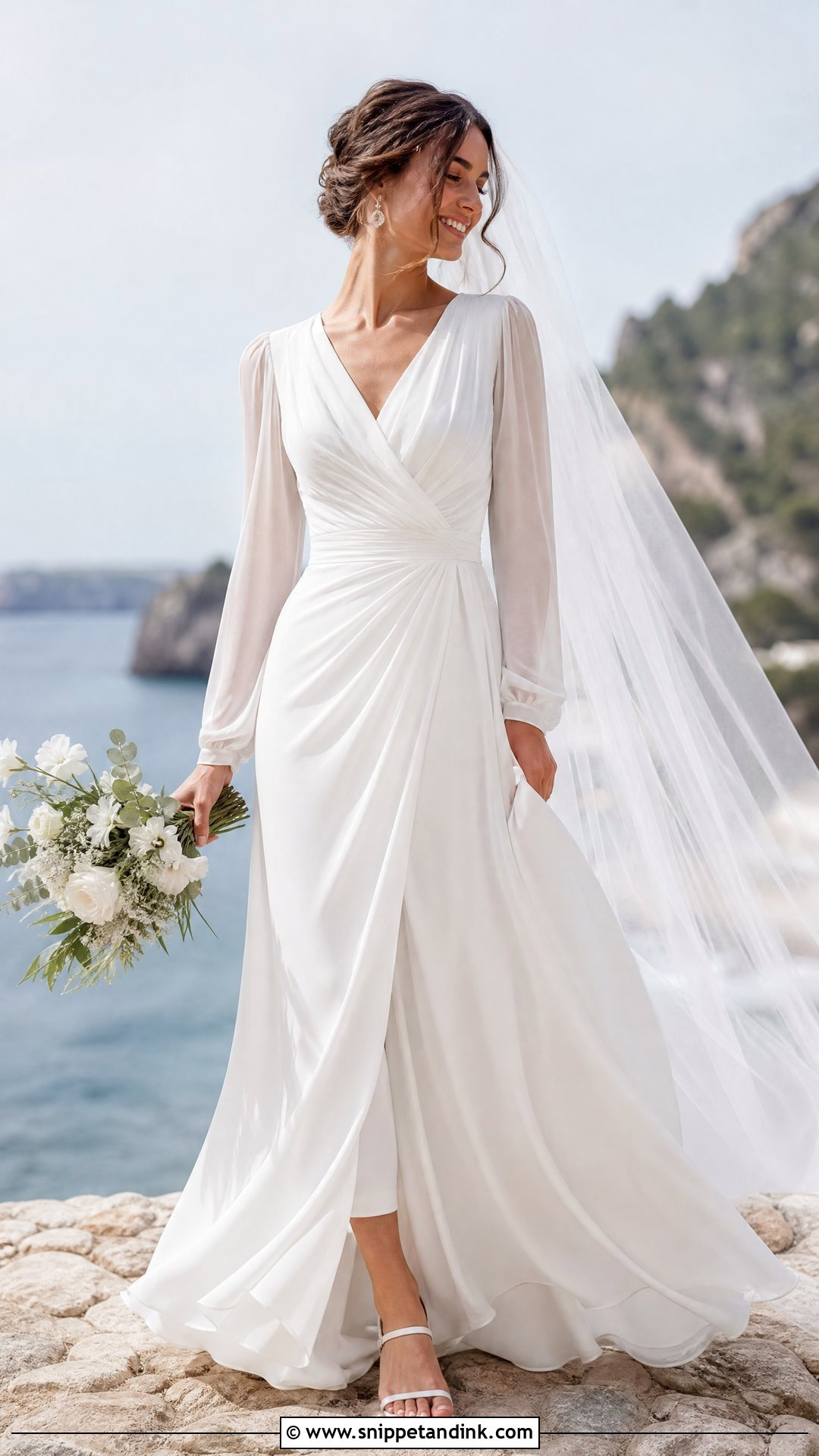
Georgette is chiffon’s grainier cousin. Its twisted yarns give a slightly pebbled surface and a heavier fall, so it drapes better over a wrap bodice and gathered waist. Long sheer sleeves add coverage without weight. Low heels, delicate earrings, a fingertip veil and a loose bouquet suit how easily it moves. It almost always needs a lining, and I check that lining under strong window light before anything else. Rough nails and stone settings catch it, so smooth jewelry makes sense. It also shrugs off creases better than most sheers, which is why I like it for destination weddings.
16. Brocade Corset Wedding Dress
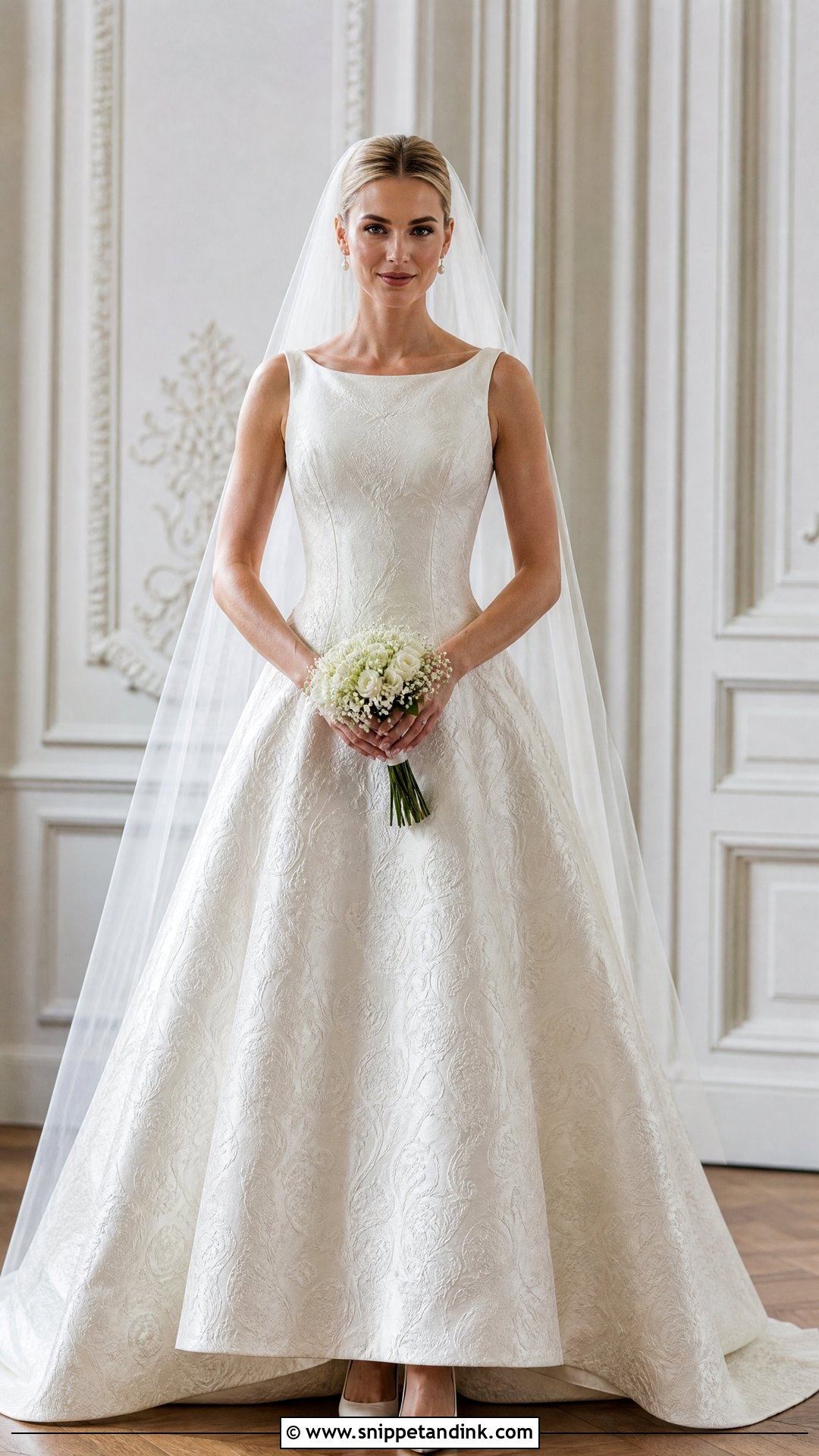
Brocade gets its pattern from the weave itself, with raised motifs that look rich without any embroidery on top. A corset bodice and structured A-line show it clearly, and a simple neckline stops it looking busy. Satin pumps, understated earrings, a plain veil and a small bouquet are plenty. It is heavier and stiffer than flowing fabrics, so I check comfort at the waist and under the arms, where firm edges start to dig after a few hours. Pattern placement matters too: a large motif should sit centered down the front, not chopped in half at a seam. Cool seasons and formal rooms suit it best.
17. Jacquard Square Neck Wedding Dress
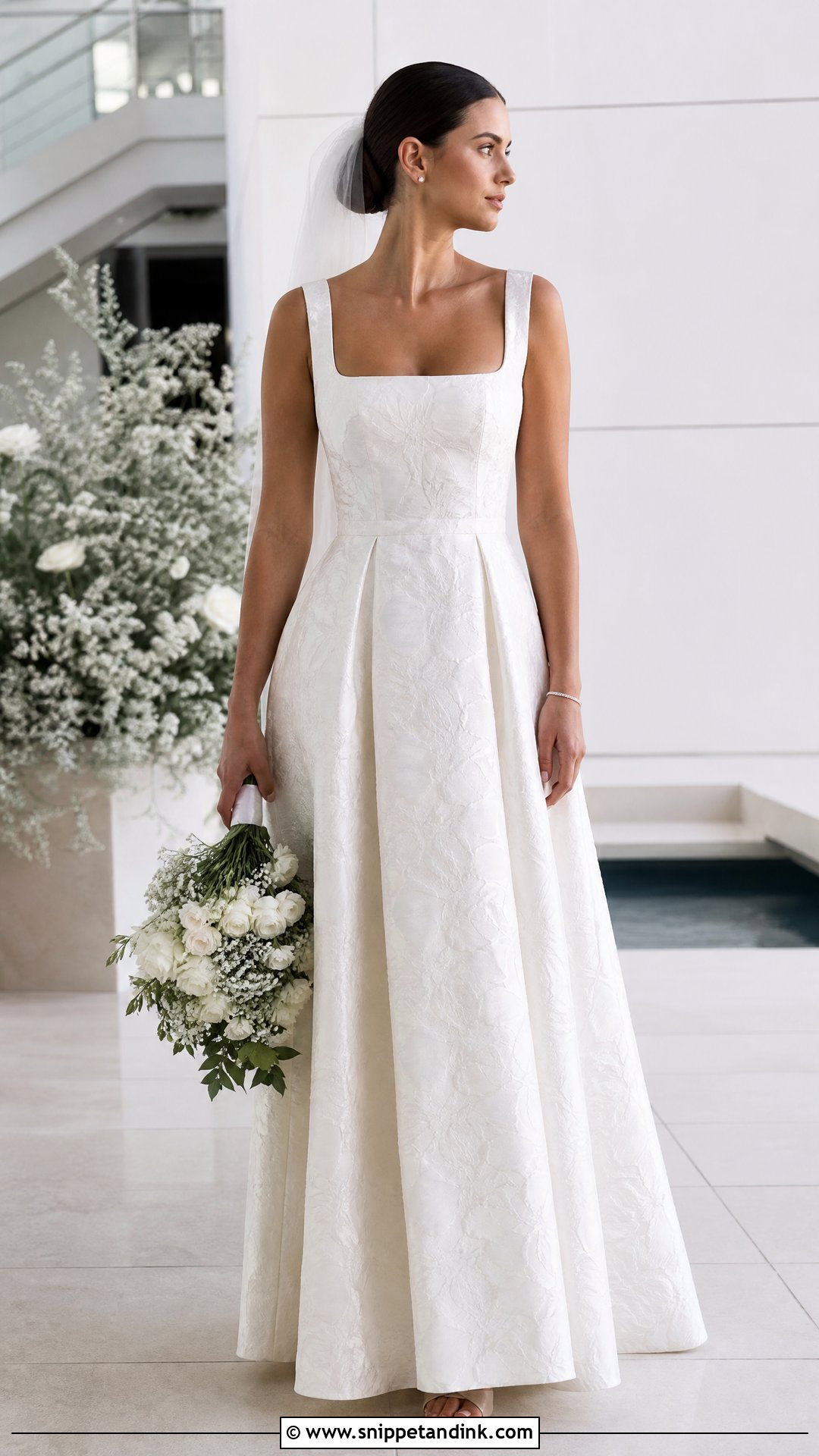
Jacquard is the wider family brocade belongs to: any fabric with a pattern woven in on a jacquard loom, whether floral, geometric or abstract. Weights range from airy to substantial, so ask about weight before you think about season. A square neck, fitted waist and softly structured skirt let the pattern show. I’d go with block heels, a sleek bracelet, small earrings and an unembellished veil, since sparkly accessories fight a woven design. Look closely at the side seams and the zip; good construction lines the motifs up across them. Keep the hair simple and the bouquet restrained.
18. Velvet Long Sleeve Wedding Dress
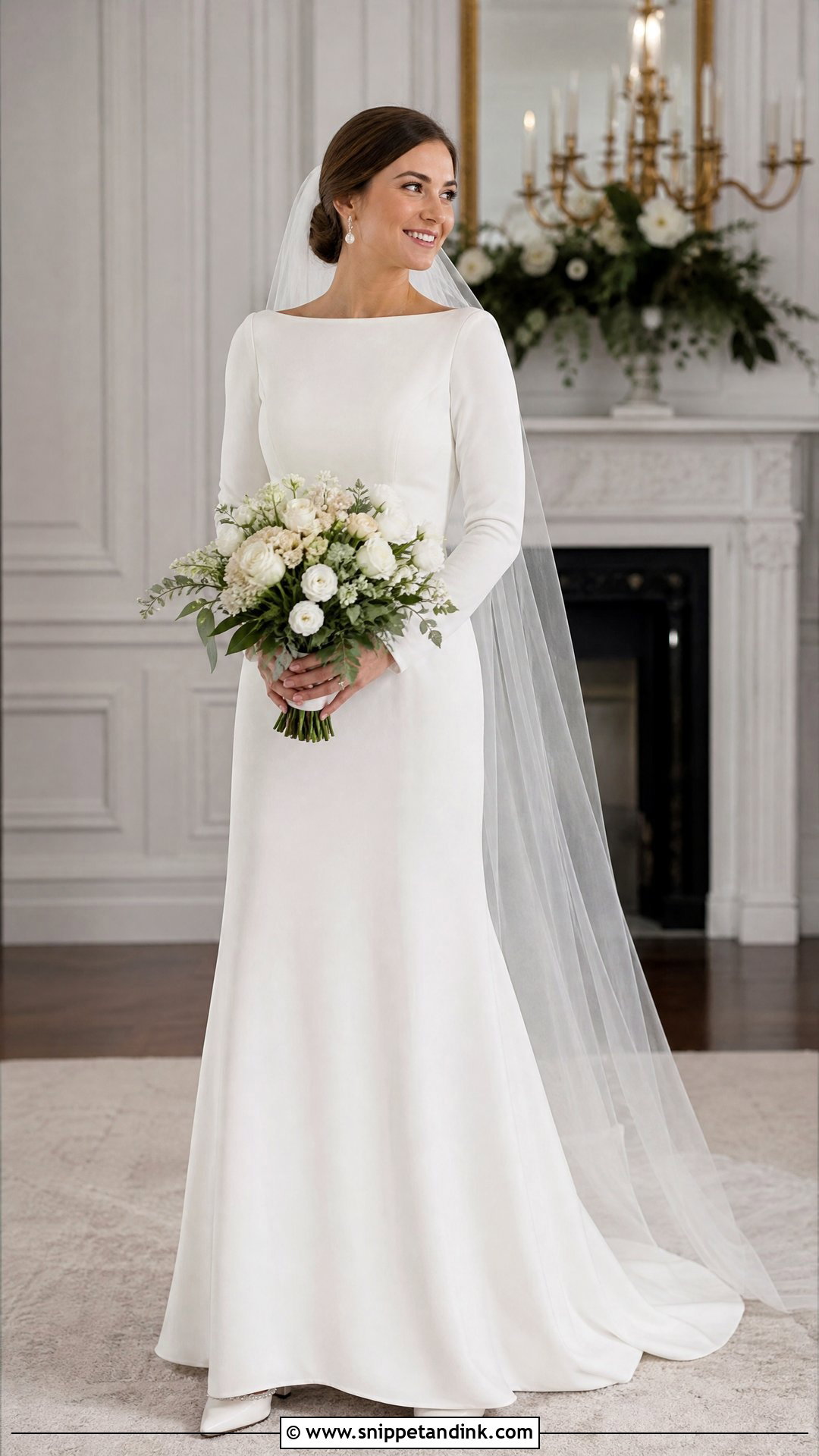
Velvet has a pile, and the pile has a direction. Brushed one way it looks lighter, the other way darker, so every panel must be cut the same way or the dress looks two-toned in photos. On a long-sleeve gown with a fitted bodice and soft flare, it is warm and plush for winter, and a V or bateau neckline stops it feeling closed in. Closed-toe heels, pearl earrings and a smooth tulle veil add contrast; pale neutral flowers keep it bridal. Velvet crushes under pressure. Hang it, never fold it, steam it from the inside, and don’t let it sit squashed in the back of a car.
19. Linen Minimalist Wedding Dress
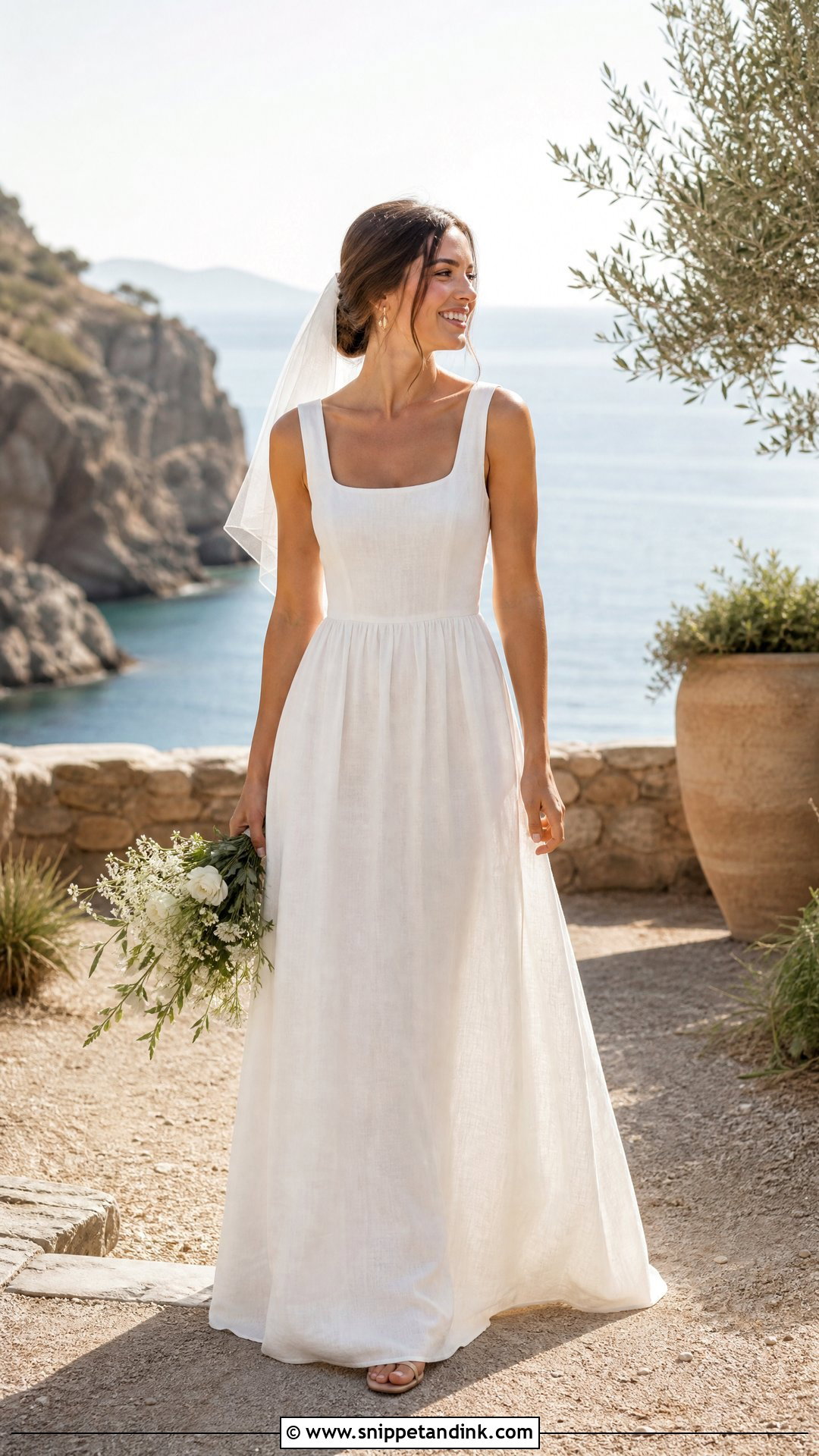
Linen breathes better than anything else here, and it wrinkles more than anything else too. Plenty of brides accept the rumpled look as part of its charm; if you won’t, a linen blend holds its shape and stays smoother. A minimal cut with wide straps, a fitted waist and a gathered A-line skirt suits coastal and summer weddings. Leather sandals, small gold earrings, a short light veil and a loose bouquet keep it relaxed. Pale linen can turn see-through in bright sun, so stand in a sunny doorway at the fitting and have someone take a photo of you.

20. Cotton Eyelet Wedding Dress
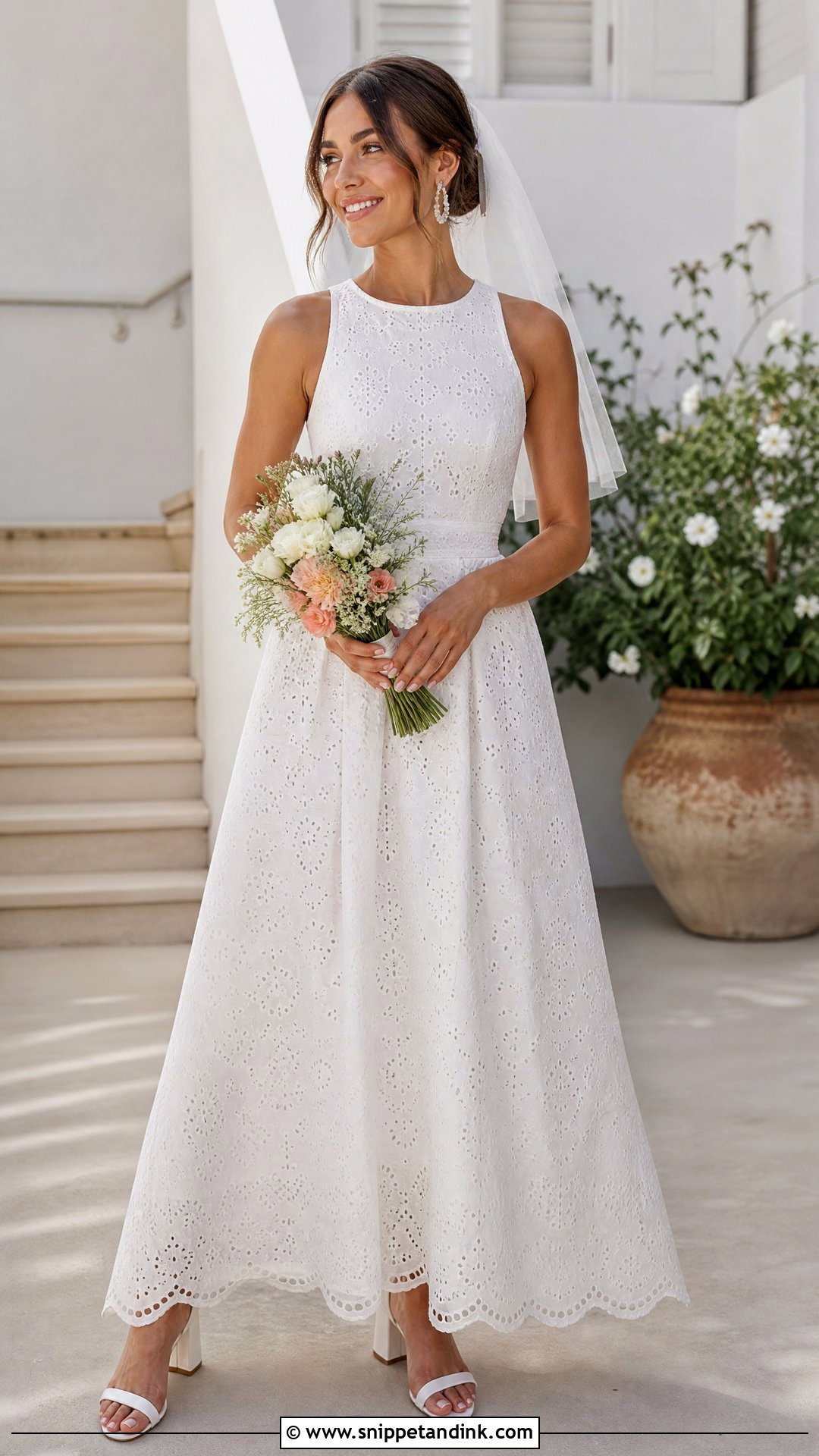
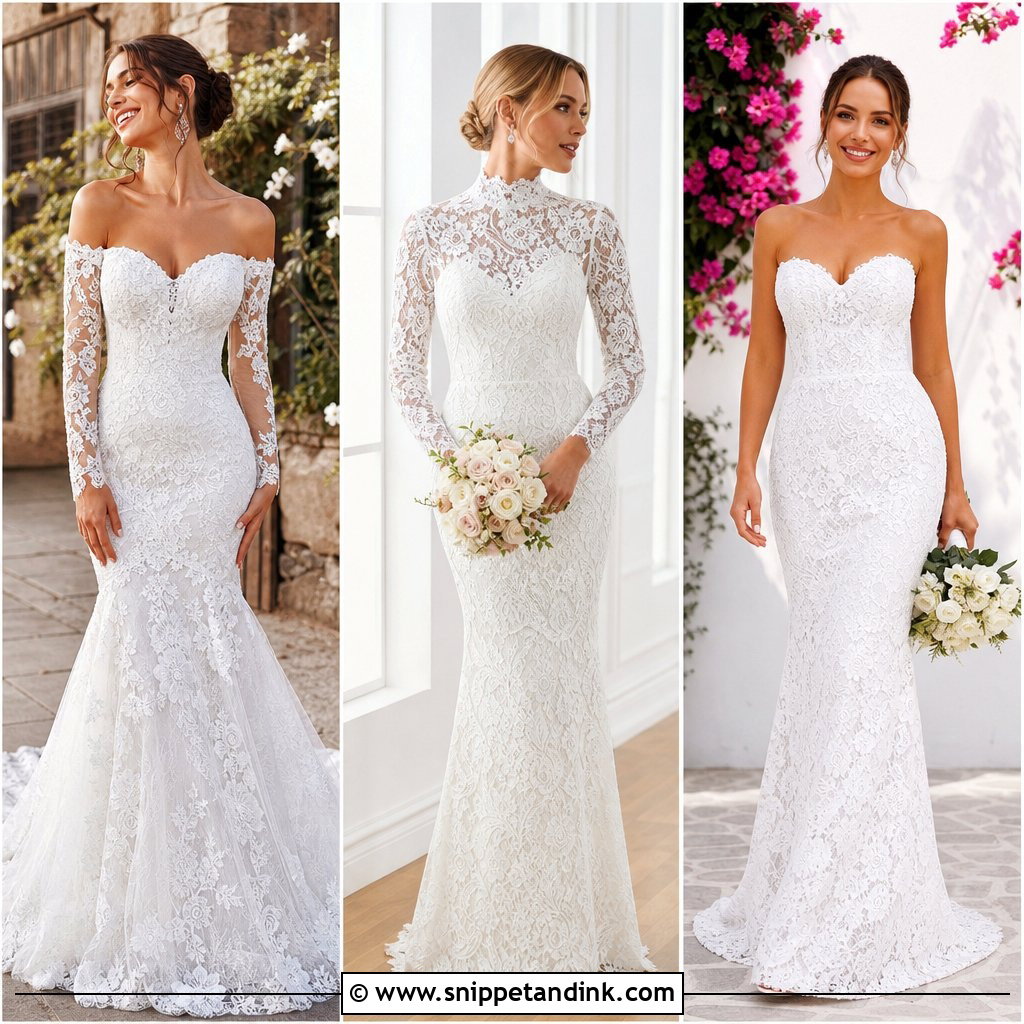
Cotton eyelet is embroidered with small cut-out holes, which makes it a fresh, breathable option for a casual wedding dress. Because the fabric already carries pattern everywhere, a clean cut works best: a fitted sleeveless bodice, a defined waist and a midi or floor-length skirt with a scalloped hem. Block-heel sandals, pearl hoops and a short veil or simple bow suit it. The lining shows through every hole, so its color changes the whole dress; an ivory lining under white eyelet looks warmer than you’d guess. Feel the cotton, too. Good eyelet is soft, while poor versions feel stiff and scratchy.
Which Fabrics Survive a Car Ride, a Long Dinner and a Dance Floor
Every gown looks fresh on the hanger. The real difference between fabrics shows at nine at night, after hours of sitting, hugging and dancing. This is roughly how each family behaves once it has actually been worn.
Barely needs attention
Crepe, georgette, heavier lace and most jacquards shake off creases. A quick steam in the morning is usually enough, and a long dinner leaves little trace on the skirt.
Pack a handheld steamer
Satin, Mikado, faille and taffeta crease wherever you sit. Silk versions also water-spot, so a splash of champagne can leave a ring. Give a bridesmaid a small steamer and a clean white cloth, and never let anyone put an iron straight onto silk.
Accept the wrinkles or skip the fabric
Linen, dupioni and organza crease from the first car ride, and velvet crushes wherever it is pressed. If wrinkles will bother you in every photo, these are fabrics to avoid rather than fight.
After the wedding, get the gown professionally cleaned within a few weeks even if it looks spotless. Spilled drinks and cake frosting dry invisibly on ivory, then turn into brown marks in storage as the sugar oxidizes. Store it in acid-free tissue inside a breathable cotton bag, away from plastic, damp and daylight. Heavy satin and velvet should lie supported in a box rather than hang for years, because their weight slowly stretches the shoulders.
Structure, Drape or Texture? Start With the One You Care About Most
Let the shape you want rule fabrics out first. Satin, Mikado, taffeta and brocade hold structure; chiffon, georgette and charmeuse move; lace, jacquard, eyelet and velvet bring texture to a simple cut. Then test your shortlist honestly, in daylight and indoor light, walking, sitting and with your arms up. Ask about lining, transparency, creasing and the bustle before you sign anything. The fabric that passes those tests is the one you’ll still be comfortable in when the last song plays.
You'll Like These Ideas:


Leave a Reply