
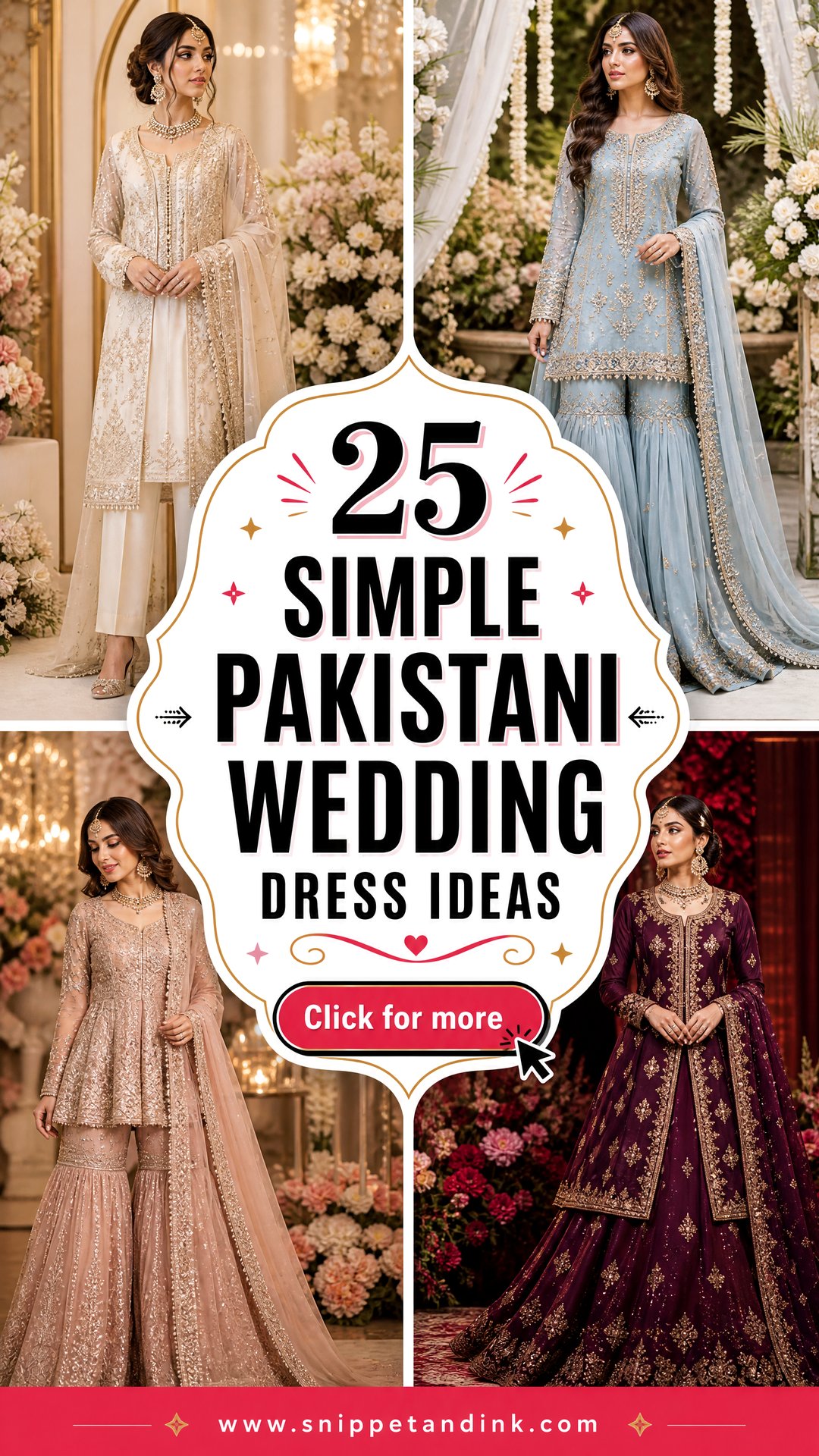
Pakistani weddings run over several functions, and a bride or close relative can easily need four outfits in a single week. That’s exactly why simple pieces earn their place: they’re lighter to wear, easier to rewear and quicker for a tailor to finish. The shapes below cover classic lehengas, shararas, ghararas, pishwas dresses, sarees and tailored shalwar kameez, each with restrained embroidery, along with what I’d check on the fabric, fit and dupatta before you commit.
Matching Each Function to Its Fabric and Color
Each function carries its own unwritten dress code, and the fabric matters as much as the color. These are the conventions I dress around, though every family bends them a little.
- Mehndi and dholki. Yellows, greens, mustard and bright contrasts. Choose cotton silk, lawn or light georgette that can survive a henna smudge and a night on the floor, with flat juttis for dancing.
- Nikah. Whites, ivories and pastels, often with the head covered. You may be seated for much of it, so pick a cut that sits comfortably and a dupatta that stays on without constant fixing.
- Baraat. Traditionally the bride’s heaviest outfit, usually red, maroon or deep jewel shades. Guests can dress rich too, but should stay lighter than the bride.
- Walima. Softer colors, silver and pale gold in organza, chiffon or net. It’s often an evening event, so check your fabric under warm lights before you buy.
If you need several outfits, plan them as a set. A dupatta, a pair of khussas or one jewelry set can move between two functions and save money and suitcase space.
1. Ivory Pakistani Wedding Dress With Straight Trousers
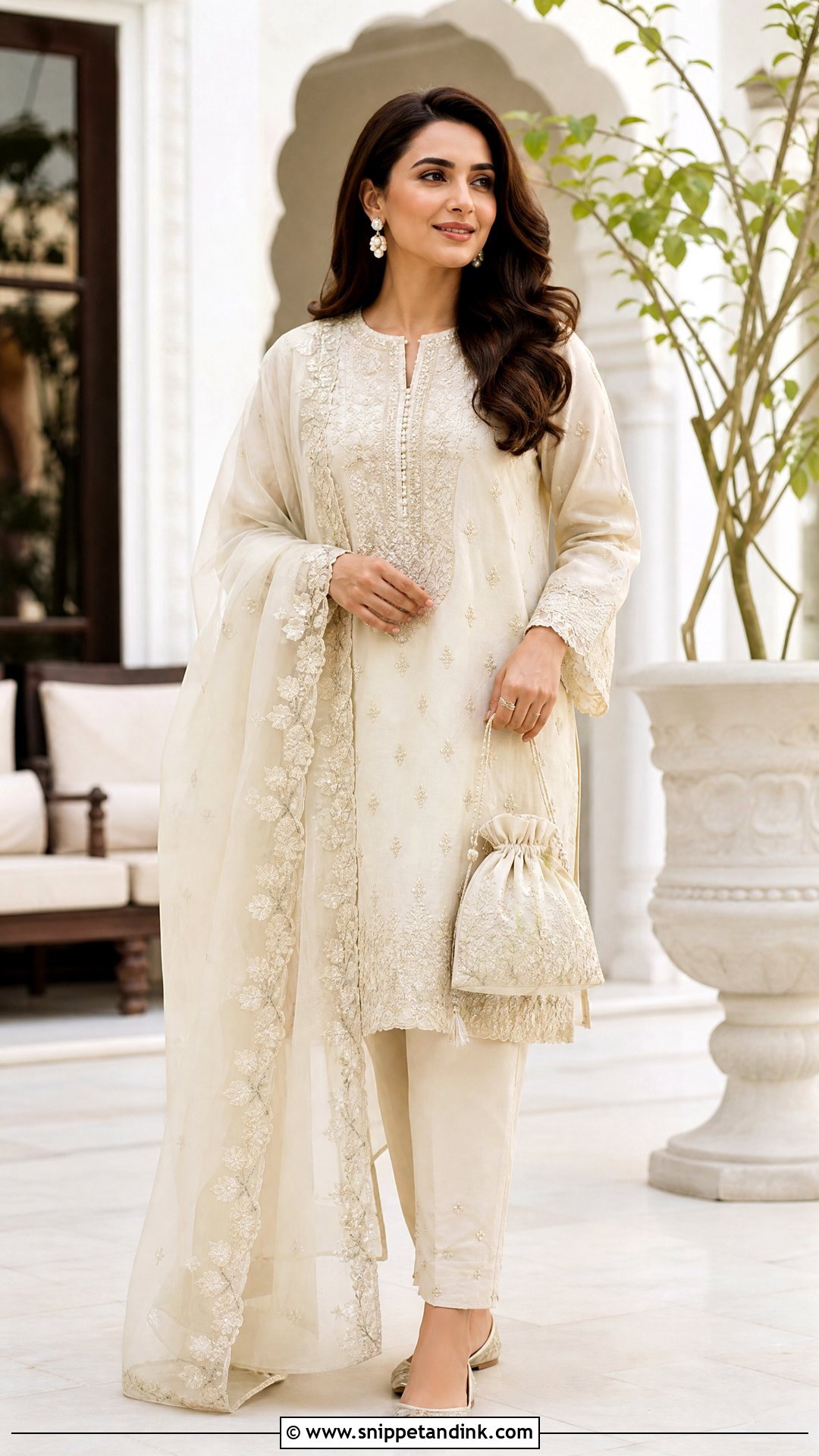
Ivory threadwork on ivory fabric only looks expensive when the shirt is lined well, so I hold it up to the light before anything else. A knee or calf-length shirt with embroidery at the neckline, cuffs and hem, matching straight trousers and an organza dupatta is all a daytime nikah needs. Add pearl drops, metallic khussas and a low bun. If it feels too plain on you, ask for pale gold thread or a narrow scalloped border rather than more motifs.
2. Blush Pink Pakistani Wedding Pishwas
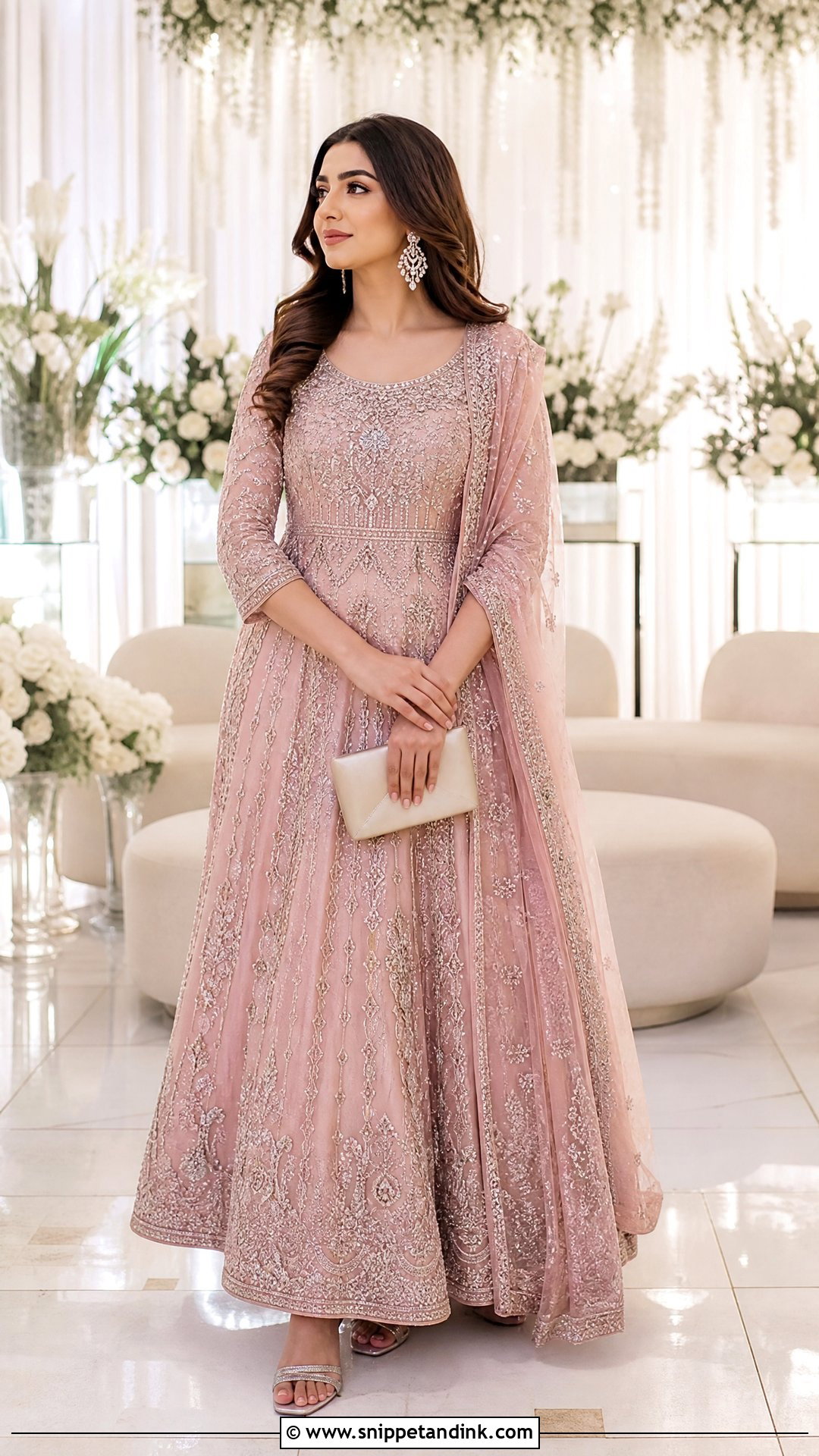
A pishwas gets its movement from the panels, not the embroidery, so the number and cut of the kalis matter more than the work on them. A fitted bodice, fine silver embroidery at the neckline and cuffs, and a chiffon dupatta with a slim border give enough sparkle for a nikah or walima. The long vertical panels lengthen the body, which is why this Pakistani wedding dress suits most heights. What I fuss over is the hem: have it finished in the shoes you’ll actually wear, so the skirt clears the floor.
3. Mint Green Pakistani Wedding Sharara
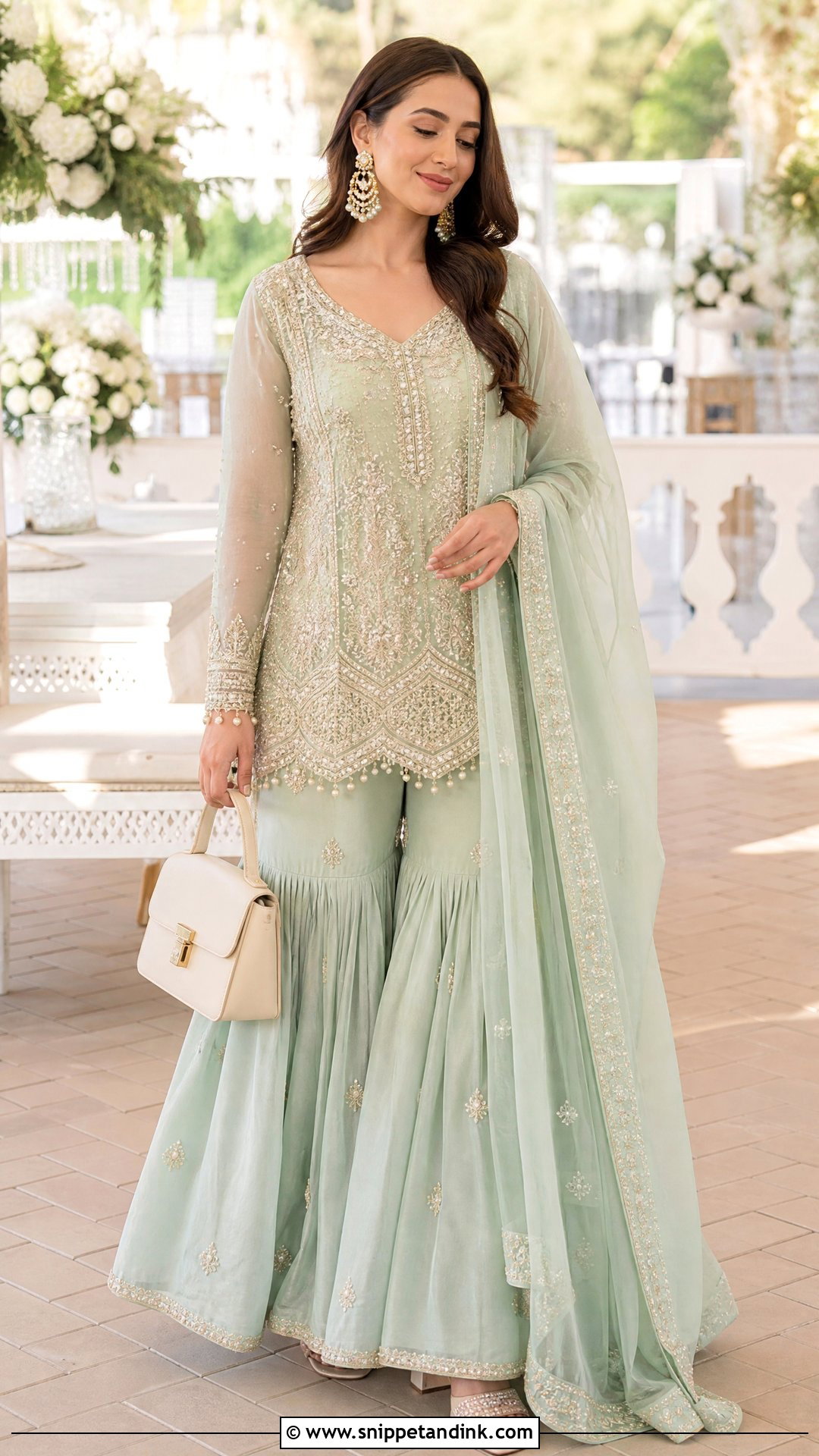
Sharara pants carry a lot of fabric below the knee, so the kurti on top has to stay short and tidy, ending around the upper thigh. Tonal threadwork or tiny pearls suit mint far better than heavy gold, which can make the shade look sickly. A sheer organza dupatta in the same mint and nude block heels finish it. Treat it as a daytime color, because under warm evening lights mint tends to wash out.
4. Powder Blue Pakistani Wedding Gharara
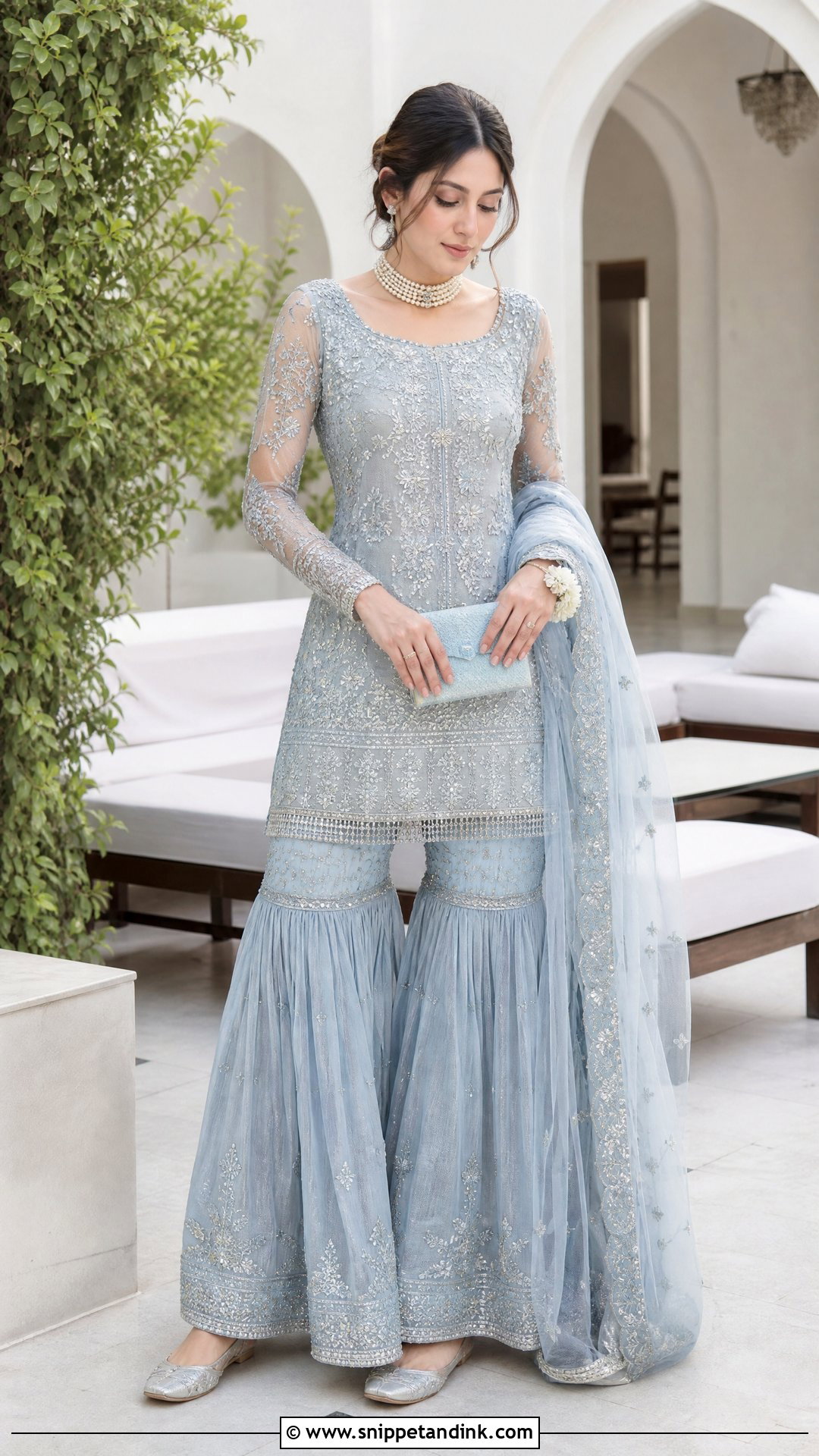
The gharara stands or falls on its knee seam. That gathered band should sit right at the knee, neither above nor below, or the flare starts in the wrong place and you’ll feel it every time you sit down. A fitted short shirt with restrained silver work and a light net dupatta keep the look calm, and silver khussas with a pearl choker are all the jewelry it wants.
5. Yellow Pakistani Wedding Lehenga For Mehndi
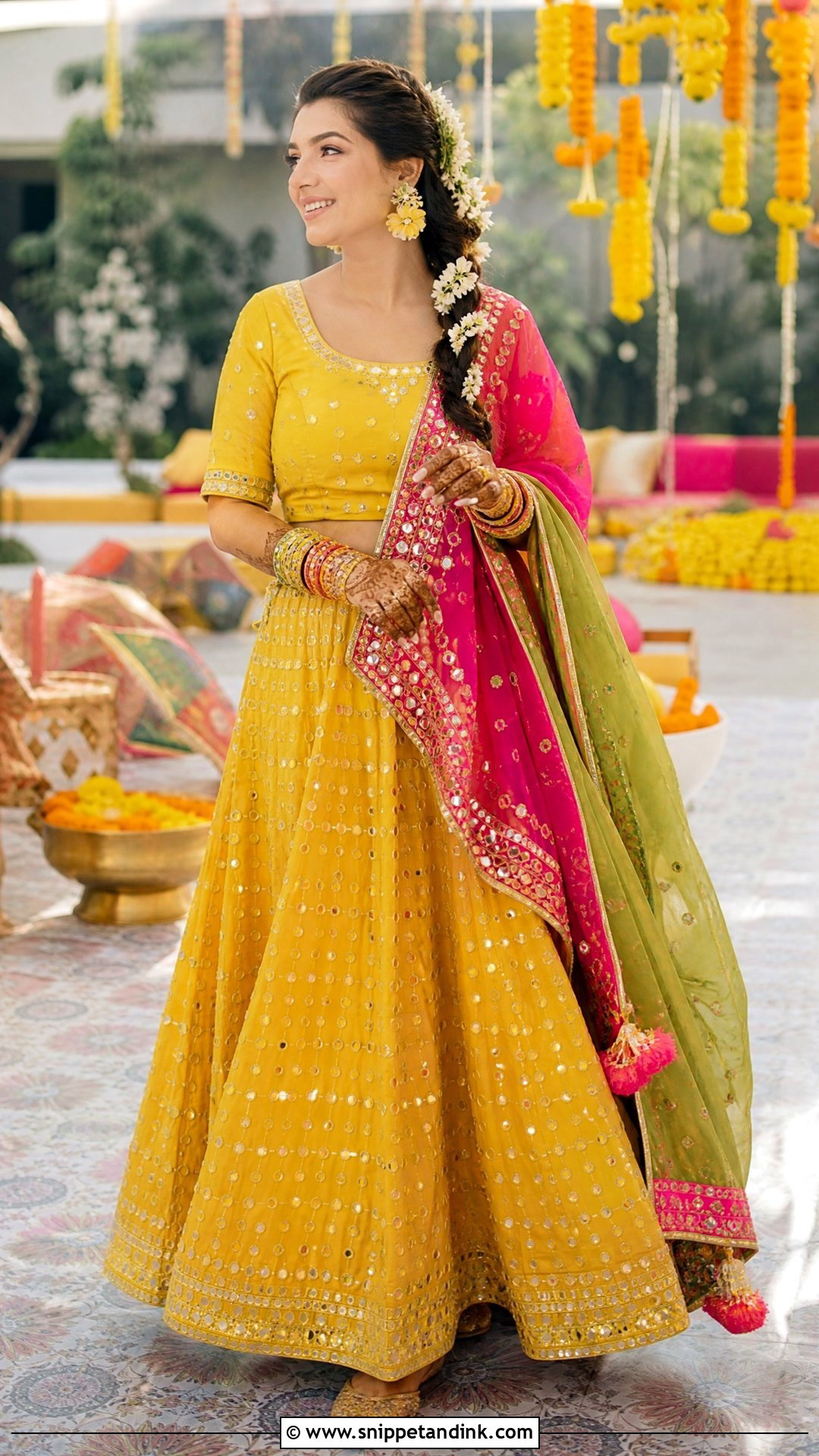
Mehndi outfits get danced in, sat on the floor in and splashed with henna, so I treat them as working clothes. A lightweight lehenga with a gentle flare, a modest blouse and a contrasting pink or green dupatta is plenty; gota or mirror work brings the sparkle without weight. Flat juttis are kinder than heels on a dhol night. For more coverage, a longer blouse or a short kurti works without spoiling the proportions.
6. Green Pakistani Wedding Shalwar Kameez With Gota
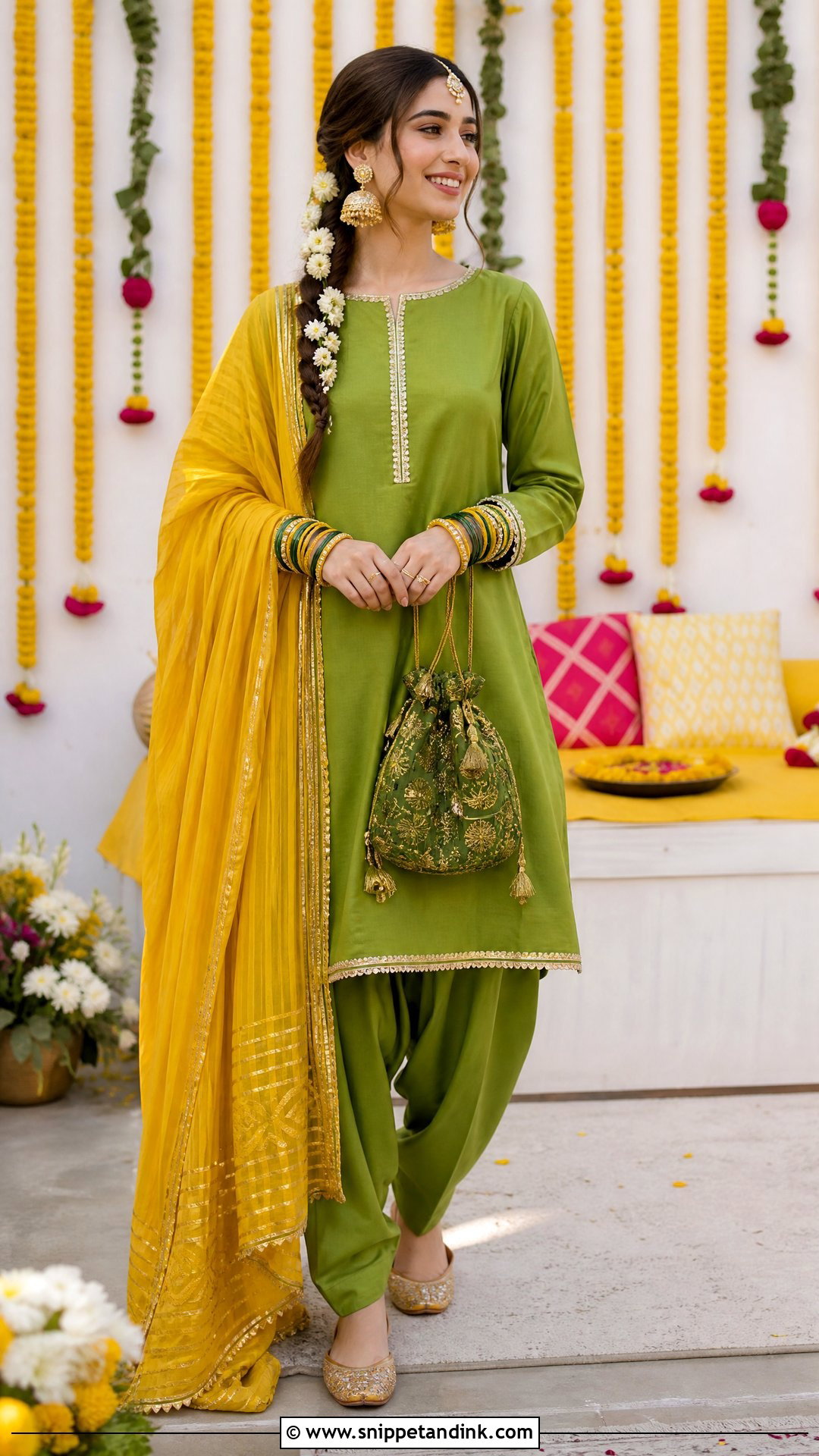
This is the outfit I suggest most to sisters, cousins and bridesmaids, because it rewears so easily. A straight or slightly flared kameez in pistachio or parrot green, narrow gota at the neckline, sleeves and hem, and a yellow or pink dupatta is classic mehndi dressing. One warning about gota: cheaper metallic trims can darken over time, so store the suit wrapped in cotton and away from damp. Change the dupatta and jewelry later and it reads as a new outfit.
7. Peach Pakistani Wedding Anarkali Dress
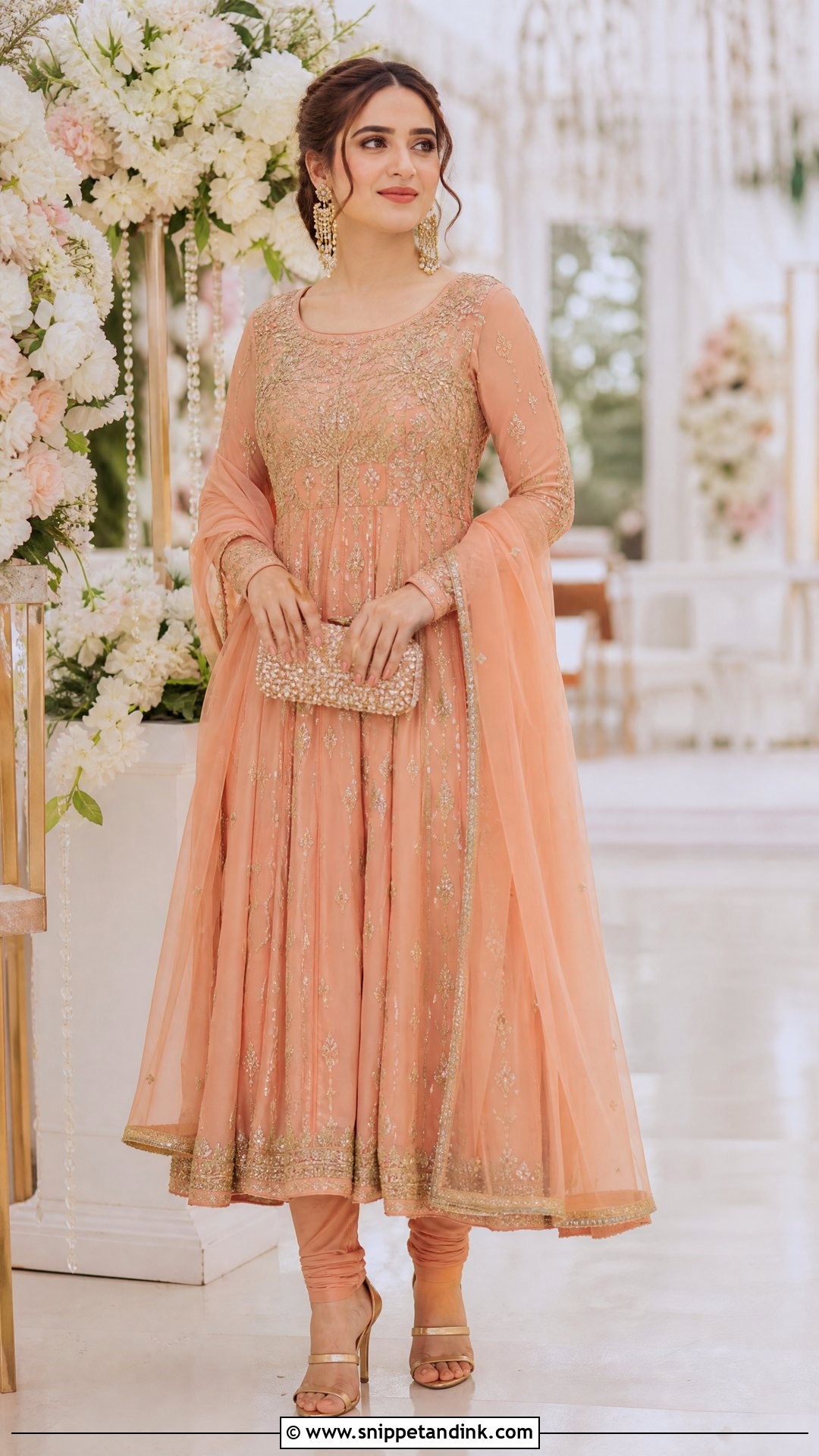
An Anarkali has to fit the shoulders and upper body precisely, because everything below hangs from that point; if the bodice is loose, the flare collapses. Gold threadwork on the bodice, scattered motifs on the skirt, a slim churidar and a sheer peach dupatta over one shoulder is the traditional pairing. Peach is happiest in daylight. Under strong yellow lighting it can drift toward orange.
8. Lavender Pakistani Wedding Maxi Dress
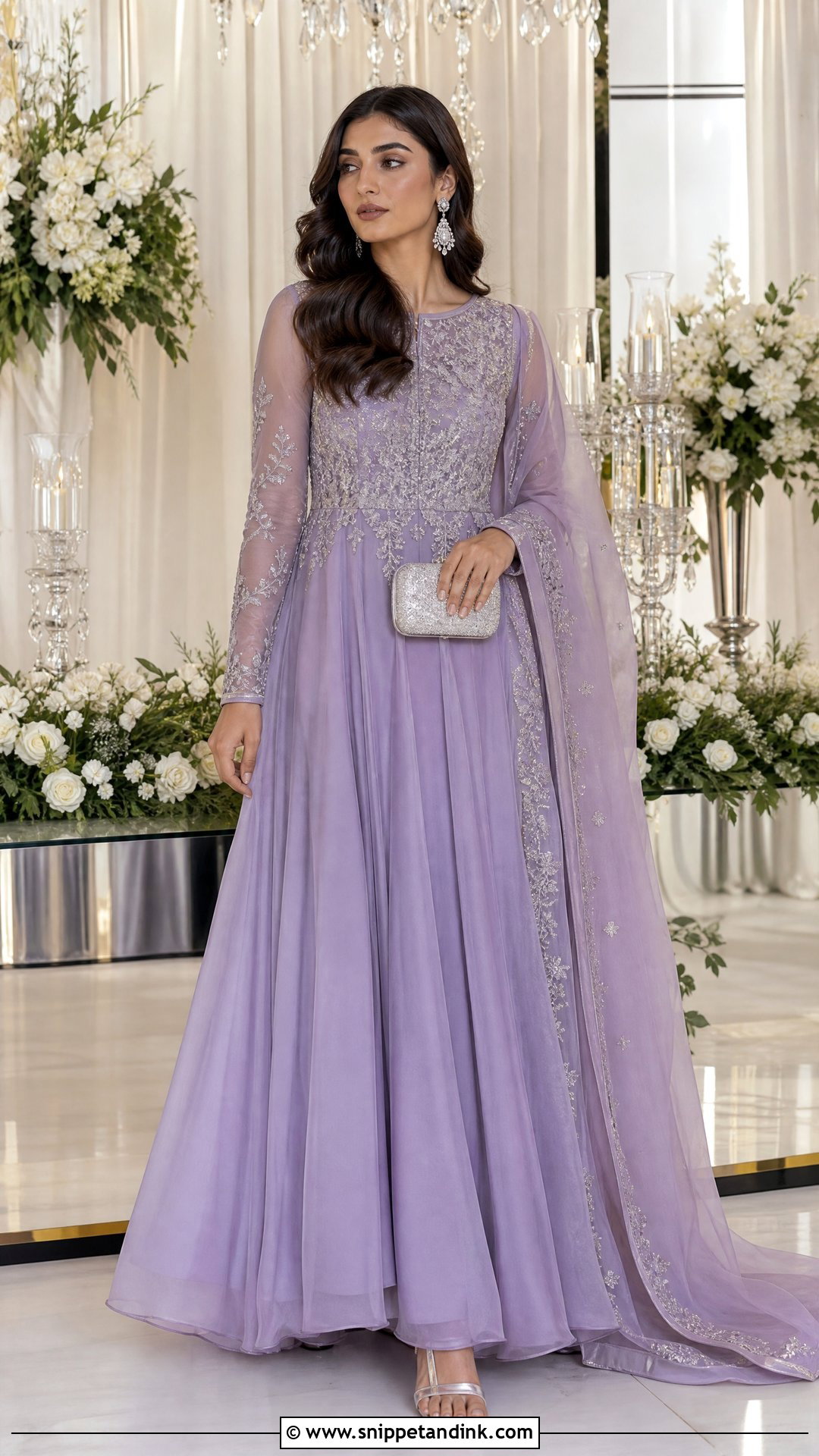
Lavender is a cooler, quieter pick than the jewel tones. A defined waist and a georgette or chiffon skirt give it movement, and sheer sleeves add coverage without heat. I’d keep the makeup cool as well, mauve on the lips rather than peach. Petite women should ask for fewer skirt panels so the dress doesn’t swamp them, while taller women can carry a fuller flare.
9. Red Pakistani Wedding Lehenga With Minimal Embroidery
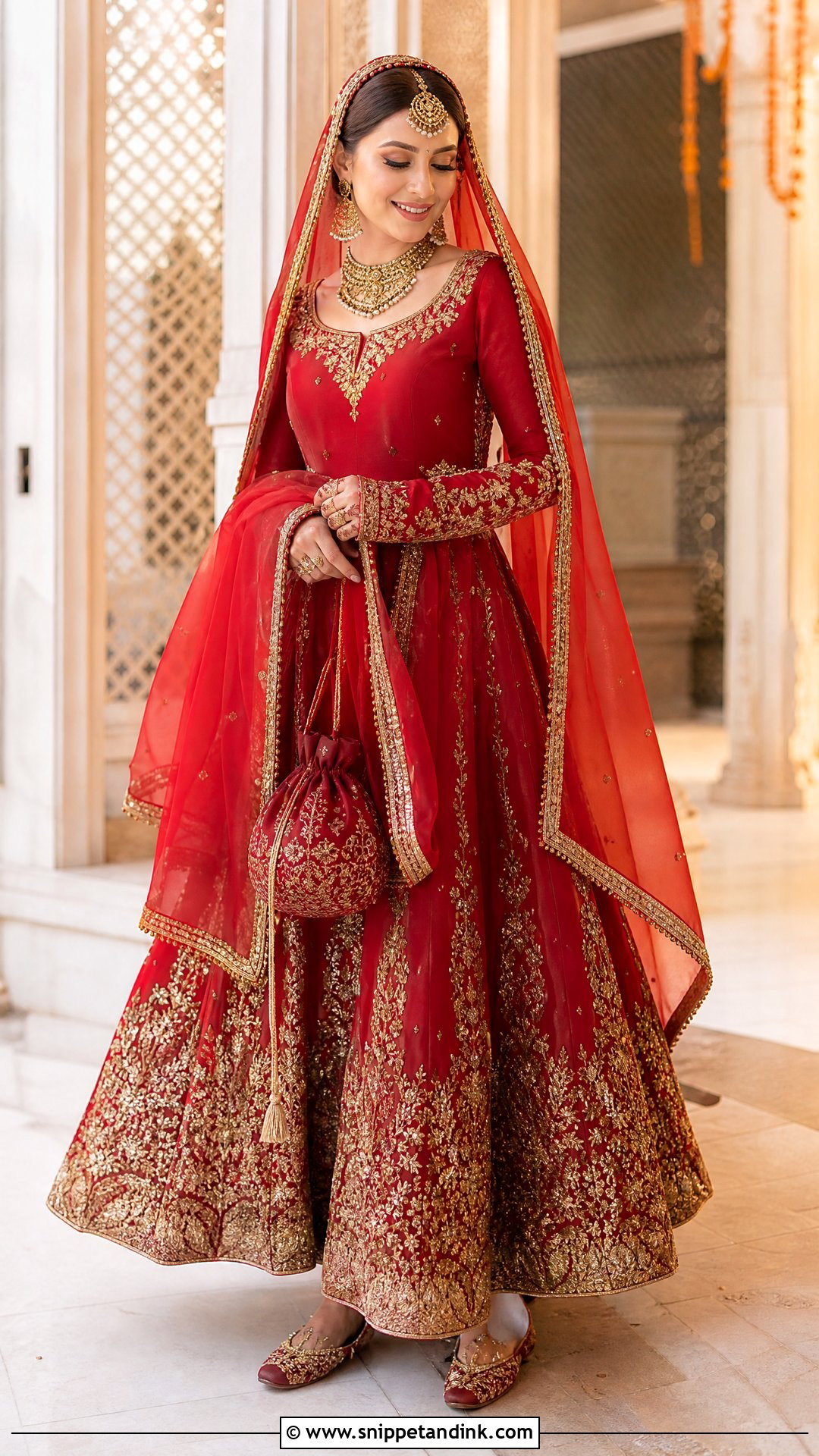
A red lehenga with embroidery concentrated along the hem still reads as a baraat outfit, just a far lighter one. The hem is the right place for the work, since it adds weight exactly where the skirt needs to hang well. A fitted blouse or waist-length kurti, a plain red organza dupatta and antique gold jewelry finish it. Brides can add a matha patti; guests should keep their jewelry simpler so they aren’t competing with the bride.
10. Maroon Pakistani Wedding Gharara
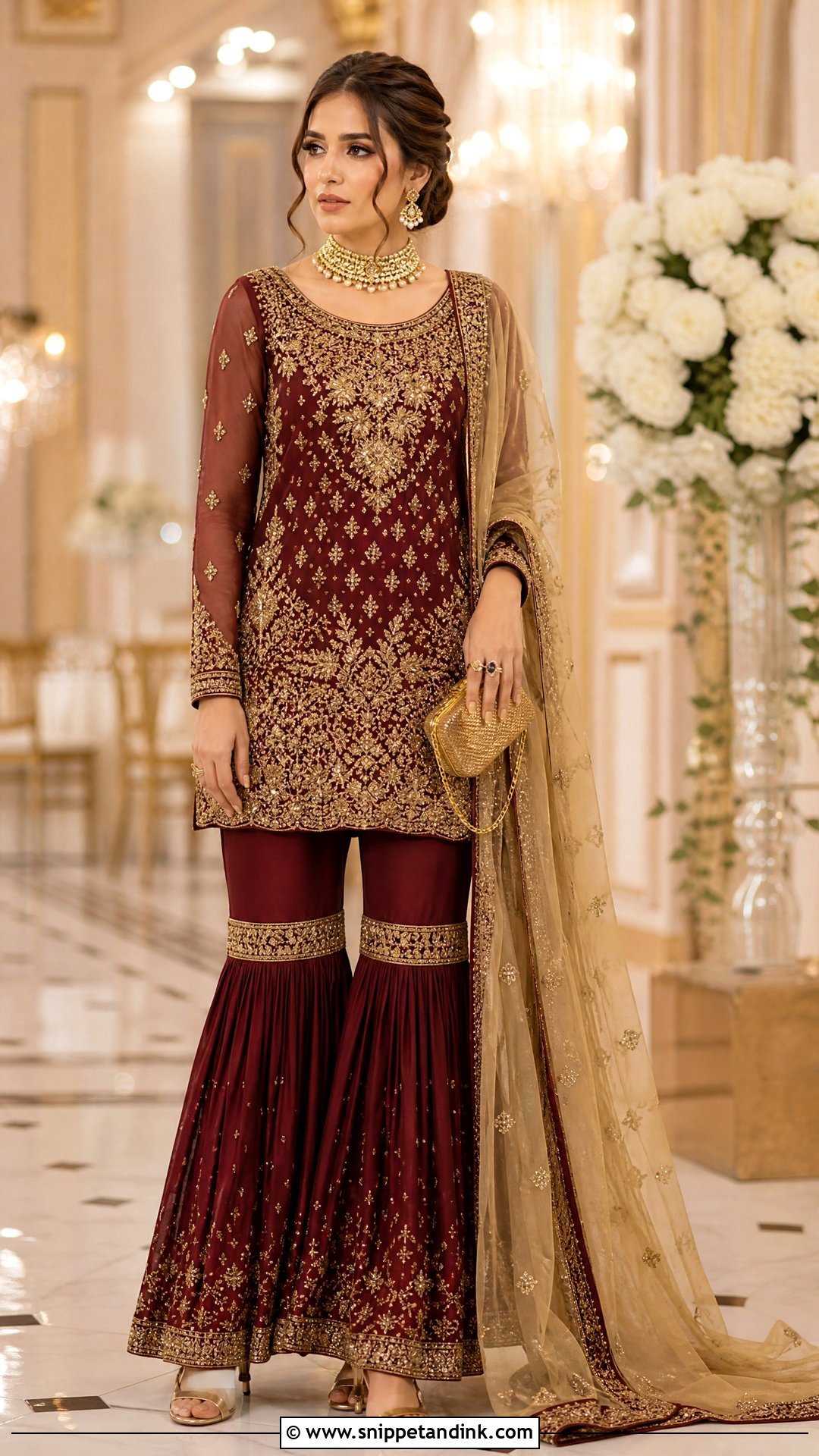
Maroon shows off antique gold embroidery better than almost any other shade. Put the work around the neckline, cuffs and side slits and leave the rest bare, then let a beige or muted gold dupatta soften the depth of the color. Wear one statement piece, usually a choker, instead of layering several sets. It belongs at an evening baraat or a winter function.
11. Emerald Velvet Pakistani Wedding Suit
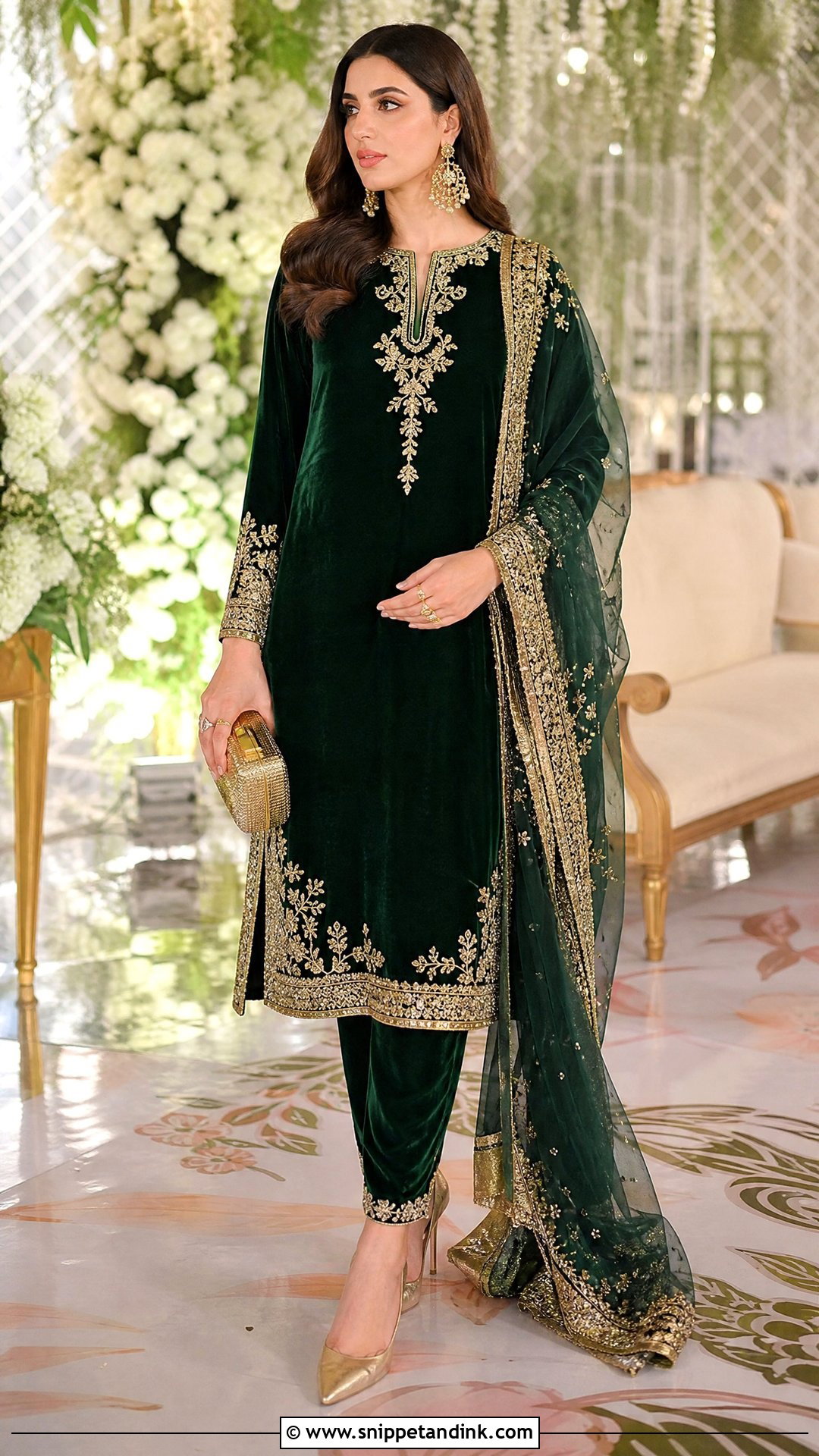
Velvet is warm and heavy and has a pile, which means two practical things: it shows pressure marks after long sitting, and it can’t be ironed directly. Steam it from the back instead. Keep the trousers in raw silk or slim velvet so you don’t double the bulk, and let an organza dupatta lighten the top. Ask for a smooth lining and a little ease across the shoulders, because velvet doesn’t give.
12. Navy Blue Pakistani Wedding Saree
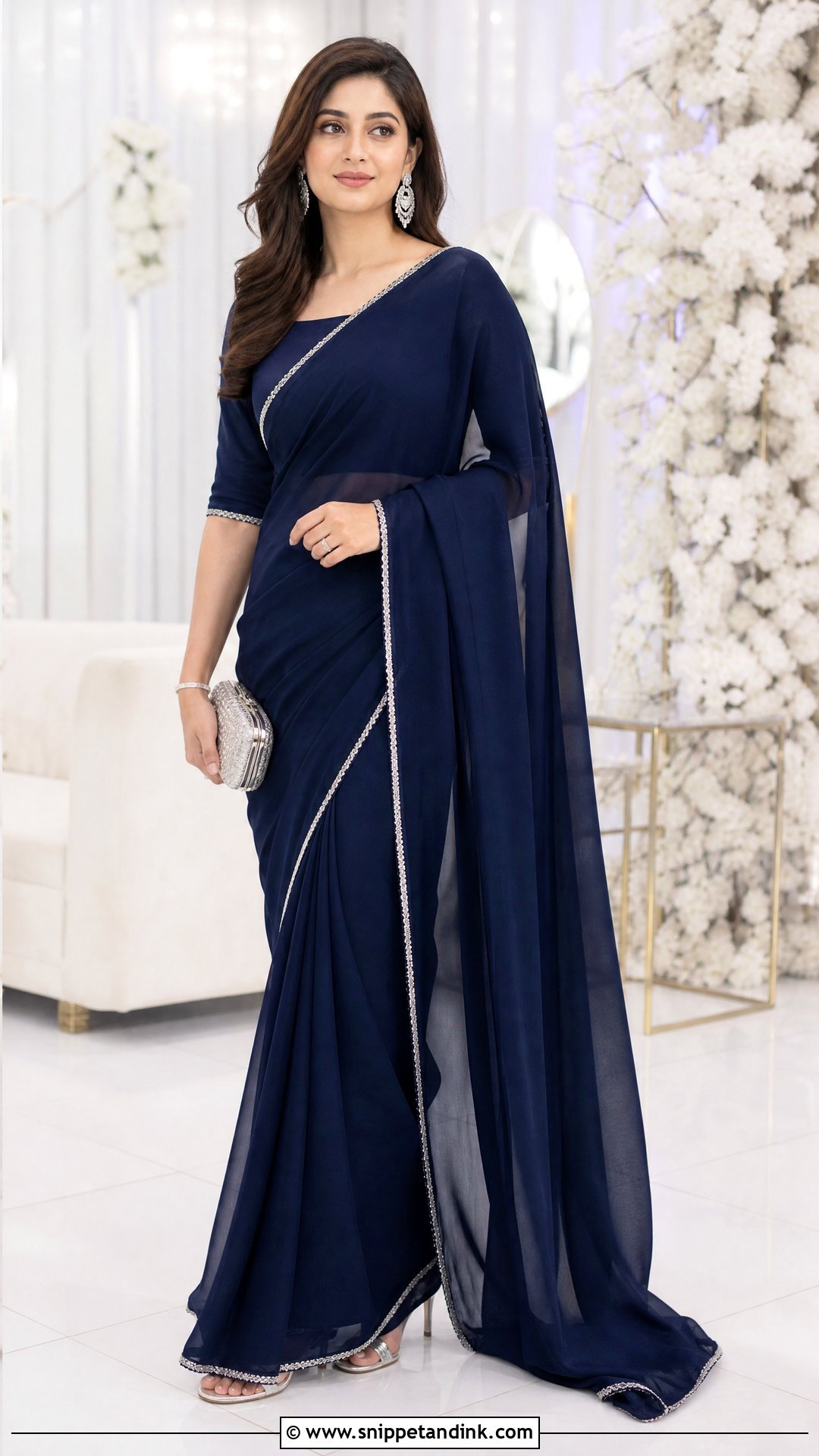
Navy is the formal shade I trust most for a walima or evening reception. Chiffon and georgette drape cleanly for hours, while heavier silk holds pleats better but runs warmer. A slim silver border gives enough sparkle. If draping is new to you, a pre-stitched saree with a secure waistband takes most of the risk away, and a rosy lip stops the deep blue from looking severe.
13. Champagne Pakistani Wedding Front-Open Gown
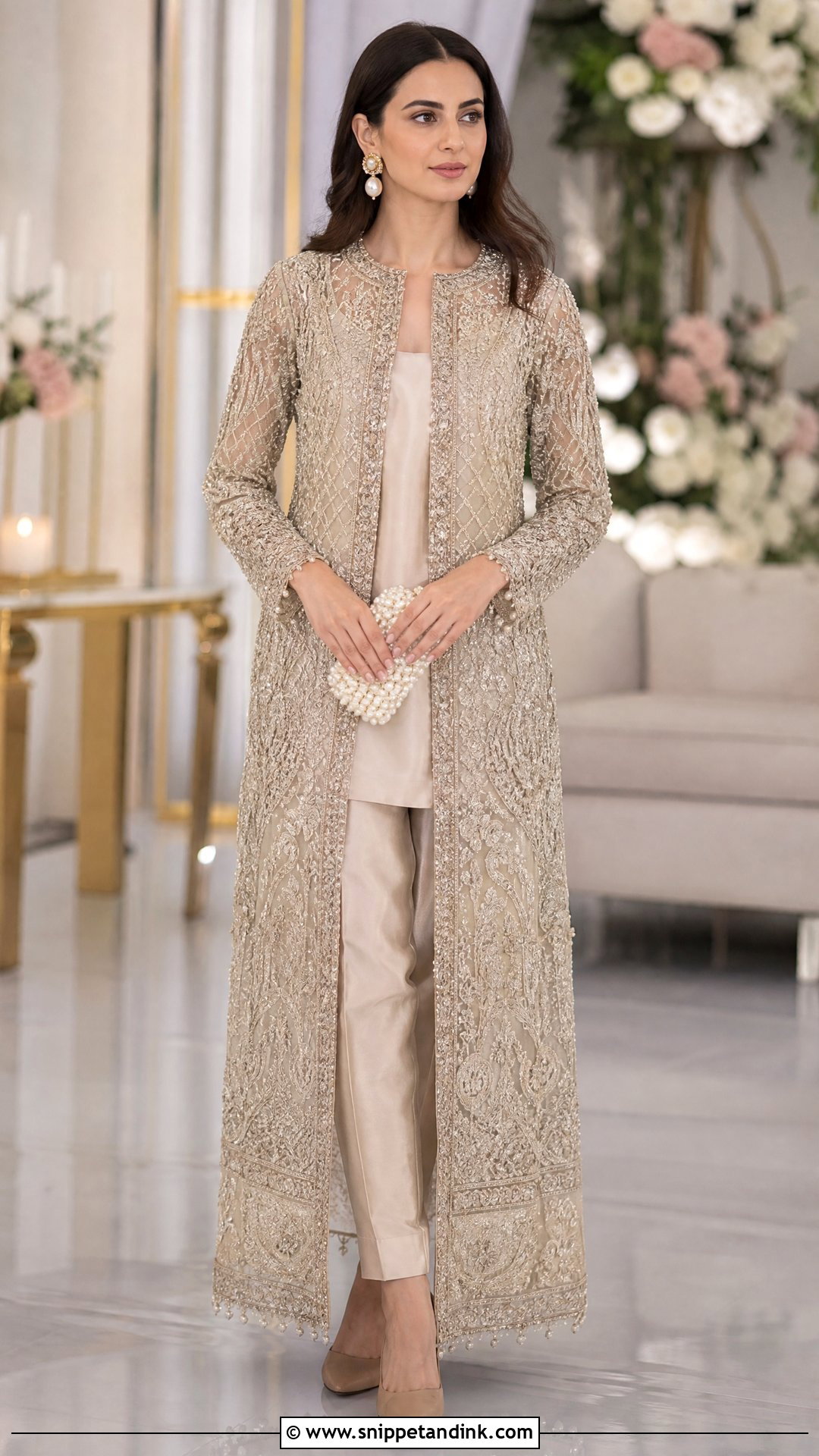
A front-open gown is really three pieces, and the inner ones deserve as much thought as the jacket. A plain silk camisole and straight trousers in a matching shade keep the opening clean, while tonal embroidery and fine beadwork on the gown catch light without fighting each other. I have the outer layer finished just above the floor so it shows the shoes and doesn’t sweep through the venue.
14. Rose Gold Pakistani Wedding Peplum Sharara
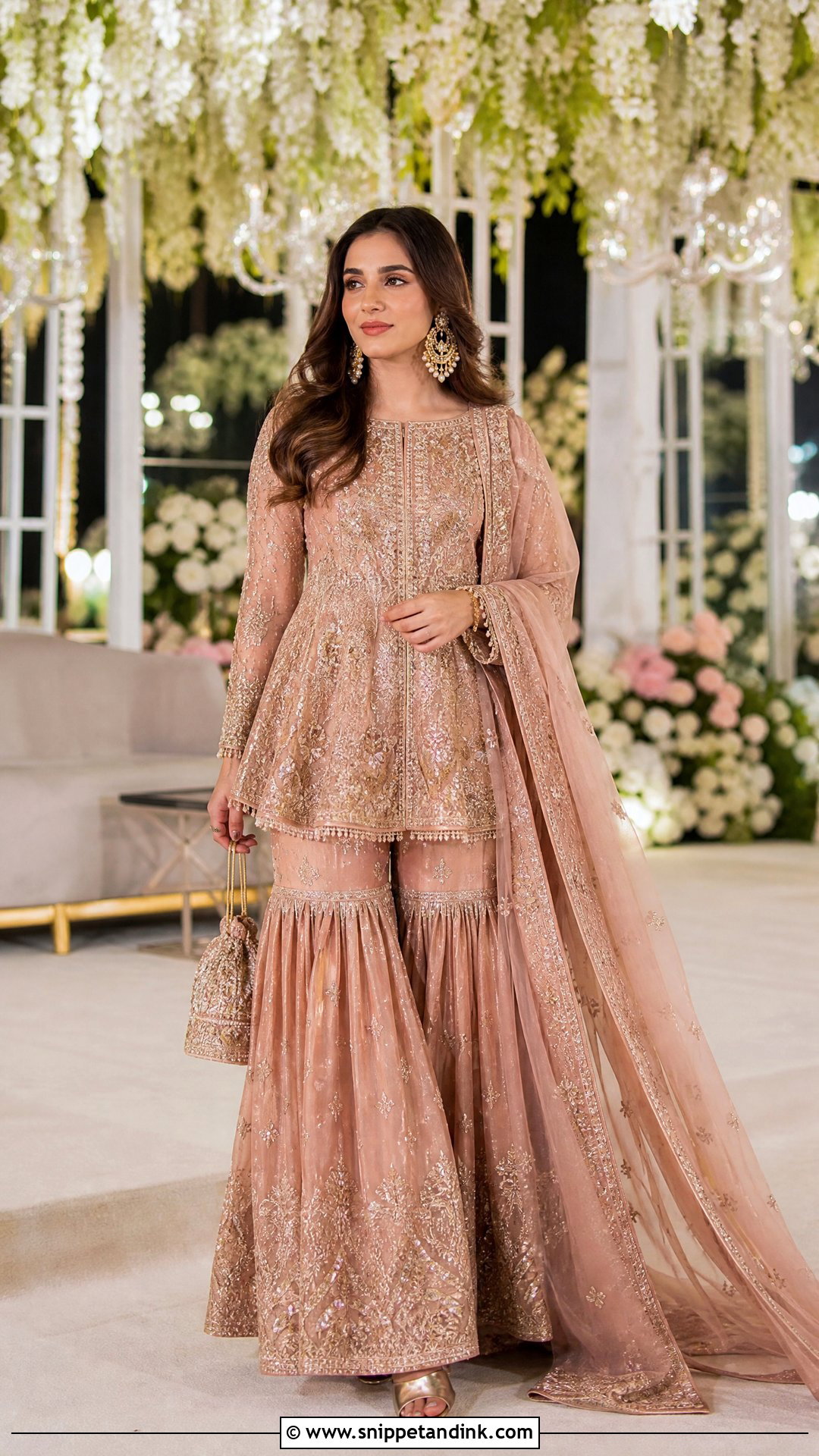
A peplum defines the waist and flares over the hips, which suits curvier figures well. The mistake I see most is a peplum that’s too stiff: it juts out when you sit and creases badly, so ask your tailor for a softer construction. Sharara pants with embroidery only near the hem, a matching net dupatta and metallic block heels make a neat three-piece for a walima or engagement.

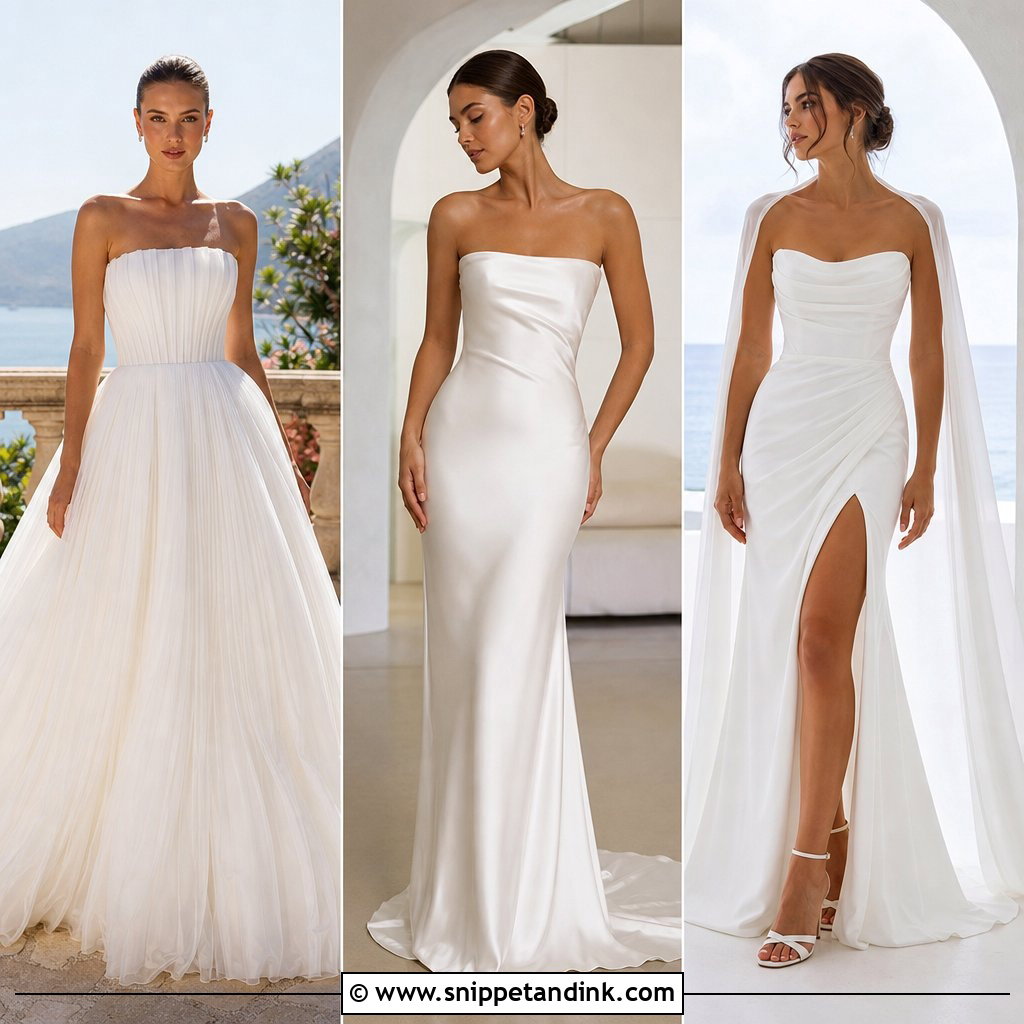
15. White Chikankari Pakistani Wedding Dress For Nikah
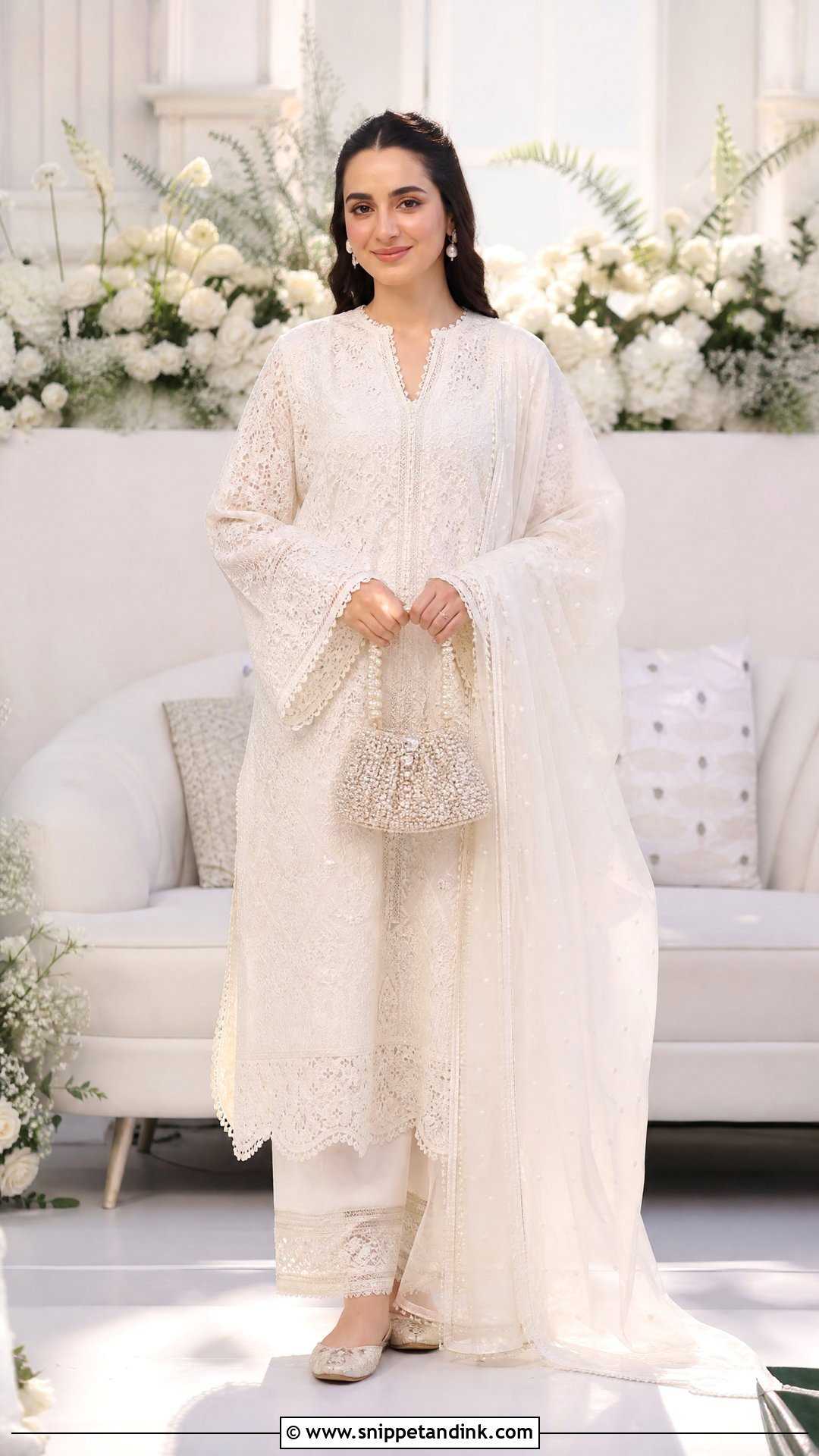
Chikankari is hand embroidery on fine cotton or georgette, and its charm lives in the shadow work and tiny stitches. Because the base fabric is so fine, I always ask for a lining. Matching straight trousers or a lightly flared shalwar, plus an organza dupatta with small pearls, keep it quiet enough for a nikah. Afterward, wash or dry-clean it gently, since chikankari threads can pull.
16. Beige Pakistani Wedding Farshi Shalwar
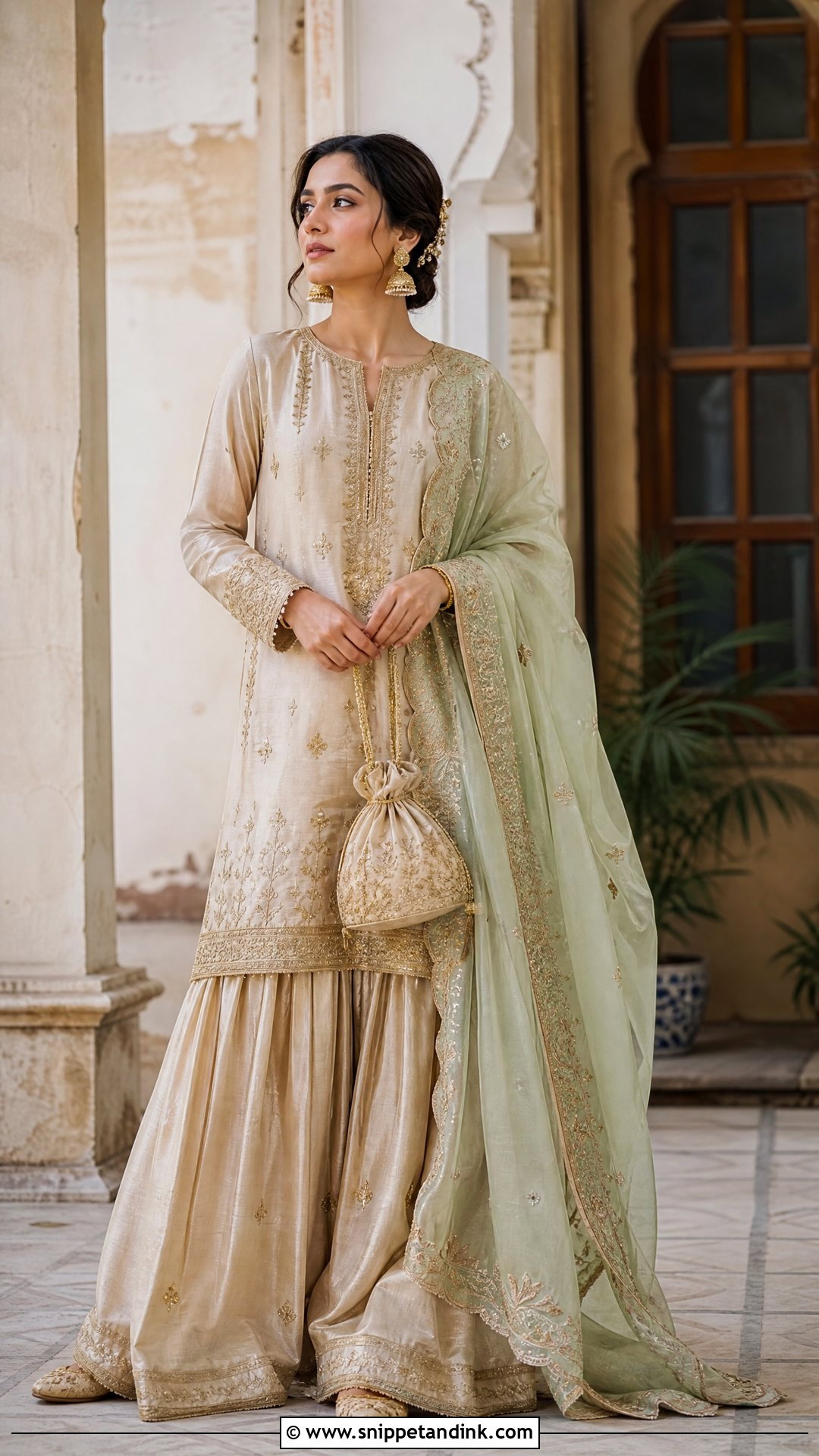
A farshi shalwar trails along the floor, so it’s graceful standing still and fiddly the moment you walk. Keep the kurti short and structured in raw silk or cotton silk so the top half has shape, and wear flat khussas that won’t catch on the trailing hem. Practice walking and stepping up a stair in it before the day. Beige pairs well with a blush or muted pistachio dupatta.
17. Teal Pakistani Wedding Paneled Pishwas
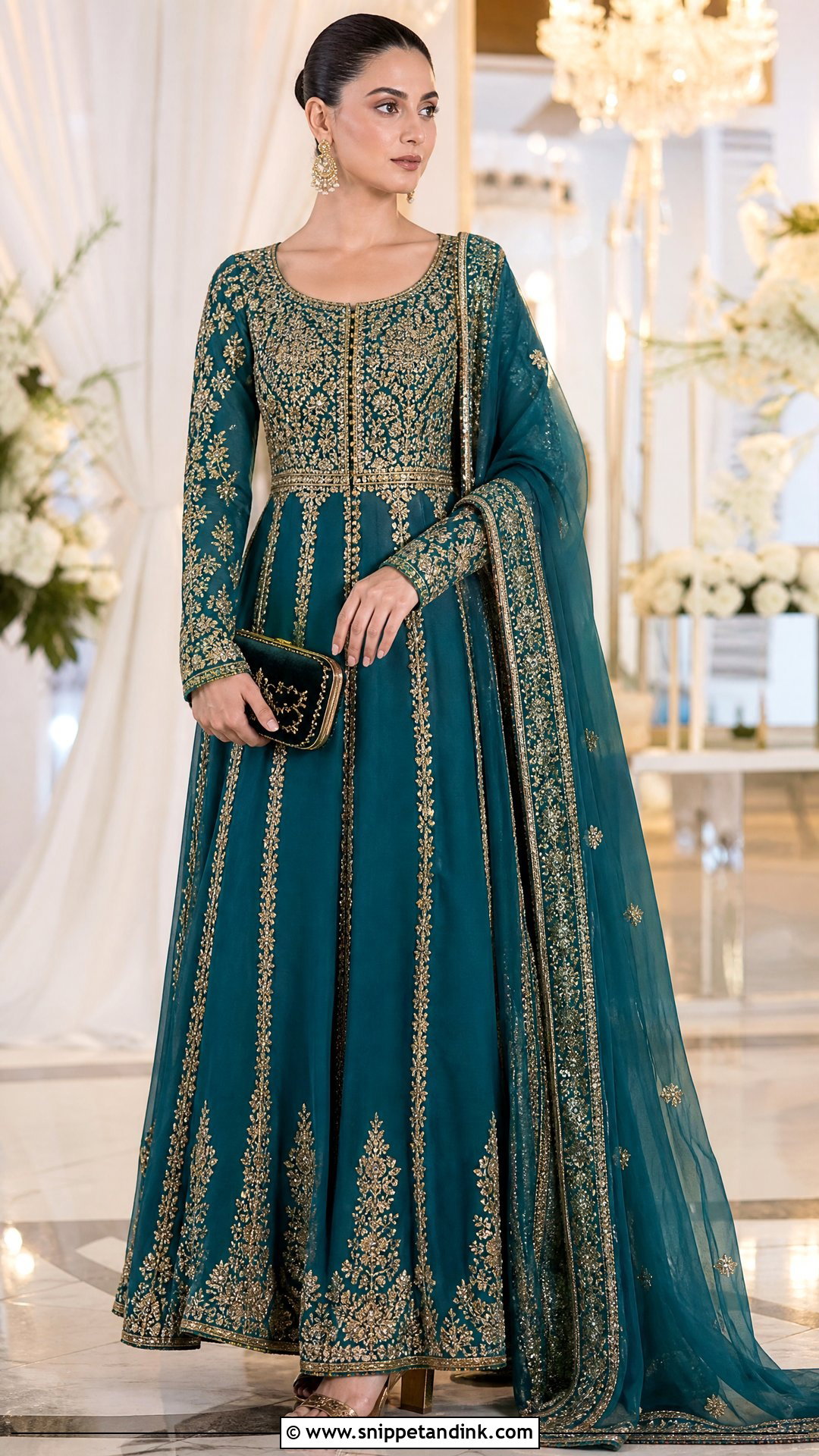
Teal turns dramatic under evening lighting with very little embroidery. Evenly cut panels give controlled movement, and gold threadwork at the bodice, waist and cuffs is enough to define the shape. If you’re petite, ask for fewer panels; if you want more drama, widen the hem rather than adding work. A center-parted low bun suits the long neckline.
18. Coral Pakistani Wedding Shirt With Cigarette Trousers
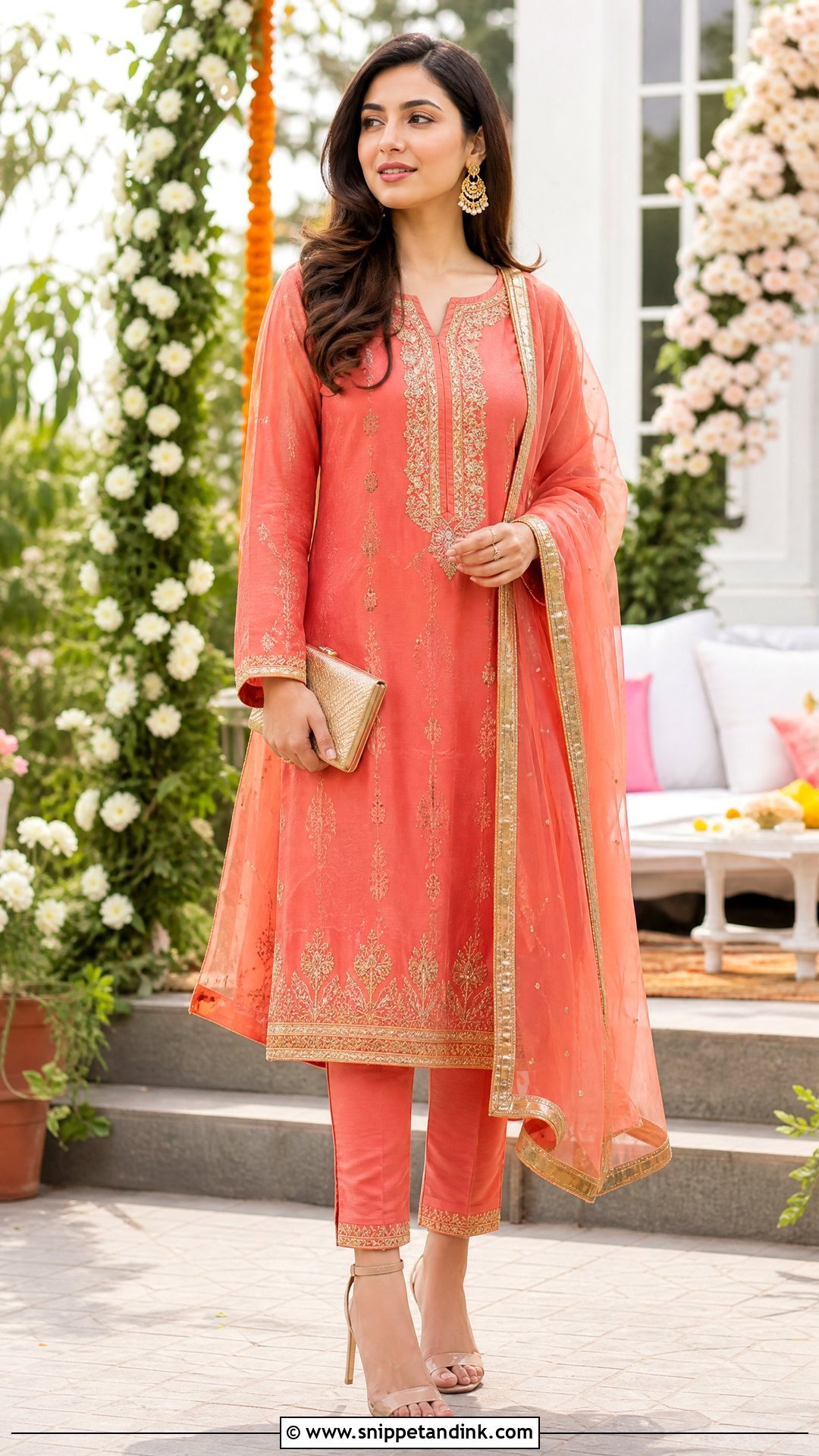
For a dholki or a smaller daytime event, this is my least fussy suggestion. A mid-calf shirt with side slits and fitted cigarette trousers in the same coral moves easily and uses very little fabric. Keep the embroidery on the shirt so the trousers stay clean. Do check the slit height while seated, because slits cut too high open far more than you’d expect.
19. Mauve Pakistani Wedding Organza Suit
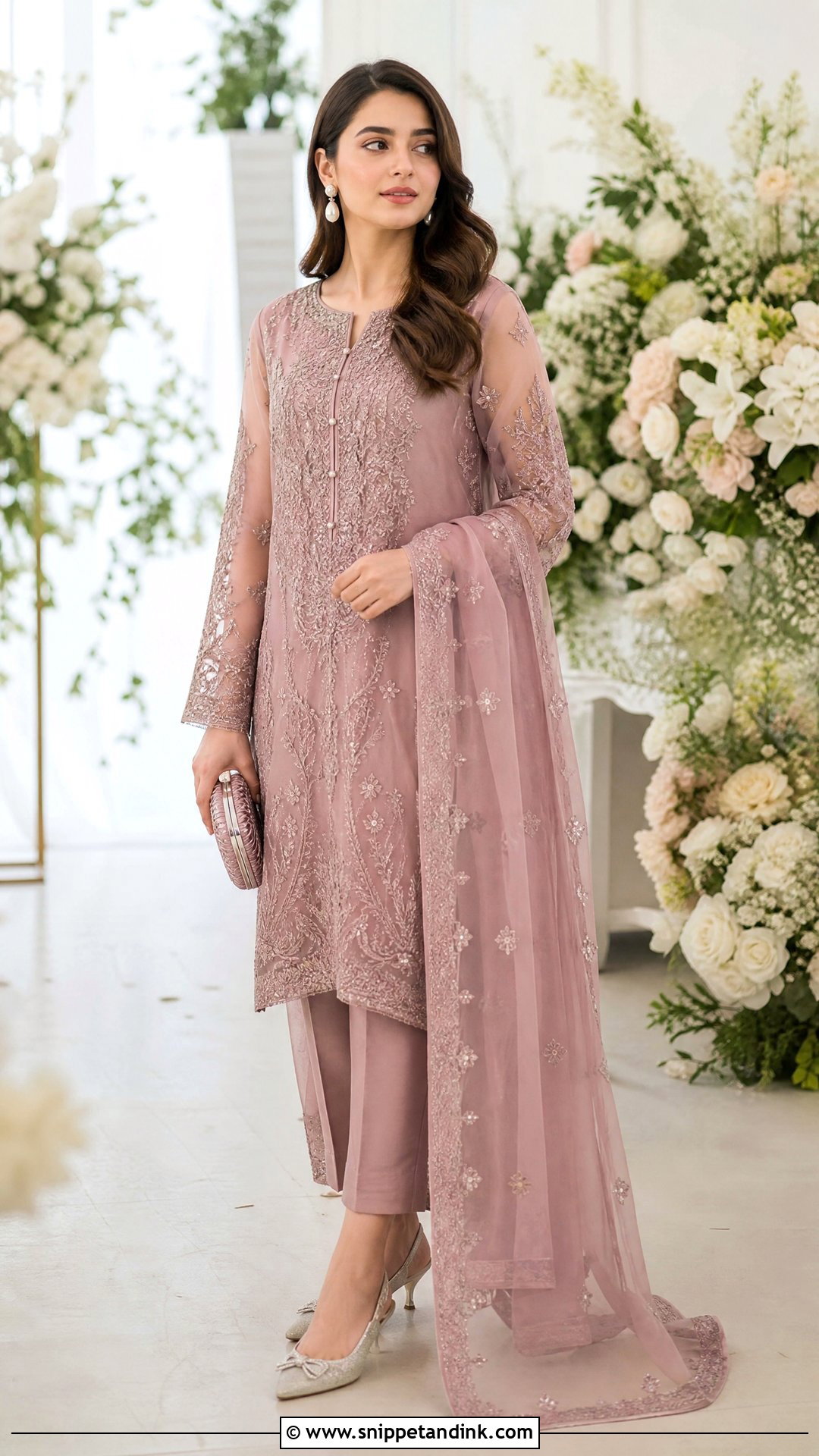
Organza holds its shape, so it stands away from the body instead of draping. That’s why I avoid extra fabric around the waist and hips and ask for a shirt that follows the figure without gripping it. A fully lined body with sheer sleeves keeps it modest and cool enough for a daytime walima. Organza also creases sharply when folded, so hang it rather than packing it flat.

20. Plum Pakistani Wedding Lehenga With Long Kurti
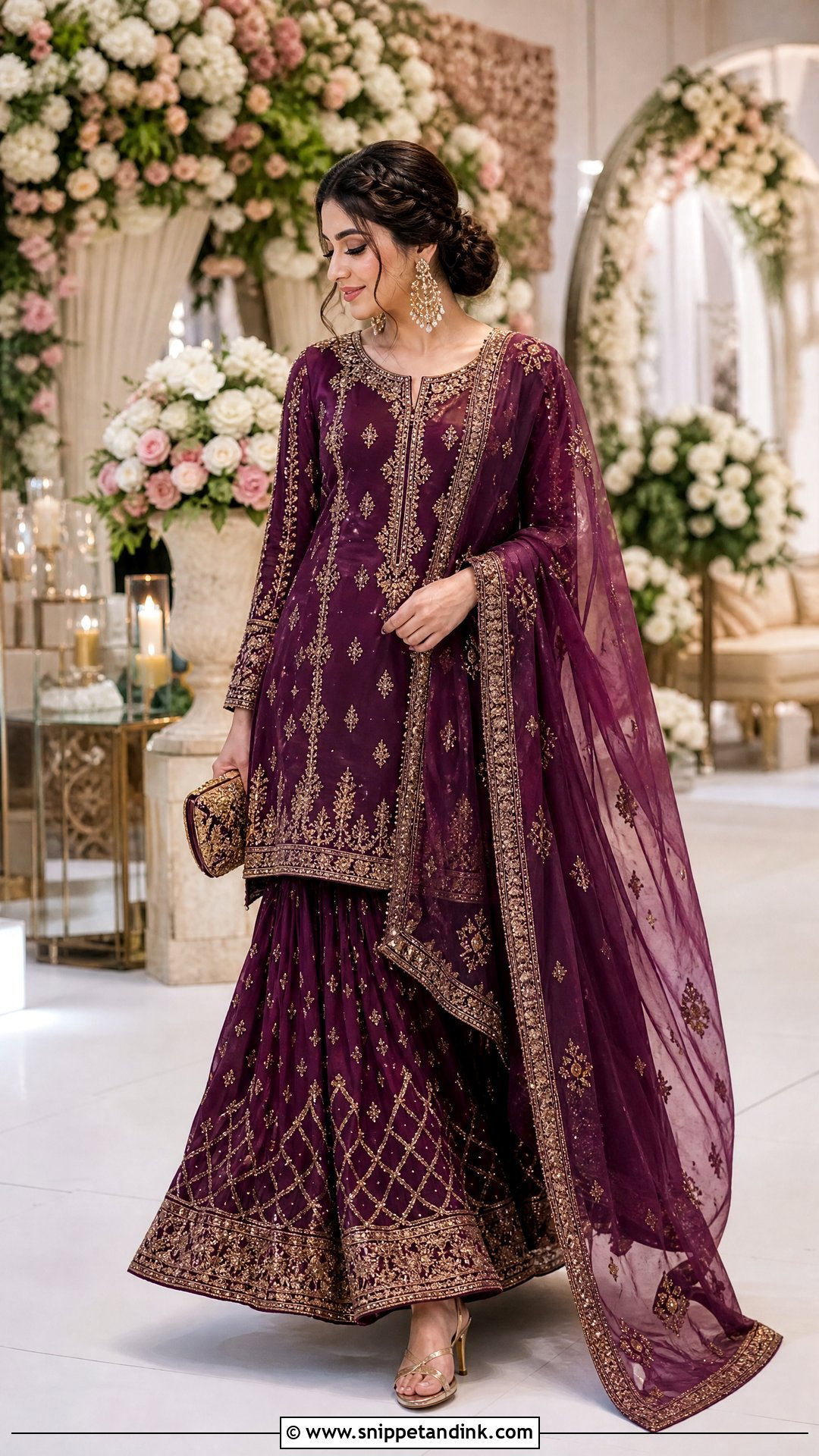
Plum is a deep alternative to red that flatters both warm and cool undertones. Pairing the lehenga with a knee-length kurti instead of a short blouse gives coverage and a long vertical line, and it balances a fuller skirt nicely. Put the embroidery at the neckline, side slits and hem. A small embroidered clutch suits the proportions better than a big bag.
21. Ice Blue Pakistani Wedding Jacket Dress
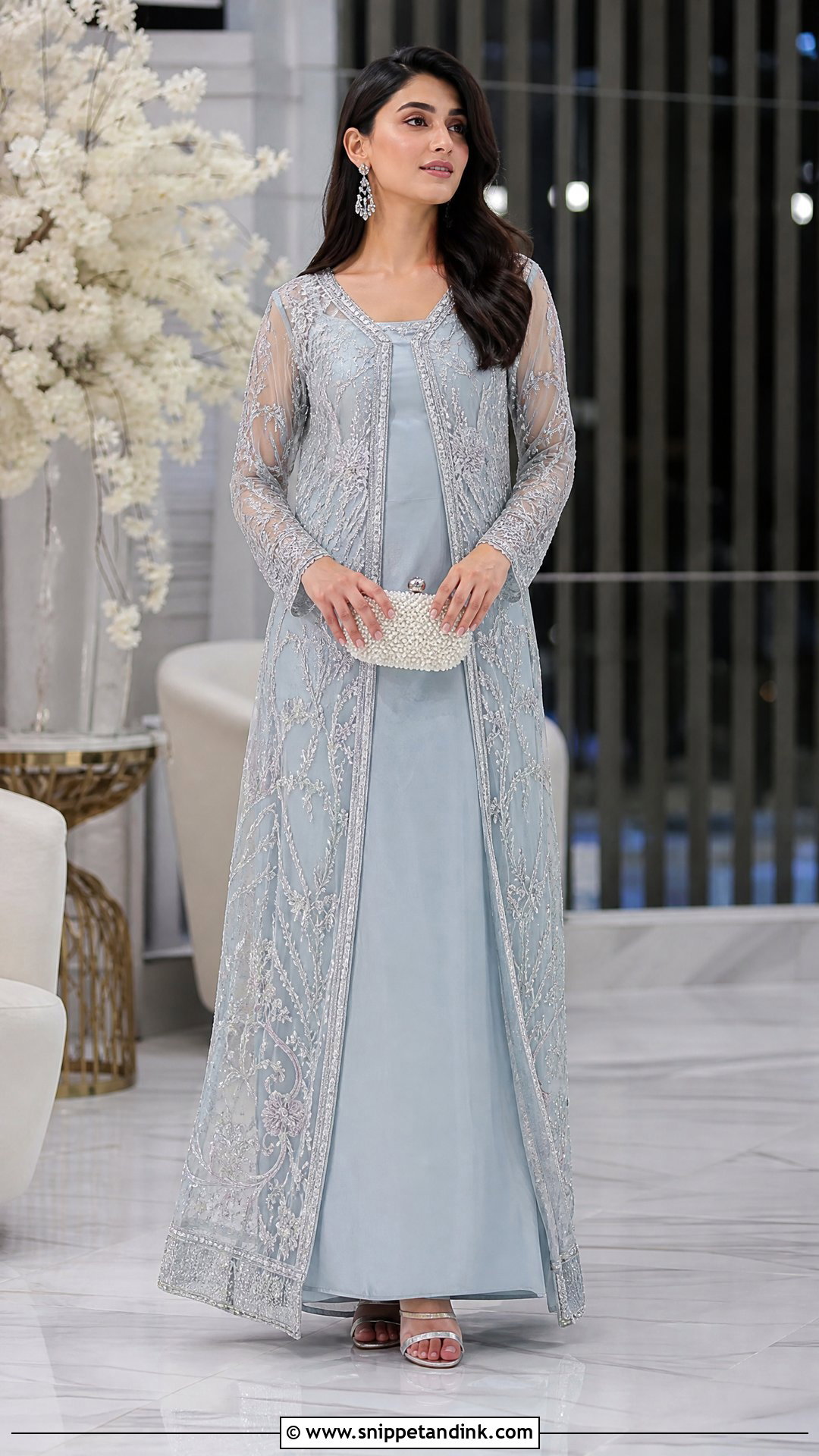
This is the most modern shape here, and it depends on the inner dress fitting perfectly, because a sheer jacket shows every wrinkle underneath. Keep both layers in the same ice blue for an unbroken line, with silver embroidery only at the front opening and cuffs. The jacket can come off later in the evening, which helps a lot in a hot hall.
22. Mustard Pakistani Wedding Dhoti Shalwar Outfit
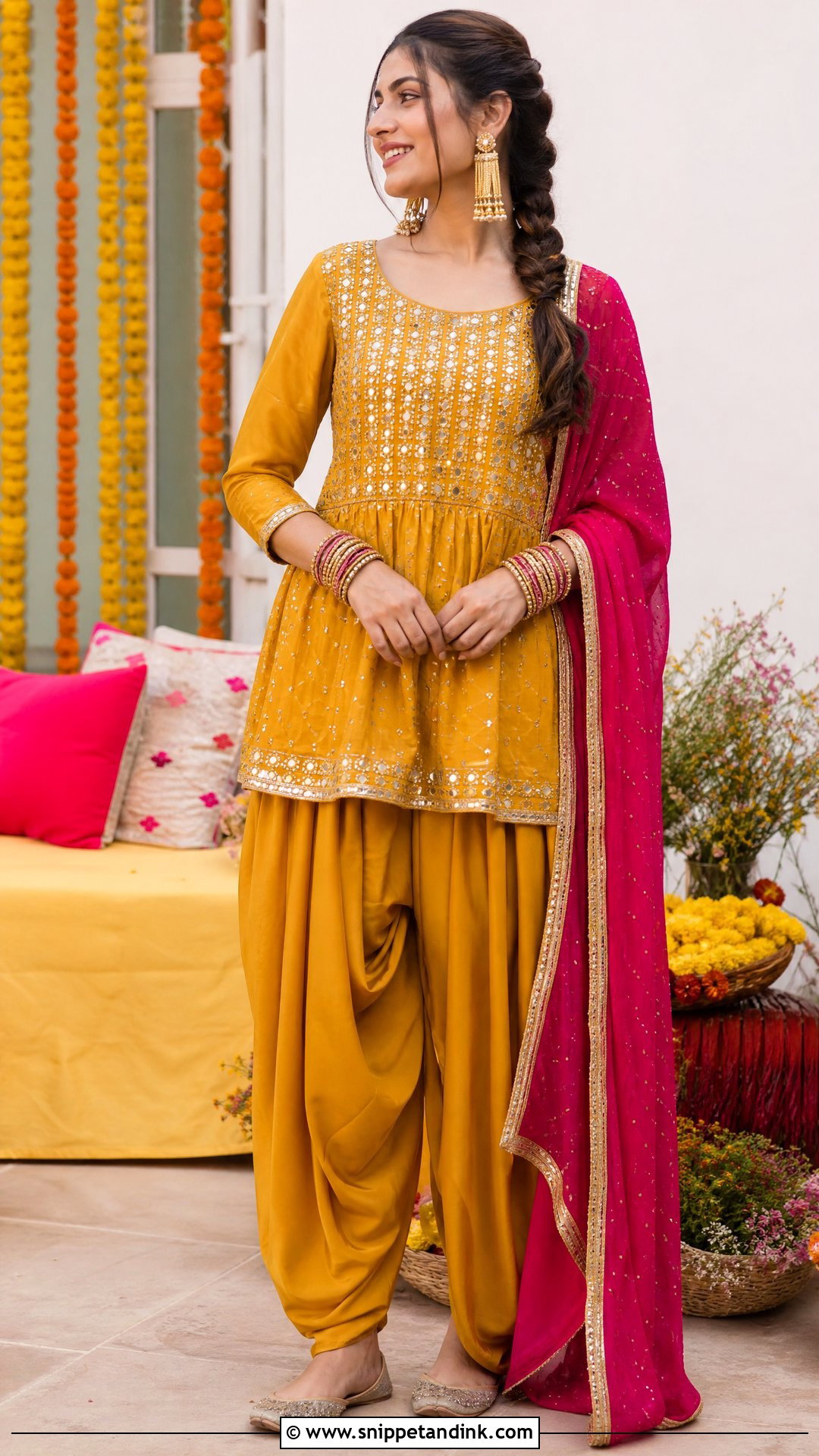
A dhoti shalwar is built for dancing, which makes it ideal for a mehndi or dholki. Pair it with a short kurti carrying mirror work or a gota border, and keep it fitted at the shoulders so the volume below doesn’t look sloppy. A contrasting magenta or green dupatta is the classic match. Pin that dupatta across the body before the dancing starts, or it will slide off.
23. Black And Gold Pakistani Wedding Maxi Dress
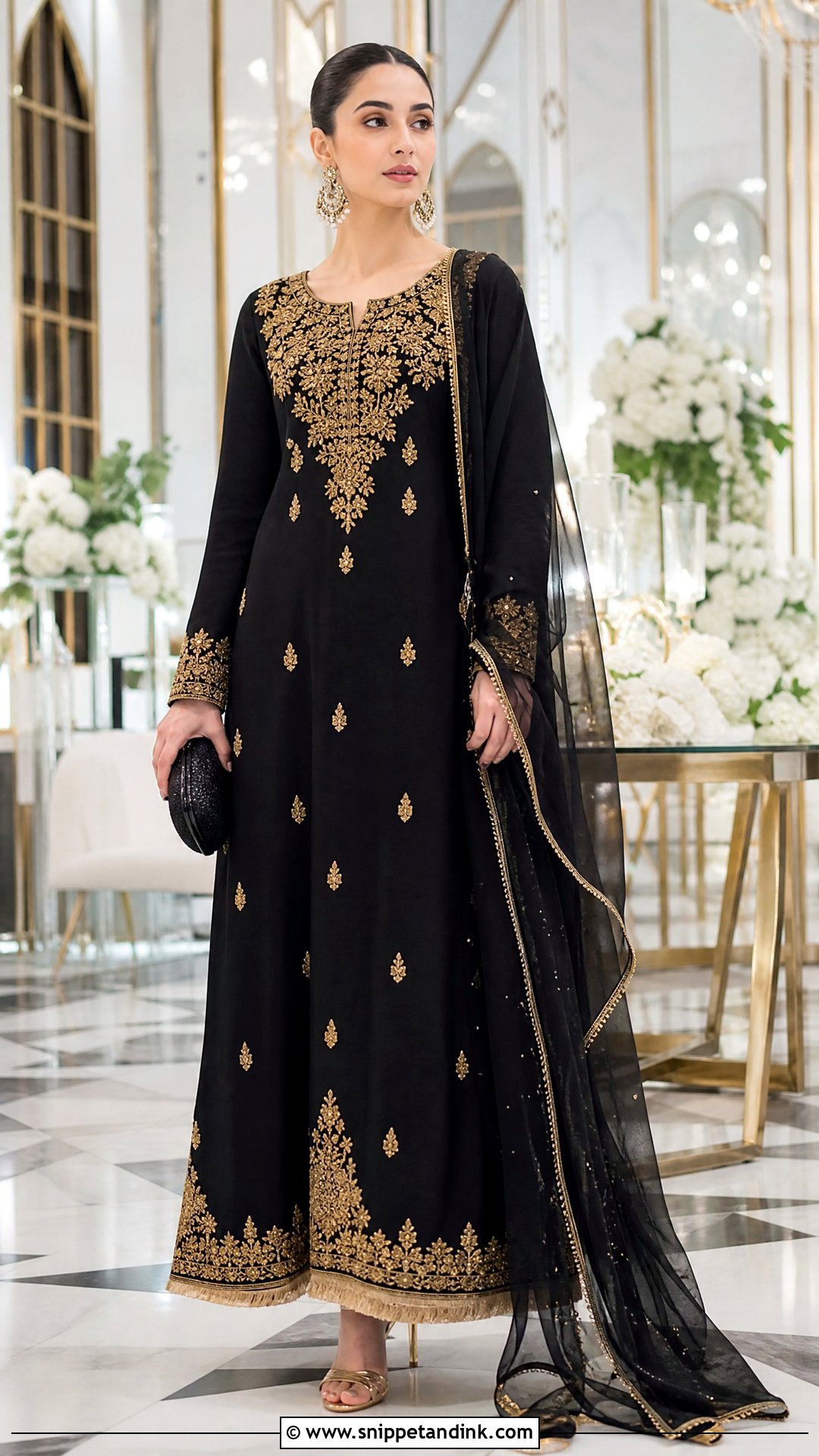
Black needs a quick check first, since some families consider it unsuitable at weddings, so ask before you buy. Where it’s welcome, a black A-line maxi with gold embroidery only at the bodice or cuffs looks sharp and needs very few accessories. A black dupatta with fine gold edging brings in the traditional element. Gold catches camera flash, so lean toward sculptural jewelry rather than sparkly.
24. Dusty Rose Pakistani Wedding Saree
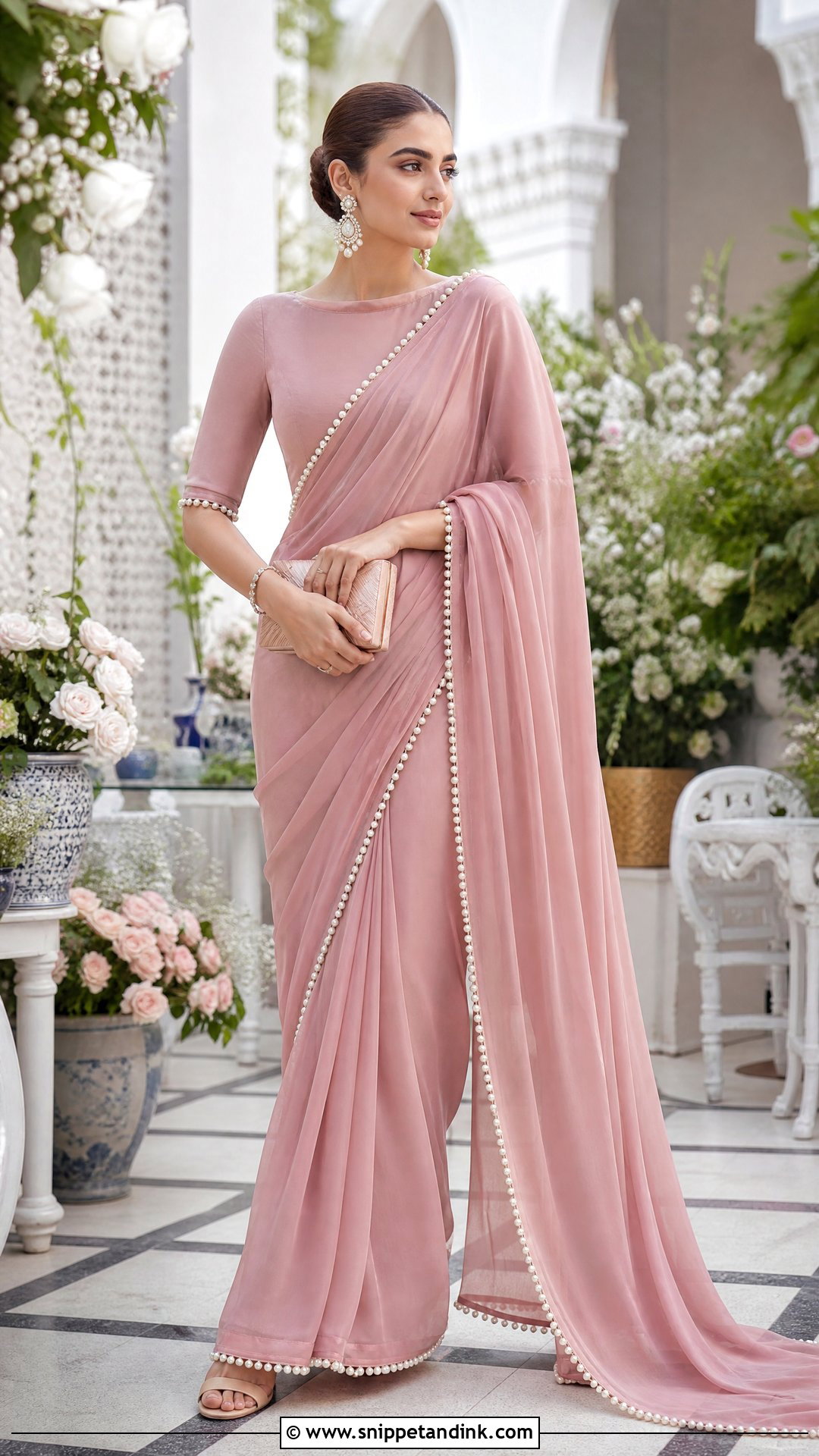
Dusty rose is muted enough to suit any age at a nikah or walima. Chiffon, georgette or crepe drape fluidly without bulk; pair the saree with a blouse in elbow or full sleeves and tonal embroidery. A longer blouse adds coverage without changing the line. If you’re nervous about the pallu slipping off your shoulder, a pre-draped saree is the practical answer.


25. Silver Gray Pakistani Wedding Maxi Dress
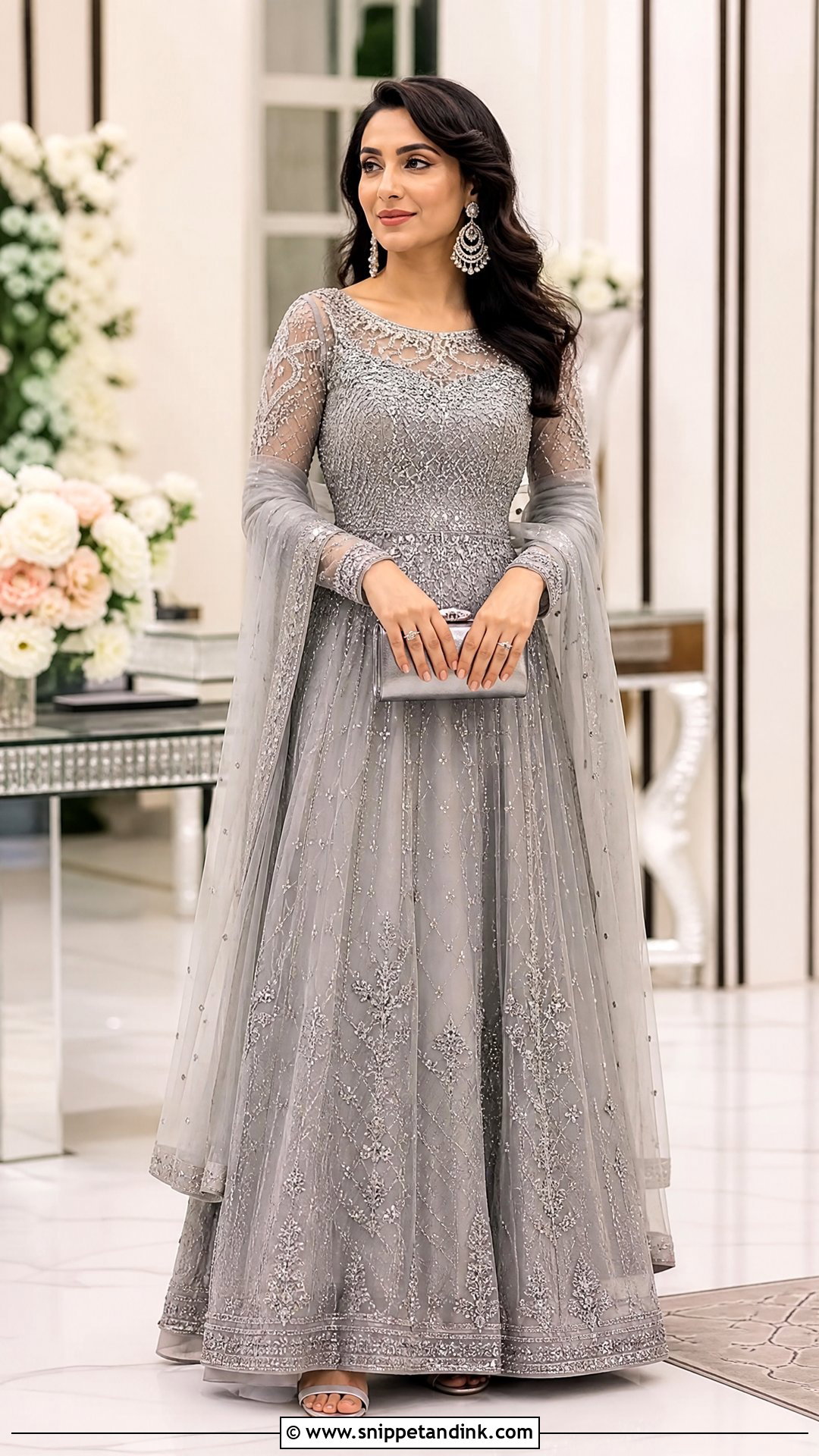
Pale fabrics turn see-through under flash and daylight, so proper lining is the first thing I insist on for a silver gray maxi. Fine crystal or silver thread work belongs at the neckline and cuffs, not spread across the skirt. A berry lip warms up the cool palette. Hem it so the shoes just show; it keeps the skirt from dragging across a walima hall.
Handing Unstitched Fabric to Your Tailor
A lot of simple wedding outfits start life as unstitched fabric or a three-piece suit from a designer’s unstitched range. Your tailor turns that into the finished look, and most disappointments I see trace back to a rushed brief. This is the order I work in.
- Order early. Tailors are booked solid in wedding season and before Eid, so give them several weeks, and more for embroidered or lined pieces.
- Hand over a shirt that already fits you well as a pattern, along with written measurements. A sample is far more reliable than numbers alone.
- Ask for lining in organza, net, chiffon and any pale fabric, and agree what it will be made from. Cotton or silk lining breathes; polyester traps heat.
- Bring the shoes you’ll wear. The right hem length on a pishwas, farshi or gharara depends entirely on the heel.
- Ask how the dupatta edges will be finished and whether lace or gota goes on by hand or by machine.
- Book a fitting at least a week before the function, so there’s room for a second round of alterations.
Collect everything a few days ahead, steam it, and try the complete outfit at home with jewelry and dupatta. That’s when you discover a loose hook or a hem that catches your heel, while there’s still time to fix it.
Lining, Hem and Dupatta Matter Most
Simple doesn’t mean underdressed when the tailoring is right. Across the Pakistani Wedding Dress Ideas above, the outfits that work best share the same habits: good lining, a hem cut for the actual shoes, a dupatta that stays where you put it, and embroidery placed where it earns its weight. Light pishwas and chiffon belong at a summer walima, velvet at a winter baraat. If you’re a guest, stay a notch below the bride in color and sparkle.
You'll Like These Ideas:









Leave a Reply