
A ballroom is a big, bright, hard-surfaced room, and it treats a wedding dress differently from a garden or a chapel. Guests see you from a long way off during the entrance, then up close at dinner, and the camera sees you under chandeliers and flash all evening. A dress for this setting has to read as a clear shape from across the room and still hold up to close inspection. The classic ball gown is back in a big way, alongside sculpted skirts, drop waists, corsetry, plain satin and statement sleeves. The ideas below cover regal, modern, vintage and minimal looks, with my notes on what each one needs to work in a grand space.
Start With the Room Itself
Before I look at dresses with a ballroom bride, I ask about the space. Three things change what works.
Light
Most ballrooms are lit warm, with chandeliers and dimmed wall lights, plus photographer flash. Warm light makes ivory look creamier and can make bright white look cold beside it. Satin and beading reflect light; matte crepe absorbs it. If you can, look at fabric samples under warm bulbs, not just the bright white lights of a bridal shop.
Distance
In a large room most guests see you from far away. From there, silhouette is everything and fine lace detail disappears. Close up at dinner, the detail is all they see. The best ballroom gowns have a strong outline and enough detail on the bodice to reward a closer look.
Floor
Polished wood and marble are slippery, especially in new shoes with smooth soles. Scuff the soles with sandpaper or add grip pads, and wear the shoes indoors for a few evenings beforehand. Also ask whether there’s a staircase entrance, since that changes how long your hem and train can be.
1. Satin Ball Gown Wedding Dress
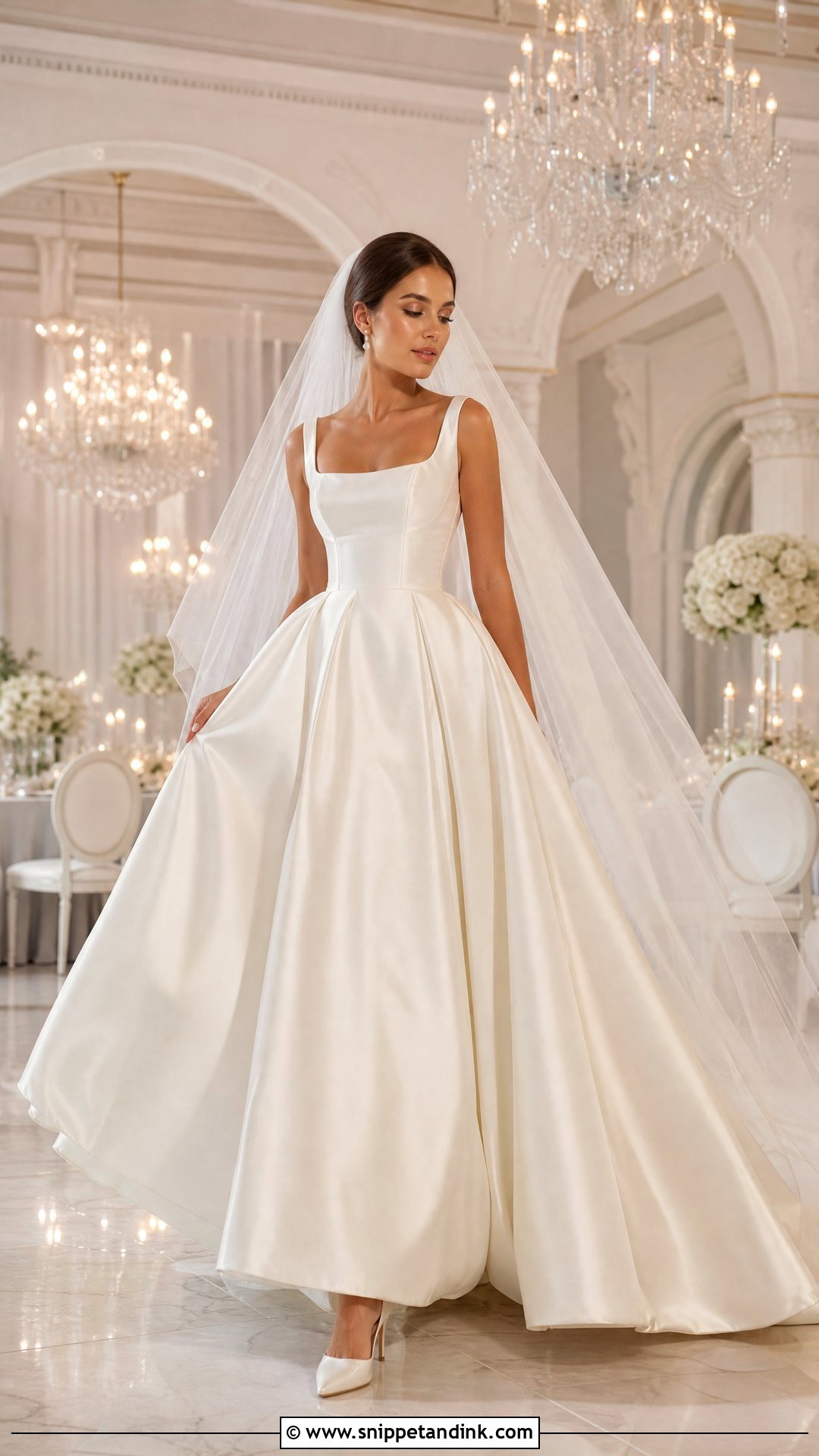
Satin is the fabric I’d reach for first in a ballroom, because chandelier light slides along it and shows off the shape of a full skirt. A structured bodice keeps the drama clean. Strapless is classic; square or bateau necklines feel more formal. Ask to see the satin under warm light before you choose a shade, because bright white can look slightly blue under flash while ivory and soft champagne stay creamy. Pearl earrings, a low bun, pointed heels and a long veil, plus a plain bouquet of roses or orchids, are all it needs.
2. Lace Ball Gown Wedding Dress
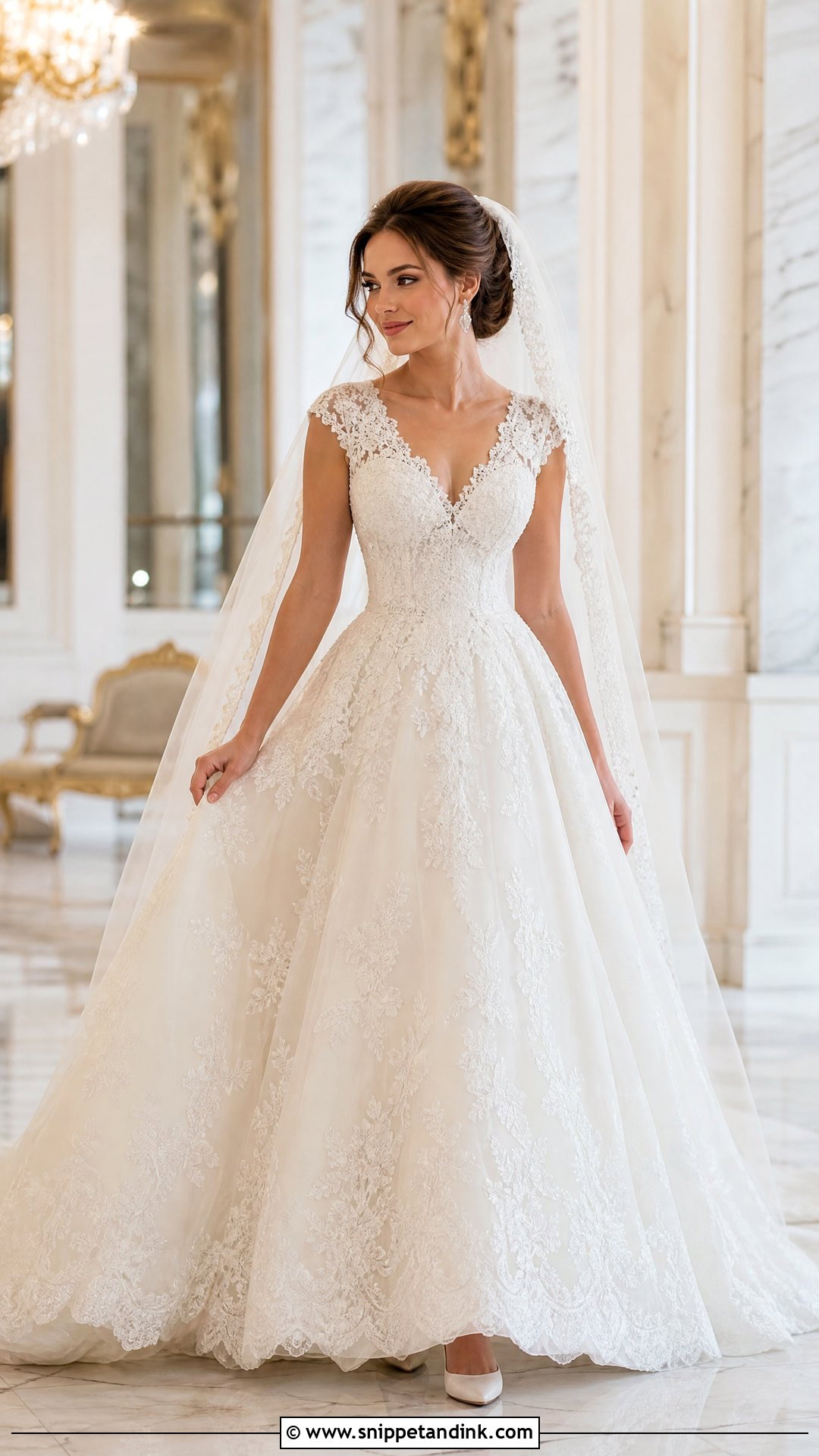
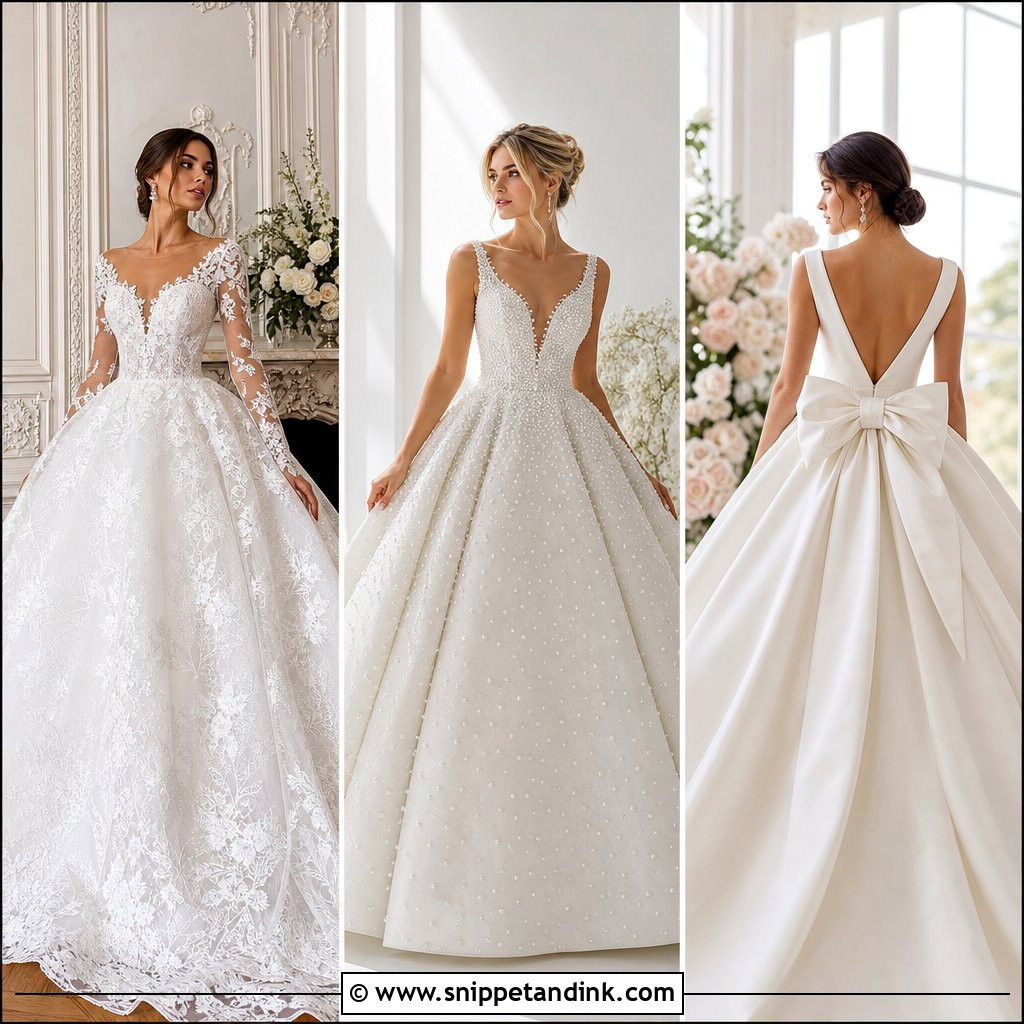
Lace gives romance without relying on sparkle, and it’s the dress I’d suggest to a bride who wants detail but doesn’t want to glitter. The best lace gowns have motifs that follow the bodice seams and fade gradually into the skirt, so there’s no hard line where the lace stops. Long lace sleeves feel formal; a strapless lace bodice looks lighter. A veil trimmed with matching lace ties it together. Ask the shop for an offcut of the gown’s lace to match the veil edging exactly. Soft curls, pearl drops and ivory heels complete it.
3. Off Shoulder Ball Gown Wedding Dress
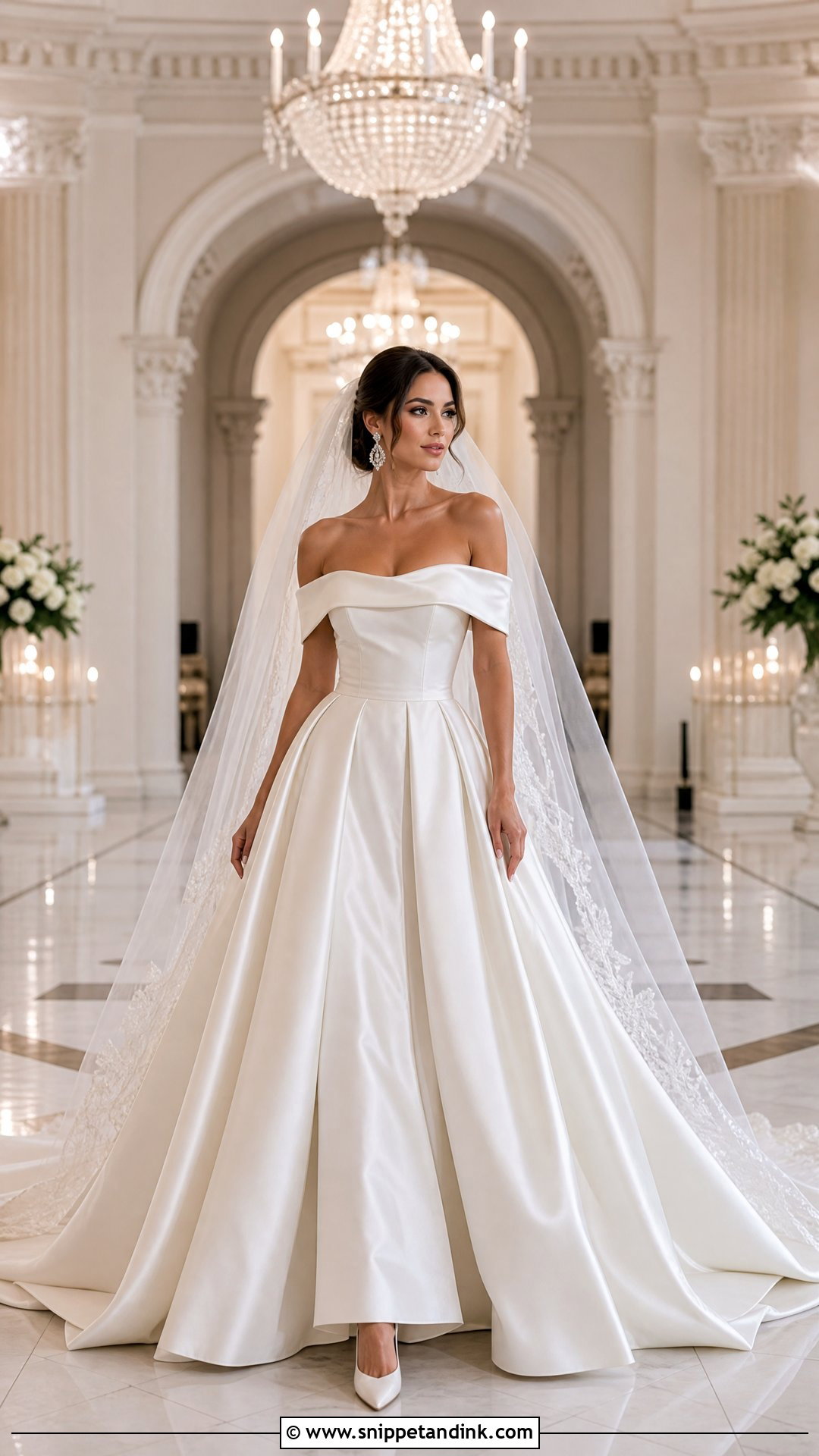
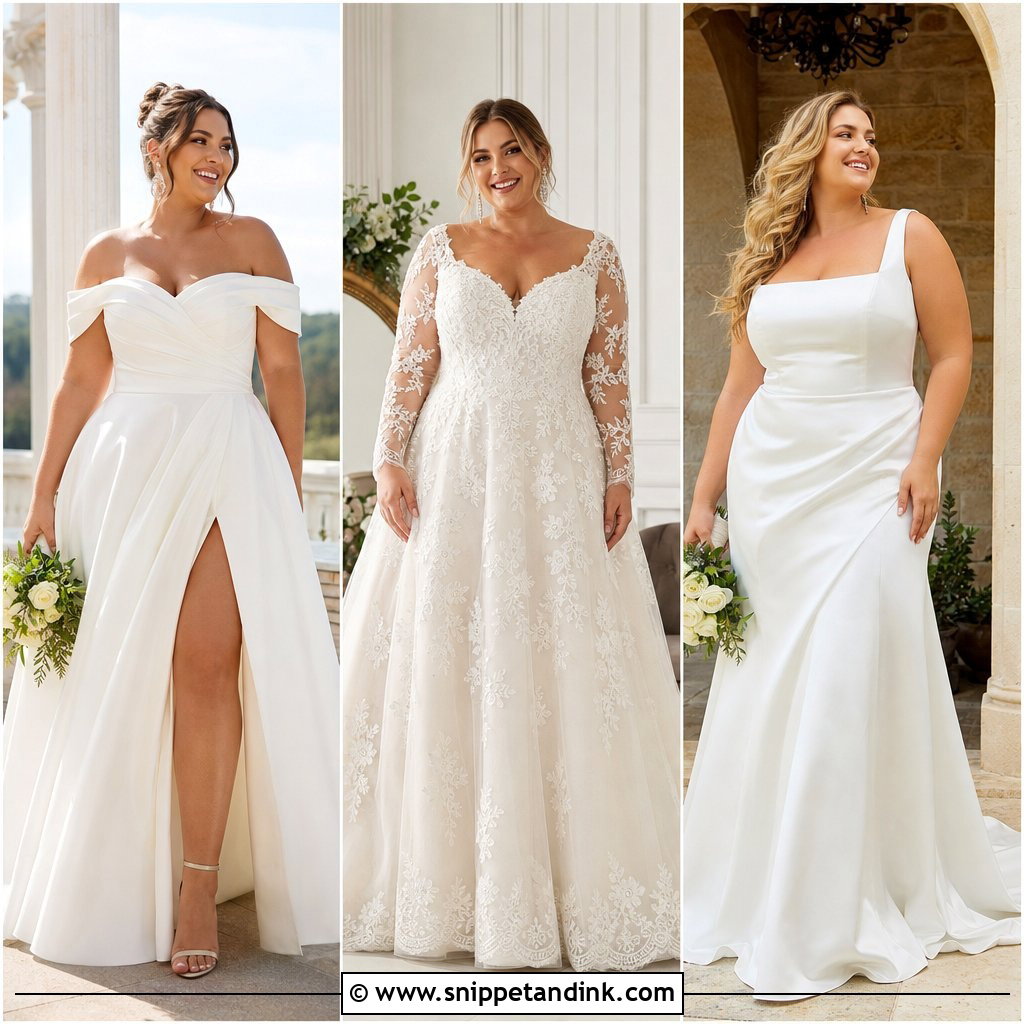
Off-shoulder necklines frame the collarbone, which helps when a big skirt needs something interesting happening up top. Satin, mikado, tulle and lace all suit it. The sleeve band sits on the upper arm, so a fitted bodice with good boning keeps it from sliding down during the evening. Choose either a delicate necklace or statement earrings, not both. Hair should go up so the neckline stays visible. Satin heels and a cathedral veil make it look complete from every angle the photographer shoots.
4. Long Sleeve Ballroom Wedding Dress
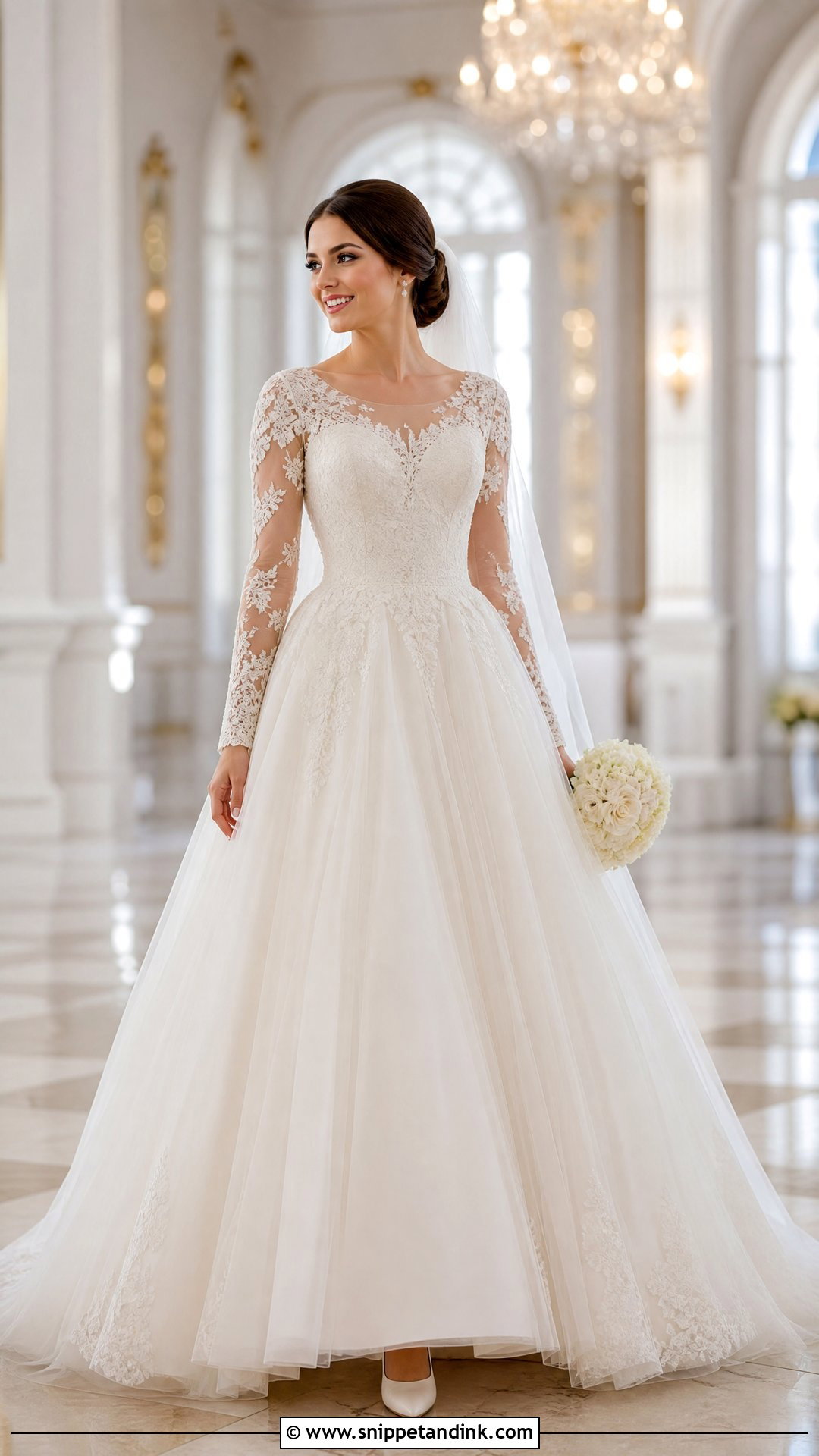
Sleeves in a ballroom earn their place in winter, when you’re walking in from a cold car park. Sheer lace with appliqué is romantic; plain satin sleeves look royal and minimal; crepe or tulle sit in between. Raise your arms at the fitting. A sleeve that pulls the bodice up when you lift a glass will do it in every toast photo. A full skirt, a defined waist, a polished bun, pearl studs, closed-toe heels and a structured bouquet keep the outfit formal.
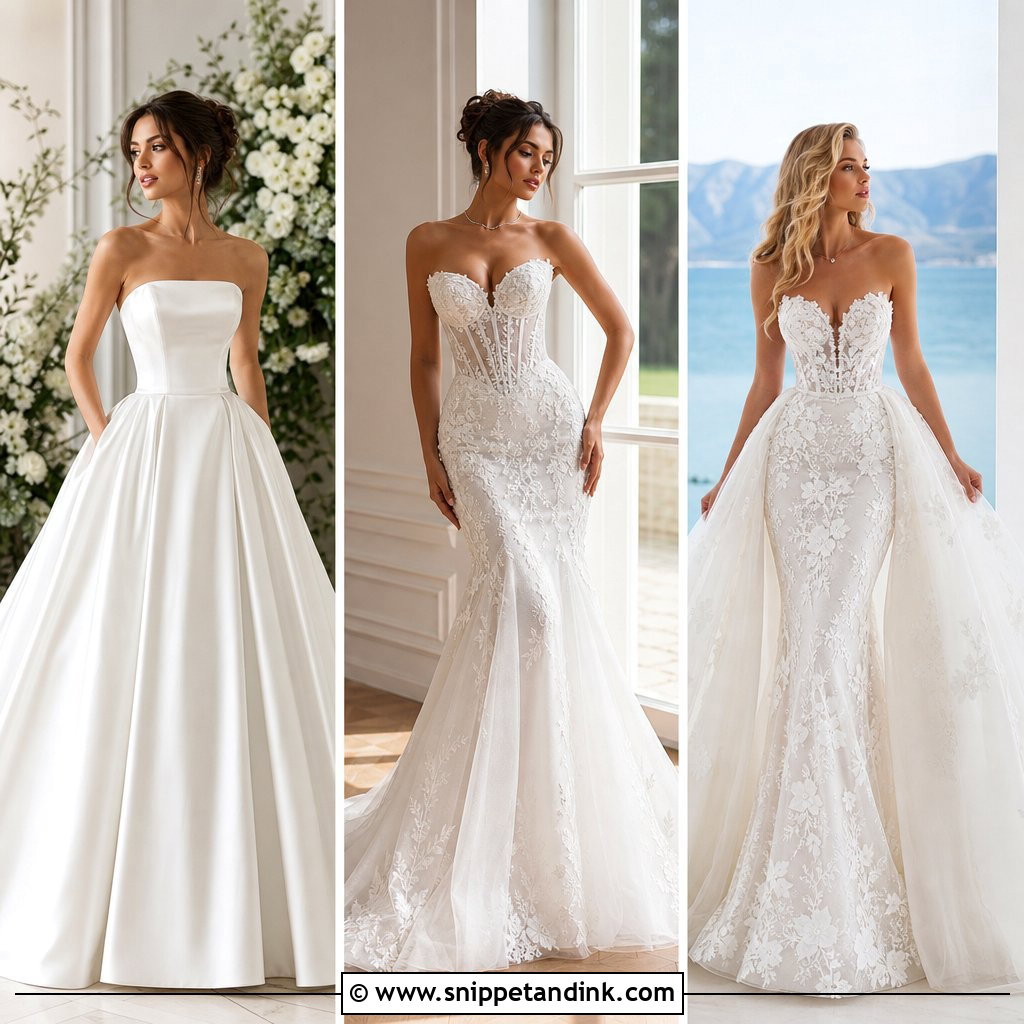
5. Corset Ball Gown Wedding Dress
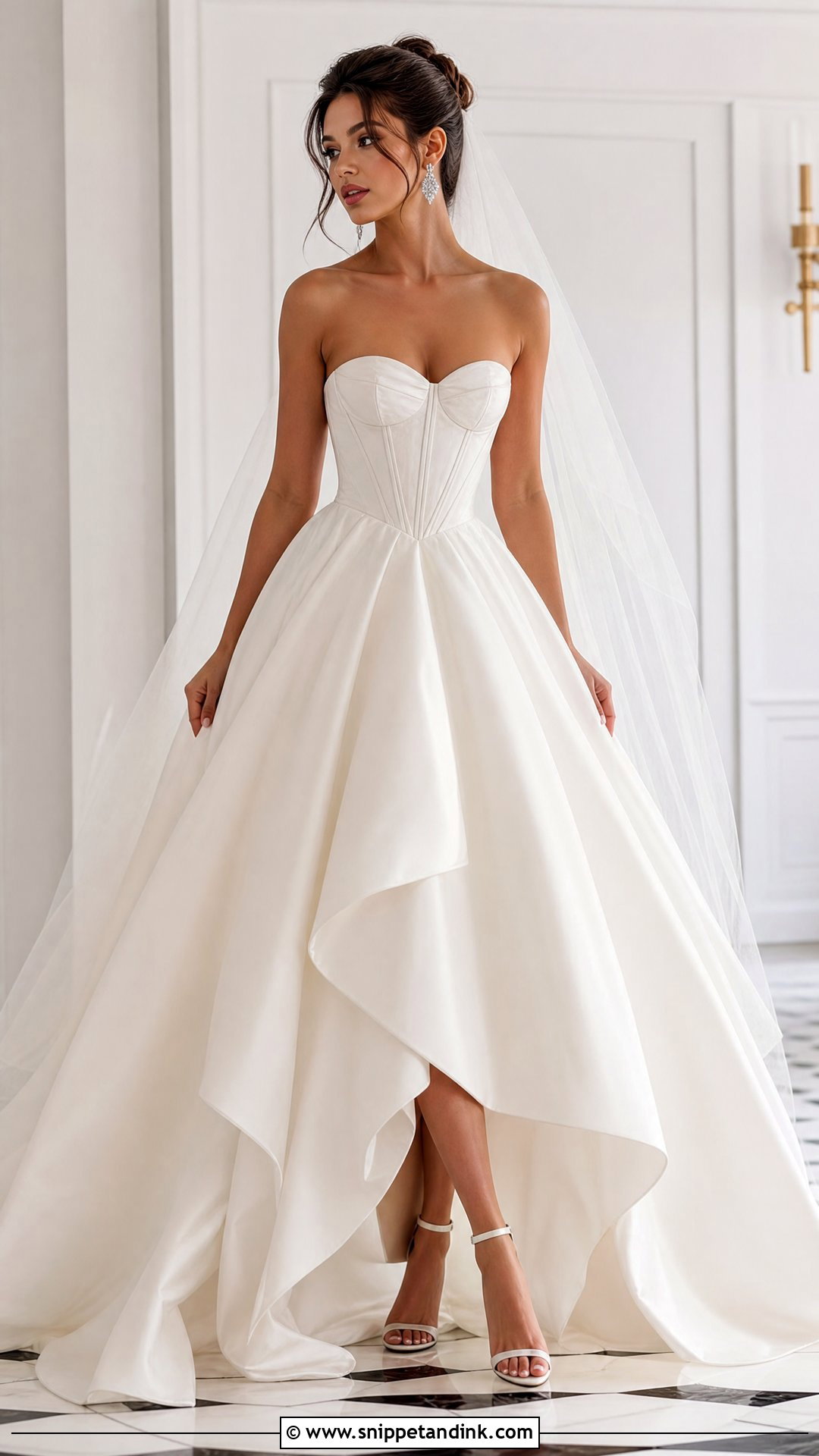
A corset ball gown is the most supportive dress on this list, because the boning carries the weight of a wide skirt off your waist. Visible boning looks modern; a corset covered in lace or beading reads softer. A good corset should feel firm, not painful, and you should be able to take a deep breath and sit at dinner. If you can’t, the fit is wrong. Pair it with a plain veil, crystal earrings and sleek heels, and consider half-up hair to soften those strong lines.
6. Drop Waist Ballroom Wedding Dress
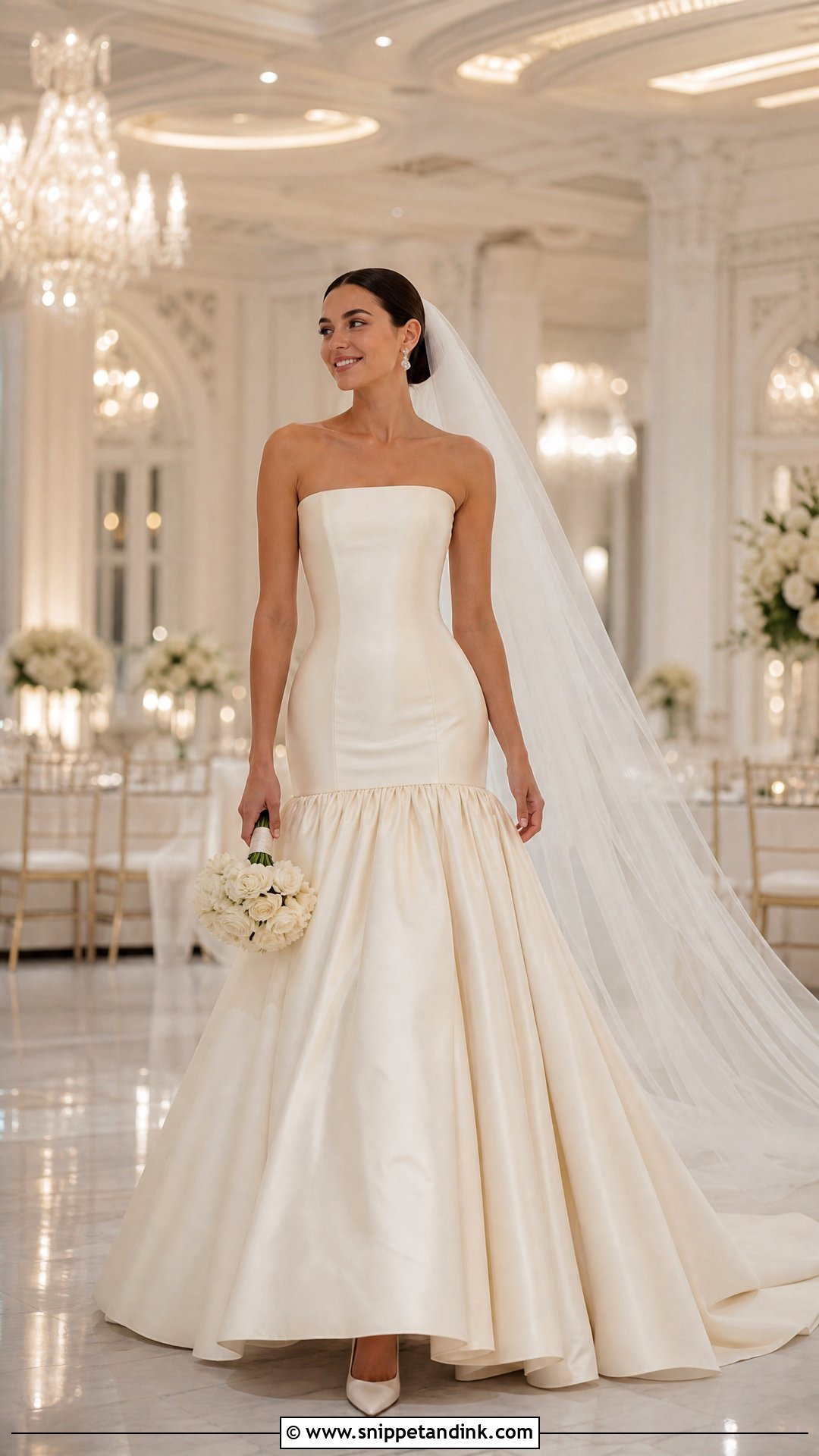
A drop waist moves the seam below your natural waist, so the bodice runs long and the skirt opens out lower. It’s a sculptural cut that shows best in stiff fabrics like satin, mikado or taffeta. It’s also less forgiving than a natural waist: on a short torso it can make the legs look shorter, so I’d try it alongside a natural-waist gown before deciding. Keep accessories minimal, a clean veil and simple earrings, because the waistline is already the focal point.
7. Basque Waist Ball Gown Wedding Dress
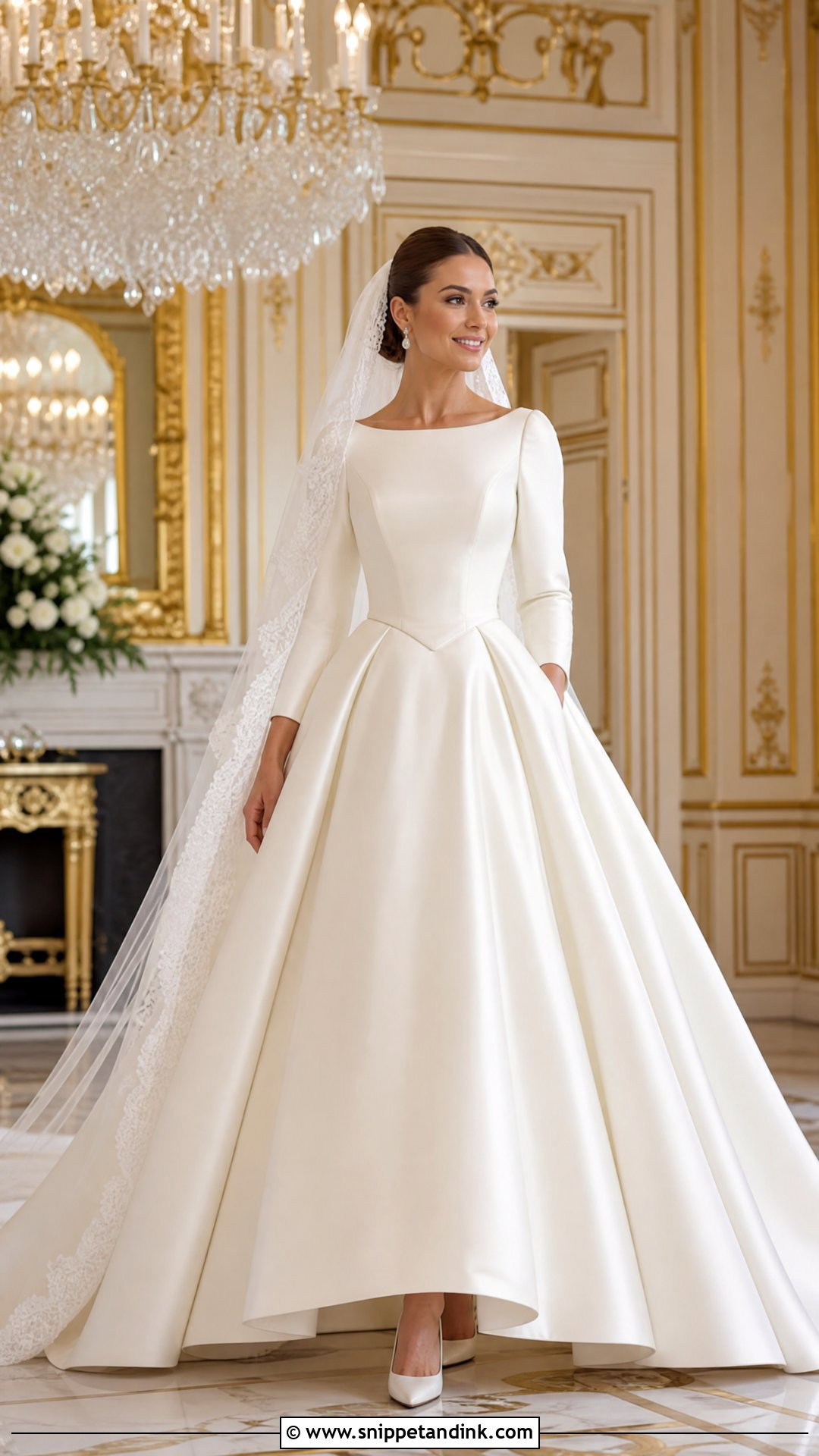
A Basque waist ball gown has a waistline that dips to a point at the front, which visually lengthens the torso and gives the skirt a graceful starting line. It’s the cut I’d suggest to a bride with a shorter torso who still wants a full skirt. Satin, brocade, lace and beaded tulle all hold the point well. A long veil, small earrings and a neat updo keep it classic, and a bouquet of white flowers and greenery won’t compete with the waistline.
8. Tulle Ball Gown Wedding Dress
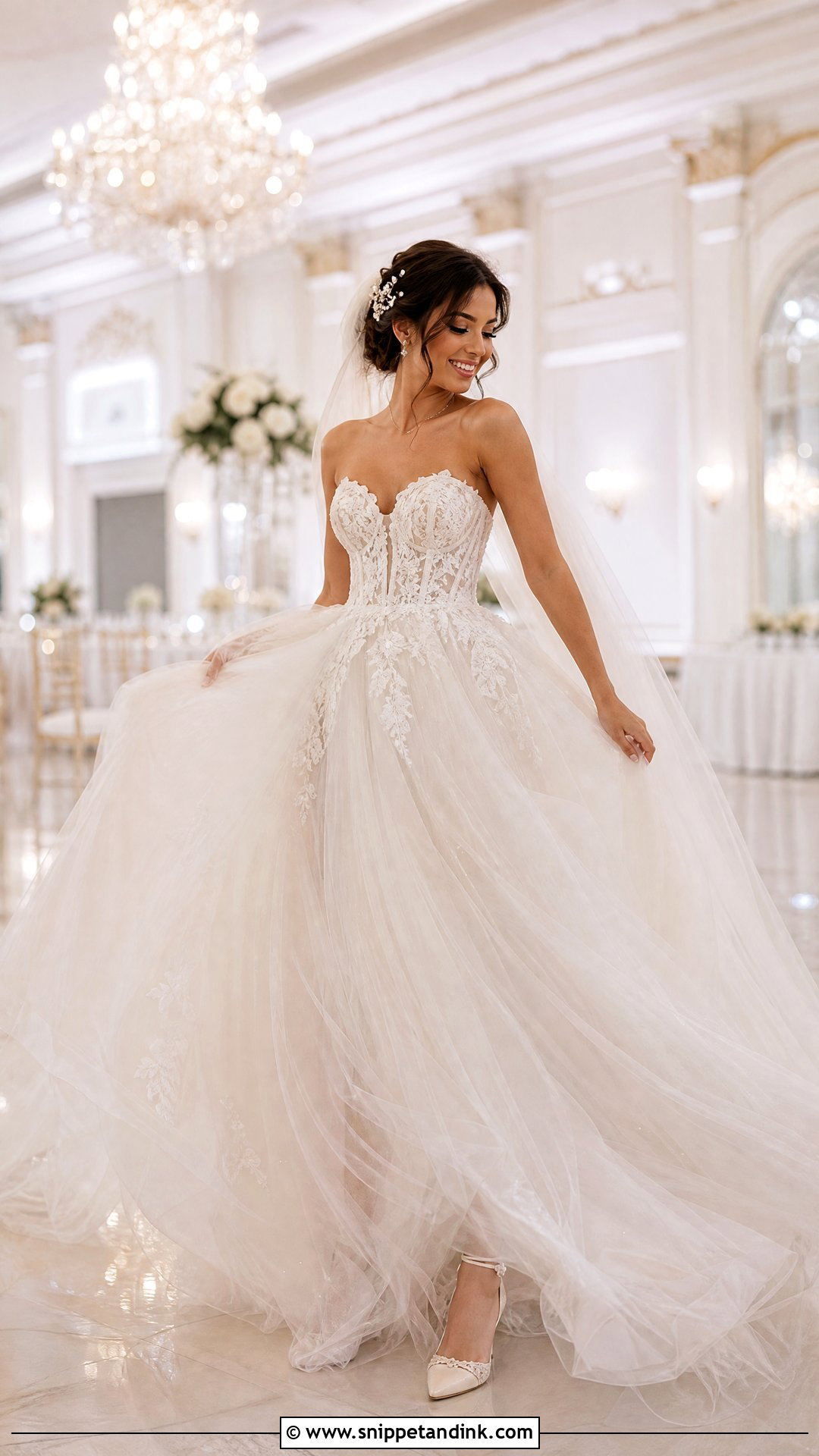
Tulle gives volume with very little weight, so you can turn and dance without feeling dragged down. The skirt can be soft and floaty or layered for major drama. A fitted bodice keeps it from swamping you. On a polished ballroom floor, tulle hems pick up dust and can catch on heel tips, so get the hem set to just clear the floor in your actual shoes. Plain tulle stays minimal; floral appliqué, pearls or a fine shimmer add interest. Delicate heels and soft waves suit it.
9. Beaded Ballroom Wedding Dress
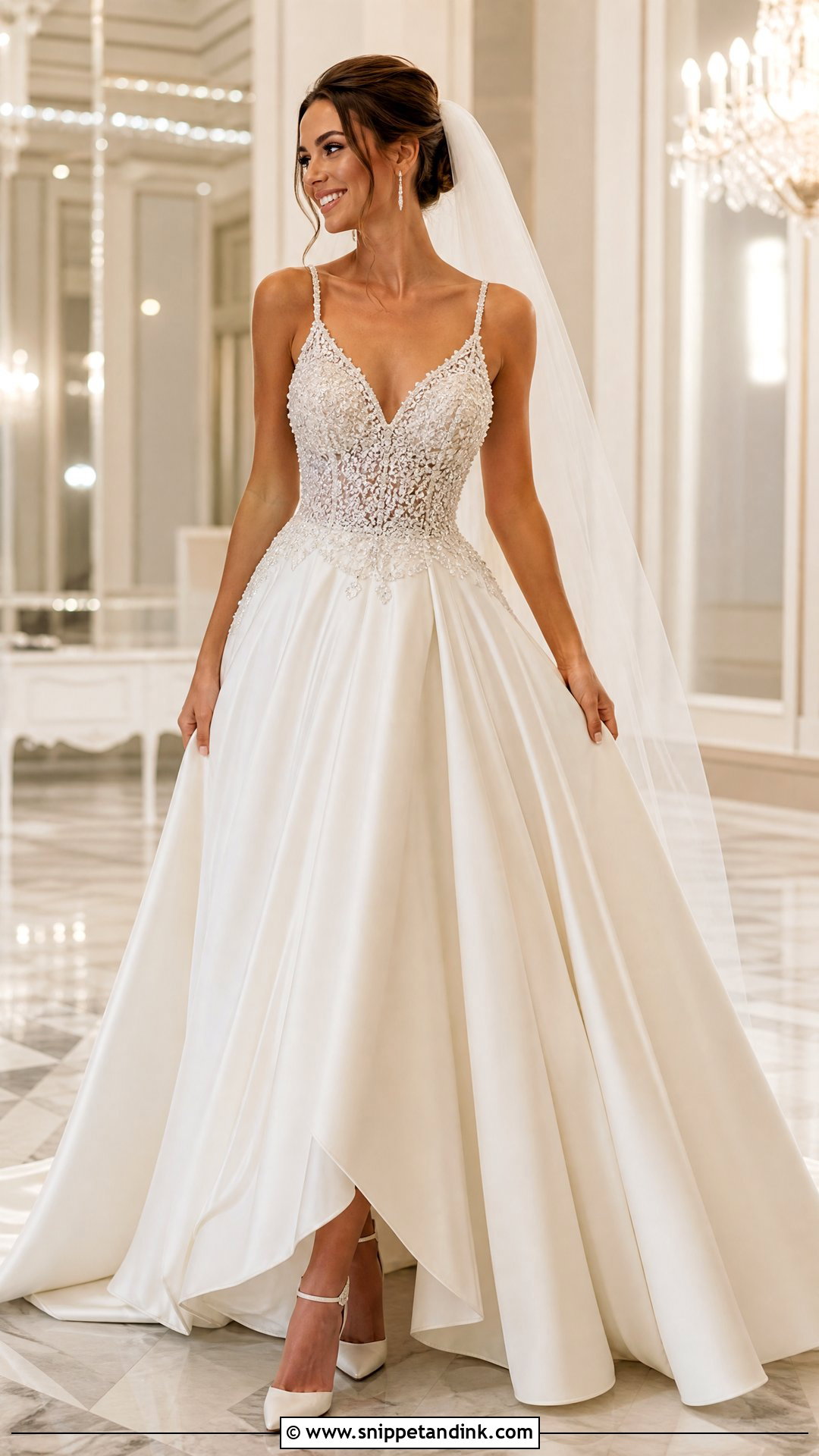
Beading is made for ballroom lighting, since every bead becomes a small reflector as you move. I’d still look for controlled shine: beading that highlights the bodice, sleeves or waist and then thins out, rather than covering the whole gown. Heavy beading adds real weight, which you’ll feel by the end of the night. Pearl or crystal beading feels classic; silver reads cooler. Simple earrings, smooth heels, a plain veil and a clean hairstyle let the beadwork stand out at an evening reception.
10. Floral Applique Ball Gown Wedding Dress
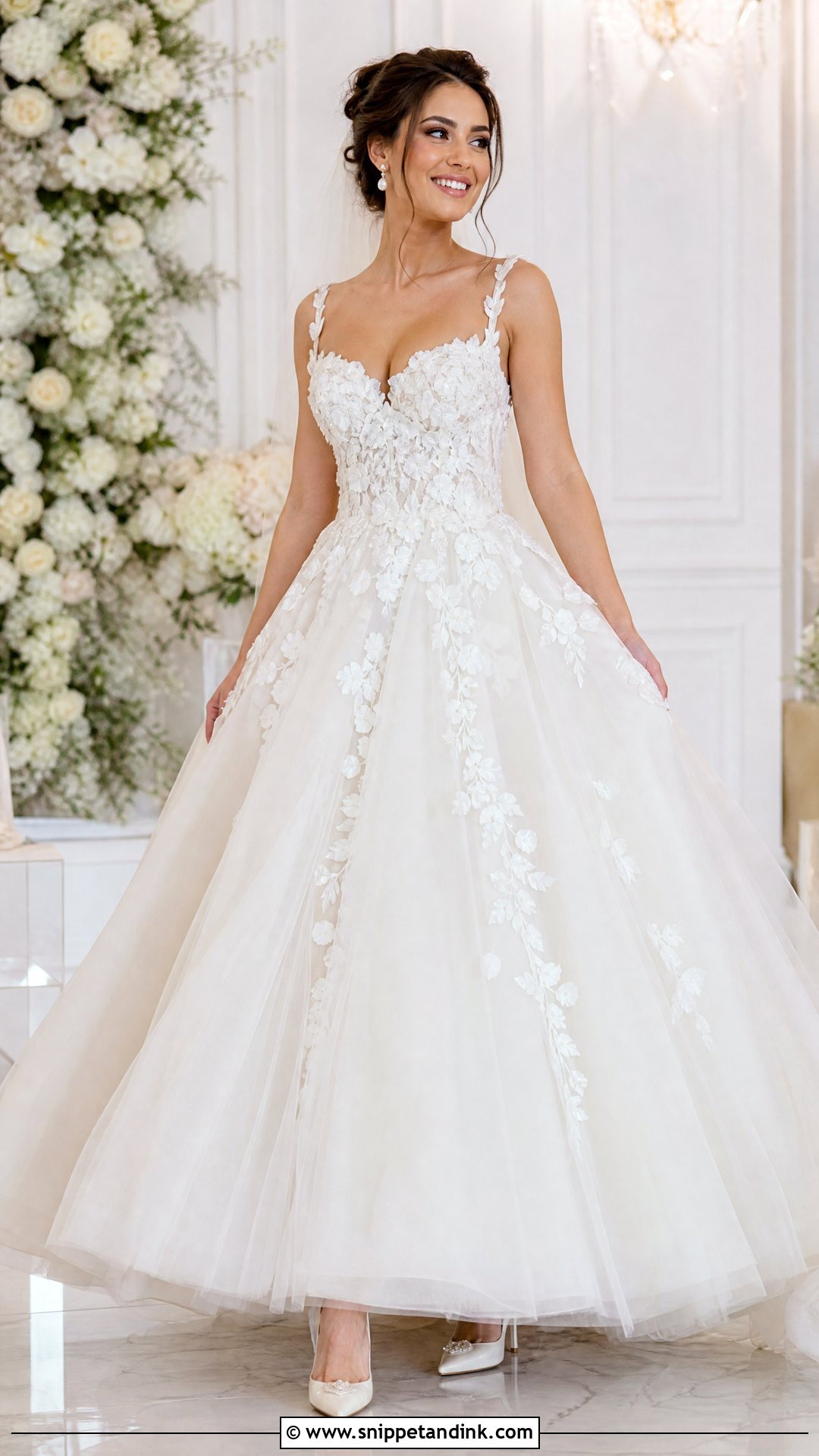
Floral appliqué adds dimension so a plain skirt doesn’t look flat in photos. The flowers can sit on the bodice, scatter across the skirt or sit over sheer sleeves. A full tulle or organza skirt keeps it light. I always check that each appliqué is stitched down all the way around; loose edges snag on bouquets and bracelets. If the dress is busy, choose a plain veil. Pearl earrings, a floral hair pin and a bouquet with similar flower shapes bring garden softness into a formal room.
11. Mikado Ball Gown Wedding Dress
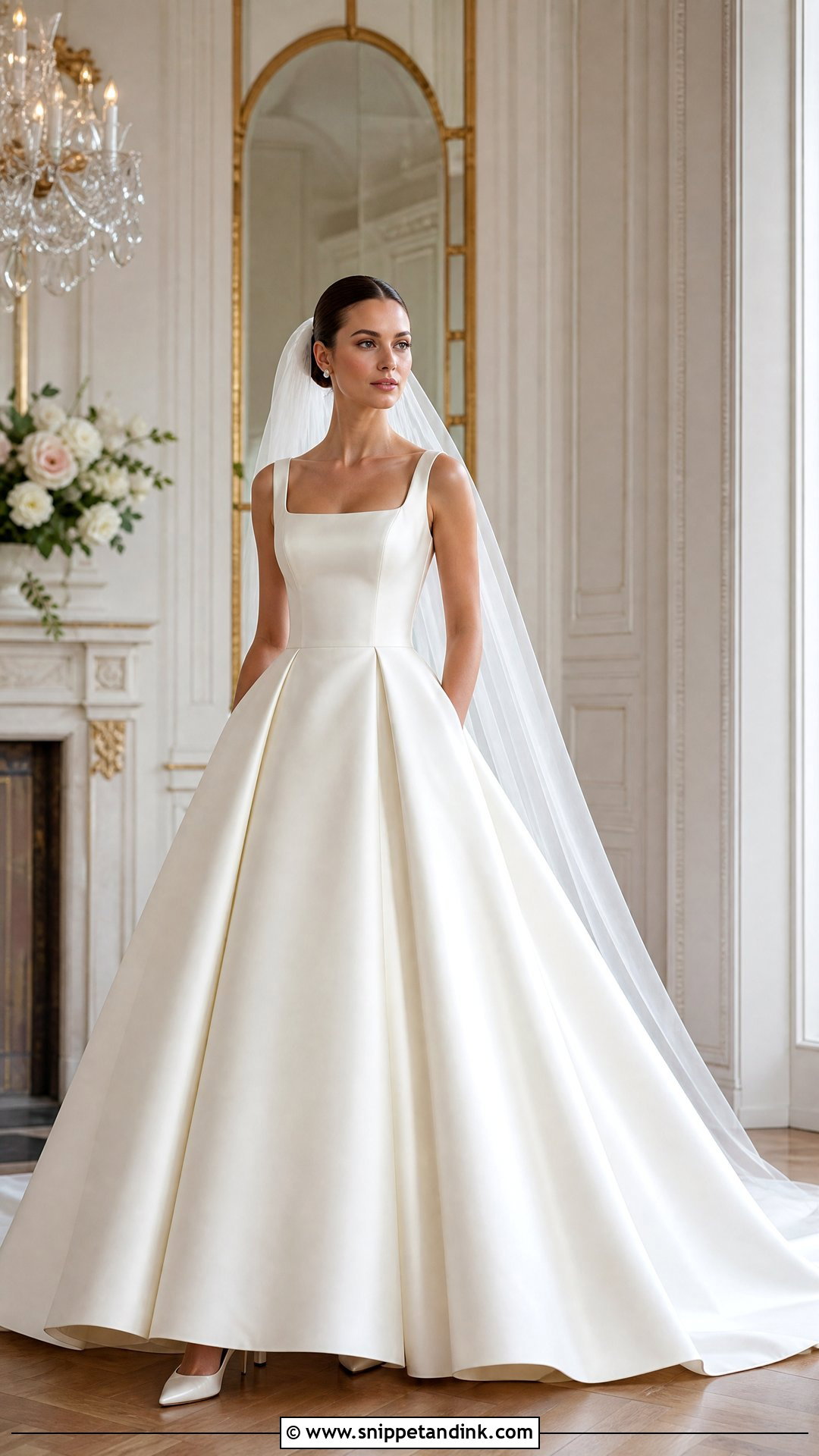
Mikado is a heavy, crisp weave with a soft sheen, and it holds pleats, full skirts and sculpted bodices almost on its own. A mikado ball gown looks expensive with no lace or sparkle at all. Square, strapless and folded necklines all work. Because it’s so smooth, every seam shows, so the tailoring has to be precise. It’s also a warm fabric, better for a cool evening than a crowded summer room. A sleek bun, pearl earrings, pointed satin heels and a long plain veil keep it classic.
12. Strapless Ballroom Wedding Dress
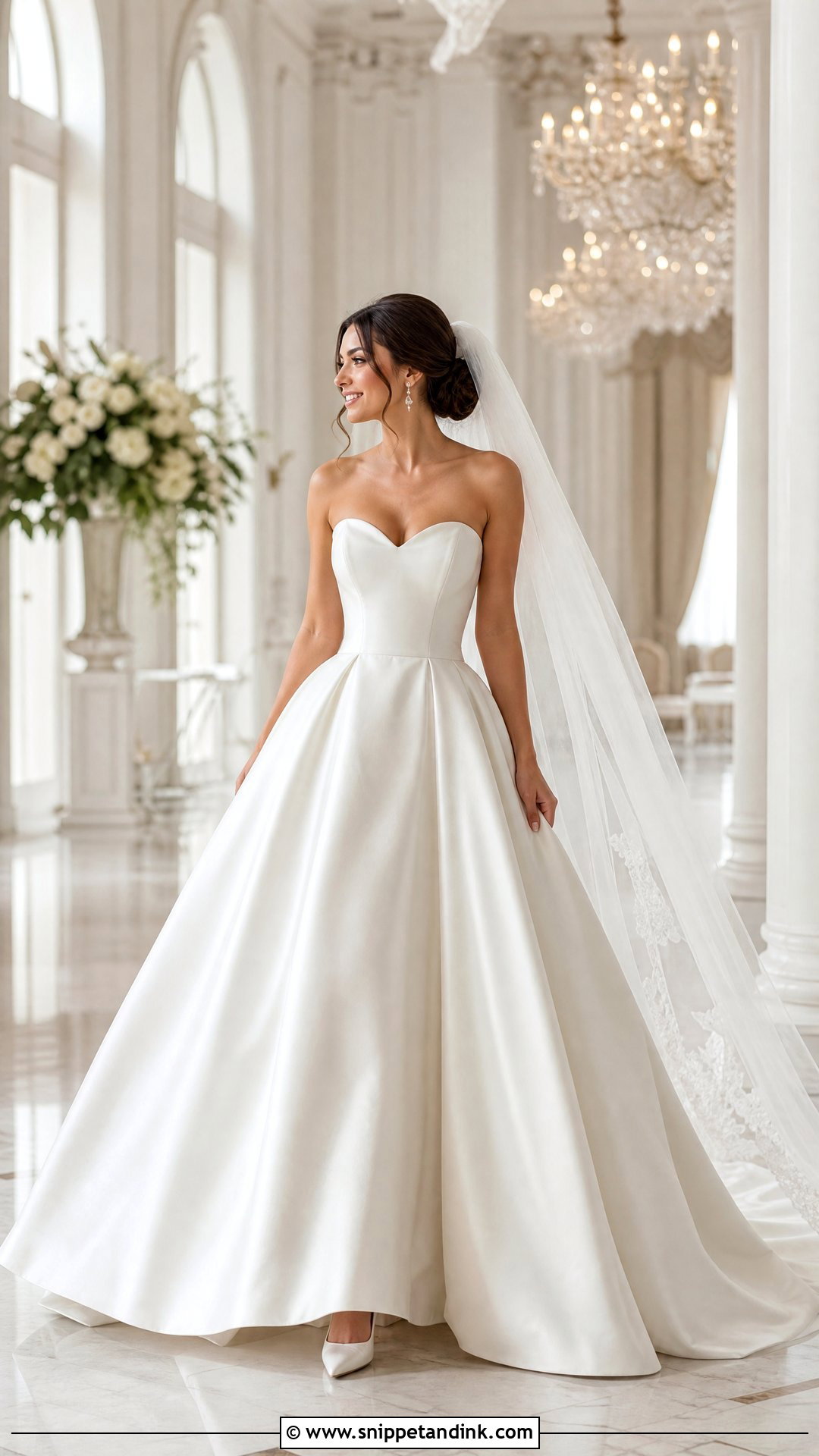
Strapless gowns leave the shoulders open and give the skirt all the attention. A sweetheart neckline is romantic; a straight one is modern. The fitting matters more here than with any other neckline, since the bodice has to stay up on its own through hugs and dancing. Ask your seamstress to fit it snugly and add a waist stay if it’s heavy. A plain dress can take a statement necklace; a detailed bodice needs earrings only. A long veil works for the ceremony, then a shorter veil or a hair accessory for the reception.
13. Square Neck Ball Gown Wedding Dress
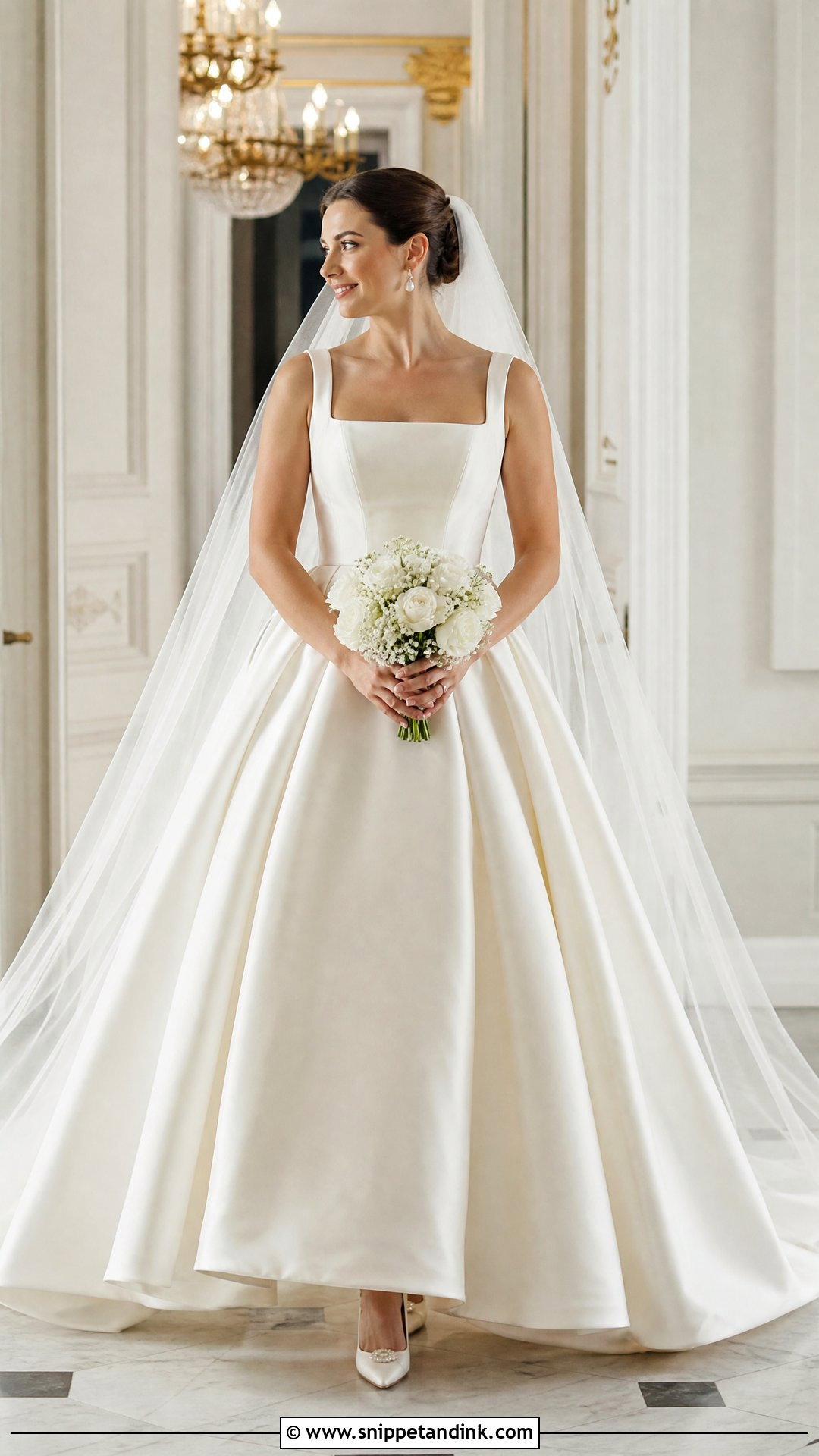
A square neckline gives clean structure to the upper body and suits a full skirt in satin, mikado or crepe, which all keep the corners crisp. It gives coverage without closing up the neck. Thin straps keep it light; wider straps give more support, and that makes a real difference with a heavy skirt. The corners should sit flat on your chest when you breathe and lean forward. Pearl studs, a smooth veil and a low bun finish a formal look without heavy decoration.
14. High Neck Ballroom Wedding Dress
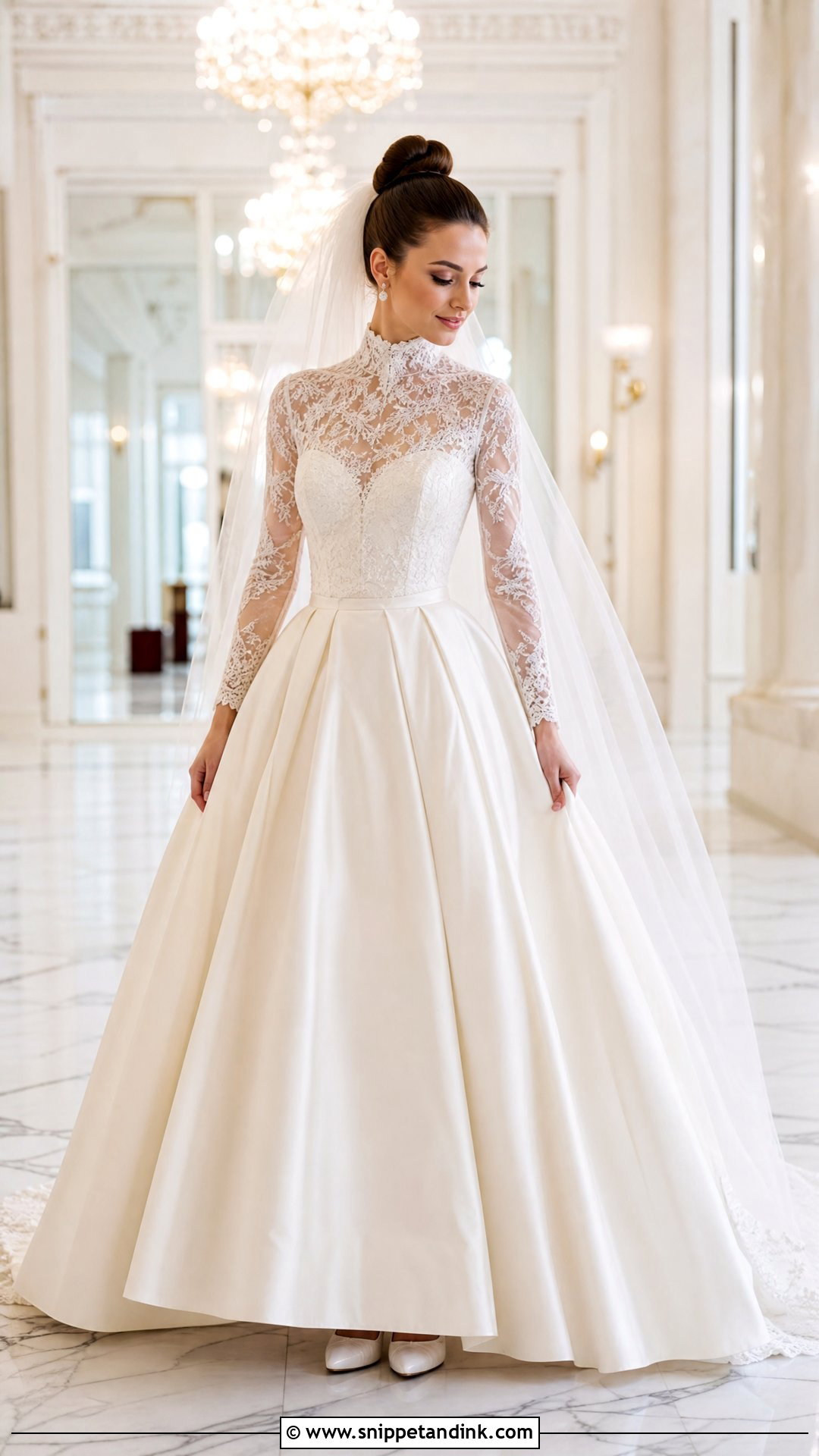
High necklines create a long, upright line that suits the scale of a ballroom. Lace, beading or sheer fabric keep it from looking stiff, and it pairs with long sleeves, cap sleeves or none at all. A high neck can feel warm by late evening, so if your venue runs hot, an illusion neckline gives the same look with more air. Keep jewelry to small earrings, and choose soft makeup so the effect stays graceful rather than severe. A polished bun and a long veil complete it.
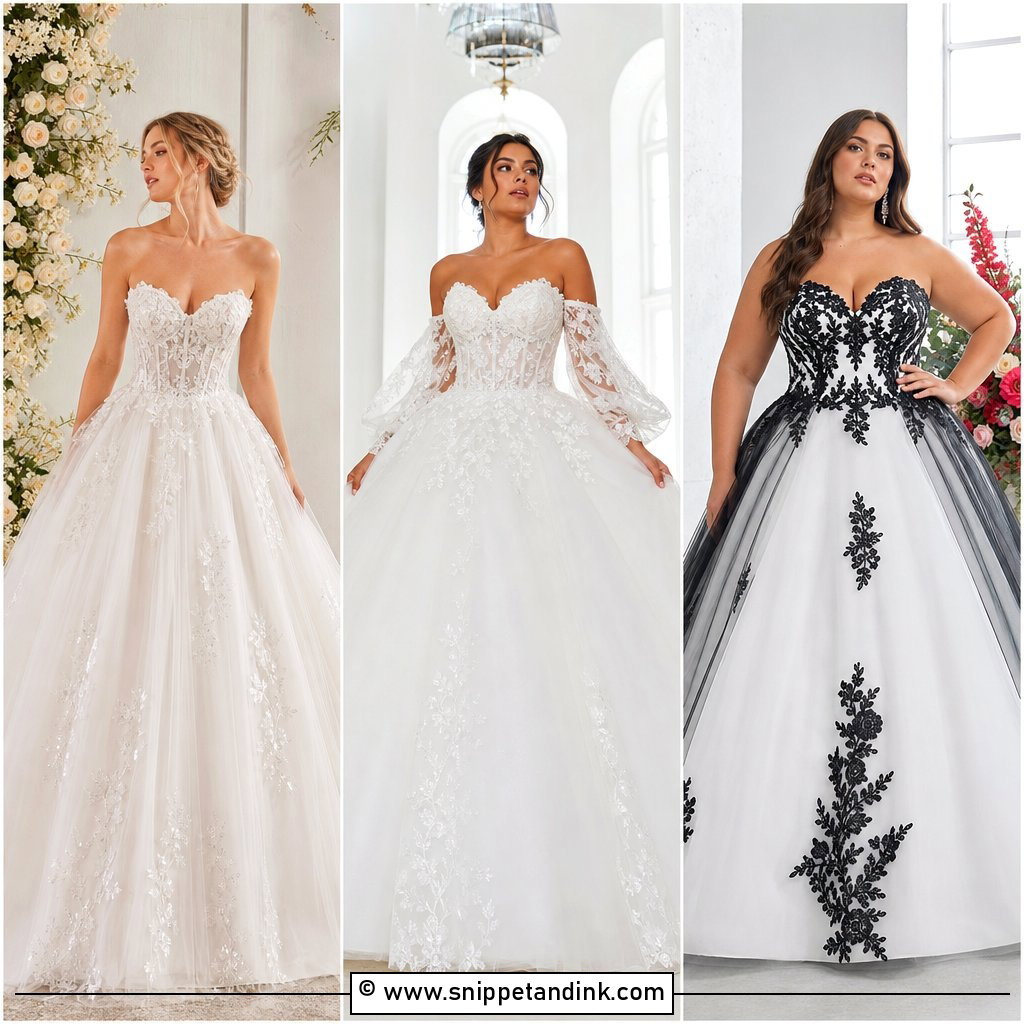
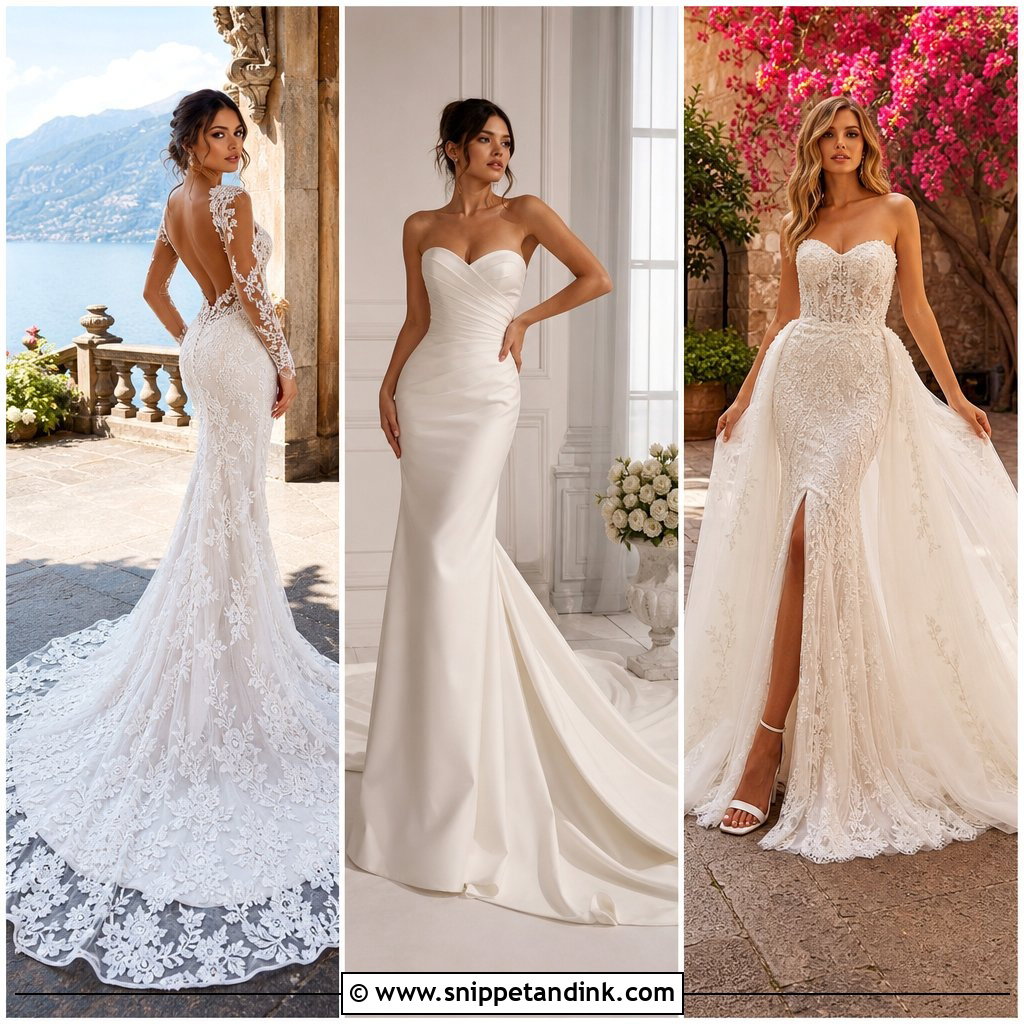
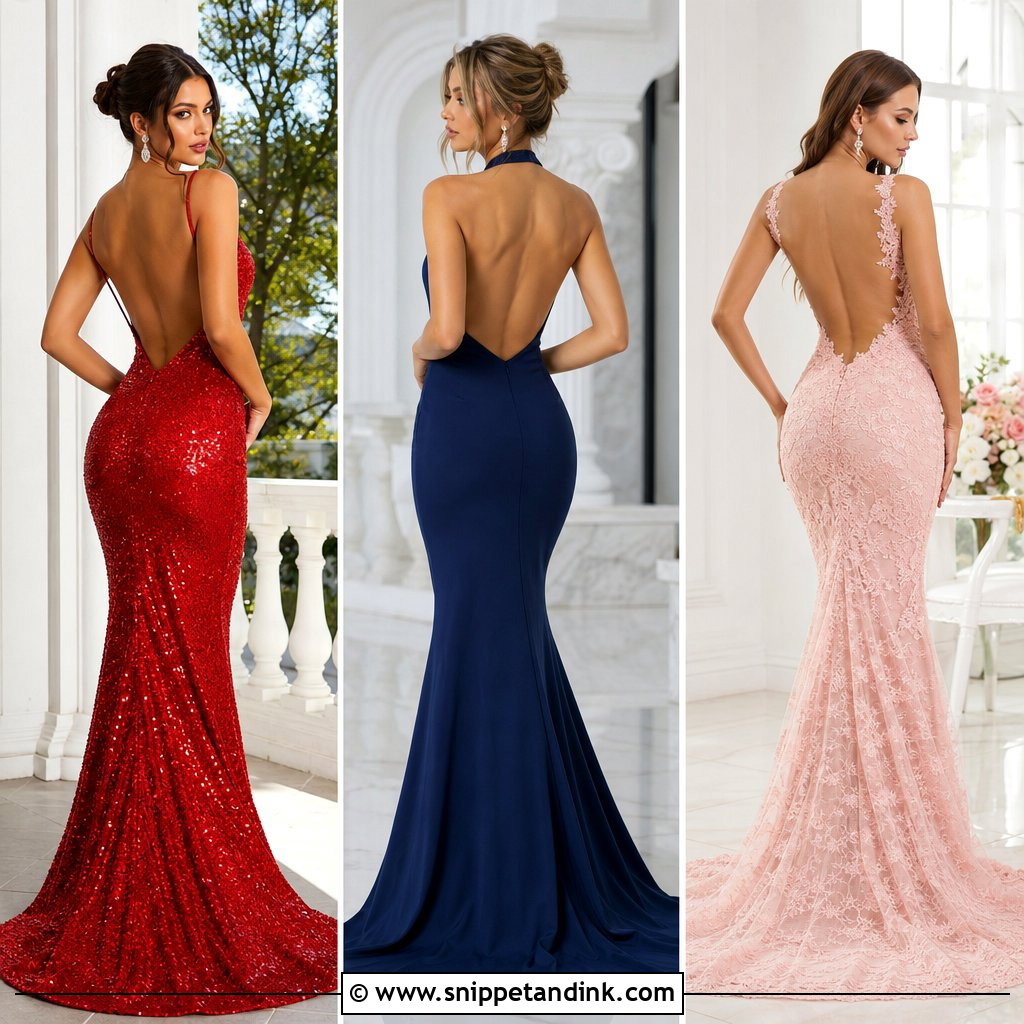
15. Cape Ballroom Wedding Dress
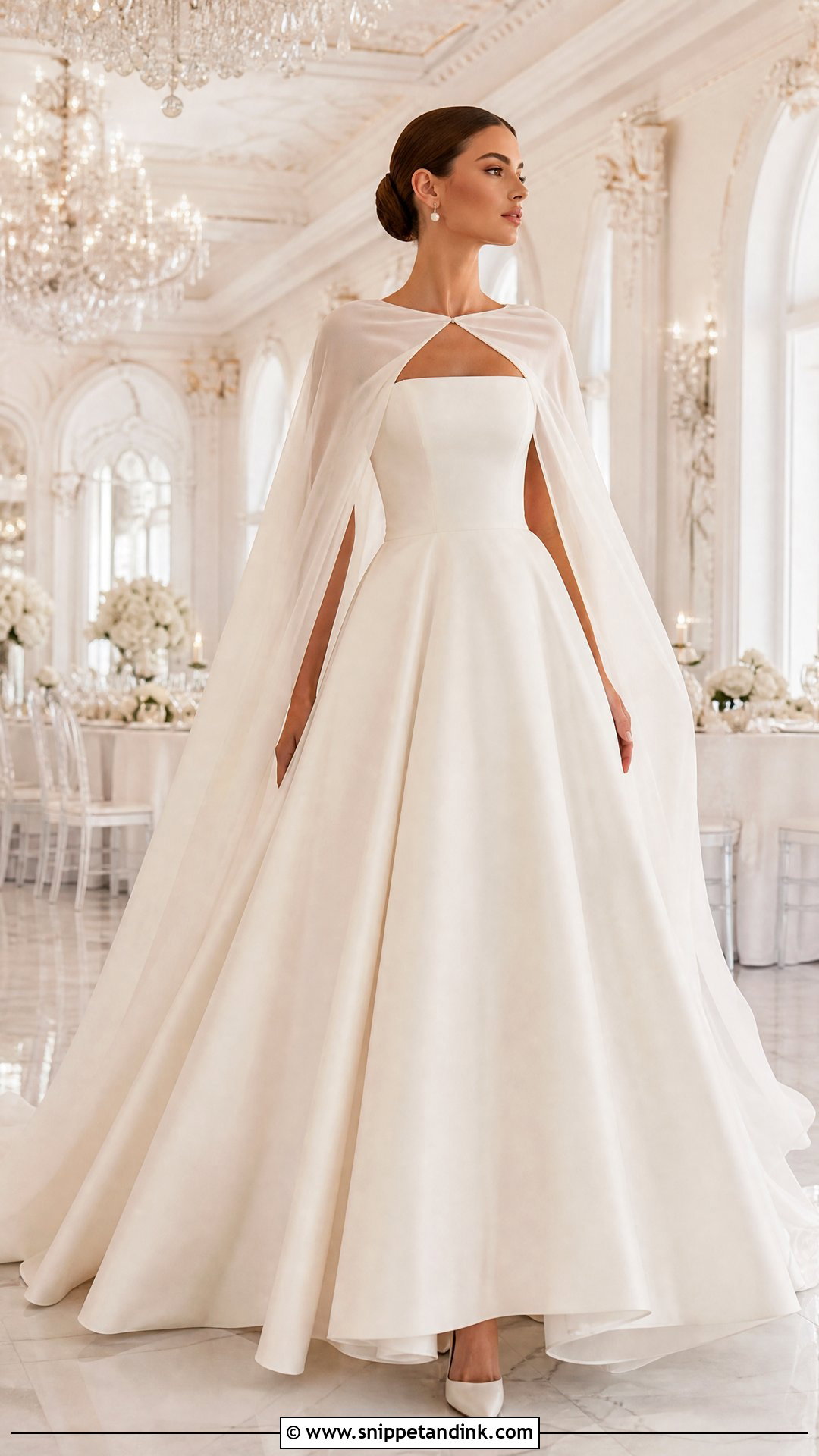
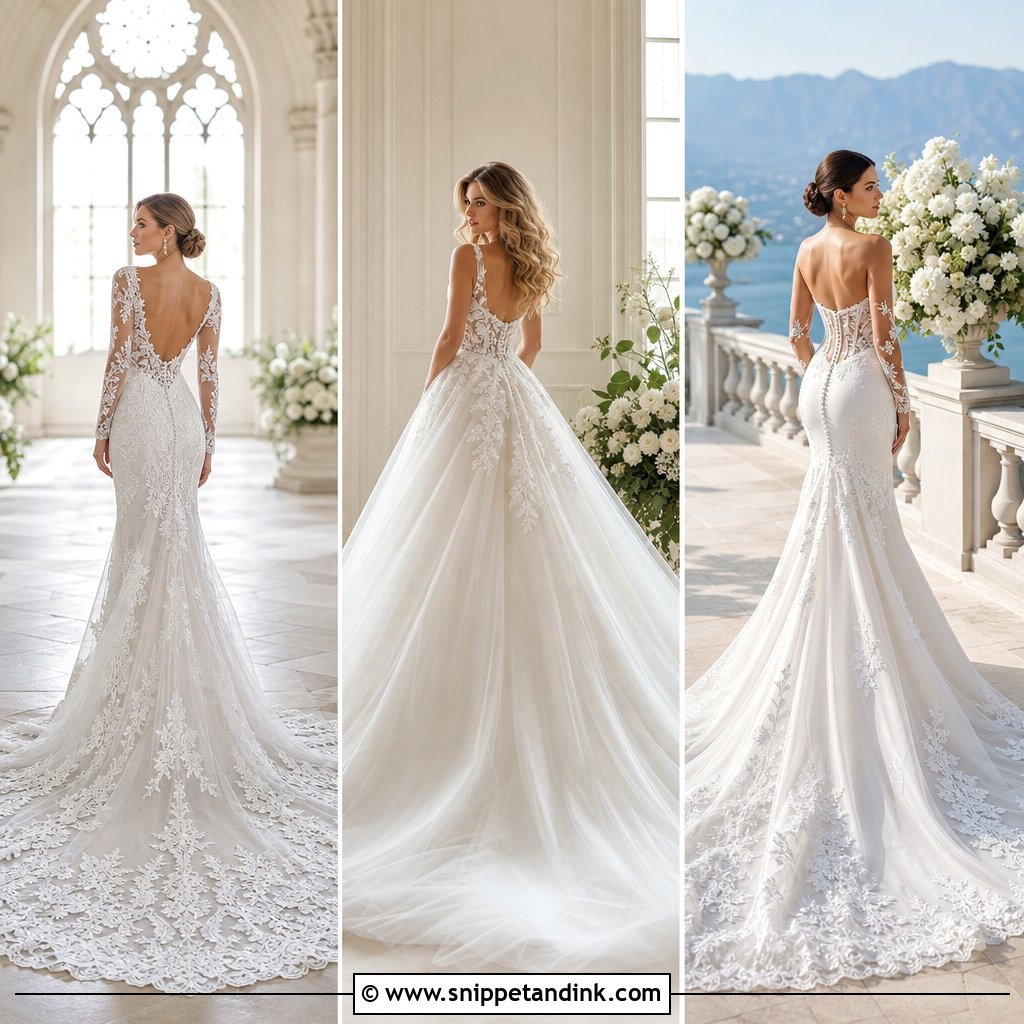
A cape can replace a veil and gives you movement as you walk through a big space. It can be sheer tulle, lace, organza or smooth crepe, falling from the shoulders or attached at the back of the bodice. Underneath, keep the gown simple so the cape is the statement. Check how it attaches: snaps or hooks you can undo for dancing are far more practical than one sewn in. Clean heels, small earrings and a sleek hairstyle suit it.
16. Bow Back Ball Gown Wedding Dress
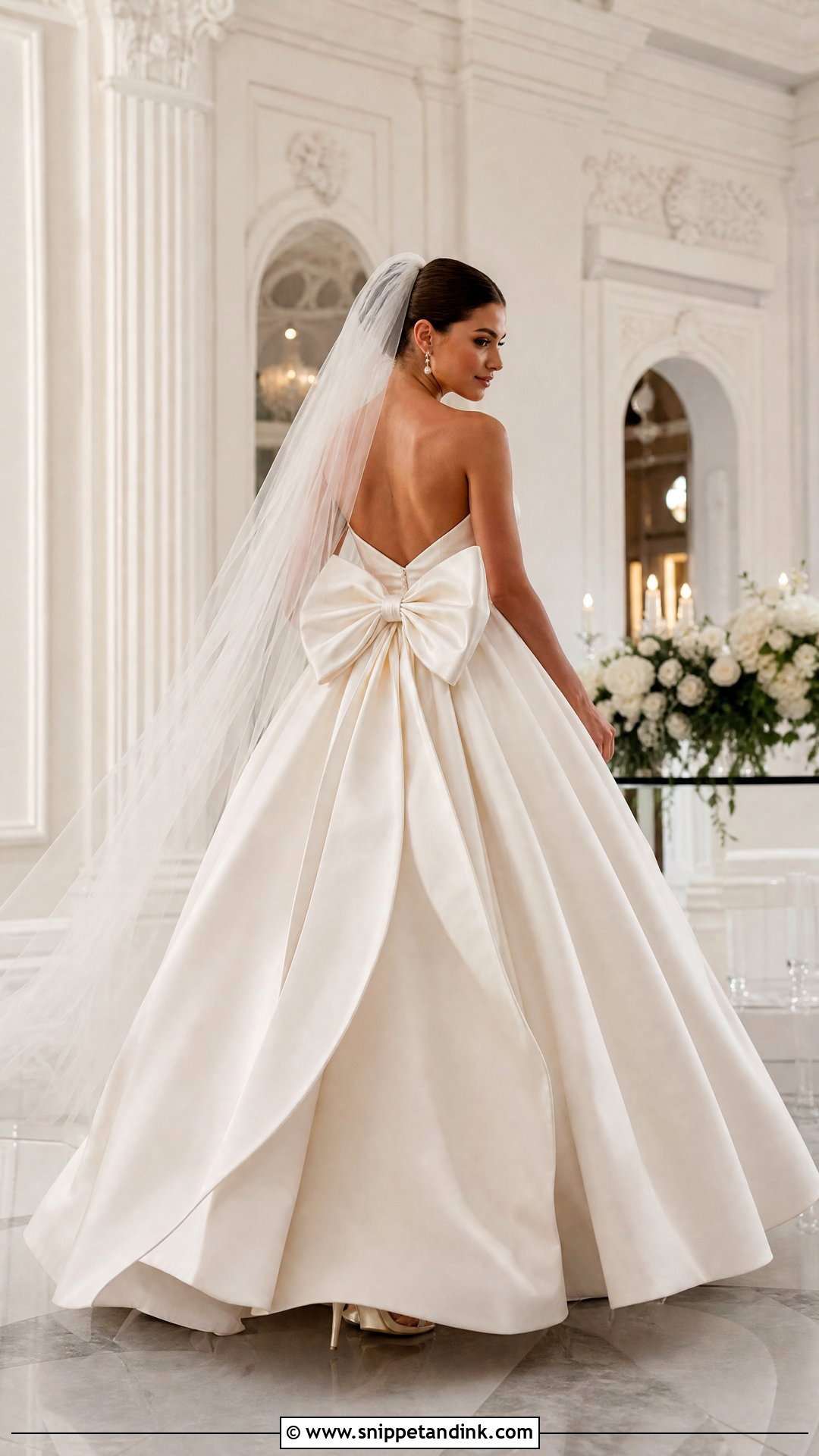
A bow back ball gown turns the back of the dress into the focal point, which is what guests see for most of the ceremony. Satin and mikado bows hold a crisp shape; organza bows are lighter. A large bow gets crushed against a chair at dinner, so ask whether it’s detachable or plan to sit forward. Keep the front simple so the two sides don’t compete. A plain veil, classic earrings and a low bun or soft waves are enough.
17. Pearl Ballroom Wedding Dress
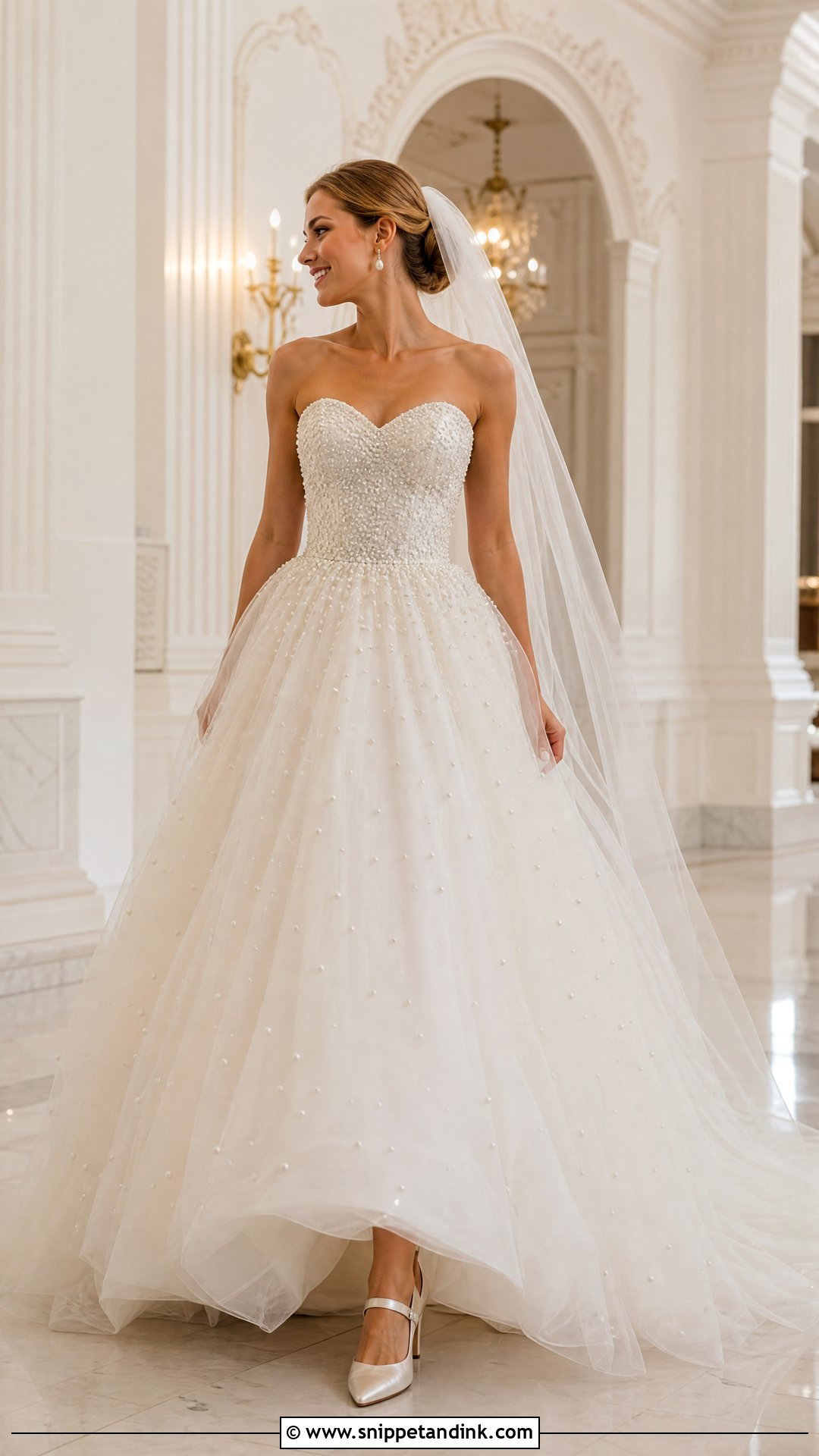
Pearls give a gentle glow instead of sparkle, and they look the same in daylight and under chandeliers. They can be scattered over tulle, set on the bodice or run along the sleeves and straps. A full skirt with a simple neckline suits them. Watch the total: pearl earrings, a pearl comb and pearl beading can tip into too much if the dress is heavily detailed. Pick one pearl accessory and let the gown do the rest, with satin heels and a smooth veil.
18. Ruffle Ball Gown Wedding Dress
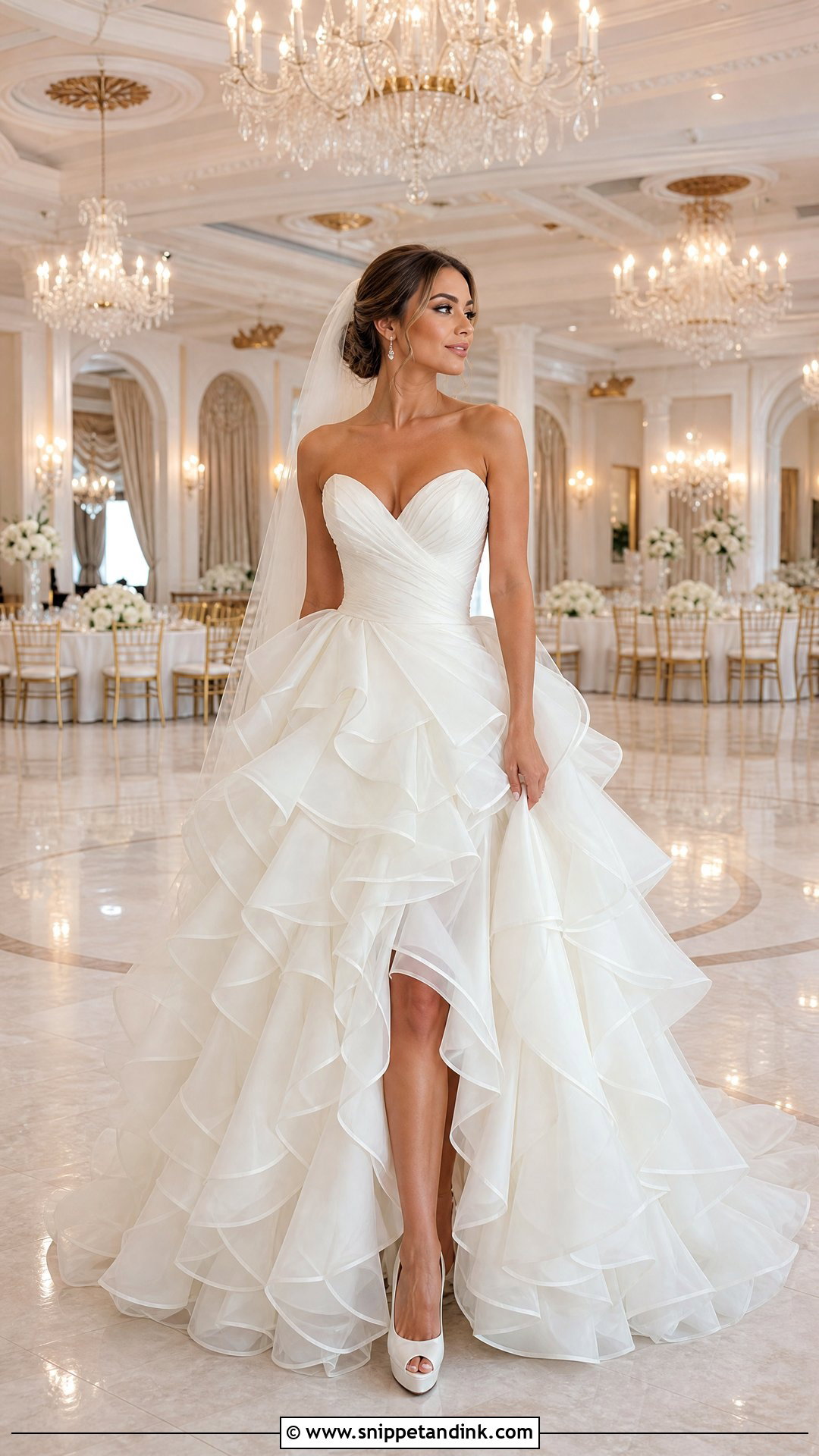
A ruffle ball gown adds movement and volume, and it’s the dress for a bride who wants her skirt to have personality. Tulle and organza ruffles are airy; taffeta ruffles are bold and sculptural. A fitted bodice keeps the shape from becoming heavy. Ruffles take up space when you sit and need a bit of fluffing afterward, so ask a bridesmaid to give the skirt a quick shake after dinner. Simple heels, minimal jewelry and pulled-back hair keep the attention on the gown.
19. Minimalist Ballroom Wedding Dress
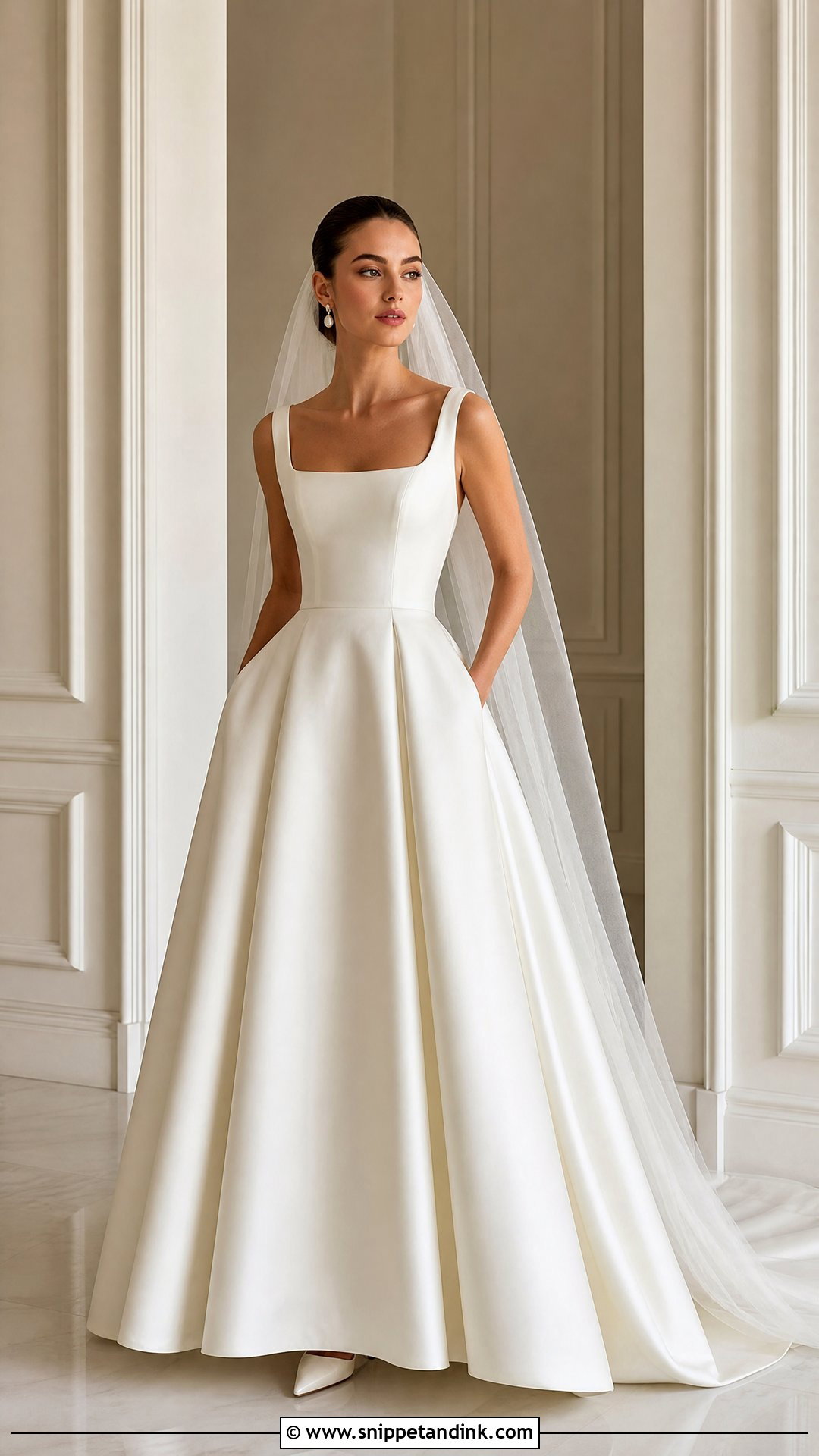
Minimalist gowns depend on fabric and tailoring, since there’s nothing to distract from either. Satin, mikado or crepe with a strong bodice and full skirt, and a strapless, square or bateau neckline, is the usual formula. Budget for a skilled seamstress, because a simple dress with poor fit looks plain rather than chic. Pearl earrings, a sleek bun, pointed heels, a smooth veil and a structured bouquet finish it. These gowns age well in photos because they don’t follow a trend.

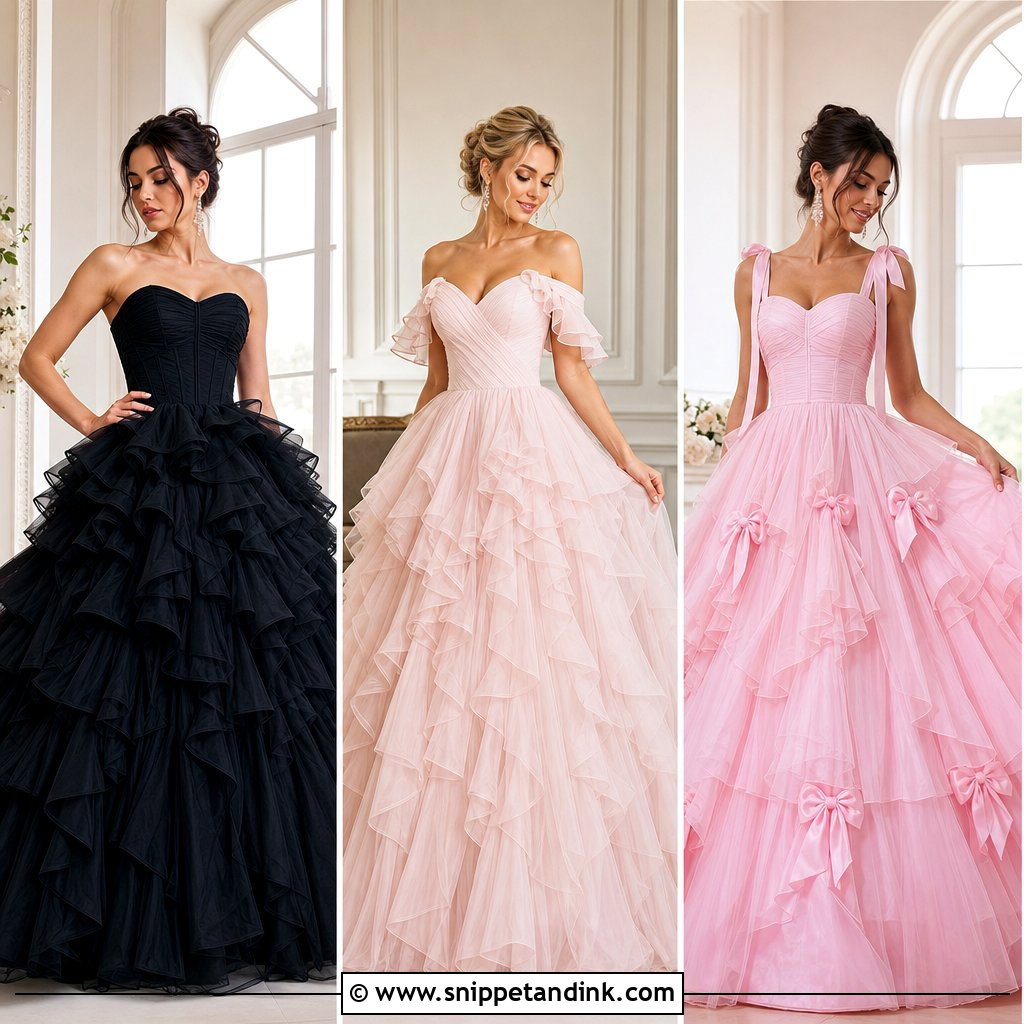
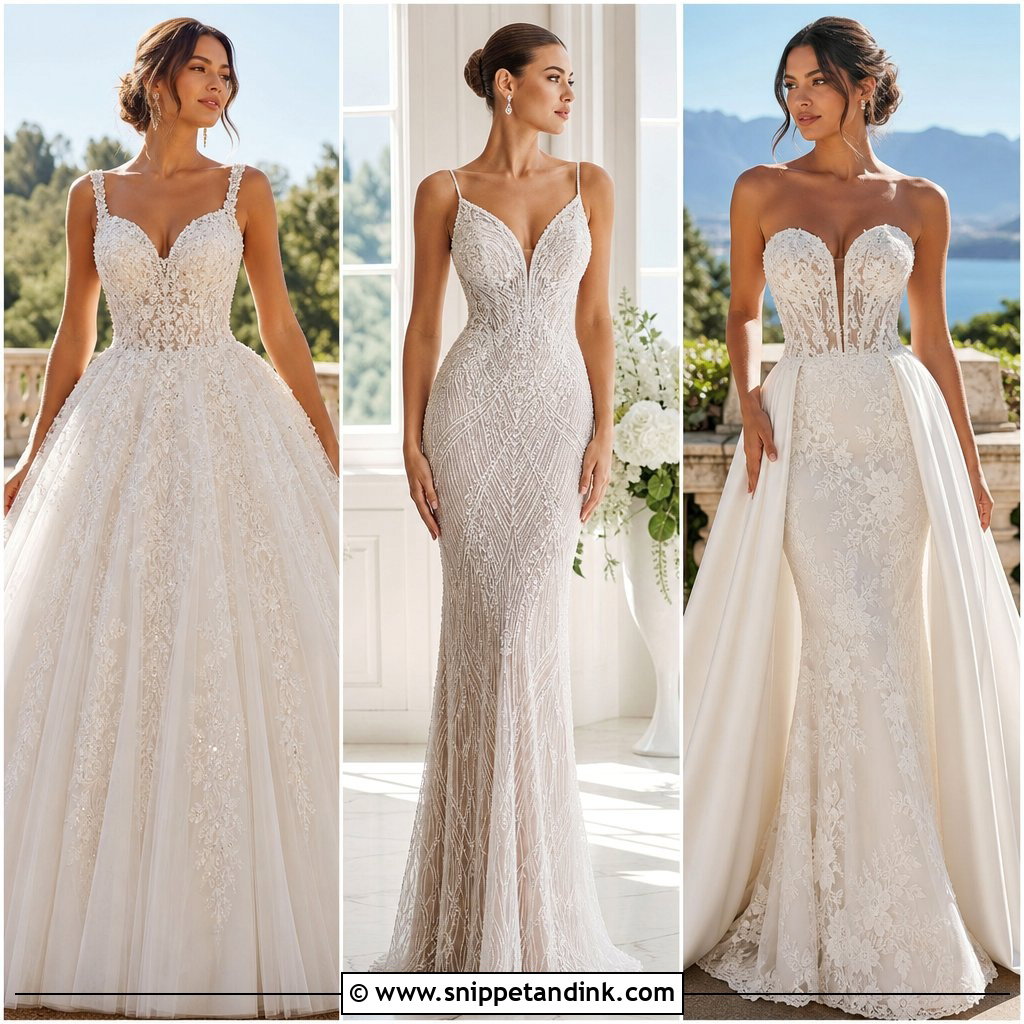
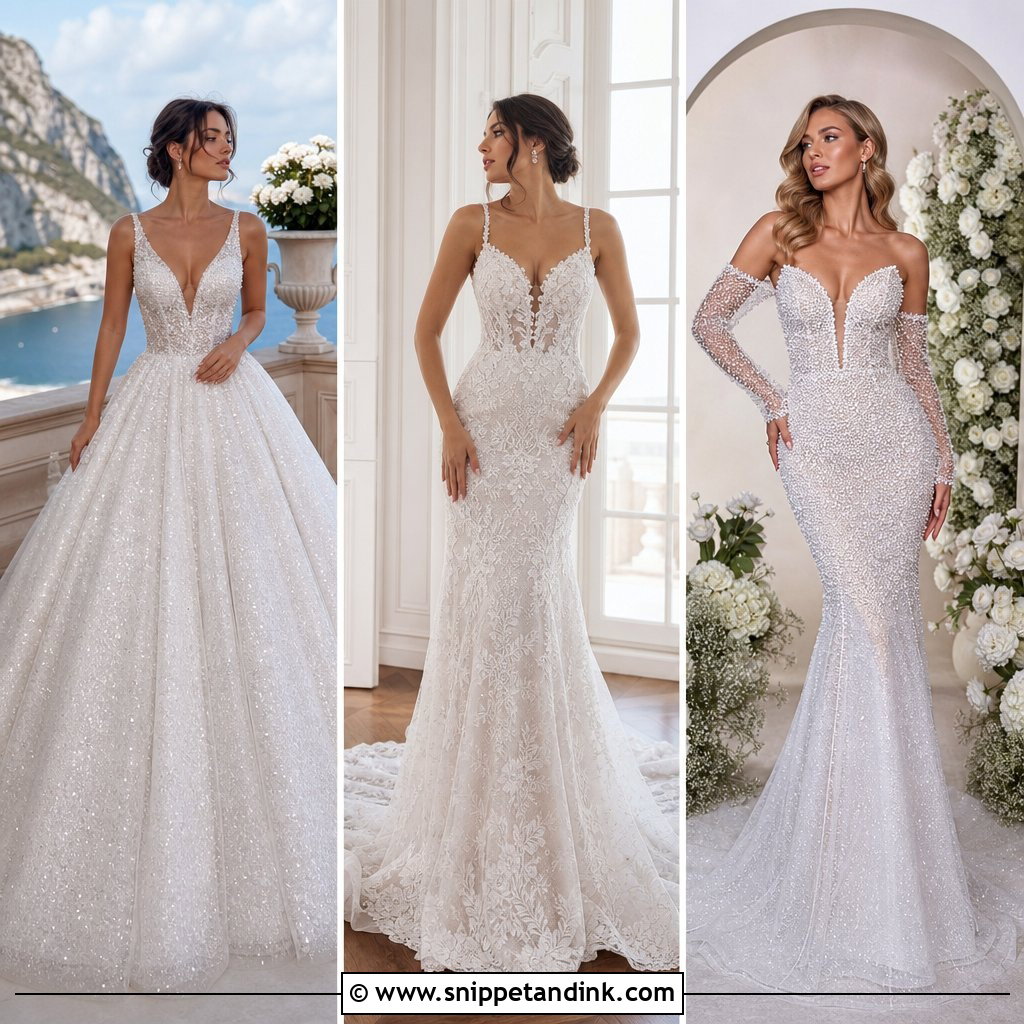
20. Champagne Ballroom Wedding Dress
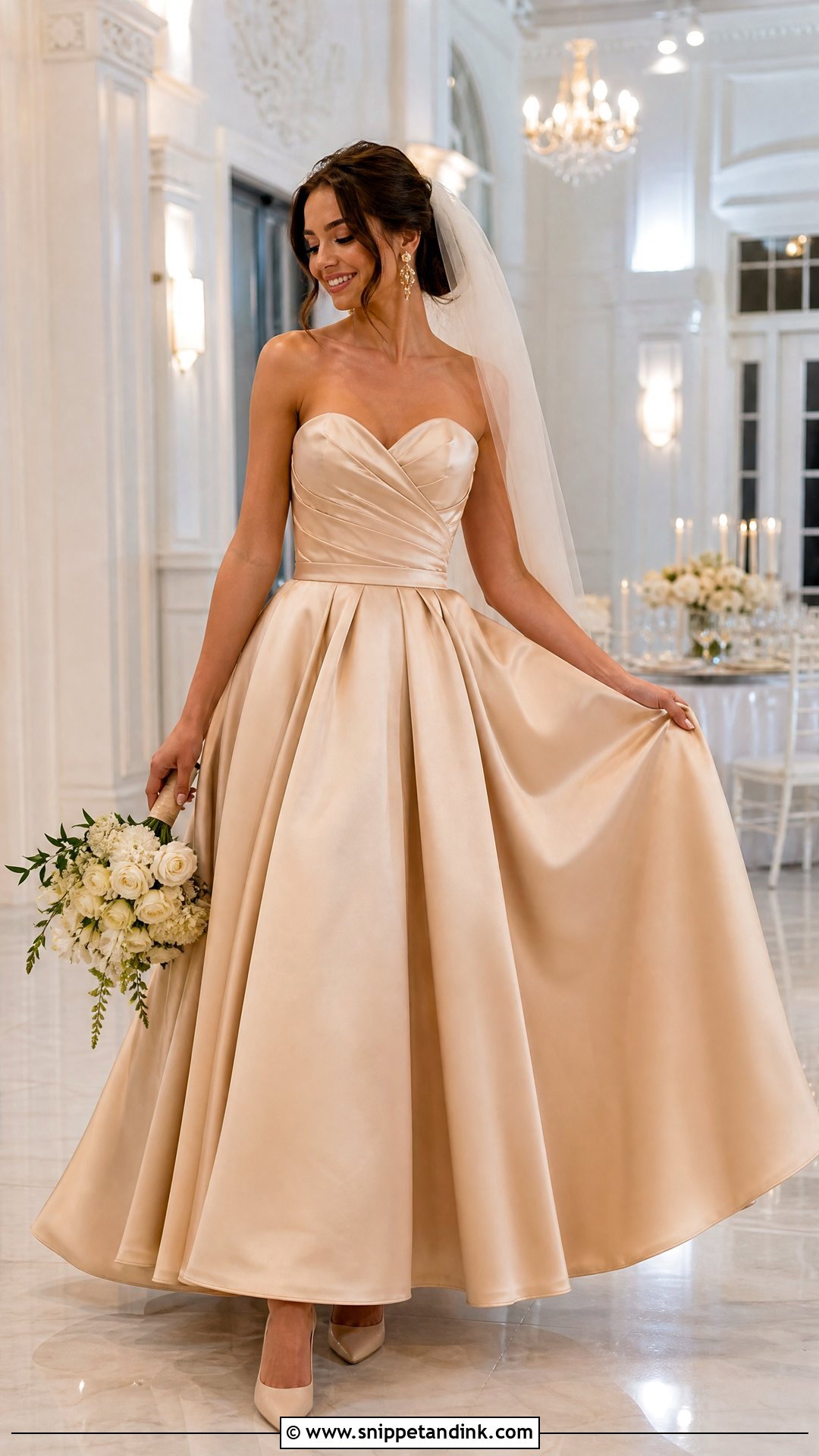
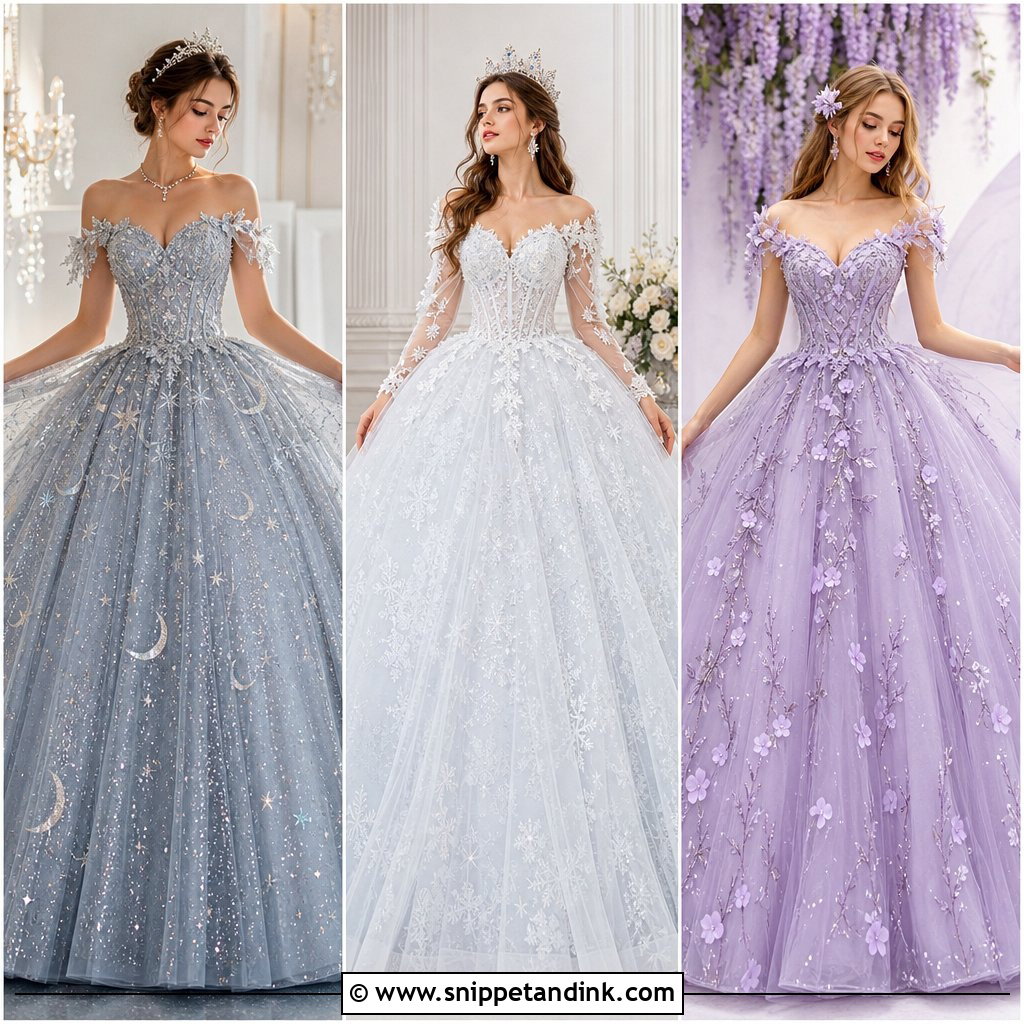
Champagne is softer than bright white and warmer under ballroom lighting, which flatters a lot of skin tones. It works in satin, tulle, lace or beading and can look vintage, romantic or modern depending on the shape. Look at the shade under both warm and daylight bulbs, since some champagnes read almost gold under chandeliers and greyish in daylight. Gold-tone jewelry, nude or ivory heels and a soft veil suit it, with a bouquet of cream, blush and pale peach.
21. Blush Ball Gown Wedding Dress
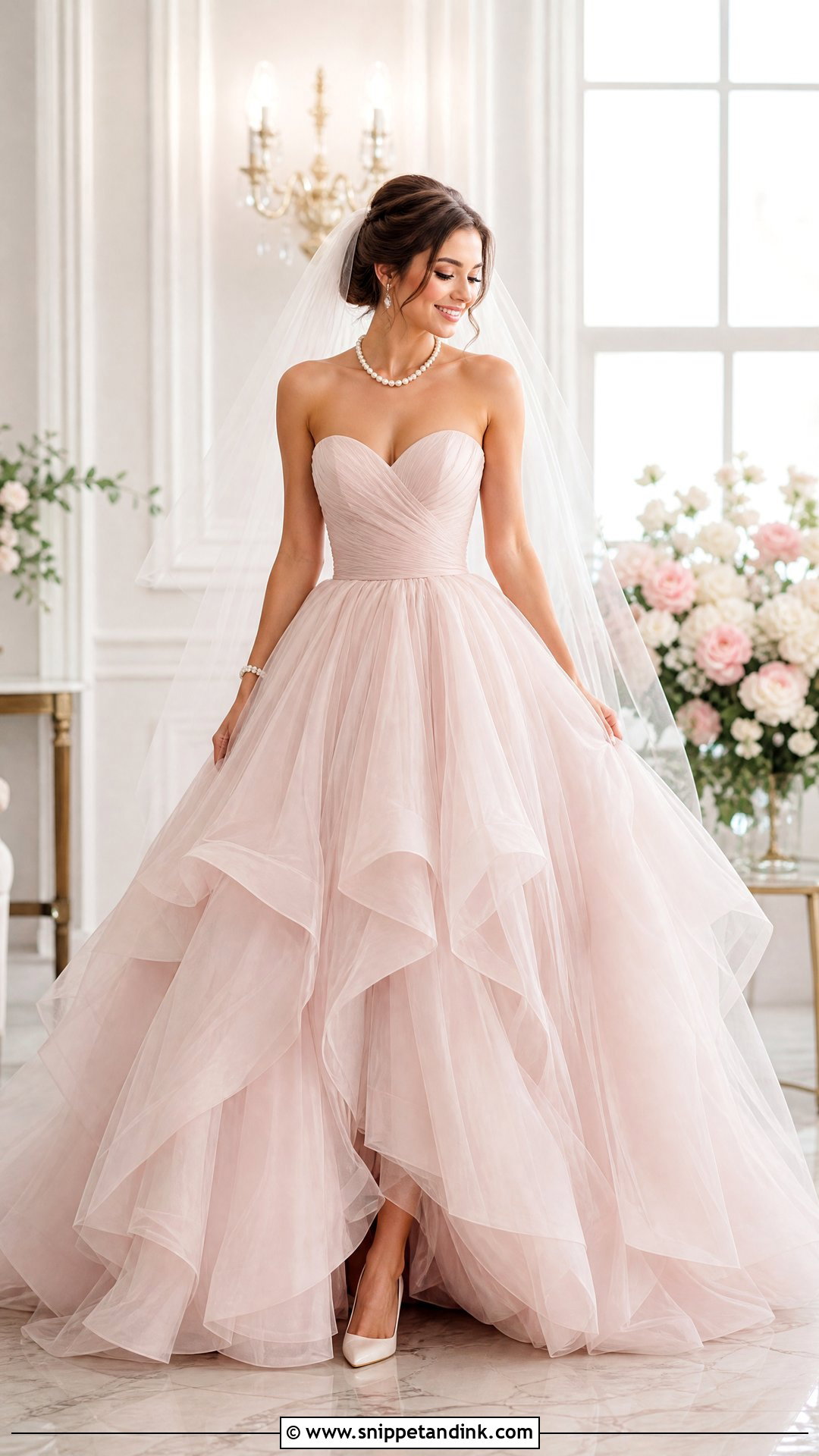
A blush gown adds warmth while still reading as bridal. Layered tulle, floral appliqué, beading or lace all work. For a more grown-up look, choose a muted blush rather than a bright pink. Rose gold or pearl accessories, ivory heels and a soft veil complete it, and rosy makeup ties the whole look together. Be aware that blush can look washed out on very fair skin; holding the fabric up to your face in natural light is the quickest test.
22. Overskirt Ballroom Wedding Dress
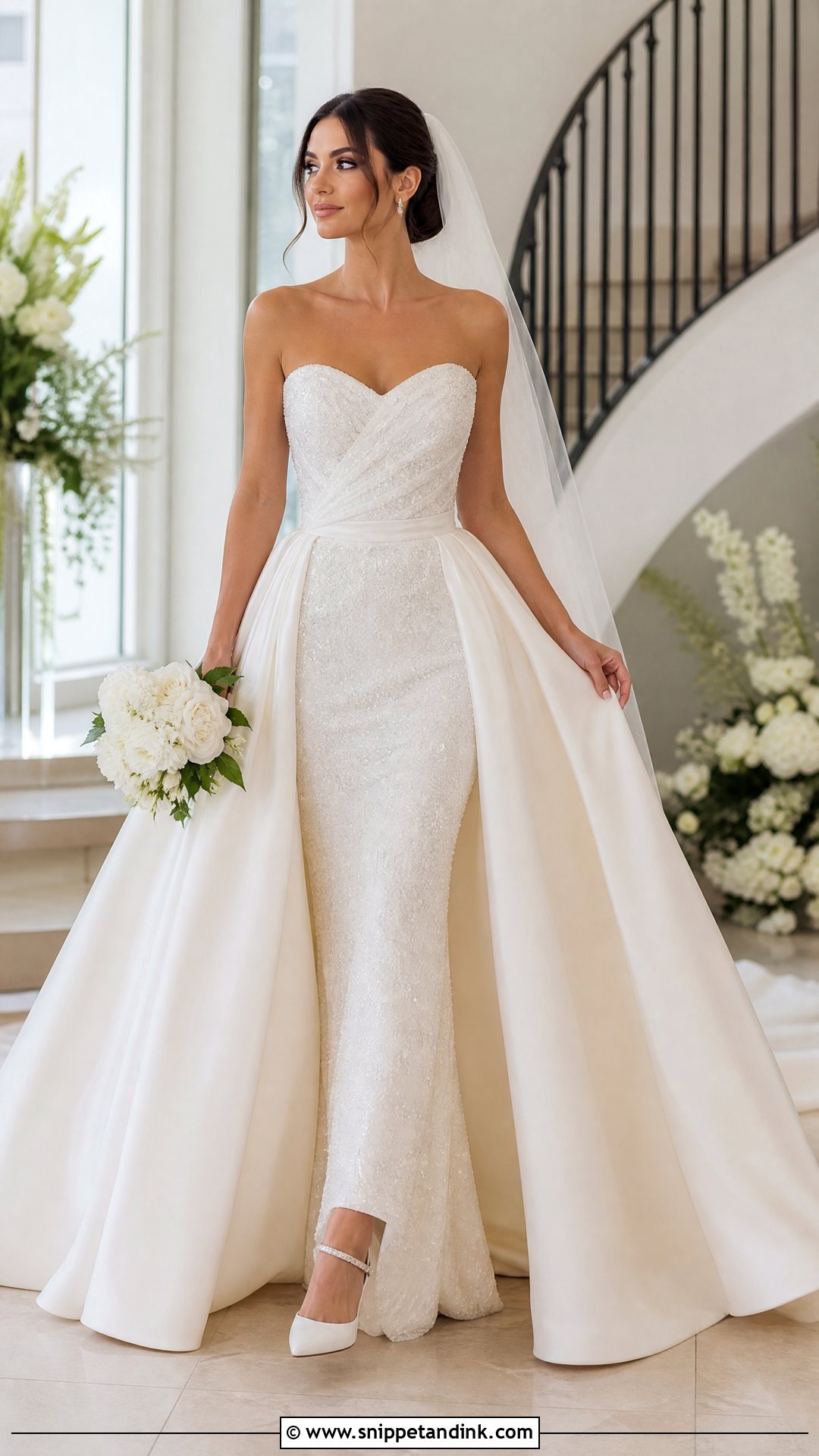
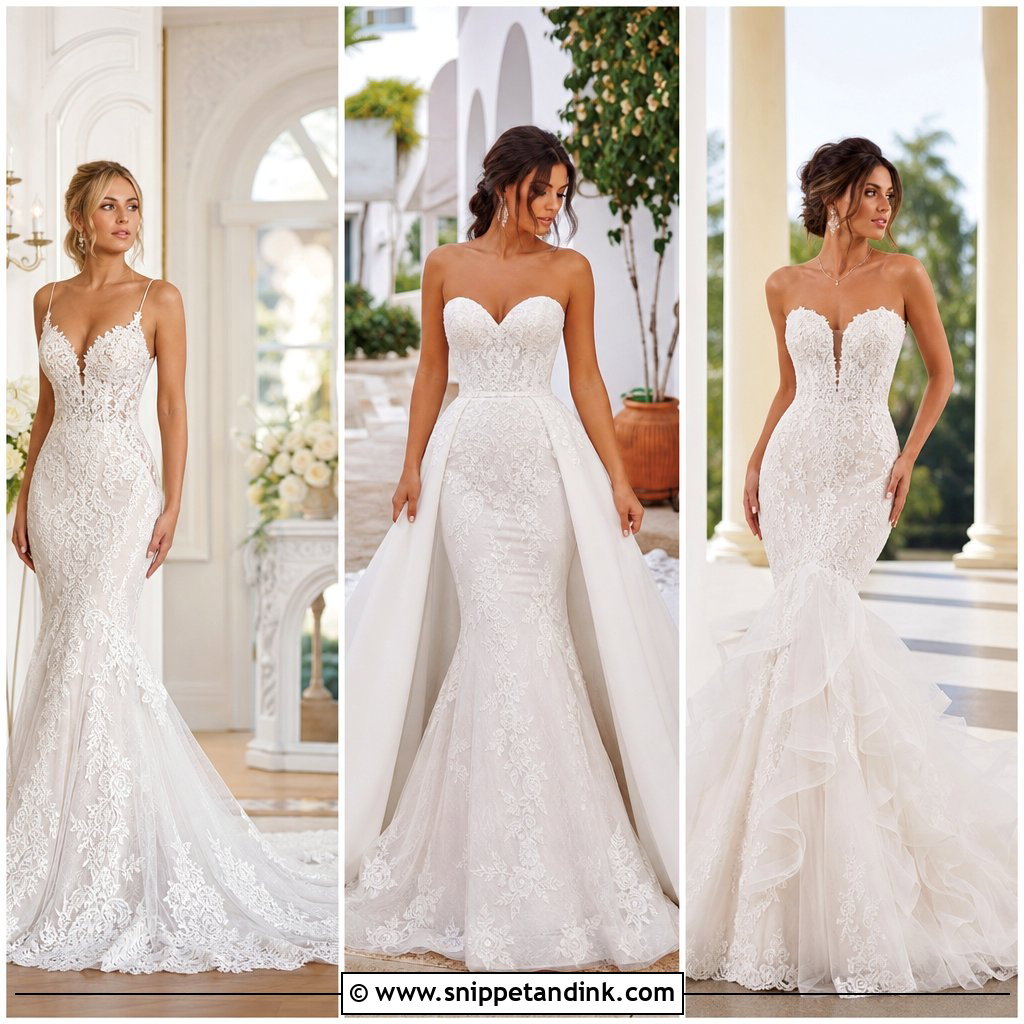
An overskirt gives you a grand ceremony look and a lighter reception dress without a second gown. The full skirt attaches at the waist and comes off for dancing, revealing a fitted, A-line or slim base dress. Practise removing it before the wedding, and make sure the base dress is hemmed for the same shoes, since one pair has to work with both lengths. A long veil for the ceremony and a hair accessory afterward mark the change.
23. Embroidered Ballroom Wedding Dress
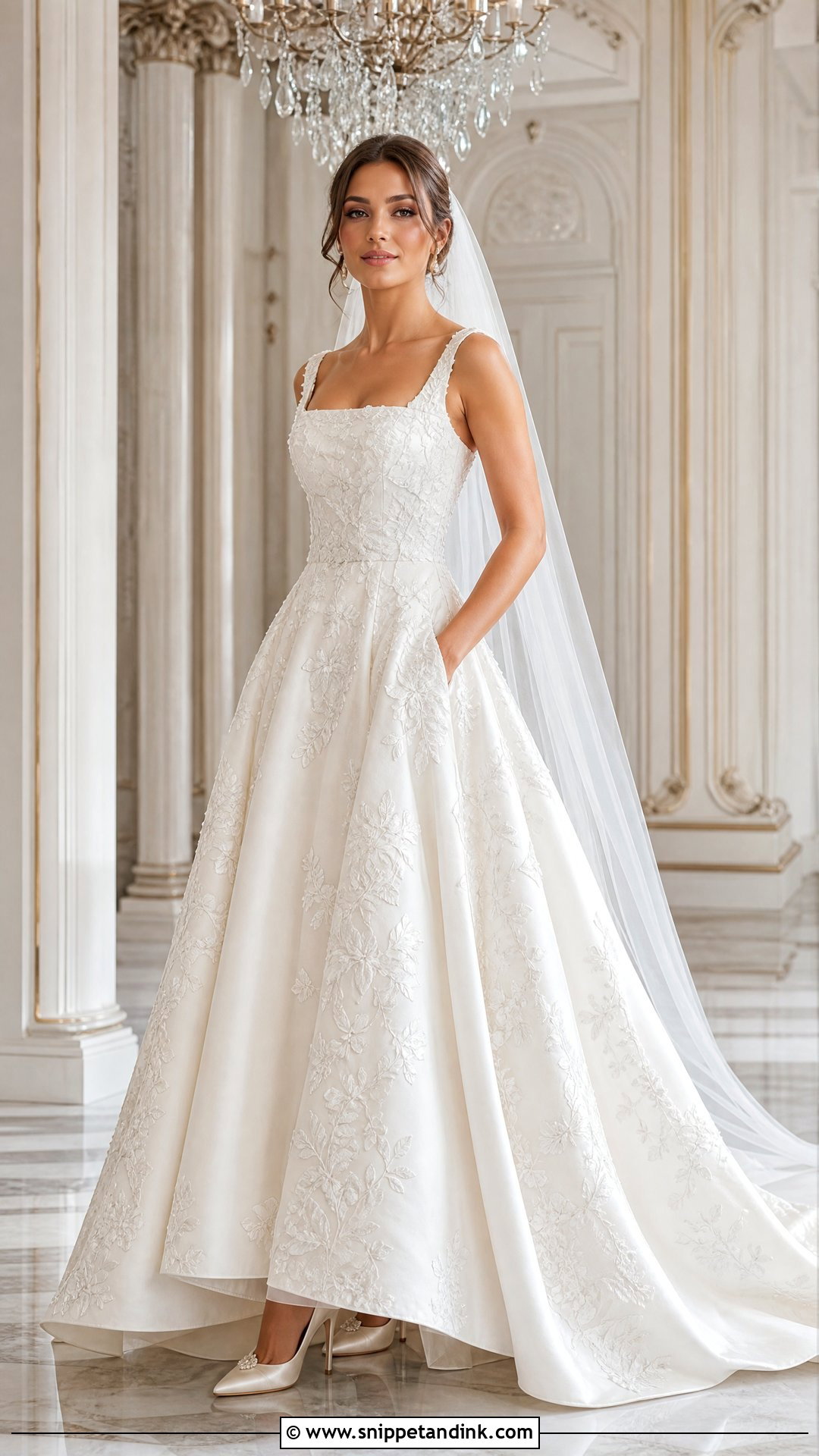
Embroidery gives texture without sparkle: floral vines, leafy patterns, scrollwork or fine detail across the bodice and skirt. It works on tulle, organza, satin or lace. A full skirt gives the embroidery room to show in photographs. Thread embroidery is generally lighter than beading, so it’s comfortable for a long evening. Keep accessories simple, pearl earrings, a soft veil and ivory heels, and choose an updo or loose waves based on the neckline.
24. Halter Ballroom Wedding Dress
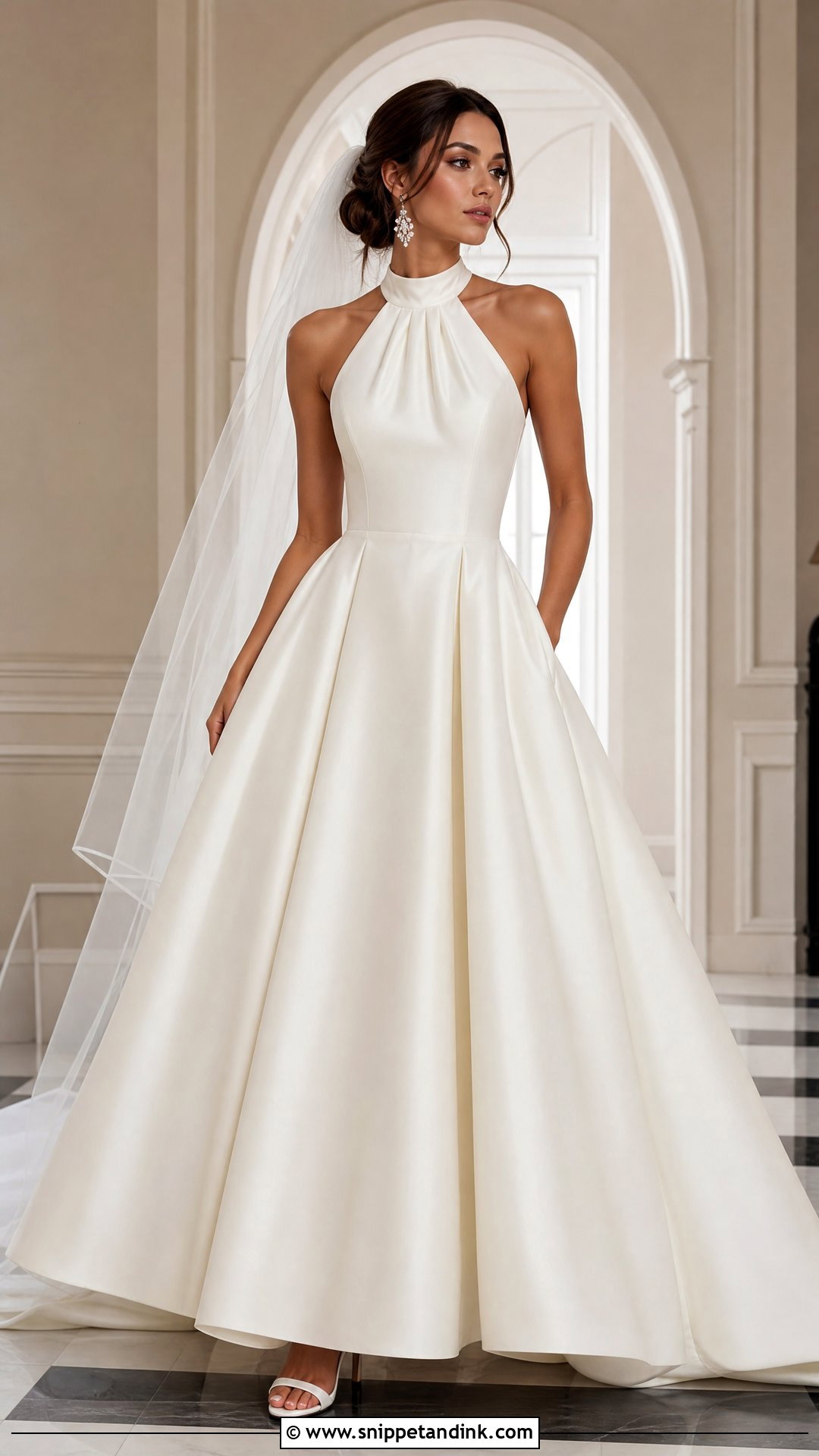
A halter draws the eye to the shoulders and arms, which makes it modern and confident. For a ballroom, pair it with a full skirt so the look stays formal. A high halter is sleek; a soft lace halter is more romantic. The weight of the skirt hangs partly from the neck strap, so make sure the bodice has internal support, otherwise the strap will dig in by dessert. Skip the necklace. A low bun or smooth ponytail, satin heels and a simple veil or detachable train complete it.

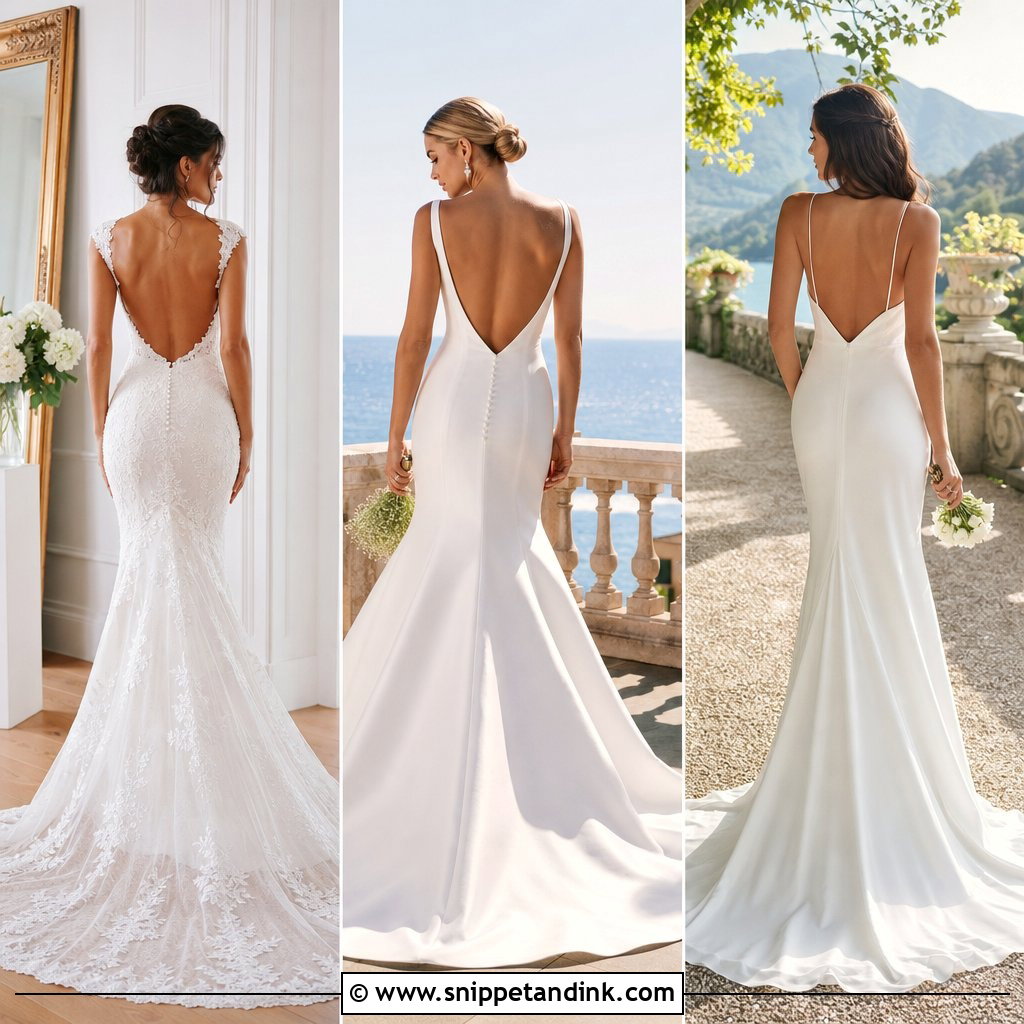
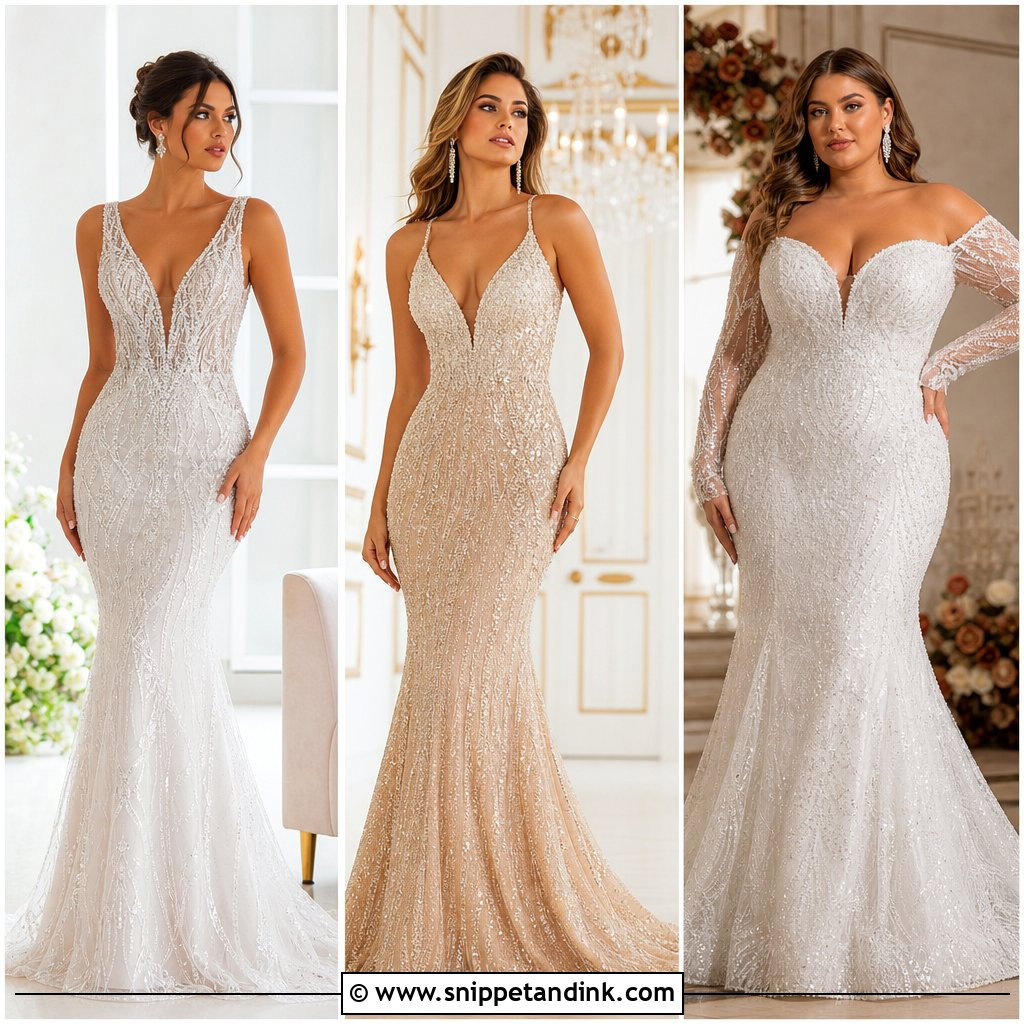


25. Vintage Ballroom Wedding Dress
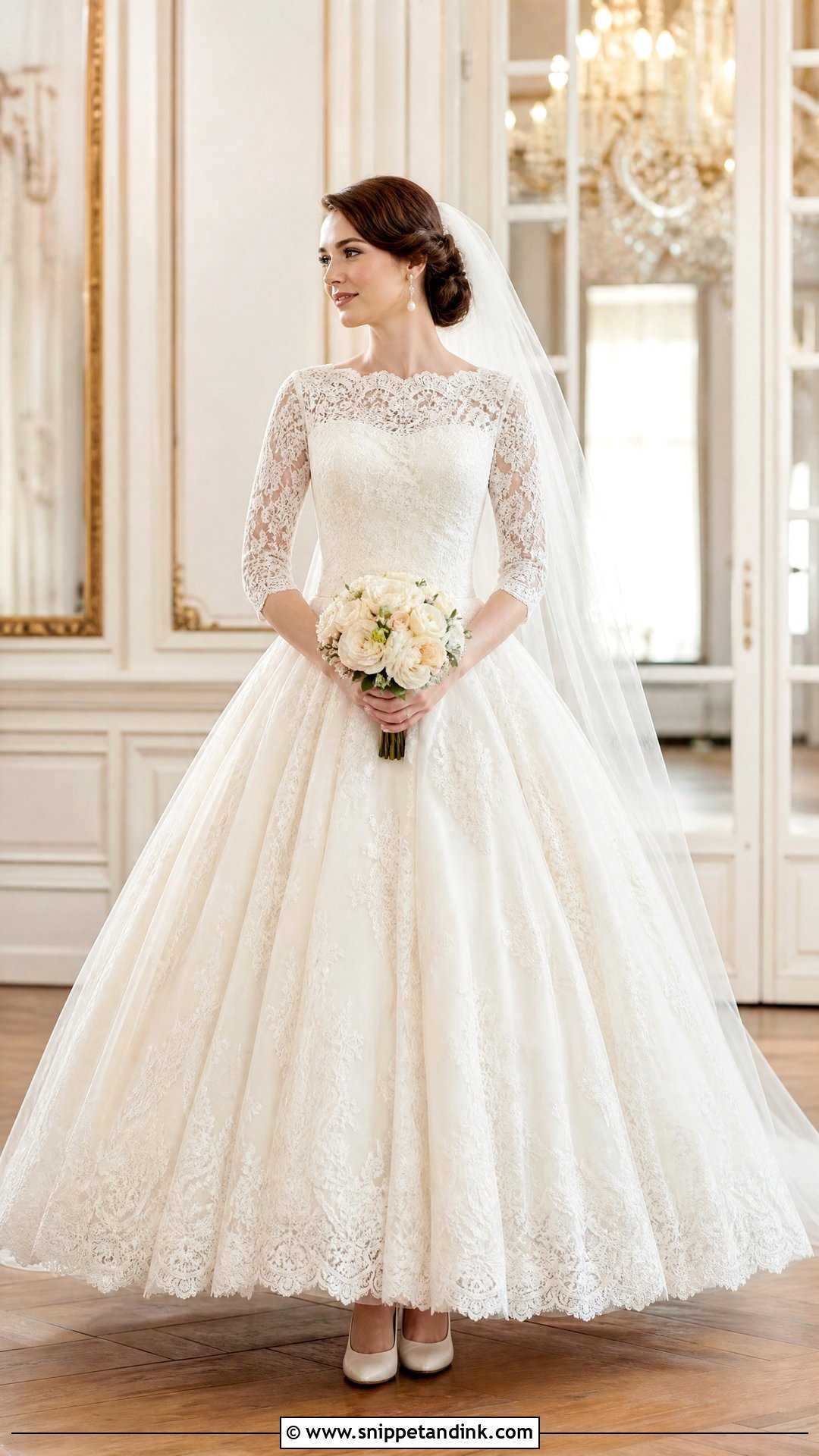
A vintage ballroom wedding dress picks up details like lace sleeves, covered buttons, a Basque waist, brocade or delicate embroidery. The skill is taking inspiration rather than recreating a costume: one or two vintage details on a well-fitted modern structure. Ivory, cream and champagne suit the look. Pearl earrings, a soft veil, classic pumps and neat hair complete it, and a vintage-inspired gown sits comfortably in a formal room because it shares the same sense of occasion.
Rehearse Walking in a Full Skirt
A full skirt needs a different walk. Nobody tells you this until the final fitting, and that’s too late to get comfortable with it. Ask to walk around the shop in your sample size with shoes of a similar height, and practise at home in a long full skirt or petticoat if you have one.
- Take slightly shorter steps and kick the front of the skirt forward gently with each step so your toes don’t catch the hem.
- On stairs, lift the front of the skirt with both hands, not the sides; let the back trail behind you.
- To turn, take two or three small steps in a curve rather than spinning on one foot, so the train follows instead of wrapping your ankles.
- Sit on the front edge of the chair and let the skirt settle around you; with a hoop or stiff petticoat, lift the back slightly as you sit.
- Have the bustle set up and tested before the first dance so your partner isn’t stepping on the train.
Keep a small kit with your maid of honor: safety pins, a needle and thread in the dress colour, clear nail polish for a tulle snag, fashion tape for a slipping neckline and a white chalk stick to cover small marks on ivory or white fabric.
Does Your Gown Read From the Back of the Room?
A ballroom can handle a fuller skirt, a longer veil and a more sculpted fabric than most venues, but the dress still has to feel like you. Satin, mikado, tulle, lace, pearls, bows, capes and soft colour all work when the gown is balanced and well tailored. Look at yourself from the front, back and side, because guests will see all three during the entrance, portraits and first dance. Let your accessories support the dress, and you’ll be ready for the room.
You'll Like These Ideas:




Leave a Reply