
A corset bodice does more work than any other part of a wedding gown. It shapes the waist, carries the bust so a strapless neckline stays put, and decides how the skirt falls from the hip. The ideas below run from lace and satin ball gowns to two-piece sets and a short reception dress, and I’ve styled each one as a full outfit with shoes, veil and flowers so you can see where the eye lands. When I fit a corset, I watch three things before I care about the lace: where the boning sits, how the back closes, and whether the bride can take a full breath while seated. A gown that passes those checks is one you can wear for twelve hours.
How a Corset Bodice Should Feel at Your Second Fitting
Most brides judge a corset by how it looks in the mirror. I judge it by what happens when you move. A well-built bodice carries the weight of the skirt from your waist and ribs, so your shoulders feel almost nothing. If you’re hitching the top up after a few minutes, the fit is wrong, however good it looks.
Here is what I check at a second fitting, once the major alterations are in:
- Breathing: sit down and take a deep breath. You should feel the bodice, but your ribs should still expand.
- Boning ends: run a hand along the bottom edge. A bone that presses into the hip or belly when seated needs shortening or a softer tip.
- Top edge: lean forward as if signing the register. A strapless neckline that lifts away from the chest needs taking in at the top, not tighter lacing.
- Back closure: a lace-up back should meet with an even gap all the way down. A wide gap at the bottom and none at the top means the shape is off.
- Underarms: hug someone. Pinching or a red line afterwards means the bodice is cut too high there.
Wear the shoes and undergarments you’ll actually marry in. Heel height changes your posture and so changes where the waist sits. Many corset gowns have built-in cups, so a separate bra often isn’t needed, but bring it anyway and let the seamstress decide.
When to say no to a corset
If you have rib or back pain, are pregnant, or simply hate feeling held in, a softly structured bodice with light boning is the kinder option. It still gives a defined waist without the firm compression of true corsetry.
1. Strapless Satin Corset Bridal Dress
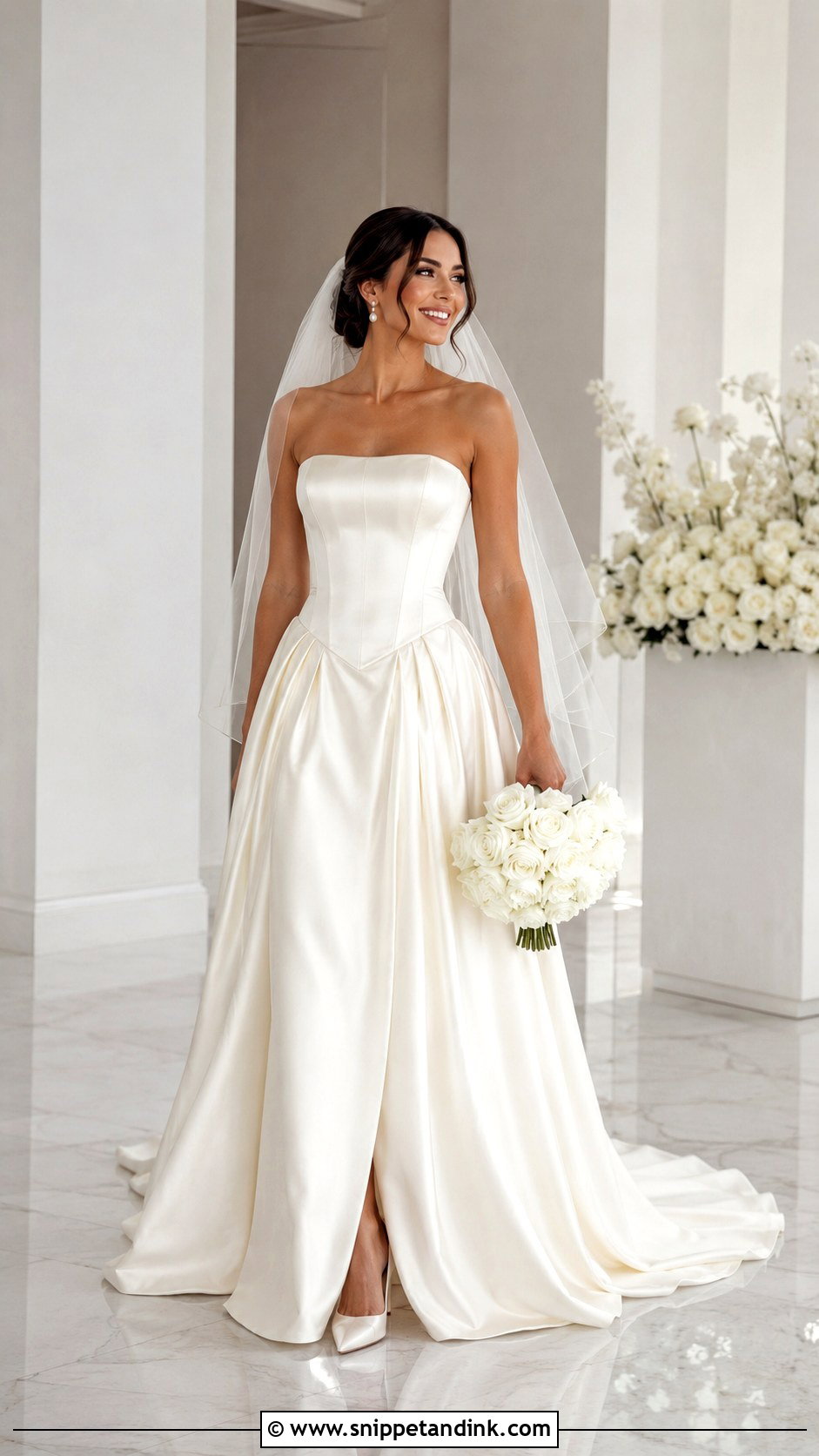
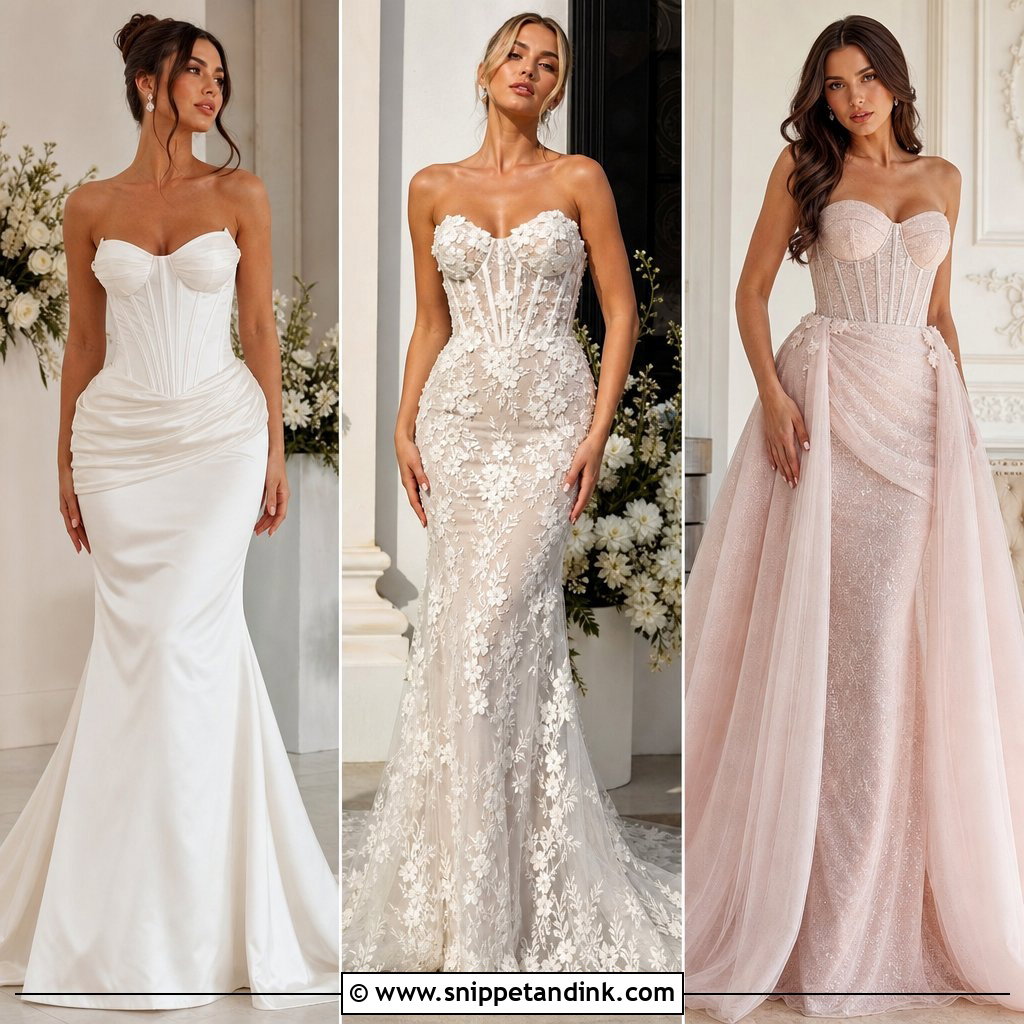
Satin hides nothing, which is exactly why a strapless satin corset looks so expensive when the seaming is right. I look for curved princess seams over the bust and spiral steel boning, because plastic boning in satin tends to ripple at the side seams by the end of the night. A gathered A-line skirt keeps the lower half calm, and a subtle basque waist gives the bodice a point to finish on. Pointed ivory pumps, pearl drops and a fingertip veil are enough; satin reflects light on its own. At the fitting, lift both arms above your head. If the neckline drops away from your chest, the bodice needs taking in at the top edge, not a tighter lace.
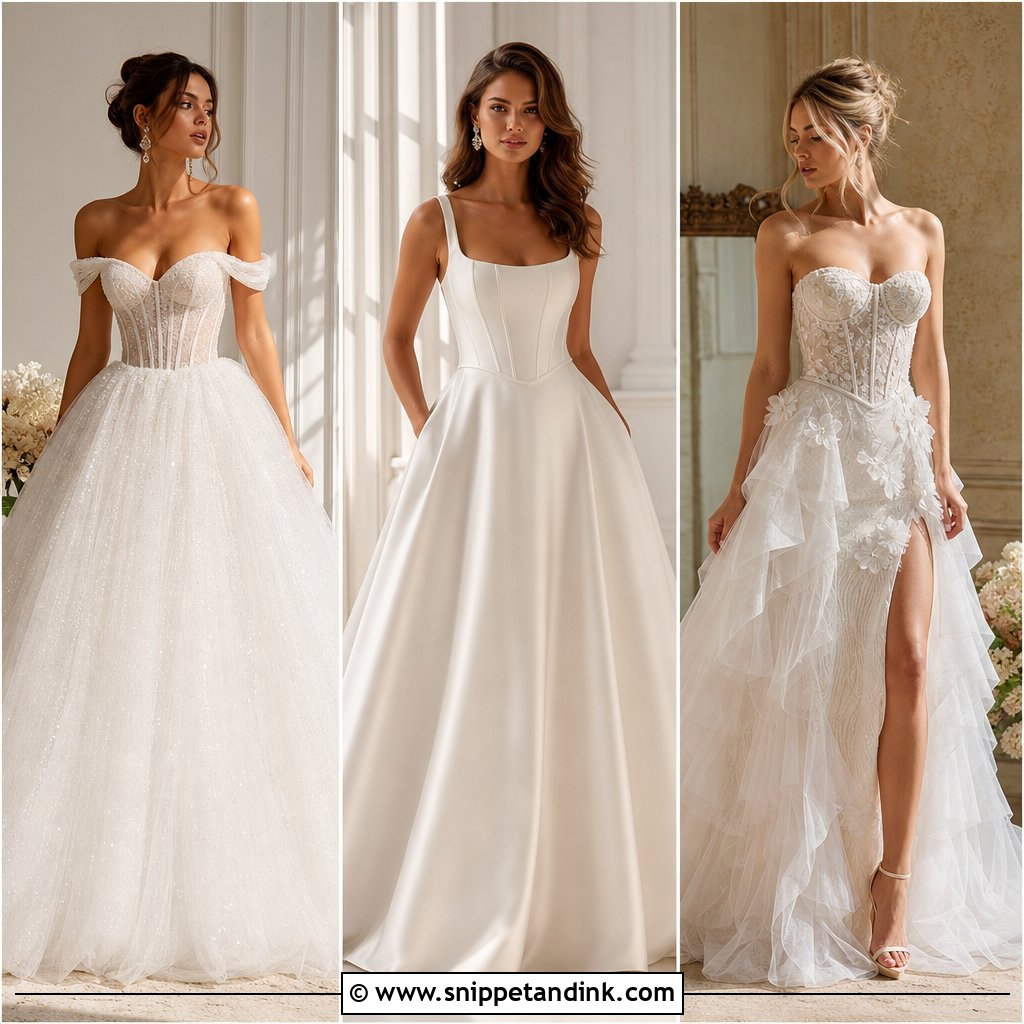
2. Lace Corset Ball Gown Wedding Dress
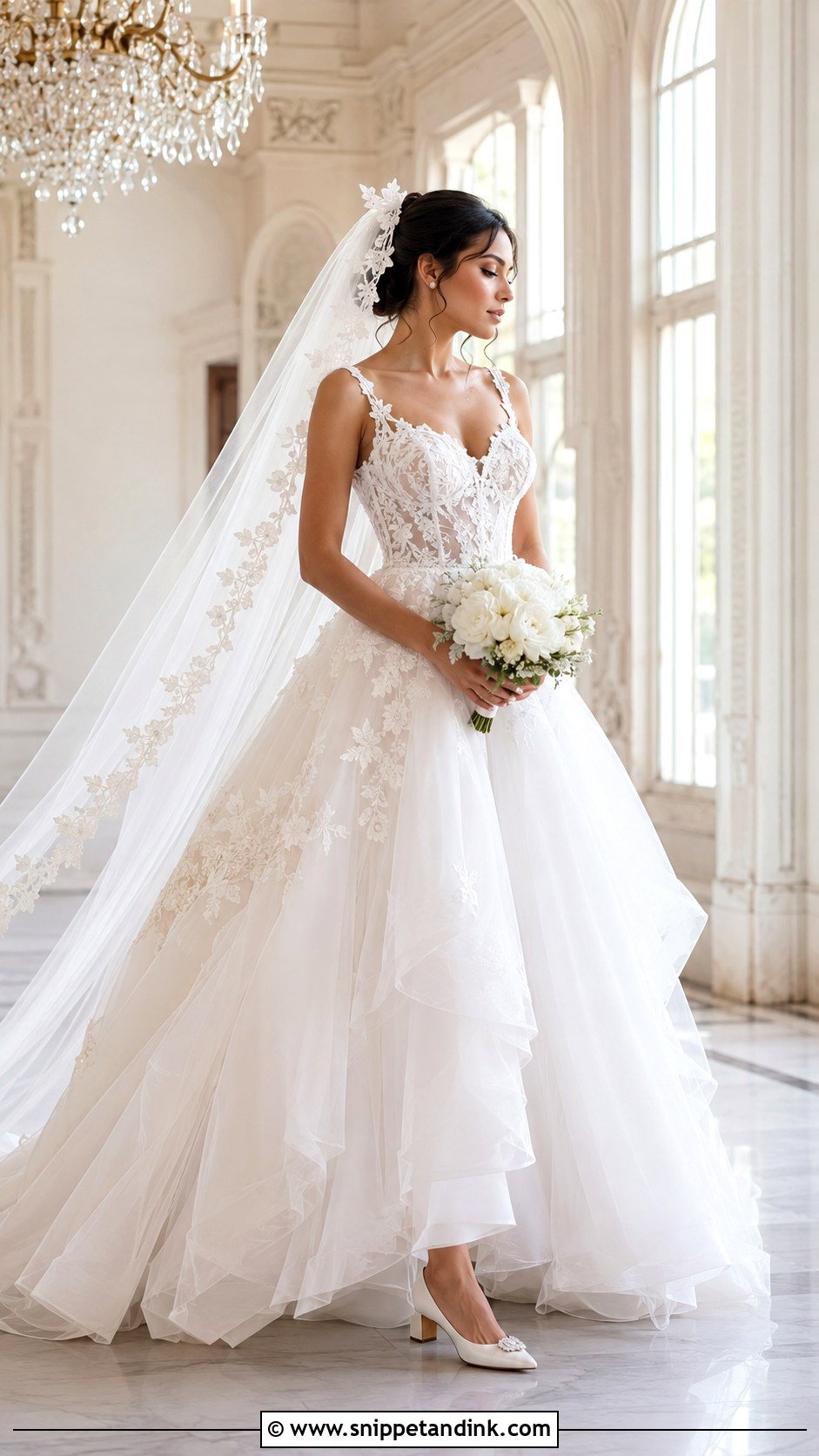
Ball gowns are heavier than brides expect, and most of that weight hangs from the corset. That is the reason I like a lace bodice with visible boning here: the structure has a job, carrying several layers of tulle without collapsing at the waist. A gently curved neckline keeps the top from looking armoured. Low block heels disappear under the skirt and save your feet on a long aisle. A cathedral veil with a narrow lace edge is plenty against the busy bodice. Before you commit, ask the shop how the skirt bustles and whether it has a horsehair hem or a hoop, because that changes how you sit in the car.
3. Basque Waist Corset Bridal Dress
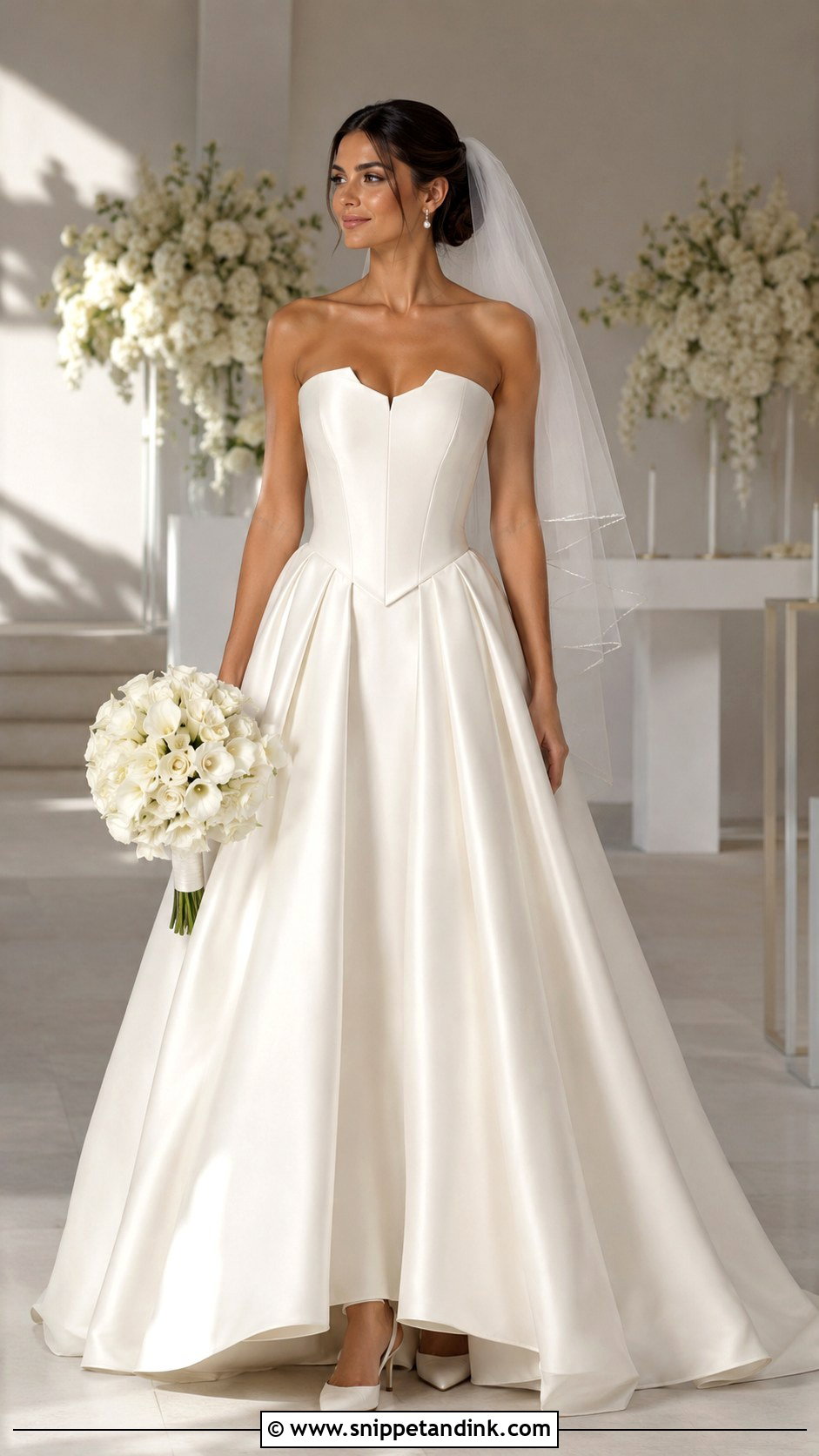
The pointed shape of a basque waist draws a long V down the front, so the torso reads longer and the full skirt looks deliberate rather than gathered. Mikado holds this shape best because it is stiff enough to keep the point crisp. Keep the hair sleek and the jewellery small; the waistline is the detail. The one fitting problem I see with a basque is the point digging into the lower belly when you sit. Sit on a hard chair at every fitting and ask the seamstress to soften the point by a little if you feel it.
4. Sheer Corset Tulle Wedding Dress
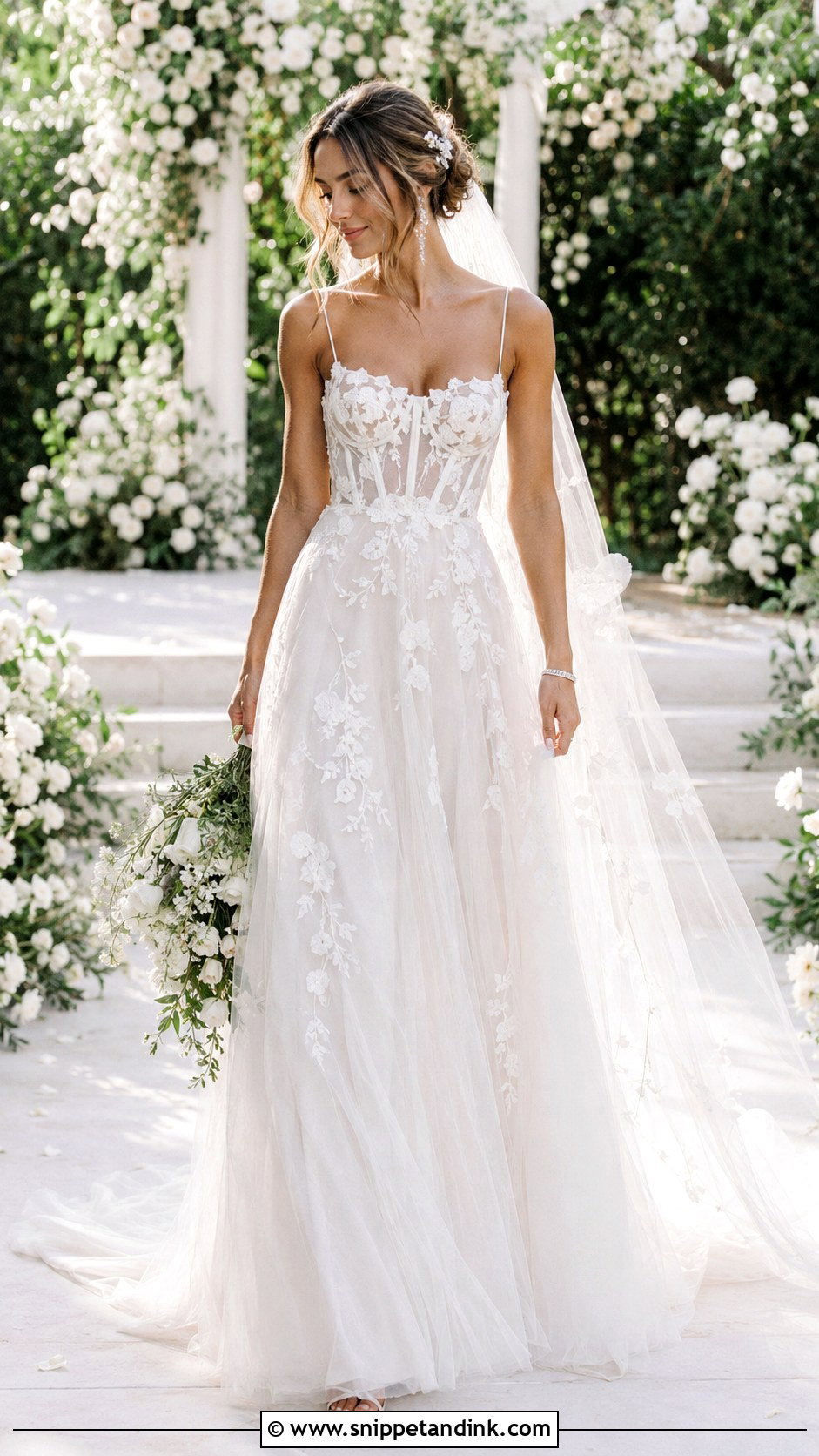
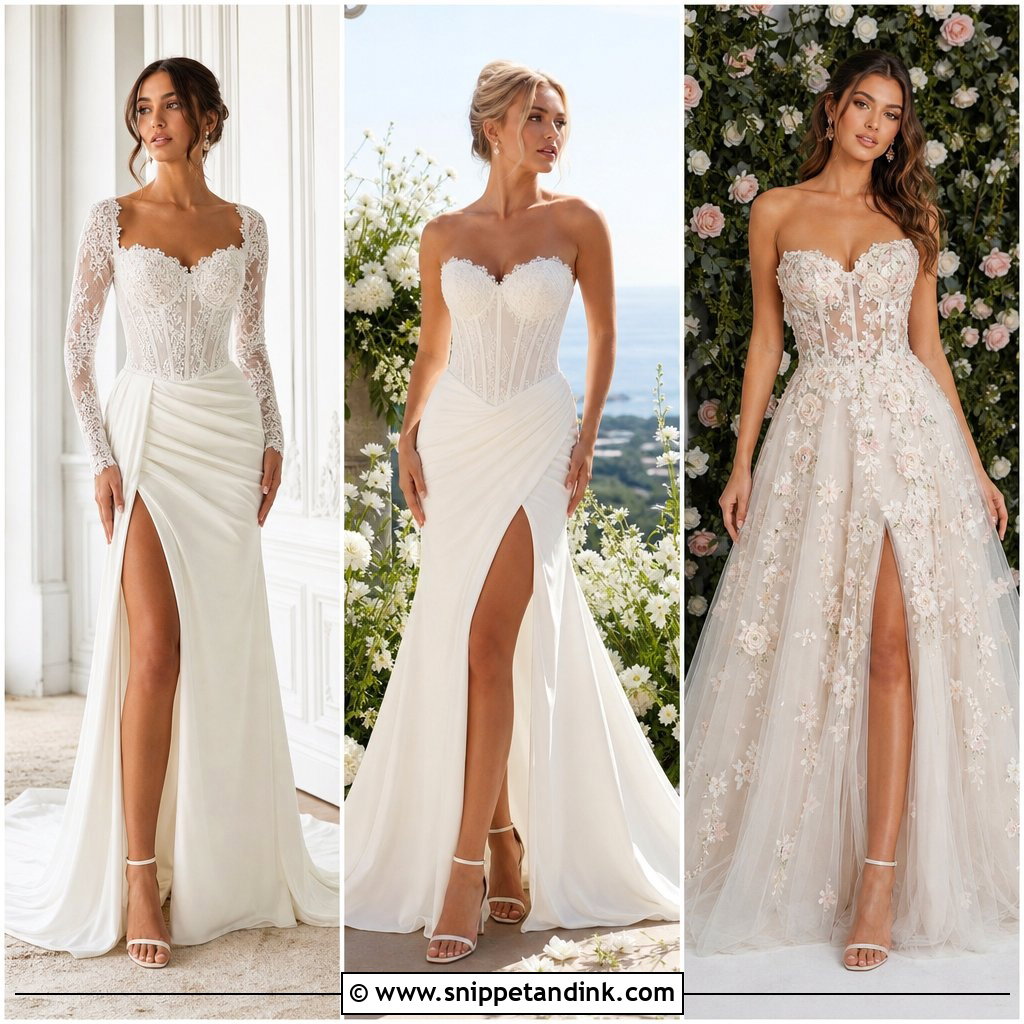
Sheer corsets look delicate on the hanger and then surprise people under a camera flash, which can turn a nude mesh almost transparent. I always ask brides to photograph the bodice with the flash on, in the fitting room and outside, before deciding on lining or extra appliqué over the bust. If you want more coverage, a skin-tone cup lining is a cleaner fix than adding lace later. A tulle A-line skirt, barely-there sandals and a plain chapel veil let the bodice stay the focus. Floral hairpins can echo one of the appliqué motifs, but stop at two or three.
5. Long Sleeve Lace Corset Wedding Dress
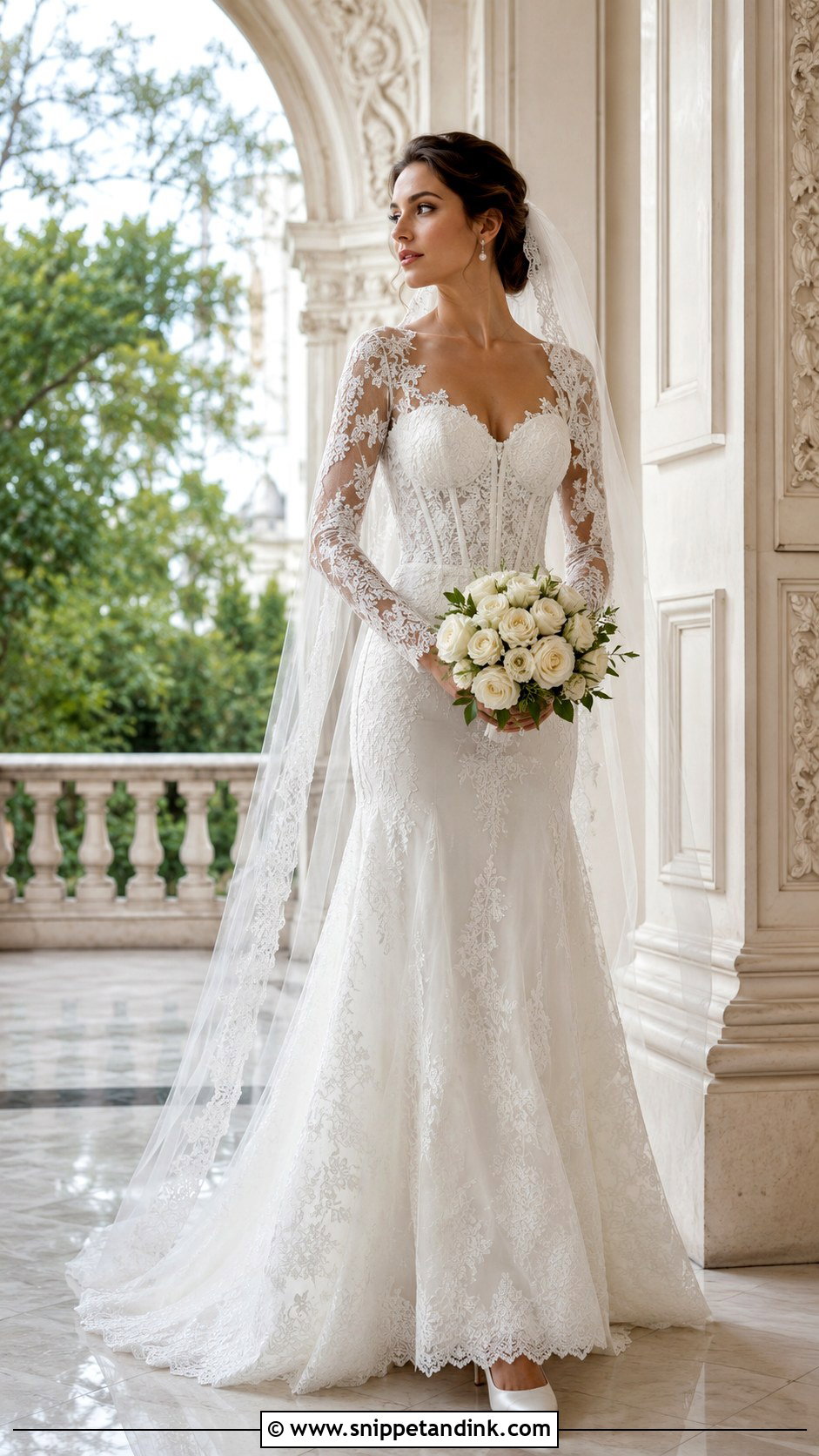
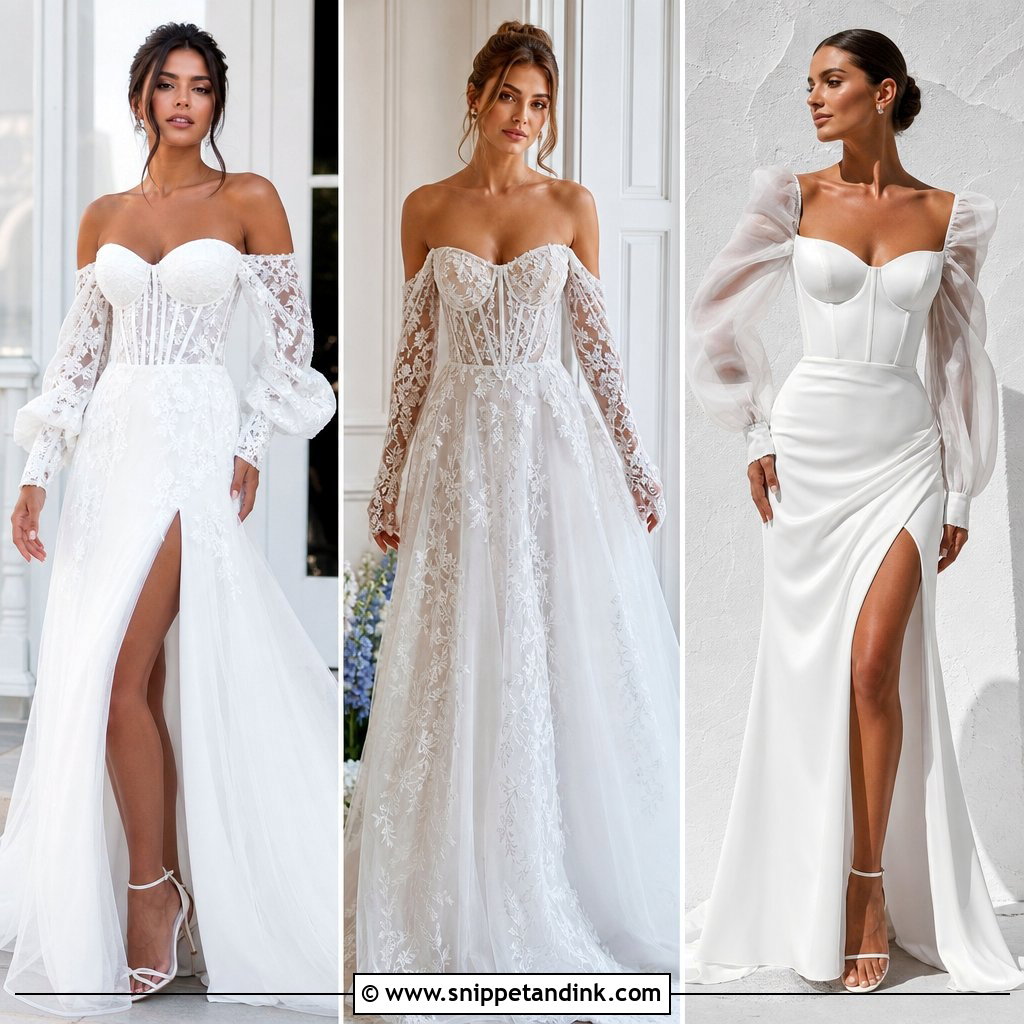
Long lace sleeves soften the hard lines of a corset, and they help in a cool church or an evening garden. A structured sweetheart bodice beneath illusion lace gives you the shape while the sleeves cover the arms. The weak point is the underarm: if the sleeve is cut too narrow there, every hug pulls the bodice up. At the fitting, cross your arms and reach forward as if hugging someone. Stretch lace and a gusset under the arm fix most of the trouble. Keep the bouquet compact so the sleeve detail stays visible.
6. Off Shoulder Corset Bridal Gown
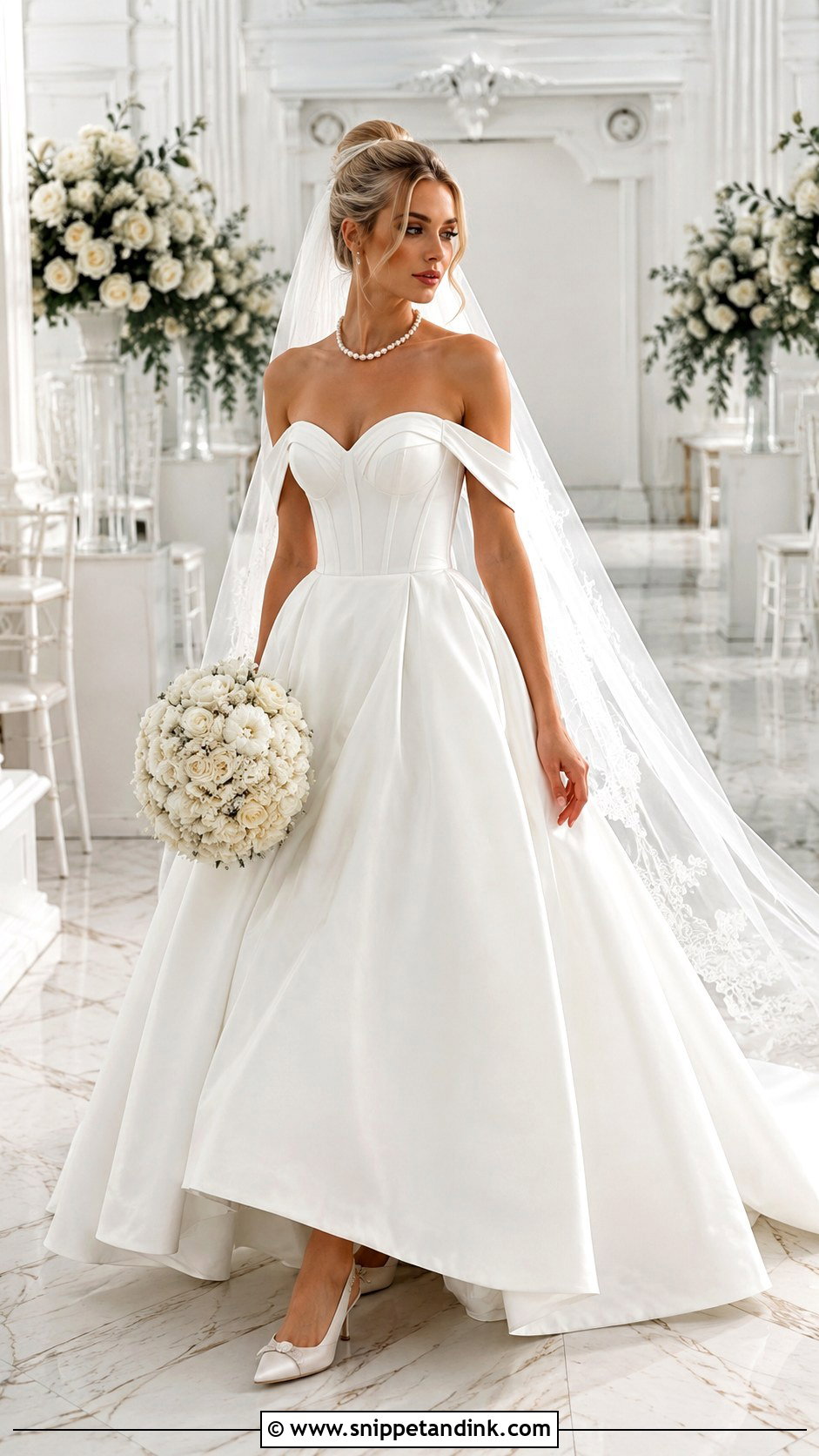
Off-shoulder straps look lovely when you stand still and slide when you dance. That is the honest trade-off. I want the bands anchored to the bodice by elastic or a hidden stay, and the corset itself fitted so it holds the dress up without any help from the straps. A short pearl strand and a low chignon keep the collarbones clear. Before the final fitting, slow dance with someone and check the straps afterwards. If they have climbed onto the shoulder or dropped to the elbow, they need adjusting now, not on the day.
7. Square Neck Corset Wedding Dress
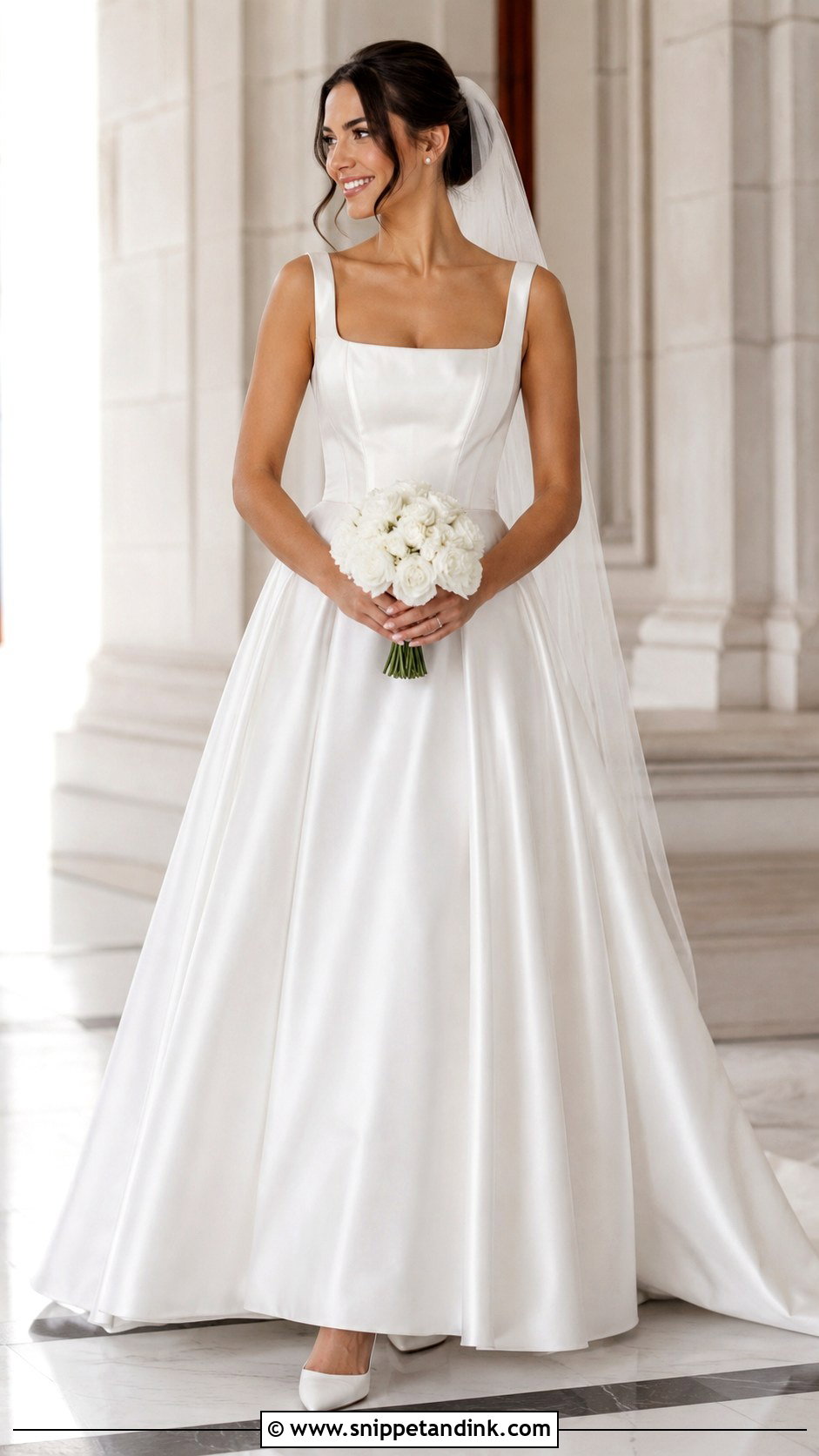
A square neckline has to lie flat against the chest or it gapes as soon as you lean in, and that is the first thing I check on this dress. Wide straps help because they share the load with the boning. Satin and a clean A-line skirt suit both a registry office and a ballroom. The open neck can take a fine pendant, though plain pearl studs often look sharper with the straight edge. A neat bun or smooth half-up style repeats the geometry. If you want texture, choose tonal embroidery; a contrasting colour breaks the neckline in photos.
8. Sweetheart Corset Mermaid Wedding Dress
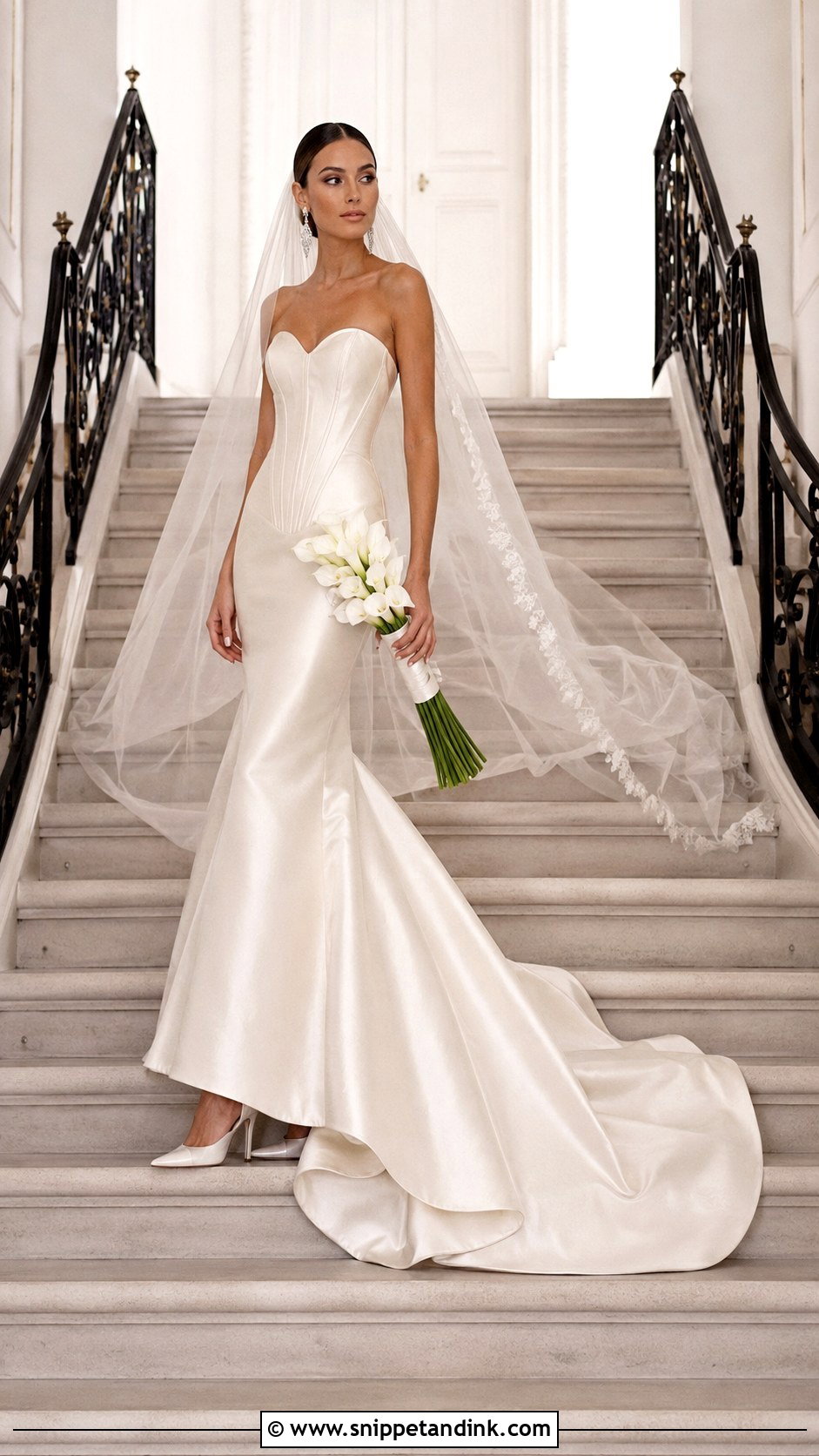
A sweetheart corset mermaid wedding dress follows you through the hip and only releases near the knee, so where that flare starts decides whether you can walk. Too high and the gown looks short-waisted; too low and you shuffle. Satin gives a sleek line, lace a softer one. A long veil that passes the train and a narrow bouquet keep the silhouette readable. Take full strides and climb a stair at every fitting, and ask for a bustle that lifts the train cleanly, since mermaid trains drag on a dance floor.
9. A-Line Corset Wedding Dress
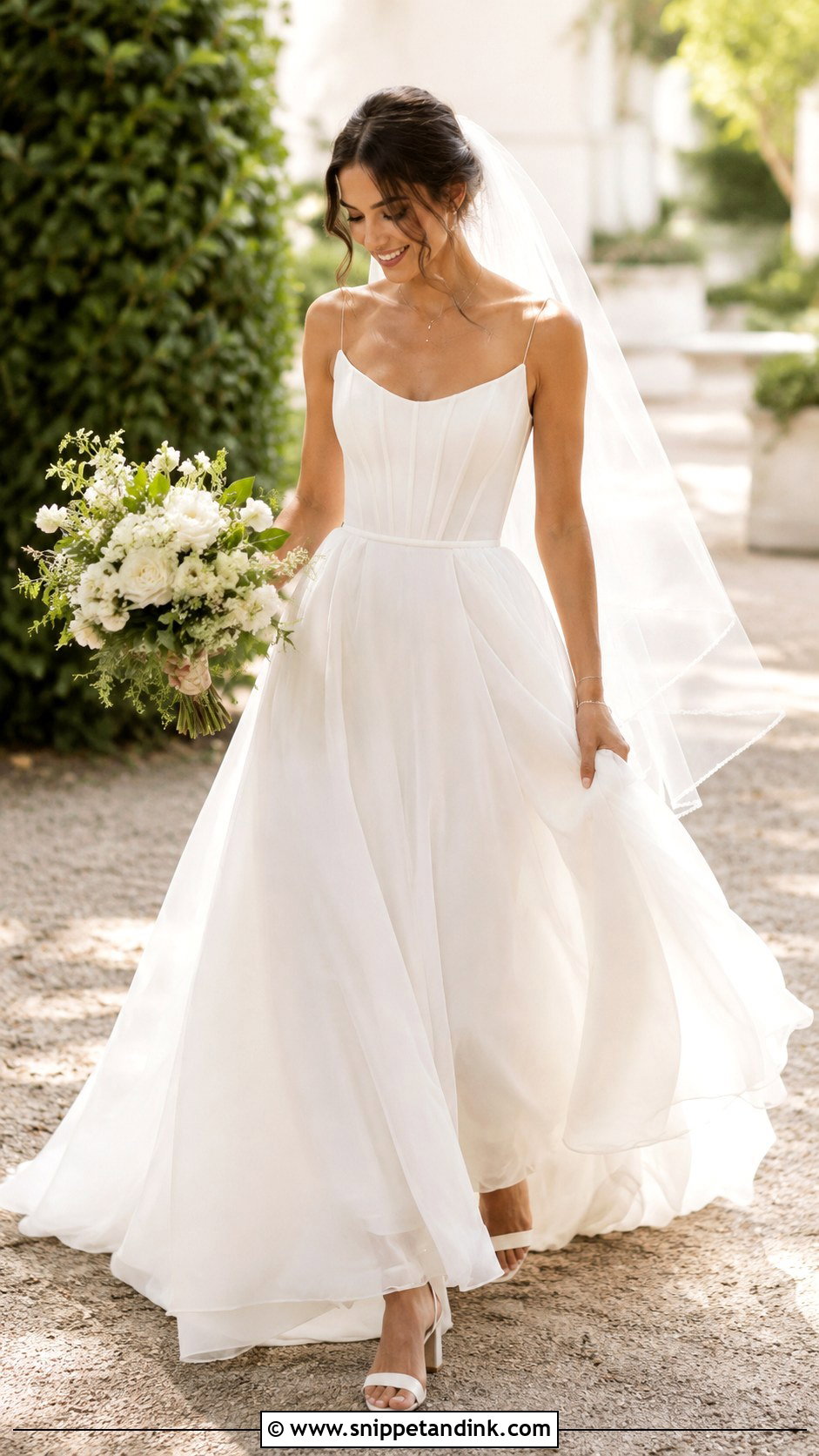
If you’re unsure about corsetry, start here. An A-line skirt gives your legs room while the bodice still defines the waist, and it suits a barn, a beach or a ballroom without much fuss. Chiffon and organza move more than tulle, which matters in a breeze. Block heels, a fingertip veil and a loose low bun keep things relaxed. Outdoors, walk across grass in the actual shoes; a hem that skims the floor on carpet will catch on lawn.
10. Drop Waist Corset Wedding Dress
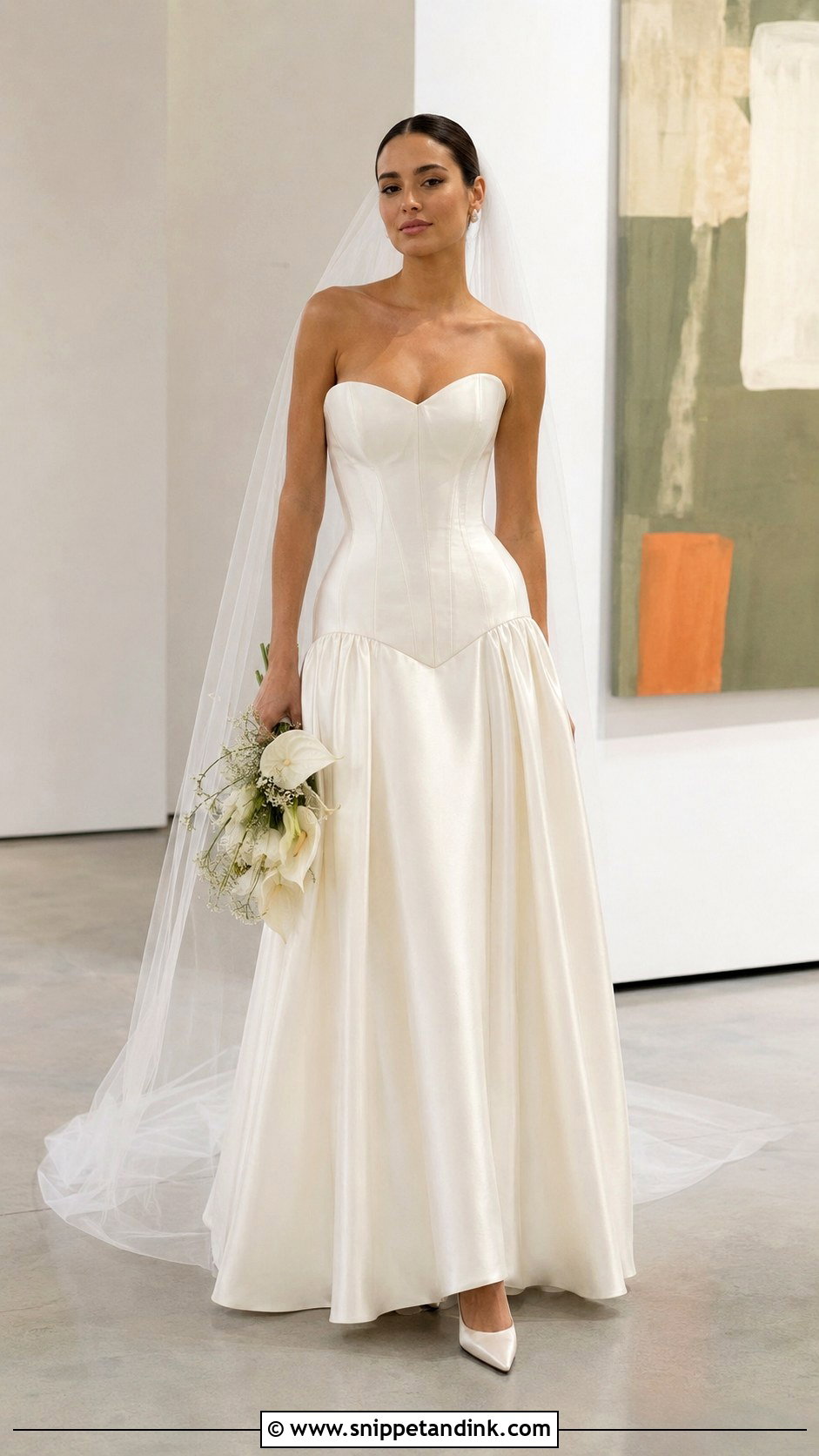
Dropping the fitted section below the natural waist lengthens the whole body, but it also means the boning ends where your hips bend. That is why fit is everything on this style. Structured satin with a rounded neckline and a skirt opening at the upper hip looks modern and clean. I keep the accessories plain so the proportion is the story: pointed heels, one sculptural earring style, a floor-length veil. Sit down, bend to pick something up and climb a step. If the lower edge presses into the hip bone, the bones need shortening.
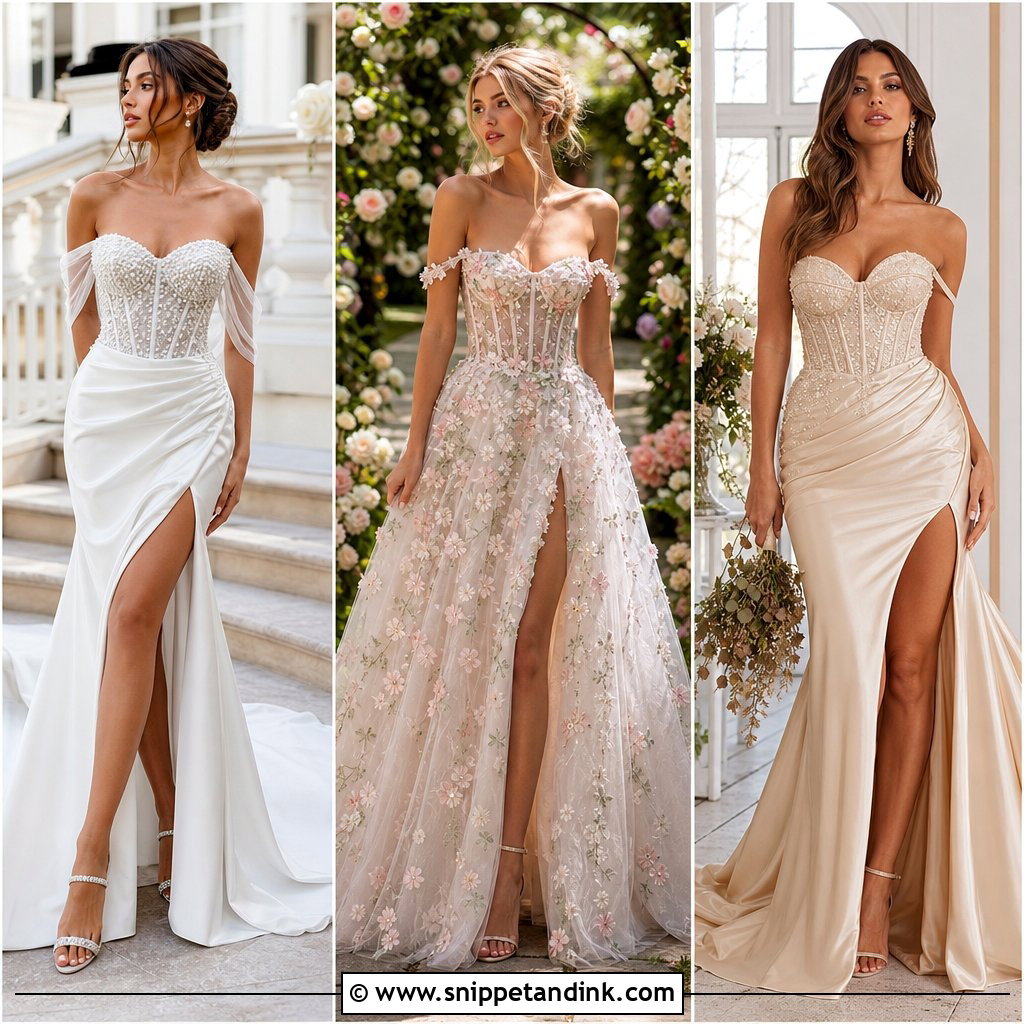
11. Floral Applique Corset Wedding Dress
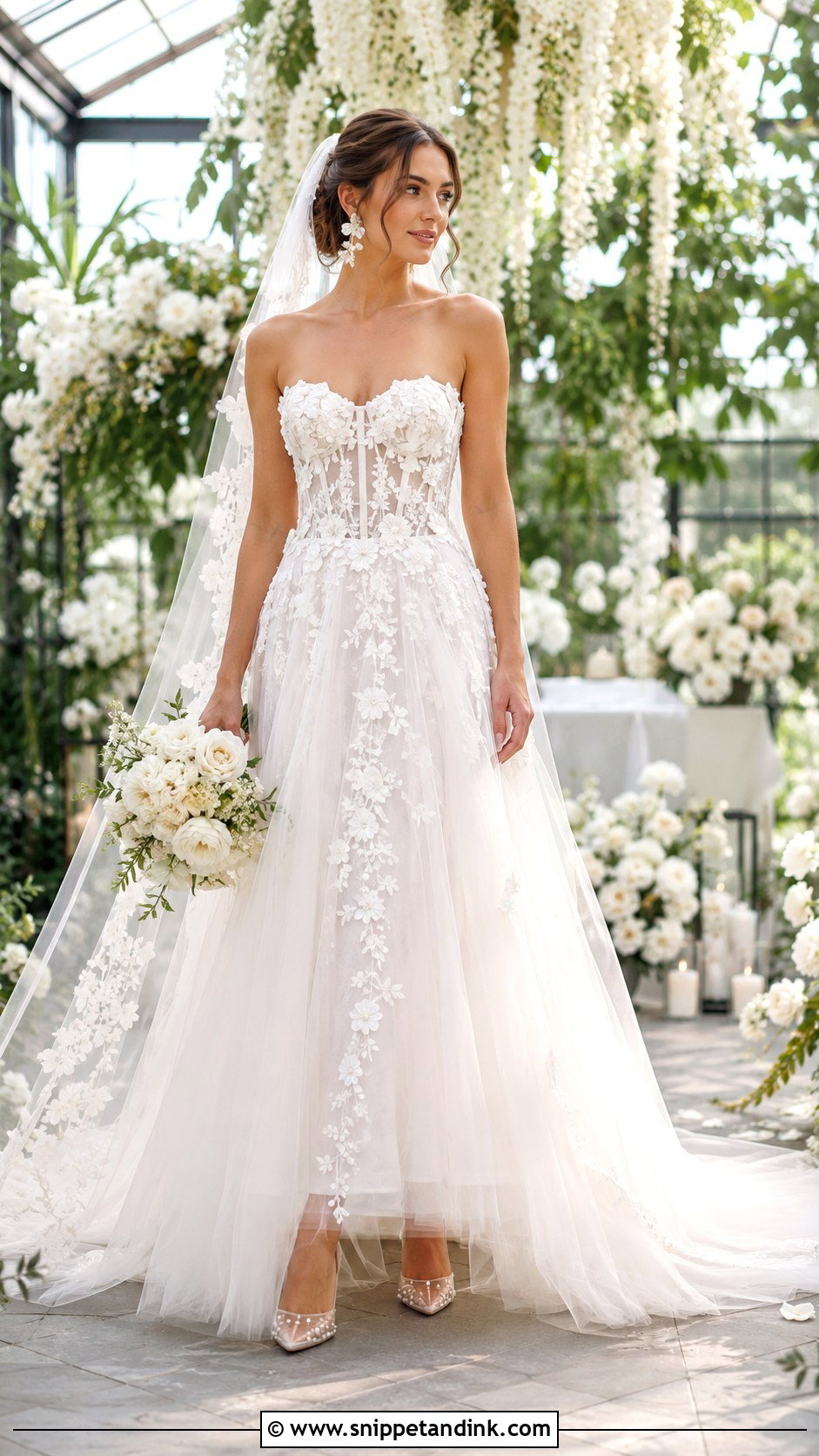
Three-dimensional flowers on a corset catch light differently from flat lace, so the bodice has depth even in soft venue lighting. I like when a few appliqués carry down onto the tulle skirt; it joins the two halves so the dress doesn’t look like a top sitting on a skirt. Keep the veil edge simple or match one small motif. The practical issue is snagging: raised petals catch veil netting and earring backs. Ask your seamstress to tack down any petal edge near the bust and underarm.
12. Pearl Corset Bridal Dress
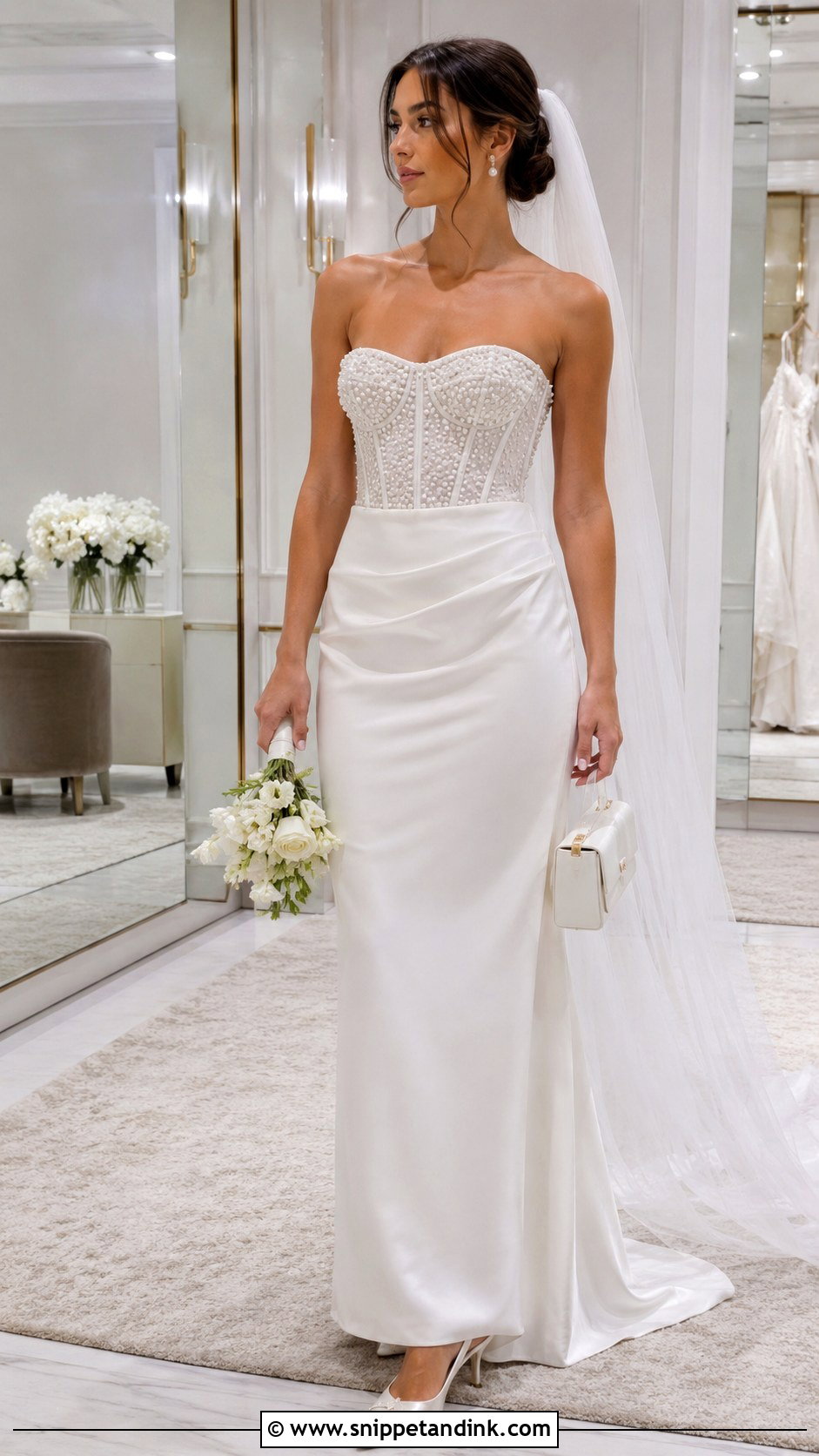
Pearls on a bodice add weight, and they sit right where your arms rub. That is where I look first, because a loose pearl at the underarm will be gone by the reception. Spaced embellishment on the corset with a plain satin or light tulle skirt keeps the dress from feeling heavy. Pearl studs and satin slingbacks repeat the detail without overloading it. Run a finger over every pearl near the seams at the final fitting and ask for any wobbly ones to be resewn. Skip bracelets with rough settings; they pull threads.
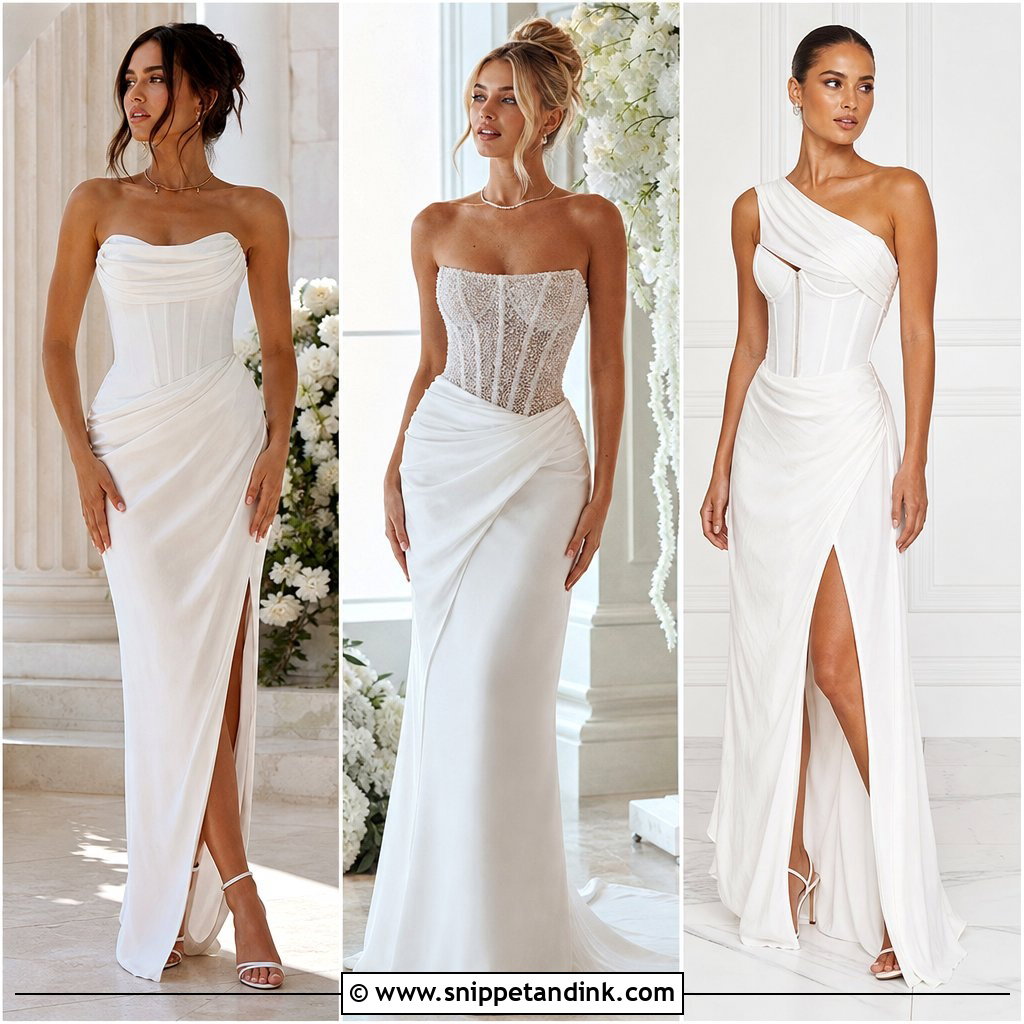
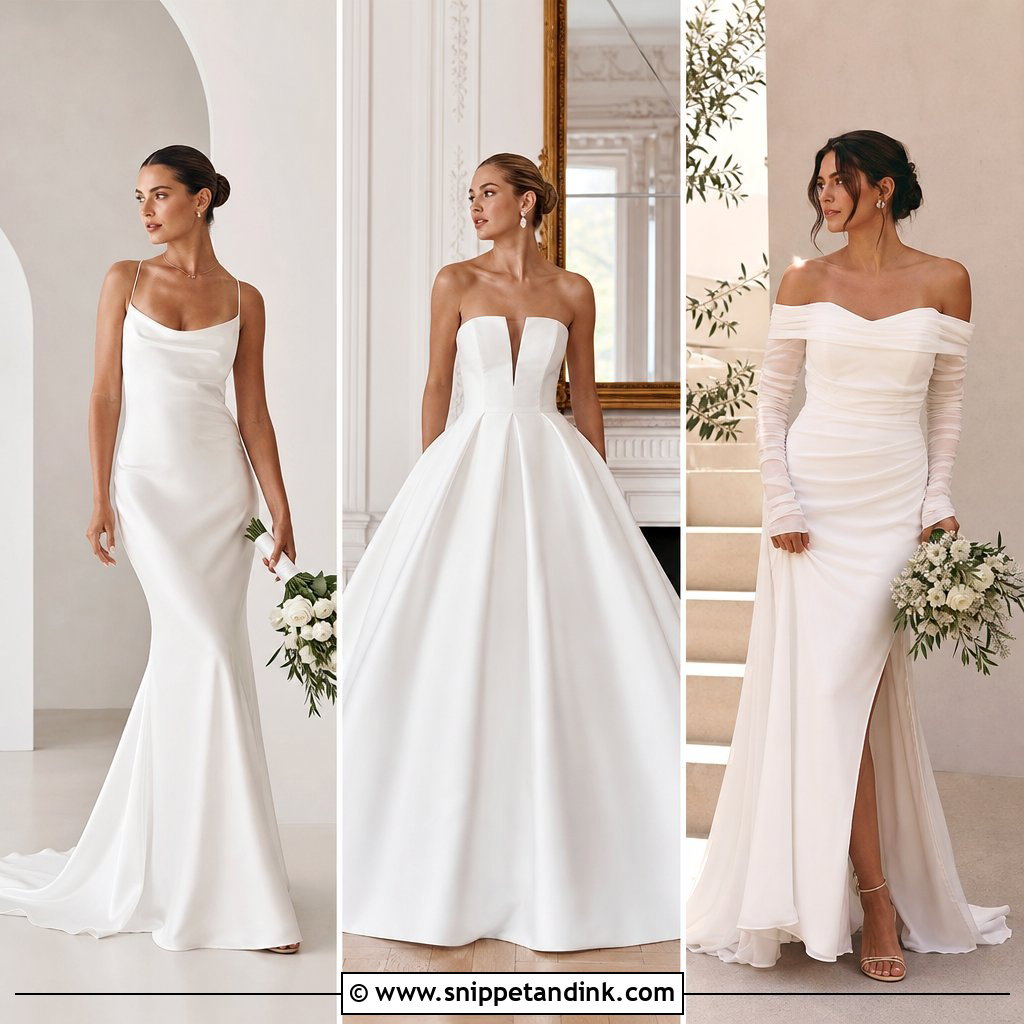
13. Minimalist Corset Column Wedding Dress
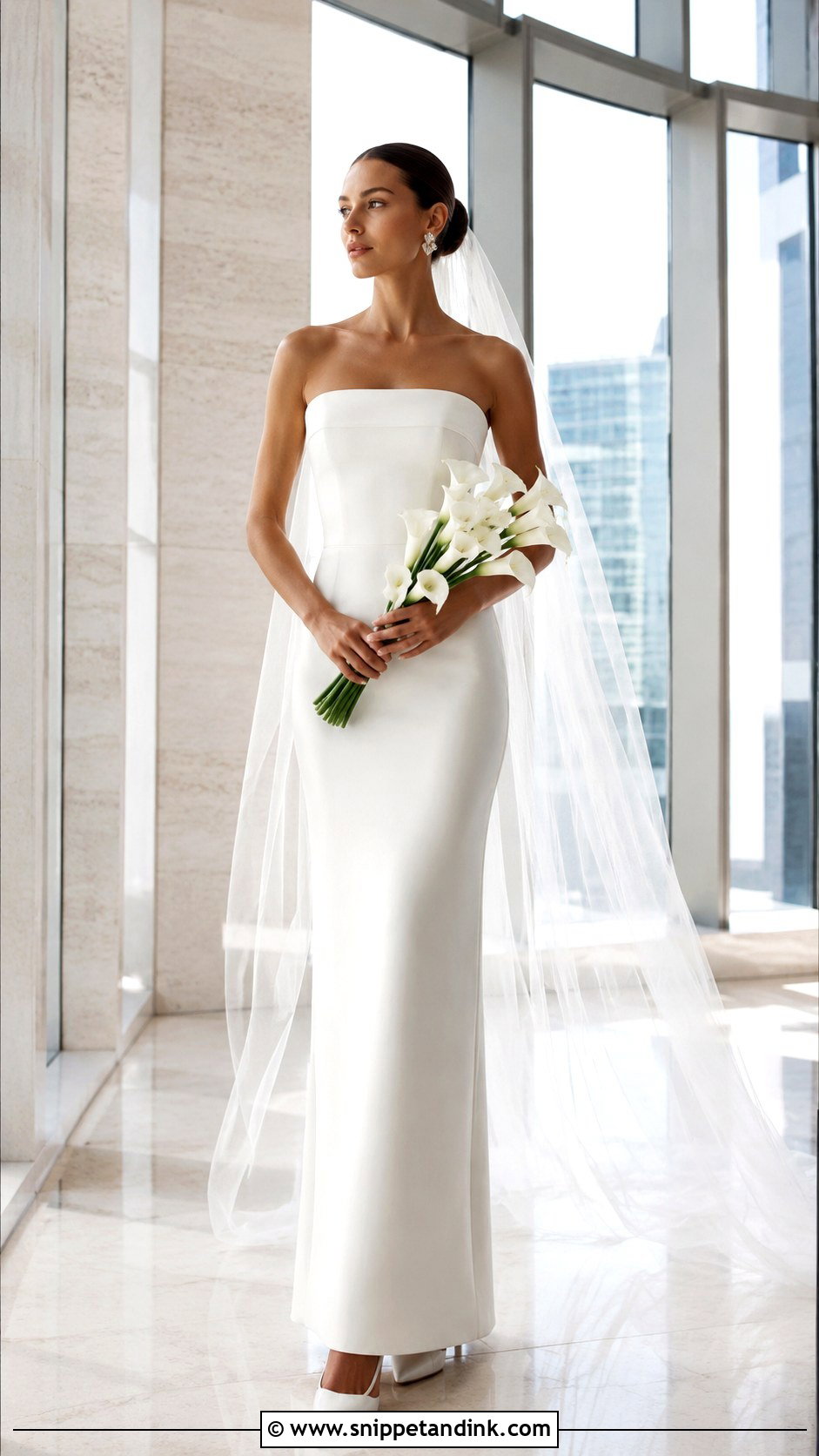
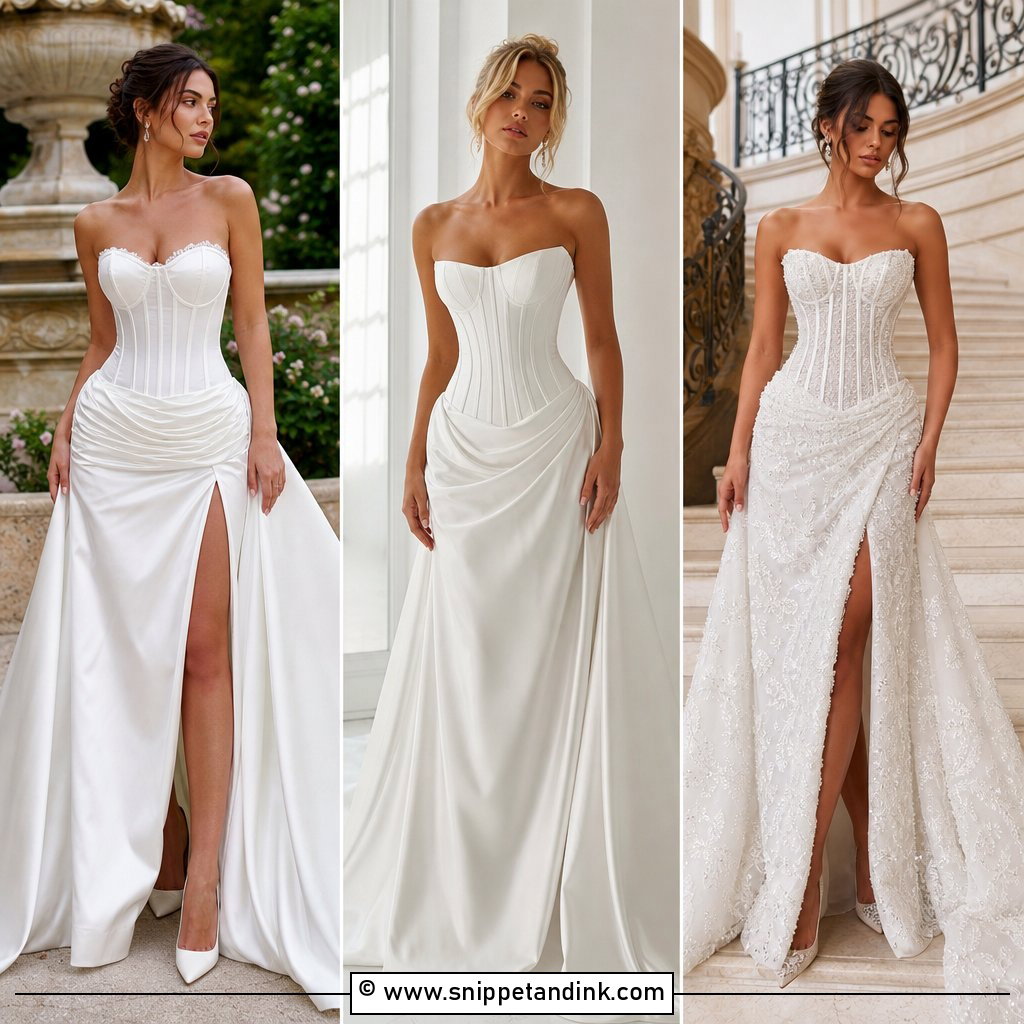
A column dress with a hidden corset is the quietest option here, and the hardest to fit, because there is no skirt volume to hide a seam that twists. Matte crepe or heavy satin with clean vertical seams is the usual choice. A sheer cathedral veil gives the only drama the look needs. Check your stride: a narrow skirt needs a slit or a kick pleat for stairs. With thin crepe, wear the same smooth underwear to every fitting, since a change in undergarments shows straight through.
14. Corset Wedding Dress With Detachable Sleeves
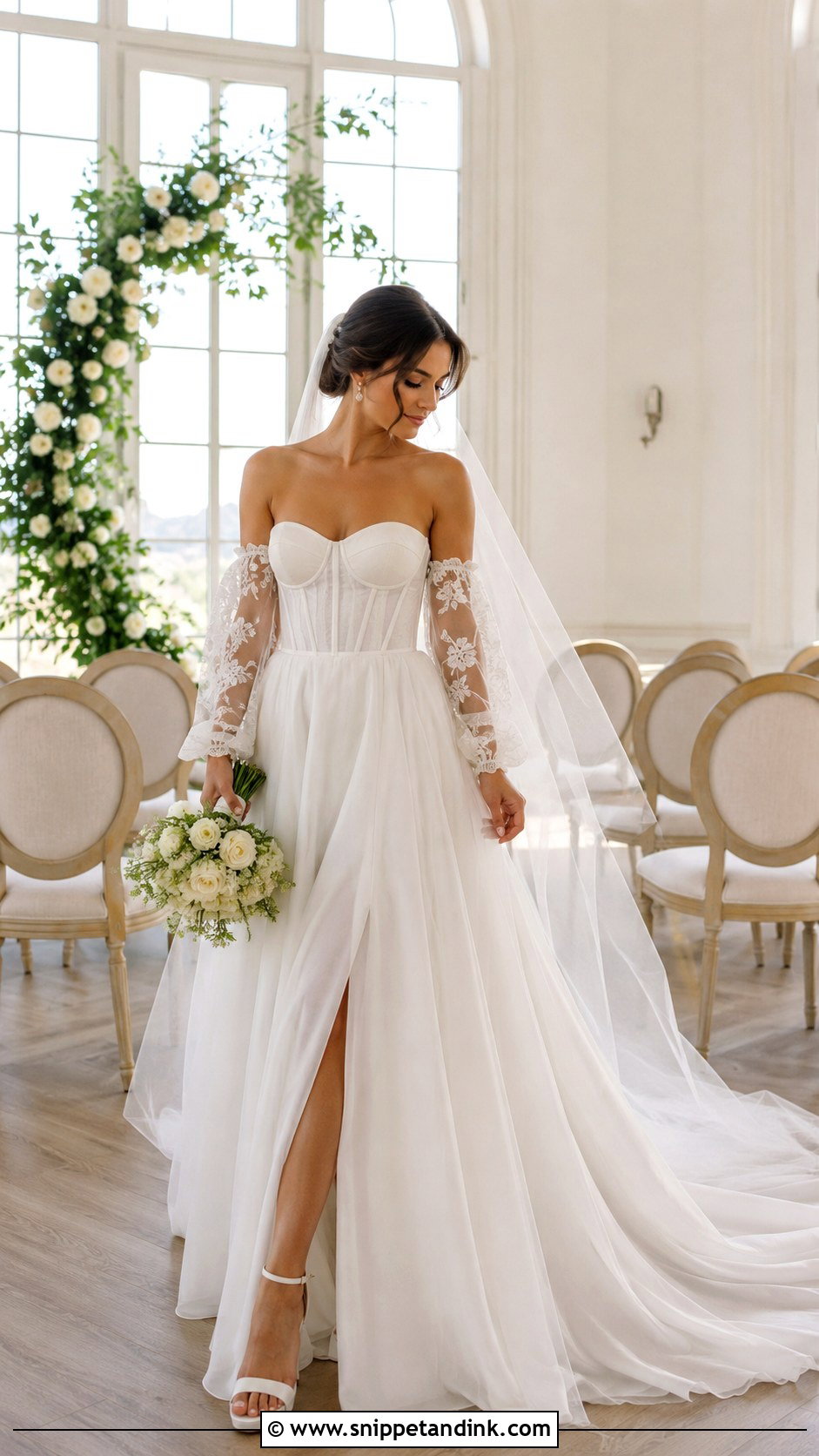
Detachable sleeves give you two looks from one gown: covered for the ceremony, strapless corset for the dancing. Puffed tulle or fitted off-shoulder sleeves usually attach with small hooks or snaps at the bodice edge, and I want those hidden under a lace motif. A half-up style suits both versions. Practise taking the sleeves off with whoever will help you, because doing it for the first time in a busy bridal suite is how lace tears. A medium veil that comes out easily makes the change faster.
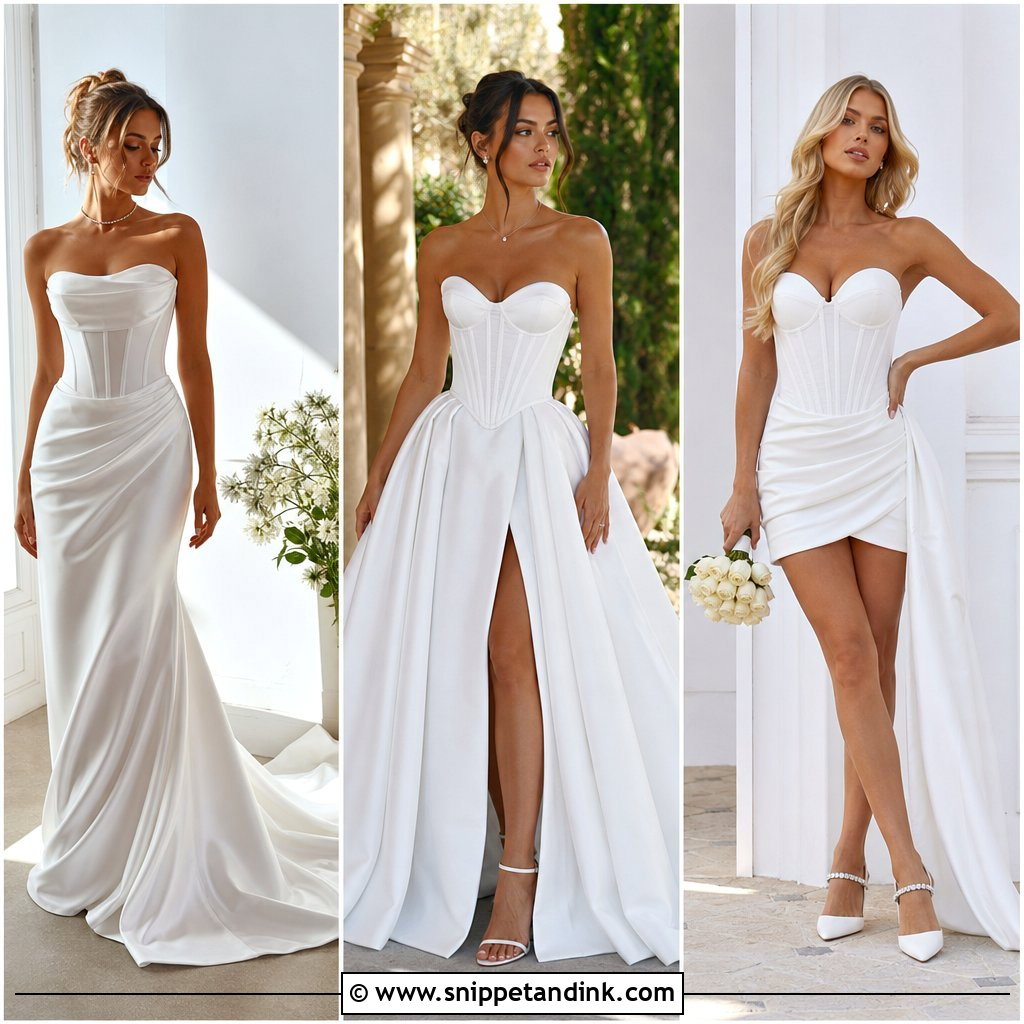
15. Two-Piece Corset Bridal Dress
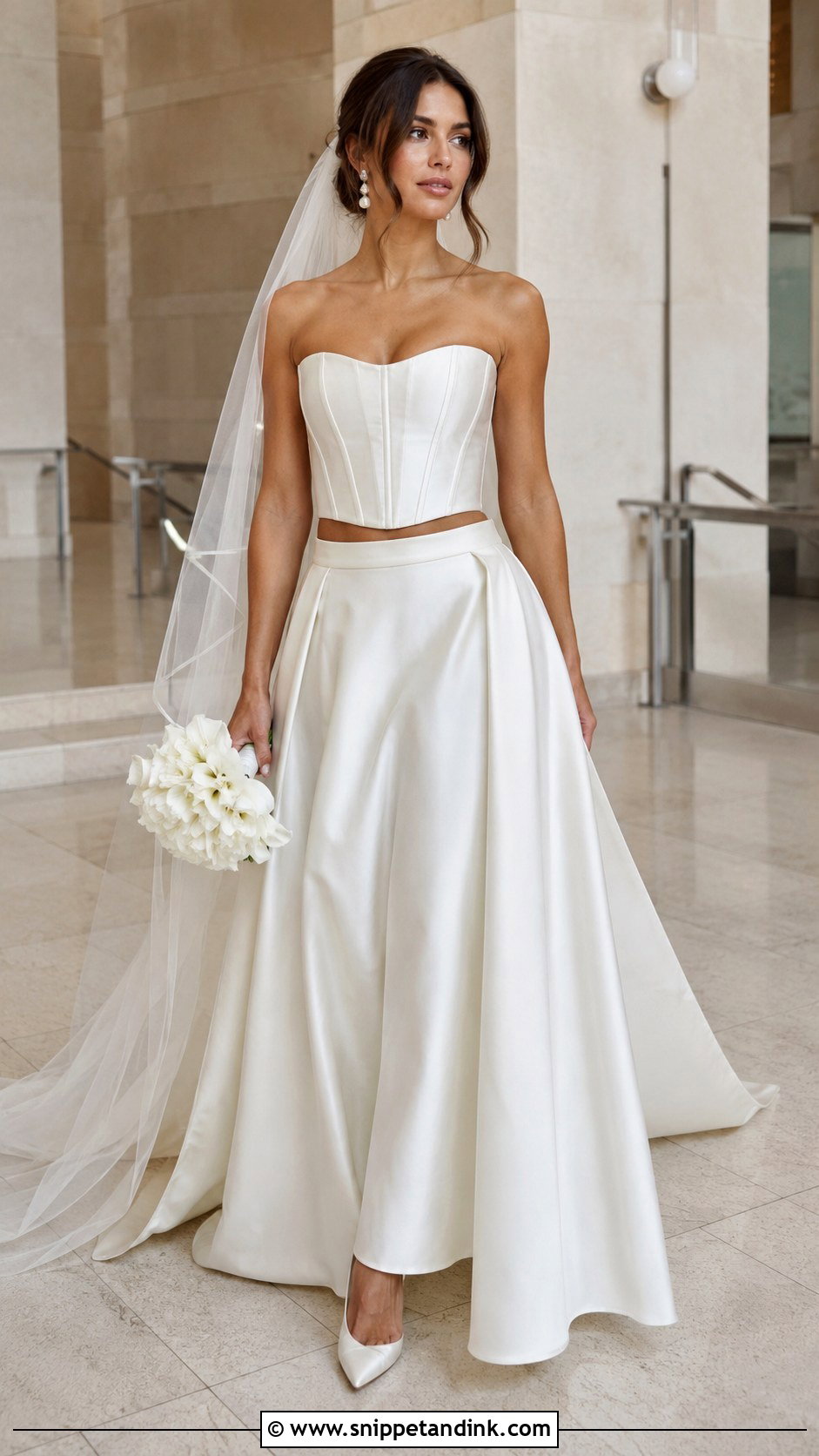
A two-piece set lets you treat the corset like a proper top. A long-line satin or lace bodice over a high-waisted A-line skirt gives the traditional silhouette with more freedom. Overlap the pieces slightly for coverage or leave a narrow gap for something bolder. The common issue is two waistbands stacking up, so the skirt waist should sit just under the corset edge, not on top of it. Swap the skirt for tailored trousers or a shorter one at the reception if you want a change. Sit and check that the top stays smooth.
16. Corset Mini Wedding Dress
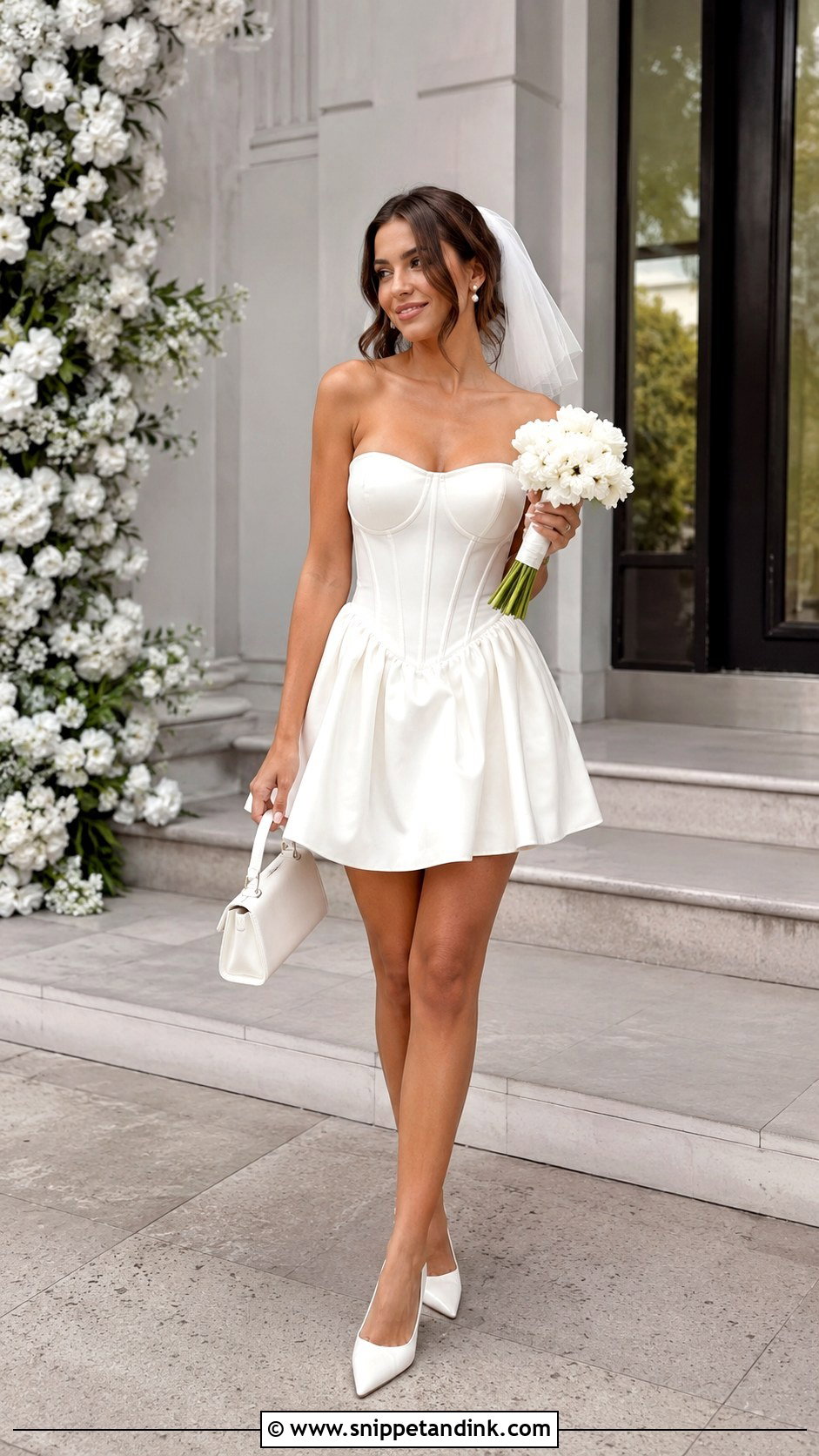
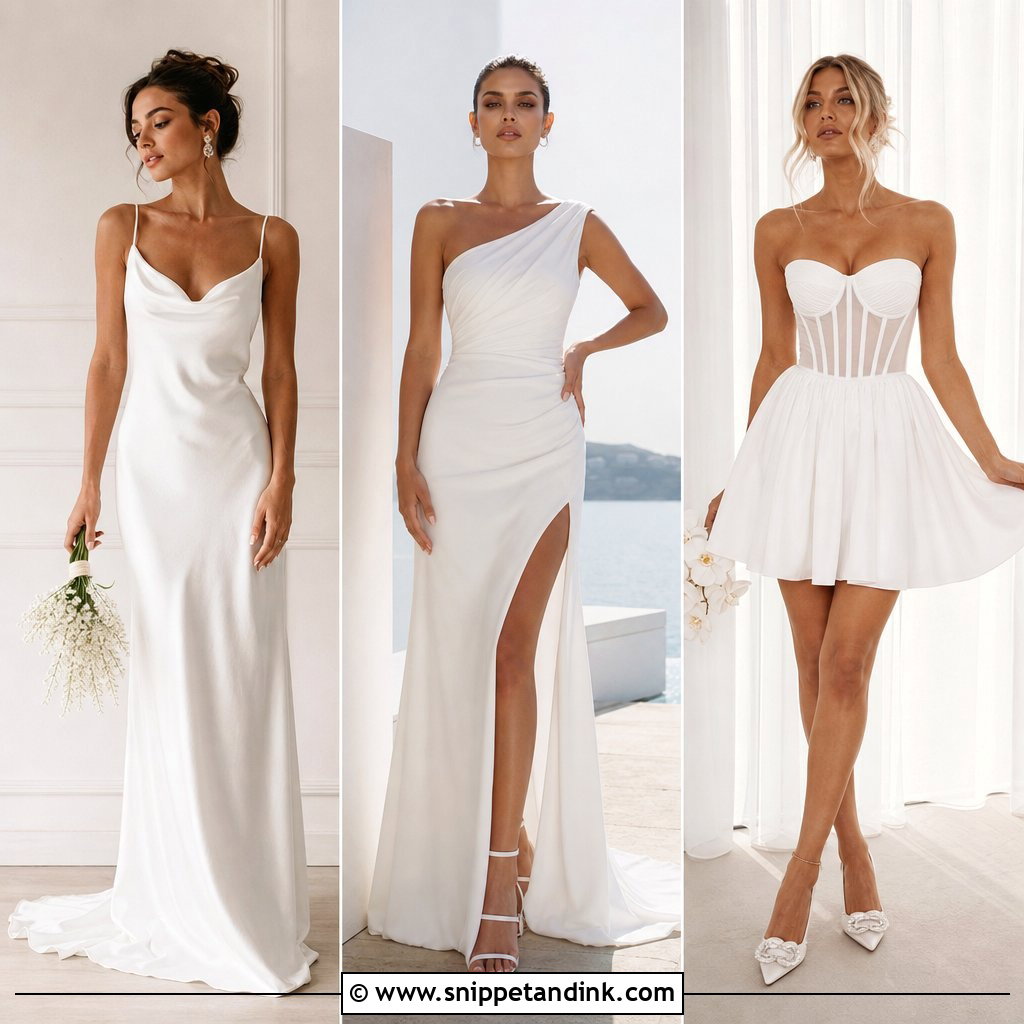
Short corset dresses suit a civil ceremony, a city-hall morning or the evening change. Pick a supportive bodice with a straight or sweetheart neckline and a structured A-line mini in satin or mikado so it reads bridal rather than party. Proportion matters: a short veil, a bow or a slim headband fits better than a cathedral veil. Sit down in front of a mirror and walk up steps; a mini rides up more than you’d guess. A smooth lining or built-in shorts solves that.
17. Corset Wedding Dress With Overskirt
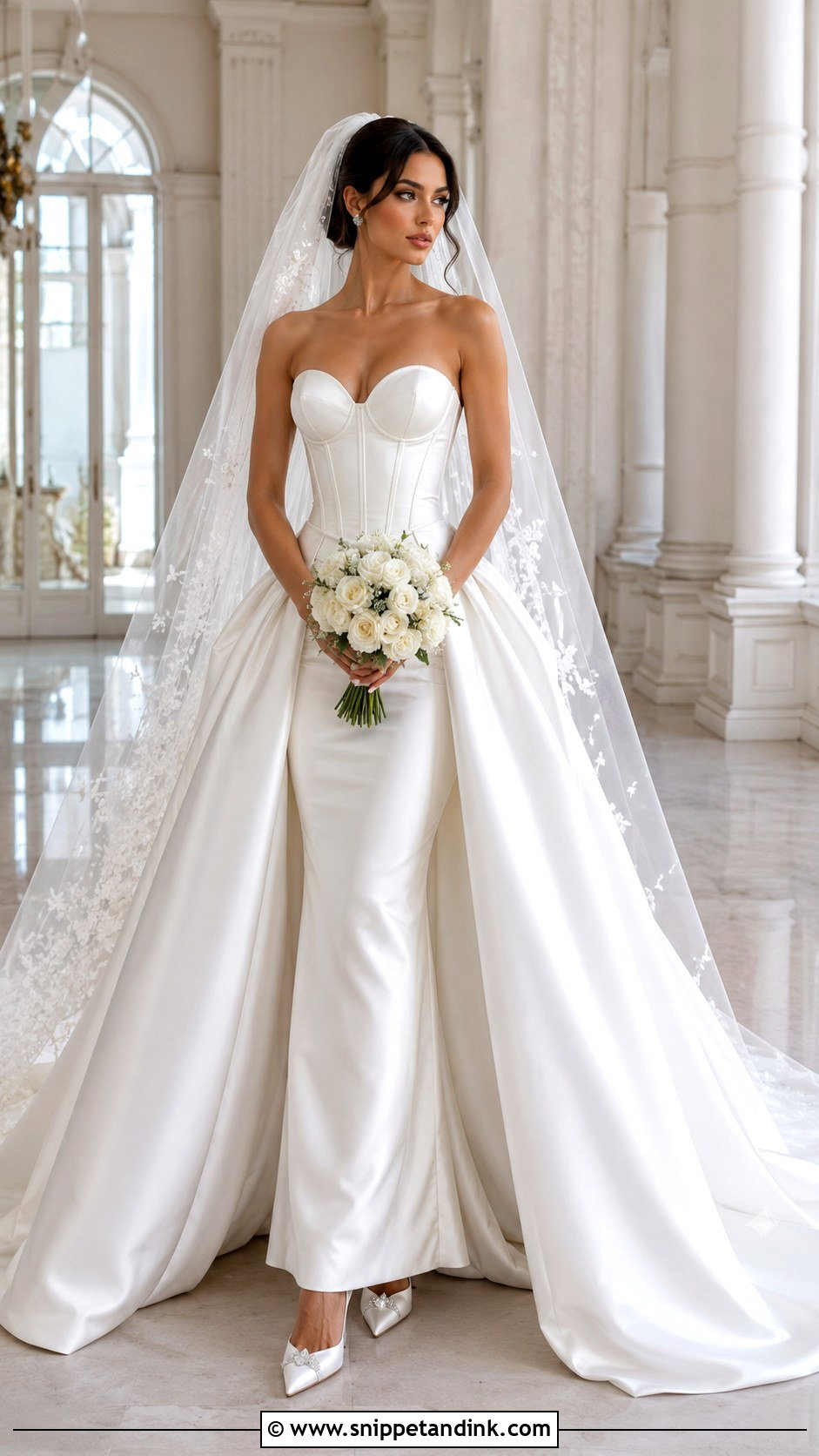
A corset wedding dress with an overskirt gives you ball gown volume for the aisle and a slim column, sheath or mini underneath for the party. The overskirt usually fastens at the waist with hooks or a hidden button band. I check this from behind, because twisted fastenings show in every photo taken as you walk away. Ask for strong anchor points sewn into the corset’s waist tape, not just the lining. After photos, trade the long veil for a hair accessory and lower shoes if you need them.
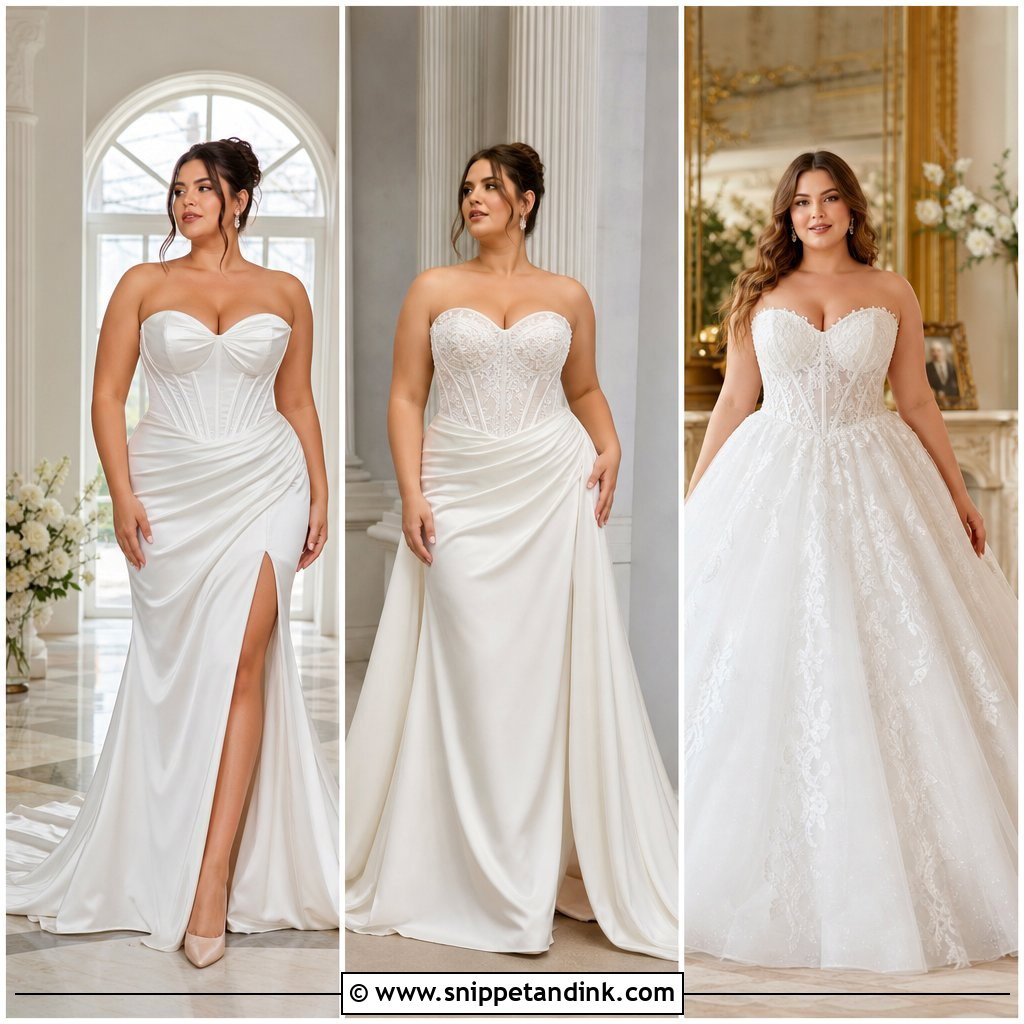
18. Plus Size Corset Bridal Dress
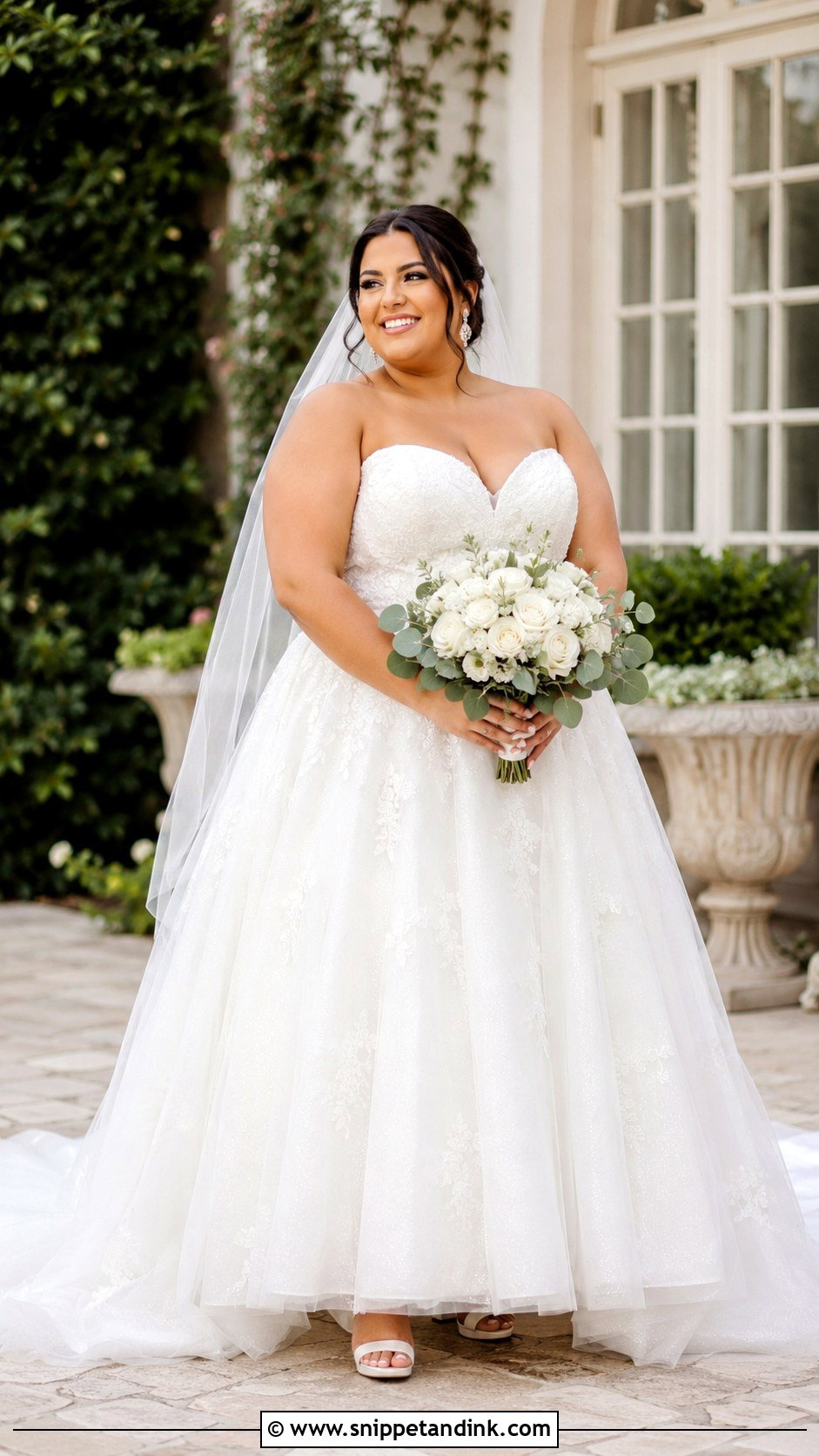
On a fuller figure the corset has more to carry, so the build matters more than the trim. Wider back panels, more bones placed with your shape in mind, real cups and a lacing back that pulls evenly all spread the pressure. A sweetheart or square neckline with an A-line skirt is a reliable pairing, but I’d rather you trust how a shape feels than any rule. Block heels and a light veil keep you comfortable. Bring your exact bra or shapewear and shoes to every alteration appointment; change one and the fit shifts. You should feel held, never pinched.
19. Modest Corset Wedding Dress
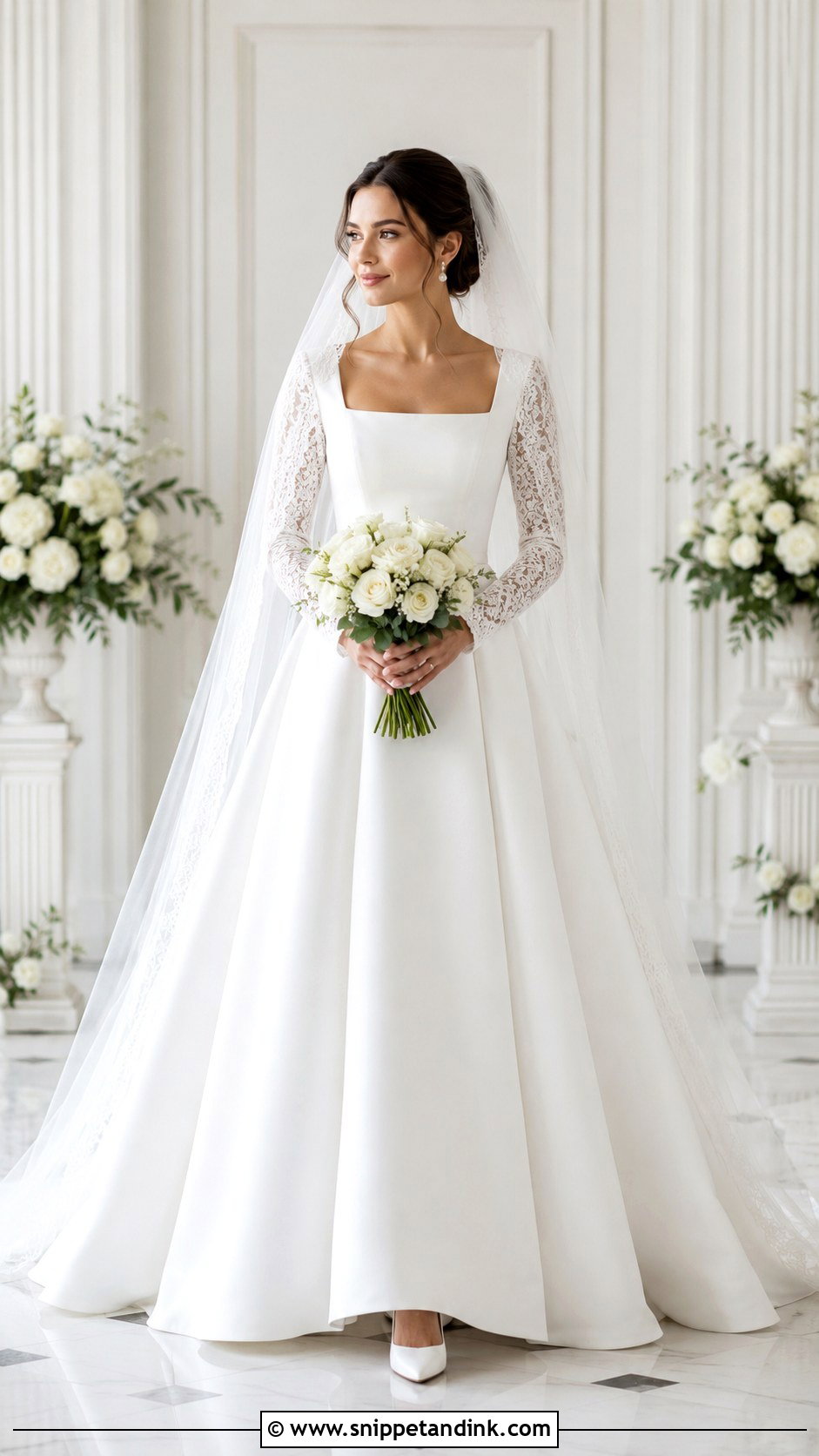
Corsetry and modesty are not opposites. A lined bodice under a high bateau, scoop or square neckline with full lace sleeves keeps all the structure covered while the waist still shows. A flowing A-line skirt and a long veil set beneath a neat bun finish the look. In summer, ask what the lining is made of, since polyester under lace and sleeves gets hot fast. At the fitting, check that the neckline stays flat when you lift your arms and that the corset doesn’t ride up under the sleeves.
20. Blush Corset Wedding Dress
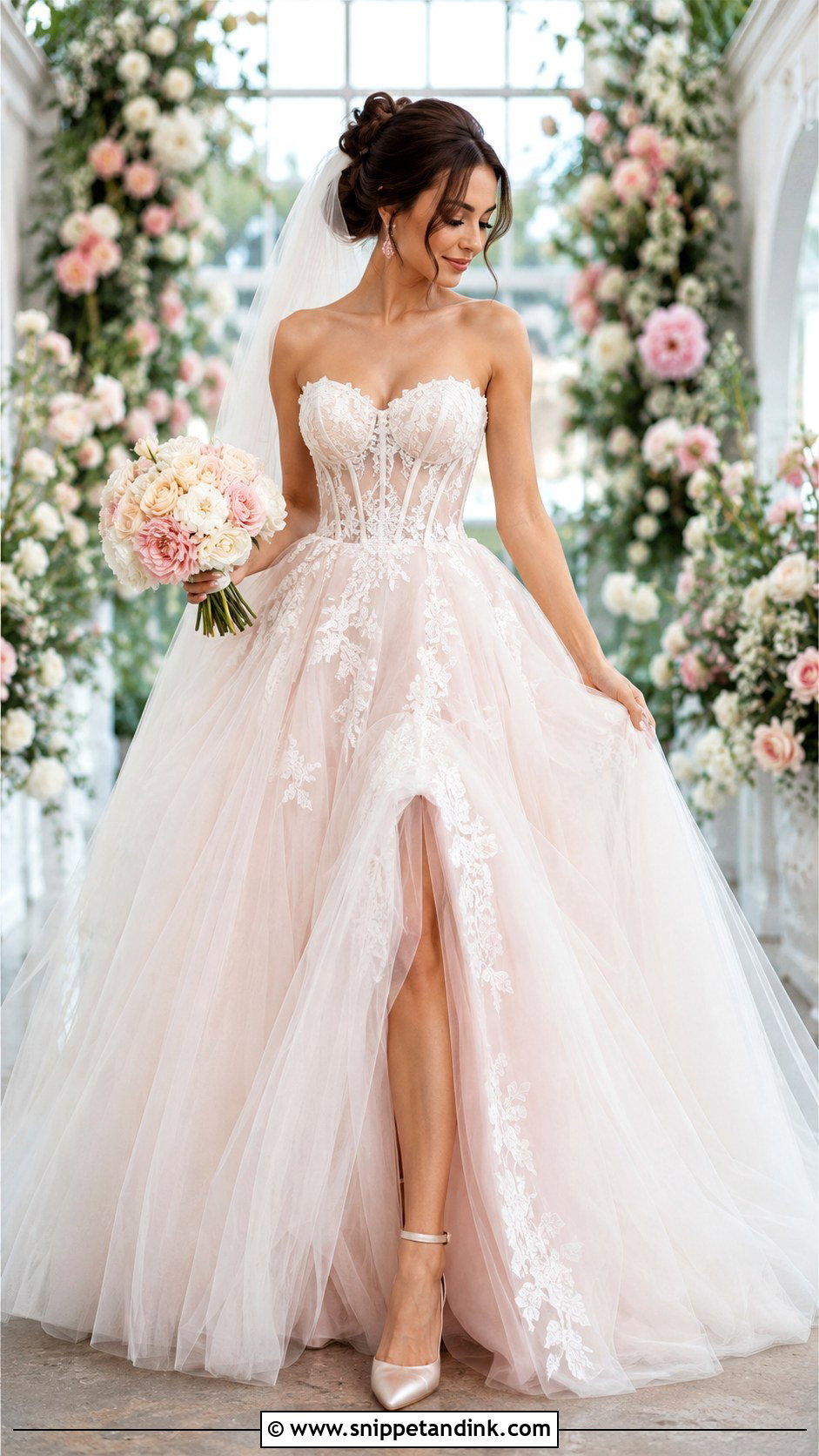
A blush corset gives a warm alternative to white and still reads bridal. Most of these dresses get the colour from a pale pink or champagne lining under ivory lace, which also makes the seams and appliqué stand out. Look at the fabric under daylight and indoor bulbs before ordering; blush can drift peach or grey depending on the light and the camera. Hold it against your face in a mirror too. If the shade matches your skin closely, the bodice can disappear in photos, so go a step paler or warmer.
Steaming, Bustling and Storing a Boned Gown After the Day
Corset gowns need a little more care than soft dresses because the boning has a shape memory, and the wrong storage bends it for good.
On the morning
Have the dress steamed at the venue, from the inside of the skirt where you can. Never steam directly onto a satin bodice up close; water spots and puckered seams show. Ask your bridesmaid to practise the lacing with you before the day. A corset is laced from the middle outwards, pulled up in stages, not yanked tight from the bottom. Learn the bustle at your last fitting too, and take a phone photo of which hook goes where.
Afterwards
- Get it to a specialist cleaner within a few weeks. Sugar from champagne and cake turns yellow later even if you can’t see it now.
- Store it flat or loosely folded in acid-free tissue in a breathable box, not in a plastic bag or hanging by its straps for months.
- Pad the bodice with tissue so the cups and boning keep their shape.
- Keep it somewhere cool and dark. Attics and damp basements are where gowns go yellow or mildewed.
If you plan to resell the dress, keep the original lacing ribbon, any spare buttons and the alteration notes. Buyers ask about all three.
The Corset Gown That Lets You Breathe Wins
The right corset gown isn’t the tightest one or the most dramatic. It holds you up, suits the venue, and still lets you sit through dinner and dance afterwards. Compare necklines, fabrics, skirt shapes and waistlines across the ideas above, then take your favourites to appointments with your actual shoes and underwear. Walk, sit and raise your arms in each dress. Good alterations make a gown yours, and comfort is the part guests notice without knowing why.
You'll Like These Ideas:





Leave a Reply