
Sleeves change a gown more than almost any other detail. They decide how much skin shows, how the shoulders look and, if they’re cut badly, whether you can hug anyone all day. Fitted lace is only the beginning: there are airy bishop sleeves, detachable ones, sculpted organza, embroidered tulle, small cap sleeves and plain crepe. They go on ball gowns, A-lines, columns, minis and fit-and-flare shapes alike. I’ve written each idea below the way I’d talk a bride through it at a fitting: what the sleeve does, what I check, and how I’d style the rest so the sleeve and neckline work together.
Matching Sleeve Weight to the Month You Marry
Sleeves aren’t only for winter. I put brides in sleeves in every month, but the fabric changes completely with the season, and that choice matters more than the sleeve shape.
Spring and summer
Choose sleeves that let air through: illusion tulle, chiffon flutters, open split sleeves or loose cape panels. Unlined lace is cooler than lace on a lining. Avoid fitted satin or crepe sleeves for an outdoor summer ceremony, because they trap heat and show sweat marks at the underarm long before the speeches.
Autumn and winter
This is where crepe, satin, mikado and heavily beaded sleeves come into their own. Long fitted sleeves keep you warm for outdoor photos, and you can skip a wrap or jacket that hides the dress. Just remember that heated reception rooms get warm once the dancing starts, so detachable sleeves are a smart middle ground.
For a destination wedding, check the forecast humidity as well as the temperature. Chiffon and tulle hold up in damp air; silk satin spots easily.
1. Illusion Lace Long Sleeve Wedding Dress
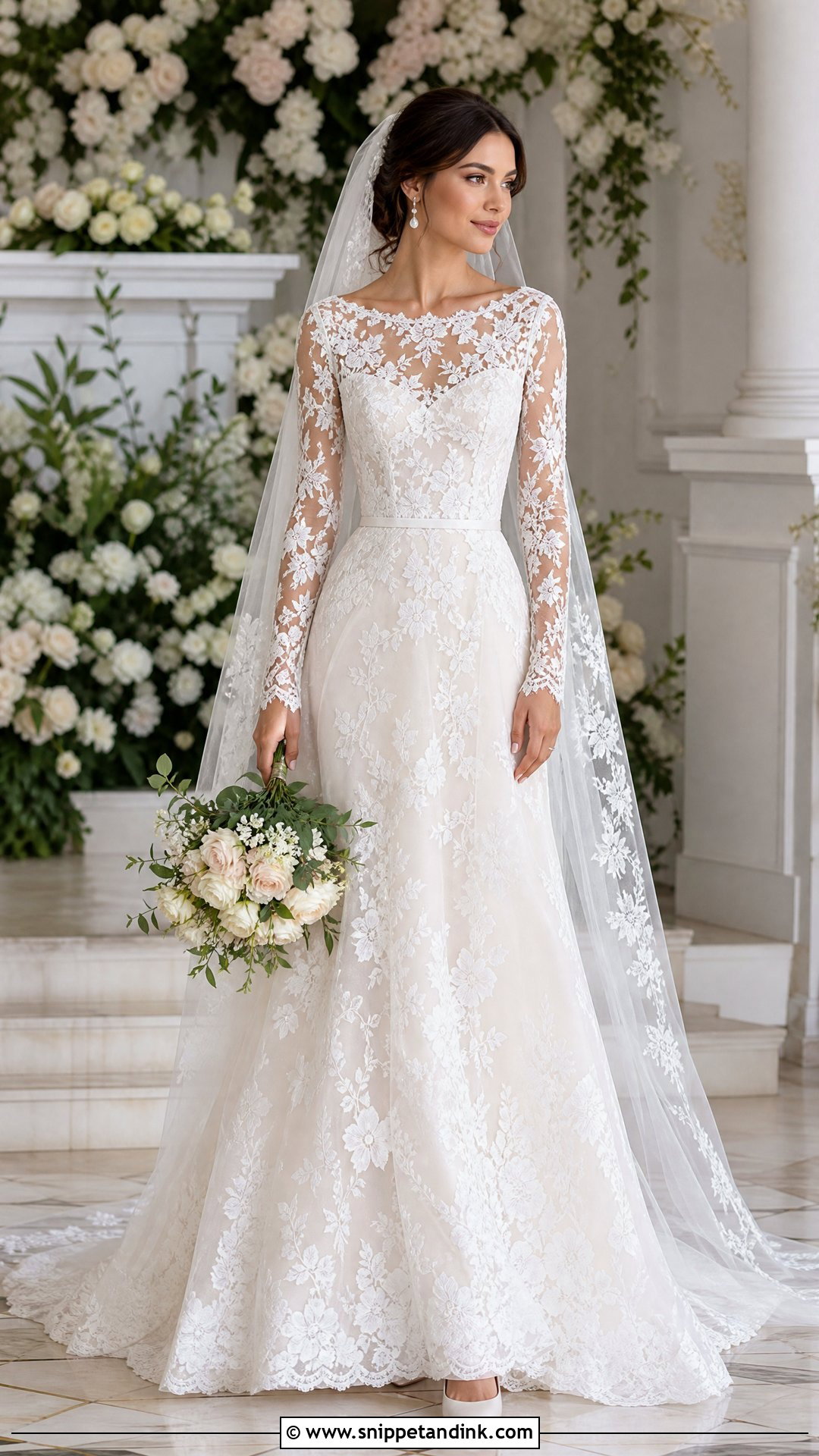
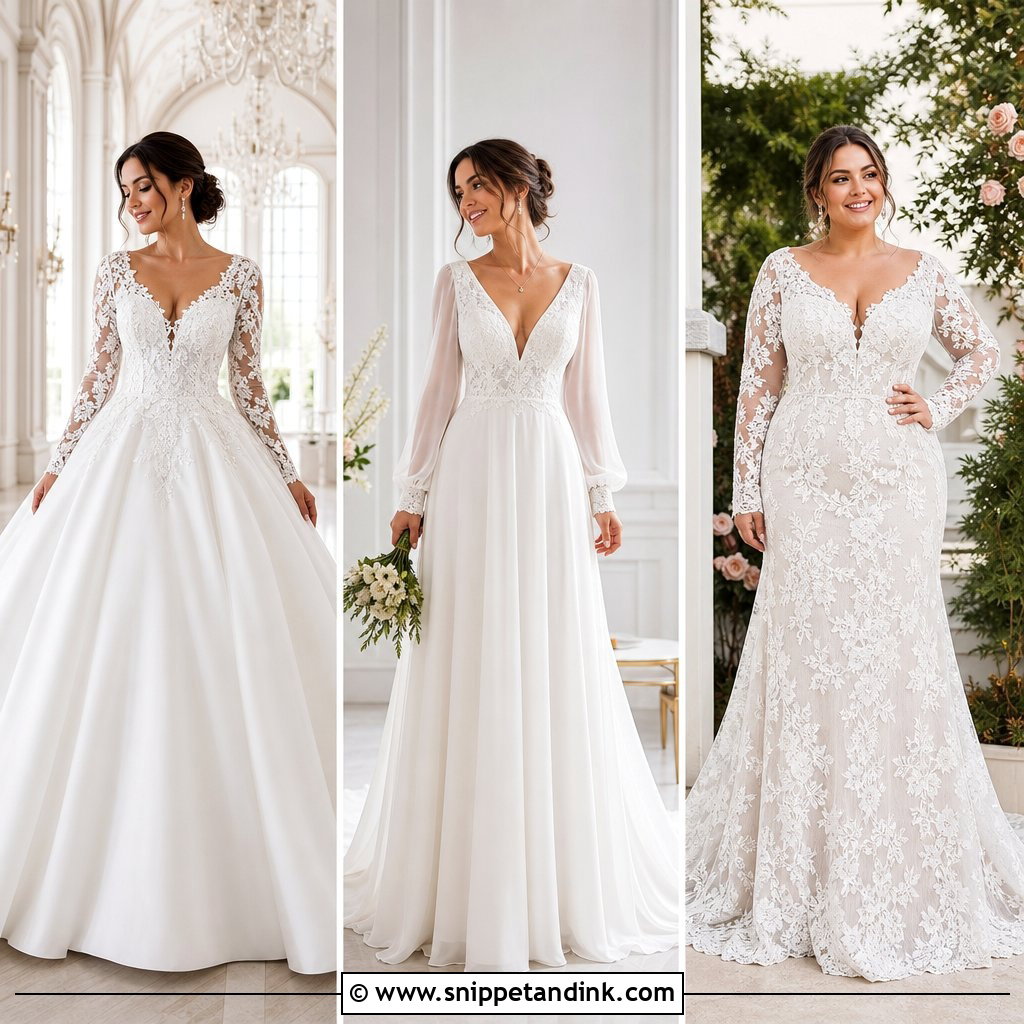
Illusion sleeves are sheer tulle with lace appliques placed on top, so from a distance the lace looks as if it sits on bare skin. It’s the lightest way to get long-sleeve coverage, which is why I suggest it for brides who run warm. An A-line with a lightly lined bodice keeps it soft. The fitting step most people skip: check the sleeve length with your arms bent, not just hanging. Tulle has little stretch, and a sleeve fitted straight pulls at the elbow and shoulder every time you hold the bouquet. Pointed ivory pumps, pearl drops, a lace-edged fingertip veil and a low chignon finish it.
2. Satin Bishop Sleeve Ball Gown
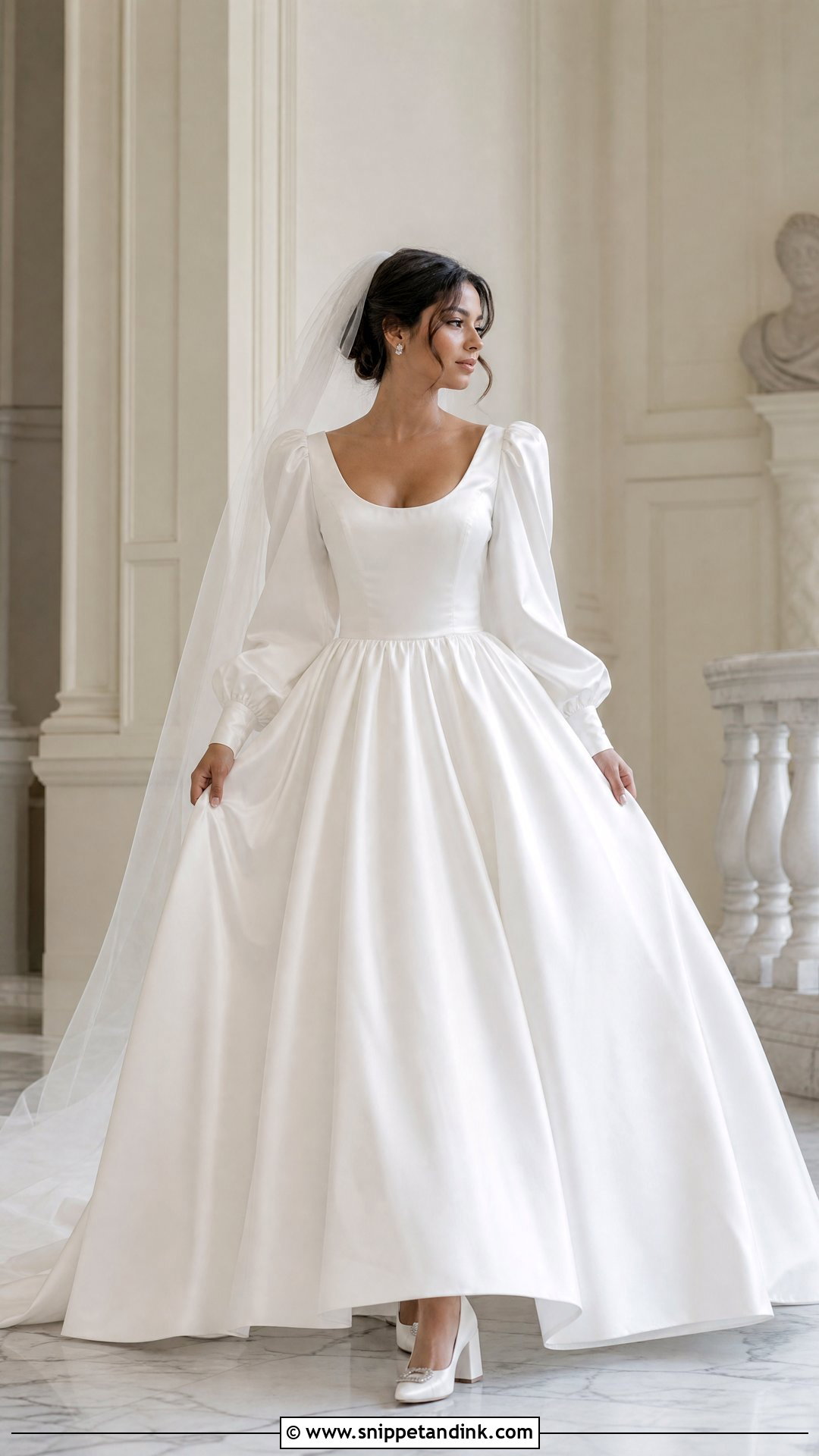
Full bishop sleeves in satin, gathered into a narrow cuff, bring real drama to a ball gown. All that fabric at the arm needs balancing, so I’d keep the neckline to a scoop or a subtle V and skip the necklace. Satin reflects light and shows construction, so look closely at the sleeve seams and the cuff gathering at fittings; the sleeve should hang evenly on both arms without twisting. Big sleeves also catch on chair backs and the bouquet, so practise sitting down. Satin block heels, crystal studs, a plain cathedral veil and a sleek bun or soft ponytail complete it.
3. Detachable Sleeve Wedding Dress
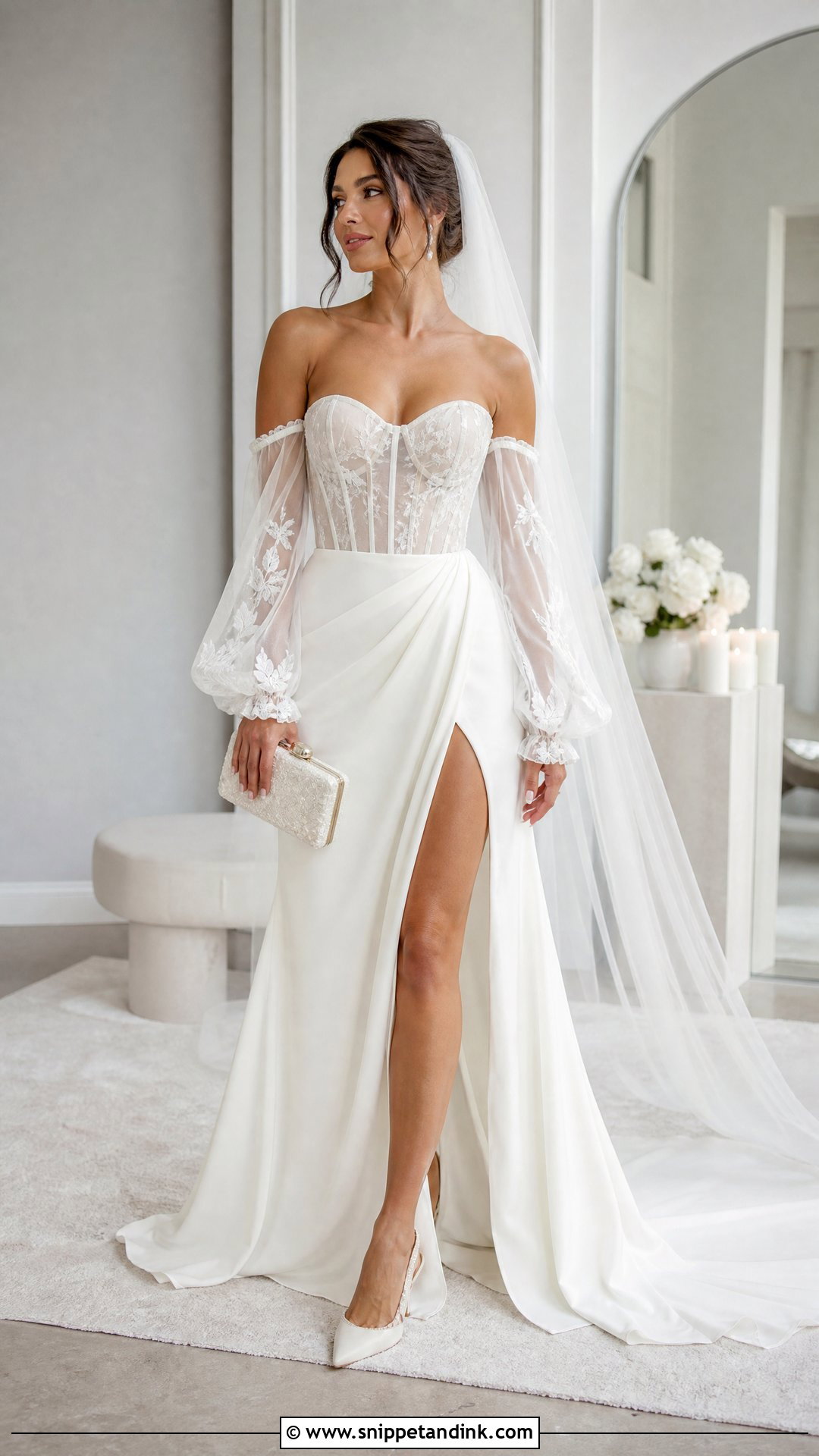
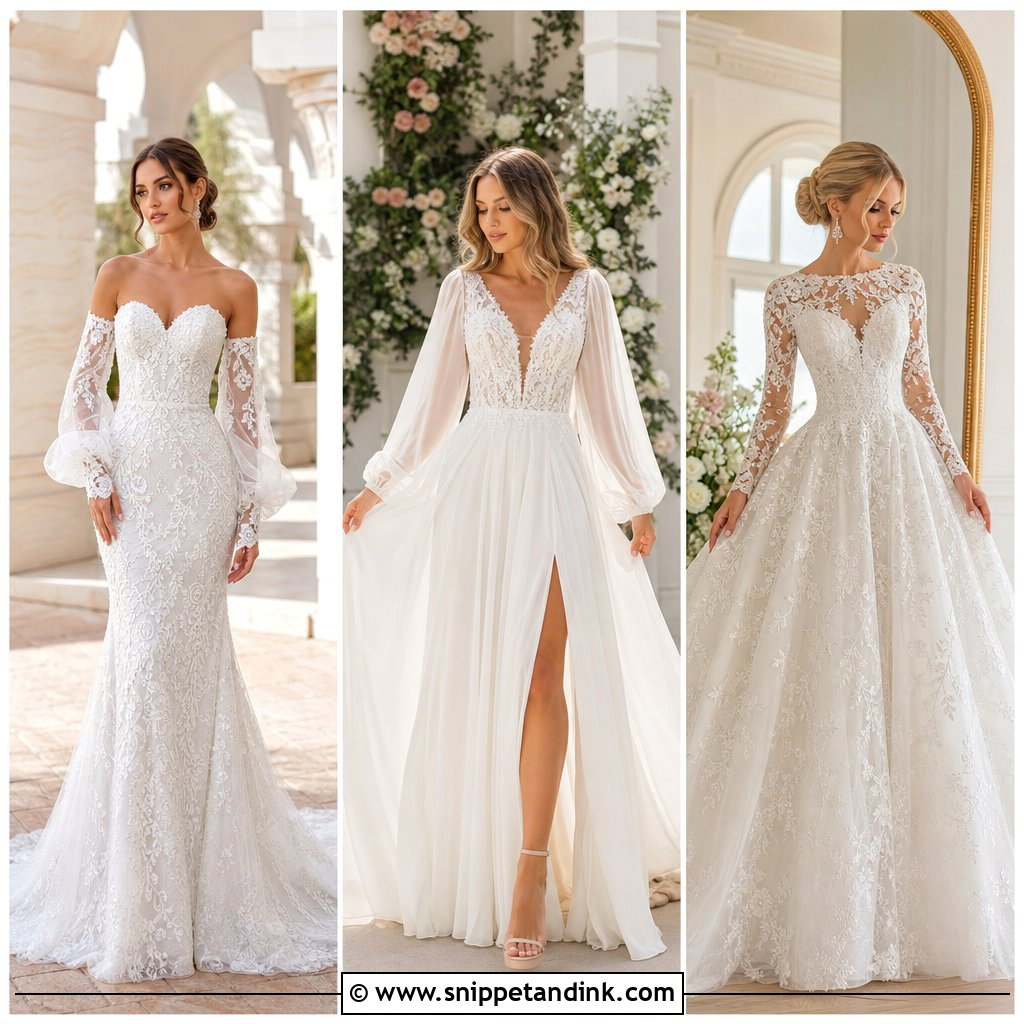
Detachable sleeves give you two looks without a full change. A strapless corset gown with a defined waist is the usual base; sheer fitted lace, gathered tulle or soft puffed organza sleeves go on for the ceremony and come off after the formal photos. Good ones look like part of the dress, not an accessory, and that depends on how they attach. I check that the fastenings are secure, hidden with the sleeves on and invisible once they’re off. Walk, sit and raise your arms in them at the fitting. Pointed slingbacks, a structured clutch and delicate earrings suit it, with a veil that doesn’t hide the sleeves.
4. Square Neck Crepe Long Sleeve Wedding Dress
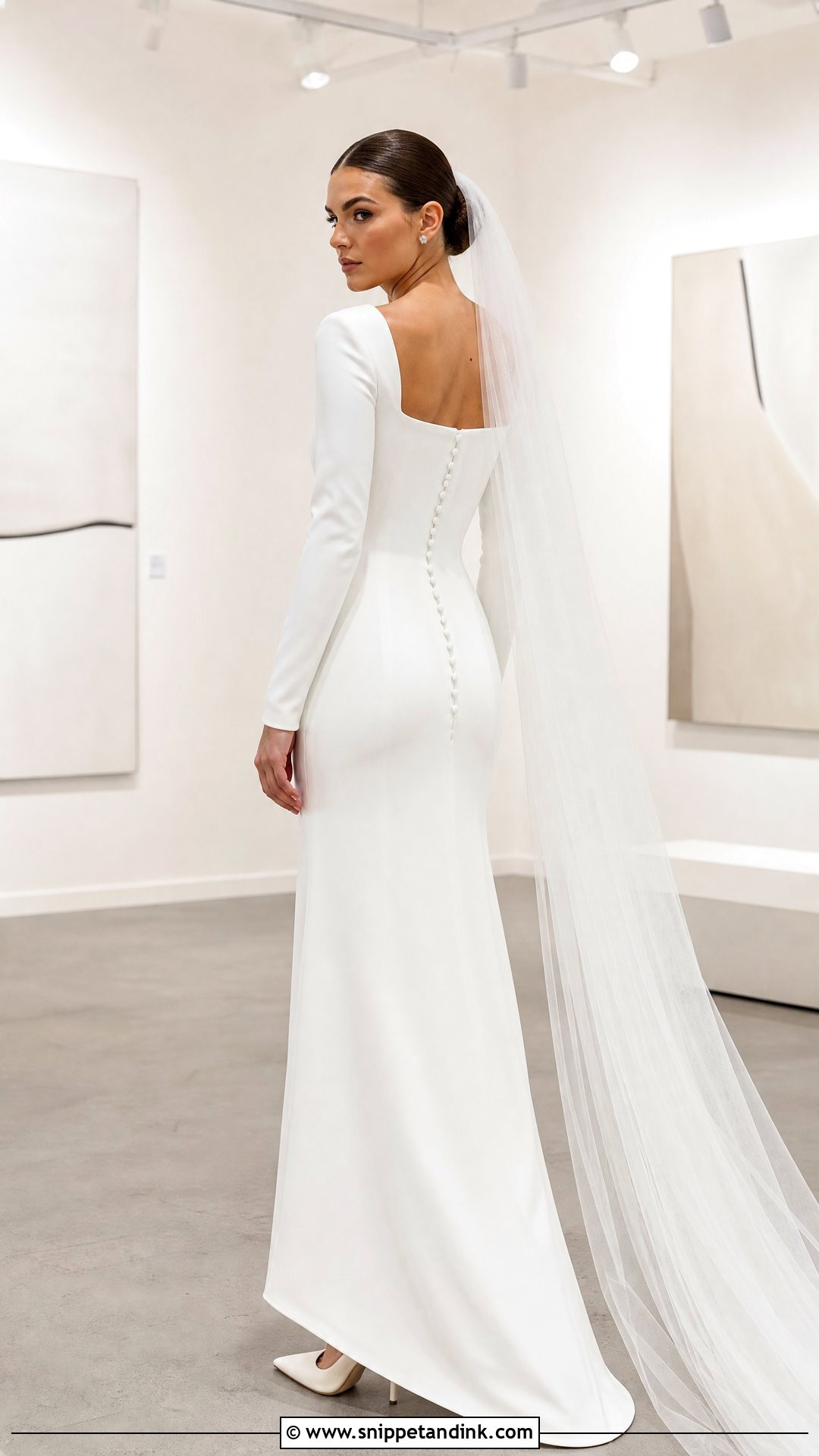
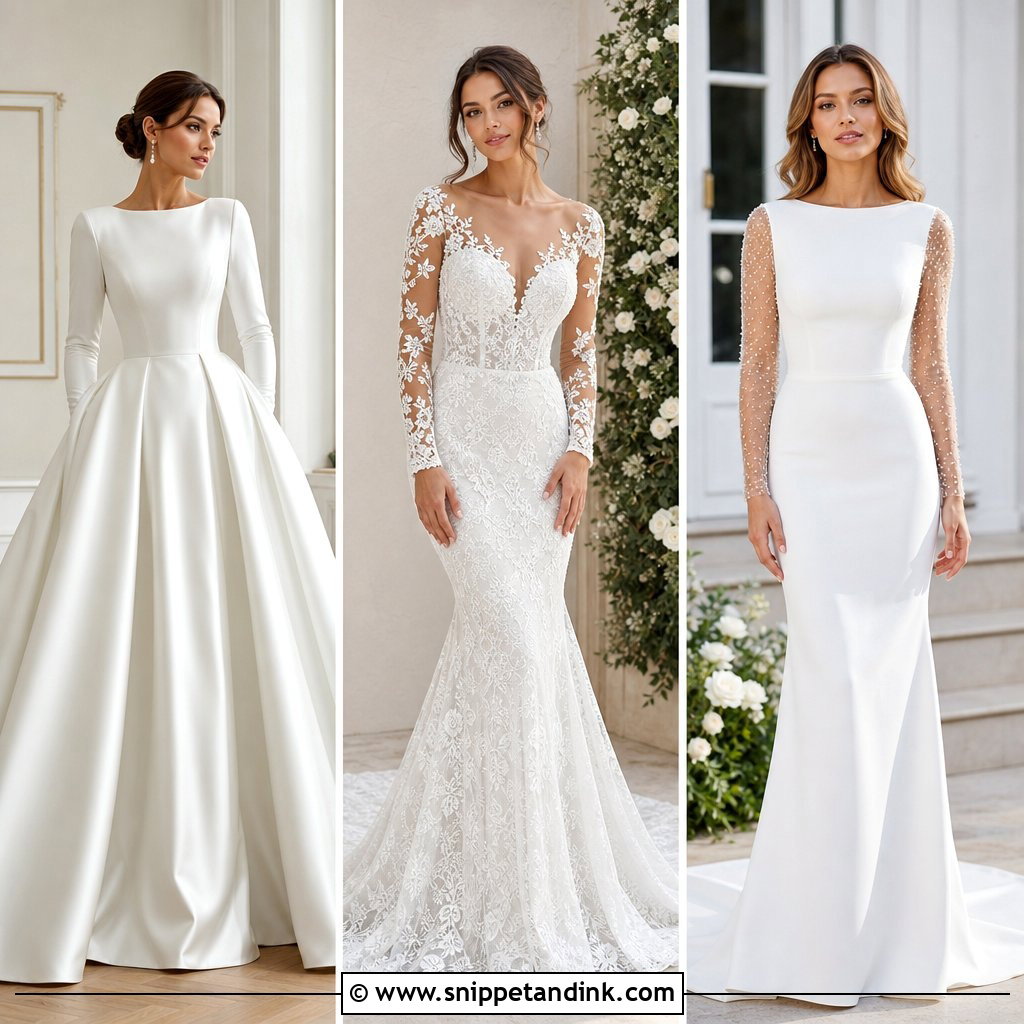
Crepe gives long sleeves a clean, modern line. Here the square neck frames the collarbone, while fitted sleeves and a gently shaped column run as one continuous shape. Crepe hides nothing, so tailoring at the waist, hips, shoulders and elbows has to be precise, and smooth, supportive underwear makes a visible difference. I always check the armhole first: if it’s cut low, fitted crepe sleeves stop you lifting your arms above shoulder height. A low square back or covered buttons add quiet detail. Pointed pumps, small diamond or crystal earrings, a smooth chapel veil and a center-part bun keep it minimal.
5. Off Shoulder Sleeve Mermaid Wedding Dress
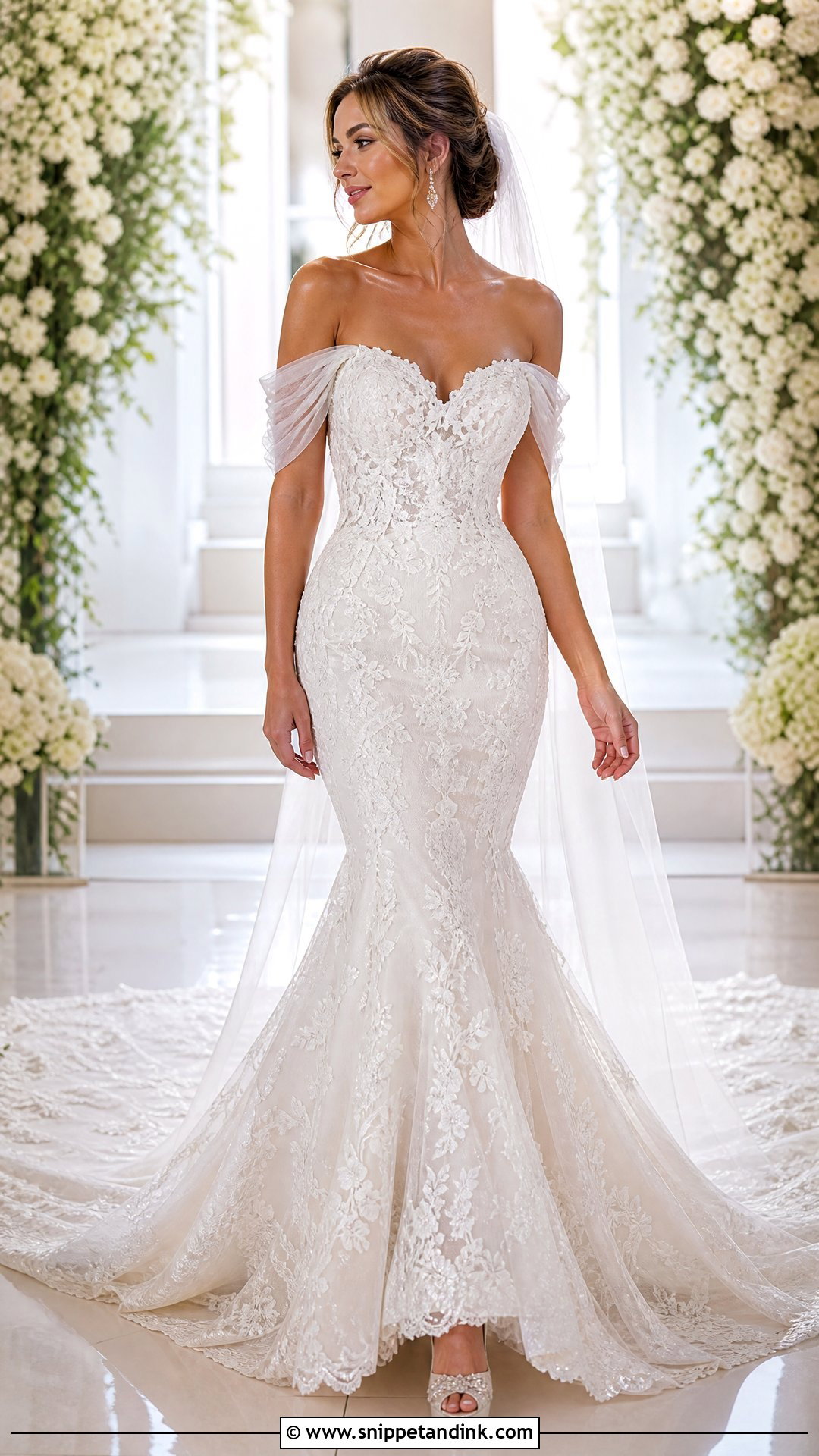
Off-the-shoulder sleeves look romantic on a mermaid, but they’re the style I see restrict movement most. When the sleeves sit tight on the upper arm, you can’t lift your arms past your waist. At alterations, raise your arms and hug someone. Hidden elastic, supportive internal structure and careful placement of the sleeve band keep it up without trapping you. Draped tulle or lace should connect naturally to the fitted bodice, and the skirt should follow the body before flaring below the knee. Embellished pumps, a fine bracelet, drop earrings and a sheer veil under a loose updo finish it. No necklace.
6. Puff Sleeve Tea Length Wedding Dress
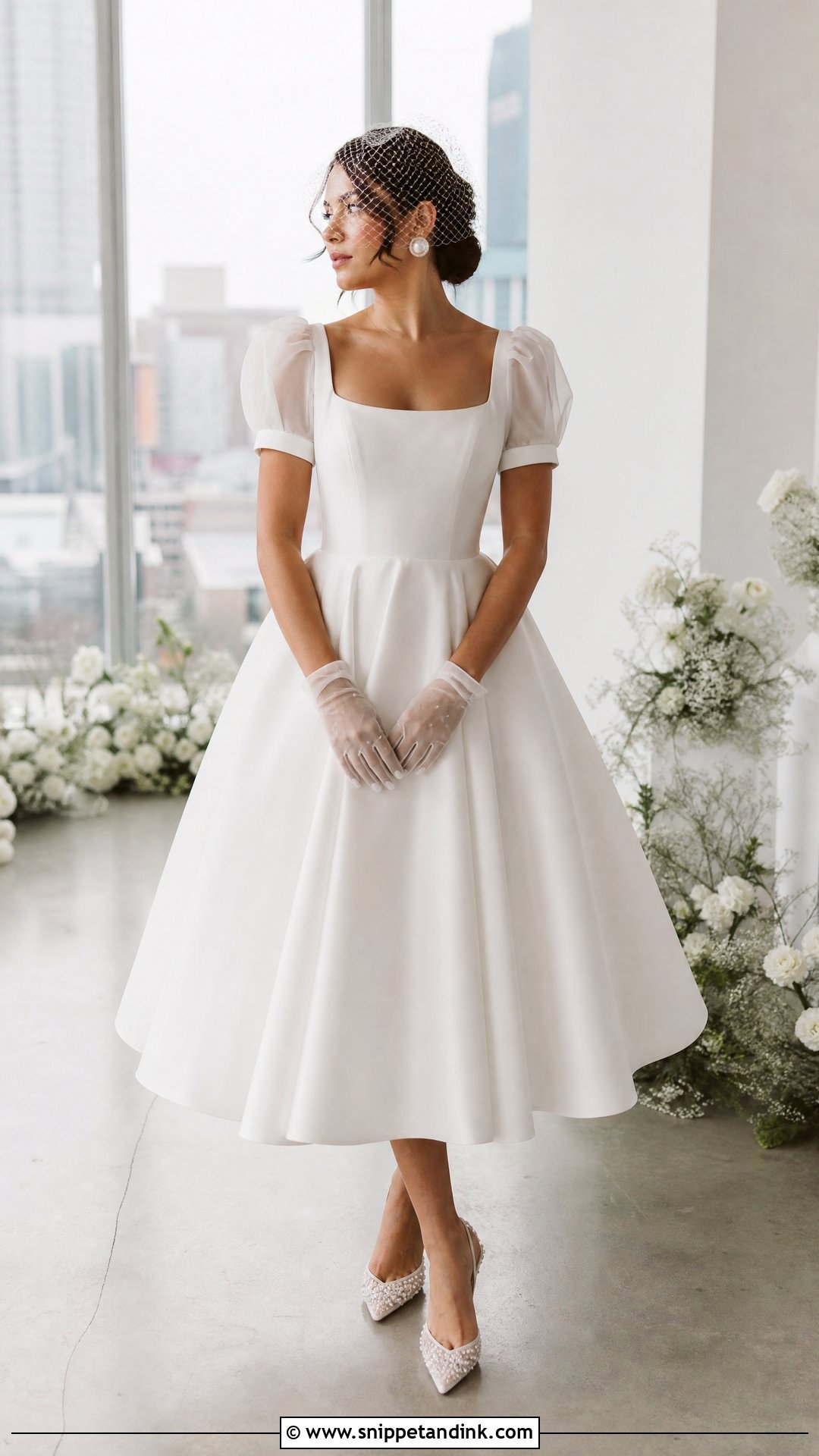
Puff sleeves on a tea-length dress feel playful without trying too hard. Short organza puff sleeves hold their shape better than chiffon ones, which tend to collapse by the afternoon. Look for a fitted bodice, a defined waist and a full skirt ending between knee and ankle, with enough structure to hold its shape while you walk. The shoes are on show, so choose pointed pumps, embellished slingbacks or ankle-straps you can stand in. Pearl studs, short gloves and a birdcage veil or neat bow finish it. Keep everything else restrained, or it starts to look like a costume.
7. Boho Bell Sleeve Wedding Dress
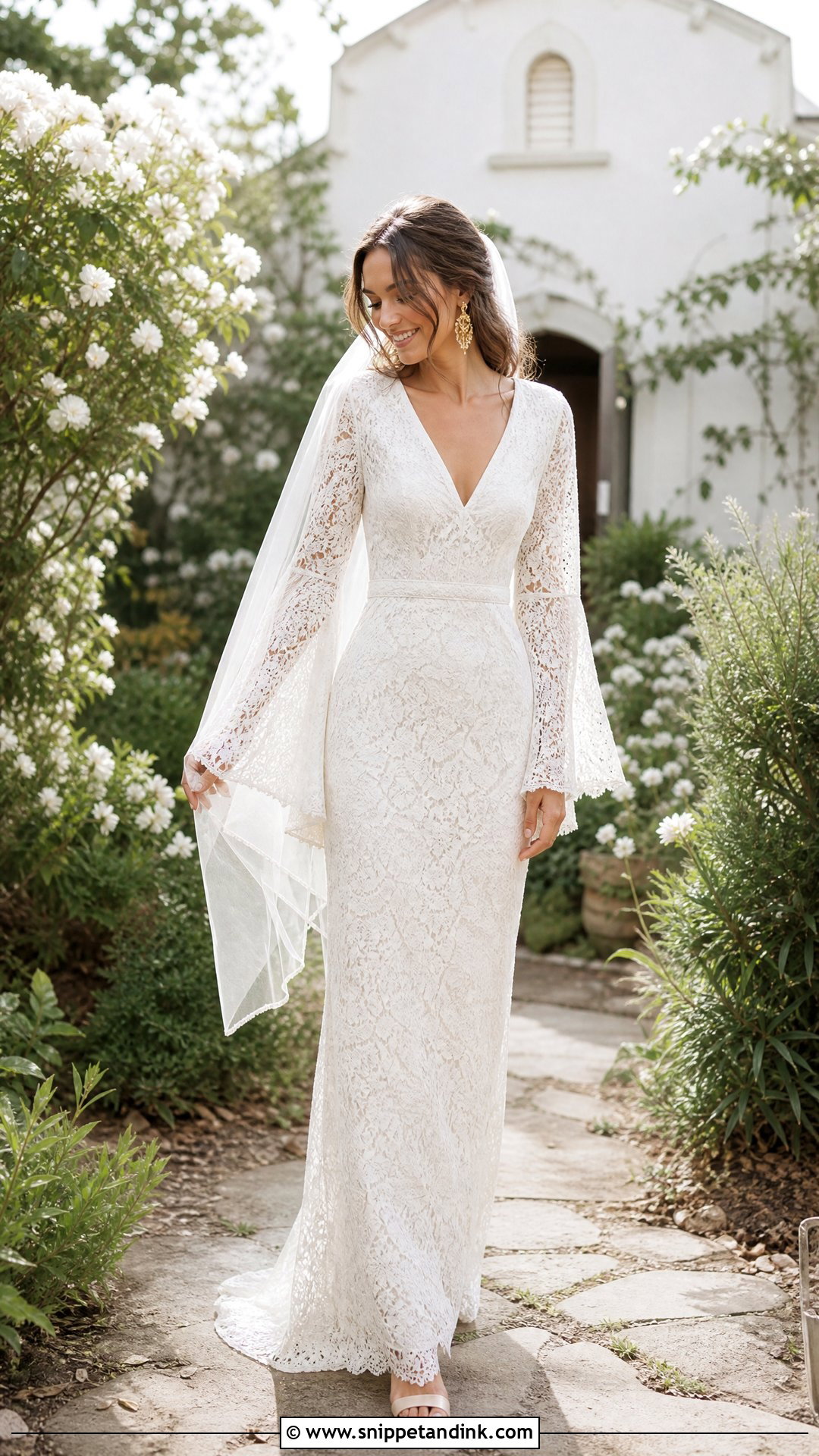
Floating bell sleeves give a boho lace gown its relaxed swing. I prefer them narrow above the elbow and flaring only below, because a sleeve that’s wide all the way down swamps the arm. Check where the cuff ends: if it falls past your fingertips, it will catch on the bouquet stems and dangle into your plate at dinner. A modest V, an open back and a fluid A-line or sheath keep it light. A lining in ivory, sand or blush makes the lace pattern stand out. Low block heels, textured gold earrings, a simple chapel veil and loose waves or a braided updo suit it.
8. Cape Sleeve Column Wedding Dress
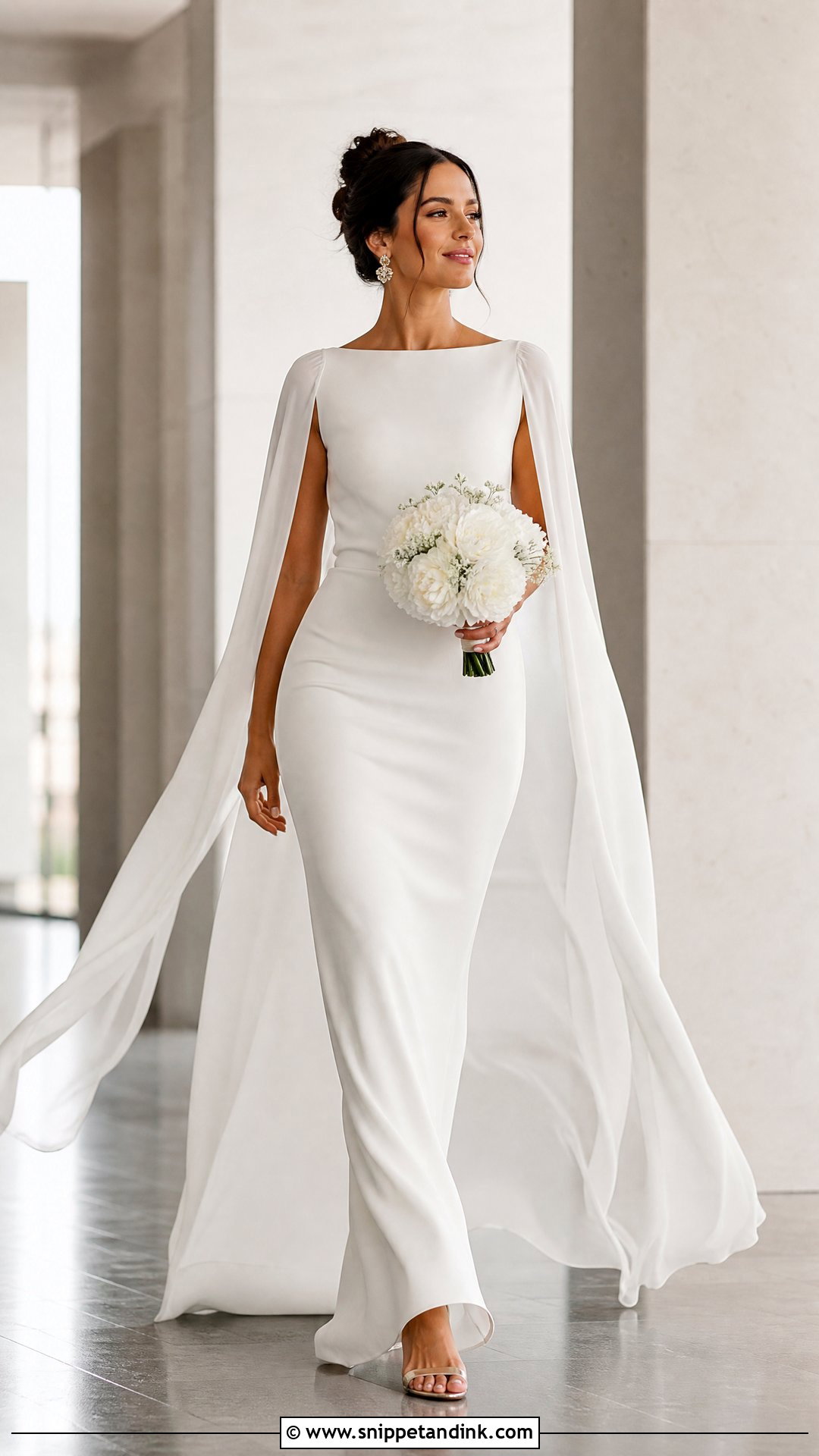
Cape sleeves give drama while leaving your arms mostly free, which makes them a good choice for brides who dislike the feel of fitted sleeves. On a simple column, panels fall from the shoulders or upper back; chiffon floats, while crepe holds an architectural line. During fittings, walk in different directions and turn quickly. The panels should swing freely without wrapping around your body or dragging on the floor. You may not need a veil at all, since the cape already gives you drama from behind. If you want both, keep the veil short and plain. Metallic or ivory heels, sculptural earrings and a compact bouquet complete it.
9. High Neck Lace Long Sleeve Wedding Dress
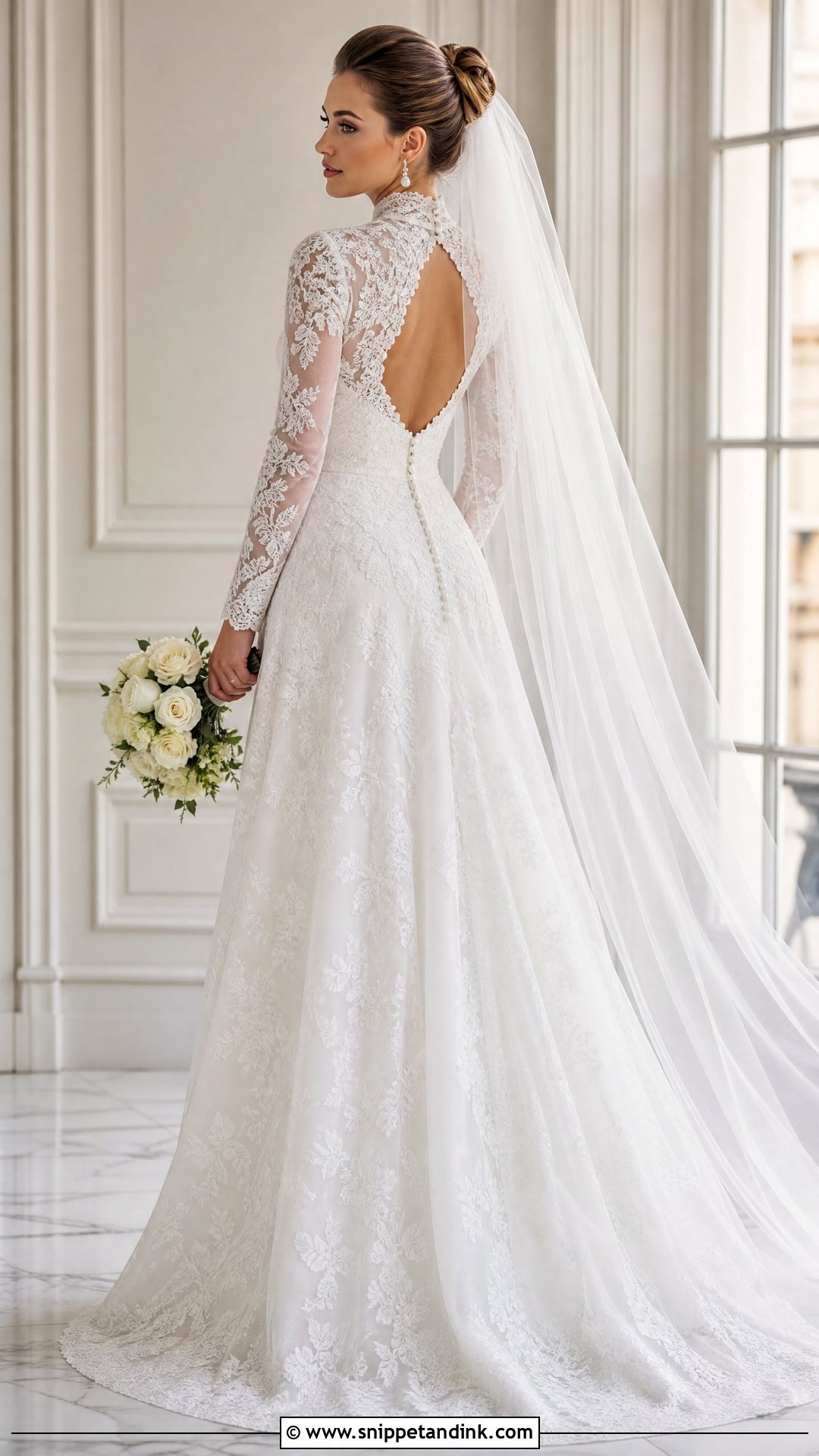
A high neck with long lace sleeves puts all the detail near your face and shoulders. A fitted lace bodice on a soft lining, narrow sleeves and an A-line or gently flared skirt keep it graceful, and a keyhole back adds contrast. Comfort is the real test here. Lace edges can scratch at the neck, wrists and underarms, so I run a finger along every inside edge and look for soft finishing. Turn your head both ways; the collar shouldn’t fold or rub. Skip the necklace and wear a delicate bracelet or an heirloom ring instead, with pearl earrings, closed-toe heels and a plain veil under a polished bun.
10. Floral Appliqué Sleeve Wedding Dress
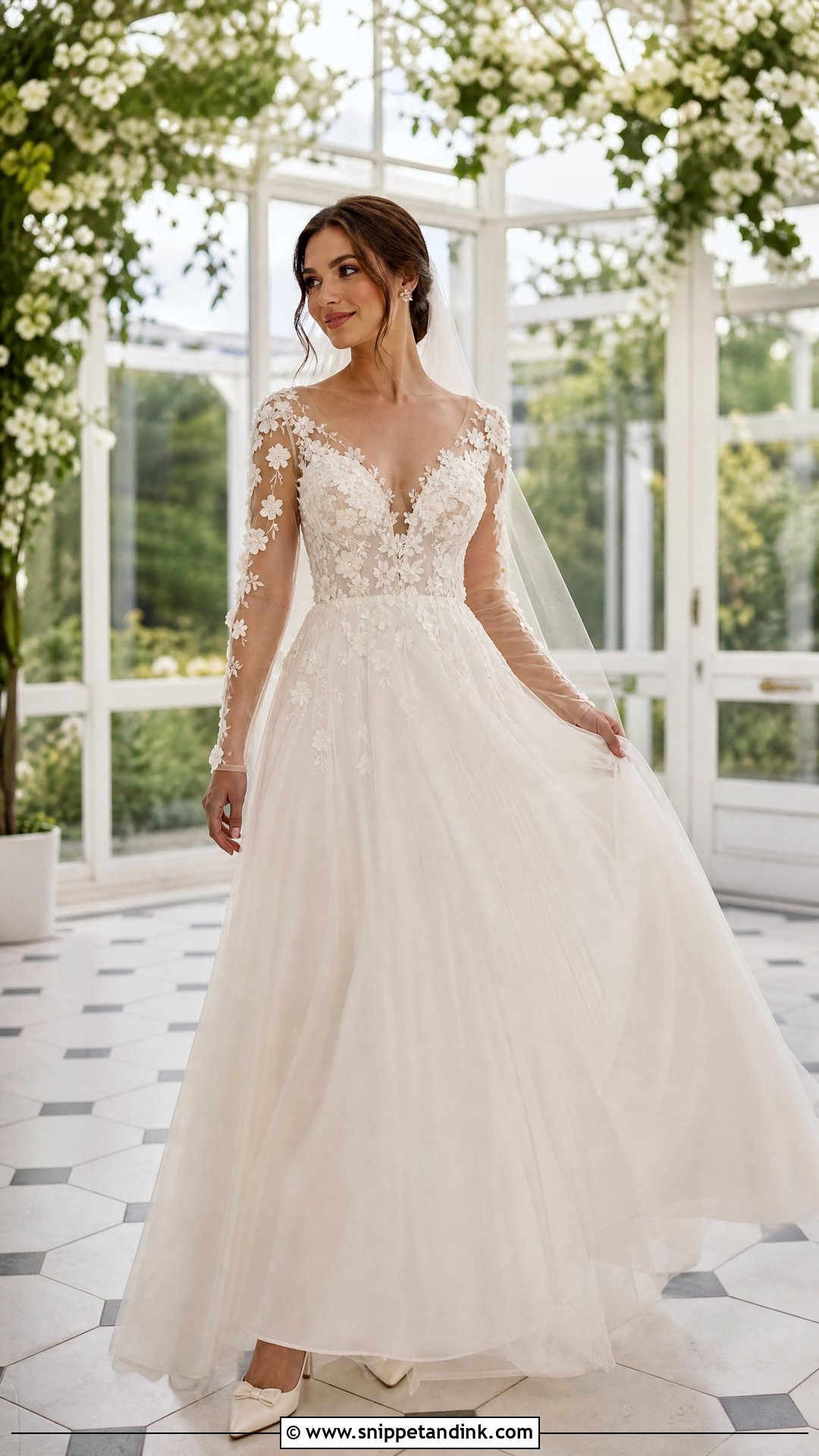
Raised floral appliques turn the sleeves into a feature of their own. On a tulle A-line, the blossoms work best when they start on the bodice and travel over the shoulders and down the sleeves, with a few scattered on the skirt. Inspect every applique near the wrist and elbow, because a stiff flower sitting right on a joint stops the sleeve from bending and rubs. Good designers space them away from where the arm folds. Plain ivory heels, small floral studs and a sheer veil with minimal edging keep it balanced. A streamlined bouquet and a low bun stop the upper half from looking crowded.
11. Pearl Beaded Sleeve Wedding Dress
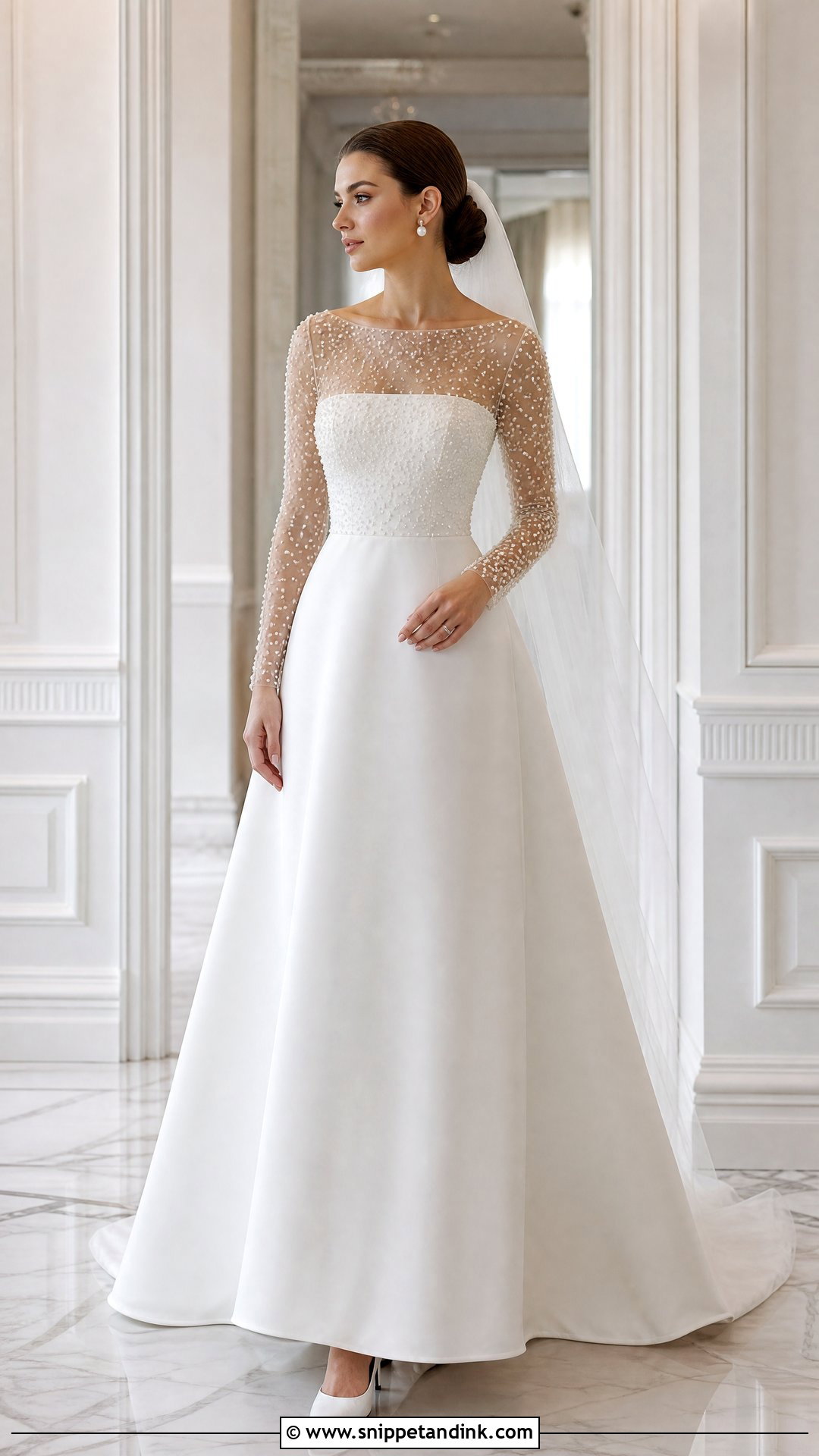
Pearls on a sheer sleeve give a soft glow rather than sparkle. A fitted sheath or soft A-line is the right base, and the beading looks best when it gets slightly denser at the cuffs or shoulders. Beaded sleeves weigh more than people expect. After a few hours, heavy pearls drag the sleeve down and pull at the shoulder seam, so I ask brides to wear the dress for a good while at the final fitting. Pearl earrings, satin pumps and a plain tulle veil are enough. Leave off the necklace, and choose a smooth bun or a ponytail.
12. Embroidered Color Sleeve Wedding Dress
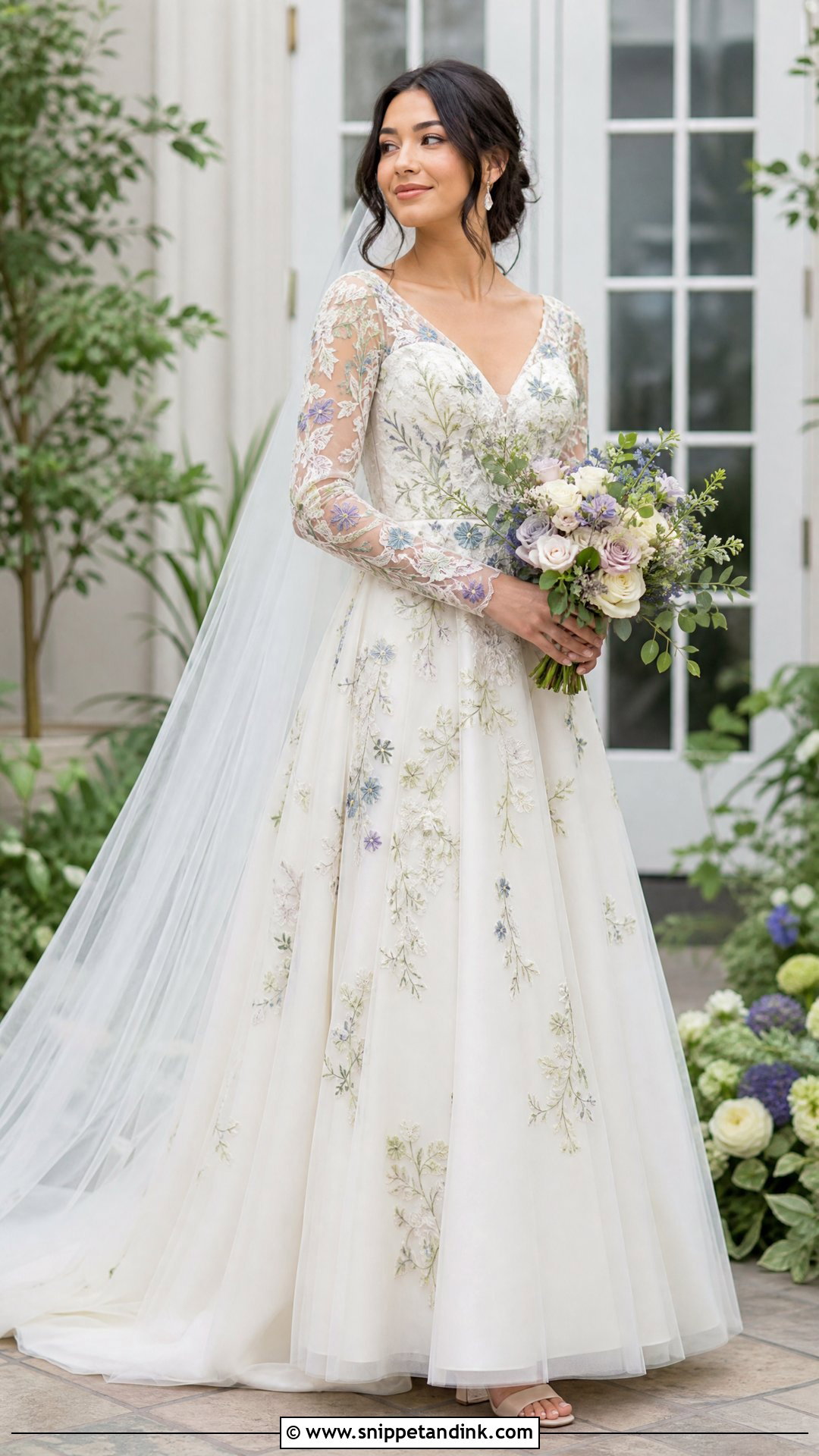
Color in the embroidery gives a sleeved wedding dress a personal, hand-finished feel. I’d go for an ivory gown with sheer sleeves stitched in muted blue, soft green, lavender or blush flowers, with a little of the same color carried onto the bodice or skirt so the sleeves don’t look borrowed. Thread colors shift between daylight and indoor light, so ask to see samples in both. Custom work can include meaningful flowers, regional plants or tiny initials. Neutral heels, understated earrings and a plain veil keep the stitching visible, and one or two matching shades in the bouquet tie it together.
13. One Sleeve Wedding Dress
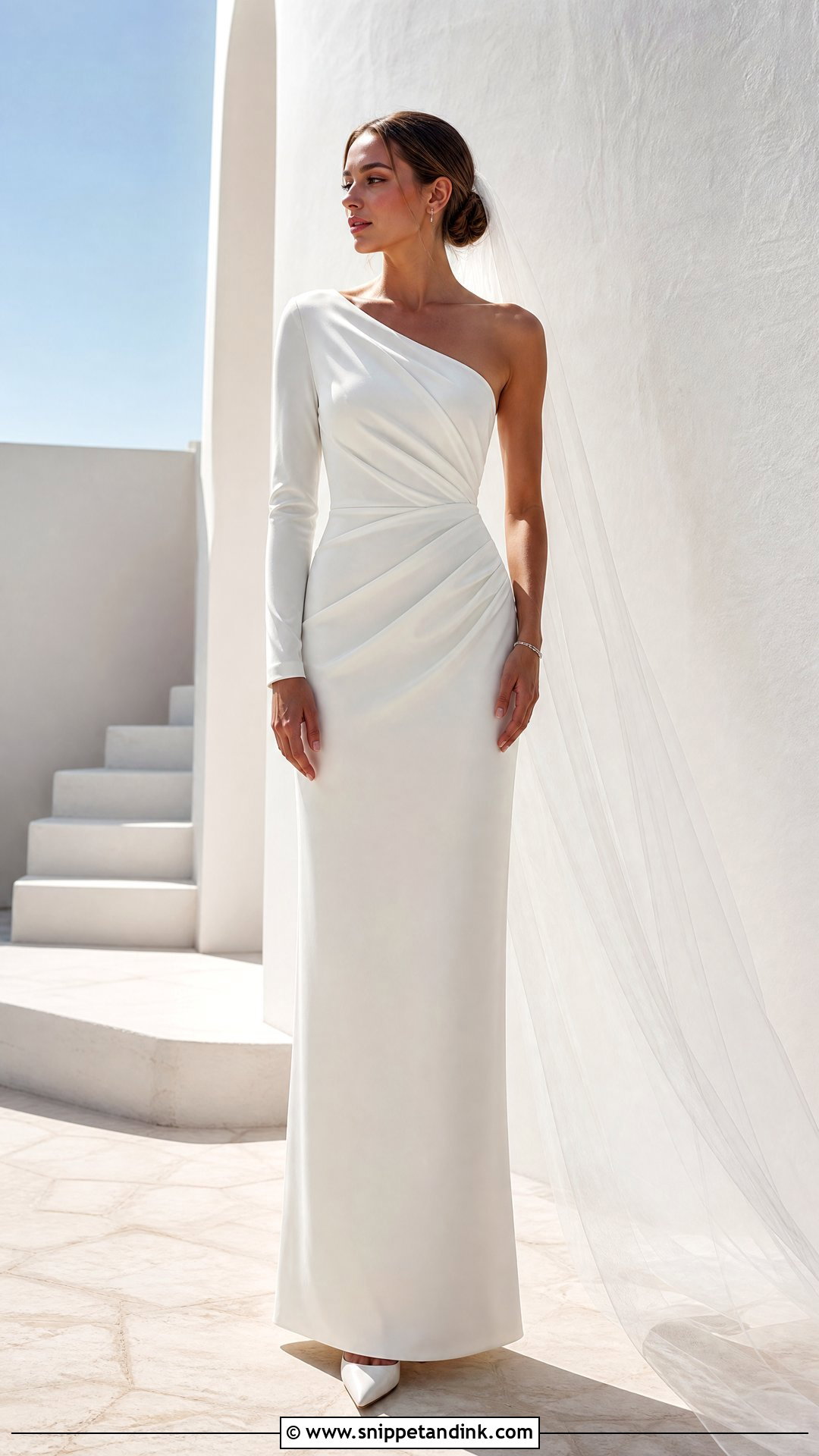
One sleeve, one bare shoulder: that asymmetry is a strong look on a column, fit-and-flare or softly draped gown. The covered side can be gathered, lace, beaded or sculpted. The engineering matters most here, since all the weight hangs from one side. During alterations, I check that the bodice stays level and doesn’t twist toward the sleeve as you move. Keep the skirt streamlined. Sleek heels, a single bracelet on the bare arm and small earrings suit it. A long veil softens the shape; a short one keeps it sharp. Choose a hairstyle that leaves the shoulder line clear.
14. Flutter Sleeve Chiffon Wedding Dress
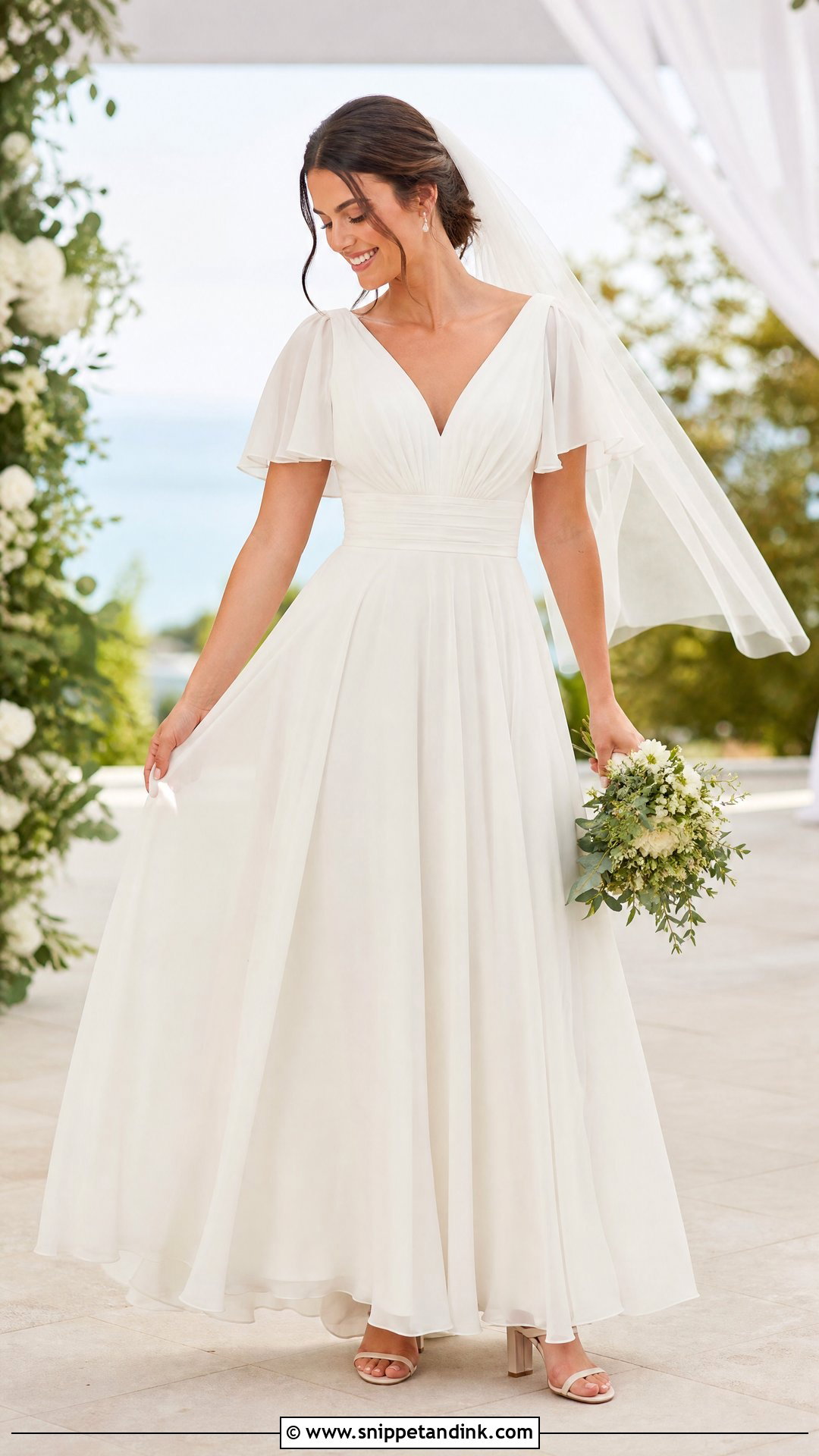
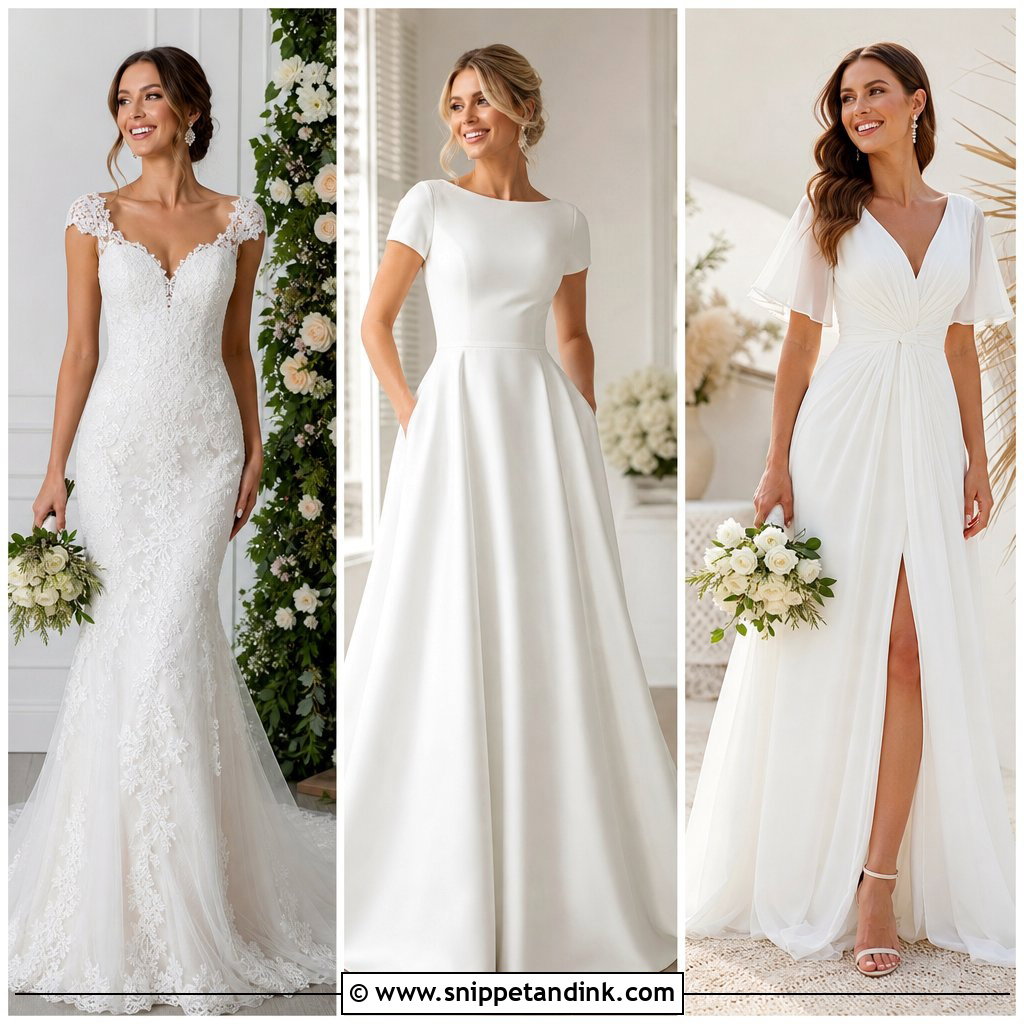
Flutter sleeves in layered chiffon float over the upper arm and give coverage that hardly feels like sleeves at all. On an A-line with a fitted waist and a V-neck or gathered bodice, they suit warm weather and long outdoor days. Where they end matters: they should finish at a flattering point on the arm and not vanish under the armpit when your arms are down. Too many layers add bulk at the shoulder, so two or three are usually enough. Comfortable block heels, delicate earrings and a light fingertip veil suit it, with a loose low bun or natural waves.

15. Cap Sleeve Mikado Ball Gown
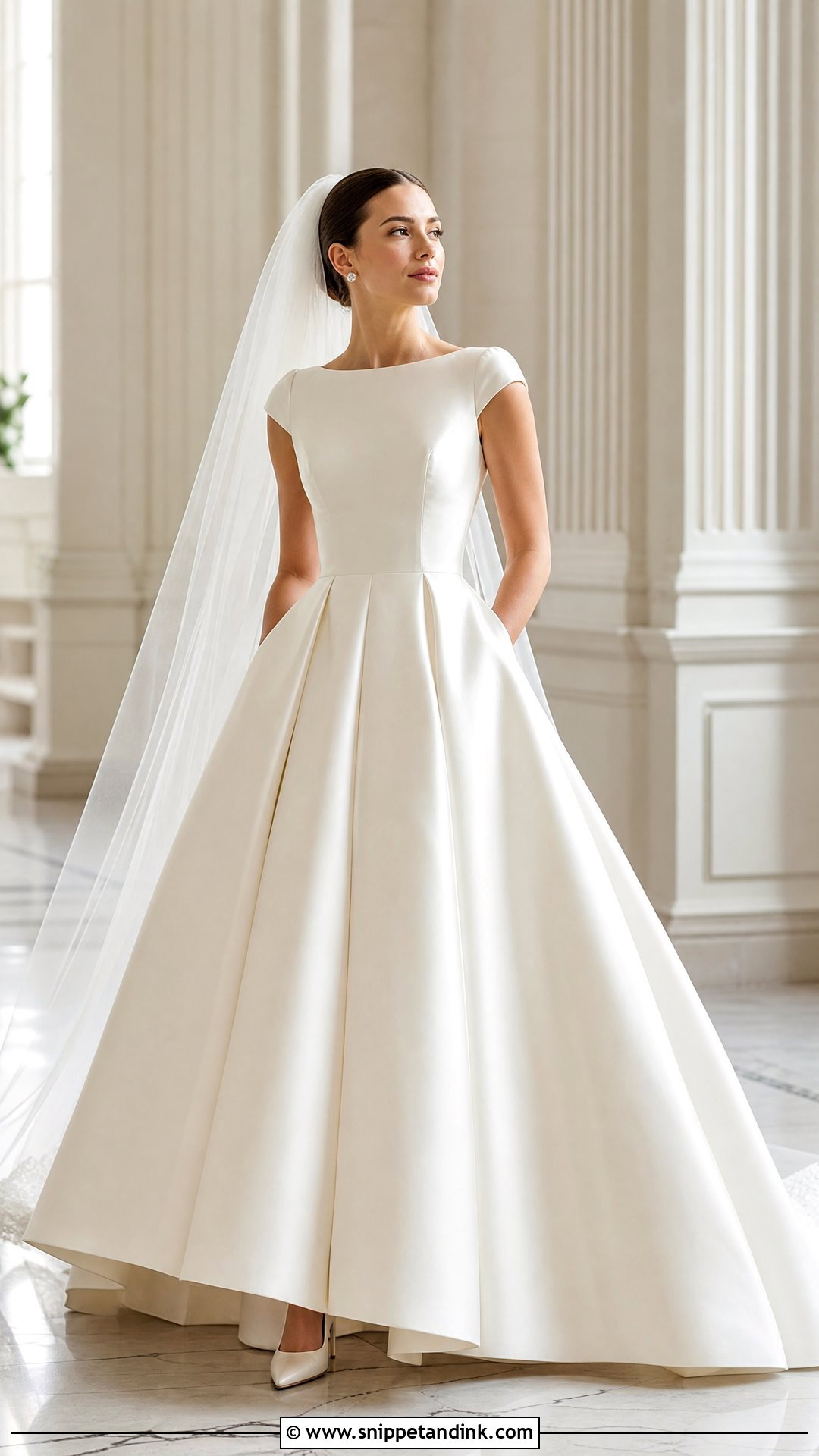
A Mikado ball gown with cap sleeves is regal and covers just the shoulder point. Mikado is stiff, so the sculpted cap should follow the shoulder line closely rather than sticking out. Check the armholes carefully at every fitting. Rigid fabric sitting too close to the underarm rubs or pinches, and you won’t notice until you’ve been waving for an hour. A fitted bodice, defined waist and full pleated skirt hold their shape well, and pockets are easy to add. Classic pumps, bright studs, a cathedral veil with a simple edge and a neat updo complete it.
16. Three Quarter Sleeve Fit And Flare Wedding Dress
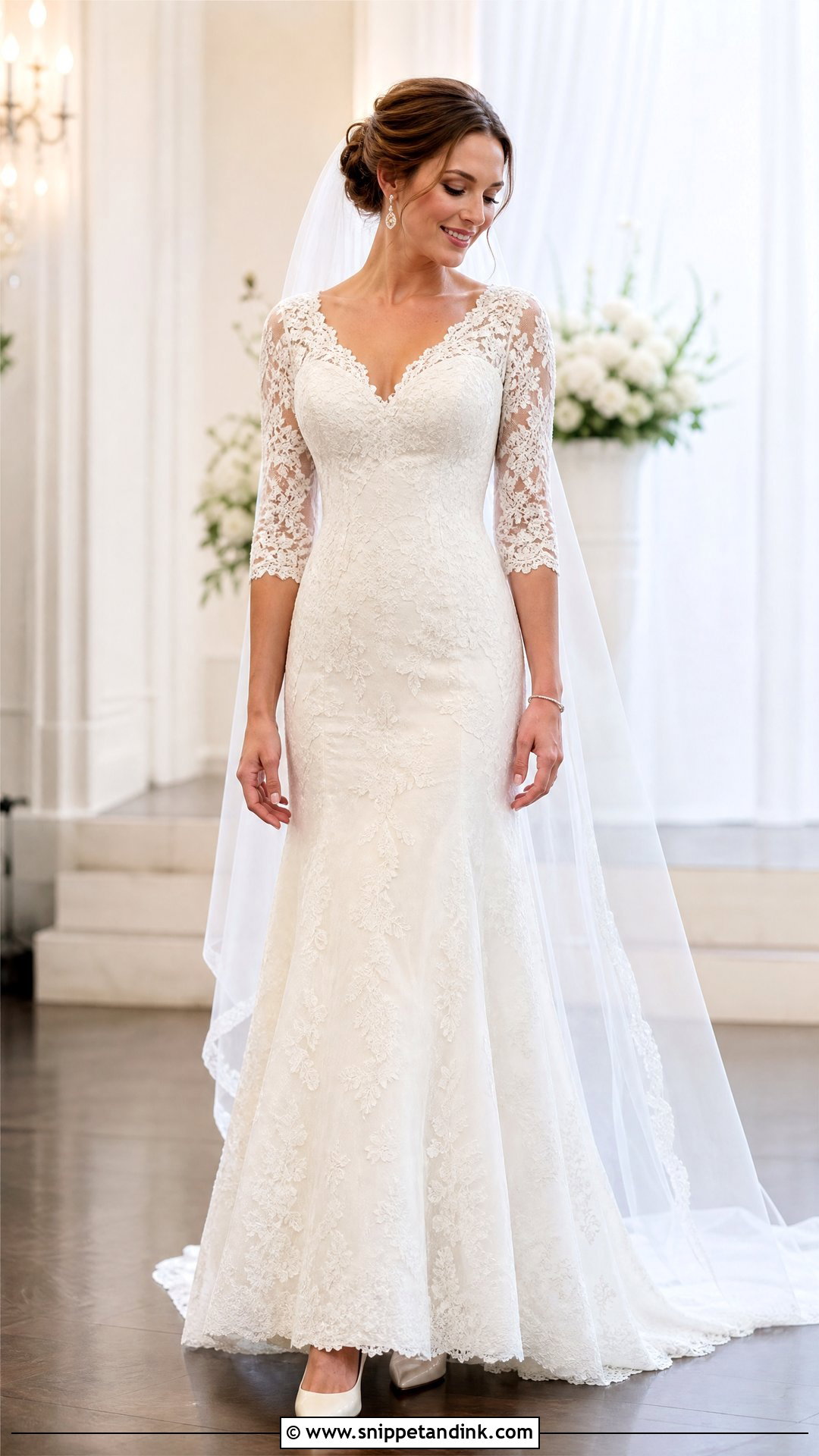
Three-quarter sleeves cover the arm but leave the wrists free for a bracelet or a watch you love. On a fit-and-flare, with a shaped bodice and a skirt that opens below the hip, they look balanced. Lace is romantic; plain crepe is more minimal. Have the hem end at the narrowest point of the forearm, not across the widest, and ask the tailor to check that it stays smooth when you bend your elbow. Pointed heels, a slim bracelet, drop earrings and a chapel veil suit it, with a softly swept updo so your hair doesn’t cover the sleeve detail.
17. Split Sleeve Wedding Dress
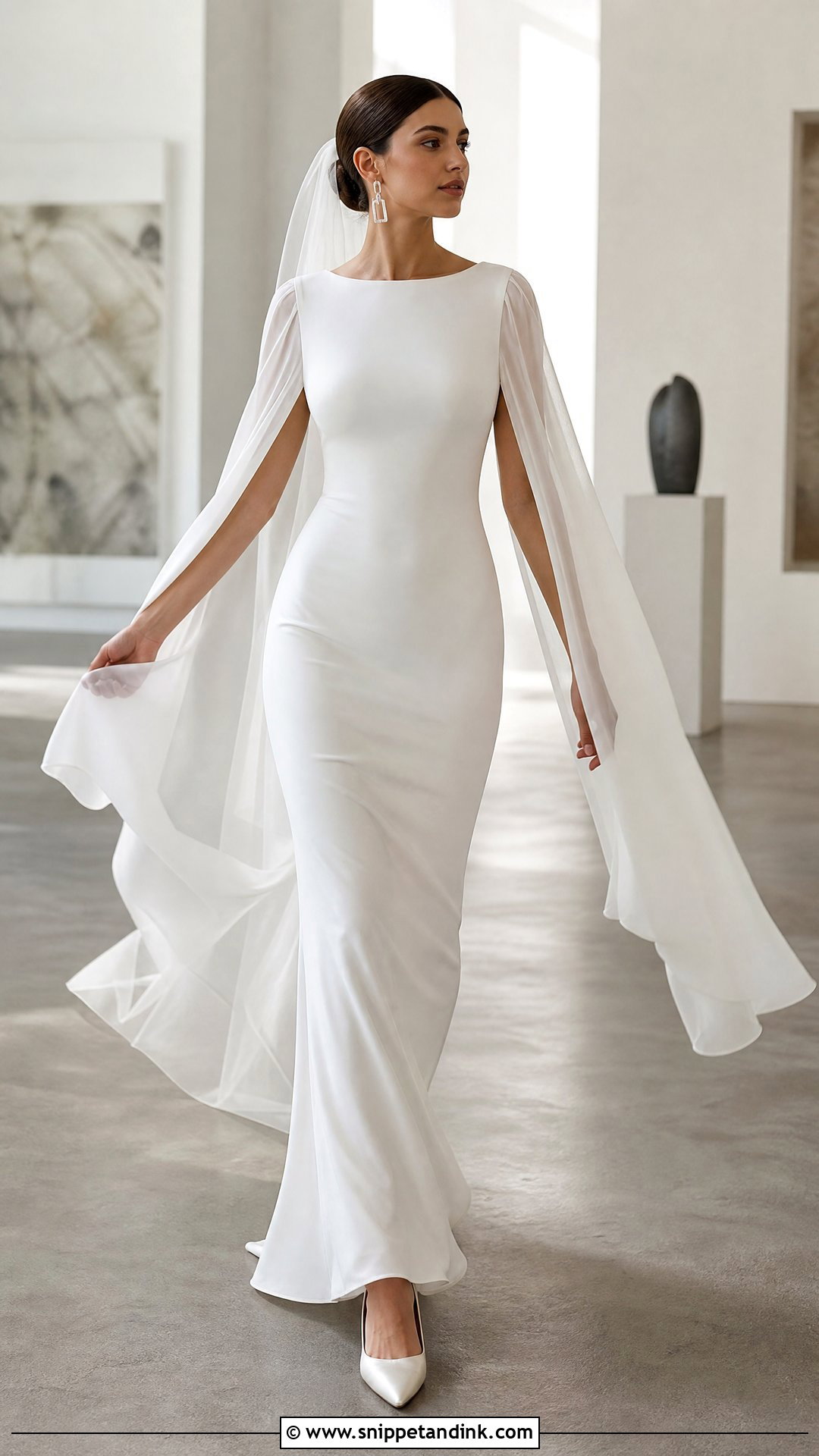
Split sleeves open at the shoulder, elbow or forearm and give movement without bulk. On a sheath or A-line, chiffon flows softly while satin or crepe makes cleaner panels. Hold the bouquet at your fitting and see where the opening falls, because a split at the elbow can drape over the flowers and get crushed. When you walk and turn, the opening should reveal the arm naturally without twisting. Skip bracelets with sharp edges, since they catch on the open fabric. Streamlined pumps, geometric earrings and a minimal veil suit it, with a polished ponytail or tucked-back waves.
18. Balloon Sleeve Basque Waist Wedding Dress
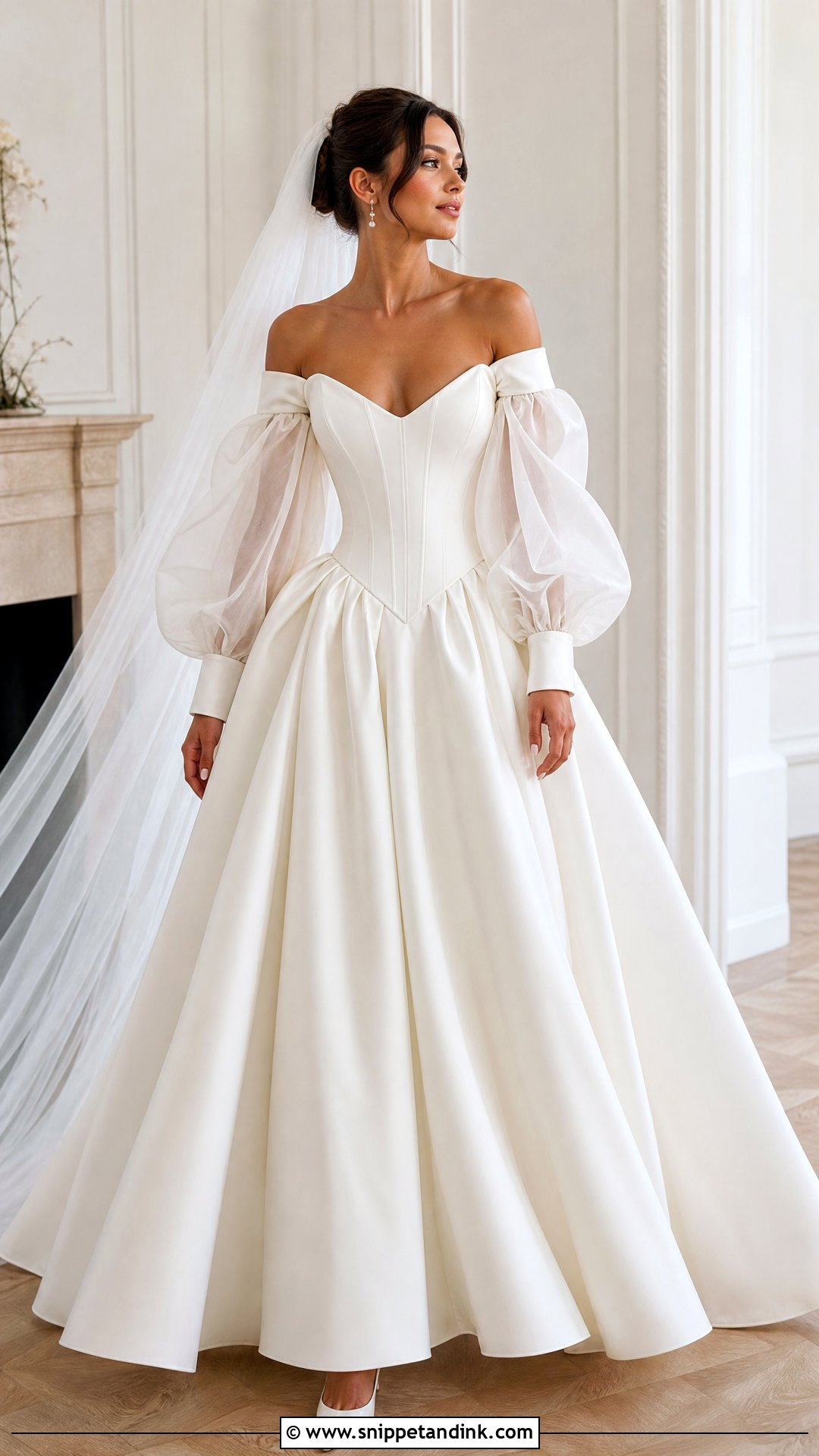
Balloon sleeves with a basque waist make a strong silhouette that nods to history without looking like fancy dress. The bodice should dip gently at the center waist and follow your own proportions; if the point sits too low, it shortens the legs. Organza, tulle or light satin keeps the volume controlled, gathered at fitted cuffs. At fittings, sit down several times and reach both arms forward. The bodice shouldn’t dig in, and the sleeves shouldn’t pull at the shoulders. Pointed heels, small drop earrings and a long plain veil suit it, with sleek or softly pinned hair to balance the fullness.
19. Long Cuff Sleeve Minimalist Wedding Dress
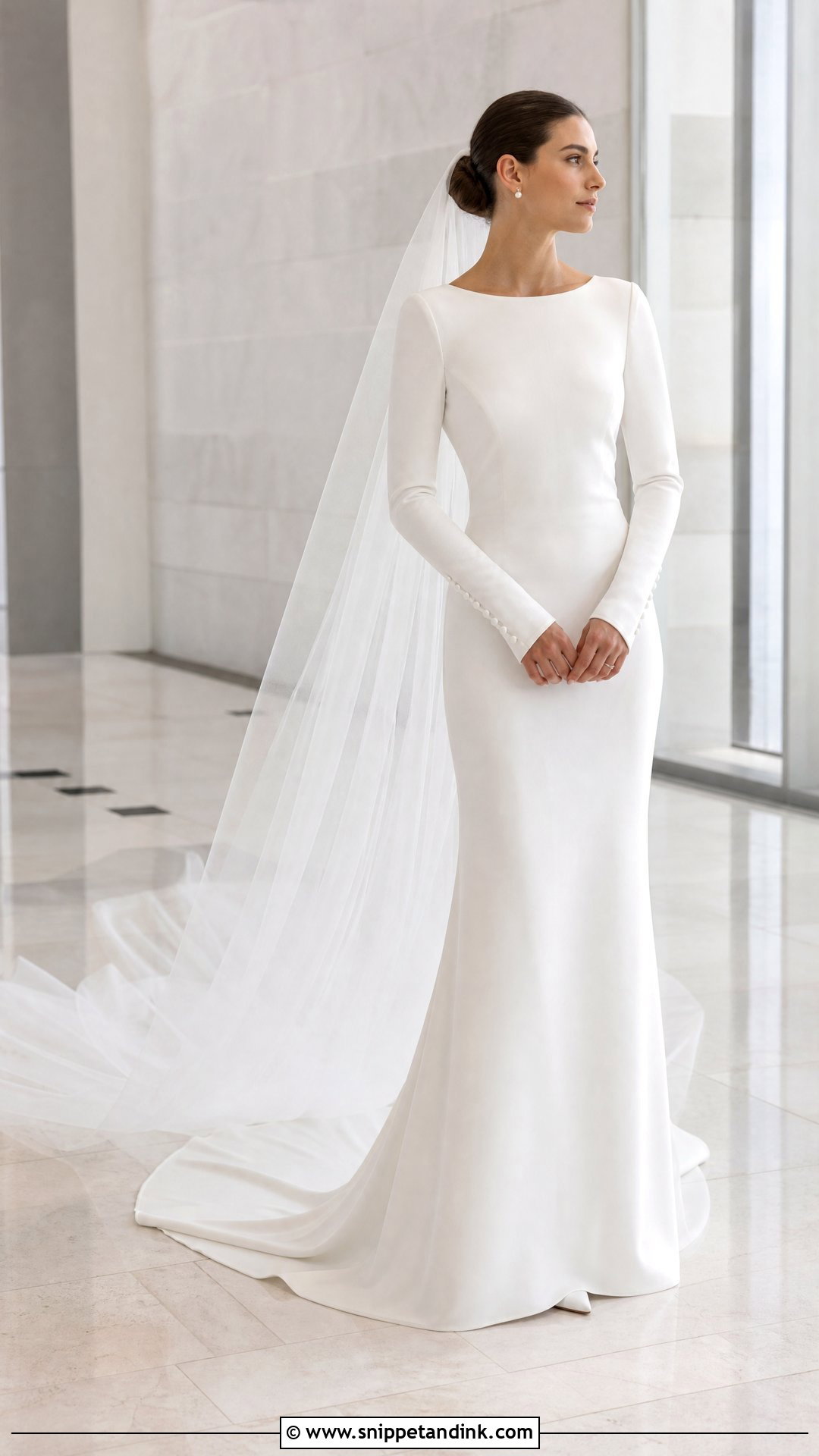
Long buttoned cuffs give a minimalist long sleeve wedding dress a quietly fashionable detail. A smooth crepe or satin column with a boat neck, soft scoop or modest V keeps the upper body clean. Covered buttons can run from wrist to elbow or carry on down the back. The cuff should be snug but not tight enough to stop your hand bending, so ask the tailor to check button placement with your wrist flexed. Real buttons take time to fasten; a hidden zip or snaps underneath help on a busy morning. Pointed pumps, pearl studs, a plain long veil and a sleek bun finish it.

20. Sculptural Sleeve Mini Wedding Dress
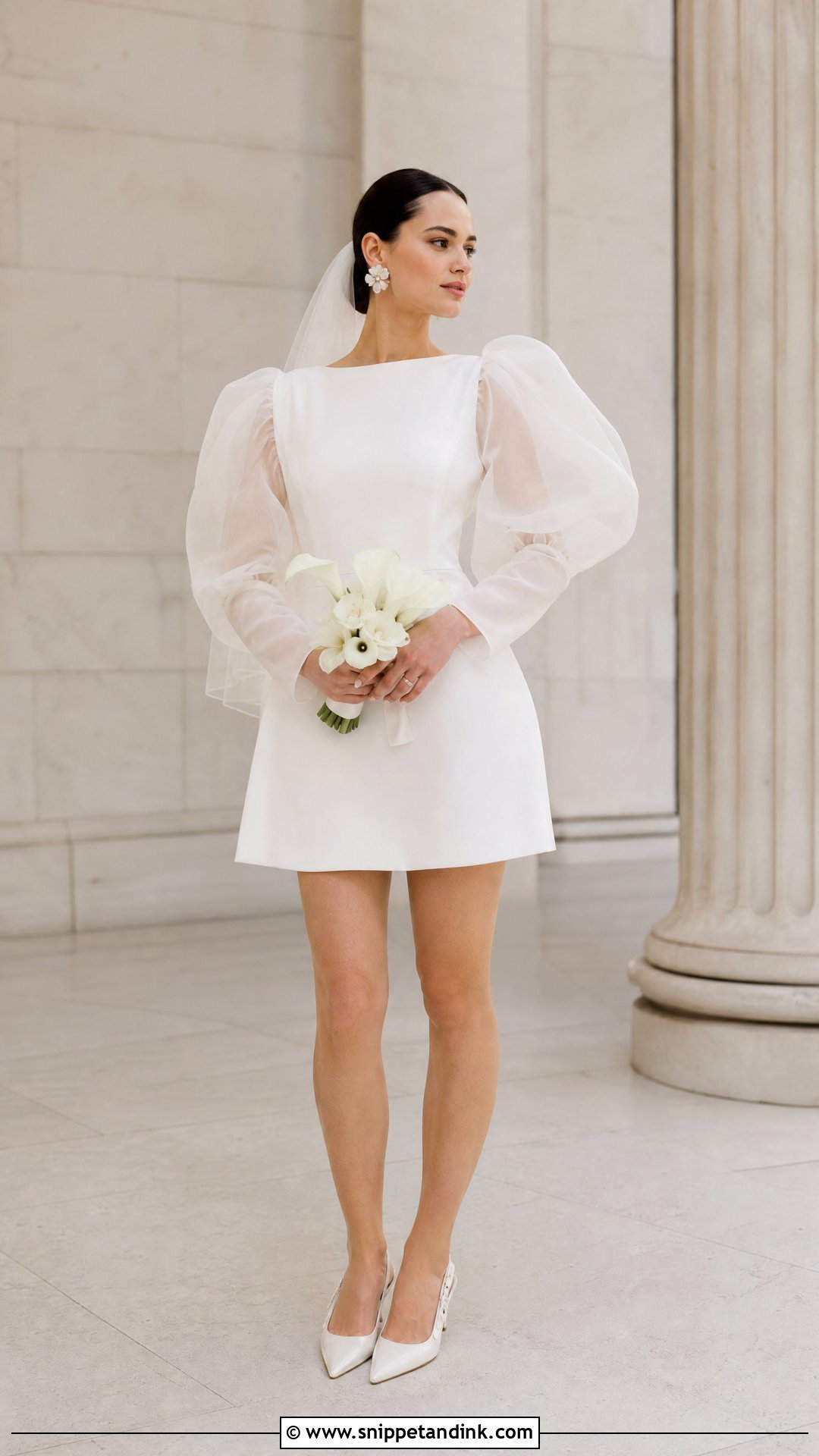
Sculptural sleeves on a mini make a confident choice for a courthouse, a reception change or a small celebration. A clean shift, fitted mini or short A-line with oversized organza sleeves, folded satin shoulders or structured florals needs a simple skirt and a restrained neckline to balance it. Your legs and shoes are fully on show, so choose footwear deliberately, and consider sheer tights in cool weather. Sit and walk to check the hem gives you comfortable coverage. Lightweight sleeve construction keeps the shoulders from tiring. Pointed slingbacks, statement earrings and a short veil or polished bow complete it.
Can Sleeves Be Added to the Gown You Already Love?
Often, yes. A lot of brides fall for a strapless dress and then wish it had sleeves. A skilled bridal seamstress can usually add them, but how well it works depends on a few things I’d check before agreeing to it.
- Matching fabric. Ask the shop or designer whether they can supply extra lace or tulle. If not, the seamstress needs something close enough in color and texture that the join won’t show.
- The bodice structure. Sleeves need somewhere to anchor. A strapless bodice may need straps or a sheer illusion panel added first so the sleeves have support.
- Detachable or sewn in. Removable sleeves are more flexible but need well-made fastenings. Sewn-in sleeves feel more secure and look more integrated.
- Time. Allow extra fittings and several extra weeks, as adding sleeves means more work than standard alterations. Costs vary widely, so get a quote before you commit.
My tip for deciding: before alterations, try on a few sleeved dresses or a separate bolero at the shop. If you still feel more like yourself with your arms covered, the work is worth it.
Lift Your Arms Before You Say Yes
Every sleeve here trades something. Lace is soft; satin, crepe and mikado give structure. Bishop, balloon, cape and split sleeves bring drama, while cap and flutter sleeves keep things light, and detachable ones give you two outfits from one gown. Whatever catches your eye, test it with your arms: lift them, hug, sit down, hold flowers, and look at photos from the side and back. Then plan the neckline, hair, veil and jewelry around the sleeve, because it’s the piece that sits closest to your face all day.
You'll Like These Ideas:






Leave a Reply