
Spring is when couples most often ask me to cover a cake in flowers, and it’s the season when doing that well takes the most planning. Petals are pale, flavors get lighter, and the cake has to sit beside a bouquet full of the same blooms. The cakes that work don’t just carry flowers; they share a palette with the venue and bouquet and a flavor with the season, things like lemon, vanilla bean, almond, strawberry and elderflower. Below are twenty floral directions, from pressed petals and piped buttercream to sugar peonies and a sheet cake for a crowd, with notes on how each one is actually made and where it tends to go wrong.
Which Spring Flowers Can Actually Touch the Icing
Before any design talk, I sort a couple’s flower wish list into three groups, because a pretty bloom isn’t automatically a safe one.
Edible, if grown for eating
Violas, pansies, primroses, roses, calendula, cornflowers, borage and culinary lavender are the ones I reach for, and only from growers who supply them as food. Florist stock is usually treated with products never meant to be eaten, even when the flower itself is an edible type.
Decorative only, kept off what’s served
Sweet peas, ranunculus, hydrangea, daffodils, lily of the valley and many lilies are toxic or irritating. They can still dress a cake, but the stems are wrapped and sealed into food-safe picks, and the blooms rest on small barriers so nothing touches the icing guests will eat.
Sugar instead
When someone wants a flower that’s both unsafe and fragile, hydrangea or sweet pea for example, a sugar version solves both problems and matches the color exactly. Either way, fresh blooms go on as late as possible, ideally once the cake is set up at the venue, and they’re lifted off before cutting.
1. Pressed Flower Wedding Cake
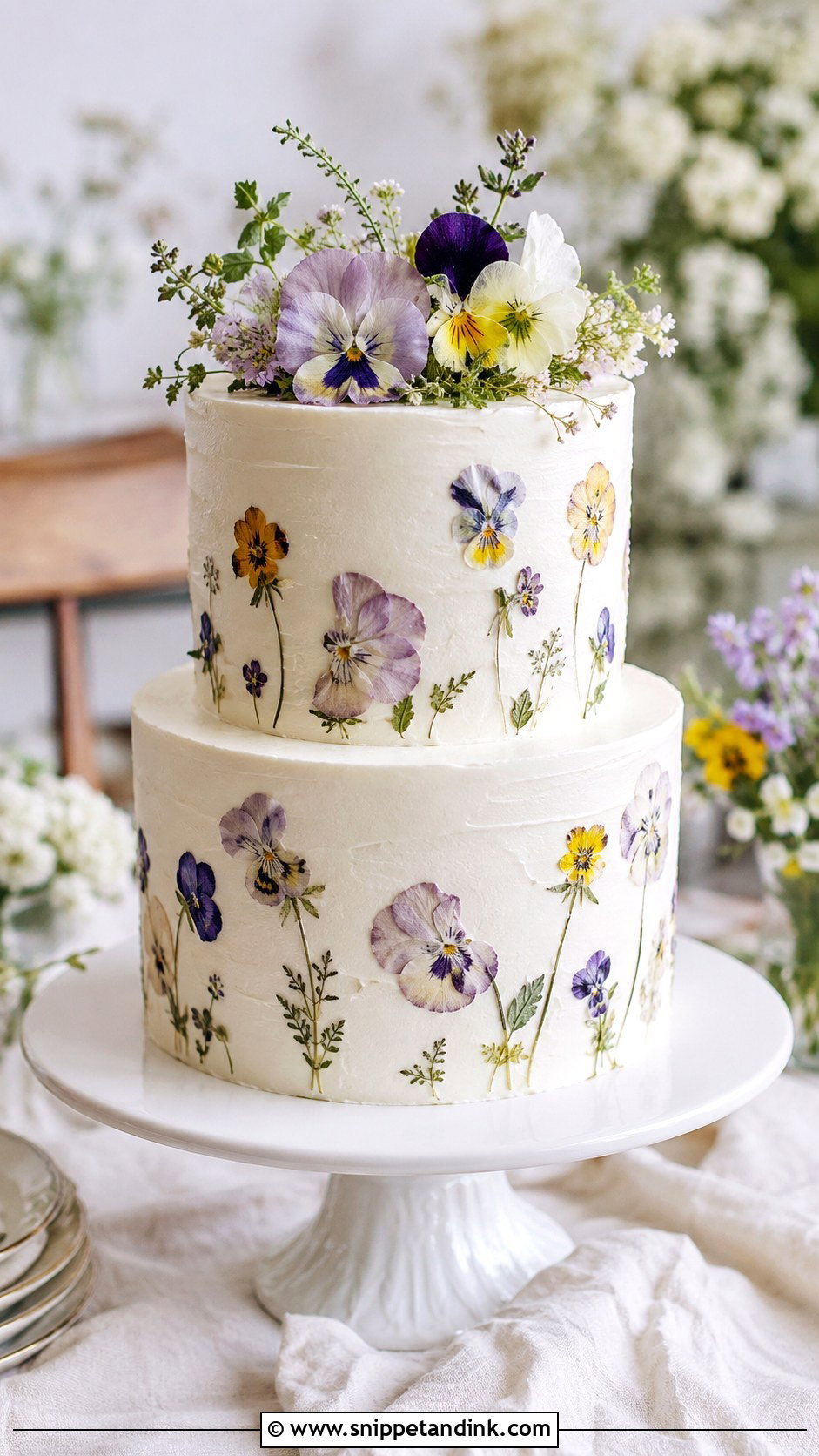
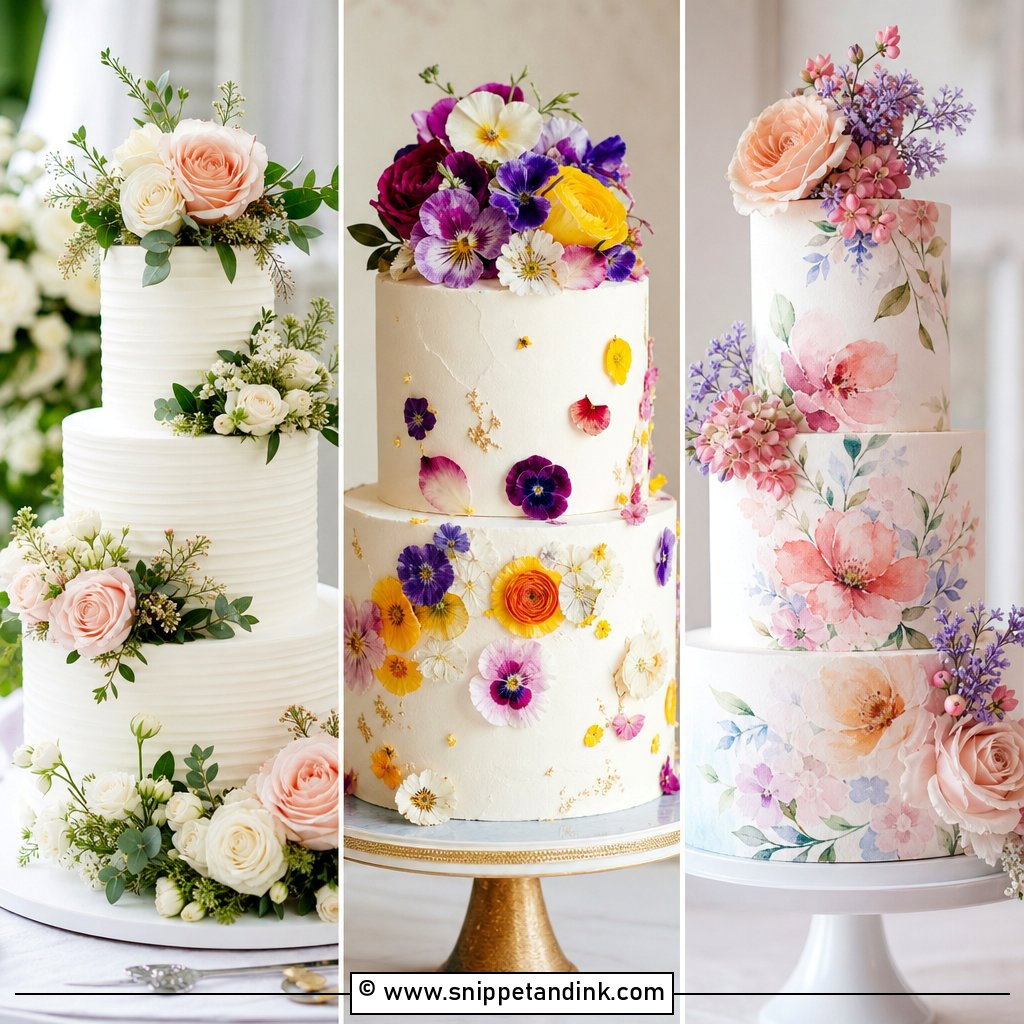
Edible petals pressed flat against the icing give a garden look without any height. Violas, pansies and similar flowers are pressed and laid against smooth buttercream or fondant, where they form a pattern that rewards close-up photos. Ivory, blush, lavender, pale yellow and soft blue all press well. The catch is moisture: pressed petals sitting on buttercream slowly absorb it and can darken, so I apply them as close to delivery as I can. Keep the rest of the cake plain. A vanilla bean sponge with lemon curd or strawberry filling suits it, and every flower on it has to be a genuinely edible variety, grown without sprays.
2. Buttercream Flower Wedding Cake
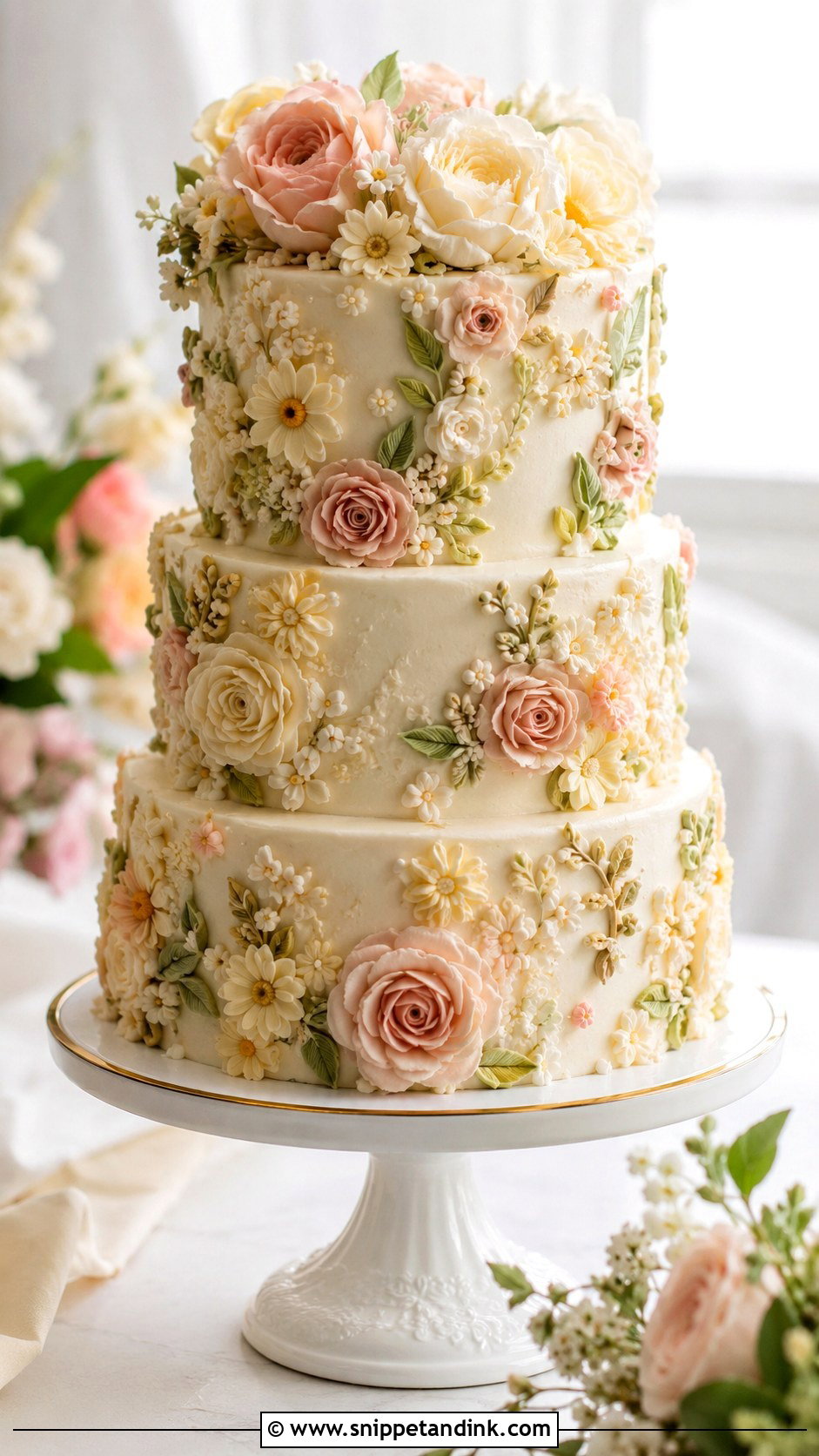
Every petal here is edible, piped from buttercream with shaped tips and tinted to the wedding colors: pale pink roses, cream peonies, yellow daisies, lilac blossoms or forget-me-not style flowers. The frosting itself matters more than people think. Swiss meringue buttercream gives a silky petal but softens quickly in warmth, while a sturdier crusting buttercream holds sharper edges for longer, and the right choice depends on your venue more than your taste. It works on one tier, two, or a full display. Vanilla, almond or lemon sponge keeps it crowd-friendly.
3. Fresh Flower Wedding Cake
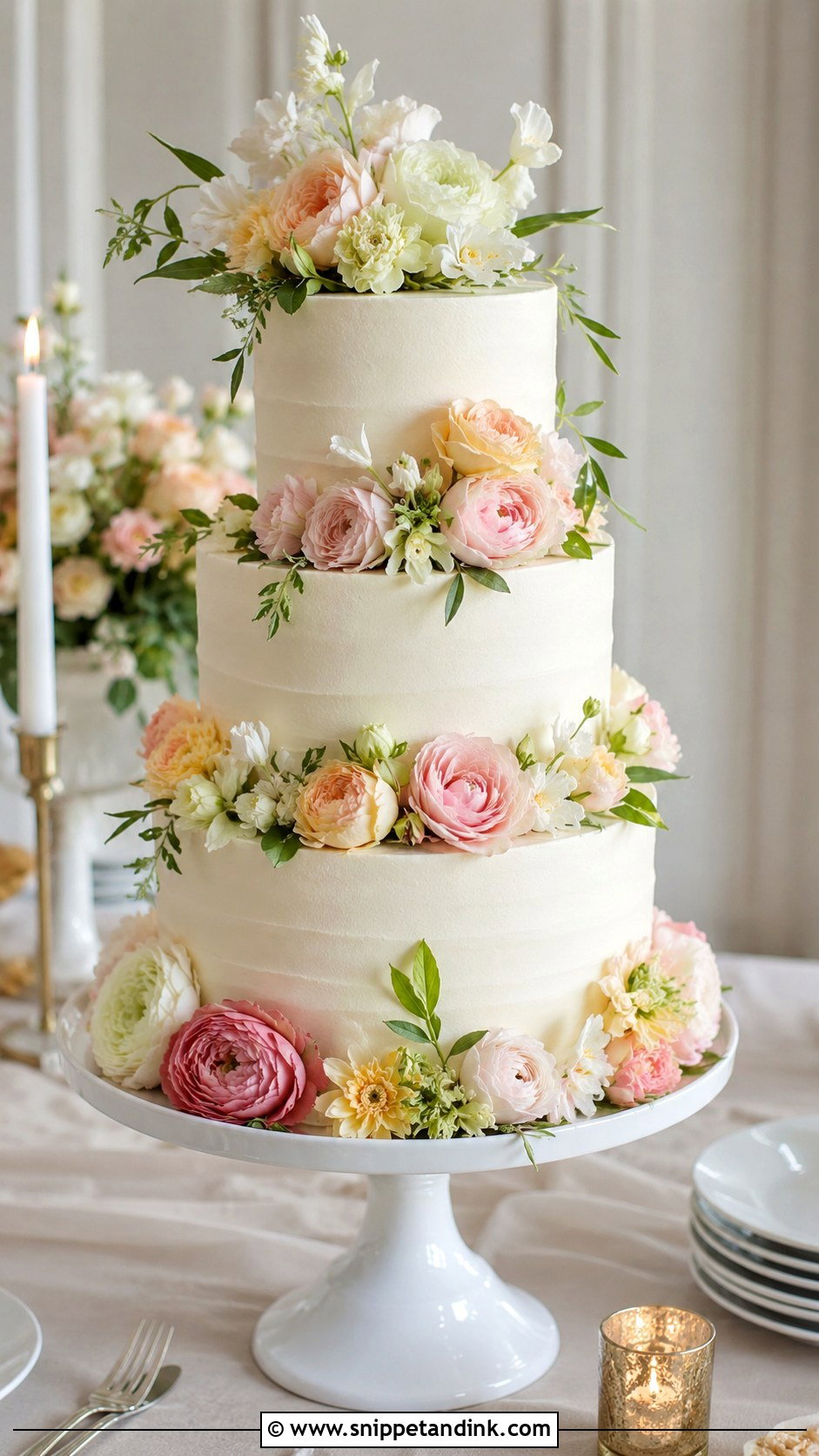
Real roses, ranunculus, sweet peas and small spring greenery on a white or ivory cake look natural and romantic, but this design needs the most care behind the scenes. Many florist flowers are grown with sprays, and some, sweet peas and ranunculus among them, are toxic, so they’re decorative only and must never touch the frosting. Stems are wrapped and set into food-safe picks, and blooms sit on small barriers. It works best when your florist and I plan it together, ideally with flowers from the same order as the bouquet, so the cake looks like part of the wedding rather than a separate decoration. Smooth buttercream on round tiers shows them off.
4. Cascading Flower Wedding Cake
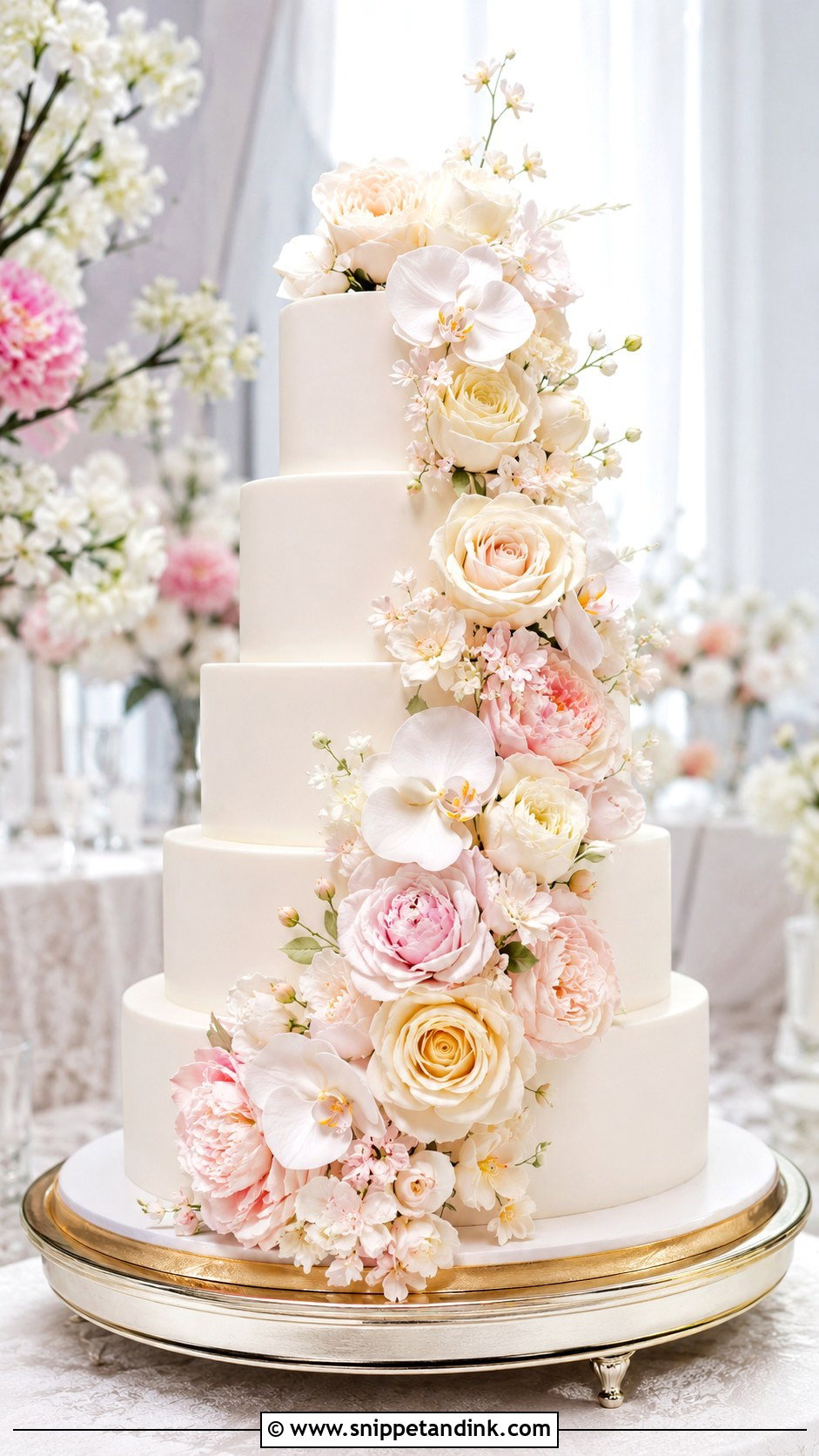
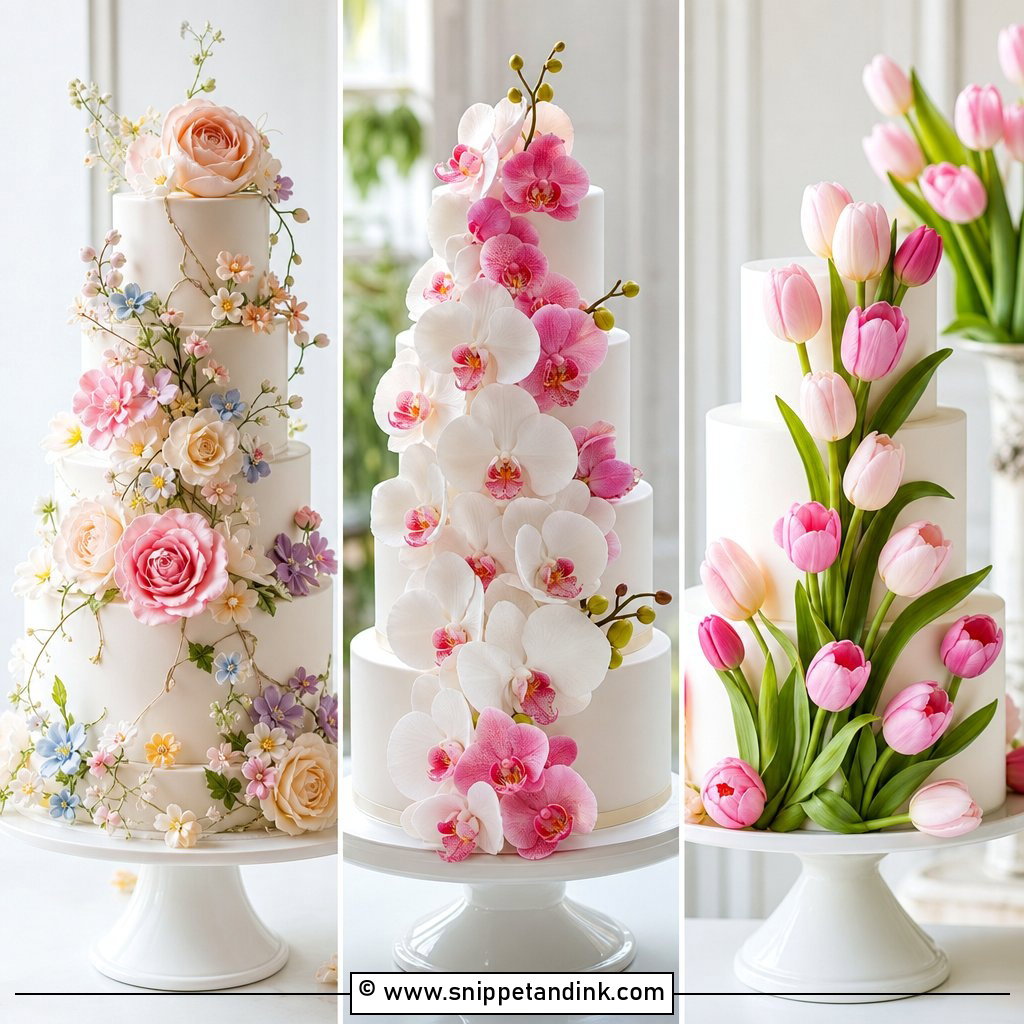
A line of flowers falling from the top tier in a curve gives height and movement. For spring I keep it airy, with soft roses, orchids, peonies and tiny filler flowers, rather than packing the line solid, which reads heavy and makes the cake look smaller. I map the curve on the tiers before placing anything so it flows instead of zigzagging. It suits a larger reception or formal venue. Keep the icing to smooth ivory buttercream or fondant, and lean toward lemon elderflower or almond raspberry. A full cascade of sugar flowers is surprisingly heavy, so the tiers below need proper internal supports.
5. Wildflower Wedding Cake
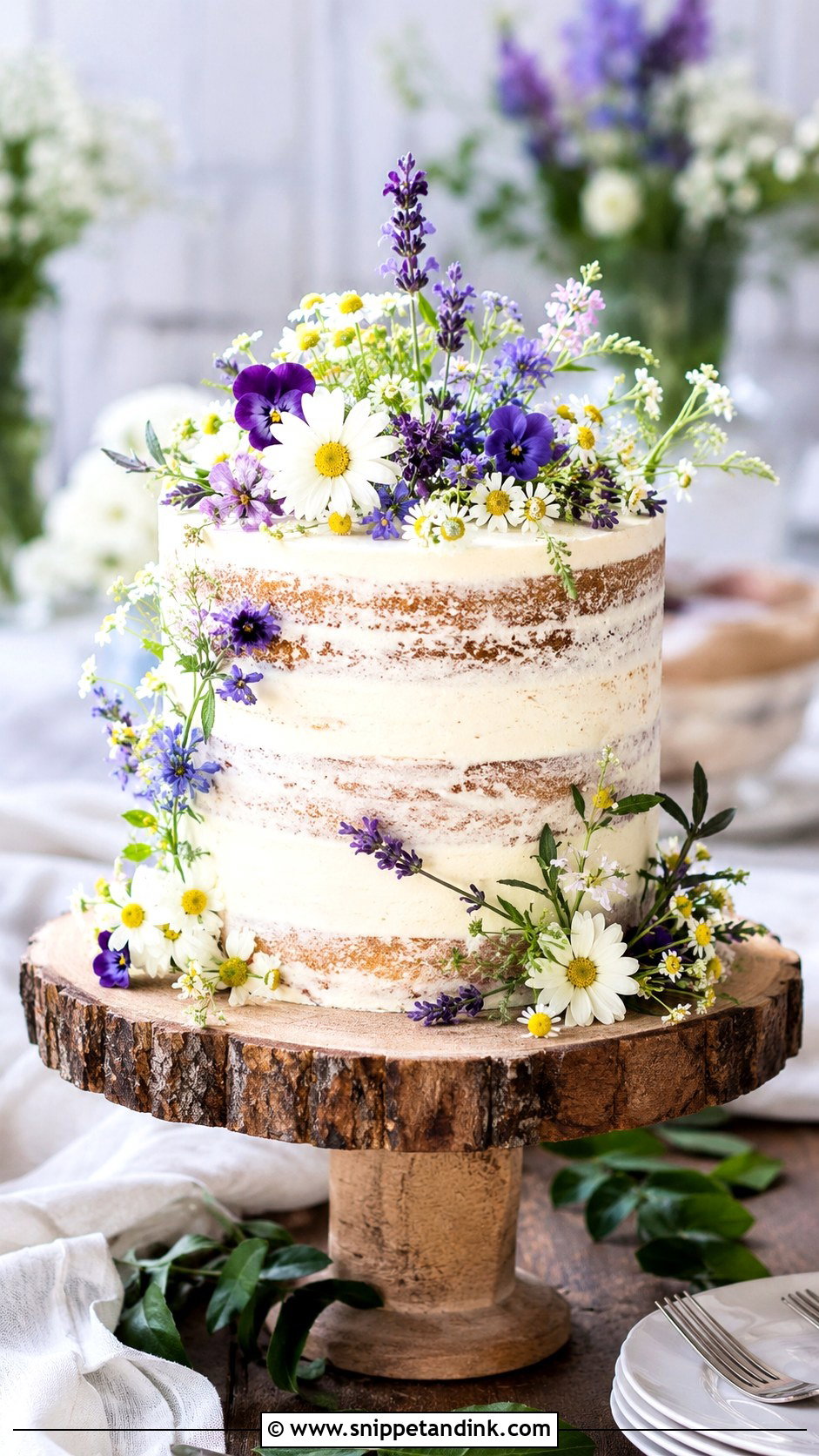
Wildflower cakes are meant to look gathered rather than arranged, with small blooms in different colors and heights: tiny daisies, violets, chamomile-style flowers, lavender sprigs and soft greenery. Semi-naked, lightly frosted or smooth buttercream all suit it. The loose look is harder than it seems, because truly random placement just looks messy, so I still work in small odd-numbered groups. It belongs at outdoor weddings, garden venues and barns, with honey, lemon, vanilla or berry flavors and a wooden stand or plain ceramic plate. One warning: semi-naked sponge dries at the exposed edges, so it shouldn’t sit out for hours before cutting.
6. Sugar Flower Wedding Cake
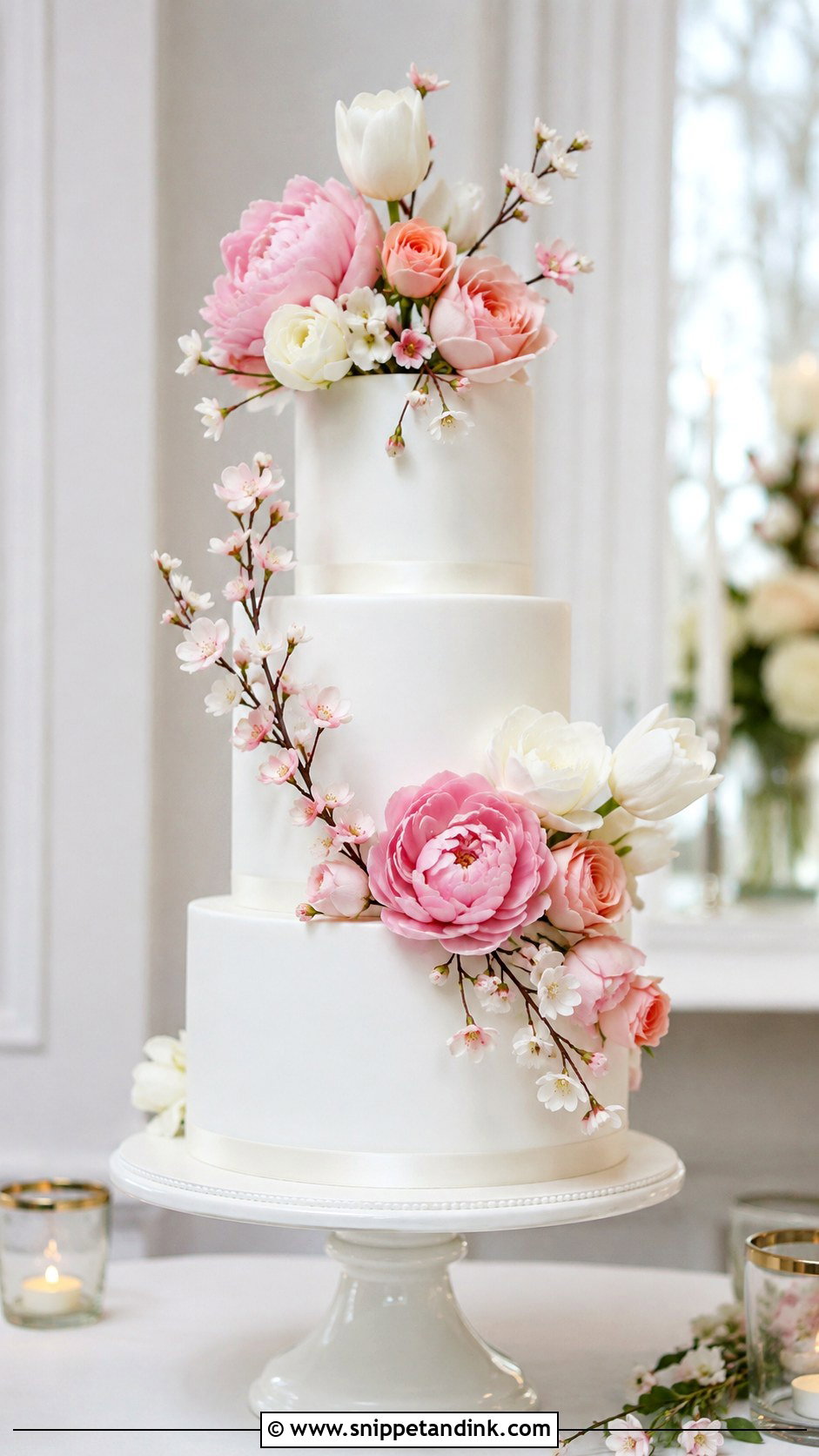
Sugar flowers are made petal by petal from gum paste, wired, dried and dusted with color, so a single large rose or peony can take hours of work. Roses, peonies, tulips, cherry blossoms and orchids can all be matched to the exact shade of the bouquet, bridesmaid dresses or invitations, which fresh flowers can’t promise, and they hold their shape all evening. Something couples often don’t realize: most sugar flowers contain wire and floral tape, so they come off before cutting and aren’t eaten. Many people keep them afterward. Fondant gives the cleanest base, though buttercream works too. Vanilla almond, lemon, or a champagne-style cake made without alcohol all suit it.
7. Two Tier Flower Wedding Cake
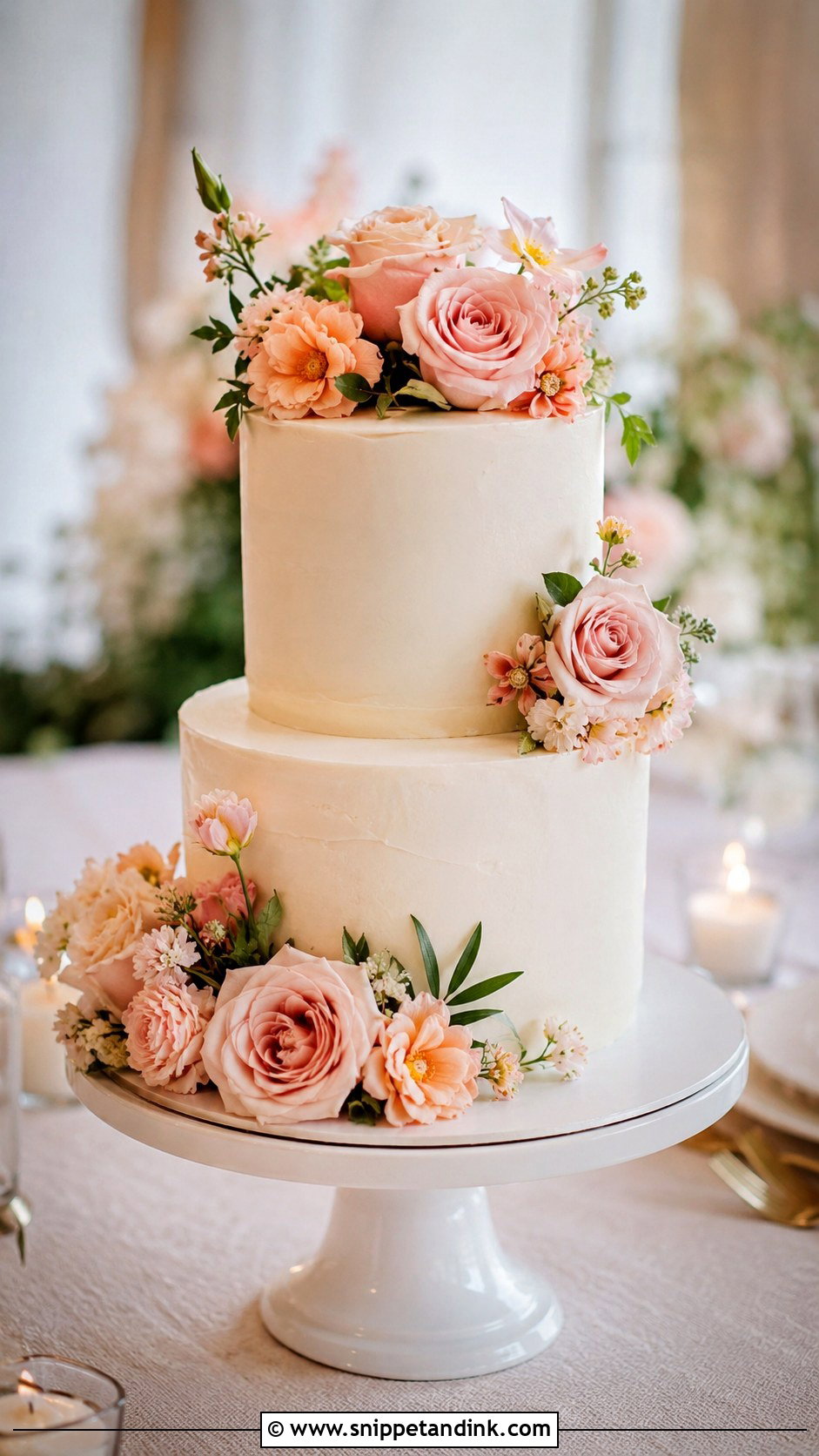
Two tiers suit smaller weddings and intimate receptions, and they can still look full with careful placement: flowers around the base, between the tiers, or in one balanced cluster on the side. Textured buttercream looks neat at this size, in blush, ivory, peach and pale green. A two-tier cake serves fewer people than most couples expect, so if your guest count is near its limit, I’d add a plain kitchen cake cut behind the scenes rather than a third tier. Strawberry vanilla, lemon cream or almond raspberry keep it light.
8. Three Tier Flower Wedding Cake
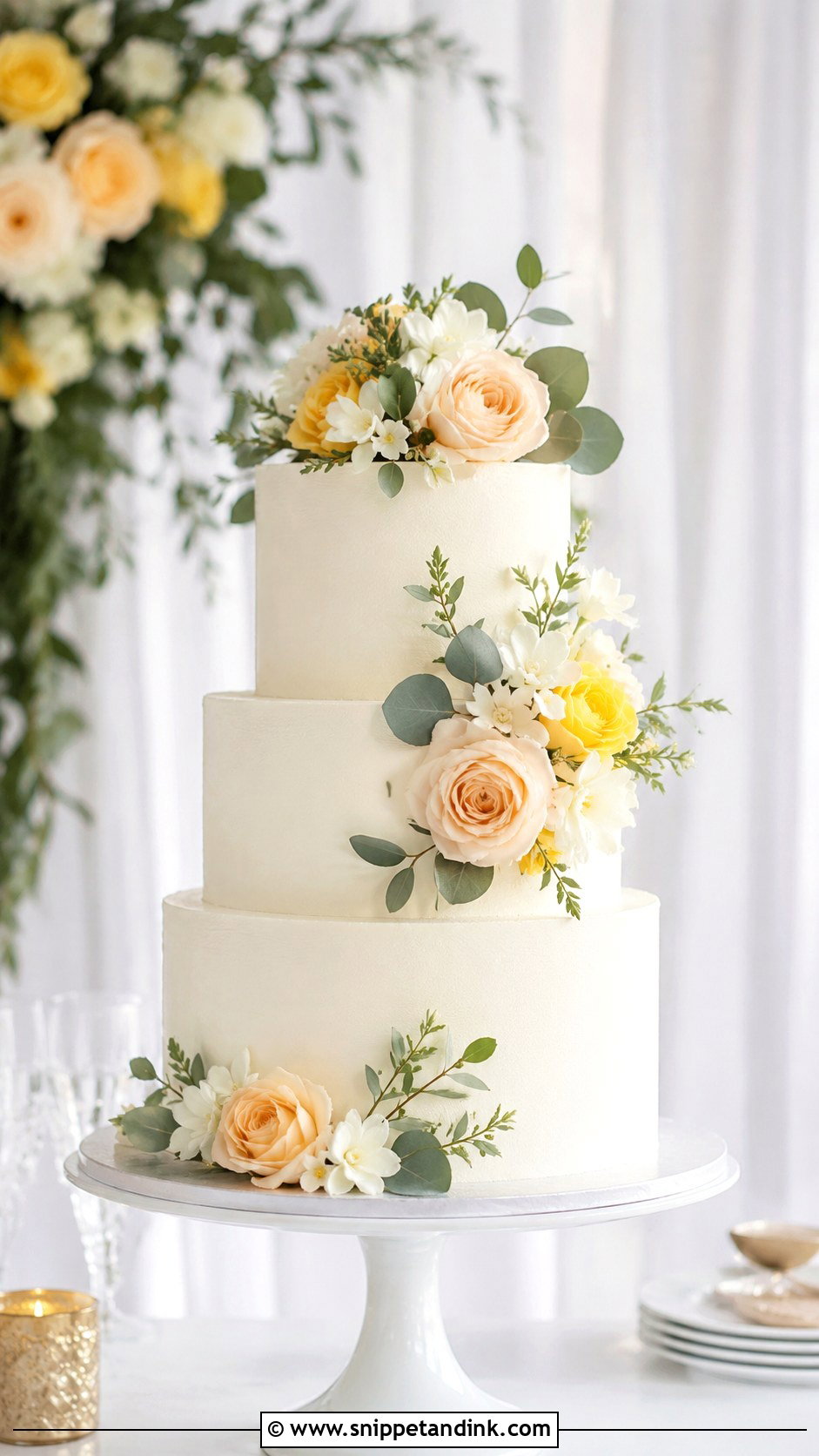
Three tiers give enough height for a classic centerpiece without towering. Any flower style works here, fresh, sugar, pressed or piped. I keep the base color soft and let the flowers carry the color, either in small clusters for a modern finish or in a gentle diagonal across the tiers. A diagonal only reads well from one side, so I always ask which way the table will face the guests and the photographer. Three tiers also give room for flavor variety: lemon on one, vanilla bean on another, strawberry almond on the third.
9. Pastel Flower Wedding Cake
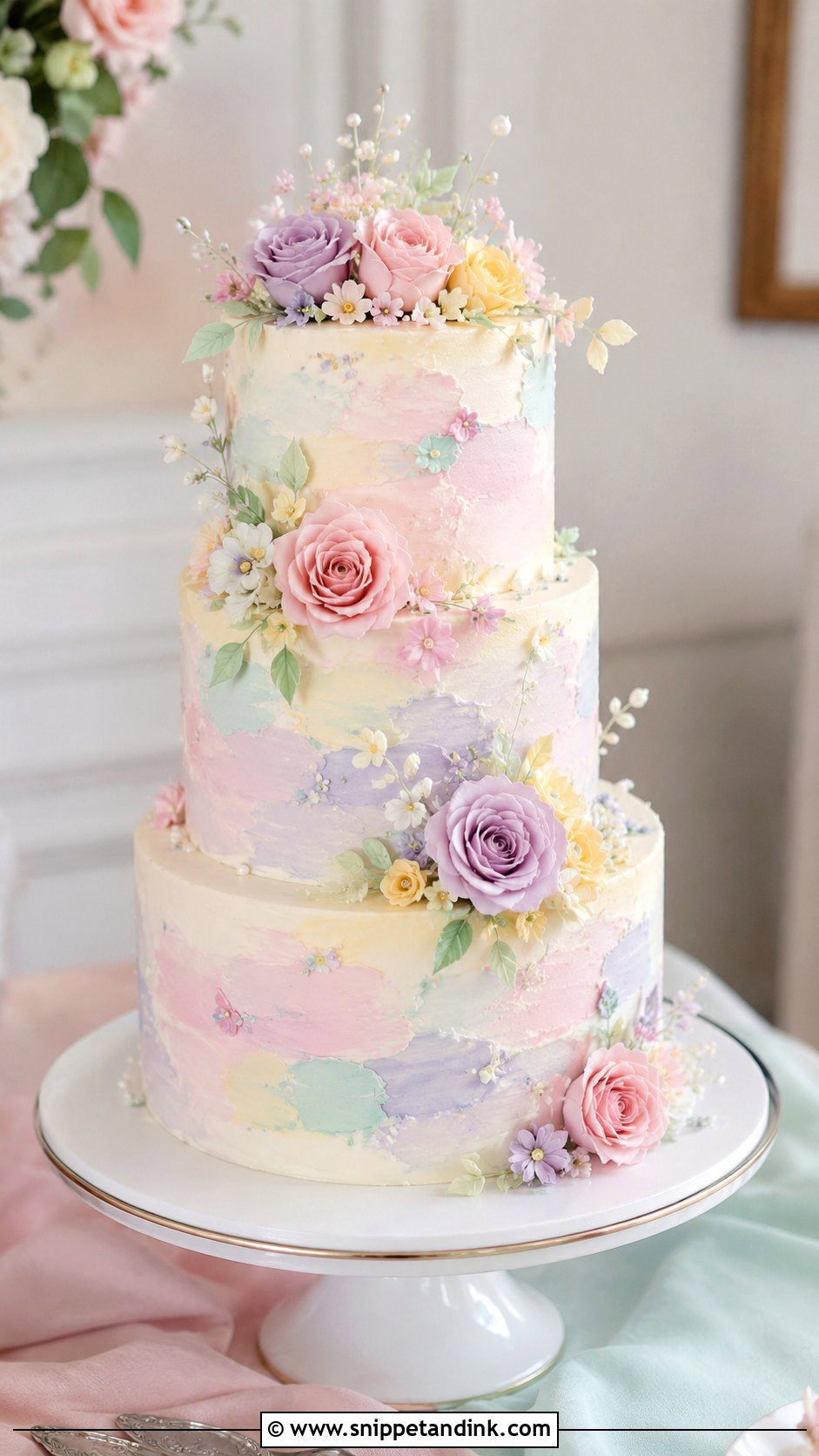
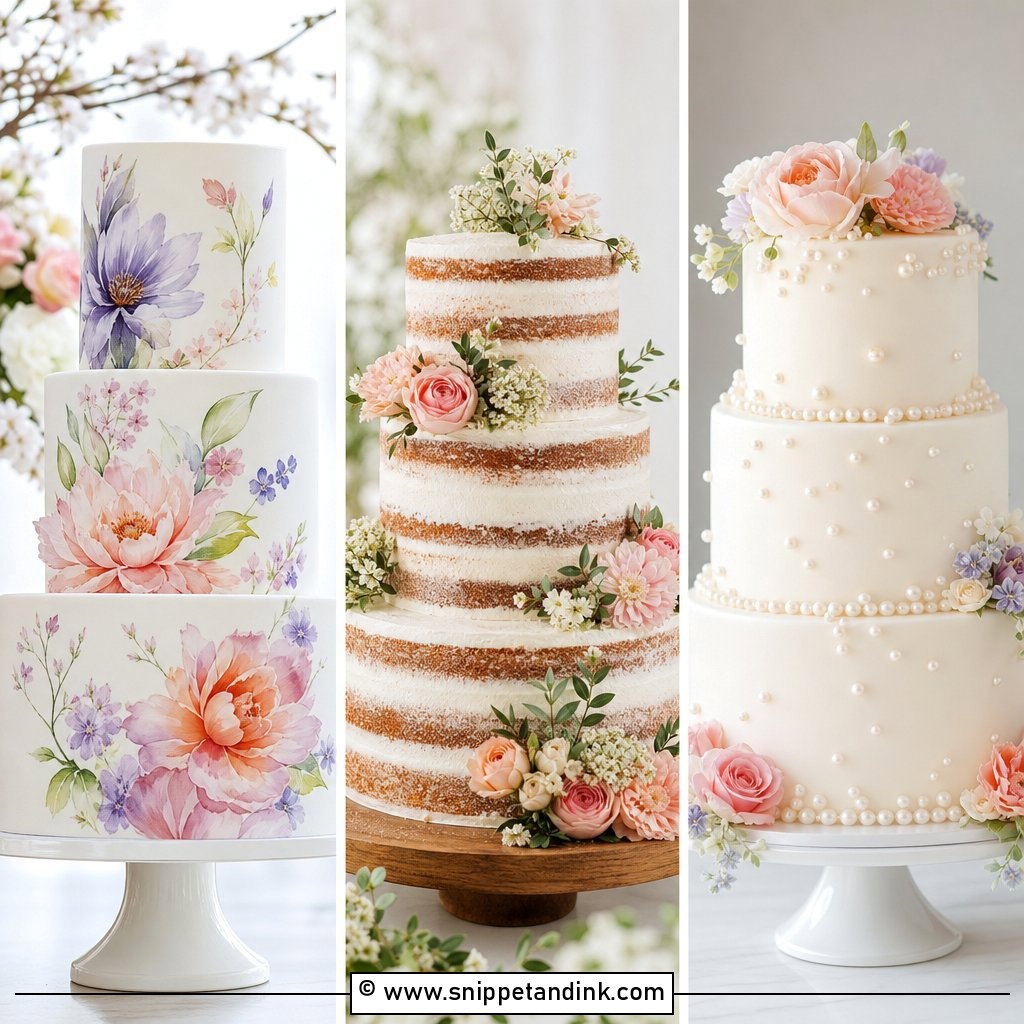
The difference between wedding pastels and nursery pastels is a little grey. I knock a touch of grey or ivory into pink, lavender, butter yellow, mint and baby blue so they read muted rather than candy-bright, in buttercream, fondant or sugar flowers. Watercolor sides, one pale color all over, or pastel blooms on white are the three main routes. Tinted icing also fades in strong light, pinks and purples especially, so I’d keep a pastel cake out of sunny windows. Lemon, vanilla, pistachio, strawberry and almond all match the palette.
10. White Flower Wedding Cake
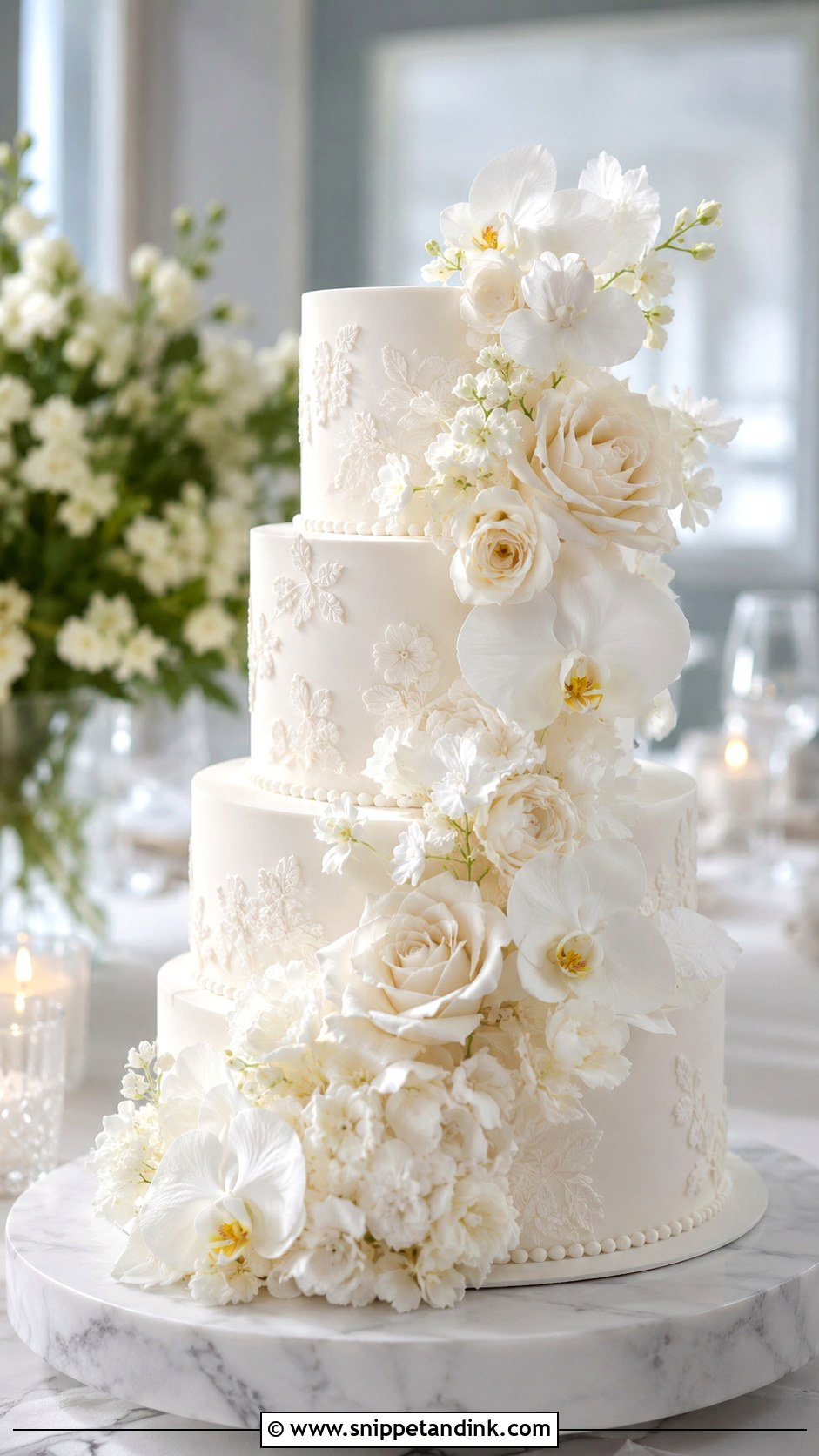
An all-white cake avoids looking flat only through texture and shade. I layer white, ivory and cream, and add depth with textured buttercream, pearl piping or subtle fondant detail, while white roses, sugar peonies, orchids or tiny blossoms build relief without color. It suits a classic dress, white florals and a neutral reception. Pure white buttercream is rarer than people think. Butter makes it naturally ivory, so getting close to white means a tiny touch of violet color to cancel the yellow, or a fondant cover. Almost any spring flavor works, from vanilla bean to lemon curd or coconut cream, and it holds up in daylight and candlelight alike.
11. Pink Flower Wedding Cake
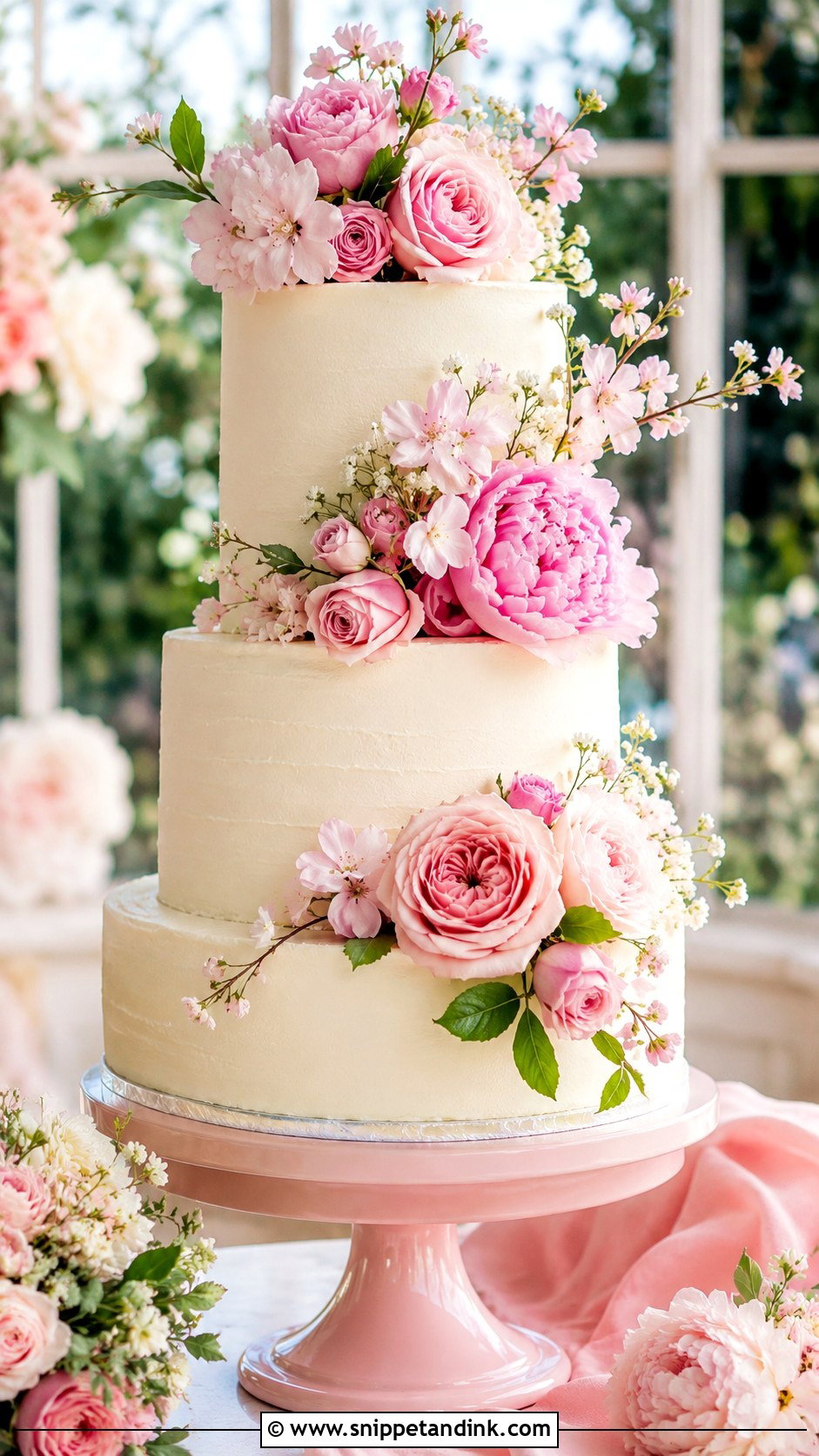
Shade changes the whole mood. Pale blush feels soft, dusty rose feels vintage, and a brighter pink reads cheerful and garden-like. Pink flowers sit well against ivory buttercream, especially with small white blooms and fresh green accents, and roses, peonies, cherry blossoms or piped petals all suit it, alongside strawberry, raspberry, vanilla or almond sponge. My main warning is crowding. Leave visible icing between clusters, or the cake looks busy from across the room and loses its outline in photos.
12. Blue Flower Wedding Cake
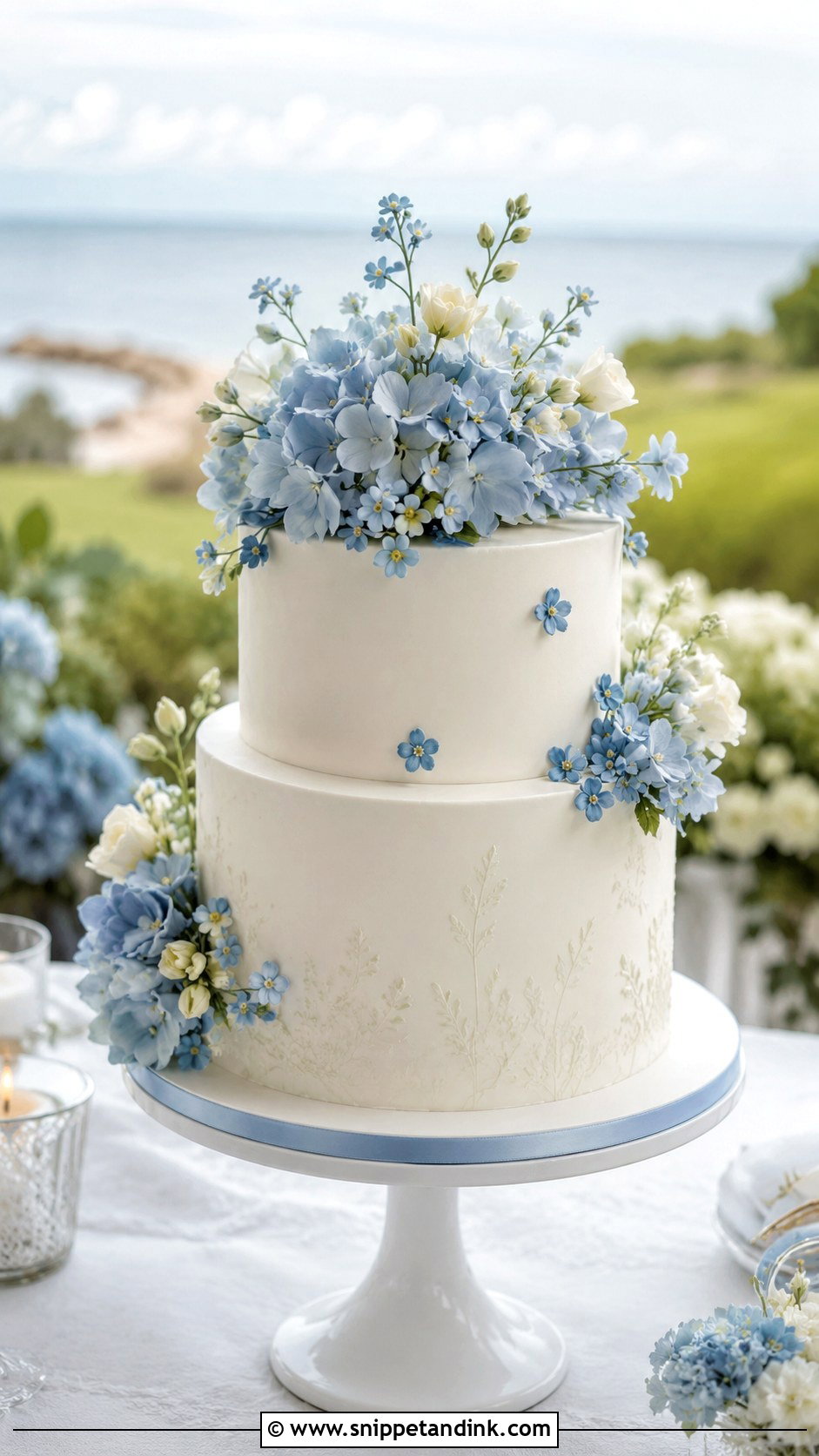
Blue is rare on cakes, which is why it’s memorable, and it’s also the hardest color to tint. Blue food color mixed into buttercream drifts toward teal because of the butter’s yellow tone, so I usually make blue flowers in sugar paste or paint them onto white fondant instead. Blue hydrangea-style blooms, forget-me-not details and tiny piped flowers all give a calm, romantic look, softened with a touch of ivory or pale green. Vanilla lemon, almond or blueberry filling suits it, and it fits garden or coastal venues naturally.
13. Lavender Flower Wedding Cake
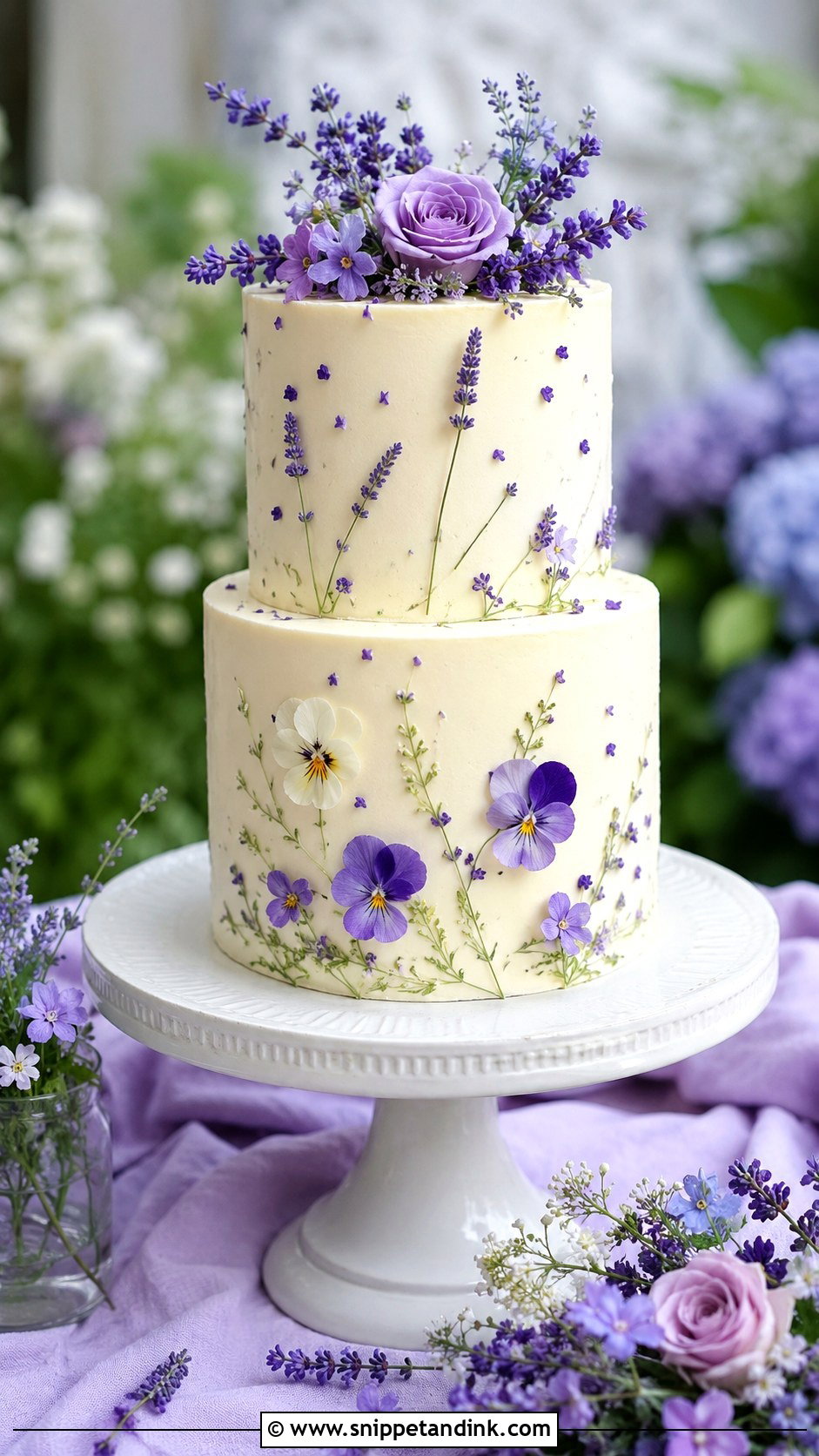
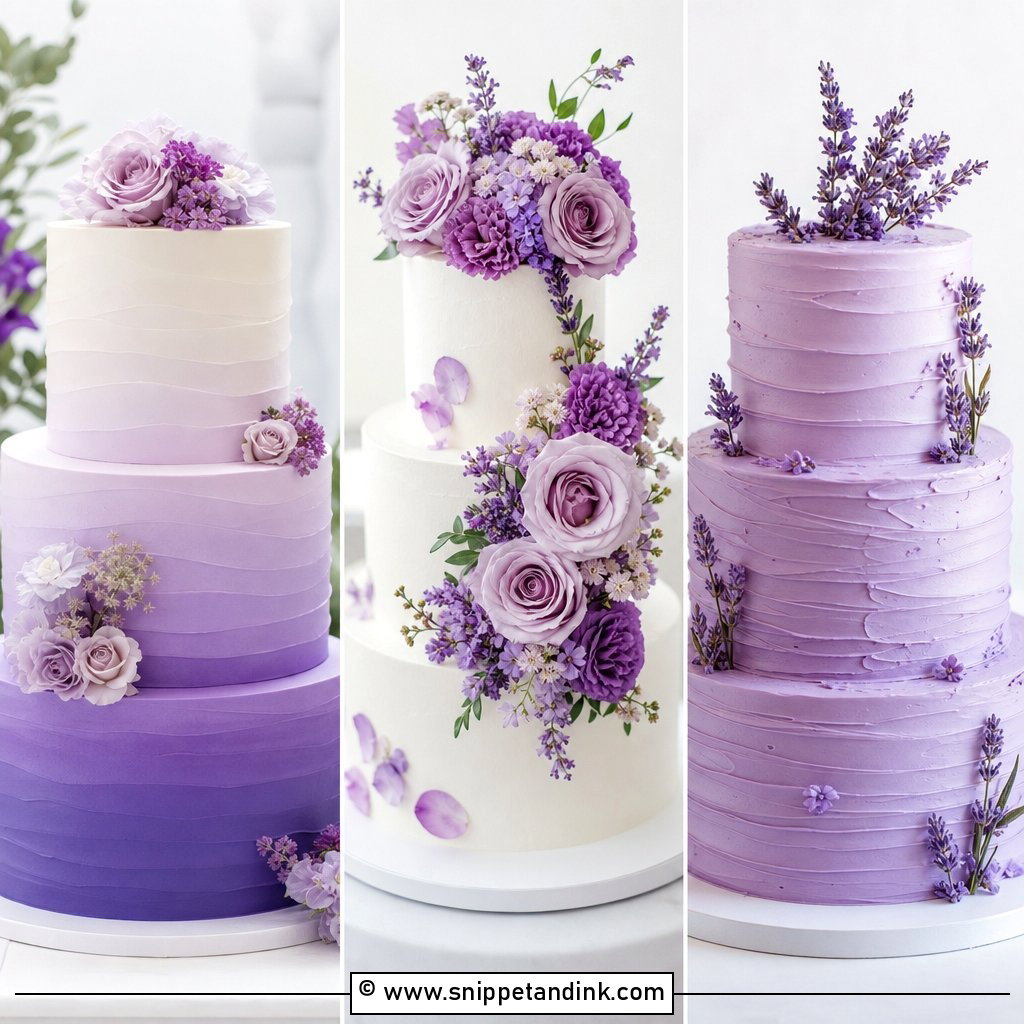
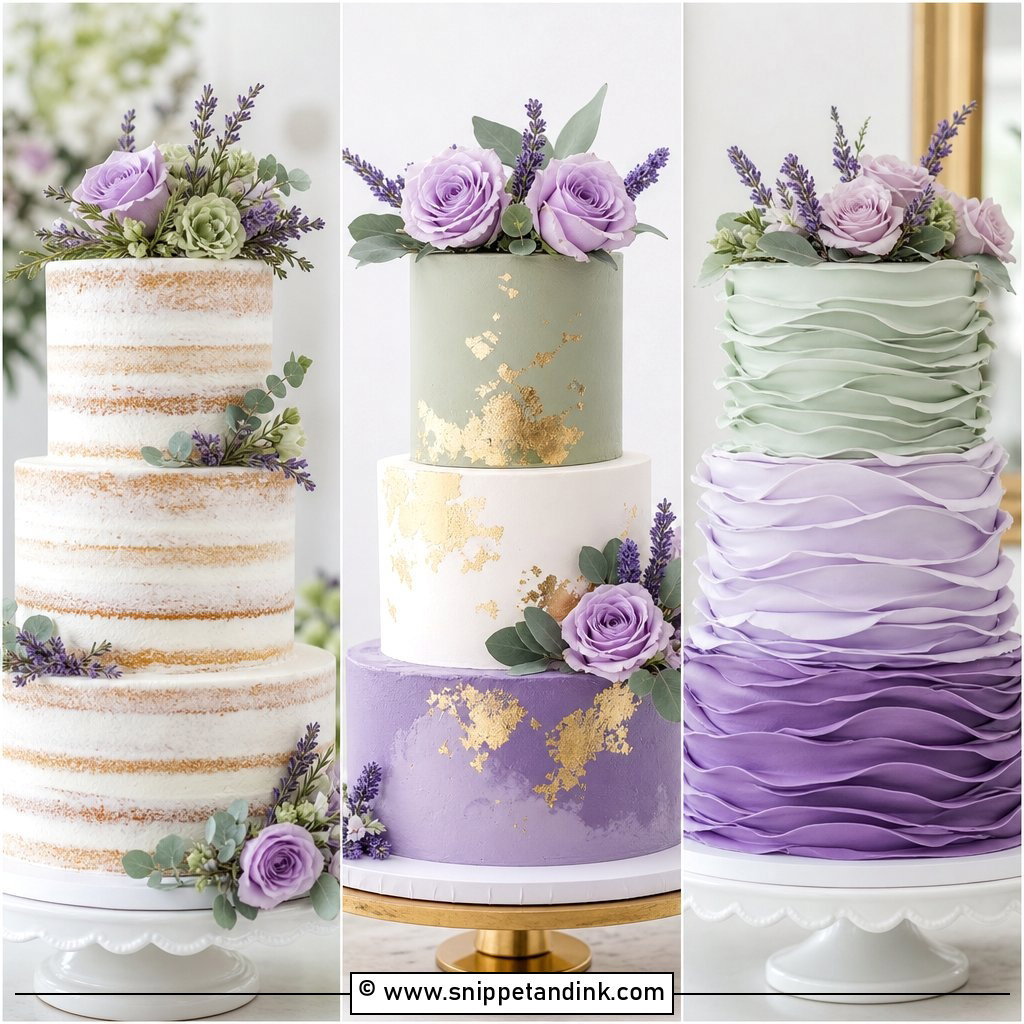
Purple tones bring a calm, slightly old-fashioned feel. A lavender flower wedding cake can carry lavender-colored buttercream flowers, pressed edible violas or small sugar blossoms against ivory icing with a few soft green accents. Real lavender can decorate it too, but only culinary lavender, and sparingly. It’s strongly perfumed, and too much in or on a cake tastes like soap. That’s also why I keep the flavor simple: vanilla, lemon, honey or almond. The palette pairs well with blush, cream and pale grey decor.
14. Cherry Blossom Wedding Cake
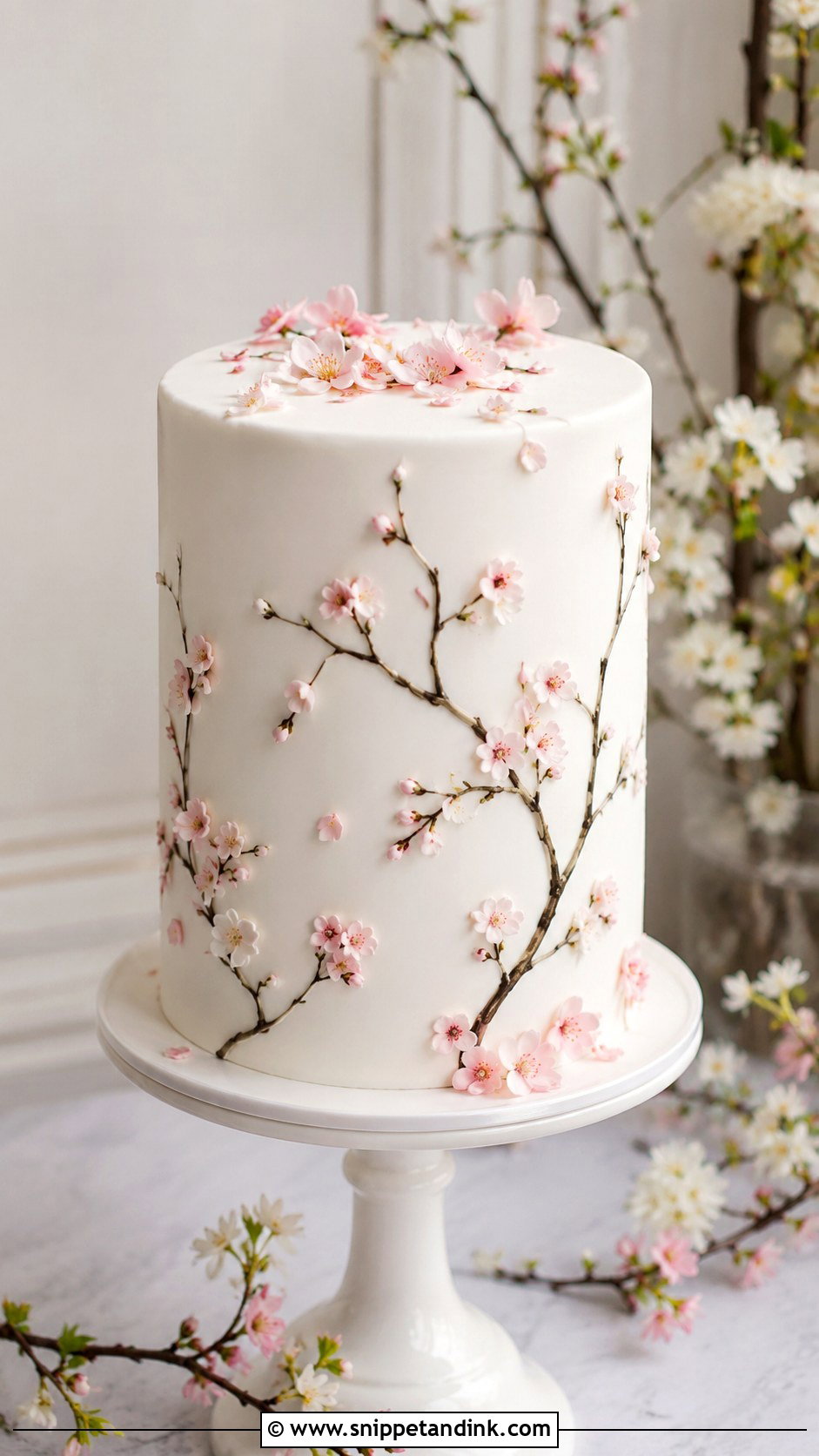
Branches dotted with tiny pink blossoms sit much lighter on a cake than big blooms. A cherry blossom wedding cake can have its branches hand-painted, piped or made from sugar, with blossoms scattered across the tiers and a few trailing down one side for movement. Keep the base simple, white fondant or smooth buttercream. Painting suits firm fondant, but buttercream is too soft to brush cleanly, so on buttercream I pipe the branches instead. Vanilla bean, almond, white chocolate raspberry or lemon fits the airy design.

15. Peony Wedding Cake
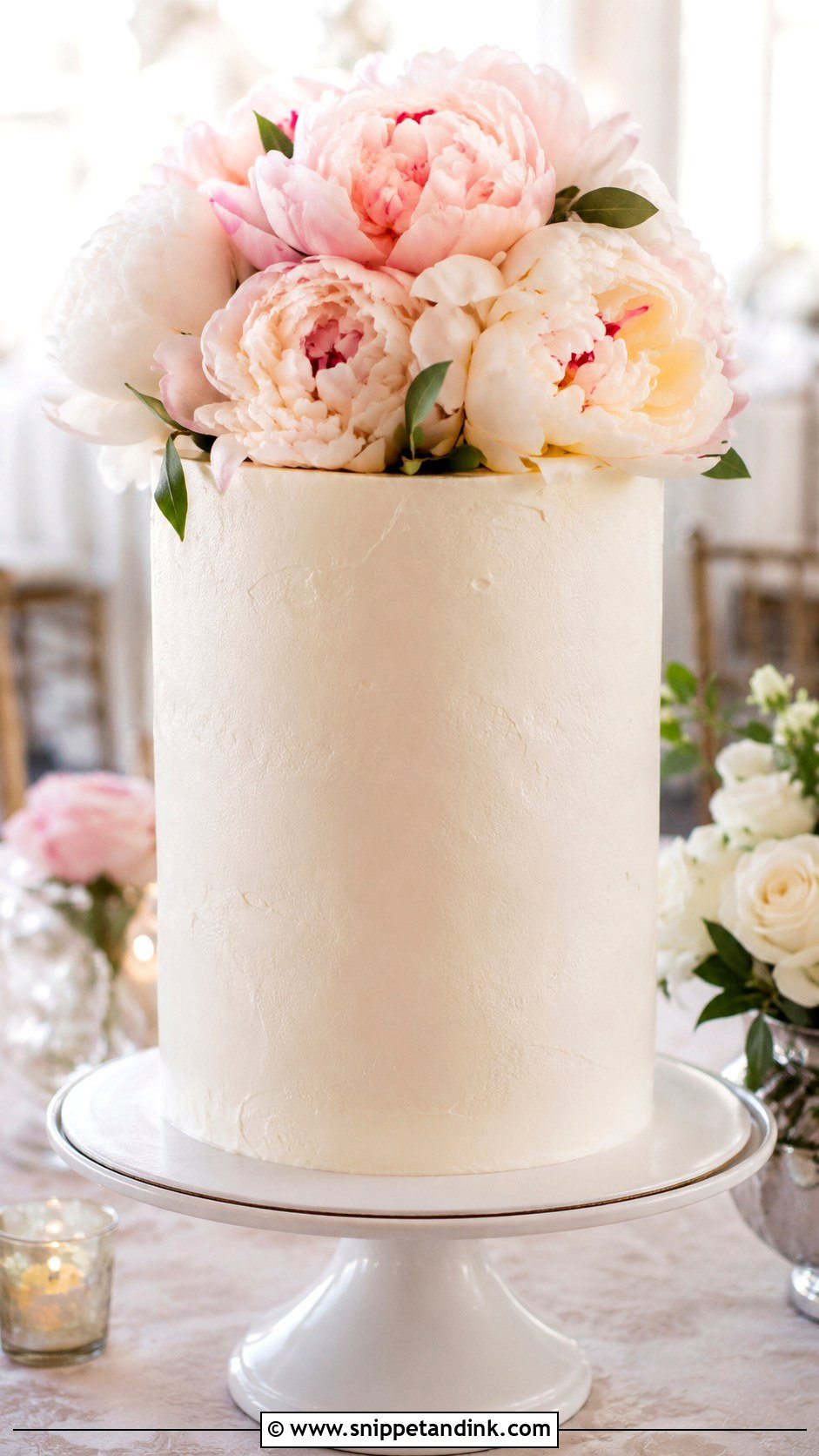
Peonies are big, so a few go a long way. One oversized sugar peony on a simple cake looks modern; clusters of pink and ivory peonies make a classic garden look. Fresh peonies open fast in warm rooms and drop petals as they do, which is one reason I often suggest sugar peonies for an afternoon reception. Smooth buttercream or fondant suits either version, with vanilla almond, lemon raspberry or strawberry cream inside. Keep everything else minimal. The flowers already bring all the shape and texture the cake needs.
16. Rose Wedding Cake
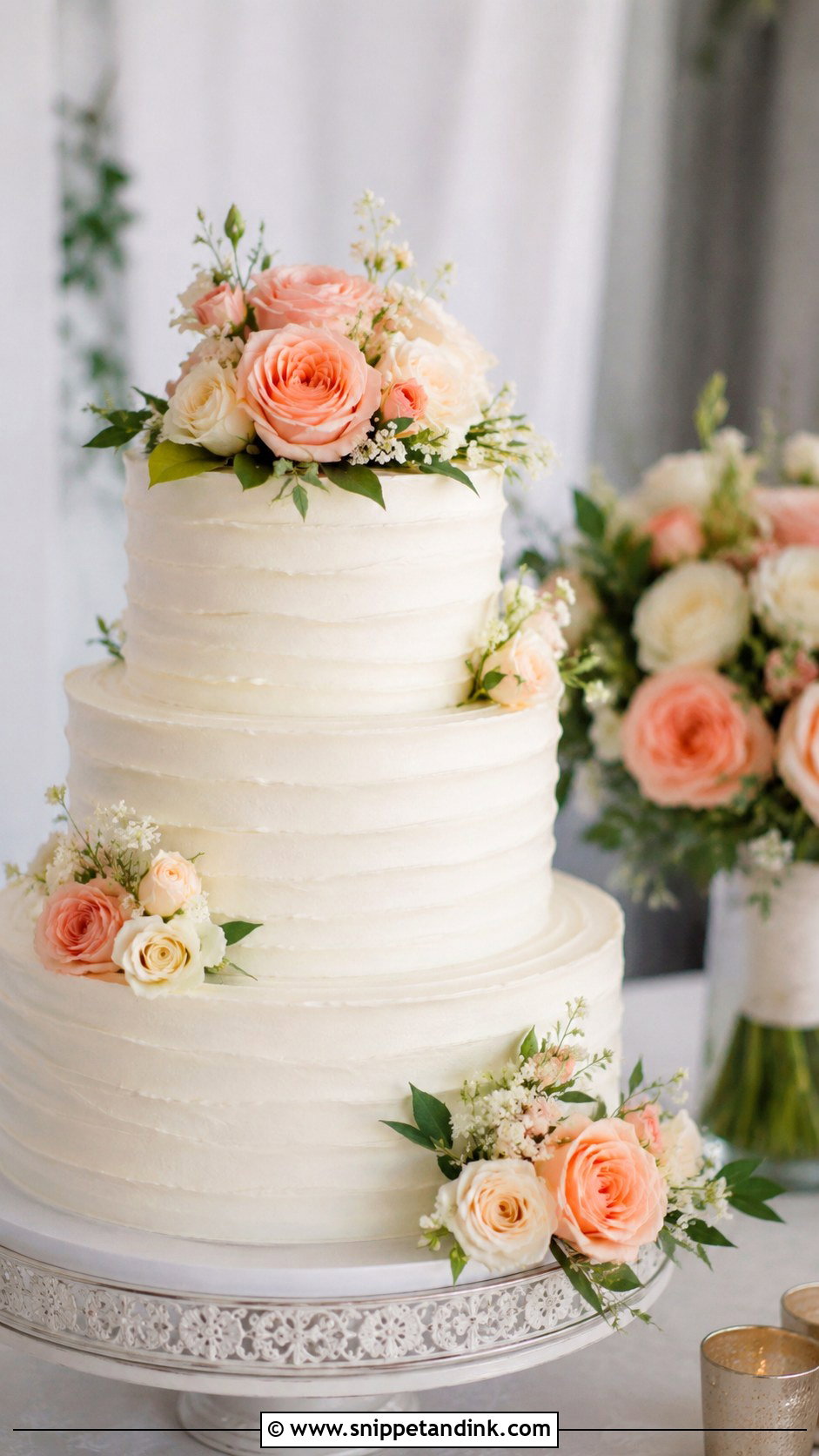
Roses can be fresh, sugar or piped buttercream, which makes this the most flexible design on the list and the easiest to fit to a budget. For spring I’d choose garden-style roses in blush, cream, peach or pale yellow over deep reds. A plain white cake ringed with roses feels classic, while one covered in buttercream rosettes feels soft and textured, and rosettes pipe far faster than individual flowers, which helps the price. Fresh roses for cakes should be unsprayed. Vanilla, almond, lemon and raspberry all pair well.
17. Tulip Wedding Cake
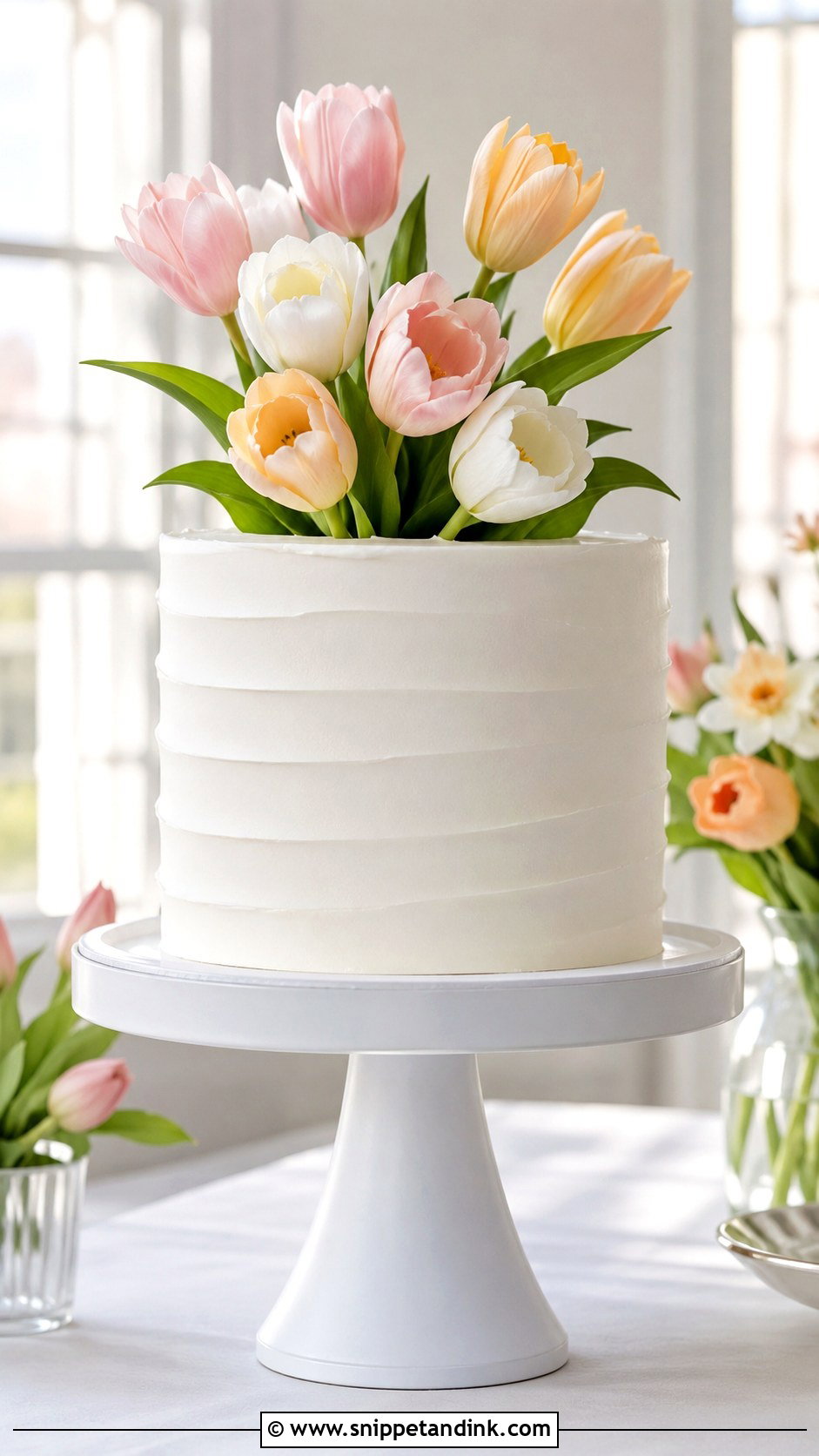
Tulips say spring at a glance. They can be modeled in sugar, painted onto fondant or used fresh with proper handling: wrapped stems, no direct contact with the icing. Soft pink, white, peach, yellow or lavender all work, and the simple cup shape looks modern, so I keep the rest of the design clean on smooth buttercream. Fresh tulips have a habit worth knowing about. They keep growing and bending toward light after cutting, so an arrangement placed in the morning may be leaning by the evening. Lemon, vanilla, orange blossom or strawberry filling keeps it bright.
18. Daisy Wedding Cake
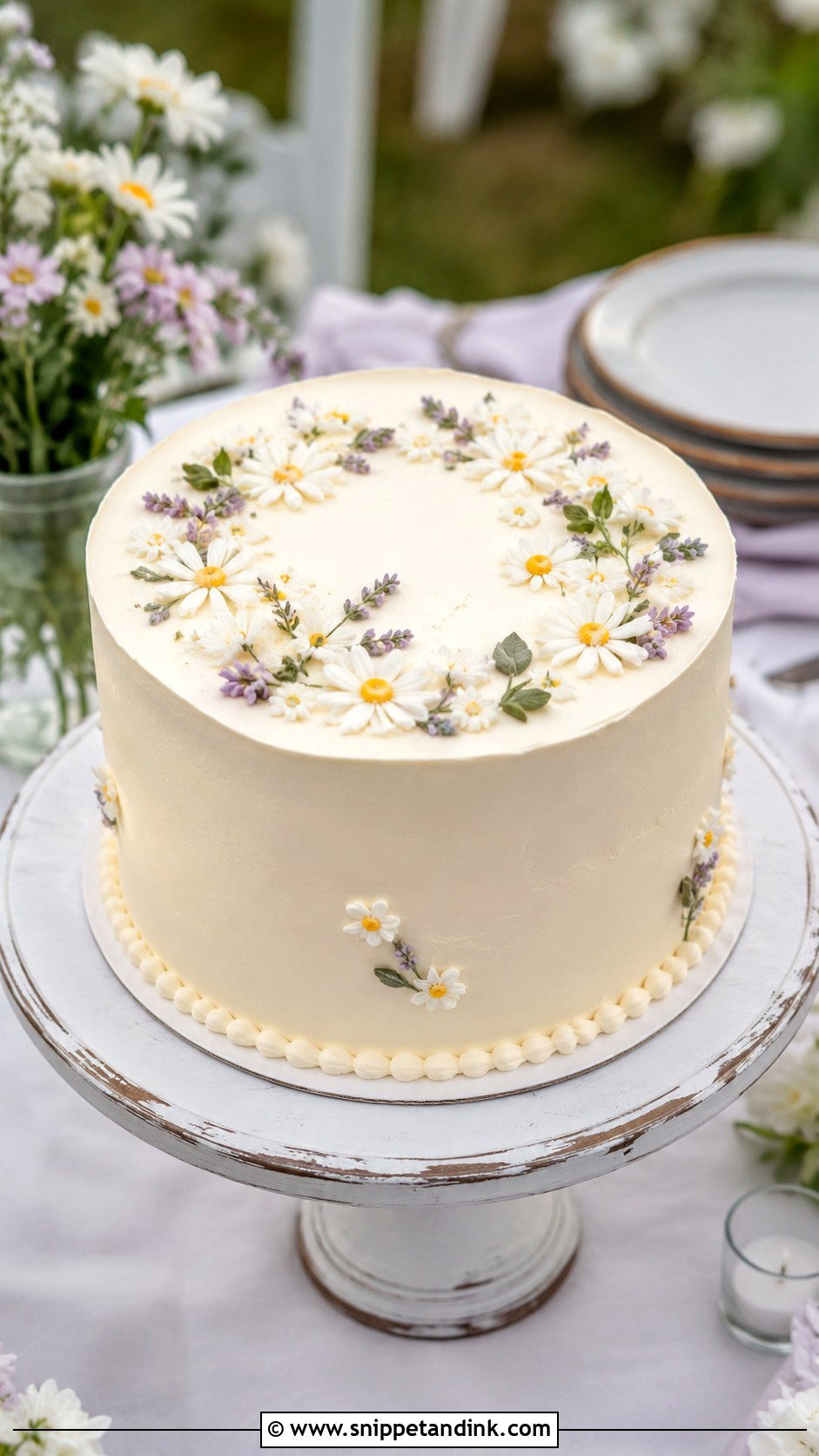
Daisies feel sunny and relaxed, which suits backyard weddings and casual garden venues. A daisy wedding cake can carry piped buttercream daisies, sugar paste ones, or real flowers where the variety is genuinely edible, such as the small English daisy. Plenty of daisy-like garden flowers aren’t, so ask your baker exactly what they’re using. White petals with yellow centers are classic; pale pink or lavender daisies feel softer. Piped daisies are quick to repeat across many tiers, which makes them good value. Lemon, vanilla, honey or coconut sponge matches the mood.
19. Floral Sheet Wedding Cake
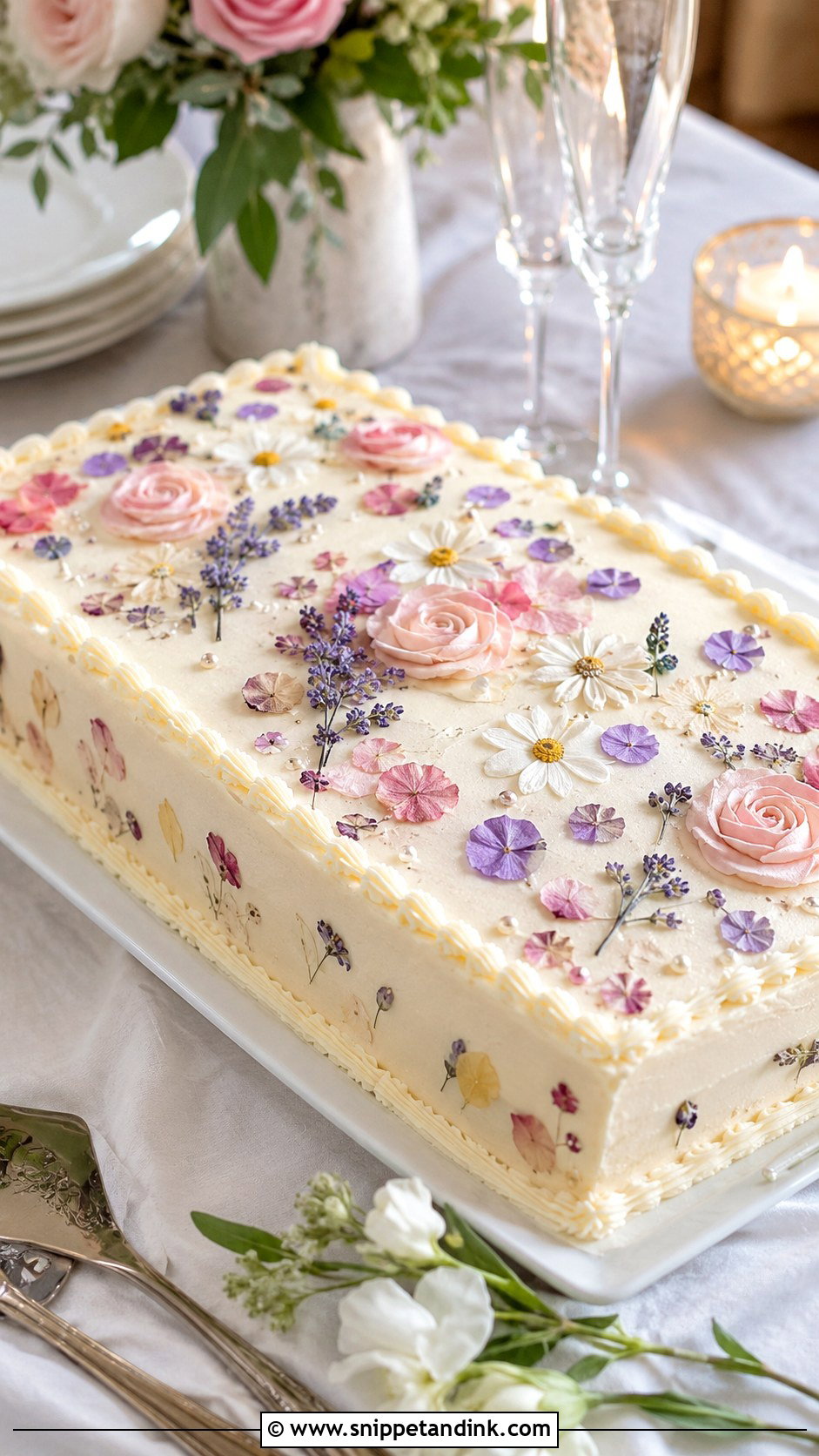
A sheet cake is the easiest cake to serve to a crowd, and dressed well it holds its own against tiers. A floral sheet wedding cake can carry piped buttercream flowers, pressed petals or small fresh clusters in loose rows or at the corners, and couples often choose it for a simpler cutting moment or a modern dessert table. Rectangles also cut into neat, even portions with far less waste than round tiers. Stick to blush, cream, lavender and pale yellow, with familiar flavors like vanilla, lemon, strawberry or almond. It needs a sturdy board and two people to carry it.




20. Floral Cupcake Wedding Cake
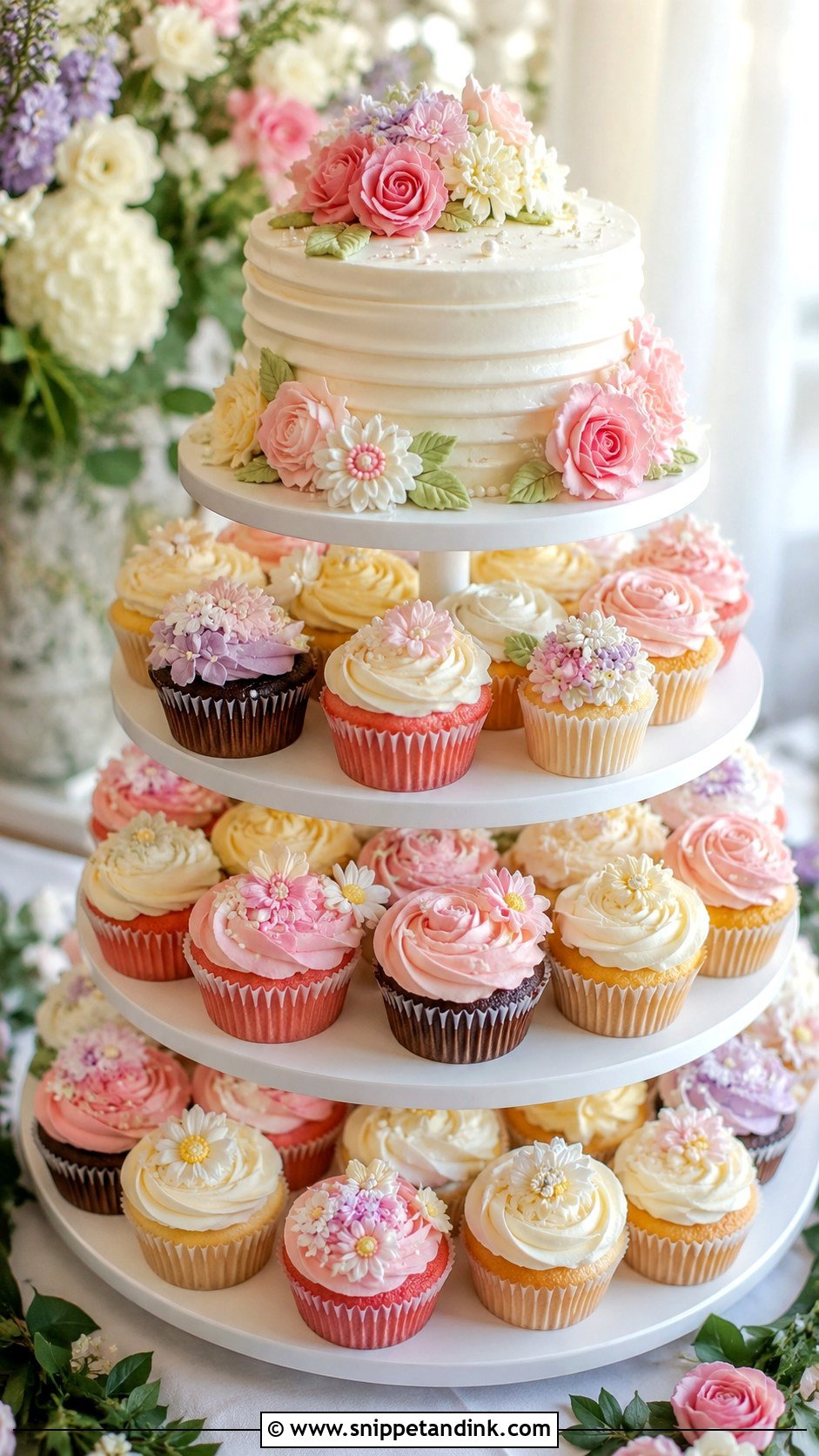
Cupcakes on a tiered stand give the silhouette of a wedding cake with servings guests can simply pick up, and each one gets its own buttercream bloom. Mix pastel roses, daisies, hydrangea-style swirls and tiny blossoms for variety, and put a small cutting cake on the top tier so you still get the cake-cutting photo. Because cupcakes get handled, I pipe the flowers slightly back from the edge where fingers grab. If they’re the only dessert, plan on more than one per guest. Vanilla bean, lemon, strawberry, almond or coconut keep the flavors fresh.
A Floral Cake Order, Month by Month
Flowered cakes take longer to plan than plain ones, mostly because two vendors are involved and sugar work can’t be rushed. A rough timeline:
- Six to twelve months out: book your baker, since spring Saturdays fill early. Bring the venue, a rough guest count and any flower ideas.
- Three to four months out: tasting and design. Bring bouquet photos or your florist’s proposal, and decide who is supplying any fresh flowers.
- Six to eight weeks out: confirm final numbers and colors. Sugar flowers for a large spray are weeks of handwork and need time to dry.
- Wedding week: confirm the delivery time, where the cake table will stand, and who places the fresh flowers.
Buttercream Under a Sunny Spring Marquee
Spring weather fools people. The morning is cool, then a marquee in afternoon sun warms up quickly. Buttercream softens noticeably in a warm room, and piped petals are the first thing to droop. I ask for the cake table to sit out of direct sun and away from heaters, lamps and the dance floor. Fondant has the opposite problem: brought from a cold fridge into a warm, humid room, it beads with condensation, so I let it come up to room temperature before any flowers go on.
If your venue is outdoors with little shade, tell your baker at the first meeting. A firmer buttercream, a fondant cover, or a cake brought out just before cutting is far easier than rescuing a leaning tier at five o’clock.
One Bloom, One Palette, Then the Flavor
Spring floral cakes range from soft and formal to rustic or modern, so they fit almost any wedding. What makes one work is deciding in the right order: the flower first, then the palette, then the frosting finish and flavor, and only then any extra detail. Pressed flowers are delicate, buttercream flowers are fully edible, fresh flowers are romantic but need careful handling, and sugar flowers last the longest. Lighter flavors usually suit the season, especially lemon, vanilla, almond, strawberry and berry fillings. Bring a photo of your bouquet to the tasting, and the cake will look like it belongs to the same wedding.
You'll Like These Ideas:









Leave a Reply