
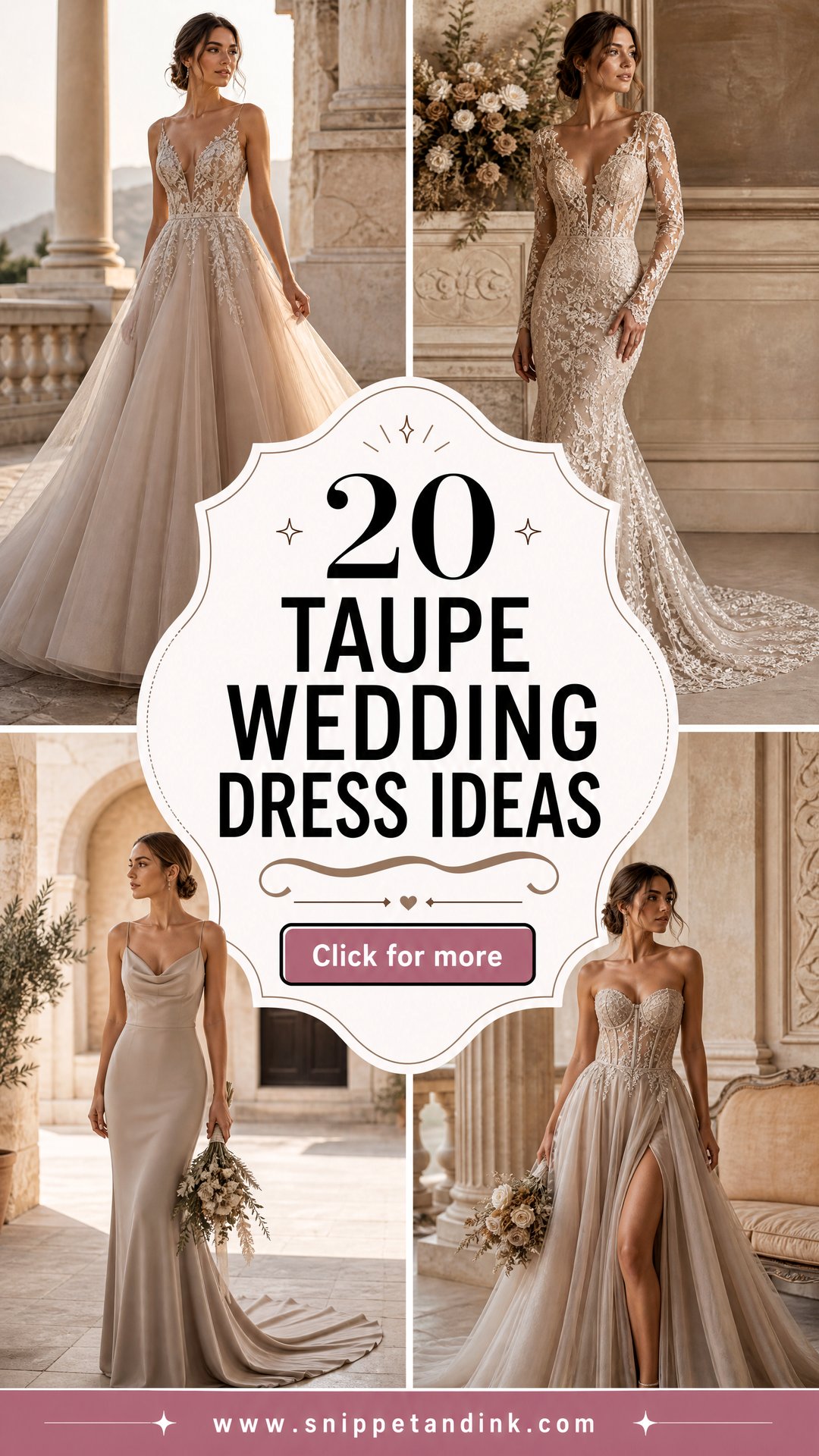
Taupe sits between grey and beige, and that in-between quality is exactly why it can be tricky. The same gown can look warm mushroom by a window and flat putty under a ceiling spotlight, so I never judge a taupe from a website photo. It still reads as bridal, especially when it’s paired with ivory lace or a champagne lining that lifts it. Below are twenty gowns in satin, lace, tulle, chiffon and crepe, plus the details I check on each one: how the undertone sits against skin, how the fabric handles a long day, and where the accessories should stay quiet.
Warm, Cool or Rosy Taupe for Your Complexion
Taupe is a family of colours, not one colour, and the undertone decides whether it brightens you or drains you. When a bride sits in my chair, the first thing I do is drape two or three swatches under her chin, one at a time, beside a window with no lamps on. Within seconds you can see which one makes the skin look rested and which one makes it look tired.
- Warm skin with golden or olive tones usually glows in beige-taupe and mushroom with a hint of yellow. Cool greige can make it look sallow.
- Cool or pink-toned skin tends to suit greige and taupe with a slight lilac cast. Yellow-leaning taupe can bring out redness.
- Deep skin tones often look richest in a lighter, creamier taupe or a dark cocoa taupe, because a mid-tone the same depth as your skin blends into it.
- Fair skin can carry almost any taupe, but very pale greige may look grey next to you. A champagne lining under the fabric fixes this.
Don’t forget your hair colour. Ash blonde and cool brunette echo greige, while copper and warm brown sit nicely beside mushroom. If you’ll wear a spray tan or a deeper foundation on the day, test with that shade, since a tan pushes you warmer.
1. Taupe A-Line Wedding Dress
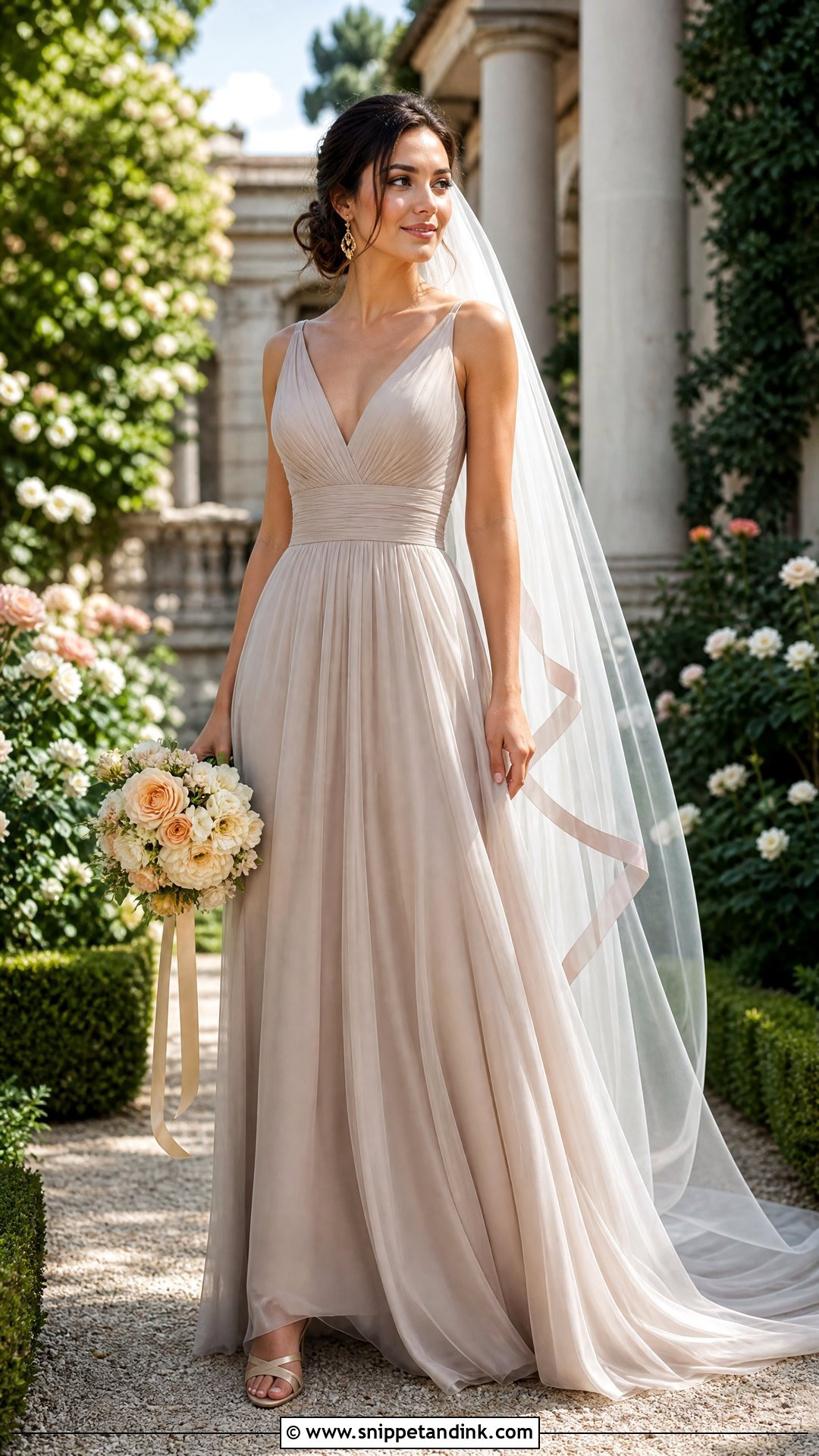
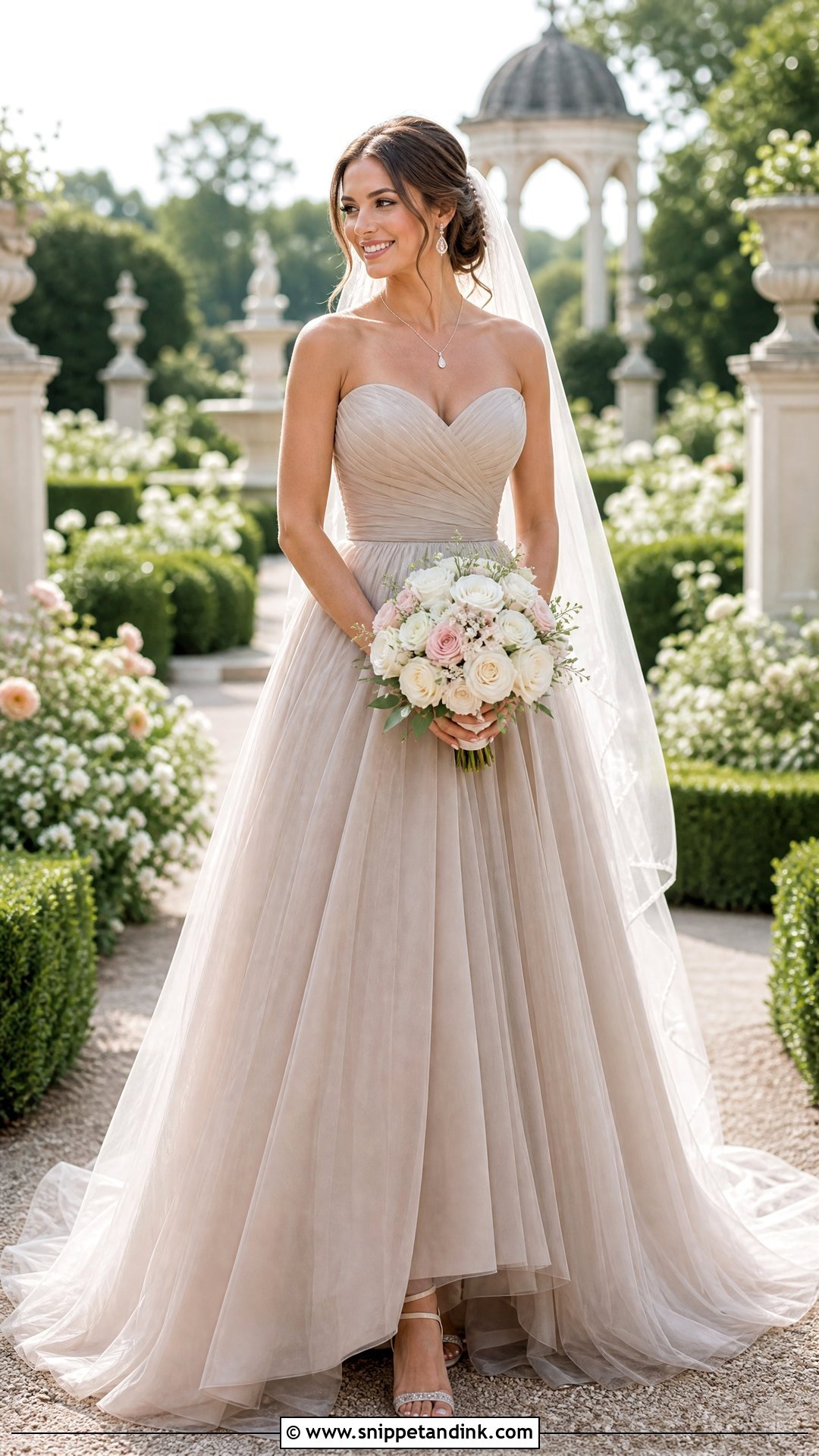
An A-line is the easiest taupe silhouette to wear well, because the skirt skims the hips and lets you move without managing fabric. I like it with a fitted V-neck bodice, a defined waist and a chiffon or tulle skirt that floats rather than stands out. Champagne heels, gold drop earrings and an ivory veil with a faint taupe edge keep the palette tonal, and a loose low bun leaves the neckline clear. For a garden or estate ceremony, cream roses with muted peach flowers give just enough contrast. The one thing I check first is the gap between gown and skin: if your complexion and the taupe are almost the same depth, the dress disappears in photos, so go a shade lighter or darker.
2. Taupe Lace Wedding Dress
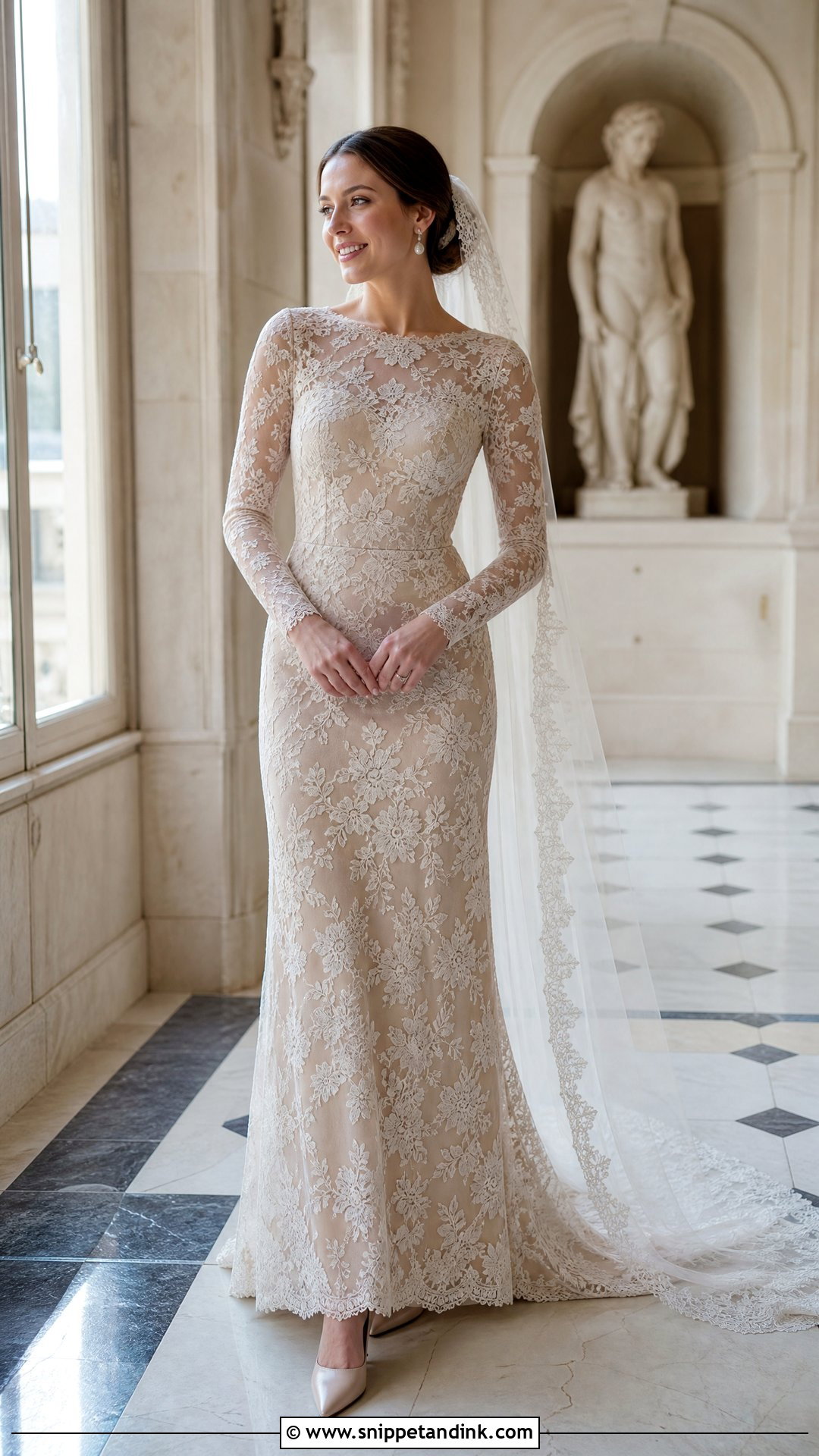
Lace over taupe is really two colours working together, and the lining does most of the talking. A fitted lace bodice with a modest plunge, long illusion sleeves and a lightly flared skirt shows this off well, and an ivory lace overlay on a warm taupe lining gives that soft two-tone depth. I’d keep accessories simple: pearl drops, a narrow champagne belt, nude pumps and a fingertip veil edged in matching lace. Before the final fitting, take the gown to a window. The underlay can shift towards beige, grey or rose depending on the light, and it’s far easier to swap a lining colour before the hem is cut than after.
3. Taupe Satin Wedding Dress
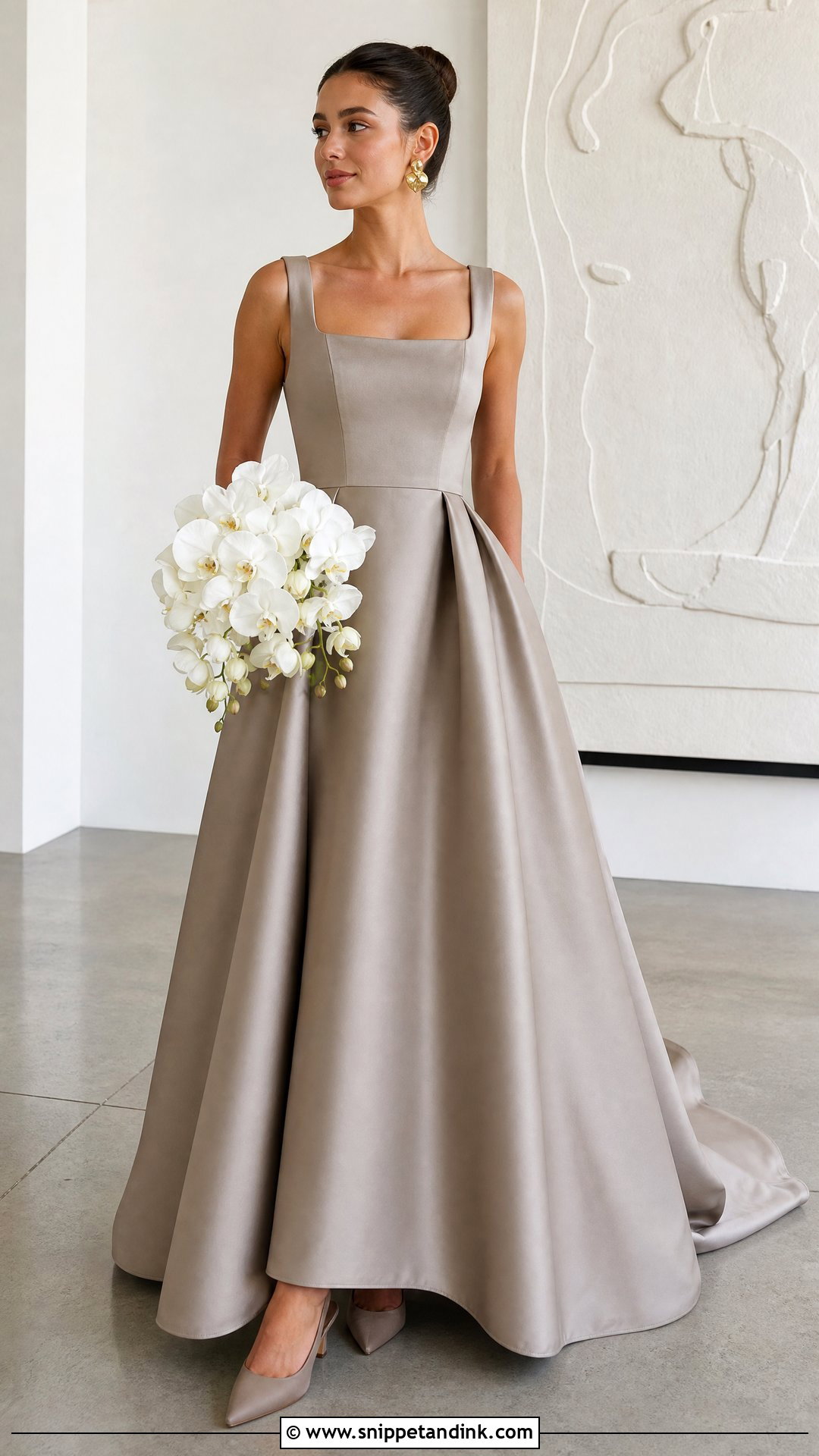
Satin is the fabric that makes taupe look expensive, because the sheen adds highlights a matte cloth can’t. A structured gown with a square neckline, wide straps and a full skirt needs very little else: fabric-covered taupe heels, sculptural gold earrings and a slim bracelet. Pull the hair into a sleek bun or a neat side part and carry white orchids or calla lilies for a crisp edge. The catch with satin is that it shows everything. Every crease from the car and every bump from the wrong bra will catch the light, so I always plan a steamer on the morning and a proper fitting in the actual undergarments.
4. Taupe Tulle Ball Gown Wedding Dress
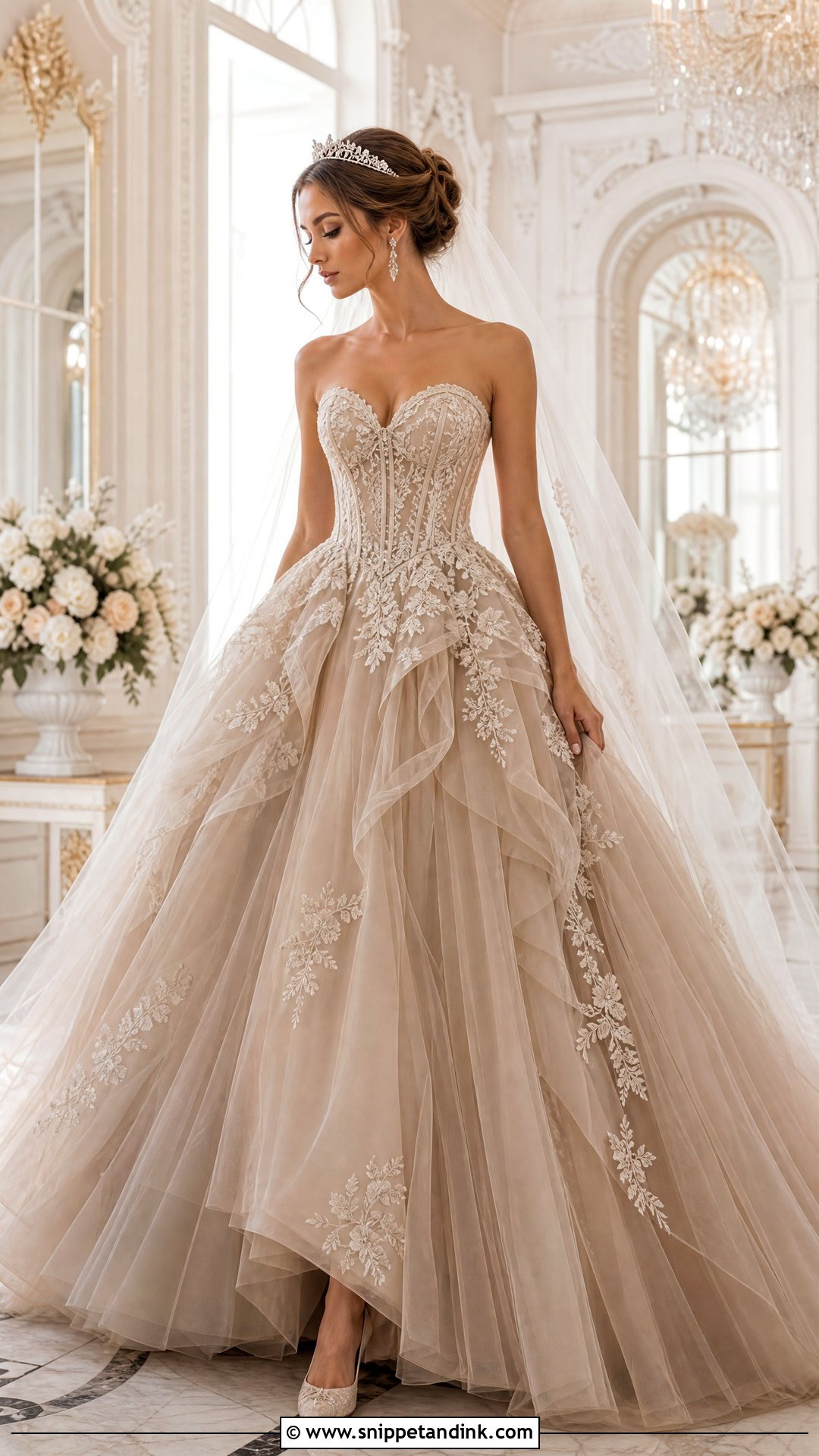
A taupe tulle ball gown gives you the full princess volume without the glare of bright white. Look for a boned corset bodice with supportive straps and several layers of taupe and champagne tulle, so the colour has depth instead of looking like one flat sheet. A little ivory lace at the waist softens the join into the skirt. Crystal studs, a fine tiara, champagne pumps and a long sheer veil are plenty. I usually tell brides to hold back on jewelry with this one, because the skirt already fills the frame. Ask how many tulle layers there are: fewer than you’d expect can look limp by evening, while too many will make the gown hot in a packed ballroom.
5. Taupe Mermaid Wedding Dress
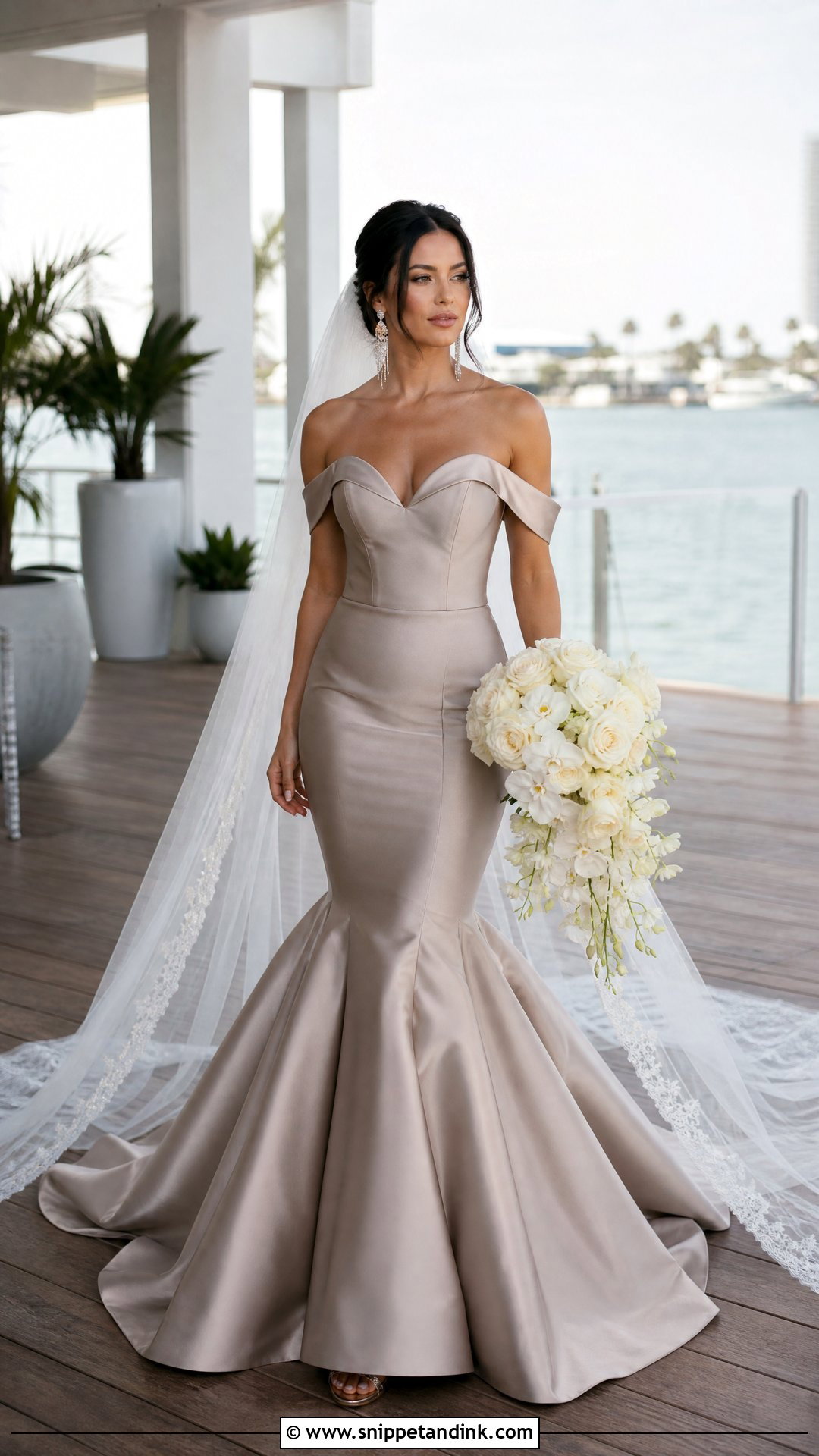
Mermaid gowns live or die by where the flare starts. On a fitted crepe or stretch satin, I want it to break around the knee so you can still take a normal step, and I’d test that at the fitting by walking the length of the shop and climbing a step. A sweetheart neckline with internal structure and removable off-the-shoulder straps gives you two looks in one. Gold sandals, statement drop earrings and a cathedral veil set under a smooth bun suit an evening or waterfront venue. Cream flowers with trailing greenery help balance a shape that’s narrow at the knee. Sit down in it, too, because crepe can ride up and bunch at the hip if the fit is too tight.
6. Taupe Long Sleeve Wedding Dress
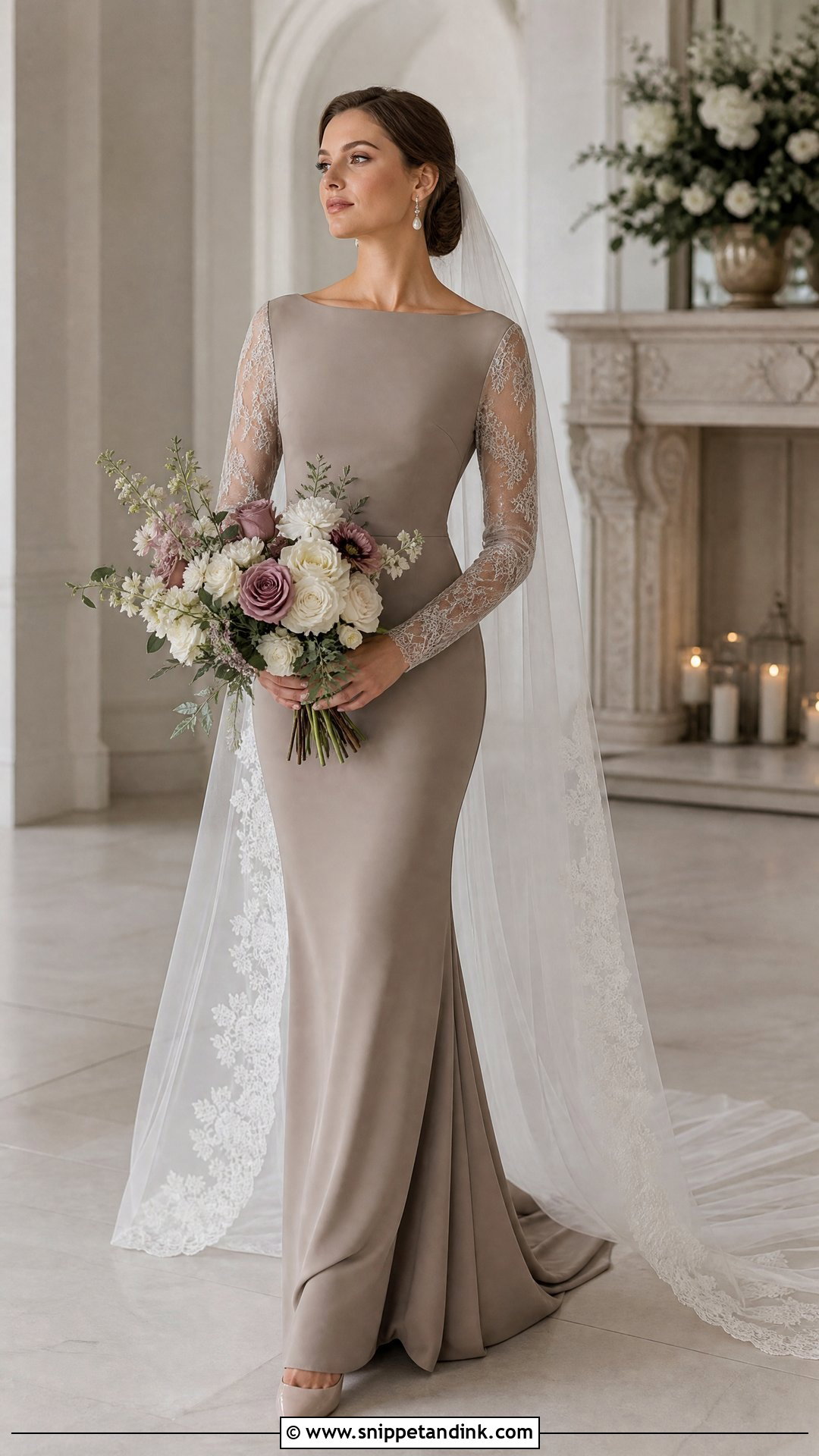
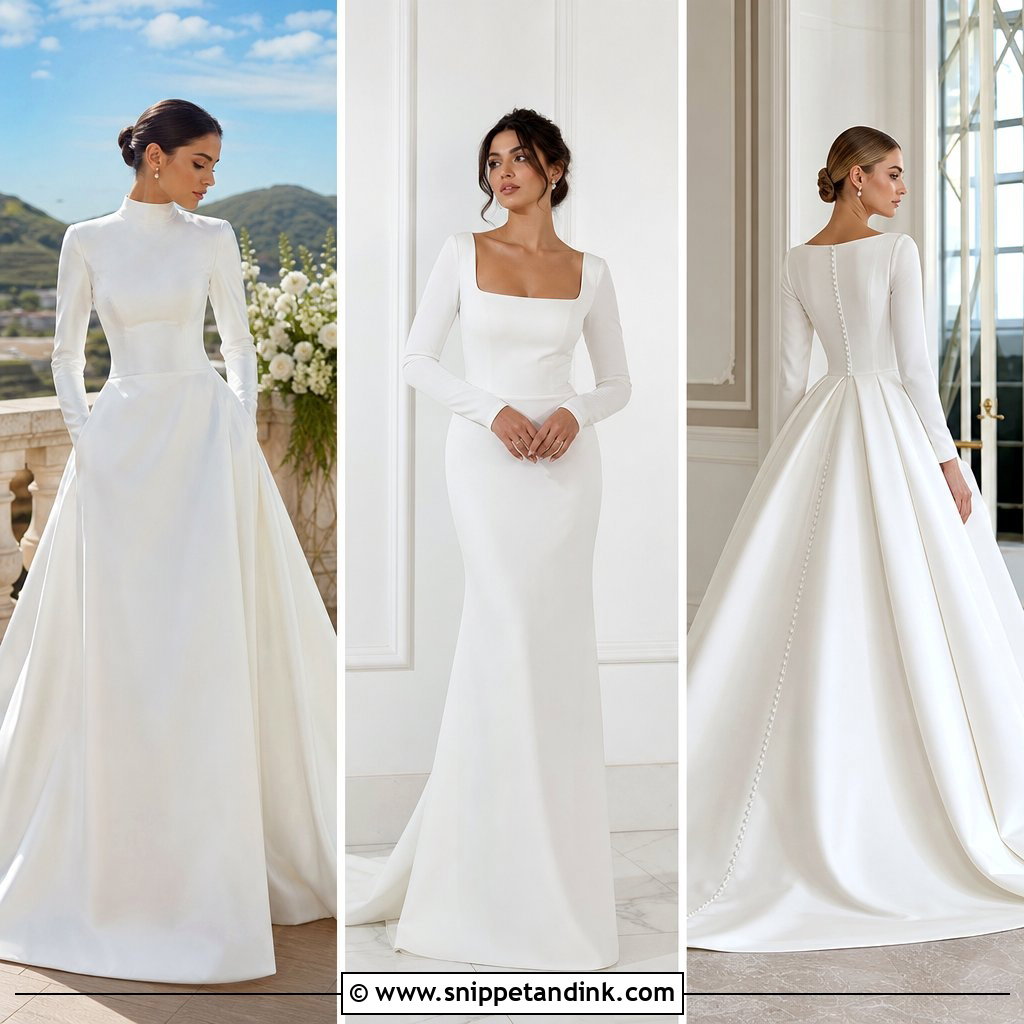
For autumn and winter, sleeves make taupe feel cosy rather than washed out. My favourite version is a fitted crepe dress with a bateau neckline and sheer lace sleeves that stop at the wrist, which gives contrast without clutter. Pair it with pointed champagne heels, small pearls and a chapel veil with a plain edge, and wear the hair in a low twisted bun. Ivory blooms with dusty greenery and a few mauve accents bring warmth to the bouquet. The fitting check I never skip is lifting both arms as if hugging someone. Lace sleeves set too tightly at the armhole will pull the whole bodice up every time you reach for a glass.
7. Taupe Off-the-Shoulder Wedding Dress
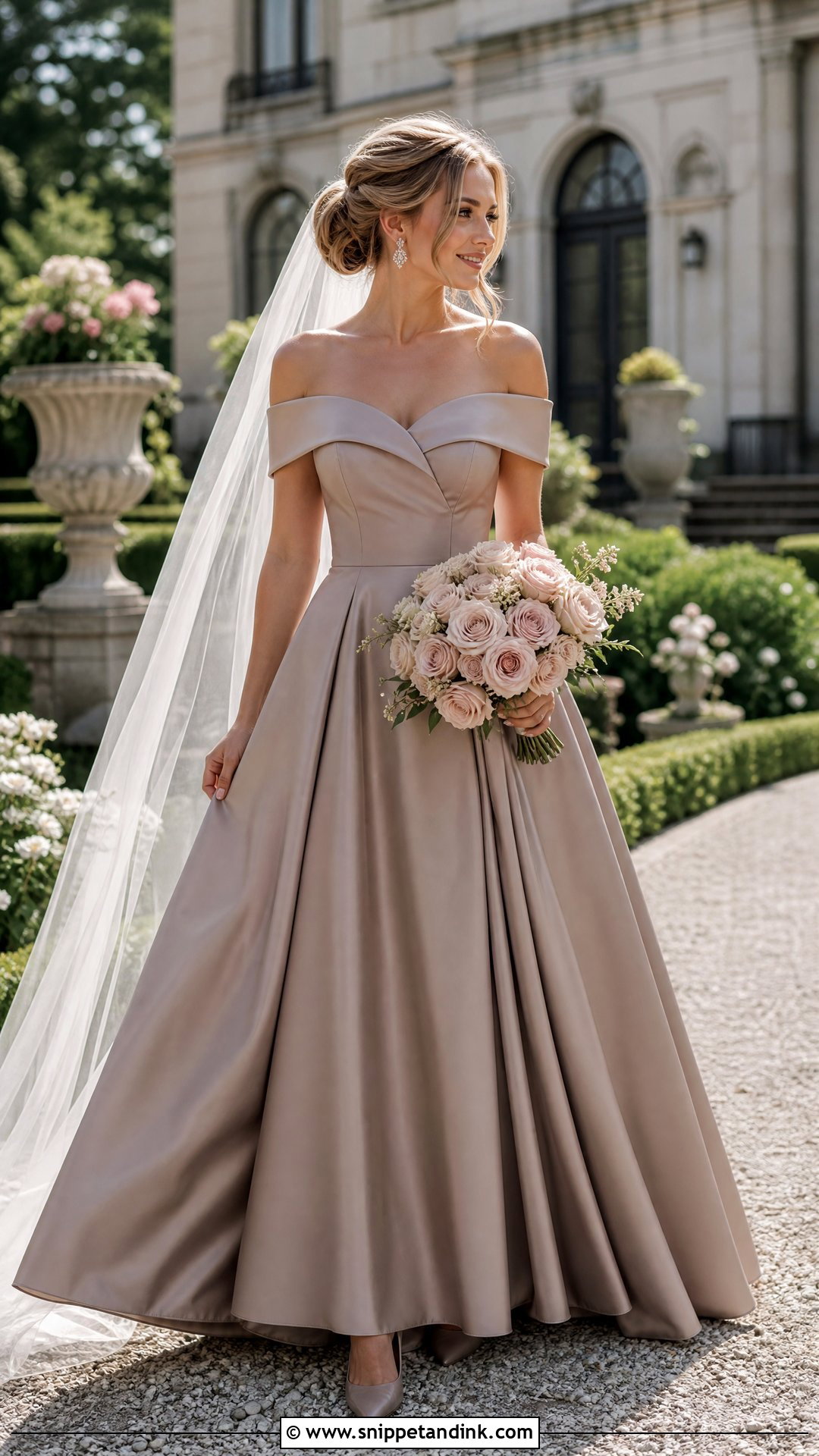
An off-the-shoulder neckline frames the collarbone, and in taupe it brings warmth right up to the face. Choose a structured bodice with a folded band, a fitted waist and a floor-length skirt: satin for a formal evening, chiffon if you want softer movement. A short pendant, crystal earrings and taupe pumps are enough, with a lightweight veil tucked under a textured updo. Ivory roses, pale blush and eucalyptus lift the gown gently. Here’s what usually goes wrong: the band isn’t anchored to the bodice boning, so it creeps up the arms. I ask the seamstress to stitch in a strip of silicone or clear elastic, which costs little and saves you tugging all night.
8. Taupe Boho Wedding Dress
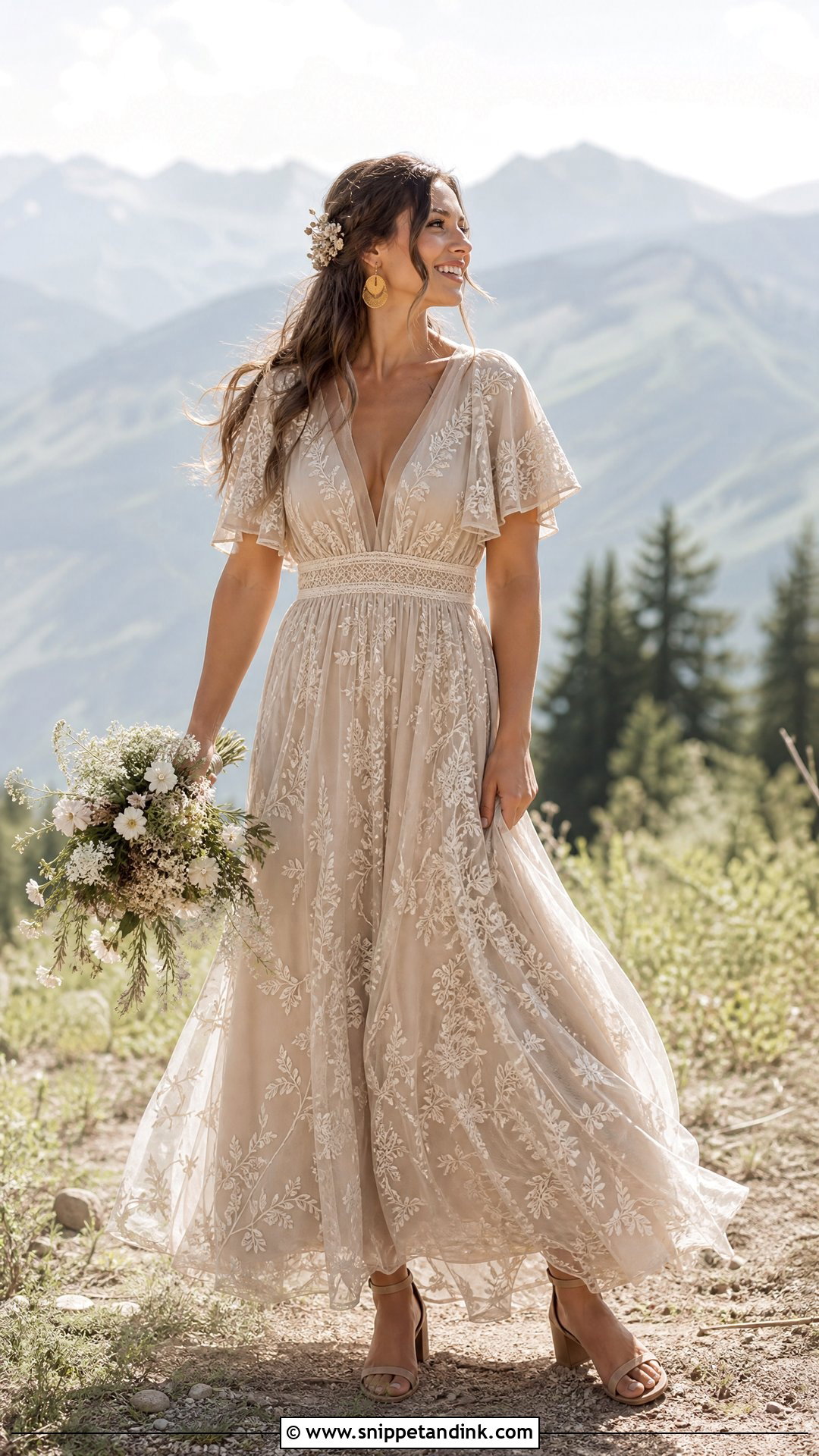
Natural textures are what keep a taupe boho gown from looking beige and plain. I’d pick a flowing A-line with botanical lace, flutter sleeves and a lightweight taupe underlay, then let block-heel sandals and hammered gold earrings finish it. Loose waves or a textured braid suit the easy movement, and a floral comb can replace the veil entirely. Wildflowers, dried grasses and muted greens fit a desert or woodland setting. My honest warning: one lace pattern is enough. Add fringe, a crochet bag and a flower crown and it starts looking like a costume rather than a wedding outfit.
9. Taupe Minimalist Wedding Dress
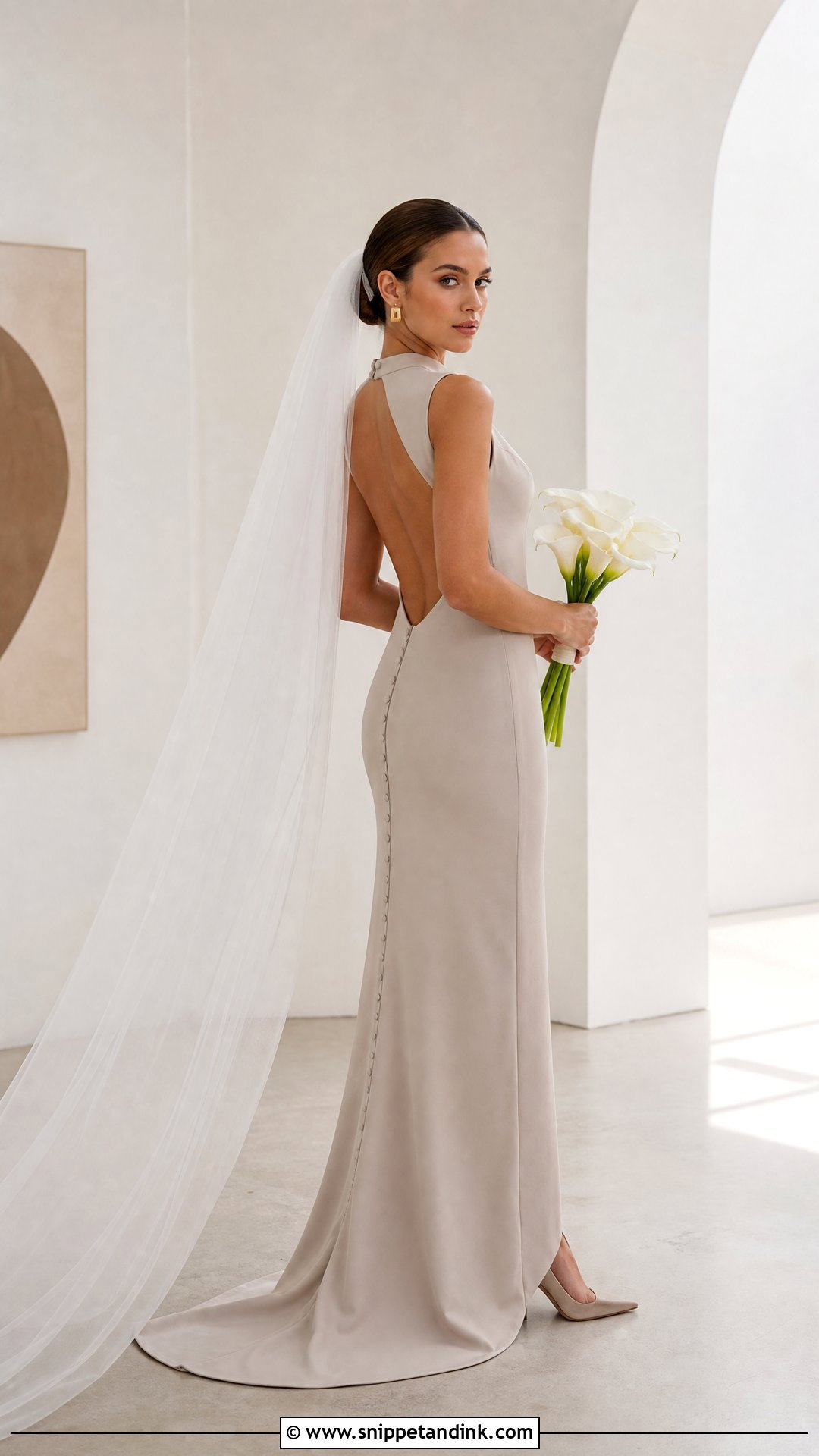
A minimalist taupe gown has nowhere to hide, which is both its strength and its risk. A column or softly fitted crepe dress with a high neck, a sleeveless bodice and an exact floor-length hem looks quietly confident, and a low back or a row of covered buttons gives people something to notice when you turn. Pointed taupe pumps, geometric gold earrings and a plain cathedral veil keep the line clean. Sleek hair and white calla lilies suit a gallery or rooftop. I’d budget a little more for alterations here than with any other style, since every seam and every hem is on show.
10. Taupe Beaded Wedding Dress
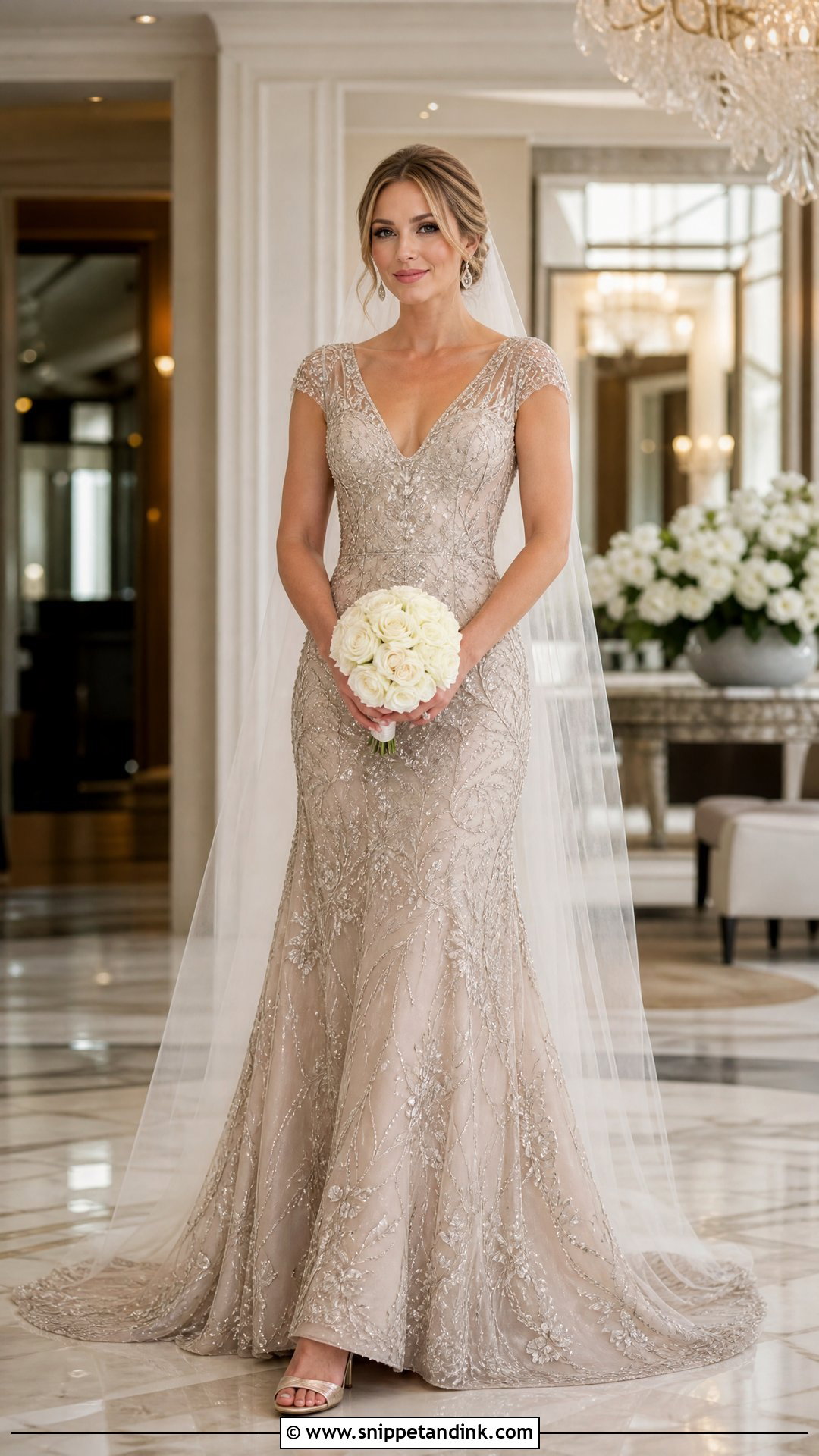
Beading turns taupe luminous, especially under candlelight. I prefer tonal beads, crystals or metallic thread over sharp contrast, and a V-neck with sheer cap sleeves keeps all that detail from feeling heavy. Plain champagne heels, small crystal studs and an unembellished fingertip veil are the right partners. A smooth low bun matters more than you’d think, because loose curls catch on beads. Before you commit, lift the gown on the hanger. A heavily beaded skirt can weigh much more than you expect, and by the tenth hour that weight sits on your shoulders and waist.
11. Taupe Chiffon Wedding Dress
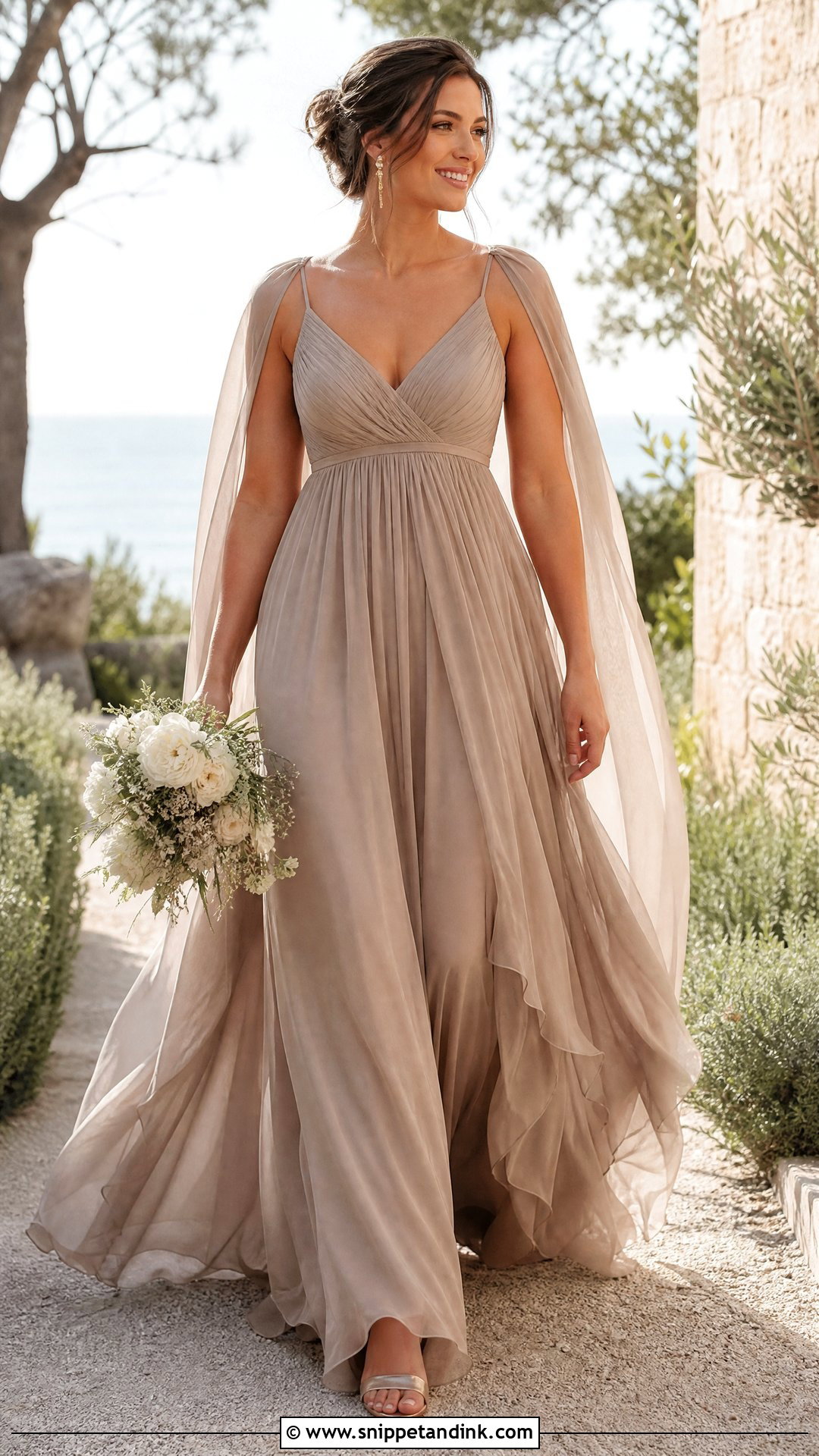
Chiffon makes taupe feel weightless, which is why I suggest it for warm weather and travel. An empire waist or soft A-line with a gathered bodice, fine straps and a layered skirt moves with every breeze. A matching chiffon cape or removable flutter sleeves add coverage for a religious ceremony and come off later. Low metallic sandals, fine gold earrings and a comb in loose waves keep it relaxed. On sand or grass, ask for the hem just touching the top of your foot in flats. Any longer and the chiffon soaks up damp and dirt within the first hour.
12. Taupe High-Neck Wedding Dress
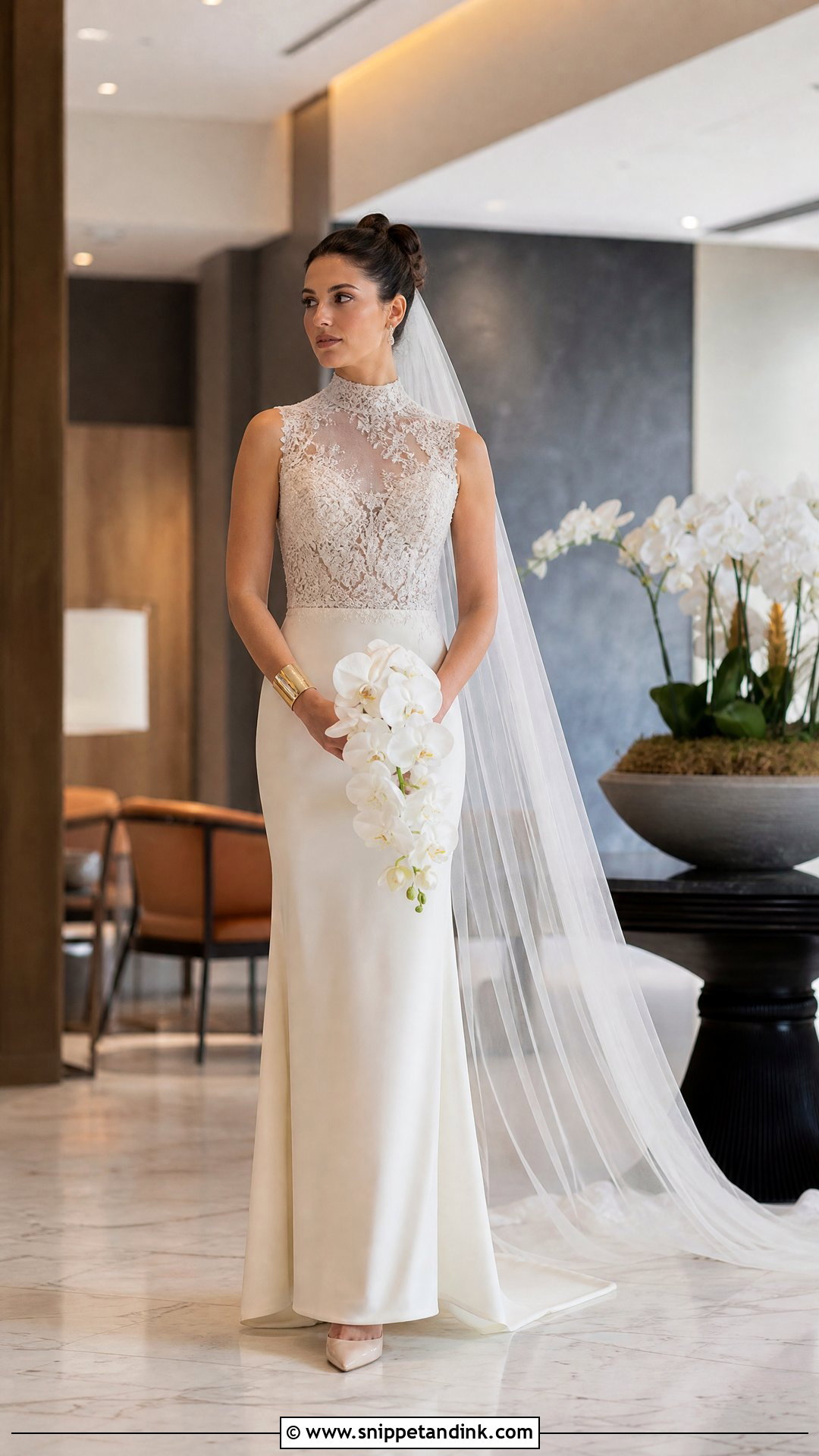
A high neck gives taupe a sharp, modern edge. A fitted lace bodice with a lined front and sheer upper neck, or a satin halter, both draw the eye upward. Skip the necklace and let drop earrings, a gold cuff and a long veil under a high bun do the work, with a narrow bouquet of white orchids repeating the vertical line. I’d test this neckline while turning your head and looking down at your plate. Lace that sits right on the throat can scratch, and a halter that’s a little short will tug on the back of your neck by the speeches.
13. Taupe Sweetheart Wedding Dress
The sweetheart curve softens a neutral colour, and taupe benefits from that. A supportive bodice with gentle draping, a natural waist and either a full A-line or fitted mermaid skirt covers most body shapes. Detachable straps or sheer sleeves let you change the look between ceremony and dinner. A fine necklace, small drops, champagne heels and an ivory veil with minimal edging are enough, with hair up so the curve stays visible. Bring the exact bra or shapewear you’ll wear to every fitting. Bust support is built into this neckline, and a different undergarment on the day changes how the curve sits.
14. Taupe Slip Wedding Dress
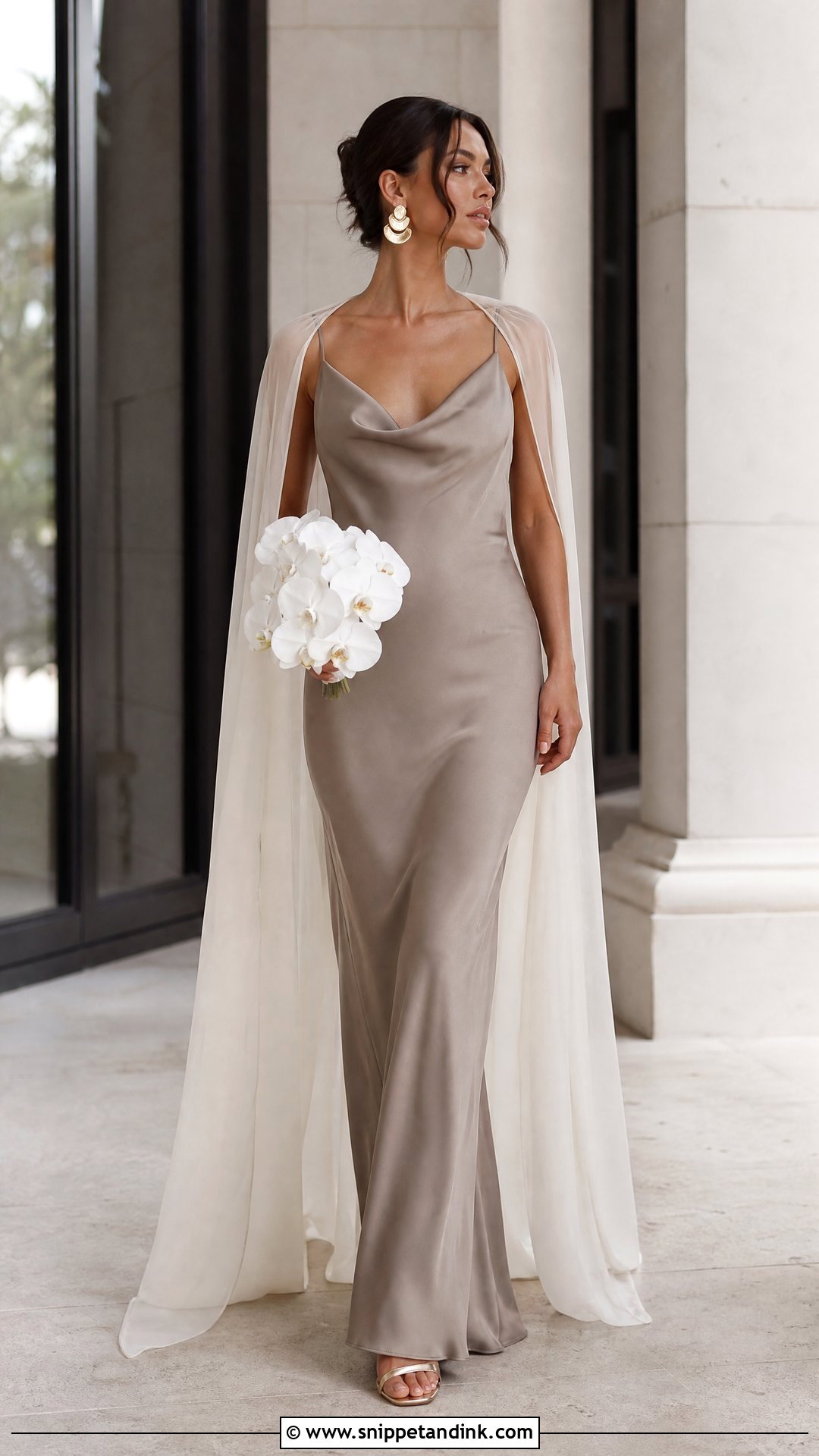
A bias-cut satin slip is the most relaxed gown here, and it suits an intimate city or destination wedding. Narrow straps, a softly draped neckline and a fluid skirt fall close to the body, so a sheer ivory cape or plain long veil adds ceremony weight you can remove later. Strappy metallic sandals, sculptural earrings and loose polished waves keep it unfussy. I’ll be honest about the trade-off: bias-cut satin shows every line underneath. You’ll need no-show underwear, careful tailoring and possibly a lining, and it creases quickly if you sit for a long dinner.
15. Taupe Tea-Length Wedding Dress
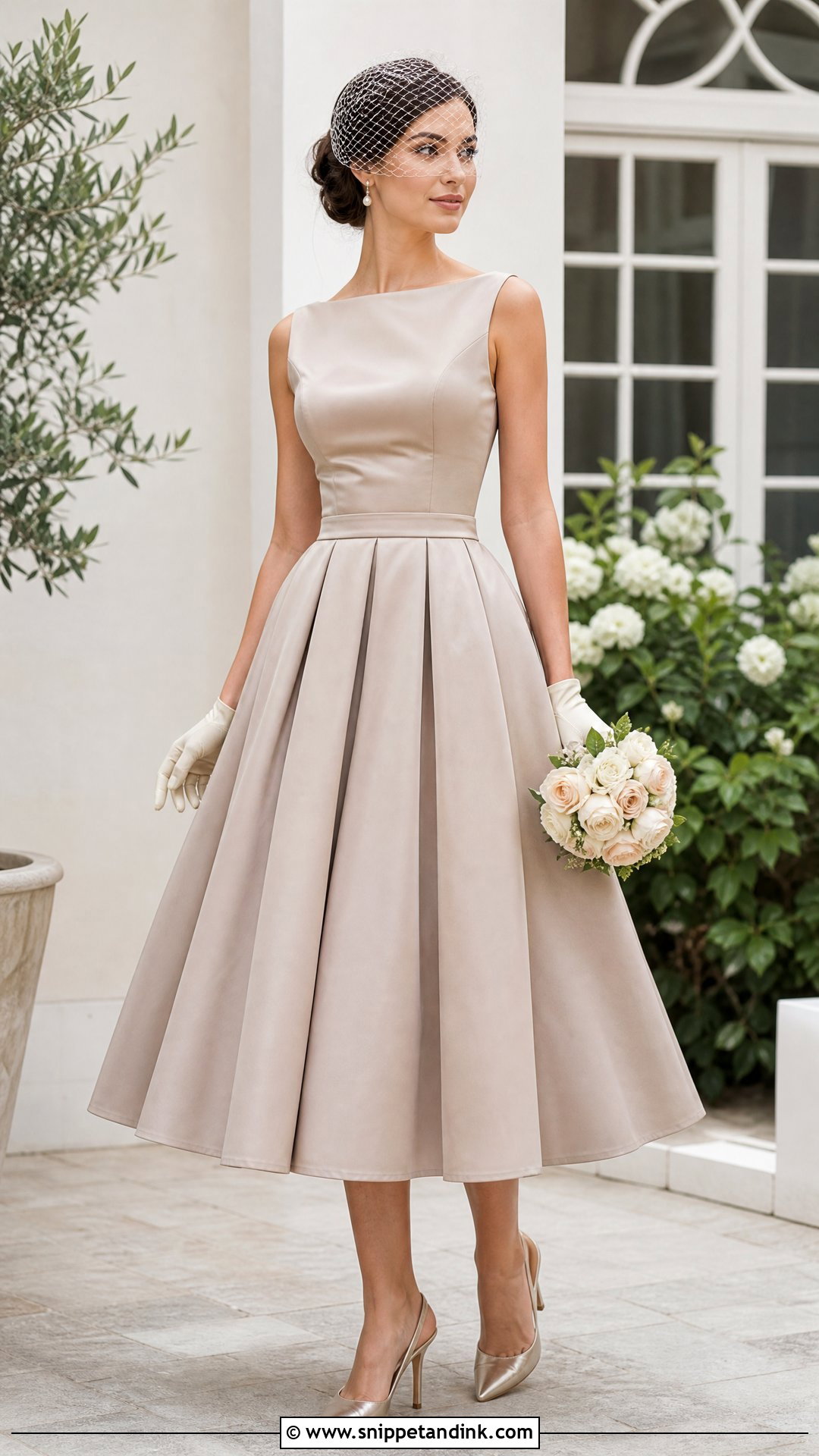
Tea length feels playful and practical, and it’s the one gown here where your shoes become part of the outfit. A fitted bodice and full skirt ending between knee and ankle hold their shape best in satin, mikado or layered tulle. I’d go for pointed ivory pumps or metallic slingbacks, pearl earrings, short gloves if you like a retro feel, and a birdcage veil or shoulder-length tulle. A neat bun or curled bob matches the shorter proportions. The hem point matters most: the narrowest part of your calf is usually the most flattering, so stand in your wedding shoes when it’s pinned.
16. Taupe Cape Wedding Dress
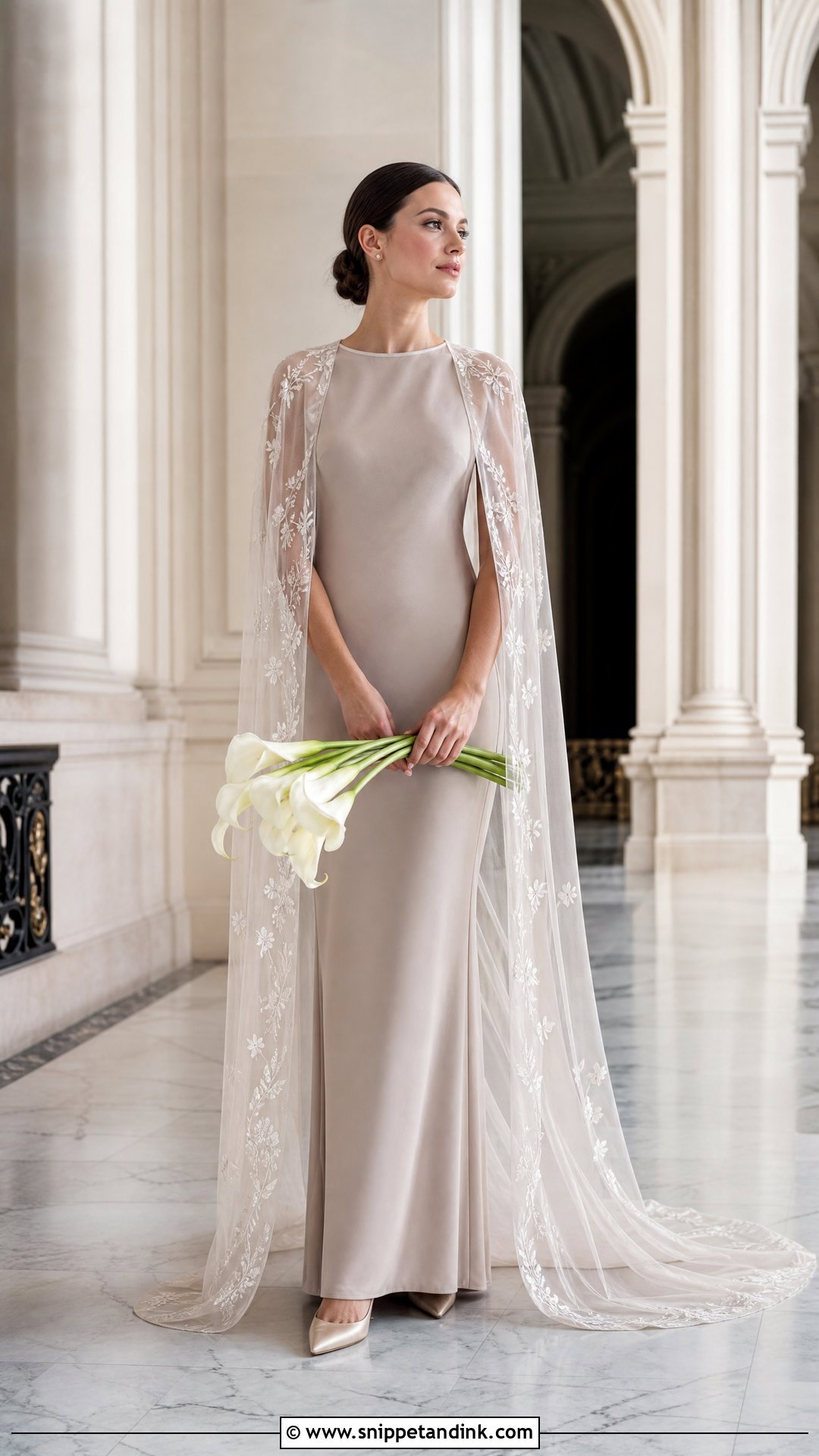
If you love drama but not embellishment, a cape is the answer. Start with a plain crepe or satin column and add a sheer floor-length cape fastened at the shoulders, edged with ivory embroidery, tiny pearls or taupe appliqué. Since the cape replaces the veil, keep the hair simple in a sleek low bun with studs and champagne heels. White orchids or long-stemmed callas suit a grand indoor venue. I always ask for the cape to be detachable with hidden snaps, and weighted at the hem. A light cape without weights lifts and twists in any draught, and it blows sideways in outdoor shots.
17. Taupe Corset Wedding Dress
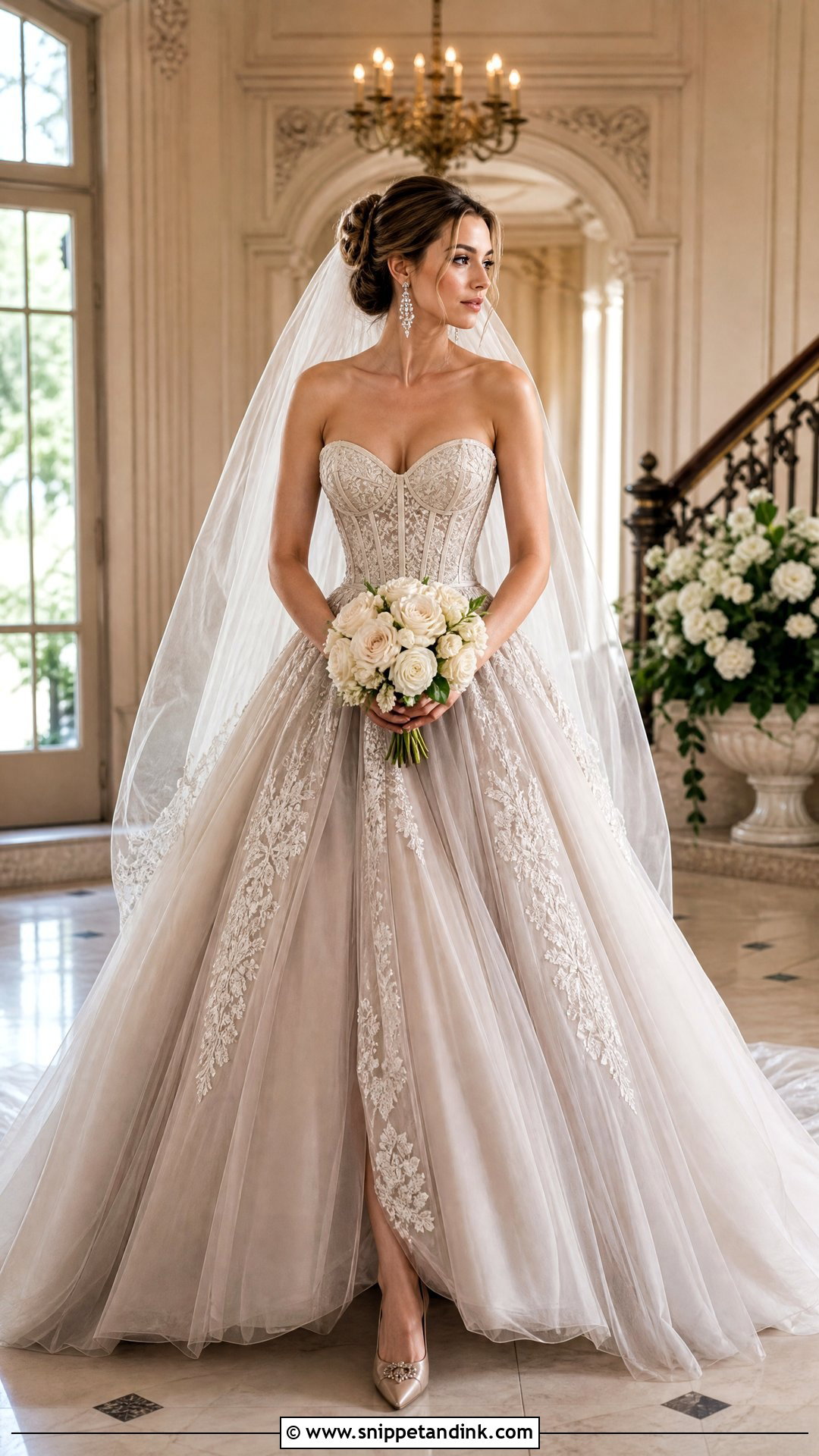
A corset bodice gives taupe visible structure, and tonal lace over the panels softens it. Look for proper boning, a curved neckline and a full tulle or satin skirt; a lined bodice gives more coverage if you want it. Champagne pumps, crystal earrings and a sheer cathedral veil without a heavy border keep the focus on the shape, with hair up to show the shoulder line. Ivory garden roses and pale greenery fit a ballroom or estate. A corset should feel secure, never like it’s holding your breath. At every fitting I have brides sit, walk, laugh and take a deep breath, because you’ll be eating dinner in it.
18. Taupe Floral Appliqué Wedding Dress
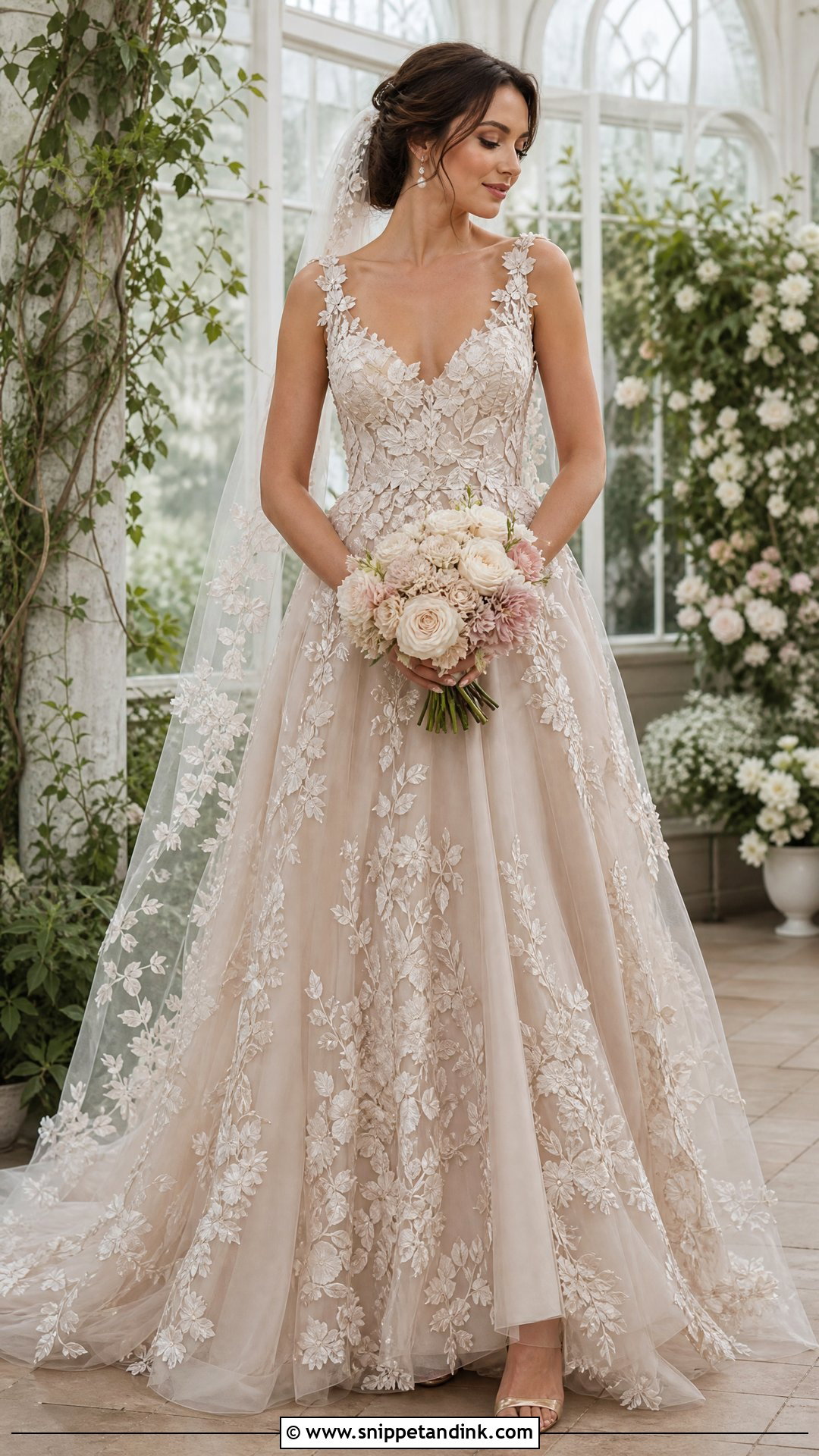
Three-dimensional flowers on taupe tulle add texture you can see from across the room. I like them clustered on the bodice and thinning out down the skirt, so the eye moves downward rather than seeing the whole gown as busy. Pearl studs, champagne heels and a veil with just a few matching flowers are enough, with a low bun that won’t compete. White and pale blush flowers with minimal greenery echo the dress for a spring garden. Run your hand over the appliqués before buying. Rough edges catch on the veil and scratch the inner arm all day.
19. Taupe Plus-Size Wedding Dress
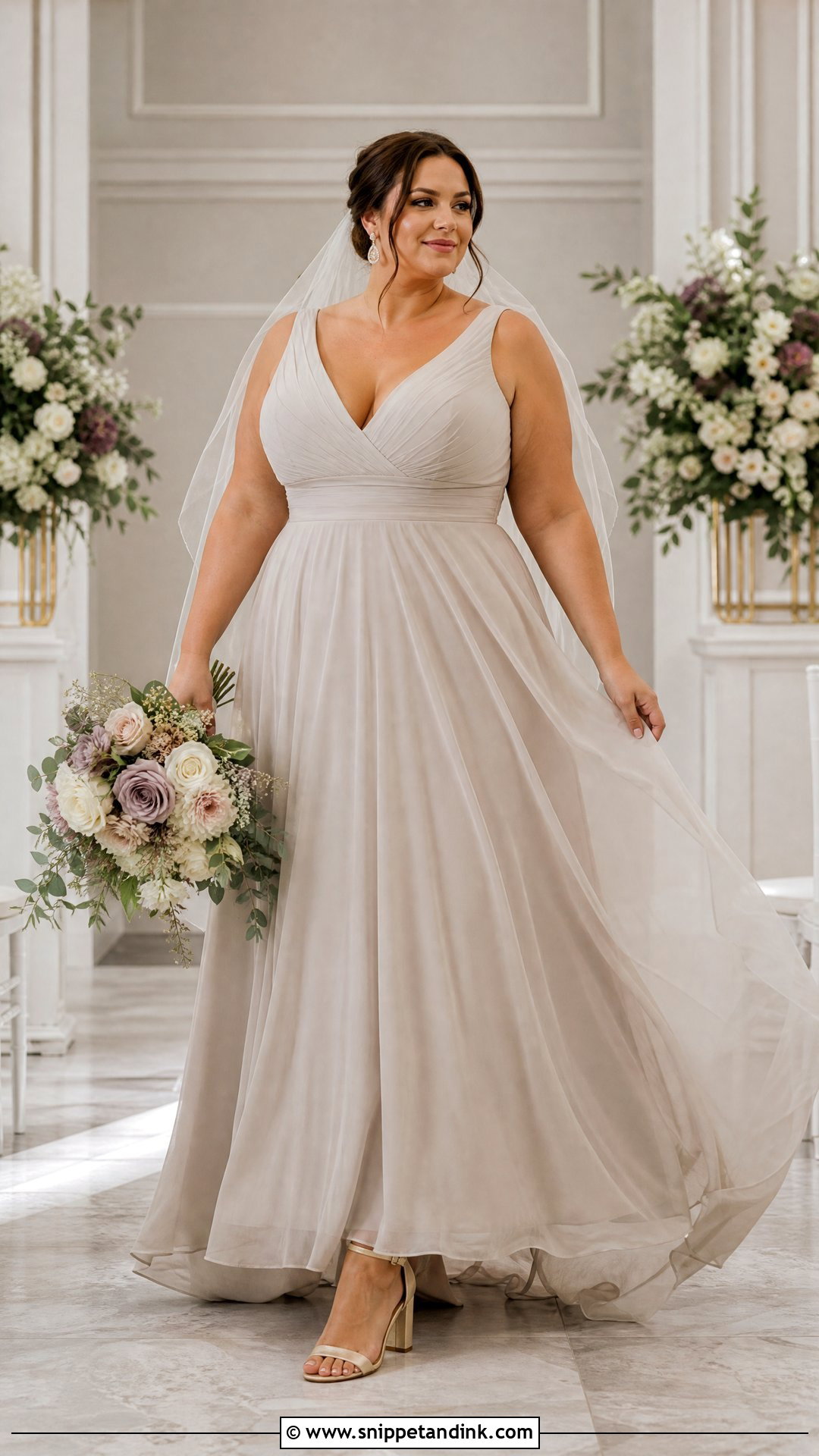
For a curvier figure, I start with support and work outward. A structured V-neck bodice with wide straps, a natural waist and a flowing chiffon or tulle A-line is a reliable base, and a corset back gives you adjustment if your size shifts in the last months. Strategic lining keeps the skirt smooth over the hips. Block-heel champagne sandals, drop earrings and a light veil falling below the shoulders suit it well, and a side-parted updo frames the face. A medium bouquet in ivory, blush and muted mauve keeps proportions even. Pick the shape you feel good sitting down in rather than following silhouette rules, and plan alterations at the bust, straps and hem.
20. Taupe Wedding Jumpsuit With Overskirt
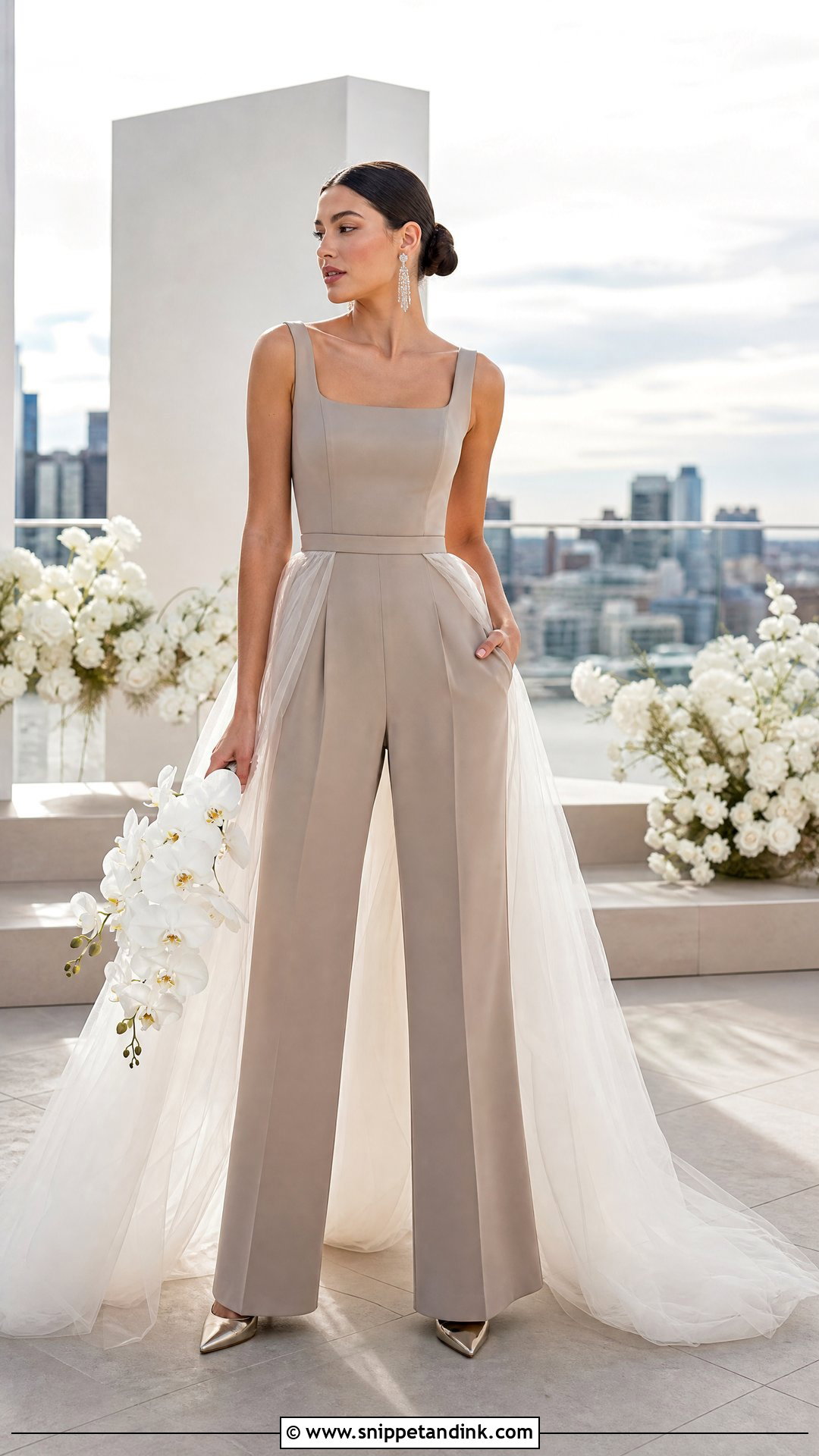
A taupe wedding jumpsuit with an overskirt gives you a traditional entrance and a dance floor outfit in one. A tailored wide-leg cut with a structured bodice and a square or sweetheart neckline sits under a removable tulle or satin overskirt for the ceremony. Pointed metallic heels, statement earrings and a sleek ponytail look sharp, with white orchids for a crisp accent in a gallery or hotel. The two measurements I fuss over are torso length and trouser hem. A short torso pulls uncomfortably when you sit, and the hem must be set with your actual heels on, since wide legs pool if they’re even slightly long.
Why Taupe Changes Colour Between the Ceremony and the Dance Floor
White gowns forgive bad lighting. Taupe doesn’t. Overcast daylight pulls it grey, golden hour warms it towards caramel, and warm reception bulbs can make it look brown. None of this is a problem if you expect it, but it surprises brides who only saw their dress under a bridal shop’s bright, cool lights.
- Send your photographer a clear phone photo of the gown by a window, and mention the colour name, so they can set white balance with taupe in mind.
- Ask for a few test frames of the dress hanging in your getting-ready room. It’s the easiest place to see how the camera reads the shade.
- Keep groomsmen and bridesmaids out of an identical taupe, or you’ll blend together in group shots. A shade lighter, darker or a different texture keeps you distinct.
- If the reception has coloured uplighting, avoid amber and pink washes near the head table. Neutral white or soft candlelight keeps the gown true.
Ordering a Coloured Gown Takes Longer Than White
Many designers cut taupe to order rather than stocking it, so you can’t always walk out with a sample. Allow extra weeks for the order and ask whether the lining, tulle and lace come from the same dye lot. Mismatched lots are the most common issue I see with coloured gowns, and they show up as a skirt one shade off from the bodice.
When the gown arrives, check it in daylight before alterations start, while it can still be returned or remade. Store it in a breathable cotton bag away from windows, because sunlight can fade the shoulders of a coloured gown long before the wedding. Steam it on a low setting rather than ironing, especially satin, and test any stain remover on an inside seam first, since cleaning products can lighten a dyed fabric.
Settle the Shade, Then the Silhouette
The right taupe looks good to you in the mirror, stays separate from your skin in photos and suits the light of your venue. Decide early whether you lean towards warm beige-taupe, cool greige, rosy mushroom or a deeper brown. Then remember the fabric changes the colour: satin adds shine, crepe stays matte, and lace or tulle layers build depth. Order swatches, hold them at your jaw by a window and again under warm indoor bulbs, and keep accessories quietly contrasting. Lace A-line, satin ball gown, sleek column or a jumpsuit with an overskirt, any of these can work once the shade is right for you.
You'll Like These Ideas:







Leave a Reply