
A plain wedding dress is harder to get right than a decorated one. With no lace or beading to look at, the eye goes straight to the cut, the fabric and how the dress sits on you, so every seam has to earn its place. Done well, a crepe sheath, a satin slip, a square-neck bodice or a sleek long-sleeve gown can be just as memorable as anything embellished. These dresses also travel easily between settings, from city halls and gardens to beaches and bare modern rooms. Below are twenty-five simple gowns, with the styling I’d use and the fit details I look at before a bride commits.
Underwear Decides Whether a Plain Dress Works
In a lace gown, the pattern hides what’s underneath. In smooth satin or silk, nothing does. Most fitting problems I see with minimal dresses are really underwear problems, so I ask brides to bring their wedding underwear to the very first appointment, not the last.
- Match your skin, not the dress. White underwear shows through ivory fabric far more than a shade close to your skin tone.
- Choose laser-cut, seam-free edges. Any elastic edge leaves a line on satin and charmeuse.
- Think about a built-in cup. Many simple bodices can have cups sewn in at alterations, which frees you from straps entirely.
- Try a slip under bias-cut silk. A thin layer lets the dress glide instead of clinging to your hips.
Stick-on cups and tape work for backless and plunging cuts, but test them for a full day beforehand. Skin oils, heat and dancing loosen adhesive, and you want to know how long yours holds before you’re in front of guests.
Shapewear is the trickiest call. Firm control pieces can smooth a crepe column, but their edges often show as a ridge across the thigh or back. If you want some, choose a slip-style piece that ends below the hem of the dress’s fitted section, and wear it to the fitting where the hem is pinned, since it can change the length slightly.
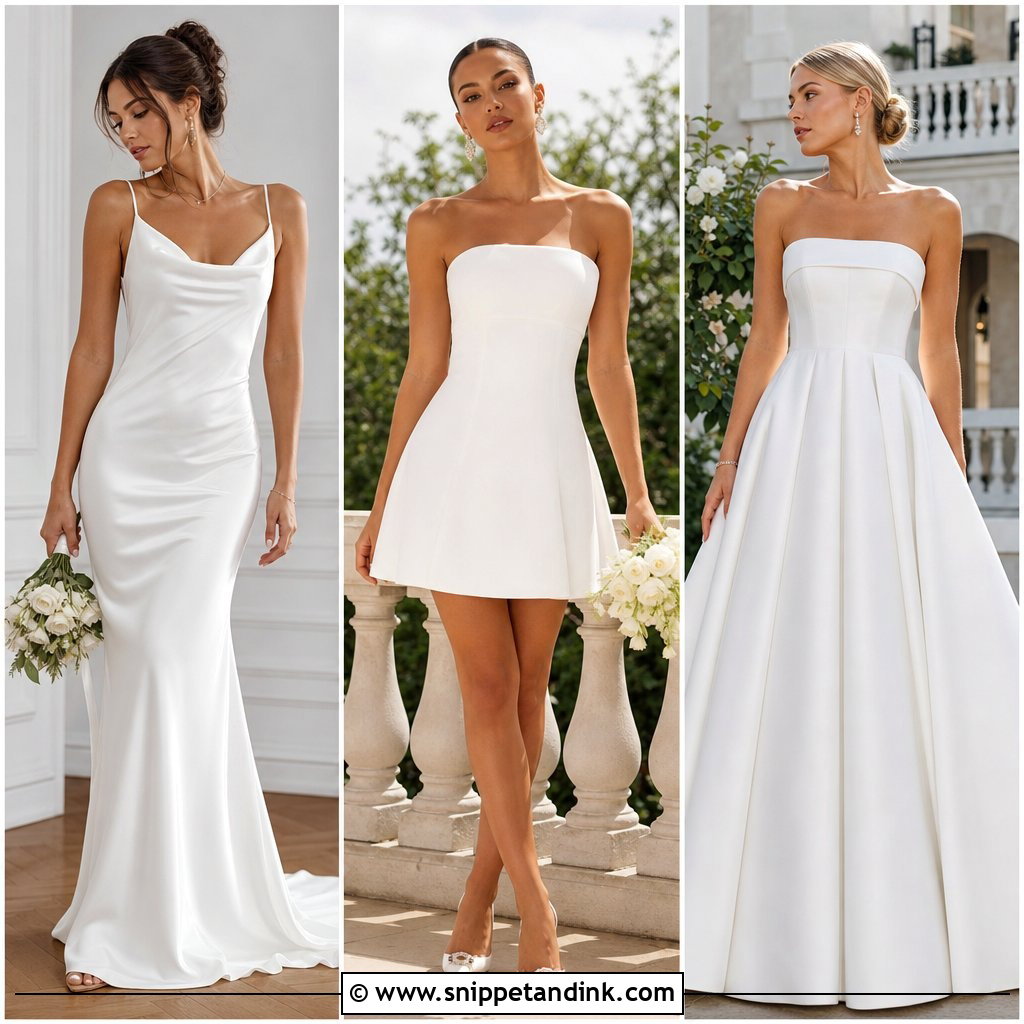
1. Minimalist Satin Slip Wedding Dress
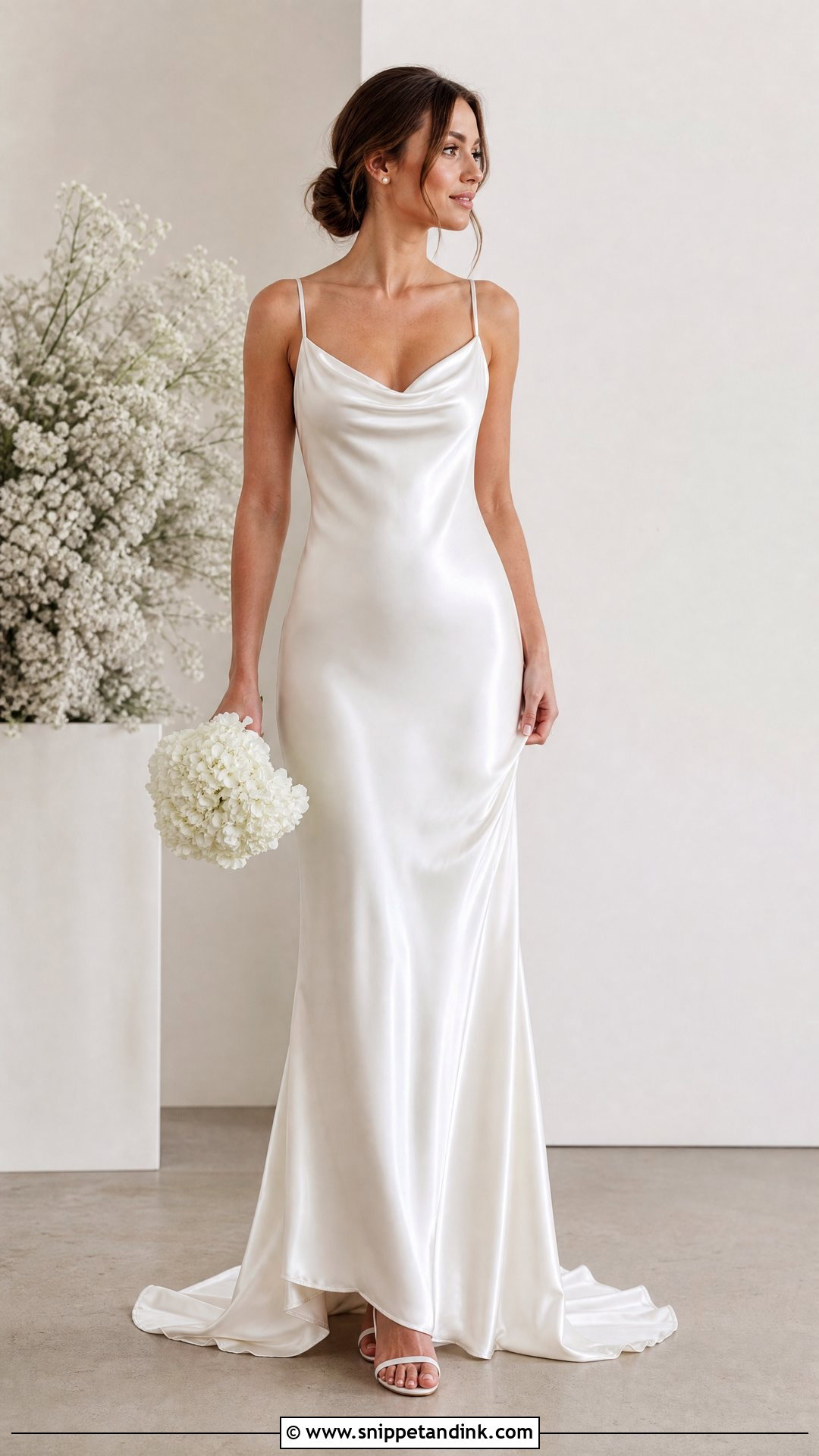
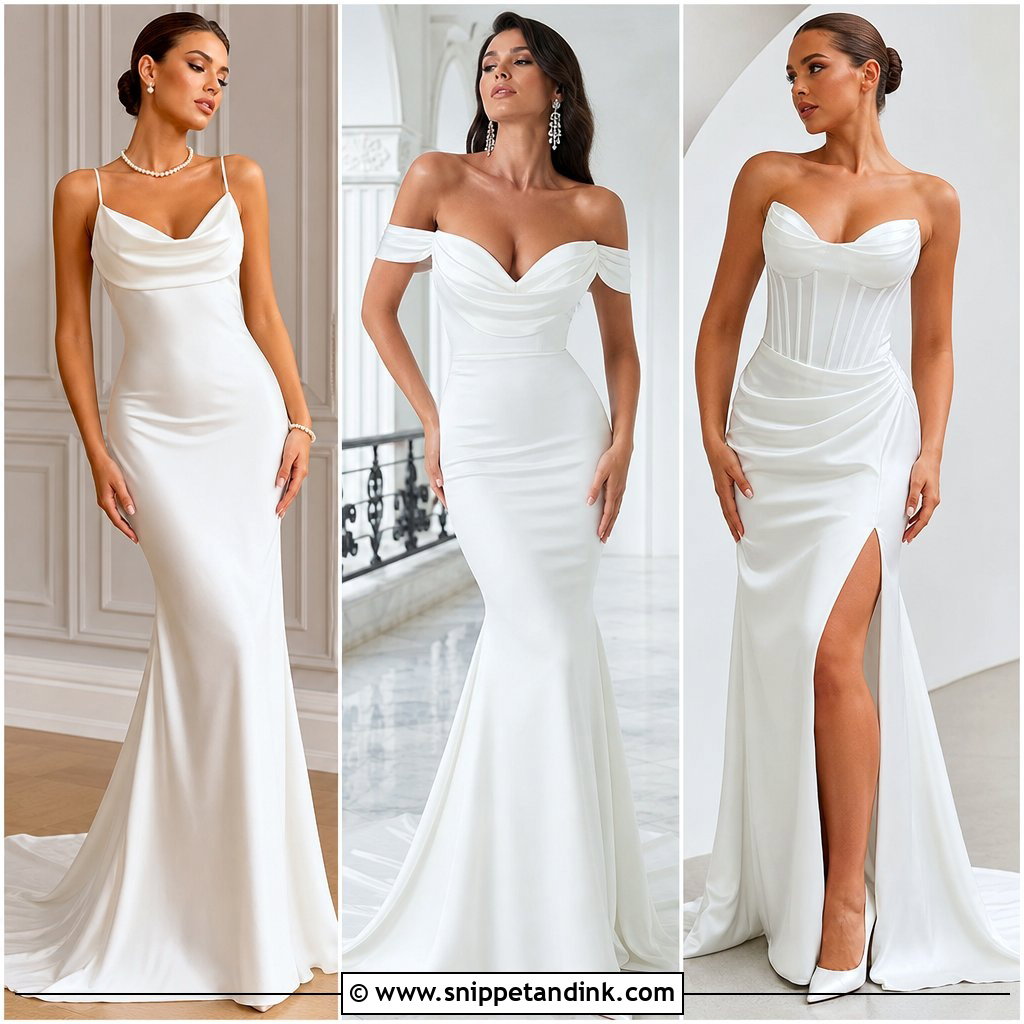
The slip dress is the classic of minimal bridal, and it is also the least forgiving dress I fit. A bias-cut shape skims the body because the fabric is cut diagonally across the grain, which makes it stretch and drape, but that same stretch shows every line underneath. Delicate straps and a clean neckline show off the shoulders. Barely-there sandals, pearl studs and a low bun or soft waves are all it wants, plus a fingertip veil if you like. Silk satin feels richer and heavier; charmeuse is lighter and more fluid. City weddings and destination ceremonies suit it best.
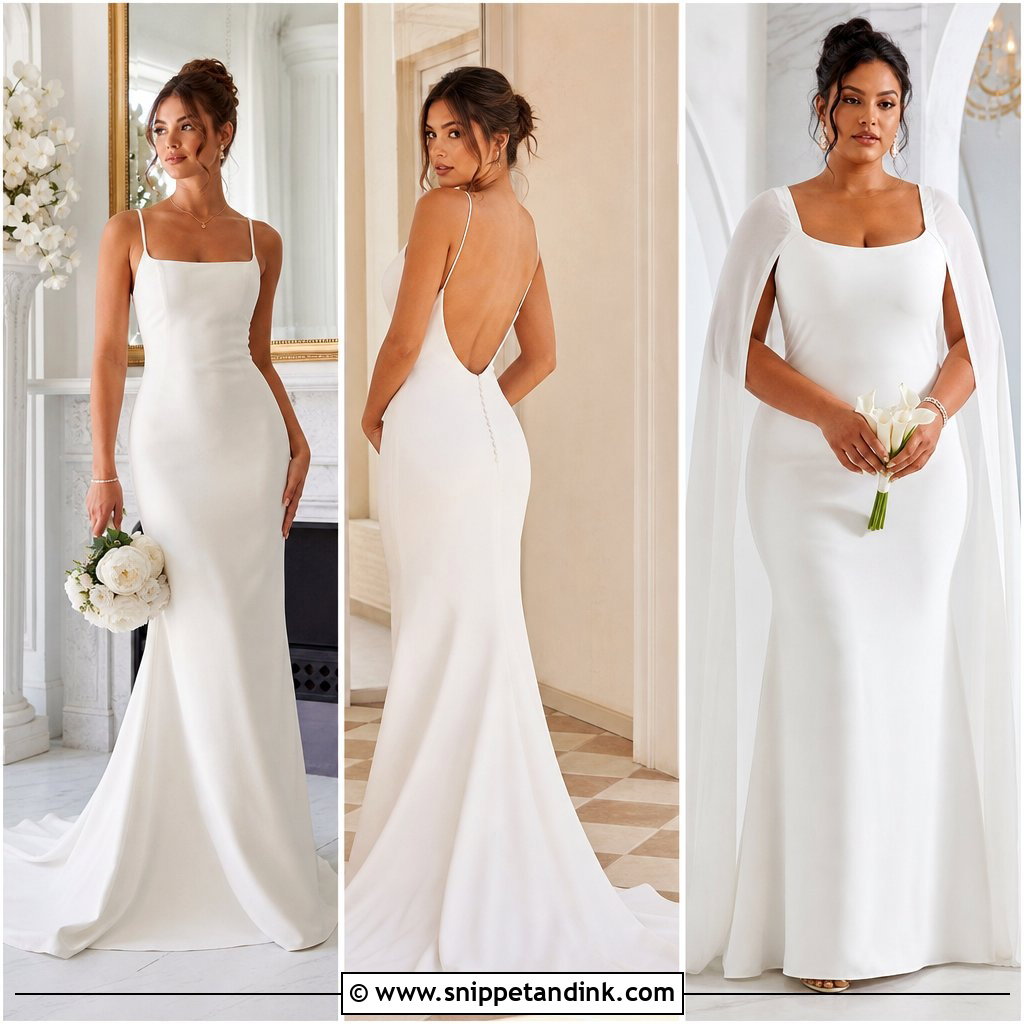
2. Minimalist Crepe Column Wedding Dress
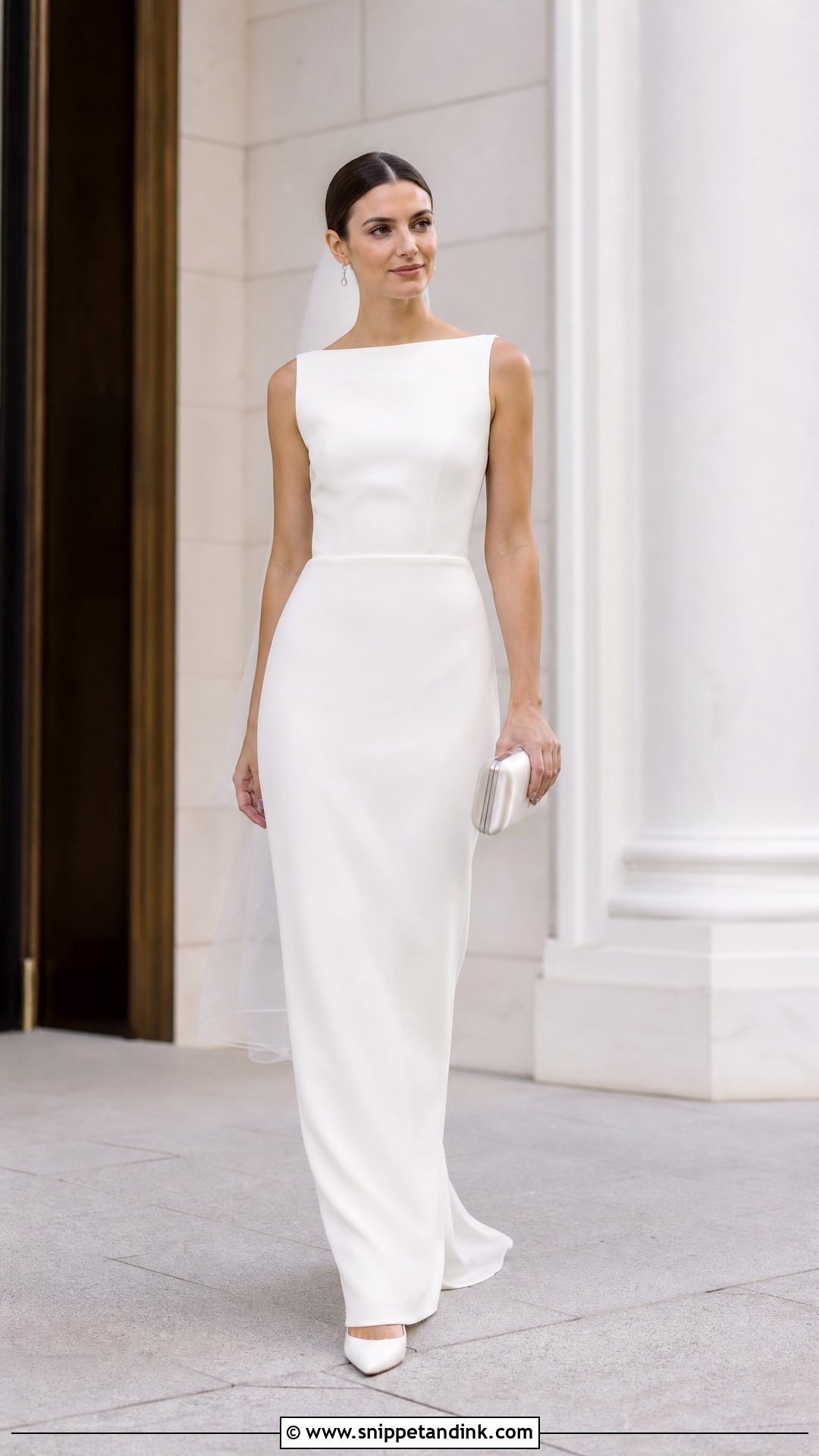
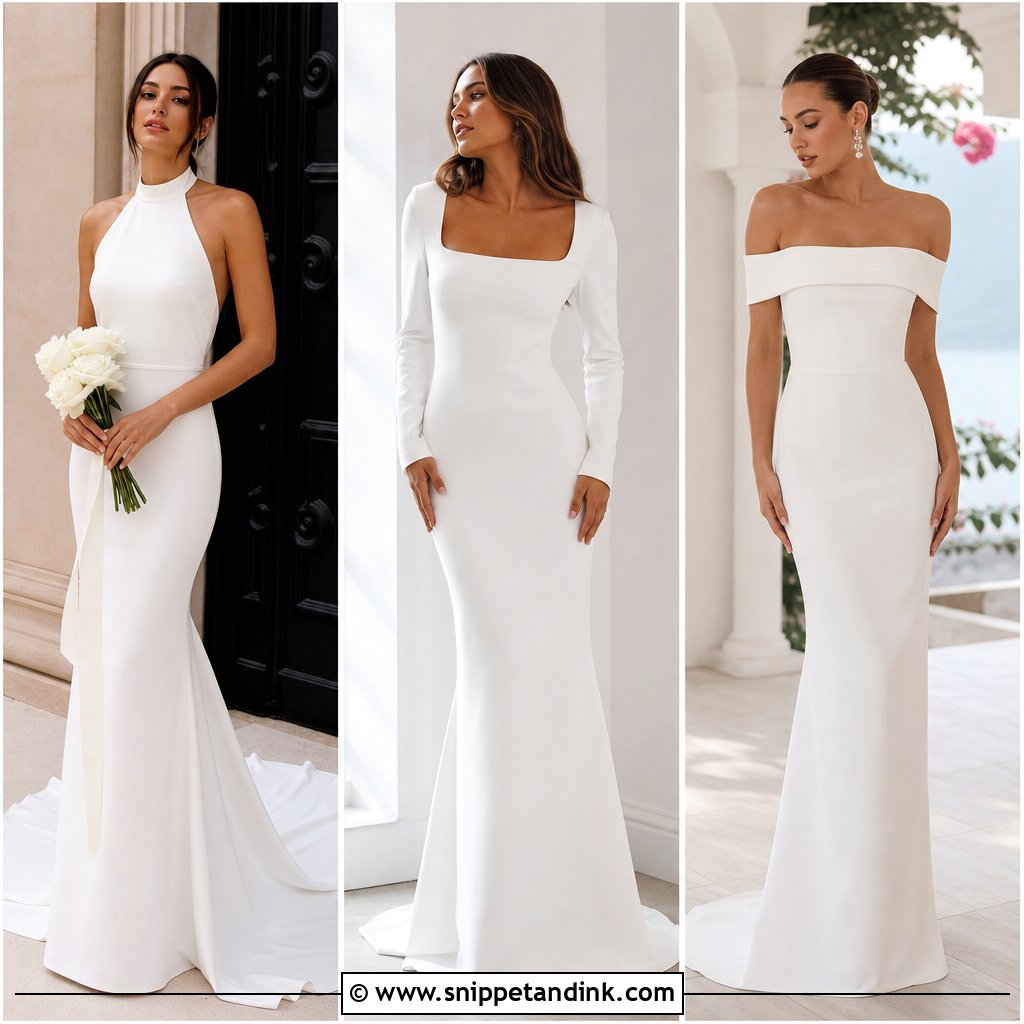
Matte crepe doesn’t bounce light the way satin does, so a column in crepe looks calm and modern in photos, never shiny. The fit has to be exact through the bust, waist and hips before the skirt falls straight to the floor. If there’s any pull across the hips, you’ll see horizontal ripples when you stand, and that is the one thing I’d send back for alteration. Pointed white heels, a structured clutch and simple drop earrings sharpen it. A sleek middle part or low chignon finishes the look.
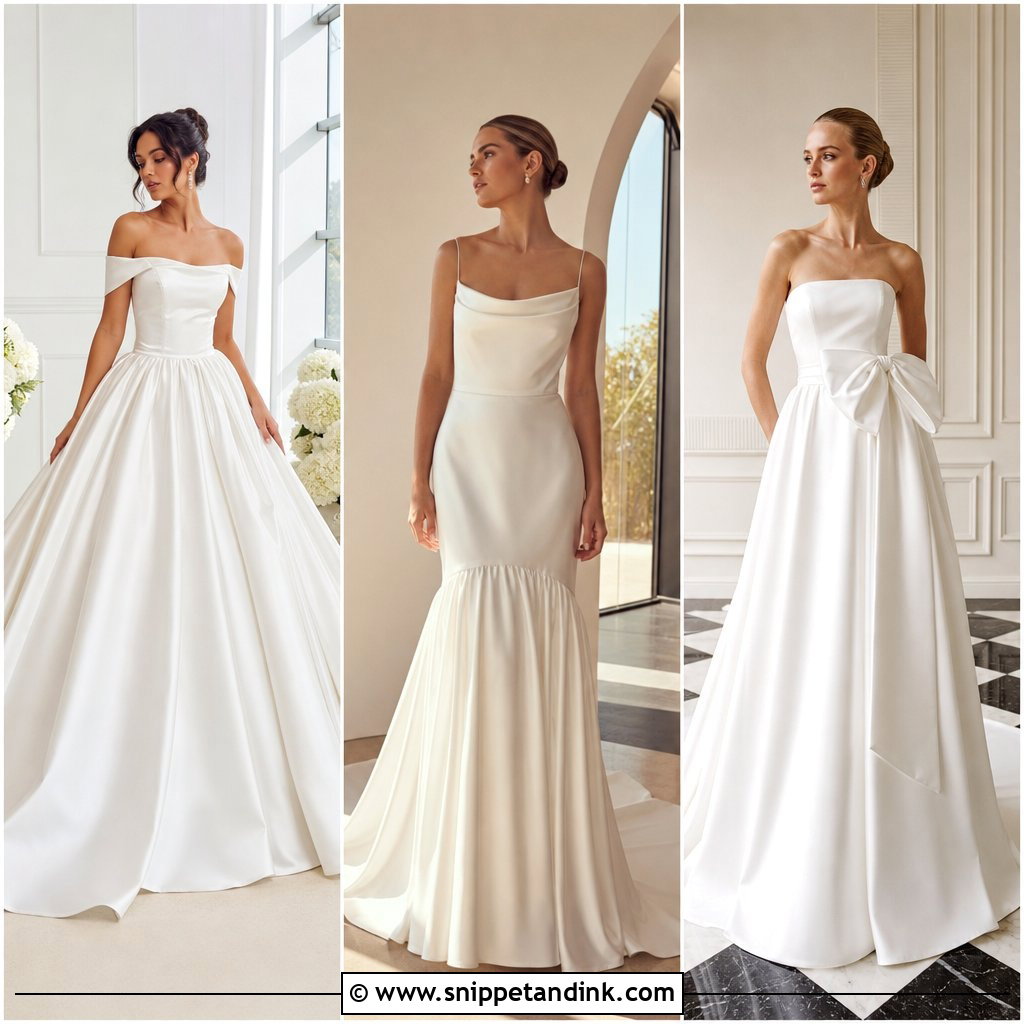
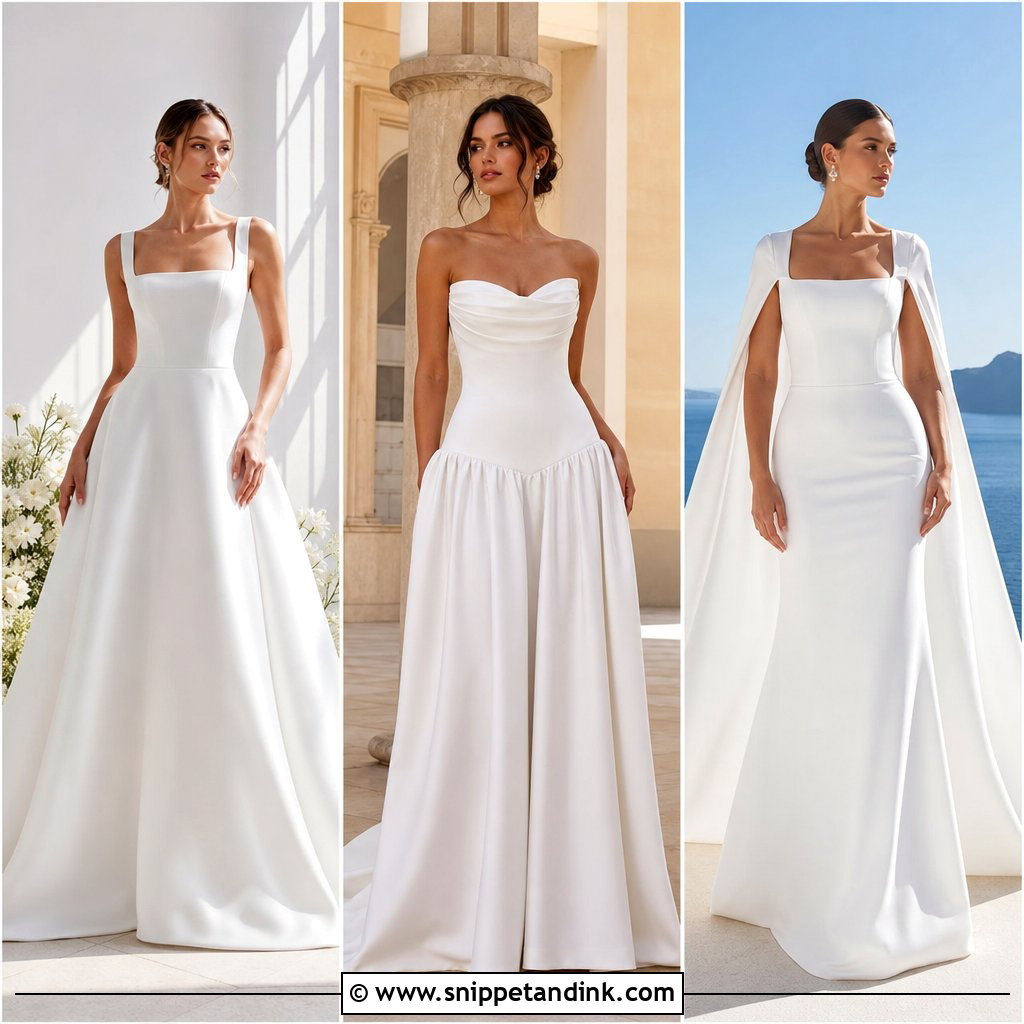
3. Minimalist Square Neck Wedding Dress
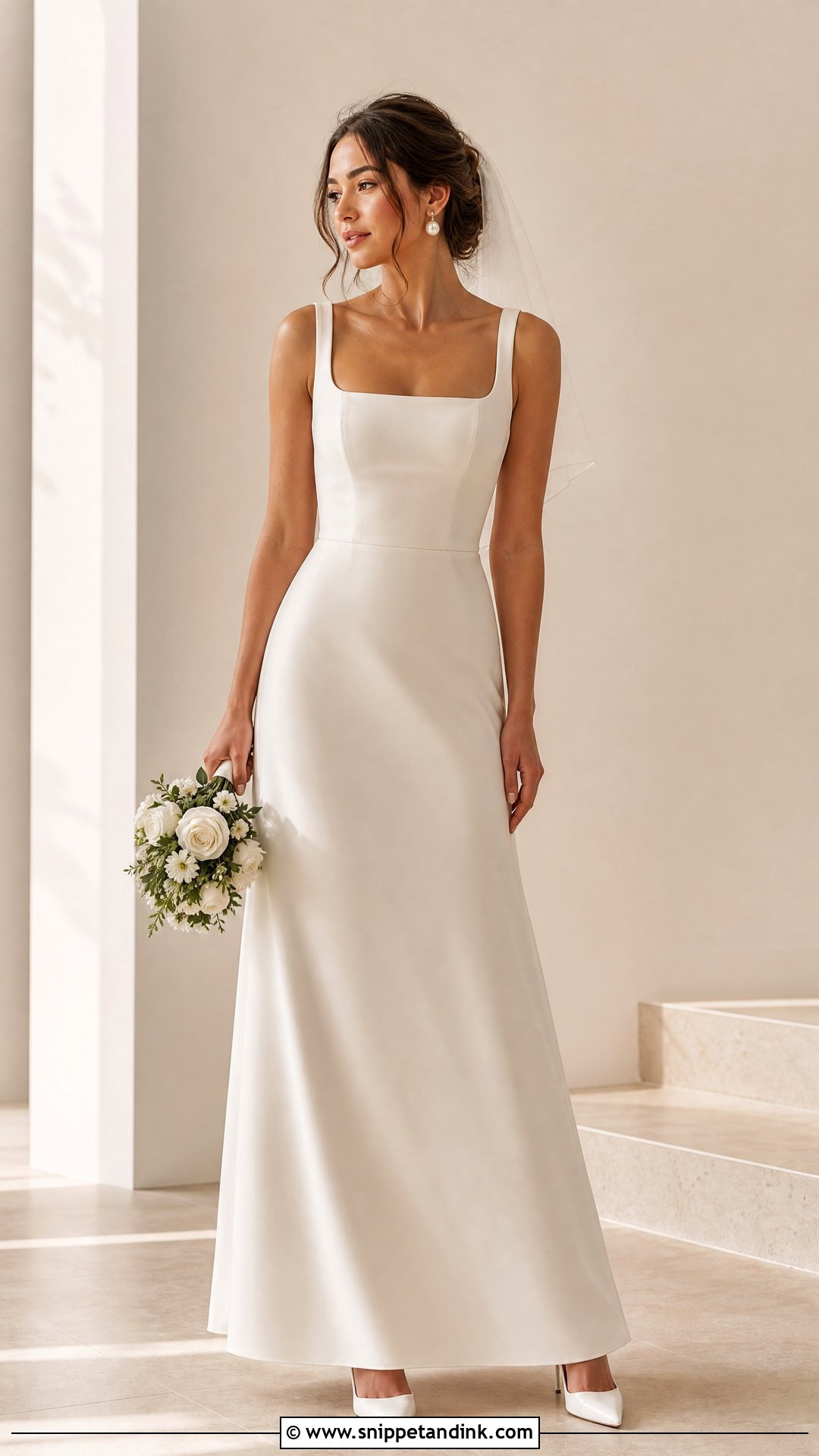
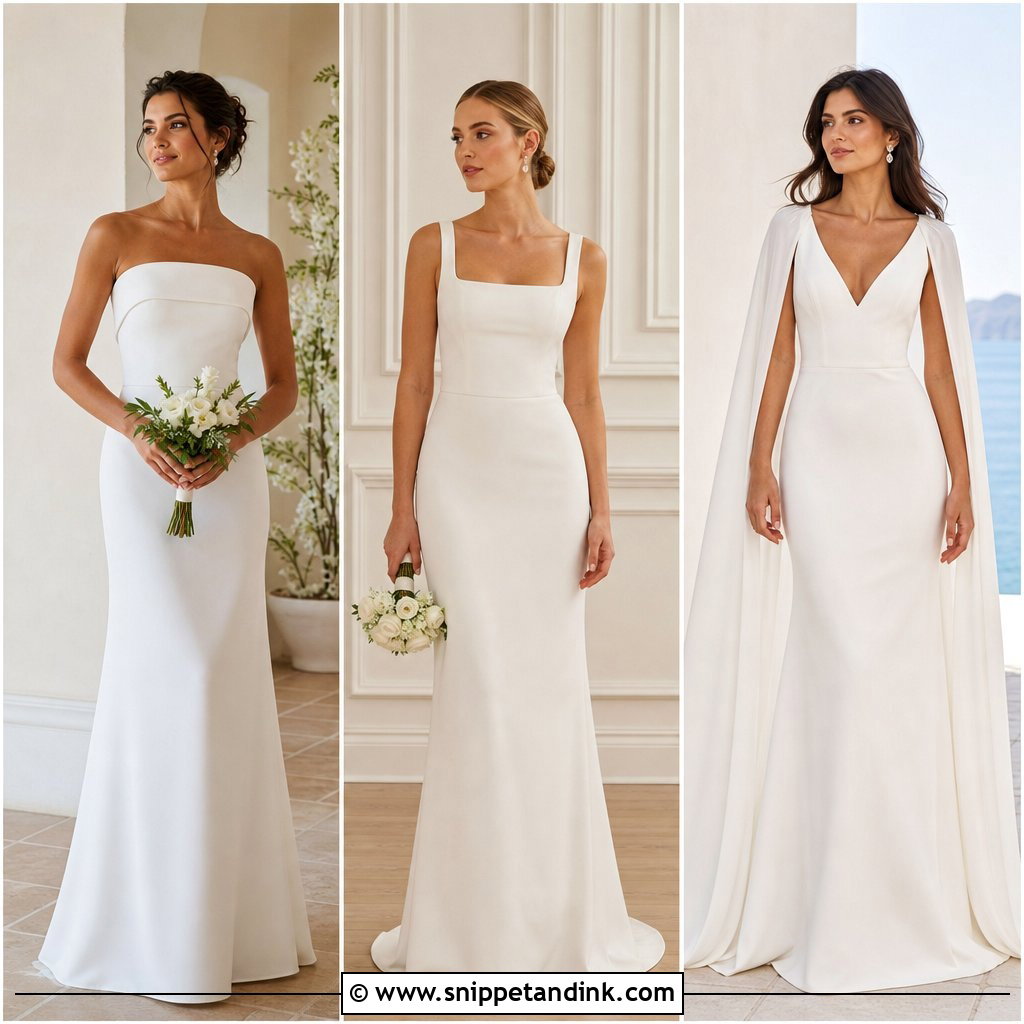
Square necklines give a plain bodice an architectural edge without lace or beads. A fitted bodice with a slim A-line skirt looks softer; a straight column is more modern. Look for internal structure here: a square neck has two corners that can collapse inward on a soft bodice, so light boning or a firm interlining keeps them crisp all day. Satin pumps, small pearl earrings and a short veil balance it. This is one of the most supportive simple shapes for brides who need lift through the bodice and still want the collarbone on show.
4. Minimalist Long Sleeve Wedding Dress
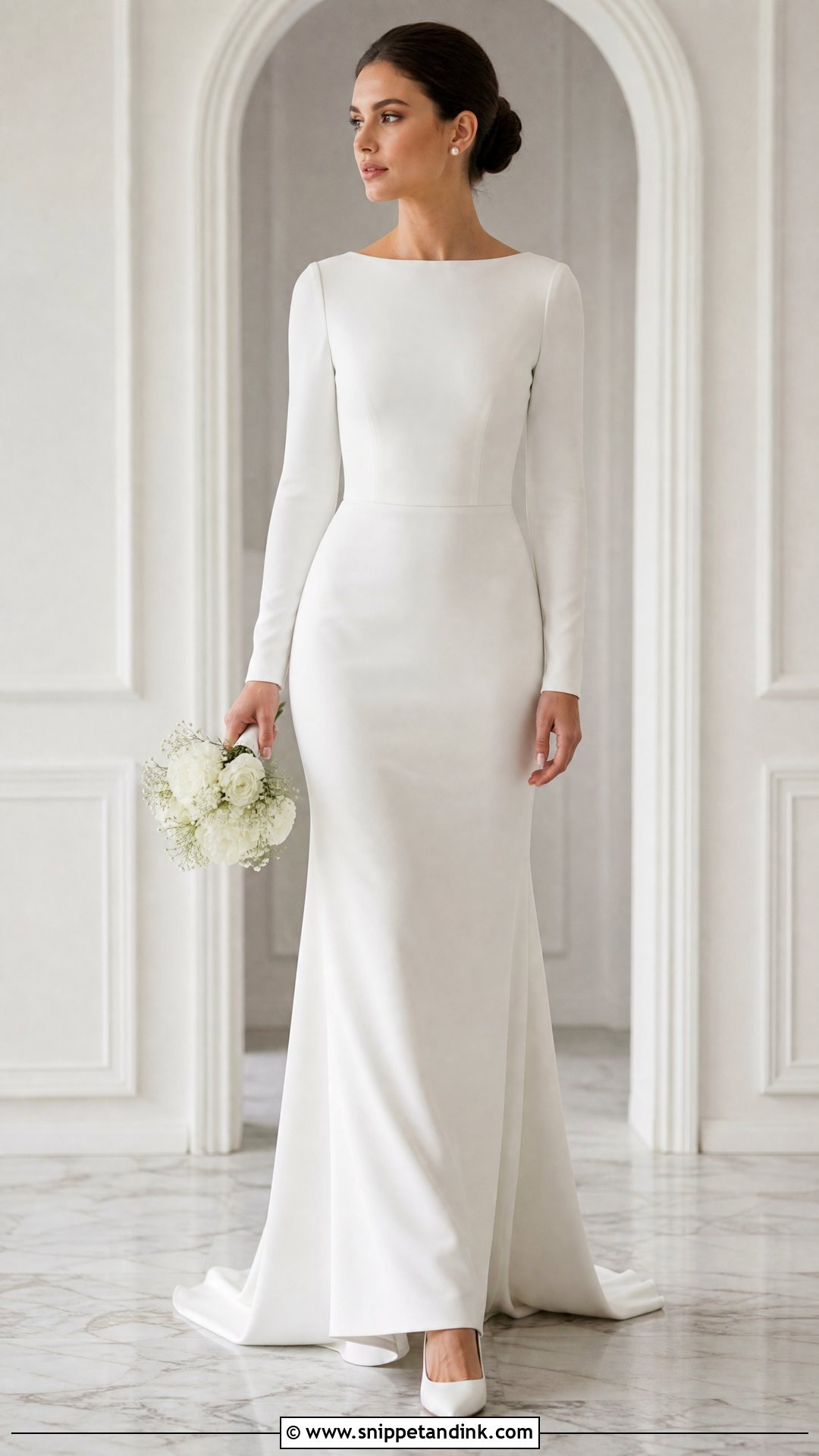
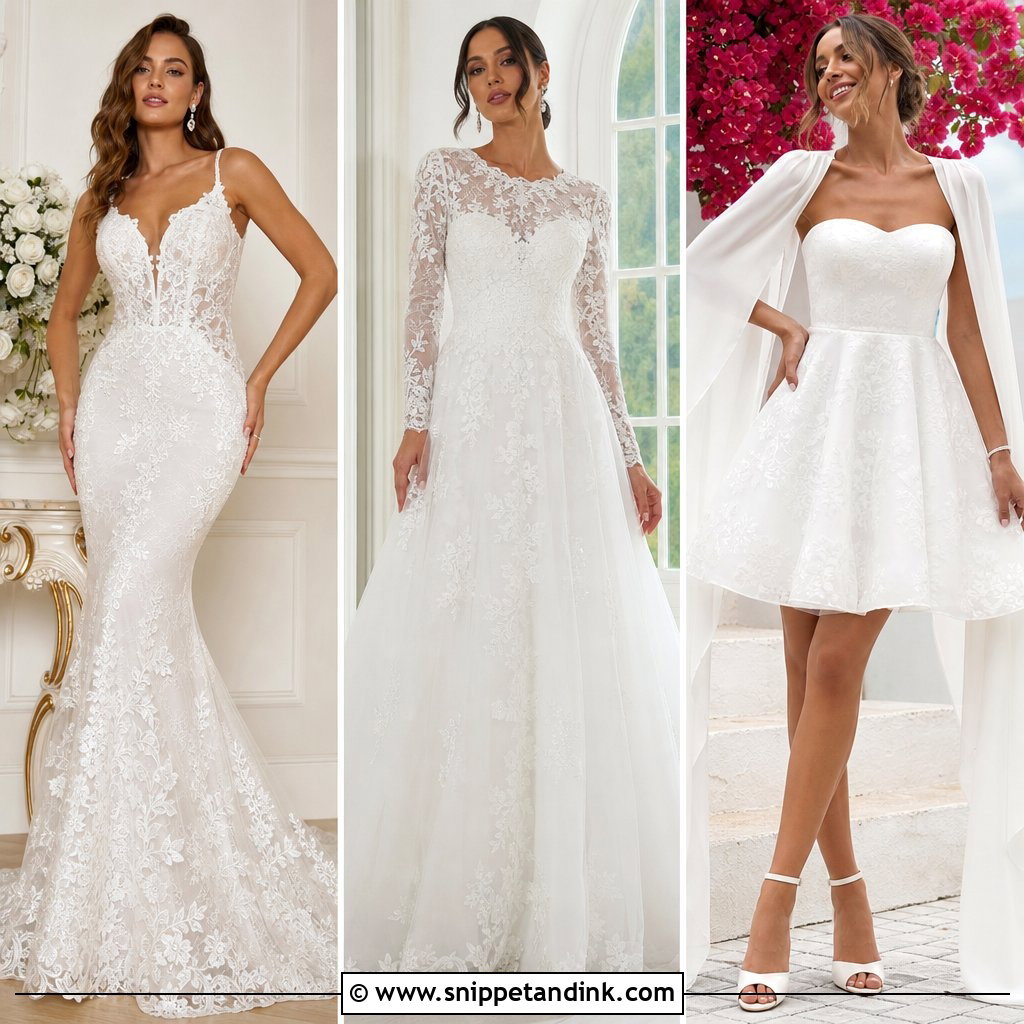
Long sleeves stay minimal when the rest of the gown is clean. Smooth crepe, soft satin or matte mikado with fitted sleeves and a simple skirt is the formula. Fitted sleeves need a bend test, because a sleeve cut for a straight arm pulls at the elbow when you hold a bouquet, so ask for a little ease there. Closed-toe heels, small diamond or pearl studs and a sleek veil falling behind the shoulders finish it. Leave out busy jewelry, since the sleeves already frame you. A center-part bun or smooth ponytail suits cooler seasons and formal rooms.
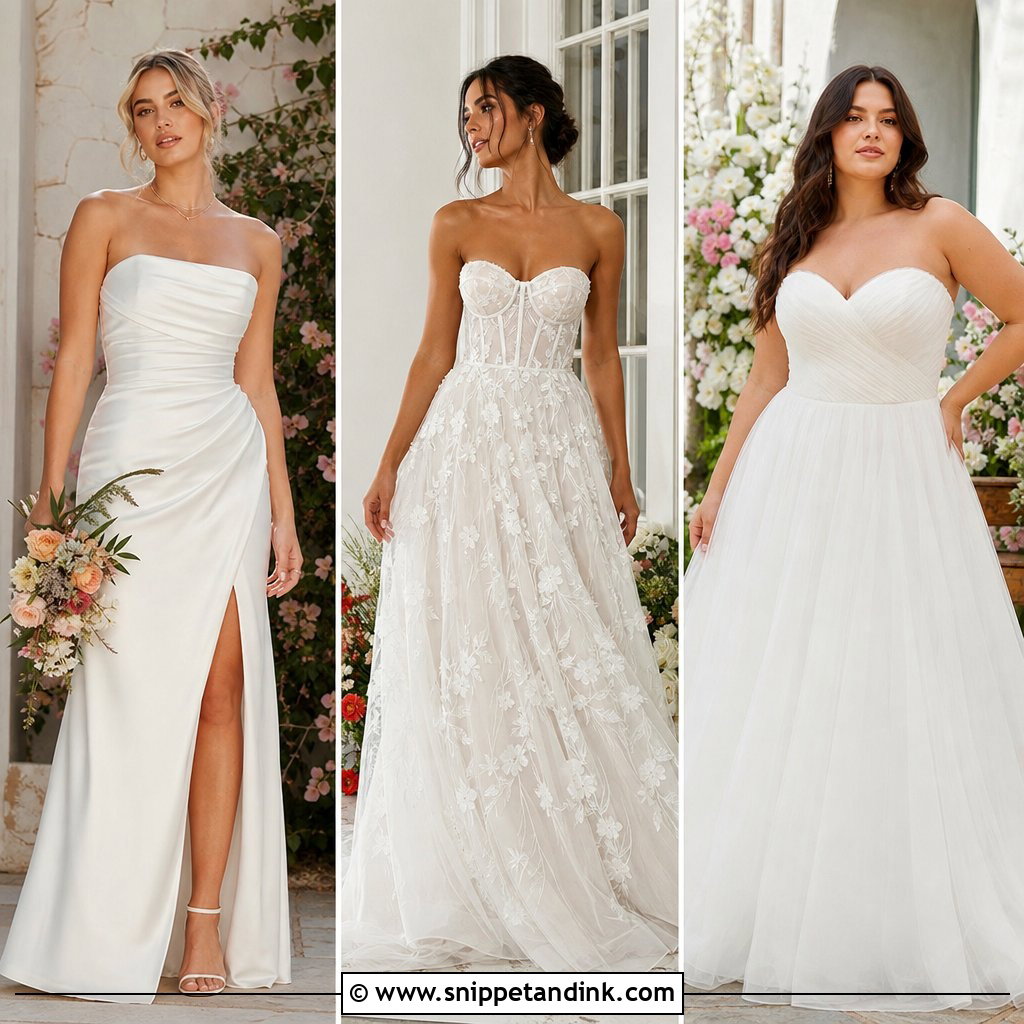
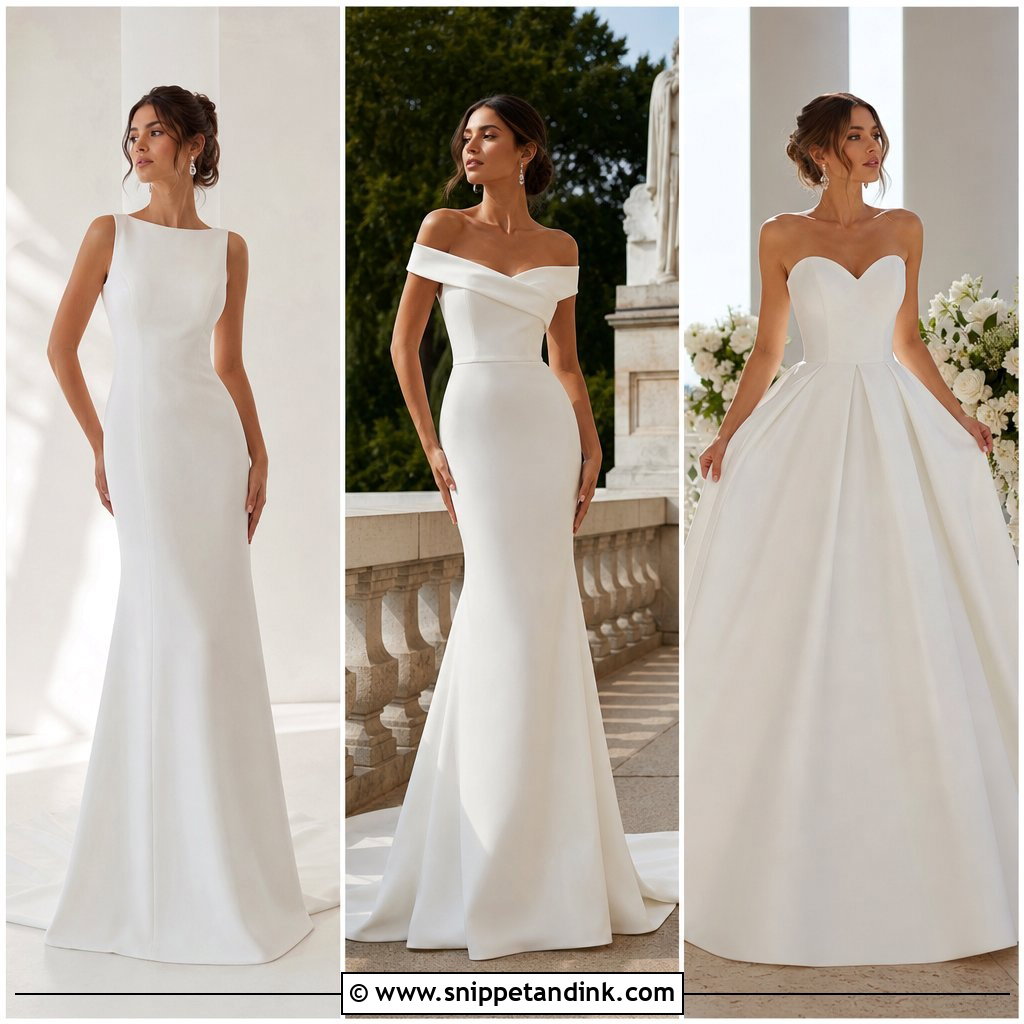
5. Minimalist Strapless Wedding Dress
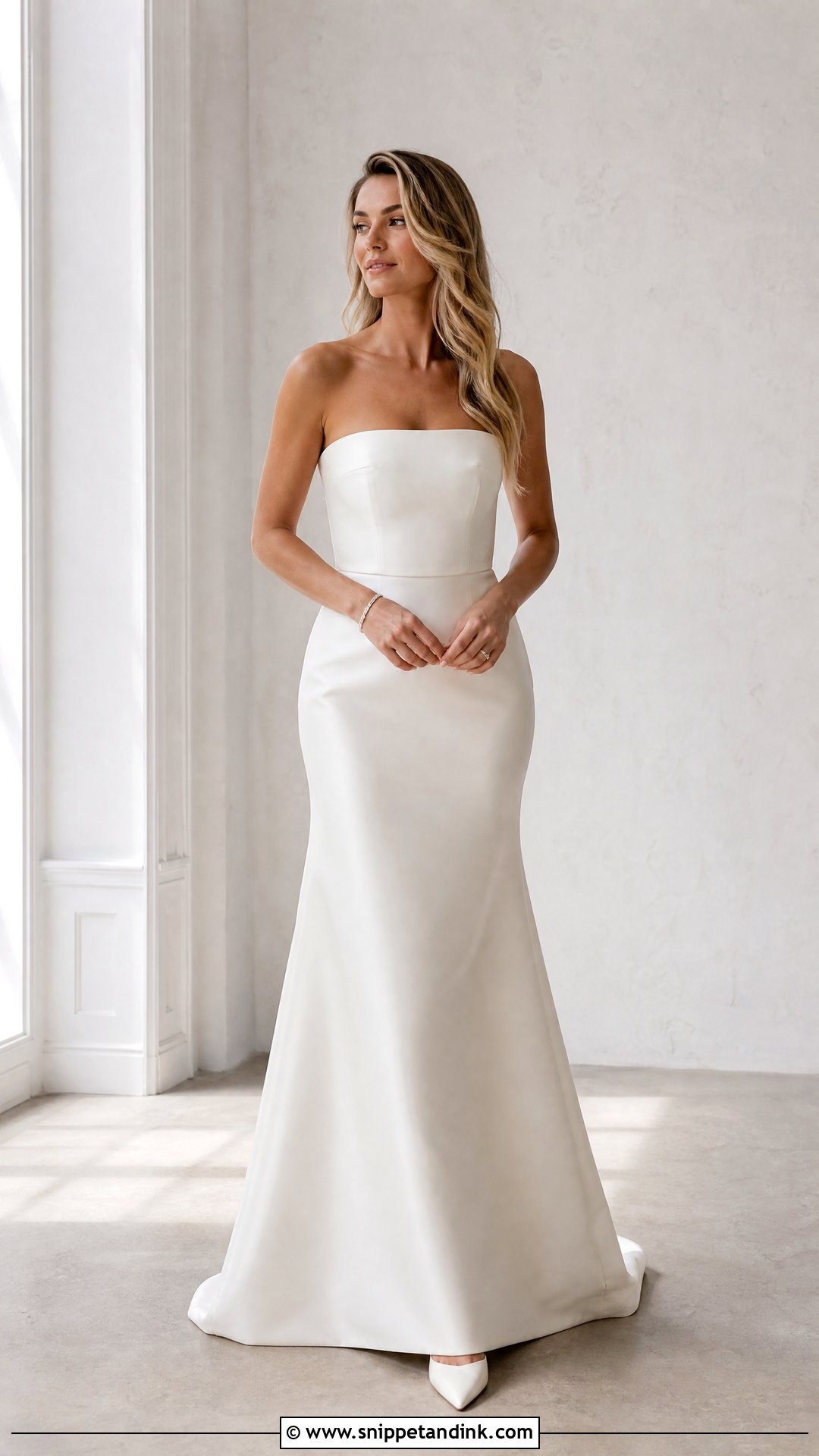
Is a plain strapless dress too simple? Not if the bodice is properly built. A straight-across or soft scoop neckline reads modern, and a fitted waist keeps the shape. Mikado, crepe and satin give the cleanest effect. The bodice should stay put without you touching it, which means boning and a waist stay inside, not just a tight fit. Pointed heels, a fine bracelet and a sculptural veil, or none at all, complete it. For interest, choose subtle seaming over sparkle.
6. Minimalist Off Shoulder Wedding Dress
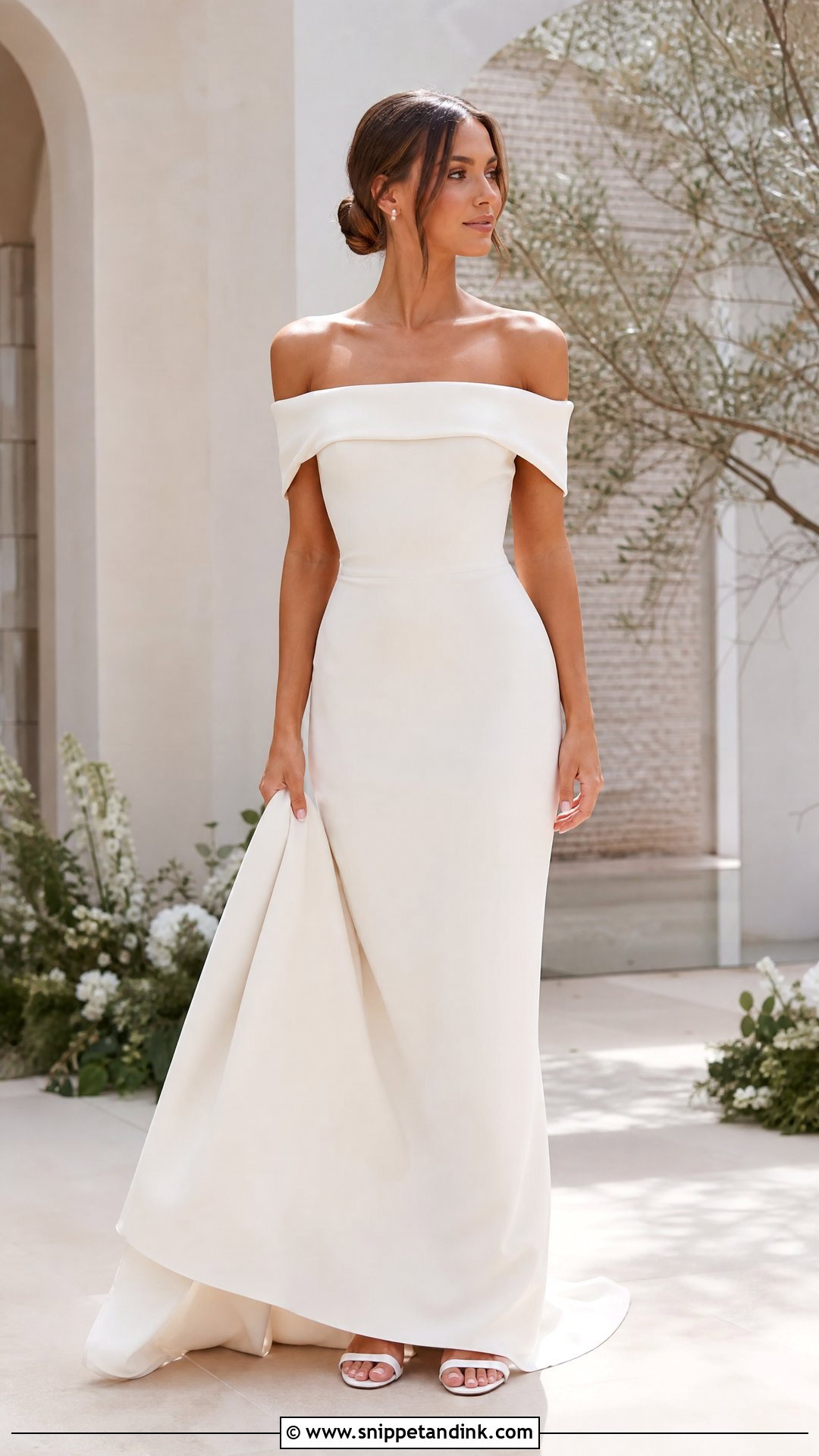
Off-shoulder necklines soften a minimal gown without adding any trim. A fitted crepe gown, satin A-line or smooth sheath keeps it understated. Raise your arms at the fitting: if the band rides up onto the shoulders, it needs grip tape or a firmer fit before the day. Pearl studs, simple heels and a low bun keep the neckline the focus. A sheer veil adds movement, but skip lace-edged veils if you want the clean finish to hold.
7. Minimalist High Neck Wedding Dress
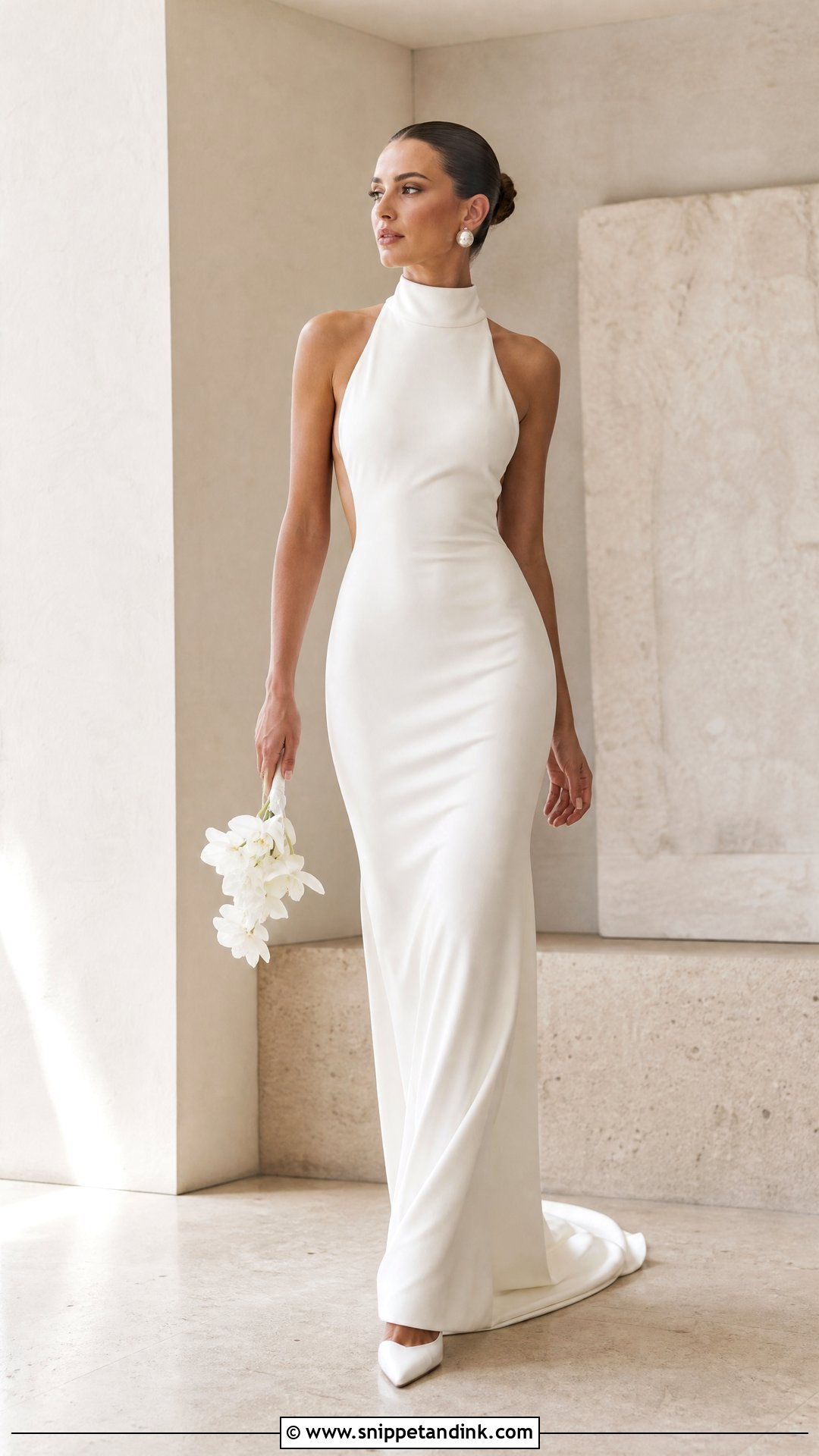
High necks look quietly dramatic, and they suit brides who want coverage without anything that reads traditional. A slim column or a soft A-line works best, in a smooth fabric with little texture. Slicked-back hair, statement studs and pointed heels finish it. An open back gives contrast while the front stays clean. Fit the collar with a finger’s width of room, because a collar that’s snug standing up feels tight the moment you look down to sign the register.
8. Minimalist Halter Wedding Dress
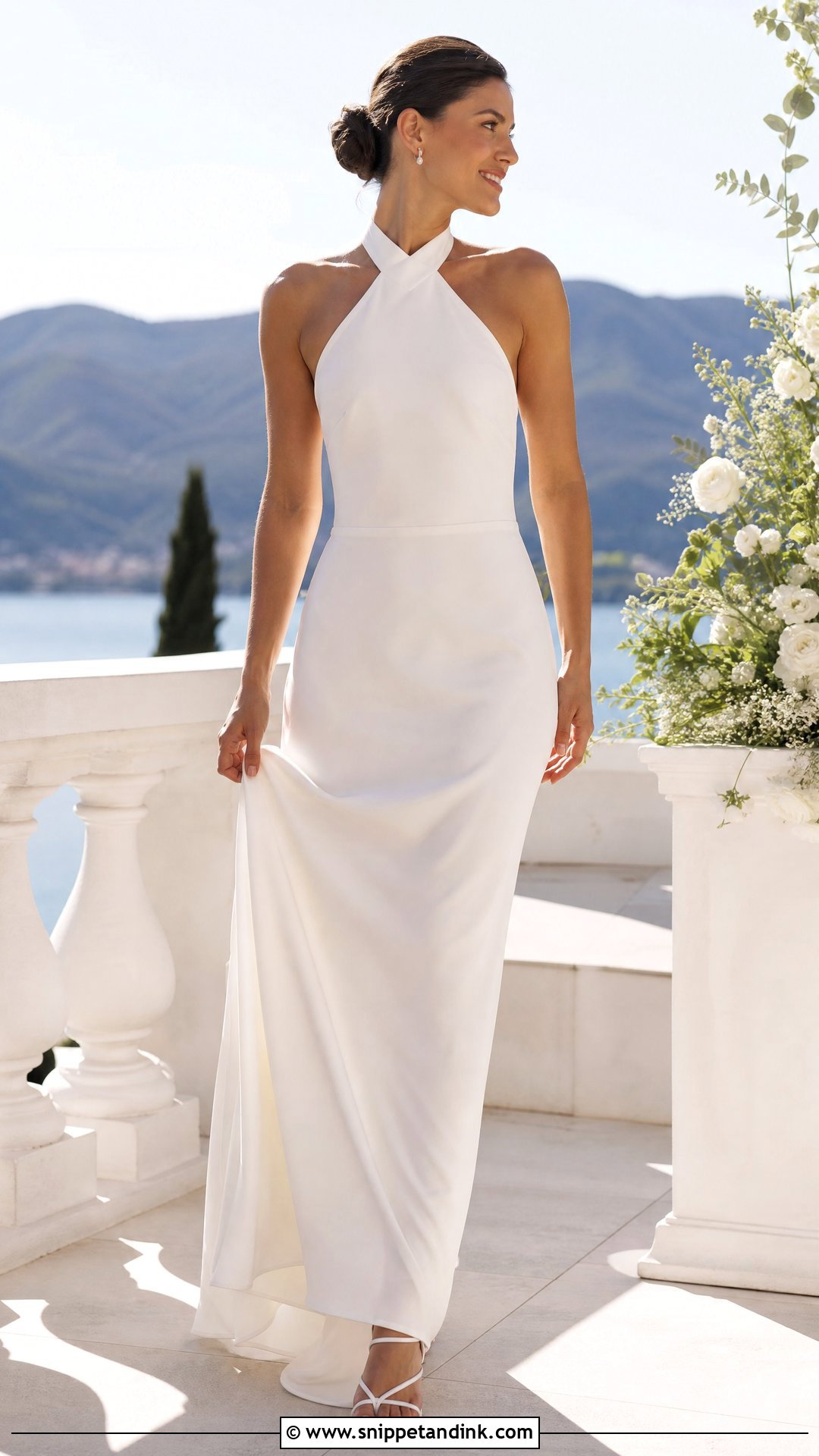
A halter wedding dress draws the eye up to the shoulders, which makes it a strong warm-weather option. A simple halter bodice with a fitted waist and flowing skirt is soft; a straight gown is sharper. The weight of the dress hangs from the neck, so ask whether there’s support built into the bodice, or a heavy skirt will pull on your neck by evening. Minimal earrings, strappy heels and a smooth updo keep the neckline clear, with a light veil or hair comb for a bridal note.
9. Minimalist A Line Wedding Dress
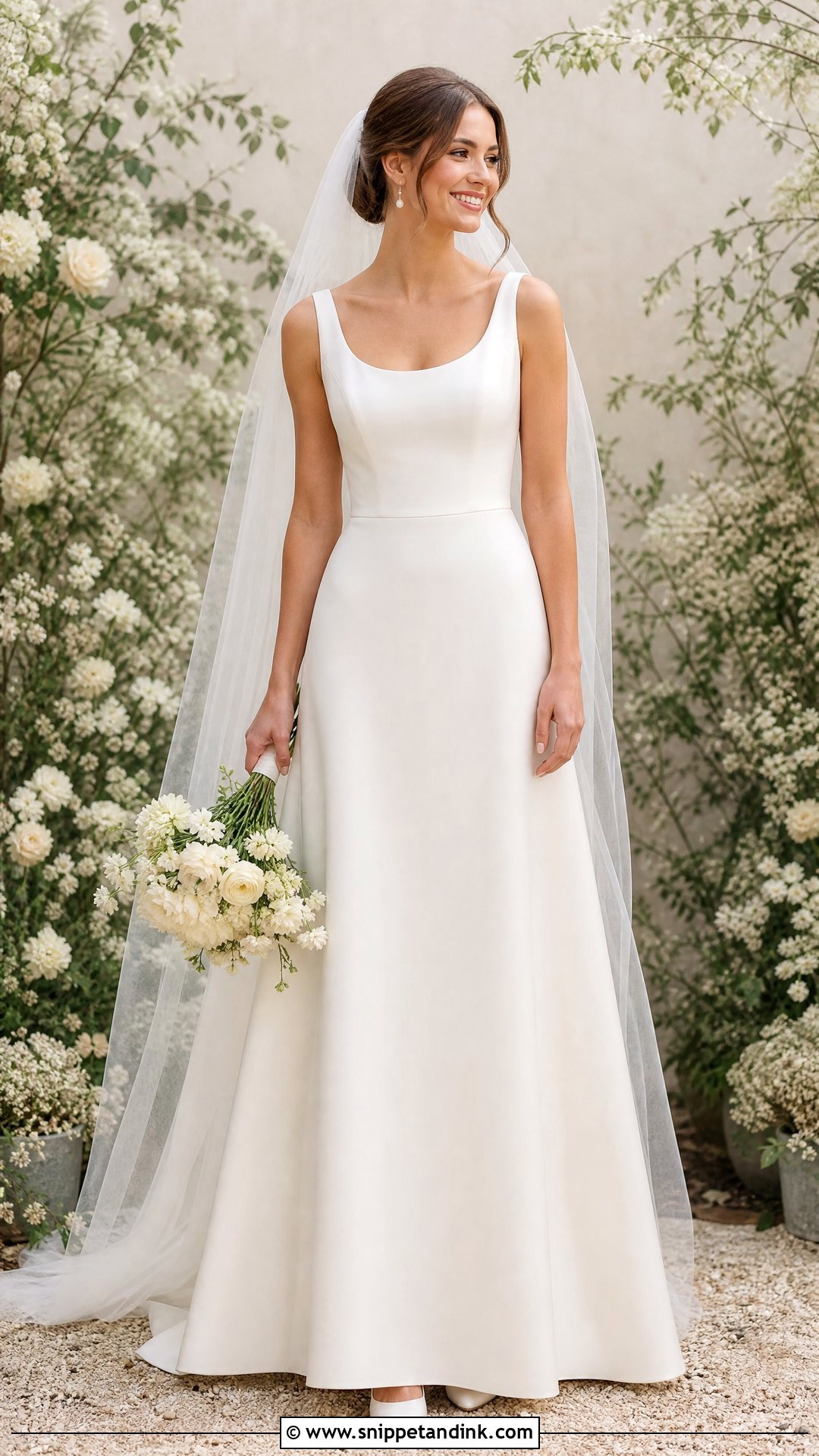
If you’re unsure what suits you, start with an A-line. The fitted bodice and gently flared skirt work on most body types and in almost any setting. For the minimal version, choose satin, crepe or mikado with very little decoration and a clean scoop, square or strapless neckline. The skirt shape matters: a true A-line flares from the waist, while some labeled A-line actually flare from the hip, which suits different figures. Low heels or sleek pumps, pearl earrings and a soft veil finish it, and you can walk, dance and sit without fuss.
10. Minimalist Fit And Flare Wedding Dress
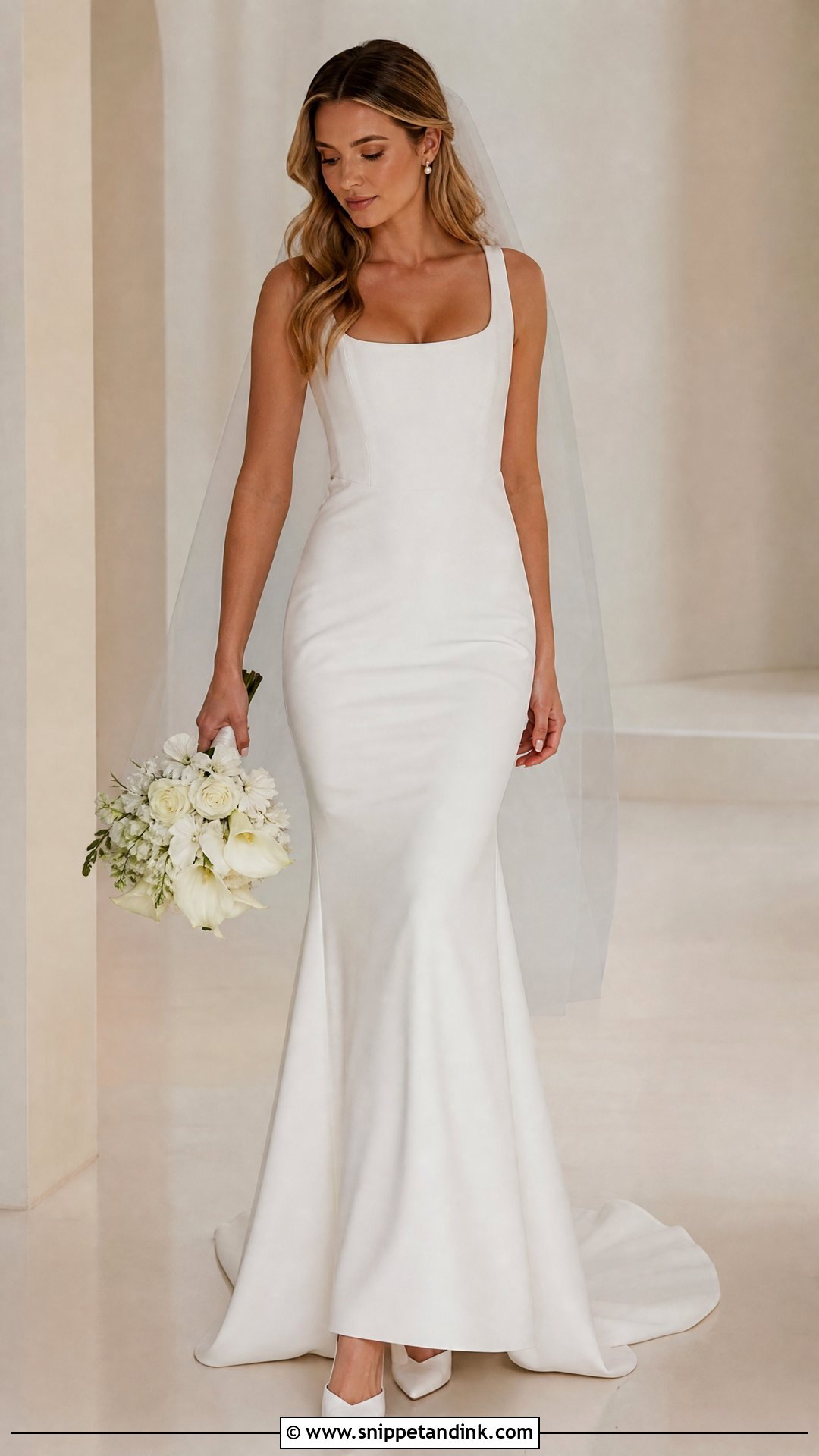
Fit and flare follows the body through the bodice and hips, then opens around the lower thigh or knee, giving movement without a mermaid’s full skirt. Where the flare starts makes all the difference; too low and it restricts your stride, too high and it loses shape. I have brides walk a few steps and climb a stair before I pin it. Smooth crepe or stretch satin keeps it comfortable. Pointed heels, a delicate veil and small earrings are enough, and covered buttons down the back or subtle panel seams add detail.
11. Minimalist Tea Length Wedding Dress
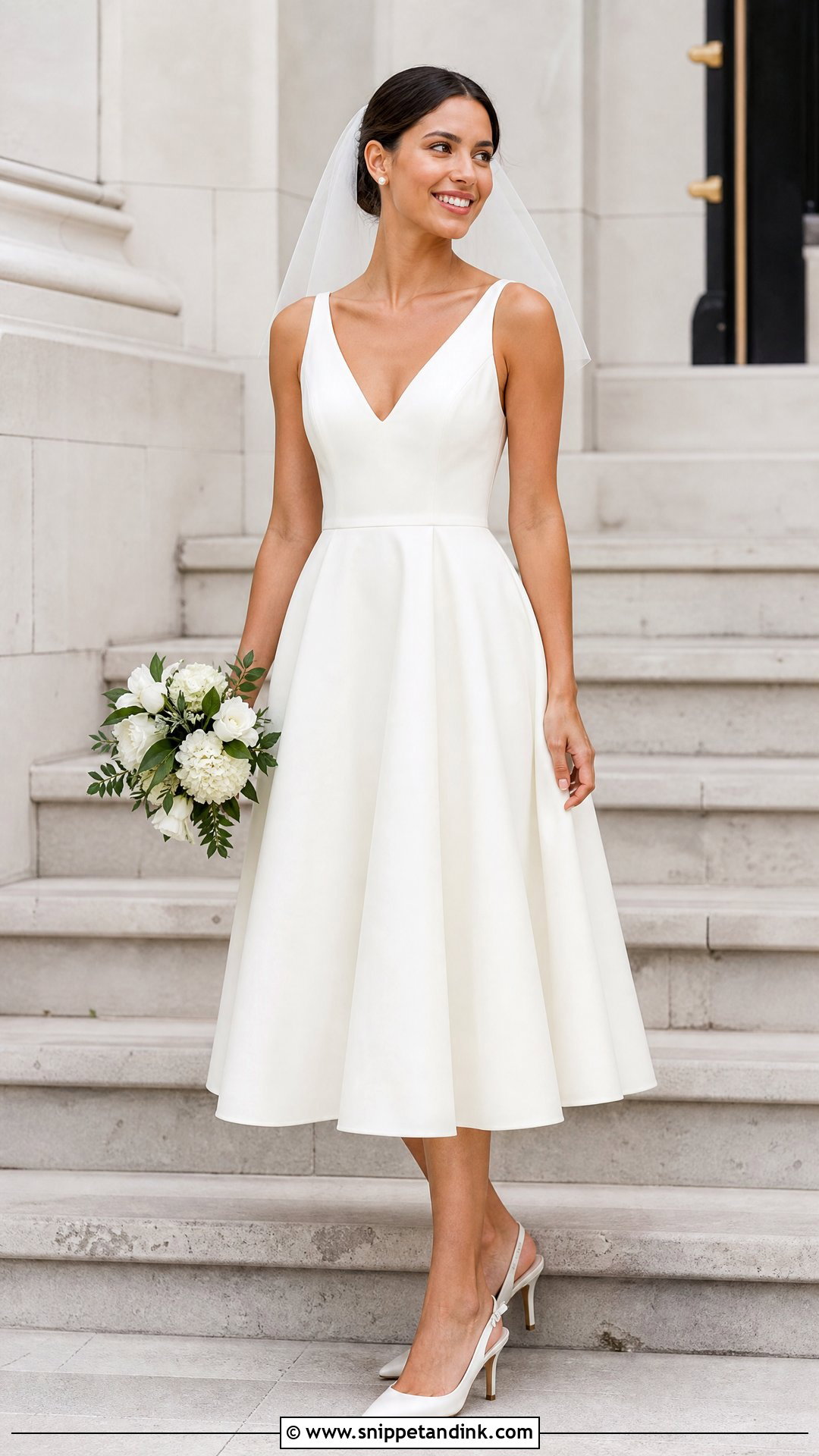
Tea length lands between knee and ankle and shows off the shoes. For a minimal version, a clean bodice, smooth fabric and a softly structured skirt keep it simple. Slingback heels, pearl studs and a short veil or bow clip finish it. A light petticoat under the skirt gives it shape without bulk, and it should end a little above the hem so it never shows. Courthouses, gardens and casual receptions all suit it.
12. Minimalist Mini Wedding Dress
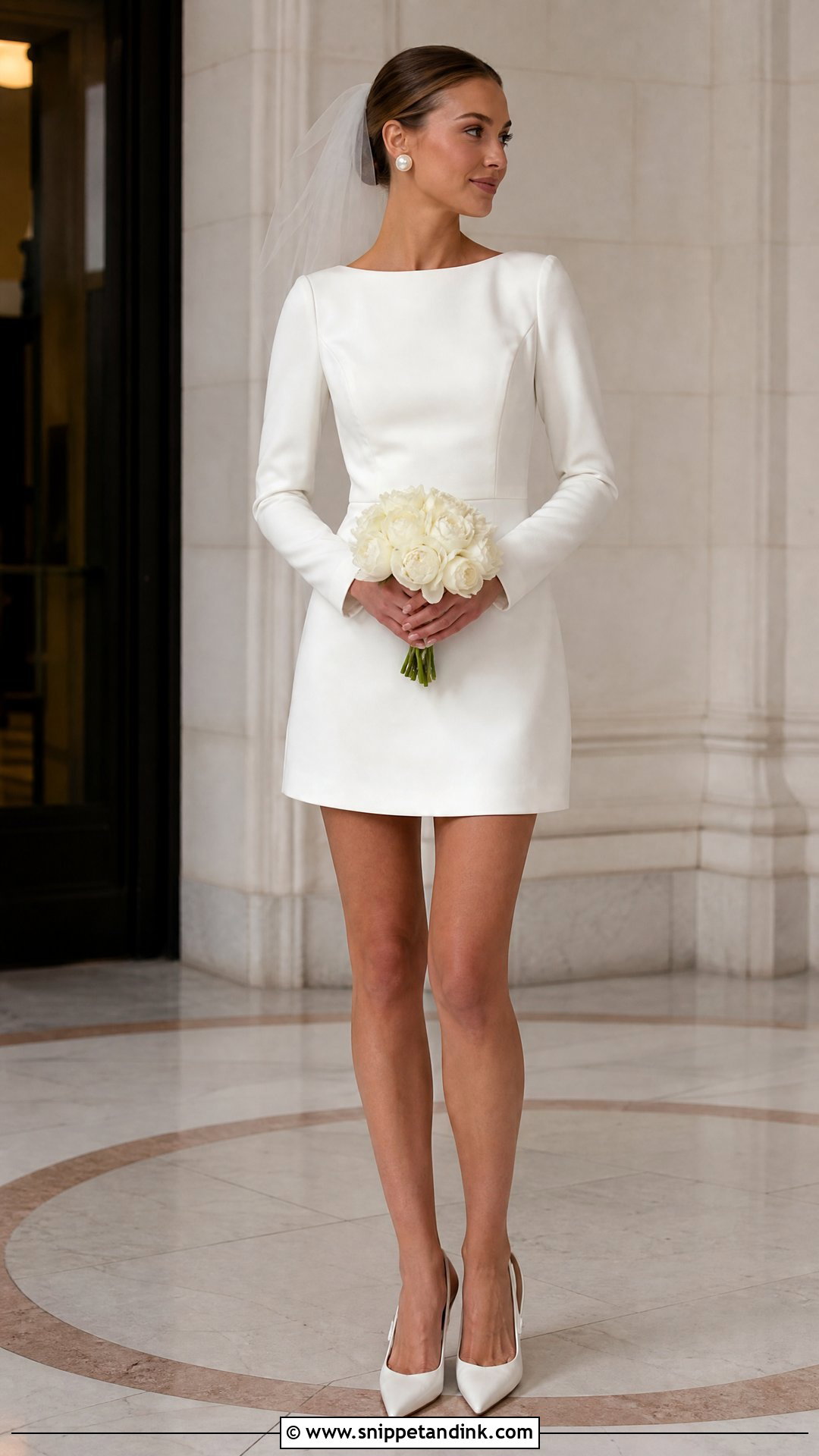
Mini wedding dresses need the sharpest cut of all, because there’s so little of them. A clean shift, a tailored A-line mini or a sleek long-sleeve mini in crepe or satin all work, as long as the fabric is substantial enough not to cling. Sit down in it at the fitting and check the hem: a mini rides up a few centimetres when seated. Pointed slingbacks, sheer tights if you want them and simple pearl or crystal earrings keep it polished, and a short veil makes it bridal. It suits civil ceremonies, rehearsal dinners or a second outfit.
13. Minimalist Wedding Dress With Bow
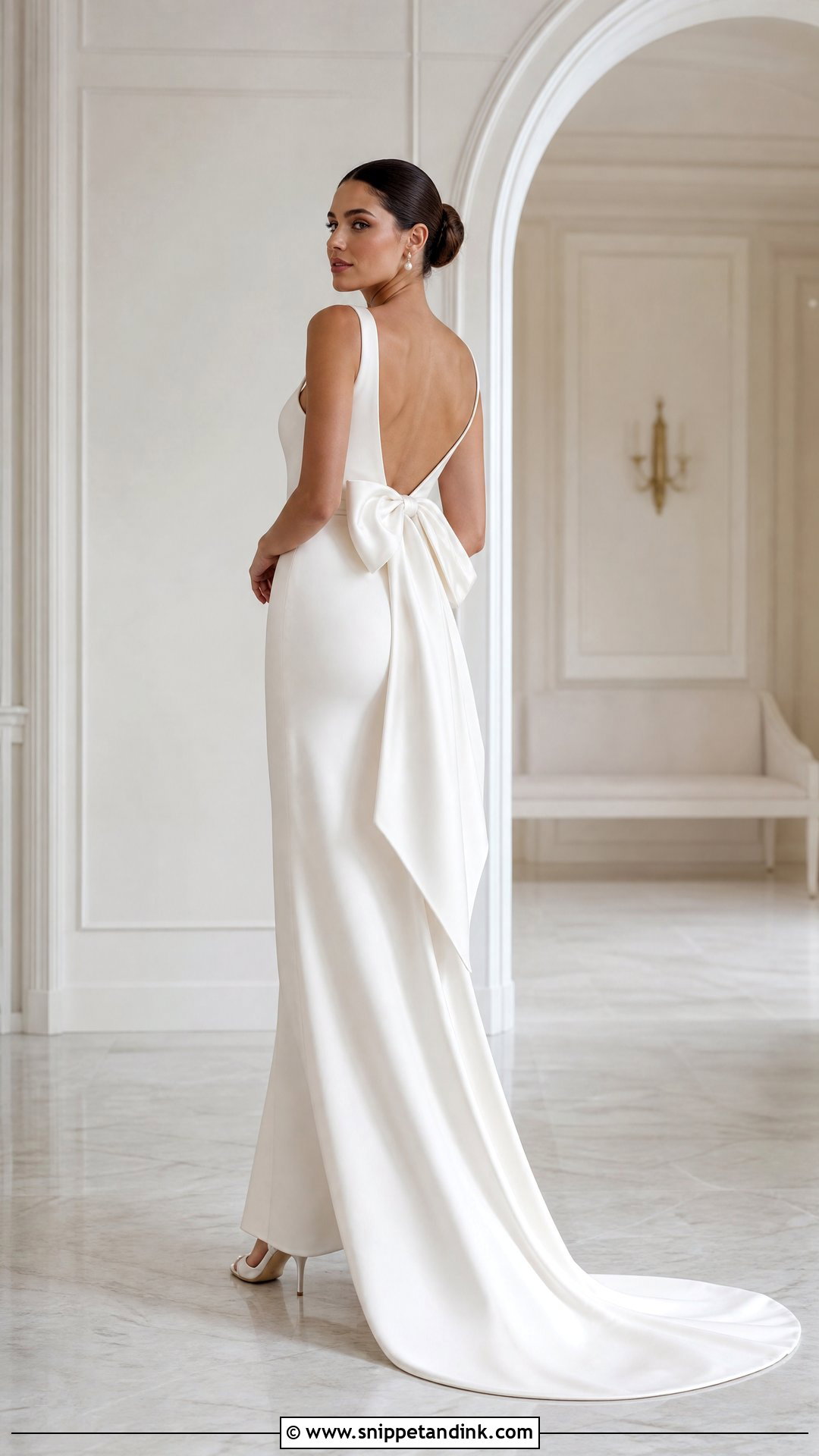
One bow, in the same fabric as the dress, keeps things minimal. Put it at the back, the shoulder or the waist, and let it be the single statement. A satin column with a back bow looks grown-up; a simple mini with a small bow is playful. Ask that a large bow be interfaced inside so it holds its loops instead of drooping. Sleek heels, pearl earrings and a smooth hairstyle are all it needs, and very little else.
14. Minimalist Backless Wedding Dress
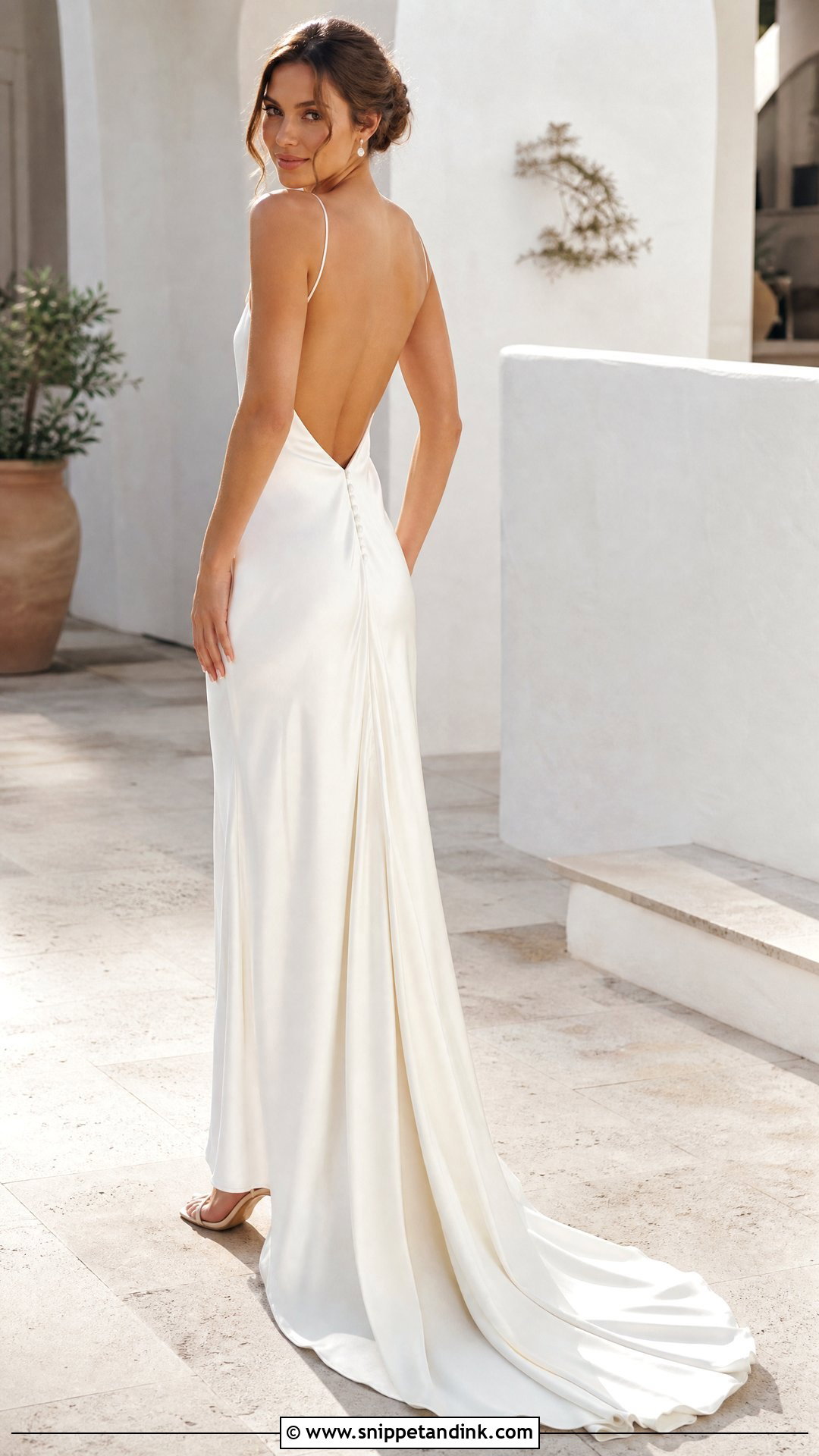
From the front, a backless gown can look entirely classic; the open back is what people remember. A satin slip, crepe column or halter cut gives the cleanest result. The engineering is in the sides: the bodice needs firm side seams and often a hidden strap or clear elastic at the lower back so the fabric doesn’t gape when you lean. Small earrings, a fine bracelet and heels matched to the gown tone keep it quiet, and hair up or swept to one side shows the back. Warm weather and modern venues suit it.
15. Minimalist Wedding Dress With Buttons
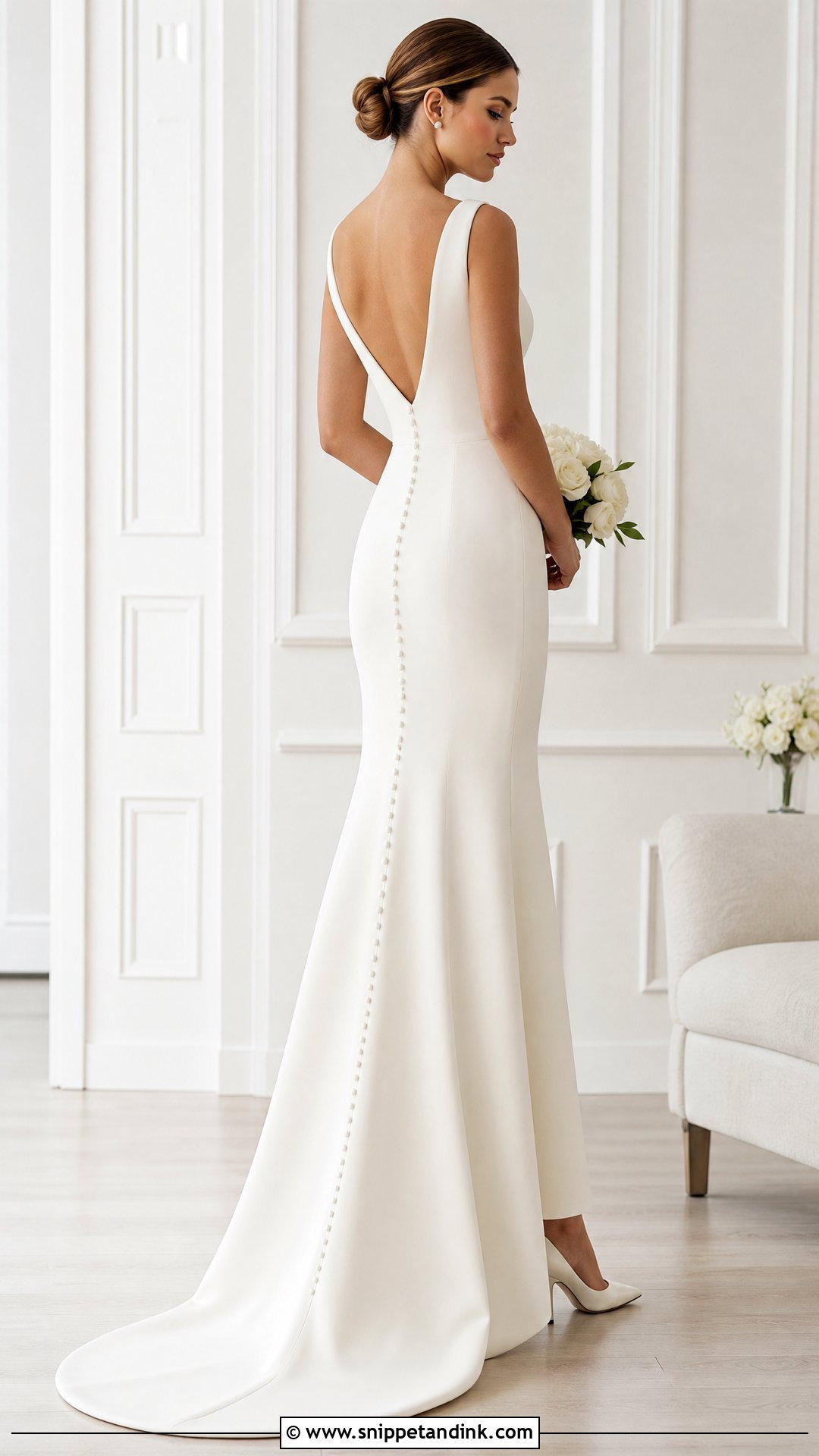
Buttons are the quietest detail on this list and one of my favorites. Covered buttons down the back add texture without decoration, on crepe, satin or mikado, in column, A-line or fit-and-flare shapes. Ask whether they actually fasten or hide a zip; real loops take a while to close, so whoever is dressing you needs a crochet hook and a few spare minutes. Classic pumps, pearl studs and a veil sheer enough to show the back finish it, with a low bun or soft updo.
16. Minimalist Mikado Wedding Dress
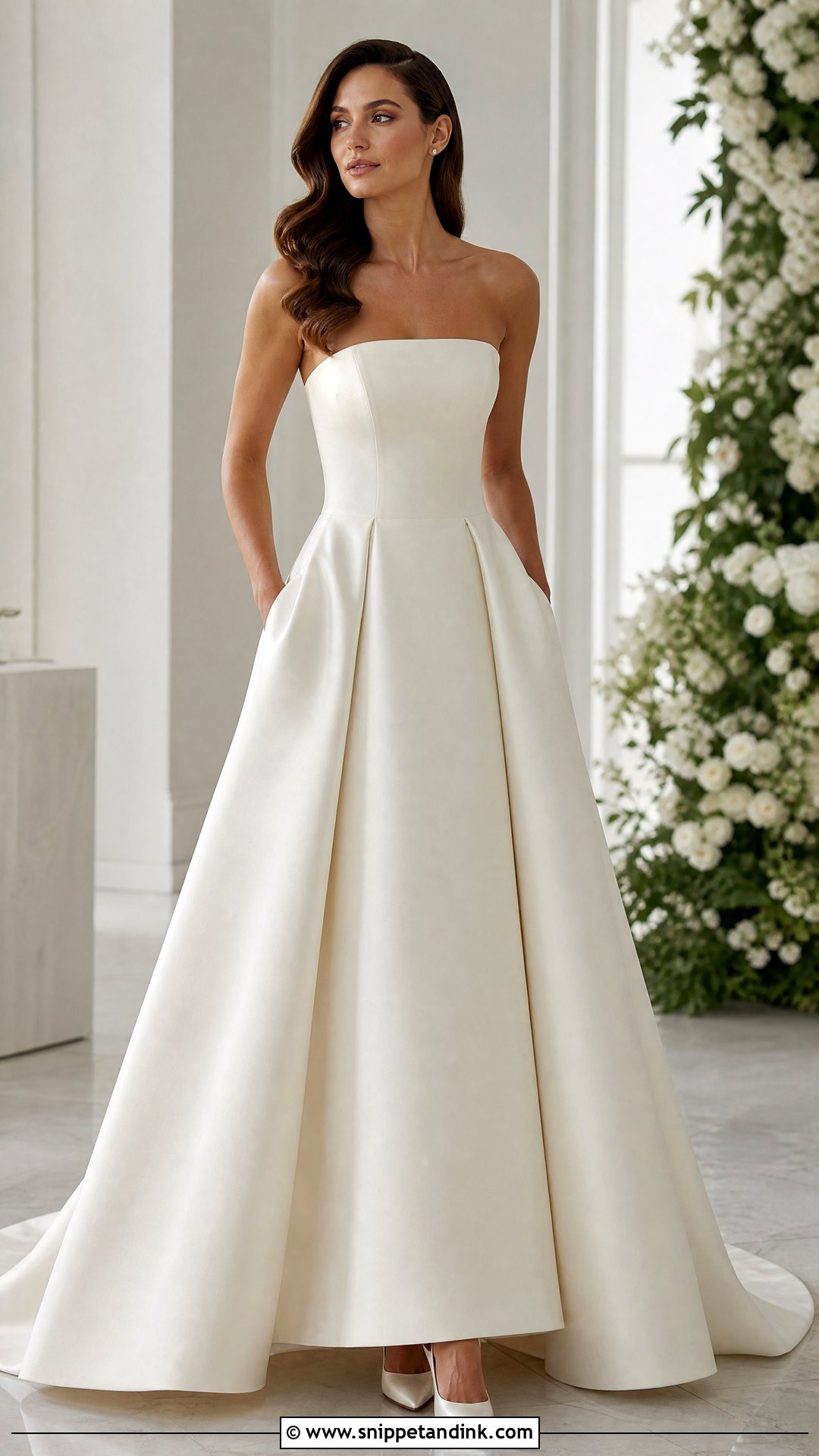
Mikado is a heavy, crisp silk blend with a faint sheen, and it holds shape on its own, so a mikado gown barely needs decoration. A simple A-line, strapless bodice or square neck in mikado looks substantial. The trade-off is warmth and weight; I’d hesitate on mikado for a summer ceremony outdoors. Satin heels, small studs and a clean veil suit it, and a structured bun or polished waves match its crispness. Formal weddings and modern venues are its natural setting.
17. Minimalist Silk Wedding Dress
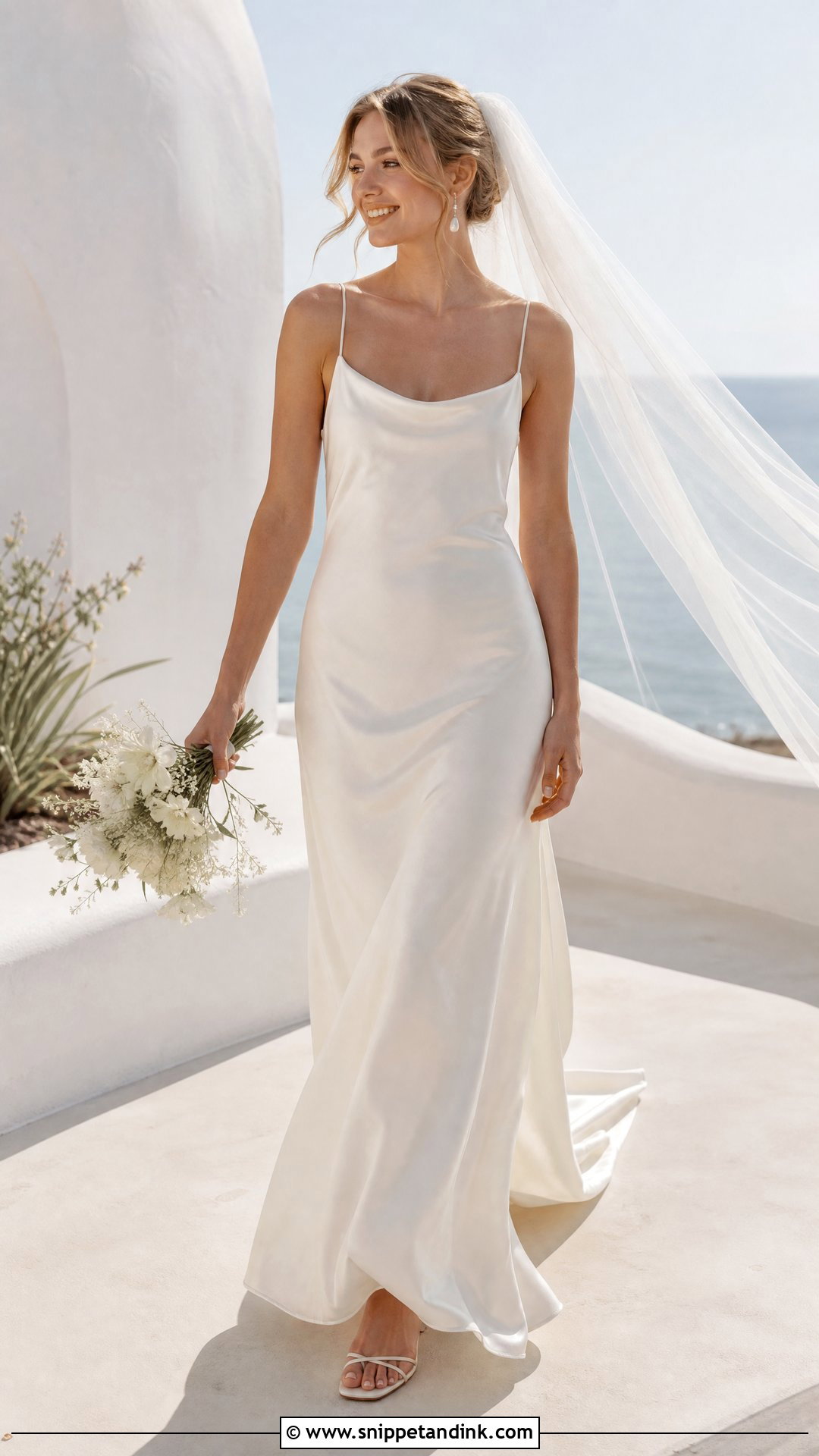
Silk moves more than almost any other bridal fabric, which is why even a basic slip, column or relaxed A-line looks special in it. It also shows every line beneath, so the right undergarments are as important as the tailoring. Delicate sandals, pearl earrings and a lightweight veil keep it soft. Silk is cool to wear and packs reasonably well, which suits destination weddings, though it creases, so plan for a steamer on arrival. It reads refined without weight.
18. Minimalist Wedding Dress With Cape
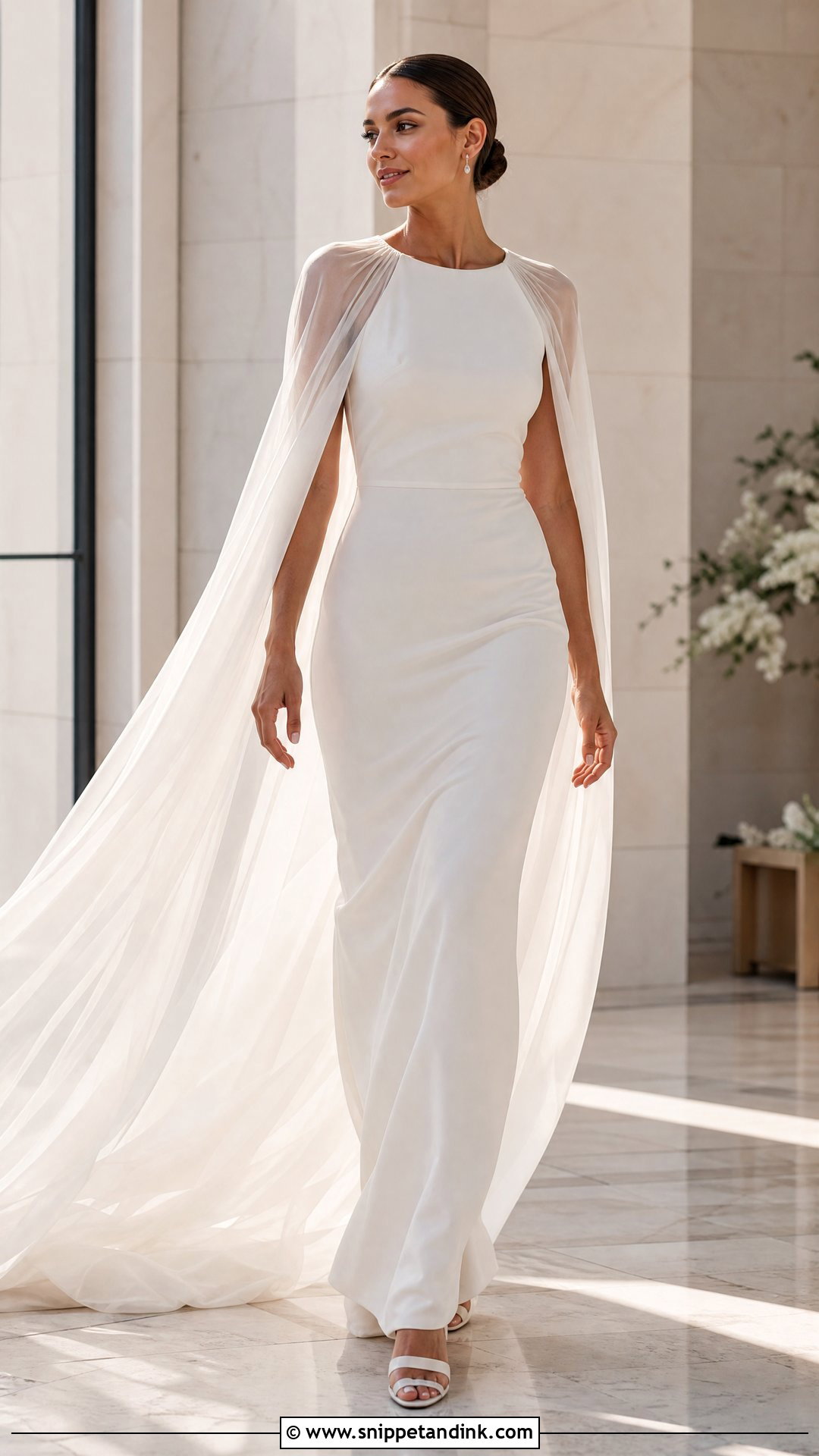
A cape adds drama without a single bead. Start with a clean column, sheath or slip, then add a sheer or satin cape falling from the shoulders. Check how it fastens: capes attached at the shoulder seam stay put, while ones held with clips or ties slide back and pull at the neckline. Minimal heels, small earrings and sleek hair let it flow clearly. It works as a veil alternative and catches the air nicely when you walk.
19. Minimalist Wedding Dress With Slit
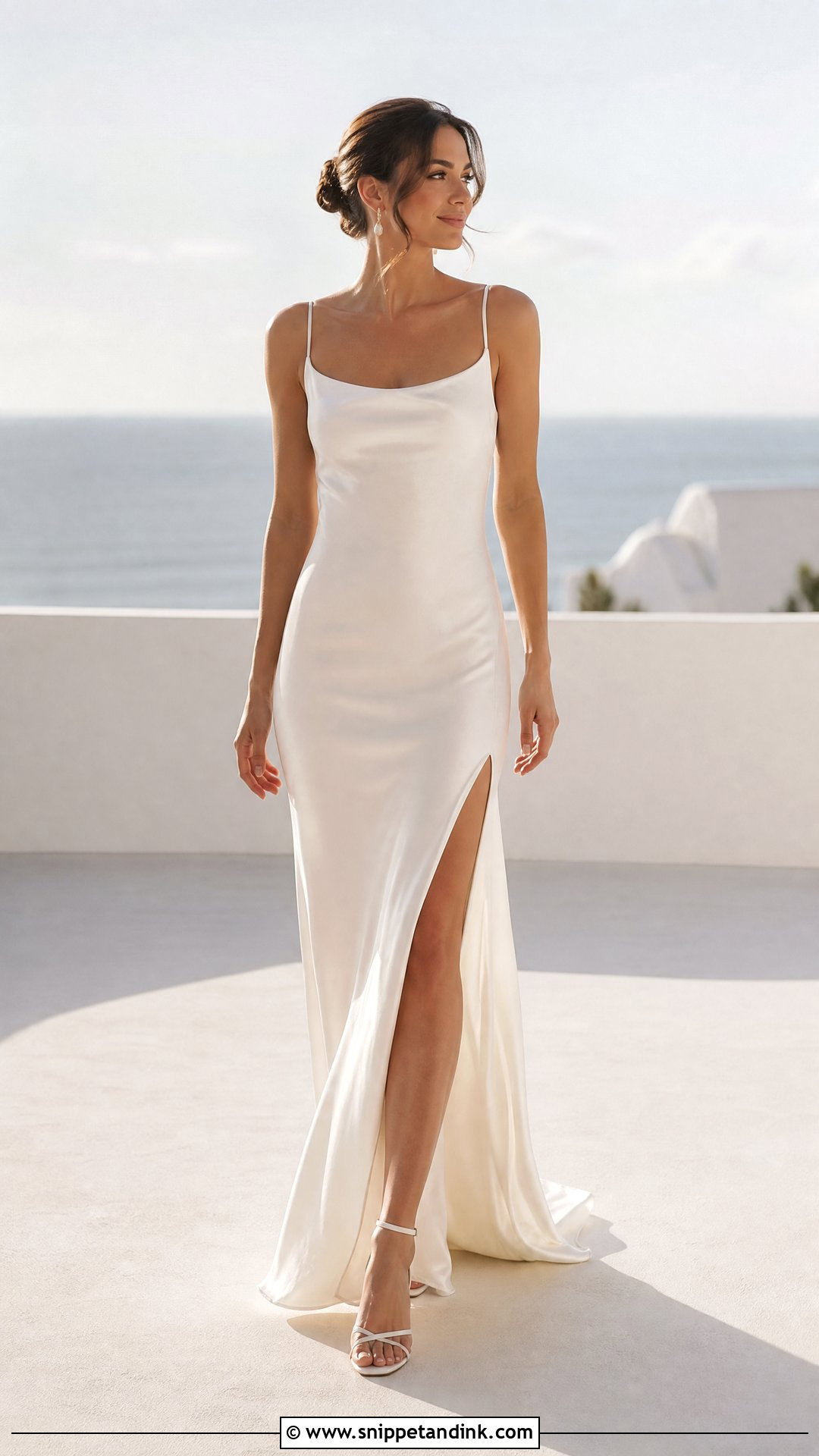
A side slit makes a column dress easier to walk in and adds an edge. Choose satin or crepe with one clean side slit and keep it balanced rather than dramatic. Where it starts matters: walk and sit in it at the fitting, because a slit that looks modest standing can open much higher when you’re seated. Strappy heels, small earrings and a neat hairstyle finish it. Keep the neckline simple, whether cowl, square or strapless.
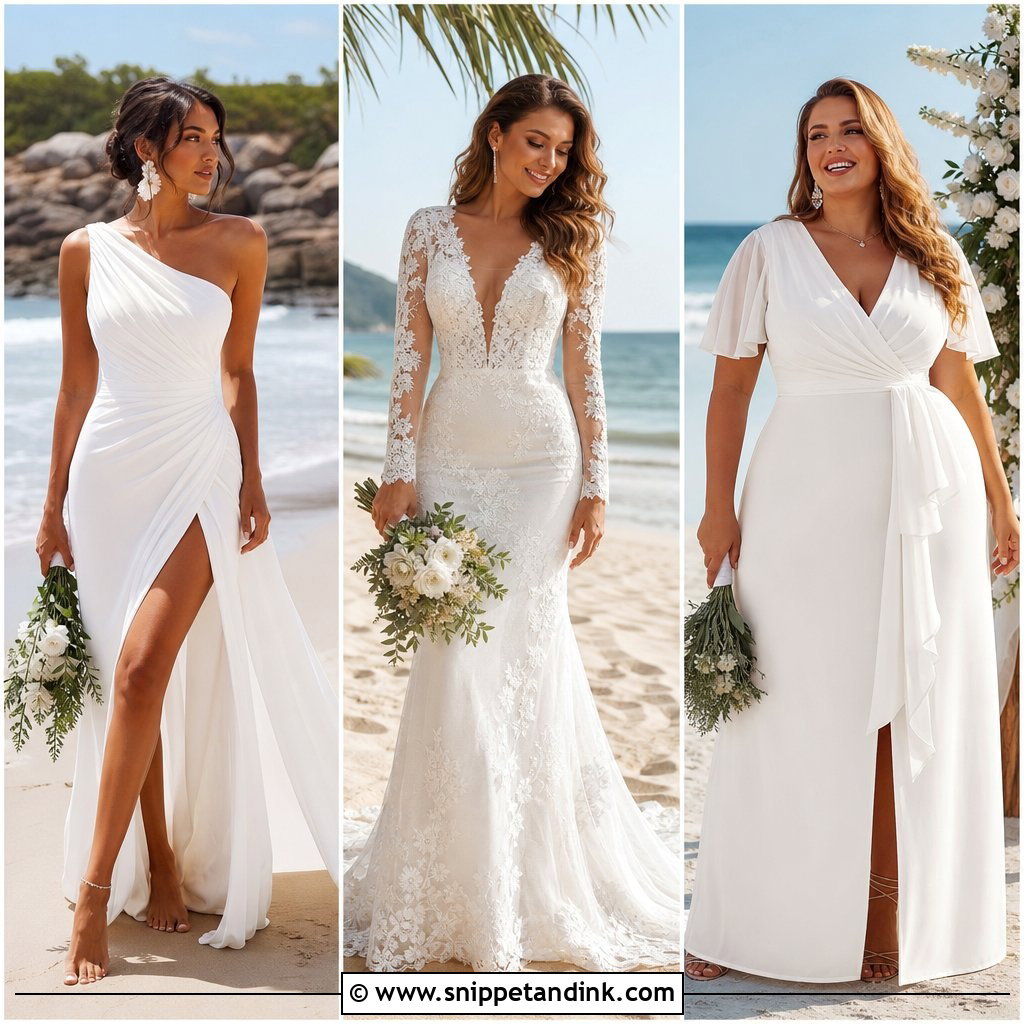
20. Minimalist Cowl Neck Wedding Dress
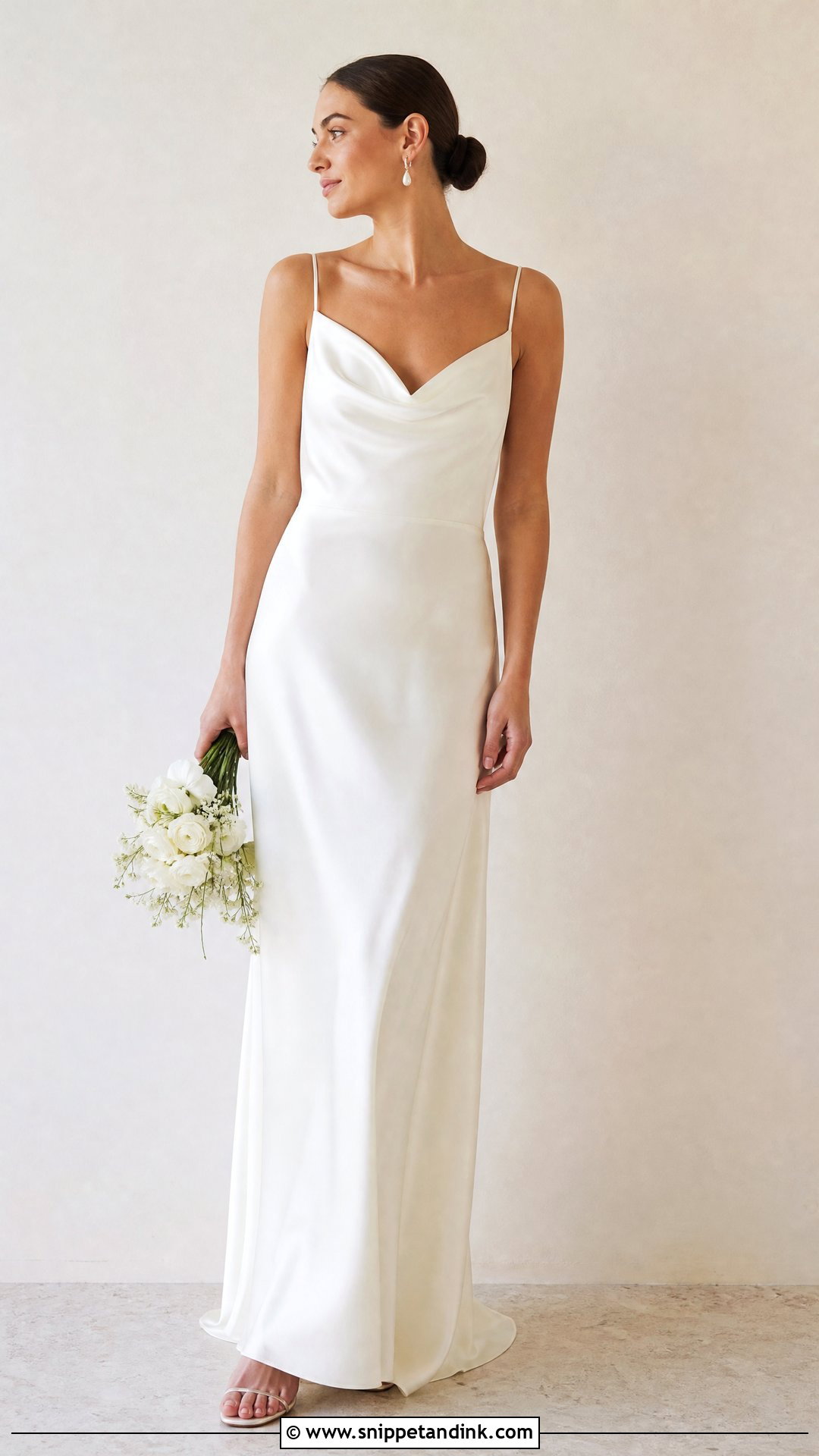
Cowl necks drape in soft folds across the bust and need a fabric that falls well, such as silk, satin or charmeuse. A cowl neck slip dress carries a strong 1990s feeling. The drape is cut on the bias, so the folds can shift when you lean forward; a tiny weight or tack stitch inside keeps them in place. Thin-strap heels, small pearl earrings and a smooth low bun keep it refined, and a light veil is optional. It’s relaxed and quietly glamorous.
21. Minimalist One Shoulder Wedding Dress
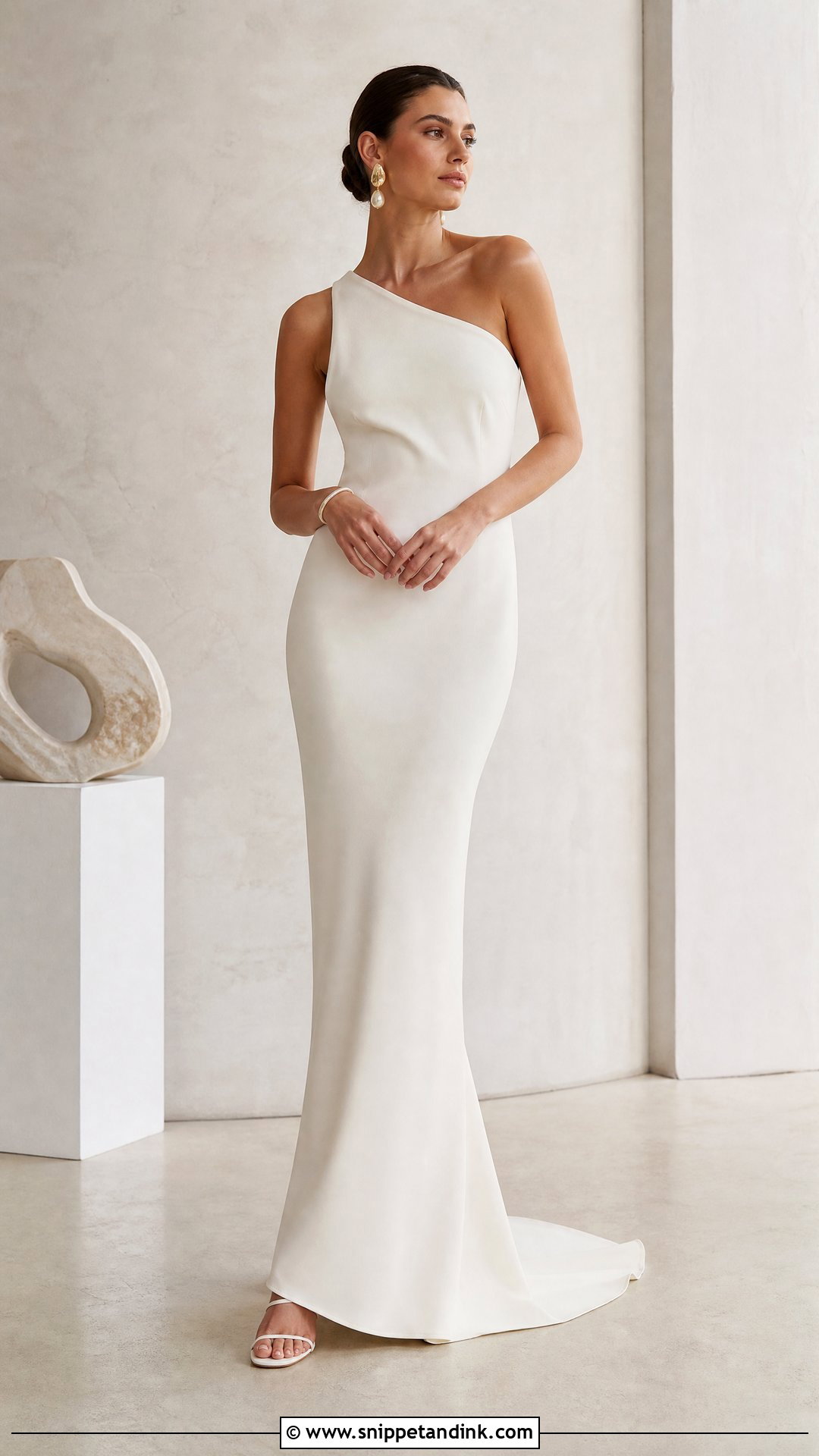
One-shoulder necklines add interest without lace or beads. A smooth crepe column, satin sheath or structured A-line gives the cleanest line. Since the neckline is the detail, keep jewelry spare: one statement earring on the bare side, a slim bracelet and sleek heels. Pull the hair back so the shoulder line stays crisp. Check that the single strap doesn’t slide when you lift the opposite arm, and the dress will hold from ceremony to reception.
22. Minimalist Wedding Dress With Detachable Skirt
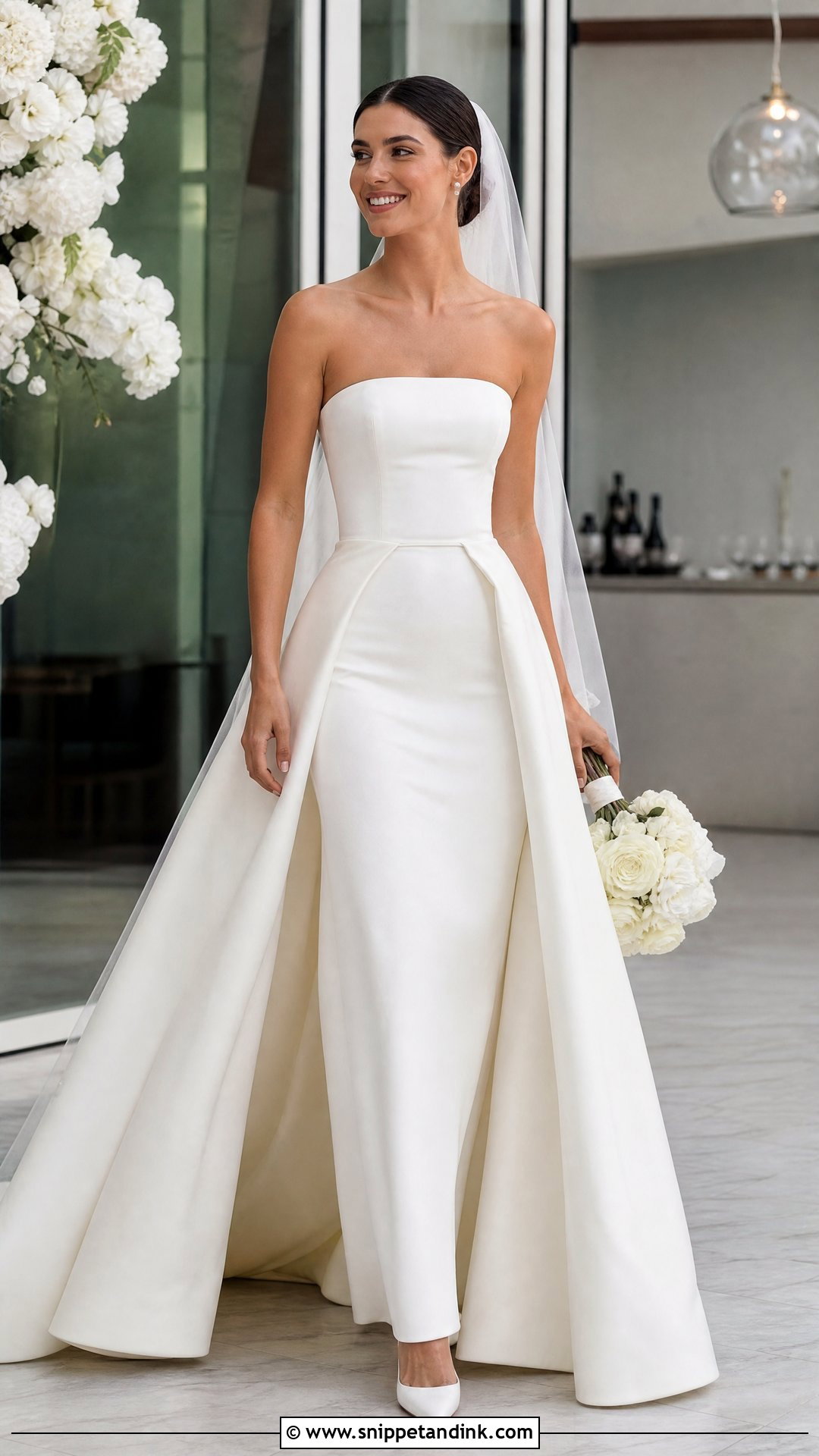
Two looks in one: a simple fitted gown, slip or mini underneath, and a clean overskirt for the ceremony that comes off for the party. For a minimal version, match the fabrics exactly and avoid lace or embellishment on the skirt. Ask how it attaches, and practise taking it off with whoever will help you, because hooks hidden at the waist are slow to undo in a hurry. Classic heels, pearl studs and a smooth veil finish it. You get ceremony drama without a full skirt all day.
23. Minimalist Wedding Suit Dress
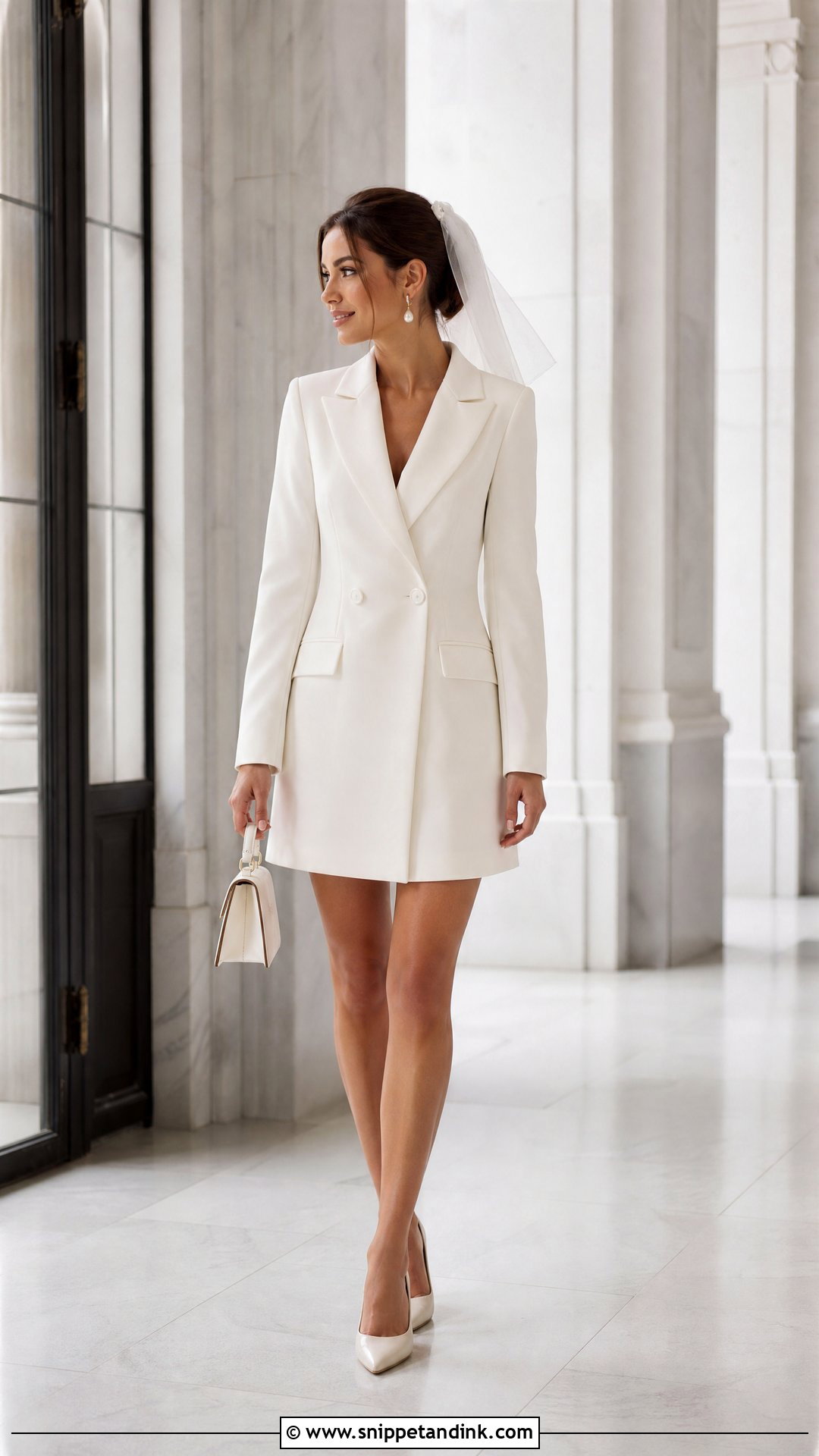
A bridal suit dress is the sharp alternative to a gown: a tailored blazer dress in ivory, cream or soft white. The shoulders must fit perfectly, since that’s the hardest part of a jacket to alter, while the waist can be taken in easily. Clean lapels, a defined waist and a hem that reads bridal rather than office keep it on track. Pearl earrings, a small structured bag and a short veil or hair bow make it a wedding outfit. Courthouses, city weddings and second looks suit it.
24. Minimalist Wedding Dress With Train
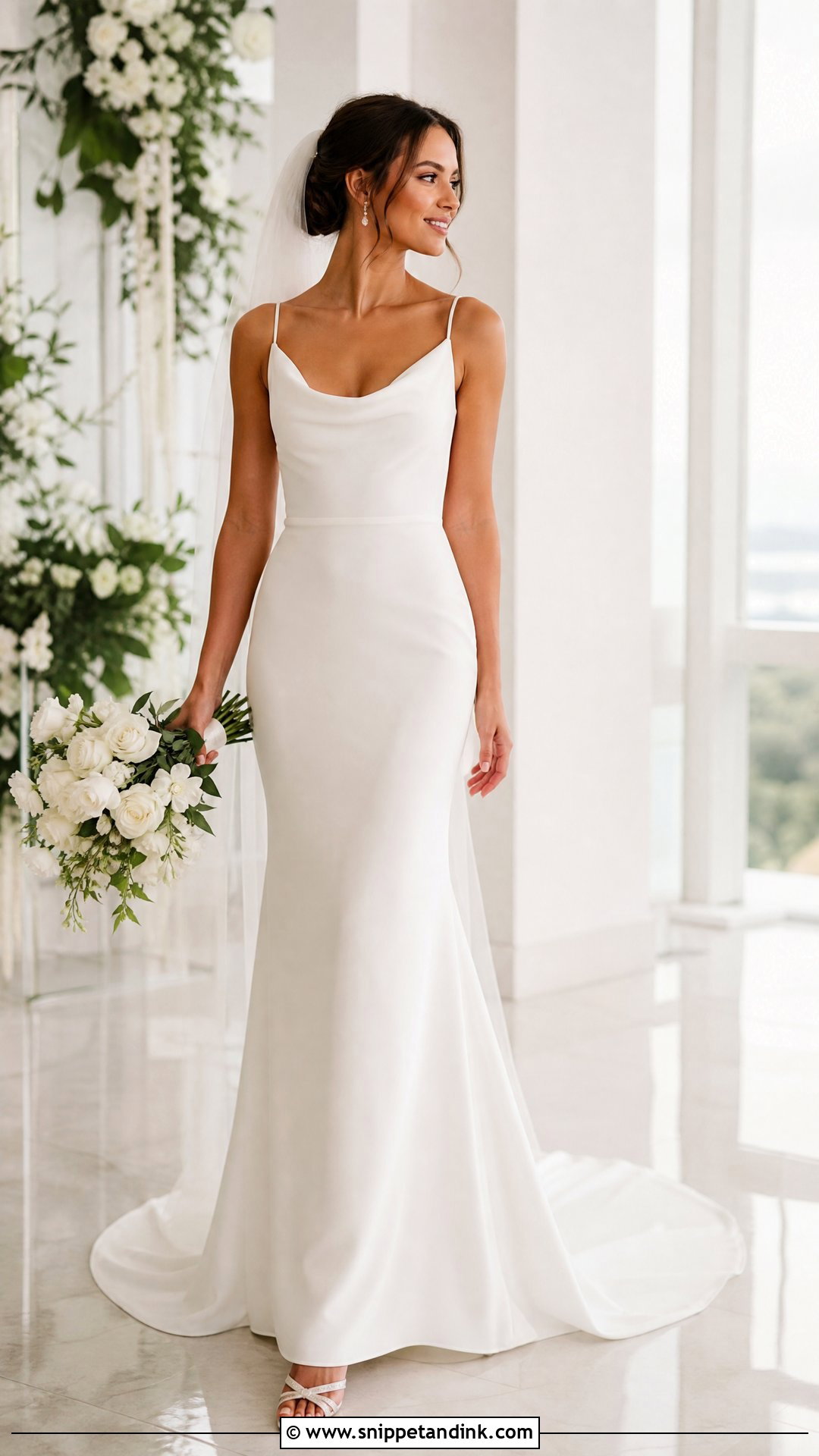
A train doesn’t break the minimal rule if the silhouette and fabric stay clean. A crepe column with a sweep train or a satin A-line with a chapel train gives presence without fuss. Plan the bustle at your fitting; a plain train usually takes a few hidden hooks or ribbon loops, and someone needs a lesson in fastening them. Classic heels, delicate earrings and a veil the same length as the train or a little shorter finish it. The simple front keeps it modern while the back gives the aisle moment.




25. Minimalist Courthouse Wedding Dress
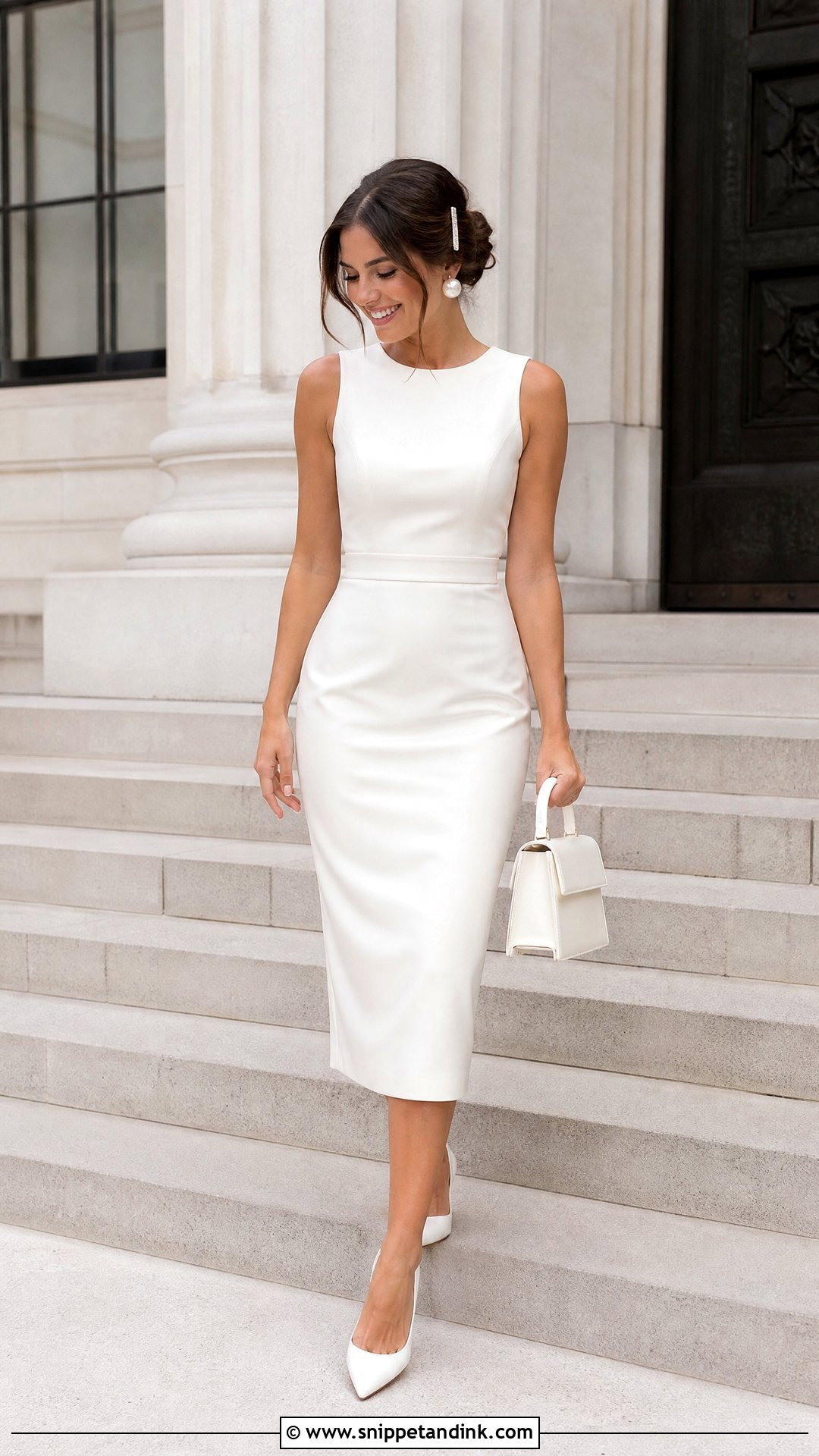
For a courthouse, a sleek midi, tailored mini, satin slip or simple blazer dress in white or ivory keeps things clean. Pointed heels, a structured handbag and small pearl or gold earrings finish it, with a short veil, headband or hair clip for a bridal note. Courthouse ceremonies are short and close-up, so fit is what people notice. The dress should move easily and survive a bench and a flight of steps without creasing badly.
Reading the Seams Before You Say Yes
With a simple gown you are paying for construction rather than decoration, so look at the inside. Turn the dress out and check a few things that tell you how it will wear.
Signs of a well-made plain gown
- Seam allowances wide enough to let out. Narrow, overlocked edges leave no room if you need more space.
- A full lining in a breathable fabric, not a shiny polyester one that holds heat.
- A hem that hangs evenly with no ripple, which shows the fabric was cut and finished with care.
- Fabric that recovers when you scrunch a corner in your hand for a few seconds. Deep creases that stay will stay all day.
None of this needs expert knowledge. If a consultant won’t let you look inside the dress, ask why. A good salon is usually glad to show off its construction, because that is where the price of a simple gown goes.
Then look at the dress in daylight by a window, not only under the salon’s warm spotlights. Plain ivory can read creamy indoors and almost grey outside, and pale satin shows water marks and makeup smudges sooner than textured fabrics. Knowing that ahead of time tells you how careful you’ll need to be during getting-ready photos.
Less Detail Means the Fit Has to Be Perfect
Minimal bridal isn’t about caring less; it’s about choosing each piece on purpose. A clean neckline, good fabric, sharp tailoring and a few chosen accessories make a look that ages well in photos. Satin slip, crepe column, mikado gown, tailored mini or bridal suit, the one to wear is the one that leaves you calm and like yourself. Adjust it to your venue, the season and how comfortable you need to be.
You'll Like These Ideas:




Leave a Reply