
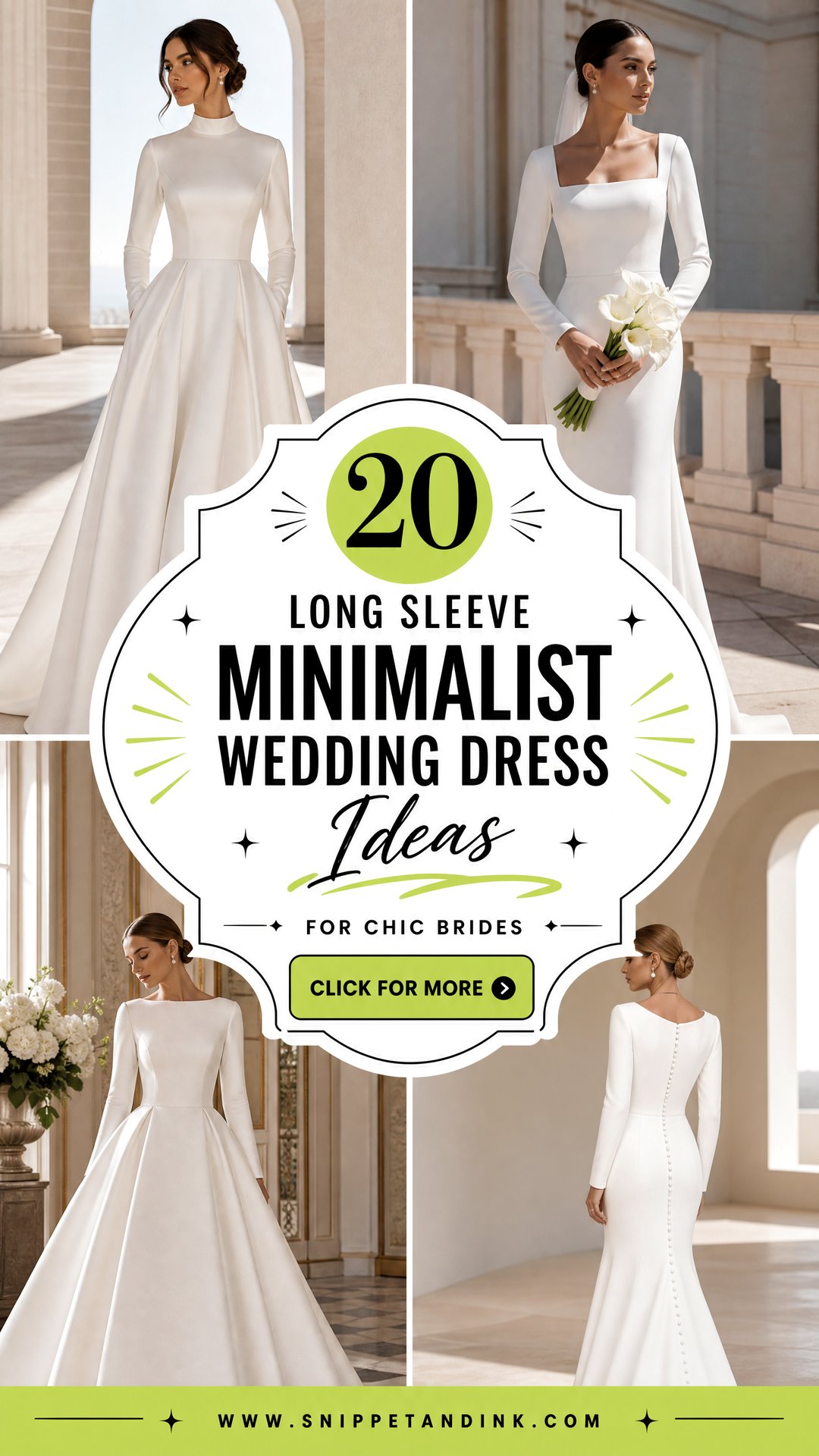
A dress with no lace and no beading still has plenty to say, as long as the cut and the cloth are good. Plain crepe and satin, charmeuse, and Mikado gowns with clean sleeves and modern necklines rely on tailoring alone, which makes them harder to get right than they look. In my fittings, minimalist gowns take more alteration time than embellished ones, because there’s no appliqué to hide a puckered seam. Think about venue, season, your proportions and how much coverage you want, then keep accessories few and deliberate. The twenty looks below run from sleek columns to soft A-lines, each with the shoes, veil, hair and flowers I’d pair.
Plain Fabric Has Nowhere to Hide
With no lace or beading, the fabric is the design. When I’m helping someone shortlist minimalist gowns, I spend more time feeling cloth than looking at shapes, because two dresses with identical cuts can look completely different once they’re on. Here’s how the main fabrics behave over a full wedding day.
Crepe
Matte, with a fine grainy surface. Good crepe is heavy enough to hang straight and springs back when you crush it in your hand. Thin crepe clings and shows every seam allowance. It creases less than satin, which makes it a forgiving choice for a long day with lots of sitting.
Satin and charmeuse
Both shine, so both show pulls and wrinkles under camera flash. Duchess satin is thick and holds structure; charmeuse is thin and fluid, and it reveals what’s underneath. Water marks on silk satin are hard to remove, so keep drinks at arm’s length.
Mikado and faille
Stiff, heavy weaves with a slight texture. They hold sculptural shapes without inner padding, which is why minimalist ball gowns use them. The trade-off is weight and sharp creasing at the lap.
Ask the shop for a fabric swatch if you can. Scrunch it, sit on it for a few minutes, and see how it recovers.
1. Boat Neck Crepe Long Sleeve Wedding Dress
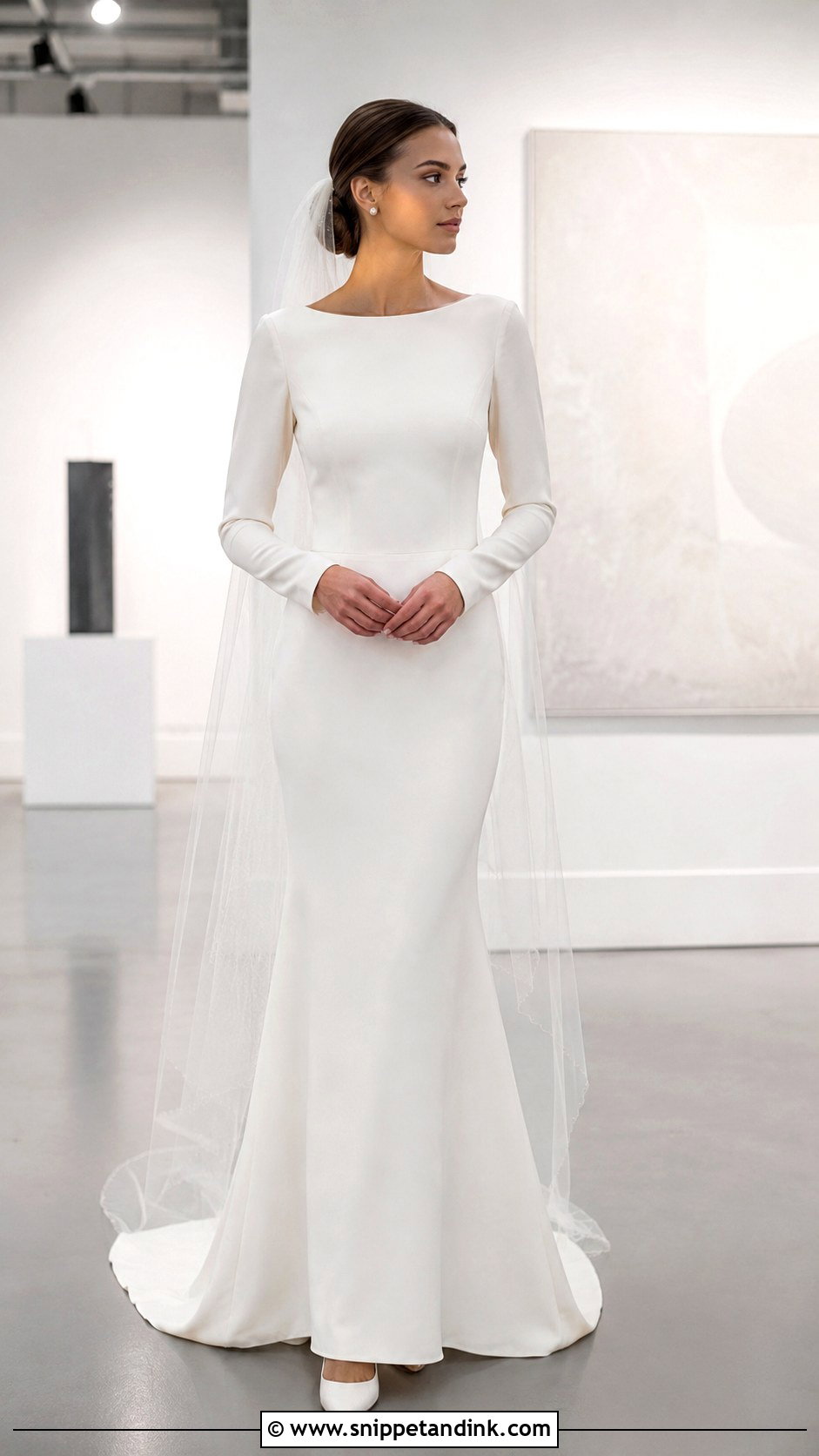
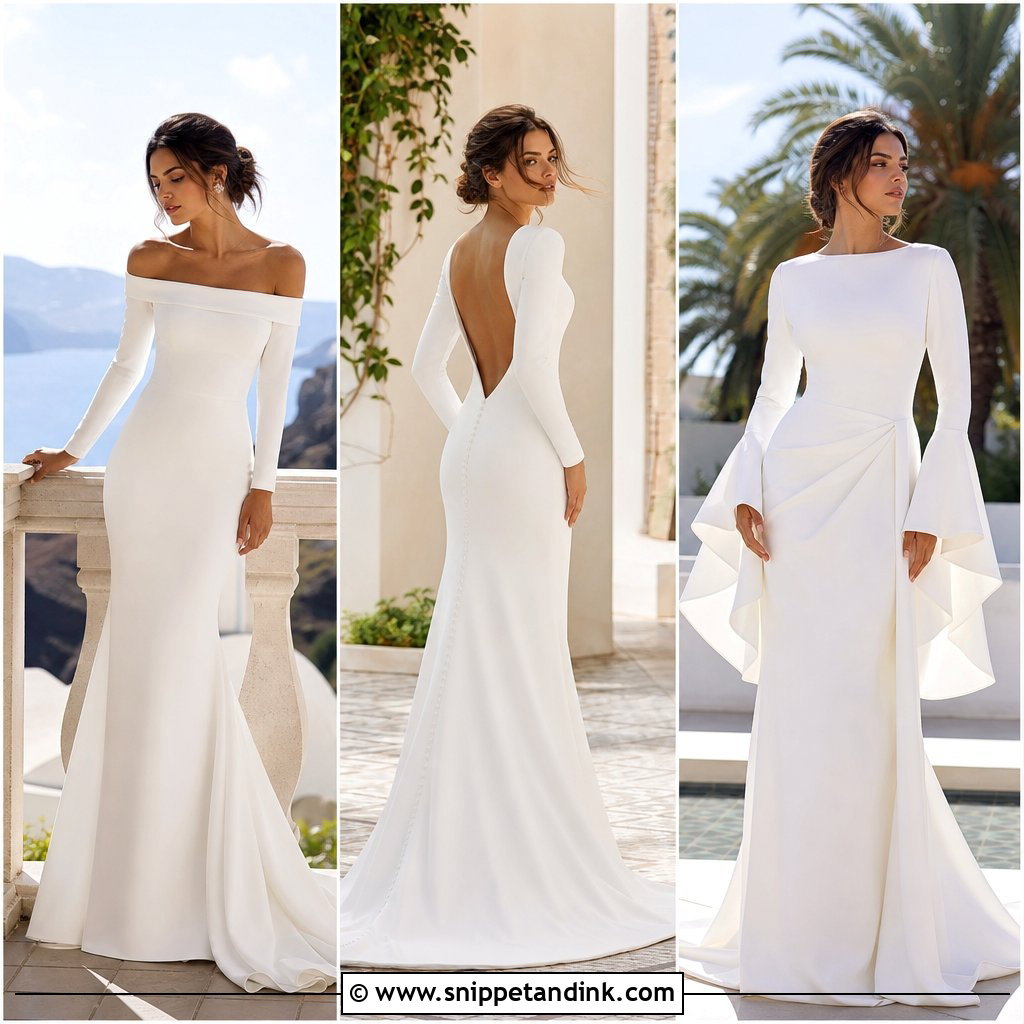
Boat necks sit on the collarbones and run almost shoulder to shoulder, so the neckline has to be cut to your exact width or it slides toward one arm. In crepe with a fitted bodice, slim sleeves and a softly flared skirt, it needs no decoration. Skip the necklace and wear pearl or diamond studs. Pointed ivory pumps add height without breaking the line. A low chignon, fresh natural makeup and a plain fingertip veil set beneath the hair finish it, with a compact bunch of callas or tulips. Galleries, hotels and bright indoor rooms suit this kind of quiet dress.
2. High Neck Satin A-Line Long Sleeve Wedding Dress
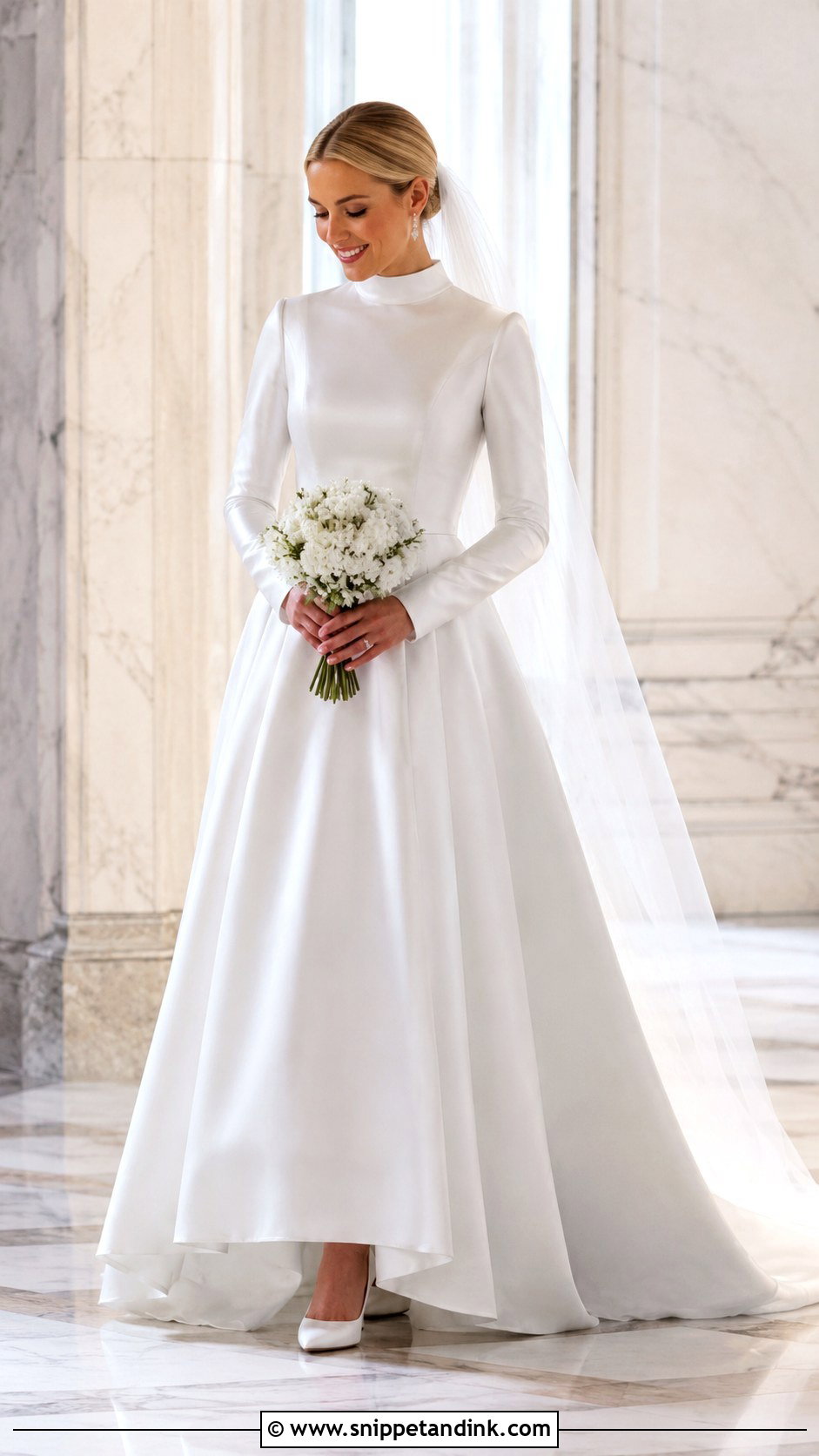
Satin under a high neck is a demanding pairing: the fabric reflects light, so any pull across the bust or wrinkle at the waist shows from across the room. Look for a close bodice, narrow sleeves and an A-line skirt with enough body to hold its shape, with a natural waist seam for definition. Swept-back hair and fine drop earrings are all the styling the neckline needs. Closed satin pumps suit a formal room; pointed flats are fine if comfort wins. A light cathedral veil moves behind the gown without adding detail. Finish with a small white bouquet and a soft rose lip.
3. Square Neck Column Long Sleeve Wedding Dress
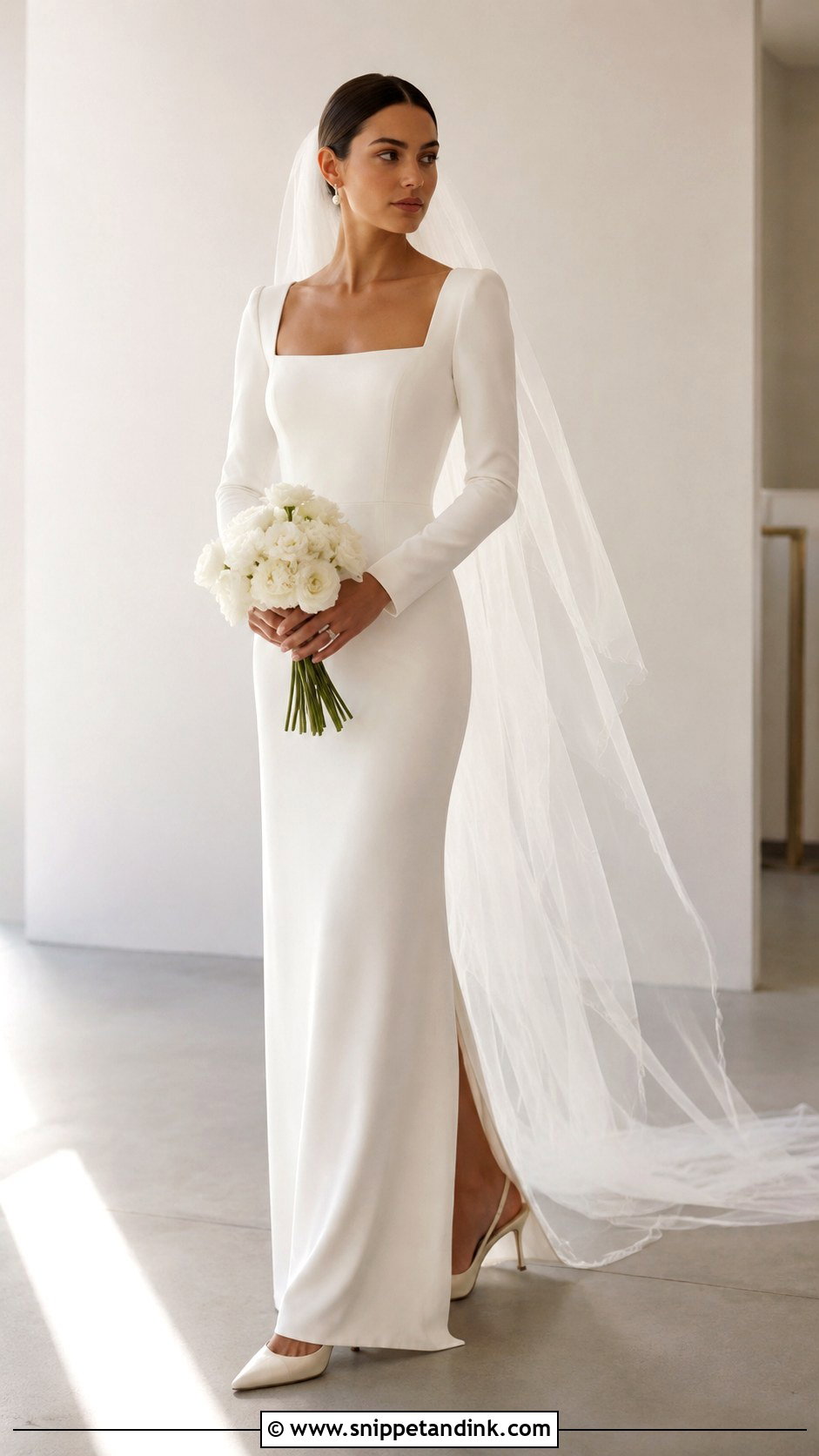
Square-neck columns feel current without chasing a trend, because the shape is pure geometry. Substantial crepe or matte satin falls straight; thin fabric clings to every curve and shows the lining. Fitted sleeves balance the open neckline, and a back slit is not optional on a true column. Without it you’ll walk in tiny steps. Pearl drops, pointed slingbacks and a sleek center-parted bun suit it, and a narrow raw-edge veil softens the angles. Prefer no veil? A plain comb at the back works. Carry long stems loosely in one hand to echo the vertical line.
4. V-Neck Sheath Long Sleeve Wedding Dress
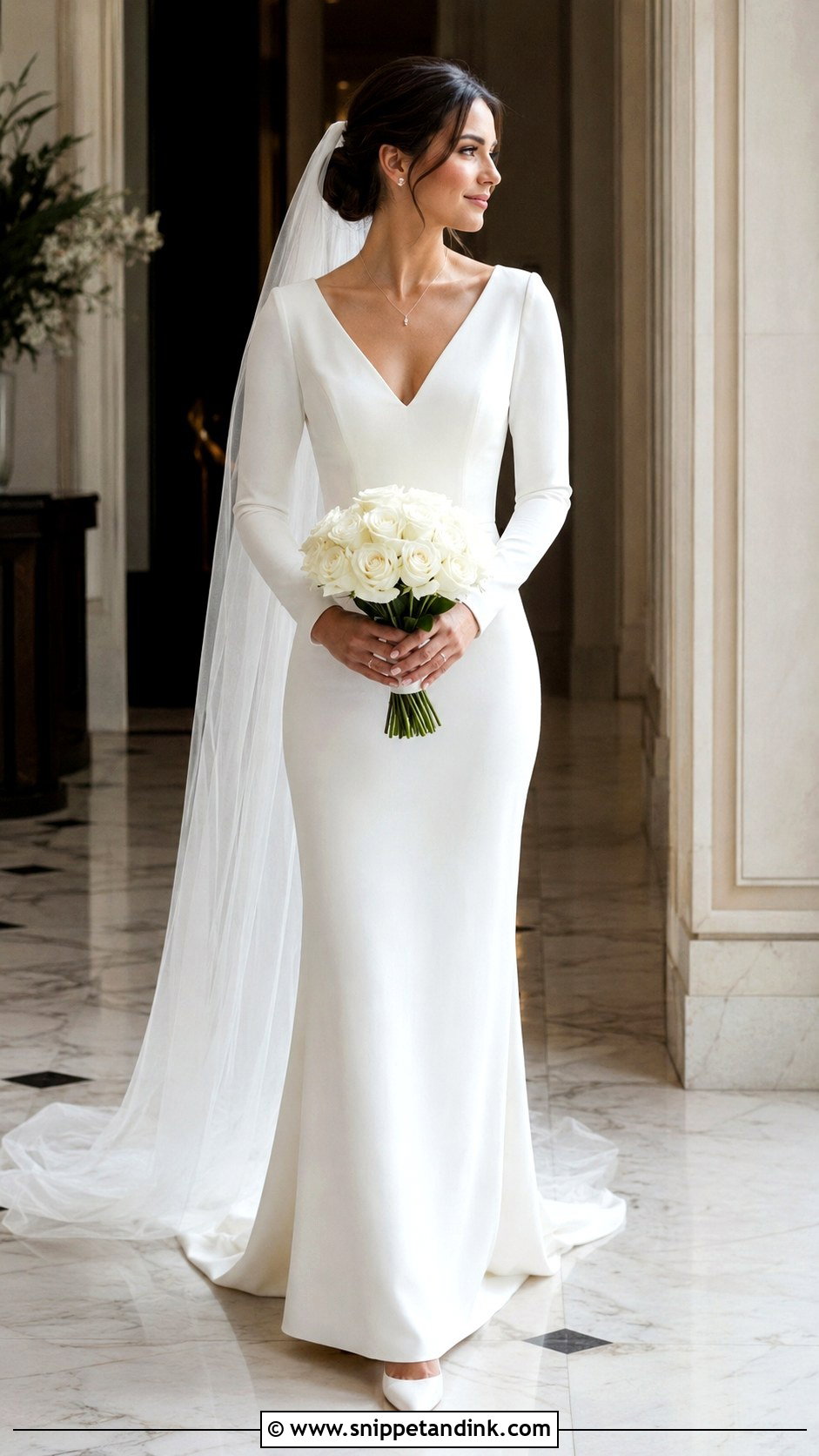
A V-neck sheath is the easiest minimalist gown to personalize, because the depth of the V changes the whole mood. A shallow one reads modest; a deeper one reads bolder with no added detail. Stretch crepe over a supportive lining moves well through a long day. Fitted sleeves frame the neckline and keep the coverage even. Slim pointed pumps, a single pendant and small studs suit it, with a low textured bun or smooth waves behind the ears, a plain chapel veil and white roses. Every seam is on show here, so I check side seams for twisting while the bride walks. A seam that spirals forward means the fabric was cut slightly off-grain.
5. Mock Neck Open Back Long Sleeve Wedding Dress
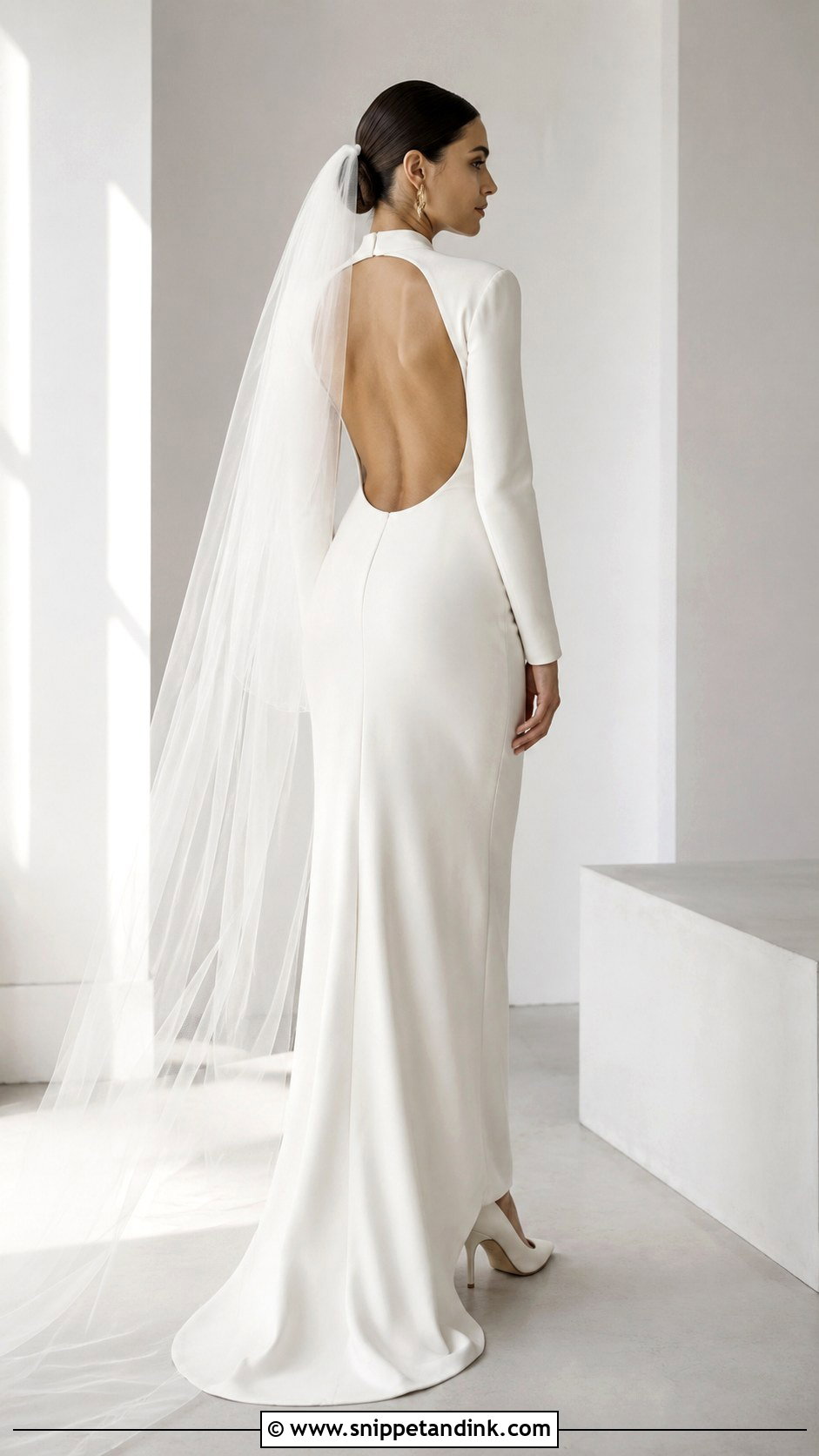
From the front a mock neck looks completely covered; from behind, the open back is the surprise. It’s one of my favorite contrasts for a bride who wants a quiet front for the ceremony photos. Fluid crepe or silk satin, fitted sleeves and a slim skirt keep it clean. Rounded, V-shaped or draped backs all work, provided the edges lie flat and stay put. Wear your hair up, add small sculptural earrings, ivory pumps and a simple veil attached below the bun, and carry a narrow bouquet of orchids or callas. Back jewelry is optional; bare skin often looks more modern. Underwear is the hard part. With a high neck and no back, sewn-in cups are usually the only invisible option.
6. Bateau Mikado Long Sleeve Ball Gown
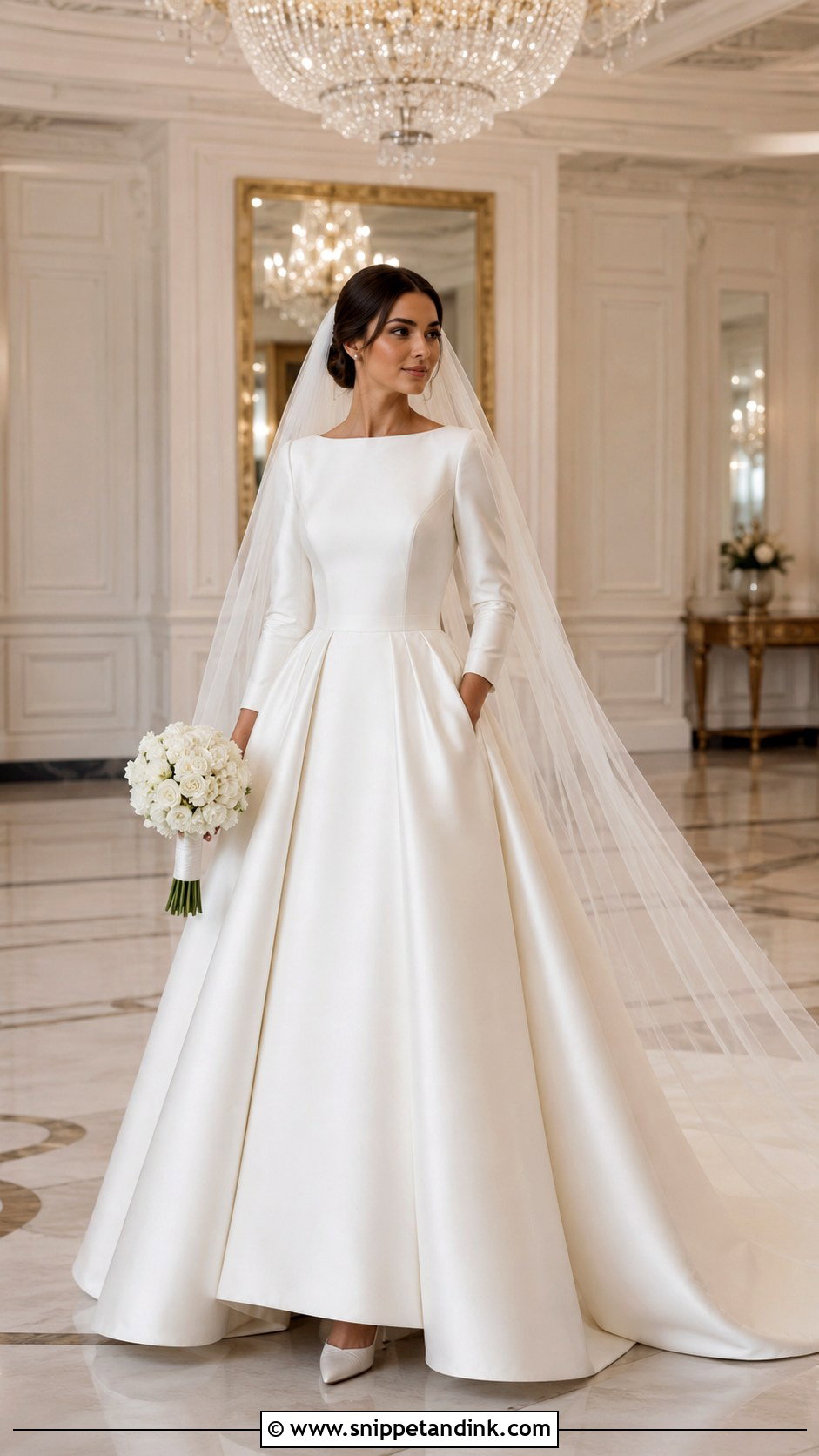
A ball gown counts as minimalist when its impact comes from proportion and fabric rather than decoration, and Mikado is the fabric that makes that possible. It’s a heavy, slightly stiff silk blend that holds a crisp bateau neckline, smooth sleeves and a full skirt without layers of tulle underneath. Keep the bodice free of beading and visible boning. A defined waist anchors the skirt, and hidden pockets are genuinely useful. Polished pumps, pearl studs, a neat bun and a plain cathedral veil slightly longer than the train complete it, with a compact bouquet. Mikado creases sharply where you sit, so it suits a ballroom or large venue where you’ll be standing for most of the photos.
7. Cowl Neck Charmeuse Long Sleeve Wedding Dress
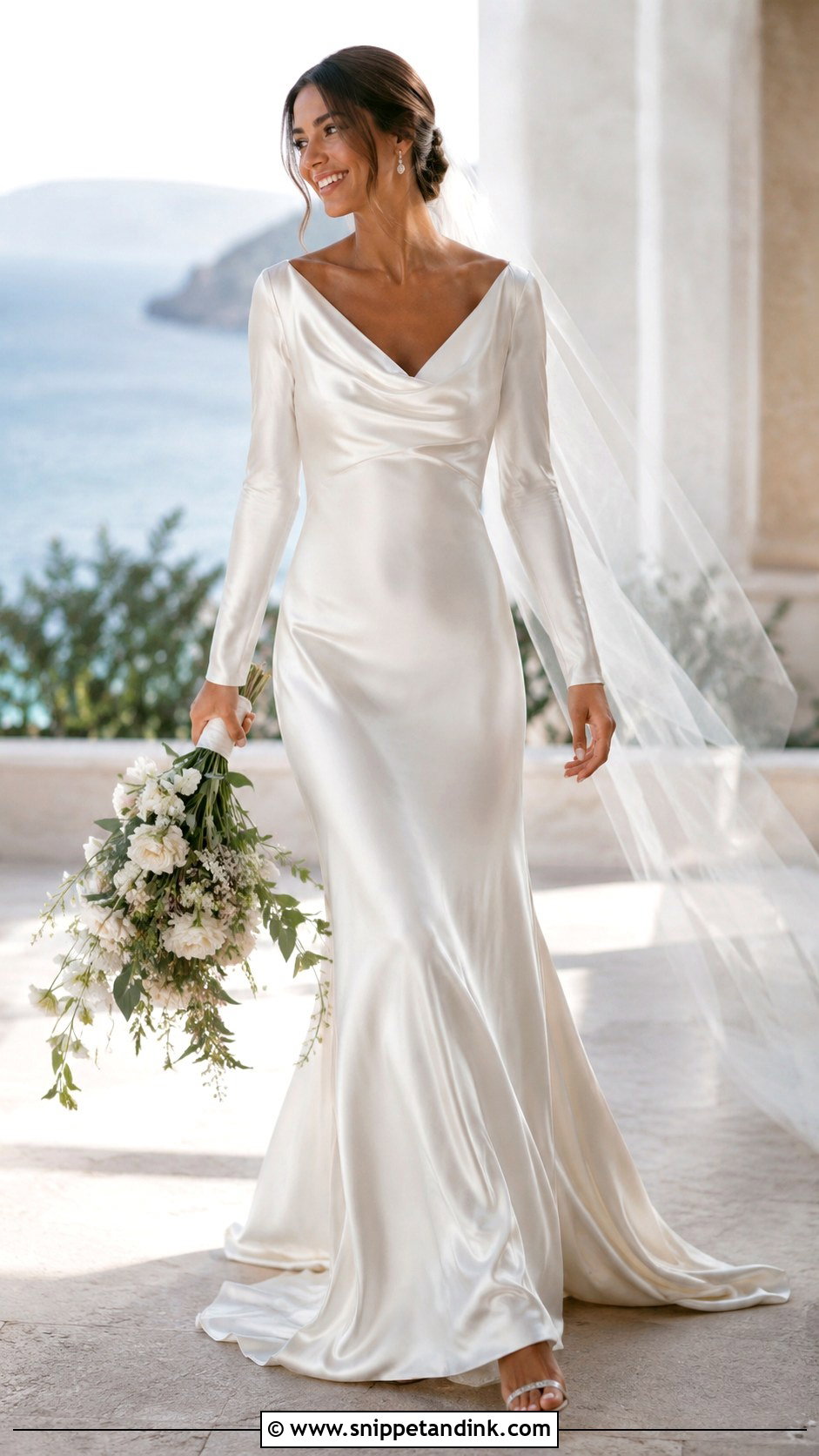
Charmeuse is the opposite of Mikado: liquid, shiny and soft enough to drape into a cowl around the face. With slim sleeves and a bias-cut skirt it moves with every step. Because the fabric already shines, keep jewelry minimal: delicate earrings, near-invisible strappy heels and a smooth low bun. A light veil follows the drape better than a gathered, stiff one. Subtle waist shaping or a diagonal seam adds definition. Carry a small bouquet with loose stems. The honest drawback is that bias-cut charmeuse clings and shows underwear lines, so I’d only recommend it to brides happy wearing smooth, edge-free shapewear. It suits intimate rooms, coastal venues and destination ceremonies.
8. Scoop Neck Fit And Flare Long Sleeve Wedding Dress
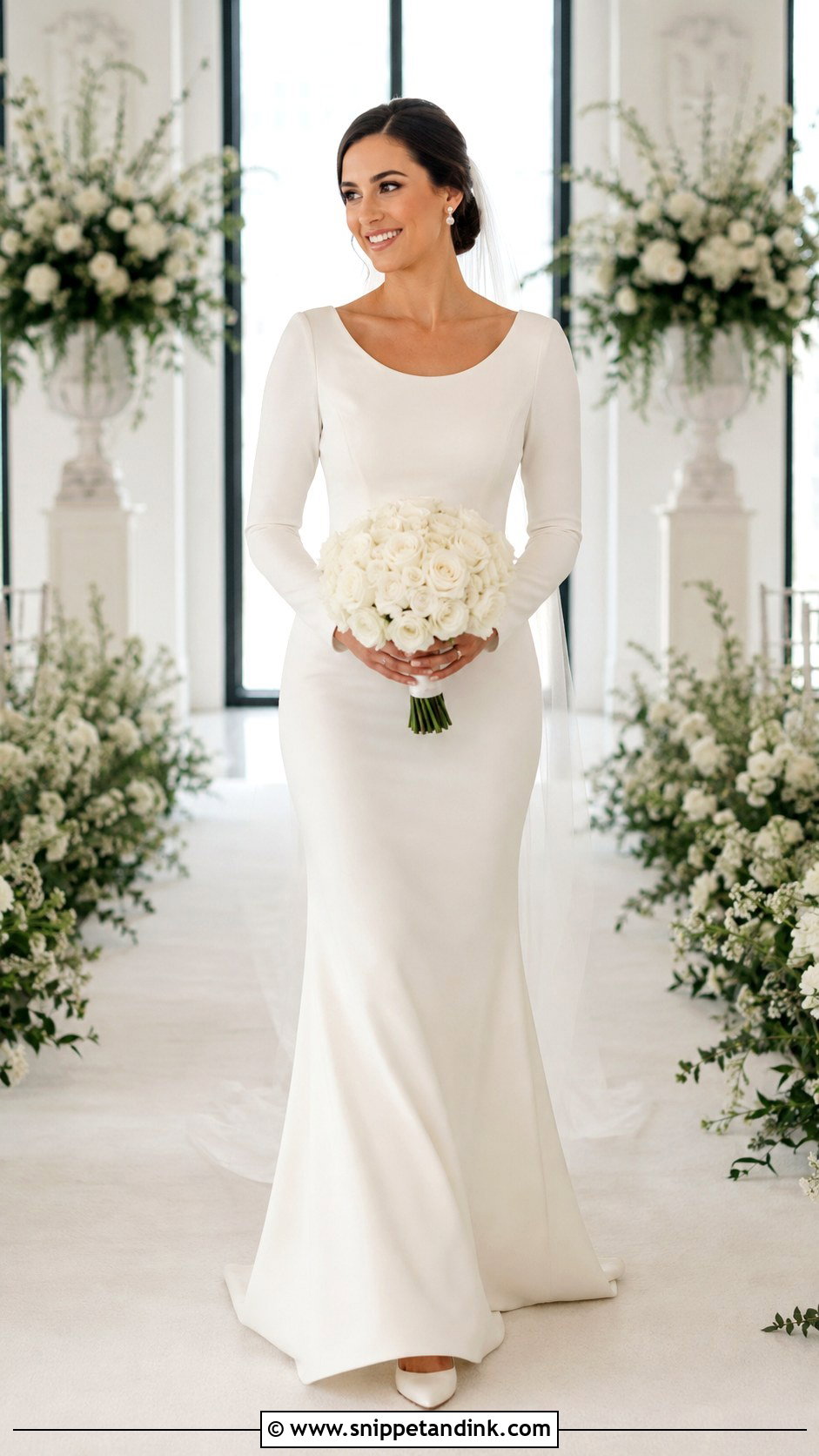
If a mermaid feels too tight, a scoop-neck fit-and-flare in medium-weight crepe gives you the shape with far more freedom. The rounded neckline frames the face, fitted sleeves run cleanly from shoulder to wrist, and the skirt widens below the thigh instead of at the knee. Pearl earrings, pointed heels and a low side-parted bun suit it, with a sheer raw-edge veil instead of lace. If the neckline feels bare, a very fine pendant fills it without clutter. Keep the bouquet rounded and white with only a little greenery.
9. Long Sleeve Wedding Dress With Back Buttons
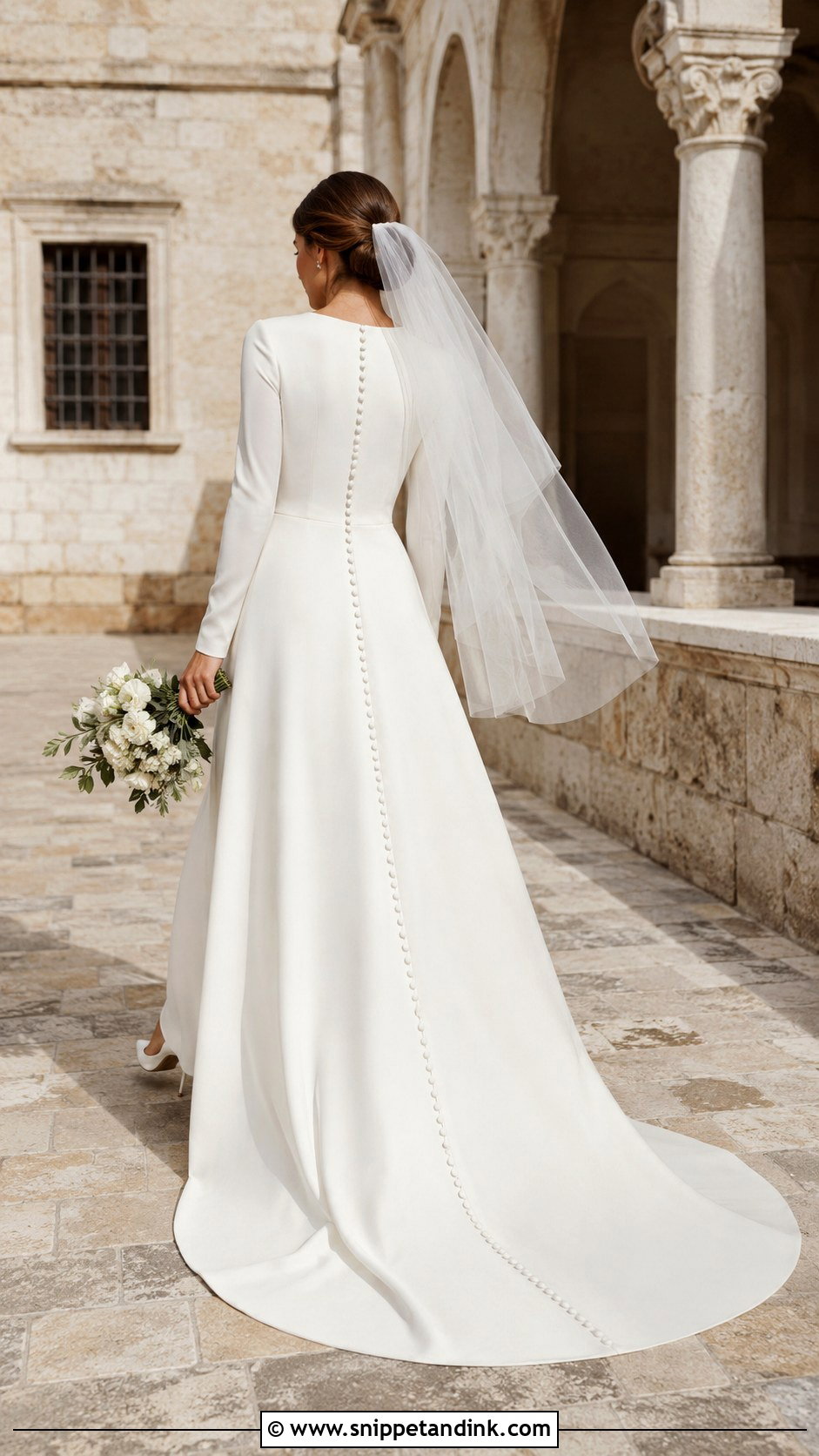
One detail is enough on a plain gown. A long sleeve dress with covered back buttons gets texture from a single line running down the spine, either to the waist or all the way down the train. Use buttons covered in the dress fabric, not crystals or a contrasting color. A crew neck, fitted sleeves and an A-line or sheath skirt keep everything else calm. Pearl studs, closed pointed pumps and a softly structured veil suit it, with hair up or swept to one side. Real buttons on loops take a long time to fasten, often fifteen minutes or more for a full row. I always tell brides to build that into the getting-ready timeline, or ask for a hidden zip under decorative buttons.
10. Long Sleeve Wedding Dress With Detachable Overskirt
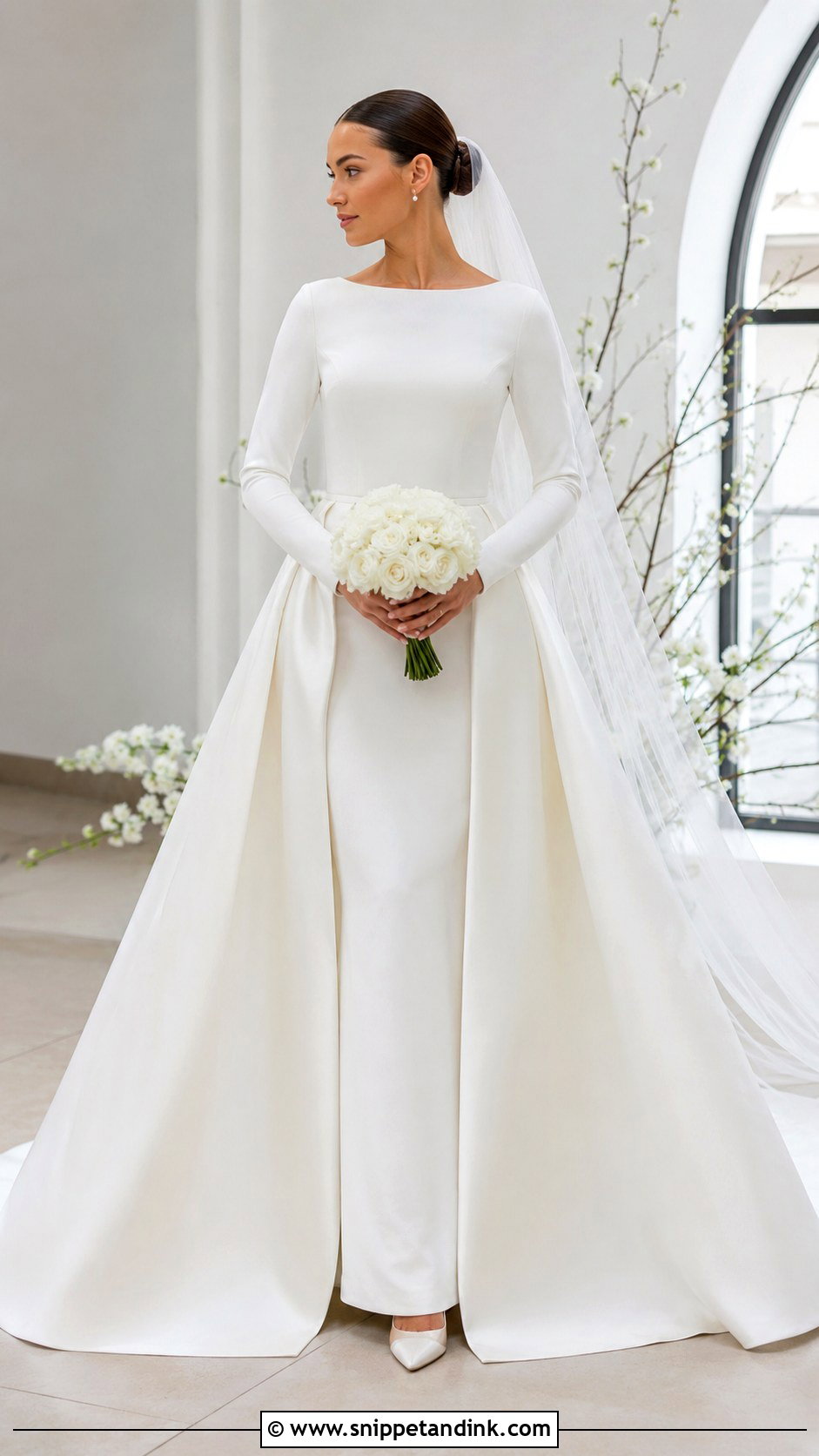
A detachable overskirt turns one minimalist dress into two looks. Start with a fitted column in matte crepe or smooth satin, then add a plain overskirt at the waist for the ceremony, soft A-line volume or something more structured depending on the room. Remove it later and you have a slim base dress for dancing. Both layers must be the same ivory and from the same dye lot. Even two shades of ivory look obviously different side by side in photos. Pointed pumps, small earrings and a sleek bun suit both versions. Wear a long plain veil with the overskirt, then take off both after the ceremony.
11. Long Sleeve Midi Wedding Dress
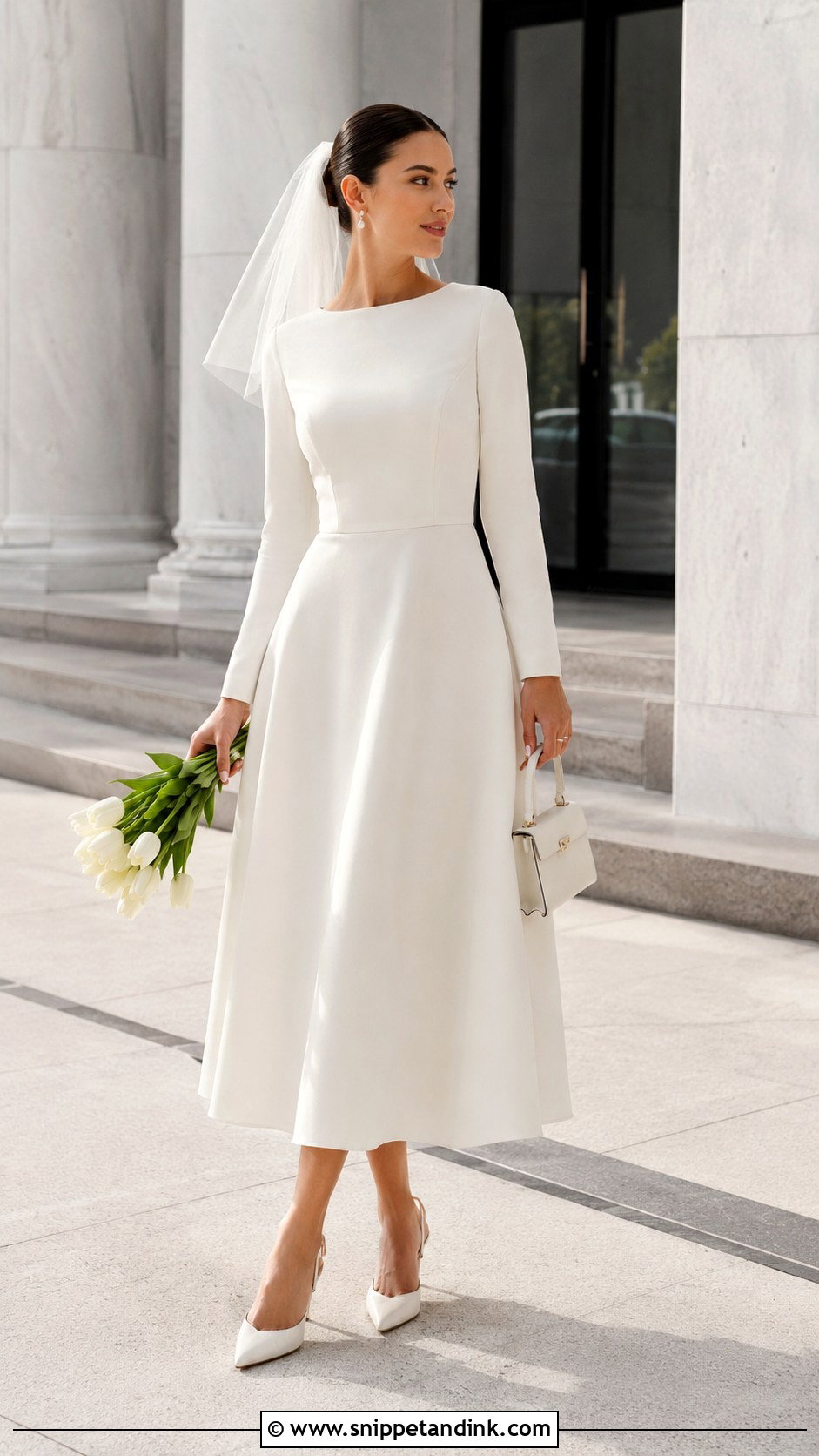
A long sleeve midi dress suits a courthouse ceremony, a small celebration or a second look for the evening. A clean sheath, soft A-line or structured column ending between knee and ankle all work. Crepe gives a matte modern finish, and satin dresses it up a step. The shorter hem puts your shoes on display, so pointed pumps, slingbacks or fine ankle-strap heels deserve real thought. Add a small top-handle bag and pearl earrings. A short veil, a minimal bow or a sculptural clip looks better proportioned than a long veil at this length. Keep the bouquet small, too, since a large one can swallow the dress. It’s also the long sleeve style you’re most likely to wear again.
12. Long Sleeve Courthouse Wedding Dress
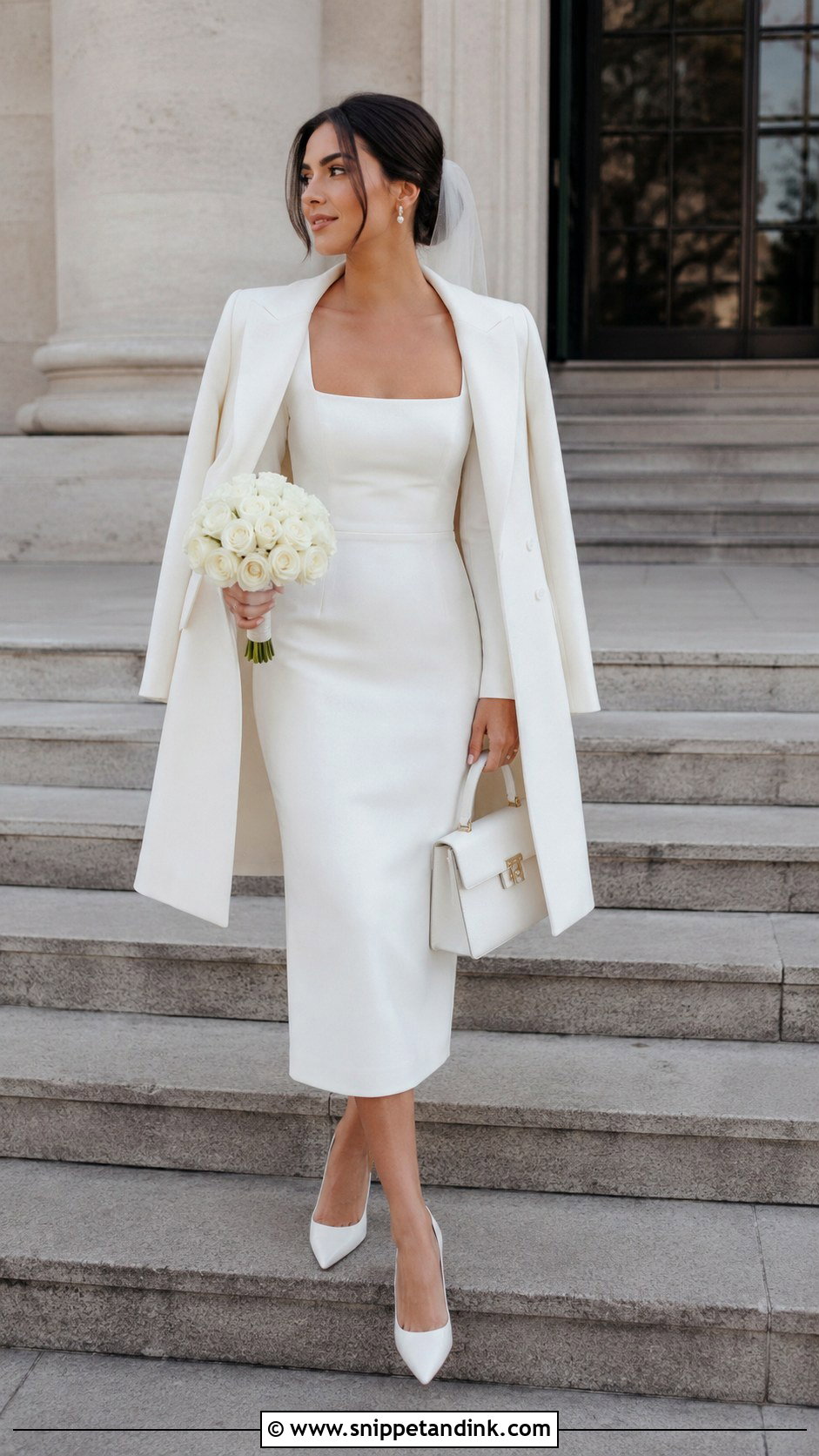
Courthouse steps, city light, a small wedding party: this is where a short, plain dress looks right and a full gown looks out of place. A knee-length or midi long sleeve dress with a square, bateau or high neckline fits the setting. Crisp crepe, structured satin or a tailored knit with smooth lining all hold their shape through a day of walking. Pointed pumps, a small structured bag and simple earrings suit it. A short veil says bride at a glance, and a padded headband feels more current. In cold weather, a white tailored coat looks better than a contrasting cover-up. Carry tulips or roses. The tailoring is what makes a simple dress look deliberate rather than borrowed.
13. Long Sleeve Winter Wedding Dress
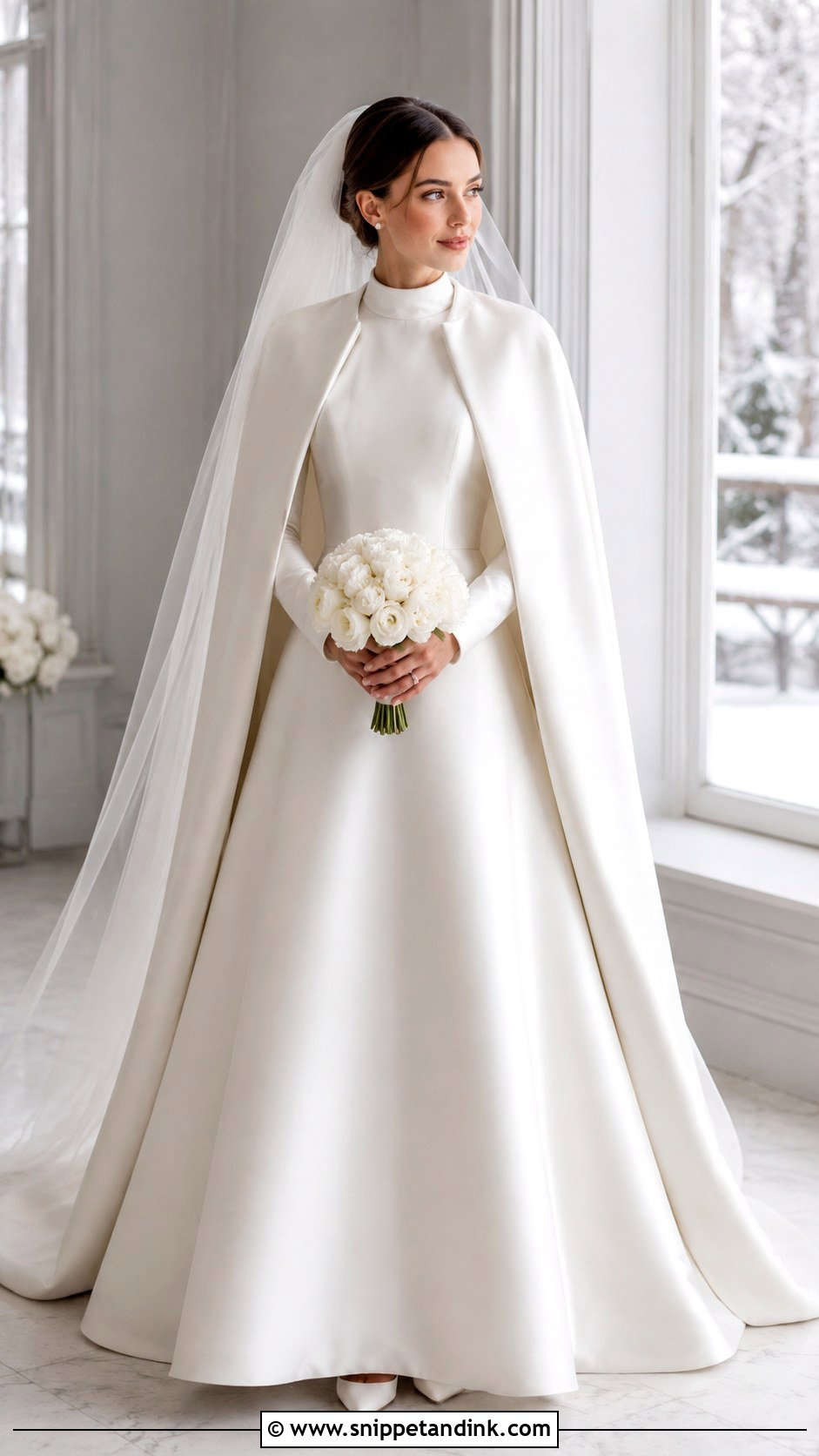
Winter dresses need to look warm without feeling heavy. Double crepe, heavyweight satin or structured Mikado give coverage and hold a shape that thin fabrics can’t. A high neckline and fully lined sleeves suit the season. An A-line, column or gentle fit-and-flare all work, depending on how much movement you want. Closed pumps and a long plain veil finish the indoor look. Outside, add a tailored ivory coat, a clean wool cape or a smooth faux-fur wrap without ornate fastenings, plus pearl studs and a low bun. Wet hems are the winter problem I see most. Lift your skirt between car and door, and ask for a slightly shorter hem if the ground will be slushy.
14. Plus Size Long Sleeve Minimalist Wedding Dress
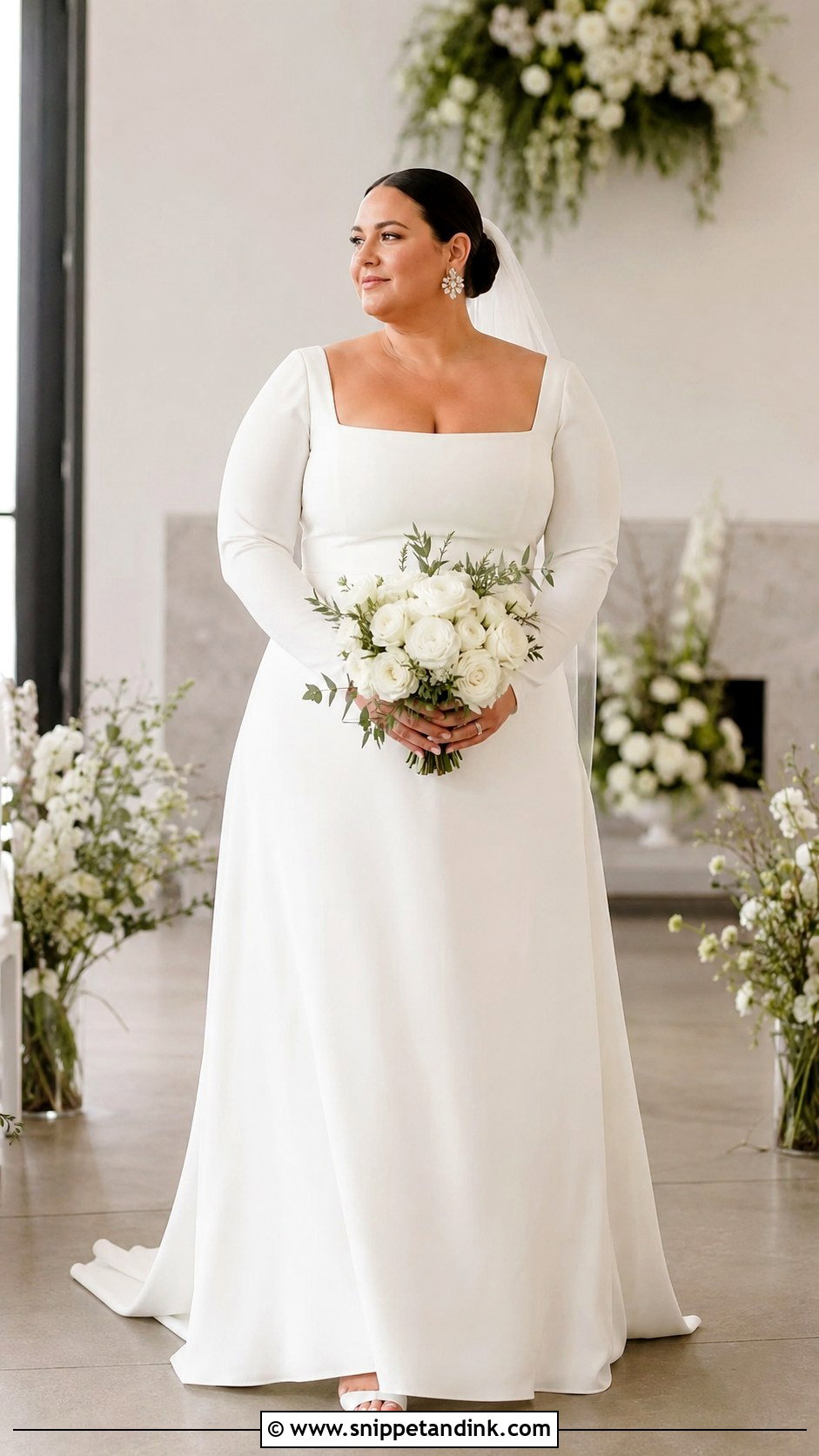
A good plus-size minimalist gown starts with construction, not rules about which silhouette you’re allowed. With no embellishment to distract, a supportive lined bodice and smooth inner seams matter more than ever, along with sleeves cut wide enough at the upper arm to lift comfortably. A V-neck crepe sheath lengthens the frame, a square-neck A-line defines the waist, and structured satin holds a fuller skirt well. Stable block heels or pointed flats, statement earrings and a simple veil suit any of them. I fit the shoulders, bust, waist and sleeve openings with the bride sitting, walking and raising her arms. The dress should follow your shape, not force you into a rigid one.
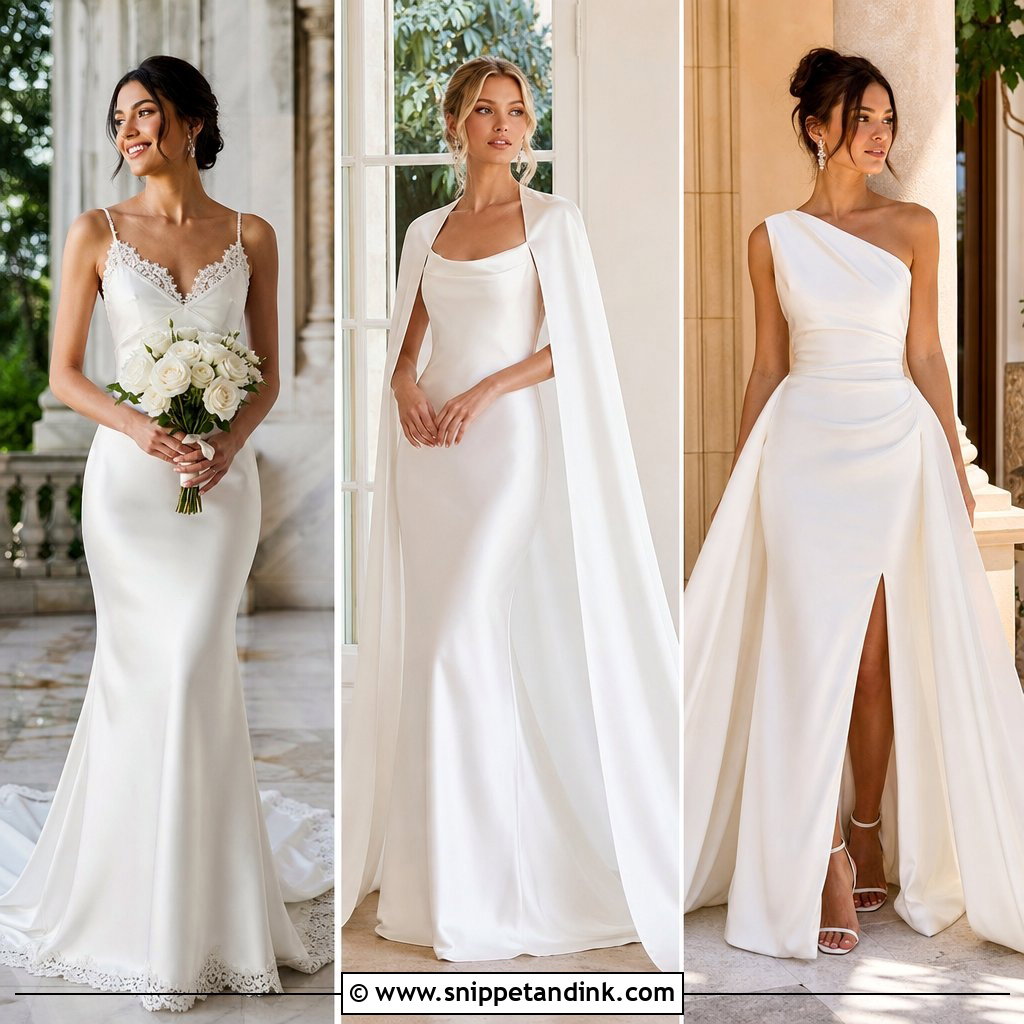
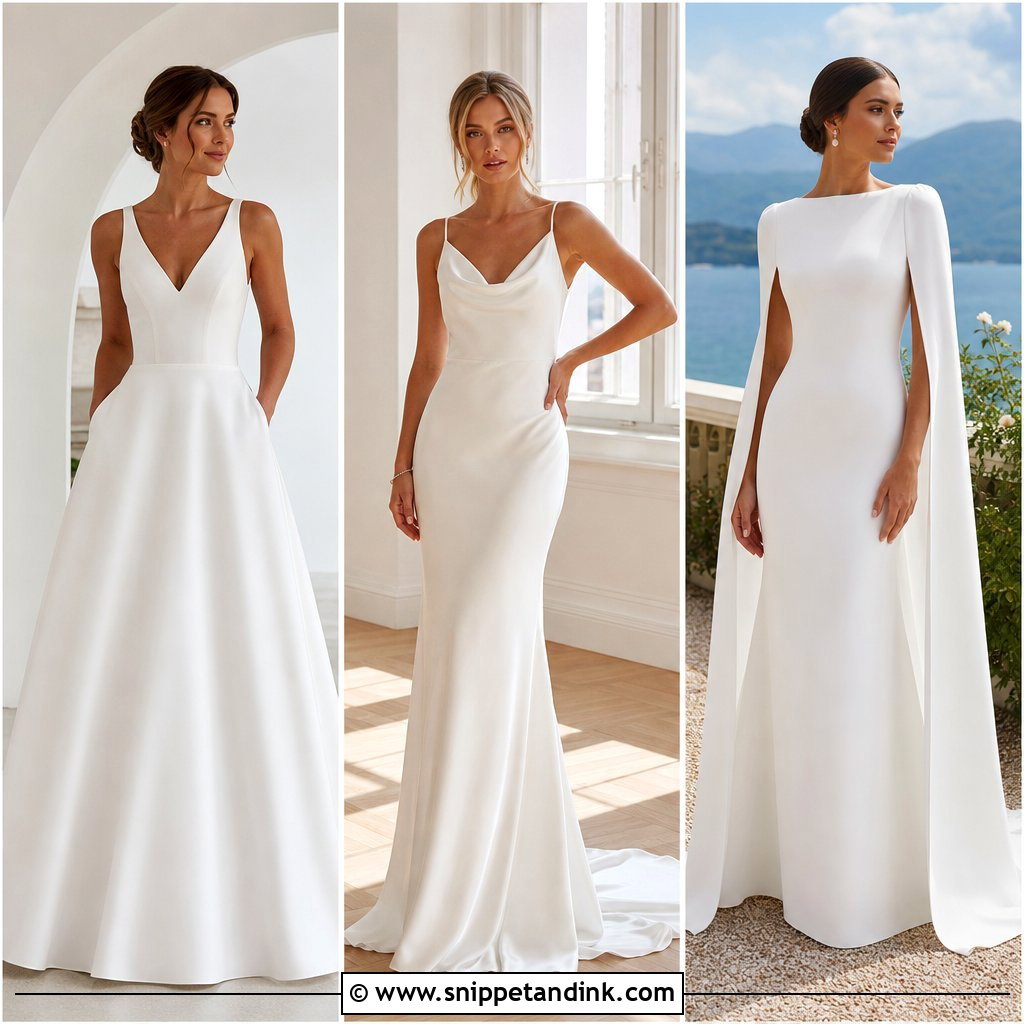
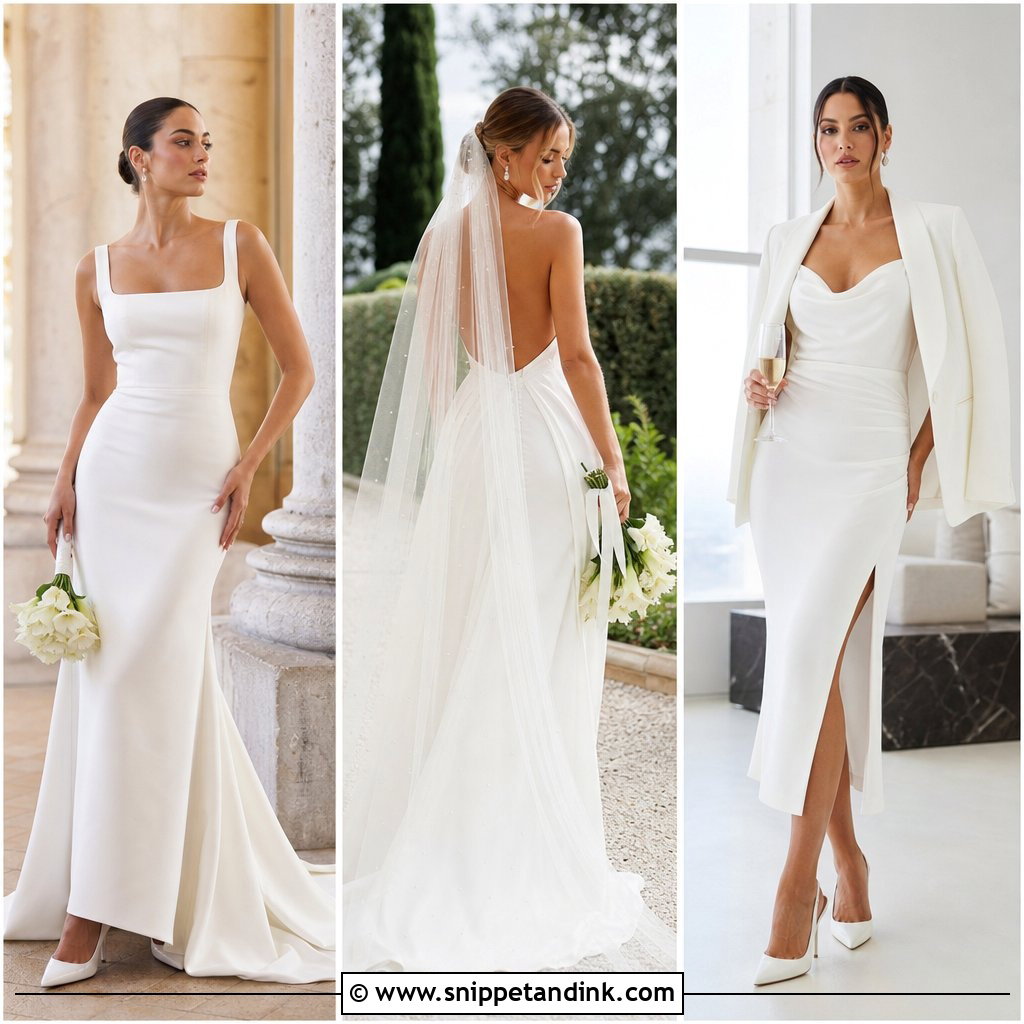
15. Modest Long Sleeve Minimalist Wedding Dress
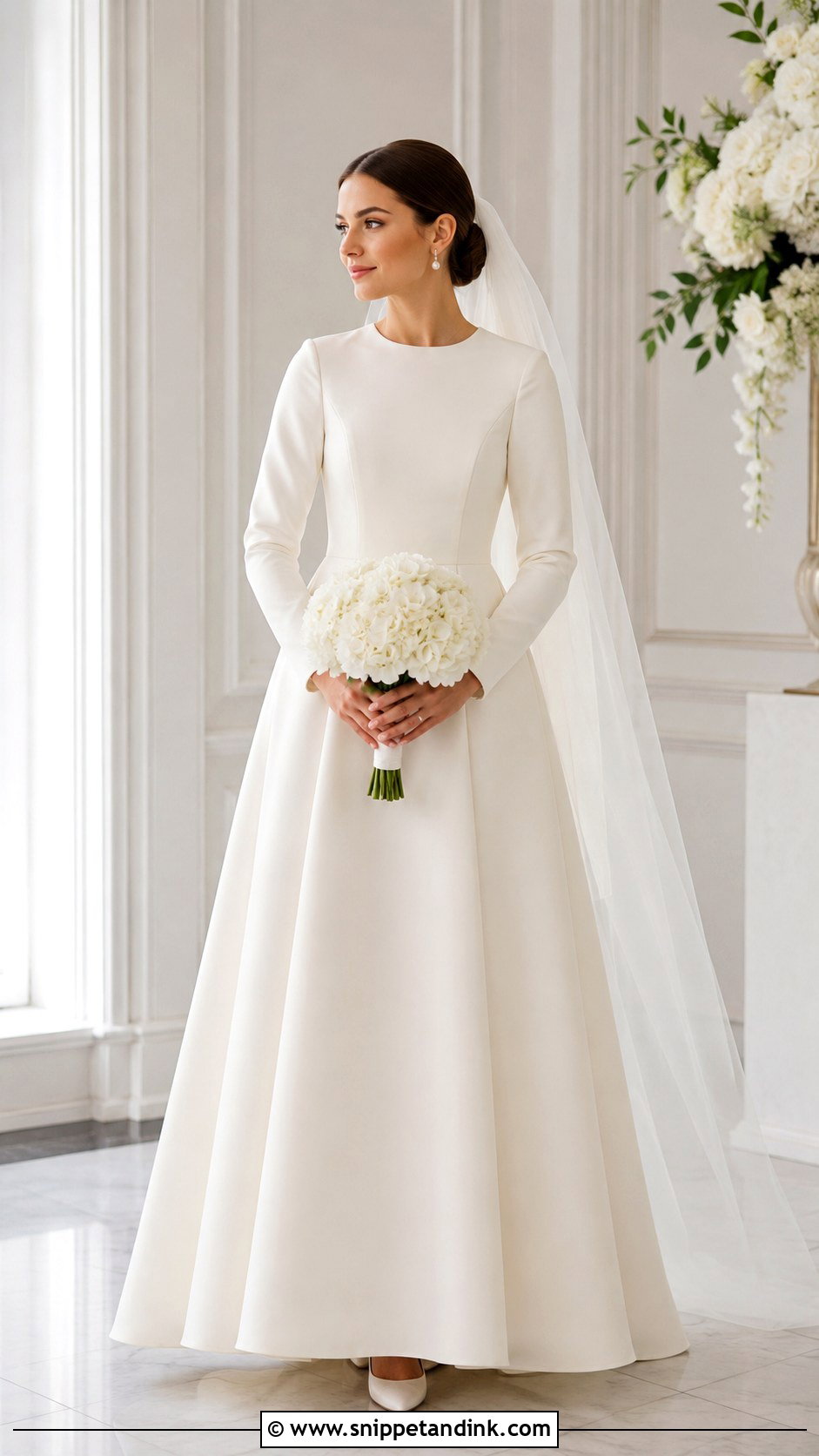
Modest minimalism depends on one thing people forget: whether the fabric is actually opaque. Choose an opaque fabric with a high boat, jewel, or mock neckline and full-length lined sleeves. An A-line moves easily; a column looks sharper. Check the gown under bright light, and ask someone to photograph you with flash, which can reveal a lining that looks solid in the mirror. Closed-toe pumps, small pearl earrings and a smooth unedged veil suit it, with a low bun or a softly covered hairstyle and a bouquet of a single flower. Clean lines and good fabric keep it from looking plain.
16. Long Sleeve Wedding Dress With Slit
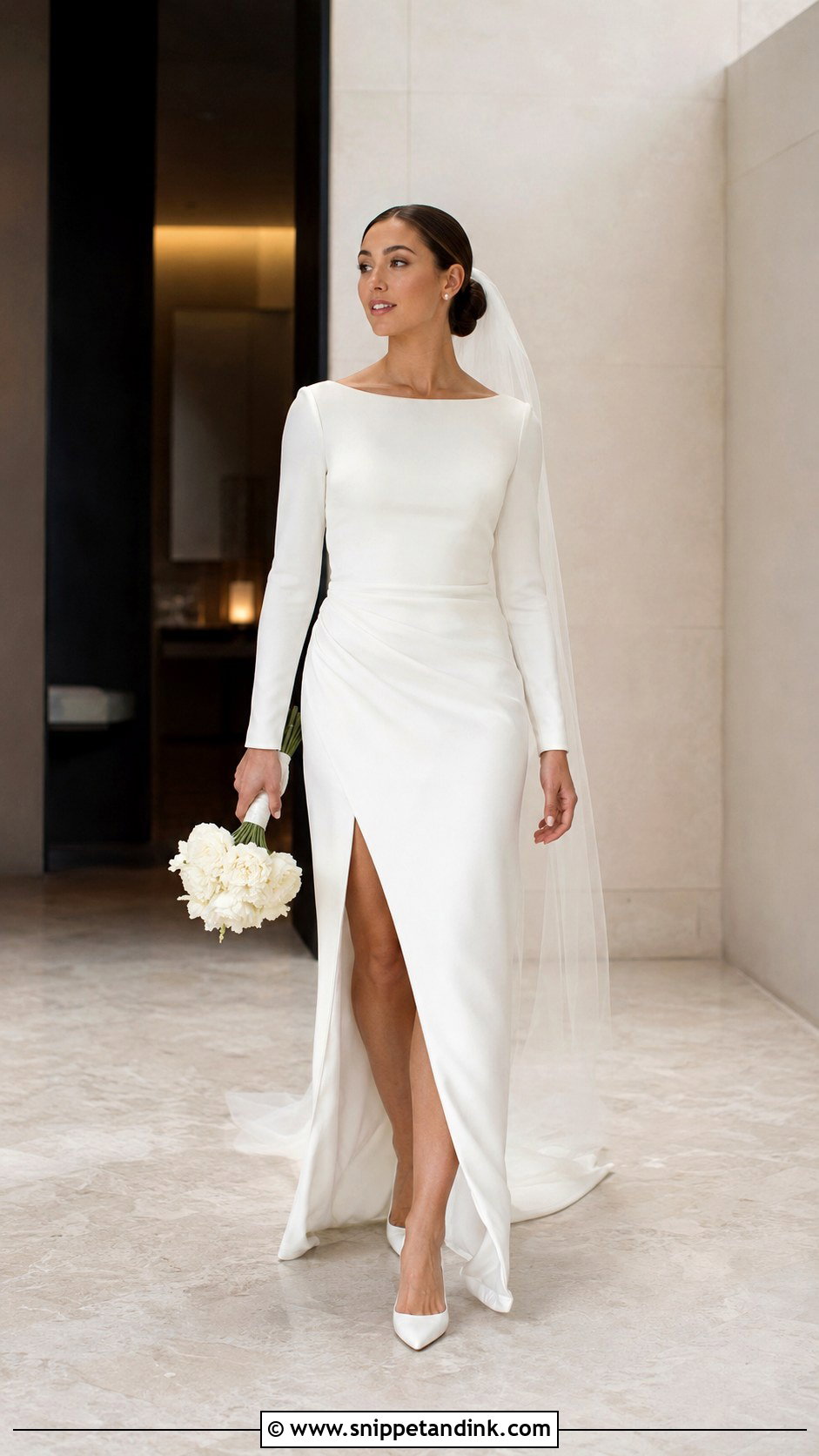
A slit makes a slim long sleeve gown easier to walk in and adds an edge, but the height is everything. Pick a slim bodice and straight skirt with a side or front slit starting where you feel comfortable. Crepe opens in a controlled line; charmeuse swings more freely. Your leg becomes part of the look, so wear refined pointed pumps or strappy heels in matching ivory, and keep everything else quiet: small earrings, a smooth bun, a narrow veil. A slit that looks modest standing can open much higher on stairs or when you sit, so walk, sit and climb a step at alterations. A hidden modesty panel fixes it if needed.
17. Drop Waist Long Sleeve Wedding Dress
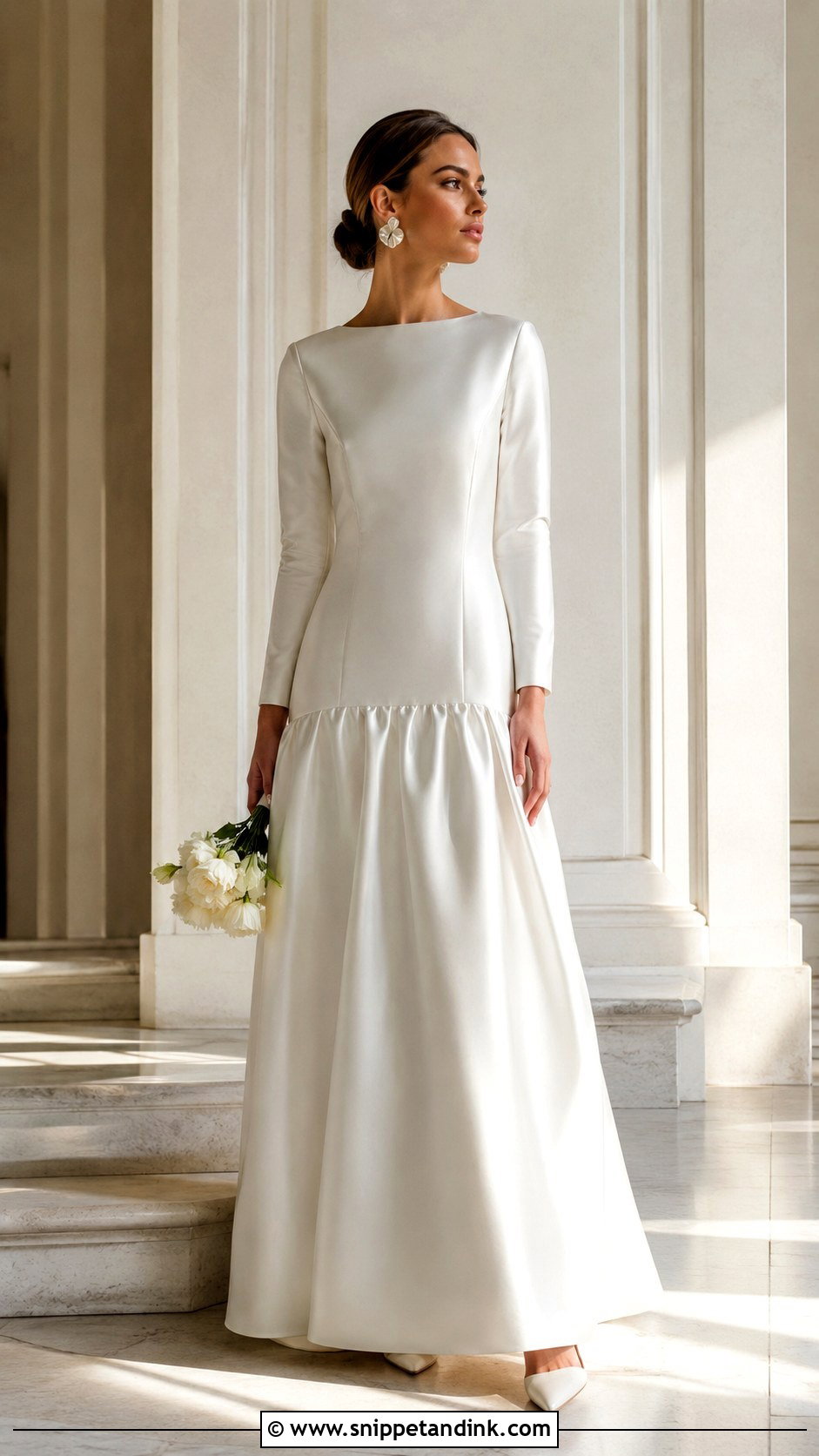
Drop waists are the most fashion-led shape here. The bodice runs below your natural waist before the skirt starts, which lengthens the torso and puts the volume lower down. In structured satin or silk faille it looks architectural; fluid crepe softens it. Fitted sleeves and a boat or scoop neck keep it balanced. Slim pumps, sculptural earrings and a neat bun or short polished hair suit it. A narrow veil works, or skip it for a more editorial feel, and keep the bouquet small and low. This shape is less kind to a short torso, where it can make the legs look shorter. The hip seam also needs precise tailoring so the skirt joins without a ridge.
18. Chiffon Bishop Sleeve Minimalist Wedding Dress
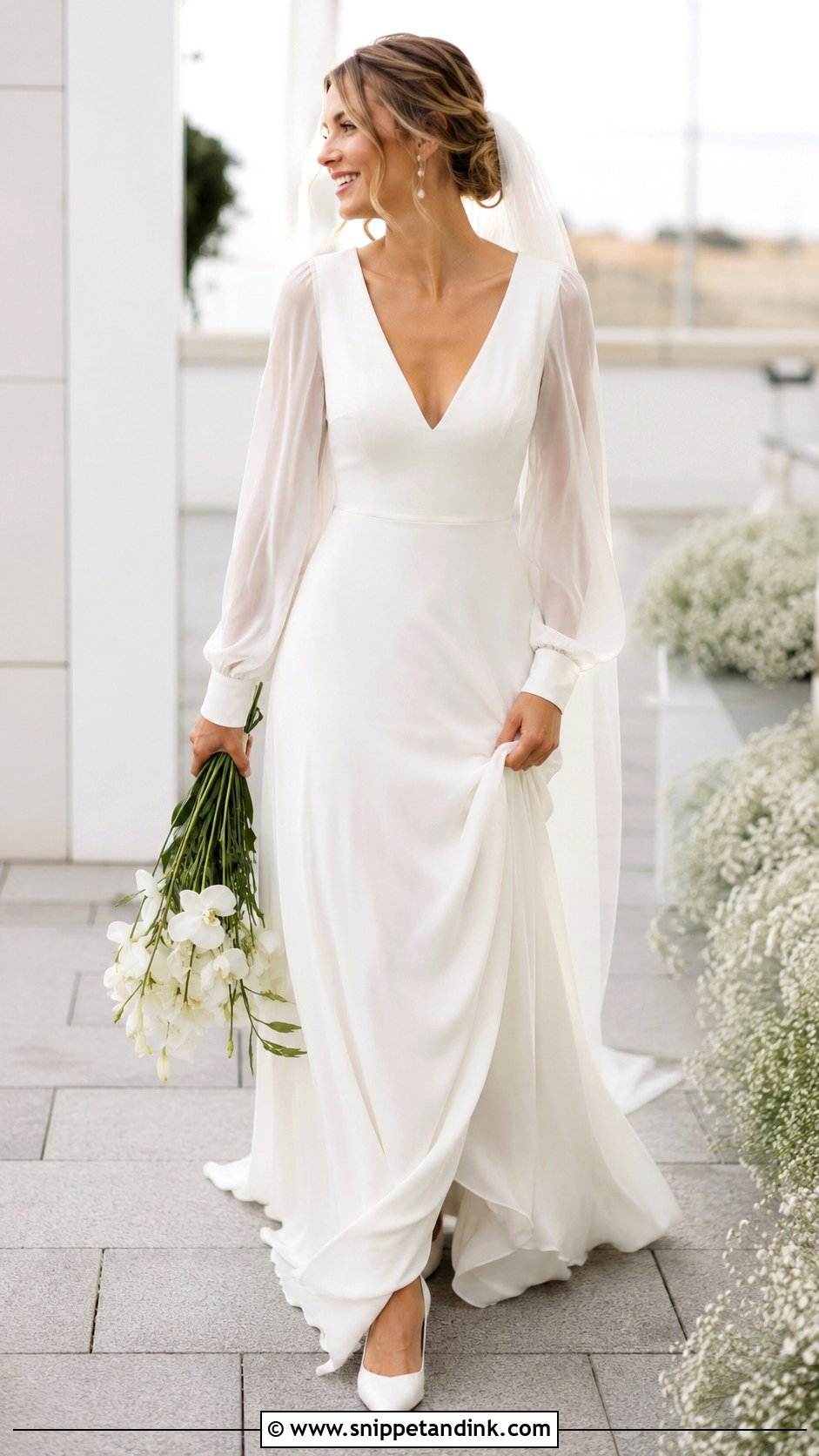
Chiffon bishop sleeves give a plain dress movement without dragging it into decorated territory. Pair sheer, gently gathered sleeves on fitted cuffs with an opaque crepe or satin bodice and a flowing A-line skirt. A shallow V or simple round neck suits the soft fabric. Delicate earrings, pointed flats or low heels, a loose low bun and a single-layer veil that moves as lightly as the sleeves finish it, with long-stemmed white flowers. Chiffon snags and frays more easily than crepe, so keep bracelets off and watch the cuffs around candles and buffet tables.
19. Long Sleeve Two Piece Wedding Dress
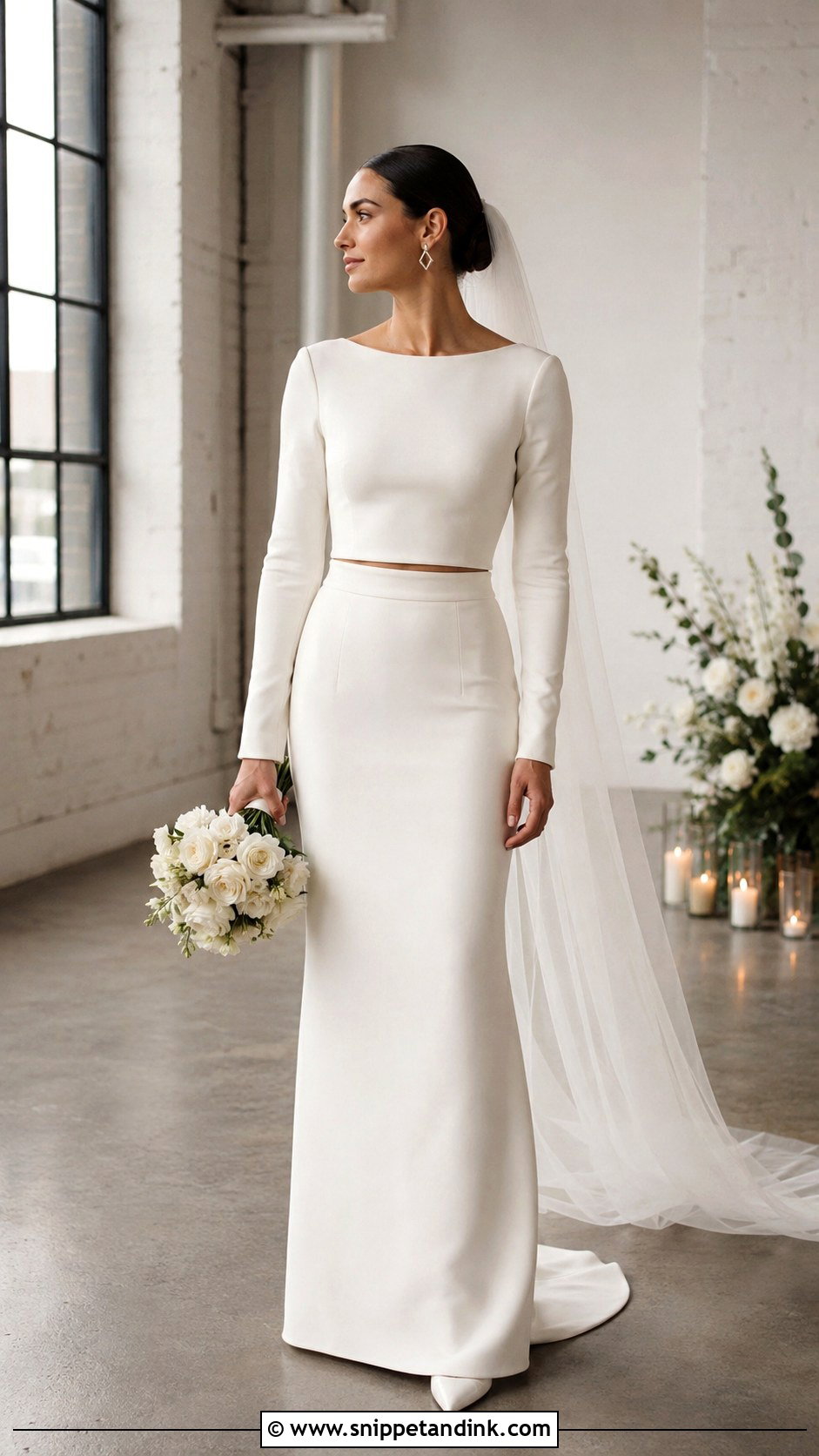
Two-piece bridal looks feel modern, and they solve a real fitting problem: brides who are one size on top and another below can have each piece fitted separately. A fitted crepe top with a matching high-waisted column or A-line skirt is the classic pairing. The top can have a boat neck, mock neck or subtle wrap, with no visible fastenings. A narrow sliver at the waist is optional; the pieces can also meet completely for a gown-like look. Pointed heels, small geometric earrings and a smooth low bun suit it, and a plain veil makes the separates read bridal. Order both pieces from the same fabric batch, and check that the top stays tucked or level when you sit and raise your arms.

20. Long Sleeve Wedding Dress With Train
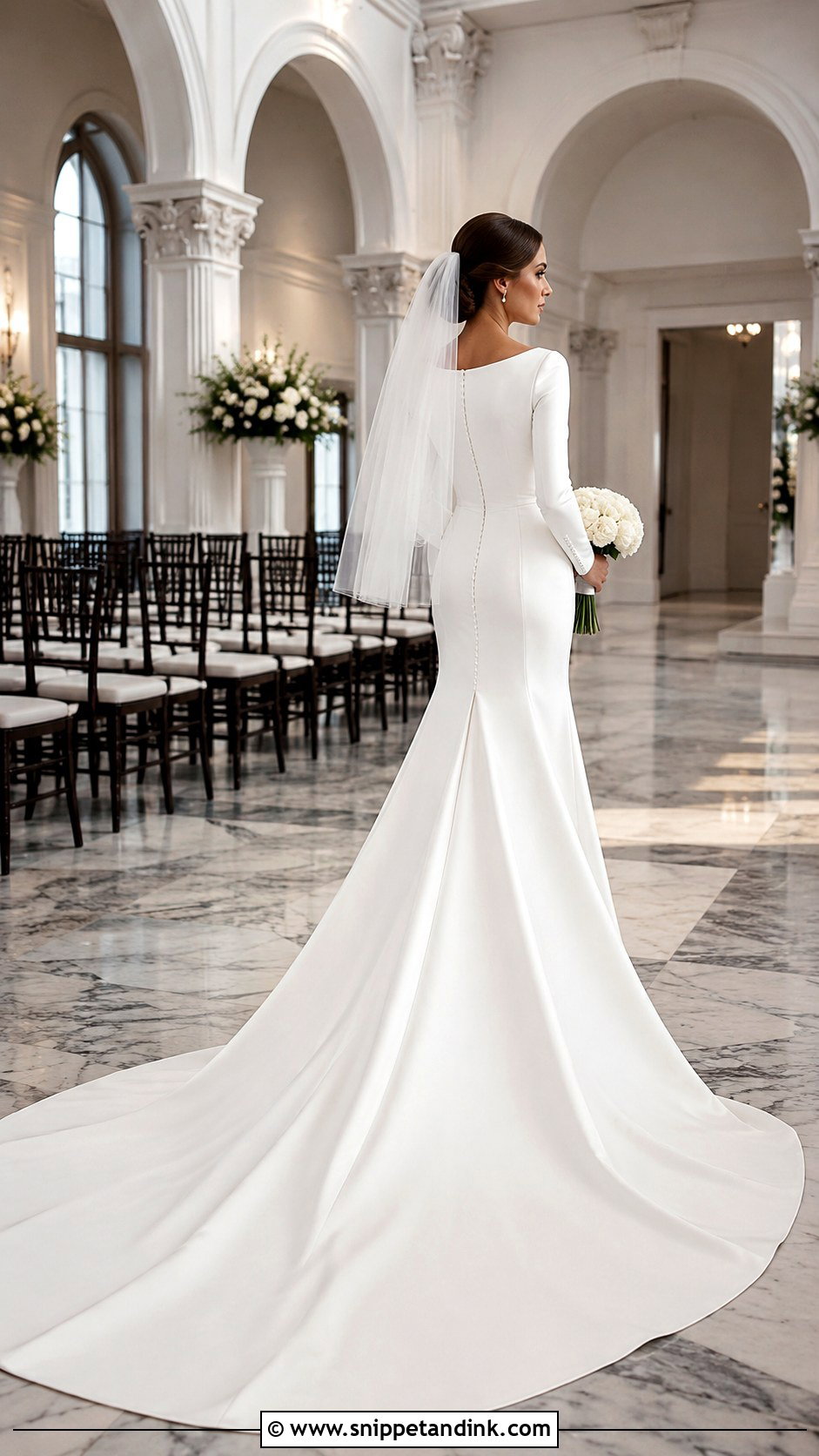
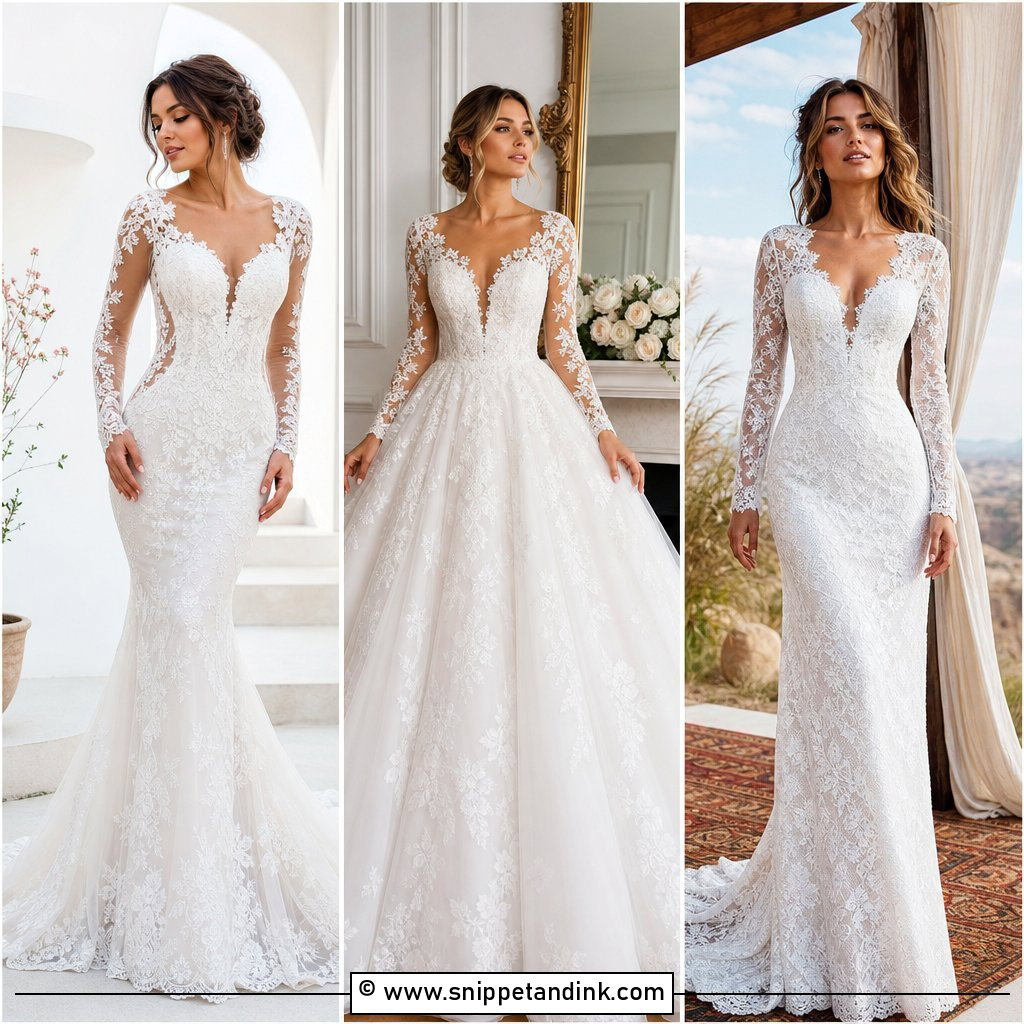
On a plain gown, the train can be the entire statement. A sleek crepe or satin dress with fitted sleeves and a simple neckline flowing into a chapel or cathedral train needs nothing else. Clean panel seams let the fabric spread smoothly behind you. Understated pumps, pearl studs and an elegant updo suit it. A veil matching the train’s length is dramatic, while a shorter one keeps attention on the dress. Keep the bouquet compact so the front stays visible. Bustles are fiddly on plain fabric, because the hooks show. Ask for hidden ribbon ties under the skirt, and have whoever will bustle you practice it at the final fitting.
Wrinkles, Lint and the Car Ride to the Ceremony
An embellished gown hides a crease. A plain one shows it in every photo. Most minimalist dresses look their best for the hour after they’ve been steamed, and the job on the day is protecting that hour.
- Steam, never iron, on the morning. Hold the steamer a few inches away and work from the inside of the skirt for satin, which can water-spot.
- Put the dress on last, after hair and makeup, with a scarf over your face so foundation doesn’t touch the neckline.
- In the car, sit on the lining and lift the skirt out behind you rather than folding it under your legs.
- Pack a lint roller. Dark carpets and a partner’s jacket leave fibers that show clearly on crepe.
- Use a clear deodorant and let it dry fully; white marks along the sleeve seams are hard to fix in a hurry.
If something does go wrong, a small spot of water on the inside of the lining often hides a mark better than rubbing the outside. Rubbing satin breaks its surface and leaves a dull patch that shows more than the stain did.
Less Decoration Means the Fit Has to Be Exact
A minimalist gown is simple to look at and demanding to make. Crepe, satin, charmeuse, chiffon and Mikado each give a different result, from fluid to sharply structured. Look at how the neckline, sleeves, skirt and train work together before you add anything. A plain veil, good shoes, small earrings and a well-scaled bouquet are usually enough. Then put most of your effort into alterations, testing every version by walking, sitting and moving your arms. Column, A-line, midi or long train, the right one is the one that fits you without a single pull.
You'll Like These Ideas:






Leave a Reply