
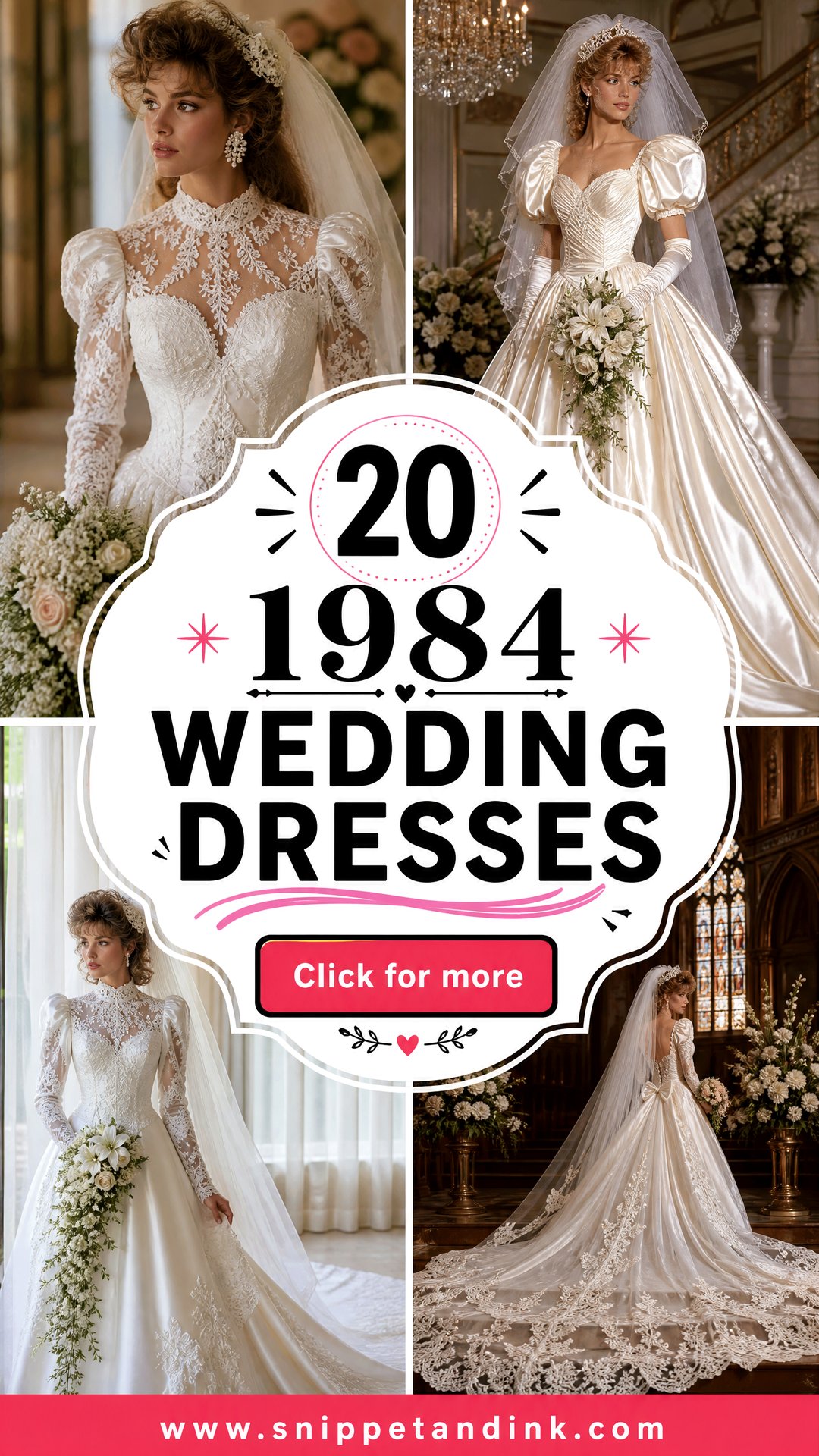
Bridal gowns from 1984 were built for drama, and almost all of them carried an unmistakable fairy-tale influence. Sleeves puffed high at the shoulder, waists were nipped in or pointed, lace climbed to the chin and trains ran long. Princess Diana’s 1981 dress set much of that direction, and three years later shops were still selling its proportions. When I dress a bride in this style now, I treat those features as things to edit rather than a uniform to copy. Below are twenty gowns, from full ballroom pieces to plain satin and tea-length versions, with notes on how each one behaves once you’re actually wearing it.
Refitting a Mother’s or Thrift-Shop Gown From the Eighties
Many of the 1984 dresses I see now aren’t bought new. They come out of a parent’s wardrobe or a vintage shop, and they rarely fit straight off the hanger. Vintage sizing runs smaller than today’s labels, so ignore the tag and go by measurements: bust, waist and the length from shoulder to waist, which is where older bodices most often fall short on a modern frame.
What a seamstress can change, and what she can’t
Sleeves are the easiest win. Large puffs can be reduced by taking out some of the gathered fullness, or removed and replaced with a sheer lace sleeve. Many of these gowns also hide shoulder pads inside the sleeve cap, and the line usually looks more current once they come out. Necklines can be lowered, and a tired zip can be swapped for a new one or a row of loops and covered buttons. Letting a bodice out is harder. Seam allowances in older gowns are sometimes generous and sometimes almost nothing, and only opening a seam tells you which.
- Book the first fitting at least four to six months ahead, since work on old fabric takes longer than on a new dress.
- Wear the bra and shoes you’ll actually marry in from that first appointment.
- Ask for a heat test on a hidden seam before any pressing, because old acetate and synthetic satin can glaze or mark under a hot iron.
1. 1984 Puff Sleeve Wedding Dress
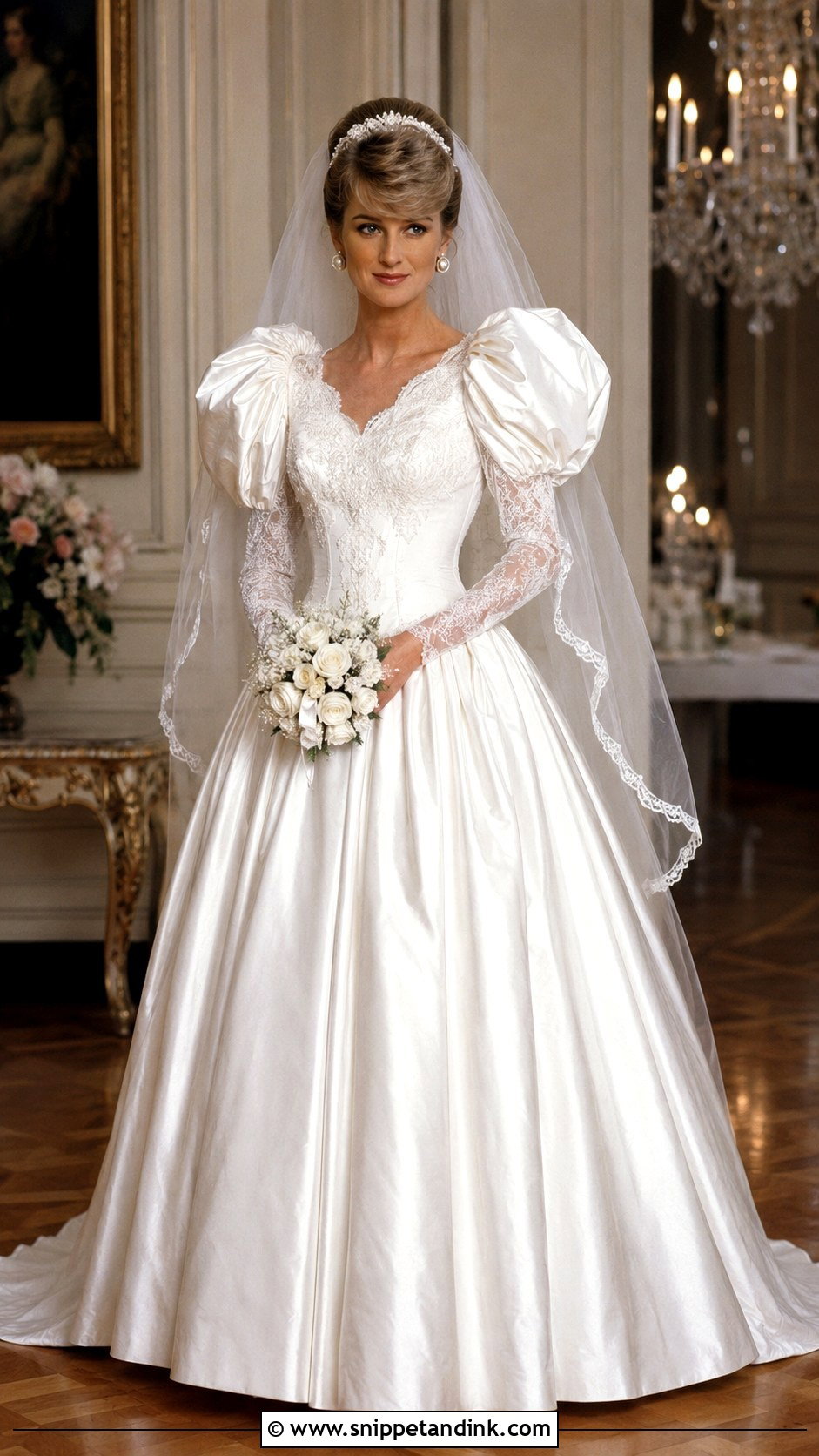
Puffed sleeves only read as 1984 when the volume sits right at the top of the shoulder and the arm narrows below it. Most original sleeves were held up by a net header sewn inside the sleeve cap, and after decades in a box that header often collapses. A seamstress can rebuild it, so a flat sleeve isn’t a reason to walk away from a dress. Pair the sleeves with a structured satin bodice and a full floor-length skirt so the width up top has something to answer it. Lace cuffs, covered buttons and a softly pointed waist keep it from tipping into costume. I’d add a fingertip veil, pearl studs, low ivory pumps and a small bouquet of white roses, and save it for a ballroom or historic venue with doorways wide enough for the sleeves and skirt to arrive together.
2. 1984 High Neck Wedding Dress
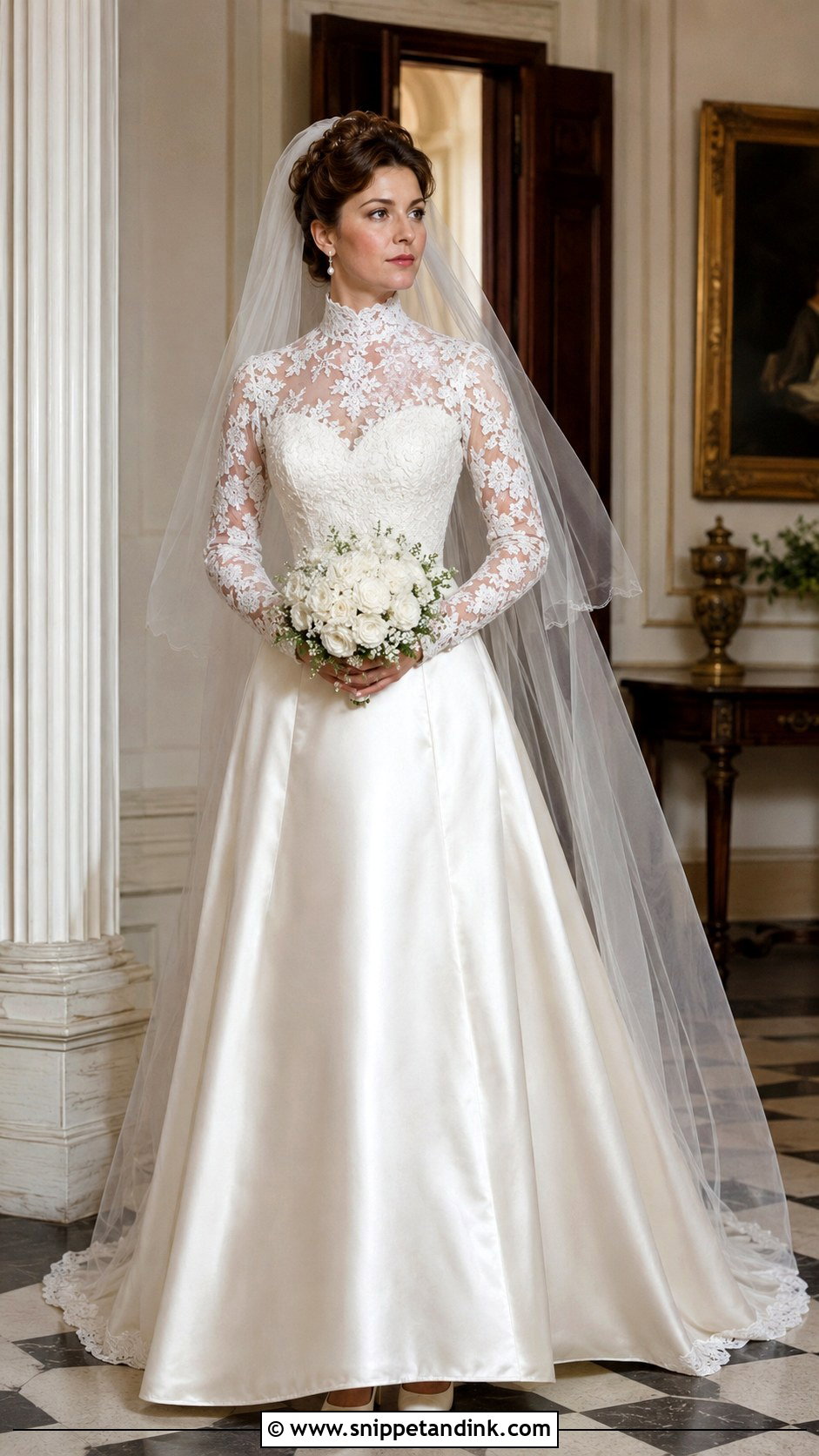
A high lace neckline is the modest side of the era: a fitted collar, a sheer lace yoke and long sleeves that cover without hiding texture. The first thing I check is collar height against the bride’s neck. Original stand collars were often cut close and stiffened, and if one presses on the throat she’ll be tugging at it all evening, so lowering it slightly is a common fix. A smooth satin skirt stops the gown looking busy, and a natural waist with a gentle A-line keeps it comfortable. Wear a neat updo so the collar stays clear, with pearl drops, satin pumps and a chapel veil pinned below the hair. It suits a traditional indoor ceremony or an autumn wedding at a historic house.
3. 1984 Lace Yoke Wedding Dress
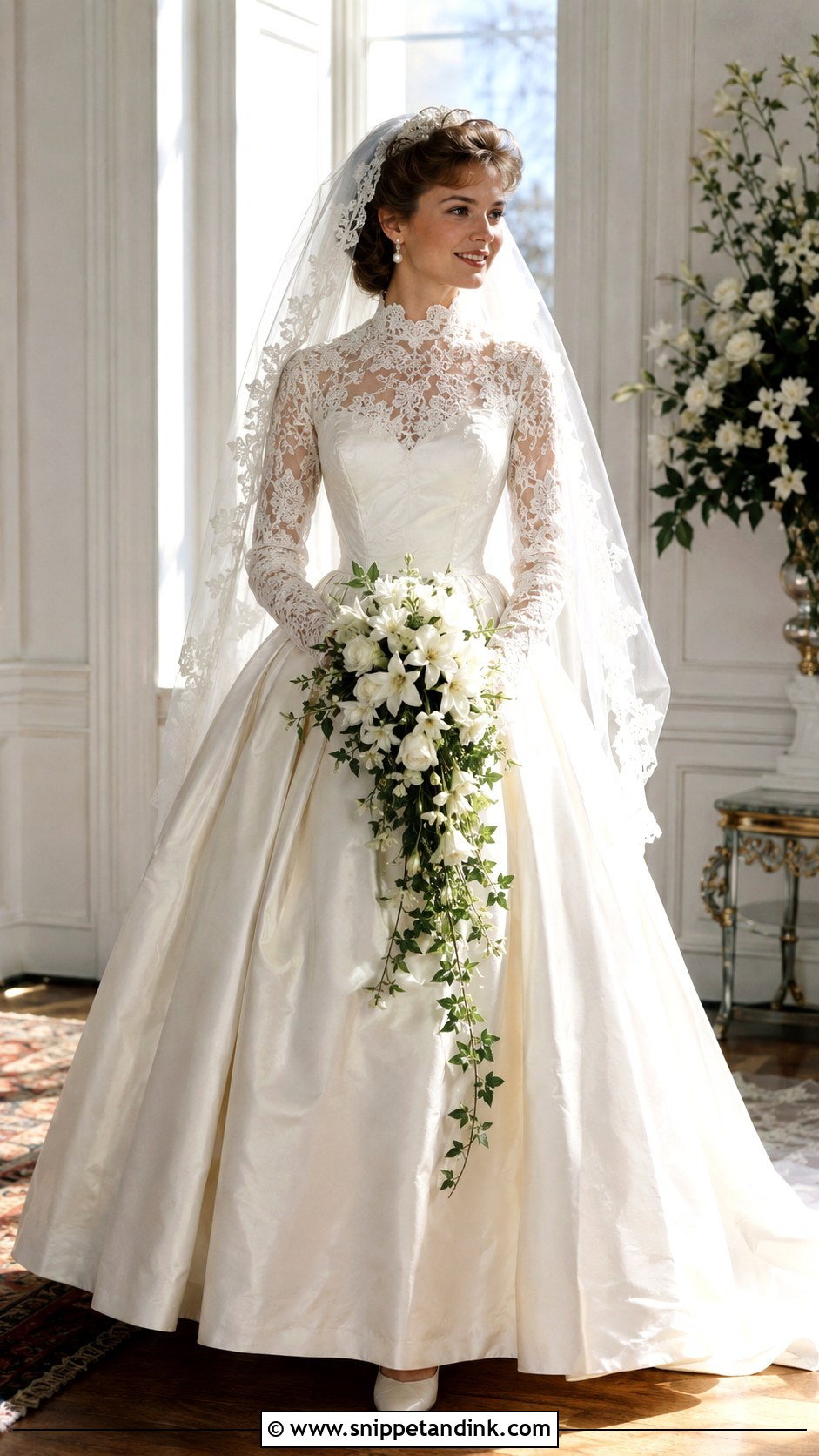
Sheer yokes are the detail I get asked about most on mid-eighties gowns. The lace runs from a sweetheart lining up to a high collar, so you see two necklines layered over each other. The weak point is the net behind the lace. Older nylon tulle turns brittle and can split along the shoulders, so at a fitting I hold the yoke up to the light and look for small tears before anything else. Long fitted sleeves, a defined waist and a full satin skirt keep it balanced, and a column of covered buttons finishes the back. Add a lace-edged veil, pearl earrings, ivory pumps and white carnations with trailing greenery. Daylight shows the lace pattern best.
4. 1984 Satin Ball Gown Wedding Dress
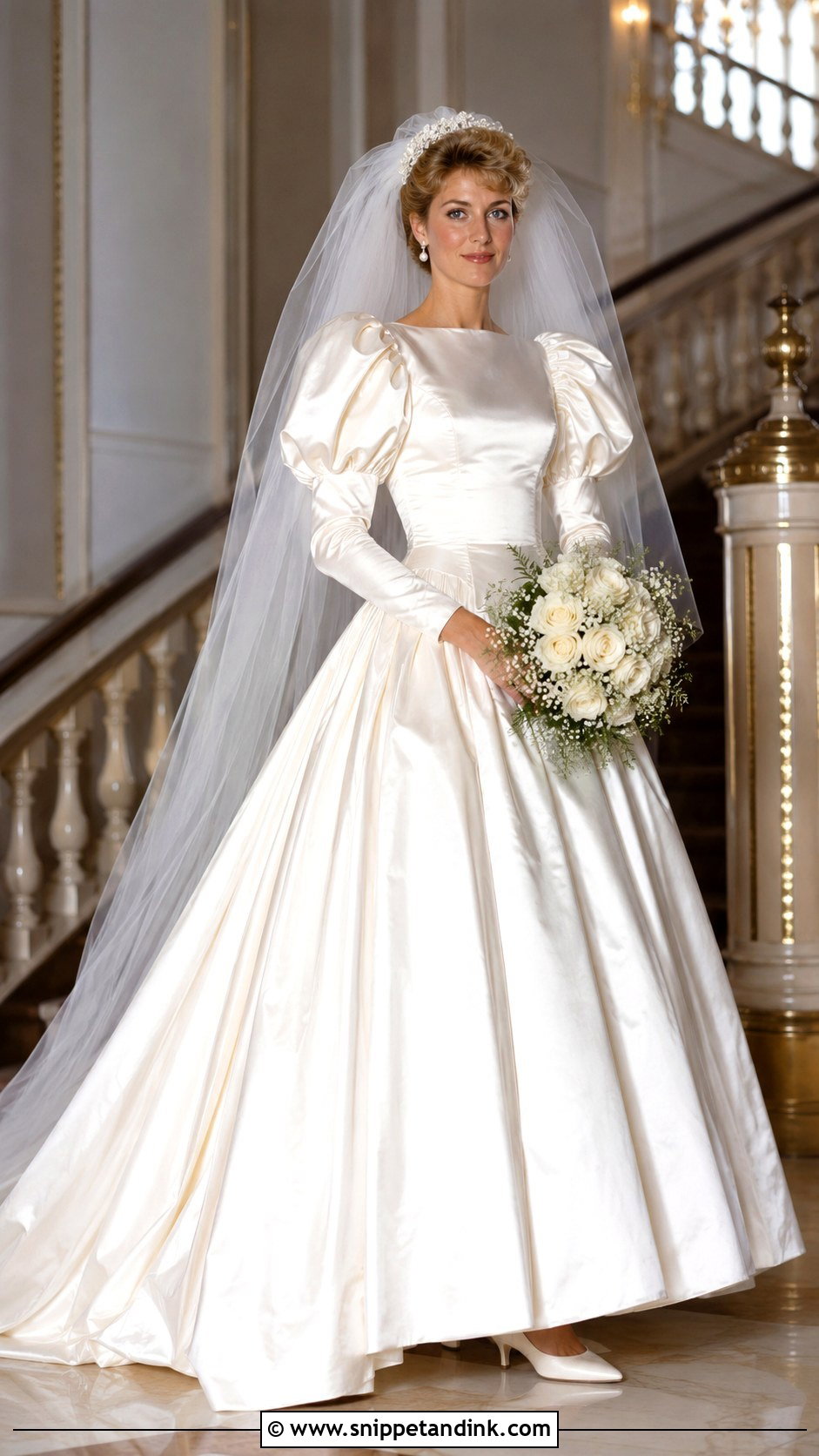
Satin is what lets a ball gown from this year hold its shape, but it shows every ripple underneath. A fitted bodice with a natural or slightly pointed waist sits over a gathered skirt, and the skirt needs a light petticoat; without one it slumps into soft folds by mid-afternoon. Puff sleeves with fitted cuffs give the period’s volume without fighting the clean fabric. Keep any detail near the face, such as a lace-trimmed neckline or a single row of pearls. If the bodice is already embellished, skip the heavy necklace. A full veil, low satin heels, pearl earrings and a structured rose bouquet belong in a grand hotel or a large ceremony room.
5. 1984 Taffeta Wedding Dress
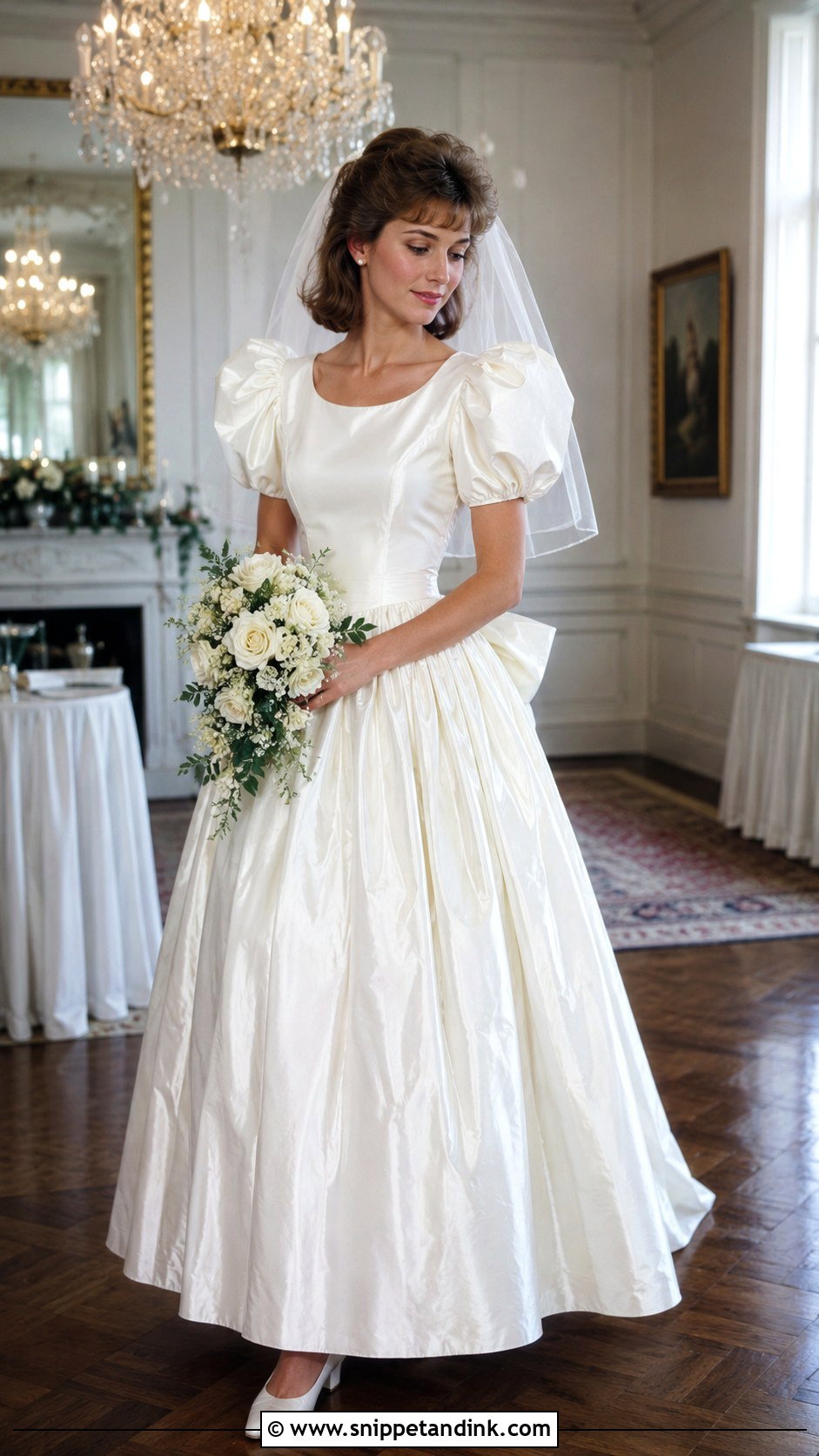
Taffeta brings its own volume and that soft rustle when you walk. A 1984 taffeta wedding dress usually pairs rounded puff sleeves with a fitted bodice and a skirt gathered hard at the natural waist. Be warned that taffeta creases sharply when you sit, and those lines show in photos, so I steam a taffeta skirt at the venue rather than the night before. Because the fabric is already doing so much, keep trim to a restrained bow or a few lace inserts. Simple pearls, low ivory pumps and a shoulder-length veil that leaves the back visible are enough, with white roses and a little greenery in hand.
6. 1984 Princess Wedding Dress
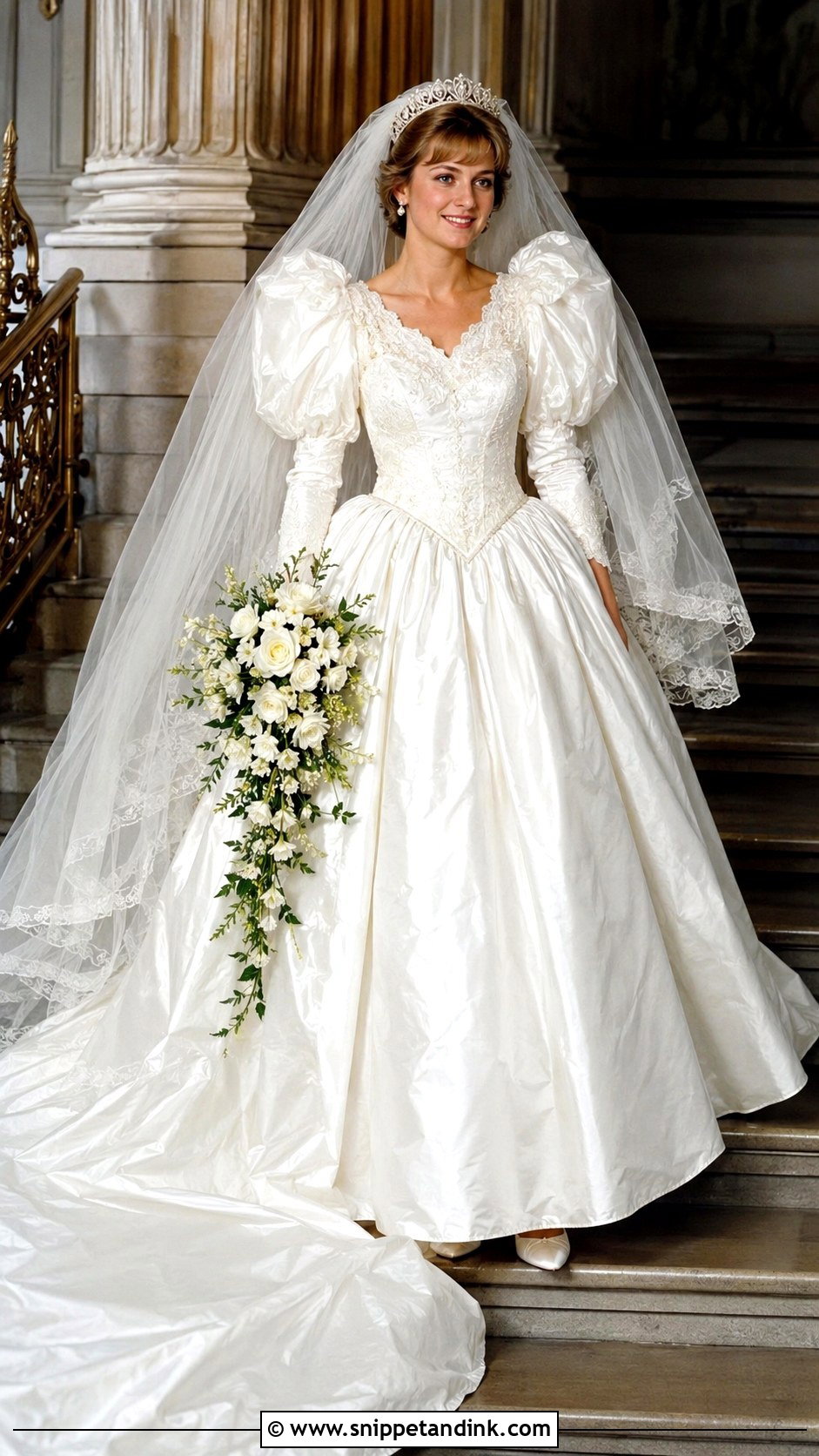
This is the full fairy-tale version: a closely fitted bodice, big sleeves, a wide skirt and a long train, with lace ruffles at the neckline and cuffs and a slightly dropped or pointed waist to lengthen the torso. The silhouette owes a lot to Princess Diana’s gown, which made this scale of dress the aspiration for years afterward. It is heavy, though. Layers of satin, net and lace add up, and I only recommend it to a bride who’s happy to stand still for portraits and move slowly. A full-length veil, small pearl earrings, ivory pumps and a cascading bouquet suit it. A tiara can work, as long as it stays in scale with the hairstyle and veil. Give this dress a staircase or a long aisle.
7. 1984 Long Sleeve Wedding Dress
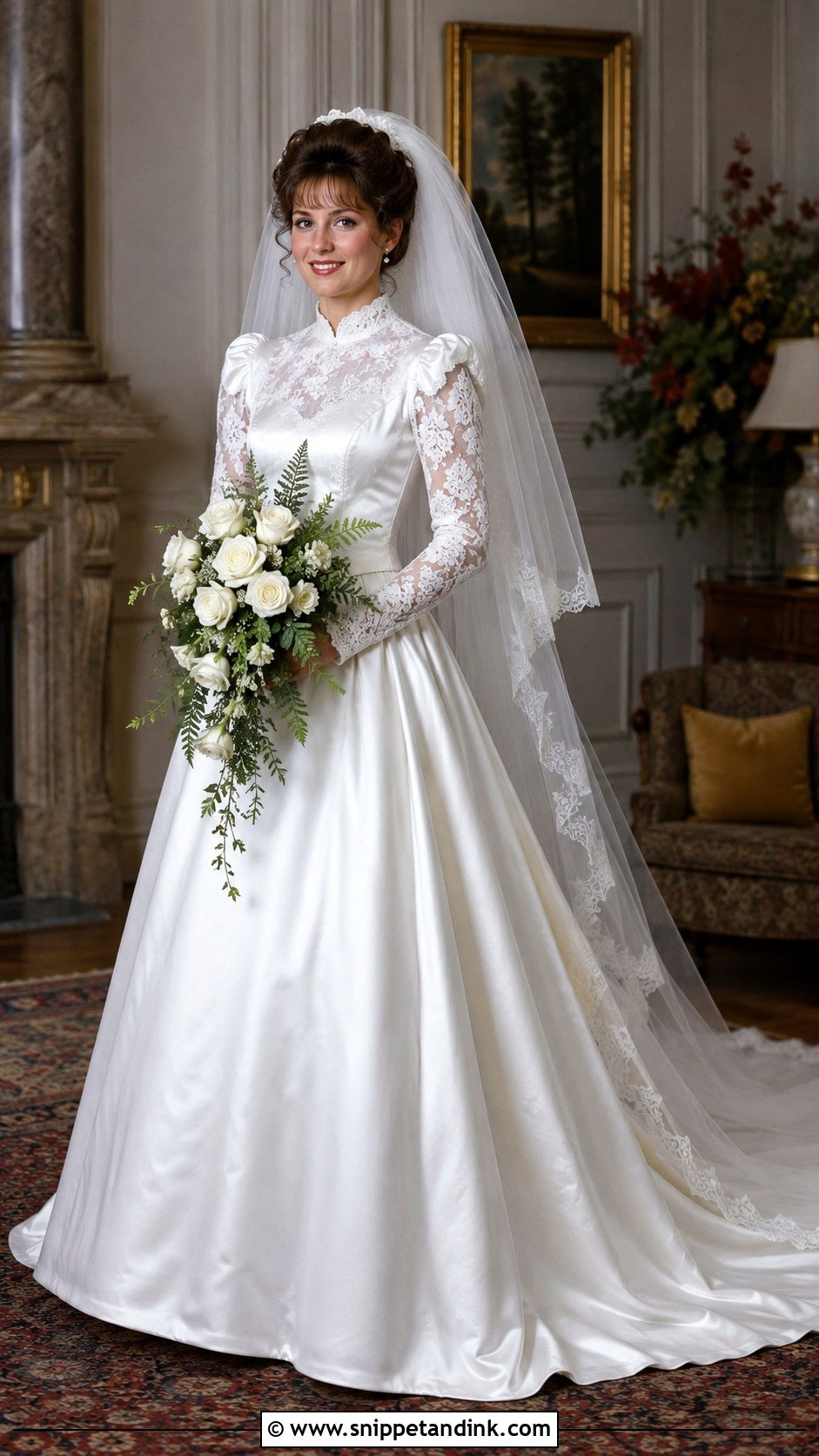
Long sleeves are what most brides wearing this era actually ask for, and they make sense in cold months. Floral lace or sheer sleeves with fitted cuffs and covered buttons give the period look. Before committing, raise your arms as if to hug someone: eighties sleeves were often set high and tight, and a sleeve that pulls the whole bodice up will annoy you by the first dance. A structured bodice and full A-line skirt hold the shape without extreme volume. If the sleeves are busy, leave the neckline and skirt plain. A cathedral or chapel veil, closed-toe shoes, pearl studs and white roses with seasonal greenery fit, along with a sleek updo. Autumn and winter at an estate or museum suit it well.
8. 1984 Ruffled Collar Wedding Dress
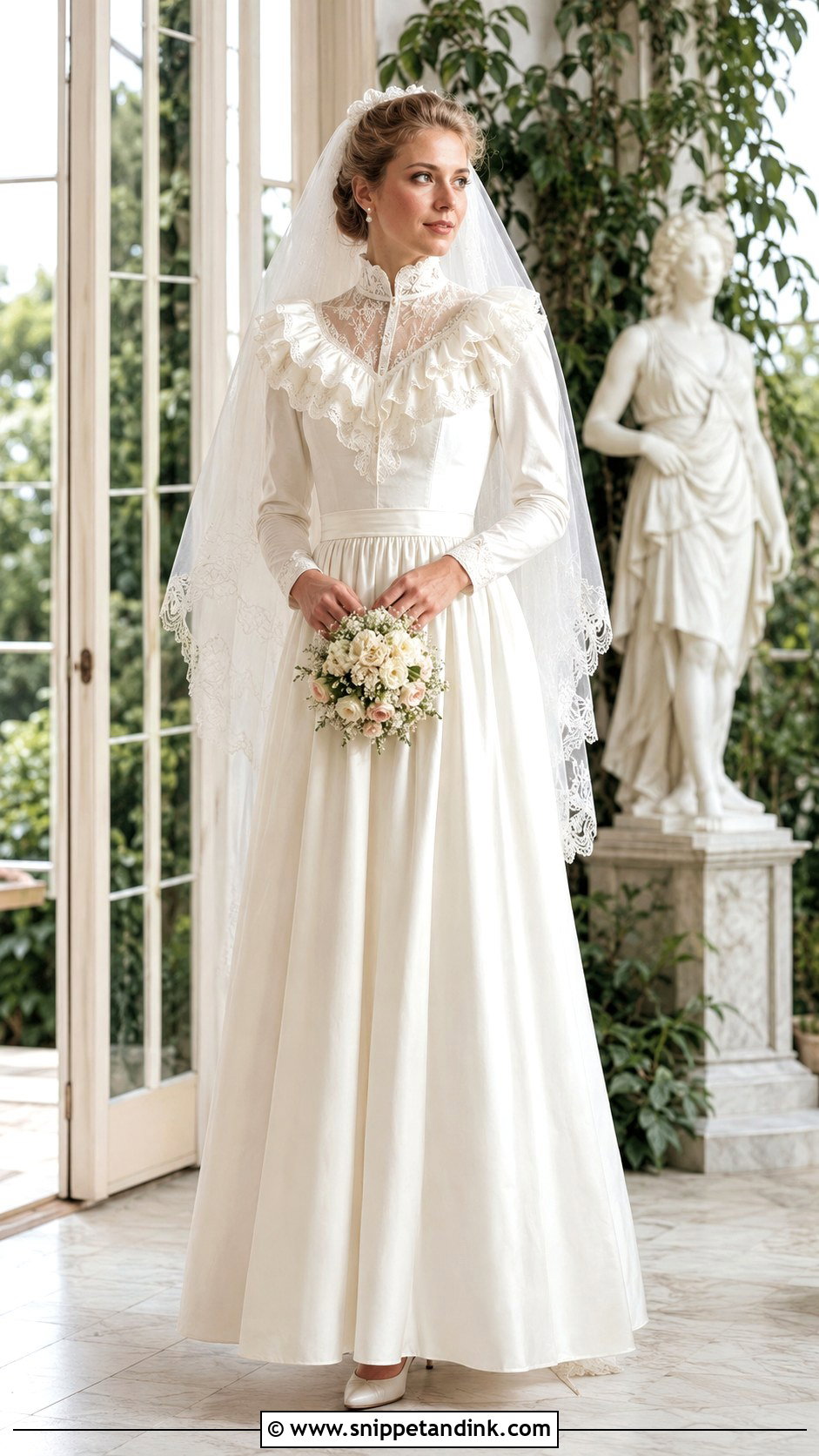
I’d go for a narrow stand collar edged in one or two layers of fine lace rather than a wide frill. A big ruffle pushes up against the jaw and swallows a low bun in side profile. The Victorian feel comes through anyway, especially when the lace carries on through a sheer yoke and long fitted sleeves. A satin bodice and gathered floor-length skirt give it a solid base. Wear a low bun, pearl drops, a lace-edged veil and plain ivory heels, and keep the bouquet small and round so it doesn’t crowd the neckline. Garden estates and bright older homes suit it.
9. 1984 Cathedral Train Wedding Dress
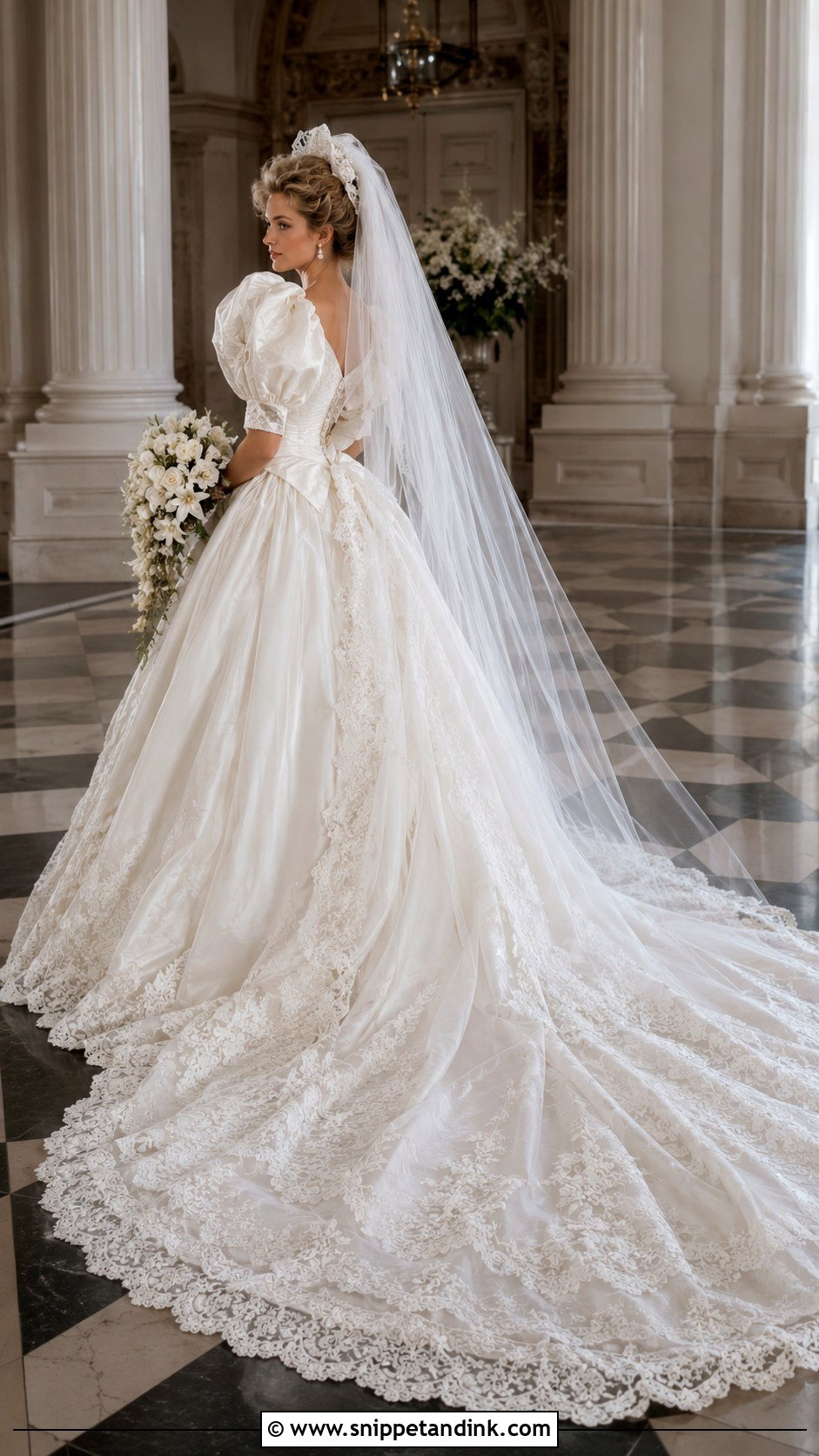
A cathedral train announces you before you reach the aisle. For a convincing 1984 version, put it behind a fitted satin bodice, full skirt and substantial puff sleeves, with lace appliqués along the hem so the back view holds up. Plan the bustle before you buy. A train this long usually needs several lift points, and the seamstress needs your actual shoes to set the hem. Choose a secure updo, modest pearls and low pumps. A matching long veil looks grand, though a shorter one is far easier to manage. Ask one person to arrange the train before photos and the entrance, and keep it to indoor floors and a generous aisle.
10. 1984 Chapel Train Wedding Dress
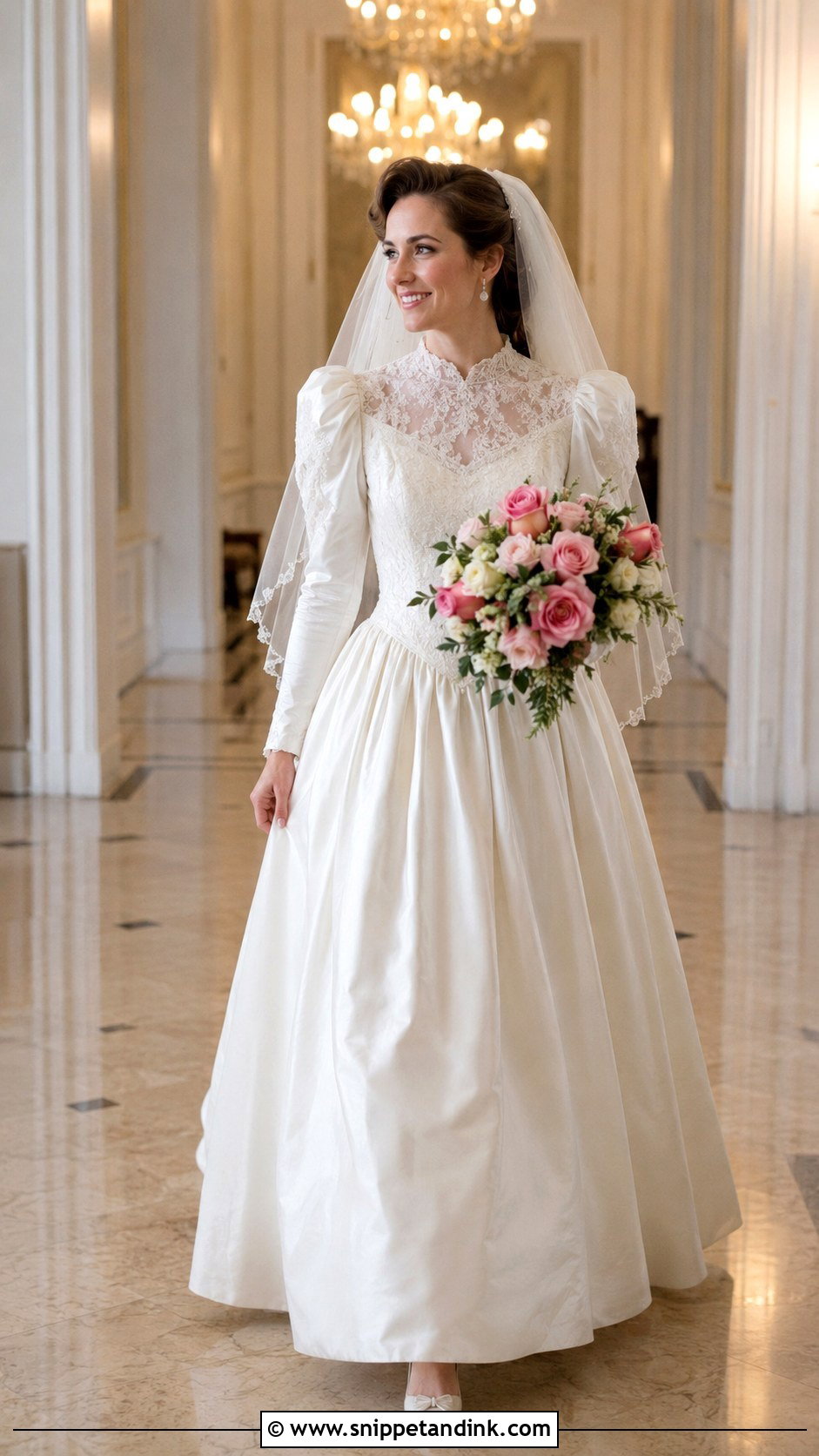
Chapel length gives you the drama at a size you can manage. Look for a fitted lace bodice, softly puffed sleeves and a full skirt trailing a little behind. It doesn’t need constant rearranging, and a simple bustle lifts it for dancing. I suggest this length to most brides who are torn, because it lengthens the line without piling bulk at the back. A fingertip veil, pearl earrings, ivory pumps and a medium rose bouquet go with it, and a half-up style adds height. Hotel ballrooms, formal restaurants and medium ceremony rooms all work.
11. 1984 A-Line Wedding Dress
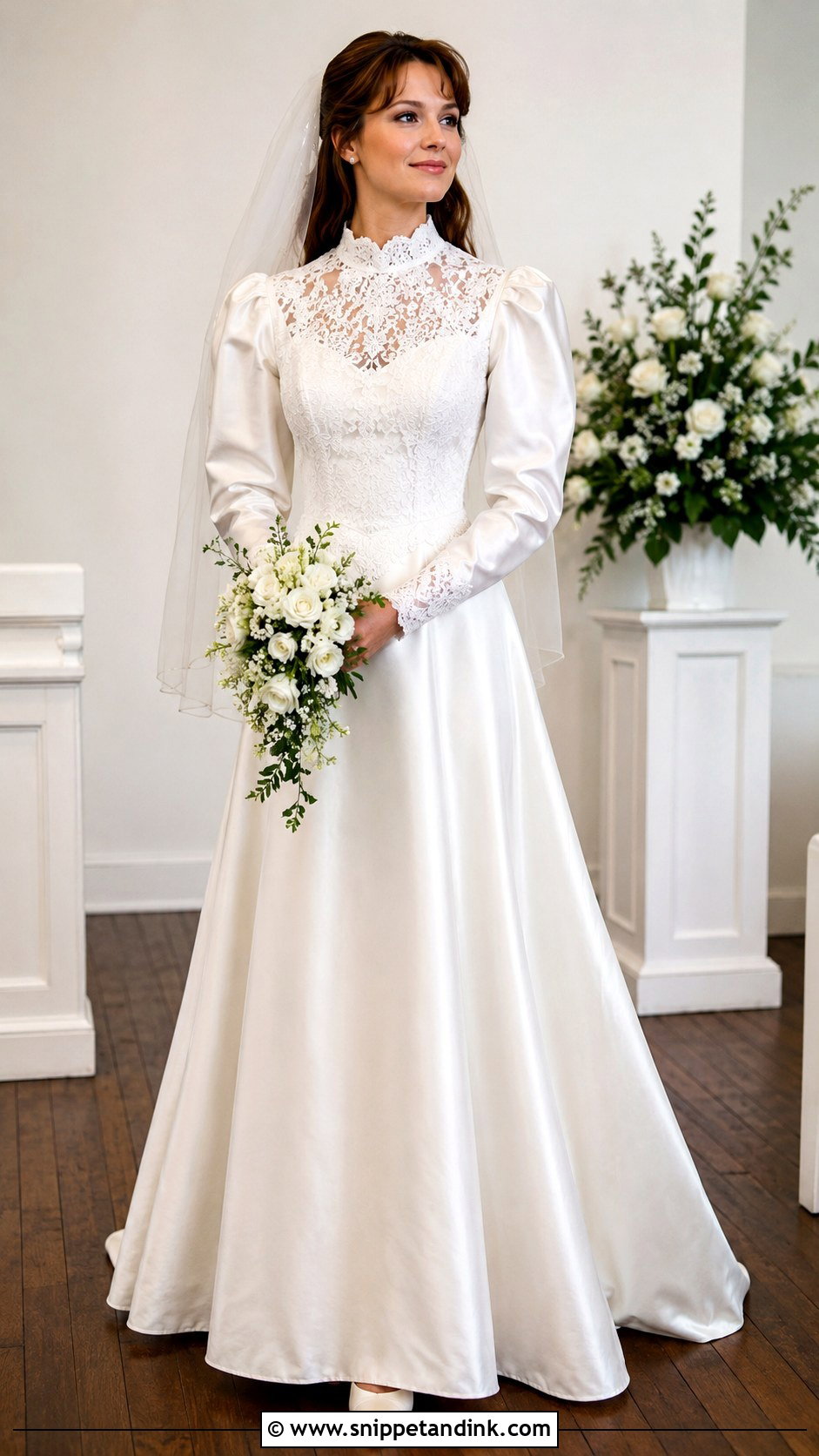
An A-line is the quiet reading of the year. The fitted bodice flows into a floor-length skirt instead of a full ball gown, while lightly puffed sleeves and a high neckline keep the period clear. It’s the one I steer brides toward when the day involves a car ride, a long seated dinner or stairs. Mark the waist with piping, a narrow satin band or a small bow at the back. Pearl studs, a simple veil, closed-toe heels and a loosely arranged bouquet finish it. Small venues and intimate ceremonies are its natural home.
12. 1984 Basque Waist Wedding Dress
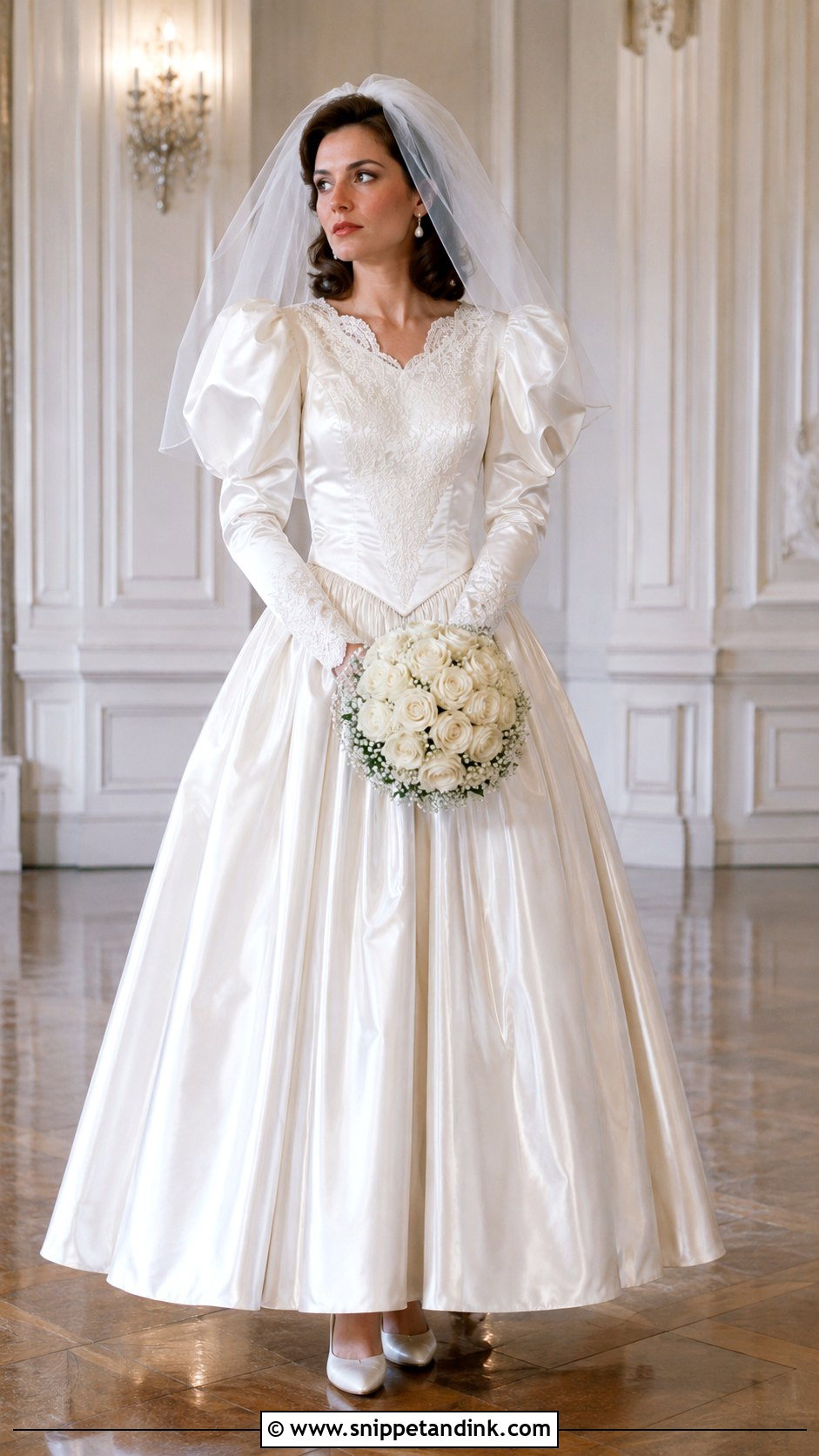
A basque waist dips to a point at center front, which makes the torso look longer, and with puff sleeves and a full skirt it turns very formal. Lace appliqués placed vertically down the bodice draw the eye along that point. The fit is unforgiving. If the point sits slightly off center or rides up when you sit, everyone notices, so I pin a basque bodice with the bride seated as well as standing. Let the skirt start with gentle gathers and widen below the hips. A shoulder-length veil, pearl earrings, low heels and a rounded white bouquet suit it. Never add a wide belt; it cuts straight across the line you chose the dress for.
13. 1984 Lace Overlay Wedding Dress
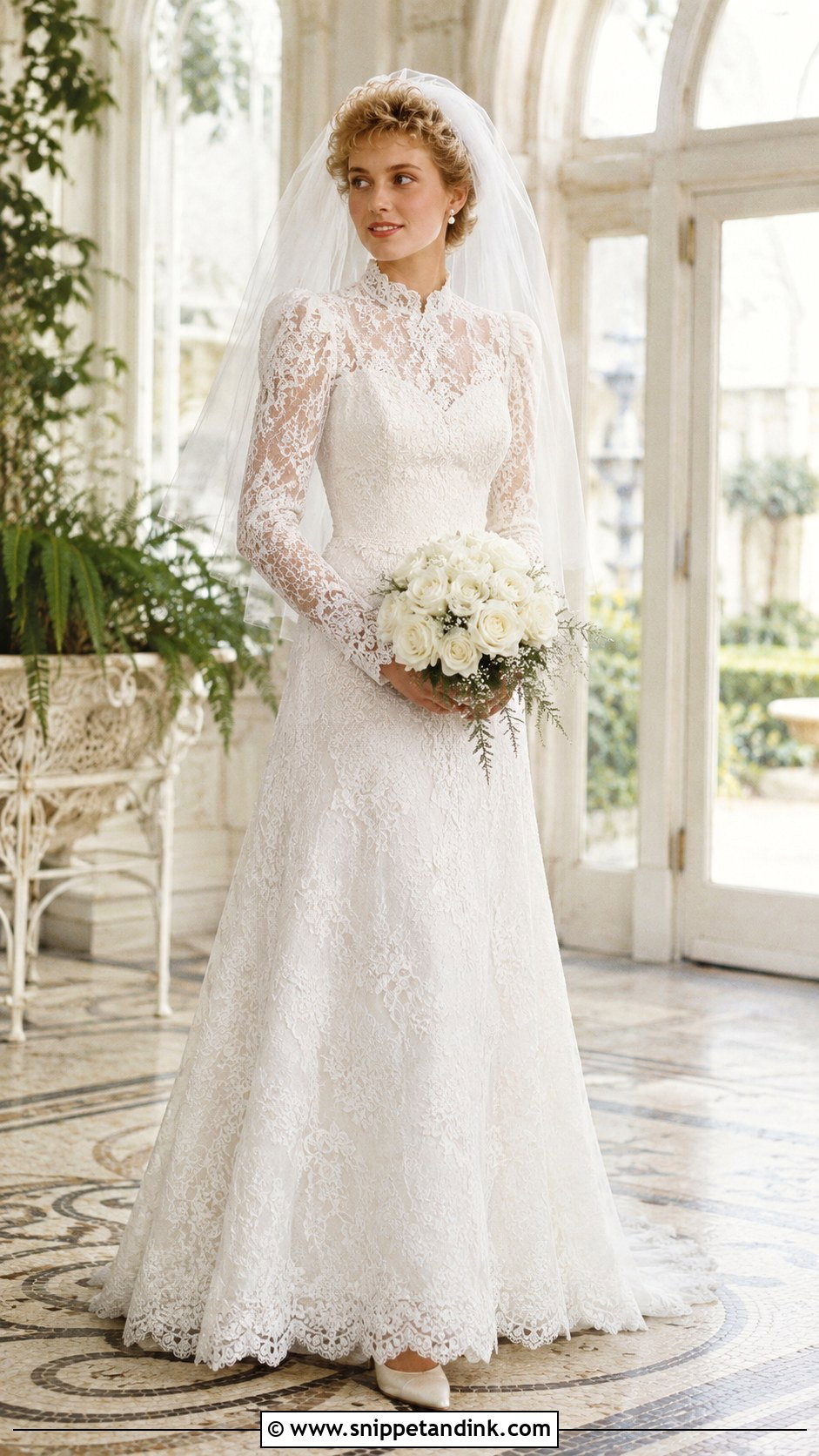
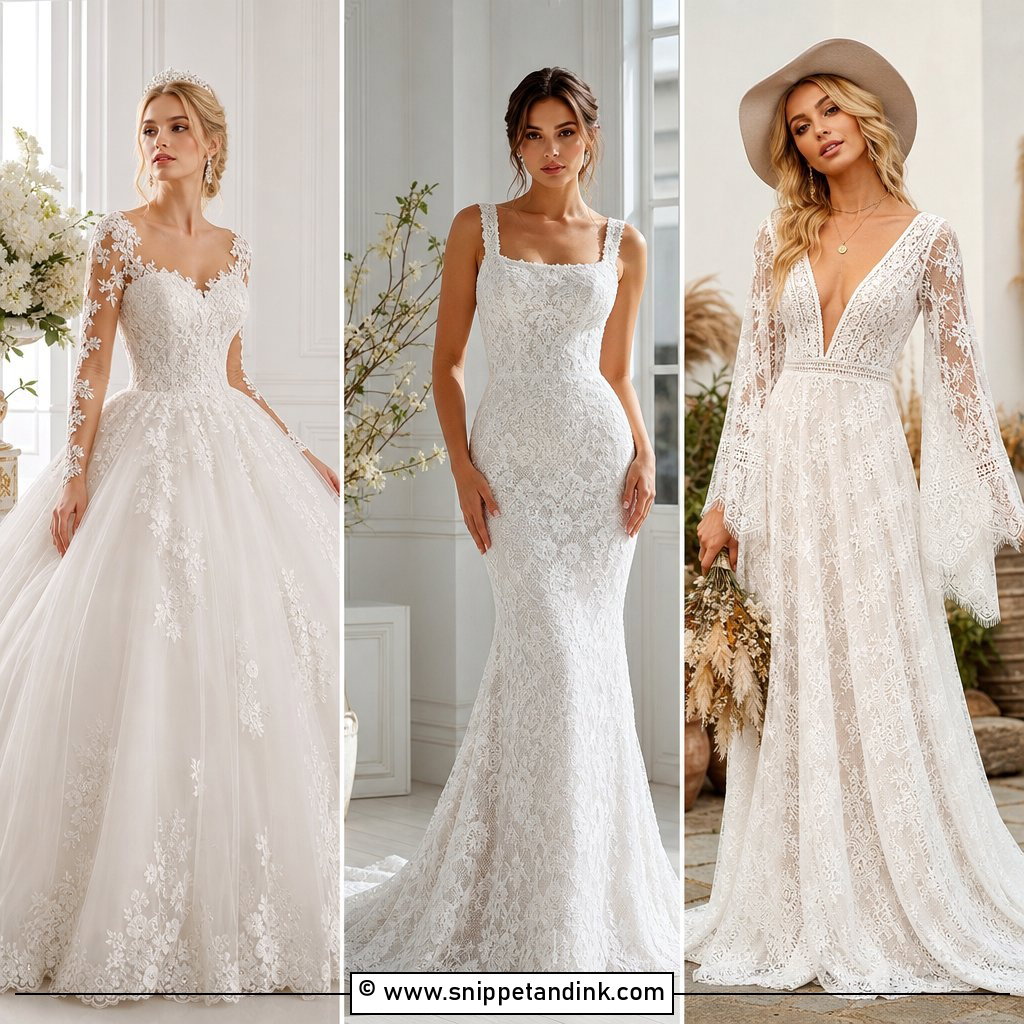
Lace from neckline to hem gives the most texture of any gown here. Look for a satin underlayer, fitted lace bodice, long sleeves and a gently flared skirt, with scalloped edges at the collar, cuffs and train. Much of the lace used in that decade was machine-made on nylon, and it tends to yellow at a different rate from the satin beneath, so hold both layers together in daylight before deciding whether the gown needs cleaning. With pattern everywhere, keep the veil plain and the earrings small. Ivory pumps, white roses and a smooth low bun let the lace lead. A consistent pattern and a clearly marked waist flatter most figures.
14. 1984 Tiered Skirt Wedding Dress
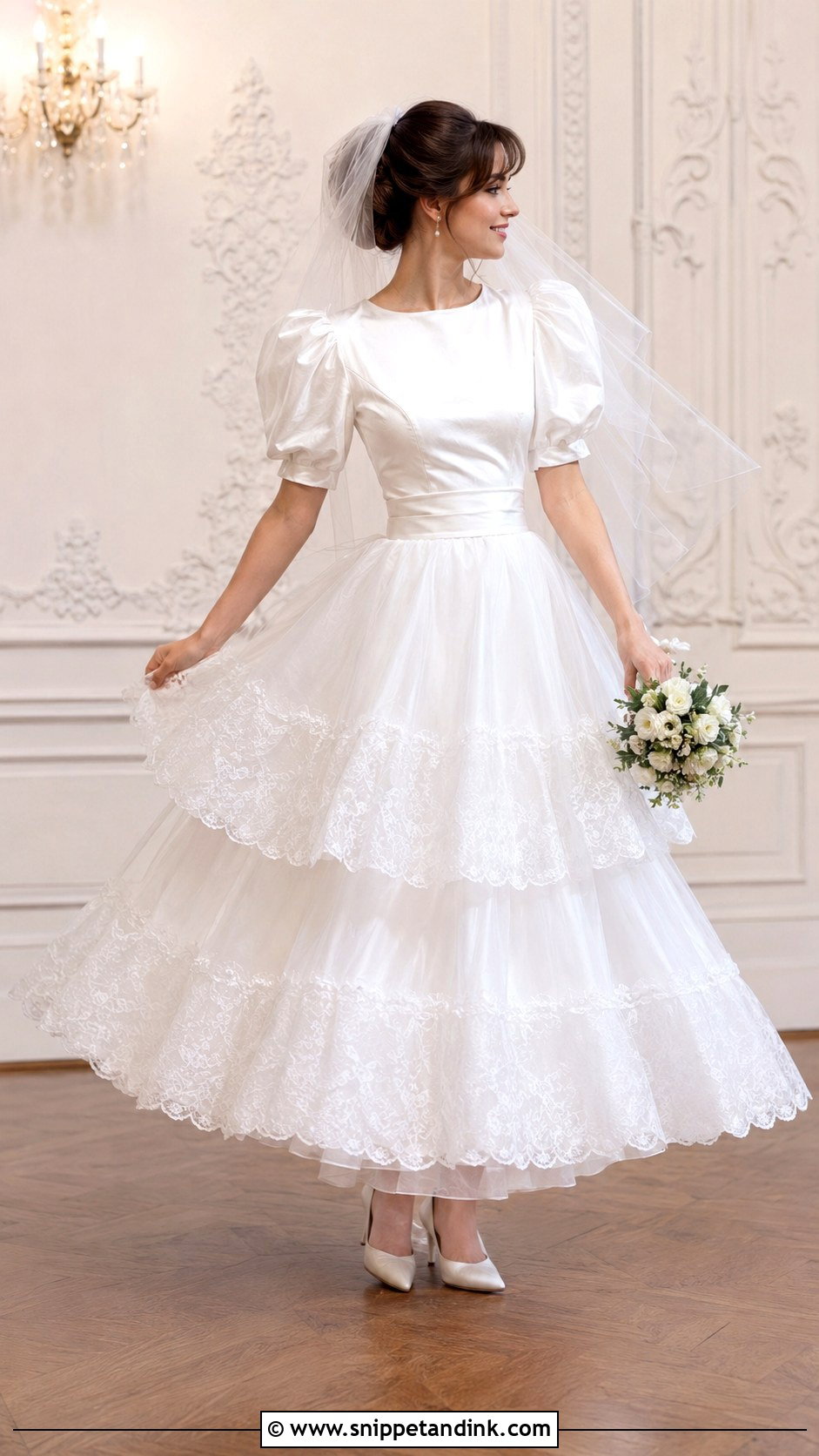
Tiers of lace or organza give the skirt real bounce. Start them below a fitted waist so the bodice stays crisp, and balance them with puff sleeves, a modest neckline and a smooth satin waistband. I prefer two or three wide tiers to a stack of narrow ruffles, which can look like a petticoat that escaped. Keep the hair controlled and polished. A fingertip veil, small pearls, ivory heels and a compact bouquet are plenty. Organza snags on rough stone and branches, so stick to ballrooms, reception halls or gardens with level paths, and ask your photographer for walking shots, since the tiers look best in motion.


15. 1984 Bow Back Wedding Dress
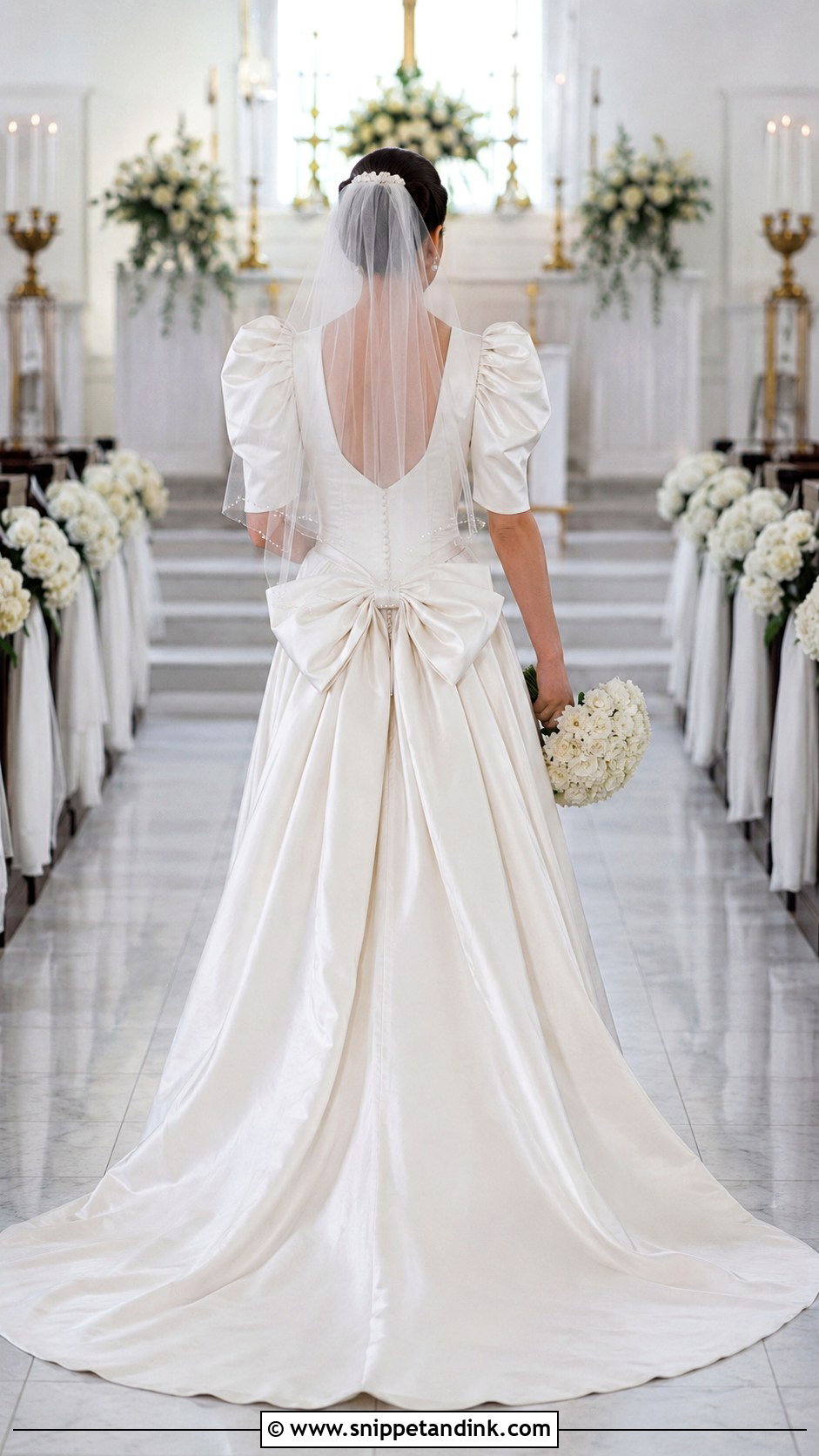
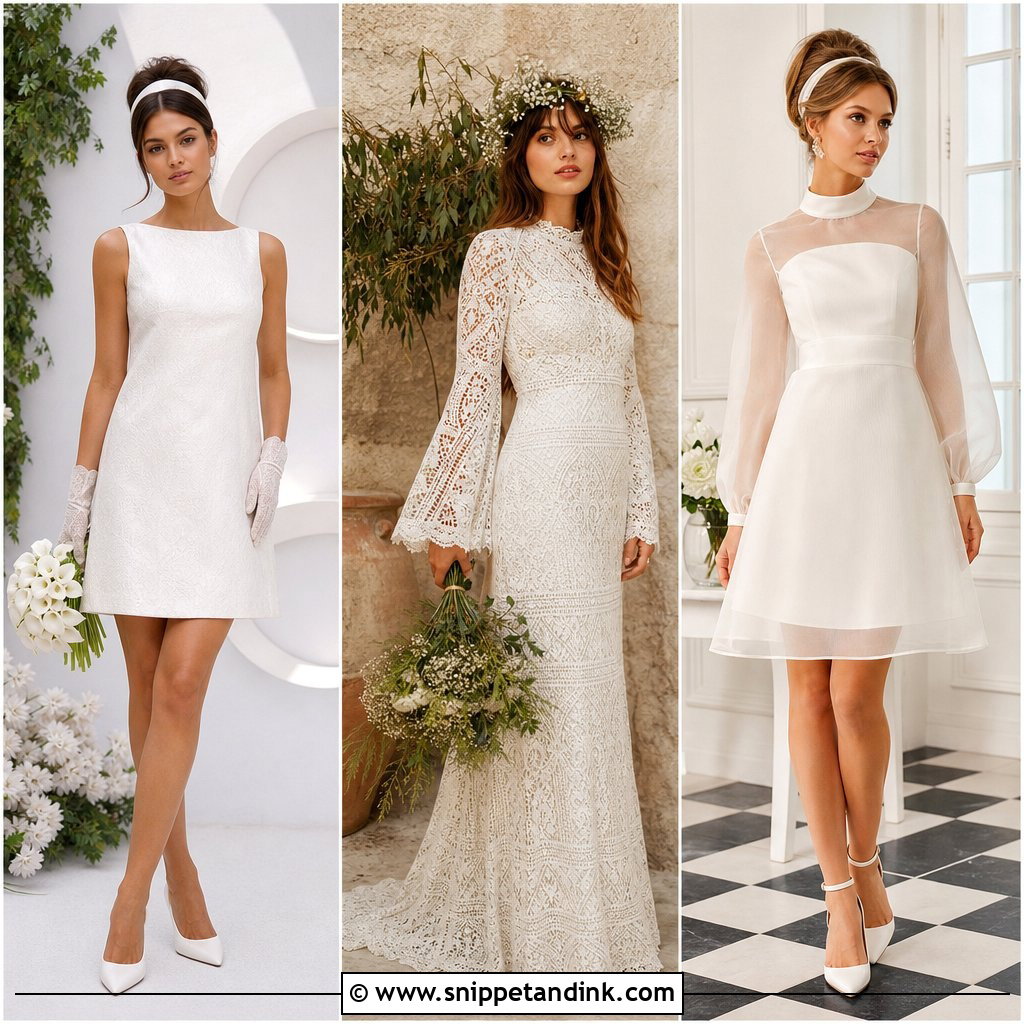
Nothing says 1980s quite like a big bow at the back. It should sit firmly at the natural waist with tails that fall into the train rather than covering it. Large satin bows go limp after hours of hugging and sitting, so I usually have the loops lightly interlined or stitched in place at the knot. Keep the front calm with a curved neckline and a little lace trim. Place a fingertip veil above the bow, add pearl studs and low satin shoes, and carry a rounded white bouquet. Ask for photos from behind, and save this one for a ceremony where guests face your back for most of the service.
16. 1984 Beaded Wedding Dress
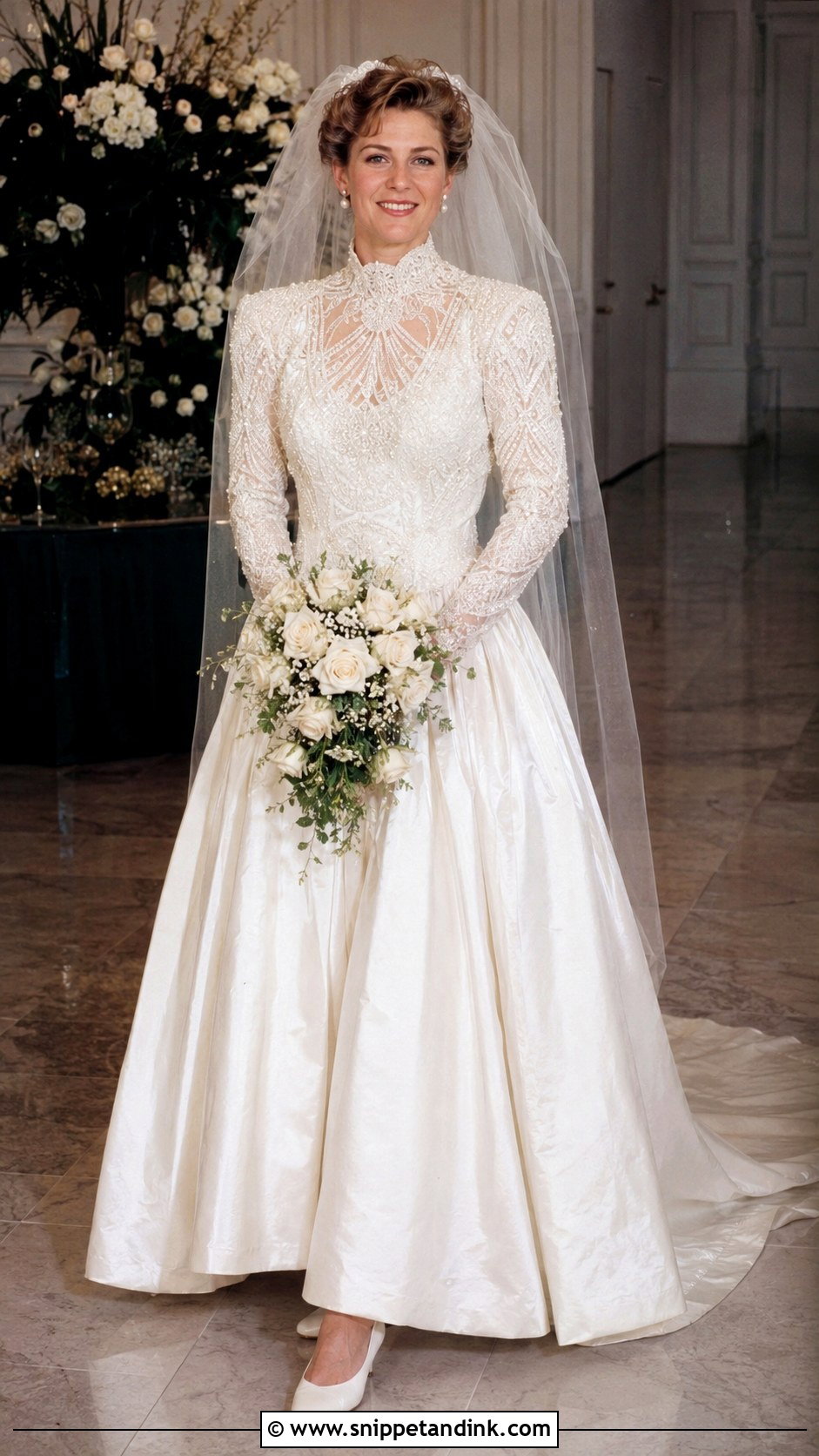
Pearls, sequins and small beads add sparkle without changing the traditional character, as long as they stay on the lace bodice, neckline and cuffs. On older gowns, beads were often strung along long continuous threads, so one broken stitch can drop a whole line. Before the wedding I run a fingertip over each beaded area and gently tug a few beads to find loose runs. Long sleeves, a fitted waist and a full satin skirt make a classic base. Plain pearl earrings, a sheer veil, ivory pumps and a structured rose bouquet suit it; leave jeweled shoes and ornate necklaces out. Evening receptions with even lighting show the beadwork best.
17. 1984 Off The Shoulder Wedding Dress
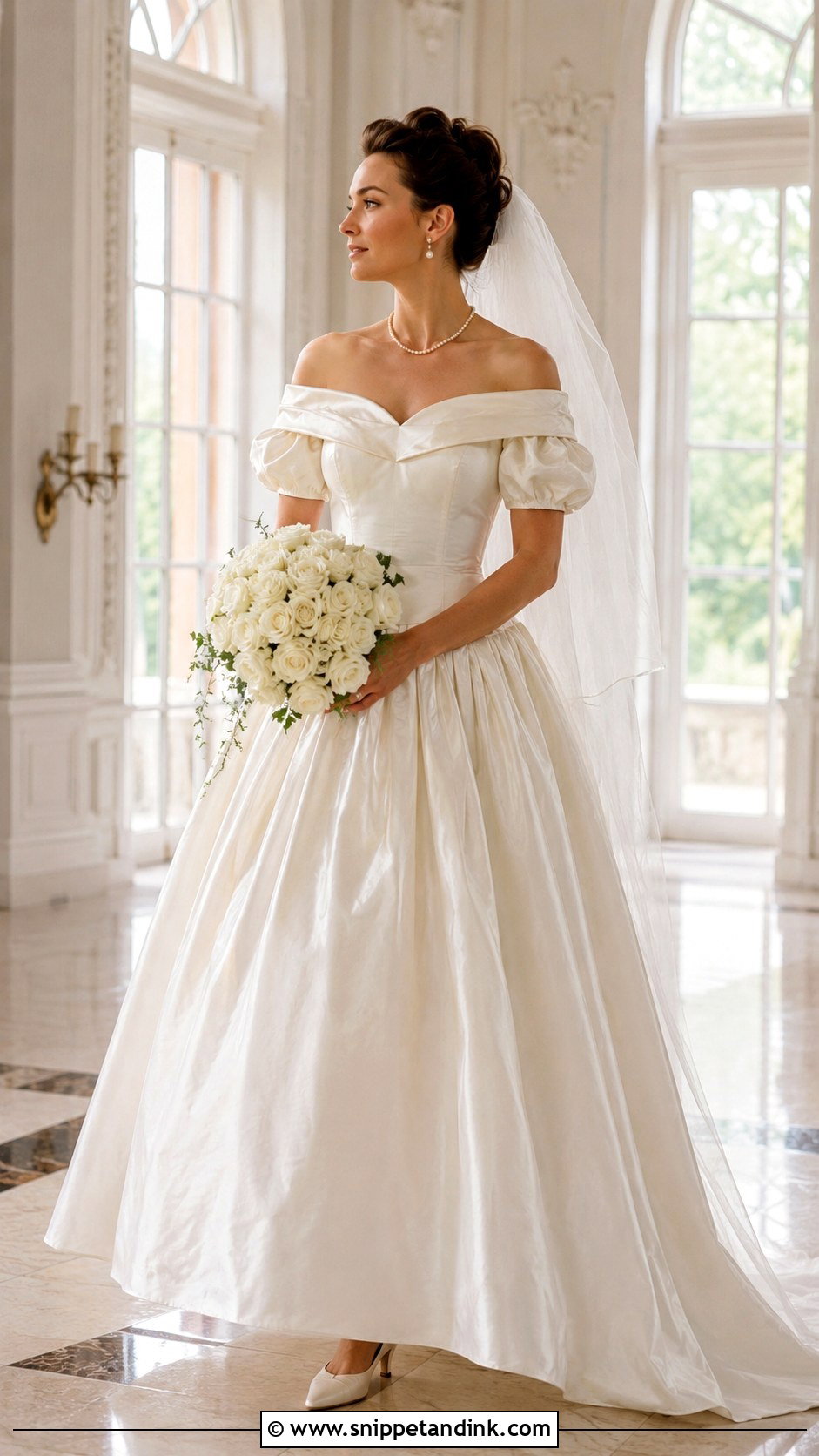
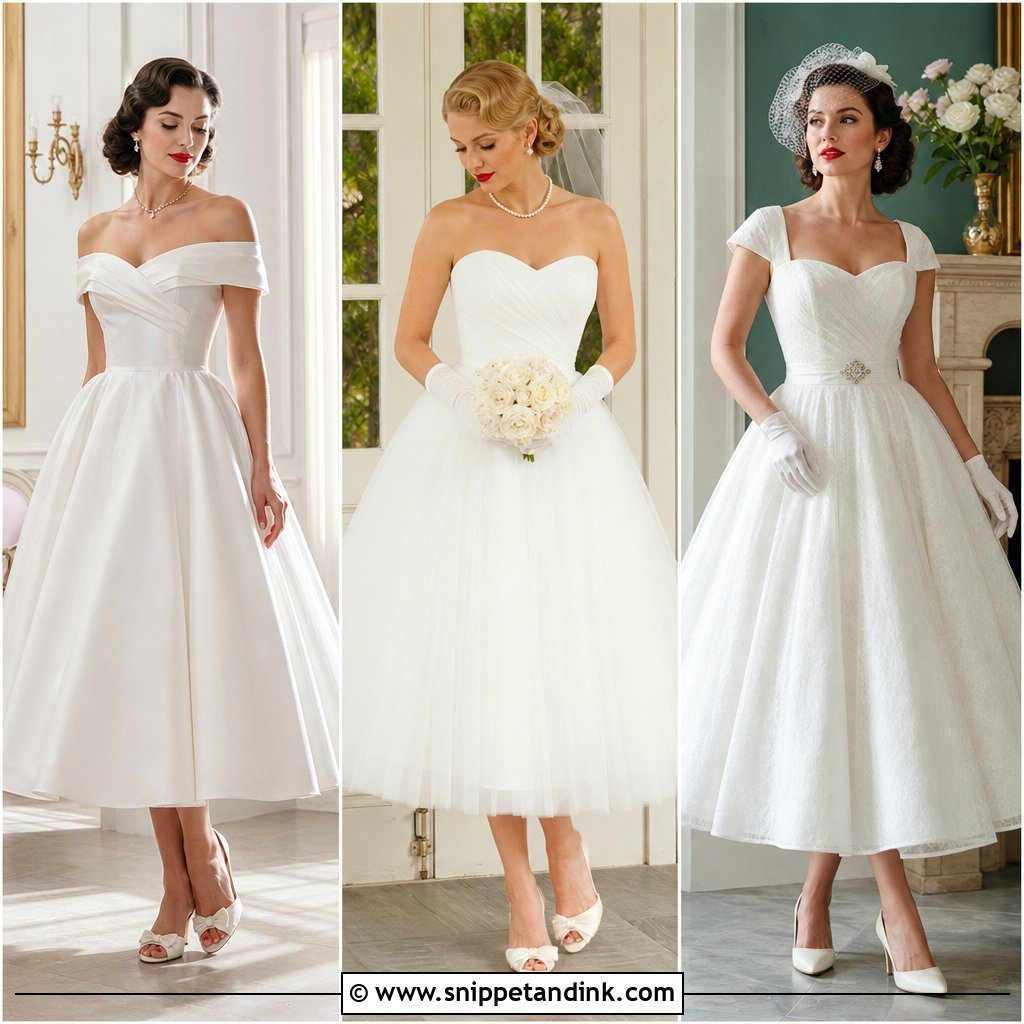
Off the shoulder softens the silhouette and makes it slightly less formal. Choose a gown with a folded satin neckline or lace ruffle that sits securely across the upper arm, with short puffs or full sleeves attached below to keep the period’s proportions. My question is always what holds it up. Without a boned bodice or inner corset, the neckline slides every time you lift your arms and you’ll spend the reception hitching it. A defined waist and full skirt balance the bare shoulders. A short pearl necklace, drop earrings, low pumps, a veil at the back of the hair and white roses complete it. Indoor summer ceremonies are ideal.
18. 1984 Tea Length Wedding Dress
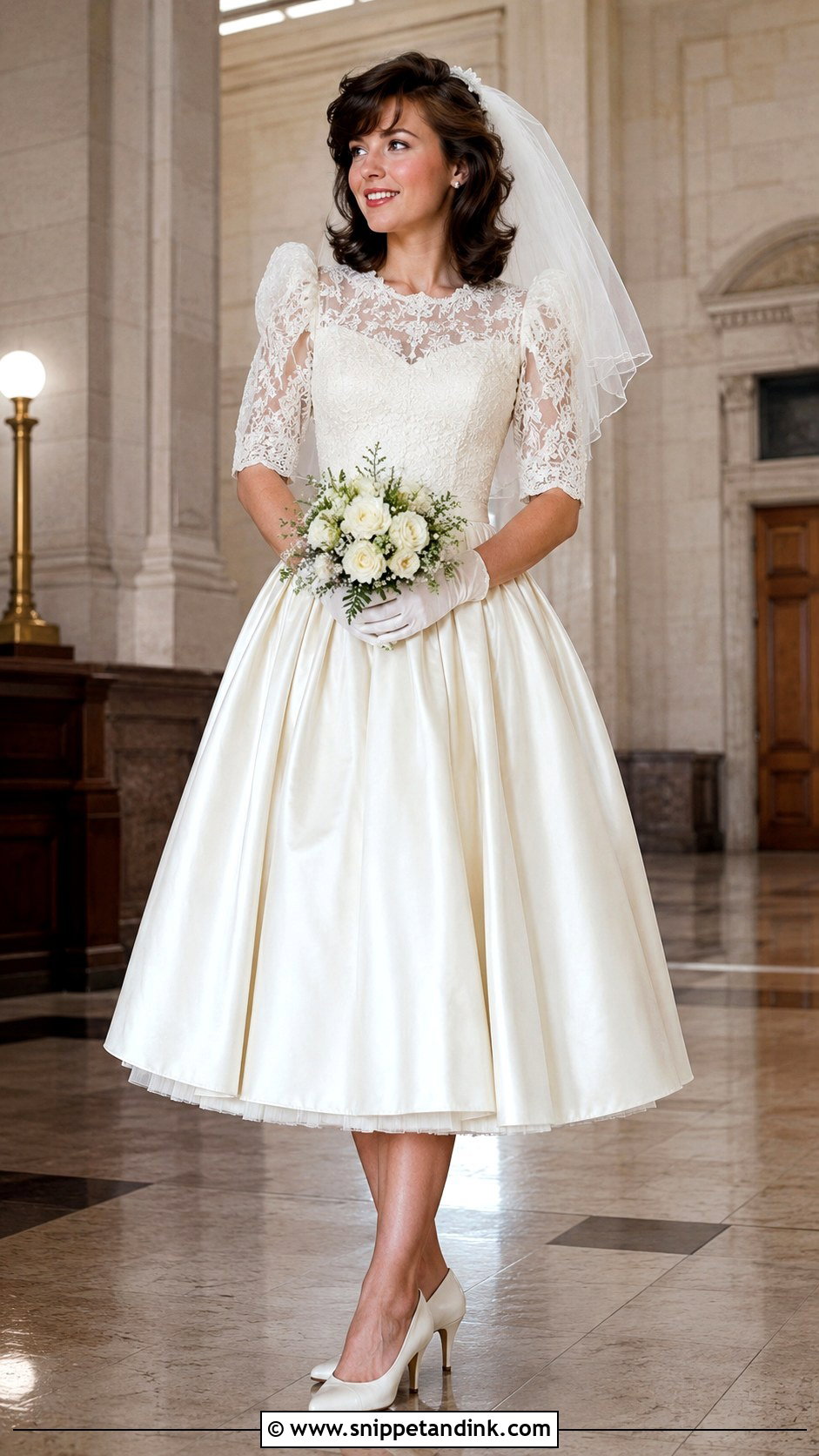
Tea length is the lively one. A fitted lace bodice, elbow puff sleeves and a full skirt ending below the knee or at the lower calf, held out by a structured petticoat, give real volume without weight. Your shoes become part of the outfit, so pick ivory pumps with a low or medium heel that fit firmly. Pearl studs, short gloves, a shoulder-length veil and a compact bouquet finish it. It’s my first suggestion for courthouse ceremonies and daytime parties, and it’s the easiest dress on this list to dance in.
19. 1984 Minimal Satin Wedding Dress
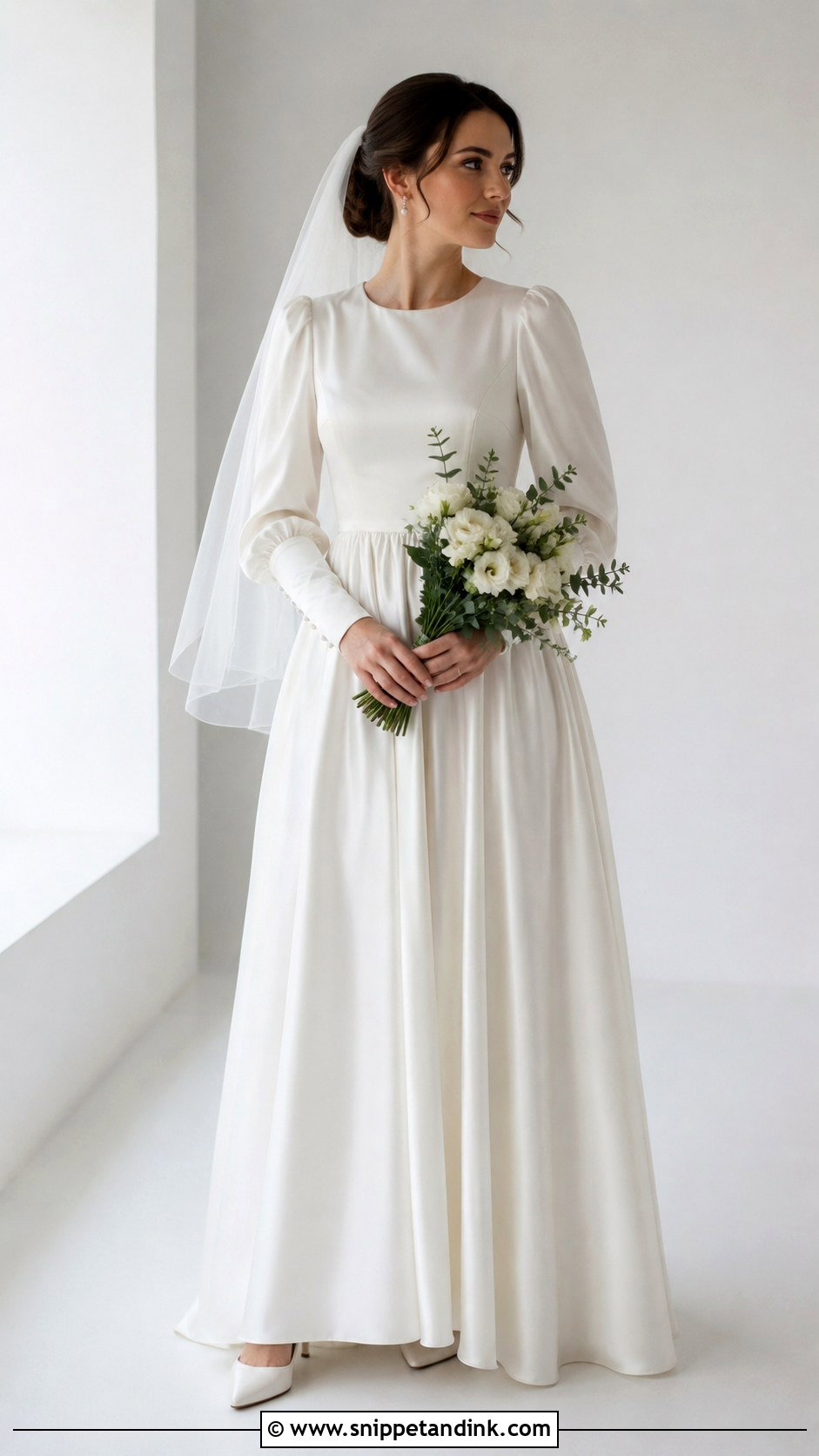
Not every gown from that year needs lace and ruffles. A minimal satin version gets its period character from shape alone: a fitted bodice, natural waist, lightly gathered skirt and gently puffed long sleeves, with covered buttons at the back and cuffs. Plain satin shows marks and water spots more than lace does, so tuck a white cloth in someone’s bag and keep drinks at arm’s length. Pearl earrings, plain pumps, a single-layer veil and white flowers with greenery are enough, with a smooth bun or shoulder-length waves. This is often the right route for a bride wearing an original dress who doesn’t want to look as if she came to a theme party.

20. 1984 Garden Wedding Dress
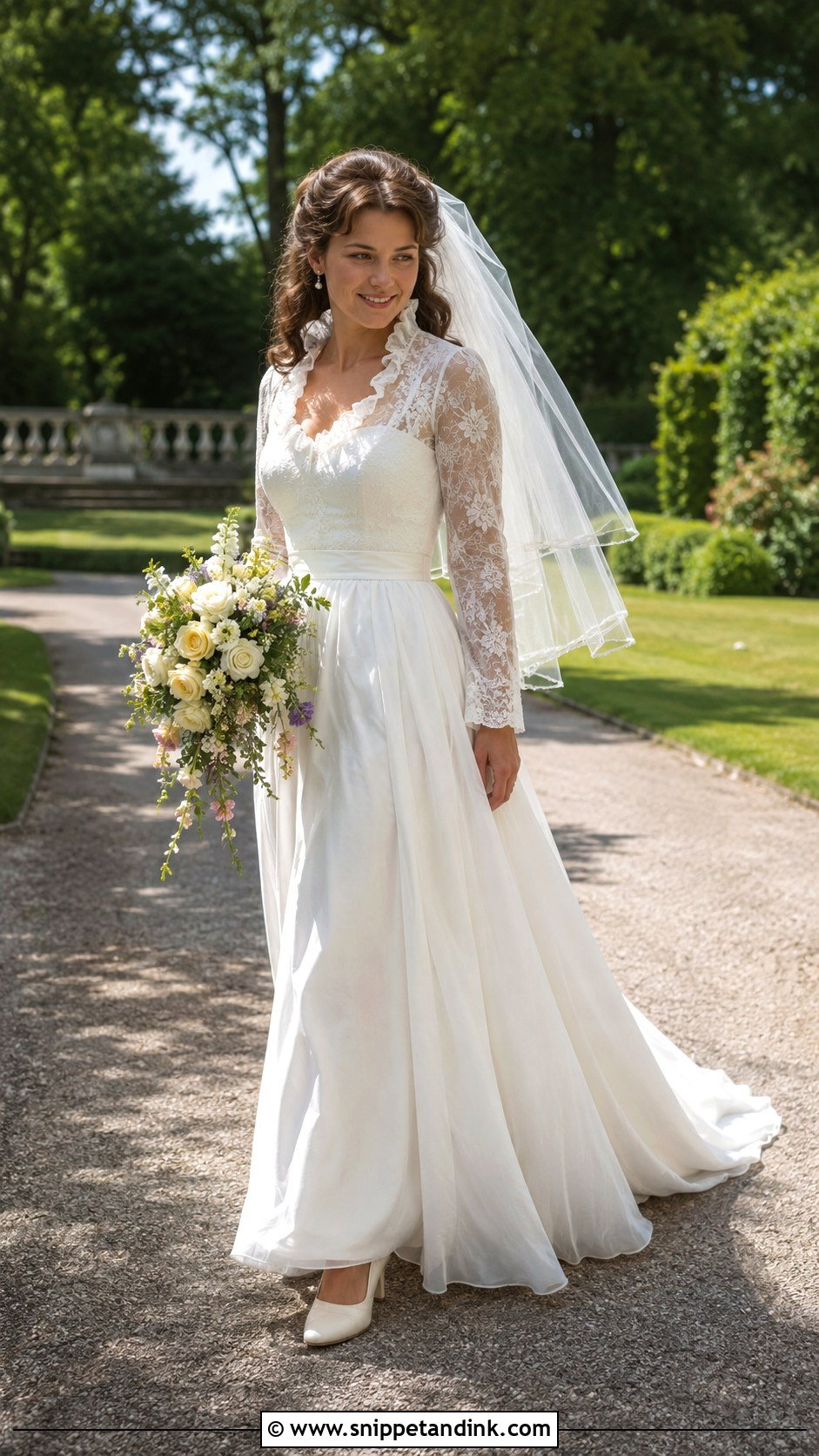
Outdoors, I go lighter. A lace bodice, sheer long sleeves and a flowing A-line skirt give the period detail without the weight of a ball gown. Choose a sweep or short chapel train that can travel over a firm path, because anything longer collects grass stains and grit within minutes. Block heels won’t sink into a lawn the way stilettos do. Add pearl earrings, a light fingertip veil and white garden flowers with greenery. A secure half-up style copes with wind while framing a high or ruffled neckline.
Yellowed Satin, Brittle Net and Other Signs of a Dress That Has Waited Forty Years
A gown packed away in the mid-eighties has had decades to change. Ivory satin often yellows in patches where it was folded or handled, old perfume and skin oils leave brown spots that only appear later, and the net under lace turns brittle. None of this means the dress is lost, but it does mean you shouldn’t treat it at home.
Getting it clean without damage
Take it to a cleaner who specializes in bridal and vintage pieces, and ask them to identify the fibers and test a hidden spot first. Household bleach and stain removers can weaken old fibers or leave a whiter, rougher patch than the rest of the gown. Expect some yellowing to lighten without fully disappearing. A slightly warm ivory usually photographs well anyway, especially beside white flowers.
Putting it away again afterward
Have it cleaned before storage even if it looks spotless, because sugar from a spilled drink is invisible at first and browns with time. Then fold it loosely with acid-free tissue in an acid-free box, somewhere cool and dark, and never leave it in a plastic garment bag, which traps moisture. Open the box once a year and refold along different lines so the creases don’t set.
One or Two Eighties Details Usually Carry the Whole Look
Puff sleeves, lace yokes, high collars, full satin skirts, bows, ruffles and long trains all belong to 1984, but no gown needs every one of them. A plain A-line with lace sleeves reads as authentically eighties as a full princess dress. Start with your venue, the season and how much you’ll need to move, then let one or two period features do the talking. Shoes, veil, pearls, flowers and hair are there to support the dress, so keep them a step quieter than the gown itself.
You'll Like These Ideas:









Leave a Reply