
Uzbek bridal dressing is built on cloth first: ikat silks like atlas and adras, gold-worked velvet, and suzani embroidery that once took a family months to stitch. The ideas below run from traditional khan-atlas gowns and embroidered velvet to modest white dresses and modern cuts that borrow just one textile. Most of the outfits are completed the same way they always have been, with an embroidered robe, lozim trousers, a doppi cap and heavy jewelry. When I style one of these looks, my first question is never about the dress. It’s about which ceremonies she’ll be wearing it to and what her mother and grandmother expect to see, because that decides how much coverage, color and gold the outfit can carry. If handwoven silk or regional embroidery is involved, bring in an artisan who has worked with it before, since these fabrics behave very differently from bridal satin.
How Much Time Handwoven Ikat and Gold Embroidery Really Need
Almost every look below depends on handwork, and handwork has its own clock. Ikat silk is dyed in bundles before it’s woven, so a specific color or pattern can’t be rushed out of a workshop the way printed fabric can. Dense gold embroidery on velvet is slow too. Lead times vary a great deal between artisans, but I’d treat several months as normal for a fully embroidered gown and start the conversation as soon as the date is set.
Here’s the order I work in with a bride commissioning one of these outfits:
- List every event she’ll attend, from the nikoh to the toy and the kelin salom. Each may need a different level of coverage and comfort.
- Ask an older relative which patterns, colors or pieces the family expects to see. Some will have strong views on the bridal atlas or head covering.
- Buy or order the fabric first and get a swatch. Wash a small corner of atlas in cool water to see whether the dye runs, which tells the tailor how careful to be with lining and pressing.
- Order extra yardage for ikat so seams and panels can be matched.
- Book at least three fittings, and wear the actual shoes and headpiece at the last one, since a doppi or tillaqosh changes where the eye lands.
If the timeline is short, choose a plainer gown and put the handwork into one removable piece, such as a sash, a chapan or a clutch. It saves weeks and still brings the craft into the day.
1. White Uzbek Wedding Dress With Gold Embroidery
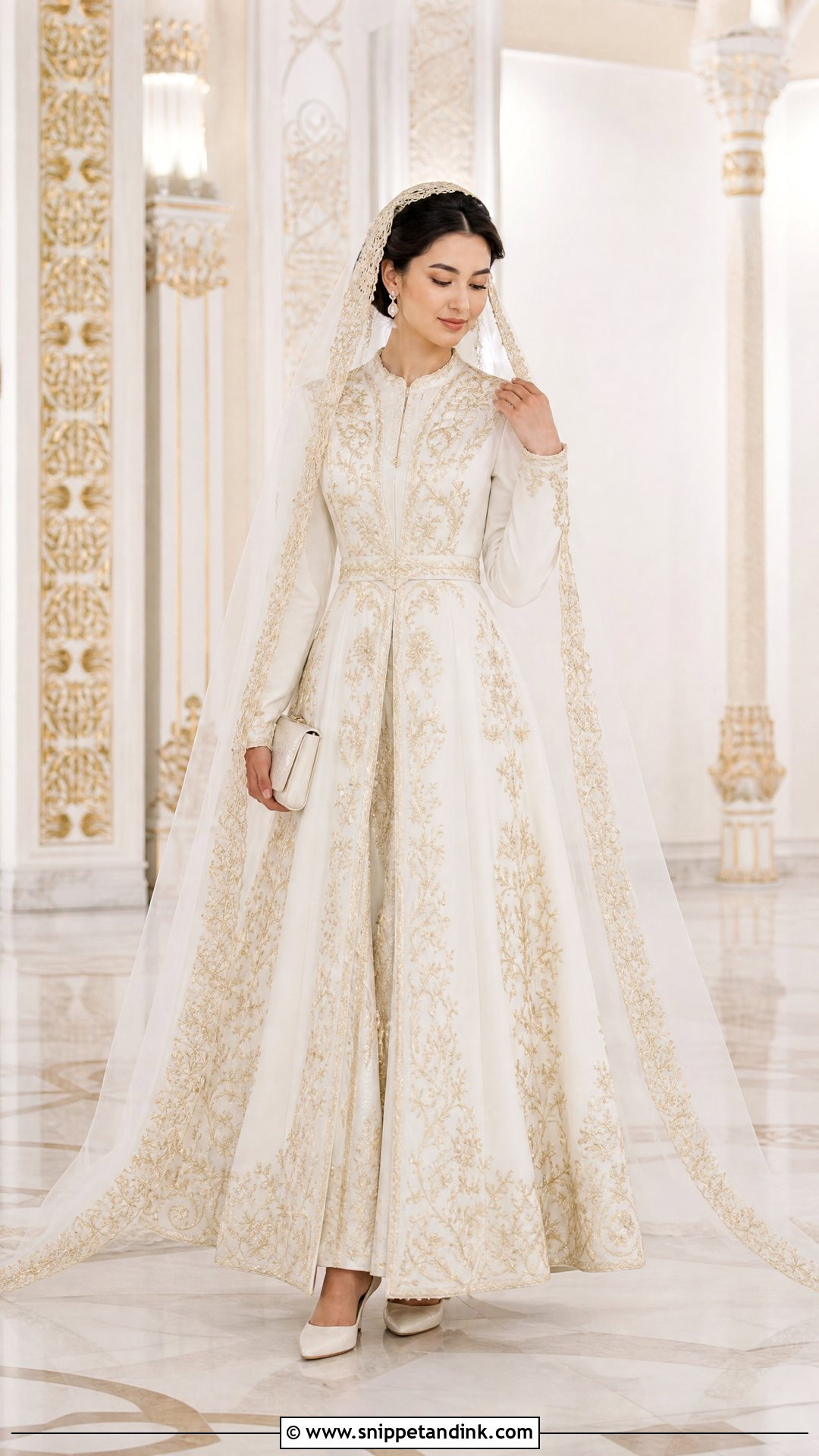
White with gold threadwork is where many brides start when they want a Western bridal shape and an Uzbek reference in the same dress. An A-line with full-length sleeves and a defined waist suits it, and the gold works best when it stays at the edges: neckline, cuffs, waist and hem. Once it creeps into the body of the skirt, the gown starts to look heavy and the white goes slightly yellow beside the metal in photos. Ivory closed-toe heels, pearl drops and a cream clutch keep the rest quiet, and a cathedral veil with a narrow gold border ties the two together. If she wants more coverage, I ask for the high neckline and opaque sleeves to be cut in at the pattern stage, not added later, so the embroidery can follow the new lines.
2. Red Velvet Uzbek Wedding Dress With Zardozi
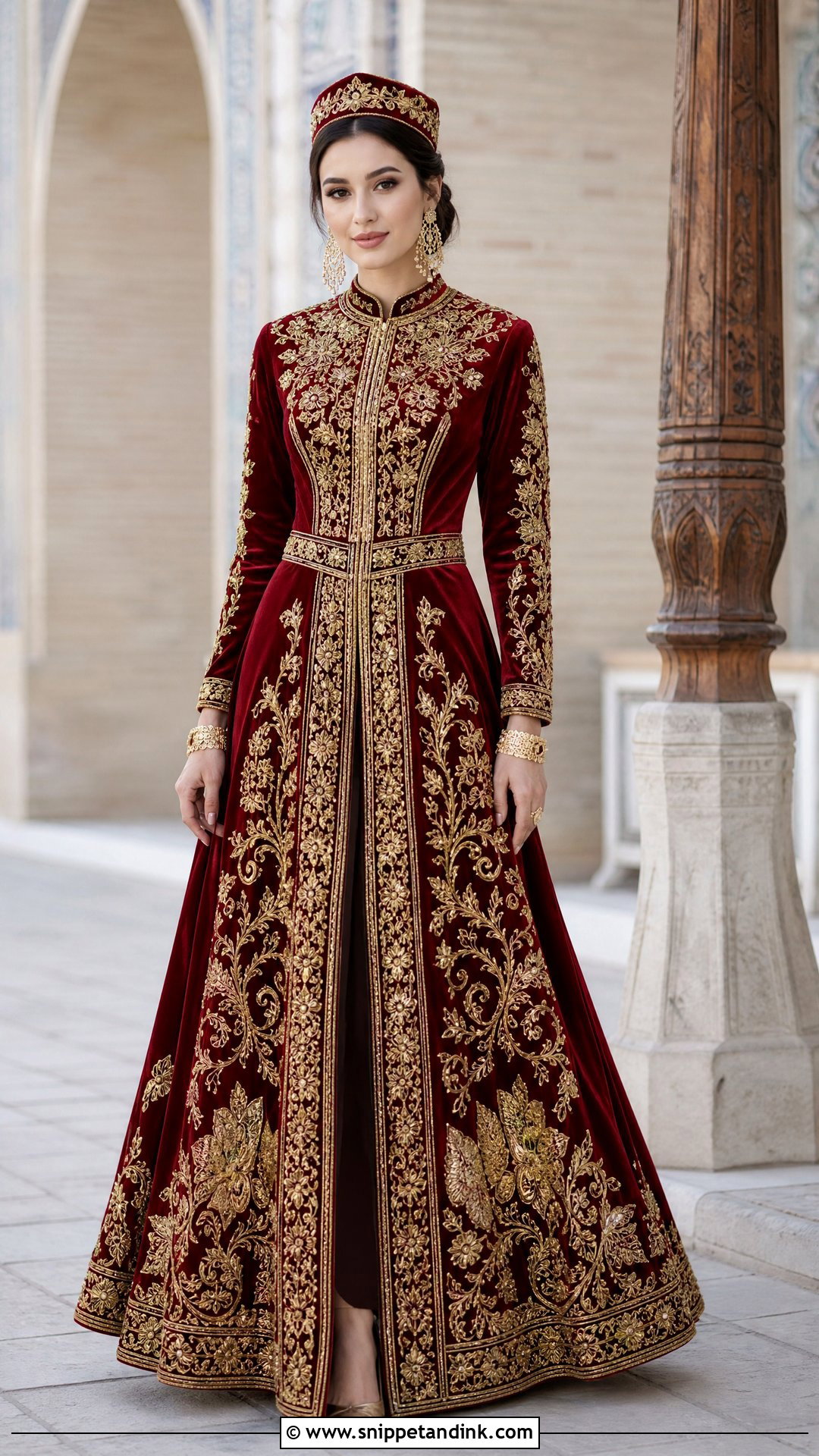
Red velvet with gold is the most ceremonial look on this list, and it suits an evening event better than a summer afternoon, because velvet is warm to wear. I’d choose a floor-length dress with a fitted bodice, long sleeves and a gently flared skirt, then place zardozi-style embroidery on the front panel, shoulders, cuffs and skirt border. Gold work on velvet has a long history in Bukhara, so this pairing carries real meaning rather than just looking rich. One thing to know before the fitting: velvet pile crushes where it’s pressed, so a tight sash or a heavy bag strap will leave marks by the reception. Gold pointed-toe shoes, chandelier earrings and stacked bangles finish it, and a matching velvet doppi can stand in for a tiara.
3. Khan Atlas Uzbek Wedding Dress
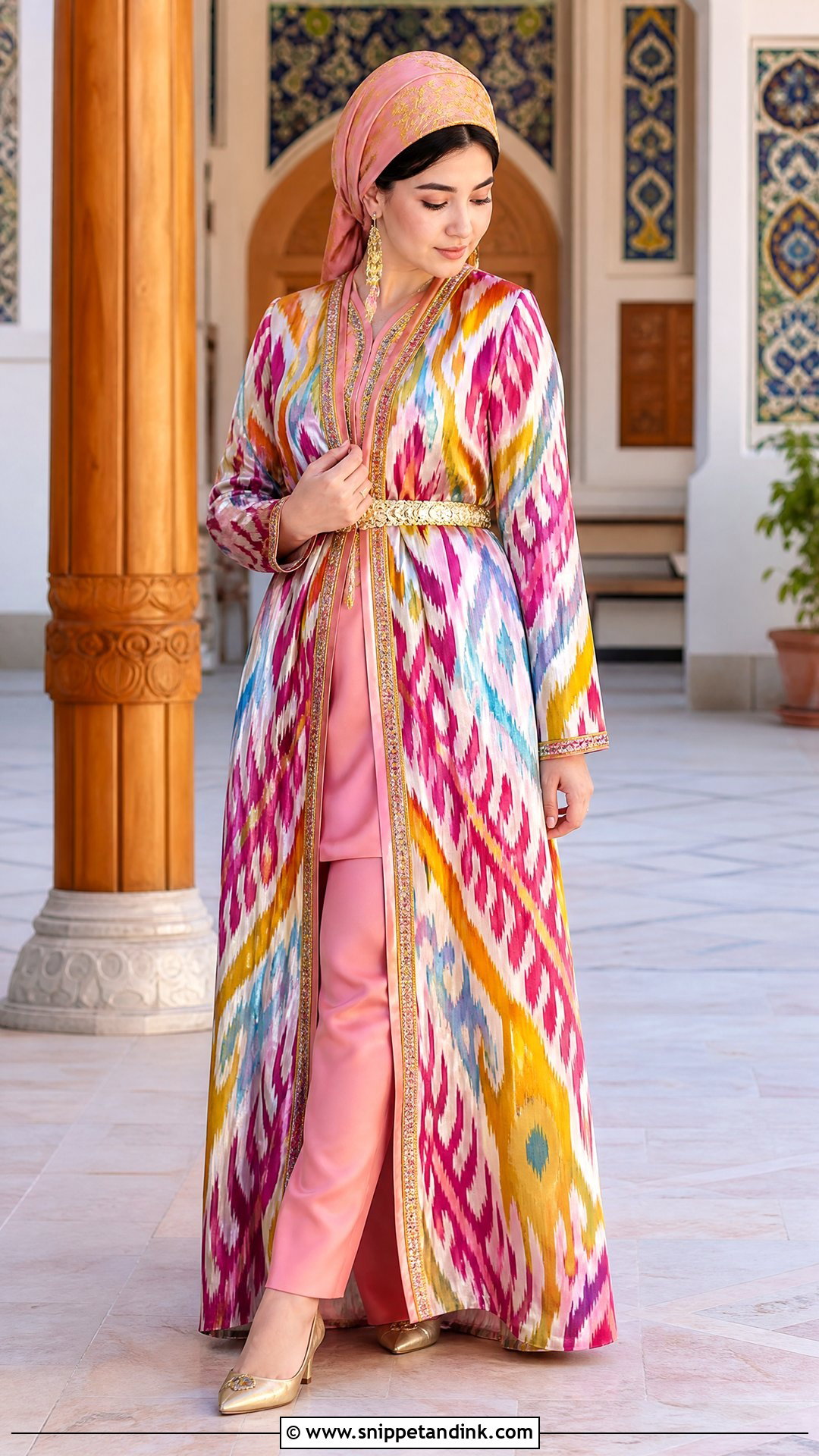
Khan-atlas is a warp-ikat silk, which is why its colors look blurred and seem to shift as the bride moves. That pattern is the whole point, so I keep the gown long and fairly loose and avoid darts, princess seams or panels that would chop the motif into pieces. A softly gathered waist and full skirt give enough shape. Atlas has been worn for weddings and festive days for generations, and some families recognize particular patterns as bridal ones, so ask an older relative before buying a length. Coordinating lozim, metallic low heels and a plain silk headscarf are all it needs, with a gold belt to pull the colors together. Keep the jewelry light. A loud earring against an ikat print just looks busy.
4. Adras Uzbek Wedding Dress With Lozim
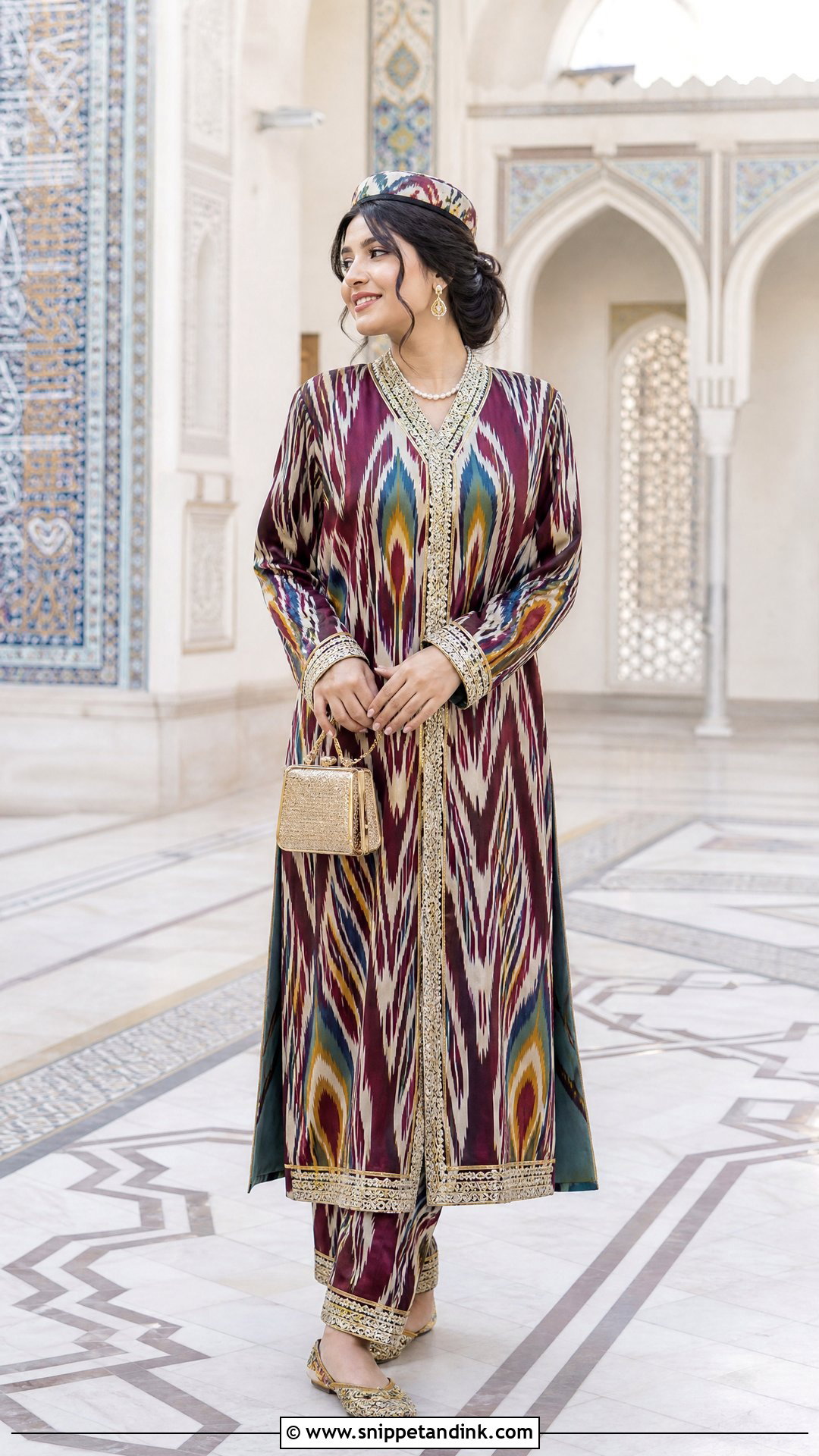
Adras is the practical cousin of atlas. It’s usually woven with a silk warp and a cotton weft, so it has more body and a slightly matte surface, and it holds a tunic shape without much interfacing. That makes it a strong choice for a bride who has a long day of greeting relatives ahead. A below-the-knee or ankle-length tunic with long sleeves and side slits shows off the decorated lozim hems as she walks. Embroidered flats, a small gold bag and a matching doppi complete it, and a braided updo or low bun keeps the neckline clear. The detail I always check at the first fitting is the side seams. Ikat needs extra yardage so the tailor can line the pattern up, and a mismatched seam is the first thing a relative will notice.
5. Suzani Embroidered Uzbek Wedding Dress
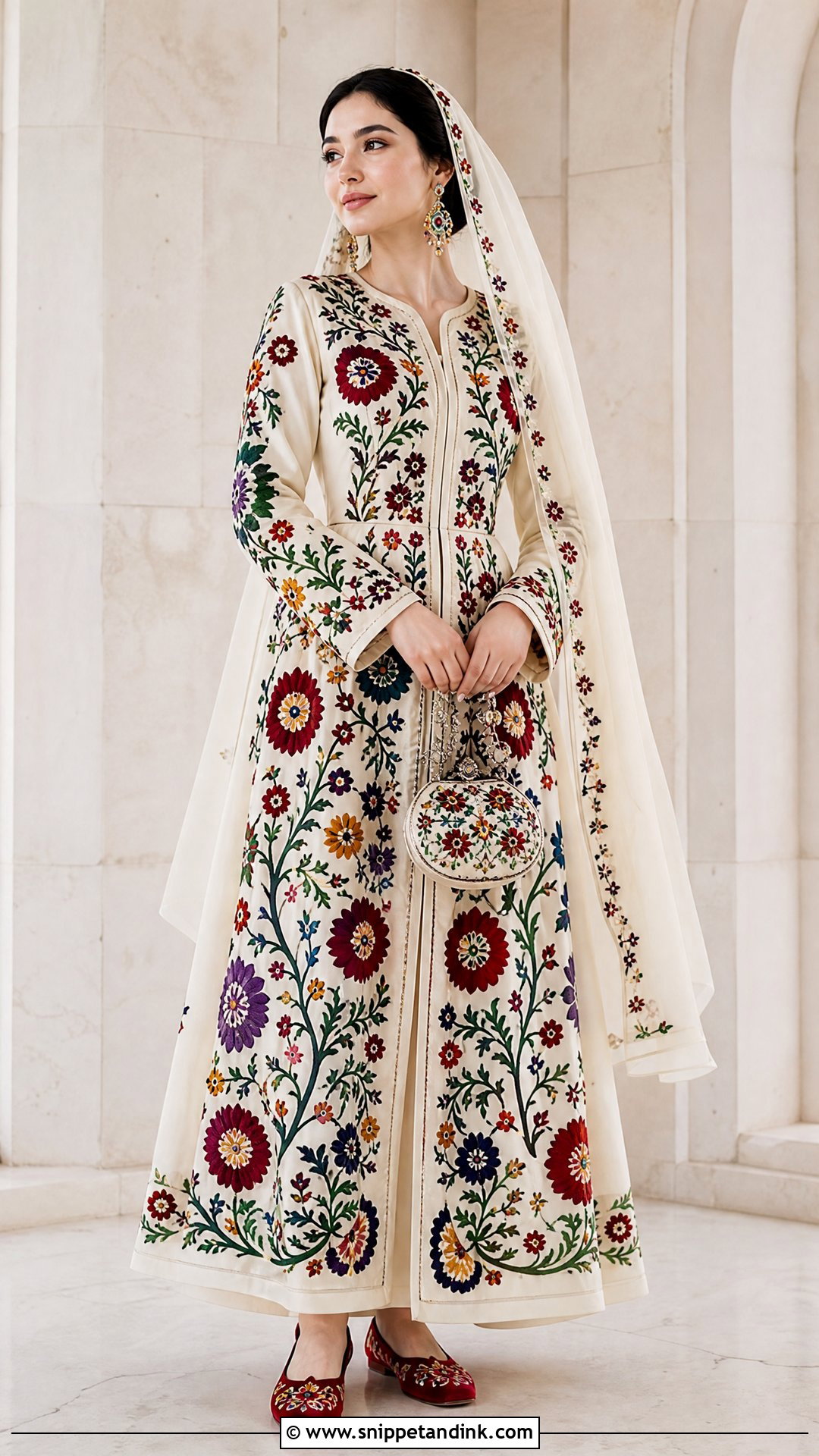
Suzani embroidery has deep roots in Central Asian homes, where these hangings were traditionally stitched by the women of the family as part of a bride’s dowry. Putting that work on a gown gives the dress a story before she says a word. Start with an ivory, cream or soft beige floor-length gown with a round neckline and lightly fitted waist, and let the floral embroidery run across the bodice, sleeves and hem. Pick one thread color, often the red, and repeat it in velvet flats or a small bag. I keep the veil plain here, since a patterned veil on top of suzani looks like two different dresses. A more modern version puts the embroidery on one side of the bodice and the opposite side of the skirt.
6. Bukhara Uzbek Wedding Dress With Gold Details
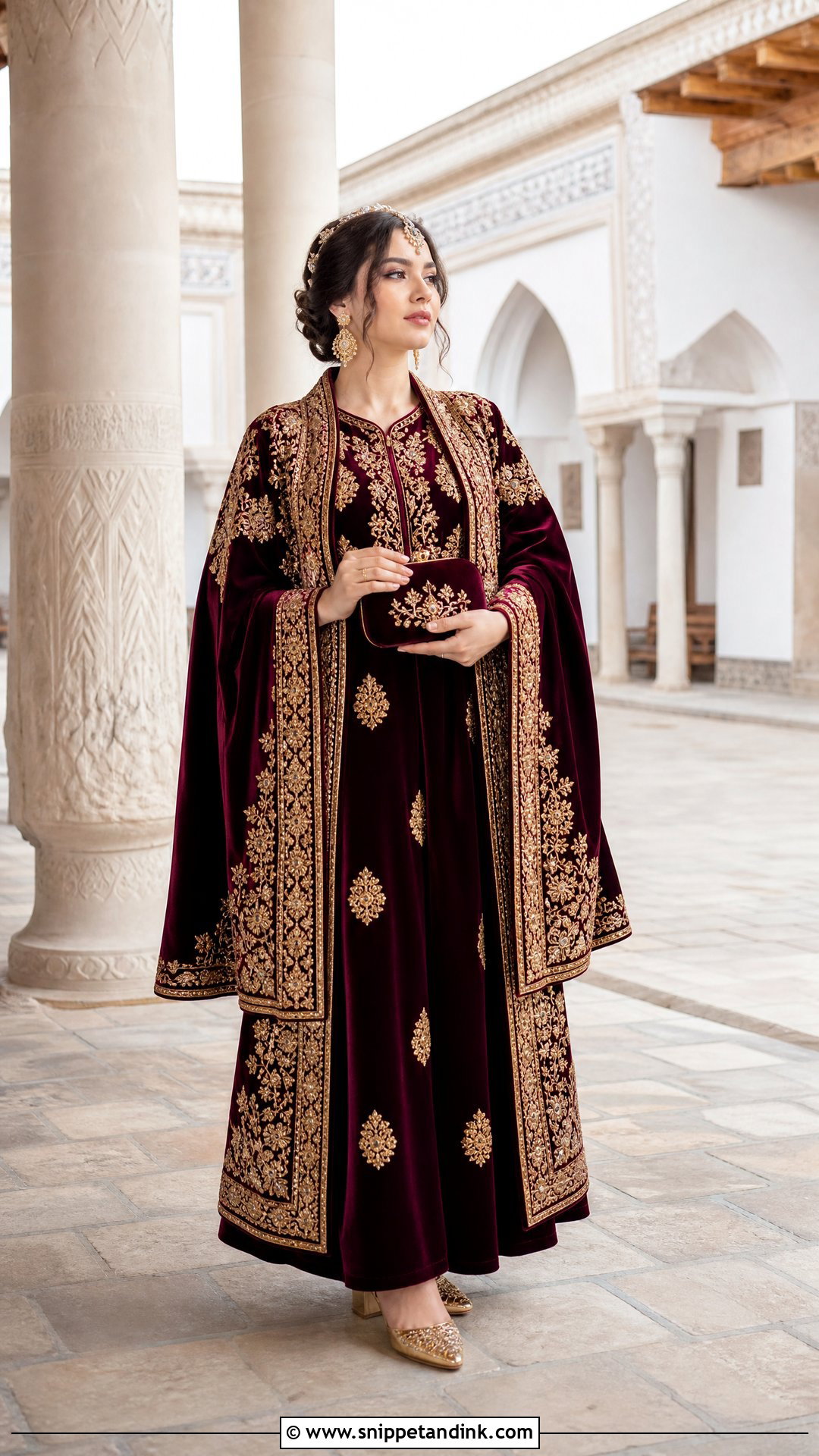
Bukhara styling is about symmetry and density, and it reads best in a deep, dark ground color. I’d choose a deep burgundy, emerald, or midnight blue velvet gown with a long straight cut and generous sleeves, with heavy gold work at the neckline, down the center front and along the cuffs. An embroidered outer robe for the entrance adds weight and ceremony. Plan to take it off for the reception, because gold-embroidered velvet layered on velvet is hot and stiff after an hour or two. Gold mules, drop earrings and a forehead ornament complete the formal look. My rule with this one: one ground color and gold, nothing else. A third color breaks the symmetry immediately.
7. Blue Uzbek Wedding Dress With Silver Embroidery
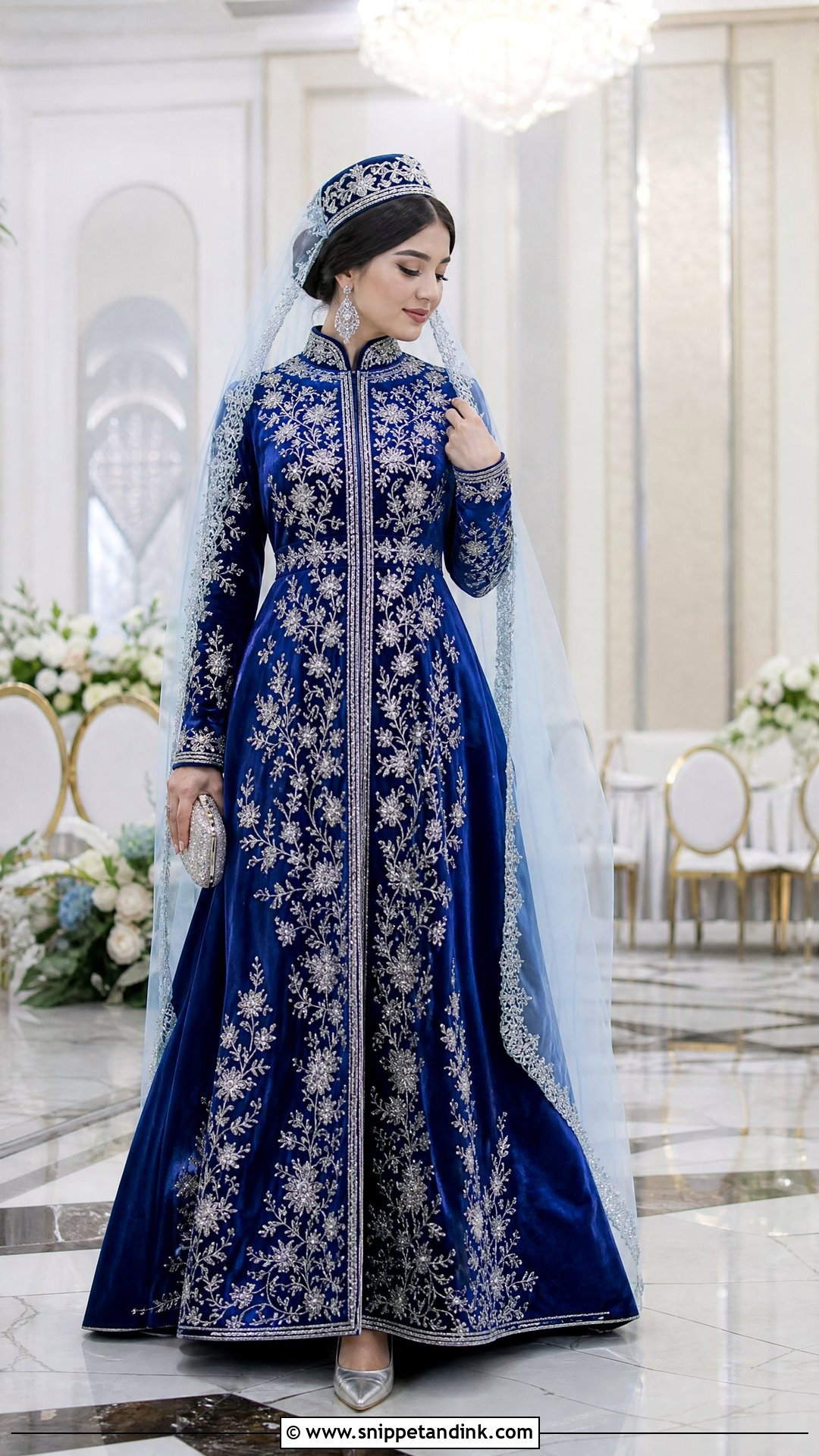
Sapphire blue with silver is cooler and fresher than the usual gold, and it’s the version I suggest to brides whose skin looks sallow next to yellow metal. A full-length gown with a high neck, long sleeves and a flowing A-line skirt lets the silver sit at the bodice and cuffs with a lighter echo at the hem. Silver pumps, crystal earrings and a metallic clutch match it without effort. A pale blue veil with a thin embroidered edge softens the strong color, and a matching doppi underneath adds a traditional note. Be aware that silver thread oxidizes faster than gold, so this is a dress to store carefully and never spritz with perfume once it’s on.
8. Green Uzbek Wedding Dress With Gold Accessories
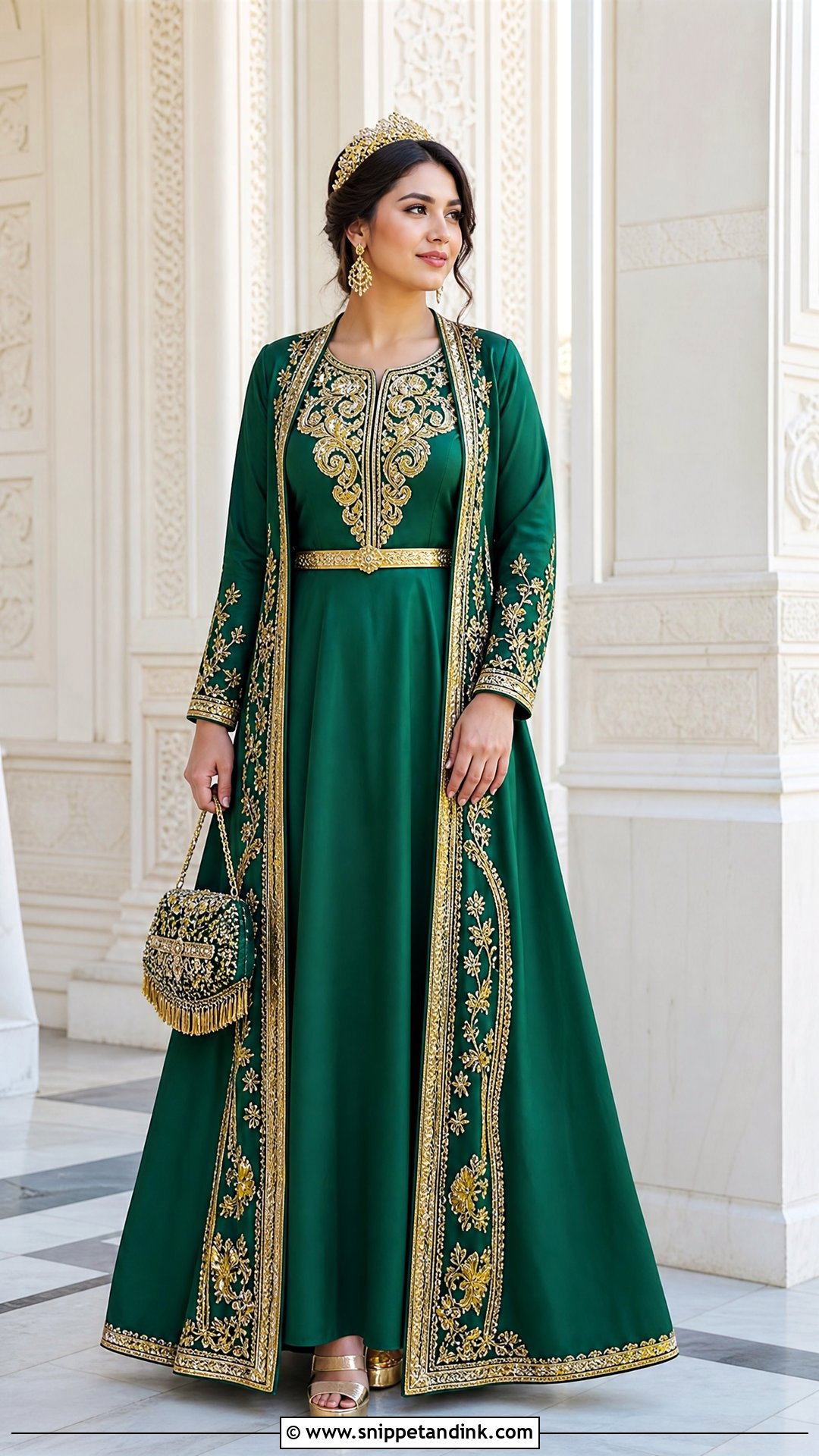
Emerald is vivid without tipping into neon, and it warms up nicely with gold. I’d go for long velvet or silk with a shaped waist, covered shoulders and a softly flared skirt, with gold at the neckline and sleeve ends. A slim gold belt, metallic block heels and a beaded bag carry the gold through, and the head can take a green scarf, an embroidered doppi or a fine forehead ornament, though only one of them. When the dress is heavily worked, I swap a big necklace for simple drops. A light gold-trimmed chapan worn over the gown for the entrance adds ceremony. Deep green looks richest against pale stone and carved wood, and it can go flat under very warm reception lighting, so check photos from the venue if you can.
9. Ivory Uzbek Wedding Dress With Atlas Panels
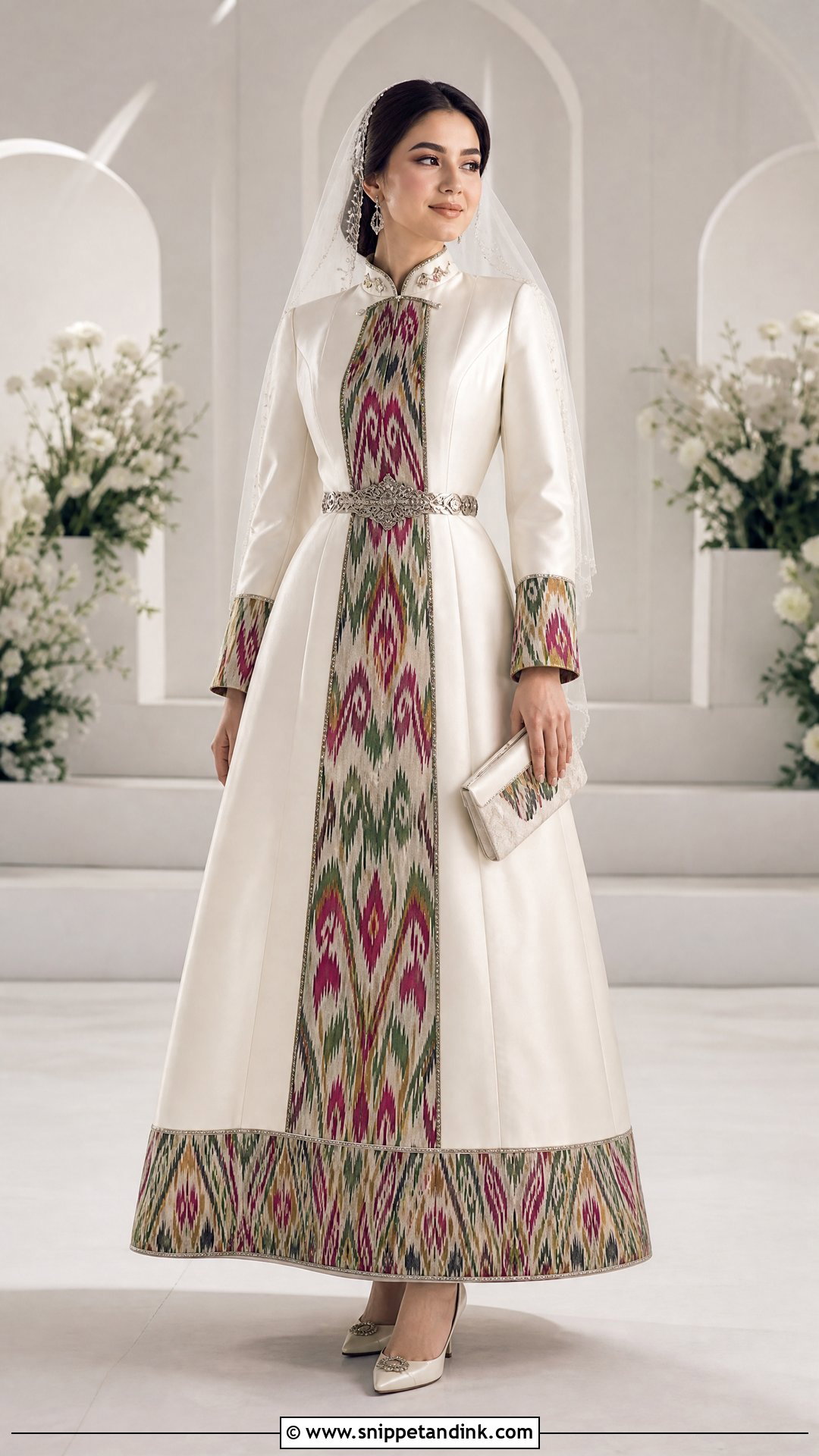
For a bride who wants a mostly neutral gown, an ivory dress with a few atlas panels is the most understated way to bring in the textile. Start with a long-sleeved A-line in matte crepe or silk, and set the atlas down the center front, inside the cuffs and around the hem. A clutch cut from the same atlas, ivory heels and a slim metallic belt keep it coherent, and a plain fingertip veil keeps it bridal. Pull one color out of the panels for earrings or hairpins. I suggest this design often when two families with different traditions are marrying, because the white silhouette reads as a wedding dress to everyone and the ikat clearly says Uzbek. Ask for the atlas to be lined, since lightweight silk can pucker against heavier crepe.
10. Blush Uzbek Wedding Dress With Floral Embroidery
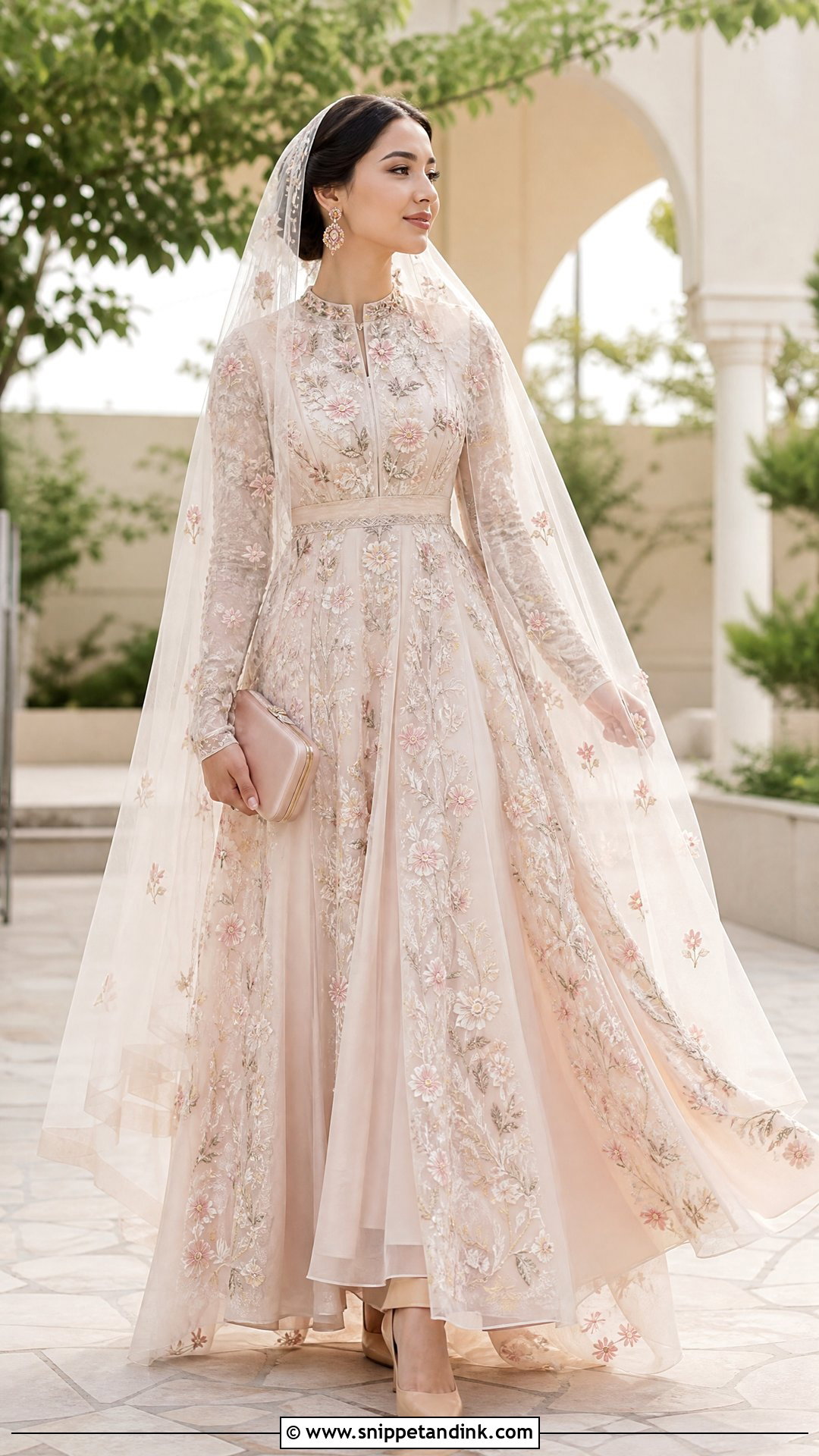
Blush gives colorful floral embroidery a soft background that doesn’t fight it. A floor-length gown with lined sleeves that look sheer, a fitted waist and a light layered skirt is enough of a base. I like the embroidery to curve from one shoulder toward the waist and pick up again on the opposite side of the hem. That asymmetry feels current while still honoring the handwork. Nude pointed heels, rose-gold earrings and a blush satin clutch keep it gentle, and a veil with a few scattered motifs connects head to hem. Keep the makeup rosy and the lip neutral. Bright red lipstick against blush silk can make the dress look washed out. Where more coverage is needed, an opaque blush lining under the sleeves changes nothing from a distance.
11. Long Sleeve Uzbek Lace Wedding Dress
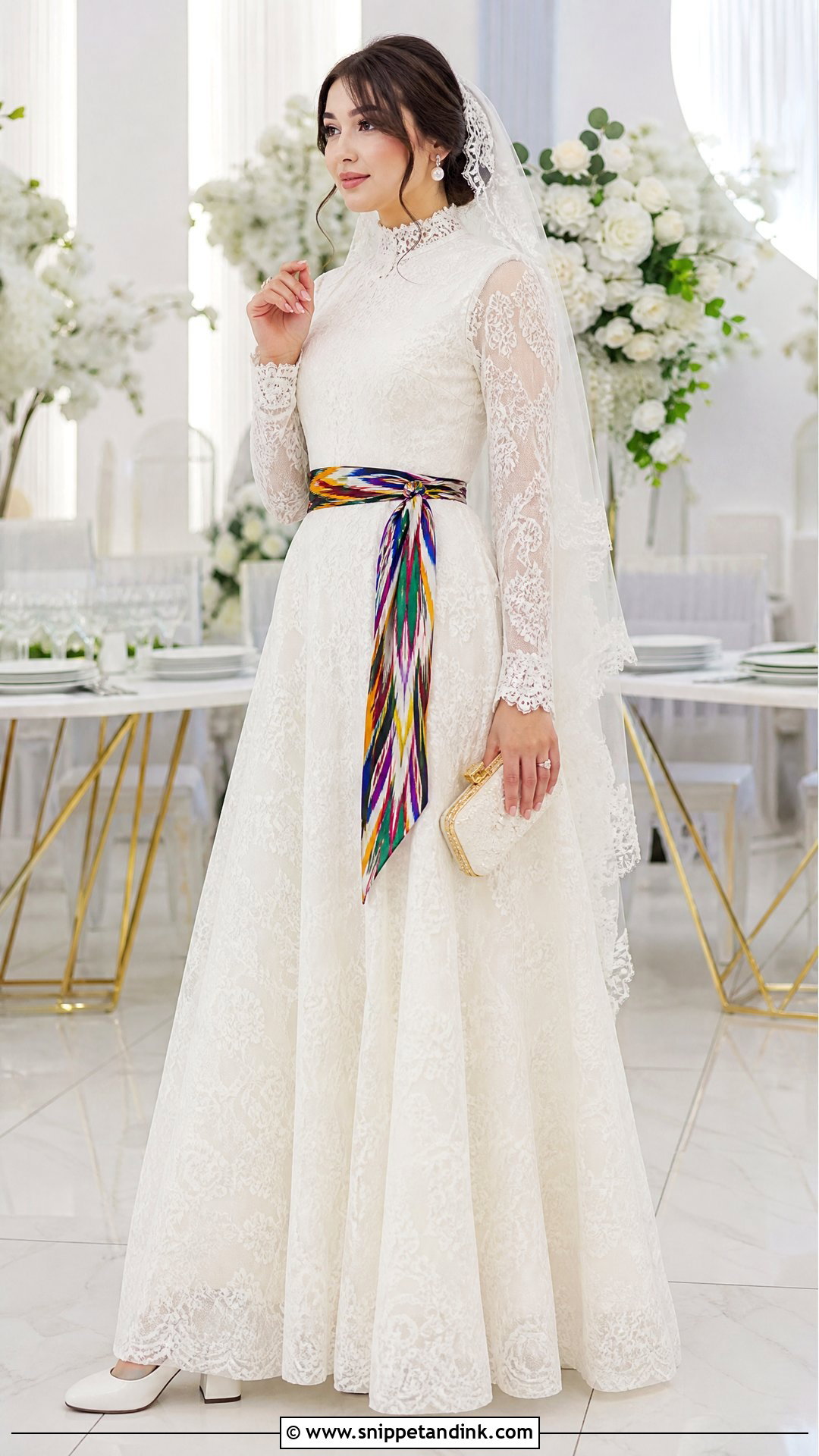
This is the gown for a bride whose heart is set on white lace but who still wants her heritage visible. A high or bateau neck, opaque lining, defined waist and full skirt make a modest base, and a removable atlas sash or embroidered belt brings in the color. A hidden atlas panel under the back buttons or inside the train is a detail she’ll love when she sees it in photos. White block heels, pearl earrings, a lace-edged veil and a sleek low bun keep the rest classic. Two practical points: lace sleeves need a lining that moves with the arm, or they’ll pull when she hugs relatives, and the sash should be cut so it can be worn again at family events afterward.
12. High Neck Uzbek Wedding Dress With Beading
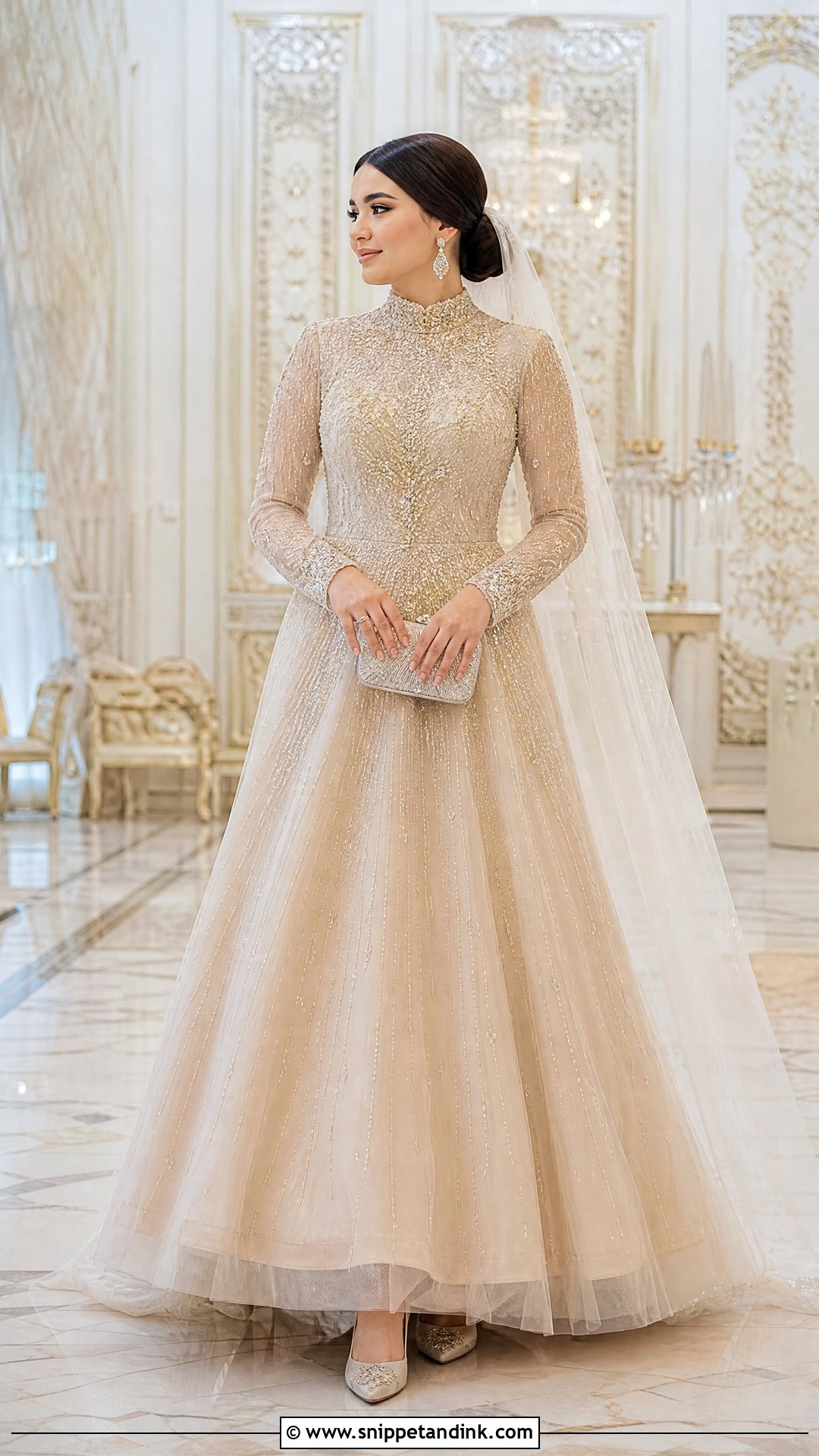
Beadwork sparkles best on a plain canvas. A high-neck dress in white, champagne or pale gold with long sleeves and a gently shaped bodice is enough, with the beads concentrated at the collar, shoulders, cuffs and waist. A smooth A-line skirt balances it. Add closed-toe heels, a beaded clutch and long earrings that repeat the decoration, and attach a light veil under a low bun so the collar stays visible. Small ikat-shaped motifs worked into the beading bring in an Uzbek reference without any extra fabric. My one non-negotiable: every bead on the inner arm and waist needs to be stitched on, not glued, because those are the places that rub against a chair, a sleeve and a partner’s hand all evening.
13. Uzbek Wedding Dress With Embroidered Chapan
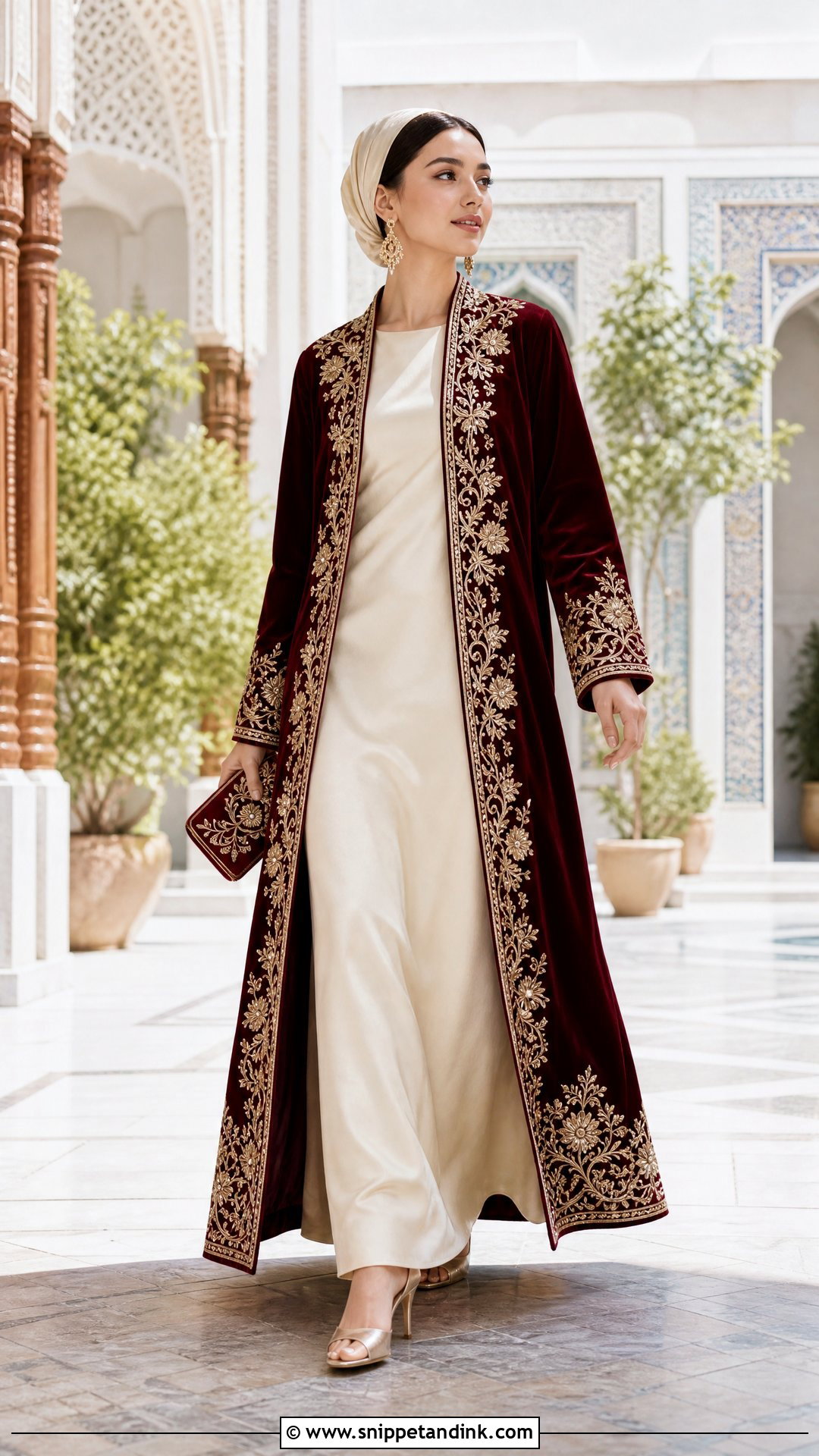
A chapan turns a simple gown into a ceremonial outfit instantly. The robe has been cut, colored and decorated differently across Uzbek regions, and designers today are still reinterpreting it. A straight ivory silk gown under a long velvet chapan embroidered with gold vines or geometric borders is the classic pairing. Wear it open so the waist and the layers stay visible. Gold heels, an embroidered clutch and matching earrings finish it, and a sleek head covering or low bun keeps the shoulders from looking crowded. In practice, the chapan stays on for the entrance and formal portraits and comes off for dancing. Before the final fitting, stand in the shoes and check the hems: the robe should end just shorter than the gown, never level with it.
14. Two Piece Uzbek Wedding Dress With Palazzo Pants
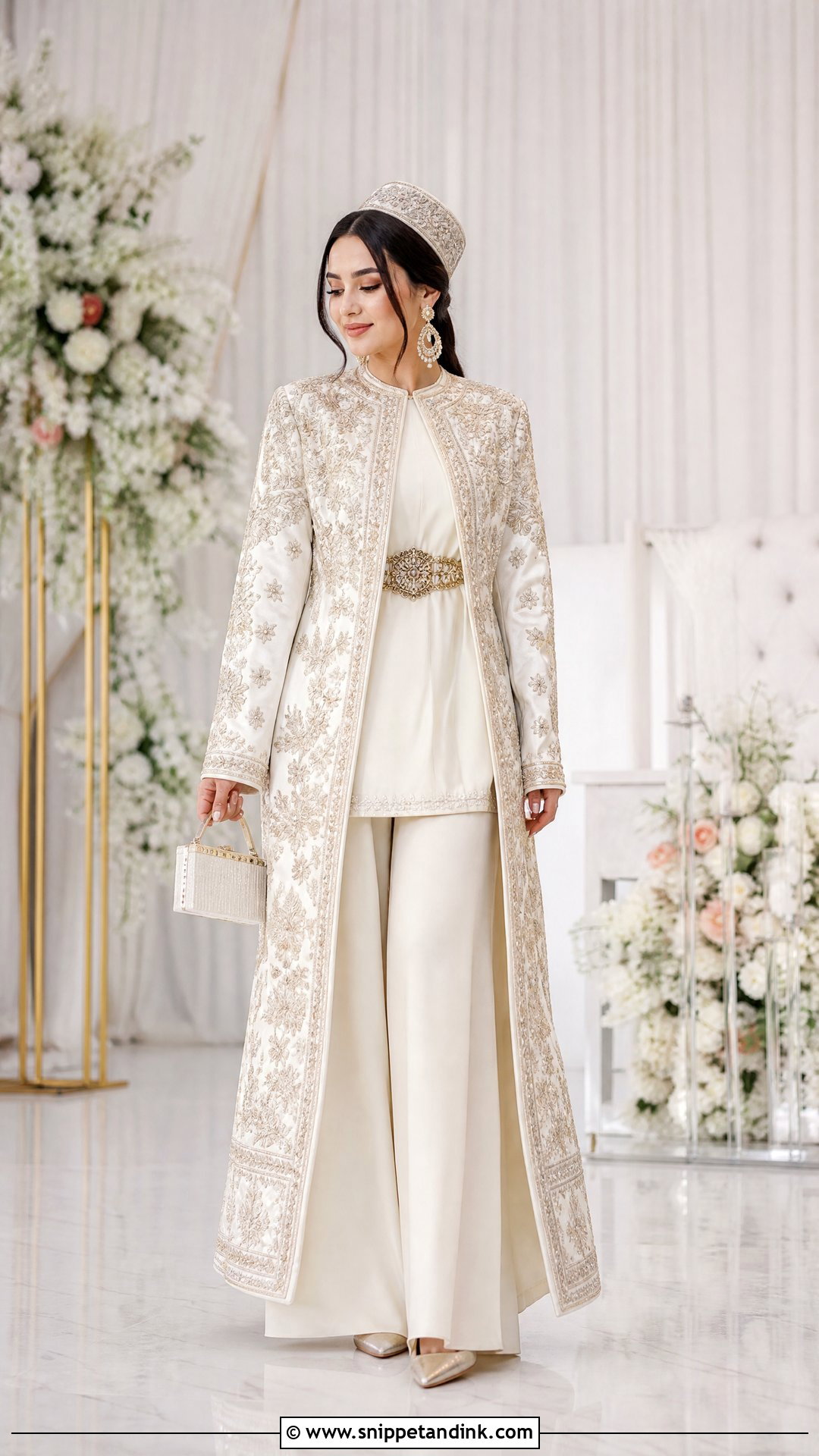
Not every bride wants a full skirt, and a tunic over palazzo trousers is far easier to move, sit and dance in. Pair an embroidered long tunic with wide trousers in ivory silk, champagne satin or colorful adras. I’d keep the tunic below the knee with side openings so the trousers show as she walks, and define the waist with a slim belt or shaped seams. Pointed pumps, a structured mini bag and bold earrings carry the formality, while an embroidered doppi or draped chiffon scarf adds the traditional note. Hem the trousers with her wedding shoes on, so they clear the floor by a finger’s width. It’s a natural fit for a civil ceremony, a smaller family gathering or a second outfit for the evening.
15. Modest Uzbek Wedding Dress With Headscarf
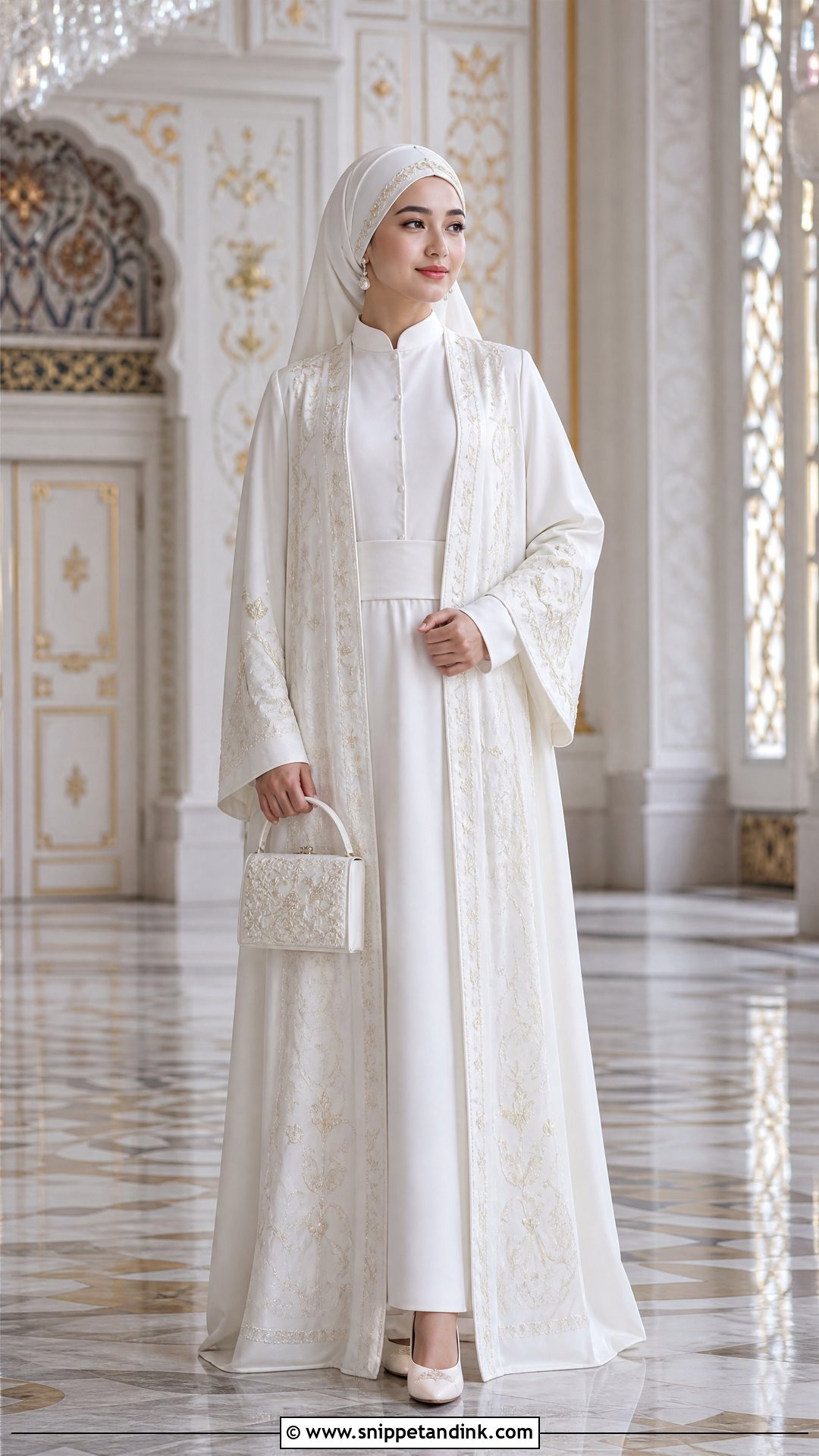
Full coverage doesn’t mean giving up shape. An opaque floor-length gown with a high neckline, full sleeves and a softly fitted waist gives a clean line, and white crepe keeps it modern while atlas cuffs and a matching waist panel add Uzbek color. The headscarf should be ivory with a narrow decorative border and wrapped neatly so it frames the face instead of hiding the neckline. Low block heels, pearl earrings and a small embroidered bag complete it, with a light chapan for the entrance if the family likes a formal layer. When I fit a modest gown, I have the bride raise both arms and hug someone. If the sleeve rides up or the shoulder seam pulls, the tailor needs to add room there before anything else.
16. Plus Size Uzbek Wedding Dress With Defined Waist
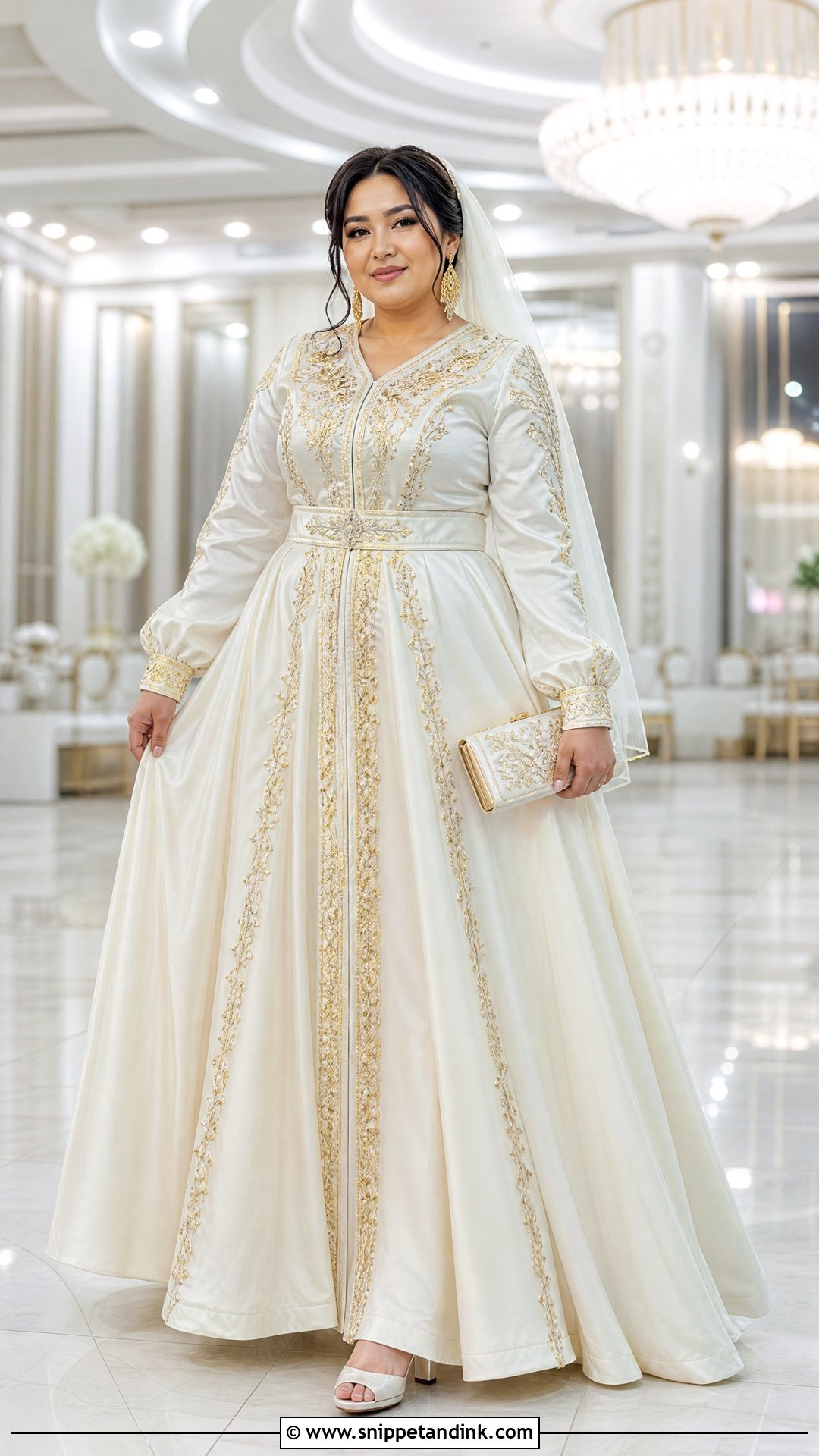
A plus-size gown should support her rather than squeeze her. A structured bodice, a raised waist seam and an A-line skirt in matte silk or crepe move comfortably and drape without clinging. Vertical embroidery down the center and along the sleeve edges makes long, unbroken lines, which look cleaner than a horizontal band across the hips. A V-shaped embroidered neckline over an opaque inset frames the face while keeping coverage. Supportive block heels, a medium clutch and earrings scaled to the embroidery suit the proportions, with a light veil or doppi on top. I’d avoid stiff brocade around the upper arms and waist, since it stands away from the body and adds bulk. Ask for proper understructure and a pocket in the side seam; both make a long day much easier.
17. Minimalist Uzbek Wedding Dress With Ikat Belt
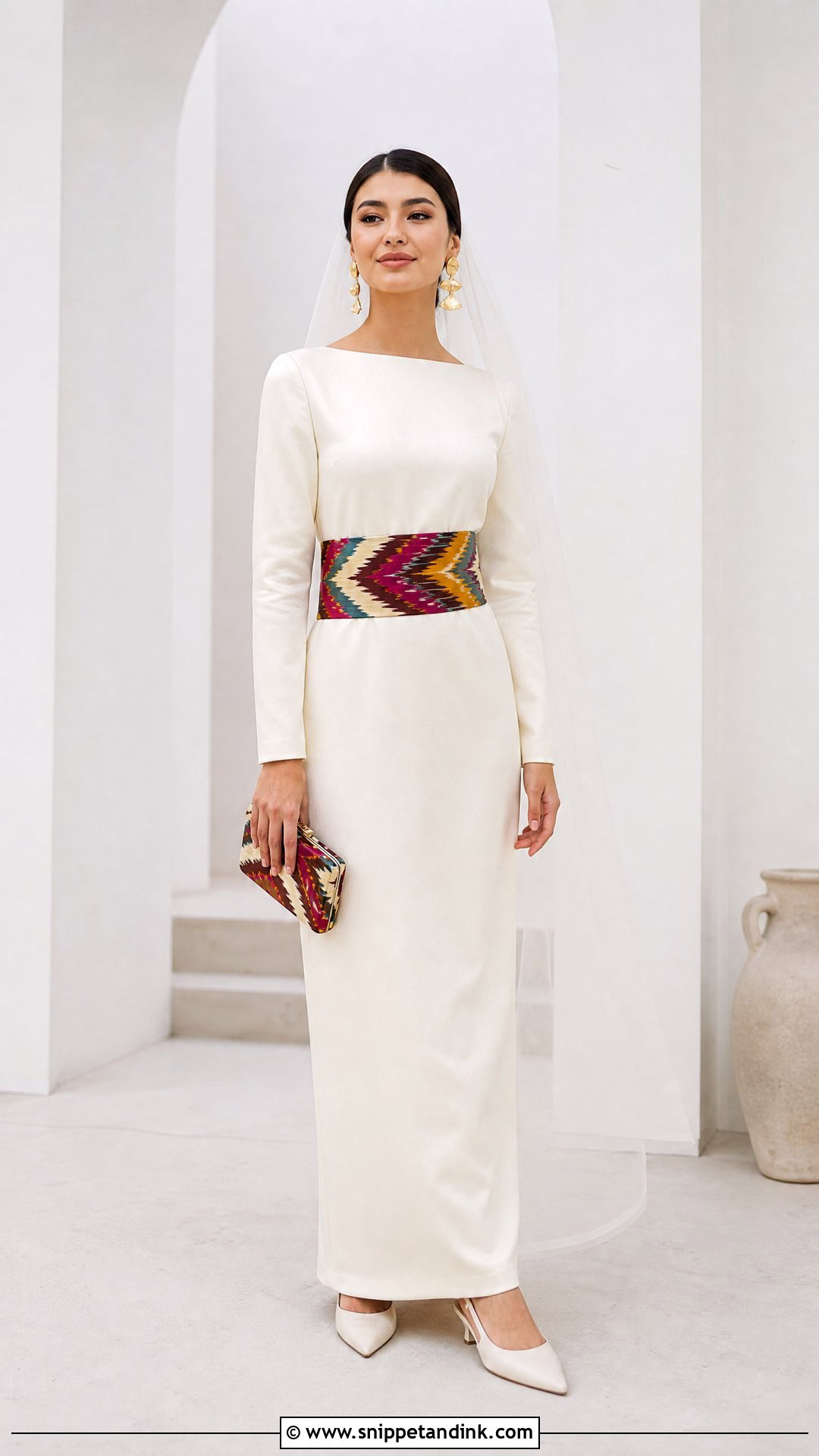
On a plain gown, a small amount of ikat becomes the focal point. Start with a minimalist column or A-line in ivory, white or pale champagne with full sleeves, a simple neckline and smooth fabric with no lace. Wrap a wide khan-atlas or adras belt at the waist and tie it at the back or side. Repeat the print once more in a small clutch or covered cuff buttons, and keep the rest clean with ivory slingbacks, sculptural gold earrings and a sheer veil. Modern venues with white walls and concrete flatter this approach. Have the belt backed with a firm interfacing, though, because soft silk folds into a rope once she sits down. Afterward it can be kept, framed or worn again.
18. Modern Mermaid Uzbek Wedding Dress With Uzbek Embroidery
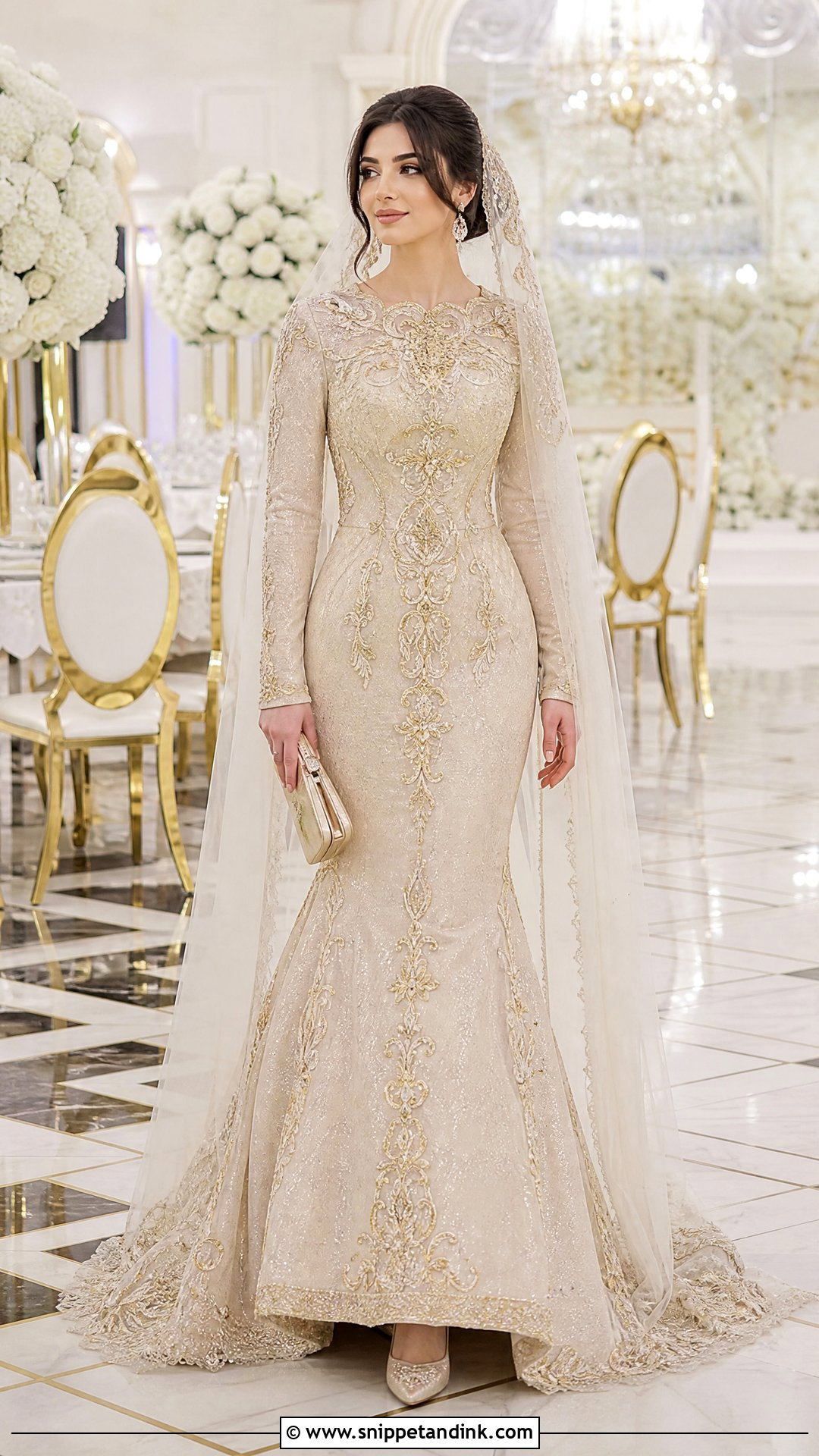
The mermaid shape gives Uzbek embroidery a more glamorous frame. An ivory or champagne dress that fits smoothly through the bodice and hips and widens around the knee, with long sleeves and a modest neckline, keeps the fitted line balanced. Place gold or colored embroidery at the neckline, waist and outer sleeves, with a lighter echo at the flare. Pointed heels, a small gold clutch and medium drop earrings keep it sleek, and a sheer veil under a sculpted bun keeps the focus on the dress. The honest downside: mermaid cuts restrict stride and make sitting on low floor cushions difficult, which matters at many Uzbek celebrations. I’d test that at the fitting and plan a looser second outfit or a bustle if the reception is lively.
19. Uzbek Ball Gown With Tillaqosh
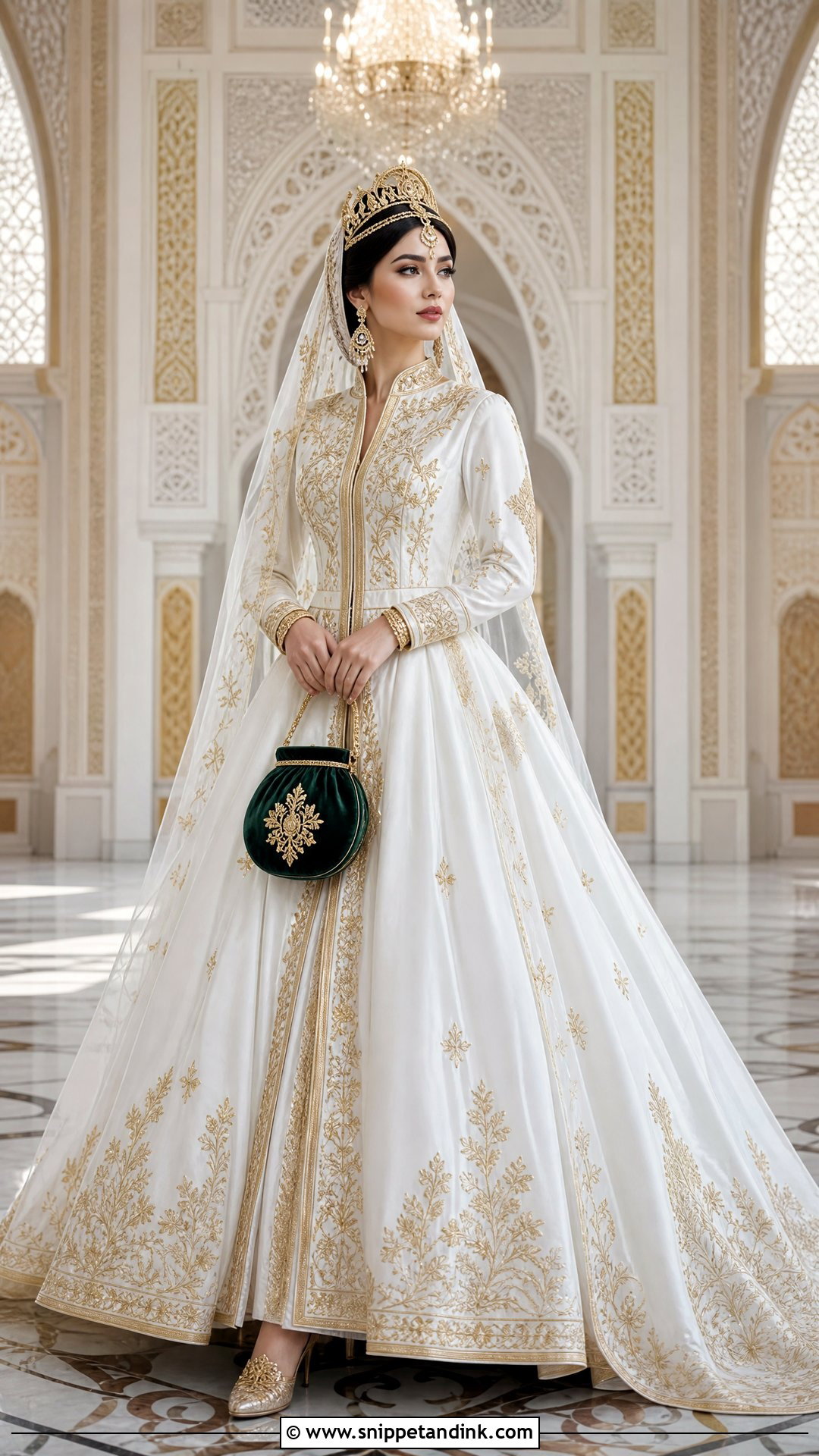
A ball gown and a tillaqosh make a grand entrance together. This ornamental forehead piece has long been part of women’s ceremonial dress and can carry the whole bridal look on its own. Choose a structured white, red or jewel-toned gown with long sleeves and gold embroidery on the bodice, and keep the skirt decoration lighter so the outfit doesn’t feel overloaded. Closed-toe gold heels, matching bracelets and a small velvet bag complete it. The tillaqosh needs to be anchored to a smooth, well-pinned base, so I ask the hairstylist to build that base before any veil goes on. Then keep other jewelry around the face minimal. A heavy forehead piece plus heavy earrings gives most brides a headache by late evening.
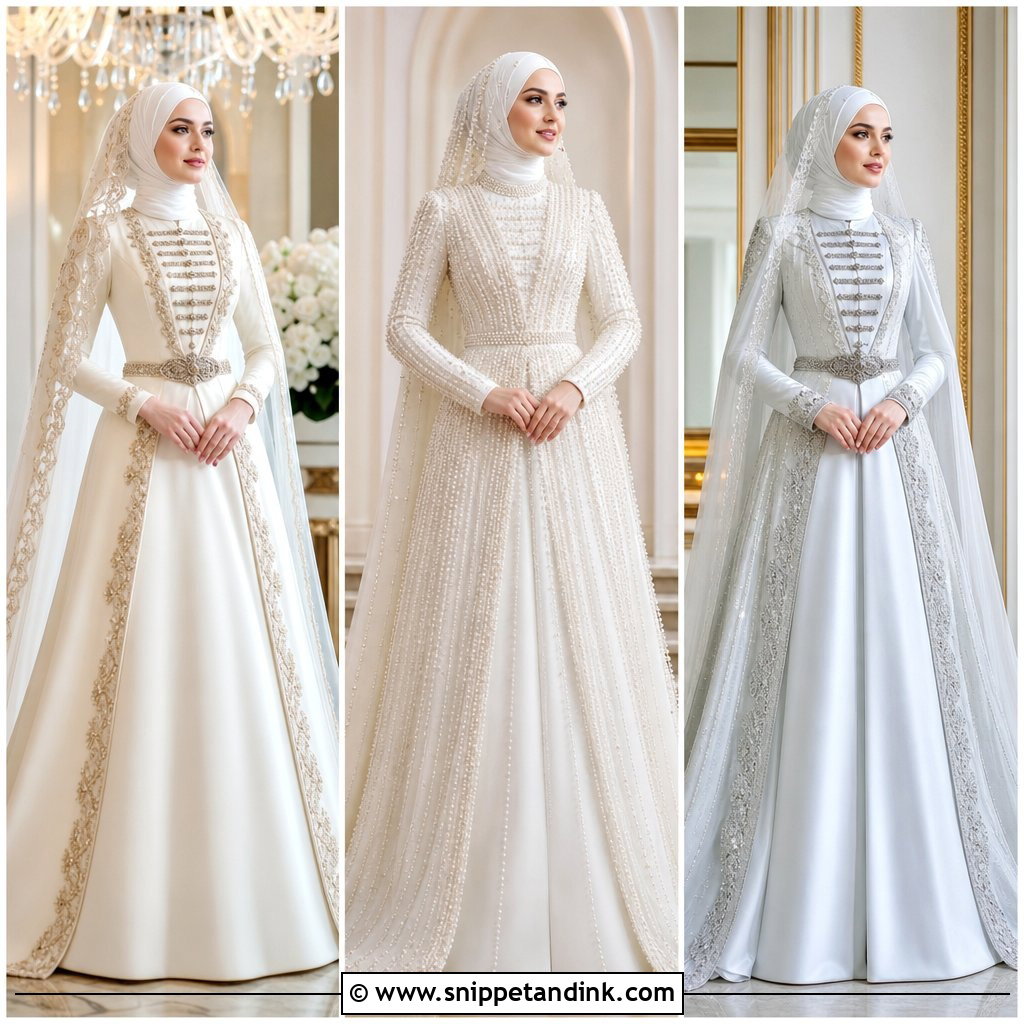
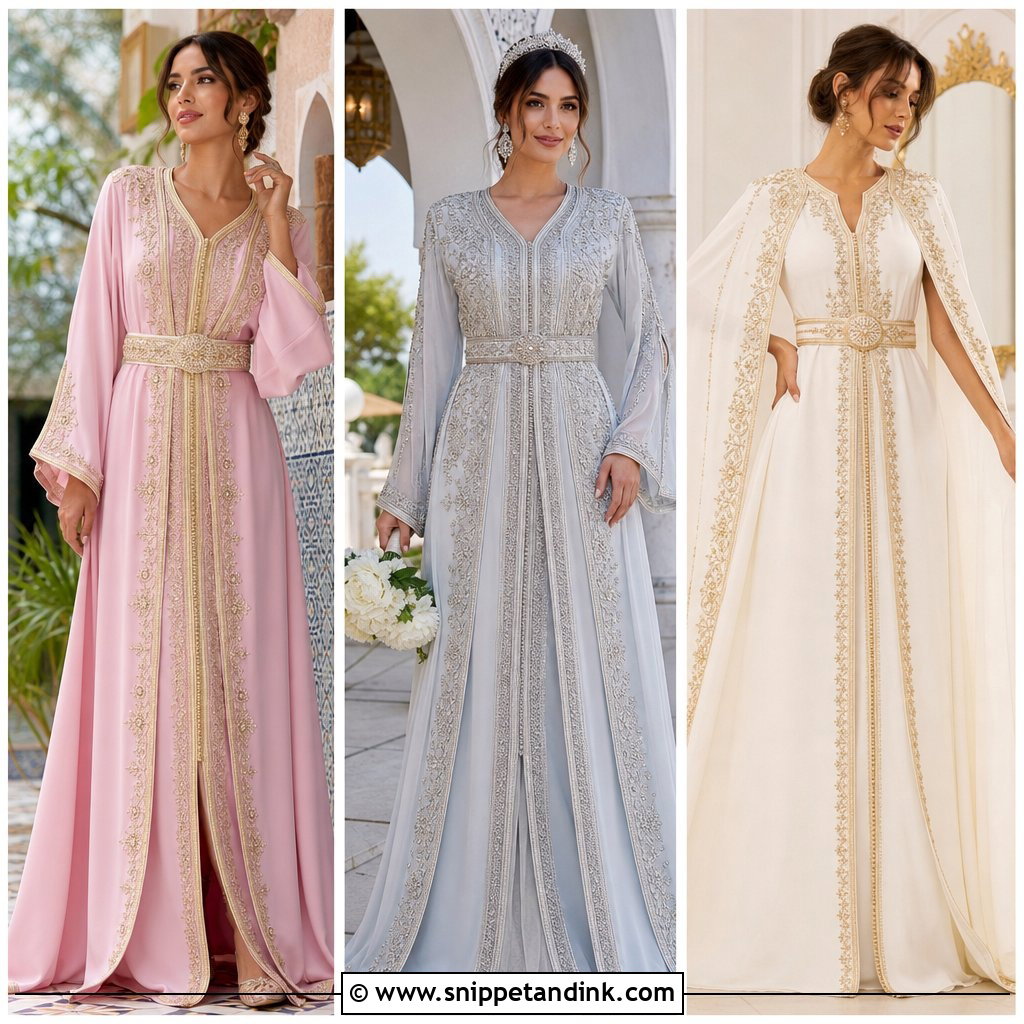
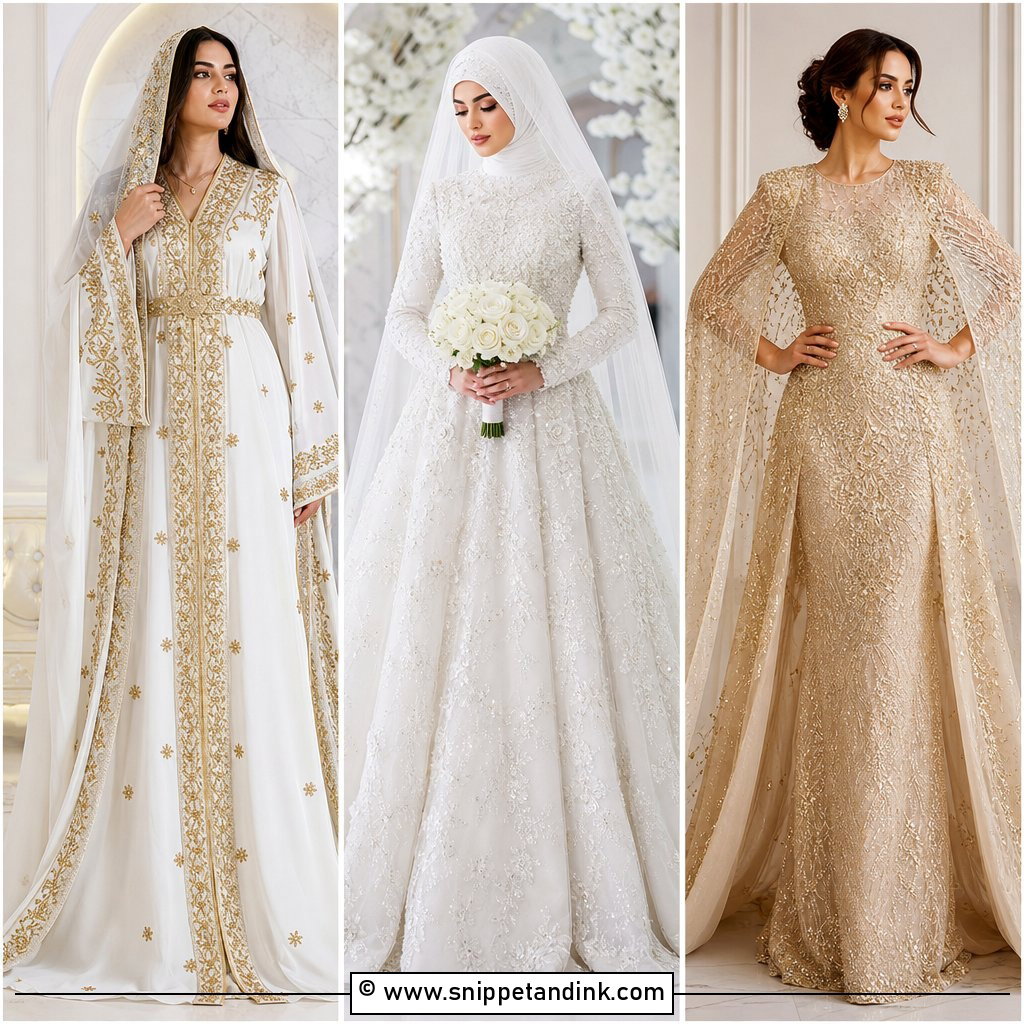
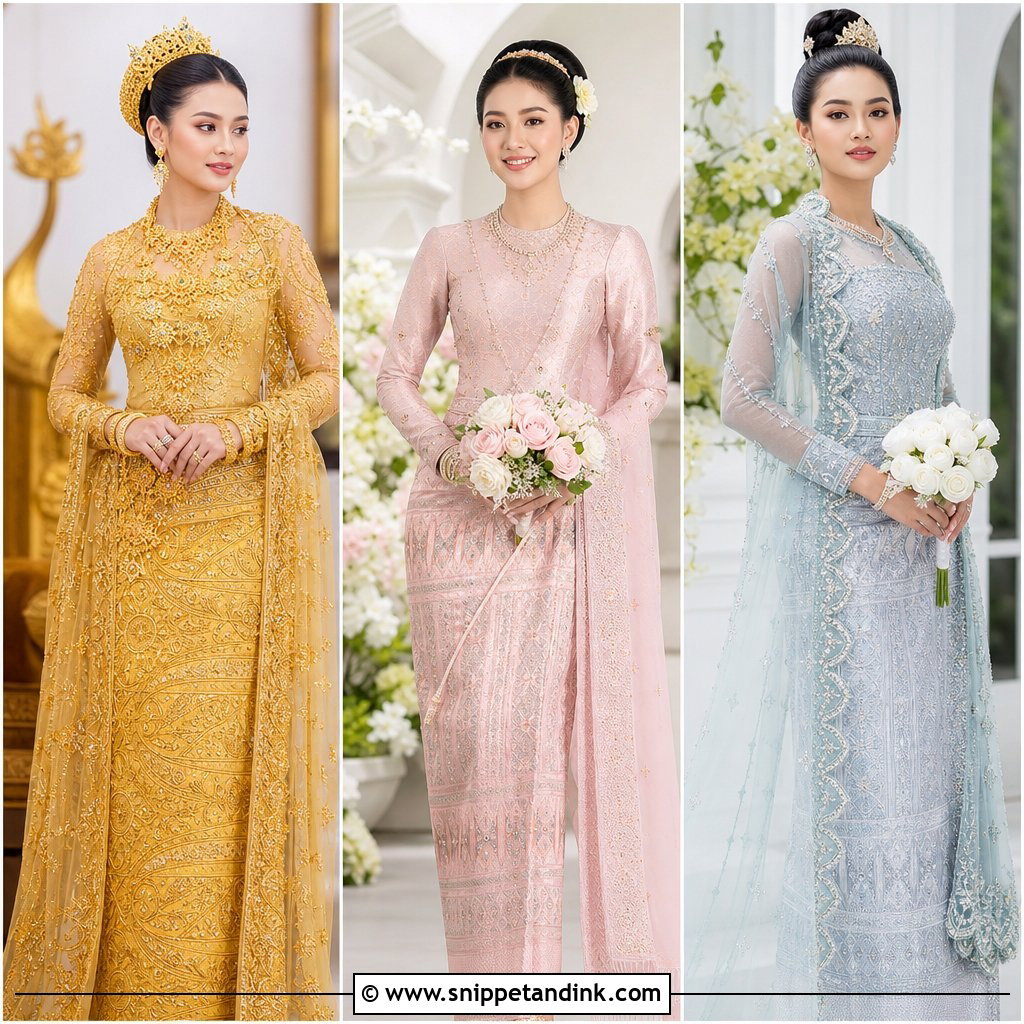
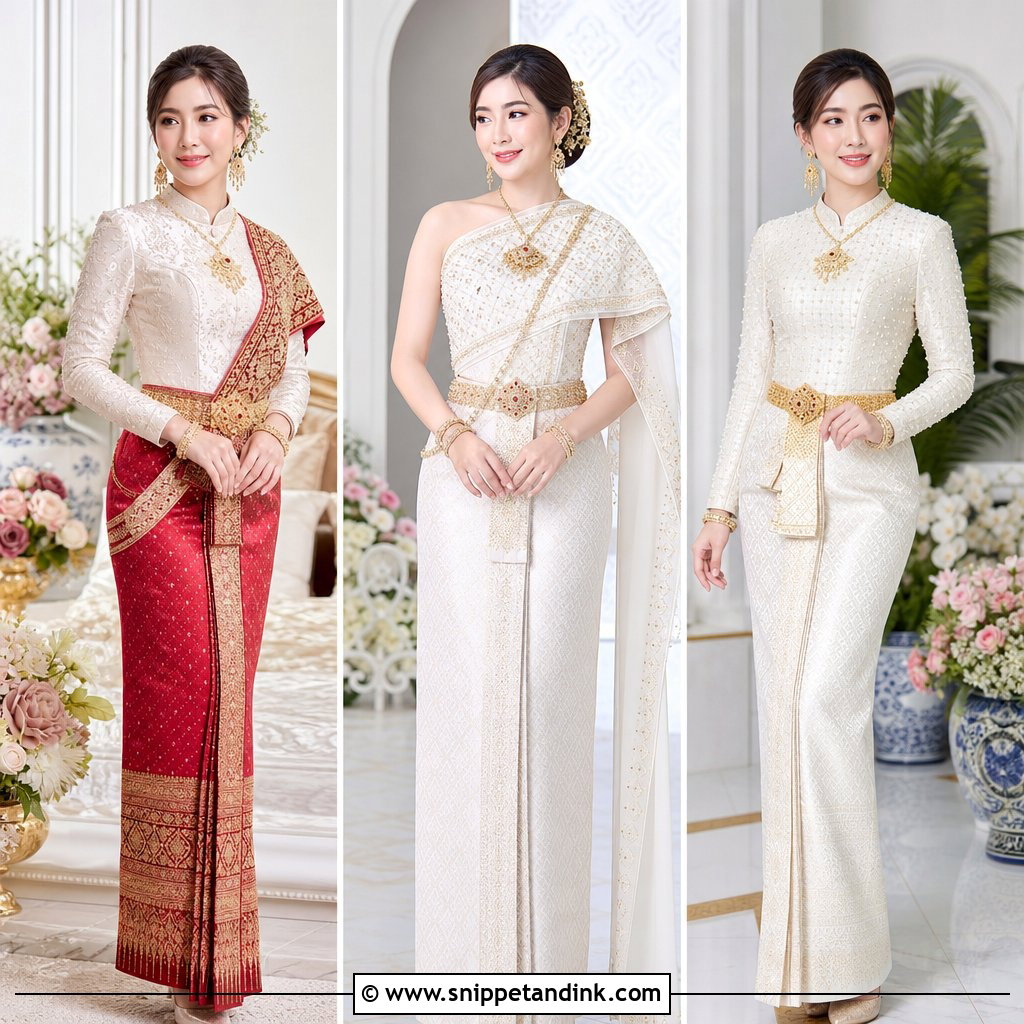
20. Kelin Salom Uzbek Wedding Dress
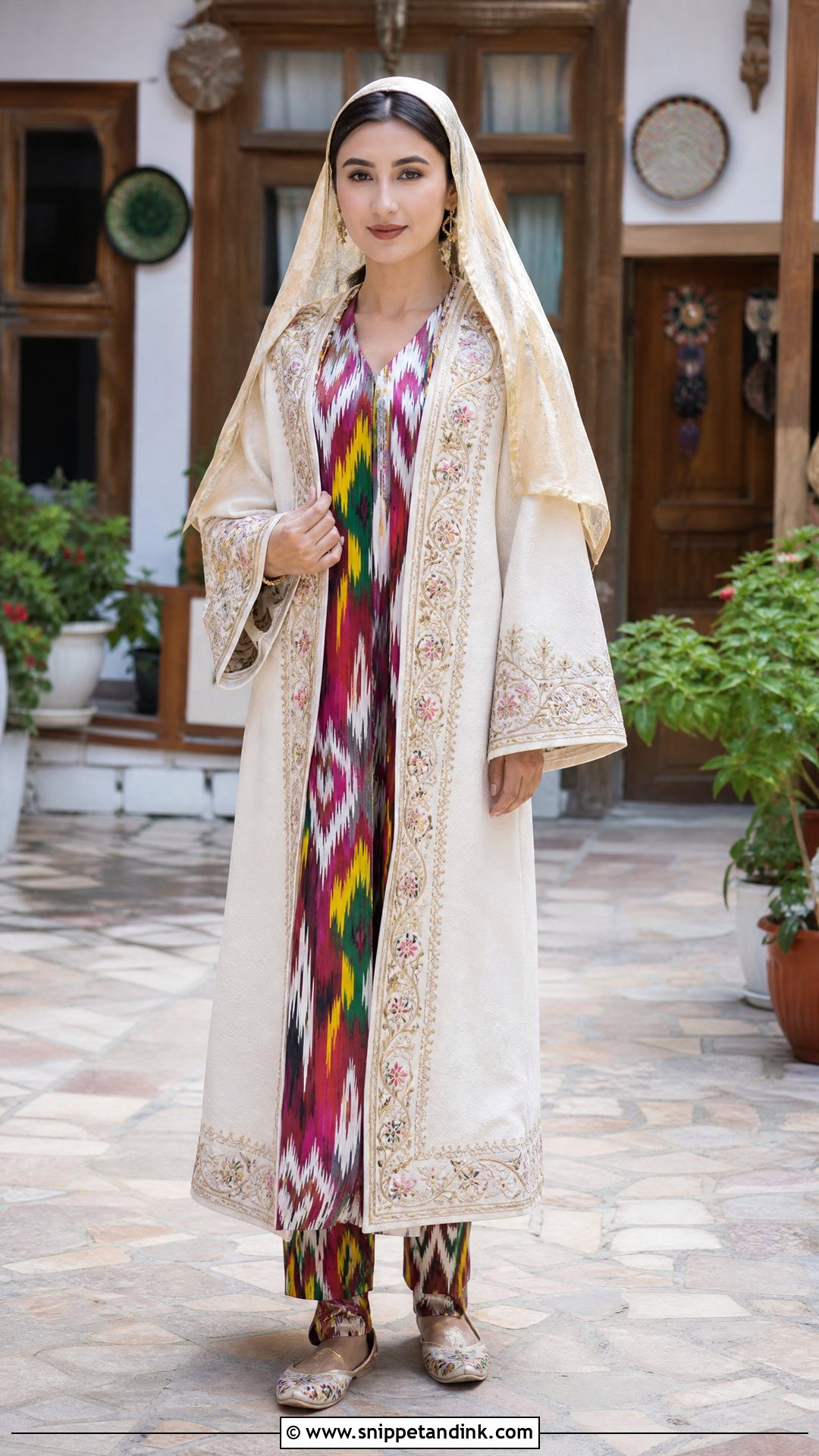
Kelin salom is the bride’s formal greeting to her new family, usually held after the main celebration, though the timing and details differ between families. She’ll be bowing, standing and receiving guests repeatedly, so comfort matters more here than at any other event. A long khan-atlas dress with full sleeves, matching lozim and embroidered flats is the right base, with a light chapan on top if the family prefers more formality. A covered hairstyle, a silk scarf or veil, secure earrings and one bracelet complete it. Leave the corset, the long train and the high heels for another day. Before anything is ordered, sit down with her mother-in-law or an aunt and confirm the colors and head covering the family expects.
Atlas, Velvet and Gold Thread After the Last Guest Leaves
Traditional Uzbek fabrics are less forgiving than polyester bridal satin, and the care starts the night of the wedding. Natural-dyed silk can bleed if it gets wet, velvet marks wherever it’s crushed, and metallic thread dulls with moisture and perfume. A little planning keeps the outfit ready for a daughter or a family photo years from now.
On the day
Put perfume and hairspray on before dressing, never onto the embroidery. Keep a white cotton cloth in the bag for blotting spills, and don’t rub or apply water to atlas, because a damp patch can leave a ring or make the colors bleed into each other.
Cleaning and storage
- Take the dress to a cleaner who handles silk and embellished garments, and point out any stains and the metallic work before they start.
- Store velvet hanging on a padded hanger or loosely rolled with the pile outward, never folded flat under weight.
- Fold silk and adras with acid-free tissue in each crease, and refold along new lines once a year so the folds don’t split.
- Use a breathable cotton bag rather than plastic, which traps moisture and speeds tarnishing on gold and silver thread.
- Keep everything somewhere dark, dry and cool, away from radiators and sunny closets that fade ikat colors.
Jewelry and the tillaqosh should be wiped and stored separately in soft pouches. Metal resting against silk for years can leave marks that are impossible to remove.
Which Uzbek Look Suits Your Family’s Celebration?
Uzbek bridal dressing gives a bride more choices than most traditions: colorful khan-atlas, sturdy adras, embroidered velvet, a ceremonial chapan, or a white gown with a single textile accent. Whichever she chooses, I style the shoes, head covering, jewelry, bag and outer layer together, because each piece changes how the others look. Customs vary a lot by family and region, so talk through the ceremonial clothing with relatives before the design is final. Then find a tailor who has cut ikat silk and handled hand embroidery before. The right outfit should feel respectful, comfortable to wear for a long day, and clearly hers.
You'll Like These Ideas:





Leave a Reply