
English bridal style tends to be romantic with good manners: careful tailoring, a sense of place, details you notice up close rather than from across a field. A gown might be grand enough for a historic manor, easy enough for a country lawn or sharp enough for a London registry office. Lace sleeves, structured satin, floral embroidery, graceful necklines and sensible skirt lengths all play a part. The venue, the season and how much you’ll walk should steer the choice as much as taste does. Here are twenty dresses, classic, modern and vintage-leaning, each with the shoes, jewelry and veil I’d put with it.
Church Aisle or Registry Desk? The Dress Changes
The type of ceremony shapes the dress more than brides expect. A church wedding usually means a long aisle, a front step and guests seeing your back for most of the service, so back detail and train length matter. Some vicars and churches prefer covered shoulders during the service; it isn’t a universal rule, so ask yours early, and if they do, a bolero or detachable sleeves solves it.
A registry office or civil ceremony room is often small, with a short walk and a quick ceremony. Big skirts and cathedral trains crowd those rooms, and you’ll likely leave by a regular door and stairs straight into the street. A midi, a column or an A-line without a long train suits that setting better.
Manor houses and barns sit in between. Look at photos of the actual ceremony room: narrow doorways and steep stairs between rooms are more common in old houses than you’d think, and a ball gown has to get through them.
1. Classic English Lace Wedding Dress
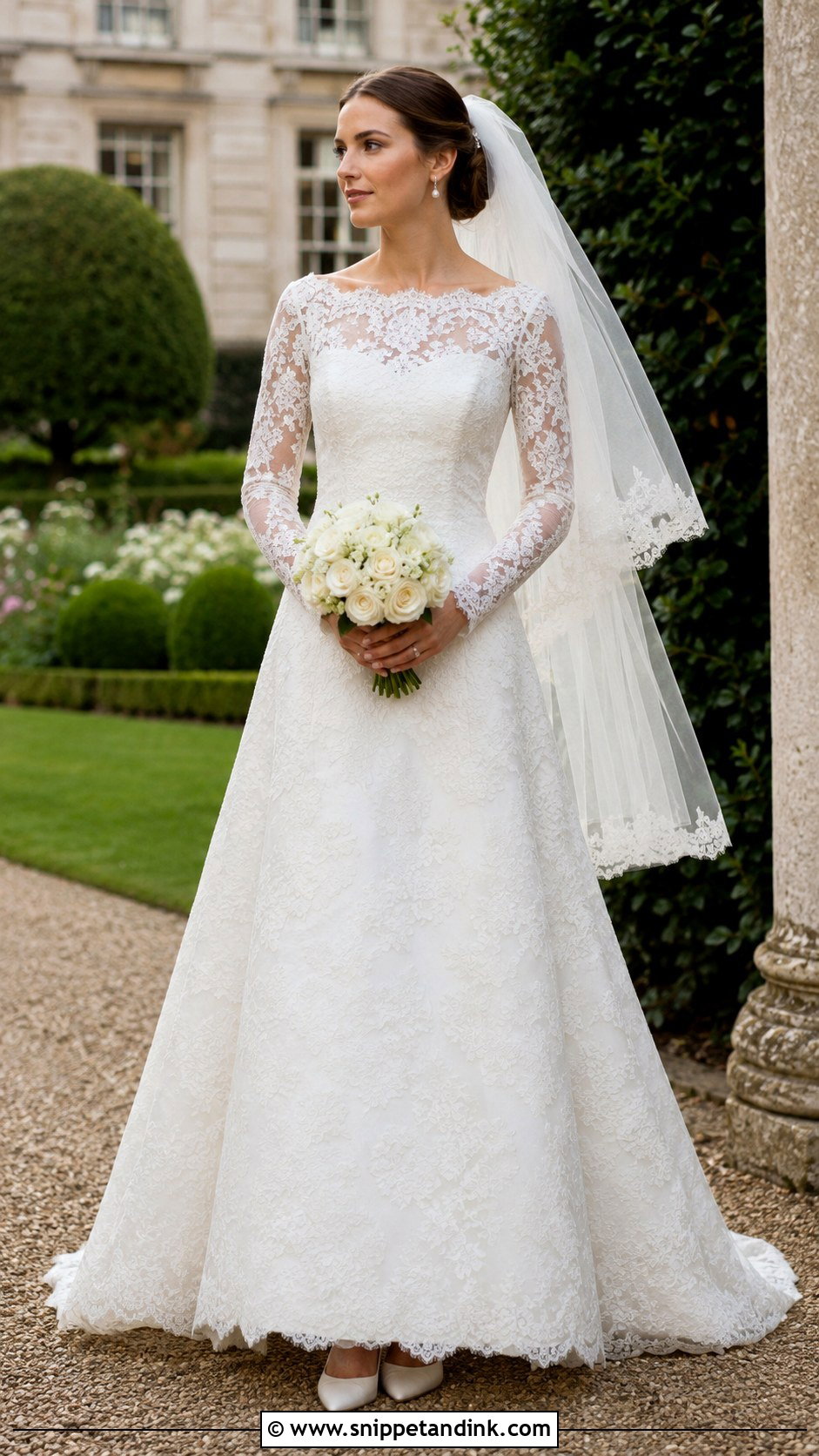
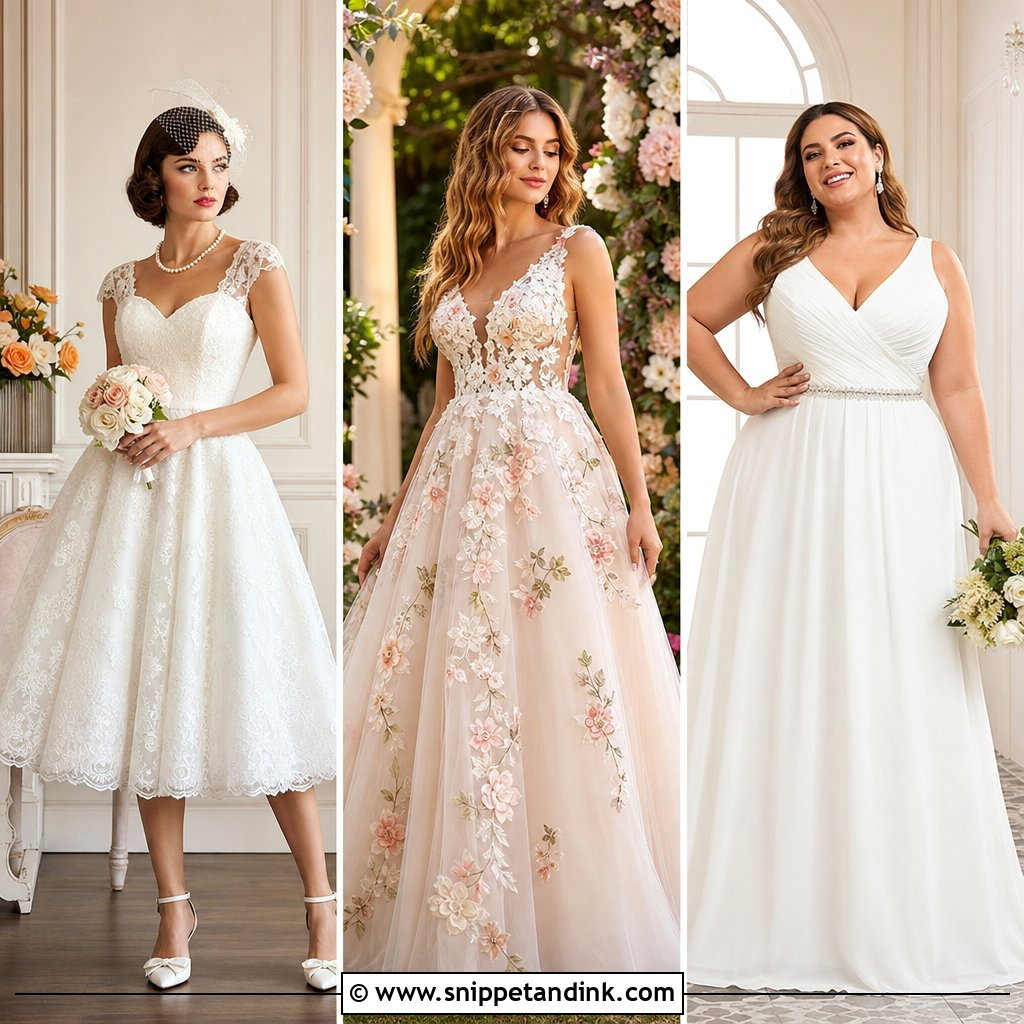
Lace with sleeves is the look most people picture first, and for good reason: it suits almost every age and shape. An ivory A-line with fitted lace sleeves, a defined waist and a softly layered skirt is the base, finished with a bateau or modest V-neckline. The detail I check is the sleeve seam at the armpit; lace sleeves cut too tight rip there on the first enthusiastic hug. Pearl drops, a fingertip veil and low satin pumps keep it comfortable. For a lawn ceremony, a sweep train is far easier than a long one.
2. English Countryside A-Line Wedding Dress
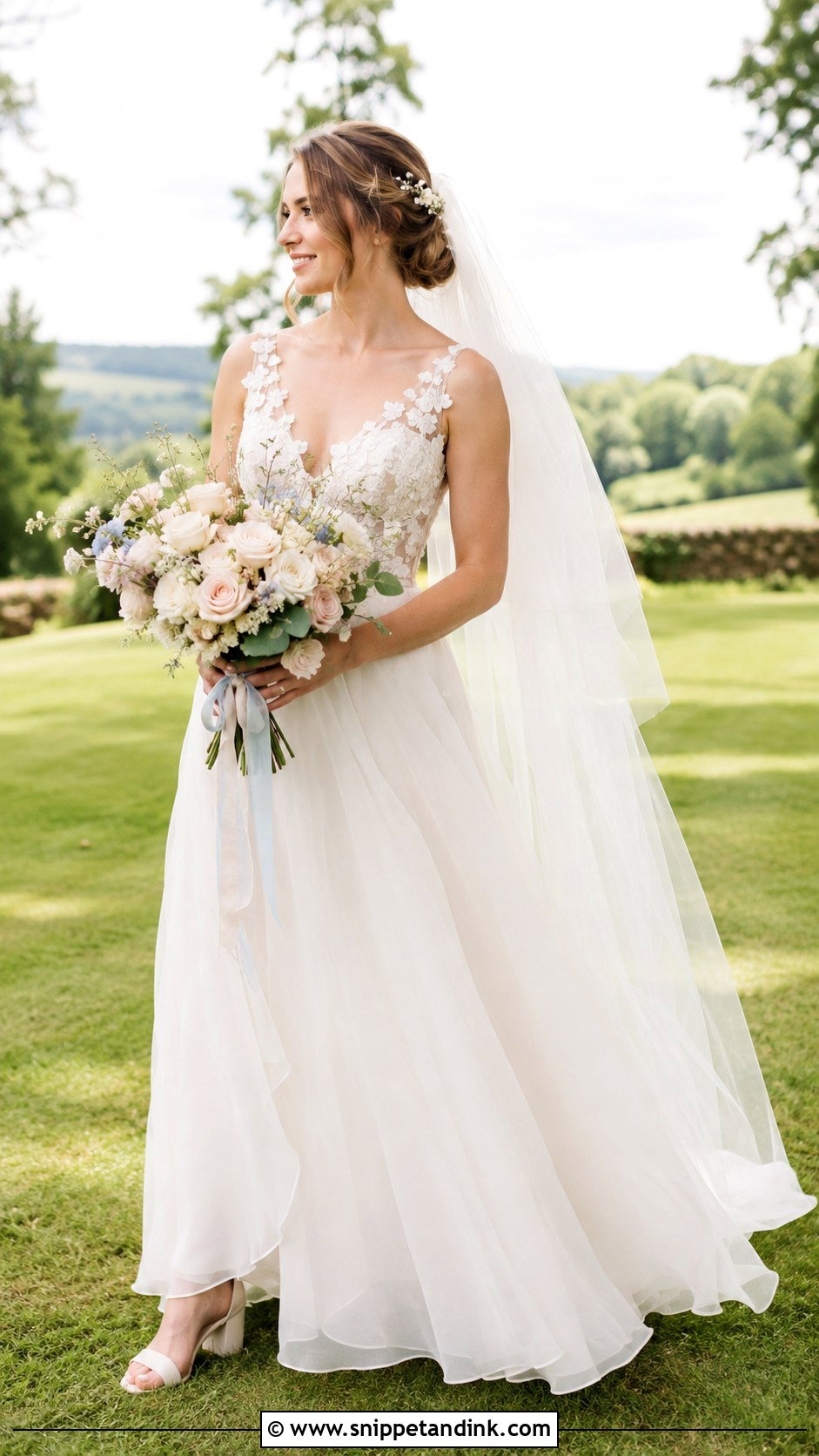
Country estates need a skirt that moves and doesn’t hold you up. An A-line defines the waist while leaving room to stride, and lightweight organza, chiffon or soft tulle with a little appliqué on the bodice keeps it breezy. English lawns are often damp even on dry days, so block heels or embellished flats matter more than they look. A loose low bun, fine pins and a chapel veil suit it, with a relaxed bouquet in white, blush and pale blue. Pack a fitted ivory wrap; evenings in the countryside cool down quickly.
3. Royal English Ball Gown Wedding Dress
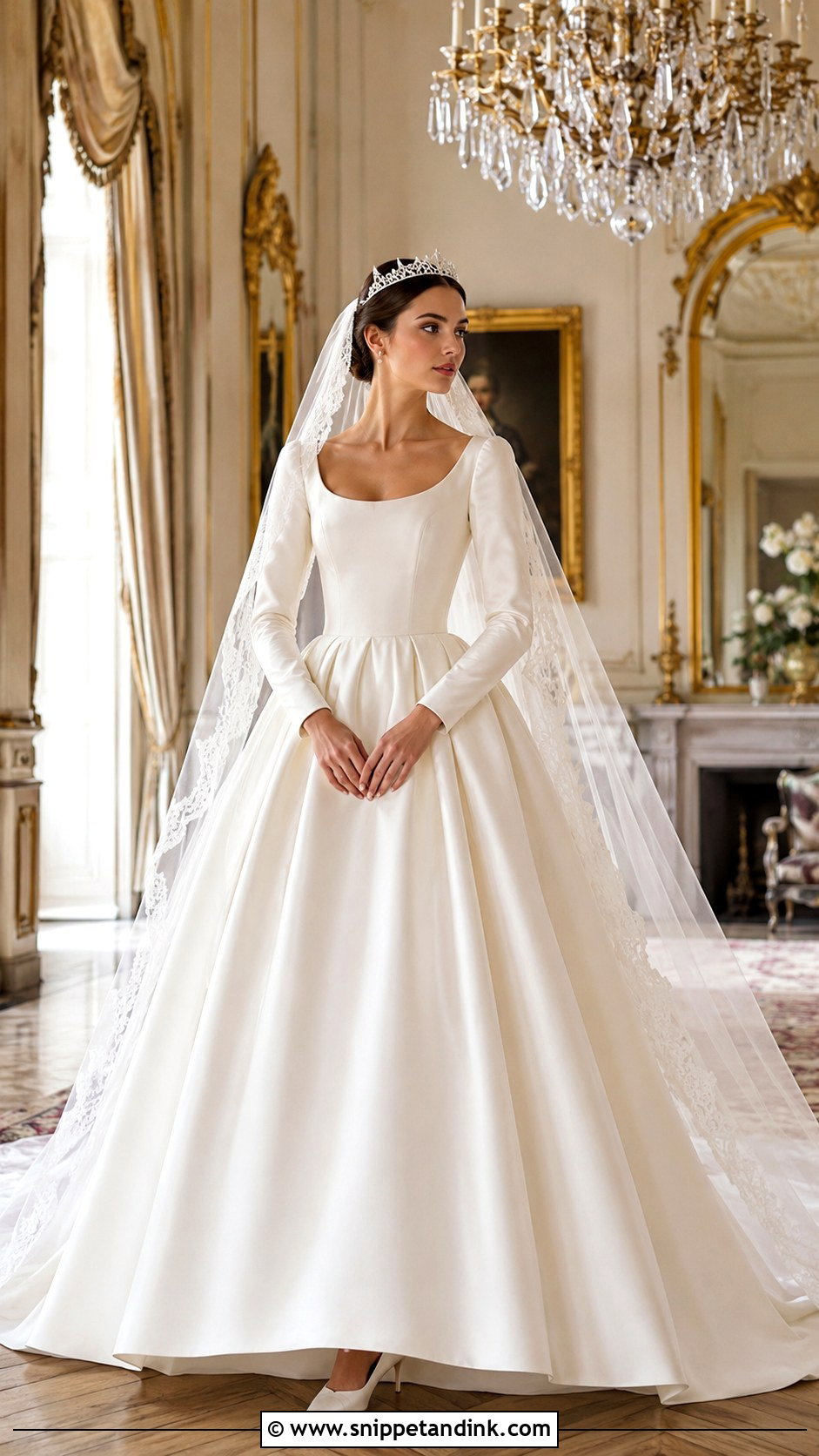
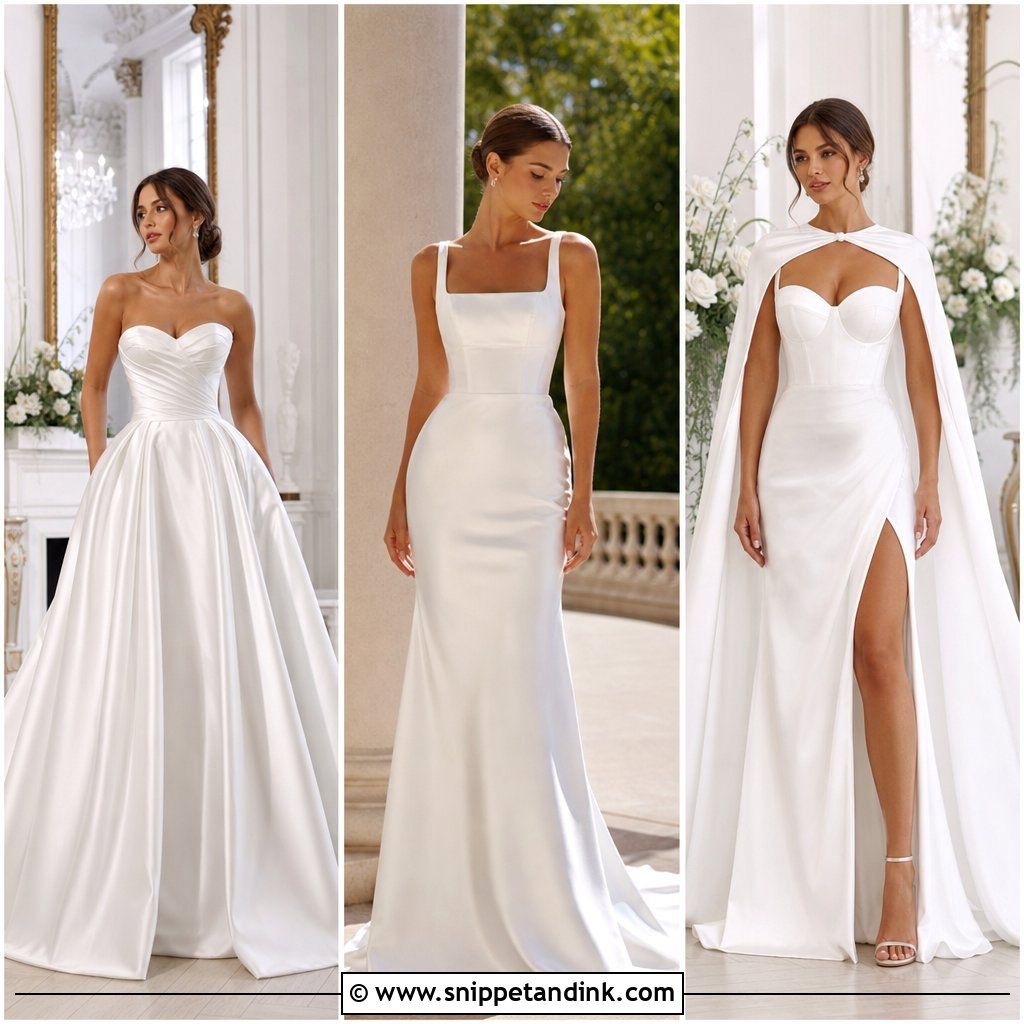
A structured ball gown belongs in a grand house or a large church with a long aisle. Choose a fitted bodice with a clean scoop neck, solid internal construction and a full satin or mikado skirt, with covered buttons down the back. Allow time for those buttons on the morning; thirty or more can take a bridesmaid several minutes, and a crochet hook makes it quicker. A cathedral veil balances the volume. Pearl studs, a delicate tiara and pointed ivory pumps keep it refined, with a neat updo and a compact bouquet so the skirt can lead.
4. Regency English Empire Waist Wedding Dress
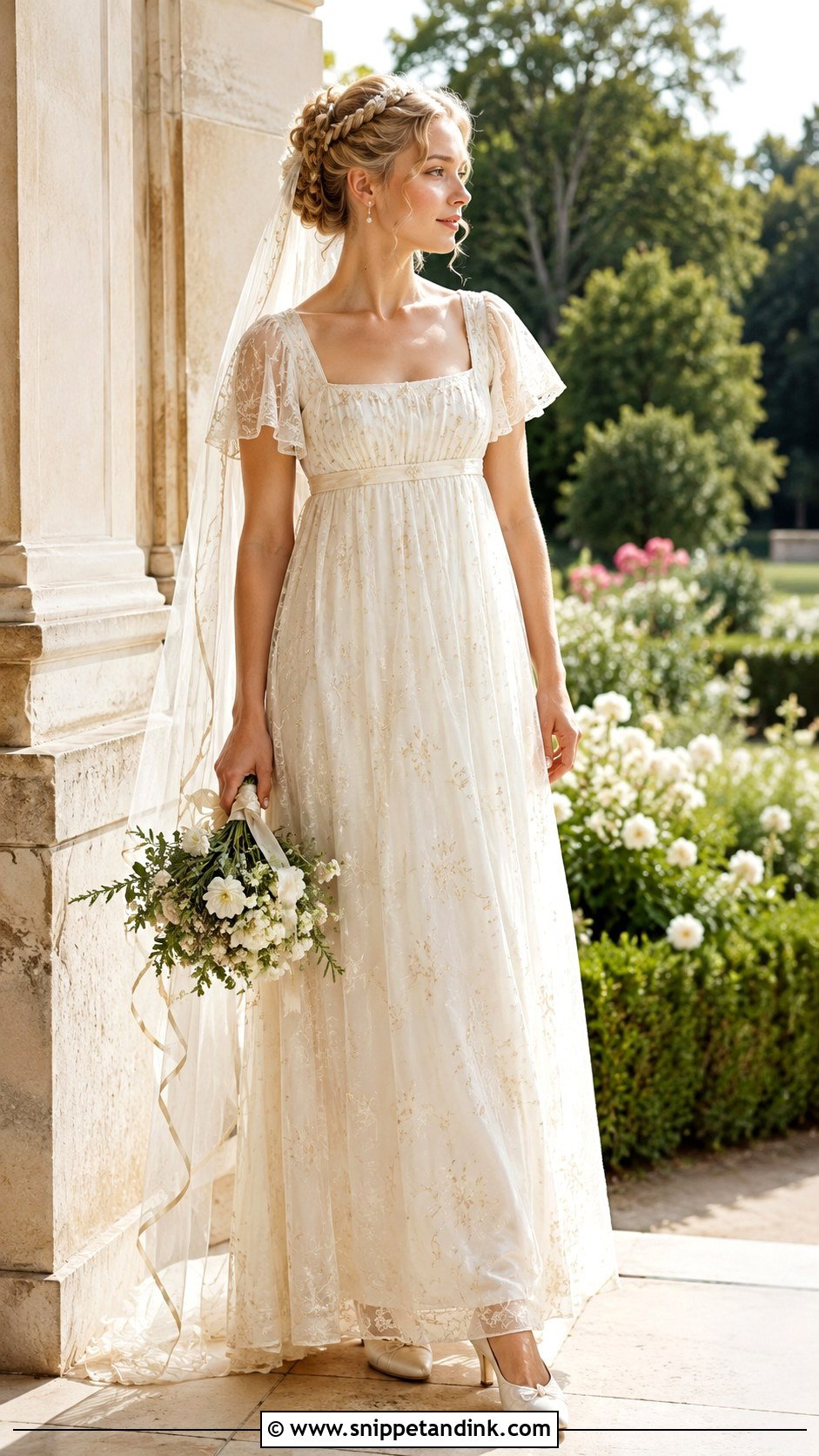
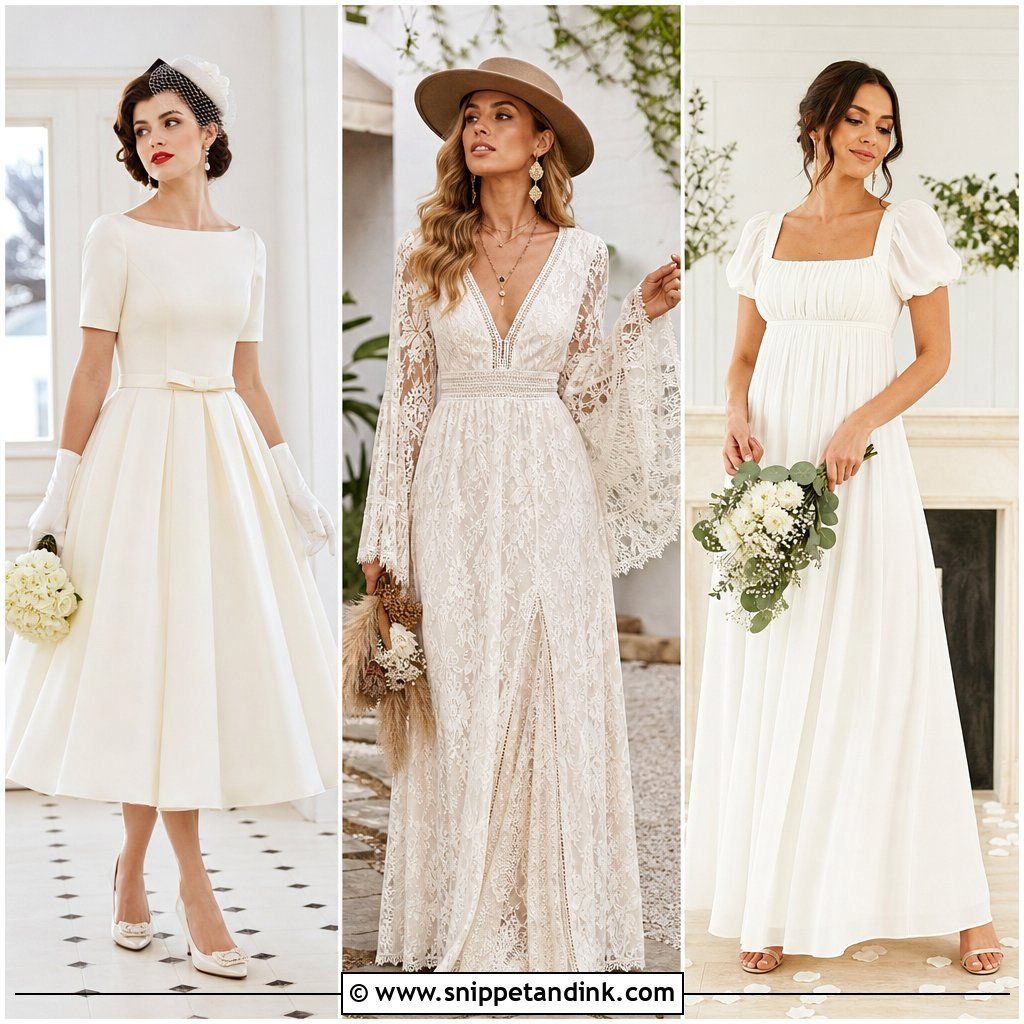
The Regency empire waist is soft and very forgiving. The waistline sits just below the bust and the skirt falls straight without heavy layers. Sheer flutter sleeves, fine beading or embroidered tulle add detail. I’d steer you away from a stiff fabric here; the shape relies on drape, and a stiff skirt tents outward from the bust. Low kitten heels, a slim pendant and pearl earrings suit it, along with a ribbon-trimmed veil or a light floral headband. A braided updo with a few loose face-framing pieces finishes the period feel.
5. Vintage English Tea-Length Wedding Dress
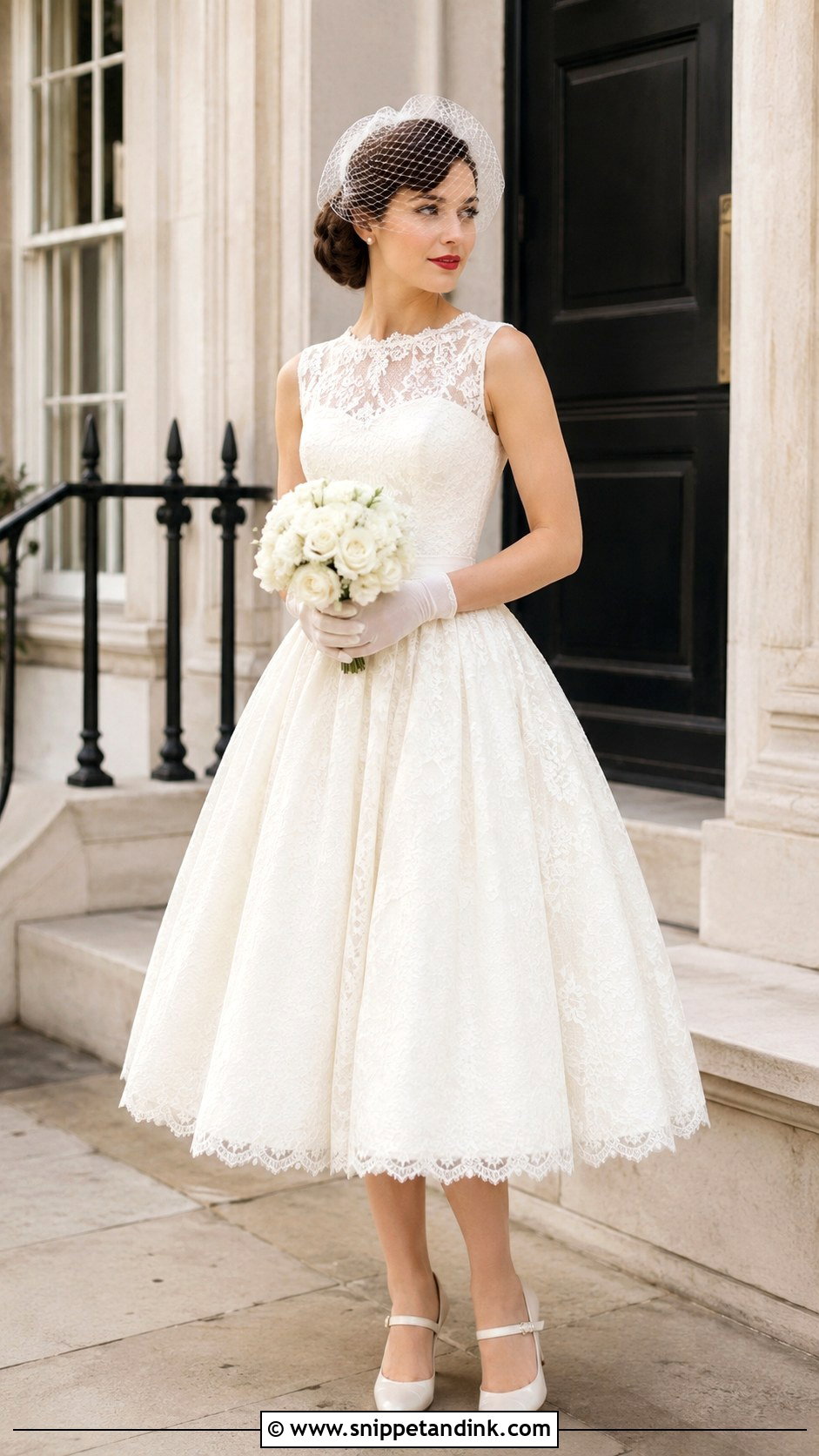
Tea length has real vintage character and suits a civil ceremony or a relaxed reception. Choose a fitted bodice, a bateau neckline and a full skirt ending between knee and ankle; lace, satin or textured jacquard keep it bridal. With the shoes on show, slingbacks, satin Mary Janes or embellished block heels all work. Add pearl earrings, short gloves and a small birdcage veil for a coordinated retro look. Full skirts in this length want a petticoat to hold their shape, so ask whether one is built in. A neat chignon or a curled bob and a compact round bouquet finish it.
6. Modern English Satin Column Wedding Dress
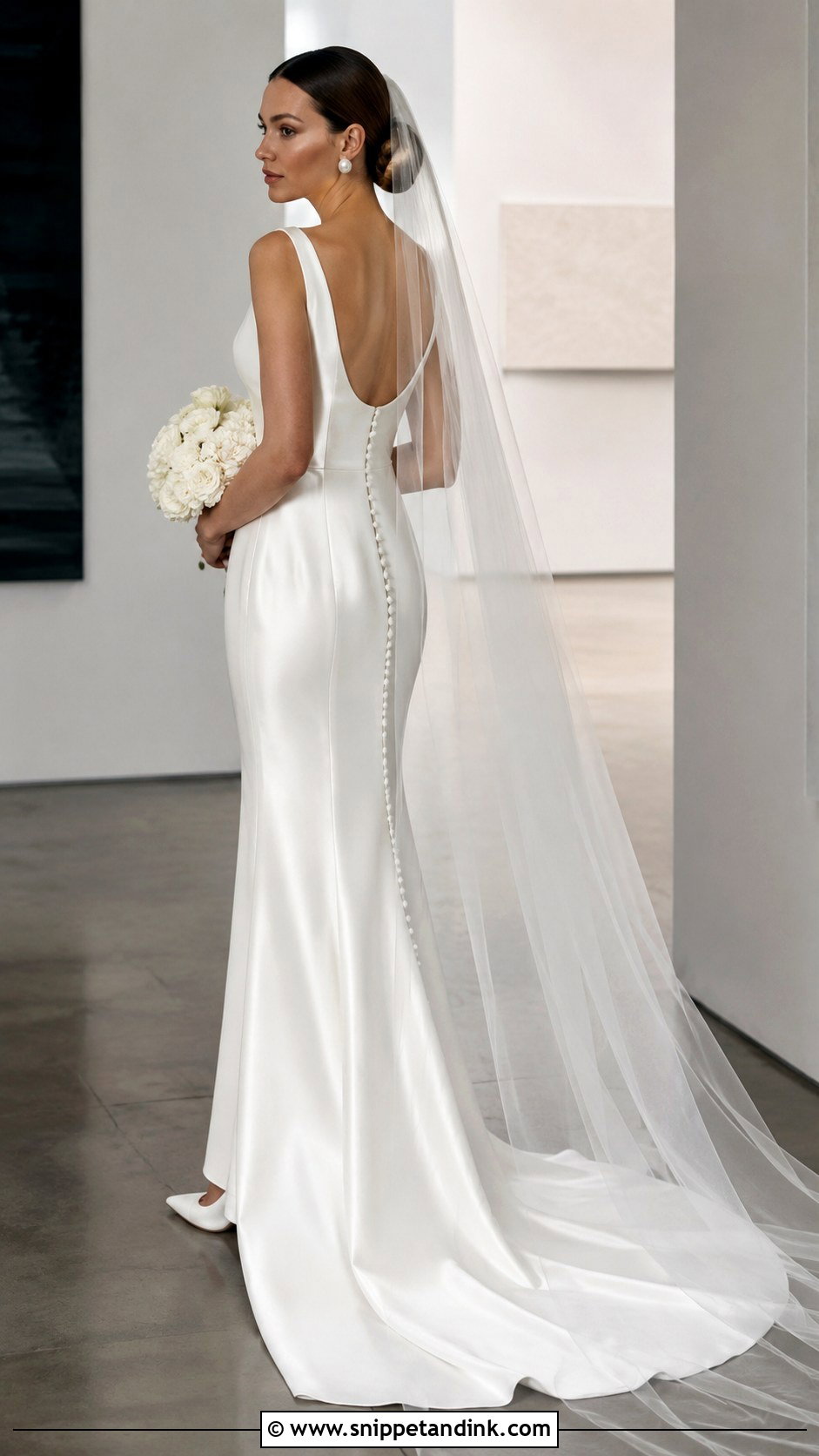
Satin column gowns look simple and are the hardest to fit. The fabric should skim the body without pulling, and every pull line shows under a camera flash. A square, draped or high boat neckline, a low back and a row of covered buttons give quiet interest. Smooth, seam-free underwear is non-negotiable. Sculptural pearl earrings, pointed pumps and a simple cathedral veil suit the ceremony, with a smooth low bun and a compact single-flower bouquet. City hotels and galleries flatter it, as do pared-back manor rooms.
7. English Garden Floral Wedding Dress
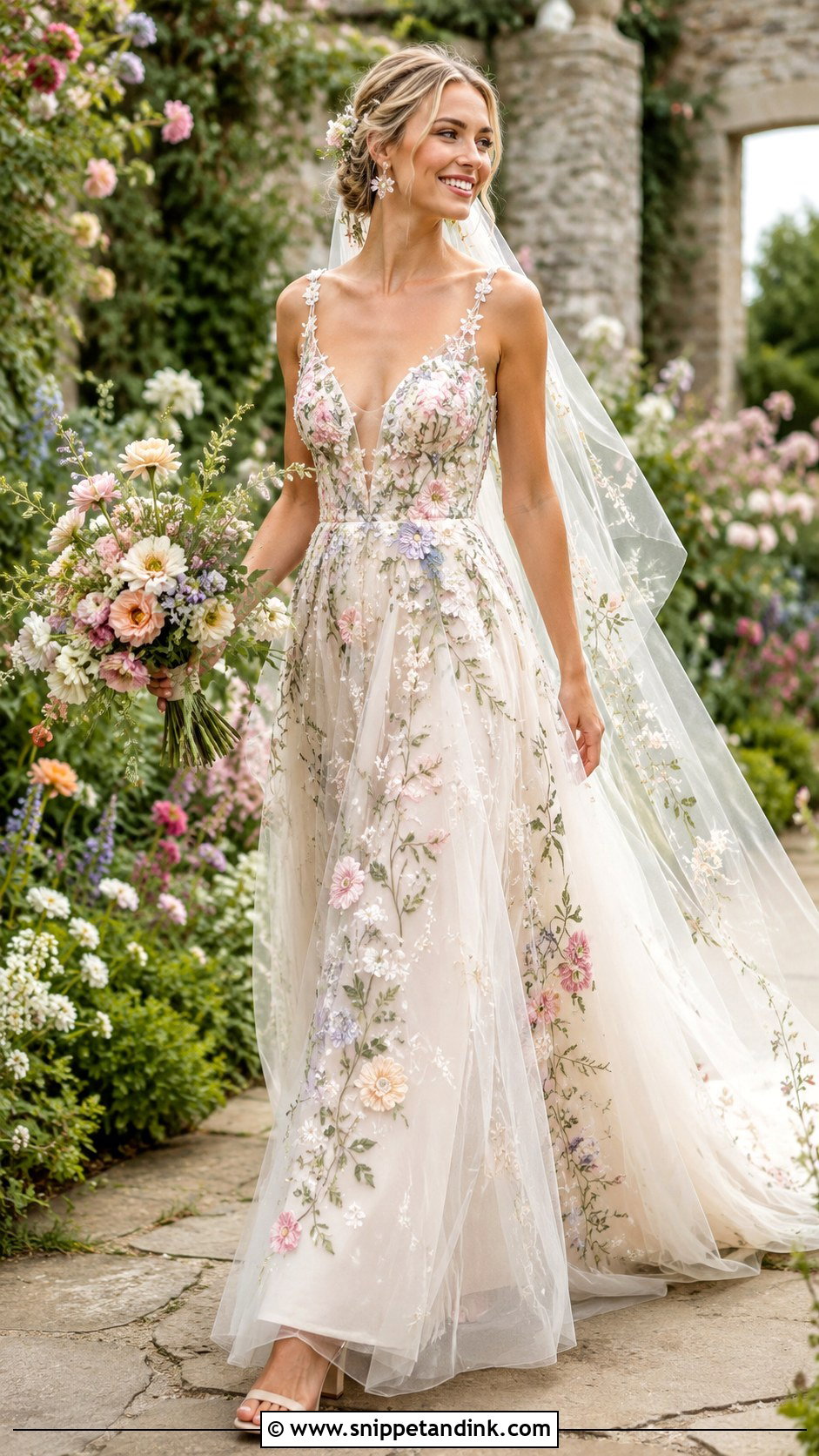
An English garden dress should feel like the borders outside. An ivory tulle gown with embroidered vines, small flowers or softly colored appliqués, a fitted bodice and an A-line skirt keeps pattern and shape in balance. If the dress already carries a lot of floral decoration, the accessories need to step back: neutral block heels, floral studs, a sheer veil with minimal edging. A half-up style with a few small pins suits it. Ask your florist to repeat just a few colors from the embroidery so the bouquet and gown look related.
8. English Manor Long Sleeve Wedding Dress
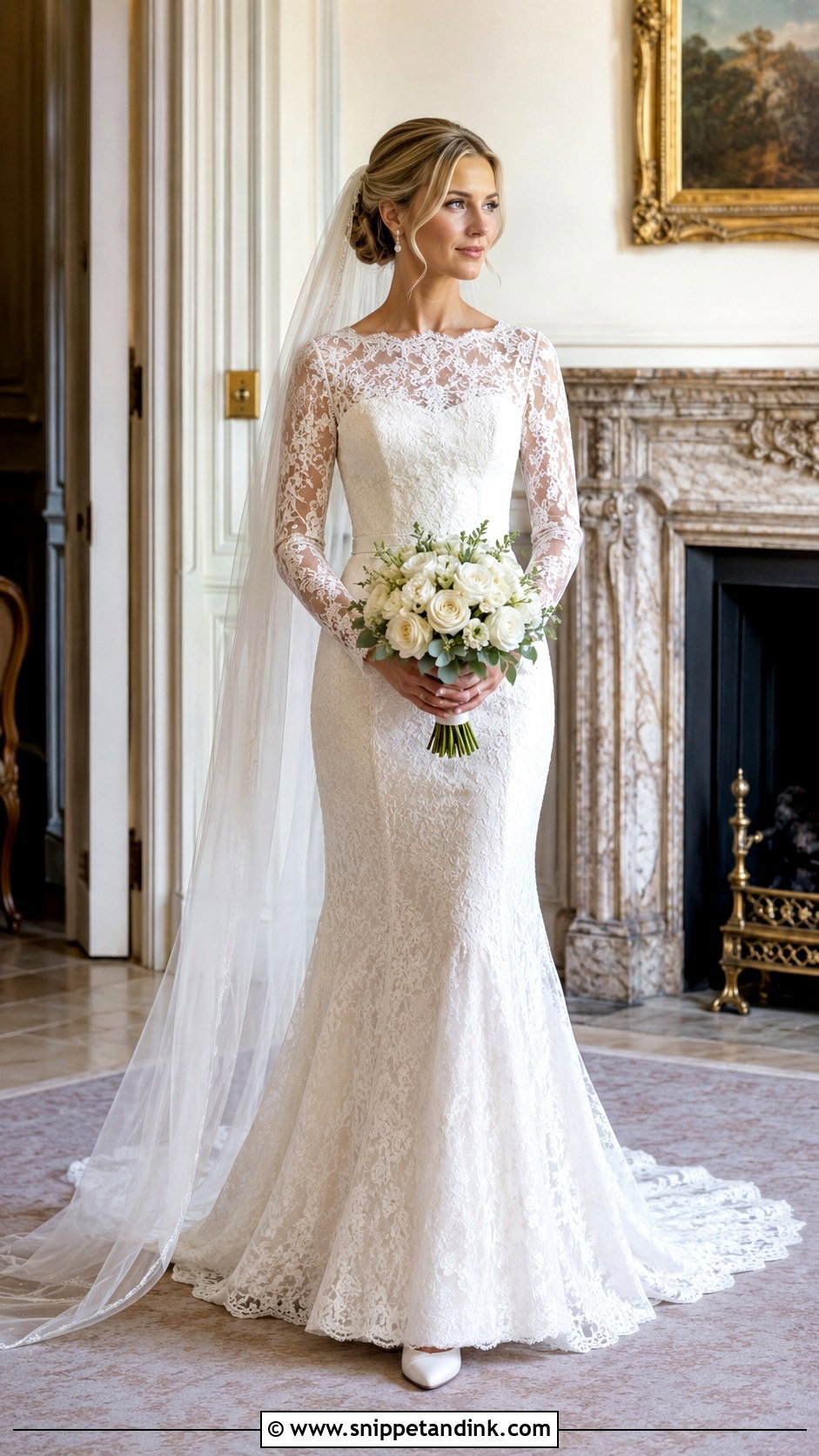
Long sleeves suit formal manor rooms, which are often cooler than people expect even in summer. Choose fitted lace sleeves over a lined bodice, or clean crepe sleeves for a simpler finish. An A-line or fit-and-flare skirt with a modest train keeps movement easy. Closed-toe satin shoes, pearl drops and a long sheer veil complement it, with a low twisted bun showing the neckline and back. A structured bouquet of ivory flowers and greenery fits the setting. In winter, add a tailored cape or soft wrap in exactly the same shade; a mismatched ivory looks grey beside the dress.
9. English Castle Square Neck Wedding Dress
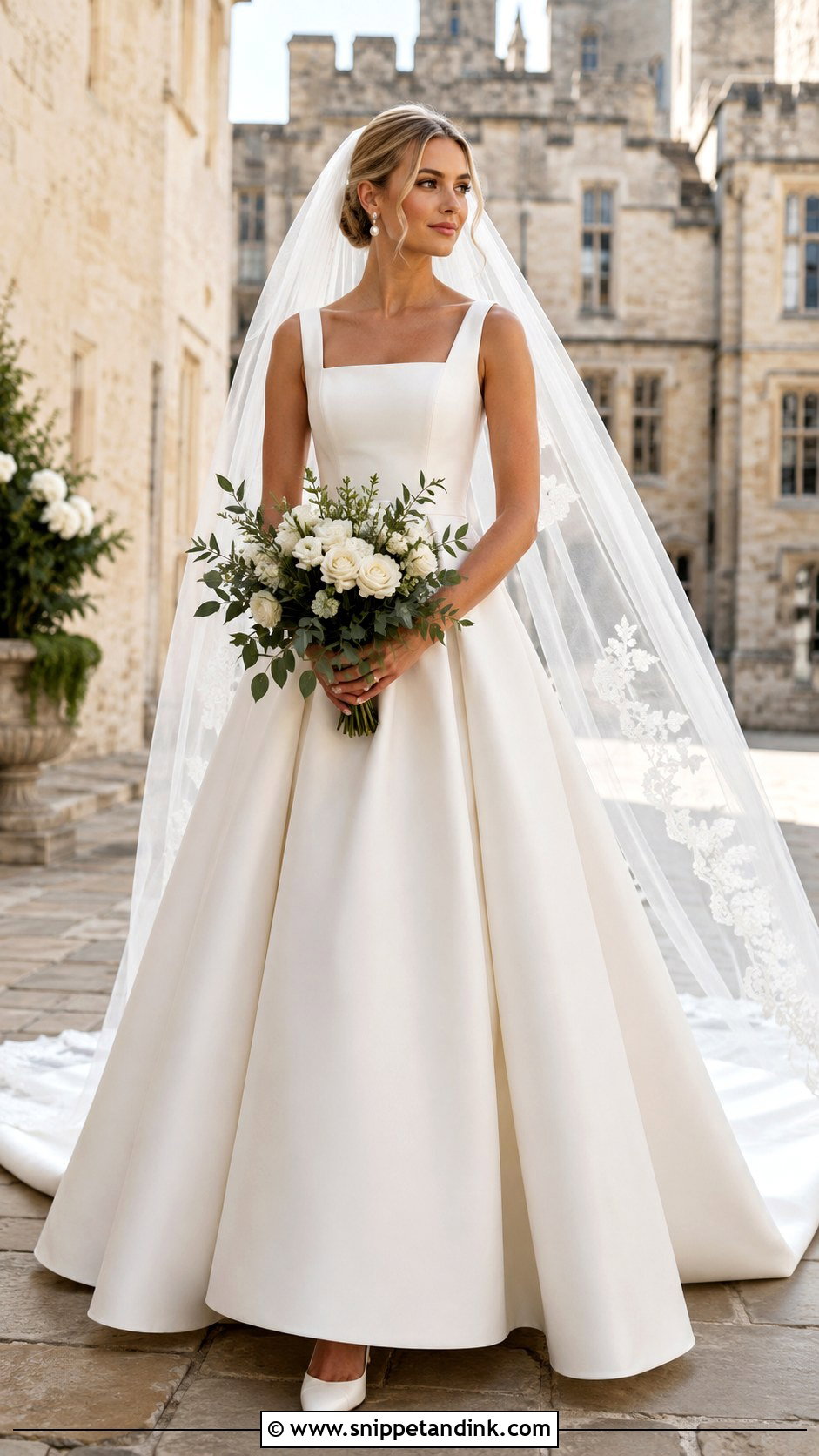
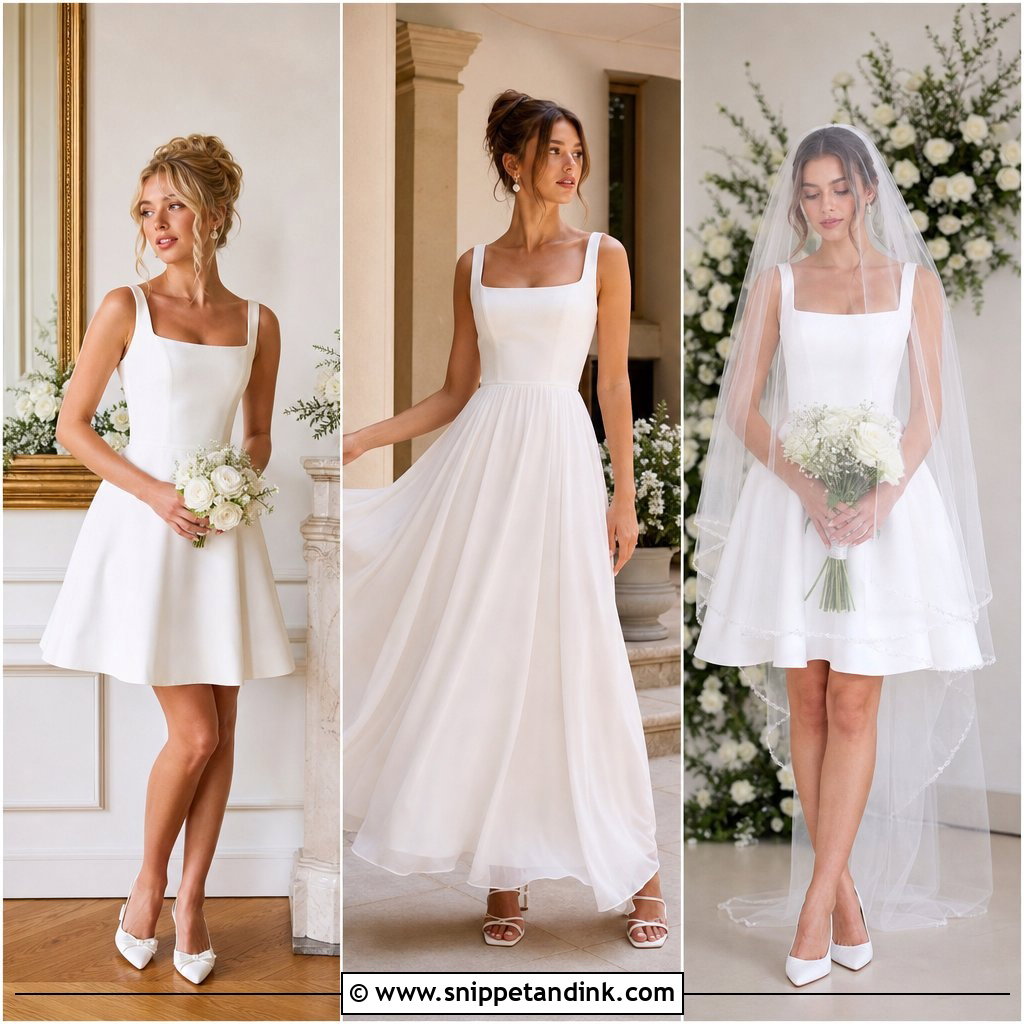
Castles bring stone, height and dim light, so the square neckline’s strong lines hold their own there. Pair a structured bodice with wide straps or fitted sleeves and a full A-line skirt in satin, mikado or brocade. Leave the necklace off and wear statement pearl earrings. Pointed ivory heels, a cathedral veil and a sleek low bun finish it. Stone floors are cold and uneven, so check your heels on similar paving before the day. A bouquet of white flowers with deep green foliage has enough weight for the surroundings, and textured fabric needs no extra beading.
10. English Cottage Puff Sleeve Wedding Dress
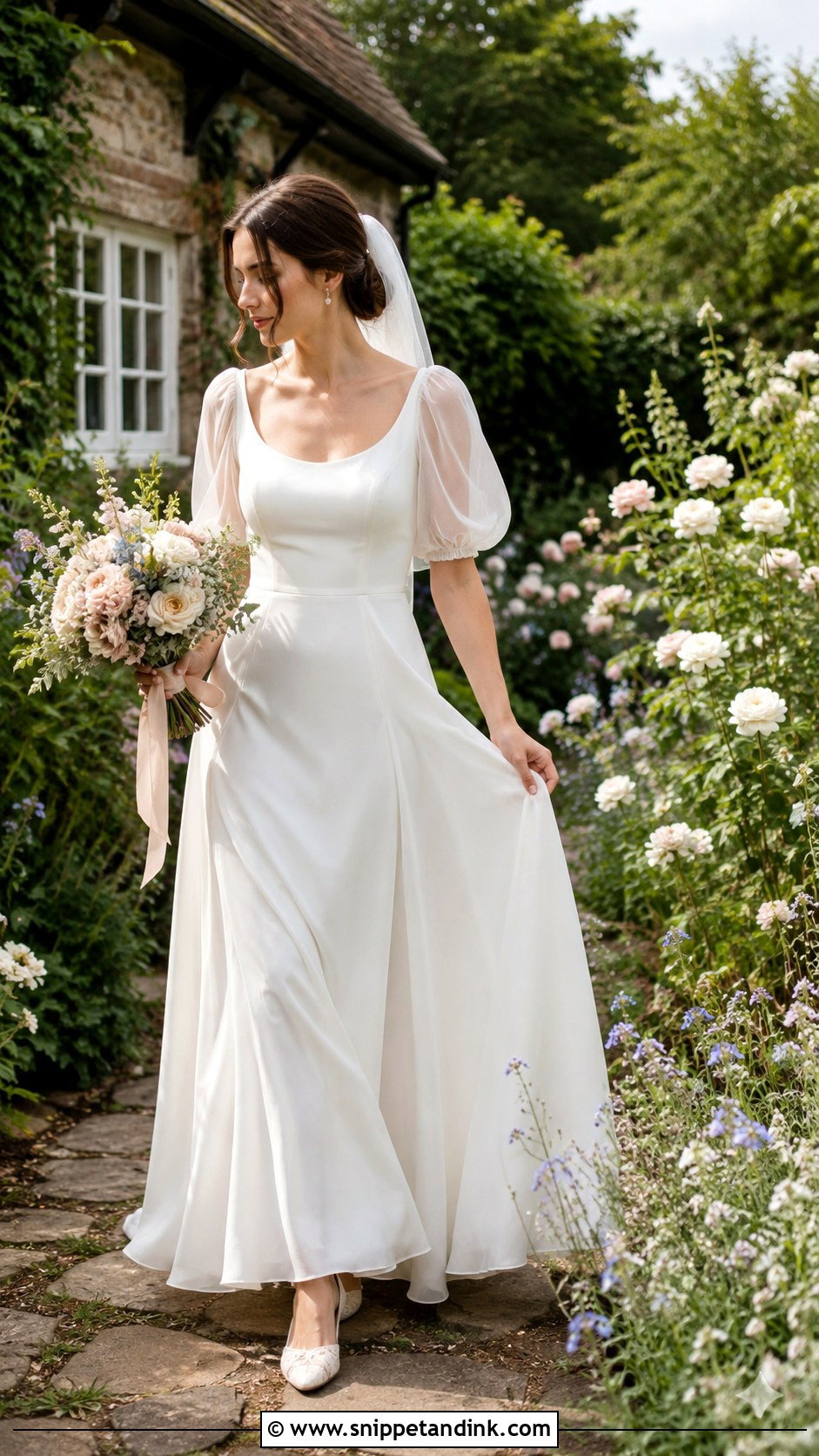
A puff-sleeve gown fits the easygoing mood of a cottage wedding. Look for sheer organza sleeves, a softly fitted bodice, a defined waist and an ankle or floor-length skirt, with a sweetheart or gentle scoop neckline balancing the volume. Sleeve size should suit your frame; on narrow shoulders a big puff swamps you, and an elastic arm opening that’s too tight leaves marks. Embroidered flats or low block heels manage gravel. A short veil, small hoops, a loosely pinned bun and a pastel seasonal bouquet suit a smaller wedding.
11. English Summer Chiffon Wedding Dress
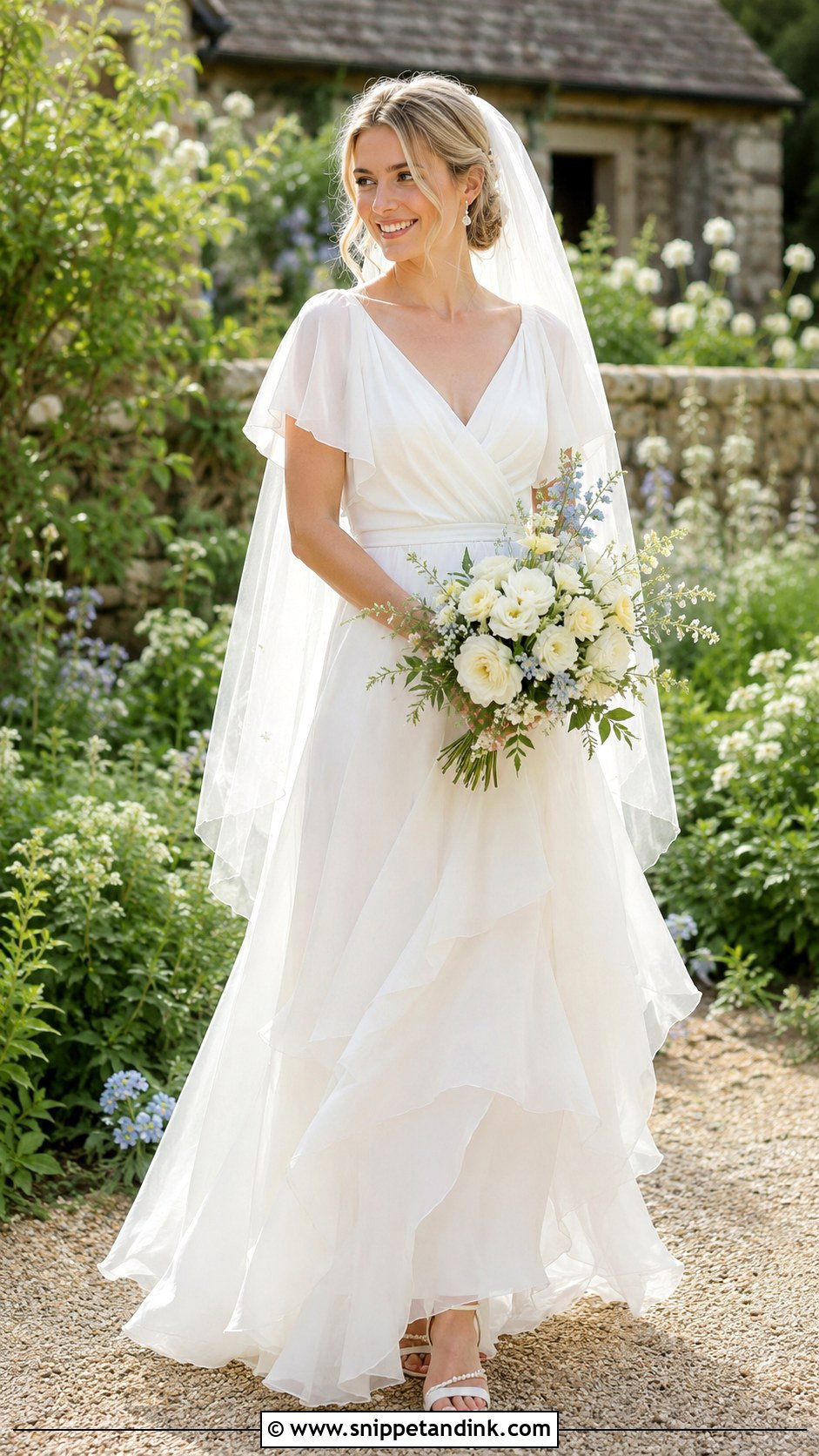
An English summer can be warm one hour and breezy the next, and chiffon handles both. A gathered A-line with a draped bodice, defined waist and layered skirt stays airy. Flutter sleeves or wide straps support without weight. Skip heavy underskirts if there’s outdoor walking; they trap heat. Pearl sandals, fine drop earrings and a light fingertip veil pair well with a loose ponytail, braided bun or half-up style. A bouquet in white, pale yellow and soft blue suits the season, and the dress will still be comfortable through dinner and dancing.
12. English Winter Satin Wedding Dress
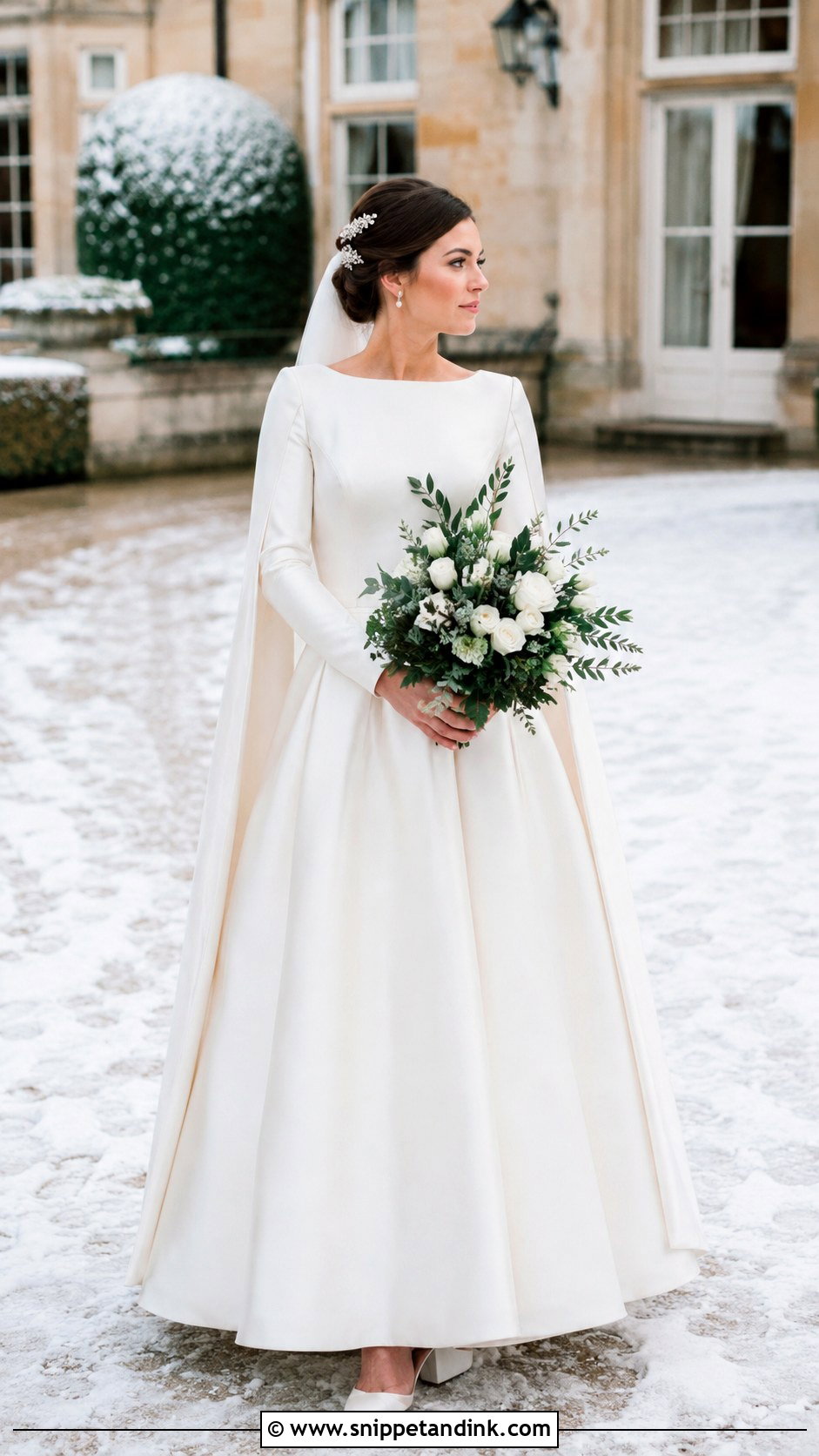
Winter dressing is about layers you can take off. Start with a structured satin gown with long sleeves and a fitted waist, then add an ivory cape, faux-fur-trimmed wrap or tailored coat for outdoor photos and getting between buildings. Plan the order: the veil should come off before the cape goes on, or the cape will drag it. Closed-toe block heels, pearl earrings and a jeweled comb suit it, with a secure updo. White flowers, eucalyptus and deep green foliage suit a winter bouquet without darkening the outfit.
13. English Coastal Wedding Dress
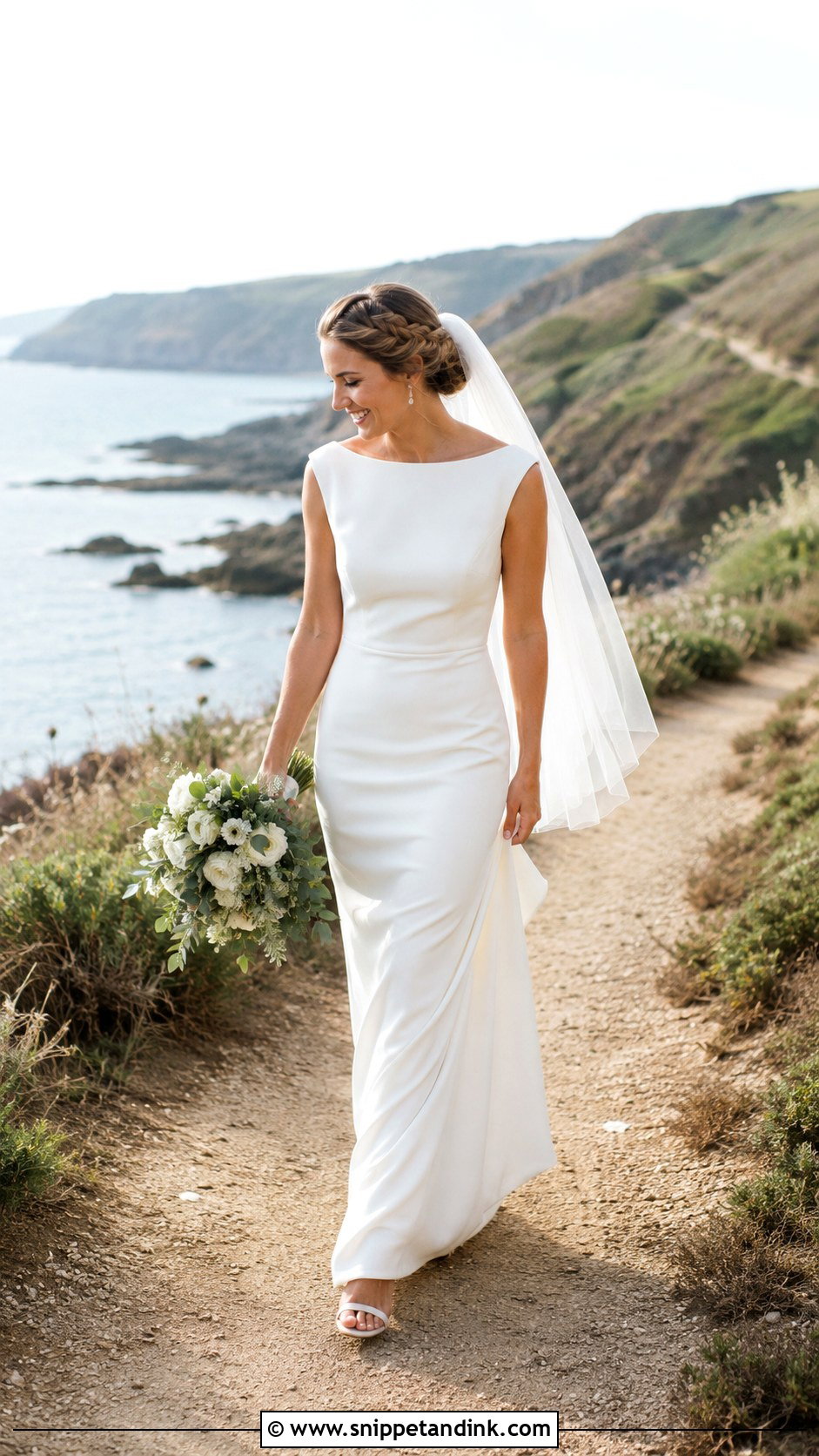
Coastal weddings mean wind, and wind decides most of what I’d recommend. A slim A-line or sheath in crepe, chiffon or light satin is manageable; a short sweep train avoids dragging sand or wet stone. A fingertip veil is far easier to control than a cathedral one, and even that needs pinning firmly into a low ponytail or braided bun. Embellished flats, supportive sandals or low block heels handle uneven ground. Small pearl earrings, a simple comb and a loose bouquet of white flowers with silver foliage keep it understated.
14. English Registry Office Midi Wedding Dress
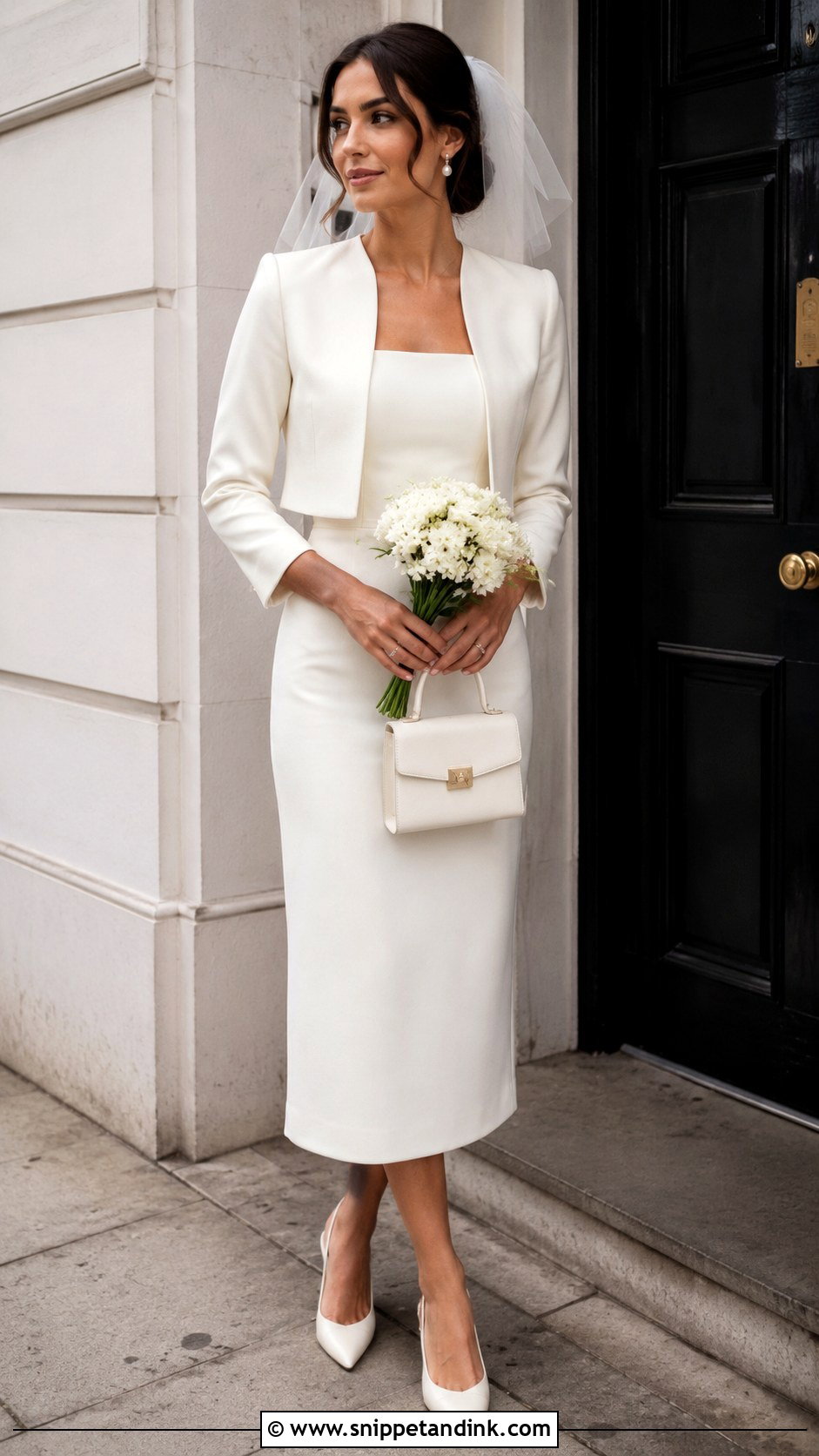
Registry office ceremonies are short and the rooms are often small, which suits a midi beautifully. A fitted sheath, structured A-line or tailored wrap in ivory crepe or satin works well, with a bateau, square or asymmetric neckline for interest; it brings real polish to a registry office ceremony. Pointed slingbacks, pearl earrings and a small top-handle bag suit it. Swap a long veil for a short tulle veil, bow, padded headband or comb. A tailored blazer helps with city photos, and the outfit flows straight into a lunch or dinner afterward.

15. English Tudor Wedding Dress
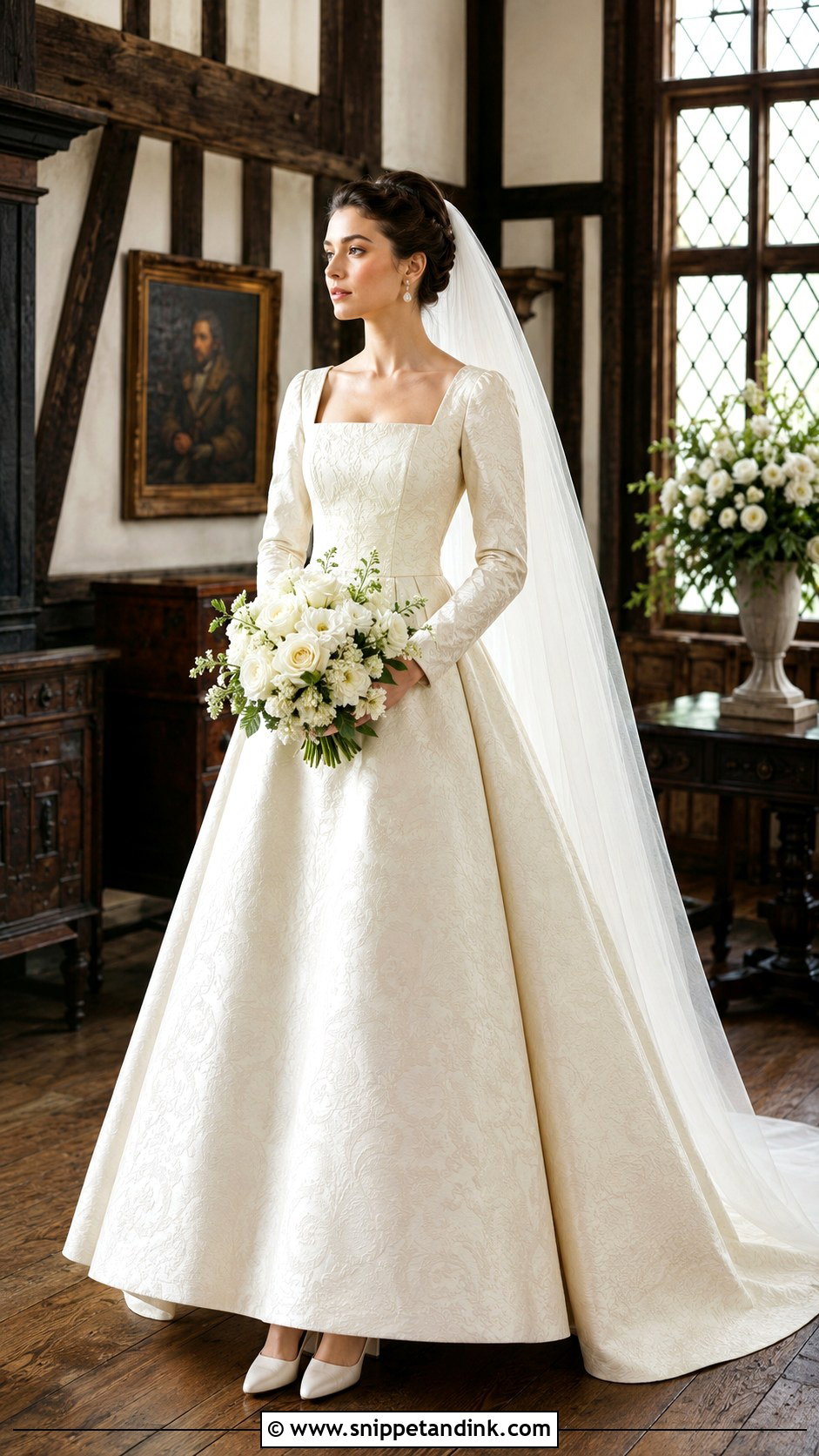
A Tudor-inspired wedding dress works when the history is suggested rather than recreated. A structured gown with a square neckline, fitted long sleeves and a defined waist does most of it. Choose soft ivory jacquard, satin or embroidered fabric rather than stiff theatrical materials, and keep the embellishment at the neckline or cuffs. Tudor sleeves are often tight to the wrist, so make sure you can lift your arms enough to hold a bouquet. A full A-line skirt and modest train, pearl drops, closed-toe pumps, a long plain veil and a low braided bun complete it for a timbered manor.
16. Edwardian English Wedding Dress
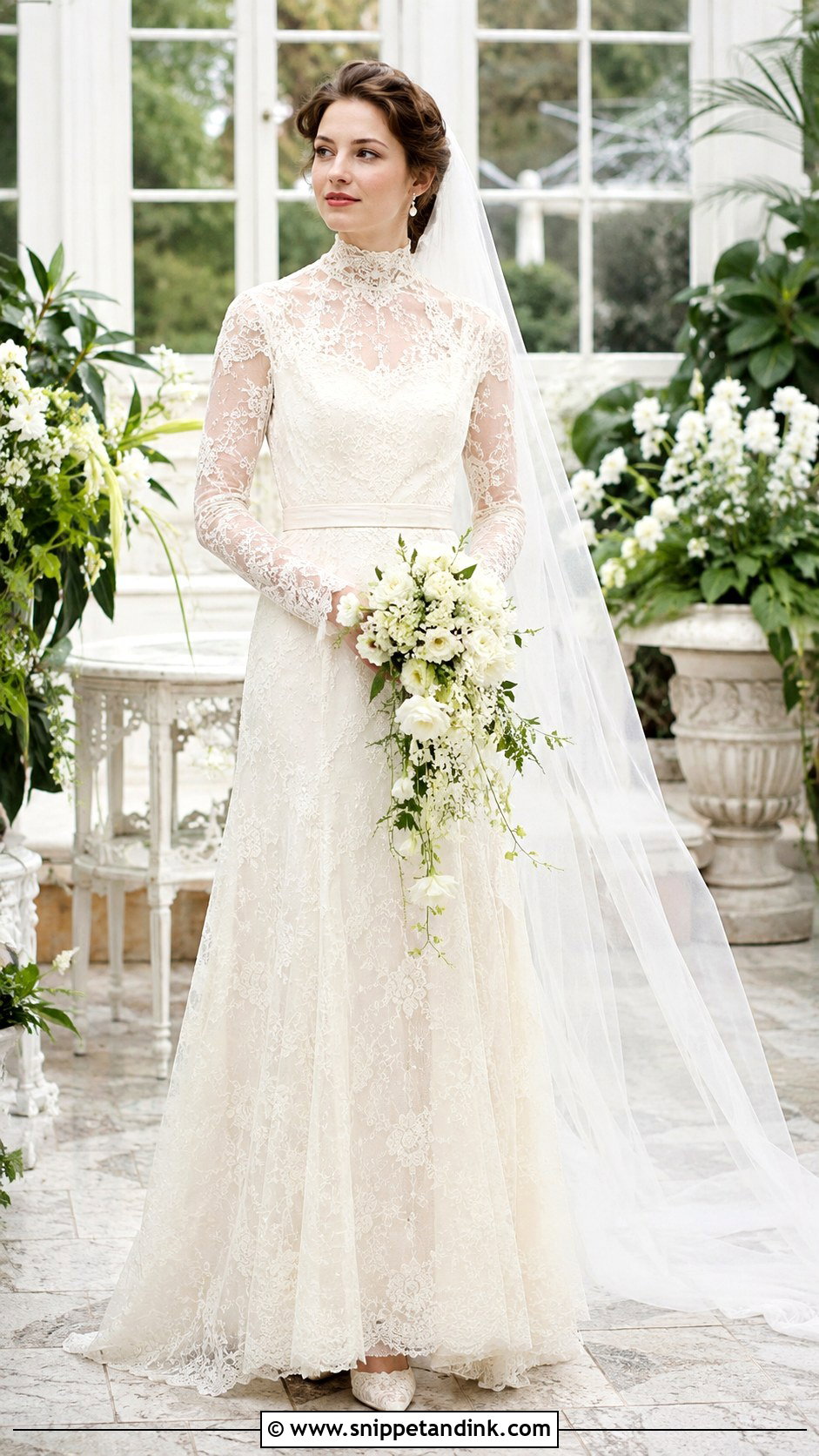
Edwardian style is for brides who like coverage with delicacy. A high illusion neckline, fine lace sleeves and a softly defined natural waist lead into a gently moving A-line skirt. One antique brooch or comb adds personality; three makes it a costume. Pearl button earrings, ivory lace pumps and a long narrow veil under a neat updo suit it, with a cascading or loose white bouquet. Modern stretch lining makes a high-necked gown far more comfortable over a long day, so ask whether the sample has it.
17. Boho English Countryside Wedding Dress
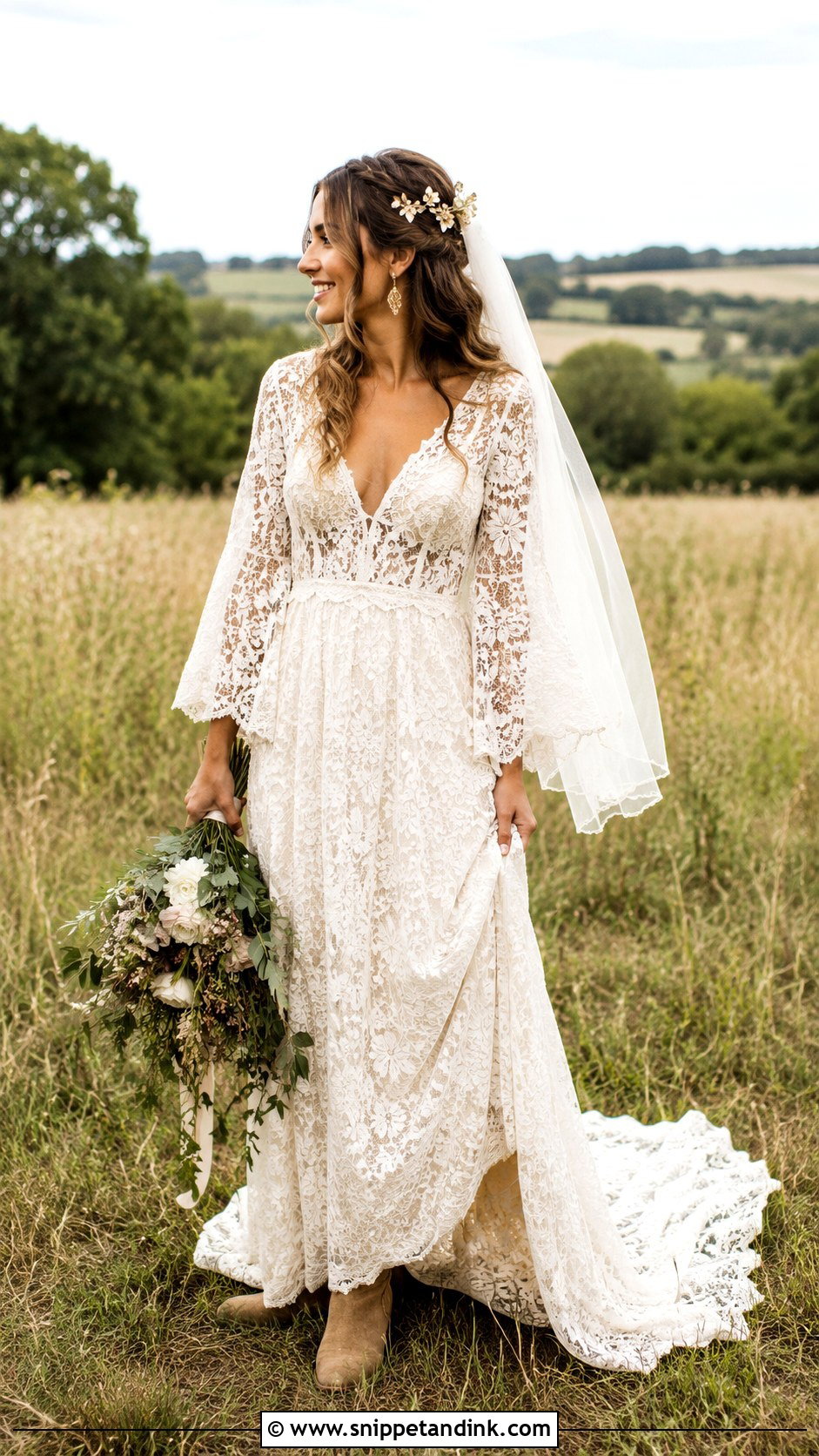
Countryside boho needs soft structure, not a huge skirt. A lace sheath or flowing A-line with bell sleeves, botanical embroidery and a short train gives an easy shape. Ground decides the shoes: ivory ankle boots for fields, embroidered flats or stable block heels elsewhere. If the lace is intricate, keep the rest simple: delicate gold earrings, a floral comb and a light veil under loose waves or a textured braid. An informal bouquet with trailing greenery completes it.
18. Plus Size English Wedding Dress
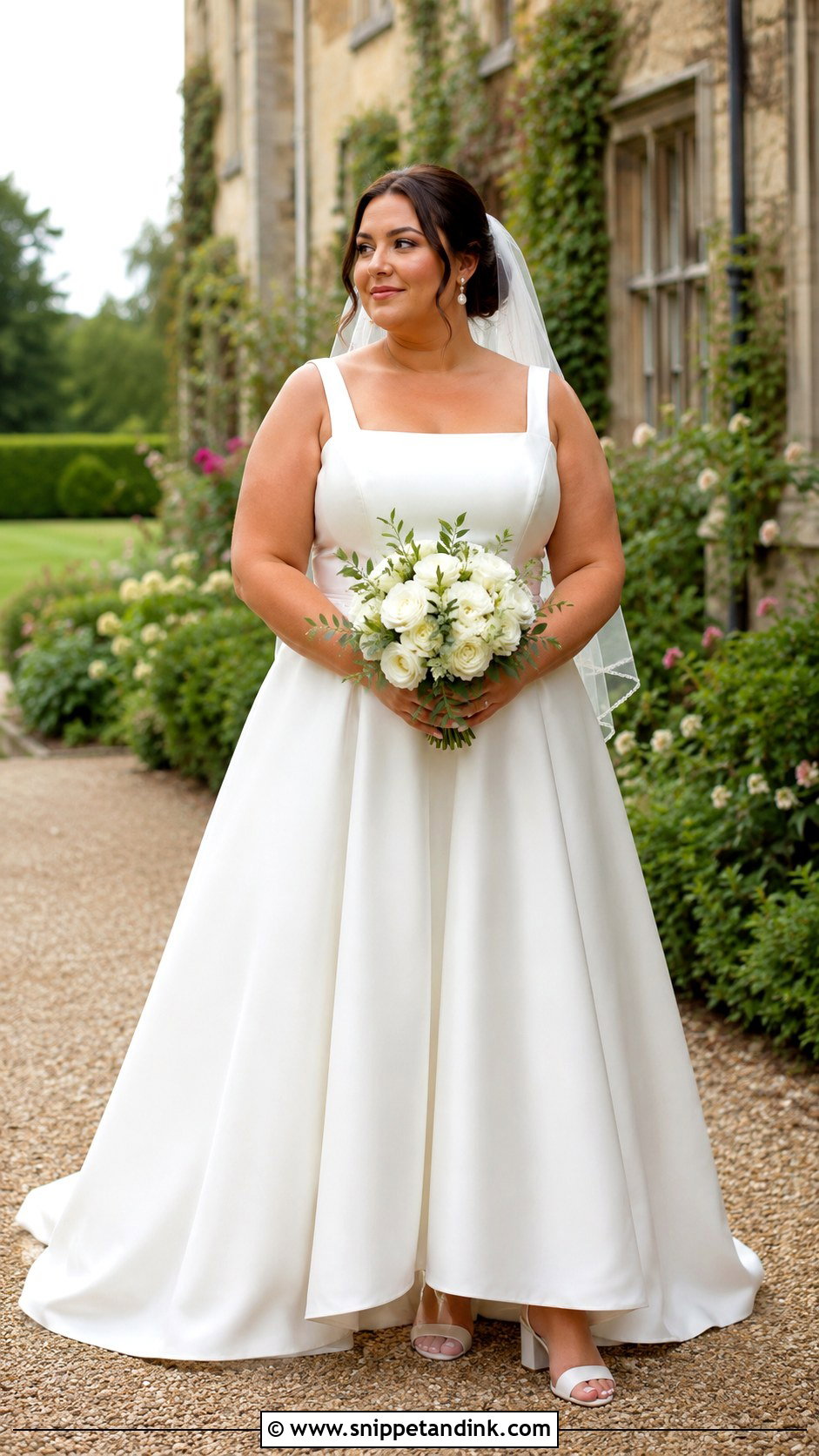
Good fit matters more than any body-shape rule. I start plus-size fittings with the foundation garment, because the right bra or bodysuit changes how every dress sits. A supportive A-line with a structured bodice, wide straps or sleeves and a skirt flowing from the waist is a strong base. A V, square or off-shoulder neckline frames the face. Block heels, pearl earrings and a veil secured under a low bun or half-up style complete it. Lace, satin or crepe all work; what matters is alterations done while you sit and walk, with a bouquet in proportion.
19. Minimalist English Wedding Dress
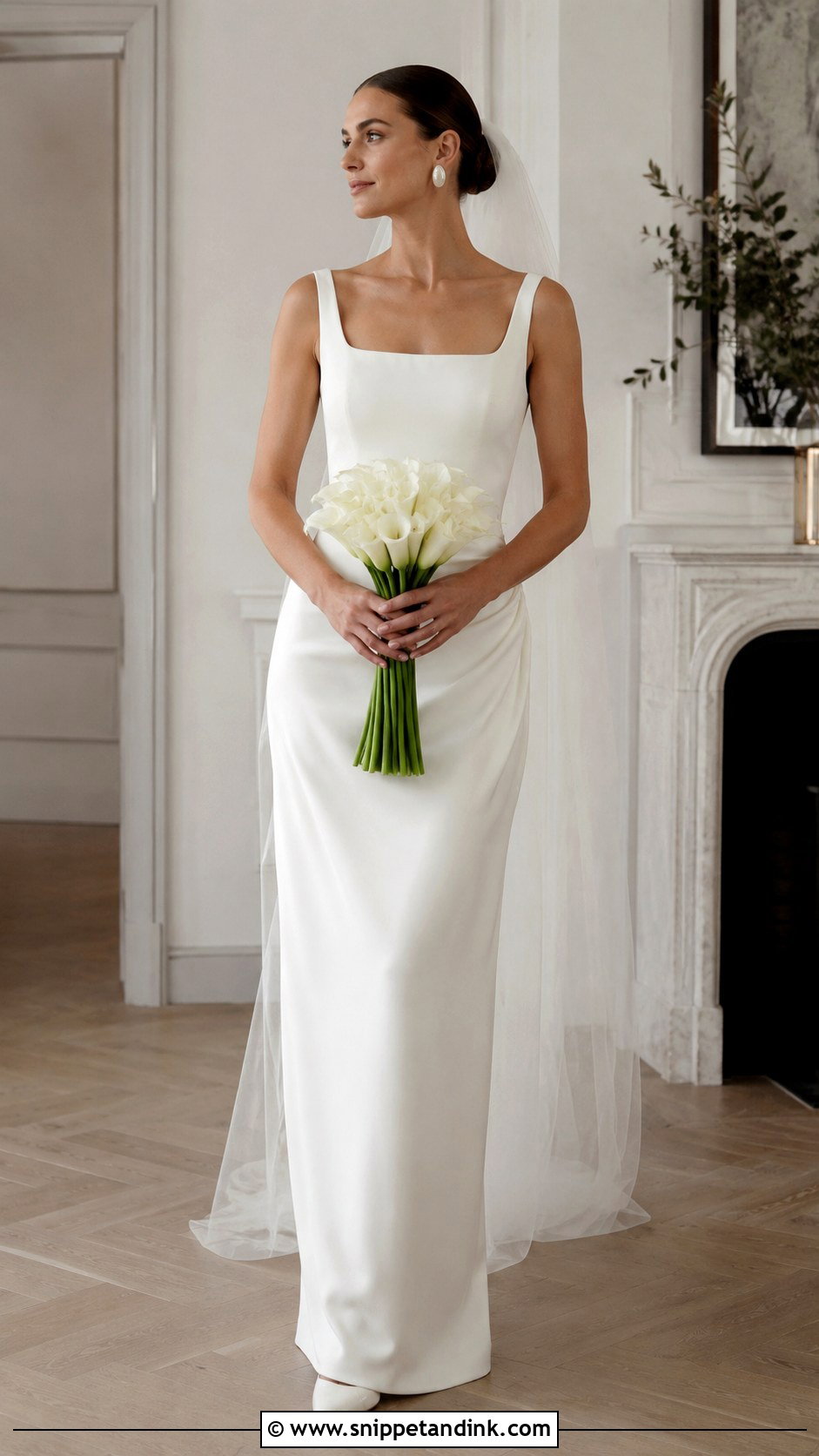
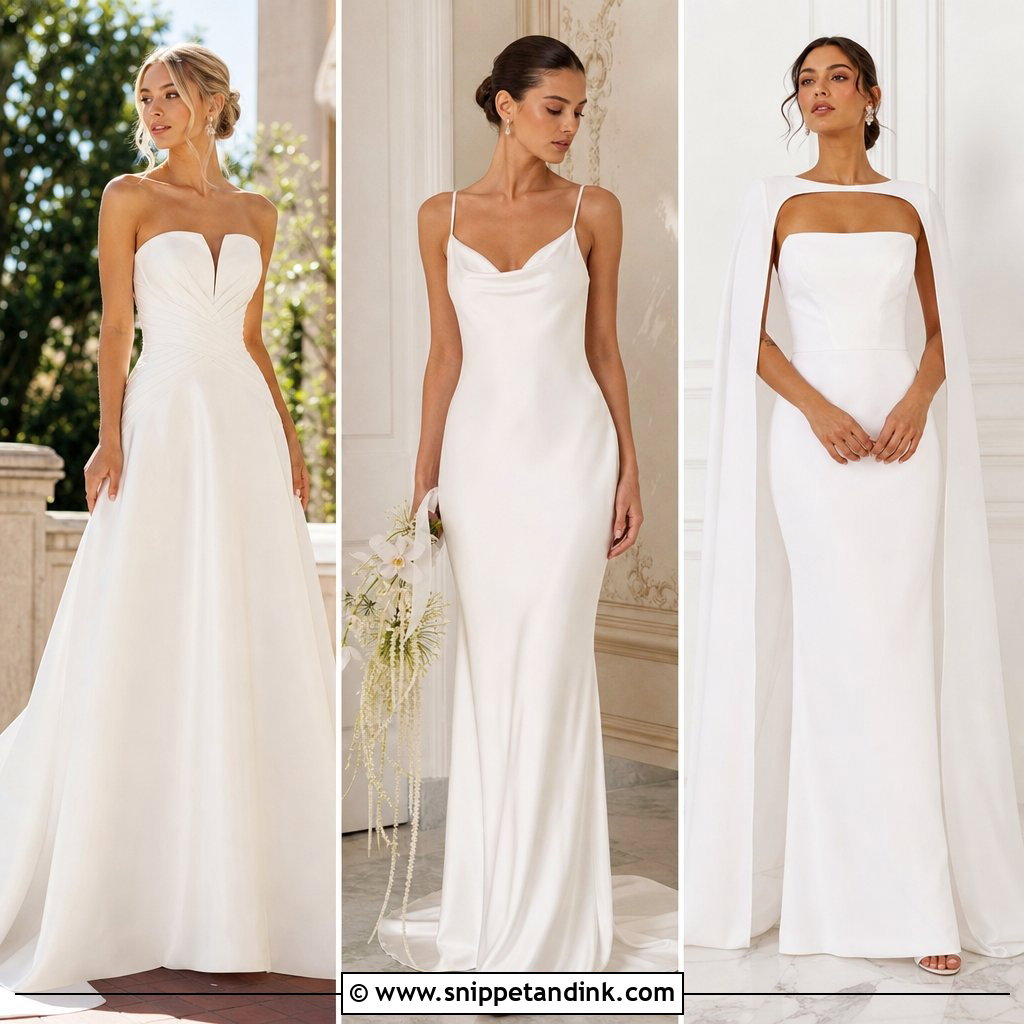
With a minimalist gown, every piece has to earn its place. A clean crepe or satin column, sheath or slim A-line is the base, and one detail such as a square neckline, low back, side drape or covered buttons gives interest. Tailoring has to be precise and undergarments smooth, because there’s nothing to distract the eye. Pearl studs or sculptural earrings, pointed ivory heels, a plain sheer veil, a sleek bun and a small bouquet of one white flower finish it. City, manor and small country weddings all suit it.
20. English Reception Mini Wedding Dress
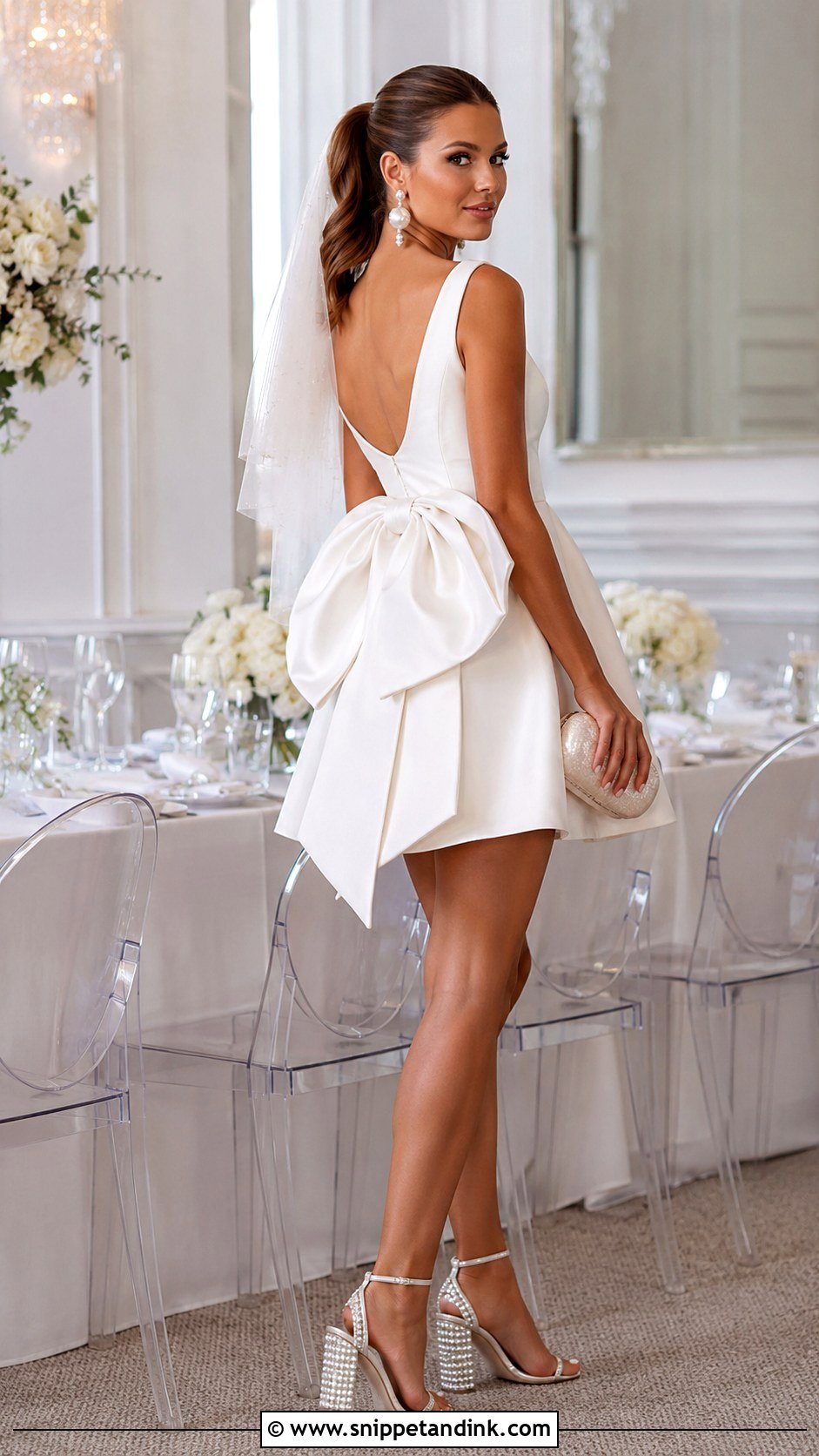
A mini is the fun second outfit for dancing. A structured A-line, tailored shift or fitted satin design with enough coverage to move freely is the base; pearls, a bow or feather texture set it apart from an ordinary white party look. Block-heel sandals or crystal flats depend on how long you’ll dance. Bold pearl earrings, a compact clutch and a short veil or bow suit it, with a smooth ponytail or bun. Fitted cycling shorts underneath stop chafing. Plan the change with your photographer so the reveal isn’t missed.
Rain, Wind and Cold Stone Floors
Plan for weather whatever month you marry in. I’d much rather a bride carry a few extras she never uses than spend the drinks reception shivering.
- A clear dome umbrella for each of you. Clear lets light through, so photos under it still look bright.
- A wrap, cape or tailored jacket matched to your ivory. Try it on with the dress at your final fitting.
- Spare flat shoes with grip for wet grass, cobbles and getting in and out of cars.
- Hem protection: a bridesmaid ready to lift the skirt on wet ground, and a bustle you actually use.
- Warm layers under long sleeves in winter churches, where stone floors and high ceilings keep the air cold.
Damp air also drops curls, so tell your hairstylist if the forecast is wet; a sleeker updo holds far better than loose waves. And allow extra time between venues on a rainy day, because getting a full skirt in and out of a car takes twice as long when everyone is dodging puddles.
Start With the Room You’ll Be Married In
A good gown starts with how you want to feel rather than a trend. Think about how formal the venue is, the season, the ground underfoot and how many hours you’ll be in the dress. Then compare silhouettes, fabrics, sleeves and lengths that cope with those conditions. Shoes, jewelry, veils, outer layers and hair should finish the dress, not compete with it. Walk, sit and move in it before you decide. From countryside lace to city tailoring, an English wedding dress can be adapted to almost any bride, as long as it’s chosen with the day itself in mind.
You'll Like These Ideas:








Leave a Reply