
Dressing a Yoruba bride is mostly a conversation about fabric, color and how the pieces work together on a long, hot day. A traditional Yoruba bridal outfit is built from the iro wrapper, the buba blouse, the gele headwrap and the ipele or iborun sash over the shoulder, and many brides now also have a fitted aso oke or lace gown made for part of the day. Below are twenty looks, from classic iro and buba sets to gowns with cape sleeves and removable trains, each with the color pairing, the accessories and the groom’s agbada that goes with it. I’ve added what I check at fittings, because the difference between a good outfit and a tiring one is usually in the tailoring. Where a custom matters to your family, ask the elders and a designer who has dressed many Yoruba brides before you commit.
Aso Oke Is Heavy, and the Design Has to Allow for It
Aso oke is hand-woven in narrow strips on traditional looms, and those strips are sewn together to make the cloth. It is thick, stiff and warm compared with lace or satin. That is exactly why it holds a sculpted gele and a crisp wrapper so well, and also why it can be draining by the end of a long ceremony.
When I plan an aso oke outfit, I think about weight first. A full iro, buba, gele and ipele all in heavy aso oke is a lot of cloth on a warm afternoon. Mixing in lace for the buba, or using a lighter weave for the gown, keeps the traditional look without overheating the bride.
- Custom colors are woven to order. Allow several weeks for weaving, and more in the busy wedding season, before the tailor even starts.
- Buy a little extra cloth. Narrow strips leave less room to recut a panel if a seam goes wrong.
- Ask whether the weave includes metallic thread. It catches light well but can scratch at the underarm and neckline, so a lining helps.
- Hold the fabric against your face in daylight. Aso oke colors shift more than plain cloth because of the weave.
1. White And Gold Yoruba Wedding Dress
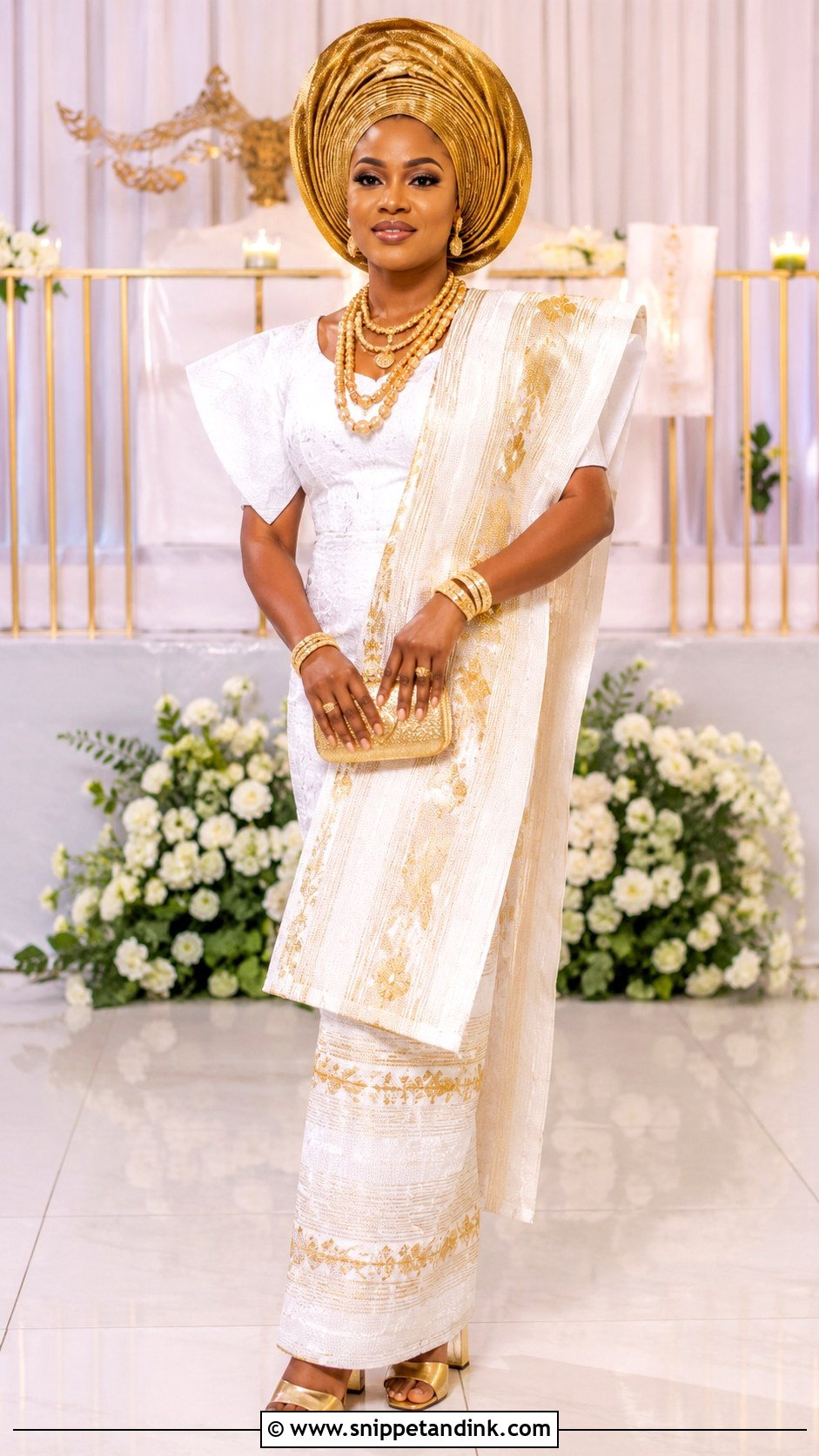
White and gold is the most ceremonial palette here, and also the least forgiving. A structured white aso oke buba with a fitted waist sits over a floor-length iro with gold woven details, with a sculpted gold gele and a matching ipele across one shoulder. Layered gold beads, drop earrings, a small metallic clutch and gold block heels finish it. I keep the embellishment to the neckline, sleeves and wrapper border. White shows every mark from makeup, food and the dance floor, so I’d have a second, simpler outfit planned for the reception. Bronze eyeshadow and a neutral lip suit it, and the groom matches easily in white agbada with gold embroidery and a fila.
2. Champagne Aso Oke Yoruba Wedding Gown
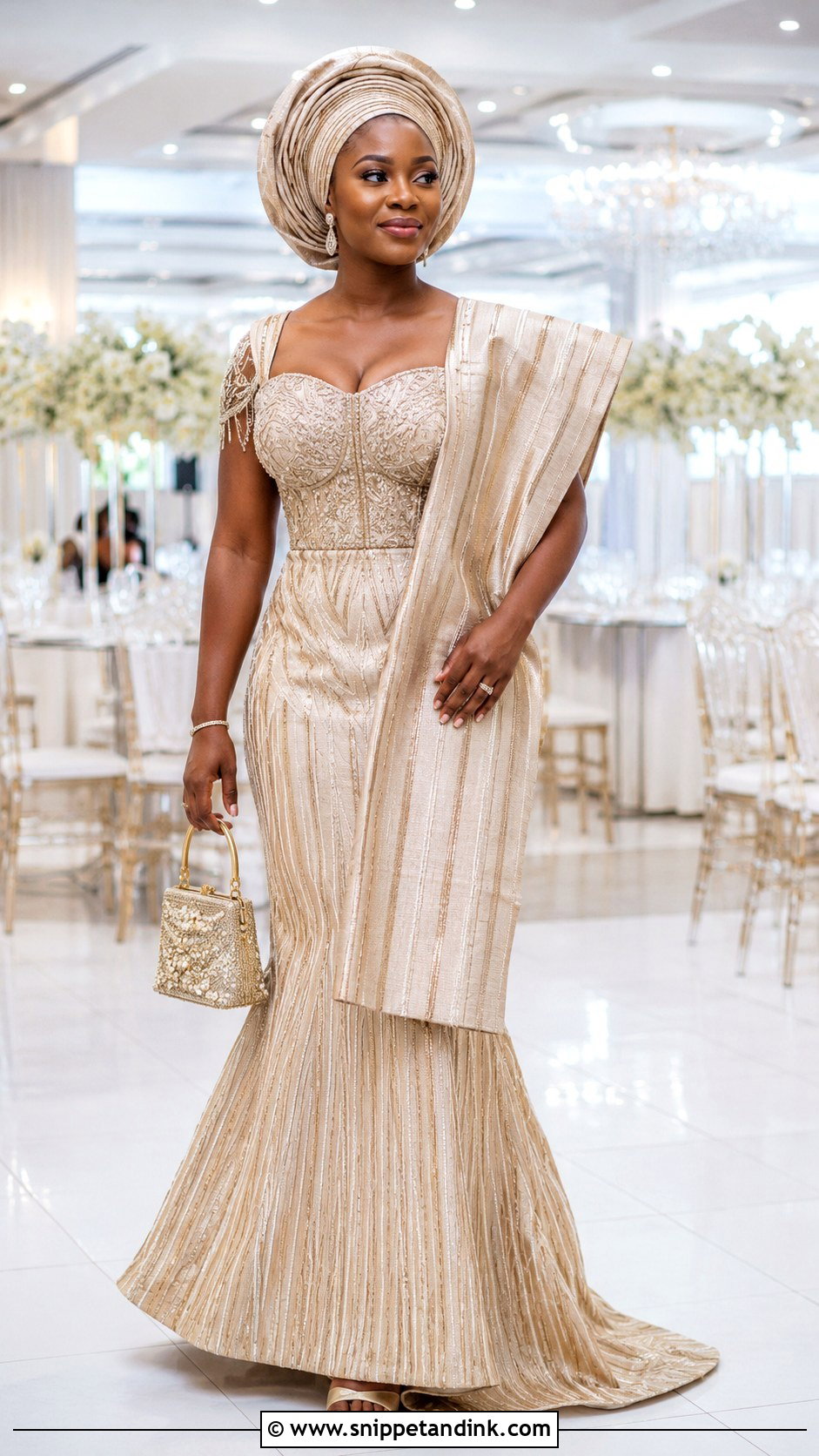
Champagne aso oke has a quiet luxury to it, and the woven texture does most of the work. For a modern line, I’d choose a fitted floor-length gown with a structured bodice, a defined waist and a gentle flare below the hips. Keep the beadwork to the neckline and sleeves so it doesn’t bury the weave. Add a champagne gele, a narrow shoulder sash, crystal earrings and a beaded purse, with champagne pumps or low heels and a bridal hand fan, which is worth carrying for the heat as much as the look. The thing I insist on at the fitting: aso oke has almost no stretch, so the tailor needs to leave room for you to sit, kneel for blessings and dance. Test all three in the bodice before the final stitching.
3. Royal Blue And Silver Yoruba Wedding Dress
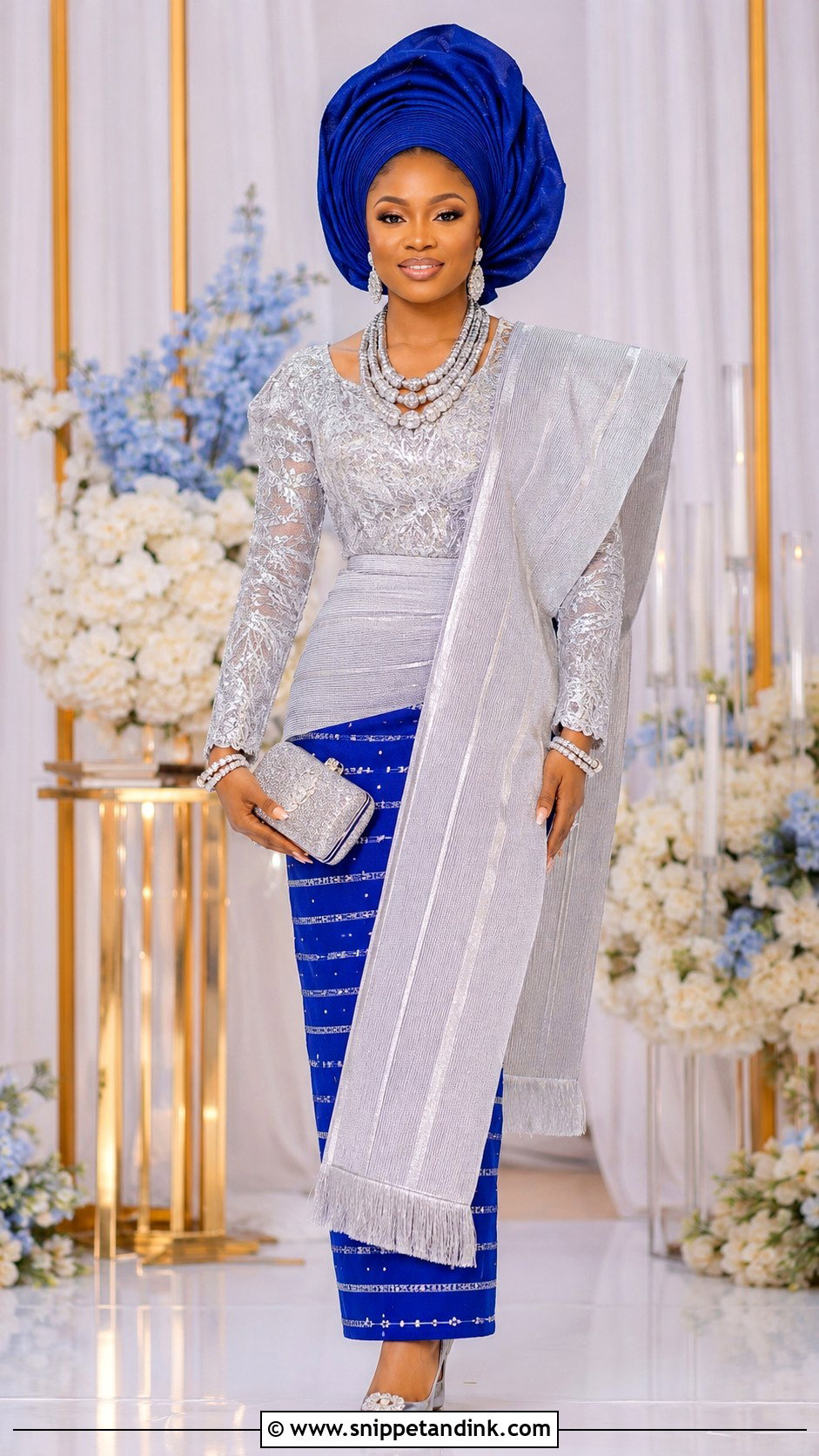
Royal blue gives a Yoruba look real depth. A fitted silver lace buba over a royal blue aso oke iro woven with fine metallic stripes is the base; a royal blue gele ties it together and a silver ipele brightens the face. Crystal drops, silver-toned beads, a structured blue clutch and silver pointed-toe heels. If the lace blouse is heavily embroidered, I drop the necklace to one simple strand, because a crowded neckline is the most common styling mistake I see. Cool-toned makeup, defined lashes and a berry lip. For portraits, put the groom in royal blue agbada with restrained silver embroidery so the bride’s detail still leads.
4. Burgundy And Gold Yoruba Wedding Dress
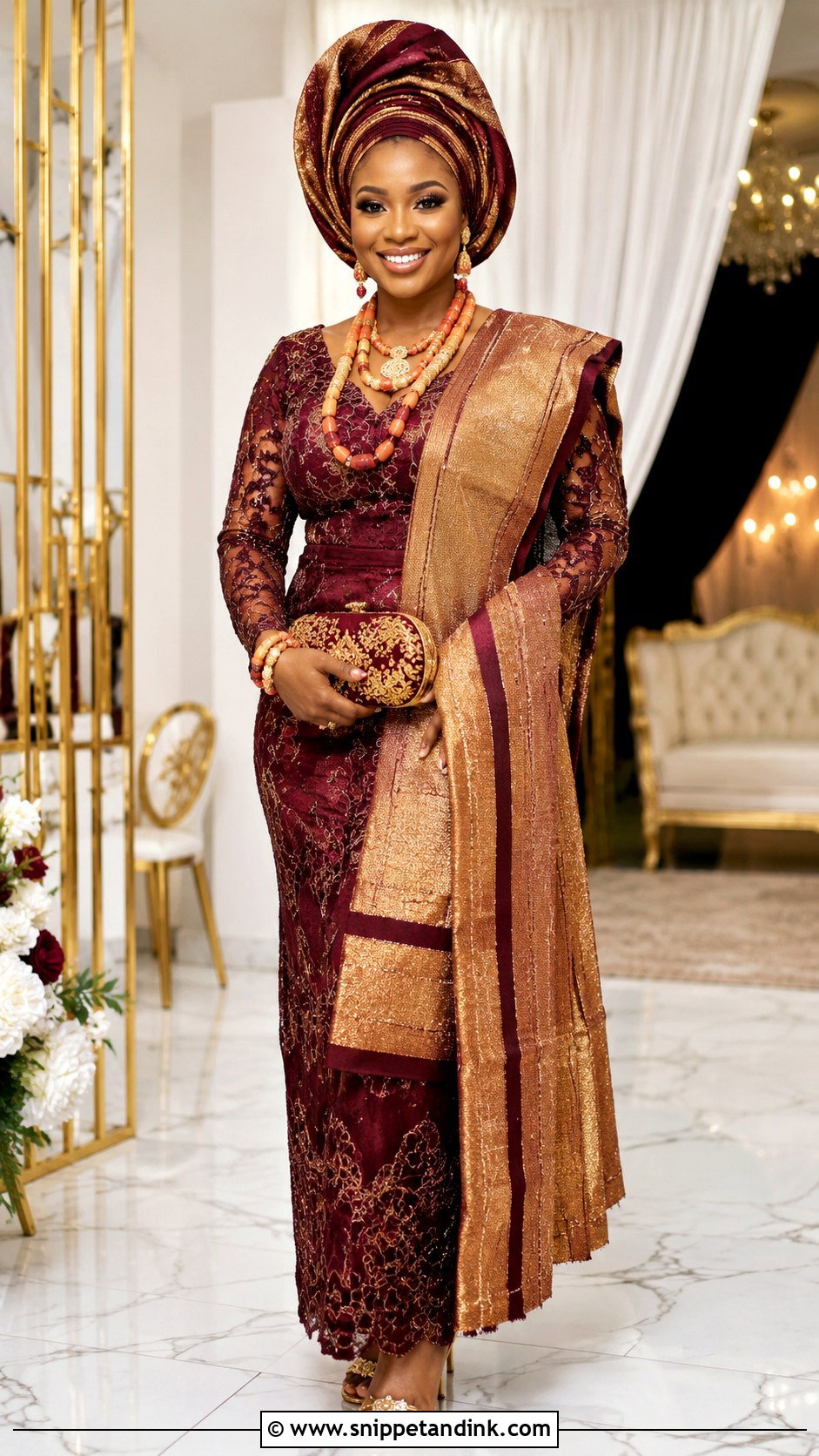
Burgundy and gold is my pick for an evening or indoor ceremony. Velvet looks richest under warm artificial light, but it is heavy and warm, so I only suggest a velvet buba for an air-conditioned hall; otherwise go with burgundy lace shaped neatly at the waist. Add an aso oke iro with gold horizontal detail, a tall burgundy gele and a gold ipele to lift the upper body. Gold sandals, an embroidered clutch, statement earrings and beads in burgundy and warm gold. Choose one area to embellish, neckline or sleeves, not both. Warm neutral lip and soft highlight. The groom in burgundy agbada with gold embroidery reads coordinated without looking matched.
5. Emerald Green Yoruba Wedding Dress
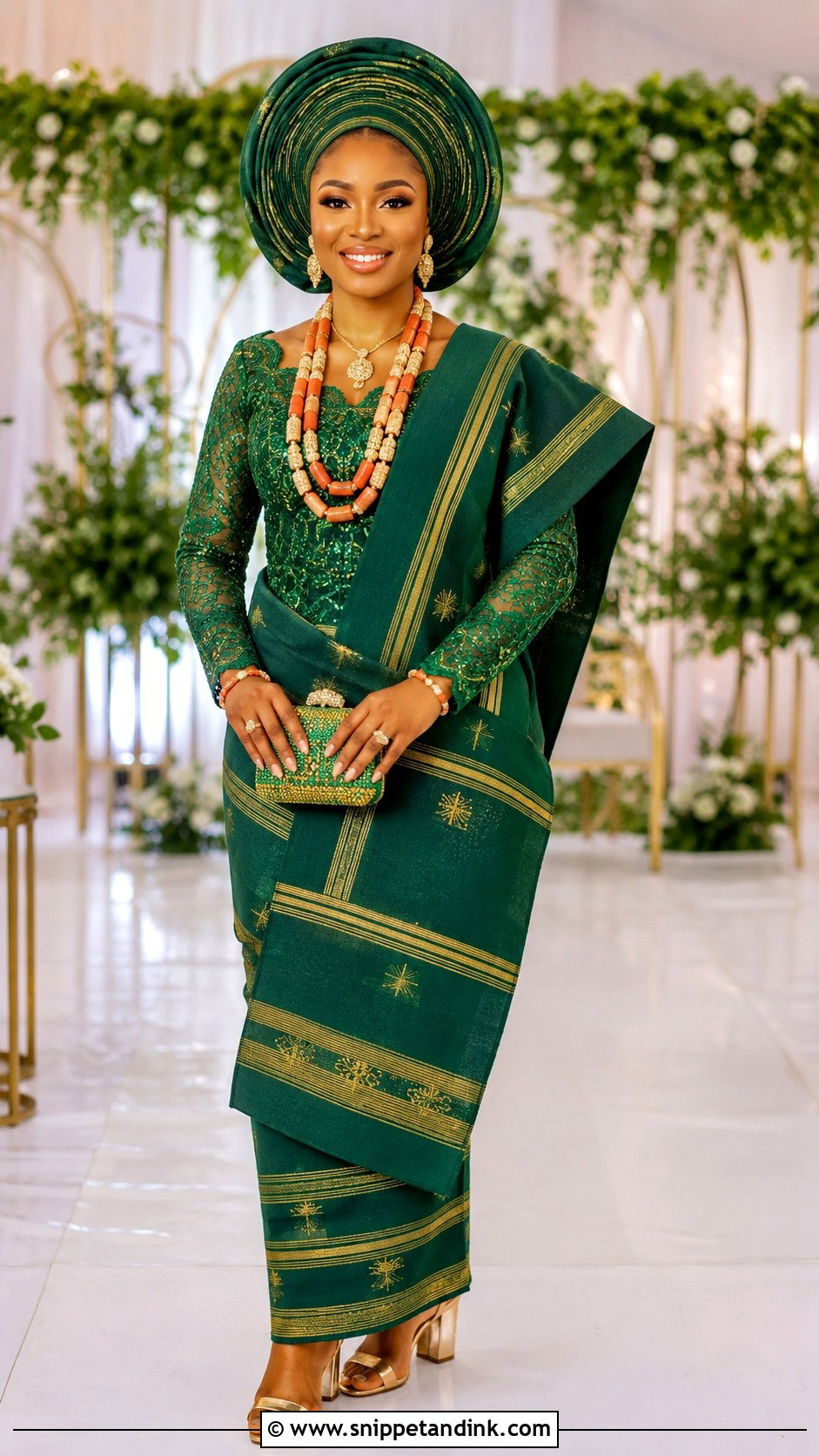
Emerald looks wonderful with gold and holds up under any light. Pair a fitted emerald lace buba with a woven aso oke iro banded in narrow gold, a matching gele with clean folds and a gold or green ipele on one shoulder. Gold block heels, a beaded clutch, bold earrings and coordinated beads at the neck and wrist. A square or sweetheart neckline leaves room for the jewelry. One adjustment I always make: if the lace has large floral motifs, I strip the accessories back, because big flowers and big beads compete. The groom can wear cream or emerald agbada with subtle gold, letting the bride’s brighter green lead.
6. Blush Pink Yoruba Wedding Dress
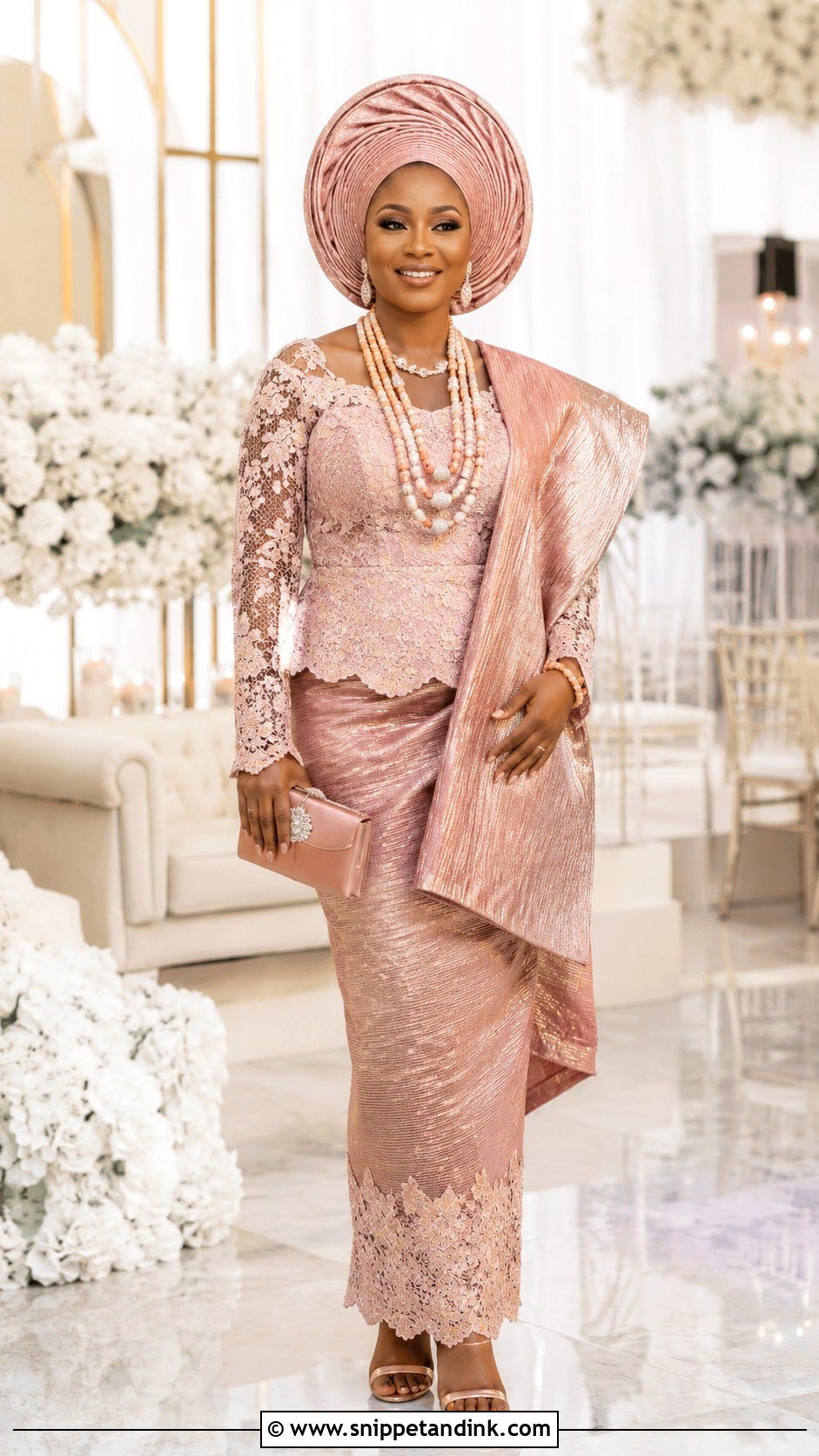
Blush pink is soft, but it still needs enough contrast to read as festive. A blush lace buba with three-quarter sleeves over a rose-gold aso oke iro shaped smoothly at the waist does that, with a sculptural gele for height and a lightly beaded ipele for texture. Rose-gold heels, pearl drops, layered blush beads and a satin clutch finish it. With pale colors I ask the makeup artist for a slightly deeper pink lip than the bride would normally choose, otherwise the face can disappear into the fabric in photos. For more coverage, an illusion-lined neckline and longer sleeves work well. A groom in cream, taupe or dusty rose agbada coordinates naturally, and the whole palette suits an airy venue with ivory and greenery.
7. Ivory Lace Yoruba Wedding Dress
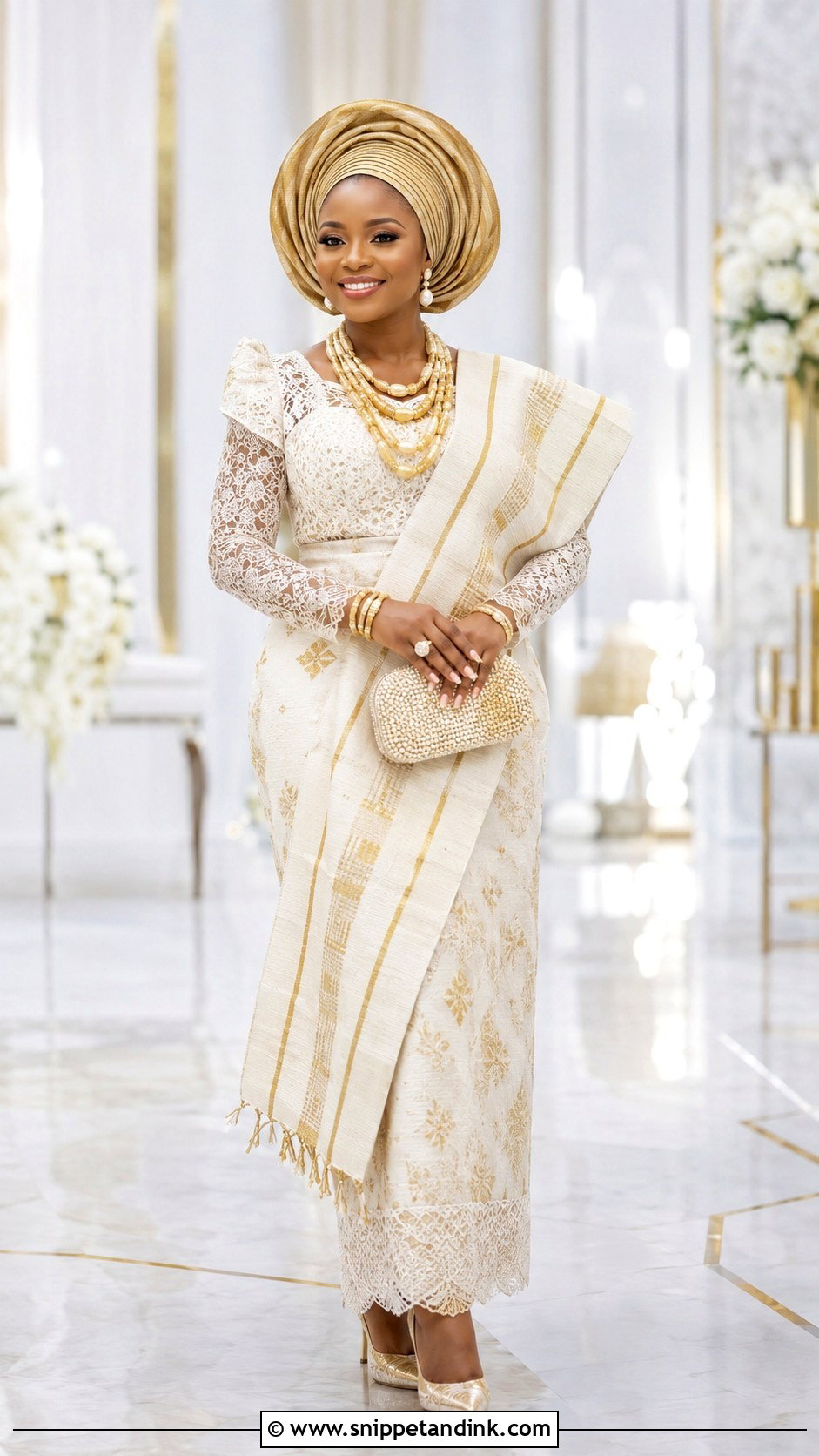
Ivory lace bridges Yoruba tradition and a classic bridal color. A fitted ivory buba with carefully placed lace motifs goes over an ivory-and-gold aso oke iro, with a gold gele for contrast and an ivory ipele to keep things light. Pearl earrings, a layered gold necklace, ivory heels and a beaded clutch. Here is the trap with ivory: when every piece matches exactly, it photographs flat. I build depth through texture instead of adding color, so lace, woven aso oke, smooth satin and polished metal all sit together. Softly defined eyes and a warm nude lip. The groom in ivory agbada with gold embroidery gives bright, formal couple portraits.
8. Coral And Gold Yoruba Wedding Dress
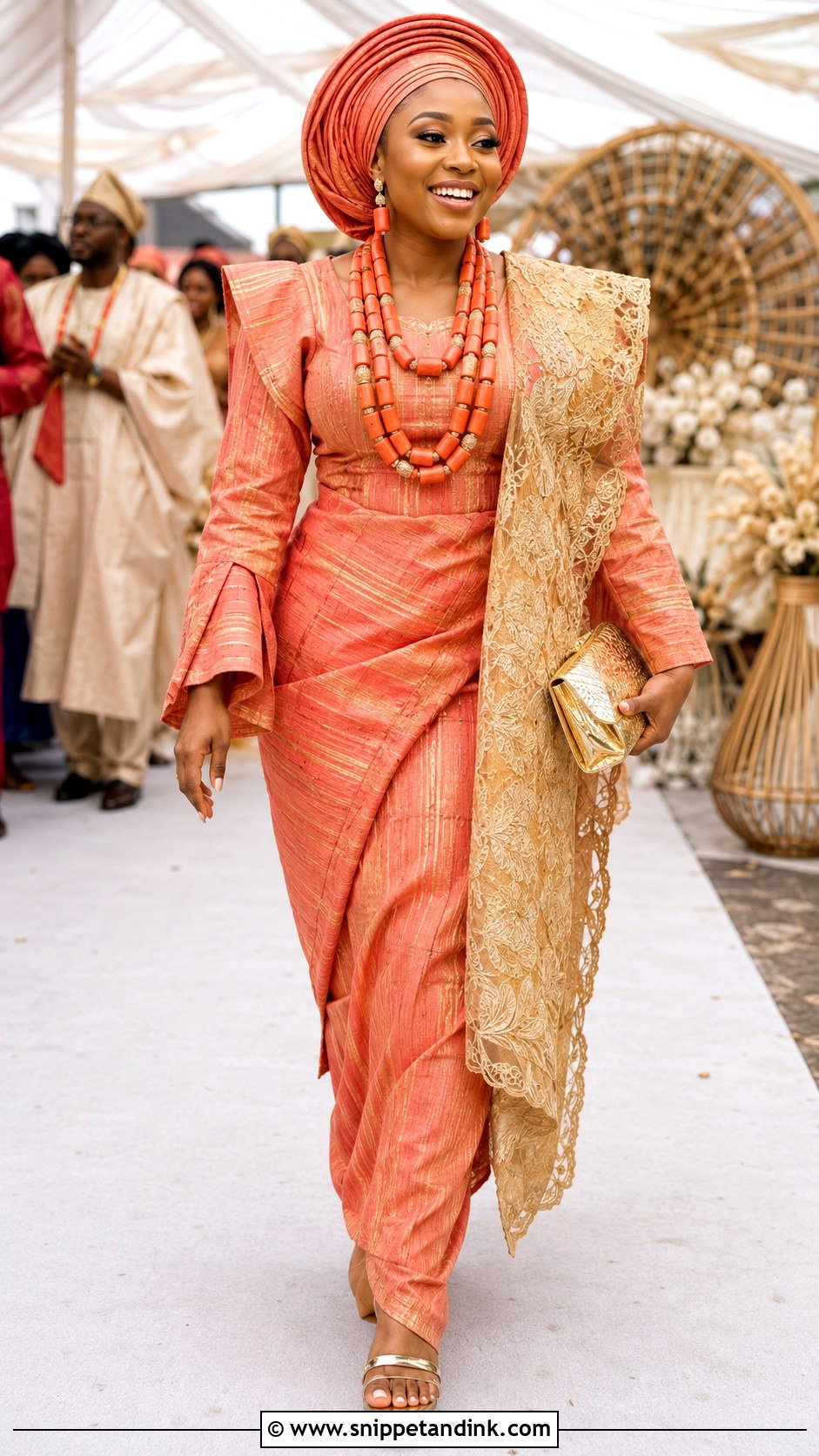
Coral is warm and celebratory without the weight of red. Build it around a coral aso oke iro and a structured buba with slim gold weaving, a full coral gele to frame the face and a gold ipele to break up the solid color. Coral beads, gold statement earrings, metallic sandals and a small gold clutch. Because the color already pulls the eye, I keep the blouse shape clean: a fitted elbow-length sleeve or a modest puff is enough, and two competing sleeve details look fussy. Warm bronze eyes, soft brows, a muted coral lip. A groom in cream or gold agbada with restrained coral embroidery balances it.
9. Purple And Silver Yoruba Wedding Dress
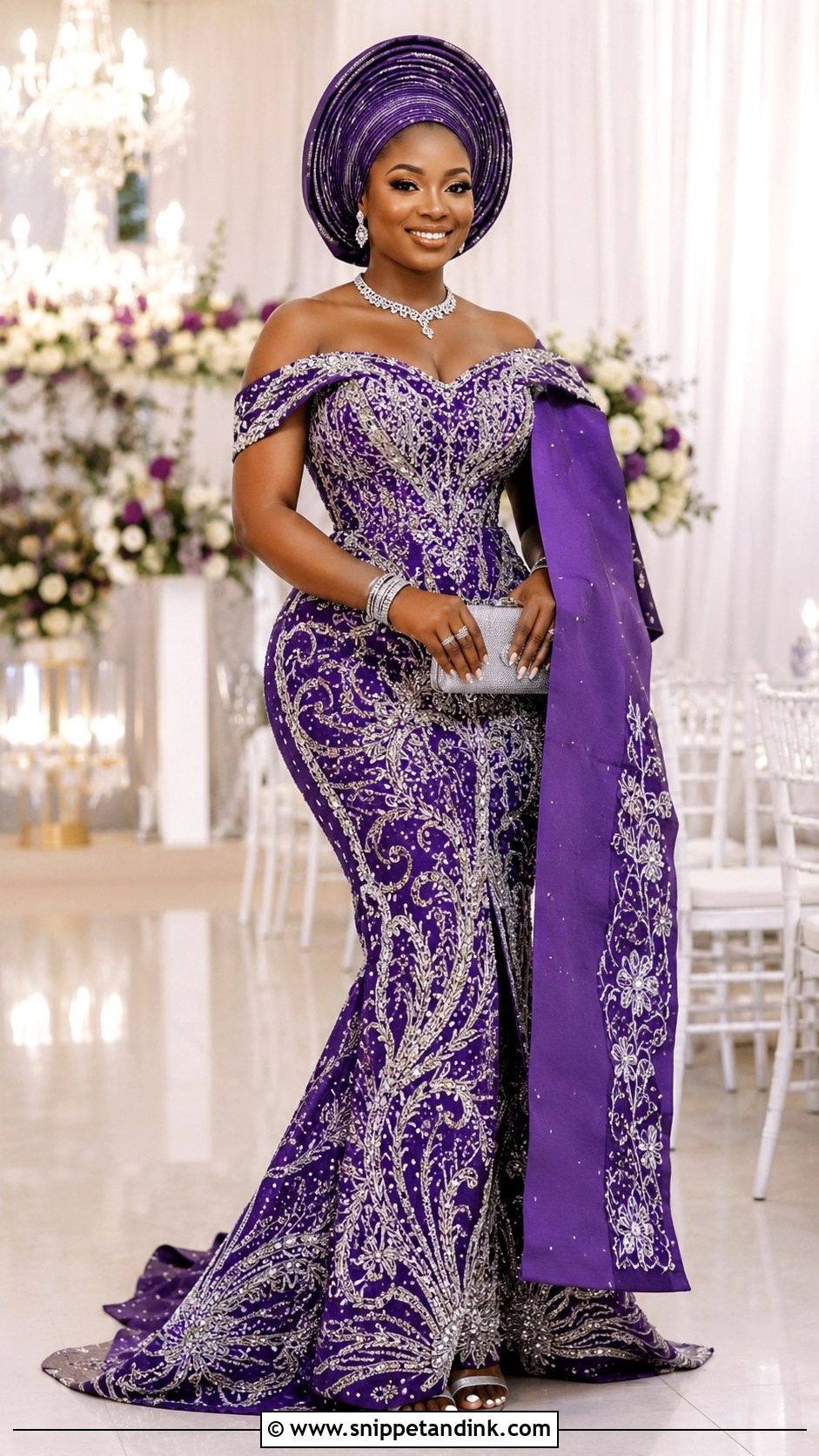
Purple and silver feel cool and formal. A deep purple aso oke gown with a fitted bodice, an off-the-shoulder neckline and a controlled mermaid skirt is the structure, with silver embroidery at the neckline and lower skirt. Add a structured purple gele, silver earrings, a crystal bracelet, a metallic clutch and silver heels, with a slim ipele over the arm. A mermaid cut in stiff woven fabric restricts your stride more than the same shape in lace, so I’d ask for a back slit or a detachable train if you plan to dance. Plum eyeshadow and a soft neutral lip. A groom in silver-gray agbada with purple embroidery keeps the photos clean.
10. Teal And Champagne Yoruba Wedding Dress
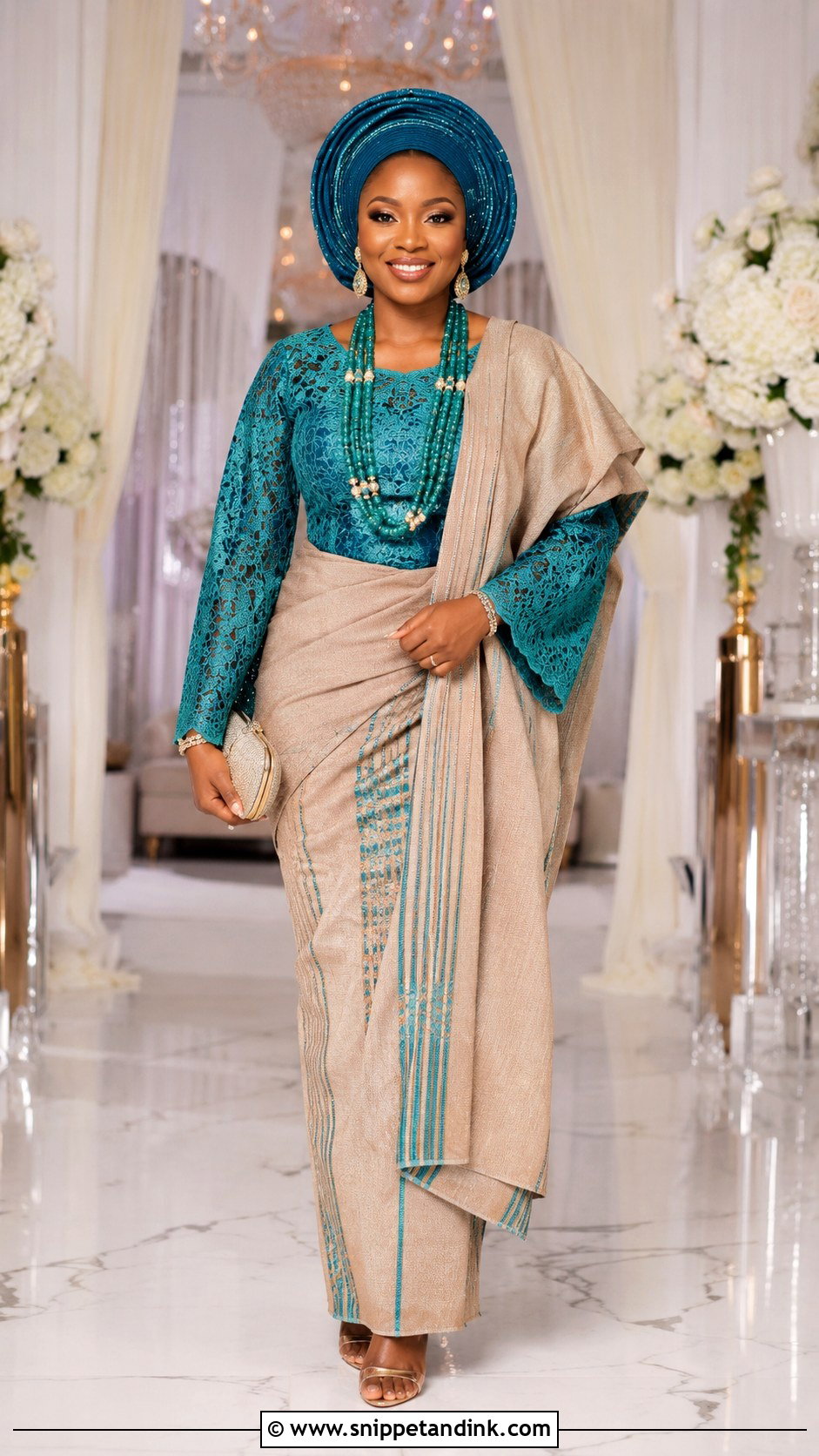
Teal and champagne is less common than gold-and-something, which is exactly its appeal. Pair a teal lace buba with a champagne aso oke iro woven with teal accents; a teal gele connects top and bottom, and a champagne ipele softens the change. Champagne heels, a metallic clutch, gold-toned earrings and teal beads. If the buba neckline is detailed, keep the earrings small. A defined waist and a slightly flared wrapper make a balanced shape. Teal shifts between green and blue under different lights, so I’d check the fabric swatches in daylight and under the venue’s lighting before matching the groom’s champagne agbada and fila.
11. Red Yoruba Wedding Dress
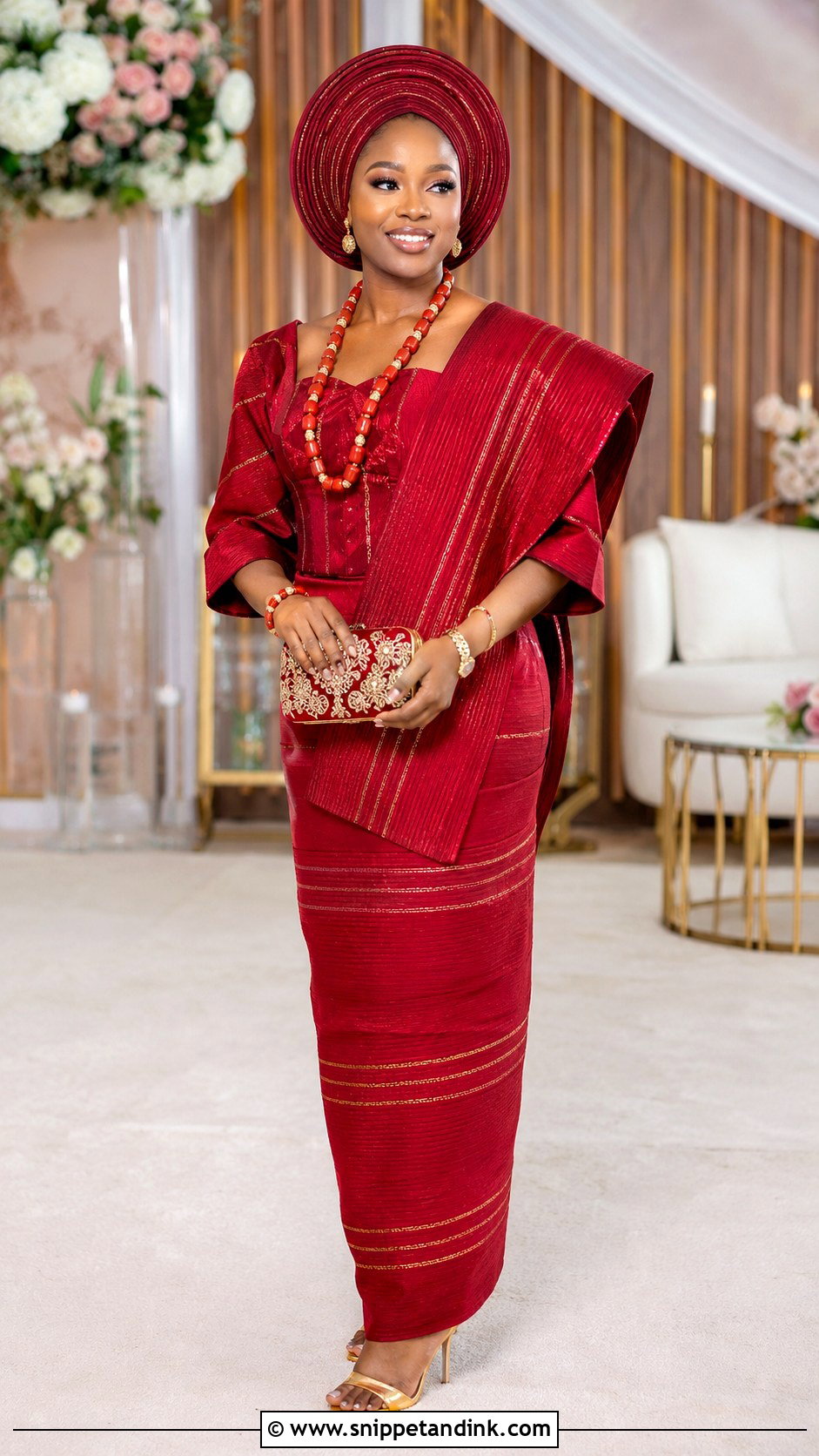
An all-red outfit is bold and needs one thing above everything: matching undertones. Red aso oke and red lace from different suppliers can sit side by side as an orange-red and a blue-red, and that clash is obvious in photos. I lay every red piece together in daylight before anything is sewn. Then build it simply: a rich red aso oke buba with a clean neckline, a matching floor-length iro with small gold woven details, a structured red gele, a coordinated ipele, gold heels and a beaded clutch. Red beads and gold earrings. Don’t match the makeup to the fabric; glowing skin, neutral eyes and a deeper brick lip look better. The groom can go cream, gold or deep red depending on how matched the couple wants to be.
12. Black And Gold Yoruba Wedding Dress
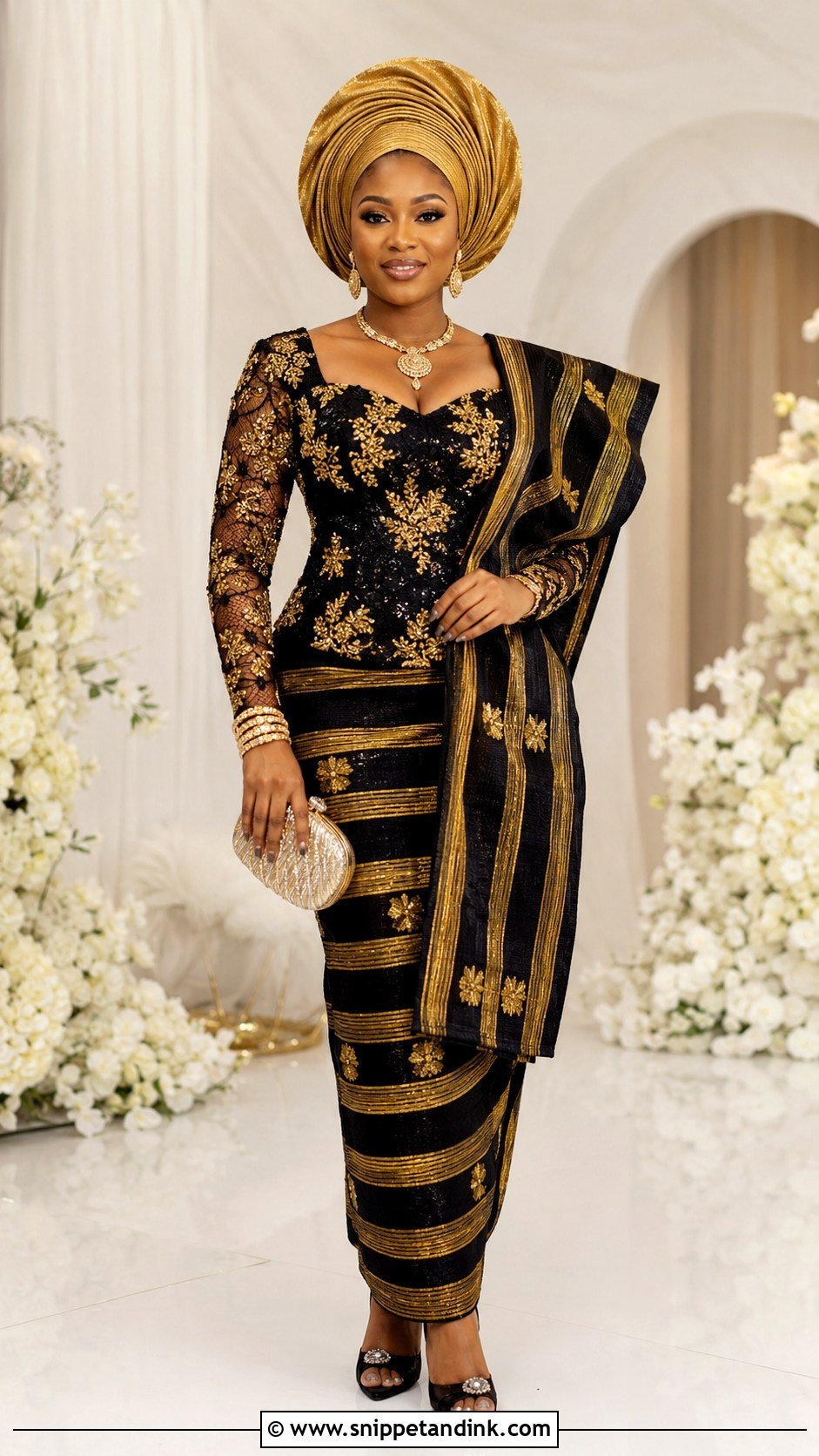
Black and gold is dramatic, and it is the one palette on this list I’d always clear with the family first, since some relatives see black as wrong for a wedding. If it’s welcome, a fitted black buba with gold embroidery and a structured black-and-gold iro make a strong base, with a gold gele to brighten the face and a gold ipele on one shoulder. Gold earrings, stacked bracelets, black heels and a metallic clutch. Dark fabric can look flat in photos, so brighter makeup and reflective jewelry matter here. An open but tasteful neckline keeps the outfit from feeling heavy. A groom in black agbada with gold embroidery completes the look.
13. Powder Blue Yoruba Wedding Dress
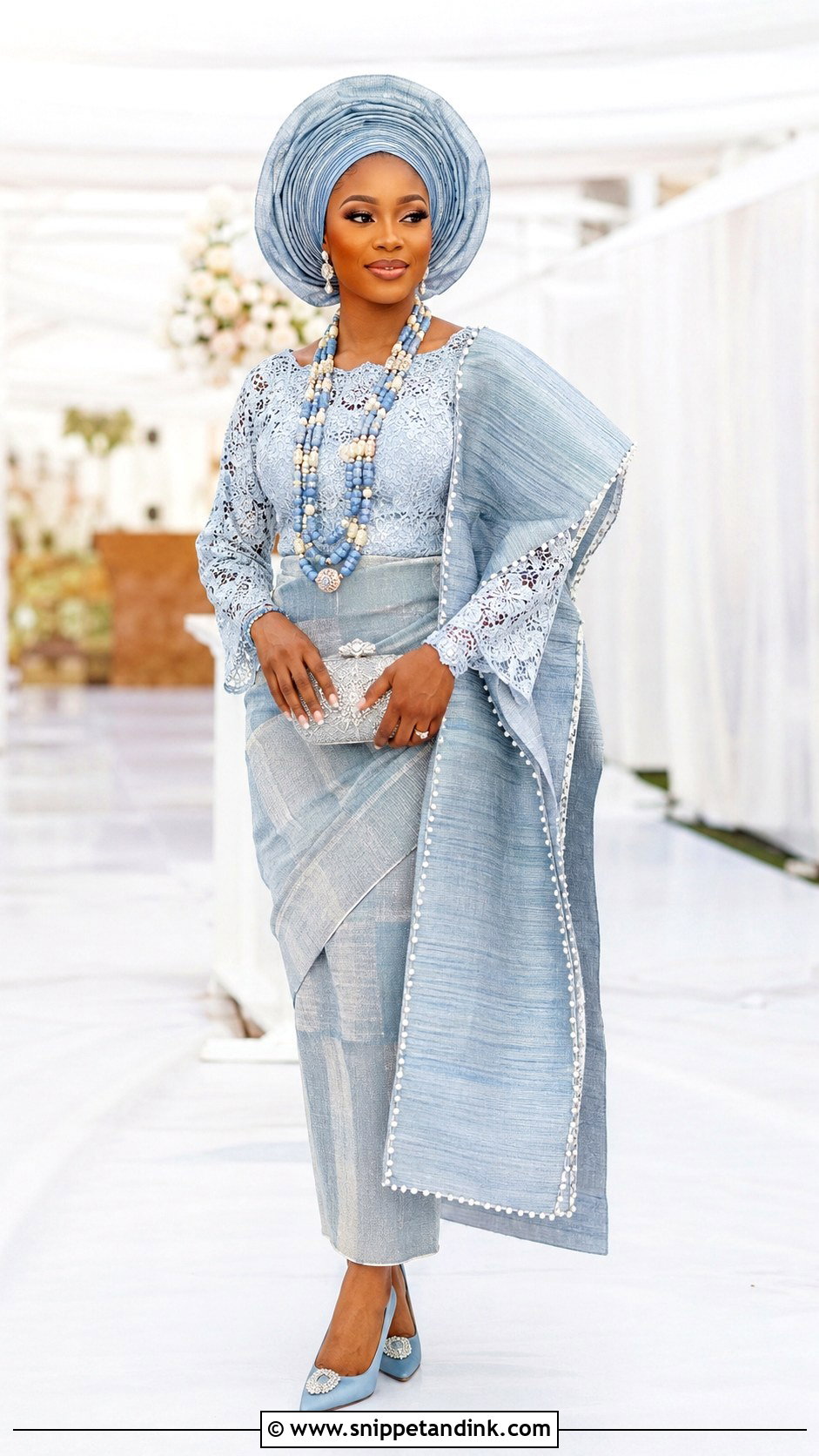
Powder blue is the daytime choice for a bride who prefers gentle color to jewel tones. A powder blue lace buba with a softly structured neckline over a silver-blue aso oke iro, a gele with crisp folds and a pearl-trimmed ipele. Pearl earrings, a silver clutch, pale blue heels and blue-and-white beads. Keep the embellishments fine, since oversized pieces spoil the airy effect. Soft gray shadow, fluttery lashes and a rosy nude lip. Pale blue shows sweat and water marks more than deep colors, so I’d keep blotting papers and a fan close all day. A groom in light gray or powder blue agbada coordinates quietly.
14. Mustard And Bronze Yoruba Wedding Dress
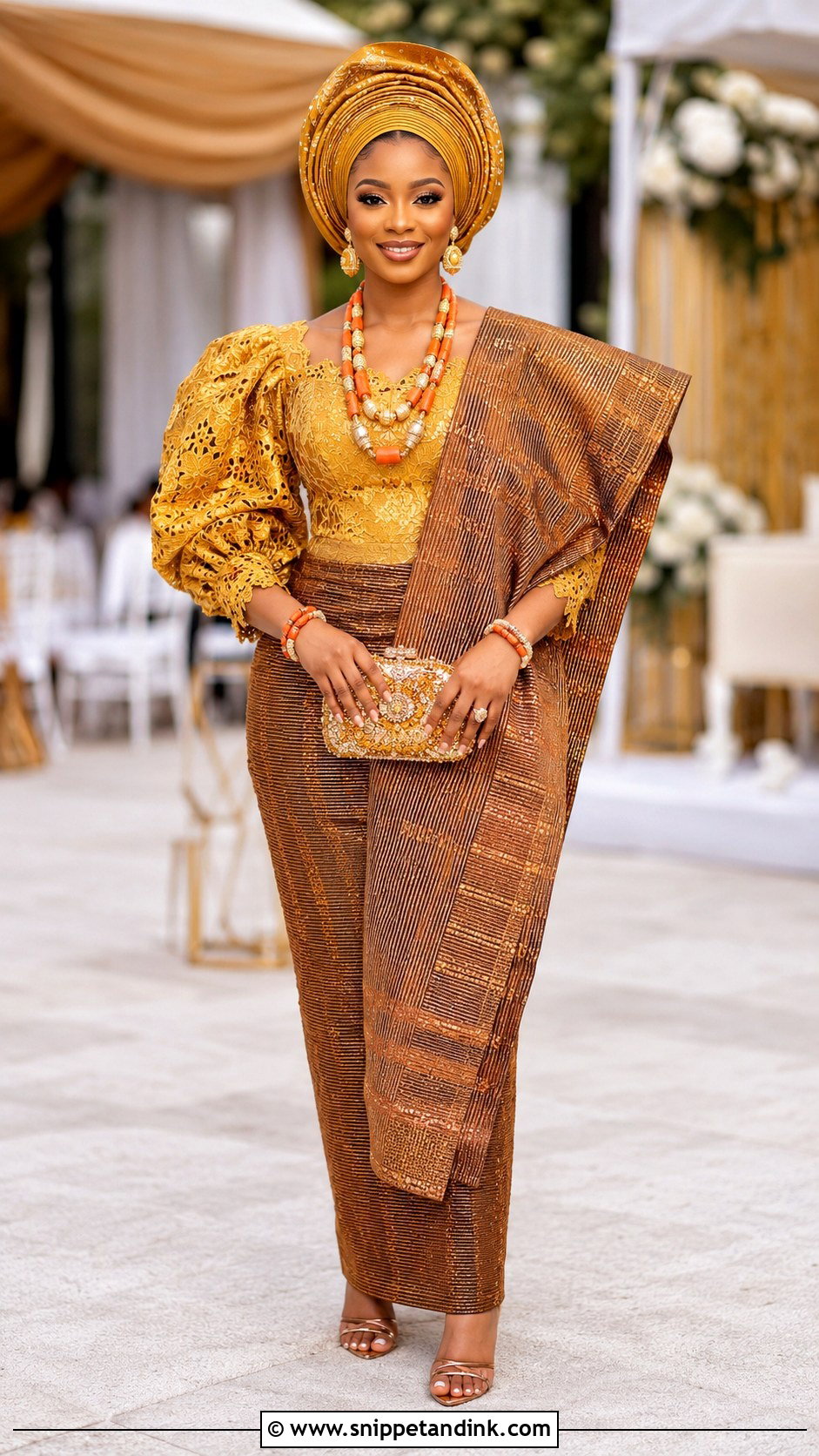
Mustard and bronze is warm and earthy. Choose a mustard lace buba with defined shoulders or soft puff sleeves, a bronze aso oke iro with mustard woven bands, a structured mustard gele and a bronze ipele for a reflective accent. Bronze sandals, sculptural earrings, warm-toned beads and a small handbag. When the sleeves are voluminous, I tie the wrapper smoothly with no extra folds at the hip so the shape stays balanced. Makeup in copper and caramel tones suits the fabric. The groom in bronze or deep brown agbada with mustard embroidery looks good against greenery and neutral decor.
15. Lilac Yoruba Wedding Dress
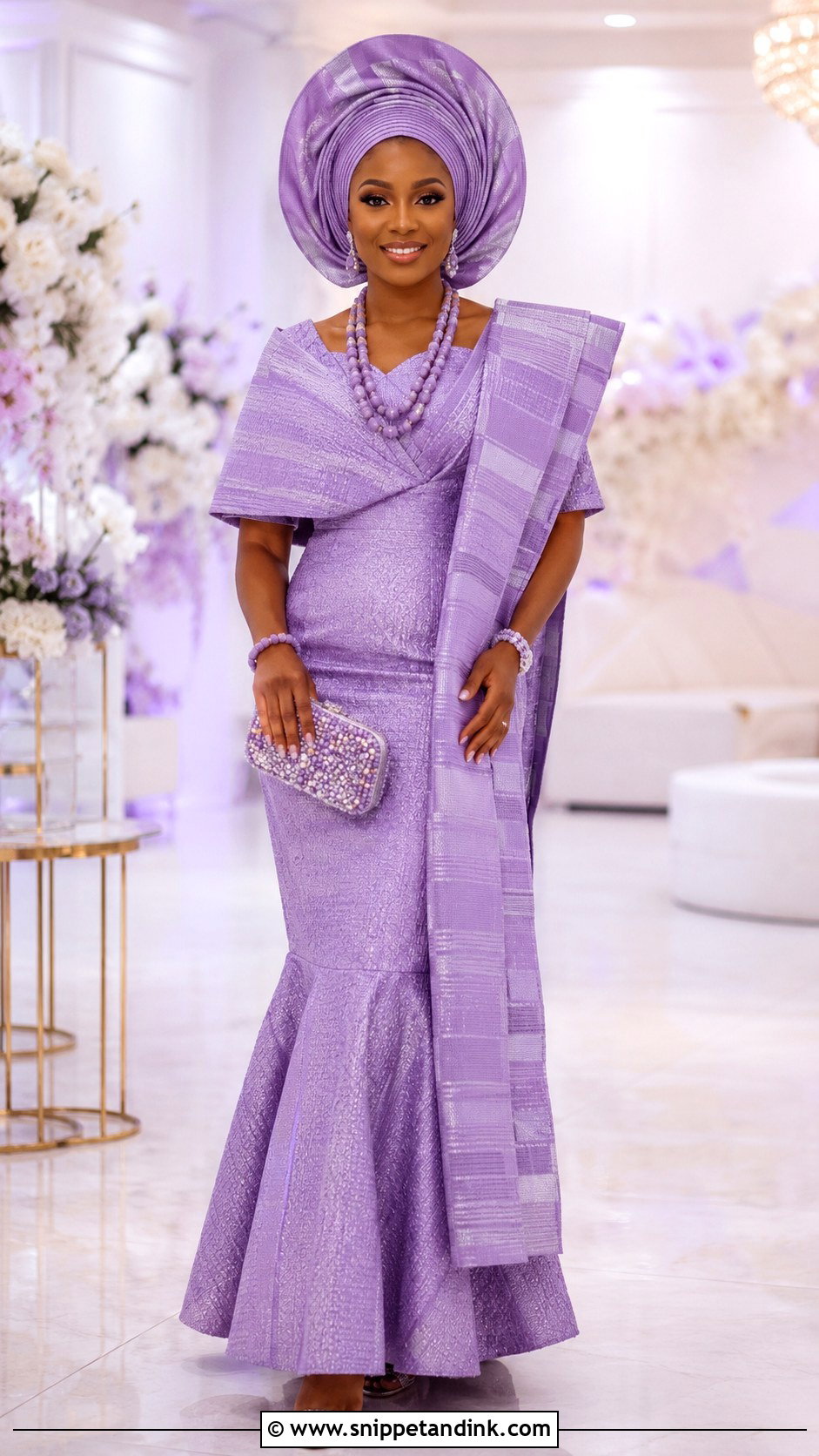
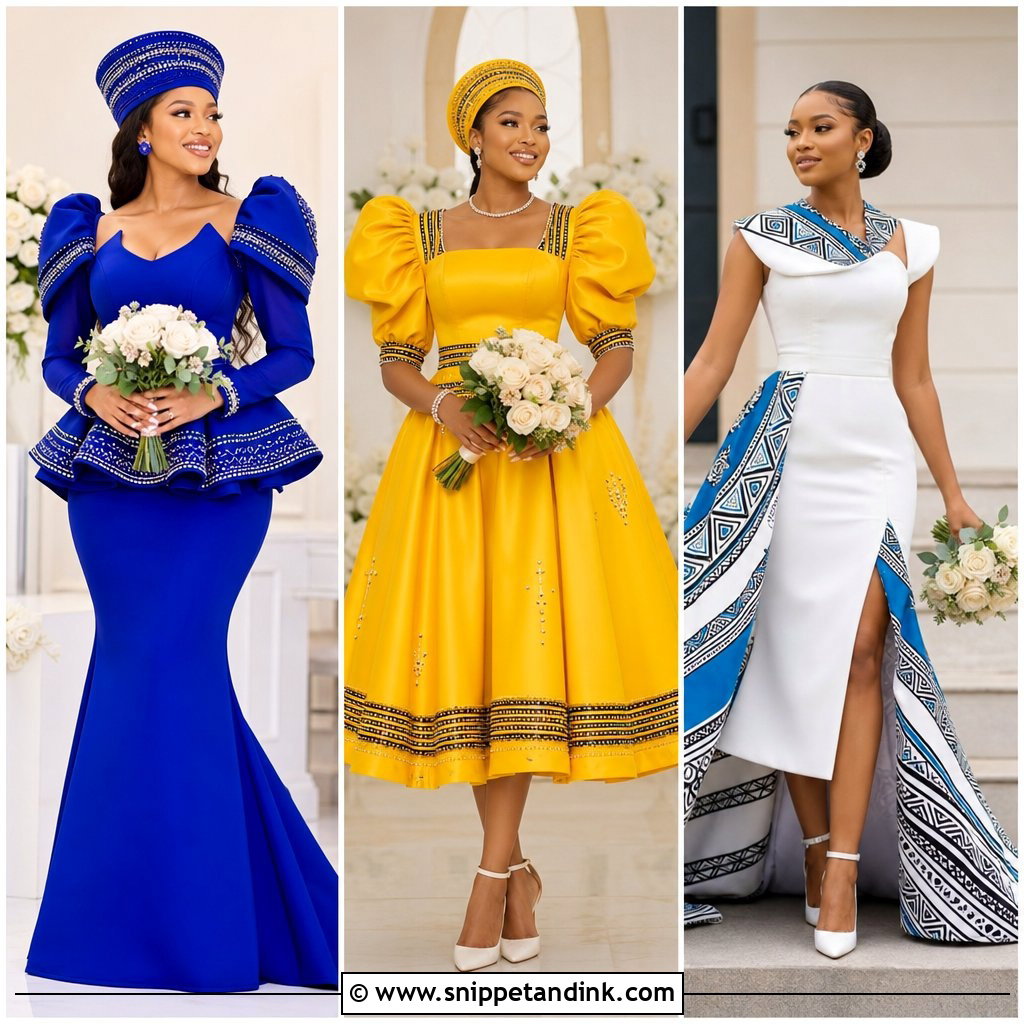
Lilac reads modern and romantic without getting sugary. A lilac aso oke gown with a fitted waist, a modest neckline and a gentle trumpet skirt is the base, with a gele carrying silver woven details and a narrow ipele over the arm. Crystal earrings, silver heels, a beaded clutch and pale purple beads. Mixing a matte woven skirt with a lightly shimmering bodice or lace sleeves adds dimension. I keep the hip smooth rather than skin-tight, because a trumpet skirt in aso oke rides up and creases across the lap when you sit. Cool pink makeup and a mauve lip. The groom in silver-gray agbada with lilac embroidery.
16. Adire And Aso Oke Yoruba Wedding Dress
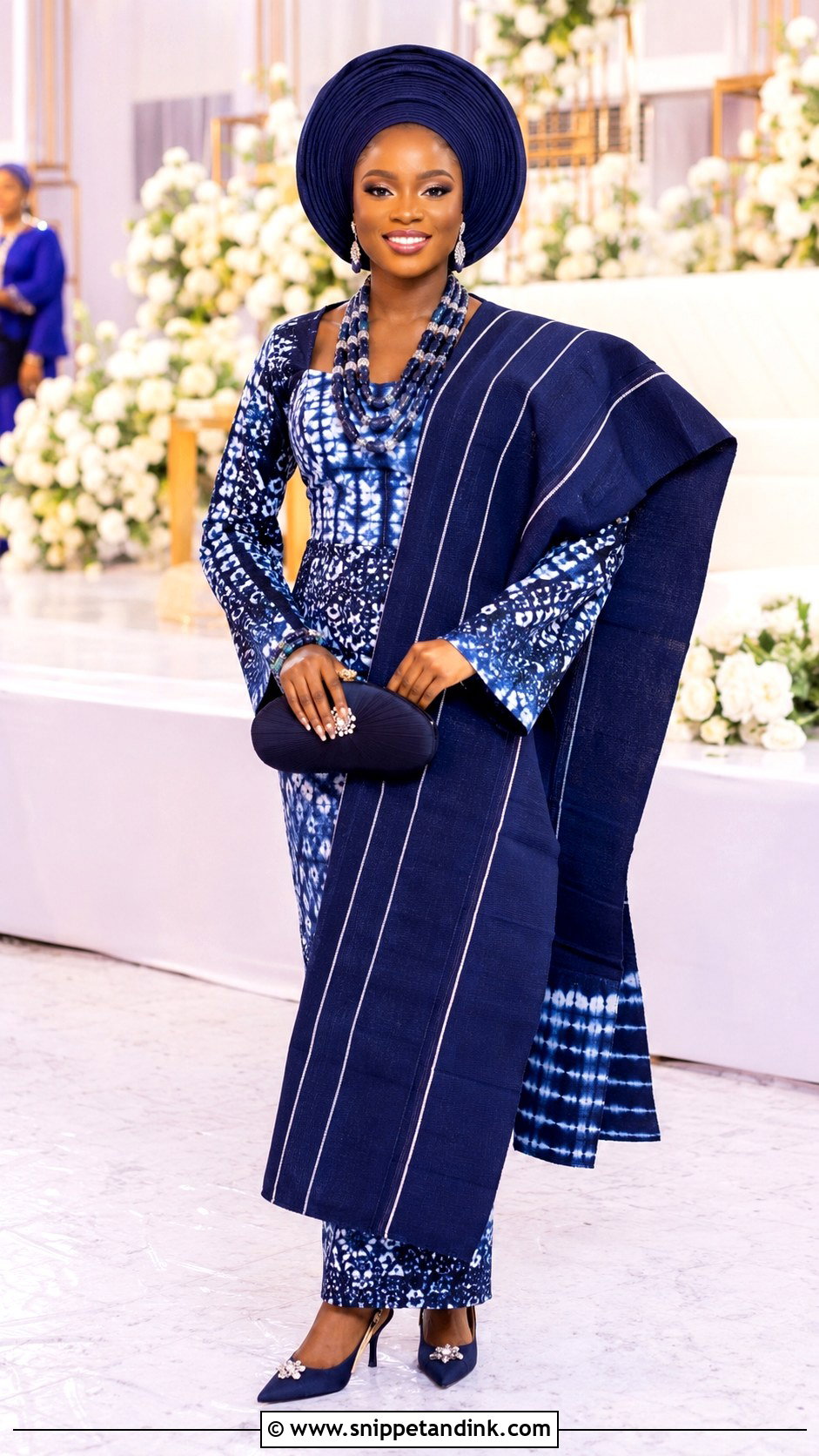
Combining adire and aso oke puts two Yoruba textile traditions in one outfit. Use indigo adire for a fitted buba and a blue aso oke iro with simple woven stripes, a solid indigo gele and a narrow patterned ipele to connect them. Blue beads, silver earrings, navy heels and an indigo clutch. Adire is a resist-dyed cloth, and the motifs don’t repeat as neatly as a print, so I ask the tailor to lay out the pattern before cutting so the bodice and sleeves look balanced. Indigo can rub off onto skin and lighter fabric when new; one cold rinse before sewing helps. Keep accessories simple. The groom can wear indigo agbada with small adire panels, and working with artisans who know both textiles gives the most respectful result.
17. Peplum Yoruba Wedding Dress
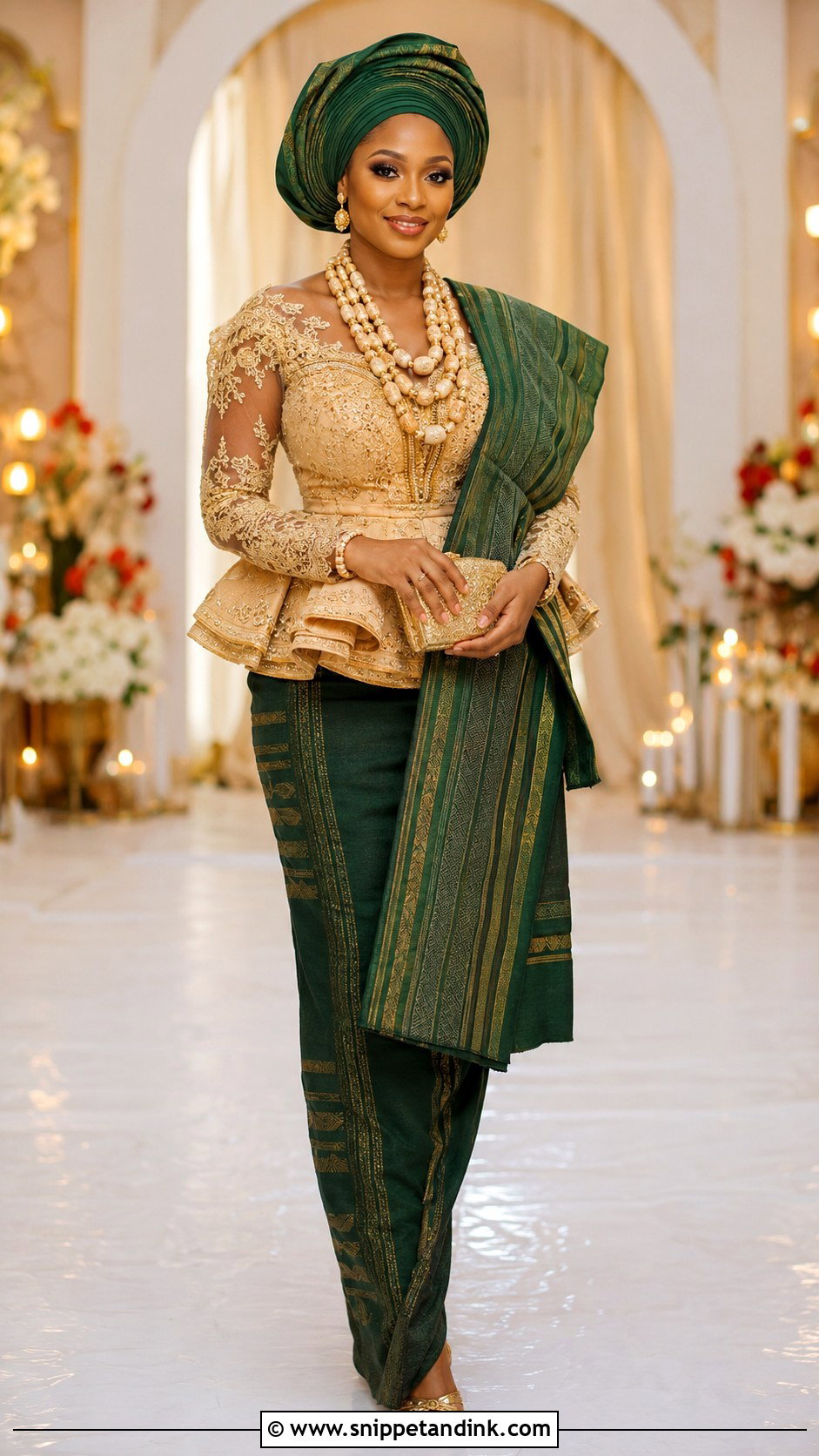
A peplum buba gives a defined waist and a modern alternative to the looser traditional blouse. A fitted gold lace peplum top over a deep green aso oke iro in a smooth floor-length shape, with a green gele, a gold ipele, layered beads, metallic heels and a box clutch. Keep the peplum controlled; a wide one sticks out over the thick wrapper and makes the hips look boxy. A V or rounded neckline balances the extra volume. On fuller hips, I lengthen the peplum so it falls past the widest point instead of ending on it. A groom in green agbada with gold embroidery completes the couple’s look.
18. Off Shoulder Yoruba Wedding Gown
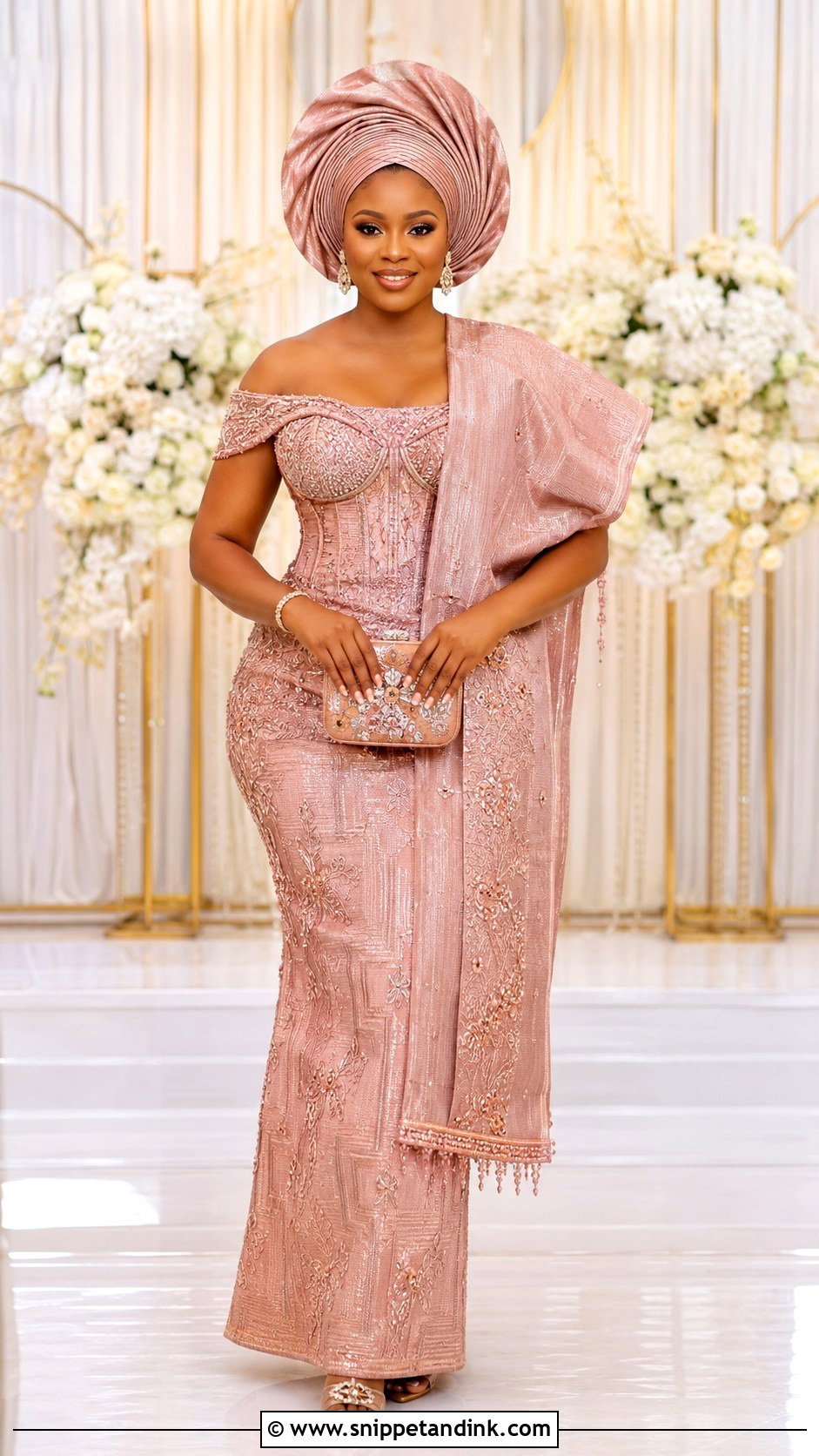
An off-the-shoulder gown shows off the neckline while staying formal, but it lives or dies on internal structure. In a fitted rose-gold aso oke gown with a mermaid skirt, I want boning and a firm inner corset so the bodice holds without the bride hitching it up every time she hugs someone or raises her arms to dance. Detachable short sleeves or a folded neckline add coverage. A matching gele, beaded ipele, crystal earrings, metallic heels and an embroidered clutch. Keep necklaces minimal, or one short strand that follows the bodice. The groom in ivory agbada with rose-gold embroidery lets her silhouette lead.
19. Cape Sleeve Yoruba Wedding Dress
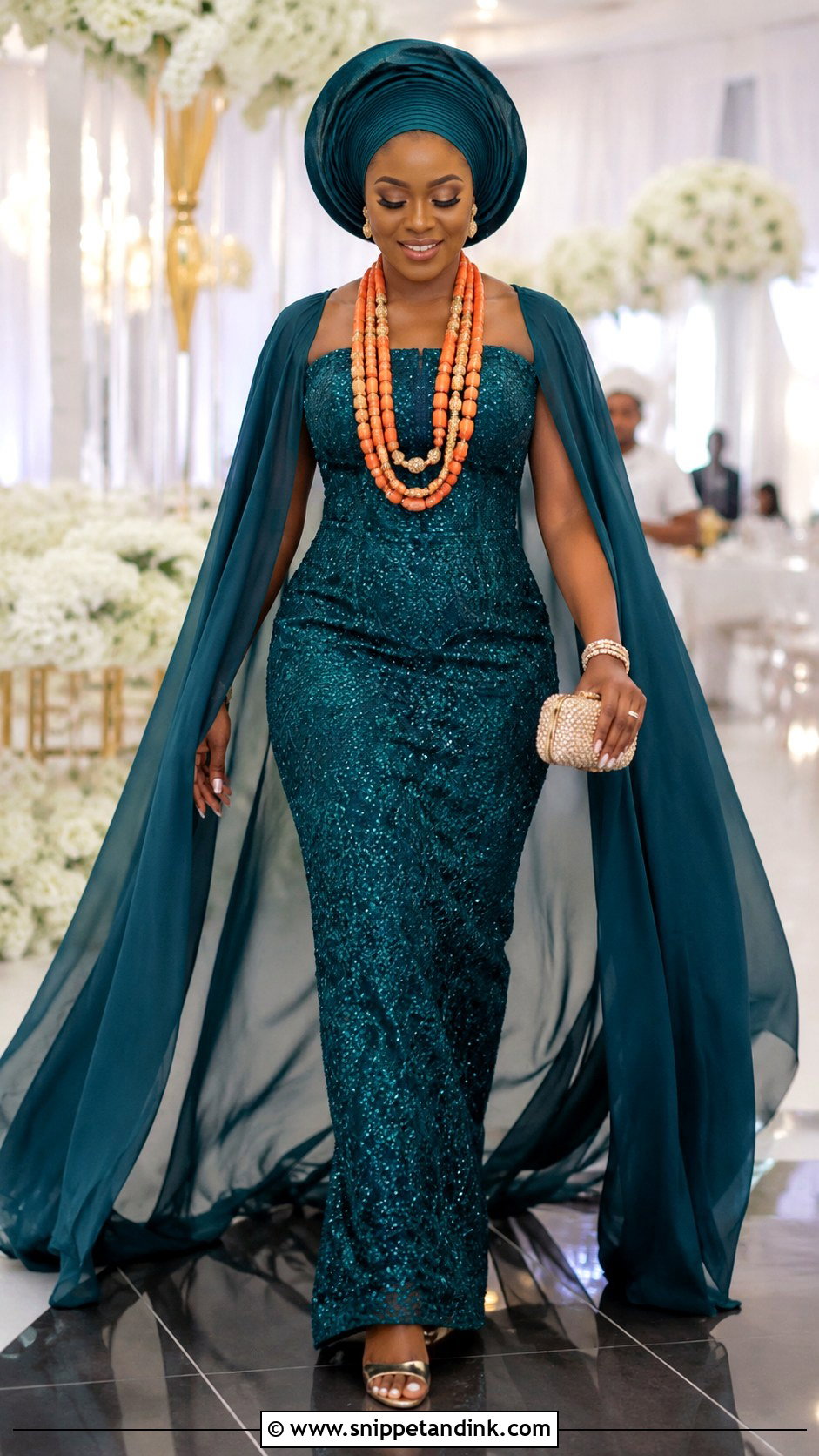
Cape sleeves add movement and coverage at once. An emerald or deep teal fitted gown with a structured bodice and light cape panels attached at the shoulder is the frame; use matching aso oke for the gele and keep the ipele narrow so it doesn’t fight the sleeves. Gold earrings, a beaded clutch, layered beads and metallic heels. Length is the detail to get right. A cape that stops near the wrist stays clear, but one that grazes the floor gets caught under your heel on the stairs, so I ask the tailor to finish it either short or clearly above the ground. Keep the skirt streamlined. A groom in cream agbada with teal or emerald embroidery.




20. Detachable Train Yoruba Wedding Dress
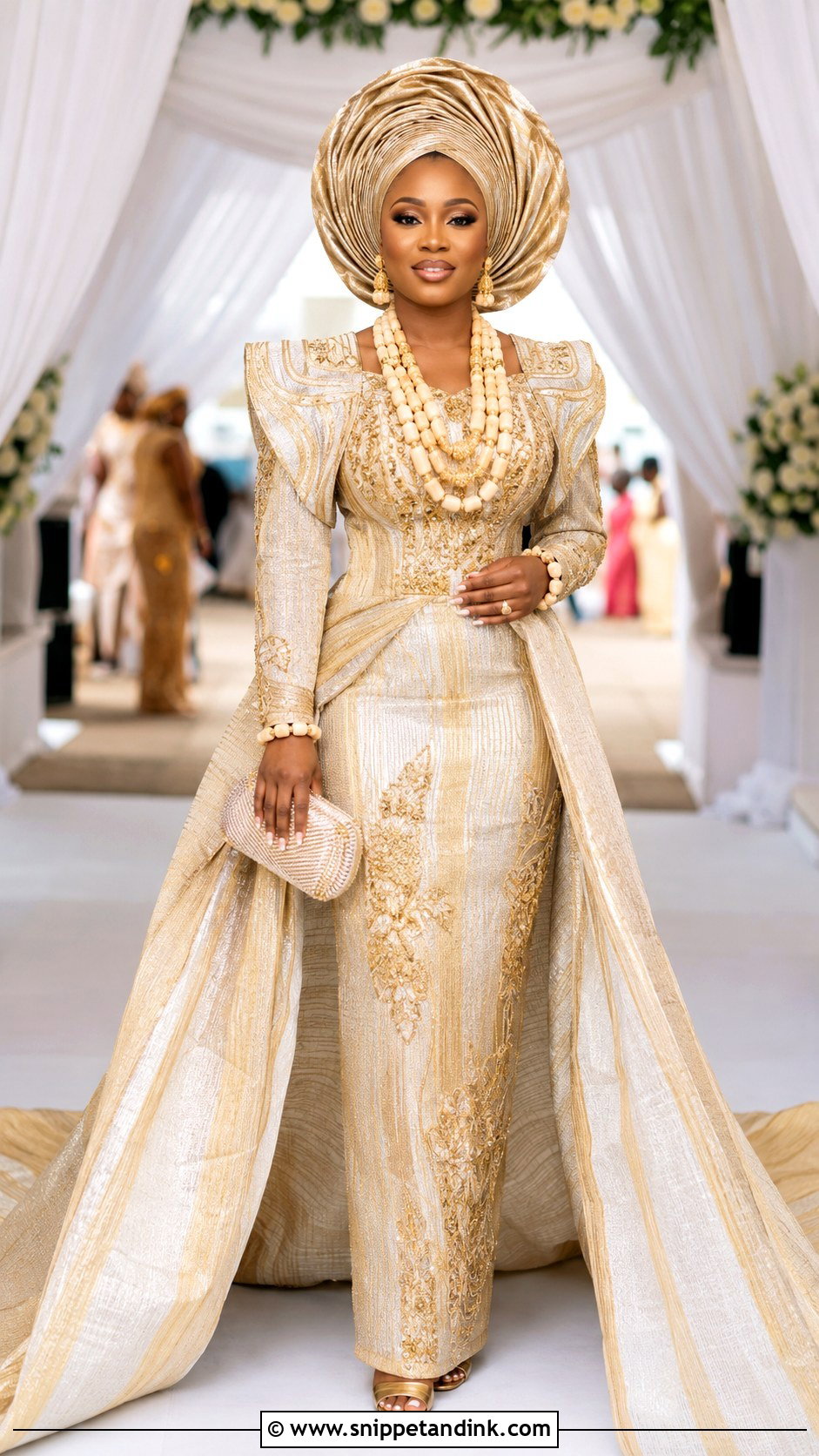
A detachable train gives you two silhouettes in one outfit, a grand entrance and then a dress you can dance in. Start with a fitted ivory-and-gold aso oke gown with a straight or mermaid skirt and attach a sweeping overskirt at the waist for the entrance and portraits. Hooks and hidden buttons release faster than a row of snaps, and I always have the bride’s attendant practise removing it at the final fitting so it doesn’t take ten minutes in a corridor. The gown underneath must look finished on its own. A gold gele, ivory ipele, layered beads, statement earrings, metallic heels and a structured clutch, with the groom in ivory agbada with gold detail.
Getting the Gele Right on the Morning
The gele is the part of the outfit that people remember and the part most likely to cause trouble. A tall, sculpted gele in stiff aso oke can take a skilled tier a while to get right, and it presses firmly on the head for hours.
Hand-tied or pre-tied
A hand-tied gele on the morning gives the crispest folds and can be shaped to your face, but you need to book an experienced tier and allow time for it in the schedule. A pre-tied or auto gele is sewn into its shape ahead of time and simply placed on the head, which is faster and easier to adjust for a reception change. I often suggest a hand-tied gele for the ceremony and a pre-tied one for later.
- Tell your hairstylist about the gele. Hair under it should be flat and smooth, with no big curls or buns at the crown.
- Do the gele after makeup is mostly done but before the final powder, so any shine on the forehead can be fixed afterward.
- Ask the tier to leave enough room at the temples. A gele tied too tight is the most common cause of a headache by mid-afternoon.
- Keep a few extra pins and a small mirror with whoever is looking after you.
If you plan an outfit change, decide in advance whether the gele changes too. Re-tying takes time, and the schedule should allow for it.
Does the Whole Outfit Move With You?
A Yoruba bridal outfit works when culture, color and tailoring pull in the same direction. Whether you choose an iro and buba, a fitted gown, cape sleeves or a removable train, treat the gele, ipele, beads, shoes and clutch as one plan rather than separate purchases. Before the last fitting, I ask every bride to sit, walk, kneel, greet and dance in the full outfit, gele on. Anything that pulls or slips shows up then. Talk through the traditions that matter with your family, work with a designer who knows Yoruba bridal dressing, and leave enough time for the weavers and tailor so nothing is rushed.
You'll Like These Ideas:




Leave a Reply