
June is the month I hear the same question at almost every fitting: will I be too hot in this? It’s the right question to ask. Long daylight means you’ll spend more hours in the gown under natural light than at any other time of year, and on a warm afternoon the fabric matters more than the silhouette. Chiffon, crepe, open lace, organza and soft tulle all breathe differently, and each one reads differently in a garden at noon than in a ballroom at nine. Below are twenty June gowns I’d genuinely put a bride in, with notes on how each fabric behaves, what to pair with it and where it tends to cause trouble. Use them to work out which bridal aesthetic is really yours before you book appointments.
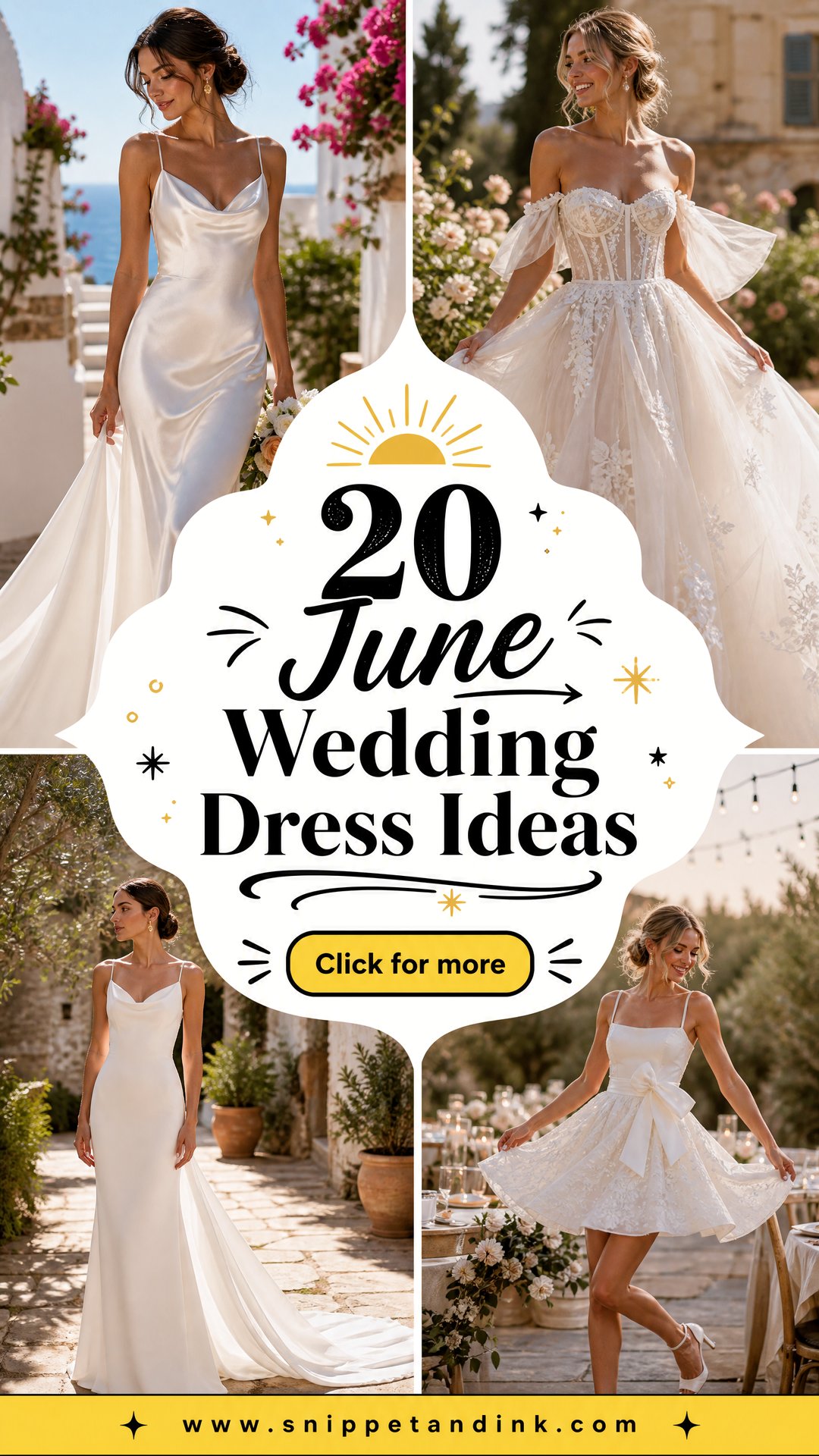
Fabric Weight Matters More Than Sleeve Length in June
Brides often assume sleeves make a gown hot. In my experience the bigger factors are the weight of the fabric, how many layers sit under the skirt and what the lining is made of. A sleeveless gown in heavy duchess satin with a polyester lining will feel warmer than open lace sleeves over a light chiffon skirt.
When a bride tries on a June gown with me, I run three quick checks before we talk about anything else:
- Hold a fold of the skirt up to the window. If light comes through easily, air will too.
- Scrunch a corner of the fabric in your fist for ten seconds, then let go. Satin and some crepes keep the creases, which is what you’ll look like after the car and the ceremony.
- Sit down for two full minutes, then stand up. Feel for heat building at the back of the thighs and along the lining.
None of these rule a gown out on their own. They simply tell you which compromises you’re signing up for, and whether a lighter lining or one less underskirt layer would solve them.
1. Chiffon A-Line June Wedding Dress
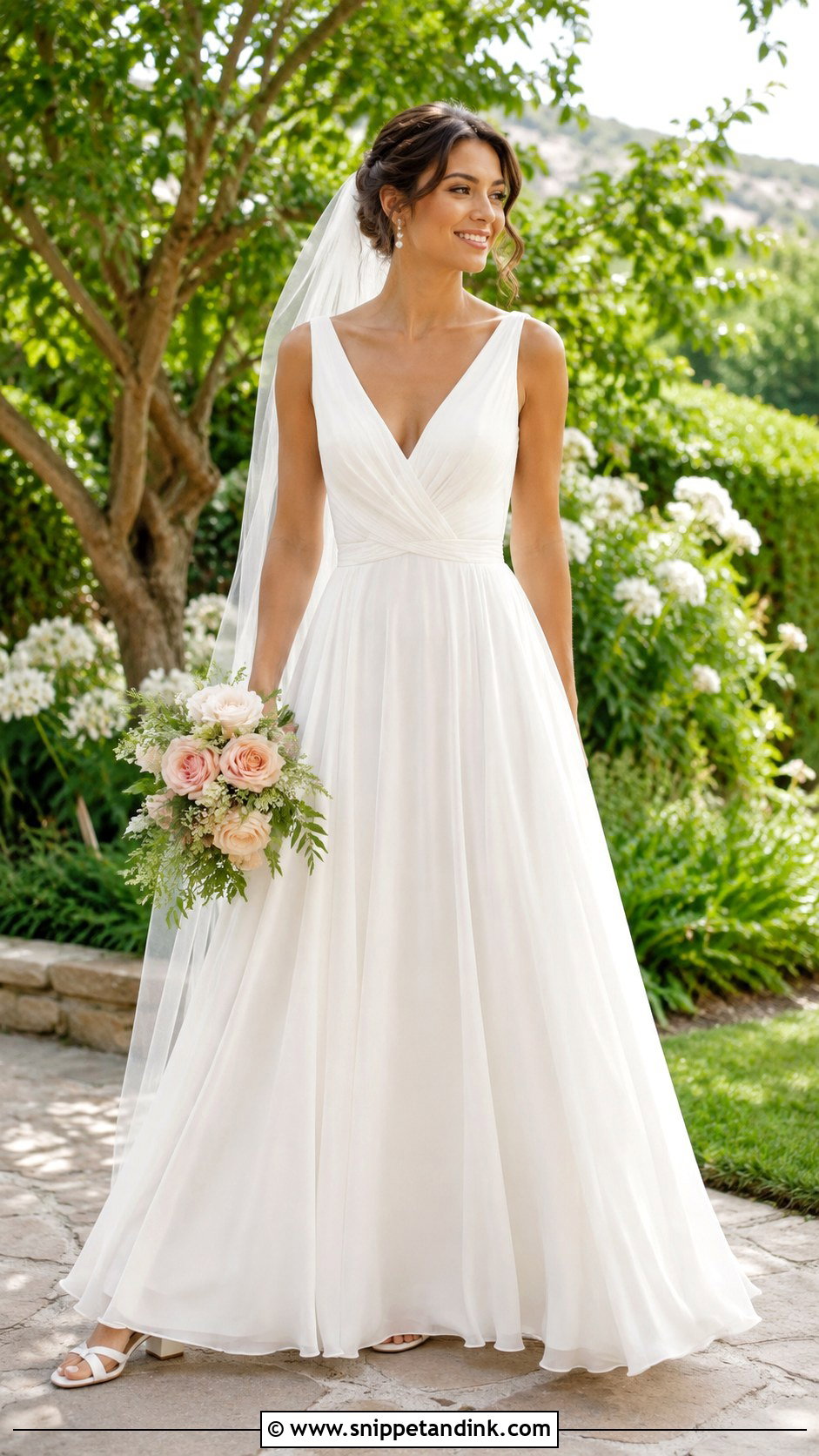
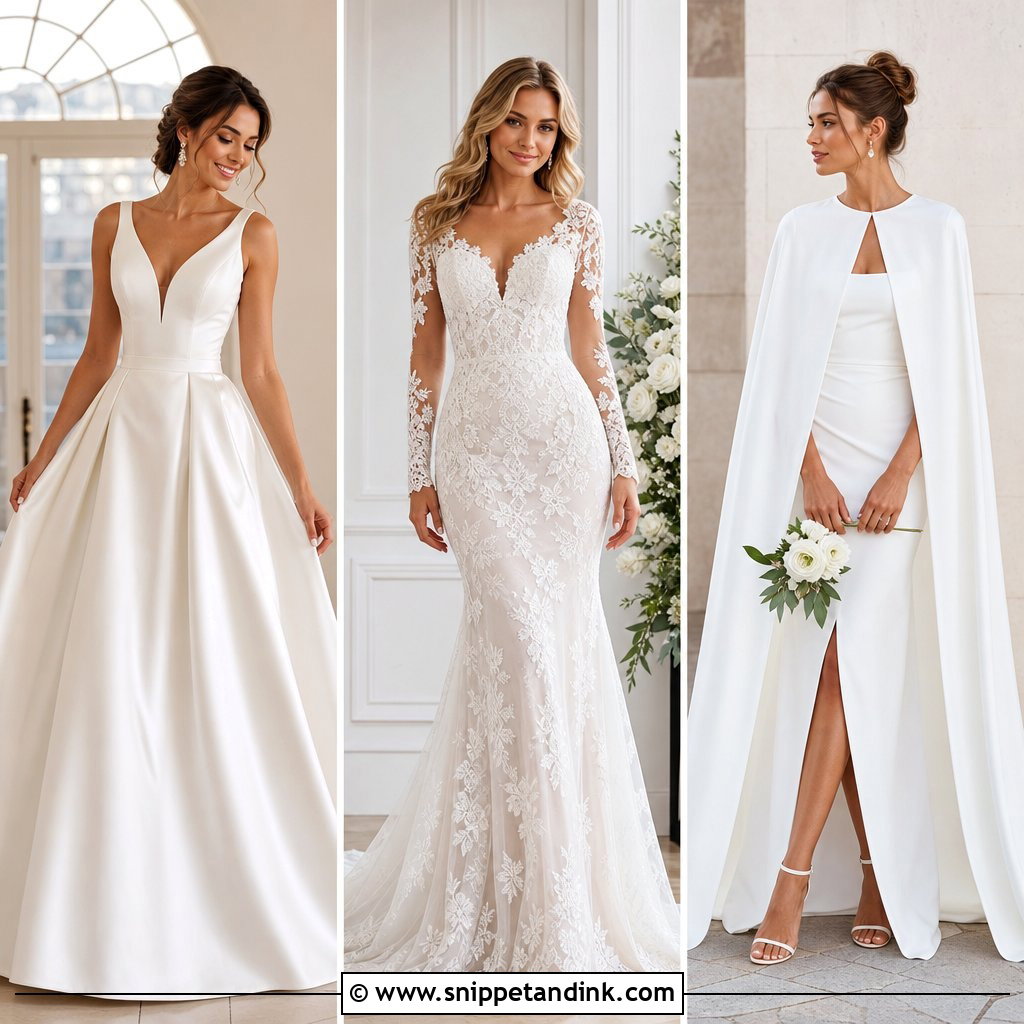
Chiffon is the fabric I reach for first when a bride tells me her ceremony is outdoors in June. It’s light enough to catch a breeze, and it doesn’t trap heat against the legs the way a satin skirt does. The catch is that it snags on bark, rose thorns and some beaded bracelets, so keep the jewelry smooth: pearl drops and a fine bracelet rather than anything with prongs. A fitted V-neck with wide straps holds the bodice without heavy boning, and a chapel veil adds ceremony without drowning the skirt. Ask for a smooth, lightweight lining, because a cheap polyester lining is where most of the stickiness comes from. Ivory block heels for the grass, a loose low bun and blush roses with seasonal greenery finish it.
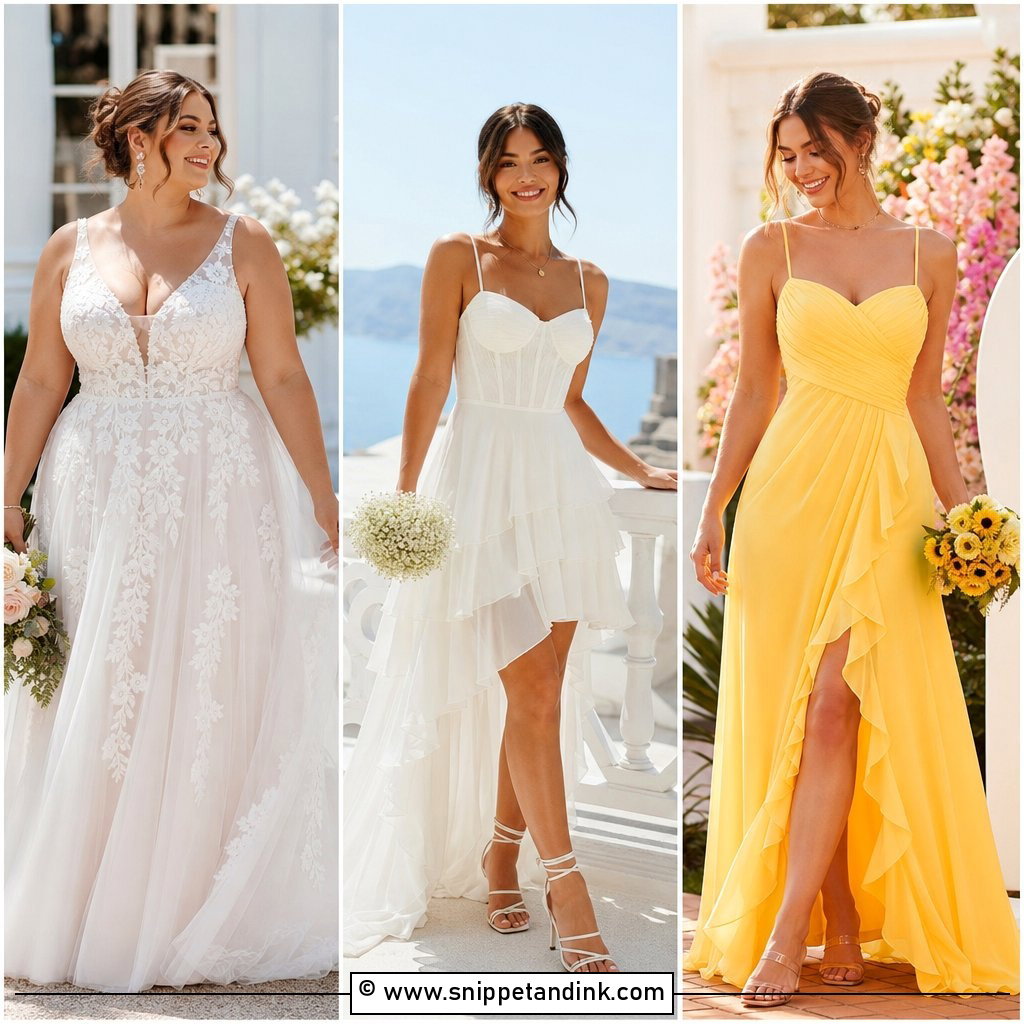
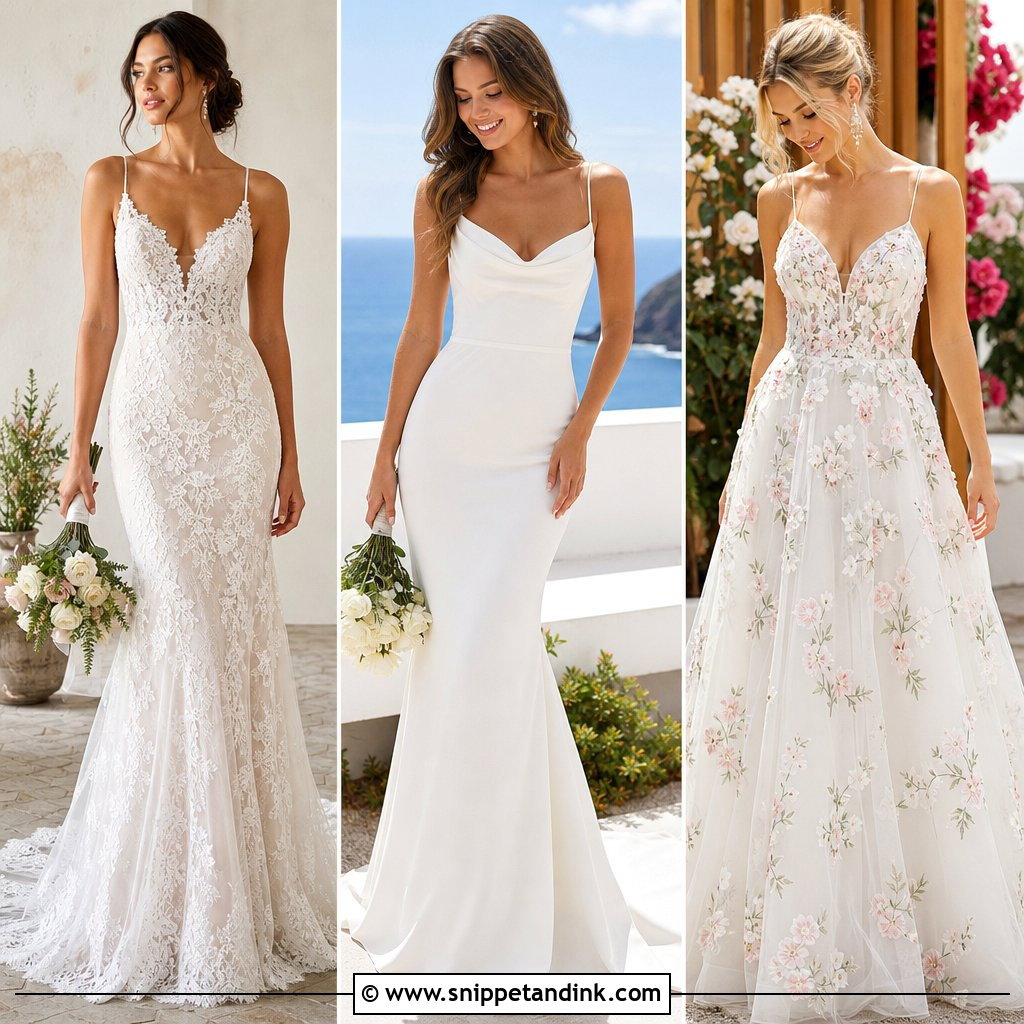
2. Floral Lace June Wedding Dress
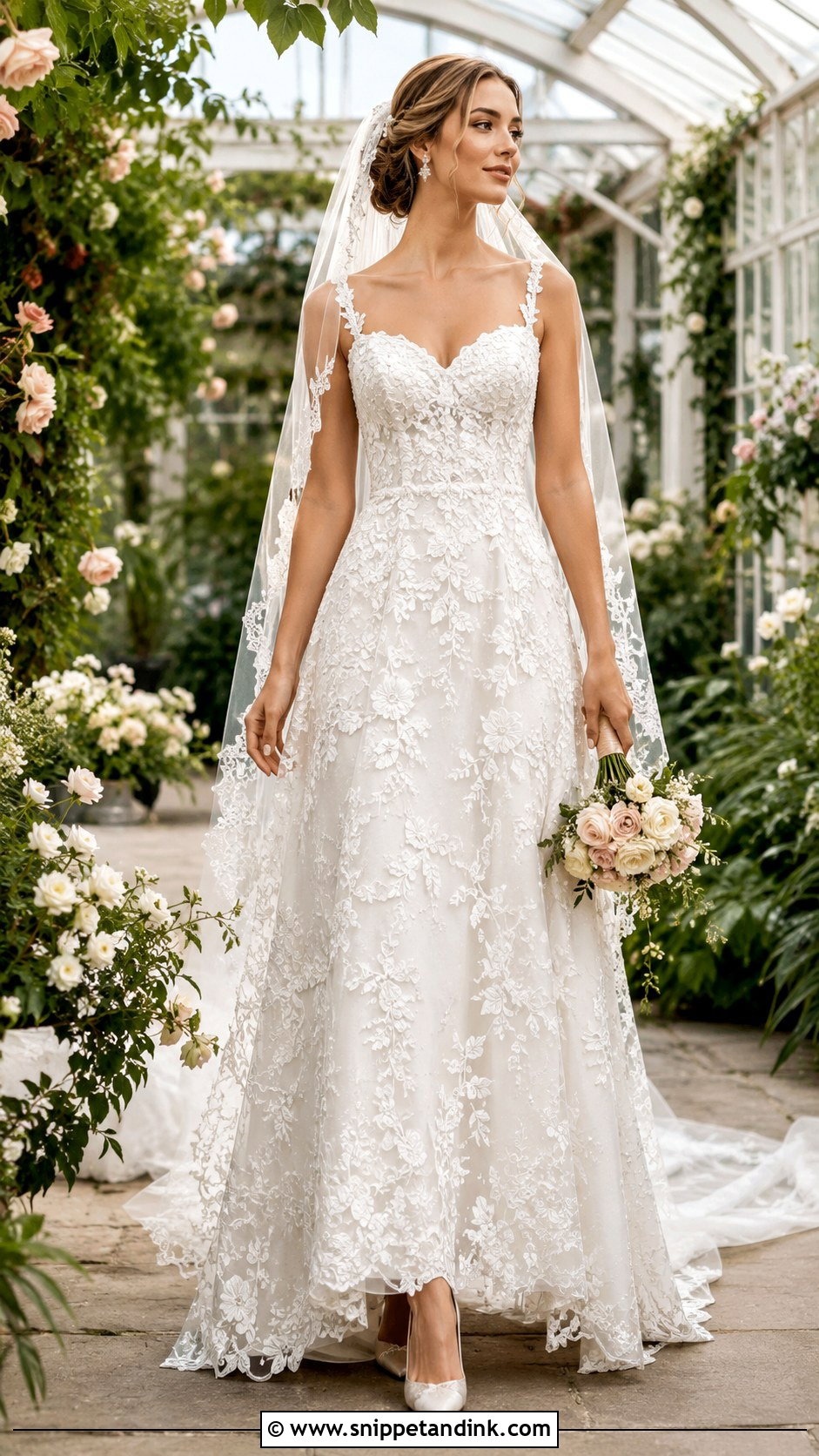
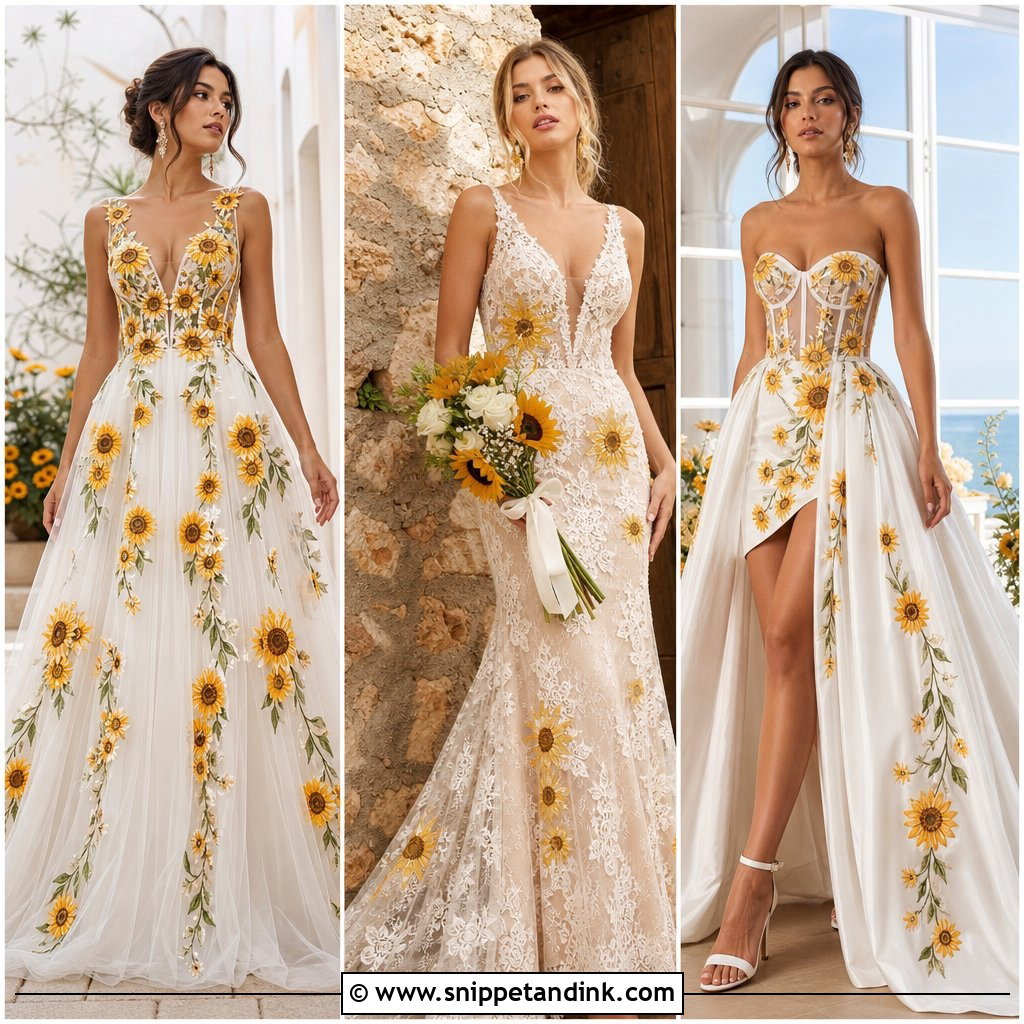
Botanical lace makes sense in June because the garden is already doing half the styling for you. The first thing I check is density. Tightly corded lace over a full lining can feel like a sweater by mid-afternoon, so I look for open spacing and a lighter lining underneath. An A-line with appliqués across the bodice and scattered down the skirt, a sweetheart neckline and slim detachable straps gives support without bulk. A sheer fingertip veil edged in matching lace ties it together. Don’t add a busy bouquet, since the gown already carries plenty of texture; ivory pointed pumps, crystal studs and a small vine comb are enough. Greenhouses suit it, but they heat up fast in June, so plan portraits there early in the day.
3. Satin Slip June Wedding Dress
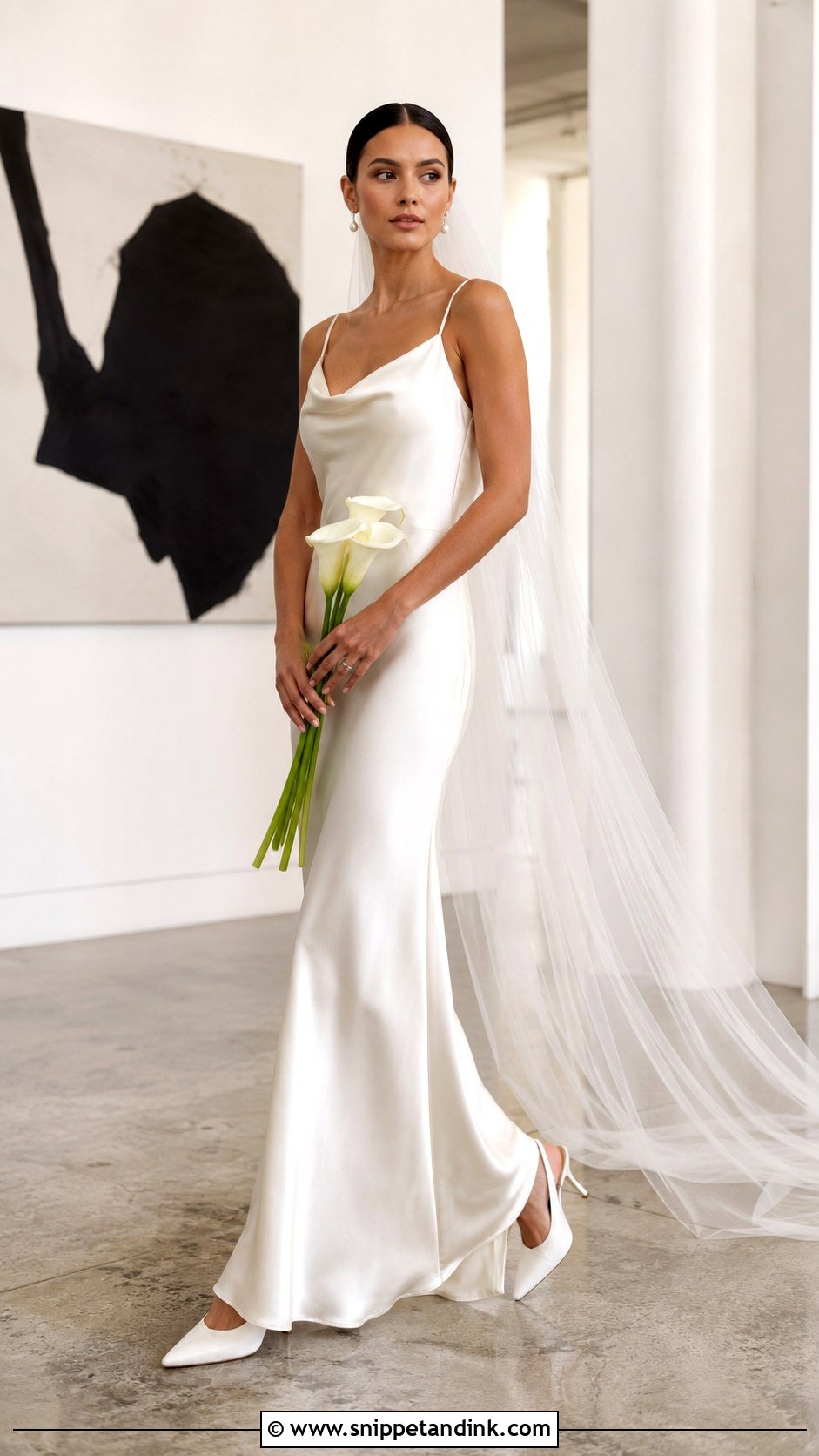
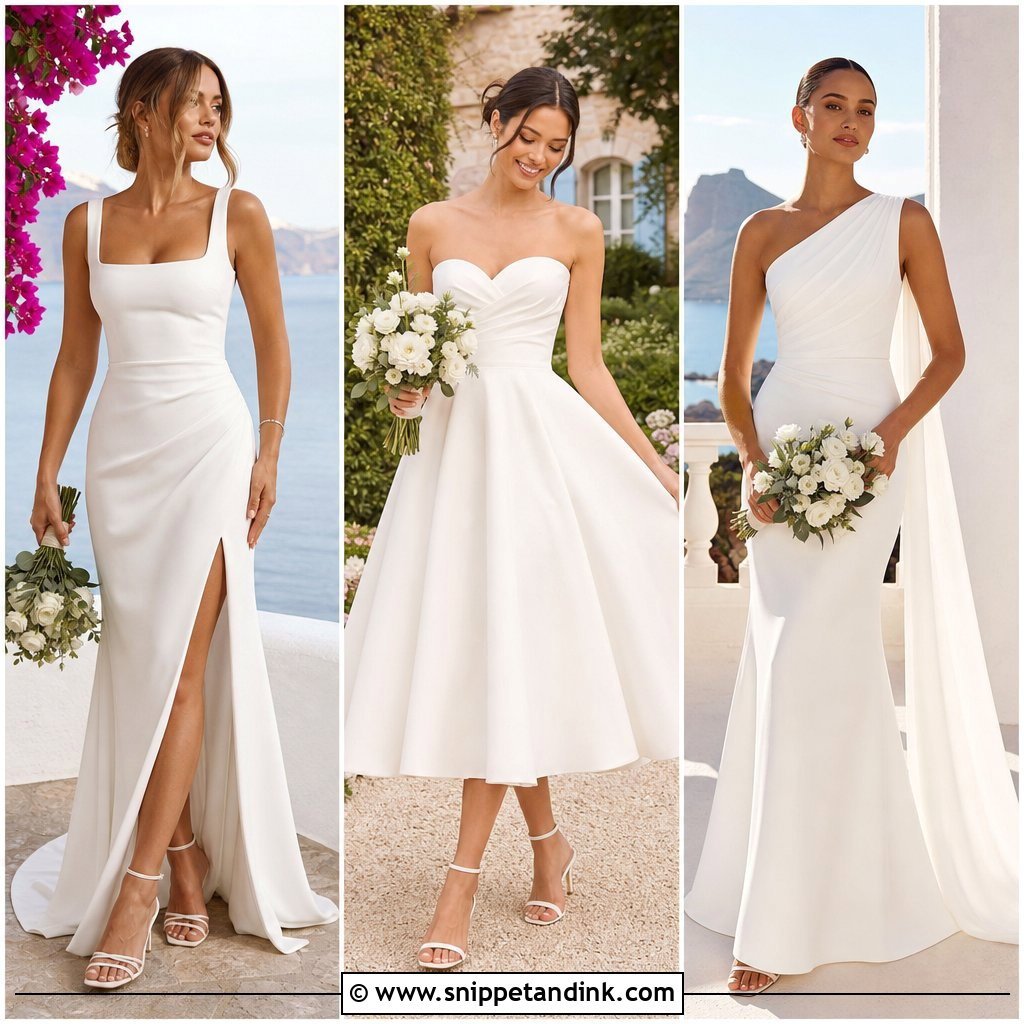
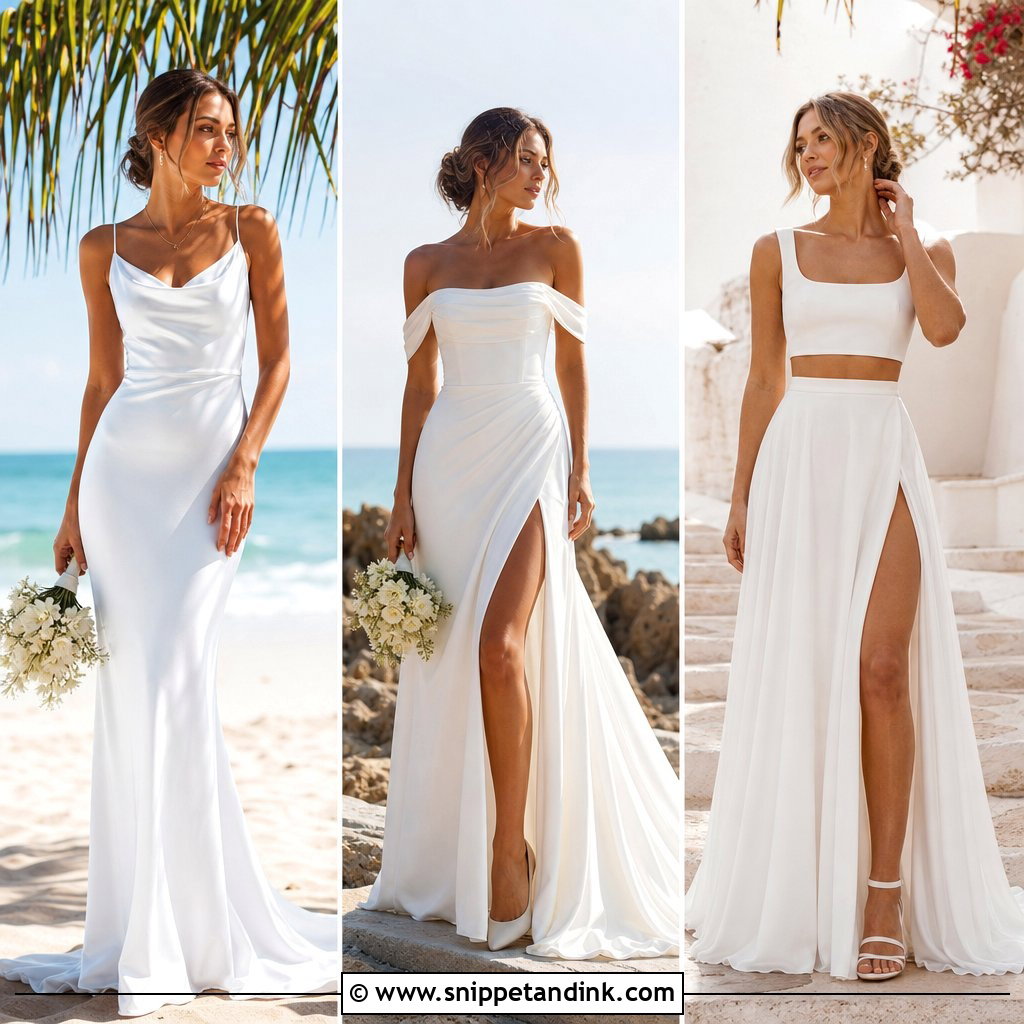
I love a slip gown for June, with one honest warning: satin shows everything. Perspiration marks under the arms and along the lower back appear on thin silk within an hour on a hot day, and creases from the car ride show in every photo. A mid-weight satin with a bias cut, a gentle cowl neckline, narrow straps and a softly flared hem hides far more than a flimsy, shiny one. Pair it with sleek white slingbacks, pearl earrings and a slim tennis bracelet. A polished bun lets a cathedral veil fall straight down the back; for a casual venue, swap in a short tulle blusher. City venues and coastal hotels suit it, and a removable lace topper covers you once the evening cools.
4. Off-Shoulder Organza June Wedding Dress
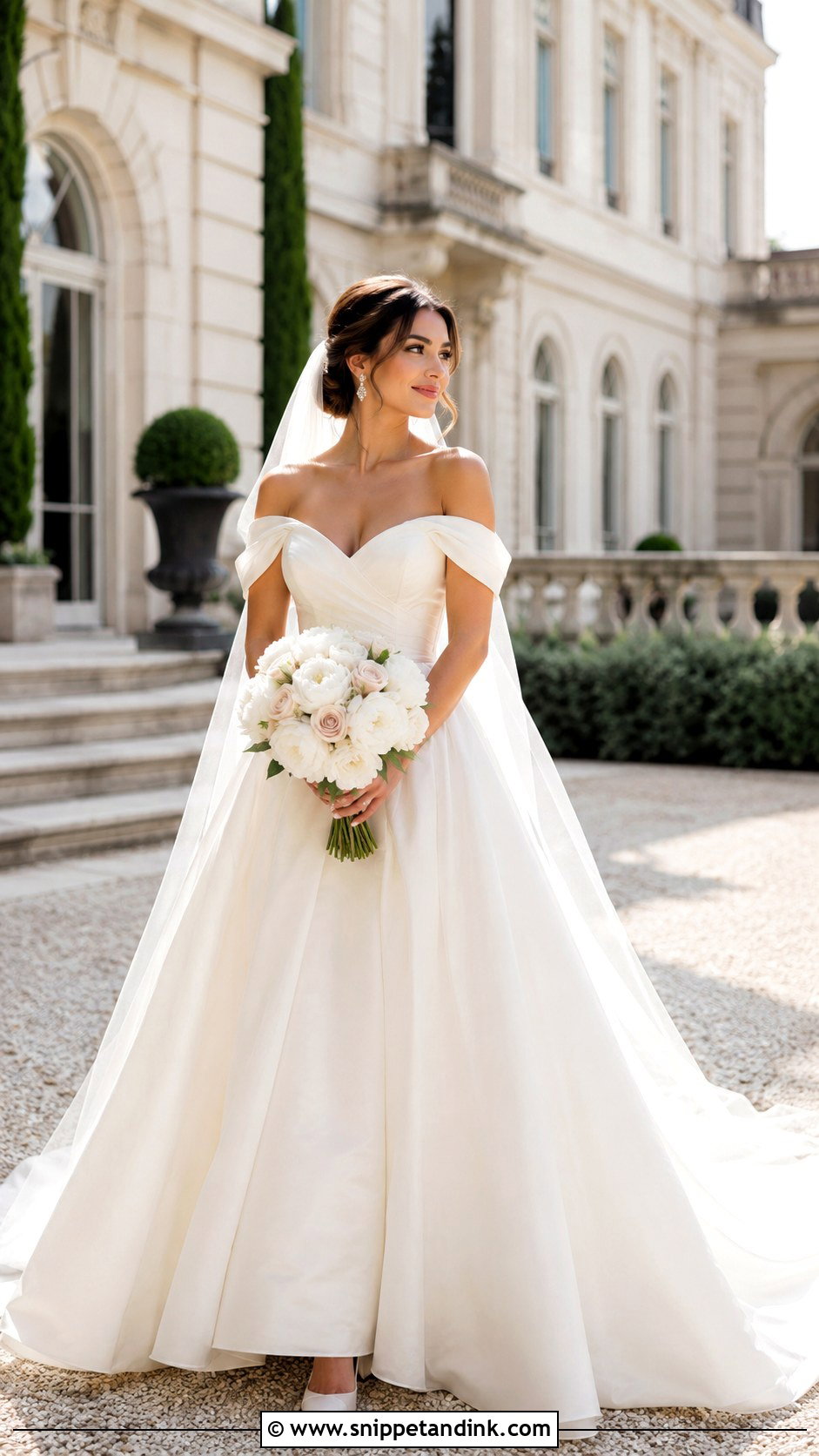
Organza is crisp, which is why this skirt holds a full A-line shape without a stack of petticoats, and why it’s cooler than it looks. The part I fuss over is the folded off-shoulder sleeve. Cut too tight across the upper arm, it stops you lifting your arms to hug anyone or reach for a glass, so at fittings I ask brides to raise both arms and mime throwing the bouquet. A plain chapel veil, crystal drops and closed-toe ivory heels keep it formal. A neat chignon or side-swept waves leaves the neckline clear. White peonies with pale pink roses give a structured bouquet some color. I’d place this one in a formal garden, an estate or a ballroom.
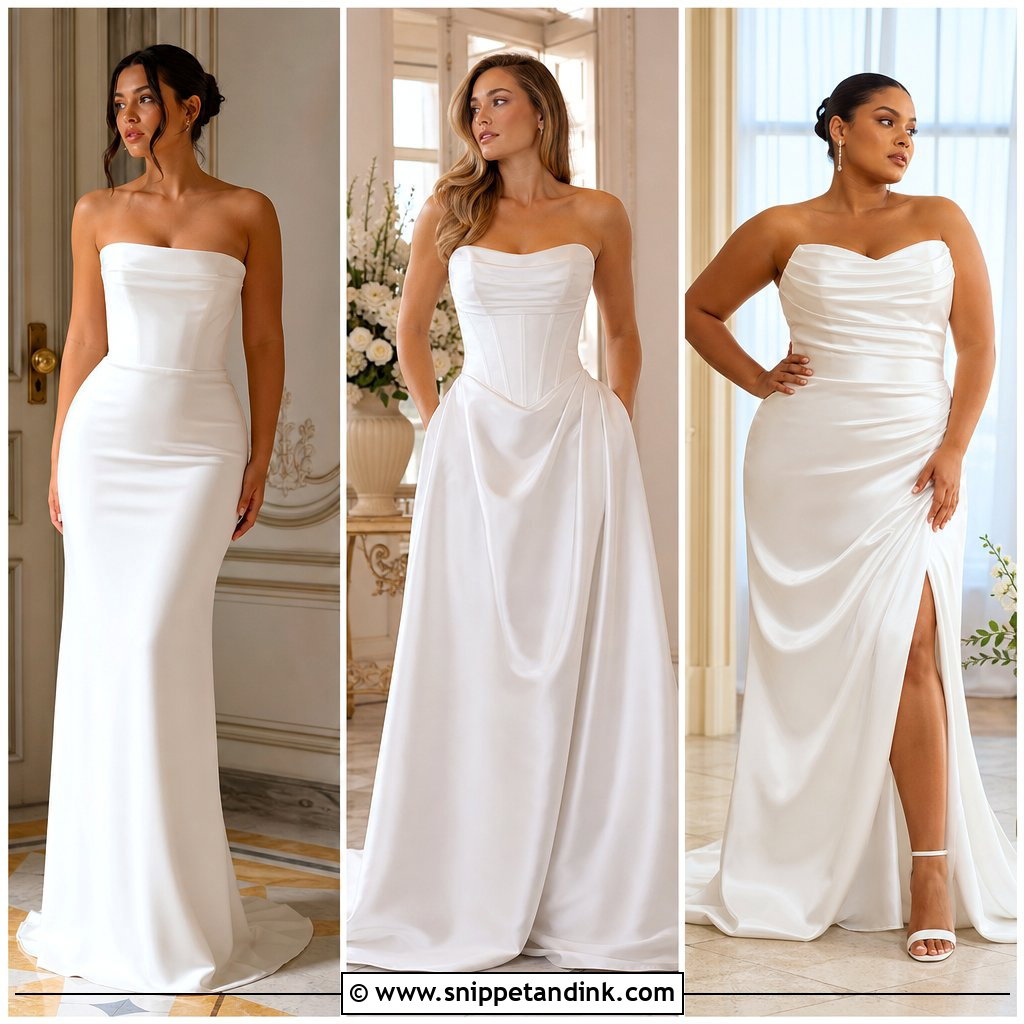
5. Basque Waist Ball Gown Wedding Dress
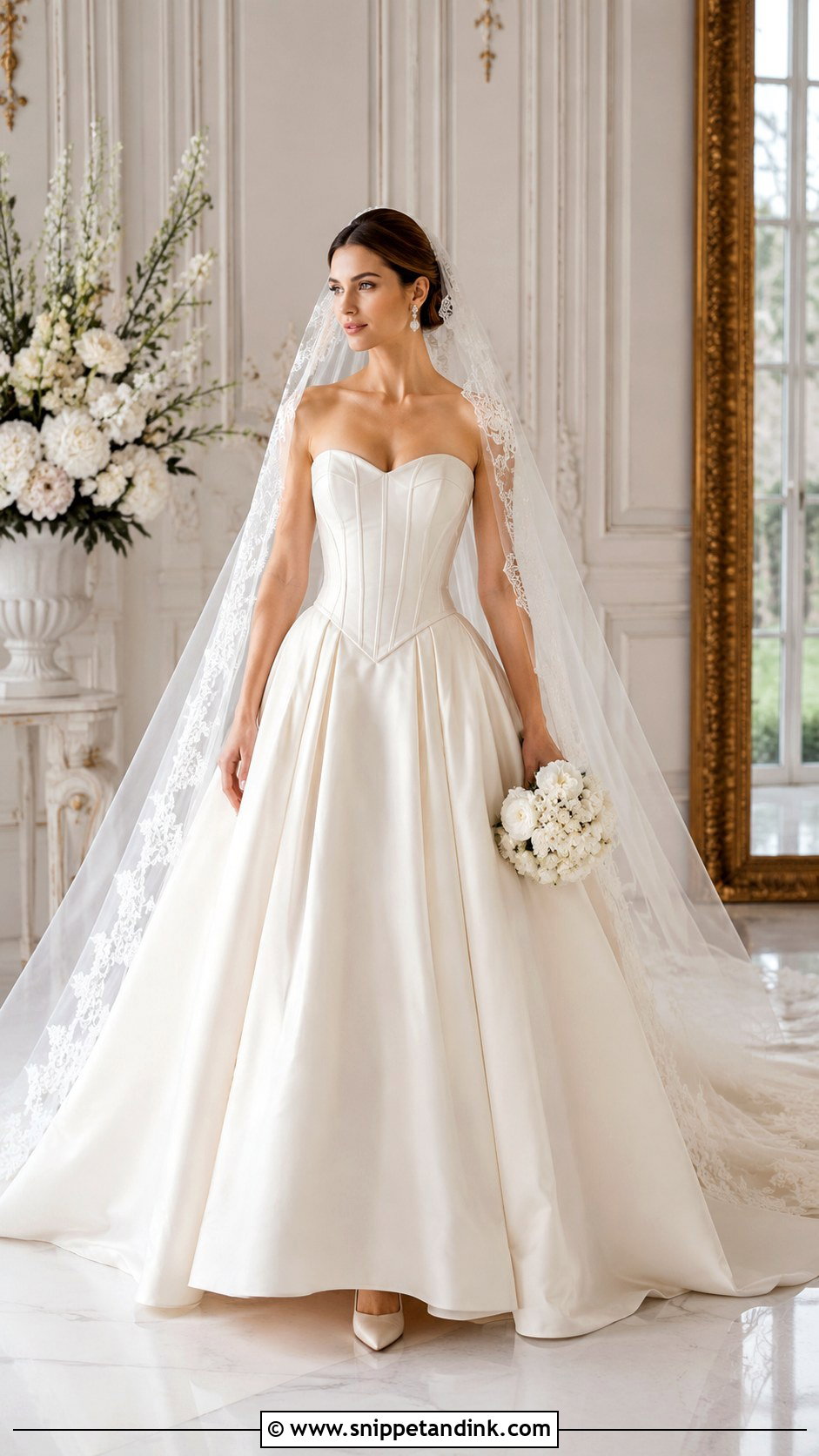
The pointed basque waist dips below your natural waistline, drawing the eye down and lengthening the torso, which genuinely helps brides with a short waist. It’s a heavy gown, though. A full tulle or organza skirt over a corset bodice holds heat, so for an outdoor June ceremony I ask the workroom to remove any underskirt layer that isn’t needed for shape. Strapless or a soft scoop both work if the interior support is properly built. A cathedral veil, pearl-and-crystal earrings and comfortable satin pumps nobody will see complete it. Keep the hair in a smooth updo and the bouquet compact so the waist construction stays visible. Grand hotels and air-conditioned evening receptions are where this gown is happiest.
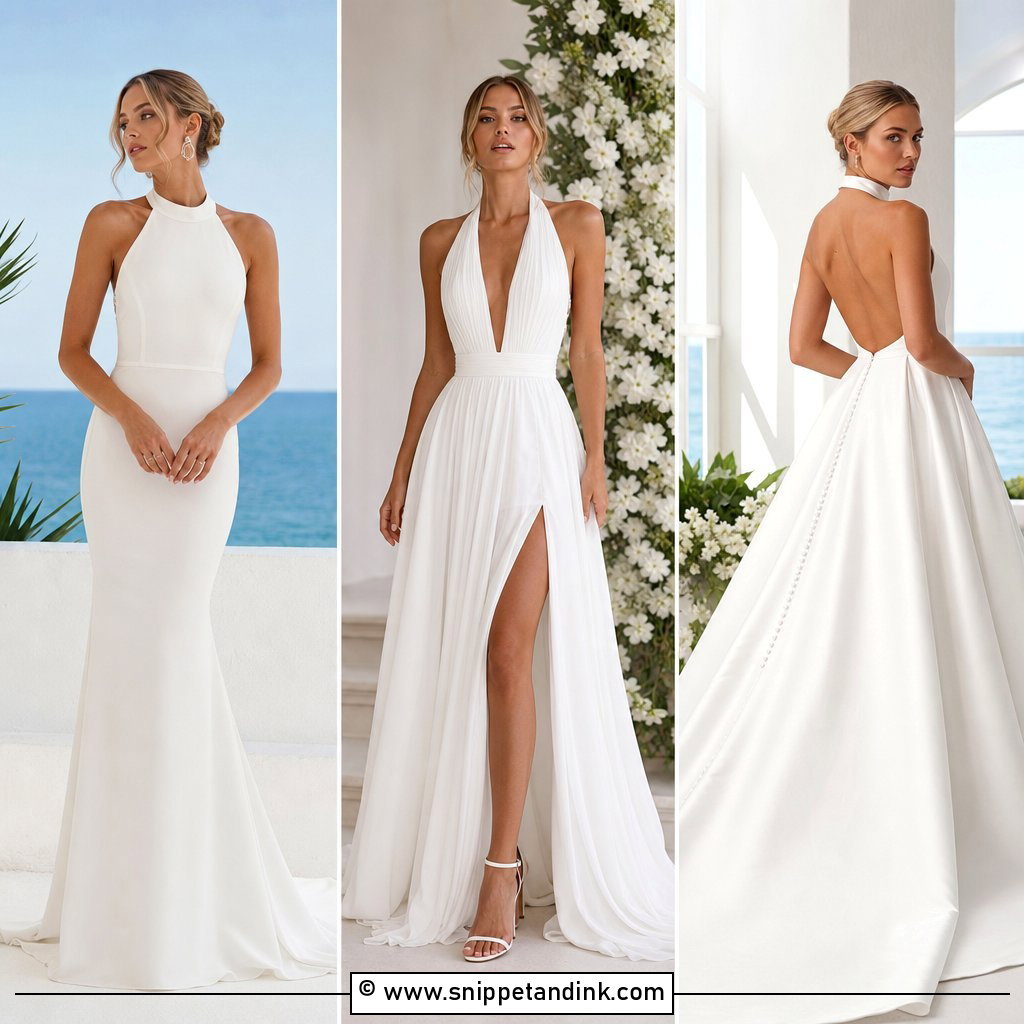
6. Beach Sheath June Wedding Dress
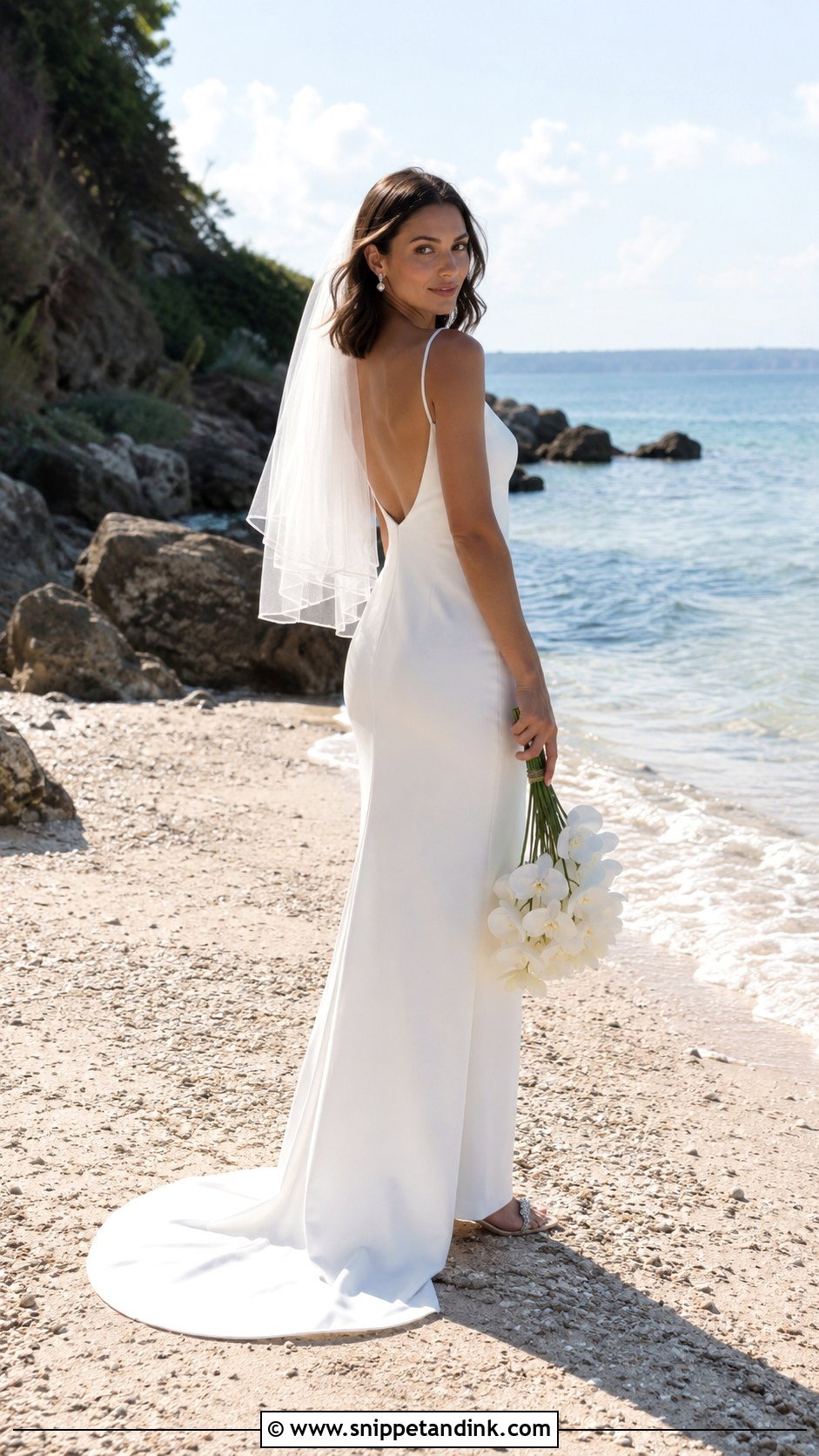
Sand is hard on long skirts. A lightweight crepe or chiffon sheath with slim straps, a V-neck, a low back and only a short sweep train is the version I’d trust on a beach, because it won’t drag wet sand up the hem. Arrive in flat embellished sandals, then go barefoot if the venue allows it. Small pearl hoops, a fine anklet and a soft braided updo stay put in sea air far better than loose curls, which drop in humidity. Coastal wind turns a long veil into a sail, so I’d go shoulder-length or use floral pins instead. White orchids and greenery keep the bouquet relaxed.
7. Tea-Length June Wedding Dress
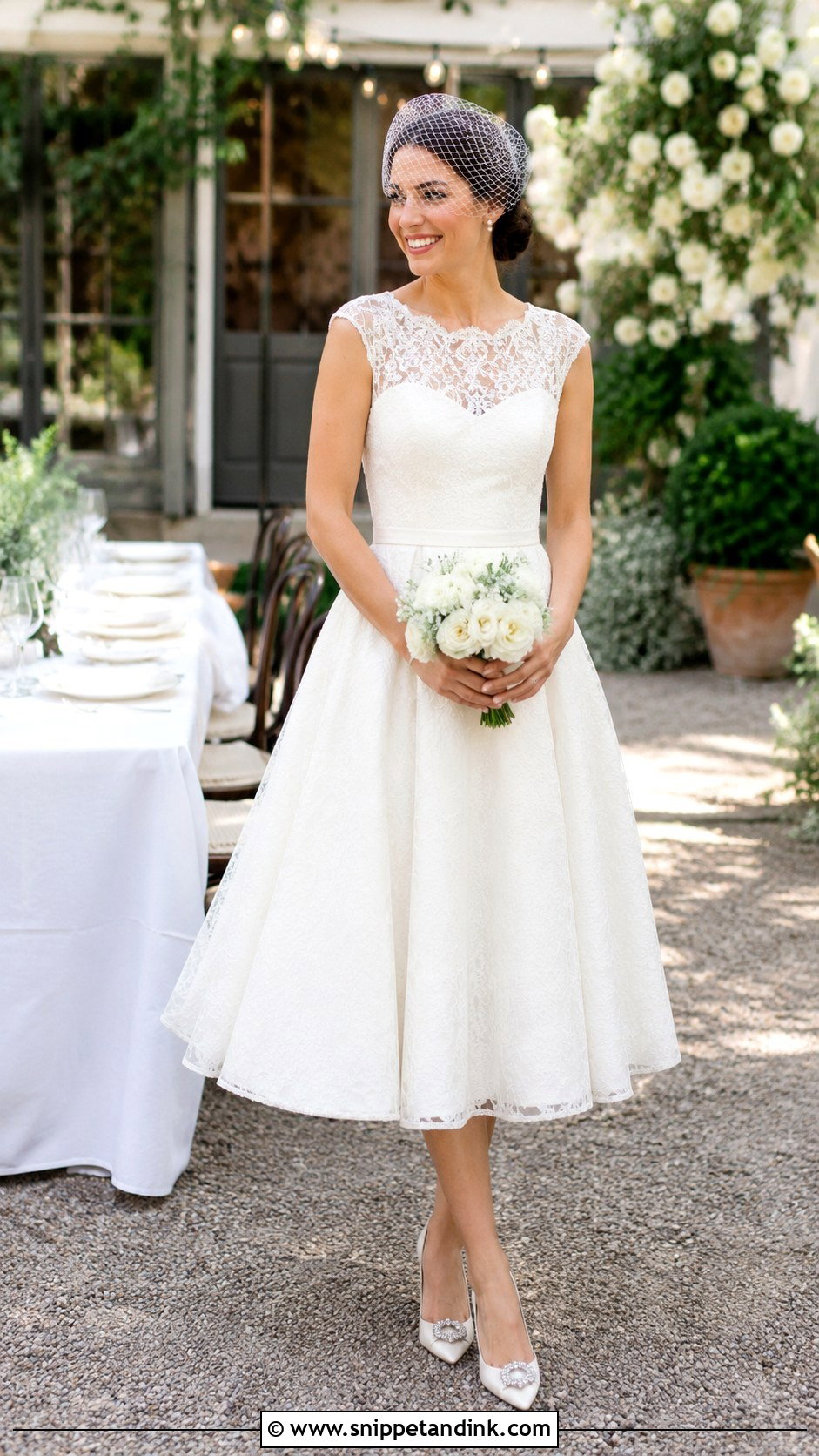
Tea-length is the gown I suggest when a bride wants to dance all afternoon without anyone bustling her. The hem lands between knee and ankle, so the shoes become part of the outfit: pointed satin pumps, embellished slingbacks or ivory block heels all earn their place. Mikado is stiff enough to hold a flared skirt on its own, which is why I like it, or a fitted lace bodice if you want softness. A short birdcage veil or a structured bow suits the length, with pearl studs, a slim bracelet and a French twist. Courthouse ceremonies, restaurant receptions and garden parties fit it well. Ask about hidden pockets. You’ll use them more than you expect.
8. Long-Sleeve Lace June Wedding Dress
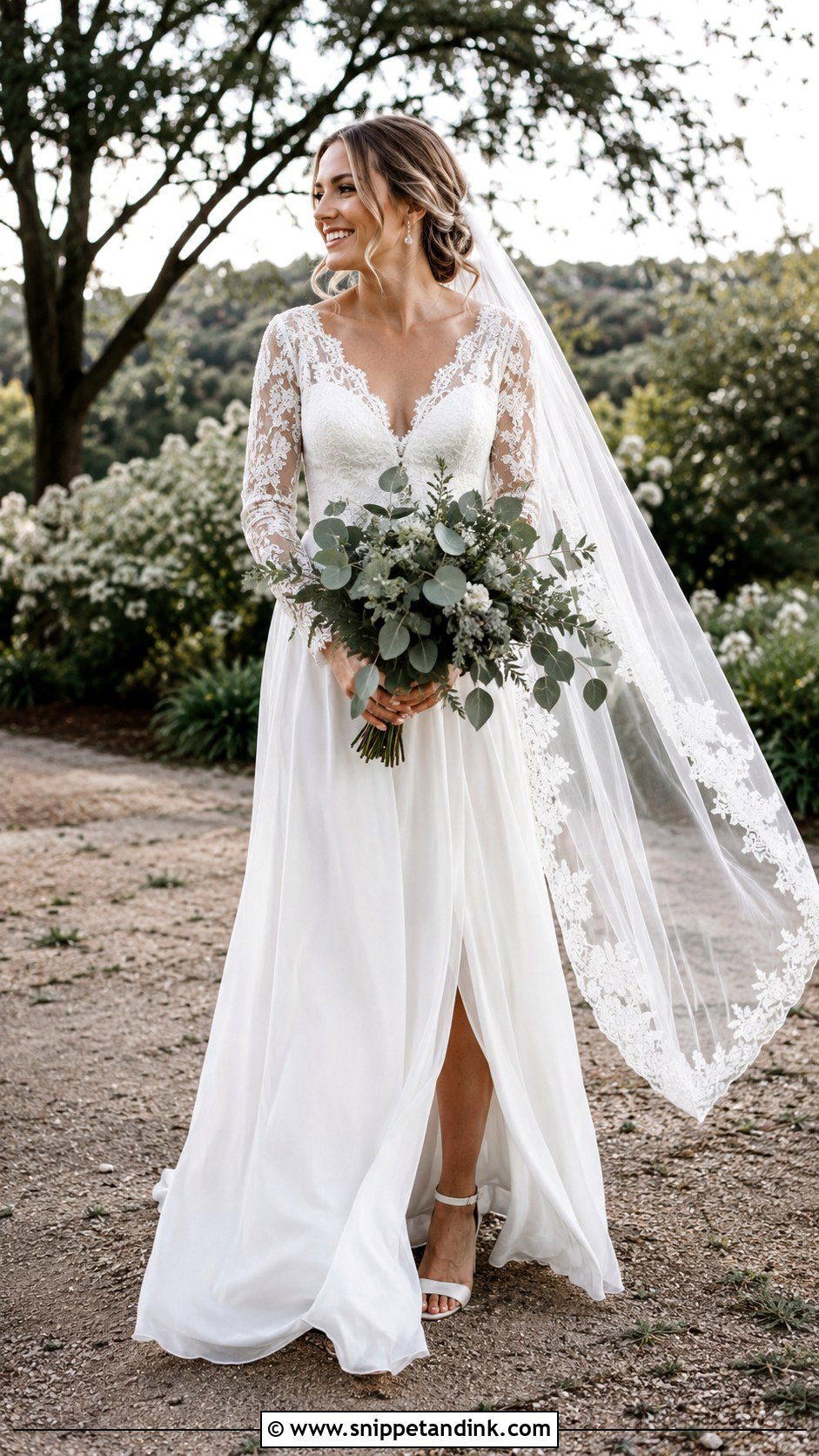
Long sleeves in June only work if the lace is open and sits on sheer illusion fabric, never a full lining. I’d steer you away from this one for an exposed midday ceremony, but for a shaded venue, a cooler climate or a late-afternoon start it makes sense. A fitted bodice with a V-neck or bateau neckline and a flowing chiffon skirt keeps the lower half airy. At the fitting, bend your elbows and cross your arms: if the sleeve lining has no stretch, it will strain at the seams the first time you dance. Wear a low bun with a lace-edged fingertip veil and pearl drops. Closed pumps suit an evening, block sandals an outdoor lawn. A loose bouquet of white flowers and eucalyptus matches the texture.
9. Square-Neck Crepe June Wedding Dress
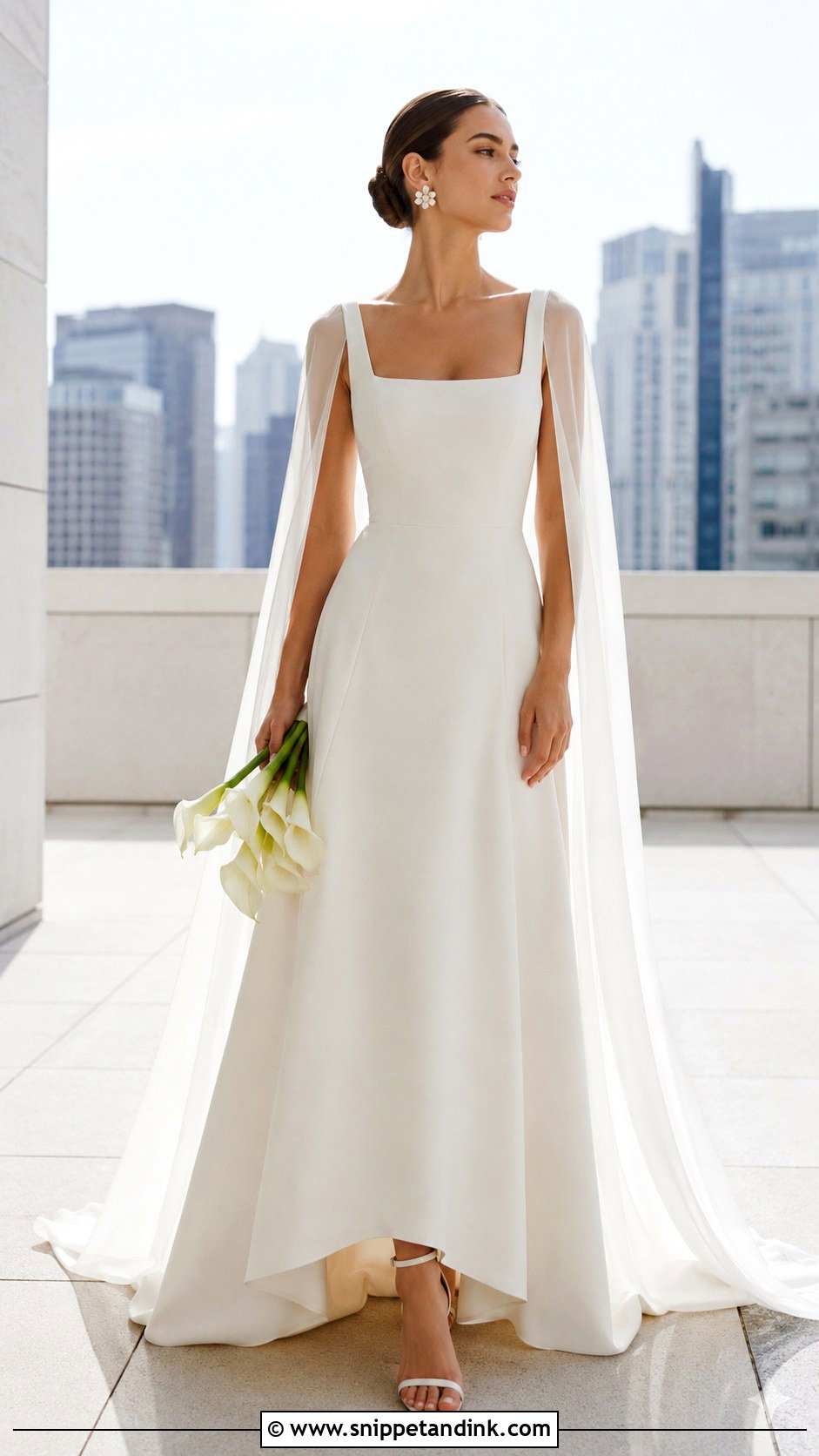
Crepe is what I recommend to brides who want no lace or beading at all. It has a matte surface and a little weight, so it drapes cleanly over princess seams instead of clinging. A square neckline with wide straps flatters most collarbones, and the straps give you somewhere to anchor a bra if you need one. Under a fitted waist, go for an A-line or a gentle fit-and-flare skirt. A long sheer veil, sculptural pearl earrings and ivory ankle-strap heels suit the geometry, as does a sleek low bun or a polished ponytail. For a religious ceremony, a removable organza cape adds coverage and comes off for the reception. Calla lilies or long-stemmed white roses keep the bouquet in the same clean line. Rooftops and modern restaurants suit it.
10. Halter-Neck June Wedding Dress
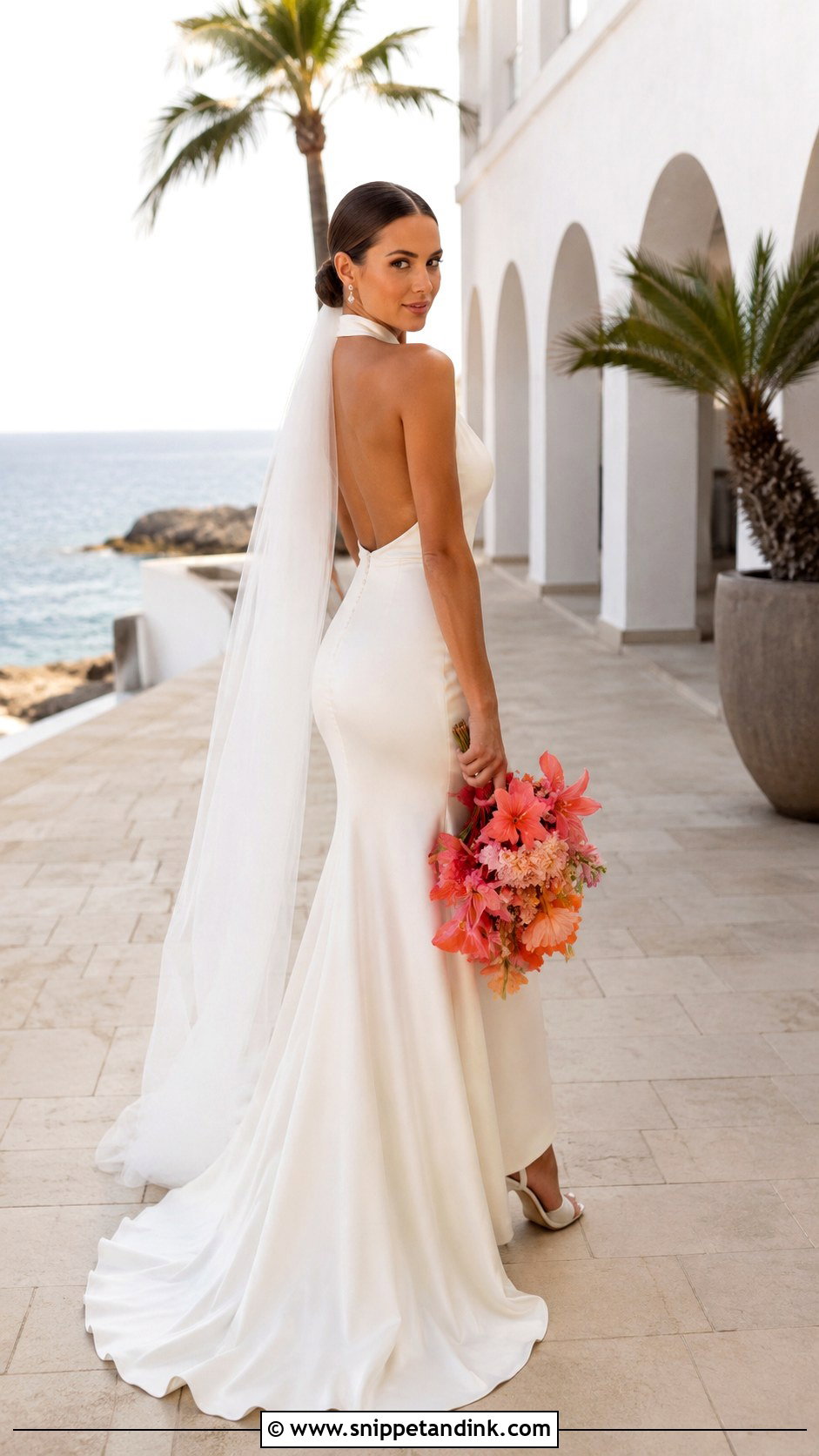
A halter neckline lives or dies on tailoring. If the neck strap is too short, it hikes the bodice up and digs into the back of your neck; too long, and the front gapes when you lean forward to sign the register. That is the first thing I check. In lightweight satin, crepe or chiffon with an open back and softly fitted skirt, it shows the shoulders off on a warm day. Wear a low bun so the strap stays visible, small crystal or diamond studs, and a fine back necklace only if the back design leaves room. Ivory heeled sandals and a sheer chapel veil fixed below the hairstyle finish it. A bright bouquet in pink, coral or purple brings seasonal color against plain ivory, and rooftops or coastal resorts make a fitting backdrop.
11. Empire Waist Chiffon Wedding Dress
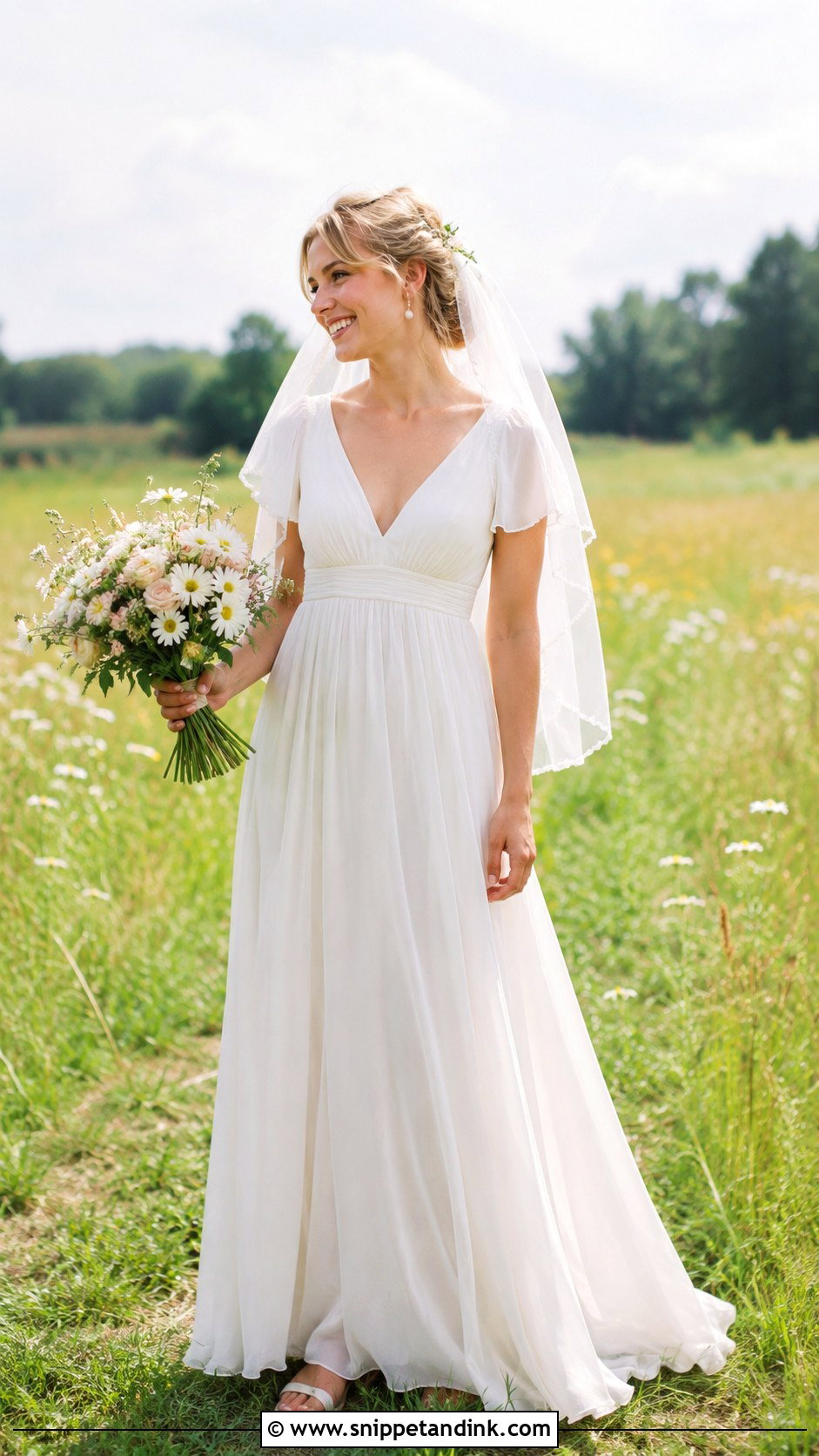
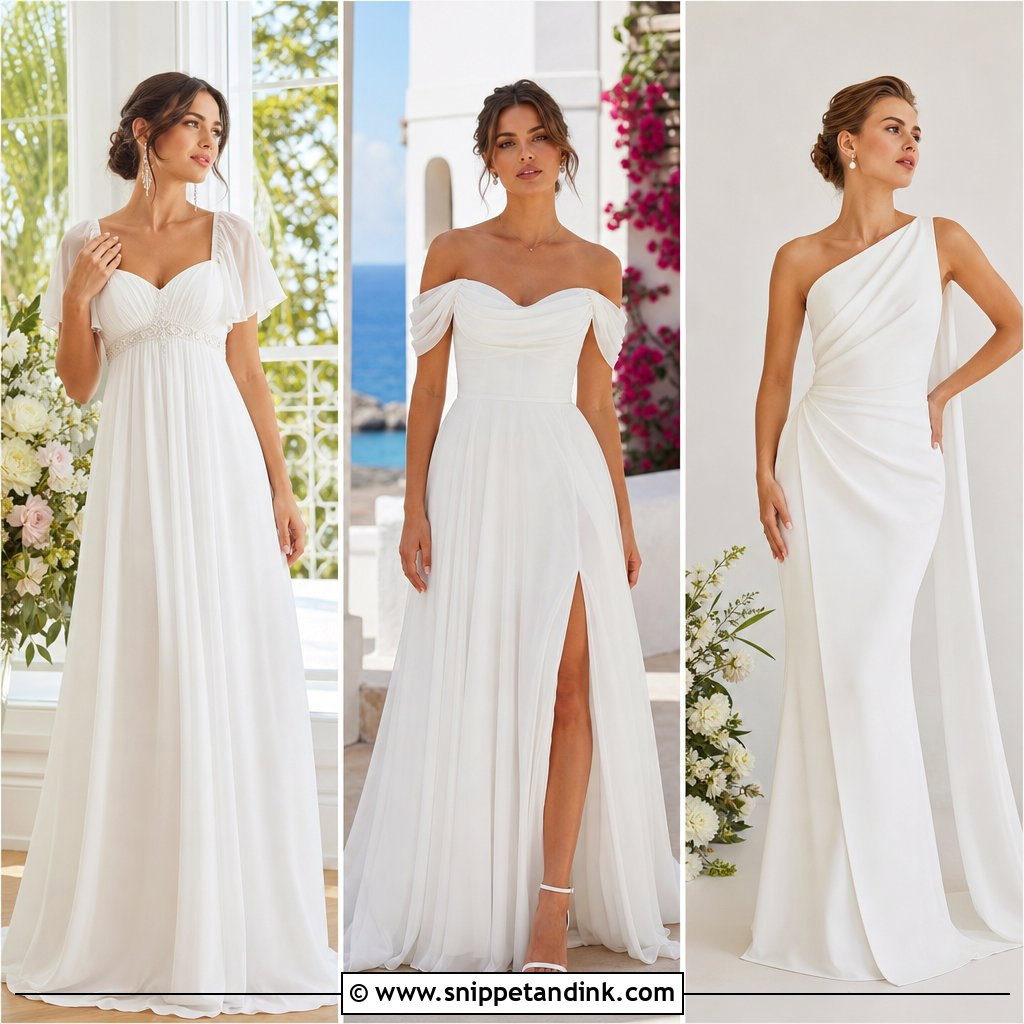
With nothing fitted at the natural waist, an empire waist chiffon gown is about the coolest bridal silhouette I know for an outdoor June wedding. The bodice ends just under the bust and the skirt falls straight from there, which is also why I suggest it to pregnant brides and to anyone who dislikes a cinched waist. The risk is that a lot of chiffon can look shapeless in pictures, so a clearly defined band under the bust matters. Add a V-neck, flutter sleeves or supportive straps depending on the coverage you want. Pearl earrings, metallic flat sandals, a light fingertip veil and loose waves suit it. Meadows and countryside venues fit the mood; keep the bouquet of daisies, roses and greenery controlled rather than oversized.
12. Corset Tulle June Wedding Dress
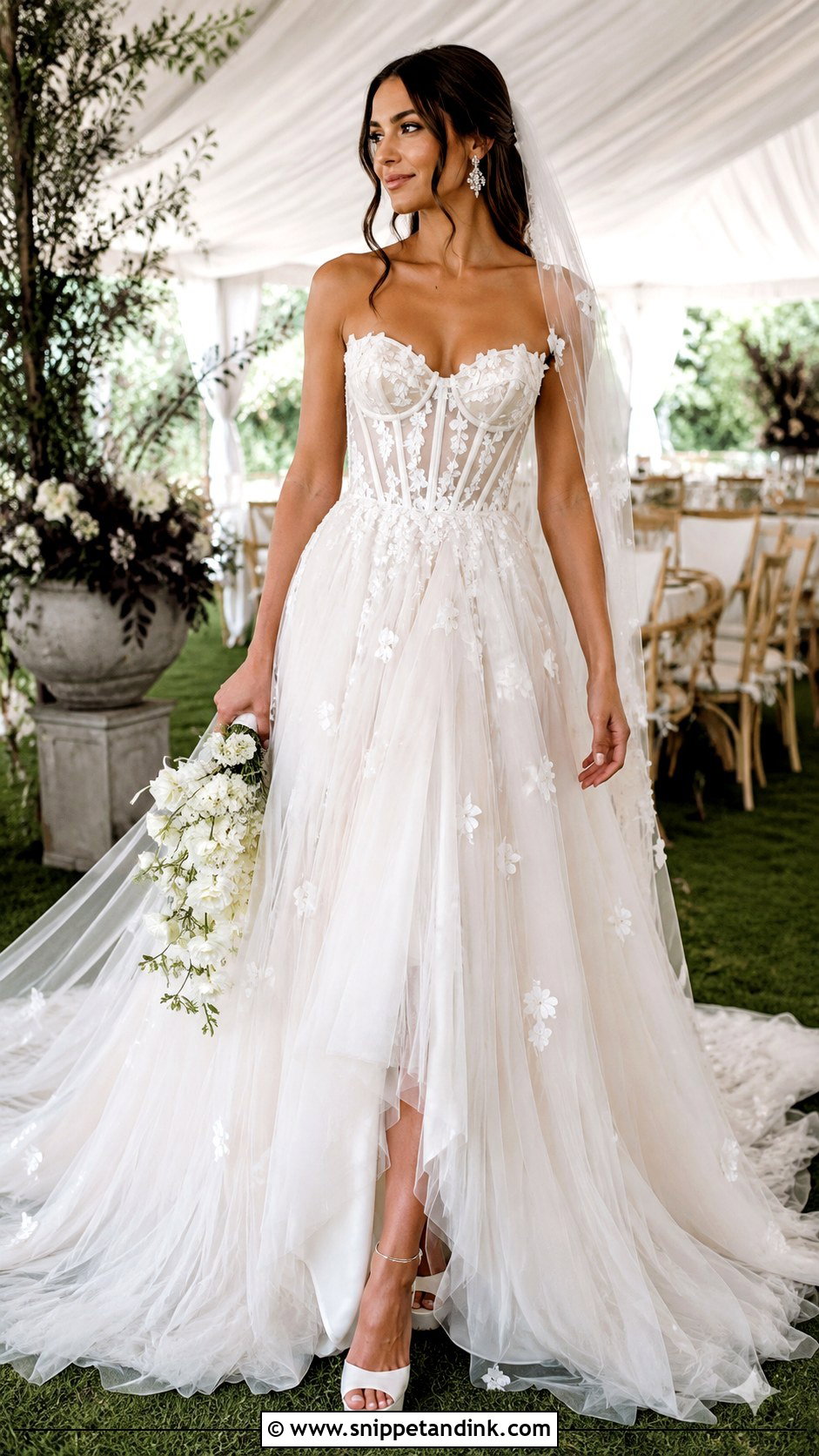
Boning is what makes a corset bodice work, and where it sits is something I look at closely. Spiral steel bones curve with your ribs, while cheap plastic ones can warp in heat and push against the seams by evening. A curved neckline and an airy layered tulle skirt soften the structure, and floral appliqués or small pearl details hide visible seam lines. Ivory platform sandals give you stability under all that volume, alongside a plain cathedral veil and crystal earrings. A romantic updo stops hair catching on embellishments. At alterations, sit, walk and raise your arms in it. It should feel secure, not restrictive. A small cascading bouquet keeps the waist visible in a formal garden, tented reception or ballroom.
13. Minimalist Column June Wedding Dress
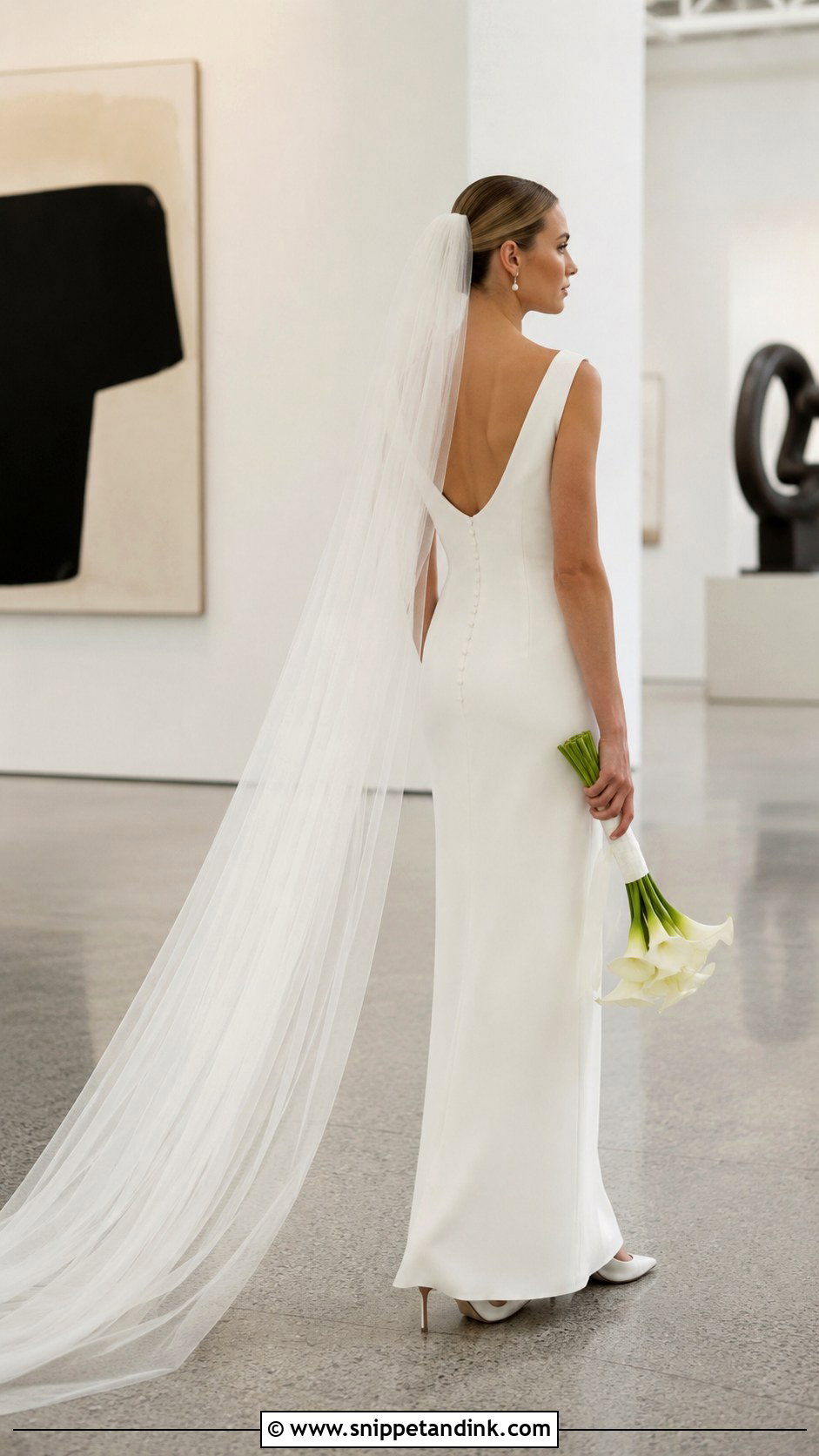
A column gown has nowhere to hide a fitting problem. With no volume in the skirt, every pull line at the hip and every ridge from the wrong underwear shows, so I ask brides to bring their exact undergarments to every fitting and to have the hem marked in the actual wedding shoes. Lightweight crepe with a bateau, scoop or draped neckline and a slim skirt keeps it cool, and a low back with covered buttons gives interest from behind. A long plain veil, pearl button earrings, pointed ivory pumps, a smooth bun and a single-color bouquet hold the clean line. Museums, rooftops and city venues suit it. If you want more drama for the walk, a removable overskirt comes off before the dancing starts.
14. Boho Bell-Sleeve June Wedding Dress
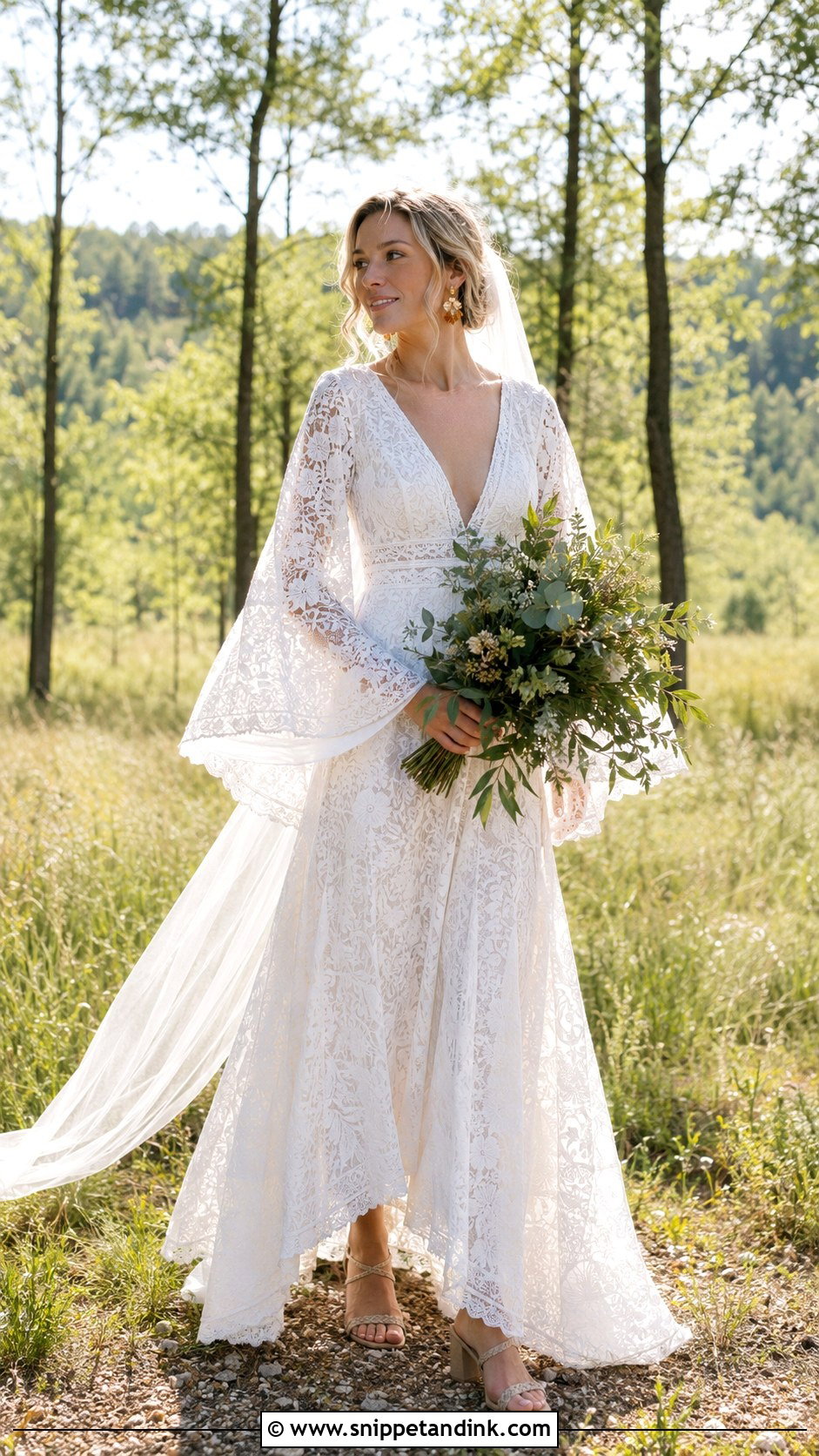
Boho goes wrong when everything is loose at once. I prefer a soft lace gown with a defined waist under the V-neck, so the flowing skirt and sheer bell sleeves have something to move from. A nude or ivory lining lets the lace pattern show without adding warmth. Bell sleeves dip into food and catch on chair backs, so practise eating in them at a fitting before you commit. Woven block-heel sandals, small gold earrings and a flower comb in loose waves or a textured braid are plenty, and a plain fingertip veil adds movement. Carry a loose bouquet with white flowers, greenery and a little lavender. Woodland, mountain and meadow ceremonies are its natural home.
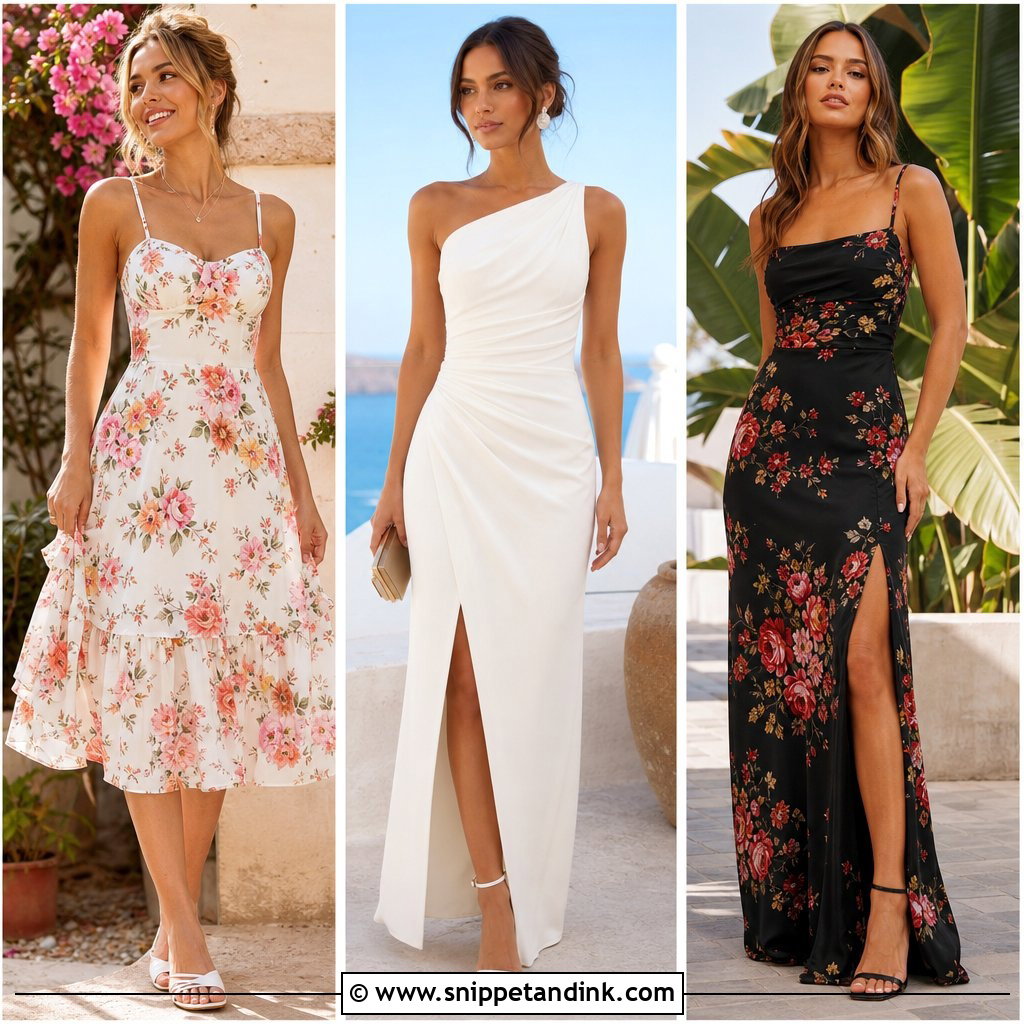

15. High-Low June Wedding Dress
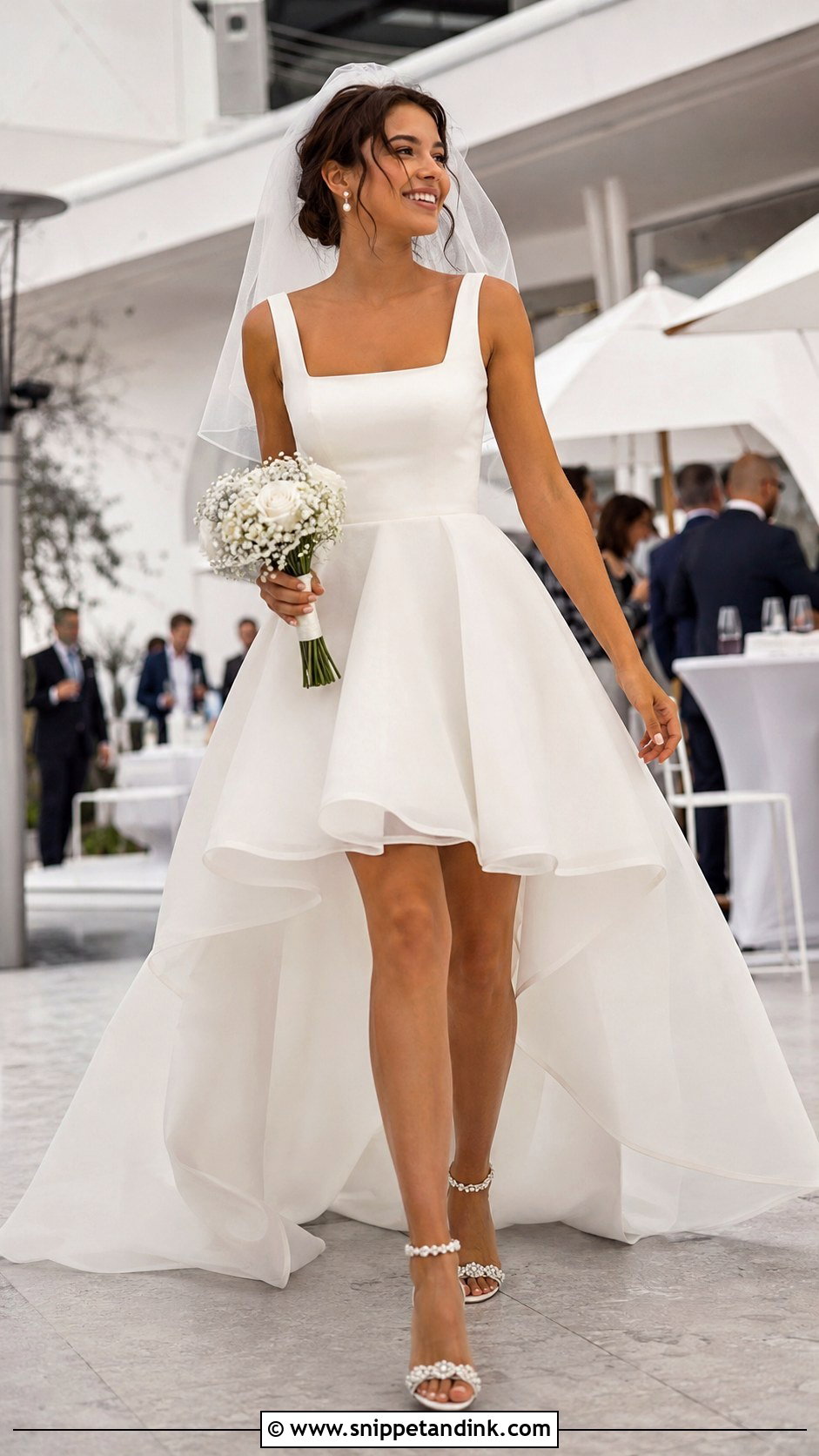
High-low hems divide brides, and I like them when the bride genuinely plans to move. The skirt sits around the knee in front and drops to ankle or floor length behind, under a structured strapless or square-neck bodice. Lightweight organza gives the hem volume without stiffness. The back hem is what to test: walk up and down stairs at a fitting and make sure it doesn’t catch on your heel. Your shoes are on show, so embellished ivory heels or satin ankle straps are worth the money. A short veil, pearl studs and a polished ponytail keep it fresh, and a small hand-tied bouquet matches its proportions. Courthouse weddings and dance-heavy receptions are where it makes the most sense.
16. One-Shoulder June Wedding Dress
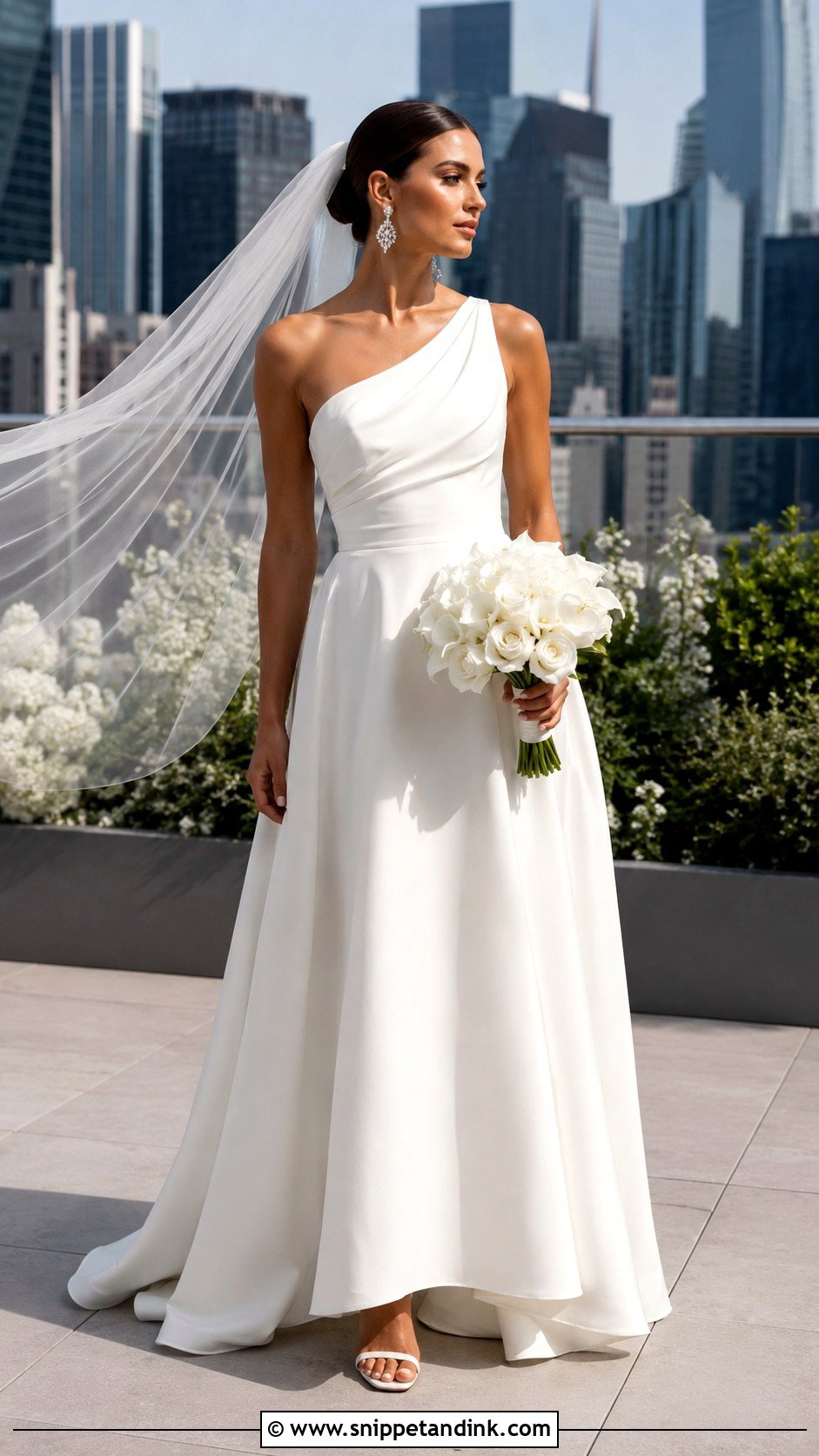
One strap carries more of the bodice’s weight than two would, so I check its construction carefully. There should be an internal grip band or elastic along the top edge so the neckline doesn’t slide every time you hug someone. Fluid crepe, chiffon or lightweight satin drapes well across the asymmetric bodice; an A-line skirt is easier to move in, a fitted column feels more modern. Skip the necklace and let statement earrings carry the jewelry, with a sleek low bun to keep the strap clear. Ivory heeled sandals, then a chapel veil fixed at the back of the hair or a sculptural comb in its place. A compact, clean-lined bouquet suits resorts, galleries and contemporary ballrooms.
17. Plus-Size A-Line June Wedding Dress
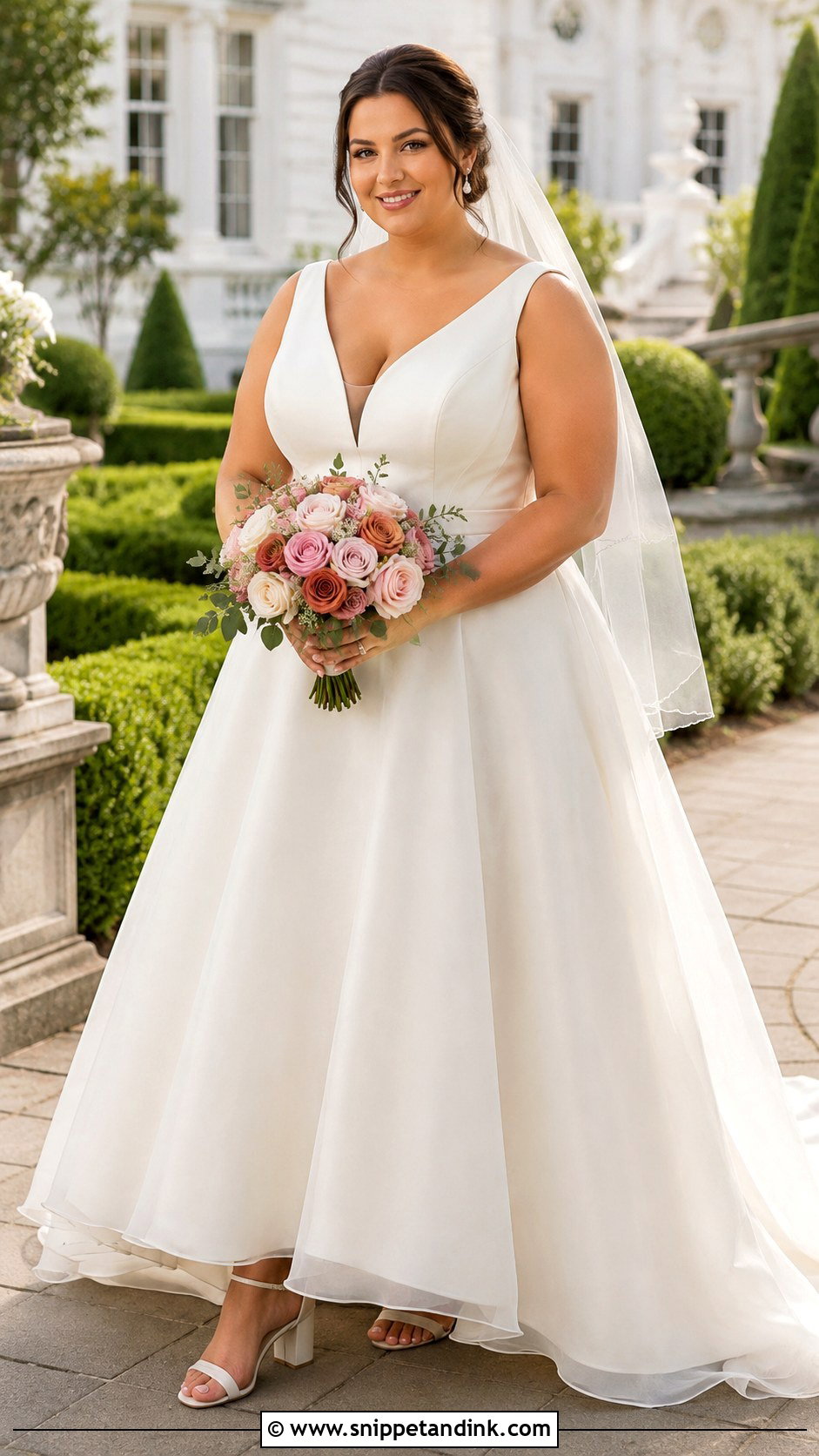
The size on the label means very little. Bridal sizing runs small, and nearly every gown gets altered anyway, so what matters is where the seams land. I look for a structured V-neck or scoop bodice with wide straps and interior boning, then move the waist seam to wherever the bride feels most comfortable rather than where the pattern put it. A light chiffon or organza skirt falls away from the body without adding bulk. Put fit through the bust, waist and straps ahead of everything else. Block-heel sandals, pearl drops, a breathable fingertip veil and a half-up style keep it soft, and a medium bouquet looks proportional and is easy to hold at a garden or estate venue.
18. Petite Fit-and-Flare June Wedding Dress
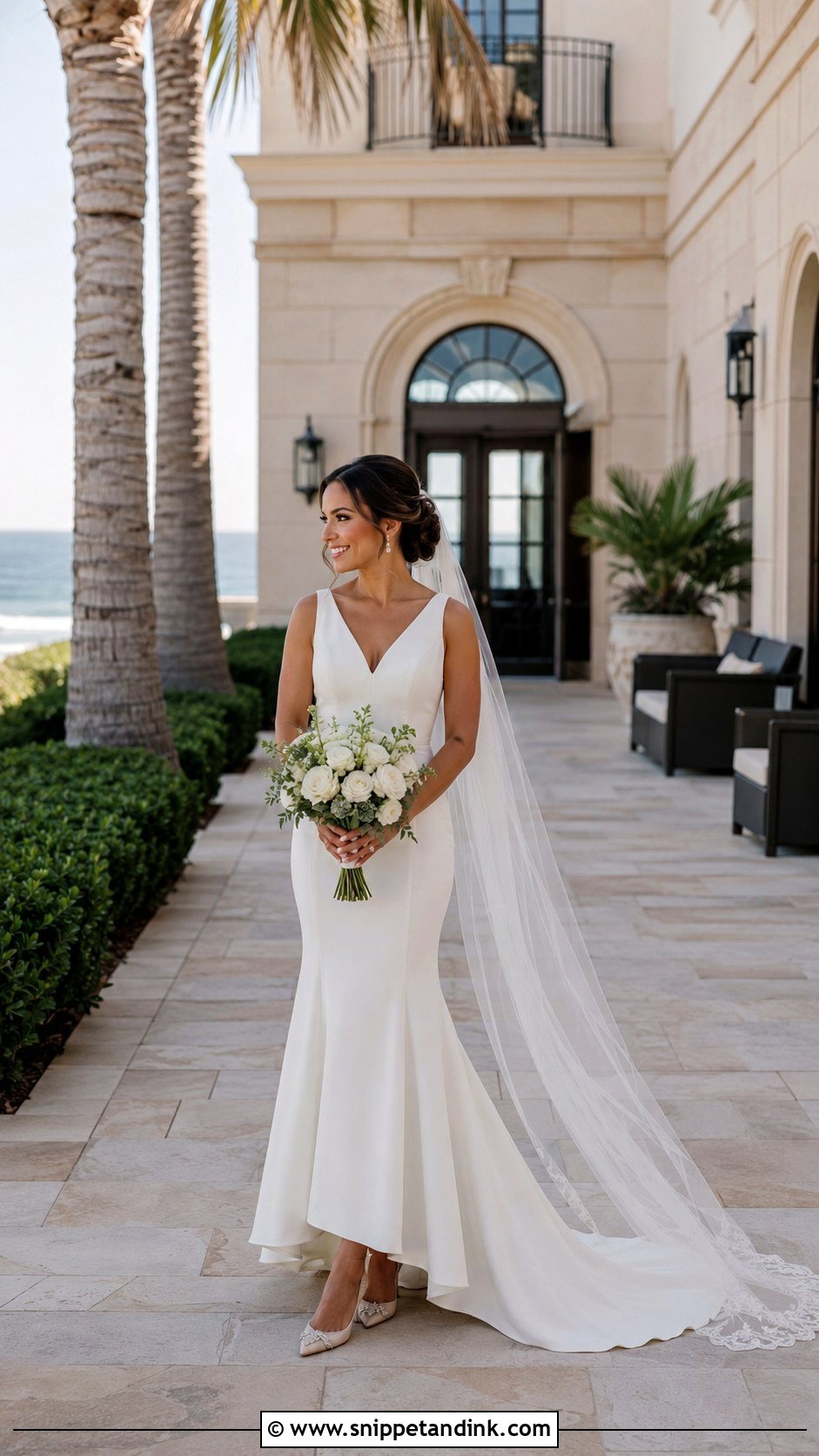
On a petite bride, the height of the flare decides everything. If the skirt kicks out too low, near the knee, it cuts the leg line short; starting around mid-thigh, it lengthens it. Vertical seams and a V-neck on a fitted bodice add more height, and lightweight crepe or lace keeps the gown from swamping a small frame. Pointed heels, delicate drops and a narrow chapel veil help, while a high or mid-height bun draws the eye upward. At alterations, have the train, waist, straps and appliqué placement adjusted to your proportions. Shortening only the hem leaves every detail sitting in the wrong place. A compact bouquet keeps the shape visible at a formal garden, hotel or coastal venue.
19. Modest Cap-Sleeve June Wedding Dress
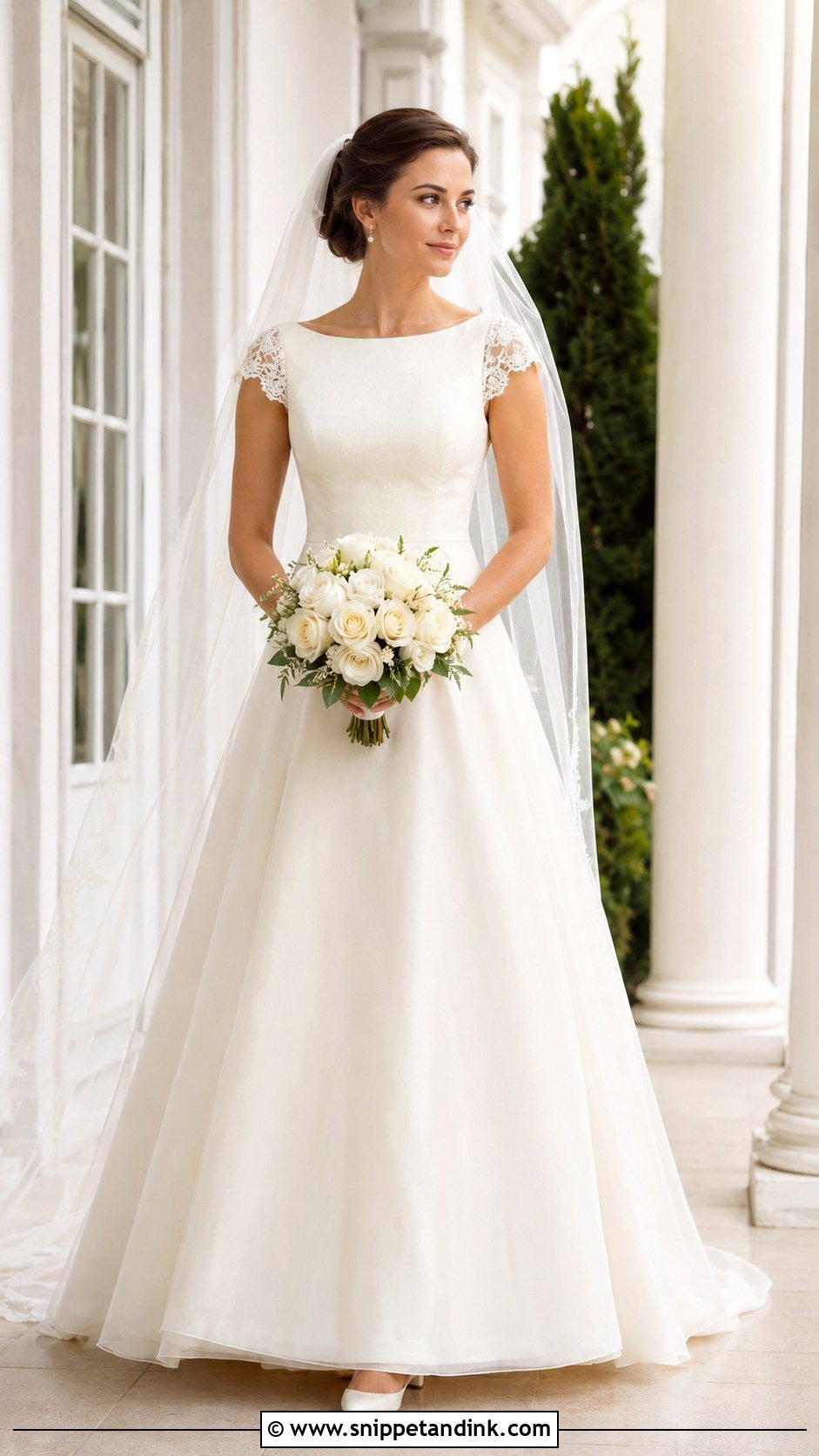
Covering up in June is very doable if the gown is built for it. An A-line with a bateau neckline, cap sleeves, a covered back and a soft chiffon or organza skirt gives full coverage while letting air move around your legs. Lace appliqués across the bodice add detail without the weight of heavy beading. If you want more coverage still, sheer elbow-length sleeves in unlined lace stay cooler than lined ones. Ask the seamstress for a light bodice lining and sleeve hems with a little give. Closed-toe ivory pumps, pearl earrings and a chapel veil set beneath a low bun complete it, with roses and greenery in hand for a family-centred, shaded or indoor ceremony.

20. Reception Mini June Wedding Dress
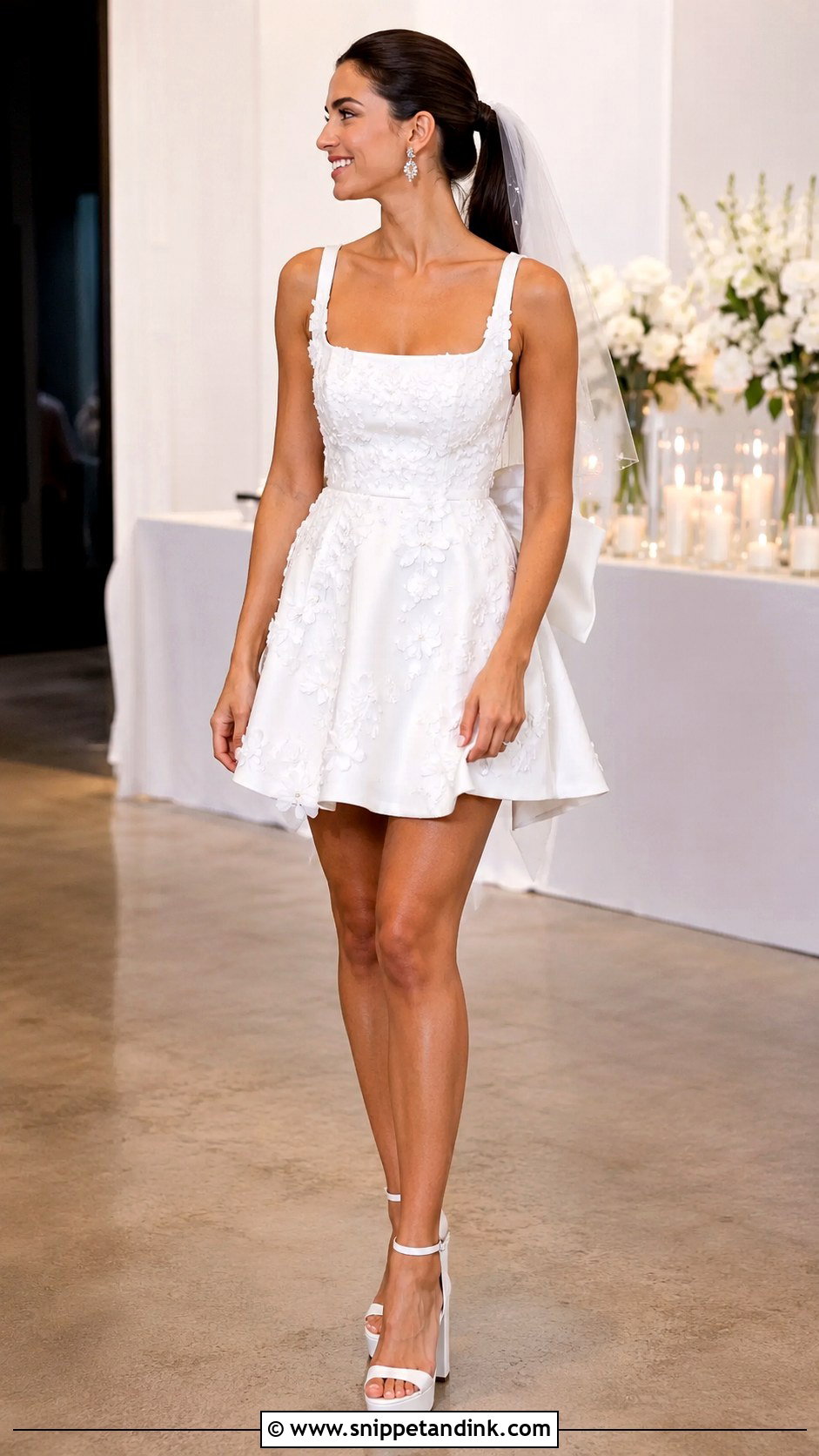
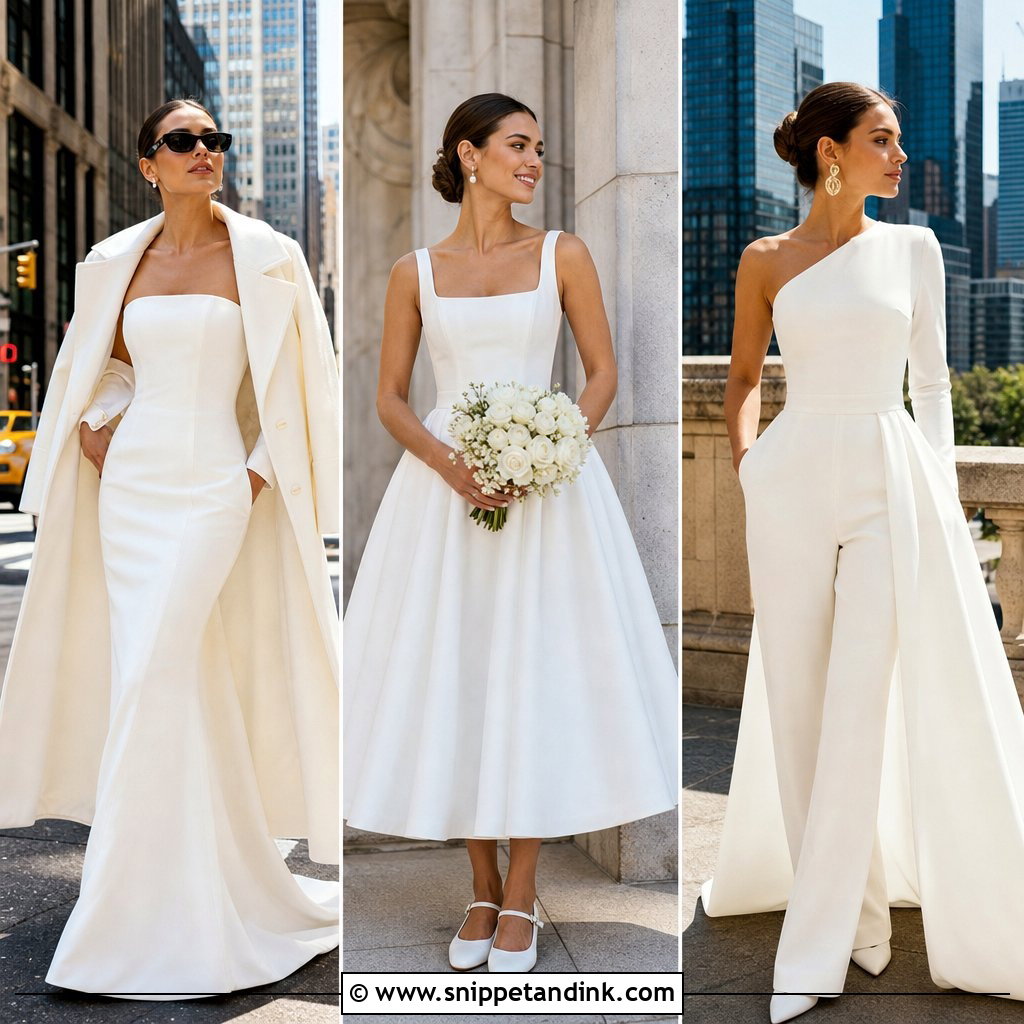
Changing into a mini for the reception is practical after a heavy ceremony gown: you change once and you’re free for the rest of the night. I look for a structured ivory mini with a square neckline, a fitted waist and a short A-line skirt, because structure stops it riding up. Floral appliqués, pearl beading or a detachable bow keep it bridal. Sit down in it at the fitting and check the hem stays where it should. Comfortable platform heels, crystal earrings, a short veil or statement headband and a polished ponytail all suit the dance floor. Link it to the ceremony gown through a shared fabric or detail. Tea-length does the same job with more coverage, and a small wrist corsage keeps a floral accent once the bouquet is put down.
Working Backwards From a June Date
June is peak season for bridal workrooms, and that squeezes the calendar from both ends. Made-to-order gowns commonly take several months to arrive after you order, and timings vary a lot between designers, so ask the shop for a written delivery estimate rather than a rough guess. I like brides to order by the autumn or early winter before a June wedding.
Alterations usually take two or three fittings spread over the final couple of months. Book your seamstress as soon as you order the gown, because summer diaries fill early. Bring your shoes from the first fitting onward. Changing heel height later means the hem has to be redone.
Heat, Grass and Sweat on the Day Itself
Most June gown problems are small and predictable. Apply antiperspirant the night before and again early in the morning, letting it dry fully before you dress, because fresh deodorant leaves white streaks on dark linings and yellow marks on silk. Have the gown steamed at the venue rather than ironed, and never let anyone press satin directly.
Lay a clean white sheet across the car seat and lift the skirt behind you before you sit. If grass or pollen marks the hem, leave it alone until the day after; rubbing a fresh stain on silk or organza spreads it. For a light scuff on ivory, a little white chalk dabbed on and brushed off hides it in photos. Finally, have whoever will bustle your train practise at the last fitting. A bustle nobody knows how to fasten is the most common hold-up I see before a first dance.
What Your Last June Fitting Should Prove
Start with the venue and the forecast, not the hanger. A gown that feels fine on a cool showroom floor can be a different story at three in the afternoon on a lawn, so settle on a silhouette you can sit, walk and dance in, then pick the fabric that breathes in your conditions. Chiffon, crepe, open lace, organza and tulle between them cover everything from a barefoot beach ceremony to a formal ball gown. Bring the shoes, veil, jewelry and undergarments to the last fitting and wear them together. That’s when you notice an earring catching the lace or a hem that’s too long in the real heels, and it’s still early enough to fix.
You'll Like These Ideas:


Leave a Reply