
Red has always belonged at the centre of Vietnamese wedding traditions. It stands for happiness, luck and prosperity, which is why so many brides wear a red áo dài for the engagement, the tea ceremony and the procession to the groom’s home, even when a white gown appears later. Bridal versions come in silk, brocade, lace and velvet, worked with embroidery or beading, sometimes with a train, and usually topped with a khăn đóng. The long tunic over flowing pants is unforgiving of a poor fit, though, so most of my notes below are about cut and movement as much as decoration. Some of these looks lean on gold and symbolism; others are pared back and modern.
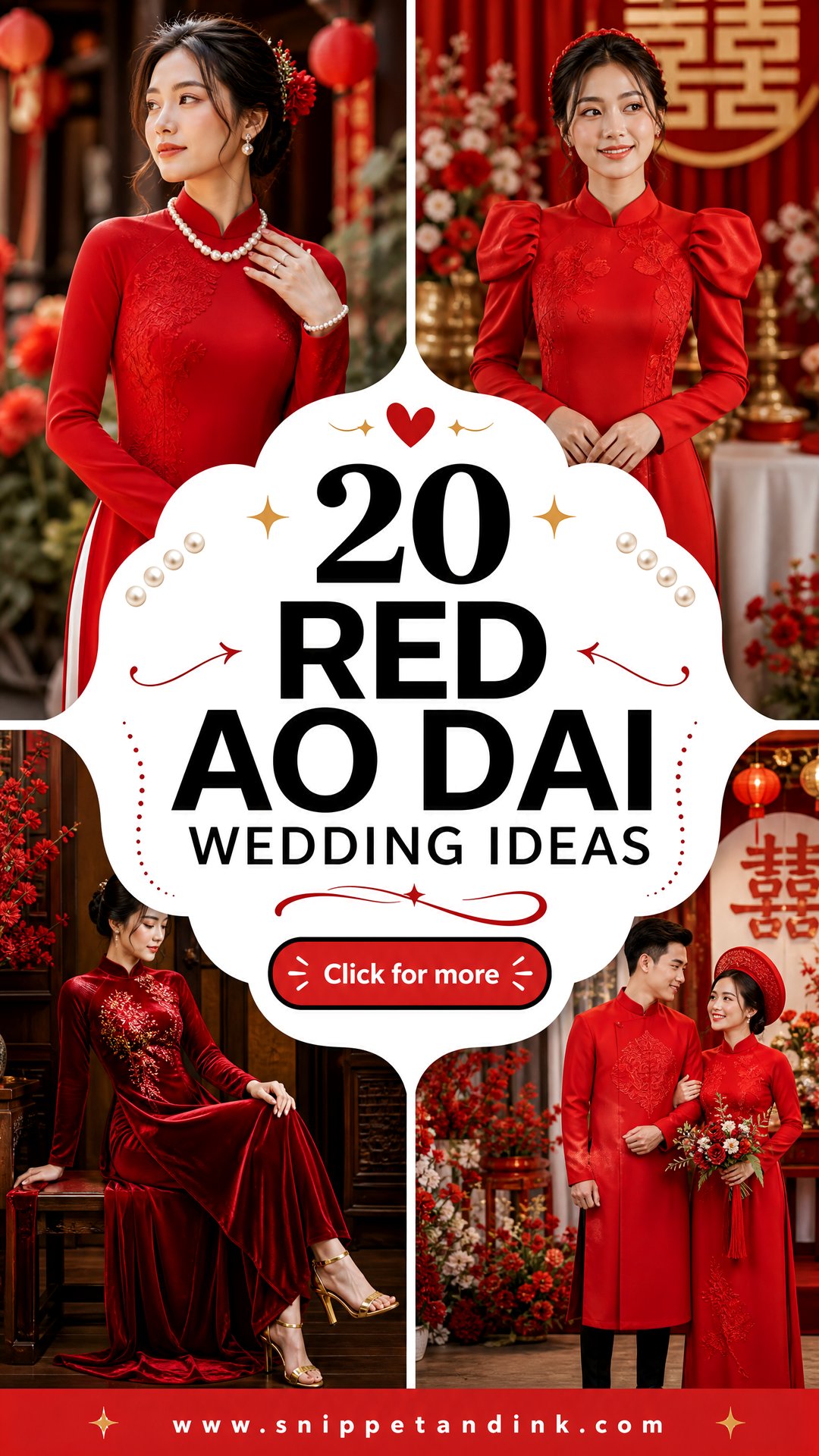
Measuring for an Áo Dài You Can Bow and Kneel In
An áo dài is cut close to the body, so a bridal one is almost always made to measure rather than bought off a rail. A good tailor takes far more measurements than a dressmaker would for a gown: bust, under-bust, waist, hips, shoulder width, arm length, the distance from shoulder to bust point and to waist, and the length of the back. Small errors show immediately, because there’s no loose fabric to hide them.
The ceremonies ask a lot of the garment. You’ll bow to ancestors and parents, pour and serve tea, and sometimes kneel. I have brides do all of that at the fitting, not just stand still.
- Wear your wedding shoes to every fitting. The pants should just brush the floor in heels, and the panels are hemmed to suit that height.
- Wear the bra or shapewear you’ll wear on the day; a different bra changes the bust line completely.
- Raise both arms and bow. If the tunic pulls across the back or the slit gapes, it’s too tight.
- Allow extra time for hand embroidery. Custom bridal work takes weeks, and you’ll want at least one fitting after it’s finished.
Keep your weight in mind too. An áo dài fitted months ahead may need taking in or letting out, so plan a final check close to the wedding.
1. Traditional Red Ao Dai With Gold Khan Dong
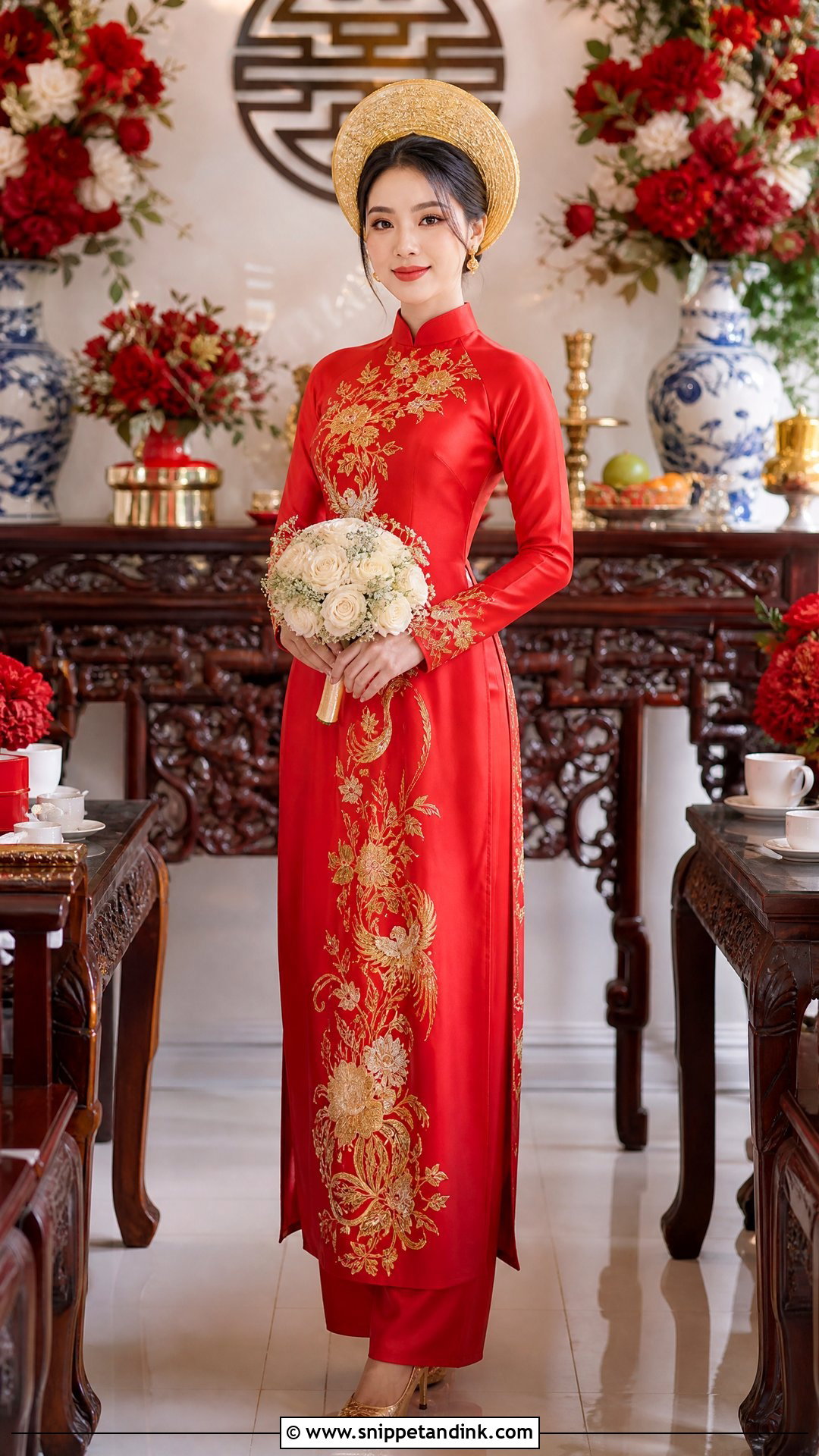
A traditional red áo dài with a gold khăn đóng is the outfit most grandparents hope to see. A high collar, long sleeves, side slits and floor-length panels, with gold embroidery kept to the collar, cuffs and front panel, let the red fabric do its work. Red silk pants give one long column; gold pants add contrast. The structured khăn đóng needs fitting too. Bring your hair already in its wedding shape to the fitting, because a ring sized over loose hair will sit crooked over a bun. Pointed gold heels, simple earrings and one family piece of jewellery are enough, and a compact bouquet won’t hide the embroidery. It suits the tea ceremony and the procession.
2. Red Ao Dai With Gold Phoenix Embroidery
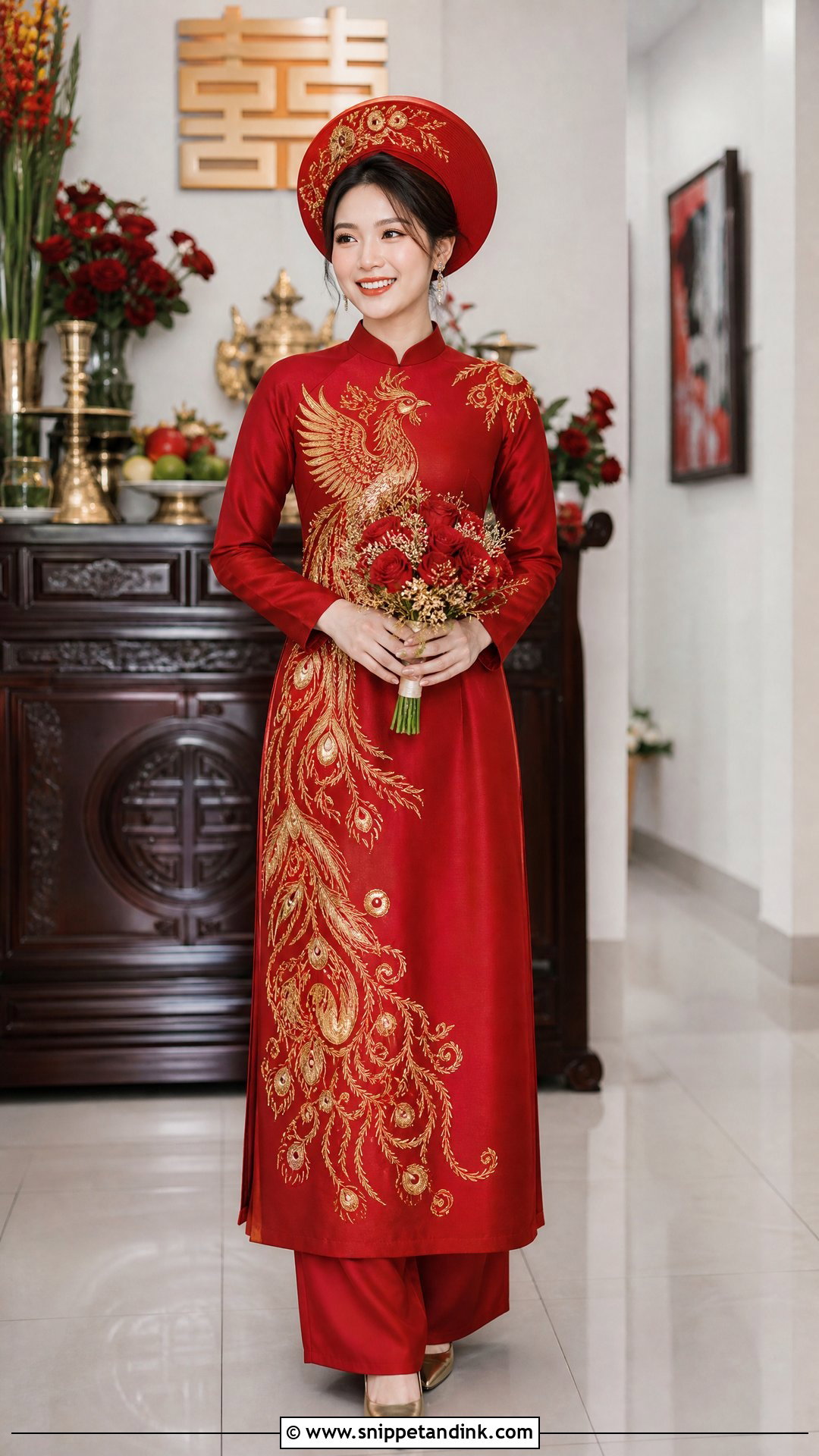
The phoenix is the bride’s emblem, often paired with the dragon on the groom’s side, so it’s a natural motif to stitch in gold. Where it sits changes the whole tunic. Across one shoulder it draws the eye up to the face; running down the front panel it lengthens the body. Smooth silk or satin lets the metallic thread read clearly, while textured fabric swallows fine work. Straight red pants, gold pointed pumps and a red khăn đóng with a narrow gold border keep the palette tight. With this much embroidery, I keep everything else spare: drop earrings, a slim bracelet, a small red and gold bouquet, polished hair and luminous skin.
3. Red Ao Dai With Lotus Embroidery
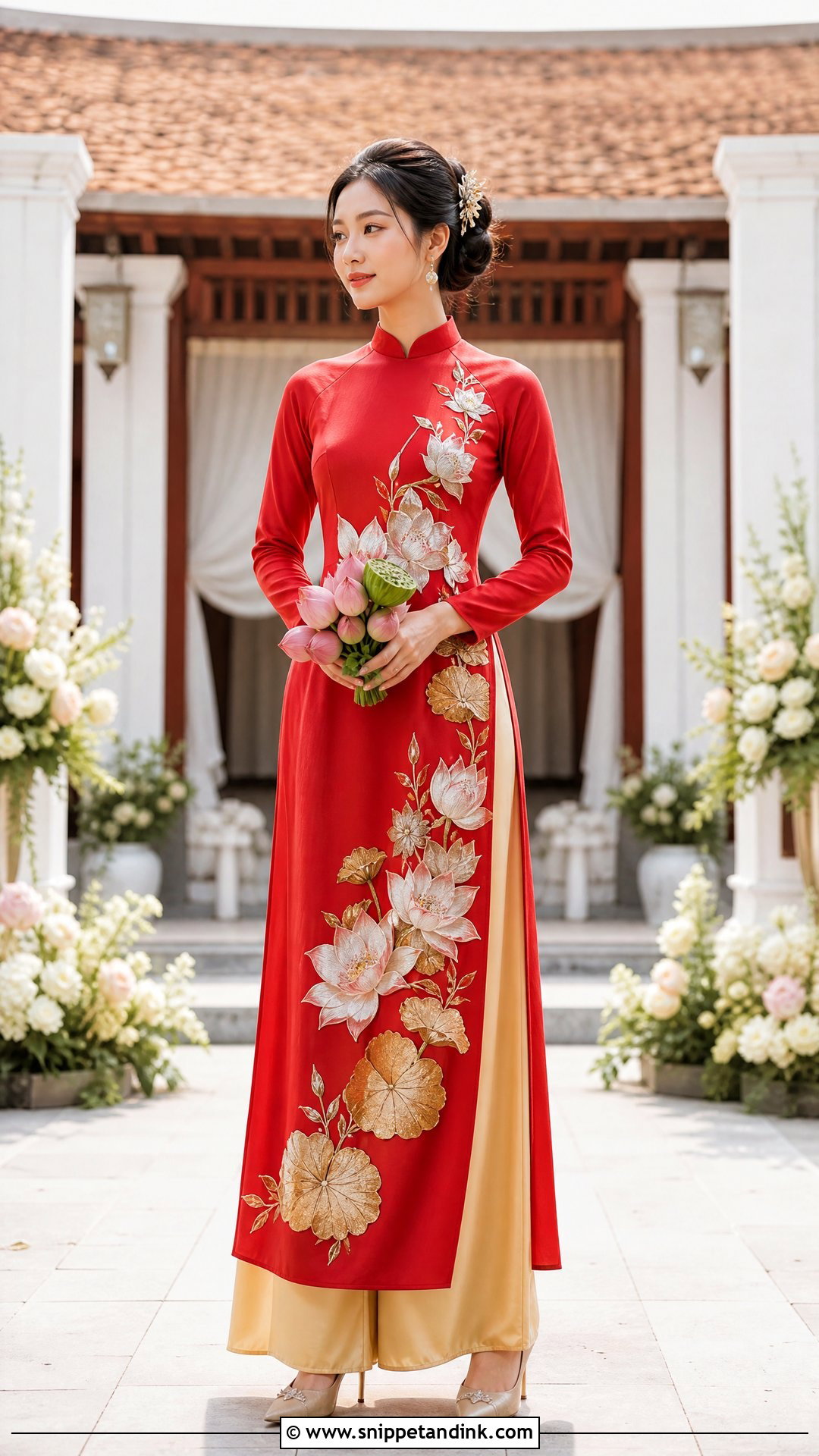
Lotus embroidery is a favourite on bridal áo dài, and it’s quieter than the phoenix. I like the flowers in gold, blush or ivory starting at the waist and spreading down the lower panels, which leaves the bodice clean and moves the eye downward as you walk. A red silk tunic with slightly flared panels sits well over pale gold pants, especially when the lotus is outlined in matching metallic thread. Champagne heels, pearl drops and a fine gold hair comb finish it, and a low bun keeps the collar visible. Rather than a large bouquet, carry a few pale lotus stems or a compact posy in the same tones. Lotus wilts quickly out of water, so ask your florist to deliver it close to the ceremony.
4. Red Brocade Ao Dai With Matching Pants
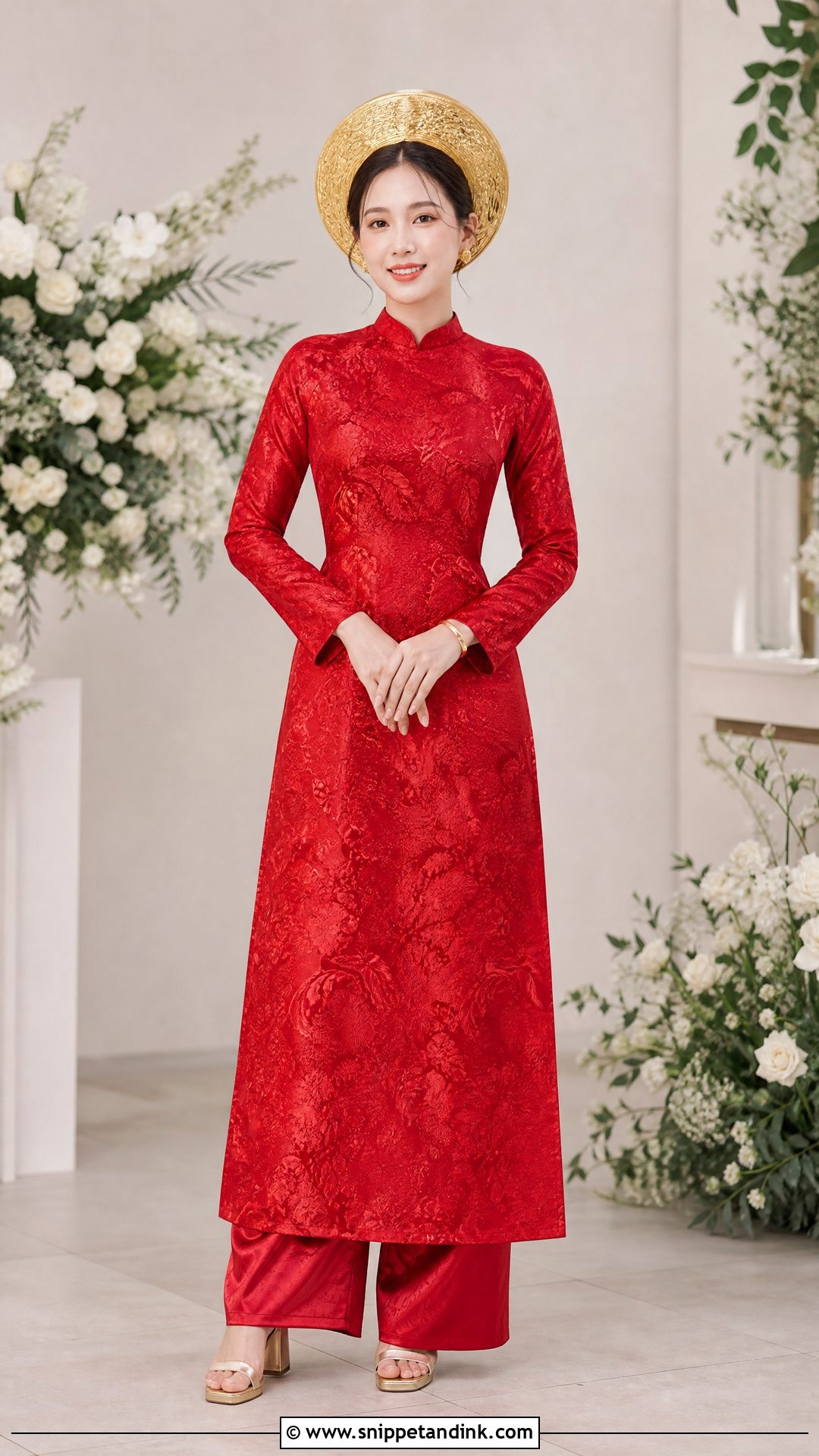
Tonal brocade gives depth without any embellishment at all; the floral, cloud or geometric pattern only appears when the light catches it. A clean high collar and fitted long sleeves keep the fabric in charge. Matching red pants make a monochrome base, and gold comes in through the khăn đóng, shoes and jewellery. Brocade is stiffer than silk and doesn’t give, so a tunic that fits in the mirror can pull across the back when you bow to your parents. Test that movement at every fitting. Block-heel pumps help through a long ceremony, and small studs and a slim bracelet are plenty. It’s a good fabric for indoor or cooler-season celebrations.
5. Red Silk Ao Dai With Gold Pants
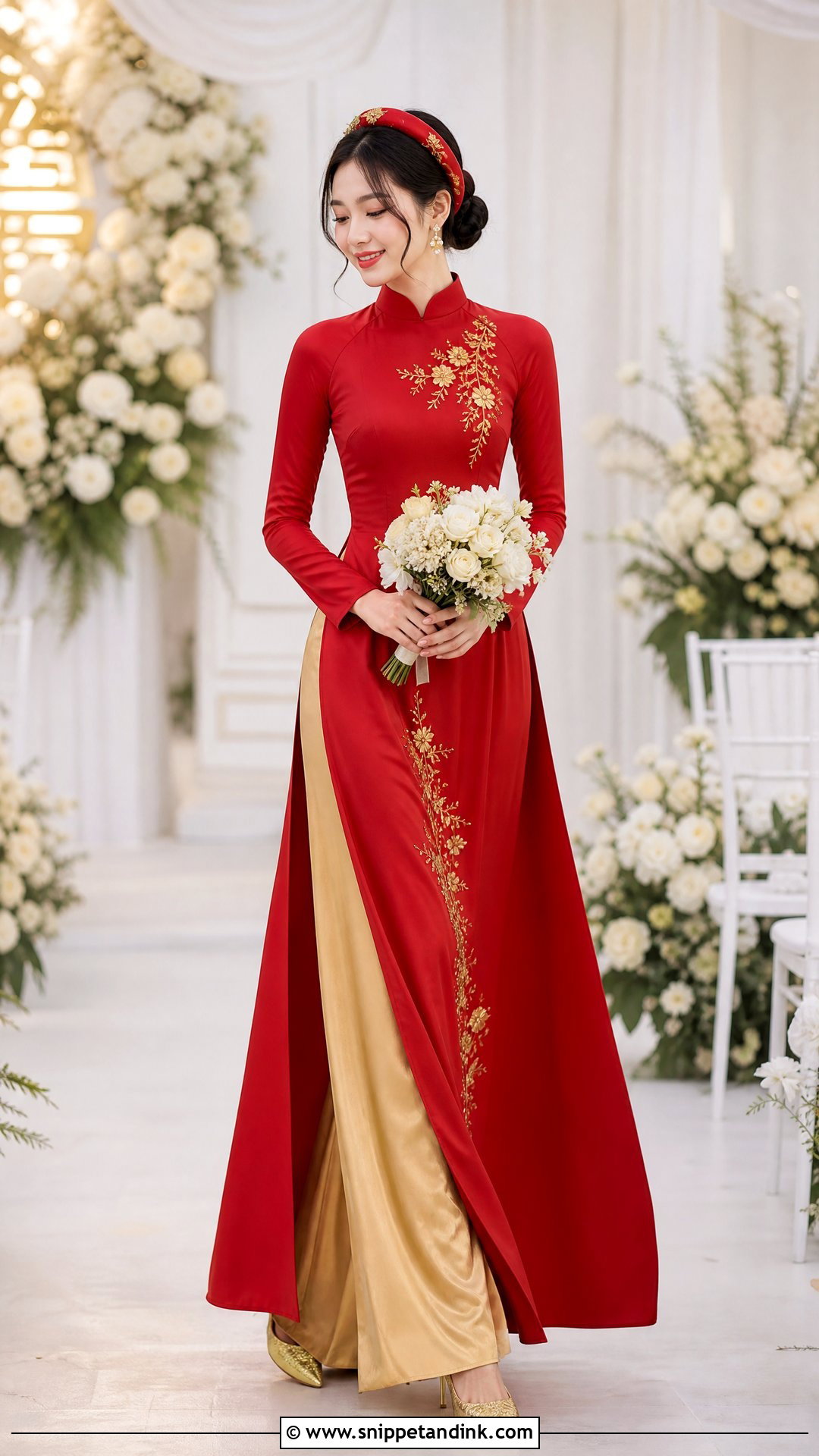
Red silk with gold pants is lighter in feeling than all-red, and the pants catch the light as the panels swing. The tunic should fit close through the torso with long, clean panels; keep embroidery to the neckline or cuffs so the silk stays smooth. Wide-leg gold pants read softer in photos than straight ones. Gold heels and a slim gold khăn đóng carry the metal upward, or skip the headpiece for a more contemporary feel. Silk shows water spots, so keep a tissue handy at the tea ceremony and never dab it with a wet napkin. Pearl and gold earrings, a smooth low bun and a small ivory bouquet finish it. Look at the red in daylight and indoor light before you commit to a shade.
6. Red Ao Dai With Long Bridal Train
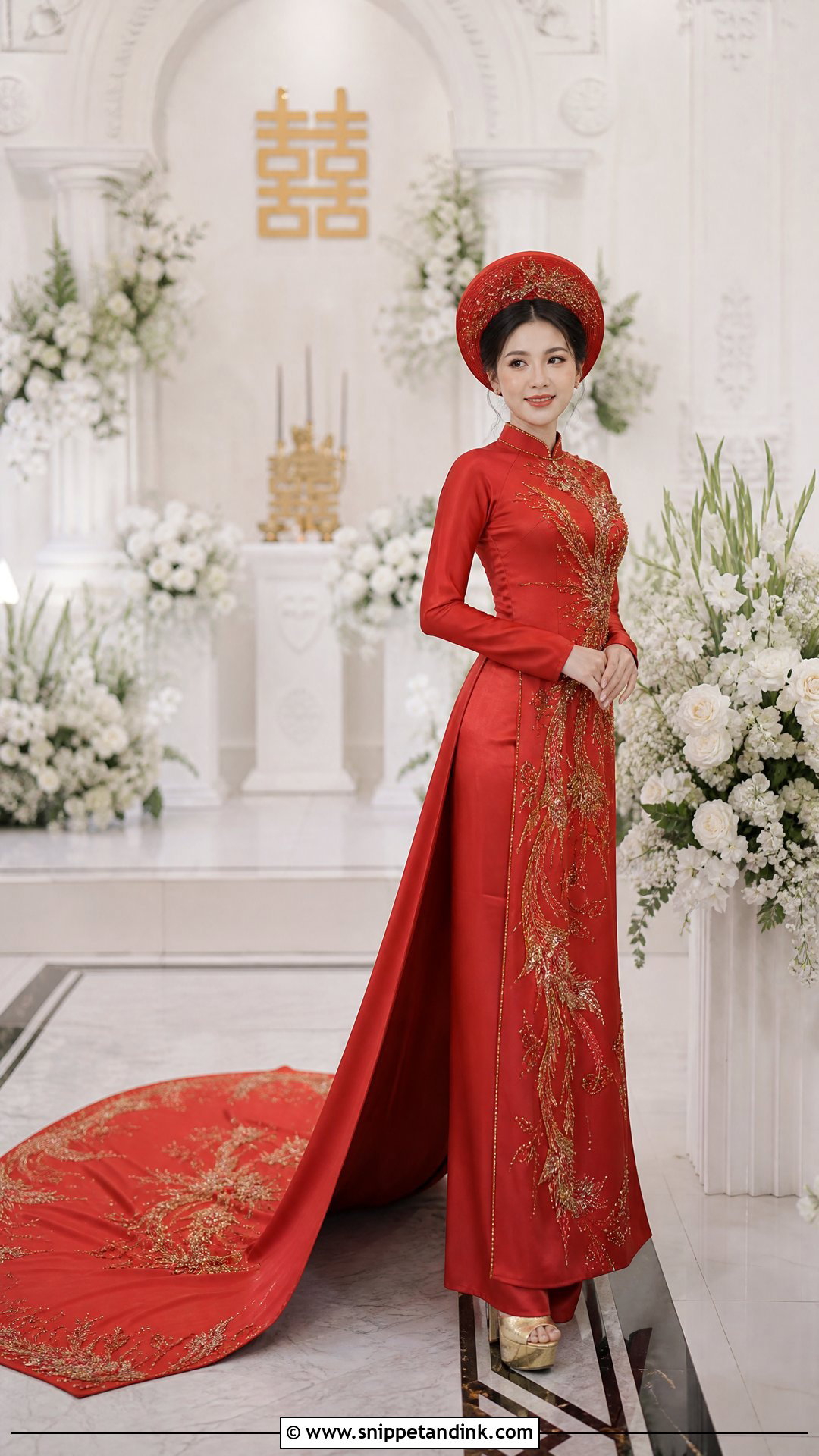
A train on an áo dài can come from the back panel itself or from a separate detachable layer, and I nearly always recommend the detachable kind. You get the entrance and the portraits, then you can greet relatives and serve tea without someone guarding your hem. Lightweight satin or silk falls smoothly; anything heavier drags the back panel down and distorts the fit at the waist. Keep the front simple, with subtle gold embroidery or one small motif. Platform heels under matching red pants help with the longer panels. A structured red khăn đóng for the ceremony can come off for the reception. Practise turning and sitting at home before the day.
7. Red Ao Dai With Sheer Bridal Cape
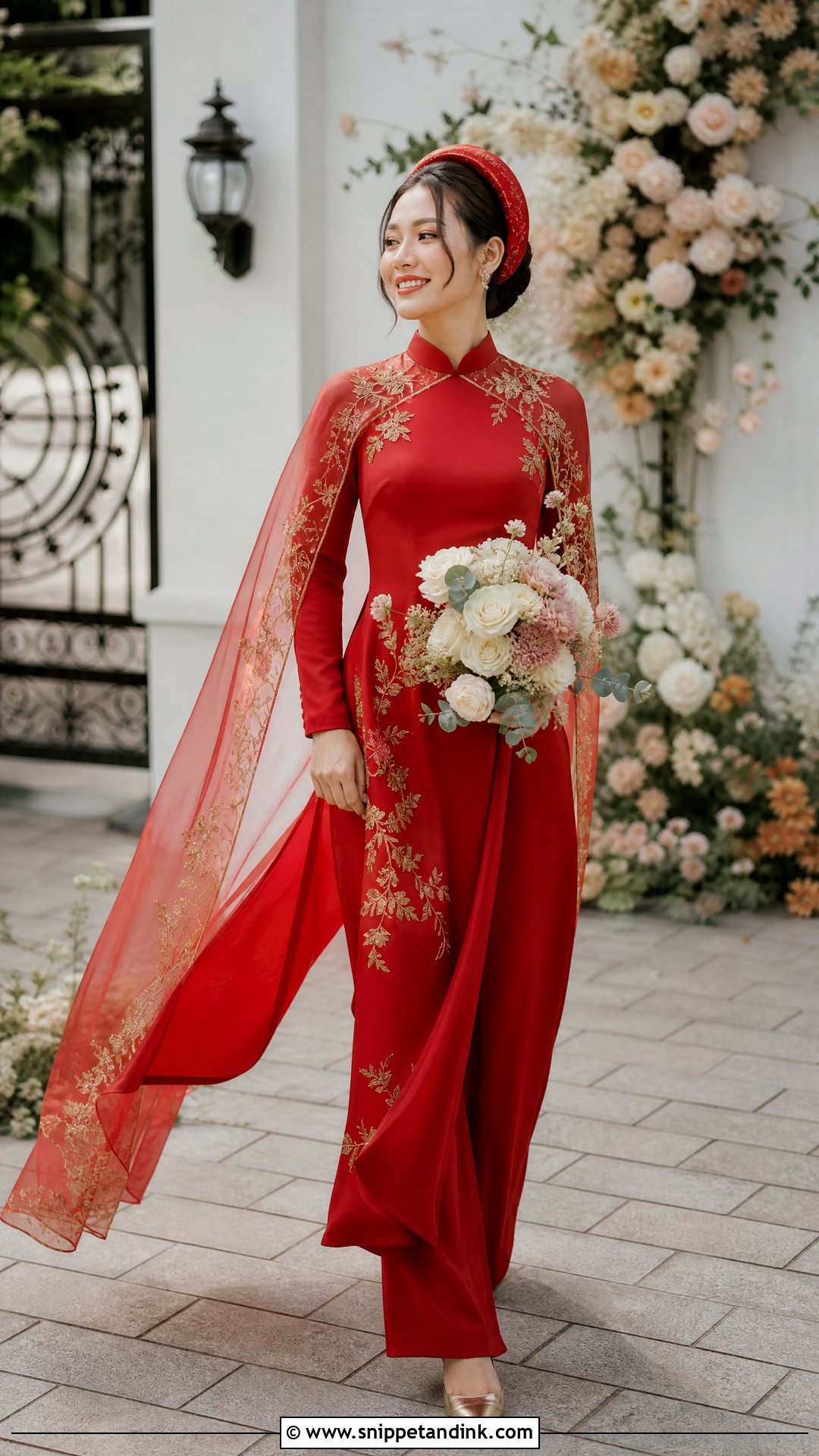
A sheer cape adds movement to a fitted áo dài without hiding its line, provided the cape is truly transparent. Fine gold embroidery or scattered beads along the edges are enough. Matching red pants and sleek gold pumps keep a single line from head to toe. With a cape on, a heavily decorated headpiece looks crowded, so I’d choose a narrow khăn đóng or a plain red band. Watch where the cape attaches: clips at the shoulder seam can drag a silk tunic sideways when the cape catches a breeze. Delicate drop earrings, a low bun and a structured ivory and pale pink bouquet complete it. Make it detachable so it can come off for greetings and the reception.
8. Red Lace Ao Dai With Red Pants
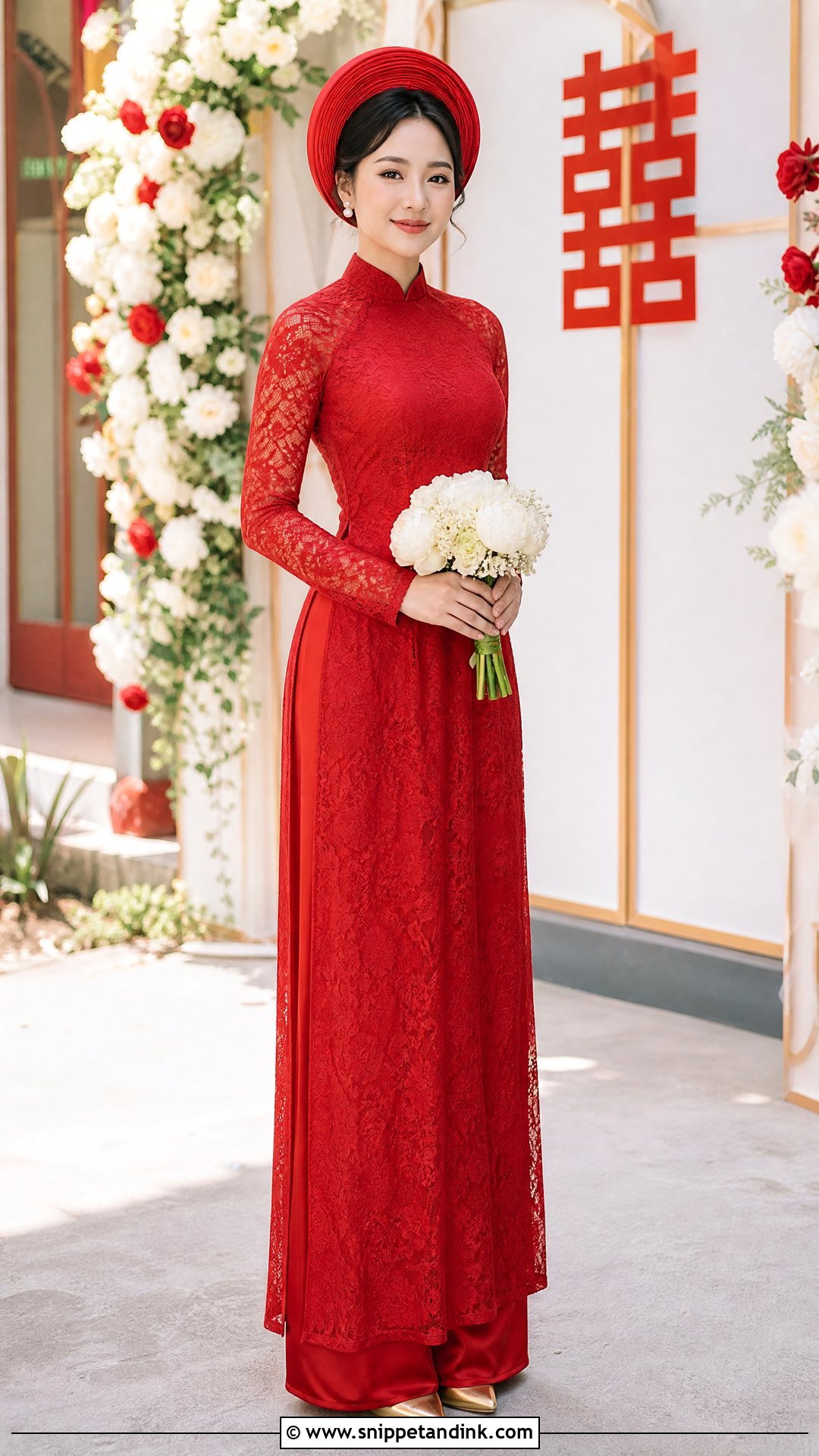
Red lace softens the áo dài, but too much lace turns busy fast. I put dense floral lace on the bodice and sleeves only, with smoother fabric for the lower panels. A tonal lining keeps it modest and ceremony-ready, and a high neck frames pearl earrings well. Flowing red pants and closed red or gold heels suit it, and a plain satin khăn đóng gives a welcome contrast to all that texture. Lace sleeves are often lined in something stiff, so ask for a soft lining you can actually move your arms in for hours. A small bouquet of ivory with deep red accents and one slim bracelet or ring are all the accessories it needs.
9. Red Ao Dai With Pearl Beading
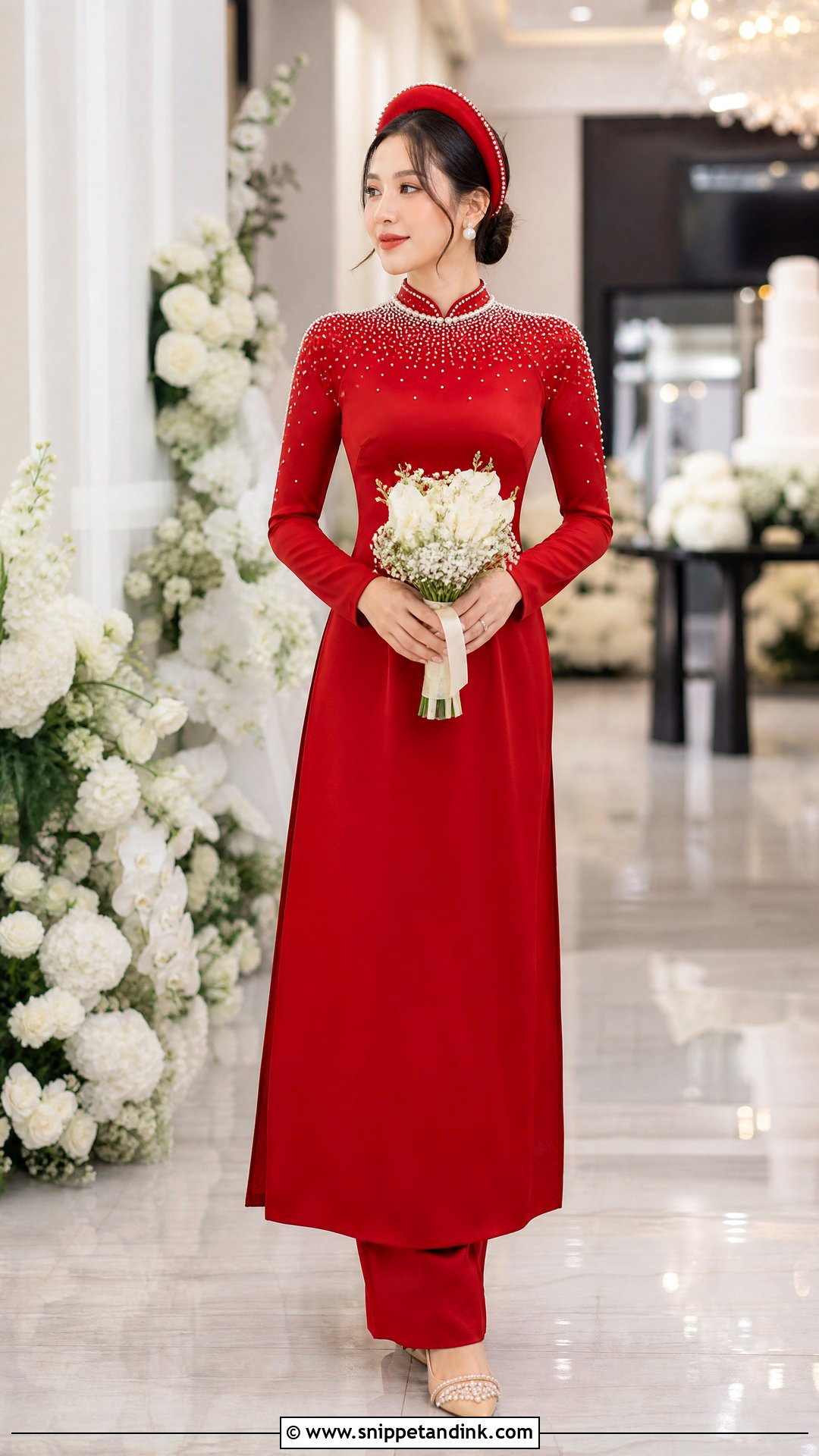
Pearls give dimension without more gold. They can trace the collar, outline floral motifs or scatter across the shoulders and upper bodice, thinning out lower down. Beading adds weight right where an áo dài has least support, at the shoulders, so I always check that the tunic doesn’t slide back once it’s fully worked. Red satin pants and ivory or champagne heels pick up the pearl tone, and a slim red khăn đóng with a single row of pearls ties it in. Pearl drops are enough; a large necklace fights the high collar. A polished bun and fresh skin suit it, from a small tea ceremony to a formal banquet.
10. Red Ao Dai With Song Hy Embroidery
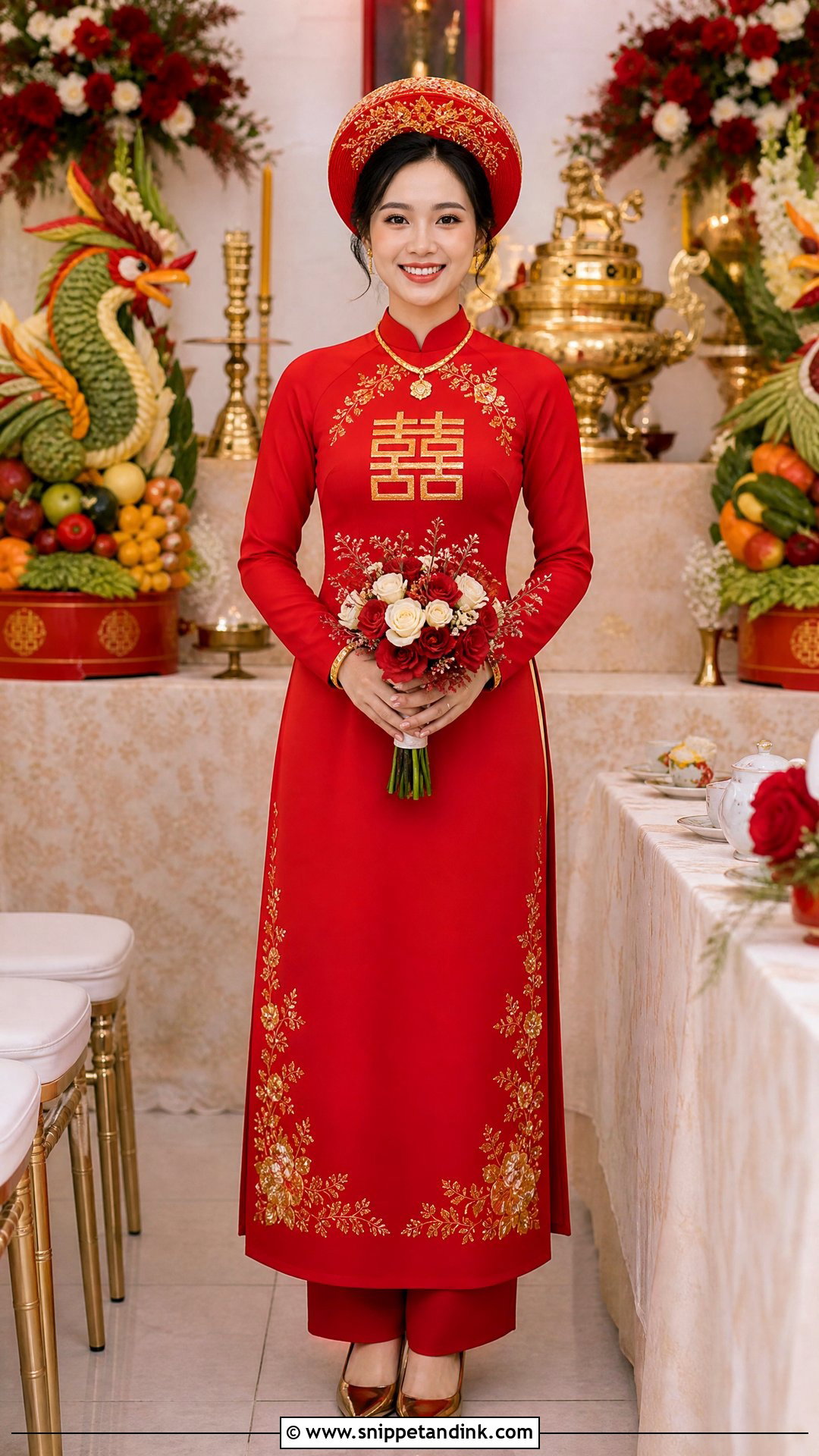
Song Hỷ, the Double Happiness character, is the symbol most families expect at a traditional Vietnamese wedding ceremony, and wearing it in gold is a clear nod to that. Place it at the centre of the bodice, near the waist, or on the back panel, which is the side guests see during the ceremony. Keep surrounding embroidery light so the character stays legible. Straight red pants, gold pumps and a red and gold khăn đóng complete it. Leave space at the neck and wrists: in many families the bride receives gold jewellery from her mother-in-law during the ceremony and puts it on right there. A tidy updo keeps hair off the back embroidery, and a compact bouquet in red, ivory and gold suits it.
11. Dark Red Ao Dai With Gold Accessories
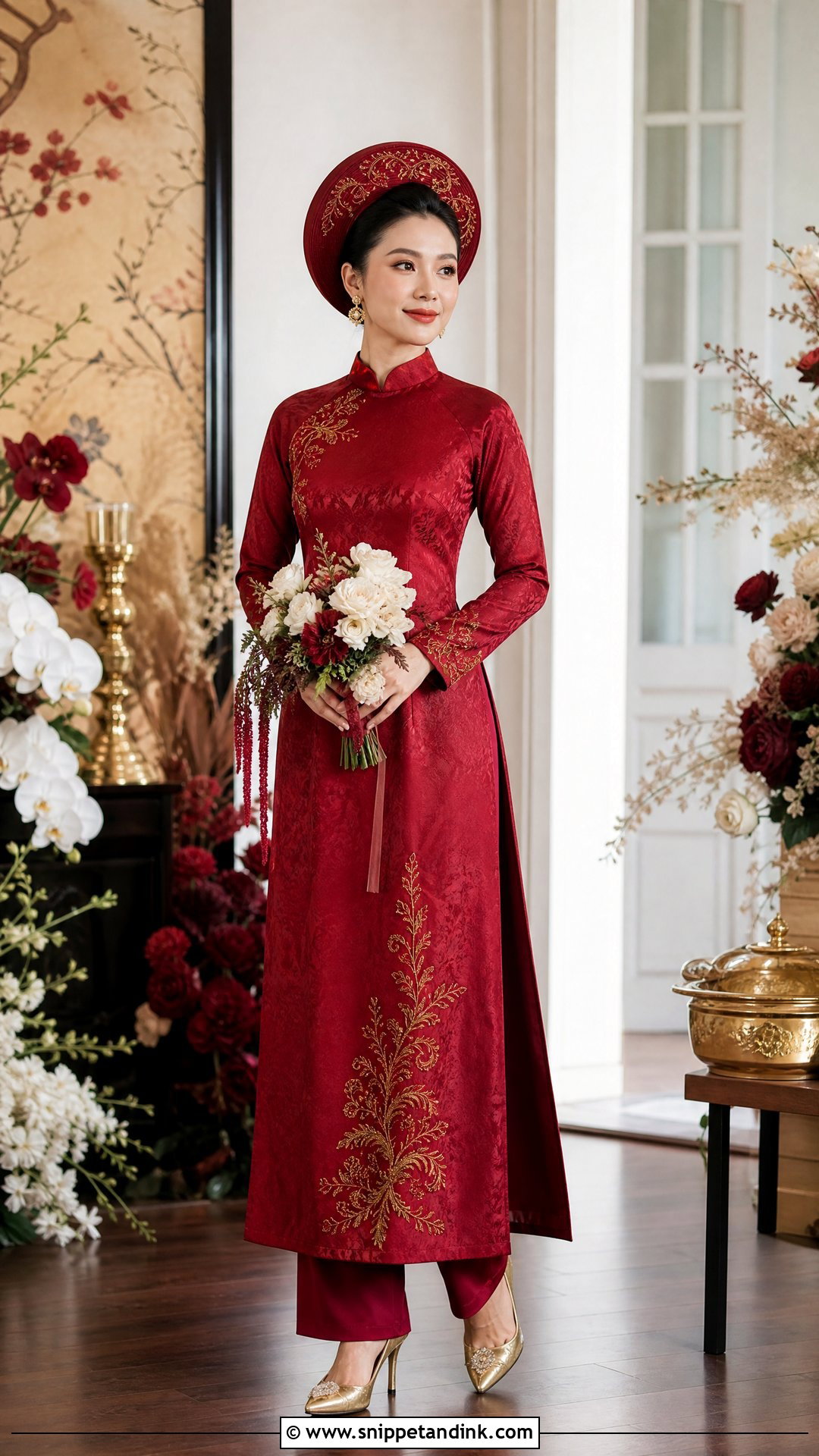
Burgundy and dark crimson give the áo dài a grown-up depth that suits autumn and winter. Silk velvet, satin or structured brocade show off the colour; fine gold at the collar and cuffs keeps the darker fabric from looking heavy. Dark red pants and antique-gold heels continue it. A gold khăn đóng adds contrast, while a burgundy one is quieter. Deep reds can go muddy on camera, so I ask the makeup artist to keep some brightness in the skin and lip rather than going moody. Warm gold earrings, a narrow bracelet, a small structured bag for the reception and an ivory bouquet with red accents complete it.
12. Bright Red Ao Dai With Pearl Jewelry
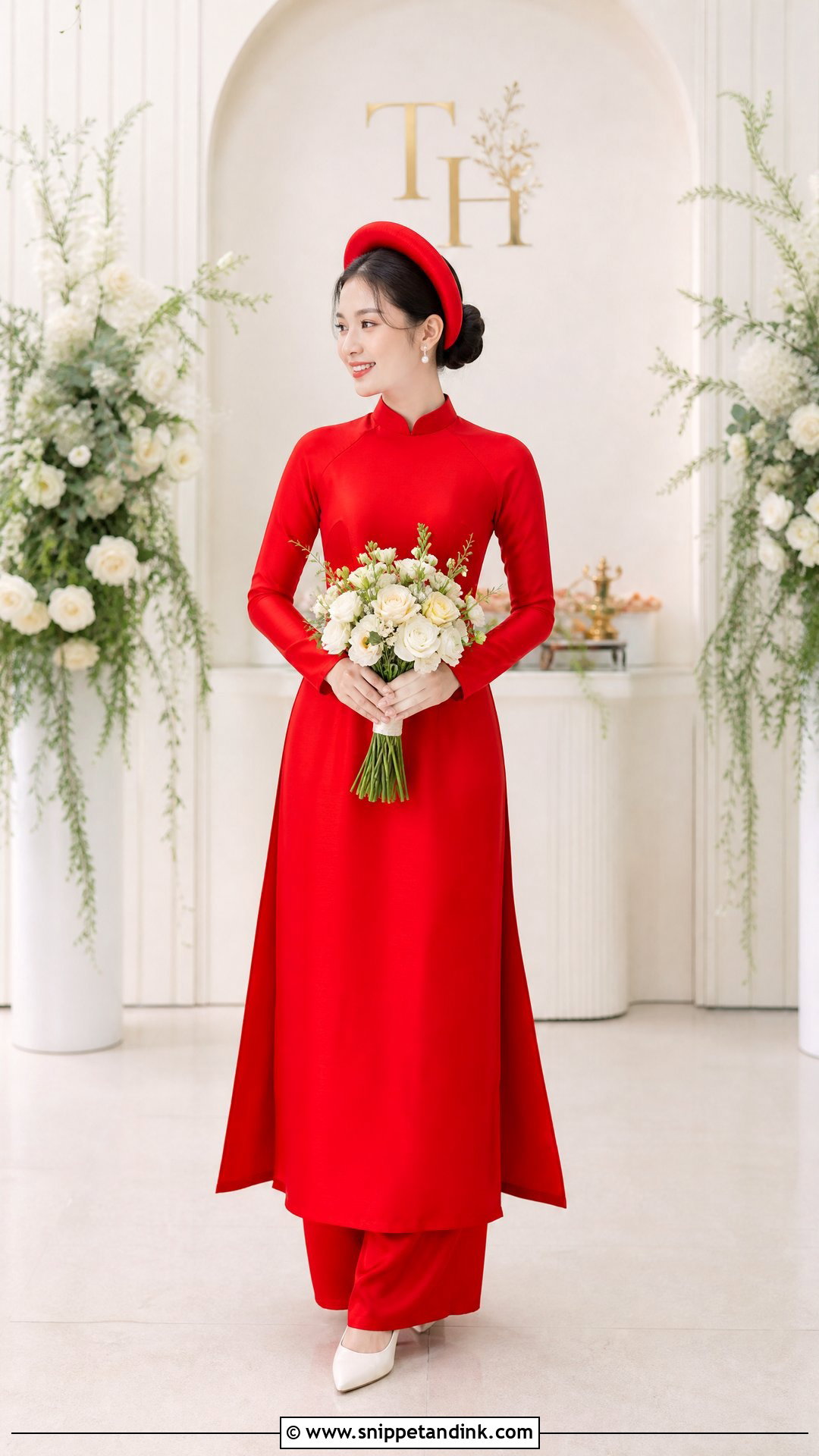
Clear, saturated red needs almost nothing else. A smooth silk áo dài with little or no embroidery lets the colour carry everything, and it stands out well against neutral ceremony decor. Matching red pants and pointed ivory heels keep it crisp, with pearl drop earrings and a slim bracelet. The high collar already frames the face, so skip a necklace. A plain red khăn đóng keeps the traditional shape without adding colour. For the lip, choose a red that matches the undertone of the silk, whether it leans blue or orange; a mismatch shows clearly in close-ups. A neat low bun and an ivory bouquet with a little greenery finish this one.
13. Red Ao Dai With Floral Applique
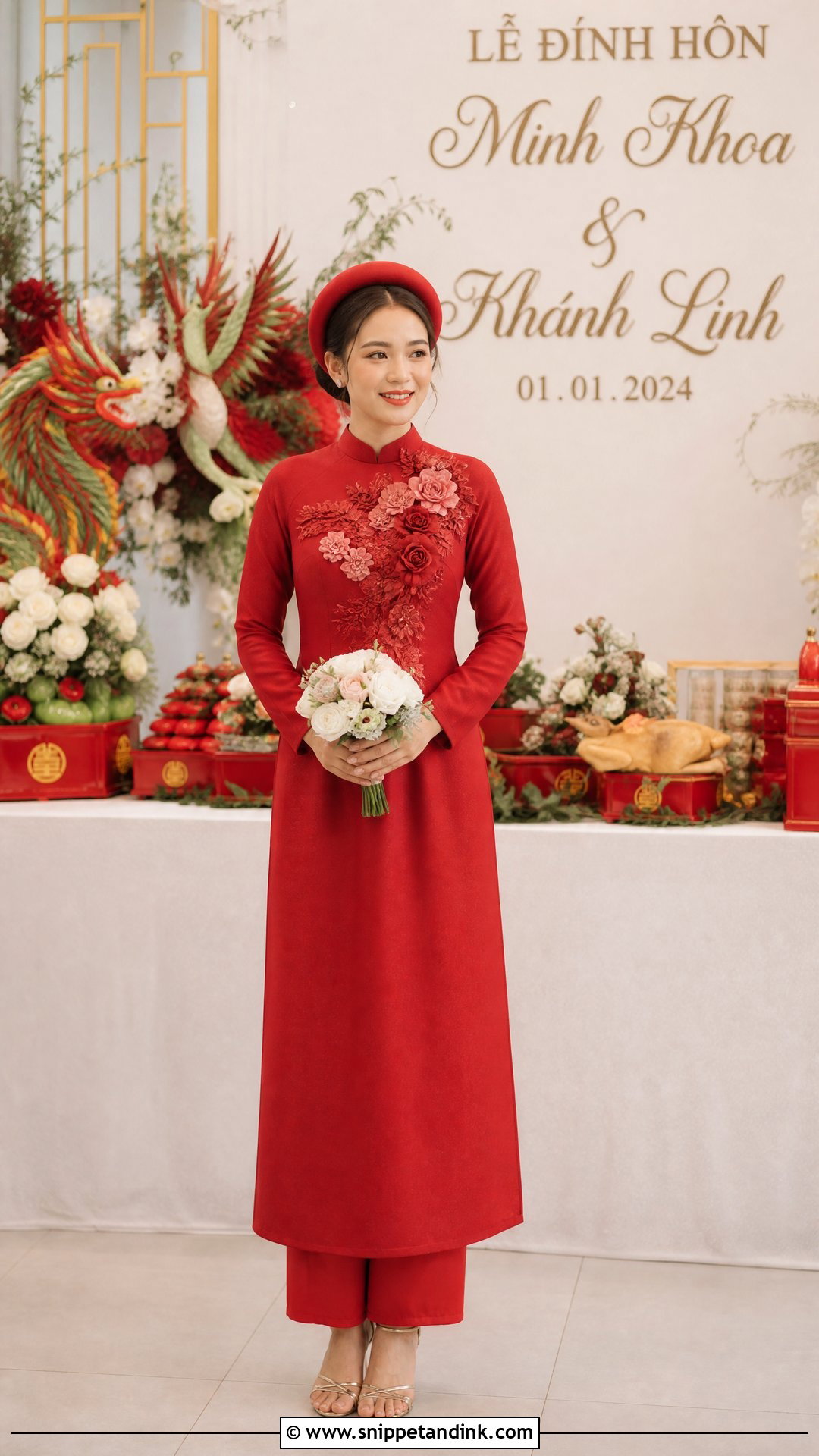
Three-dimensional appliqués look rich in person, but they are fragile. Raised petals crush under a seatbelt or a bouquet held against the body, so think about where you’ll be pressed during the day. A diagonal from one shoulder toward the waist moves the eye well; flowers gathered at the lower panels swing as you walk. Tonal red appliqués give quiet texture, gold or blush stronger contrast. Plain red pants, gold heels, small earrings and a simple khăn đóng keep the focus on the work. Choose a compact bouquet of smooth flowers, not loose trailing stems. This style suits engagement ceremonies, modern tea ceremonies and portraits.
14. Red Ao Dai With Puff Sleeves
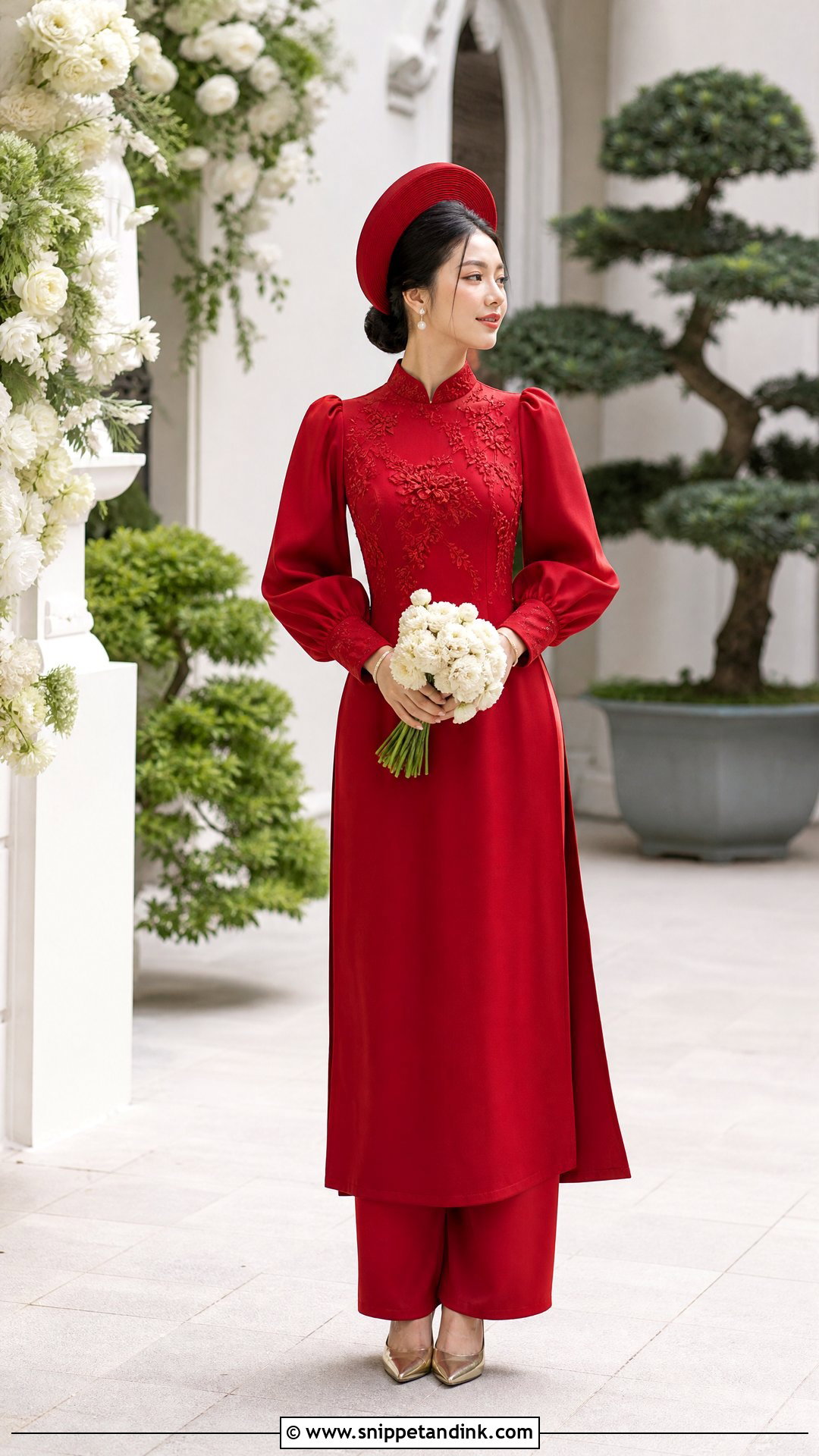
Puff sleeves update the áo dài while keeping it modest. I’d keep the volume gentle, at the shoulder, with fitted cuffs; oversized sleeves fight the long, narrow body of the tunic and make the shoulders look wider than they are. Silk or an organza overlay holds the shape without weight. Keep the bodice streamlined with fine gold embroidery or a small motif near the waist. Straight red pants and pointed heels balance the sleeves. A narrow khăn đóng, pearl earrings and a low bun complete it. Leave bangles off, as they snag on fitted cuffs. It reads as fashion-forward without straying from the recognisable shape.
15. Red Ao Dai With Structured Shoulders
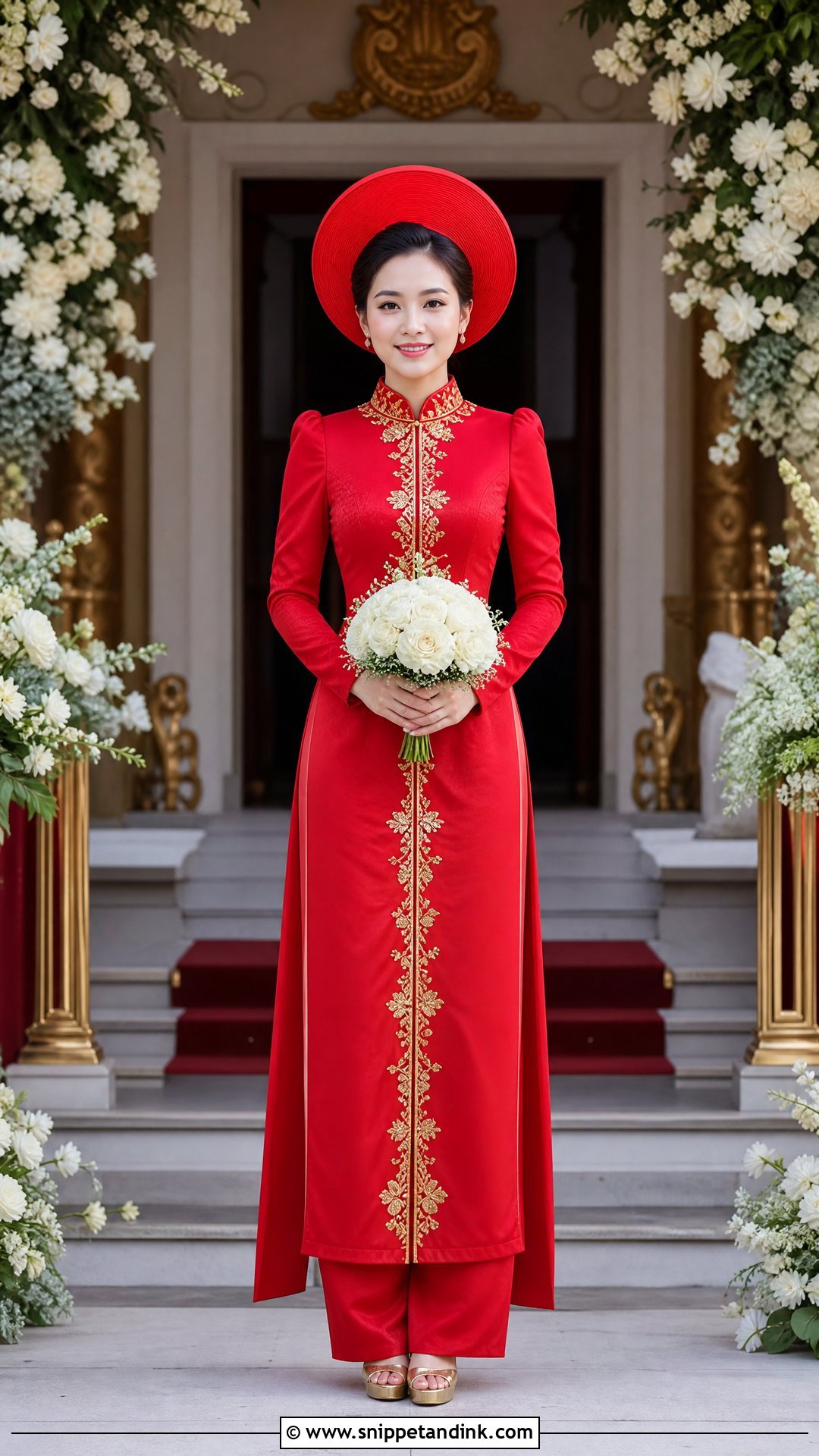
A defined shoulder gives a red áo dài presence in a large hall. It should be crisp, not padded; anything exaggerated breaks the gentle line that makes the garment what it is. Matte silk or brocade holds the shape, with precise gold embroidery on the centre panel or collar. Straight red pants and gold stilettos or block heels keep it sharp, and a structured khăn đóng echoes the shoulder. Many modern áo dài use a raglan sleeve, which moves freely but softens the shoulder, so if you want structure, tell your tailor at the first appointment. Simple studs, a compact round bouquet and sleek hair complete it.
16. Red Ao Dai With Detachable Overskirt
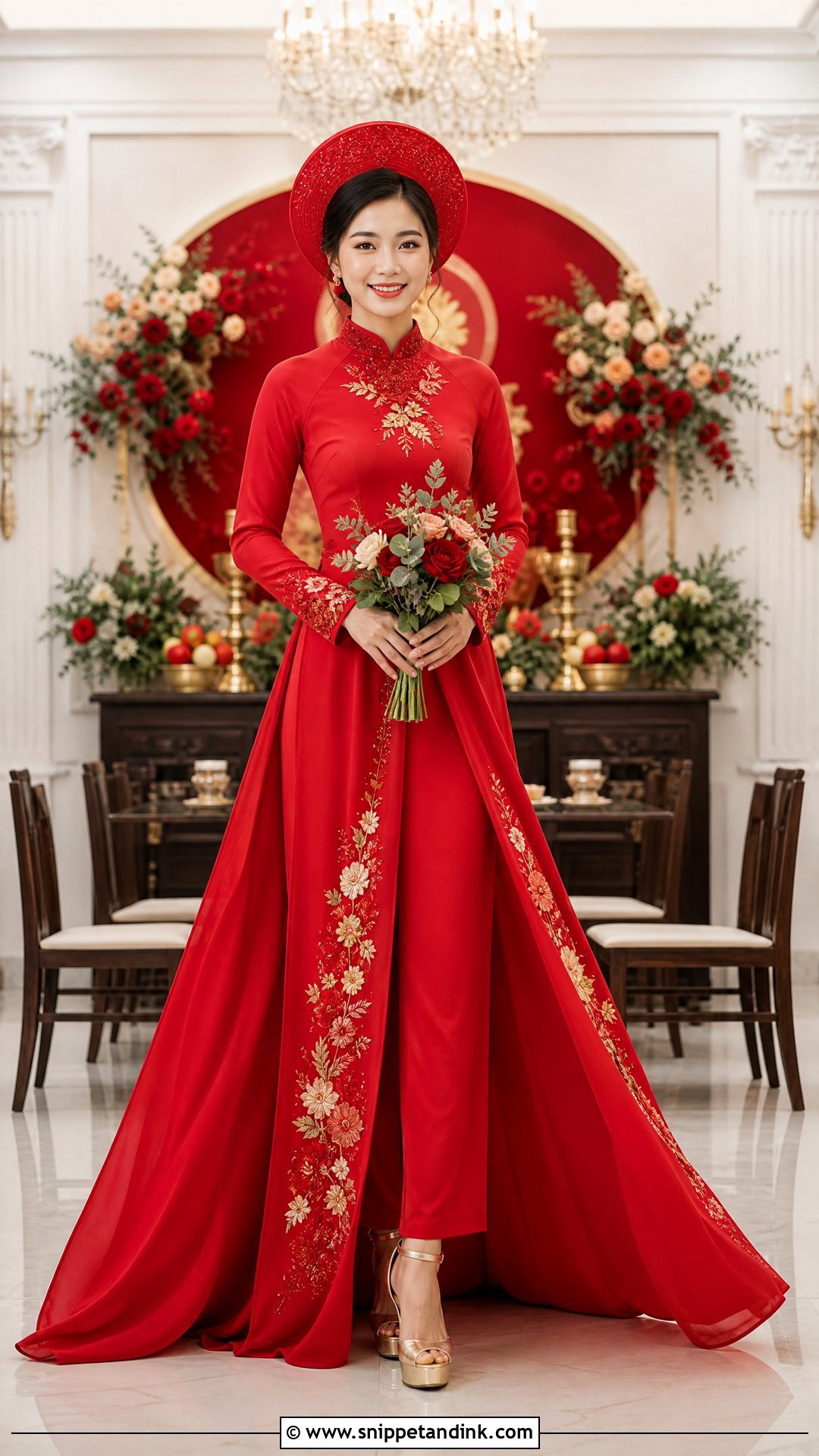
A detachable overskirt gives you two outfits from one áo dài. For the ceremony, a full red or red and gold skirt fastens at the waist and opens at the front to show the tunic panels and pants; after the portraits it comes off for greetings and dancing. Lightweight fabric matters, because a heavy skirt pulls the tunic down at the waist and creases it. Gold embroidery at the hem can echo the tunic. Gold heels, a matching khăn đóng, delicate earrings and a simple updo finish it. Have the person who will help you change practise the fastening once before the day, and make sure it’s hidden under the panels.
17. Red Velvet Ao Dai With Gold Heels
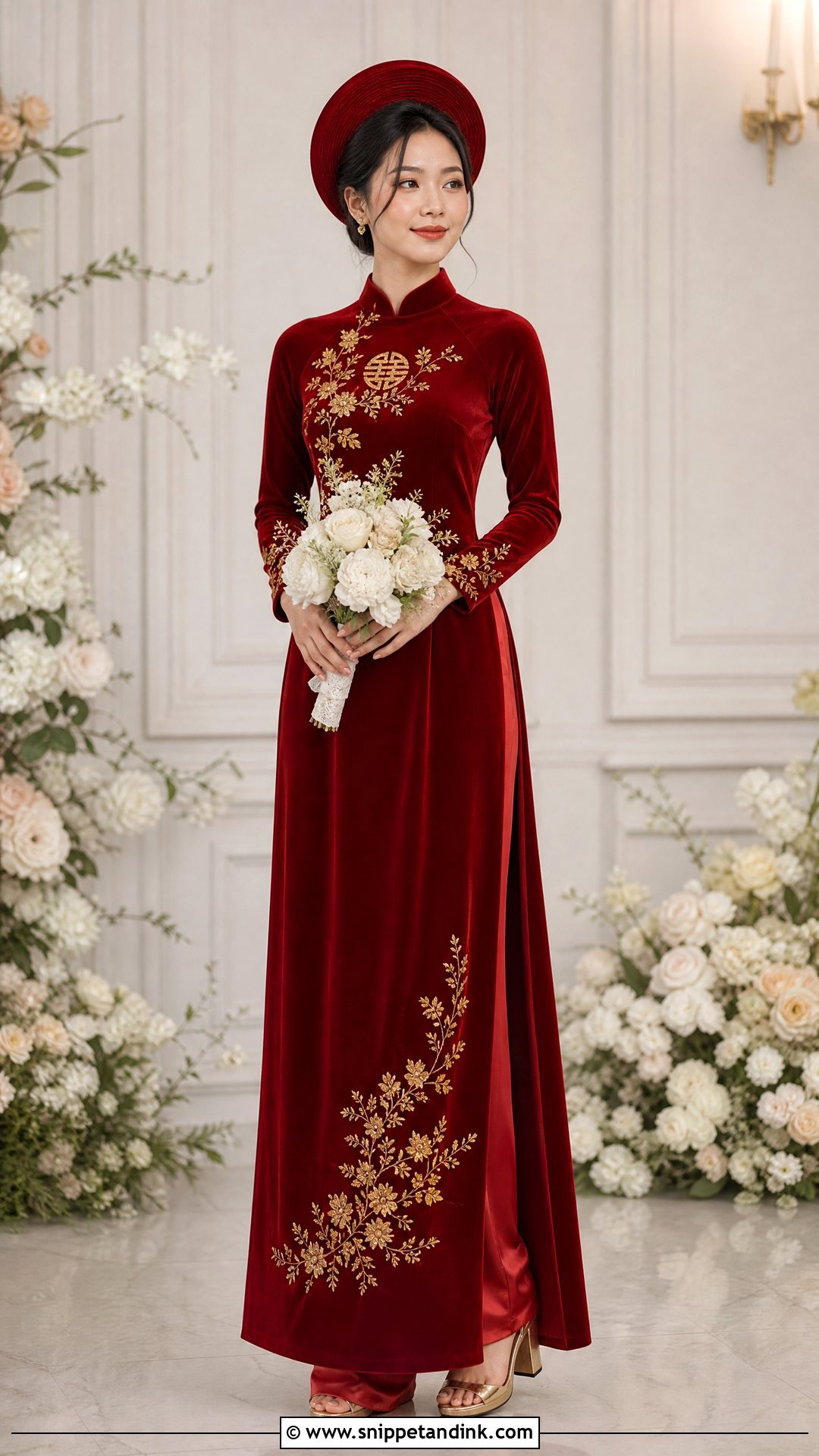
Velvet suits a cool-season tea ceremony, and its texture means the embroidery can stay restrained, just gold at the collar, cuffs or side panels. A lightly structured fit helps it fall over red satin pants. Velvet is warm, though. In a heated room with family crowded in, it gets uncomfortable quickly, so I’d only choose it for a cool day or a well-ventilated venue. Gold block heels give stable footing, and a red velvet khăn đóng, small gold earrings and one bracelet finish it. An ivory bouquet lifts the deep fabric. Velvet looks different in every light, so check it in photographs before the wedding.
18. Red Ao Dai With Embroidered Bridal Veil
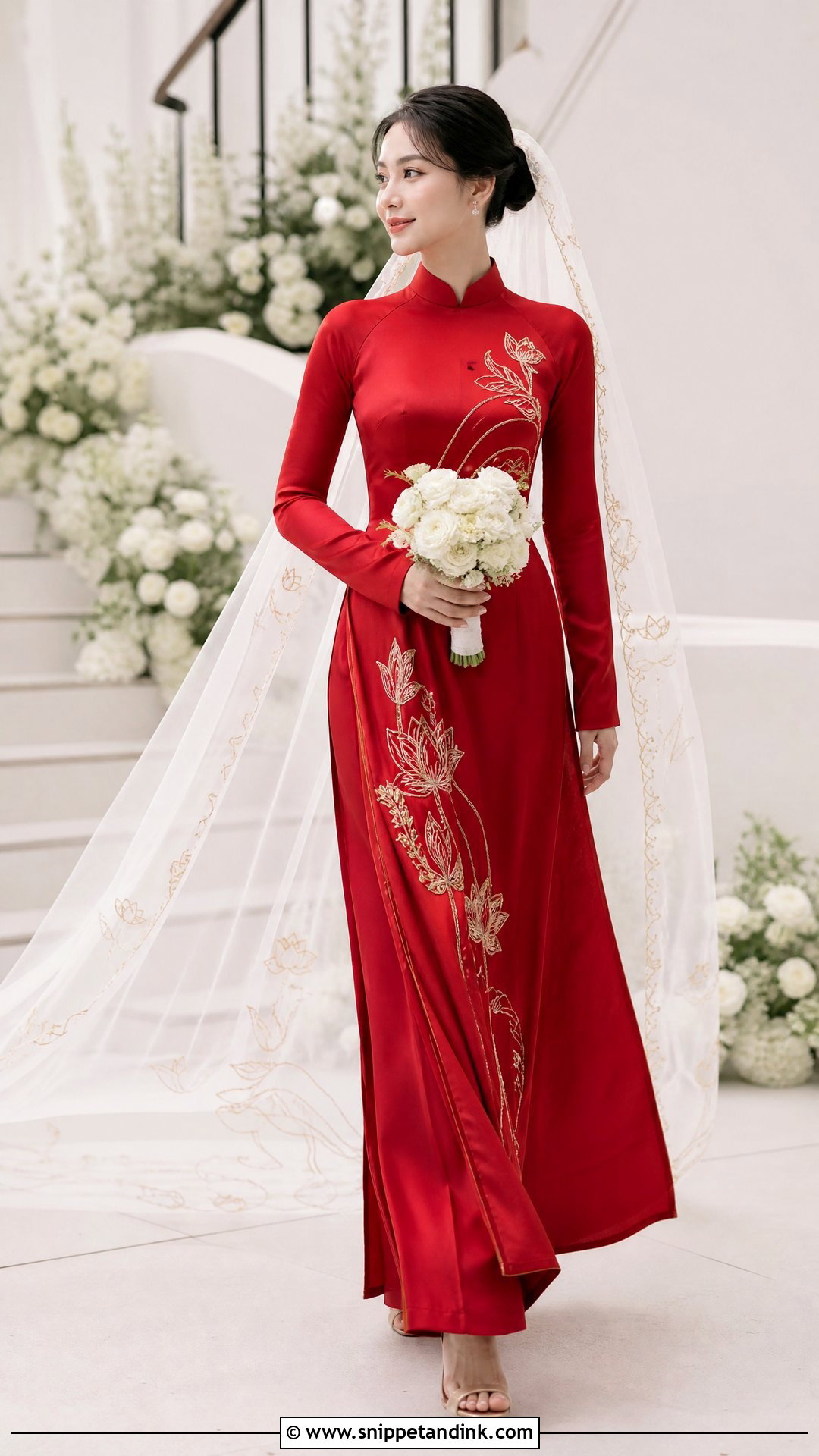
A veil over an áo dài is a fusion choice I see more of every year. A fingertip or chapel-length veil with a narrow gold border or fine red embroidery, anchored beneath a smooth bun, falls cleanly behind the tunic without covering the front. Fitted silk, matching red pants and gold heels keep the base classic. Choose either the veil or a large khăn đóng, not both; if you want both, ask for a slim headpiece designed to sit with the veil. Check that the veil ends above or well below the hem of the back panel, because two edges landing at the same point look messy. Subtle earrings and a small ivory bouquet are enough.
19. Red Ao Dai Bride And Groom Outfit
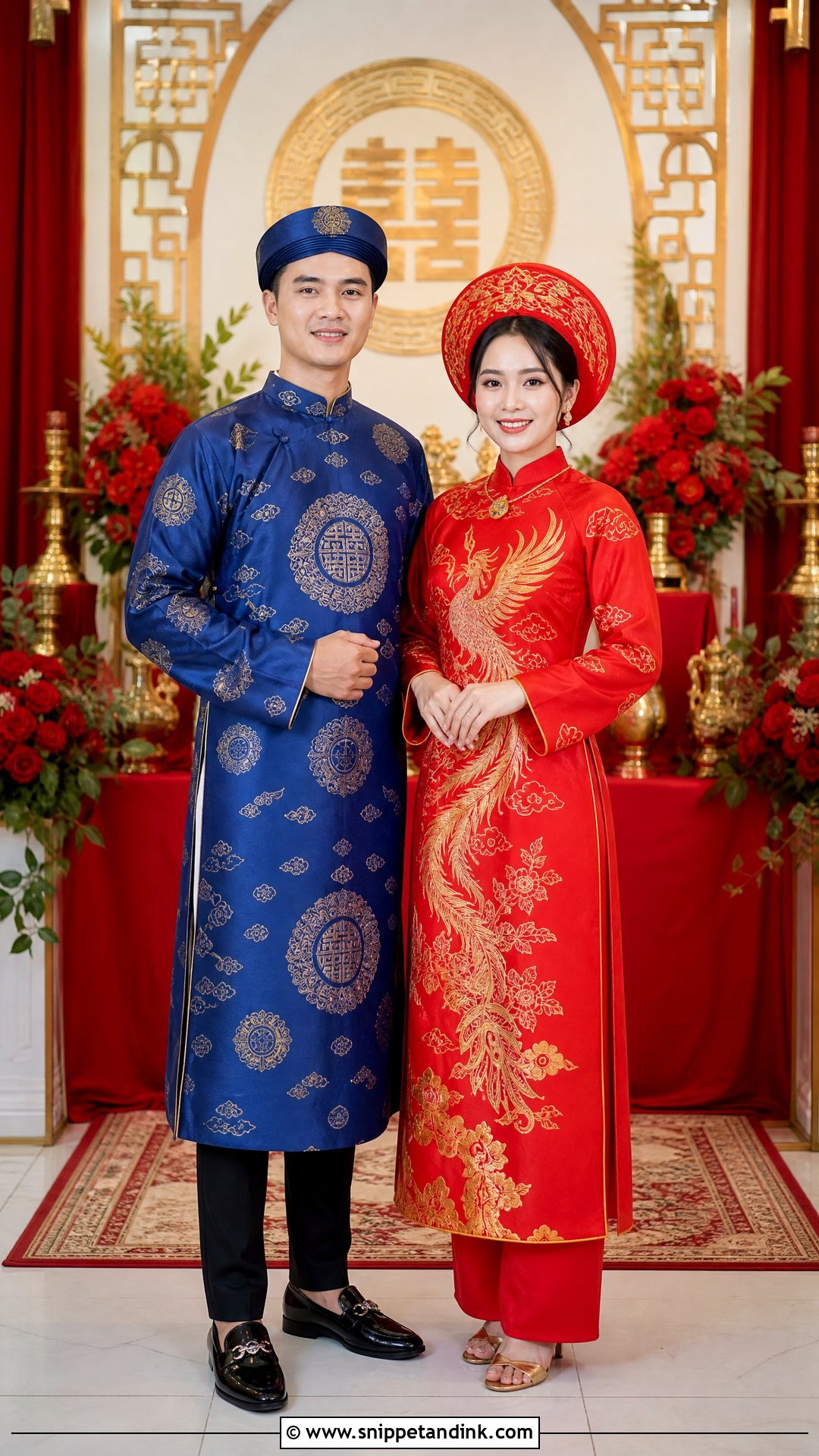
Coordinated bride-and-groom áo dài look right in family portraits as long as they’re related, not identical. The bride might wear bright red silk with gold phoenix or lotus work, red pants, a matching khăn đóng and gold heels. The groom can answer in a red or deep blue áo gấm with restrained gold motifs and a simpler khăn đóng. Repeat one thread colour or one symbol across both outfits and leave the rest independent. Dark loafers keep his footwear understated. If the outfits come from different tailors, compare the fabrics side by side under the same light before either is cut, because two reds that looked identical on screen rarely match in person.
20. Red Ao Dai With Relaxed A-Line Fit
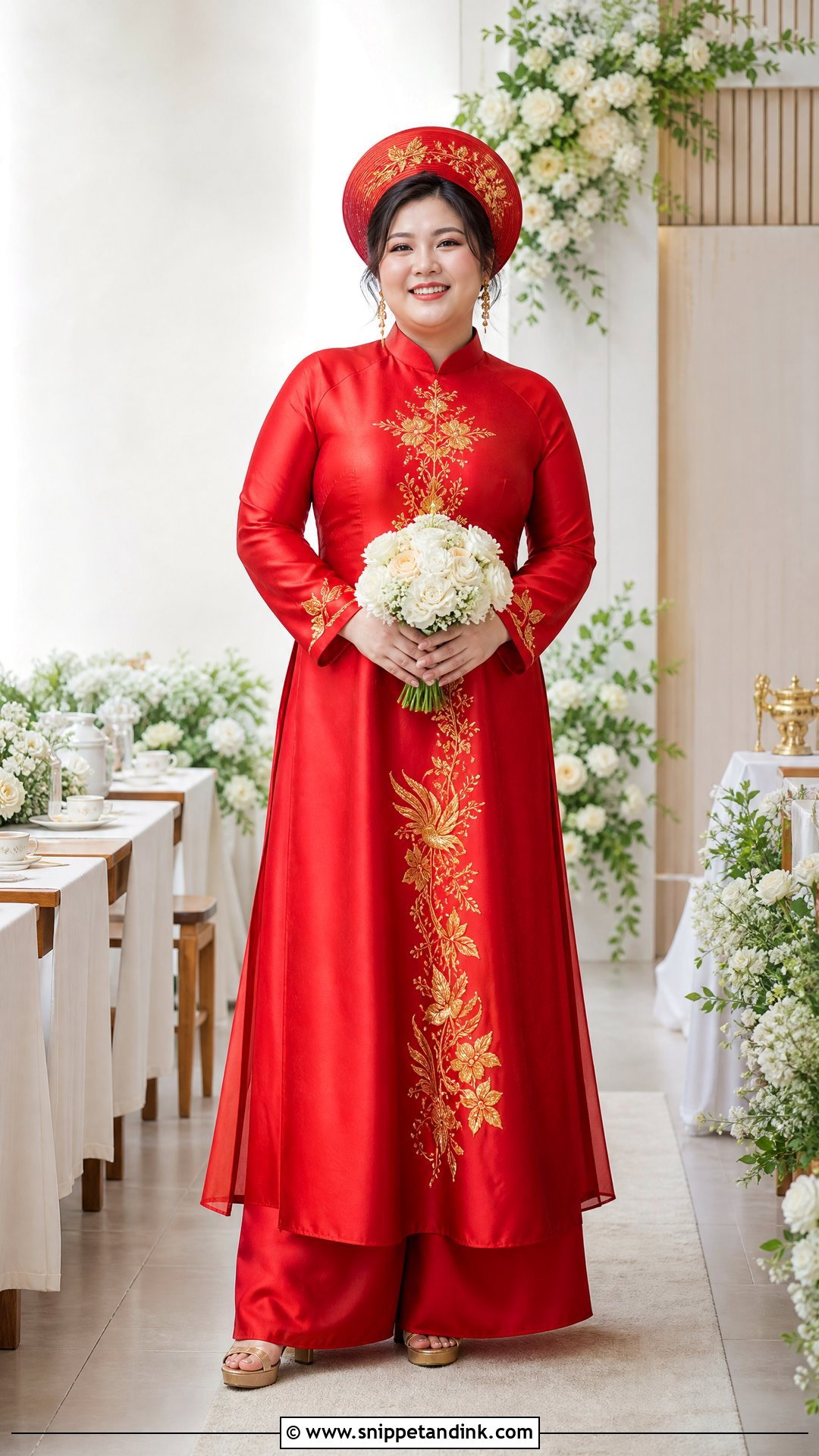
A relaxed A-line áo dài skims rather than clings, opening into flowing panels from below the bust. It keeps the long lines while giving real ease, which is why I suggest it for plus-size brides, pregnant brides, or anyone who doesn’t want to hold their breath through a tea ceremony. Fluid red silk or lightweight brocade drapes best, with embroidery running vertically to lengthen the body. Pair the tunic with wide-leg red pants and supportive gold block heels. A medium-width khăn đóng balances the softer shape, and drop earrings draw the eye up. Sit, bow and walk in it at the fitting. The áo dài has never belonged to one body type.
Which Ceremony Gets the Red, and Which Gets the White
A Vietnamese wedding is often several events, and many brides wear more than one outfit. The red áo dài usually belongs to the family ceremonies: the engagement with its lacquered gift trays, the procession when the groom’s family arrives to bring the bride home, and the tea ceremony before the ancestral altar. The reception, especially in a hotel or banquet hall, is where a white gown or a lighter áo dài often appears.
Planning the outfits together saves a lot of stress. If you’ll change between events, make the red áo dài the one with the khăn đóng and the most symbolic embroidery, and let the reception look be easier to move and eat in. Ask your elders early which colours they expect at each ceremony. Families differ, and some prefer a pink or gold áo dài for the engagement and save red for the wedding day itself.
After the last guest leaves
Silk áo dài are best dry cleaned or hand washed cold, never wrung. Press on low heat from the inside, and hang the tunic on a padded hanger with the panels free so they don’t crease. Pack embroidered or beaded pieces flat in tissue and cotton rather than plastic.
Red Silk, Gold Thread and a Fit That Moves With You
Start with the tone of the ceremony, then decide how much detail you want and which fit lets you move freely. Traditional silk, symbolic gold and a matching khăn đóng give the classic version; trains, capes, appliqués and pearls take it somewhere newer. Look at the outfit as a whole, pants, shoes, jewellery, hair and bouquet together. Tailoring matters more here than with almost any other bridal garment, because the áo dài’s clean lines depend on accurate measurements. Choose the version that feels respectful and true to you. A well-made red áo dài can honor Vietnamese heritage and still look entirely like you.
You'll Like These Ideas:




Leave a Reply