
A Persian wedding asks more of a dress than most. The bride spends the Aghd seated at the Sofreh, framed by the mirror and candles, with family gathered close around her, and then she has to dance through a long, lively Aroosi. Many brides wear white or ivory for the Aghd, often with lace, embroidery, pearls or gold, and some change into a second reception dress with more sparkle and movement. When I style a Persian bride, I judge every gown seated as well as standing, because that is how most of the ceremony photos are taken. Here are 25 looks, from classic ball gowns to capes, Termeh accents and red reception gowns, with the practical points I’d raise for each.
Sugar, Honey and a Low Seat: Dressing for the Sofreh Aghd
The Aghd shapes the dress more than any trend. A few moments from the ceremony are worth planning around:
- The cloth overhead. In many families, women hold a fine fabric above the couple and rub two sugar cones together over it. Fine sugar dust can drift down onto the veil and shoulders. It brushes off satin and crepe easily, but it clings to tulle and beading, so a soft brush in your bag helps.
- The honey. The couple traditionally feed each other honey from a fingertip. Honey on silk or satin leaves a mark, so keep a napkin within reach and avoid wide, trailing sleeves near the bowl.
- The seat. You’ll sit on a bench or low seat facing the mirror. Your skirt and train need to be arranged after you sit, and a stiff bodice can dig in on a low seat. Sit at a fitting, ideally on something of a similar height.
None of this rules out any style. It simply decides how the veil is laid, which fabrics need protecting and who on your side is ready with a brush and napkin.
1. Persian Wedding Dress With Long Lace Sleeves
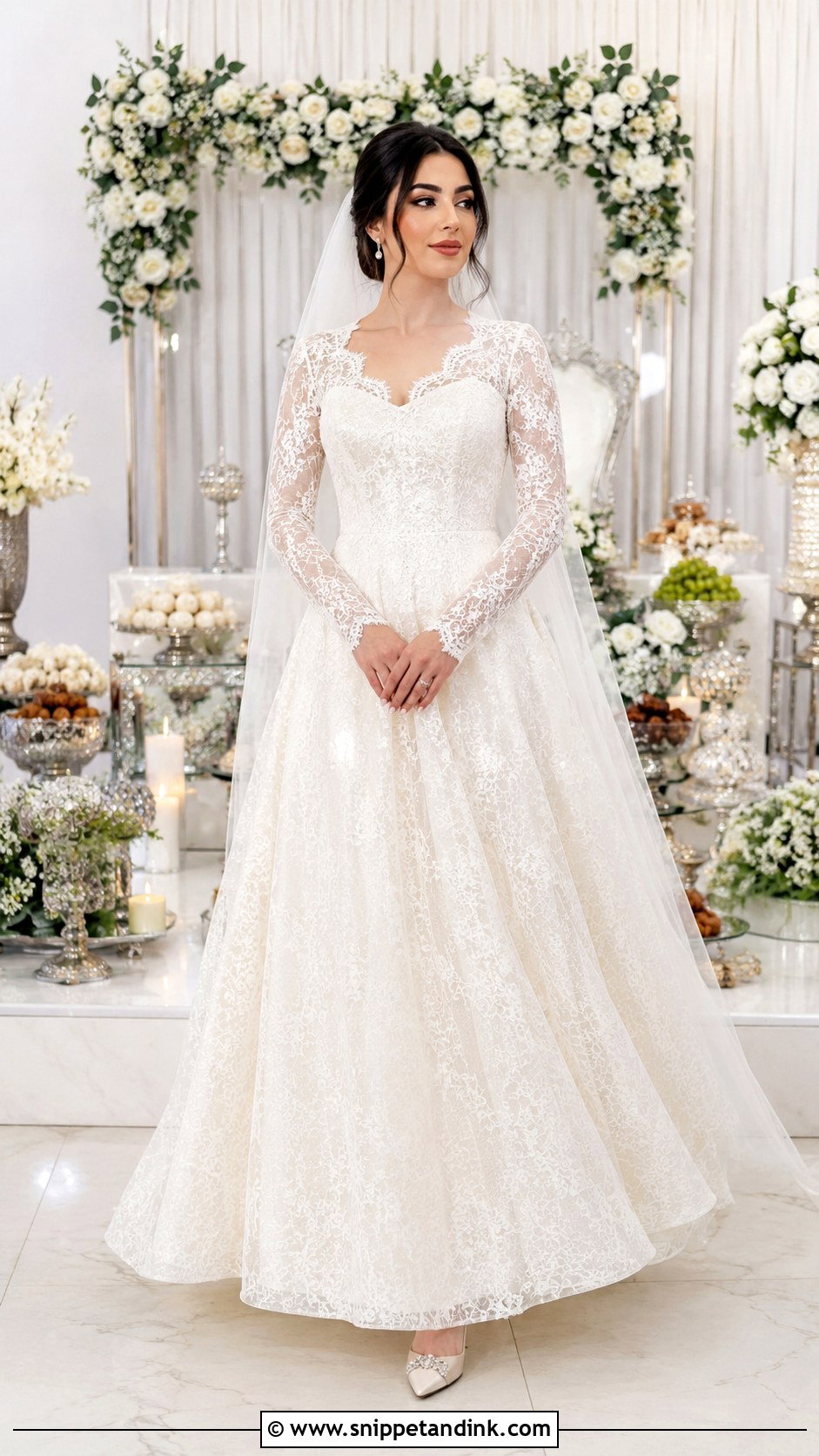
Fitted lace sleeves look their best during the Sofreh Aghd, when your hands are in nearly every frame, whether the bride is holding flowers or seated beside the mirror and candles. Choose a flat, fine lace; heavy corded lace can scratch the inside of the elbow after hours of sitting with arms bent. An ivory or white gown with a structured bodice and A-line or sheath skirt suits it. Pearl earrings, a delicate bracelet, a sheer veil past the waist and pointed ivory heels finish a look that pleases traditional families without feeling plain.
2. Persian Wedding Dress With Gold Embroidery
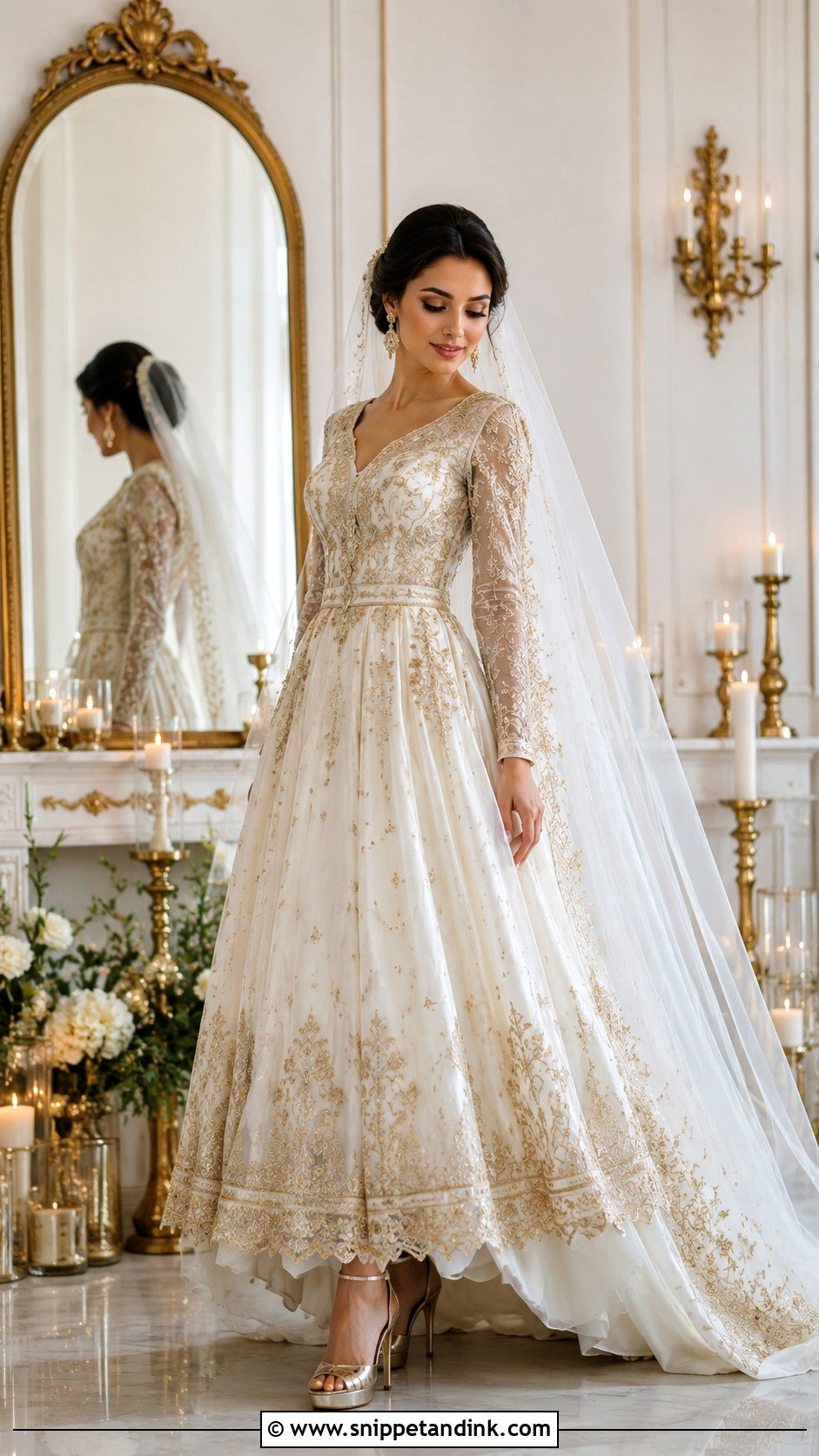
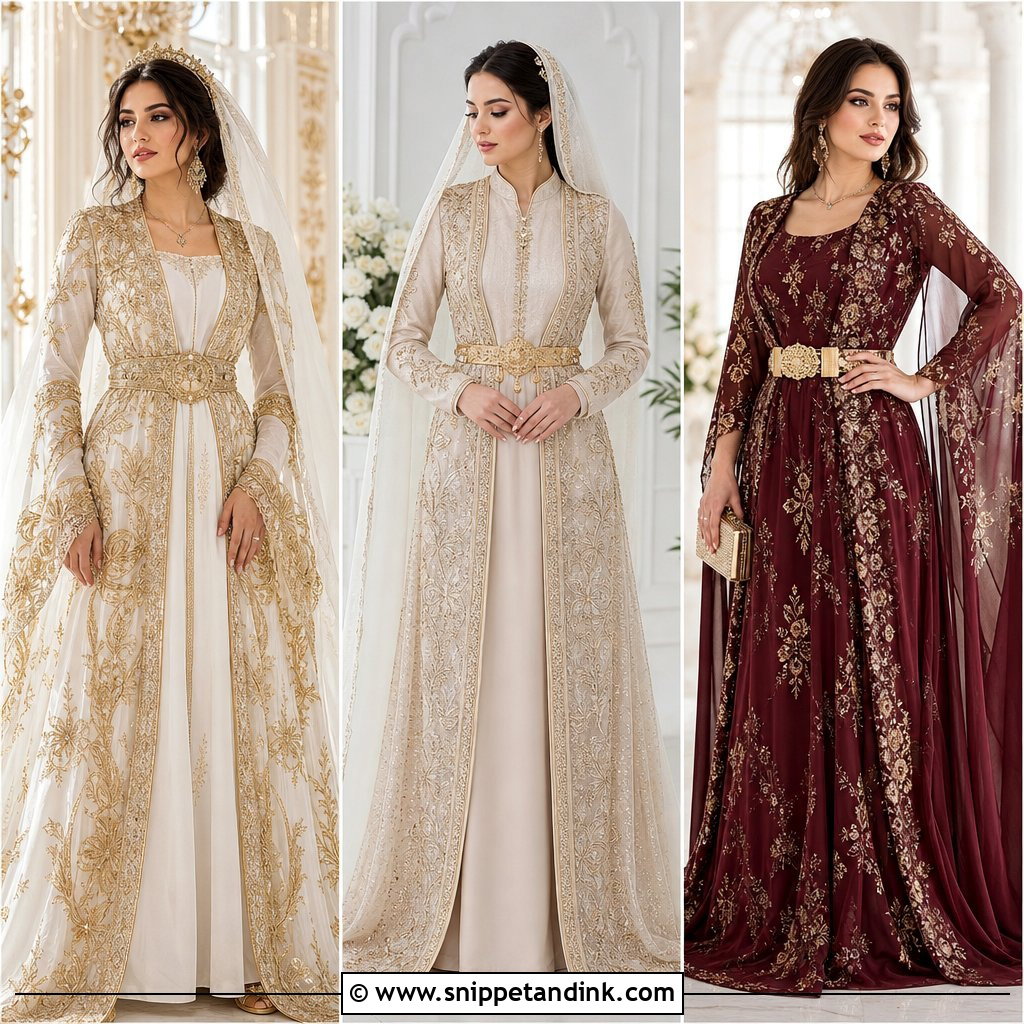
Gold thread on white, ivory or champagne echoes the metallic trays, mirror frames and candlesticks of the Sofreh, so the bride looks like part of the setting. Keep the cut clean, an A-line or fitted mermaid, and let the embroidery on the bodice, sleeves, waist or hem carry the detail. Match the gold tone of the thread to your jewelry; yellow gold embroidery next to rose gold earrings looks accidental. A soft updo, metallic heels and a simple veil complete it.
3. Persian Wedding Dress With A Cathedral Veil
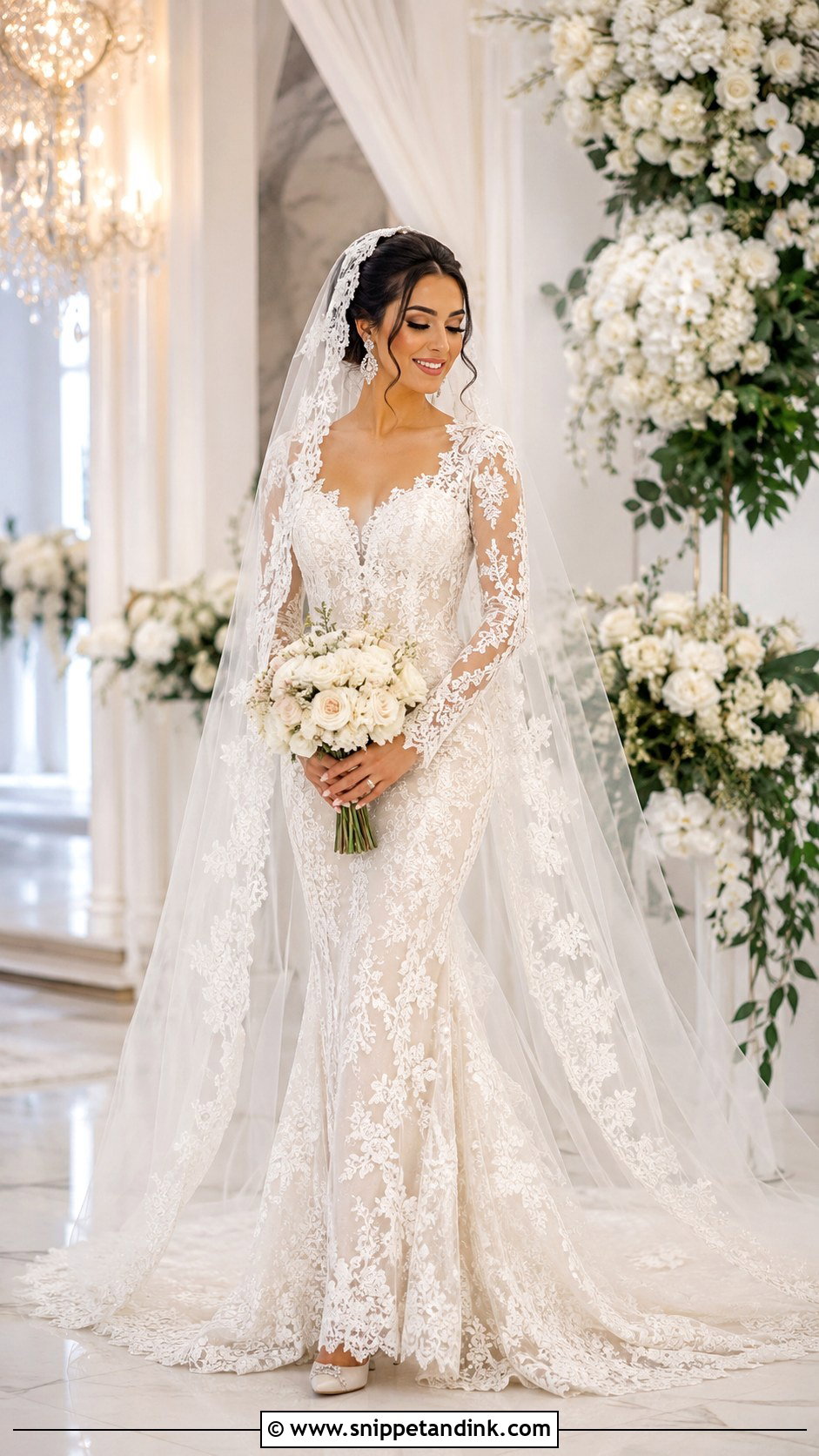
In full-length photos at the Sofreh, a cathedral veil pools around the bride and softens the whole frame. The base can be a fitted lace gown, satin ball gown or clean crepe dress, with a veil in plain tulle, lace trim or pearl detail. Long veils also get sat on. Before you take your seat, someone should lift the veil and lay it behind you, or it pulls your head back every time you turn. Diamond-style studs, a slim bracelet and ivory heels are plenty with so much veil.
4. Persian Wedding Dress With A Ball Gown Skirt
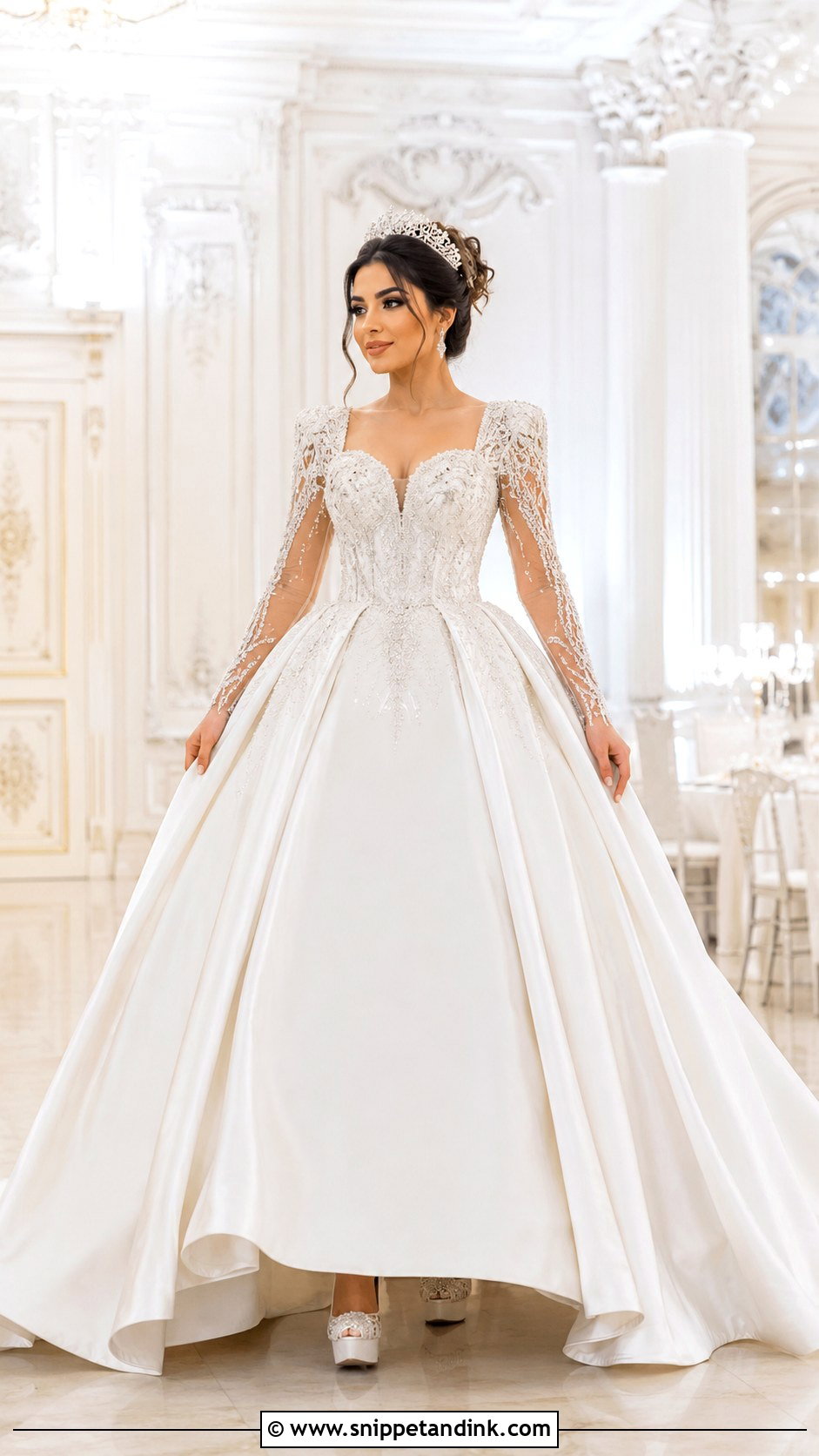
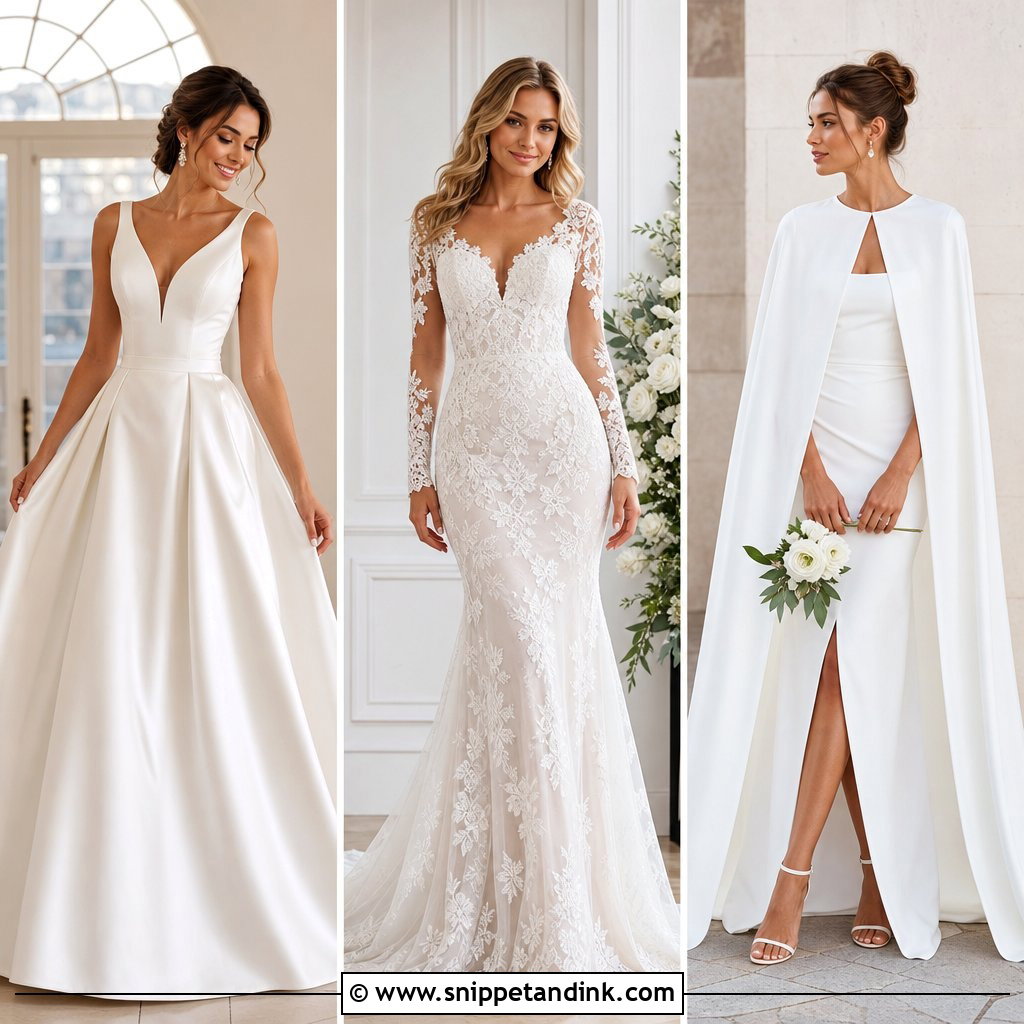
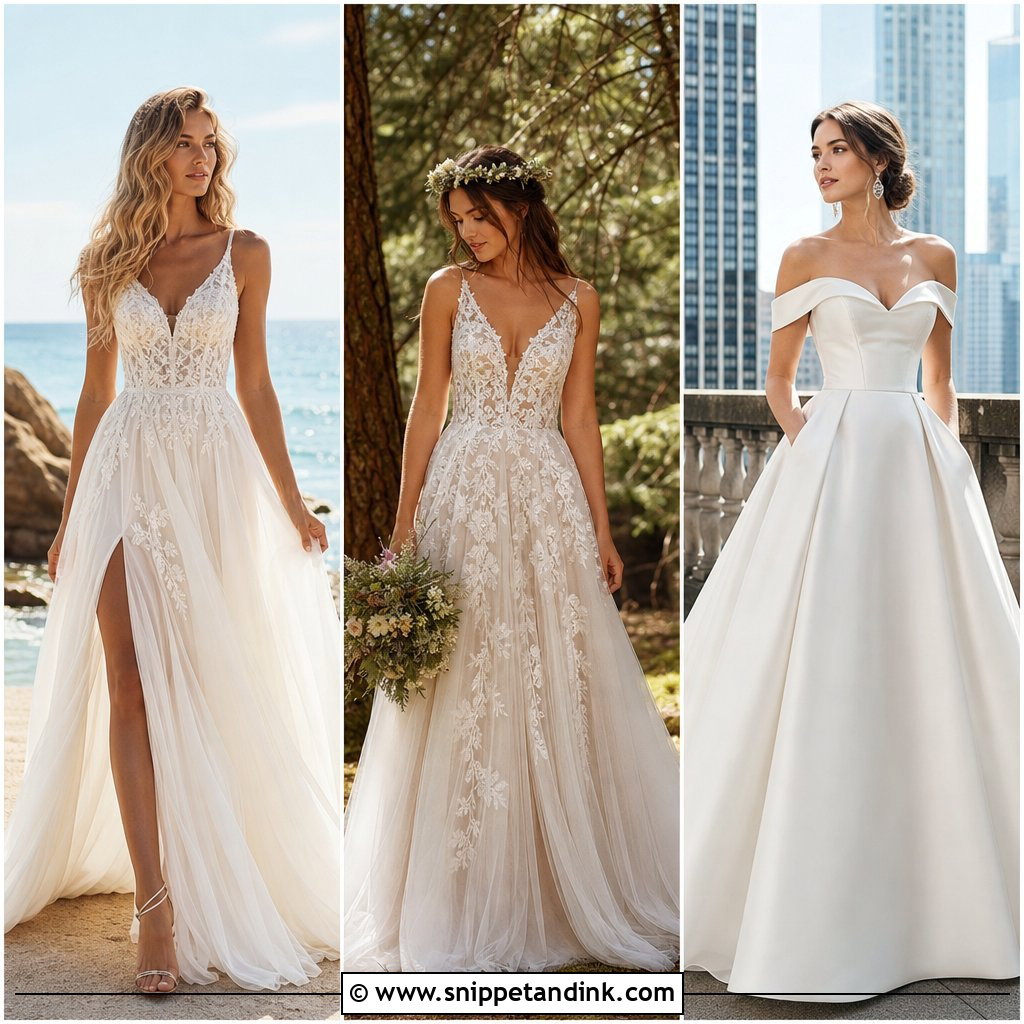
Full skirts suit the festive scale of many Persian weddings and large ballroom receptions. A structured bodice in lace, pearls, subtle sparkle or clean satin, with a fitted waist, keeps the volume controlled. The catch is the seat at the Sofreh: a wide skirt on a narrow bench needs arranging, so practise sitting in it and decide who will spread it out for you. Platform heels under the skirt give height and support, and a tiara, crystal comb or pearl headband adds soft glamour.
5. Persian Wedding Dress With A Mermaid Shape
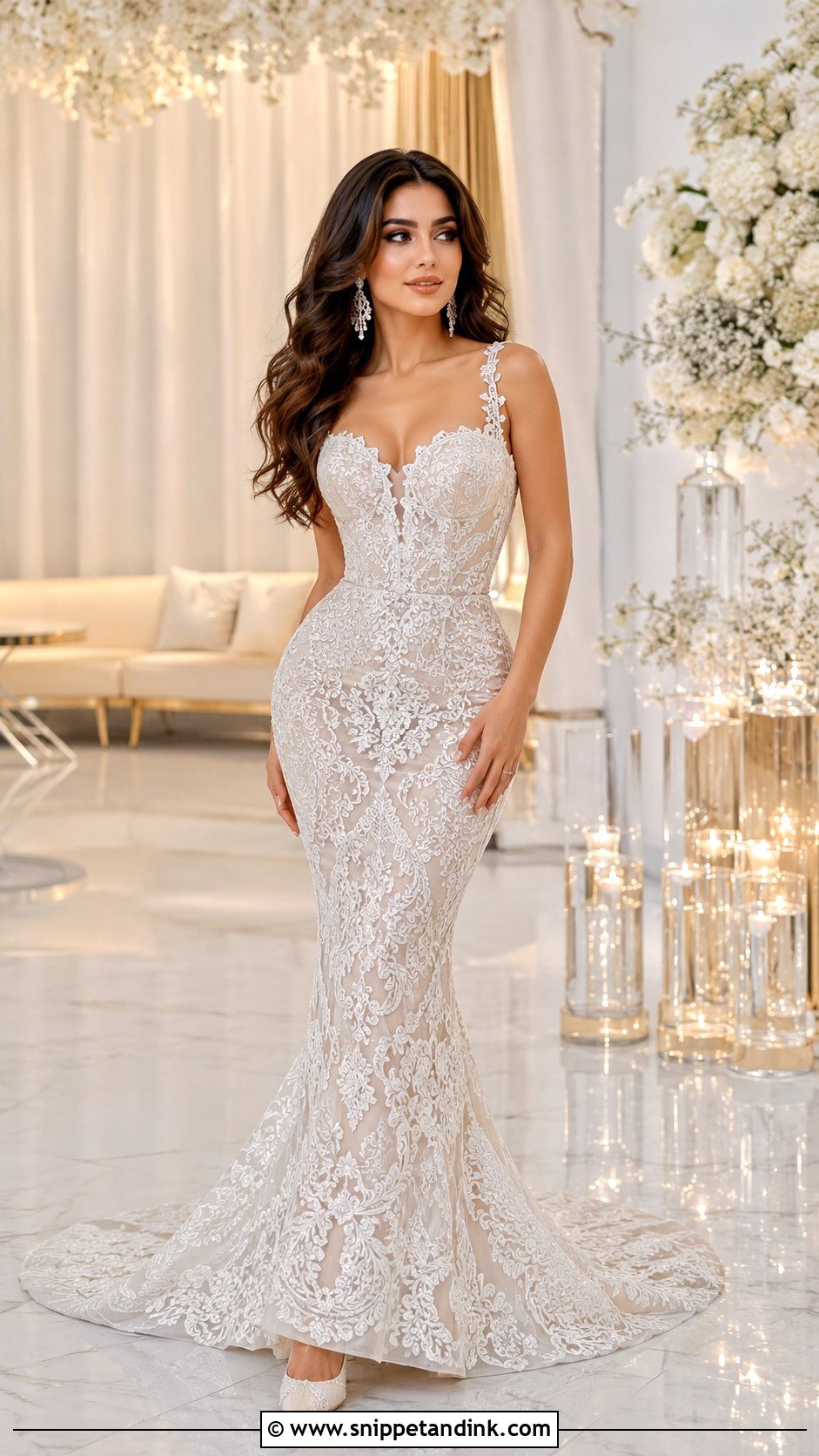
Fitted through the bodice and hips, flaring near the knee, a mermaid is glamorous standing and difficult seated. The Aghd can last a while, so sit for at least ten minutes at a fitting and check whether the skirt pulls across your thighs. Lace, beading or satin give it a formal finish; sweetheart, off shoulder or high necklines all work. If seated comfort is a struggle, consider it for the Aroosi rather than the Aghd. Loose waves, crystal earrings and sleek ivory heels suit an evening reception.
6. Persian Wedding Dress With A High Neck
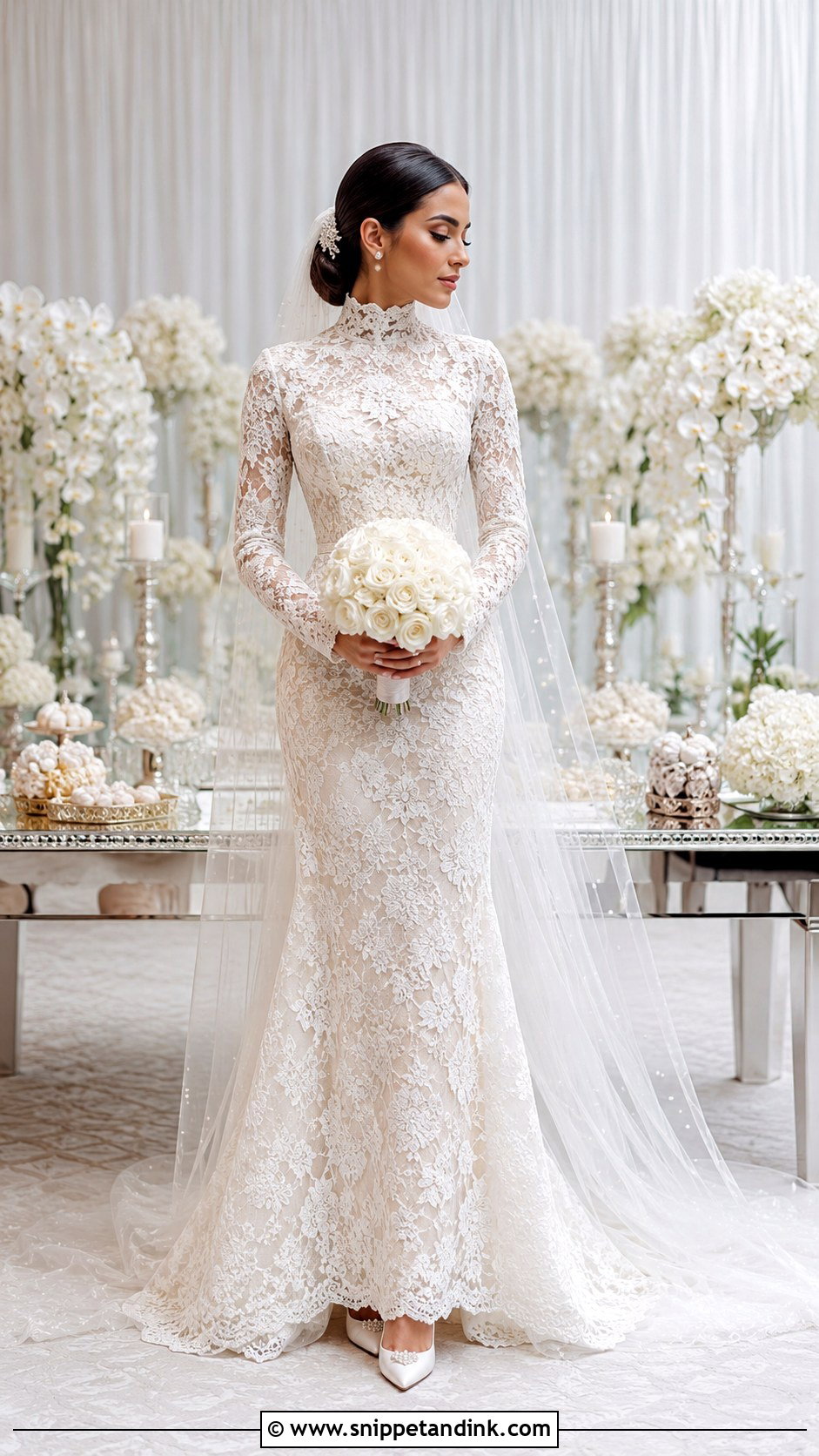
Coverage at the neck, plenty of fashion everywhere else. Lace, illusion tulle, pearl beading or smooth crepe all suit a high neckline, with long sleeves or a sleeveless fitted bodice over a flowing skirt. Keep hair in a low bun or tucked behind the shoulders so the neckline shows. A high neck leaves little room for necklaces, which matters if your family plans to give you jewelry at the ceremony; small pearl earrings, a slim ring and closed-toe heels keep it clean.
7. Persian Wedding Dress With A Cape Veil
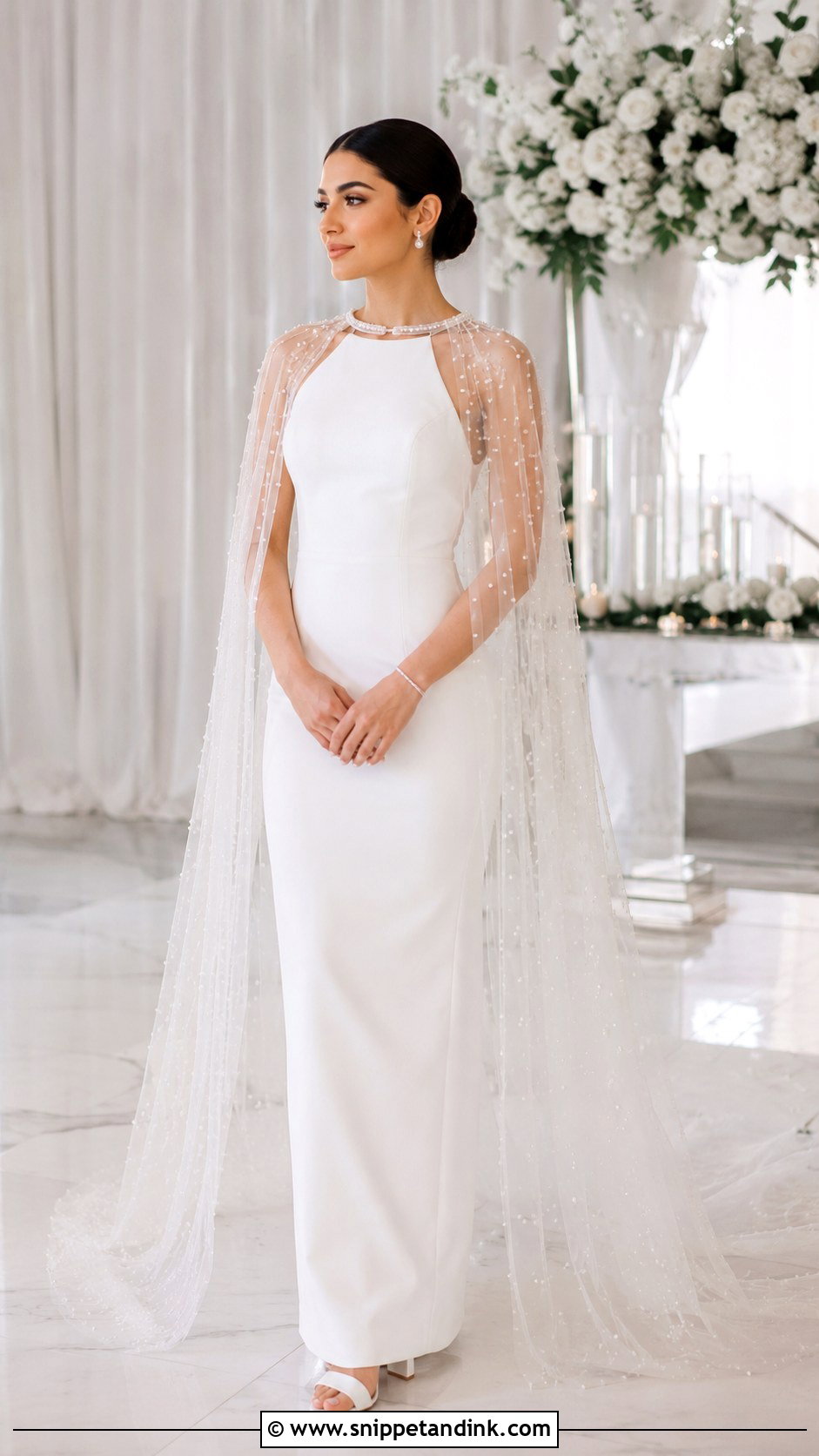
Falling from the shoulders or the back of the gown, a cape veil gives drama without covering your hair or face, and it’s far lighter on the head than a cathedral veil. A simple fitted dress, column or sleek A-line gives it room. Sheer tulle, pearl-dotted fabric or lace-trimmed edges all work. One practical benefit at the Aghd: a cape doesn’t need lifting out of the way when you sit, as a long veil does. Clean earrings, a low bun and satin heels complete it.
8. Persian Wedding Dress With Pearl Details
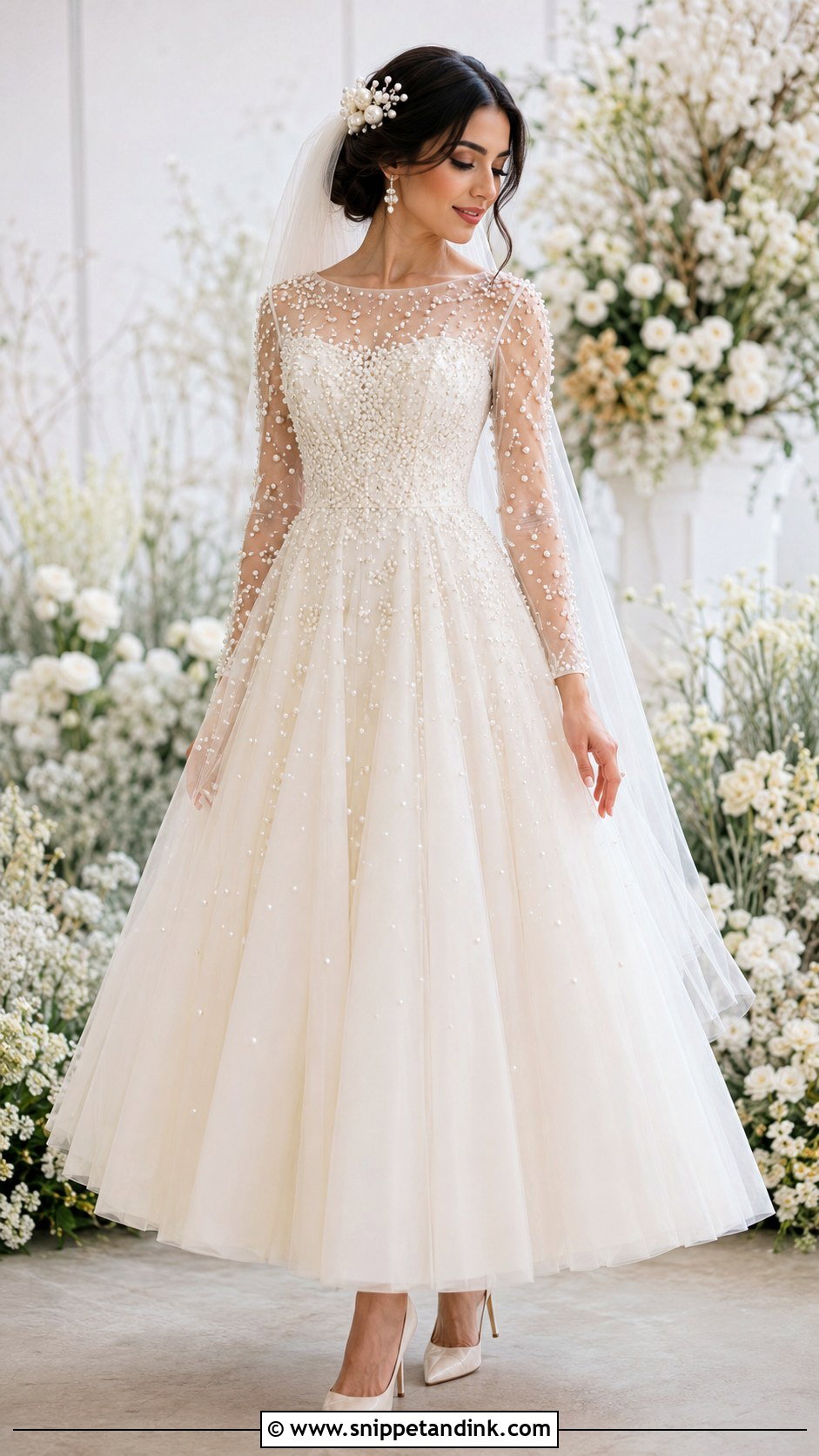
Pearls add texture without flash, which suits the warm candlelight of a Sofreh. A fitted crepe dress with pearl straps, an A-line in pearl lace or a tulle dress with scattered pearls all work well. Pearl drop earrings, a pearl comb and simple ivory heels are enough; anything more crowds it. Most bridal pearls are coated, and the sugar and honey used during the ceremony can dull or stick to that finish, so pack a damp cloth in your bag for quick cleanups.
9. Persian Wedding Dress With A Satin Skirt
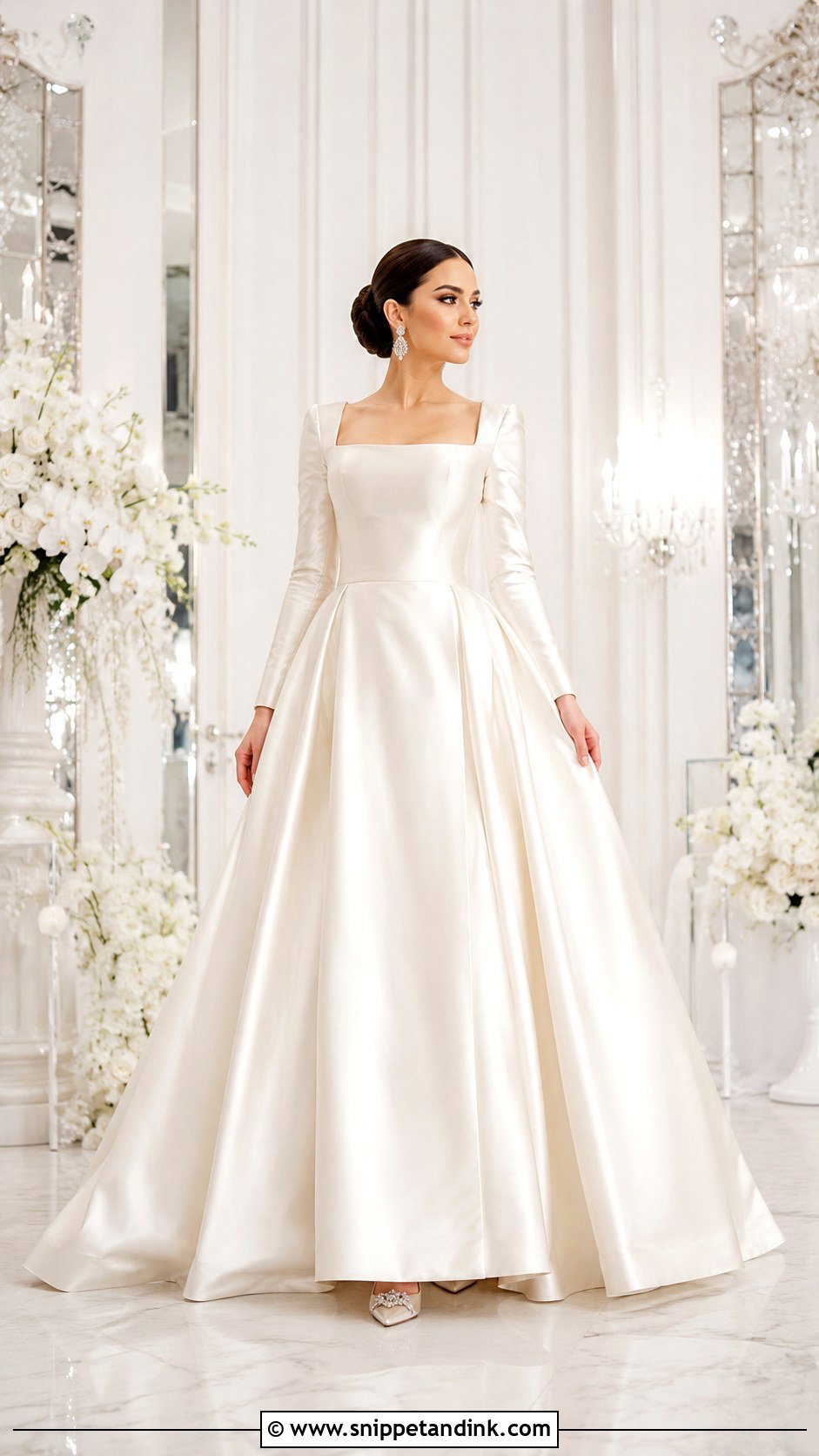
Satin catches the light in evening Sofreh Aghd photos and gives a smooth, expensive finish without decoration. Choose a fitted bodice over a full satin skirt, or a sleek satin dress with a small train. Square, off shoulder or long-sleeve necklines all suit it. Satin creases where you sit, and the Aghd involves a lot of sitting, so ask for a steamer on site between the ceremony and the Aroosi entrance. Crystal earrings, a neat bun and pointed heels complete the look.
10. Persian Wedding Dress With Floral Lace
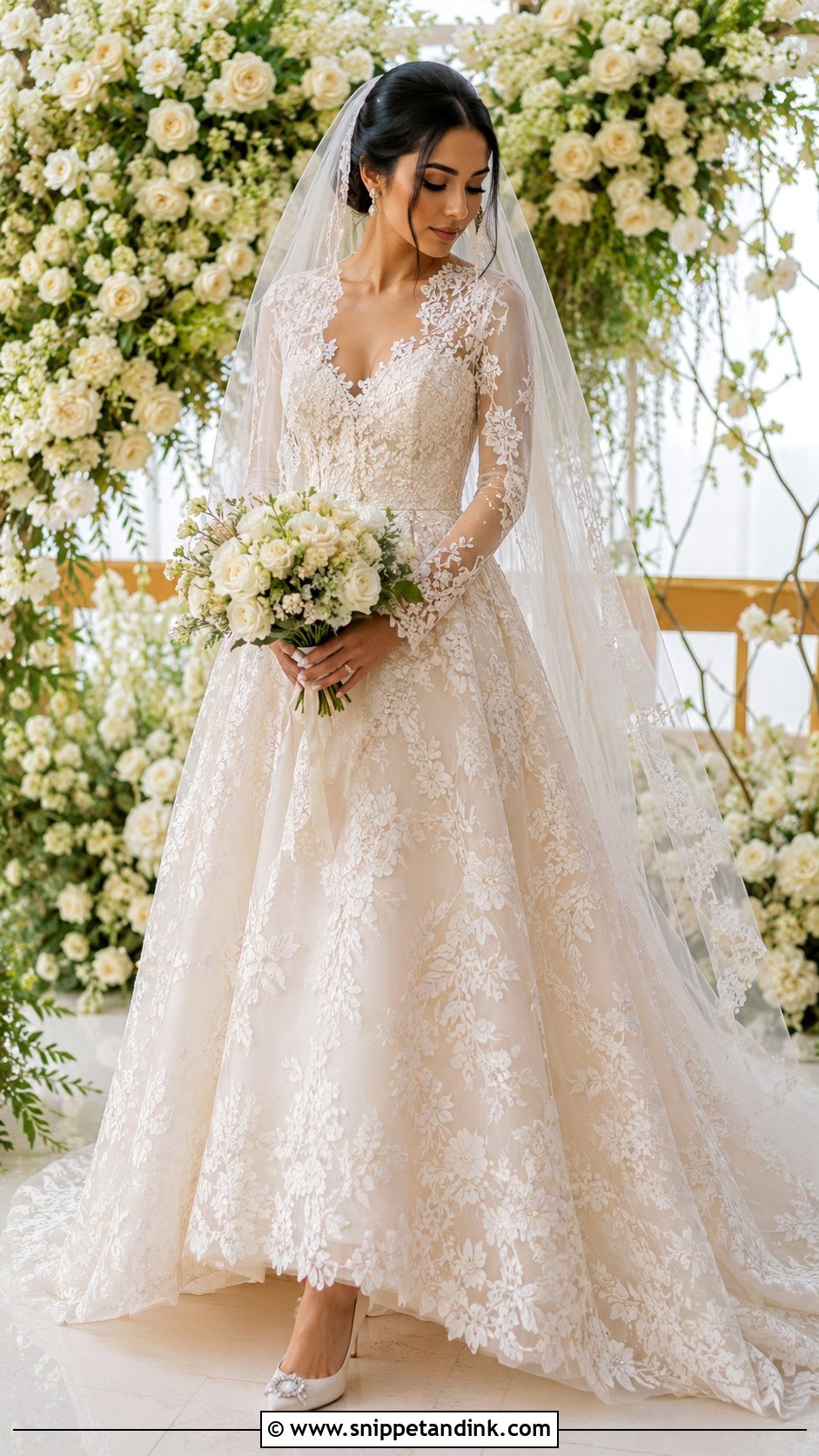
Delicate floral lace, vine embroidery, leaf patterns or small floral appliques connect naturally with a Sofreh decorated with fresh flowers, especially at a spring or garden wedding. Choose lace that feels light rather than heavy. A-line, fit-and-flare or sheath shapes all work. Add soft curls, a sheer veil and simple pearl or crystal earrings, with ivory heels or refined sandals. If the Sofreh uses a lot of flowers, I’d keep the bouquet small so the dress doesn’t disappear into them.
11. Persian Wedding Dress With A Detachable Overskirt
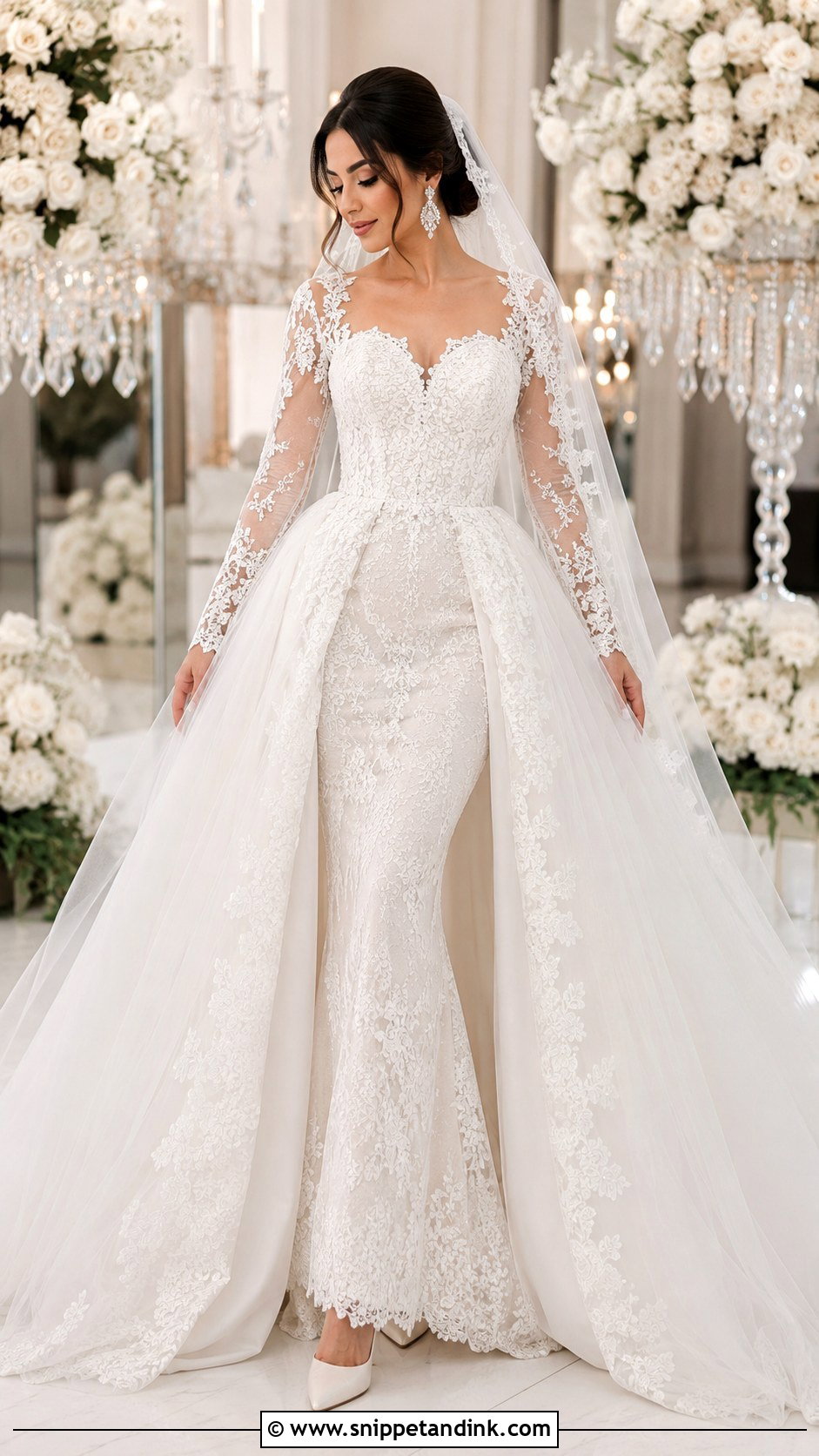
Persian celebrations move from quiet, seated ceremony moments to hours of energetic dancing, and a detachable overskirt lets one outfit handle both. Wear it in tulle, organza or satin with a soft train for the Aghd, then unclip it for the Aroosi. The base can be a fitted lace gown, satin column or beaded sheath. Check the fastening at the fitting; hidden hooks or snaps release in seconds, while a tied sash needs a helper. Swap the long veil for lighter earrings at the reception.
12. Persian Wedding Dress With A Square Neckline
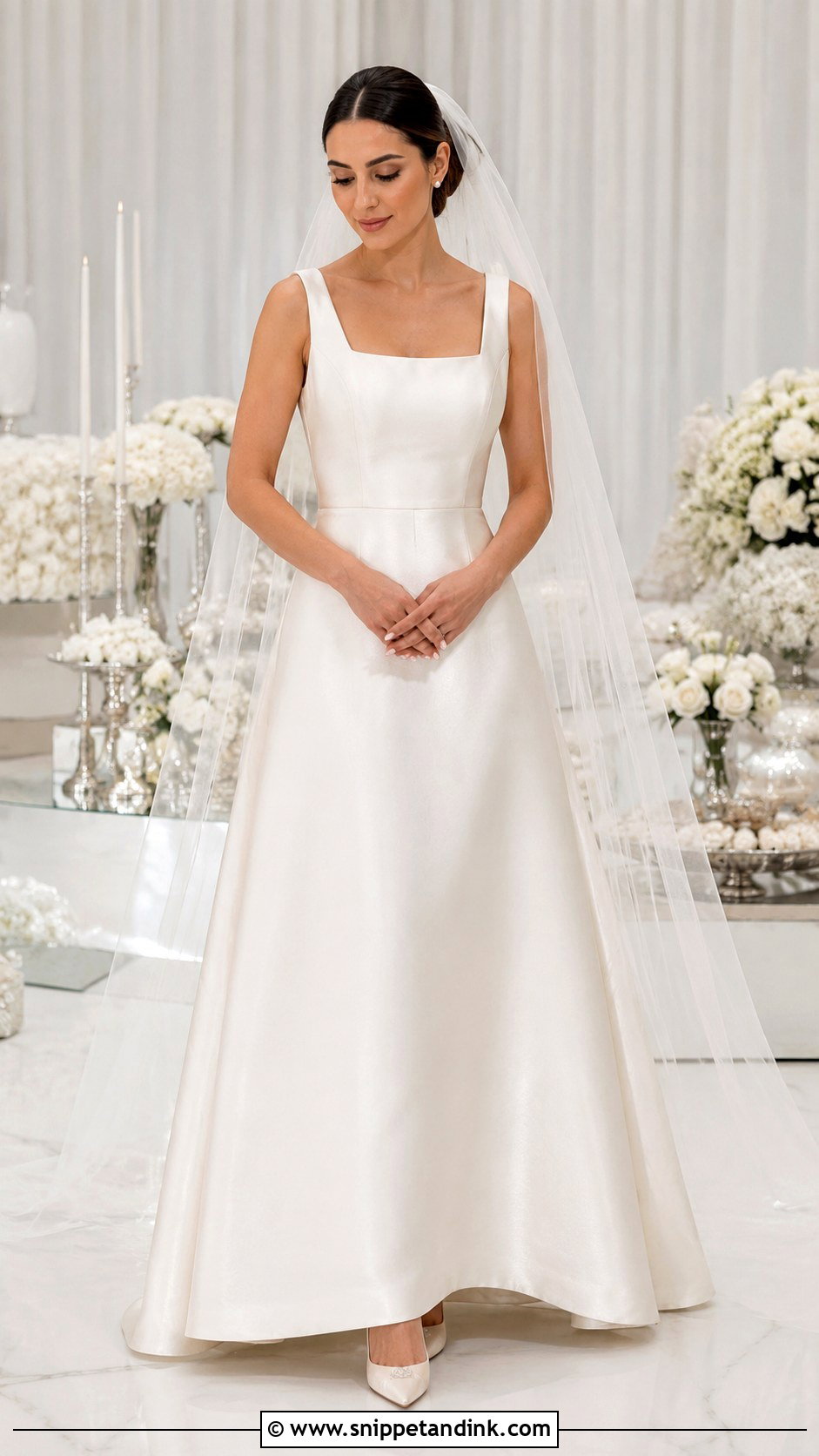
Front-on photos are where a square neckline looks best, and most Sofreh portraits are taken straight on. It frames the collarbone with clean lines and works with satin, crepe, lace and mikado. Long sleeves make it more modest; wide straps feel fresher. A delicate necklace can sit inside the square if the neckline is low enough. Add a sleek bun, pearl studs and a soft tulle veil that doesn’t interrupt the lines.
13. Persian Wedding Dress With Beaded Sleeves
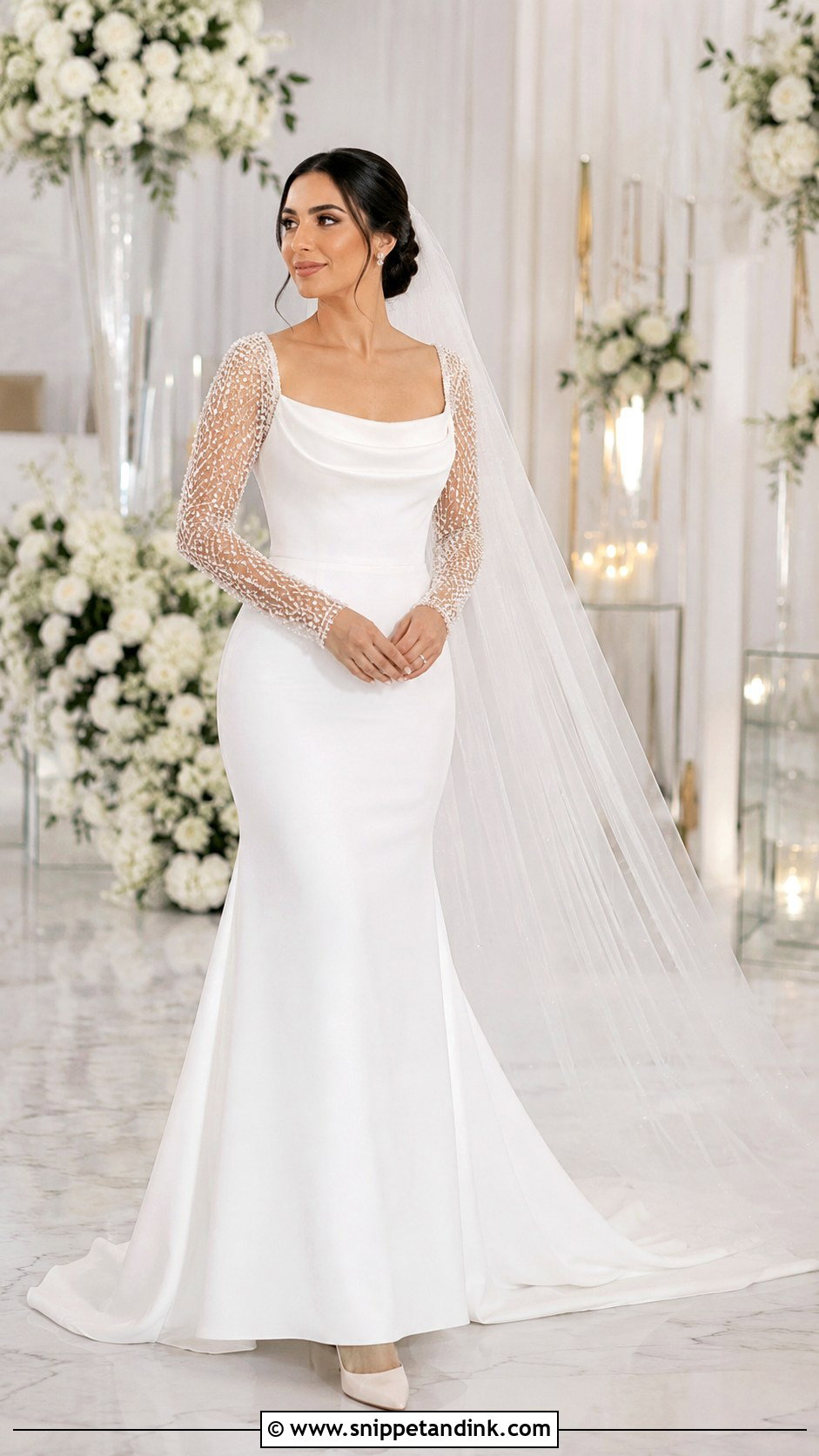
Sheer long sleeves with crystal, pearl or silver beading sparkle every time you move your hands, which you’ll do constantly during the ceremony. Keep the skirt plain crepe, satin or tulle so the sleeves don’t feel busy. Beaded cuffs can catch on the Sofreh cloth and on the fabric held above your head, so I’d choose beading that stops short of the wrist or is stitched flat. A neat updo, small earrings and a sheer veil set low in the hair finish it.
14. Persian Wedding Dress With A Traditional Termeh Accent
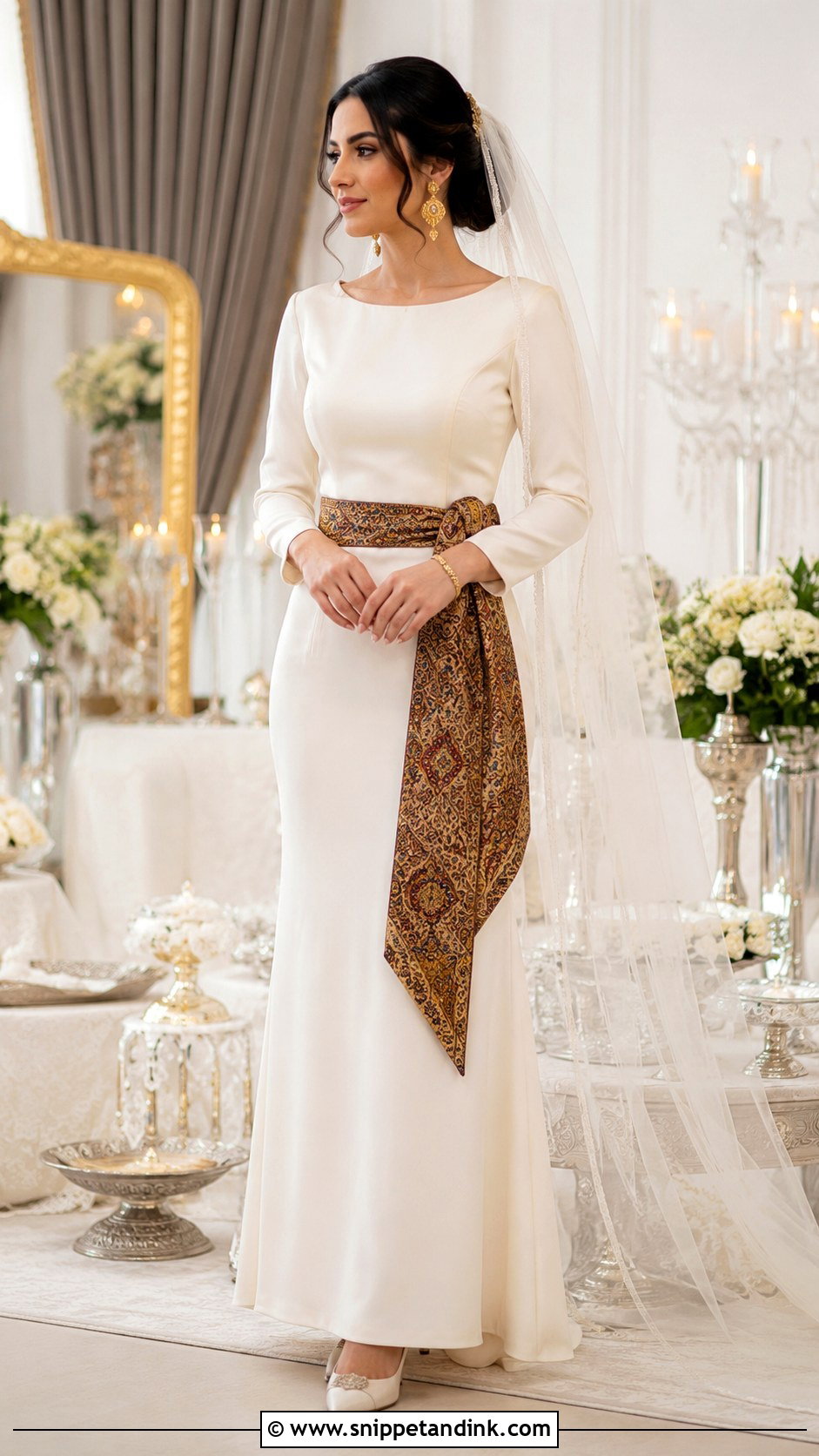
Termeh is a traditional Persian woven cloth with rich, intricate patterns, and many Sofreh spreads already use it. That’s exactly why I’d use it on the bride only as an accent: a sash, a small jacket, an embroidered belt, a clutch or a ceremony shawl over a simple ivory satin or crepe dress. A full Termeh gown next to a Termeh Sofreh can blend in. Gold jewelry and soft makeup complete a look that honors tradition without feeling like costume.
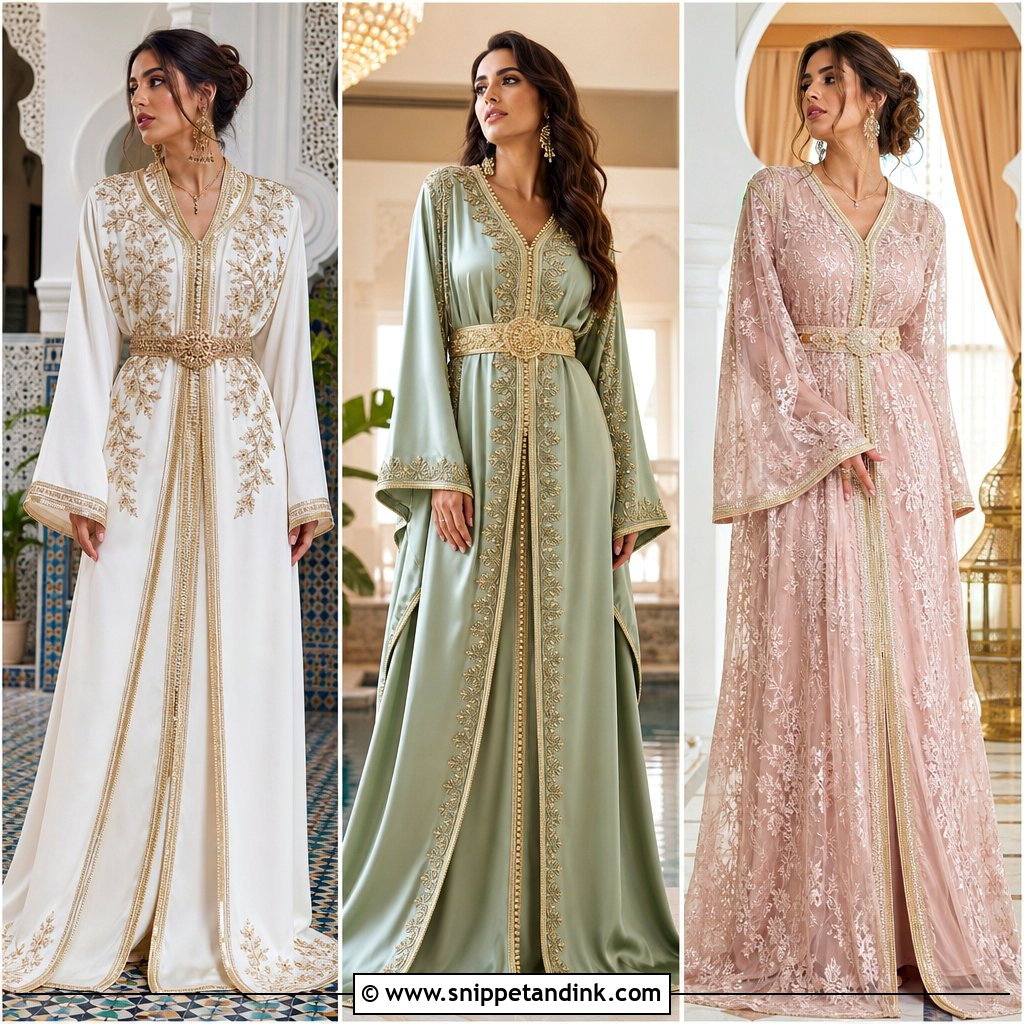
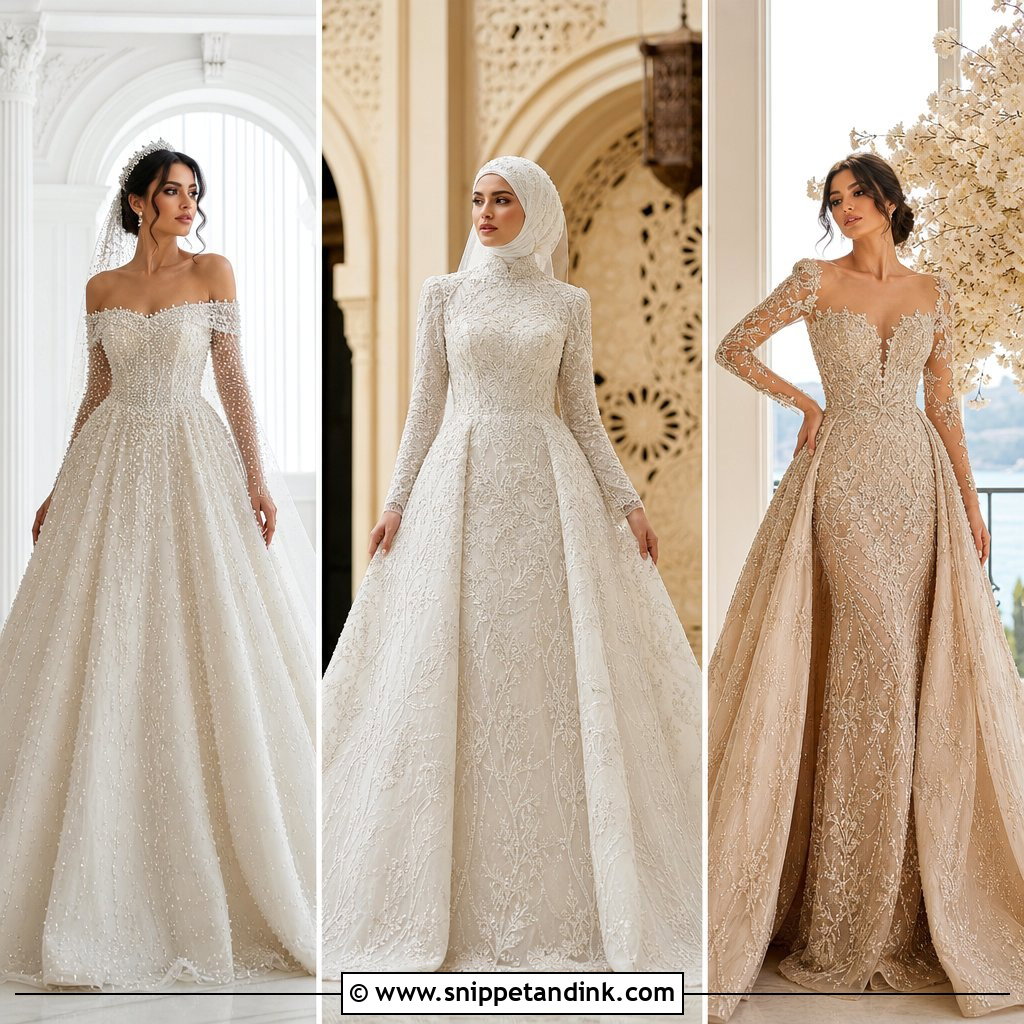
15. Persian Wedding Dress With A Simple Crepe Gown
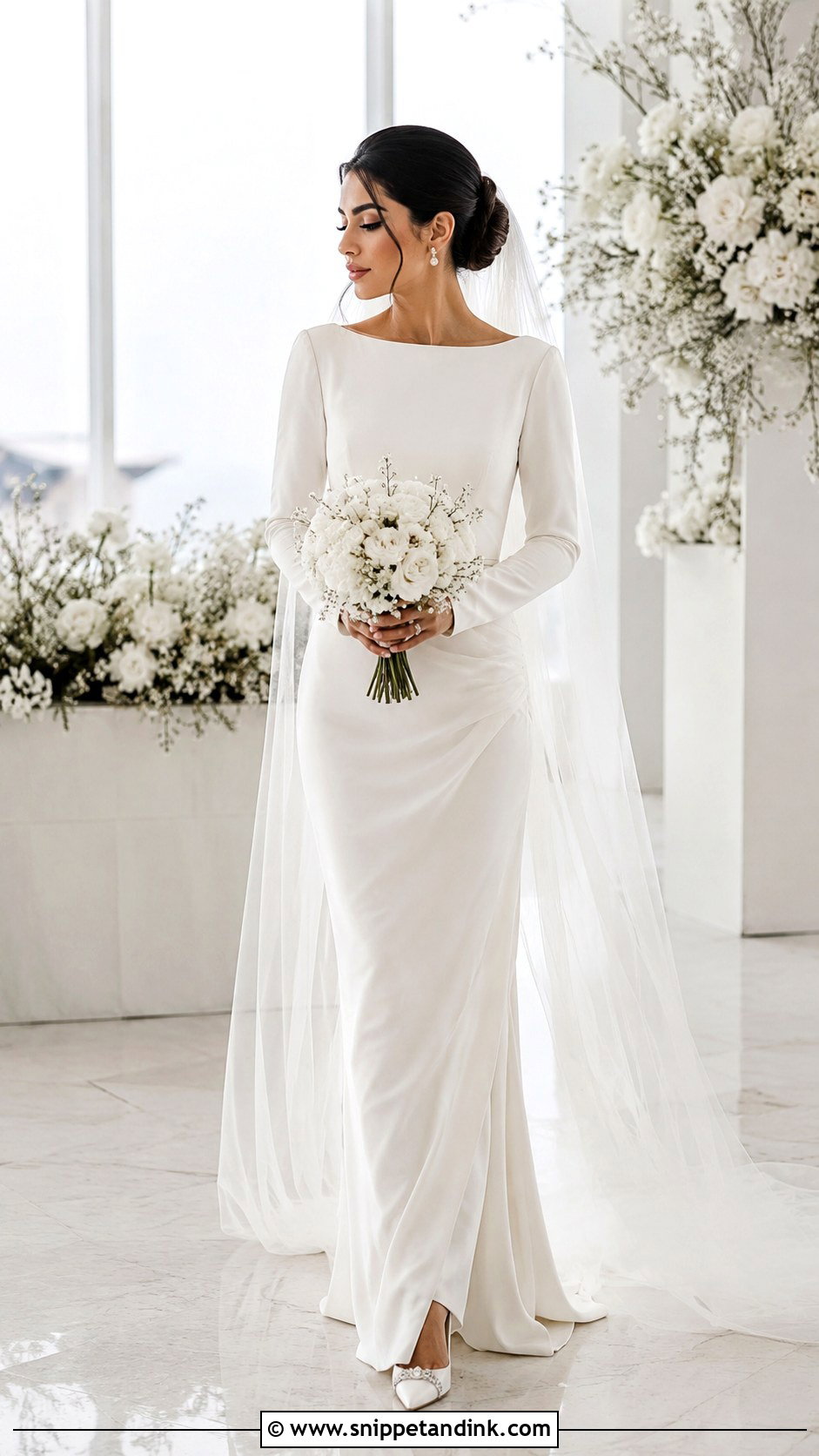
Clean lines and nothing else. Crepe falls smoothly and has a slight stretch, so it’s comfortable seated through a long Aghd. Long sleeve, off shoulder, square or boat neck all work. With such a plain dress, the Sofreh, your jewelry and your face carry the photos, which many brides prefer. Crepe shows seams from underwear clearly, so bring your real shapewear to every fitting. Pearl earrings, a sleek veil, a structured bouquet, pointed ivory heels and a low bun or polished waves complete it.
16. Persian Wedding Dress With Off Shoulder Sleeves
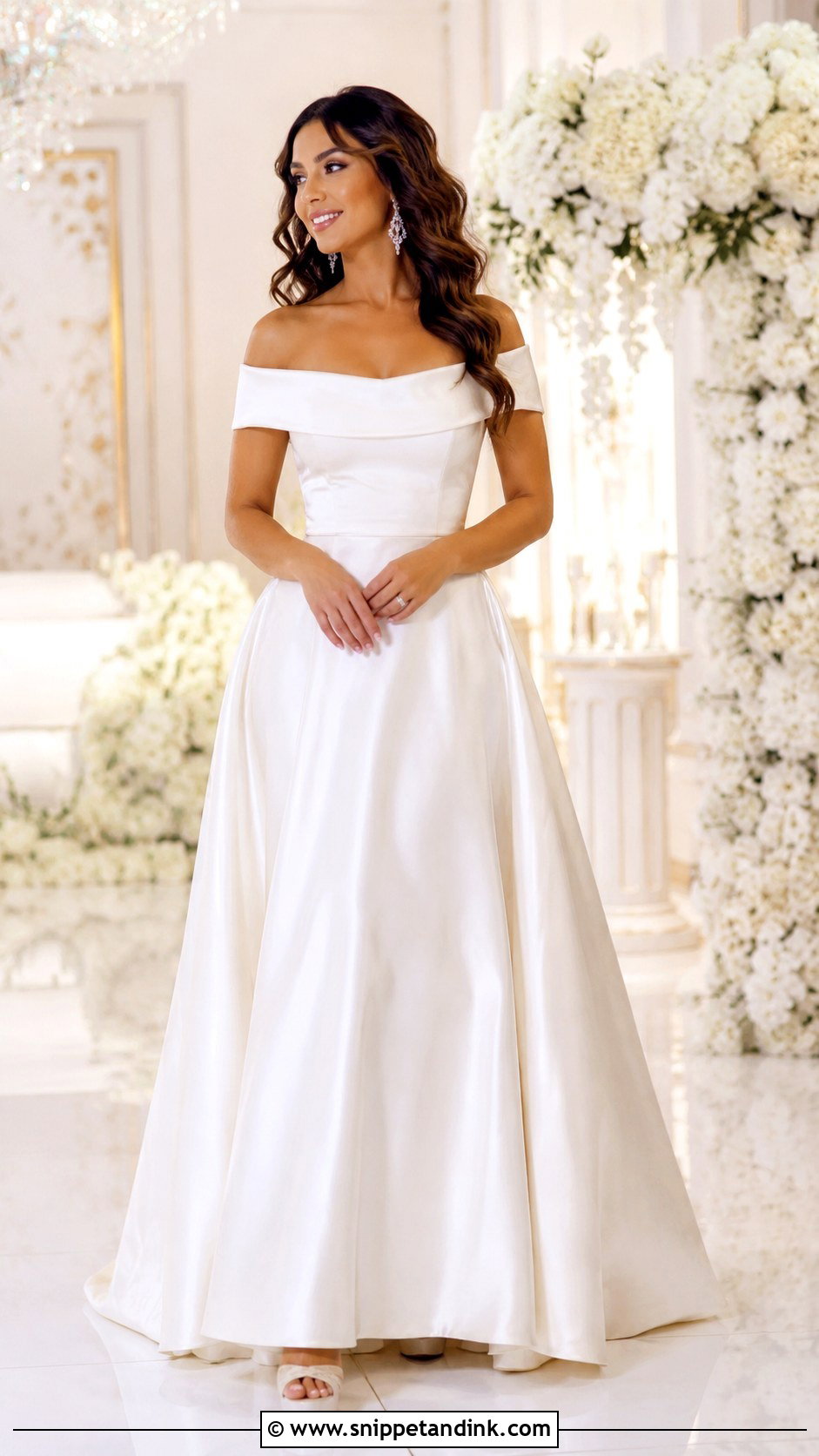
Lace sleeves feel soft, satin folds classic and beaded sleeves shiny, and all three frame the shoulders while keeping the gown formal. The limitation is arm movement. Most off shoulder bands stop you lifting your arms high, which matters during an Aroosi with lots of dancing, so test it. A fitted bodice over an A-line or mermaid skirt balances it. Loose waves, drop earrings, a veil set behind the crown and ivory heels with a stable base finish the look.
17. Persian Wedding Dress With A Long Train
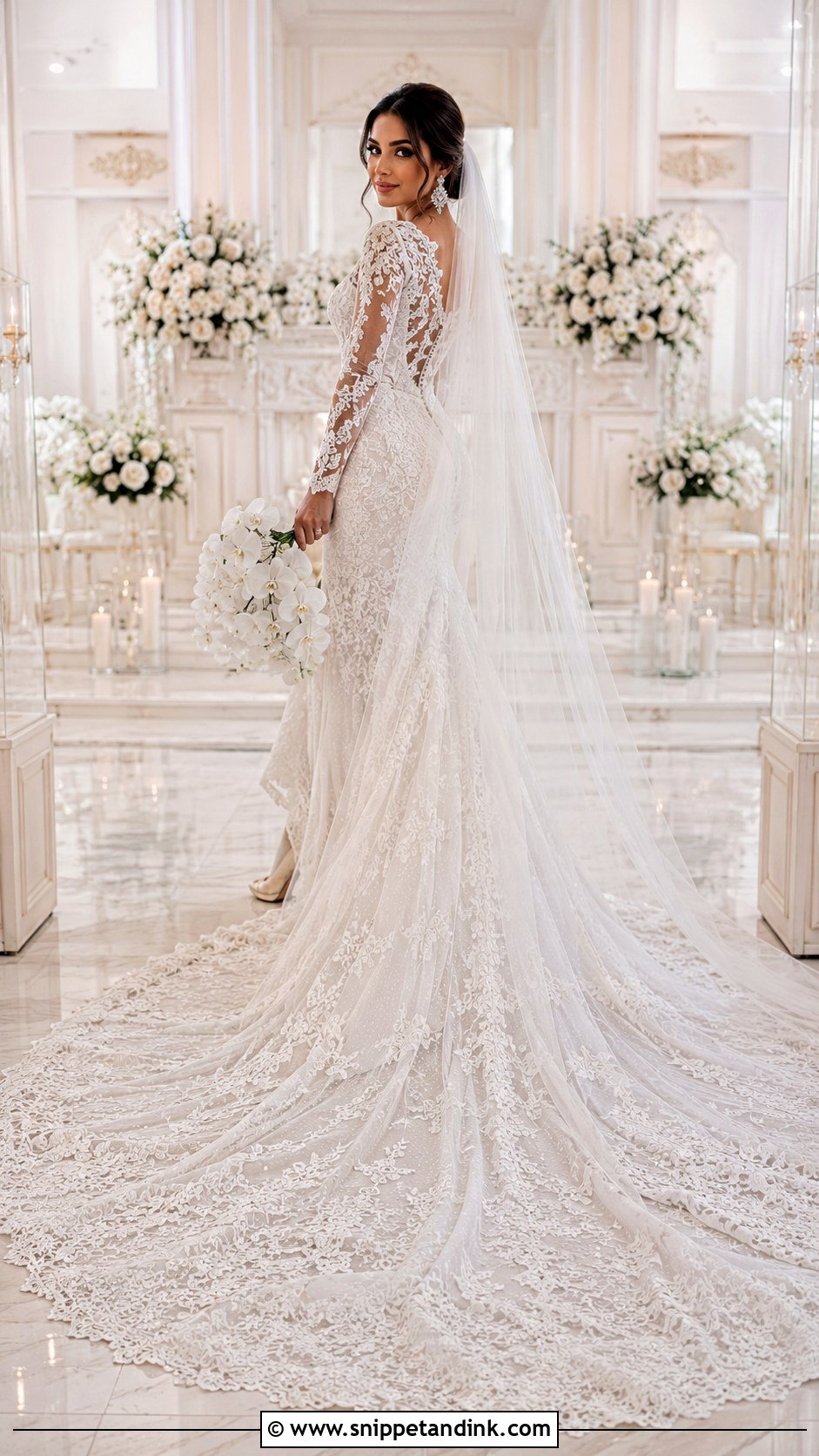
A chapel or cathedral train looks wonderful in the aisle and in seated Sofreh photos, where it spreads around the bride. It needs space, so it suits larger venues. A secure bustle is essential before the Aroosi; ask for multiple hooks or ribbon loops rather than one, and have a bridesmaid practise fastening it at the final fitting. Satin, lace, tulle or crepe all work. Keep accessories balanced: a simple veil, elegant earrings and heels that keep your posture upright.
18. Persian Wedding Dress With A Sheer Illusion Bodice
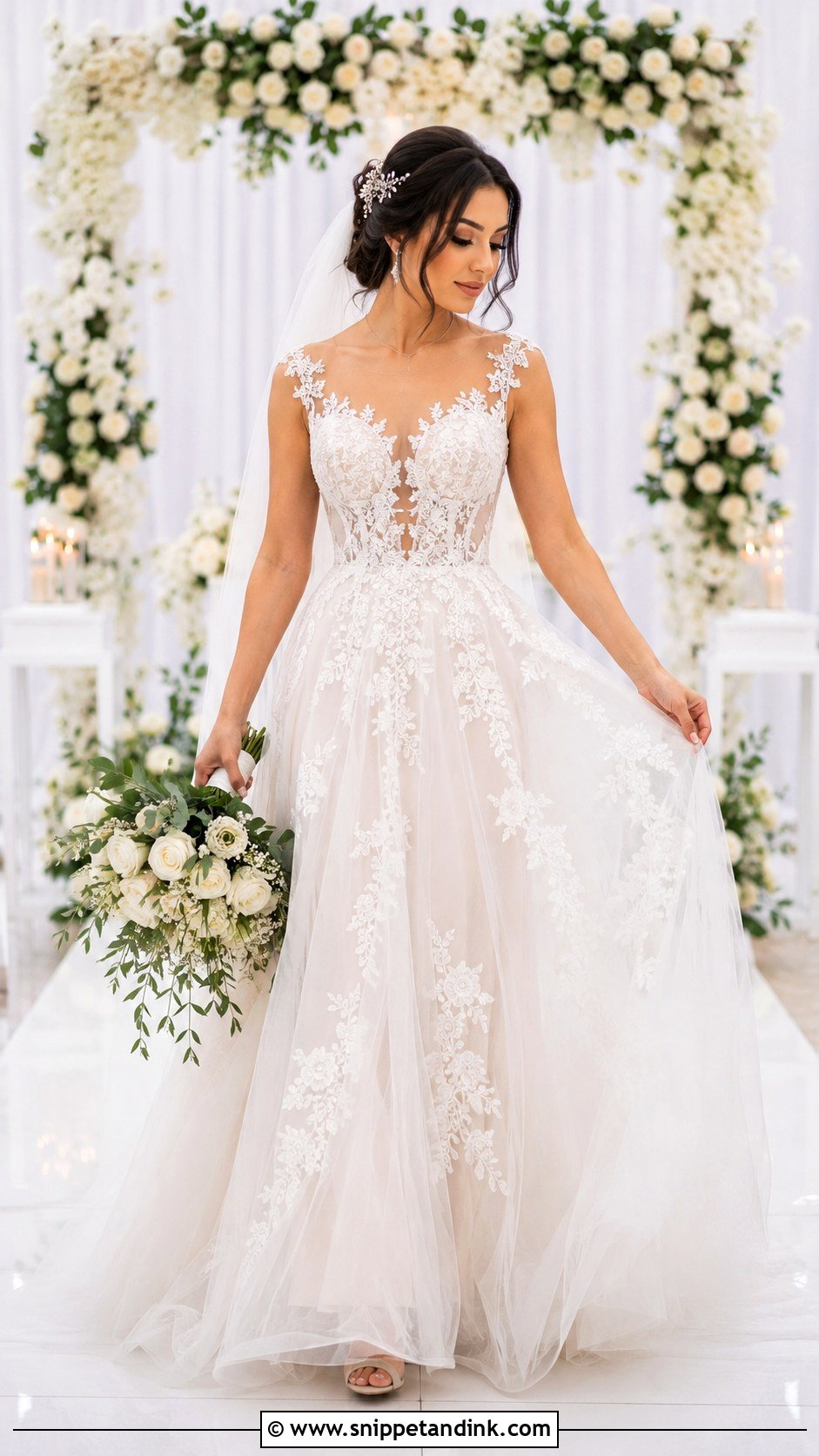
Illusion fabric is the invisible mesh that holds lace appliques, pearls or soft beading in place around the neckline and sleeves, so the detail appears to float on the skin. Ask for an illusion tone matched to your skin, as a mismatched shade looks grey in photos. For a family-centered ceremony I’d choose a bodice that feels secure and tasteful, balanced by a flowing skirt or fitted mermaid. A sheer veil, crystal hair pins, soft makeup and neutral heels complete it.
19. Persian Wedding Dress With A Champagne Tone
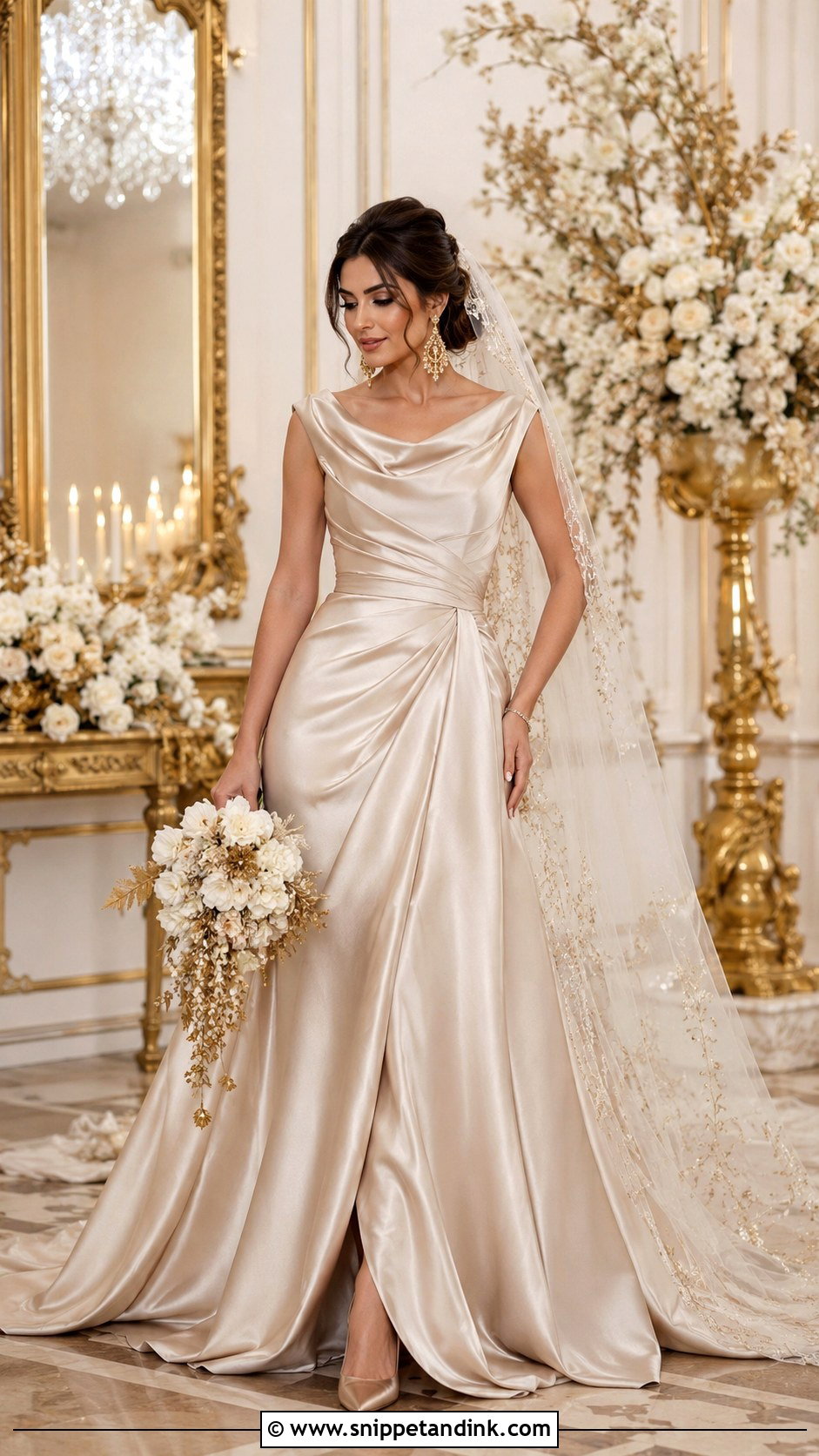
Champagne, light gold and warm ivory sit more softly against many skin tones than bright white, and they glow next to gold jewelry and candlelight. A satin ball gown, beaded sheath or lace A-line all suit the color. Match the veil to the dress rather than defaulting to white, which makes champagne look muddy beside it. Gold earrings, a delicate bracelet and neutral heels finish a look that fits a Sofreh with gold decor.
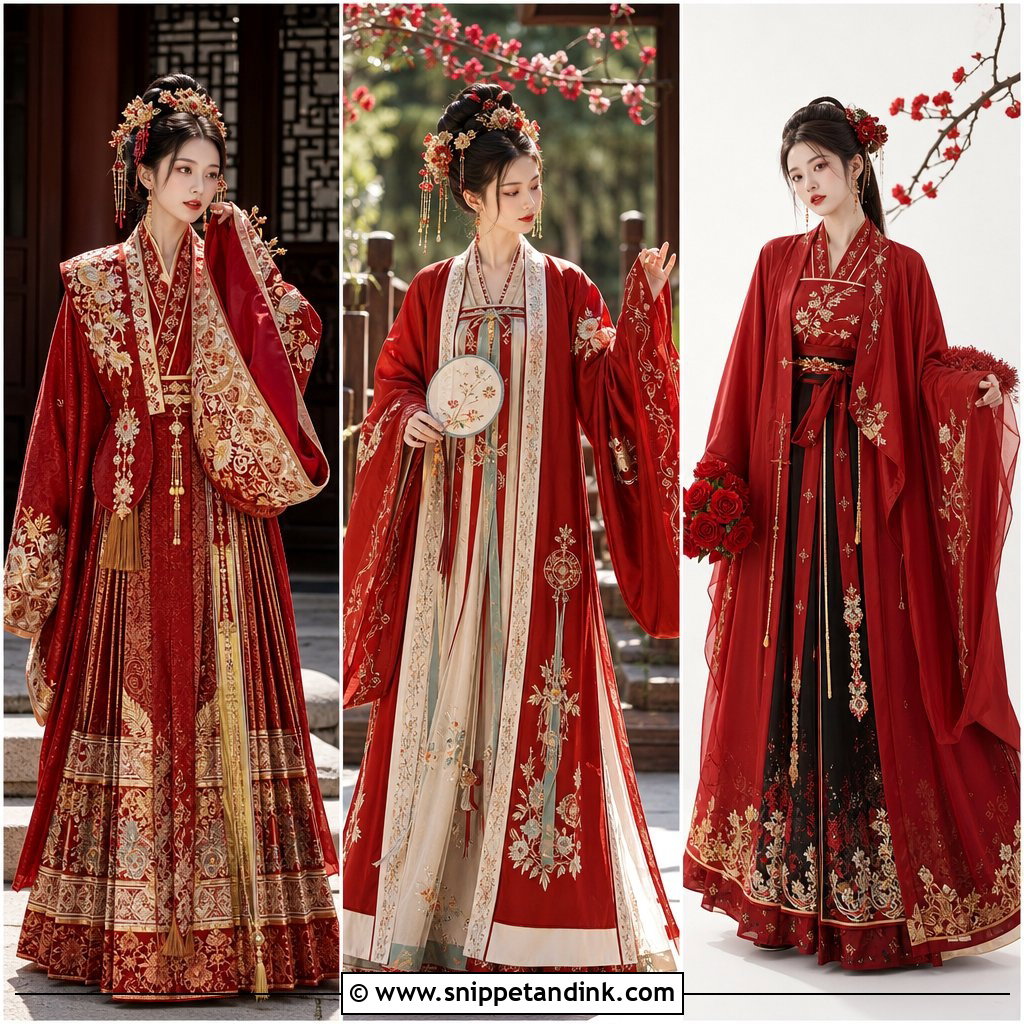
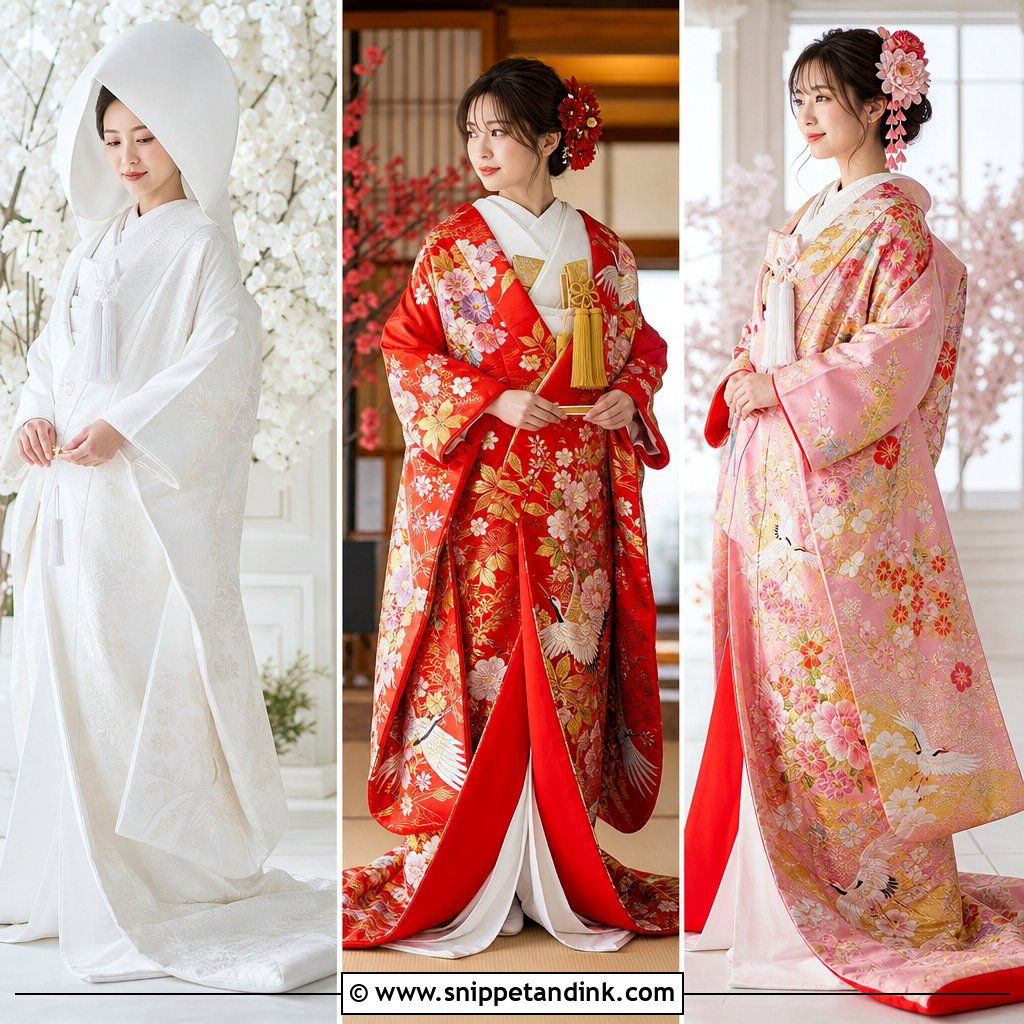
20. Persian Wedding Dress With A Modern Jumpsuit
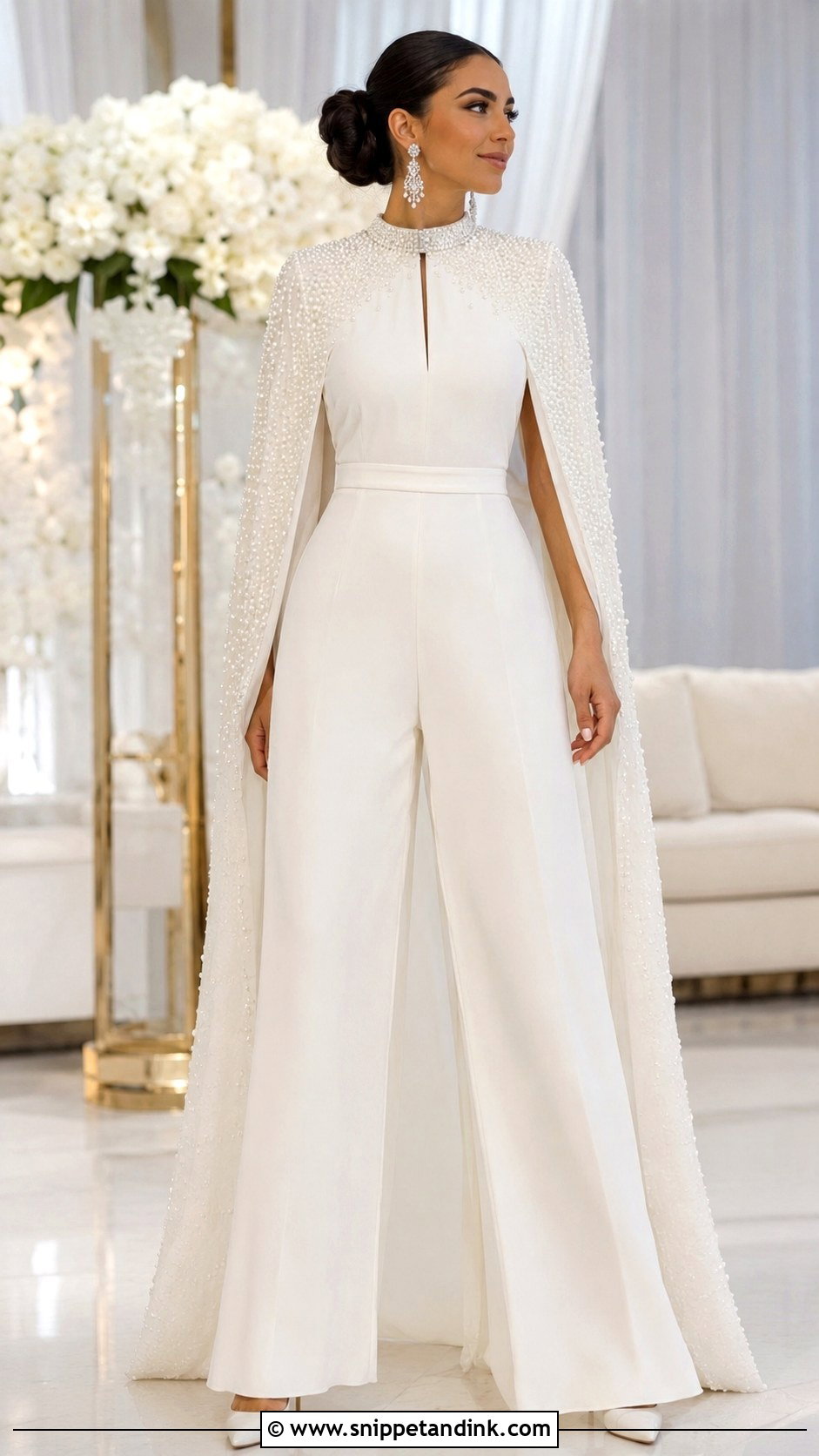
For a civil ceremony, a second look or the Aroosi, a white or ivory jumpsuit gives you complete freedom on the dance floor. Wide-leg trousers, a tailored bodice and bridal details like pearls, lace, a cape or a removable skirt keep it formal. I’d ask for a side zip rather than a long back zip; you’ll thank yourself every time you need the bathroom. Pointed heels, statement earrings, a sleek bun or polished waves and a small clutch complete it.
21. Persian Wedding Dress With A Short Reception Dress
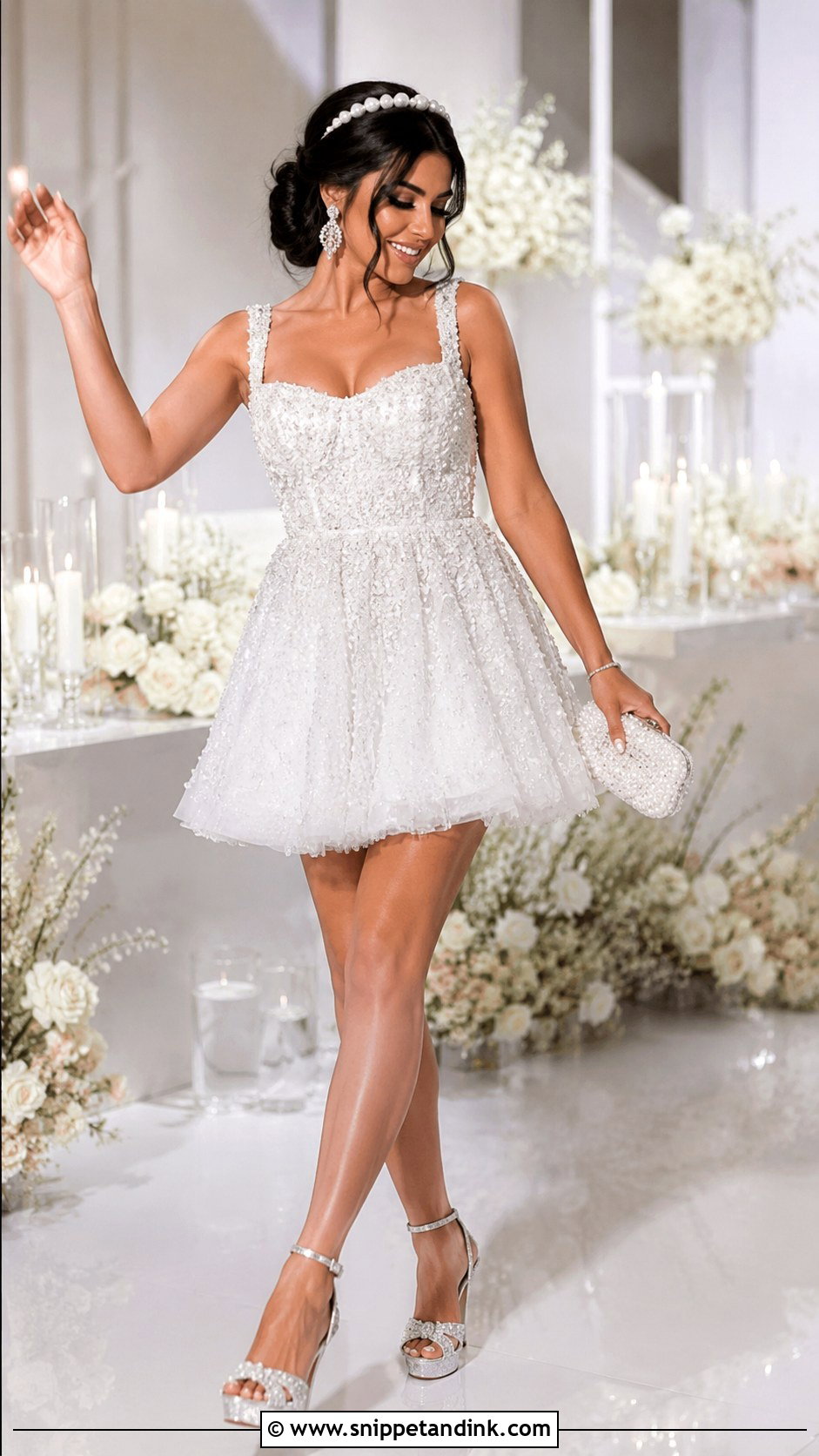
After a long train or heavy skirt, a white mini or tea-length dress feels like freedom. Feathers, pearls, lace, satin or beading keep it bridal, and an elegant, structured fit stops it looking casual. Change after the ceremony and the formal photos, not before, and allow a good twenty minutes with help. Pair it with embellished heels, sparkling earrings and a small hair bow or pearl headband for the reception.
22. Persian Wedding Dress With A Bridal Cape
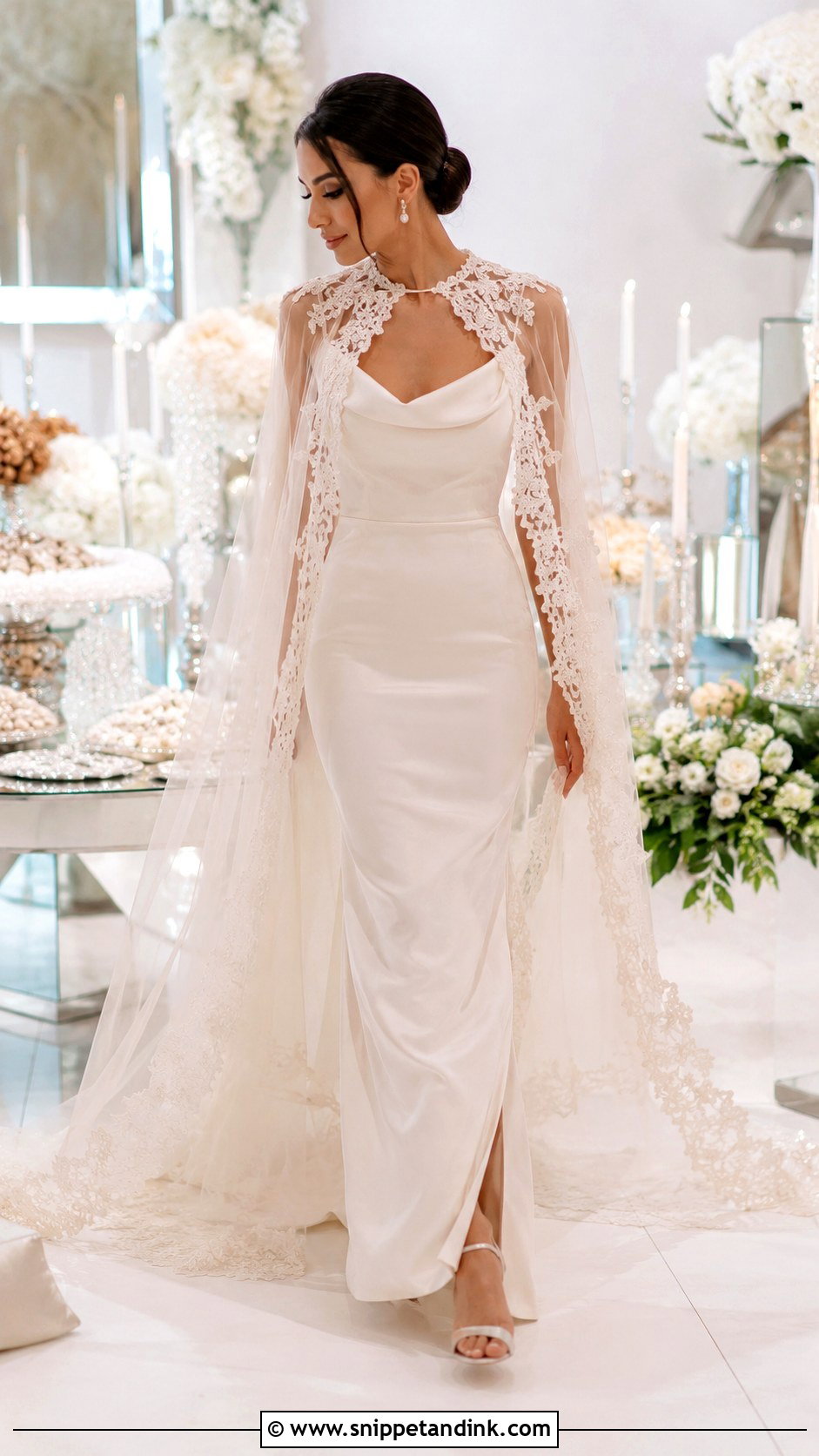
A cape attaches at the shoulders or back and moves as you walk, which looks regal in full-length photos beside the Sofreh. It works best over clean crepe, satin or fitted shapes. Lace trim, pearl details or plain sheer tulle all suit it. It also gives coverage during the ceremony without the bulk of a jacket, then comes off for dancing if it fastens with hooks. Sleek earrings, a low bun and simple bridal shoes keep the outfit balanced.
23. Persian Wedding Dress With A Two Piece Bridal Set
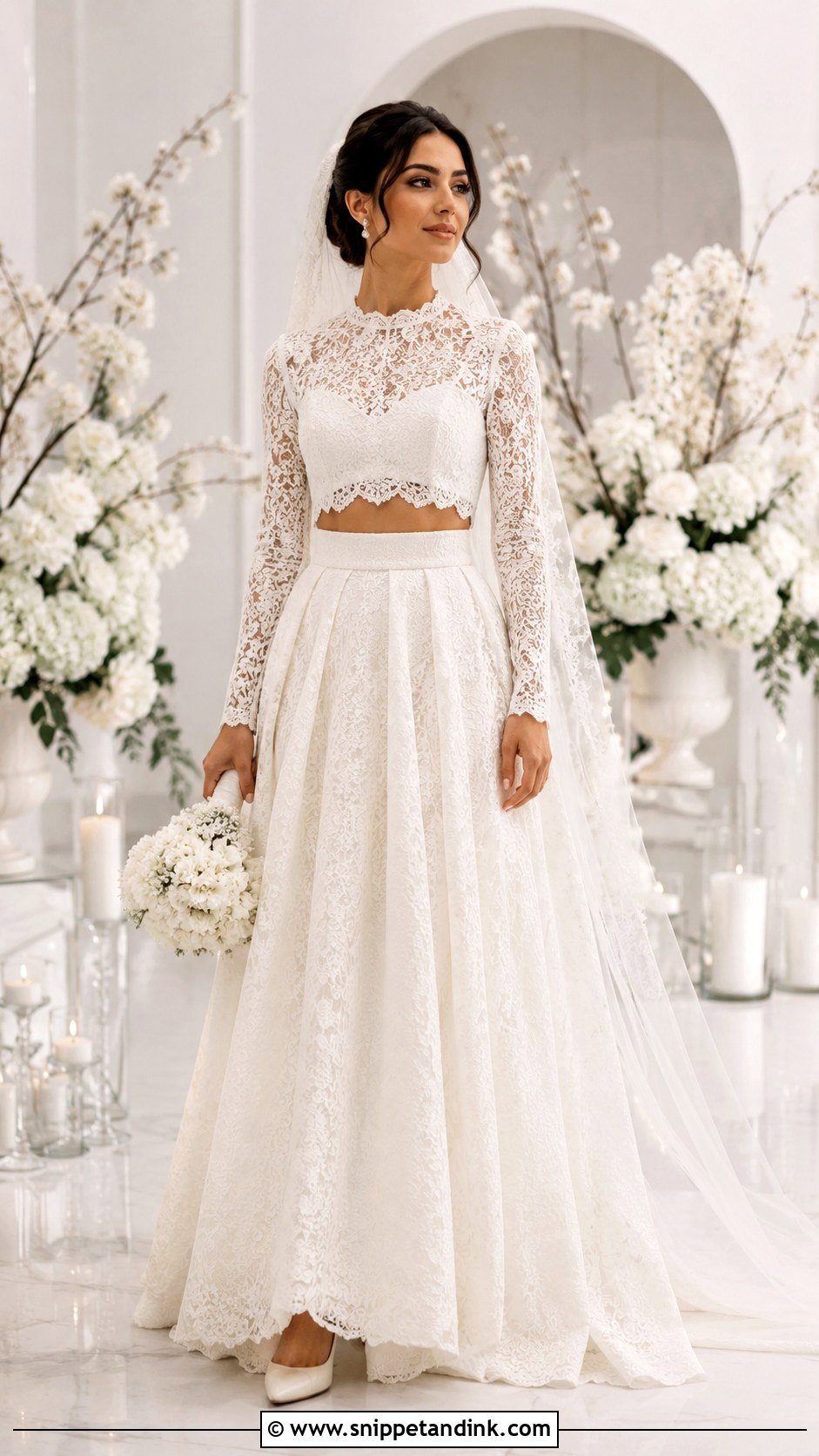
Separates are fitted piece by piece, which helps if your top and bottom are different sizes. A matching crop-style top with a high-waisted skirt looks modern; a longer structured top over a flowing skirt gives more coverage for a conservative family. Lace, satin and crepe all work. Refined fabric and a tailored fit keep it bridal. Raise your arms at the fitting to check the gap at the waist. Pearl earrings, a soft veil and ivory heels suit a smaller Aghd or a modern venue.
24. Persian Wedding Dress With A Modest Bridal Jacket
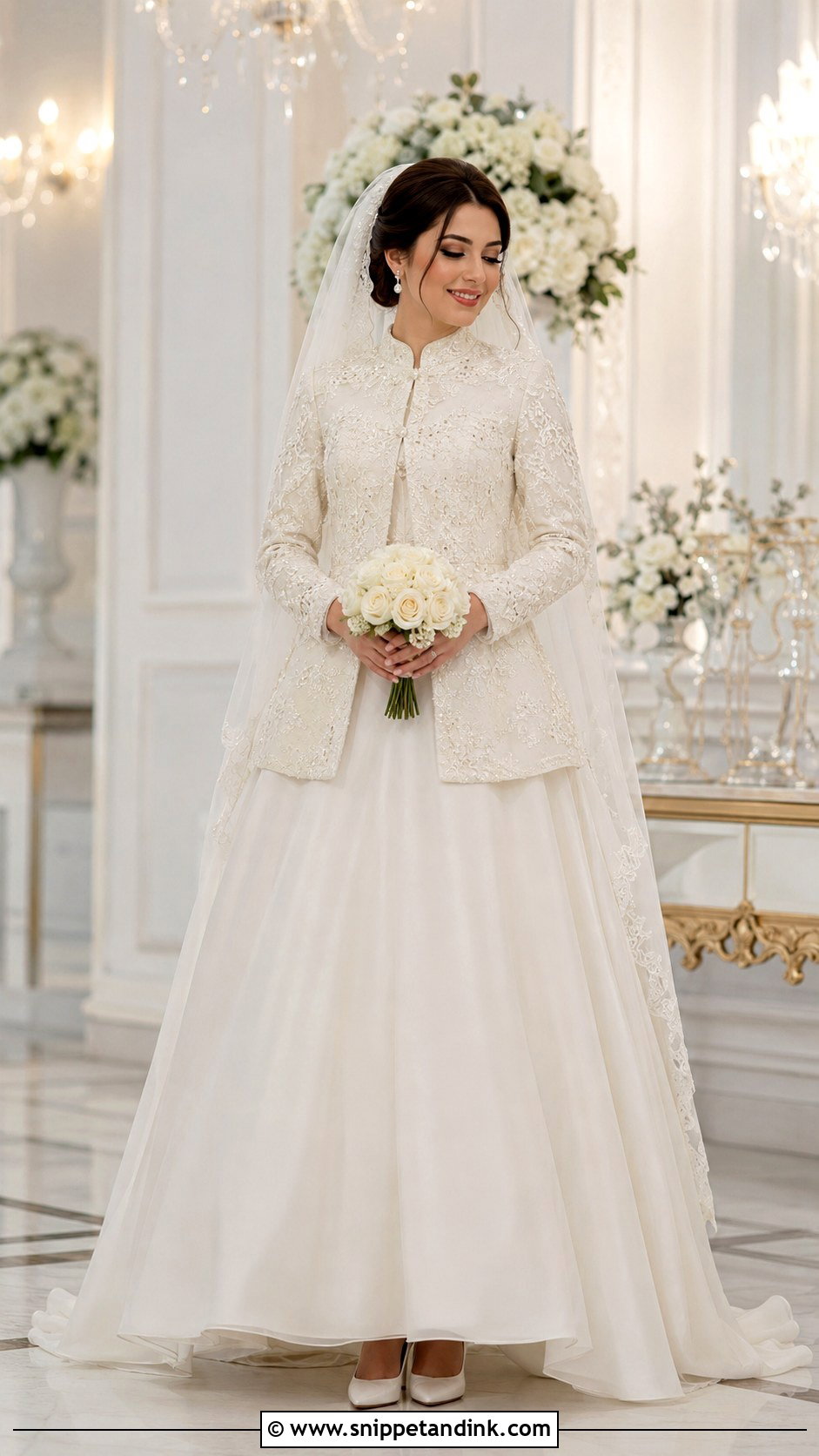
This is the option I suggest most often when a bride wants a bare-shouldered gown and her family hopes for more coverage at the Aghd. A lace, satin, organza or embellished jacket over a simple gown covers the arms for the Sofreh and family portraits, then comes off for the reception. The jacket must match the gown’s color closely, so order them together or bring a fabric swatch. Pearl earrings, a soft veil and classic heels complete it.
25. Persian Wedding Dress With A Red Reception Gown
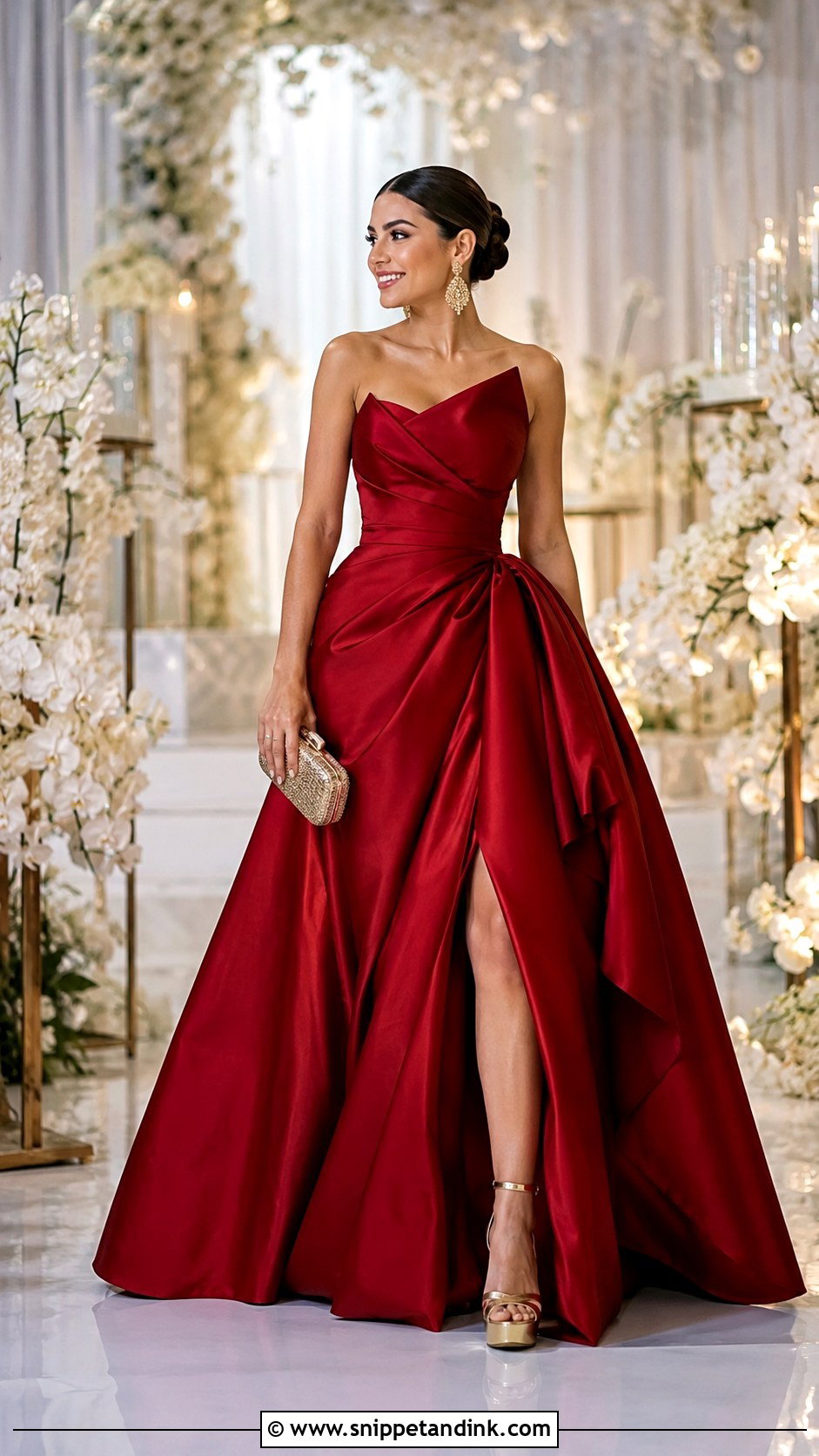
Red is a festive second look, and it photographs vividly against the white or ivory of the Aghd dress. Change into deep red, ruby or a garnet gown for the Aroosi, in satin, a velvet-like texture, beading or flowing chiffon depending on venue and season. Check deep reds under the venue’s lighting if possible; some turn almost brown under warm bulbs. Gold jewelry, metallic heels and a neat hairstyle keep the dress the focus.
Leaving Room for Gold Given at the Ceremony
In many Persian families, relatives give the bride gold or jewelry during or right after the Aghd, and sometimes put it on her there and then. I plan the neckline and wrists with that in mind. A very high neck or heavily beaded collar leaves no space for a necklace, and stacked bracelets of your own leave none for a gift. If you expect jewelry, start with simple earrings and bare wrists, and choose a neckline that can hold a pendant. It’s a small adjustment, and it means the gifted pieces appear in the photos, worn properly.
Timing the Change Into a Second Look
Brides often underestimate the outfit change between Aghd and Aroosi. Taking off a gown with a bustle, veil and sleeves, then putting on a second dress, fixing hair and adjusting makeup takes longer than you’d guess. I’d schedule at least twenty to thirty minutes, choose a room close to the reception, and have one person who knows every hook and zip. Hang the reception dress there in the morning, steamed and ready, with its shoes and jewelry beside it.
Seated at the Sofreh, Dancing at the Aroosi
A Persian wedding dress has two jobs: to look composed while you sit at the Sofreh surrounded by family, and to let you move freely once the music starts. Lace sleeves, gold embroidery, a satin ball gown or a jumpsuit can all do both if you test them properly. Sit in every dress you’re considering, lift your arms, walk, and imagine family gathering closely around you. Pearl jewelry, gold accents, a soft veil and comfortable heels finish the outfit; the comfort is what you’ll remember.
You'll Like These Ideas:




Leave a Reply