
Brides who come to me asking for something simple usually don’t mean plain. They mean one idea, done properly: an open back, a sculpted neckline, a sleeve with real movement. The dresses below each carry a single feature like that on a clean shape, and the hardest part of wearing one is resisting the urge to add a second. I’ll be honest about which cuts need serious tailoring, which need special undergarments and which are kind to a bride who wants to dance. Ignore the size on the label while you look. Fit is what makes a minimal dress read as expensive.
Minimal Dresses Need a Longer Runway Than Brides Expect
There’s an assumption that a simple gown is quick: no beading, so less to do. In practice, minimal dresses often take more alteration time, because every millimetre of fit is visible. Here is the rough rhythm I plan around, though every boutique and seamstress works a little differently:
- Start trying on roughly nine to twelve months out. Many bridal gowns are made to order, and production plus shipping commonly takes several months.
- Order with time to spare. If a timeline looks tight, ask the boutique about rush fees or ready-to-wear samples rather than hoping it arrives.
- Book the first fitting around two to three months before the wedding. Simple gowns often need two or three fittings to get the waist, straps and hem exact.
- Hold the final fitting a couple of weeks out, with your shoes, underwear and any jewellery, and practise the bustle there.
If your weight tends to change before big events, mention it at the first fitting. A good seamstress leaves seam allowance in places she can take in later.
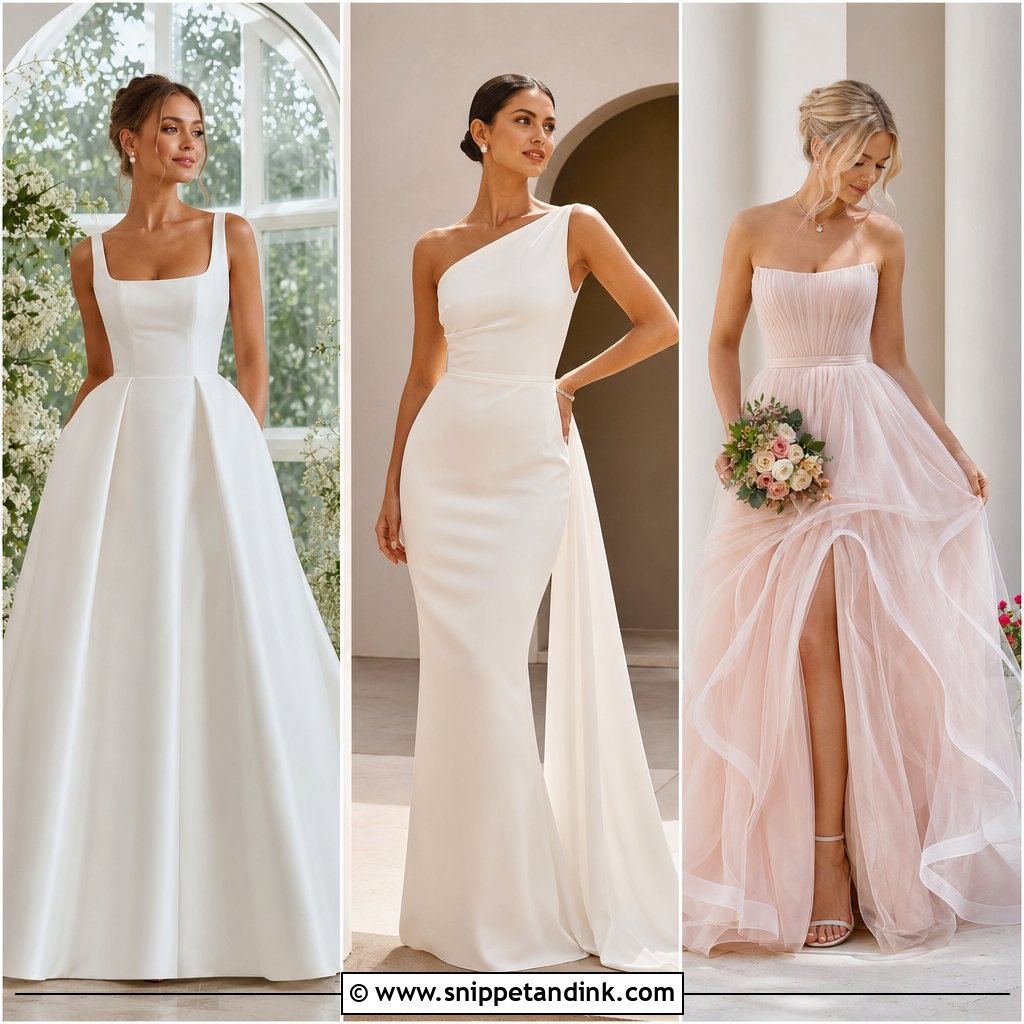
1. Square Neck Satin A-Line Wedding Dress
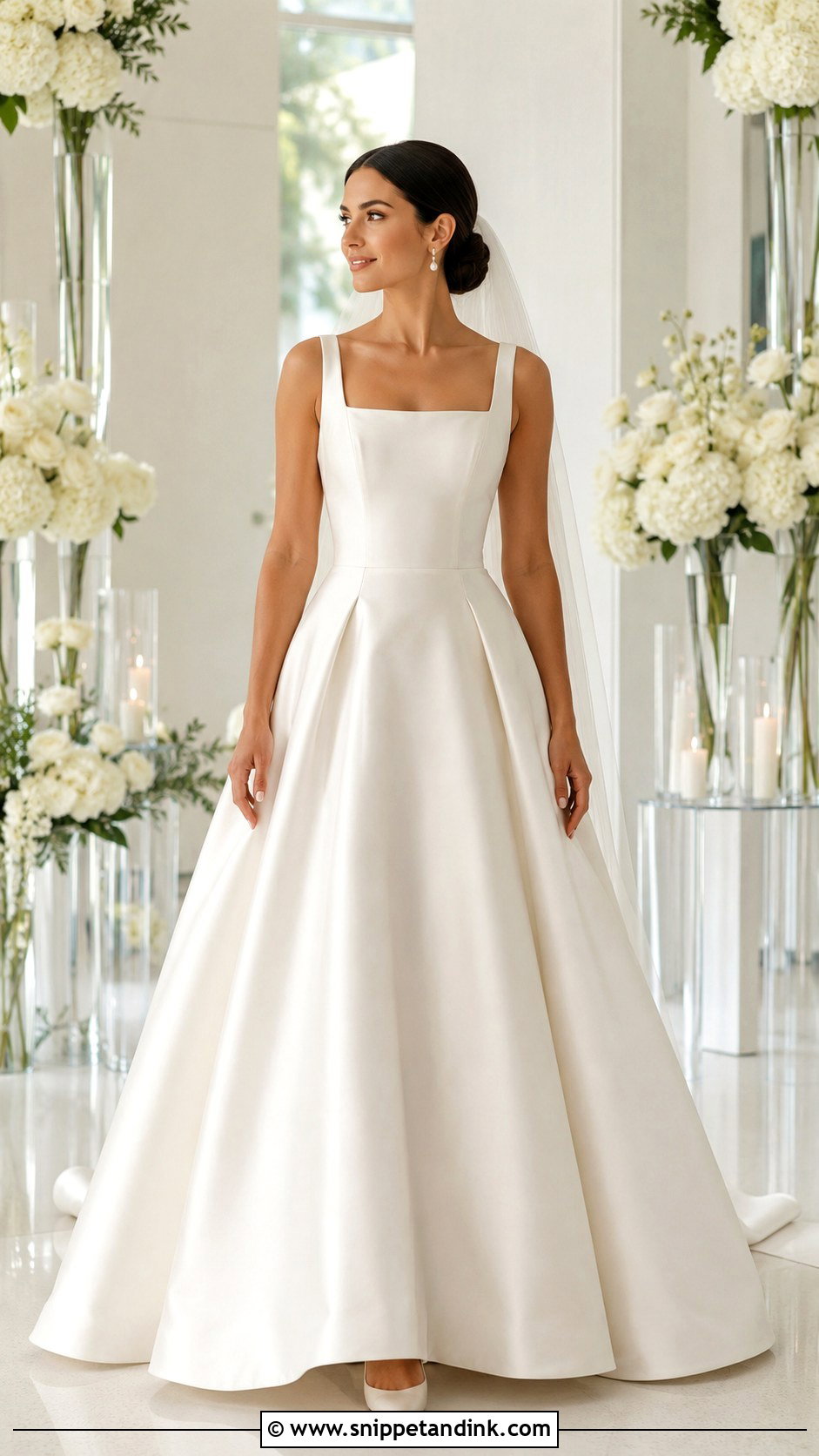
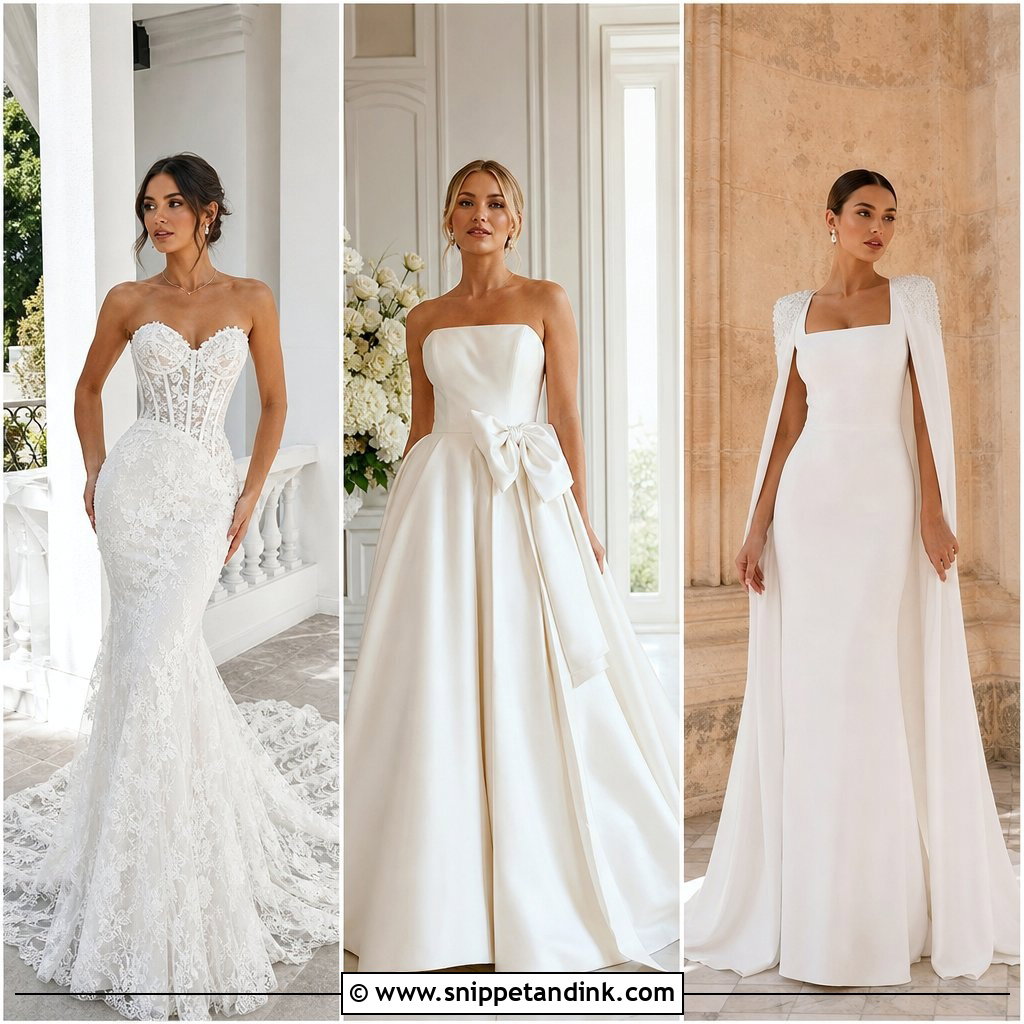
Satin in an A-line holds its own shape, which is exactly why I like it for a square neckline: the straight edge stays crisp instead of collapsing. Ask for wider straps and a lined, supported bodice, and keep the train to a sweep so you aren’t bustling yards of fabric before the first dance. Waist placement is where this dress is won. On petite brides I’ll raise the seam slightly so the skirt doesn’t swallow them; a tall bride can carry a longer bodice and more skirt. Pointed ivory pumps, pearl drops, a fingertip veil and a low bun.
2. Cowl Neck Silk Slip Wedding Dress
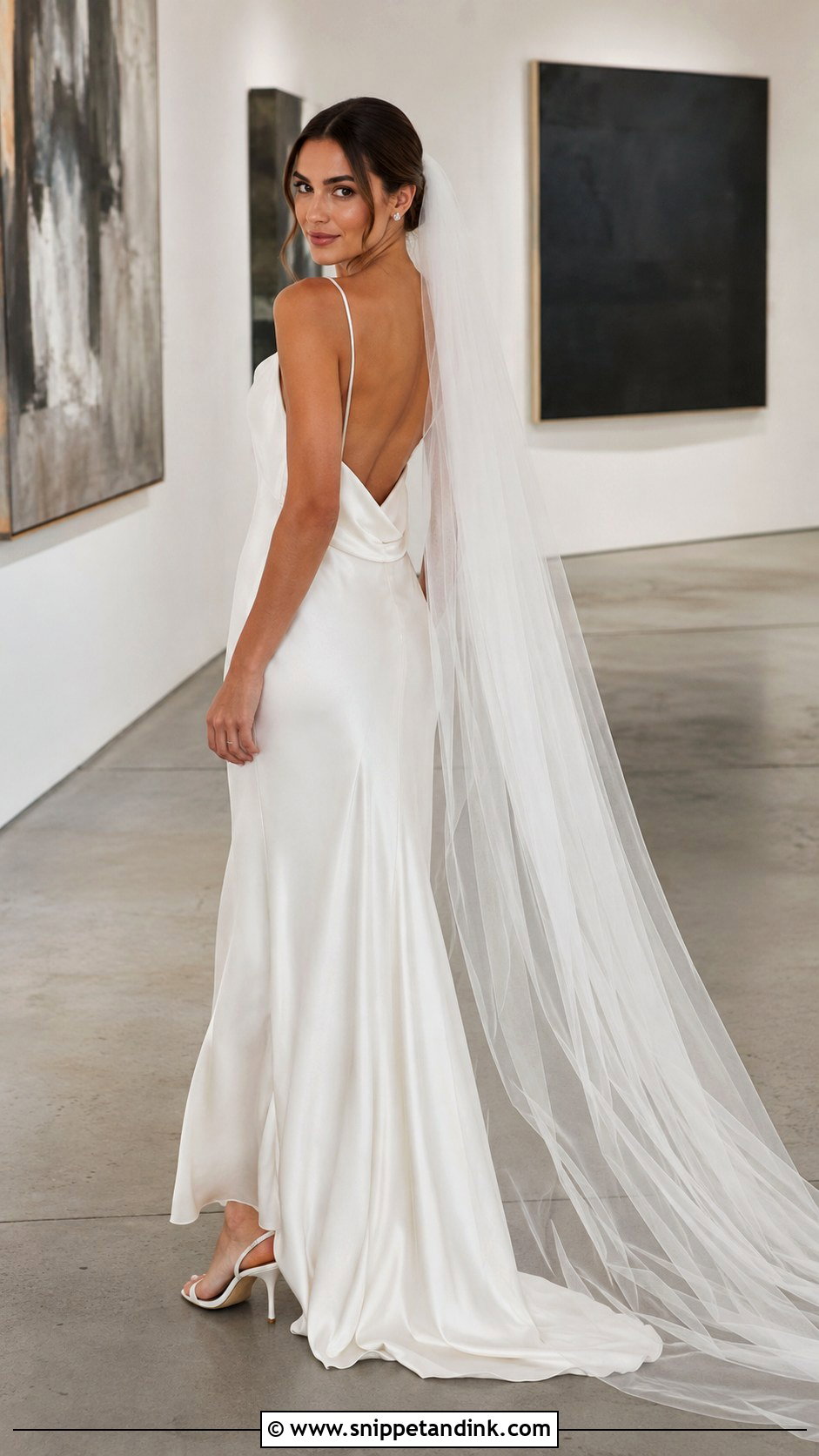
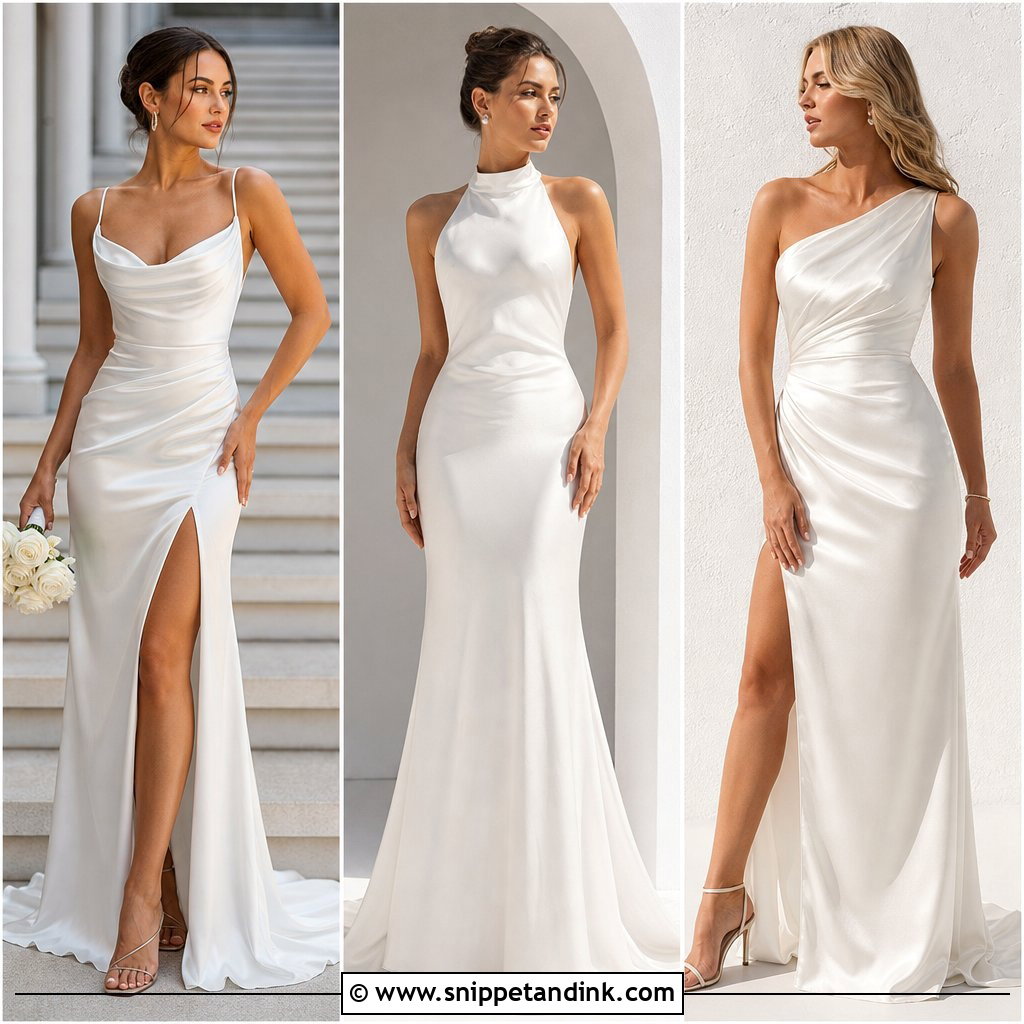
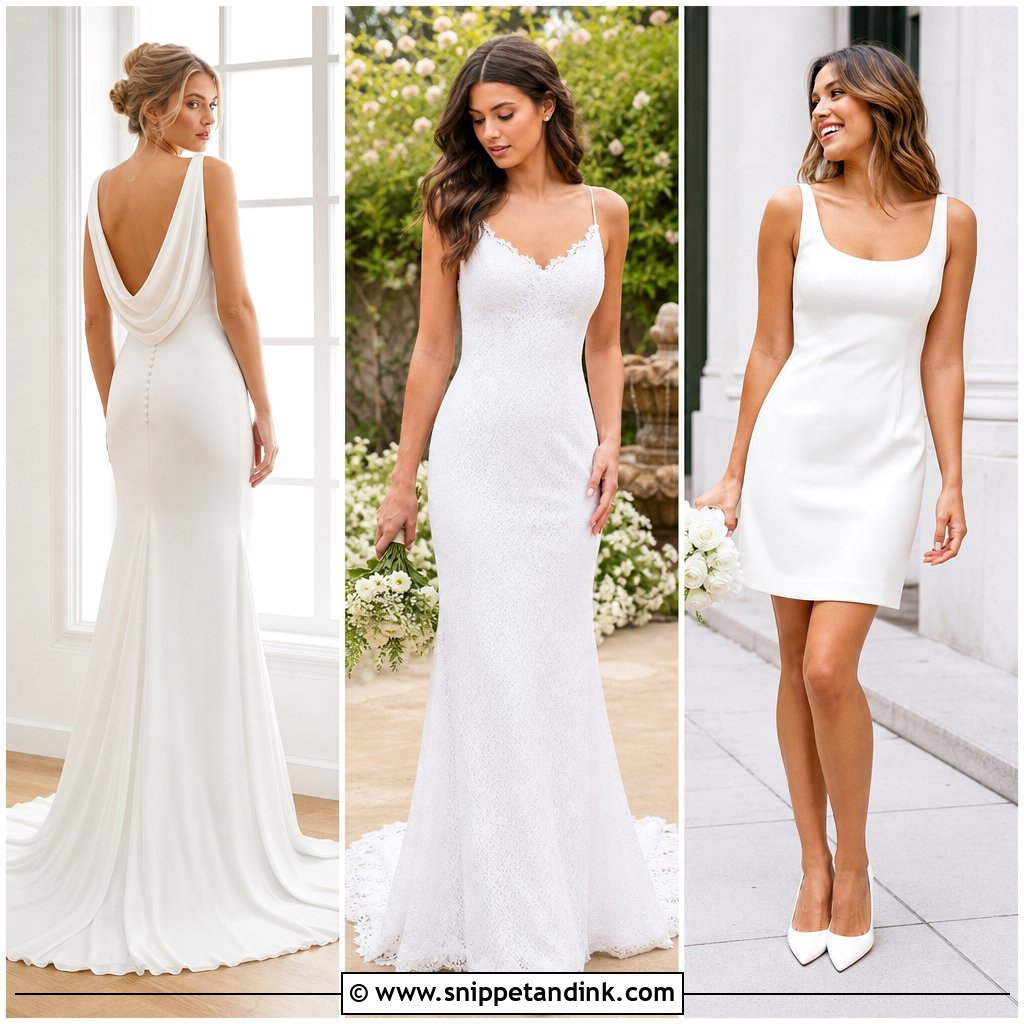
A cowl neck silk slip dress looks effortless in a photo and takes real work in the fitting room. Bias-cut fabric follows the body and reveals everything beneath it, so I insist on a heavier silk or satin with a smooth lining. Thin silk shows the bra, the knicker line and every ripple. If you need support, hidden cups and reinforced straps can be built in by a good seamstress. I’d style it with slingback heels, a narrow floor-length veil and small studs, plus a chignon that leaves the back visible.
3. One Shoulder Crepe Column Wedding Dress
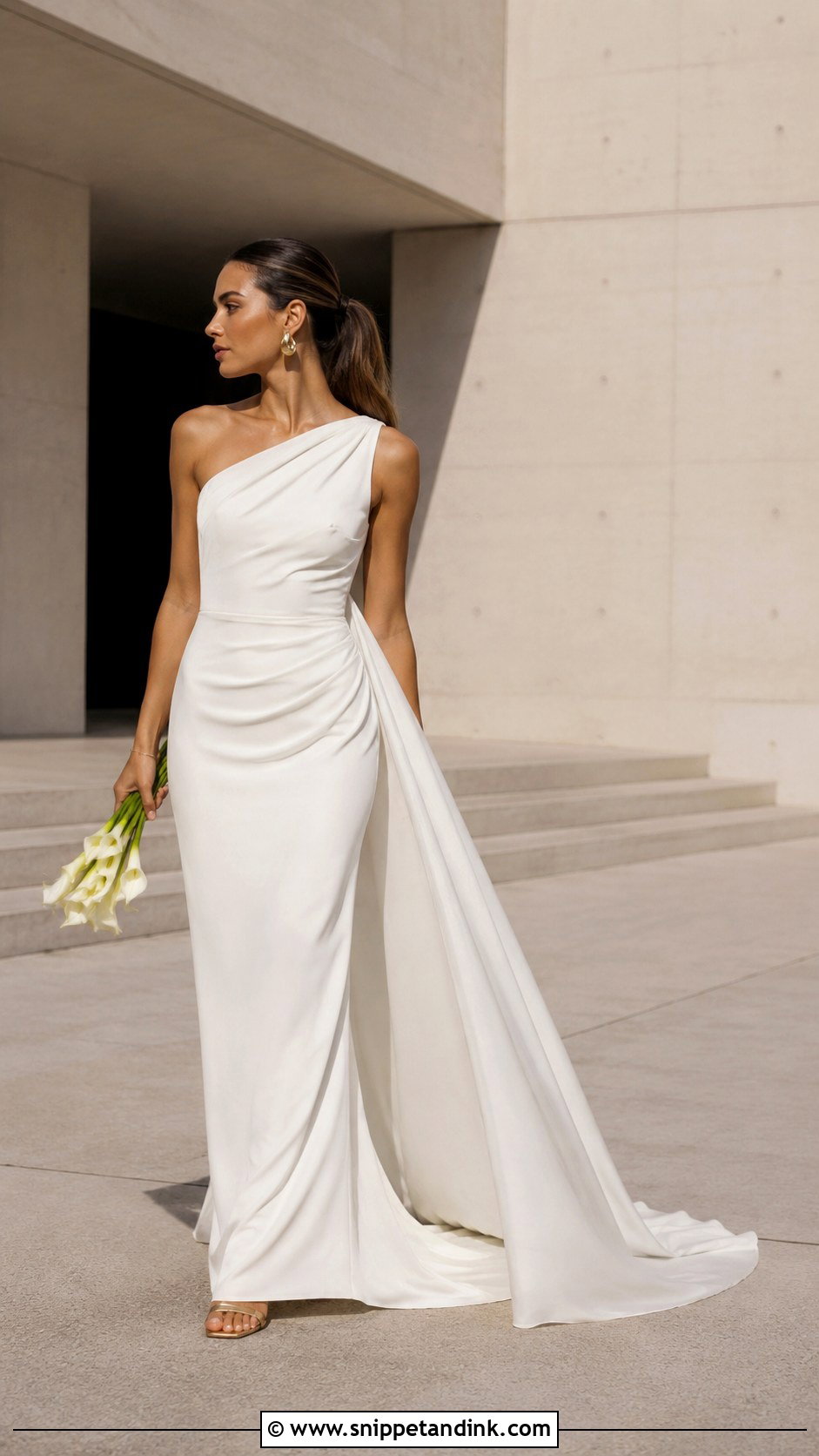
With a one-shoulder crepe column, the strap placement decides everything. Too far out and it slides off; too close to the neck and the whole bodice twists. I look for a softly draped shoulder panel rather than a stiff oversized one, and some stretch in the crepe so you can actually move. Wear one sculptural earring on the bare side and no necklace. A detachable train is worth asking about: it gives you ceremony length, then comes off for the reception without changing the line of the dress.
4. Off Shoulder Minimalist Wedding Dress
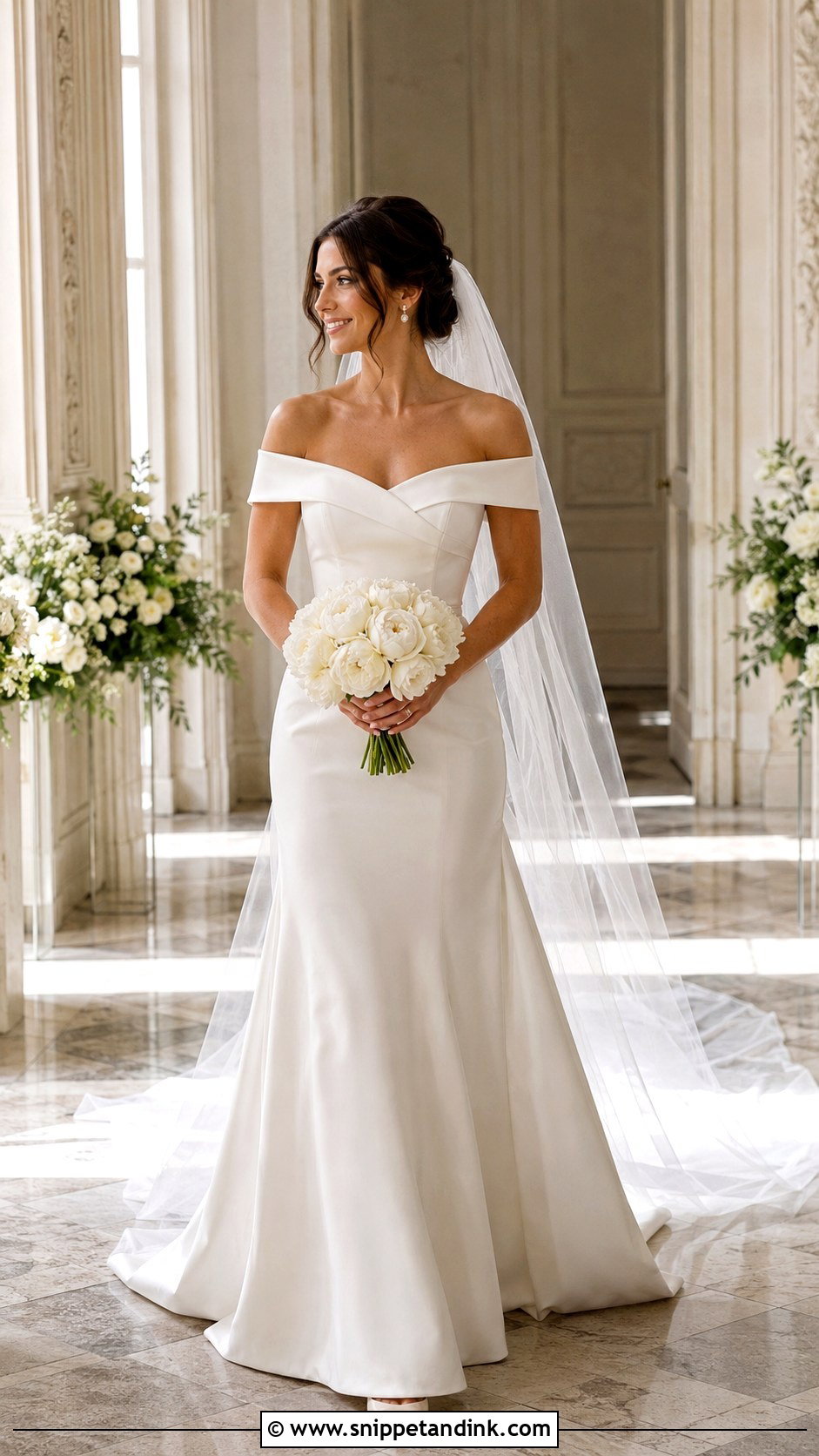
Off-shoulder gowns are only as good as the structure inside them. A folded neckline should rest across the upper arm and stay there, held by a fitted, boned bodice. In fittings I make brides raise their arms, sit down and twist from side to side; if the neckline creeps or the bodice drops, it needs work before it needs accessories. A cathedral veil suits a formal ceremony, while a short tulle veil or comb suits a small one. Detachable straps are a sensible safety net if you’ll be dancing hard.
5. Halter Neck Open Back Wedding Dress
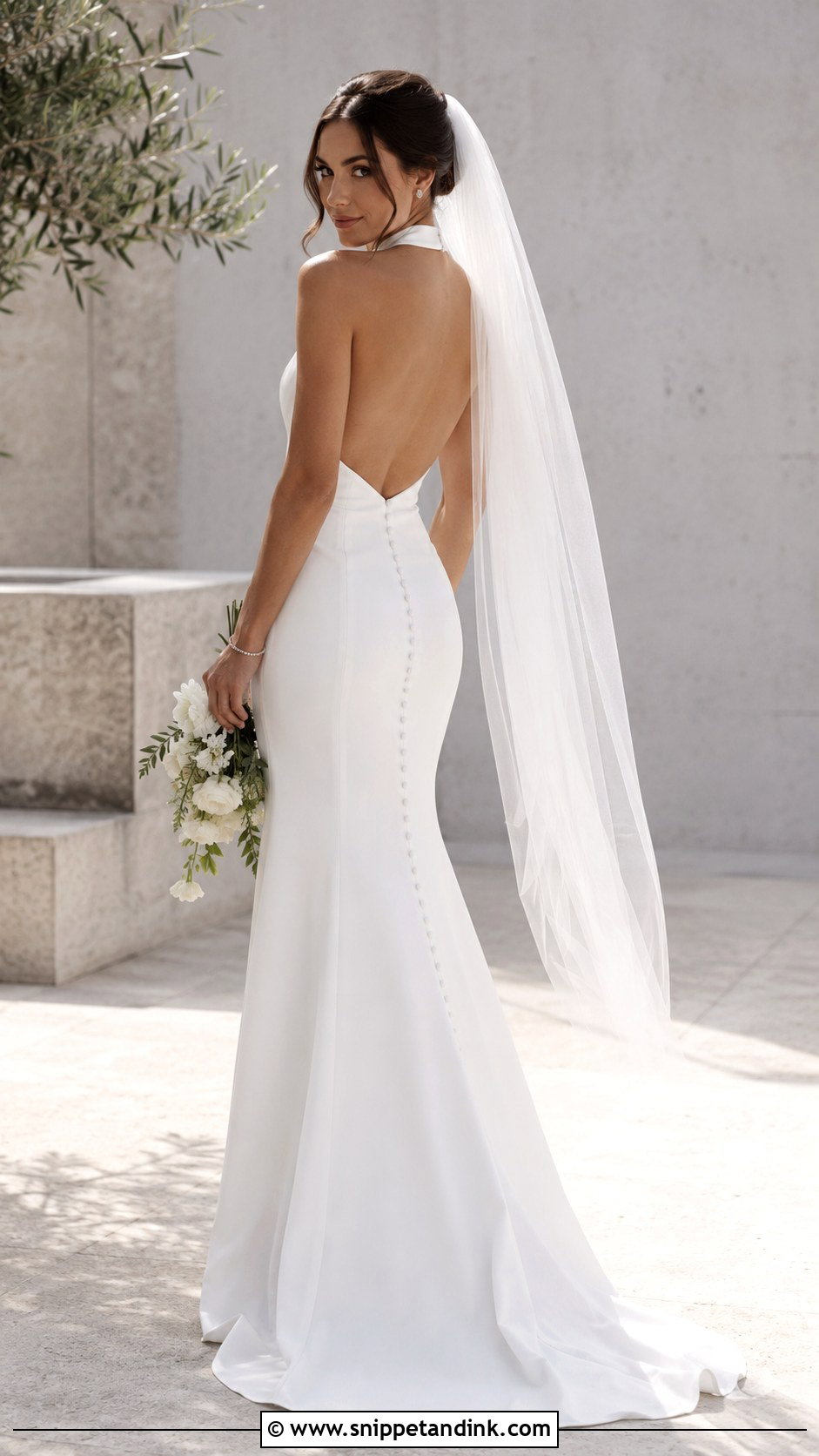
A halter’s appeal is the contrast between a covered neckline and open back, and clean crepe or satin keeps that contrast sharp. Standard bras won’t work here, so raise support at the very first fitting rather than the last: built-in cups or a sewn-in internal corselet take time to add. The neckline should sit close without pressing on the neck. An updo shows the back, and a veil attached below the bun frames it. A short row of covered buttons down the spine is all the decoration I’d add.
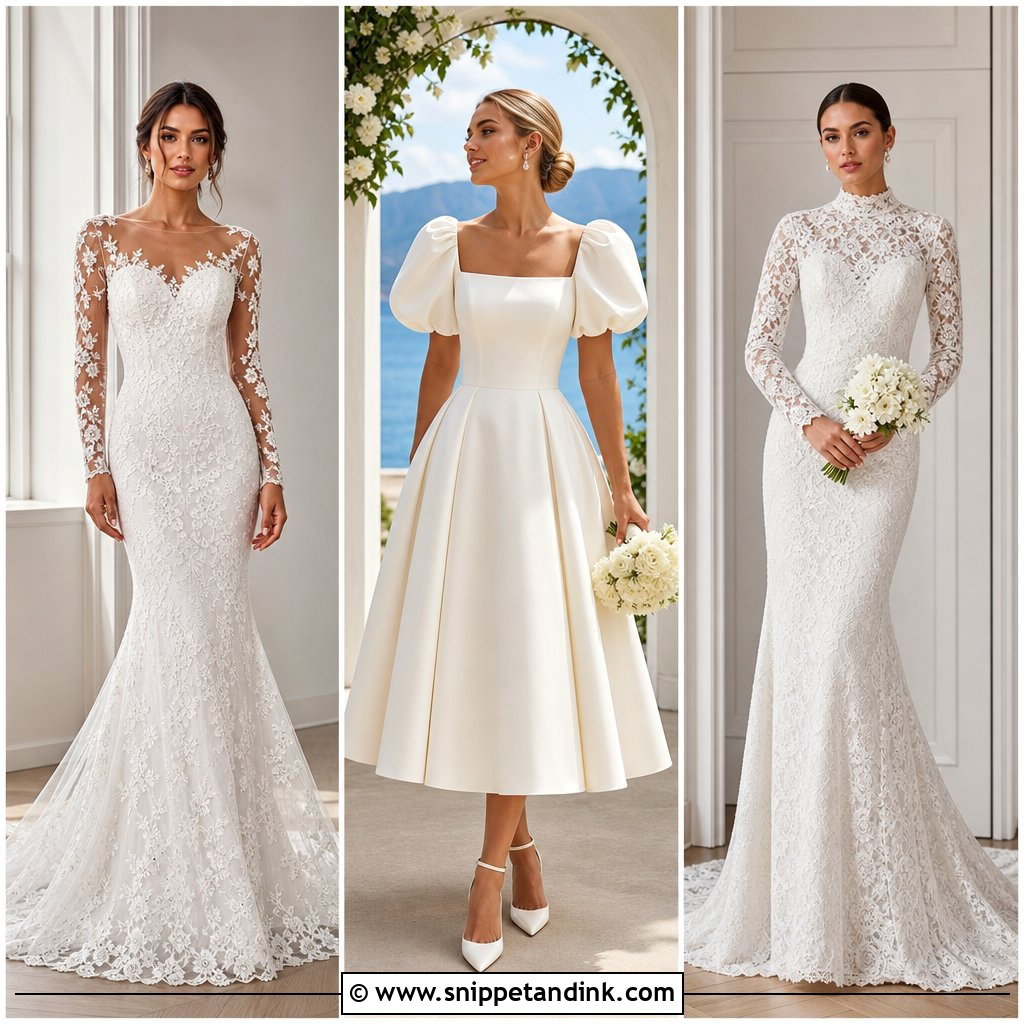
6. Tea Length Square Neck Wedding Dress
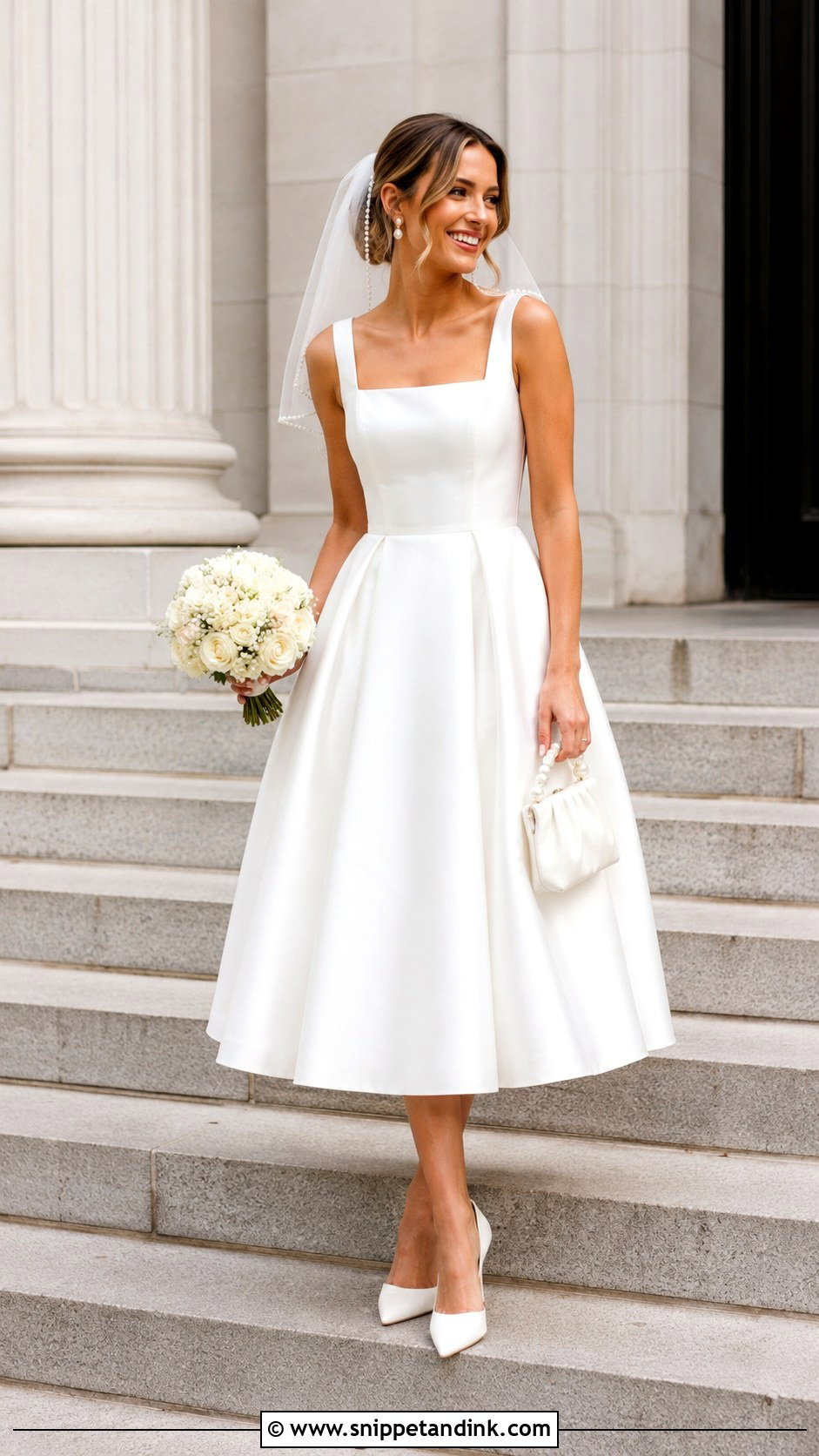
Tea length is the most practical bridal hem I know. It never needs bustling, it can’t be stepped on, and it makes your shoes part of the outfit. The exact length is unforgiving, though. Half an inch too long and it cuts the calf at its widest point, which is why I pin it with the bride in her wedding shoes, especially if she’s petite. Crisp mikado holds a full skirt; crepe falls softer. Pointed pumps and a pearl-trimmed veil keep it bridal rather than cocktail.
7. Long Sleeve Crepe Sheath Wedding Dress
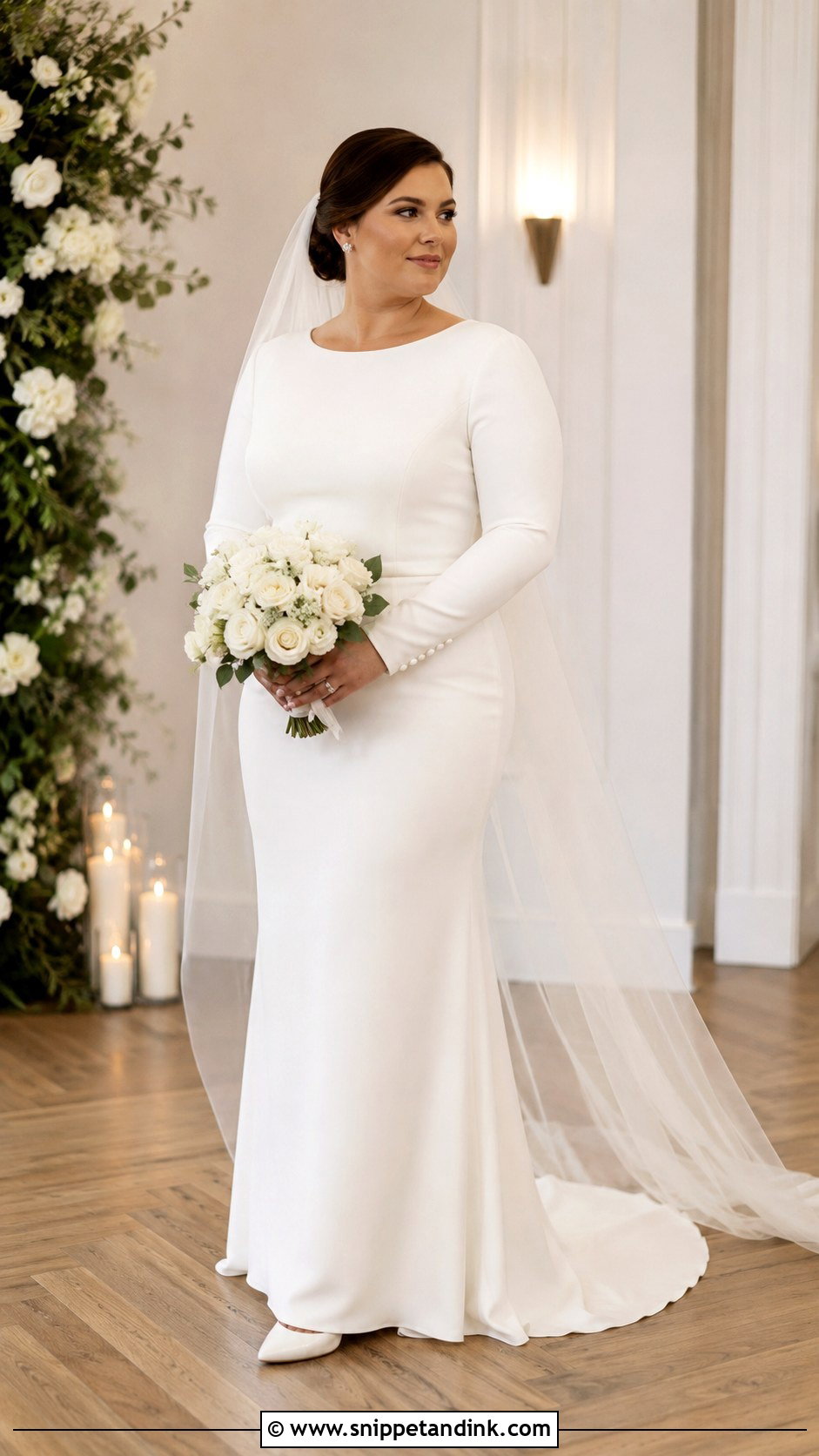
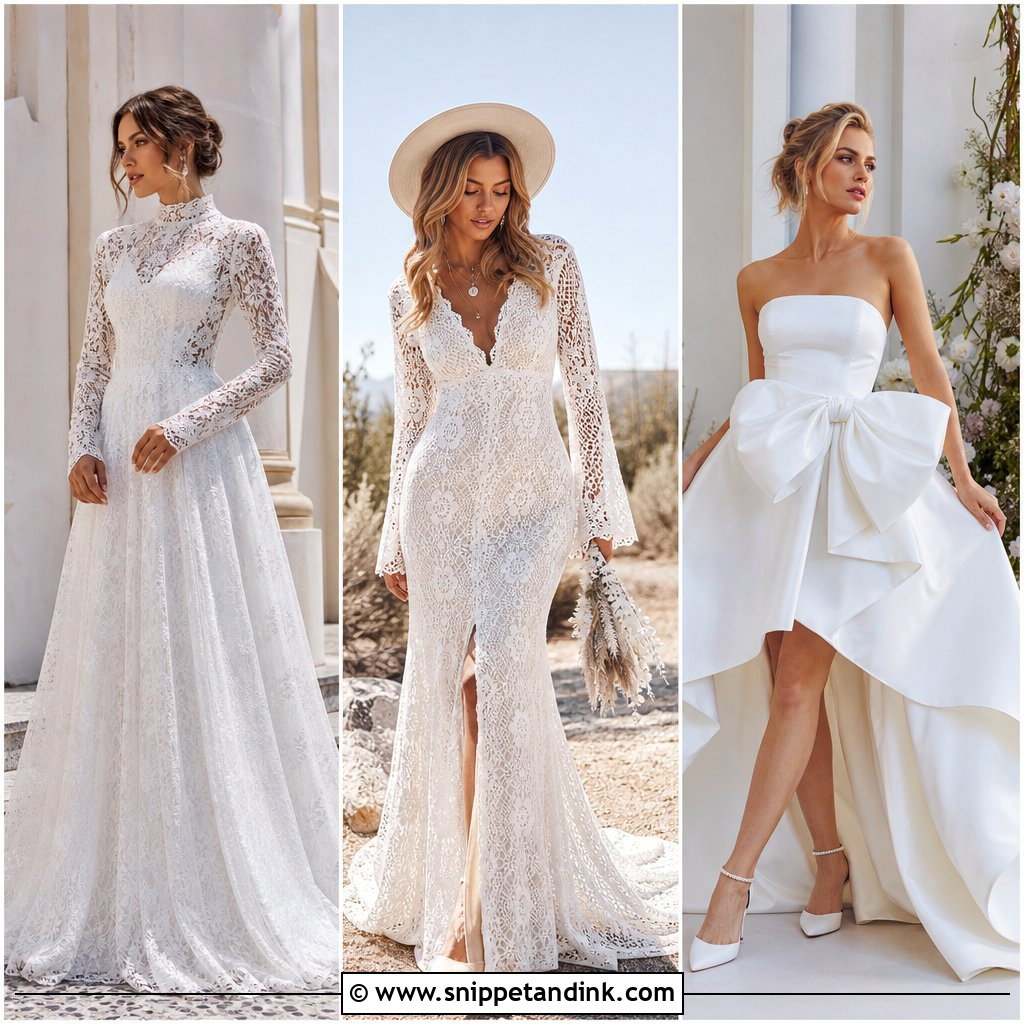
Long sleeves in stretch crepe are my first suggestion for a winter or church wedding where coverage matters. The fabric moves with you, which a stiff sleeve won’t. Check the shoulder seams sit exactly on the shoulder and test the sleeves by hugging someone; a sleeve cut too narrow pulls the bodice up with each embrace. If you’d like less cling over the hips, a heavier crepe or a light skirt lining helps. Covered buttons at the cuff are a small detail I always enjoy on this one.
8. High Neck Satin Wedding Dress
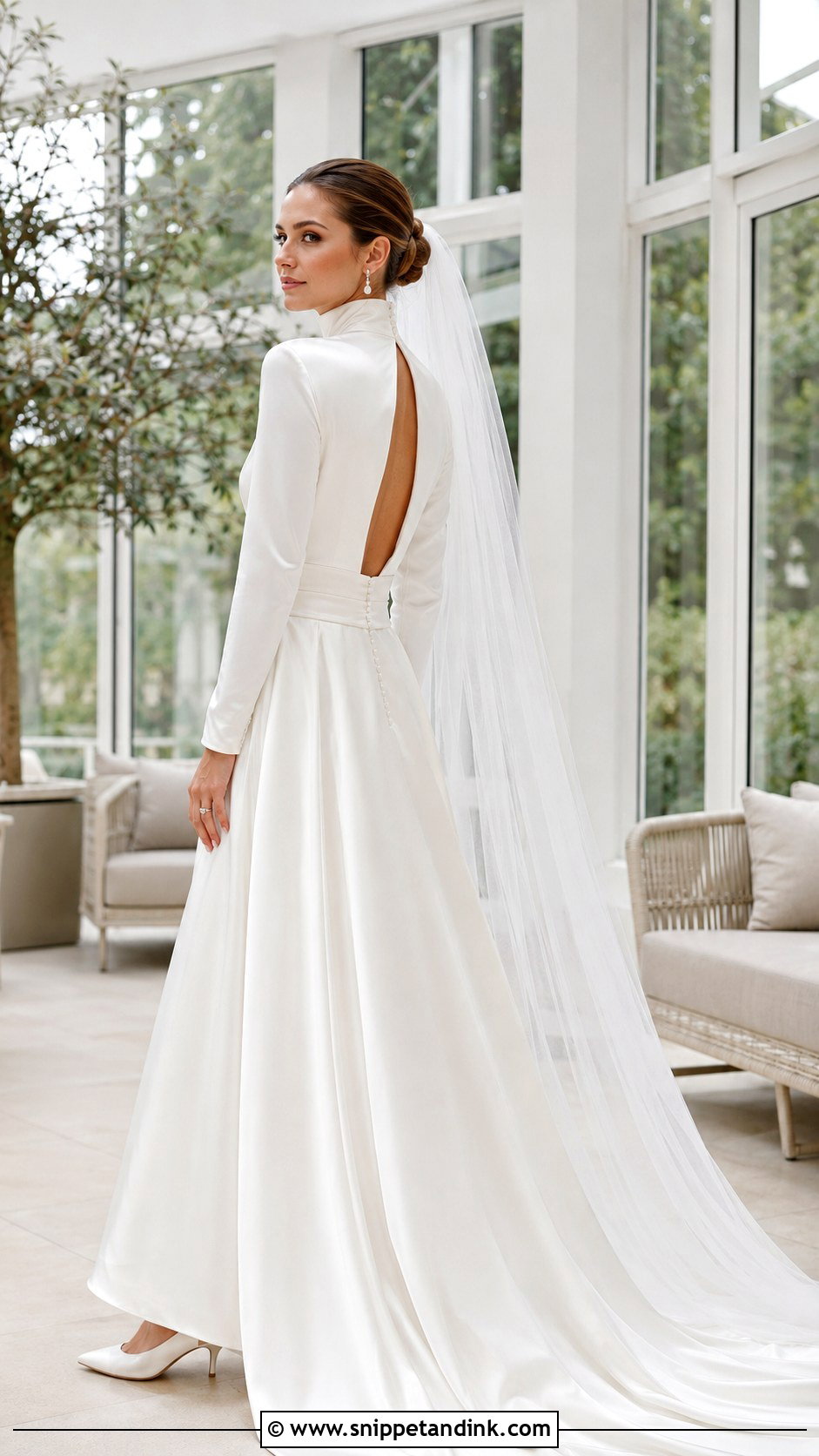
High necklines can look severe on a heavy fabric, so I pair them with matte satin or silk that drapes, and balance the covered front with a keyhole or scooped back. The collar has to lie flat. If it stands away from the neck or rubs as you turn your head, it will bother you for hours. Leave out the necklace completely, choose refined earrings, and secure the veil beneath a smooth bun so the line from collar to hair stays clean.
9. Asymmetric Draped Wedding Dress
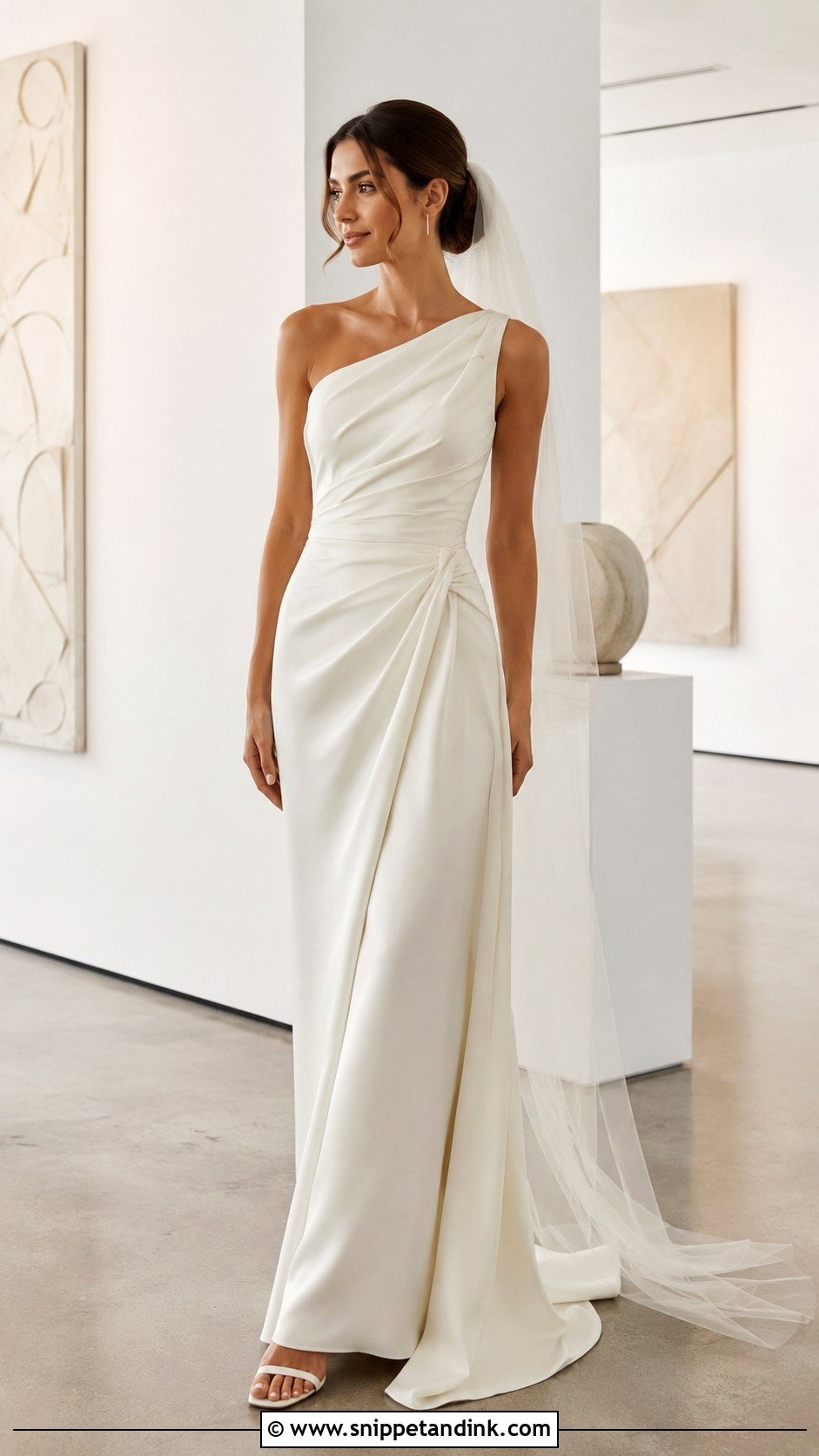
Draping is fabric doing the decorating. Diagonal folds across the waist and a gathered hip catch light differently with every step, and they’re kind to brides who’d like a little softness over the stomach. They have to be fitted on you, though. Drapes pinned on a sample can land in completely the wrong place on a different body, so expect a fitting devoted just to fold placement. Crepe gives softer folds; satin gives defined, shinier ones. Minimal heels, slim drop earrings, a plain tulle veil.
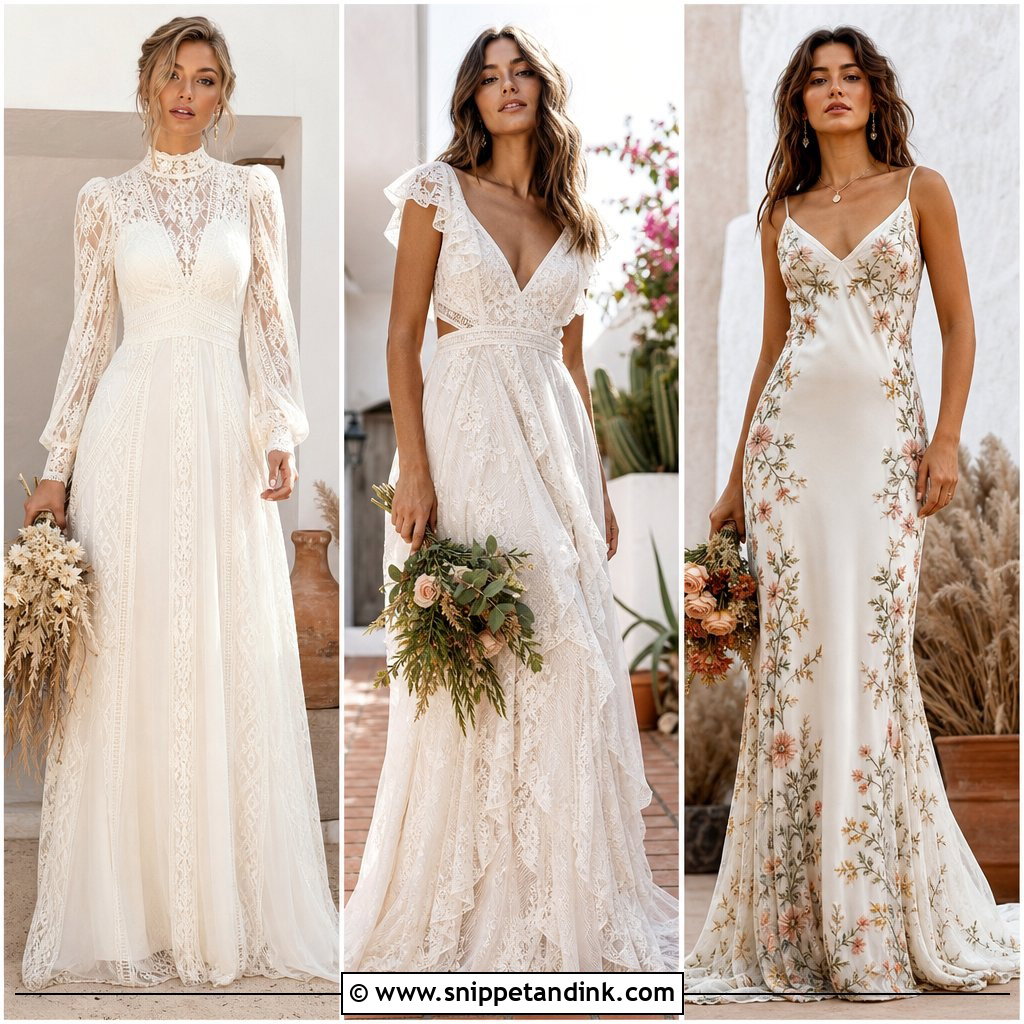
10. Simple Lace Column Wedding Dress
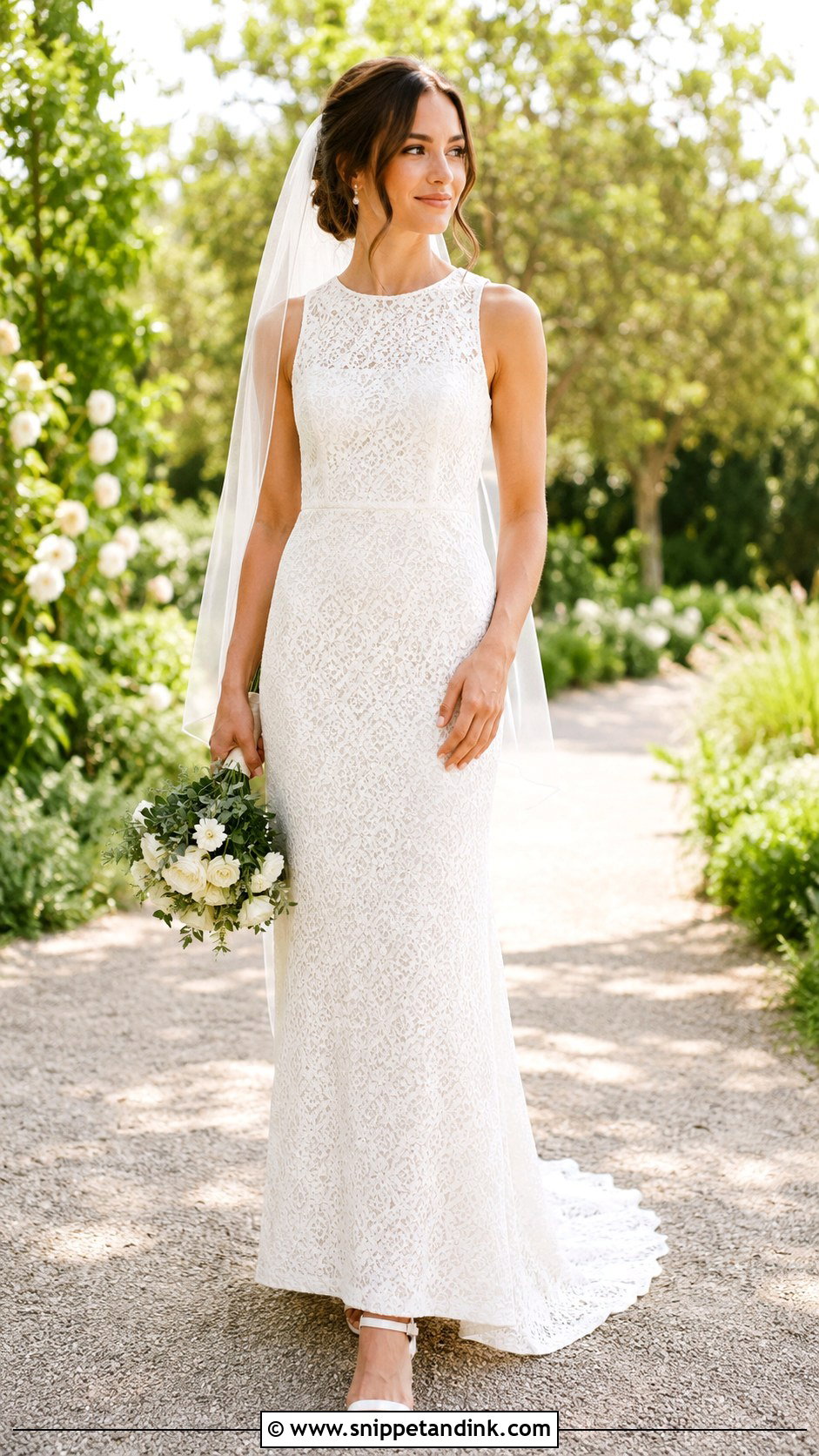
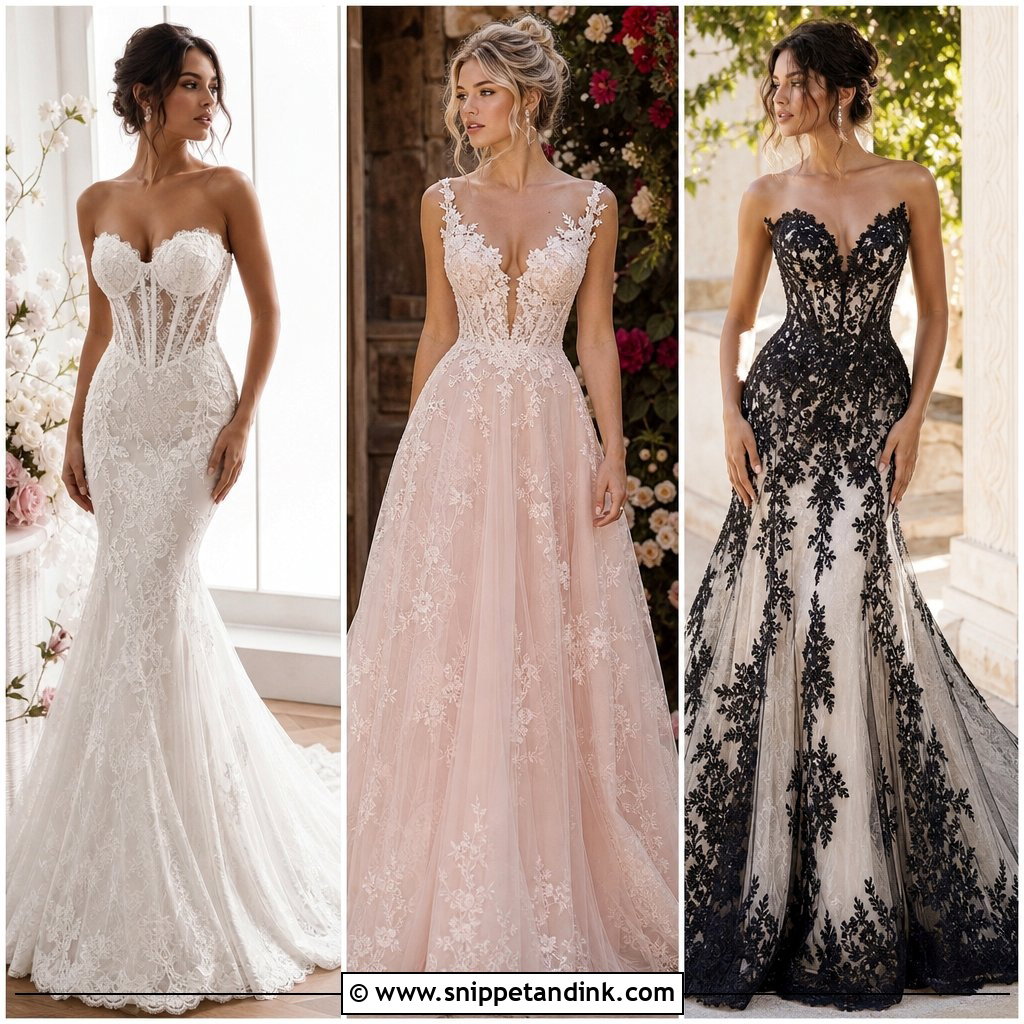
Lace stays simple when the silhouette is narrow and the pattern doesn’t change. I look closely at the seams on a lace column: good construction matches the motifs across the side seams and the back, and poor construction leaves the pattern chopped in half. Geometric lace feels modern, fine floral lace softer. You can tune coverage through the lining colour, neckline depth and sleeve length. Outdoors, choose a short train or ask for a bustle, because textured lace collects leaves and grass.
11. Bow Back Satin Wedding Dress
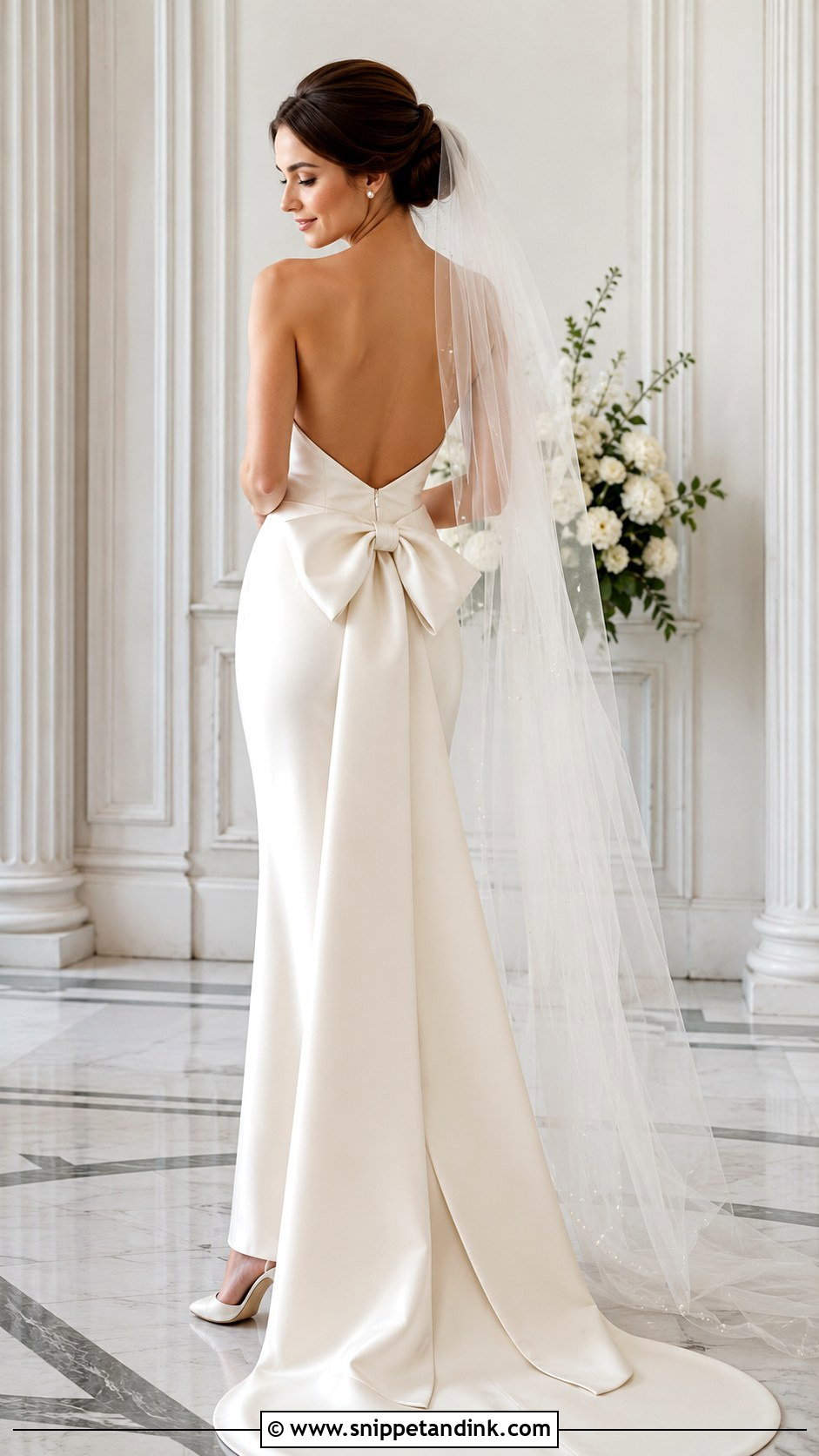
From the front this one is quiet; from behind, a structured bow does all the talking. Keep the dress itself to a clean satin A-line or column. A removable bow gives you a second, simpler look for the reception, but ask exactly how it attaches. A bow hooked on with a couple of small fastenings can droop once you’ve sat on it through dinner. Scale matters too: smaller bows suit a petite frame, long tails suit a taller bride. Wear the veil behind it, not over it.
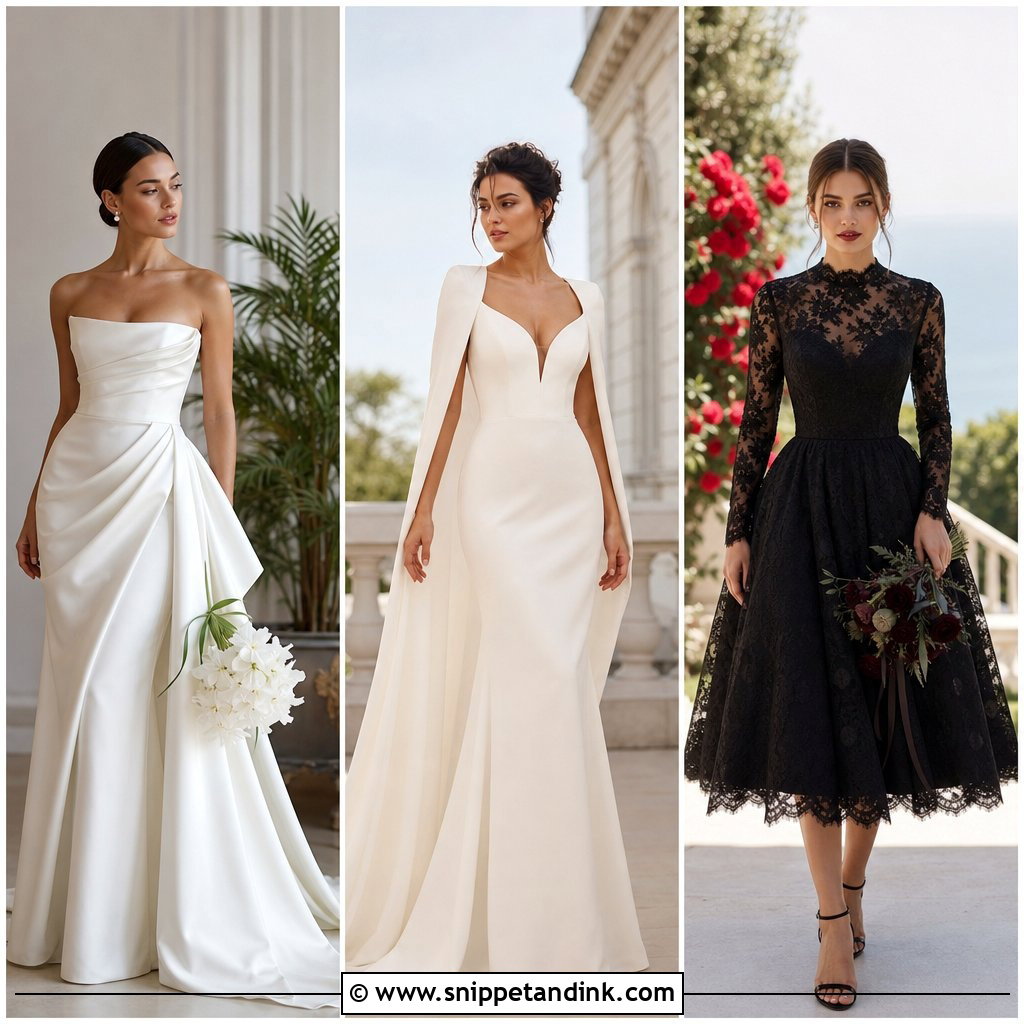
12. Cape Sleeve Wedding Dress
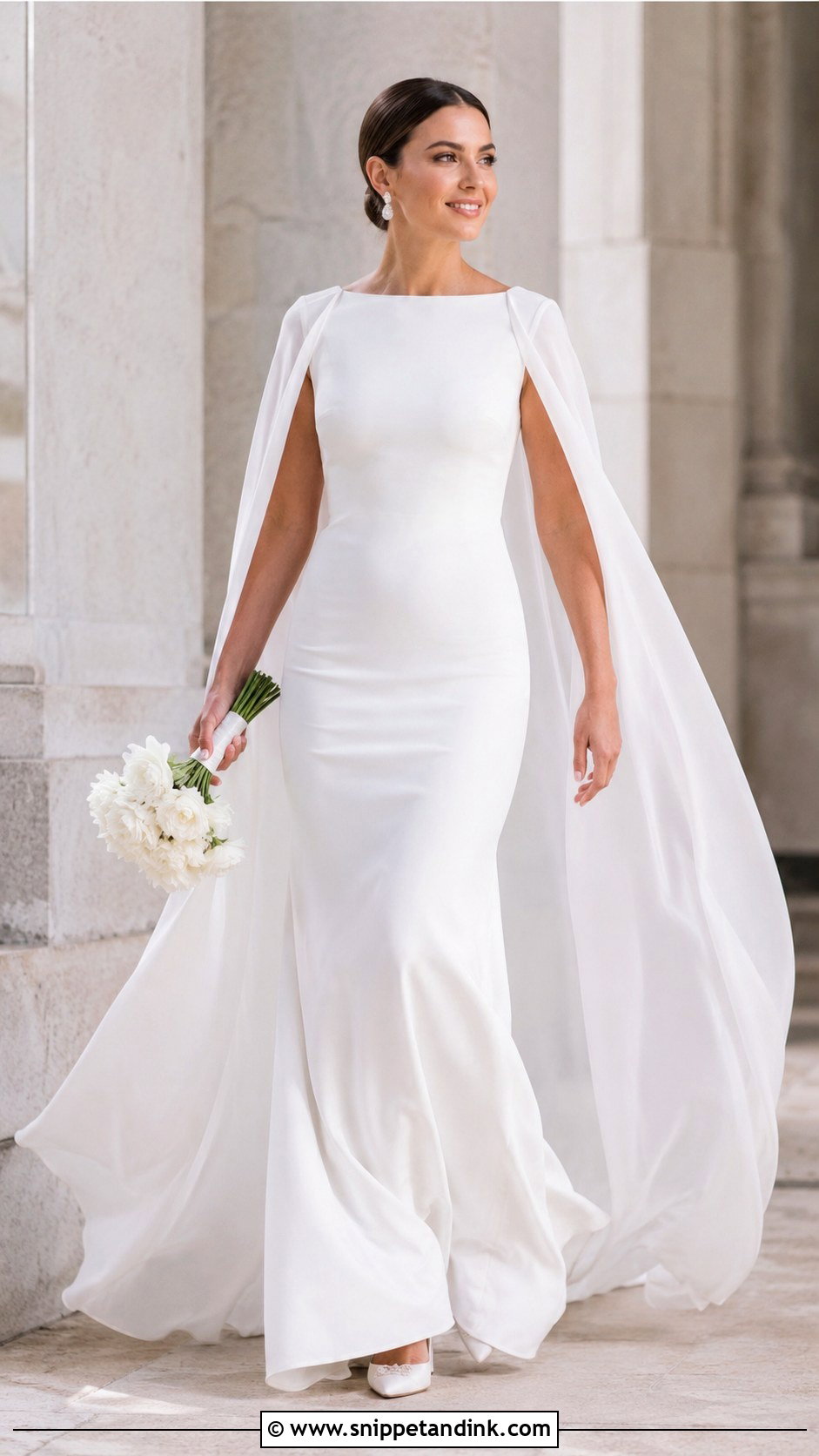
A cape sleeve adds movement without a veil, or alongside one if you’re careful. The cape might fall from the shoulders, attach at the neckline or replace the veil with chiffon panels. Practise walking with both the cape and the train, because the two can tangle on turns. Underneath, keep the dress smooth and close-fitting, otherwise the outfit looks bulky. Removable capes give you a sleeveless gown for the evening, and at windy venues a shorter panel or a lightly weighted hem behaves better.
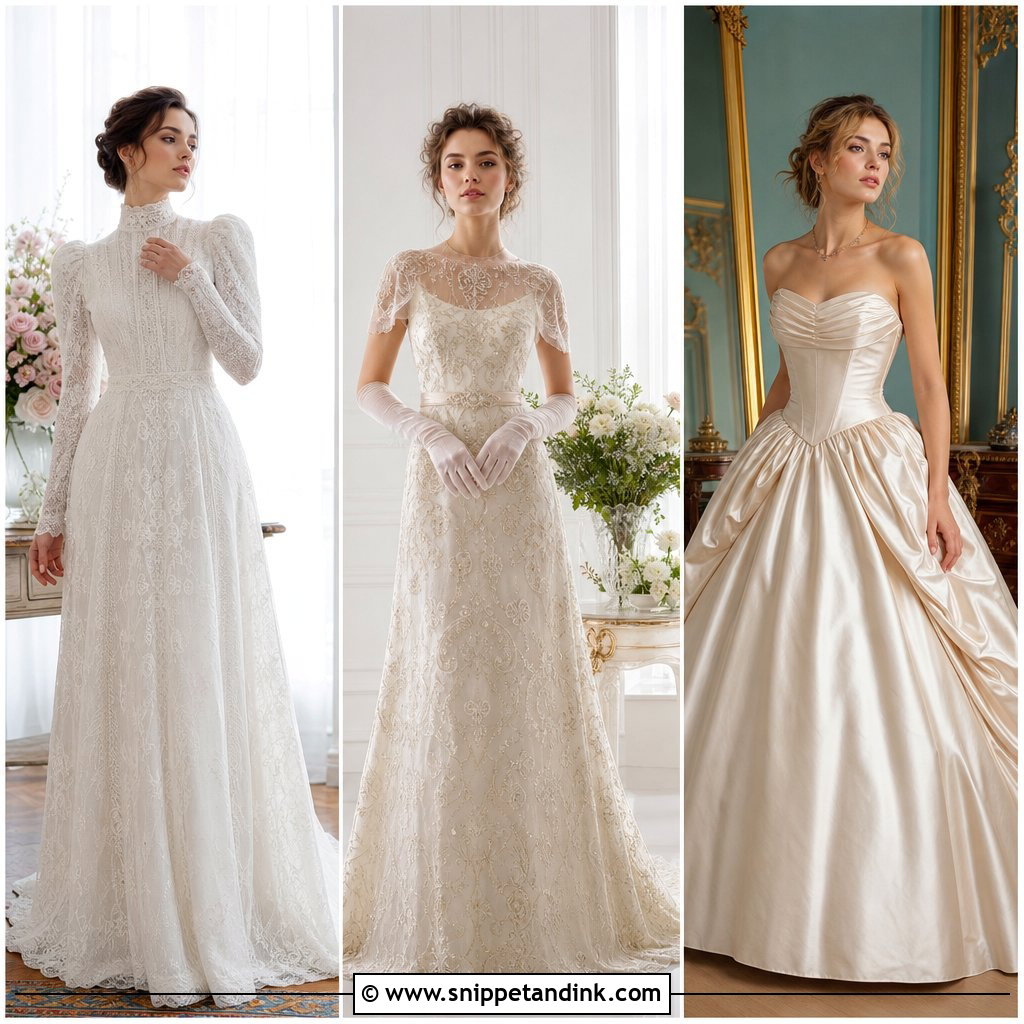
13. Puff Sleeve Organza A-Line Wedding Dress
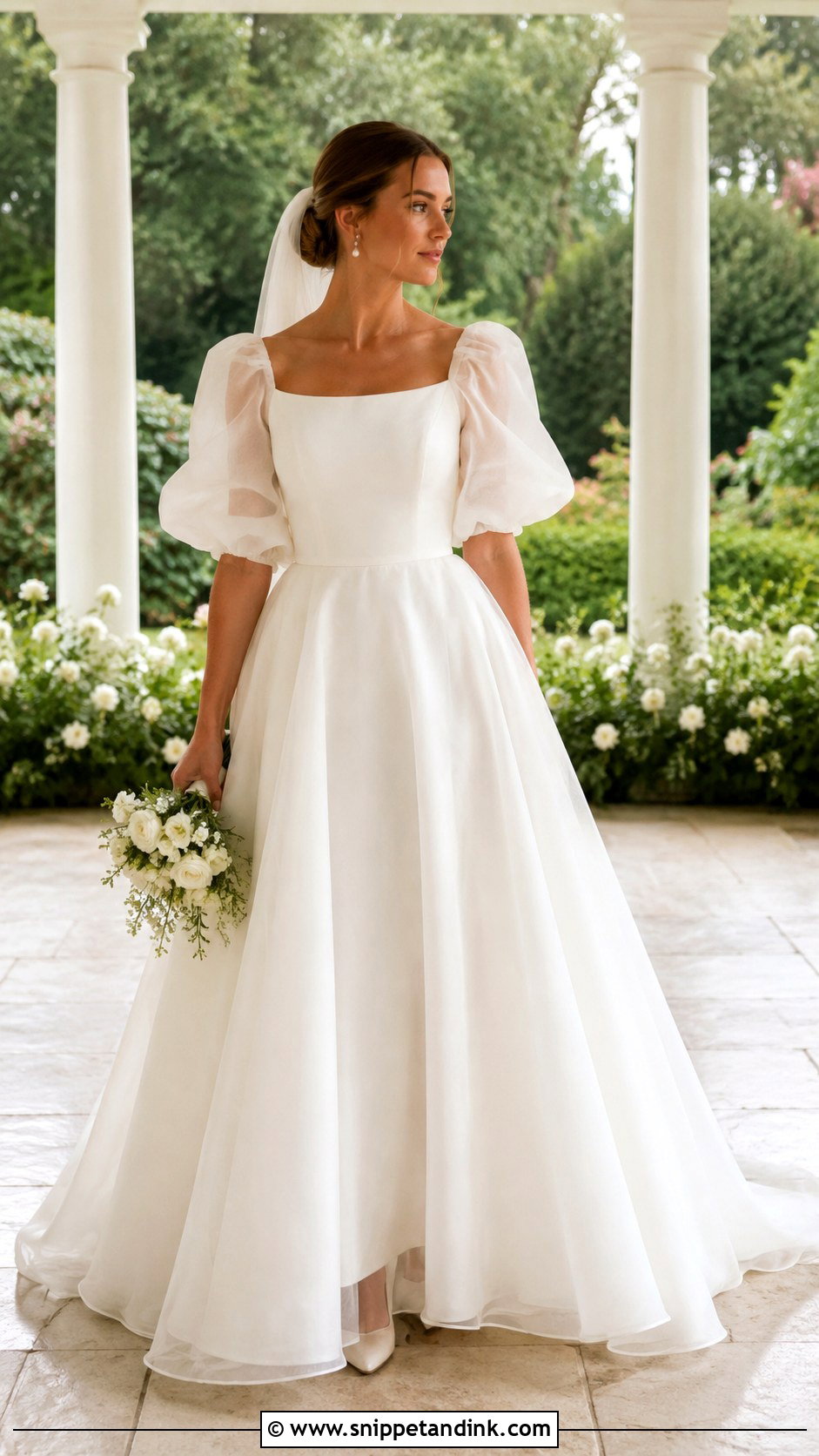
Organza puff sleeves are crisp, and that crispness can itch. During fittings I check the cuffs, any elastic and the armholes against the skin, since a scratch you barely notice at the boutique becomes the only thing you notice by evening. Softly gathered sleeves look better than heavily layered ones. Broad shoulders suit sleeves that start a little below the shoulder line; narrow frames can carry more volume up top. Detachable sleeves let you change the look between ceremony and reception.
14. Drop Waist Satin Wedding Dress
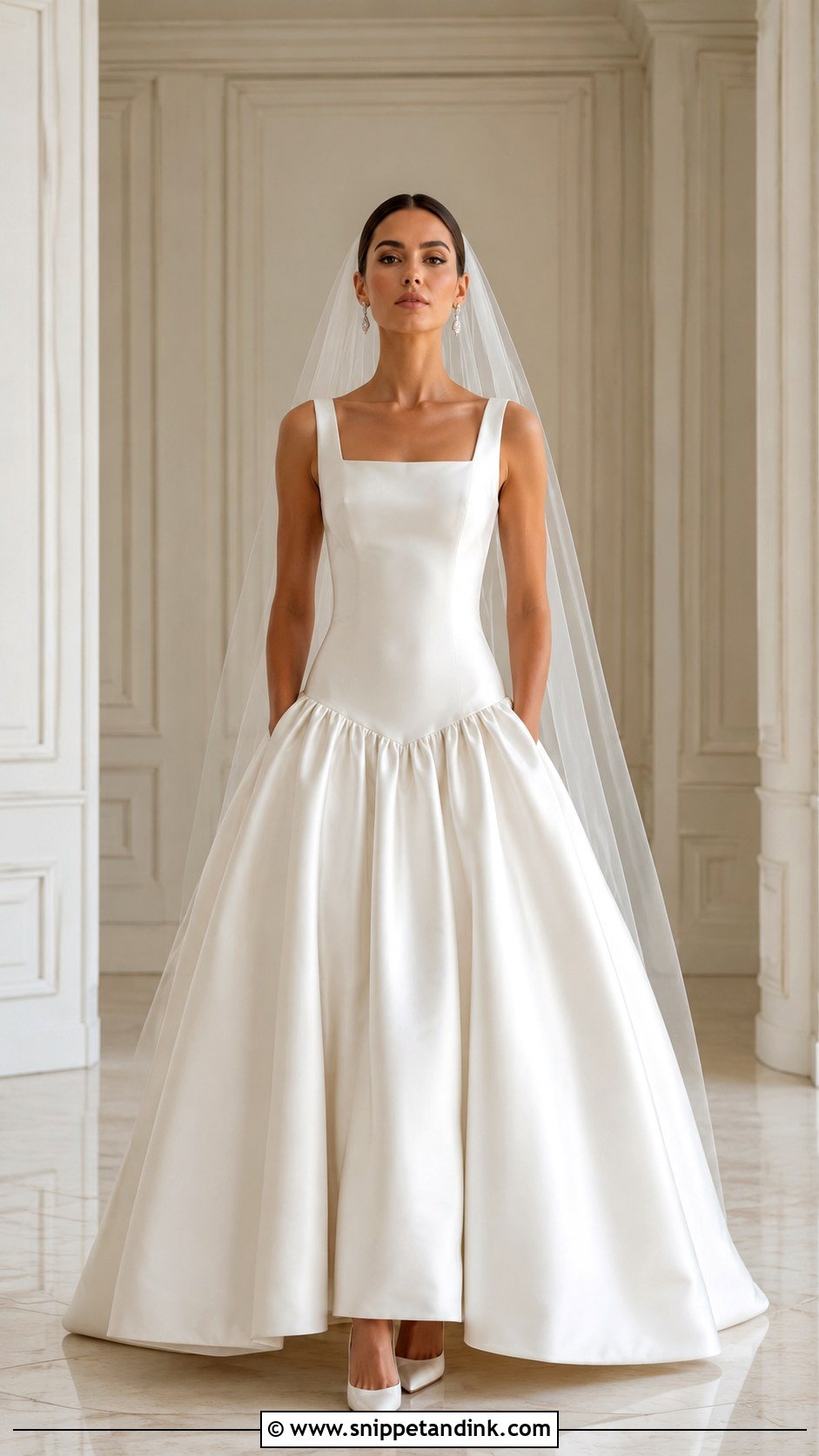
A drop waist lengthens the torso before the skirt opens, and torso length decides whether it works. On a petite bride, a deep drop cuts the legs short, so I’d choose a shallower one; a long-torso bride can go further. Ask for curved waist seams that follow the hips rather than a straight line across them. Then sit, bend and walk in the fitting, since the fitted section sits right where your body folds. A light underskirt gives shape without weight.

15. Corset Bodice A-Line Wedding Dress
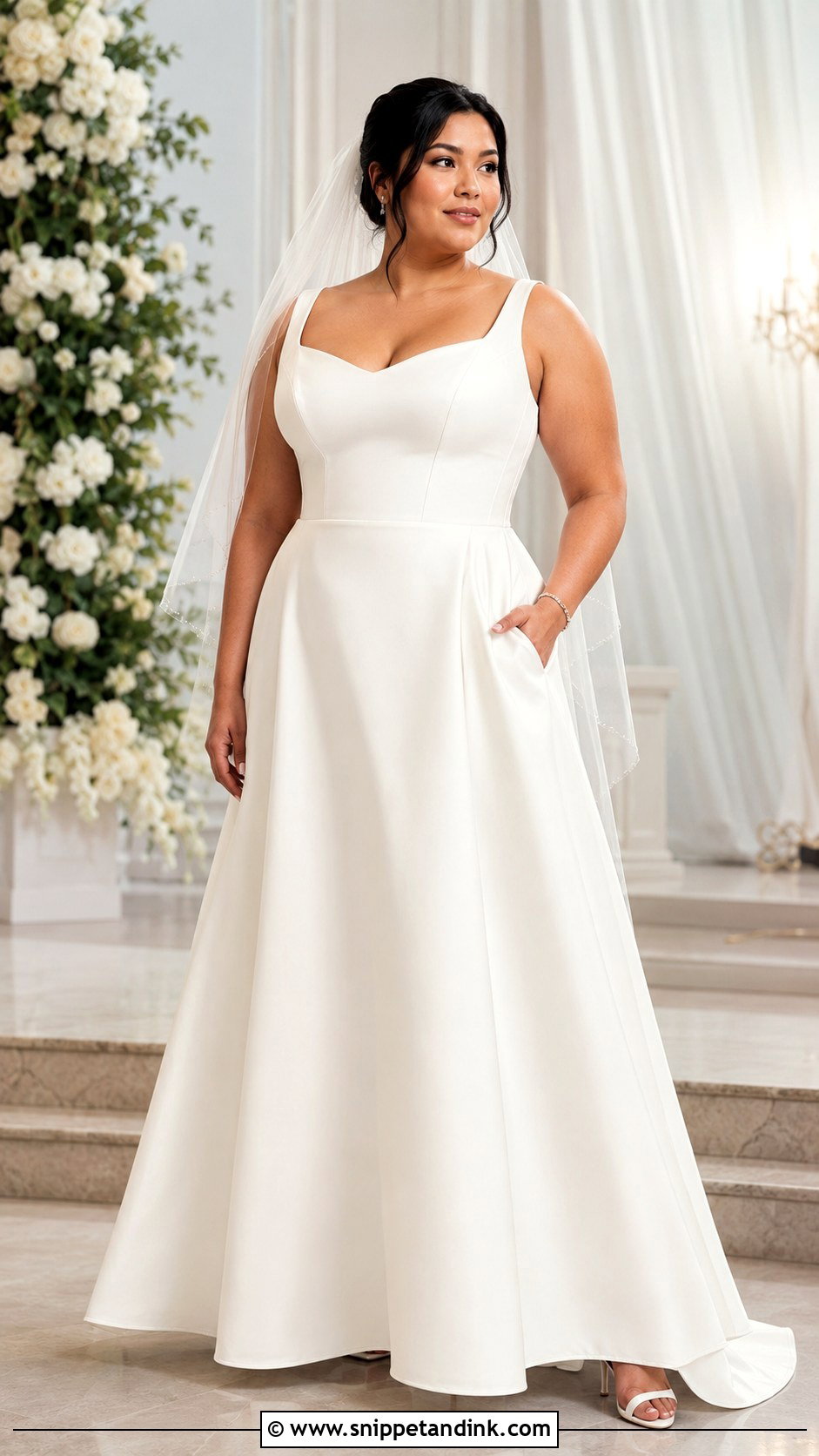
A corset bodice doesn’t need visible lacing to feel special; subtle seams and good boning do the work. The test I care about is breathing. You should be able to take a full breath, laugh and eat dinner, so never let a fitting tighten it beyond that. Brides with fuller busts may want wider internal support and optional straps, and anyone after a softer line can choose a bodice wrapped in draped satin. Slingback heels and a polished updo show off the neckline.
16. Bridal Mini Dress With Overskirt
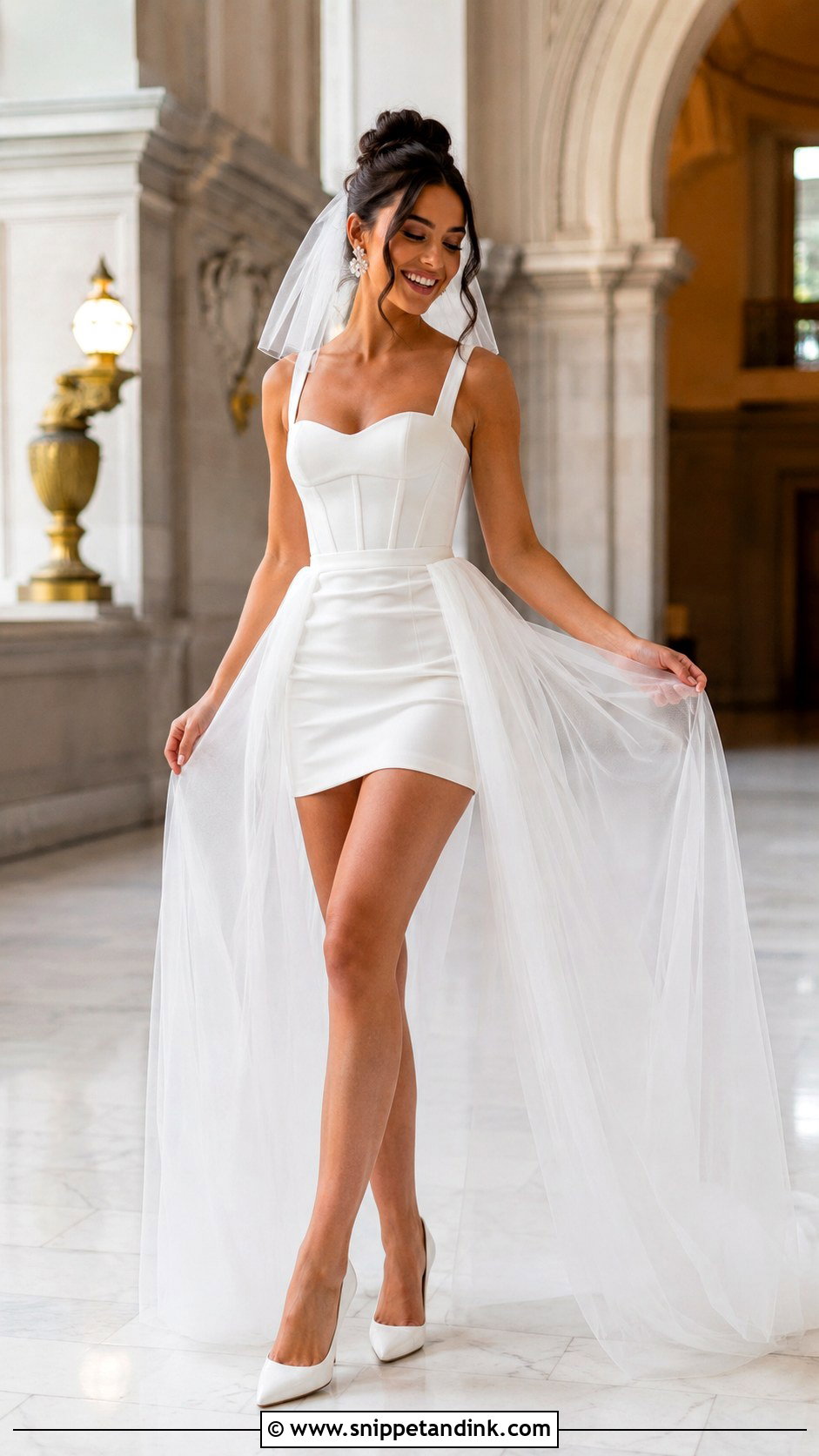
A bridal mini with a detachable overskirt gives you two outfits from one fitting schedule. The overskirt makes a full-length ceremony look; take it off and you’re ready to dance. The hidden waist fastenings are the part I’d scrutinise, because they take strain every time the skirt is stepped on. Make sure the mini itself is comfortable seated, since short hems ride up at dinner. Keep the overskirt plain, and pair the dress with pointed pumps, bold earrings and a short veil or hair bow.
17. Bateau Neck Mikado Wedding Dress
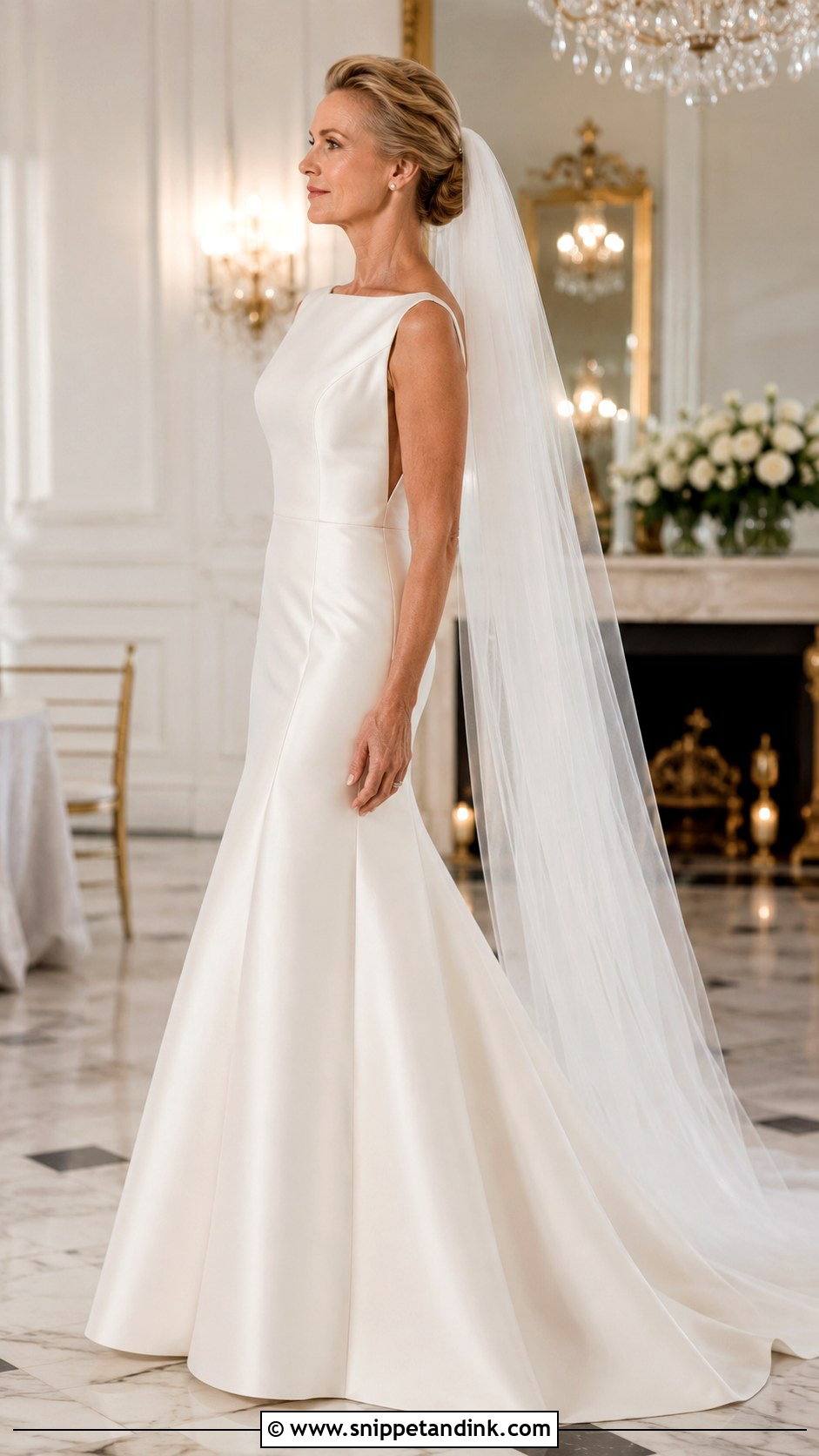
A bateau neckline follows the collarbone and gives a structured Mikado gown a composed, formal line. That neckline must lie flat across the shoulders, and it’s often the alteration I spend longest on, because shoulder widths vary so much. Mikado is heavy and stiff; if you find it restrictive, ask for a lighter blend that keeps the structure. A low V-back or covered buttons give interest behind, and a long plain veil suits the shape.
18. Pleated Chiffon Wedding Dress
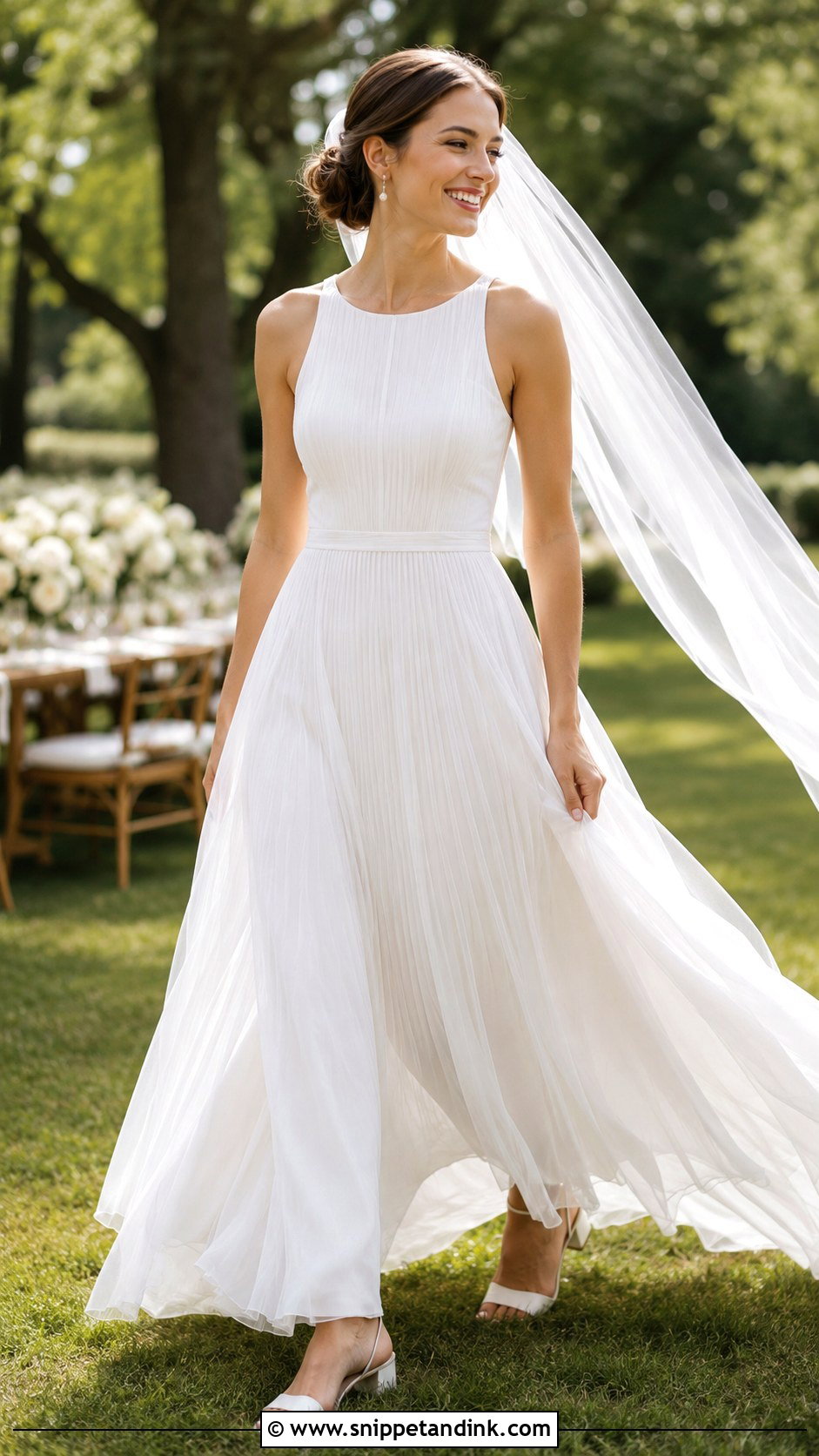
Pleated chiffon floats, which makes it a natural pick for warm, garden and beach weddings. I check that the pleats start cleanly at the natural waist and don’t add bulk there; badly set pleats puff out exactly where you’d want them flat. A full lining keeps the outer layer airy without showing your legs. Pleats crush in transit, so plan for professional steaming before the wedding. Low block heels and loose waves suit the movement.
19. Sculptural Neckline Wedding Dress
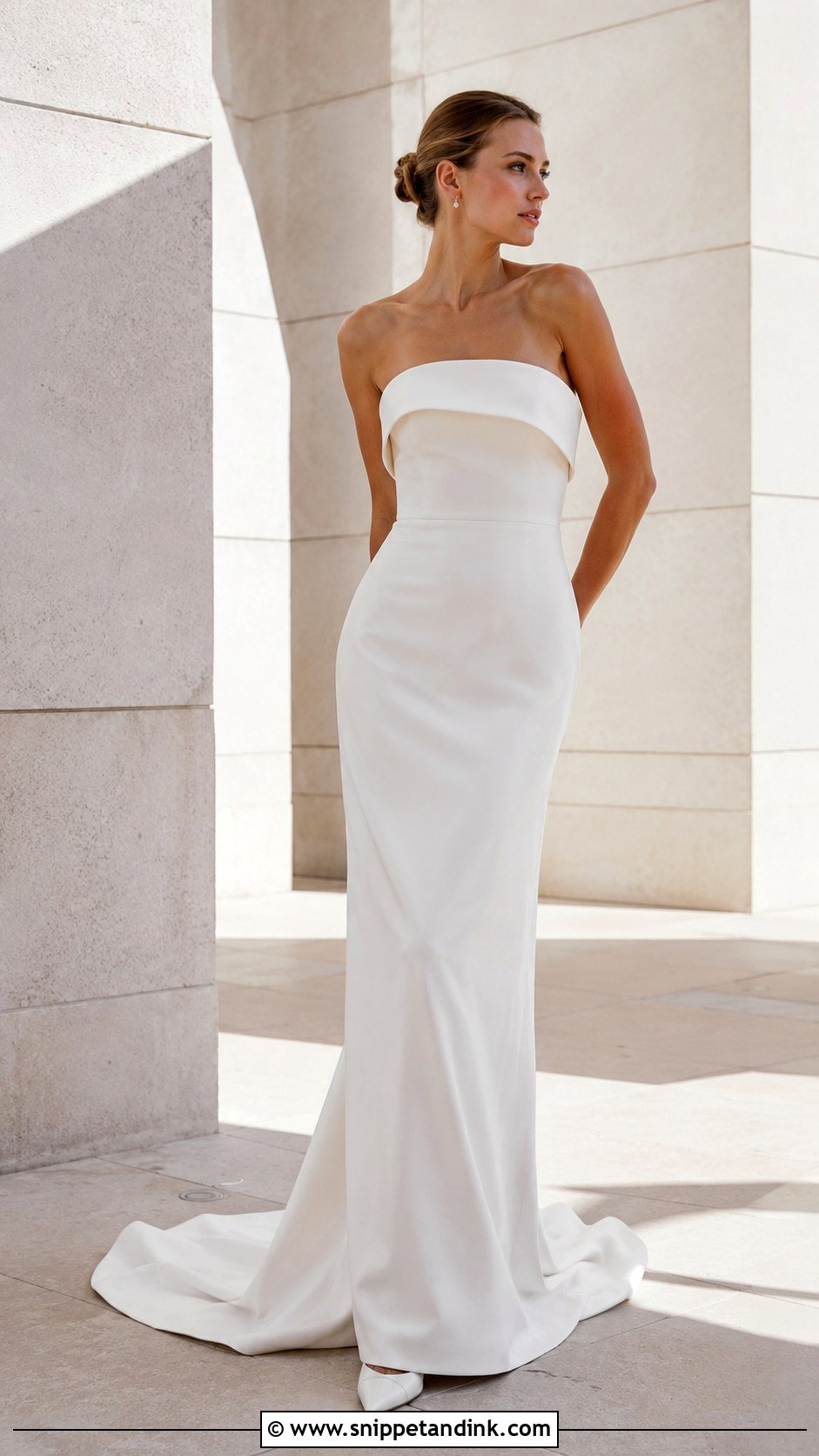
A sculptural neckline turns a plain gown into something memorable without any sparkle. Folded strapless edges, twisted necklines and portrait collars all depend on precise pressing and internal support, so ask your seamstress how she’ll keep the folds in shape. An uneven fold changes the whole design. Keep the rest of the dress streamlined, the earrings small and the hair swept back. Removable straps or a sheer shoulder panel add coverage without spoiling the shape.

20. Blush Minimalist Wedding Dress
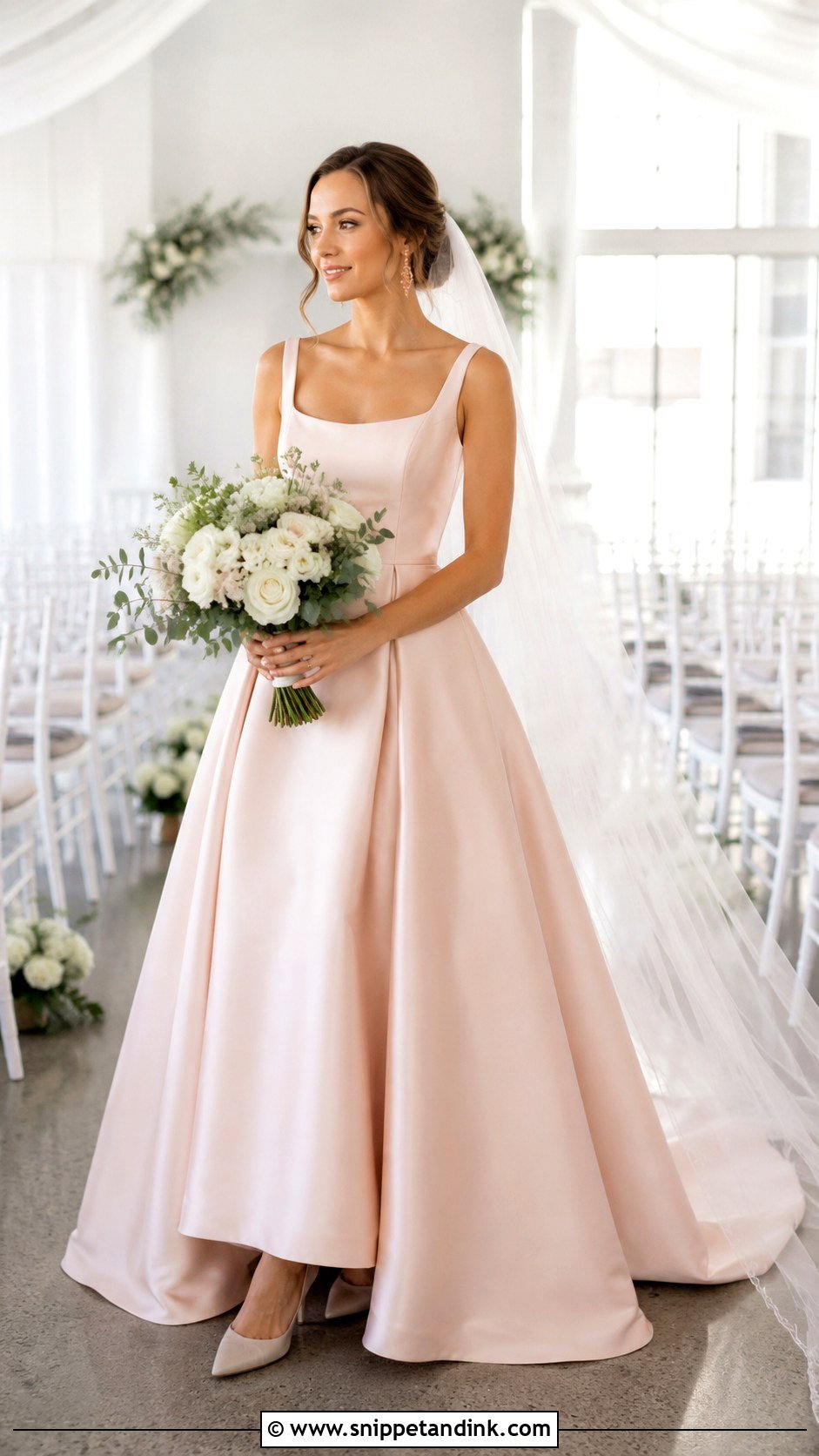
Blush is for the bride who wants colour without leaving white behind entirely. The shade has to suit your skin, not disappear into it. Very pale pinks can wash out fair skin, while warmer, deeper blush often glows on olive or deeper tones. I always look at blush fabric by a window and again under indoor light, since it can shift noticeably between the two. Match the veil to the dress undertone, not to a generic ivory, and carry white or cream flowers for contrast.
Underneath a Gown With Nowhere to Hide
Undergarments are the quiet reason a simple dress looks finished or looks cheap. Beaded and lace gowns hide a bra band; smooth satin and crepe announce it. I talk about what goes underneath at the first appointment, because the answer can change which dress works.
Build support into the dress
For open backs, halters and cowl necks, I’d almost always rather sew cups or a light corselet into the gown than rely on adhesive bras. Adhesives lose their grip as you warm up through a long day, and they’re unreliable on fuller busts.
Choose skin tone, not white
White underwear shows through an ivory dress more than a shade close to your own skin. Bonded or laser-cut edges leave no line on satin. Shapewear is fine if you can sit and breathe in it, but bring it to every fitting, because it changes the measurements.
Test it in the light
Ask someone to photograph you with flash and again against a bright window. Thin crepe and chiffon can turn translucent in sunlight, and that’s far easier to fix with a lining adjustment weeks ahead than on the morning.
A Plain Gown Is Never Actually Plain
What lifts a simple dress is fit, fabric and one feature allowed to stand alone. Satin, crepe, lace, chiffon and organza all appear above, for formal venues, courthouses, gardens and every season in between. When you shop, have someone photograph each gown from the front, side and back, then walk, sit and raise your arms in it. Bring shoes at your wedding heel height and wear the right underwear to every fitting. Pick the shape you feel most like yourself in, rather than whichever is newest.
You'll Like These Ideas:







Leave a Reply