
Queen Victoria married in 1840 in white satin trimmed with English Honiton lace, with a wide neckline, a pointed waist, a full skirt and a very long court train. Her choice made white the bridal color for generations and kept British silk weavers and lace makers busy. When I style a bride who loves that gown, I don’t try to rebuild it stitch for stitch. I pick two or three Victorian elements and let the rest of the outfit stay quiet, because a dress carrying every period detail at once starts to look like a costume fitting. Lace, orange blossom, a structured bodice and a long veil are the pieces that do the most work. The ideas below range from near-faithful ball gowns to a tea-length civil ceremony dress, so you can see how far each detail stretches.
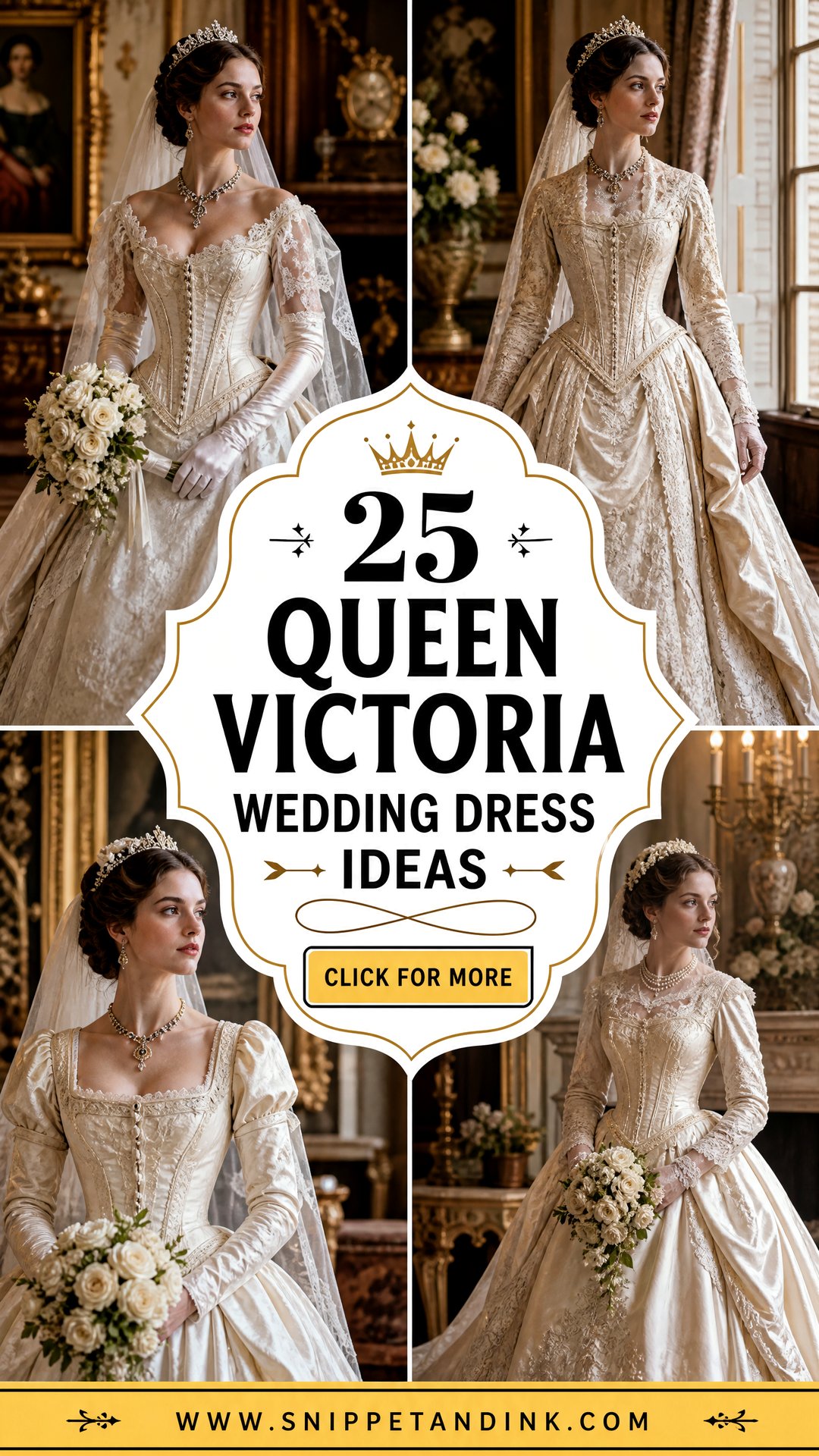
The Four Lines That Make a Gown Read as Victoria’s
When a bride brings me a portrait of the 1840 wedding, I break the dress into four lines before we look at a single sample. Almost every idea below is some mix of these, and knowing them makes it far easier to brief a dressmaker or spot a good match on a rail.
- The neckline: wide and low across the shoulders, sitting just off them, often edged with a lace bertha.
- The waist: a pointed front that dips below the natural waist. This V is the single most recognisable feature.
- The skirt: full and gathered or pleated into the waist, with lace around the hem rather than all over.
- The head: flowers and lace instead of jewels. Victoria wore an orange blossom wreath with a long lace veil.
If a gown has the pointed waist plus one other line, it will read as Victorian to most guests. Get those right and you can be relaxed about everything else, including sleeves, color and train length.
1. Queen Victoria White Satin Wedding Dress
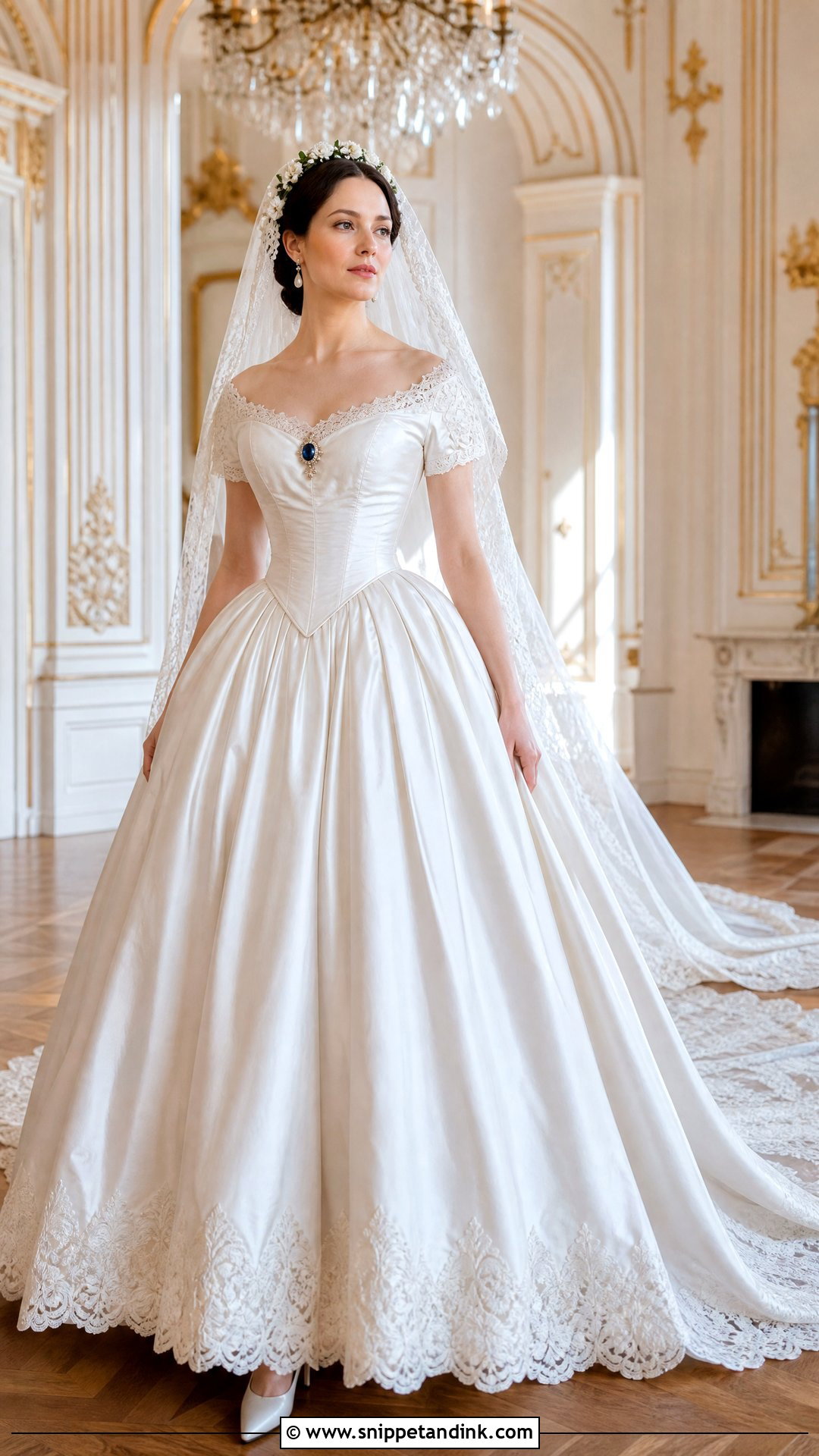
This is the closest you’ll get to the original without commissioning a reproduction. I’d start with a fitted bodice cut to a pointed waist, a wide neckline and a skirt gathered generously into the waistband, then add a deep lace flounce around the hem. Satin pumps, pearl drops and one small sapphire brooch give a hint of color the way Victoria’s own sapphire did. Put the veil under an orange blossom wreath instead of a tiara; she wore flowers, not diamonds, and that restraint is the whole point. Heavy satin needs a room that can hold it, so a ballroom or a historic house suits it far better than a lawn.
2. Queen Victoria Honiton Lace Wedding Dress
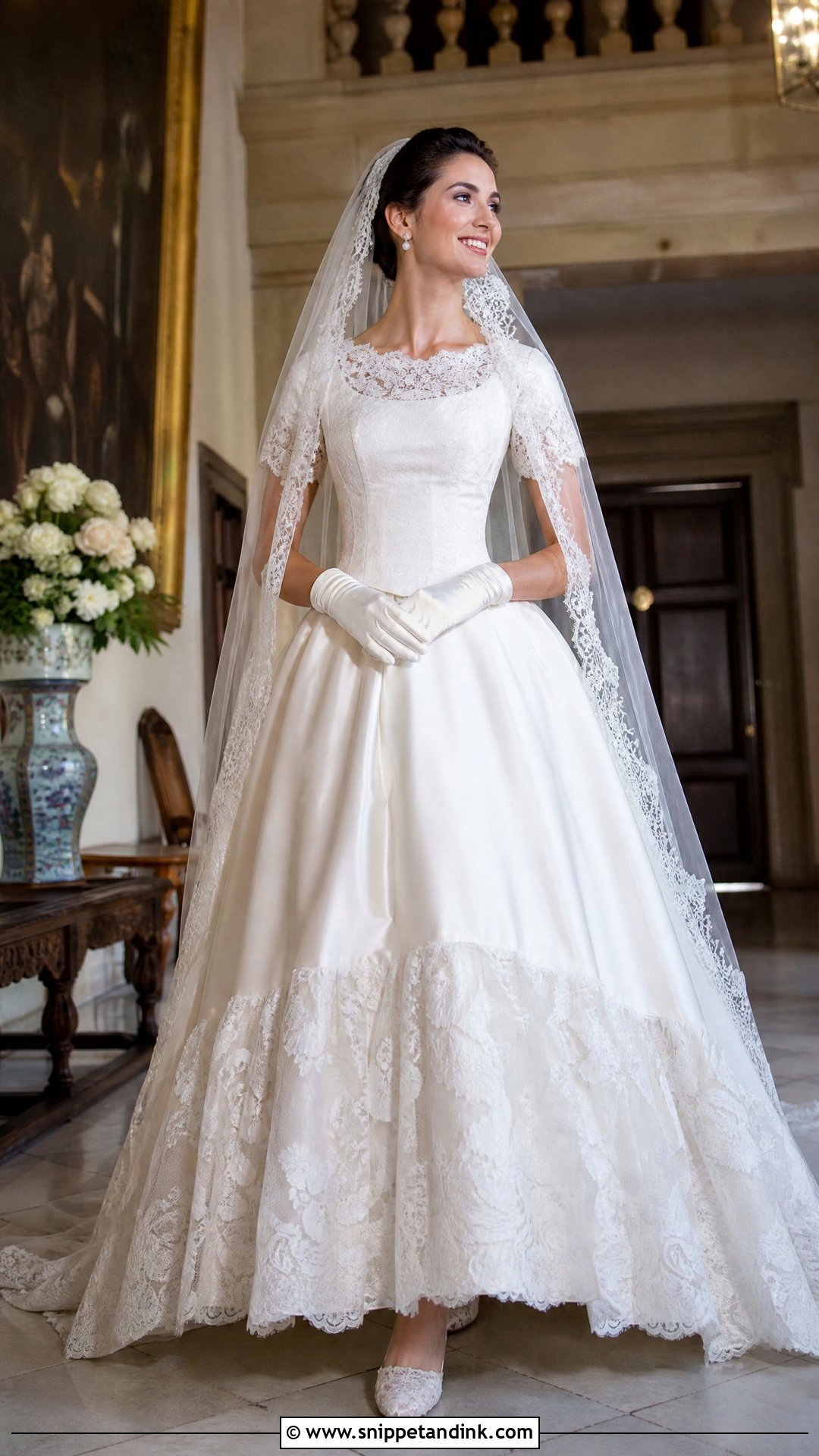
Lace carries the history in this version. A white silk gown with short sleeves and a wide, lace-trimmed neckline, plus a substantial lace border round the skirt, sits closest to the Honiton lace made for the royal wedding. Genuine antique bobbin lace is fragile and costly, so I usually suggest a floral bobbin-style pattern or custom appliqués cut from a newer lace with the same open, flowery feel. Keep the lace to the neckline, the hem and the veil edge. White gloves, pearl earrings and a soft bouquet of white flowers and greenery finish it without crowding the fabric.
3. Queen Victoria Off Shoulder Wedding Dress
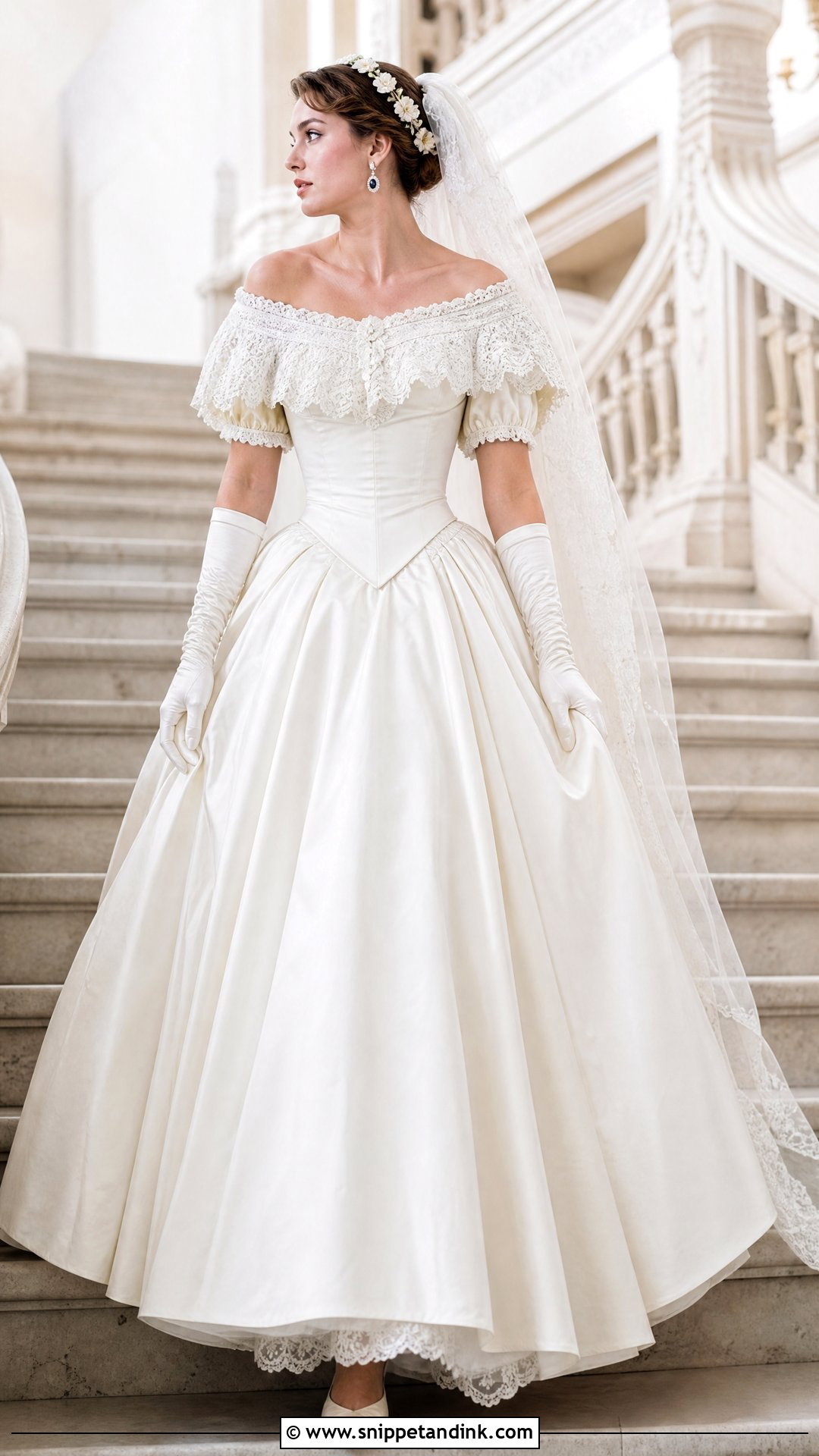
The wide off-the-shoulder line is the first thing people recognise from Victoria’s portraits. On a modern bride it only stays put if the bodice does the holding, so I ask the seamstress for hidden boning, a silicone gripper strip inside the neckline and a smooth lining. Short puff sleeves and a lace bertha soften the edge. Elbow gloves, ivory pumps, pearl-and-sapphire earrings and a long veil pinned with small white flowers keep the look formal. One honest caution: if you’ll be hugging and reaching all night, test the neckline at the fitting by raising both arms. If it slides, it needs more structure, not more tape.
4. Queen Victoria Lace Collar Wedding Dress
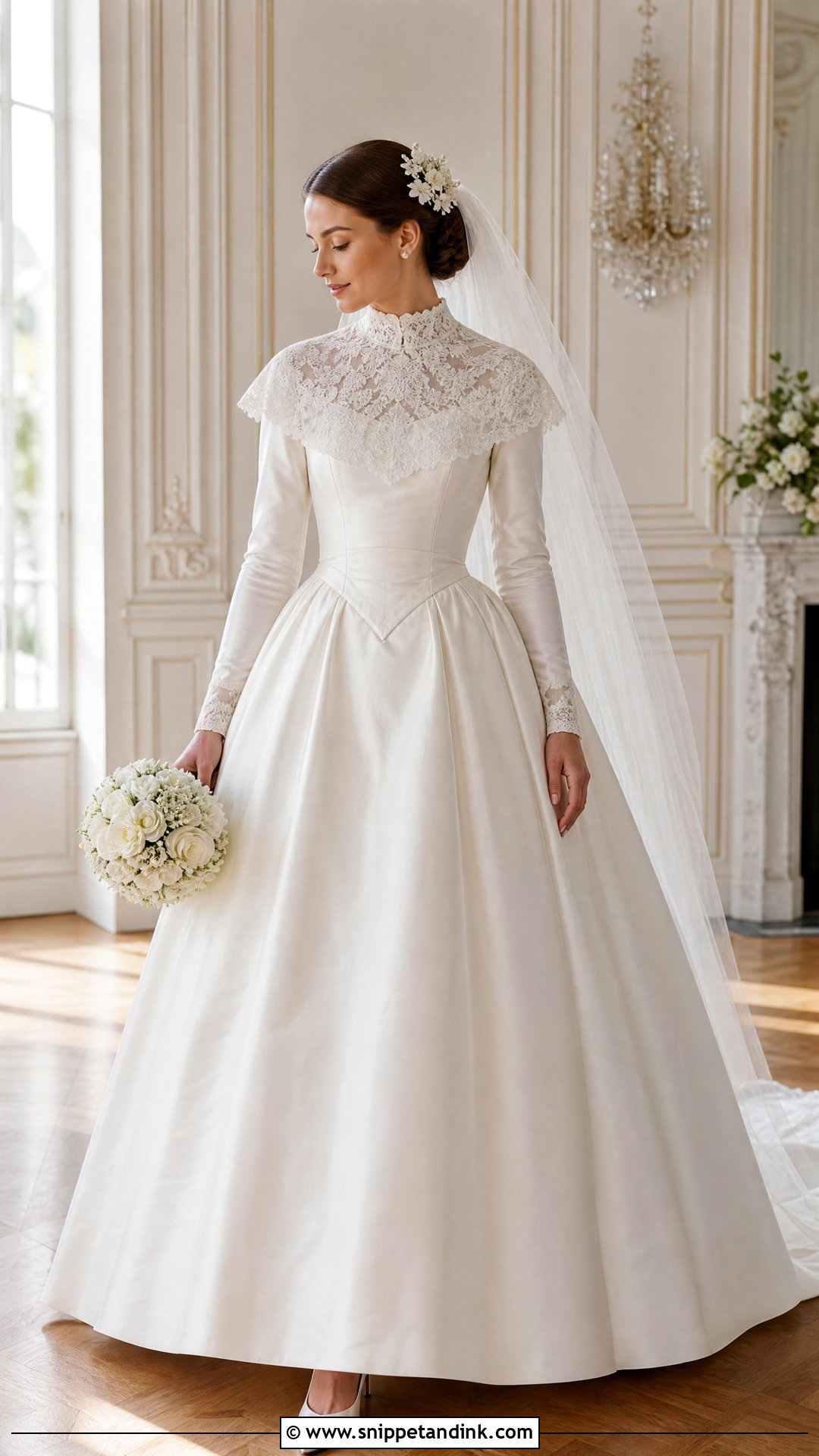
A lace bertha collar is the quickest way I know to make a plain satin gown read as Victorian. It should run across the shoulders as one continuous band; a collar that breaks at the sleeve seams looks like trim added later. I like the same lace repeated in a few appliqués near the hem so the eye connects top and bottom. Under it, a low, wide neckline and a V-shaped waist, with a pleated skirt and a fingertip or chapel veil. Skip the necklace entirely. The collar already frames the face, and a chain sitting on top of lace just catches and pulls threads.
5. Queen Victoria Orange Blossom Wedding Dress
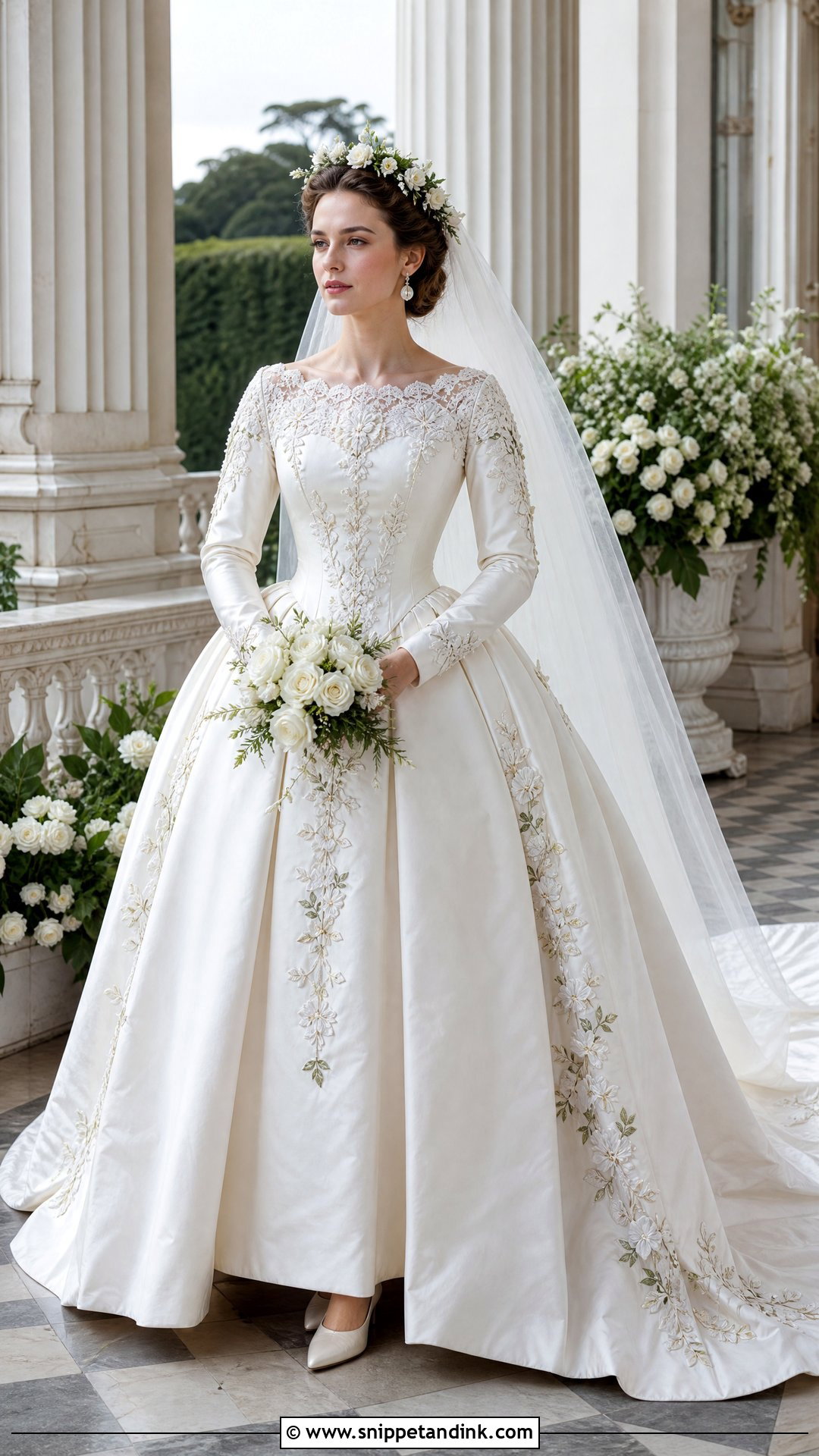
Orange blossom was Victoria’s flower, and it’s the detail I reach for when a bride wants the reference to feel young rather than grand. Thread the motif through the veil edge, the bodice trim and the skirt border, and wear a realistic blossom crown instead of a tiara. Fresh orange blossom is seasonal and bruises brown within hours of handling, so I nearly always use wax, silk or embroidered versions on the gown itself and keep any real stems for the bouquet. On a petite frame, cluster the flowers in two or three places; spread everywhere, they shrink her.
6. Queen Victoria Silk Ball Gown Wedding Dress
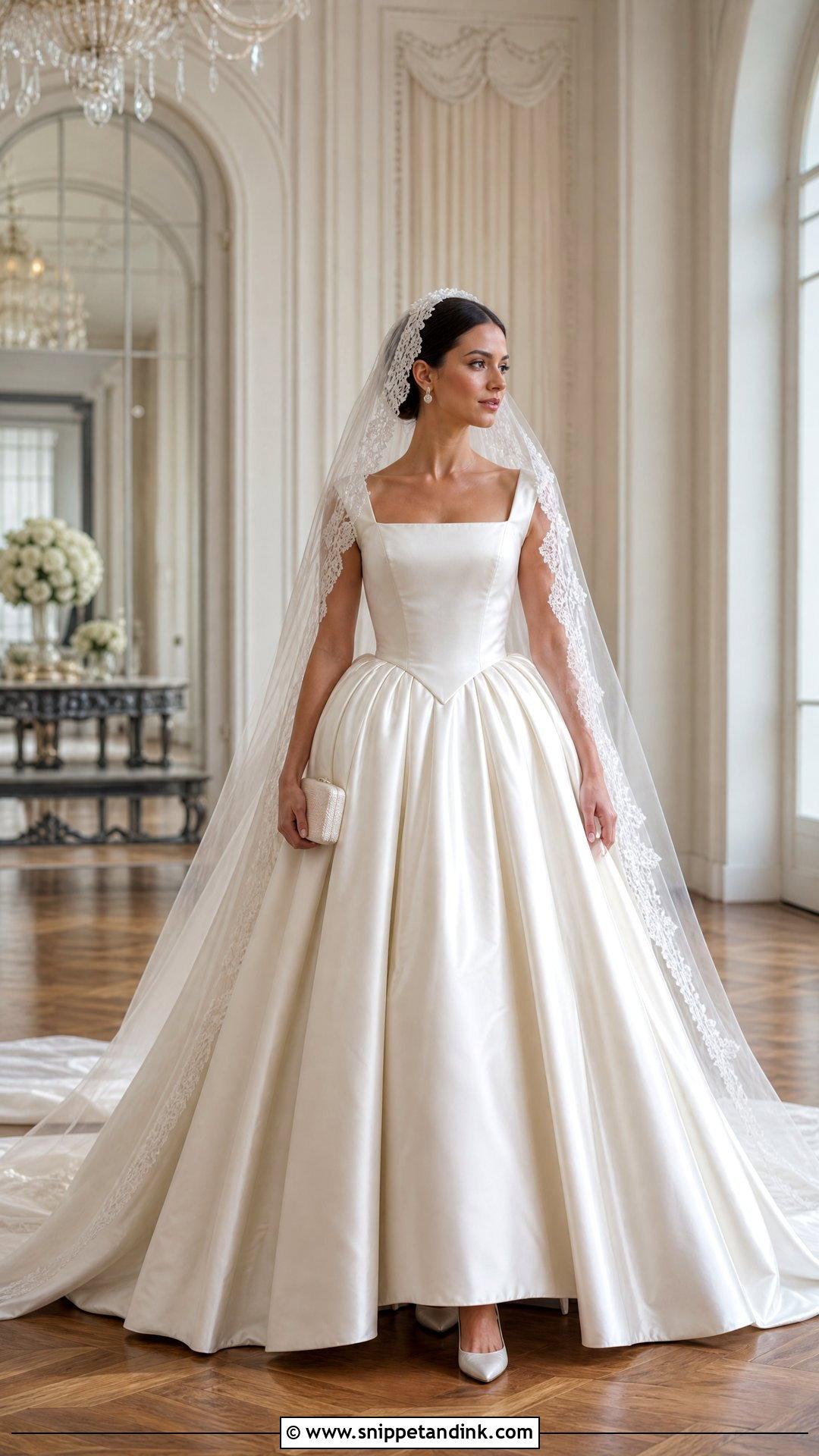
Good silk does most of the styling for you. Silk satin, faille or duchess satin all hold a broad pleated skirt, and each catches light differently: duchess is heavier and glossier, faille has a fine rib that looks matte from a distance. Keep the pointed waist and short sleeves, but a square neckline makes this easier to wear in a modern room. I’d limit the lace to the neckline and hem and ask for a detachable train, because a long silk train collects every crumb on the dance floor. A lace-edged veil, low satin heels and one heirloom piece of jewelry are plenty.
7. Queen Victoria Corset Wedding Dress
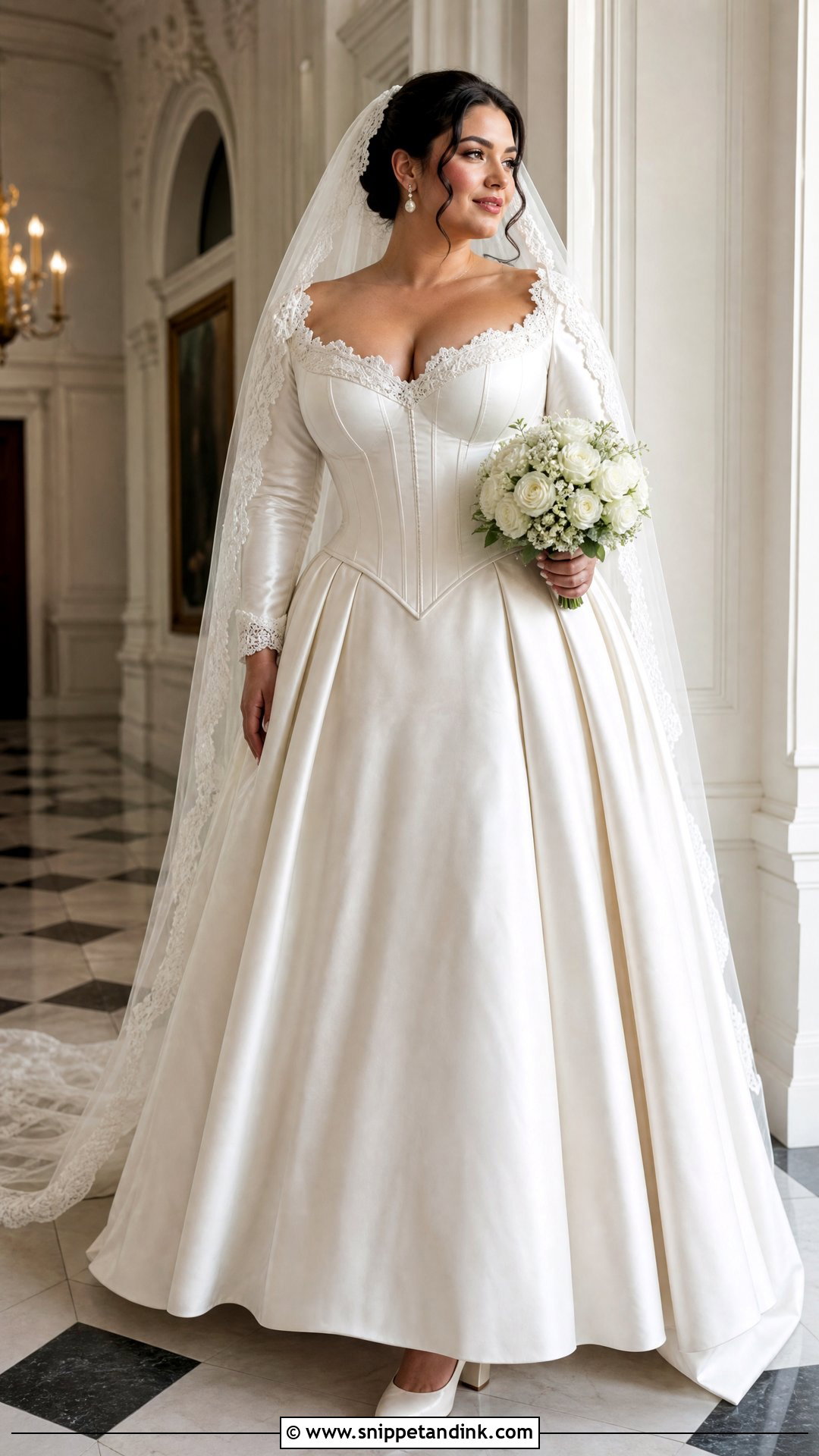
The corset is the part brides worry about, and fairly so. Internal boning with a deep basque point gives the period shape; covered buttons, lace edging and a little piping show off the construction without looking like lingerie. Where it goes wrong is fit. A bodice that’s tight at the fitting will feel worse after a meal, so I have brides sit, eat a snack and breathe deeply in the final fitting before anyone signs off. A lace-up panel hidden behind a zip gives the seamstress room to adjust on the morning. Satin block heels, pearl drops and a compact bouquet keep the outfit tidy around that waistline.
8. Queen Victoria Basque Waist Wedding Dress
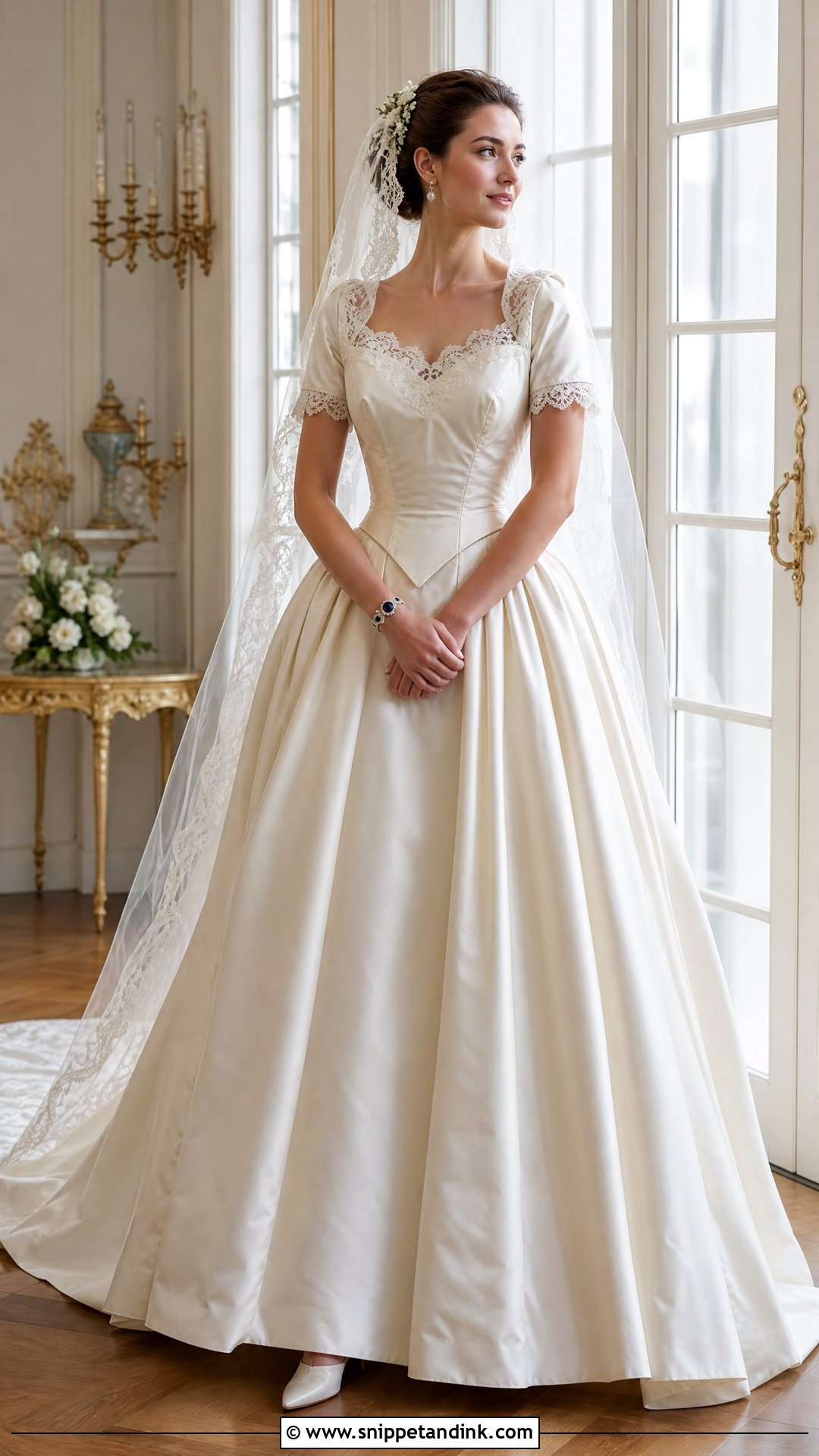
I find the basque waist the most forgiving part of the whole look. That long V draws the eye down to the center and then lets the skirt open out, and the seamstress can make the point shallow on a short torso or deeper on a long one, which is why it works across very different figures. Ivory satin with lace at the neckline, sleeves and lower skirt keeps it soft. Use light petticoats rather than a rigid hoop, and keep the skirt width in proportion to your height. A low bun with a small orange blossom comb, pearl earrings and a slim sapphire bracelet finish it.
9. Queen Victoria Puff Sleeve Wedding Dress
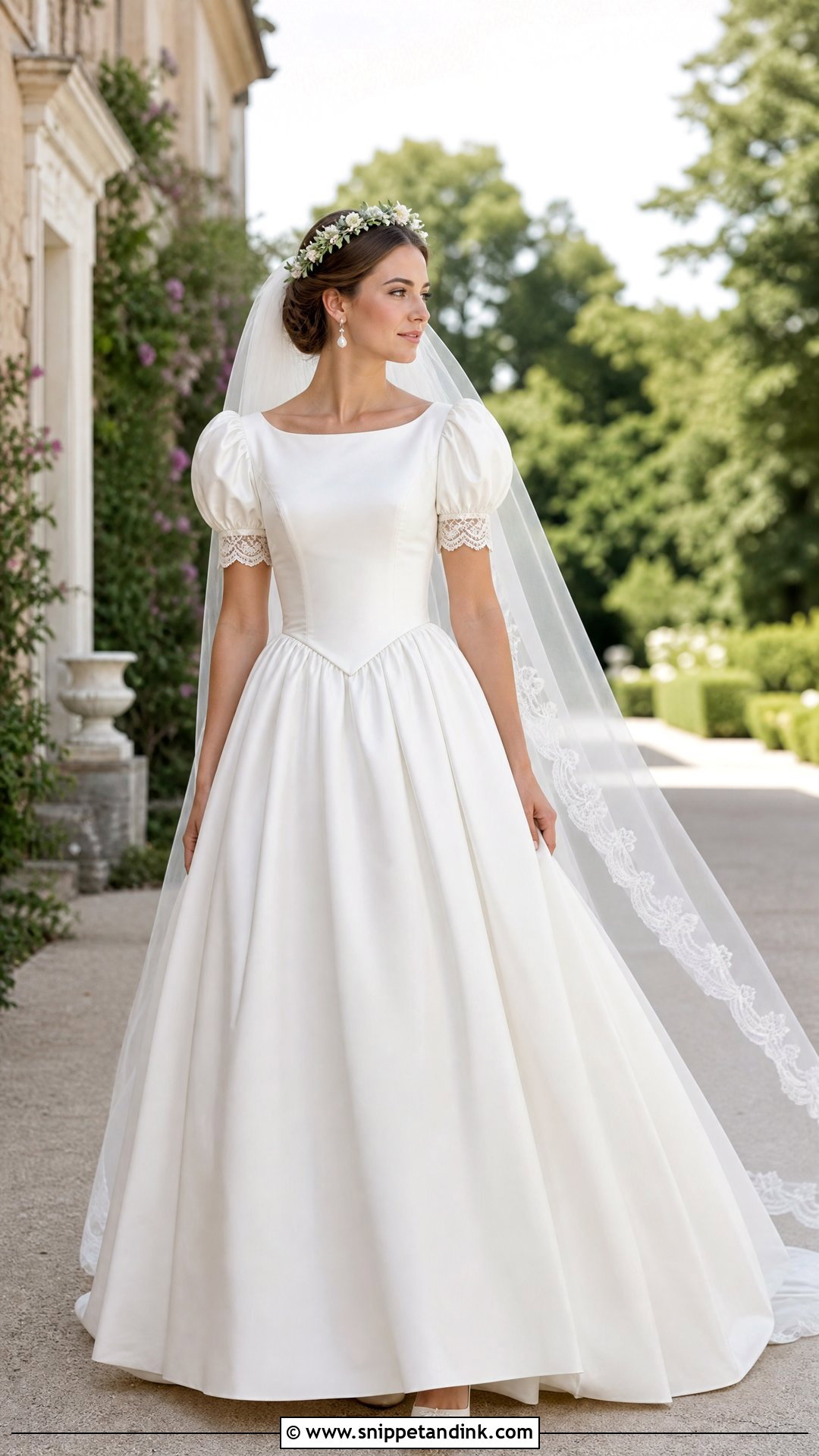
Puff sleeves are charming, but they’re also the detail most likely to tip into costume. Small and soft is the rule I follow: sleeves that sit just off the shoulder, finished with lace cuffs or a few appliqués, over a clean bodice with very little decoration. Full sleeves plus a busy skirt is too much. If you’d like more coverage, sheer tulle under the open neckline or an elbow sleeve works well. Pair it with closed satin shoes, pearl earrings, a floral wreath and a long lace-edged veil for a spring or summer garden ceremony.
10. Queen Victoria Long Sleeve Wedding Dress
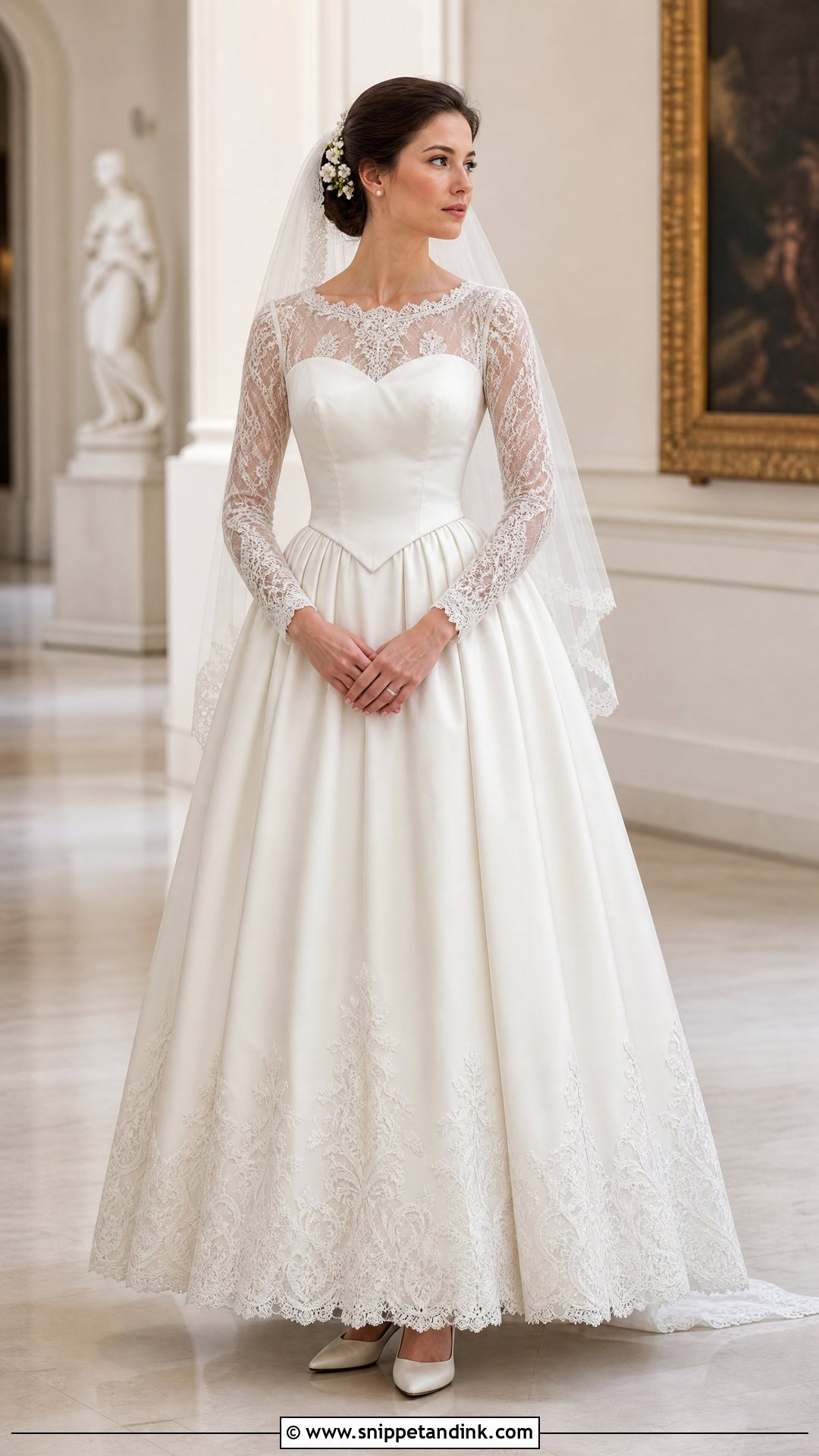
Long lace sleeves turn the original short-sleeved gown into something I’d happily send a bride out in for an autumn or winter wedding. Lay illusion tulle under the wide neckline, set floral lace sleeves with covered buttons at the wrist, and repeat the lace at the hem. Ask for stretch lace at the elbow; rigid lace sleeves tear at the inner elbow when you hug or raise a glass. A low chignon with a few orange blossom pins keeps the neckline clear and holds on to the royal mood of a Queen Victoria-inspired bridal look. Pearl studs and a lace chapel veil are all it needs.
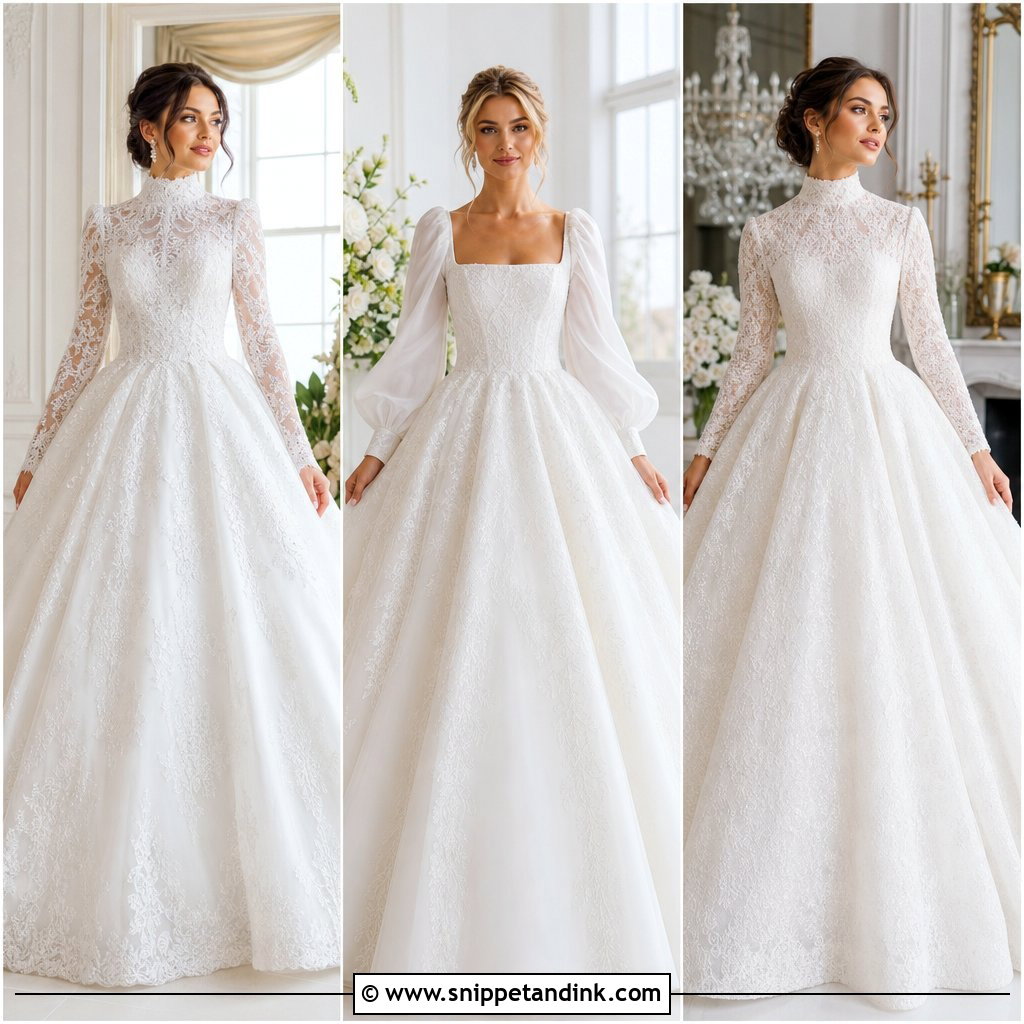
11. Queen Victoria High Neck Wedding Dress
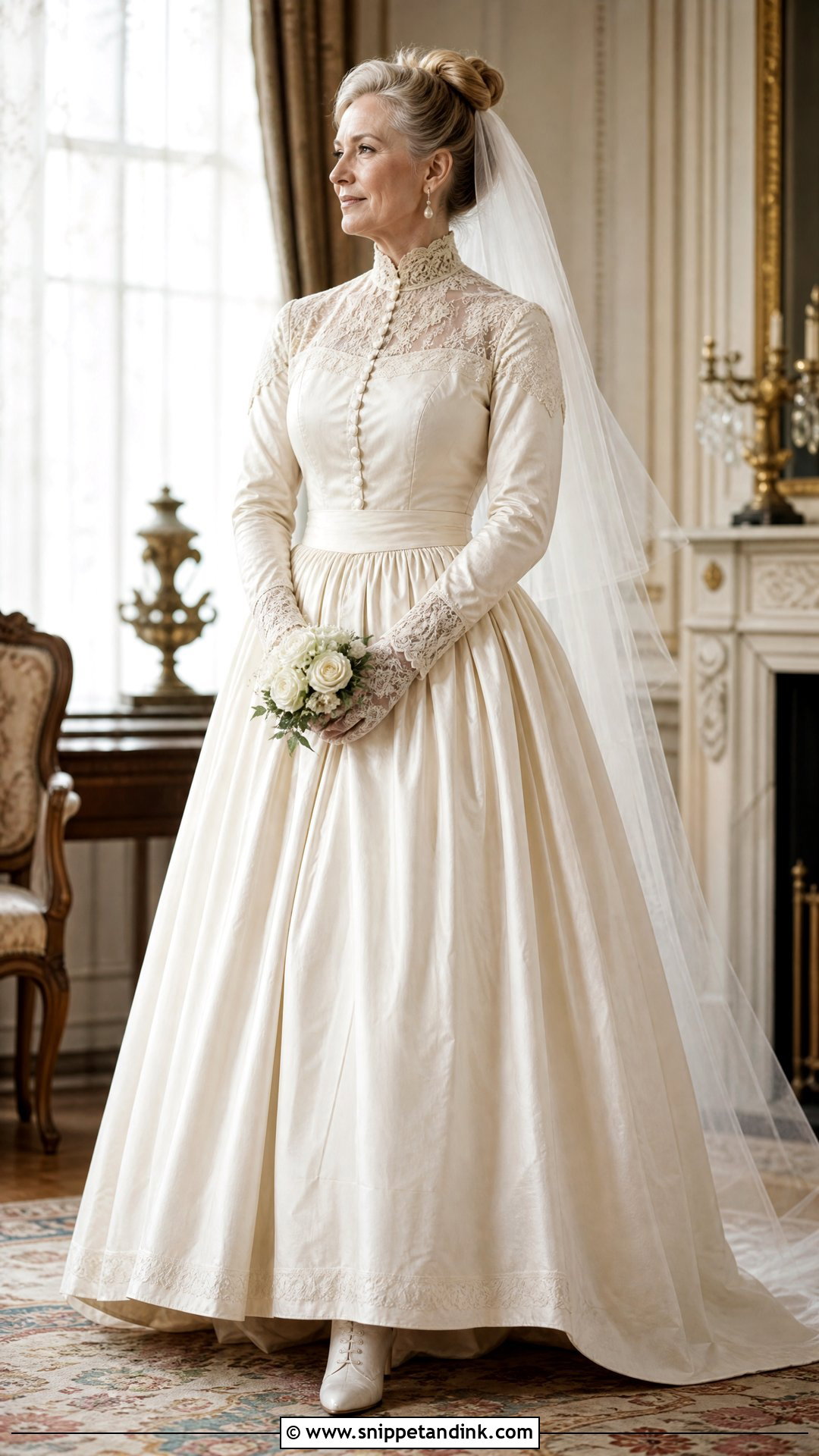
Victoria herself wore an open neckline, but later Victorian brides covered up, and that high-necked look suits anyone who wants full coverage. A silk bodice with a lace yoke, a standing collar and long sleeves feels formal and secure. Pleat the skirt into a natural waist rather than gathering it, so the line stays smooth under all that detail at the top. Because the collar sits right under the chin, I keep jewelry to earrings or a small brooch at the throat. Check the collar height while seated; a band that’s fine standing can dig in once you sit and lean forward.
12. Queen Victoria Square Neck Wedding Dress
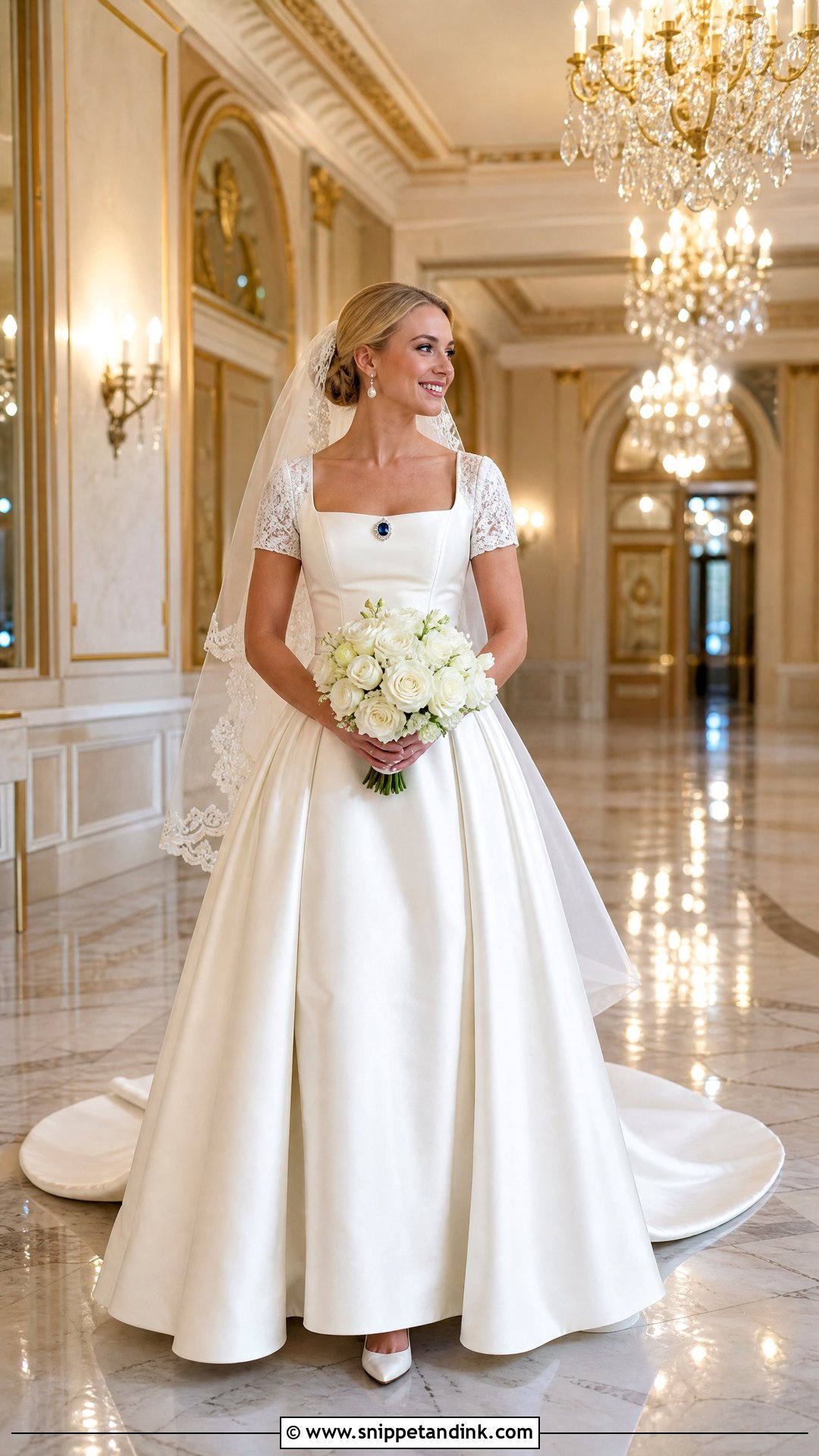
A square neck is the version I suggest to brides who want the period shape but need to wear a normal bra or simply hate strapless gowns. The straight neckline balances the round skirt nicely and leaves room for one pendant or a sapphire brooch. Silk satin with short lace sleeves and a basque waist keeps it Victorian. Because the bodice seams are on show, they have to be precise, so it’s worth paying for a good tailor here. A detachable train gives you a grand entrance, then comes off for the reception.
13. Queen Victoria Cathedral Train Wedding Dress
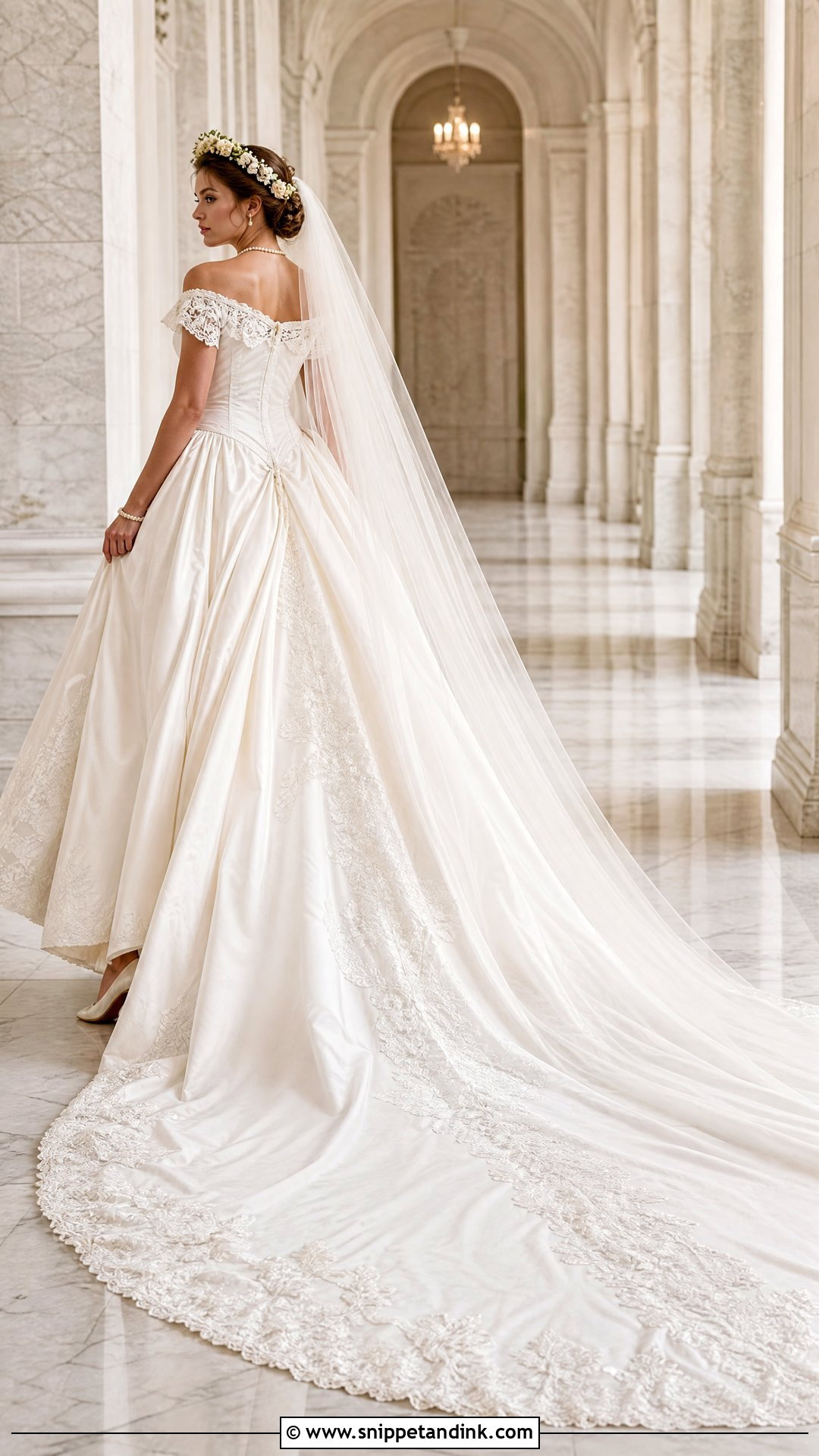
A cathedral train is pure ceremony, and it needs space. The front of the skirt should stay fairly smooth while the volume builds toward the back, so you can still see your feet when you walk. An off-the-shoulder lace neckline, short sleeves and a pointed waist keep it in the Victorian family. Lace borders and covered buttons are all the decoration it needs. Ask for a multi-point bustle and have your maid of honor practise it at the last fitting; a one-hook bustle under a train this long almost always drops by the first dance. Long aisles, ballrooms and wide terraces are where it earns its fabric.
14. Queen Victoria Chapel Veil Wedding Dress
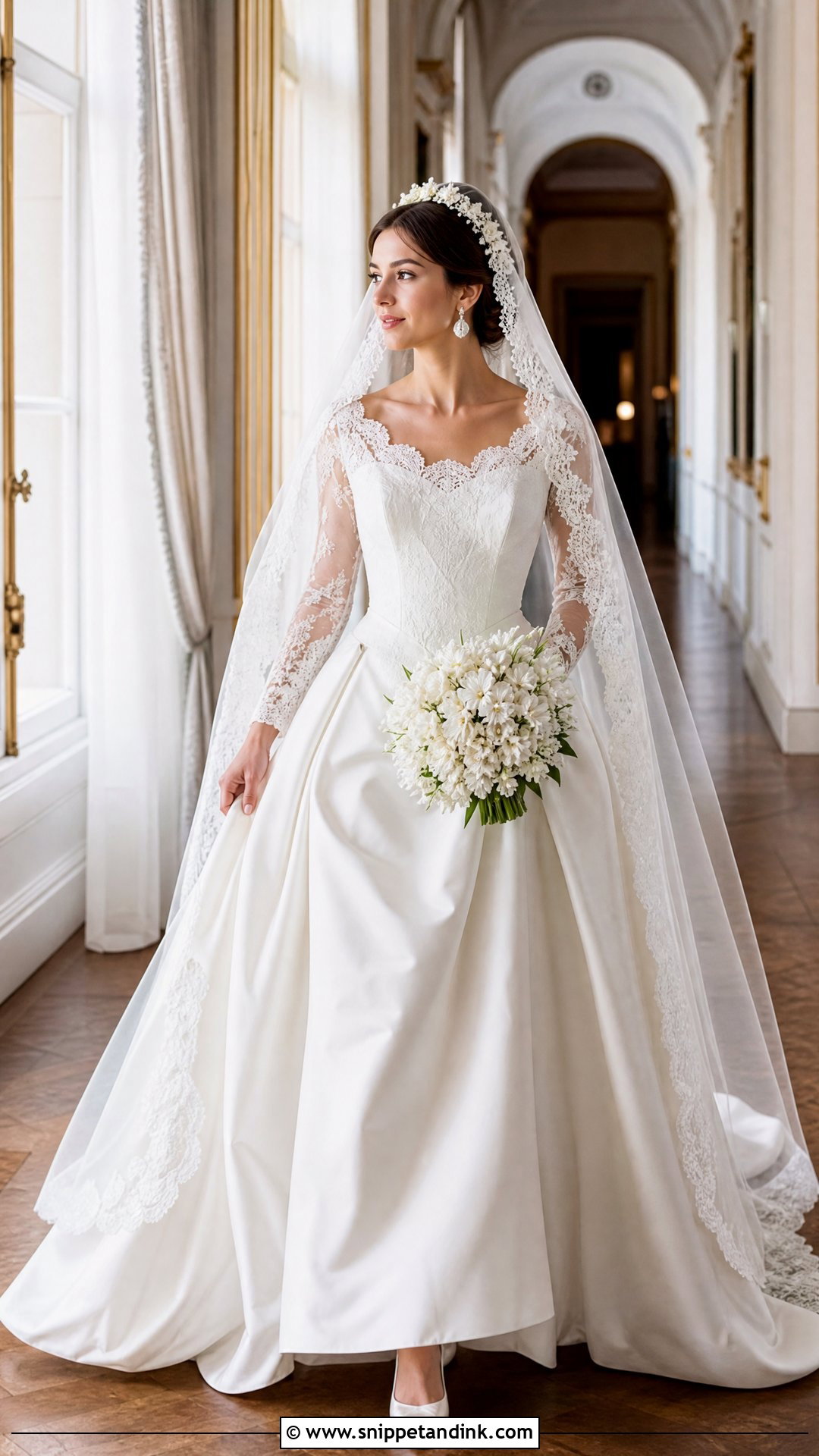
A chapel veil gives you movement in photos without the weight or the constant fussing of a cathedral length. I pair it with a white satin ball gown, a lace-trimmed neckline and a softly gathered skirt. Scalloped floral lace on the veil edge is lovely, but it doesn’t need to match the dress lace motif for motif; close in tone and scale is enough. Pin the comb low at the back of the head so the hairstyle and the orange blossom accents stay visible. That modest, flower-led headpiece is what set Victoria apart from the jewel-heavy royal brides before her.
15. Queen Victoria Plus Size Wedding Dress
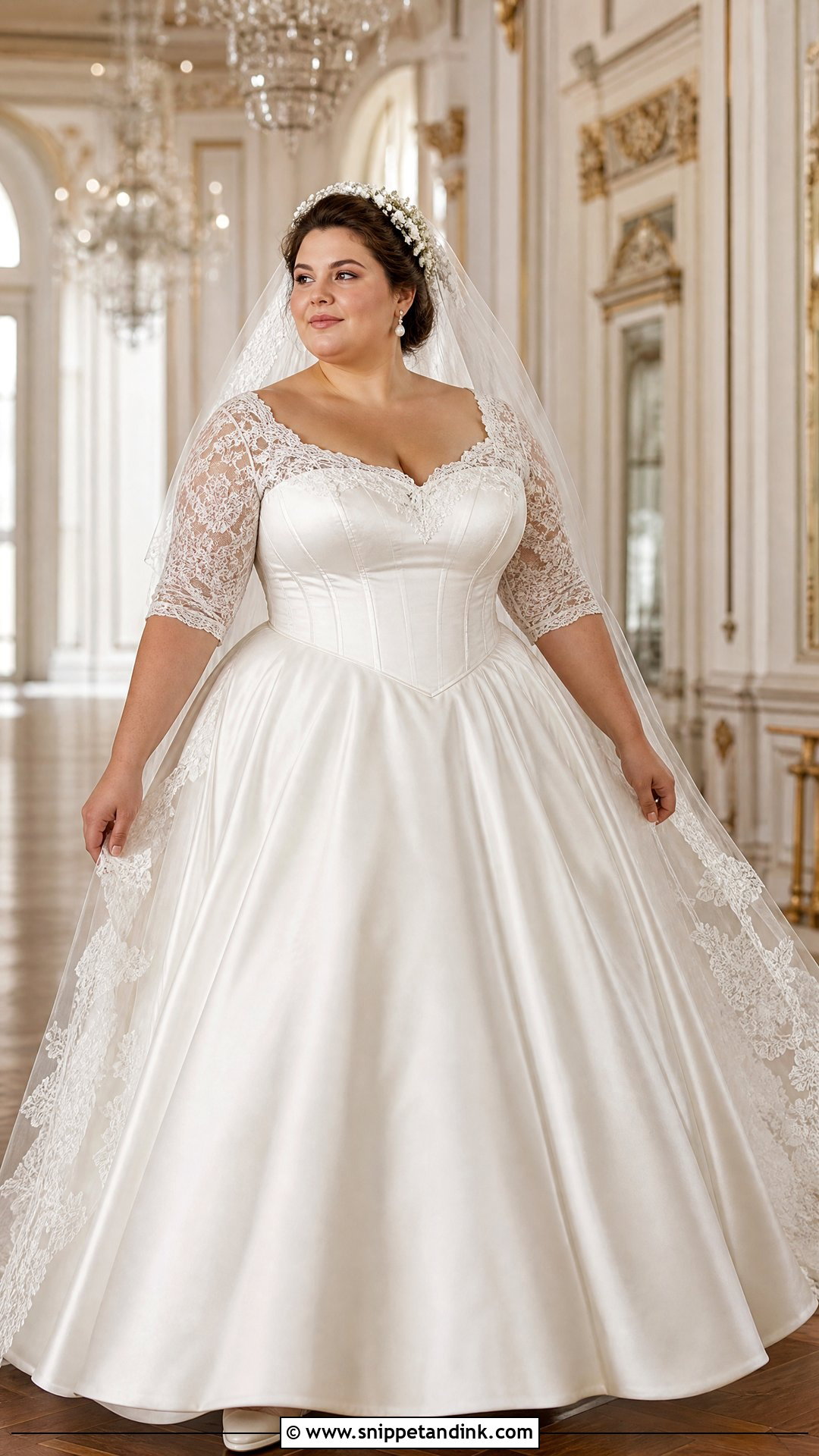
For a plus-size bride, the construction matters more than any trim. I want a structured basque bodice with real boning and a strong inner waist stay, so the skirt’s weight hangs from the waist and never drags on the shoulders or neckline. Sleeves can be anything from a short puff to full lace, depending on what you’re comfortable in. Layered petticoats under an A-line skirt give royal volume and still let you sit and climb steps, which a rigid hoop doesn’t. Keep lace at the neckline and hem and leave the center front clean. Plan on at least three fittings: bust, waist, sleeves and hem all shift as the gown is built.
16. Queen Victoria Petite Wedding Dress
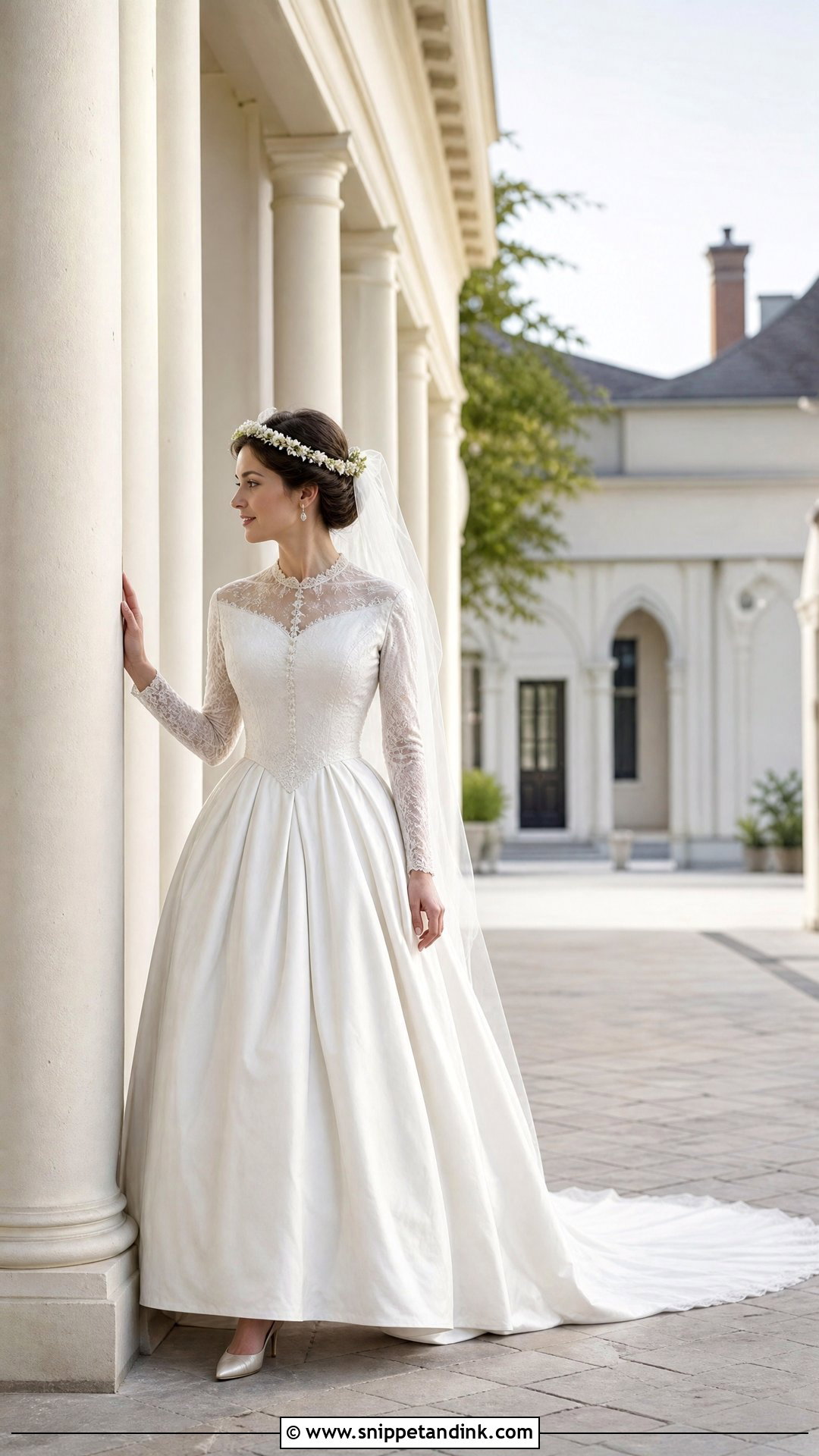
On a petite bride, scale is everything. I keep the bodice compact, raise the waist very slightly and hold the skirt width in so it doesn’t spread wider than your shoulders. An uninterrupted satin front and a sharp V at the waist lengthen the line. Narrow the lace flounce well below historical depth, and choose a chapel train over a court train. Oversized puff sleeves and a deep collar will swallow a small frame, so I leave those out. Pointed low heels, small pearl drops, a slim flower crown and a fingertip veil keep everything in proportion.
17. Queen Victoria Minimalist Wedding Dress
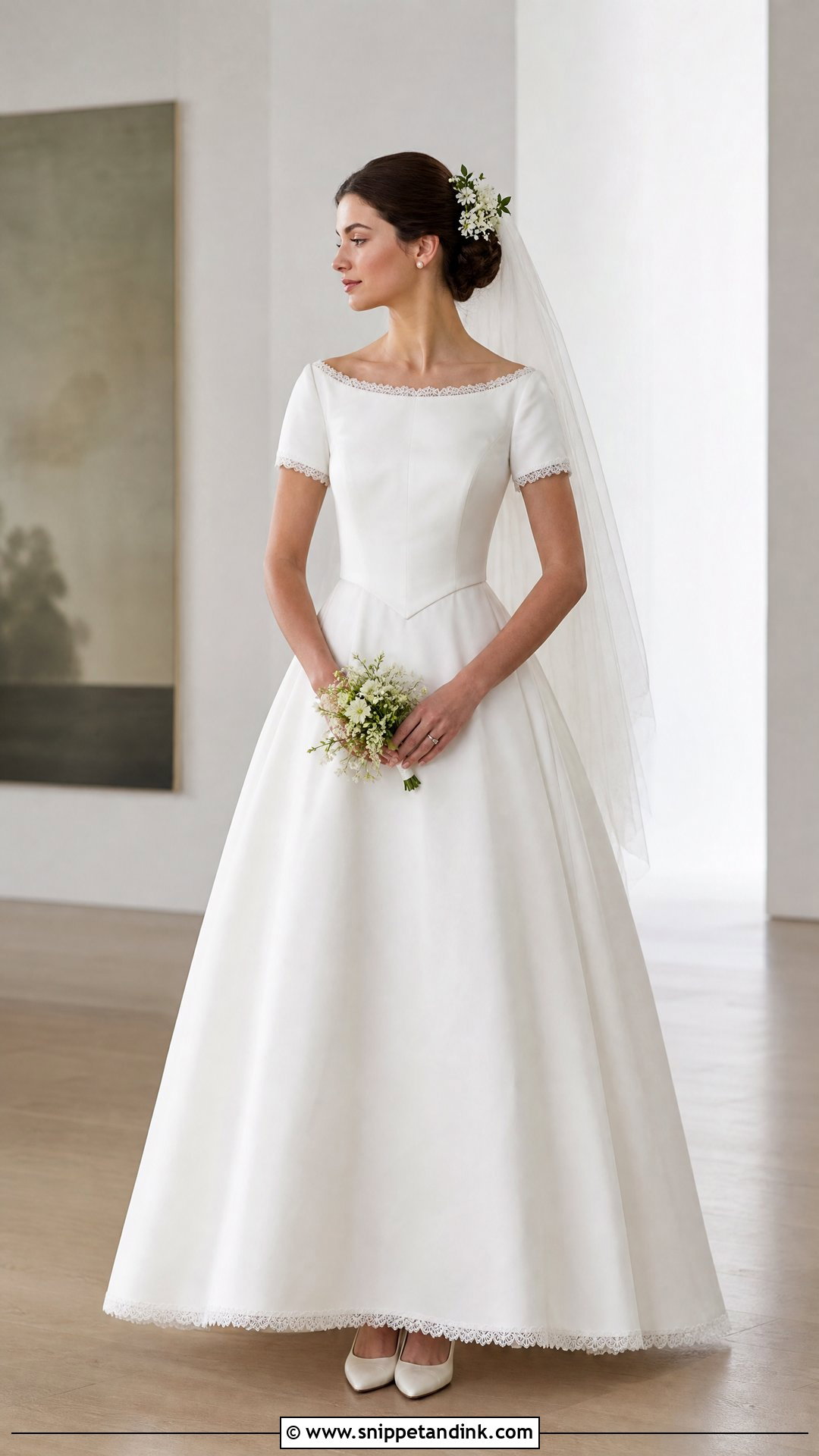
Some brides love the shape but not the frills. For them I strip it right back: smooth silk satin, a wide neckline, short sleeves, a pointed waist and a full skirt with no beading at all. One band of fine lace, at the neckline or along the train, is the only historical signal. With nothing else to look at, the cut has to be excellent, because every pull line shows on plain satin. Pearl studs, sleek pumps, a plain tulle veil on an orange blossom comb and natural makeup let it sit happily in a gallery or a bright modern venue.
18. Queen Victoria Ivory Wedding Dress
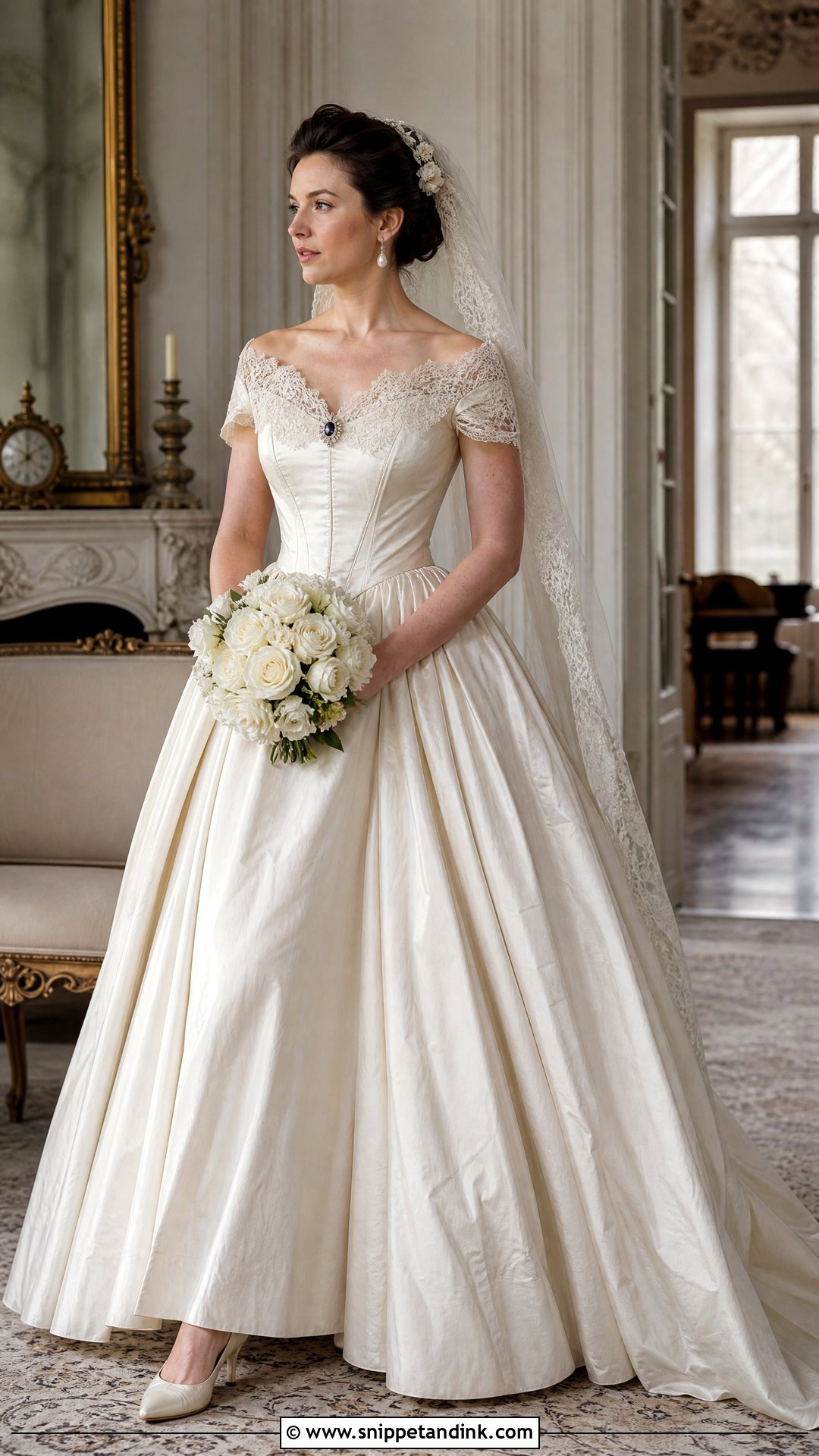
Ivory is kinder than bright white on most skin tones, and Victoria’s satin would have aged toward cream anyway. The catch is undertone. Ivories range from yellowish to grey, and when the lace, satin, veil and shoes come from different makers they rarely match. I take every piece outside together and look in daylight, because a mismatch you can’t see under shop lights shows clearly in photographs. Build around an ivory silk gown with a basque bodice and lace-trimmed off-the-shoulder neckline, cream shoes, pearl earrings and a vintage brooch. A touch of pale blue or sapphire suits an estate or an autumn date.
19. Queen Victoria Pearl Wedding Dress
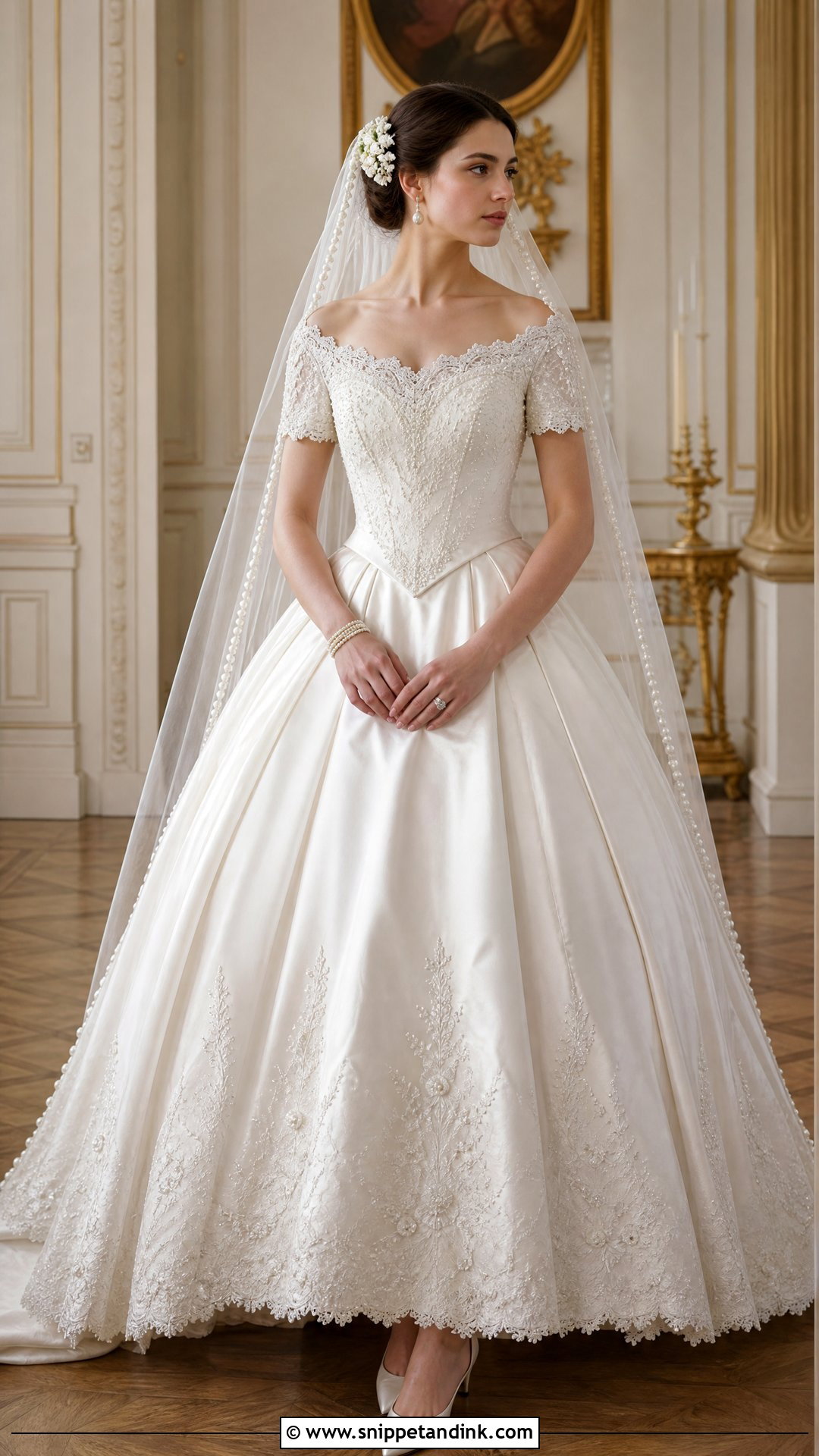
Pearls give a soft glow rather than sparkle, which suits this period far better than crystals. I’d scatter seed pearls along the lace collar, the sleeve edges and the skirt appliqués, and leave the middle of the skirt plain so the gown doesn’t feel heavy. Placement matters for wear too: pearls on the inner arm or the hip, where your arms brush the dress, rub loose by the reception, so keep them away from those spots and ask for each one to be stitched through individually. With that much detail on the gown, skip the crown and wear a pearl-edged veil on an orange blossom comb.
20. Queen Victoria Floral Lace Wedding Dress
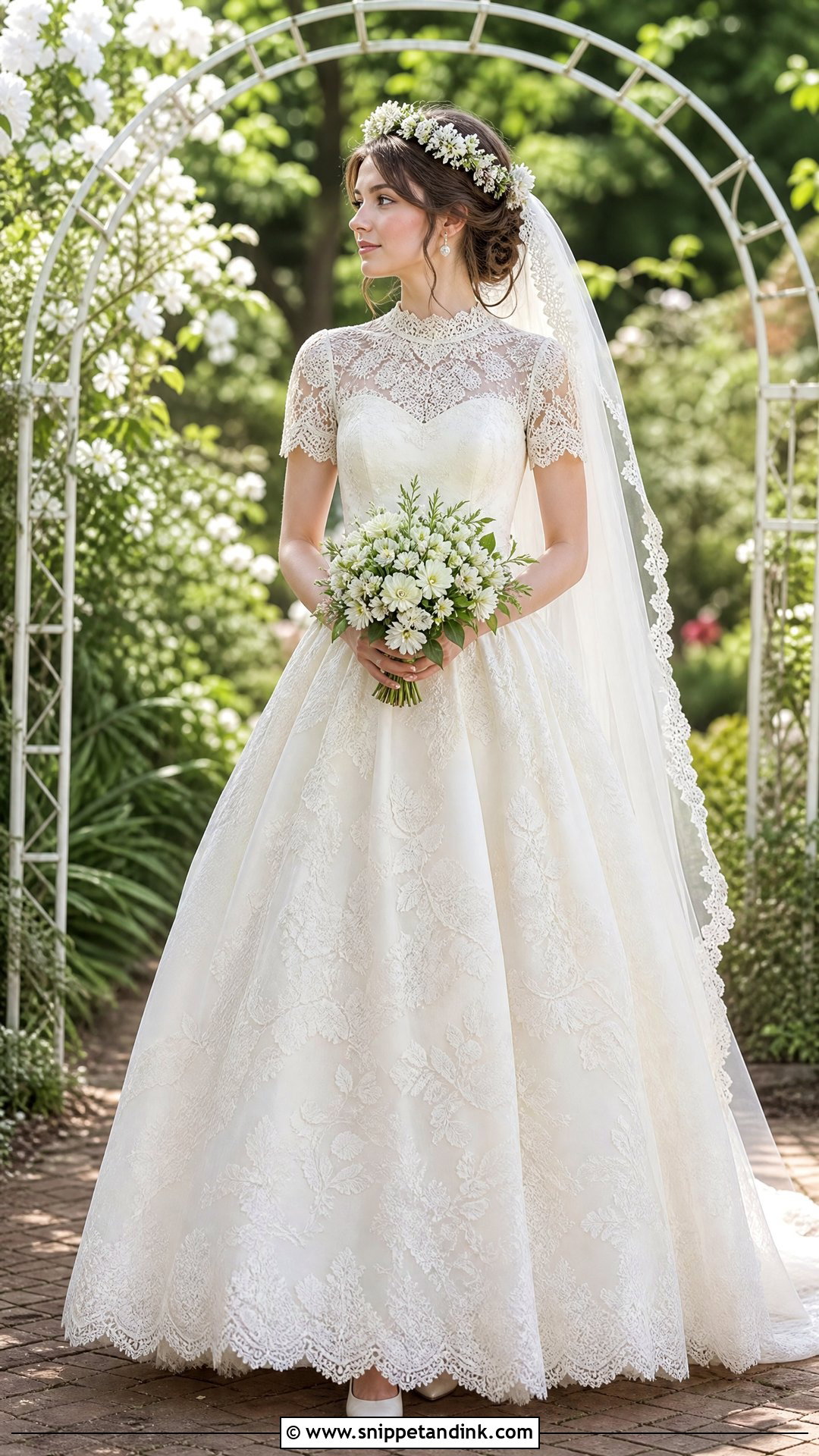
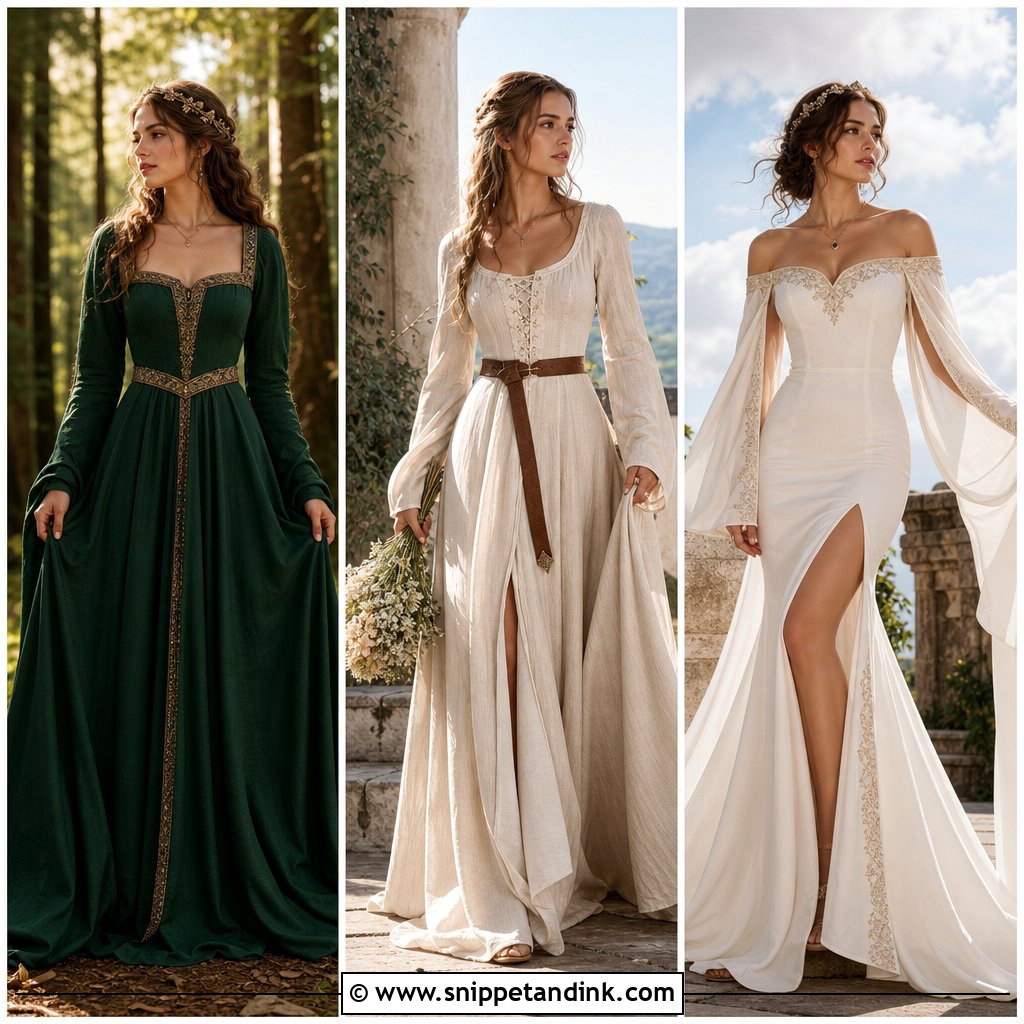
A satin underdress with a basque waist and full skirt is the base here; floral lace goes over the bodice, sleeves and lower skirt, with areas of plain satin left showing. I always check that the lace motifs are a similar size from neckline to train. Big roses at the hem with tiny sprigs at the bodice looks pieced together. You can make the embroidery personal with myrtle, orange blossom or a flower from your home region, and a few three-dimensional blooms at the shoulders and waist modernise it. Finish with a lace-edged veil, ivory pumps and an orange blossom bouquet tied with white ribbon.
21. Queen Victoria Blue Accent Wedding Dress
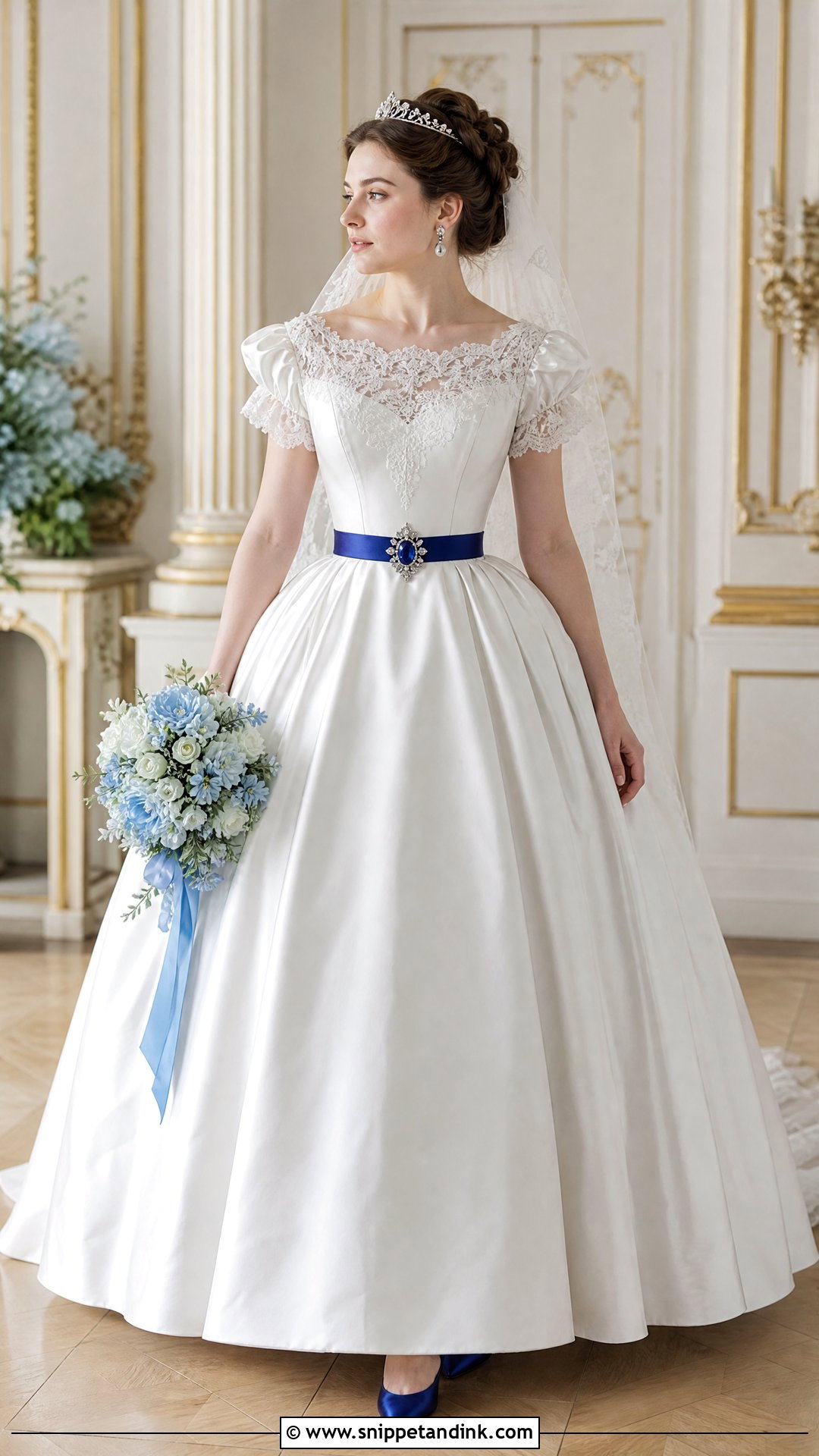
Blue is the color I add when a bride needs the dress to link to her wedding palette. Pick one place for it: a slim waist sash, embroidered flowers, satin shoes or a sapphire-style brooch, not all four. Royal blue reads formal; powder blue is gentler and kinder in daylight. If you use a sash, keep it narrow or it flattens the point of the basque waist, which is the very thing that makes this a recognizable Queen Victoria silhouette. Pearl earrings, a white lace veil and pale blue flowers tucked into the bouquet are enough.
22. Queen Victoria Winter Wedding Dress
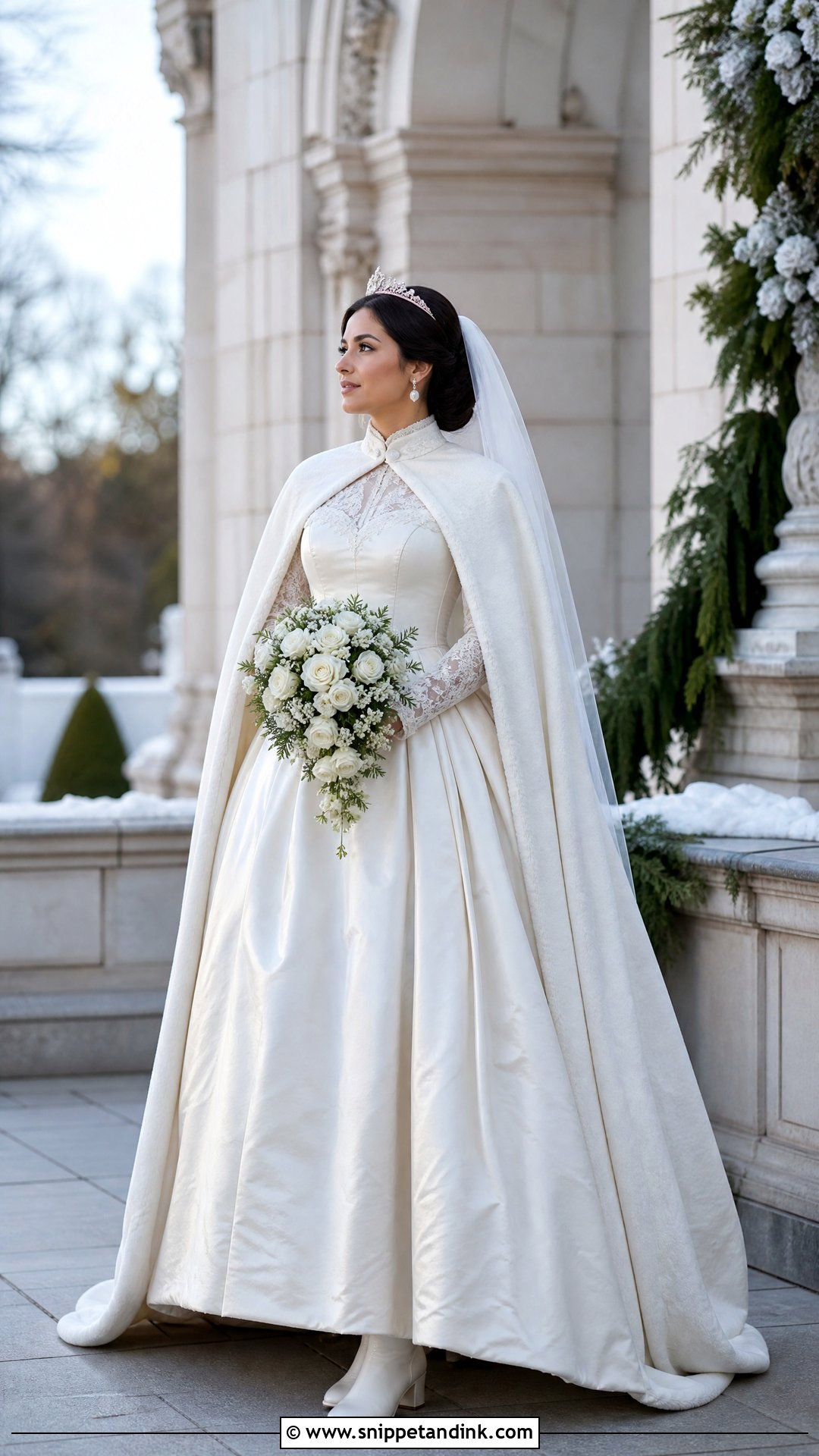
For winter, I layer rather than make the gown itself heavier. An ivory silk satin dress with long lace sleeves and a pointed waist stays the base, and a fitted white velvet cape with a lace collar covers arrivals and outdoor photos. The cape should finish at the waist or flow down over the train without hiding the bodice. Indoor venues heat up fast once guests arrive, so a breathable lining and a cape you can hand off are worth more than a lined gown. A little silver embroidery gives a frosty touch. Closed-toe block heels and a white muff or structured bouquet keep you warm and steady on cold stone.
23. Queen Victoria Garden Wedding Dress
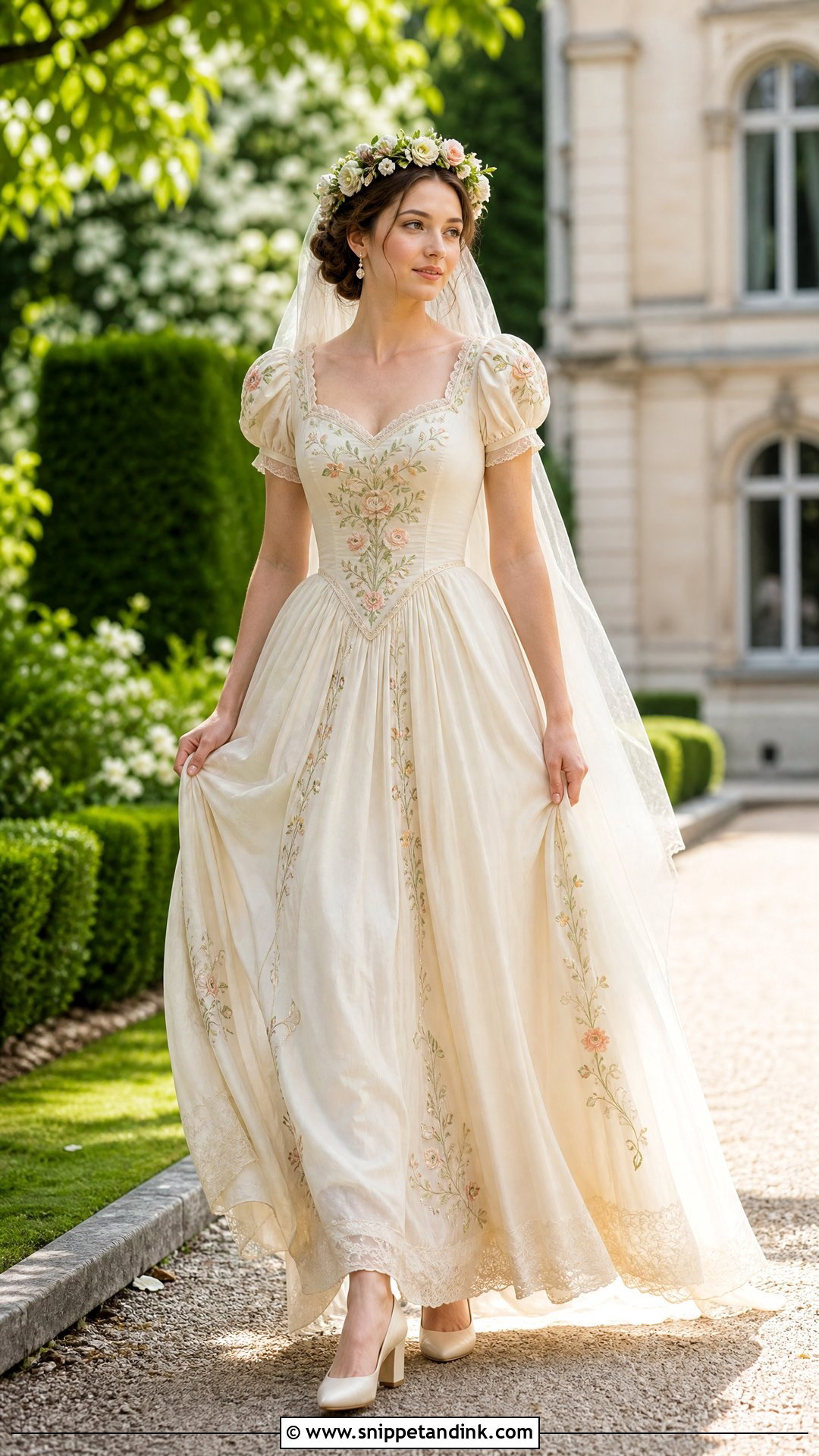
Outdoors, I lighten everything. A lightweight silk gown with short puff sleeves, a pointed waist and a full but softly flowing skirt moves better on grass than heavy satin. Embroider orange blossoms, roses and leaves around the neckline and train, and keep the train short; long ones drag through damp lawn and pick up grass stains that are hard to remove. A hidden wrist loop lets you lift the hem on gravel paths. Block heels won’t sink into turf the way stilettos do. Add a flower crown and a light lace veil, and pin the veil firmly, since a breeze catches fine lace more than you’d expect.
24. Queen Victoria Civil Ceremony Wedding Dress
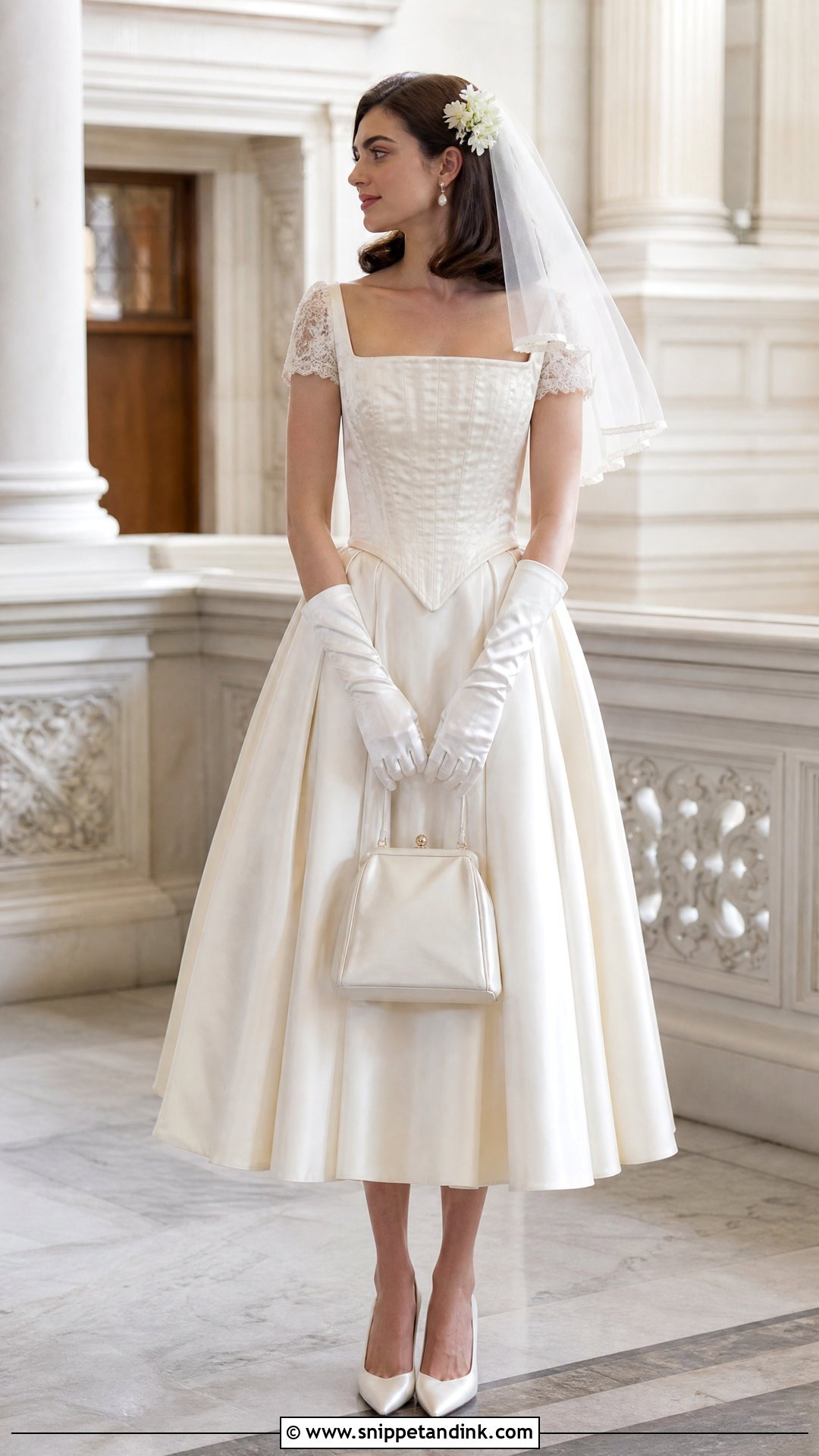
You don’t need a ball gown to nod to Victoria at a city hall. A tea-length ivory satin dress with a fitted basque bodice, square neckline and short lace sleeves keeps the shape in miniature. Covered buttons and a narrow lace hem are all the period detail a shorter skirt can carry. I’d set the hem at mid-calf so the shoes show and the proportions look deliberate. Wrist gloves, satin pumps, a shoulder-length veil on a floral comb and a small top-handle bag suit a registry office or hotel suite.


25. Queen Victoria Reception Wedding Dress
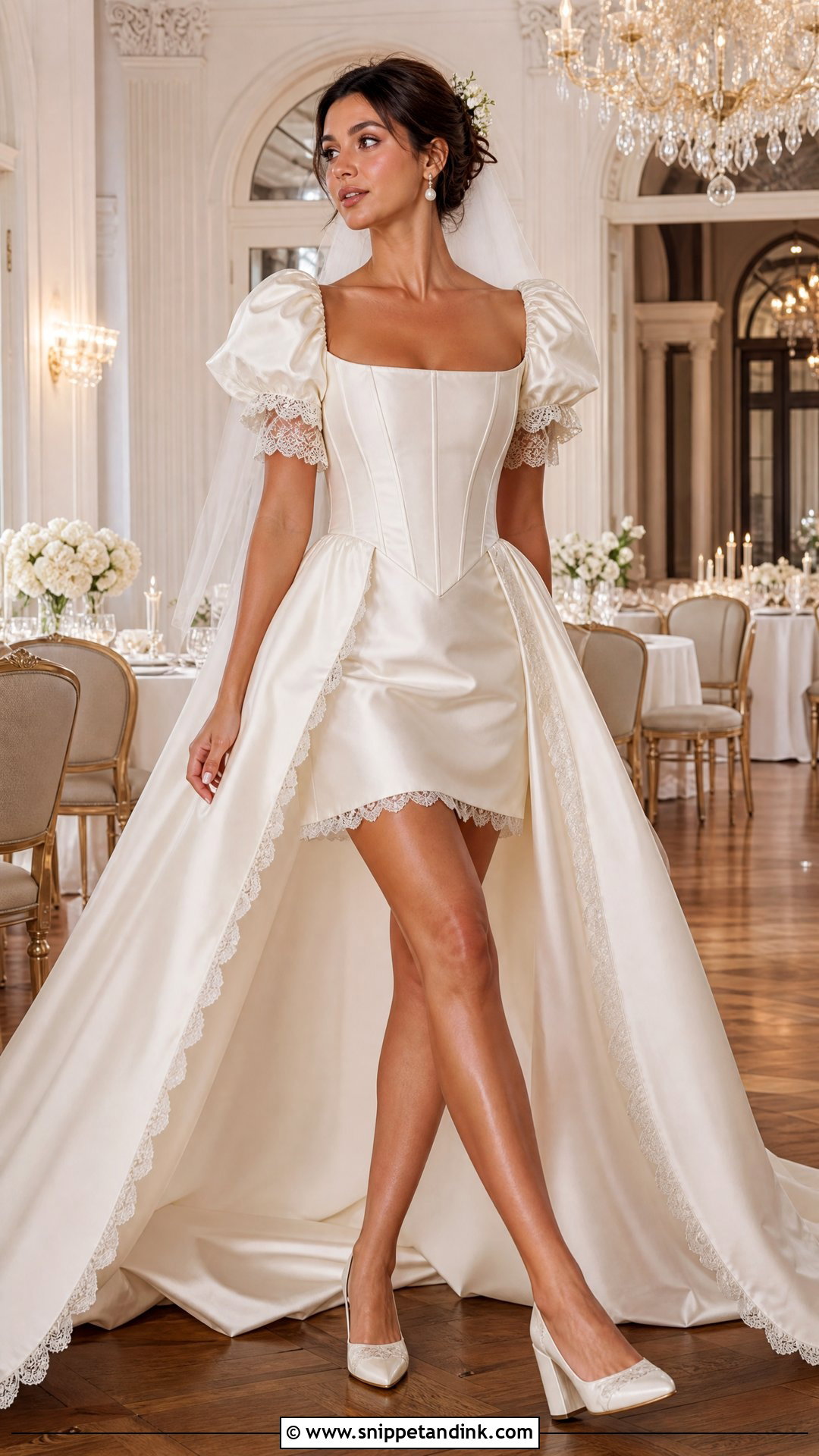
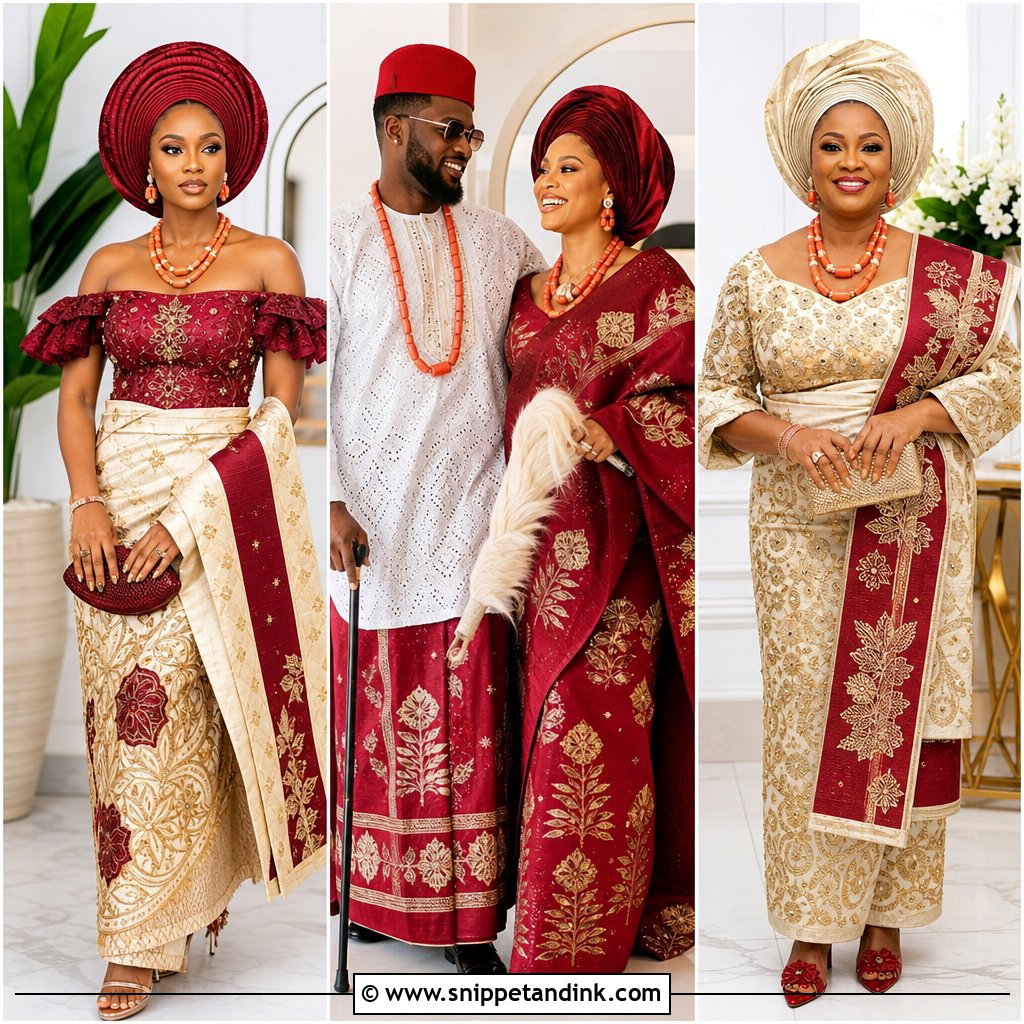
This two-in-one idea solves the biggest problem with full Victorian skirts: dancing in them. A fitted satin mini or column dress with a square neckline, basque waist, puff sleeves and lace edging sits underneath, and a detachable full overskirt and court train goes on for the entrance. After photographs, the overskirt comes off and you have a lighter second look. Use the same satin and lace on both layers so the change looks planned. I always have the bride practise the removal at the final fitting with whoever will help her, because hooks and snaps behave differently when you’re in a hurry.
Moving, Sitting and Dancing in a Pointed Bodice
Period shapes look easy to wear in portraits because nobody in them is eating dinner. A boned bodice and a full skirt change how you move all day, and a little preparation keeps you comfortable.
- Sitting: a deep basque point can press into the stomach when you sit. Ask for a slightly softer bone at the center front, and practise sitting on the edge of the chair, which is easier in any structured skirt.
- Steps: lift the front of the skirt, not the sides, so the hem rises evenly and you can see where your feet go.
- Bathroom trips: a full petticoat makes this a two-person job. Brief your helper beforehand so it is quick.
- Dancing: either bustle the train securely or plan the detachable overskirt, and wear the shoes you’ll actually dance in to your final fitting so the hem is set at the right length.
How Far Ahead a Custom Victorian Gown Needs Ordering
Bespoke historical-style gowns take longer than off-the-rail dresses, mainly because of the lace and the bodice fittings. Most custom dressmakers want to start around nine to twelve months out, and hand-applied lace or sourcing a specific antique trim can add weeks. Timings vary by maker, so ask early.
I plan three or four fittings for a structured bodice, with the last one two to three weeks before the wedding so any weight change can still be taken in. Bring your shoes, your actual corsetry and your veil comb to every fitting. A boned bodice fitted over the wrong bra or petticoat will not sit the same on the day.
Afterwards, store satin and lace flat or loosely folded in acid-free tissue, away from light, and never in a plastic bag; ivory satin yellows unevenly when it can’t breathe.
Two Victorian Details Usually Say Enough
White or ivory satin, a lace border, a pointed bodice, a full skirt, orange blossom and a long veil are the building blocks, but you rarely need them all. A plain silk gown can manage with a basque waist and a blossom comb; a formal ball gown can carry a lace flounce, puff sleeves and a long train. Think about where you’ll marry, the season, your shape and how much you want to move before you settle on the final design. The best Victorian-inspired dress I can put a bride in is one that reminds people of 1840 while still looking entirely like her.
You'll Like These Ideas:




Leave a Reply