
Most of what makes the Victorian era recognisable in a bridal gown comes from one decade: the 1880s, when the bustle rose, peaked and then collapsed within about ten years. Bodices were tightly fitted and boned, sleeves stayed long and narrow, and the skirt was flat in front with all the drama pushed to the back. Ivory and white silk were common, yet plenty of brides married in blue, grey or patterned silk they could wear again to church and dinners. When I style a period wedding, I start from the silhouette and the foundations, then add boots, gloves, veil and flowers. The twenty dresses below cover the main shapes, fabrics and colours of the decade.
What Goes Under an 1880s Gown, Layer by Layer
An 1880s dress is built on its foundations. If you wear a reproduction over a modern bra and slip, the bodice will wrinkle and the skirt will hang flat at the back. When I dress a bride for a period wedding, these go on in order:
- A chemise or thin cotton layer, which protects the corset and absorbs sweat.
- A corset fitted to you. It shapes the waist and supports the bust; it should not be laced tight enough to stop you breathing deeply or eating.
- The bustle support: a cushion pad for a softer early-decade shape, or a cage of steel or cane for the bigger mid-decade projection.
- One or more petticoats, often with flounces at the back, to smooth the skirt over the bustle.
- The skirt and bodice last, with the bodice fitted over the corset.
Have every fitting done wearing the full set of foundations. A bodice fitted without the corset will not close properly over it on the day.
1. Ivory Silk Satin 1880s Wedding Dress
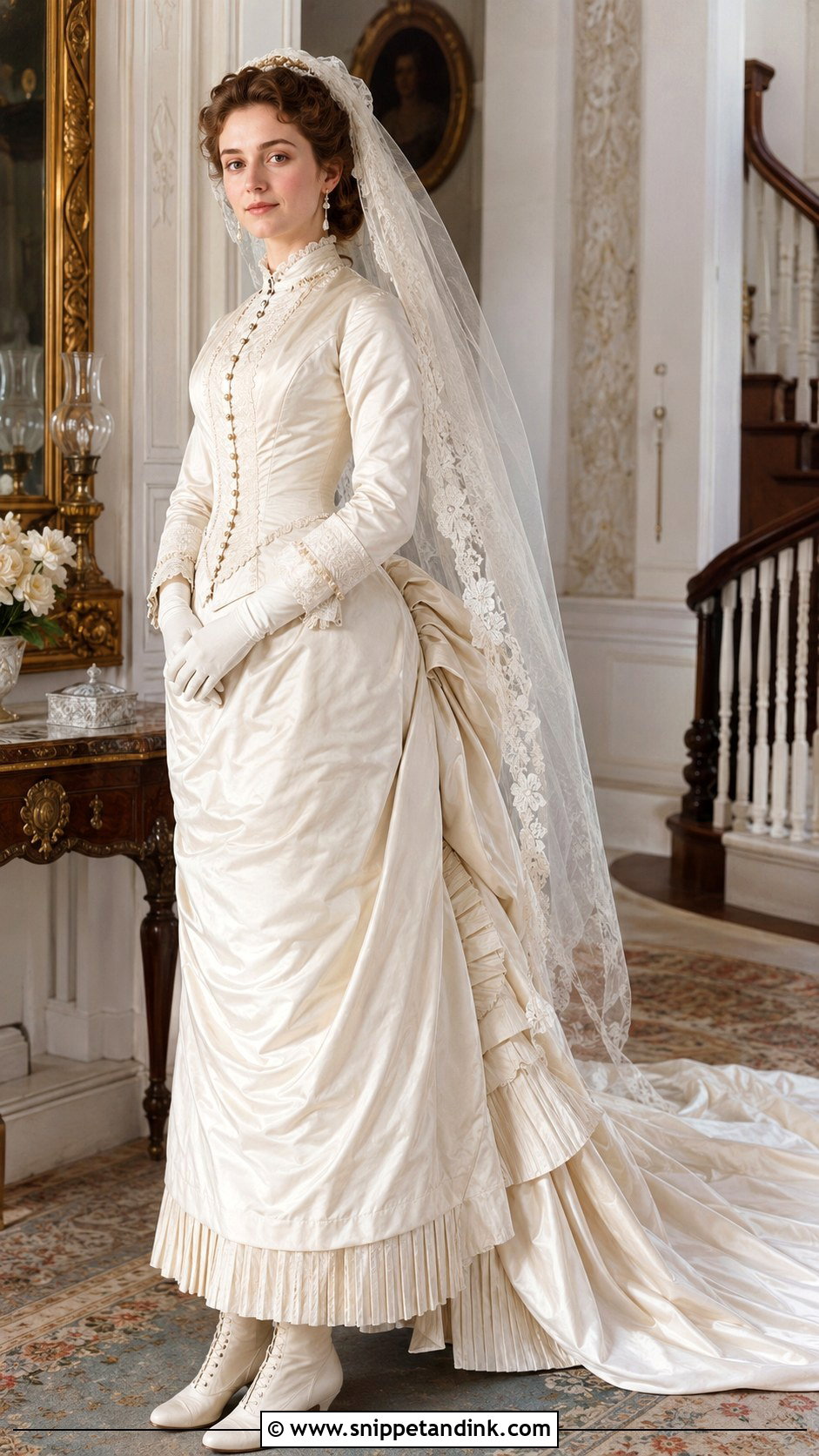
If you want one dress that says 1880s at a glance, this is it. Ivory silk satin goes over a boned bodice with a pointed waist and covered buttons, long narrow sleeves and a modest lace-edged neckline. The front skirt lies flat; all the pleated drapery gathers over a structured bustle and runs into a sweeping train. I’d keep accessories plain here, buttoned ivory boots, wrist gloves, a lace-edged veil and a small cream rose bouquet, because satin already reflects enough light. Ask your photographer for side and back portraits; that profile is where the bustle reads clearly.
2. Cream Silk Taffeta 1880s Wedding Dress
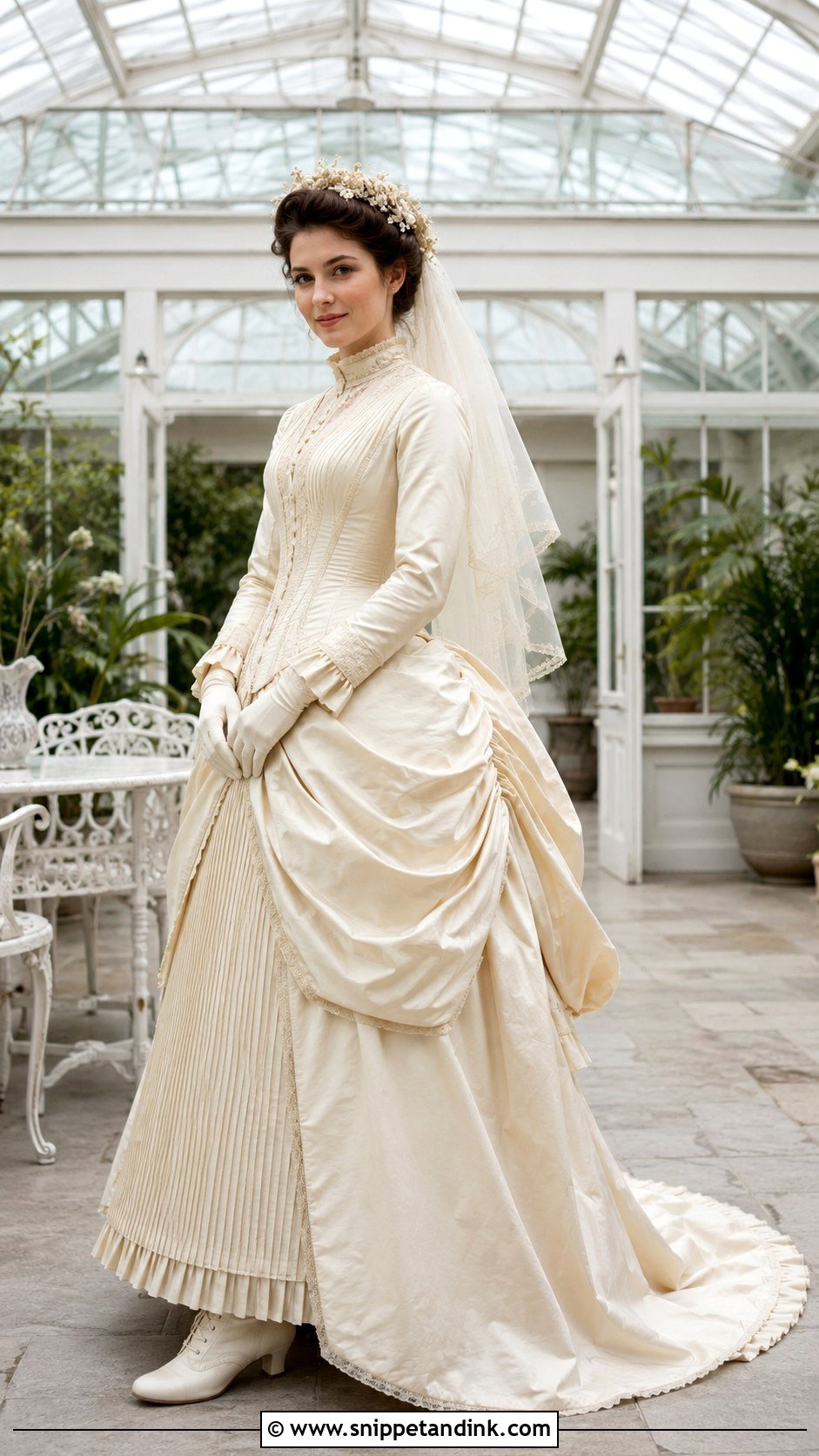
Taffeta has body. It holds pleats and swags in place without much internal support and rustles as you walk, which guests notice in a quiet room. Pair a high-necked fitted bodice with an underskirt of fine pleats and an overskirt drawn into controlled swags over a rounded bustle and short train. The honest drawback is creasing: silk taffeta marks sharply where you sit, so I’d steam it on the morning and keep the bride standing until photos are done. It suits a manor house or conservatory where the shape can be seen from all sides.
3. White Silk Muslin 1880s Wedding Dress
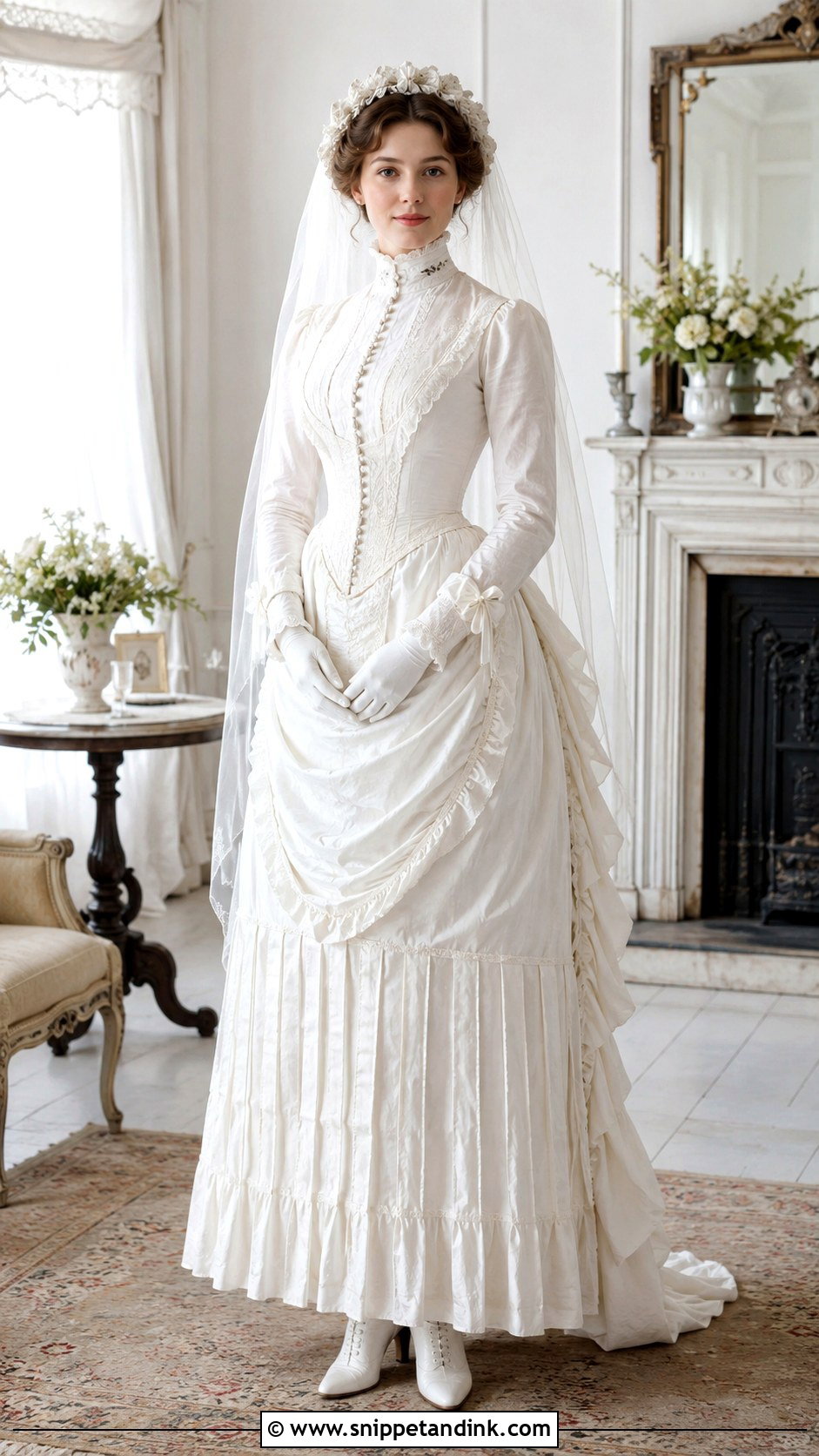
Silk muslin gives you a lighter, summery take on the decade: a white silk muslin dress made as a separate bodice and bustle skirt, with lace at the neck, ribbon trim and lace-finished cuffs. Real two-piece muslin wedding outfits of the period did exactly this, layering muslin, lace and ribbon. The fabric is fine and sheer, so it needs a lining and a modest bustle; a heavy pad crushes the drape. White ankle boots and a lace cap or small floral headpiece under a soft veil finish it.
4. High Neck 1880s Wedding Dress
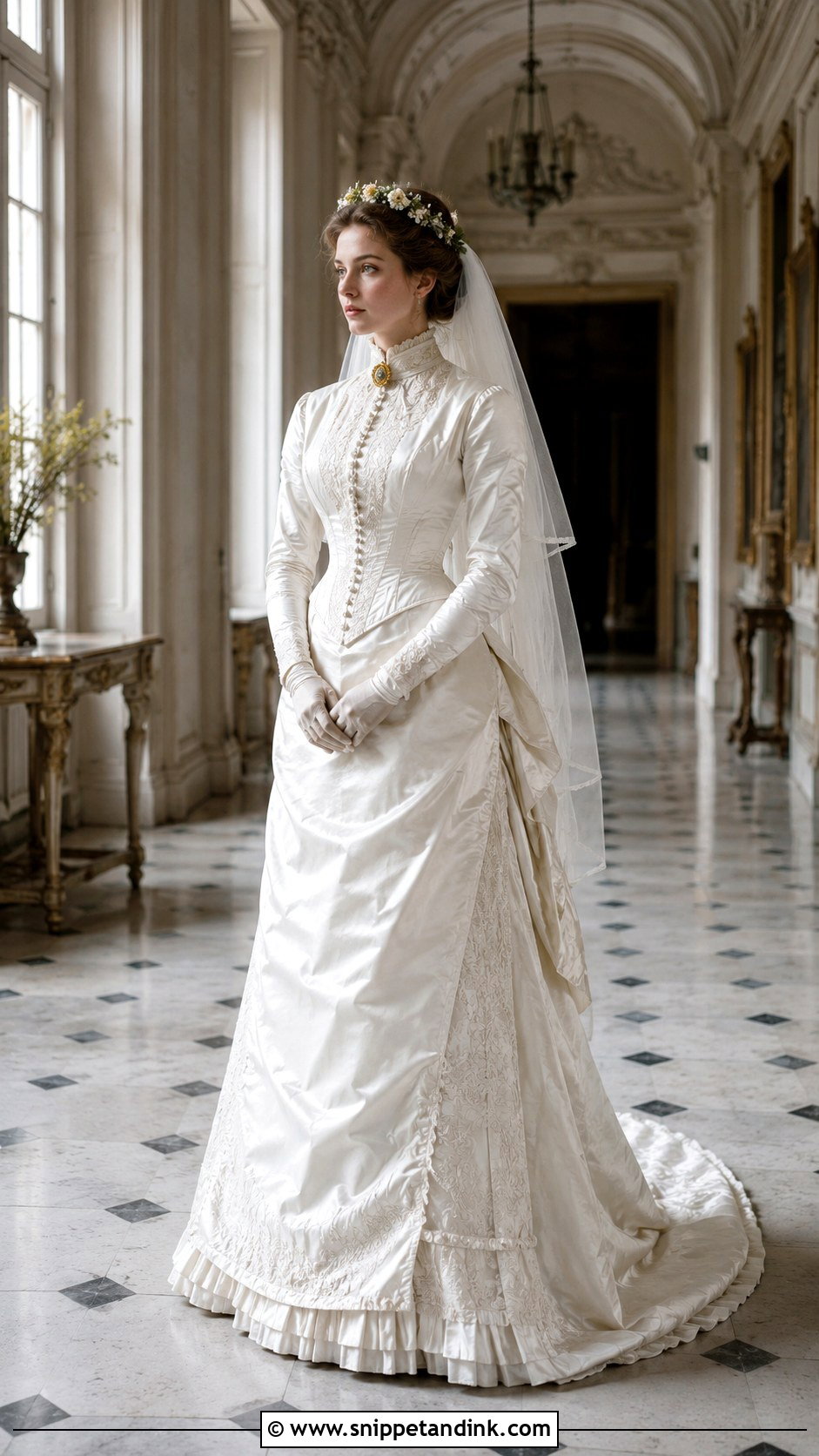
A standing collar edged in lace or piping changes how you hold your head, and that is half the Victorian posture. The bodice should fit closely through waist and hip, with buttoned cuffs and maybe a little puffing at the sleeve head. Pair it with a flat-front skirt and a neat bustle into a medium train. One thing I check on high collars is the height against your jaw when you look down at your bouquet; too tall and it digs in all day. The collar frames a cameo brooch or a small heirloom pendant nicely, and a long veil anchored under an orange blossom wreath completes it.
5. Lace Collar 1880s Wedding Dress
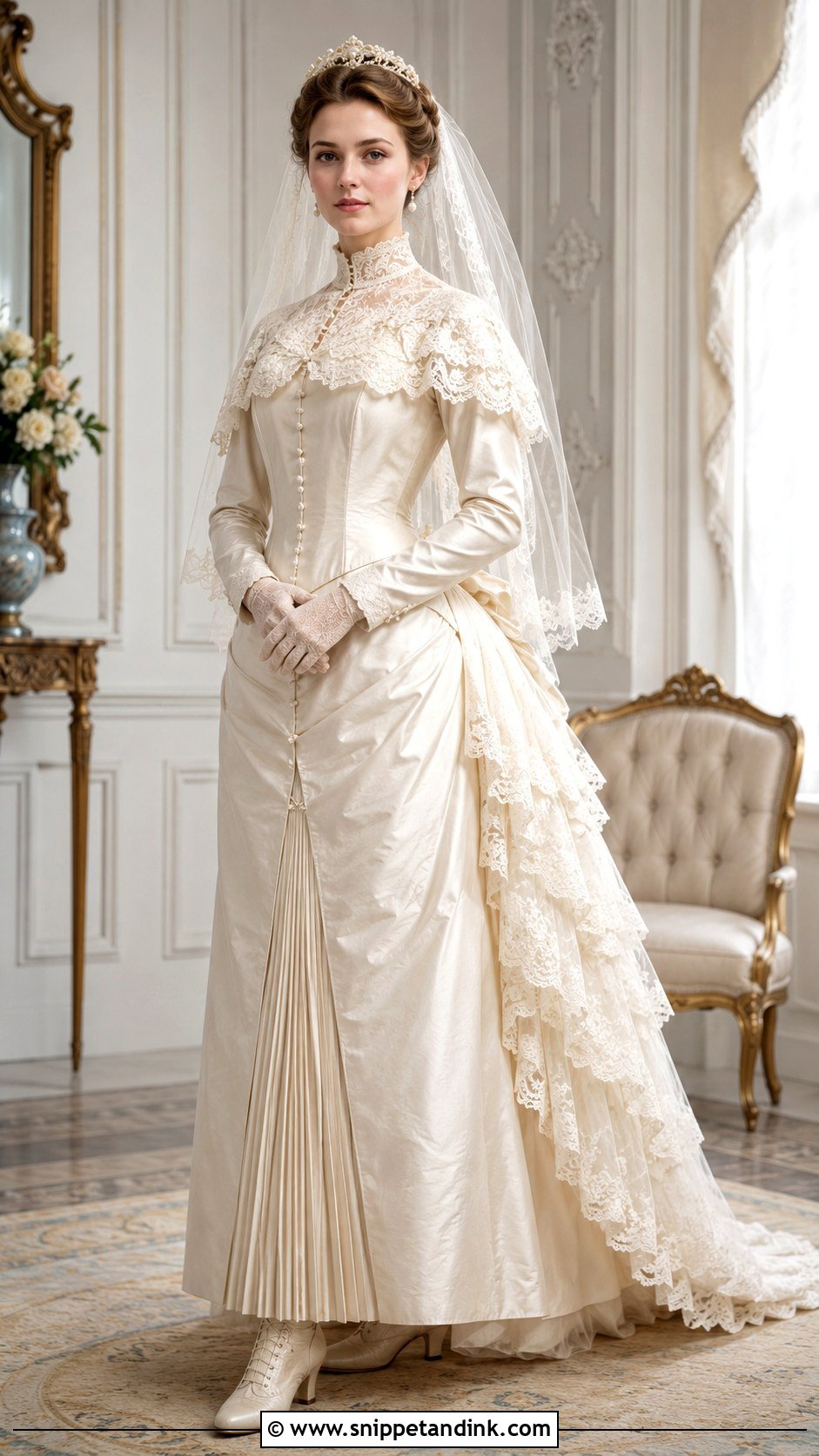
A scalloped lace collar softens all the boning and tailoring of an 1880s gown. Start with pale ivory satin or silk faille, a fitted waist, long sleeves and a narrow row of front buttons. Let the collar spread slightly over the shoulders and repeat the same lace at the cuffs and along the overskirt edge. In my experience the collar only works if the earrings and veil stay simple; add a necklace and the neckline loses its shape. Short gloves and pearl drops are enough.
6. Princess Line 1880s Wedding Dress
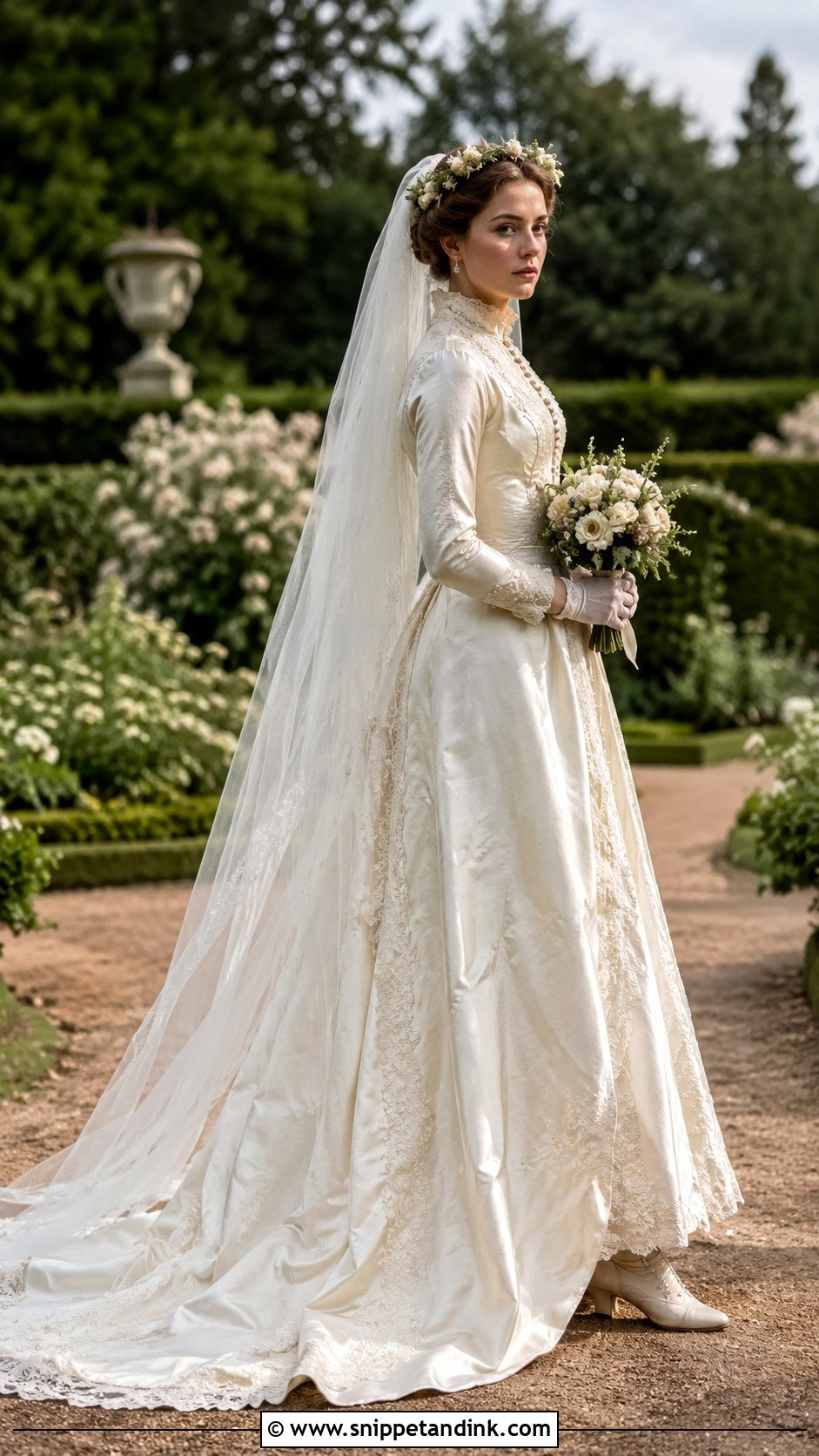
The princess line uses long vertical seams instead of a waist seam, so the bodice and skirt run in one smooth column. It belongs to the early 1880s, before the big bustle returned, when skirts were narrow and support at the back was light. Cream silk, fitted through bodice and hips and widening to a flowing train, suits a bride who prefers smooth lines over volume. Buttons or lace placed along the seams make you look taller. I find this cut the most comfortable on the list for a long day, because there is no heavy bustle pulling at the waist.
7. Large Bustle 1880s Wedding Dress
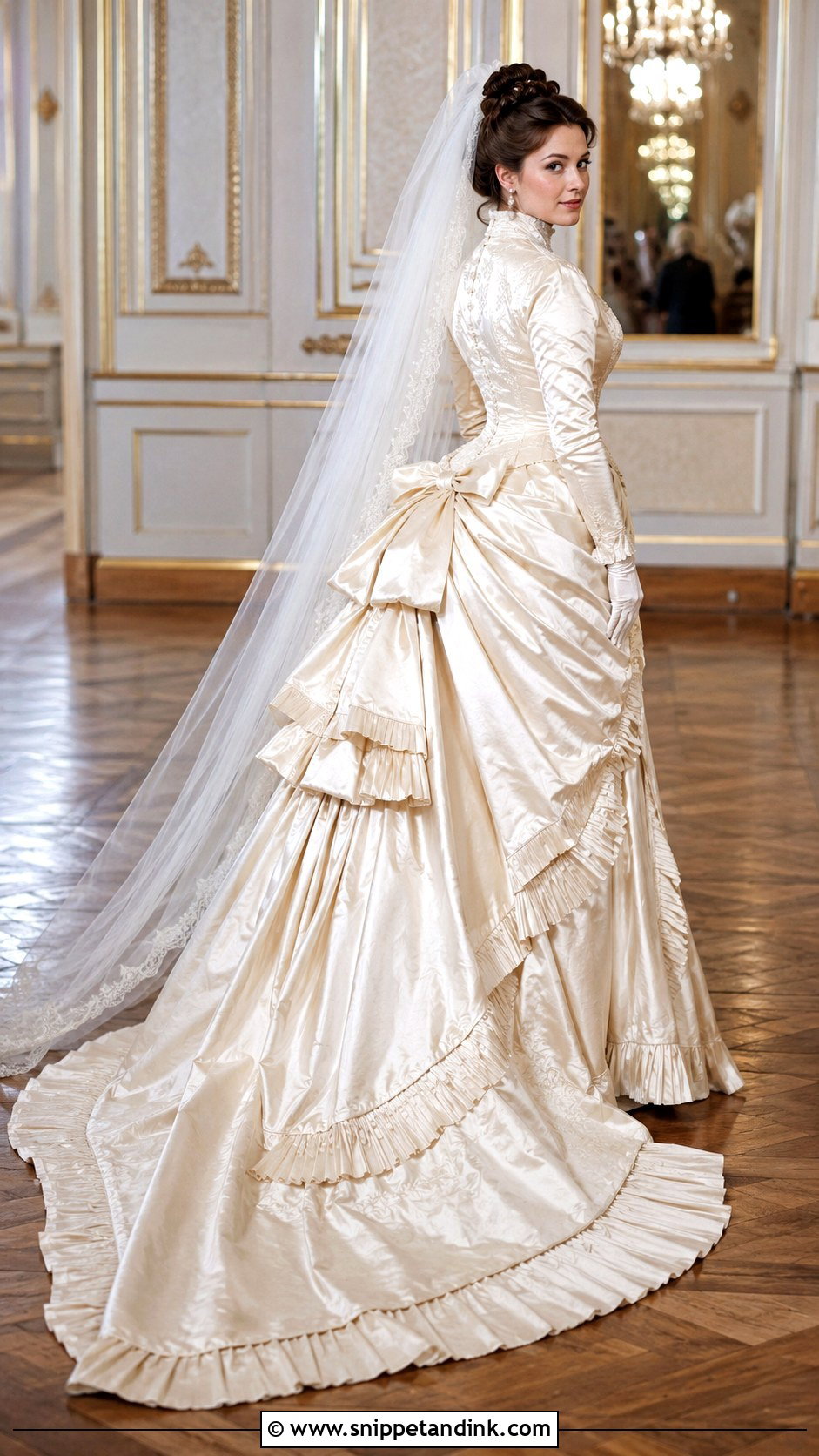
Around the middle of the decade, bustles projected almost straight out from the back like a shelf, and that is the most recognisable 1880s shape there is. Keep the bodice and front skirt narrow in ivory satin, and put every bow, pleat and lace cascade at the back. A short train stops it looking heavy. Before anyone falls for this one, I explain the practical side: you will sit on the edge of chairs, doorways need a sideways turn, and a car ride needs planning. The photographs from several angles are worth it for many brides.
8. Two Piece 1880s Wedding Dress
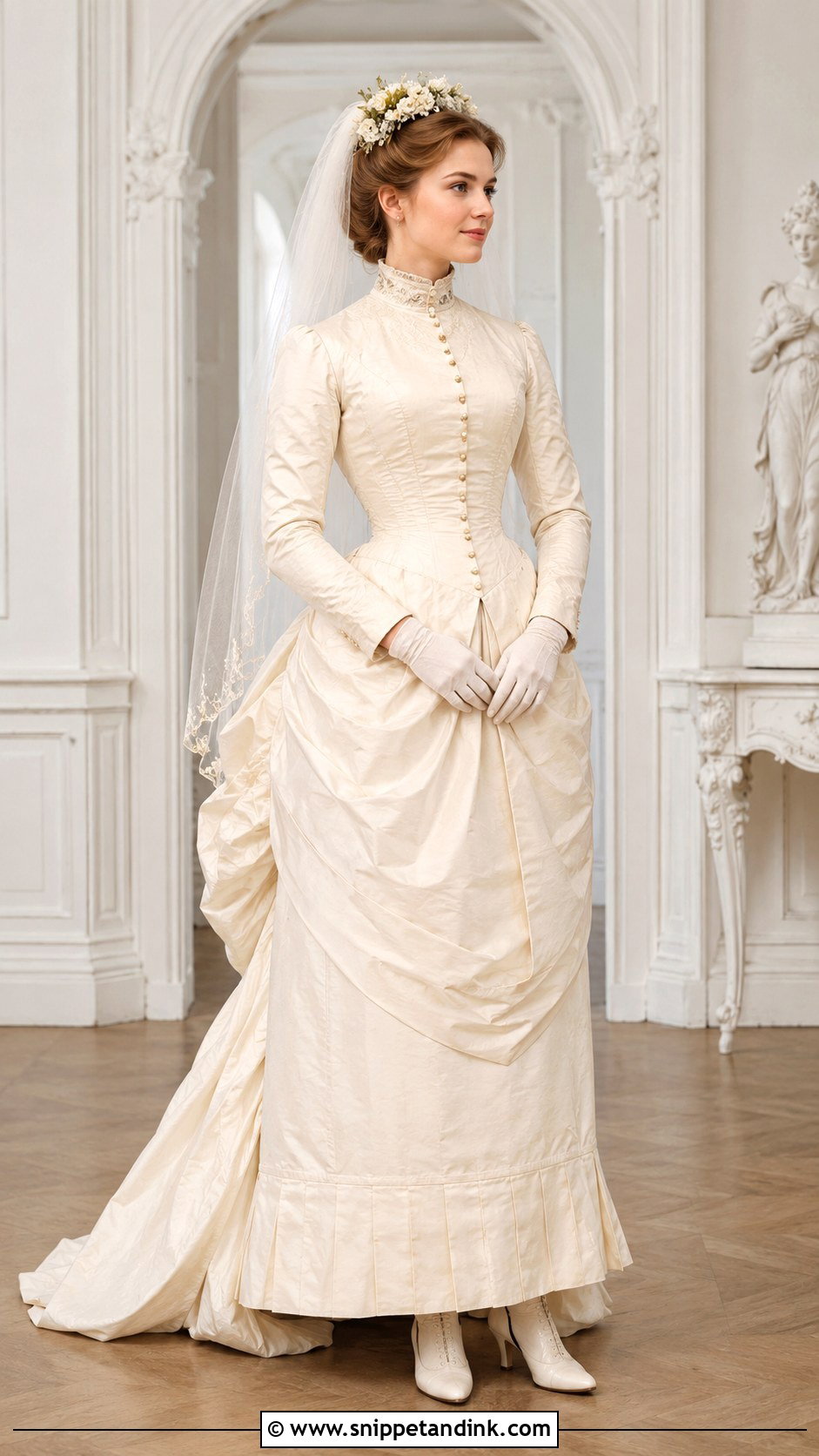
Most 1880s wedding dresses were actually two pieces, a separate bodice and skirt that look like one gown when finished. Choose a cream silk bodice with a pointed front, high collar and a row of pearl or covered buttons, then a matching underskirt with a draped overskirt over the bustle. Repeat ribbon bands or lace on both pieces so they read as one. For anyone making a reproduction, this is the easier route: each piece is fitted separately, and alterations later are simpler.
9. Polonaise 1880s Wedding Dress
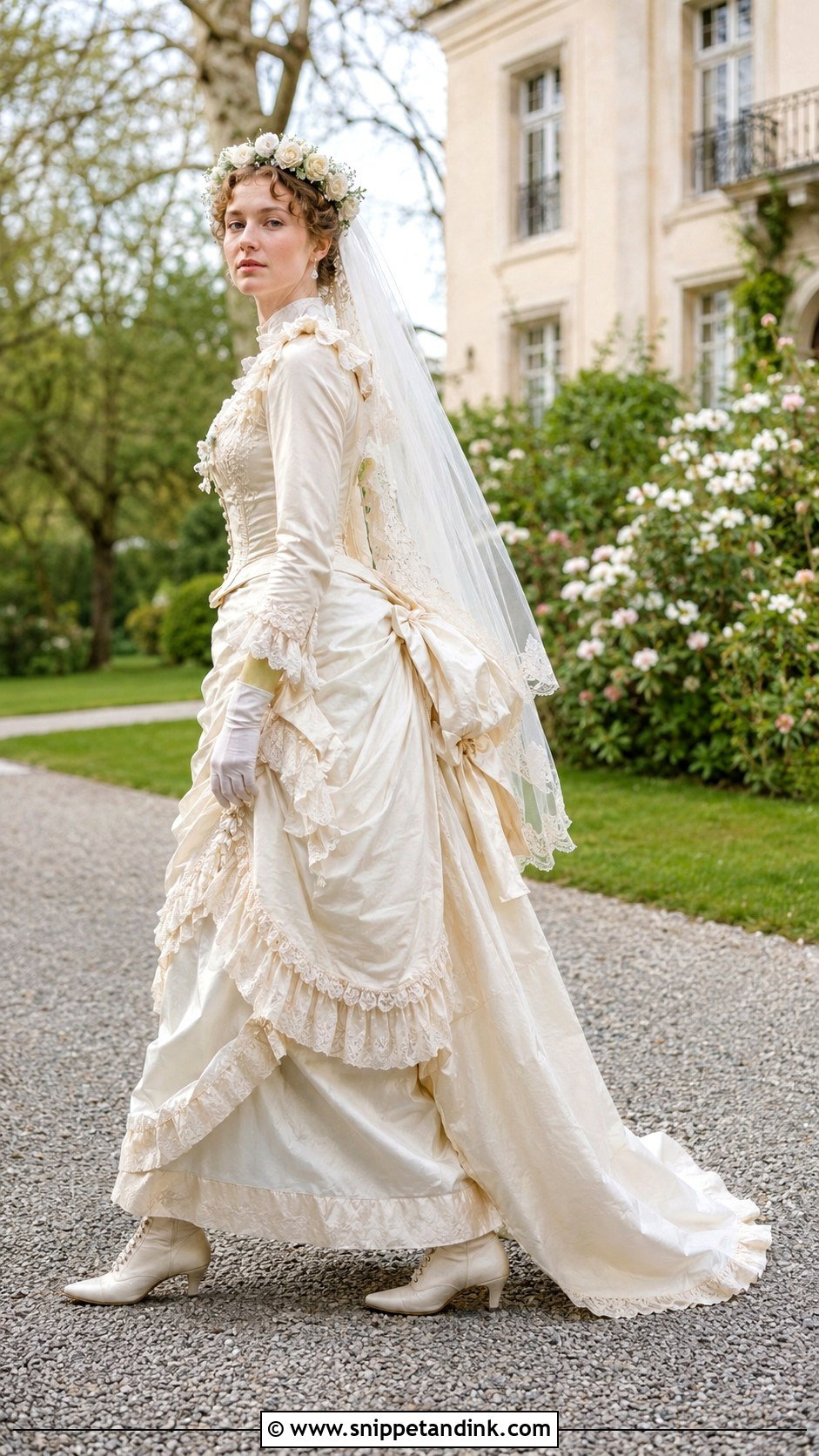
In a polonaise, the bodice and overskirt are cut as one garment, and the lower part is gathered up into swags over a separate underskirt. Use ivory silk over cream satin and let the back drapery rise over the bustle before falling into a short tail. Lace ruffles and silk bows can mark the gathering points. My advice is to keep the sleeves slim and plain; the draping already carries a lot of visual weight. It gives you plenty of fabric movement without covering the dress in beadwork.
10. Brocade 1880s Wedding Dress
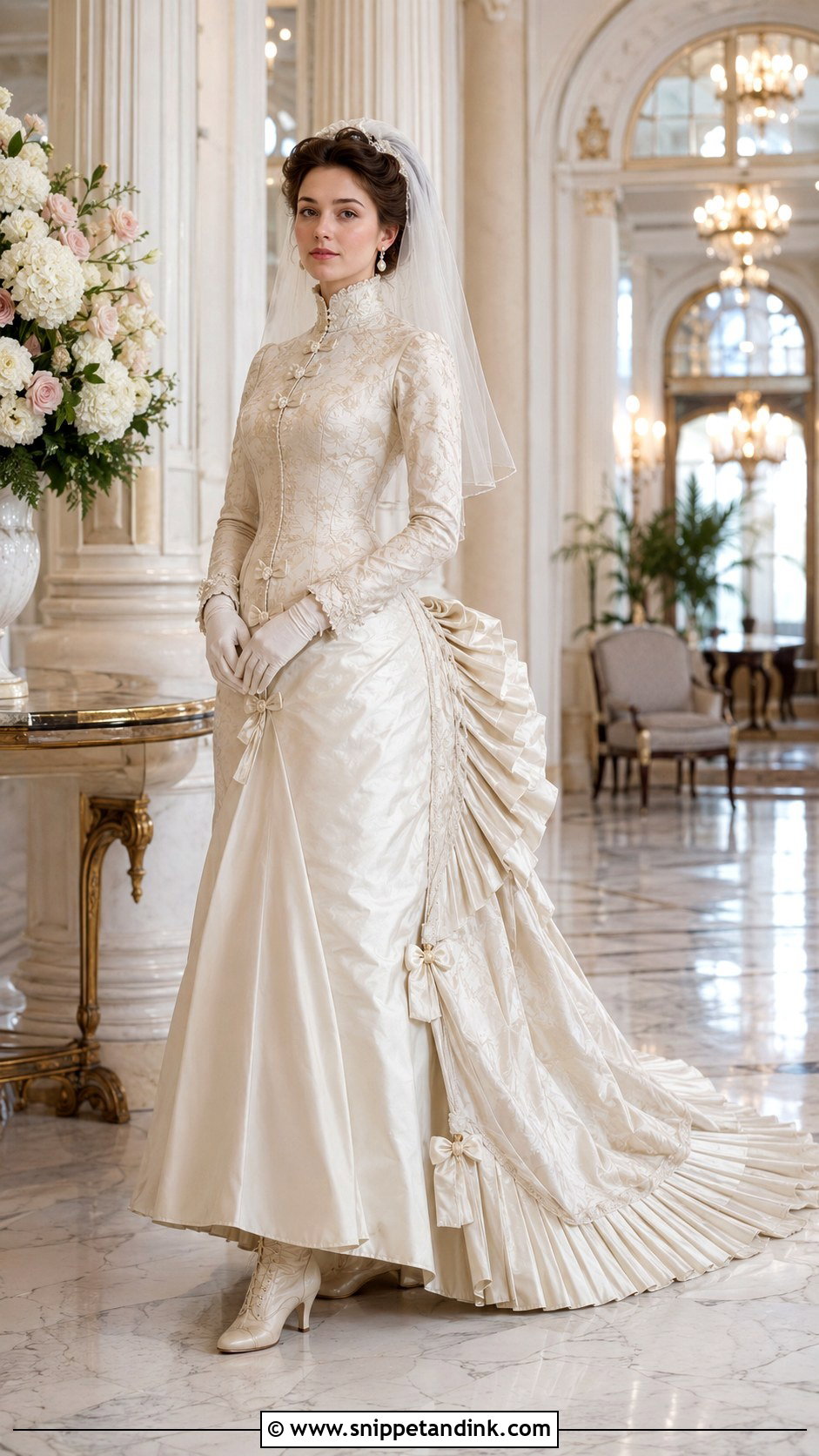
Ivory floral brocade adds depth to a structured Victorian wedding silhouette, but used everywhere it turns into wallpaper. I’d put brocade on the bodice and chosen overskirt panels and leave the rest in plain silk satin. A pointed bodice, standing collar and narrow sleeves give it a firm base, and a brocade overskirt can gather into a prominent bustle over a fan-pleated train. Brocade is heavy, so build a sturdy bustle support underneath. Plain boots and a simple tulle veil let the fabric speak.
11. Velvet Trim 1880s Wedding Dress
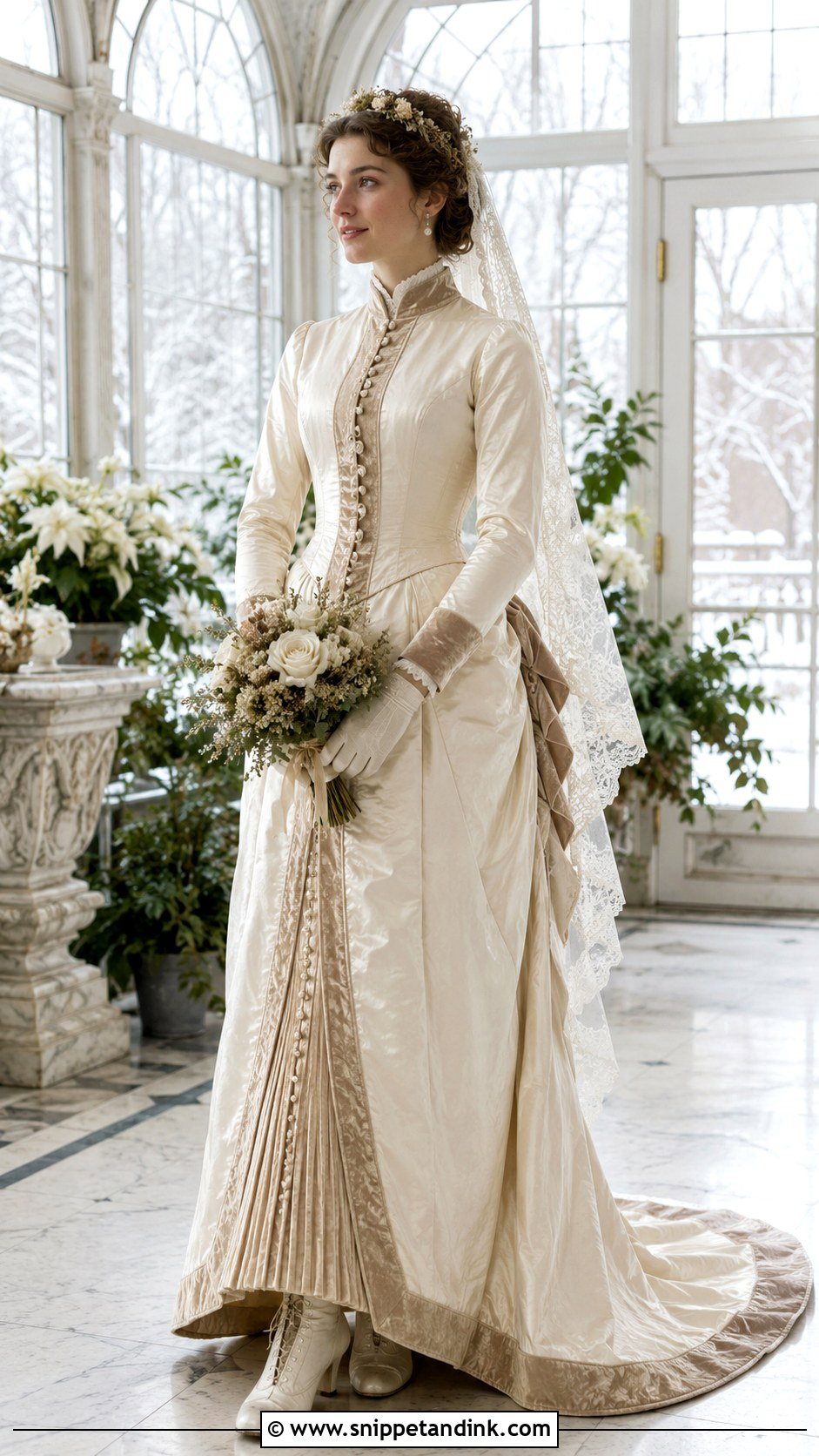
For a winter or late-autumn wedding, velvet trim adds warmth you can actually see. Make the gown in cream silk or fine wool with a high-neck fitted bodice and long sleeves, then add ivory or champagne velvet at the collar, cuffs, button placket and selected skirt panels. Contrasting textures like this were common in the period. Velvet crushes easily and shows marks from hands, so I’d ask guests and family to hug from the front. A lace veil on a velvet floral headband ties it together.
12. Floral Silk 1880s Wedding Dress
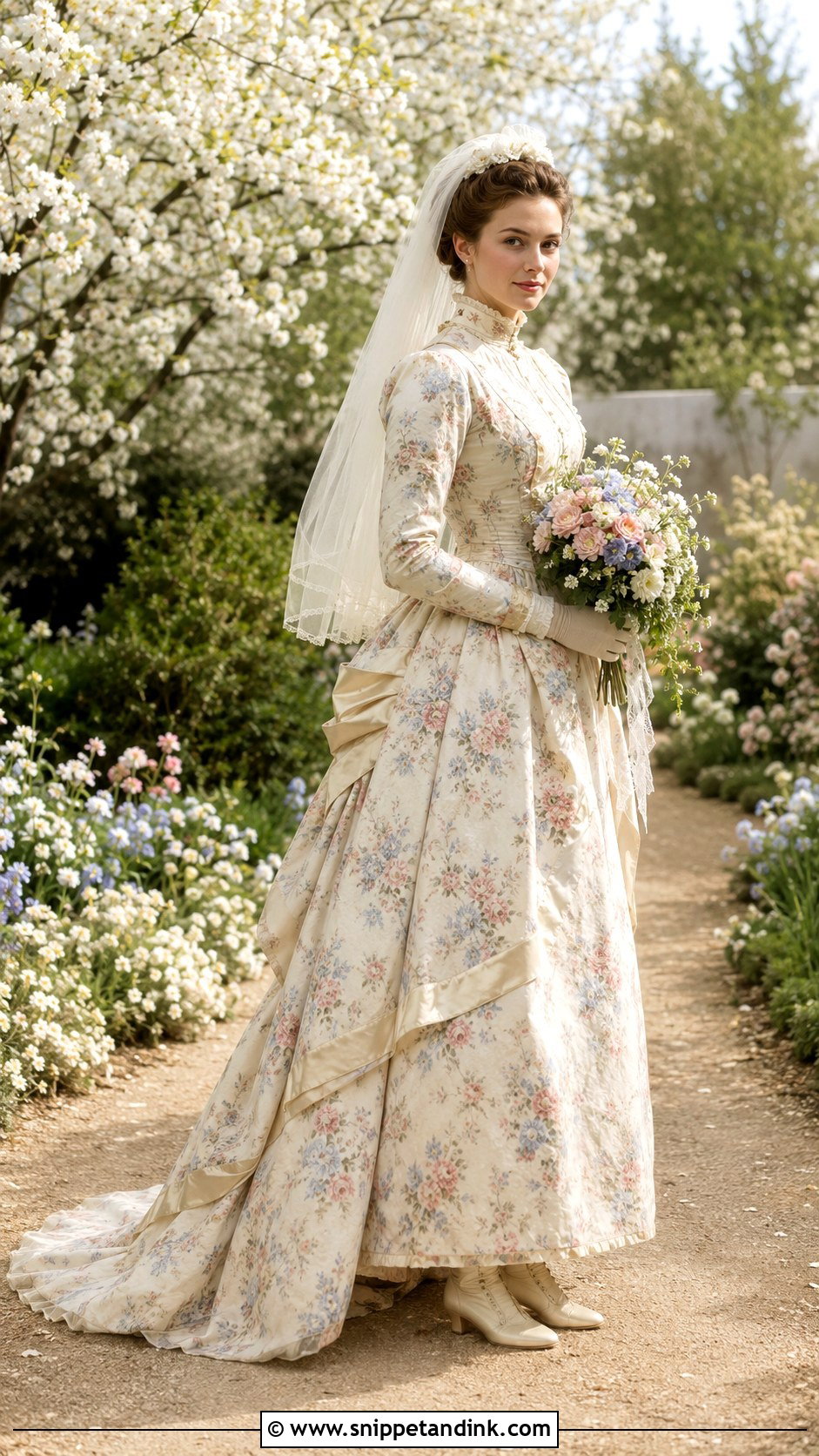
Can a patterned gown feel as bridal as plain ivory? It can, and in the 1880s many brides chose printed silk precisely because they planned to wear it again. Cream silk with small blush, blue or lavender flowers, cut into a high-collared bodice with long sleeves, pairs well with a coordinated bustle skirt and a pleated underskirt. Solid satin ribbon at the cuffs and neckline frames the print. Keep the train moderate so the pattern reads, and I’d pull the bouquet colours straight from the print.
13. Pale Blue 1880s Wedding Dress
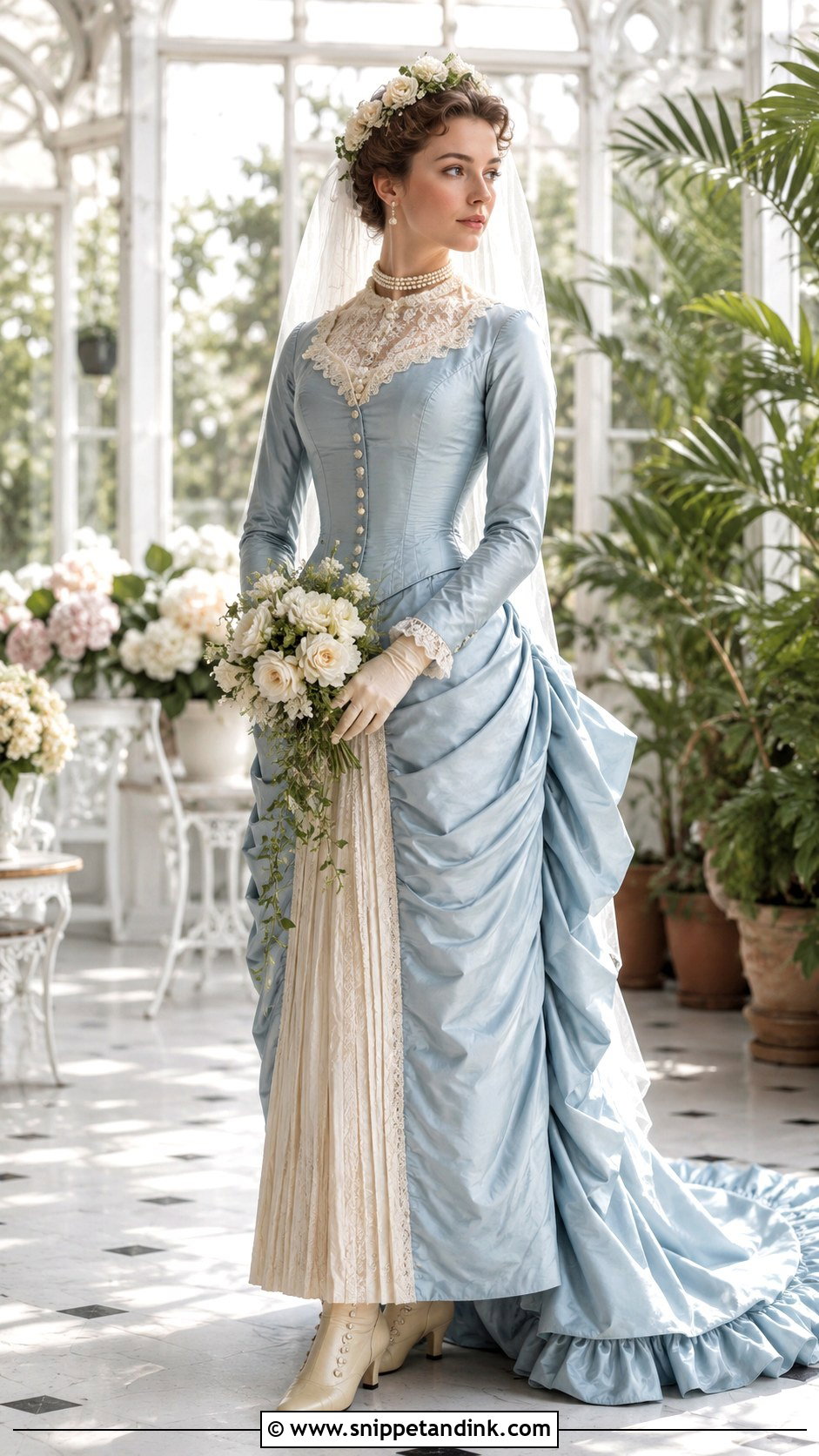
Not every nineteenth-century bride wore white, so pale blue is a historically plausible choice with a softer, quieter mood. Use blue taffeta or satin with a fitted, buttoned bodice and an ivory lace collar. A pleated ivory panel down the front skirt brightens the face area and links to cream gloves and boots. I check pale blue silk in daylight before committing, because some dyes turn grey or slightly green under indoor tungsten light. A compact train keeps it practical.
14. Lavender 1880s Wedding Dress
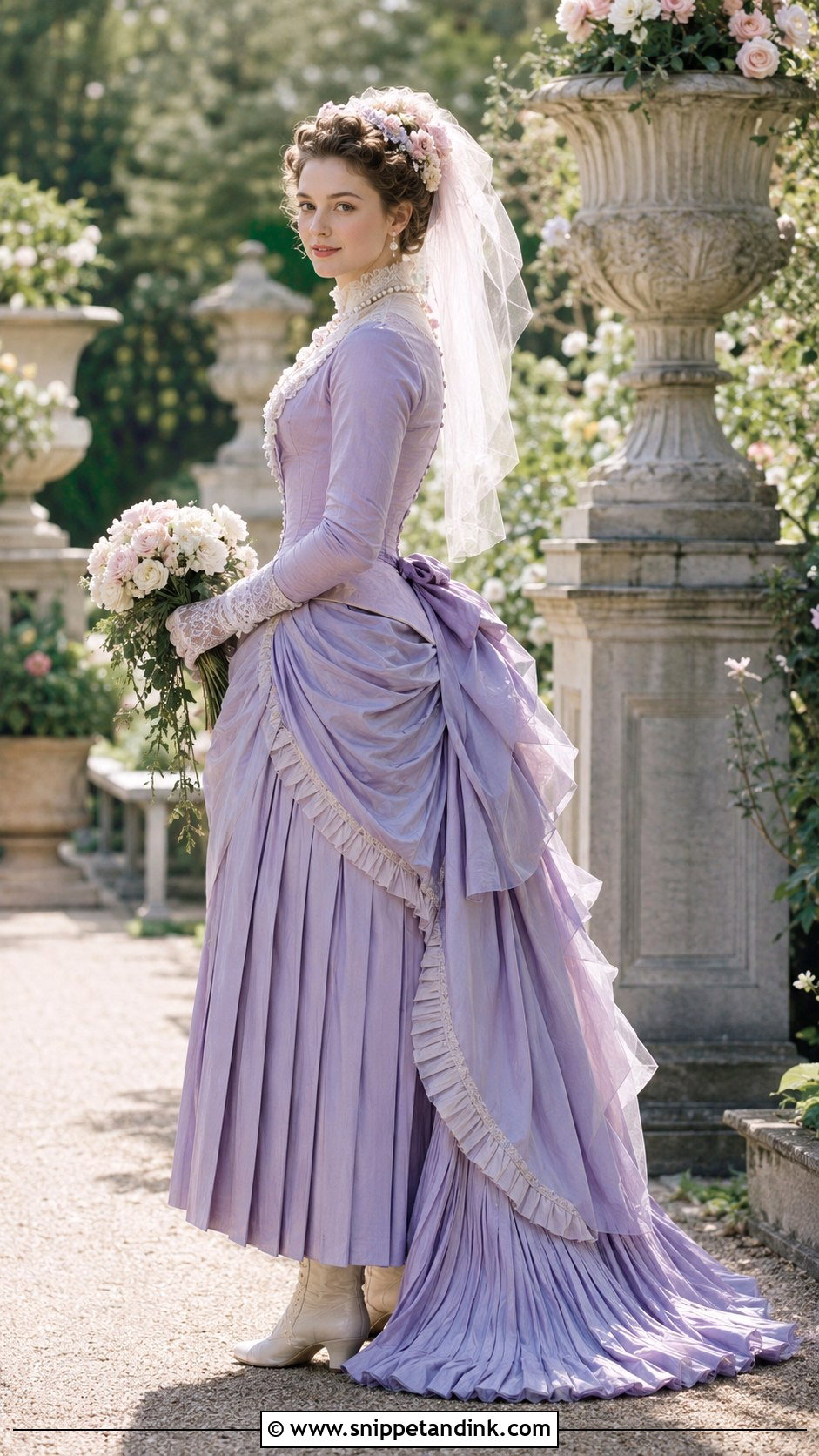
Lavender in silk faille or taffeta gives the gown a quiet, formal character. Keep the bodice close-fitting with a high neck and pointed waist, trimmed in cream lace at collar and cuffs. The skirt can have a narrow pleated front, gentle side draping and a full back bustle with a lavender bow. A short train stops the colour feeling heavy. This shade suits a garden, conservatory or bright parlour, and I’d match the floral comb to the gown in daylight rather than from a swatch.

15. Gray Silk 1880s Wedding Dress
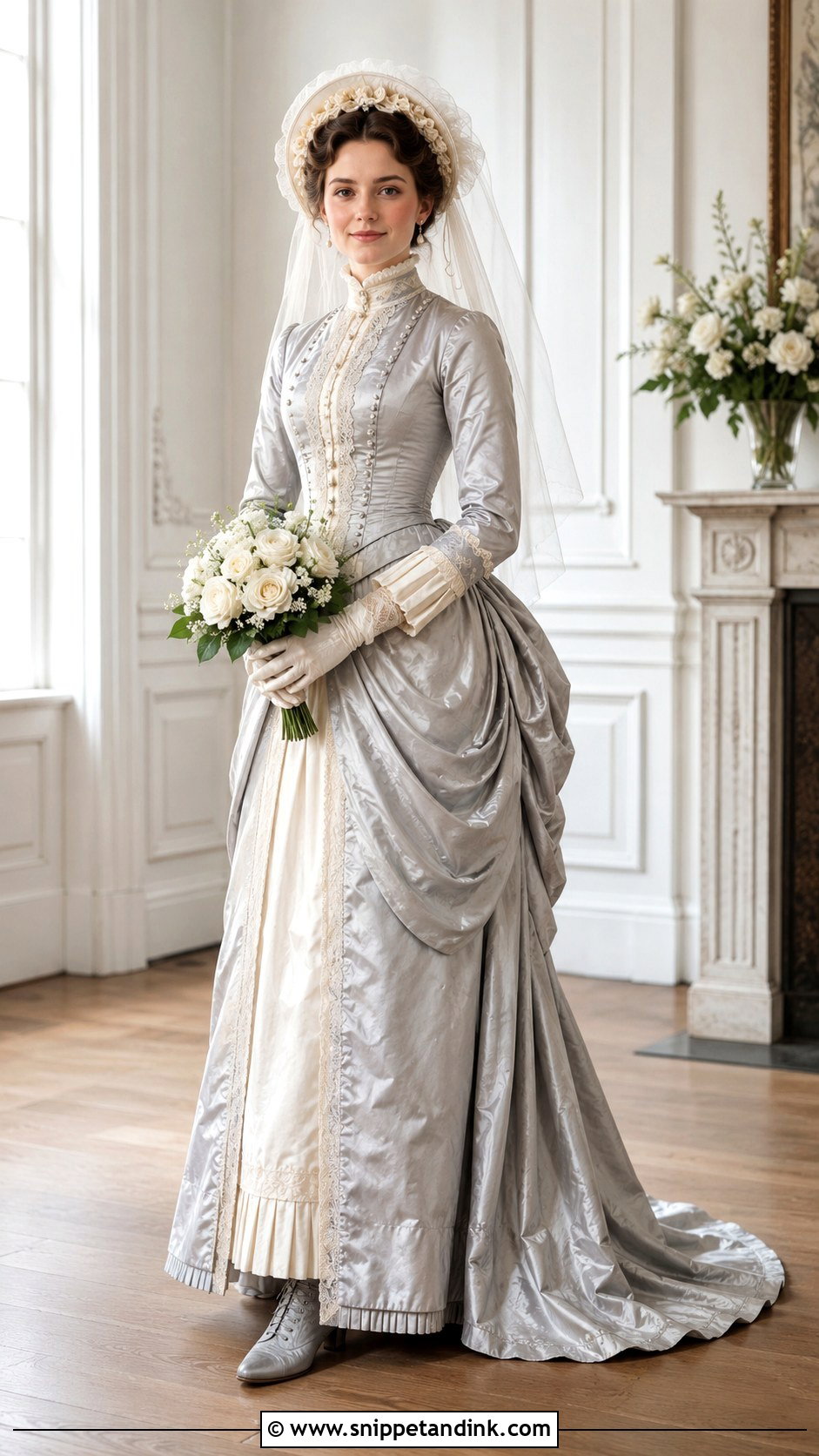
Pearl grey silk was a sensible choice for a civil ceremony, a second marriage or a bride who wanted restrained colour. Cut it with covered buttons, a standing collar and long sleeves edged in ivory lace, and lift the palette with cream satin panels at the front skirt. Draped side sections lead into a moderate bustle and short pleated train. Pearl earrings, grey button boots and a small bonnet-style veil keep it bridal without fuss. A small bouquet of white roses gives the photos one bright point.
16. Striped Taffeta 1880s Wedding Dress
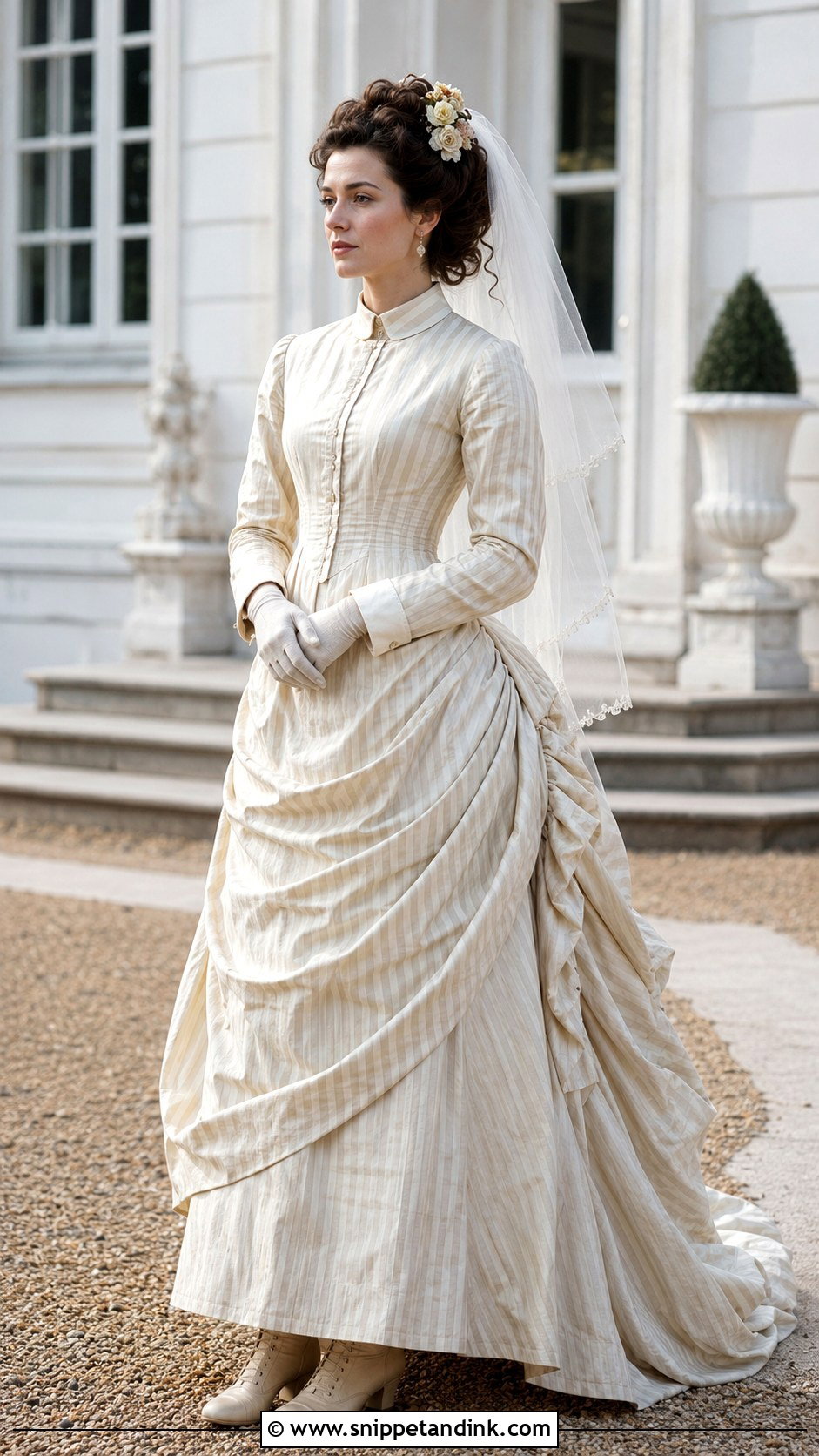
Stripes expose every seam, so this dress is only as good as the cutting. Choose narrow cream-on-ivory stripes rather than strong contrast. Run them vertically on the bodice and underskirt, diagonally across the overskirt swags and horizontally on the bustle bows. When I review a striped gown at a fitting, I look first at the centre front and side seams; if the stripes do not meet, the whole bodice looks crooked. A plain satin collar and cuffs give the eye somewhere to rest.
17. Lace Overlay 1880s Wedding Dress
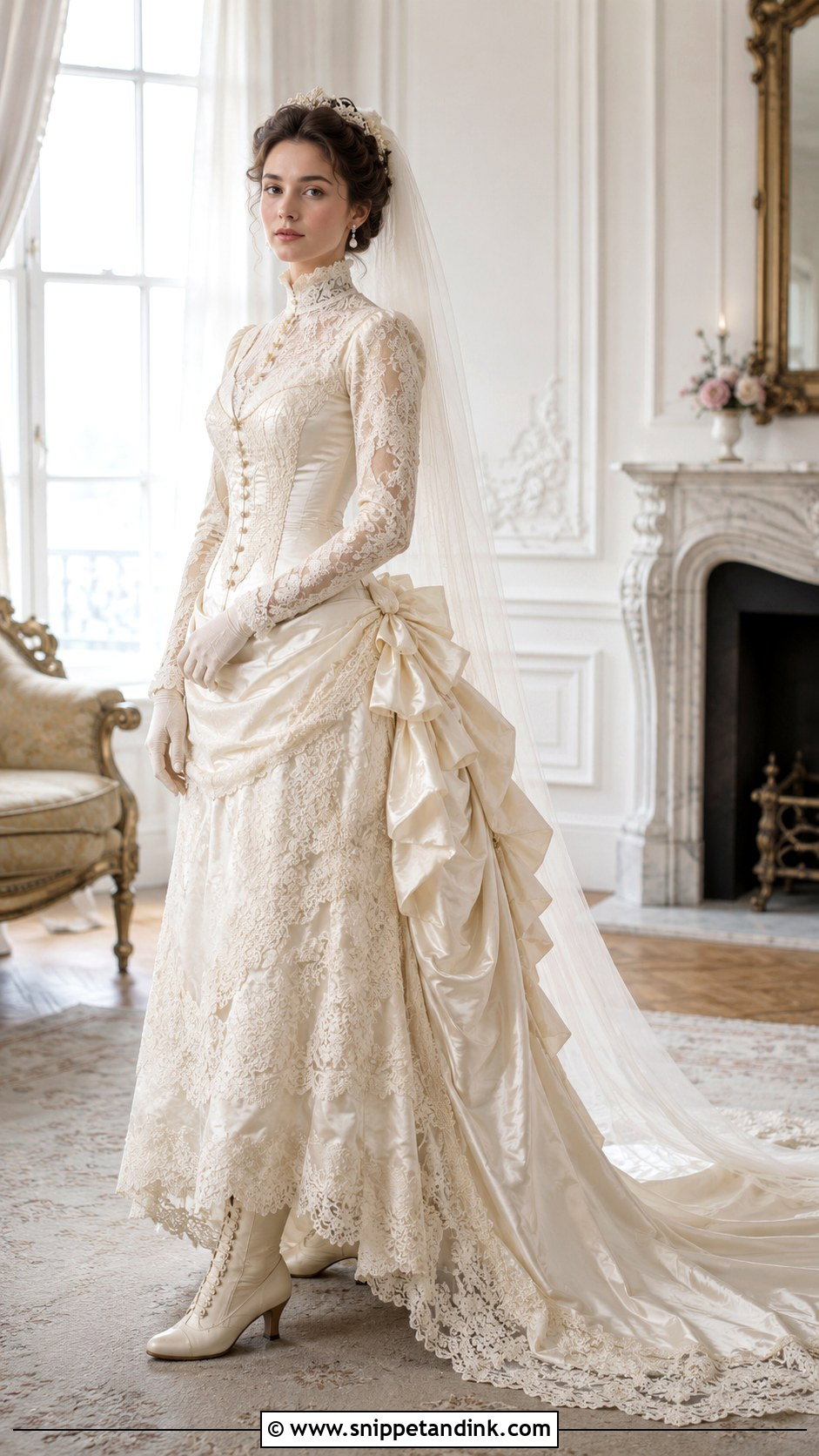
A lace overlay softens the strong shape without losing it. Build an ivory satin foundation with fitted bodice, narrow underskirt and supported bustle, then lay floral lace over the upper bodice, sleeves, front panel and train edge. Leave some satin bare so the silhouette stays legible from the back of the room. Small satin bows and pearl buttons connect the lace and plain areas. A long veil with matching lace on its edge pulls it together.
18. Embroidered 1880s Wedding Dress
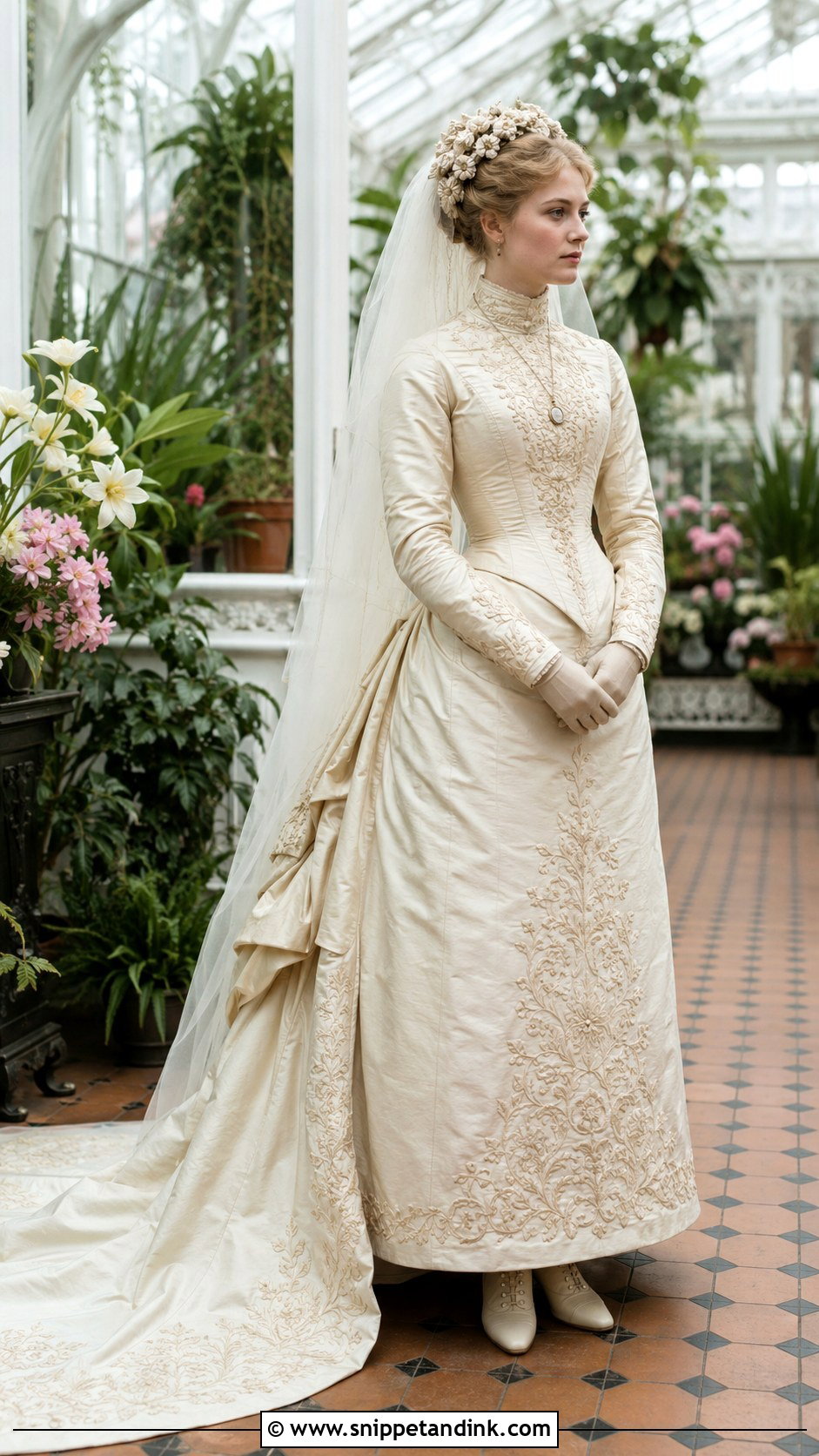
Tonal embroidery, thread close to the base colour, gives texture that appears gradually as the silk catches the light. On cream silk with a fitted long-sleeved bodice, I’d place it at the collar, cuffs, placket and pointed waist, then repeat it on the underskirt and overskirt border to frame the bustle drapery. Keep the train mostly plain with a narrow embroidered edge. Hand embroidery takes real time, so if you are commissioning, ask early how long it adds.
19. Short Train 1880s Wedding Dress
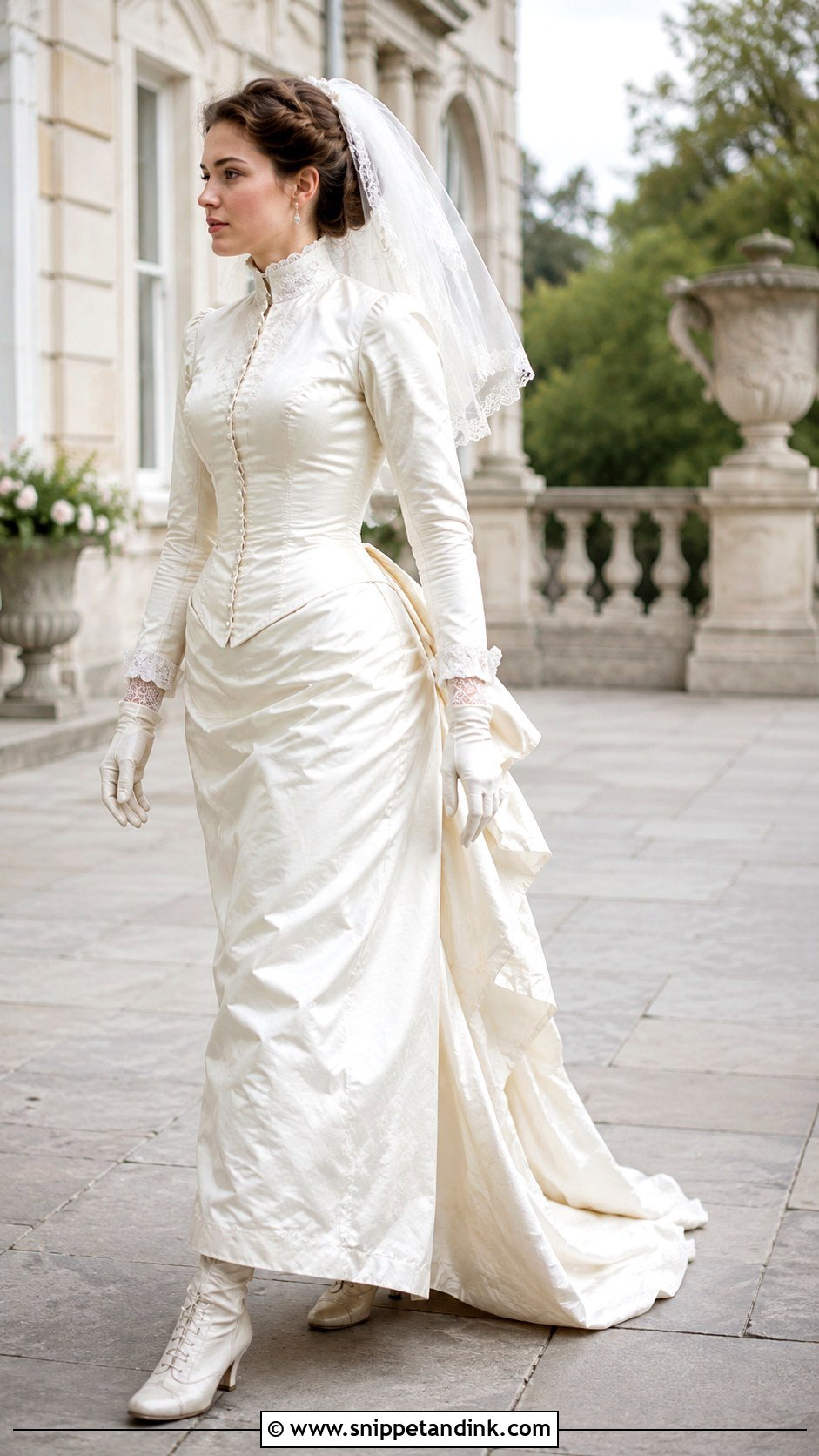
A short train keeps Victorian proportions while letting you walk, dance and climb steps without a helper. Ivory taffeta with a buttoned bodice and a narrow front skirt suits it, with a moderate bustle under pleated back drapery and a hem that sweeps only slightly behind the feet. Shorter skirts and less trimming were part of everyday late-nineteenth-century dress too. I like a removable back bow here; you can take it off after portraits and sit comfortably for dinner.

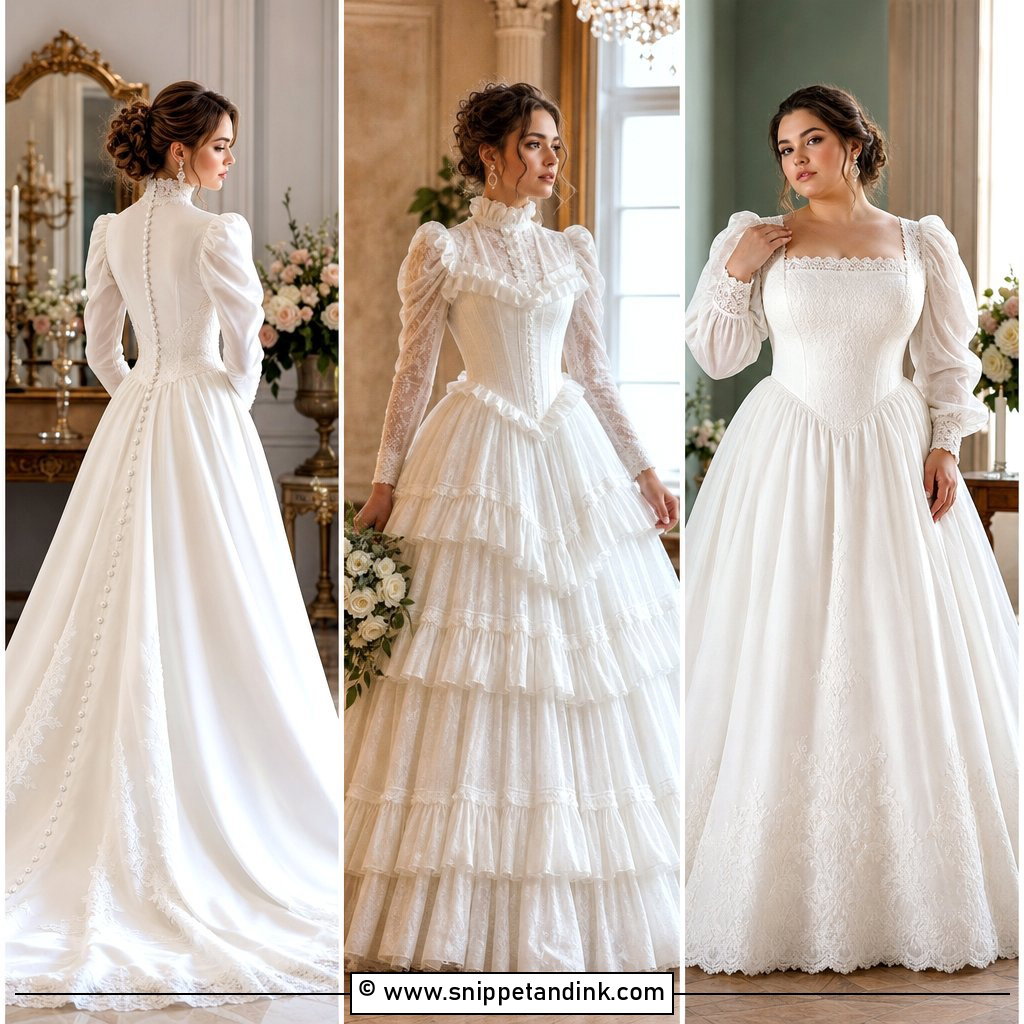
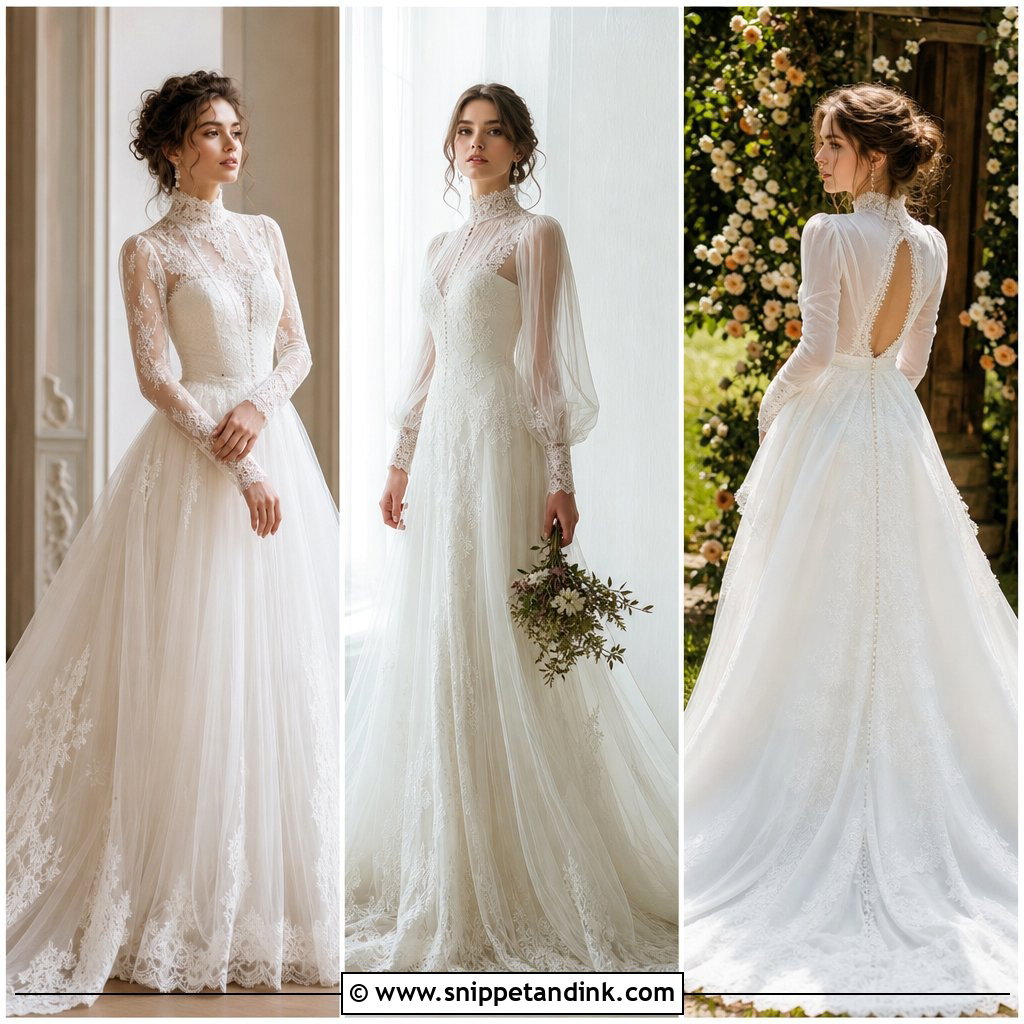

20. Orange Blossom 1880s Wedding Dress
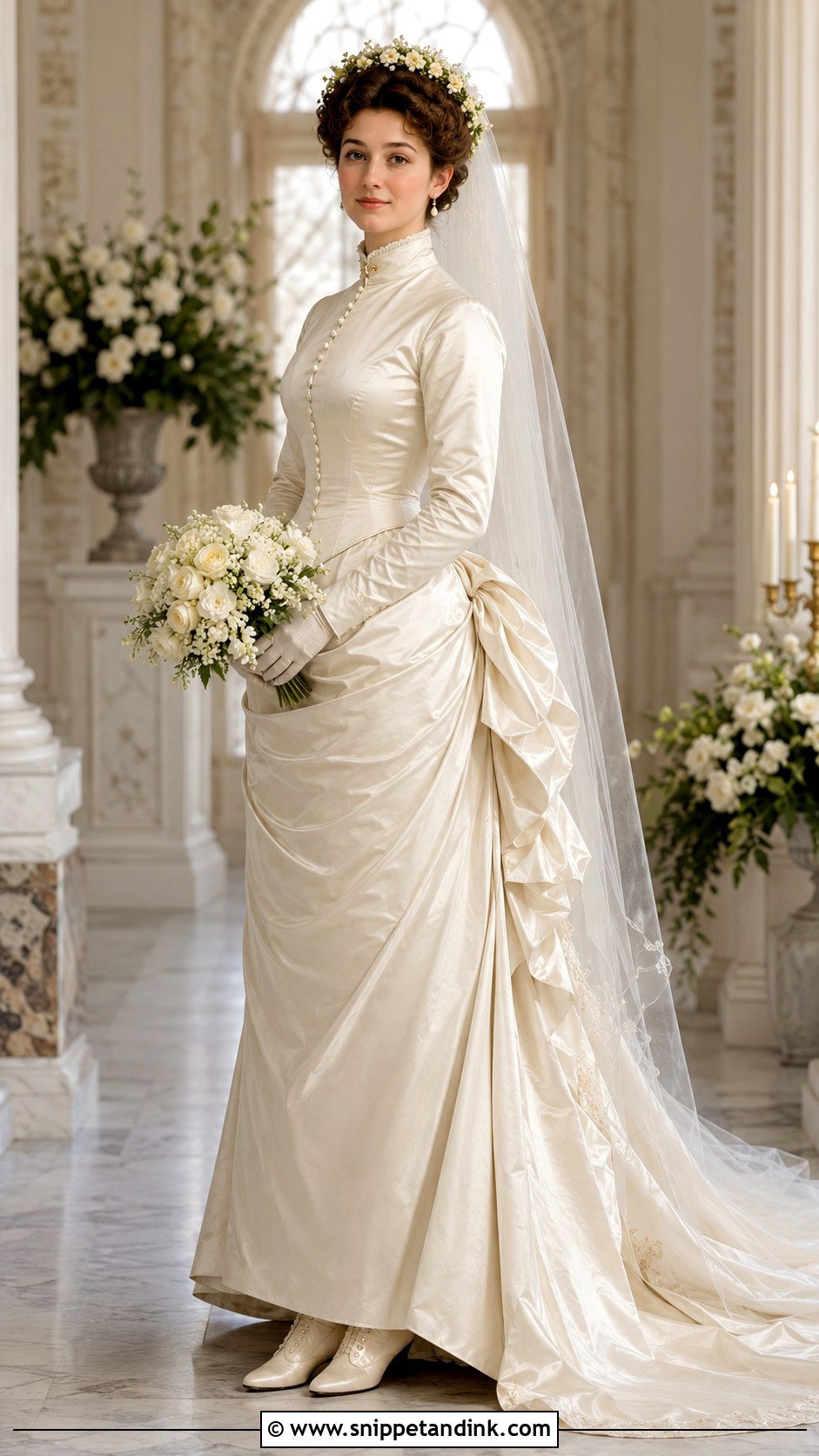
Orange blossom was the bridal flower of the period, worn by Queen Victoria and copied widely afterward, which is why an orange blossom headpiece finishes this look so naturally. Pair it with ivory silk satin, a high lace neckline, narrow sleeves and pearl buttons, a smooth front panel, a pronounced bustle and medium train. Set a small wreath around a neat updo with the tulle veil fixed beneath it so the flowers stay visible. Because the crown already draws the eye upward, I’d keep the dress trimming restrained.
Antique Original or Made-to-Order Reproduction?
Genuine 1880s wedding dresses still turn up for sale, and I understand the pull. I’d still steer most brides toward a reproduction. Original silk from that era often shatters along folds, older weighted silks can split without warning, and the sizes were cut for a corseted body much smaller through the waist and arms than most adults today. Altering an antique to fit usually damages it.
- If you buy an original, treat it as an heirloom to display or wear for a short portrait session, not a full day of dancing.
- For a reproduction, a dressmaker or costumer who works with historical patterns is a better fit than a regular bridal shop. Ask to see bustle gowns they have finished.
- Allow time. A custom period gown usually needs a mock-up fitting before the real fabric is cut, then two or three more fittings.
- Plan logistics: how you will get into a car, use the bathroom with help and sit at dinner. A smaller bustle pad that can be removed for the reception helps a lot.
Foundations First, Then the Fabric
Satin, taffeta, brocade, velvet, lace and embroidery each give the decade a different voice, and bustle size takes you from the slim early-1880s line to the shelf-like mid-decade shape. Ivory is classic; blue, lavender, grey and printed silk are just as true to the period. Whatever you pick, plan the whole outfit at once: boots, gloves, veil, flowers and hair all need to agree. And never skip the support underneath. A well-made corset and bustle are what let you enjoy wearing this dress all day.
You'll Like These Ideas:




Leave a Reply