
The 1930s gave brides something no other decade quite matched: dresses cut to follow the body rather than hold it in. Bias-cut satin, cowl necklines, long fitted sleeves and soft trains replaced the boxy drop-waists of the twenties, and the result still reads as Old Hollywood today. When I dress a bride in this era, the gown is only half the job. The other half is the details around it, from the veil and gloves to the shoes, waves and pearls, kept restrained enough that she looks dressed rather than costumed. The ideas below cover both, with notes on how these fabrics and shapes actually behave on the day.
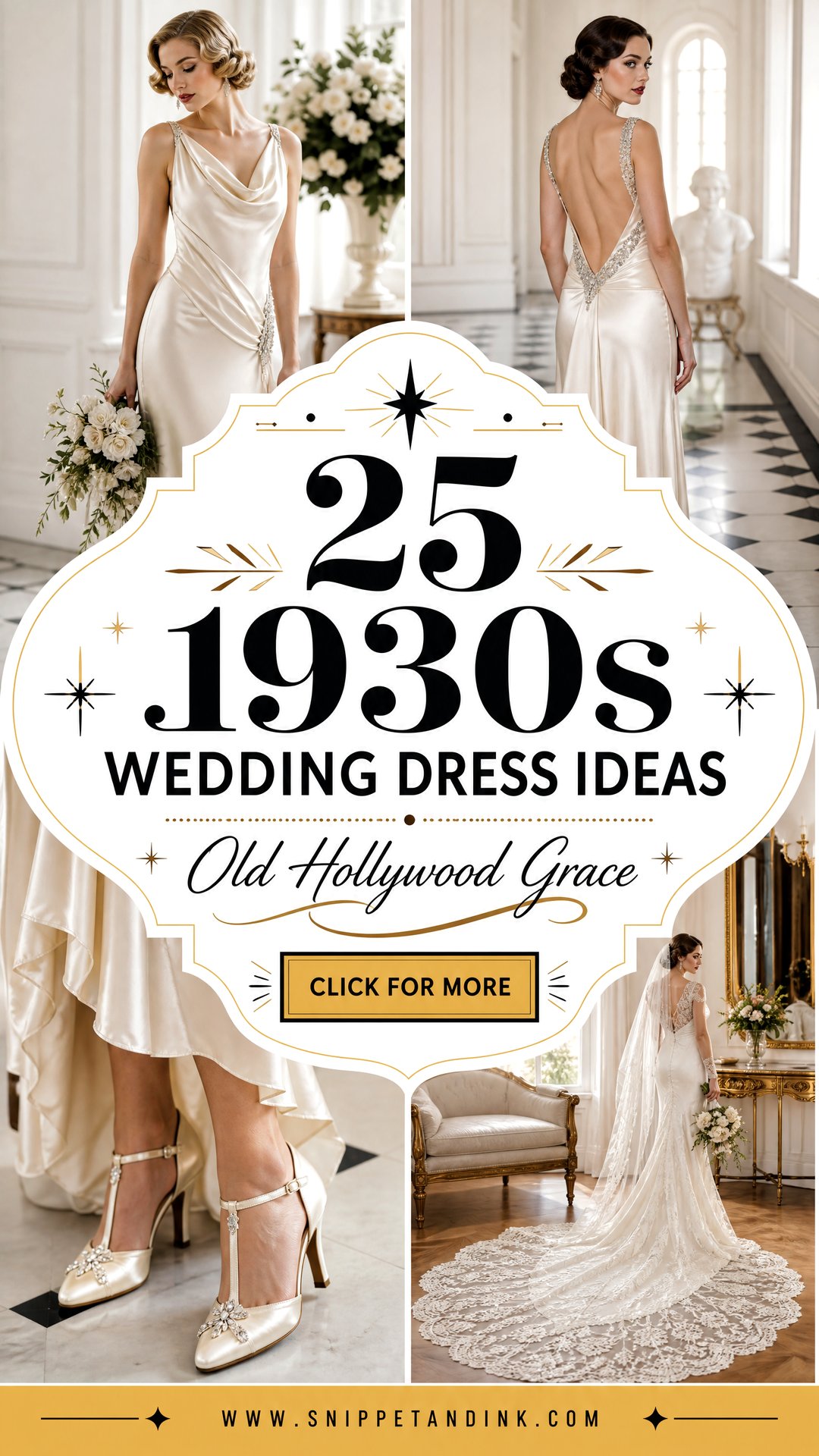
Bias Cut Is Honest, So Plan What Goes Underneath
Cutting fabric on the diagonal grain lets it stretch slightly and fall close to the body. That’s what gives bias satin its liquid look. It also means the dress shows every line beneath it: bra edges, seams in shapewear and even the outline of a bridal garter.
At the first fitting I ask brides to bring the underwear they plan to wear, because it changes how the dress hangs. Smooth, no-seam shapewear in a color close to your skin, a slip in a matching satin or adhesive cups usually solve it. Bias-cut hems also drop as the fabric relaxes, so a good seamstress lets the gown hang before marking the final length. If your fittings are rushed, that hem can end up uneven.
Original Vintage or a Reproduction?
Brides often ask whether to buy a true 1930s gown. It can be wonderful, but it comes with limits that are worth knowing before you fall in love with one.
- Old silk can split along the grain, especially at the underarms and seams. Hold it up to the light and look for thin areas before buying.
- Sizes ran small, and there’s usually little seam allowance left to let out.
- Yellowing and spots may not come out. A specialist cleaner can assess it, but some marks are permanent.
- Alterations on old fabric are slower and riskier, so leave more time than for a new gown.
A reproduction or a modern gown cut in the period style gives you the look with new, stronger fabric and normal alteration options. For many brides it’s the safer choice, and you can still wear a real vintage veil, gloves or pearls with it.
1. 1930s Satin Bias Cut Wedding Dress
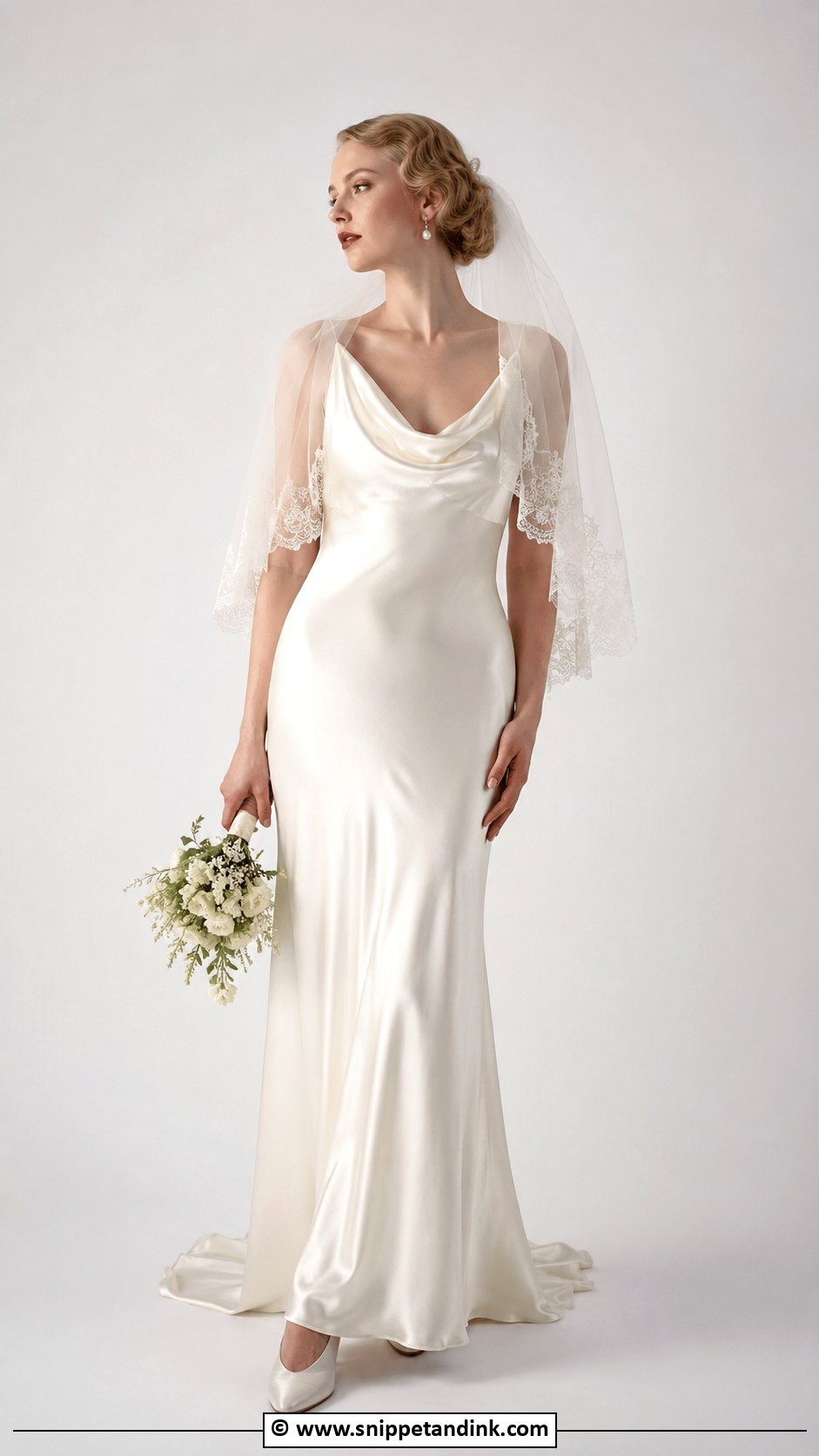
A satin bias cut wedding dress is the look most people picture from this decade. Cut on the diagonal grain, the satin stretches slightly and skims the body, so it moves with every step. Ivory, cream or soft champagne reads truest to the period, and a gentle cowl or a row of small covered buttons is all the decoration it needs. I keep the styling spare: low satin heels, pearl drops and a fingertip veil. A simple white bouquet lets the shine of the fabric lead. Be aware that bias satin is honest about the body underneath; I’ll talk about what goes under it below.
2. 1930s Long Sleeve Lace Wedding Dress
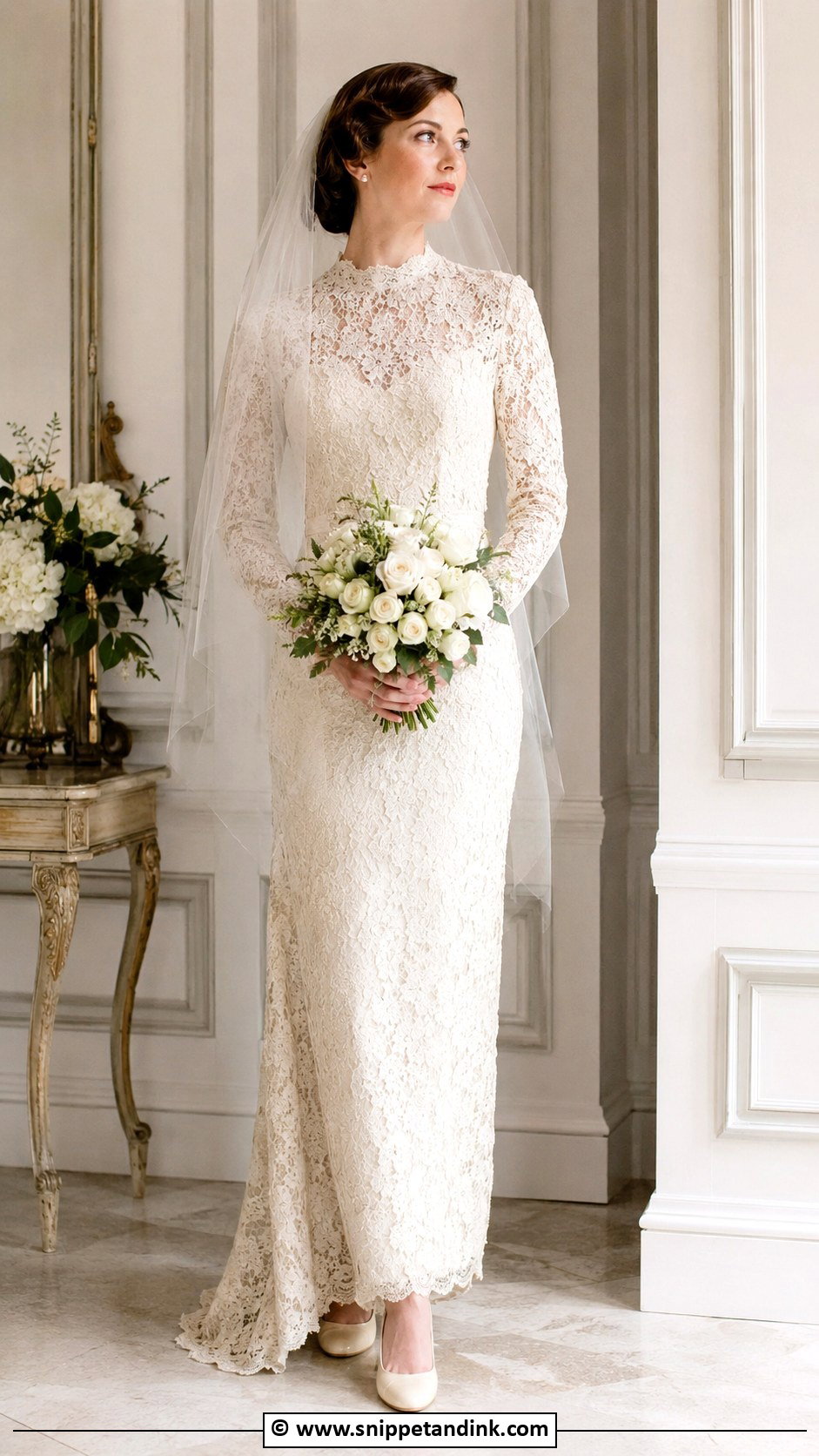
Soft lace that lies close to the body is what makes a long-sleeved lace gown feel 1930s rather than modern. Stiff, heavily corded lace belongs to later decades. A high neck, a defined waist and a slim skirt keep the line long. I pair it with ivory pumps, a plain veil and small pearl studs, because floral lace is already busy. It’s the dress I suggest most for autumn and winter ceremonies or anyone who wants sleeves and coverage. Try sitting and lifting your arms in it at the fitting; fitted lace sleeves can restrict movement more than you’d expect.
3. 1930s Cowl Neck Wedding Dress
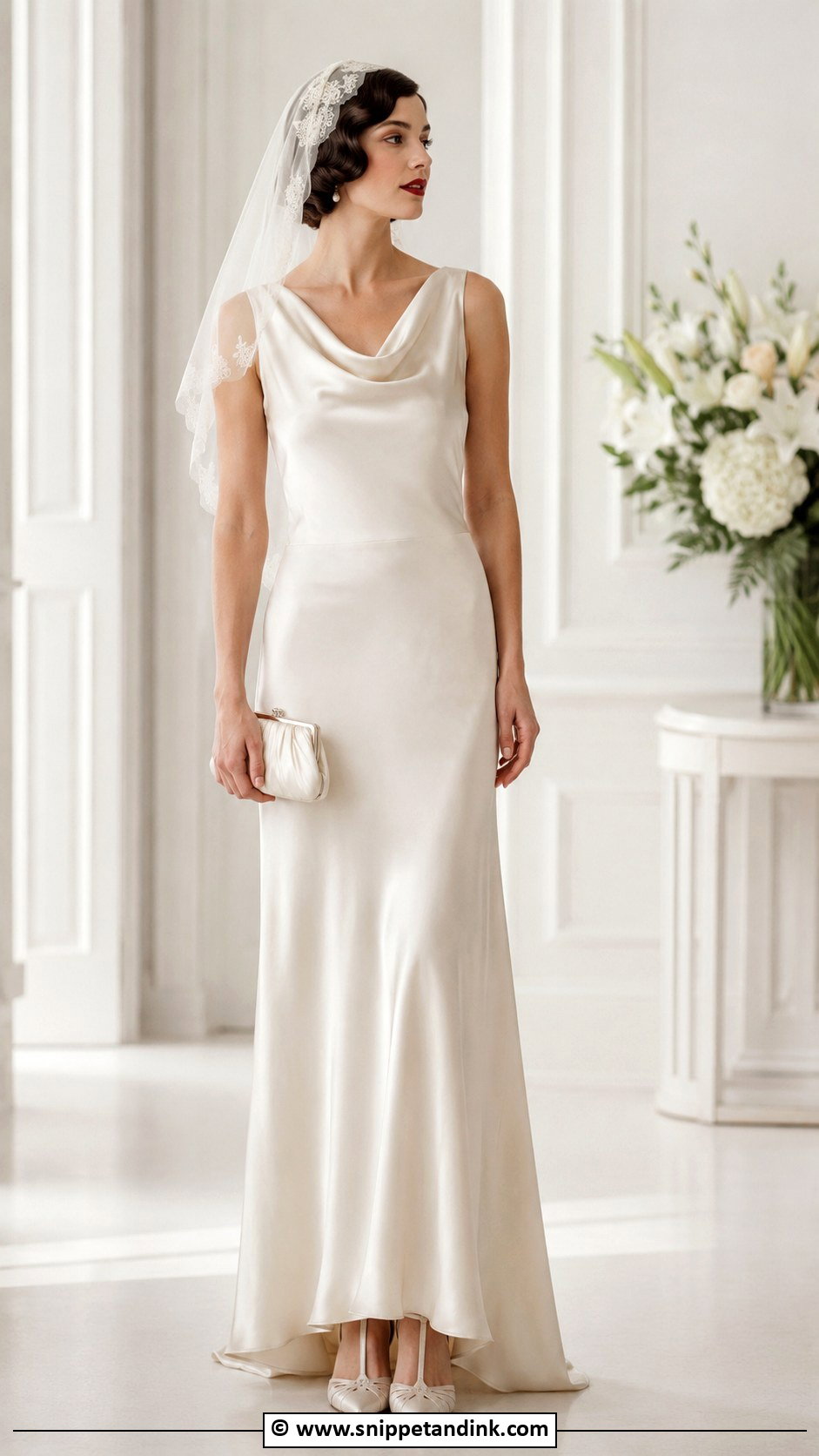
A cowl neck wedding dress drapes softly at the neckline, giving shape without much skin. Silk, satin or crepe all hold a cowl well, cut slim with a natural waist and a flowing skirt. A smooth low bun shows off the neckline, and T-strap heels plus a small clutch keep it period-true. A Juliet cap or a single hair comb finishes it. The fold of a cowl shifts as you move, so I check it standing, sitting and bending at the fitting, and sometimes add a small weight or a hidden tack to keep it centered.
4. 1930s Wedding Dress With Juliet Cap Veil
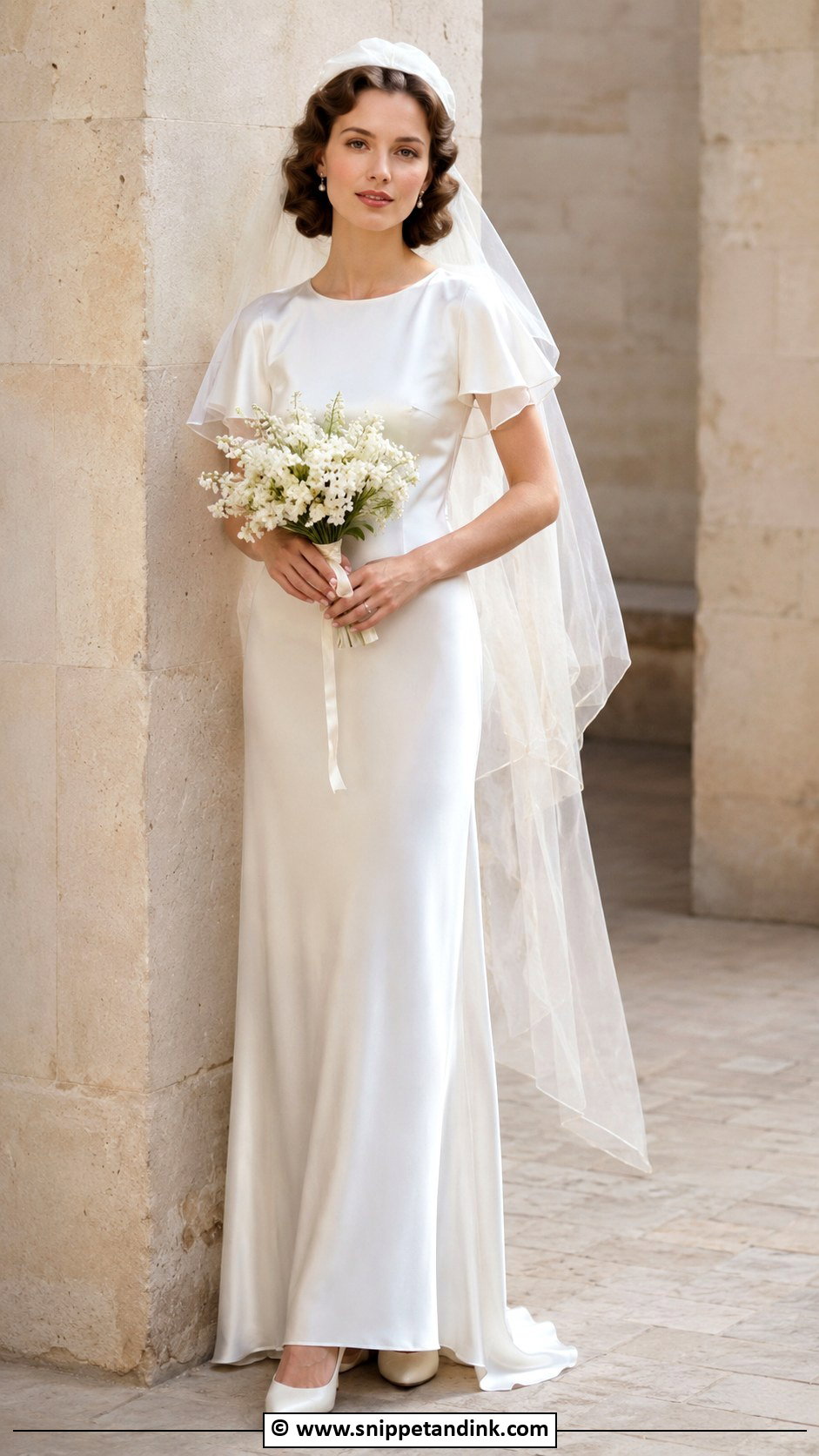
A Juliet cap veil sits close to the head like a small skullcap, with tulle falling around the face and shoulders. It’s one of the most period-specific accessories here, and it turns a plain slim gown into a 1930s look in one step. Satin, lace or crepe dresses all work beneath it, and long sleeves or a small train add authenticity. Because the cap frames the face, I keep the makeup soft and the jewelry to pearl earrings. Hair needs to be low and fairly flat for the cap to sit right; big volume pushes it up.
5. 1930s Crepe Wedding Dress With Train
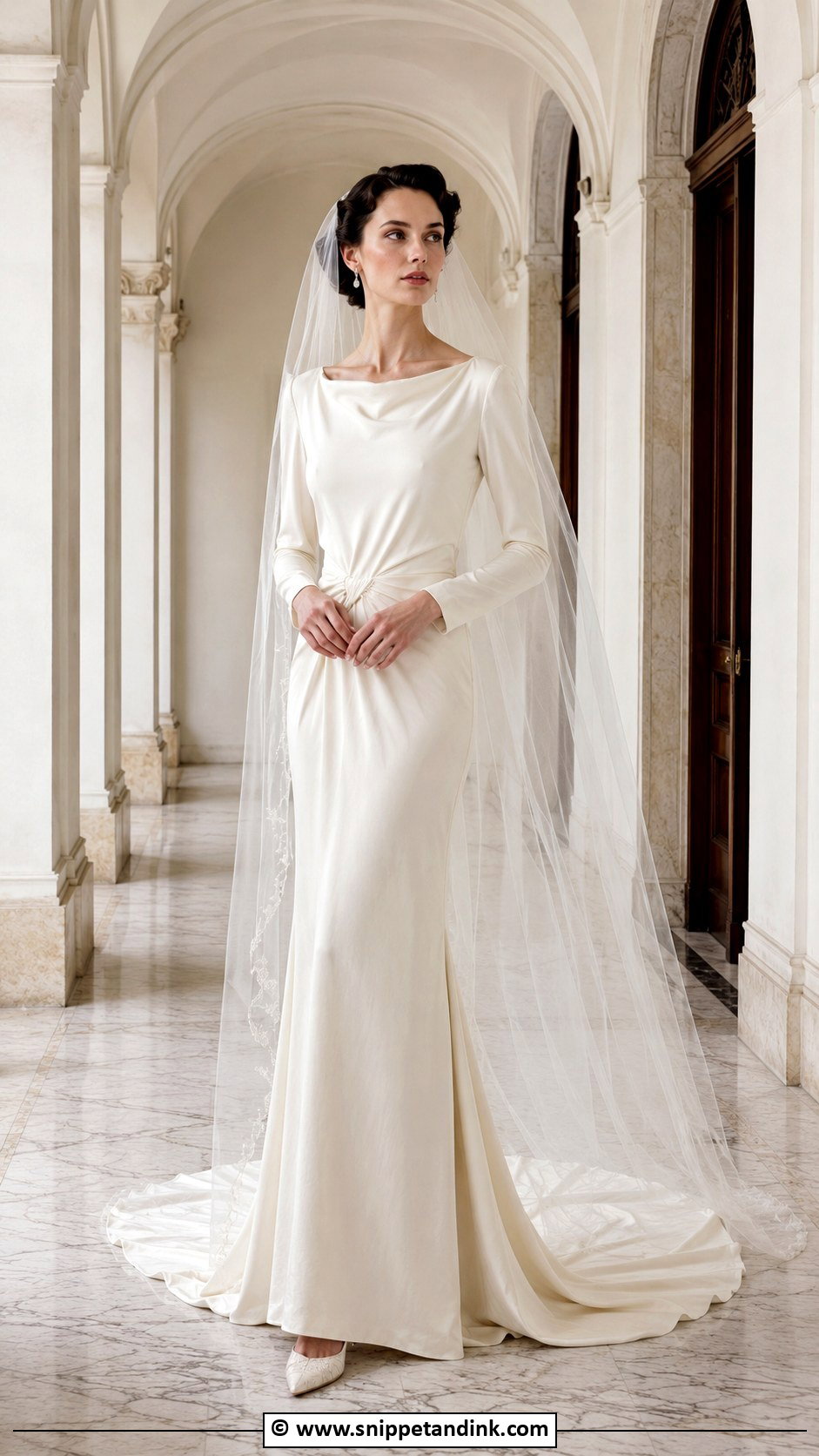
Crepe has a soft matte finish, which gives quiet drama without the shine of satin. A slim bodice, long sleeves and a sweeping train make a strong 1930s silhouette, and pointed ivory heels and a long veil complete it. Crepe is also kinder than satin to anything it touches: it hides bumps, creases less and feels lighter. Historic venues and formal portraits suit it. The train will collect dust and grass on any outdoor walk, so I’d plan a bustle for after the ceremony.
6. 1930s Art Deco Beaded Wedding Dress
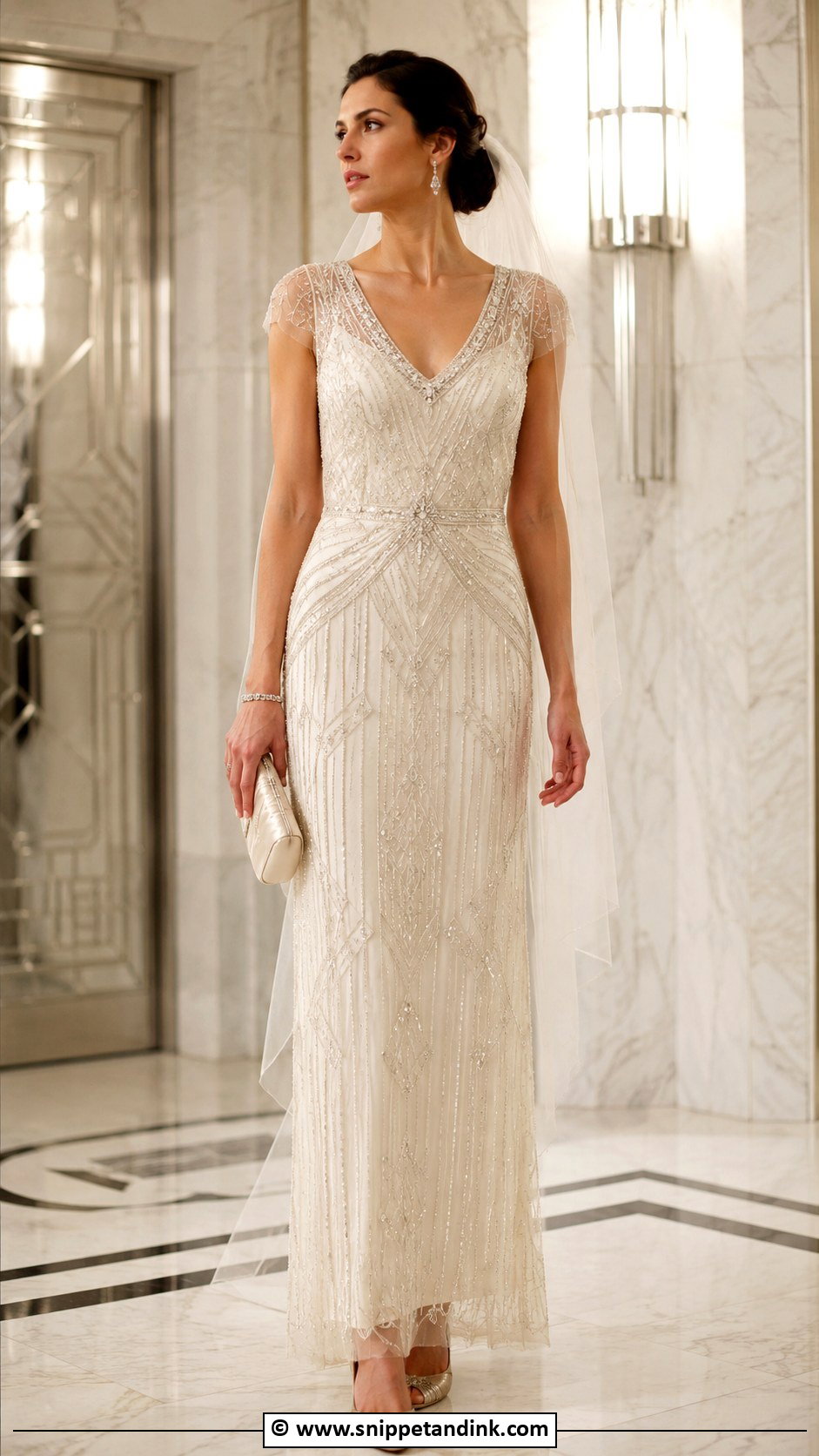
Art Deco beading uses geometric patterns or vertical lines of crystal on a slim gown. The balance is everything: concentrated beading on the bodice or along a seam looks elegant; beading over the whole dress begins to look like costume. Metallic low heels, a plain veil and a satin clutch keep the accessories quiet. Side-parted waves suit it, especially with a simple neckline. Beaded gowns are heavy, so I always check the weight on the shoulders during a long fitting; that weight drags straps down over an evening.
7. 1930s High Neck Wedding Dress
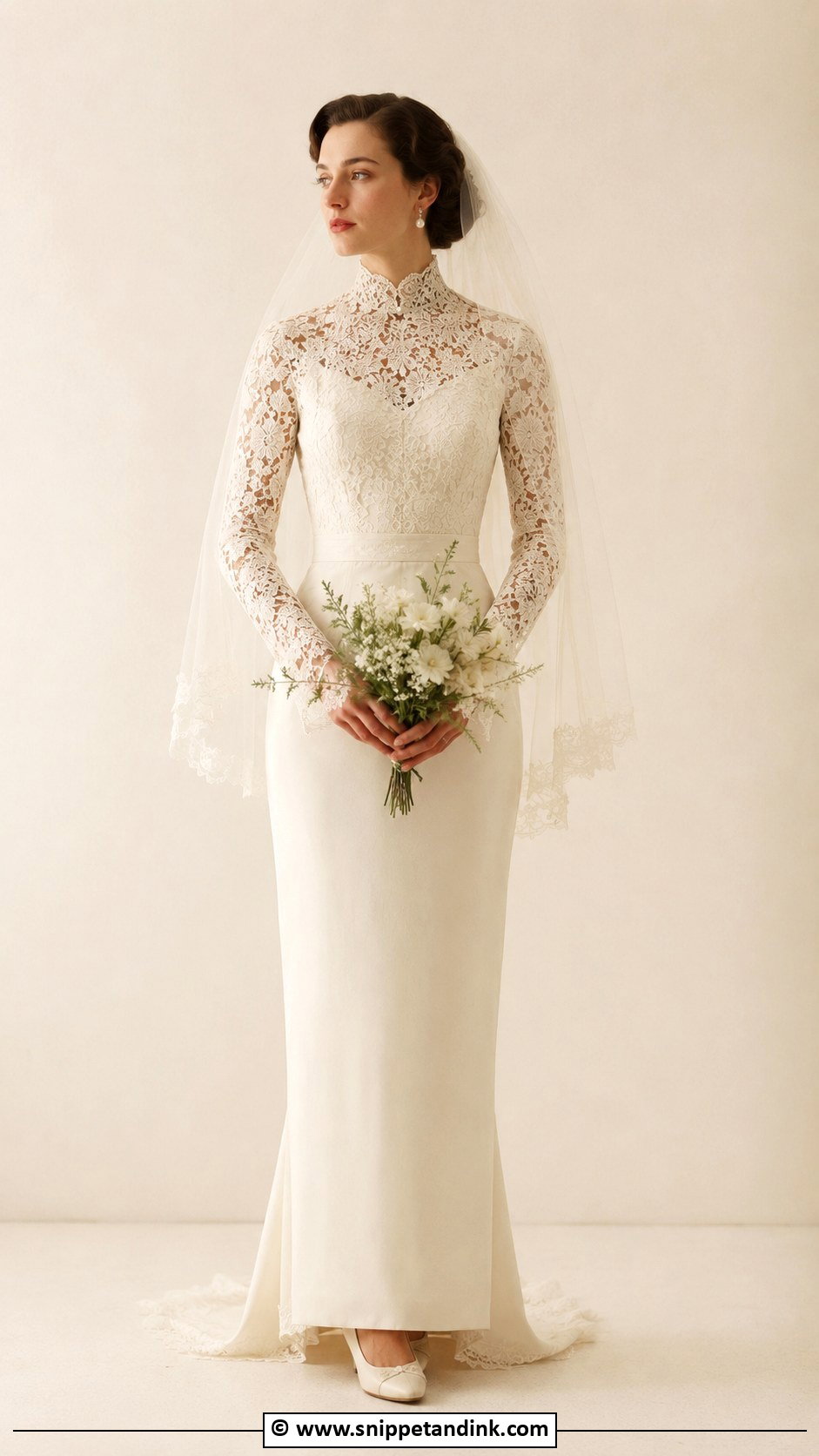
A high neck in lace, crepe or satin, with long sleeves and a slim skirt, gives a formal, covered silhouette. I soften it with sheer lace panels, small buttons or a lighter fabric so it doesn’t feel severe. Pearl earrings and a veil that falls behind the shoulders keep the neckline clear. Hair needs to go up or back; any hair resting on a high collar flattens it. I’d skip this one in high summer, because a closed neck in a hot room gets uncomfortable quickly.
8. 1930s Wedding Dress With Capelet
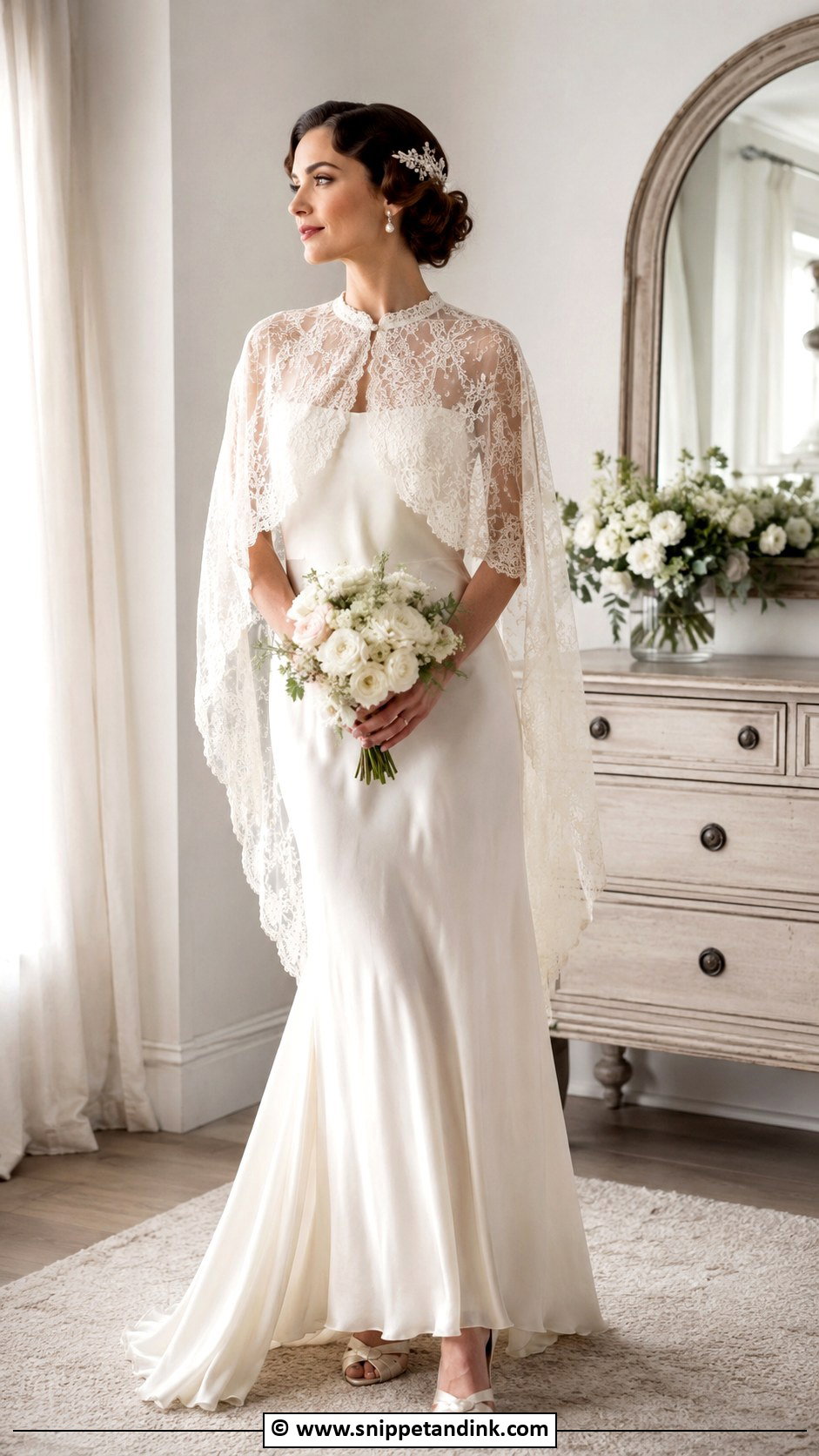
A wedding dress with a capelet adds movement around the shoulders and some coverage without a full jacket. Lace, chiffon, silk or sheer tulle all work, worn over a slim satin or crepe gown. I keep everything else plain, with a vintage-style comb and small earrings, so the capelet stays the focus. It’s practical for a church ceremony where you want covered shoulders, then comes off for the reception. Ask how it fastens: a hidden hook at the neck is more secure than a tie.
9. 1930s Wedding Dress With Puff Sleeves
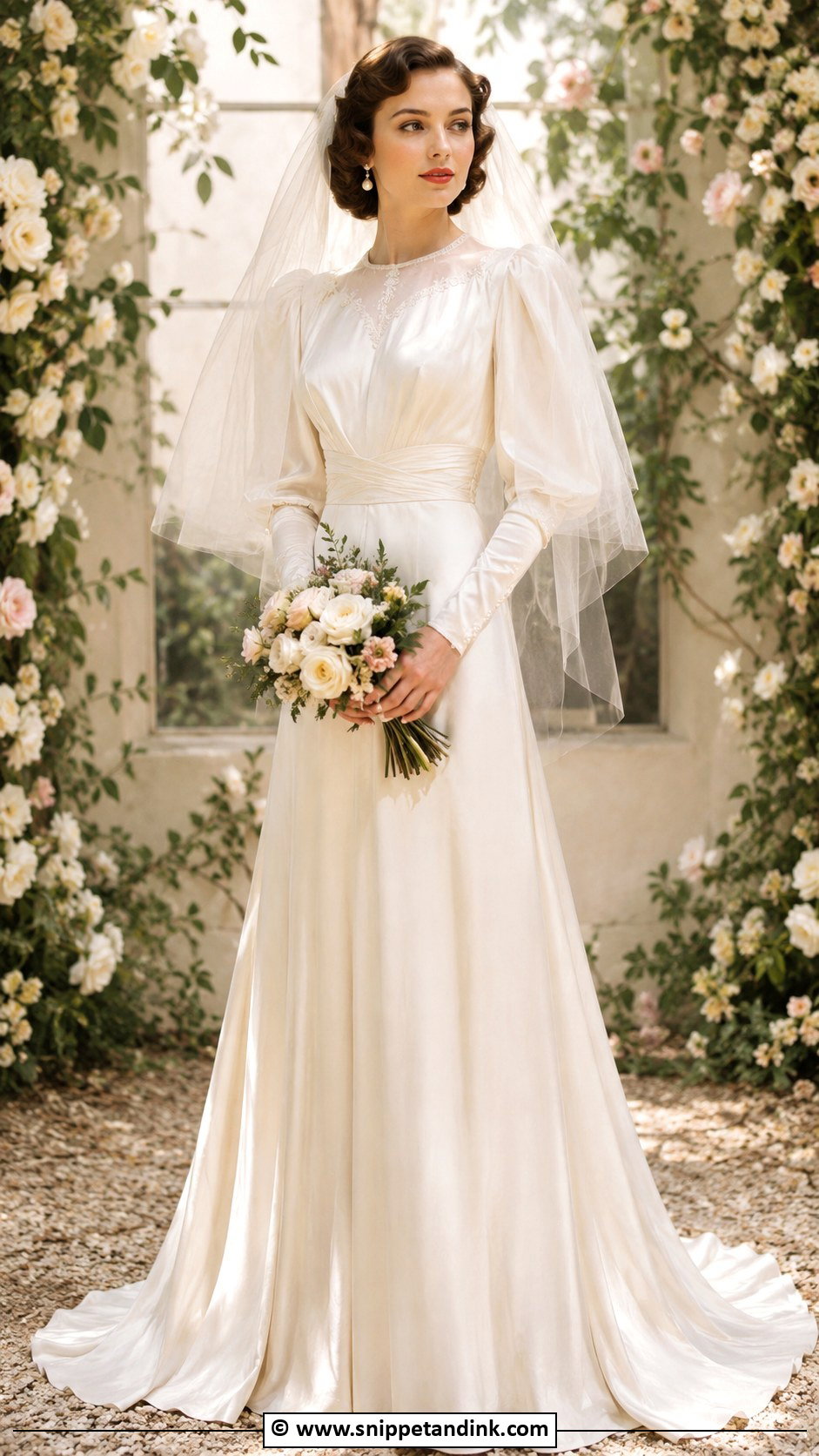
Soft puff sleeves bring a sweeter, more feminine side to the period. The sleeve should be gentle, gathered at the shoulder and fitted below the elbow or at the wrist, never oversized. I’d pair it with a satin or crepe bodice, a defined waist and a flowing skirt. Ivory heels, a fingertip veil and pearl earrings are enough. Soft curls and a loose bouquet suit it. Puff sleeves widen the shoulder line, so on broad shoulders I’d go for a smaller, flatter puff.
10. 1930s Wedding Dress With Lace Sleeves
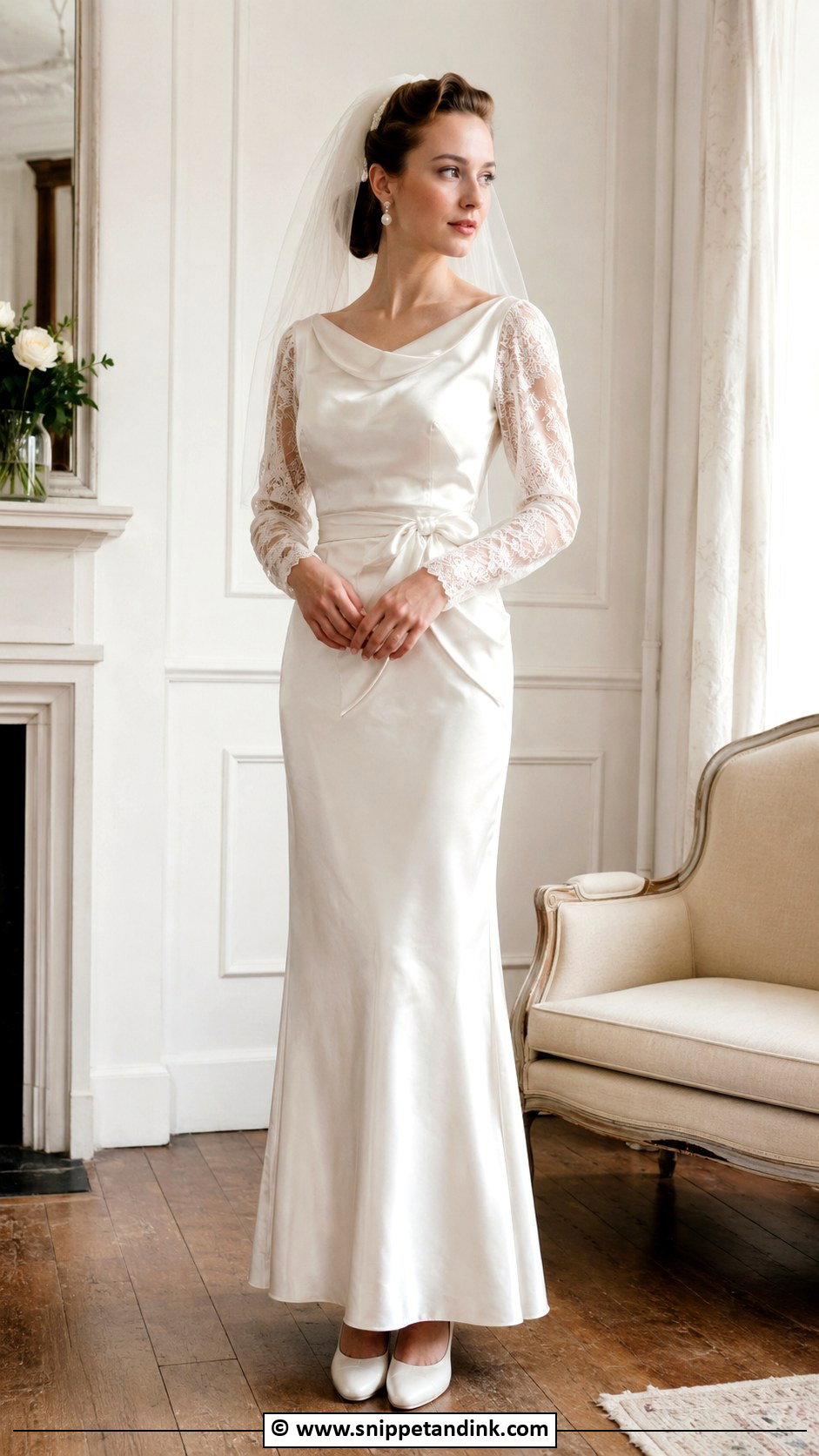
Lace sleeves on a smooth satin, silk or crepe body give detail where the eye lands most (on the arms during the vows and the ring exchange) while keeping the bodice clean. A slim skirt, a gentle neckline and a small train finish the 1930s shape. Ivory pumps, pearl earrings and a soft veil complete it. This contrast is forgiving on many figures, because the plain fabric over the body keeps the line simple. Check the lace cuffs against your hands; scratchy lace at the wrist gets irritating by evening.
11. 1930s Silk Slip Wedding Dress
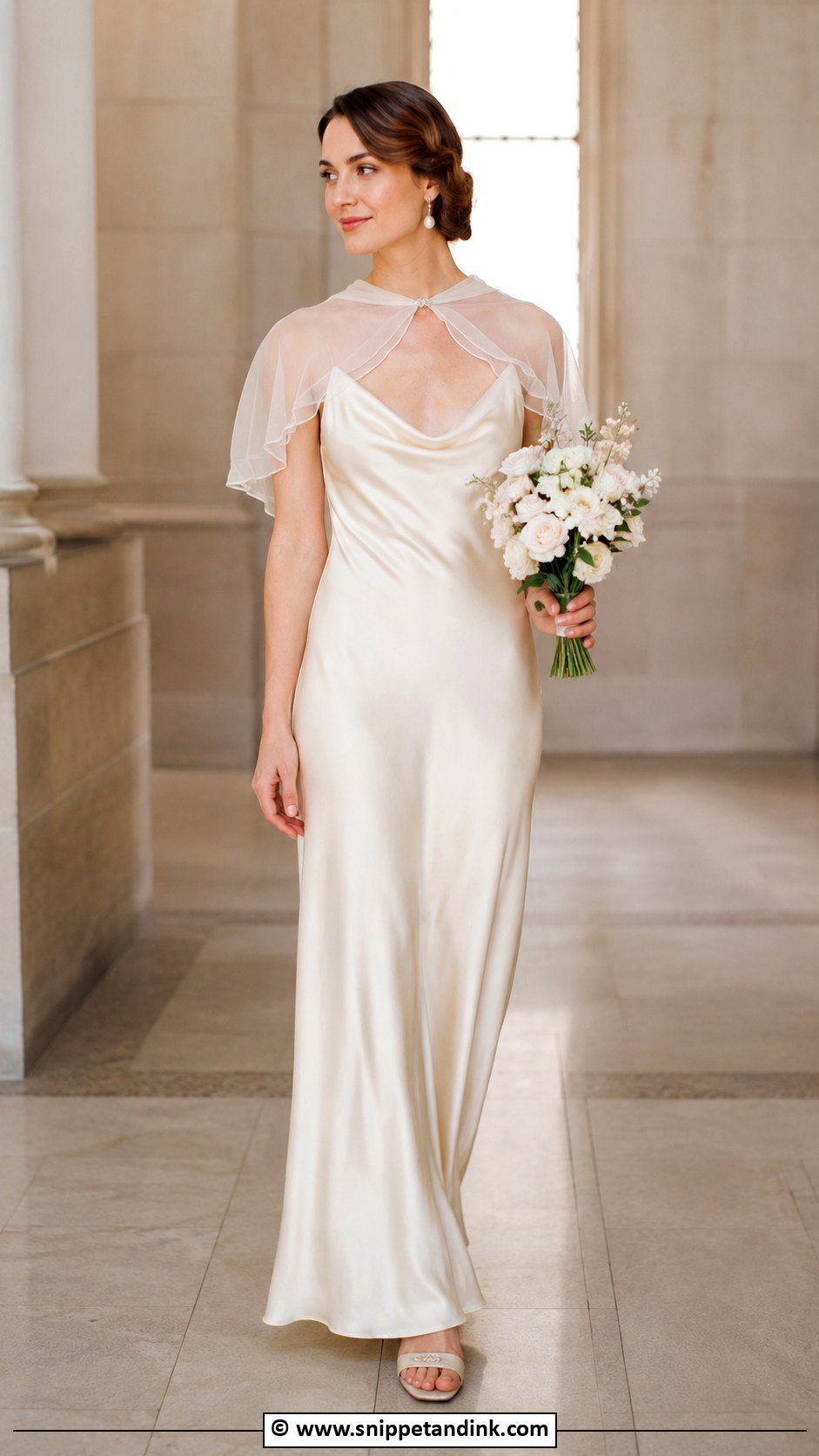
A silk slip dress skims rather than clings, with thin straps, a draped neck or a low back. Because there’s so little to it, fabric quality decides everything: cheap polyester satin shows pulls and static, while good silk falls and moves. A sheer capelet, pearl earrings and low-heeled sandals finish it. It suits courthouse ceremonies and intimate weddings. Smooth hair, clean makeup and a small bouquet keep the look polished rather than bare. Silk spots with water, so carry a jacket or wrap if rain is forecast.
12. 1930s Wedding Dress With Button Back
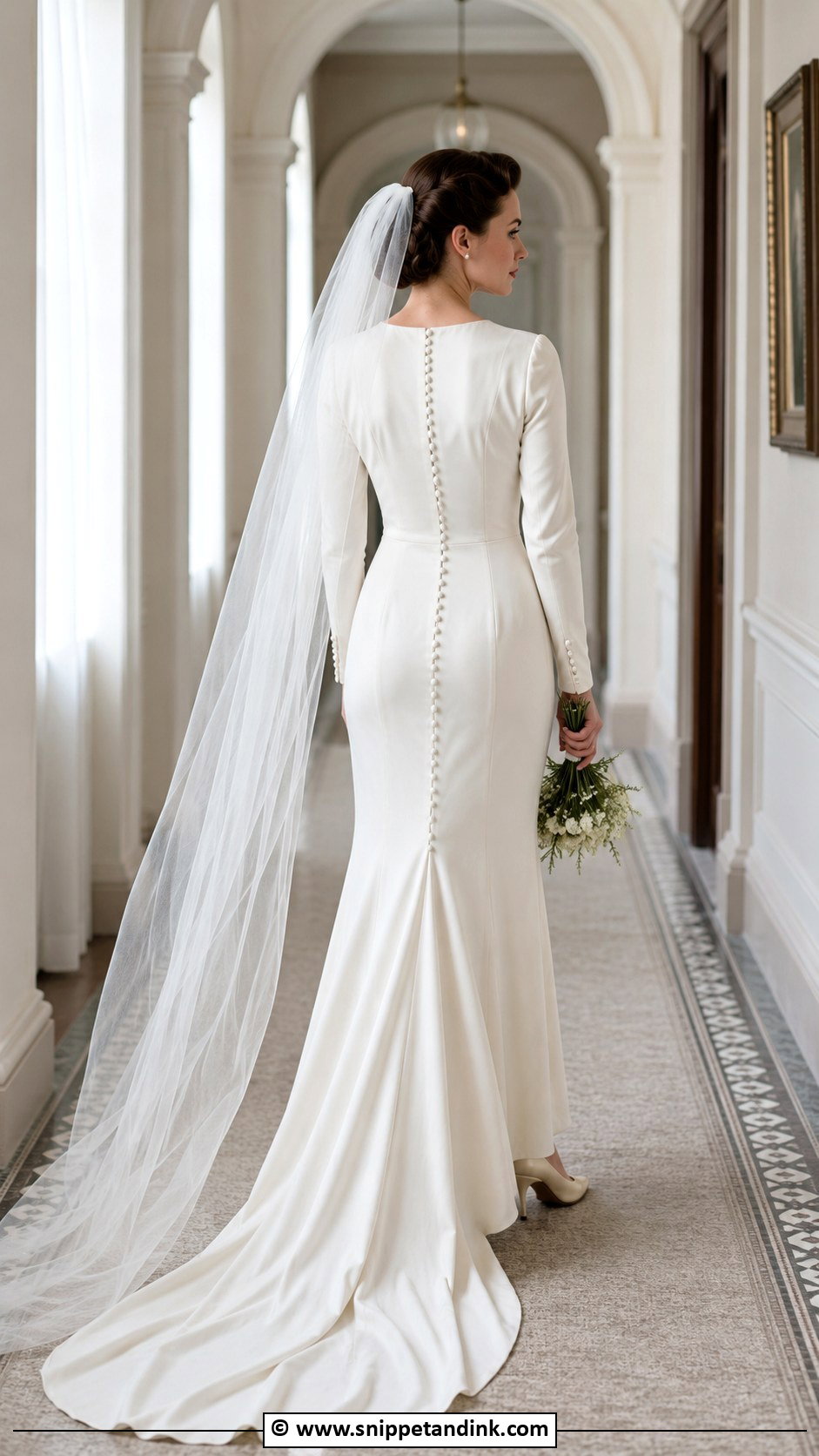
A button back draws attention without sparkle. Covered buttons down the spine look especially elegant on a slim satin or crepe gown with long sleeves and a gentle train. Hair goes up or to one side so the back is visible. Classic ivory heels, a sheer veil and pearl earrings complete it. Practical warning: thirty buttons take time. Most of these dresses have a hidden zip underneath, but if yours doesn’t, allow fifteen minutes and a crochet hook or button hook to fasten them.
13. 1930s Wedding Dress With Peplum Waist
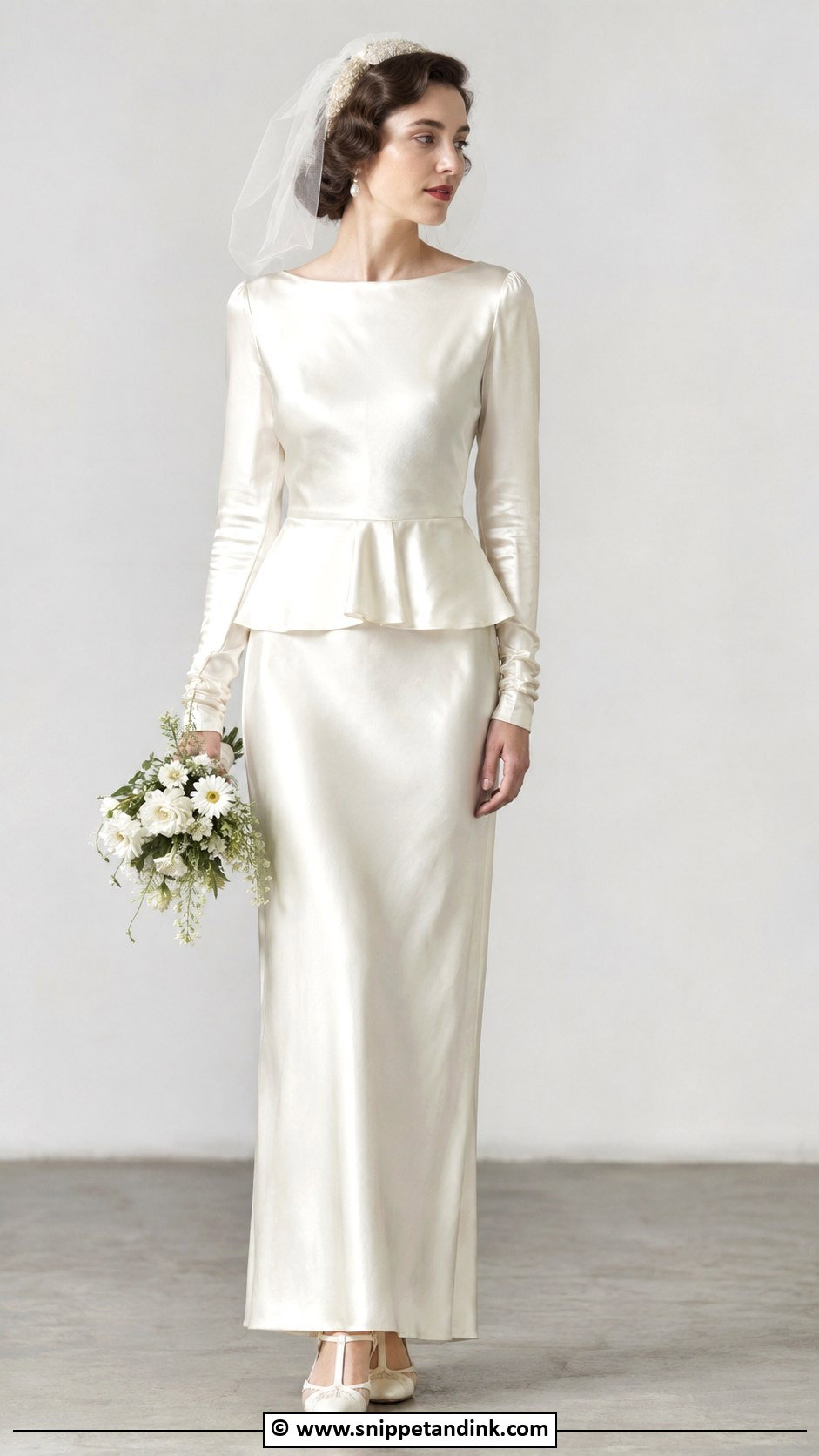
A soft peplum defines the waist on a slim gown without adding a wide skirt, which is how the 1930s created an hourglass line. Choose a crepe or satin gown with narrow sleeves and a long skirt. T-strap heels, a small veil and simple earrings finish it. A peplum gives shape over the hips, which suits brides who’d like some definition at the waist. Keep the peplum fabric fluid; a stiff peplum looks 1980s rather than 1930s.
14. 1930s Wedding Dress With Dramatic Back
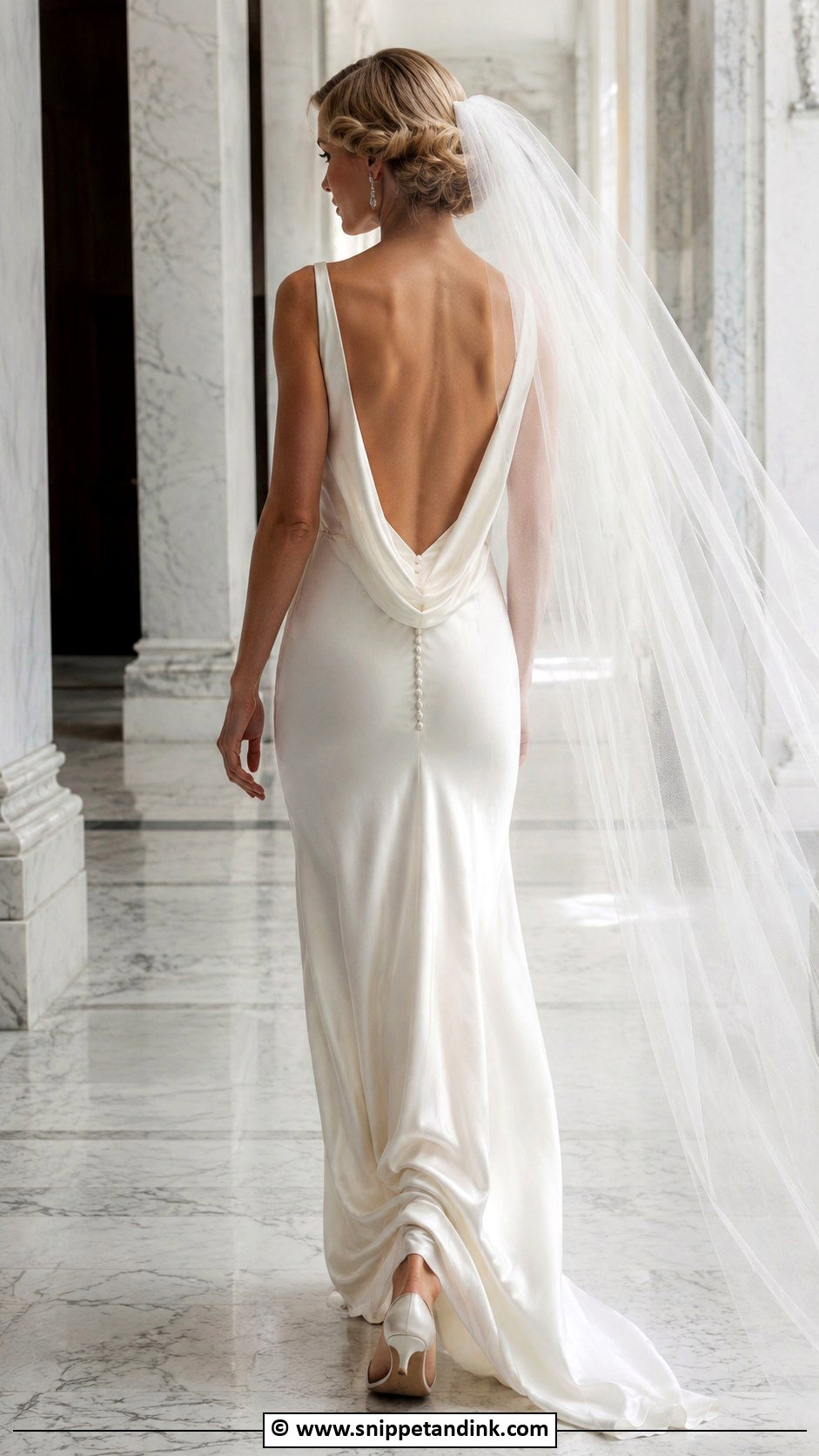
Dramatic backs are where the era’s glamour lives. A low V, soft draping, a lace inset or a row of buttons can make the gown memorable with a plain front. Choose a long, slim skirt and a simple front neckline. An updo, drop earrings and low heels keep everything visible. A sheer veil softens the back without hiding it. Bra solutions are the real issue: I’d find adhesive cups or have cups sewn into the gown at the first fitting, not the last.



15. 1930s Chiffon Wedding Dress
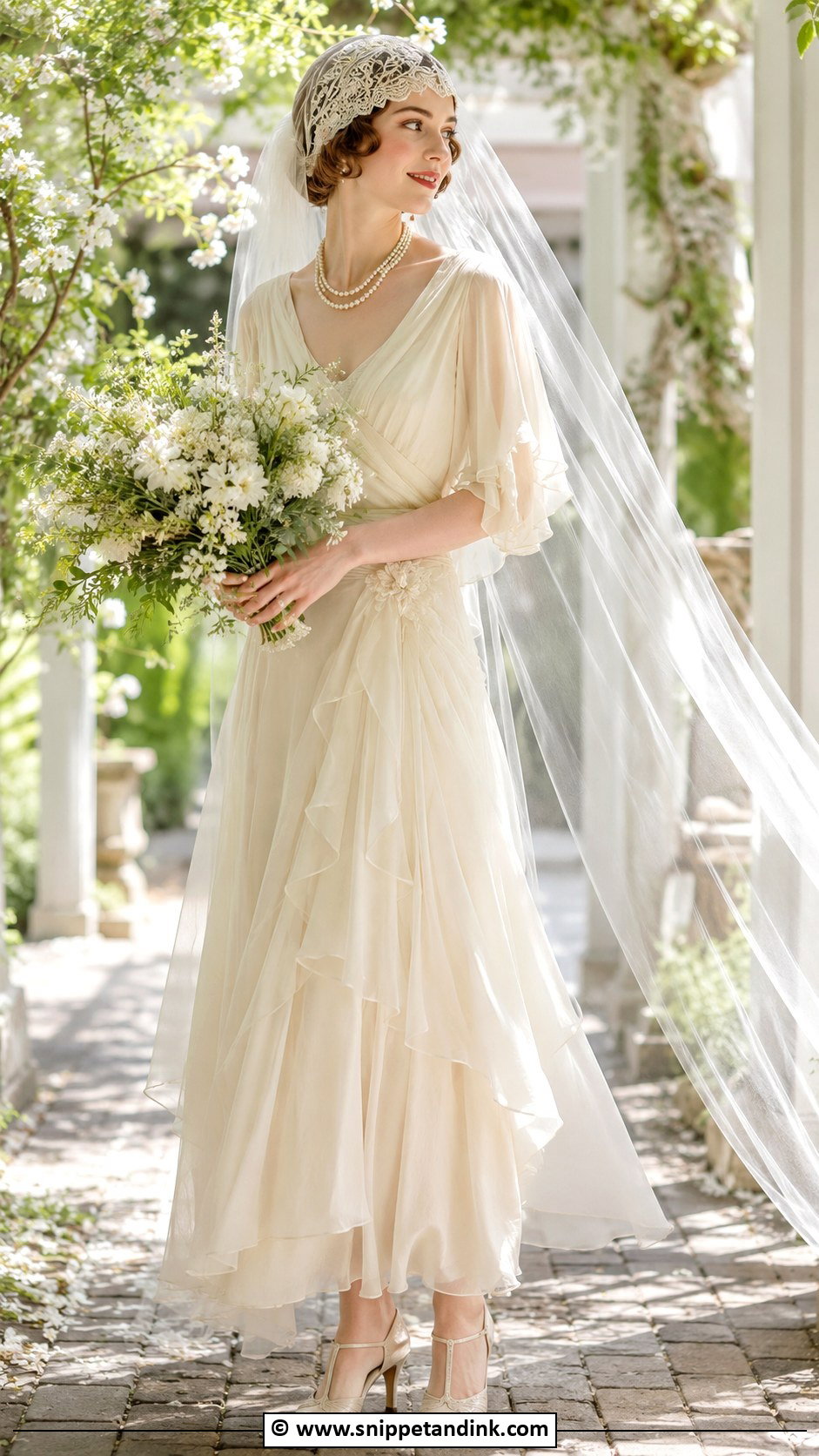
Chiffon gives the light, airy side of the decade: layered over a simple lining, it moves with every breath of wind and doesn’t add bulk. Soft sleeves, a draped bodice or a chiffon cape detail suit the period. Delicate heels, a soft veil and pearl accessories finish it, and a loose, natural bouquet matches the fabric. Spring and summer outdoor weddings suit it. Chiffon snags easily on jewelry and bouquet wire, so check for sharp edges on anything that touches it.
16. 1930s Wedding Dress With Gloves
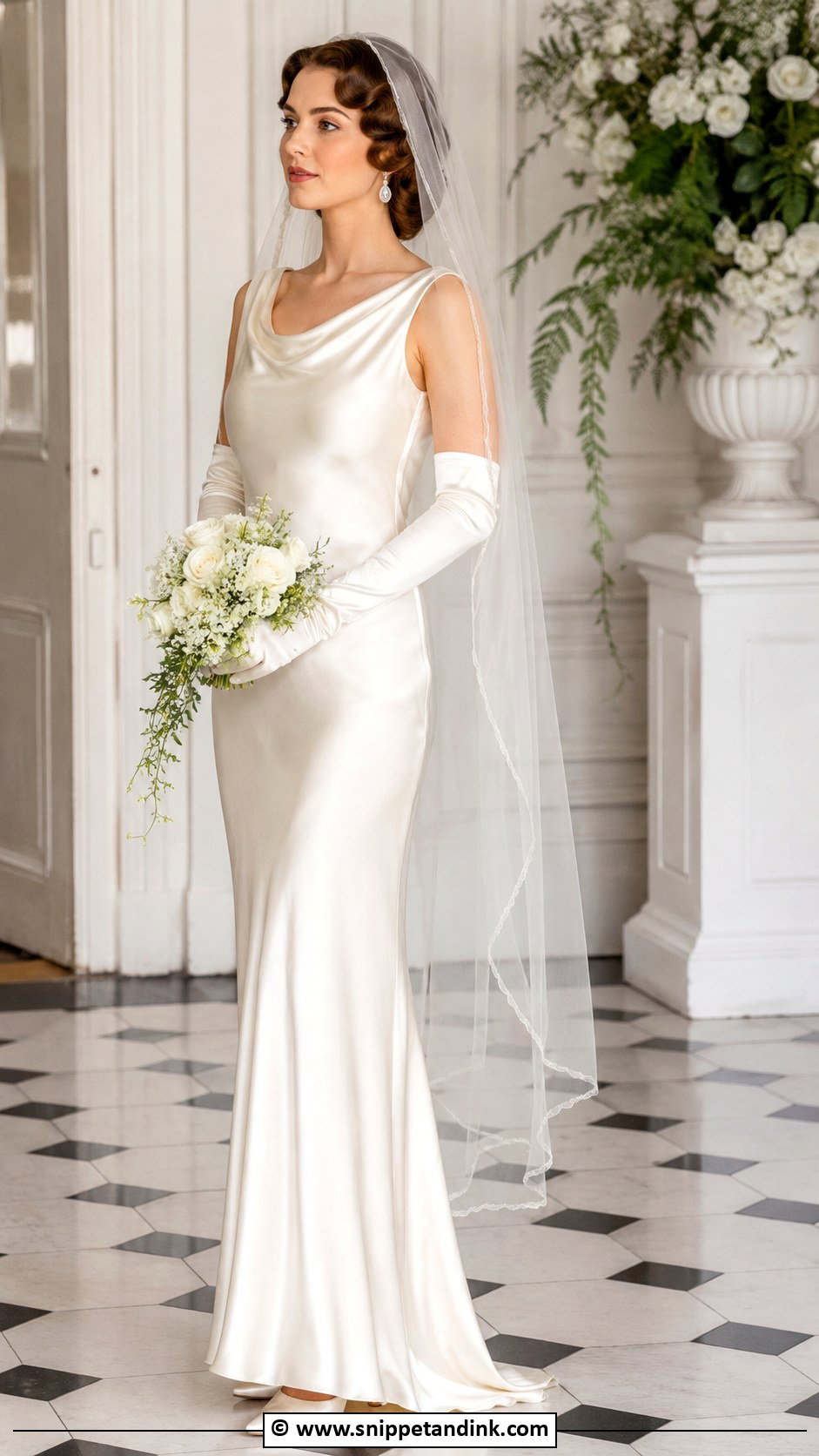
Gloves finish a vintage bridal outfit in a way few accessories do. Wrist-length suits a day wedding; elbow-length reads formal. Satin gloves look glamorous, and lace gloves feel softer. Keep the dress simple so the gloves look intentional. There’s one practical issue: the ring. I suggest gloves with a finger that unbuttons or a small slit, or simply taking off the left glove before the vows and handing it to your maid of honor.
17. 1930s Wedding Dress With Fur Stole
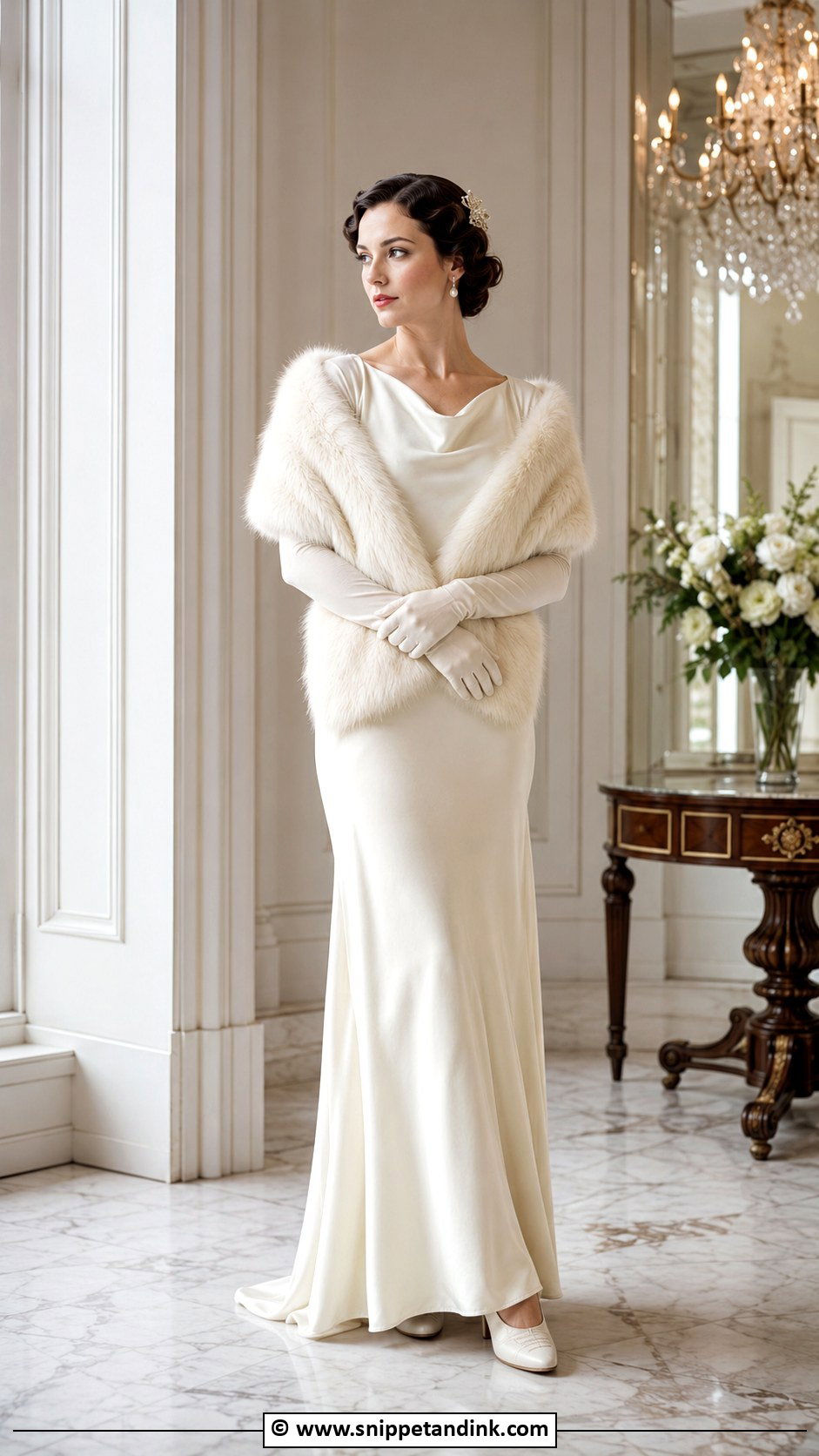
A soft faux fur stole over a slim satin or crepe gown adds warmth for a winter wedding without hiding the dress. Ivory, cream or pale champagne keeps everything cohesive. Closed-toe heels, pearl earrings and a simple veil or comb complete it. Wear the stole around the shoulders, not wrapped high, so the gown’s shape stays visible. Faux fur sheds a little onto dark suits and satin, so give it a gentle brush outside before you put it on.
18. 1930s Wedding Dress With T Strap Heels
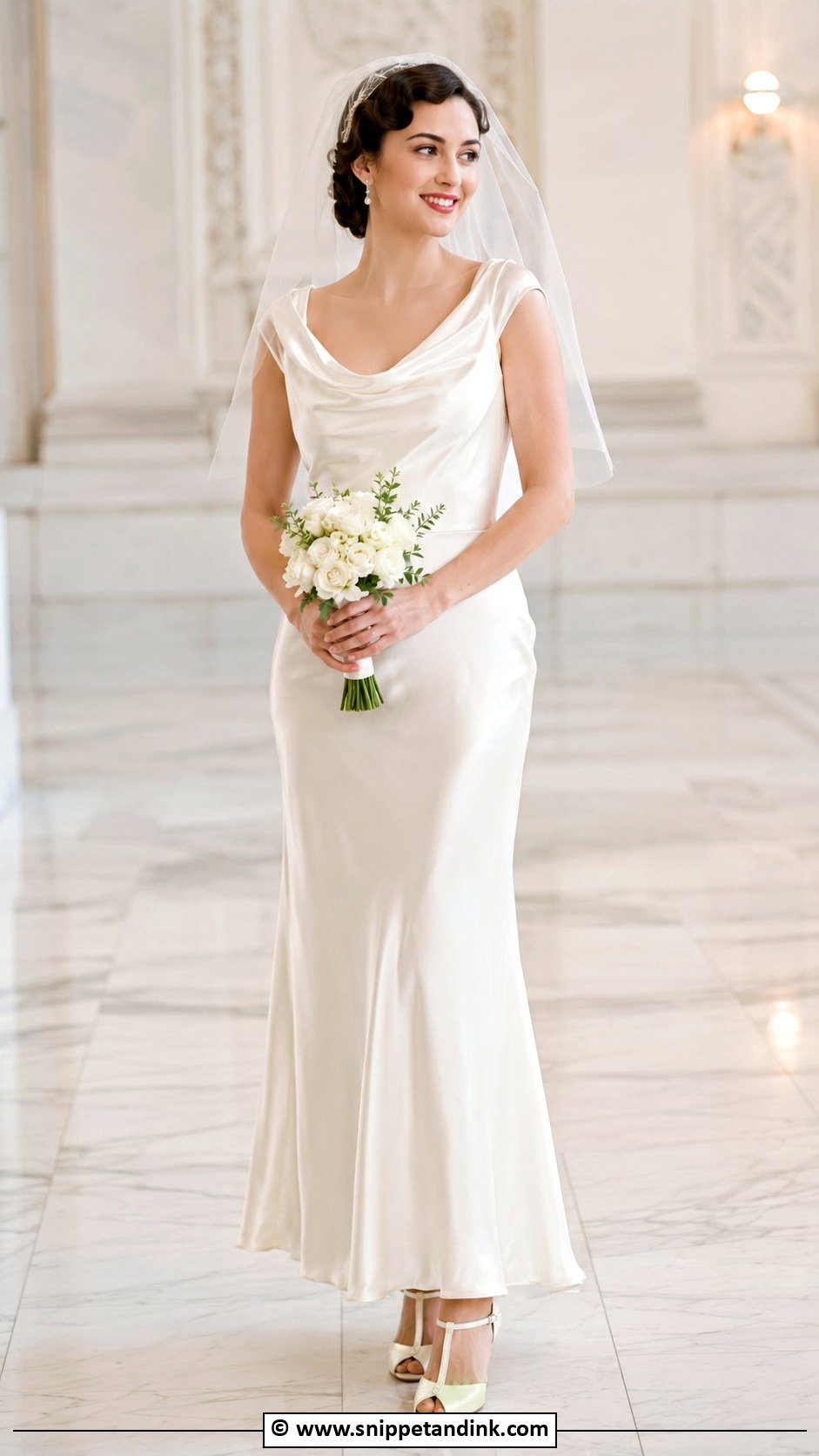
T-strap heels are the shoe of the decade. They work with bias-cut satin, lace or crepe because the strap echoes the vertical lines of the dress. Ivory, champagne, silver or soft gold in a low to medium heel suits most brides. A slim gown, pearl earrings and a fingertip veil finish it. If your hem is shorter in front, the shoes show with every step. They’re also far easier to dance in than strappy stilettos; the strap holds the foot in place.
19. 1930s Wedding Dress With Pearl Accessories
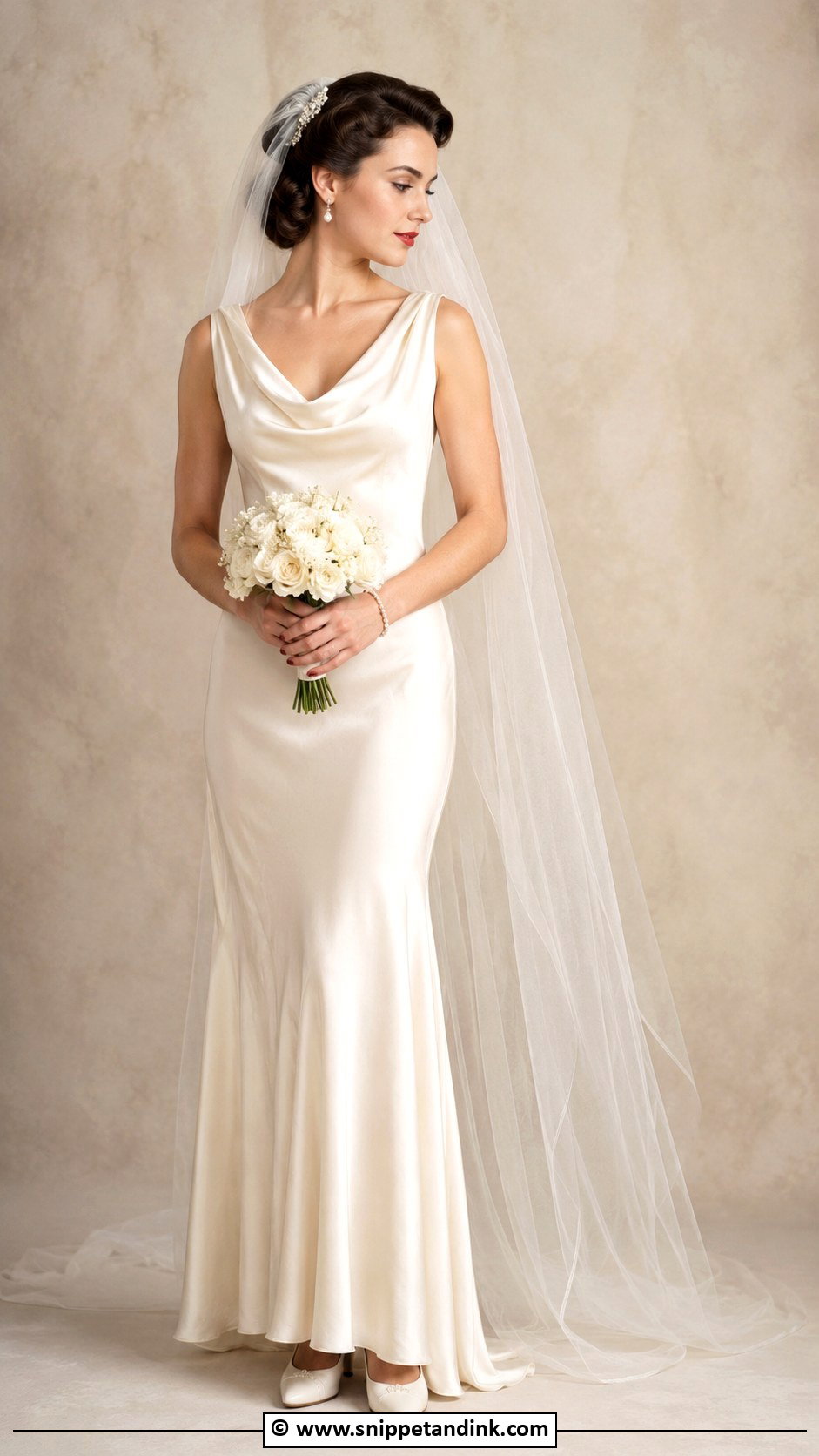
Pearls suit satin, silk, lace and crepe because they have the same soft sheen. Choose one or two pieces, such as pearl drops plus a comb or a fine bracelet, not all of them at once. A slim gown, low heels and a sheer veil finish the look. Cowl necks, high necks and lace sleeves all pair especially well with pearls. Real pearls dull with perfume and hairspray, so put them on last, after everything has dried.
20. 1930s Wedding Dress With Cathedral Veil
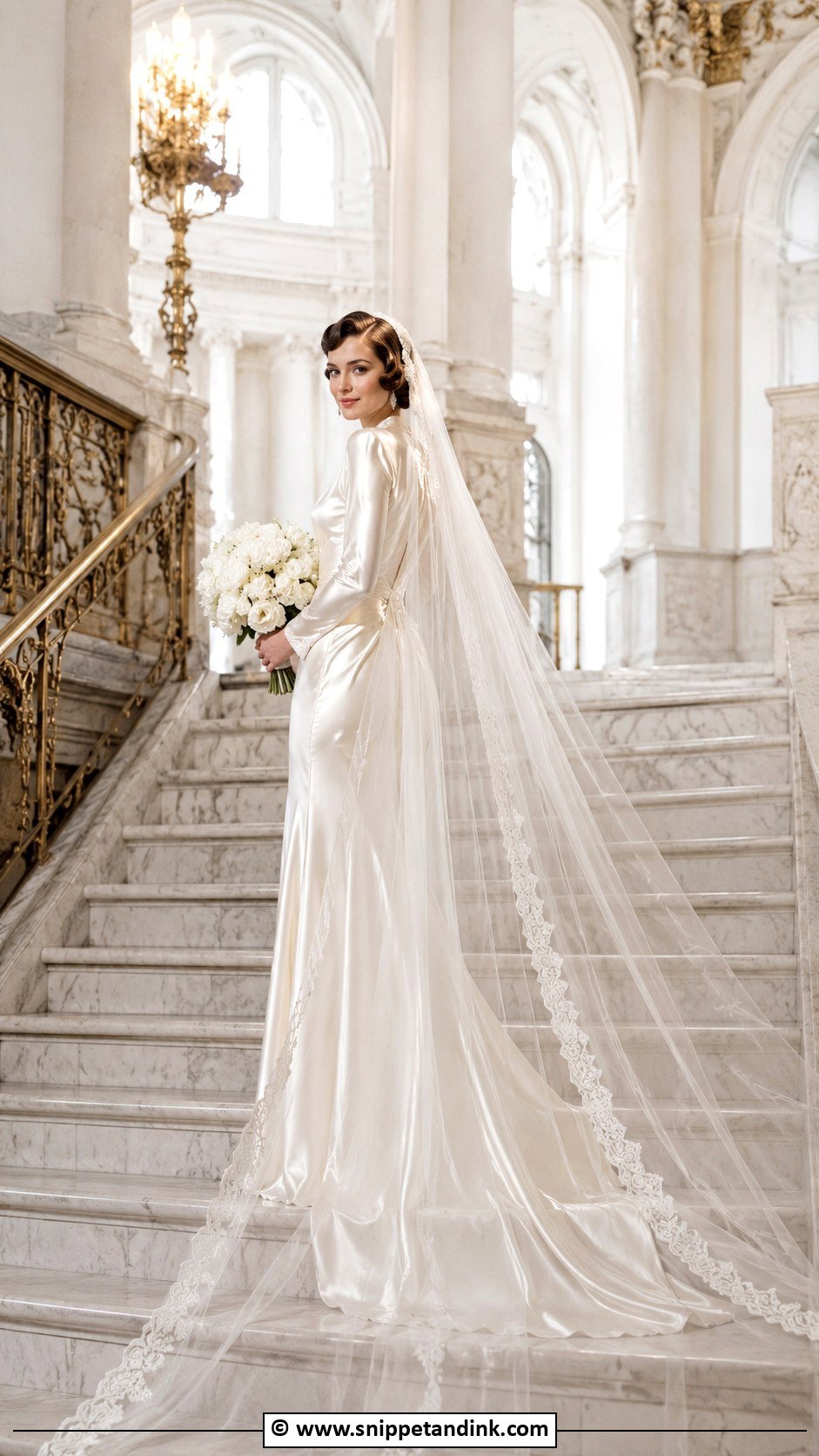
A cathedral veil gives a slim 1930s gown real scale for the ceremony without changing its silhouette. Simple tulle, a lace-trimmed edge or soft silk all work, depending on the gown. Satin heels, delicate earrings and a clean bouquet complete it. It suits formal weddings and large spaces where the veil can trail. Keep the dress itself plain, such as a bias-cut satin gown or long-sleeved crepe. Cathedral veils catch on everything outdoors, so I’d plan to take it off right after the ceremony photos.
21. 1930s Wedding Dress With Lace Train
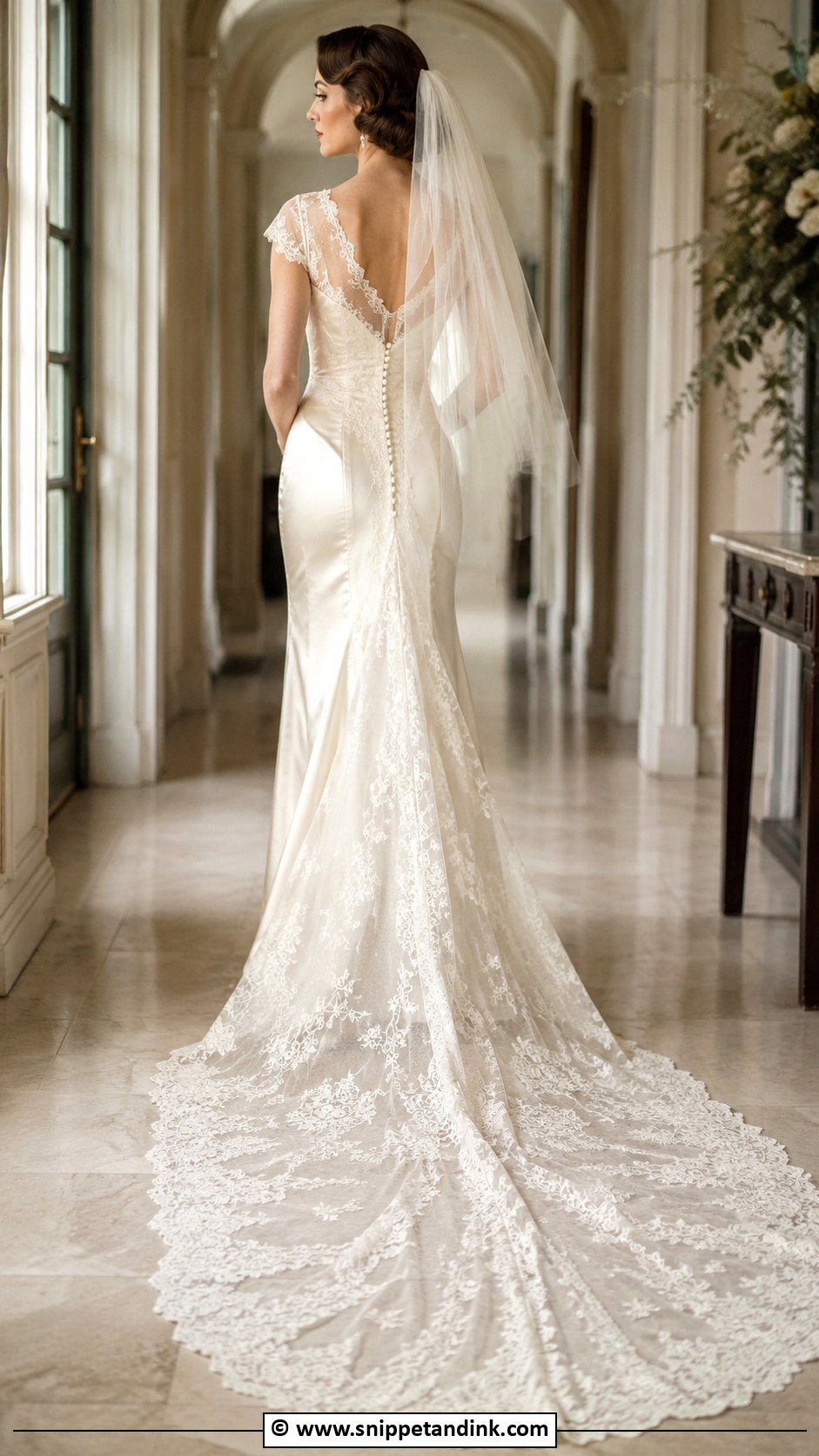
A lace train adds texture and detail where the guests see it most, from behind as you walk up the aisle. The front of the dress can stay clean and simple. A fitted bodice, slim skirt and lace that flows naturally into the train make the line. Ivory heels, pearl earrings and a veil that doesn’t compete with the lace finish it. Lace trains need bustling for the reception, and lace is delicate, so ask your seamstress to sew small reinforced loops rather than relying on hooks.
22. 1930s Wedding Dress With Floral Lace
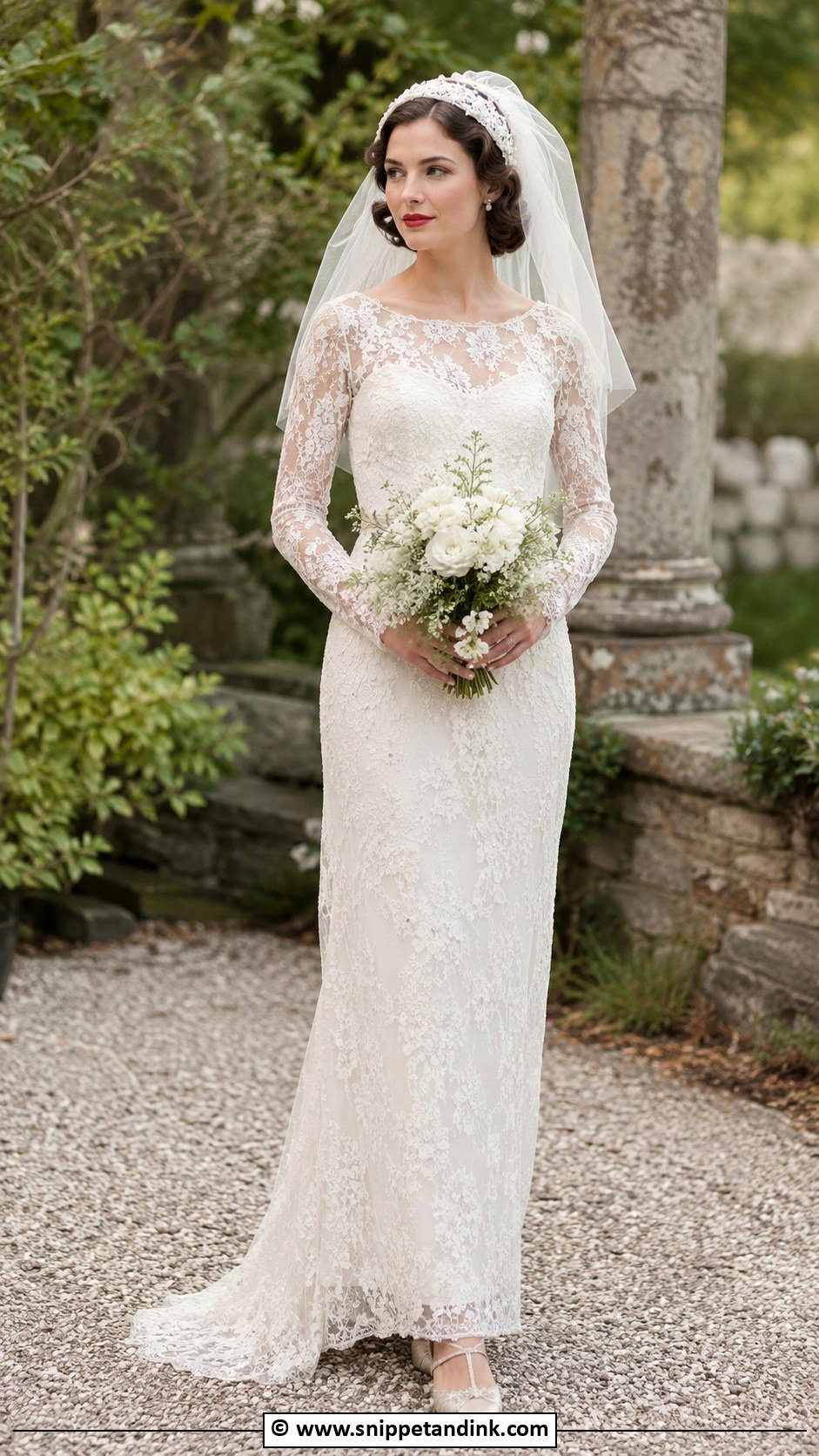
Fine, delicate floral lace keeps the 1930s feel; heavy, modern 3D motifs look later. A slim gown with long sleeves, a gentle neckline and a natural waist keeps the period shape. Pearl studs, soft heels and a light veil complete it. If the lace is very detailed, keep the bouquet and jewelry simple. Garden weddings and historic venues suit it.
23. 1930s Wedding Dress With Satin Jacket
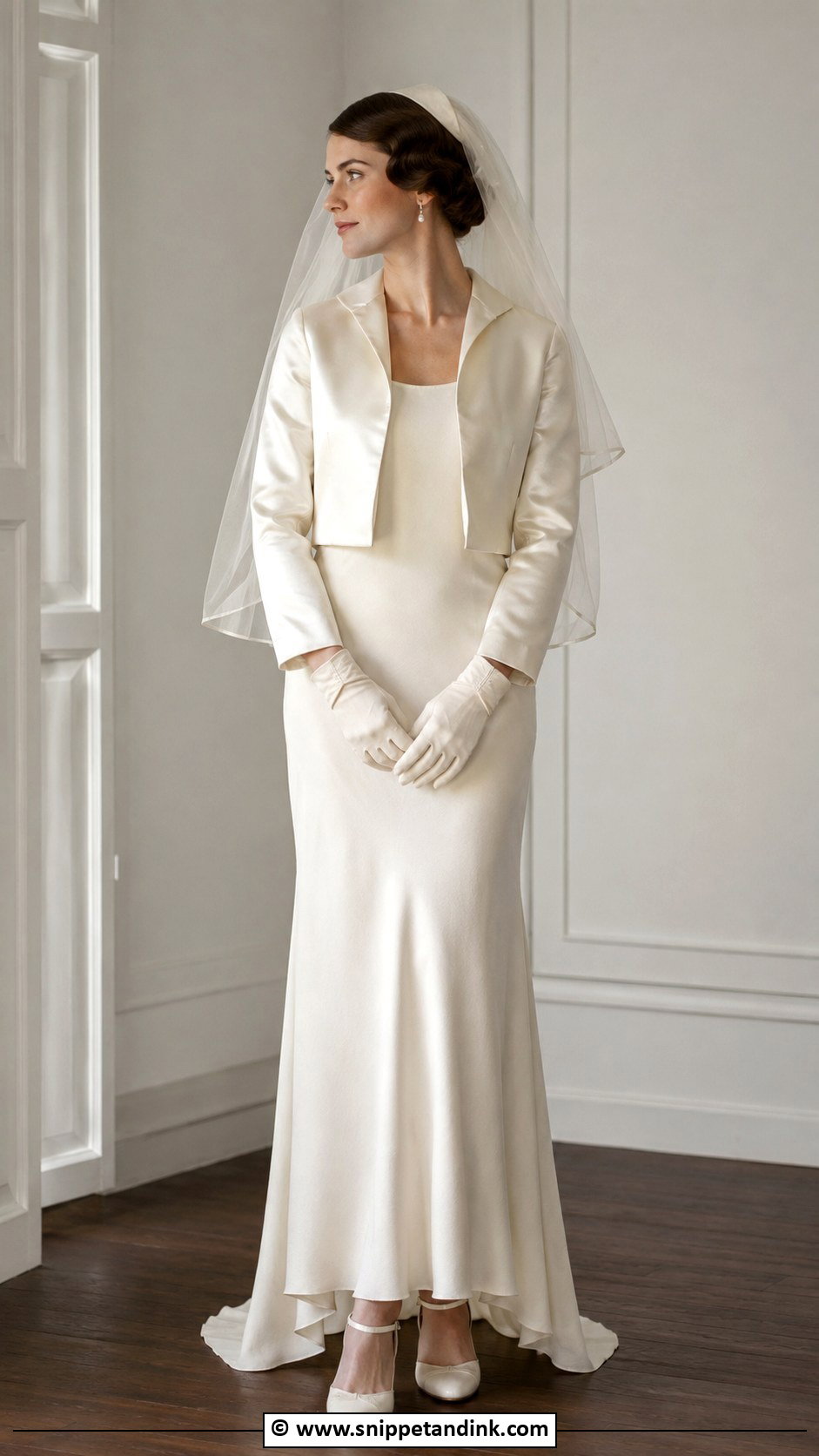
A satin jacket gives a tailored finish over a slim satin or crepe gown, whether a short fitted jacket, a bolero or a soft wrap. It’s useful when the ceremony calls for coverage and the reception doesn’t. Choose matching ivory tones so the pieces look intentional, not borrowed. T-strap heels, a neat veil and small earrings complete it. Try the jacket on with the dress at the same fitting; satin from two different makers rarely matches exactly in daylight.
24. 1930s Wedding Dress With Side Drape
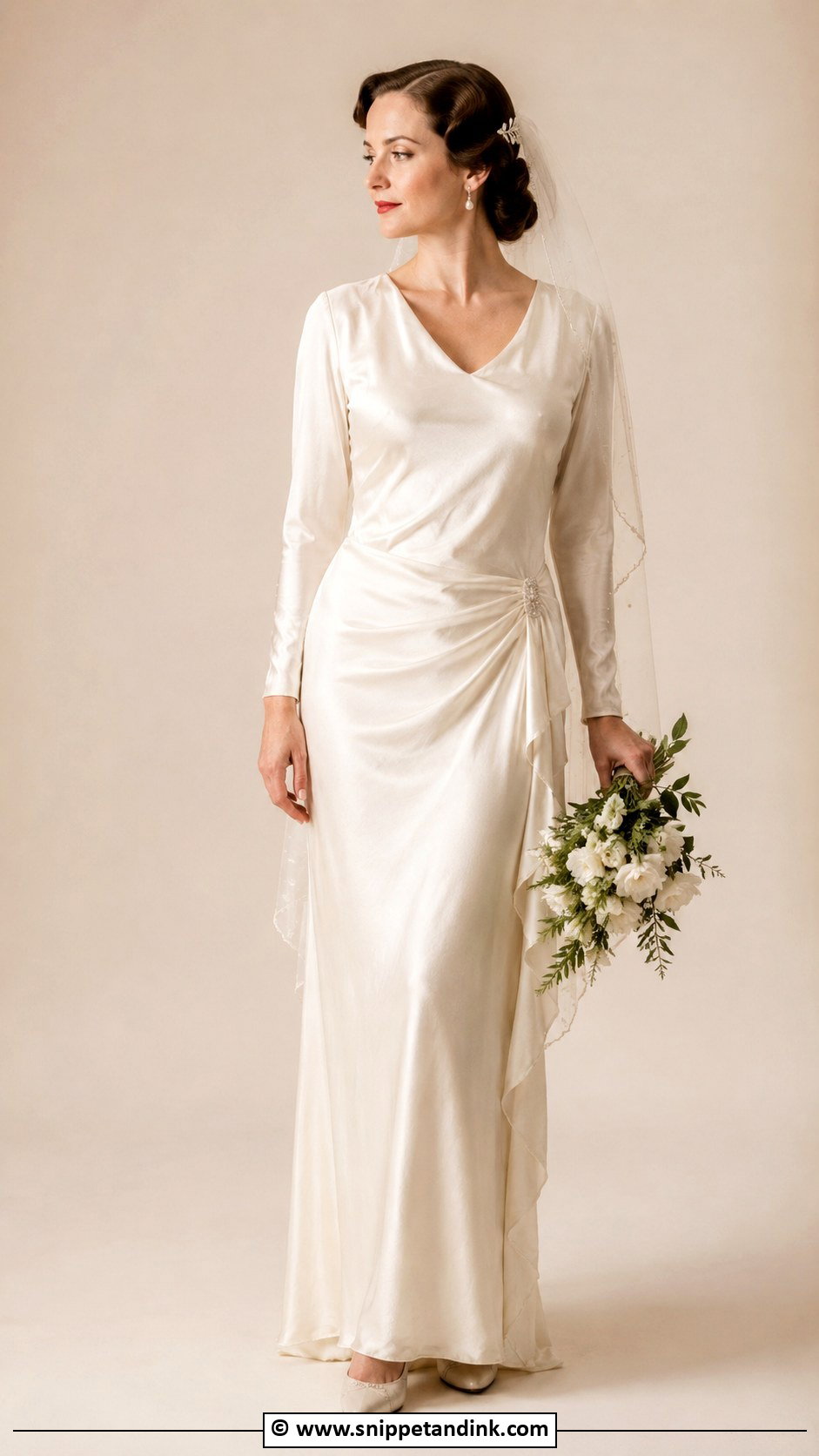
A side drape from the waist, hip or neckline creates soft folds that are classic 1930s. Satin, silk and crepe drape best. Low heels, pearl earrings and a simple veil or comb finish it. Draping flatters many figures because it guides the eye diagonally across the body and adds definition where you want it. Keep everything else minimal so the fabric stands out. Placement matters, so I pin the drape on you during fittings rather than trusting the sample’s position.
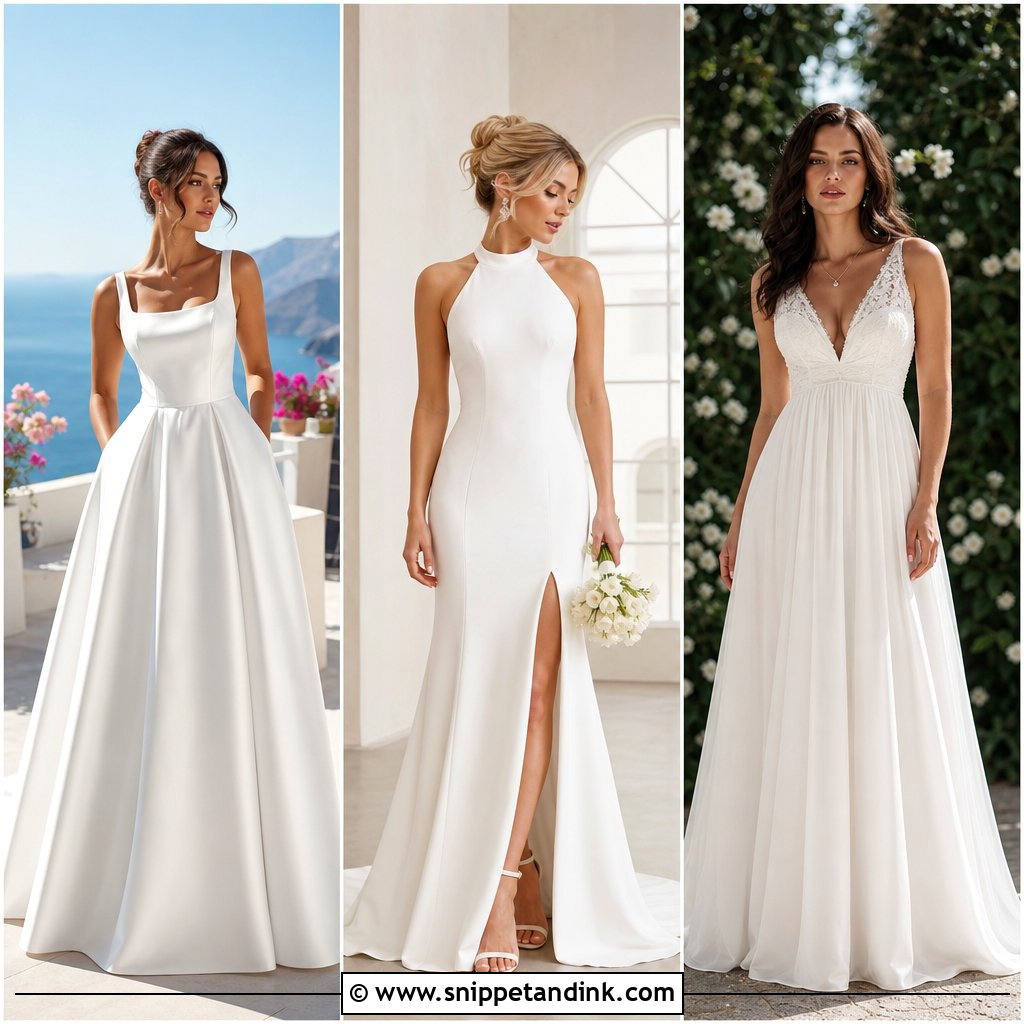
25. 1930s Wedding Dress With Old Hollywood Waves
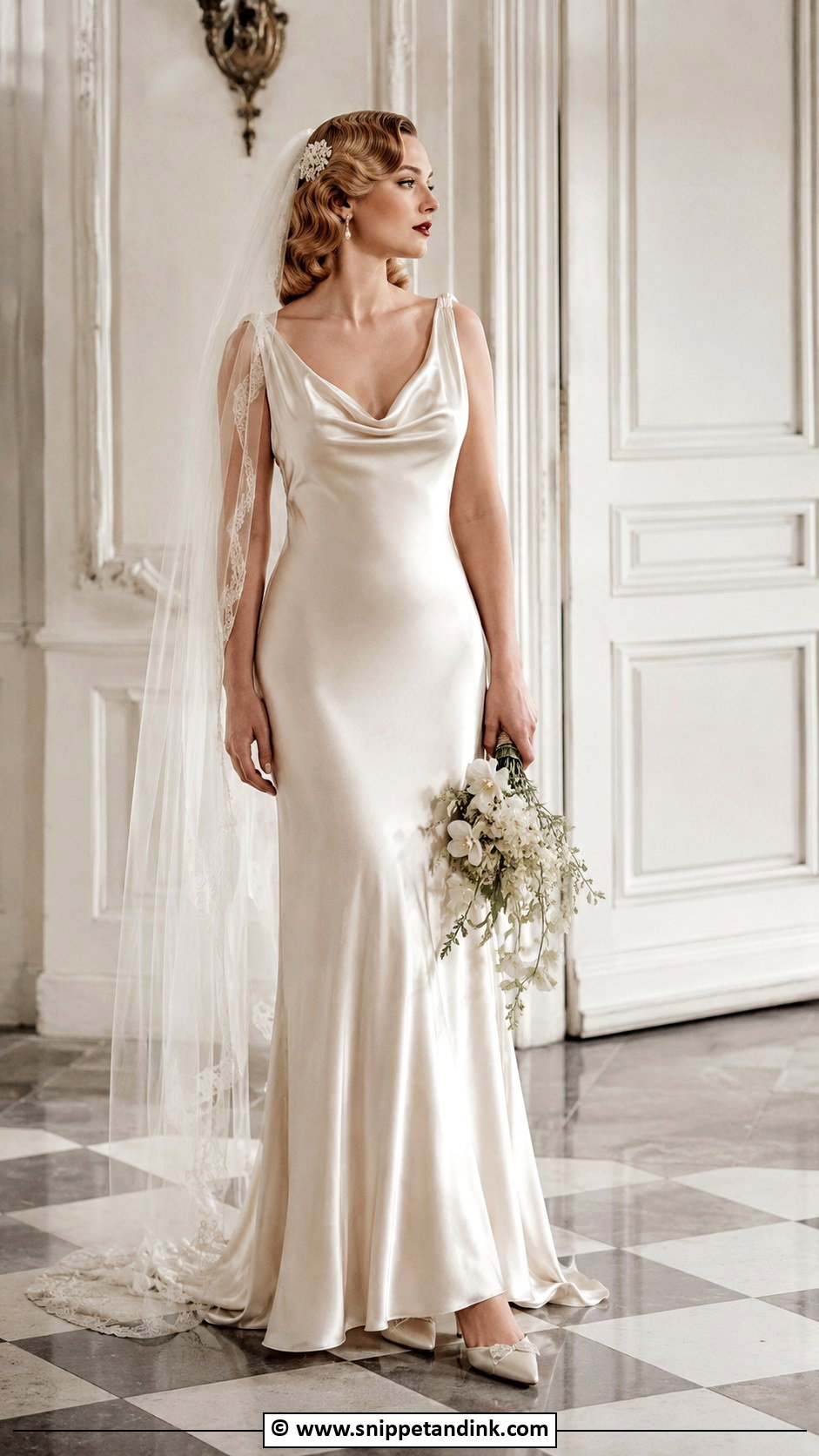
Old Hollywood waves complete the 1930s mood more than any accessory. Pair them with a satin bias-cut gown, a cowl neck or a long-sleeved crepe dress. Soft, side-parted waves, pearl drops, low heels and a simple veil or comb finish it. Keep makeup clean, with defined lashes and a soft lip, so it reads bridal rather than theatrical. Book the waves with a stylist who has done them before; they take practice to get right on the day.
Satin Creases the Moment You Sit Down
Bias satin creases across the lap the moment you sit, and those lines show in every photo taken afterward. I suggest doing the main portraits before the ceremony or straight after, and standing during the car ride if the dress is long. Crepe and lace crease far less, which is one practical reason to choose them.
Slim trains also need a bustle plan. A single-point bustle or a wrist loop suits a light satin or chiffon train; heavier lace needs several points so the weight is shared. Practice the bustle with whoever will do it on the day, before the wedding week.
One Period Detail, Worn With Confidence
The 1930s look works best when you choose one or two strong period details, such as a bias cut, a Juliet cap or a pair of gloves, and keep the rest clean. Soft fabric, a dress that moves and accessories that support it rather than compete are what make it feel personal, not costumed. Formal or intimate, modern or historic, the era’s clothes still suit a wedding today, as long as they’re fitted and planned with the same care as any modern gown.
You'll Like These Ideas:





Leave a Reply