
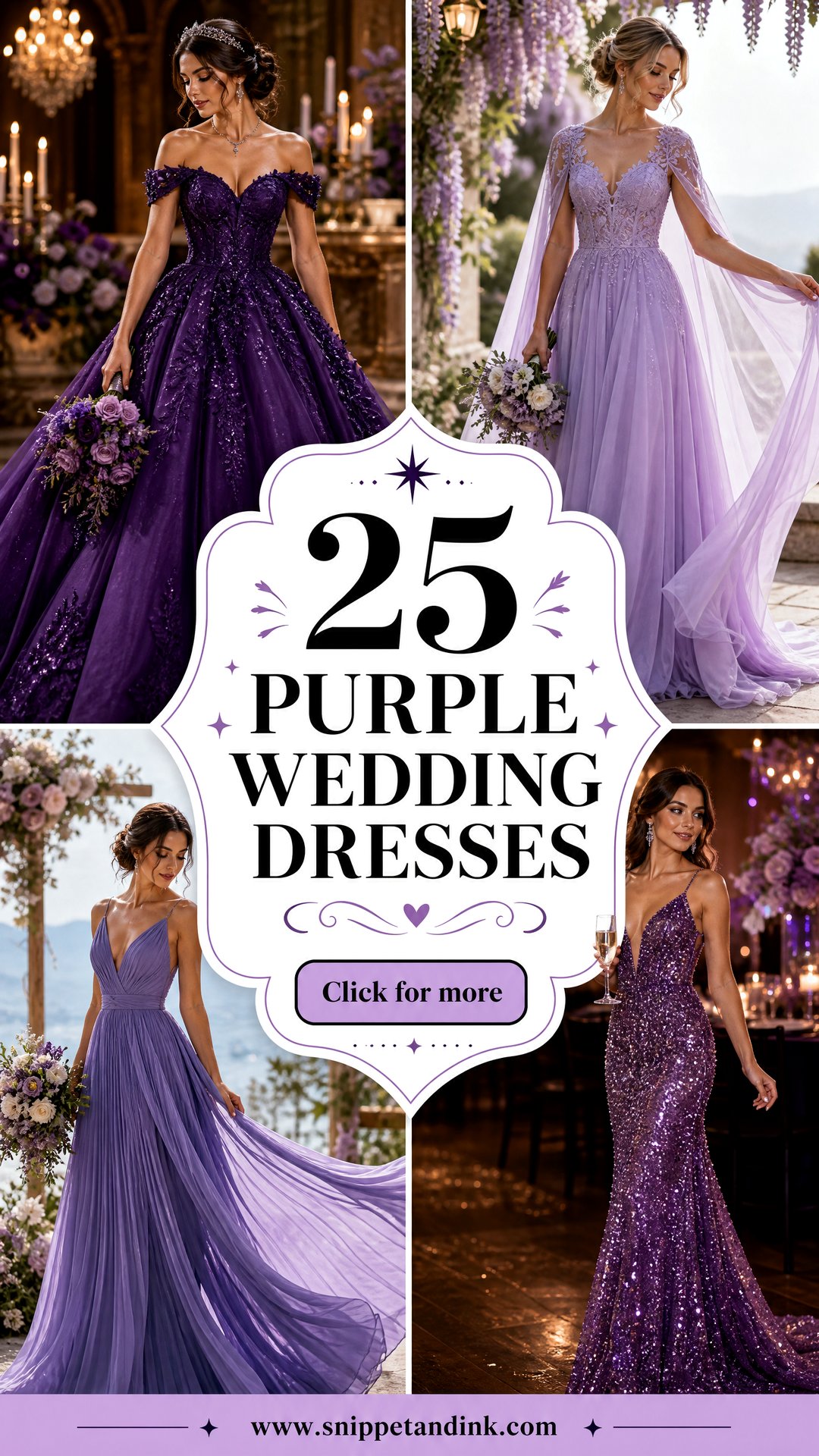
A fully purple wedding dress is a bigger decision than a white gown with a purple sash, and I like to treat it that way. The range is huge: lavender and lilac at the pale end, then saturated amethyst, royal purple, plum and eggplant at the deep end. Pale shades still read bridal; deeper ones feel at home at formal evening weddings. You’ll find purple in tulle layers, appliqués, satin, lace, beading and ombre fabric, and each behaves differently on the body and in the light. Venue, season, coverage and comfort narrow the field quickly, and accessories should support the color, not compete with it. Below are 25 complete looks, from soft and romantic to rich and regal.
Cool Lilac or Warm Plum? Read Your Undertone First
Purples lean either blue or red, and that lean matters more than how light or dark the shade is. In fittings I hold two swatches under the bride’s chin in daylight, one blue-leaning lavender or periwinkle and one red-leaning mauve or plum, and the right one is usually obvious within seconds. The wrong one makes skin look sallow or flushed.
- If silver jewelry flatters you and your veins look blue, cool purples like lilac, periwinkle and royal purple tend to suit.
- If gold looks better and your veins lean green, warmer mauve, plum and eggplant are usually kinder.
- Neutral undertones can wear most shades, which is when it’s worth choosing by venue and season instead.
If you love a shade that doesn’t suit your face, keep it away from it. Put that purple in the skirt, train or overskirt and keep white or a better shade near the neckline.
1. Lavender Tulle Ball Gown Wedding Dress
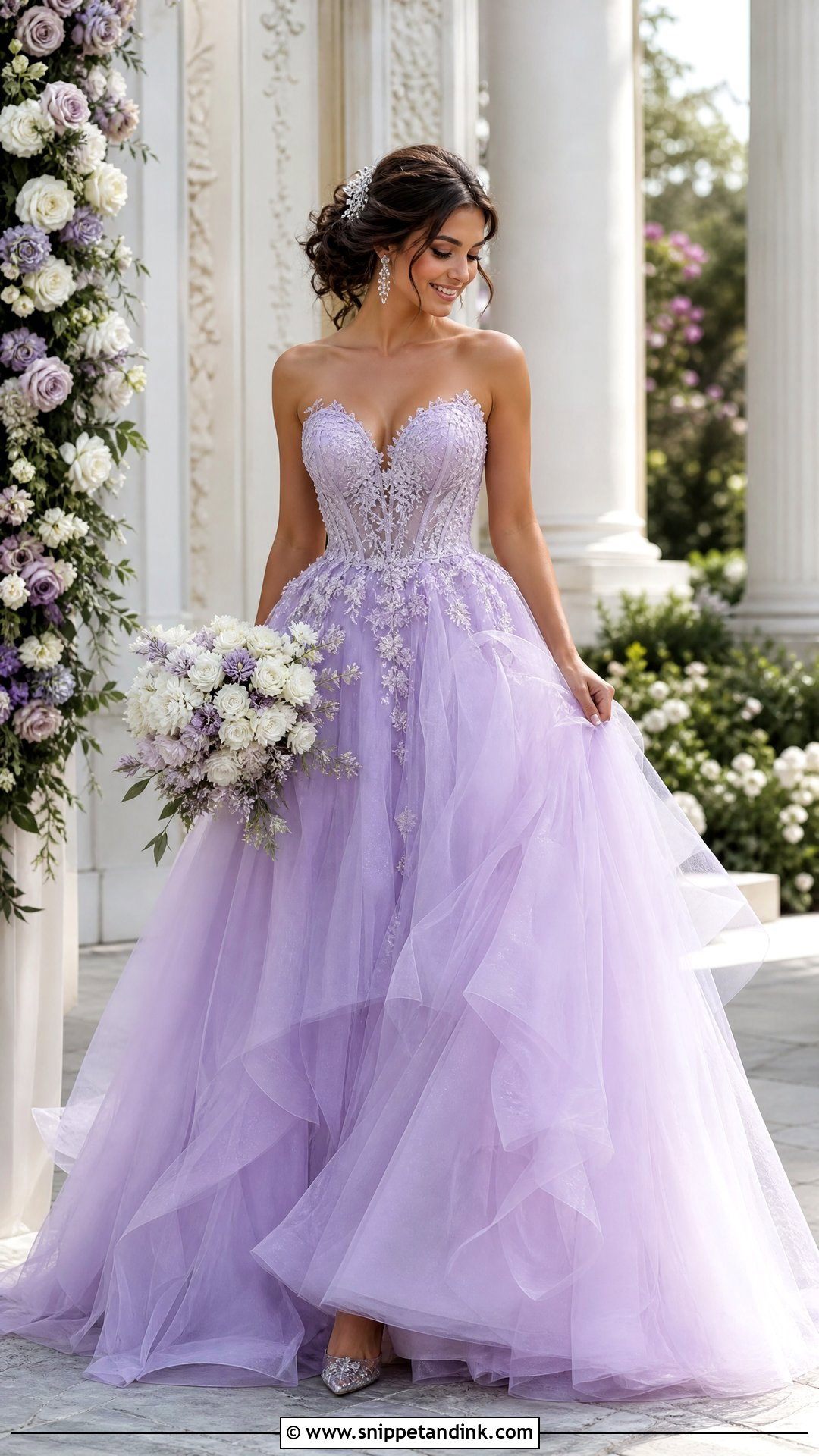
Lavender tulle is the gentlest way into a colored gown, because layered tulle softens any shade and keeps the skirt reading bridal. The bodice does the structural work, so I look for real boning and a defined natural waist before anything else. Crystal earrings and a silver comb suit the cool tone. Have the hem set while you wear your actual shoes, whether pale silver heels or embellished flats; tulle that’s even half an inch too long catches under your toes when you turn. A bouquet of white flowers, lavender and greenery keeps it balanced for gardens and spring ballrooms.
2. Lilac Lace A-Line Wedding Dress
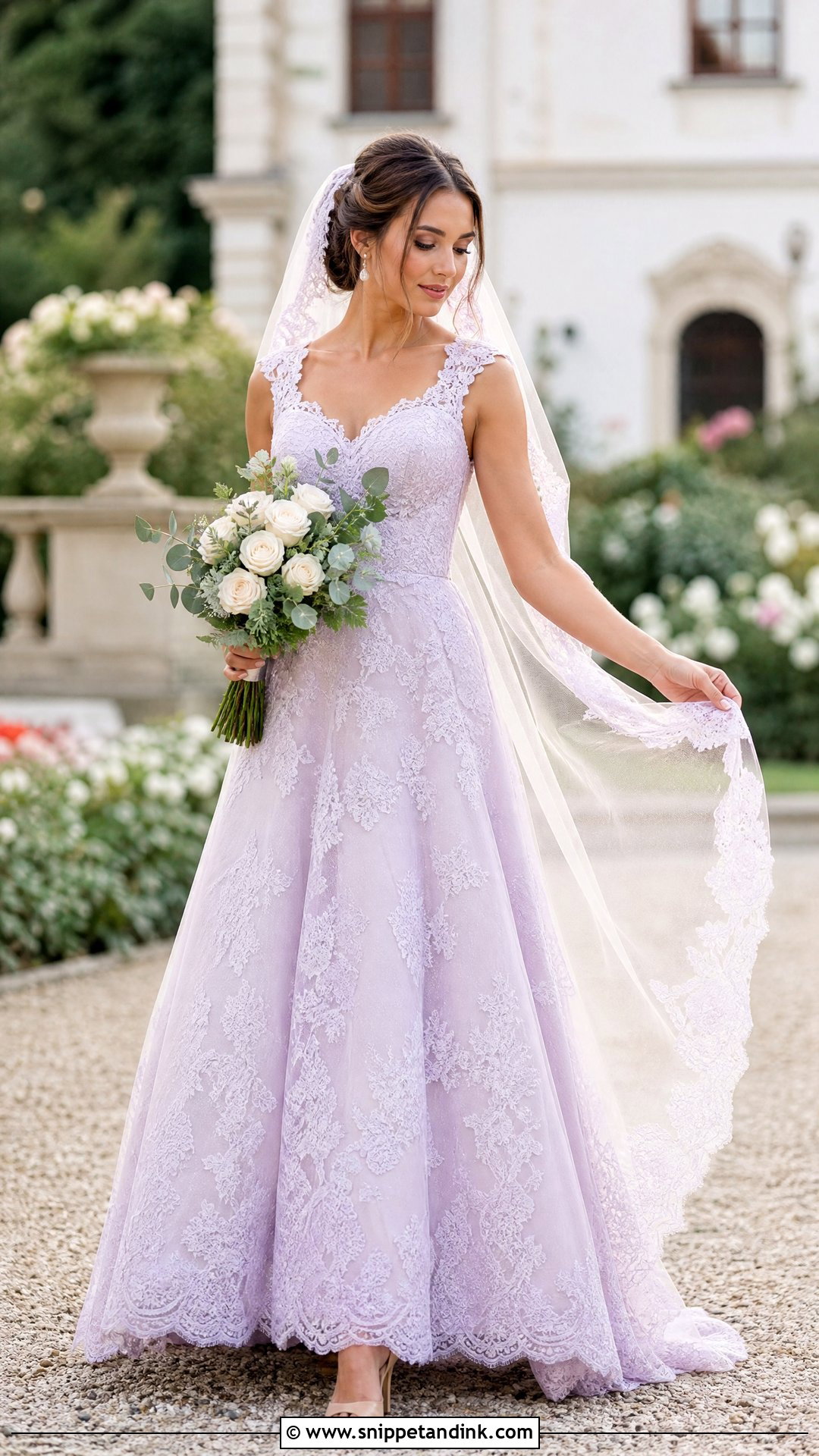
An A-line gown in lilac lace suits more figures than almost any other shape here, because the waist is defined and the skirt widens gently from it. A lined bodice gives coverage; a sheer neckline with placed appliqués feels lighter. With lace in a color, I check that the lace and the lining were dyed to match, since a slight mismatch shows at every gap. Pearl drops, ivory or champagne shoes and a fingertip veil with a narrow lace edge finish it. Cream roses, lilac and eucalyptus suit an outdoor ceremony.
3. Plum Satin Mermaid Wedding Dress
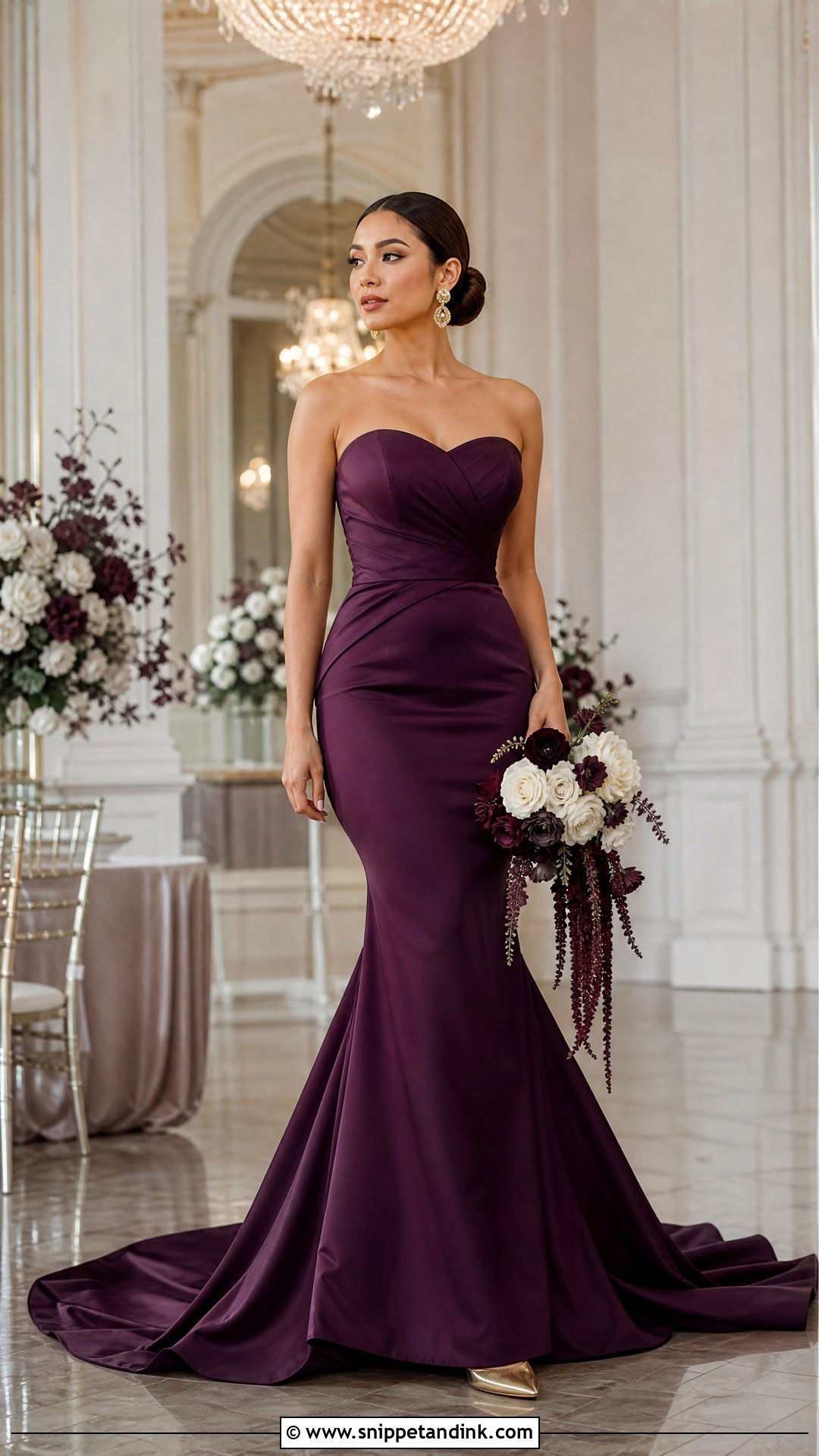
Plum satin on a mermaid shape is pure evening drama. Satin reflects light, which suits candlelit and formal indoor venues, but it also shows every pull and crease, so tailoring is everything. I ask brides to sit, walk and climb a step in it at every fitting; the knee flare has to start low enough to let you move. A bustle or detachable train makes dancing possible. Gold earrings, pointed metallic heels, a sleek low bun and ivory flowers with plum accents suit the warm undertone of the fabric.
4. Royal Purple Off-Shoulder Wedding Dress
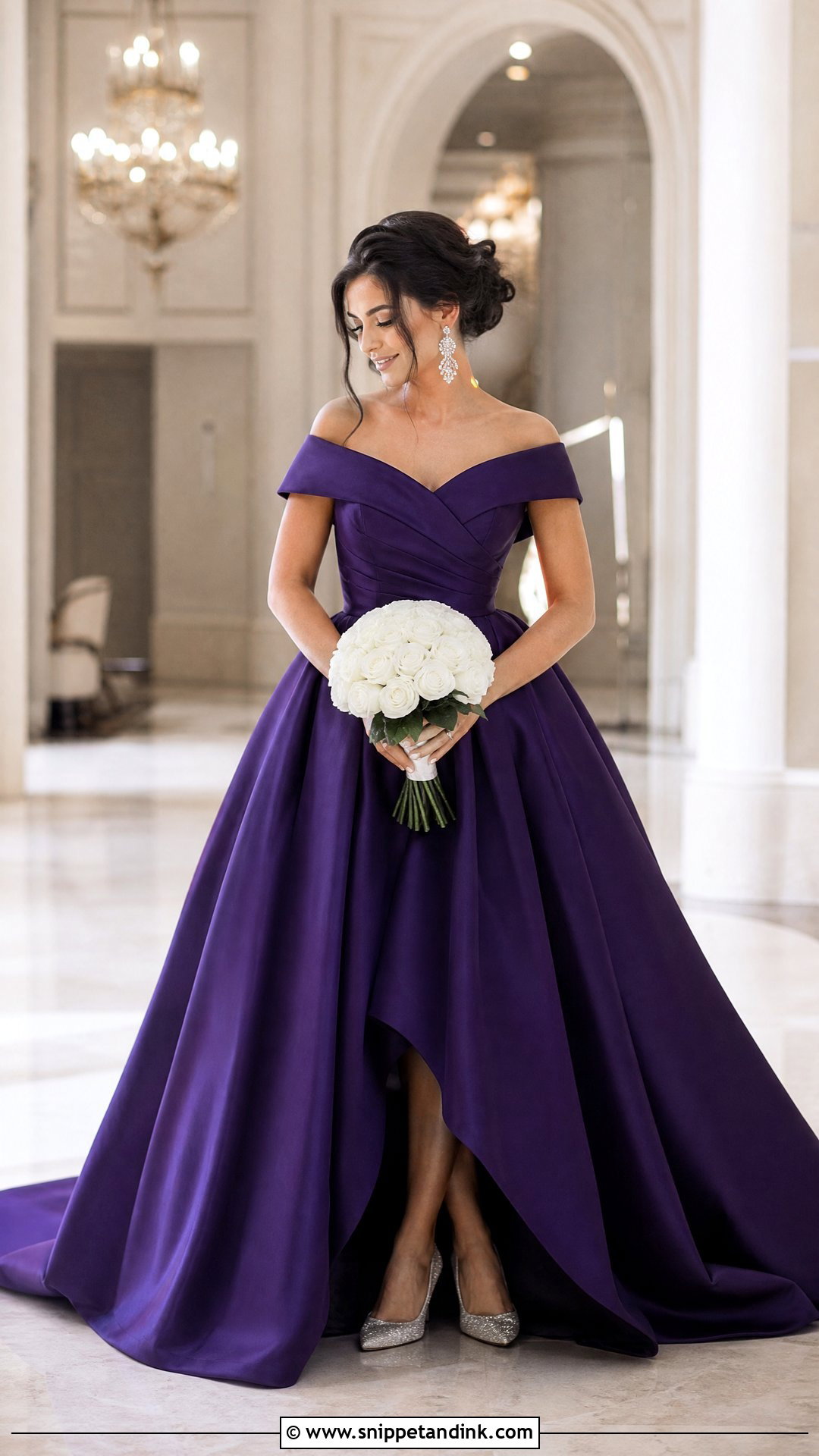
Royal purple is saturated enough to carry a full ball gown or A-line skirt, and an off-shoulder folded neckline puts the focus on the collarbone. The neckline is my main concern. If it isn’t anchored to a secure inner bodice, you’ll spend the evening pulling it up. Skip the necklace; the neckline is the jewelry. Crystal chandelier earrings, a sparkling bracelet, a polished updo and silver or pewter heels finish it. Keep the veil light, or swap it for a crystal headband, and carry white roses with a few purple flowers. Grand halls and formal hotels suit it best.
5. Dusty Mauve Chiffon Wedding Dress
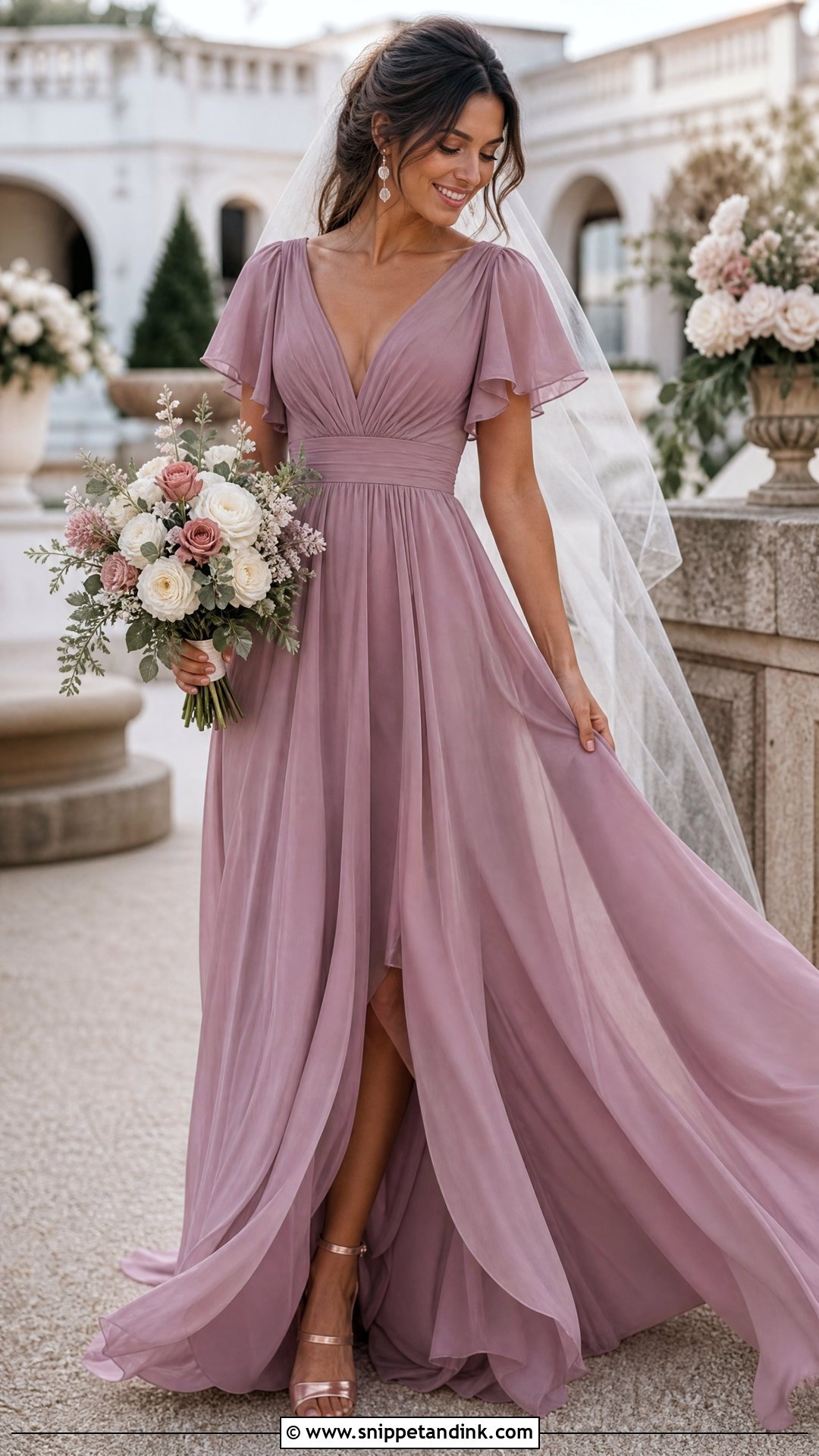
Dusty mauve is purple with grey mixed in, and it’s the shade I suggest to brides who want color but are nervous about it. On airy chiffon in an empire or draped A-line shape with flutter sleeves, it reads soft and grown-up. Chiffon is often semi-sheer, so check the lining both outdoors and under indoor light; photography light can show more than a fitting room mirror does. Rose-gold earrings and muted metallic sandals warm it up. A grey or mauve veil, and cream and muted pink flowers with silver-green foliage, suit estates and relaxed destination weddings.
6. Purple Floral Appliqué Wedding Dress
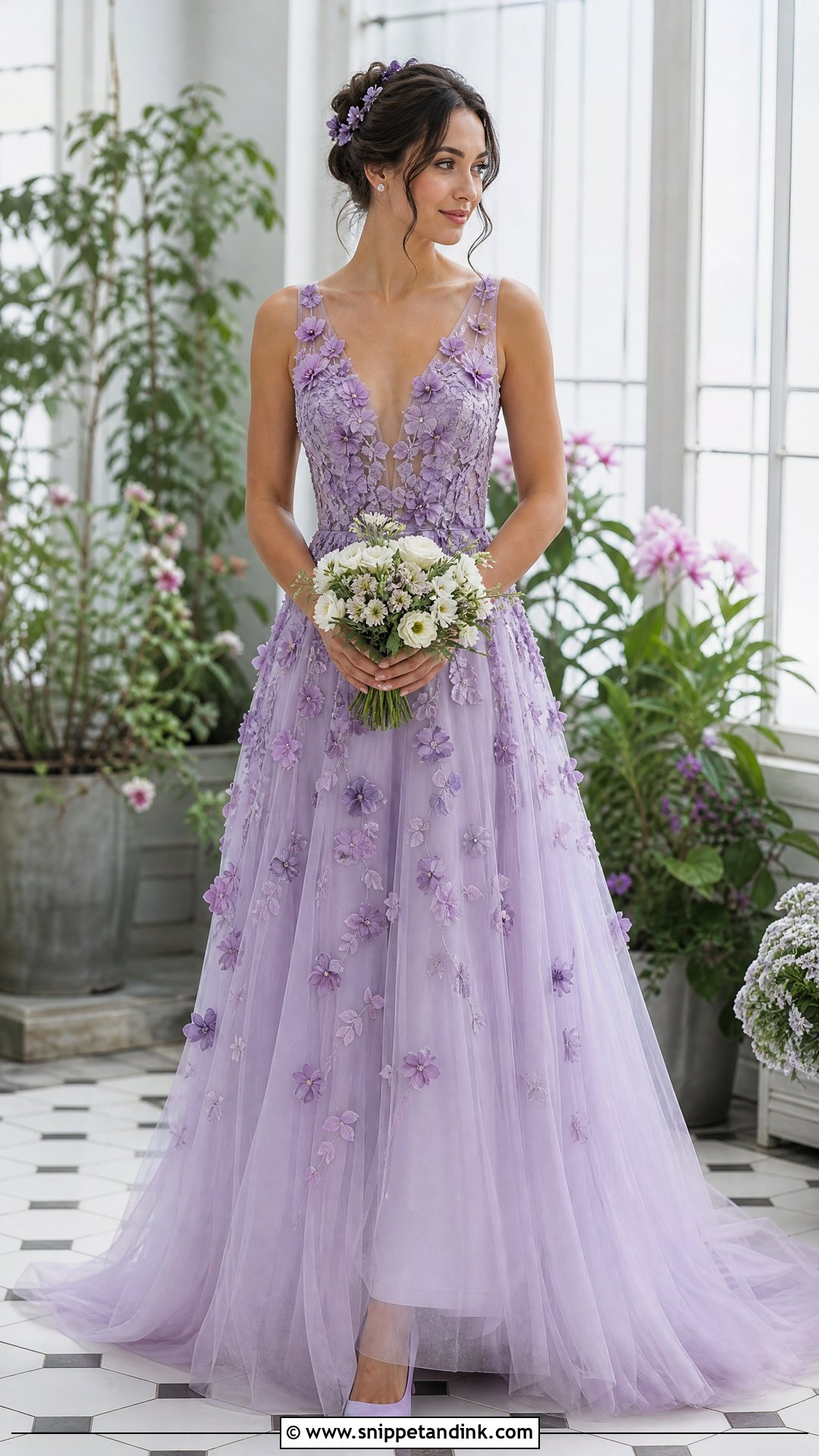
Raised appliqués turn the gown itself into the decoration, so everything else should be quiet: studs, a narrow bracelet, satin pumps and a plain white bouquet. A pale lavender or neutral tulle base lets purple flowers stand out. Two or three matching floral pins in a soft updo connect the hair without looking costume-like. The practical check is placement. Flowers sitting at the inner arm, waist or seat rub when you walk, sit and hug, and can catch on guests’ clothes, so I have the seamstress move or flatten any that get in the way.
7. White And Lavender Ombré Wedding Dress
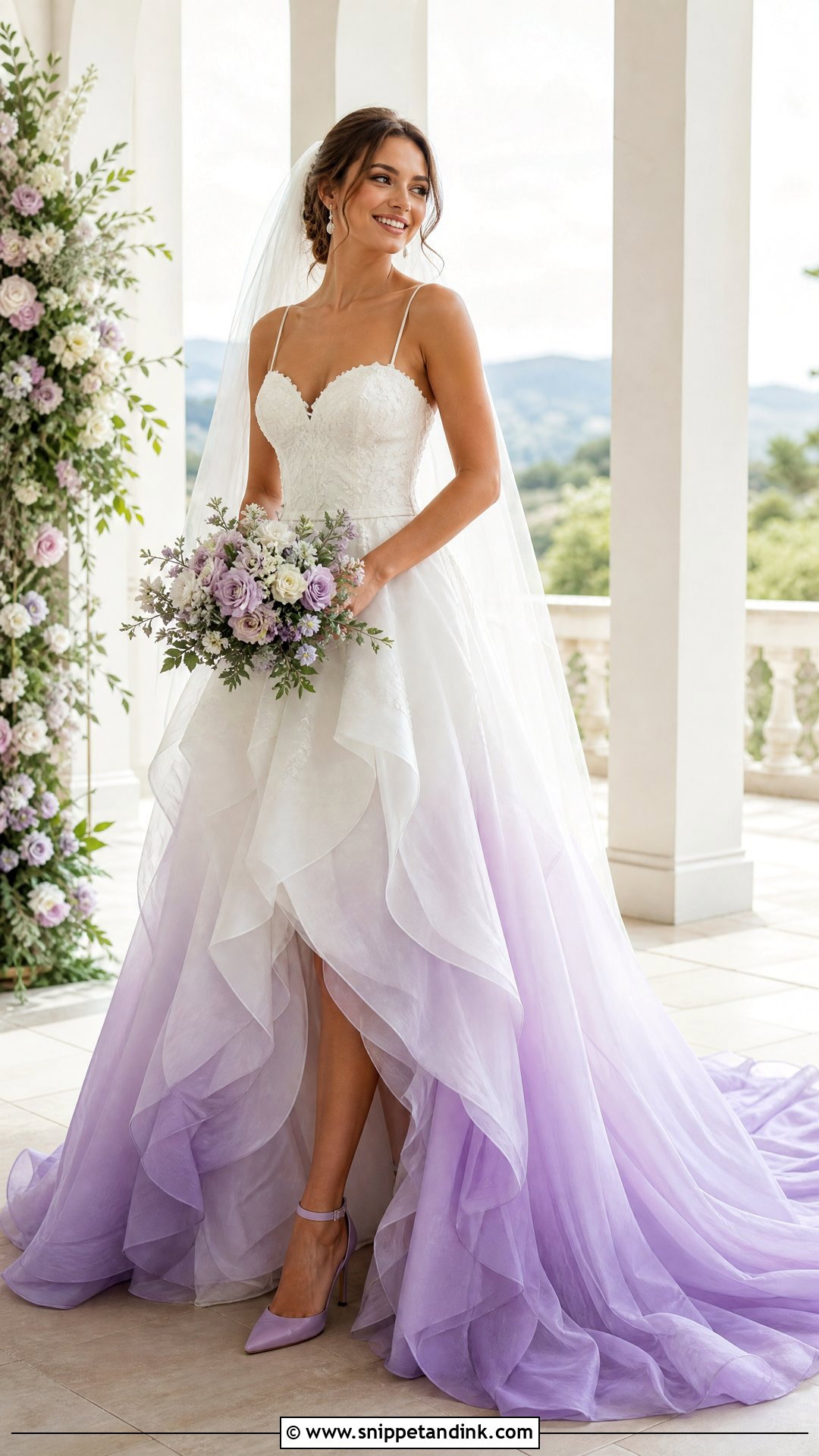
A white-to-lavender ombré gown keeps a traditional white bodice and lets the color arrive gradually through the lower skirt and train. Tulle, organza and layered chiffon blend the fade smoothly; heavy fabrics tend to show a line. Look at the gown from the back and sides before buying, because a fade that’s smooth at the front can end in a stripe at a side seam or the train. Pearl earrings, pale lavender shoes, a white veil under a relaxed updo and white blooms with a few purple stems suit naturally lit venues.
8. Amethyst Beaded Column Wedding Dress
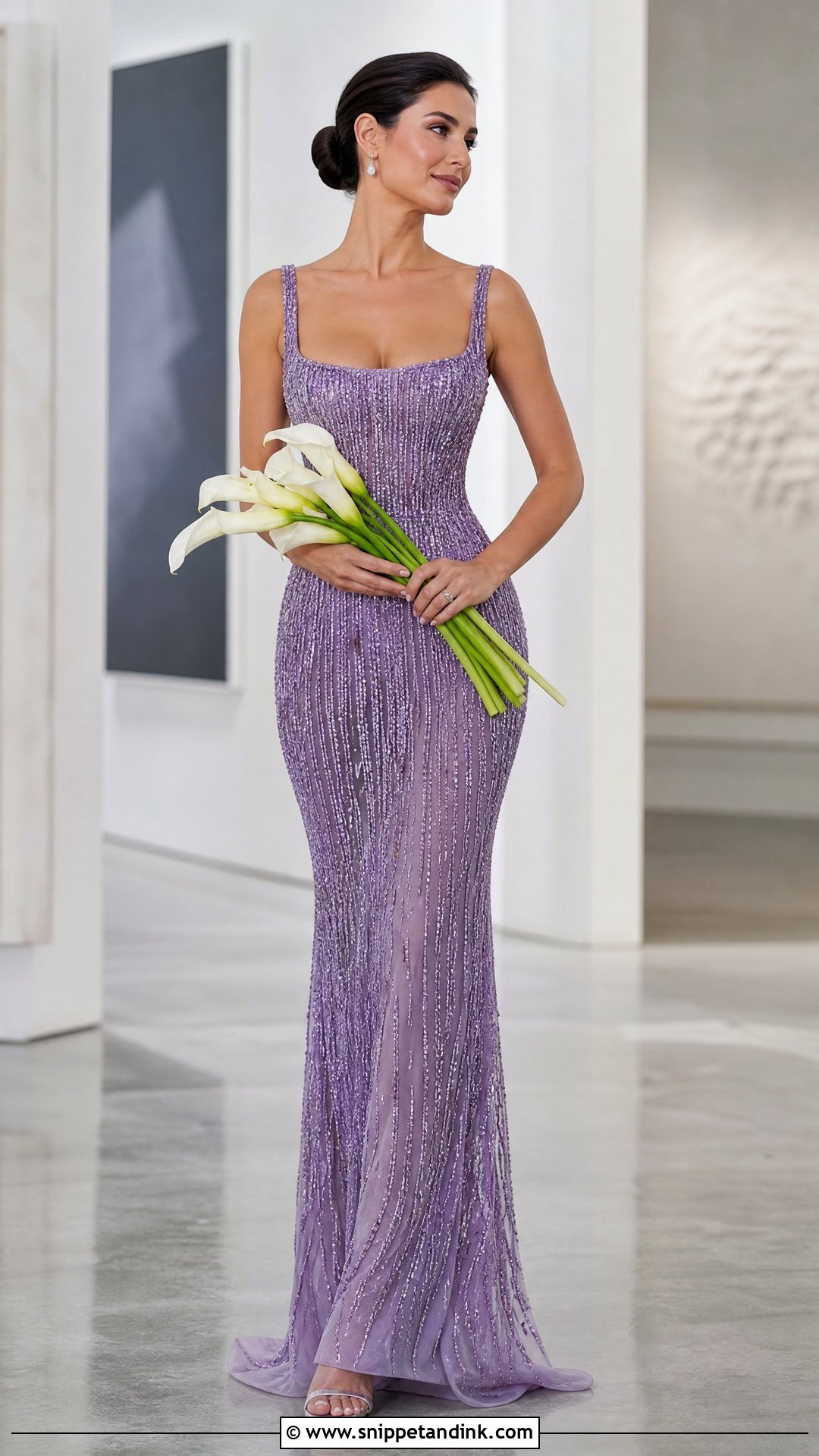
Fully beaded columns are heavier than they look, and that weight hangs from the shoulders all night. Before I approve one, I check the straps are reinforced, the lining is smooth against the skin and there’s a waist stay inside to take some of the load. Vertical amethyst beadwork lengthens the body, and the skirt should follow it without gripping. Silver heels, small crystal earrings, a sleek ponytail or low chignon and white calla lilies keep the look architectural, and it suits galleries, rooftops and formal evenings.
9. Lavender Long-Sleeve Lace Wedding Dress
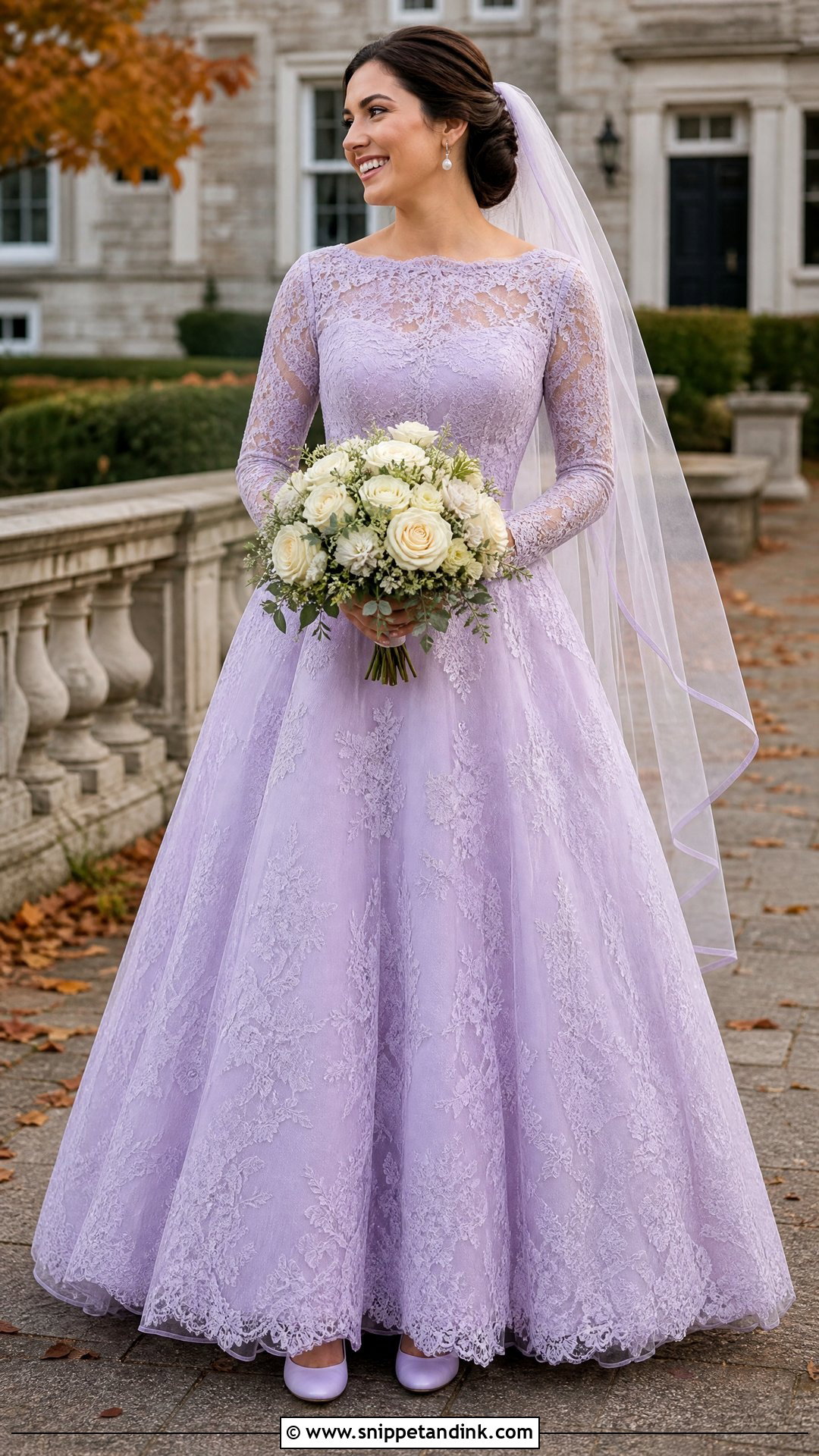
Long lavender lace sleeves give coverage without weight. Illusion sleeves with soft appliqués, a lined bodice and an A-line or fit-and-flare skirt suit cool spring days, autumn and heavily air-conditioned venues. Sleeves are where fittings go wrong most often: if the armhole is cut low or the elbow is tight, you can’t raise your arms to hug anyone. Small covered buttons at the cuffs make dressing easier. Pearl earrings, closed-toe satin pumps, a veil edged in lavender, a low bun and a pale bouquet of ivory roses and white ranunculus finish it.
10. Lilac Square-Neck Satin Wedding Dress
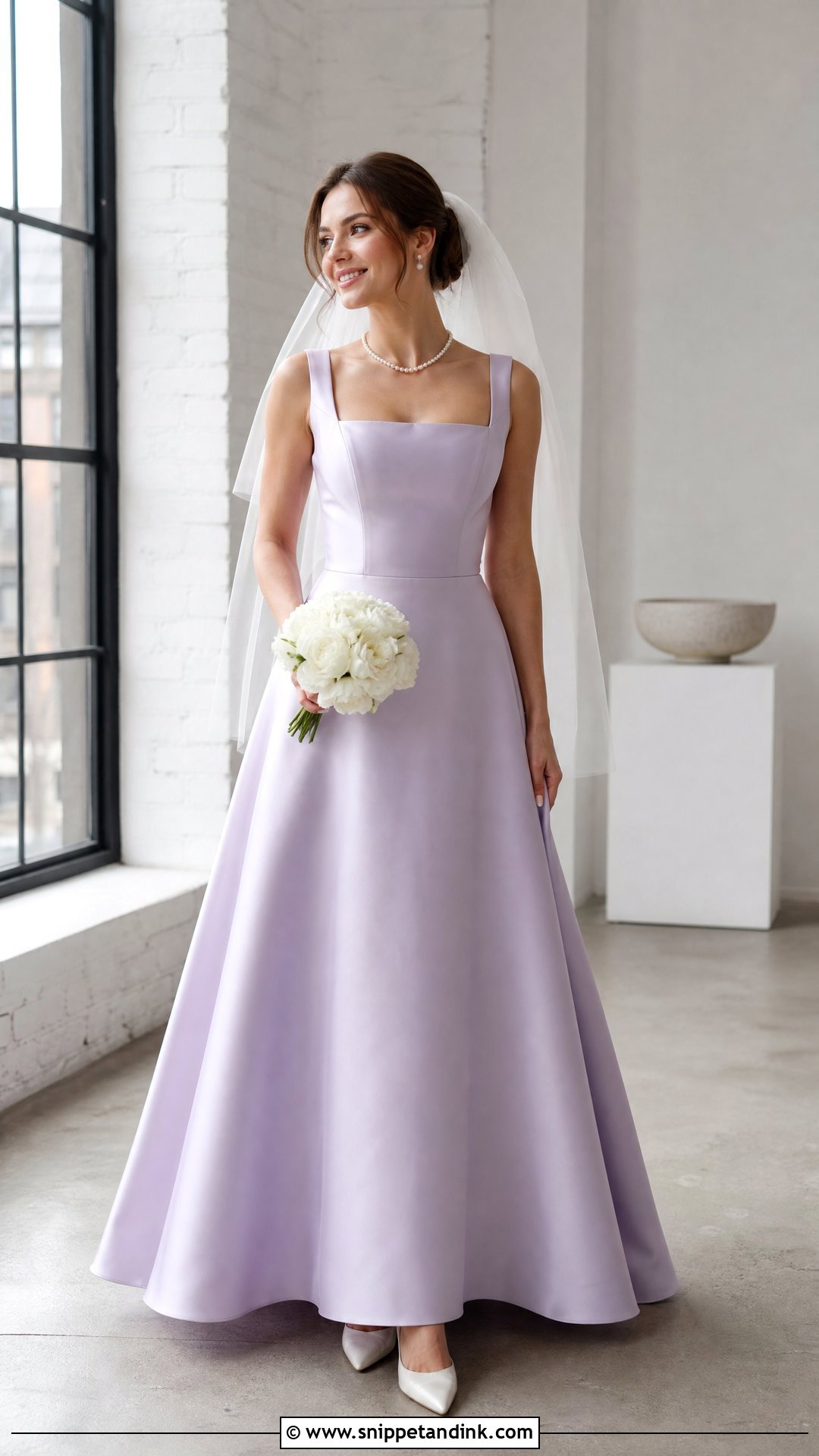
Plain satin hides nothing, so a lilac square-neck gown lives or dies by its construction. I check that the darts are smooth, the lining lies flat and the zip doesn’t pucker, then have it professionally steamed on the morning. Medium-weight satin with wide straps and an A-line skirt keeps the shape crisp. The square neckline frames the collarbone and suits a short pearl necklace or a fine pendant. Pointed ivory pumps, a sleek bun with a plain veil or a sculptural comb and a compact white bouquet suit lofts and civil ceremonies.
11. Purple Corset Tulle Wedding Dress
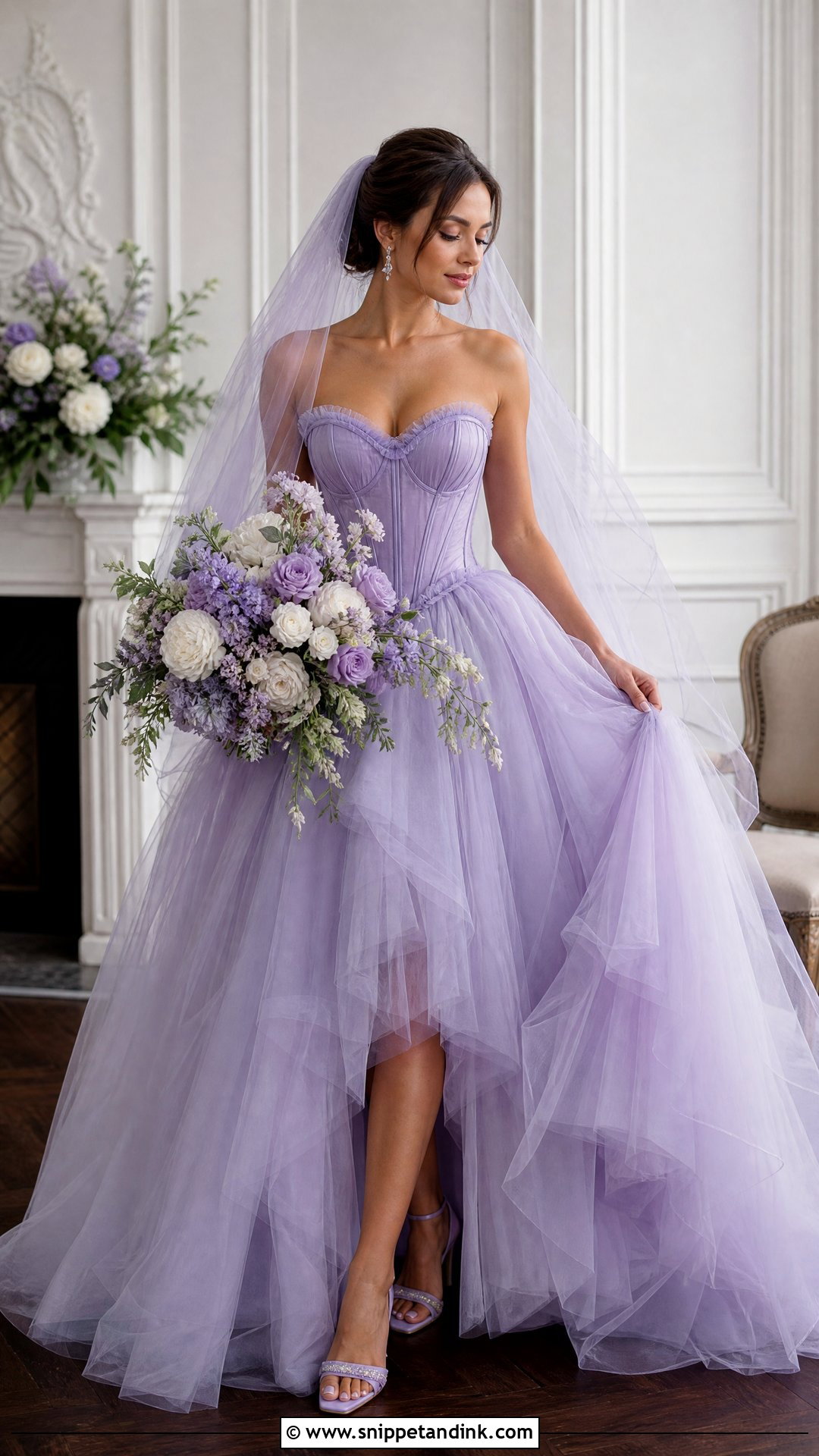
A purple corset gown mixes structure on top with romantic tulle below. Lavender looks ethereal; medium violet makes the boning and seaming more visible. A corset should feel secure, not painful, so book fittings early enough to adjust the cups, waist and back closure more than once. If there’s exposed boning or sheer panelling, check it under daylight and indoor light before choosing underwear. Silver drop earrings, sparkly low heels, a fine veil, a half-up style and a round white-and-lavender bouquet soften the structure.
12. Plum Velvet Winter Wedding Dress
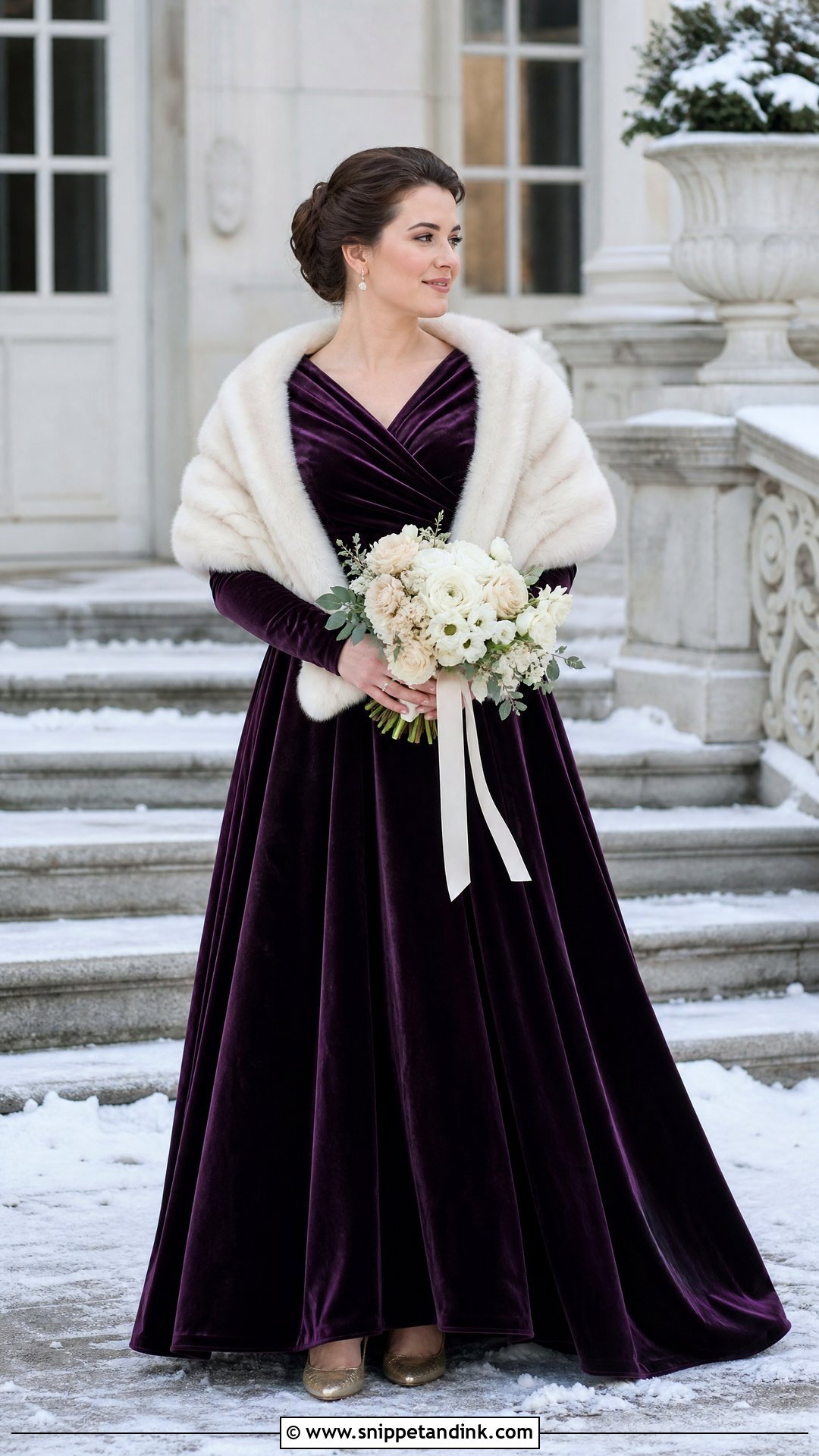
Velvet is the winter fabric, and plum shows its depth best. A long-sleeve wrap bodice or structured A-line suits its weight. Velvet has a nap, which means it looks lighter or darker depending on which way the pile runs, so all the panels must be cut in the same direction; check them in bright light. It also marks easily under an iron, so use a tailor who has worked with velvet before. Closed-toe gold heels, drop earrings, an ivory faux-fur wrap for outdoor photos, a low bun and cream flowers with evergreen suit historic venues.
13. Violet One-Shoulder Wedding Dress
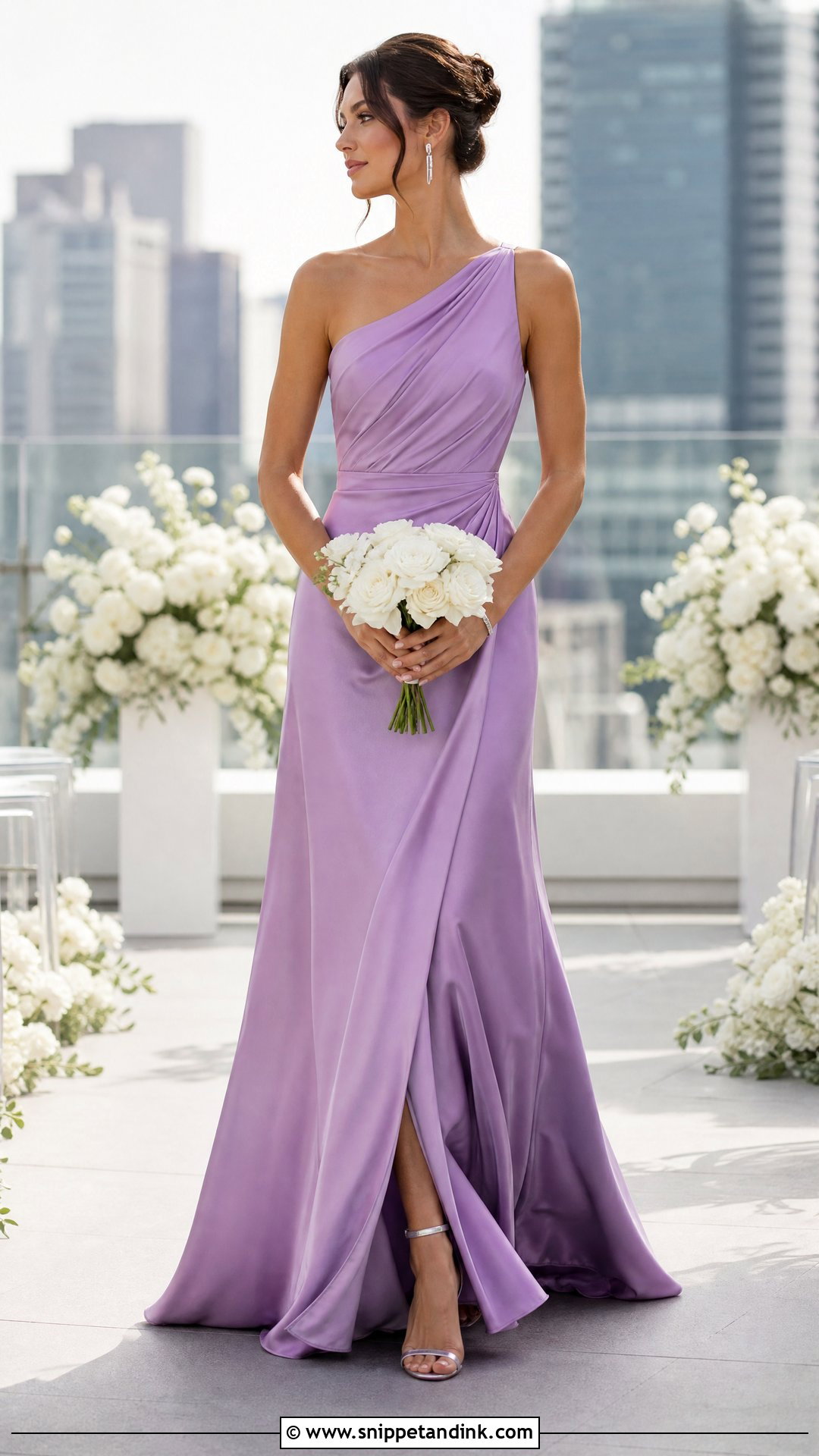
One shoulder makes a strong line with very little added. A draped neckline, fitted waist and flowing skirt balance the asymmetry. Chiffon keeps it relaxed; satin or crepe makes it formal. The strap is the part I test hardest, because if it isn’t anchored into the bodice the whole gown twists toward the bare side as you move. A single statement earring on the exposed side looks deliberate. Silver sandals, a narrow bracelet, a side-parted bun and white flowers against the violet finish it.
14. Lavender Tea-Length Wedding Dress
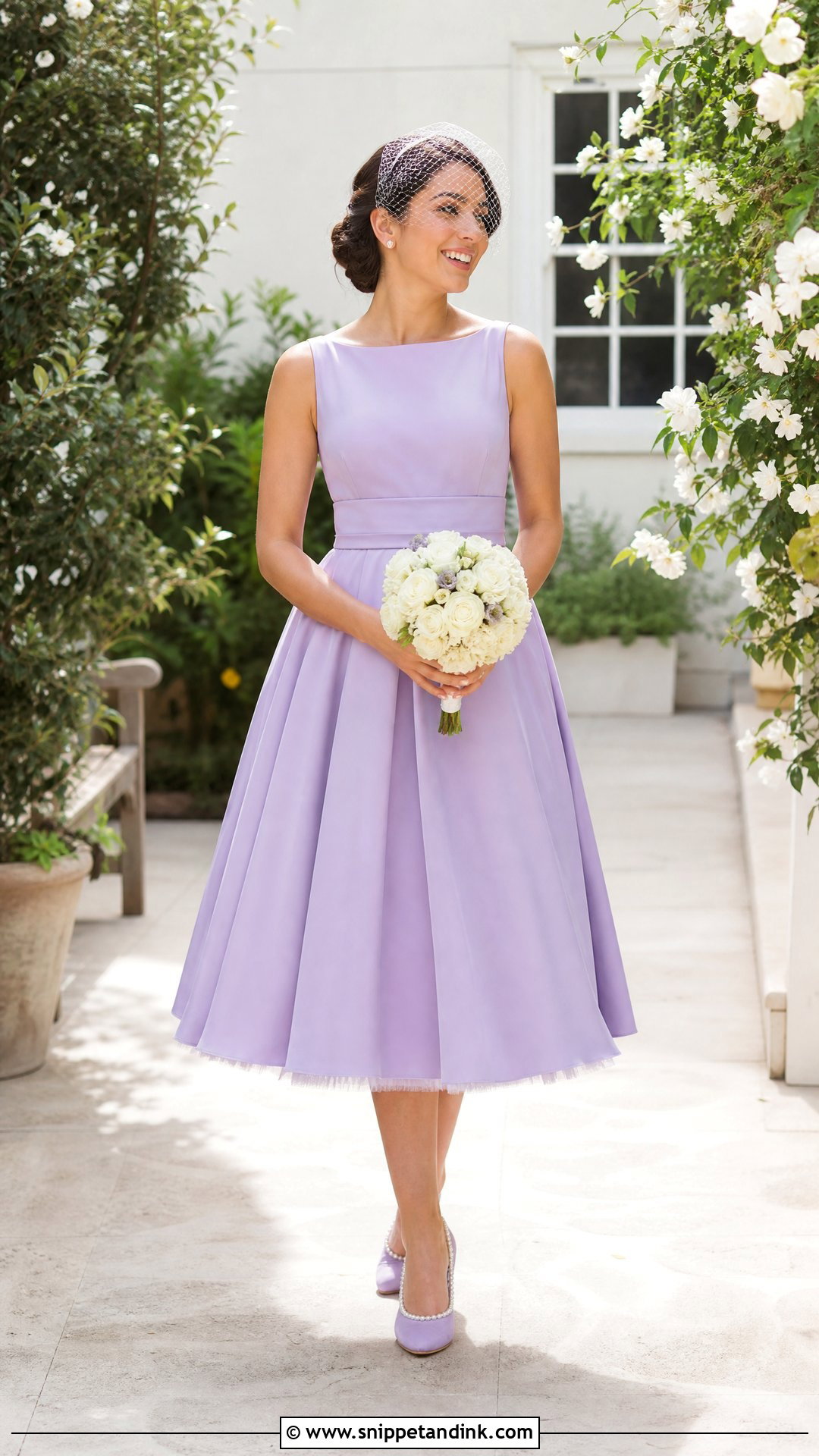
Tea length shows the shoes all day, so treat them as part of the outfit: pearl-trimmed pumps, silver block heels or smart flats. A fitted bodice and full lavender skirt ending between knee and ankle feel cheerful and practical. Where the hem stops matters a great deal; land it at the wrong point on the calf and the leg looks shorter. I mark two or three possible lengths with the shoes on and let the bride see each in a full mirror. Short gloves, pearl studs, a birdcage veil or hair bow and a small bouquet suit courthouse and daytime weddings.
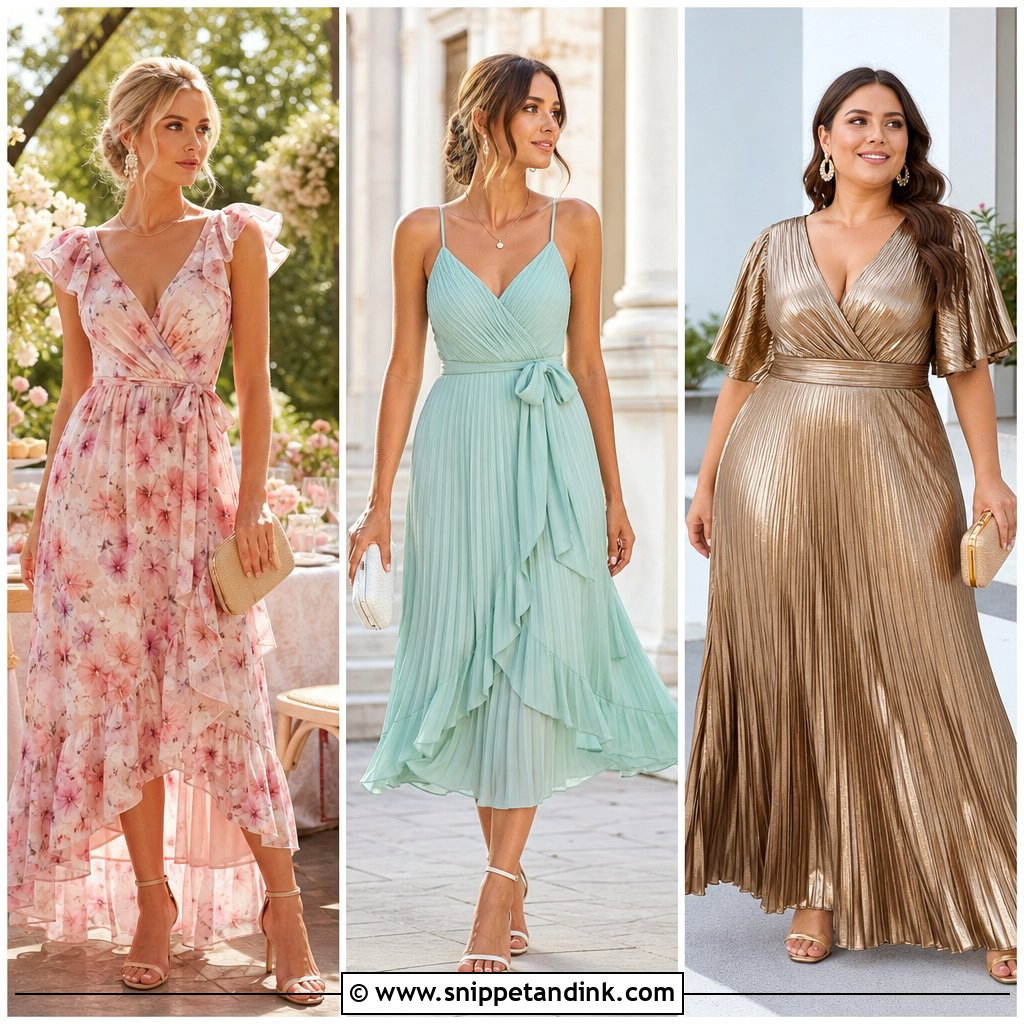
15. Purple High-Low Wedding Dress
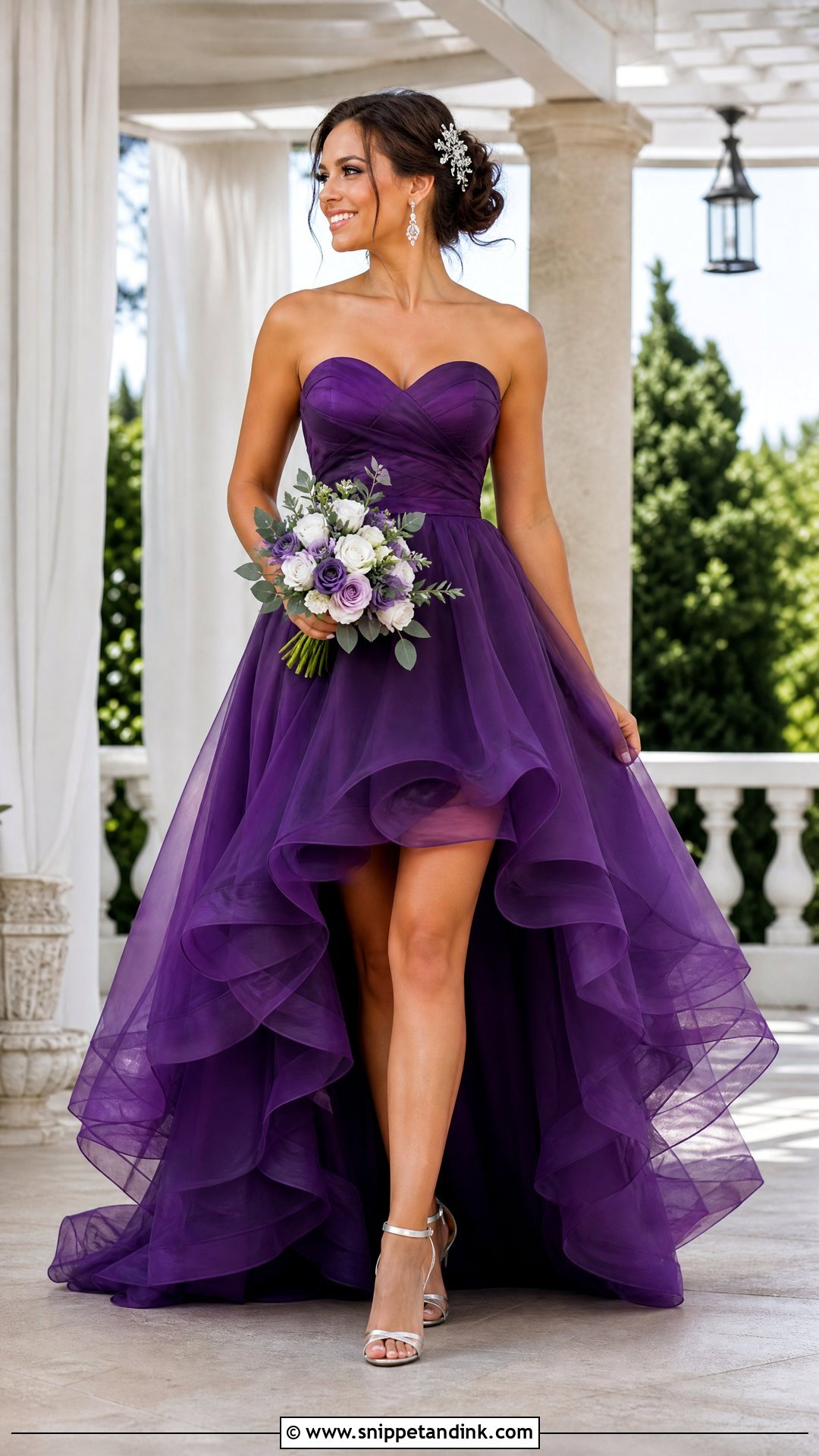
With a high-low hem, the transition is everything. A curve that rises gradually at the front looks designed; a sudden horizontal cut looks like a mistake. A structured bodice over layered organza feels bridal, while chiffon relaxes it. Silver ankle-strap heels, crystal earrings and a neat updo suit it, with a short veil or comb. If the back includes a train, it still needs a bustle. Practice walking in it, because visible shoes and moving layers draw attention to every step down the aisle.
16. Lilac Cape-Sleeve Wedding Dress
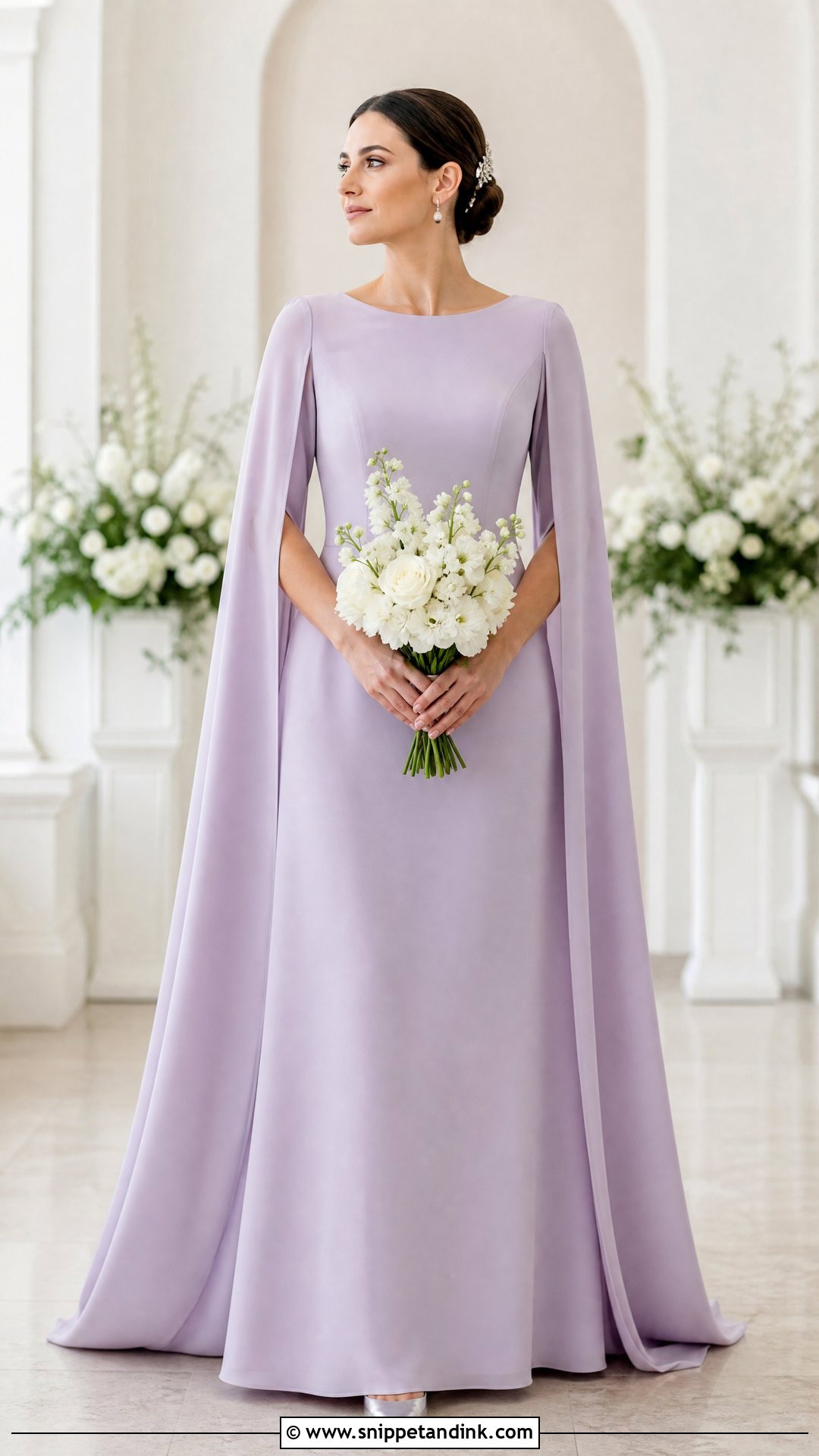
Cape sleeves give drama and coverage without tight sleeves. Panels attach at the shoulders and fall to the elbow, wrist or floor over a column or A-line gown. Keep the bodice simple so the movement stays the feature. Before I sign off a cape gown, the bride holds her bouquet, raises her arms and reaches out for a hug. If the fabric covers her hands or bunches under the arms, it needs shortening. A veil under a cape often looks crowded; I’d usually leave it off. Pearl earrings, pointed silver shoes and a low bun complete it.
17. Eggplant Wedding Dress With Overskirt
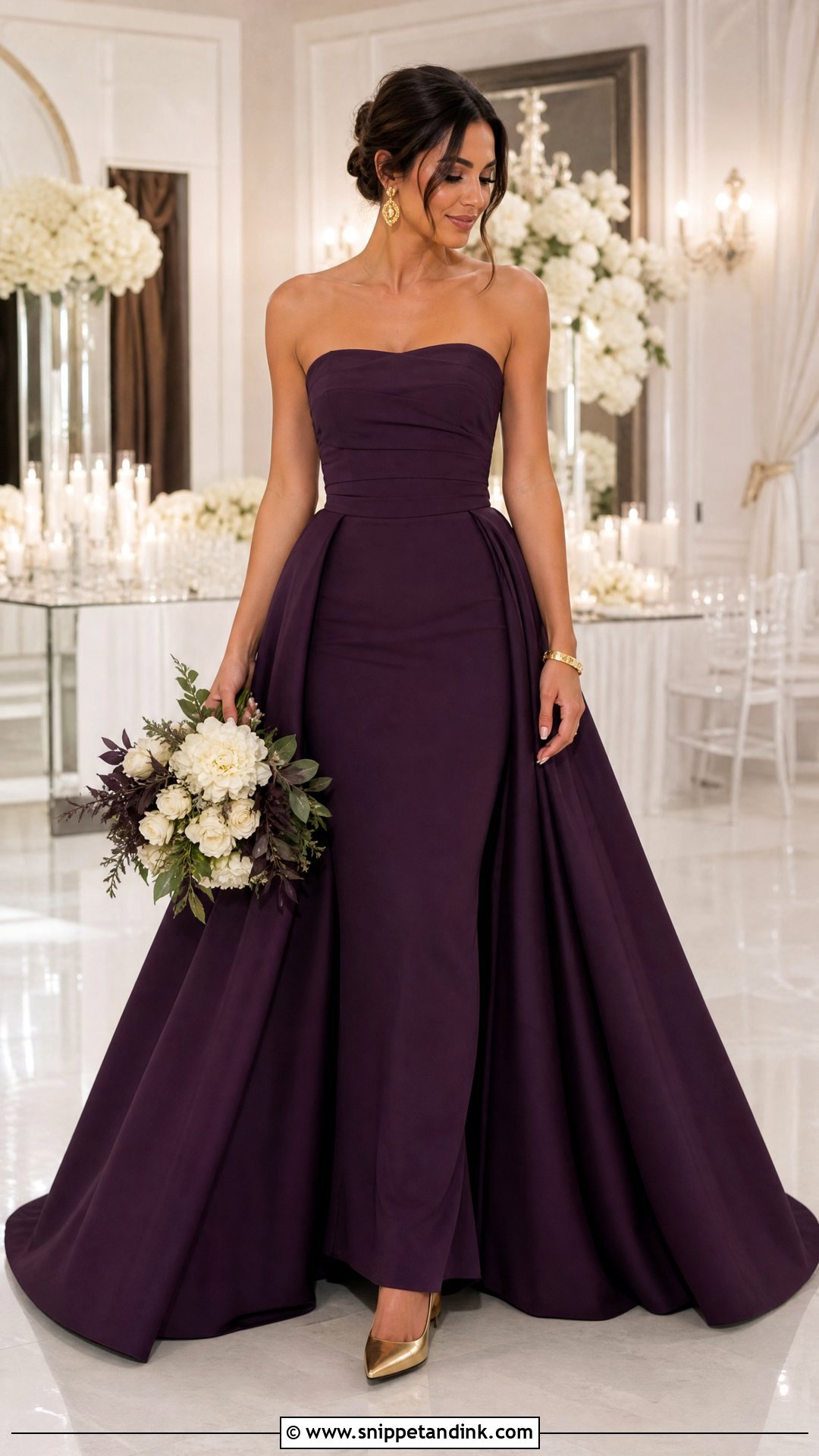
An eggplant sheath with a detachable overskirt gives you a ceremony gown and a reception dress in one. The two layers need to match closely in fabric and shade, or the overskirt looks like an afterthought. It should fasten at the natural waist with a closure that’s invisible from every angle. Gold earrings, a sleek bracelet and pointed metallic pumps suit eggplant’s warm undertone. Ask a bridesmaid to practice taking it off and putting it back on, so the change takes minutes and doesn’t crease the sheath underneath.
18. Periwinkle Pleated Chiffon Wedding Dress
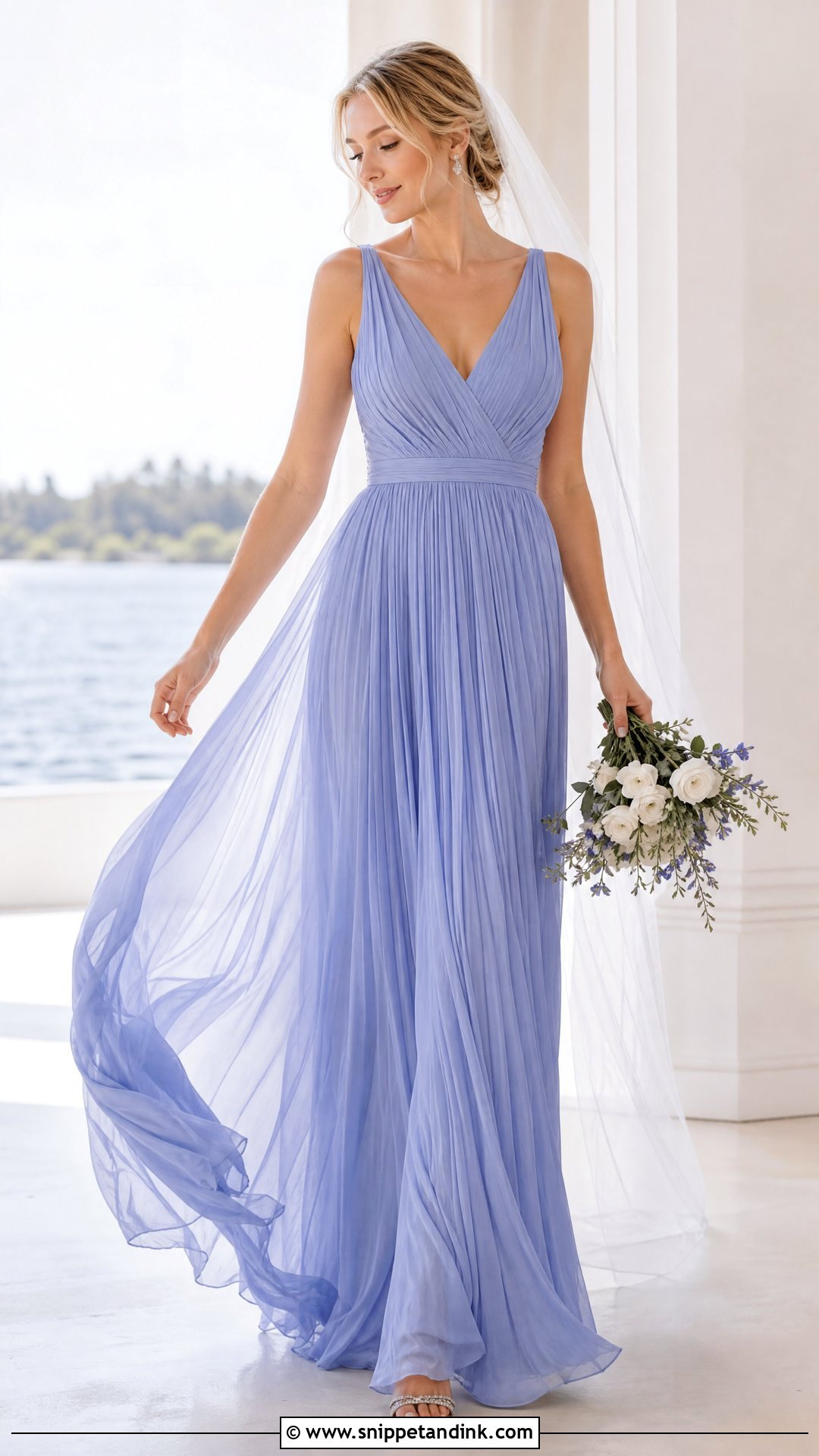
Periwinkle sits between blue and purple, so it never vanishes into white. A pleated chiffon gown with a V-neck, defined waist and floor-length skirt gives texture and movement. Fine pleats are set into the fabric and are hard to redo, so I keep alterations to the shoulders, bodice, waist and hem and avoid recutting the skirt. Silver sandals, crystal studs, a delicate pendant, a soft braided updo and a fingertip veil keep it airy. White flowers with a few blue-purple blooms help the camera read the shade correctly at waterfront and outdoor venues.
19. Purple Boho Bell-Sleeve Wedding Dress
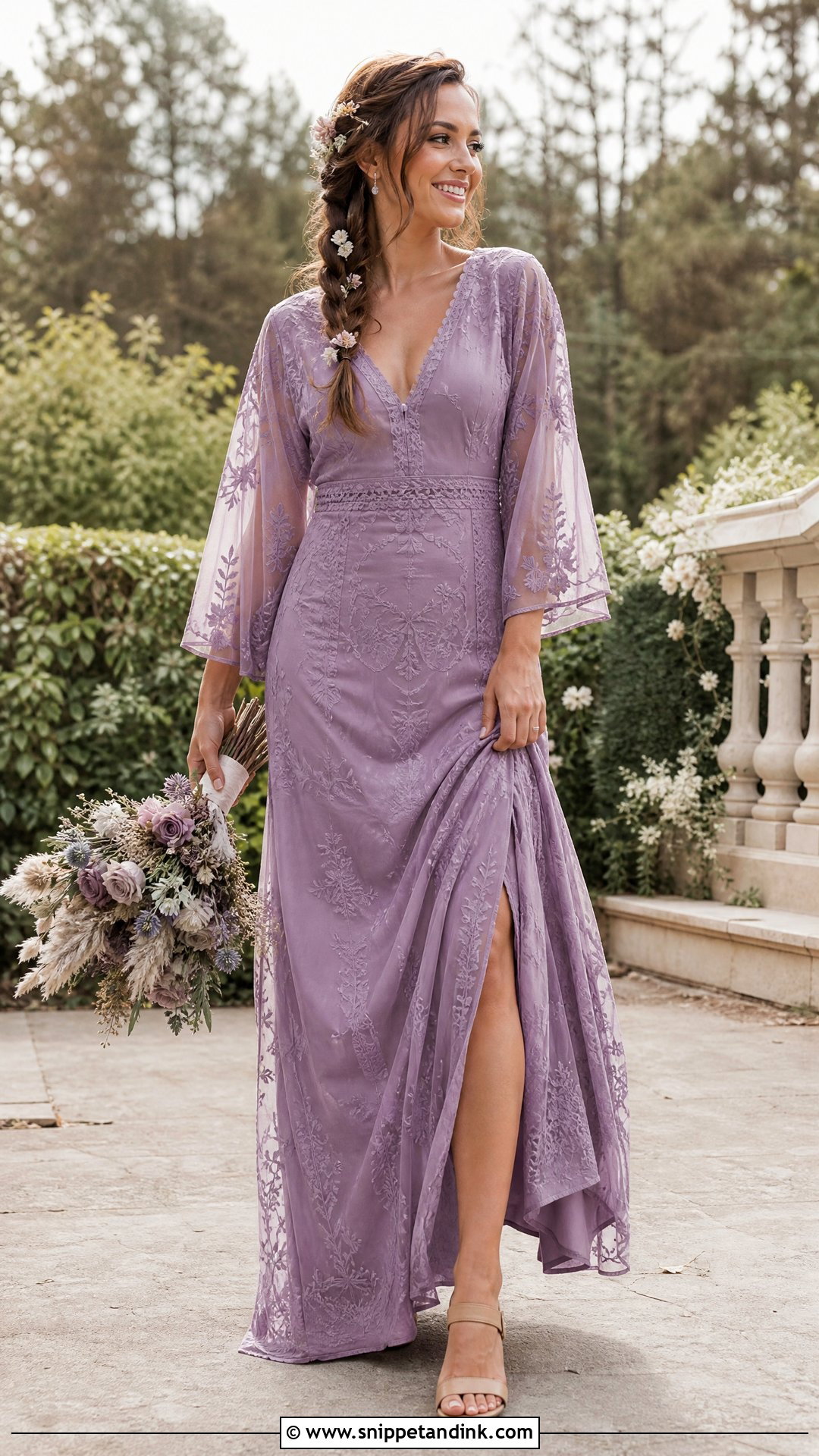
Bell sleeves are lovely in motion and a nuisance at dinner. Before committing, I check the sleeve length with the bride sitting at a table and reaching for a glass, because long bells drag through food, catch on decorations and cover the hands during the ring exchange. In dusty lavender or muted violet lace, embroidered mesh or chiffon, with a fitted lining under a flowing overlay, the gown suits a relaxed outdoor celebration. Block-heel sandals, understated drops and a loose braid with tiny flowers finish it, with a long veil or just a floral comb.
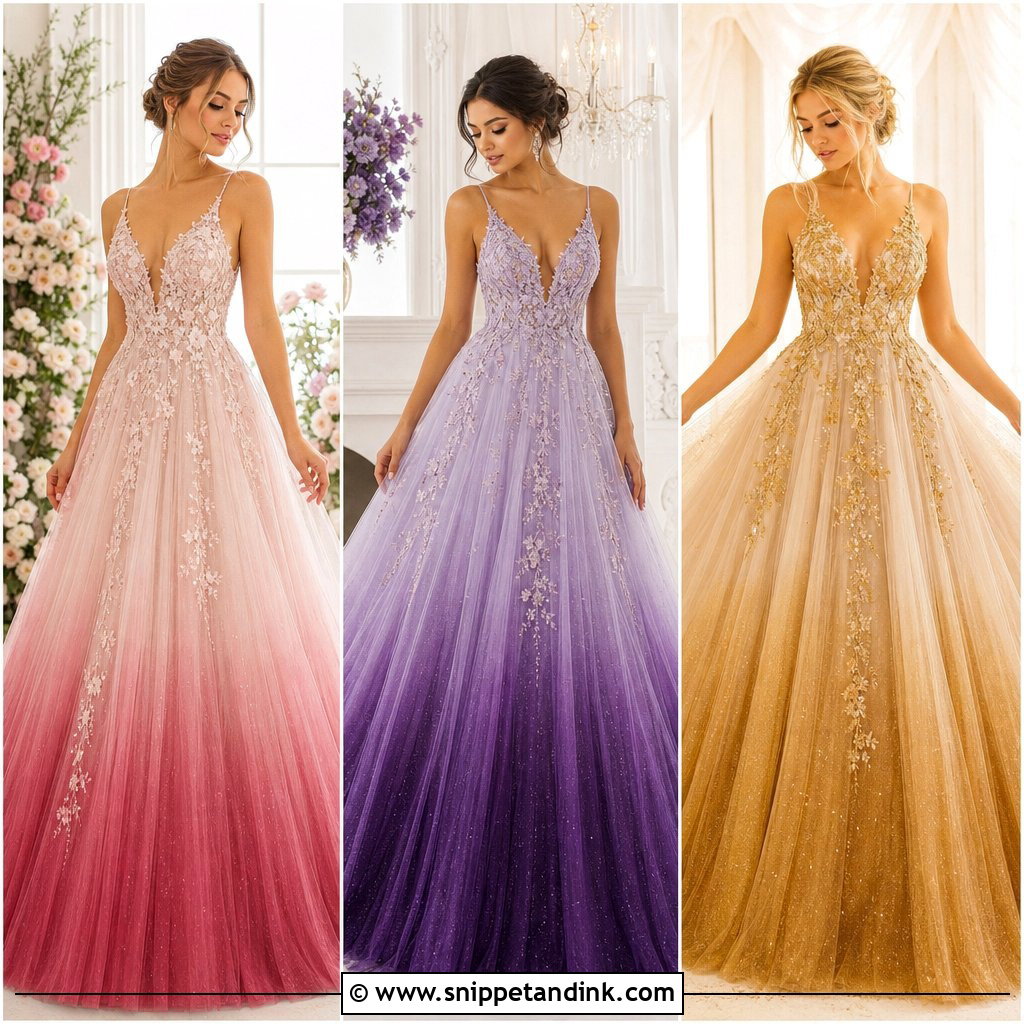

20. Lavender Minimalist Slip Wedding Dress
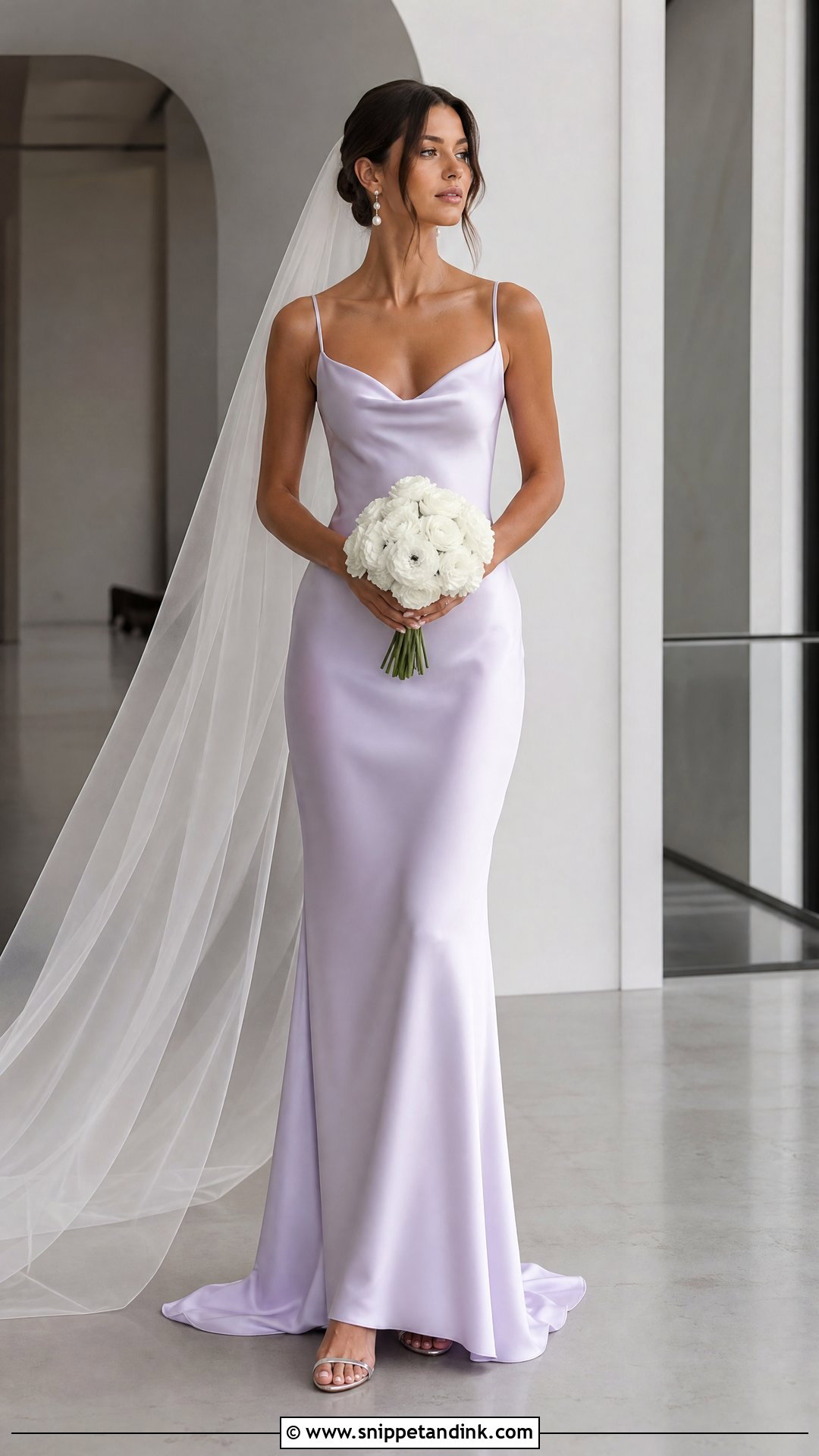
A bias-cut slip in lavender satin or silk is as simple as a wedding dress gets, and that makes fit unforgiving. Bias fabric skims the body and shows every seam and line underneath, so line-free underwear and careful tailoring are essential. Test it standing, sitting and walking before the final hem. A sheer white cathedral veil gives contrast; a lavender fingertip veil keeps it tonal. Pearl drops, slim metallic sandals, smooth waves or a low knot and a compact bouquet suit modern venues and destination ceremonies.
21. Deep Purple Brocade Ball Gown Wedding Dress
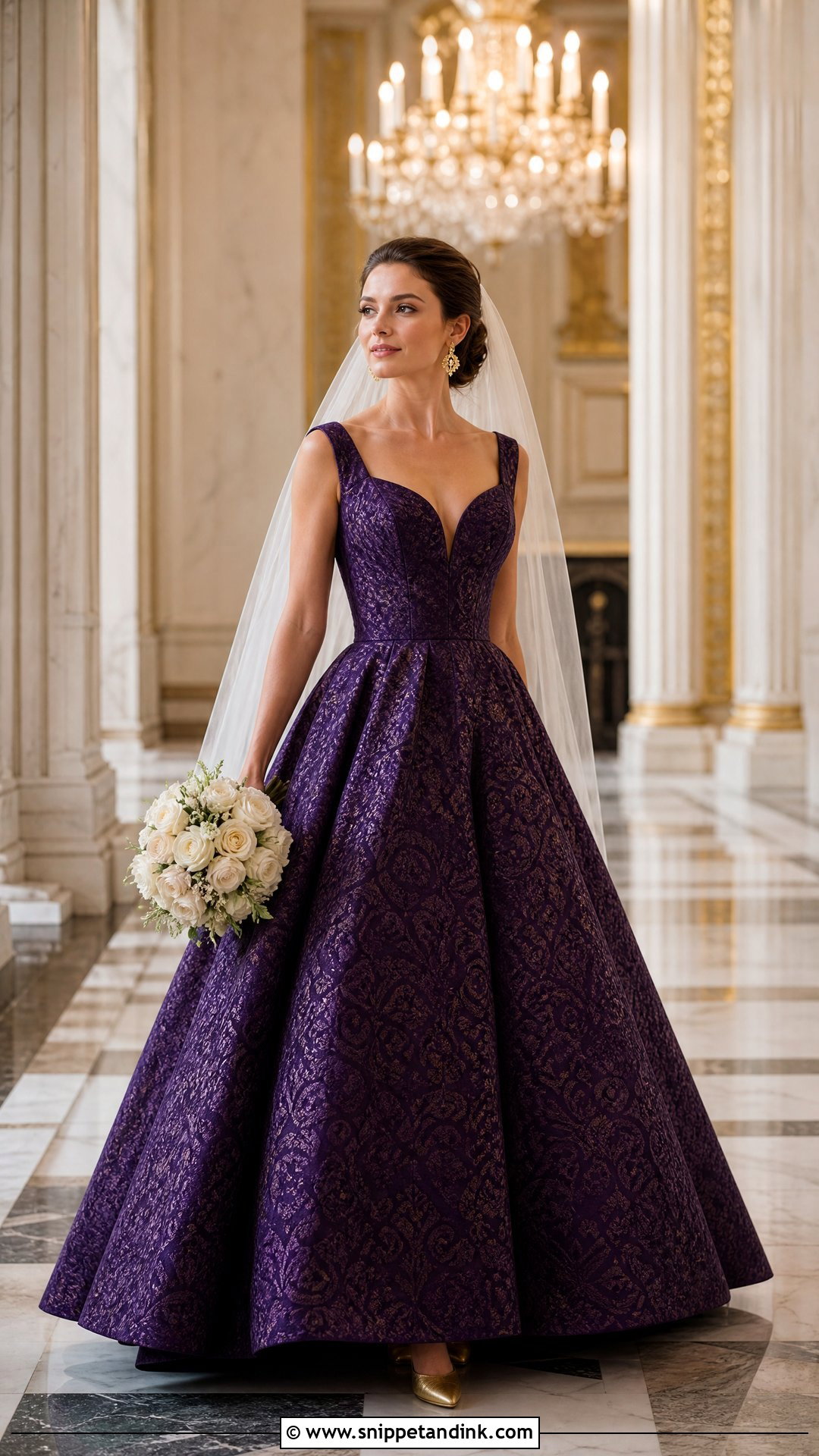
Brocade is woven with its pattern, so it holds a ball gown shape on its own without layers of tulle underneath. Deep purple with a subtle floral or scroll weave looks rich and suits grand indoor venues in cooler months. The trade-off is stiffness. I make brides sit and climb stairs in brocade, and I’d ask for a smooth lining and well-placed skirt support so the fabric doesn’t press against the legs. Gold earrings, closed-toe pumps, a polished updo with a comb, an ivory bouquet and a simple veil at the back of the hair finish it.
22. Purple Sequin Reception Wedding Dress
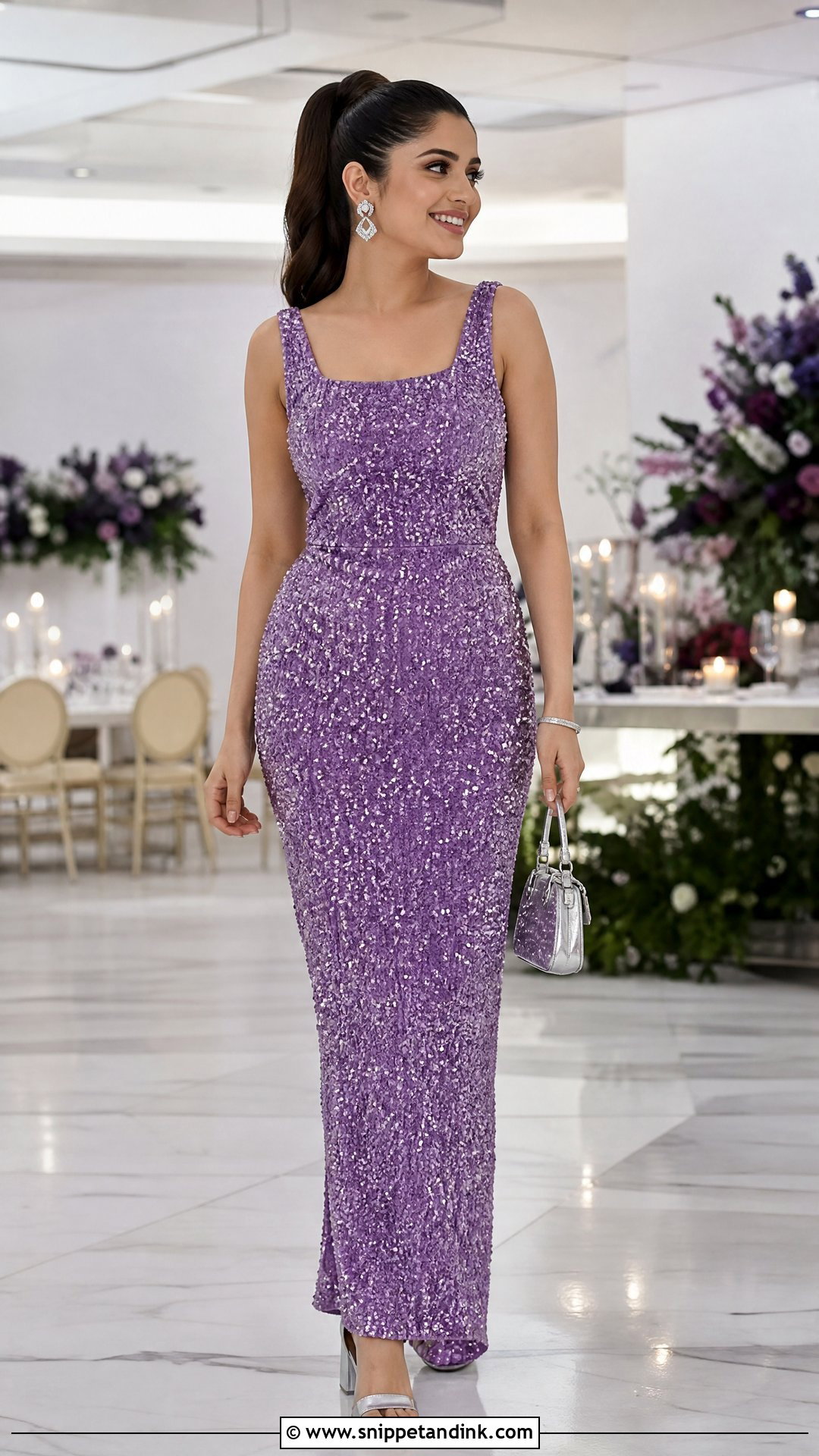
A purple sequin wedding dress is made for the reception. A midi or floor-length column with flat-lying sequins in amethyst, violet or pale lavender gives sparkle without fuss. Sequins scratch at the underarms and side seams, which you won’t notice in a ten-minute fitting but will feel after hours of dancing, so look for soft binding or lining in those areas. A high ponytail or sleek bun keeps hair from snagging. Silver block heels, compact earrings, a small metallic bag and a mini bouquet for the entrance photos complete it.
23. Lavender Maternity Empire-Waist Wedding Dress
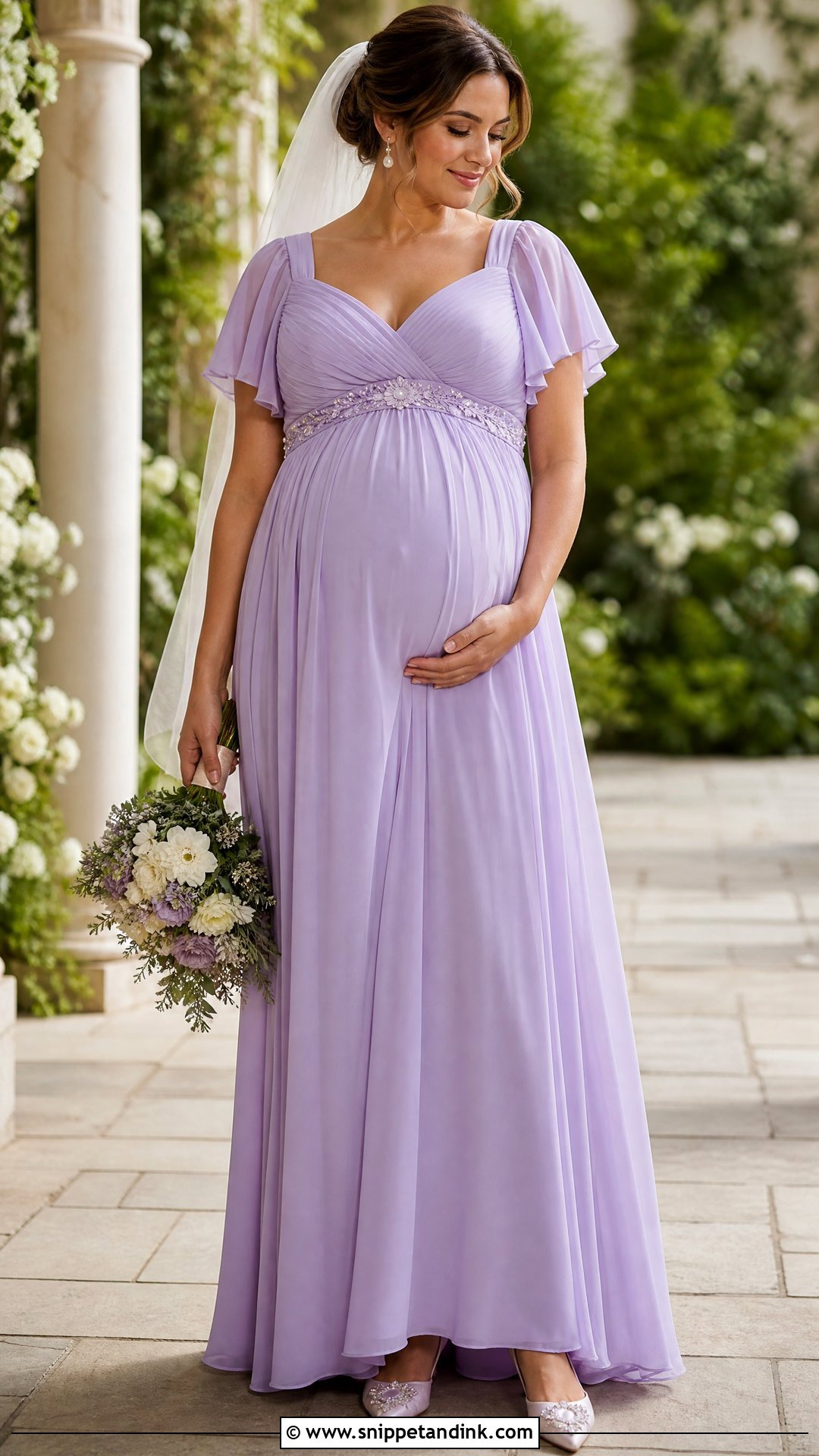
An empire waist ends under the bust and lets the skirt fall freely, which is why it’s the standard maternity bridal shape. A lavender chiffon or tulle skirt over a supportive bodice with flutter sleeves or wide straps keeps it comfortable. Timing is the hard part. I schedule the final fitting as close to the wedding as the seamstress allows, usually within the last couple of weeks, and leave room for one more tweak. Avoid stiff waistbands and heavy embellishment over the bump, and choose a back closure someone can do quickly. Cushioned block heels or flats and a light veil finish it.
24. Plus-Size Purple Wrap-Bodice Wedding Dress
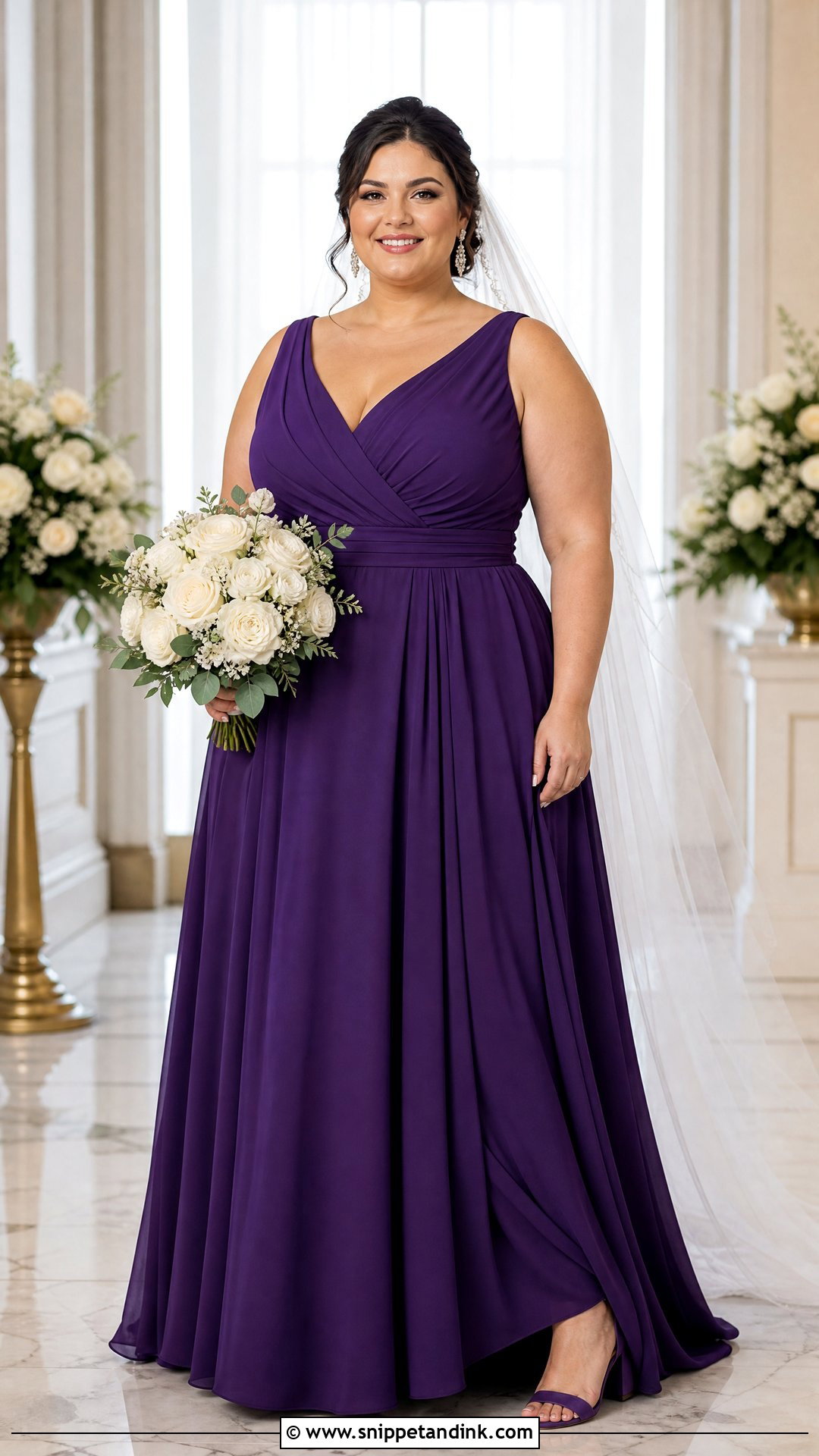
A wrap-style bodice crosses over the bust and creates a waist without rigid boning, which many plus size brides find comfortable all day. Wide supportive straps, a secure V-neckline, a structured waistband and an A-line skirt are the pieces to look for. Lavender chiffon is light; plum satin is formal. Fit the bust and straps first, since everything else hangs from them, and ask about sewn-in cups to simplify underwear. Earrings that suit the neckline, stable block heels, a veil under a soft updo and a medium bouquet keep the proportions balanced.

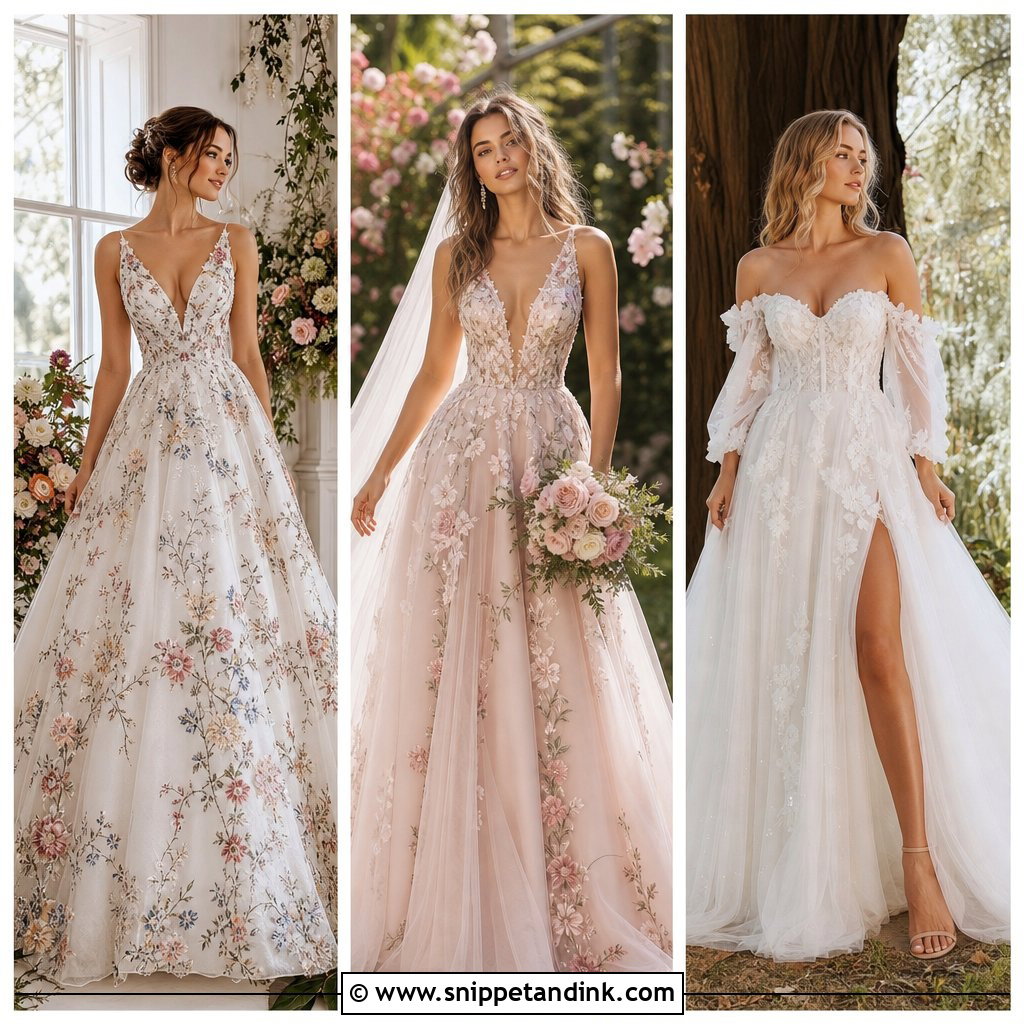
25. Purple Floral-Print Wedding Dress
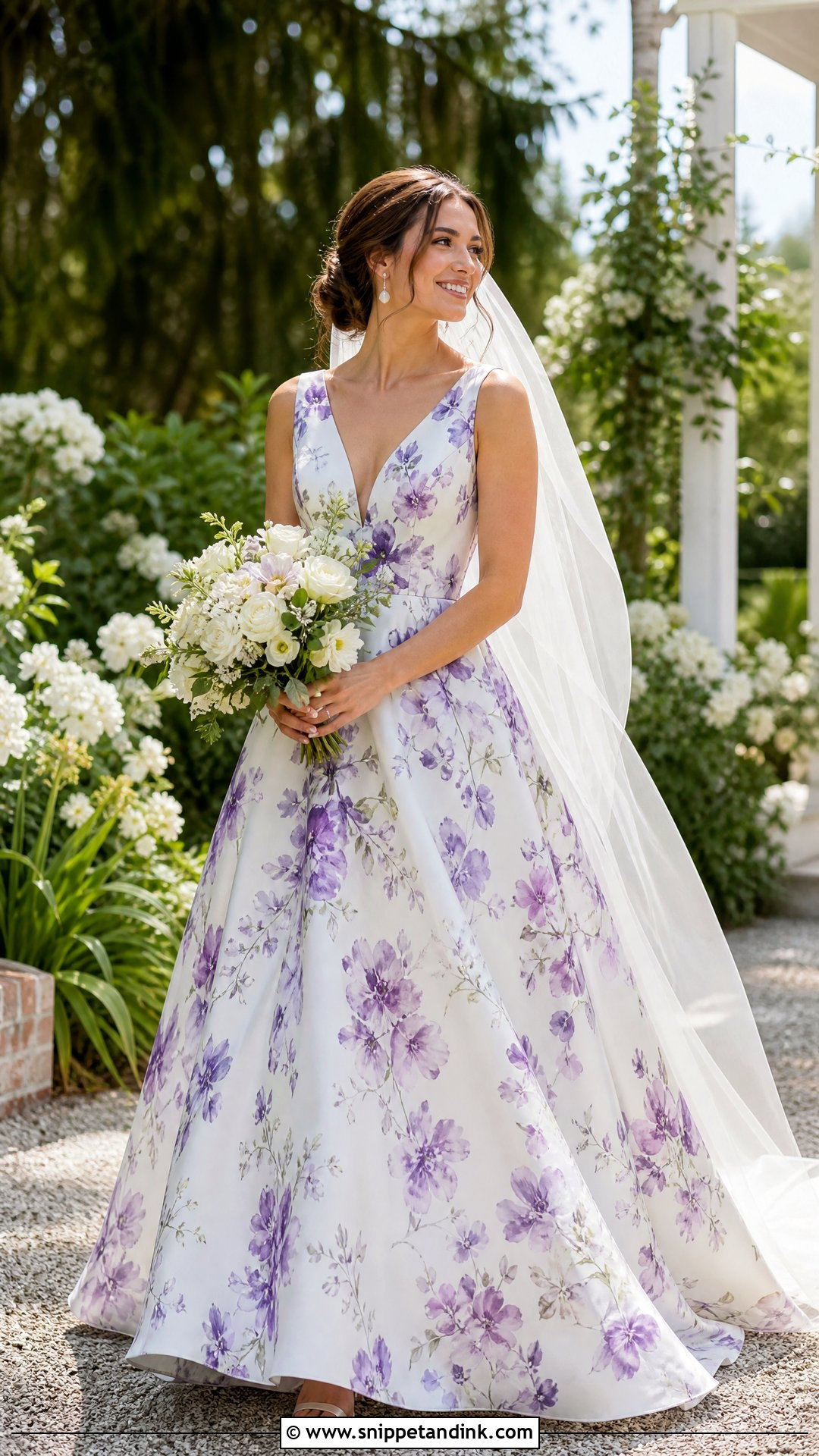
Printed florals bring purple in alongside bridal neutrals. An ivory, blush or pale lavender base with watercolor-style flowers needs enough skirt to show the print, so an A-line or ball gown works better than a slim shape. Check the print at the seams; good makers match or place the pattern so flowers aren’t cut in half at the side seams. A mostly white bouquet supports the print rather than repeating it. Pearl earrings, pale shoes, a plain veil and simple waves or a low bun suit gardens and art venues.
Colored Gowns Take Longer to Order and Rarely Go Back
Most bridal gowns are made to order, and colored ones often take longer because the fabric is dyed in smaller batches. I tell brides to start shopping earlier than they would for white, and to ask the shop for the expected production time in writing before paying a deposit. Leave a couple of months after delivery for alterations.
- Ask for a swatch from the actual dye batch if the color is critical; shades can vary between batches.
- Check the return or exchange terms, since made-to-order colored gowns are usually final sale.
- If you’re ordering shoes, a sash or a veil to match, send the swatch to those suppliers rather than a shade name.
Makeup and Metals Around a Purple Bodice
A purple gown changes what your makeup should do. I’d avoid matching your eyeshadow exactly to the dress, which tends to look like a costume; a neutral or bronze eye with a hint of the shade in the liner reads more polished. With deep purples, a lip a little brighter than usual stops the face from looking washed out next to the fabric.
For jewelry, follow the dress’s undertone: silver, platinum and pearls with cool purples, gold and warm crystal with plum and eggplant. Mixing both rarely looks right against a strong color.
Once the Fit Is Right, Any Shade of Purple Can Work
From lavender, lilac, mauve, violet, amethyst, plum to eggplant, each shade sets a different mood. Tulle and chiffon keep things light; satin, velvet, brocade and sequins feel richer. Once you’ve found the gown, build the rest around its undertone, neckline, fabric and level of detail: comfortable shoes, jewelry that doesn’t fight the color, flowers that support it and hair that leaves the important lines visible. Then spend properly on alterations. In my experience, a well-fitted gown makes almost any purple look intentional, and a badly fitted one makes even the right shade look wrong.
You'll Like These Ideas:




Leave a Reply