
Periwinkle sits between soft blue and lavender, and it is one of the trickier shades I mix for a wedding cake. Get it right and it reads calm and a little unexpected beside classic white. Get it wrong and it slides toward baby blue or a flat grey. It sits comfortably with silver, pearl, ivory, blush, sage and soft gold, and the shape, frosting and flowers decide whether it comes across as vintage, coastal or modern. The ideas below are ones I would happily build, each with a note on what the finish asks of the baker and of your venue.
Why Periwinkle Icing Turns Grey, Green or Lilac
Periwinkle is a blue with a little violet in it, and that small amount of violet is what makes it so easy to get wrong. I mix it from a blue base with a tiny touch of violet, adding color a toothpick at a time, because a single drop too many tips it into lilac. Gel colors also deepen as the icing rests, so I mix a shade lighter than the target and check it again an hour later before committing a whole batch.
The icing itself changes the result. American buttercream and butter-based Swiss meringue carry a yellow cast that pulls blue toward a dull green, which is why I whip butter until it is pale and sometimes neutralize it with the smallest amount of violet first. Fondant and white chocolate bases start whiter, so they hold a cleaner periwinkle with less effort.
Light is the other half of the color
- Warm tungsten and candlelight push periwinkle toward grey or lavender; daylight shows its true blue.
- Blue and purple food colors can fade when a cake sits in strong sunlight or under bright display lamps for hours, so keep the cake out of a sunny window.
- Ask your baker to show you a sample under light similar to your venue before the full cake is colored.
- If your photographer shoots warm, expect the cake to look slightly more lilac in pictures than in person.
1. Periwinkle Wedding Cake With White Roses
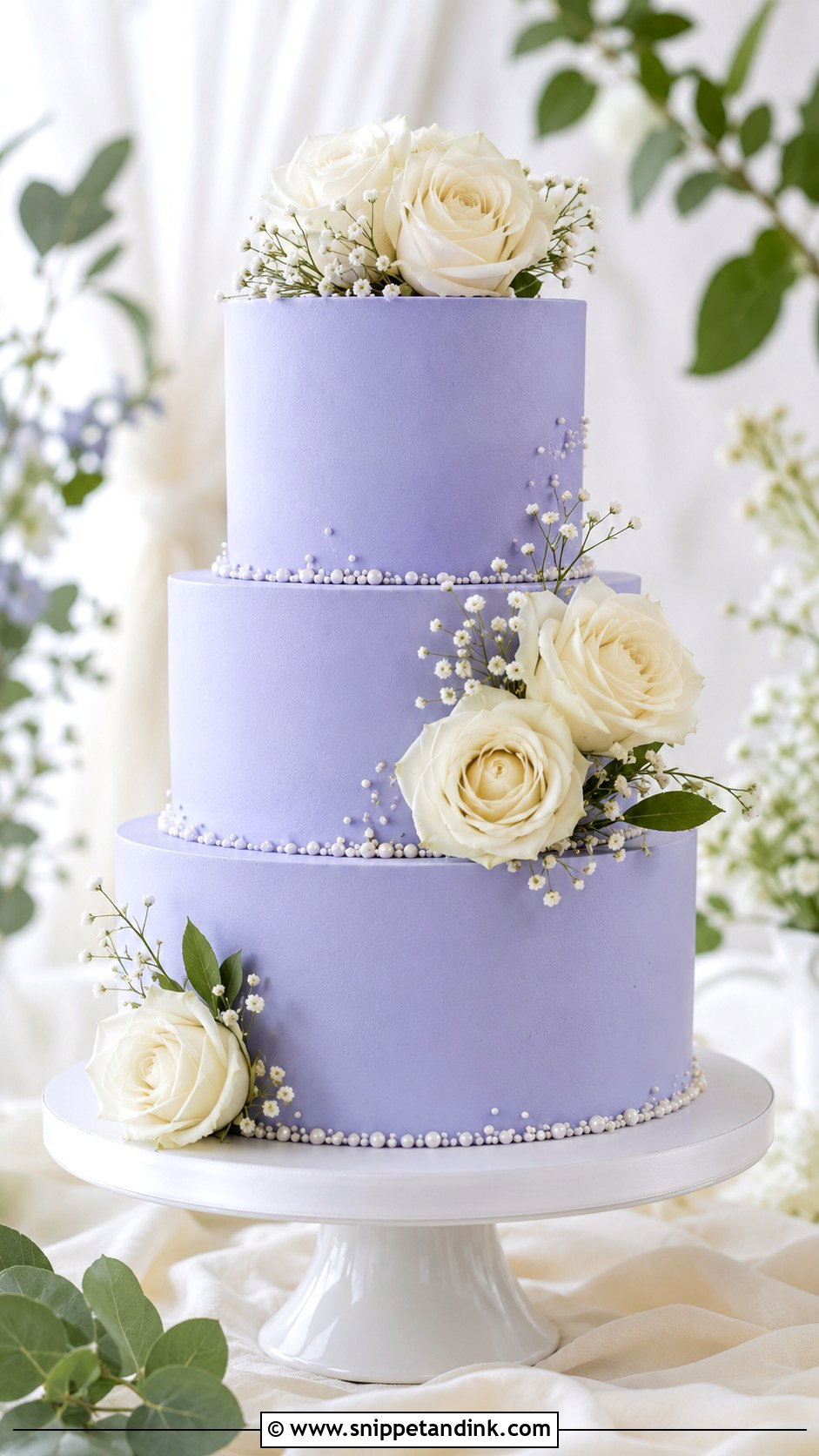
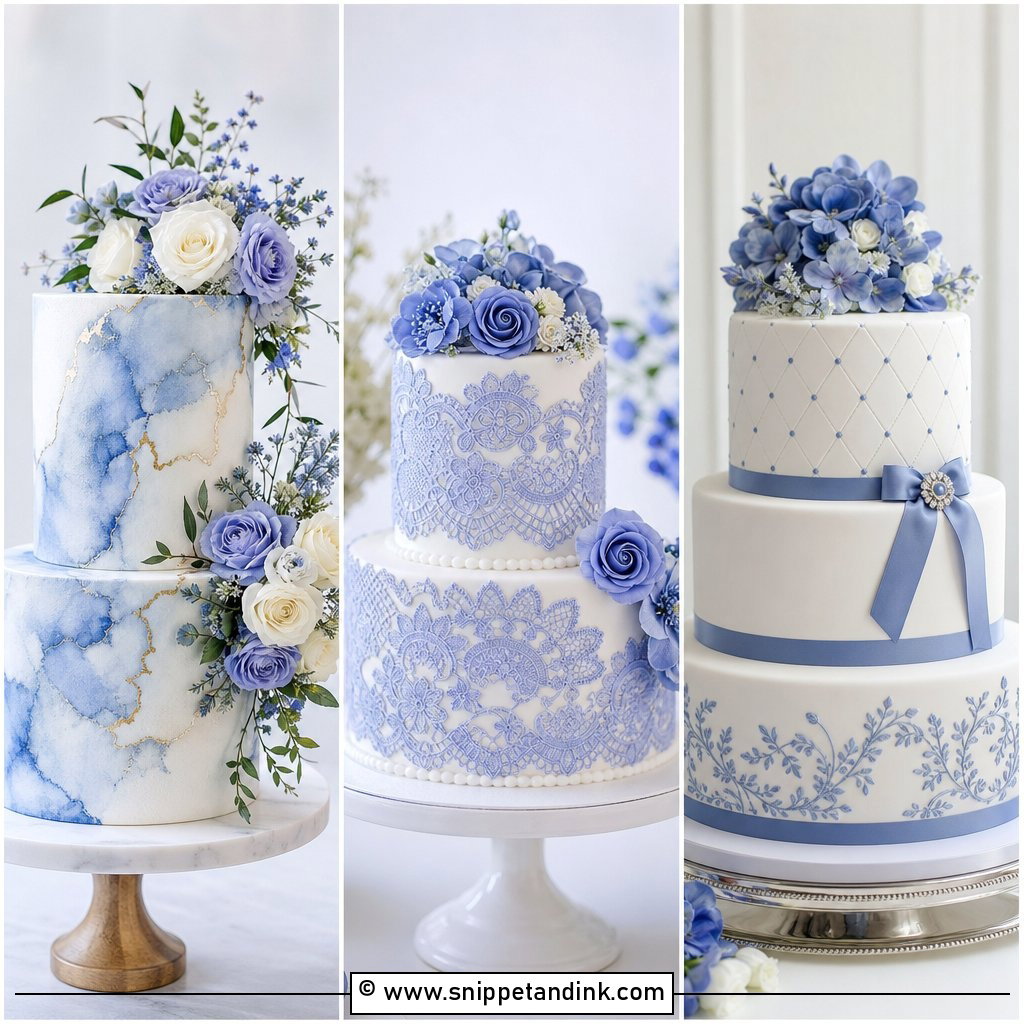
White roses are the safest way into this color, because they give the eye a clear bridal white to rest on while the periwinkle does the quiet work underneath. On a three-tier cake I place them in a loose cascade or tuck one cluster at a tier break, rather than ringing every tier, which starts to look like a buffet centerpiece. If the roses are fresh, ask your florist for unsprayed blooms and expect the baker to wrap or seal every stem before it goes near the sponge. A few tiny pearls or a sprig of pale greenery adds texture without pulling focus from the color.
2. Periwinkle Ombre Wedding Cake
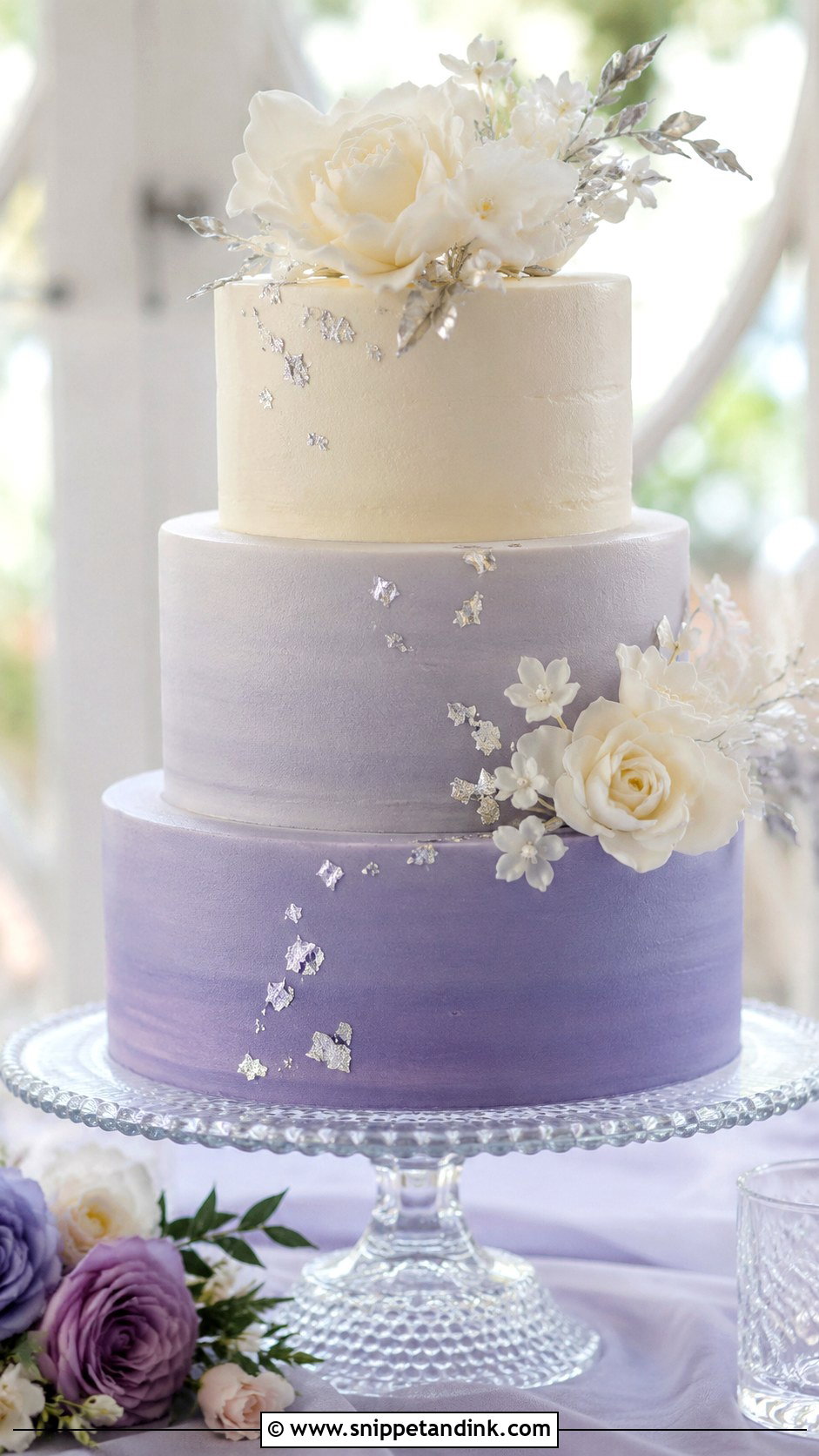
A periwinkle ombre wedding cake runs from deep periwinkle at the base to pale lavender-blue or ivory at the top. The fade needs height to read as gradual, so I wouldn’t attempt it on fewer than three tiers; on two, the steps just look like two different colors. I mix one batch of the deepest shade and lighten it with plain buttercream for each tier above, which keeps the undertone identical all the way up. Keep the decoration sparse, a few sugar petals or a touch of silver leaf, and let the gradient carry it.
3. Periwinkle Buttercream Wedding Cake
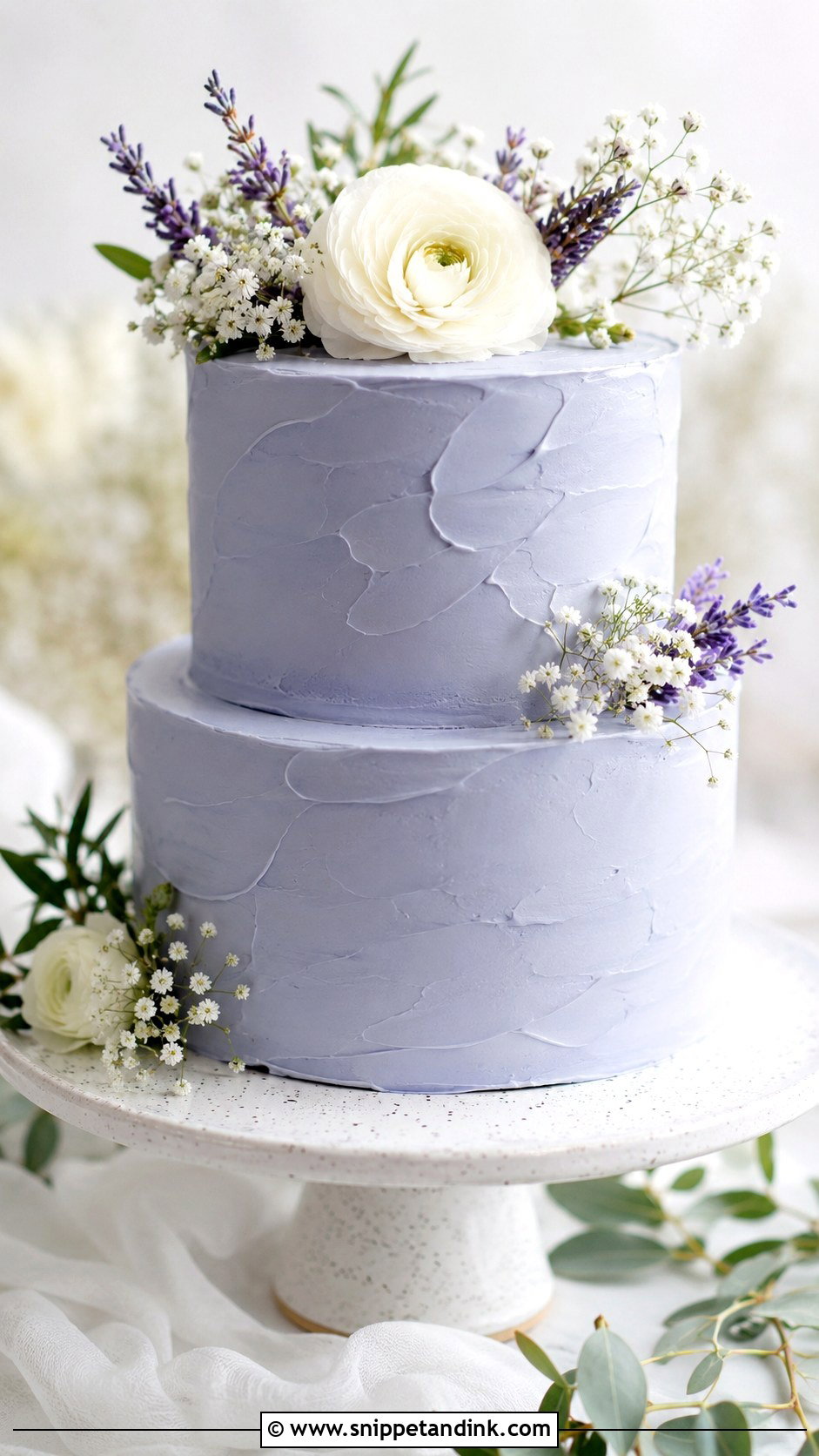
Buttercream gives this color a softer, handmade look than fondant, but it fights you a little. Butter is yellow, and yellow under blue leans green, so I whip the buttercream longer to pale it and sometimes add a pin-drop of violet to cancel the warmth before the periwinkle goes in. Then it can be finished smooth for a modern cake or with light spatula strokes for something relaxed. White ranunculus or baby’s breath and a satin ribbon at each tier base are all it needs for a barn venue or a small spring reception.
4. Periwinkle Floral Wedding Cake
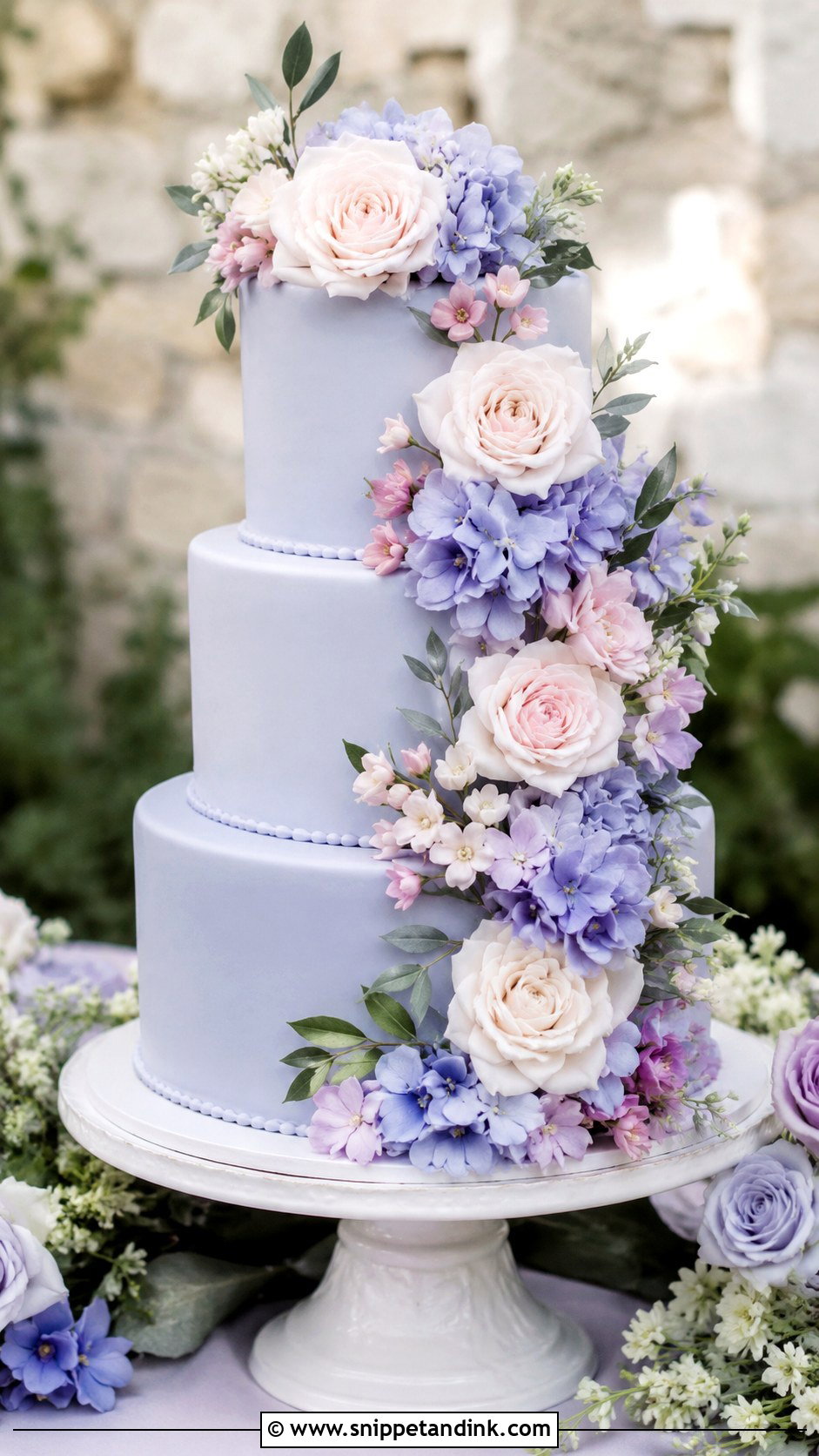
Flower-heavy designs are where a pale periwinkle base earns its keep, since it sits behind ivory, lavender, blush and blue blooms without competing. Hydrangeas echo the color naturally, but I never press real hydrangea into a cake; the plant isn’t food safe, so I either make them in sugar or keep fresh heads on the stand and off the icing. For fullness, run the flowers diagonally across the tiers. For restraint, put one small cluster at each tier break and stop there.
5. Periwinkle Hydrangea Wedding Cake
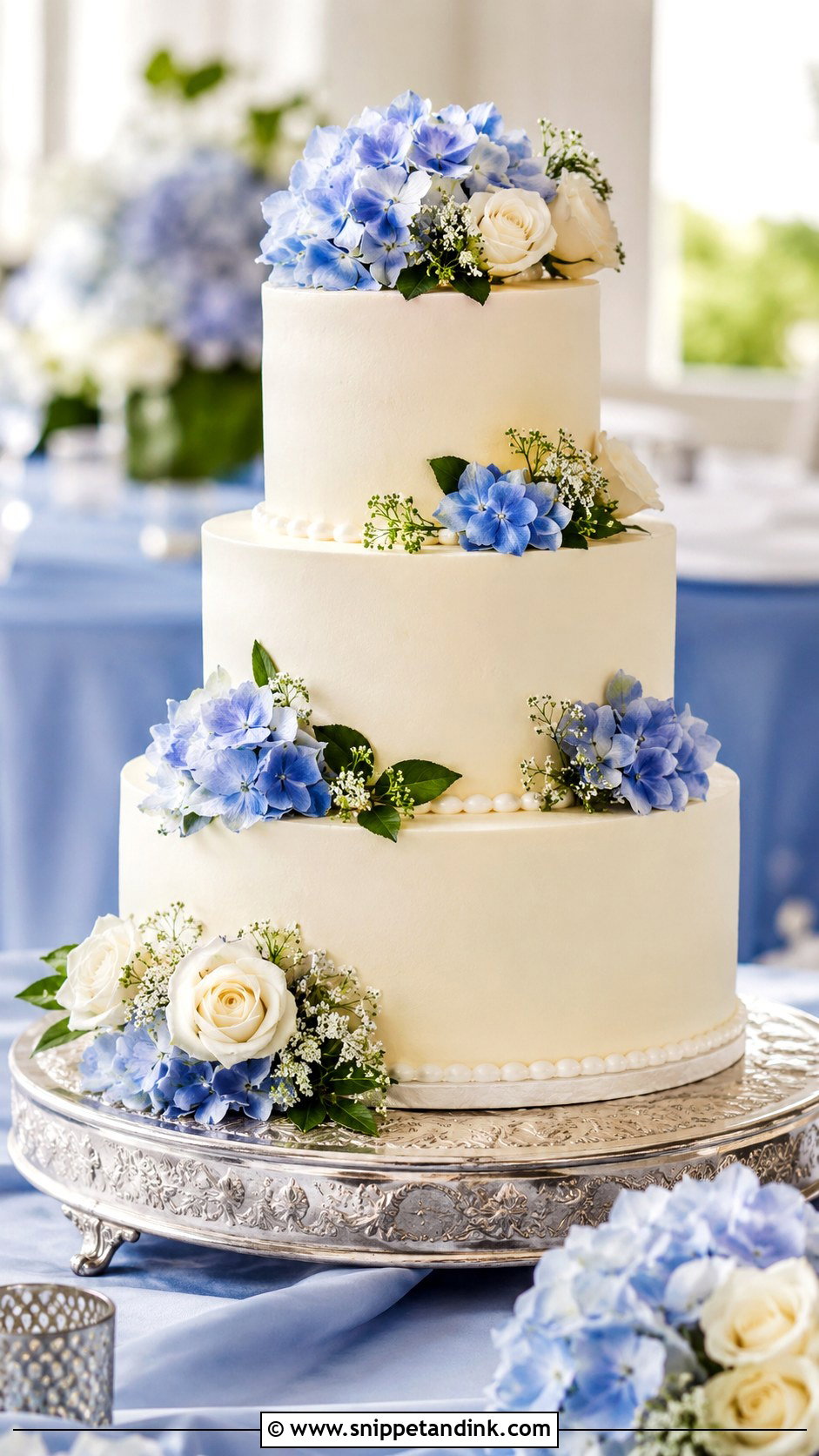
Hydrangea and periwinkle share the same blue-lavender cast, which is why they look like they grew together. On a cake I build them as sugar florets or as hand-painted petals, because each sugar floret is tiny and a full head takes real hours to make, so budget for it. Ivory tiers with periwinkle hydrangeas read as a refined garden. Flip it, periwinkle tiers with white hydrangeas, and the cake feels more colorful and current. Both suit a spring or summer reception with linen and low greenery.
6. Periwinkle And Gold Wedding Cake
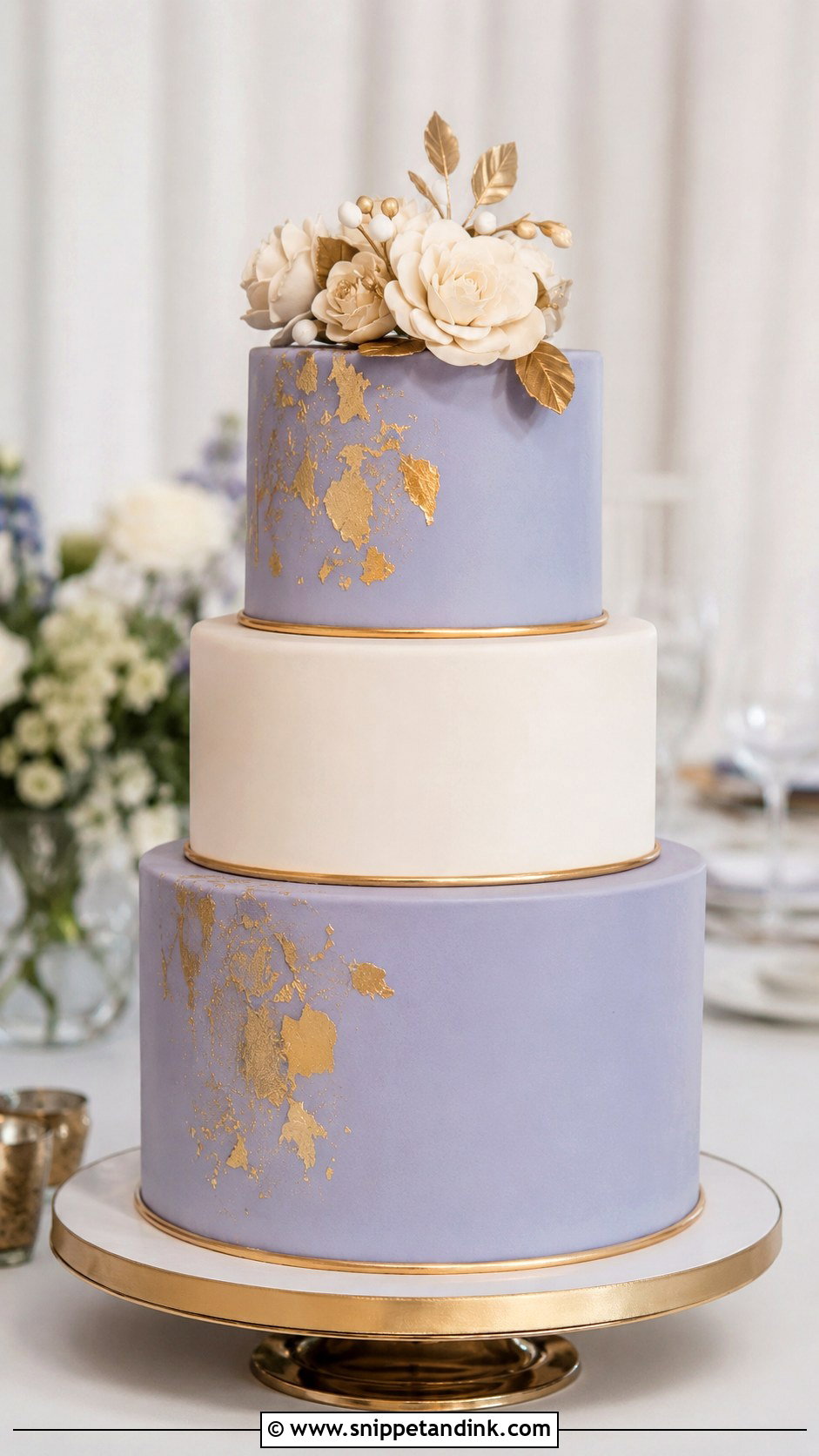
Gold warms periwinkle up, which matters in an evening room where cool pastels can look chilly. I prefer fine gold lines at the tier breaks or a little brushed leaf over a lot of metallic, because gold on a pale cake reads loud very quickly. Ask your baker whether the gold is true edible leaf or a luster dust labelled only as non-toxic; the second should stay on decorations nobody eats. Smooth fondant shows metallic detail most crisply, and a few ivory flowers soften it if the room is already formal.
7. Periwinkle And Silver Wedding Cake
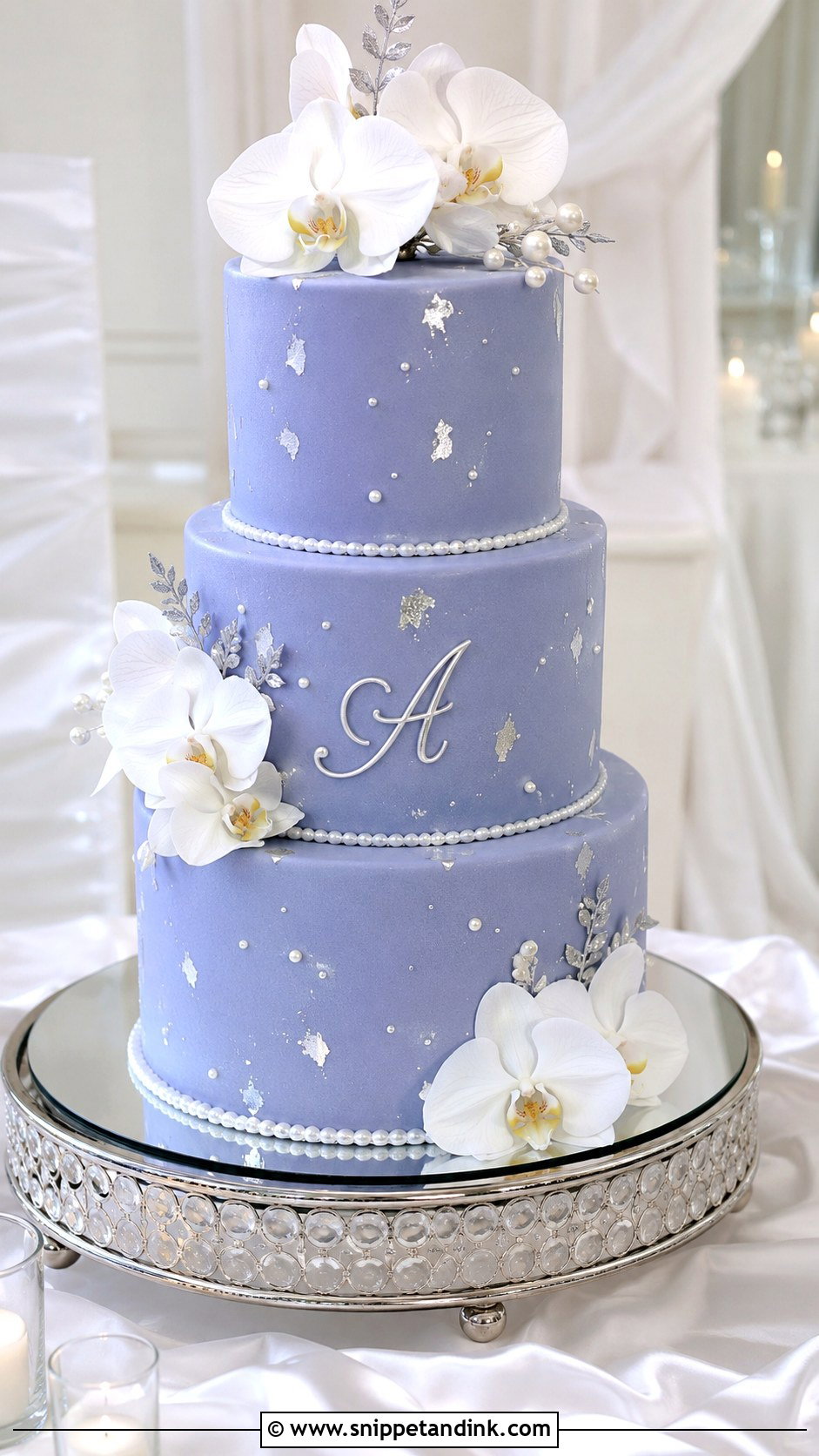
Silver keeps periwinkle cool and icy, so it is the pairing I suggest for a winter wedding that isn’t trying to look like a holiday party. Silver leaf, pearlized piping or a satin ribbon at each tier base all work; sugar beads that mimic crystal are pretty but heavy, so they need a firm surface and careful placement. Fondant gives the most formal finish, buttercream a friendlier one. Bright reception lighting is its friend, because silver picks up the light and stops the pastel from looking flat. White orchids or roses lift the whole design.
8. Periwinkle Vintage Wedding Cake
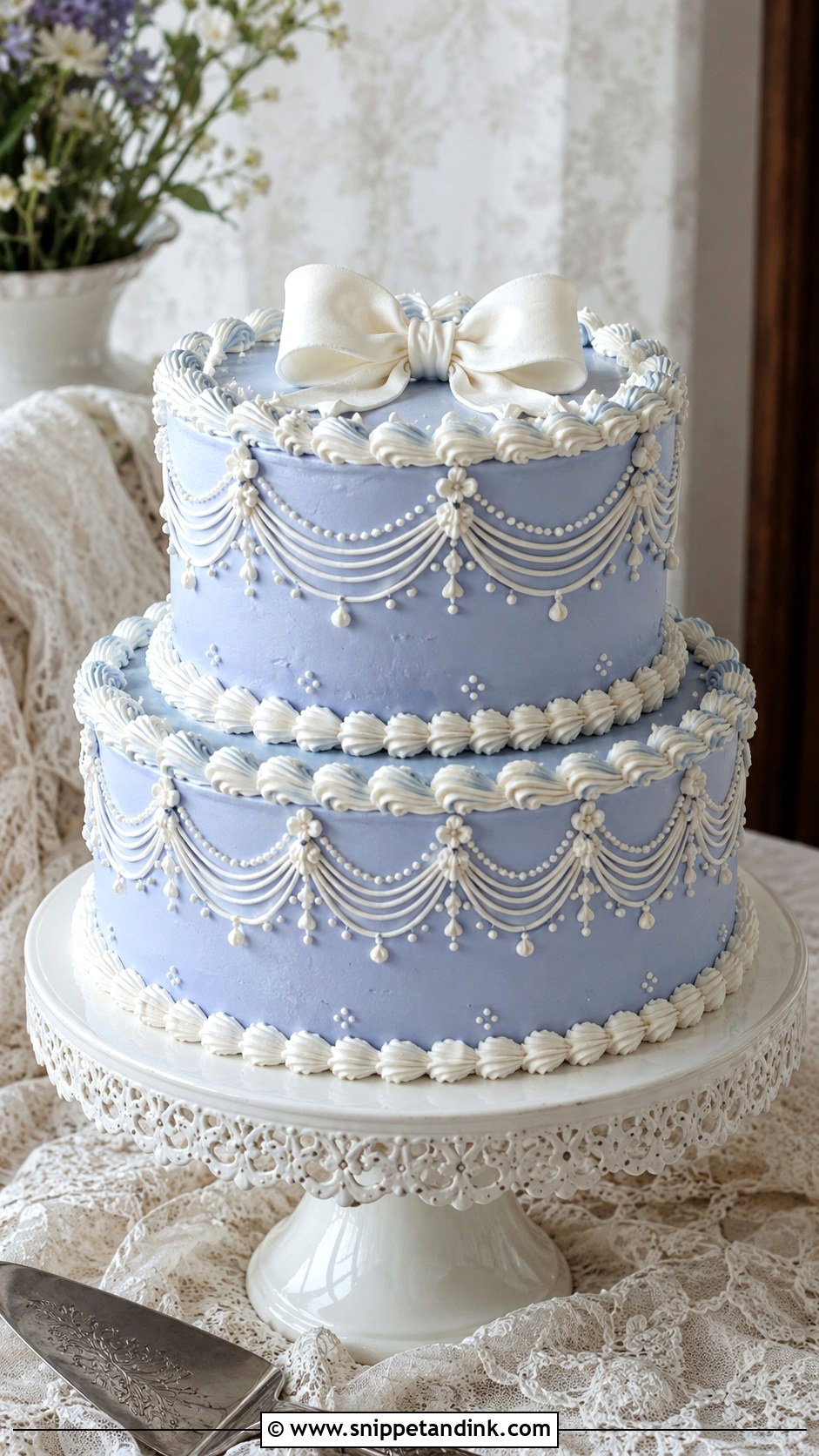
Lambeth-style piping, shell borders, tiny bows and pearl dots are what make this one vintage, and periwinkle keeps all that ornament from feeling dusty. The piping is slow, careful work and it is the part you are really paying for, so check that your baker has done overpiped borders before, not just smooth tiers. A two-tier or three-tier version gives the detail room without turning into a wall of icing. Finish with a simple topper or a few sugar cherries, and it sits right at home beside a lace dress and a garden party.
9. Periwinkle Pearl Wedding Cake
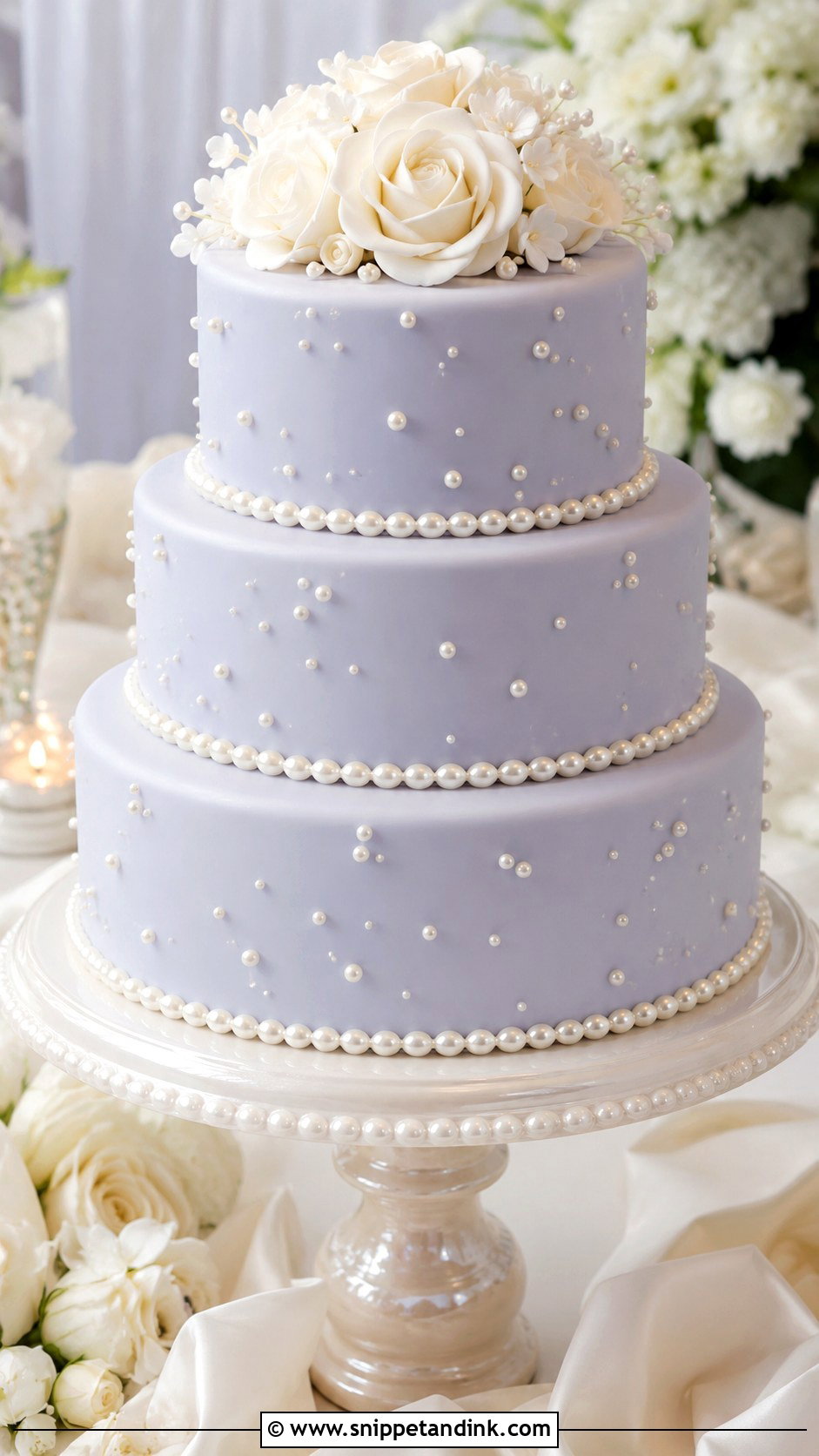
Pearls are the quietest way to make a periwinkle cake feel bridal. I scatter tiny edible pearls over smooth fondant or pipe pearl borders at each tier, saving larger clusters for beside the sugar flowers. One practical warning: hard sugar pearls are crunchy and not every guest enjoys biting into one, so I keep the big ones on the decorative zones and use soft piped pearls where the knife goes. Vanilla, almond or lemon inside keeps the flavor as light as the look. The texture shows up well in close-up shots.
10. Periwinkle Marble Wedding Cake
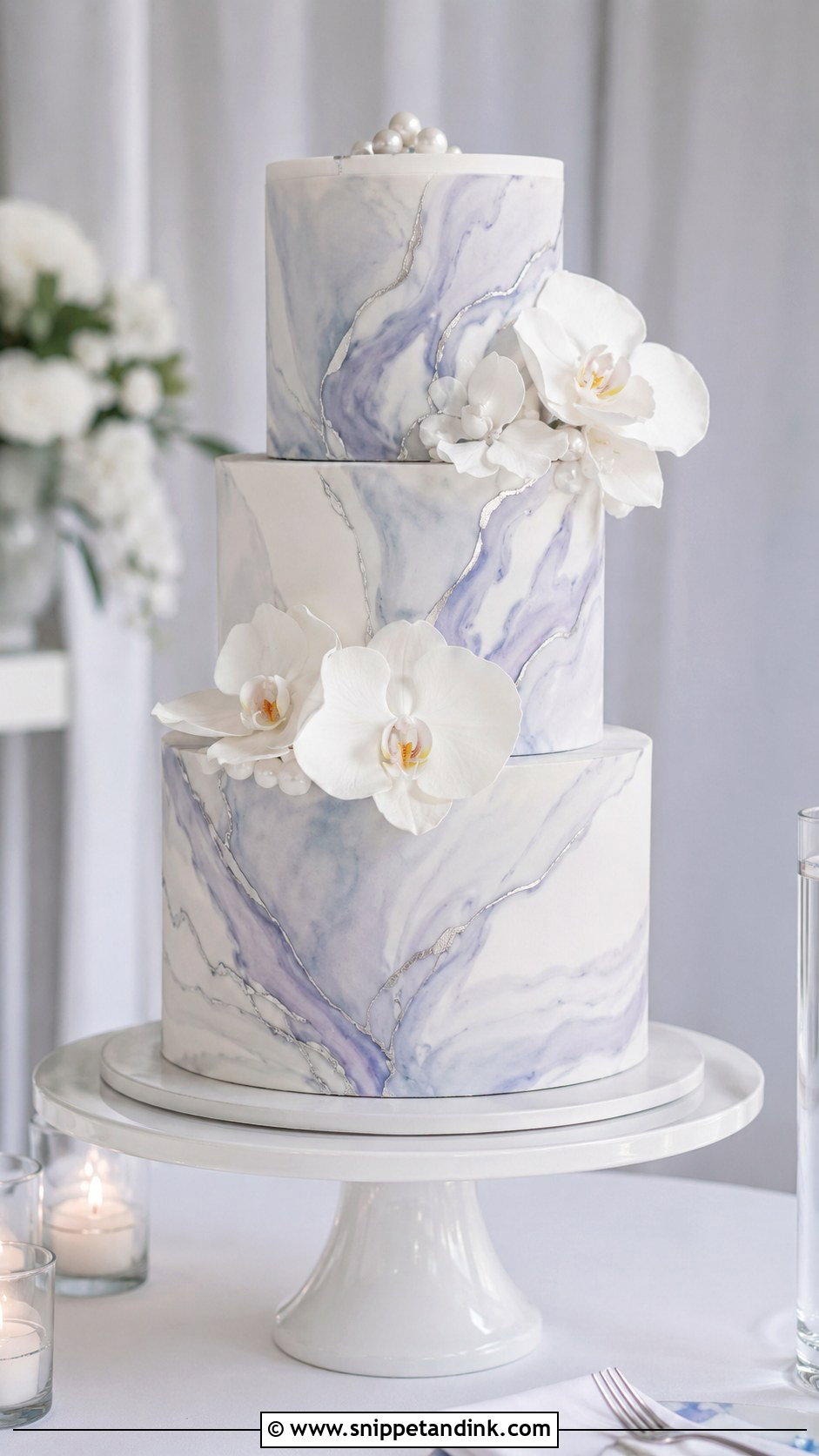
Marbling is the most contemporary finish here. I fold periwinkle, white, lavender and pale grey into the fondant just enough to vein it, because overworking the paste turns the marble into one muddy lilac. A fine line of silver or white gold along a few veins adds polish for a formal room. Keep the decoration to one or two sugar flowers so the stone effect stays the point. It suits couples who like pastel color but find a traditional floral cake too sweet.
11. Periwinkle Watercolor Wedding Cake
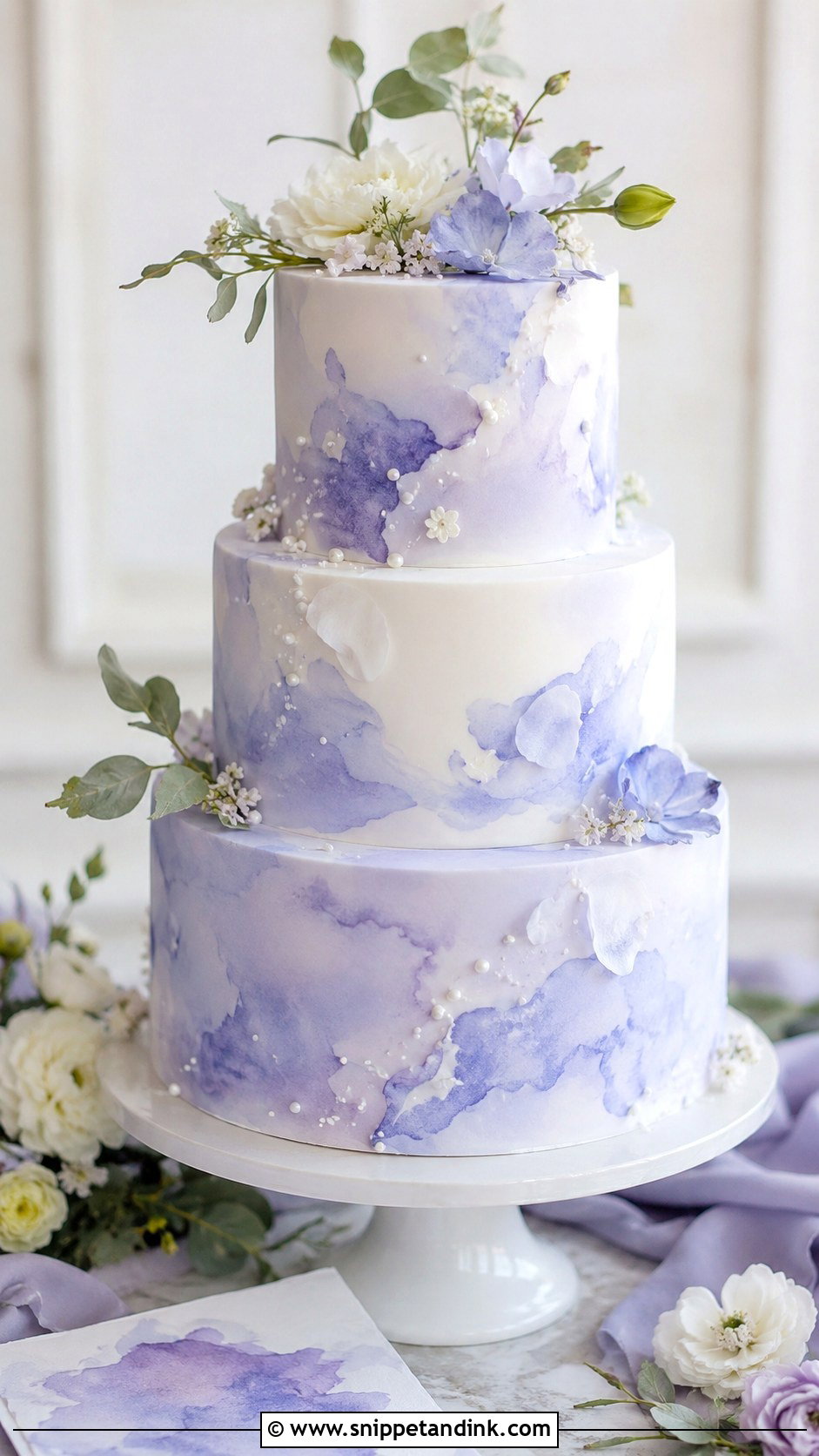
Watercolor periwinkle is painted on rather than mixed in, in thin washes that fade into ivory, lavender or pale blue. On fondant I paint with color thinned in clear alcohol, which evaporates and leaves soft edges; on buttercream the same look is made with a palette knife and a chilled surface, and it reads looser. Small sugar flowers or tiny pearl accents keep it delicate. It is the cake I suggest when the invitations already use painted florals, because the two pieces then look designed together.
12. Periwinkle Lace Wedding Cake
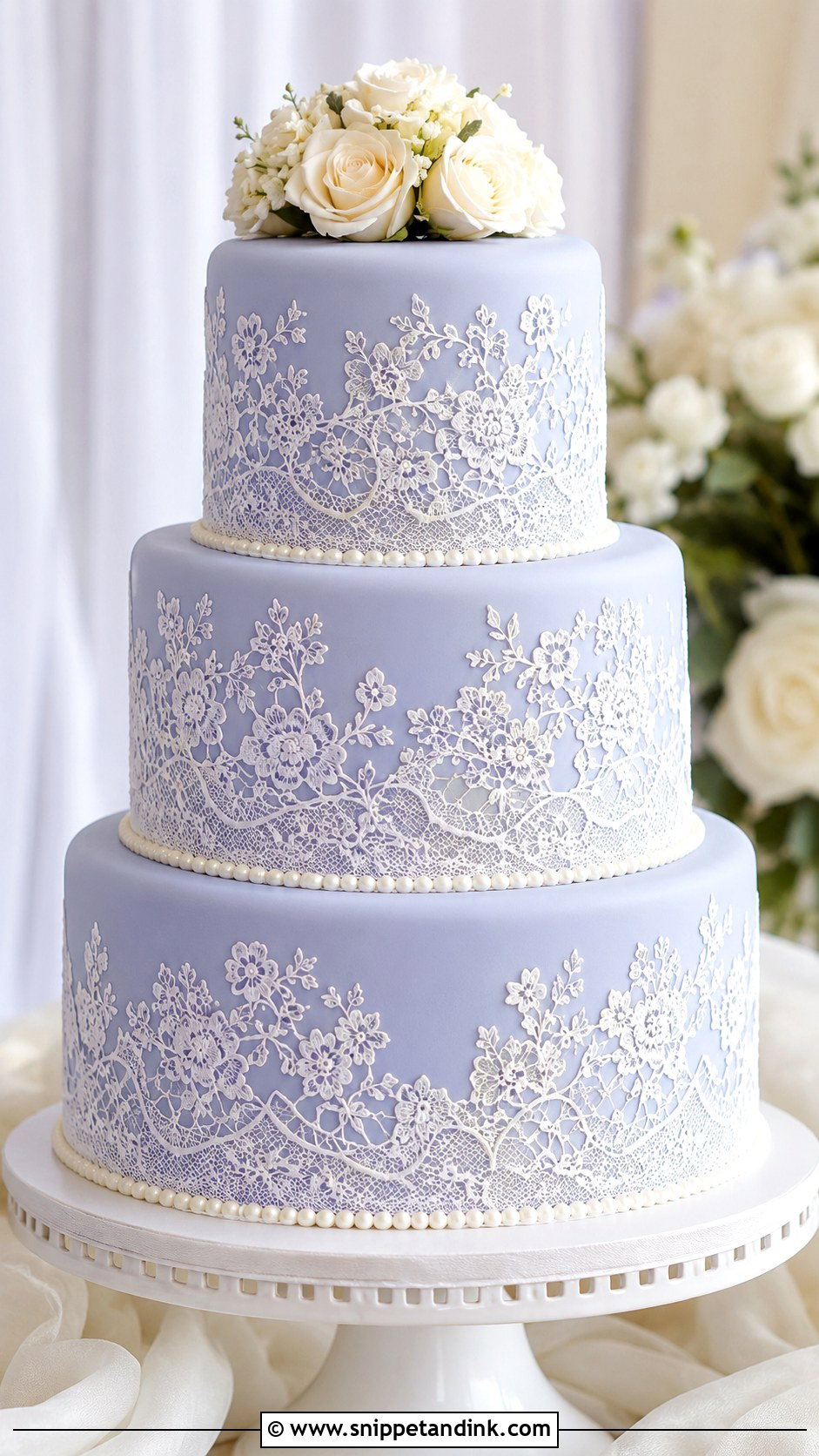
Lace on periwinkle can be piped white over a colored base or raised on ivory tiers with periwinkle accents. If your gown has a distinctive lace, bring a photo or a fabric swatch to the tasting; many bakers can echo the motif in piping or with a silicone lace mat. Delicate patterns with simple flowers stay soft, while lace on every tier plus pearl borders gets dramatic fast. I’d use the heavier version only in a large formal room, where the cake has space to be seen from a distance.
13. Periwinkle Ruffle Wedding Cake
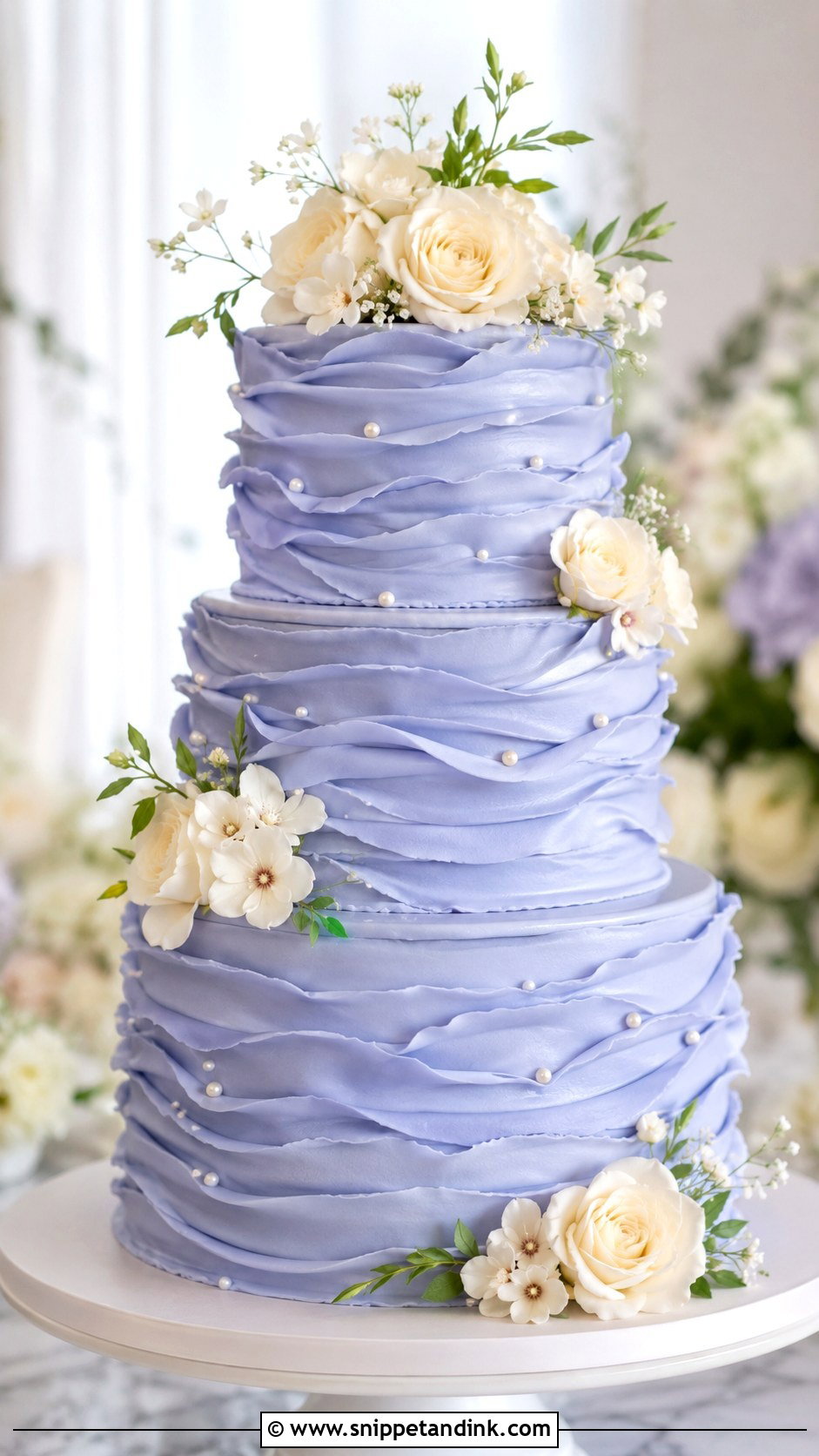
Ruffles bring movement, and periwinkle stops them from feeling theatrical. Buttercream ruffles are piped with a petal tip and look loose and fluffy; fondant frills are cut and layered and hold a crisper edge in warm rooms. Mixing smooth and ruffled tiers keeps a tall cake from looking like a ball gown. Ivory flowers or a simple pearl topper are plenty. Go lighter for a spring garden and fuller for a grand reception.
14. Periwinkle Drip Wedding Cake
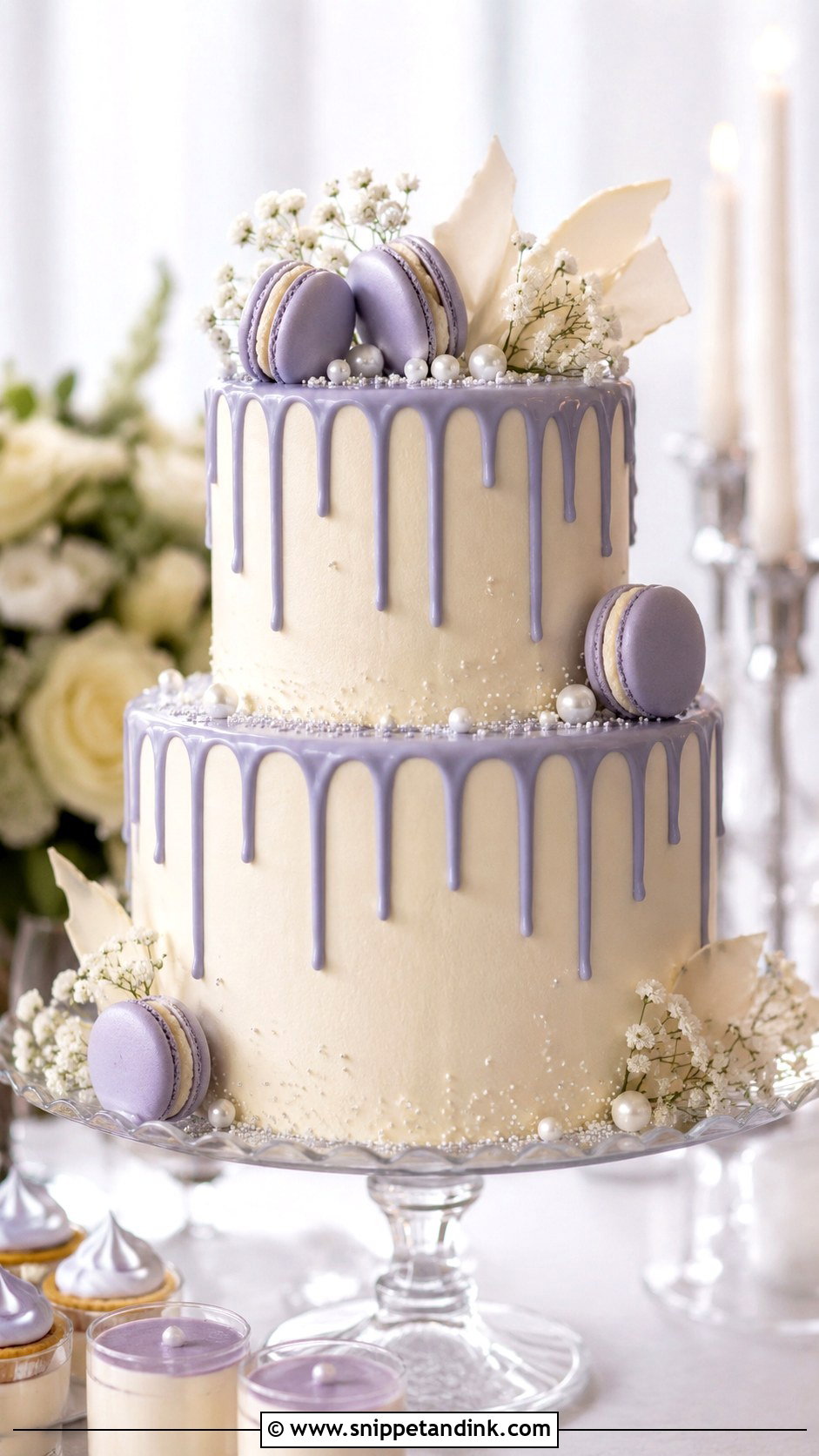
A periwinkle drip wedding cake mixes modern styling with soft color. I make the drip from white chocolate ganache tinted with an oil-based color, because water-based gel can make chocolate seize into a grainy mess. The cake must be fully chilled first, or the drip runs straight to the board. Keep the drips thin and evenly spaced for a wedding finish, then dress it with macarons, fresh flowers or white chocolate shards. It is less formal than fondant and pairs easily with matching cupcakes or mini cakes.
15. Periwinkle Geode Wedding Cake
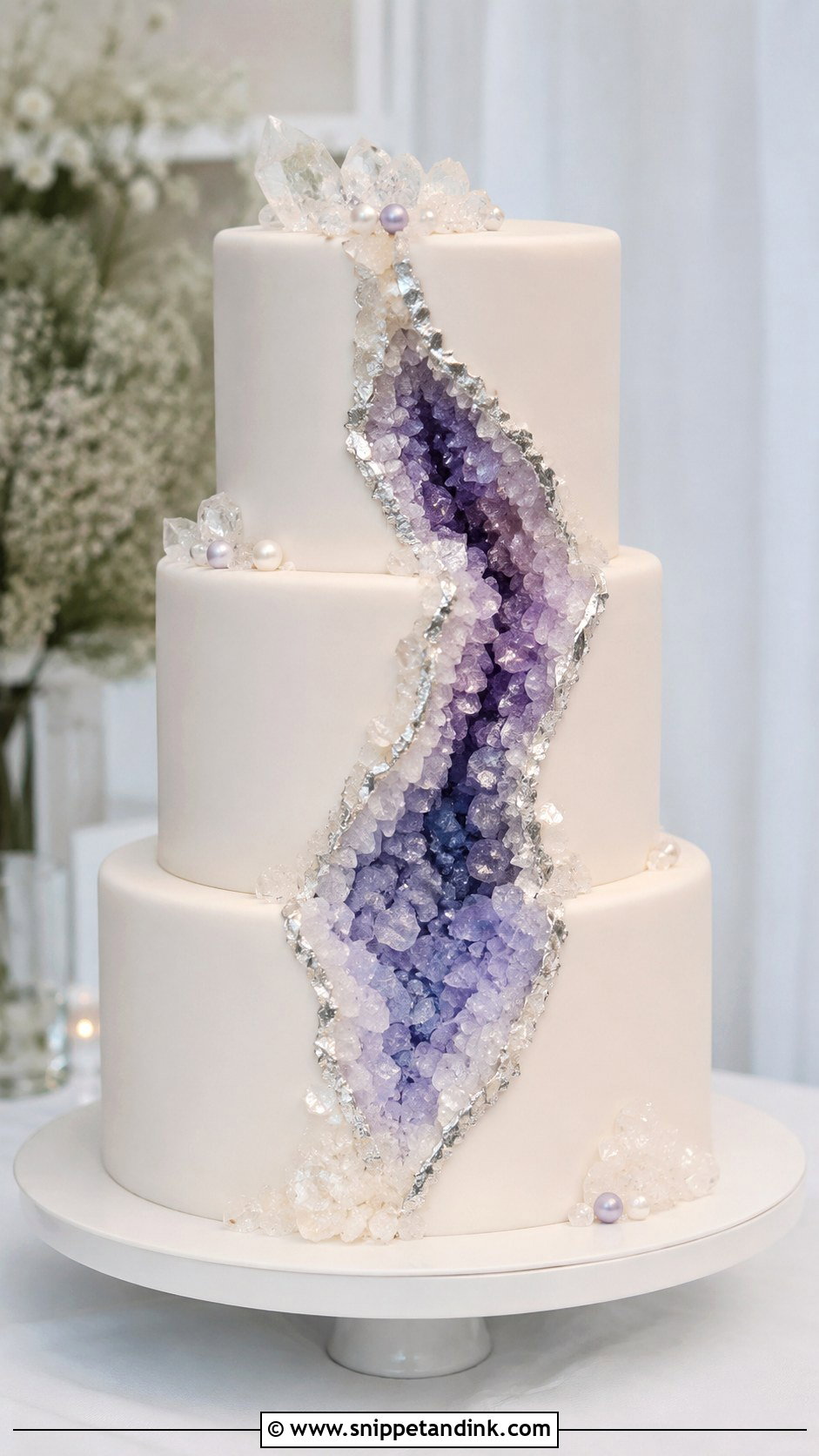
The geode is a carved hollow lined with rock candy or isomalt crystals in periwinkle, lavender, clear and silver, set into smooth white or pale tiers. Sugar crystals pull moisture from the air, so in a humid room they can turn sticky and lose their sparkle; I set them as late as I can and keep this cake indoors. A thin metallic edge around the opening makes it look finished rather than broken. It is a strong choice for a modern evening reception, on a plain white stand with nothing else competing.
16. Periwinkle Minimalist Wedding Cake
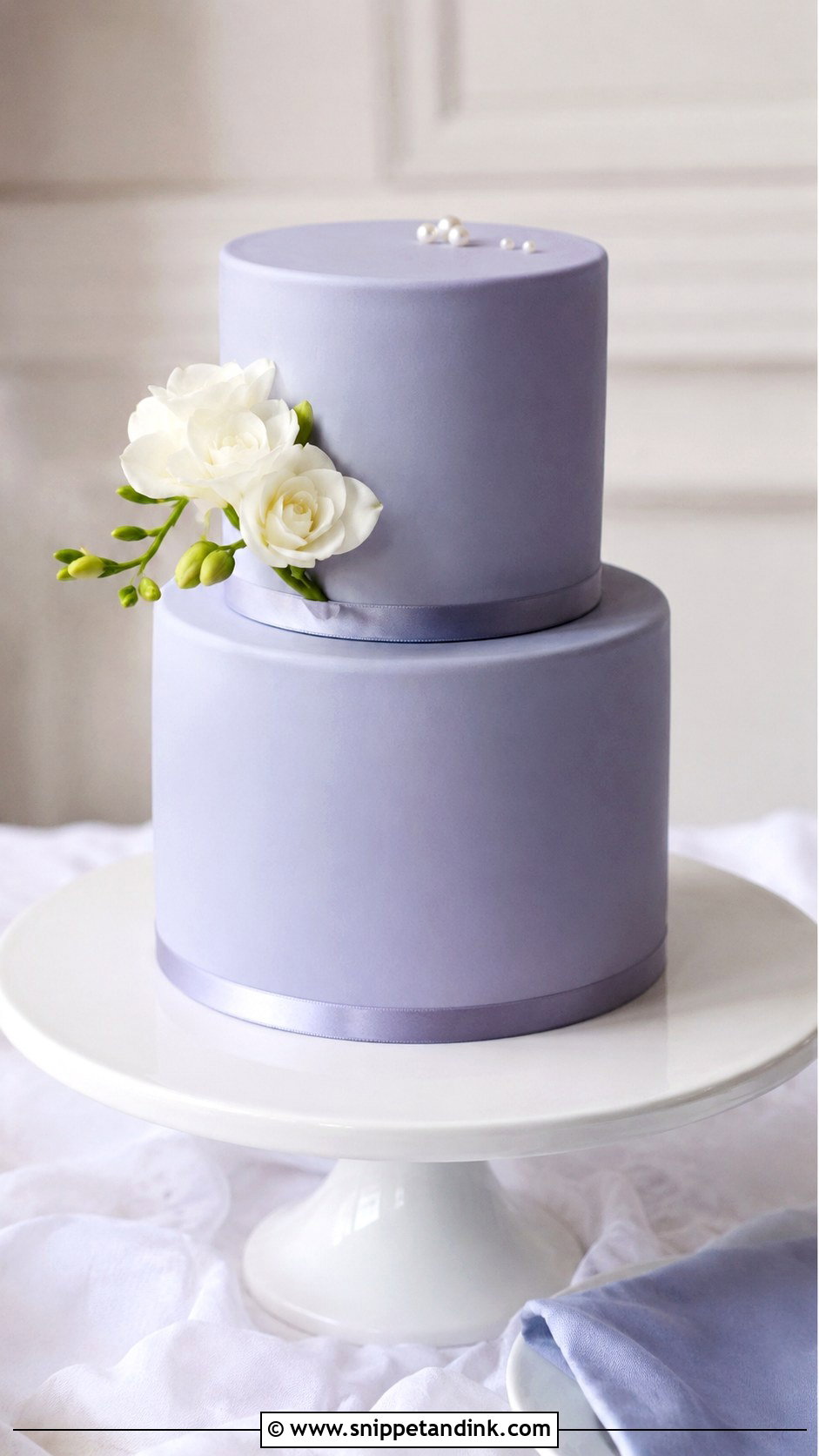
Minimal cakes look easy and are not. With no flowers to hide behind, every bulge, air bubble and soft corner shows, so this is where you want a baker whose smooth finish you have seen in person. One to three clean periwinkle tiers, then a single cluster of white flowers, one satin ribbon or one line of pearl piping. That restraint suits a courthouse celebration or a sleek modern venue with clear vases and white linen.
17. Periwinkle Garden Wedding Cake
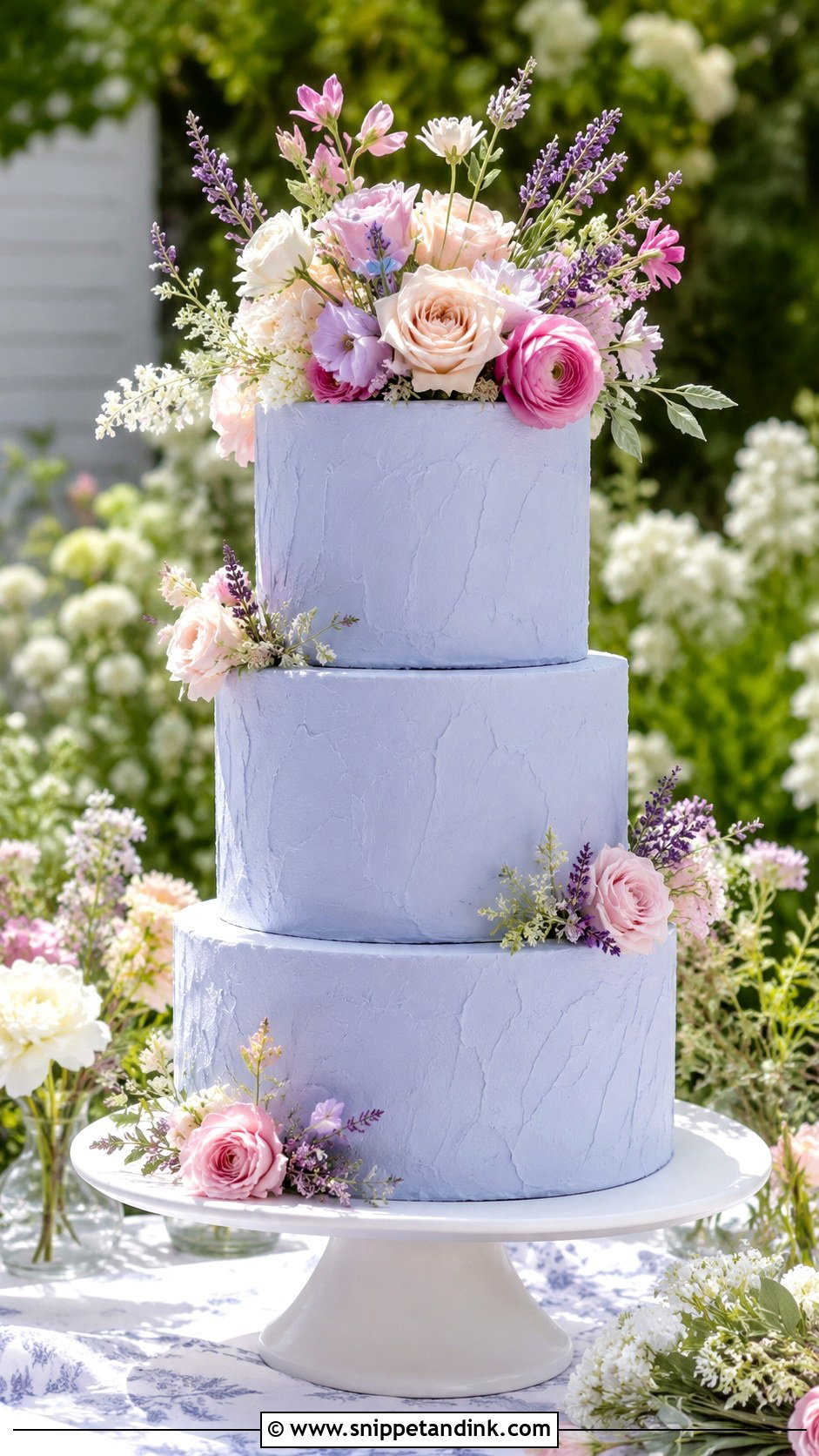
A garden cake should look as if it was picked that morning. I start with periwinkle buttercream, often lightly textured, then add roses, sweet peas, ranunculus and a few lavender sprigs with a little greenery to ground the pastel. Lavender looks charming but it is strongly scented and can perfume the top tier, so I use small sprigs and keep them off the cutting area. A cascade gives a romantic sweep; flowers around each tier feel fuller. It belongs at a tented or botanical reception, ideally matching the centerpieces.
18. Periwinkle Beach Wedding Cake
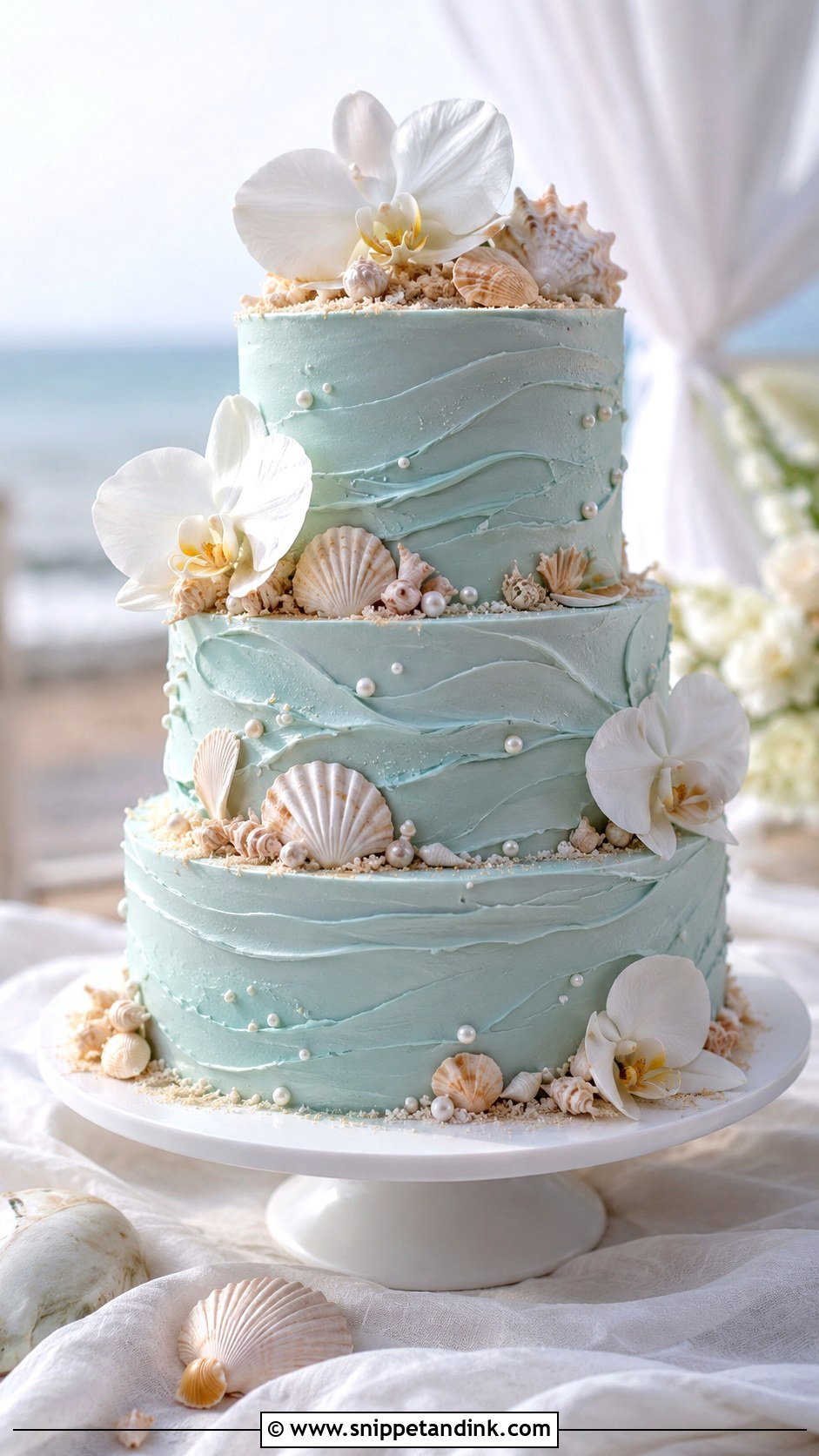
Periwinkle works well as a beach wedding cake because it sits close to sea glass and a hazy summer sky. I keep it elegant with a pale base, white buttercream waves and a few shell or pearl details, plus a little sand-colored sugar at the base for texture. The real issue on a beach is heat: buttercream softens fast outdoors, so the cake should wait somewhere shaded and cool, and come out shortly before the cutting. White orchids or roses keep it bridal rather than themed.
19. Periwinkle Square Wedding Cake
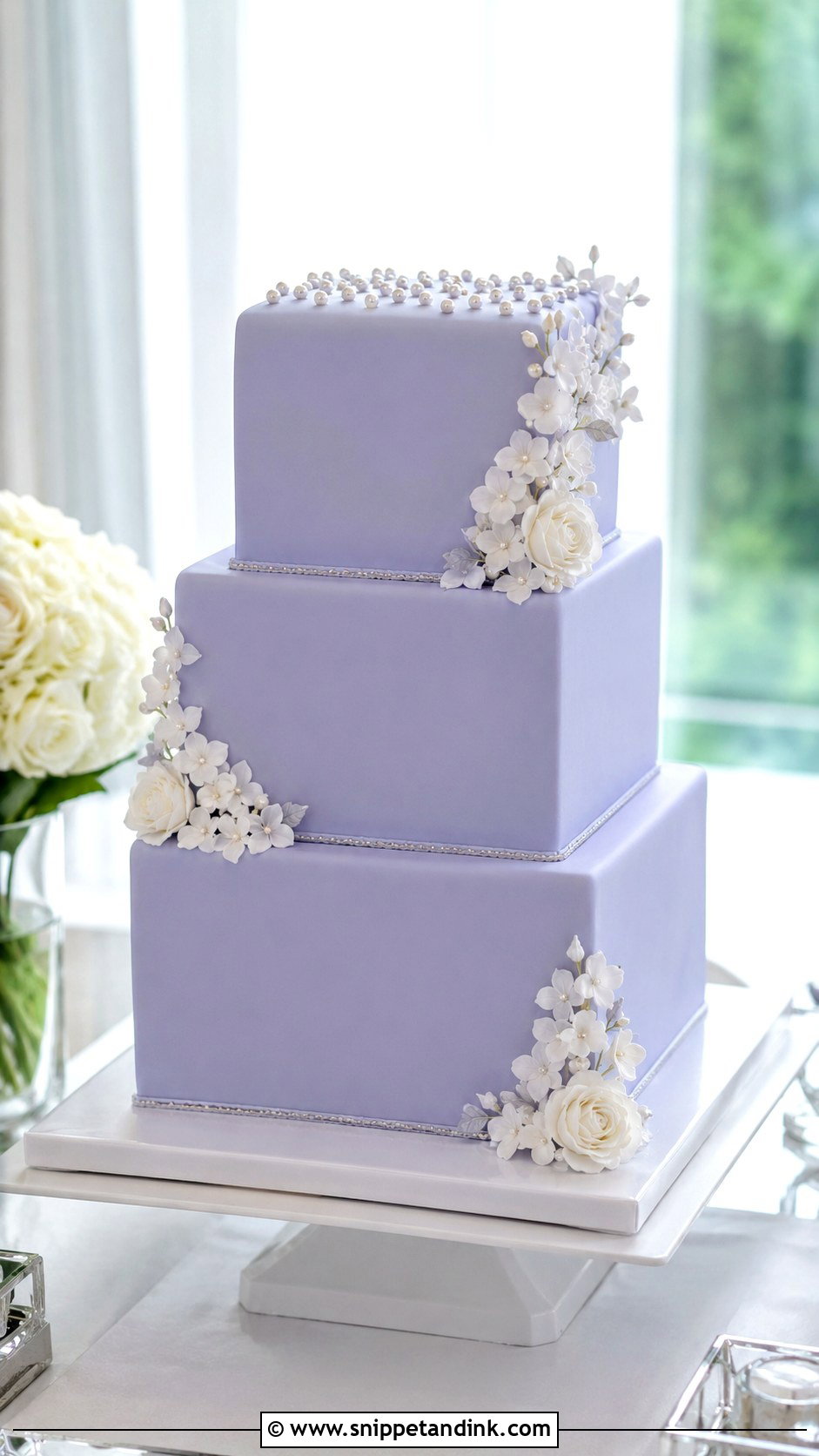
Square tiers give periwinkle a structured, modern edge. They need fondant to hold sharp corners, and they take longer to finish than round tiers, which some bakers reflect in the price. A square tier also serves more slices than a round of the same width, so you may be able to drop a size. White flowers at the corners, a silver monogram or fine piping lines are enough detail. Alternating square and round tiers works for a room with geometric decor.
20. Periwinkle Tall Tier Wedding Cake
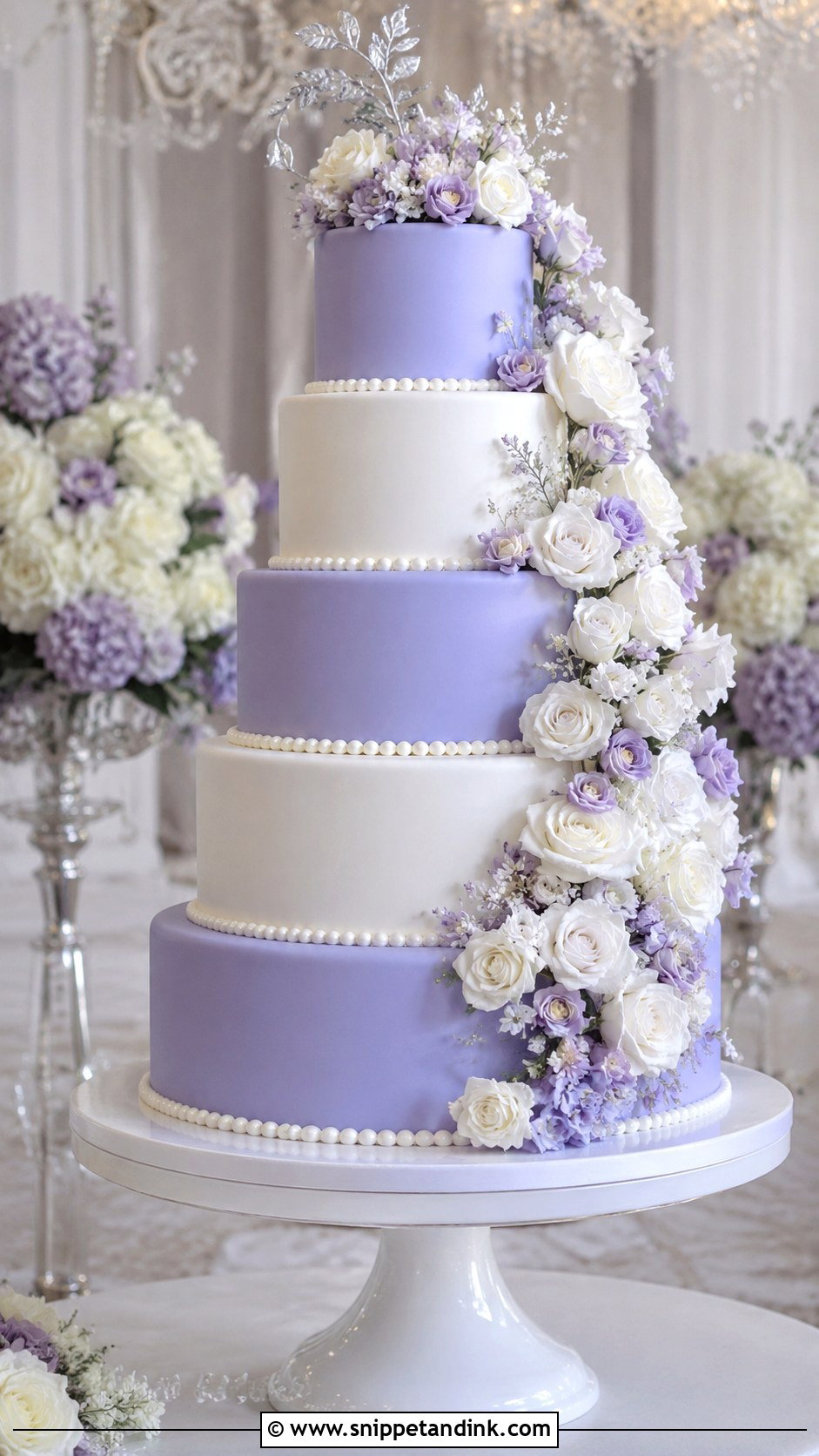
Four or five tiers create instant height, and periwinkle keeps that much cake from feeling heavy. Anything this tall needs internal supports in every tier and is usually transported in sections and stacked at the venue, so ask how your baker handles assembly and whether the table can take the weight. Balance the decoration with flowers between tiers, soft metallic detail or lace, and repeat one feature from top to bottom so it reads as one piece. It photographs well in full-room shots and gives guests a clear focal point when they walk in.
21. Periwinkle Small Wedding Cake
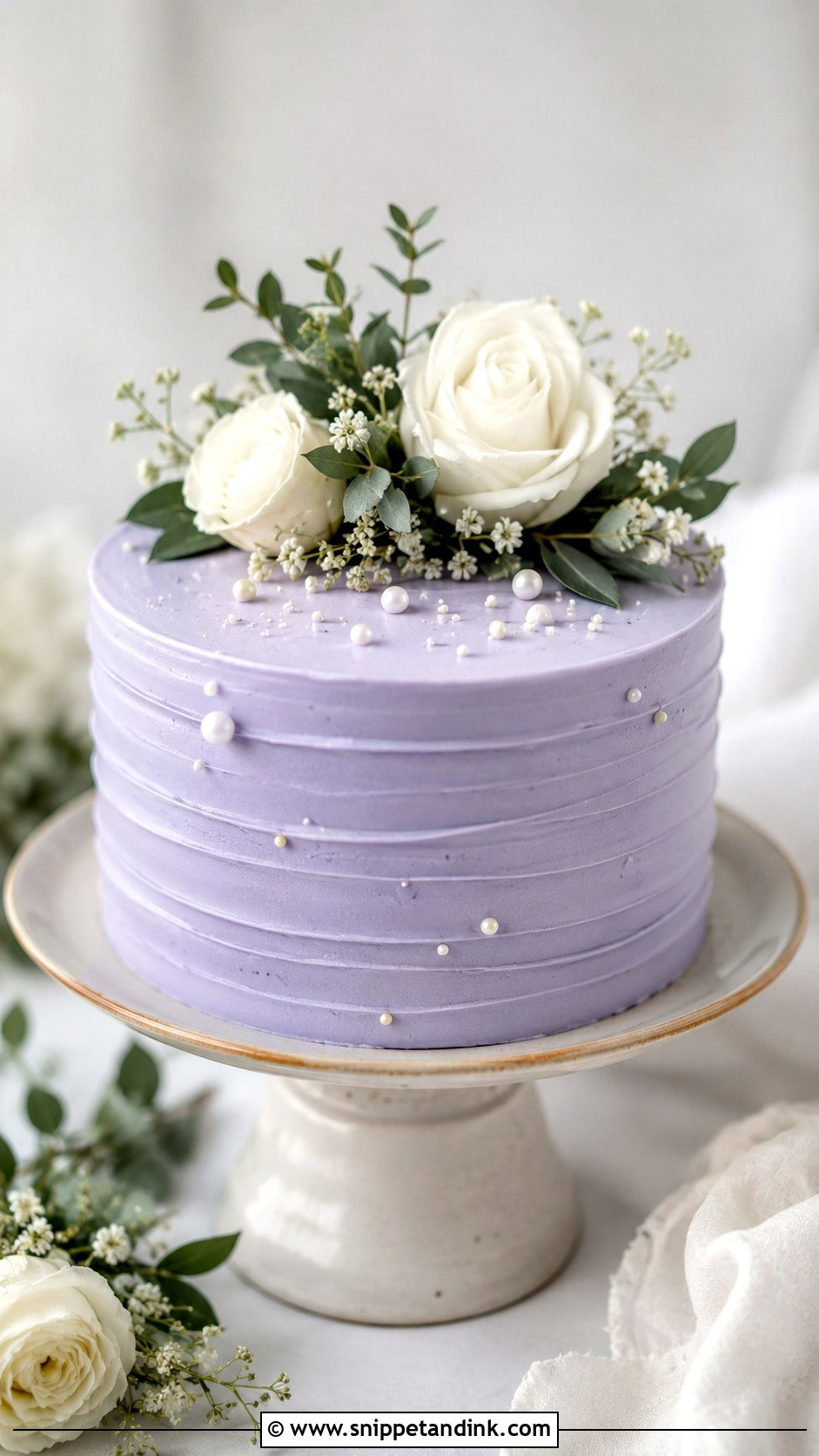
One or two tiers is often all an elopement or small dinner needs, and a smaller cake frees up budget for flavor. Almond raspberry, lemon elderflower or a good vanilla bean all sit well under smooth periwinkle buttercream. Put it on a tall stand so it has presence on a dinner table. With so little surface, one detail is enough: a few white flowers, a pearl border or a tiny floral topper.
22. Periwinkle Cupcake Wedding Cake
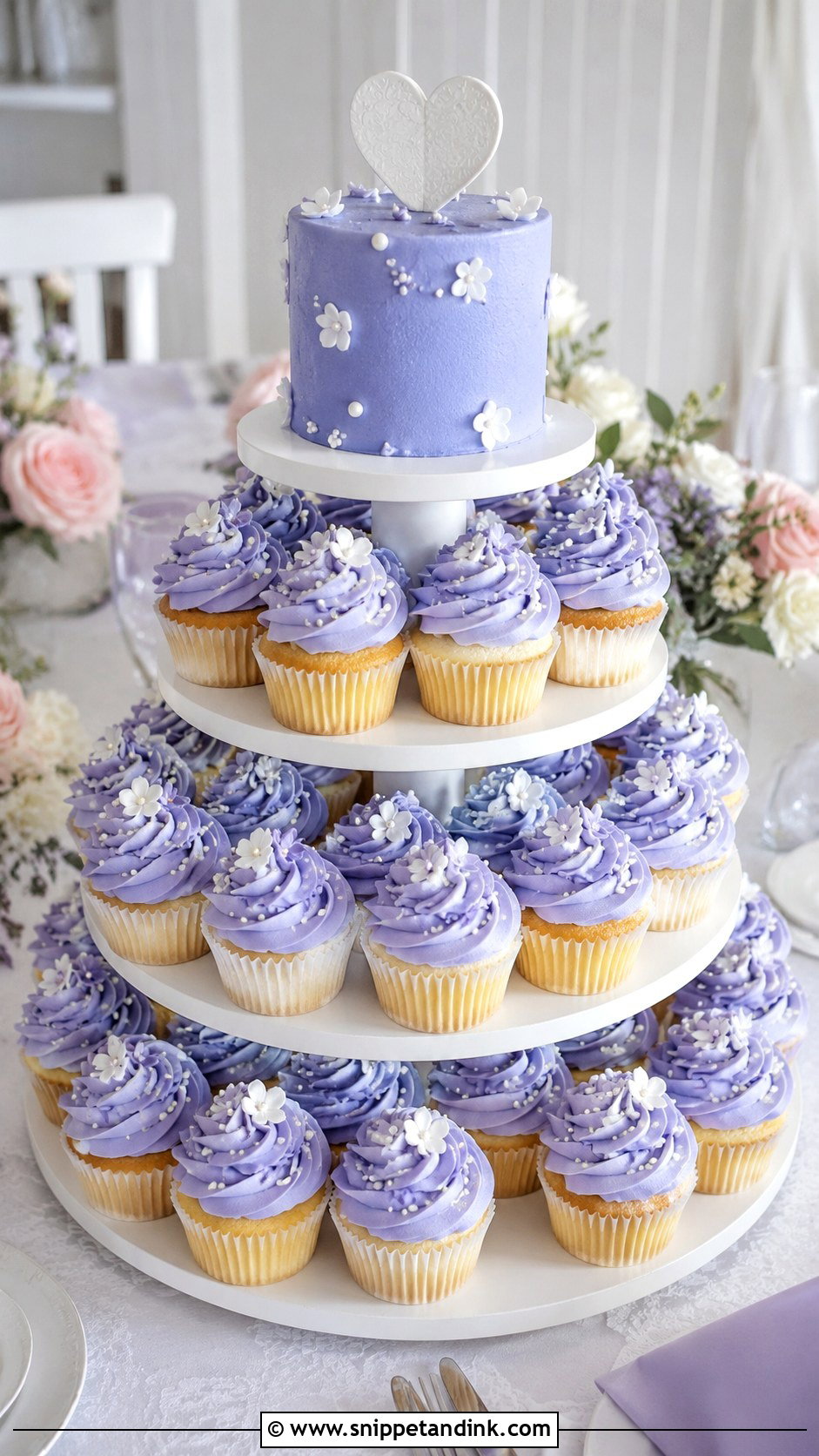
Cupcakes solve the serving problem: no cutting fee, no queue, and guests help themselves. Arrange them on a tiered stand with a small cutting cake on top for the photos. I pipe the periwinkle swirls from one batch of buttercream, because mixing color twice almost never matches exactly and the stand shows every difference. Pearl sprinkles, small sugar flowers or white fondant hearts tie it together, and vanilla, lemon, almond or lavender keep the flavors in the same soft family. It fits a relaxed garden reception or a long dessert table.
23. Periwinkle Macaron Wedding Cake
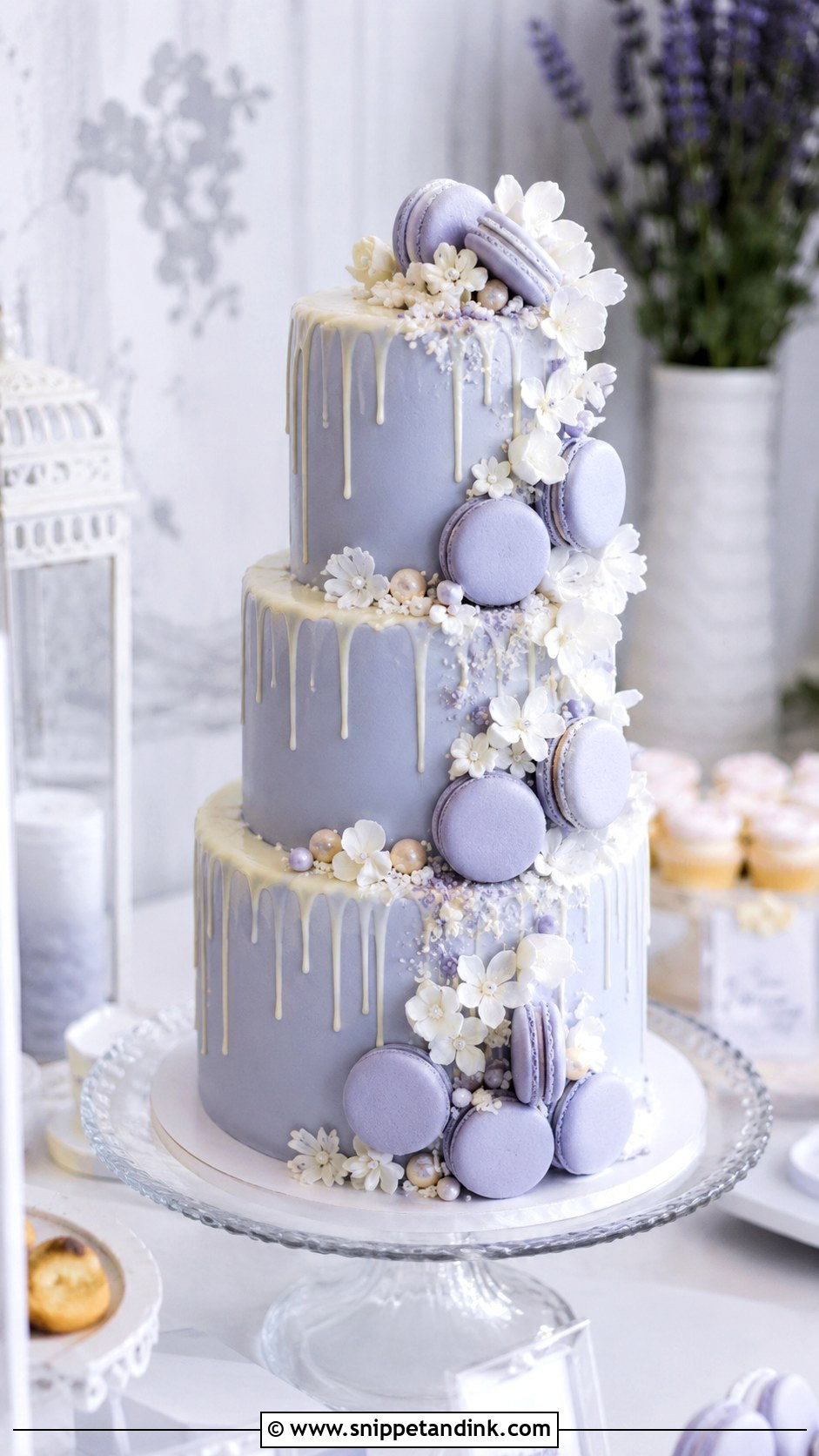
Macarons add color, height and texture, and they let the cake match a French-inspired dessert table. The practical snag is moisture: a macaron pressed into buttercream slowly softens, so I attach them as close to the reception as possible. Cover the tiers in smooth buttercream, then place the macarons around the tiers or in a cascade, with a few white flowers or a light drip to finish. Vanilla bean, lemon, almond or lavender honey keep the flavors light. Resist adding more decoration; the macarons are already the detail.
24. Periwinkle Pressed Flower Wedding Cake
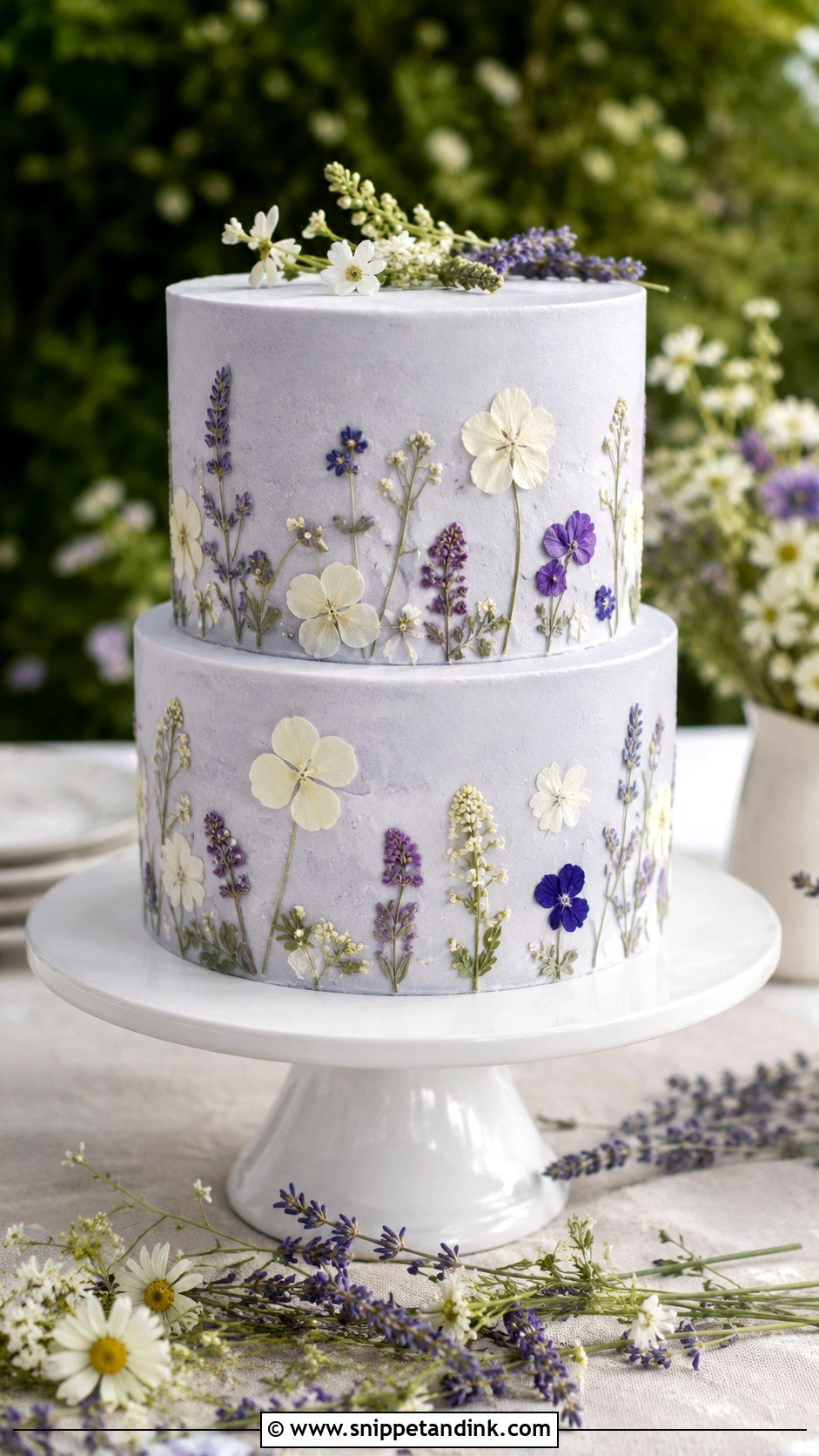
Pressed flowers need a smooth base so their outlines show, and pale periwinkle buttercream works well behind white, lavender and blue blooms. I use only edible flowers here, violas, pansies and cornflowers being the usual choices, pressed flat and set onto chilled icing so they don’t slide. They can fade or brown if the cake sits in direct sun, so this one wants a shaded spot at an outdoor wedding. A plain white stand and simple linen let the tiny details stay the focus.
25. Periwinkle Celestial Wedding Cake
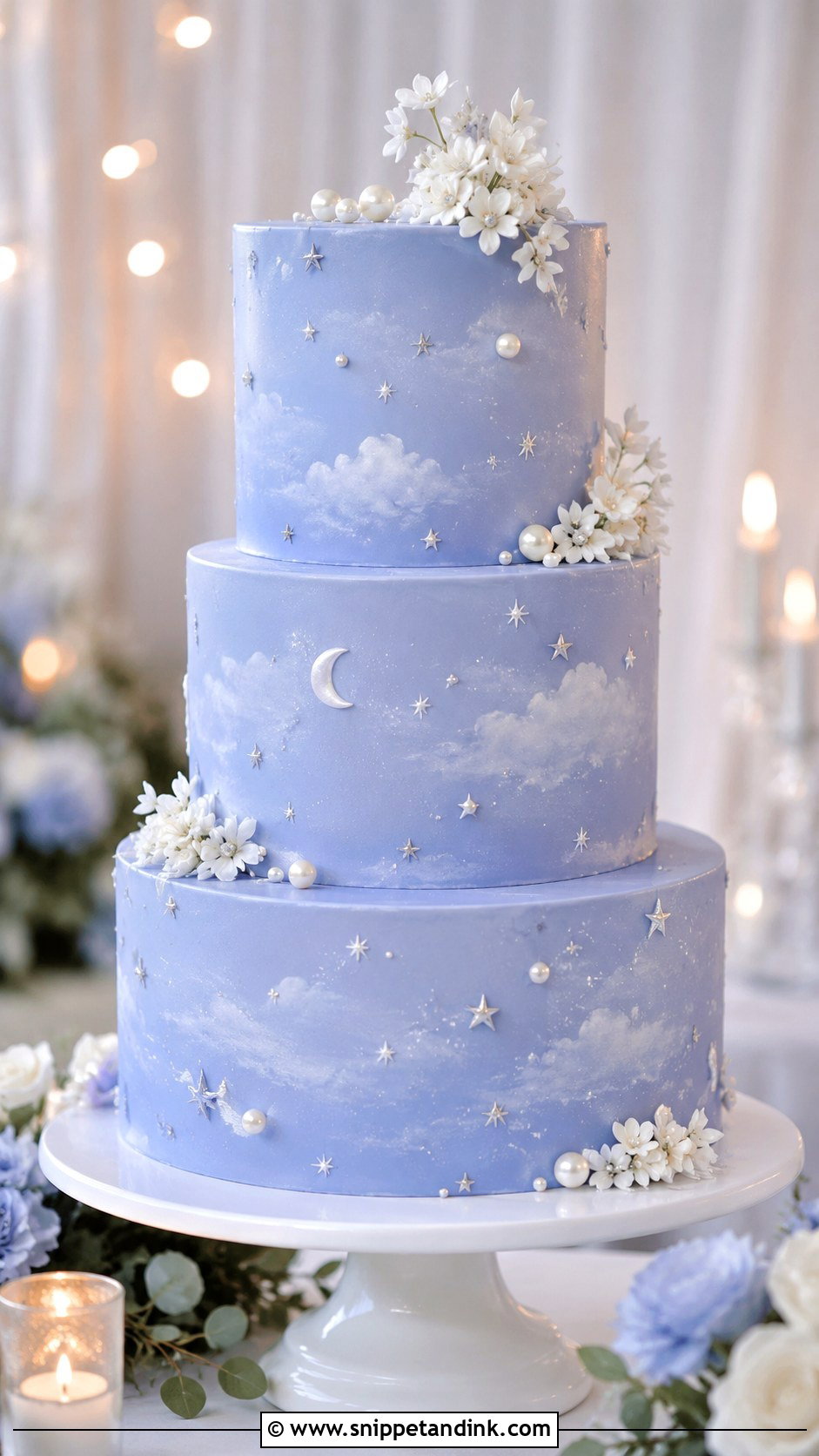
Celestial cakes use edible stars, pearl moons, silver shimmer and soft cloud-like buttercream on a periwinkle base. Keep the color light; push it darker and it starts to look like a children’s space party rather than a wedding. I apply the shimmer sparingly with a dry brush, since a heavy coat looks chalky in daylight. It is at its best under candlelight or string lights at an evening reception or in a tent. A few white sugar flowers bring it back toward bridal.
From the Bakery Fridge to the Cake Table
Most of what goes wrong with a pastel cake happens after it leaves my kitchen. Buttercream cakes travel chilled and firm, then need time at room temperature so the icing softens before anyone cuts it. Fondant has a different quirk: a cake moved from the fridge into a warm, humid room can bead with condensation, and that water can streak a painted or dusted finish. I let fondant tiers adjust in their box before unpacking them.
Questions worth asking at your tasting
- Will the tiers travel stacked or be assembled at the venue, and who sets up the flowers?
- Are any fresh flowers going on the cake, and how will the stems be sealed or wrapped?
- Where will the cake stand, and is that spot out of direct sun and away from heaters?
- How long can this finish sit out before the icing or decorations start to suffer?
- Does your quote include delivery, a cake stand and cutting, or are those separate?
For timing, I’d start conversations with a baker several months ahead in a busy season, and confirm the final design, flavors and guest count a few weeks before the date. Sugar flowers in particular take time to make and dry, so a design built around them is not one to leave late.
Bring a Paint Chip of Your Periwinkle to the Tasting
Periwinkle gives you color without noise. It can look classic with white roses, modern with marble or soft with ruffles, and it sits easily with silver, gold, ivory, blush, lavender and sage. The single most useful thing you can do is hand your baker a physical sample of the exact shade, a paint chip, ribbon or fabric swatch, and ask to see it under the lighting you will actually have. Plan around your venue, season and table, and a simple tiered cake can feel every bit as personal as an elaborate one.
You'll Like These Ideas:





Leave a Reply