
The Thai wedding cakes I enjoy making most carry one or two cultural details done properly, not ten done quickly. A sugar lotus, a draped jasmine garland, a line of gold, and then the flavour does the rest: coconut, pandan, Thai tea, mango. Some couples want a classic tiered cake with a quiet nod to home. Others want the whole table to feel like a spread of Thai sweets with a cake at the centre. Below are twenty designs, each with a note on how it is built and where it can go wrong.
What Coconut, Pandan and Fresh Mango Do Inside a Stacked Cake
Thai flavours are wonderful, but several of them behave differently from vanilla and chocolate once they sit inside a tall cake. I talk couples through this at the tasting, because it shapes what we can promise on the day.
- Coconut cream fillings are soft and perishable. They need refrigeration and a firm dam of buttercream around each layer so the tiers don’t bulge under weight.
- Fresh mango and lychee release juice. Inside a tier I use them as a cooked curd or compote; fresh pieces only go on top, late.
- Pandan gives a muted green from the real leaf. If you want the bright green from photos, that colour is added.
- Thai tea flavour fades if the sponge is only brushed with it. I steep the tea into the milk for the batter and the syrup.
None of this rules a flavour out. It just means a mango or coconut cake is usually assembled closer to the wedding and kept cold until the last practical moment. If your venue has no fridge space for a tiered cake, mention it before you settle on a filling.
1. Thai Lotus Wedding Cake
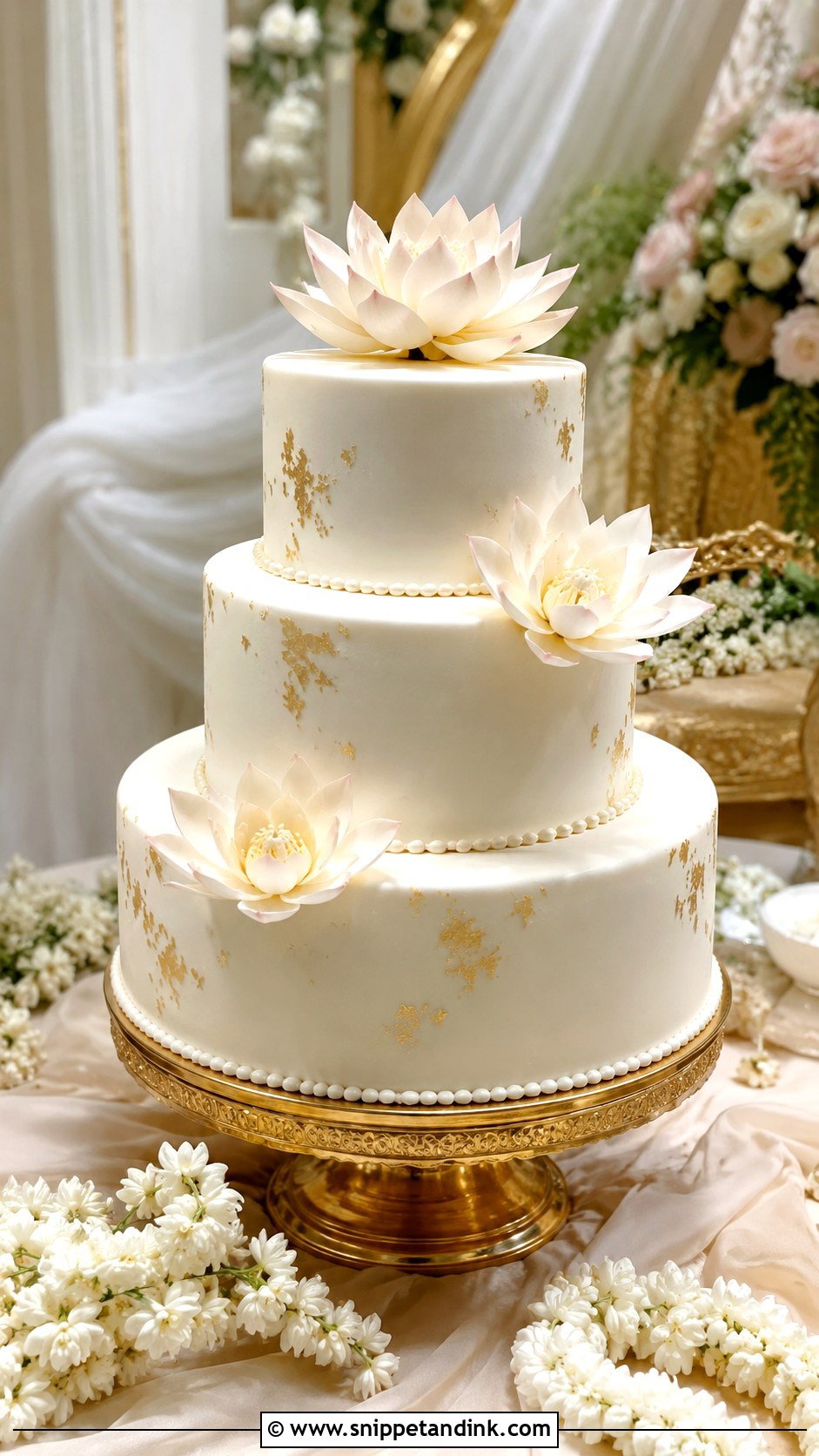
Lotus is the design I suggest when a couple wants meaning without clutter. One large sugar lotus on the middle tier, a few closed buds and a little gold leaf is usually enough, set against ivory, pale blush or soft gold icing. Gumpaste lotus petals are thick and cupped, so they take several days to dry properly before assembly; that is one reason I ask for final designs early. A three-tier stack gives height for photos. Inside, coconut vanilla or a pandan cream filling ties it back to the theme.
2. Thai Jasmine Garland Wedding Cake
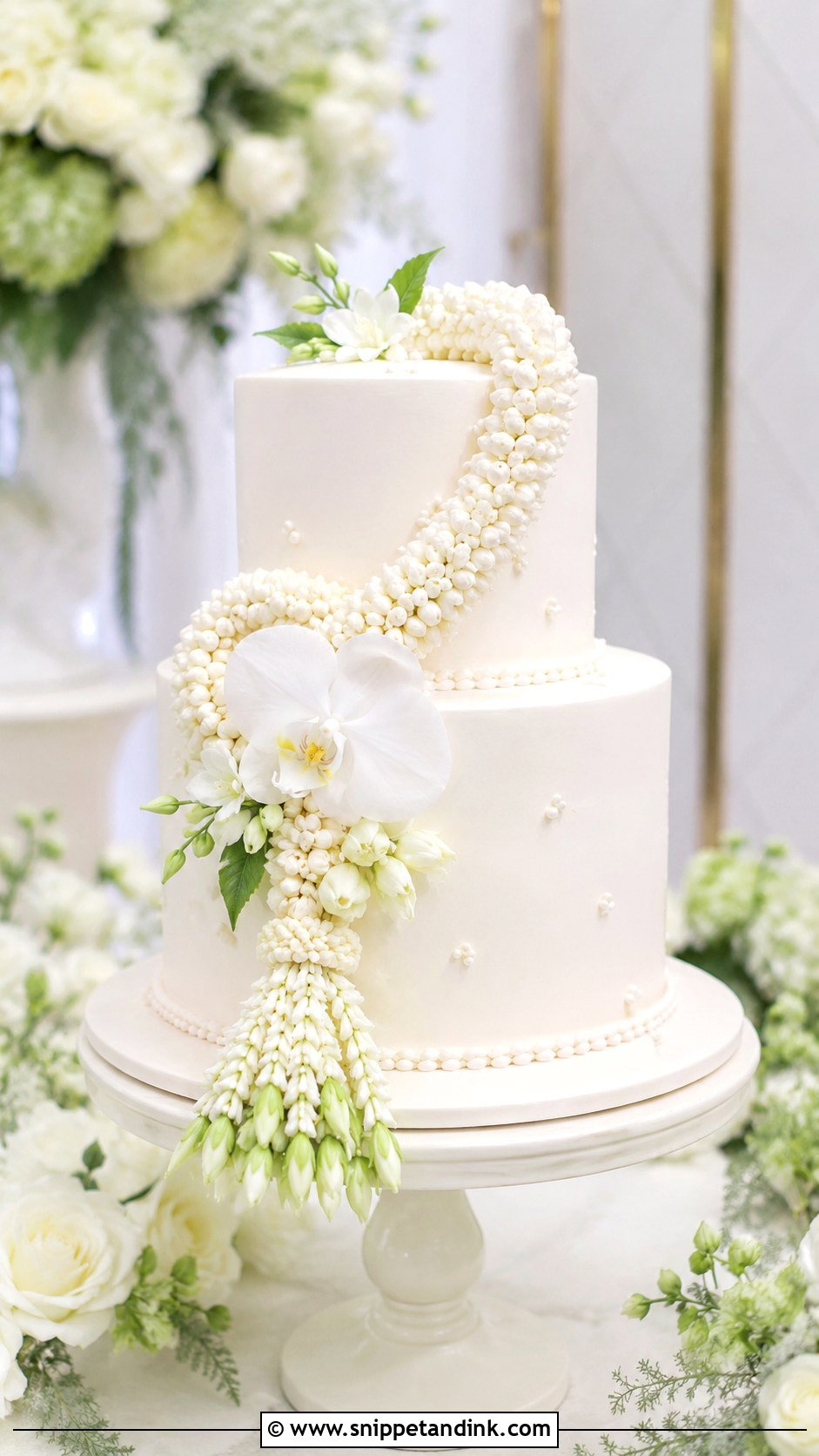
This one borrows from phuang malai, the threaded jasmine garlands used in Thai ceremonies. The garland should swag loosely from tier to tier, with gaps of plain icing between, otherwise it reads as a busy border. I pipe or model tiny jasmine buds one at a time, and that is slow work, so a full garland around every tier adds noticeably to the decorating hours. White or ivory icing with pearl piping keeps it soft. Coconut milk sponge with vanilla buttercream, or a light pandan filling, suits it.
3. Thai Gold Wedding Cake
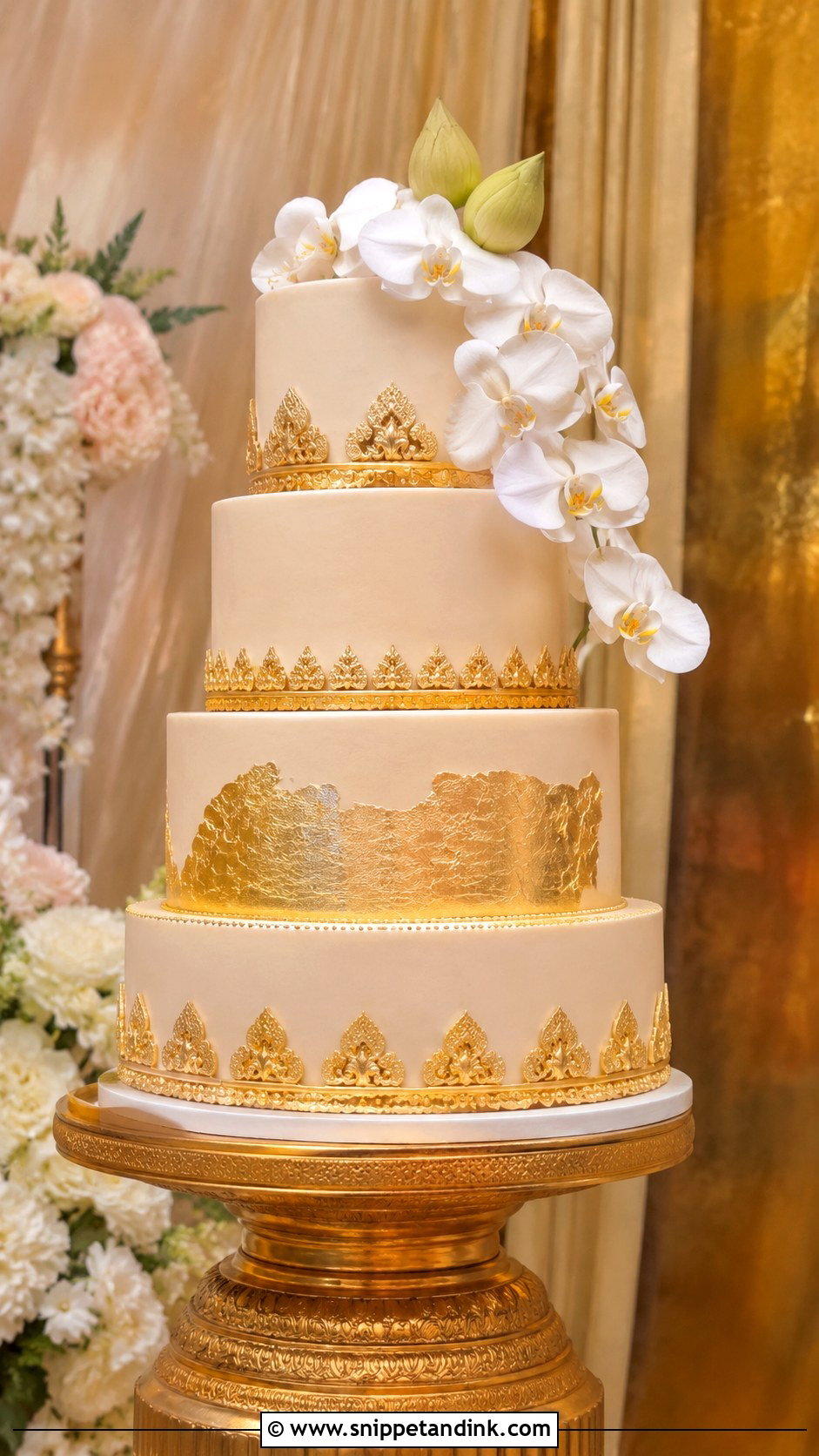
Gold works hardest in a ballroom or candlelit room, where it catches light from every side. My rule is restraint: one gilded tier between white ones, a brushed gold panel, or flakes of edible gold leaf, never the whole cake. Gold lustre dust mixed with alcohol paints well onto fondant but streaks on soft buttercream, so if you want a solid metallic tier, expect that tier to be fondant or chilled ganache. Orchids or jasmine soften it. Thai tea, coconut or vanilla bean sit comfortably under all that shine.
4. Thai Orchid Wedding Cake
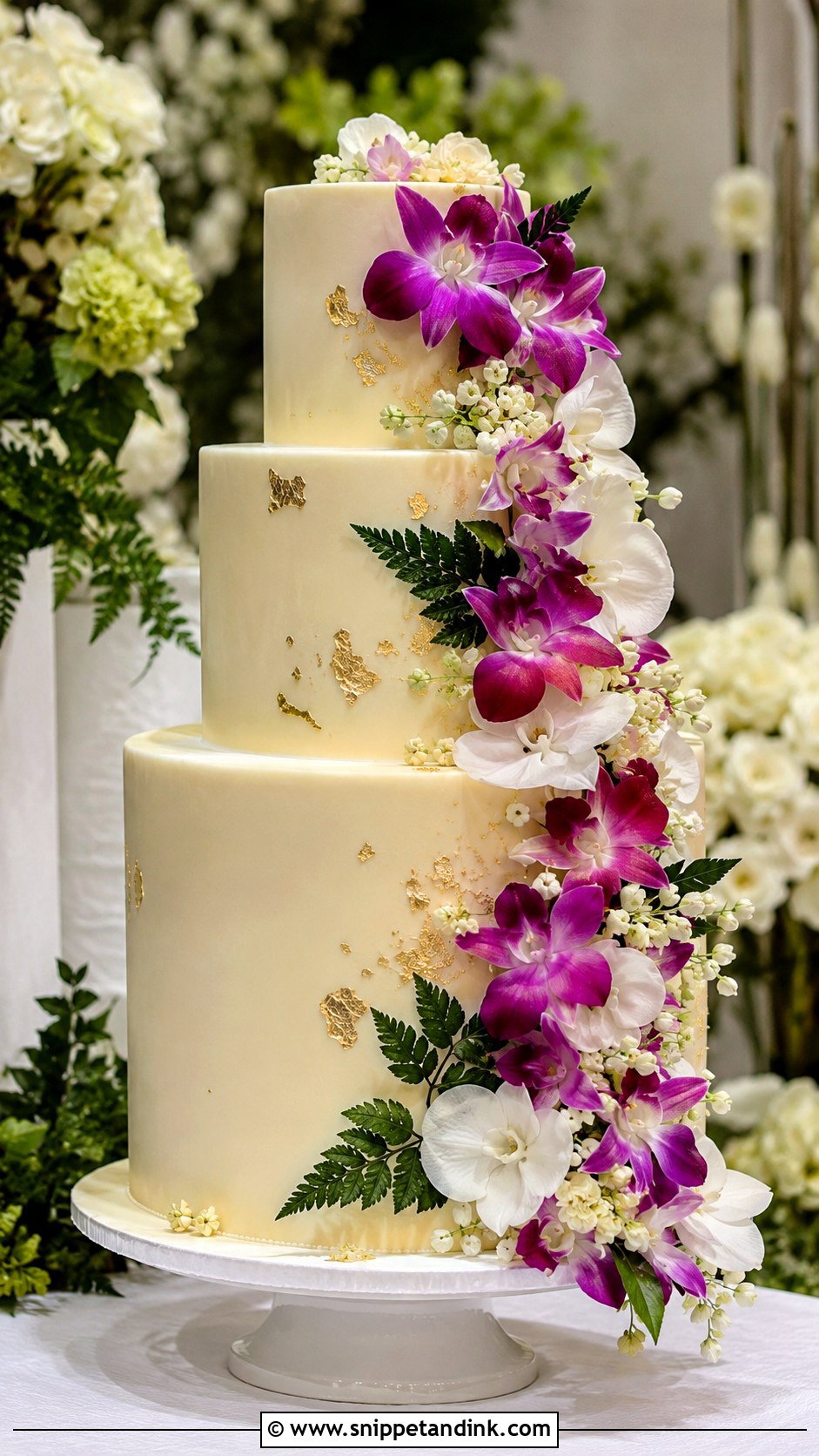
A Thai orchid wedding cake can lean tropical without looking like a beach party, as long as the icing stays smooth and pale. A cascade down one side of a tall three-tier suits a big room; small clusters at the base of each tier suit a garden. If you want fresh orchids rather than sugar ones, they must be grown without sprays and kept off the icing with a barrier, because cut flowers sold for vases are often treated. Coconut sponge with lychee cream, or vanilla with passion fruit curd, matches the mood.
5. Thai Mango Sticky Rice Wedding Cake
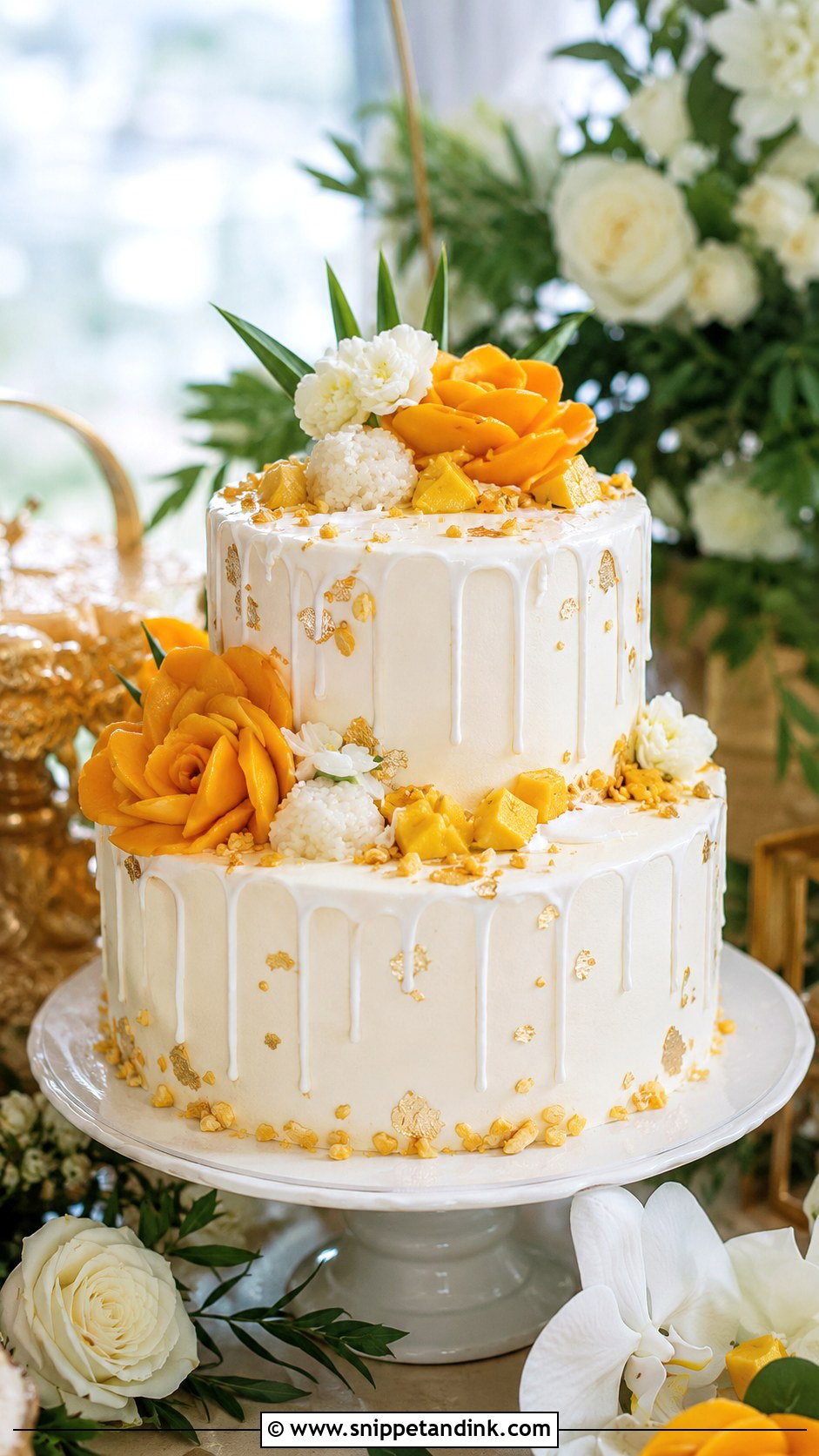
Turning mango sticky rice into a tiered cake takes some translation. Real glutinous rice is dense and goes hard when chilled, so I don’t stack it inside a tier; instead the sponge is coconut, the filling is mango curd, and a thin layer of coconut cream carries the sticky rice flavour. Fresh mango slices shaped into petals look wonderful but weep juice within hours, so they go on at the venue, not the night before. A toasted mung bean crunch on top finishes it. Guests recognise the flavour straight away.
6. Thai Tea Wedding Cake
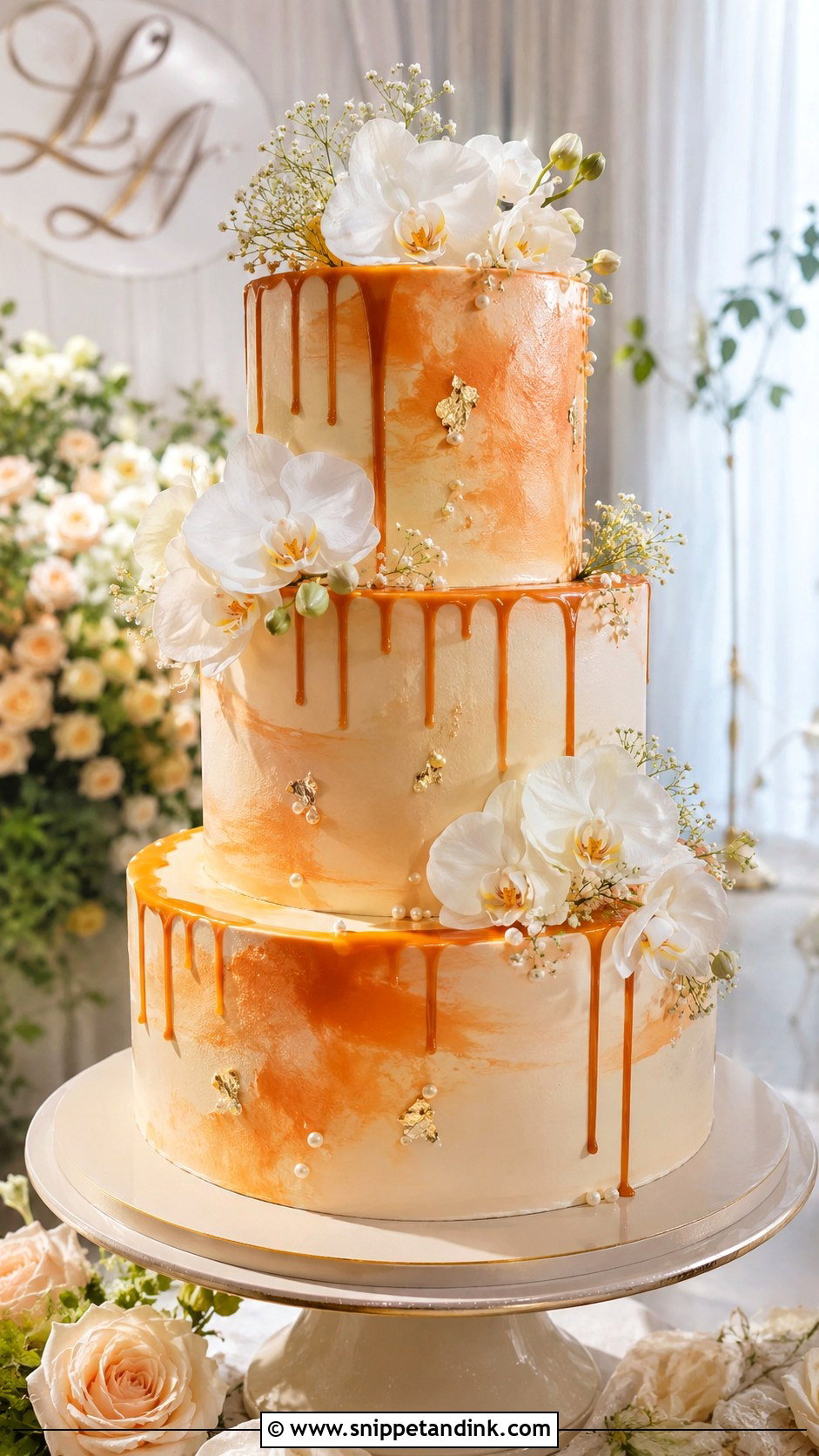
Thai tea is the flavour I see win over guests who never order anything unusual. Keep the colour inside: a tea-soaked sponge with ivory buttercream outside, maybe a caramel drip or a faint orange watercolour wash. The bright orange of street-stall Thai tea comes partly from colouring in the tea mix, so a cake made with plain brewed tea will be a softer amber, which I actually prefer at a wedding. A condensed milk buttercream echoes the iced drink; I balance it with a less sweet sponge.
7. Thai Pandan Wedding Cake
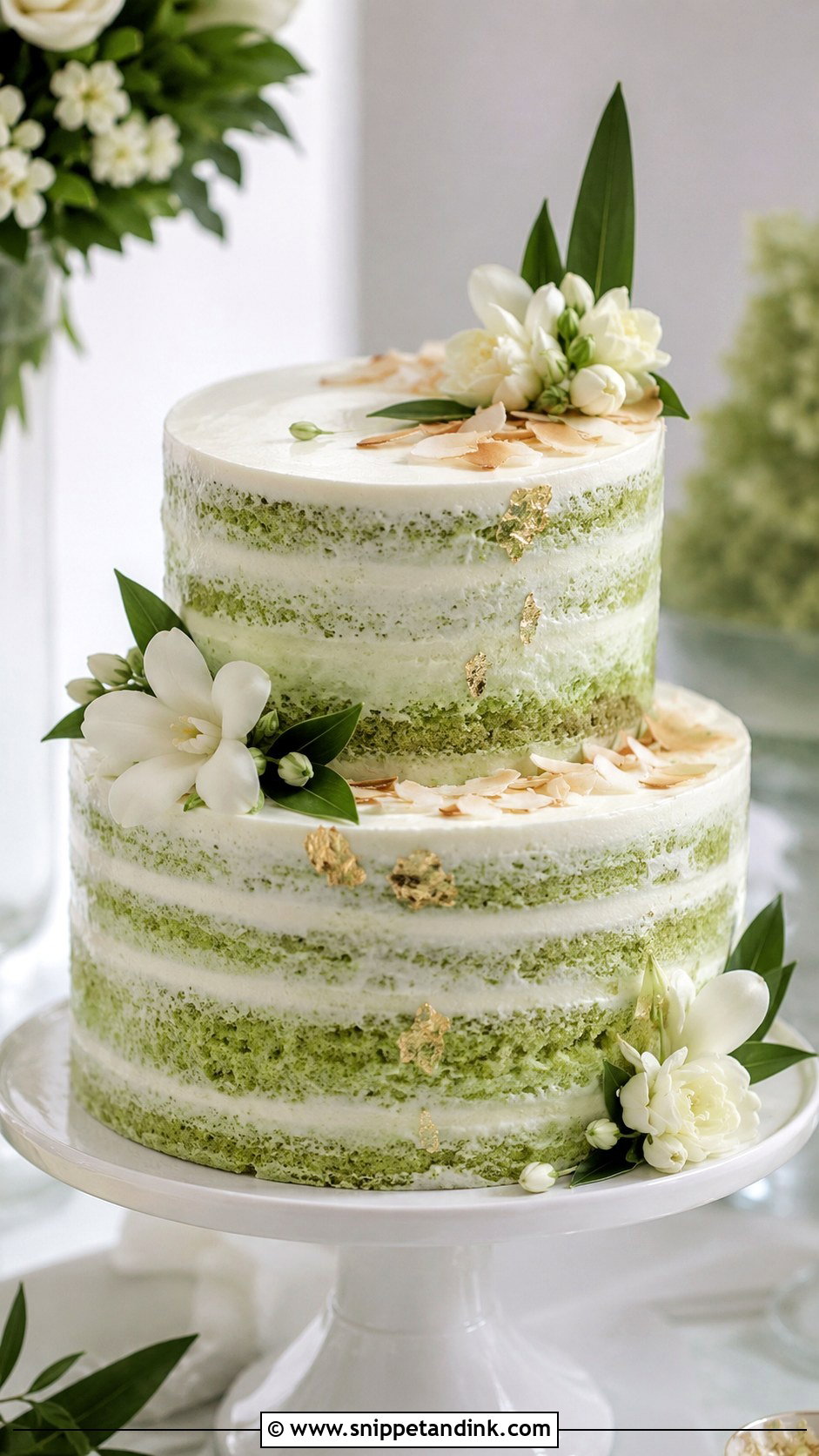
Pandan is fragrant and grassy, and its colour is the first thing couples ask about. Natural pandan juice gives a gentle sage green; the vivid green in many photos comes from pandan paste with added colouring. I tell couples which they are getting before they fall for a picture. Shown in a semi-naked tier or a sliced display, the green is the decoration. Smooth coconut buttercream or white chocolate ganache outside, with coconut flakes or a few jasmine flowers, keeps it calm. Palm sugar in the filling softens the flavour for first-time tasters.
8. Thai Coconut Wedding Cake
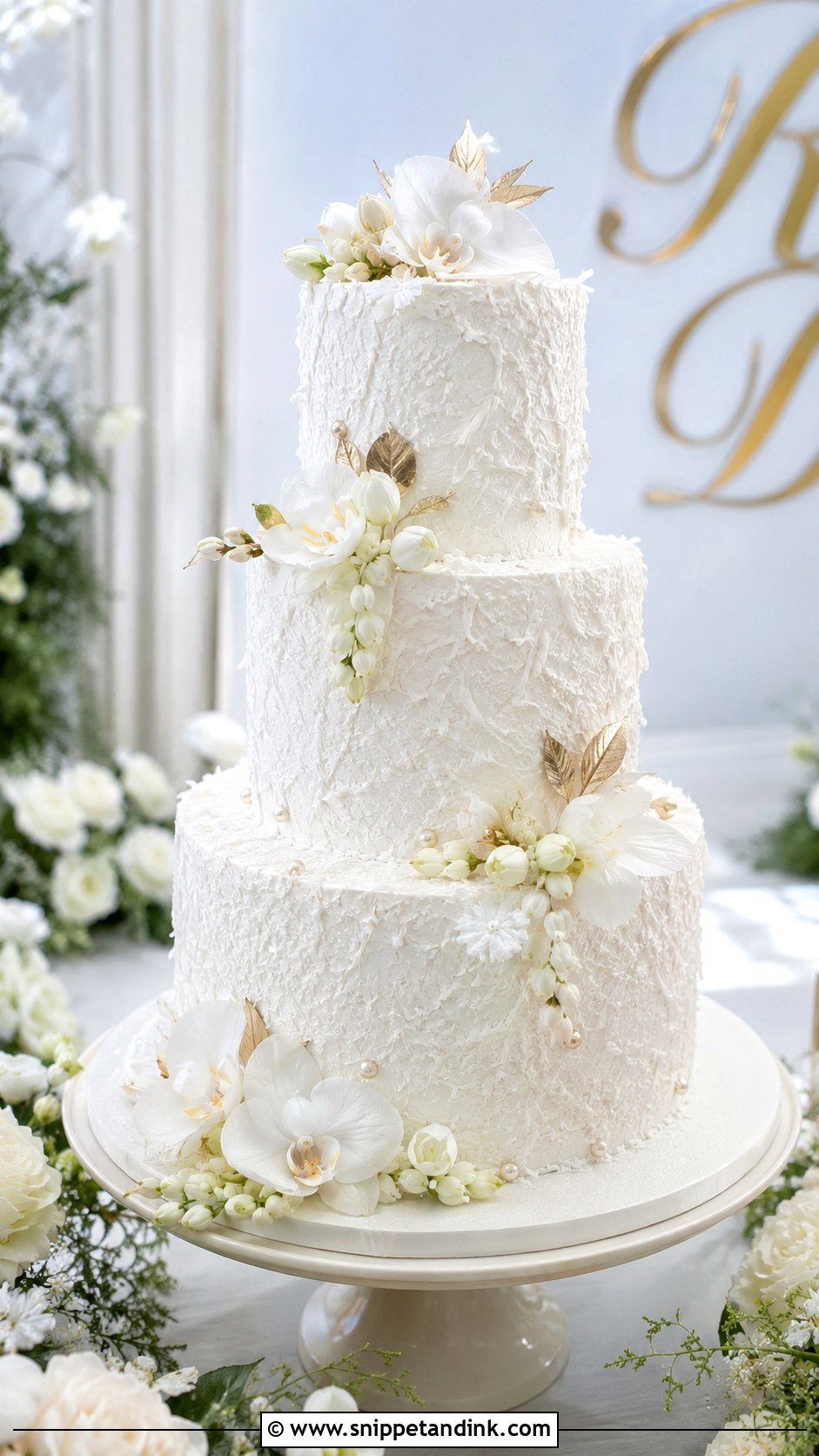
If your guest list is wide, coconut is the safest Thai flavour I know. It tastes familiar and still feels like a nod to the cuisine. I soak the sponge lightly with sweetened coconut milk so it stays tender, then fill and cover in coconut buttercream. Pressed coconut flakes around the bottom tier add texture; on every tier they start to look casual. White orchids or a few gold-edged leaves bring it back to formal. It works with any colour palette, which makes life easy when the decor is still undecided.
9. Thai Banana Leaf Wedding Cake
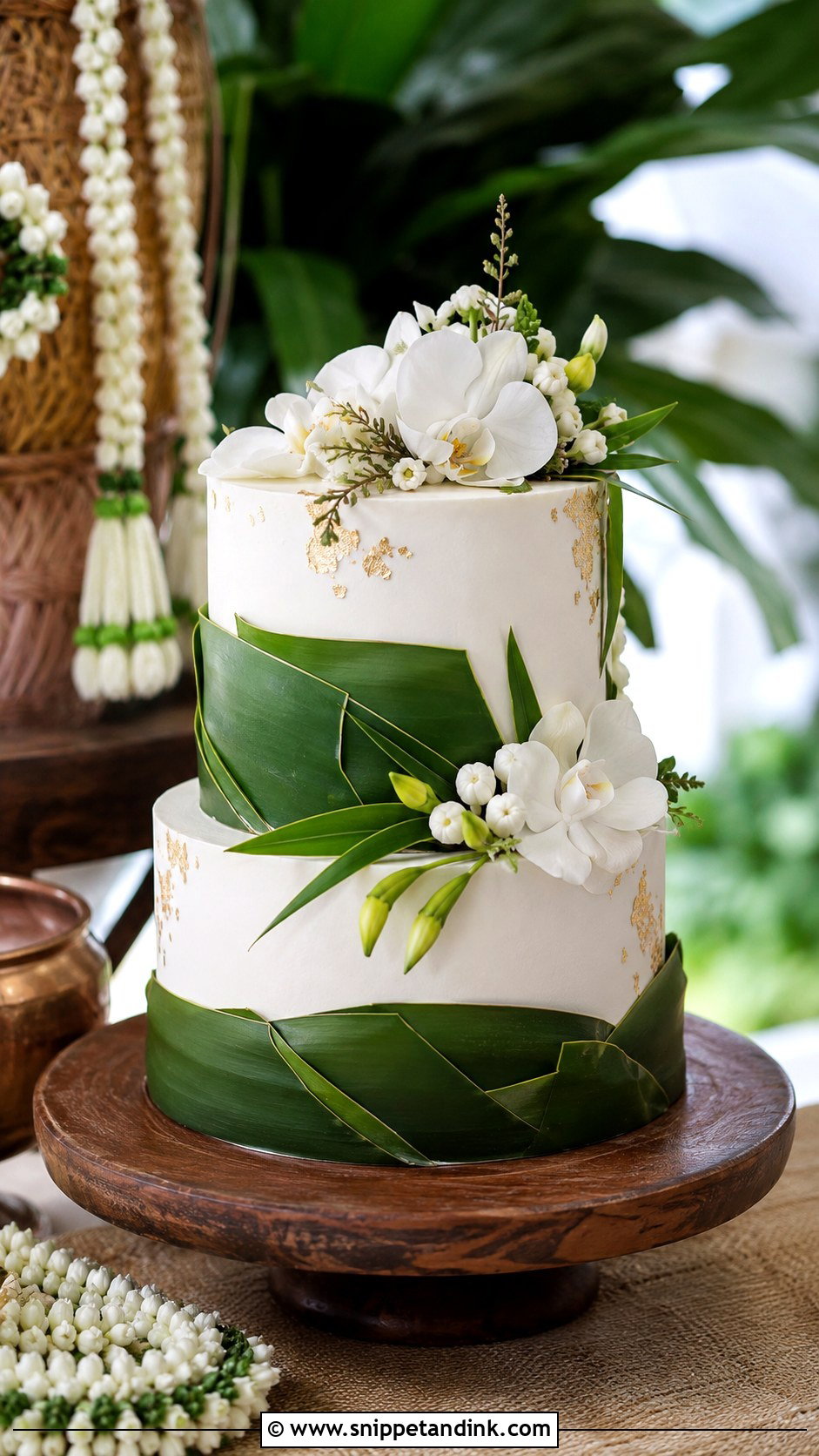
A Thai banana leaf wedding cake uses deep green leaf texture as its whole design. I can do it with printed edible panels, hand-painted leaves, or real banana leaves wrapped around the base. Real leaves need washing, wiping with a little oil and a barrier between leaf and cake; they also darken and curl at the edges after a few hours in air conditioning. White coconut buttercream with green accents looks crisp. Banana coconut cake, pandan sponge or palm sugar caramel all suit it.
10. Thai Watercolor Wedding Cake
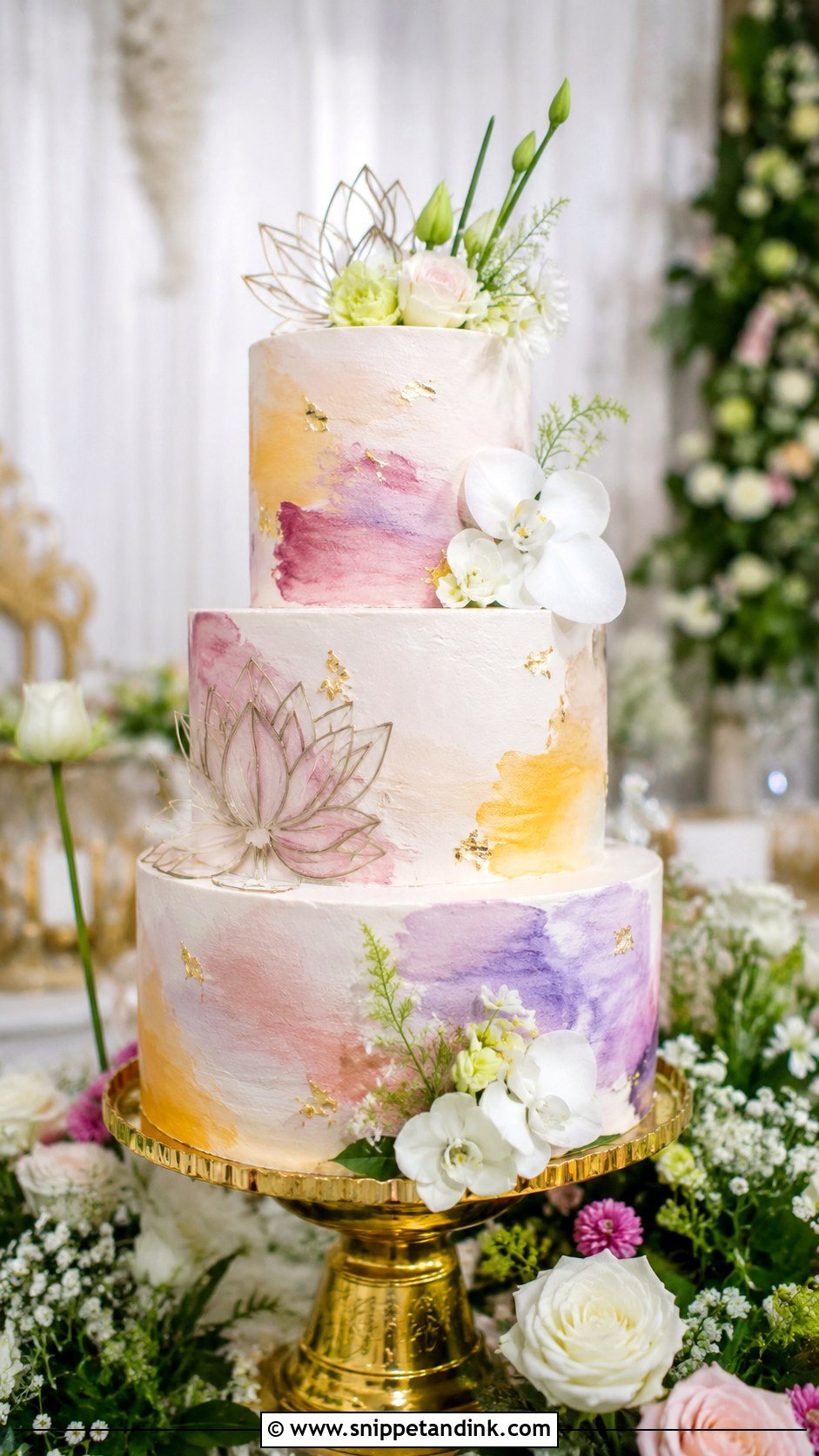
Watercolour is a soft way to bring in Thai colours without drawing anything literal: pale gold, blush, orchid purple, mango yellow, a hint of pandan green. I paint it onto chilled buttercream with a palette knife and tinted cream, which gives that brushed, blended edge. Too many colours turn muddy where they meet, so I stop at three. A few sugar flowers or a lotus outline finish it. Vanilla coconut or Thai tea cream inside suits the gentle palette.
11. Thai Temple Inspired Wedding Cake
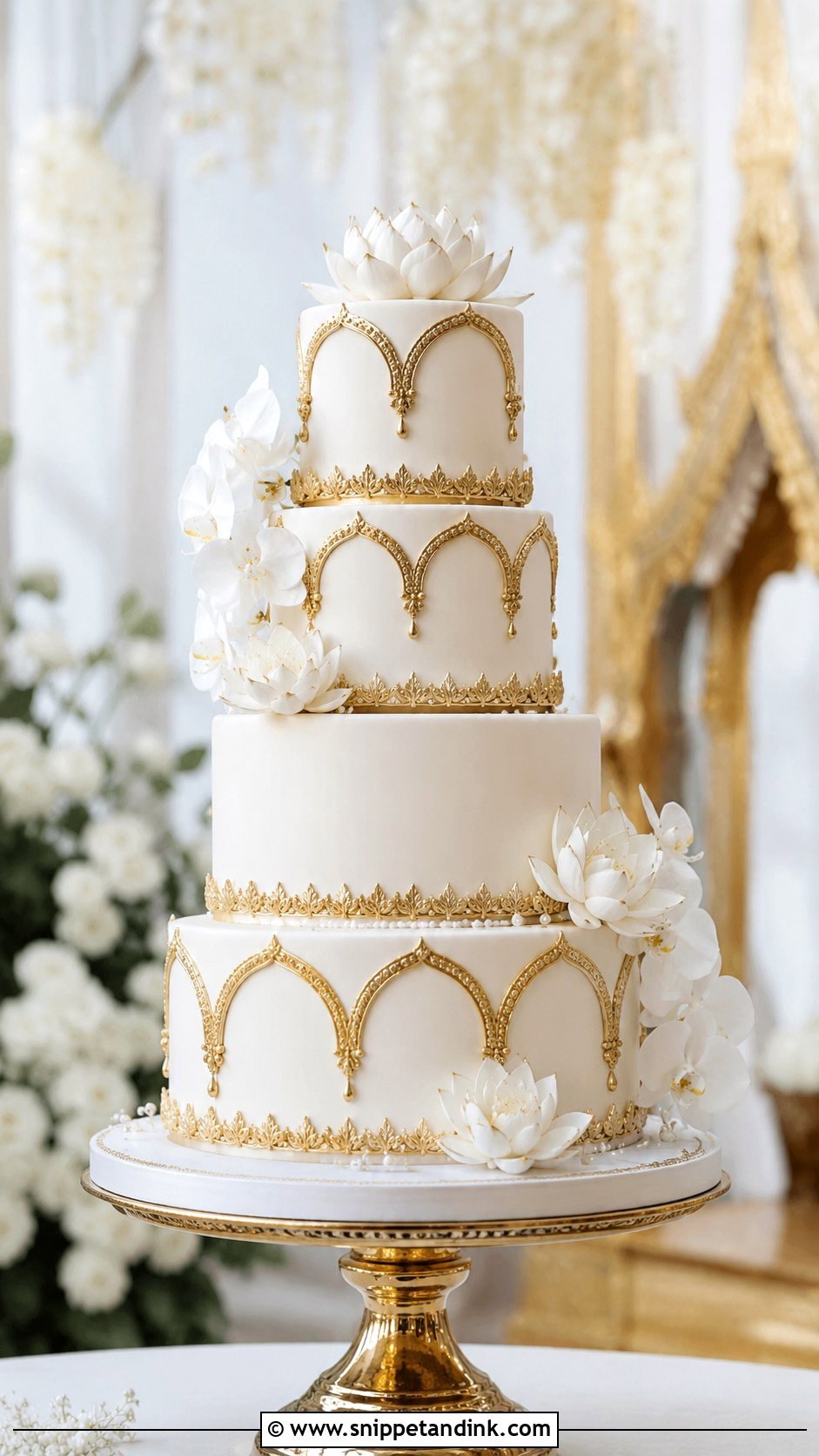
Temple architecture is gorgeous and very easy to overdo on a cake. I take one element, the curve of a gable or a repeating ornamental border, and pipe or stencil it in gold on clean white tiers. Sculpting roof shapes in sugar looks heavy and adds weight the tiers have to carry. A tall three- or four-tier stack gives the pattern room. Lotus or orchids at the base soften the formality. Some families feel strongly about sacred imagery on food, so check with parents before choosing this one.
12. Thai Silk Wedding Cake
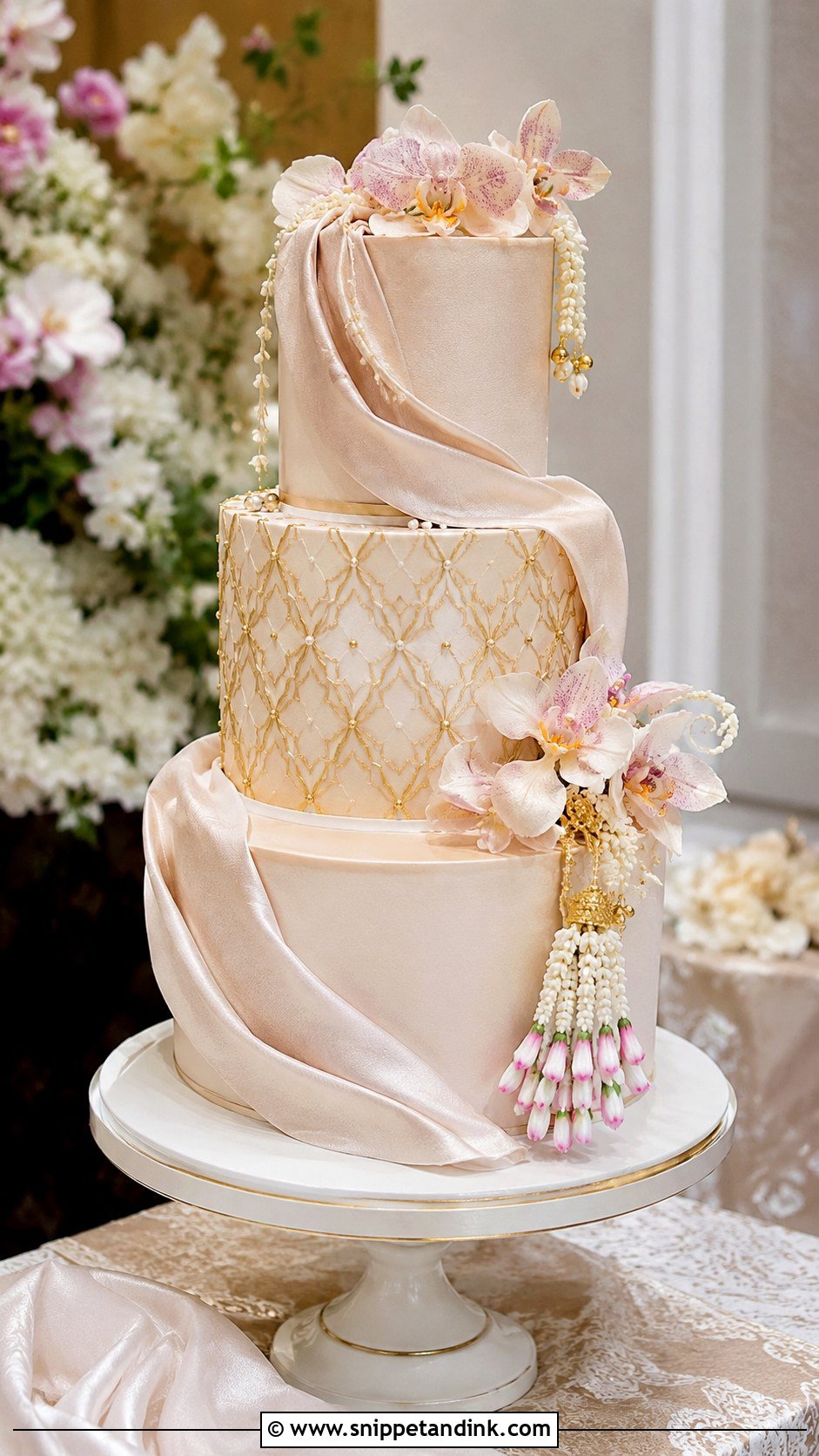
Thai silk has a soft sheen and a woven pattern that translates surprisingly well to fondant. I texture one tier with an impression mat or hand-scored lines to suggest the weave, then dust it with champagne or pale gold lustre so it catches light the way the fabric does. The other tiers stay smooth and plain. That single textile tier looks best when it picks up the colour of the couple’s outfits, so bring a fabric swatch to your tasting. Coconut vanilla, pandan cream or mango filling all suit it.
13. Thai Tropical Fruit Wedding Cake
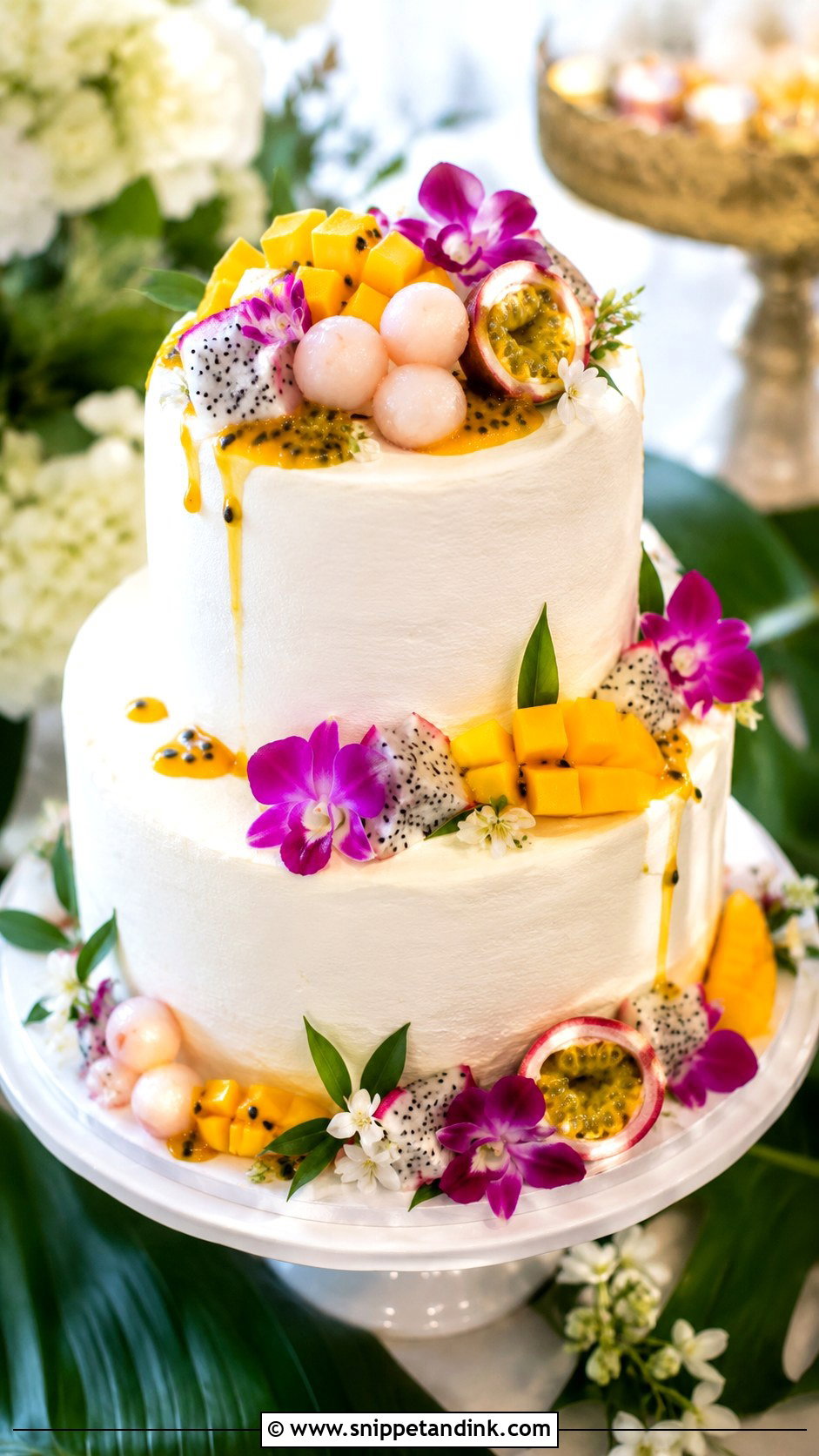
Fruit can be the whole decoration here: mango, lychee, dragon fruit, passion fruit and coconut grouped in neat clusters on white buttercream. The issue is time. Cut fruit leaks onto icing and dulls, so I glaze it lightly and place it at the venue as late as possible. Dragon fruit and lychee hold up better than very ripe mango. A few orchids or edible flowers make it look like a wedding cake rather than a fruit platter. Vanilla coconut with mango curd or lychee cream inside.
14. Thai Dessert Table Wedding Cake
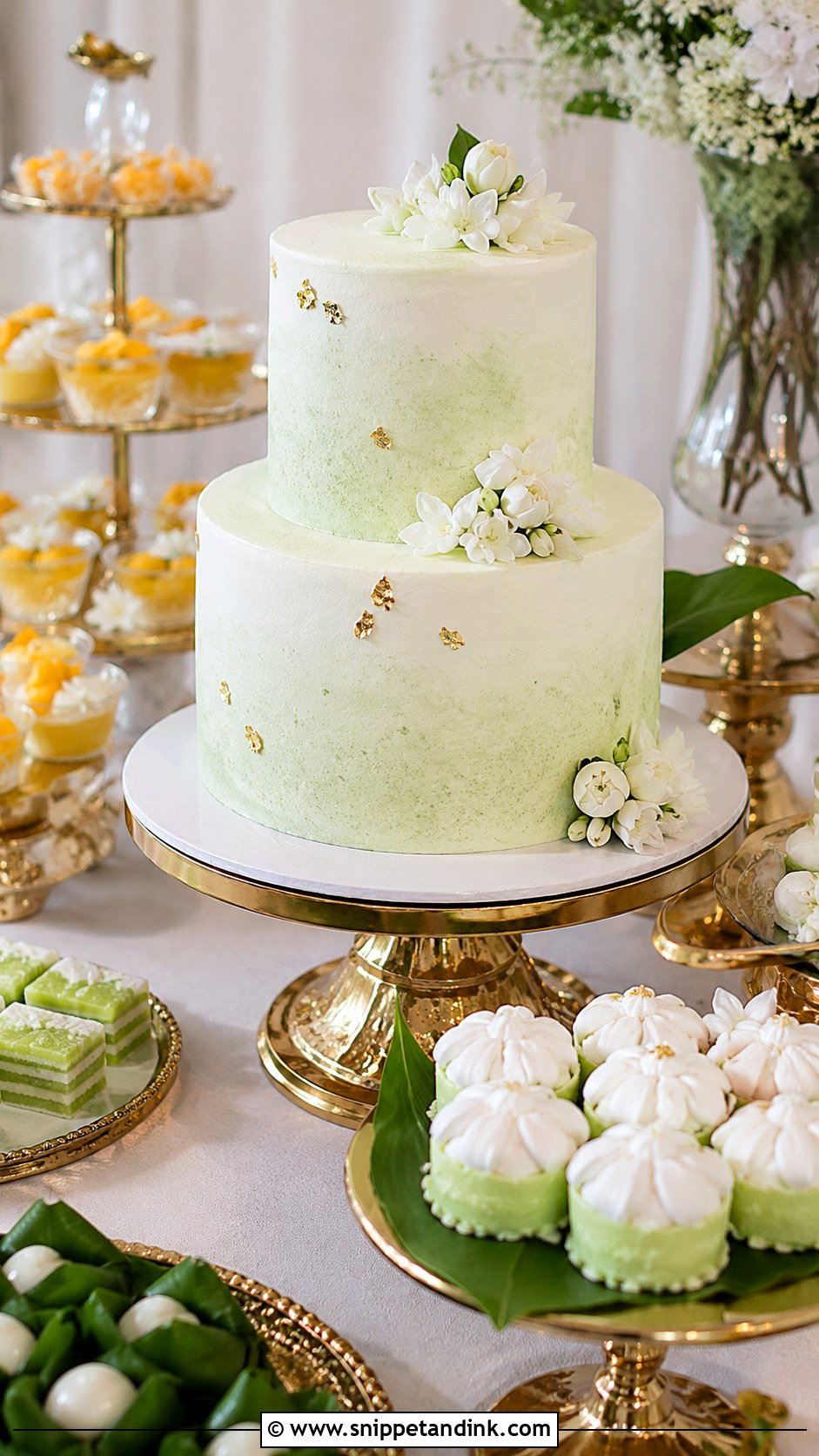
A Thai dessert table wedding cake lets one modest cake anchor a spread of smaller sweets. I usually make a two-tier coconut or pandan cake and size it so it still stands above everything around it. Mango sticky rice cups, coconut jelly, Thai tea mousse and pandan mini cakes fill the table. Coconut-based sweets need refrigeration, so plan who replenishes the table and how long items sit out in a warm room. Banana leaves, jasmine and gold trays tie it together.
15. Thai Mini Wedding Cake
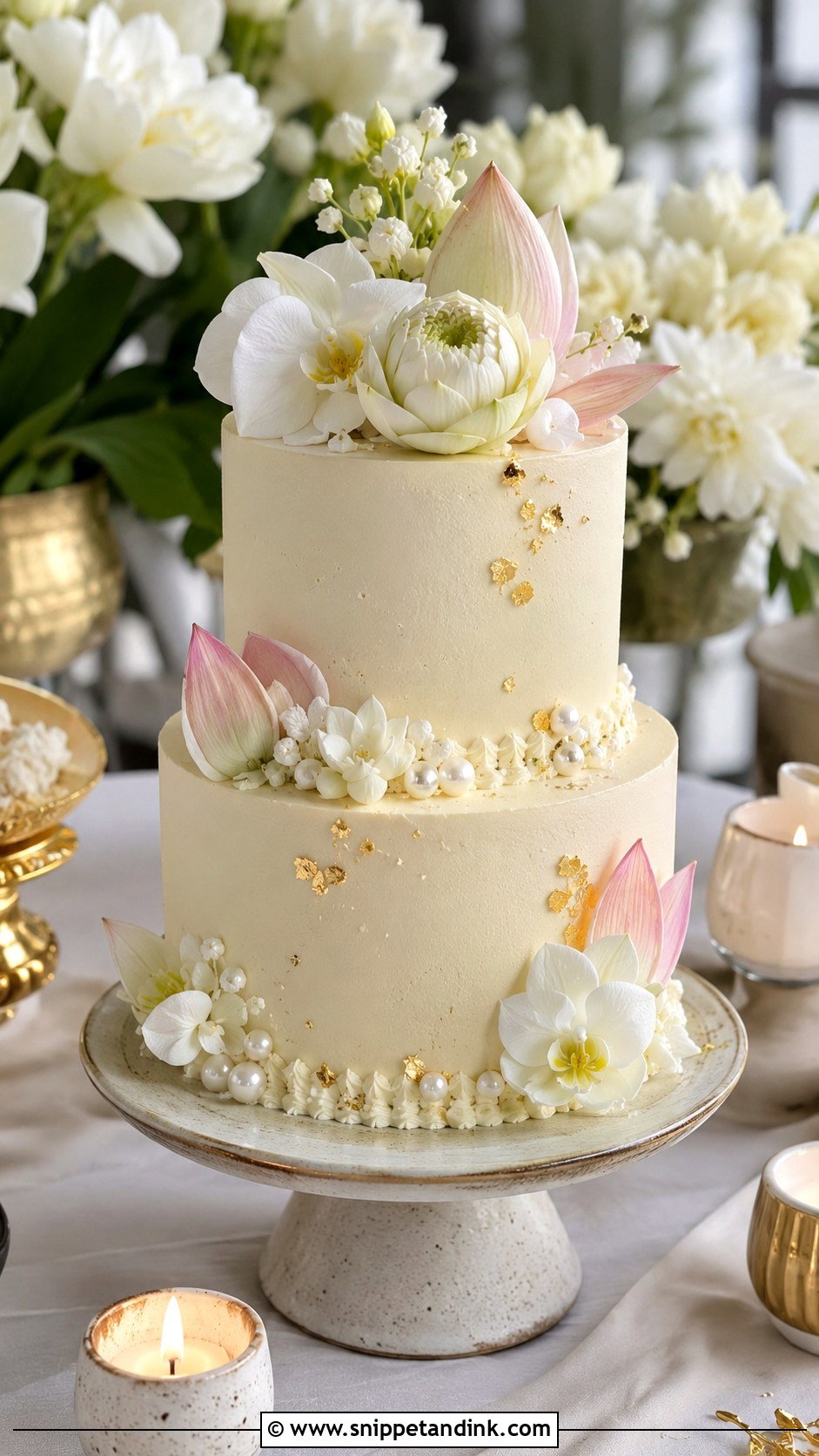
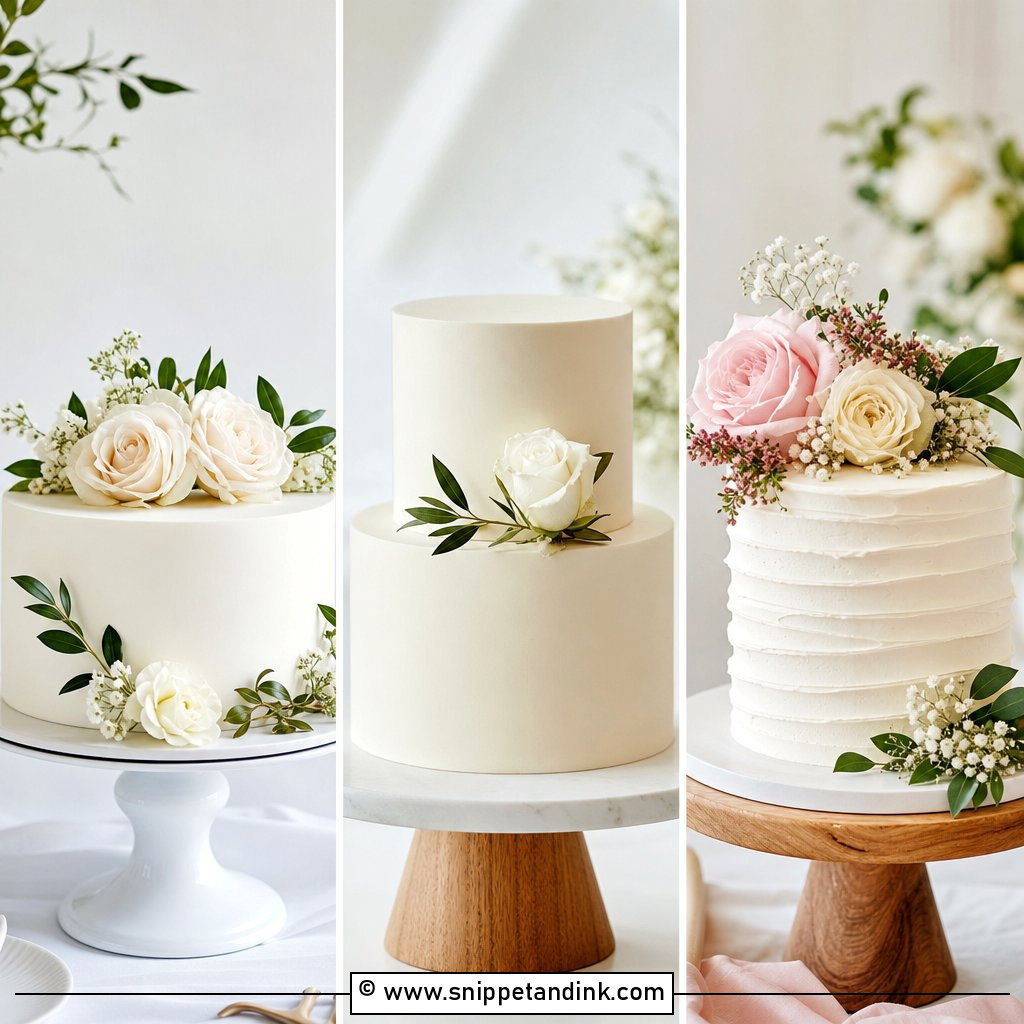
For an elopement or a small dinner, a mini cake is all you need, and it is still enough to cut together. A two-tier, six-inch over four-inch stack carries orchids, a few lotus petals or gold leaf without looking crowded, provided the icing is smooth. Coconut sponge with mango filling, Thai tea cake or pandan vanilla all work at this size. It travels far better than a large tiered cake, which matters at destination weddings. Pair it with a simple stand and candlelight.
16. Thai Modern Wedding Cake
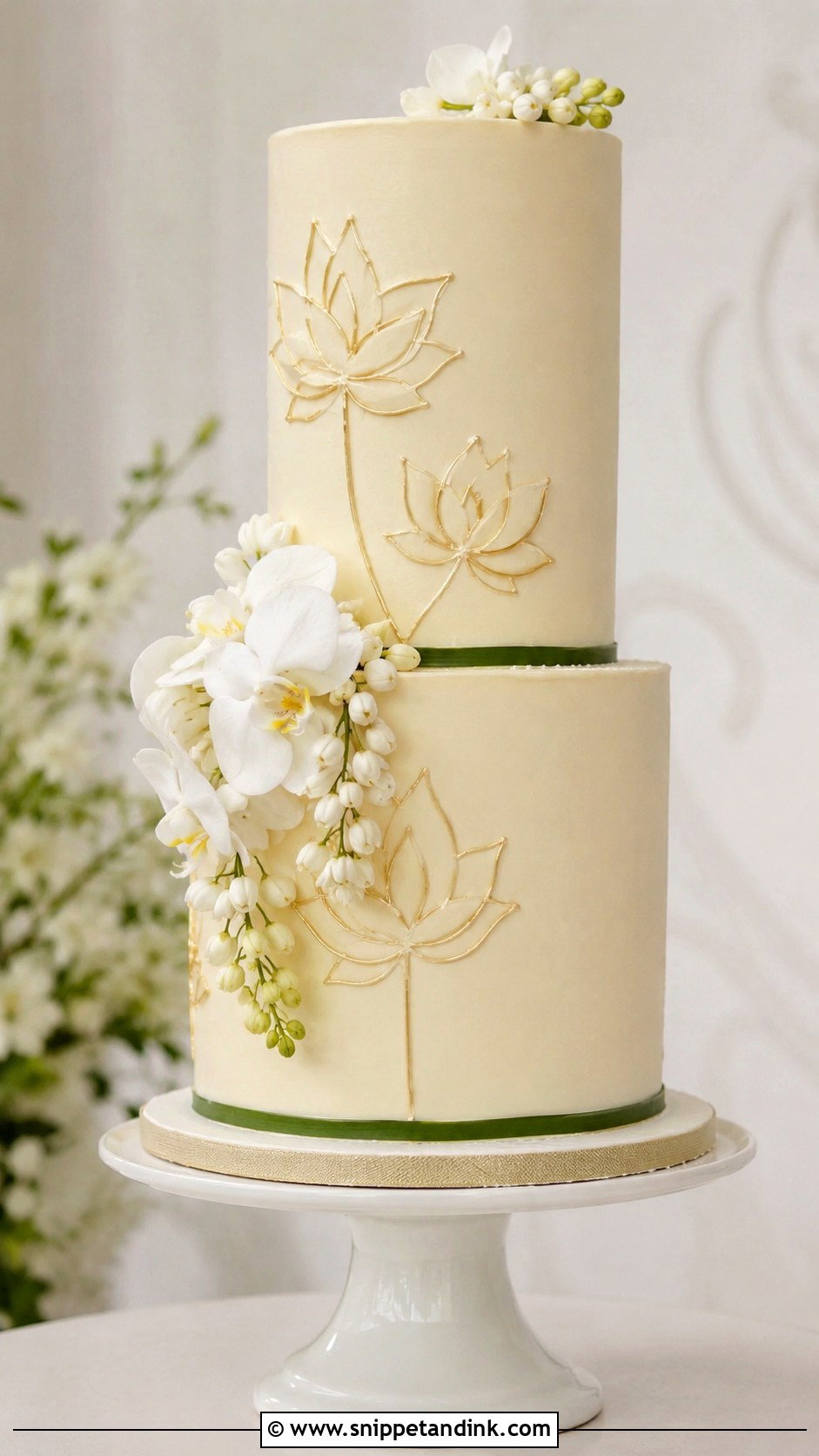
Modern here means edited. I start with clean white, ivory or pale beige tiers and add one or two Thai accents only: a gold lotus outline, a small orchid cluster, a pandan green tier or a garland on one side. Square, extra-tall or offset tiers make it feel current. Tall single tiers need internal support every few inches of height, which your baker will plan, but it’s worth knowing why they cost more. Thai tea with vanilla cream or coconut pandan inside gives it personality.
17. Thai Beach Wedding Cake
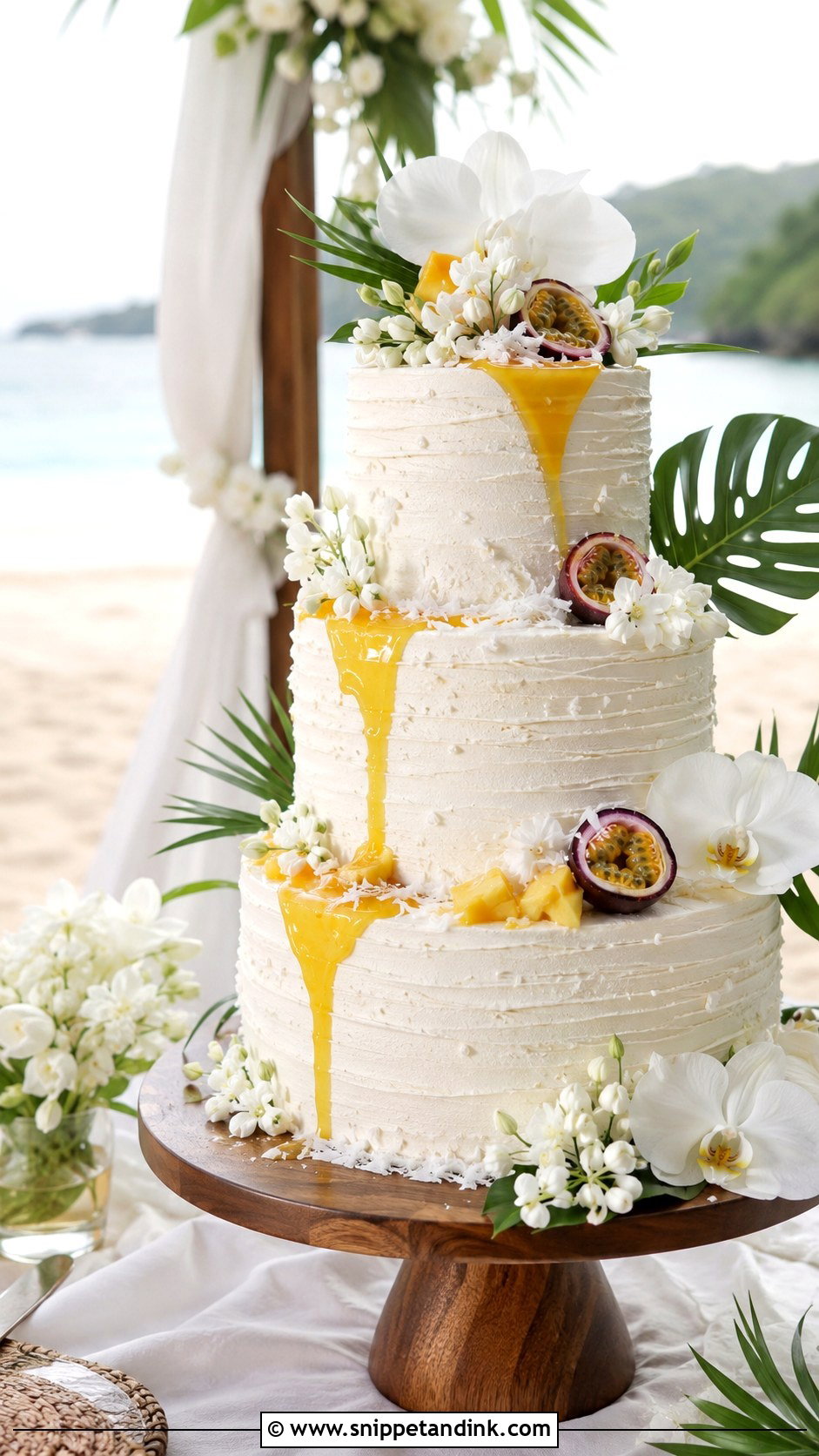
A Thai beach wedding cake should be smaller and sturdier than you might expect. Sea air and sun soften buttercream fast, so I keep beach cakes to two or three tiers and often use a firmer ganache under a thin buttercream finish. Coconut texture, pale gold and fresh orchids give the resort feel without seashells everywhere. Mango, passion fruit or coconut flavours suit it. Display it in shade, on a sturdy table, and bring it out shortly before the cutting.
18. Thai Floral Wedding Cake
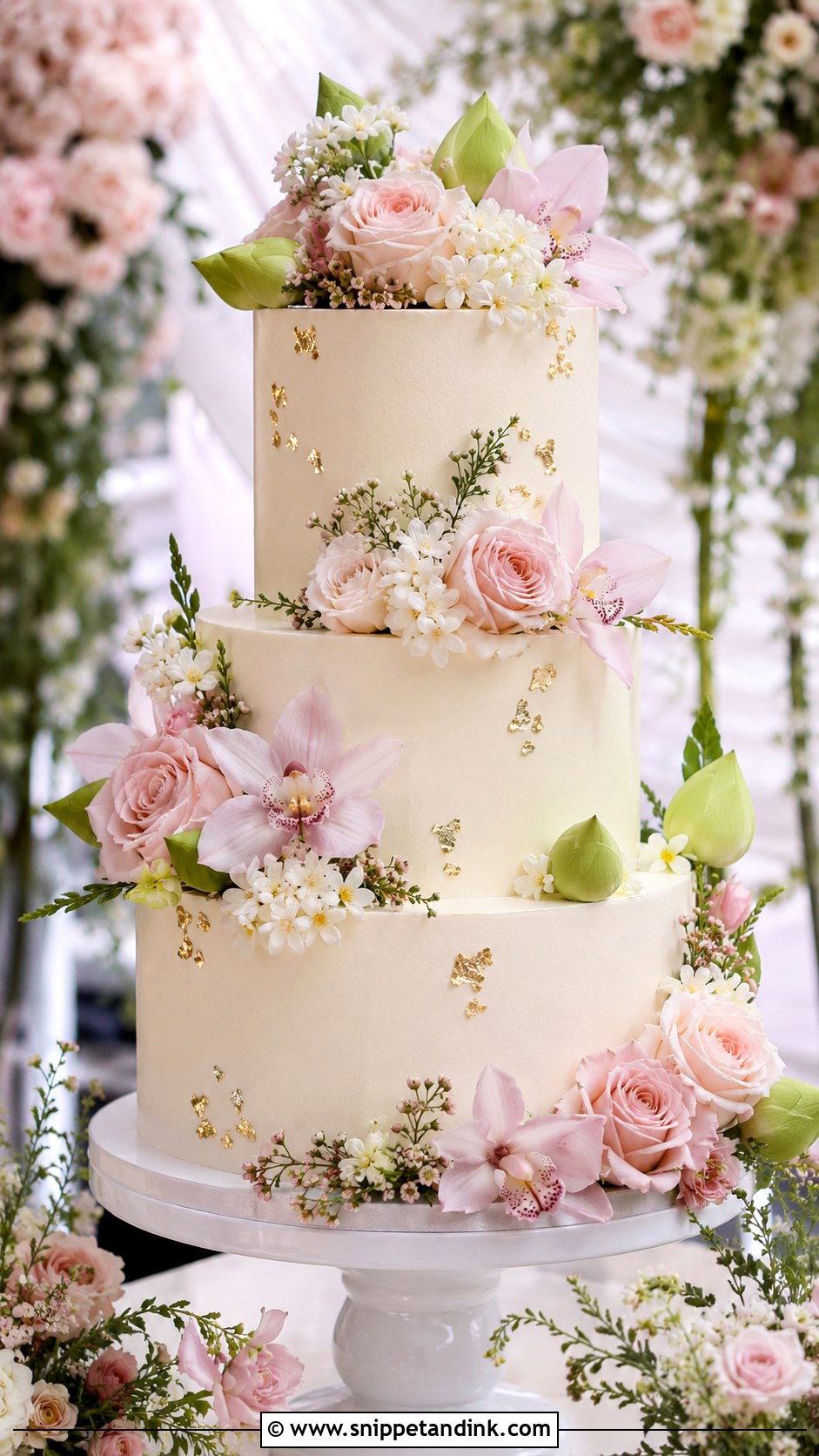
A floral cake can follow your bouquet closely, which is its biggest advantage. Jasmine, orchids, lotus, roses and small greenery can be mostly white with gold for a traditional feel, or brighter with purple orchids and yellow blooms for a lively reception. I ask the florist for a list of the exact flowers so sugar or fresh versions match. Sugar flowers keep indefinitely and can be saved; fresh ones need checking for safety. Vanilla coconut, lychee rose, pandan cream or mango vanilla inside.
19. Thai White And Gold Wedding Cake
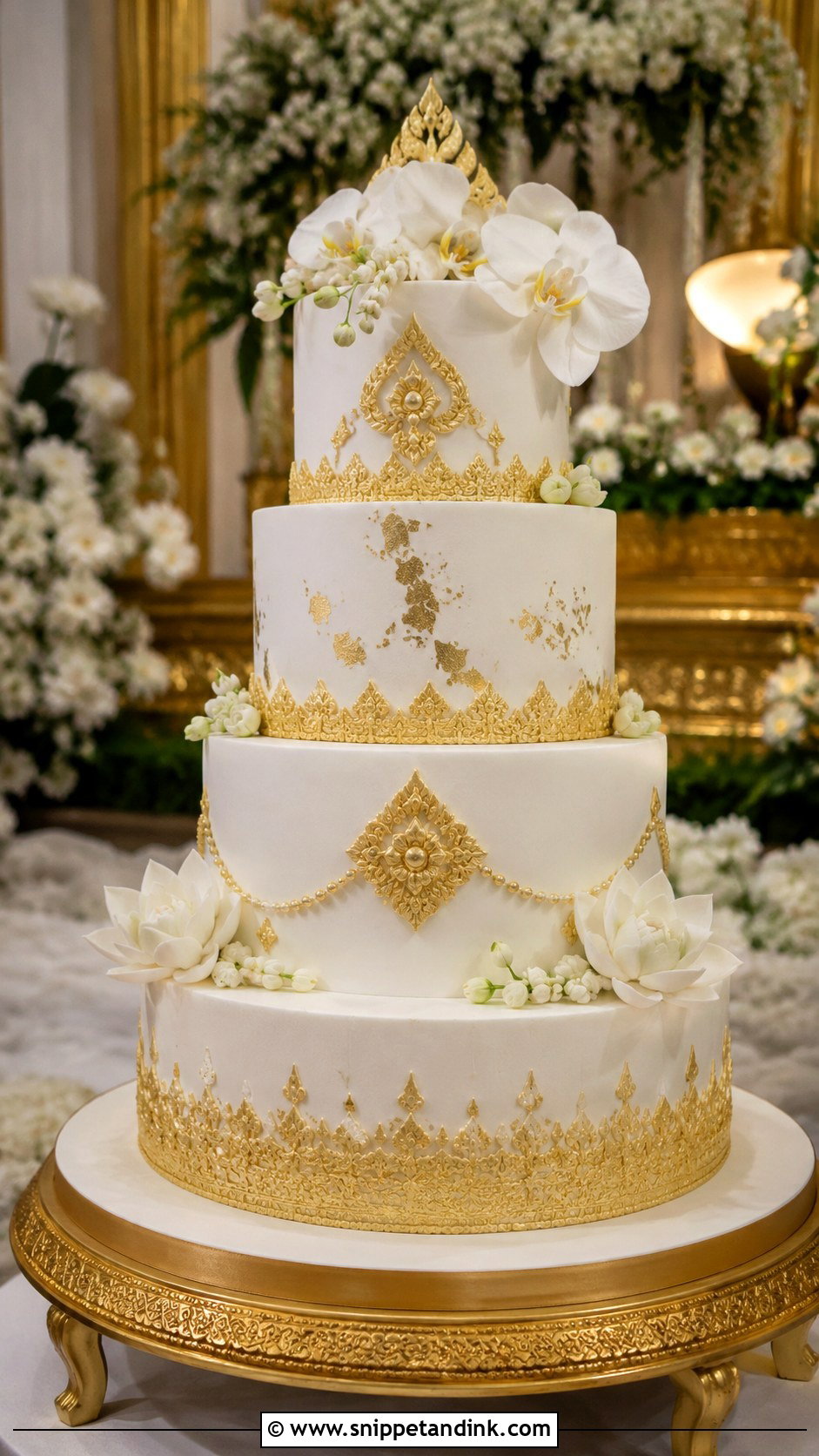
White and gold is the quiet, formal option. Ivory tiers with gold leaf, gold piping or a fine Thai-inspired border around the edges, and one small lotus, orchid or jasmine detail to keep the theme. I suggest it to couples who want a cake their grandparents and their friends will both admire. Piped gold borders need a steady hand and a firm icing, so they are easier on fondant or a chilled ganache base than on soft buttercream. Coconut vanilla, Thai tea or pandan inside.


20. Thai Green And Gold Wedding Cake
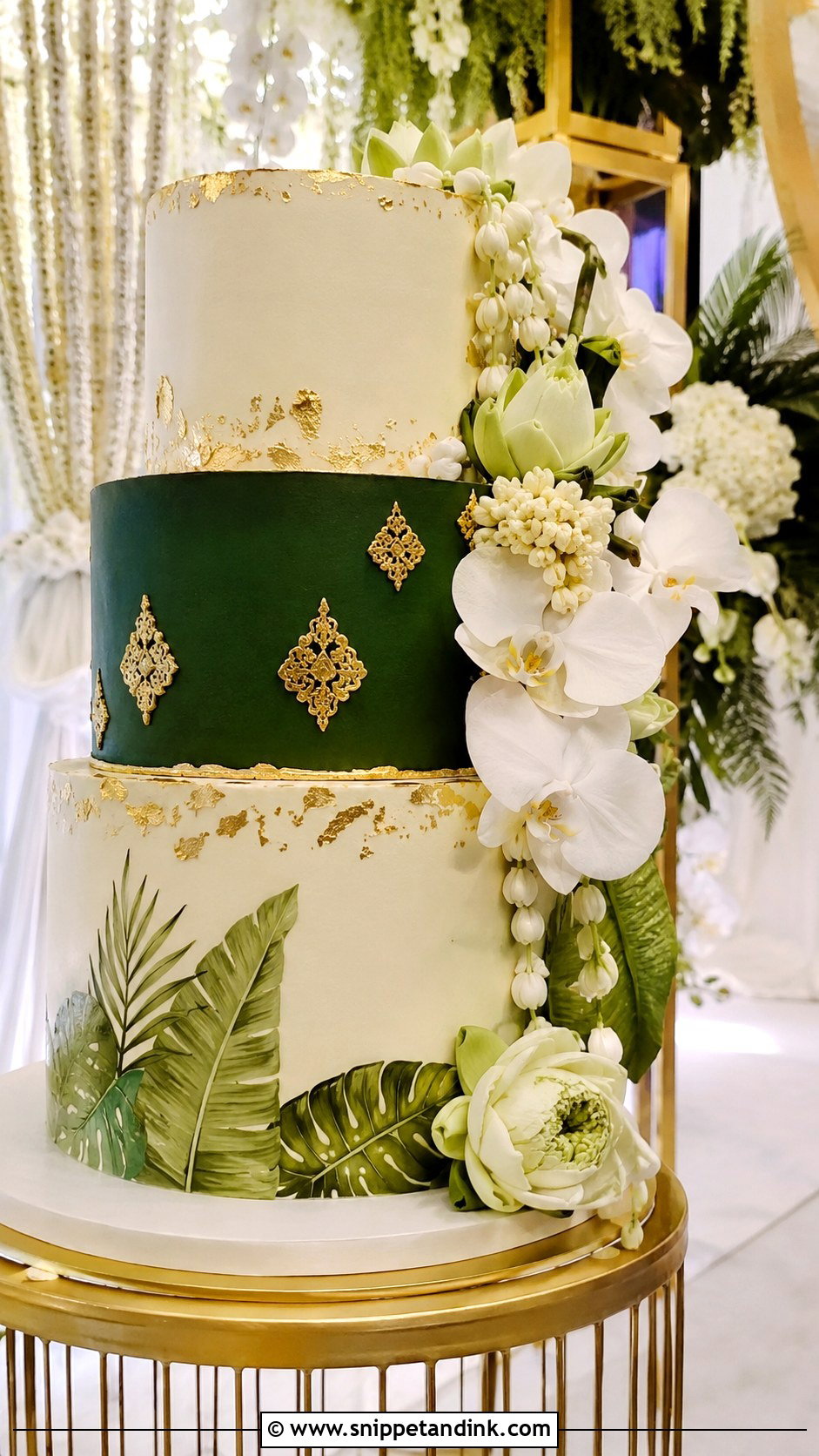
Green and gold is bold, drawing on pandan, banana leaves and rich Thai decor. I keep deep green to one tier, or to painted brushstrokes and leaves on ivory, because a fully green cake reads more like a birthday than a wedding. Gold leaf or a thin metallic trim warms it, and orchids or jasmine soften the contrast. Dark green colouring needs a lot of gel and can taste bitter, so the colour is often painted on rather than mixed through. Pandan coconut is the natural flavour, though vanilla lime or coconut cream also work.
An Outdoor Thai Reception Is Hard on Buttercream
A lot of Thai weddings take place in warm weather, sometimes in open-air pavilions or on a beach. Buttercream is mostly butter, and it starts to slump and sweat well before a cake reaches the cutting. I’d rather plan for that than hope the evening stays cool.
How I build for a warm room
Under the decorative finish I’ll often use white chocolate ganache, which sets firmer than buttercream, and keep fresh fruit and cream fillings to the top tier or to a separate kitchen cake. Fondant protects the surface but can sweat if a chilled cake goes straight into humid air, leaving beads of moisture on the gold.
Questions for your venue and baker
- Is there an air-conditioned room where the cake can wait until the cutting?
- Will the cake table be in shade the whole time, including as the sun moves?
- How far is the drive, and does the delivery vehicle have air conditioning?
- Who places fresh flowers or fruit on site, and when?
- How long after the cutting will the cake be served, and where is it kept meanwhile?
If the answers are shaky, a smaller display cake plus a sheet cake kept in the kitchen is an honest compromise. Guests get the same flavour and you get photos of a cake that is still standing straight.
One Thai Detail, Then Let the Flavour Do the Talking
The cakes in this list that work best start with a clean wedding base and add Thai details with focus. A lotus, a garland, a band of gold, a flavour guests recognise. For a classic look, white and gold with soft florals is hard to beat. For something guests talk about afterwards, mango sticky rice, pandan coconut or Thai tea will do it. Book your tasting early, tell your baker about the venue’s temperature and timings, and let the cake reflect what you actually love to eat.
You'll Like These Ideas:







Leave a Reply