
What separates a luxury cake from a nice one is rarely the idea. It’s the finish: edges sharp enough to catch the light, sugar petals thin enough to look real, a structure that stands for six hours in a warm room and still cuts cleanly. The styles couples ask me about most right now are sculptural tiers, pearl work, deep piping, real and sugar flowers, and tight one-colour palettes. Some want a quiet white cake; others want the cake to be the centrepiece of the room. Your venue, your flowers and the time of year should steer the choice as much as the photos you’ve saved. Here are 25 high-end wedding cake designs and how each one is actually made.
Where the Money Goes in a High-End Cake
When couples compare quotes, they’re often surprised that two cakes of the same size can differ so much in price. Almost all of the difference is hours of hand work, not ingredients.
- Sugar flowers: each petal is cut, thinned, shaped and dusted by hand, then dried. A large bloom can take hours.
- Sharp edges: a layer of chocolate ganache under fondant or buttercream gives crisp corners and keeps the cake stable, but it adds a whole stage of work.
- Structure: tall and sculptural cakes need boards, dowels and often a central rod, all planned before the first sponge is baked.
- Hand detailing: piping, gold leaf and painting can’t be rushed or done ahead in bulk.
Luxury designers book up months ahead, especially in peak season, so I’d reach out once you have a date and a venue. Bring a photo of your flowers and your gown’s fabric to the consultation. If the budget is tight, a dummy tier made of foam and iced to match can add height without adding servings.
1. Luxury Pearl Wedding Cake
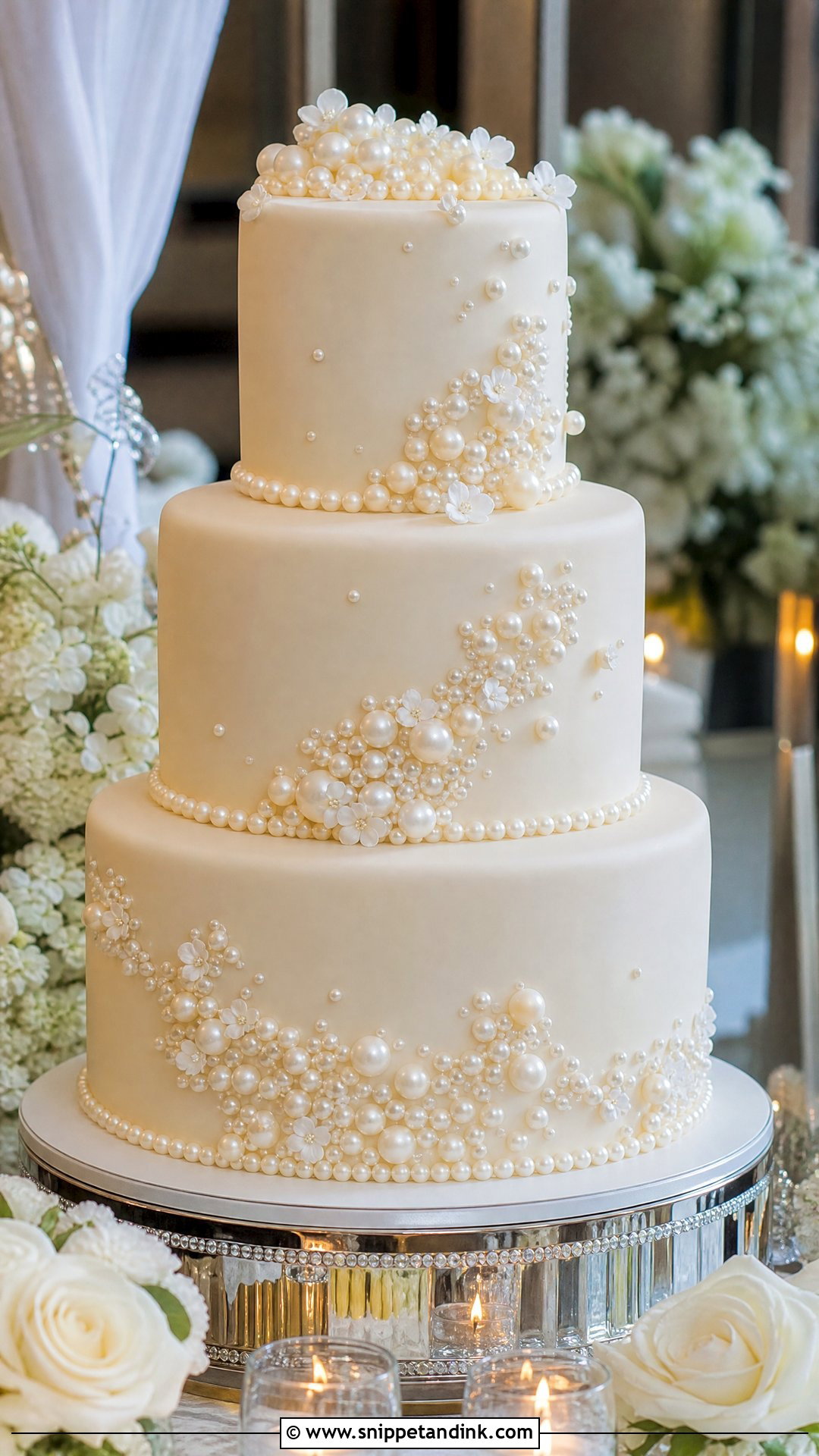
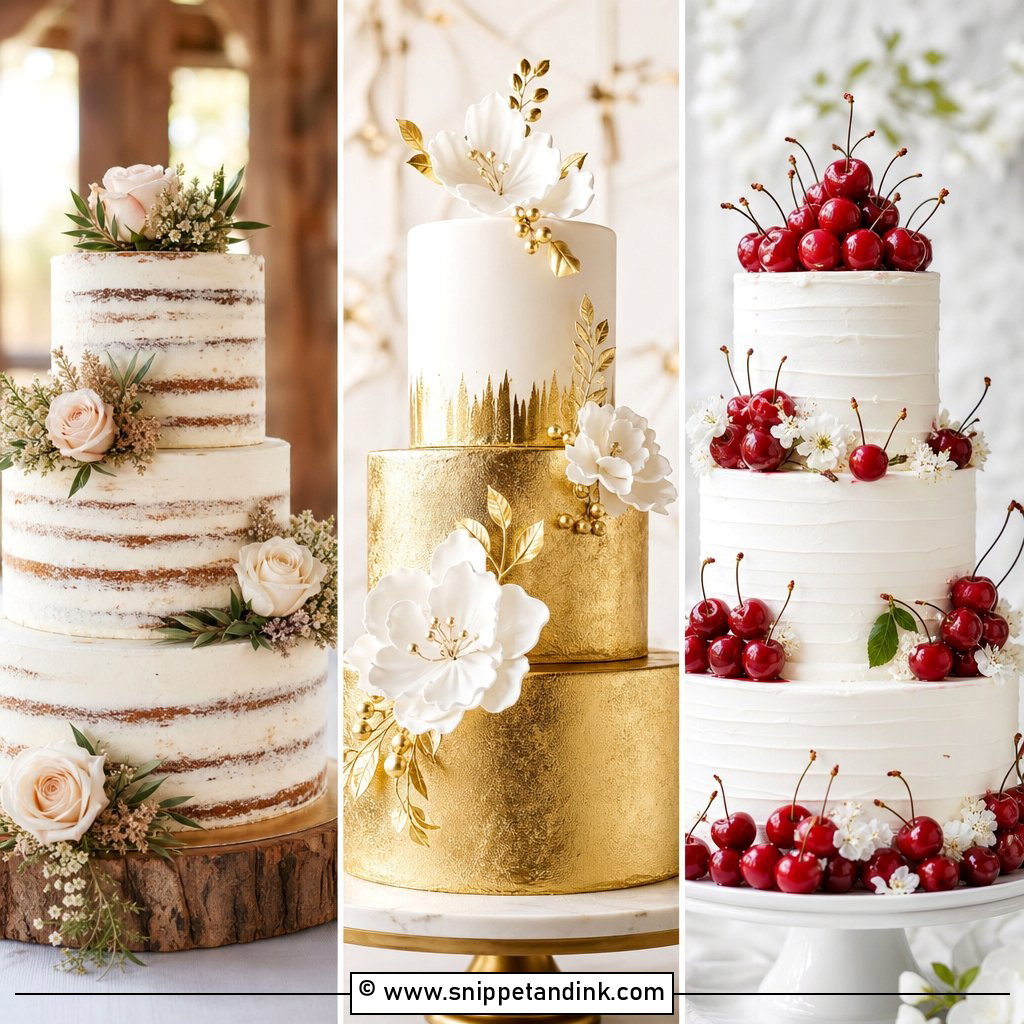
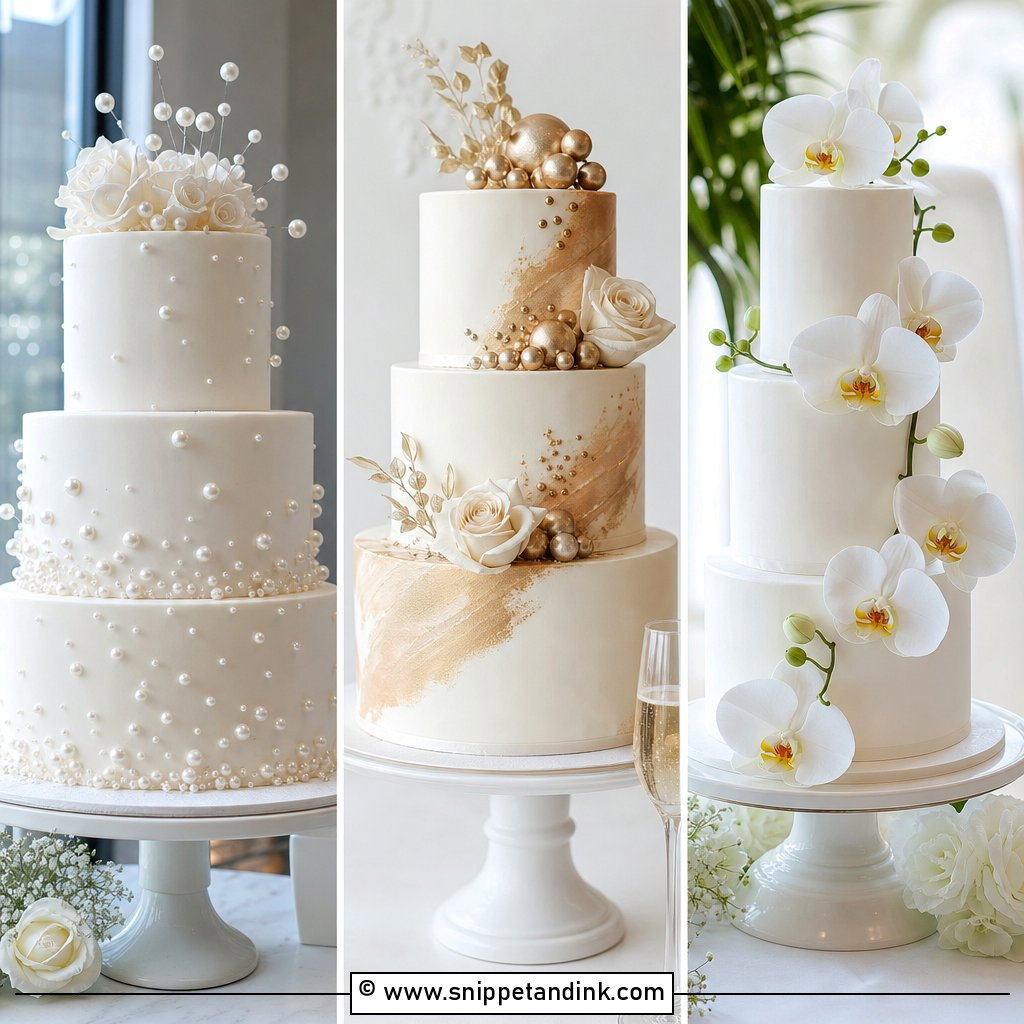
Pearls look refined because they repeat, so placement decides whether this cake looks tailored or cluttered. I pipe or set them in neat rows to outline each tier, or scatter them like jewellery on one tier only. Mixing three sizes gives the surface depth instead of a flat polka-dot effect. Edible pearls are made from sugar and can soften in humid rooms, so for a summer wedding I add them on site rather than days ahead. Ivory buttercream, champagne tones and blush flowers all sit comfortably with them.
2. White Rose Wedding Cake
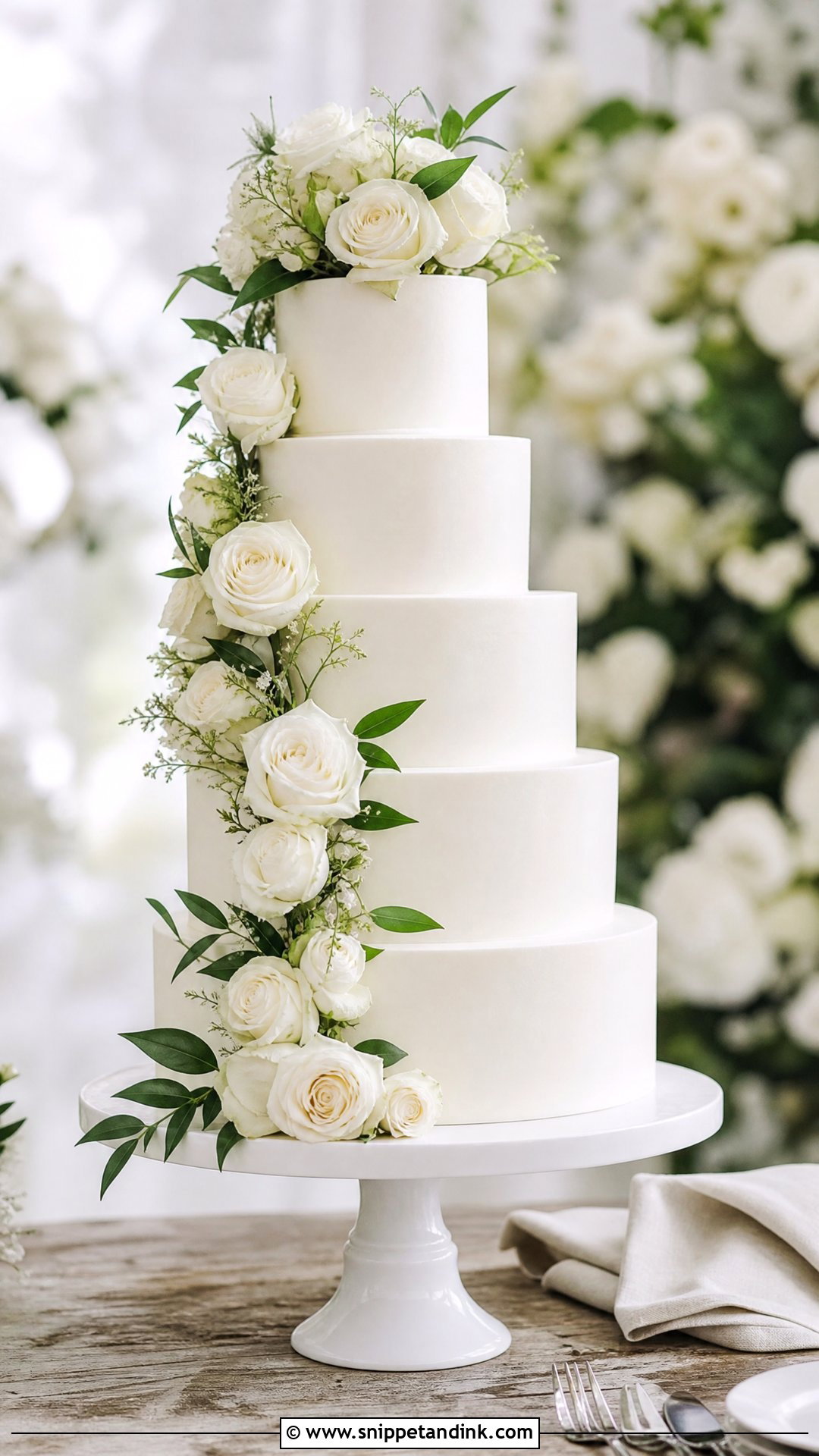
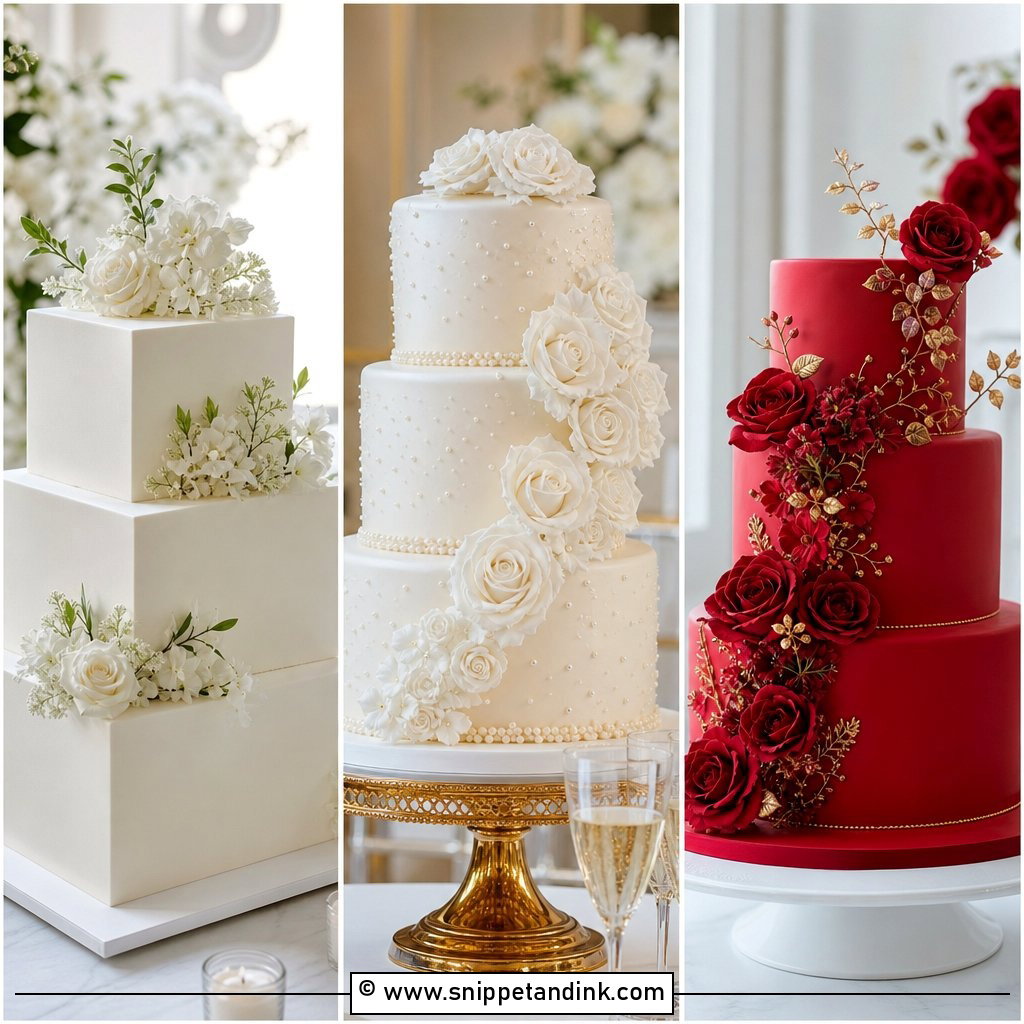
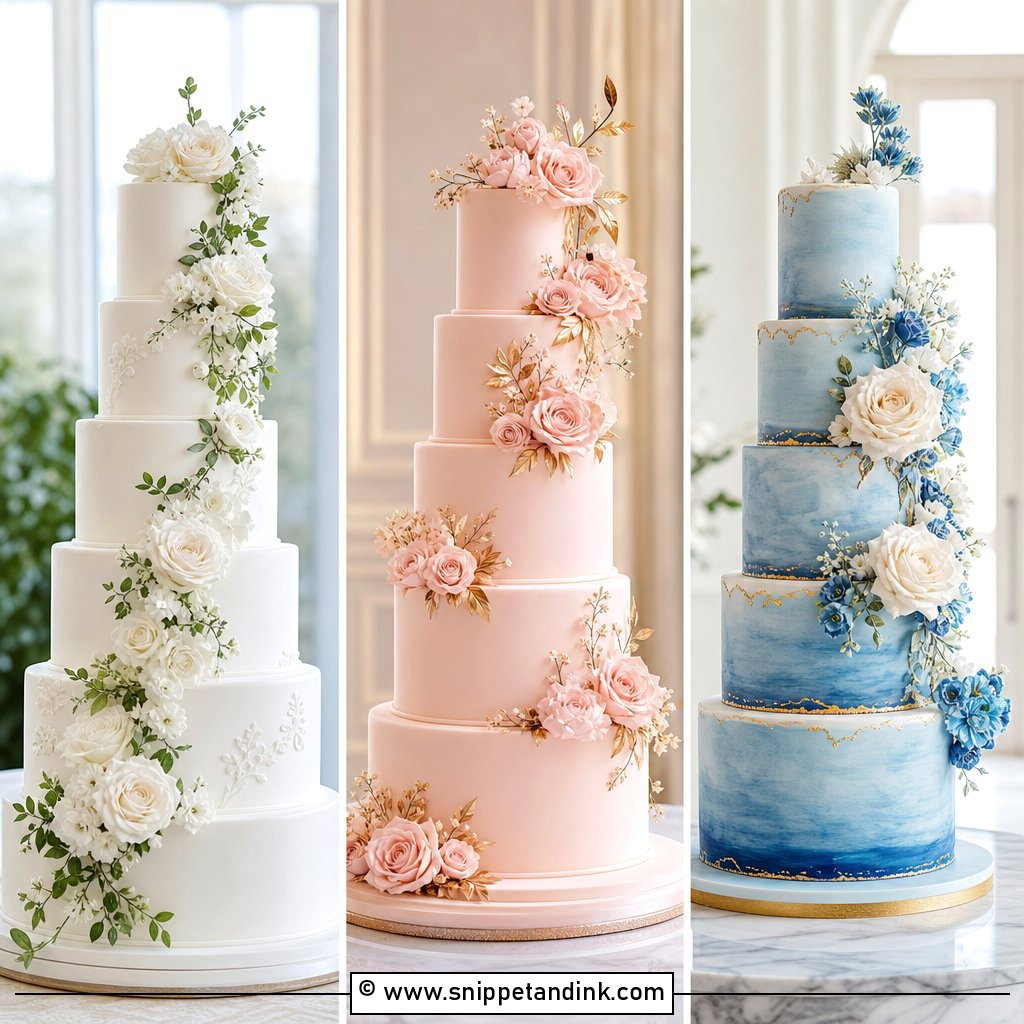
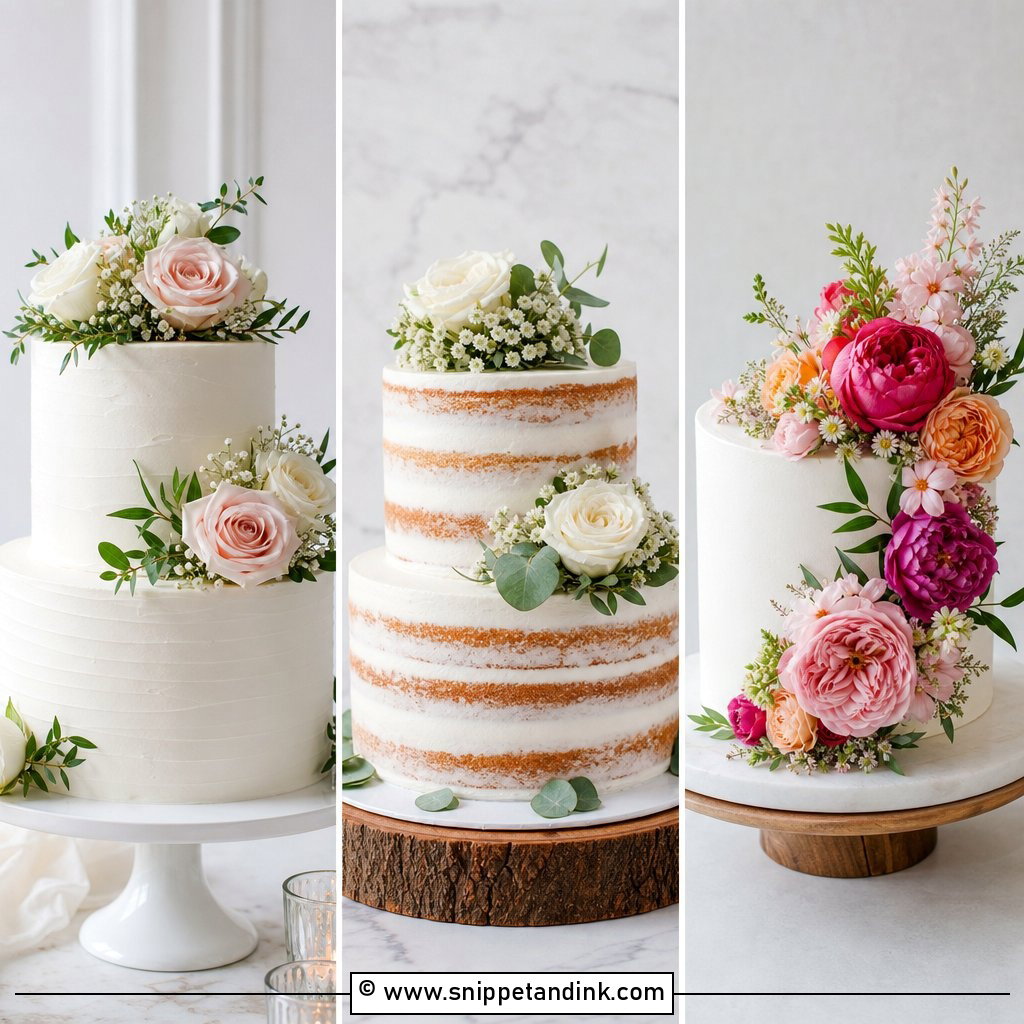
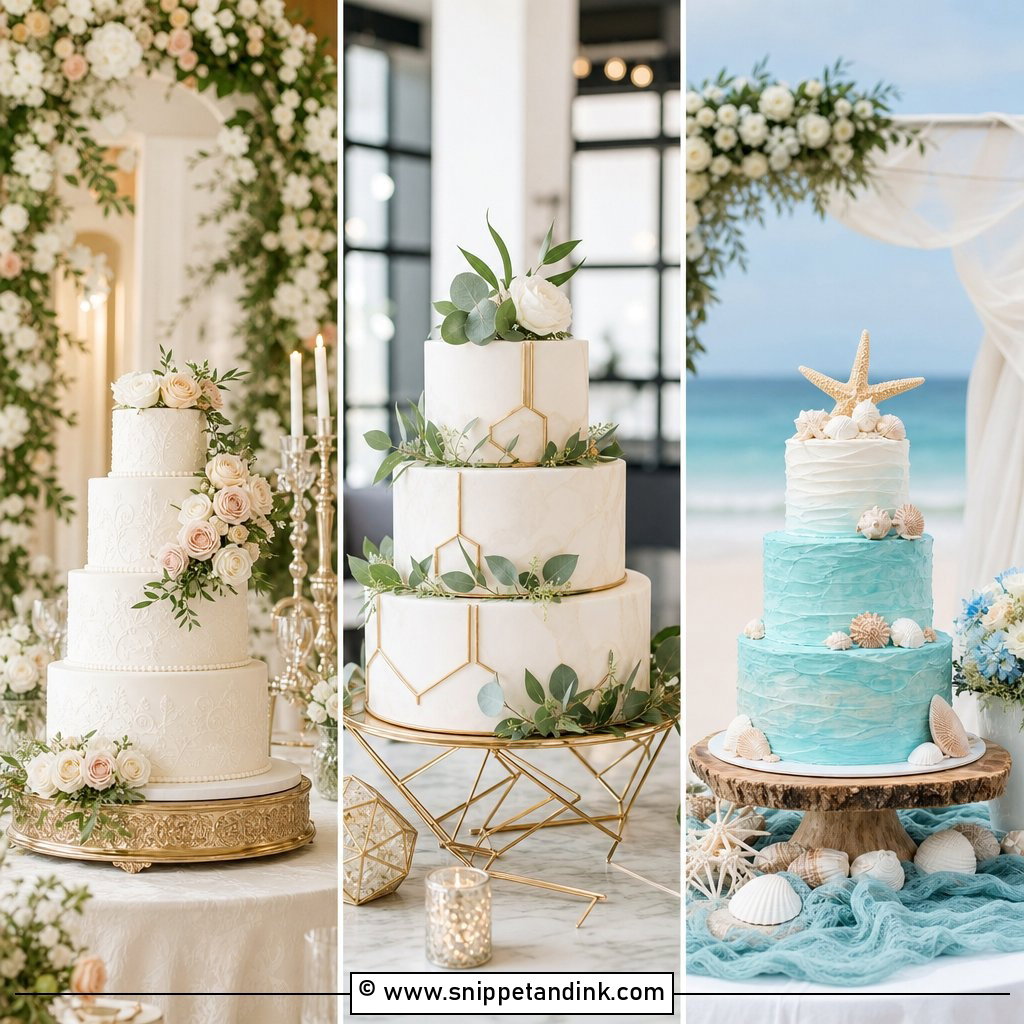
The roses can be fresh, made from sugar or piped, and each one changes the budget and the timeline. Fresh roses are the least expensive but need to be food-safe and placed on the day; sugar roses are the most work but can be made weeks ahead. A smooth white cake with a rose cascade reads as formal, while a semi-naked buttercream cake with garden roses looks softer. I’d keep the palette to ivory, cream and pale green leaves; adding more colours makes it look crowded quickly.
3. Gold Leaf Wedding Cake
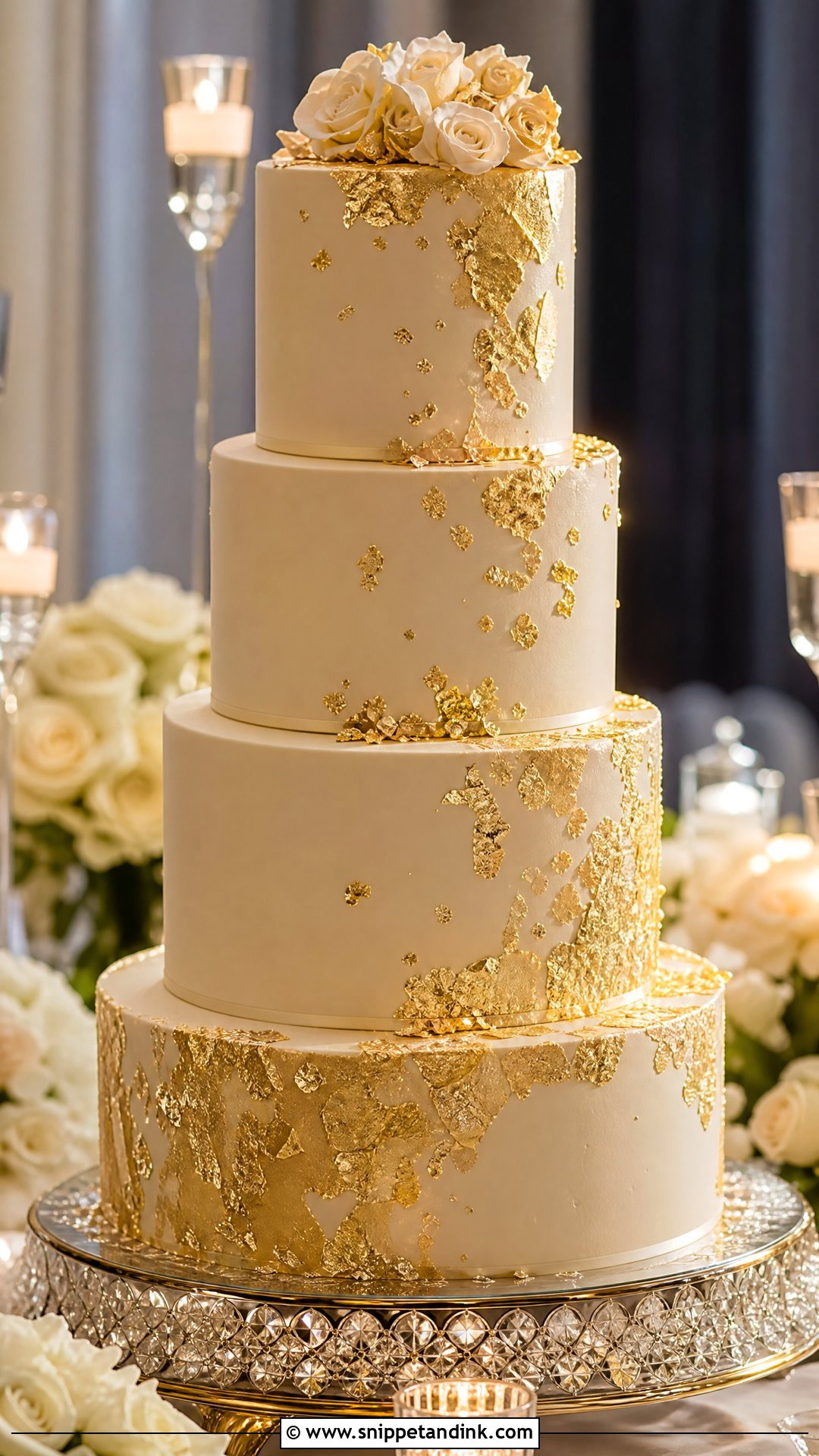
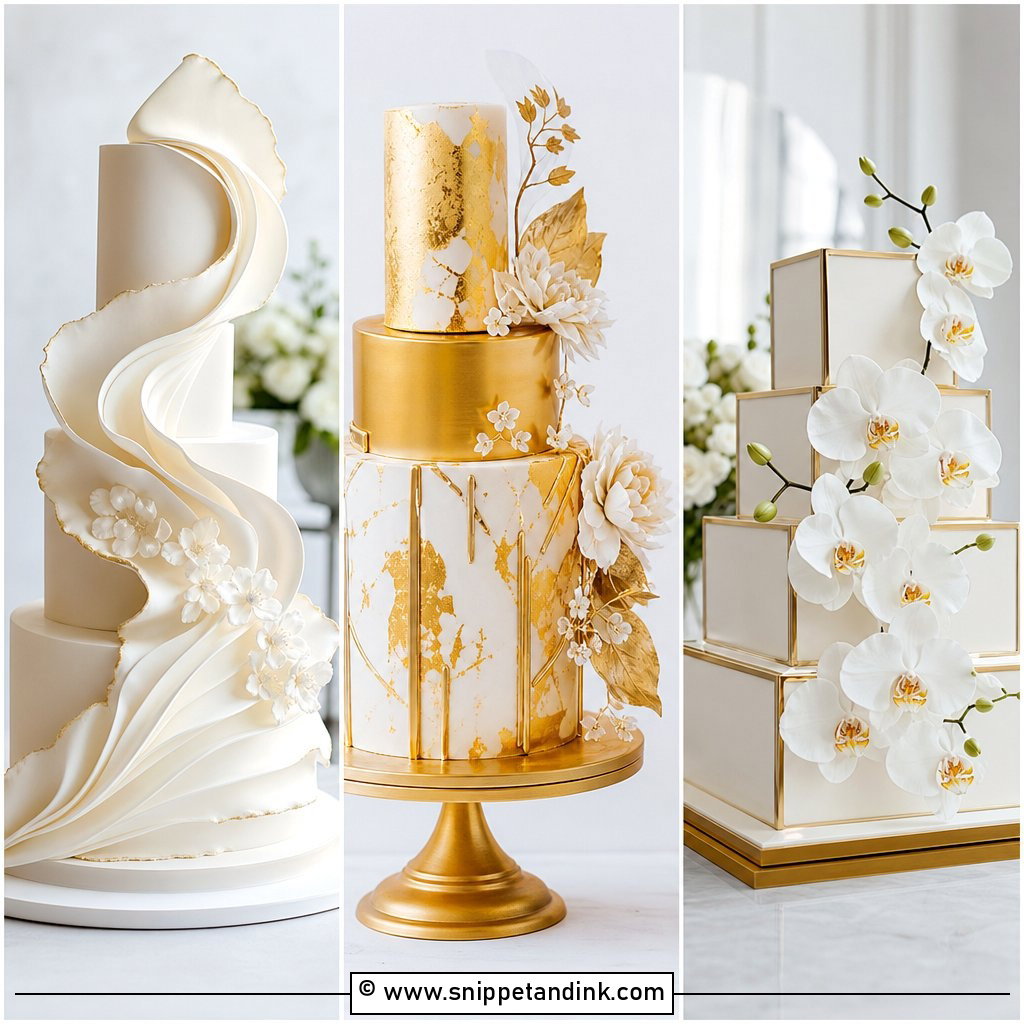
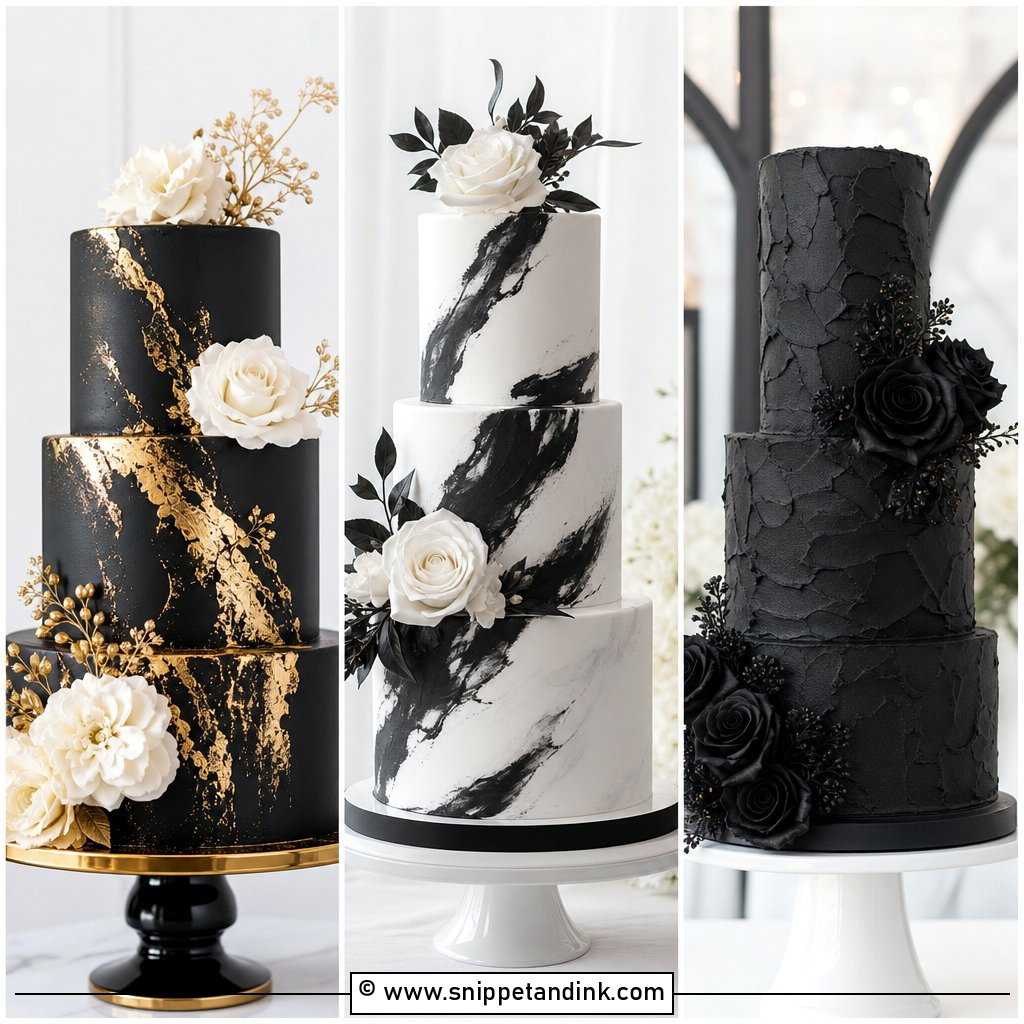
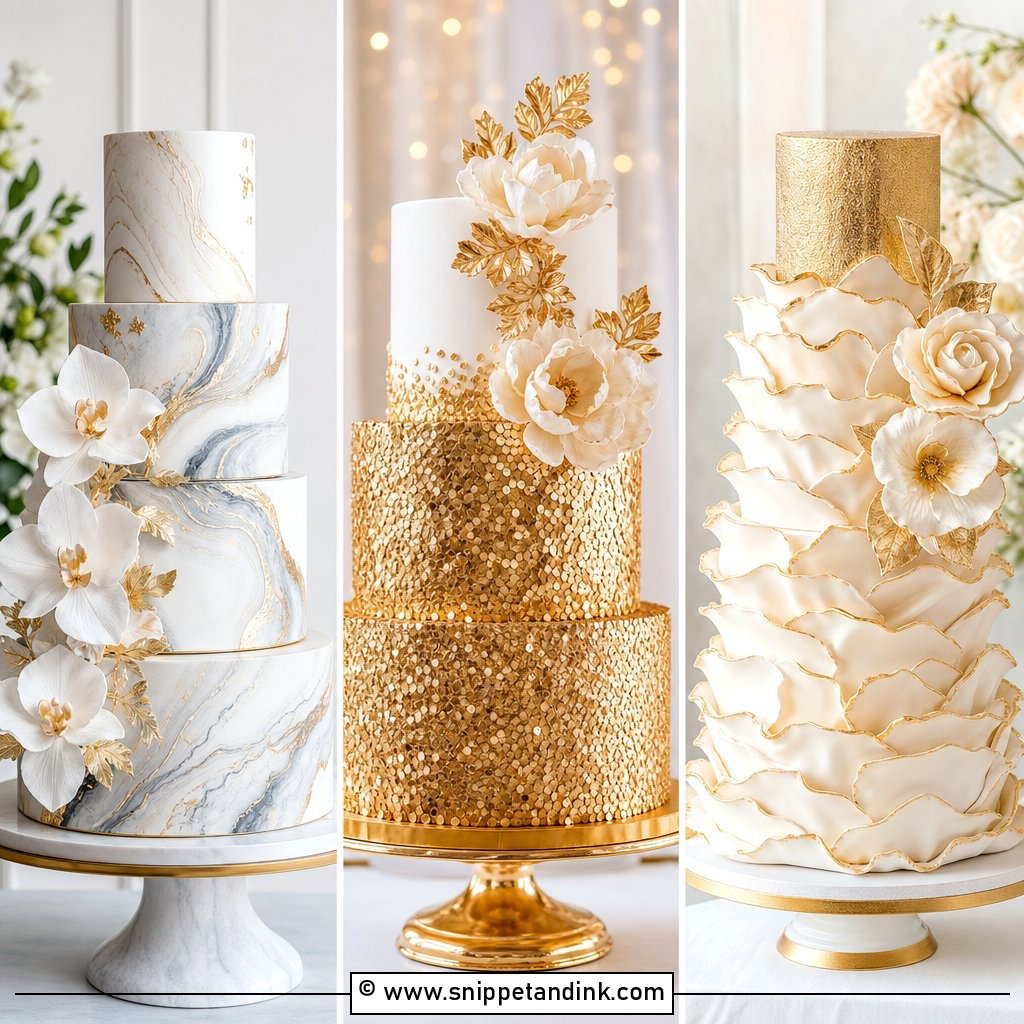
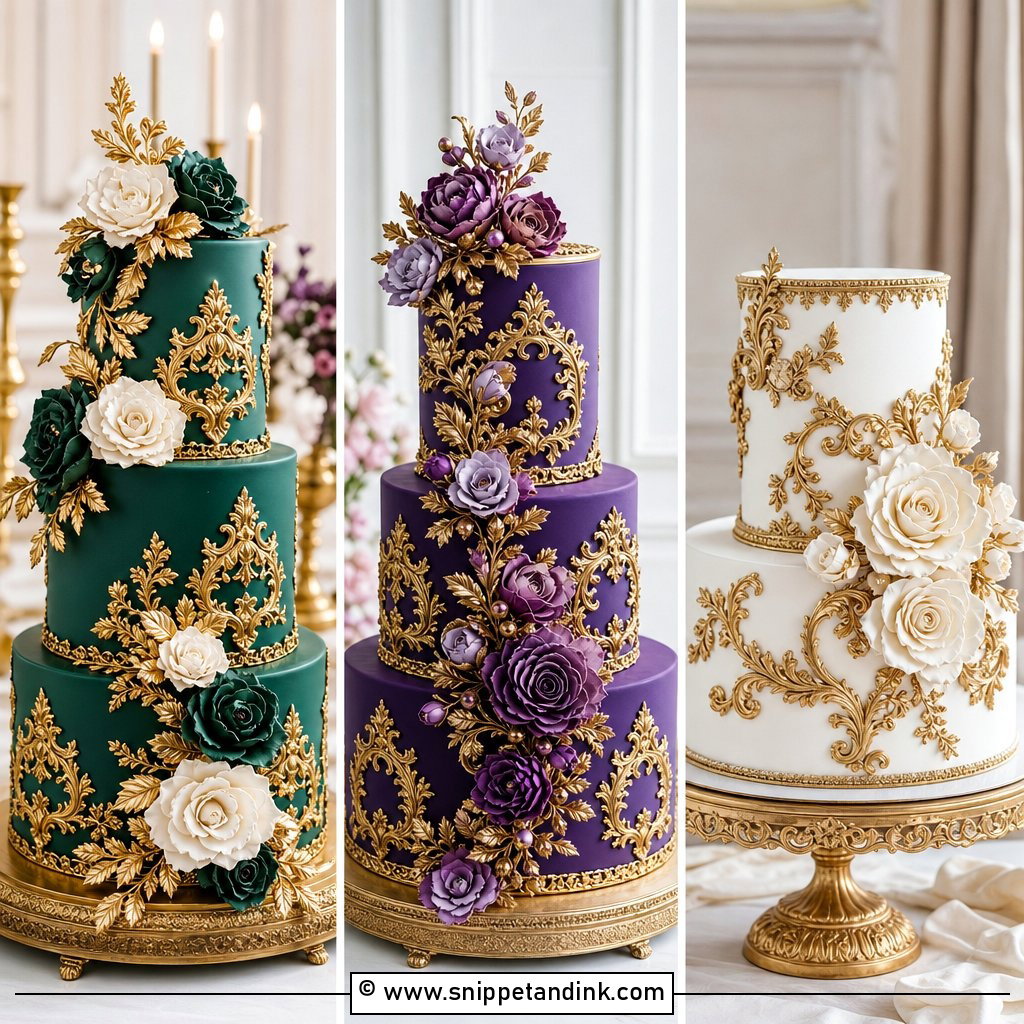
Gold leaf is a material I use sparingly, because it goes from rich to heavy very quickly. Edible gold leaf is pressed onto smooth fondant with a soft brush, or flaked onto textured buttercream, and it tears if you look at it wrong, so it’s applied by hand piece by piece. Small touches glow under reception lighting far more than a fully gilded tier does. It pairs with white, champagne, blush or black, and evening receptions show it off best.
4. Black And White Wedding Cake
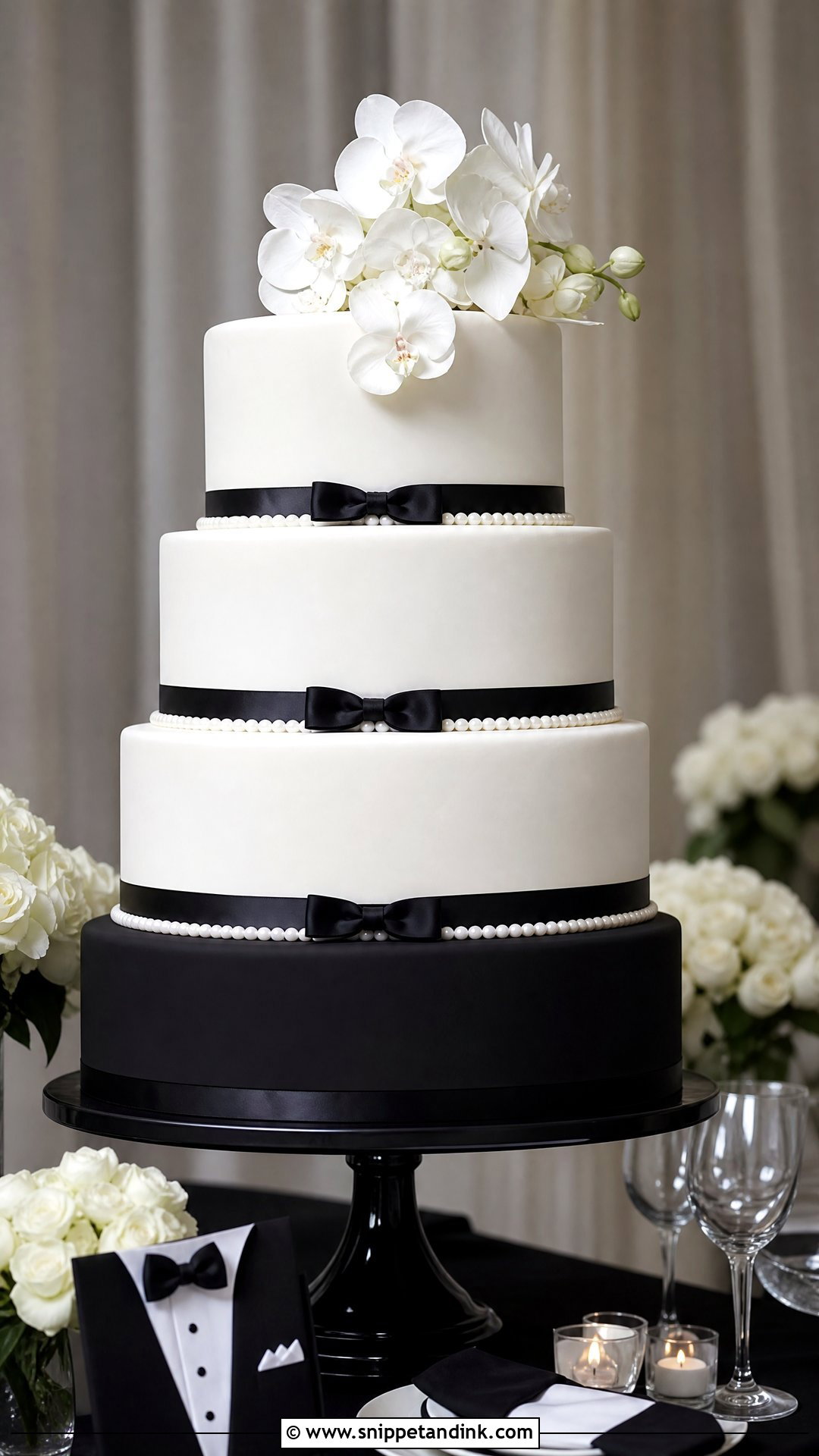
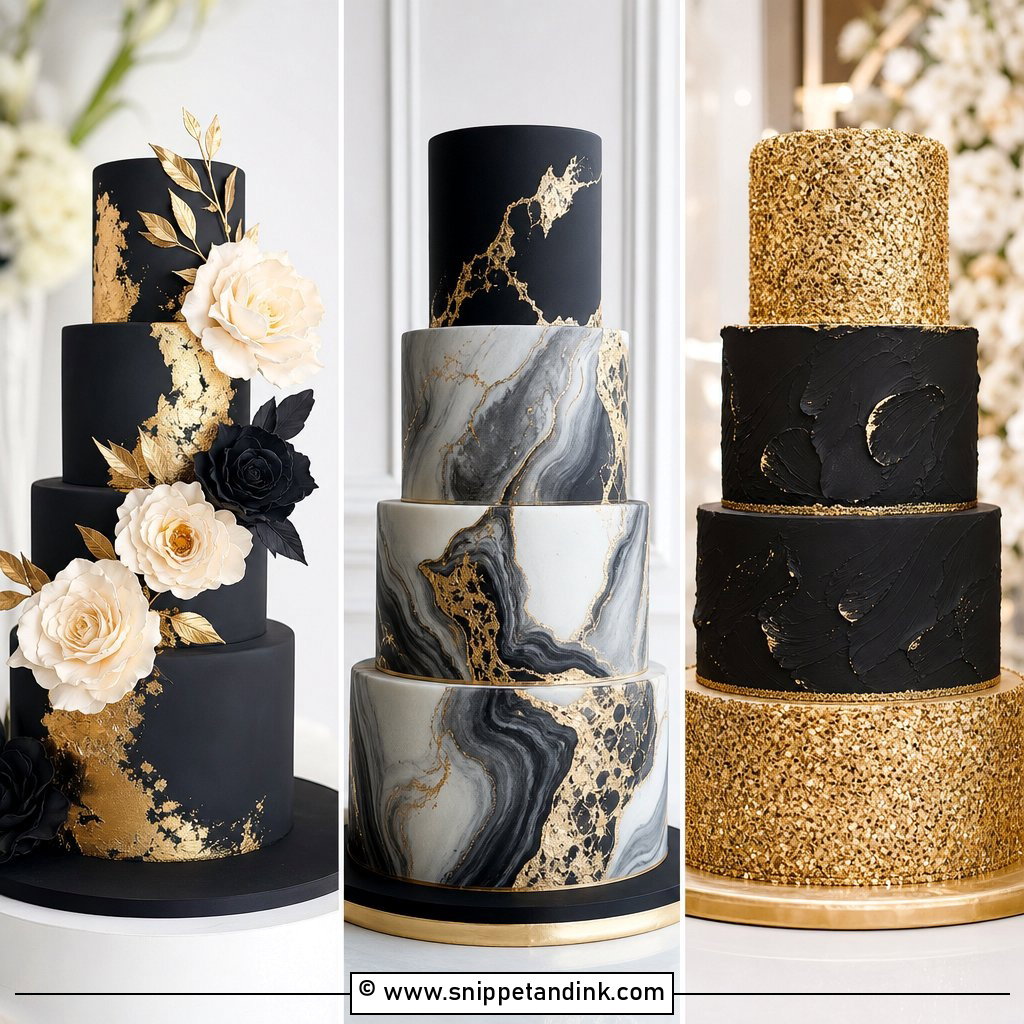
Black and white is bold and surprisingly forgiving, as long as the black is used in one place. Black fondant is made by adding a lot of colouring, which can stain teeth and taste slightly bitter, so I often put black on a ribbon, a single base tier or a dummy tier instead of all the cake. Sharp fondant edges and white sugar flowers show up crisply against it. Keep decorations to one feature, such as a floral cascade or a pearl border.
5. Marble Wedding Cake
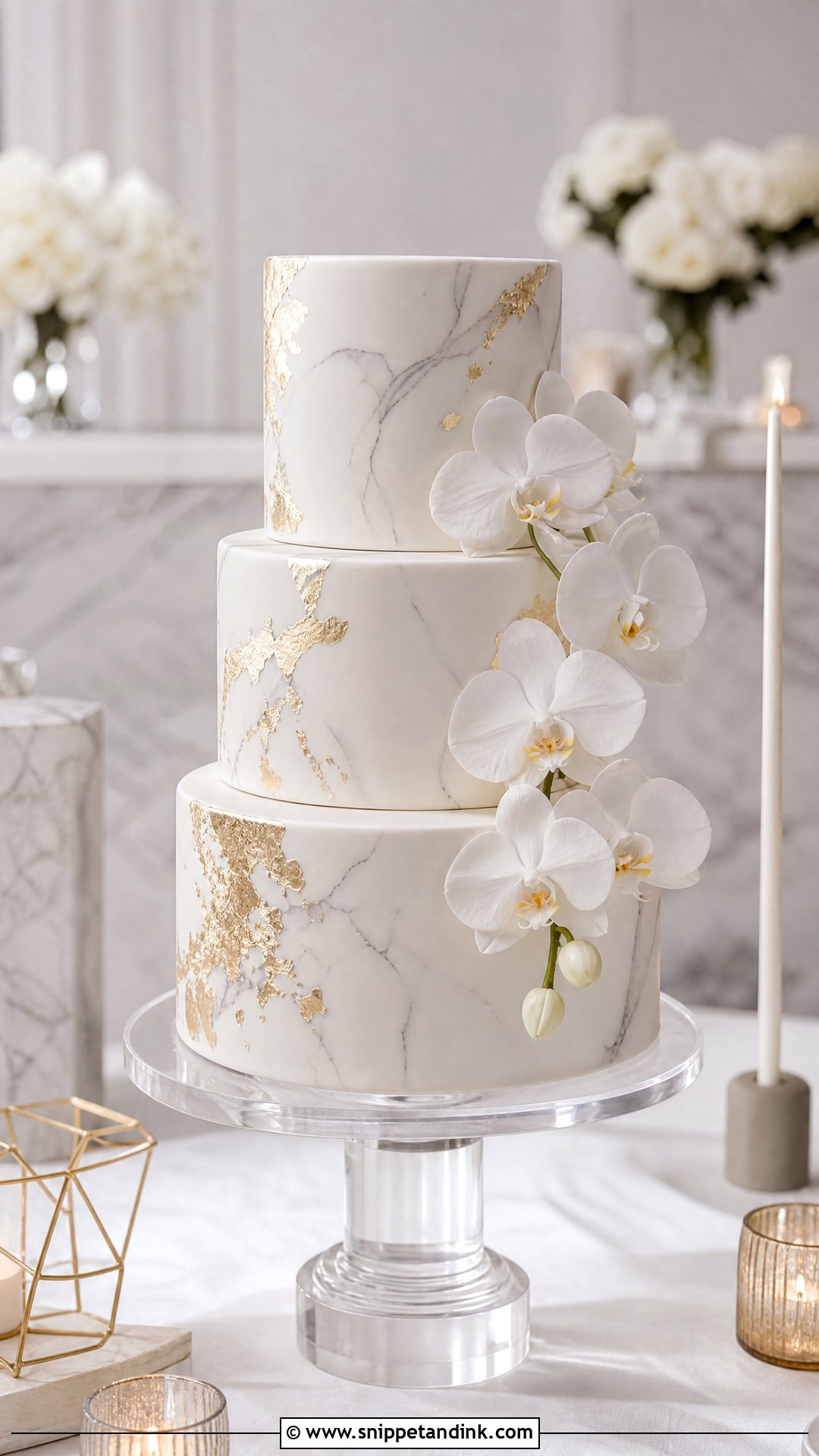
Marble is painted or rolled into fondant, and no two cakes come out the same, which is part of the appeal. Soft grey, ivory, beige or blush veining can be subtle or dramatic depending on how much colour is folded in. I’d show your baker a photo of the depth you like, because “marble” means very different things to different designers. Gold leaf, sugar orchids and clear acrylic stands suit it.
6. Tall Tiered Wedding Cake
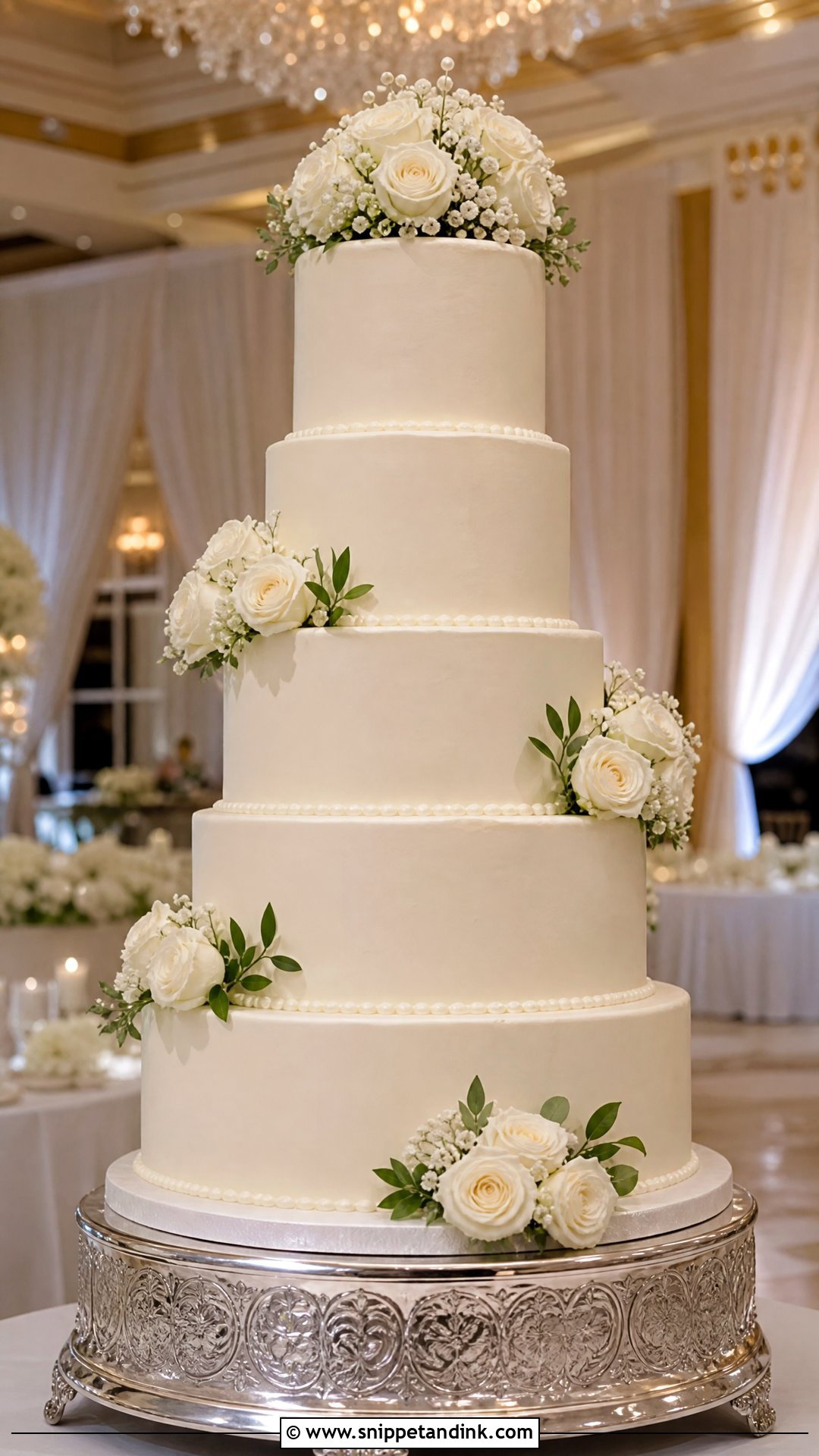
Height is the thing a photo can’t tell you about: a tall cake needs internal support at every tier, usually dowels and a cake board under each layer, and often a central rod through the full height. I’d only order one from a designer who regularly stacks five tiers or more. The payoff is in a large ballroom or a room with high ceilings, where the height matches the scale. Keep the cake table simple so the shape stands out.
7. Lambeth Wedding Cake
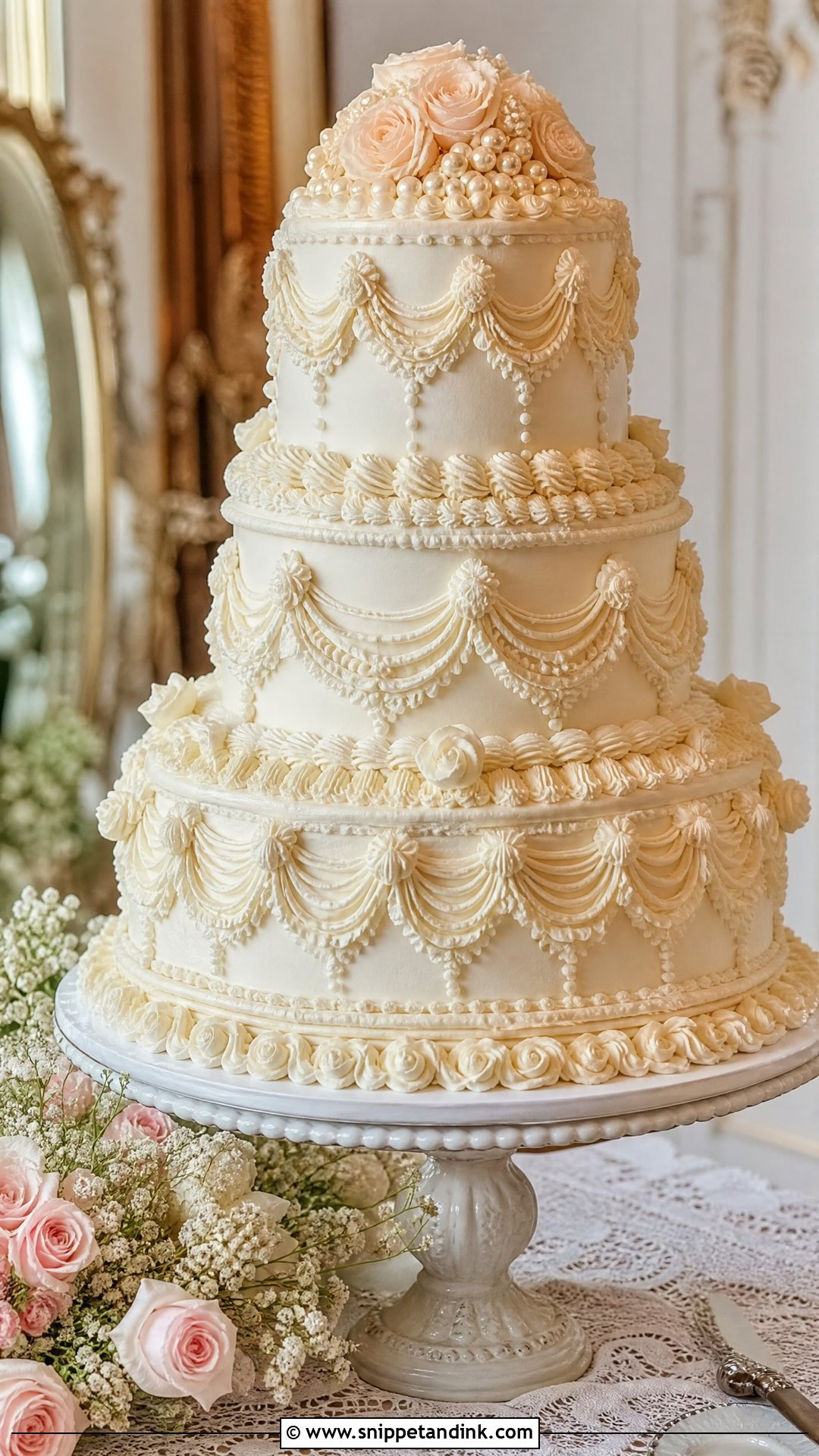
Lambeth piping is layered, overpiped borders, shells and swags built up over several passes, and it’s slow, detailed work. These ornate piping designs look current in ivory, blush or butter yellow. A heart-shaped version reads as playful, while a tall tiered one feels formal. Buttercream piping softens in heat, so in a warm venue I’d pipe in royal icing or a stiffer buttercream to keep the shadows crisp.
8. Floral Cascade Wedding Cake
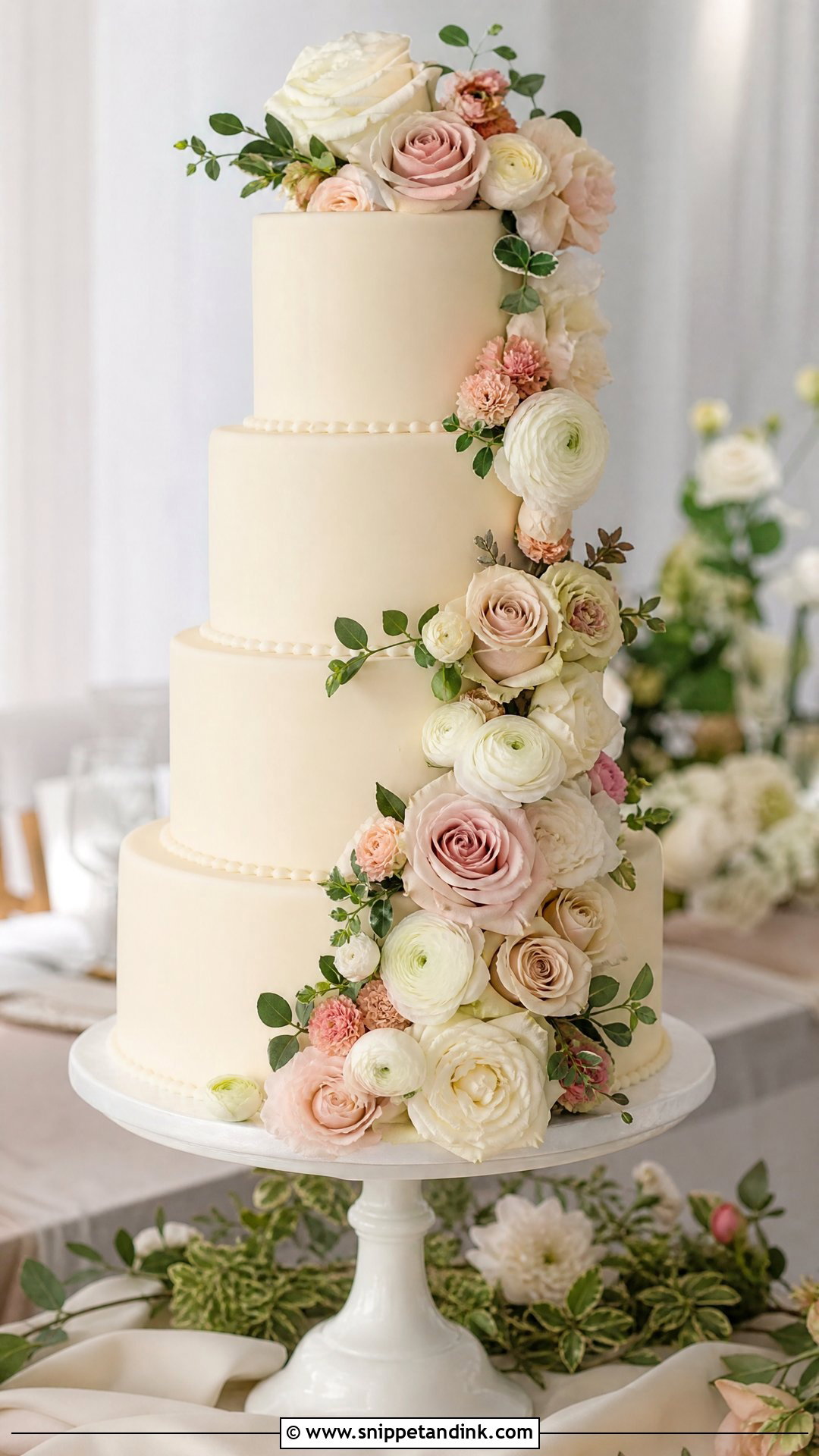
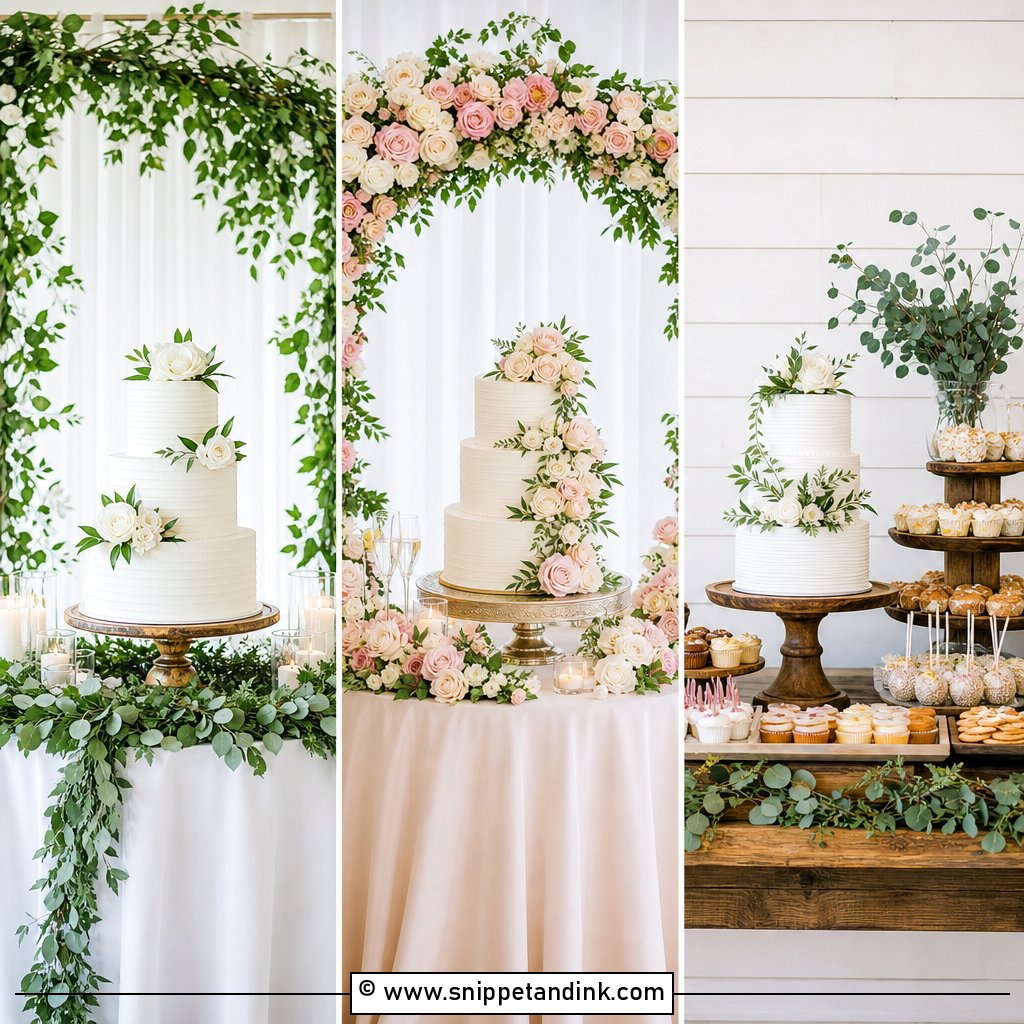
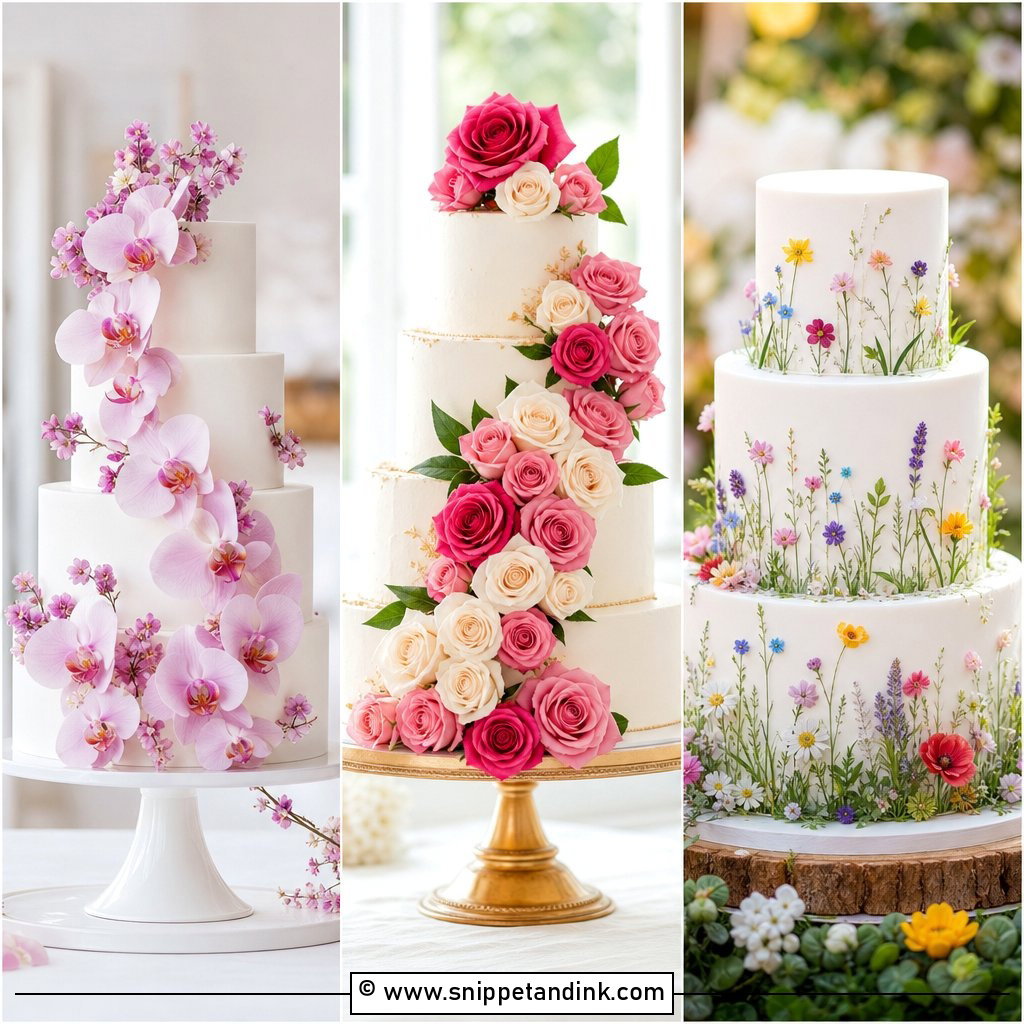
A floral cascade wedding cake runs flowers from the top tier down one side, which draws the eye along the cake’s height. Roses, orchids, peonies and ranunculus all work; sweet peas are lovely but toxic, so I keep them off the icing. The placement has to look intentional, so I coordinate with the florist on stems and colours before the day, and every stem is wrapped or set in a pick so it never touches the cake directly.
9. Minimalist Wedding Cake
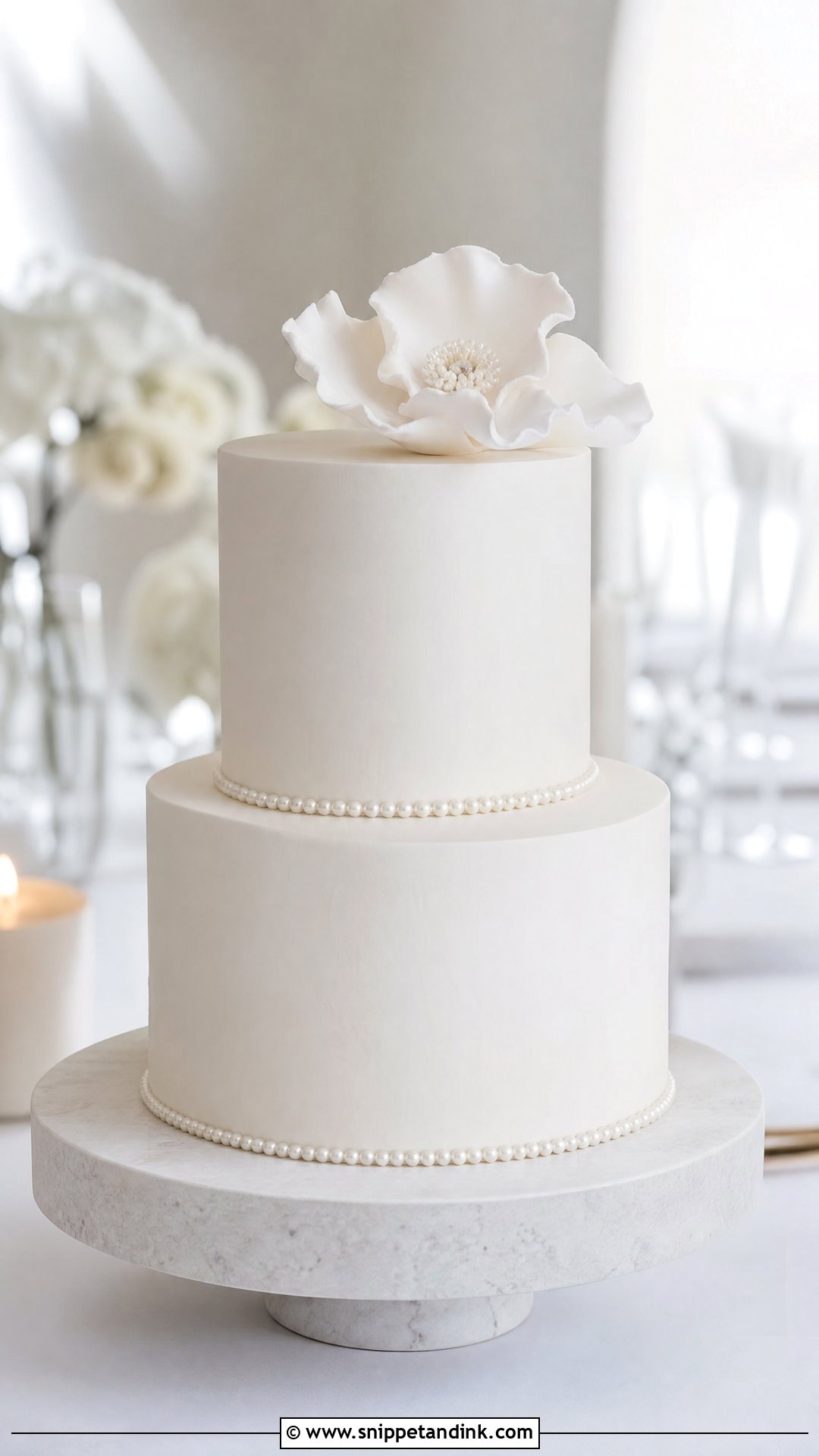
Minimalist cakes show everything. Smooth white buttercream, sharp edges and one detail, such as a single sugar flower, a silk ribbon or a thin pearl border, leave nothing to hide flaws behind. I put a ganache layer under the finish so the edges stay sharp. Choose flavours you love, because the taste carries more of the experience here, and give it a plain stand.
10. Satin Ribbon Wedding Cake
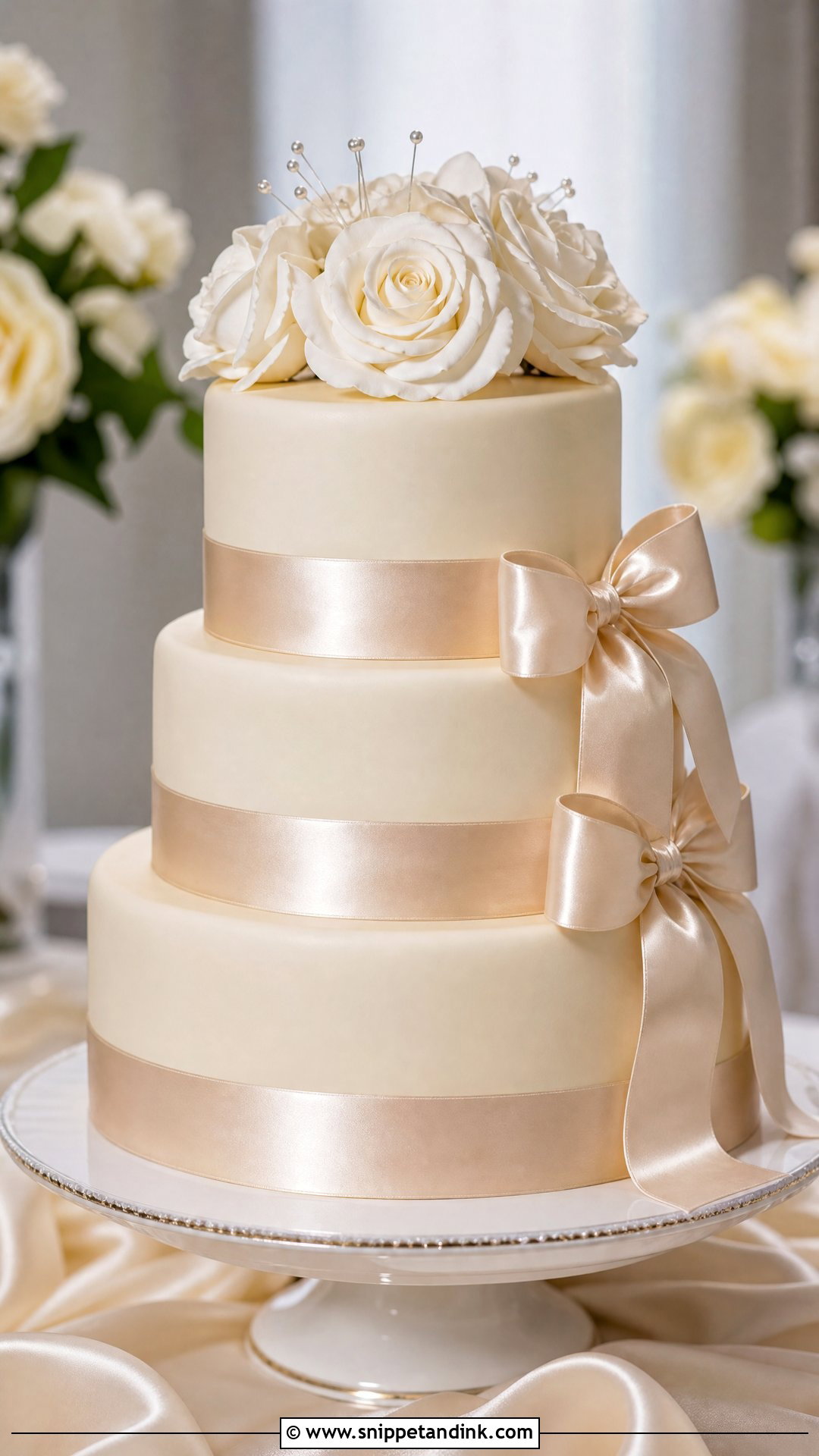
Ribbon is a detail that makes a cake look tailored if it’s applied cleanly and tired if it isn’t. Satin wraps each tier at the base; I line it with a strip of fondant or acetate so the butter in the icing doesn’t seep into the fabric and leave grease marks. White and ivory are classic, while champagne, dusty blue or blush tie it to the dress or stationery. Keep the seams at the back.
11. Sugar Flower Wedding Cake
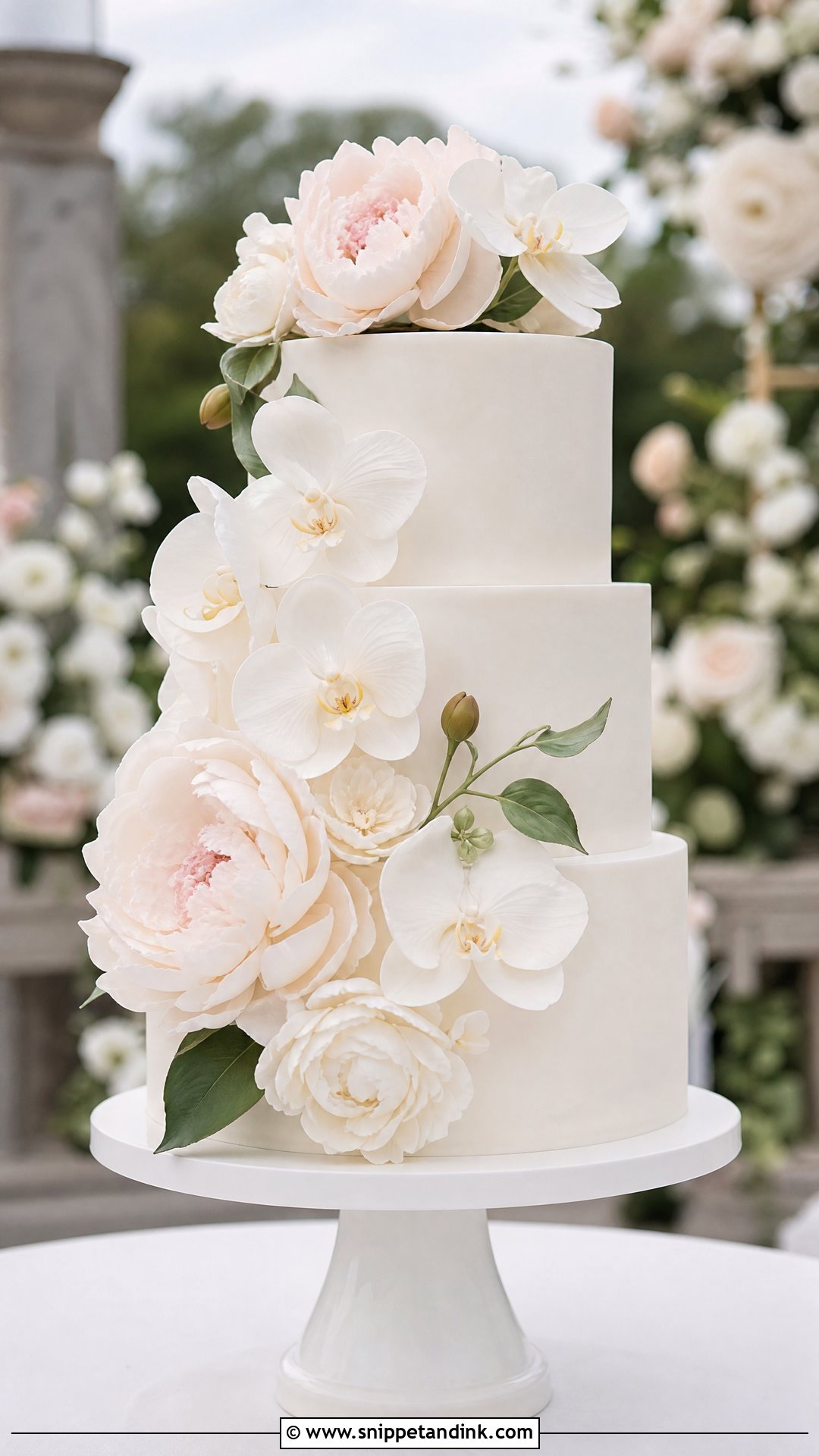
Sugar flowers are made petal by petal and dried for days, which means they don’t wilt and can be made weeks ahead. Roses, orchids, peonies and anemones can be shaded to look real. They’re the right choice for warm-weather weddings where fresh blooms droop. The trade-off is time and cost; a fully covered sugar-flower cake is the most labour-intensive design on this list. A few handmade flowers on a white cake can look just as refined.
12. Monogram Wedding Cake
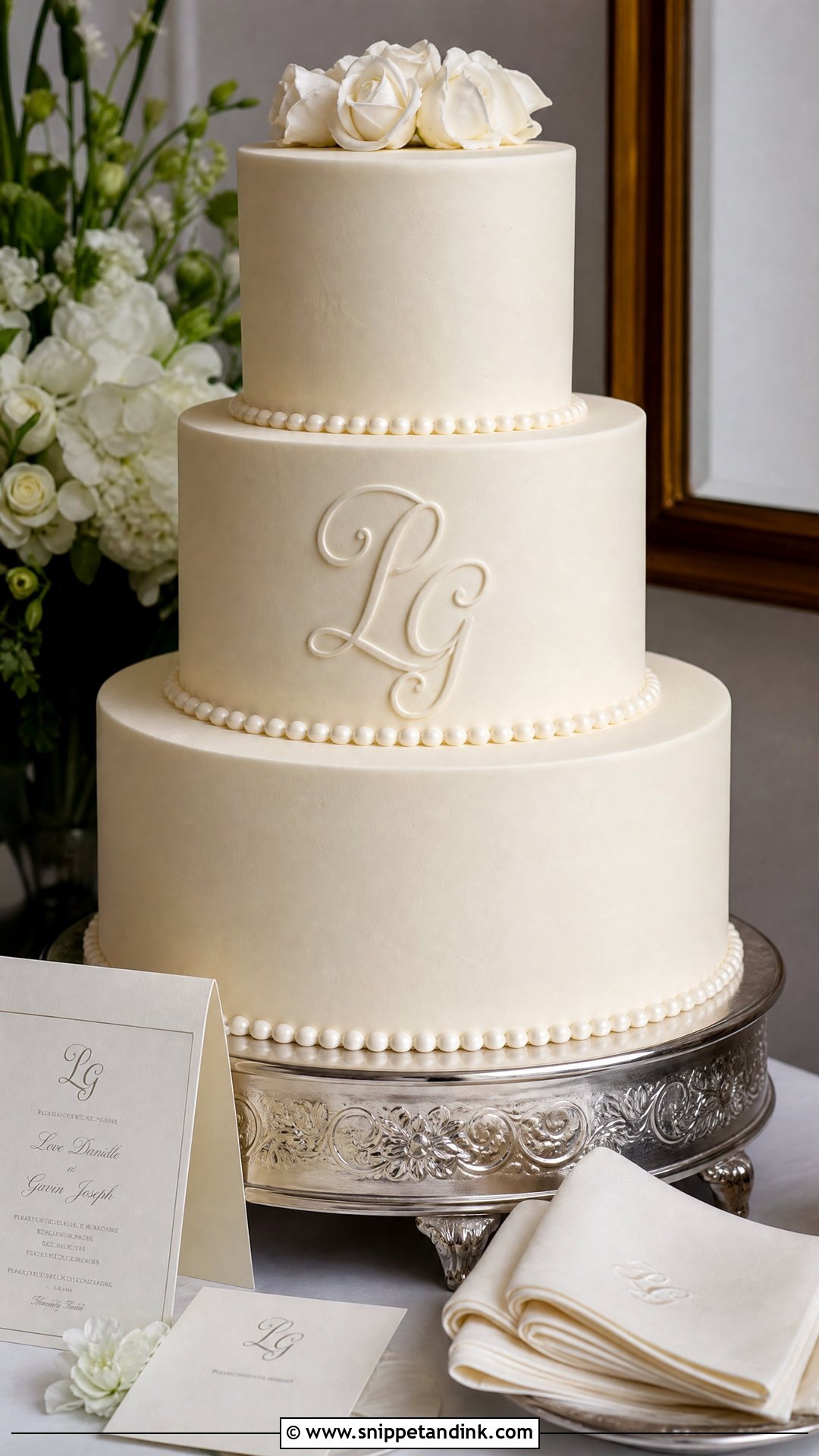
A monogram is the most personal detail a cake can carry, and it works best as one feature, not on every tier. The initials can be piped, embossed, painted or set as a small metallic topper. I match the lettering to your invitations, so ask your stationer for the font file or a print. Smooth icing, pearl trim or a clean floral accent around it keeps the result formal and uncluttered.
13. Champagne Wedding Cake
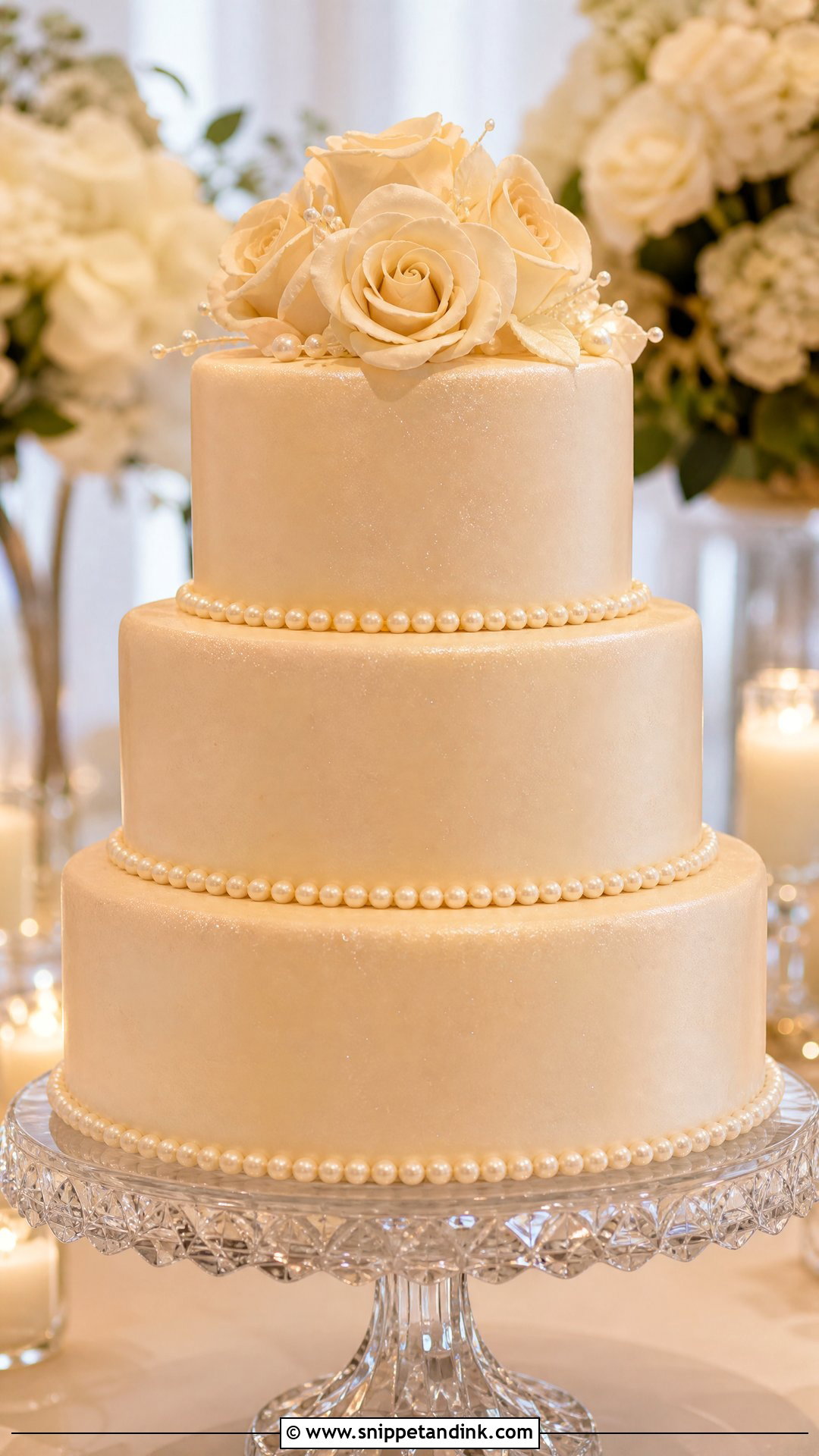
Champagne is a colour I mix carefully, because it slides into yellow under warm lights very easily. A pale golden fondant, a buttercream with a touch of shimmer or a filling flavoured with sparkling wine all fit the theme. Ivory roses, pearls and candlelight suit it. Evening and hotel weddings are a natural match. Bring a fabric swatch to the tasting so we can check the shade against your linens.
14. Orchid Wedding Cake
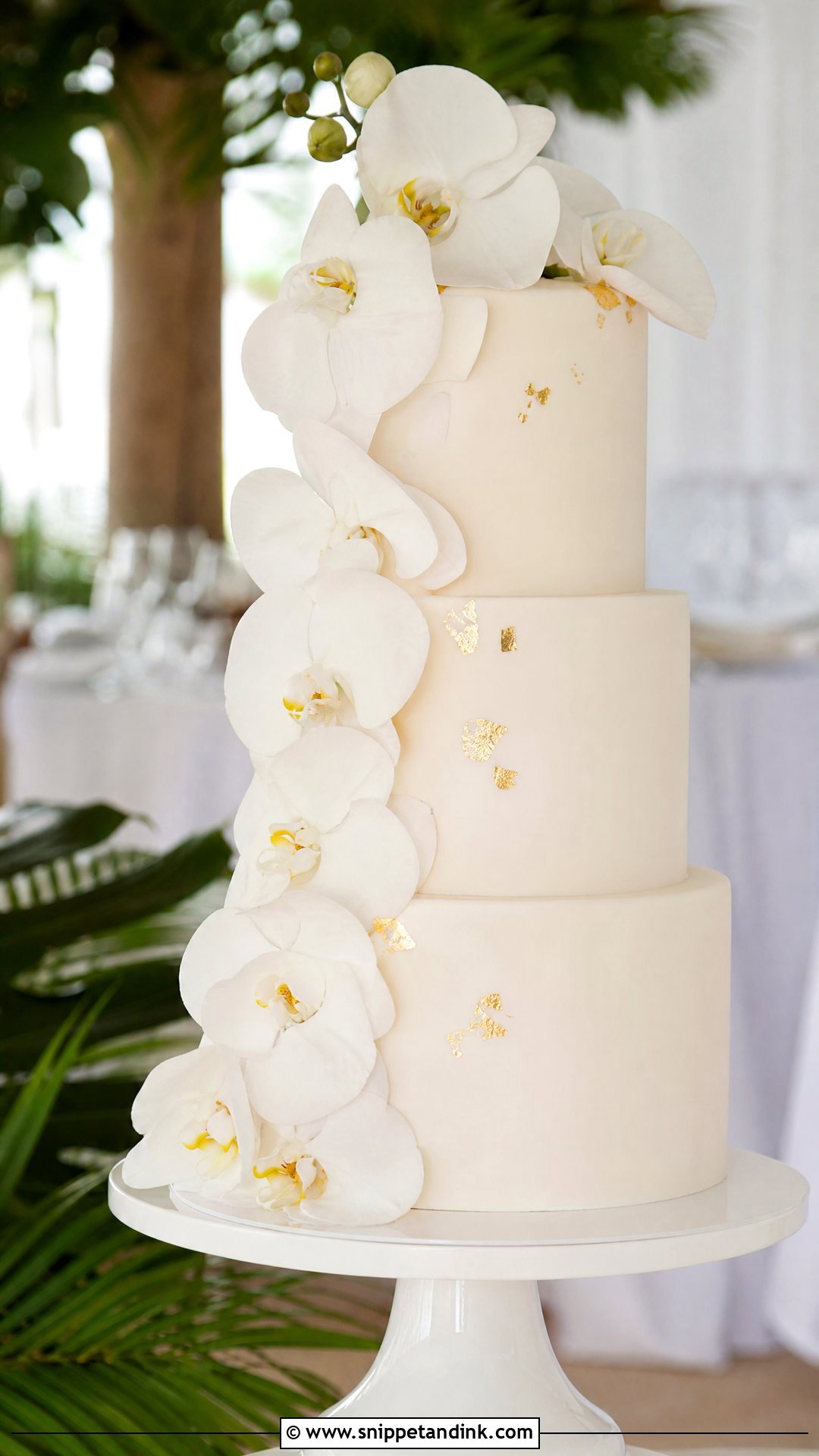
Orchids have a strong shape, so the cake around them should be quiet. White phalaenopsis on smooth white or ivory tiers is the classic choice; they can cascade, appear as a few blooms on a minimalist cake or sit with gold accents. Fresh orchids hold up well in warm weather compared with softer flowers, which makes them a good pick for destination and summer receptions.
15. Textured Buttercream Wedding Cake
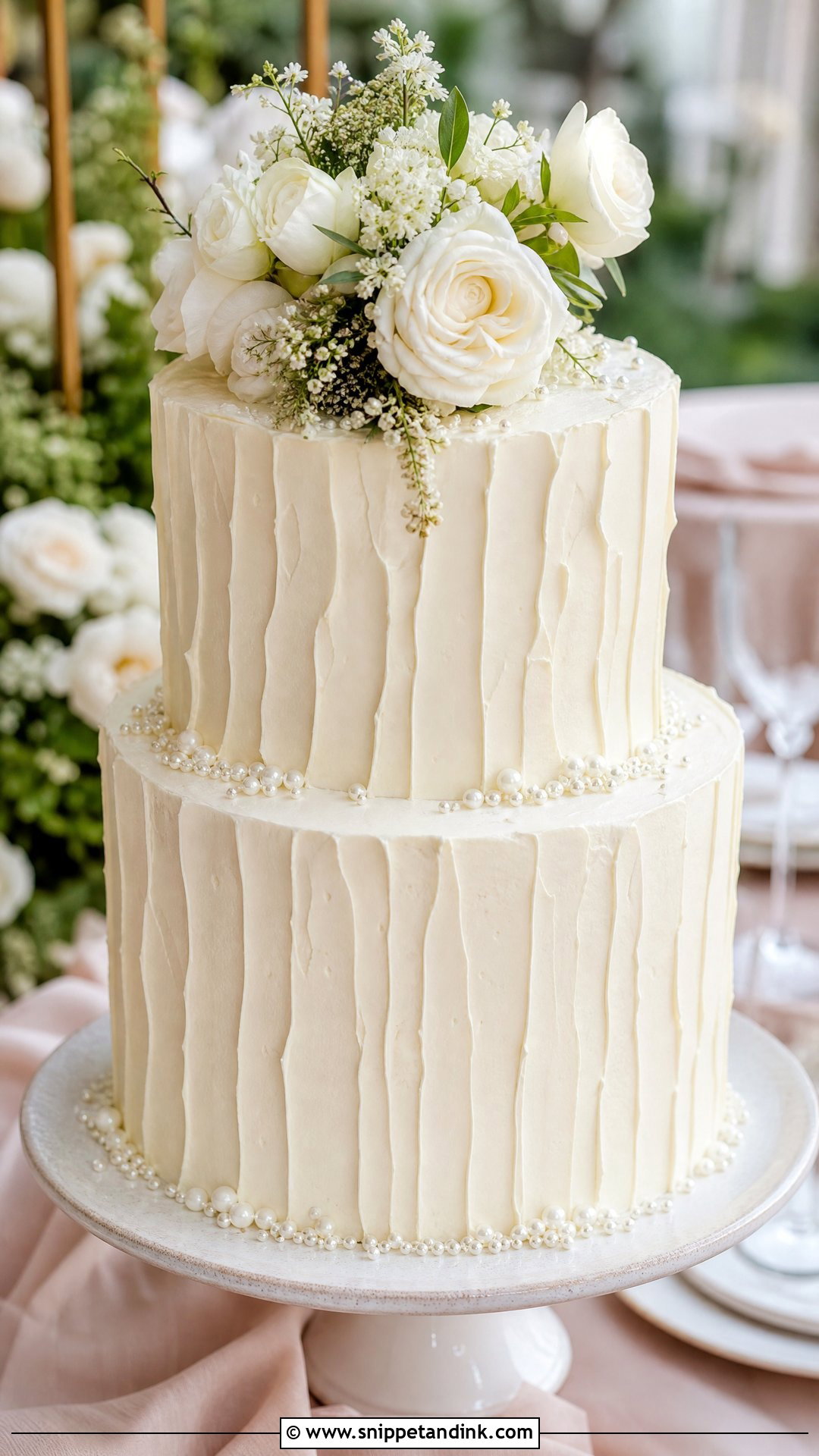
A textured buttercream wedding cake trades a perfectly smooth surface for ridges, palette-knife strokes or soft swirls. It’s handmade-looking and romantic, and it’s more forgiving in transport, since small marks blend into the texture. Fresh flowers, pressed details or pearls suit it. Keep the colour palette simple so the texture stays the feature.
16. Square Wedding Cake
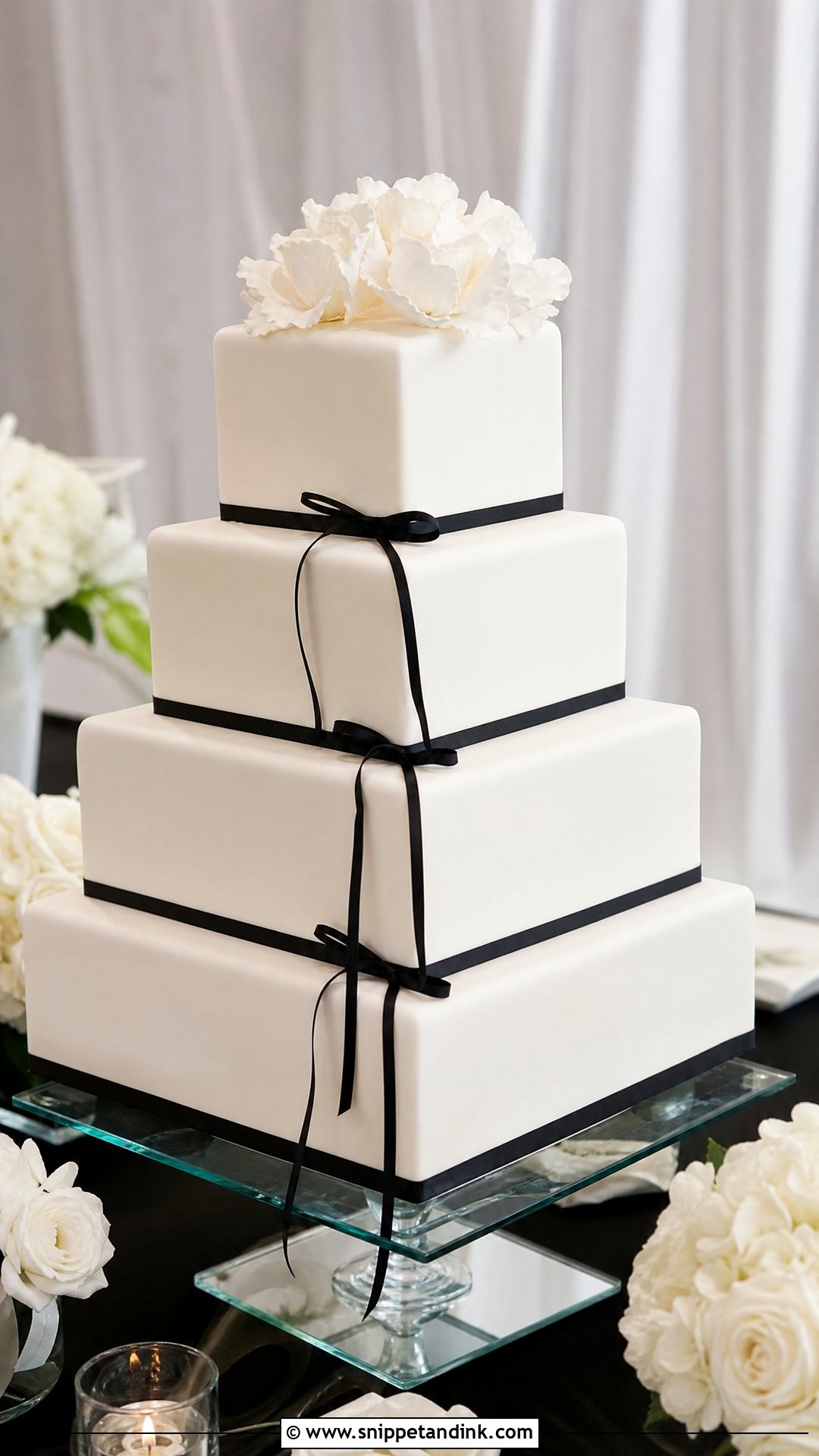
Square tiers look architectural and stand out from round cakes, but they’re harder to make. The corners need a firm ganache layer to stay crisp, and square cakes take more cutting, since the corners give more servings. Smooth fondant, a ribbon or small flower clusters at the corners suit it. City and black-tie weddings with sleek decor are the natural setting.
17. Ruffle Wedding Cake
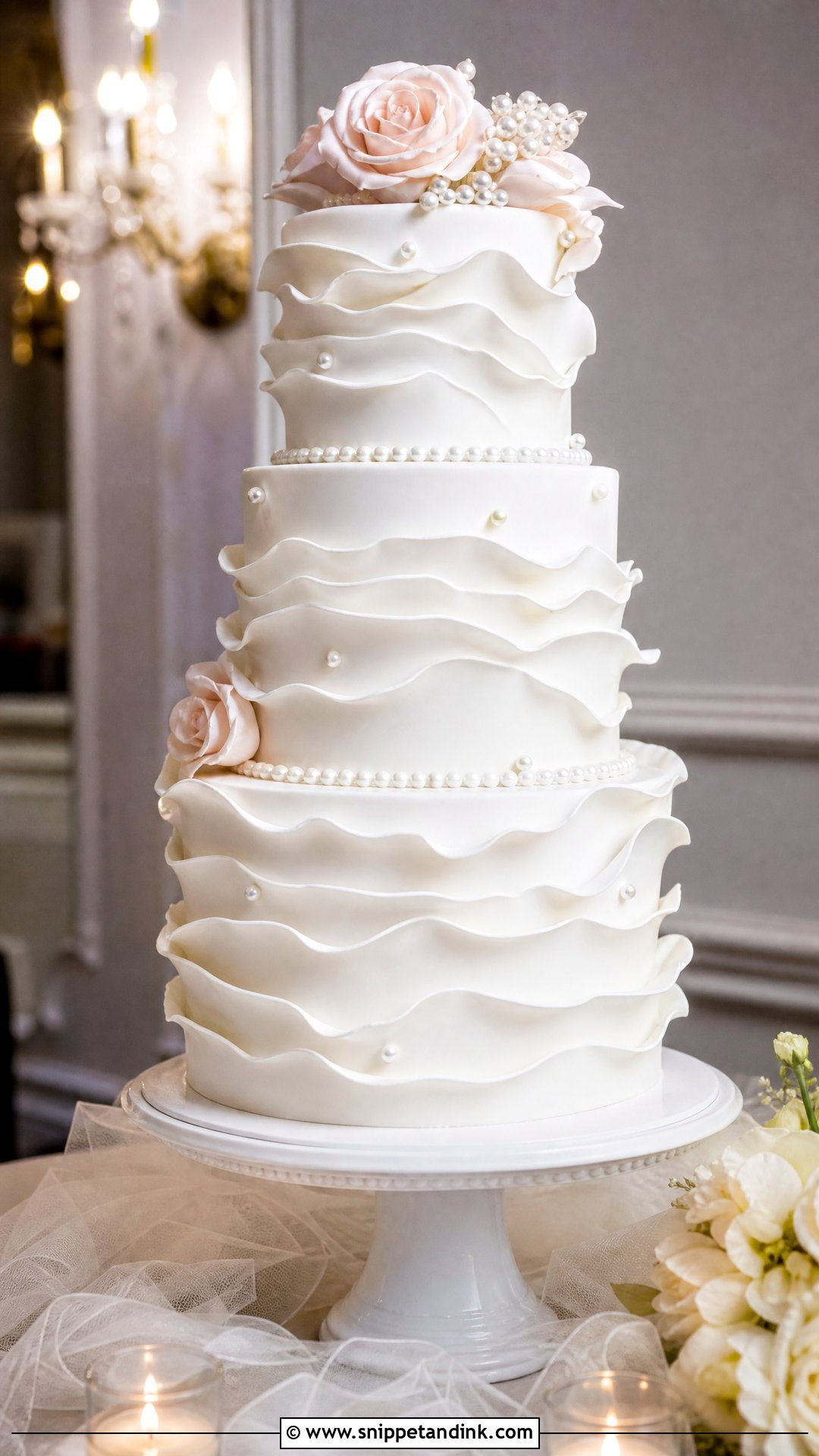
Ruffles mimic the fabric of a gown, and they can be made from fondant, wafer paper or buttercream. Wafer paper ruffles are the lightest and move most like fabric, while fondant ruffles hold shape better in humidity. Some cakes have ruffles on every tier; others use one statement tier between smooth layers. White feels classic, and blush or champagne adds warmth.
18. Modern Sculptural Wedding Cake
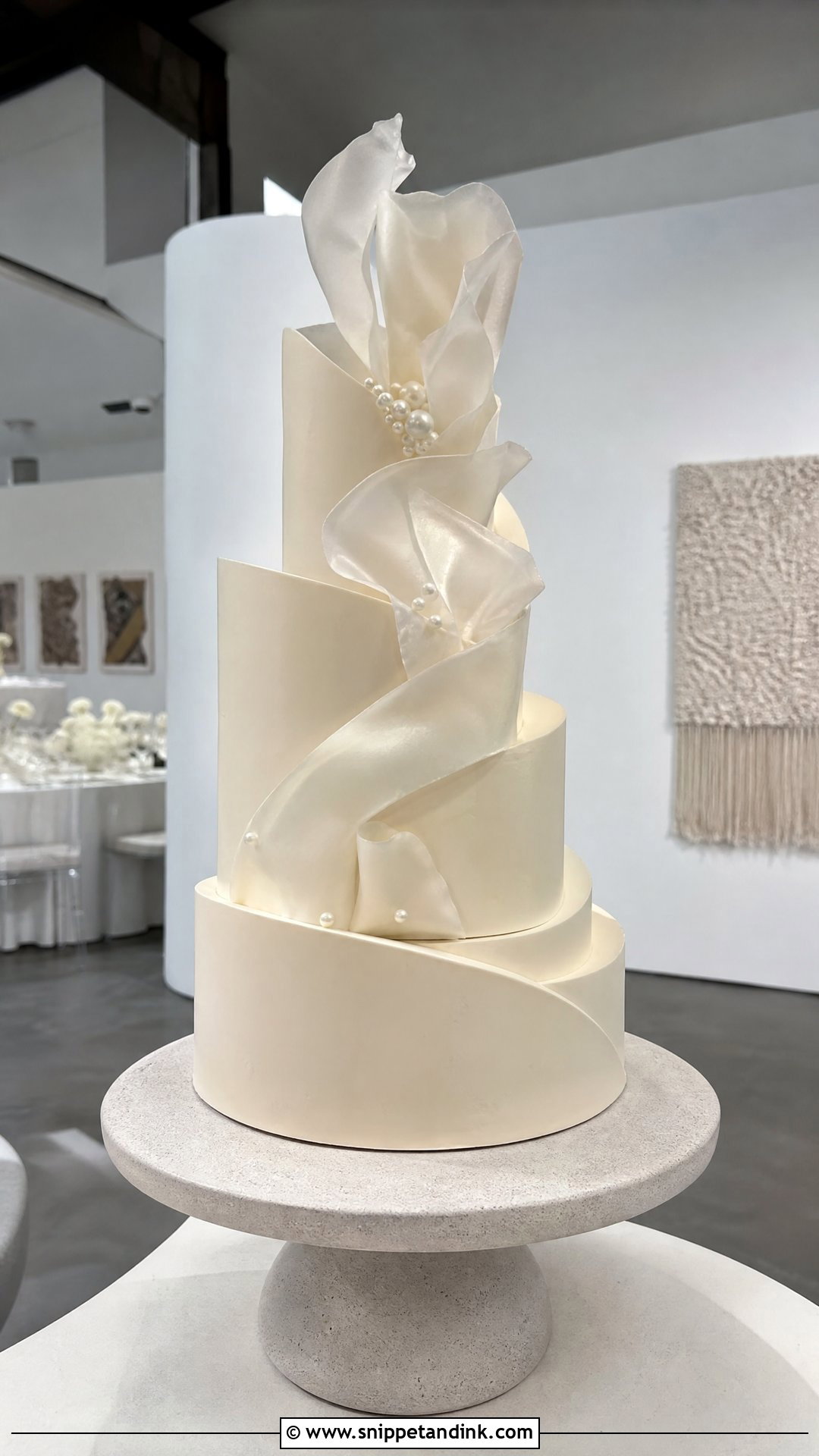
Sculptural cakes use curved tiers, offset stacking, wave textures or abstract sugar pieces. They’re structurally the hardest designs to build, so I’d ask to see photos of sculptural cakes your designer has actually made. They suit modern venues and couples who want a strong photo moment. Keep the colour palette focused: ivory, beige, white or soft metallic details.
19. Vintage Wedding Cake
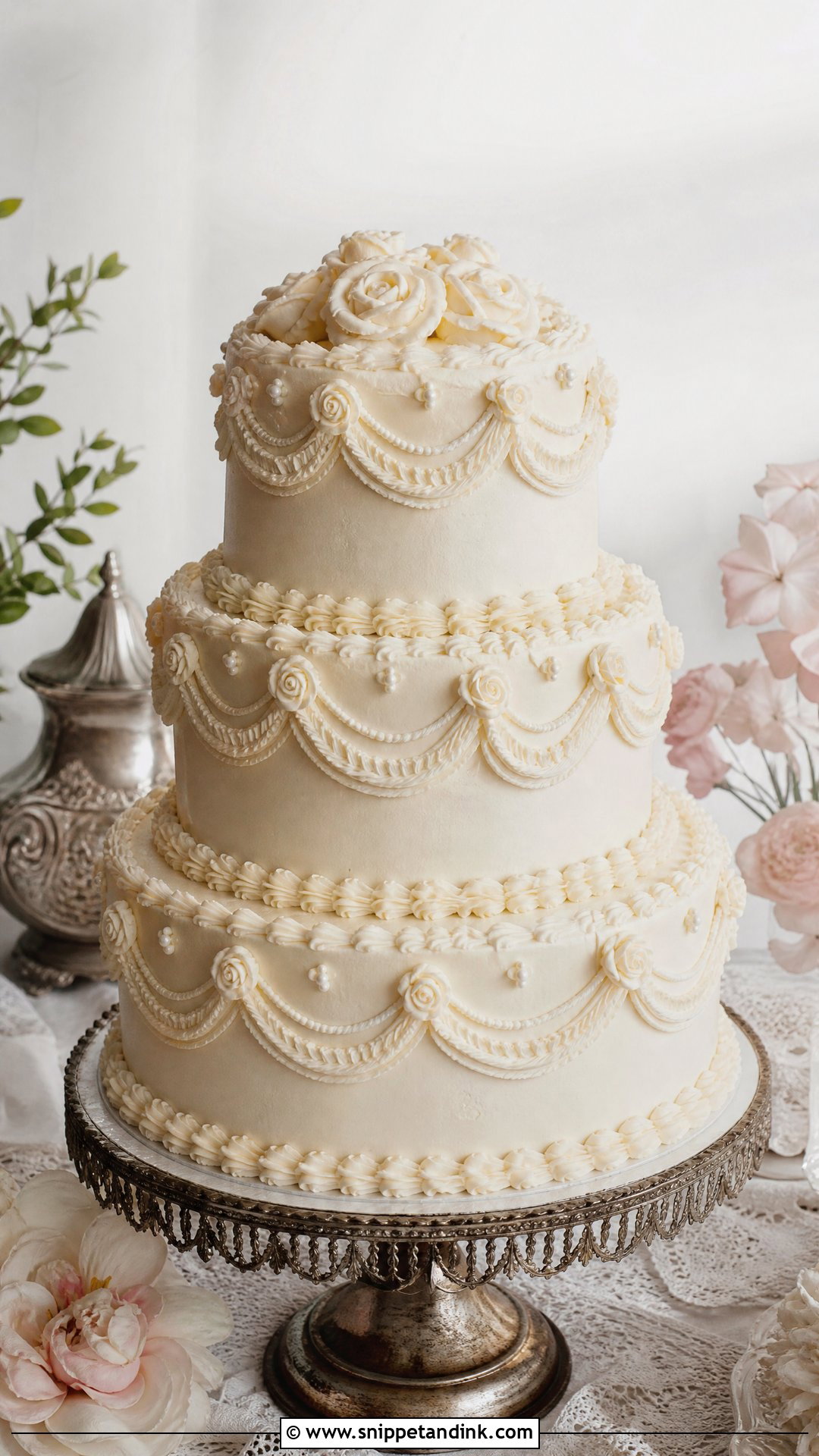
Vintage cakes revive old-fashioned piping, soft colours and detailed borders, including shells, lace-like piping, small roses and swags. Ivory, blush, pale yellow and soft blue all suit it. For a polished result, keep the piping neat and layered, and use a stand that looks like it came from a family cabinet. I’d steer you away from overdoing the colours; too many tones read as a theme party rather than heirloom.
20. Blush Pink Wedding Cake
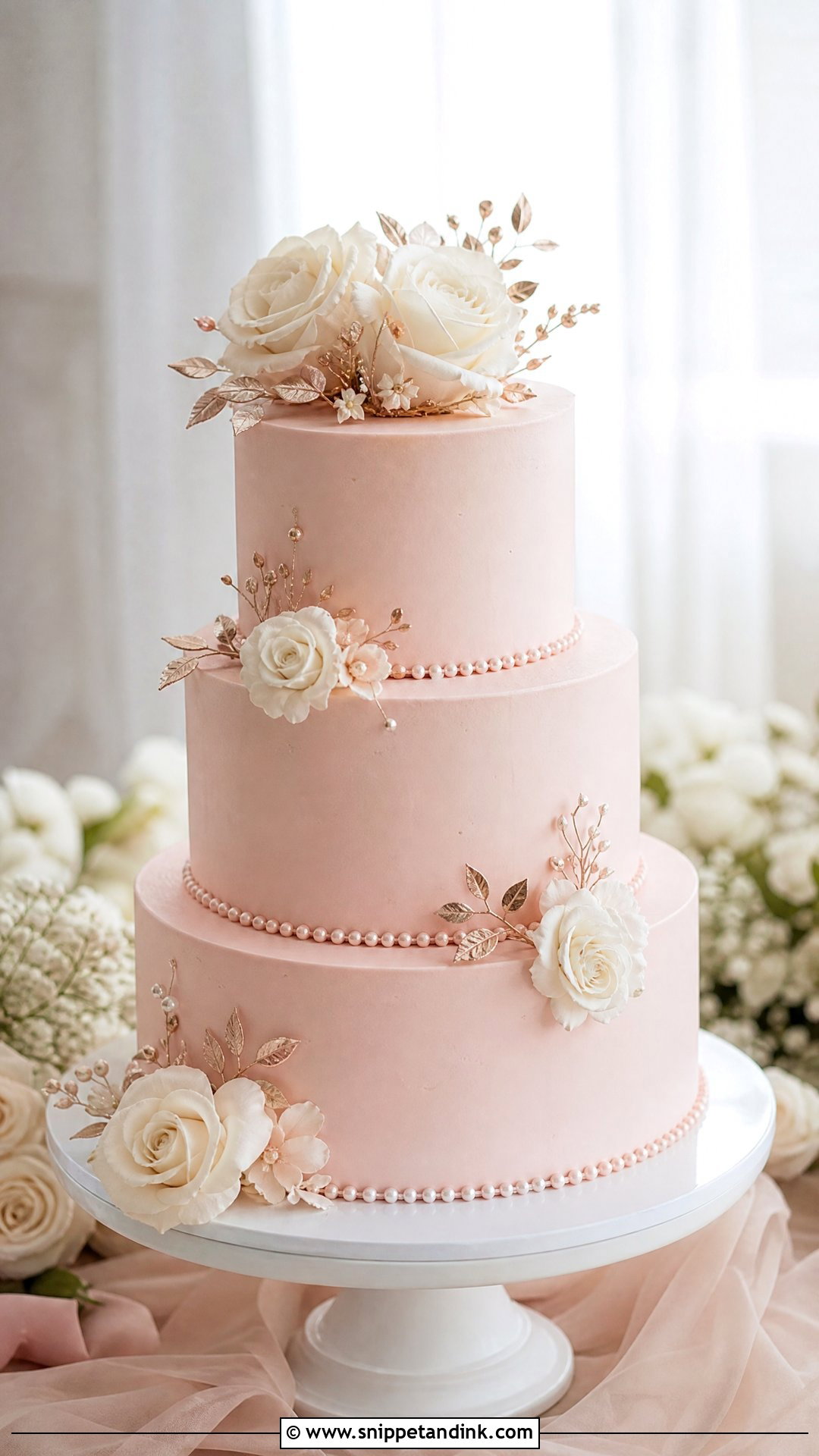
Blush is warm without being colourful, and it suits more styles than any other pink. Ivory flowers, rose gold, pearls and soft buttercream textures all pair with it. A smooth blush cake with white orchids reads as sleek, while a blush ruffle cake reads as soft. Pick one shade and repeat it in the flowers, linens or stationery, because two slightly different pinks side by side look like a mistake.
21. Blue Wedding Cake
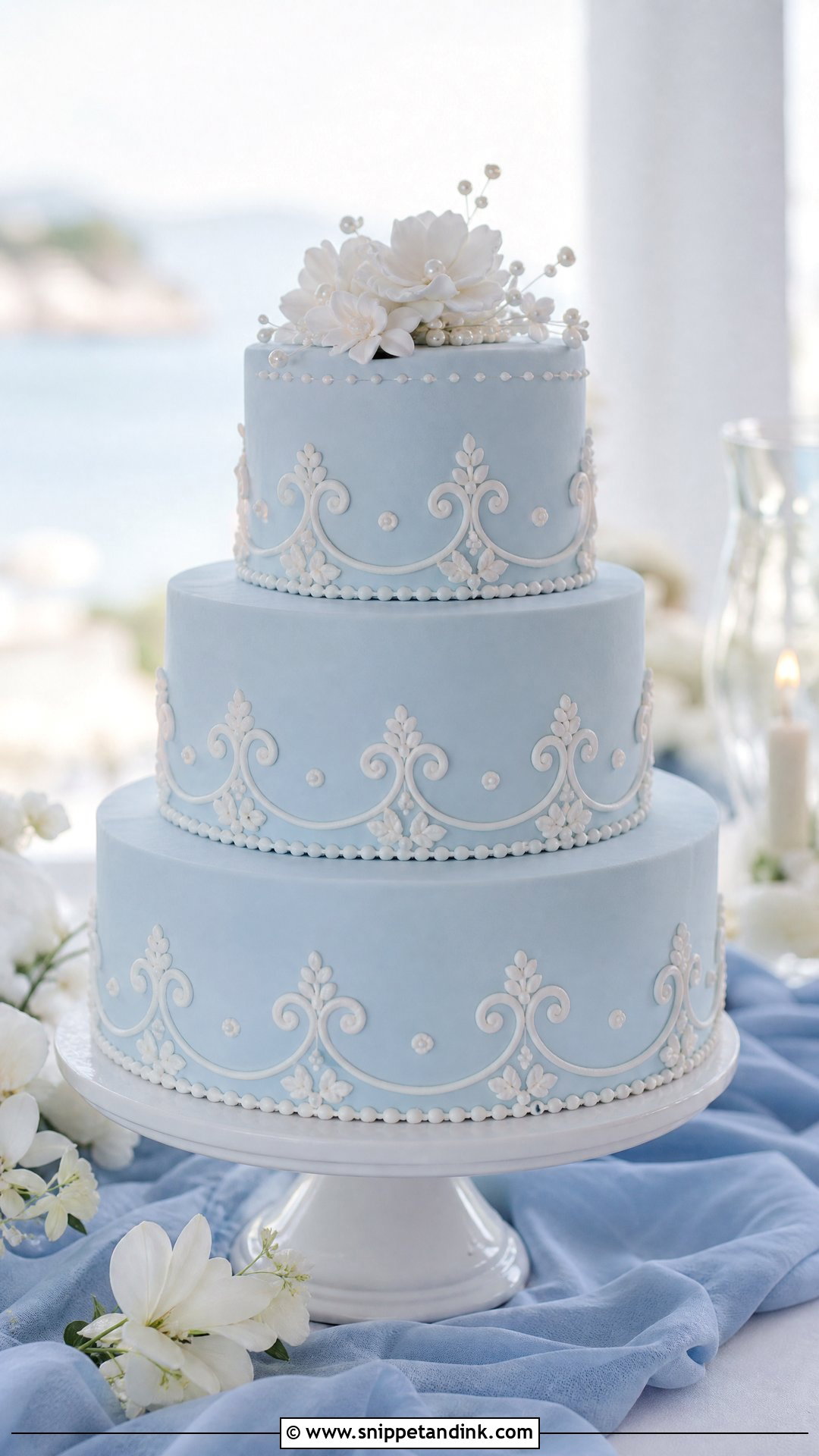
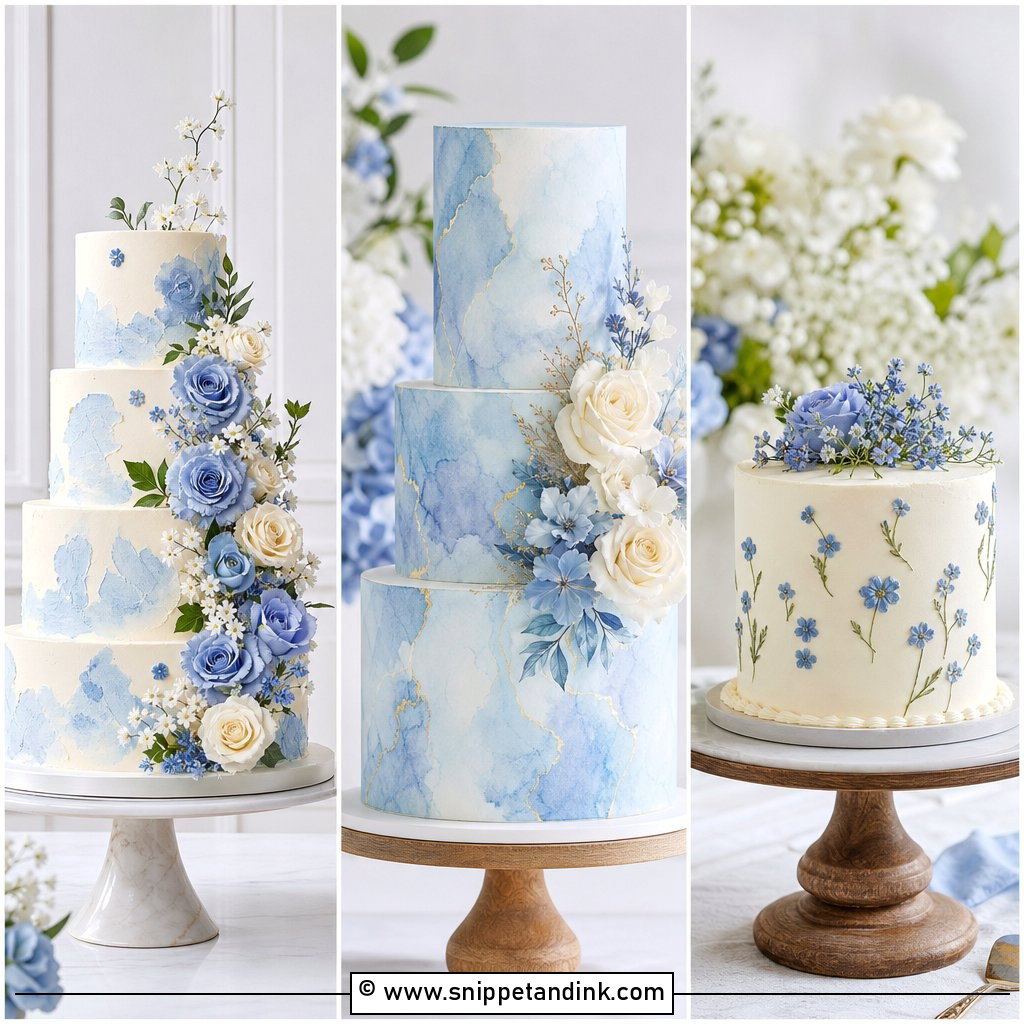
Blue cakes need care in colouring, because blue icing can turn grey or green depending on the butter in the base. Powder blue suits coastal, garden or spring weddings, while deep navy is formal. Blue pairs with white sugar flowers, silver, pearls and delicate piping. Use watercolour blue on the tiers for a soft look, or smooth navy fondant with crisp white flowers for a modern one.
22. All White Wedding Cake
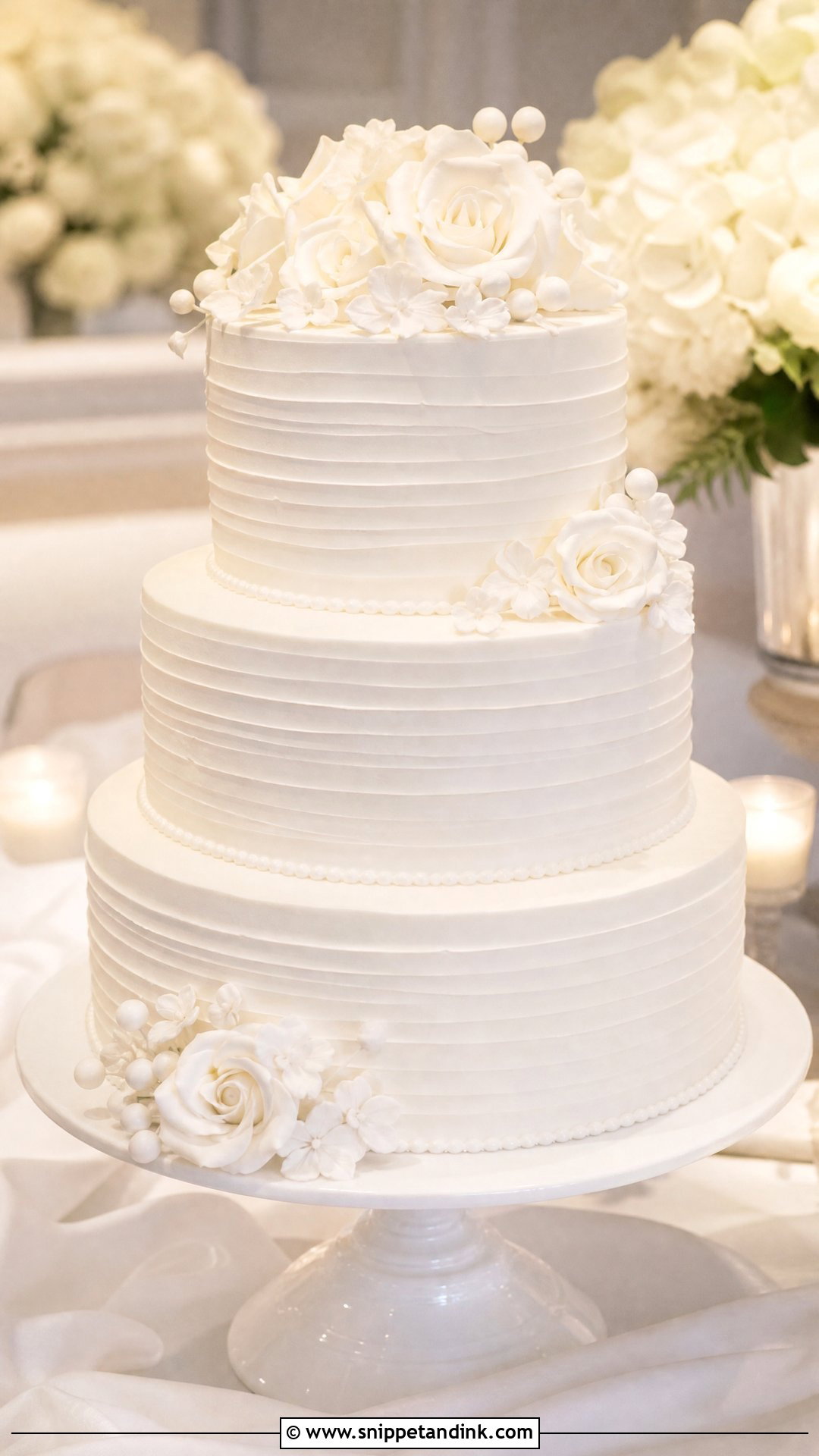
All-white cakes rely on texture and shape rather than colour. Smooth tiers, white sugar flowers, pearl trim, lace piping or wafer paper petals keep it interesting. It suits almost any venue. I use several whites, such as ivory, pearl and cream, so the details have contrast and don’t disappear in photos.
23. Greenery Wedding Cake
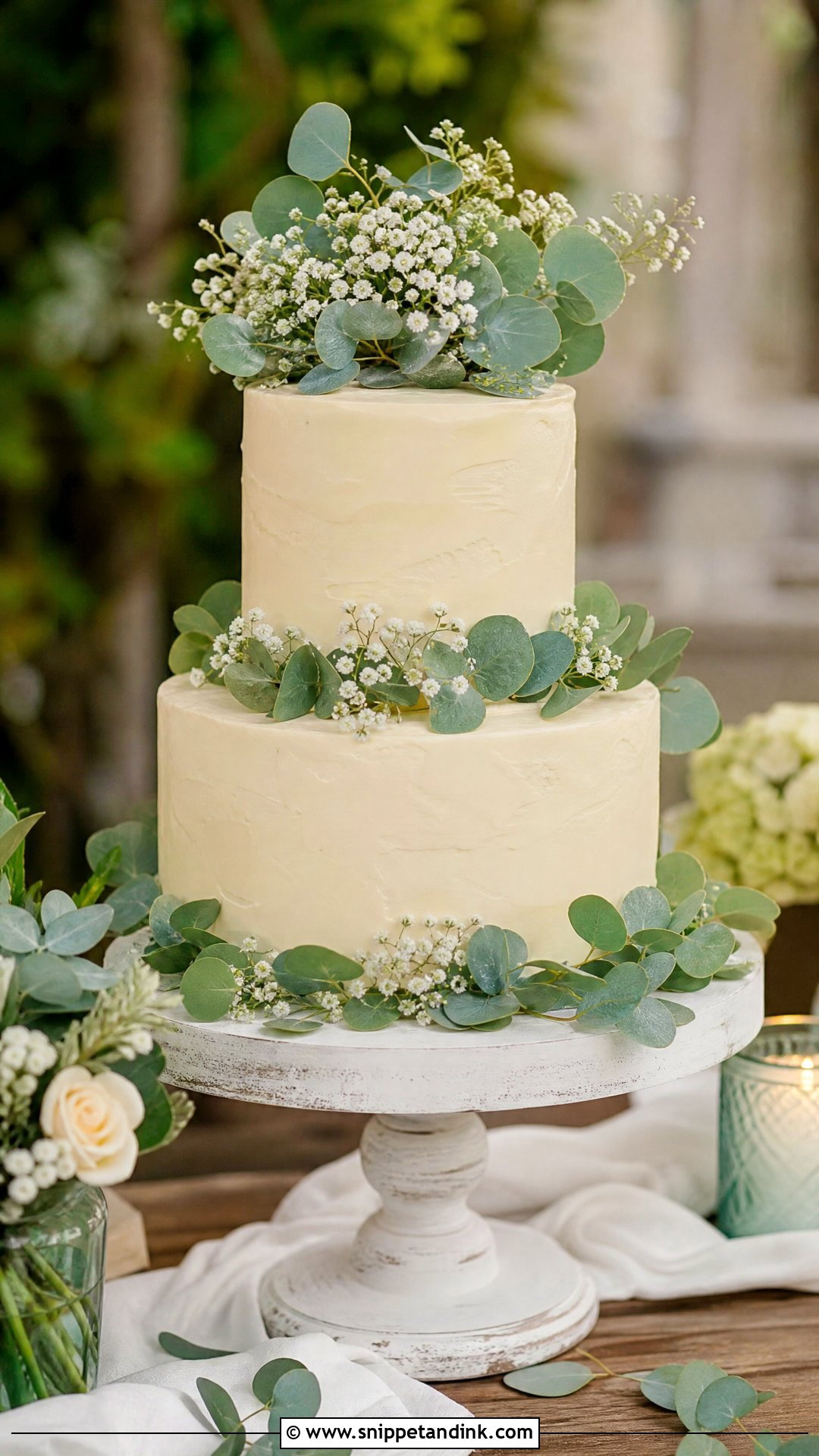
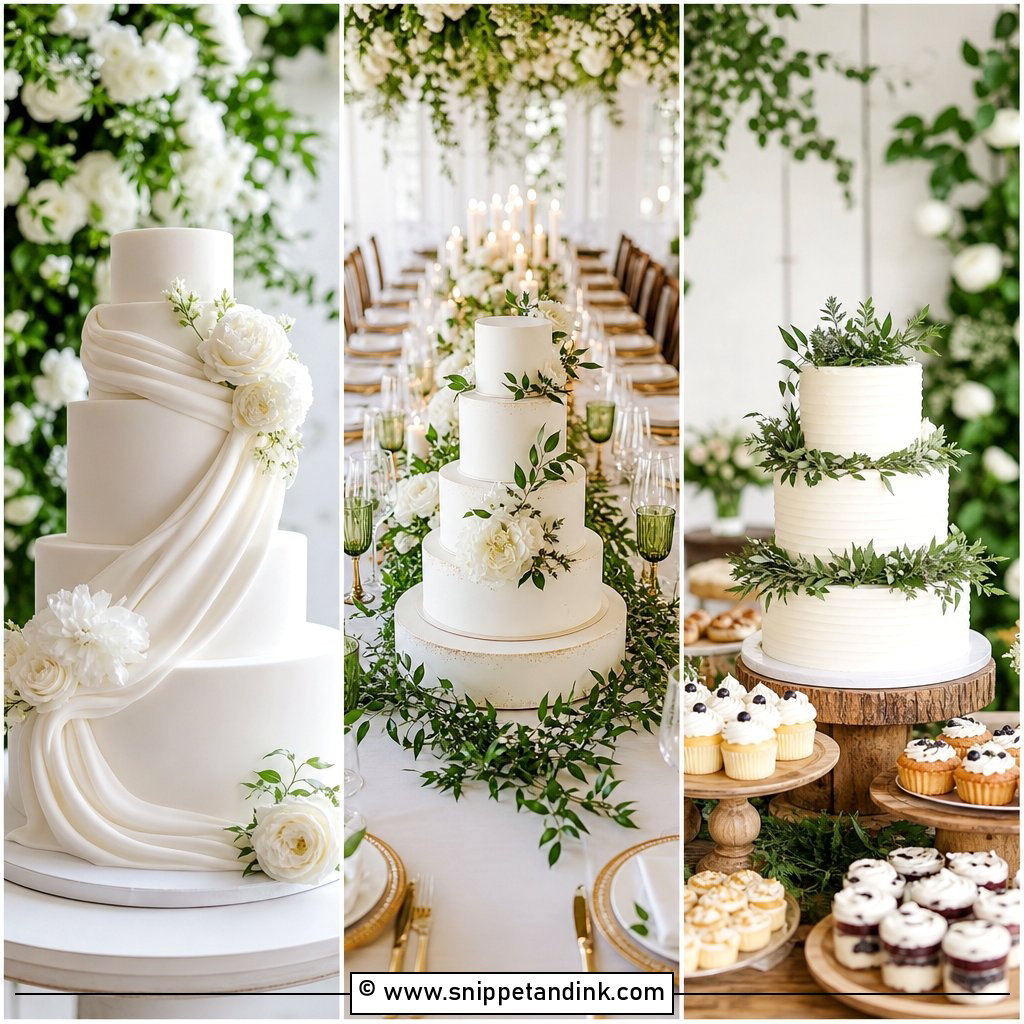
Greenery looks fresh when it’s restrained. Eucalyptus, olive branches or vines frame the tiers without covering them, but not all greenery is food-safe; eucalyptus, for one, shouldn’t touch the icing directly, so I wrap stems and use a barrier. Garden, greenhouse and vineyard weddings suit it. A few stems placed cleanly look far more refined than a heavy wreath of leaves.
24. Watercolor Wedding Cake
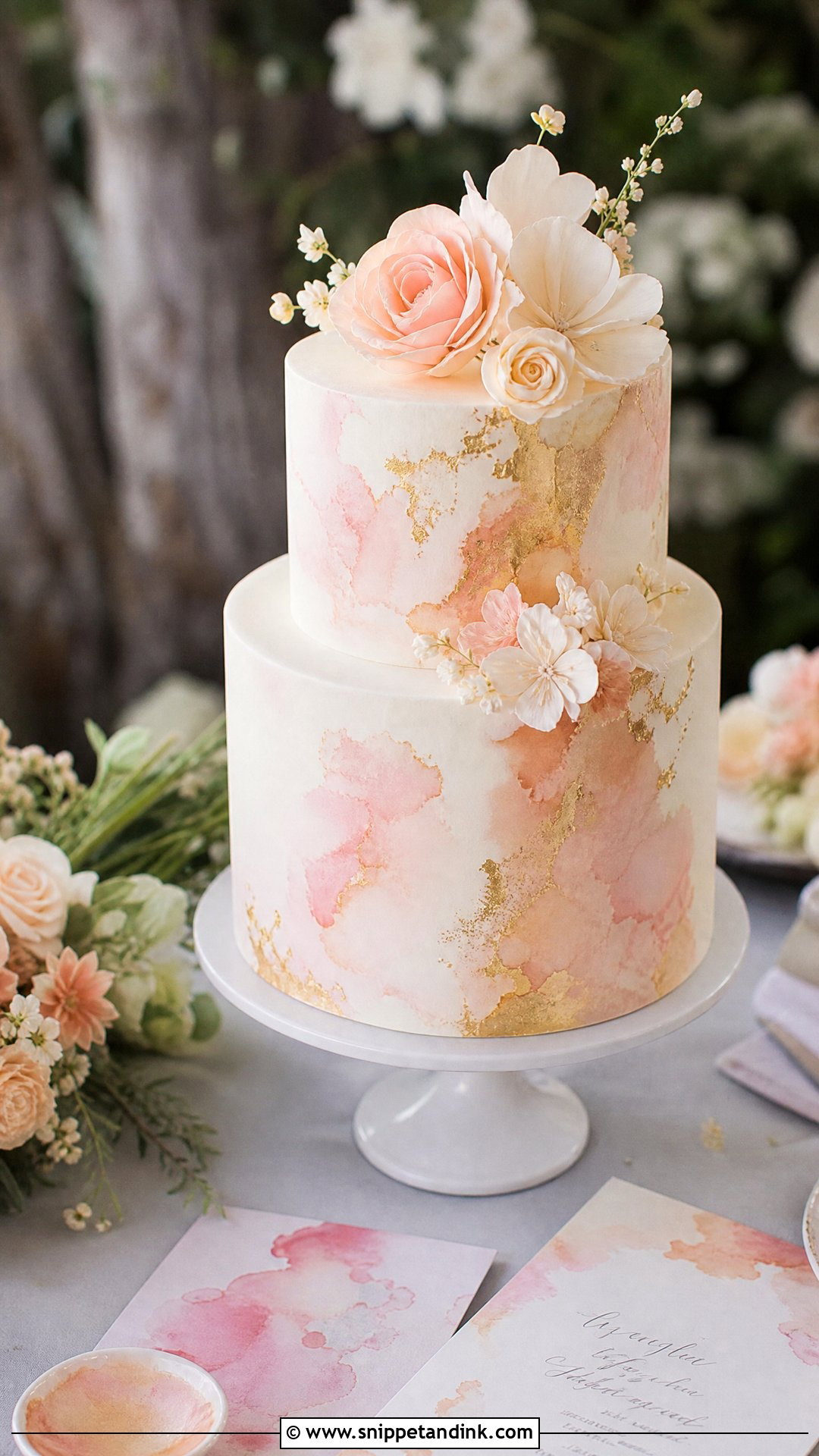
Watercolour effects are painted onto smooth fondant or buttercream with diluted food colouring and a soft brush. Blush, lavender, blue, peach or neutral beige all work. It pairs with sugar flowers, gold leaf or delicate piping. I keep the brushwork soft and blended; harsh lines make it look like a child’s painting rather than an art piece.
25. Crystal Wedding Cake
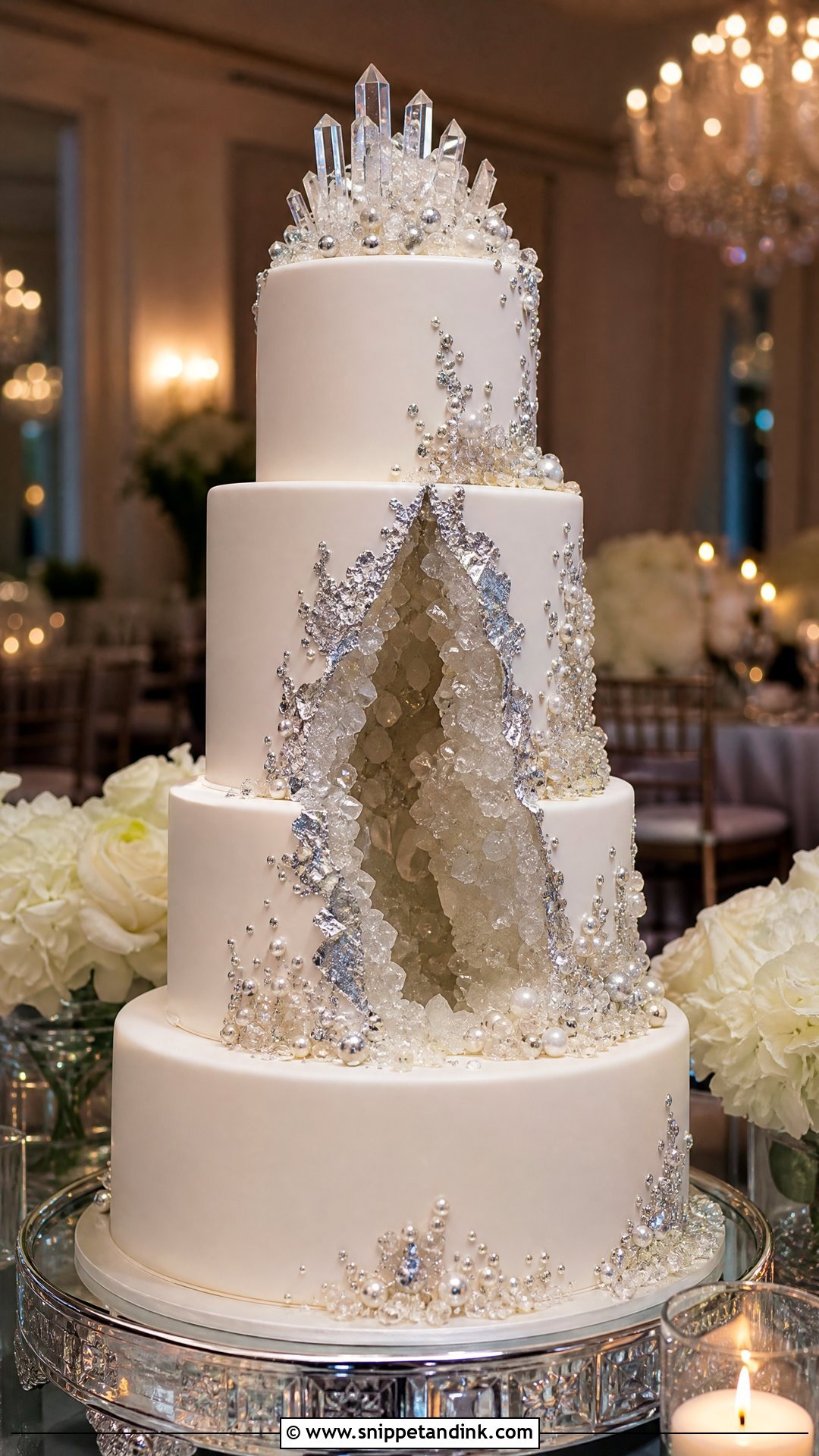
Crystal details include sugar crystals, rock candy, faceted edible accents or a geode carved into one tier. The geode is cut into the cake and filled with coloured isomalt or rock sugar, then edged with gold or silver. Balance it with smooth white or ivory tiers. Evening receptions with good lighting show it best; aim a focused light at the cake table so the facets catch it.
Real Flowers Should Never Touch the Icing
Fresh flowers look lovely on a cake, but many are grown with pesticides, and some are toxic. Before I put real stems on a cake, I check three things with the florist.
- Are they food-safe? Roses, orchids, ranunculus and peonies are common choices; lily of the valley, hydrangea, foxglove and sweet peas are not.
- Were they grown without pesticides? If not sure, they still go on with a barrier.
- How will they be placed? Stems are wrapped in floral tape and set in food-safe picks, so no sap or stem touches the cake.
I always place fresh flowers on site, as close to the reception as possible, and remove them before the cake is cut.
The Last Two Hours Before It Reaches the Table
Large cakes are usually transported in separate tiers and stacked at the venue, which takes time and a stable table. Ask your venue for a cool room with the cake table in place at least an hour before guests arrive. Keep it away from windows, heaters and the dance floor.
Buttercream softens in heat, and a chilled fondant cake can sweat when it moves from a cold van into a warm, humid room. Neither is a disaster if the setup is planned: shade, steady temperature and time to settle. Tell your designer if the reception is outdoors, under a tent, or in a room without air conditioning, because that changes the icing and the design.
A Luxury Cake Is Mostly Invisible Structure
Order early, tell your designer your venue’s temperature and setup times, and taste before you decide on the design. A plain white cake can look as luxurious as a crystal one when the finish is careful, and the most impressive cakes are the ones that still stand perfectly at the end of the night. Roses, ribbon, gold leaf, orchids or vintage piping can all be made to suit your wedding; what matters is the craft behind them.
You'll Like These Ideas:



Leave a Reply