
Spice cake used to be the flavor couples apologized for at tastings. Now gingerbread is one of the winter orders I look forward to most, because it’s forgiving to bake and generous to pair. Molasses gives a deep, moist brown crumb, and the ginger heat takes well to cream cheese, maple, caramel, citrus, pear, cranberry, vanilla and toasted nuts. The design side is just as open: it can sit under smooth ivory tiers, a soft drip, cookie accents or a bare naked finish. What keeps it from looking like a holiday dessert is restraint. Below are twenty versions I’d build for a wedding, with notes on the flavor logic and the practical catches behind each.
What If Half Your Guests Don’t Like Ginger?
It’s the question I hear most at gingerbread tastings, usually from the partner who loves it about the one who doesn’t. Gingerbread isn’t one flavor. A cake made with light molasses and gentle ground ginger tastes warm and mild, close to a spice cake. Dark molasses, fresh grated ginger and a pinch of black pepper taste bold and slightly hot. Ask your baker which end of that range they bake, and taste a plain slice before you taste it with frosting.
If the guest list is mixed, two easy answers work. One is to make the top or middle tier gingerbread and the rest vanilla or chocolate, so the couple cuts the flavor they love and nobody is stuck with it. The other is to lean on a bright filling, since orange, pear and cranberry all soften the spice more than any frosting does.
At the tasting itself, try each filling with the same cake and frosting so you’re comparing one thing at a time. Cream cheese against maple tells you more than five flavors at once.
Bring the person whose opinion you trust most on flavor, not the one with the strongest opinions on looks. Design can be adjusted by email later; the flavor decision is the one that needs a mouthful of cake.
1. Gingerbread Wedding Cake With Cream Cheese Frosting
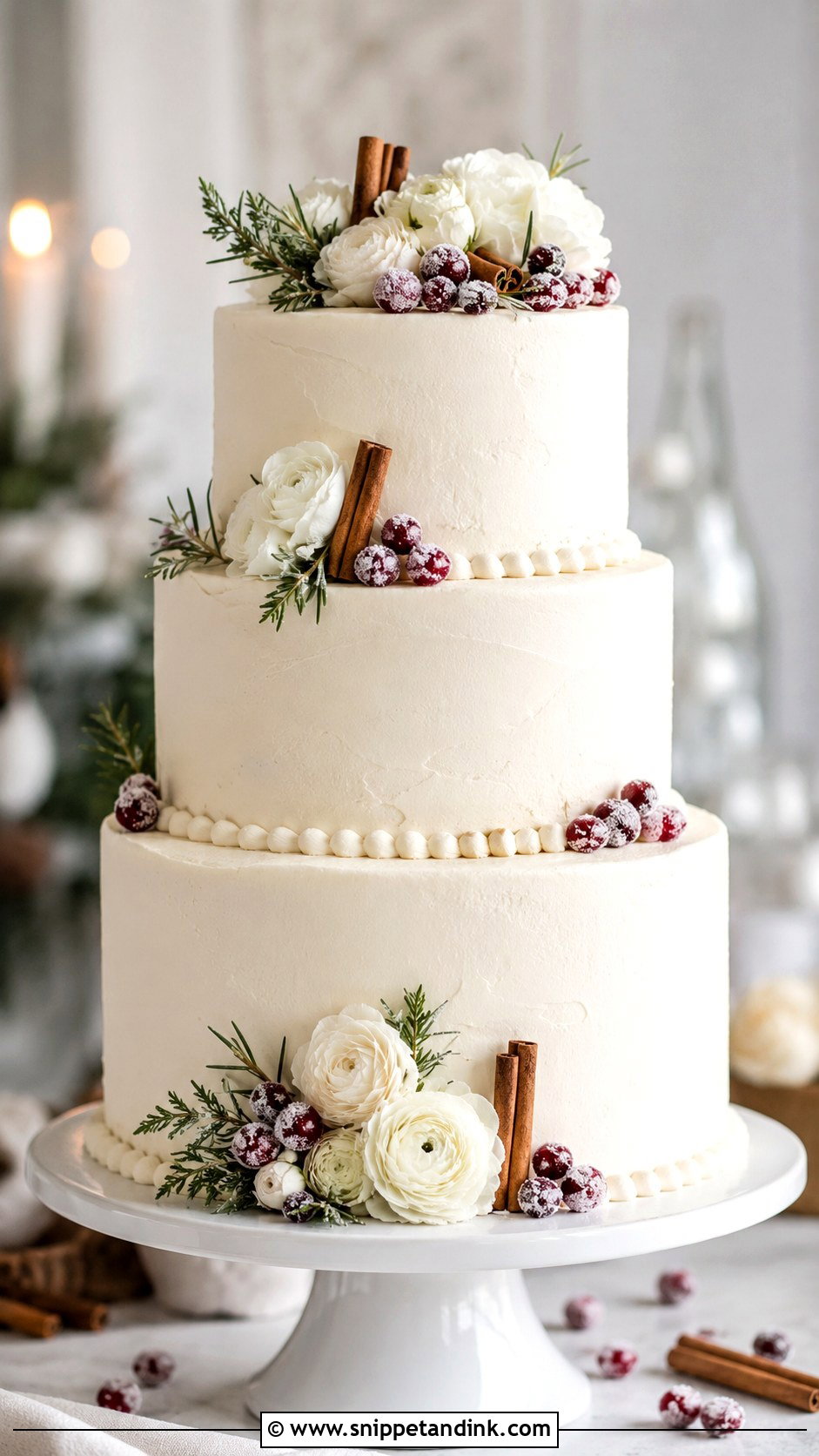
Cream cheese frosting is the pairing most guests already trust. The tang balances the molasses, so a gingerbread wedding cake filled and covered with it tastes rich without tipping into heavy. I keep the filling layers thin, since cream cheese frosting is soft and thick layers make tiers bulge under the weight above. Smooth ivory outside, clean piping, and a few small white flowers, sugared cranberries or cinnamon sticks are plenty. Fans of carrot cake will go straight for it.
2. Gingerbread Wedding Cake With Maple Buttercream
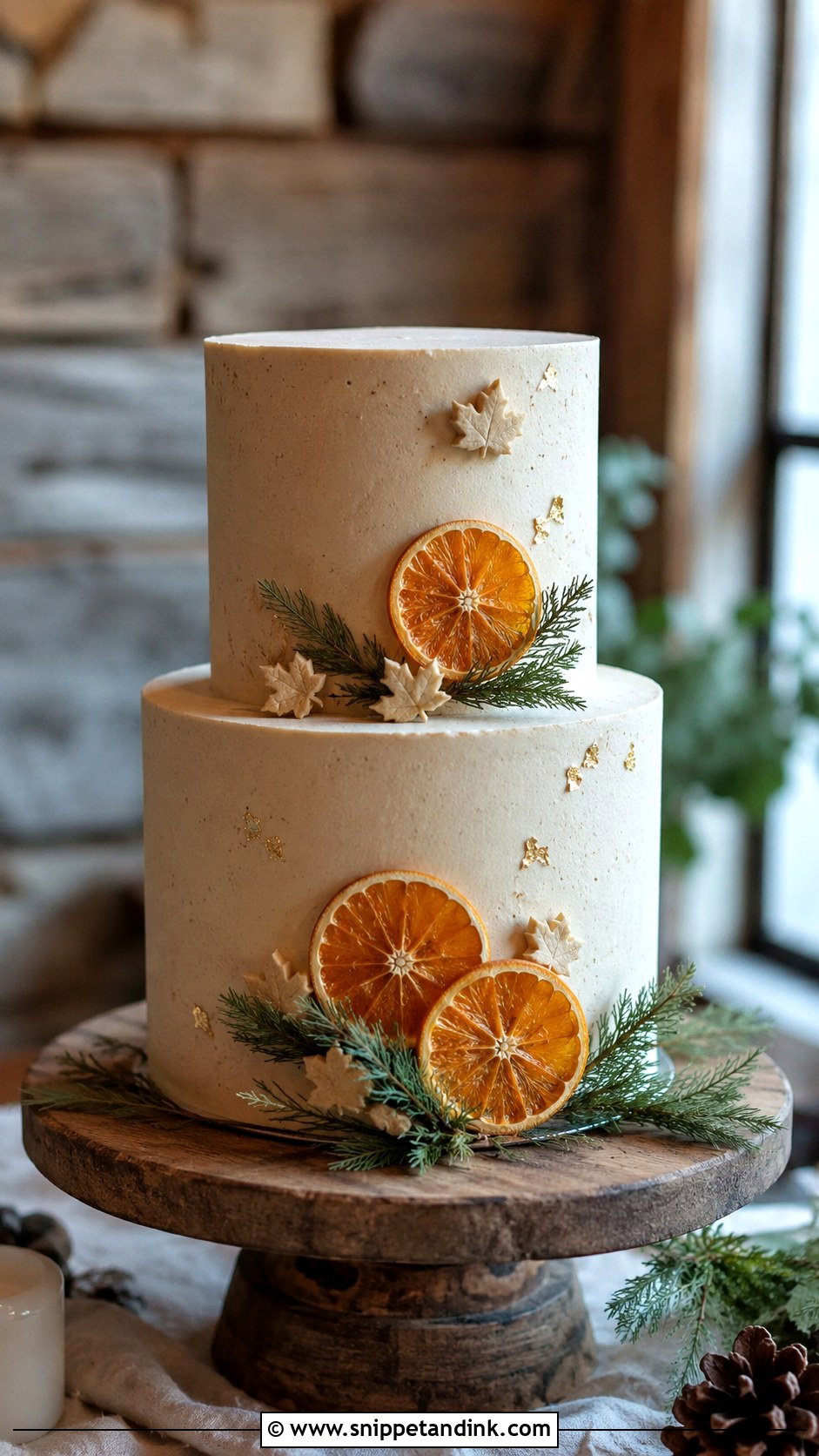
Maple buttercream is softer and sweeter than cream cheese, and it suits a fall or winter wedding where the cake should taste rich but look light. Real maple syrup thins buttercream, so I get the flavor from reduced syrup or maple sugar rather than pouring it in, which keeps the frosting firm enough to stack two or three tiers. A creamy ivory finish, a faint caramel drip or tiny maple leaves add the season. Dried orange slices, a little gold leaf and simple greenery keep it refined at a barn or lodge reception.
3. Gingerbread Wedding Cake With Caramel Drip
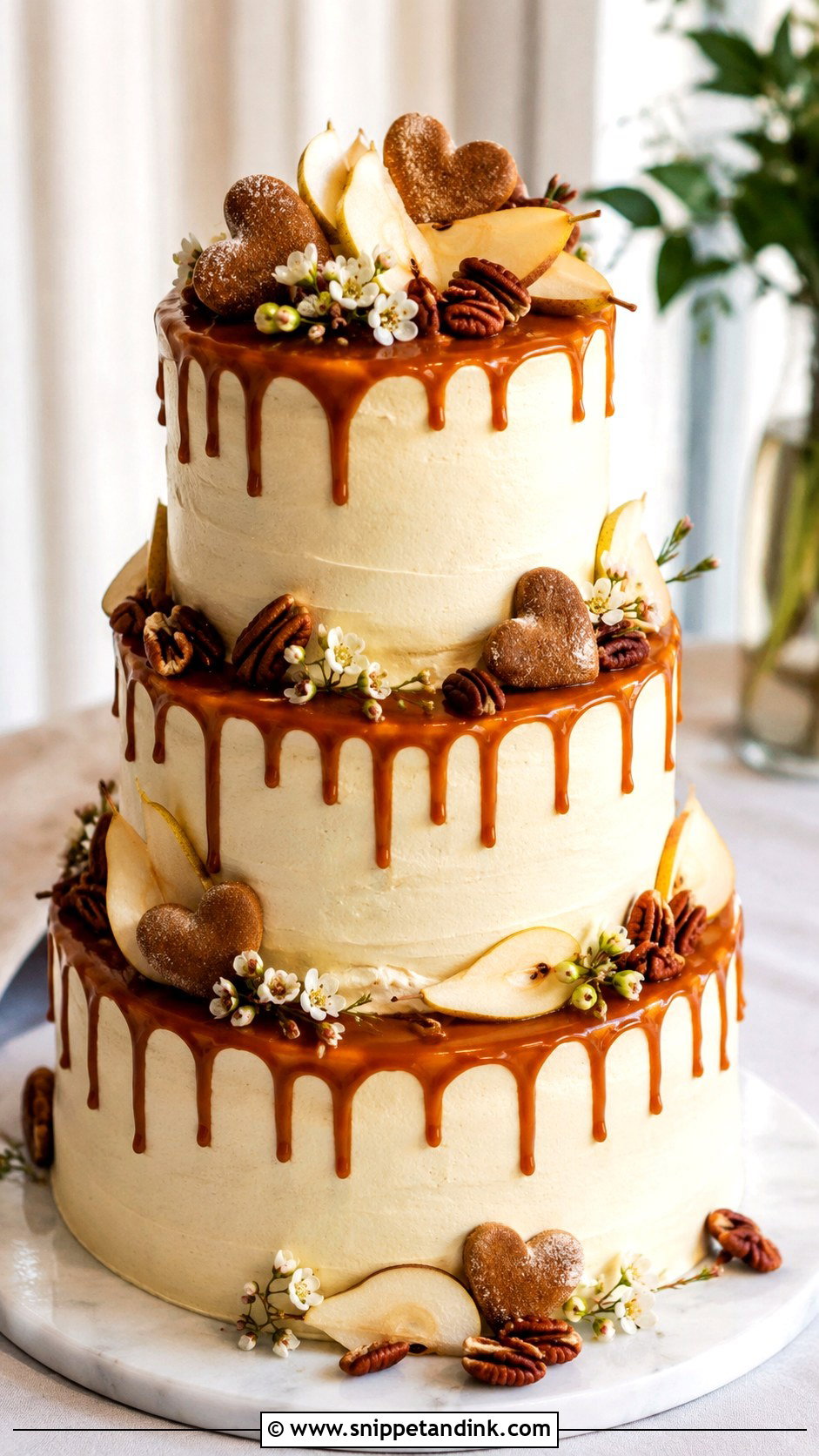
Caramel drips look best against pale, smooth frosting, where the amber reads clearly. The drip has to be the right temperature: too warm and it runs to the board, too cool and it sits in blobs, so I test one drip on the back of the tier first. Aim for a semi-thin drip around each tier. Toasted pecans, pear slices, small florals or gingerbread cookie hearts on top suit it. Inside, caramel buttercream, vanilla cream or a lightly salted caramel filling carries the flavor through.
4. Gingerbread Wedding Cake With Pear Filling
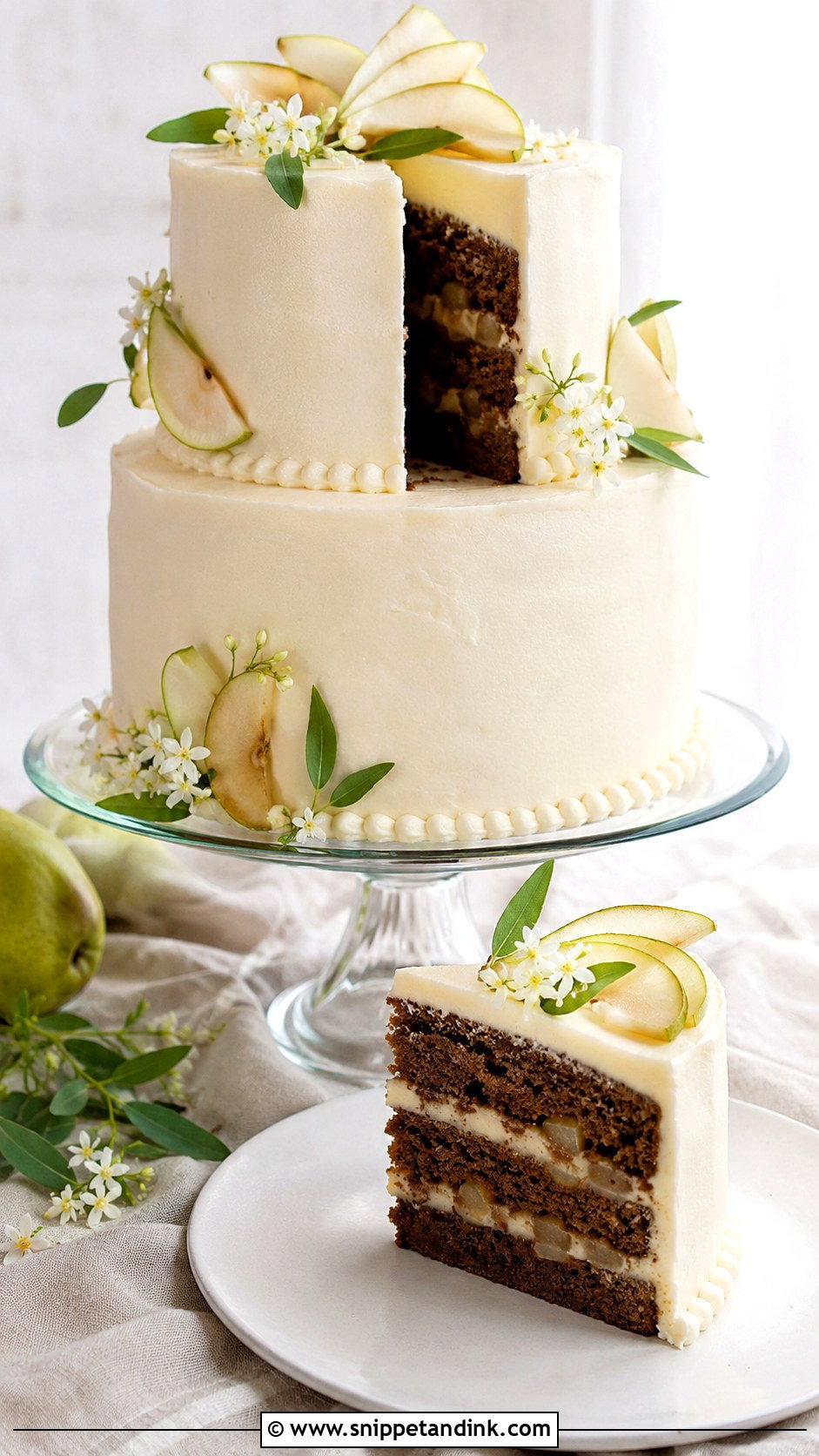
Pear lightens gingerbread, which helps at a big wedding where not every guest loves strong spice. A pear compote or pear butter between layers works with vanilla bean buttercream or cream cheese frosting. Any fruit filling needs a ring of stiff buttercream piped around the edge of each layer first, a dam that keeps the juice from seeping out and staining the outside. Fresh pear slices on top brown quickly once cut, so I brush them with lemon or add them at the venue. Tiny white flowers or pale green leaves finish it.
5. Gingerbread Wedding Cake With Cranberry Filling
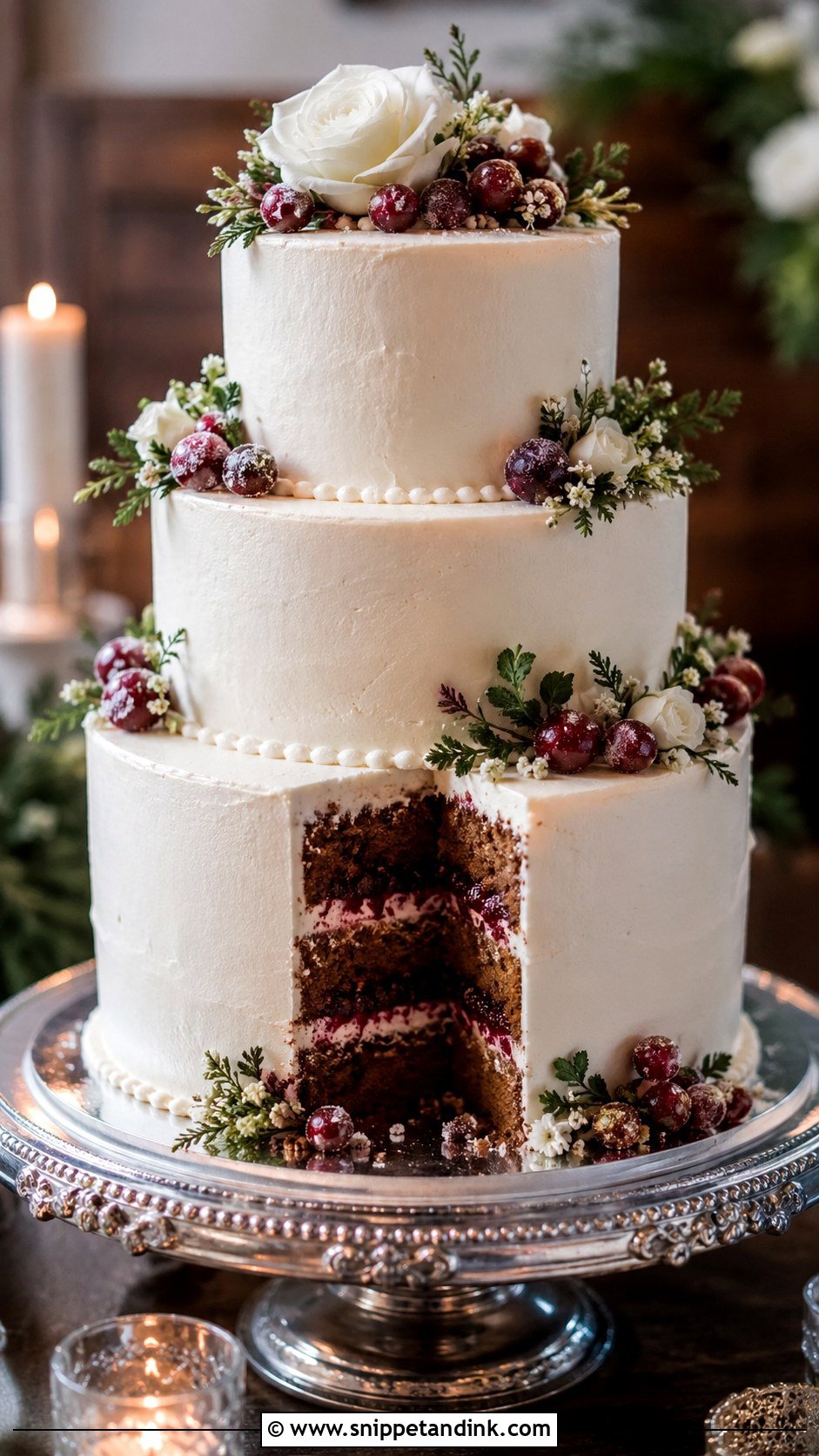
Cranberry filling is tart enough to cut through molasses, and the deep red line in the slice looks striking against the brown crumb and pale frosting. Clean buttercream outside keeps it bridal. Sugared cranberries are the usual decoration, and they’re at their best on the day they’re made; left on buttercream for many hours the sugar starts to weep and turn glassy. White florals and a little greenery are enough color. This is the one I suggest for couples who find most wedding cake too sweet.
6. Gingerbread Wedding Cake With Orange Buttercream
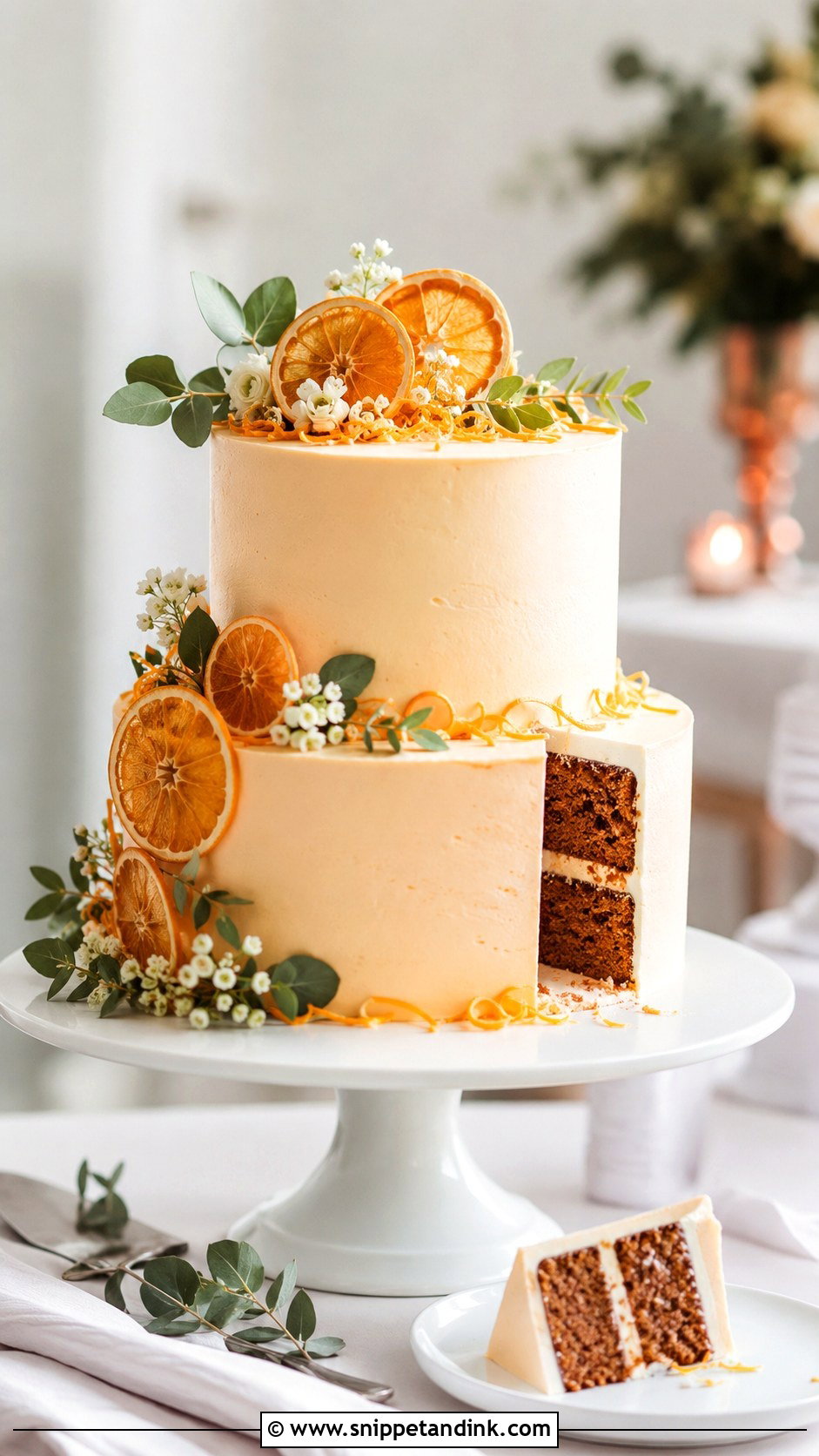
Orange is my favorite partner for ginger. The citrus lifts the spice and makes the cake taste lighter than it is. Orange zest buttercream or a thin layer of orange curd does it; curd is loose, so it gets the same buttercream dam as any fruit filling. Outside, smooth ivory with small curls of peel, dried orange rounds and a few white blossoms is enough. Set it on a plain white stand and the cake does the rest.
7. Gingerbread Wedding Cake With Vanilla Bean Frosting
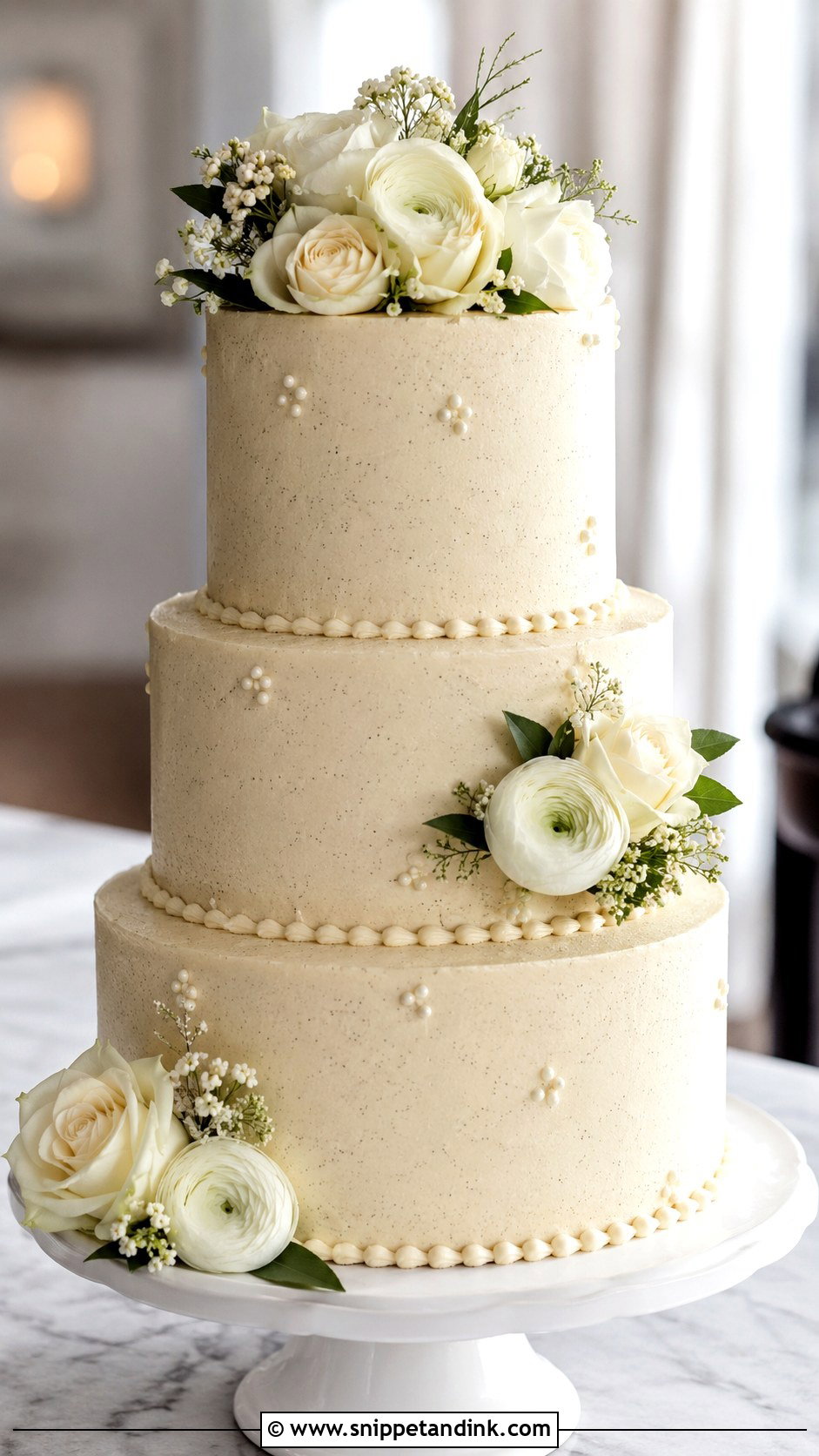
Vanilla bean frosting is the safe crowd-pleaser and I don’t mean that as faint praise. It softens the spice and makes the cake feel like a classic wedding cake, with only the slice giving away the gingerbread. Look for real bean specks in the buttercream. Keep the finish smooth with soft piped edges and a restrained cluster of white roses, cream ranunculus or sugar flowers. Fully frosted, semi-naked or lightly textured all work.
8. Gingerbread Wedding Cake With White Chocolate Ganache
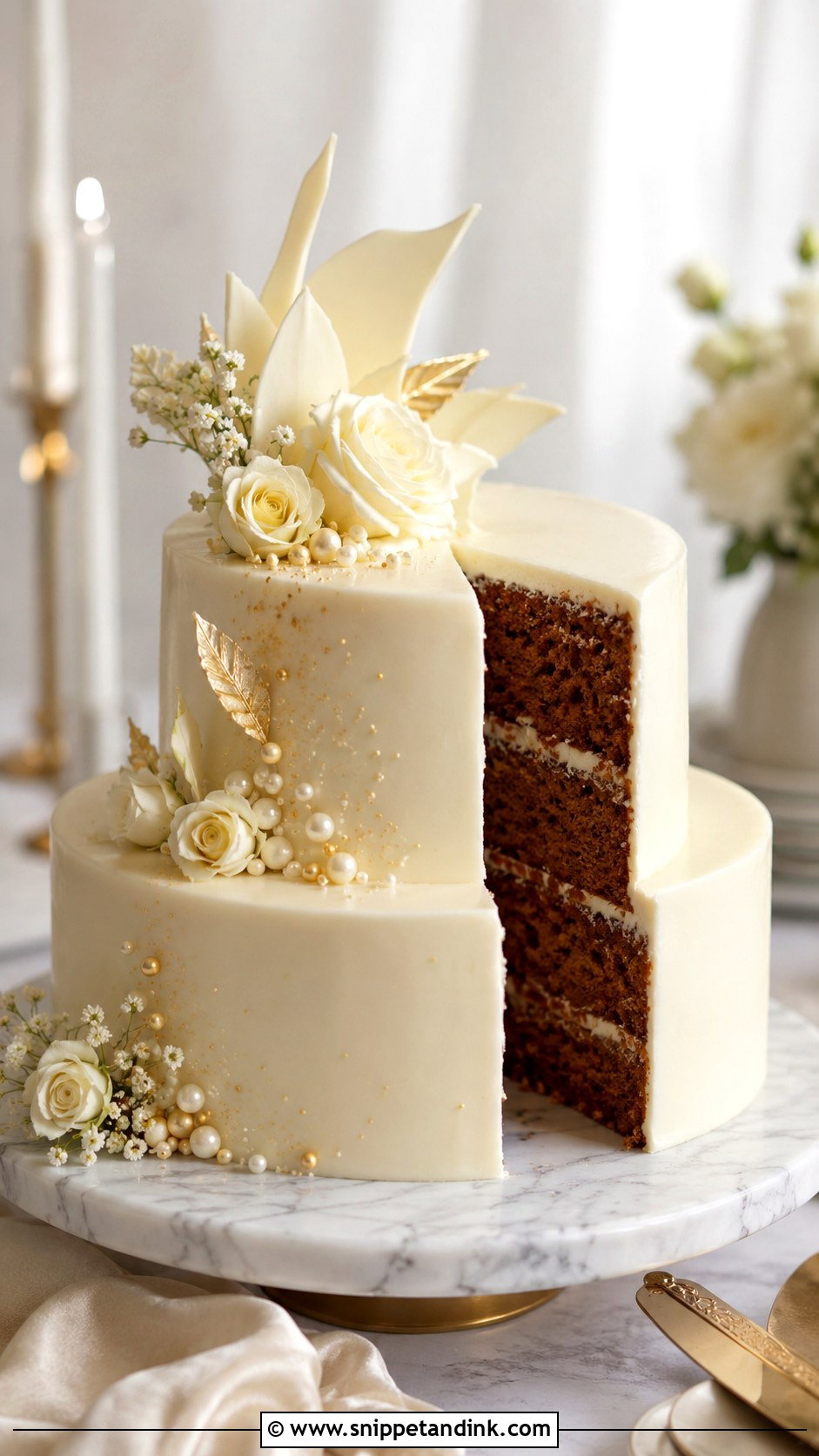
White chocolate ganache gives a satin finish and a sweet, creamy contrast to bold spice. It’s softer than dark ganache, so I make it with a much higher ratio of chocolate to cream to get it firm enough to smooth sharp tiers. A light cream cheese or vanilla filling keeps the inside balanced. White chocolate shards, sugar pearls or pale flowers decorate it. Cut a slice and the warm crumb against the ivory shell is the whole point of this one.
9. Semi Naked Gingerbread Wedding Cake
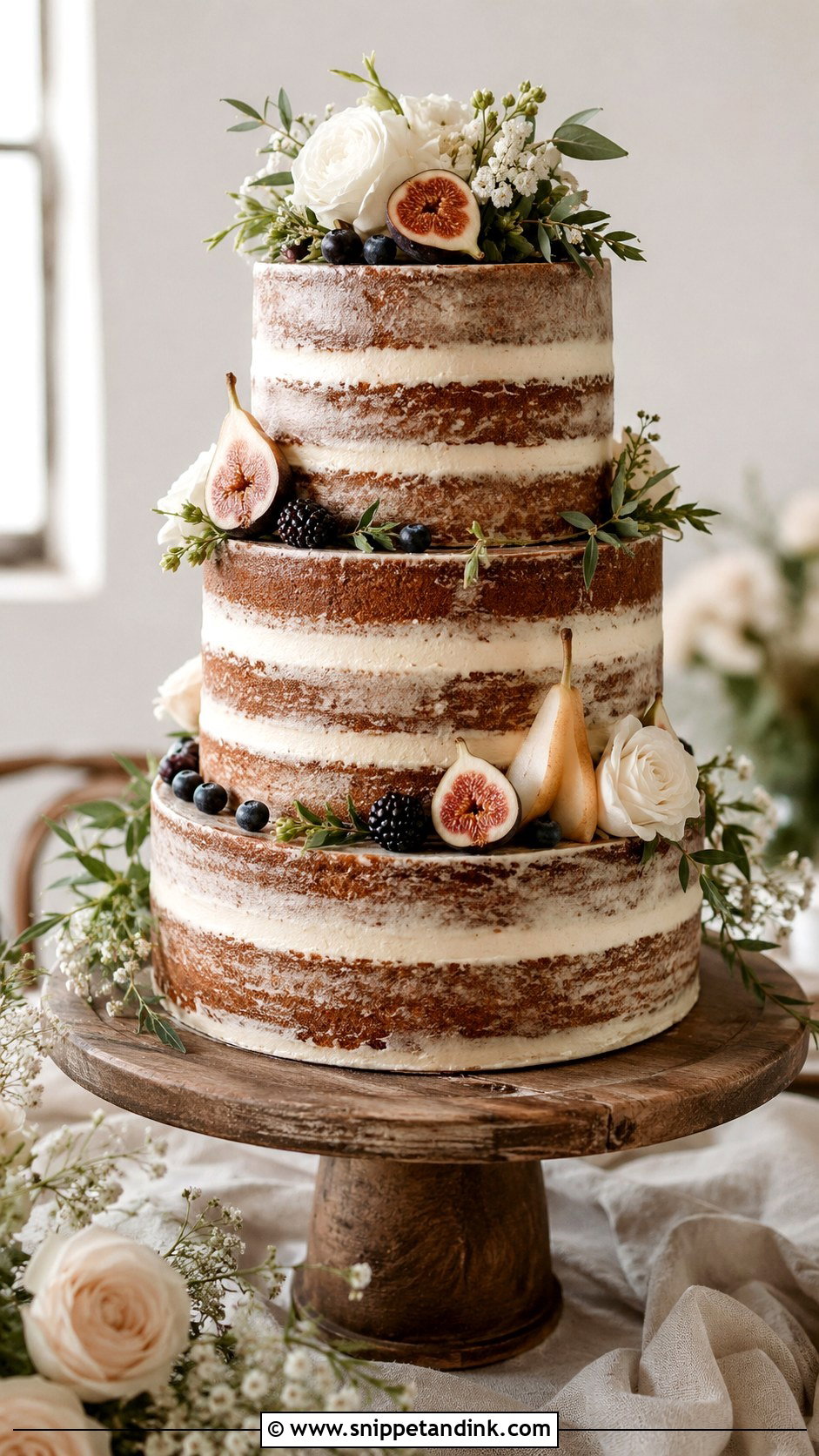
A semi naked finish lets the brown layers show through a thin scrape of frosting, which suits farmhouse, garden and lodge weddings. Gingerbread’s dark crumb makes this finish more dramatic than it is on vanilla sponge. Cream cheese, vanilla or maple buttercream all work. The catch with any lightly frosted cake is that it dries out faster, so I brush the layers with a little syrup and assemble as close to the day as I can. Figs, pears, berries, greenery or small white flowers decorate it. Even layers and straight edges keep it looking deliberate.
10. Naked Gingerbread Wedding Cake
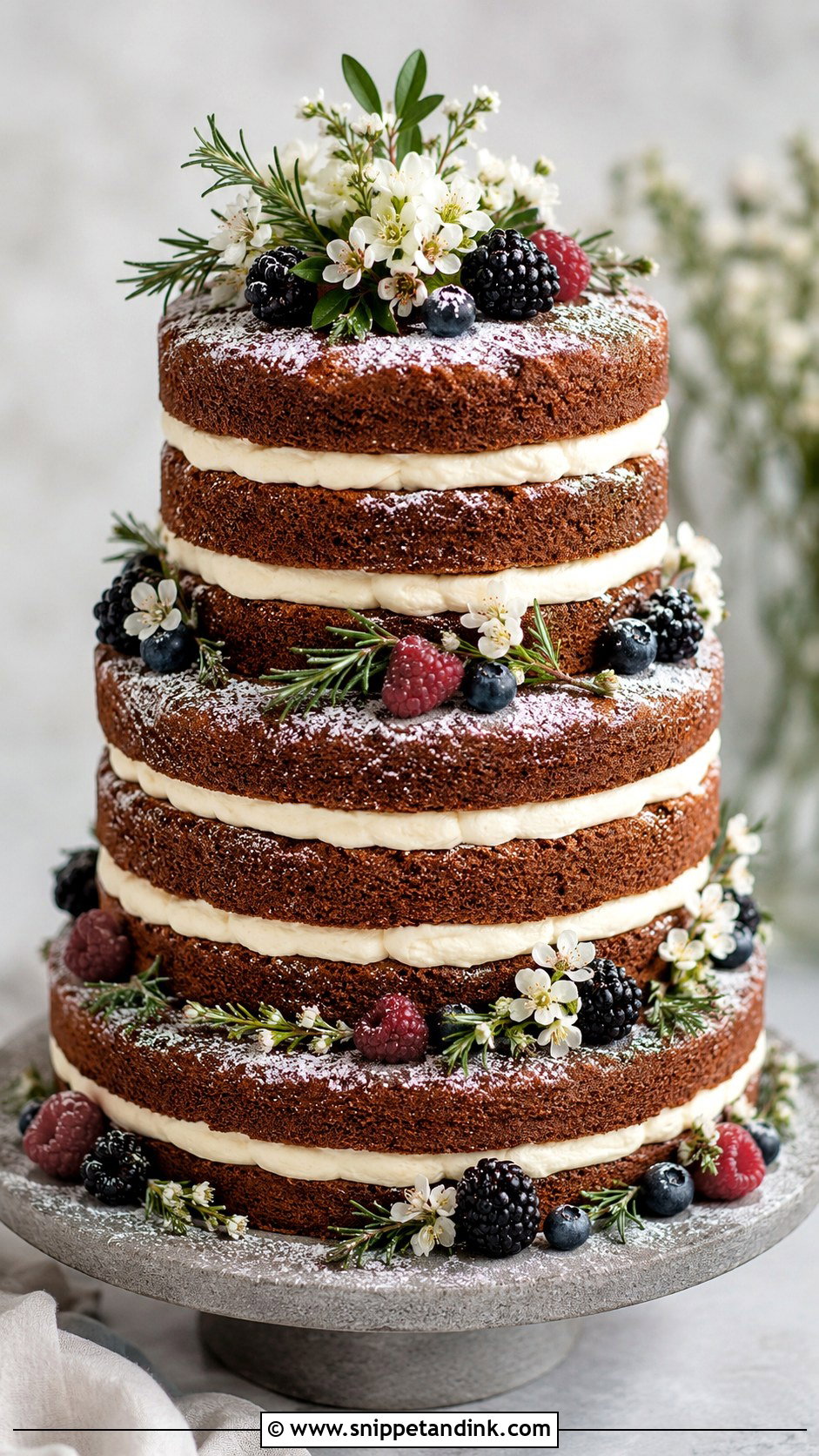
A naked cake shows the layers with almost no frosting on the outside, and dark gingerbread makes that look bold. Generous filling between layers keeps each slice soft; cream cheese, maple, vanilla or orange buttercream are all good. This finish has the shortest window of any cake here. Exposed sponge dries at the edges within hours in a warm room, so it suits intimate weddings where it’s cut soon after it’s set out. Decorate with fruit, tiny flowers, herbs or a light dusting of powdered sugar, added last because the sugar soaks in.
11. Gingerbread Wedding Cake With Fresh Flowers
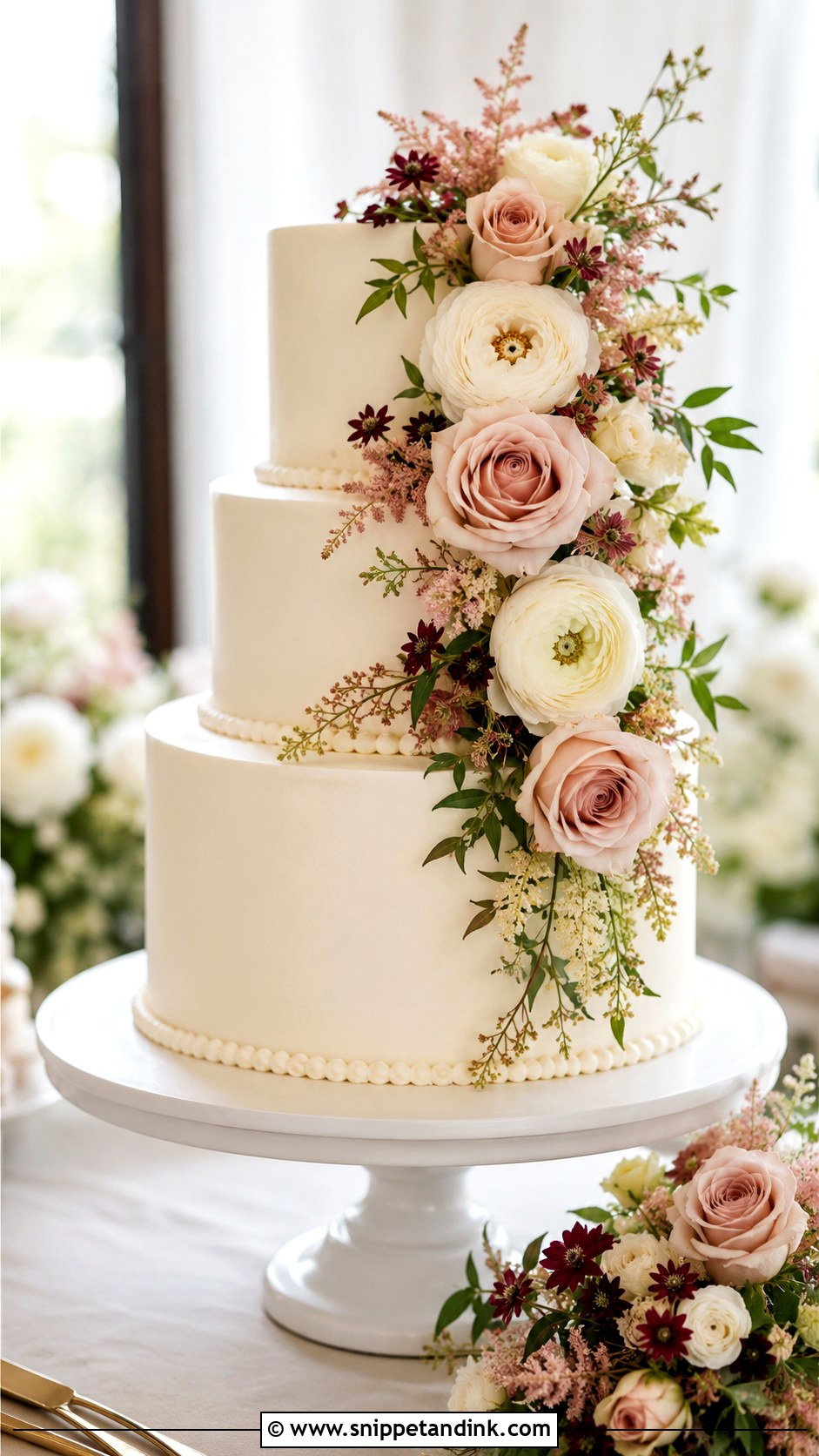
Flowers should match the warm spice tones rather than fight them. Ivory, blush, taupe, dusty pink and soft burgundy all sit well beside brown. A smooth cream cheese or vanilla buttercream gives a clean backdrop. I place flowers in small clusters with gaps between, partly for an airy look and partly because fewer stems means fewer places where sap or water meets frosting. Every stem gets wrapped or set in a pick. Tying the flowers to the bouquet and centerpieces is what makes the cake table feel connected to the room.
12. Gingerbread Wedding Cake With Gold Leaf
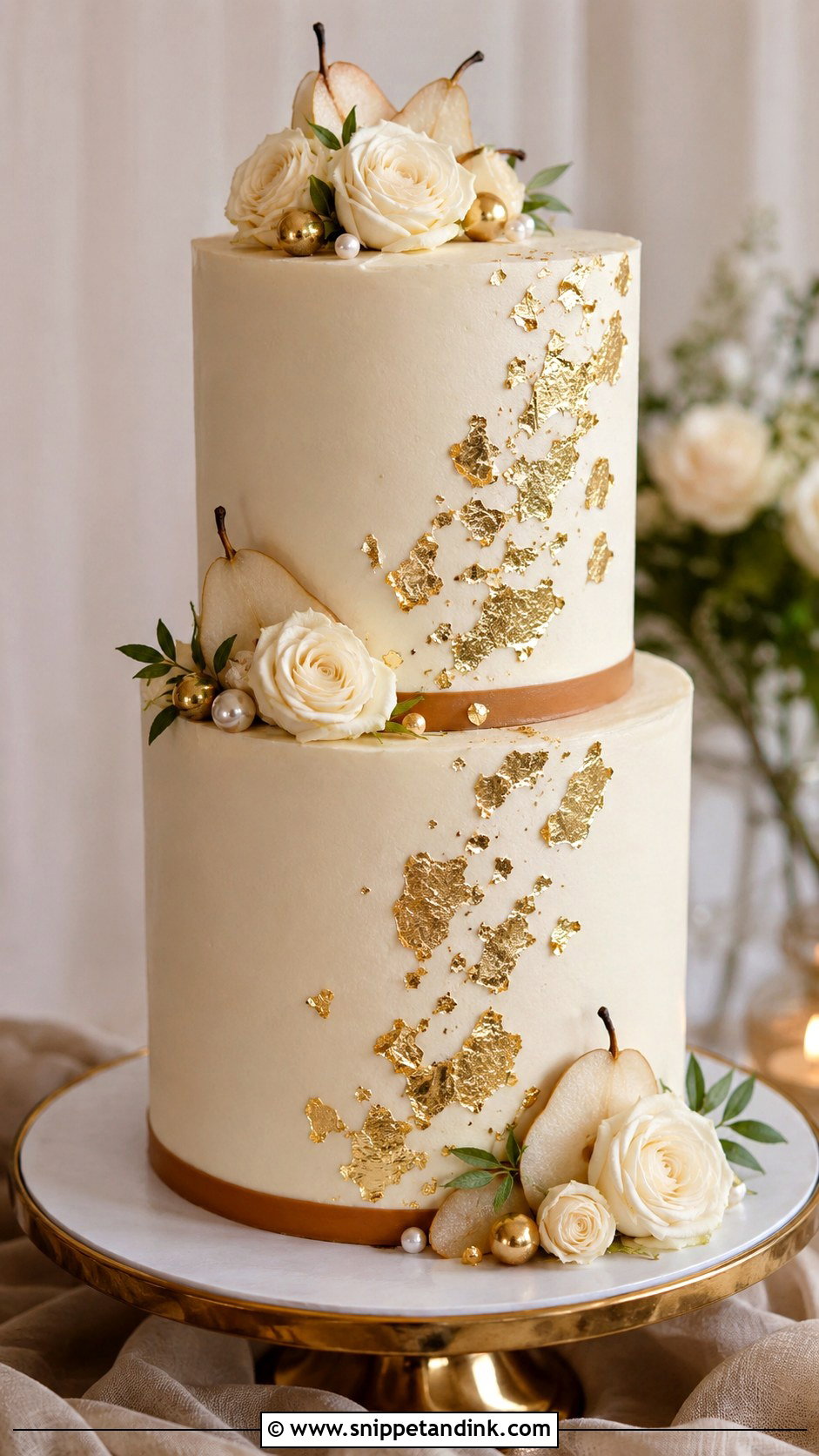
Edible gold leaf suits the caramel tones of spice cake. On smooth ivory buttercream or fondant, I apply small pieces along one side of the tiers rather than covering everything; scattered gold looks modern, full coverage looks like a trophy. Gold leaf is so thin that it sticks to dry fingers, so it goes on with a soft brush or tweezers. White flowers, pear slices or a soft caramel drip add depth. Evening receptions and ballroom weddings suit it.
13. Gingerbread Wedding Cake With Gingerbread Cookies
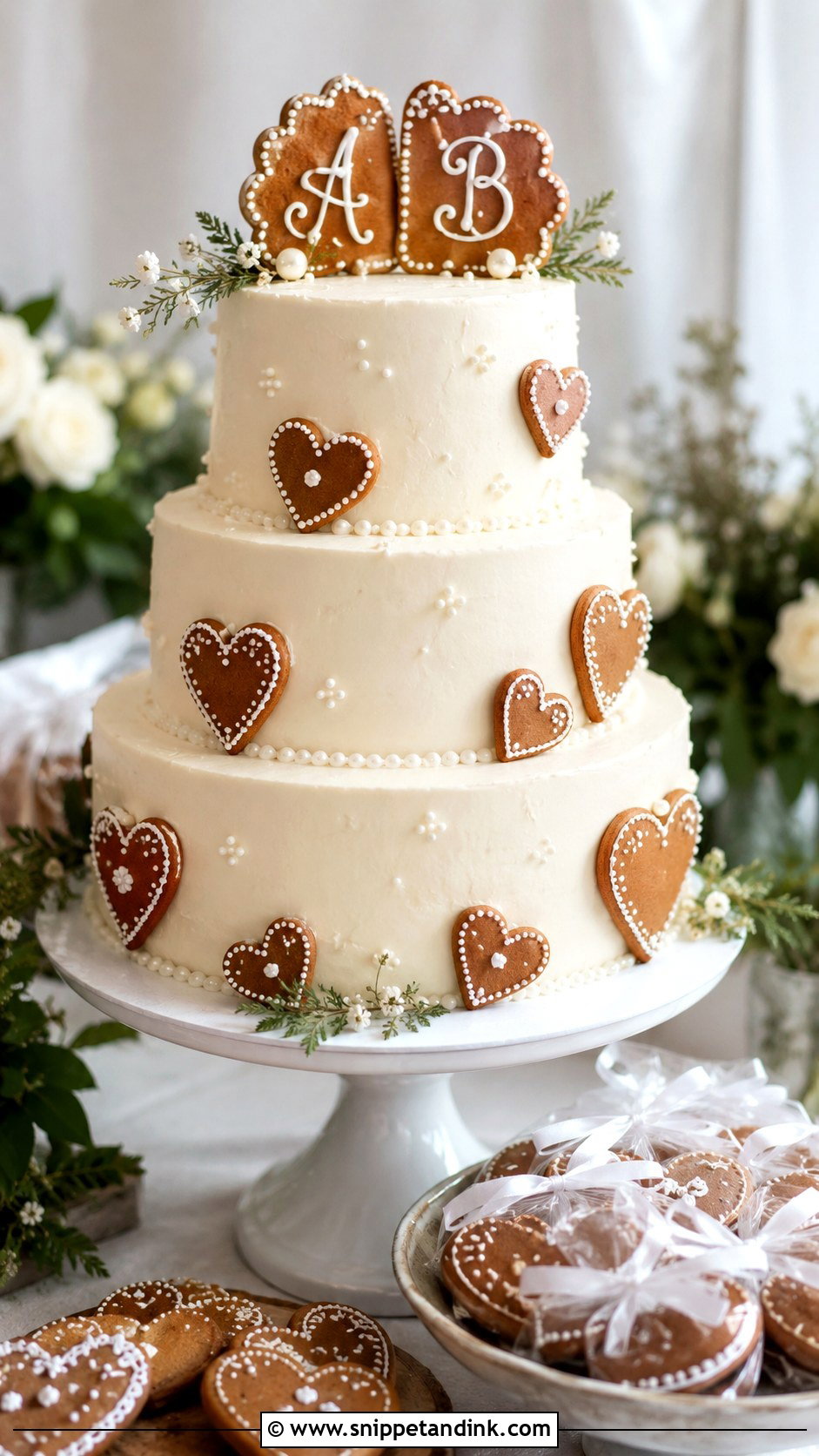
Cookies tell guests the flavor before anyone cuts the cake. I’d choose small heart cookies, monogram cookies or simple iced shapes over big figures, placed around the base, along the tiers or as a neat topper. Iced cookies pressed straight into buttercream soften from the moisture underneath over a long day, so I attach them close to display time or back them with a thin disc of chocolate. Tiny piped dots, sugar pearls or soft greenery finish it.
14. Gingerbread Wedding Cake With Cinnamon Sugar
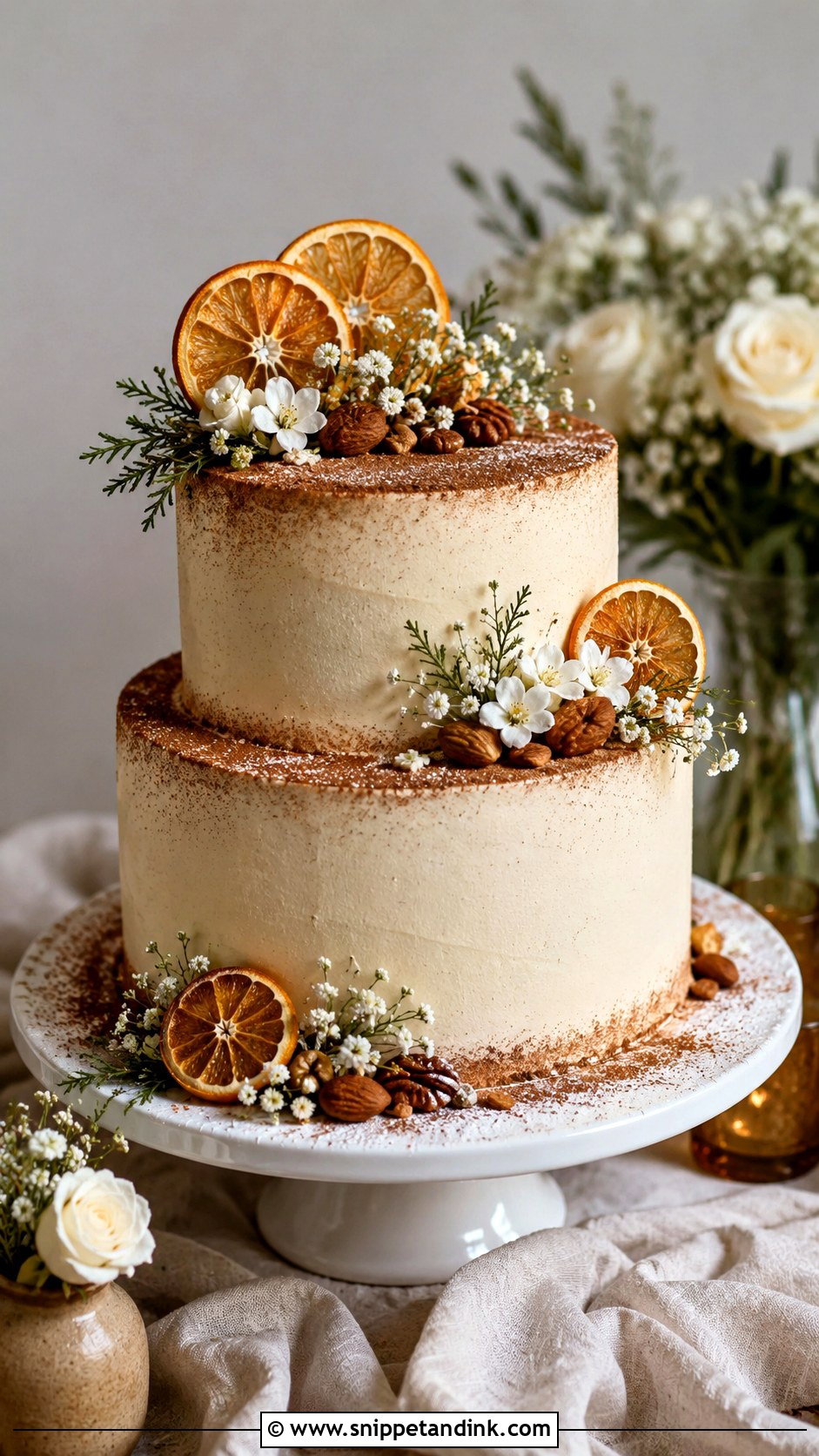
Cinnamon sugar gives a faint sparkle around the base or top edge of a smooth buttercream cake. The texture is the decoration, so the rest stays minimal: a few small white flowers, toasted nuts or dried orange slices. Like any sugar on buttercream, it slowly draws moisture and loses its sparkle, so it’s the last thing to go on. Vanilla, maple or cream cheese frosting all suit it. It gives the cake a cozy bakery finish while keeping it bridal.

15. Gingerbread Wedding Cake With Toasted Pecans
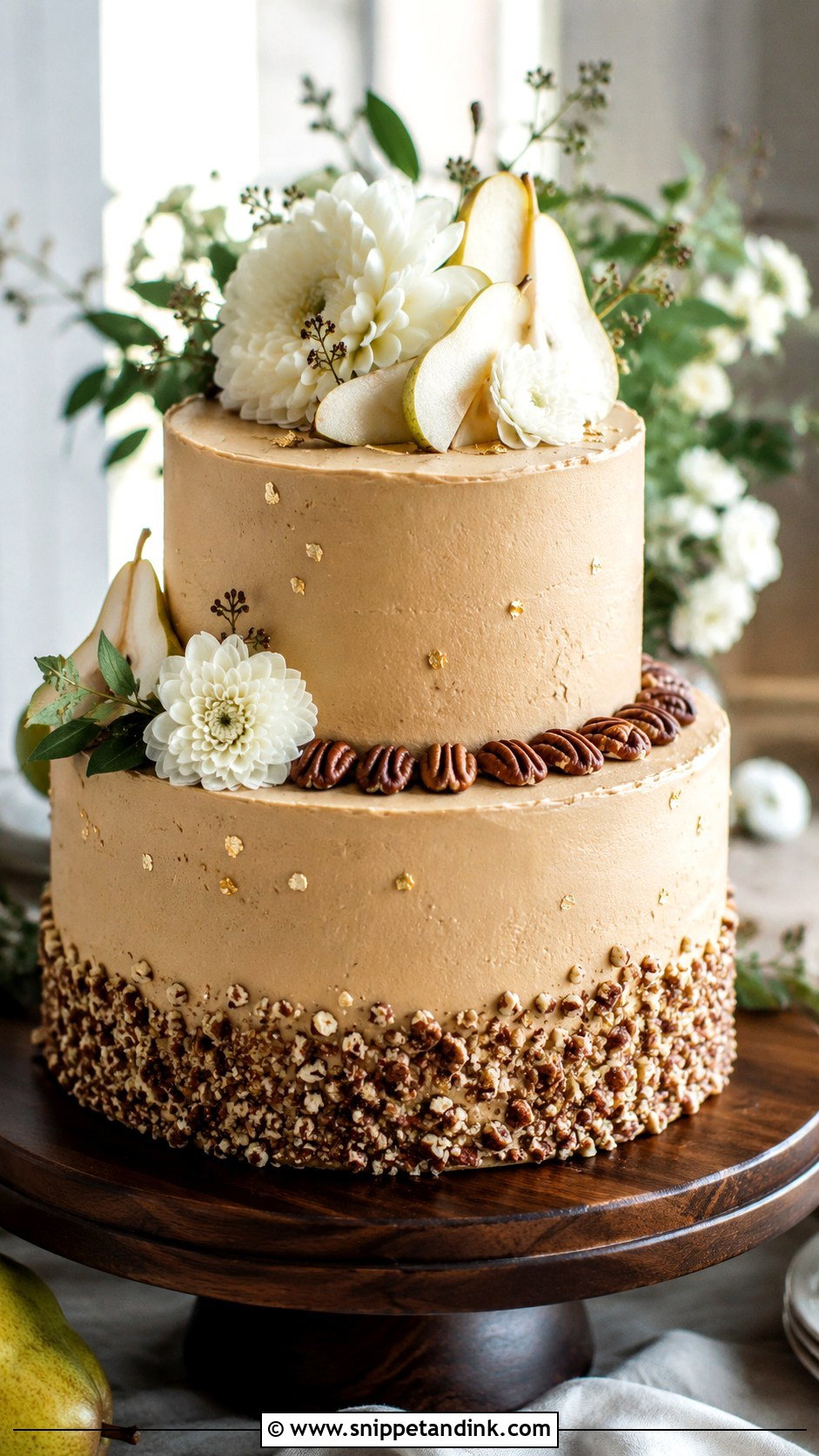
Toasted pecans add crunch and warmth, and they work especially well with maple buttercream, caramel filling or cream cheese frosting. Finely chopped pecans pressed around the bottom tier look neat; whole pecans in a border look more rustic. Toast them first and let them cool fully, since warm nuts melt buttercream on contact. Keep the rest of the cake smooth. And label the cake table clearly, because a nut cake at a wedding with guests who have allergies needs to be obvious at a glance.
16. Gingerbread Wedding Cake With Apple Filling
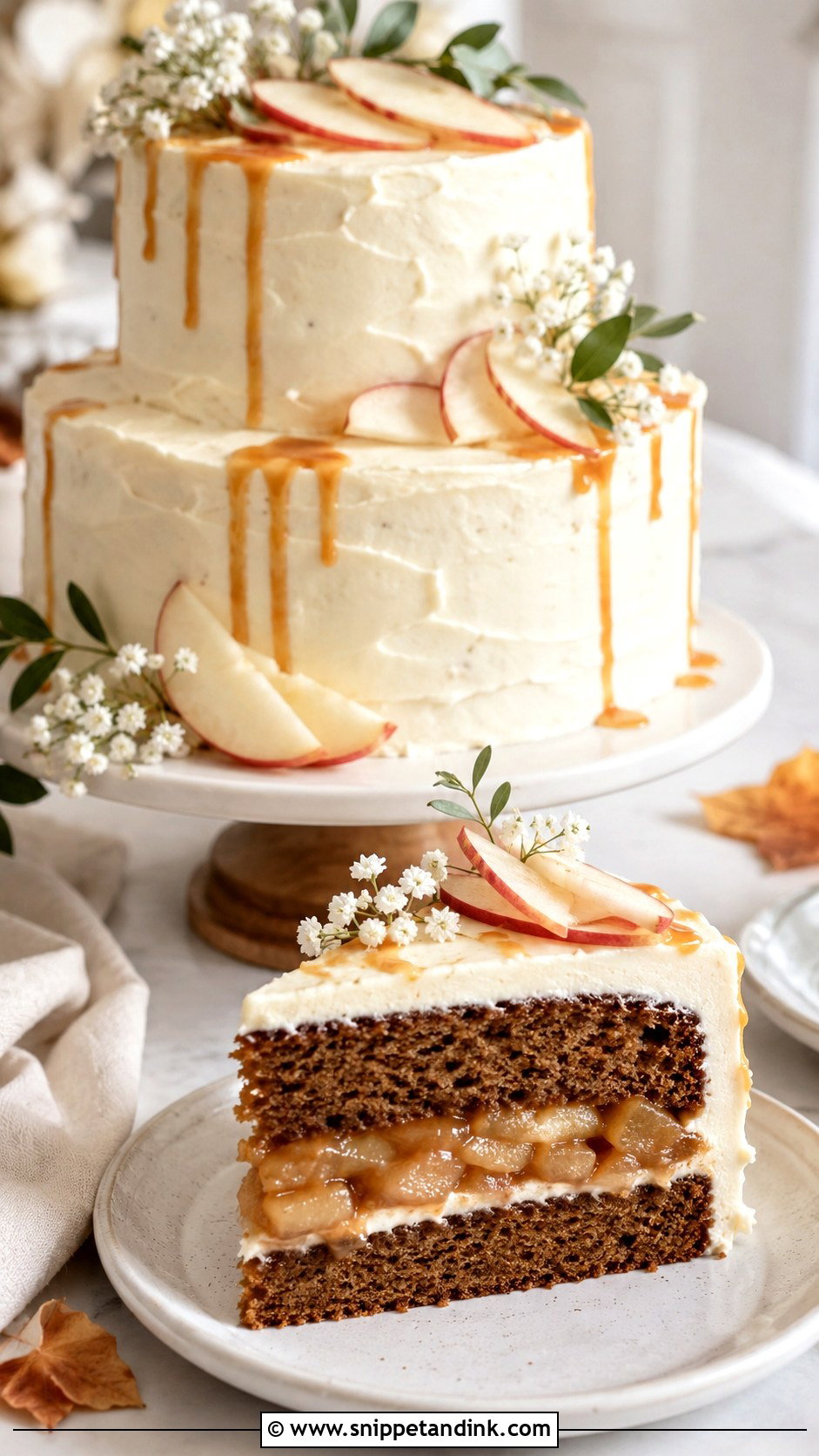
Apple is the comfort pairing, working with the cinnamon, ginger, cloves and molasses already in the cake. A spiced apple compote between layers goes well with vanilla buttercream or cream cheese frosting, as long as the compote is cooked down until thick; watery apple filling makes the sponge soggy by the second day. Outside, smooth ivory or semi-naked both work. Thin apple slices brushed with lemon so they don’t brown, a few tiny white blooms and a light caramel drizzle finish it.
17. Gingerbread Wedding Cake With Creamy Buttercream Texture
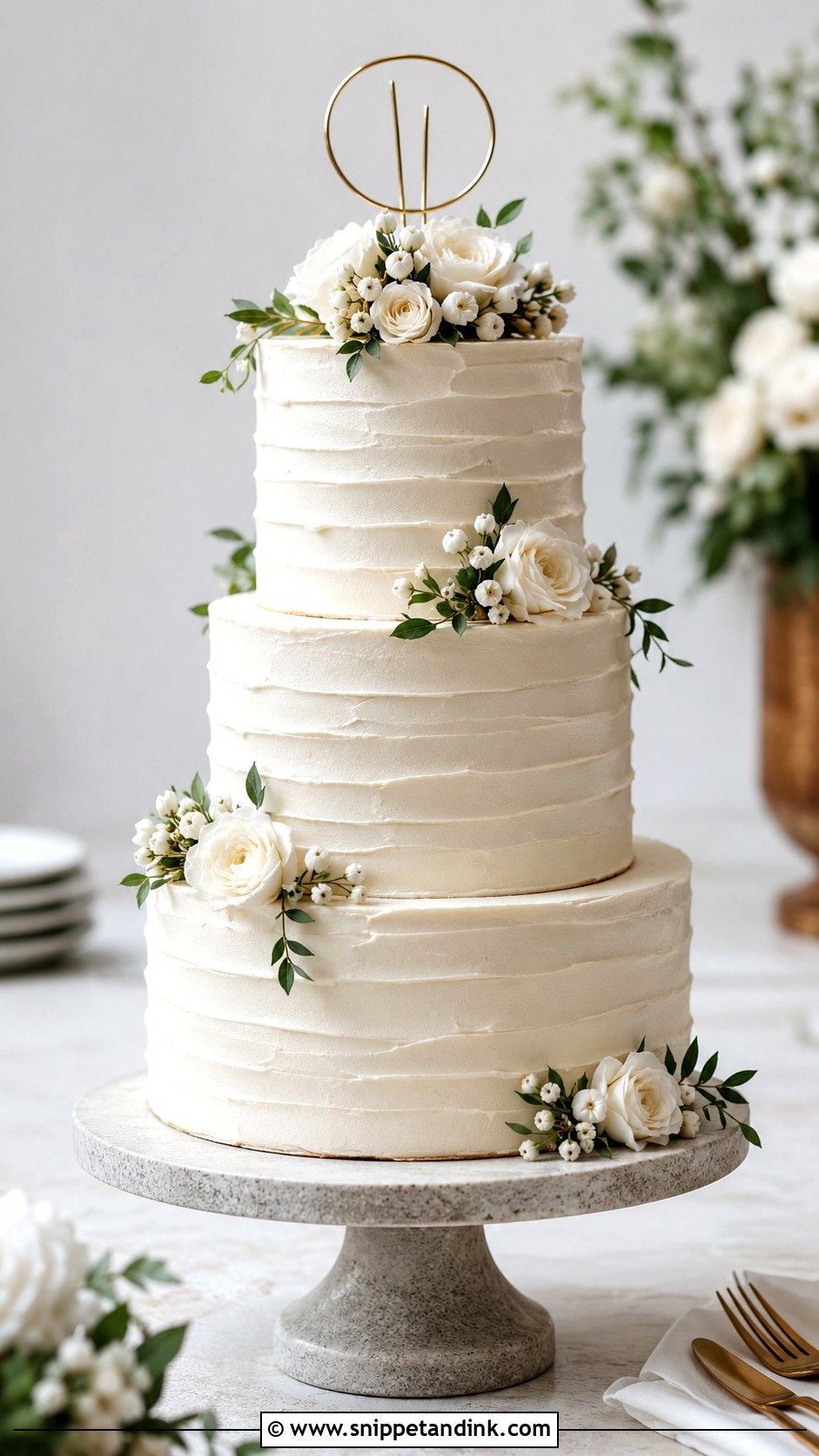
Textured buttercream gives the cake movement without any decoration at all. Horizontal ridges, vertical lines or palette knife strokes look modern and handmade. Vanilla, maple, cream cheese or white chocolate buttercream all work, though cream cheese holds texture least crisply in a warm room. Because the texture leads, keep additions small: a few flowers, a few berries or a slim topper. Ridges catch the light in photos and add depth to an otherwise all-ivory cake.
18. Gingerbread Wedding Cake With Fondant Finish
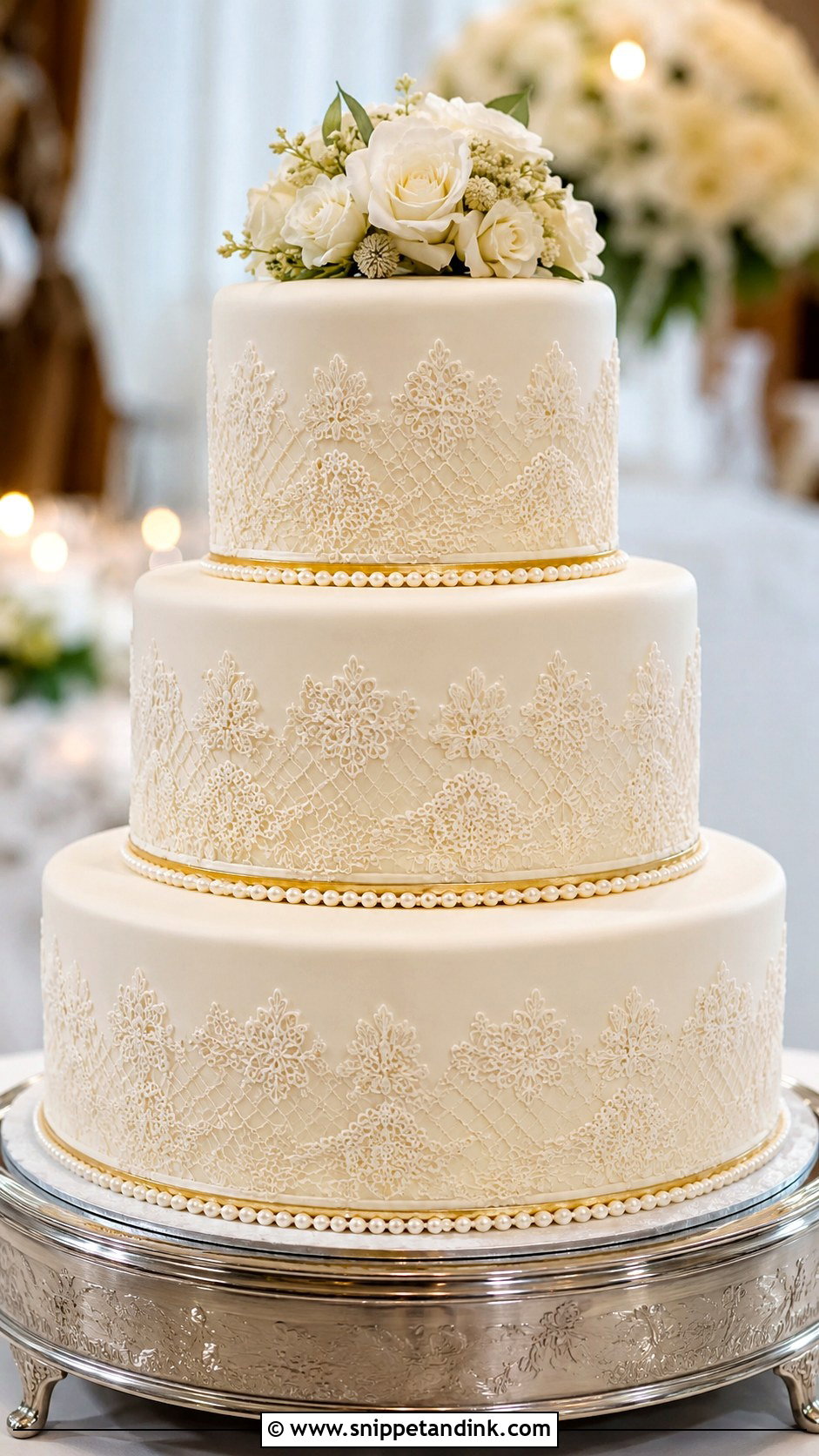
Fondant makes gingerbread formal and sleek, with the cozy flavor hidden under a traditional outside. Smooth ivory fondant with embossed lace, tiny pearl borders or thin gold lines suits ballroom and hotel receptions. Here’s what I tell couples who want cream cheese filling under fondant: fondant needs a firm coat beneath it, usually ganache, and a soft cream cheese layer straight under fondant can bulge and sweat. Keep the cream cheese as a thin internal filling and the outer coat firm. Orange buttercream or vanilla bean fillings work too.
19. Gingerbread Wedding Cake With Mini Bundt Tiers
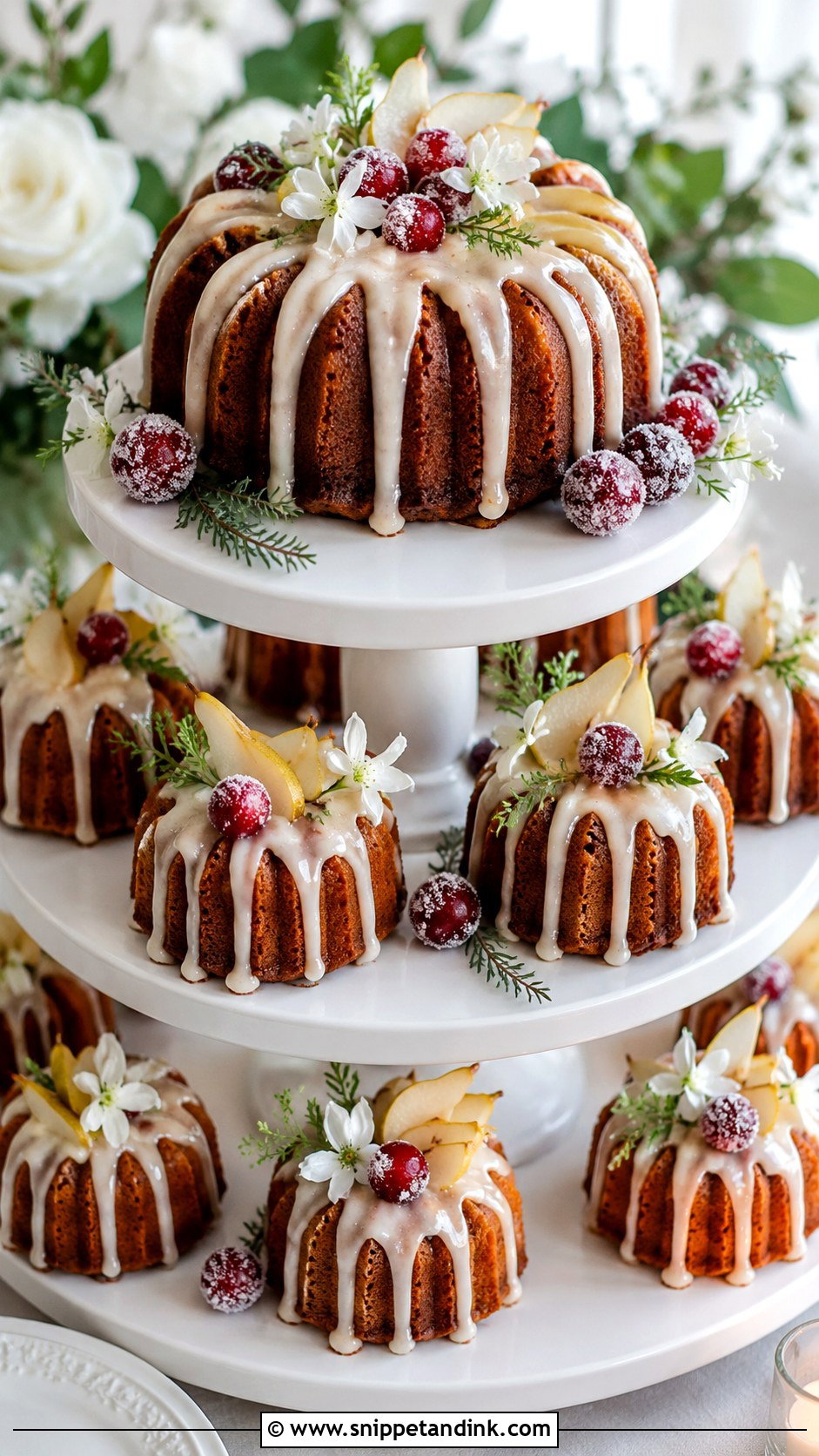
Mini bundt tiers change the shape and keep the flavor. Small bundts on a tiered stand, or one larger bundt with matching minis around it, make a warm display. A light glaze, cream cheese drizzle or maple icing settles into the ridges as it sets. Bundt pans need thorough greasing in every groove, since gingerbread’s molasses makes it prone to sticking. Sugared cranberries, pear slices or edible flowers dress it up, and serving is easy because each guest takes a mini.

20. Gingerbread Wedding Cake With Winter Greenery
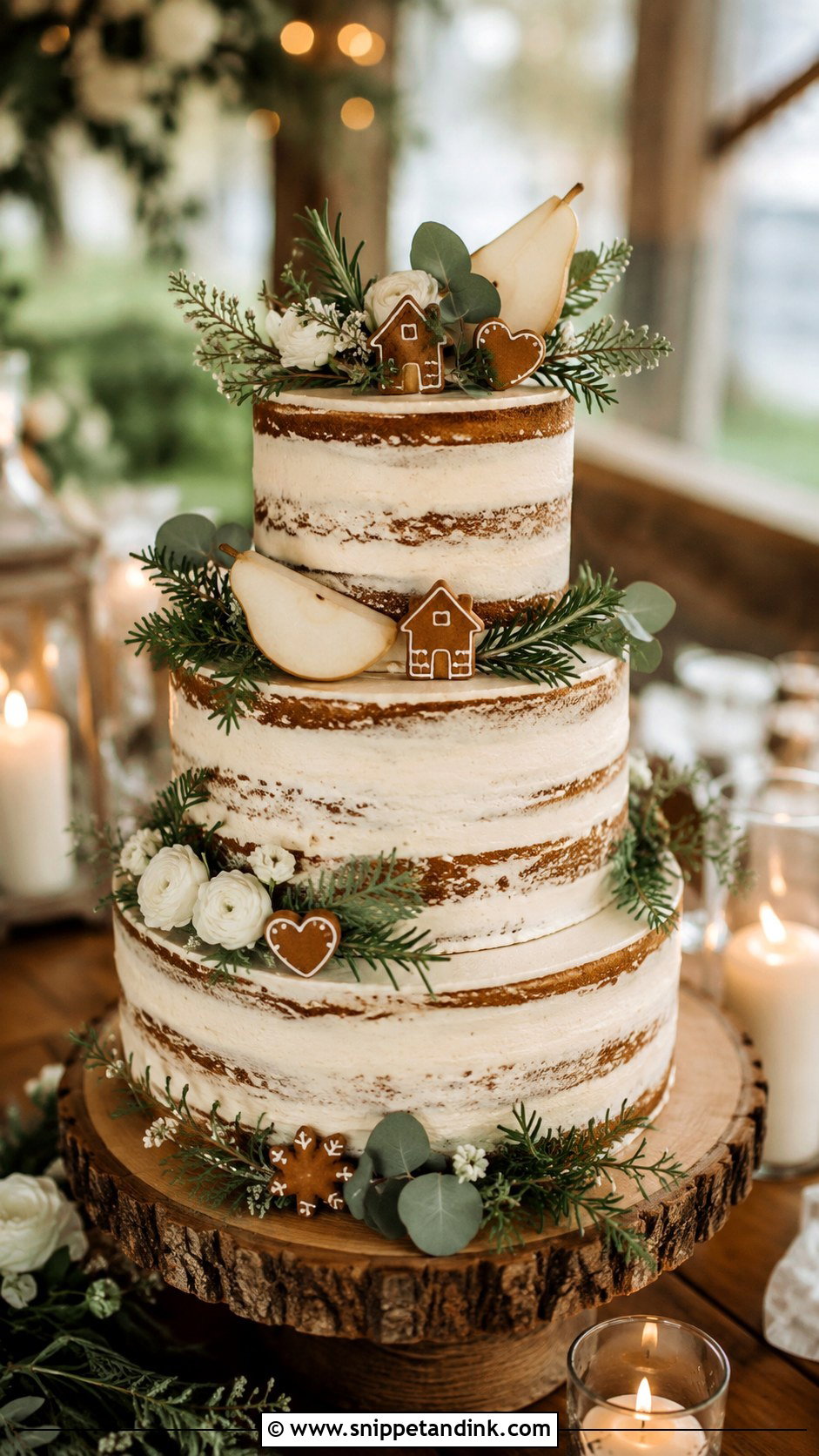
Winter greenery keeps the cake looking fresh rather than overdecorated. Evergreen sprigs, eucalyptus, rosemary or olive leaves sit well against ivory frosting and the warm brown layers. Rosemary is edible and is my first choice where leaves touch frosting; evergreens and eucalyptus need picks or a barrier, and the florist and baker should agree on which stems go where before the day. Smooth, semi-naked or lightly textured finishes all work, with white flowers, pear slices or tiny cookies for more detail. Lodge weddings and candlelit receptions suit it.
Gingerbread Actually Tastes Better on Day Two
Molasses cakes hold moisture well, and the spices round out after the sponge has rested, wrapped, for a day. That suits a wedding schedule. I bake gingerbread layers ahead, fill and stack the day before, and decorate on the day, with fresh fruit, sugared berries and dusted sugar going on last.
What doesn’t keep is the decoration. Cut pears and apples brown, sugar dissolves into buttercream, and iced cookies soften. If your cake will sit out through a long cocktail hour, ask which elements will be added at the venue and who is adding them.
Leftover tiers
Gingerbread freezes better than most wedding flavors. Chill the leftover cake until the frosting is firm, wrap it tightly in several layers of plastic and then foil, and it will taste good for months. Thaw it in the fridge still wrapped, so condensation forms on the wrap and not on the frosting.
Spice Cake, Dressed for a Formal Room
Gingerbread gives you a nostalgic flavor that can still sit at the center of a formal reception. Classic means cream cheese frosting; brighter means citrus or cranberry; dressier means gold leaf or fondant; relaxed means a semi-naked finish. Let the venue and the season guide the outside, and let the filling decide how the cake actually tastes, because that’s what guests talk about afterward. Get those two right and gingerbread stops being a seasonal novelty and becomes the cake people ask you about.
You'll Like These Ideas:











Leave a Reply