
Plain cakes are harder to make than busy ones. With nothing to hide behind, every bulge in the buttercream and every crooked tier shows, so a simple design is really a promise about finish quality. When a couple asks me for something understated, I ask them to pick one idea, smooth ivory, a cluster of flowers, a line of pearls, and let everything else stay quiet. The twenty cakes below follow that rule. They suit a garden ceremony as easily as a courthouse lunch, and each one leaves room to make it personal through flavor, color and the table it sits on.

How Far a Simple Cake Feeds Your Guests
Couples often choose a design before they know how much cake they need, then find the two-tier they loved won’t serve the room. Standard wedding portions are slim, usually about one inch by two inches and four inches tall, which is smaller than a party slice. At that size, round tiers serve roughly:
- 6-inch round: about 12 portions
- 8-inch round: about 24 portions
- 10-inch round: about 38 portions
- 12-inch round: about 56 portions
Square tiers of the same width serve noticeably more, because the corners hold cake a round loses. The top tier is often boxed and saved by the couple, so I leave it out of the count when I size a cake for the guest list.
These numbers shift with who cuts the cake and how generous they are, so treat them as a guide. If the design you love is too small, a matching kitchen cake or sheet cake in the same flavor fills the gap without changing what guests see.
1. Simple White Wedding Cake

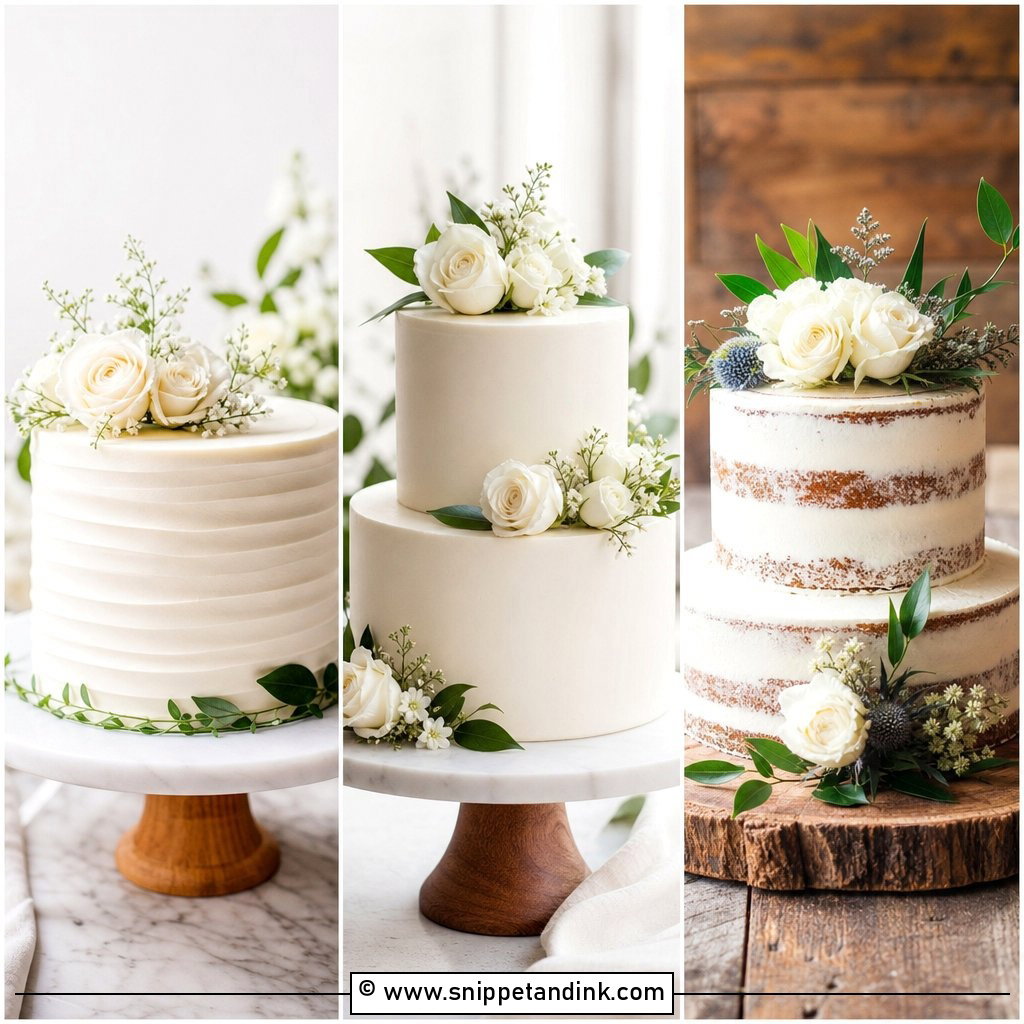
White cakes reveal technique more than any other. I finish smooth buttercream with a hot bench scraper and chill between coats, because a white surface shows every air bubble and crumb under reception lighting. Ivory is kinder in photos than bright white, which can read slightly blue against an ivory dress. One small detail is enough: a single flower, a ribbon at each base or a row of tiny pearls. Vanilla, almond, coconut and white chocolate all keep the inside as pale as the outside.
2. Two Tier Wedding Cake

Two tiers give a cake real height without the cost or structure of a tall stack. For a small or medium wedding, an 8-inch over a 6-inch is a common pairing, and I’ll often bake each tier in a different flavor, vanilla on top and lemon below, so guests get a choice. Every tier above the base needs dowels and a cake board underneath it, even at this size, or the top slowly sinks. Flowers placed off to one side look more considered than a ring around both tiers.
3. One Tier Wedding Cake

A one tier wedding cake suits intimate weddings and elopements, where a full stack would be wasted. I like to make it tall, often four layers instead of three, so it still has presence on a table. That extra height lets a bolder flavor shine: lemon raspberry, chocolate ganache or almond cream. Decorate with roses, pressed flowers or piped pearls around the base. Set it on a raised stand; a single tier sitting flat on a long dessert table looks lost.
4. Buttercream Wedding Cake

Buttercream is what most couples picture when they say simple, and it’s the frosting I’m asked about most. It tastes richer than fondant and takes texture or a smooth finish equally well. The catch is heat. American buttercream crusts and holds up a little better in warmth, while Swiss meringue buttercream tastes lighter but softens quickly above room temperature, so an outdoor July reception changes which one I’d suggest. Ivory, blush and pale champagne tones all suit it, finished with a few blooms or a thin line of pearls.
5. Fresh Flower Wedding Cake

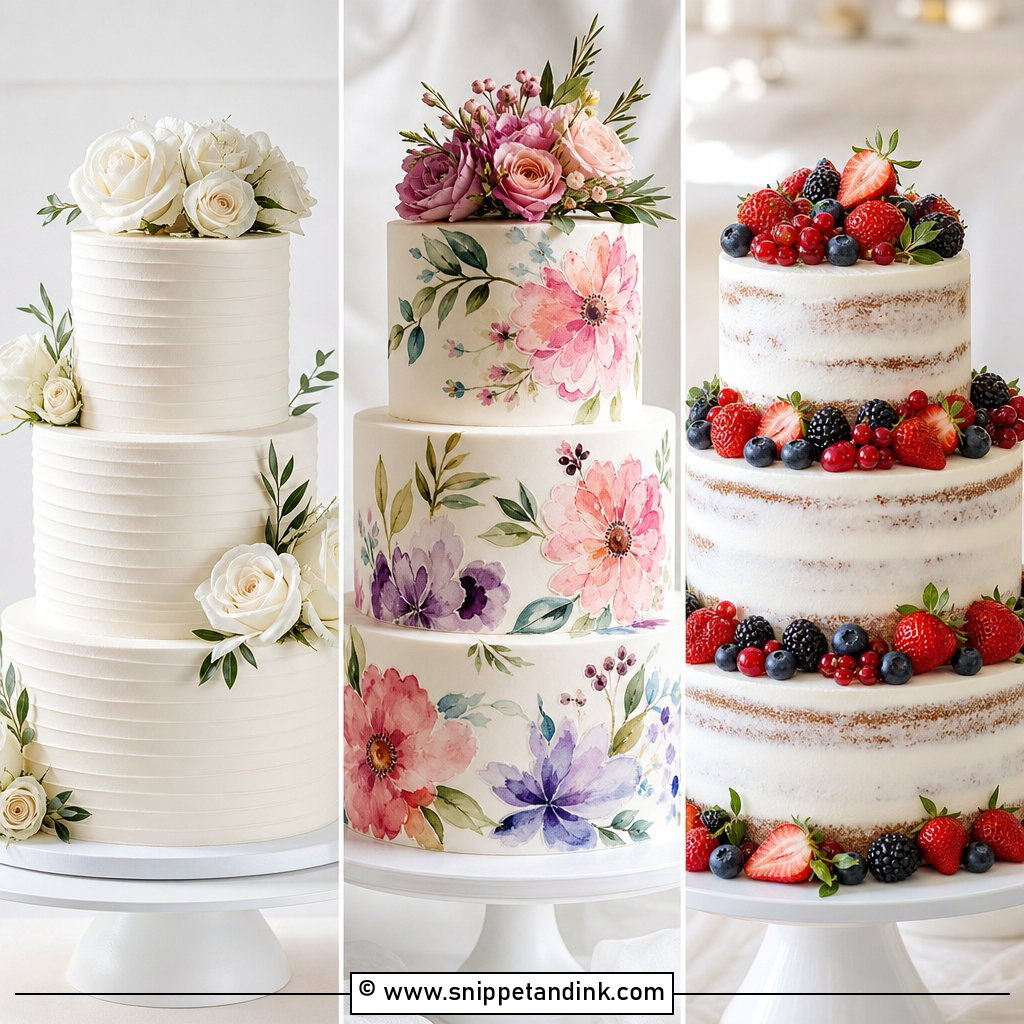
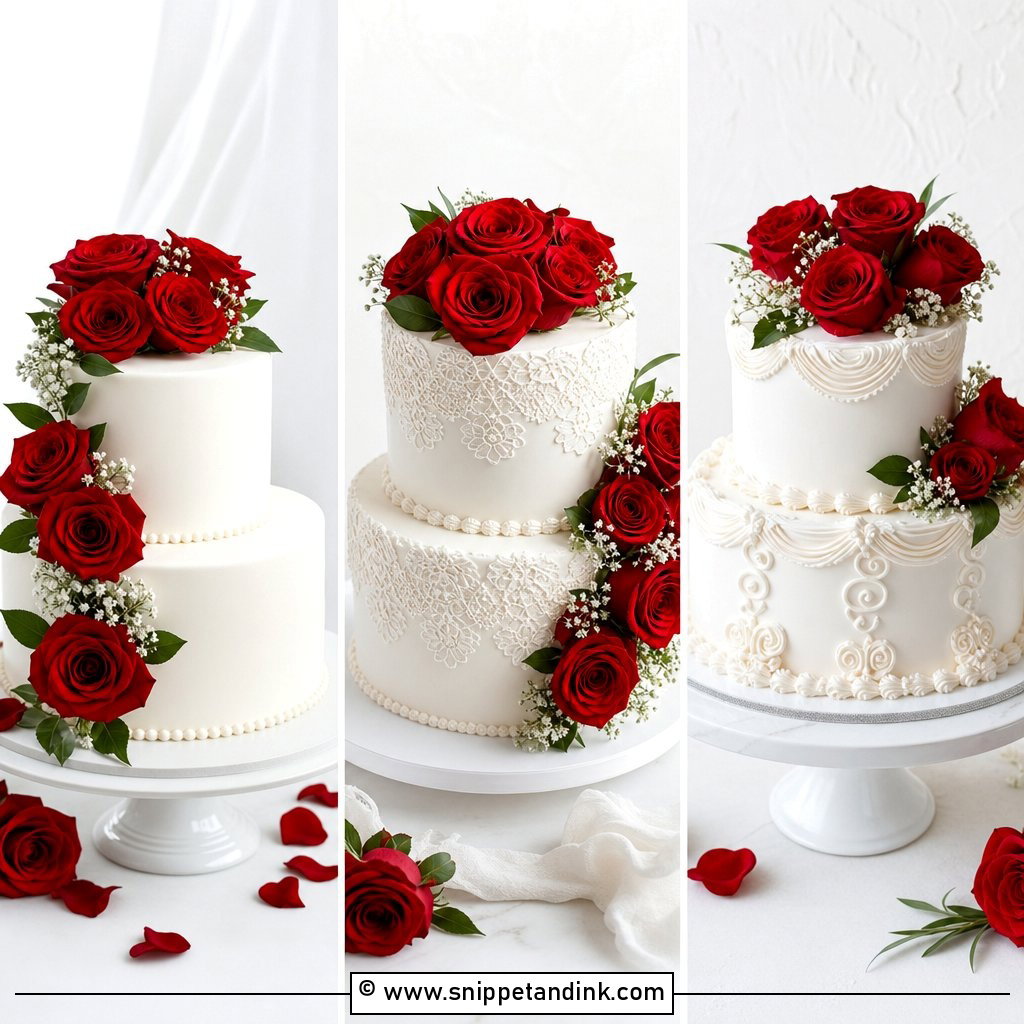
Fresh flowers need more care on a cake than in a vase. Not every bloom is safe near food, and many are sprayed, so I ask for organically grown or food-safe stems from the florist, then wrap each stem in floral tape and insert it into a straw or flower pick so it never touches the cake directly. Roses, ranunculus and orchids behave well; small fillers wilt faster. Placement matters more than quantity. A tight cluster or a soft diagonal line reads cleaner than a cake covered in blooms.
6. Semi Naked Wedding Cake

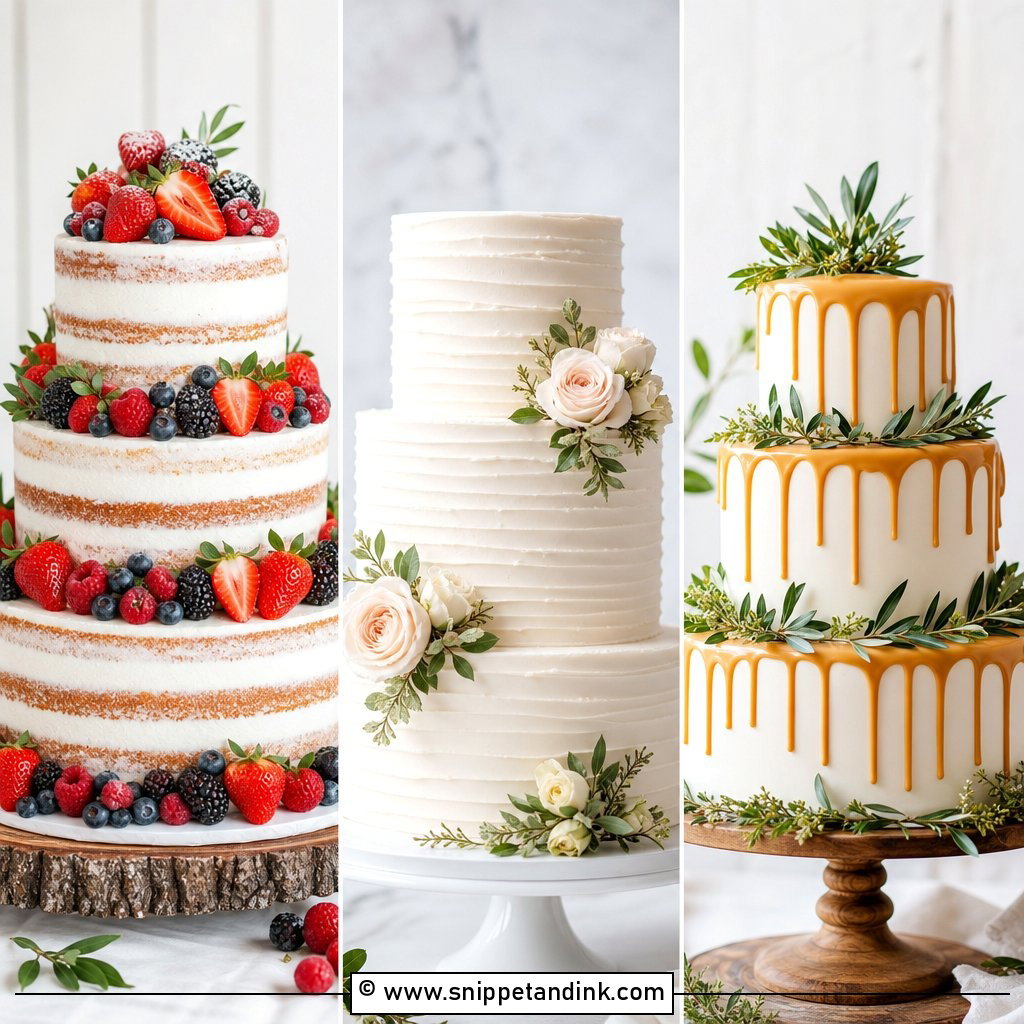
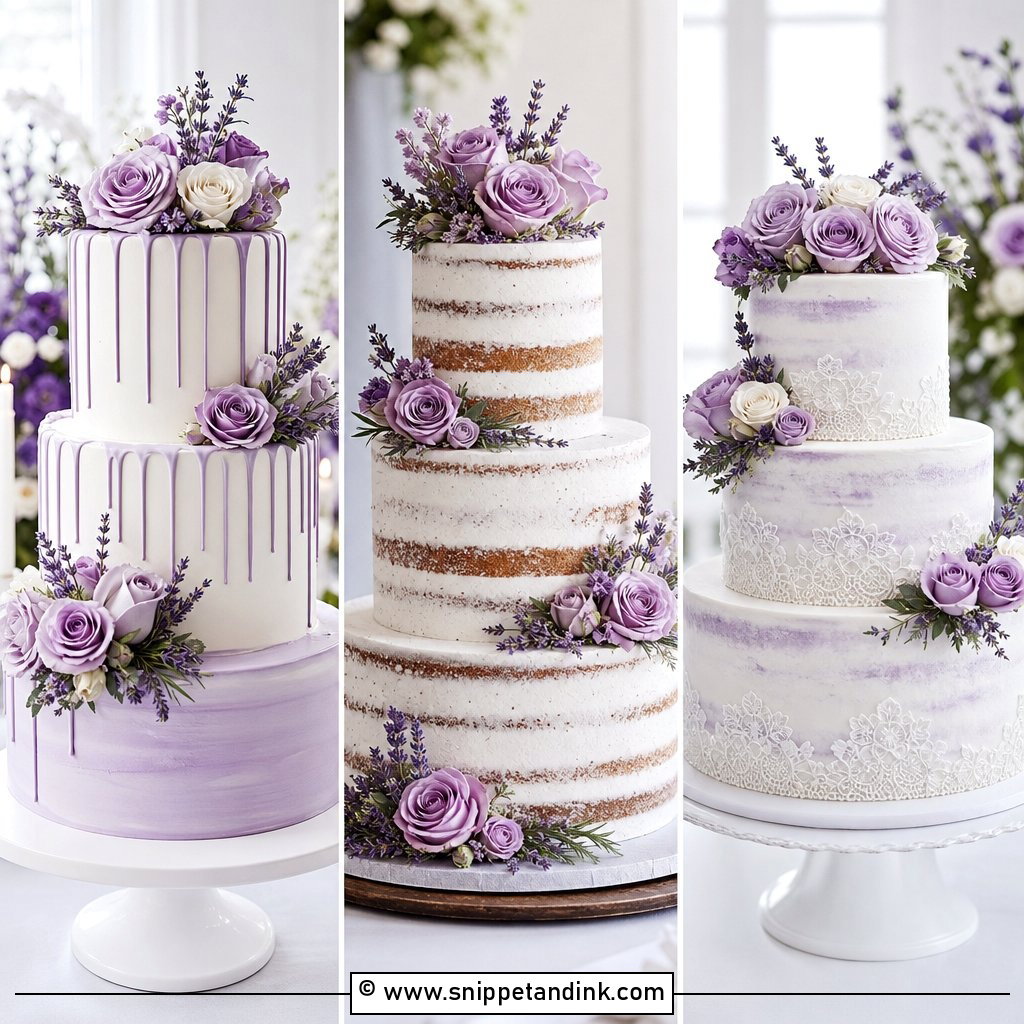
Semi naked cakes look relaxed but are less forgiving than they appear. The thin scraped coat leaves the sponge exposed, and exposed sponge dries out, so I don’t recommend this finish for a cake that sits on display for hours in a warm room, and I’ll brush layers with syrup before stacking. Vanilla, almond, spice and lemon all show a pretty crumb color through the frosting. Berries, a few flowers or a dusting of powdered sugar finish it. Keep the tiers level so it looks intentional, not unfinished.
7. Pearl Wedding Cake

Pearls add polish without adding color. Tiny edible pearls can be scattered across one tier, set in vertical lines or piped as a border at the base. I place sugar pearls with tweezers while the buttercream is still slightly tacky; once it crusts, they won’t stick and roll off when the cake is moved. White pearls on ivory feel classic, champagne pearls feel warmer. Vanilla bean, almond and white chocolate suit the soft palette.
8. Gold Wedding Cake

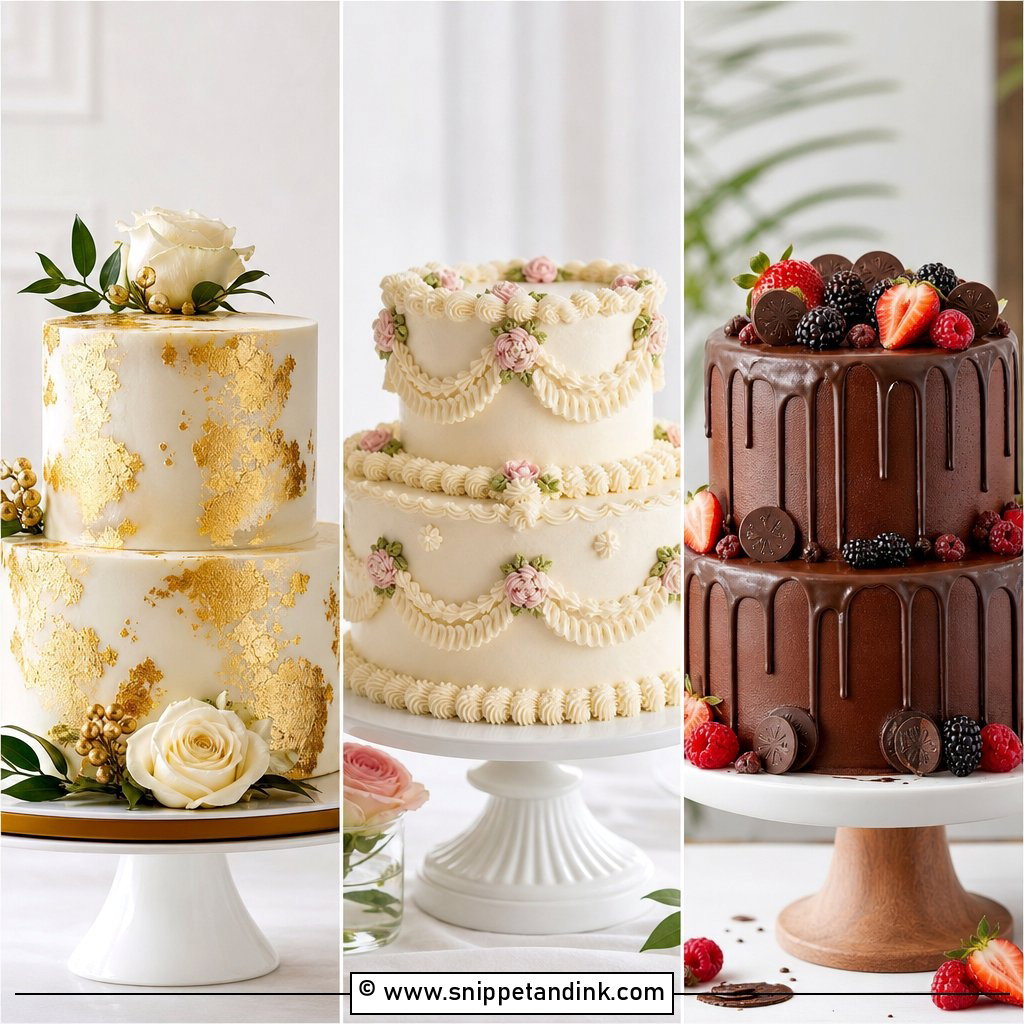
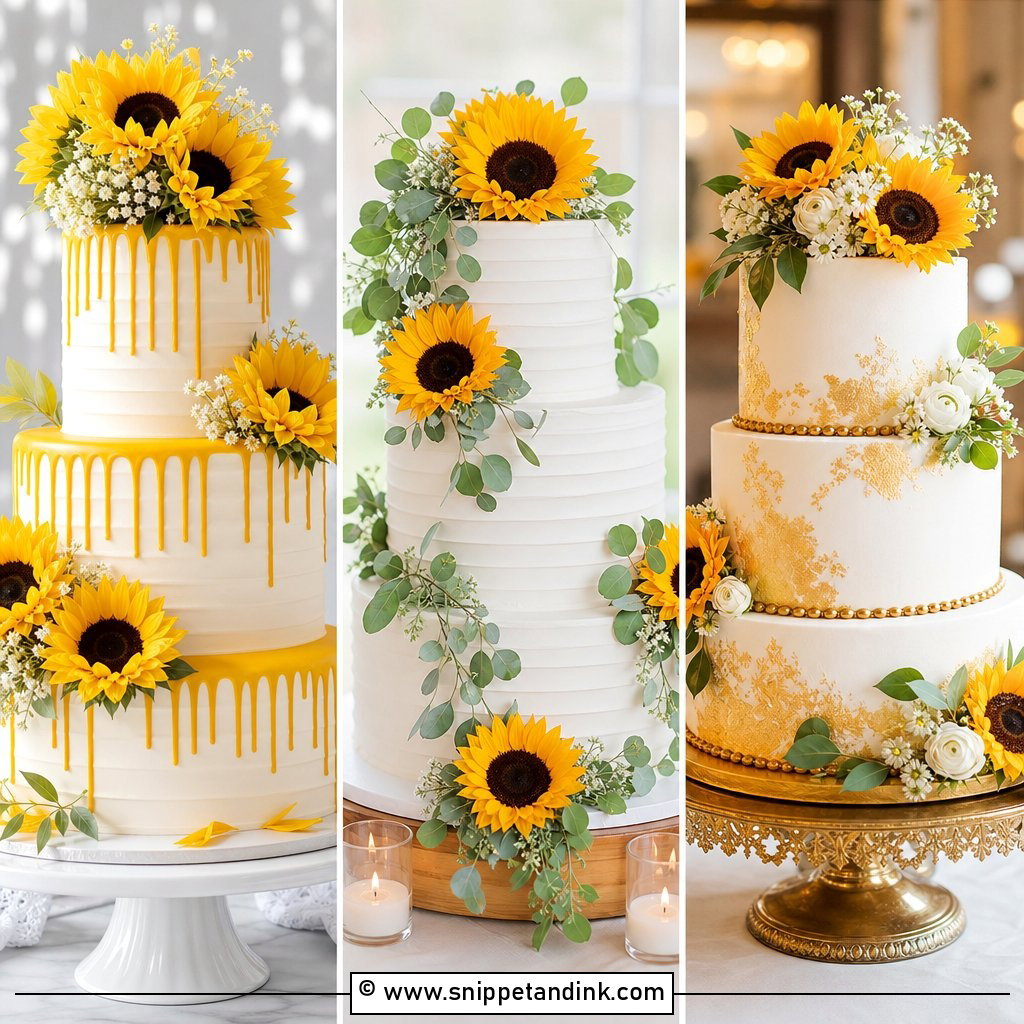
Gold works best in small doses. A few patches of gold leaf, a painted edge or one accent on a smooth white tier look far richer than a fully gilded cake. Gold leaf has a mind of its own: it sticks to everything, including your fingers and the brush, so I apply it with tweezers on a chilled, firm surface. Edible gold leaf and gold luster dust are not the same thing, and some dusts are labelled non-toxic but not edible, which is worth asking your baker about. Ivory, blush and sage palettes take gold well.
9. Small Wedding Cake

A small wedding cake is a cutting cake as much as a centerpiece. A 6-inch or 8-inch round, placed on a tall stand with flowers or candles around it, gives you the cake-cutting photo while sheet cake or other desserts feed the guests from the kitchen. I keep the finish neat with one clear decoration. The risk with a small cake is scale: on a big table it shrinks, so give it its own small table or raise it well above the other desserts.
10. Vintage Wedding Cake

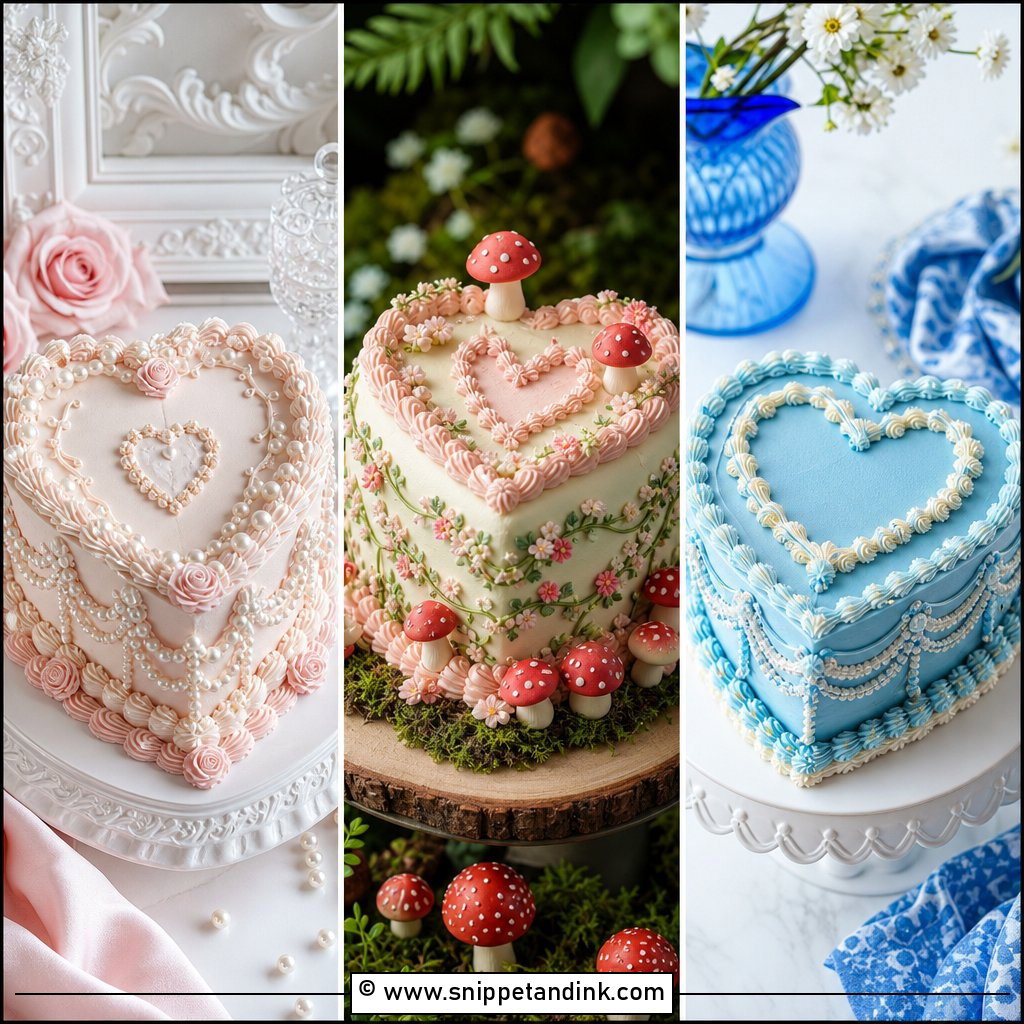
Vintage piping looks simple only when it’s controlled. Small shell borders, gentle swags and a few pearls are enough; once you add tiers of overpiping, it stops being a simple cake. Buttercream for this needs to be firm and well beaten to hold sharp shells, which is harder in a warm kitchen. One or two tiers in ivory, cream, blush or pale blue suit the style. Top it with a small floral piece or keep it fully piped for a clean retro style.
11. Minimalist Wedding Cake

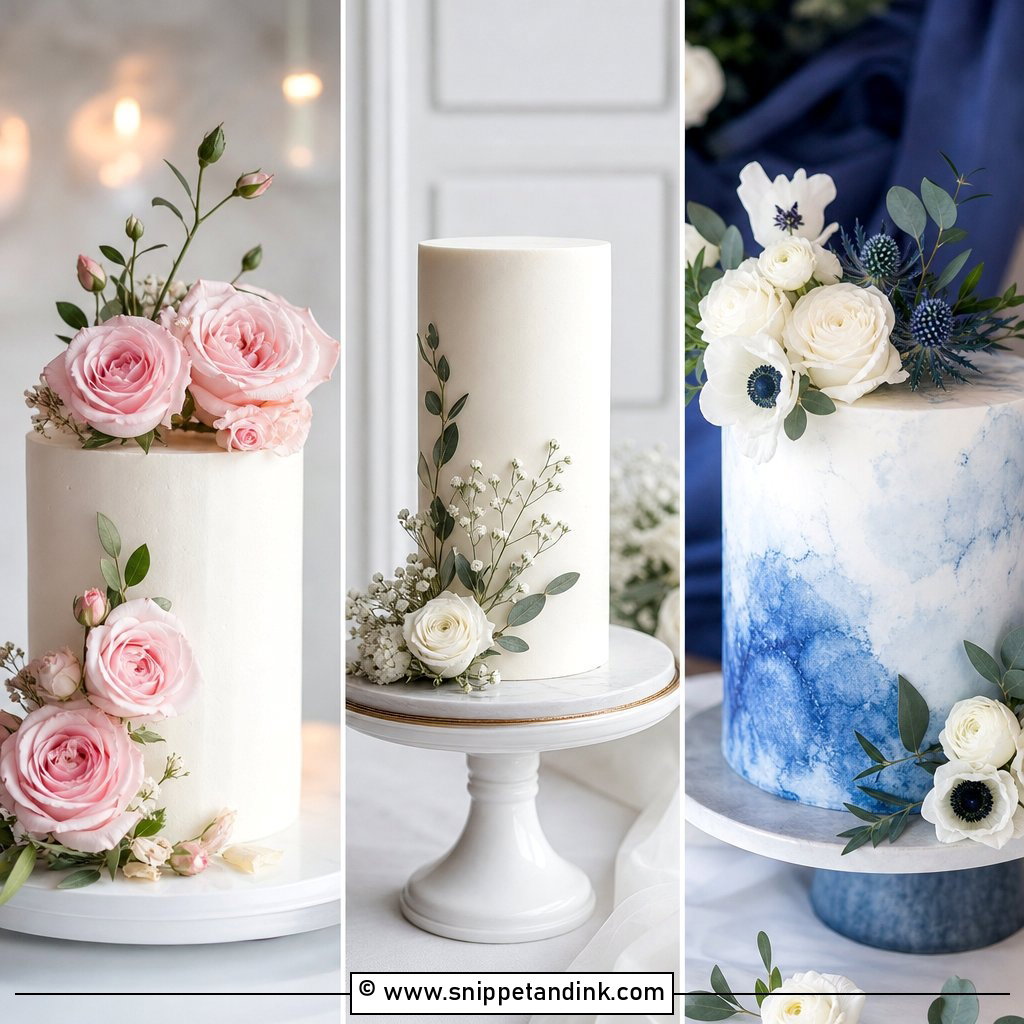
Minimal is the most exposing style I make. With one flower or one ribbon on a plain tier, sharp edges and perfectly vertical sides carry the whole design, so I build these from well-chilled, ganache- or buttercream-coated tiers that I can scrape to a crisp corner. Tall single tiers or stacked smooth tiers give that gallery feel. Vanilla bean, almond and lemon elderflower suit the restraint. Keep the table bare too, with a simple stand and a neutral backdrop.
12. Rustic Wedding Cake

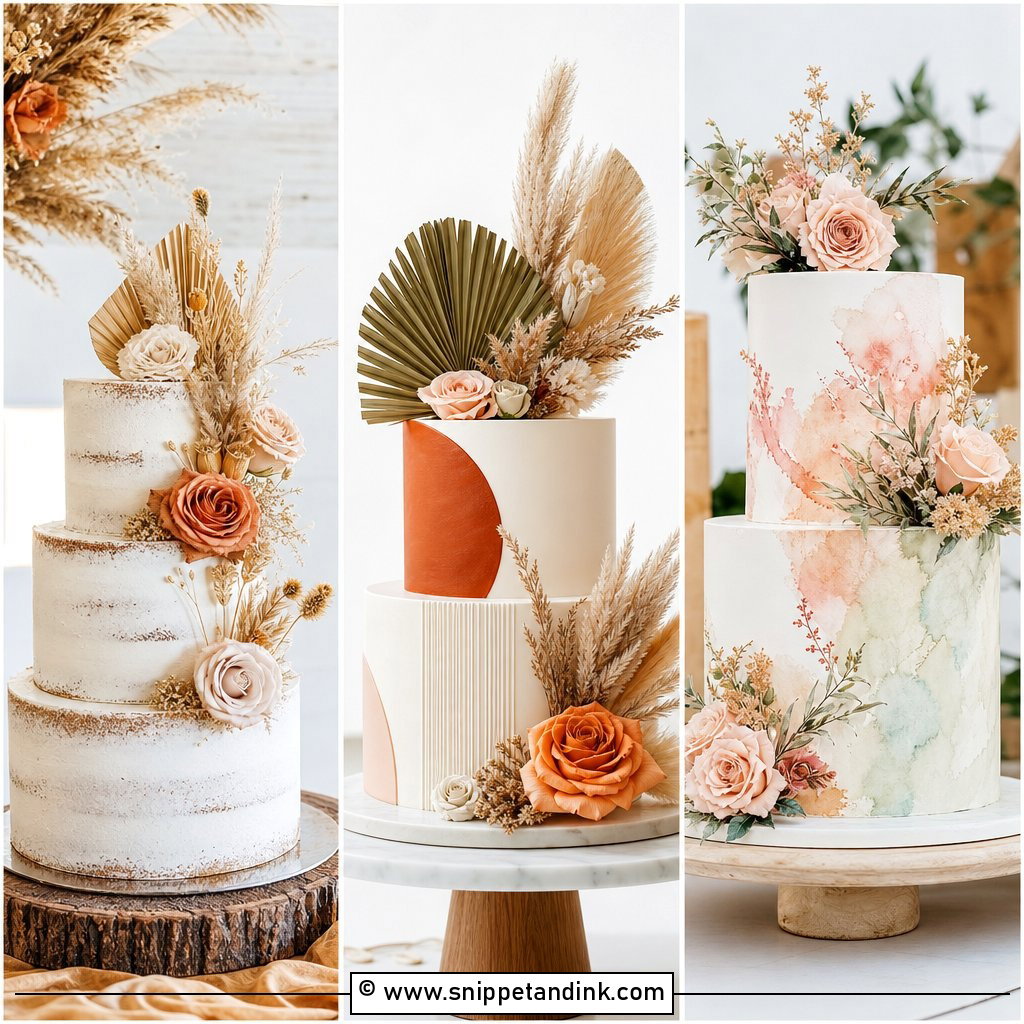
Rustic cakes should look handmade but never wobbly. Lightly textured buttercream, a semi naked finish, small flowers, greenery or berries all fit, and a wood slice stand adds warmth. If you use a wood slice, I ask that it be sealed or lined with a cake board, since raw wood can leak sap or pass on a smell. Vanilla, carrot, spice and berry-filled cakes suit the mood. Barns and outdoor venues are where this cake looks at home.
13. Floral Wedding Cake

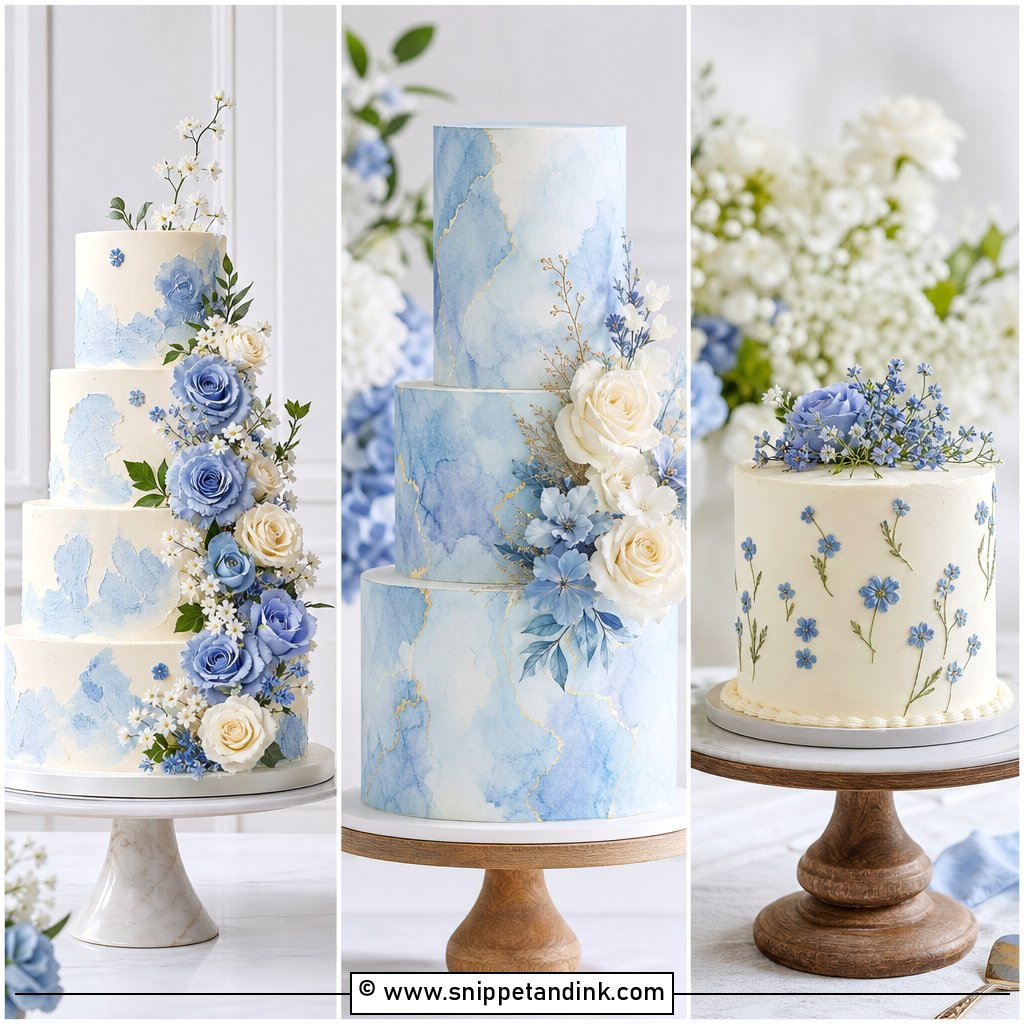
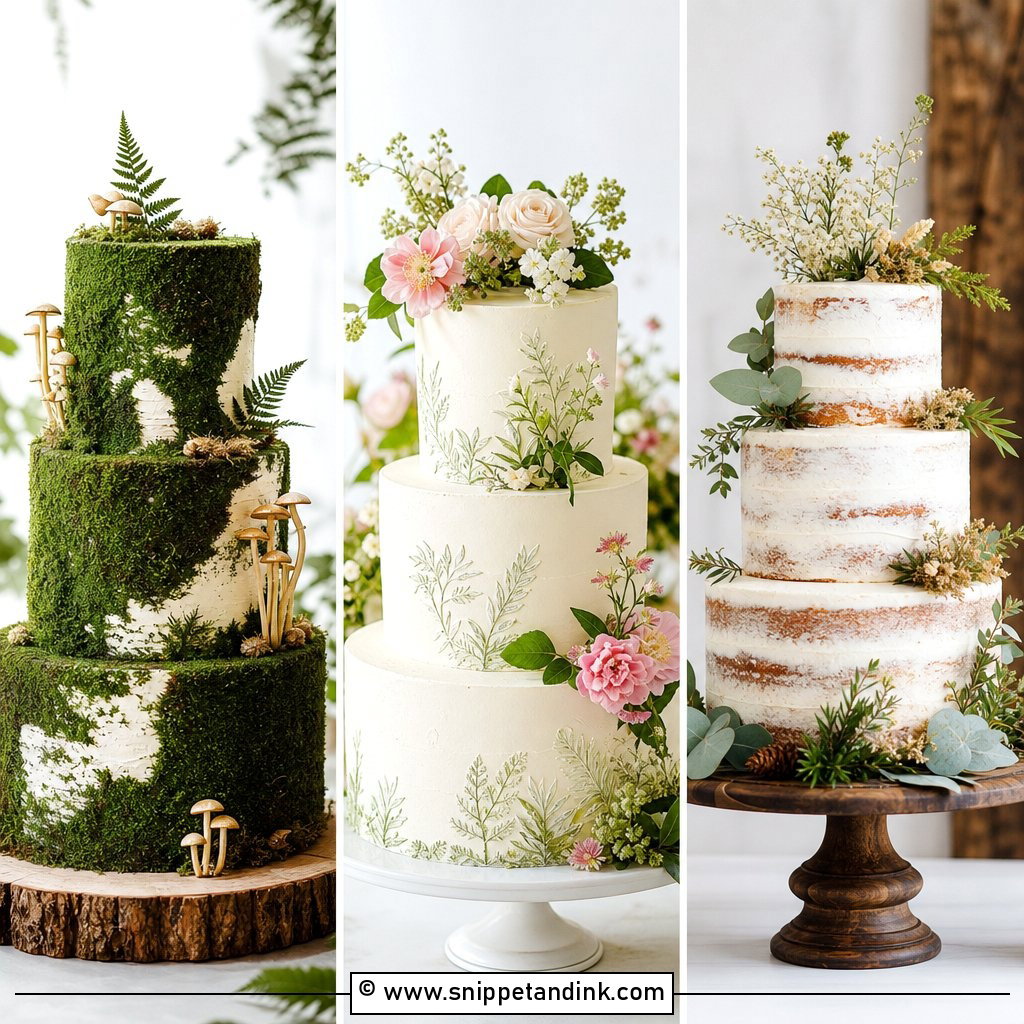
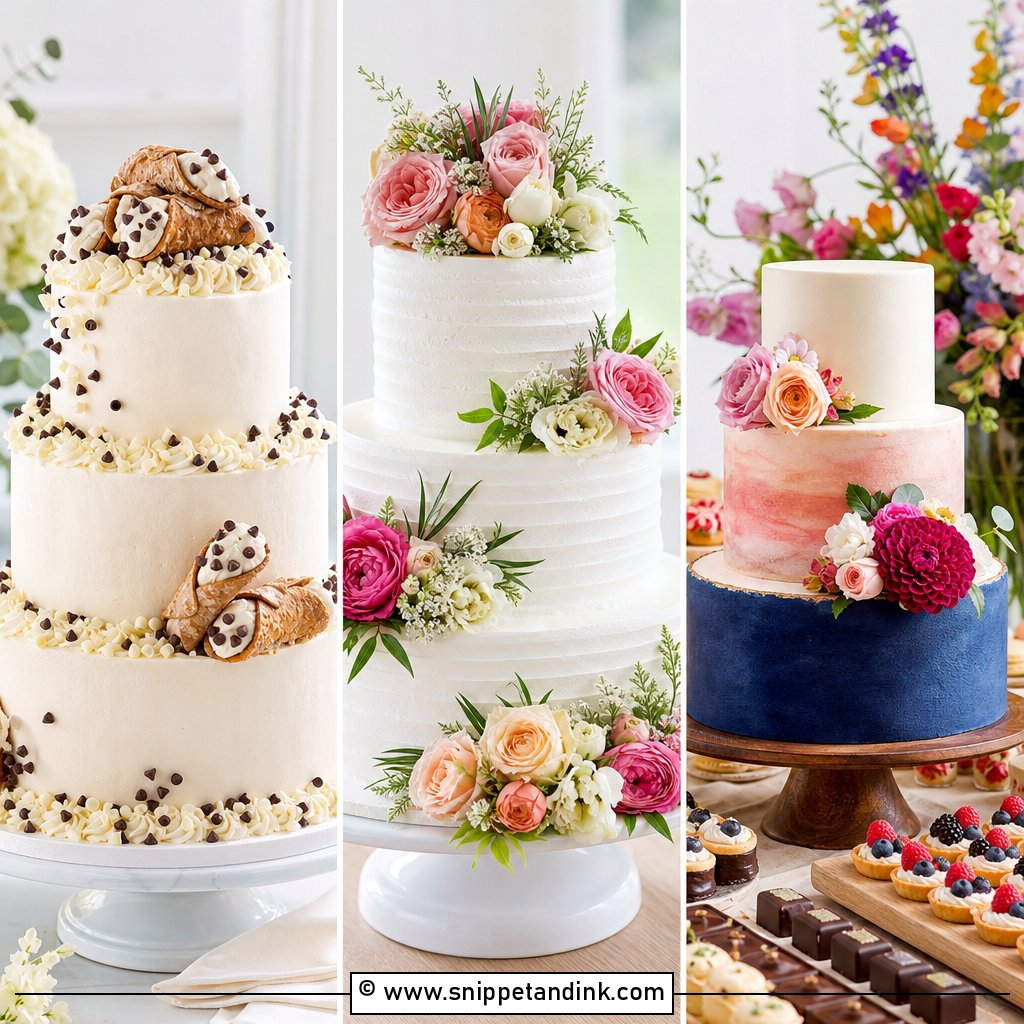
Florals stay simple when the flowers are confined. One cluster on a single tier, or a ring of blooms at the bottom, keeps the shape of the cake readable, while a full cascade turns it into a flower arrangement. Matching the stems to the ceremony palette connects the cake to the rest of the room. White buttercream, ivory fondant and pale blush all suit roses, orchids or daisies. Add the flowers on site, not before transport, so nothing bruises or slides.
14. Textured Wedding Cake

Texture lets the frosting do all the decorating. Horizontal comb lines, palette-knife strokes, vertical ridges or a soft stucco finish need no topper at all. I comb texture with the cake on a turntable, and the hardest part is the final seam where the pass meets itself, which is why I like to place that seam at the back. White, ivory, beige and pale blush show texture well because the shadows do the work. A small floral accent is optional. Vanilla, almond, citrus or berry fillings all work inside.
15. Square Wedding Cake

Square tiers look modern and slice tidily, but they’re the hardest shape to finish. Every corner has to be sharp and every side flat, and buttercream tends to round off at the corners, so fondant or a firm ganache base is the safer finish. A thin ribbon, a few flowers on one corner or a minimal pearl border is all it needs. A square tier also serves a few more portions than a round of the same width, since there’s no curve to lose. Vanilla, almond, chocolate and lemon all work.
16. Round Wedding Cake

Round tiers are the shape most guests picture, and the easiest for a baker to get right. They stack and dowel easily and transport more securely than squares. Smooth buttercream with a small border, a fresh flower cluster or subtle texture keeps it simple. White is the default, but blush, sage and champagne tint well in buttercream if you want a hint of color. It’s the low-risk option when you just want a cake that looks like a wedding cake.
17. Fondant Wedding Cake

Fondant gives the smoothest possible surface and the sharpest edges, which is why formal receptions often favor it. Under the fondant there’s still buttercream or ganache, and that layer decides how clean the cake looks, since fondant shows every lump beneath it. One detail is enough: a satin ribbon, small sugar flowers or fine painted lines. Fondant can sweat if a chilled cake comes into a humid room, so I let it come up to temperature in its box before unpacking. Inside, vanilla bean, chocolate, lemon or red velvet all work.
18. Garden Wedding Cake

Garden cakes are about the setting. A white or ivory buttercream base, a few flowers, herbs or small fruit tucked around the tiers, and a ceramic stand on a linen cloth tie the cake to an outdoor table. Lemon, vanilla, berry, lavender and almond suit the mood. Herbs like rosemary and thyme are sturdier on a cake than delicate petals, and they don’t wilt in an afternoon of sun. Spring and summer weddings suit this most, though outdoor heat is exactly what makes buttercream soften, so plan for shade.
19. Sheet Wedding Cake

A sheet wedding cake is the practical answer for a long guest list, and it can still be styled. Smooth buttercream, piped borders, fresh flowers, fruit or a pressed flower pattern give it a finished look, and a white or ivory base keeps it clean. Many couples serve sheet cake from the kitchen alongside a small display cake. A sheet cake is also far easier to transport and slice, which keeps your caterer’s cake-cutting work quick.
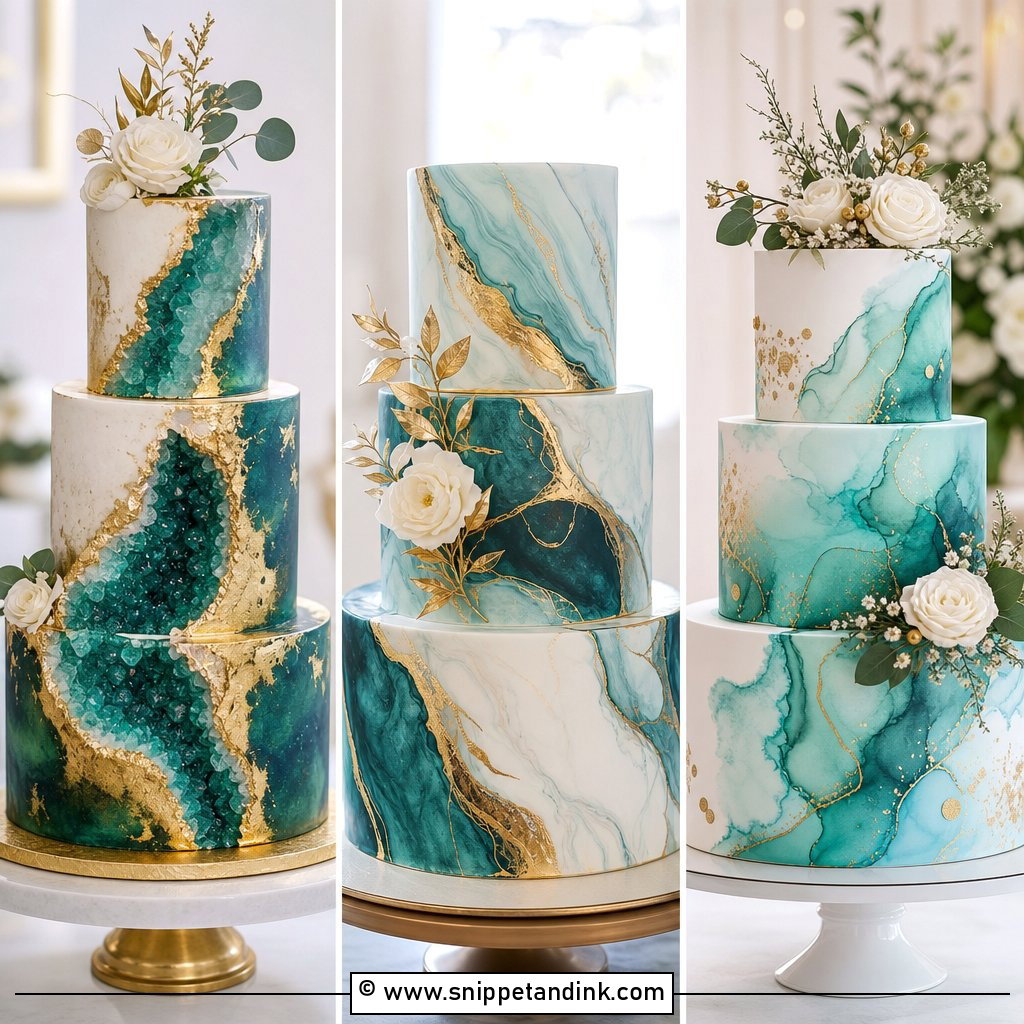
20. Heart Wedding Cake

Heart shapes suit small weddings, elopements, brunch receptions and vintage-themed parties. I keep the frosting soft, ivory, blush or pale champagne, and pipe a border around the top and base. Tiny pearls, a few flowers or a short piped message finish it. The point of the heart is the hardest part to frost neatly, so I chill the cake well before the final coat. Vanilla, strawberry, almond and red velvet suit the sweet shape. Fewer colors and a small topper keep it from tipping into novelty.
The Trip From Bakery to Reception Is Where Simple Cakes Get Ruined
A plain cake has nowhere to hide a dent. Most of the damage I’ve had to repair happens in the car or in a warm room, not in the kitchen. A few habits protect it:
- Keep the cake chilled until it leaves, and move it on a flat surface such as the car floor or a level trunk, never on a seat that slopes.
- Run the air conditioning before loading; a hot car softens buttercream within minutes.
- Ask whether tiers travel stacked with a central dowel or separately and assembled at the venue. Tall cakes are much safer stacked on site.
- Place the cake away from windows, heaters and the dance floor speakers. Sunlight through glass softens buttercream faster than room temperature does.
- Add fresh flowers last, at the venue, so they arrive crisp.
Lead times worth knowing
Many cake designers book months ahead for peak-season Saturdays, and a tasting typically happens a few months before the wedding. The final guest count usually needs to reach the baker a couple of weeks out, since that number sets the tier sizes. If you’re adding sugar flowers rather than fresh, ask for extra time; they’re made by hand in advance and need to dry.
One Clean Finish, One Detail, and a Cake Table That Stays Quiet
A simple cake doesn’t need crowding to feel special. A smooth finish, a clean shape and one accent, whether flowers, pearls or texture, carry the design. What you choose depends on your venue, guest count, flavors and how much attention the cake should get on the dessert table. A minimalist tier, a rustic semi naked cake, a floral buttercream design or a small heart can all look polished. Bring your venue’s conditions and your guest count to the tasting, and the right one usually becomes obvious.
You'll Like These Ideas:


Leave a Reply