
Autumn is my favorite season to bake for. The flavors couples ask for, like spice, caramel, apple, pear and maple, actually suit layered cake, and the cooler weather is kinder to buttercream than any July garden party. The designs this year lean toward semi naked finishes, dark tiers, terracotta flowers, dried grasses and fresh fruit. Each of those has its own practical quirks, which I’ll point out as we go. Here are the 20 Fall Wedding Cake Ideas I’d show a couple at a fall consultation.
Which Fall Fruits Hold Up on Buttercream and Which Ones Weep
Fruit is the most requested decoration for autumn cakes, and it behaves very differently once it sits on frosting for a few hours. I plan the fruit with the timeline in mind, not only the look.
- Whole figs, small whole pears, grapes and crab apples: safe to place an hour or two ahead. They keep their color and don’t leak.
- Halved figs, cut pears and apple slices: brown or weep. I add these at the venue, glazed or brushed with lemon.
- Blackberries and raspberries: their juice stains pale buttercream. I set them on a small piece of wafer paper or in a cluster where a mark won’t show.
- Dried orange slices and dried apples: the easiest of all. They can go on a day early and don’t change.
- Pomegranate seeds: they bleed red if crushed, so they work best on dark frosting.
Wash and fully dry every piece. A wet berry on buttercream leaves a pale spot that spreads, and it will be right at the front.
1. Semi Naked Fall Wedding Cake
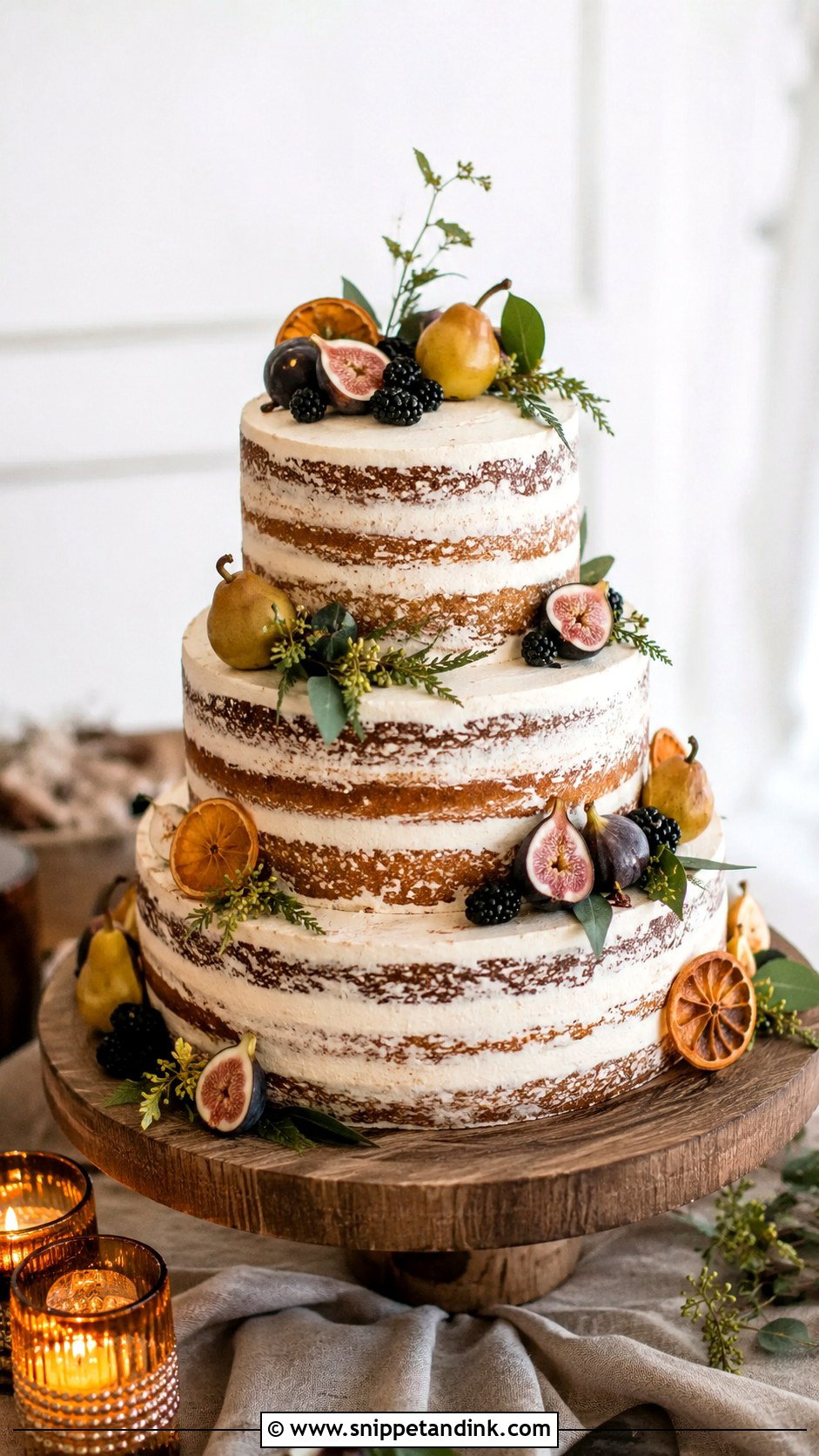
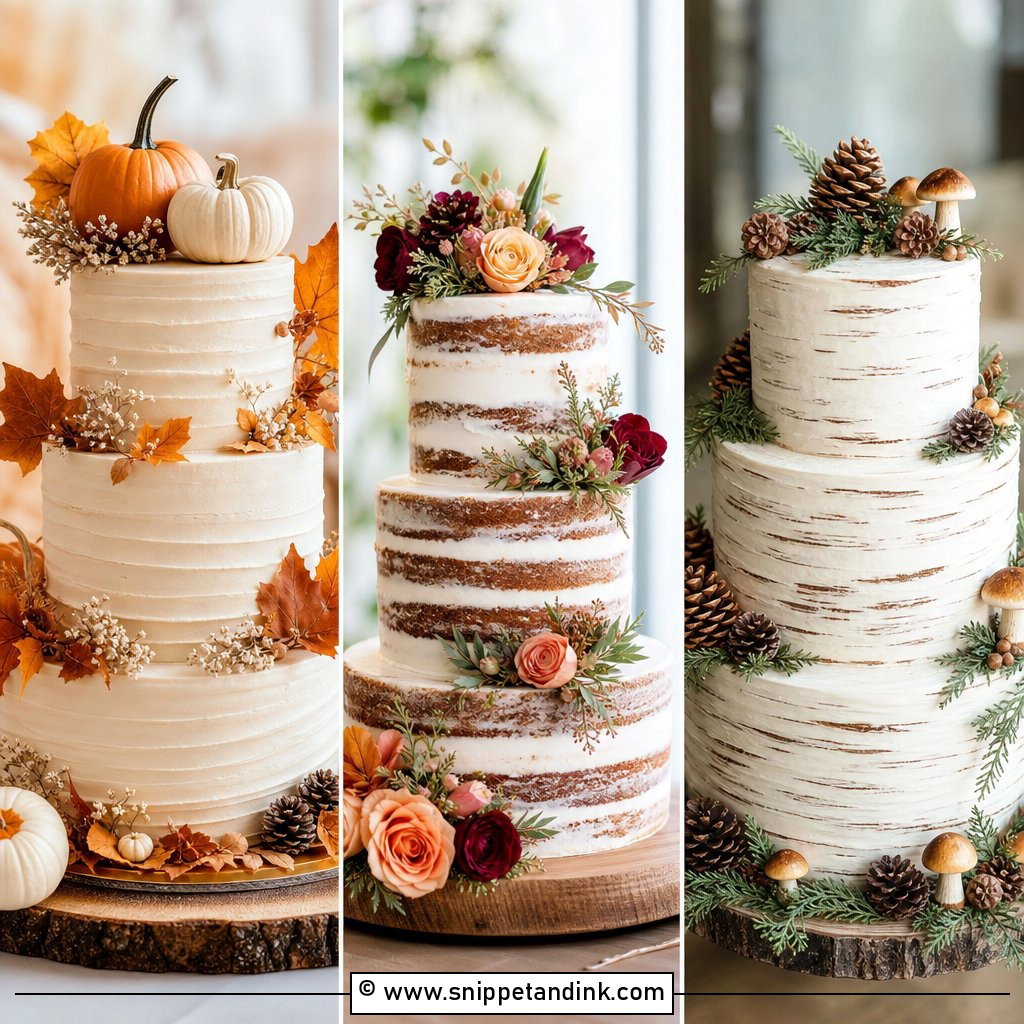
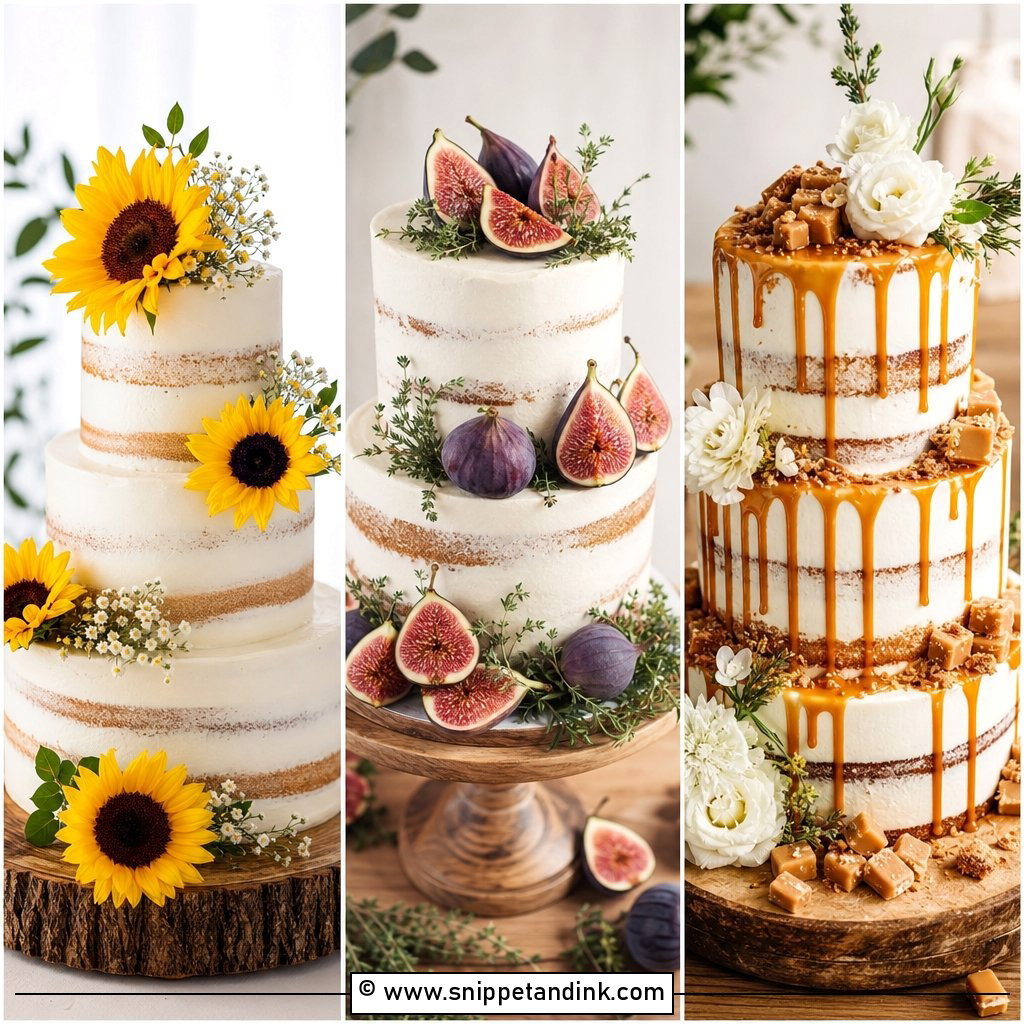
A semi naked finish is a thin scrape of buttercream that lets the sponge show at the edges. I still crumb coat and chill it properly, so the edges stay crisp rather than ragged. Spice, vanilla bean, apple and chocolate all look good through the frosting, and a layer of caramel between tiers shows as a thin amber line. The trade-off is moisture: with less frosting sealing it, the sponge dries faster, so I assemble these as close to the day as I can. Figs, blackberries, small pears and dried orange slices finish it for barn and garden receptions.
2. Pumpkin Spice Wedding Cake
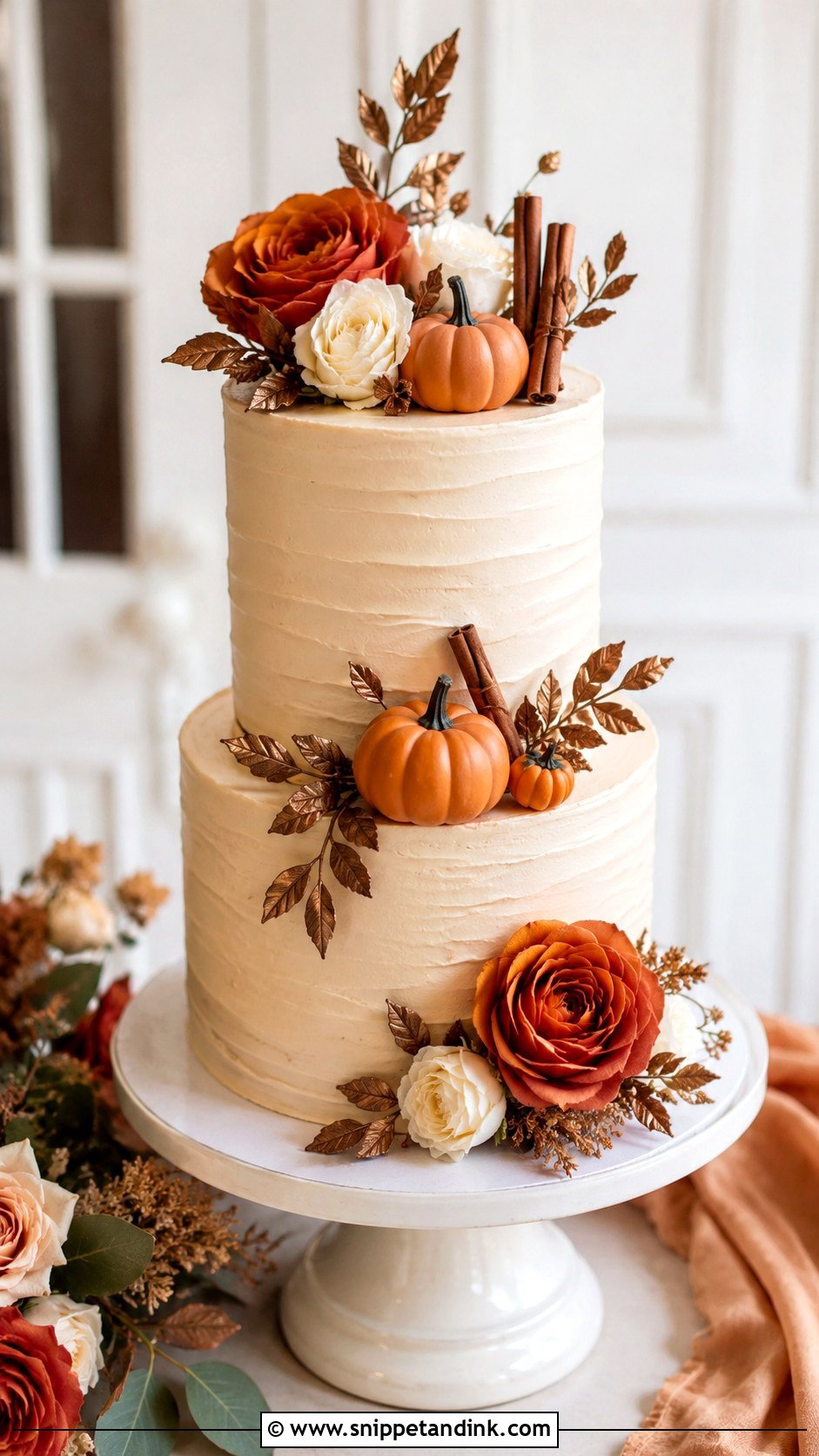
Pumpkin sponge is dense and moist, which makes it a reliable bottom tier. It pairs with cream cheese frosting, brown butter buttercream or a maple filling. One honest note: cream cheese frosting is soft, so on a tall cake I use it as the filling and cover the outside in a firmer buttercream. A smooth ivory finish with bronze leaves and tiny sugar pumpkins reads seasonal without looking like a party theme. Many couples put pumpkin on one tier and vanilla or chocolate on another for guests who don’t like spice.
3. Apple Cider Wedding Cake
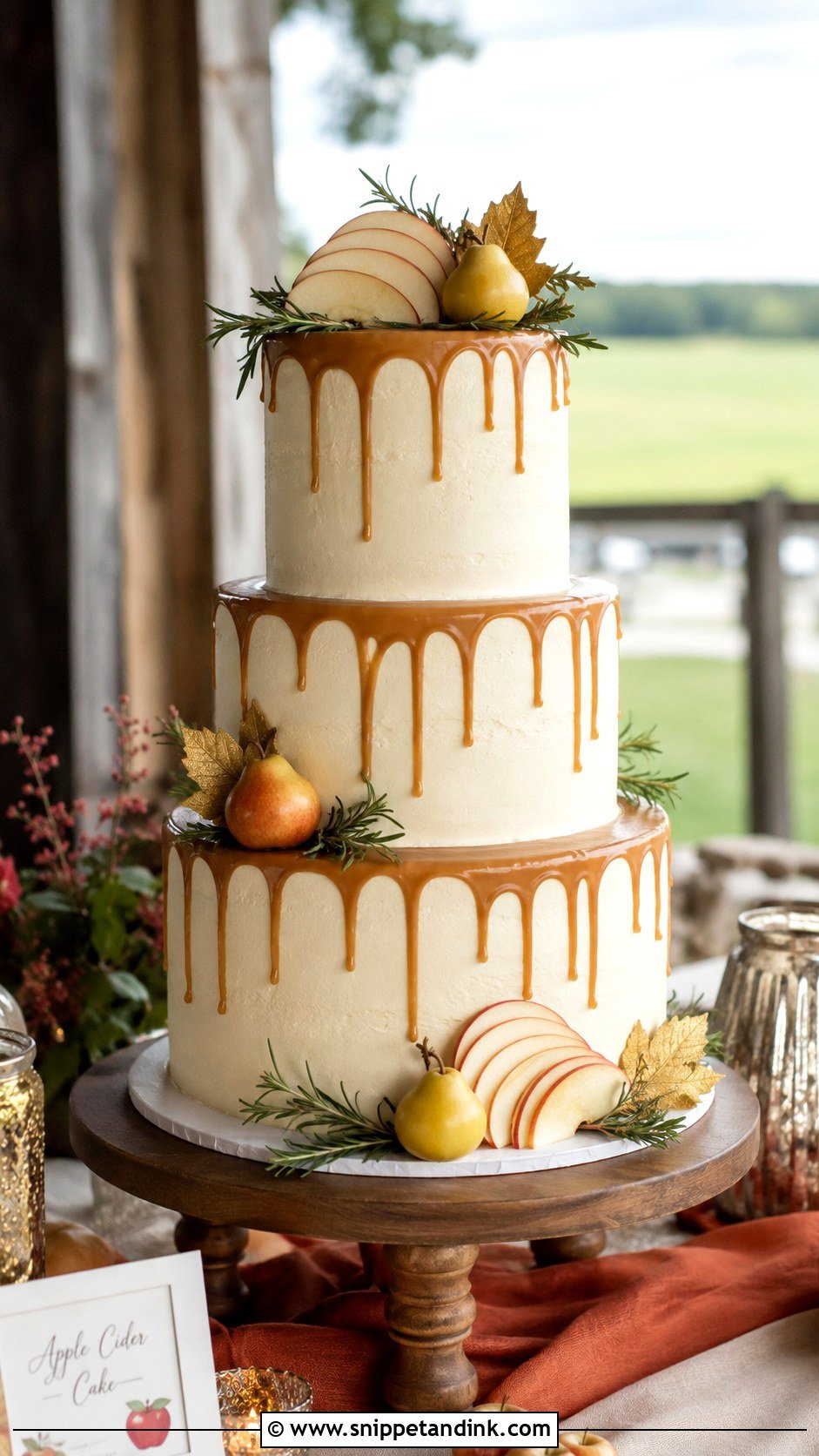
Apple cider wedding cake tastes lighter than most fall flavors, which is why I suggest it for early autumn dates. I reduce the cider until it’s syrupy before it goes into the batter; plain cider adds liquid without much flavor. Apple butter or salted caramel make good fillings, with cinnamon buttercream outside. If you want apple slices around the base, they need to be brushed with lemon or glazed, because cut apple browns within an hour. Rosemary and small whole pears hold up better than anything sliced.
4. Salted Caramel Wedding Cake
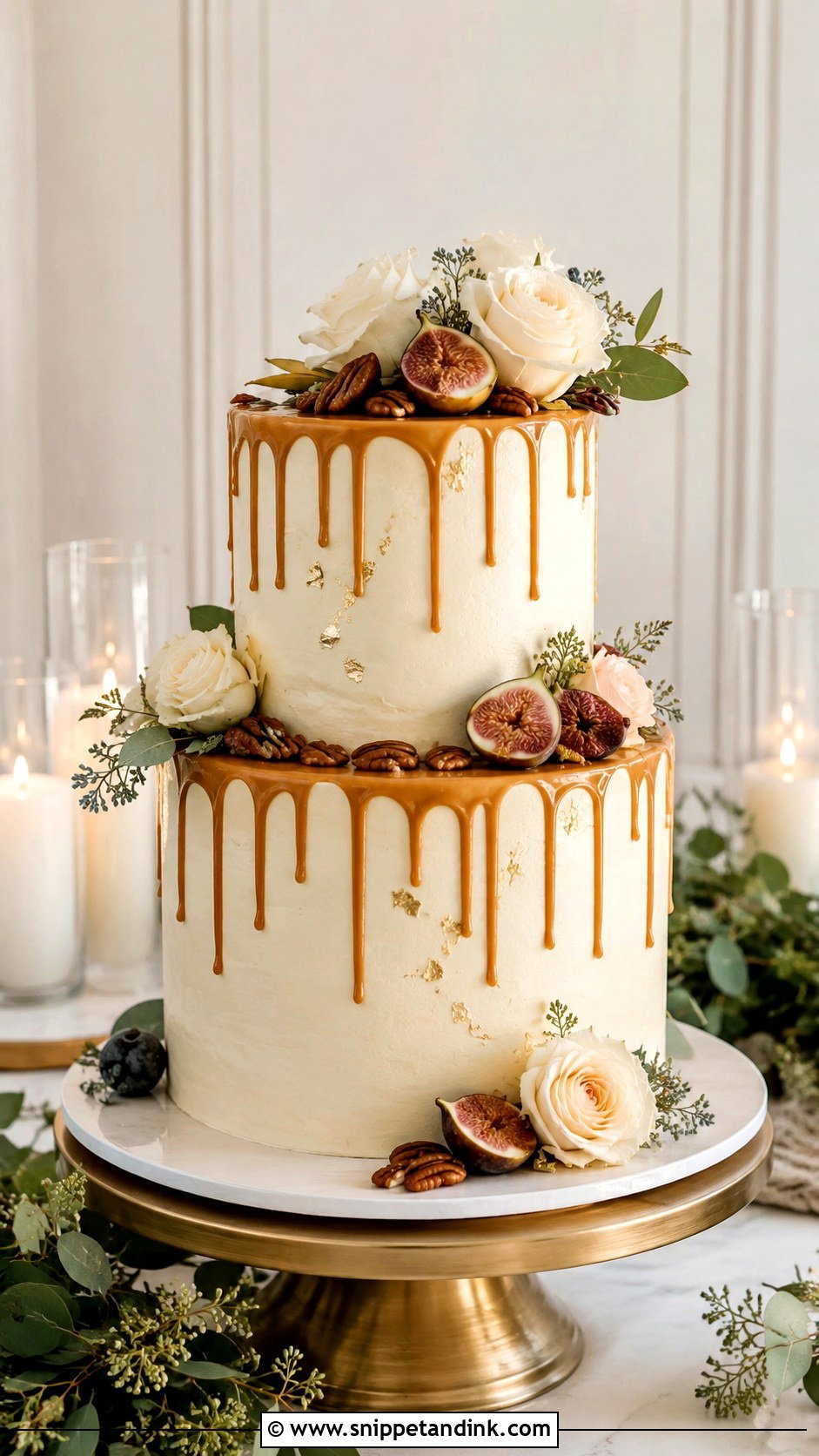
Salted caramel pleases almost everyone, so I recommend it when a couple is worried about picky guests. It sits well with vanilla, brown sugar, chocolate or apple spice sponge. The drip is where things go wrong. Caramel softens in a warm room and keeps creeping, so I make it thicker than a ganache drip and apply it on a cold cake. Ivory buttercream with a caramel drip, a few figs and some cream roses looks finished with very little else.
5. Chai Spice Wedding Cake
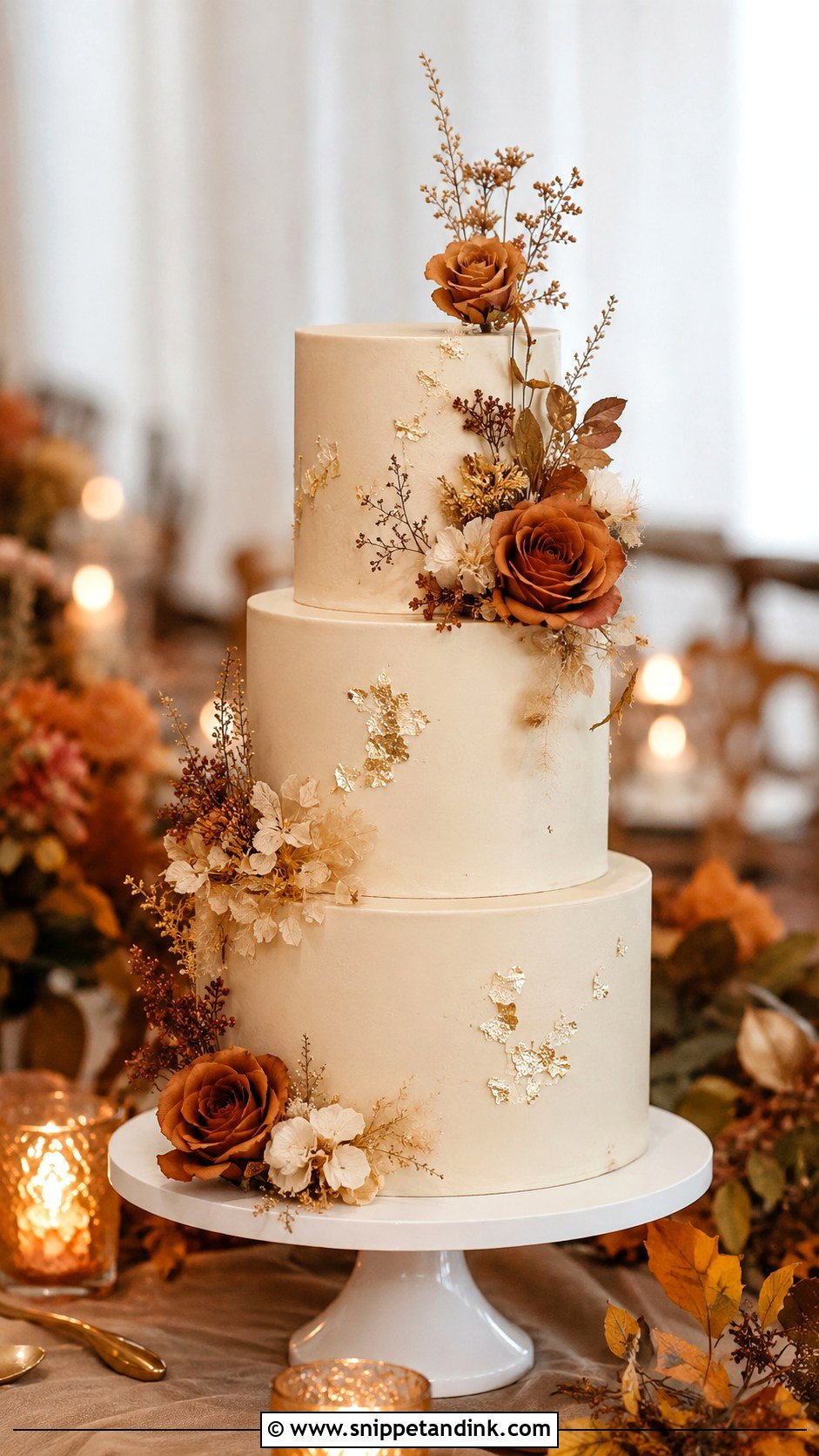
Chai combines cinnamon, cardamom, ginger and clove, and the cardamom is what makes it taste different from plain spice cake. I steep the spices in the milk or butter rather than only adding ground spice, which keeps the crumb from tasting dusty. Vanilla buttercream, honey frosting or cream cheese filling all suit it. On the outside I keep it plain ivory with dried flowers and caramel-colored roses. It reads warm beside candles and wood tables.
6. Chocolate Fall Wedding Cake
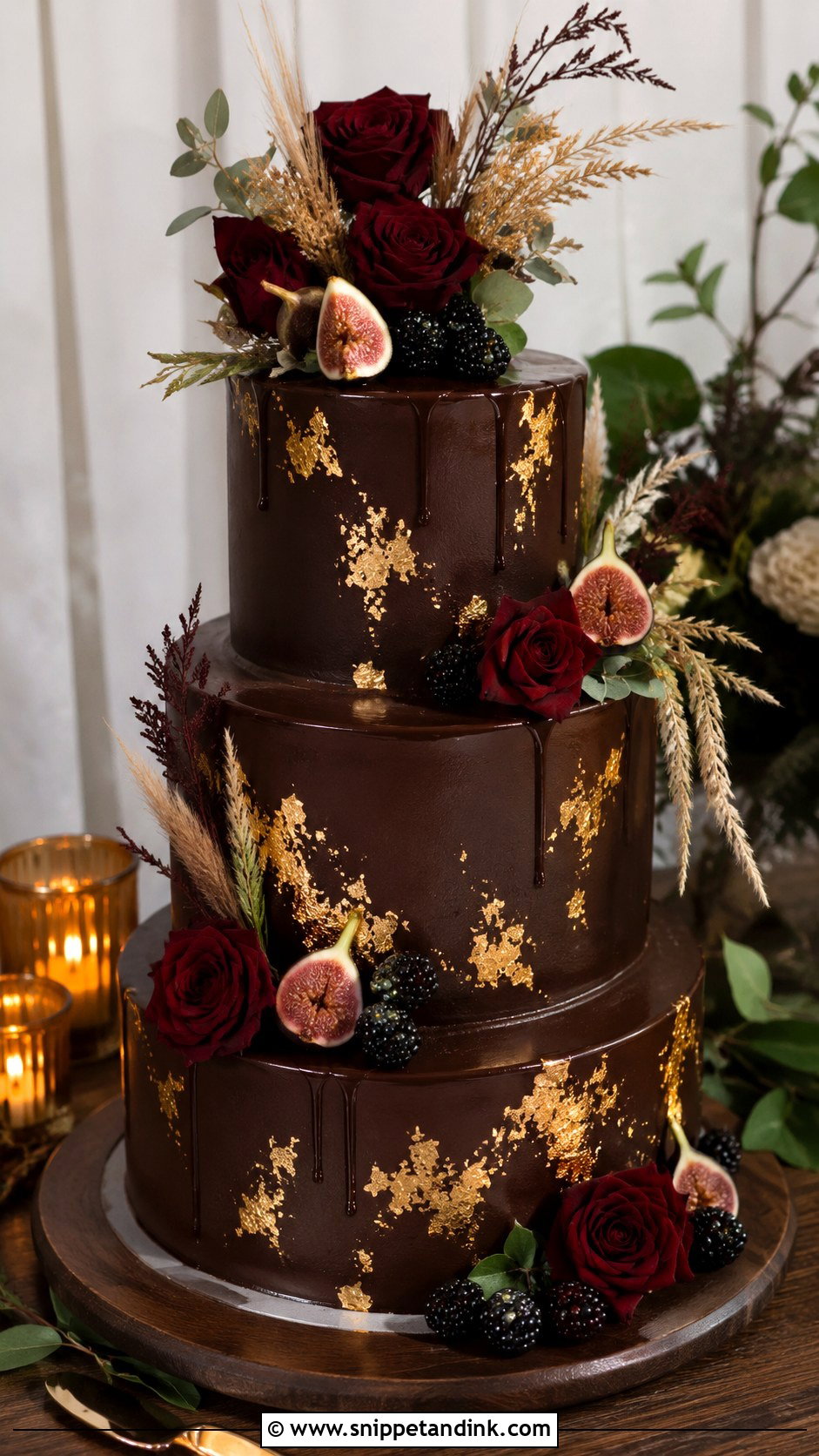
Chocolate is the cake I’d suggest to a couple who doesn’t want white at all. Dark chocolate or fudge layers take espresso, hazelnut, blackberry or caramel fillings well. I like a ganache coat for this one, since ganache sets firmer than buttercream and gives sharper edges in a warm reception room. Blackberries, figs, gold leaf and burgundy roses finish it. Against amber candles and dark linens it looks rich; just keep the decorations to one side so it doesn’t turn heavy.
7. Black Fall Wedding Cake
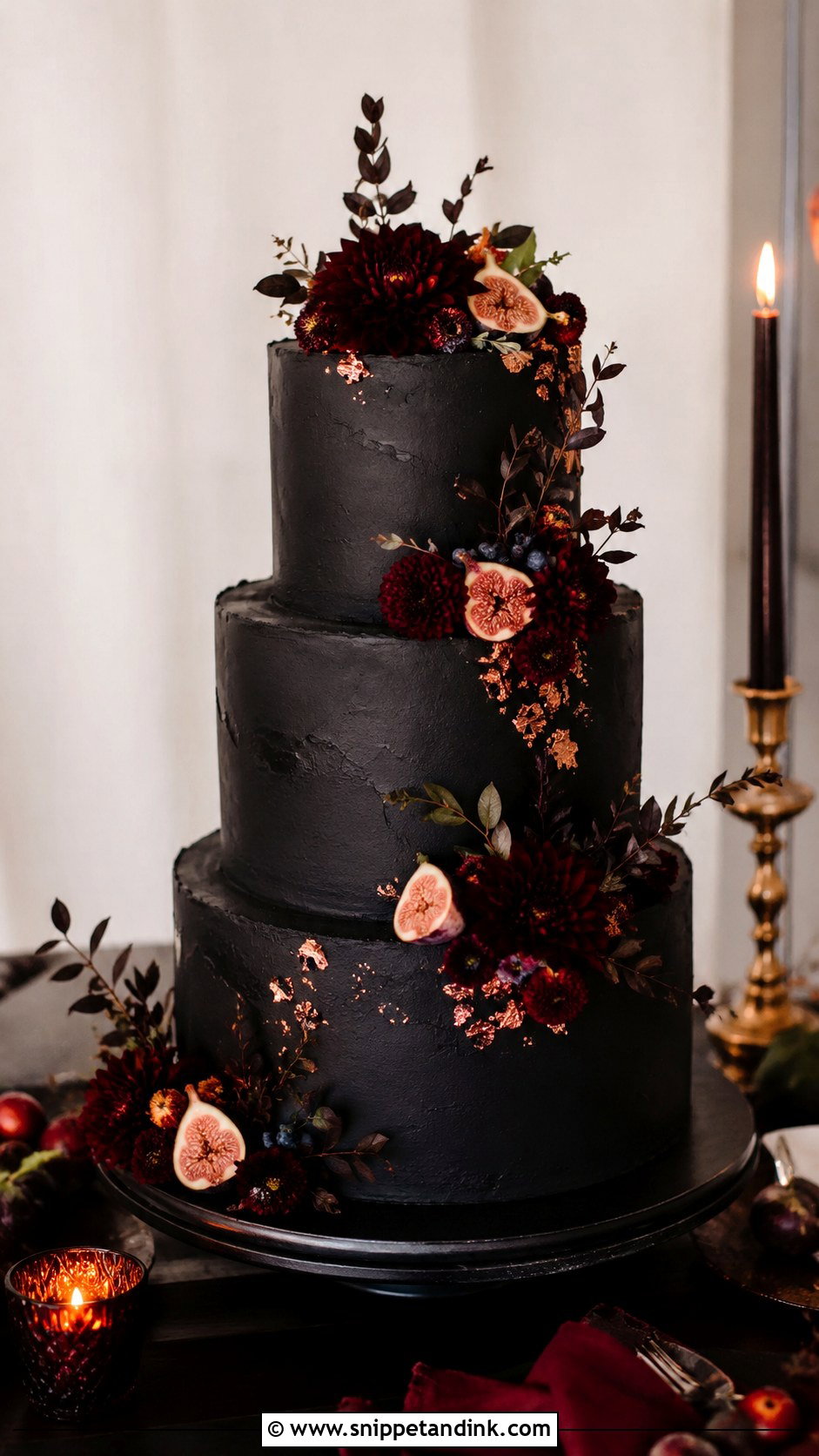
Black cakes look dramatic in evening light, and the inside can be anything: vanilla, red velvet, chocolate or spice. The outside is the tricky part. Getting buttercream truly black takes a lot of gel color, which can taste bitter and stains teeth, so I start from a chocolate buttercream base or use black fondant instead. Burgundy flowers, copper leaf, figs and dark greenery soften it. Clean edges matter more on black than on any other color, since every scrape shows.
8. Burgundy Wedding Cake
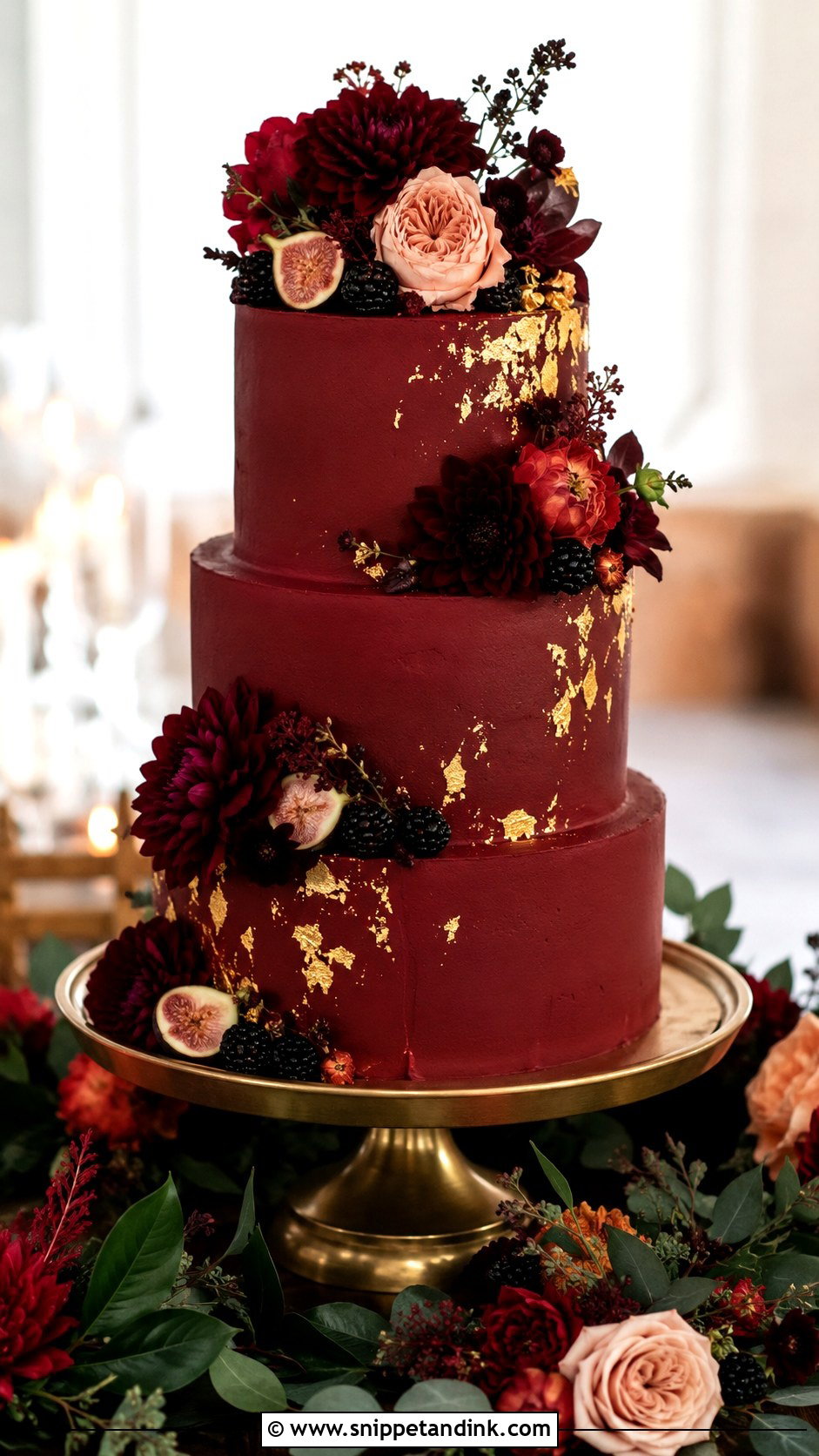
Burgundy can go two ways: color the buttercream itself or keep the tiers ivory and let burgundy flowers carry it. I usually suggest the second for a large cake, since deep red frosting needs heavy coloring and can leave lips pink. Chocolate, red velvet, vanilla bean, almond and spiced pear all suit it. Dahlias, garden roses, figs and touches of gold sit well against ivory. Next to brass stands and dark foliage, it fits formal estate weddings.
9. Terracotta Wedding Cake
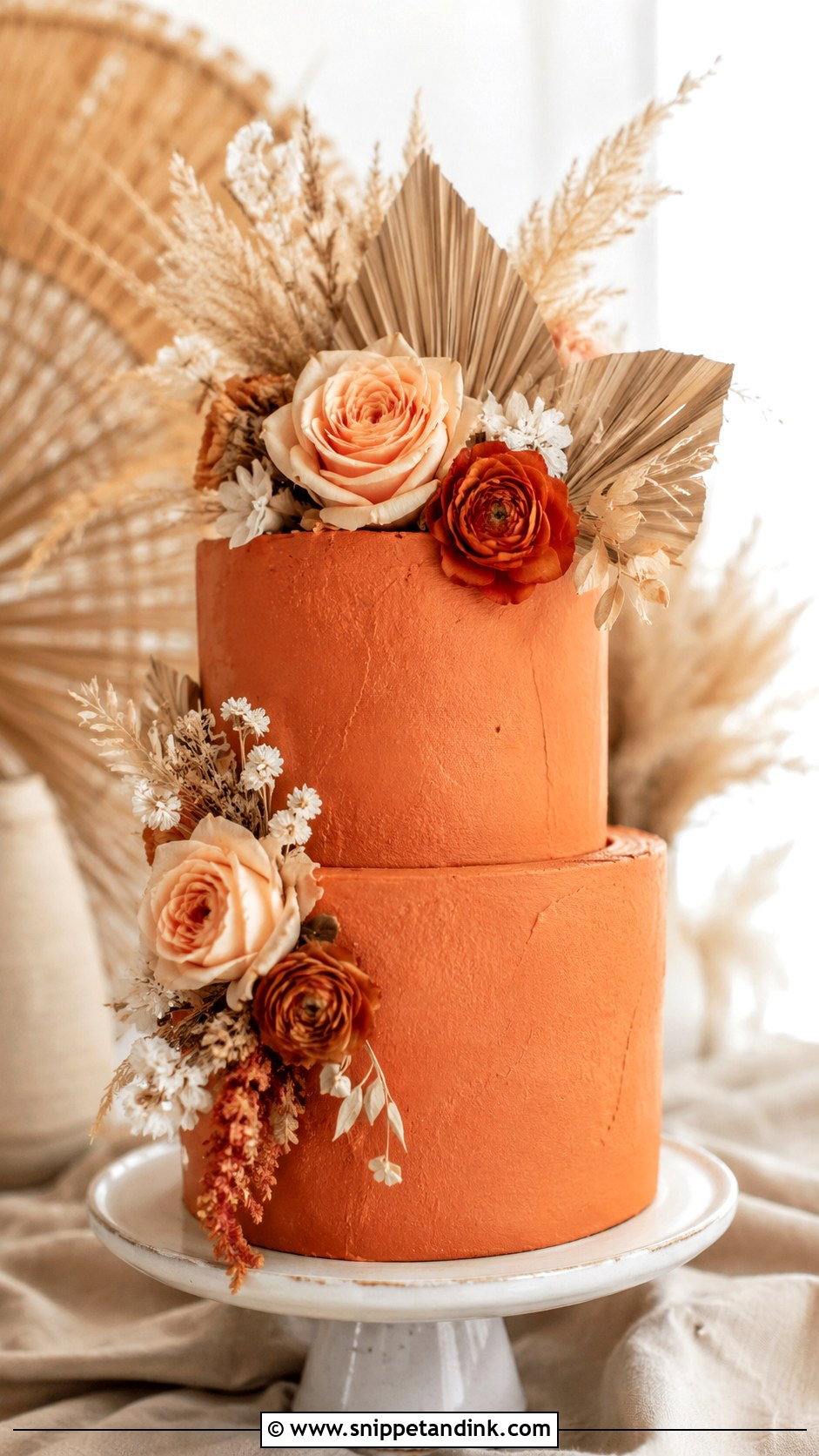
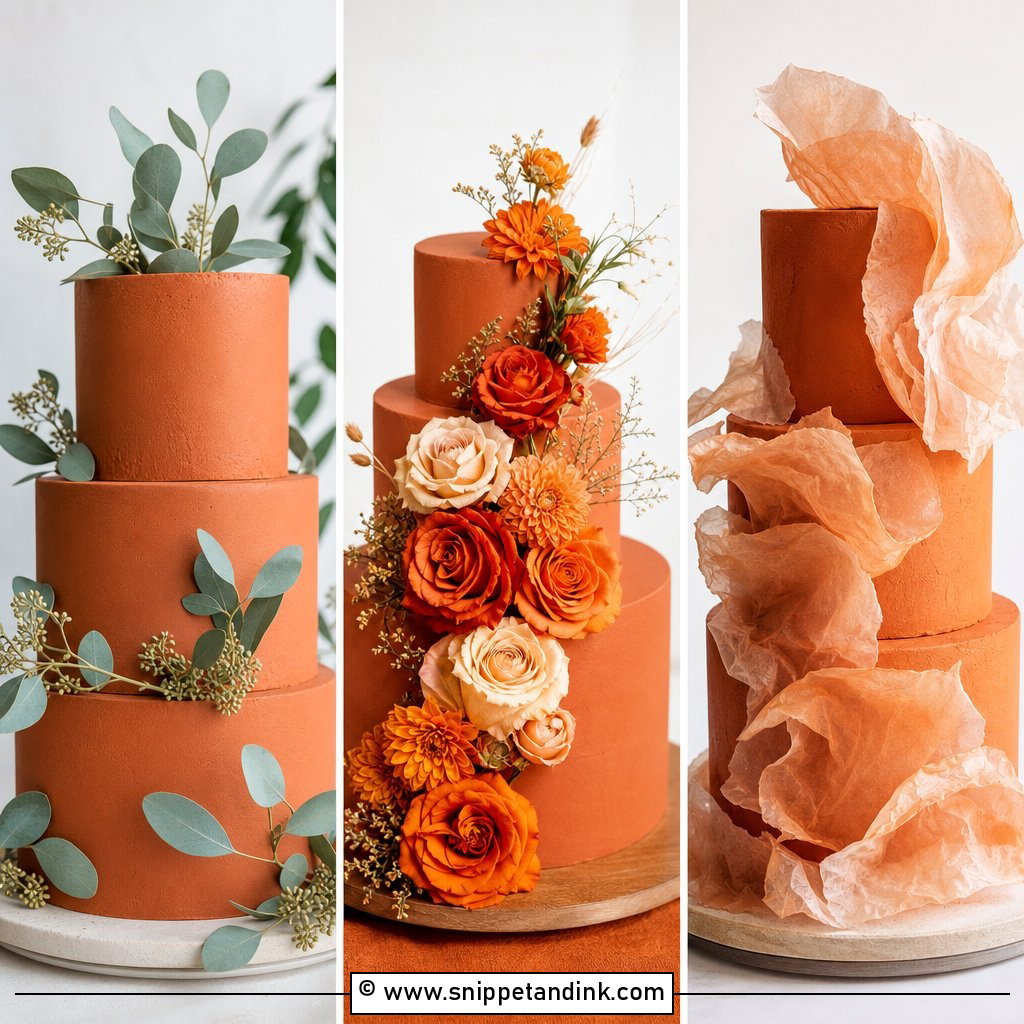
Terracotta wedding cake gives you fall color without going dark. The clay tone is easy to mix in buttercream and holds steady, unlike some pinks that fade under bright lights. I like it with a watercolor finish or pressed flowers, and with vanilla bean, almond, carrot, chai or brown sugar inside. Dried palms, peach roses and rust ranunculus suit boho and barn receptions. Keep the shape plain and let the color do the work.
10. Gold Leaf Fall Wedding Cake
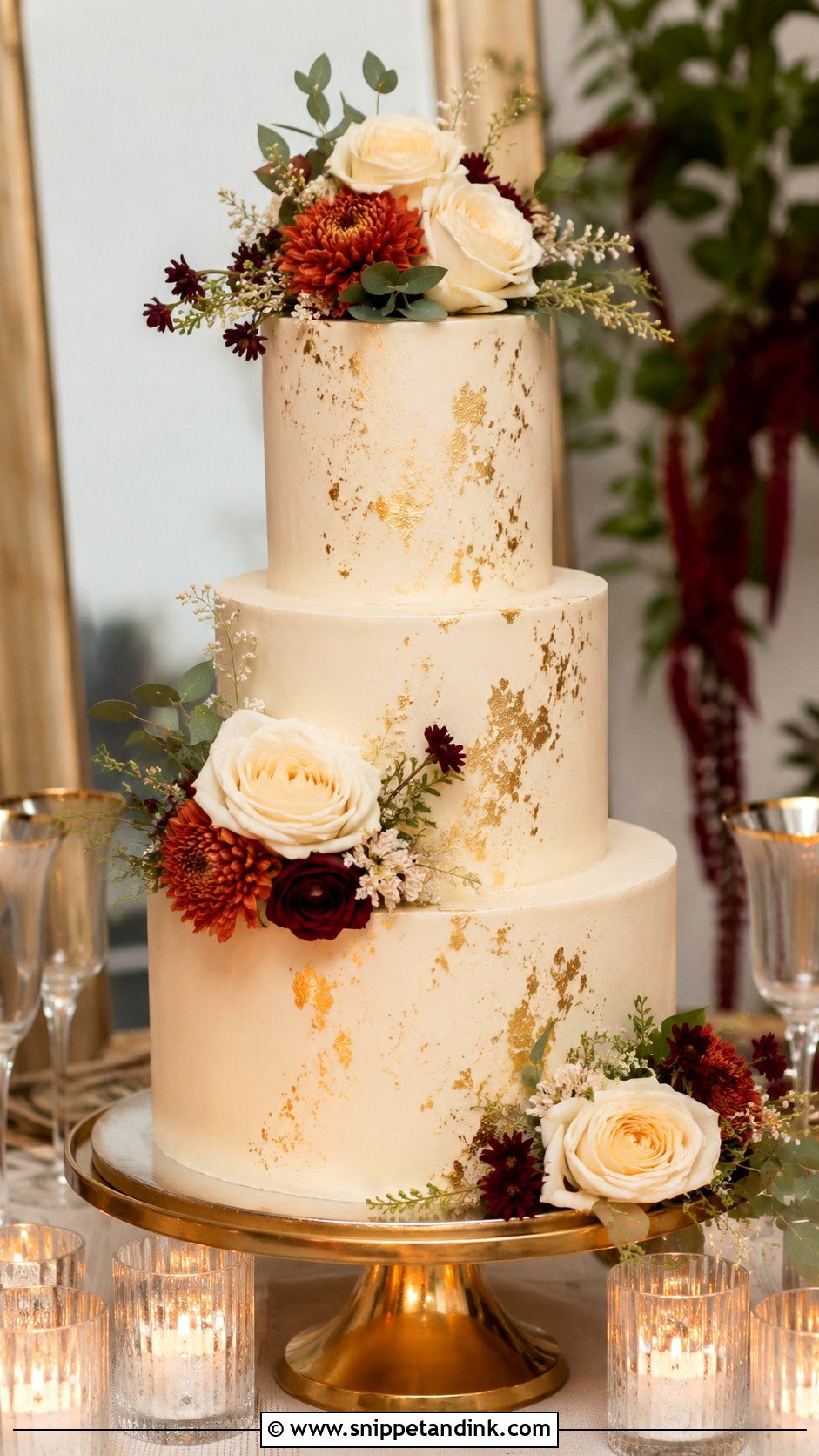
Gold leaf is applied in thin sheets with a soft brush, and it clings to anything, including the decorator’s fingers. Edible leaf is high-karat gold; craft leaf is not safe to eat, so ask your baker which they use. It sits well on ivory buttercream, chocolate ganache, burgundy, sage or caramel-toned tiers. I keep it to one tier or a broken band; a whole cake in gold can look busy rather than rich. Cream, rust and deep red flowers on a plain gold stand finish it for formal receptions.
11. Fig Wedding Cake
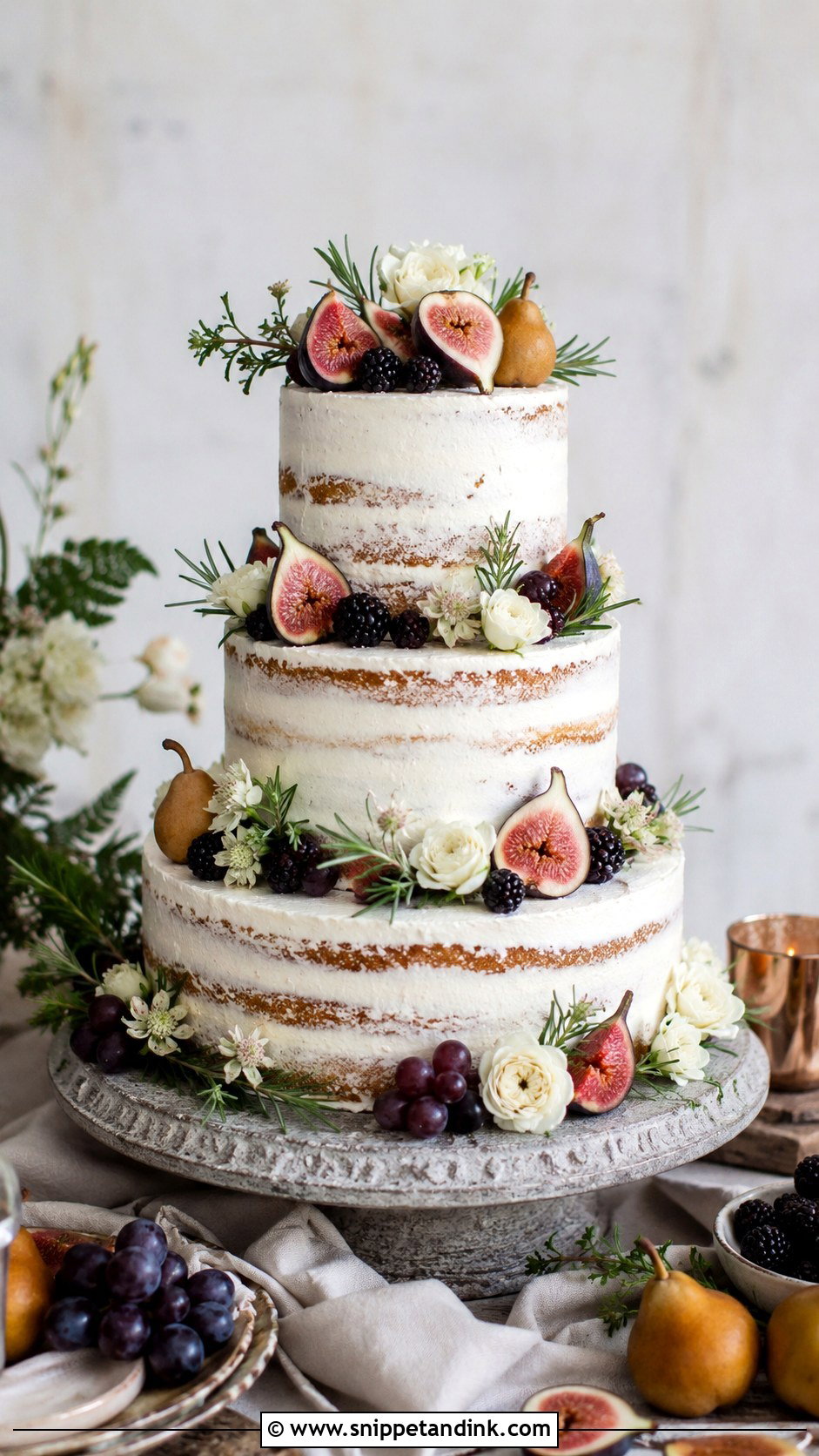
Figs are my favorite fall cake decoration because they hold their shape for hours. Whole and halved figs look different, though: halved ones show the pink center but weep juice into buttercream, so I place cut figs only at the last minute. The sponge can be vanilla, honey almond, olive oil, spice, chocolate or caramel. Figs suit a semi naked finish especially well, with blackberries, grapes, pears and rosemary filling the gaps. It’s a harvest look without pumpkins or leaves.
12. Pear Wedding Cake
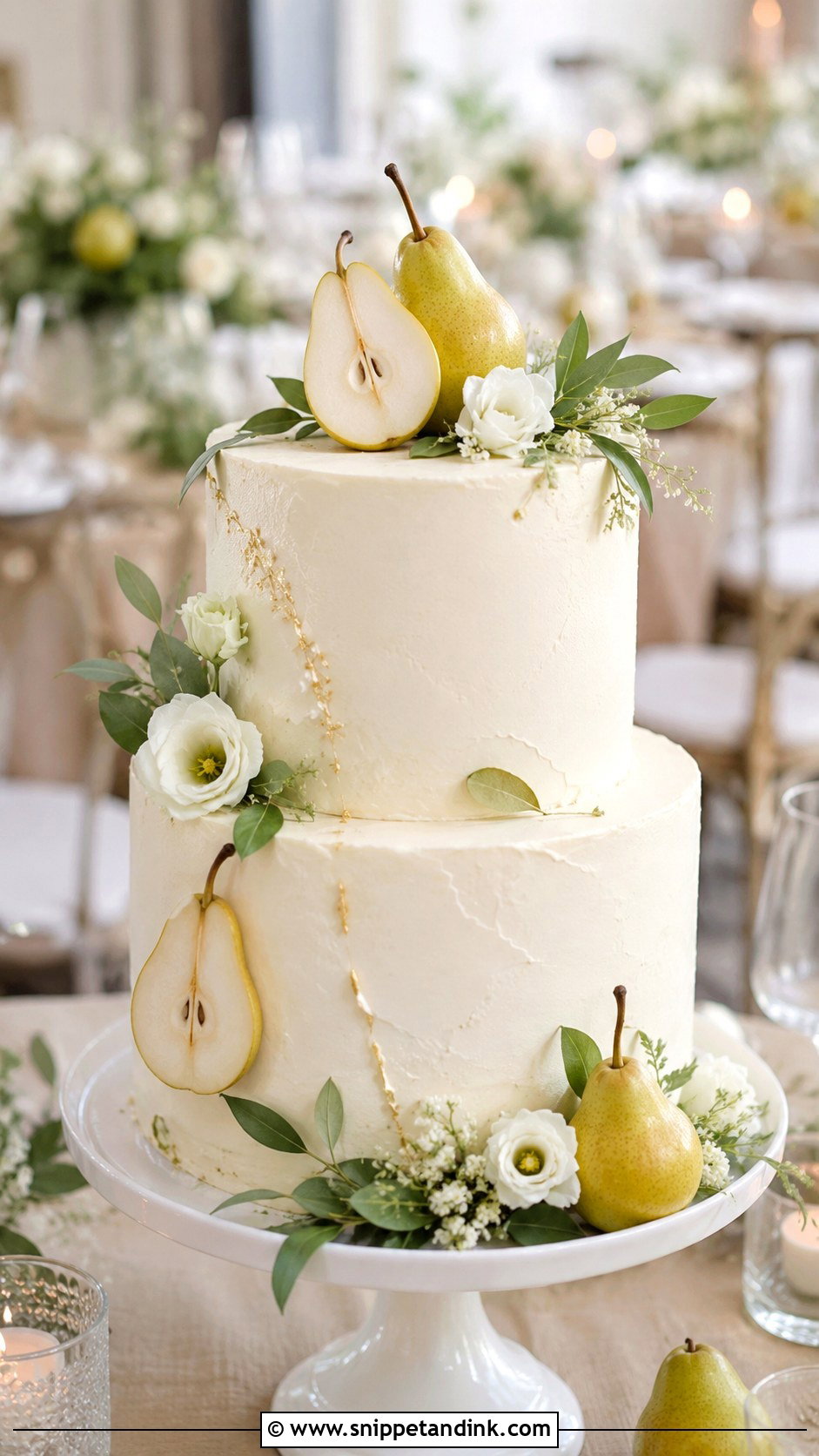
Pear is quieter than pumpkin or chocolate, which is exactly why some couples choose it. It pairs with ginger, almond, vanilla, caramel, honey or brown butter. Small whole pears are the safest decoration; sliced pear browns fast unless it’s poached or glazed first. Smooth ivory buttercream, sage greenery and a touch of gold suit garden venues and historic homes. I place pears in a loose cluster rather than spacing them evenly, which can look rigid.
13. Maple Pecan Wedding Cake
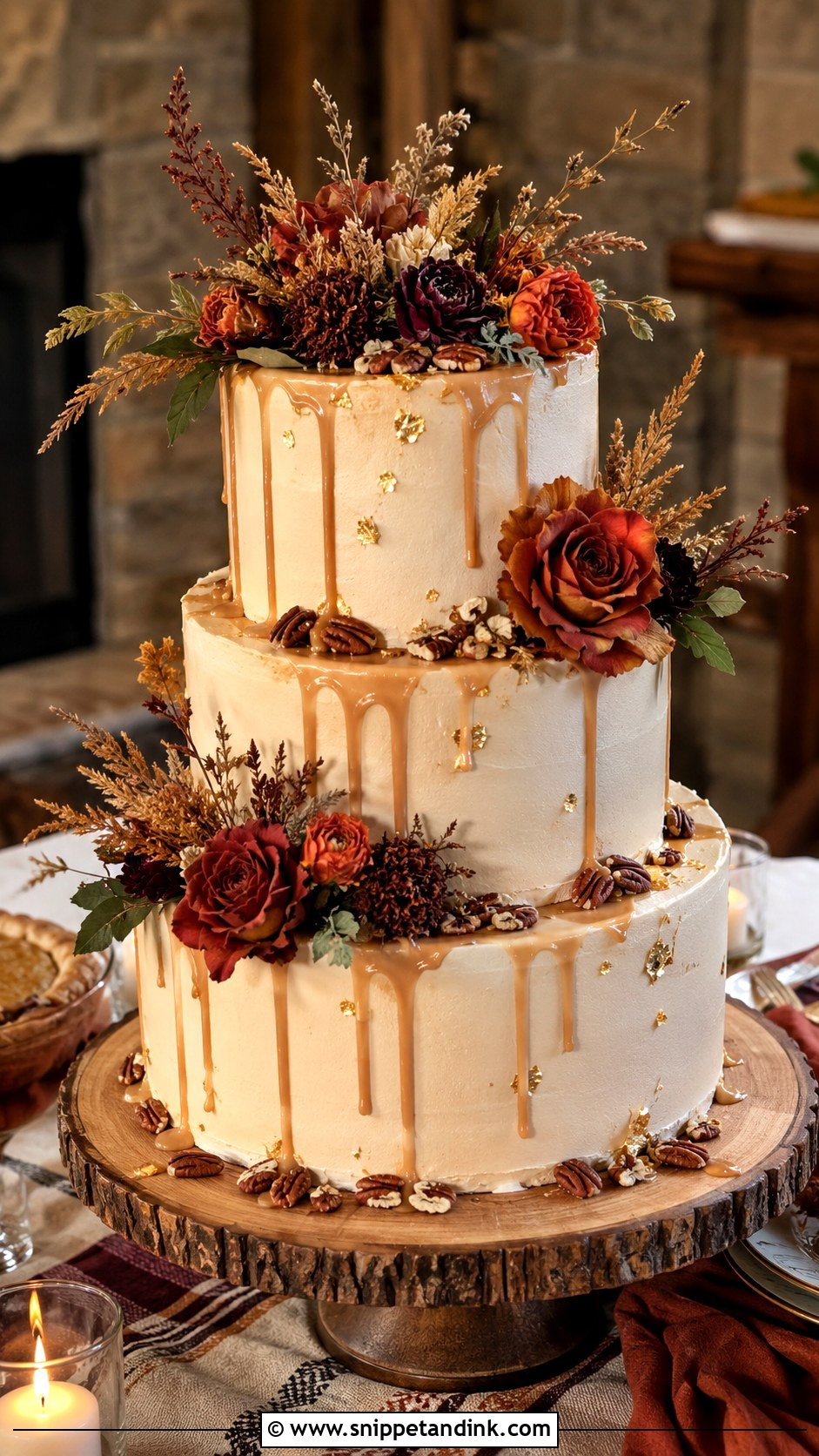
Maple pecan wedding cake works with brown butter, vanilla, spice or carrot sponge. Real maple syrup is mild once baked, so I use it in the buttercream and filling, where the flavor stays clear. Toasted pecans add crunch inside, but they go soft if left in a moist filling for days, so they go in at assembly. Sugared pecans, rust flowers and dried grasses decorate it for lodges, barns and smaller receptions. Do check guest allergies; a nut tier should be labeled.
14. Carrot Fall Wedding Cake
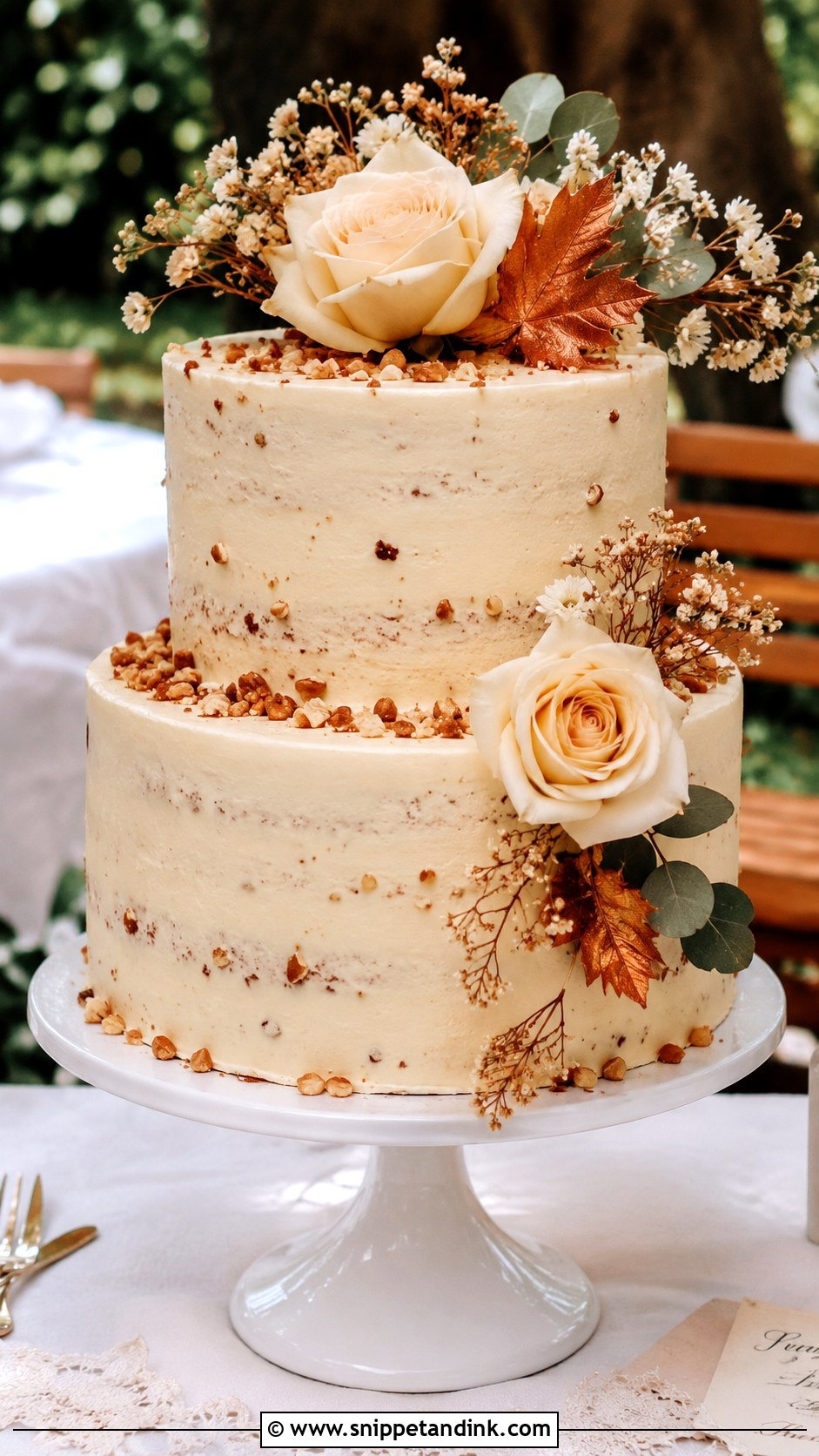
Carrot cake can look as formal as any white cake if the finish is smooth and the tiers are clean. The crumb is heavy and moist, so I support each tier with more dowels than I’d use for a sponge. Cream cheese, vanilla buttercream, brown butter or maple all pair with it. I keep chopped pecans for texture inside rather than pressed onto the sides, then decorate with ivory roses, copper leaves and dried flowers. Most guests recognize and like it, which counts for a lot at a big wedding.
15. Red Velvet Fall Wedding Cake
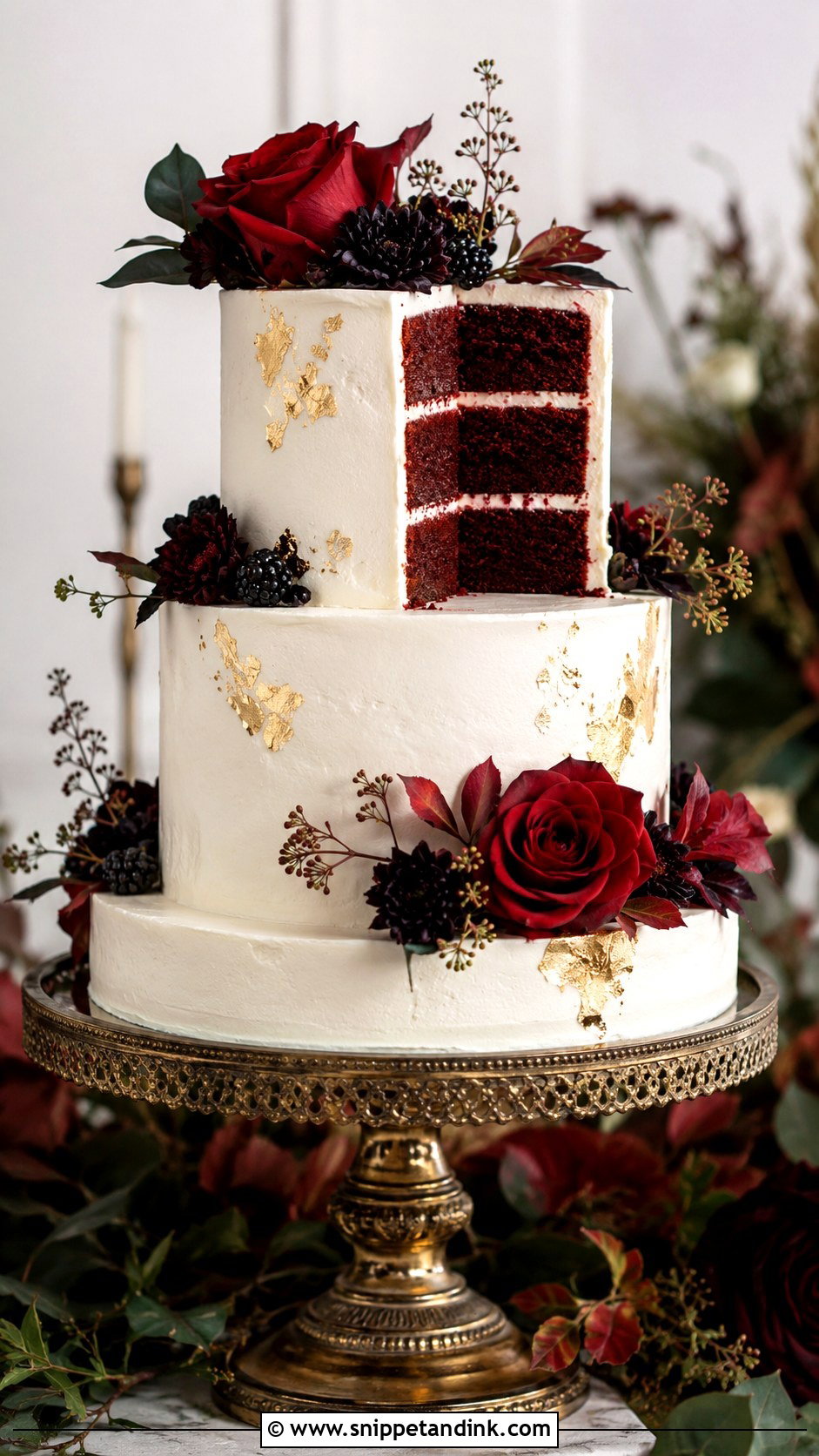
Red velvet is most impressive when it’s cut. Deep red layers with cream cheese filling look striking on the plate. Outside, smooth white buttercream gives a classic finish, and burgundy gives a richer fall one. The thing I watch for is red crumbs bleeding into white frosting, so a chilled crumb coat is essential before the final layer. Red roses, blackberries, gold leaf and dark greenery suit formal and vintage-style receptions.
16. Naked Chai Wedding Cake
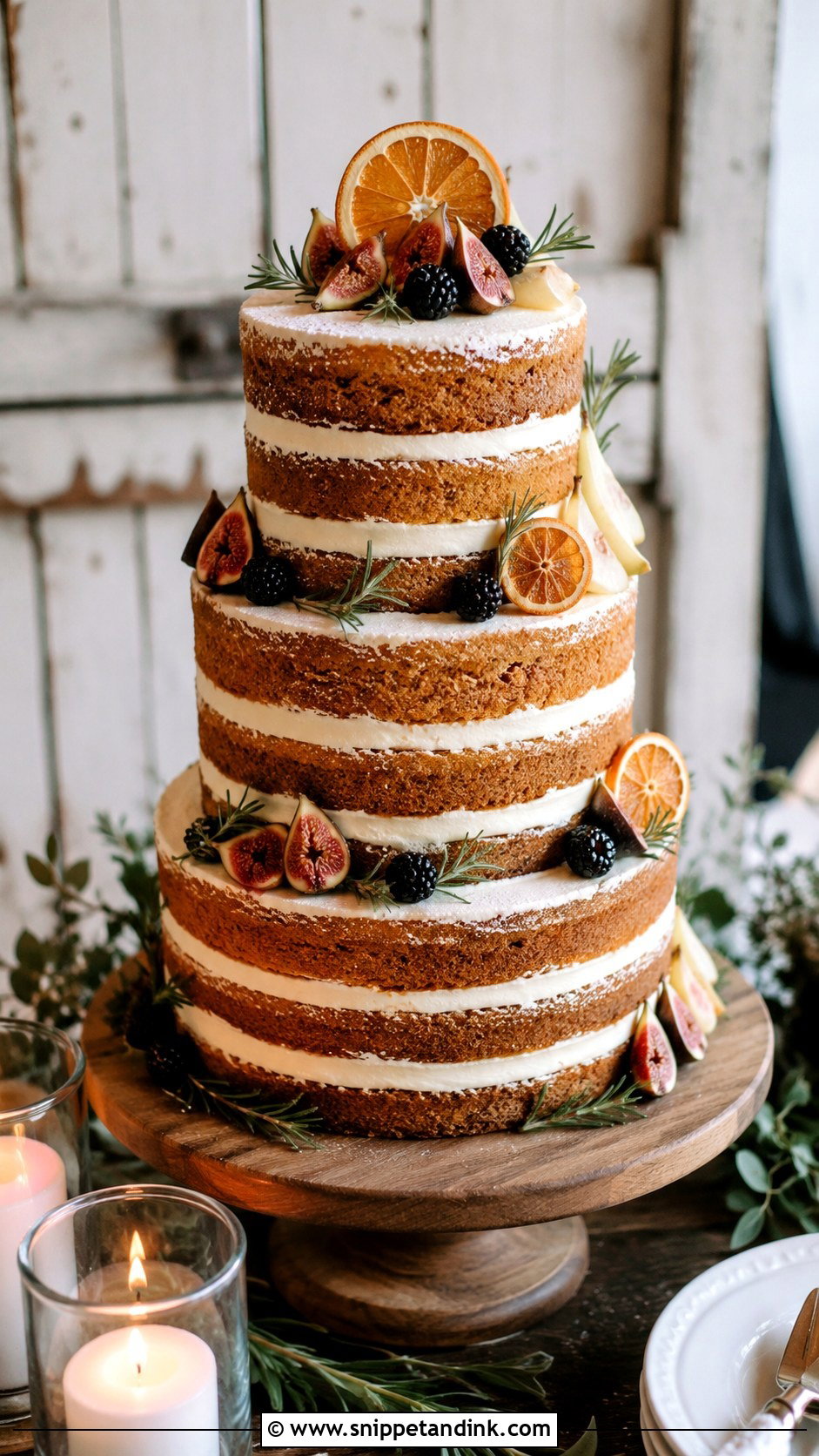
A fully naked cake has no frosting on the sides at all, so it shows every layer. That also means it dries faster than any other style. I brush each layer with syrup and assemble it on the day or the evening before. Chai spice suits it, with vanilla bean buttercream, honey cream or cinnamon frosting between layers. Figs, pears, blackberries, dried orange slices and rosemary on a wood stand look right with linen and candles. Even tiers and balanced fruit are what keep it from looking homemade.
17. Pressed Flower Fall Wedding Cake
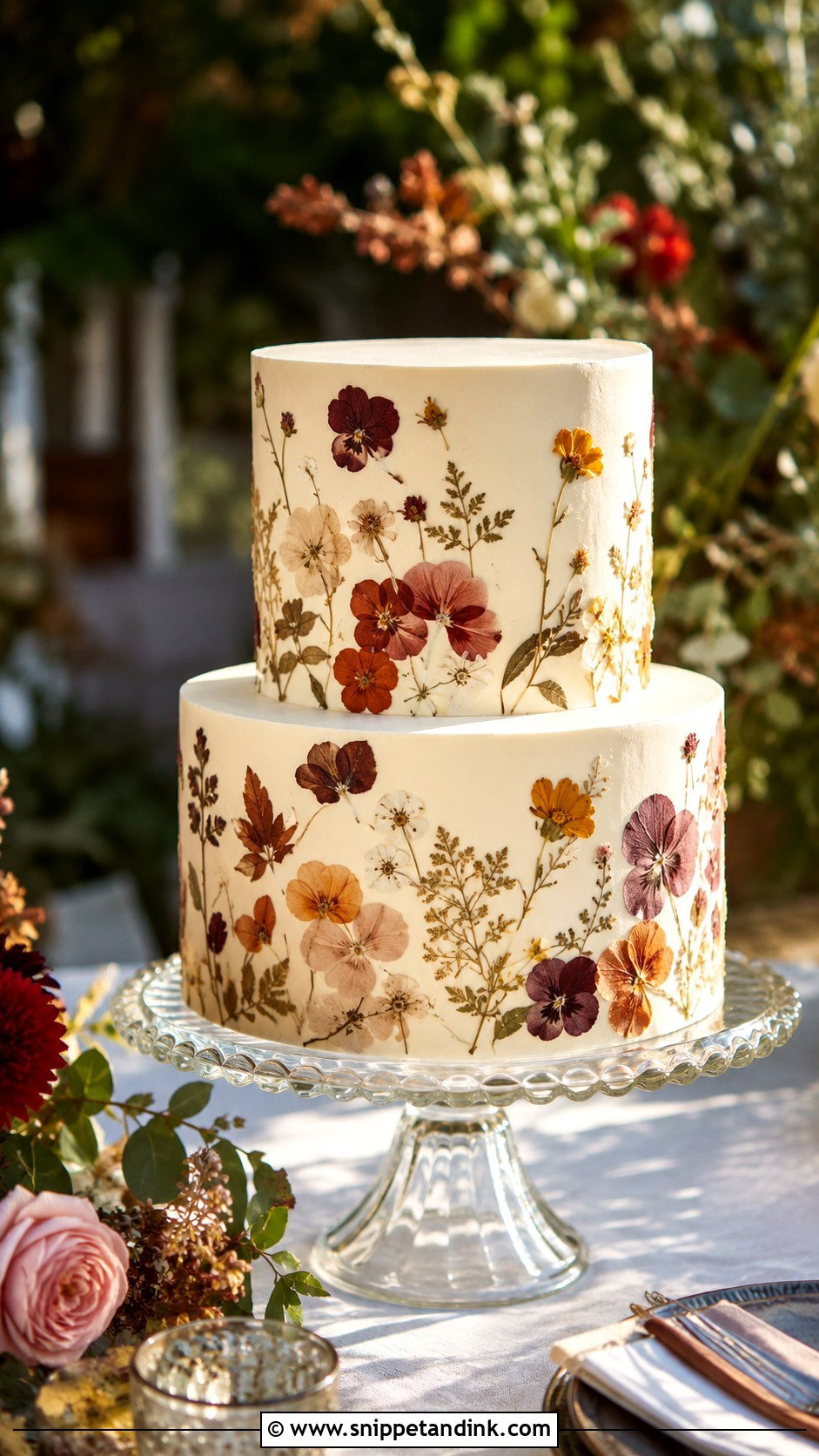
Pressed flowers lie flat against the cake, so the design reads like a painting rather than a bouquet. For fall, amber, rust, mauve, burgundy, cream and soft yellow petals work. Only edible flowers grown without pesticides belong on a cake, such as pansies, violas and calendula, and they need pressing weeks ahead. They stand out best on smooth white or ivory. Vanilla, lemon, almond, honey, spice or lavender all suit it. I lay them out on paper first to plan spacing before anything touches the frosting.
18. Pampas Grass Wedding Cake
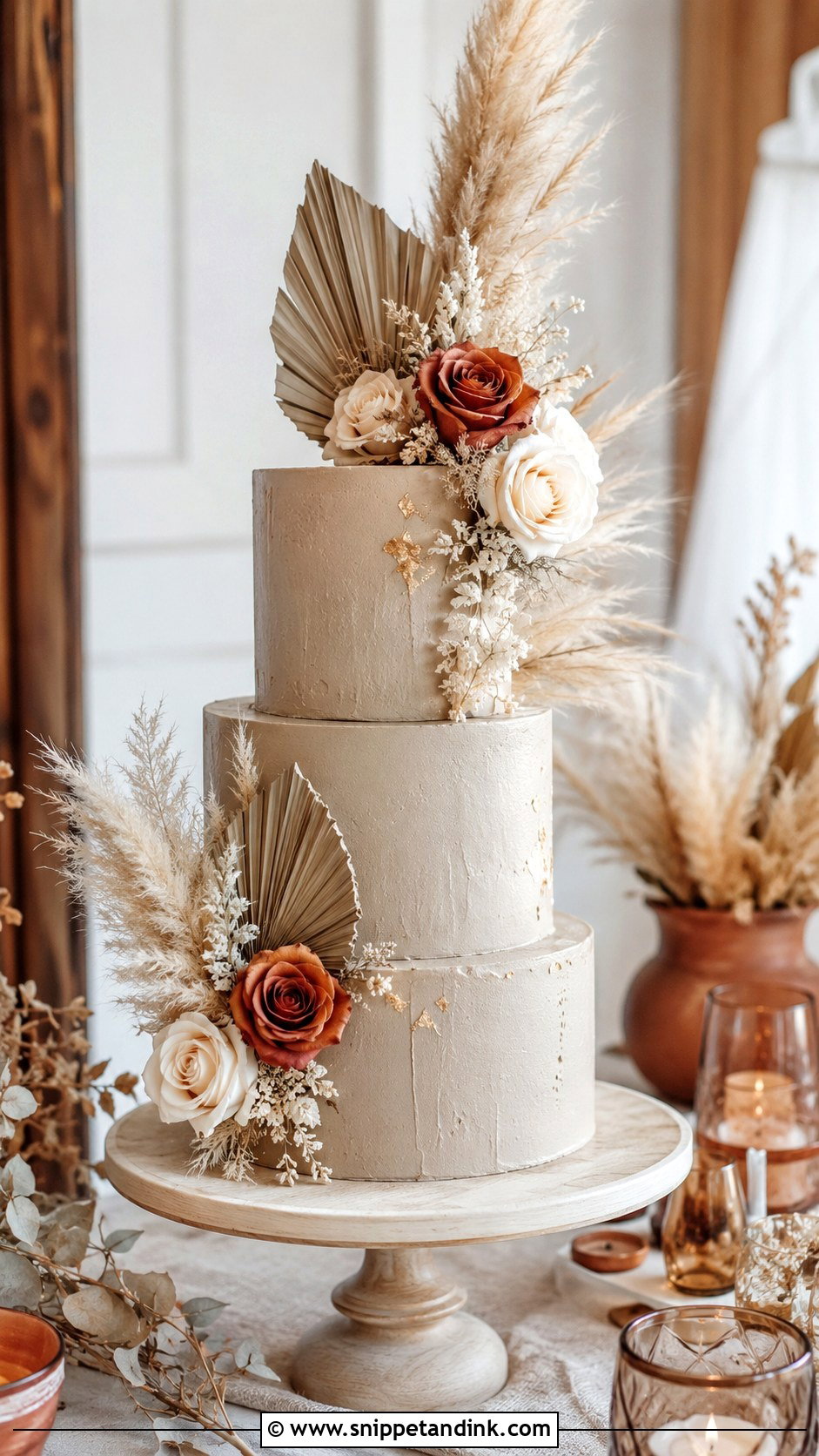
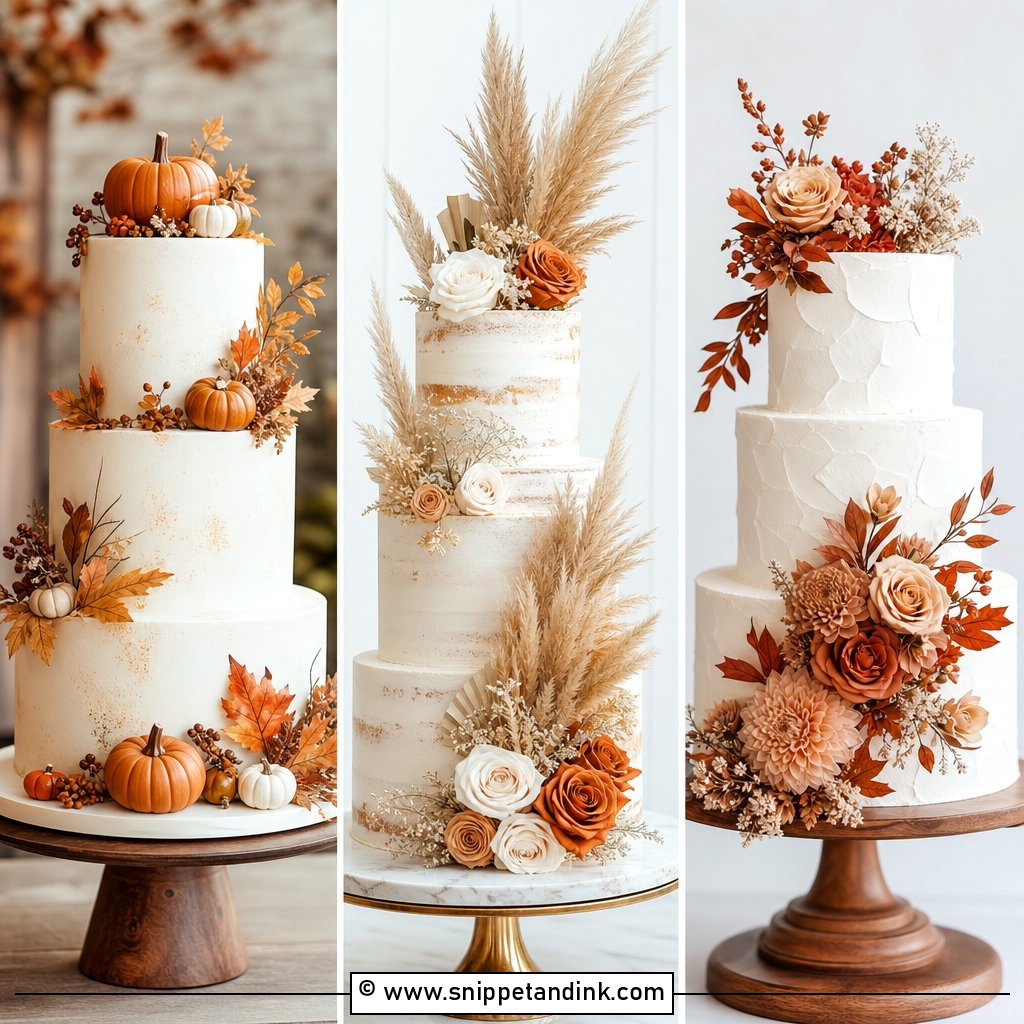
Pampas grass wedding cake gives height and movement for boho fall receptions. Pampas isn’t edible, sheds fine fibers and shouldn’t be pushed straight into the sponge. I wrap the stems with floral tape and set them in a small food-safe pick or straw, then remove them before cutting. Ivory, beige, taupe or terracotta buttercream works underneath, with vanilla bean, caramel, almond, chai or spice inside. Dried palms and rust roses complete it.
19. Autumn Leaf Wedding Cake
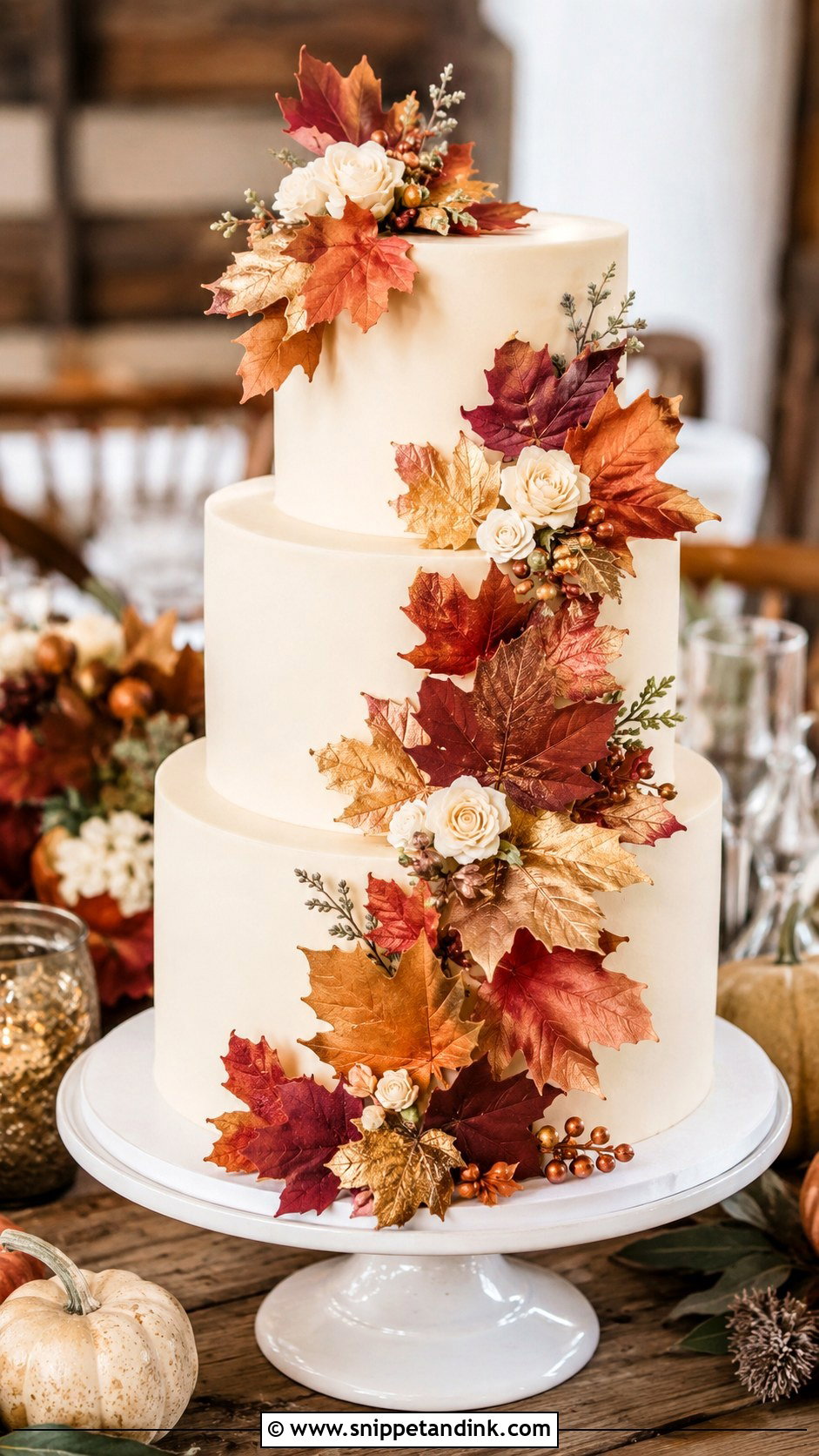
Leaves can look dated if they cover the whole cake, so I do a single cascade in rust, gold, burgundy and copper. Sugar leaves are worth the cost here. Real autumn leaves aren’t food safe, and many collected ones carry dirt or bugs. Smooth ivory buttercream, a light texture or soft fondant all suit the leaves. Apple spice, pumpkin, vanilla, maple or chocolate can go inside. Keeping the palette to three or four colors stops it looking cartoonish.

20. Small Fall Wedding Cake
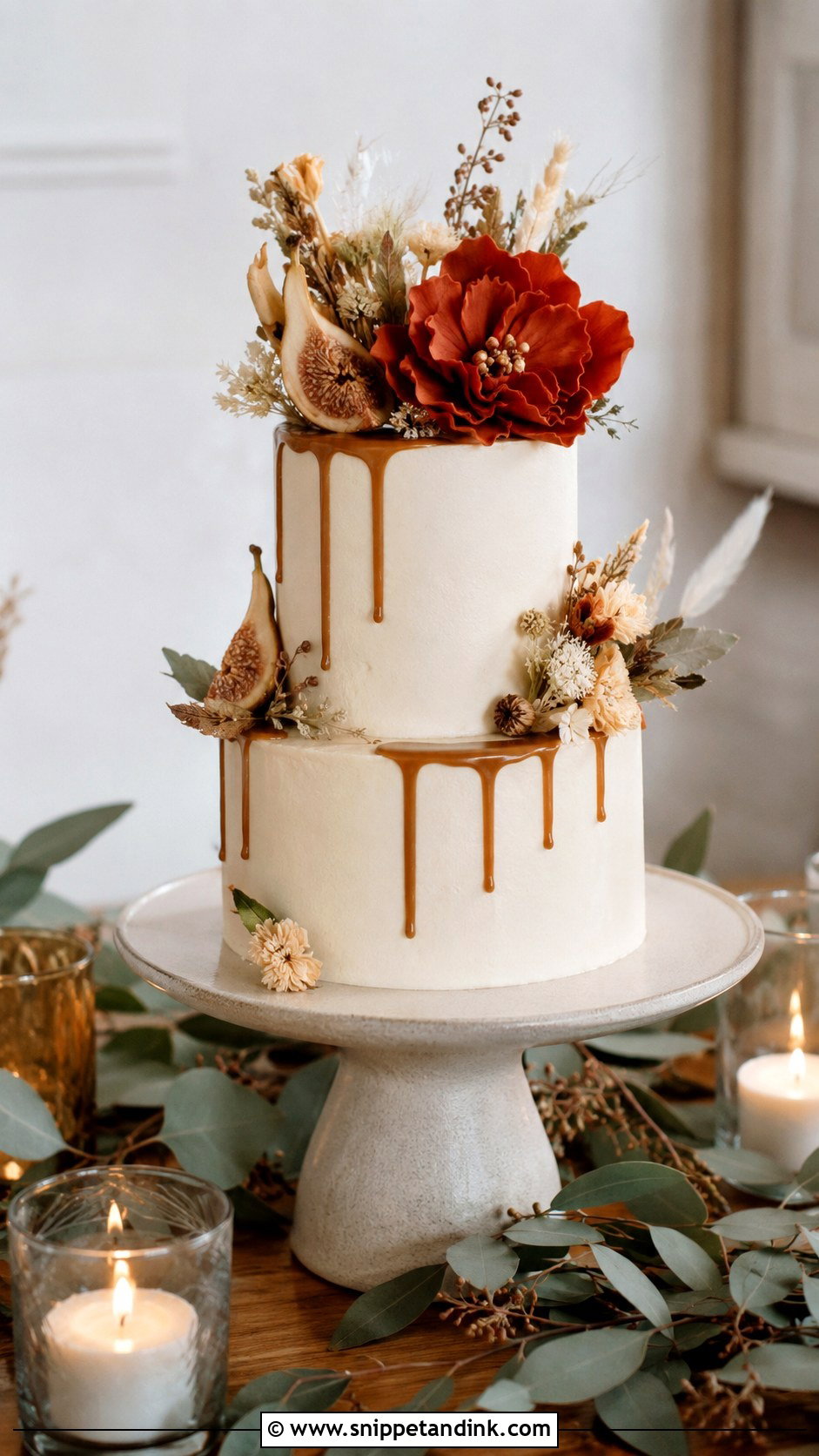
A small fall wedding cake suits elopements, micro weddings or couples serving a dessert table as well. One or two tiers can carry pumpkin spice, apple cider, chocolate caramel, vanilla almond or chai. I make small cakes taller than standard, using four layers instead of three, because extra height photographs better than width. A smooth finish with a small caramel drip, a few figs or one large sugar flower is enough. Simple doesn’t have to mean plain.
Moving a Tiered Cake Into a Heated Barn in October
Fall weddings often mean a cold car, a cold morning and then a room warmed by heaters, candles and a hundred guests. That jump is harder on a cake than steady summer heat.
A chilled cake carried into a warm room will sweat. Condensation beads on fondant and can make dark colors streak, and buttercream softens and slides on a cake set near a heater or a wall of candles. I ask the venue where the cake table is going before I decide on the finish.
What I ask a couple to check
- Where the cake table sits: away from patio heaters, fireplaces and the sunny side of a tent.
- When the room is opened: setting up in a cold room an hour before guests arrive is ideal.
- Whether the cake will be stacked on site: for three or more tiers, I usually stack at the venue rather than drive it assembled.
- Who removes non-edible stems before cutting: pampas, dried flowers and any wired stems must come off first.
Ganache and firm buttercream are the forgiving finishes for a heated room. Cream cheese, whipped cream and thin caramel drips are the ones I’d keep inside the tiers or save for a cooler space.
Tasting Notes for the Couple Still Torn Between Rustic and Formal
Start with your venue and what you’d want to eat, not with the photos. Rustic barns suit semi naked tiers, pampas, figs and maple. Formal rooms suit burgundy, black, gold leaf and smooth fondant, which also hold up better in warm rooms. Pumpkin spice, apple cider, chai, caramel and carrot all taste like fall. Bring your saved images to the tasting, along with your guest count and the venue’s setup time, and ask your baker about stability, fruit and which flowers are safe. Flavor is what guests remember.
You'll Like These Ideas:








Leave a Reply