
Most brides walk into their first appointment with a picture of one dress and leave in a completely different shape. That is normal. A gown has to work standing at the altar, sitting at dinner and moving on the dance floor, and a photo only shows one of those moments. Below are the twenty silhouettes and details I pull most often, from classic A-lines and ball gowns to corsetry, Basque waists, lace sleeves and shorter hems. Read the body-shape advice loosely. I’ve seen plenty of brides fall for the cut they were sure would never suit them, so try at least one wildcard and look at everything near a window, not only under the fitting-room spotlights.
Running a Bridal Appointment Like a Stylist Would
Most shops give you around ninety minutes, and the brides who get the most from that time arrive with a plan for the order they try things in. I start with silhouette, because shape decides comfort and proportion. Fabric comes next, then neckline, and embellishment last. Falling for beading before you know which shape you can sit in for ten hours is how people end up second-guessing an order.
- Wear smooth nude underwear and bring a strapless bra if you have one, plus shoes close to the heel height you plan to wear.
- Limit your guests to two or three people whose taste you trust. A large group turns every dress into a debate.
- Try four contrasting shapes in the first half hour, such as an A-line, a fitted cut, a ball gown and a sheath, before narrowing down.
- Ask for a photo from the back and the side of every serious contender. You will see those angles at the altar.
Timing matters as much as taste. Made-to-order gowns commonly take several months to arrive, often somewhere between four and eight depending on the designer, and alterations usually need two or three fittings spread over the last couple of months. If your wedding is closer than that, ask about sample or ready-to-wear dresses early rather than paying rush fees later.
1. A-Line Bridal Dress
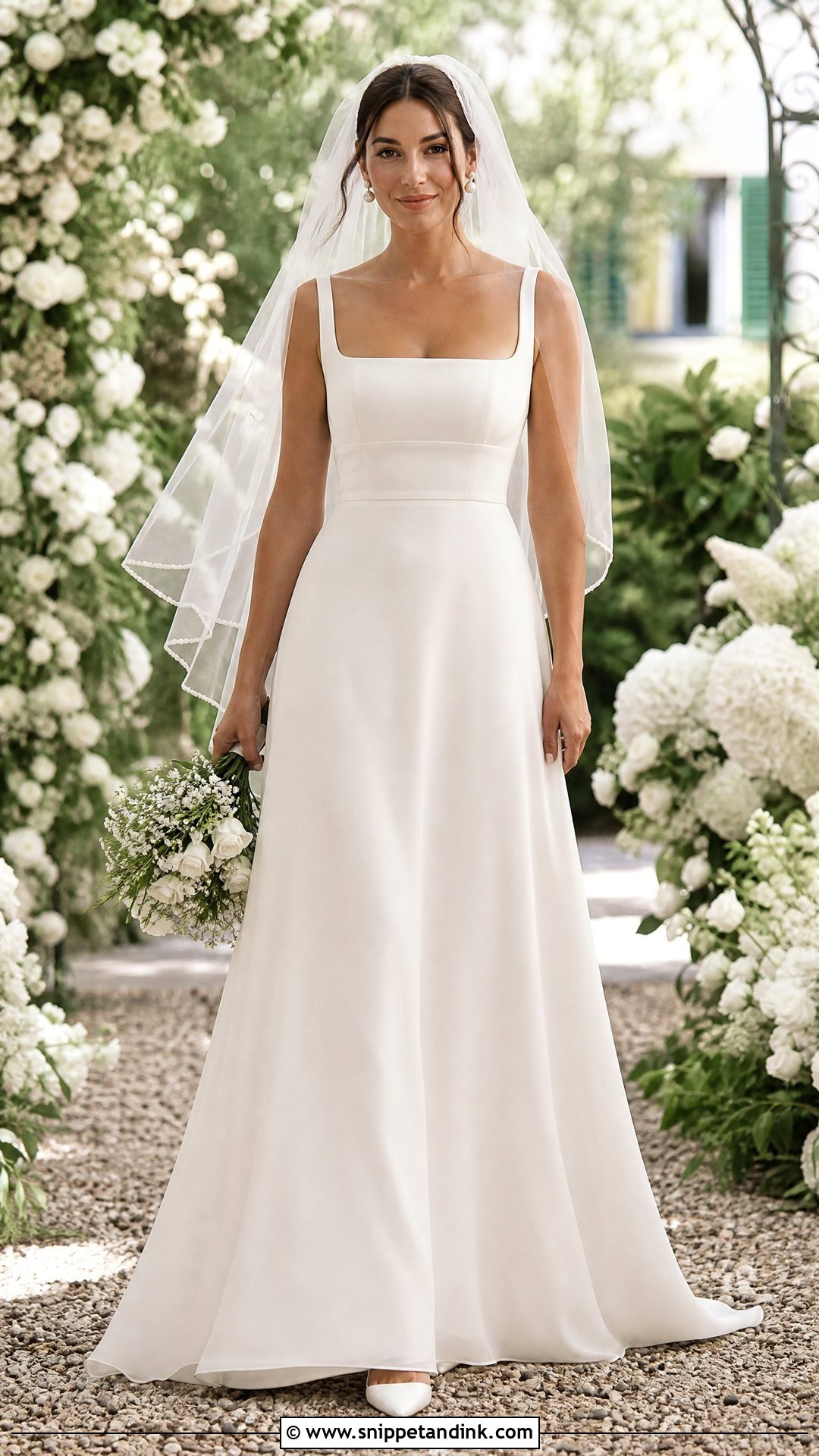
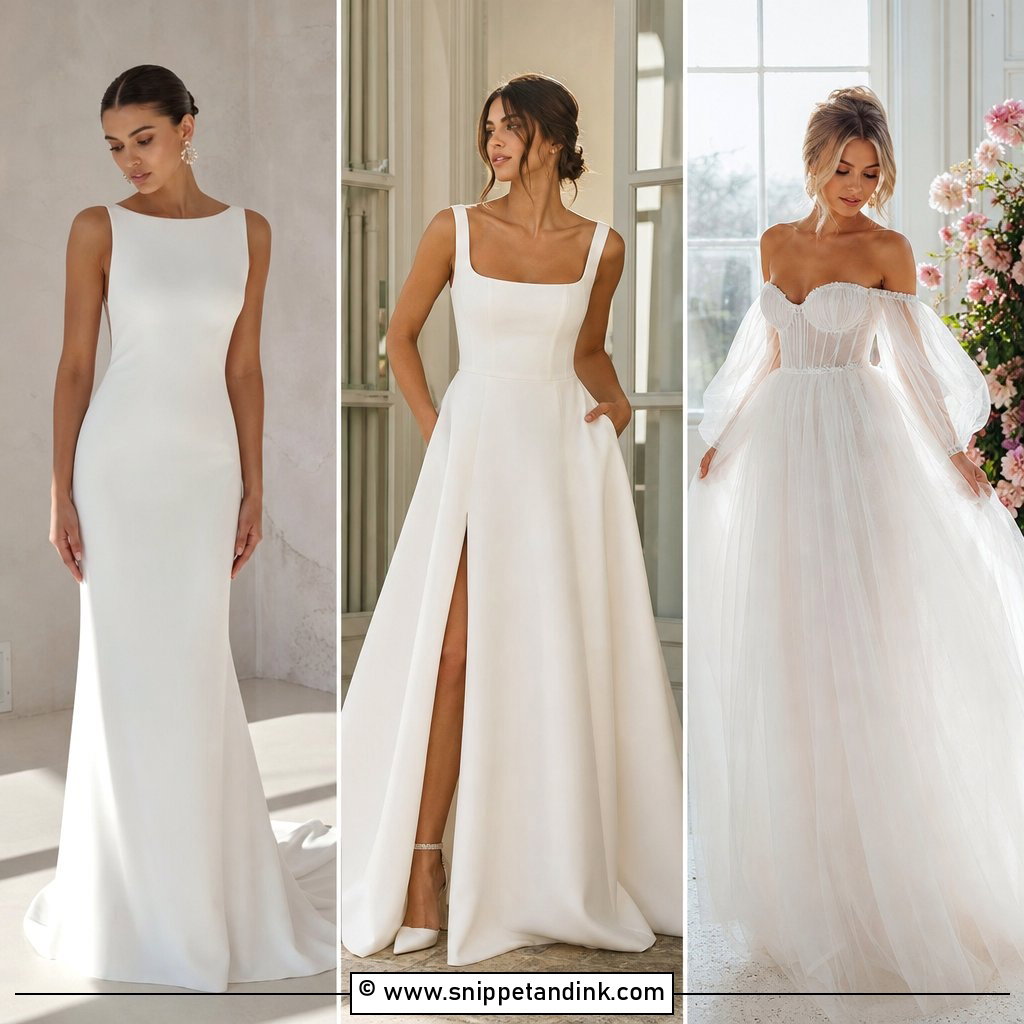
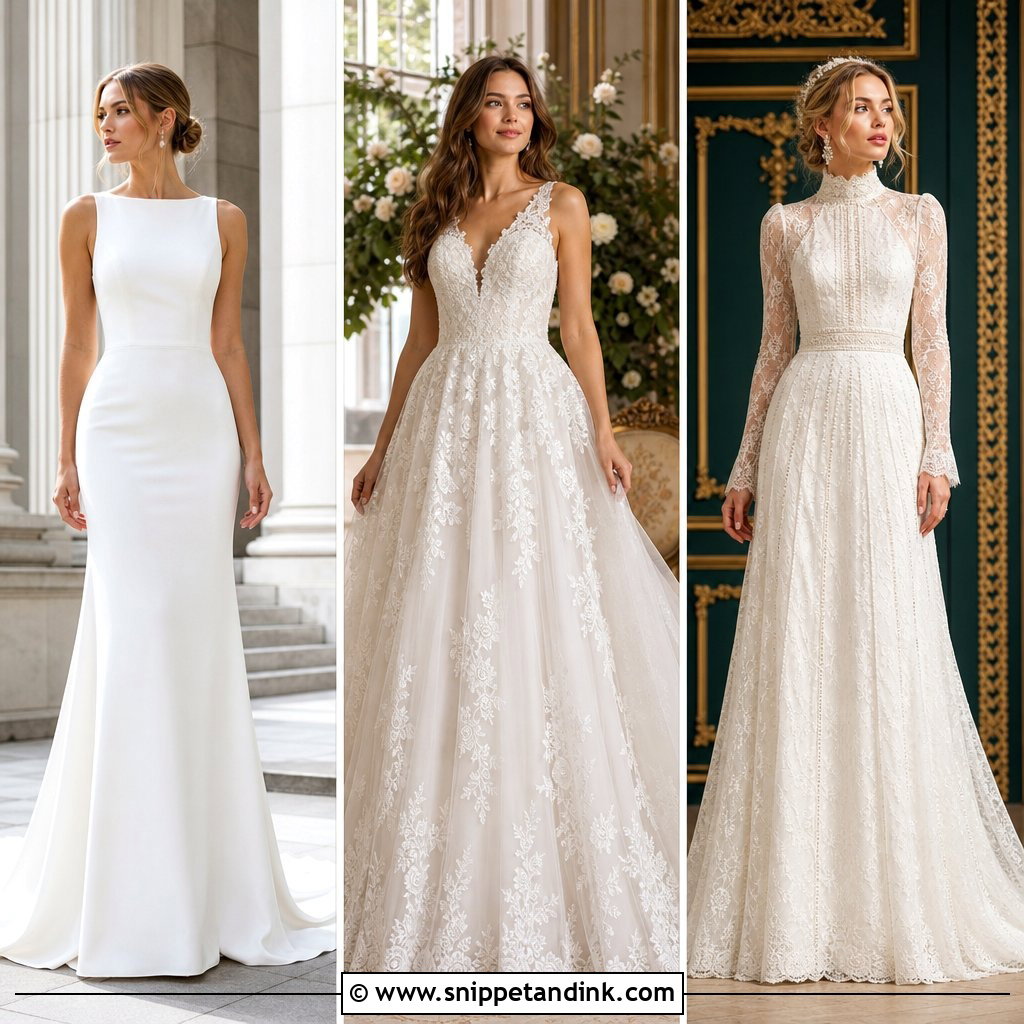
The A-line is the dress I hand over first when a bride isn’t sure where to start, because the bodice gives definition and the skirt widens gradually without the weight of a ball gown. Fabric changes its personality more than people expect. Chiffon floats and creases very little, tulle reads romantic, and Mikado holds a sharp, formal line. The neckline is where you personalize it; a V or square front makes the same skirt feel more modern. For an outdoor ceremony, ask for a lighter fabric and a train you can bustle quickly, since grass and gravel are hard on a long hem. A fingertip veil sits nicely here because it ends before the skirt takes over.
2. Ball Gown Bridal Dress
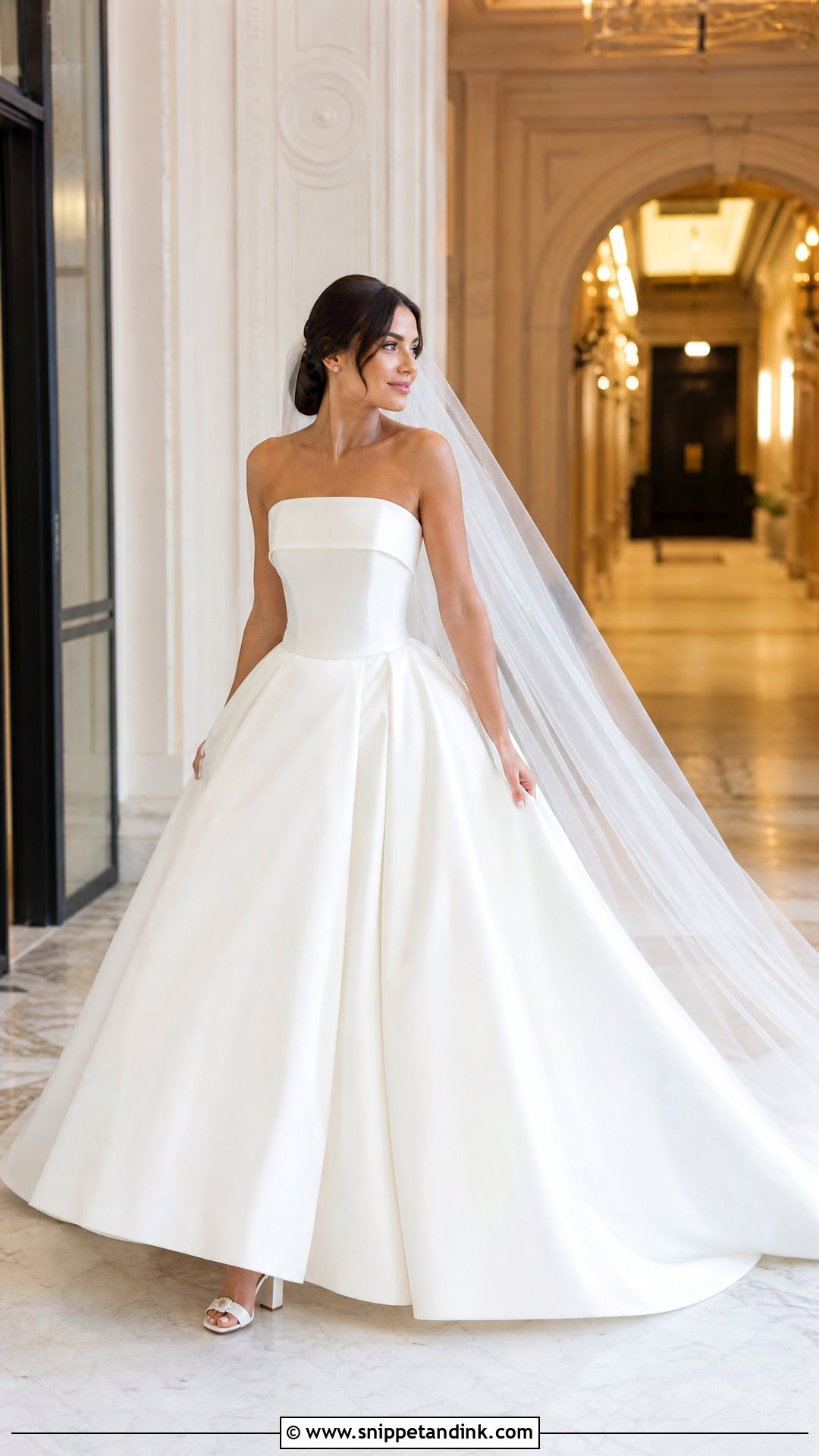
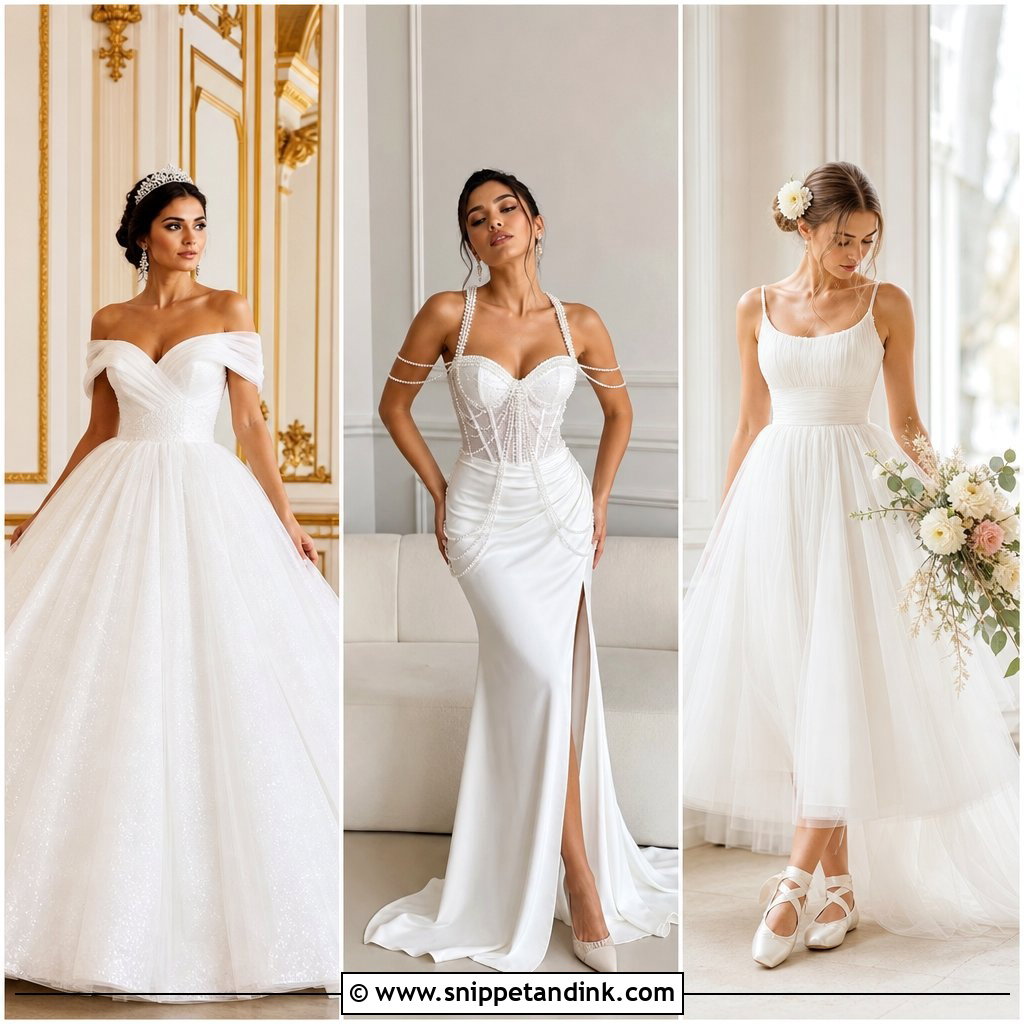
Nothing makes an entrance like a ball gown. The structured bodice anchors the look while the skirt does the talking, and the fabric decides how that skirt behaves: satin and Mikado stand away from the body, layered tulle drifts. Keep jewelry modest, because a full skirt plus a heavy necklace and a cathedral veil quickly becomes too much. Petite brides are often told to avoid volume, and I don’t agree; when the waist seam sits at the right height and the hem is taken up properly, the proportions work. What does matter is space. Practice sitting, turning and getting through a doorway in the sample, and check how much room the skirt needs in your car and at the head table.
3. Mermaid Bridal Dress
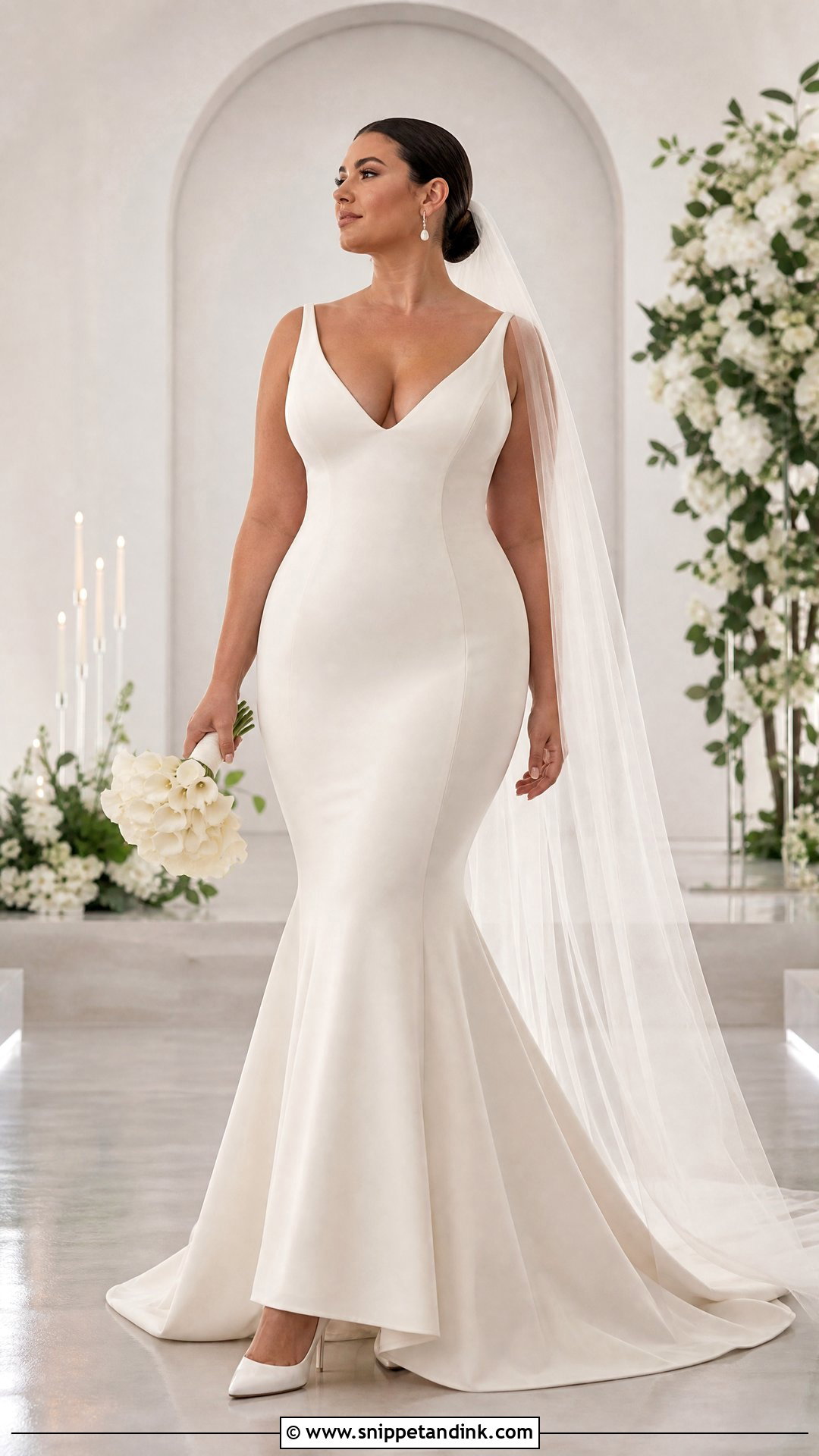
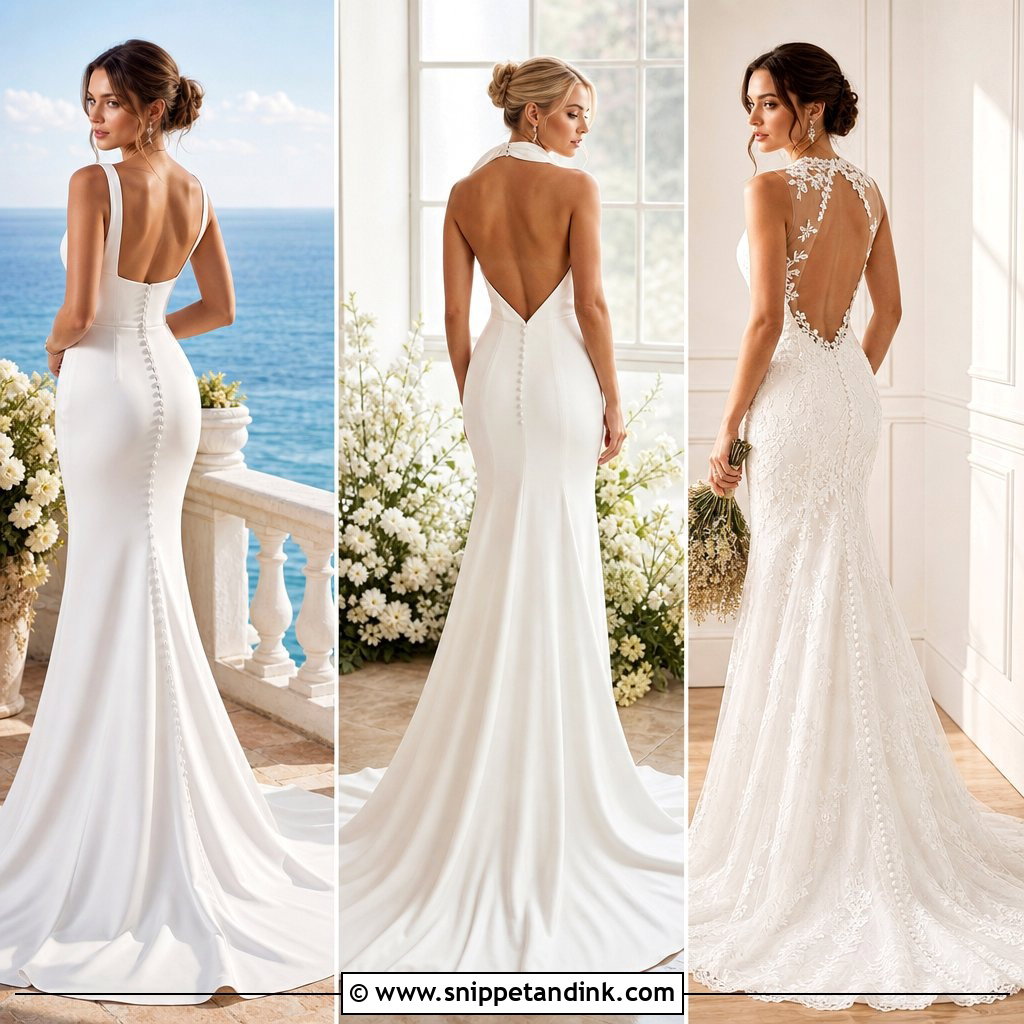
A mermaid follows you closely all the way past the hips and thighs before it flares, so it rewards brides who like strong tailoring. Stretch crepe gives the cleanest line; lace appliqué softens it. The first thing I watch in a fitting is the walk, not the standing pose. If the flare starts too high, you’ll take tiny steps all night, and stairs become a negotiation. Ask the seamstress where the knee sits relative to the flare and whether a little ease can be let into the skirt. Because the cut is so close, even a half-inch change in the hips shows, so leave room in your schedule for one more fitting than you think you need. Keep hair low and sleek to continue the long line.
4. Trumpet Bridal Dress
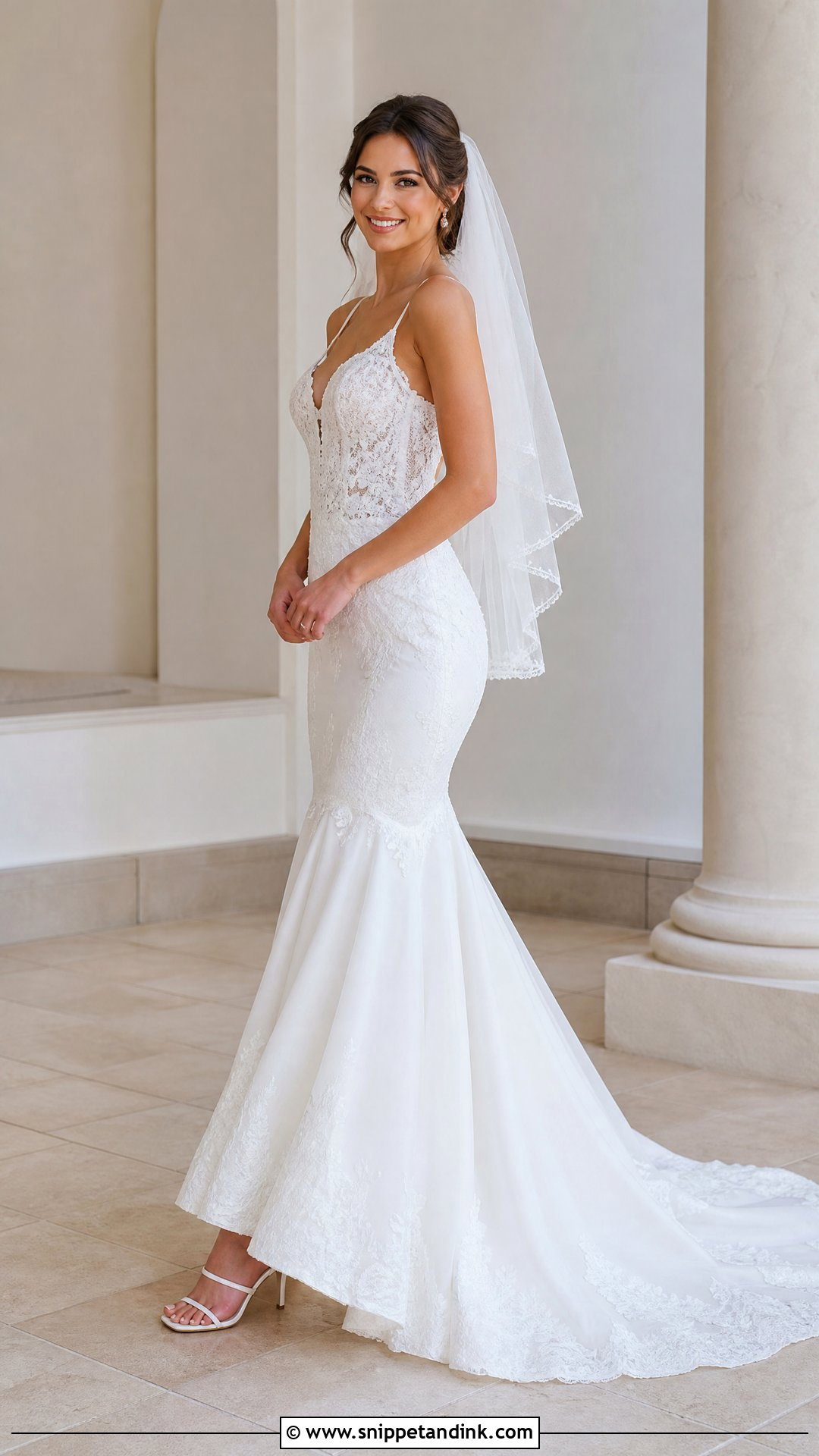
Love a fitted gown but want your legs back? The trumpet flares from mid-thigh instead of the knee, which gives you shape with a much easier stride than a mermaid. In satin it reads polished, in floral lace more romantic, and in lightweight crepe very quiet. A good seamstress can move the flare point an inch or two, and that small change often fixes both proportion and comfort at once. Take several normal-paced steps in the shop, not the slow glide everyone does in front of the mirror. If the skirt grabs at your knees on the second step, it will do the same at the reception.
5. Fit-And-Flare Bridal Dress
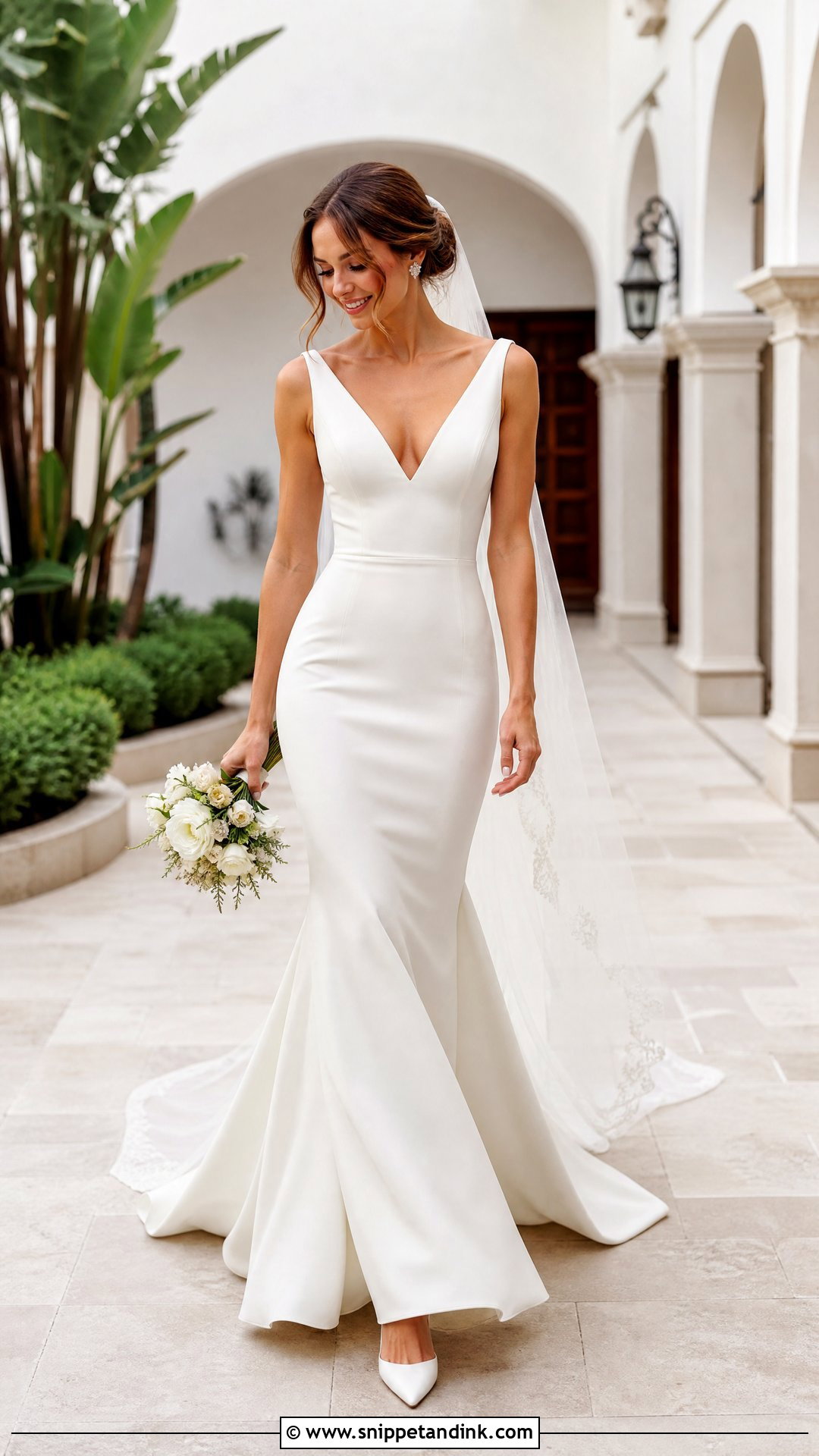
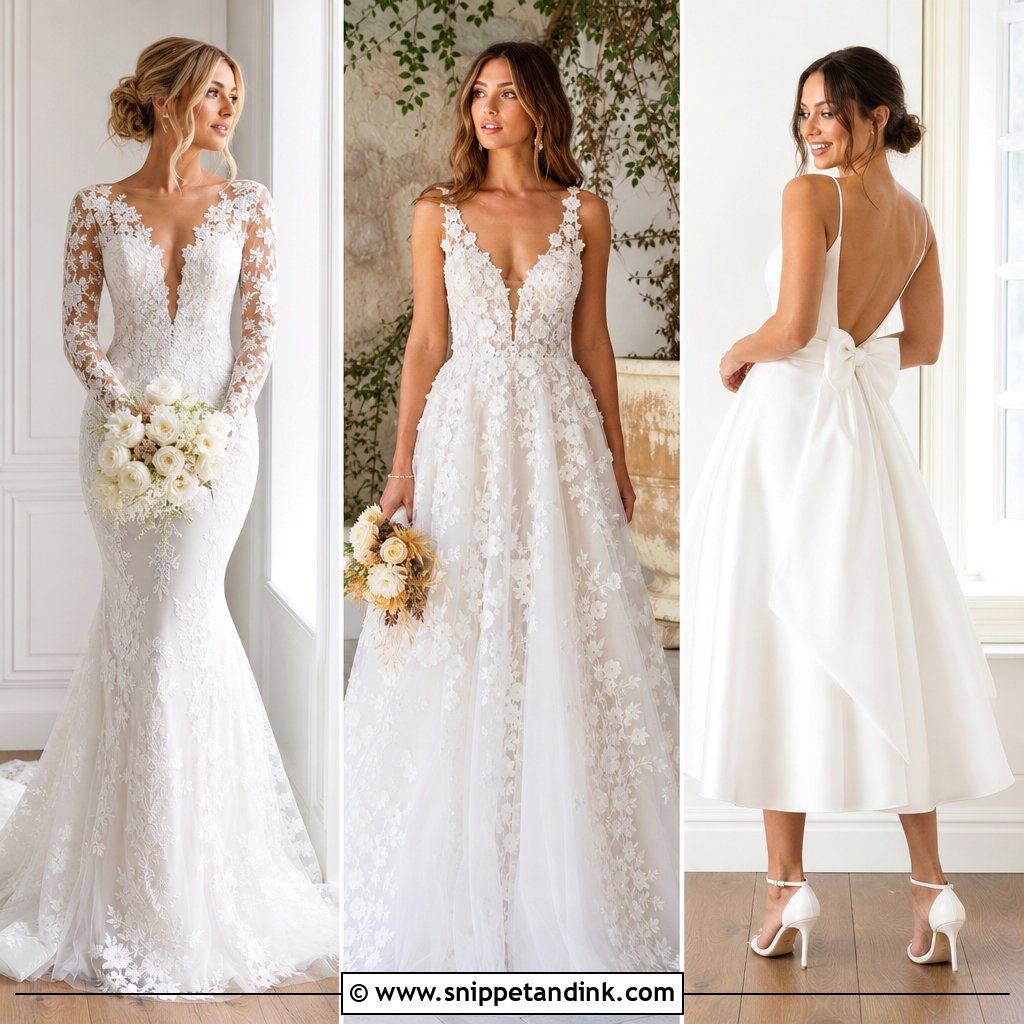
Fit-and-flare sits between the A-line and the mermaid: close through the bodice and hips, then opening gradually. I suggest it most often to brides who like definition but plan to dance properly. Lace versions feel romantic, plain crepe feels contemporary, and a chapel veil suits either. If you want more coverage, look at illusion sleeves, a higher back or a lined bodice. In the mirror, look for horizontal creases across the hips. Those little ripples mean the skirt is pulling and needs letting out, not just pressing.
6. Sheath Bridal Dress
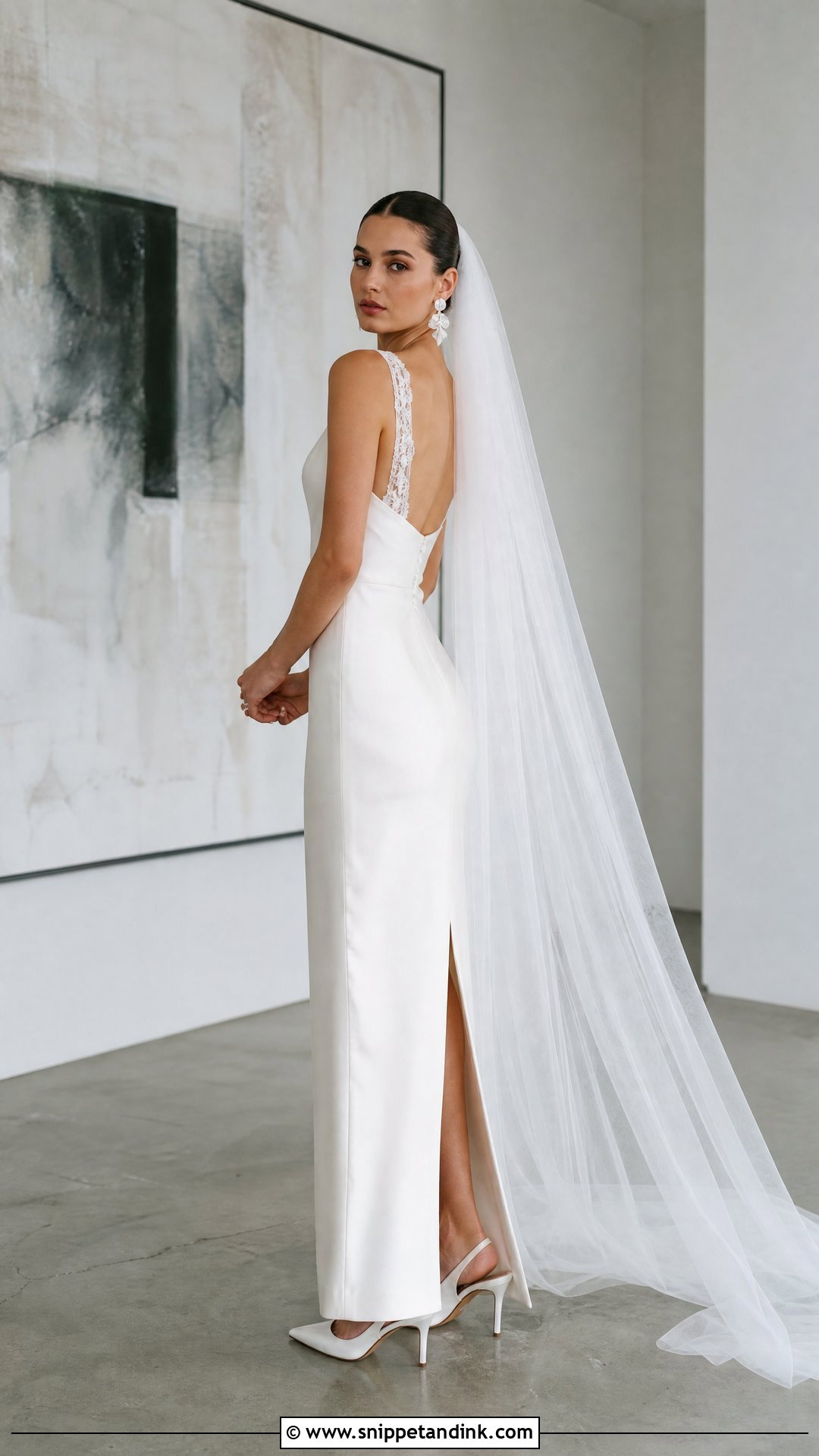
A sheath drops in a fairly straight line from neckline to hem, so it travels well and doesn’t swallow a small room. Silk, chiffon, lace and crepe each give it a different mood, which is why I always show the same cut in two fabrics. The honest trade-off is that nothing hides underneath. Every seam, lining and undergarment edge is on display, so ask what the dress is lined with and bring the shapewear you’ll actually wear to the fitting. A discreet back slit or stretch lining helps you walk; a long cathedral veil or sculptural earrings give a plain sheath the bridal finish it needs.
7. Empire Waist Bridal Dress
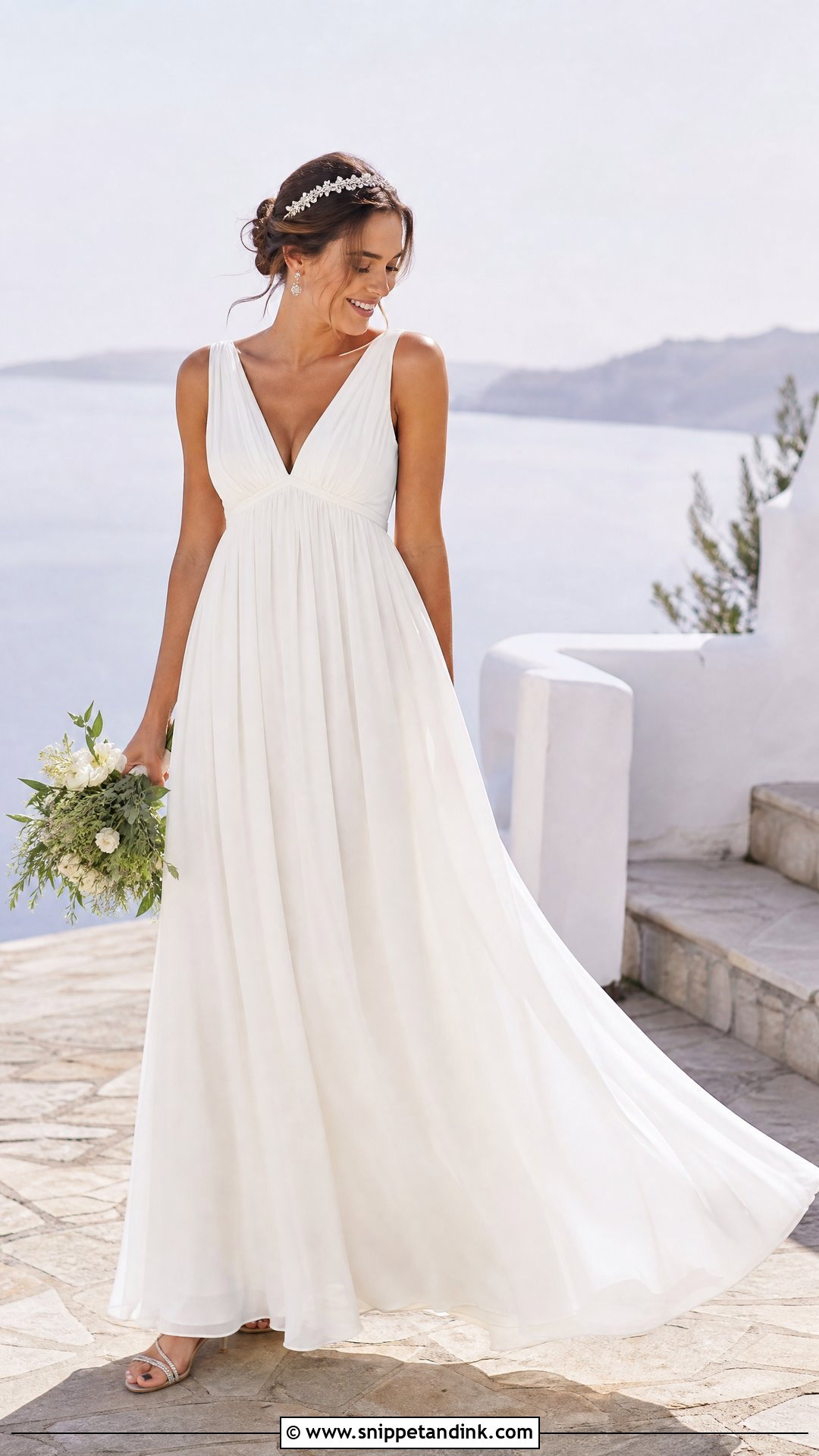
In an empire waist bridal dress, the seam sits right under the bust and the fabric falls loosely from there. It’s one of the most comfortable gowns to wear in summer heat because nothing grips the natural waist. Chiffon, silk georgette and fine tulle suit its airy drape. Please don’t add a wide belt at the natural waist; it cuts the line in half and fights the whole design. A narrow beaded band right under the bodice works with it instead. The part brides overlook is support. With thin straps or a deep V, ask whether cups or a built-in bra can be added, and get the hem marked wearing your actual sandals.
8. Drop Waist Bridal Dress
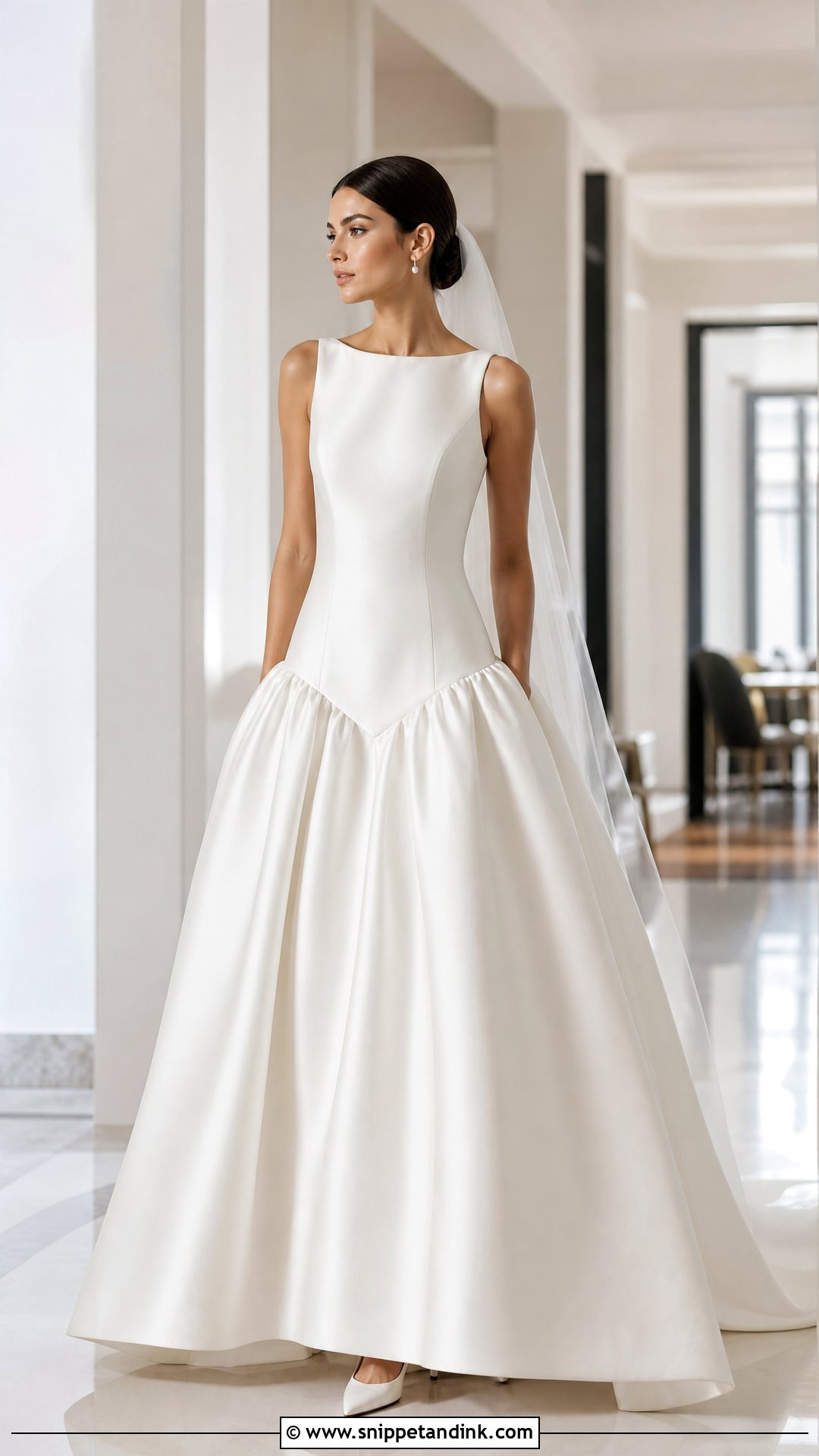
A drop waist carries the bodice below the natural waist before the skirt releases, which lengthens the torso and looks very fashion-led in structured satin, taffeta or Mikado. Seam placement makes or breaks it. Too low and you look short-legged; a little higher and the proportion suddenly clicks, so ask to have it pinned at two heights and compare. Long rigid bodices also feel different seated, which is why I make brides sit for a full minute in the sample. With a dramatic skirt, keep the bouquet smaller and the updo clean so the construction stays visible. It’s a shape that leans vintage, but in a crisp fabric it looks entirely current.
9. Basque Waist Bridal Dress
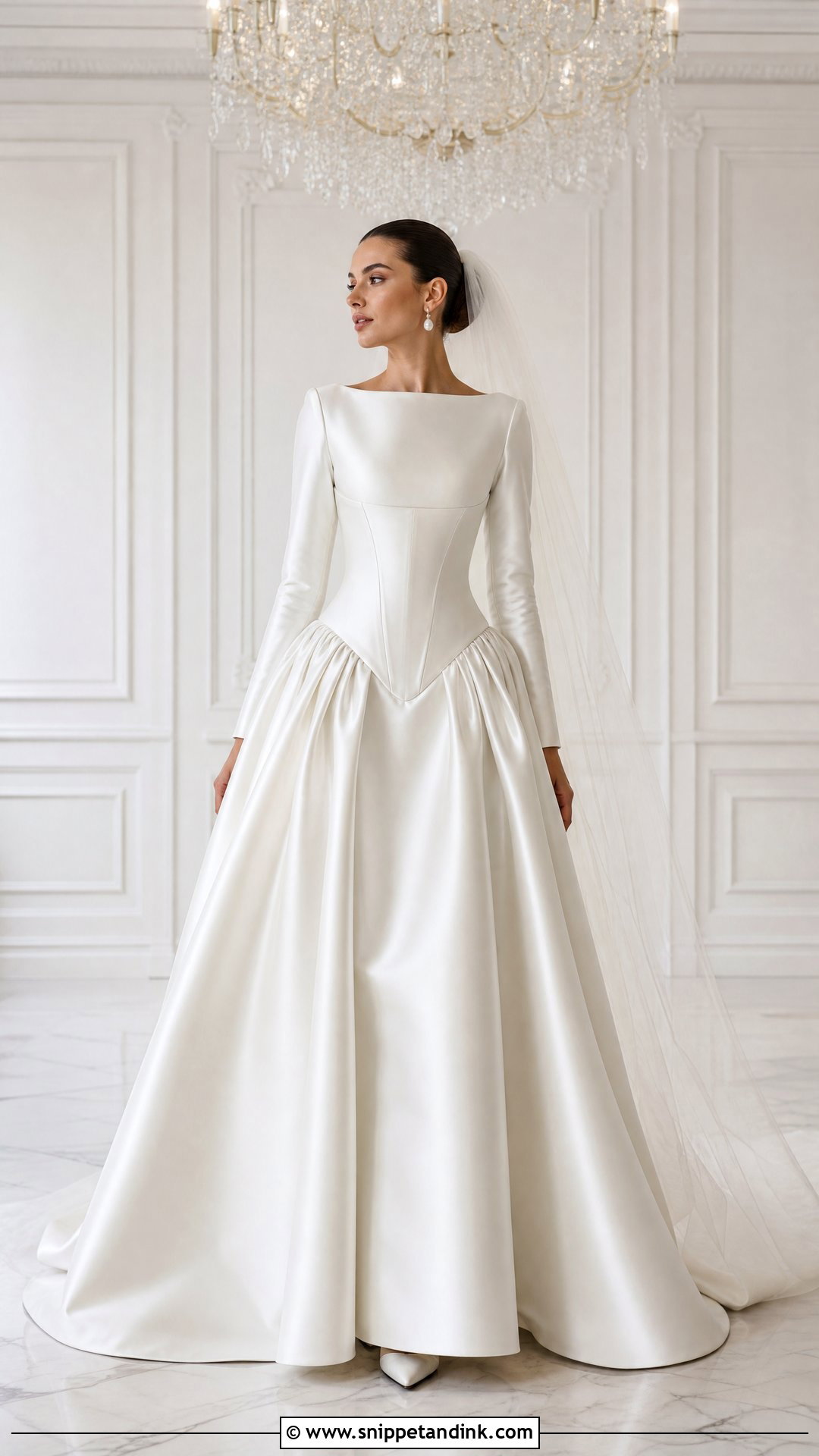
A Basque waist bridal dress dips into a V or U point below the natural waist, and that point does a lot of quiet work in slimming the torso before the skirt opens. Smooth satin keeps it regal; embroidered tulle softens it. The depth of the point changes the whole effect, so try a subtle version and a sharp one side by side. Check the boning when you bend to pick something up and when you sit. If a bone presses into your ribs in a ten-minute fitting, it will be the only thing you notice by the speeches. Pearl drops and a veil anchored under a polished bun keep the outfit in balance.
10. Slip Bridal Dress
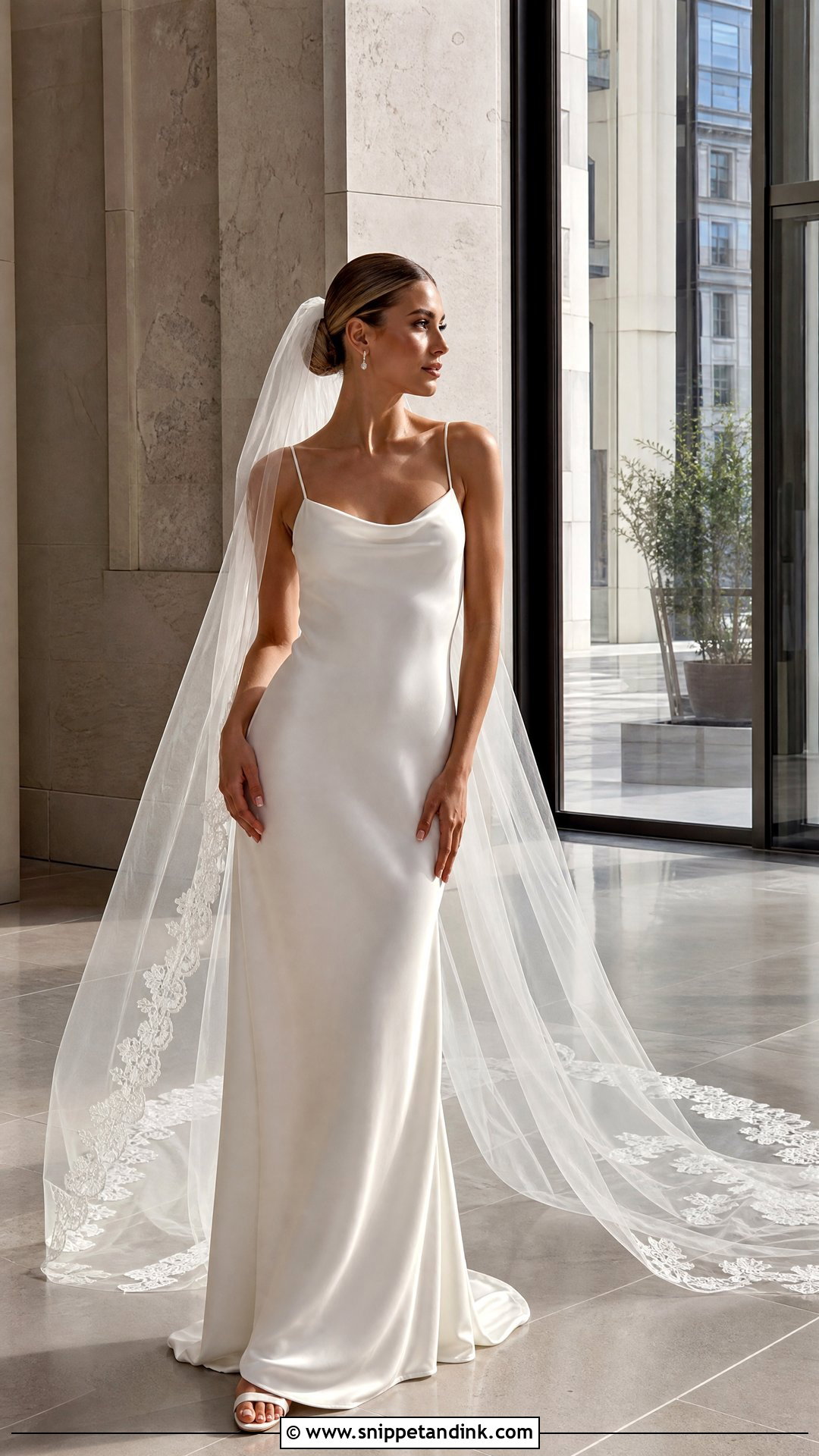
Smooth silk catching the light is the whole point of a slip dress. Usually cut on the bias, with narrow straps and almost no seams, it suits modern venues, coastal ceremonies and civil weddings. Bias-cut fabric stretches and drapes in every direction, which means an inexperienced seamstress can twist the hem permanently, so ask whether your alterations person regularly works with bias silk. Thin silk also shows everything underneath. Test no-line underwear and adhesive cups by a window before the fitting, and if you want more coverage, look at a heavier silk, a full lining or a removable cape for the ceremony.
11. Tea-Length Bridal Dress
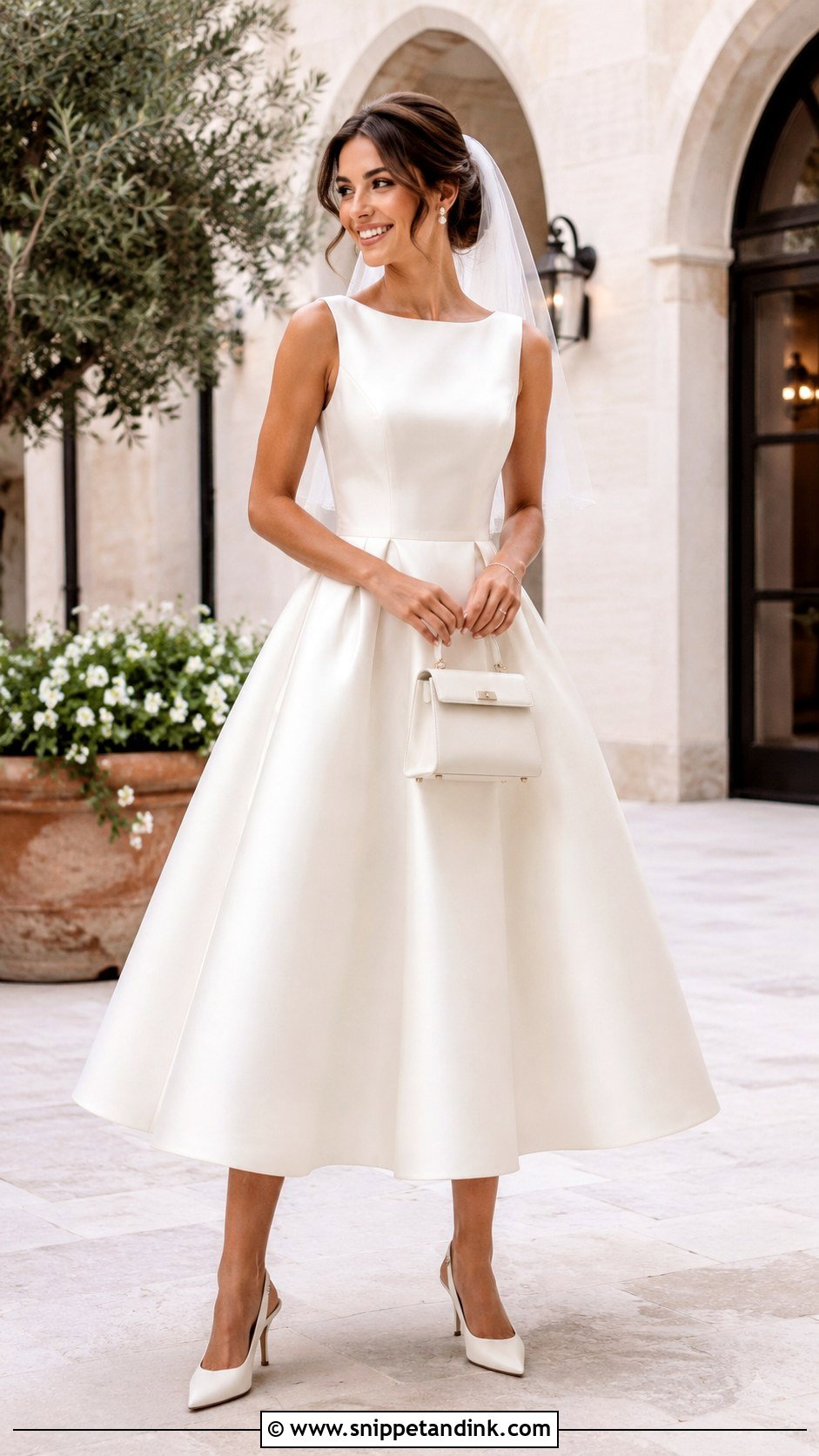
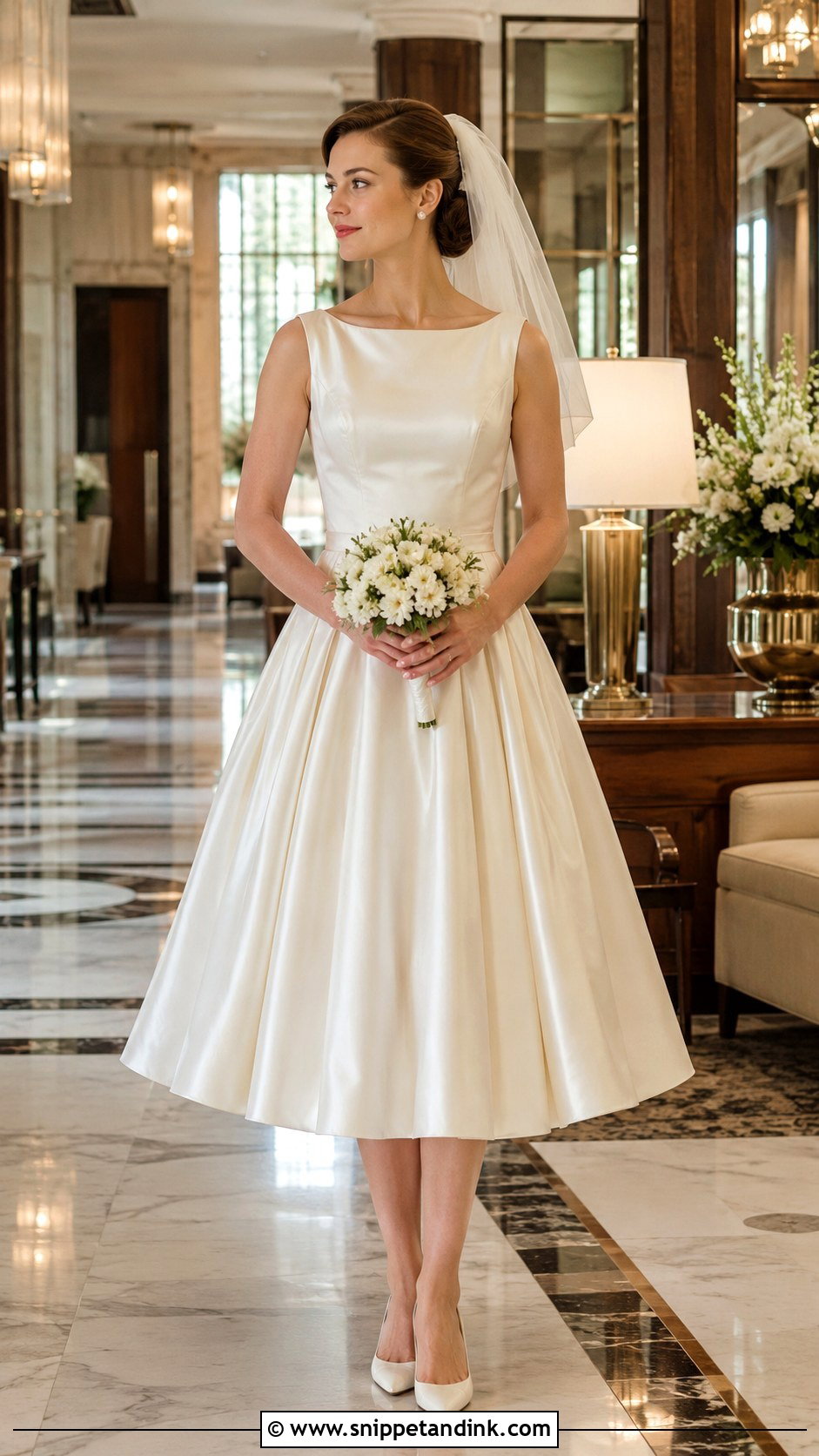
Tea length ends somewhere between knee and ankle, so your shoes become part of the outfit and you can actually move. A fitted satin bodice over a full skirt gives that mid-century look; lace or soft tulle feels more romantic. Hem placement is the detail I fuss over most. An inch too long and it reads as a gown that was shortened, an inch shorter and it looks deliberate, so look at it from the side and the back as well as the front. Pointed pumps, slingbacks or embellished flats all work. It’s an easy length for small venues and long evenings of dancing, and it doubles nicely as a reception change.
12. Mini Bridal Dress
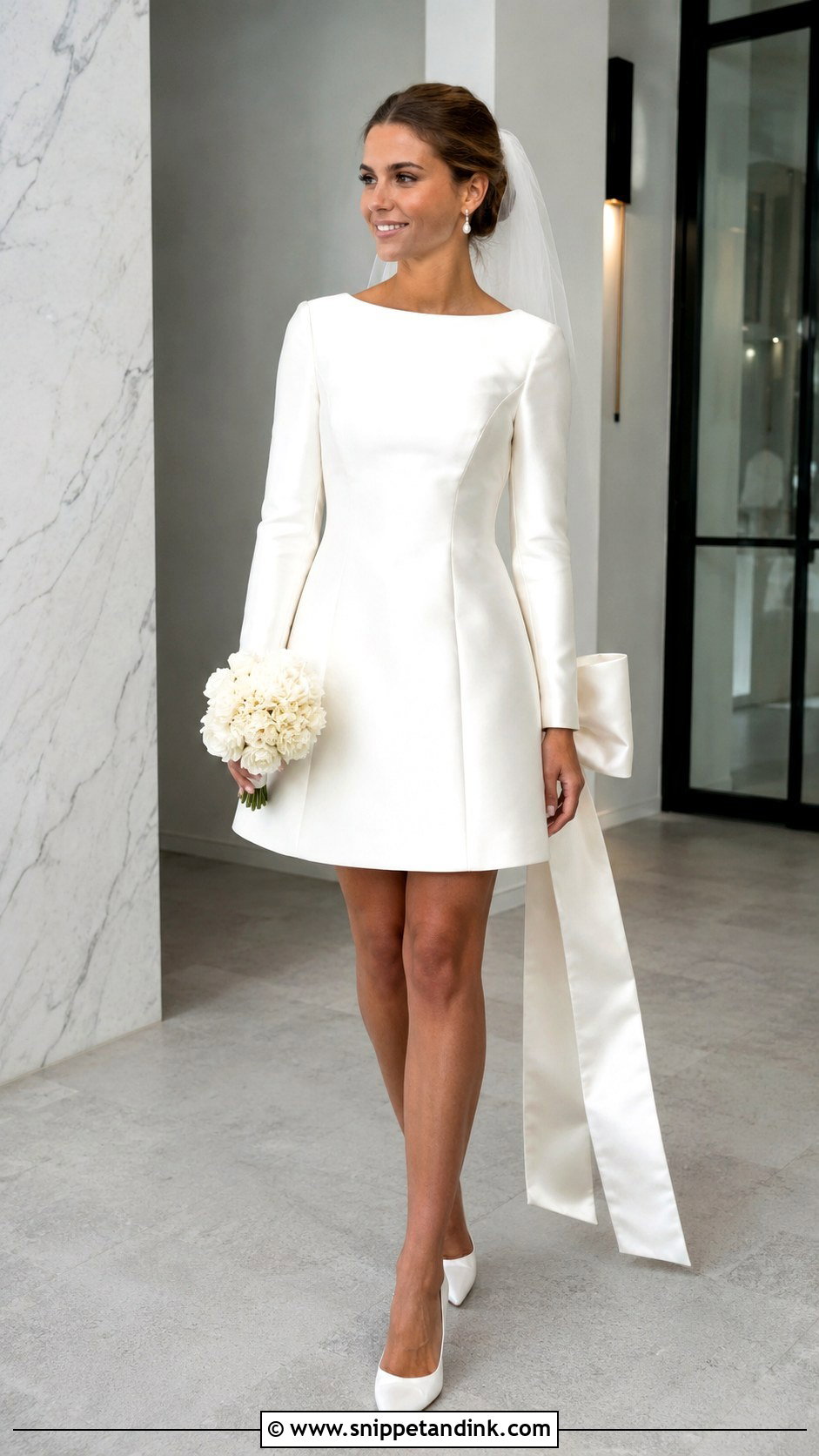
A mini suits a courthouse ceremony, an informal party or a second look for the reception. The short hem invites a strong shoe, but the rest of the outfit still has to feel planned, so pick one focal point: a sculptural bow, long lace sleeves or a corset bodice. Then add a short veil and small earrings. The back hem is where minis go wrong. Sit down, bend to hug a short relative and climb a step, and watch it in a mirror behind you. A slightly longer lining or a hidden skort can solve a lot. Corsetry or a structured fabric keeps it feeling bridal rather than like a party dress.
13. High-Low Bridal Dress
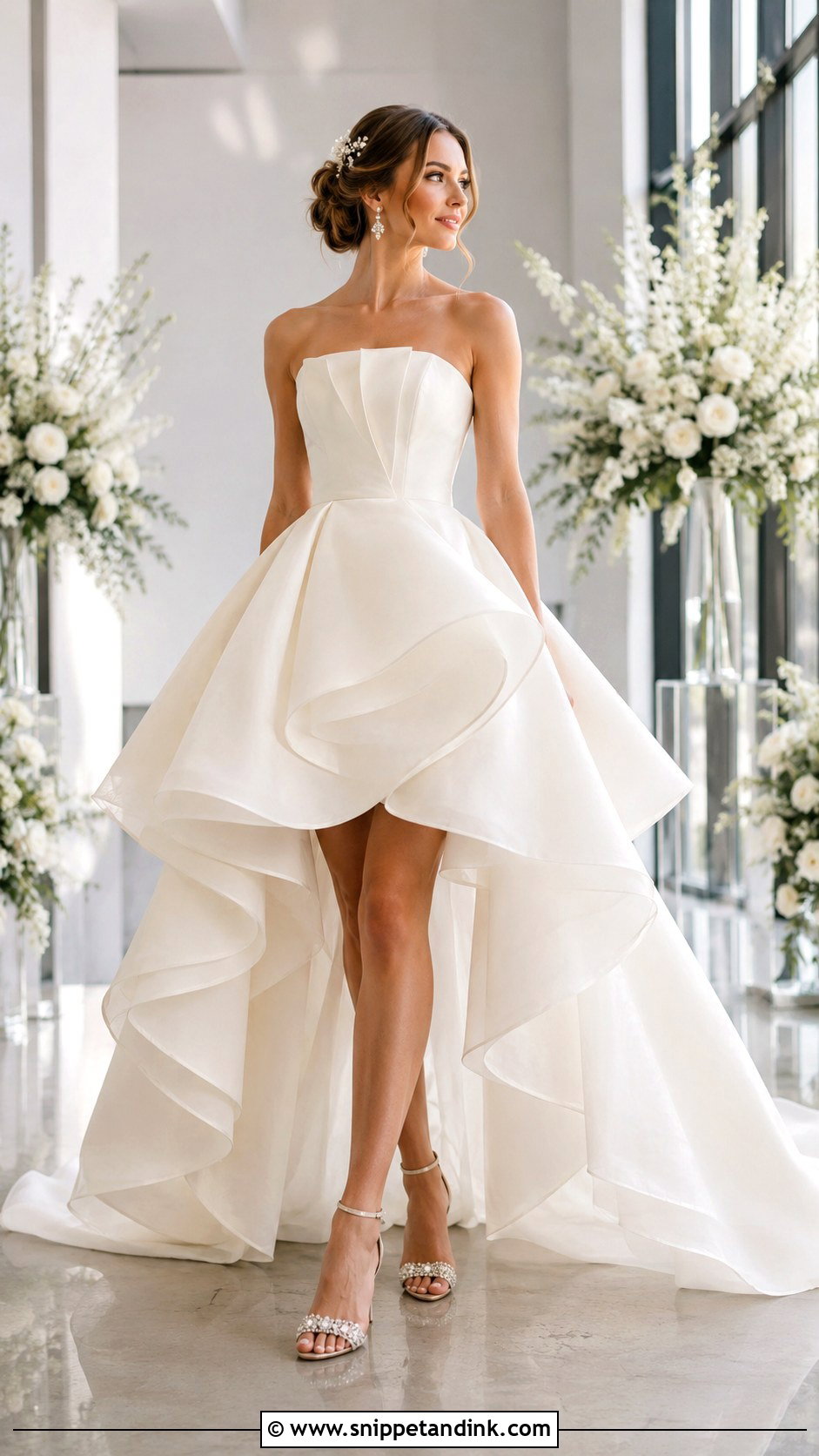
Short at the front, long at the back, a high-low lets the shoes show while keeping some of a train’s sweep. I prefer a gradual curve to an abrupt step in the hem; it moves better and looks less like a costume. Structured satin holds the shape crisply, while layered organza or tulle creates more motion. Since the front hem frames your feet, shoes need to be comfortable and in good condition, not just pretty. Walk backward and turn in the shop. The long section can catch under a heel when you pivot for photos, and you want to discover that now, not on the dance floor.
14. Long Sleeve Lace Bridal Dress
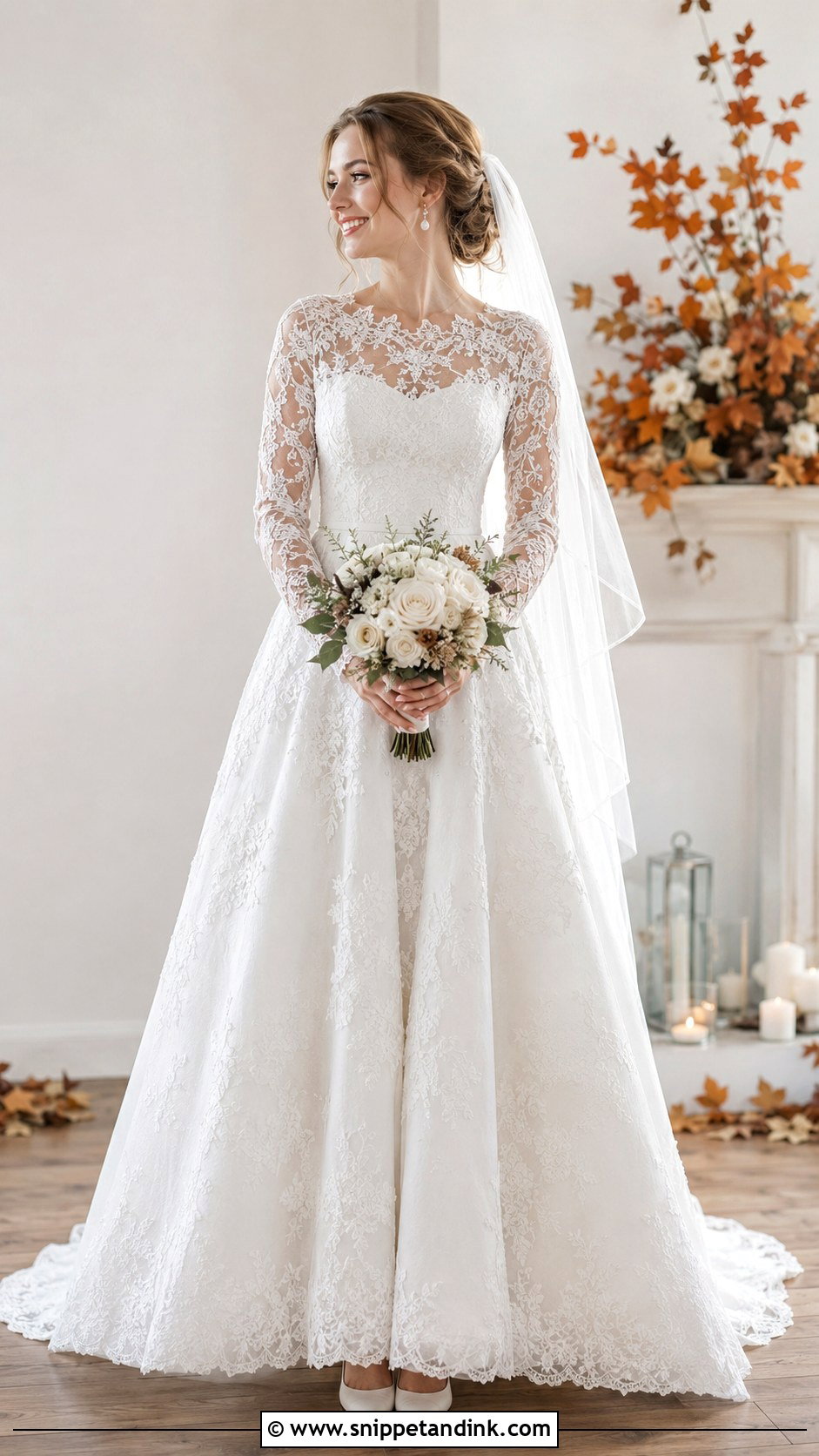
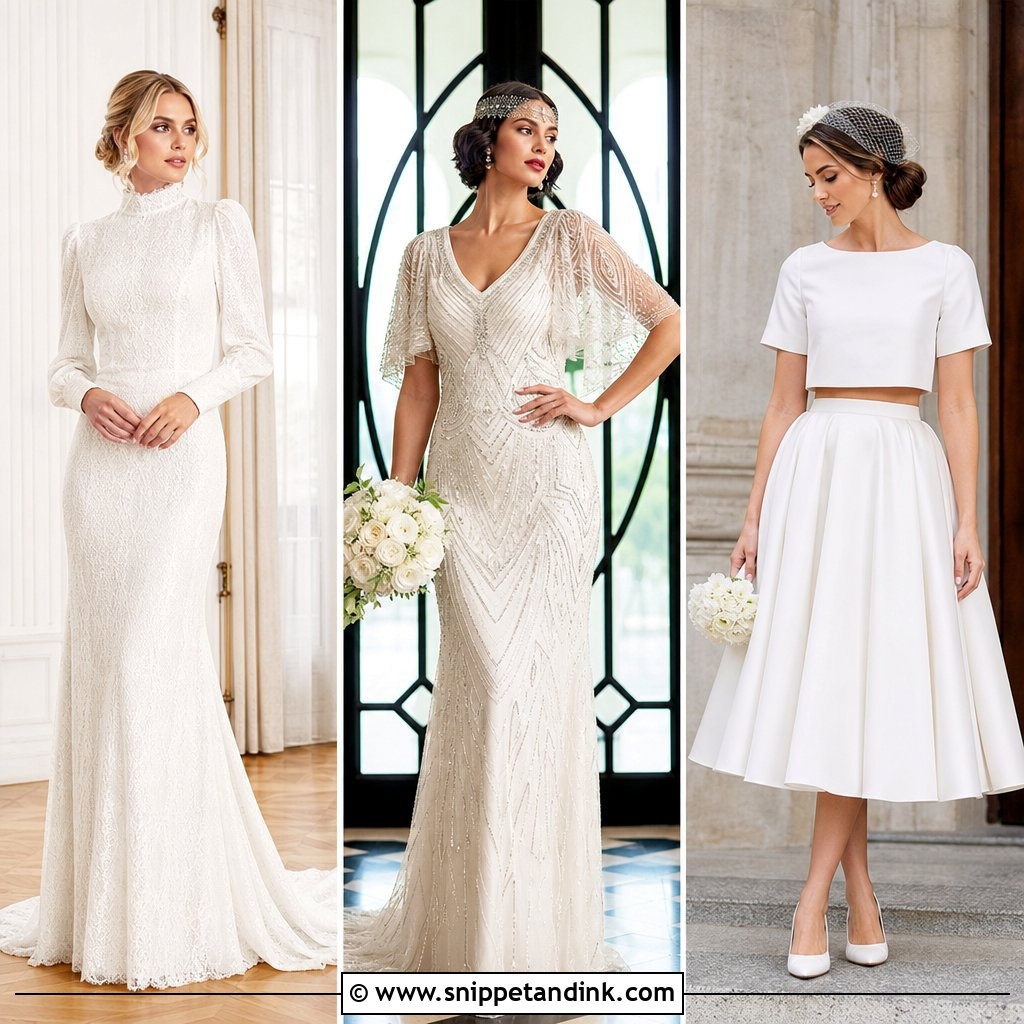
Lace sleeves give coverage without weight when the lace sits on a sheer mesh base. Pair them with an A-line for softness, a sheath for a streamlined line or a ball gown skirt for formality. What I check closely is motif alignment. When the lace pattern doesn’t match across the bodice seams and onto the sleeves, the dress looks busy and slightly cheap, even if the lace itself is expensive. Lift your arms above your head and hug someone; tight armholes are the most common complaint with sleeved gowns. A veil with a plain edge keeps the lace from competing with itself.
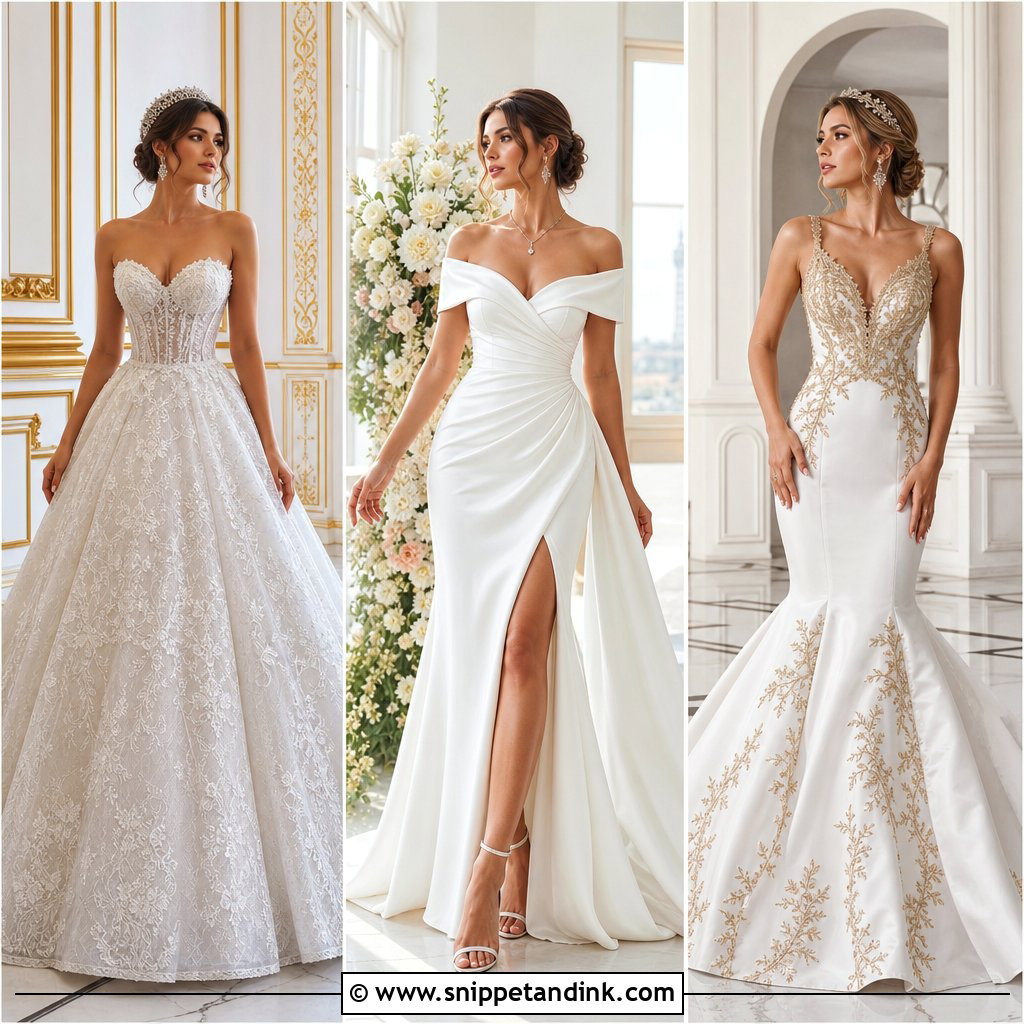
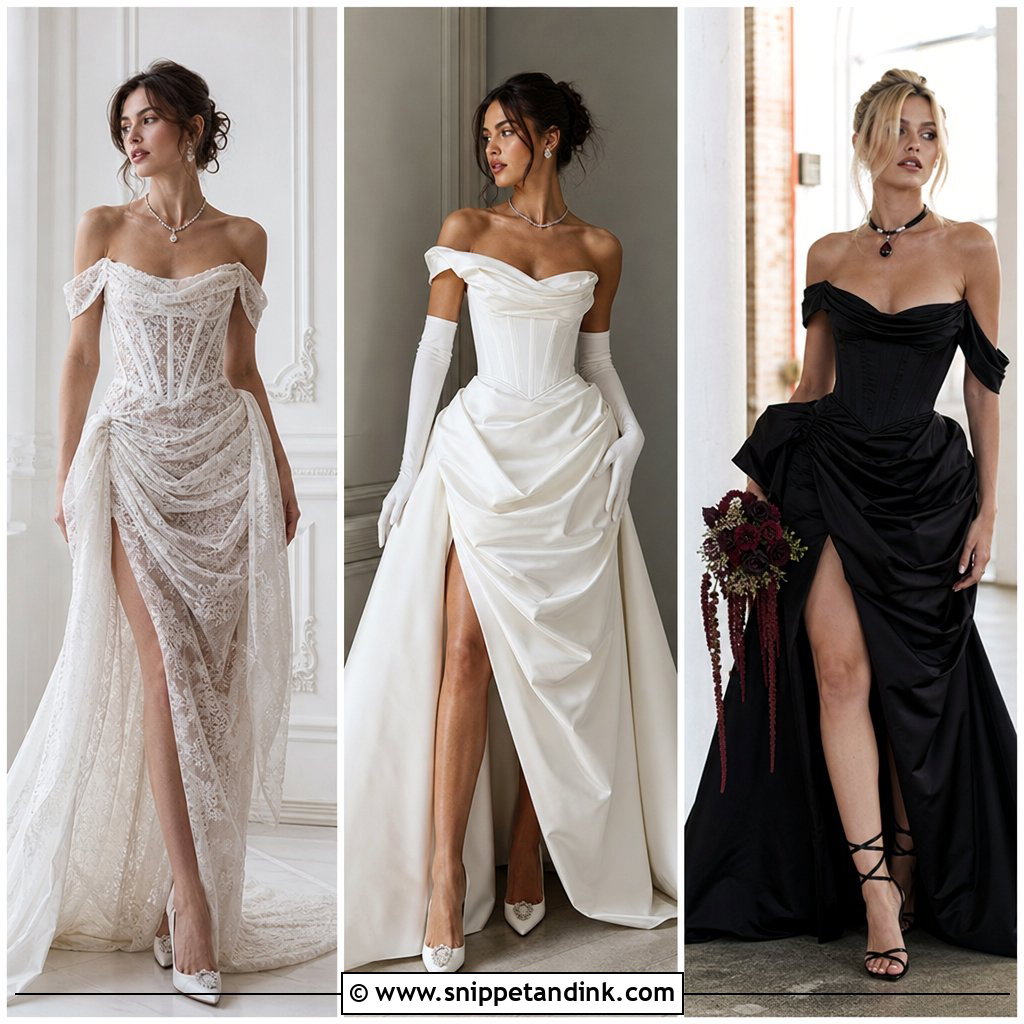
15. Off-The-Shoulder Satin Bridal Dress
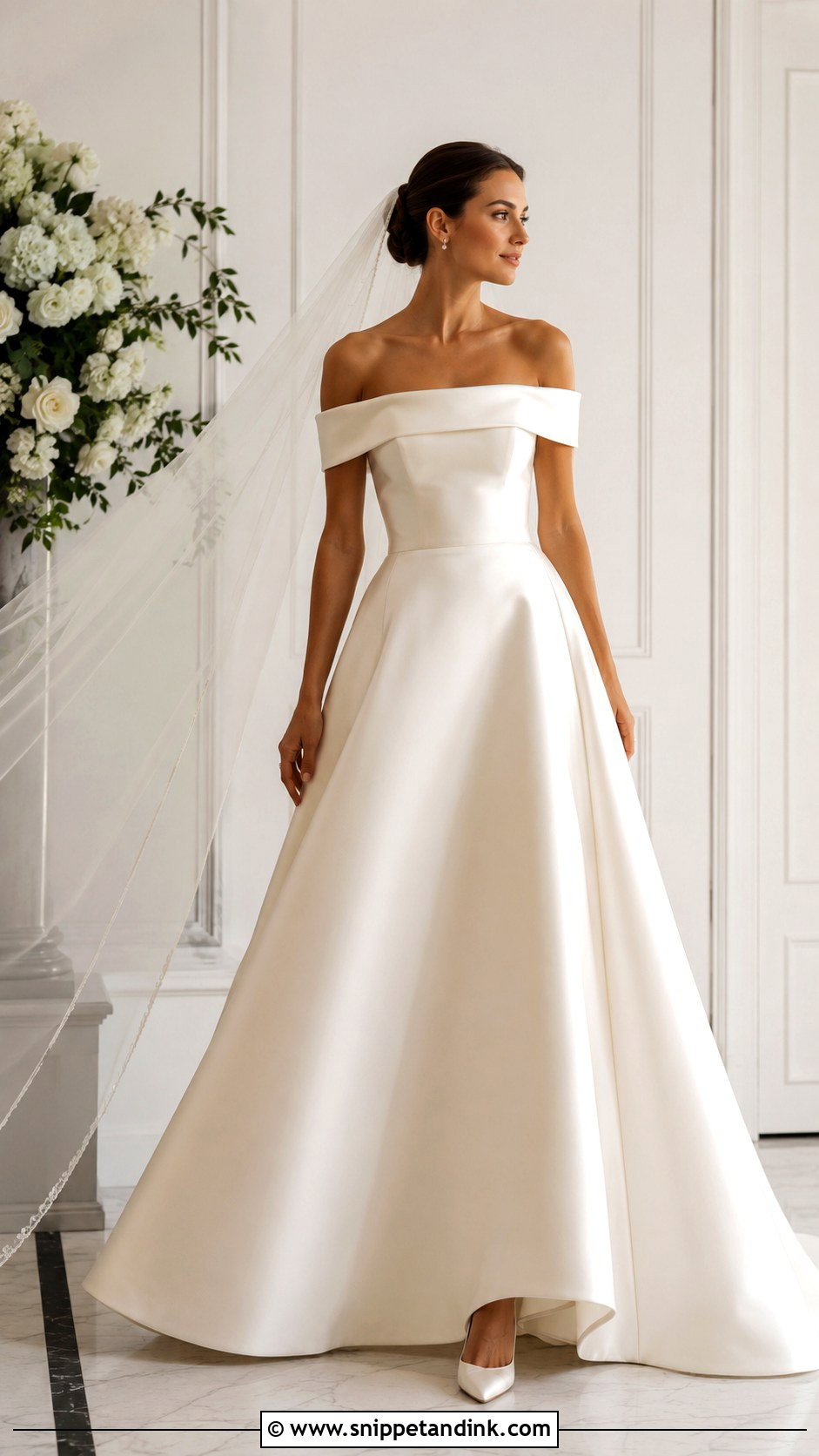
An off-the-shoulder neckline shows the collarbones, and in satin it looks smooth and formal over an A-line, a fitted gown or a ball gown skirt. Keep that area clear with a low bun, small earrings and little or no necklace. The real test is movement. Raise your arms, give someone a hug and sit down naturally; a band that’s too narrow or rigid will pin your arms to your sides all day. Detachable straps give a similar look with much more freedom. Watch the upper back for gaping too. The bodice should hold the dress up on its own, so the shoulder bands are decoration, not support.
16. Square Neck Bridal Dress
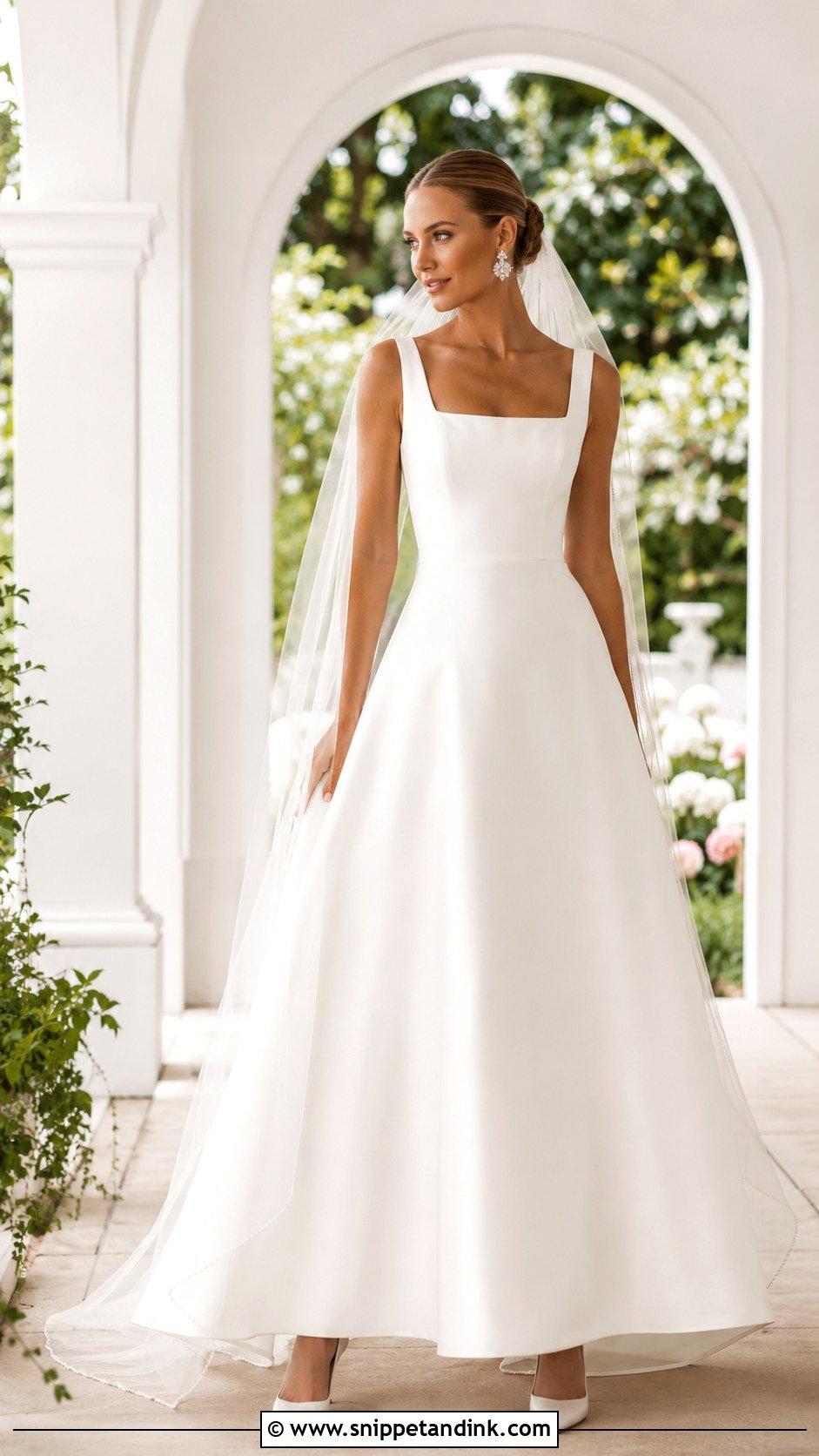
A square neckline has clean angles that frame the upper body and look good with wide straps, fitted sleeves or no sleeves at all. It pairs naturally with an A-line skirt, a column or a Basque waist if you want more structure. Necklaces are tricky here, because a round chain fights the straight edge, so I usually suggest a short pendant or no necklace and statement earrings instead. Have the seamstress check where the corners land on your chest. Moving them half an inch in or out changes both comfort and proportion more than you’d expect. It’s a good alternative if the usual sweetheart shape feels too predictable.
17. Strapless Corset Bridal Dress
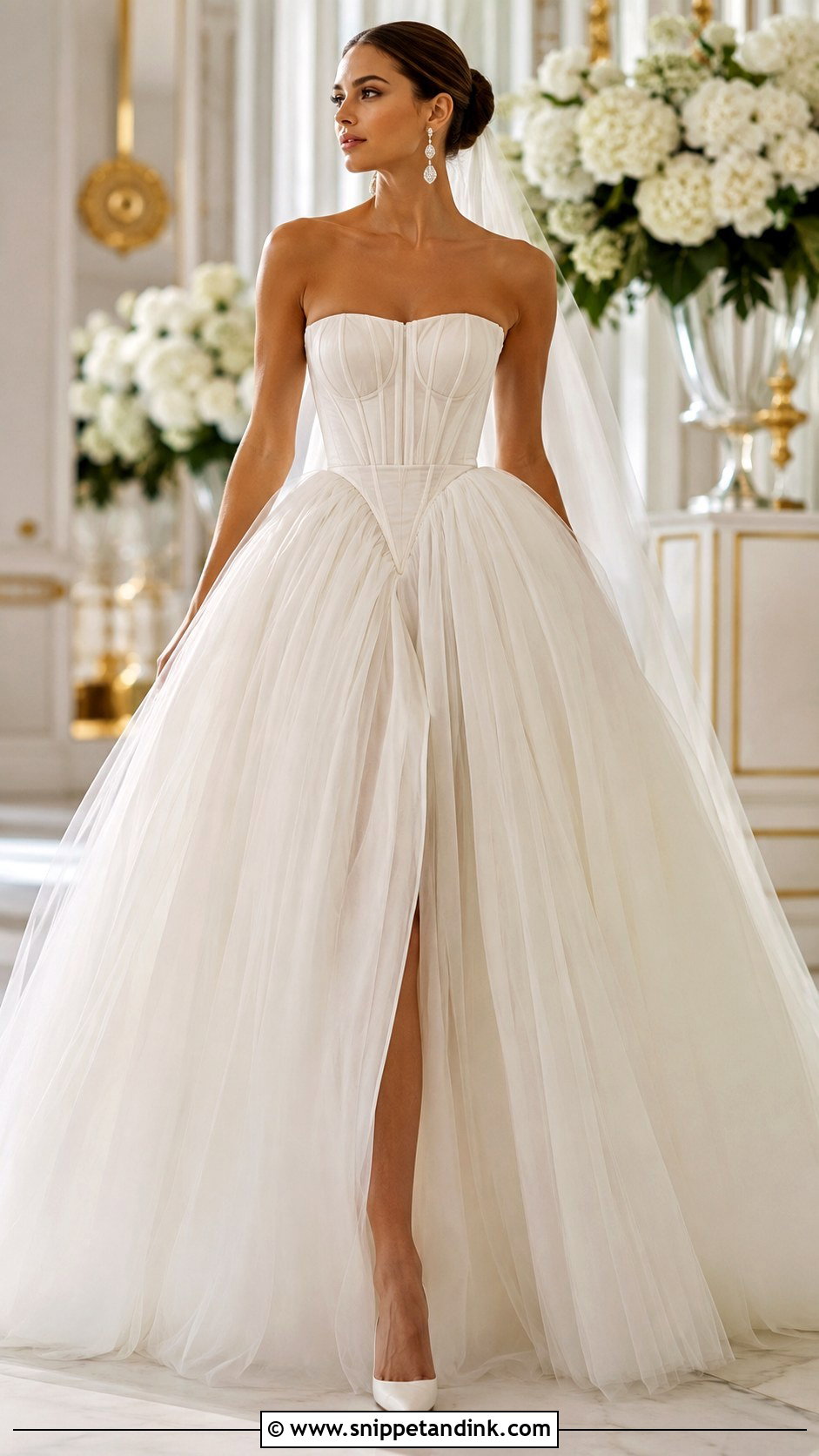
A strapless corset bodice relies on boning, shaped seams and solid internal support, and it pairs with almost any skirt, from a sleek column to a full ball gown. My rule is that fit beats tightness. The bodice should stay put when you take a deep breath, sit and lift your arms; if you have to hold your breath to zip it, it’s wrong. Ask whether visible boning is structural or decorative and whether the cups can be altered. A removable wrap or overskirt can change the look later in the evening without a second dress. Drop earrings and a veil fixed beneath a smooth updo complete it.
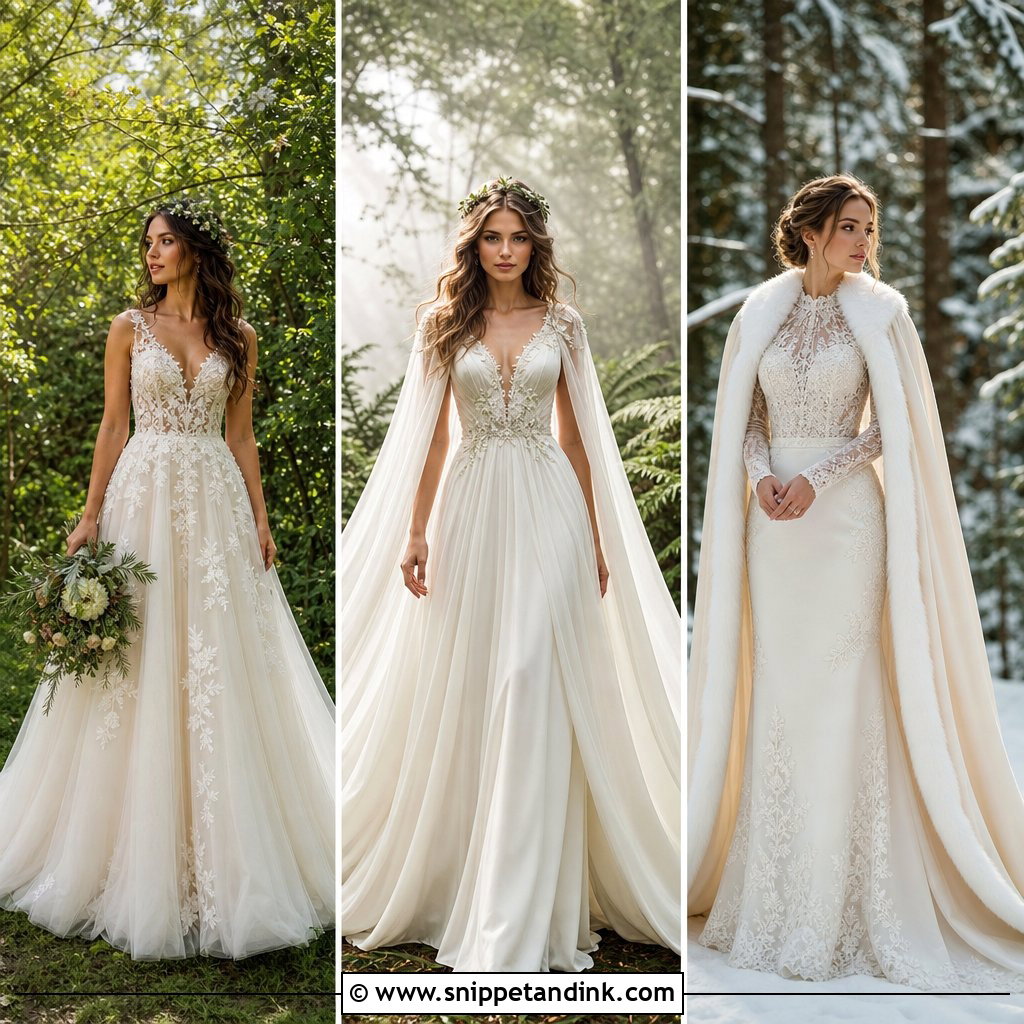
18. Boho Chiffon Bridal Dress
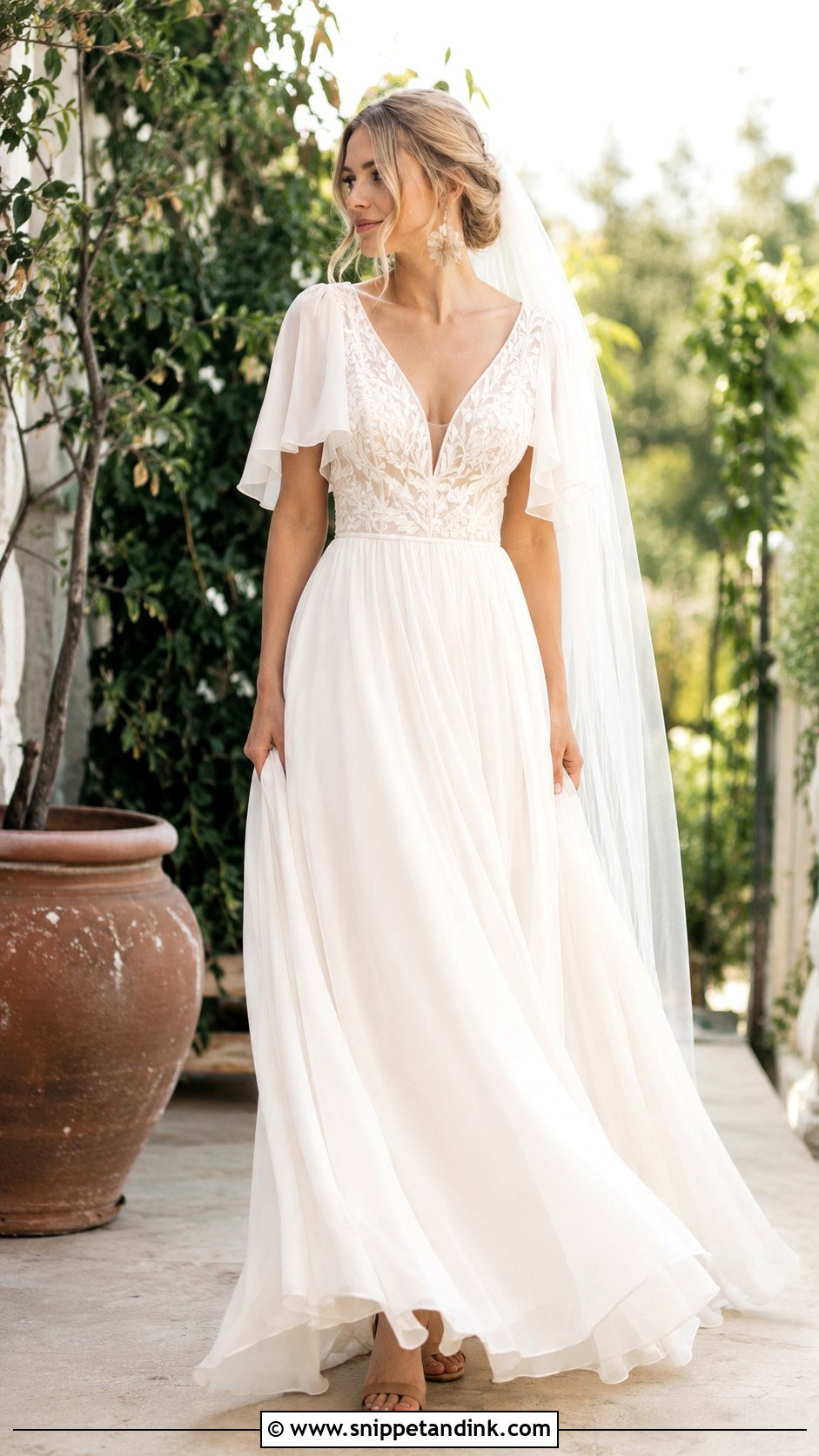
A boho chiffon gown is about movement: a flowing skirt, embroidered bodice, flutter sleeves and a soft waistline that feels unconstructed. It suits outdoor, coastal, desert, and garden settings, as long as the fabric is light enough to breathe. Chiffon turns see-through in strong sun, so stand in front of a bright window and have someone take a phone photo. That picture tells you more about the lining than any mirror. With heavy embroidery, skip the big flower crown. A chapel train gives drama without dragging half the lawn behind you, and low block heels won’t sink into grass.
19. Vintage Inspired Bridal Dress
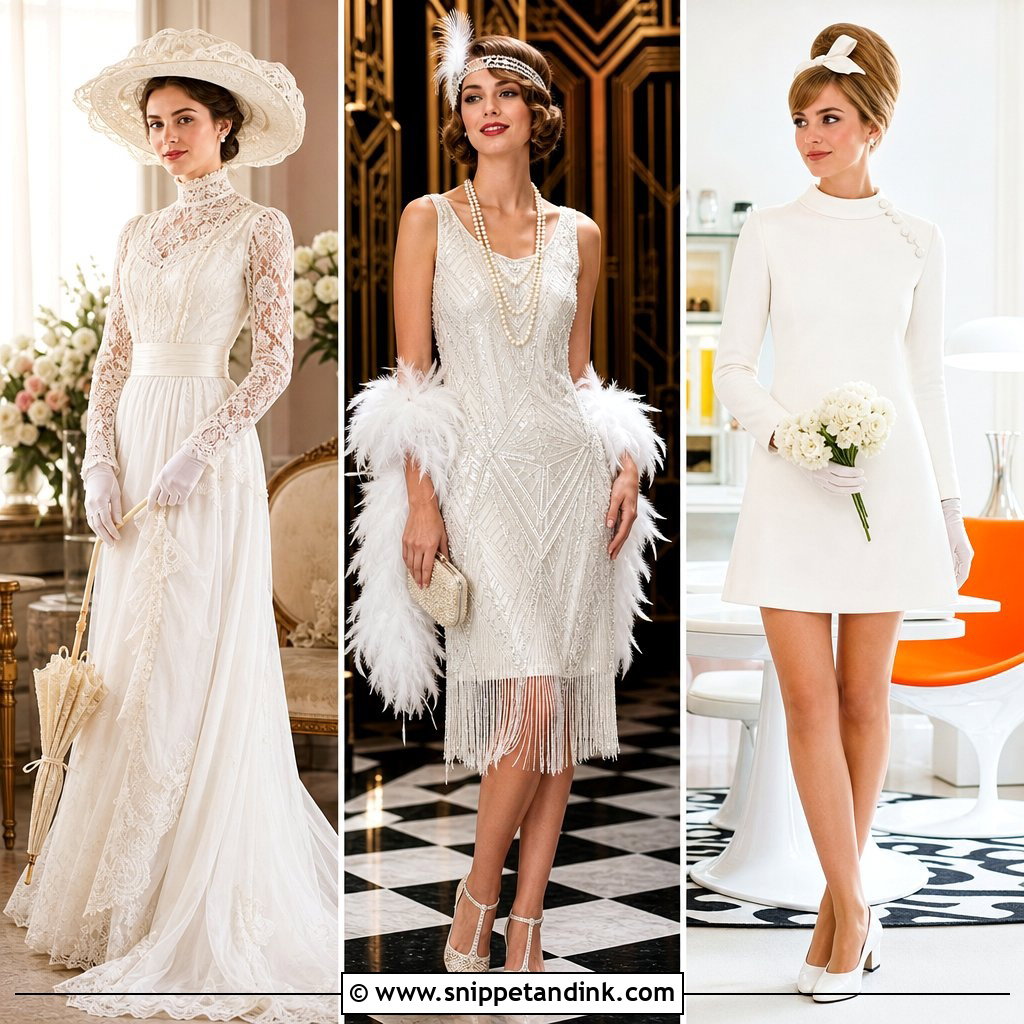
A vintage inspired bridal dress works best when it borrows from one era rather than all of them. Pick a 1950s tea-length skirt, 1930s bias satin, Edwardian lace sleeves or a 1990s minimalist A-line, then keep the accessories modern so you don’t look dressed for a theme party. If you’re buying a genuine vintage piece, check underarm seams, yellowing at the folds, fragile buttons and how much seam allowance is left; old gowns often can’t be let out at all. A newly made dress with period details gives you the look with modern sizing and stronger construction.
20. Convertible Overskirt Bridal Dress
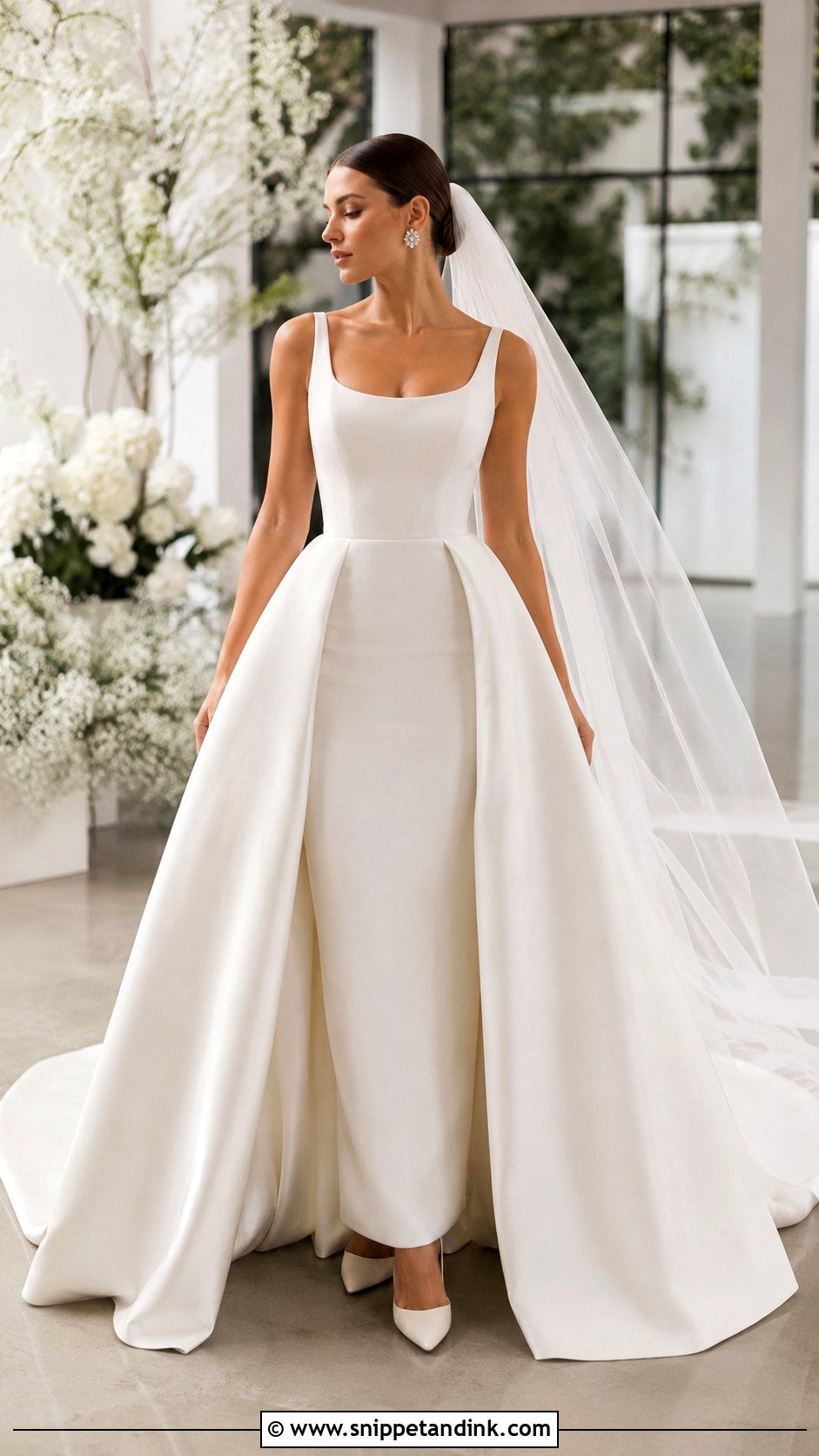
A convertible overskirt gives you two outfits in one. You walk down the aisle in a full detachable skirt over a fitted base dress, then unhook it for the reception. Satin gives a crisp transformation, tulle and organza a softer one. Practice the removal yourself, and teach whoever will help you, because a hook-and-bar waistband in a crowded bathroom is harder than it looks. Check that the join stays hidden from the back. Choose shoes that work under both lengths, and plan to swap the veil for earrings or a hair piece once the skirt comes off.
What Happens to the Train After the Vows
Almost every gown with a train needs a bustle, and the style you choose affects how the dress looks for the rest of the night. An over bustle lifts the train with hooks or buttons onto the outside of the skirt, which suits lace and lighter fabrics. An under bustle, sometimes called a French bustle, tucks the train underneath with ribbon ties and creates soft folds that look good on satin and ball gowns. A ballroom bustle hides the train completely so the dress looks floor-length all around.
Ask your seamstress to add it at the fitting before last, then have her teach a bridesmaid or your mother, not you. Colour-coded or numbered ribbons save a lot of panic in a dim corridor. A heavy cathedral train sometimes needs extra attachment points, so mention if you plan to dance hard.
Getting the Gown to the Venue Without Creases
Collect the dress as close to the wedding as your schedule allows and hang it by the inner hanging loops, never by the straps, which stretch under the weight of a full skirt. Lay it flat across a back seat on a clean sheet rather than folding it into a boot. Silk, satin and Mikado mark easily, so let a professional or the shop do any steaming, and keep a lint roller, white chalk for small marks and a few safety pins in the getting-ready room. After the wedding, have it cleaned within a few weeks so sugar from drinks and cake doesn’t yellow before it can be treated.
Trust How It Feels at the Final Fitting
There is far more range here than a choice between fitted and full. Each shape balances structure, movement, coverage and formality differently, which is why I ask brides to try at least one silhouette they’d never have picked. Judge every dress walking, sitting, turning and with your arms raised, and think about the venue, the weather, the train, the fabric weight and the alteration budget before you order. Photos help, but a gown that lets you breathe and move will always look better in the pictures than a fashionable one you’re fighting all day.
You'll Like These Ideas:


Leave a Reply