
A gown on a form is judged in about three seconds, usually from across a room or through glass. What people notice first is the outline, then the hem, and only after that the lace or beading. So every display below starts with the same priority: the full silhouette has to read clearly, and the train needs floor space to fall the way it would behind a walking bride. Accessories are there to frame the neckline and waist, not to sit on top of them. The ideas cover boutique windows, fair stands, studio shoots and a bride displaying her own dress at home, and each one notes what tends to go wrong with that cut or fabric.
Getting a Gown Onto a Form Without Straining a Seam
Most of the damage I see on display gowns happens in the five minutes it takes to dress the form. Start with size. Dress forms are usually sold in fixed sizes, and a gown made or altered for one body rarely matches any of them exactly. A form slightly smaller than the dress is far easier to work with than one that’s bigger, because you can build it up but you can’t shrink it.
- Open every closure completely: zip, hooks, buttons, corset lacing. A half-open zip is how teeth split.
- If the form’s shoulders are rigid, lower the gown over the top with the skirt gathered in your arms, rather than trying to step it up from the base.
- Fill gaps at the bust and hip with acid-free tissue or a layer of quilt batting under a thin slip, so the padding doesn’t rub straight against the fabric.
- Close the gown gently. If the zip resists, the form is too big; take padding out instead of pulling.
- Put the petticoat on before the skirt is arranged, then fan the train last.
Two people make this much easier with a heavy ball gown: one holds the weight of the skirt while the other guides the bodice down. Remove watches and rings before you start, because they snag lace.
1. Lace Wedding Dress on Mannequin
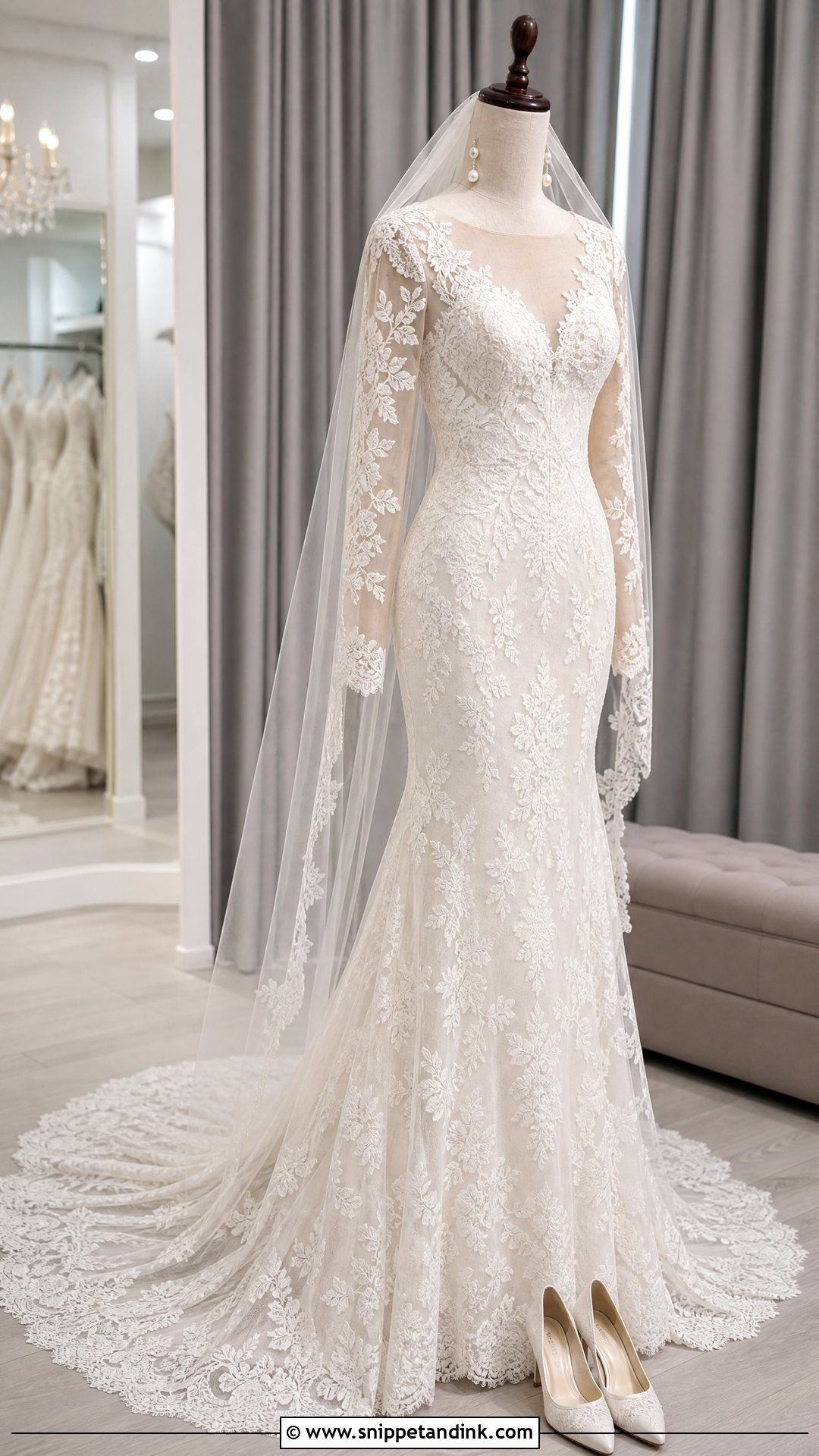
Lace is the fabric I’m most careful with on a form, because a form that’s a size too small lets the bodice sag and a size too big stretches the motifs apart until the pattern looks thin. I want the waist seam sitting exactly on the form’s waist before I touch anything else. Put it against something plain, a soft ivory wall, a pale gray curtain or a clean boutique corner, so the floral outlines stay readable. A fingertip veil with a narrow edge keeps the sleeves and neckline uncovered, and pearl earrings are enough if the form has a head. Keep flowers away from the detailed areas. Long sleeves, illusion necklines and vintage lace all suit this treatment.
2. Satin Wedding Dress on Mannequin
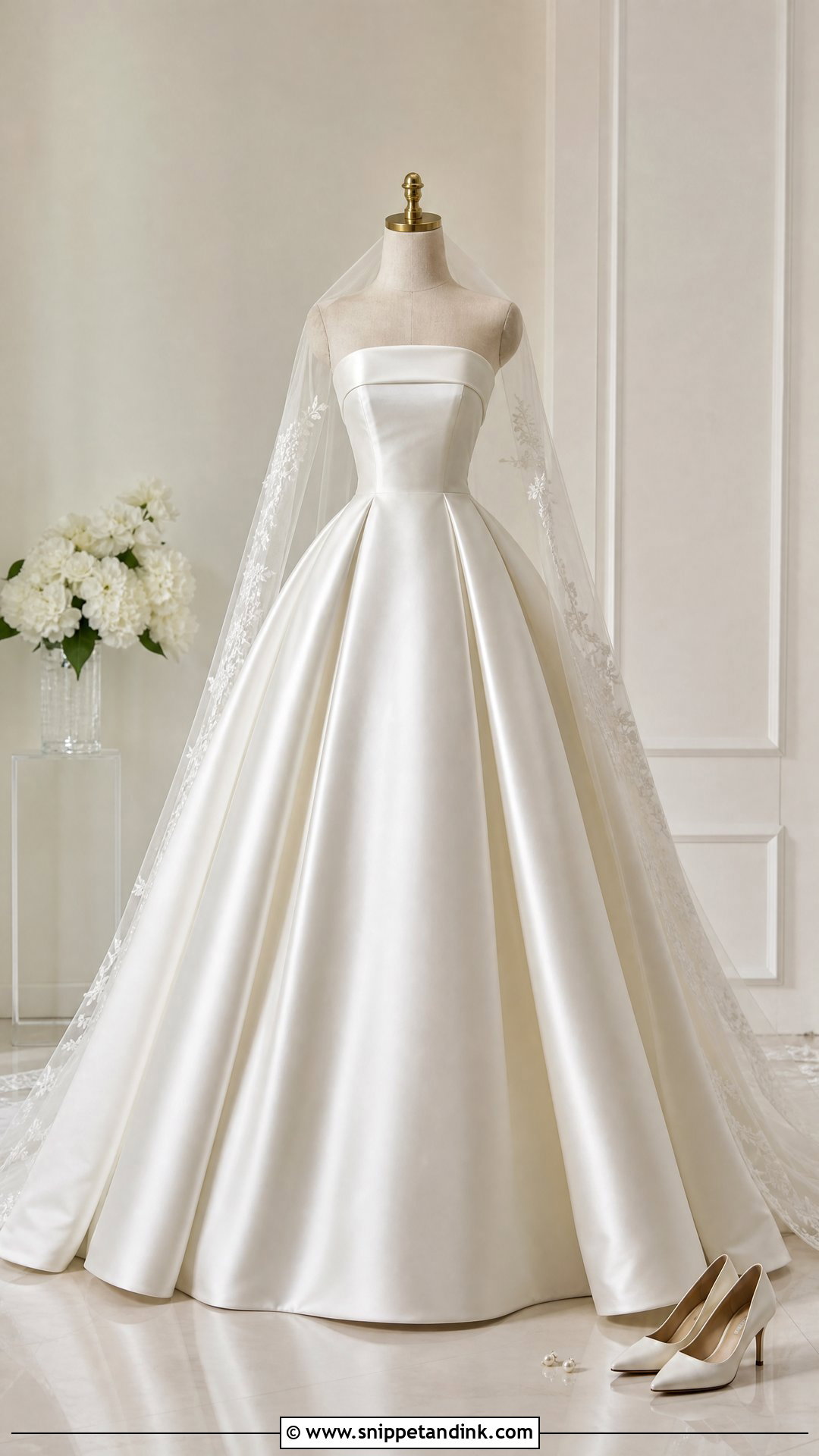
Satin shows every crease, every steamer drip and every place the form’s shoulder pushes through. Steam it fully before dressing, then touch up in place, holding the steamer a hand’s width away so water doesn’t spot the surface. Diffused window light or a soft white lamp gives sheen without a hot glare stripe down the skirt. A cathedral veil adds the movement a plain ball gown lacks, and pearl studs with pointed shoes finish it. After that, stop: a cream pedestal, one white arrangement and a neutral wall are plenty. Fan the train into a wide half circle behind the form.
3. Ball Gown Wedding Dress on Mannequin
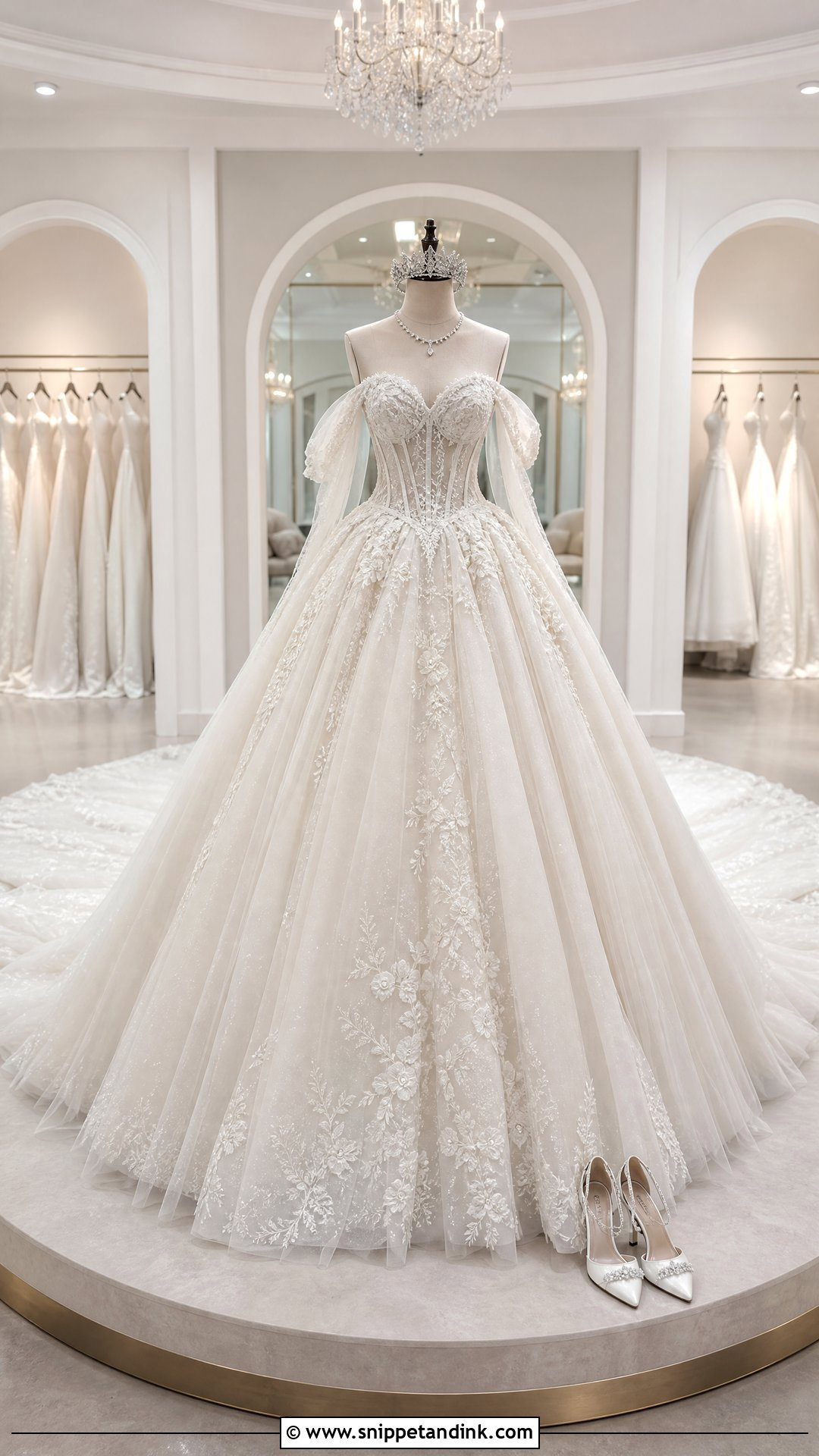
Without its petticoat, a ball gown on a stand collapses into a sad cone, and that’s the single most common mistake I see at fairs. Use a sturdy full-body form, put the correct petticoat or hoop underneath, and give it far more floor than you think. I set it in an open part of the room and fan the skirt symmetrically for the front view. A sparkling tiara, a short necklace and a cathedral veil suit the scale. If the skirt hides the base, set heels near the hem so people read it as a person. Soft white spotlights on the bodice show off corsetry and layered tulle.
4. Mermaid Wedding Dress on Mannequin
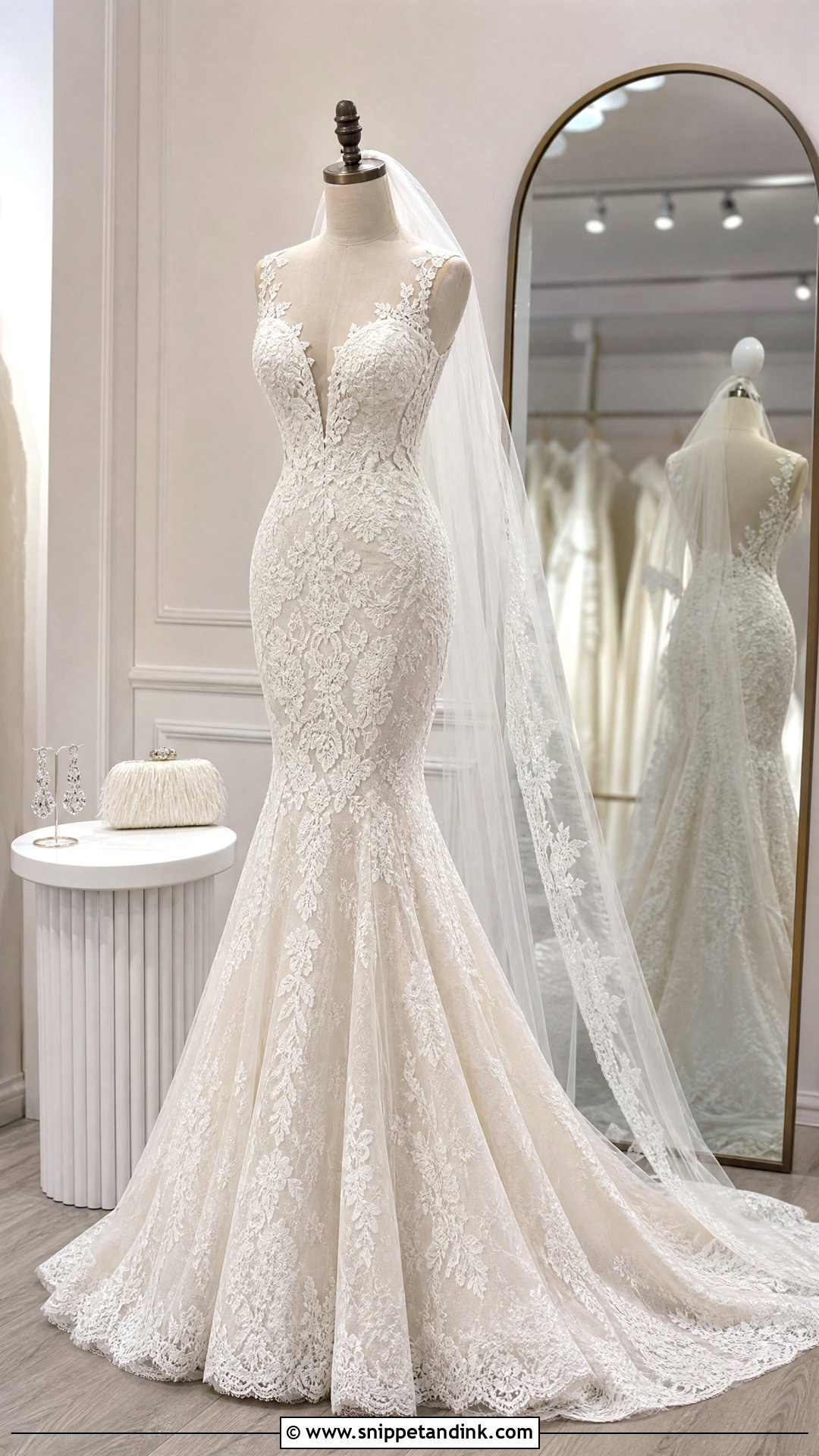
Mermaid gowns are fitted through the hip and thigh, so a straight-sided form makes them look shapeless. I look for a form with real curves and a stable upright pose, then smooth the dress down the waist, hips and thighs, checking the side seams run straight rather than twisting toward the front. Let the flare open naturally below the knee instead of tucking it around the pole. Drop earrings and a narrow veil keep the line long, and a small clutch can sit on a nearby pedestal. Light from the front and both sides shows the fitted construction; a single front light flattens it.
5. A-Line Wedding Dress on Mannequin
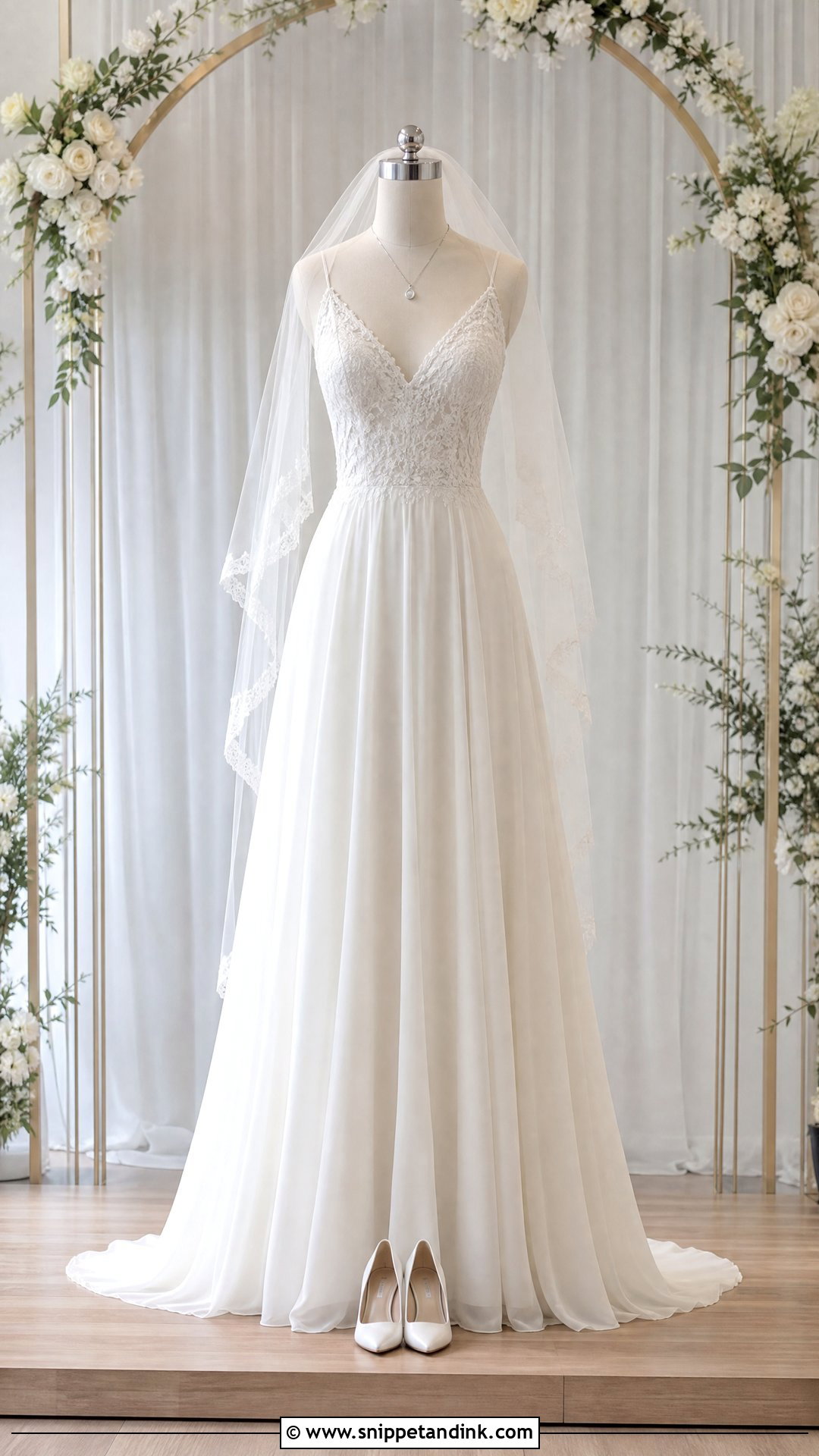
A-line is the easiest cut to display, which is why it’s often the one that gets styled lazily. The bodice still has to be filled properly, or the skirt starts too low and the proportions look off. Add a chapel veil, a delicate pendant and classic pumps. A low light wood platform lifts the hem off the floor so the full outline shows, and pale curtains or a simple floral arch behind it keep the scene calm. Center the skirt and fan the train gently. Chiffon, satin, organza, lace and tulle all hold this shape well.
6. Long Sleeve Wedding Dress on Mannequin
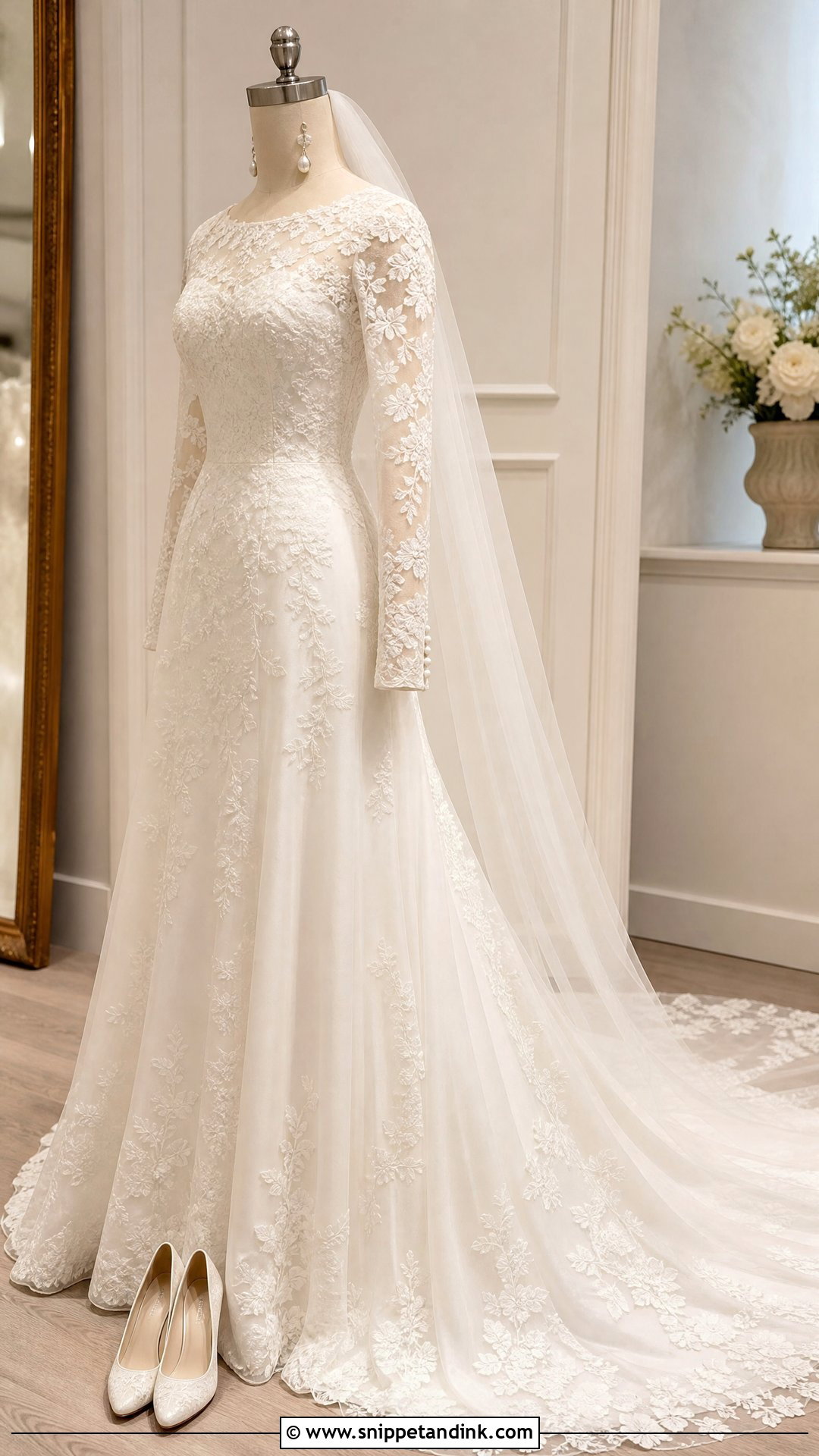
Sleeves are where a lot of the handwork lives, and they’re the first thing a stiff form ruins. Arms pressed flat against the torso crush lace cuffs and hide illusion panels, so I use a form with movable arms or slightly bent ones that keep the sleeve full. Buttons at the wrist should face the viewer. Set the veil low, as if over a bun, and add pearl earrings and closed-toe shoes. A warm white wall keeps it from feeling heavy. With a long train, sweep it a little to one side so the back detailing can be seen from the front.
7. Strapless Wedding Dress on Mannequin
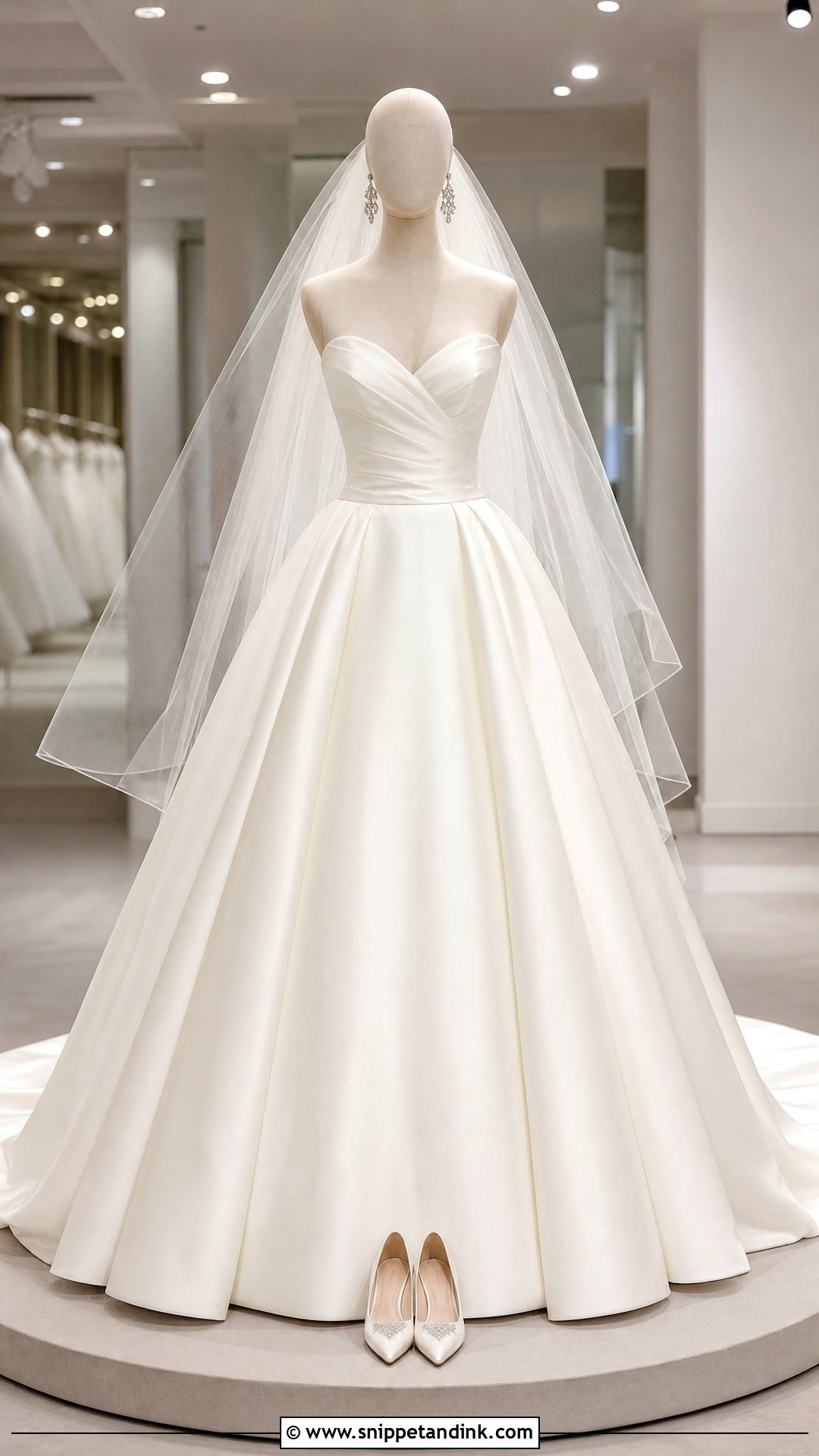
A strapless bodice on a form has nothing holding it up but the fit, and a gap at the top edge makes the whole dress look borrowed. I’ll pad discreetly inside the bodice when it’s needed, but overfilling distorts the cups and shows from across the room. A simple neckline can take a statement necklace; an embellished one usually wants earrings only. Hang a sheer veil behind the shoulders, set the form on a low round platform with heels at the base, and use bright, diffused light to define the neckline without deep shadow. Arrange the skirt and train evenly last.
8. Off Shoulder Wedding Dress on Mannequin
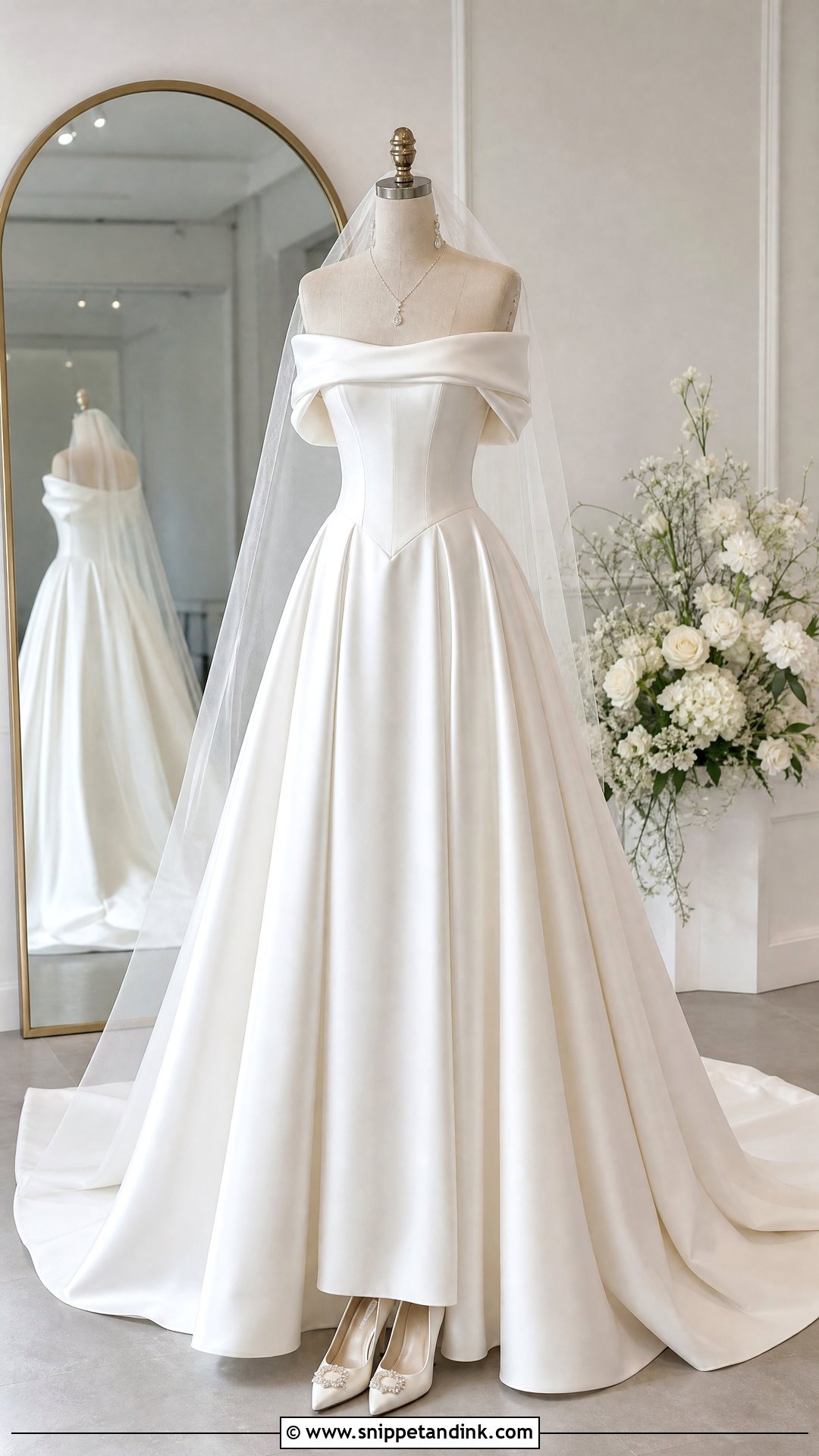
Off-the-shoulder sleeves drop the moment a form’s arms hang straight down, and one side always seems to slip lower. I angle both arms slightly away from the body and check the neckline is level from the front before styling anything. A fine choker or short pendant and drop earrings fit the open neckline, with the veil attached behind the shoulders. A mirror or a pale architectural backdrop works well here. Keep any flowers below the waist so nothing sits across the collar, whether it’s a portrait collar or a folded satin band.
9. Boho Wedding Dress on Mannequin
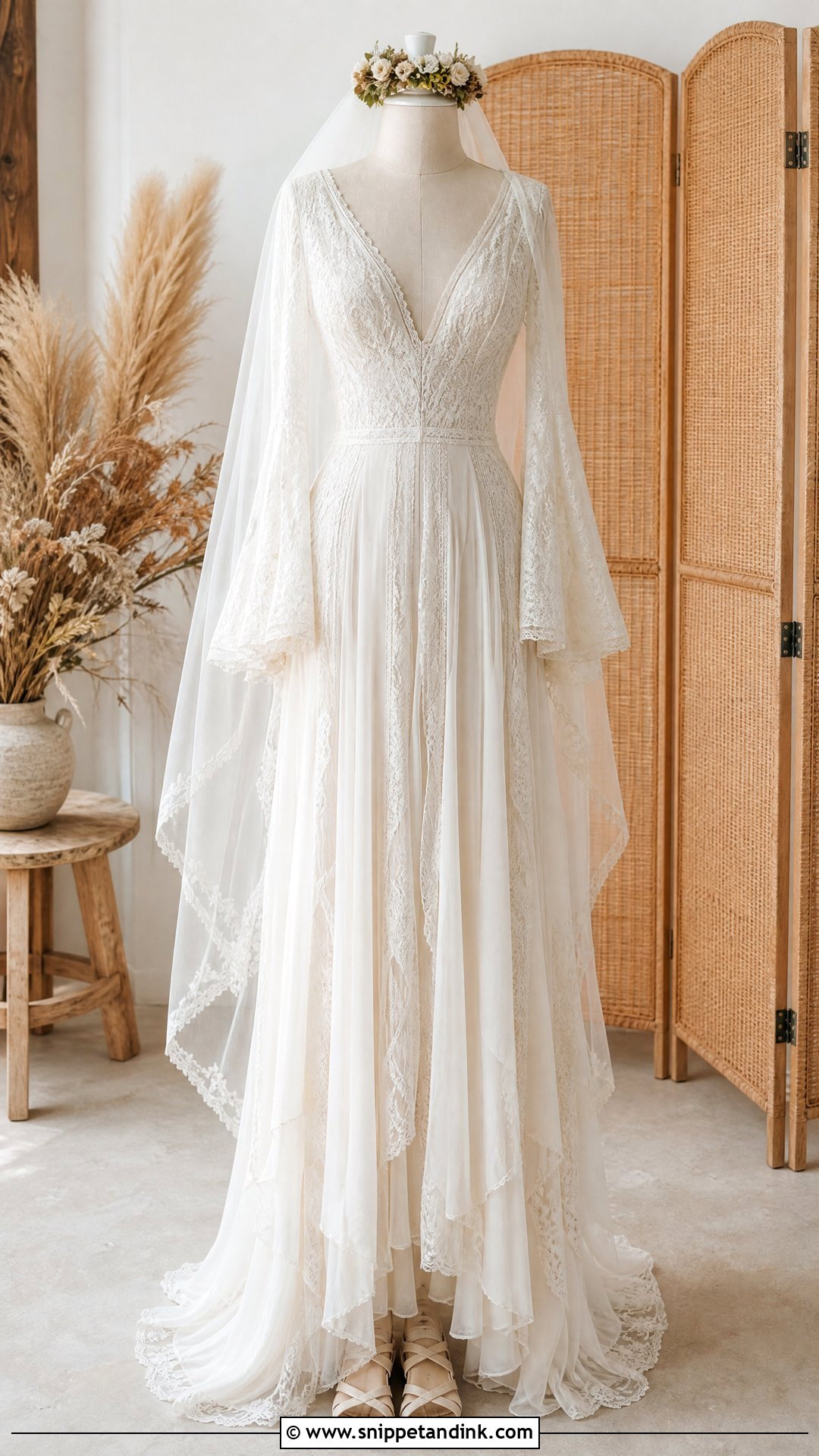
Boho gowns look wrong when they’re styled too neatly. A loose, slightly asymmetric train is more honest to how a flowing lace or chiffon dress moves than a perfect fan. Dress the form with a light veil, a subtle floral piece and neutral sandals, and place it near a pale woven screen, a few dried grasses or plain wood. Hold back on the props, because dried stems crowd a corner fast. Let bell sleeves, fringe and layered fabric hang free. Bright white light keeps ivory from turning yellow and shows crochet texture clearly.
10. Minimalist Wedding Dress on Mannequin
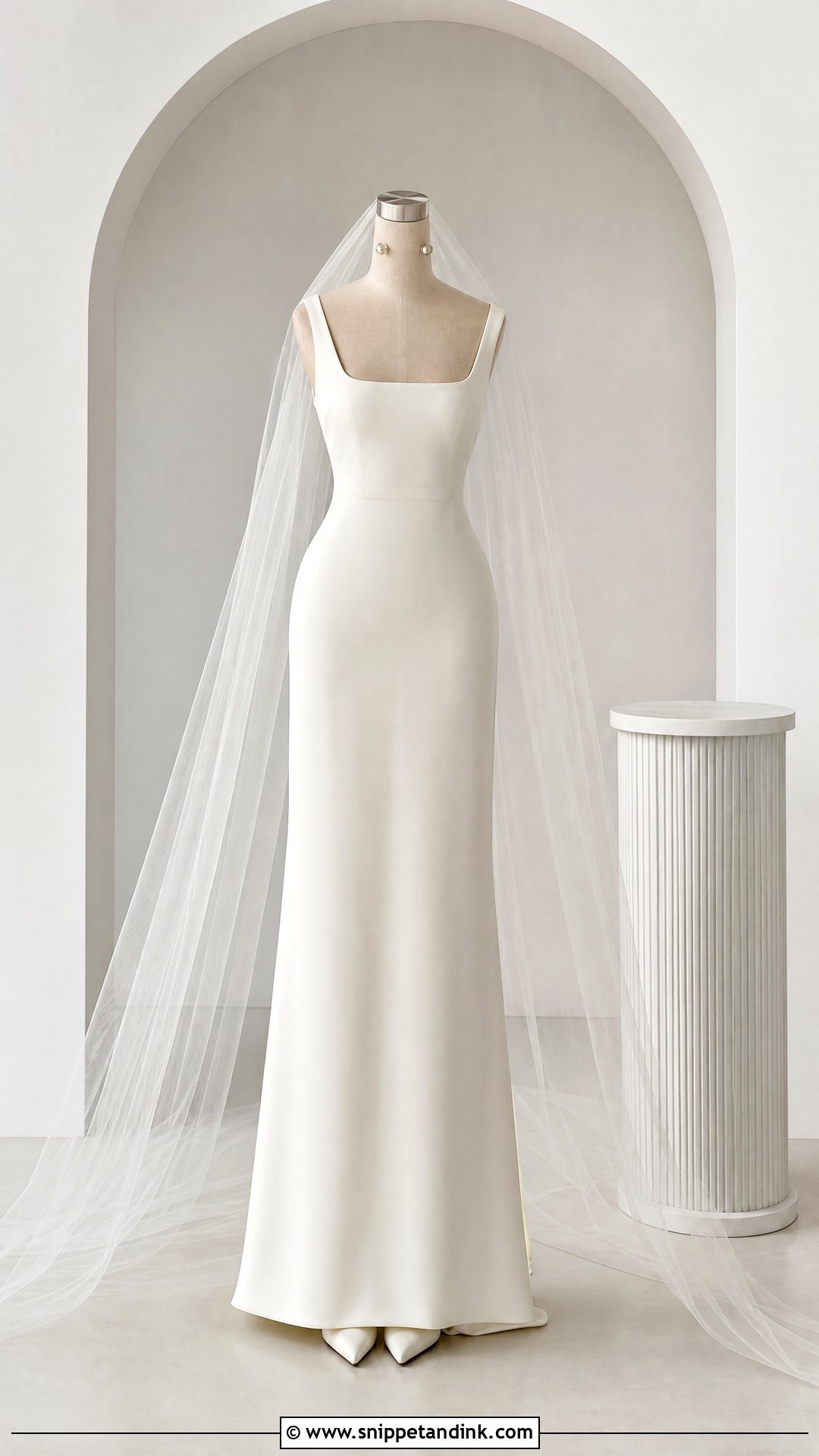
Minimal gowns are unforgiving on display. There’s no lace to distract from a crooked hem, a crease across the hip or a form that’s slightly too big, so steaming and fit matter more here than anywhere else. A matte white or fabric-covered form without a dramatic face or pose suits crepe, silk and plain satin. Earrings and sleek pointed shoes are enough. Skip an embellished veil; a plain chapel length or a detachable bow does the job. One architectural element, such as an arch or a narrow pedestal, against a white or light gray wall, and a level hem with a smooth train curve.
11. Vintage Wedding Dress on Mannequin
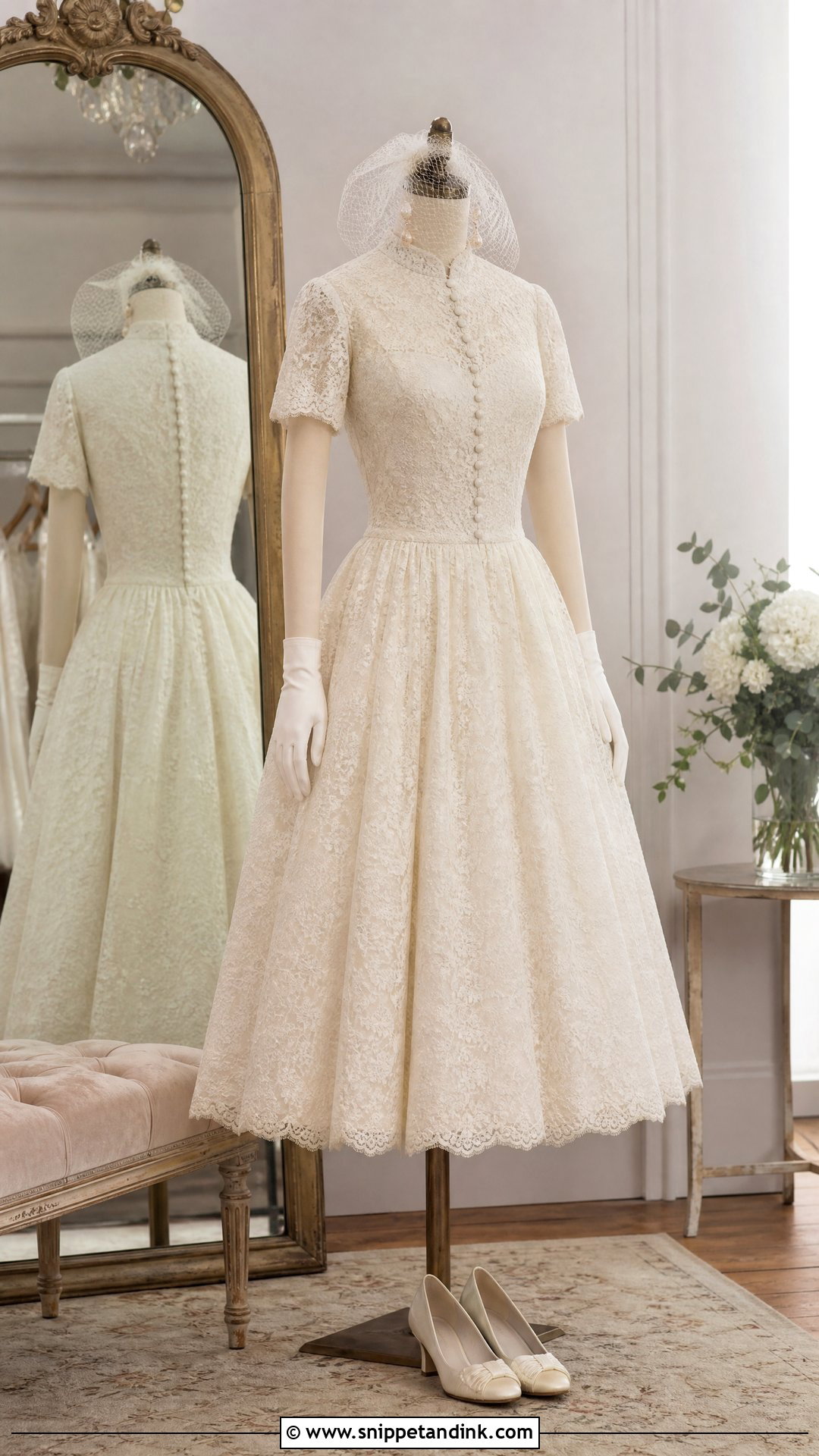
With a genuinely old dress, the form is chosen for the fabric, not the look. Older silk and lace can be fragile at the seams and closures, so I use an upholstered dress form that can be padded to the dress rather than squeezing the dress onto the form, and I never force a vintage zip or row of buttons. A birdcage veil, pearl earrings, gloves and low heels suit it. An antique-style mirror, pale wallpaper or a small velvet bench gives context without turning it into costume. Keep the train off rough flooring, which snags old lace. Tea lengths, high necklines and covered buttons all look right here.
12. Pearl Wedding Dress on Mannequin
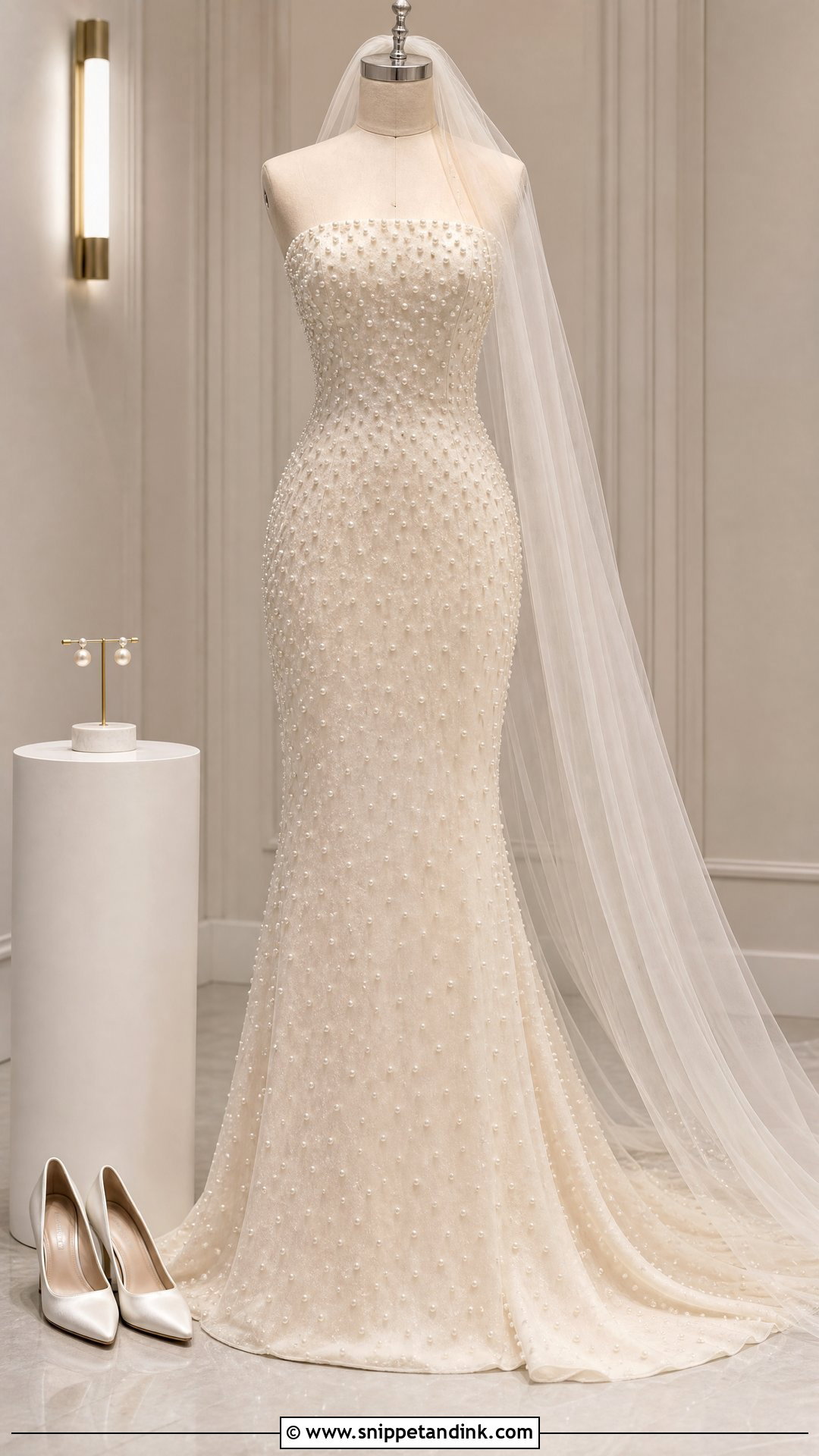
Pearls catch light as small hot spots, and under a strong single lamp a pearl bodice can look like glitter rather than texture. I use soft frontal light with gentle side light so each pearl reads as a raised bead. Keep the accessories plain: pearl studs, a smooth veil, satin shoes, and no necklace if the neckline is already worked. A champagne or white background suits it. Fit matters more than usual, because stretched fabric pulls hand-sewn pearls out of their spacing. Before you walk away, check underneath that no beading has caught on the base.
13. Floral Applique Wedding Dress on Mannequin
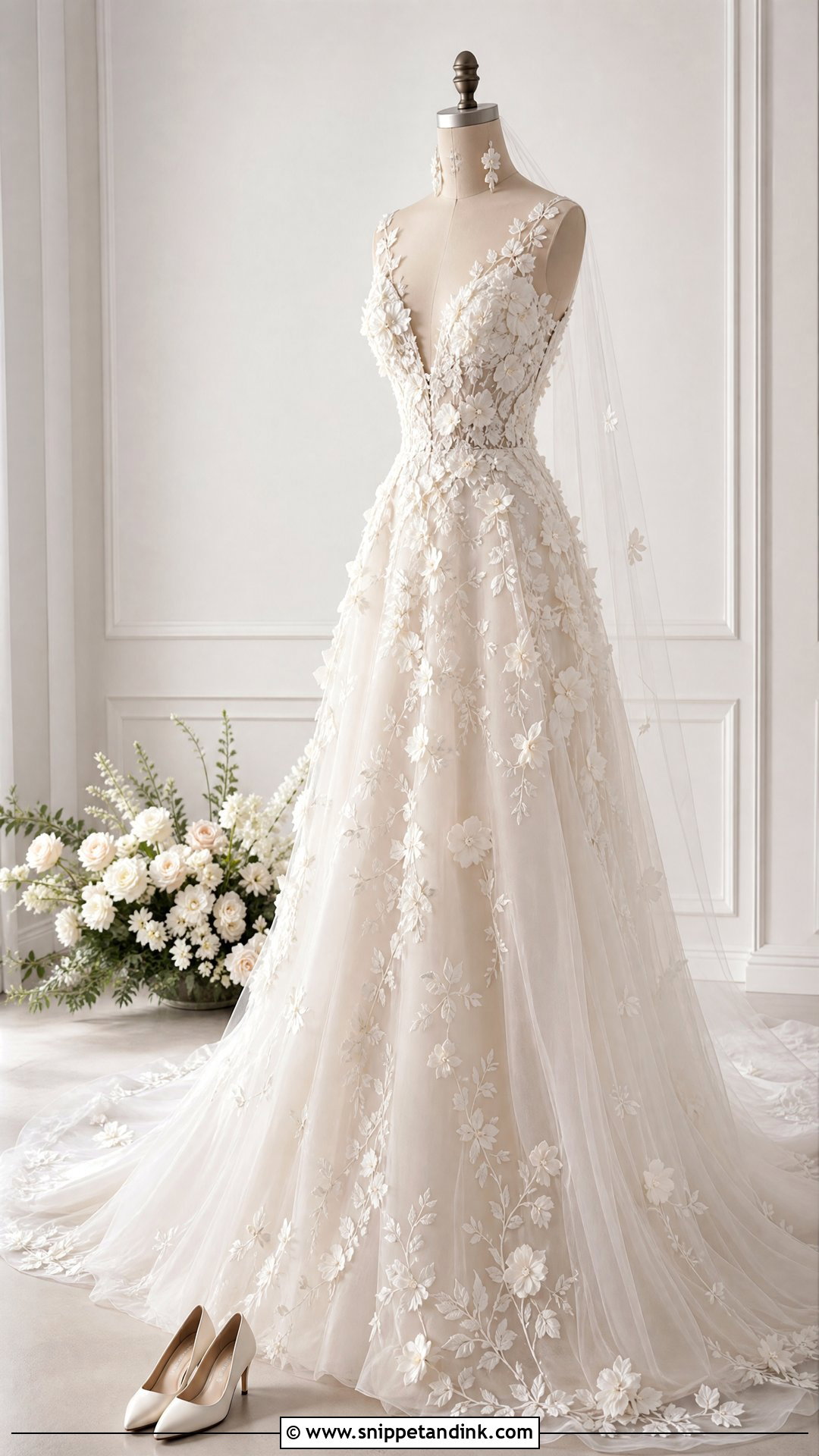
Appliqué flowers flatten in transit and in the bag, and they don’t fluff themselves back up on the form. After dressing, I go over the gown with my fingers and gently lift any flattened petals. A neutral form and bright white light keep every petal and embroidered vine visible. Add small floral earrings and a veil with little decoration so the patterns don’t compete. A single fresh arrangement near the floor repeats the theme. I usually turn the form slightly instead of square to the front, so people can see how the appliqués wrap around the waist and back.
14. Corset Wedding Dress on Mannequin
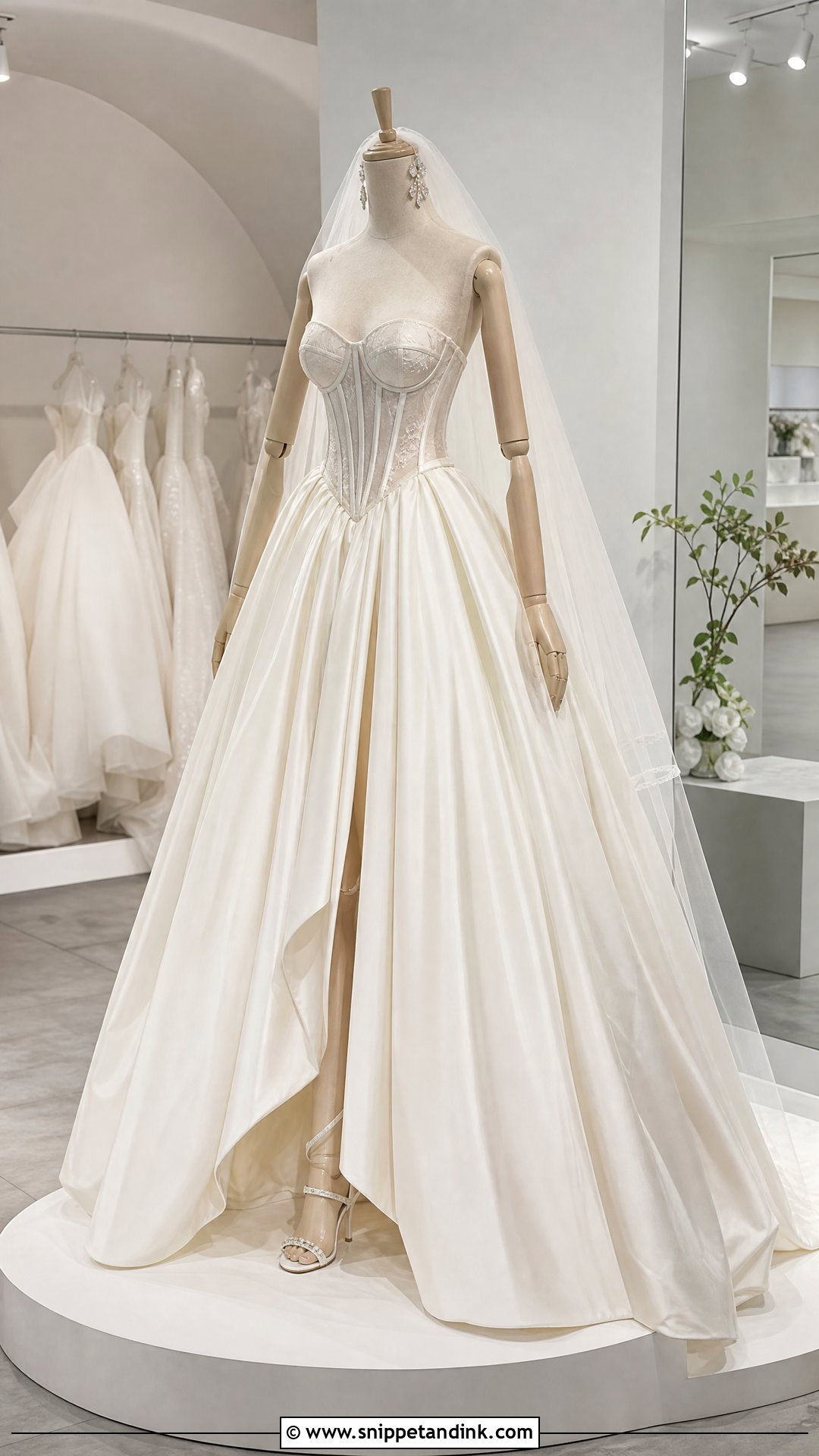
Boning tells you instantly whether a corset has been fitted to the form or just hung on it: if the bones bow or twist, the form is wrong. Adjust until they sit straight and the cups look balanced. For a lace-up back, lace it evenly and tuck the ends inside the skirt. A simple veil, crystal earrings and heels by the stand are enough. A three-quarter angle is the most useful view for this cut, because it shows the neckline, waist and back lacing in one look. Keep the background modern and plain, on a raised platform, and shape the skirt so the corset looks like part of the gown rather than a separate piece.
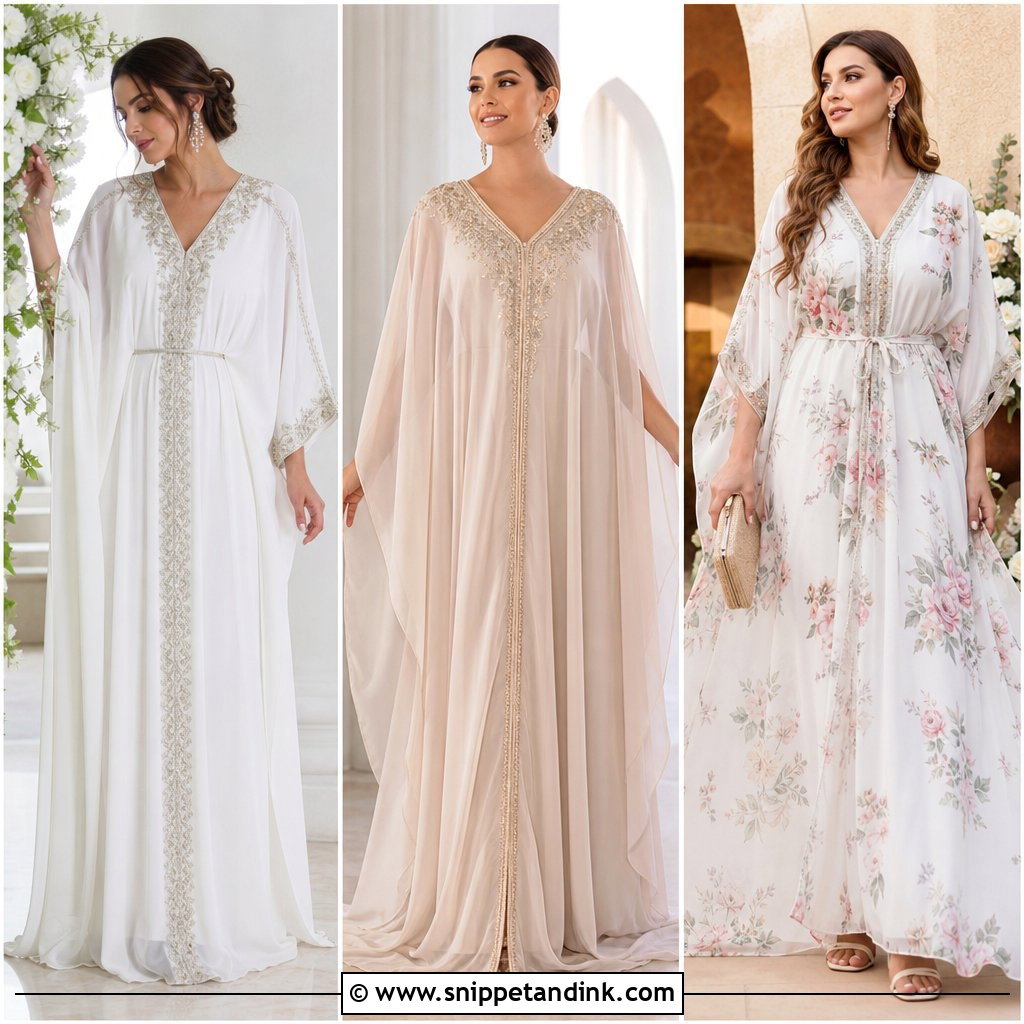
15. High Neck Wedding Dress on Mannequin
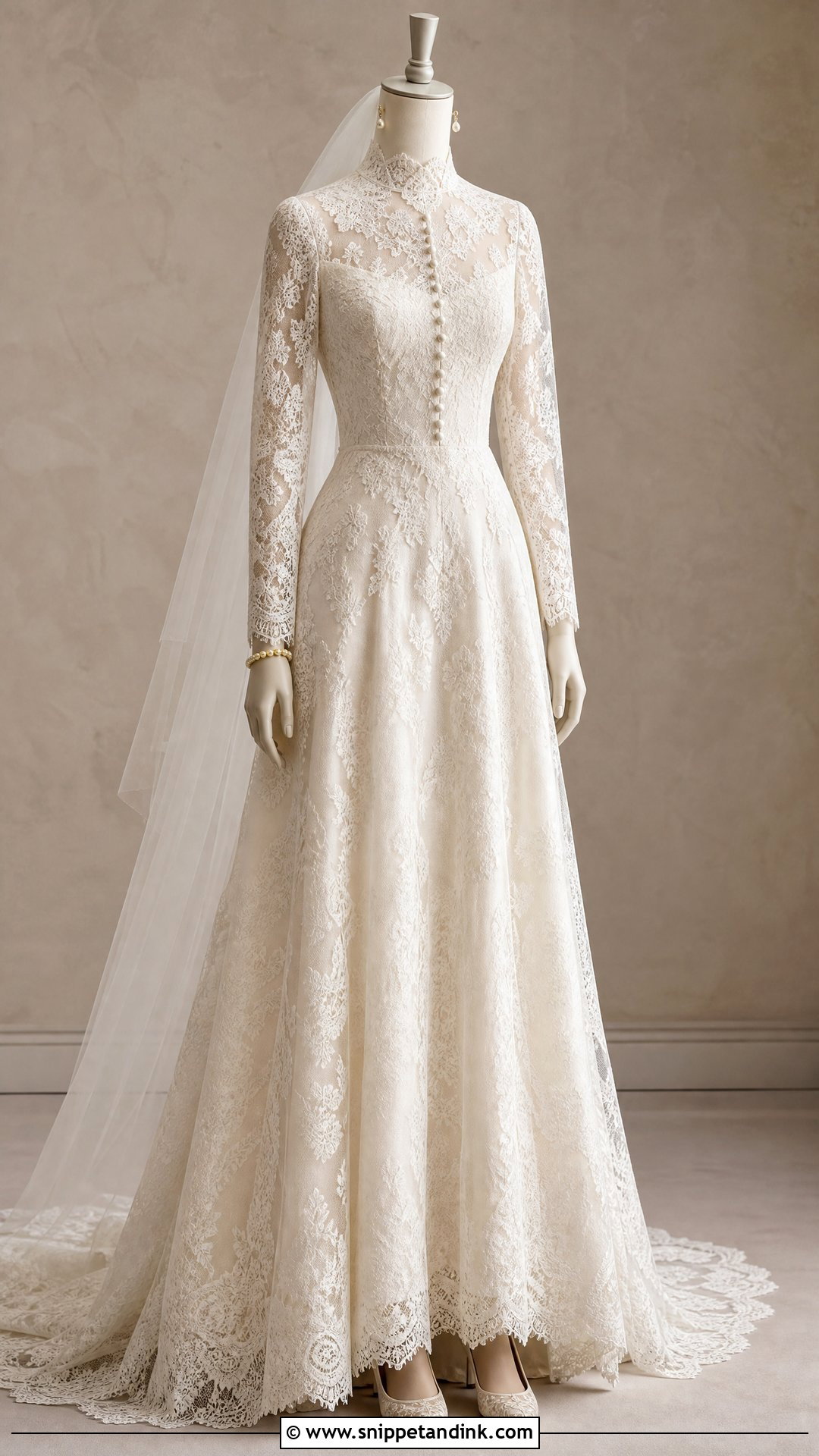
High necks bunch up on a short-necked form, and a compressed collar makes the whole bodice look ill fitting. I always reach for a long-neck form for this cut. Leave necklaces off, since they cover the lace and buttons that are the point of the dress; small earrings, a bracelet and understated shoes are better. Fix the veil behind the neckline or let it flow from a low comb. Soft taupe or muted gray behind white lace gives contrast while keeping the picture bright. If there are long sleeves, set the arms slightly out.
16. Square Neck Wedding Dress on Mannequin
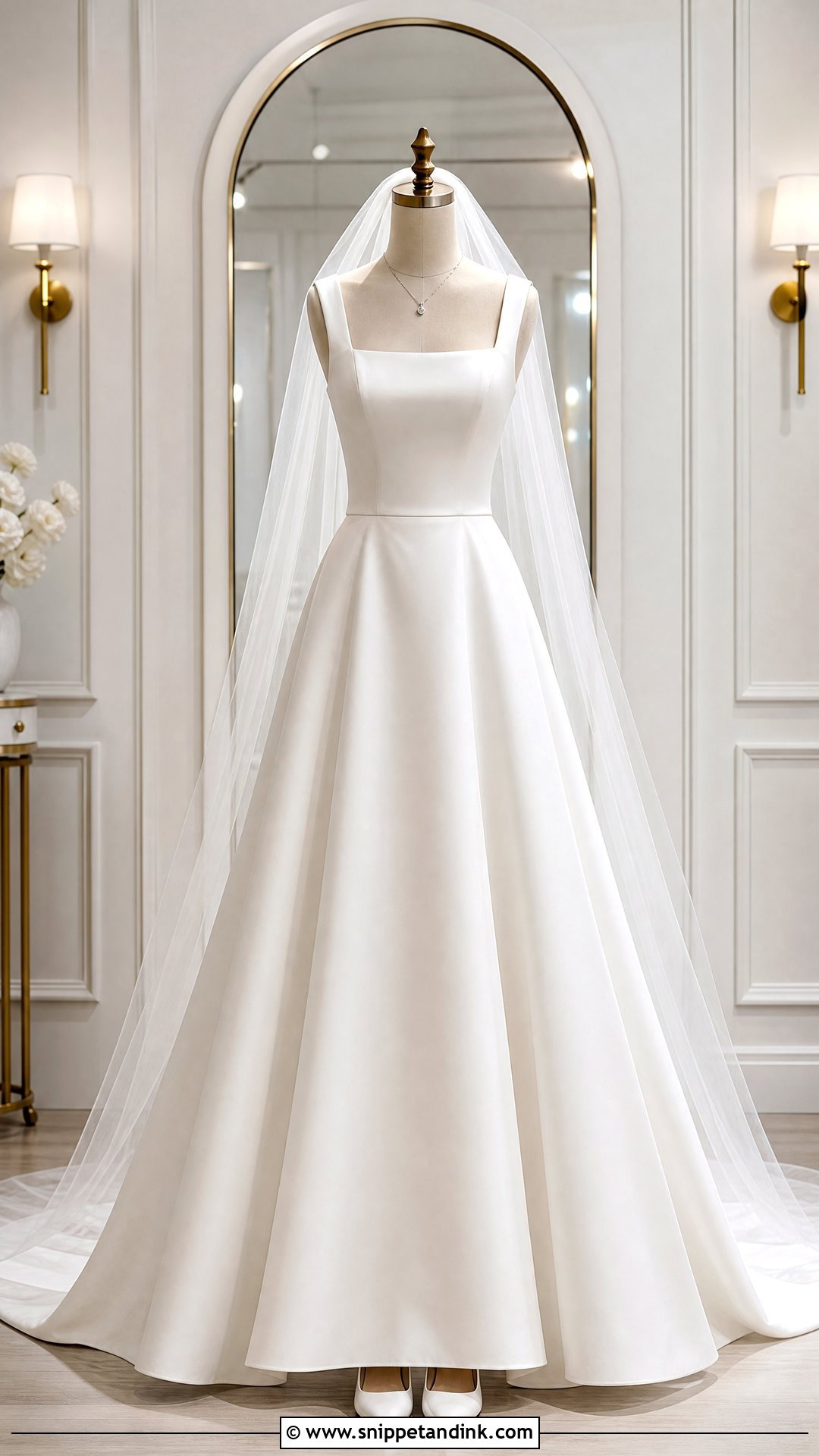
Square necklines show any lean in the form straight away, because the top edge is a horizontal line. I center the gown precisely and check both straps sit at the same height before anything else. A fine pendant or short strand of pearls softens the angles without covering them, with a plain veil and classic pumps. An arched mirror or paneled wall echoes the structure. The skirt can be a column, A-line or ball gown; keep it smooth either way. The cut suits modern satin, romantic puff-sleeve gowns and minimal designs with defined seams.
17. Tea Length Wedding Dress on Mannequin
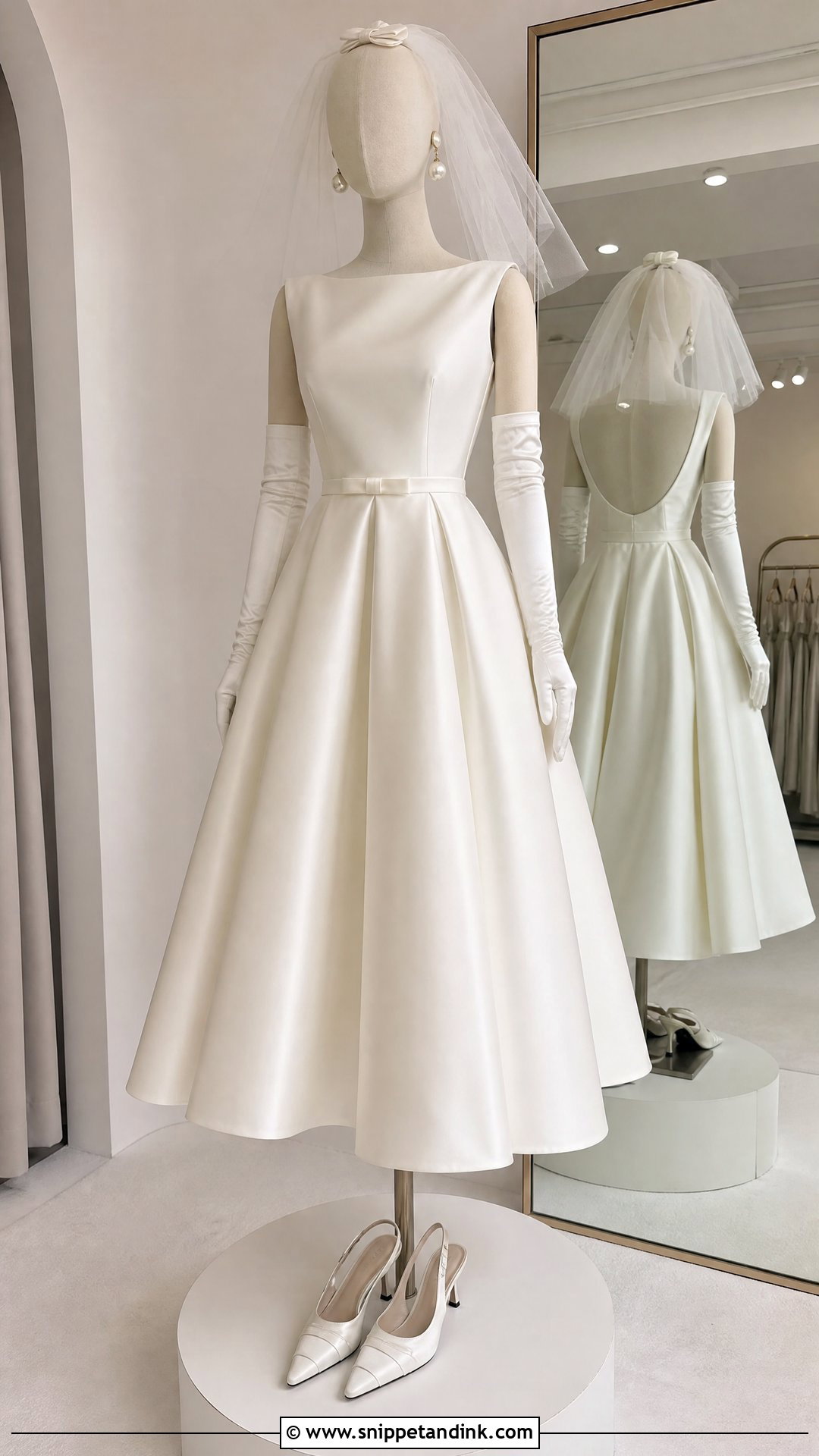
Tea length is the one cut where the shoes are part of the dress, so you need a full-body form with feet placed correctly, not a pole. Choose pumps, slingbacks, or bridal flats to match the gown’s mood. A short veil, pearl earrings and gloves push it vintage; plain accessories keep it modern. A raised platform puts the hem and shoes at eye level. Pale furniture or a simple mirror keeps the background light. Smooth each layer so the hem sits even all the way round. Courthouse collections, reception dresses and retro shapes all display well like this.
18. Blush Wedding Dress on Mannequin
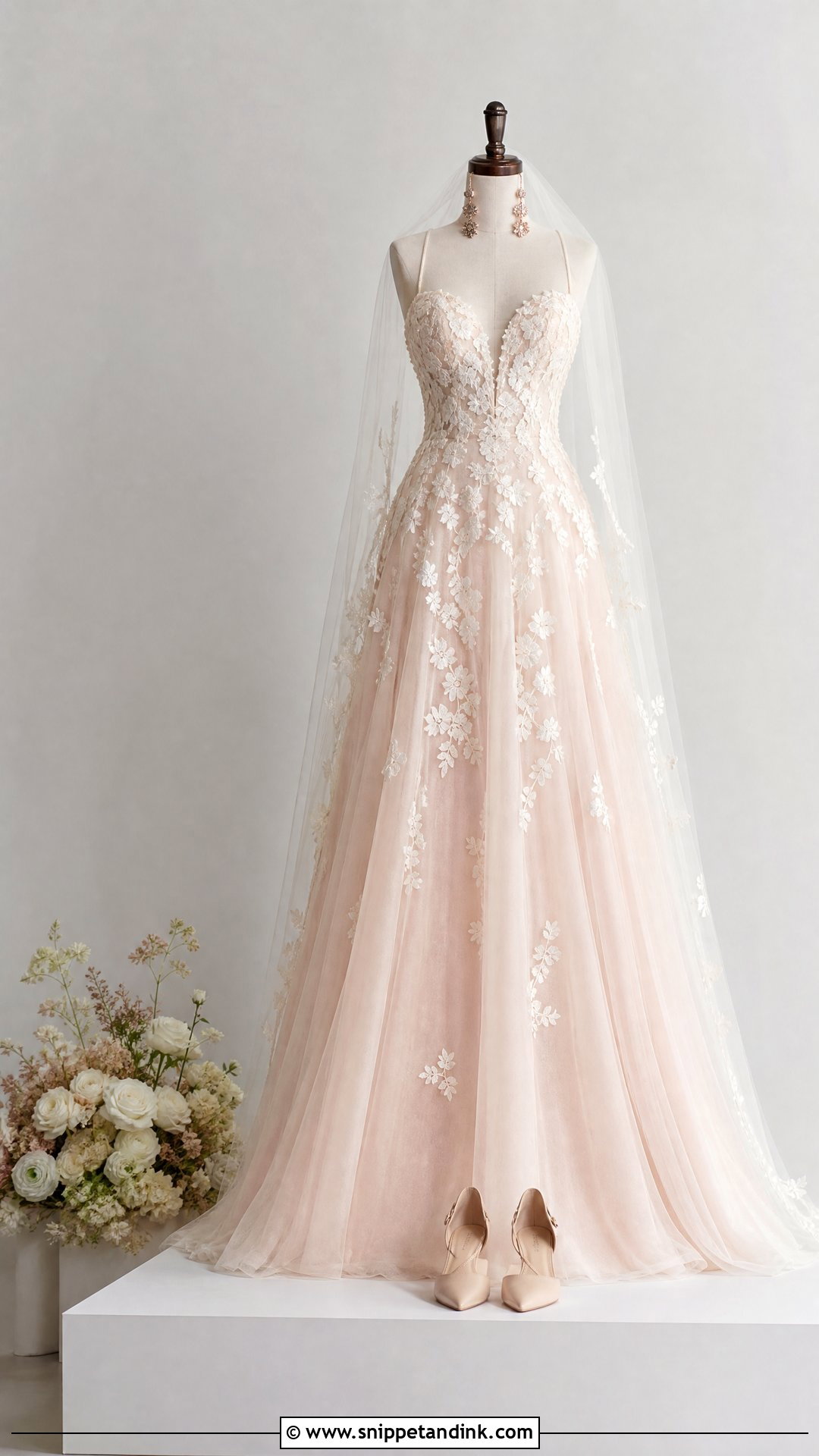
Blush disappears against pink and goes gray under warm yellow bulbs. I put it against white, light gray or muted beige and use neutral daylight-balanced light so the real undertone shows. Rose-gold earrings, nude shoes and a sheer ivory veil complete it. If there are floral appliqués or sparkle, keep the surroundings minimal: a white pedestal and one low arrangement of ivory flowers give enough contrast. Spread the skirt and train so any deeper blush lining shows through the tulle.
19. Black and White Wedding Dress on Mannequin
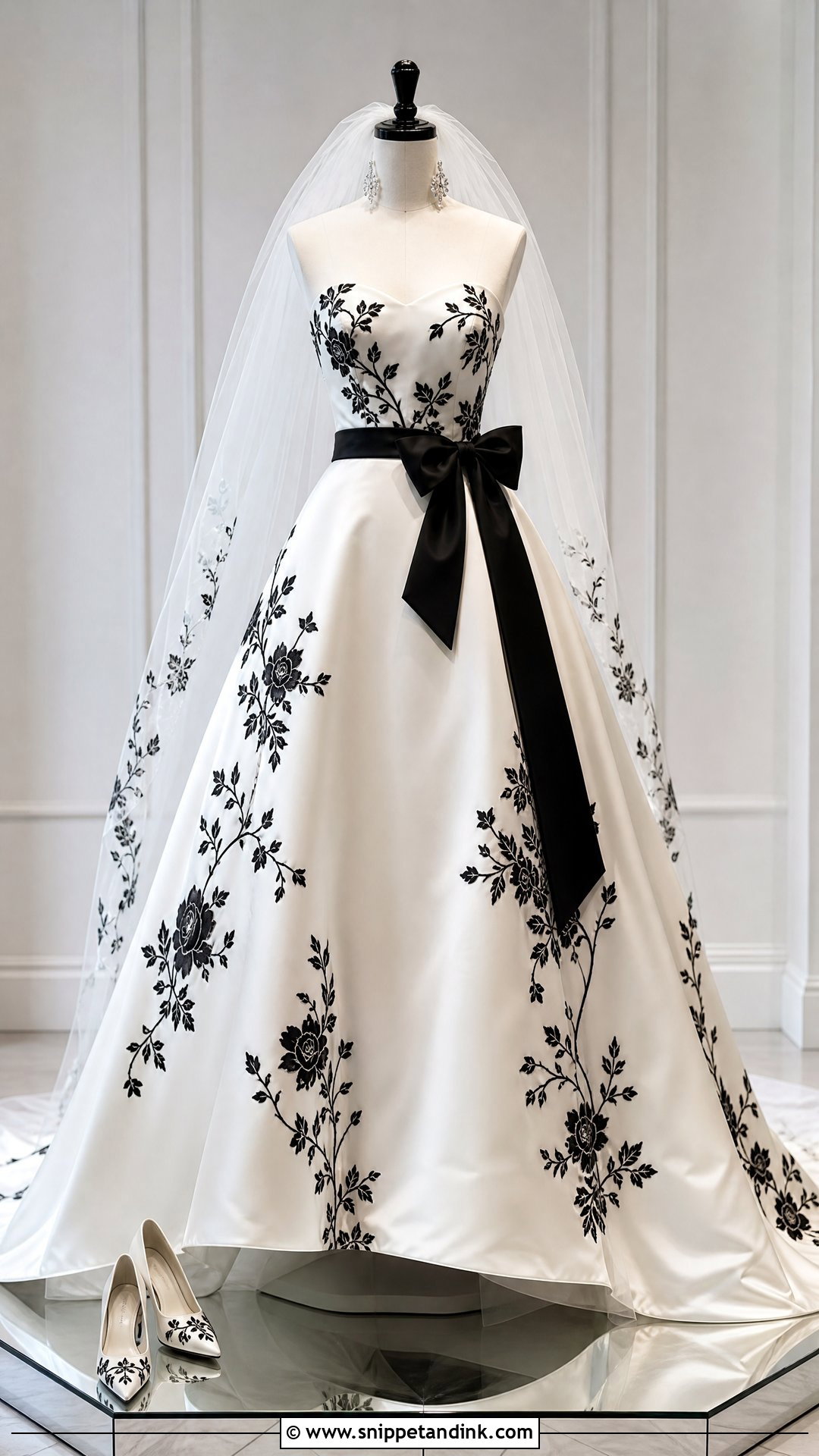
Black detail on a white gown pulls the eye hard, so the rest of the display has to stay quiet. A clean white form stops the dark elements from merging into the stand. Style with black or crystal earrings, a white veil and matching pointed shoes. Whatever carries the black, a sash, lace overlay, bow or embroidered flowers, turn the form so that detail faces forward. A pale background and bright white light keep the contrast accurate; dark walls swallow the train edges. A mirrored platform adds depth without bringing in another color.
20. Wedding Dress on Mannequin With Veil
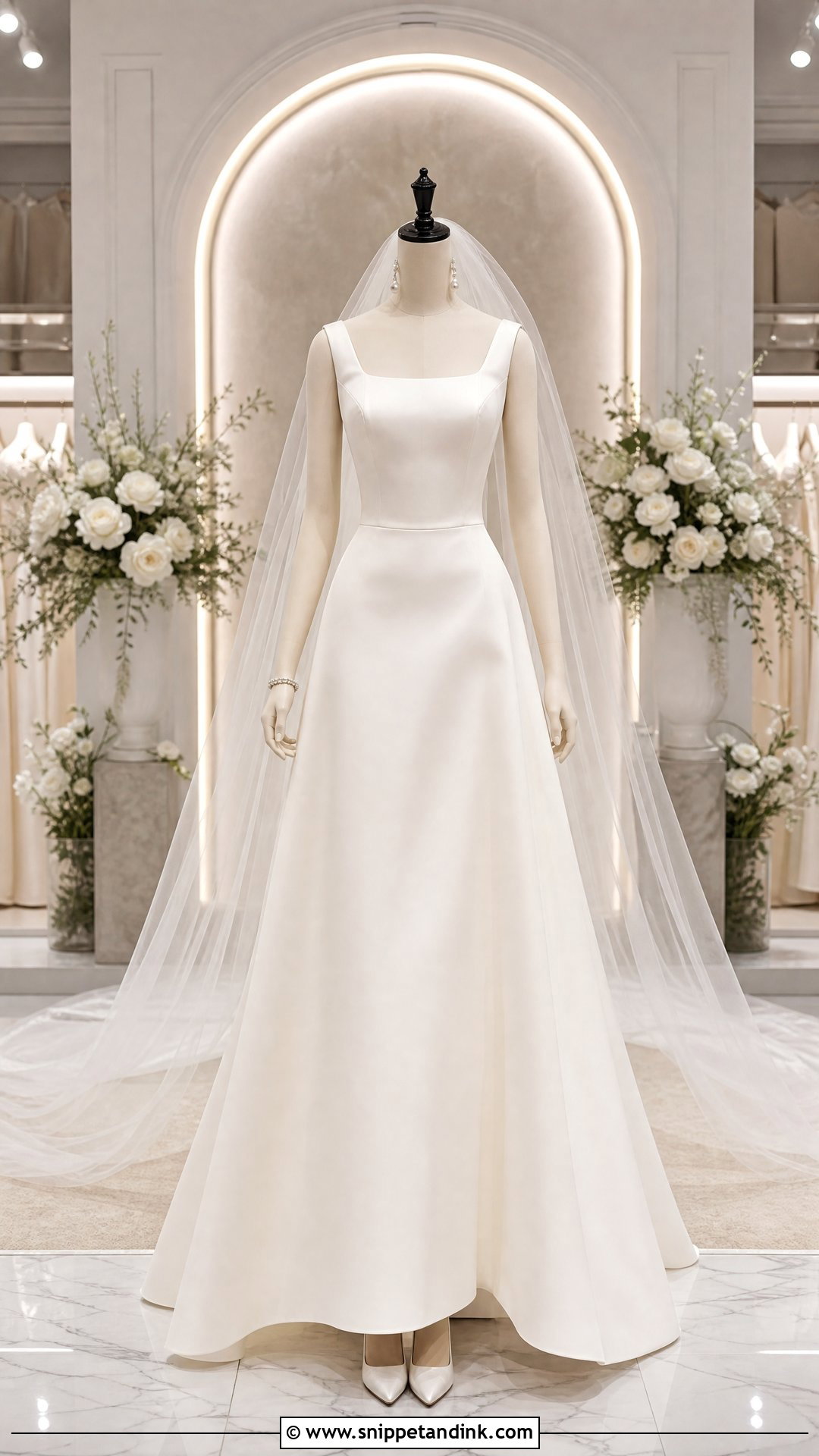
The veil is the easiest piece to get wrong, because on a form it tends to slide forward over the bodice. Short veils suit tea length or heavily decorated gowns; chapel and cathedral lengths suit clean gowns with long trains. Secure the comb firmly into the form’s head or a hidden pad, then sweep the tulle behind the shoulders. Add earrings, shoes and one small extra such as a bracelet or hair comb. Keep the form away from busy racks so the full length of tulle is visible, and use soft front light with a gentle backlight to separate the veil from the gown.
How Long a Gown Can Stay Dressed on a Form
A form is a short-term home. Hung on the shoulders, a heavy skirt pulls on the bodice seams all day, and beaded or full gowns can stretch at the straps or waist over weeks. Daylight is the other problem. Sunlight through a shop window fades and yellows silk and ivory fabrics, and the damage shows as a line where folds were in shadow.
- Rotate window gowns regularly and keep them out of direct sun, even behind glass.
- Support the weight of a heavy skirt with a hoop or by letting part of it rest on the platform.
- Dust collects on the shoulders and the flat top of the train, so a cover overnight helps in a busy shop.
- Keep forms away from heaters and air vents, which dry fabric and push dust into it.
Displaying your own dress after the wedding
If you want your gown on a form at home, have it professionally cleaned first. Sugary drinks and perspiration can be invisible on the day and then brown as they oxidize, and a form in a bright room speeds that up. Enjoy it for a while, then move it to an acid-free box away from light and damp. Folded flat with tissue in the creases, it will keep far better than standing in a corner.
What People Should Notice First, and What They Shouldn’t
The displays that work all share the same habits: a form that fits the gown, a clear outline from neckline to train, neutral light that shows the true color, and accessories that stop short of covering the work. Whatever the gown is, from minimal satin to a full tulle ball gown, it should be the first thing anyone sees, and the props the last.
You'll Like These Ideas:



Leave a Reply