
White in Indian dressing is all about the details you add to it. A plain white base takes tonal Chikankari, a gold zari border, mirror work or a bright dupatta equally well, so the same color can read relaxed in the morning and festive by night. The outfits below cover the main shapes of Indian ethnic fashion: cotton kurta sets, Anarkalis, sarees, shararas, lehengas and a few Indo-Western mixes. Fabric decides the mood more than cut does. Cotton feels easy, while silk, organza and georgette look dressier. Each look comes with the shoes, jewelry and hair I’d use, and notes on where white needs extra care.
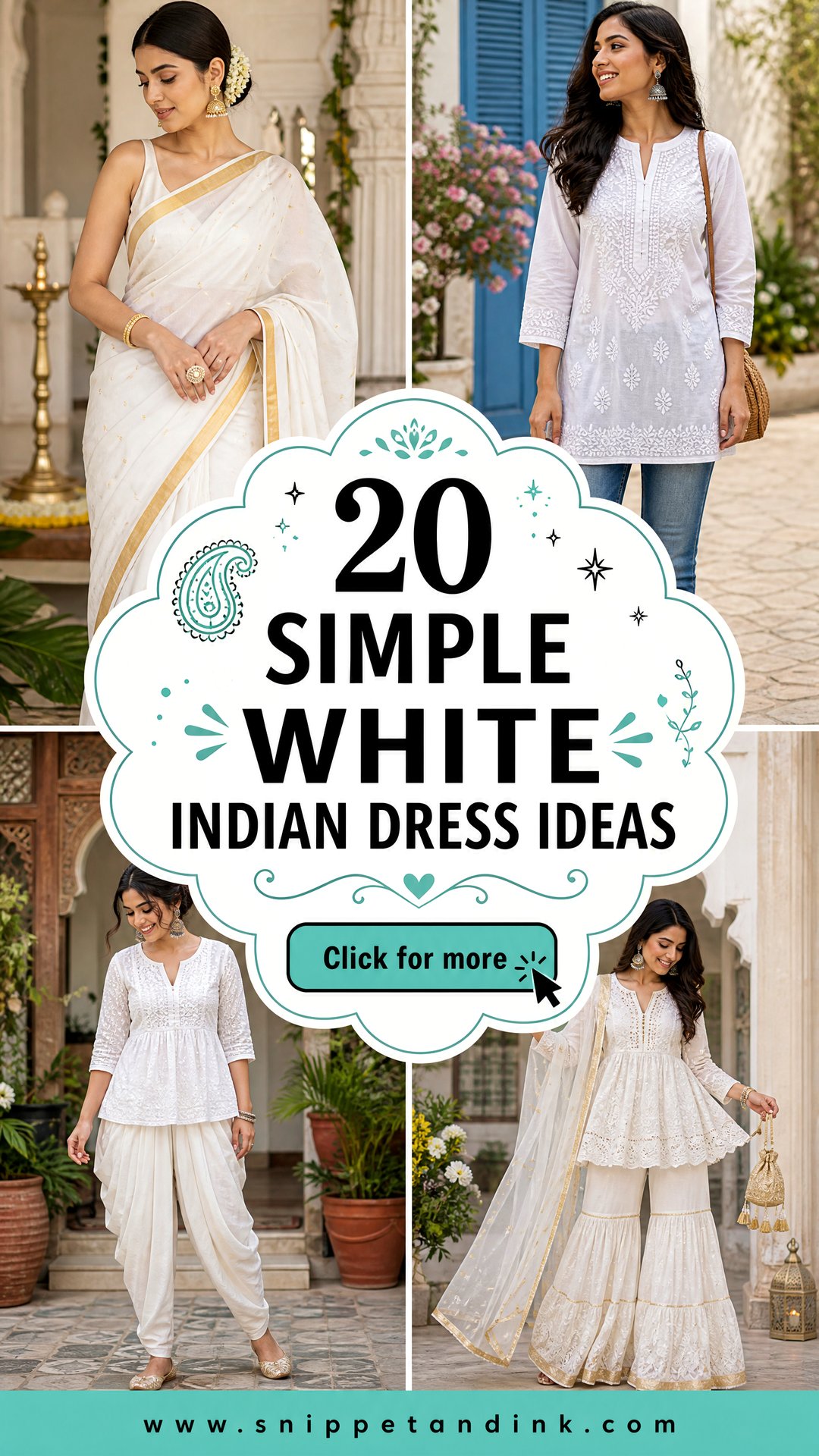
Is White Welcome at Every Indian Wedding Function?
This is the first question I ask when someone brings me a white outfit for a wedding. In many North Indian Hindu families, plain white has long been linked with mourning, and older relatives may still feel uneasy seeing a guest in all white at the main ceremony. In other communities, it’s completely normal: Kerala brides wear ivory and gold kasavu sarees, and white is standard at Christian Indian weddings.
The middle ground most families accept is white at daytime functions. Haldi, mehndi, a morning puja or a brunch are all comfortable places for it. For the main ceremony or reception, add clear festive color through a dupatta, a zari border or gold jewelry, or simply ask the hosts. A quiet question beforehand avoids an awkward moment on the day.
- All white with silver: best for daytime and casual events.
- White with gold zari or a colored dupatta: works for most functions.
- White as a base under heavy color or embroidery: safest for the main ceremony.
1. White Chikankari Kurta With Straight Pants
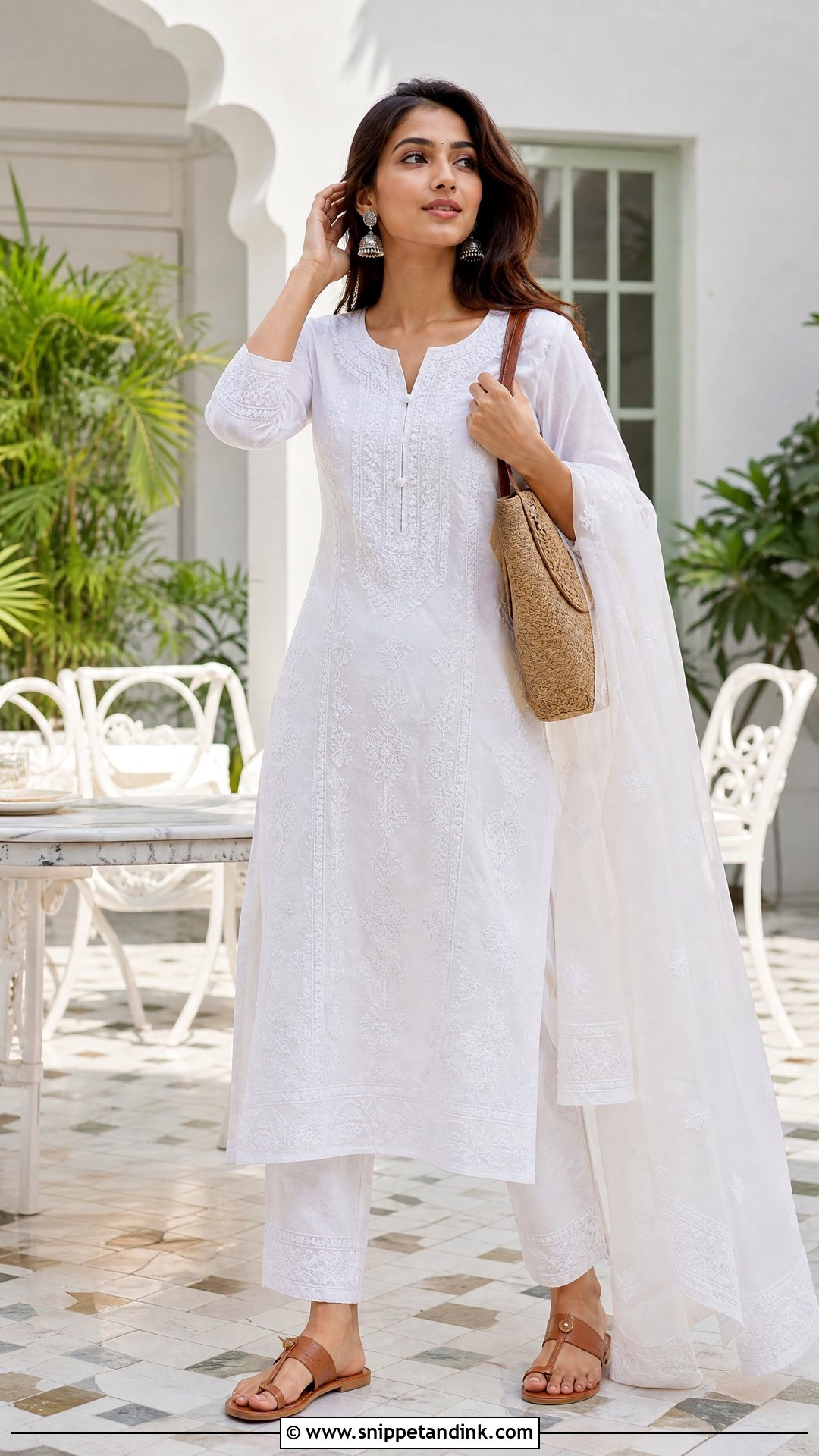
A Chikankari kurta with straight pants is the outfit I’d pack if I could only pack one. The hand embroidery from Lucknow is worked in white thread on fine cotton, so it adds texture without adding color. Choose a calf-length kurta with comfortable side slits and fitted cotton pants. A light white dupatta finishes it, and tan Kolhapuris give warm contrast. Silver jhumkas and a slim watch are enough. The same kurta works with palazzos, jeans or a sharara later, which makes it great value. Check the lining, though: fine Chikankari cotton is often sheer and needs a slip underneath.
2. White Cotton Salwar Suit With Printed Dupatta
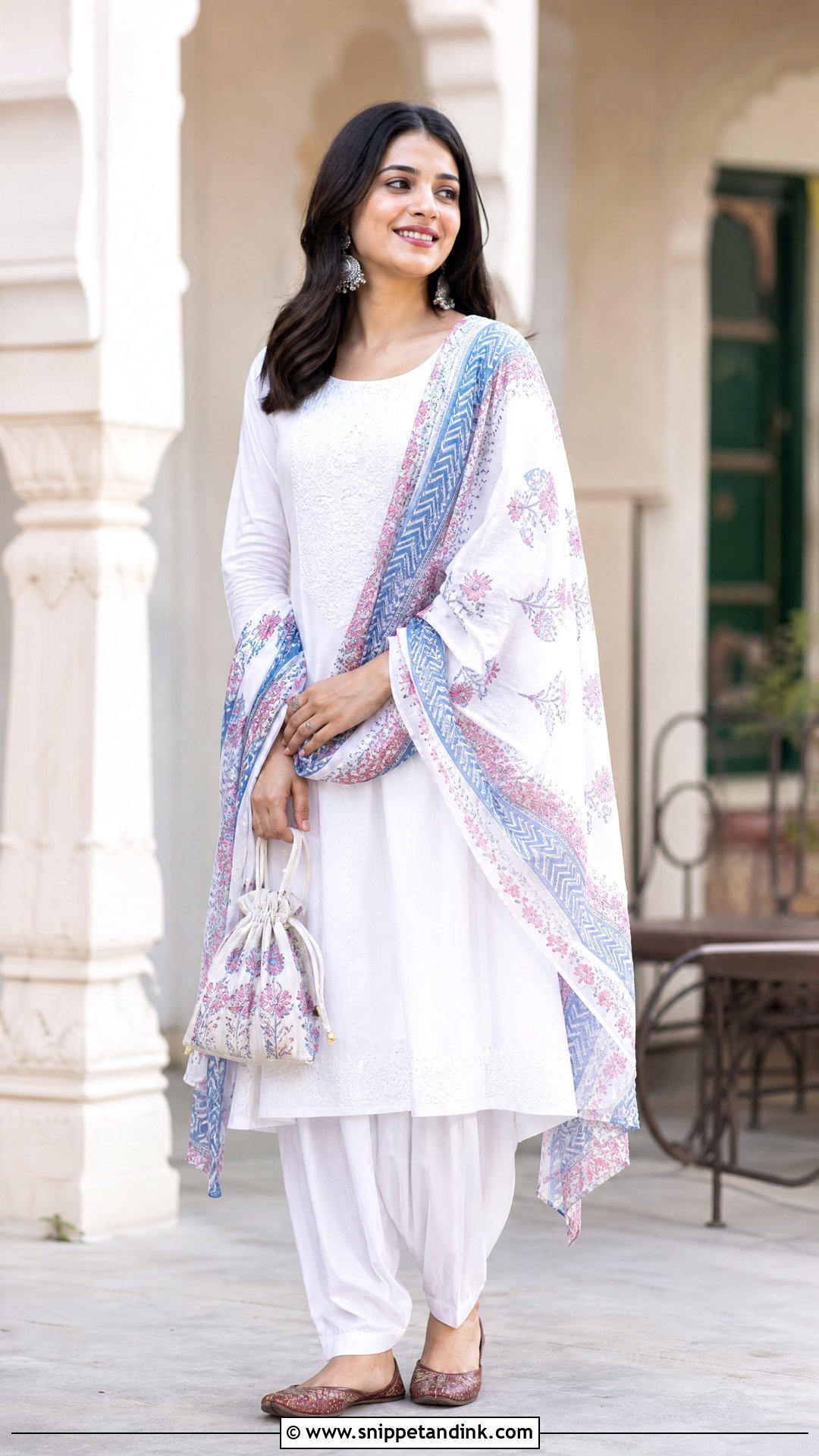
A white cotton salwar suit is light and practical, and on its own it can look a bit flat. The fix is one colored layer. I’d keep the kameez straight or slightly A-line with modest lace edging and a soft pleated salwar, then let a block-printed dupatta in indigo, rust, pink or green carry the color. Leather juttis or flat sandals, a small fabric potli and oxidized silver earrings finish it. A plain braid, light makeup and a small bindi complete the look. It suits family visits, daytime pujas and long days on your feet.
3. White Anarkali Suit With Churidar
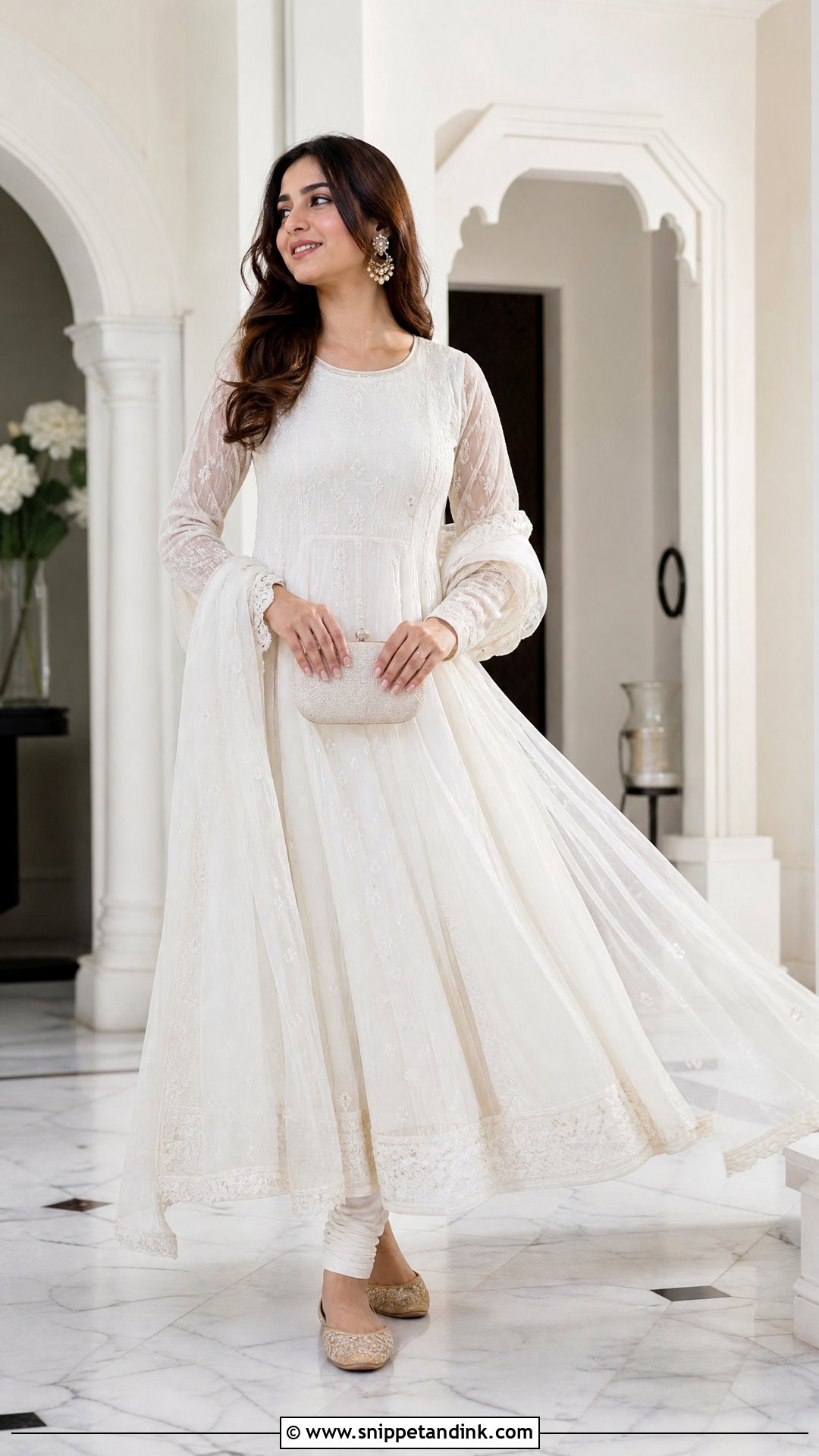
Anarkalis move beautifully because the flare starts high, so the fit across the shoulders matters most. If the shoulder seams sit too wide, the whole flare drops and looks shapeless. Cotton, georgette or cotton-silk all work; georgette has the best swing. A tonal embroidered hem defines the skirt without sparkle. Wear it with a fitted white churidar and a sheer dupatta over one shoulder. Pearl earrings, an ivory clutch and silver or champagne juttis complete it, with a low bun or soft waves. A narrow metallic belt adds waist definition if you want it.
4. White Kurta With Palazzo Pants
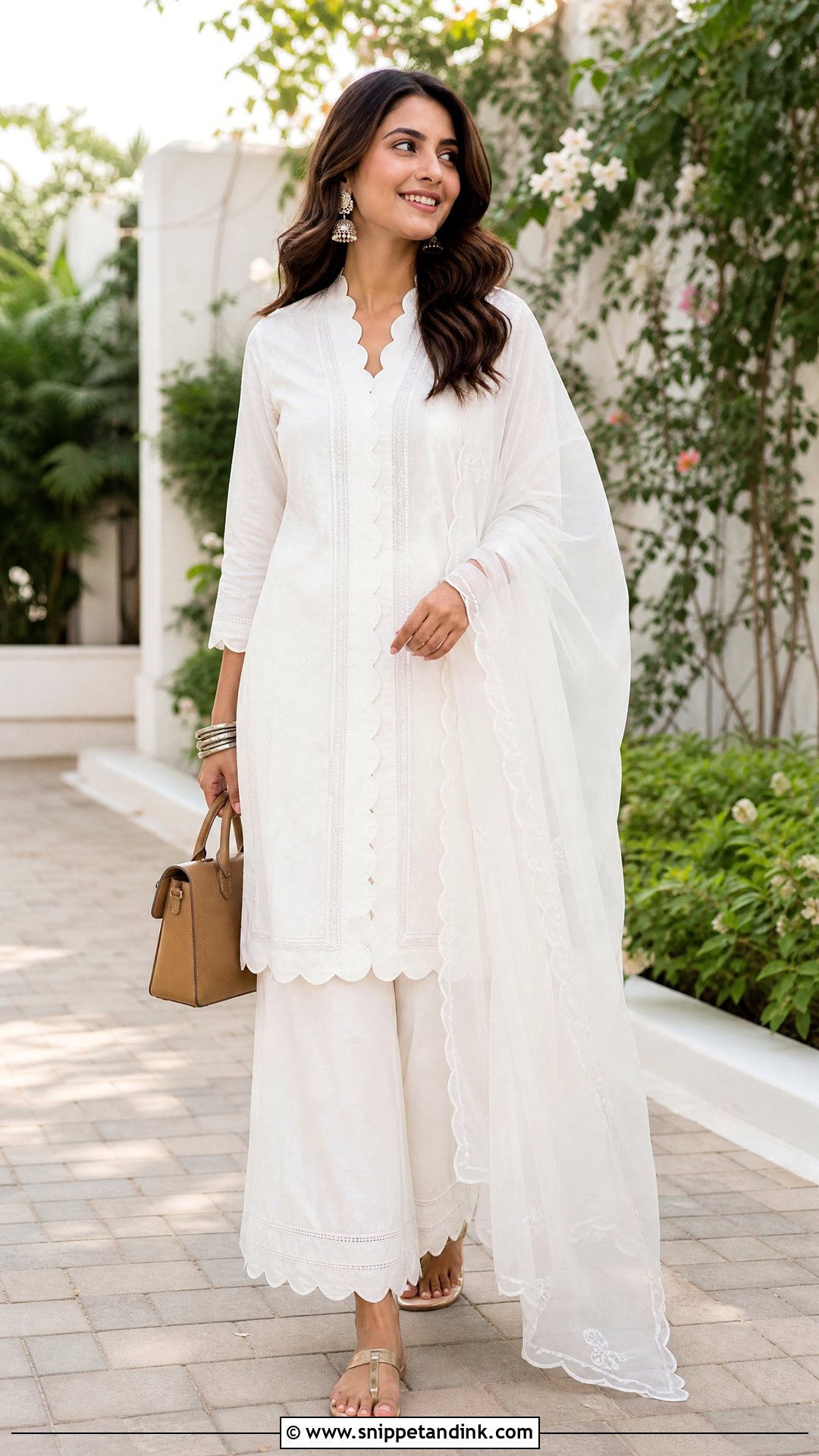
Palazzos are wonderful for heat, and they go wrong at the hips. Pleats gathered at the waist add bulk, so I look for palazzos with a flat front and a soft fall. Pair them with a straight white kurta with small motifs, lace panels or a scalloped hem. Add an organza or chiffon dupatta for a traditional finish, or skip it and carry a tan handbag. Metallic flats, medium hoops and stacked bangles are plenty. The long vertical line lengthens most figures. It’s practical for summer gatherings and sightseeing.
5. White Sharara Suit With Short Kurta
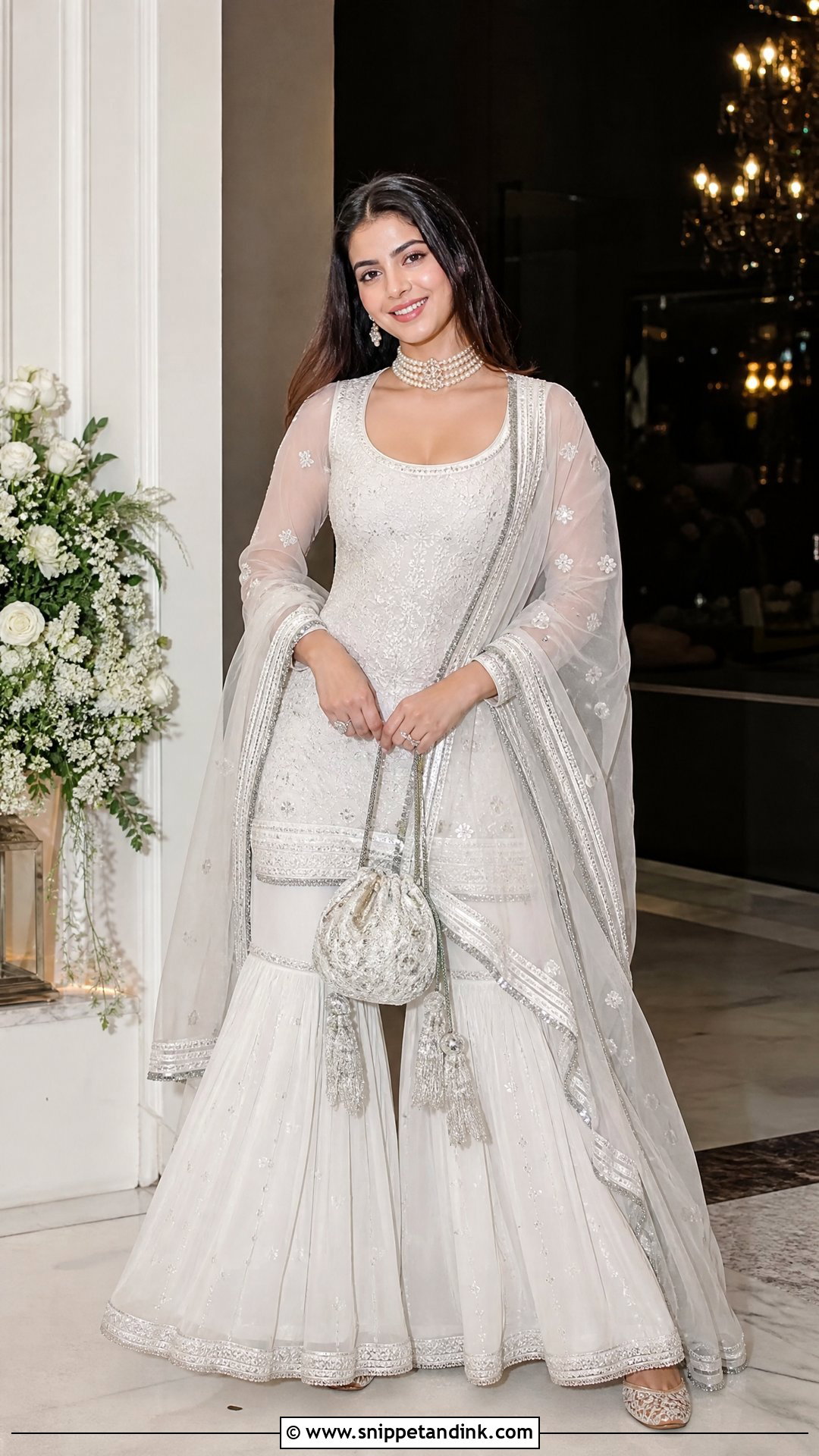
Shararas create volume below a short kurta, and they’re the white outfit I’d choose for a sangeet. A fitted hip-length kurta with tonal threadwork or small mirrors sits above flared pants that fit snugly at the waist. A sheer dupatta with a silver border ties it together. Embroidered juttis show under the flare, which keeps the look traditional. Frame the face with a pearl choker or medium jhumkas, and carry a silver potli. Make sure the sharara hem clears the floor in your shoes, because it gets stepped on during dances.
6. White Gharara Suit With Embroidered Dupatta
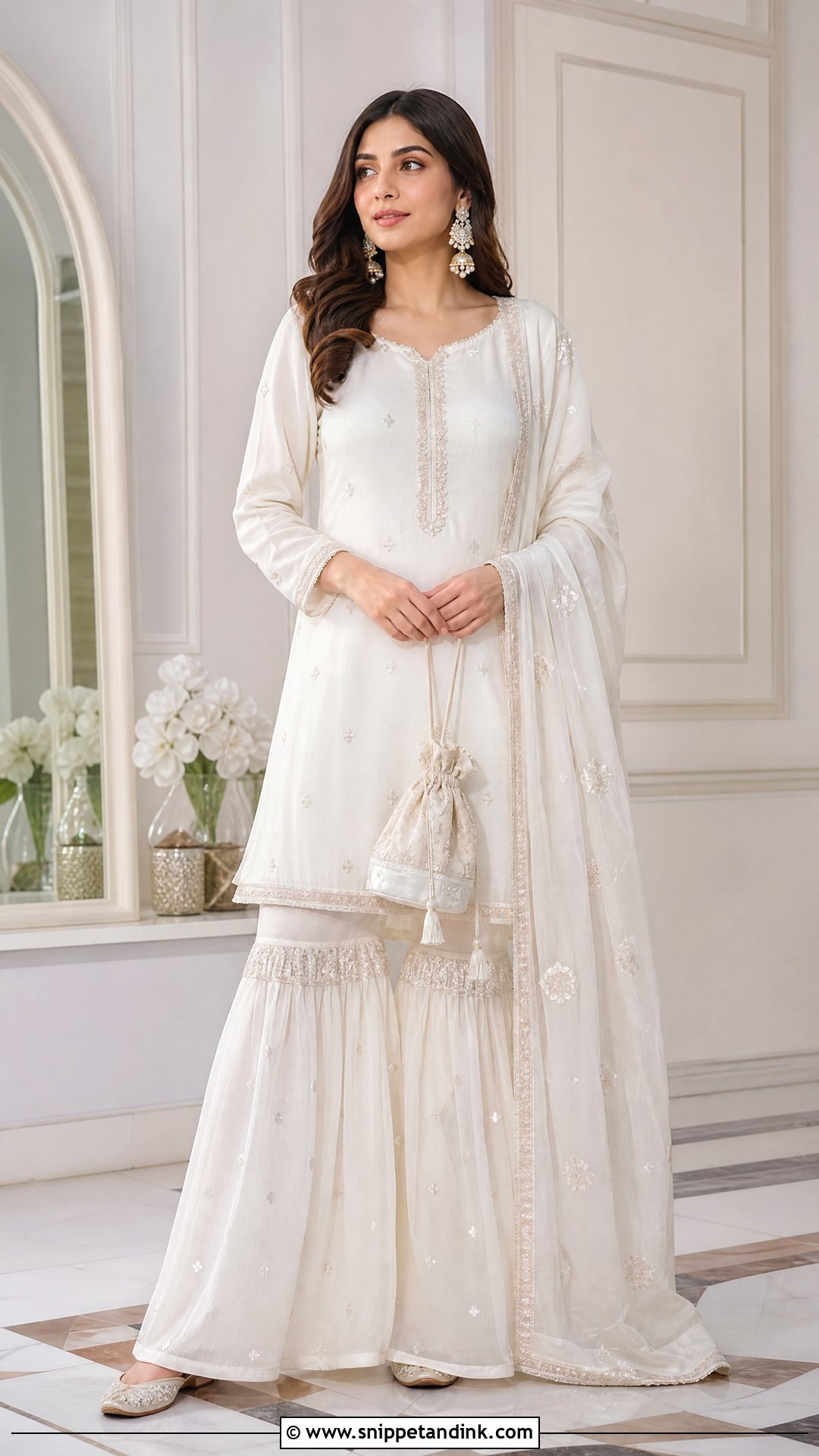
A gharara is often confused with a sharara, but the flare starts from a gathered seam at the knee rather than the hip, which gives it a more defined shape. Pair it with a knee-length kurta and keep the kurta plain so the gharara leads. An embroidered dupatta in white, ivory or soft pastel adds texture. Pearl drops, a compact potli and pointed juttis suit it, with a side-parted low bun. The knee seam carries the weight of the flare, so check the waistband sits securely. It works for receptions and formal dinners.
7. White Saree With Gold Border
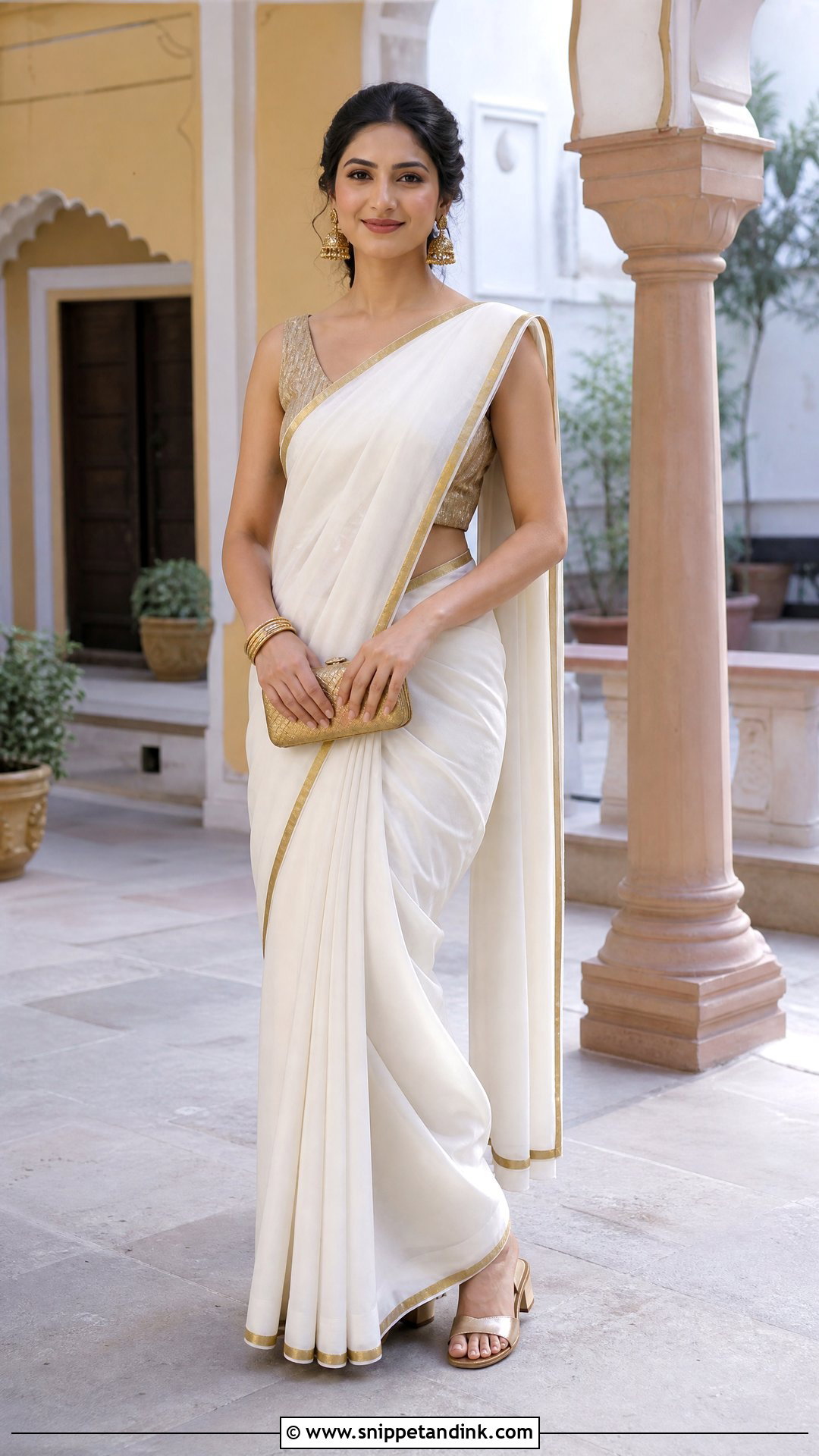
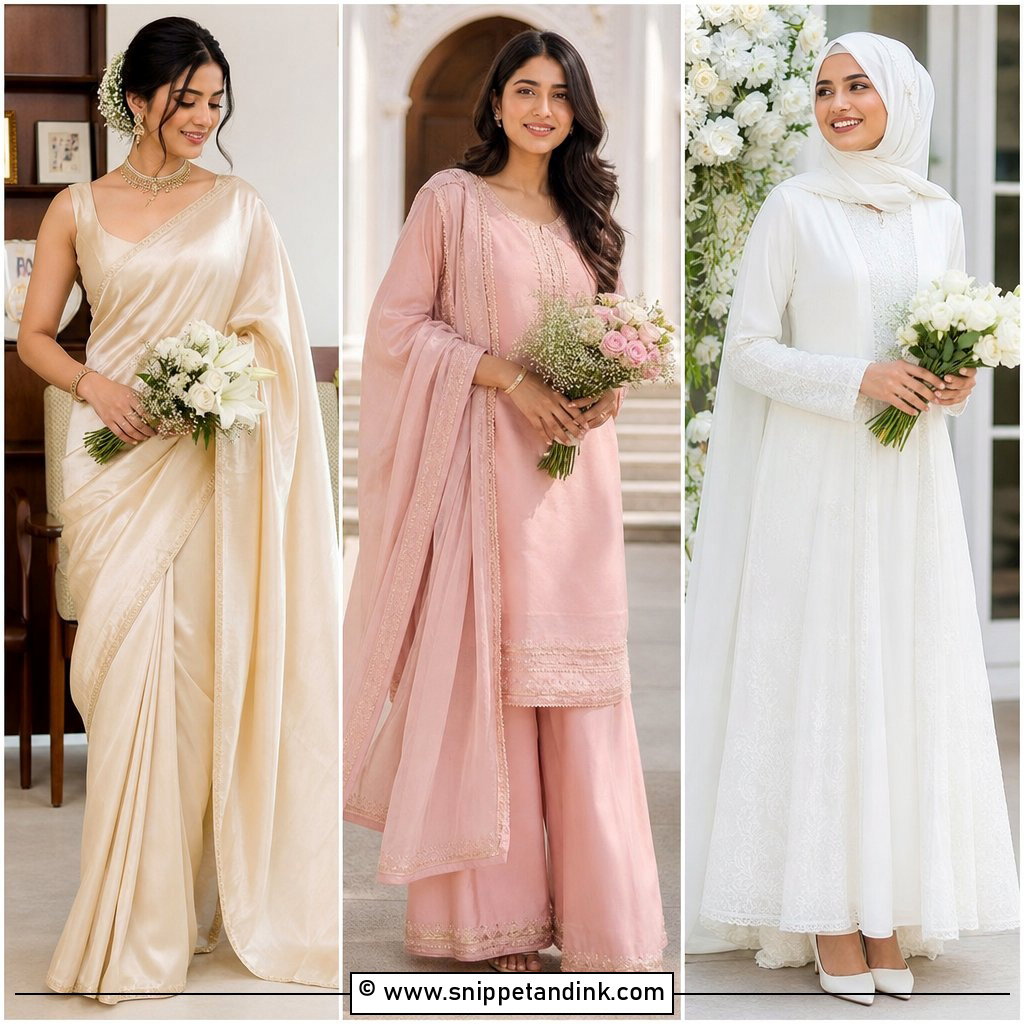
White with a narrow gold border is one of the oldest combinations in Indian dress, closest to the kasavu sarees of Kerala that brides there still wear. Cotton or tissue for daytime, silk blends for evening. A fitted white or gold blouse with a round, square or boat neck keeps it clean. Neat pleats are what make it look refined; I pin pleats at the waist and again at the shoulder before anyone leaves the house. Gold jhumkas, slim bangles and a metallic clutch, with low block heels to keep the hem off the floor. A small bindi and a bun or braid finish it.
8. White Chikankari Saree With Pearl Jewelry
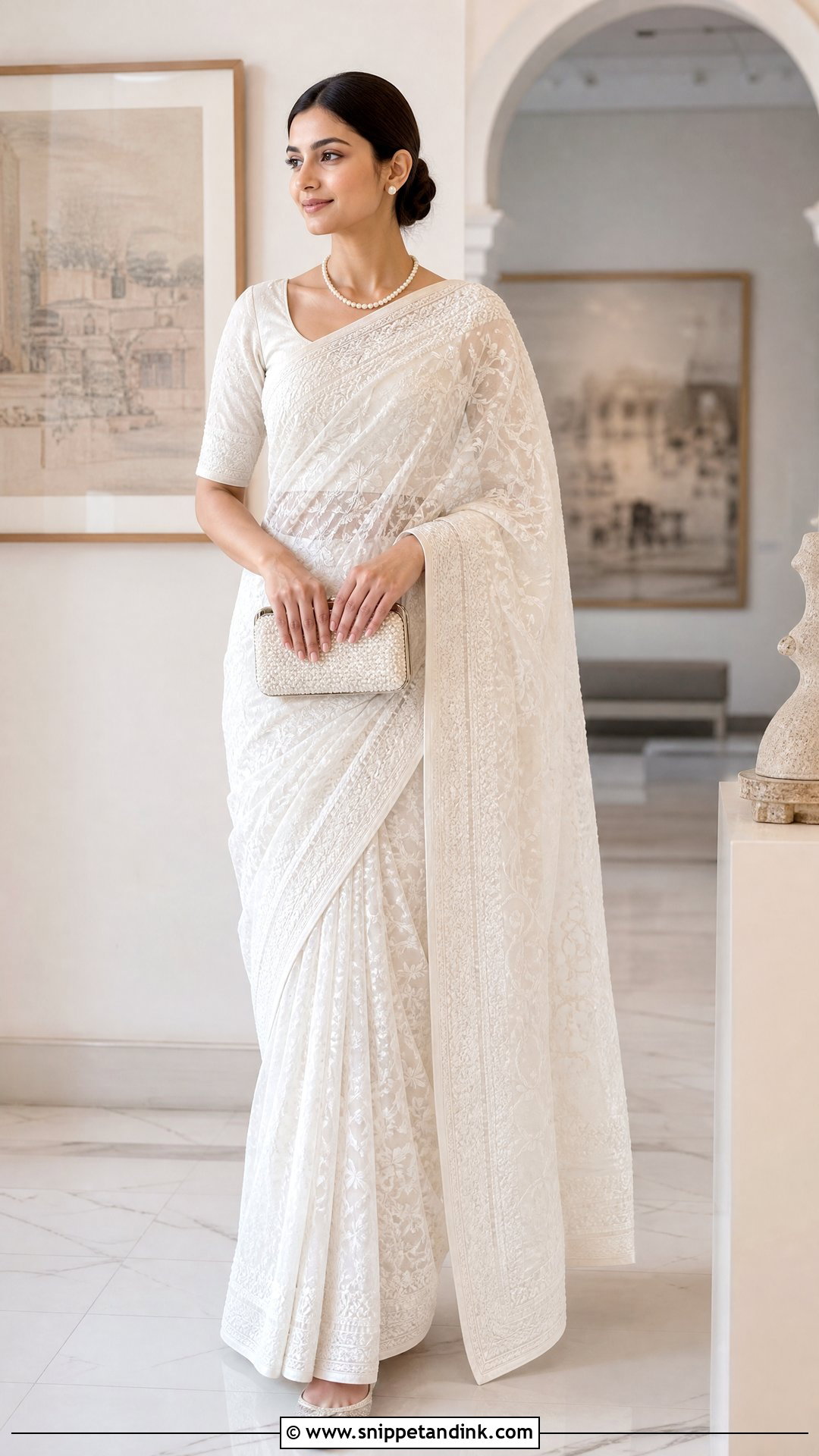
White-on-white Chikankari on a saree gives depth without strong color, which is why it’s a daytime favorite. Choose cotton, chiffon or georgette with tonal threadwork along the border and pallu. Wear a lined white blouse so the embroidery stays visible rather than blurring against skin. Elbow-length sleeves balance the drape. A single strand of pearls, pearl studs and an ivory clutch suit it better than any contrast jewelry. Silver heels or embellished flats blend with the palette. A low bun or smooth open hair and soft makeup complete it.
9. White Organza Saree With Sleeveless Blouse
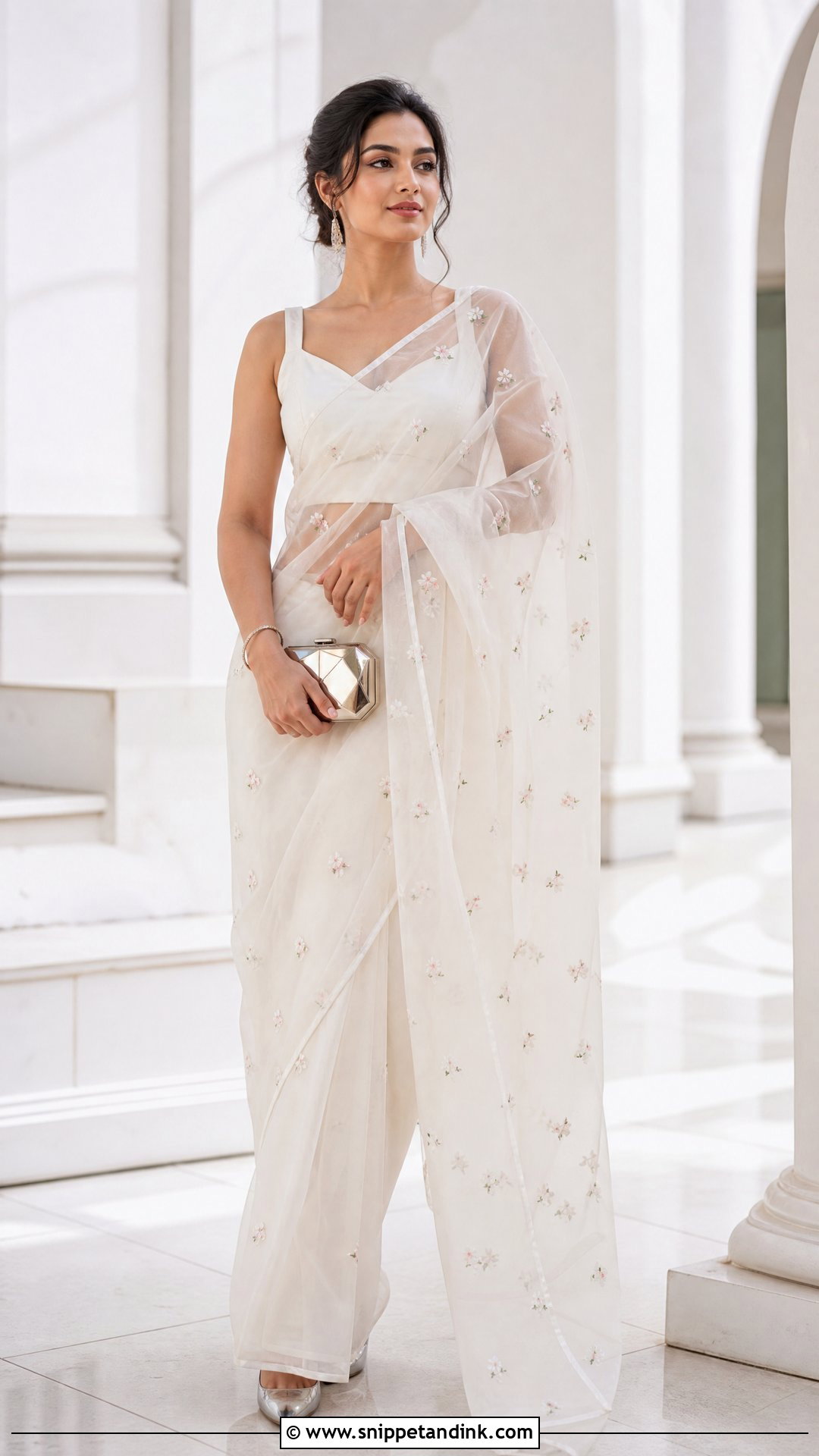
Organza is crisp and slightly stiff, so it holds pleats well but can stand away from the body if they’re too wide. I keep pleats narrow and let the pallu fall naturally over one shoulder. Choose a saree with small embroidered flowers, a fine silver border or scattered pearls, and balance its sheerness with a fully lined sleeveless blouse. Pointed metallic heels, a hard-shell clutch and delicate drops keep it contemporary; skip a big necklace. A sleek ponytail or low knot works. It shines at formal lunches and receptions.
10. White Lehenga Choli With Floral Dupatta
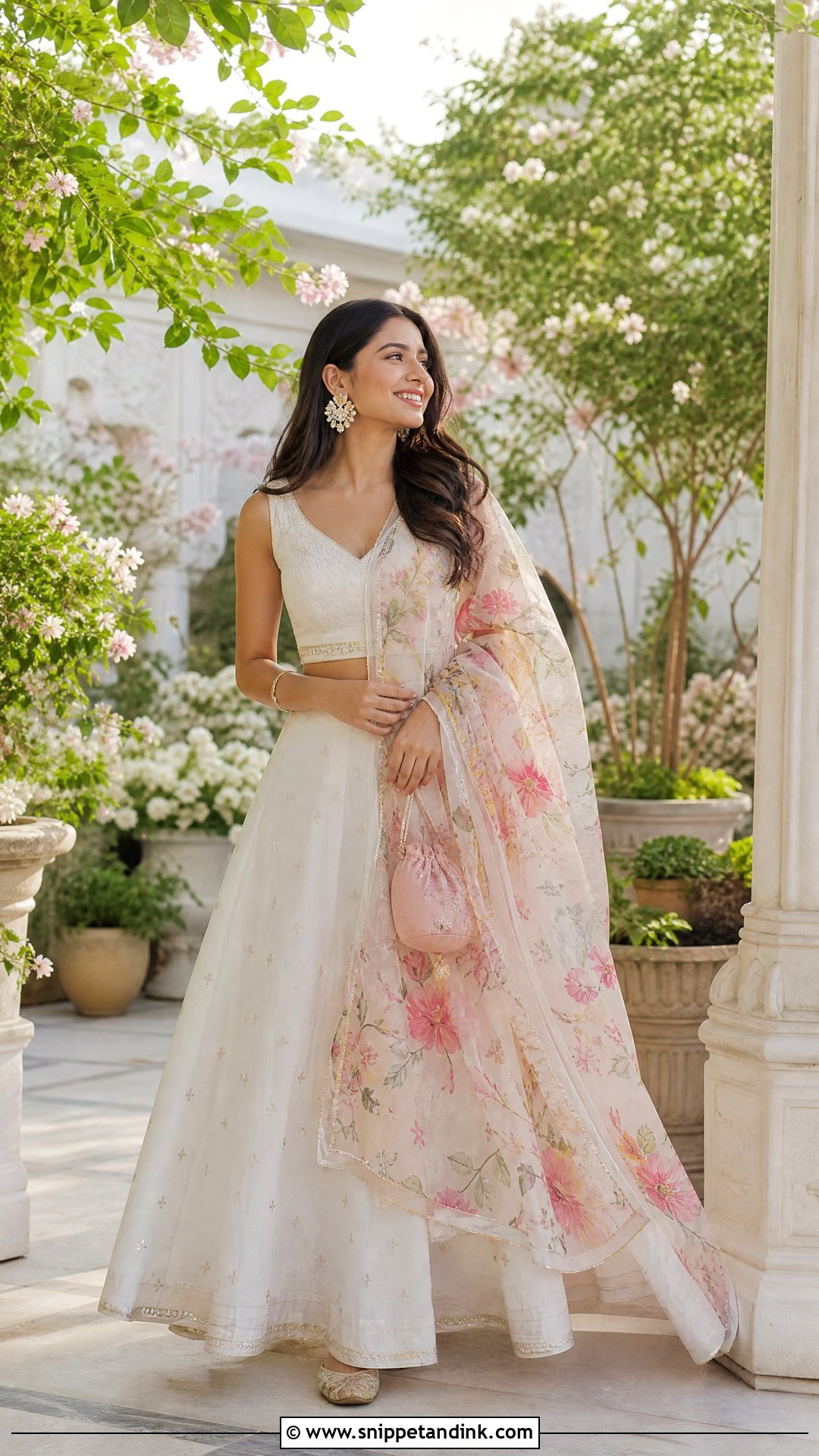
A colorful floral dupatta makes a white lehenga far easier to wear, because it puts color near your face. Choose an A-line or gently flared skirt with light embroidery at the hem and a fitted choli with sleeves and a neckline you’re comfortable in. Drape the pastel dupatta over one shoulder or across both arms. Embroidered juttis, floral earrings and a small pastel potli complete it, with loose curls, a half-up style or a braid. White lehenga skirts show dirt quickly at the hem, so it’s best at a daytime event on clean ground.
11. White Mirror Work Lehenga With Simple Blouse
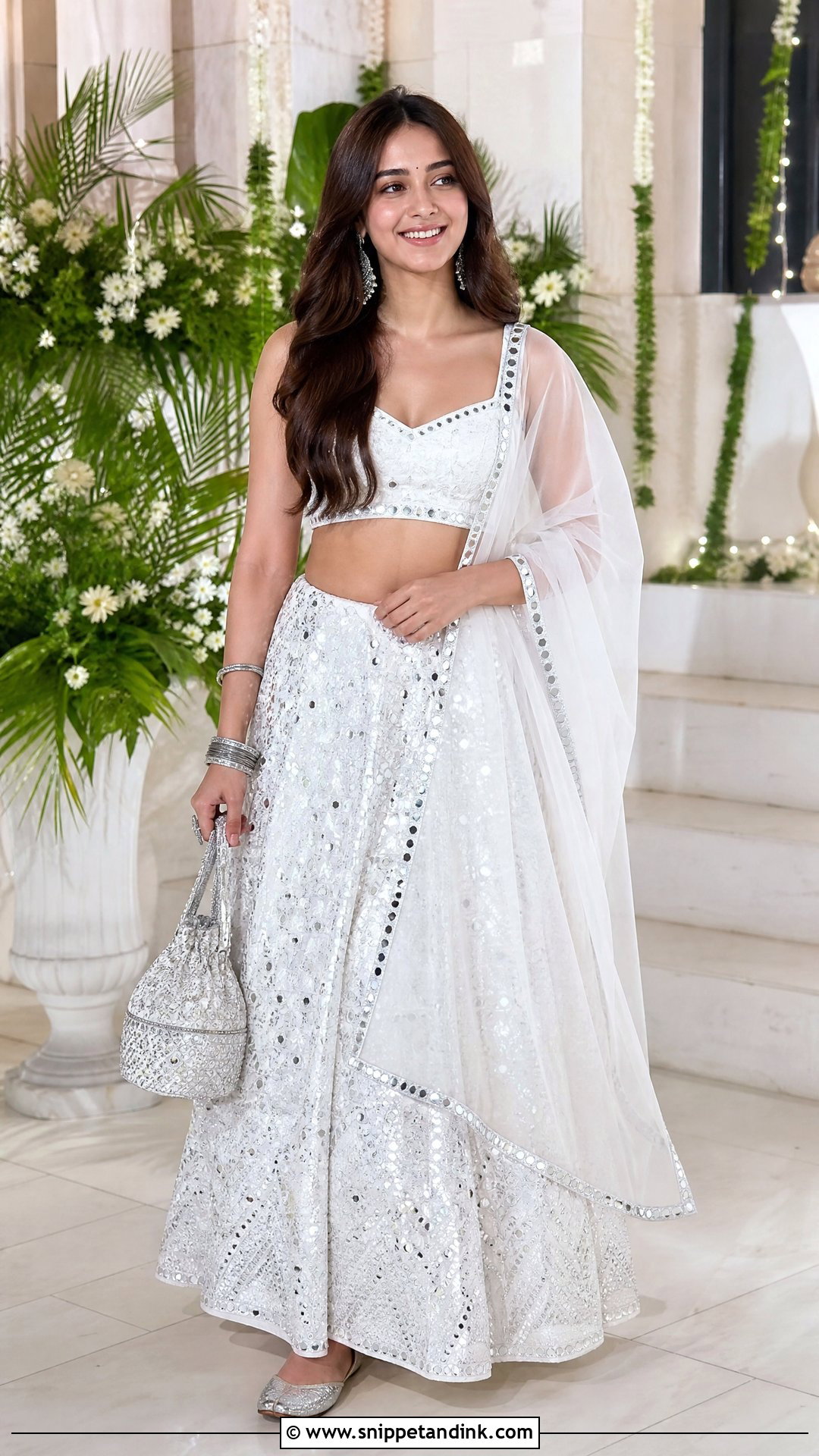
Mirror work turns a white lehenga into a party outfit. I’d choose evenly spaced mirrors over dense ones; dense mirror work is heavy and can scratch the inside of your arms when you dance. A white blouse with light mirror accents at the neck or sleeves and a chiffon dupatta with a narrow mirrored border balance it. Silver juttis, an embroidered potli and oxidized earrings finish it. Skip the necklace if the blouse neckline is detailed and wear stacked bangles instead. A high ponytail suits the energy of dance nights and festivals.
12. White Chikankari Kurti With Blue Jeans
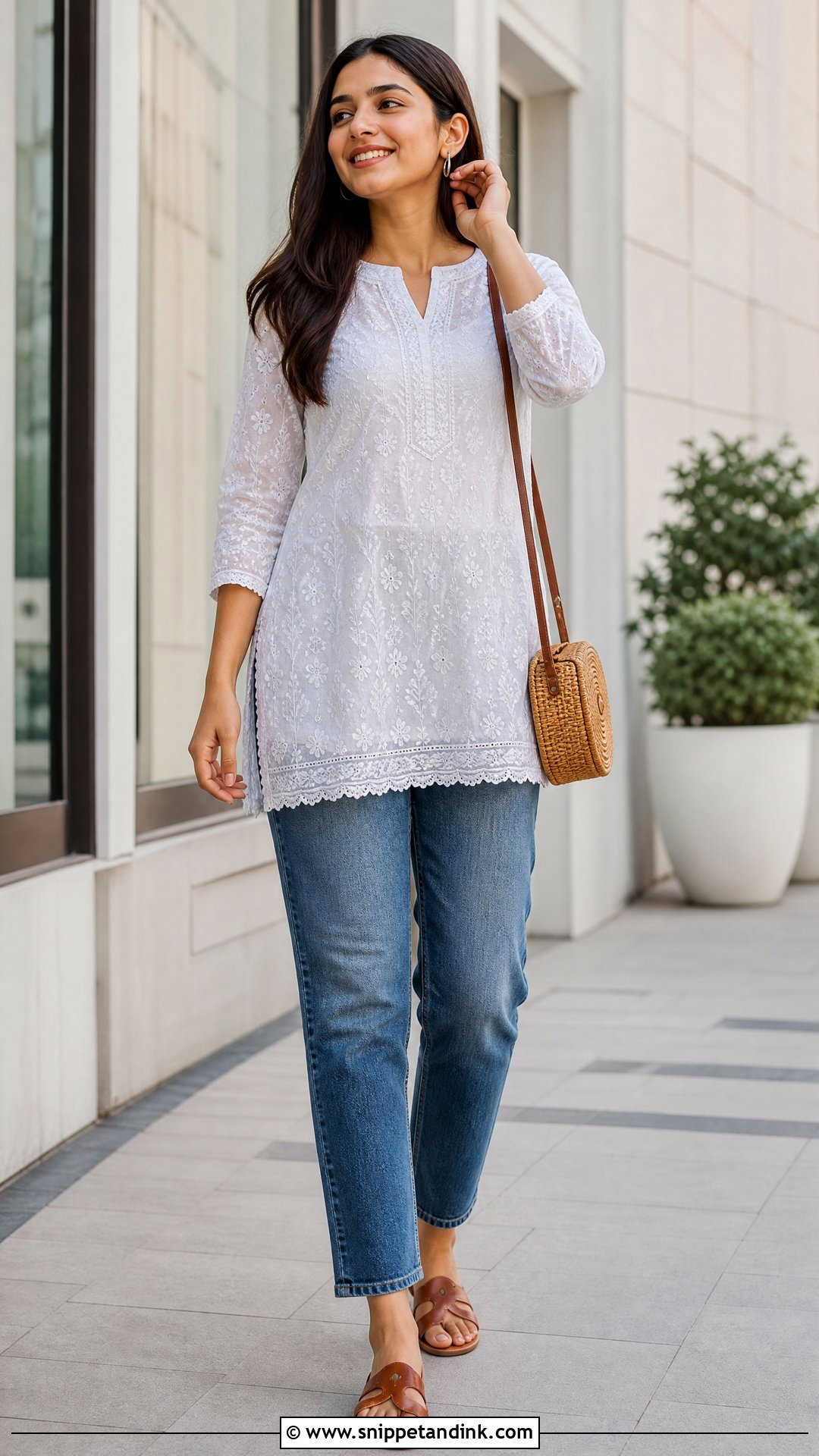
For an easy Indo-Western outfit, a short white Chikankari kurti over straight blue jeans is hard to fault. Mid-thigh length keeps the denim visible and the proportions casual. Medium-wash jeans with a clean finish and a high or mid rise suit it. Tan sandals, small silver hoops and a woven crossbody finish it, plus a printed scarf for color if you like. Roll the sleeves once. Wash new jeans before wearing them with white cotton, since indigo can transfer at the hem of the kurti.
13. White Short Kurti With Dhoti Pants
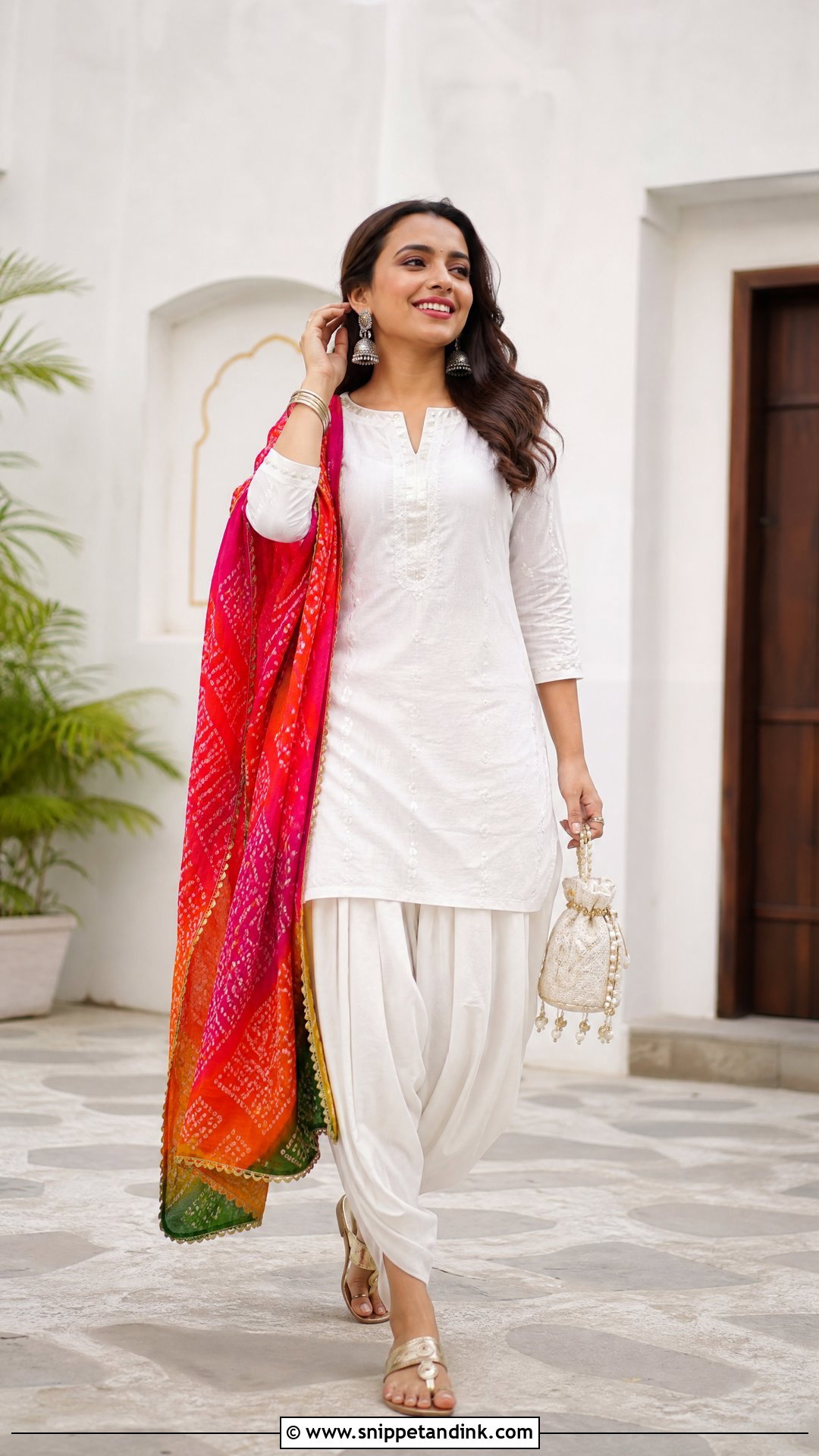
Dhoti pants have a draped front that gathers at the waist and tapers to the ankle, and the drape reads best when both pieces are the same white. A short kurti ending at the upper thigh, straight or lightly flared, keeps the shape visible. Soft cotton or rayon dhotis hang better than stiff ones. A colorful bandhani dupatta adds detail. Metallic Kolhapuris, slim bangles and statement jhumkas finish it, with a compact potli and a braided ponytail. It’s comfortable for festive daytime events with lots of movement.
14. White Angrakha Kurta With Ankle Pants
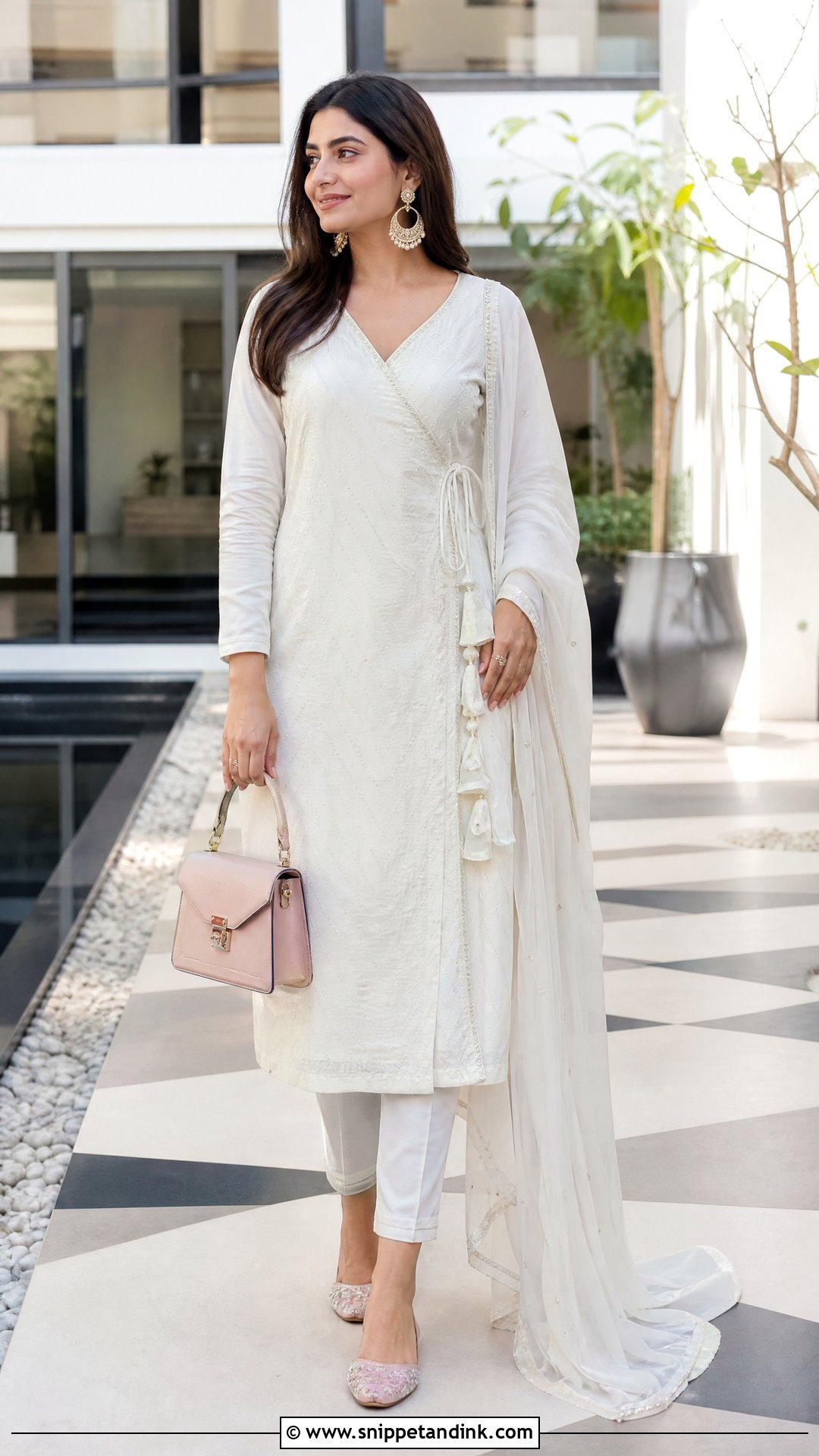
An Angrakha kurta wraps across the chest and ties at the side, so check the overlap is deep enough not to open when you sit. In knee length with side ties, tassels or a narrow embroidered border, it gives a white outfit shape. Fitted ankle pants balance the wrap. A sheer white dupatta is optional. Pointed juttis in silver, beige or pale pink and a structured mini bag suit it, with small chandbalis and one statement ring. A low ponytail or side braid keeps it uncluttered. It’s right for office celebrations and family lunches.


15. White Jacket Style Kurta Set
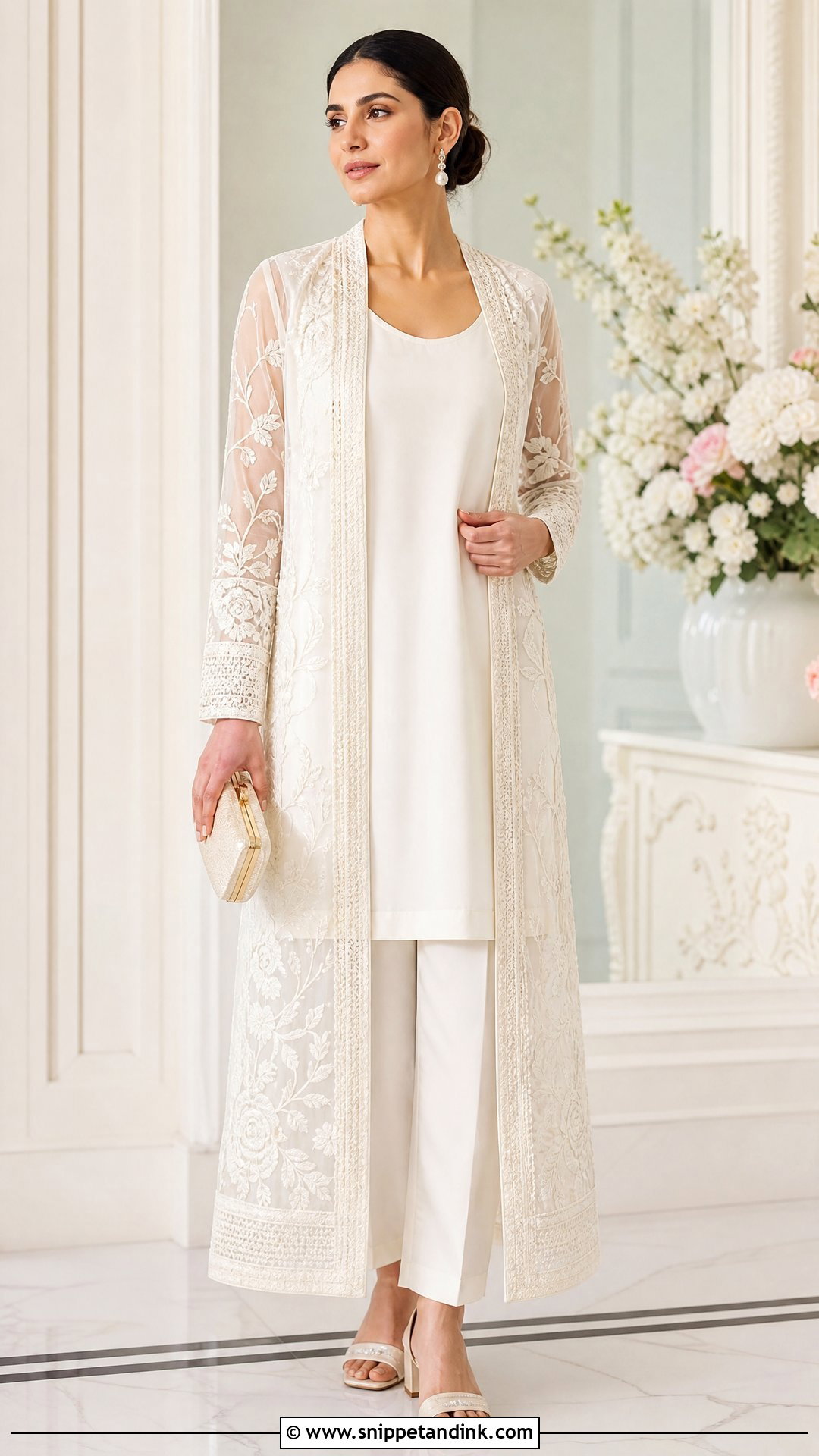
Layering a long jacket over a kurta set adds depth to an all-white outfit without bringing in a second color. Start with a sleeveless or short-sleeve kurta and straight pants, then add an open-front jacket in organza, Chikankari cotton or lightly embroidered georgette that falls below the knee. Keep the inner pieces slim, or the layers turn bulky. Low block heels, a structured clutch and pearl or crystal earrings finish it, with a sleek low bun. Organza jackets crush in a suitcase, so hang them as soon as you arrive.
16. White Peplum Kurta With Sharara Pants
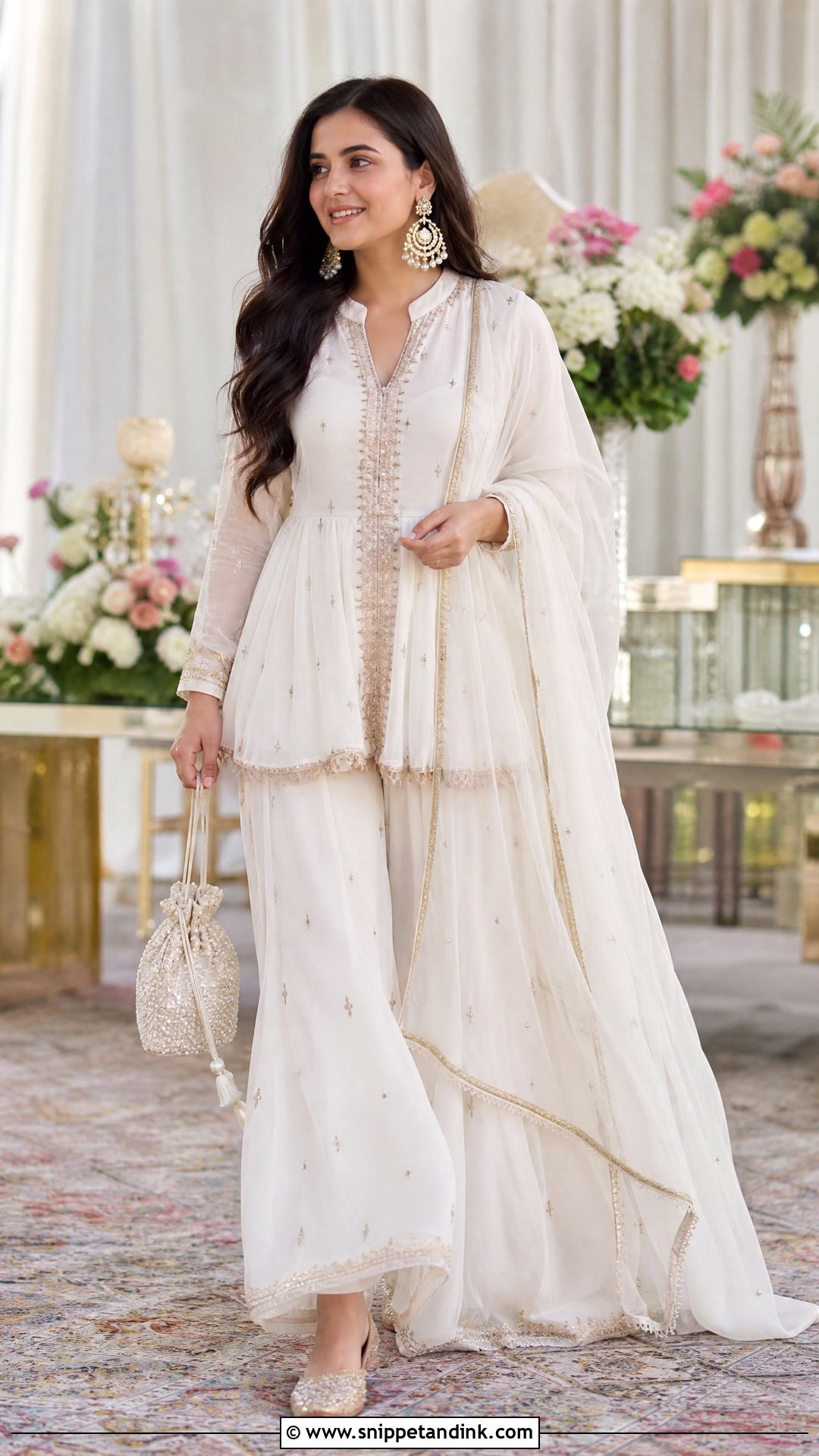
A fitted peplum kurta nips in at the natural waist and flares over the hips, which contrasts well with wide sharara pants. Shararas with light lace, threadwork or a narrow metallic border match the white top. Pin a soft net or chiffon dupatta over one shoulder so the waist stays visible. Embellished juttis, a small pearl potli and chandelier earrings finish it; keep the neckline simple if the earrings are big. Soft curls or a high ponytail balance the volume. It dances well.
17. White Cape Kurta With Cigarette Pants
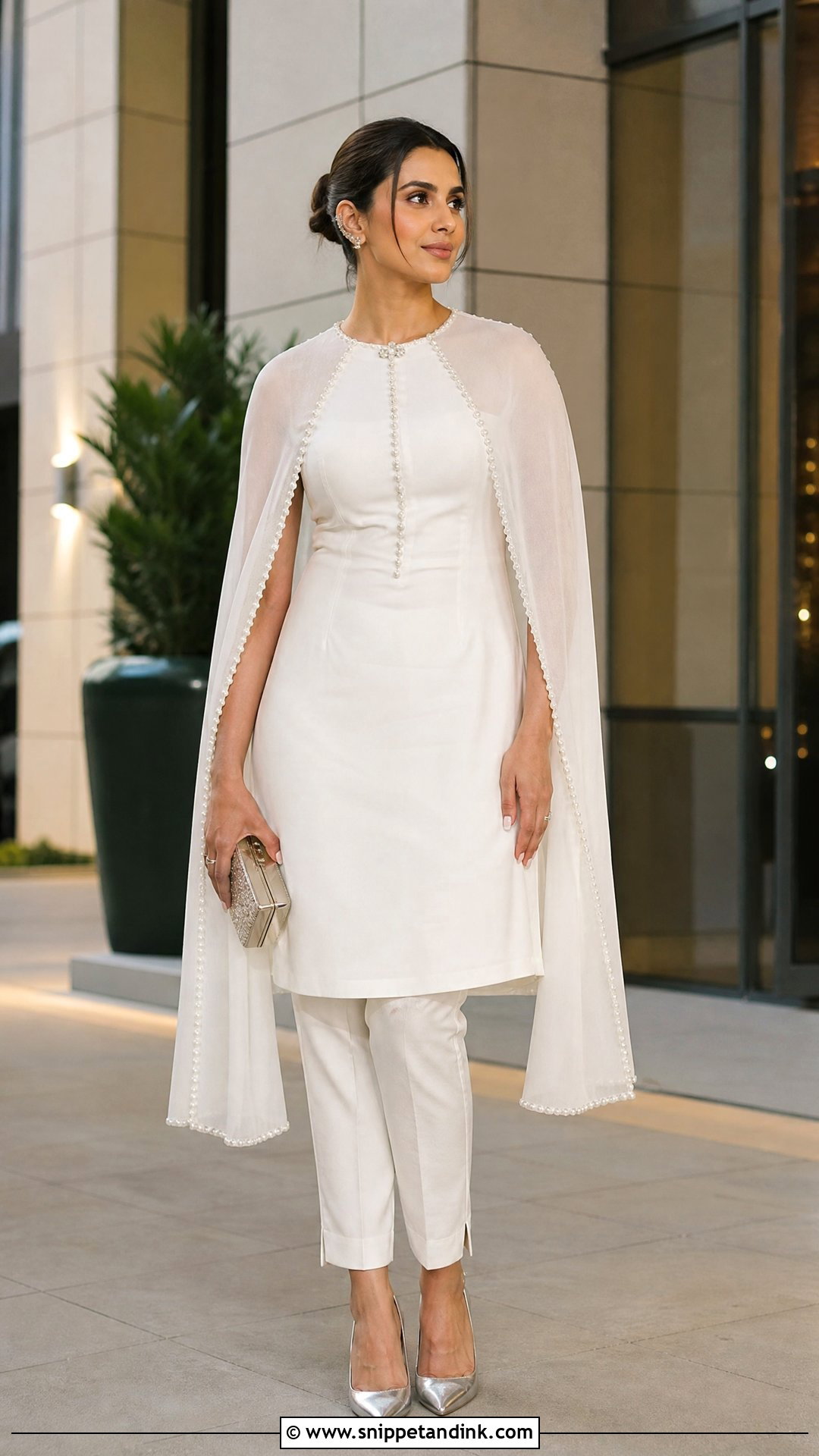
A cape kurta set gives a white outfit a contemporary line. Choose a fitted knee-length kurta and cigarette pants, then add an attached or separate sheer cape with tonal embroidery, pearl edging or small silver motifs. The cape must be light enough to move; a heavily embellished cape pulls the neckline back all evening. Pointed heels or embellished flats, a small box clutch and delicate ear cuffs suit it. Skip the necklace. Straight hair or a sleek ponytail completes it. It suits receptions and formal dinners.
18. White Embroidered Kaftan Dress
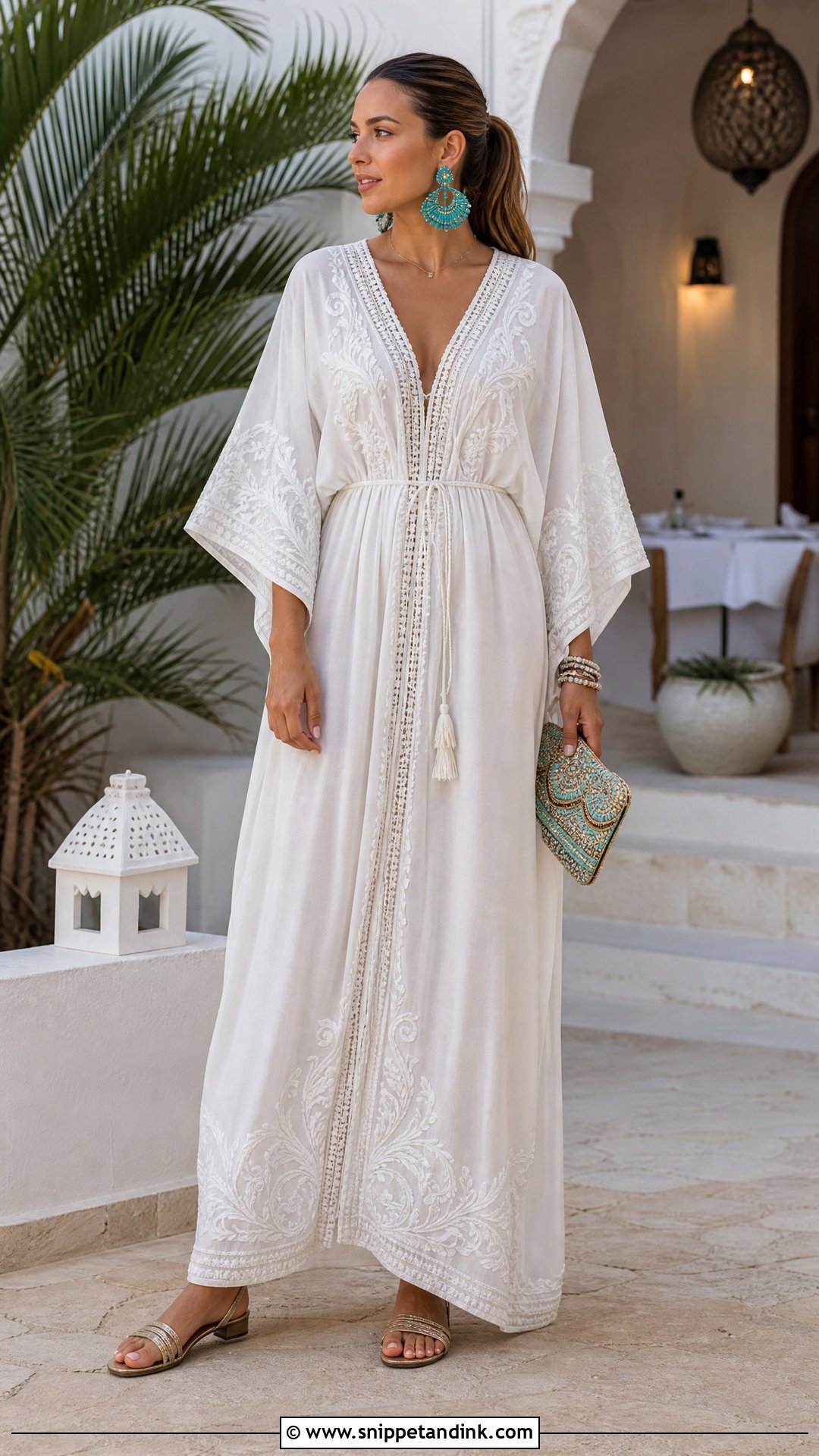
A flowing kaftan is the coolest thing to wear on a hot evening. Choose a full-length one with embroidery at the neck, sleeves or center panel. A drawstring or lightly shaped waist keeps it from swamping a petite frame. If the fabric is sheer, wear a slip. Flat metallic sandals, a beaded clutch and bold earrings in turquoise, silver or pearl add personality; the wide sleeves already move, so skip the dupatta. A loose bun or soft waves suit it. It’s for vacation dinners and outdoor summer events.
19. White Draped Indo-Western Dress
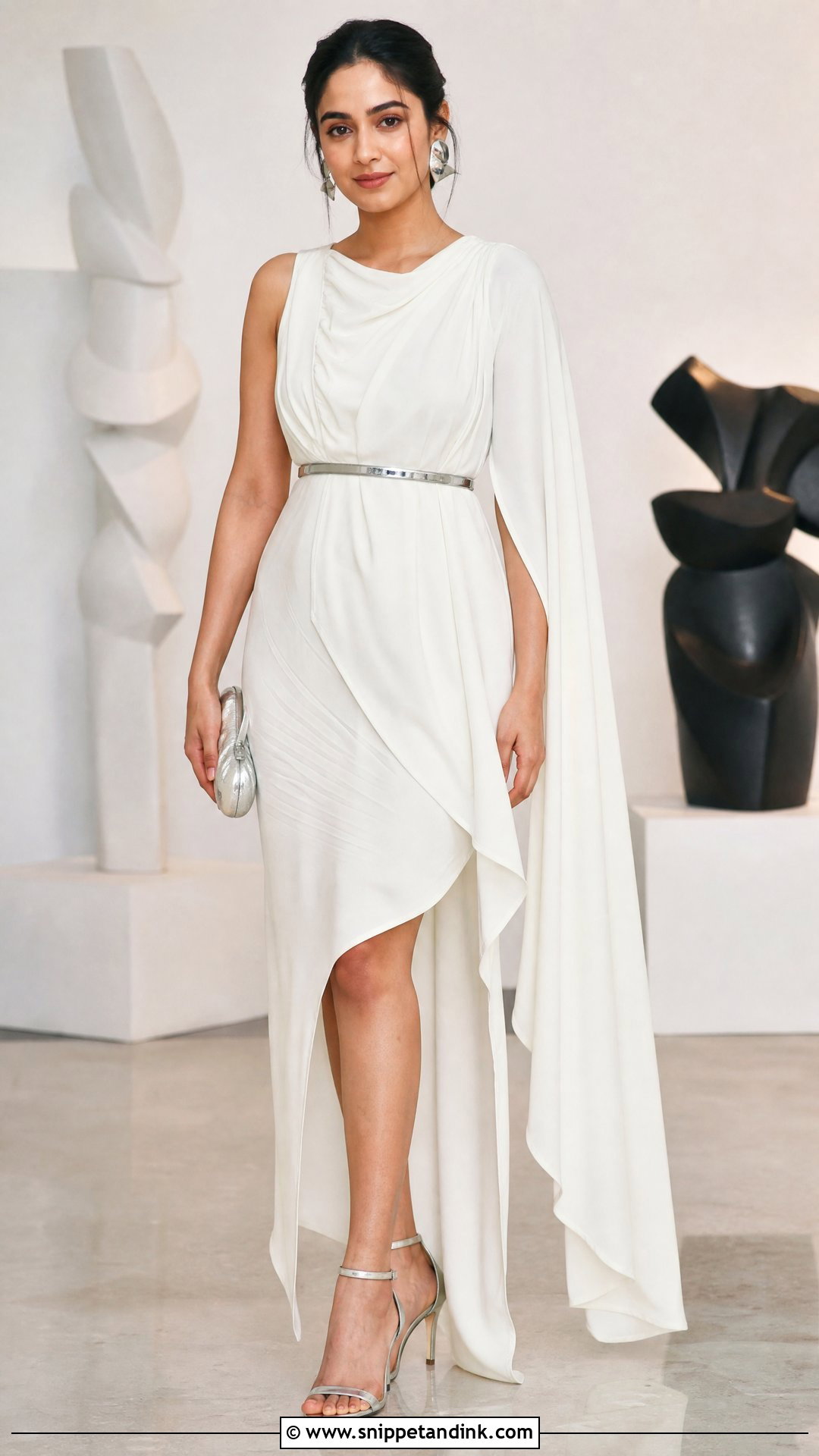
A draped dress gives the movement of a saree without the pleating, which suits anyone who has never tied one. Look for a midi or ankle-length design with an asymmetric hem, an attached shoulder drape or gathers at the waist. The bodice must fit securely, otherwise the drape pulls it to one side. Silver heels, sculptural earrings and a compact clutch, plus a narrow metallic belt if you want definition. Keep the palette white and silver. A sleek bun or polished waves finish it for receptions and modern celebrations.
20. White Silk Kurta With Brocade Pants
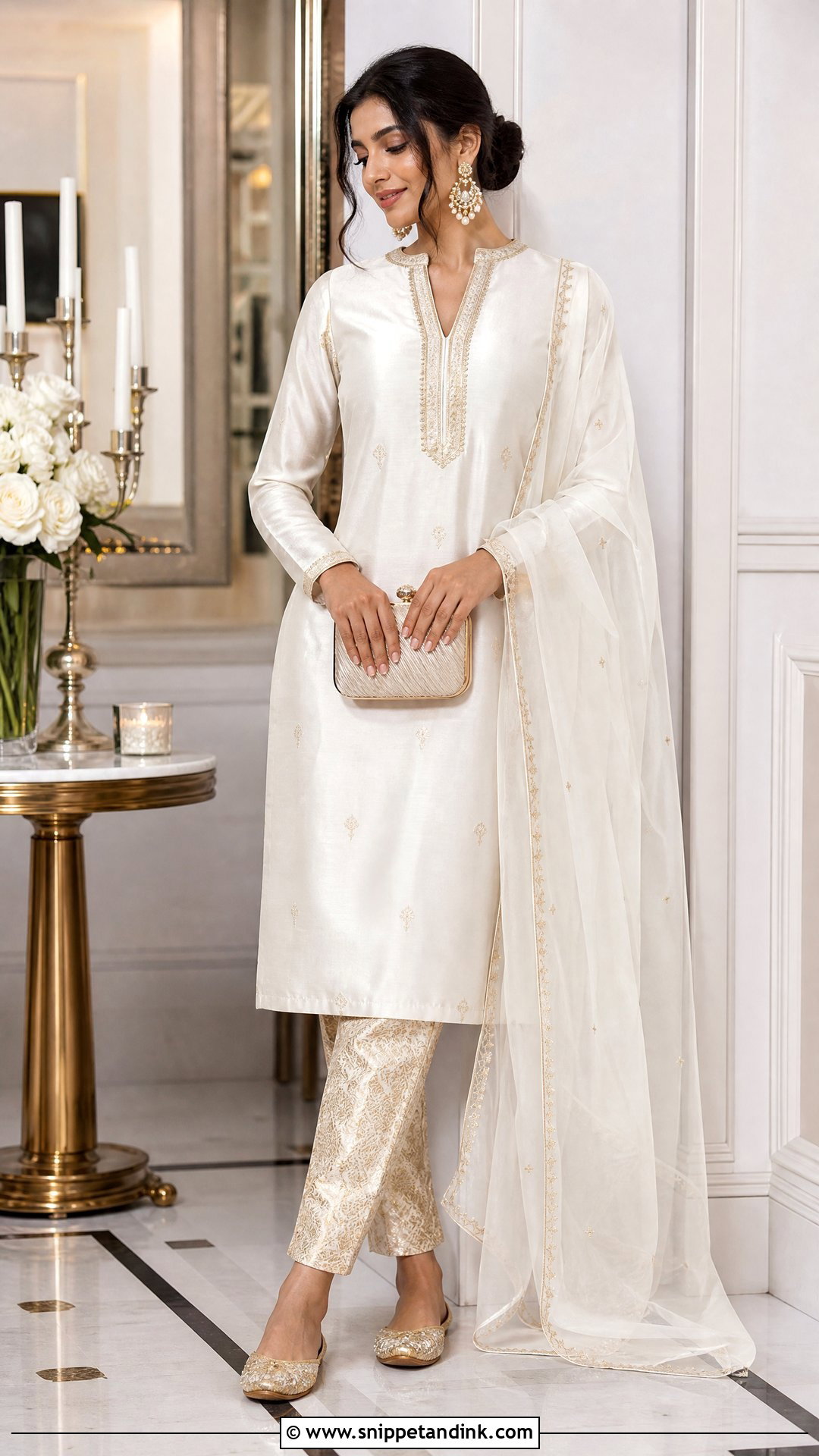
Rich fabric can carry a simple shape. A straight white silk kurta with ankle-length white-and-gold brocade pants does exactly that. Keep the kurta plain with side slits and subtle embroidery at the neck or cuffs; the brocade brings enough festive detail. A light organza dupatta over one shoulder and gold juttis or low heels finish it. Pearl-and-gold earrings, a slim bracelet and an ivory clutch coordinate the gold. A low bun suits the polished fabrics. Silk shows sweat marks, so wear dress shields on a warm night.
Turmeric, Mehndi and Kajal on White Cotton
If you’re wearing white to a haldi, expect turmeric. It stains cotton a stubborn yellow almost instantly. Don’t rub it with hot water, which sets the color. Rinse from the back of the fabric in cold water, wash gently with a mild detergent, and dry the garment in direct sunlight; sunlight fades turmeric noticeably within a few hours.
Fresh mehndi paste and kajal are just as quick to transfer. Keep your dupatta lifted while the paste dries on someone’s hands near you, and don’t wipe eye makeup on a white sleeve. Silk, georgette and heavy Chikankari are better sent to a dry cleaner who handles embroidery, with each stain pointed out.
Storing white between wears
White cotton and silk yellow when stored in plastic or near wood. Fold them in clean cotton or muslin cloth, keep zari borders wrapped so the metallic thread doesn’t tarnish against other fabric, and refold sarees every few months so creases don’t weaken the weave.
Pin the Dupatta Before the Dancing Starts
A sheer dupatta looks graceful at arrival and ends up on the floor by the second song. Use two small safety pins on the inside: one at the shoulder seam and one at the opposite hip or waist, through the blouse or kurta lining rather than the outer fabric. On delicate organza or chiffon, slip a small scrap of cloth behind the pin to stop the fabric from tearing.
White Works When Every Other Piece Is Balanced
One color, twenty very different outfits. A cotton salwar suit or Chikankari kurta keeps everyday dressing comfortable, while an Anarkali, saree, sharara or lehenga gives a festive finish. Balance is what holds white together: wide bottoms with a fitted top, light accessories with heavy embroidery, and color only where it helps. White also needs proper lining and skin-tone underwear, so check the full outfit in daylight before you leave home. With the right shoes, jewelry and bag, a simple white Indian outfit looks polished and personal.
You'll Like These Ideas:








Leave a Reply