
Nikkah dressing is about restraint done well. The ceremony might be in a masjid, a family home, a banquet hall or a modern venue, but the brief is the same: modest coverage, soft color, embroidery that adds depth rather than weight, and clothes you can sit and pray in. Right now I see ivory, blush, sage, champagne, powder blue, mint and pearl tones everywhere, cut as shararas, ghararas, pishwas, anarkalis, lehengas, modest gowns and tailored suits. The dupatta, the shoes and the jewelry matter as much as the main piece. The outfits below are for brides, sisters, cousins, guests and close family, and I’ve noted where each one sits.
Unstitched, Ready-to-Wear or Made to Order?
Most of the outfits below come in three forms, and the one you pick decides your timeline more than the style does. I walk every client through this before we talk colors.
Unstitched fabric
Many South Asian brands sell a shirt, trouser and dupatta as an unstitched set. It is often the best value, and your tailor can cut the sleeves and neckline to the coverage you want. The catch is the tailor’s queue, which gets long before wedding season and Eid. Give it several weeks plus time for one fitting and corrections.
Ready-to-wear
Quickest, and fine for guests and simple bridal suits. Sizing varies widely between brands, so compare the brand’s own measurement chart against a garment you already own rather than going by your usual size. Budget for hemming and sleeve adjustments.
Made to order
The right route for heavy bridal embroidery. Hand-worked pieces commonly need a few months, and lead times vary by designer and season, so ask before you fall in love. If the outfit ships from overseas, add time for shipping and customs and ask for a fabric swatch first. Screens shift color, and ivory, champagne and beige are the shades most likely to arrive looking different from the photo.
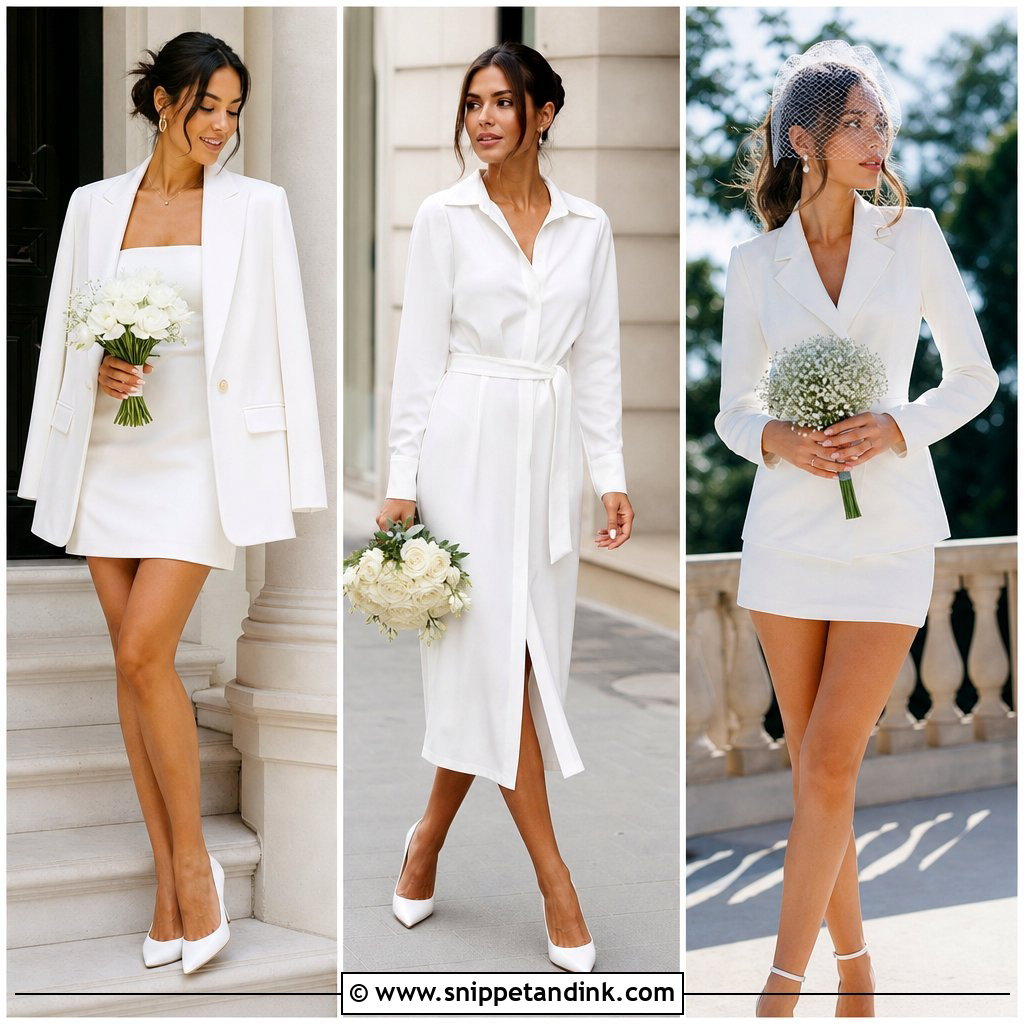
1. White Nikkah Sharara Outfit
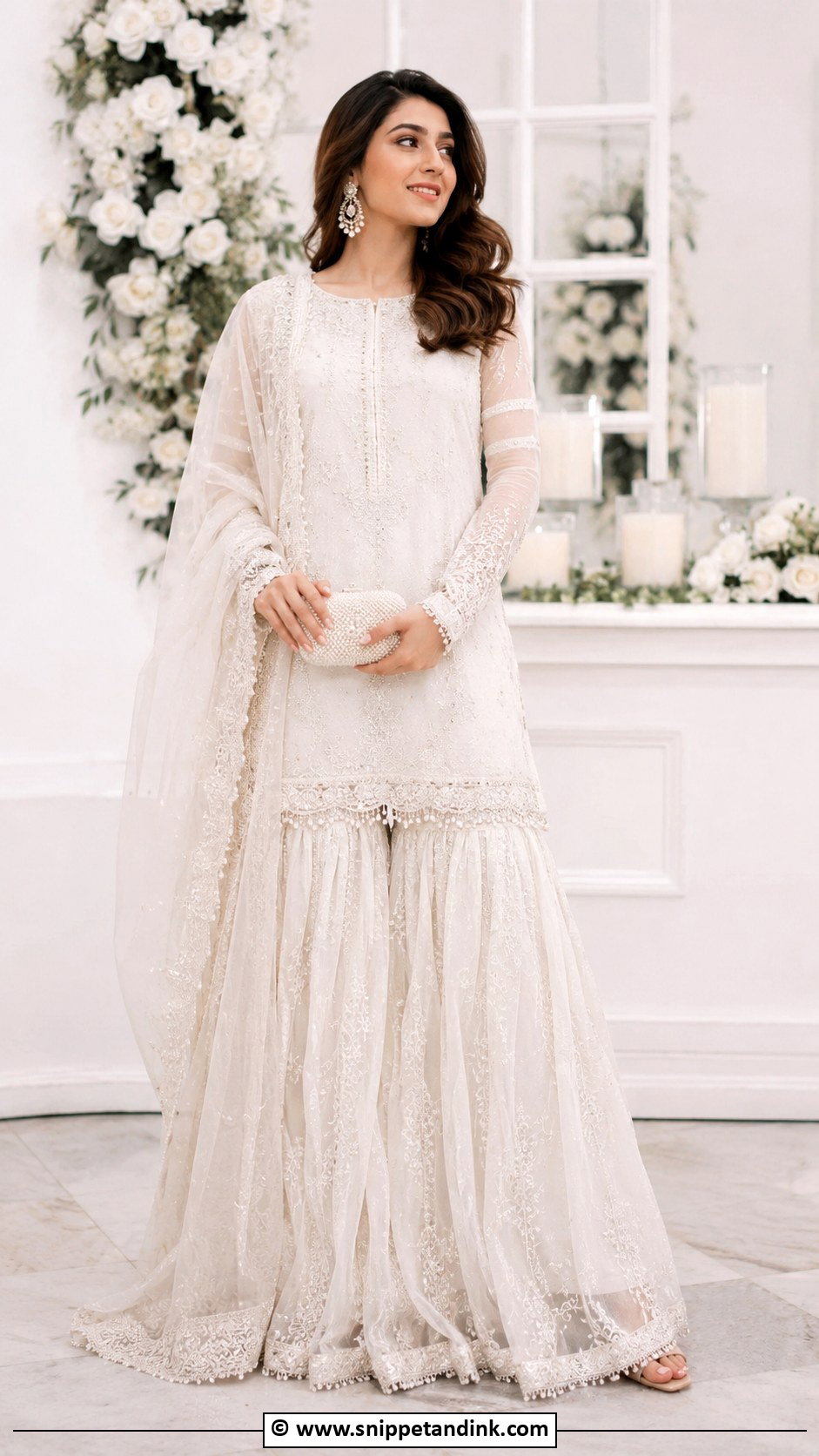
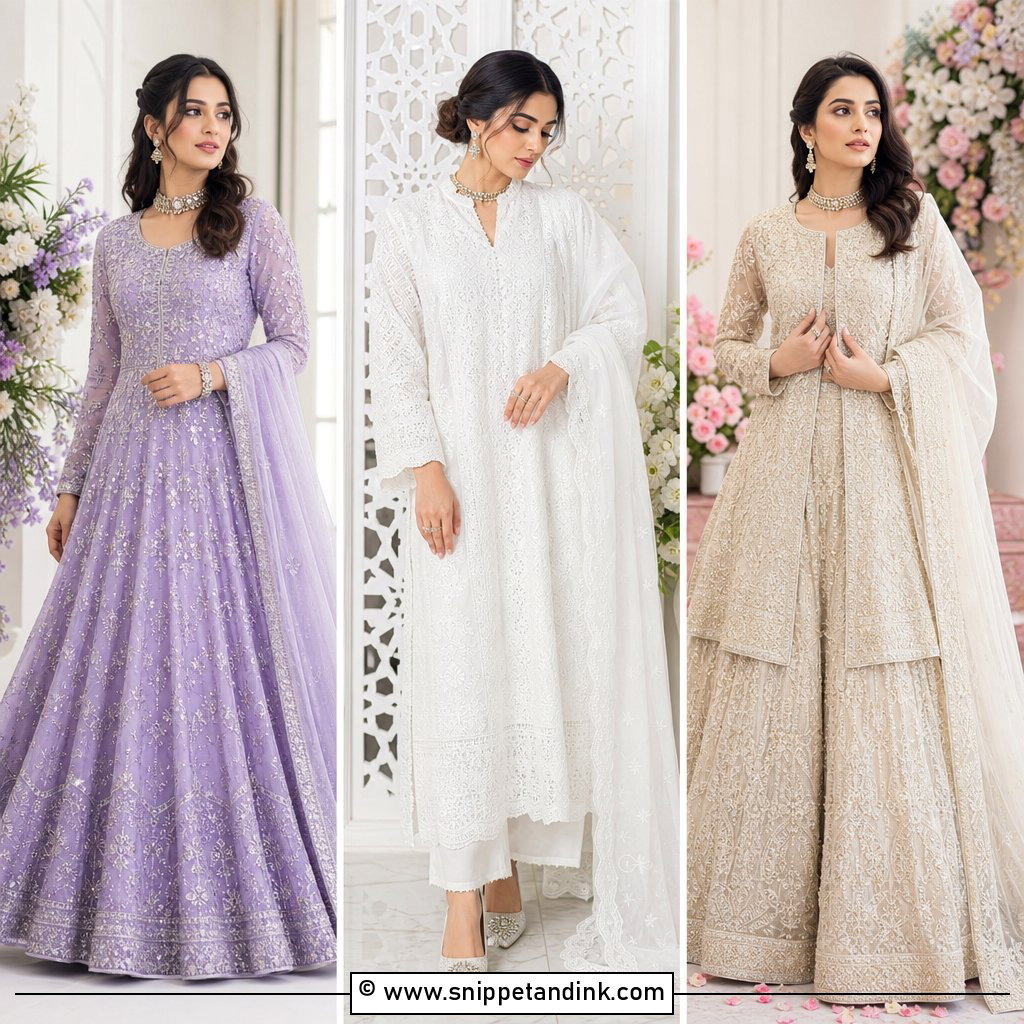
White sharara sets are the classic starting point. A long embroidered kameez over a flowing sharara, with a sheer dupatta trimmed in lace, pearls or light zari, reads ceremonial at once. The difference between bride and guest is in the work: silver, pearl or champagne embroidery for the bride, a much lighter version and a plain dupatta for a guest. For a masjid, I make sure the sleeves reach the wrist and the dupatta is wide enough to cover the head without pins dragging it sideways.
2. Ivory Nikkah Gharara Outfit
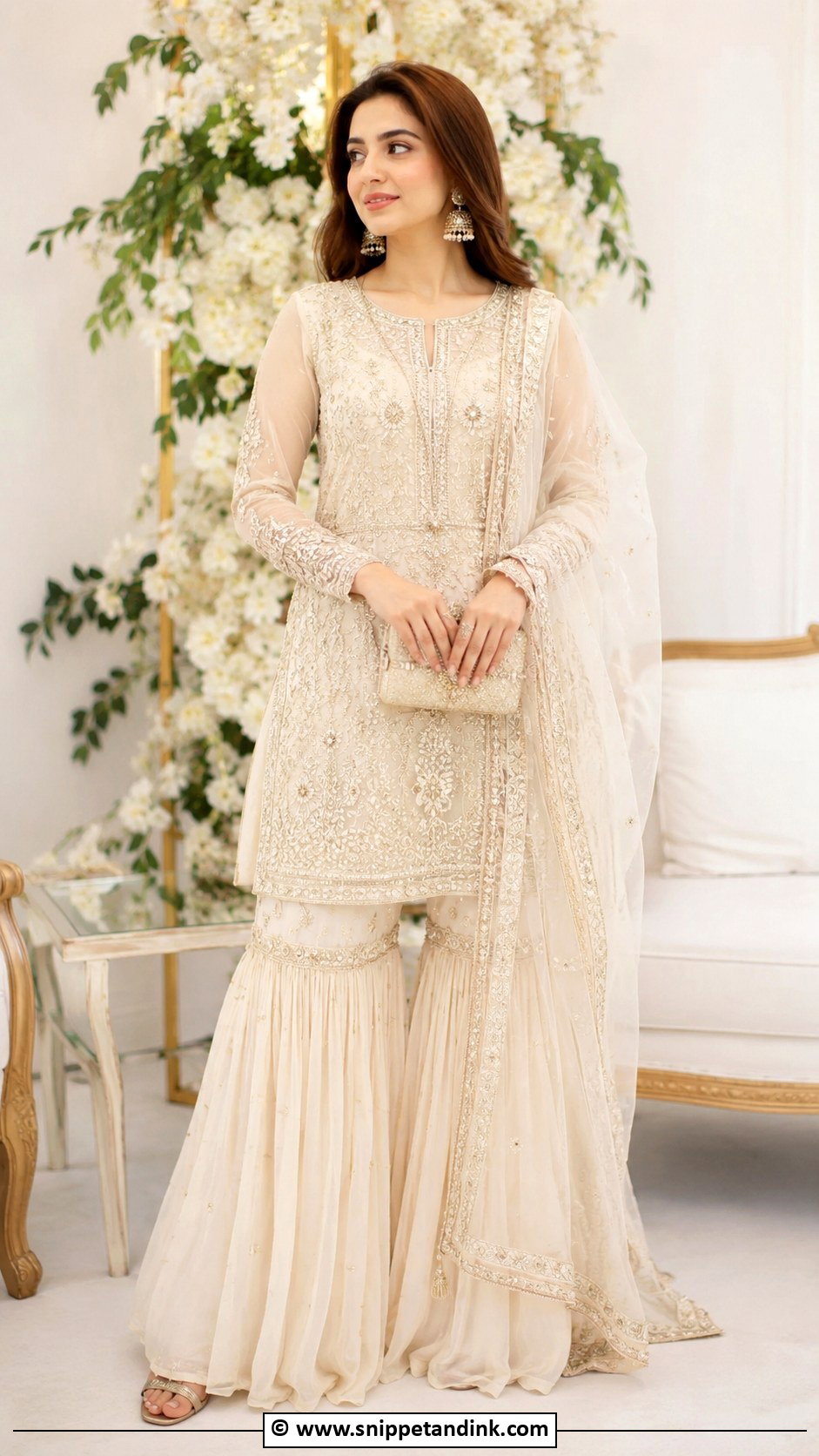
A gharara’s structured flare gives an ivory outfit a traditional bridal look without red. Gota, dabka, pearl or thread embroidery adds texture, and a short or mid-length kurti shows off the flare. Brides can add a statement tikka and passa. Guests should check before choosing ivory at all; if the bride is in white or ivory, pick a different shade.
3. Blush Pink Nikkah Anarkali Outfit
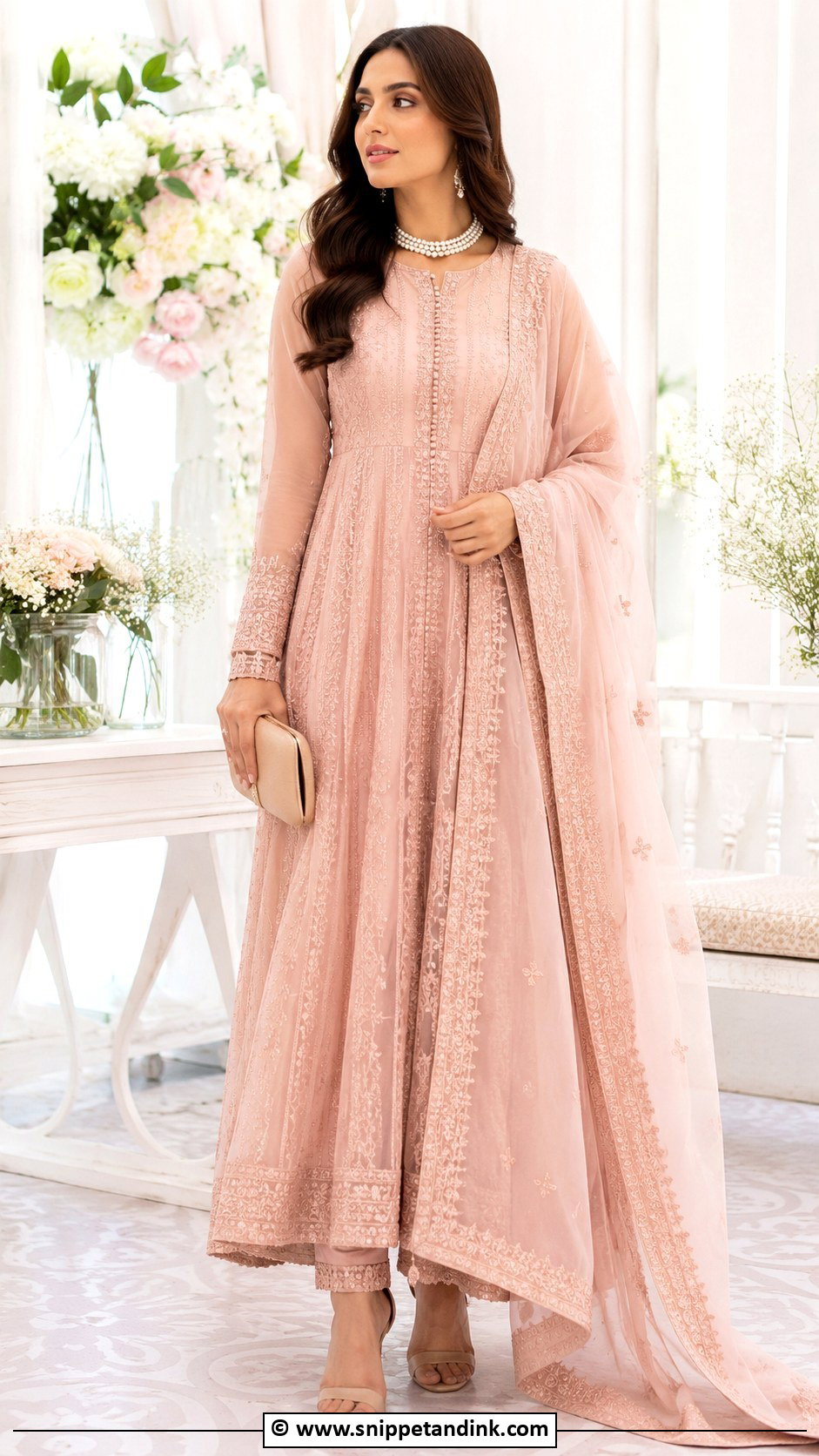
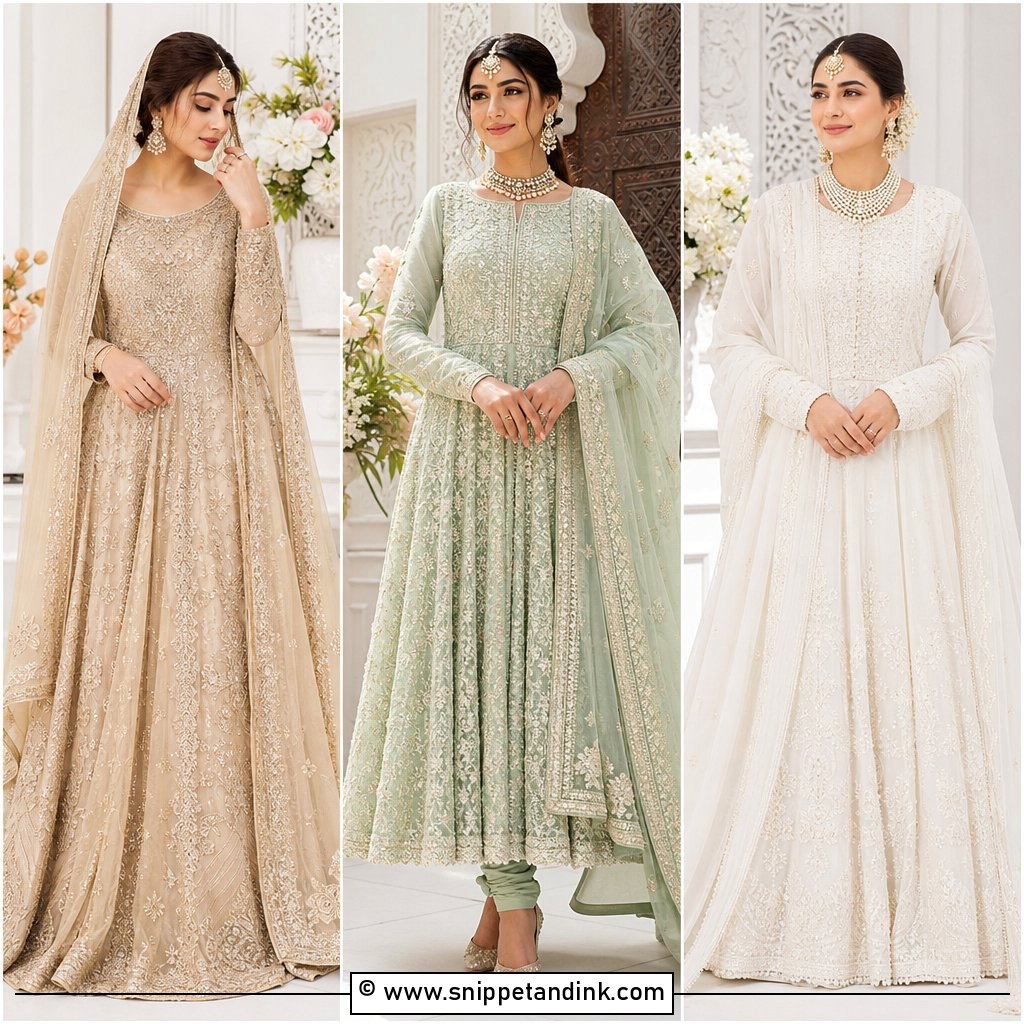
Romantic and modest at once, a blush anarkali flatters most skin tones. Floor length, tone-on-tone embroidery, a chiffon dupatta and slim trousers underneath are the formula. A bride who wants color instead of white can wear it with heavier work; sisters and close family wear a lighter version. Pearls, a potli and nude or champagne heels finish it.
4. Sage Green Nikkah Lehenga Outfit
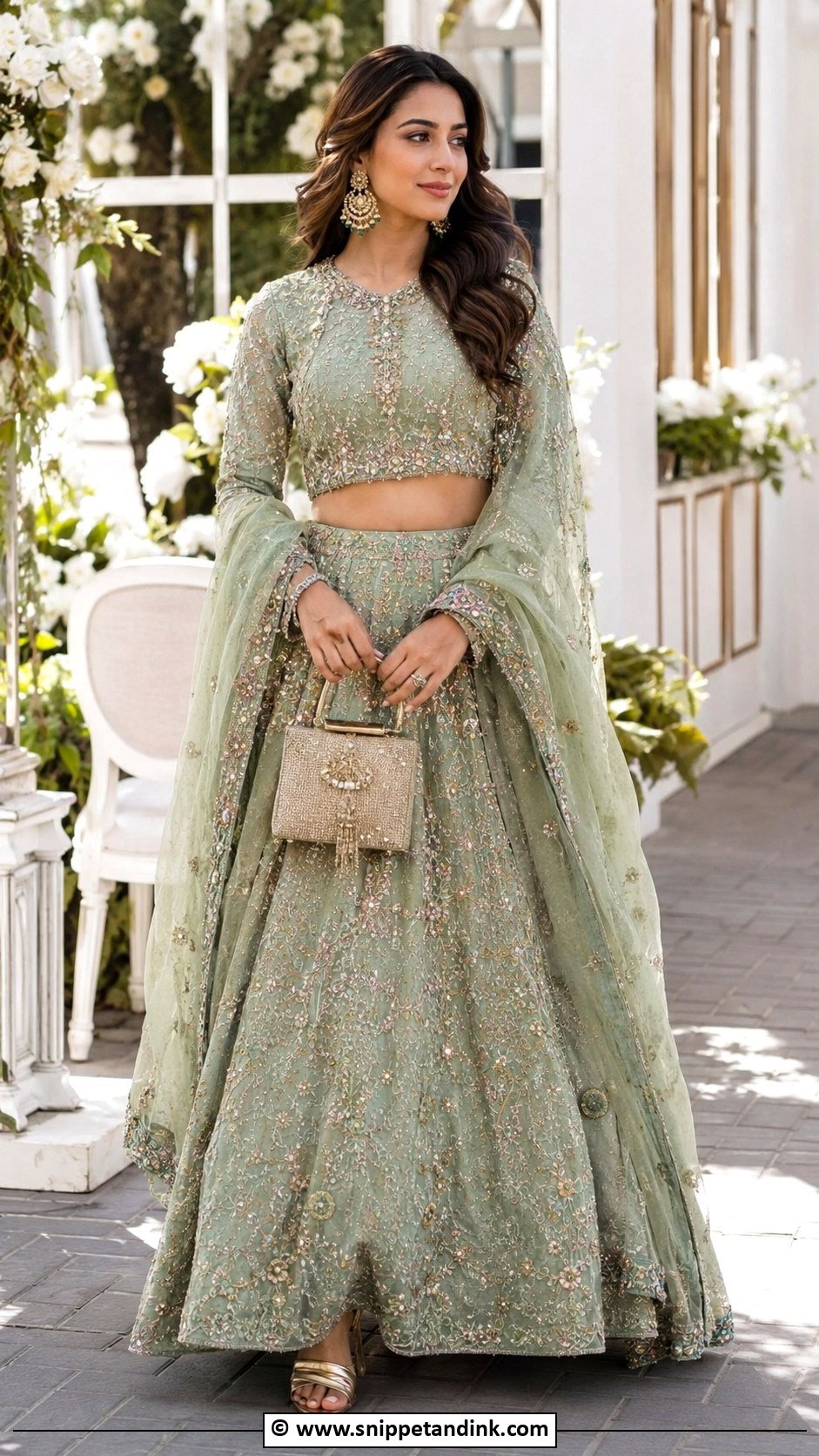
A sage green Nikkah lehenga outfit is fresh and modern but still traditional. Sage shows best in daylight, which suits morning and afternoon ceremonies. A lightly embellished blouse or long choli with a high-waisted lehenga is the base; a longer peplum top or sleeved blouse adds coverage. Gold, pearl or champagne embroidery warms the muted green, and kundan earrings suit it. I’d keep makeup glowy with peach or rose, since grey-toned shadows can make sage look dull.
5. Champagne Nikkah Pishwas Outfit
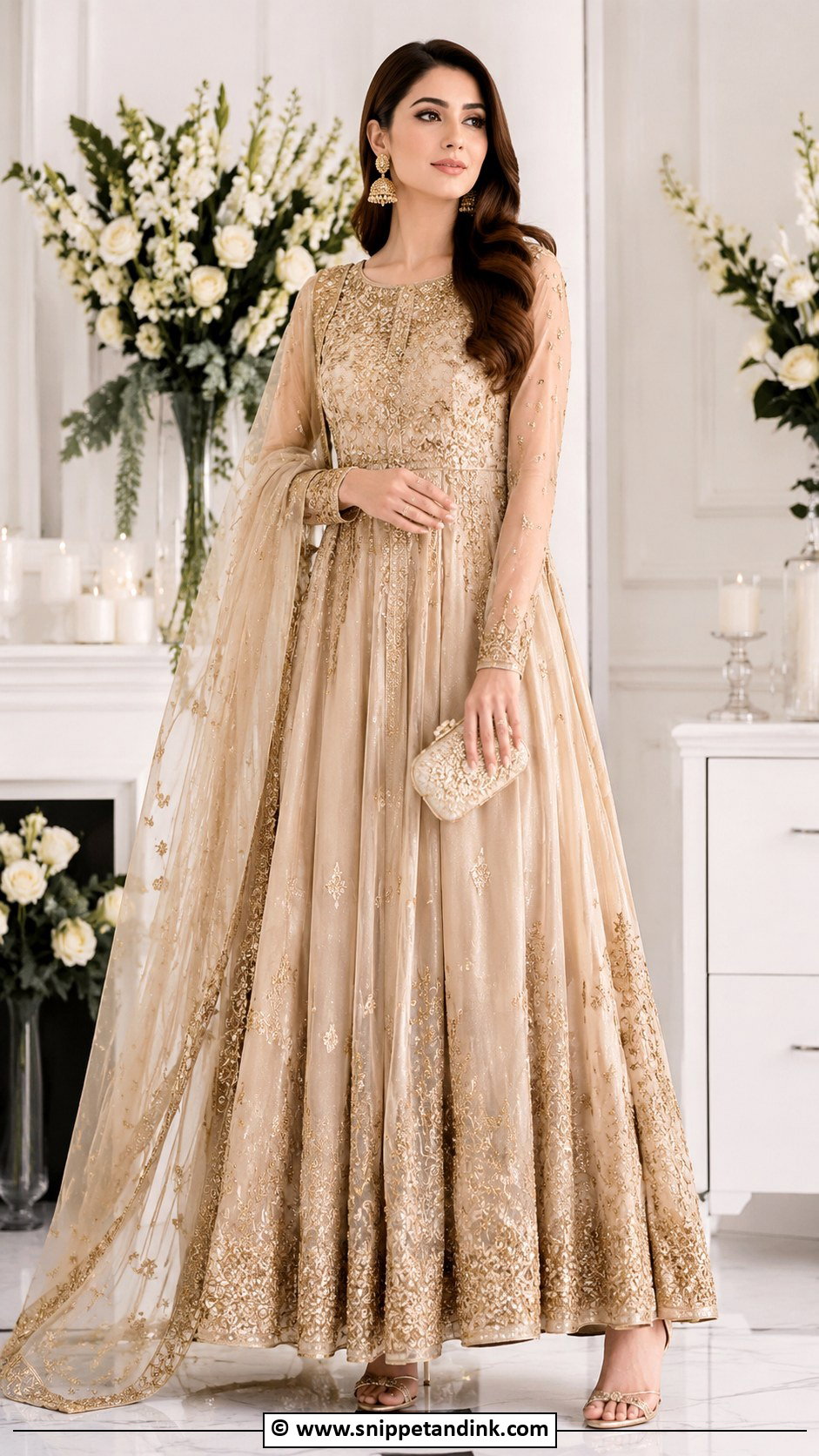
The pishwas has a fitted bodice and a very full skirt, so it looks regal without being stiff. In champagne silk, organza, net or chiffon with soft gold embroidery, it is right for a formal Nikkah where bright colors feel out of place. A bride can add a heavier bordered dupatta; a guest wears a simpler version with scattered motifs. Check that the bodice sits flat when you sit; a pishwas that is too tight there wrinkles across the waist.
6. Powder Blue Nikkah Maxi Outfit
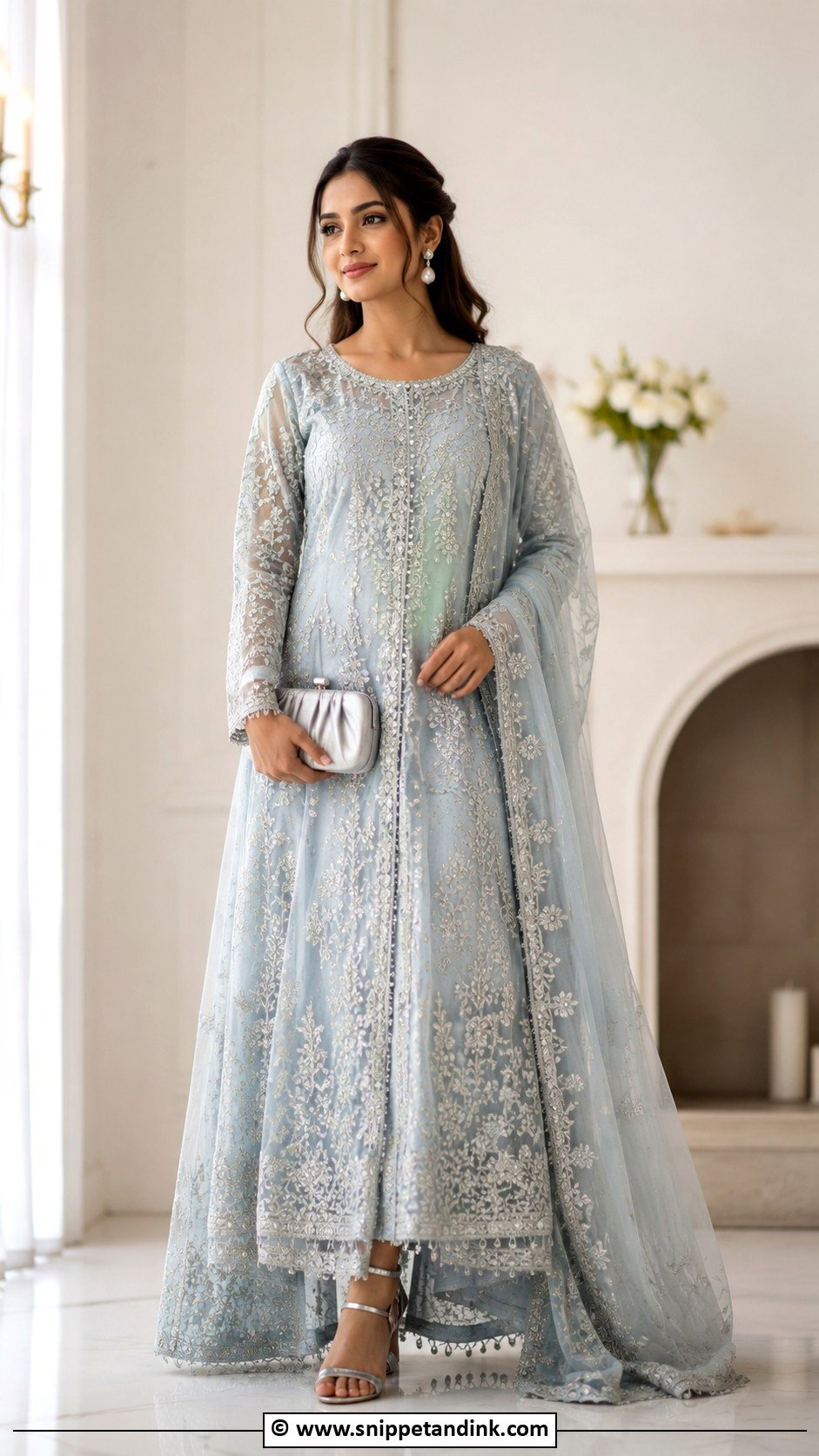
Powder blue brings a calm mood, especially in spring and summer daylight. A modest maxi with long sleeves, a defined waist and embroidery at the neckline, cuffs and hem is the base. An ivory or matching dupatta gives it a traditional finish. Silver accessories suit it best; pearls work too. Bridesmaids, sisters and guests wear this well.
7. Mint Green Nikkah Sharara Outfit
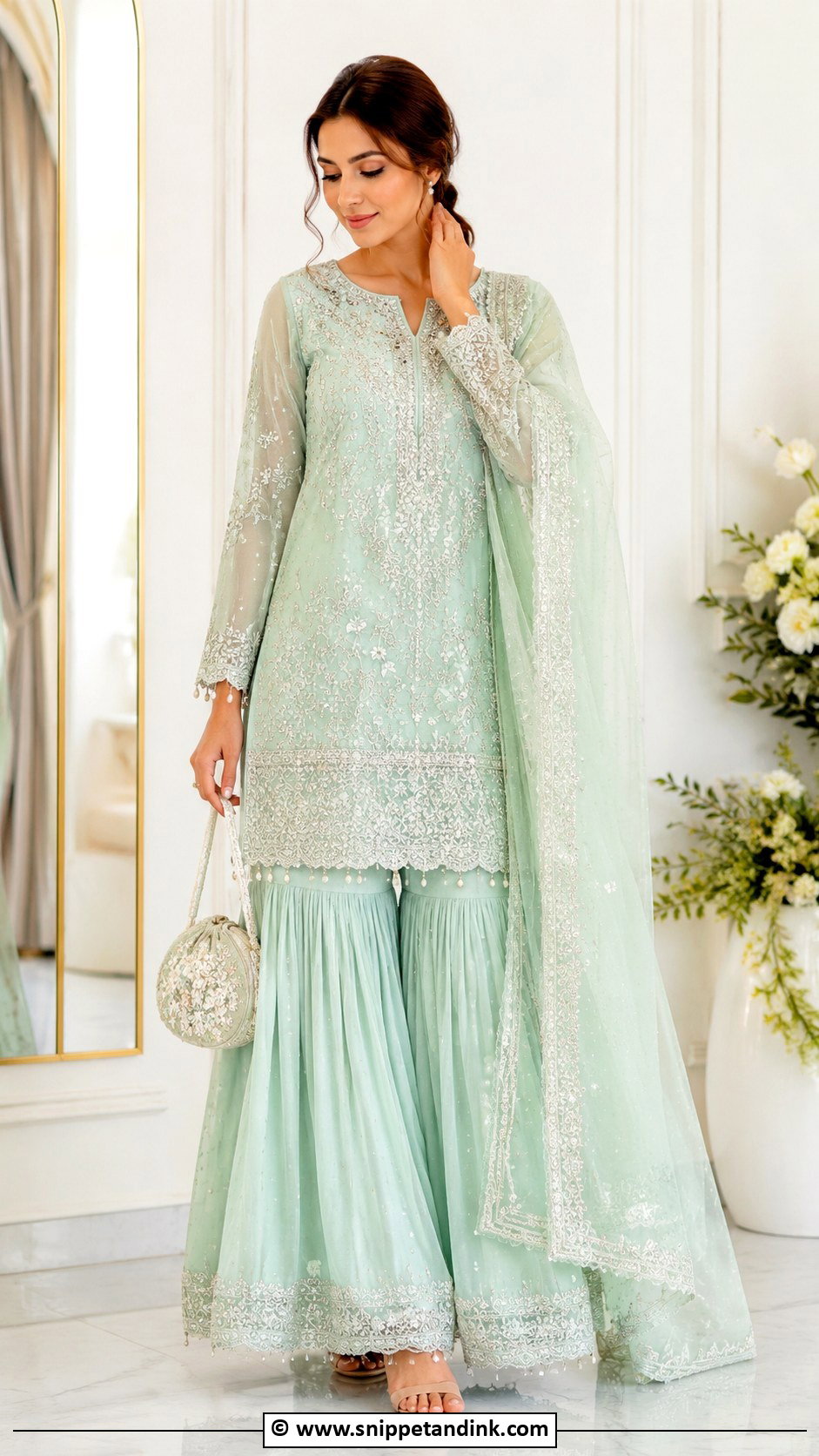
Mint is airy and delicate in daylight, which makes it a good warm-weather color. Silver, white or pearl embroidery suits it. A straight kurti with a wide sharara and a light, easy dupatta is the base. A bride might add a second dupatta or a heavier border; guests should keep embroidery clean and skip bridal jewelry. A sleek bun and pearl studs keep it neat.
8. Cream Nikkah Saree Outfit
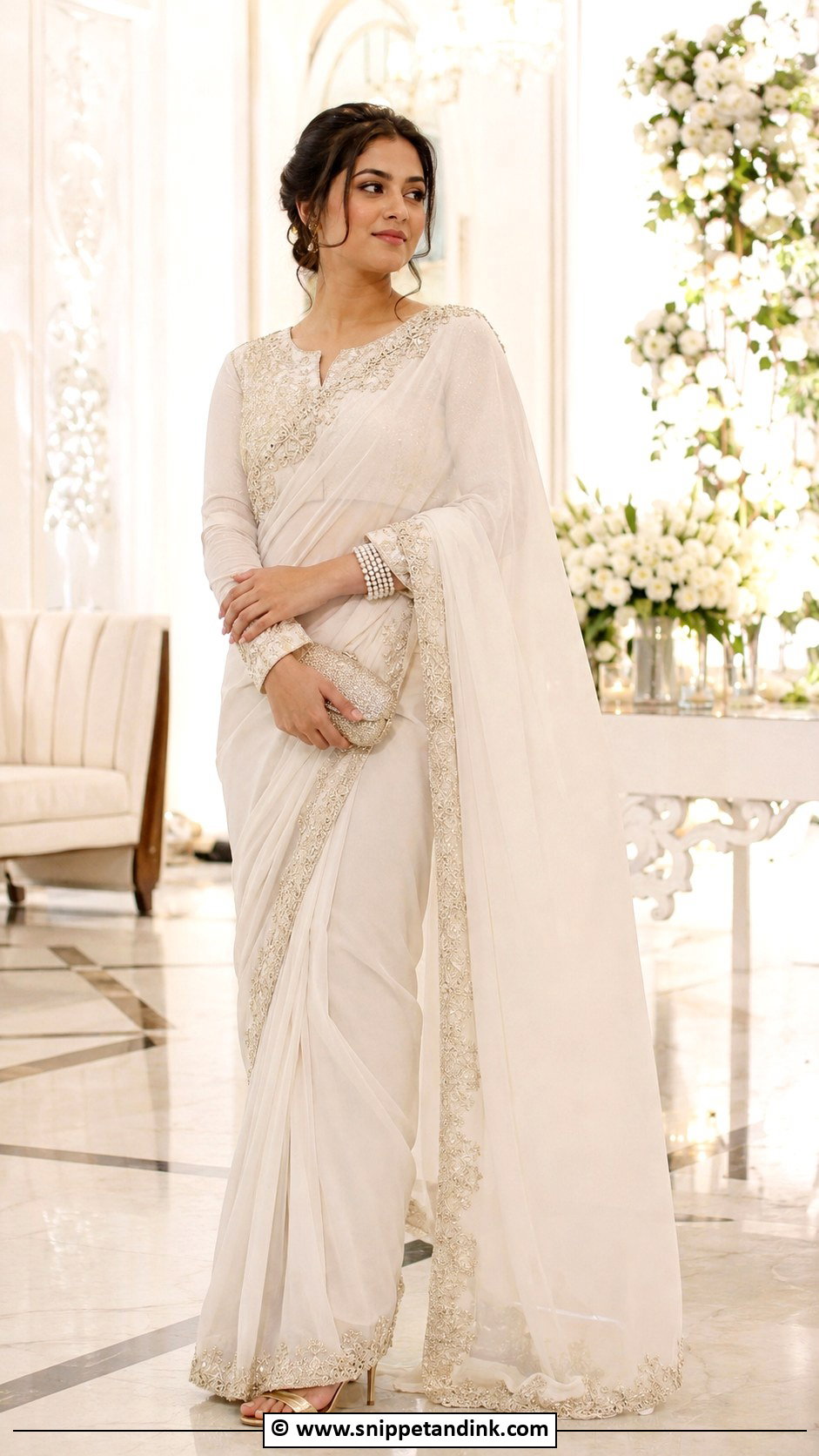
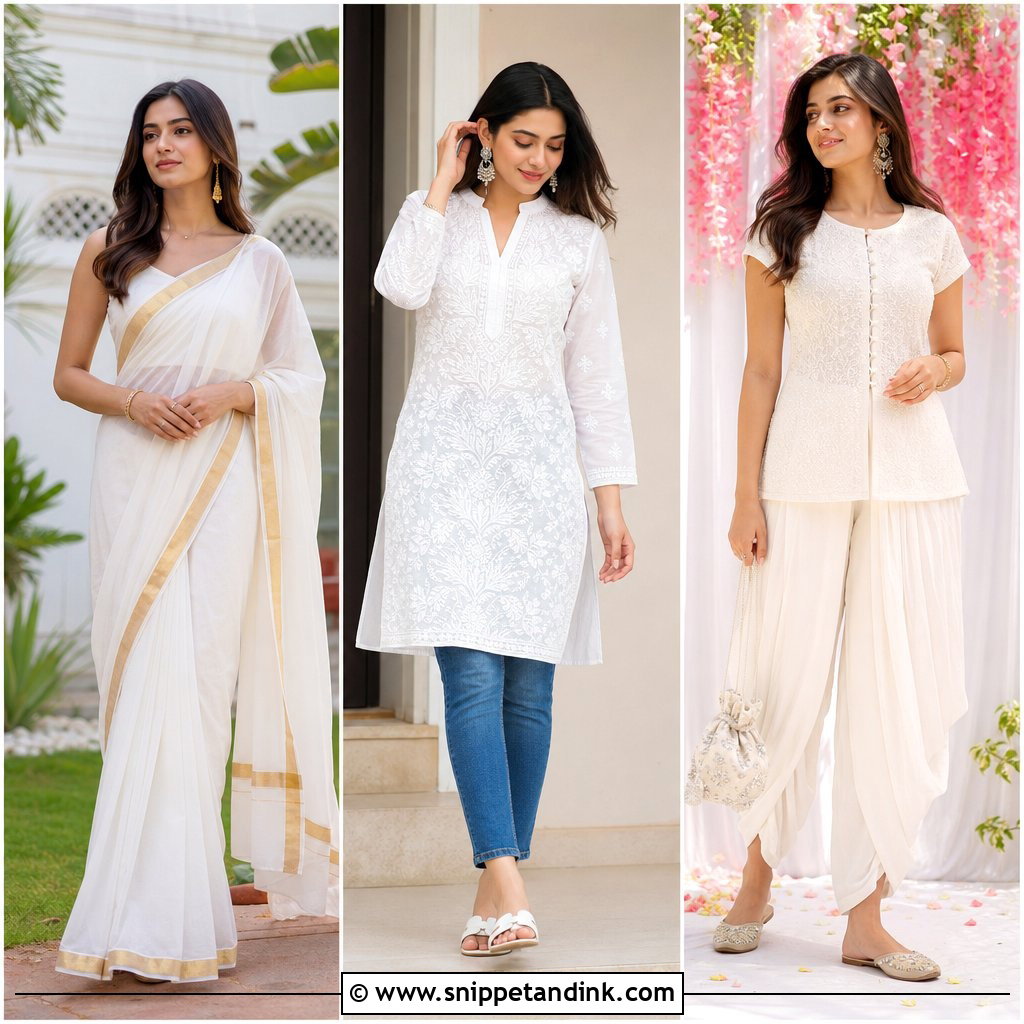
Saree drapes can be modest when the blouse does the work: sleeves and a higher neckline. In cream chiffon, silk, organza or georgette with a delicate border, a saree is refined and formal. Brides can add a veil-style dupatta or bring the pallu over the head; guests keep jewelry light. I’d pre-pleat and pin the saree, since sitting on a floor cushion pulls loose pleats out of place.
9. Gold Nikkah Lehenga Outfit
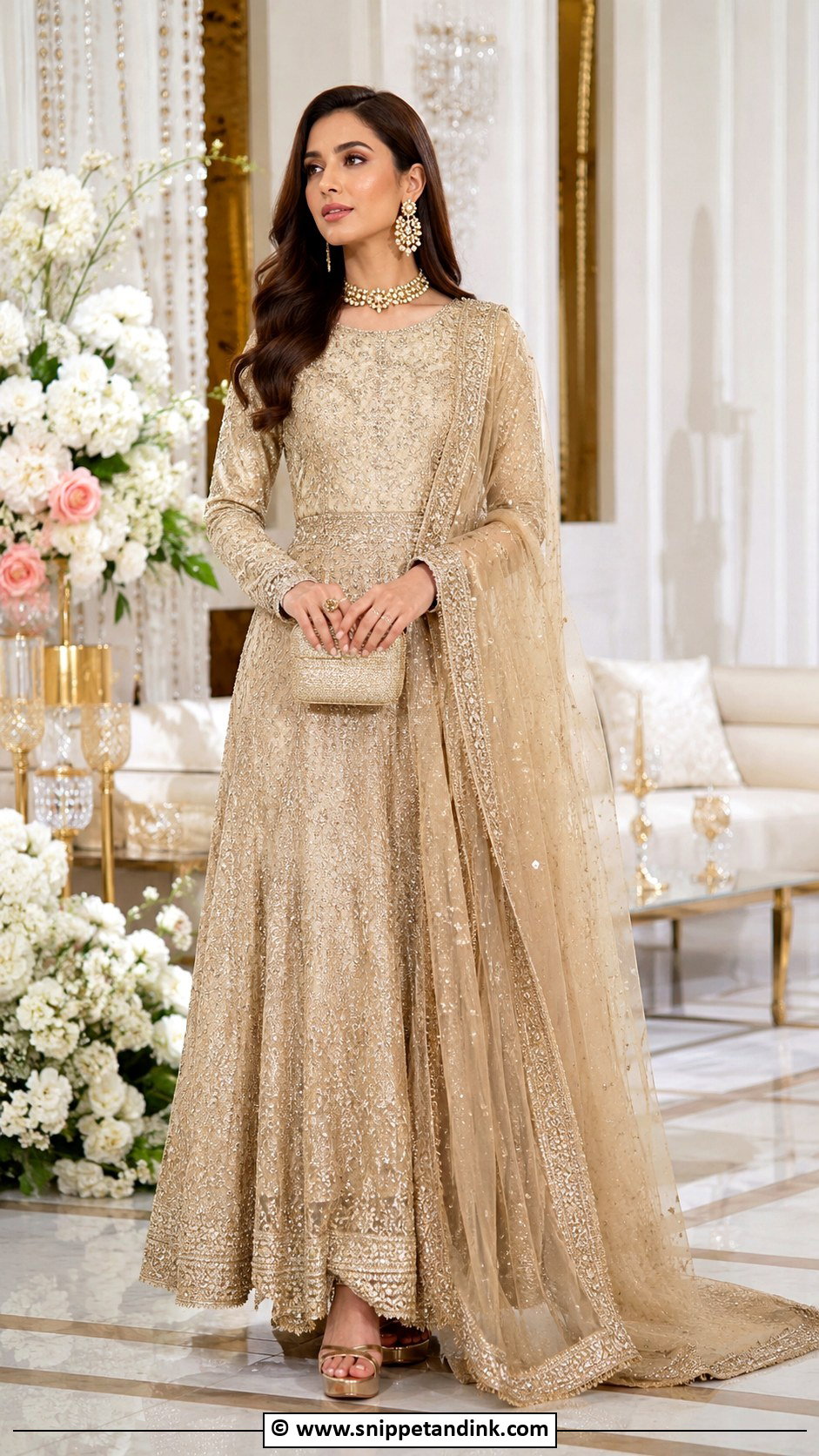
Gold is festive without being a bright color, as long as it is soft, antique or champagne gold. A long blouse, peplum or modest choli makes the lehenga suitable for the ceremony. Embroidery should have depth but not weight. Brides add kundan and a statement headpiece; guests should choose lighter fabric and simpler work so the outfit does not look bridal. Neutral makeup keeps the gold in charge.
10. Dusty Rose Nikkah Gharara Outfit
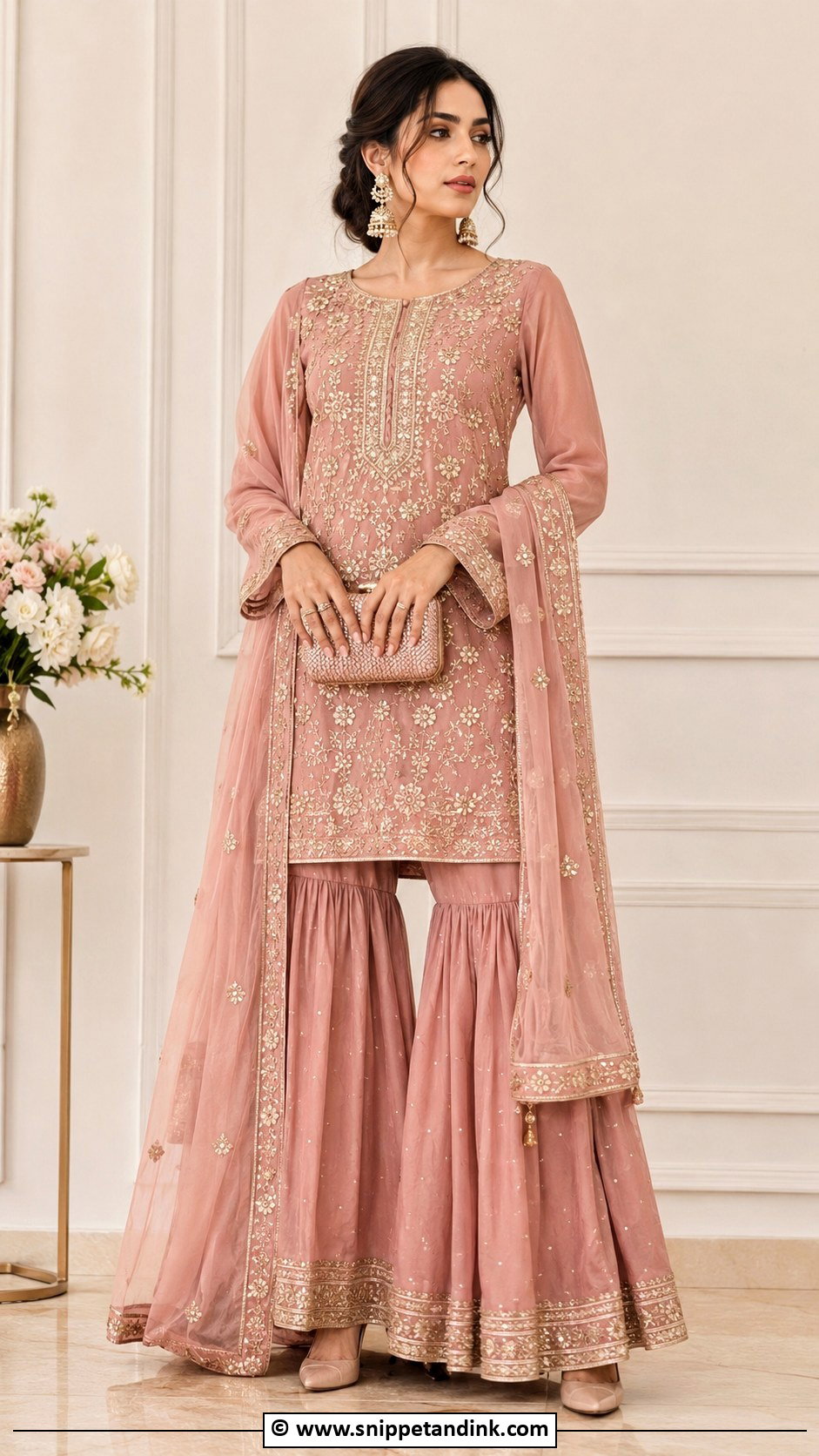
A dusty rose Nikkah gharara outfit sits between blush and mauve, with a slightly vintage feel. A short embroidered kurti and a gharara with border detail near the flare give it shape. A matching dupatta with small motifs or lace trim keeps it cohesive. It suits sisters, close cousins or a bride who wants muted pink. Guests should keep embellishment light, since heavily worked dusty rose reads bridal.
11. Beige Nikkah Anarkali Outfit
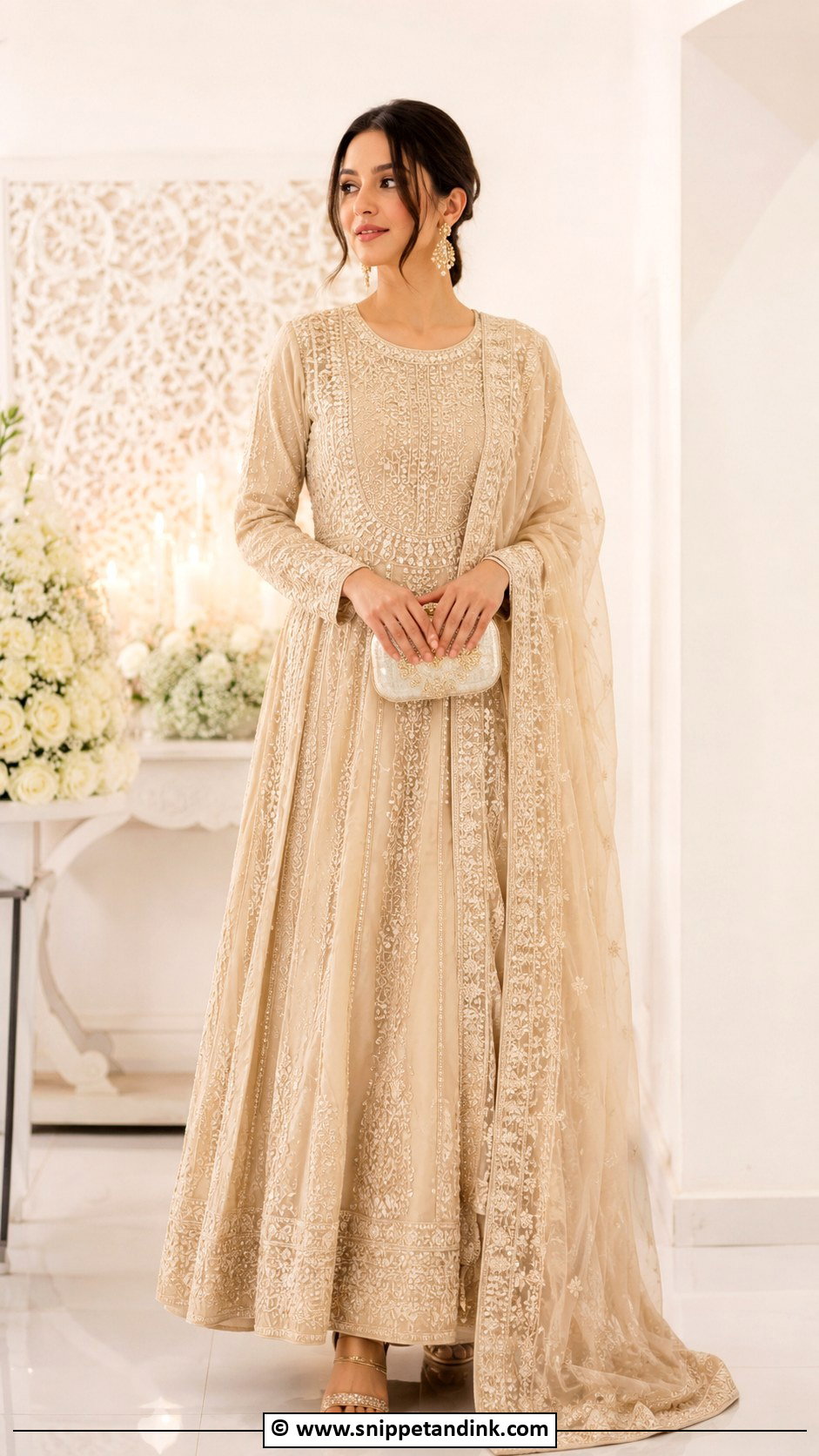
Beige is a canvas. It holds threadwork, sequins or pearls well and suits every role from bride to guest. A matching dupatta looks clean; a deeper champagne dupatta adds contrast. The honest warning is that beige can wash out fair or olive skin under indoor light, so I add warmth near the face with peach blush, defined eyes and gold jewelry.
12. Pastel Yellow Nikkah Pishwas Outfit
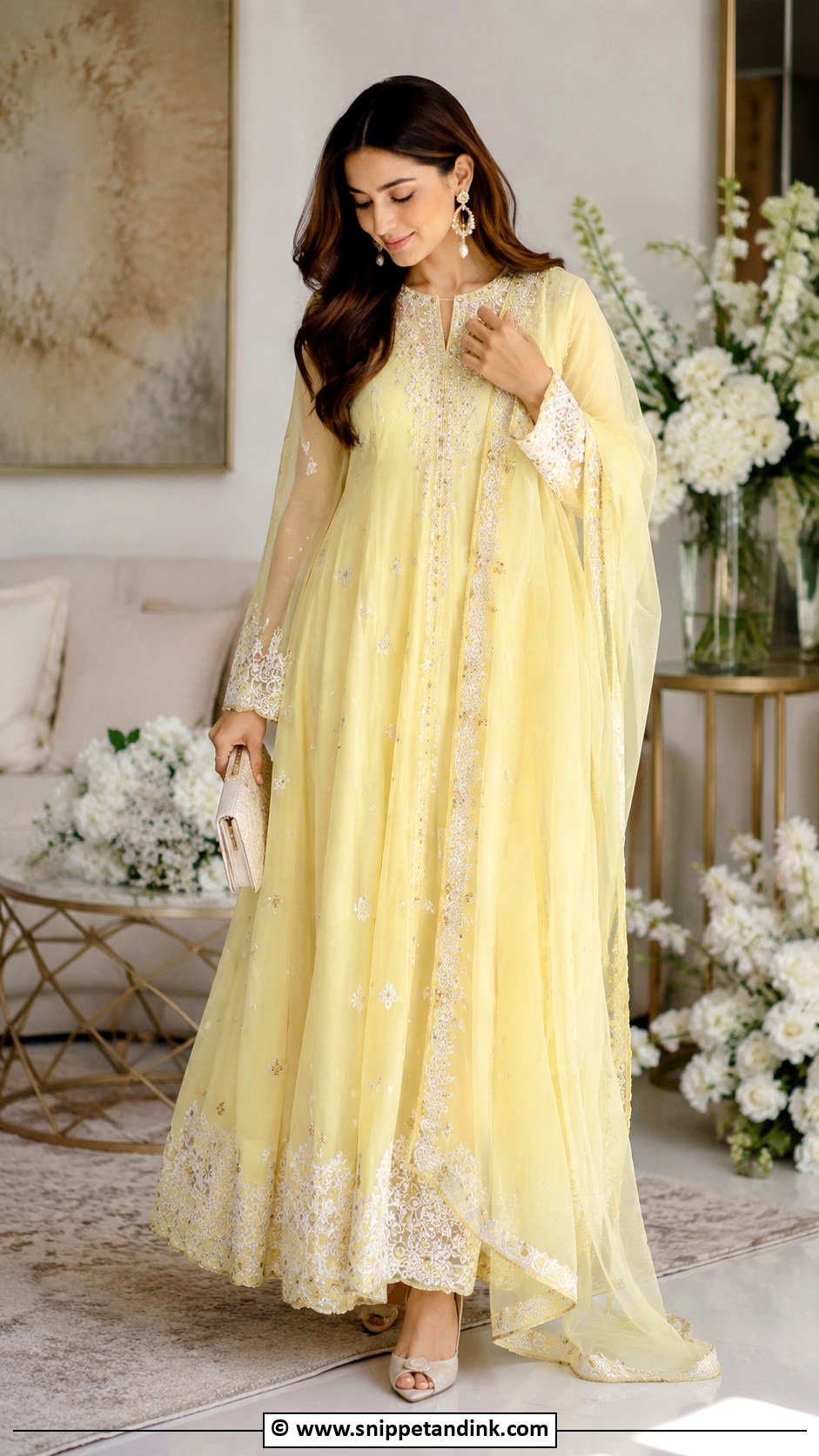
Pale butter or soft lemon is the yellow for a Nikkah; bright yellow belongs to the mayun. A flowing pishwas with white, gold or pearl embroidery and a sheer bordered dupatta suits daytime home ceremonies, gardens and small gatherings. Pearl earrings and gold bangles finish it. Guests who want something light and festive will find it easy to wear.
13. Lavender Nikkah Maxi Outfit
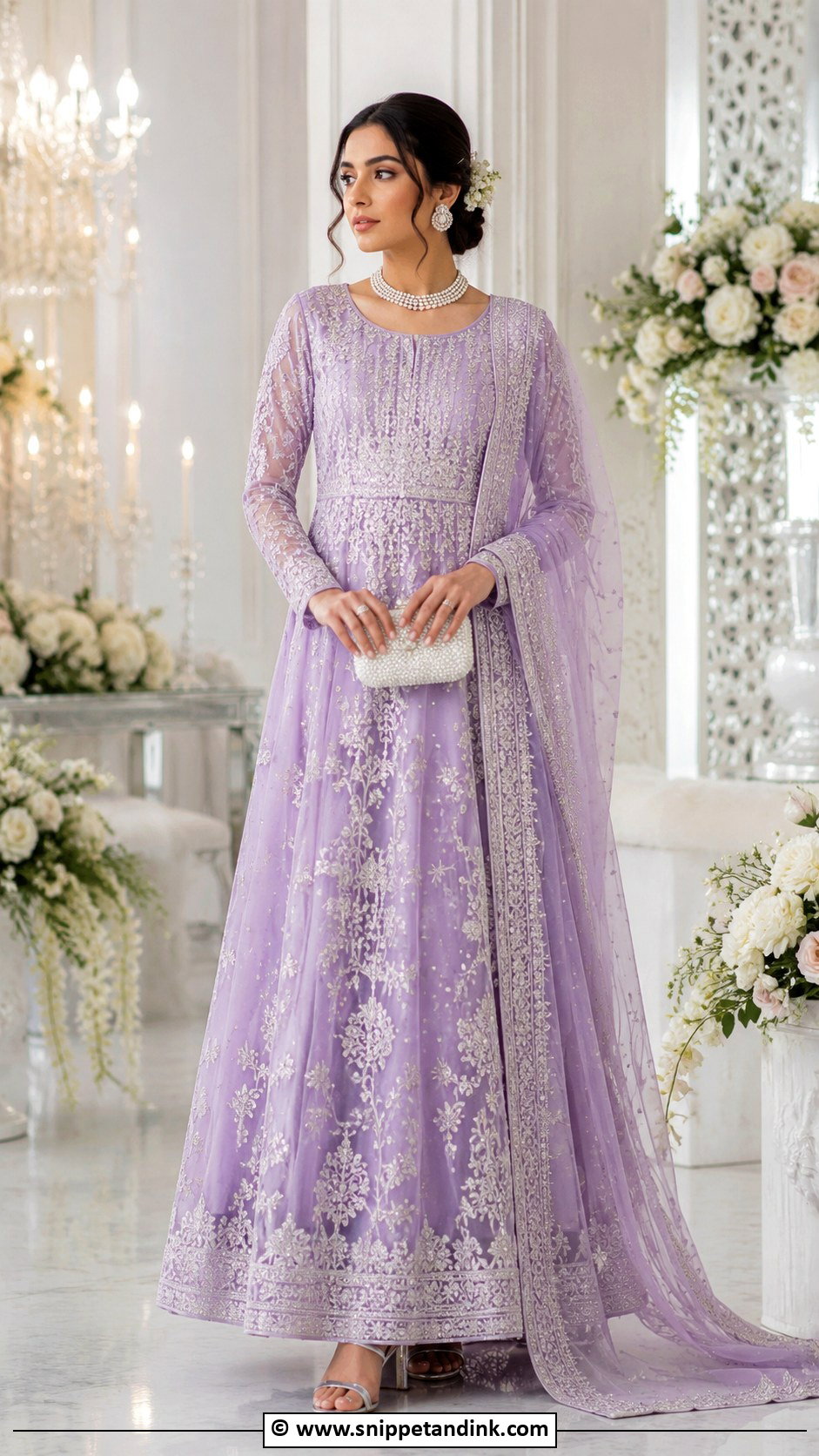
Lavender needs fabric with some transparency, such as chiffon, organza or net, to look its best. A full-length maxi with sleeves, a modest neckline and embroidery around the bodice or hem, plus a matching dupatta, is the base. Silver jewelry sharpens it; pearls soften it. Bridesmaids, cousins and guests at a formal but light ceremony suit it.
14. Peach Nikkah Sharara Outfit
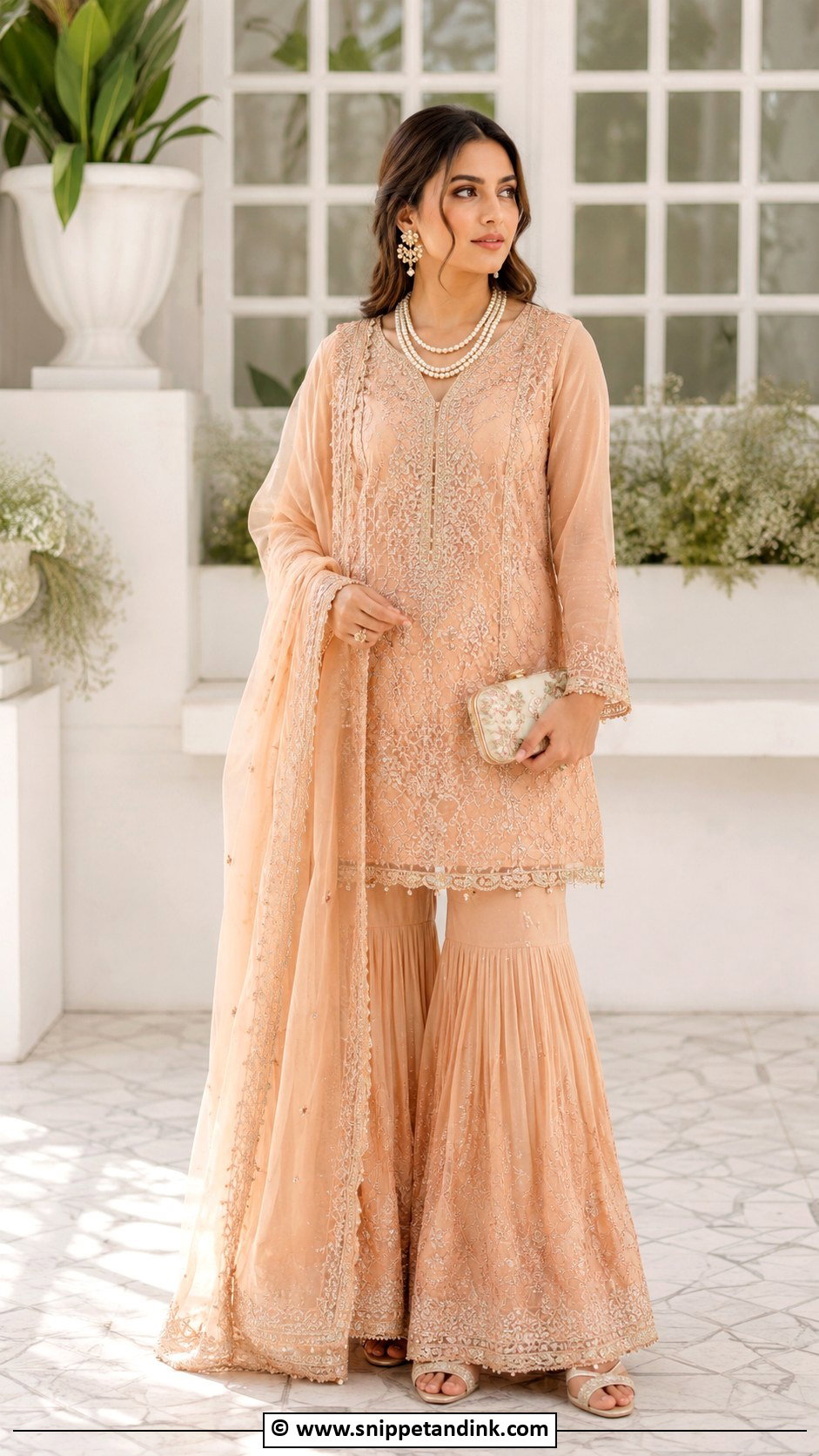
Peach gives a gentle glow without brightness, which suits daytime events. A peach kurti and sharara with a chiffon, net or organza dupatta and ivory, gold or rose gold embroidery stay elegant. Brides can add heavier borders and layered jewelry; guests keep threadwork light. Nude heels or champagne sandals suit it, and it holds up well in photos.
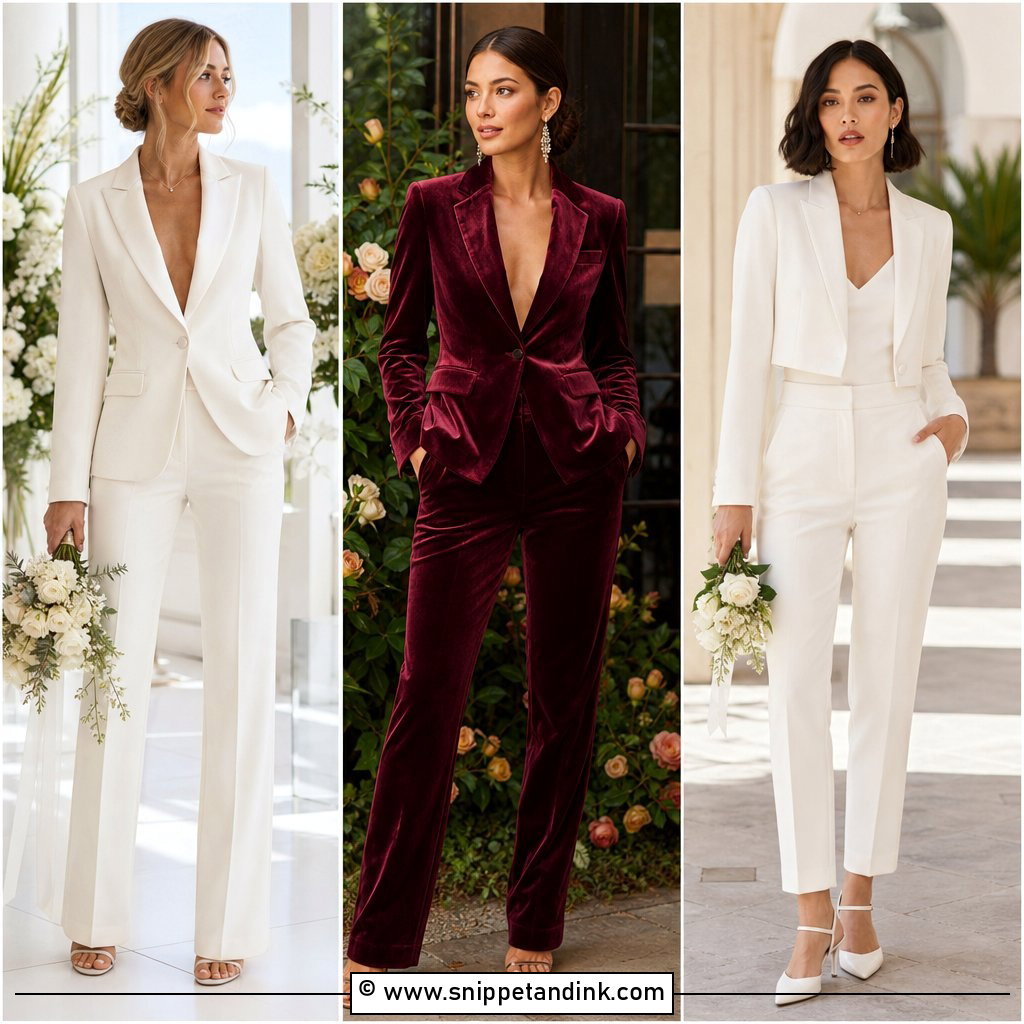
15. Silver Nikkah Gown Outfit
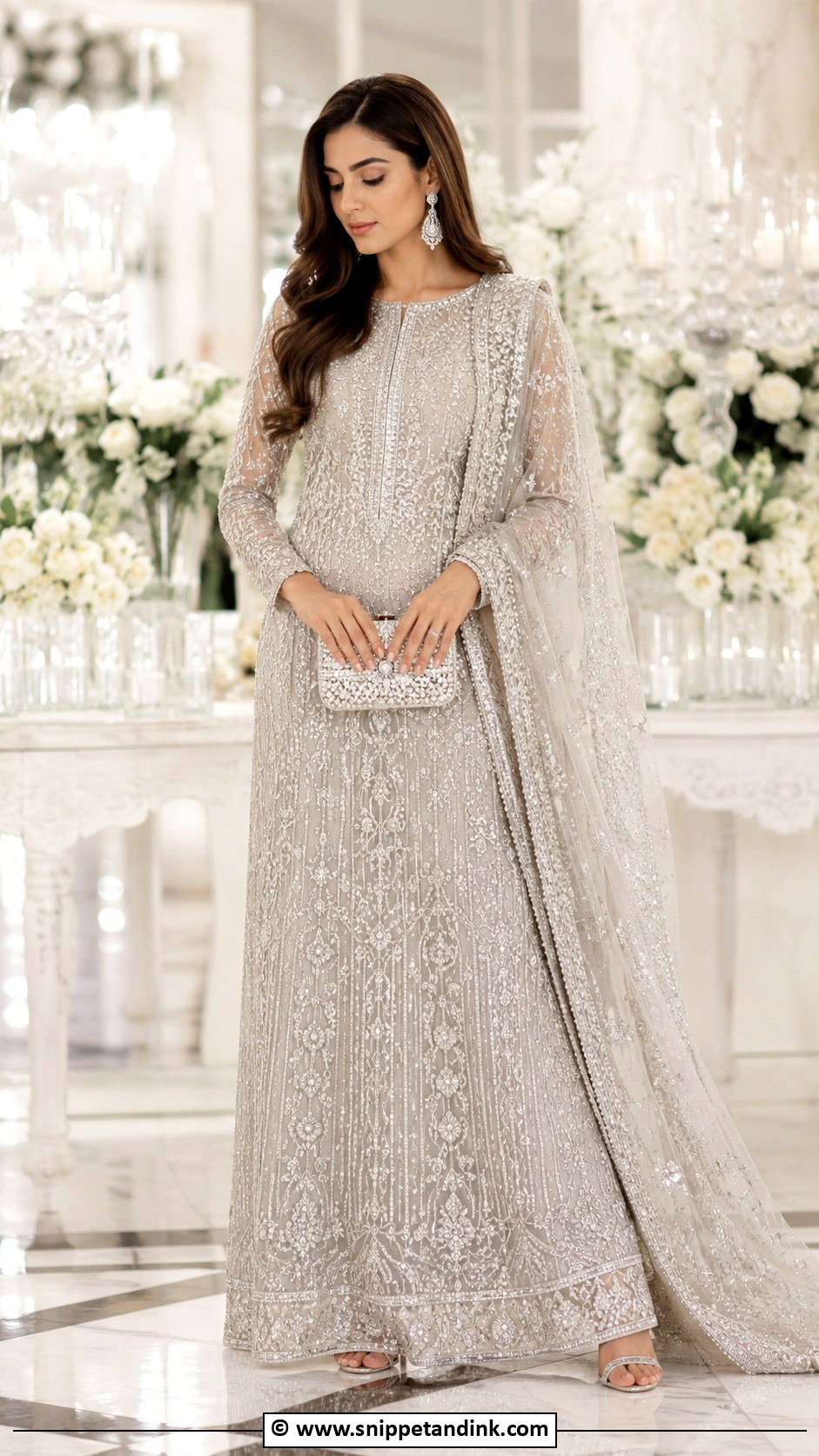
A silver gown suits a modern, formal ceremony, especially in the evening. Long sleeves, a high or soft round neck and delicate beadwork keep it modest. Silver can look bridal, so guests should choose minimal embellishment and no train. A bride can add a sheer dupatta, a pearl veil or statement earrings. Keep the silhouette easy to sit and walk in.
16. White Nikkah Abaya Outfit
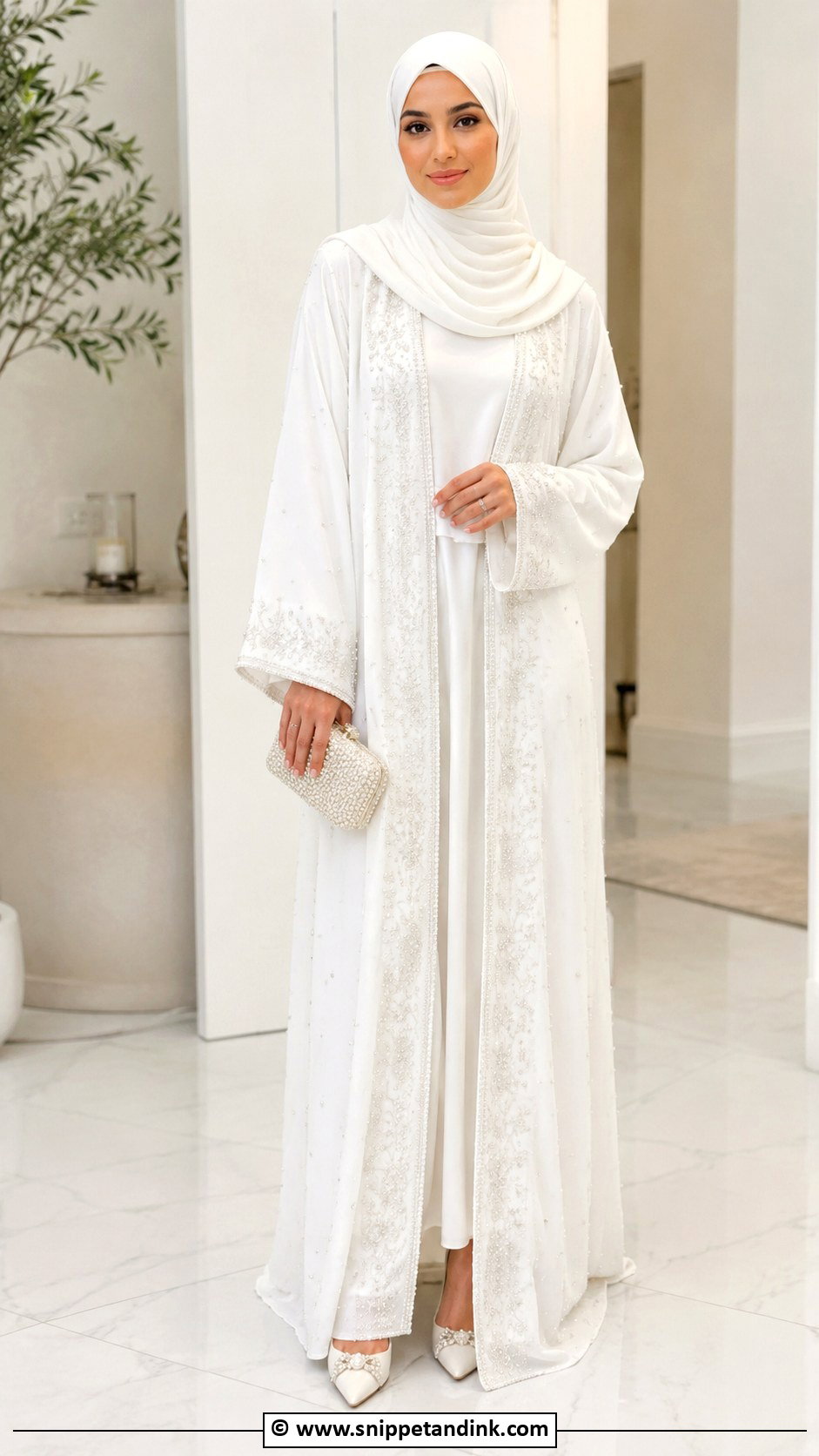
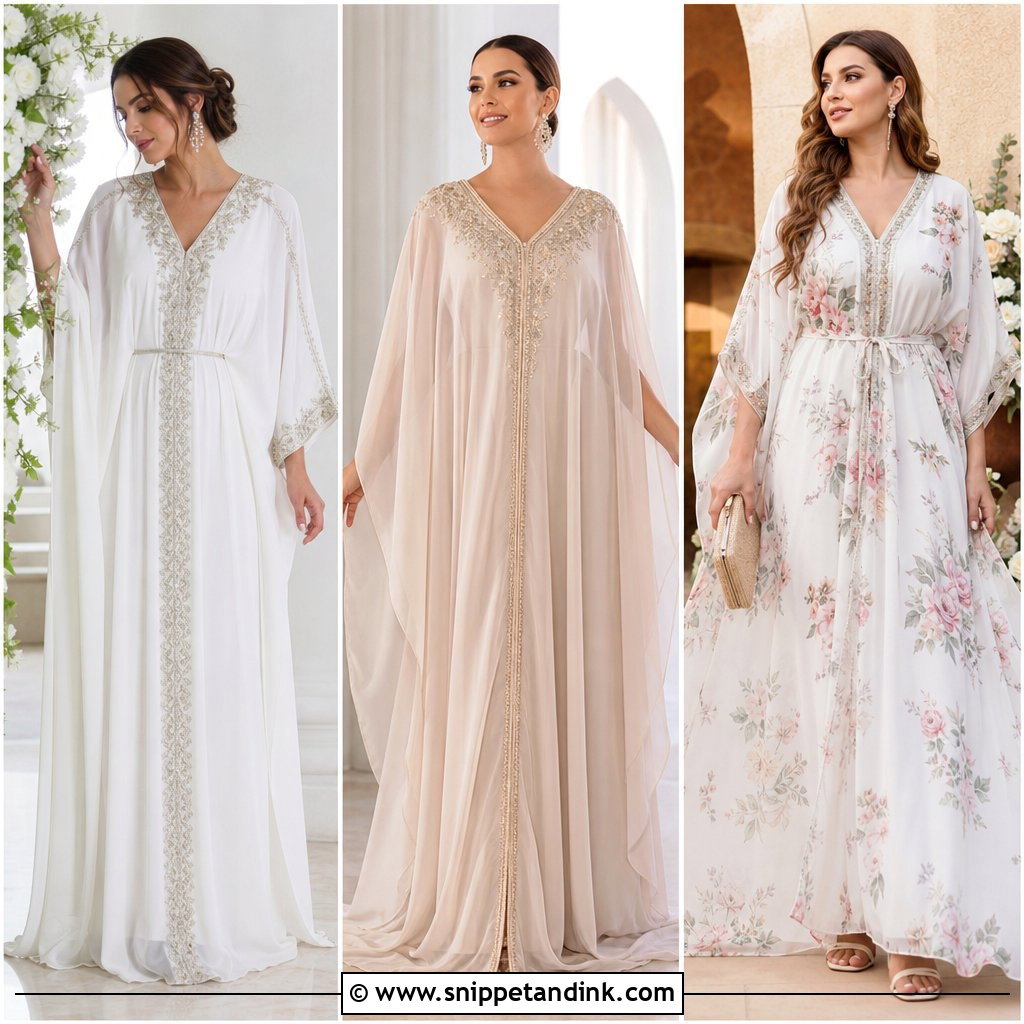
A white Nikkah abaya outfit gives full coverage with quiet detail: pearl work, lace panels or embroidery along the sleeves and front opening. A matching inner dress keeps the line smooth, and a white or ivory hijab finishes it. Brides can add a delicate belt or statement earrings. Guests should wear a colored abaya instead of white when the bride is in white.
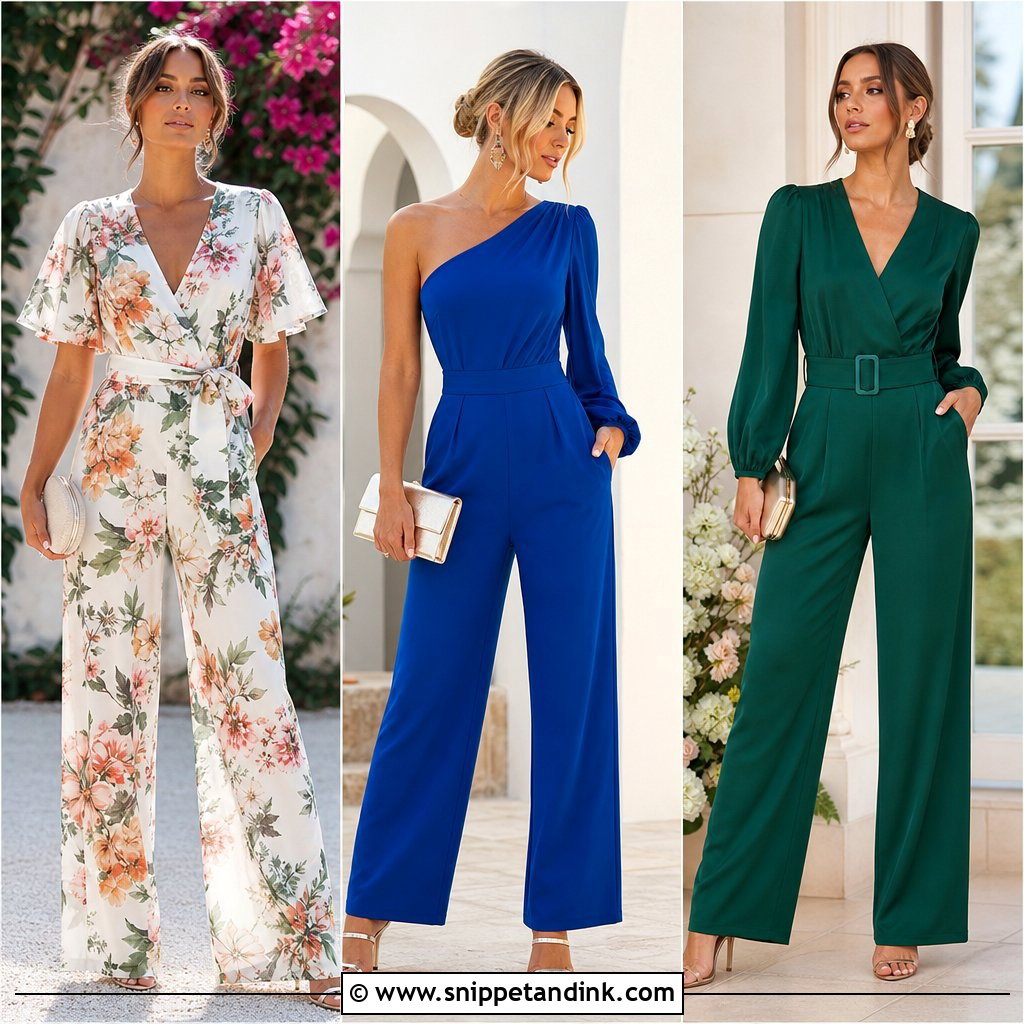
17. Emerald Green Nikkah Suit Outfit
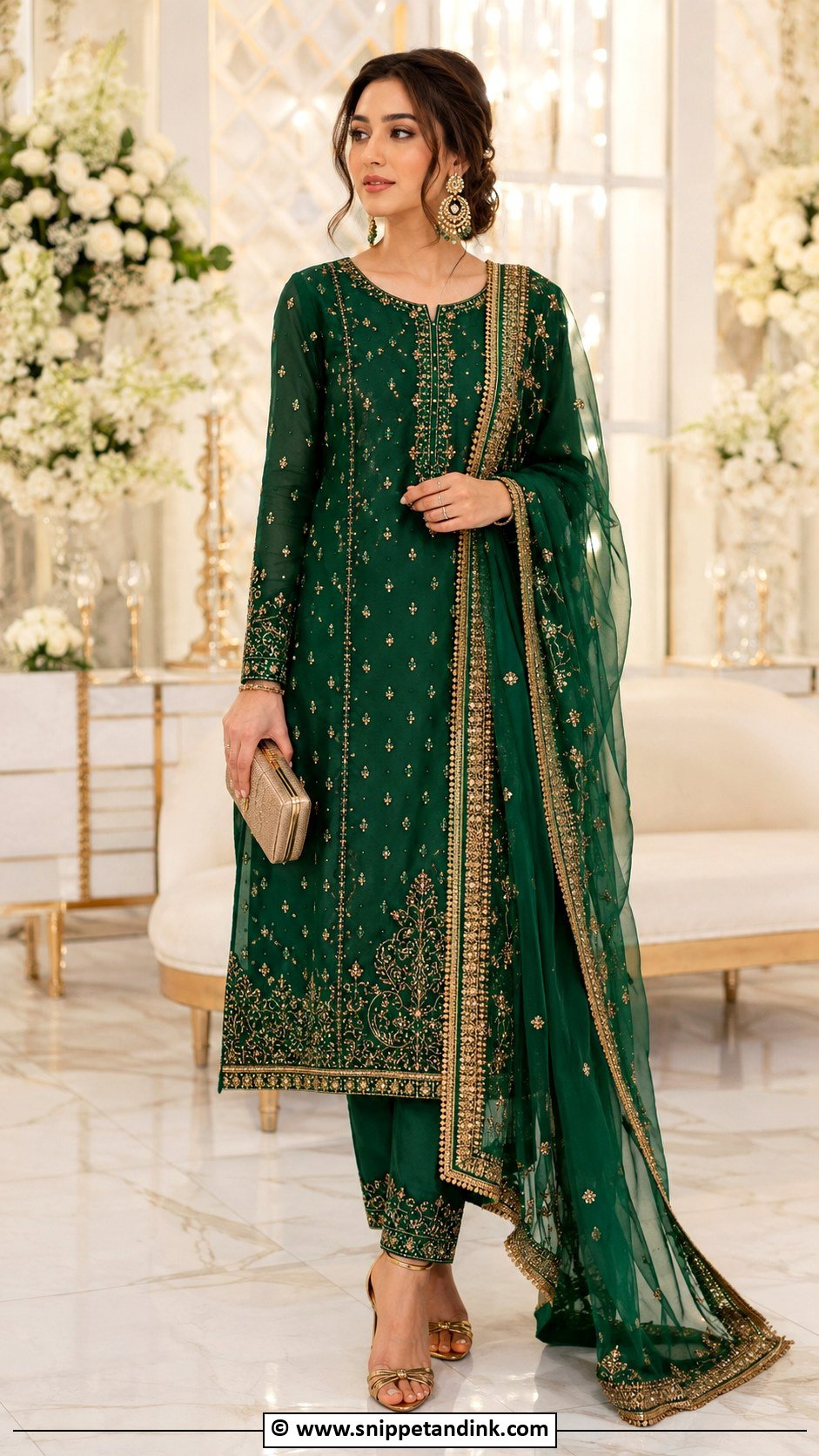
Emerald is rich and traditional, and in a simple suit it does not read too bridal. A straight kameez with cigarette pants or wide trousers, and a dupatta with gold or antique detailing, suits mothers, close family and guests who prefer deeper colors. A bride can wear emerald with heavy gold embroidery and classic jewelry. Keep the cut simple; the color carries the outfit. Warm bronze eyes suit it.
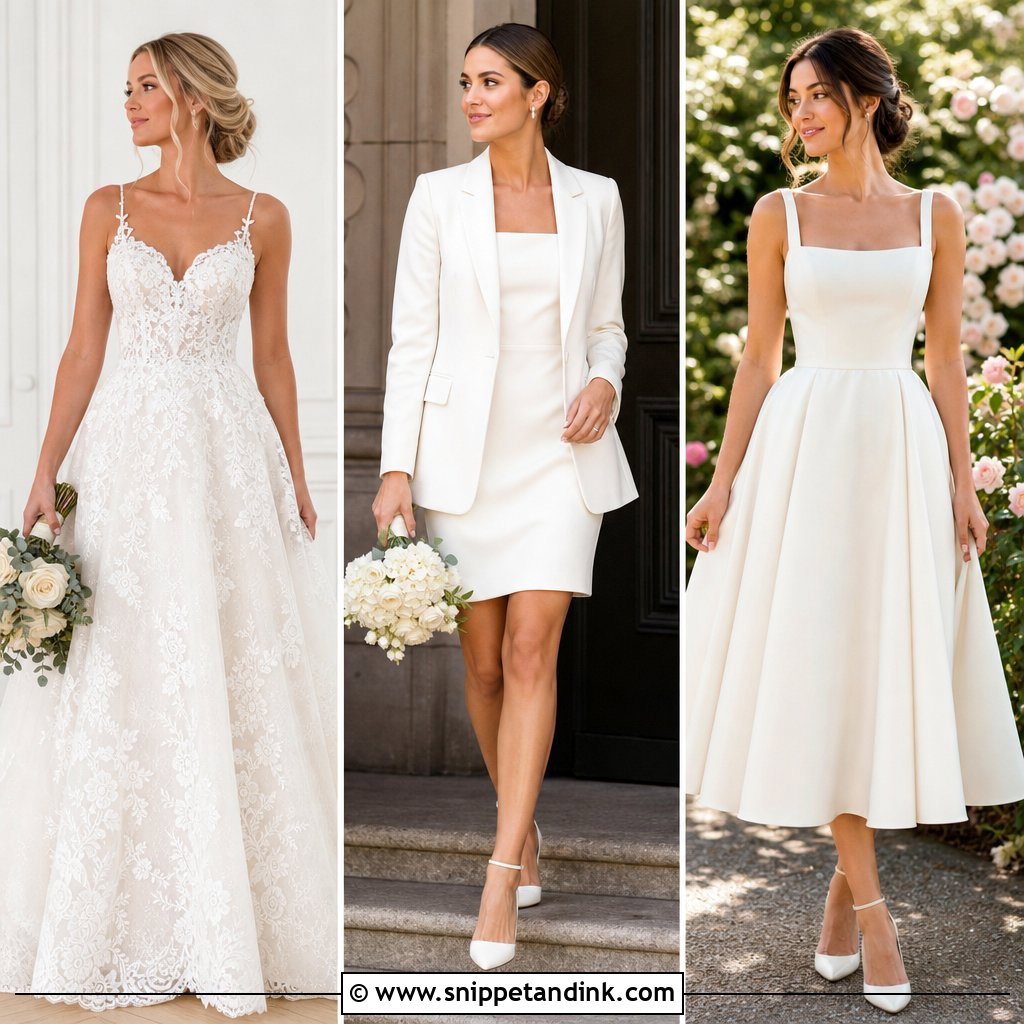
18. Pearl White Nikkah Lehenga Outfit
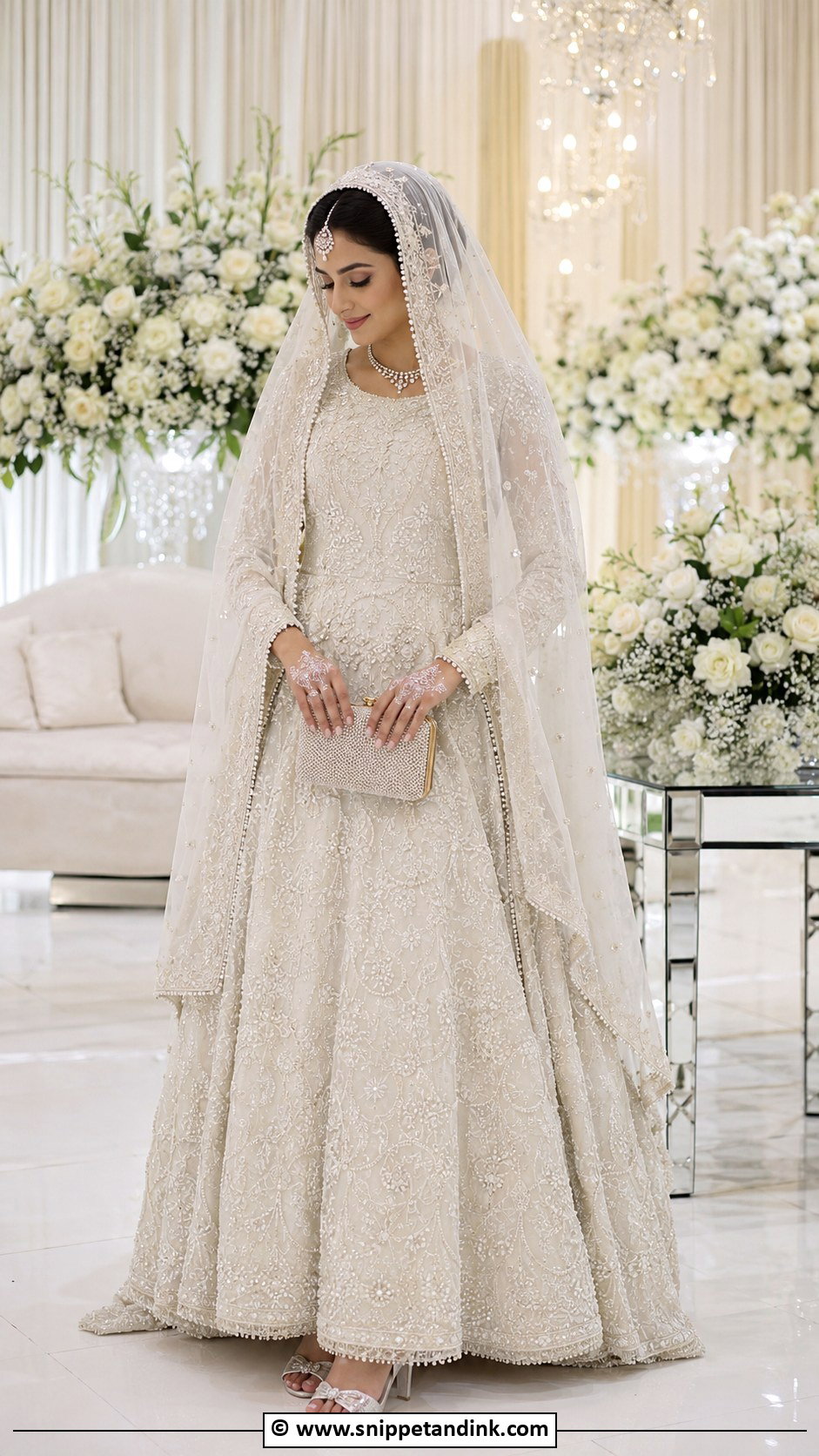
Pearl white is the most bridal outfit on this list. Pearl embroidery, light sequins or threadwork on a lehenga add texture and a little shine. A long blouse or peplum adds coverage, and a sheer dupatta pinned over the head is right for the ceremony. Guests should avoid it unless the bride has clearly chosen another color.
19. Mauve Nikkah Anarkali Outfit
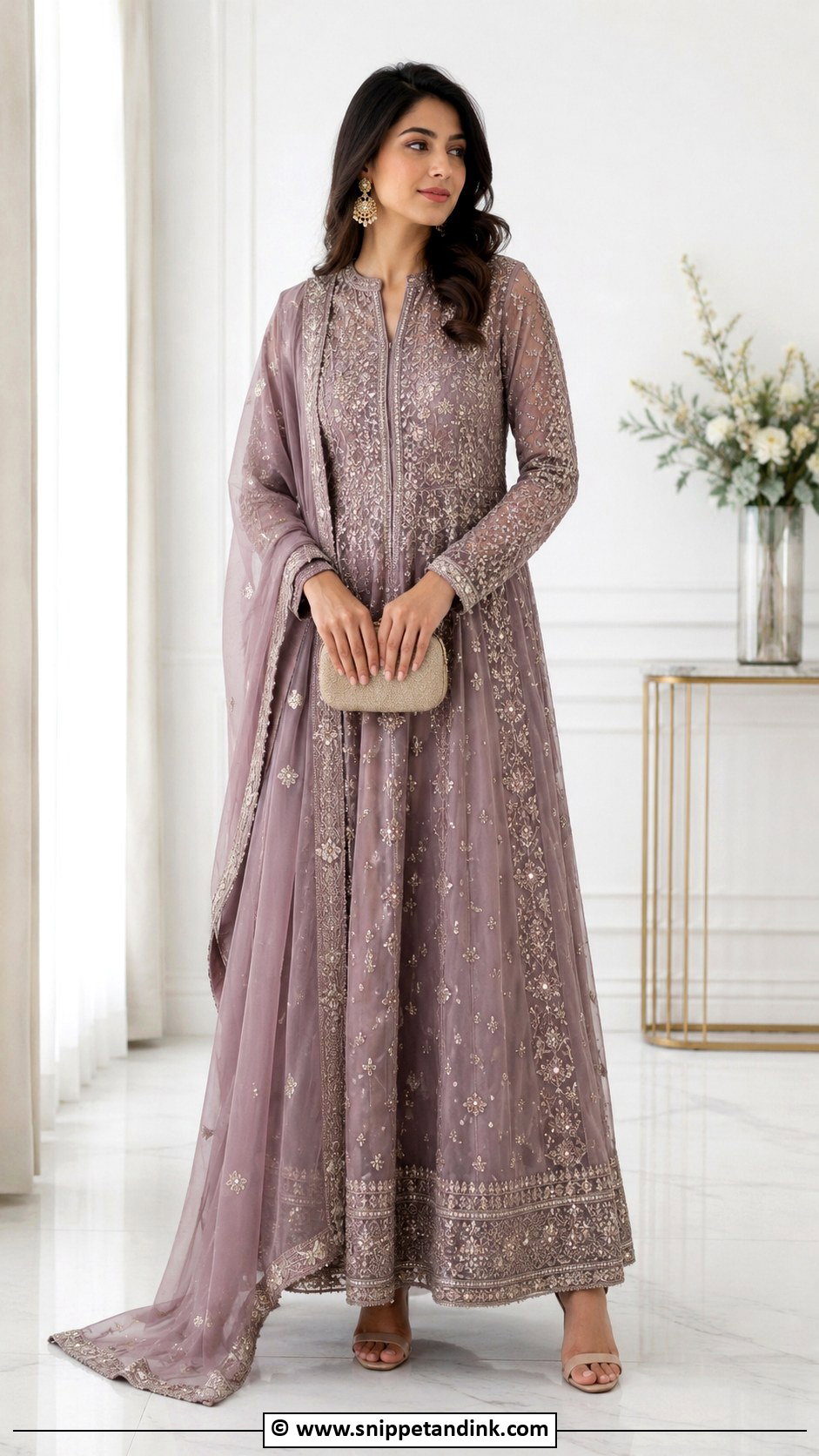
Mauve is the mature pastel, dressy without being loud, and it works across seasons. A long anarkali with fine embroidery and a soft dupatta suits older sisters, cousins, mothers and guests. Antique gold, rose gold or pearl jewelry should follow the embroidery color. A soft updo and natural makeup suit it, because the color already has depth.

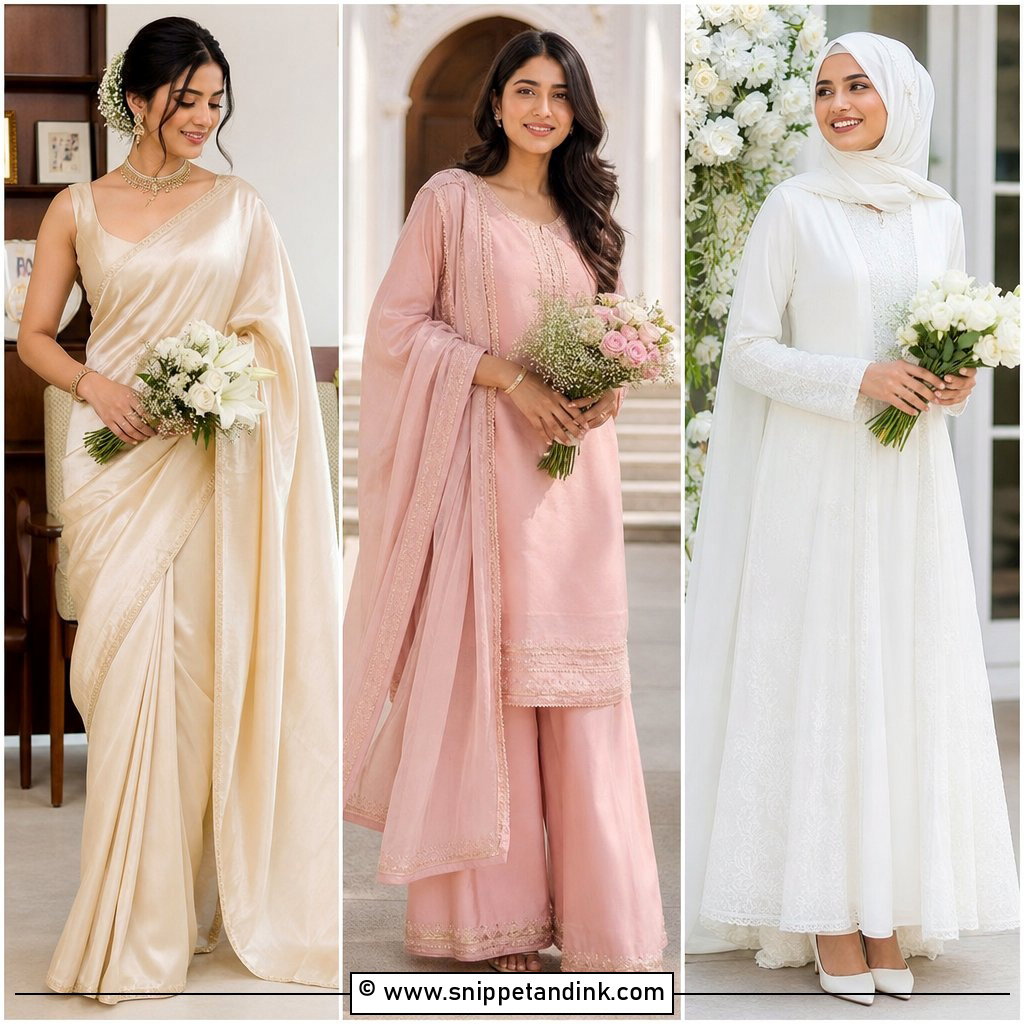
20. Tea Pink Nikkah Gharara Outfit
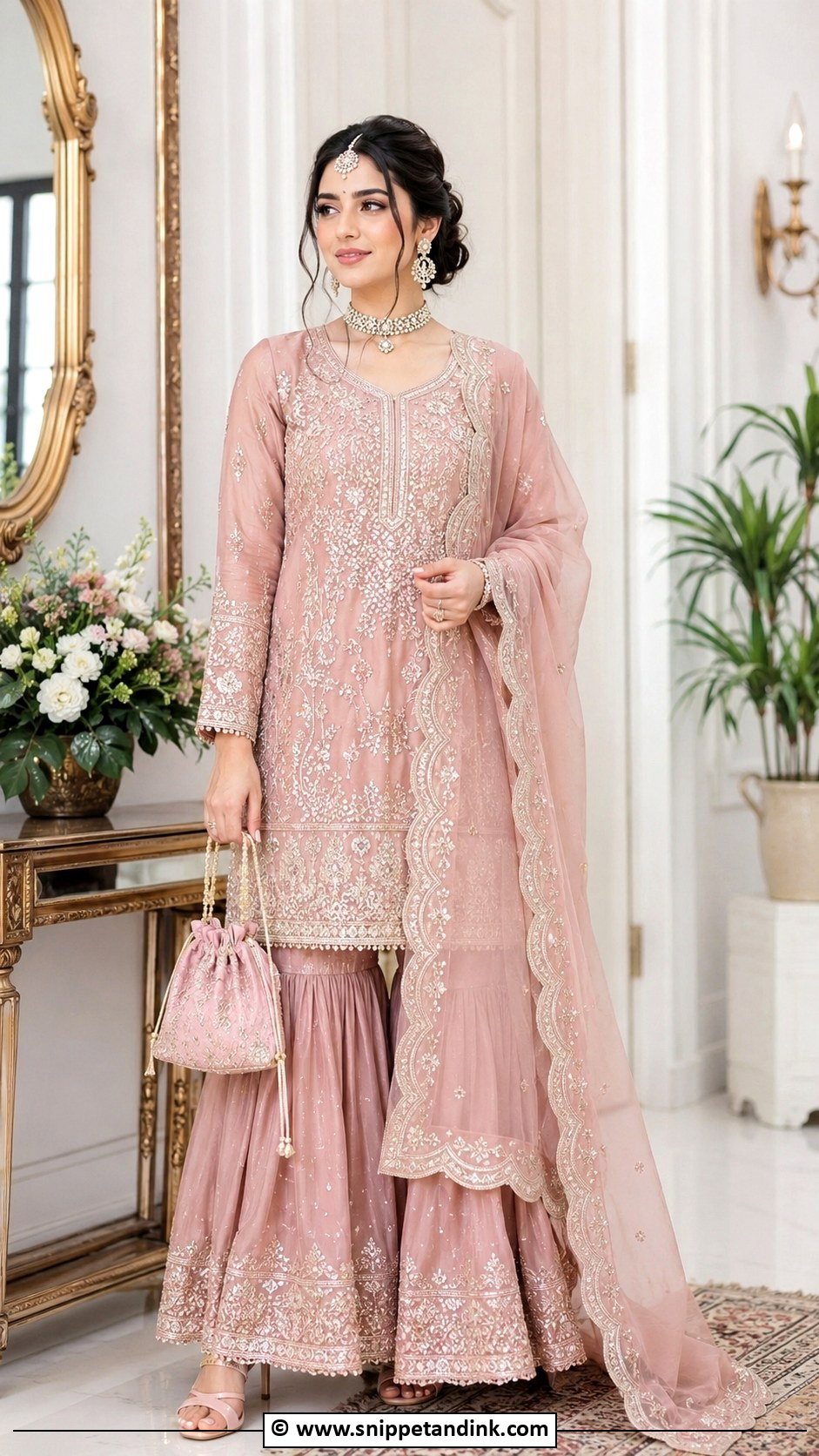
Tea pink is slightly muted, with a vintage charm that suits silk, jamawar, chiffon or organza. A short kurti with delicate embroidery, a gharara with a defined flare and a scalloped dupatta make the outfit. Brides style it with classic jewelry and a head dupatta; guests go lighter. Daytime family ceremonies suit it.
21. Navy Blue Nikkah Maxi Outfit
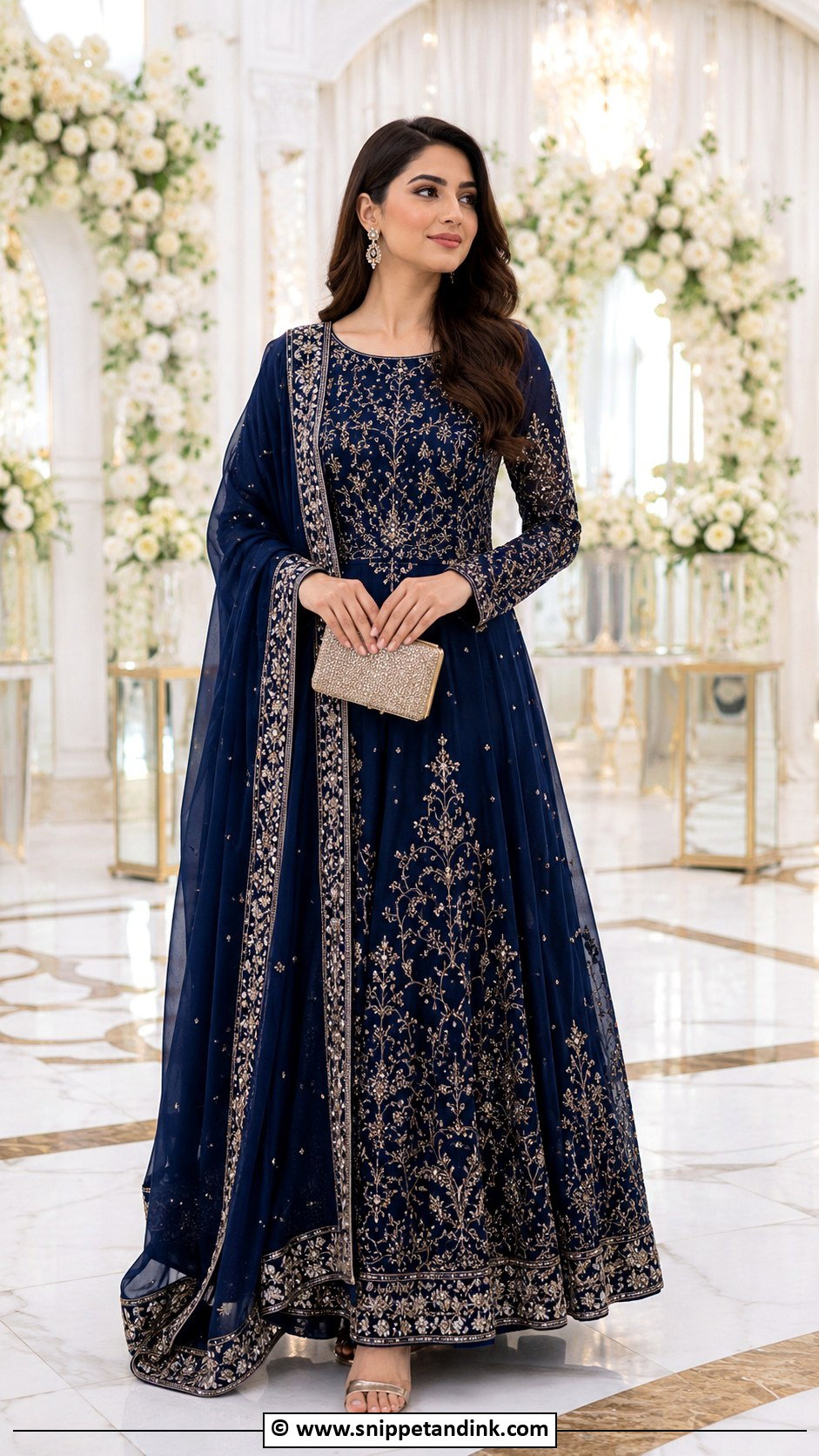
Not everyone wants pastels, and navy is the answer for evening ceremonies and formal venues. A full-length maxi with gold, silver or tonal embroidery and a matching dupatta keeps it modest. Guests should keep the cut clean and embellishment moderate; a bride who loves dark colors can add statement jewelry and a detailed dupatta. Metallic heels and defined eyes finish it.
22. Pistachio Nikkah Sharara Outfit
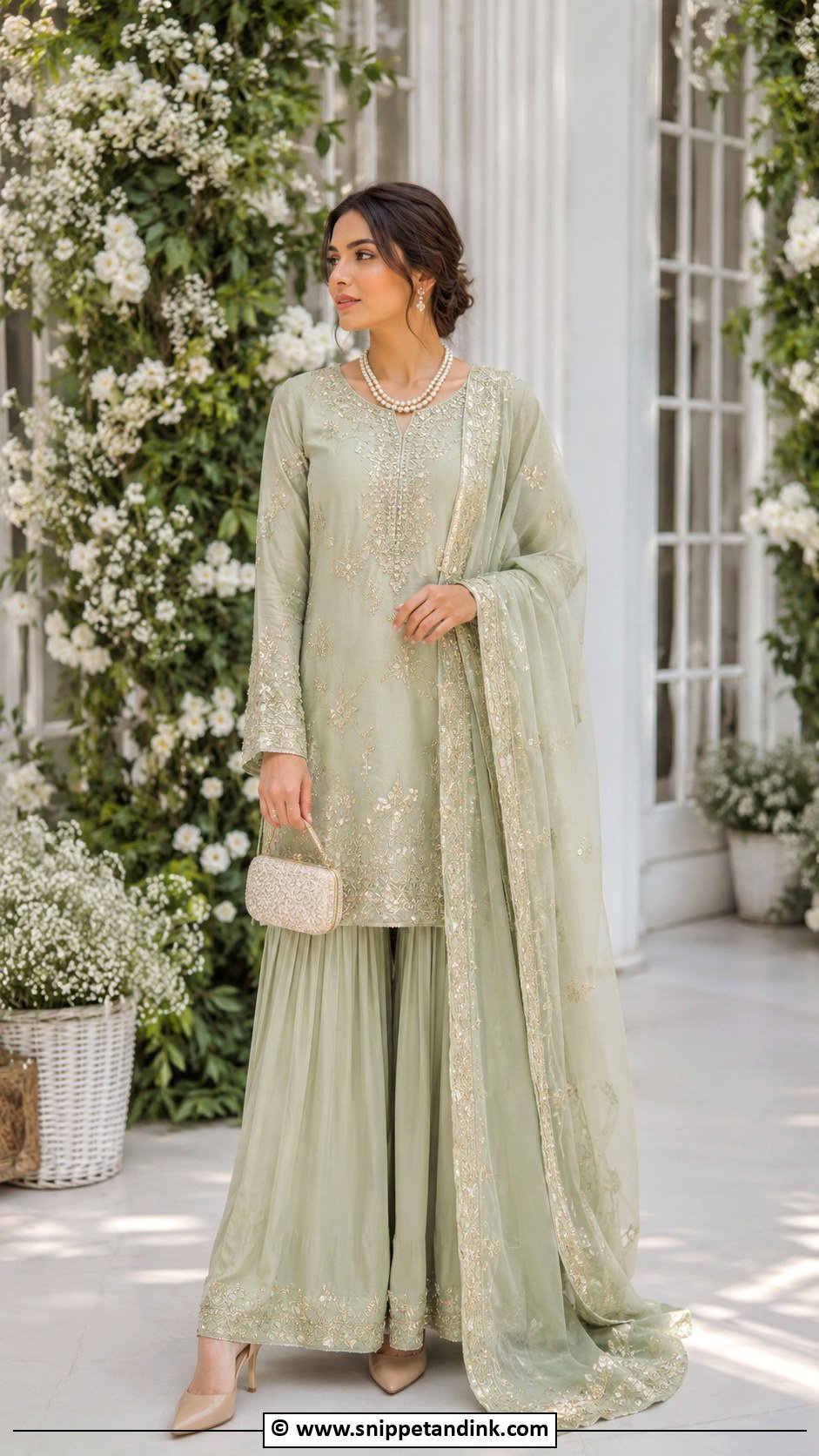
Pistachio sits between green and neutral, so it feels unusual without being bold. A straight or slightly flared kurti with a wide sharara and a matching dupatta, with white, silver or champagne embroidery, keeps it airy. Pearls suit it well. Brides can add a heavier dupatta border; guests choose scattered motifs. Gardens, home ceremonies and bright indoor venues all suit it.
23. Maroon Nikkah Kurta Outfit
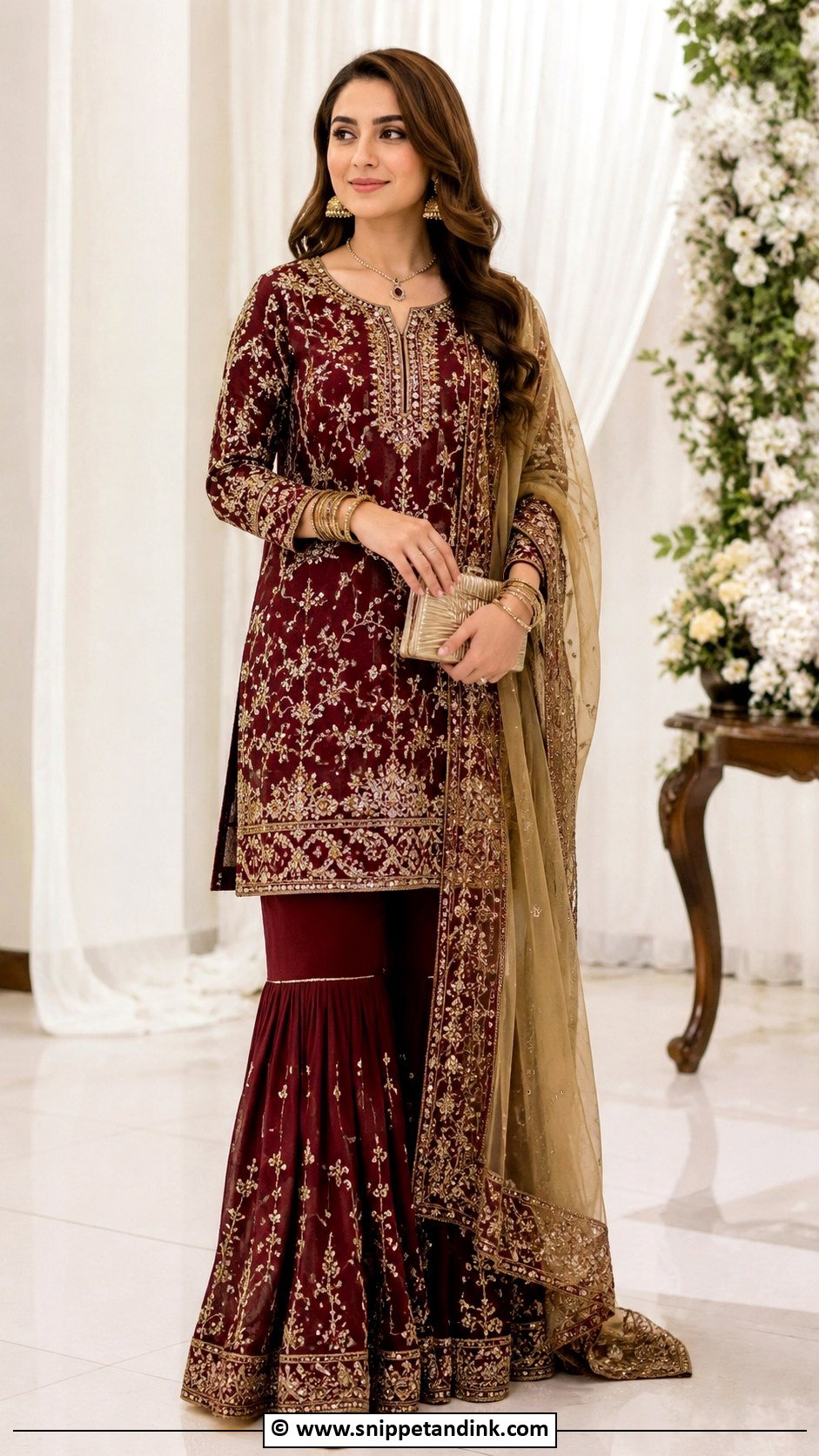
Maroon is formal, so your role decides the styling. A bride can wear a heavily embroidered maroon kurta with gharara pants, a dupatta and gold jewelry. A guest should choose a simpler kurta with straight pants and lighter work. Velvet suits cool weather; silk suits an indoor event. Soft lips and defined eyes keep it graceful.
24. Soft Grey Nikkah Saree Outfit
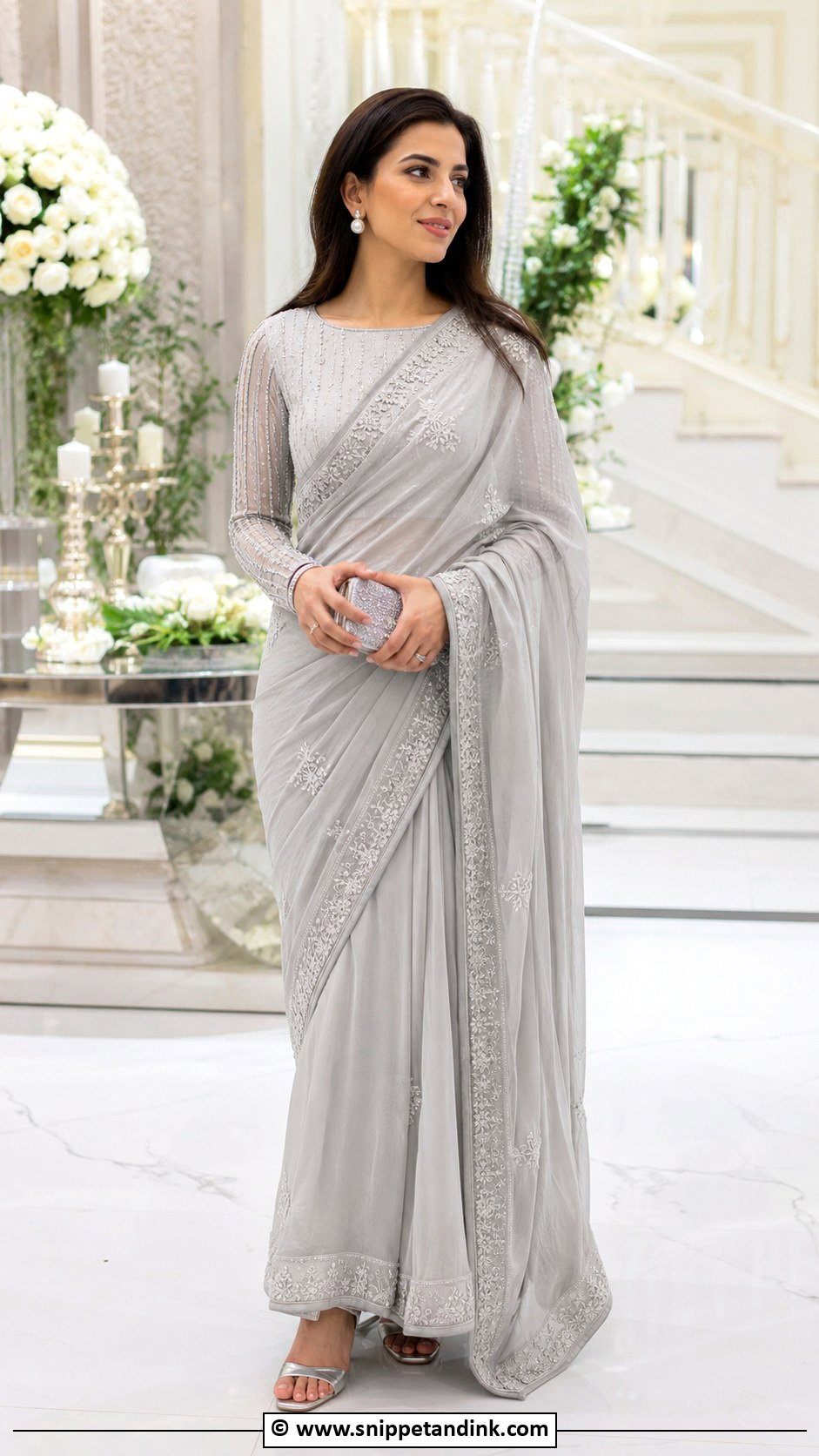
Soft grey is the neutral for women who find beige too warm. A light grey saree in chiffon, organza or silk with silver, pearl or white embroidery, and a modest sleeved blouse, makes a refined guest look. The pallu can sit over the shoulder or loosely over the head when needed. Pink or mauve makeup keeps grey from looking cold.
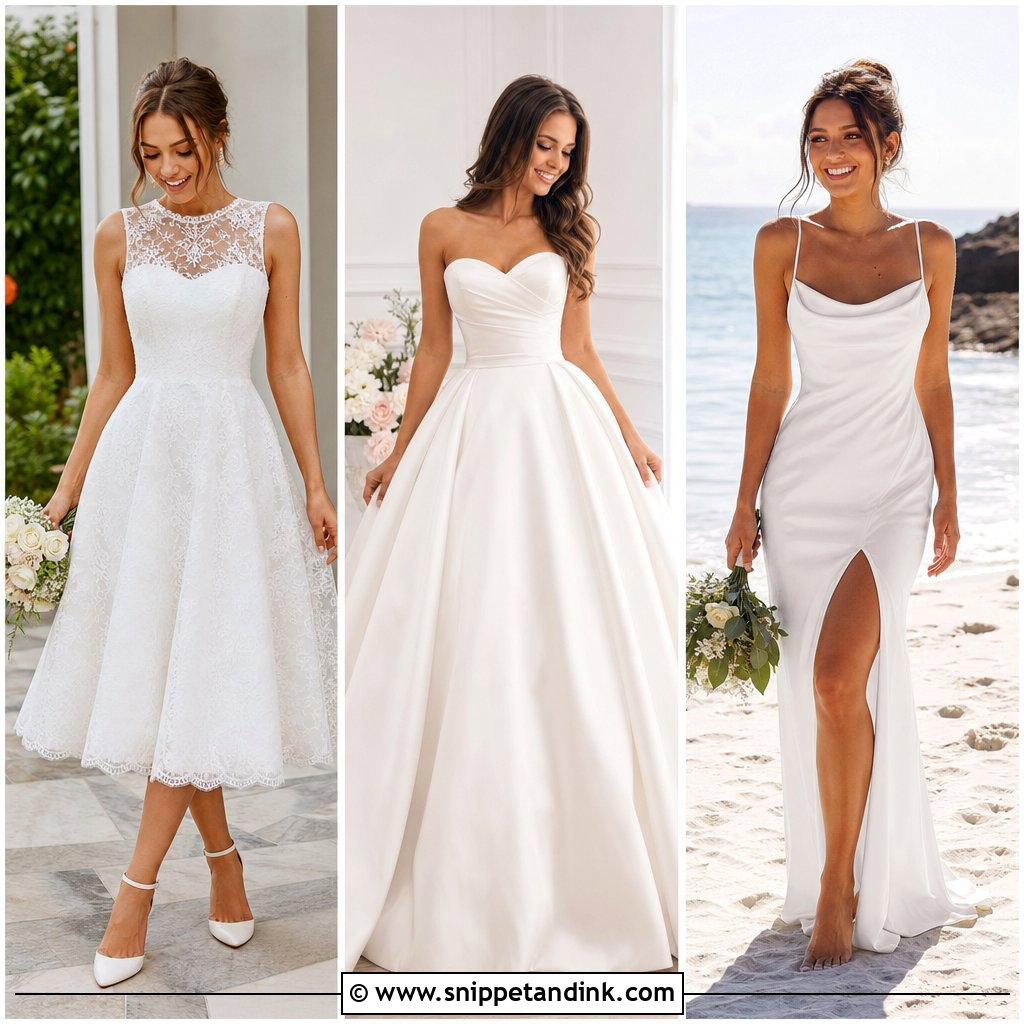
25. Light Blue Nikkah Gharara Outfit
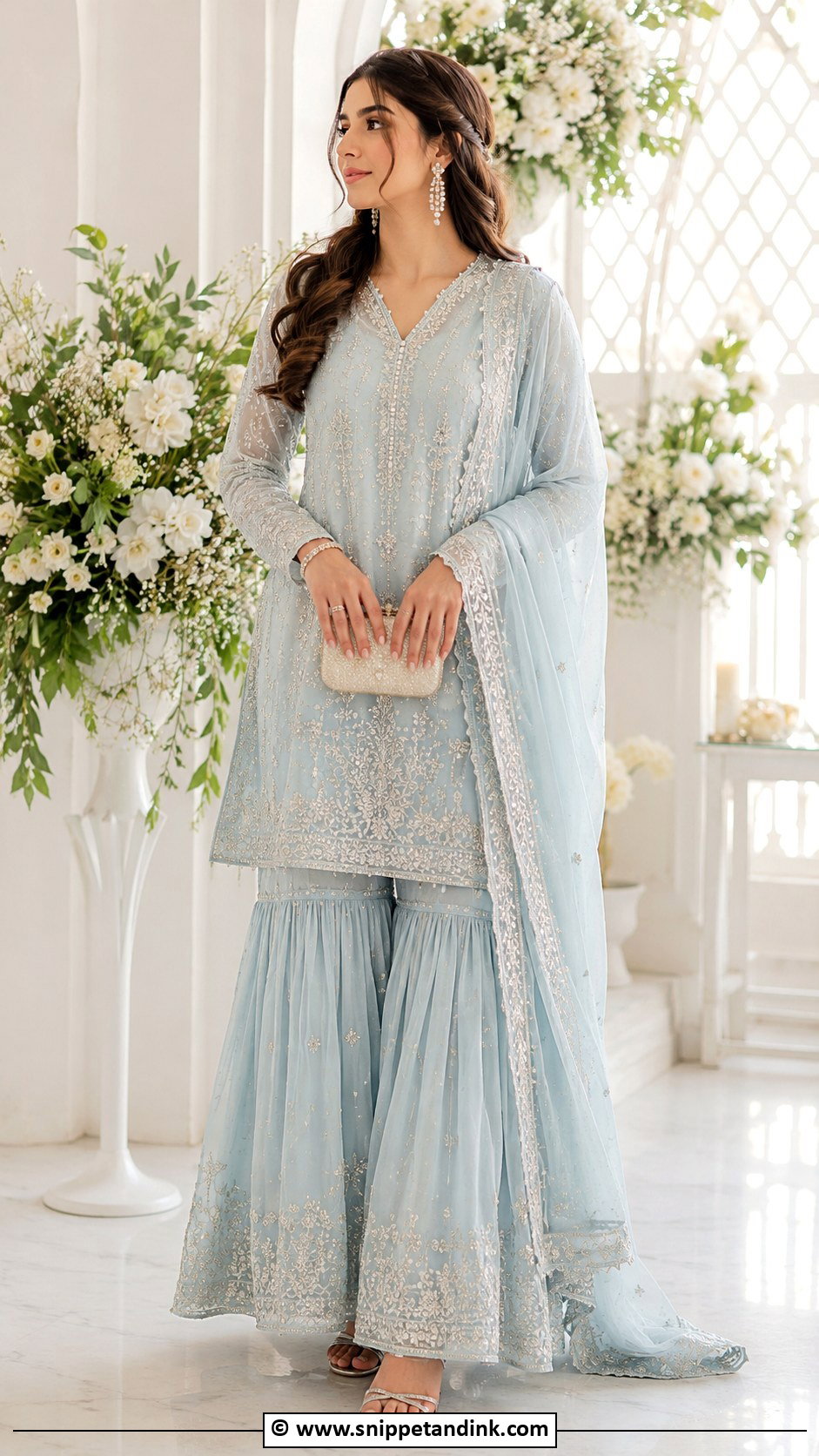
Light blue ghararas with white, silver or pearl embroidery feel calm and suit daytime ceremonies. A matching dupatta keeps it cohesive; an ivory one makes it more bridal. Brides add heavier jewelry and a headpiece; guests keep accessories minimal. Natural light shows the color well, so it is a good pick for a garden or a sunlit room.
26. Rose Gold Nikkah Lehenga Outfit
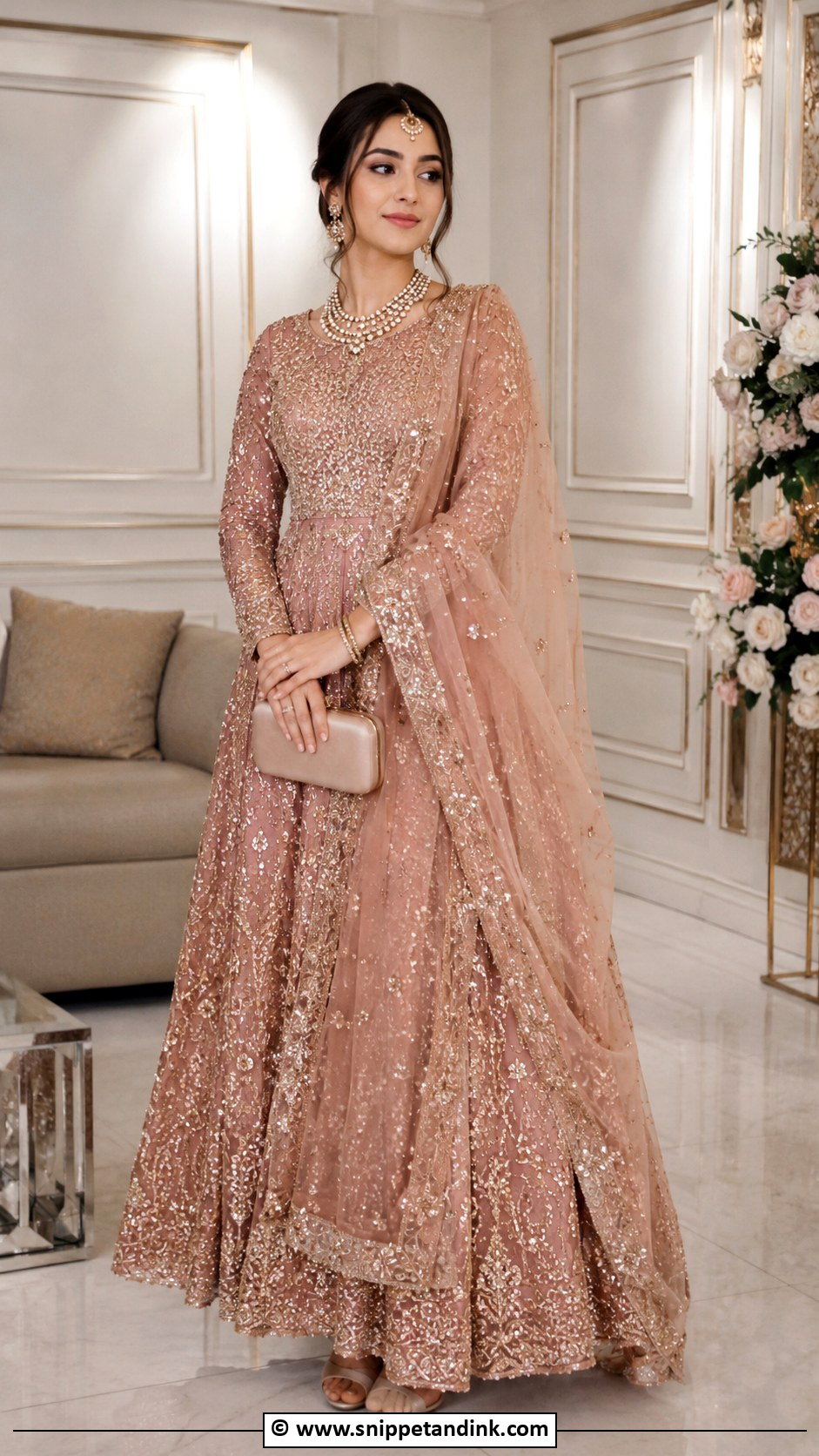
Rose gold is glamorous but stays soft when the shade is muted. A lehenga with delicate metallic embroidery, a modest blouse and a sheer dupatta suits a bride who wants shimmer without bright color. Guests wear a lighter version with fewer sequins. With so much shine already, jewelry should be pearls, small kundan or delicate gold. Warm, glowy makeup suits it.
27. Olive Green Nikkah Suit Outfit
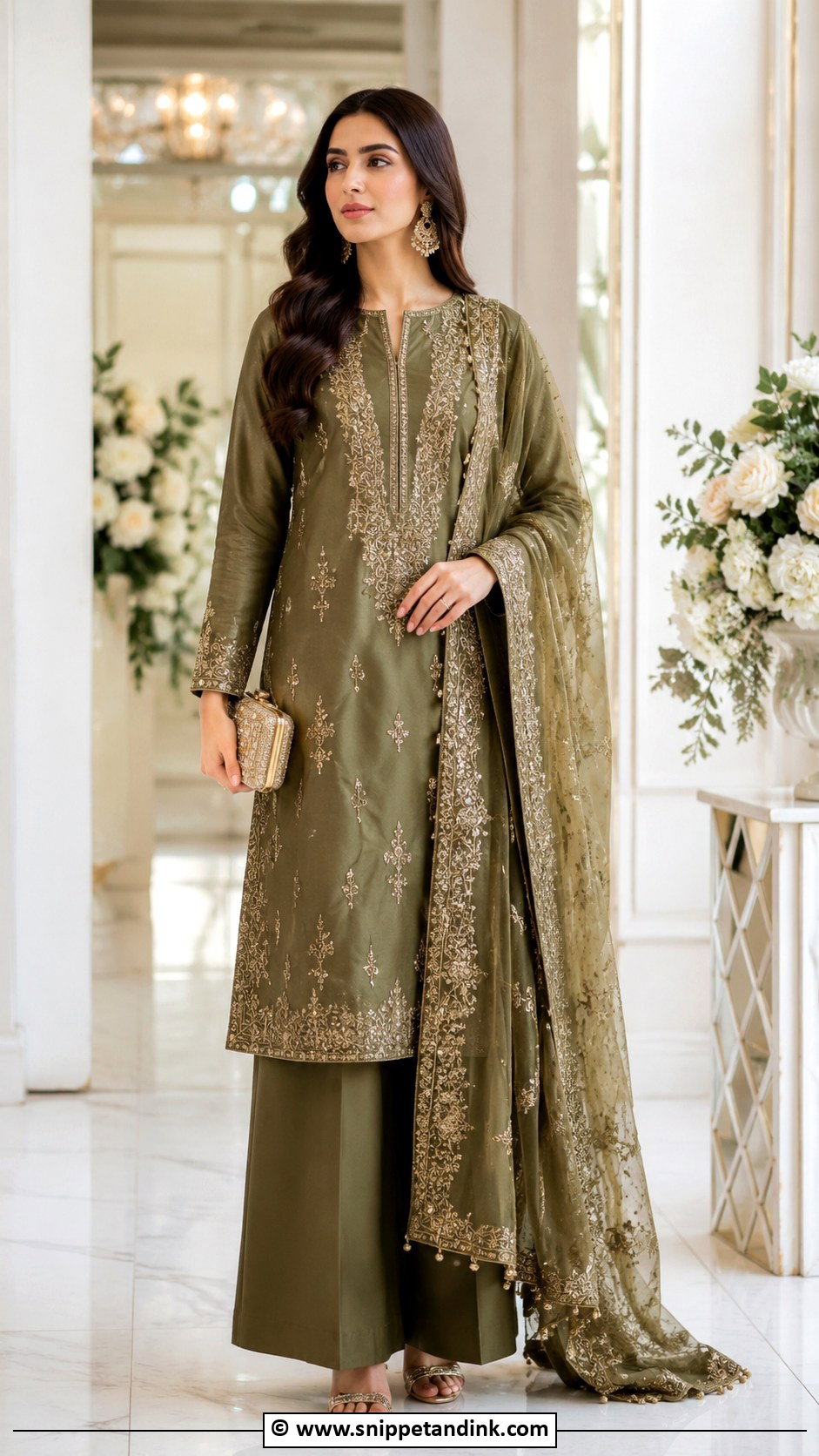
Olive is earthy and a welcome change from pastels. A long embroidered kameez with straight trousers, wide pants or a light sharara, and gold embroidery, suits evening and fall ceremonies. Guests, mothers and relatives wear it well; a bride can make it more bridal with heavier work and layered jewelry. Keep the dupatta neatly draped for a traditional ceremony.
28. Lilac Nikkah Pishwas Outfit
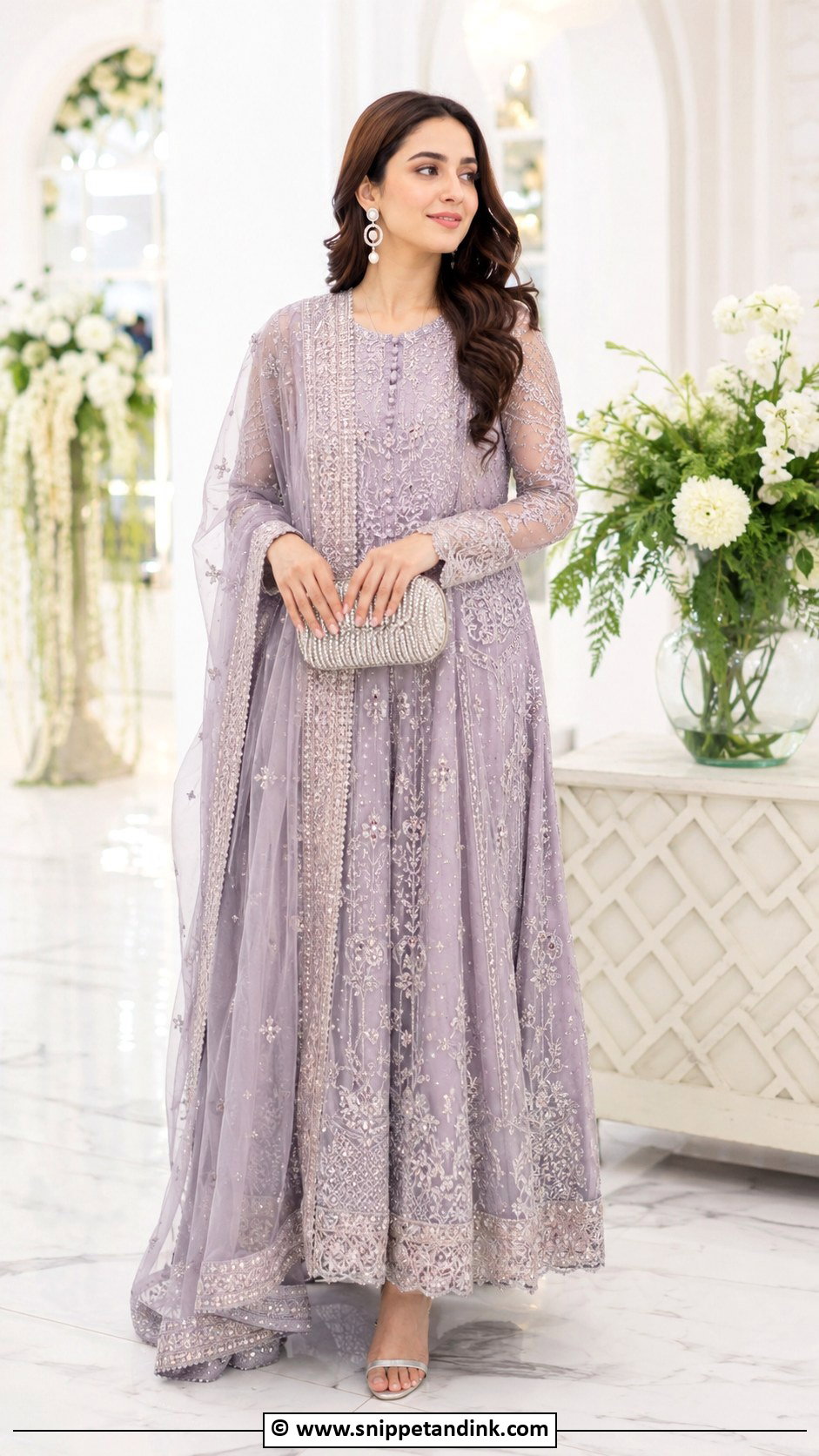
Lilac is youthful. A pishwas with fine embroidery on the bodice, sleeves and hem, and a matching lightly bordered dupatta, gives coverage and movement together. Silver, pearl or soft gold accessories all suit it. Brides can add a second dupatta or statement jewelry; guests keep it simple. Bright indoor spaces and outdoor daytime photos show it best.
29. Black And Gold Nikkah Outfit
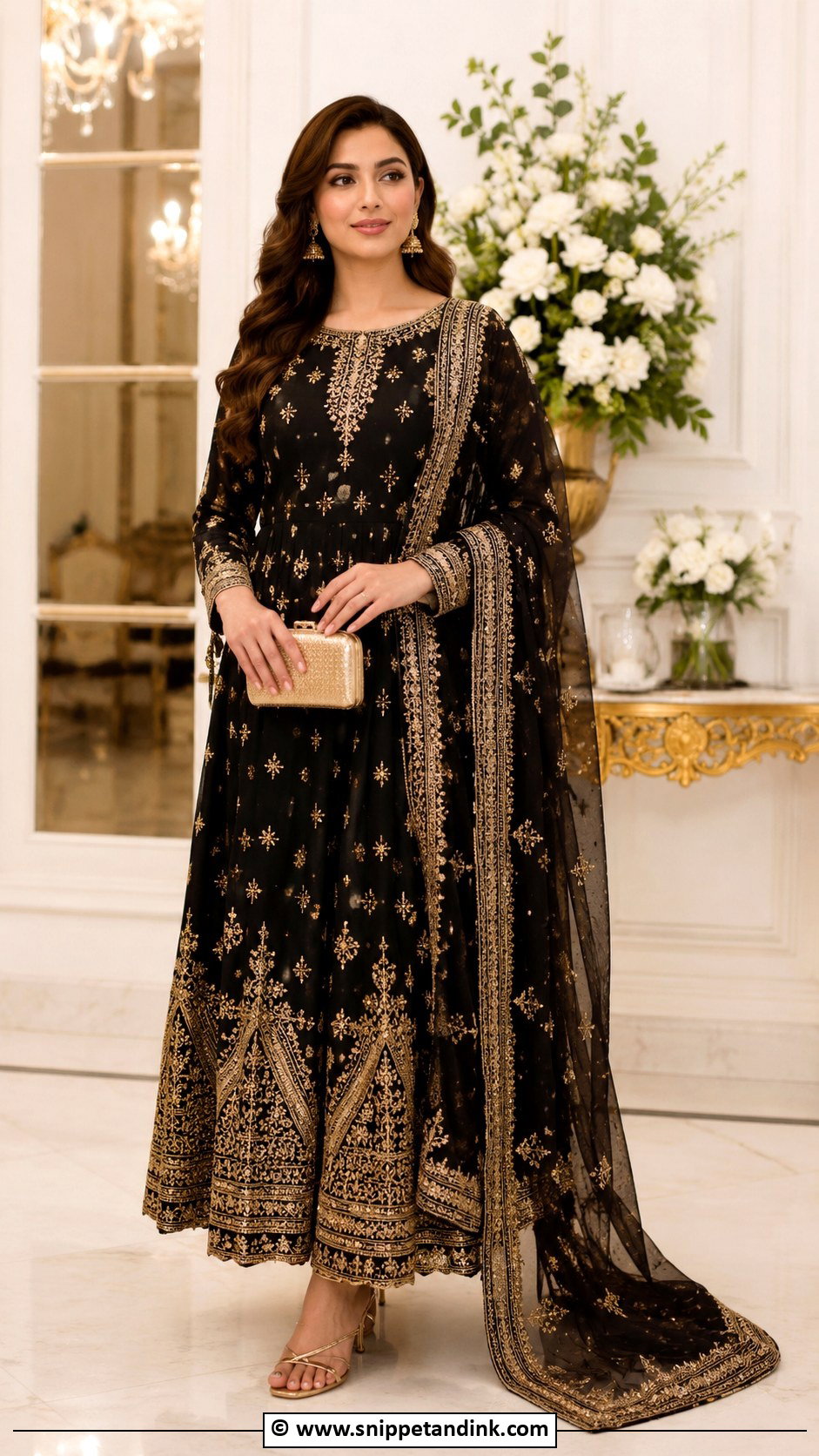
Black and gold can suit a guest at an evening ceremony, but it needs care. A black long kurta, maxi or anarkali with tasteful gold embroidery and a matching dupatta, styled without drama, keeps it respectful. Some families are uncomfortable with black at a wedding, so ask if you are unsure. It is a guest look, not a bridal one, unless black carries meaning for the couple.
30. Floral Nikkah Organza Outfit
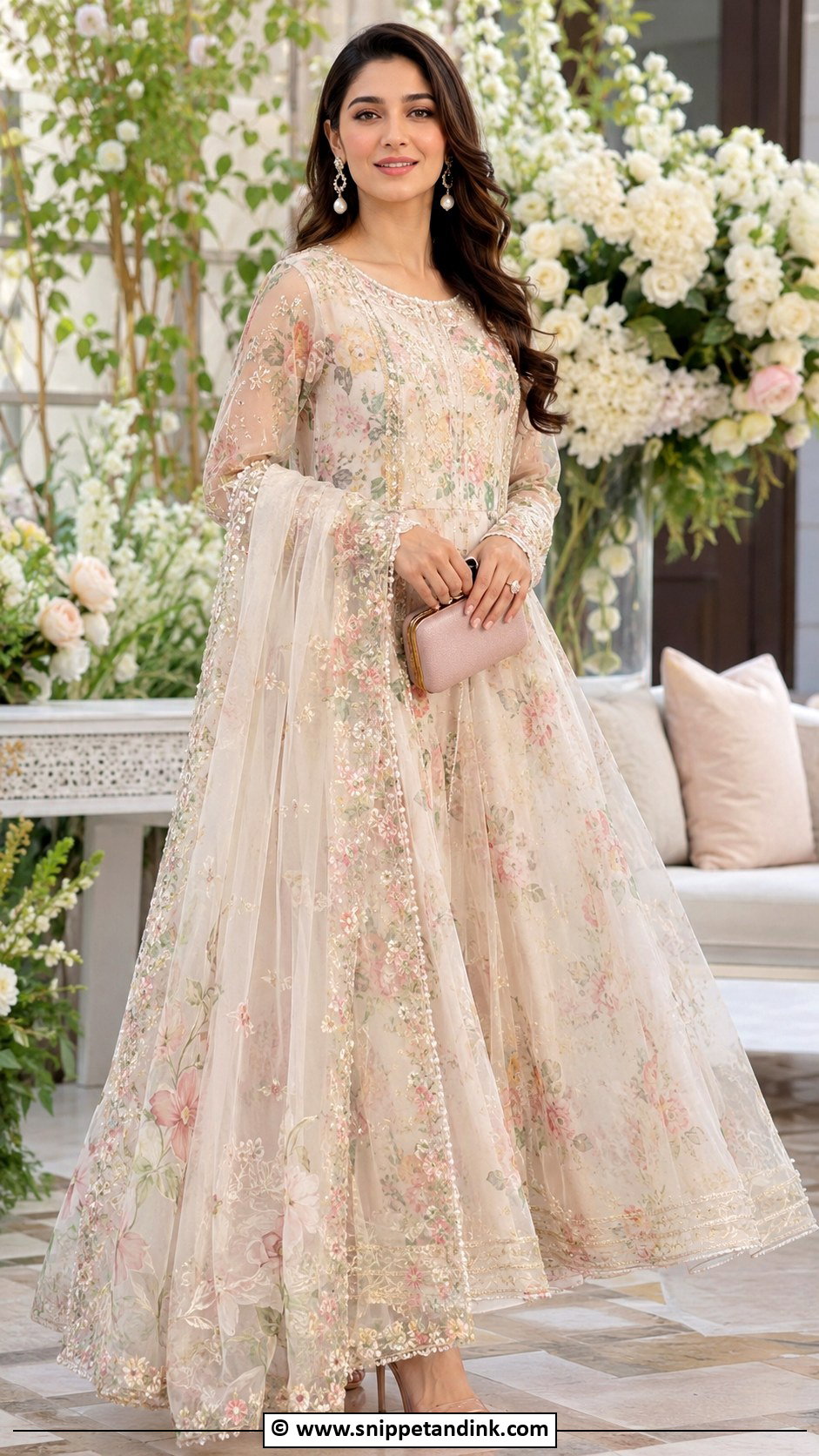
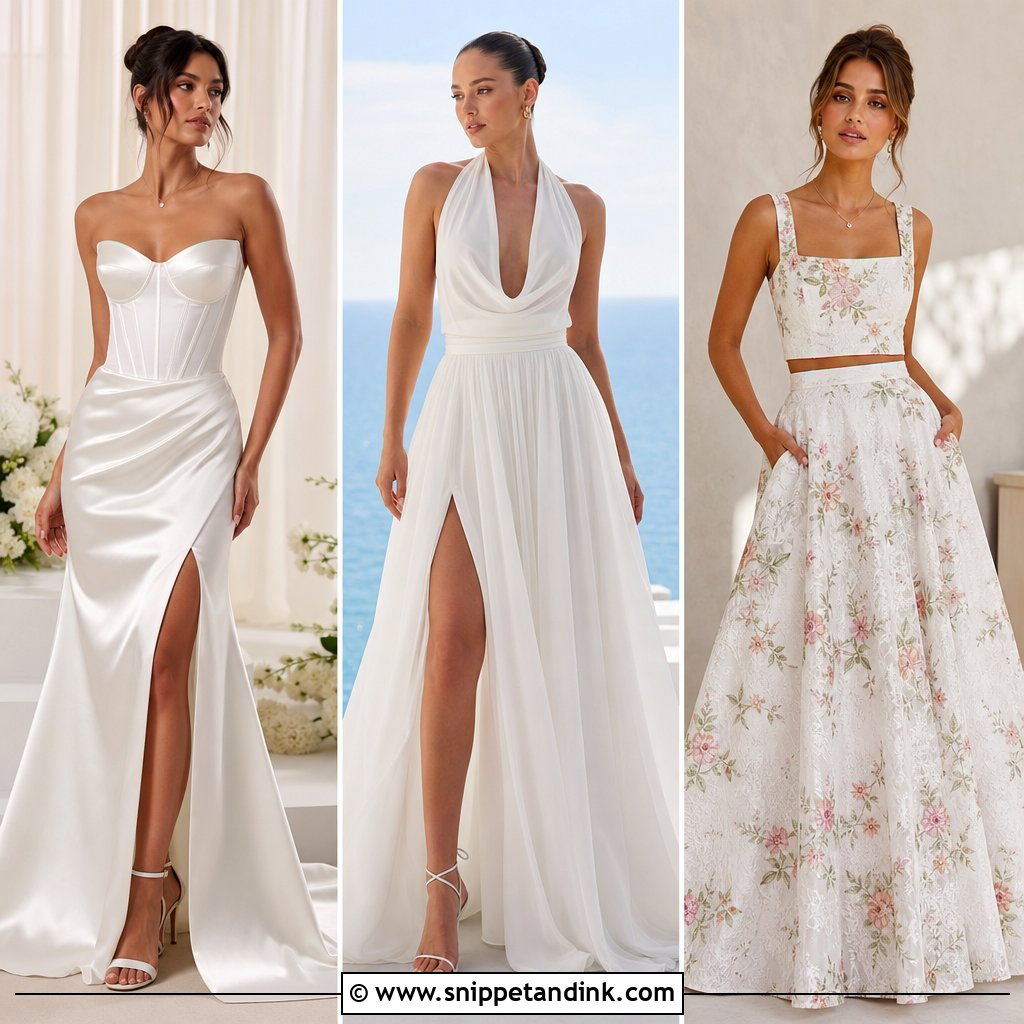
Florals suit spring and summer, but for a Nikkah they need to look dressy. A pastel floral kurta, pishwas or lehenga with light embroidery and a sheer organza dupatta is right; plain printed lawn can look too casual for a formal ceremony. Guests, bridesmaids and cousins suit this. Pearl earrings and a small pastel clutch finish it.
31. Modest Nikkah Hijab Outfit
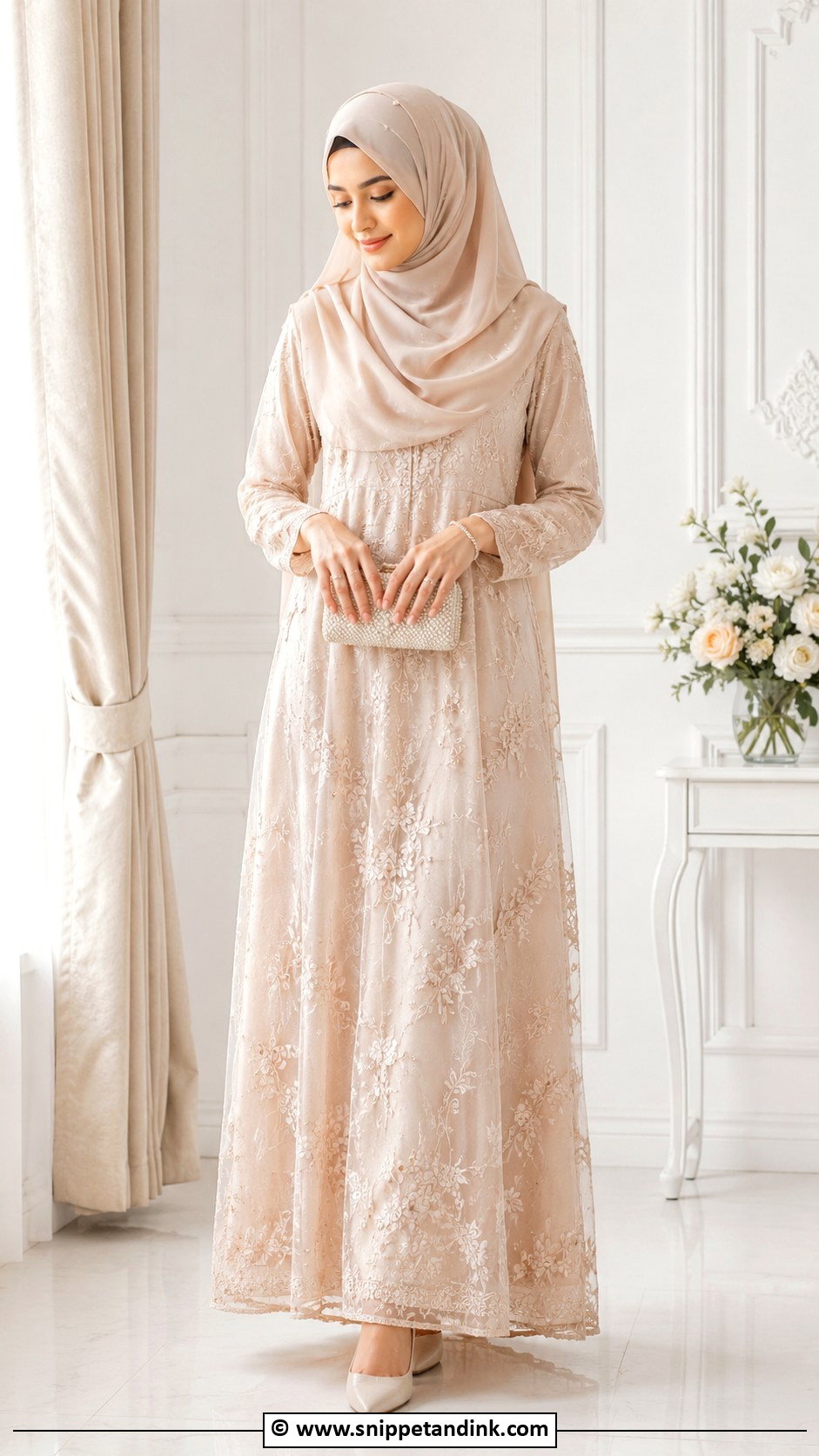
A modest Nikkah hijab outfit starts with the right base: a long maxi, abaya dress, pishwas or anarkali with full sleeves. Then choose the hijab fabric for the look you want: chiffon drapes softly, silk looks formal, jersey grips and stays put all day. Brides can add pearl pins, a delicate headpiece or a lace-trimmed veil effect; guests keep the hijab plain and let the embroidery speak. Closed-toe heels suit it.
32. Simple Nikkah Kurta Outfit
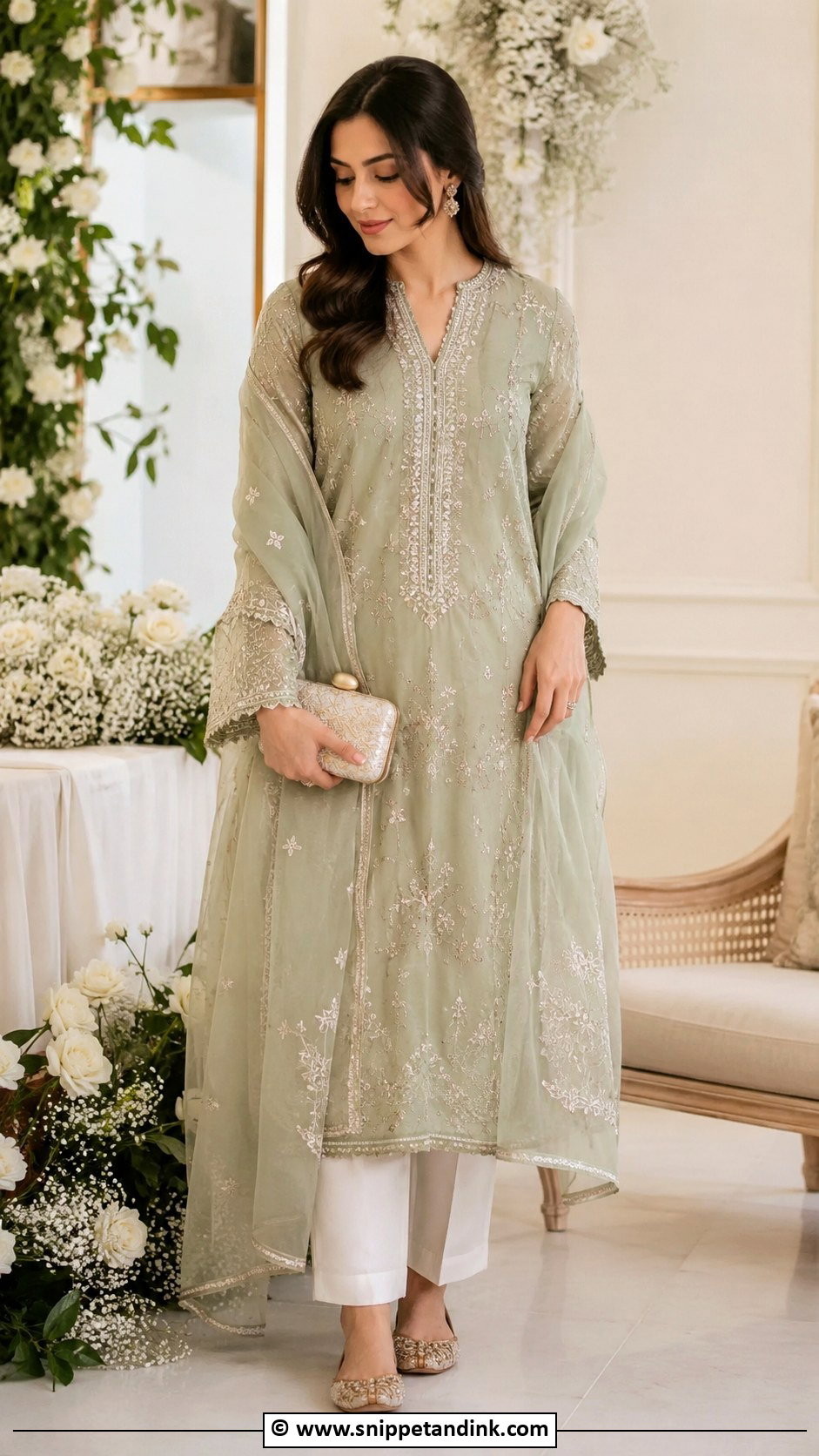
Intimate ceremonies and family gatherings at home suit a simple, well-tailored kurta. Ivory, blush, sage, blue or beige with light embroidery at the neckline and sleeves, worn with cigarette pants, wide-leg trousers or a plain shalwar, is all it takes. The dupatta is what makes it ceremonial. Brides add jewelry and a polished hairstyle; guests keep it understated with flats.
33. Velvet Nikkah Gharara Outfit
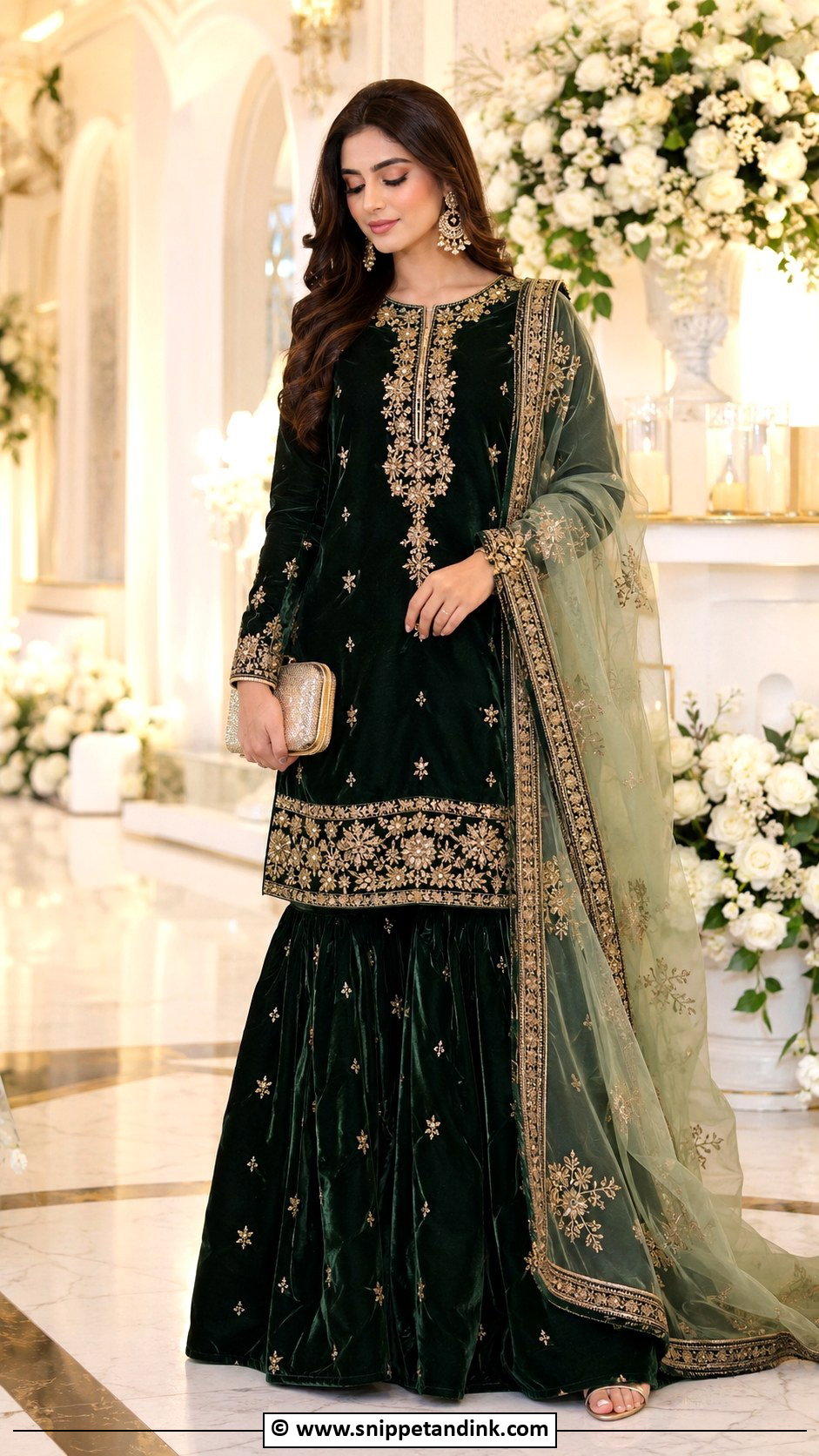
Velvet looks rich by itself, so choose its color and embroidery with care. Deep green, navy, maroon, mauve and chocolate brown all take gold or antique detailing well. A short velvet kurti with a gharara gives a classic shape; a chiffon or organza dupatta lightens the heavy fabric. Velvet is warm, so I’d keep it for cool evenings and well-ventilated rooms. Brides add detailed embroidery; guests choose refined borders.
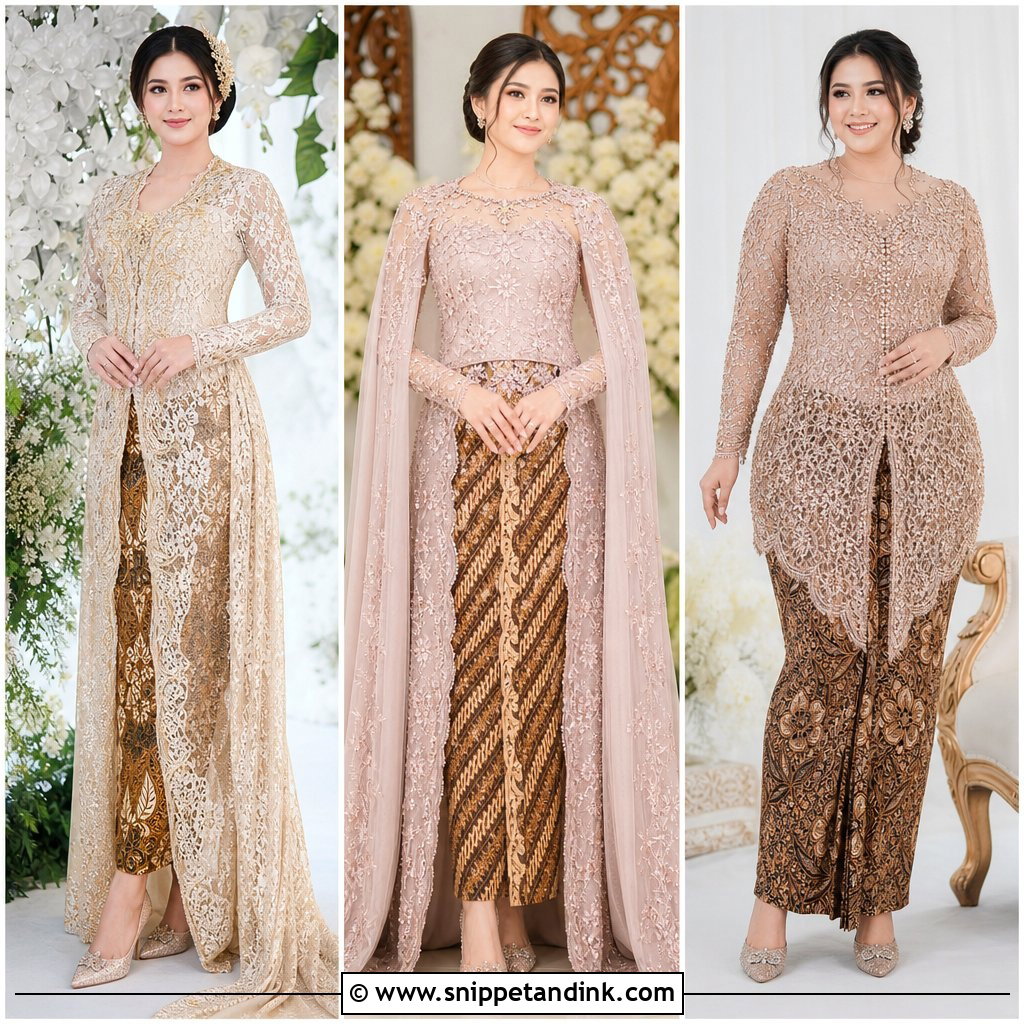
34. Cape Nikkah Dress Outfit
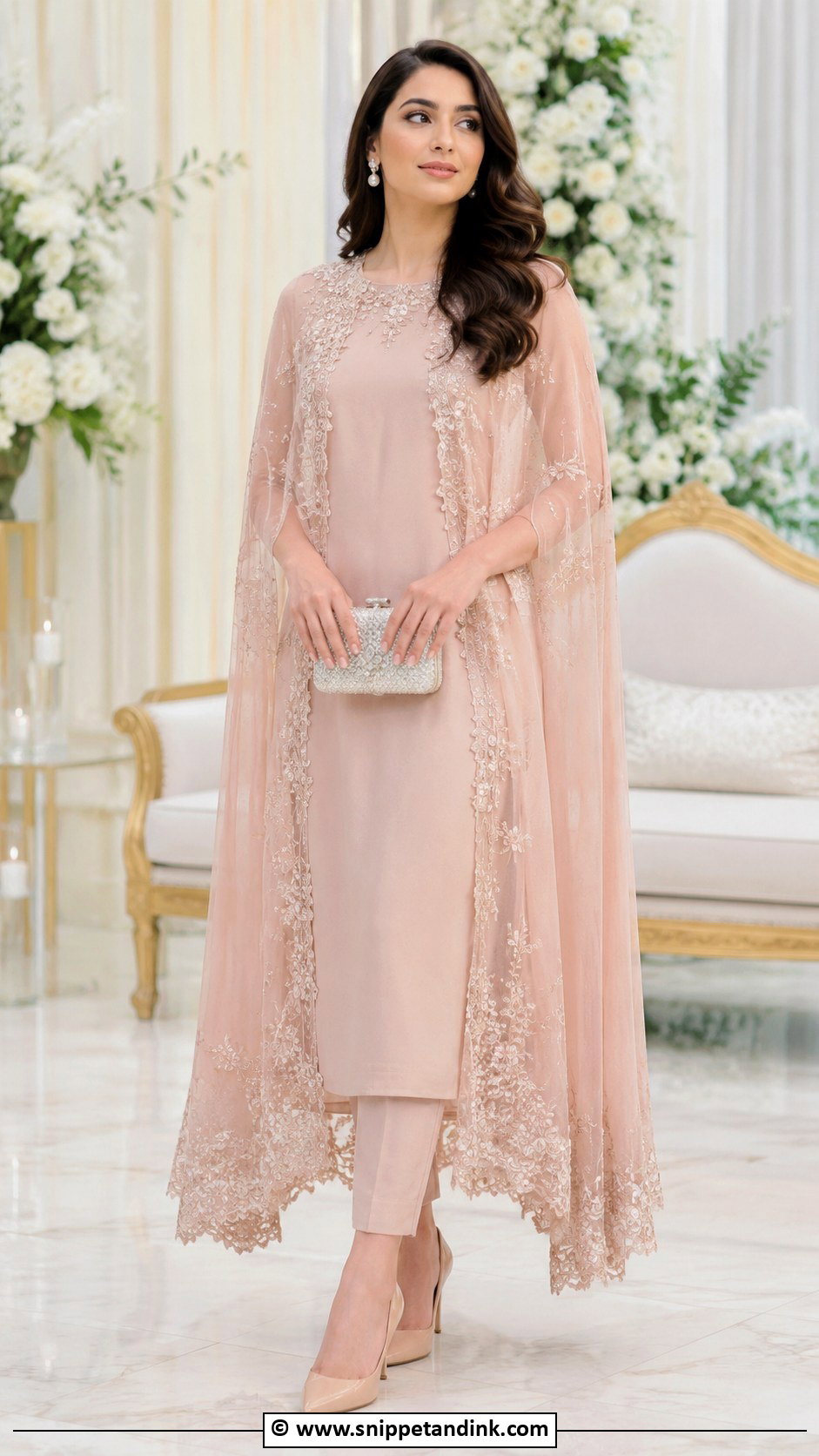
A cape Nikkah dress outfit gives coverage with a contemporary shape. A long dress, gown or trouser set with an attached or separate cape in chiffon, organza or net replaces the heavy dupatta. A pearl or embroidered cape suits a bride; a guest chooses lighter work in blush, sage, grey or champagne. Formal venues and modern family celebrations suit it.
35. Two Piece Nikkah Outfit
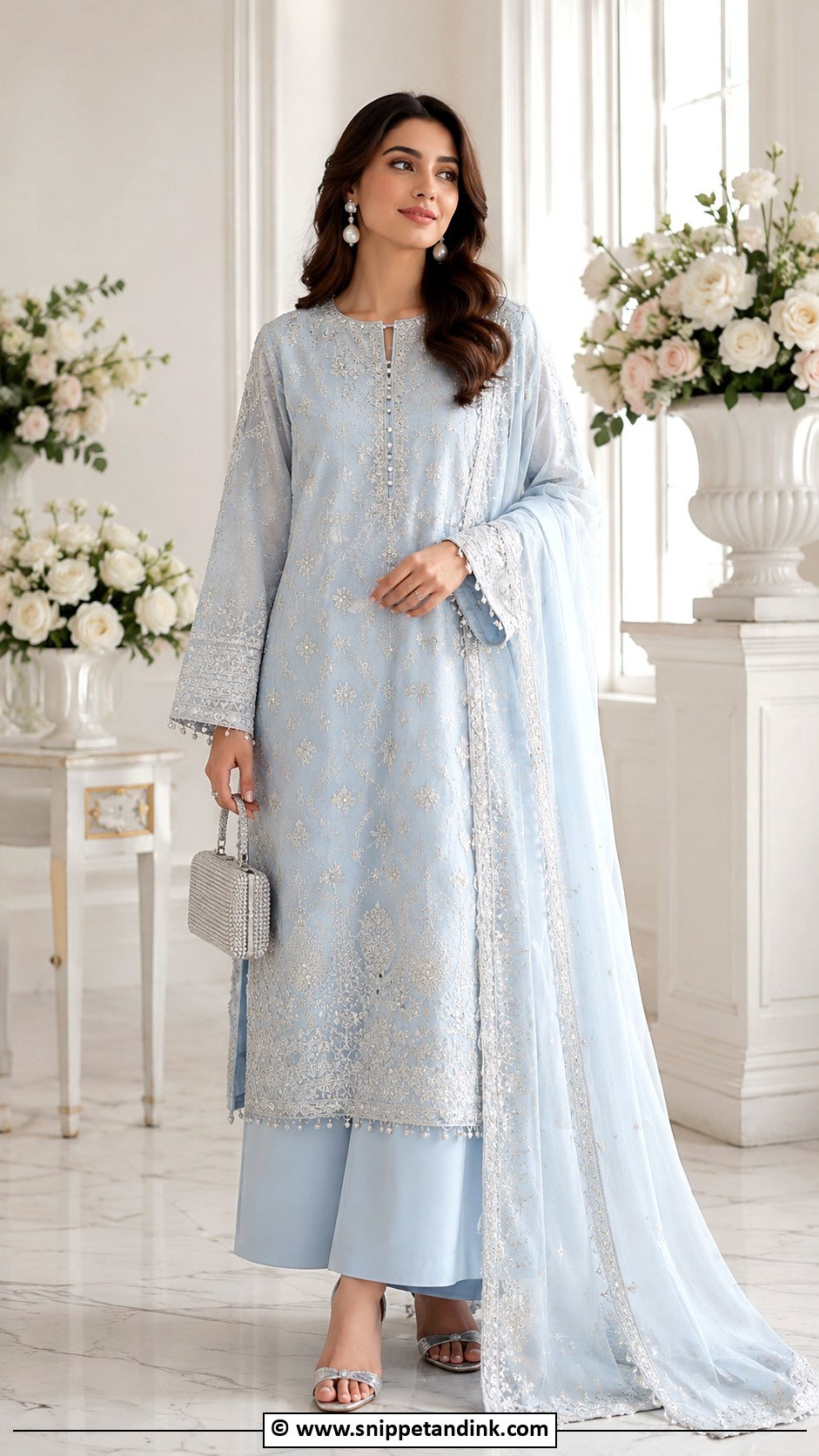
Two-piece outfits are the most rewearable thing here. A long tunic with wide-leg pants, a peplum with a sharara or a modest top with a flowing skirt all work, as long as color, embroidery and fabric tie the pieces together. Ivory, peach, pistachio and powder blue suit it. Brides add a dupatta and statement jewelry; guests keep it sleek. Each piece can be worn separately afterward, which makes the cost easier to justify.
What Goes in the Little Bag on Nikkah Morning
Something always needs fixing between getting dressed and the ceremony. A sharara hem catches a heel, a dupatta pin bends, a bead pops off a sleeve. I pack the same small kit for every Nikkah, and I’d suggest the bride’s sister or a cousin carries one too:
- Safety pins and straight pins in gold, silver and black, plus a few spare hijab pins.
- A needle pre-threaded in the outfit’s color, and a second in white or ivory.
- Double-sided fashion tape for a gaping neckline or a dupatta that will not stay on the shoulder.
- A stain-removal pen, tested on a hidden seam of the outfit beforehand.
- Blotting papers and a pressed powder, so nobody touches the dupatta with oily fingers.
- A small handheld steamer if the venue has a plug; organza and chiffon crease in the car.
- Flat foldable shoes, for the walk from the car and the time after photos.
Do a dress rehearsal with the full outfit a week before, including the dupatta pinned the way it will be on the day. Nearly every emergency in that bag can be prevented by finding the problem early.
Start With the Venue and the Bride’s Color, Then Shop
The right outfit for a Nikkah respects the ceremony, lets you sit and pray comfortably, and still feels like you. Brides often lean toward white, ivory, champagne, blush or pastels; guests have room for sage, mint, lavender, navy, olive, mauve and florals. Before you buy, know the venue, the family’s expectations, the season and, if you are not the bride, what she is wearing. A dupatta that stays put, shoes you can slip off at the door and jewelry chosen for the neckline will do the rest.
You'll Like These Ideas:




Leave a Reply